WO2004076418A1 - Ligands that modulate lxr-type receptors - Google Patents

Ligands that modulate lxr-type receptors Download PDF

Info

Publication number
WO2004076418A1
WO2004076418A1 PCT/EP2004/002396 EP2004002396W WO2004076418A1 WO 2004076418 A1 WO2004076418 A1 WO 2004076418A1 EP 2004002396 W EP2004002396 W EP 2004002396W WO 2004076418 A1 WO2004076418 A1 WO 2004076418A1
Authority
WO
WIPO (PCT)
Prior art keywords
phenylpiperidin
radical
acetyl
oxoethyl
butyryl
Prior art date
Legal status (The legal status is an assumption and is not a legal conclusion. Google has not performed a legal analysis and makes no representation as to the accuracy of the status listed.)
Ceased
Application number
PCT/EP2004/002396
Other languages
French (fr)
Inventor
Philippe Diaz
Jean-Michel Bernardon
Etienne Thoreau
Current Assignee (The listed assignees may be inaccurate. Google has not performed a legal analysis and makes no representation or warranty as to the accuracy of the list.)
Galderma Research and Development SNC
Original Assignee
Galderma Research and Development SNC
Priority date (The priority date is an assumption and is not a legal conclusion. Google has not performed a legal analysis and makes no representation as to the accuracy of the date listed.)
Filing date
Publication date
Priority claimed from FR0302478A external-priority patent/FR2851769B1/en
Application filed by Galderma Research and Development SNC filed Critical Galderma Research and Development SNC
Priority to CA002512886A priority Critical patent/CA2512886A1/en
Priority to EP04712564A priority patent/EP1599447A1/en
Publication of WO2004076418A1 publication Critical patent/WO2004076418A1/en
Anticipated expiration legal-status Critical
Priority to US11/212,714 priority patent/US20060058351A1/en
Ceased legal-status Critical Current

Links

Classifications

    • CCHEMISTRY; METALLURGY
    • C07ORGANIC CHEMISTRY
    • C07DHETEROCYCLIC COMPOUNDS
    • C07D401/00Heterocyclic compounds containing two or more hetero rings, having nitrogen atoms as the only ring hetero atoms, at least one ring being a six-membered ring with only one nitrogen atom
    • C07D401/02Heterocyclic compounds containing two or more hetero rings, having nitrogen atoms as the only ring hetero atoms, at least one ring being a six-membered ring with only one nitrogen atom containing two hetero rings
    • C07D401/06Heterocyclic compounds containing two or more hetero rings, having nitrogen atoms as the only ring hetero atoms, at least one ring being a six-membered ring with only one nitrogen atom containing two hetero rings linked by a carbon chain containing only aliphatic carbon atoms
    • AHUMAN NECESSITIES
    • A61MEDICAL OR VETERINARY SCIENCE; HYGIENE
    • A61PSPECIFIC THERAPEUTIC ACTIVITY OF CHEMICAL COMPOUNDS OR MEDICINAL PREPARATIONS
    • A61P17/00Drugs for dermatological disorders
    • CCHEMISTRY; METALLURGY
    • C07ORGANIC CHEMISTRY
    • C07DHETEROCYCLIC COMPOUNDS
    • C07D211/00Heterocyclic compounds containing hydrogenated pyridine rings, not condensed with other rings
    • C07D211/04Heterocyclic compounds containing hydrogenated pyridine rings, not condensed with other rings with only hydrogen or carbon atoms directly attached to the ring nitrogen atom
    • C07D211/06Heterocyclic compounds containing hydrogenated pyridine rings, not condensed with other rings with only hydrogen or carbon atoms directly attached to the ring nitrogen atom having no double bonds between ring members or between ring members and non-ring members
    • C07D211/08Heterocyclic compounds containing hydrogenated pyridine rings, not condensed with other rings with only hydrogen or carbon atoms directly attached to the ring nitrogen atom having no double bonds between ring members or between ring members and non-ring members with hydrocarbon or substituted hydrocarbon radicals directly attached to ring carbon atoms
    • C07D211/18Heterocyclic compounds containing hydrogenated pyridine rings, not condensed with other rings with only hydrogen or carbon atoms directly attached to the ring nitrogen atom having no double bonds between ring members or between ring members and non-ring members with hydrocarbon or substituted hydrocarbon radicals directly attached to ring carbon atoms with substituted hydrocarbon radicals attached to ring carbon atoms
    • C07D211/30Heterocyclic compounds containing hydrogenated pyridine rings, not condensed with other rings with only hydrogen or carbon atoms directly attached to the ring nitrogen atom having no double bonds between ring members or between ring members and non-ring members with hydrocarbon or substituted hydrocarbon radicals directly attached to ring carbon atoms with substituted hydrocarbon radicals attached to ring carbon atoms with hydrocarbon radicals, substituted by doubly bound oxygen or sulfur atoms or by two oxygen or sulfur atoms singly bound to the same carbon atom
    • C07D211/32Heterocyclic compounds containing hydrogenated pyridine rings, not condensed with other rings with only hydrogen or carbon atoms directly attached to the ring nitrogen atom having no double bonds between ring members or between ring members and non-ring members with hydrocarbon or substituted hydrocarbon radicals directly attached to ring carbon atoms with substituted hydrocarbon radicals attached to ring carbon atoms with hydrocarbon radicals, substituted by doubly bound oxygen or sulfur atoms or by two oxygen or sulfur atoms singly bound to the same carbon atom by oxygen atoms
    • CCHEMISTRY; METALLURGY
    • C07ORGANIC CHEMISTRY
    • C07DHETEROCYCLIC COMPOUNDS
    • C07D401/00Heterocyclic compounds containing two or more hetero rings, having nitrogen atoms as the only ring hetero atoms, at least one ring being a six-membered ring with only one nitrogen atom
    • C07D401/14Heterocyclic compounds containing two or more hetero rings, having nitrogen atoms as the only ring hetero atoms, at least one ring being a six-membered ring with only one nitrogen atom containing three or more hetero rings
    • CCHEMISTRY; METALLURGY
    • C07ORGANIC CHEMISTRY
    • C07DHETEROCYCLIC COMPOUNDS
    • C07D409/00Heterocyclic compounds containing two or more hetero rings, at least one ring having sulfur atoms as the only ring hetero atoms
    • C07D409/14Heterocyclic compounds containing two or more hetero rings, at least one ring having sulfur atoms as the only ring hetero atoms containing three or more hetero rings
    • CCHEMISTRY; METALLURGY
    • C07ORGANIC CHEMISTRY
    • C07DHETEROCYCLIC COMPOUNDS
    • C07D413/00Heterocyclic compounds containing two or more hetero rings, at least one ring having nitrogen and oxygen atoms as the only ring hetero atoms
    • C07D413/02Heterocyclic compounds containing two or more hetero rings, at least one ring having nitrogen and oxygen atoms as the only ring hetero atoms containing two hetero rings
    • C07D413/06Heterocyclic compounds containing two or more hetero rings, at least one ring having nitrogen and oxygen atoms as the only ring hetero atoms containing two hetero rings linked by a carbon chain containing only aliphatic carbon atoms
    • CCHEMISTRY; METALLURGY
    • C07ORGANIC CHEMISTRY
    • C07DHETEROCYCLIC COMPOUNDS
    • C07D413/00Heterocyclic compounds containing two or more hetero rings, at least one ring having nitrogen and oxygen atoms as the only ring hetero atoms
    • C07D413/02Heterocyclic compounds containing two or more hetero rings, at least one ring having nitrogen and oxygen atoms as the only ring hetero atoms containing two hetero rings
    • C07D413/12Heterocyclic compounds containing two or more hetero rings, at least one ring having nitrogen and oxygen atoms as the only ring hetero atoms containing two hetero rings linked by a chain containing hetero atoms as chain links
    • CCHEMISTRY; METALLURGY
    • C07ORGANIC CHEMISTRY
    • C07DHETEROCYCLIC COMPOUNDS
    • C07D471/00Heterocyclic compounds containing nitrogen atoms as the only ring hetero atoms in the condensed system, at least one ring being a six-membered ring with one nitrogen atom, not provided for by groups C07D451/00 - C07D463/00
    • C07D471/02Heterocyclic compounds containing nitrogen atoms as the only ring hetero atoms in the condensed system, at least one ring being a six-membered ring with one nitrogen atom, not provided for by groups C07D451/00 - C07D463/00 in which the condensed system contains two hetero rings
    • C07D471/04Ortho-condensed systems

Definitions

  • the present invention relates to novel compounds that are ligands and modulators of LXR receptors, to a process for preparing them and to the use of at least one selective ligand of LXR-type receptors in the preparation of a pharmaceutical or cosmetic composition, the composition being intended to treat disorders or complaints associated with the LXR receptors.
  • LXR receptors (liver X receptors) belong to the superfamily of steroidal/thyroid receptors.
  • LXRa liver X receptor
  • LXR ⁇ Comparison of the nucleotide sequence of human LXRa with other receptors already known showed strong similarities between two sequences of orphan receptors: 77% homology with the human receptor NER-1 or Ubiquitous Receptor UR, consequently described as the second LXR subtype and referred to as LXR ⁇ , and 92% homology with the rat receptor RLD-1 , which appears to be the murine homologue of hLXRa.
  • the LXR ⁇ isoform shows very great homology with an orphan receptor cloned in 1993 in rats: OR-1.
  • LXRa and LXR ⁇ demonstrates increased tissue distribution in organs with intense metabolic activity, for instance the kidneys, the liver, the intestines and, to a lesser extent, in the spleen, the adrenal glands and the skin.
  • the hLXR ⁇ isoform is much more ubiquitous and is also present in the brain, the testicles and the ovaries. These receptors have the capacity of forming functional heterodimers with the retinoid X receptors (RXRs).
  • the LXR receptors activate transcription by binding to specific DNA sequence elements, known as the response elements (LXRE), located in the promoter of the target gene whose transcription they regulate.
  • LXRE response elements
  • LXRE binding site characterized in the promoter of the CYP7a gene of rat (cholesterol 7-a-hydroxylase), which codes for an enzyme involved in a key step of conversion of cholesterol into bile acids and is strongly expressed in the liver.
  • LXRa receptor activators have been described in patent application WO 98/32444. These compounds are especially: 7a-hydroxycholesterol, 27-hydroxy- cholesterol, 4 ⁇ -hydroxycholesterol, 24-hydroxycholesterol, 20(S)-hydroxycholesterol, 22(R)-hydroxycholesterol and 20,22-dihydroxycholesterol, have a therapeutic application in the restoration of the skin's barrier function, the induction of differentiation and the inhibition of proliferation.
  • tissue distribution of the LXRa messenger RNAs revealed a strong preponderance of these messengers in organs with metabolic activity, for instance the liver, the kidneys and the intestines, and also presence to a lesser extent in the spleen, the adrenal glands and the skin.
  • tissue distribution of the LXR ⁇ s was shown to be more ubiquitous, especially with presence in the brain and the testicles.
  • FXR, PPAR ⁇ and LXR ⁇ receptor activators are capable of restoring the barrier-function role. These activators are also presented as increasing differentiation by inhibiting epidermal proliferation.
  • the skin has a structure that gives it numerous properties and a major role in the barrier function. This regulation of the barrier function is particularly provided by the epidermis.
  • Natural human epidermis is mainly composed of three types of cell, namely the keratinocytes, which are in the vast majority, the melanocytes and the Langerhans cells. Each of these cell types contributes via its intrinsic functions towards the essential role played in the body by the skin.
  • the epidermis is continually being formed by proliferation of the basal cells of the epidermis.
  • the keratinocytes formed in the deepest part of the epidermis migrate towards the surface of the skin. During this migration, the keratinocytes differentiate by means of profound biochemical and structural changes to result in the formation of cells lacking their nucleus and their cytoplasmic organelles, but which have synthesized a horny envelope: these are the corneocytes.
  • the horny envelope gives the corneocytes great rigidity and provides the stratum corneum with mechanical strength.
  • the corneocytes together constitute the horny layer or stratum corneum, the outermost layer of the epidermis and main regulator of the skin's barrier function.
  • the cells constituting the epidermis are delimited by a lipid domain.
  • the epidermal lipids are mainly synthesized in the live epidermis. They consist essentially of phospholipids, sphingolipids, cholesterols, free fatty acids, triglycerides, cholesterol esters and alkanes.
  • the phospholipids whose role consists in developing the fluid structure of the cell membranes of the live layers of the epidermis, are gradually replaced with a mixture predominantly composed of fatty acids, cholesterol and sphingolipids, which are essential constituents of the horny layer of the epidermis (stratum corneum).
  • Deregulation of the barrier function is known to be an important component of many disorders and diseases of the skin and mucous membranes. This disruption of the barrier function can result in the entry of pathogens across the affected part of the skin, but is also found to be a factor aggravating numerous skin pathologies correlated with disorders of differentiation and/or proliferation of epidermal cells. To treat these imbalances in barrier function, and also skin disorders associated with insufficient epidermal differentiation and/or excessive proliferation of the epidermal cells, different pharmaceutical approaches have been envisaged.
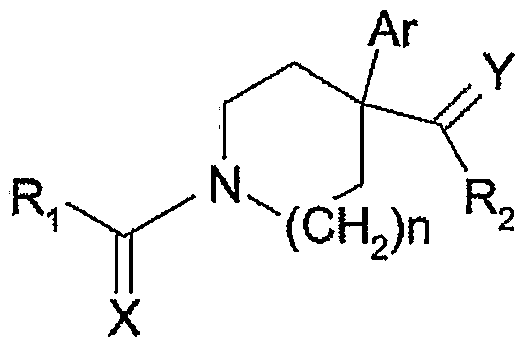
  • One subject of the present invention is thus novel compounds that are ligands of the LXR receptors, corresponding to the general formula (I) below:
  • R T represents: i- an alkyl radical containing from 1 to 12 carbon atoms or an aryl, aralkyl, aralkenyl or heteroaryl radical, ii- a radical:
  • R 3 represents a linear alkylene radical containing from 1 to 6 carbon atoms, preferably -CH 2 - or -(CH 2 ) 2 -;
  • R 2 represents an alkyl containing from 1 to 12 carbon atoms or an aryl, heteroaryl or aralkyl radical
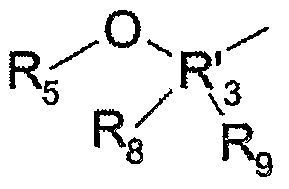
  • R' 3 which is a divalent radical, represents an alkyl containing from 1 to 12 carbon atoms or an aryl, heteroaryl or aralkyl radical,
  • R 4 represents an alkyl radical containing from 1 to 12 carbon atoms, an aryl, aralkyl or heteroaryl radical or a radical -COR 6 , R 6 having the meanings given below,
  • R 5 , R 6 and R 7 which may be identical or different, represent a hydrogen atom, an alkyl radical containing from 1 to 12 carbon atoms or an aryl, aralkyl or heteroaryl radical,
  • R 8 and R 9 which may be identical or different, represent a hydrogen atom or a methyl radical
  • Ar represents an aryl, heteroaryl or aralkyl radical
  • X represents two hydrogen atoms, an oxygen atom or a sulphur atom
  • Y represents an oxygen or sulphur atom, n possibly taking the values 0 or 1 , and the optical and geometrical isomers of the said compounds of formula (I), and also the salts thereof.
  • the compounds according to the invention are in the form of salts, they are salts of an alkali metal or alkaline-earth metal, zinc salts or salts of an organic amine.
  • alkyl radical means a linear or cyclic, optionally branched radical containing from 1 to 12 carbon atoms, which may be interrupted with a hetero atom, and preferably the alkyl radicals containing from 1 to 12 carbon atoms are methyl, ethyl, isopropyl, butyl, tert-butyl, hexyl, octyl, decyl or cyclohexyl radicals.
  • aryl radical means a phenyl, biphenyl, cinnamyl, indanyl or naphthyl radical, which may be mono- or polysubstituted, preferably disubstituted, with a halogen atom, a CF 3 radical, an alkyl radical containing from 1 to 12 carbon atoms, an alkoxy radical containing from 1 to 7 carbon atoms, a nitro function, a polyether radical, an aryl radical, a benzoyl radical, an alkyl ester group, a carboxylic acid, a hydroxyl radical optionally protected with an acetyl or benzoyl group or an amino function optionally protected with an acetyl or benzoyl group or optionally substituted with at least one alkyl containing from 1 to 12 carbon atoms.
  • aralkyl radical means a benzyl, phenethyl or naphthalen-2- ylmethyl radical whose aromatic portion may be mono- or polysubstituted, preferably disubstituted, with a halogen atom, a CF 3 radical, an alkyl radical containing from 1 to 12 carbon atoms, an alkoxy radical containing from 1 to 7 carbon atoms, a nitro function, a polyether radical, an aryl radical, a benzoyl radical, an alkyl ester group, a carboxylic acid, a hydroxyl radical optionally protected with an acetyl or benzoyl group or an amino function optionally protected with an acetyl or benzoyl group or optionally substituted with at least one alkyl containing from 1 to 12 carbon atoms.
  • heteroaryl radical means a radical chosen from the group of 4, 5, 6 or 7 membered ring containing 1 , 2 or 3 heteroatoms such as N, S or O , such as the pyridyl, furyl, thienyl, isoxazolyl, oxadiazolyl, oxazolyl, isothiazolyl, quinazolinyl, benzothiadiazolyl, benzimidazolyl, indolyl, benzofuryl, pyrazolinyl or indolizinyl radical optionally substituted with at least one halogen, an alkyl containing from 1 to 12 carbon atoms, an alkoxy containing from 1 to 7 carbon atoms, an aryl radical, a nitro function, a polyether radical, a heteroaryl radical, a benzoyl radical, an alkyl ester group, a carboxylic acid, a hydroxyl radical optionally protected with an acetyl or
  • the compounds of formula (I) that are more particularly preferred are those that have at least one of the following characteristics:
  • R 2 represents an alkyl radical, and preferably a methyl or propyl radical
  • R 3 represents an alkyl radical and preferably a methyl radical
  • R 5 represents an aryl radical [2-chlorophenyl] when R 1 represents
  • R 5 represents a hydrogen atom when R 1 represents the radical
  • - R represents 4-cyclohexylbenzoyl.
  • the invention also relates to the method for preparing the compounds of formula (I), as follows.
  • the ketopiperidine is coupled to a benzoic acid using coupling agents commonly encountered in peptide synthesis, for instance HOBT/HBTU or HATU, optionally in the presence of a base such as triethylamine, in a solvent such as DMF or a mixture of solvents, for instance dichloromethane/DMF.
  • the work-up is a series of extractions with an organic solvent and washing with water. If the coupled acid contains a protected amine function, this amine may be deprotected and then coupled in turn with another carboxylic acid according to the same coupling methods as previously.
  • LXR ⁇ receptors generally means the LXR ⁇ receptors taken individually and/or in the form of homodimers and/or in the form of heterodimers such as, without limitation, the LXR/RAR; LXR/LXR; LXR PPAR; LXR/VDR heterodimers, irrespective of the types used for each of the receptors mentioned.
  • This activity on the LXR ⁇ receptors is measured in the transactivation test and quantified by means of the dissociation constant Kdapp (apparent), as described in Example 3.
  • the preferred compounds of the present invention have a dissociation constant of less than or equal to 10 000 nM and preferably less than or equal to 3000 nM.
  • a subject of the present invention is also, as medicinal products, the compounds of formula (I) as described above.
  • a subject of the present invention is the use of the compounds of formula (I) to manufacture a pharmaceutical or cosmetic composition more particularly intended for treating the following disorders or complaints: dermatological complaints associated with a keratinization disorder relating to differentiation and proliferation, especially common acne, comedones, polymorphs, rosacea, nodulocystic acne, acne conglobata, senile acne and secondary acne such as solar, medicinal or occupational acne, ichthyosis, ichthyosiform conditions, Darter's disease, palmoplantar keratoderma, leukoplakia and leukoplakiform conditions, and cutaneous or mucous (oral) lichen, dermatological complaints with an inflammatory immunoallergic component, with or without a cellular proliferation disorder, especially cutaneous, mucous or ungual psoriasis, psoriatic rheumatism, cutaneous atopy, such as eczema, respiratory atopy or gingival hypertrophy, benign or malignant dermal
  • a subject of the present invention is also a pharmaceutical or cosmetic composition
  • a pharmaceutical or cosmetic composition comprising, in a physiologically acceptable medium, at least one compound of formula (I) as defined above.
  • the composition according to the invention may be administered enterally, parenterally, topically or ocularly.
  • the pharmaceutical composition is preferably packaged in a form which is suitable for topical application.
  • the composition may be in the form of tablets, gel capsules, sugar- coated tablets, syrups, suspensions, solutions, powders, granules, emulsions or lipid or polymer vesicles or nanospheres or microspheres to allow controlled release.
  • the composition may be in the form of solutions or suspensions for infusion or for injection.
  • the compounds according to the invention are generally administered at a daily dose of about 0.001 mg/kg to 100 mg/kg of body weight in 1 to 3 dosage intakes.
  • the compounds are used systemically at a concentration generally of between 0.001% and 10% by weight and preferably between 0.01% and 1% by weight relative to the weight of the composition.
  • the pharmaceutical composition according to the invention is more particularly intended for treating the skin and mucous membranes and may be in the form of ointments, creams, milks, salves, powders, impregnated pads, syndets, solutions, gels, sprays, foams, suspensions, stick lotions, shampoos or washing bases. It may also be in the form of suspensions of lipid or polymer vesicles or nanospheres or microspheres or polymer patches and hydrogels to allow controlled release.
  • This topical-route composition may be in anhydrous form, in aqueous form or in the form of an emulsion.
  • the compounds are used topically at a concentration generally of between 0.001% and 10% by weight, preferably between 0.01% and 1% by weight relative to the total weight of the composition.
  • the compounds according to the invention also find an application in the cosmetic field, in particular in body and hair hygiene and especially for treating acne-prone skin, for combating the greasy appearance of the skin and the hair, in protecting against the harmful effects of sunlight or in treating physiologically dry skin, and for preventing and/or combating photo-induced and/or chronological ageing.
  • a subject of the invention is therefore also the cosmetic use of a composition comprising, in a physiologically acceptable support, at least one of the compounds of formula (I) for body or hair hygiene.
  • the cosmetic composition according to the invention containing, in a cosmetically acceptable support, at least one compound of formula (I) or an optical or geometrical isomer thereof or a salt thereof may usually be in the form of a cream, a milk, a lotion, a gel, suspensions of lipid or polymer vesicles or nanospheres or microspheres, impregnated pads, solutions, sprays, foams, sticks, soaps, shampoos or washing bases.
  • the concentration of compound of formula (I) in the cosmetic composition is between 0.001% and 3% by weight relative to the total weight of the composition.
  • compositions as described above may also contain inert or even pharmacodynamically active additives as regards the pharmaceutical compositions, or combinations of these additives, and especially:
  • UV-A and UV-B screening agents - antioxidants, such as ⁇ -tocopherol, butylhydroxyanisole or butylhydroxytoluene, superoxide dismutase, ubiquinol or certain metal-chelating agents;
  • - depigmenting agents such as hydroquinone, azelaic acid, caffeic acid or kojic acid
  • moisturizers for instance glycerol, PEG 400, thiamorpholinone and derivatives thereof, or urea;
  • antiseborrhoeic or antiacne agents such as S-carboxymethylcysteine, S- benzylcysteamine, salts thereof or derivatives thereof, or benzoyl peroxide;
  • antibiotics for instance erythromycin and its esters, neomycin, clindamycin and its esters, and tetracyclines;
  • Minoxidil (2,4-diamino-6- piperidinopyrimidine 3-oxide) and its derivatives, Diazoxide (7-chloro-3-methyI-1 ,2,4- benzothiadiazine 1 ,1 -dioxide) and Phenytoin (5,4-diphenylimidazolidine-2,4-dione);
  • RAR or RXR receptor ligands which may be natural or synthetic;
  • ⁇ - ⁇ -hydroxy acids and ⁇ -keto acids or derivatives thereof such as lactic acid, malic acid, citric acid, glycolic acid, mandelic acid, tartaric acid, glyceric acid or ascorbic acid, and also the salts, amides or esters thereof, or ⁇ -hydroxy acids or derivatives thereof, such as salicylic acid and the salts, amides or esters thereof;
  • - ion-channel blockers such as potassium-channel blockers
  • compositions in combination with medicinal products known to interfere with the immune system (for example cyclosporin, FK 506, glucocorticoids, monoclonal antibodies, cytokines or growth factors, etc.).
  • medicinal products for example cyclosporin, FK 506, glucocorticoids, monoclonal antibodies, cytokines or growth factors, etc.
  • EXAMPLE 3 LXR ⁇ activity, agonists and antagonists:
  • the activity of the LXR ⁇ receptors is measured in a transactivation test.
  • Activation of the receptors with an agonist (activator) in HeLa cells leads to the expression of a reporter gene, luciferase, which, in the presence of a substrate, generates light.
  • the activation of the receptors may thus be measured by quantifying the luminescence produced after incubating the cells in the presence of a reference agonist.
  • the antagonist products displace the agonist from its site, thus preventing activation of the receptor: there will thus be a reduction in the light produced, which may be quantified.
  • the agonist products are tested alone and their effect is measured by measuring the activation of luminescence after incubation.
  • KdApp Kd apparent
  • crossover curves of the test product against a reference agonist are produced in a 96-well plate: 10 concentrations of the test product plus a concentration 0 (in the rows) and 7 concentrations of the agonist plus a 0 concentration (in the columns). This represents 88 measurement points for one product and one receptor. The remaining 8 wells are used for the 100% control (total agonist) and 0% control (DMSO).
  • an IC50 value concentration inhibiting 50% of the activity is calculated by plotting the curve of the product at the concentration of the reference ligand giving 80% activation.
  • the cell lines used are HG5LN cells, HeLa cells stably transfected with the (17mer)5-bGlob-Luc reporter and also stably transported with the Gal-hLXR ⁇ - DEF plasmid. These cells are inoculated into 96-well plates at a rate of 10 000 cells per well in 100 ⁇ l of DMEM medium free of phenol red and supplemented with 10% defatted calf serum. The plates are then incubated at 37°C and 7% CO 2 for 4 hours.
  • test products of the reference ligand and of the 100% control (N-(2,2,2-trifluoroethyl)-N-[4-(trifluorohydroxy- trifluoromethylethyl)phenyl]benzenesulphonamide) and of the 0% control (0.2% dimethyl sulphoxide) are added at a rate of 5 ⁇ l per well.
  • the plates are then incubated for 18 hours at 37°C and 7% CO 2 .
  • the culture medium is removed by turning over and 100 ⁇ l of a 1 :1 PBS/luciferine mixture are added to each well. After 5 minutes, the plates are read using a luminescence detector.
  • This example illustrates various concrete formulations based on the compounds according to the invention.
  • Nonionic oil-in-water cream Compound 18 1.000 g Cetyl alcohol 4.000 g Glyceryl monostearate 2.500 g PEG-50 stearate 2.500 g Karite butter 9.200 g Propylene glycol 2.000 g Methyl para-hydroxybenzoate 0.075 g Propyl para-hydroxybenzoate 0.075 g Sterile demineralized water qs 100 g

Landscapes

  • Chemical & Material Sciences (AREA)
  • Organic Chemistry (AREA)
  • Health & Medical Sciences (AREA)
  • Nuclear Medicine, Radiotherapy & Molecular Imaging (AREA)
  • Pharmacology & Pharmacy (AREA)
  • Chemical Kinetics & Catalysis (AREA)
  • General Chemical & Material Sciences (AREA)
  • Medicinal Chemistry (AREA)
  • Bioinformatics & Cheminformatics (AREA)
  • Engineering & Computer Science (AREA)
  • Dermatology (AREA)
  • Life Sciences & Earth Sciences (AREA)
  • Animal Behavior & Ethology (AREA)
  • General Health & Medical Sciences (AREA)
  • Public Health (AREA)
  • Veterinary Medicine (AREA)
  • Pharmaceuticals Containing Other Organic And Inorganic Compounds (AREA)

Abstract

The invention relates to novel compounds that are ligands of the LXR receptors, corresponding to the general formula (I) below also to the method for preparing them and to their use in pharmaceutical compositions intended for use in human or veterinary medicine, or alternatively in cosmetic compositions.

Description

LIGANDS THAT MODULATE LXR-TYPE RECEPTORS
The present invention relates to novel compounds that are ligands and modulators of LXR receptors, to a process for preparing them and to the use of at least one selective ligand of LXR-type receptors in the preparation of a pharmaceutical or cosmetic composition, the composition being intended to treat disorders or complaints associated with the LXR receptors.
The LXR receptors (liver X receptors) belong to the superfamily of steroidal/thyroid receptors. In 1995, P.Willy and J.Mangelsdorf cloned a novel receptor belonging to the superfamily of steroidal/thyroid receptors, referred to as LXRa (liver X receptor), by low-stringency screening of a library of complementary DNA from human liver with a pool of degenerate oligonucleotides corresponding to the DNA binding domain of the RARa nuclear receptors. Comparison of the nucleotide sequence of human LXRa with other receptors already known showed strong similarities between two sequences of orphan receptors: 77% homology with the human receptor NER-1 or Ubiquitous Receptor UR, consequently described as the second LXR subtype and referred to as LXRβ, and 92% homology with the rat receptor RLD-1 , which appears to be the murine homologue of hLXRa. The LXRβ isoform shows very great homology with an orphan receptor cloned in 1993 in rats: OR-1.
Analysis by in situ hybridization and northern blot experiments of the messenger RNAs of the two human LXR subtypes identified and described: LXRa and LXRβ, demonstrates increased tissue distribution in organs with intense metabolic activity, for instance the kidneys, the liver, the intestines and, to a lesser extent, in the spleen, the adrenal glands and the skin. The hLXRβ isoform is much more ubiquitous and is also present in the brain, the testicles and the ovaries. These receptors have the capacity of forming functional heterodimers with the retinoid X receptors (RXRs). In the form of a heterodimer with the retinoid X receptors (known as the RXRs), the LXR receptors activate transcription by binding to specific DNA sequence elements, known as the response elements (LXRE), located in the promoter of the target gene whose transcription they regulate.
At the present time, only one LXRE binding site is known, characterized in the promoter of the CYP7a gene of rat (cholesterol 7-a-hydroxylase), which codes for an enzyme involved in a key step of conversion of cholesterol into bile acids and is strongly expressed in the liver.
The identification of specific LXR ligands was performed by Janowsky et al. He thus showed that only one specific oxysterol group having a cholesterol skeleton and structure was capable of activating the LXR receptors. Study of the structure/activity relationships revealed the engagement of a 3β-hydroxy group of cholesterol and an additional hydroxyl group preferably located on a side chain of the molecule. These compounds were shown to be active at their physiological concentration and more particularly a compound synthesized by the body: 22(R)- hydroxycholesterol, which is described as the most powerful activator.
A controlled proteolytic digestion experiment established that this compound is a potential LXRa ligand.
LXRa receptor activators have been described in patent application WO 98/32444. These compounds are especially: 7a-hydroxycholesterol, 27-hydroxy- cholesterol, 4β-hydroxycholesterol, 24-hydroxycholesterol, 20(S)-hydroxycholesterol, 22(R)-hydroxycholesterol and 20,22-dihydroxycholesterol, have a therapeutic application in the restoration of the skin's barrier function, the induction of differentiation and the inhibition of proliferation.
Some of these compounds, produced by the action of P450 cytochromes, are intermediates leading to bile acids or to steroid hormones, but most result from an auto-oxidation of free cholesterol or of its esters. These degradation products then participate in the system of repression of cholesterol synthesis. Despite the knowledge of this system, all the mechanisms involved in cholesterol homeostasis have not been elucidated.
The tissue distribution of the LXRa messenger RNAs revealed a strong preponderance of these messengers in organs with metabolic activity, for instance the liver, the kidneys and the intestines, and also presence to a lesser extent in the spleen, the adrenal glands and the skin. In parallel, the tissue distribution of the LXRβs was shown to be more ubiquitous, especially with presence in the brain and the testicles.
More recently, it has been described in patent application WO 98/32444 that FXR, PPARγ and LXRβ receptor activators are capable of restoring the barrier-function role. These activators are also presented as increasing differentiation by inhibiting epidermal proliferation.
Specifically, the skin has a structure that gives it numerous properties and a major role in the barrier function. This regulation of the barrier function is particularly provided by the epidermis.
Natural human epidermis is mainly composed of three types of cell, namely the keratinocytes, which are in the vast majority, the melanocytes and the Langerhans cells. Each of these cell types contributes via its intrinsic functions towards the essential role played in the body by the skin.
The epidermis is continually being formed by proliferation of the basal cells of the epidermis. The keratinocytes formed in the deepest part of the epidermis migrate towards the surface of the skin. During this migration, the keratinocytes differentiate by means of profound biochemical and structural changes to result in the formation of cells lacking their nucleus and their cytoplasmic organelles, but which have synthesized a horny envelope: these are the corneocytes. The horny envelope gives the corneocytes great rigidity and provides the stratum corneum with mechanical strength. The corneocytes together constitute the horny layer or stratum corneum, the outermost layer of the epidermis and main regulator of the skin's barrier function.
The cells constituting the epidermis are delimited by a lipid domain. The epidermal lipids are mainly synthesized in the live epidermis. They consist essentially of phospholipids, sphingolipids, cholesterols, free fatty acids, triglycerides, cholesterol esters and alkanes. During cell differentiation, the phospholipids, whose role consists in developing the fluid structure of the cell membranes of the live layers of the epidermis, are gradually replaced with a mixture predominantly composed of fatty acids, cholesterol and sphingolipids, which are essential constituents of the horny layer of the epidermis (stratum corneum).
In this respect, the intercellular level of cholesterol was described by Schmidt et al.; The Journal of Investigative Dermatology, No. 5, 771-775; as a predominant factor in the spontaneous formation of the horny envelope.
It is observed, for example, that there is an increase in the level of phosphorylation and the level of messenger RNA of the enzymes associated with de novo synthesis of the three key types of lipids of cell maturation: serine palmitoyl transferase for the formation of ceramides, HMGCoA reductase involved in the synthesis of cholesterol and its derivatives, and acetyl CoA carboxylase and fatty acid synthases involved in the formation of the cutaneous fatty acids. It appears that the capacity to modify cell maturation, and more particularly to restore an effective barrier function, is directly linked to regulation of the synthesis of the key lipids.
Deregulation of the barrier function, whether generalized or localized, is known to be an important component of many disorders and diseases of the skin and mucous membranes. This disruption of the barrier function can result in the entry of pathogens across the affected part of the skin, but is also found to be a factor aggravating numerous skin pathologies correlated with disorders of differentiation and/or proliferation of epidermal cells. To treat these imbalances in barrier function, and also skin disorders associated with insufficient epidermal differentiation and/or excessive proliferation of the epidermal cells, different pharmaceutical approaches have been envisaged.
Considerable research is currently being conducted into finding compounds that can regulate the function of the horny layer, and also develop an action on epidermal differentiation and proliferation. However, no treatment at the present time is entirely satisfactory, especially on account of the side effects induced by the known compounds. Thus, there is a real need to improve the existing treatments by investigating novel derivatives that are more active and that can be used while limiting the adverse side effects.
One subject of the present invention is thus novel compounds that are ligands of the LXR receptors, corresponding to the general formula (I) below:
Figure imgf000006_0001
(I)
in which:
RT represents: i- an alkyl radical containing from 1 to 12 carbon atoms or an aryl, aralkyl, aralkenyl or heteroaryl radical, ii- a radical:
Figure imgf000006_0002
R3, R and R5 having the meanings given below, iii- a radical:
Figure imgf000007_0001
R6 and R7 having the meanings given below, iv- a radical:
Figure imgf000007_0002
R5 having the meanings given below, a radical:
Figure imgf000007_0003
R'3. R5, Rs and R having the meanings given below,
R3 represents a linear alkylene radical containing from 1 to 6 carbon atoms, preferably -CH2- or -(CH2)2-;
R2 represents an alkyl containing from 1 to 12 carbon atoms or an aryl, heteroaryl or aralkyl radical,
R'3, which is a divalent radical, represents an alkyl containing from 1 to 12 carbon atoms or an aryl, heteroaryl or aralkyl radical,
R4 represents an alkyl radical containing from 1 to 12 carbon atoms, an aryl, aralkyl or heteroaryl radical or a radical -COR6, R6 having the meanings given below,
R5, R6 and R7, which may be identical or different, represent a hydrogen atom, an alkyl radical containing from 1 to 12 carbon atoms or an aryl, aralkyl or heteroaryl radical,
R8 and R9, which may be identical or different, represent a hydrogen atom or a methyl radical,
Ar represents an aryl, heteroaryl or aralkyl radical,
X represents two hydrogen atoms, an oxygen atom or a sulphur atom,
Y represents an oxygen or sulphur atom, n possibly taking the values 0 or 1 , and the optical and geometrical isomers of the said compounds of formula (I), and also the salts thereof.
In particular, when the compounds according to the invention are in the form of salts, they are salts of an alkali metal or alkaline-earth metal, zinc salts or salts of an organic amine.
According to the present invention, the term "alkyl radical" means a linear or cyclic, optionally branched radical containing from 1 to 12 carbon atoms, which may be interrupted with a hetero atom, and preferably the alkyl radicals containing from 1 to 12 carbon atoms are methyl, ethyl, isopropyl, butyl, tert-butyl, hexyl, octyl, decyl or cyclohexyl radicals.
The term "aryl radical" means a phenyl, biphenyl, cinnamyl, indanyl or naphthyl radical, which may be mono- or polysubstituted, preferably disubstituted, with a halogen atom, a CF3 radical, an alkyl radical containing from 1 to 12 carbon atoms, an alkoxy radical containing from 1 to 7 carbon atoms, a nitro function, a polyether radical, an aryl radical, a benzoyl radical, an alkyl ester group, a carboxylic acid, a hydroxyl radical optionally protected with an acetyl or benzoyl group or an amino function optionally protected with an acetyl or benzoyl group or optionally substituted with at least one alkyl containing from 1 to 12 carbon atoms. The term "aralkyl radical" means a benzyl, phenethyl or naphthalen-2- ylmethyl radical whose aromatic portion may be mono- or polysubstituted, preferably disubstituted, with a halogen atom, a CF3 radical, an alkyl radical containing from 1 to 12 carbon atoms, an alkoxy radical containing from 1 to 7 carbon atoms, a nitro function, a polyether radical, an aryl radical, a benzoyl radical, an alkyl ester group, a carboxylic acid, a hydroxyl radical optionally protected with an acetyl or benzoyl group or an amino function optionally protected with an acetyl or benzoyl group or optionally substituted with at least one alkyl containing from 1 to 12 carbon atoms.
The term "heteroaryl radical" means a radical chosen from the group of 4, 5, 6 or 7 membered ring containing 1 , 2 or 3 heteroatoms such as N, S or O , such as the pyridyl, furyl, thienyl, isoxazolyl, oxadiazolyl, oxazolyl, isothiazolyl, quinazolinyl, benzothiadiazolyl, benzimidazolyl, indolyl, benzofuryl, pyrazolinyl or indolizinyl radical optionally substituted with at least one halogen, an alkyl containing from 1 to 12 carbon atoms, an alkoxy containing from 1 to 7 carbon atoms, an aryl radical, a nitro function, a polyether radical, a heteroaryl radical, a benzoyl radical, an alkyl ester group, a carboxylic acid, a hydroxyl radical optionally protected with an acetyl or benzoyl group or an amino function optionally protected with an acetyl or benzoyl group or optionally substituted with at least one alkyl containing from 1 to 12 carbon atoms.
Among the compounds of formula (I) above falling within the context of the present invention, mention may be made especially of the following compounds (alone or as a mixture):
1. 1 -[1 -(4-cyclohexylbenzoyl)-4-phenylpiperidin-4-yl]ethanone
2. 1 -(4-acetyl-4-phenylpiperidin-1 -yl)-4-phenylbutan-1 -one
3. 1-{1-[5-(2-methyl-5-trifluoromethyl-2H-pyrazol-3-yl)thiophene-2-carbonyl]-4- phenylpiperidin-4ryl}ethanone
4. 1 -(4-acetyl-4-phenylpiperidin-1 -yl)-3-(1 -ethyl-3-methyl-1 H-pyrazol-4- yI)propenone 5. 1 -{1 -[5-(2-methyl-5-trifluoromethyl-2H-pyrazol-3-yl)thiophene-2-carbonyl]-4- phenylpiperidin-4-yl}butan-1-one
6. 1-{4-phenyl-1-[3-pyridin-4-yl-1-(3-trifluoromethylphenyl)-1H-pyrazole-4- carbonyl]piperidin-4-yl}butan-1-one
7. 1 -{1 -[2-(4-chlorophenyl)indolizine-1 -carbonyl]-4-phenylpiperidin-4-yl}ethanone
8. N-[2-(4-acetyl-4-phenylpiperidin-1-yl)-2-oxoethyl]-3-dimethylamino-N- methylbenzamide
9. N-[2-(4-acetyl-4-phenylpiperidin-1-yl)-2-oxoethyl]-4-isopropyl-N- methylbenzamide
10. N-[2-(4-acetyl-4-phenylpiperidin-1 -yl)-2-oxoethyl]-4-dimethylaminobenzamide
11. N-[3-(4-acetyl-4-phenylpiperidin-1 -yl)-3-oxopropyl]-4-isobutylbenzamide
12. 1,1 -dimethyl-N-[3-(4-acetyI-4-phenylpiperidin-1 -yl)-3-oxopropyl]indan-4- carboxamide
13. 1,1 -dimethyl-N-[2-(4-acetyl-4-phenylpiperidin-1 -yl)-2-oxoethyl]indan-4- carboxamide
14. 4-tert-butyl-N-[3-(4-butyryl-4-phenylpiperidin-1 -yI)-3-oxopropyl]benzamide
15. 1-(4-acetyl-4-phenylpiperidin-1-yl)-3-(1-ethyl-3,5-dimethyl-1H-pyrazol-4- yI)propenone
16. N-[3-(4-acetyl-4-phenylpiperidin-1-yI)-3-oxopropyl]-4-cyclohexylbenzamide
17. N-[2-(4-acetyl-4-phenylpiperidin-1-yl)-2-oxoethyl]-4-tert-butylbenzamide
18. N-[2-(4-acetyl-4-phenylpiperidin-1 -yl)-2-oxoethyl]-4-cyclohexylbenzamide
19. 1-{1-[2-(4-chlorophenoxy)-2-methylpropionyl]-4-phenylpiperidin-4-yl}butan-1- one
20. N-[2-(4-acetyl-4-phenylpiperidin-1-yI)-2-oxoethyl]-2-methanesulphonyl-N- methylbenzamide
21. N-[2-(4-acetyl-4-phenylpiperidin-1 -yl)-2-oxoethyl]-4-butyl-N-methylbenzamide
22. 1-{4-phenyl-1-[3-pyridin-4-yl-1-(3-trifluoromethylphenyl)-1H-pyrazole-4- carbonyl]piperidin-4-yl}ethanone 23. N-[2-(4-acetyl-4-phenylpiperidin-1-y|)-2-oxoethyl]-N-methyl-N-biphenyl-4- carboxamide
24. 1 -{1 -[5-(3-chlorophenoxy)-1 ,3-dimethyl-1 H-pyrazole-4-carbonyl]-4- phenylpiperidin-4-yl}butan-1-one
25. N-[2-(4-acetyl-4-phenylpiperidin-1-yl)-2-oxoethyl]-4-isobutyl-N-methylbenzamide
26. 1 ,1-dimethyl-N-[2-(4-acetyl-4-phenylpiperidin-1-yl)-2-oxoethyl]indan-4- carboxamide
27. 1-(4-acetyl-4-phenylpiperidin-1-yl)-2-(2-chlorophenoxy)-2-methylpropan-1-one
28. 1-(4-acetyl-4-phenylpiperidin-1-yl)-3-(1-tert-butyl-3,5-dimethyl-1H-pyrazol-4- yl)propenone
29. N-[2-(4-butyryl-4-phenylpiperidin-1-yl)-2-oxoethyl]-3-dimethylamino-N- methylbenzamide
30. N-[2-(4-acetyl-4-phenylpiperidin-1-yl)-2-oxoethyl]-4-isobutylbenzamide
31. N-[2-(4-butyryl-4-phenylpiperidin-1-yl)-2-oxoethyl]-3-trifluoromethylbenzamide
32. N-[2-(4-butyryl-4-phenylpiperidin-1-yl)-2-oxoethyl]-N-methyl-3- trifluoromethylbenzamide
33. 1 -(4-acetyl-4-phenylpiperidin-1 -yl)-2-(4-chlorophenoxy)-2-methylpropan-1 -one
34. 1 -(4-acetyl-4-phenylpiperidin-1 -yl)-2-benzenesulphonylethanone
35. 1-[1-(2-benzenesulphonylacetyl)-4-phenylpiperidin-4-yl]butan-1-one
36. N-[2-(4-butyryl-4-phenylpiperidin-1-yl)-2-oxoethyl]biphenyl-4-carboxamide
37. N-[2-(4-acetyl-4-phenylpiperidin-1-yl)-2-oxoethyl]-3-dimethylaminobenzamide
38. 1 -{1 -[3-(1 -tert-butyl-3,5-dimethyl-1 H-pyrazol-4-yl)acryloyl]-4-phenylpipehdin-4- yl}butan-1-one
39. 1 -{1 -[2-(2-tert-butyl-6-methylphenoxy)acetyl]-4-phenylpiperidin-4-yl}butan-1 -one
40. 4-butyl-N-[2-(4-butyryl-4-phenylpiperidin-1-yl)-2-oxoethyl]benzamide
41. N-[2-(4-acetyl-4-phenylpiperidin-1-yl)-2-oxoethyl]-4-butylbenzamide
42. N-[2-(4-acetyl-4-phenylpiperidin-1-yl)-2-oxoethyl]-4-isopropylbenzamide
43. N-[3-(4-butyryl-4-phenylpiperidin-1-yl)-3-oxopropyl]-4-cyclohexylbenzamide 44. 1 ,1-dimethyl-N-[2-(4-butyryl-4-phenylpiperidin-1-yl)-2-oxoethyl]-N-methylindan- 4-carboxamide
45. N-[2-(4-butyryl-4-phenylpipehdin-1-yl)-2-oxoethyl]-2-methanesulphonyl-N- methylbenzamide
46. 1-(1-{3-[3-(2,6-dichlorophenyI)-5-methylisoxazol-4-yl]acryloyl}-4-phenylpiperidin- 4-yl)butan-1-one
47. 1-{1-[2-(2-chlorophenoxy)-2-methylpropionyl]-4-phenylpiperidin-4-yl}butan-1- one
48. N-[3-(4-butyryl-4-phenylpiperidin-1-yl)-3-oxopropyl]biphenyl-4-carboxamide
49. 3-(2-chlorophenyl)-5-methyl-N-[2-(4-acetyl-4-phenylpiperidin-1-yl)-2- oxoethyl]isoxazole-4-carboxamide
50. 1-{1-[5-(3-chlorophenoxy)-1 ,3-dimethyl-1 H-pyrazole-4-carbonyl]-4- phenylpiperidin-4-yl}ethanone
51. N-[2-(4-butyryl-4-phenylpiperidin-1 -yl)-2-oxoethyl]-4-isobutyl-N- methylbenzamide
52. N-[2-(4-butyryl-4-phenylpiperidin-1-yl)-2-oxoethyl]-4-isopropyl-N- methylbenzamide
53. 1-{1-[3-(1-ethyl-3-methyl-1H-pyrazol-4-yl)acryloyl]-4-phenylpiperidin-4-yl}butan- 1-one
54. N-[2-(4-butyryl-4-phenylpiperidin-1-yl)-2-oxoethyl]-4-cyclohexylbenzamide
55. N-[2-(4-butyryl-4-phenylpiperidin-1-yl)-2-oxoethyl]-N-methylnaphthalene-2- carboxamide
56. N-[2-(4-acetyl-4-phenylpiperidin-1-yl)-2-oxoethyl]naphthalene-2-carboxamide
57. N-[3-(4-butyryl-4-phenylpiperidin-1-yl)-3-oxopropyl]-4-isobutylbenzamide
58. 4-tert-butyl-N-[2-(4-butyryI-4-phenylpiperidin-1-yl)-2-oxoethyl]benzamide
59. 1-(4-acetyl-4-phenylpiperidin-1-yl)-3-[3-(2,6-dichlorophenyl)-5-methylisoxazol-4- yljpropenone 60. N-[2-(4-butyryl-4-phenylpiperidin-1-yl)-2-oxoethyl]-N-methylbiphenyl-4- carboxamide
61. N-[2-(4-acetyl-4-phenylpiperidin-1 -yl)-2-oxoethyl]-N-methylnaphthalene-2- carboxamide
62. 1 ~(4-acetyl-4-phenylpiperidin-1 -yl)-2-phenoxyethanone
63. N-[2-(4-acetyl-4-phenylpiperidin-1-yl)-2-oxoethyl]biphenyl-4-carboxamide
64. 1 ,1-dimethyl-N-[3-(4-butyryl-4-phenylpiperidin-1-yl)-3-oxopropyl]indan-4- carboxamide
65. N-[2-(4-butyryl-4-phenylpiperidin-1-yl)-2-oxoethyl]-N-methyl-4- trifluoromethylbenzamide
66. N-[2-(4-butyryl-4-phenylpiperidin-1-yl)-2-oxoethyl]-4-isopropyIbenzamide
67. N-[3-(4-acetyl-4-phenylpiperidin-1-yl)-3-oxopropyl]-4-tert-butylbenzamide
68. 1-{1-[3-(1-ethyl-3,5-dimethyl-1 H-pyrazol-4-yl)acryIoyl]-4-phenylpiperidin-4- yl}butan-1-one
69. 1 -(4-acetyl-4-phenylpiperidin-1 -yl)-2-(2-tert-butyl-6-methylphenoxy)ethanone
70. 3-(2-chlorophenyl)-5-methylisoxazole-4-carboxylic acid [2-(4-butyryl-4- phenylpiperidin-1-yl)-2-oxoethyl]amide
71. 1 -[1 -(2-phenoxyacetyl)-4-phenylpiperidin-4-yl]butan-1 -one
72. 4-butyl-N-[3-(4-butyryI-4-phenylpiperidin-1-yl)-3-oxopropyl]benzamide
73. N-[3-(4-acetyl-4-phenylpiperidin-1-yl)-3-oxopropyl]-4-isopropylbenzamide
74. 1-(4-acetyl-4-phenylpiperidin-1-yl)-2-phenoxybutan-1-one
75. N-[3-(4-butyryl-4-phenylpiperidin-1-yl)-3-oxopropyl]-4-trifluoromethylbenzamide
76. N-[3-(4-butyryl-4-phenylpiperidin-1-yl)-3-oxopropyl]-4-isopropylbenzamide
77. N-[3-(4-butyryl-4-phenylpiperidin-1-yl)-3-oxopropyl]-3-trifluoromethylbenzamide
78. N-[2-(4-butyryl-4-phenylpiperidin-1 -yl)-2-oxoethyl]-2- methanesulphonylbenzamide
79. N-[2-(4-butyryl-4-phenylpiperidin-1-yl)-2-oxoethyl]naphthalene-2-carboxamide
80. 1 -(4-butyryl-4-phenylpiperidin-1 -yI)-2-phenoxybutan-1 -one 81. N-[3-(4-butyryl-4-phenylpiperidin-1 -yl)-3-oxopropyl]-3-dimethylaminobenzamide
82. N-[2-(4-butyryI-4-phenylpiperidin-1-yl)-2-oxoethyl]-4-isobutylbenzamide
83. N-[2-(4-butyryl-4-phenylpiperidin-1-yl)-2-oxoethyl]-3-dimethylaminobenzamide
84. N-[3-(4-butyryl-4-phenylpiperidin-1-yl)-3-oxopropyl]-4-dimethylaminobenzamide
85. N-[2-(4-butyryl-4-phenylpiperidin-1-yl)-2-oxoethyl]-4-dimethylaminobenzamide
86. biphenyl-4-carboxylic acid [3-(4-acetyl-4-phenylpiperidin-1-yl)-3- oxopropyljamide
87. N-[3-(4-butyryl-4-phenylpiperidin-1-yl)-3-oxopropyl]naphthalene-2-carboxamide
88. N-[3-(4-butyryl-4-phenylpiperidin-1 -yl)-3-oxopropyl]-2- methanesulphonylbenzamide
89. N-[3-(4-acetyl-4-phenylpiperidin-1-yl)-3-oxopropyl]naphthalene-2-carboxamide.
According to the present invention, the compounds of formula (I) that are more particularly preferred are those that have at least one of the following characteristics:
- Ar represents a phenyl radical,
- Y represents an oxygen atom,
- R2 represents an alkyl radical, and preferably a methyl or propyl radical,
- X represents an oxygen atom,
- R1 represents the radical
Figure imgf000014_0001
or
Figure imgf000014_0002
- R3 represents an alkyl radical and preferably a methyl radical, R5 represents an aryl radical [2-chlorophenyl] when R1 represents
Figure imgf000015_0001
and R5 represents a hydrogen atom when R1 represents the radical
Figure imgf000015_0002
- R represents 4-cyclohexylbenzoyl.
The invention also relates to the method for preparing the compounds of formula (I), as follows.
The ketopiperidine is coupled to a benzoic acid using coupling agents commonly encountered in peptide synthesis, for instance HOBT/HBTU or HATU, optionally in the presence of a base such as triethylamine, in a solvent such as DMF or a mixture of solvents, for instance dichloromethane/DMF. The work-up is a series of extractions with an organic solvent and washing with water. If the coupled acid contains a protected amine function, this amine may be deprotected and then coupled in turn with another carboxylic acid according to the same coupling methods as previously.
The compounds according to the invention mentioned above were all obtained according to the preparation method described above and/or according to the synthetic methods known to those skilled in the art.
The compounds according to the invention have modulatory properties on the LXRβ-type receptors. The term "LXRβ receptors" generally means the LXRβ receptors taken individually and/or in the form of homodimers and/or in the form of heterodimers such as, without limitation, the LXR/RAR; LXR/LXR; LXR PPAR; LXR/VDR heterodimers, irrespective of the types used for each of the receptors mentioned. This activity on the LXRβ receptors is measured in the transactivation test and quantified by means of the dissociation constant Kdapp (apparent), as described in Example 3.
The preferred compounds of the present invention have a dissociation constant of less than or equal to 10 000 nM and preferably less than or equal to 3000 nM.
A subject of the present invention is also, as medicinal products, the compounds of formula (I) as described above.
A subject of the present invention is the use of the compounds of formula (I) to manufacture a pharmaceutical or cosmetic composition more particularly intended for treating the following disorders or complaints: dermatological complaints associated with a keratinization disorder relating to differentiation and proliferation, especially common acne, comedones, polymorphs, rosacea, nodulocystic acne, acne conglobata, senile acne and secondary acne such as solar, medicinal or occupational acne, ichthyosis, ichthyosiform conditions, Darter's disease, palmoplantar keratoderma, leukoplakia and leukoplakiform conditions, and cutaneous or mucous (oral) lichen, dermatological complaints with an inflammatory immunoallergic component, with or without a cellular proliferation disorder, especially cutaneous, mucous or ungual psoriasis, psoriatic rheumatism, cutaneous atopy, such as eczema, respiratory atopy or gingival hypertrophy, benign or malignant dermal or epidermal proliferations, whether or not of viral origin, especially common warts, flat warts, epidermodysplasia verruciformis, oral or florid papillomatoses and T lymphoma, proliferations that may be induced by ultraviolet light, especially basocellular and spinocellular epithelioma, precancerous skin lesions, especially keratoacanthomas, immune dermatitides, especially lupus erythematosus, bullous immune diseases, collagen diseases, especially scleroderma, dermatological or systemic complaints with an immunological component, skin disorders due to exposure to UV radiation, photo-induced or chronological ageing of the skin or actinic pigmentations and keratoses, or any pathology associated with chronological or actinic ageing, especially xerosis, sebaceous function disorders, especially the hyperseborrhoea of acne, simple seborrhoea or seborrhoeic dermatitis, cicatrization disorders or stretch marks, pigmentation disorders, such as hyperpigmentation, melasma, hypopigmentation or vitiligo, lipid metabolism complaints, such as obesity, hyperlipidaemia, non- insulin-dependent diabetes or syndrome X, inflammatory complaints such as arthritis, cancerous or precancerous conditions, alopecia of various origins, especially alopecia caused by chemotherapy or radiation, immune system disorders, such as asthma, type I sugar diabetes, multiple sclerosis or other selective dysfunctions of the immune system, or complaints of the cardiovascular system, such as arteriosclerosis or hypertension.
A subject of the present invention is also a pharmaceutical or cosmetic composition comprising, in a physiologically acceptable medium, at least one compound of formula (I) as defined above. The composition according to the invention may be administered enterally, parenterally, topically or ocularly. The pharmaceutical composition is preferably packaged in a form which is suitable for topical application.
Via the enteral route, the composition, more particularly the pharmaceutical composition, may be in the form of tablets, gel capsules, sugar- coated tablets, syrups, suspensions, solutions, powders, granules, emulsions or lipid or polymer vesicles or nanospheres or microspheres to allow controlled release. Via the parenteral route, the composition may be in the form of solutions or suspensions for infusion or for injection.
The compounds according to the invention are generally administered at a daily dose of about 0.001 mg/kg to 100 mg/kg of body weight in 1 to 3 dosage intakes.
The compounds are used systemically at a concentration generally of between 0.001% and 10% by weight and preferably between 0.01% and 1% by weight relative to the weight of the composition.
Via the topical route, the pharmaceutical composition according to the invention is more particularly intended for treating the skin and mucous membranes and may be in the form of ointments, creams, milks, salves, powders, impregnated pads, syndets, solutions, gels, sprays, foams, suspensions, stick lotions, shampoos or washing bases. It may also be in the form of suspensions of lipid or polymer vesicles or nanospheres or microspheres or polymer patches and hydrogels to allow controlled release. This topical-route composition may be in anhydrous form, in aqueous form or in the form of an emulsion.
The compounds are used topically at a concentration generally of between 0.001% and 10% by weight, preferably between 0.01% and 1% by weight relative to the total weight of the composition.
The compounds according to the invention also find an application in the cosmetic field, in particular in body and hair hygiene and especially for treating acne-prone skin, for combating the greasy appearance of the skin and the hair, in protecting against the harmful effects of sunlight or in treating physiologically dry skin, and for preventing and/or combating photo-induced and/or chronological ageing.
A subject of the invention is therefore also the cosmetic use of a composition comprising, in a physiologically acceptable support, at least one of the compounds of formula (I) for body or hair hygiene.
The cosmetic composition according to the invention containing, in a cosmetically acceptable support, at least one compound of formula (I) or an optical or geometrical isomer thereof or a salt thereof, may usually be in the form of a cream, a milk, a lotion, a gel, suspensions of lipid or polymer vesicles or nanospheres or microspheres, impregnated pads, solutions, sprays, foams, sticks, soaps, shampoos or washing bases.
The concentration of compound of formula (I) in the cosmetic composition is between 0.001% and 3% by weight relative to the total weight of the composition.
The pharmaceutical and cosmetic compositions as described above may also contain inert or even pharmacodynamically active additives as regards the pharmaceutical compositions, or combinations of these additives, and especially:
- wetting agents;
- flavour enhancers;
- preserving agents such as para-hydroxybenzoic acid esters;
- stabilizers;
- humidity regulators;
- pH regulators;
- osmotic pressure modifiers;
- emulsifiers;
- UV-A and UV-B screening agents; - antioxidants, such as α-tocopherol, butylhydroxyanisole or butylhydroxytoluene, superoxide dismutase, ubiquinol or certain metal-chelating agents;
- depigmenting agents such as hydroquinone, azelaic acid, caffeic acid or kojic acid;
- emollients;
- moisturizers, for instance glycerol, PEG 400, thiamorpholinone and derivatives thereof, or urea;
- antiseborrhoeic or antiacne agents, such as S-carboxymethylcysteine, S- benzylcysteamine, salts thereof or derivatives thereof, or benzoyl peroxide;
- antibiotics, for instance erythromycin and its esters, neomycin, clindamycin and its esters, and tetracyclines;
- antifungal agents such as ketoconazole or polymethylene-4,5~isothiazolidones-3;
- agents for promoting regrowth of the hair, for instance Minoxidil (2,4-diamino-6- piperidinopyrimidine 3-oxide) and its derivatives, Diazoxide (7-chloro-3-methyI-1 ,2,4- benzothiadiazine 1 ,1 -dioxide) and Phenytoin (5,4-diphenylimidazolidine-2,4-dione);
- non-steroidal anti-inflammatory agents;
- carotenoids, and especially β-carotene;
- antipsoriatic agents such as anthraline and its derivatives;
- eicosa-5,8,11,14-tetraynoic acid and eicosa-5,8,11-triynoic acid, and esters and amides thereof;
- retinoids, i.e. RAR or RXR receptor ligands, which may be natural or synthetic;
- corticosteroids or oestrogens;
- α-hydroxy acids and α-keto acids or derivatives thereof, such as lactic acid, malic acid, citric acid, glycolic acid, mandelic acid, tartaric acid, glyceric acid or ascorbic acid, and also the salts, amides or esters thereof, or β-hydroxy acids or derivatives thereof, such as salicylic acid and the salts, amides or esters thereof;
- ion-channel blockers such as potassium-channel blockers;
- or alternatively, more particularly for the pharmaceutical compositions, in combination with medicinal products known to interfere with the immune system (for example cyclosporin, FK 506, glucocorticoids, monoclonal antibodies, cytokines or growth factors, etc.).
Needless to say, a person skilled in the art will take care to select the optional compound(s) to be added to these compositions such that the advantageous properties intrinsically associated with the present invention are not, or are not substantially, adversely affected by the envisaged addition.
Several examples of the production of active compounds of formula (I) according to the invention, and also biological activity results for such compounds and various concrete formulations based on its compounds will now be given, by way of illustration and with no limiting nature.
EXAMPLE 1: 1-[1-(4«cyclohexylbenzoyl)-4-phenylpiperidin-4-yl]ethanone:
Figure imgf000021_0001
4-Cyclohexylbenzoic acid (204 mg, 1 mmol) in 6 ml of DMF is activated with a mixture of HOBT (135 mg, 1 mmol)/HBTU (379 mg, 1 mmol) in the presence of 3 equivalents of triethylamine (418 μl, 3 mmol) for 10 minutes at room temperature, followed by addition of 4-acetyl-4-phenylpiperidine hydrochloride (240 mg, 1 mmol). After 3 hours, the reaction medium is poured into 10 ml of ethyl acetate and washed with 0.1 M sodium bicarbonate solution and then with saturated sodium chloride solution. The organic phase is dried over magnesium sulphate, filtered and evaporated. The solid is taken up in a few millilitres of heptane, filtered off and dried to give 1-[1-(4-cyclohexylbenzoyl)-4-phenylpiperidin-4-yl]ethanone (340 mg, 87%). 1 H NMR (400 MHz, CDCI3): 1.23-1.26 (m, 5H), 1.73-1.85 (m, 6H), 1.94 (s, 3H), 2.2 (m, 1 H), 2.35-2.51 (m, 3H), 3.35 (m, 2H), 3.3 (m, 1 H), 4.3 (m, 1 H), 7.21 (d, 2H), 7.30 (m, 5H), 7.38 (d, 2H).
EXAMPLE 2: 1-(4-acetyl-4-phenylpiperidin-1-yl)-4-phenylbutan-1-one
Figure imgf000022_0001
4-Phenylbutyric acid (164 m, 1 mmol) in 6 ml of DMF is activated with a mixture of HOBT (135 mg, 1 mmol)/HBTU (379 mg, 1 mmol) in the presence of 3 equivalents of triethylamine (418 μl, 3 mmol) for 10 minutes at room temperature, followed by addition of 4-acetyl-4-phenylpiperidine hydrochloride (240 mg, 1 mmol). After 2 hours, the reaction medium is poured into 10 ml of ethyl acetate and washed with 0.1 M sodium bicarbonate solution and then with saturated sodium chloride solution. The organic phase is dried over magnesium sulphate, filtered and evaporated to give an oil, 1-(4-acetyl-4-phenylpiperidin-1-yl)-4-phenylbutan-1-one (326 mg, 93% crude).
EXAMPLE 3: LXRβ activity, agonists and antagonists:
The activity of the LXRβ receptors is measured in a transactivation test. Activation of the receptors with an agonist (activator) in HeLa cells leads to the expression of a reporter gene, luciferase, which, in the presence of a substrate, generates light. The activation of the receptors may thus be measured by quantifying the luminescence produced after incubating the cells in the presence of a reference agonist. The antagonist products displace the agonist from its site, thus preventing activation of the receptor: there will thus be a reduction in the light produced, which may be quantified. The agonist products are tested alone and their effect is measured by measuring the activation of luminescence after incubation.
Determination of the Kdapp:
In this study, a constant that represents the affinity of the molecule for the receptor is determined. Since this value can fluctuate depending on the basal activity and the expression of the receptor, it is known as the Kd apparent (KdApp).
To determine this constant, "crossover curves" of the test product against a reference agonist are produced in a 96-well plate: 10 concentrations of the test product plus a concentration 0 (in the rows) and 7 concentrations of the agonist plus a 0 concentration (in the columns). This represents 88 measurement points for one product and one receptor. The remaining 8 wells are used for the 100% control (total agonist) and 0% control (DMSO).
These crossover curves make it possible to determine the AC50 values (concentration at which 50% activation is observed) of the reference ligand at various concentrations of the test product. These AC50 values are used to calculate the Schild regression by plotting a straight line corresponding to the Schild equation ("quantitation in receptor pharmacology" Terry P. Kenakin, Receptors and Channels, 2001, Z 371-385).
In the case of an antagonist, an IC50 value (concentration inhibiting 50% of the activity) is calculated by plotting the curve of the product at the concentration of the reference ligand giving 80% activation.
The cell lines used are HG5LN cells, HeLa cells stably transfected with the (17mer)5-bGlob-Luc reporter and also stably transported with the Gal-hLXRβ- DEF plasmid. These cells are inoculated into 96-well plates at a rate of 10 000 cells per well in 100 μl of DMEM medium free of phenol red and supplemented with 10% defatted calf serum. The plates are then incubated at 37°C and 7% CO2 for 4 hours.
The various dilutions of the test products, of the reference ligand and of the 100% control (N-(2,2,2-trifluoroethyl)-N-[4-(trifluorohydroxy- trifluoromethylethyl)phenyl]benzenesulphonamide) and of the 0% control (0.2% dimethyl sulphoxide) are added at a rate of 5 μl per well. The plates are then incubated for 18 hours at 37°C and 7% CO2.
The culture medium is removed by turning over and 100 μl of a 1 :1 PBS/luciferine mixture are added to each well. After 5 minutes, the plates are read using a luminescence detector.
Table: Affinity for the LXRβ receptor: calculation of the Kd App.
Figure imgf000024_0001
EXAMPLE 4
This example illustrates various concrete formulations based on the compounds according to the invention.
A- ORAL ROUTE
(a) 0.2 g tablet
- Compound 18 0.001 g
- Starch 0.114 g
- Dicalcium phosphate 0.020 g
- Silica 0.020 g
- Lactose 0.030 g
- Talc 0.010 g
- Magnesium stearate 0.005 g
(b) Drinkable suspension in 5 ml ampoules
- Compound 54 0.001 g
- Glycerol 0.500 g
- 70% Sorbitol 0.500 g
- Sodium saccharinate 0.010 g
- Methyl para-hydroxybenzoate 0.040 g
- Flavouring qs
- Purified water qs 5 ml
(c) 0.8 g tablet
- Compound of Example 1 0.500 g
- Pregelatinized starch 0.100 g
- Microcrystalline cellulose 0.115 g
- Lactose 0.075 g
- Magnesium stearate 0.010 g (d) Drinkable suspension in 10 ml ampoules
Compound 20 0.200 g
Glycerol 1.000 g
70% Sorbitol 1.000 g
Sodium saccharinate 0.010 g
Methyl para-hydroxybenzoate 0.080 g
Flavouring qs
Purified water qs 10 ml
B- TOPICAL ROUTE (a) Ointment
- Compound 54 0.020 g
- Isopropyl myristate 81.700 g
- Liquid petroleum jelly fluid 9.100 g
- Silica ("Aerosil 200" sold by Degussa) 9.180 g
(b) Ointment Compound 47 0.300 g White petroleum jelly codex qs 100 g
(c) Nonionic water-in-oil cream
- Compound 18 0.100 g
- Mixture of emulsifying lanolin alcohols, waxes and oils ("Anhydrous Eucerin" sold by BDF) 39.900 g
- Methyl para-hydroxybenzoate 0.075 g
- Propyl para-hydroxybenzoate 0.075 g
- Sterile demineralized water qs 100 g (d) Lotion Compound 47 0.100 g
Polyethylene glycol (PEG 400) 69.900 g 95% Ethanol 30.000 g
(e) Hydrophobic ointment
- Compound 54 0.300 g
- Isopropyl myristate 36.400 g
- Silicone oil ("Rhodorsil 47 V 300" sold by Rhone- Poulenc) 36.400 g - Beeswax 13.600 g
- Silicone oil ("Abil 300,000 cst" sold by Goldschmidt) qs 100 g
(f) Nonionic oil-in-water cream Compound 18 1.000 g Cetyl alcohol 4.000 g Glyceryl monostearate 2.500 g PEG-50 stearate 2.500 g Karite butter 9.200 g Propylene glycol 2.000 g Methyl para-hydroxybenzoate 0.075 g Propyl para-hydroxybenzoate 0.075 g Sterile demineralized water qs 100 g

Claims

1. Compounds, characterized in that they correspond to the general formula (I) below:
Figure imgf000028_0001
(0
in which:
R-i represents: i- an alkyl, aryl, aralkyl, aralkenyl or heteroaryl radical, ii- a radical:
Figure imgf000028_0002
R3, R and R5 having the meanings given below, iii- a radical:
Figure imgf000028_0003
R6 and R7 having the meanings given below, iv- a radical:
Figure imgf000029_0001
R5 having the meanings given below, a radical:
Figure imgf000029_0002
R'3. 5> Rs and Rg having the meanings given below,
R3 represents a linear alkylene radical containing from 1 to 6 carbon atoms, preferably -CH2- or -(CH2)2-;
R2 represents an alkyl containing from 1 to 12 carbon atoms or an aryl, heteroaryl or aralkyl radical,
R'3, which is a divalent radical, represents an alkyl containing from 1 to 12 carbon atoms or an aryl, heteroaryl or aralkyl radical,
R4 represents an alkyl, aryl, aralkyl or heteraryl radical or a radical -COR6,
R6 having the meanings given below,
R5, R6 and R7, which may be identical or different, represent a hydrogen atom or an alkyl, an aryl, aralkyl or heteroaryl radical,
R8 and R9, which may be identical or different, represent a hydrogen atom or a methyl radical,
Ar represents an aryl, heteroaryl or aralkyl radical,
X represents two hydrogen atoms, an oxygen atom or a sulphur atom,
Y represents an oxygen or sulphur atom, n possibly taking the values 0 or 1 , and the optical and geometrical isomers of the said compounds of formula (I), and also the salts thereof.
2. Compounds according to Claim 1 , characterized in that they are in the form of salts of an alkali metal or alkaline-earth metal, zinc salts or salts of an organic amine.
3. Compounds according to Claim 1 or 2, characterized in that the alkyl radicals are chosen from linear or cyclic, optionally branched radicals containing from 1 to 12 carbon atoms, which may be interrupted with a hetero atom.
4. Compounds according to any one of the preceding claims, characterized in that the alkyl radicals containing from 1 to 12 carbon atoms are chosen from methyl, ethyl, isopropyl, butyl, tert-butyl, hexyl, octyl, decyl and cyclohexyl radicals.
5. Compounds according to any one of the preceding claims, characterized in that the aryl radical is chosen from a phenyl, biphenyl, cinnamyl, indanyl or naphthyl radical, which may be mono- or disubstituted with a halogen atom, a CF3 radical, an alkyl radical containing from 1 to 12 carbon atoms, an alkoxy radical containing from 1 to 7 carbon atoms, a nitro function, a polyether radical, an aryl radical, a benzoyl radical, an alkyl ester group, a carboxylic acid, a hydroxyl radical optionally protected with an acetyl or benzoyl group or an amino function optionally protected with an acetyl or benzoyl group or optionally substituted with at least one alkyl containing from 1 to 12 carbon atoms.
6. Compounds according to any one of the preceding claims, characterized in that the aralkyl radical is chosen from a benzyl, phenethyl or naphthalen-2-ylmethyI radical whose aromatic portion may be mono- or disubstituted with a halogen atom, a CF3 radical, an alkyl radical containing from 1 to 12 carbon atoms, an alkoxy radical containing from 1 to 7 carbon atoms, a nitro function, a polyether radical, an aryl radical, a benzoyl radical, an alkyl ester group, a carboxylic acid, a hydroxyl radical optionally protected with an acetyl or benzoyl group or an amino function optionally protected with an acetyl or benzoyl group or optionally substituted with at least one alkyl containing from 1 to 12 carbon atoms.
7. Compounds according to any one of the preceding claims, characterized in that the heteroaryl radical is chosen from the group of 4, 5, 6 or 7 membered ring containing 1, 2 or 3 heteroatoms such as N, S or O, such as the pyridyl, furyl, thienyl, isoxazolyl, oxadiazolyl, oxazolyl, benzimidazolyl, indolyl, benzofuryl, pyrazolinyl or indolizinyl radical optionally substituted with at least one halogen, an alkyl containing from 1 to 12 carbon atoms, an alkoxy containing from 1 to 7 carbon atoms, an aryl radical, a nitro function, a polyether radical, a heteroaryl radical, a benzoyl radical, an alkyl ester group, a carboxylic acid, a hydroxyl radical optionally protected with an acetyl or benzoyl group or an amino function optionally protected with an acetyl or benzoyl group or optionally substituted with at least one alkyl containing from 1 to 12 carbon atoms.
8. Compounds according to Claim 1, characterized in that they are taken, alone or as mixtures, from the group consisting of:
1. 1 -[1 -(4-cyclohexylbenzoyl)-4-phenylpiperidin-4-yl]ethanone
2. 1-(4-acetyl-4-phenylpiperidin-1-yl)-4-phenylbutan-1-one
3. 1 -{1 -[5-(2-methyl-5-trifluoromethyl-2H-pyrazol-3-yl)thiophene-2-carbonyl]-4- phenylpiperidin-4-yl}ethanone
4. 1-(4-acetyl-4-phenylpiperidin-1-yl)-3-(1-ethyl-3-methyl-1H-pyrazol-4- yl)propenone
5. 1-{1-[5-(2-methyl-5-trifluoromethyl-2H-pyrazol-3-yl)thiophene-2-carbonyl]-4- phenylpiperidin-4-yl}butan-1-one
6. 1 -{4-phenyl-1 -[3-pyridin-4-yl-1 -(3-trifluoromethylphenyl)-1 H-pyrazole-4- carbonyl]piperidin-4-yl}butan-1-one
7. 1 -{1 -[2-(4-chlorophenyl)indolizine-1 -carbonyl]-4-phenylpiperidin-4-yl}ethanone
8. N-[2-(4-acetyl-4-phenylpiperidin-1-yl)-2-oxoethyl]-3-dimethylamino-N- methylbenzamide
9. N-[2-(4-acetyl-4-phenylpiperidin-1-yl)-2-oxoethyl]-4-isopropyl-N- methylbenzamide
10. N-[2-(4-acetyl-4-phenylpiperidin-1 -yl)-2-oxoethyl]-4-dimethylaminobenzamide
11. N-[3-(4-acetyl-4-phenylpiperidin-1 -yl)-3-oxopropyl]-4-isobutylbenzamide
12. 1 ,1-dimethyl-N-[3-(4-acetyl-4-phenylpiperidin-1-yl)-3-oxopropyl]indan-4- carboxamide
13. 1,1 -dimethyl-N-[2-(4-acetyl-4-phenylpiperidin-1 -yl)-2-oxoethyl]indan-4- carboxamide
14. 4-tert-butyl-N-[3-(4-butyryl-4-phenyIpiperidin-1-yl)-3-oxopropyl]benzamide
15. 1-(4-acetyl-4-phenylpiperidin-1-yl)-3-(1-ethyl-3,5-dimethyl-1H-pyrazol-4- yl)propenone
16. N-[3-(4-acetyl-4-phenylpiperidin-1 -yl)-3-oxopropyl]-4-cyclohexylbenzamide
17. N-[2-(4-acetyl-4-phenylpiperidin-1 -yl)-2-oxoethyl]-4-tert-butylbenzamide
18. N-[2-(4-acetyl-4-phenylpiperidin-1 -yl)-2-oxoethyl]-4-cyclohexylbenzamide
19. 1 -{1 -[2-(4-chlorophenoxy)-2-methylpropionyl]-4-phenylpiperidin-4-yl}butan-1 - one
20. N-[2-(4-acetyI-4-phenylpiperidin-1-yl)-2-oxoethyl]-2-methanesulphonyl-N- methylbenzamide
21. N-[2-(4-acetyI-4-phenylpiperidin-1 -yl)-2-oxoethyl]-4-butyl-N-methylbenzamide
22. 1 -{4-phenyl-1 -[3-py rid i n-4-y I - 1 -(3-trifluoromethylphenyl)-1 H-pyrazole-4- carbonyl]piperidin-4-yl}ethanone
23. N-[2-(4-acetyl-4-phenylpiperidin-1-yl)-2-oxoethyl]-N-methyl-N-biphenyl-4- carboxamide
24. 1 -{1 -[5-(3-chlorophenoxy)-1 ,3-dimethyl-1 H-pyrazole-4-carbonyl]-4- phenylpiperidin-4-yl}butan-1-one
25. N-[2-(4-acetyI-4-phenylpiperidin-1-yl)-2-oxoethyl]-4-isobutyl-N-methylbenzamide
26. 1,1 -dimethyl-N-[2-(4-acetyl-4-phenylpiperidin-1 -yl)-2-oxoethyl]indan-4- carboxamide
27. 1 -(4-acetyl-4-phenylpiperidin-1 -yl)-2-(2-chlorophenoxy)-2-methylpropan-1 -one
28. 1 -(4-acetyl-4-phenylpiperidin-1 -yl)-3-(1 -tert-butyl-3,5-dimethyl-1 H-pyrazol-4- yl)propenone
29. N-[2-(4-butyryl-4-phenylpiperidin-1-yl)-2-oxoethyl]-3-dimethylamino-N- methylbenzamide
30. N-[2-(4-acetyl-4-phenylpiperidin-1-yl)-2-oxoethyl]-4-isobutylbenzamide
31. N-[2-(4-butyryl-4-phenylpiperidin-1 -yl)-2-oxoethyl]-3-trifluoromethylbenzamide
32. N-[2-(4-butyryl-4-phenylpiperidin-1-yl)-2-oxoethyI]-N-methyl-3- trifluoromethylbenzamide
33. 1-(4-acetyl-4-phenylpiperidin-1-yl)-2-(4-chIorophenoxy)-2-methylpropan-1-one
34. 1 -(4-acetyl-4-phenylpiperidin-1 -yl)-2-benzenesulphonylethanone
35. 1-[1-(2-benzenesulphonylacetyl)-4-phenylpiperidin-4-yl]butan-1-one
36. N-[2-(4-butyryl-4-phenylpiperidin-1-yl)-2-oxoethyI]biphenyl-4-carboxamide
37. N-[2-(4-acetyI-4-phenylpiperidin-1-yl)-2-oxoethyl]-3-dimethylaminobenzamide
38. 1-{1-[3-(1-tert-butyl-3,5-dimethyl-1 H-pyrazol-4-yl)acryloyl]-4-phenylpiperidin-4- yl}butan-1 -one
39. 1 -{1 -[2-(2-tert-butyl-6-methylphenoxy)acetyl]-4-phenylpiperidin-4-yl}butan-1 -one
40. 4-butyl-N-[2-(4-butyryl-4-phenylpiperidin-1-yl)-2-oxoethyl]benzamide
41. N-[2-(4-acetyl-4-phenylpiperidin-1 -yl)-2-oxoethyI]-4-butylbenzamide
42. N-[2-(4-acetyl-4-phenylpiperidin-1-yl)-2-oxoethyl]-4-isopropylbenzamide
43. N-[3-(4-butyryl-4-phenylpiperidin-1-yl)-3-oxopropyl]-4-cyclohexylbenzamide
44. 1 ,1-dimethyl-N-[2-(4-butyryl-4-phenylpiperidin-1-yl)-2-oxoethyl]-N-methylindan- 4-carboxamide
45. N-[2-(4-butyryl-4-phenylpiperidin-1-yl)-2-oxoethyl]-2-methanesulphonyl-N- methylbenzamide
46. 1 -(1 -{3-[3-(2,6-dichlorophenyl)-5-methylisoxazol-4-yl]acryloyl}-4-phenylpiperidin- 4-yl)butan-1-one
47. 1 -{1 -[2-(2-chlorophenoxy)-2-methylpropionyl]-4-phenylpiperidin-4-yl}butan-1 - one
48. N-[3-(4-butyryl-4-phenylpiperidin-1-yl)-3-oxopropyl]biphenyl-4-carboxamide
49. 3-(2-chlorophenyl)-5-methyl-N-[2-(4-acetyl-4-phenylpiperidin-1-yl)-2- oxoethyl]isoxazole-4-carboxamide
50. 1 -{1 -[5-(3-chlorophenoxy)-1 ,3-dimethyl-1 H-pyrazole-4-carbonyl]-4- phenylpiperidin-4-yl}ethanone
51. N-[2-(4-butyryl-4-phenyIpiperidin-1 -yl)-2-oxoethyl]-4-isobutyl-N- methylbenzamide
52. N-[2-(4-butyryl-4-phenylpiperidin-1-yl)-2-oxoethyl]-4-isopropyl-N- methylbenzamide
53. 1 -{1 -[3-(1 -ethyI-3-methyl-1 H-pyrazol-4-yl)acryloyl]-4-phenylpiperidin-4-yl}butan- 1-one
54. N-[2-(4-butyryl-4-phenylpiperidin-1-yl)-2-oxoethyl]-4-cyclohexylbenzamide
55. N-[2-(4-butyryl-4-phenylpiperidin-1-yI)-2-oxoethyl]-N-methylnaphthalene-2- carboxamide
56. N-[2-(4-acetyl-4-phenylpiperidin-1-yl)-2-oxoethyl]naphthalene-2-carboxamide
57. N-[3-(4-butyryl-4-phenylpiperidin-1-yI)-3-oxopropyl]-4-isobutylbenzamide
58. 4-tert-butyl-N-[2-(4-butyryl-4-phenylpiperidin-1-yl)-2-oxoethyl]benzamide
59. 1-(4-acetyl-4-phenylpiperidin-1-yl)-3-[3-(2,6-dichlorophenyl)-5-methylisoxazol-4- yljpropenone
60. N-[2-(4-butyryl-4-phenylpiperidin-1-yl)-2-oxoethyl]-N-methylbiphenyl-4- carboxamide
61. N-[2-(4-acetyl-4-phenylpiperidin-1 -yl)-2-oxoethyl]-N-methylnaphthalene-2- carboxamide
62. 1-(4-acetyl-4-phenylpiperidin-1-yl)-2-phenoxyethanone
63. N-[2-(4-acetyl-4-phenylpiperidin-1-yl)-2-oxoethyl]biphenyl-4-carboxamide
64. 1,1-dimethyl-N-[3-(4-butyryl-4-phenylpiperidin-1-yl)-3-oxopropyl]indan-4- carboxamide
65. N-[2-(4-butyryl-4-phenylpiperidin-1-yl)-2-oxoethyl]-N-methyl-4- trifluoromethylbenzamide
66. N-[2-(4-butyryl-4-phenylpiperidin-1-yl)-2-oxoethyl]-4-isopropylbenzamide
67. N-[3-(4-acetyl-4-phenylpiperidin-1-yl)-3-oxopropyl]-4-tert-butylbenzamide
68. 1 -{1 -[3-(1 -ethyl-3,5-dimethyl-1 H-pyrazol-4-yl)acryloyl]-4-phenylpiperidin-4- yl}butan-1-one
69. 1 -(4-acetyl-4-phenylpiperidin-1 -yl)-2-(2-tert-butyl-6-methylphenoxy)ethanone
70. 3-(2-chlorophenyl)-5-methylisoxazole-4-carboxylic acid [2-(4-butyryl-4- phenylpiperidin-1-yl)-2-oxoethyl]amide
71. 1-[1-(2-phenoxyacetyl)-4-phenylpiperidin-4-yl]butan-1-one
72. 4-butyl-N-[3-(4-butyryl-4-phenylpiperidin-1-yl)-3-oxopropyl]benzamide
73. N-[3-(4-acetyl-4-phenylpiperidin-1-yl)-3-oxopropyl]-4-isopropylbenzamide
74. 1 -(4-acetyl-4-phenylpiperidin-1 -yl)-2-phenoxybutan-1 -one
75. N-[3-(4-butyryl-4-phenylpiperidin-1-yl)-3-oxopropyl]-4-trifluoromethylbenzamide
76. N-[3-(4-butyryl-4-phenylpiperidin-1-yl)-3-oxopropyl]-4-isopropylbenzamide
77. N-[3-(4-butyryl-4-phenylpiperidin-1-yl)-3-oxopropyl]-3-trifluoromethylbenzamide
78. N-[2-(4-butyryl-4-phenylpiperidin-1 -yl)-2-oxoethyl]-2- methanesulphonylbenzamide
79. N-[2-(4-butyryl-4-phenylpiperidin-1-yl)-2-oxoethyl]naphthalene-2-carboxamide
80. 1 -(4-butyryl-4-phenylpiperidin-1 -yl)-2-phenoxybutan-1 -one
81. N-[3-(4-butyryl-4-phenylpiperidin-1-yl)-3-oxopropyl]-3-dimethylaminobenzamide
82. N-[2-(4-butyryl-4-phenylpiperidin-1-yl)-2-oxoethyl]-4-isobutylbenzamide
83. N-[2-(4-butyryl-4-phenylpiperidin-1-yl)-2-oxoethyl]-3-dimethylaminobenzamide
84. N-[3-(4-butyryl-4-phenylpiperidin-1-yl)-3-oxopropyl]-4-dimethylaminobenzamide
85. N-[2-(4-butyryl-4-phenylpiperidin-1-yl)-2-oxoethyl]-4-dimethylaminobenzamide
86. biphenyl-4-carboxylic acid [3-(4-acetyl-4-phenylpiperidin-1-yl)-3- oxopropyljamide
87. N-[3-(4-butyryl-4-phenylpiperidin-1-yl)-3-oxopropyl]naphthalene-2-carboxamide
88. N-[3-(4-butyryl-4-phenylpiperidin-1 -yl)-3-oxopropyl]-2- methanesulphonylbenzamide
89. N-[3-(4-acetyl-4-phenylpiperidin-1-yl)-3-oxopropyl]naphthalene-2-carboxamide.
9. Compounds according to Claim 1 or 2, characterized in that they have at least one of the following characteristics:
- Ar represents a phenyl radical,
- Y represents an oxygen atom,
- R2 represents an alkyl radical, and preferably a methyl or propyl radical,
- X represents an oxygen atom,
- R1 represents the radical
Figure imgf000036_0001
or
Figure imgf000036_0002
R3 represents an alkyl radical and preferably a methyl radical,
R5 represents an aryl radical [2-chlorophenyl] when R-i represents
.0^
R5 3
R R8/ i R>g
and R5 represents a hydrogen atom when Ri represents the radical
Rς
I 5
R/ R3 - R4 represents 4-cyclohexylbenzoyl.
10. Compounds according to any one of Claims 1 to 9, as medicinal products.
11. Use of a compound according to any one of Claims 1 to 10, in the manufacture of a composition intended for treating:
- dermatological complaints associated with a keratinization disorder relating to differentiation and proliferation, especially common acne, comedones, polymorphs, rosacea, nodulocystic acne, acne conglobata, senile acne and secondary acne such as solar, medicinal or occupational acne,
- ichthyosis, ichthyosiform conditions, Darter's disease, palmoplantar keratoderma, leukoplakia and leukoplakiform conditions, and cutaneous or mucous (oral) lichen,
- dermatological complaints with an inflammatory immunoallergic component, with or without a cellular proliferation disorder, especially cutaneous, mucous or ungual psoriasis, psoriatic rheumatism, cutaneous atopy, such as eczema, respiratory atopy or gingival hypertrophy,
- benign or malignant dermal or epidermal proliferations, whether or not of viral origin, especially common warts, flat warts, epidermodysplasia verruciformis, oral or florid papillomatoses and T lymphoma,
- proliferations that may be induced by ultraviolet light, especially basocellular and spinocellular epithelioma,
- precancerous skin lesions, especially keratoacanthomas,
- immune dermatitides, especially lupus erythematosus,
- bullous immune diseases,
- collagen diseases, especially scleroderma,
- dermatological or systemic complaints with an immunological component, - skin disorders due to exposure to UV radiation, photo-induced or chronological ageing of the skin or actinic pigmentations and keratoses, or any pathology associated with chronological or actinic ageing, especially xerosis,
- sebaceous function disorders, especially the hyperseborrhoea of acne, simple seborrhoea or seborrhoeic dermatitis,
- cicatrization disorders or stretch marks,
- pigmentation disorders, such as hyperpigmentation, melasma, hypopigmentation or vitiligo,
- lipid metabolism complaints, such as obesity, hyperlipidaemia, non-insulin- dependent diabetes or syndrome X,
- inflammatory complaints such as arthritis,
- cancerous or precancerous conditions,
- alopecia of various origins, especially alopecia caused by chemotherapy or radiation,
- immune system disorders, such as asthma, type I sugar diabetes, multiple sclerosis or other selective dysfunctions of the immune system, or
- complaints of the cardiovascular system, such as arteriosclerosis or hypertension.
12. Pharmaceutical composition, characterized in that it comprises, in a physiologically acceptable support, at least one of the compounds as defined in any one of Claims 1 to 10.
13. Composition according to Claim 12, characterized in that the concentration of compound(s) is between 0.001% and 10% by weight relative to the total weight of the composition.
14. Composition according to Claim 12 or 13, characterized in that the concentration of compound(s) is between 0.01% and 1% by weight relative to the total weight of the composition.
15. Cosmetic composition, characterized in that it comprises, in a physiologically acceptable support, at least one of the compounds as defined in any one of Claims 1 to 9.
16. Composition according to Claim 15, characterized in that the concentration of compound(s) is between 0.001% and 1% by weight relative to the total weight of the composition.
17. Cosmetic use of a composition as defined in either of Claims 15 and 16, for body or hair hygiene.
PCT/EP2004/002396 2003-02-28 2004-02-19 Ligands that modulate lxr-type receptors Ceased WO2004076418A1 (en)

Priority Applications (3)

Application Number Priority Date Filing Date Title
CA002512886A CA2512886A1 (en) 2003-02-28 2004-02-19 Ligands that modulate lxr-type receptors
EP04712564A EP1599447A1 (en) 2003-02-28 2004-02-19 Ligands that modulate lxr-type receptors
US11/212,714 US20060058351A1 (en) 2003-02-28 2005-08-29 Novel ligands that modulate LXR-type receptors and cosmetic/pharmaceutical applications thereof

Applications Claiming Priority (4)

Application Number Priority Date Filing Date Title
FR0302478 2003-02-28
FR0302478A FR2851769B1 (en) 2003-02-28 2003-02-28 NOVEL LXRs RECEPTOR-MODULATING LIGANDS, PROCESS FOR THEIR PREPARATION AND THEIR USE IN HUMAN MEDICINE AND COSMETICS
US45434503P 2003-03-14 2003-03-14
US60/454,345 2003-03-14

Related Child Applications (1)

Application Number Title Priority Date Filing Date
US11/212,714 Continuation US20060058351A1 (en) 2003-02-28 2005-08-29 Novel ligands that modulate LXR-type receptors and cosmetic/pharmaceutical applications thereof

Publications (1)

Publication Number Publication Date
WO2004076418A1 true WO2004076418A1 (en) 2004-09-10

Family

ID=32929269

Family Applications (1)

Application Number Title Priority Date Filing Date
PCT/EP2004/002396 Ceased WO2004076418A1 (en) 2003-02-28 2004-02-19 Ligands that modulate lxr-type receptors

Country Status (4)

Country Link
US (1) US20060058351A1 (en)
EP (1) EP1599447A1 (en)
CA (1) CA2512886A1 (en)
WO (1) WO2004076418A1 (en)

Cited By (34)

* Cited by examiner, † Cited by third party
Publication number Priority date Publication date Assignee Title
WO2005061462A3 (en) * 2003-12-19 2005-11-17 Neurogen Corp Diaryl pyrazole derivatives and their use as neurokinin-3 receptor modulators
US20070213311A1 (en) * 2006-03-02 2007-09-13 Yun-Long Li Modulators of 11-beta hydroxyl steroid dehydrogenase type 1, pharmaceutical compositions thereof, and methods of using the same
EP1758582A4 (en) * 2004-06-24 2008-01-09 Incyte Corp Amido compounds and their use as pharmaceuticals
WO2007092065A3 (en) * 2005-11-14 2008-03-13 Irm Llc Compounds and compositions as lxr modulators
JP2008543970A (en) * 2005-06-27 2008-12-04 エグゼリクシス, インコーポレイテッド Pyrazole based LXR modulator
WO2009021868A2 (en) 2007-08-13 2009-02-19 F. Hoffmann-La Roche Ag Novel piperazine amide derivatives
WO2009086123A1 (en) * 2007-12-21 2009-07-09 Wyeth Imidazo [1,2-a] pyridine compounds
US7601844B2 (en) 2006-01-27 2009-10-13 Bristol-Myers Squibb Company Piperidinyl derivatives as modulators of chemokine receptor activity
US7615556B2 (en) 2006-01-27 2009-11-10 Bristol-Myers Squibb Company Piperazinyl derivatives as modulators of chemokine receptor activity
JP2010534631A (en) * 2007-07-26 2010-11-11 エフ.ホフマン−ラ ロシュ アーゲー New pyrazole derivatives
US7919626B2 (en) * 2006-02-28 2011-04-05 Helicon Therapeutics, Inc. Pyrazole compounds and uses thereof
WO2012033353A2 (en) 2010-09-07 2012-03-15 서울대학교 산학협력단 Sesterterpene compounds and use thereof
JP2012510504A (en) * 2008-12-02 2012-05-10 ガルデルマ・リサーチ・アンド・デヴェロップメント Novel 4- (azacycloalkyl) benzene-1,3-diol compounds as tyrosinase inhibitors, processes for preparing themselves, and their use in human medicine and cosmetics
US8288417B2 (en) 2004-06-24 2012-10-16 Incyte Corporation N-substituted piperidines and their use as pharmaceuticals
US8299098B2 (en) 2008-06-25 2012-10-30 Bristol-Myers Squibb Company Piperidinyl derivative as a modulator of chemokine receptor activity
US8324265B2 (en) 2005-11-21 2012-12-04 Shionogi & Co., Ltd. Heterocyclic compounds having type I 11β hydroxysteroid dehydrogenase inhibitory activity
US8383622B2 (en) 2007-05-18 2013-02-26 Shionogi & Co., Ltd. Nitrogen-containing heterocyclic derivative having 11β-hydroxysteroid dehydrogenase type I inhibitory activity
US8501745B2 (en) 2006-02-28 2013-08-06 Dart Neuroscience (Cayman) Ltd. Piperazine PDE4 inhibitors and uses thereof
US8598164B2 (en) 2010-05-06 2013-12-03 Vertex Pharmaceuticals Incorporated Heterocyclic chromene-spirocyclic piperidine amides as modulators of ion channels
US8642622B2 (en) 2010-06-16 2014-02-04 Bristol-Myers Squibb Company Piperidinyl compound as a modulator of chemokine receptor activity
JP2014521653A (en) * 2011-07-29 2014-08-28 カリオファーム セラピューティクス,インコーポレイテッド Nuclear transport regulators and uses thereof
US8828996B2 (en) 2011-03-14 2014-09-09 Vertex Pharmaceuticals Incorporated Morpholine-spirocyclic piperidine amides as modulators of ion channels
US8916565B2 (en) 2011-02-02 2014-12-23 Vertex Pharmaceuticals Incorporated Pyrrolopyrazine-spirocyclic piperidine amides as modulators of ion channels
AU2013200480B2 (en) * 2006-02-28 2016-06-09 Dart Neuroscience (Cayman) Ltd. Therapeutic compounds
US9650349B2 (en) 2007-08-27 2017-05-16 Dart Neuroscience (Cayman) Ltd. Therapeutic isoxazole compounds
US9714226B2 (en) 2011-07-29 2017-07-25 Karyopharm Therapeutics Inc. Hydrazide containing nuclear transport modulators and uses thereof
US9738624B2 (en) 2013-06-21 2017-08-22 Karyopharm Therapeutics Inc. Nuclear transport modulators and uses thereof
US9861614B2 (en) 2012-05-09 2018-01-09 Karyopharm Therapeutics Inc. Nuclear transport modulators and uses thereof
US10202366B2 (en) 2013-03-15 2019-02-12 Karyopharm Therapeutics Inc. Methods of promoting wound healing using CRM1 inhibitors
US10385070B2 (en) 2011-02-18 2019-08-20 Vertex Pharmaceuticals Incorporated Chroman-spirocyclic piperidine amides as modulators of ion channels
US10519139B2 (en) 2014-08-15 2019-12-31 Karyopharm Therapeutics Inc. Polymorphs of Selinexor
US10526295B2 (en) 2015-12-31 2020-01-07 Karyopharm Therapeutics Inc. Nuclear transport modulators and uses thereof
US10709706B2 (en) 2015-12-31 2020-07-14 Karopharm Therapeutics Inc. Nuclear transport modulators and uses thereof
US11602530B2 (en) 2016-11-28 2023-03-14 Biogen Ma Inc. CRM1 inhibitors for treating epilepsy

Families Citing this family (5)

* Cited by examiner, † Cited by third party
Publication number Priority date Publication date Assignee Title
US7989179B2 (en) * 2005-06-28 2011-08-02 Daiichi Sankyo Company, Limited LXR ligand testing method
UY30892A1 (en) 2007-02-07 2008-09-02 Smithkline Beckman Corp AKT ACTIVITY INHIBITORS
CN102405047B (en) * 2009-01-30 2014-07-09 葛兰素史密斯克莱有限责任公司 Crystalline n-{(1-s)-2-amino-1-[(3-fluorophenyl)methyl]ethyl}-5-chloro-4-(4-chloro-1-methyl-1h-pyrazol-5-yl)-2-thiophenecarboxamide hydrochloride
CU24442B1 (en) 2014-04-04 2019-09-04 X Rx Inc DERIVATIVES OF N- (1- (SPIROCYCLIC) OXO) AMIDE REPLACED AS AUTOTAXIN INHIBITORS
BR112016024473A2 (en) * 2014-04-23 2018-01-23 X Rx Inc compound, pharmaceutical composition, and method for treating a disease and / or condition

Citations (4)

* Cited by examiner, † Cited by third party
Publication number Priority date Publication date Assignee Title
WO2000074679A1 (en) * 1999-06-04 2000-12-14 Merck & Co., Inc. Substituted piperidines as melanocortin-4 receptor agonists
WO2001060818A1 (en) * 2000-02-14 2001-08-23 Tularik Inc. Lxr modulators
WO2002040458A1 (en) * 2000-11-17 2002-05-23 Takeda Chemical Industries, Ltd. Isoxazole derivatives
WO2002079146A2 (en) * 2001-03-02 2002-10-10 Bristol-Myers Squibb Company Compounds useful as modulators of melanocortin receptors and pharmaceutical compositions comprising same

Patent Citations (5)

* Cited by examiner, † Cited by third party
Publication number Priority date Publication date Assignee Title
WO2000074679A1 (en) * 1999-06-04 2000-12-14 Merck & Co., Inc. Substituted piperidines as melanocortin-4 receptor agonists
WO2001060818A1 (en) * 2000-02-14 2001-08-23 Tularik Inc. Lxr modulators
WO2002040458A1 (en) * 2000-11-17 2002-05-23 Takeda Chemical Industries, Ltd. Isoxazole derivatives
EP1340749A1 (en) * 2000-11-17 2003-09-03 Takeda Chemical Industries, Ltd. Isoxazole derivatives
WO2002079146A2 (en) * 2001-03-02 2002-10-10 Bristol-Myers Squibb Company Compounds useful as modulators of melanocortin receptors and pharmaceutical compositions comprising same

Cited By (68)

* Cited by examiner, † Cited by third party
Publication number Priority date Publication date Assignee Title
WO2005061462A3 (en) * 2003-12-19 2005-11-17 Neurogen Corp Diaryl pyrazole derivatives and their use as neurokinin-3 receptor modulators
EP1758582A4 (en) * 2004-06-24 2008-01-09 Incyte Corp Amido compounds and their use as pharmaceuticals
US8288417B2 (en) 2004-06-24 2012-10-16 Incyte Corporation N-substituted piperidines and their use as pharmaceuticals
JP2008543970A (en) * 2005-06-27 2008-12-04 エグゼリクシス, インコーポレイテッド Pyrazole based LXR modulator
US8703805B2 (en) 2005-06-27 2014-04-22 Exelixis Patent Company Llc Modulators of LXR
WO2007092065A3 (en) * 2005-11-14 2008-03-13 Irm Llc Compounds and compositions as lxr modulators
US8324265B2 (en) 2005-11-21 2012-12-04 Shionogi & Co., Ltd. Heterocyclic compounds having type I 11β hydroxysteroid dehydrogenase inhibitory activity
US7985861B2 (en) 2006-01-27 2011-07-26 Bristol-Myers Squibb Company Piperidinyl derivatives as modulators of chemokine receptor activity
US8609664B2 (en) 2006-01-27 2013-12-17 Bristol-Myers Squibb Co. Piperazinyl derivatives as modulators of chemokine receptor activity
US7601844B2 (en) 2006-01-27 2009-10-13 Bristol-Myers Squibb Company Piperidinyl derivatives as modulators of chemokine receptor activity
US7615556B2 (en) 2006-01-27 2009-11-10 Bristol-Myers Squibb Company Piperazinyl derivatives as modulators of chemokine receptor activity
US8791137B2 (en) 2006-02-28 2014-07-29 Dart Neuroscience (Cayman) Ltd. Therapeutic compounds
AU2013200480B2 (en) * 2006-02-28 2016-06-09 Dart Neuroscience (Cayman) Ltd. Therapeutic compounds
US7919626B2 (en) * 2006-02-28 2011-04-05 Helicon Therapeutics, Inc. Pyrazole compounds and uses thereof
US8501745B2 (en) 2006-02-28 2013-08-06 Dart Neuroscience (Cayman) Ltd. Piperazine PDE4 inhibitors and uses thereof
AU2007221020B9 (en) * 2006-02-28 2013-04-04 Dart Neuroscience (Cayman) Ltd. Therapeutic compounds
US8399487B2 (en) 2006-02-28 2013-03-19 Dart Neuroscience (Cayman) Ltd. Pyrazole compounds and uses thereof
AU2007221020B2 (en) * 2006-02-28 2013-02-14 Dart Neuroscience (Cayman) Ltd. Therapeutic compounds
US20070213311A1 (en) * 2006-03-02 2007-09-13 Yun-Long Li Modulators of 11-beta hydroxyl steroid dehydrogenase type 1, pharmaceutical compositions thereof, and methods of using the same
US8383622B2 (en) 2007-05-18 2013-02-26 Shionogi & Co., Ltd. Nitrogen-containing heterocyclic derivative having 11β-hydroxysteroid dehydrogenase type I inhibitory activity
JP2010534631A (en) * 2007-07-26 2010-11-11 エフ.ホフマン−ラ ロシュ アーゲー New pyrazole derivatives
RU2454412C2 (en) * 2007-08-13 2012-06-27 Ф.Хоффманн-Ля Рош Аг New piperazine amide derivatives
WO2009021868A2 (en) 2007-08-13 2009-02-19 F. Hoffmann-La Roche Ag Novel piperazine amide derivatives
WO2009021868A3 (en) * 2007-08-13 2009-04-09 Hoffmann La Roche Novel piperazine amide derivatives
US8288541B2 (en) 2007-08-13 2012-10-16 Hoffmann-La Roche Inc. Piperazine amide derivatives
CN103772299A (en) * 2007-08-13 2014-05-07 霍夫曼-拉罗奇有限公司 Novel piperazine amide derivatives
US10053467B2 (en) 2007-08-27 2018-08-21 Dart Neuroscience (Cayman) Ltd. Therapeutic isoxazole compounds
US9650349B2 (en) 2007-08-27 2017-05-16 Dart Neuroscience (Cayman) Ltd. Therapeutic isoxazole compounds
WO2009086123A1 (en) * 2007-12-21 2009-07-09 Wyeth Imidazo [1,2-a] pyridine compounds
US8299098B2 (en) 2008-06-25 2012-10-30 Bristol-Myers Squibb Company Piperidinyl derivative as a modulator of chemokine receptor activity
US8633226B2 (en) 2008-06-25 2014-01-21 Bristol-Myers Squibb Company Piperidinyl derivative as a modulator of chemokine receptor activity
JP2012510504A (en) * 2008-12-02 2012-05-10 ガルデルマ・リサーチ・アンド・デヴェロップメント Novel 4- (azacycloalkyl) benzene-1,3-diol compounds as tyrosinase inhibitors, processes for preparing themselves, and their use in human medicine and cosmetics
US8598164B2 (en) 2010-05-06 2013-12-03 Vertex Pharmaceuticals Incorporated Heterocyclic chromene-spirocyclic piperidine amides as modulators of ion channels
US8642622B2 (en) 2010-06-16 2014-02-04 Bristol-Myers Squibb Company Piperidinyl compound as a modulator of chemokine receptor activity
WO2012033353A2 (en) 2010-09-07 2012-03-15 서울대학교 산학협력단 Sesterterpene compounds and use thereof
US8916565B2 (en) 2011-02-02 2014-12-23 Vertex Pharmaceuticals Incorporated Pyrrolopyrazine-spirocyclic piperidine amides as modulators of ion channels
US9511067B2 (en) 2011-02-02 2016-12-06 Vertex Pharmaceuticals Incorporated Substituted spiro[piperidine-4,1'-pyrrolo[1,2-a]pyrazine]s as modulators of ion channels
US10385070B2 (en) 2011-02-18 2019-08-20 Vertex Pharmaceuticals Incorporated Chroman-spirocyclic piperidine amides as modulators of ion channels
US8828996B2 (en) 2011-03-14 2014-09-09 Vertex Pharmaceuticals Incorporated Morpholine-spirocyclic piperidine amides as modulators of ion channels
US9181273B2 (en) 2011-03-14 2015-11-10 Vertex Pharmaceuticals Incorporated Morpholine-spirocyclic piperidine amides as modulators of ion channels
JP2014521653A (en) * 2011-07-29 2014-08-28 カリオファーム セラピューティクス,インコーポレイテッド Nuclear transport regulators and uses thereof
US11787771B2 (en) 2011-07-29 2023-10-17 Karyopharm Therapeutics Inc. Hydrazide containing nuclear transport modulators and uses thereof
US11034660B2 (en) 2011-07-29 2021-06-15 Karyopharm Therapeutics Inc. Hydrazide containing nuclear transport modulators and uses thereof
US9714226B2 (en) 2011-07-29 2017-07-25 Karyopharm Therapeutics Inc. Hydrazide containing nuclear transport modulators and uses thereof
US10173987B2 (en) 2011-07-29 2019-01-08 Karyopharm Therapeutics Inc. Hydrazide containing nuclear transport modulators and uses thereof
US10544108B2 (en) 2011-07-29 2020-01-28 Karyopharm Therapeutics Inc. Hydrazide containing nuclear transport modulators and uses thereof
US12291508B2 (en) 2011-07-29 2025-05-06 Karyopharm Therapeutics Inc. Hydrazide containing nuclear transport modulators and uses thereof
US10925859B2 (en) 2012-05-09 2021-02-23 Biogen Ma Inc. Nuclear transport modulators and uses thereof
US10335393B2 (en) 2012-05-09 2019-07-02 Biogen Ma Inc. Nuclear transport modulators and uses thereof
US10617677B2 (en) 2012-05-09 2020-04-14 Biogen Ma Inc. Nuclear transport modulators and uses thereof
US10058535B2 (en) 2012-05-09 2018-08-28 Biogen Ma Inc. Nuclear transport modulators and uses thereof
US9861614B2 (en) 2012-05-09 2018-01-09 Karyopharm Therapeutics Inc. Nuclear transport modulators and uses thereof
US11318120B2 (en) 2012-05-09 2022-05-03 Biogen Ma Inc. Nuclear transport modulators and uses thereof
US10202366B2 (en) 2013-03-15 2019-02-12 Karyopharm Therapeutics Inc. Methods of promoting wound healing using CRM1 inhibitors
US10407405B2 (en) 2013-06-21 2019-09-10 Karyopharm Therapeutics Inc. Nuclear transport modulators and uses thereof
US12577225B2 (en) 2013-06-21 2026-03-17 Karyopharm Therapeutics Inc. Nuclear transport modulators and uses thereof
US11945794B2 (en) 2013-06-21 2024-04-02 Karyopharm Therapeutics Inc. Nuclear transport modulators and uses thereof
US9738624B2 (en) 2013-06-21 2017-08-22 Karyopharm Therapeutics Inc. Nuclear transport modulators and uses thereof
US11124493B2 (en) 2013-06-21 2021-09-21 Karyopharm Therapeutics Inc. Nuclear transport modulators and uses thereof
US11746102B2 (en) 2014-08-15 2023-09-05 Karyopharm Therapeutics Inc. Polymorphs of selinexor
US11753401B2 (en) 2014-08-15 2023-09-12 Karyopharm Therapeutics Inc. Polymorphs of Selinexor
US11078190B2 (en) 2014-08-15 2021-08-03 Karyopharm Therapeutics Inc. Polymorphs of selinexor
US11807629B2 (en) 2014-08-15 2023-11-07 Karyopharm Therapeutics Inc. Polymorphs of Selinexor
US12371420B2 (en) 2014-08-15 2025-07-29 Karyopharm Therapeutics Inc. Polymorphs of Selinexor
US10519139B2 (en) 2014-08-15 2019-12-31 Karyopharm Therapeutics Inc. Polymorphs of Selinexor
US10709706B2 (en) 2015-12-31 2020-07-14 Karopharm Therapeutics Inc. Nuclear transport modulators and uses thereof
US10526295B2 (en) 2015-12-31 2020-01-07 Karyopharm Therapeutics Inc. Nuclear transport modulators and uses thereof
US11602530B2 (en) 2016-11-28 2023-03-14 Biogen Ma Inc. CRM1 inhibitors for treating epilepsy

Also Published As

Publication number Publication date
CA2512886A1 (en) 2004-09-10
US20060058351A1 (en) 2006-03-16
EP1599447A1 (en) 2005-11-30

Similar Documents

Publication Publication Date Title
US20060058351A1 (en) Novel ligands that modulate LXR-type receptors and cosmetic/pharmaceutical applications thereof
US7807669B2 (en) Biaromatic compounds which activate PPARγ type receptors and cosmetic/pharmaceutical compositions comprised thereof
EP1458697B1 (en) Biphenylmethyl-thiazolidinediones and analogues and their use as ppar-gamma activators
BRPI0517500B1 (en) compounding, use of a composition, pharmaceutical composition, cosmetic composition, non-therapeutic uses of a cosmetic composition and cosmetic process to improve skin appearance
EP1692093B1 (en) Biphenyl derivatives useful as ligands that activate the rar receptors, process for preparing them and use thereof in human medicine and in cosmetics
US7582663B2 (en) Biaromatic compounds which activate PPARγ type receptors and cosmetic/pharmaceutical compositions comprised thereof
WO2010023317A1 (en) Novel hexafluoro-2-biphenylisopropanol compounds that modulate lxr-type receptors, process for the preparation thereof and use thereof as medicaments in human and veterinary medicine and also in cosmetics
EP1513793B1 (en) Novel ligands that are inhibitors of the rar receptors, process for preparing them and use thereof in human medicine and in cosmetics
JPH1067765A (en) New heterocyclic biaryl compound and medical, veterinary and cosmetic use thereof
CA2539059C (en) Novel ligand activating receptors rars used for human medicine and cosmetics
EP1694627B1 (en) Novel ligands that are activators of the rar receptors, use in human medicine and in cosmetics
FR2915993A1 (en) NEW AGONIST LIGANDS OF PARS RECEPTORS, USE IN HUMAN MEDICINE AS WELL AS IN COSMETICS.
EP1963249B1 (en) Biphenyl derivatives as selective agonists of gamma rar receptors
US8765805B2 (en) Ligand activators of the RAR receptors and pharmaceutical/cosmetic applications thereof
US7285568B2 (en) Biaromatic compounds which activate PPARgamma type receptors and cosmetic/pharmaceutical compositions comprised thereof
FR2851769A1 (en) New piperidine derivatives are liver X receptor modulators useful to treat e.g. acne, ichthyosis, psoriasis, hyperlipidemia, non-insulin dependent diabetes, asthma, multiple sclerosis, lupus erythematosus and syndrome X
HK1093967A1 (en) Novel compounds that modulate ppar-gamma type receptors, and use thereof in cosmetic or pharmaceutical compositions

Legal Events

Date Code Title Description
AK Designated states

Kind code of ref document: A1

Designated state(s): AE AG AL AM AT AU AZ BA BB BG BR BW BY BZ CA CH CN CO CR CU CZ DE DK DM DZ EC EE EG ES FI GB GD GE GH GM HR HU ID IL IN IS JP KE KG KP KR KZ LC LK LR LS LT LU LV MA MD MG MK MN MW MX MZ NA NI NO NZ OM PG PH PL PT RO RU SC SD SE SG SK SL SY TJ TM TN TR TT TZ UA UG US UZ VC VN YU ZA ZM ZW

AL Designated countries for regional patents

Kind code of ref document: A1

Designated state(s): BW GH GM KE LS MW MZ SD SL SZ TZ UG ZM ZW AM AZ BY KG KZ MD RU TJ TM AT BE BG CH CY CZ DE DK EE ES FI FR GB GR HU IE IT LU MC NL PT RO SE SI SK TR BF BJ CF CG CI CM GA GN GQ GW ML MR NE SN TD TG

121 Ep: the epo has been informed by wipo that ep was designated in this application
WWE Wipo information: entry into national phase

Ref document number: 2004712564

Country of ref document: EP

WWE Wipo information: entry into national phase

Ref document number: 2512886

Country of ref document: CA

WWE Wipo information: entry into national phase

Ref document number: 11212714

Country of ref document: US

WWP Wipo information: published in national office

Ref document number: 2004712564

Country of ref document: EP

WWP Wipo information: published in national office

Ref document number: 11212714

Country of ref document: US