WO2004087699A2 - Thiazoles useful as inhibitors of protein kinases - Google Patents

Thiazoles useful as inhibitors of protein kinases Download PDF

Info

Publication number
WO2004087699A2
WO2004087699A2 PCT/US2004/009166 US2004009166W WO2004087699A2 WO 2004087699 A2 WO2004087699 A2 WO 2004087699A2 US 2004009166 W US2004009166 W US 2004009166W WO 2004087699 A2 WO2004087699 A2 WO 2004087699A2
Authority
WO
WIPO (PCT)
Prior art keywords
optionally substituted
compound
ring
nitrogen
membered
Prior art date
Legal status (The legal status is an assumption and is not a legal conclusion. Google has not performed a legal analysis and makes no representation as to the accuracy of the status listed.)
Ceased
Application number
PCT/US2004/009166
Other languages
French (fr)
Other versions
WO2004087699A3 (en
Inventor
Guy Brenchley
Luc J. Farmer
Edmund Martin Harrington
Ronald Knegtel
Michael O'donnell
Francesco G. Salituro
John R. Studley
Jian Wang
Current Assignee (The listed assignees may be inaccurate. Google has not performed a legal analysis and makes no representation or warranty as to the accuracy of the list.)
Vertex Pharmaceuticals Inc
Original Assignee
Vertex Pharmaceuticals Inc
Priority date (The priority date is an assumption and is not a legal conclusion. Google has not performed a legal analysis and makes no representation as to the accuracy of the date listed.)
Filing date
Publication date
Application filed by Vertex Pharmaceuticals Inc filed Critical Vertex Pharmaceuticals Inc
Priority to AU2004225977A priority Critical patent/AU2004225977B2/en
Priority to DE602004014117T priority patent/DE602004014117D1/en
Priority to CA002523126A priority patent/CA2523126A1/en
Priority to EP04758338A priority patent/EP1605946B1/en
Priority to JP2006509290A priority patent/JP2006522125A/en
Publication of WO2004087699A2 publication Critical patent/WO2004087699A2/en
Publication of WO2004087699A3 publication Critical patent/WO2004087699A3/en
Anticipated expiration legal-status Critical
Ceased legal-status Critical Current

Links

Classifications

    • CCHEMISTRY; METALLURGY
    • C07ORGANIC CHEMISTRY
    • C07DHETEROCYCLIC COMPOUNDS
    • C07D417/00Heterocyclic compounds containing two or more hetero rings, at least one ring having nitrogen and sulfur atoms as the only ring hetero atoms, not provided for by group C07D415/00
    • C07D417/14Heterocyclic compounds containing two or more hetero rings, at least one ring having nitrogen and sulfur atoms as the only ring hetero atoms, not provided for by group C07D415/00 containing three or more hetero rings
    • AHUMAN NECESSITIES
    • A61MEDICAL OR VETERINARY SCIENCE; HYGIENE
    • A61PSPECIFIC THERAPEUTIC ACTIVITY OF CHEMICAL COMPOUNDS OR MEDICINAL PREPARATIONS
    • A61P11/00Drugs for disorders of the respiratory system
    • AHUMAN NECESSITIES
    • A61MEDICAL OR VETERINARY SCIENCE; HYGIENE
    • A61PSPECIFIC THERAPEUTIC ACTIVITY OF CHEMICAL COMPOUNDS OR MEDICINAL PREPARATIONS
    • A61P11/00Drugs for disorders of the respiratory system
    • A61P11/06Antiasthmatics
    • AHUMAN NECESSITIES
    • A61MEDICAL OR VETERINARY SCIENCE; HYGIENE
    • A61PSPECIFIC THERAPEUTIC ACTIVITY OF CHEMICAL COMPOUNDS OR MEDICINAL PREPARATIONS
    • A61P29/00Non-central analgesic, antipyretic or antiinflammatory agents, e.g. antirheumatic agents; Non-steroidal antiinflammatory drugs [NSAID]
    • AHUMAN NECESSITIES
    • A61MEDICAL OR VETERINARY SCIENCE; HYGIENE
    • A61PSPECIFIC THERAPEUTIC ACTIVITY OF CHEMICAL COMPOUNDS OR MEDICINAL PREPARATIONS
    • A61P35/00Antineoplastic agents
    • AHUMAN NECESSITIES
    • A61MEDICAL OR VETERINARY SCIENCE; HYGIENE
    • A61PSPECIFIC THERAPEUTIC ACTIVITY OF CHEMICAL COMPOUNDS OR MEDICINAL PREPARATIONS
    • A61P37/00Drugs for immunological or allergic disorders
    • AHUMAN NECESSITIES
    • A61MEDICAL OR VETERINARY SCIENCE; HYGIENE
    • A61PSPECIFIC THERAPEUTIC ACTIVITY OF CHEMICAL COMPOUNDS OR MEDICINAL PREPARATIONS
    • A61P37/00Drugs for immunological or allergic disorders
    • A61P37/02Immunomodulators
    • A61P37/04Immunostimulants
    • AHUMAN NECESSITIES
    • A61MEDICAL OR VETERINARY SCIENCE; HYGIENE
    • A61PSPECIFIC THERAPEUTIC ACTIVITY OF CHEMICAL COMPOUNDS OR MEDICINAL PREPARATIONS
    • A61P37/00Drugs for immunological or allergic disorders
    • A61P37/02Immunomodulators
    • A61P37/06Immunosuppressants, e.g. drugs for graft rejection
    • AHUMAN NECESSITIES
    • A61MEDICAL OR VETERINARY SCIENCE; HYGIENE
    • A61PSPECIFIC THERAPEUTIC ACTIVITY OF CHEMICAL COMPOUNDS OR MEDICINAL PREPARATIONS
    • A61P37/00Drugs for immunological or allergic disorders
    • A61P37/08Antiallergic agents
    • AHUMAN NECESSITIES
    • A61MEDICAL OR VETERINARY SCIENCE; HYGIENE
    • A61PSPECIFIC THERAPEUTIC ACTIVITY OF CHEMICAL COMPOUNDS OR MEDICINAL PREPARATIONS
    • A61P43/00Drugs for specific purposes, not provided for in groups A61P1/00-A61P41/00
    • CCHEMISTRY; METALLURGY
    • C07ORGANIC CHEMISTRY
    • C07DHETEROCYCLIC COMPOUNDS
    • C07D417/00Heterocyclic compounds containing two or more hetero rings, at least one ring having nitrogen and sulfur atoms as the only ring hetero atoms, not provided for by group C07D415/00
    • C07D417/02Heterocyclic compounds containing two or more hetero rings, at least one ring having nitrogen and sulfur atoms as the only ring hetero atoms, not provided for by group C07D415/00 containing two hetero rings
    • C07D417/04Heterocyclic compounds containing two or more hetero rings, at least one ring having nitrogen and sulfur atoms as the only ring hetero atoms, not provided for by group C07D415/00 containing two hetero rings directly linked by a ring-member-to-ring-member bond

Definitions

  • the present invention relates to compounds useful as inhibitors of protein kinases.
  • the invention also provides pharmaceutically acceptable compositions comprising the compounds of the invention and methods of using the compositions in the treatment of various disorders.
  • Protein kinases constitute a large family of structurally related enzymes that are responsible for the control of a variety of signal transduction processes within the cell. (See, Hardie, G. and Hanks, S. The Protein Kinase Facts Book, I and II, Academic Press, San Diego, CA: 1995). Protein kinases are thought to have evolved from a common ancestral gene due to the conservation of their structure and catalytic function. Almost all kinases contain a similar 250-300 amino acid catalytic domain. The kinases may be categorized into families by the substrates they phosphorylate (e.g., protein-tyrosine, protein-serine/threonine, lipids, etc.).
  • phosphorylate e.g., protein-tyrosine, protein-serine/threonine, lipids, etc.
  • phosphorylation events act as molecular on/off switches that can modulate or regulate the target protein biological function. These phosphorylation events are ultimately triggered in response to a variety of extracellular and other stimuli. Examples of such stimuli include environmental and chemical stress signals (e.g., osmotic shock, heat shock, ultraviolet radiation, bacterial endotoxin, and H 2 0 2 ), cytokines (e.g., interleukin-1 (IL- 1) and tumor necrosis factor (TNF- )), and growth factors (e.g., granulocyte macrophage- colony-stimulating factor (GM-CSF), and fibroblast growth factor (FGF)).
  • environmental and chemical stress signals e.g., osmotic shock, heat shock, ultraviolet radiation, bacterial endotoxin, and H 2 0 2
  • cytokines e.g., interleukin-1 (IL- 1) and tumor necrosis factor (TNF- )
  • growth factors e.g., gran
  • An extracellular stimulus may affect one or more cellular responses related to cell growth, migration, differentiation, secretion of hormones, activation of transcription factors, muscle contraction, glucose metabolism, control of protein synthesis, and regulation of the cell cycle.
  • diseases include, but are not limited to, autoimmune diseases, inflammatory diseases, bone diseases, metabolic diseases, neurological and neurodegenerative diseases, cancer, cardiovascular diseases, allergies and asthma, Alzheimer's disease, and hormone-related diseases. Accordingly, there has been a substantial effort in medicinal chemistry to find protein kinase inhibitors that are effective as therapeutic agents.
  • Syk is a tyrosine kinase that plays a critical role in Fc ⁇ RI mediated mast cell degranulation and eosinophil activation. Accordingly, Syk kinase is implicated in various allergic disorders, in particular asthma. It has been shown that Syk binds to the phosphorylated gamma chain of the Fc ⁇ RI receptor via N-terminal SH2 domains and is essential for downstream signaling [Taylor et al, Mol. Cell. Biol. 1995, 15, 4149]. [0008] Inhibition of eosinophil apoptosis has been proposed as a key mechanism for the development of blood and tissue eosinophilia in asthma.
  • E -5 and GM-CSF are upregulated in asthma and are proposed to cause blood and tissue eosinophilia by inhibition of eosinophil apoptosis.
  • Inhibition of eosinophil apoptosis has been proposed as a key mechanism for the development of blood and tissue eosinophilia in asthma. It has been reported that Syk kinase is required for the prevention of eosinophil apoptosis by cytokines (using antisense) [Yousefi et al, J. Exp. Med. 1996, 183, 1407].
  • ZAP-70 is essential for T-cell receptor signalling. Expression of this tyrosine kinase is restricted to T-cells and natural killer cells. The importance of ZAP-70 in T-cell function has been demonstrated in human patients, human T-cell lines and mice. Human patients suffering from a rare form of severe combined deficiency syndrome (SCED) possess homozygous mutations in ZAP-70 (reviewed in Elder J. of Pedriatric Hematology/Oncology 1997, 19(6), 546-550). These patients have profound immunodeficiency, lack CD8+ T-cells and have CD4+ T-cells that are unresponsive to T-cell receptor (TCR)-mediated stimulation.
  • SCED severe combined deficiency syndrome
  • ZAP-70-deficient mice have profound defects in T-cell development and T-cell receptor signalling in thymocytes is impaired (Negishi et al., Nature 1995 376, 435-438).
  • the importance of the kinase domain in ZAP-70 function is demonstrated by studies of human patients and mice expressing identical mutations in the DLAARN motif within the kinase domain of ZAP-70. Inactivation of kinase activity by this mutation results in defective T-cell receptor signalling (Elder et al, J. Immunology 2001, 656-661).
  • Catalytically inactive ZAP-70 (Lys369Arg) was also defective in restoring T-cell receptor signalling in a ZAP-70 deficient Jurkat cell clone (pi 16) (Williams et al., Molecular and Cellular Biology 1998, 28 (3), 1388-1399).
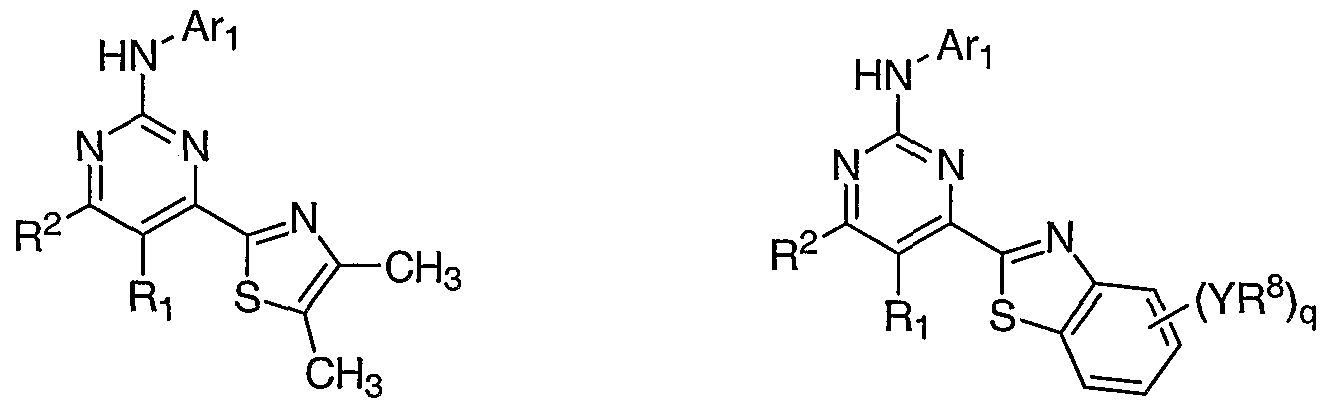
  • R 1 , R 2 , R 3 , R 4 , and Ar 1 are as defined below.
  • These compounds and pharmaceutically acceptable compositions thereof are useful for treating or preventing a variety of diseases, disorders or conditions, including, but not limited to, immunodeficiency disorders, inflammatory diseases, allergic diseases, autoimmune diseases, proliferative disorders, immunologically-mediated diseases, or respiratory disorders, to name a few.
  • the compounds provided by this invention are also useful for the study of kinases in biological and pathological phenomena; the study of intracellular signal transduction pathways mediated by such kinases; and the comparative evaluation of new kinase inhibitors.
  • R 1 and R 2 are each independently R, halogen, CN, N0 2 , or TR, or R 1 and R 2 taken together form an optionally substituted saturated, partially unsaturated, or fully unsaturated 5- or 6-membered ring having 0-3 heteroatoms independently selected from N, O, or S;
  • T is an optionally substituted C 1 -C 4 . alkylidene chain wherein up to two methylene units of T are optionally and independently replaced by O, N(R), C(O), S, SO, or S0 2 ;
  • Ar 1 is an optionally substituted ring selected from: an aryl group selected from a 5-6 membered monocyclic or an 8-10 membered bicyclic ring having 0-5 heteroatoms independently selected from nitrogen, oxygen, or sulfur; a 3-8-membered saturated or partially unsaturated monocyclic ring having 0-3 heteroatoms independently selected from nitrogen, oxygen, or sulfur; or an 8-10-membered saturated or partially unsaturated bicyclic ring system having 0-5 heteroatoms independently selected from nitrogen, oxygen, or sulfur; wherein Ar 1 is optionally substituted at one or more carbon atoms with 0-5 occurrences of -Q-R 5 , and at one or more substitutable nitrogen atoms with -R 6 and each occurrence of R 6 is independently R', -COR', -C0 2 (C 1-6 aliphatic), -CON(R ) , - S0 2 N(R') 2 , or -S0 2 R ;
  • R 3 and R 4 are each independently Z-R 7 , or R 3 and R 4 are taken together to form an optionally substituted saturated or partially unsaturated, or fully unsaturated 3-8 membered ring having 0-3 heteroatoms independently selected from nitrogen, oxygen, or sulfur wherein said ring is optionally substituted with 0-5 independent occurrences of Y-R ; each occurrence of Q, Z, and Y is independently a bond or an optionally substituted -C 6 alkylidene chain wherein up to two non-adjacent methylene units of Q are optionally replaced by CO, C0 2 , COCO, CONR, OCONR, NRNR, NRNRCO, NRCO, NRC0 2 , NRCONR, SO, S0 2 , NRS0 2 , S0 2 NR, NRS0 2 NR, O, S, or NR; each occurrence of R 5 , R 7 and R 8 is independently R', halogen, N0 2 , CN, OR', SR
  • compounds of the invention may optionally be substituted with one or more substituents, such as are illustrated generally above, or as exemplified by particular classes, subclasses, and species of the invention. It will be appreciated that the phrase “optionally substituted” is used interchangeably with the phrase “substituted or unsubstituted.” In general, the term “substituted”, whether preceded by the term “optionally” or not, refers to the replacement of hydrogen radicals in a given structure with the radical of a specified substituent.
  • an optionally substituted group may have a substituent at each substitutable position of the group, and when more than one position in any given structure may be substituted with more than one substituent selected from a specified group, the substituent may be either the same or different at every position.
  • Combinations of substituents envisioned by this invention are preferably those that result in the formation of stable or chemically feasible compounds.
  • stable refers to compounds that are not substantially altered when subjected to conditions to allow for their production, detection, and preferably their recovery, purification, and use for one or more of the purposes disclosed herein.
  • a stable compound or chemically feasible compound is one that is not substantially altered when kept at a temperature of 40°C or less, in the absence of moisture or other chemically reactive conditions, for at least a week.
  • aliphatic or "aliphatic group”, as used herein, means a straight-chain (i.e., unbranched) or branched, substituted or unsubstituted hydrocarbon chain that is completely saturated or that contains one or more units of unsaturation, or a monocyclic hydrocarbon or bicyclic hydrocarbon that is completely saturated or that contains one or more units of unsaturation, but which is not aromatic (also referred to herein as “carbocycle” "cycloaliphatic” or “cycloalkyl”), that has a single point of attachment to the rest of the molecule.
  • aliphatic groups contain 1-20 aliphatic carbon atoms.
  • aliphatic groups contain 1-10 aliphatic carbon atoms. In other embodiments, aliphatic groups contain 1-8 aliphatic carbon atoms. In still other embodiments, aliphatic groups contain 1-6 aliphatic carbon atoms, and in yet other embodiments aliphatic groups contain 1-4 aliphatic carbon atoms.
  • cycloaliphatic refers to a monocyclic C 3 -C 8 hydrocarbon or bicyclic C 8 -C 12 hydrocarbon that is completely saturated or that contains one or more units of unsaturation, but which is not aromatic, that has a single point of attachment to the rest of the molecule wherein any individual ring in said bicyclic ring system has 3-7 members.
  • Suitable aliphatic groups include, but are not limited to, linear or branched, substituted or unsubstituted alkyl, alkenyl, alkynyl groups and hybrids thereof such as (cycloalkyl)alkyl, (cycloalkenyl)alkyl or (cycloalkyl)alkenyl.
  • heteroaliphatic means aliphatic groups wherein one or two carbon atoms are independently replaced by one or more of oxygen, sulfur, nitrogen, phosphorus, or silicon. Heteroaliphatic groups may be substituted or unsubstituted, branched or unbranched, cyclic or acyclic, and include "heterocycle”, “heterocyclyl”, “heterocycloahphatic”, or “heterocyclic” groups.
  • heterocycle means non-aromatic, monocyclic, bicyclic, or tricyclic ring systems in which one or more ring members is an independently selected heteroatom.
  • the "heterocycle”, “heterocyclyl”, “heterocycloahphatic”, or “heterocyclic” group has three to fourteen ring members in which one or more ring members is a heteroatom independently selected from oxygen, sulfur, nitrogen, or phosphorus, and each ring in the system contains 3 to 7 ring members.
  • heteroatom means one or more of oxygen, sulfur, nitrogen, phosphorus, or silicon (including, any oxidized form of nitrogen, sulfur, phosphorus, or silicon; the quaternized form of any basic nitrogen or; a substitutable nitrogen of a heterocyclic ring, for example N (as in 3,4-dihydro-2H-pyrrolyl), N ⁇ (as in pyrrolidinyl) or NR + (as in N-substituted pyrrolidinyl)).
  • alkoxy refers to an alkyl group, as previously defined, attached to the principal carbon chain through an oxygen (“alkoxy”) or sulfur (“thioalkyl”) atom.
  • haloalkyl means alkyl, alkenyl or alkoxy, as the case may be, substituted with one or more halogen atoms.
  • halogen means F, Cl, Br, or I.
  • aryl used alone or as part of a larger moiety as in “aralkyl”, “aralkoxy”, or “aryloxyalkyl”, refers to monocyclic, bicyclic, and tricyclic ring systems having a total of five to fourteen ring members, wherein at least one ring in the system is aromatic and wherein each ring in the system contains 3 to 7 ring members.
  • aryl may be used interchangeably with the term “aryl ring”.
  • aryl also refers to heteroaryl ring systems as defined hereinbelow.
  • heteroaryl used alone or as part of a larger moiety as in “heteroaralkyl” or “heteroarylalkoxy”, refers to monocyclic, bicyclic, and tricyclic ring systems having a total of five to fourteen ring members, wherein at least one ring in the system is aromatic, at least one ring in the system contains one or more heteroatoms, and wherein each ring in the system contains 3 to 7 ring members.
  • heteroaryl may be used interchangeably with the term “heteroaryl ring” or the term “heteroaromatic”.
  • An aryl (including aralkyl, aralkoxy, aryloxyalkyl and the like) or heteroaryl (including heteroaralkyl and heteroarylalkoxy and the like) group may contain one or more substituents.
  • Optional substituents on the aliphatic group of R° are selected from NH , NH(C 1- aliphatic), N(C 1- aliphatic) 2 , halogen, C 1-4 aliphatic, OH, 0(C 1-4 aliphatic), N0 2 , CN, C0 2 H, C0 2 (C 1-4 aliphatic), 0(haloC 1-4 aliphatic), or haloC 1-4 aliphatic, wherein each of the foregoing C 1-4 aliphatic groups of R° is unsubstituted.
  • Optional substituents on the aliphatic group of R * are selected from NH 2 , NH(C 1-4 aliphatic), N(C ⁇ -4 aliphatic) 2 , halogen, C 1- aliphatic, OH, 0(C 1- aliphatic), N0 2 , CN, C0 2 H, C0 2 (C 1-4 aliphatic), 0(halo C 1- aliphatic), or halo(C 1-4 aliphatic), wherein each of the foregoing C 1-4 aliphatic groups of R * is unsubstituted.
  • Optional substituents on the aliphatic group or the phenyl ring of R + are selected from NH 2 , NH(C 1-4 aliphatic), N(C 1-4 aliphatic) 2 , halogen, C 1-4 aliphatic, OH, 0(C 1- aliphatic), N0 2 , CN, C0 2 H, C0 2 (C 1-4 aliphatic), 0(halo C 1-4 aliphatic), or halo(C 1-4 aliphatic), wherein each of the foregoing C ⁇ _ 4 aliphatic groups of R + is unsubstituted.
  • alkylidene chain refers to a straight or branched carbon chain that may be fully saturated or have one or more units of unsaturation and has two points of attachment to the rest of the molecule.
  • two independent occurrences of R° are taken together together with the atom(s) to which each variable is bound to form a 3-8-membered cycloalkyl, heterocyclyl, aryl, or heteroaryl ring having 0-3 heteroatoms independently selected from nitrogen, oxygen, or sulfur.
  • Exemplary rings that are formed when two independent occurrences of R° (or R + , or any other variable similarly defined herein) are taken together with the atom(s) to which each variable is bound include, but are not limited to the following: a) two independent occurrences of R° (or R + , or any other variable similarly defined herein) that are bound to the same atom and are taken together with that atom to form a ring, for example, N(R°) 2 , where both occurrences of R° are taken together with the nitrogen atom to form a piperidin-1-yl, piperazin-1-yl, or morpholin-4-yl group; and b) two independent occurrences of R° (or R + , or any other variable similarly defined herein) that are bound to different atoms and are taken together with both of those atoms to form a ring, for example where a phenyl group is
  • oxygen containing ring It will be appreciated that a variety of other rings can be formed when two independent occurrences of R° (or R + , or any other variable similarly defined herein) are taken together with the atom(s) to which each variable is bound and that the examples detailed above are not intended to be limiting.
  • structures depicted herein are also meant to include all isomeric (e.g., enantiomeric, diastereomeric, and geometric (or conformational)) forms of the structure; for example, the R and S configurations for each asymmetric center, (Z) and (E) double bond isomers, and (Z) and (E) conformational isomers. Therefore, single stereochemical isomers as well as enantiomeric, diastereomeric, and geometric (or conformational) mixtures of the present compounds are within the scope of the invention. Unless otherwise stated, all tautomeric forms of the compounds of the invention are within the scope of the invention.
  • structures depicted herein are also meant to include compounds that differ only in the presence of one or more isotopically enriched atoms.
  • compounds having the present structures except for the replacement of hydrogen by deuterium or tritium, or the replacement of a carbon by a 13 C- or 14 C-enriched carbon are within the scope of this invention.
  • Such compounds are useful, for example, as analytical tools or probes in biological assays.
  • Ar 1 is an optionally substituted ring selected from: an aryl group selected from a 5-6 membered monocyclic or an 8-10 membered bicyclic ring having 0-5 heteroatoms independently selected from nitrogen, oxygen, or sulfur; a 3-8-membered saturated or partially unsaturated monocyclic ring having 0-3 heteroatoms independently selected from nitrogen, oxygen, or sulfur; or an 8-10-membered saturated or partially unsaturated bicyclic ring system having 0- 5 heteroatoms independently selected from nitrogen, oxygen, or sulfur, wherein Ar 1 is optionally substituted at one or more carbon atoms with 0-5 occurrences of -Z-R 5 , and at one or more substitutable nitrogen atoms with -R 6 .
  • Preferred Ar 1 groups of formula I are optionally substituted rings selected from:
  • Ar 1 groups of formula I are optionally substituted rings selected from:
  • Ar 1 groups of formula I are optionally substituted rings selected from any one of a-bb:
  • Ar 1 rings are phenyl, pyrimidinyl, or pyridyl.
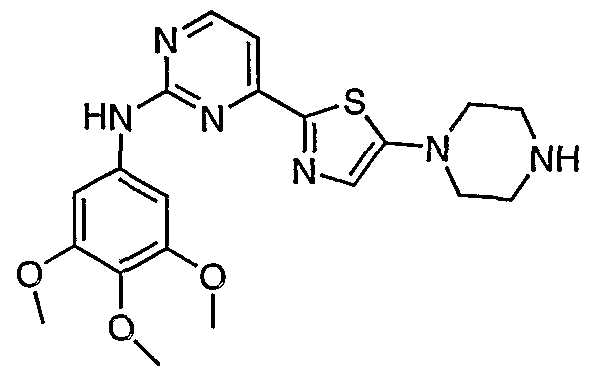
  • Ar 1 is not 3, 4, 5-trimethoxyphenyl.
  • Ar is optionally substituted with up to 5 independent occurrences of Q-R 5 , wherein each occurrence of Q is independently a bond or is an optionally substituted C ⁇ .-C 6 alkylidene chain wherein up to two non-adjacent methylene units of Q are optionally replaced by CO, C0 2 , COCO, CONR, OCONR, NRNR, NRNRCO, NRCO, NRC0 2 , NRCONR, SO, S0 2 , NRS0 2 , S0 2 NR, NRS0 2 NR, O, S, or NR; and each occurrence of R 5 is independently R', halogen, N0 2 , CN, OR', SR', N(R') 2 , NR'C(0)R', NR'C(0)N(R') 2 , NR'C0 2 R', C(0)R', C0 2 R ⁇ OC(0)R', C(0)N(R')
  • Q is independently a bond or is an optionally substituted C 1 -C 4 alkylidene chain wherein up to two non-adjacent methylene units of Q are optionally replaced by CO, C0 2 , CONR, OCONR, NRCO, NRC0 2 , NRS0 2 , S0 2 NR, O, S, or NR; and each occurrence of R 5 is independently selected from R', halogen, N0 2 , CN, OR', SR', N(R') 2 , NR'C(0)R', NR'C(0)N(R') 2 , NR'C0 2 R', C(0)R', C0 2 R ⁇ OC(0)R', C(0)N(R') 2 , OC(0)N(R') 2 , SOR', S0 2 R', S0 2 N(R') 2 , NR'S0 2 R', NR'S0 2 N(R') 2 ,
  • Preferred Q-R 5 substituents on Ar 1 are CH 2 halogen, halogen, CH 2 CN, CN, CH 2 C0 2 R', C0 2 R ⁇ CH 2 COR ⁇ COR', R', CH 2 N0 2 , N0 2 , CH 2 OR', OR', CH 2 SR', SR', haloalkyl, CH 2 S0 2 N(R') 2 , S0 2 N(R') 2 , CH 2 N(R') 25 N(R') 2 , NHCOR', CH 2 NHCOR', CH 2 PO(OR') 2 , PO(OR') 2 , or two adjacent occurrences of Q-R 5 , taken together with the atoms to which they are bound, form an optionally substituted saturated, partially unsaturated, or fully unsaturated 5-8-membered ring having 0-3 heteroatoms selected from nitrogen, oxygen, or sulfur.
  • More preferred Q-R 5 substituents on Ar 1 are fluoro, iodo, chloro, bromo, COCH 3 , CO 2 CH 3 , C 1-4 alkyl (for example, methyl, ethyl, propyl, cyclopropyl, n-butyl, cyclobuyl, or t- butyl), NH 2 , CH 2 NH 2 , NHMe, CH 2 NHMe, N(Me) 2 , CH 2 N(Me) 2 , N(Et) 2 , CH 2 N(Et) 2 , NH(phenyl), CO(C 1-4 alkyl), CH 2 CO(C 1-4 alkyl), NHCO(C 1-4 alkyl), CH 2 NHCO(C 1-4 alkyl), CH 2 NHCO(C 1-4 alkyl), CN, CH 2 CN, OH, C 1-4 alkoxy (for example, OCH 3 , OCH 2 CH 3 , 0(CH 2 )
  • Ar 1 substituents are those substituents where two adjacent occurrences of Q-R 5 , taken together with the atoms to which they are bound, and include a fused optionally substituted saturated, partially unsaturated, or fully unsaturated 5- or 6-membered ring having 0-3 heteroatoms selected from nitrogen, oxygen, or sulfur.
  • these fused substituents formed by two adjacent occurrences of Q-R 5 include an optionally substituted group selected from methylenedioxy, ethylenedioxy, propylenedioxy, thiazolyl, oxazolyl, pyrrolyl, pyrazolyl, imidazolyl, phenyl, pyridyl, pyrimidinyl, furyl, thiophene, pyran, pyrrolidinyl, piperidinyl, piperazinyl, or morpholinyl.
  • each occurrence of QR 5 is independently CH 2 halogen, halogen, CH 2 CN, CN, CH 2 C0 2 R', C0 2 R', CH 2 COR', COR', R', CH 2 N0 2 , N0 2 , CH 2 OR ⁇ OR', CH 2 SR', SR', haloalkyl, CH 2 S0 2 N(R') 2 , S0 2 N(R') 2 , CH 2 N(R') 2 , N(R') 2 , NHCOR', CH 2 NHCOR', CH 2 PO(OR') 2 , PO(OR') , PO(OR') .
  • each occurrence of QR is independently fluoro, iodo, chloro, bromo, COCH 3 , C0 2 CH 3 , C 1-4 alkyl (for example, methyl, ethyl, propyl, cyclopropyl, n-butyl, cyclobuyl, or t-butyl), NH 2 , CH 2 NH 2 , NHMe, CH 2 NHMe, N(Me) 2 , CH 2 N(Me) 2 , N(Et) 2 , CH 2 N(Et) 2 , NH(phenyl), CO(C 1-4 alkyl), CH 2 CO(C 1-4 alkyl), NHCO(C 1-4 alkyl), CH 2 NHCO(C 1-4 alkyl), CH 2 NHCO(C 1-4 alkyl), CN, CH 2 CN, OH, C 1-4 alkoxy (for example, OCH 3 , OCH 2 CH 3 , 0(CH 2 ) 2 CH 3 ,
  • each occurrence of QR 5 is independently CH 2 halogen, halogen, CH 2 CN, CN, CH 2 C0 2 R', C0 2 R', CH 2 COR', COR', R ⁇ CH 2 N0 2 , N0 2 , CH 2 OR', OR', CH 2 SR', SR', haloalkyl, CH 2 S0 2 N(R') 2 , S0 2 N(R') 2 , CH 2 N(R') 2 , N(R') 2 , NHCOR', CH 2 NHCOR', CH 2 PO(OR') 2 , PO(OR') 2 .
  • each occurrence of QR 5 is independently fluoro, iodo, chloro, bromo, COCH 3 , C0 2 CH , C 1-4 alkyl (for example, methyl, ethyl, propyl, cyclopropyl, n-butyl, cyclobuyl, or t-butyl), NH 2 , CH 2 NH 2 , NHMe, CH 2 NHMe, N(Me) 2 , CH 2 N(Me) 2 , N(Et) 2 , CH 2 N(Et) 2 , NH(phenyl), CO(C 1-4 alkyl), CH 2 CO(C 1-4 alkyl), NHCO(C 1-4 alkyl), CH 2 NHCO(C 1-4 alkyl), CH 2 NHCO(C 1-4 alkyl), CN, CH 2 CN, OH, C 1-4 alkoxy (for example, OCH 3 , OCH 2 CH 3 , 0(CH 2 ) 2 CH 3 ,
  • each occurrence of QR 5 is independently fluoro, iodo, chloro, bromo, COCH 3 , C0 2 CH 3 , C 1-4 alkyl (for example, methyl, ethyl, propyl, cyclopropyl, n-butyl, cyclobuyl, or t- butyl), NH 2 , CH 2 NH 2 , NHMe, CH 2 NHMe, N(Me) 2 , CH 2 N(Me) 2 , N(Et) 2 , CH 2 N(Et) 2 , NH(phenyl), CO(C 1-4 alkyl), CH 2 CO(C 1-4 alkyl), NHCO(C 1-4 alkyl), CH 2 NHCO(C 1-4 alkyl), CH 2 NHCO(C 1-4 alkyl), CN, CH CN, OH, optionally substituted benzyloxy, optionally substituted phenyloxy, CF 3 , S0 2 NH 2 , S
  • Each of the Q-R 5 substituents described above are also optionally further substituted with one or more groups independently selected from R, OR, N(R) 2 , S0 2 R, halogen, N0 2? CN, SR, S0 2 N(R) , C0 R, C(0)R, or oxo.
  • each of the Q-R 5 groups described above are also optionally further substituted with one or two groups independently selected from methyl, ethyl, t-butyl, fluoro, chloro, bromo, oxo, CF 3 , OMe, OEt, CN, S0 2 Me, S0 2 NH 2 , NH 2 , NHMe, N(Me) 2 , SMe, SEt, OH, C(0)Me, N0 2 , or CH 2 OH.
  • R and R are each independently R, halogen, CN, N0 2 , or TR, or R 1 and R 2 taken together form an optionally substituted saturated, partially unsaturated, or fully unsaturated 5- or 6-membered ring having 0-3 heteroatoms independently selected from N, O, or S.
  • Preferred R and R groups of formula I are hydrogen, N(R) 2 , SR, OR, or TR, or R 1 and R 2 , taken together form an optionally substituted saturated, partially unsaturated, or fully unsaturated 5-membered ring having 0-2 heteroatoms independently selected from N, O, or S.
  • R 1 and R 2 groups are hydrogen, OH, CH 3 , CH 2 CH 3 , OCH 3 , CH 2 OH, CH 2 OCH 3 , CH 2 NH 2 , CH 2 NHCH 3 , NH 2 , or CH 2 NH 2 , or R 1 and R 2 , taken together, form a fused optionally substituted pyrrolyl, pyrazolyl, or imidazolyl ring.
  • Still other preferred groups include hydrogen, NH 2 , or CH 2 NH 2 .
  • R 3 and R 4 are each independently Z-R 7 , wherein Z is an optionally substituted C 1-6 alkylidene chain wherein up to three non-adjacent methylene units are optionally replaced by CO, C0 2 , COCO, CONR, OCONR, NRNR, NRNRCO, NRCO, NRC0 2 , NRCONR, SO, S0 2 , NRS0 2 , S0 2 NR, NRS0 2 NR, O, S, or NR, and each occurrence of R 7 is independently R', halogen, N0 2 , CN, OR', SR', N(R') 2 , NR'C(0)R ⁇ NR'C(0)N(R') 2 , NR'C0 2 R', C(0)R', C0 2 R', OC(0)R', C(0)N(R') 2 , OC(0)N(R') 2 , SOR', S0 2 R
  • R 3 and R 4 are each independently Z-R 7 wherein Z is an optionally substituted Co- 4 alkylidene chain wherein one methylene unit of Z is optionally replaced by O, NR, NRCO, NRC0 2 , NRS0 2 , CONR, C(O), C(0)0, and wherein R 7 is selected from halogen, CN, N(R') 2 , NHCOR', or R', or wherein R 3 and R 4 , taken together form an optionally substituted saturated, partially unsaturated, or fully unsaturated 5- or 6- membered ring having 0-3 heteroatoms independently selected from nitrogen, oxygen, or sulfur.
  • R 3 and R 4 are each independently hydrogen, CN, halogen, OH, SH, NH 2 , C0 2 H, COH, CONH 2 , S0 2 NH 2 , N0 2 , (CH 2 ) n NRR 7 , wherein R and R 7 , taken together with the nitrogen atom to which they are bound fo ⁇ n an optionally substituted 3-8-membered saturated or partially unsaturated ring having 1-3 heteroatoms selected from nitrogen, oxygen, or sulfur, or R 3 and R 4 , taken together with the atoms to which they are bound, form an optionally substituted saturated, partially unsaturated, or fully unsaturated 5- or 6-membered ring having 0-3 heteroatoms independently selected from nitrogen, oxygen, or sulfur, and n is 0, 1, 2, 3, 4, or 5.
  • one of R 3 or R 4 is hydrogen, and the other of R 3 or R 4 is (CH 2 ) n halogen, (CH 2 ) n CN, (CH 2 ) n OR 7 , (CH 2 ) n NRR 7 , (CH 2 ) n C(0)R 7 , (CH 2 ) n C(0)R 7 (CH 2 ) n CH 3 , (CH 2 ) n C(0)NRR 7 , (CH 2 ) n SR 7 , wherein R 7 is hydrogen, (CH 2 ) m N(R') 2 , Ci-C 4 alkyl, an optionally substituted 5- or 6-membered aryl, aralkyl, heteroaryl, or heteroaralkyl group, or R and R 7 , taken together with the nitrogen atom to which they are bound form an optionally substituted 3-8-membered saturated or partially unsaturated ring having 1-3 heteroatoms selected from nitrogen, oxygen, or sulfur.
  • R 3 is hydrogen. In other embodiments, for compounds described directly above, R 4 is hydrogen. [0054] In yet other preferred embodiments, R 3 or R 4 are each independently hydrogen, (CH 2 ) n OR 7 , (CH 2 ) n NRR 7 , (CH 2 ) n CH 3 , (CH 2 ) n SR 7 , (CH 2 ) n C(0)R 7 , or (CH 2 ) n C(0)R 7 , wherein R 7 is (CH 2 ) m N(R') 2 , Ci- alkyl, an optionally substituted 5- or 6-membered aryl, aralkyl, heteroaryl, or heteroaralkyl group, or R and R 7 , taken together with the nitrogen atom to which they are bound form an optionally substituted 3-8-membered saturated or partially unsaturated ring having 1-3 heteroatoms selected from nitrogen, oxygen, or sulfur, wherein n is 0 or 1 and m is 0 or
  • R 3 is hydrogen
  • R 4 is (CH 2 ) n OR 7 , (CH 2 ) n NRR 7 , (CH 2 ) n CH 3 , (CH 2 ) n SR 7 , (CH 2 ) n C(0)R 7 , or (CH 2 ) n C(0)R 7 , wherein R 7 is (CH 2 ) m N(R') 2 , Q- C 4 alkyl, an optionally substituted 5- or 6-membered aryl, aralkyl, heteroaryl, or heteroaralkyl group, or R and R , taken together with the nitrogen atom to which they are bound form an optionally substituted 3-8-membered saturated or partially unsaturated ring having 1-3 heteroatoms selected from nitrogen, oxygen, or sulfur, n is 0 or 1 and m is 0 or 1.
  • R 4 is hydrogen and R 3 is (CH 2 ) n OR 7 , (CH 2 ) n NRR 7 , (CH 2 ) n CH 3 , (CH 2 ) n SR 7 , (CH 2 ) n C(0)R 7 , or (CH 2 ) n C(0)R 7 , R 7 is (CH 2 ) m N(R') 2 , Cj-C 4 alkyl, an optionally substituted 5- or 6-membered aryl, aralkyl, heteroaryl, or heteroaralkyl group, or R and R 7 , taken together with the nitrogen atom to which they are bound form an optionally substituted 3-8-membered saturated or partially unsaturated ring having 1-3 heteroatoms selected from nitrogen, oxygen, or sulfur, wherein n is 0 or 1 and m is 0 or 1.
  • R 3 and R 4 taken together with the atoms to which they are bound, form an optionally substituted saturated, partially unsaturated, or fully unsaturated 5- or 6-membered ring having 0-3 heteroatoms independently selected from nitrogen, oxygen, or sulfur, and wherein said ring is optionally substituted with 0, 1, 2, 3, 4, or 5 occu ⁇ ences of Y-R 8 .
  • each occurrence of Y-R 8 is independently methyl, ethyl, t-butyl, fluoro, chloro, bromo, oxo, CF 3 , OMe, OEt, CN, S0 2 Me, S0 2 NH 2 , NH 2 , NHMe, N(Me) 2 , SMe, SEt, OH, C(0)Me, N0 2 , or CH 2 OH.
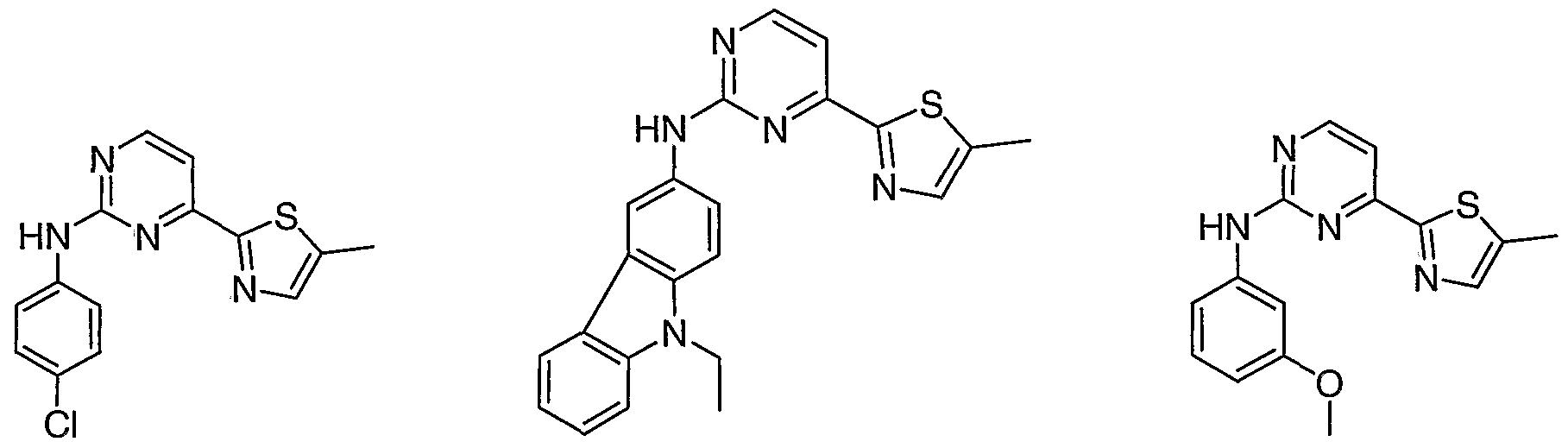
  • the present invention additionally provides compounds wherein at least one of R or R 4 is methyl and compounds have one of formulas I-A-i or I-A-ii:
  • At least one of R 3 or R 4 is (CH 2 ) n NRR 7 and compounds have one of formulas I-B-i or I-B-ii:
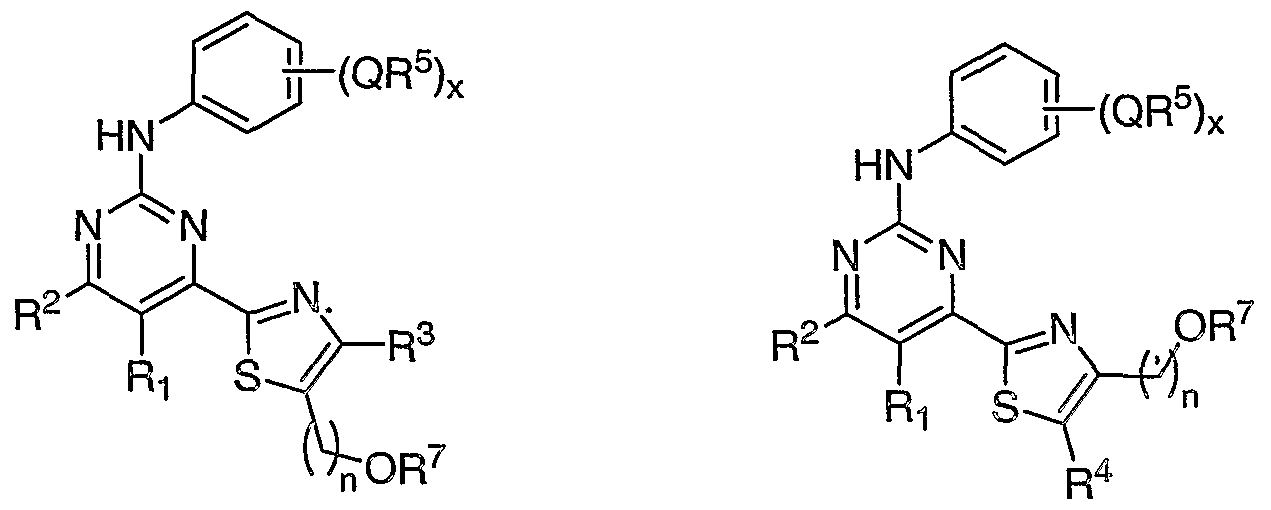
  • R 3 or R 4 is (CH 2 ) n OR 7 and compounds have one of formulas I-C-i or I-C-ii:
  • both R 3 and R 4 are methyl and compounds hhaavvee ffoorrmmuullaa II--DD--ii,, oorr RR 33 aanndd RR 44 ,, tt ⁇ aken together, form an optionally substituted phenyl ring and compounds have formula I-E-i:
  • Ar 1 is an optionally substituted ring selected from: an aryl group selected from a 5-6 membered monocyclic or an 8-10 membered bicyclic ring having 0-5 heteroatoms independently selected from nitrogen, oxygen, or sulfur; a 3-8-membered saturated or partially unsaturated monocyclic ring having 0-3 heteroatoms independently selected from nitrogen, oxygen, or sulfur; or an 8-10-membered saturated or partially unsaturated bicyclic ring system having 0-5 heteroatoms independently selected from nitrogen, oxygen, or sulfur, wherein Ar 1 is optionally substituted at one or more carbon atoms with 0-5 occurrences of - Z-R 5 , and at one or more substitutable nitrogen atoms with -R 6 .
  • Preferred Ar 1 groups for compounds of formulas I-A-i, I-A-ii, I-B-i, I-B-ii, I-C-i, I-C-ii, I-D-i, and I-E-i are optionally substituted rings selected from:
  • Ar 1 groups for compounds of formulas I-A-i, I-A-ii, I-B-i, I-B-ii, I-C-i, I-C-ii, I-D-i, and I-E-i are optionally substituted rings selected from:
  • prefe ⁇ ed Ar 1 groups for compounds of formulas I-A-i, I-A-ii, I-B-i, I-B-ii, I-C-i, I-C-ii, I-D-i, and I-E-i are optionally substituted rings selected from any one of a-bb:
  • C-ii, I-D-i, and I-E-i are phenyl, pyrimidinyl, or pyridyl.
  • Ar 1 is not 3, 4, 5-trimethoxyphenyl.
  • Ar 1 is optionally substituted phenyl and compounds have one of formulas II-A-i, II-A-ii, II-B-i, II-B-ii, II-C-i, Il-C-ii, II-D-i, and II-E-i:
  • Ar 1 is optionally substituted with up to 5 independent occu ⁇ ences of Q-R 5 , wherein each occu ⁇ ence of Q is independently a bond or is an optionally substituted Ci-C ⁇ alkylidene chain wherein up to two non-adjacent methylene units of Q are optionally replaced by CO, C0 2 , COCO, CONR, OCONR, NRNR, NRNRCO, NRCO, NRC0 2 , NRCONR, SO, S0 2 , NRS0 2 , S0 2 NR, NRS0 2 NR, O, S, or NR; and each occu ⁇ ence of R 5 is independently selected from R ⁇ halogen, N0 , CN, OR', SR', N(R') 2 , NR'C(0)R', NR'C(0)N(R') 2 , NR'C0 2 R ⁇ C(0)R', C0 2 R', OC(0)R', C(0)N(
  • Q is independently a bond or is an optionally substituted C1.-C 4 alkylidene chain wherein up to two non-adjacent methylene units of Q are optionally replaced by CO, C0 2 , CONR, OCONR, NRCO, NRC0 2 , NRS0 2 , S0 2 NR, O, S, of NR; and each occu ⁇ ence of R 5 is independently selected from R', halogen, N0 2 , CN, OR', SR', N(R') 2 , NR'
  • Ar 1 substituents are those substituents where two adjacent occurrences of Q-R 5 , taken together with the atoms to which they are bound, and include a fused optionally substituted saturated, partially unsaturated, or fully unsaturated 5- or 6-membered ring having 0-3 heteroatoms selected from nitrogen, oxygen, or sulfur.
  • these fused substituents formed by two adjacent occu ⁇ ences of Q-R 5 include an optionally substituted group selected from methylenedioxy, ethylenedioxy, propylenedioxy, thiazolyl, oxazolyl, py ⁇ olyl, pyrazolyl, imidazolyl, phenyl, pyridyl, pyrimidinyl, furyl, thiophene, pyran, py ⁇ olidinyl, piperidinyl, piperazinyl, or morpholinyl.
  • each occu ⁇ ence of QR 5 is independently CH 2 halogen, halogen, CH 2 CN, CN, CH 2 C0 2 R', C0 2 R', CH 2 COR', COR', R', CH 2 N0 2 , N0 2 , CH 2 OR ⁇ OR', CH 2 SR', SR', haloalkyl, CH 2 S0 2 N(R') 2 , S0 2 N(R') 2 , CH 2 N(R') 2 , N(R') 2 , NHCOR', CH 2 NHCOR', CH 2 PO(OR') 2 , PO(OR') 2 .
  • each occu ⁇ ence of QR 5 is independently fluoro, iodo, chloro, bromo, COCH 3 , C0 2 CH 3 , C 1- alkyl (for example, methyl, ethyl, propyl, cyclopropyl, n-butyl, cyclobuyl, or t-butyl), NH 2 , CH 2 NH 2 , NHMe, CH 2 NHMe, N(Me) 2 , CH 2 N(Me) 2 , N(Et) 2 , CH 2 N(Et) 2 , NH(phenyl), CO(C 1-4 alkyl), CH 2 CO(C 1-4 alkyl), NHCO(C 1-4 alkyl), CH 2 NHCO(C 1-4 alkyl), CH 2 NHCO(C 1-4 alkyl), CN, CH 2 CN, OH, C 1-4 alkoxy (for example, OCH 3 , OCH 2 CH 3 , 0(CH 2 ) 2 CH
  • Ar 1 is phenyl and is substituted with three occu ⁇ ences
  • each occurrence of QR 5 is independently CH 2 halogen, halogen, CH CN, CN, CH 2 C0 2 R', C0 2 R', CH 2 COR ⁇ COR', R', CH 2 N0 2 , N0 2 , CH 2 OR', OR', CH 2 SR', SR', haloalkyl, CH 2 S0 2 N(R') 2 , S0 2 N(R') 2 , CH 2 N(R') 2 , N(R') 2 , NHCOR', CH 2 NHCOR', CH 2 PO(OR') 2 , PO(OR') 2 .
  • each occu ⁇ ence of QR 5 is independently fluoro, iodo, chloro, bromo, COCH 3 , C0 2 CH 3 , C 1- alkyl (for example, methyl, ethyl, propyl, cyclopropyl, n-butyl, cyclobuyl, or t-butyl), NH 2 , CH 2 NH 2 , NHMe, CH 2 NHMe, N(Me) 2 , CH 2 N(Me) 2 , N(Et) 2 , CH 2 N(Et) 2 , NH(phenyl), CO(C 1-4 alkyl), CH 2 CO(C 1-4 alkyl), NHCO(C 1-4 alkyl), CH 2 NHCO(C 1-4 alkyl), CH 2 NHCO(C 1-4 alkyl), CN, CH 2 CN, OH, C 1-4 alkoxy (for example, OCH 3 , OCH 2 CH 3 , 0(CH 2 ) 2 CH
  • each occu ⁇ ence of QR 5 is independently fluoro, iodo, chloro, bromo, COCH 3 , C0 2 CH 3 , C 1-4 alkyl (for example, methyl, ethyl, propyl, cyclopropyl, n-butyl, cyclobuyl, or t- butyl), NH 2 , CH 2 NH 2 , NHMe, CH 2 NHMe, N(Me) 2 , CH 2 N(Me) 2 , N(Et) 2 , CH 2 N(Et) 2 , NH ⁇ henyl), CO(C 1-4 alkyl), CH 2 CO(C 1-4 alkyl), NHCO(C 1-4 alkyl), CH 2 NHCO(C 1-4 alkyl), CN, CH 2 CN, OH, optionally substituted benzyloxy, optionally substituted phenyloxy, CF 3 , S0 2 NH 2 NH 2 ,
  • Each of the Q-R 5 substituents described above are also optionally further substituted with one or more groups independently selected from R, OR, N(R) 2 , S0 2 R, halogen, N0 2 , CN, SR, S0 2 N(R) 2 , C0 2 R, C(0)R, or oxo.
  • each of the Q-R 5 groups described above are also optionally further substituted with one or two groups independently selected from methyl, ethyl, t-butyl, fluoro, chloro, bromo, oxo, CF 3 , OMe, OEt, CN, SO z Me, S0 2 NH 2 , NH 2 , NHMe, N(Me) 2 , SMe, SEt, OH, C(0)Me, N0 2 , or CH 2 OH.
  • R 1 and R 2 groups for compounds of formulas I-A-i, I-A-ii, I-B-i, I-B-ii, I-C-i, I-C-ii, I-D-i, I-E-i, II-A-i, ⁇ -A-ii, II-B-i, ⁇ -B-ii, II-C-i s ⁇ l-C-ii, II-D-i, and II-E-i are selected from hydrogen, N(R) 2 , SR, OR, or TR, or R 1 and R 2 , taken together form an optionally substituted saturated, partially unsaturated, or fully unsaturated 5-membered ring having 0-2 heteroatoms independently selected from N, O, or S.
  • R 1 and R 2 groups are hydrogen, OH, CH 3 , CH 2 CH 3 , OCH 3 , CH 2 OH, CH 2 OCH 3 , CH 2 NH 2 , CH 2 NHCH 3j NH 2 , or CH 2 NH 2 , or R 1 and R 2 , taken together, form a fused optionally substituted pyrrolyl, pyrazolyl, or imidazolyl ring.
  • Still other prefe ⁇ ed groups include hydrogen, NH 2 , or CH 2 NH 2 .
  • R 3 groups of for compounds of formulas I-A-i and II-A-i are those wherein Z is a bond or is an optionally substituted C 0- alkylidene chain wherein one methylene unit of Z is optionally replaced by O, NR, NRCO, NRC0 2 , NRS0 2 , CONR, C(O), C(0)0, and wherein R 7 is selected from halogen, CN, N(R') 2 , NHCOR', or R'.
  • R 3 is (CH 2 ) n halogen, (CH 2 ) n CN, (CH 2 ) n OR 7 , (CH 2 ) n NRR 7 , (CH 2 ) n C(0)R 7 , (CH 2 ) n C(0)R 7 (CH 2 ) n CH 3 , (CH 2 ) n C(0)NRR 7 , (CH 2 ) n SR 7 , wherein R 7 is (CH 2 ) m N(R') 2 , Ci-C 4 alkyl, an optionally substituted 5- or 6-membered aryl, aralkyl, heteroaryl, or heteroaralkyl group, or R and R , taken together with the nitrogen atom to which they are bound form an optionally substituted 3-8-membered saturated or partially unsaturated ring having 1-3 heteroatoms selected from nitrogen, oxygen, or sulfur, n is 0 or 1, and m is 0 or 1.
  • R 3 is hydrogen or methyl.
  • Preferred R 4 groups of for compounds of formulas I-A-ii and II-A-ii are those wherein Z is a bond or is an optionally substituted Co -4 alkylidene chain wherein one methylene unit of Z is optionally replaced by O, NR, NRCO, NRC0 2 , NRS0 2 , CONR, C(O), C(0)0, and wherein R 7 is selected from halogen, CN, N(R') 2 , NHCOR', or R'.
  • R 4 is (CH 2 ) administrathalogen, (CH 2 ) n CN, (CH 2 ) n OR 7 , (CH 2 ) n NRR 7 , (CH 2 ) n C(0)R 7 , (CH 2 ) n C(0)R 7 (CH 2 ) n CH 3 , (CH 2 ) necessarilyC(0)NRR 7 , (CH 2 ) n SR 7 , wherein R 7 is (CH 2 ) m N(R') 2 , - alkyl, an optionally substituted 5- or 6-membered aryl, aralkyl, heteroaryl, or heteroaralkyl group, or R and R 7 , taken together with the nitrogen atom to which they are bound form an optionally substituted 3-8-membered saturated or partially unsaturated ring having 1-3 heteroatoms selected from nitrogen, oxygen, or sulfur, n is 0 or 1, and m is 0 or 1.
  • R 4 is hydrogen or methyl.
  • Preferred R 3 groups of for compounds of formulas I-B-i and II-B-i are those wherein Z is a bond or is an optionally substituted C 0- alkylidene chain wherein one methylene unit of Z is optionally replaced by O, NR, NRCO, NRC0 2 , NRS0 2 , CONR, C(O), C(0)0, and wherein R 7 is selected from halogen, CN, N(R') 2 , NHCOR', or R'.
  • R 3 is (CH 2 ) n halogen, (CH 2 ) n CN, (CH ) n OR 7 , (CH 2 ) exclusivelyNRR 7 , (CH 2 ) n C(0)R 7 , (CH 2 ) n C(0)R 7 (CH 2 ) n CH 3 , (CH 2 ) n C(0)NRR 7 , (CH 2 ) distractSR 7 , wherein R 7 is (CH 2 ) m N(R') 2 , C 1 -C 4 alkyl, an optionally substituted 5- or 6-membered aryl, aralkyl, heteroaryl, or heteroaralkyl group, or R and R 7 , taken together with the nitrogen atom to which they are bound form an optionally substituted 3-8-membered saturated or partially unsaturated ring having 1-3 heteroatoms selected from nitrogen, oxygen, or sulfur, n is 0 or 1, and m is 0 or 1.
  • R 3 is hydrogen or methyl.
  • Preferred R 4 groups of for compounds of formulas I-B-ii and II-B-ii are those wherein Z is a bond or is an optionally substituted C 0-4 alkylidene chain wherein one methylene unit of Z is optionally replaced by O, NR, NRCO, NRC0 2 , NRS0 2 , CONR, C(O), C(0)0, and wherein R 7 is selected from halogen, CN, N(R') 2 , NHCOR', or R'.
  • R 4 is (CH 2 ) n halogen, (CH 2 ) n CN, (CH 2 ) n OR 7 , (CH 2 ) n NRR 7 , (CH 2 ) n C(0)R 7 , (CH 2 ) n C(0)R 7 (CH 2 ) n CH 3 , (CH 2 ) n C(0)NRR 7 , (CH 2 ) n SR 7 , wherein R 7 is (CH 2 ) m N(R') 2 , C ⁇ -C 4 alkyl, an optionally substituted 5- or 6-membered aryl, aralkyl, heteroaryl, or heteroaralkyl group, or R and R 7 , taken together with the nitrogen atom to which they are bound form an optionally substituted 3-8-membered saturated or partially unsaturated ring having 1-3 heteroatoms selected from nitrogen, oxygen, or sulfur, n is 0 or 1, and m is 0 or 1.
  • R 4 is hydrogen or methyl.
  • Preferred R groups of for compounds of formulas I-C-i and II-C-i are those wherein Z is a bond or is an optionally substituted Co -4 alkylidene chain wherein one methylene unit of Z is optionally replaced by O, NR, NRCO, NRC0 2 , NRS0 2 , CONR, C(O), C(0)0, and wherein R 7 is selected from halogen, CN, N(R') 2 , NHCOR', or R'.
  • R 3 is (CH 2 ) n halogen, (CH 2 ) n CN, (CH 2 ) n OR 7 , (CH 2 ) n NRR 7 , (CH 2 ) n C(0)R 7 , (CH 2 ) n C(0)R 7 (CH 2 ) n CH 3 , (CH 2 ) n C(0)NRR 7 , (CH 2 ) distractSR 7 , wherein R 7 is (CH 2 ) m N(R') 2 , Ci-C 4 alkyl, an optionally substituted 5- or 6-membered aryl, aralkyl, heteroaryl, or heteroaralkyl group, or R and R 7 , taken together with the nitrogen atom to which they are bound form an optionally substituted 3-8-membered saturated or partially unsaturated ring having 1-3 heteroatoms selected from nitrogen, oxygen, or sulfur, n is 0 or 1, and m is 0 or 1.
  • R 3 is hydrogen or methyl.
  • Preferred R 4 groups of for compounds of formulas I-C-ii and Il-C-ii are those wherein Z is a bond or is an optionally substituted C 0-4 alkylidene chain wherein one methylene unit of Z is optionally replaced by O, NR, NRCO, NRC0 2 , NRS0 2 , CONR, C(O), C(0)0, and wherein R 7 is selected from halogen, CN, N(R') 2 , NHCOR', or R'.
  • R 4 is (CH 2 ) n halogen, (CH 2 ) n CN, (CH 2 ) n OR 7 , (CH 2 ) n NRR 7 , (CH 2 ) n C(0)R 7 , (CH 2 ) n C(0)R 7 (CH 2 ) n CH 3 , (CH 2 ) n C(0)NRR 7 , (CH 2 ) n SR 7 , wherein R 7 is (CH 2 ) m N(R') 2 , -Qalkyl, an optionally substituted 5- or 6-membered aryl, aralkyl, heteroaryl, or heteroaralkyl group, or R and R 7 , taken together with the nitrogen atom to which they are bound form an optionally substituted 3-8-membered saturated or partially unsaturated ring having 1-3 heteroatoms selected from nitrogen, oxygen, or sulfur, n is 0 or 1, and m is 0 or 1.
  • R 4 is hydrogen or methyl.
  • each occu ⁇ ence of Y-R 8 is independently methyl, ethyl, t-butyl, fluoro, chloro, bromo, oxo, CF 3 , OMe, OEt, CN, S0 2 Me, S0 2 NH 2 , NH 2 , NHMe, N(Me) 2 , SMe, SEt, OH, C(0)Me, N0 2 , or CH 2 OH.
  • q is 0, 1, or 2.
  • compounds have one of formulas II-A-i, II-B- i, or II-C-i, wherein the compound variables are defined as: a) x is 0, 1, 2, or 3 and Q-R 5 is CH 2 halogen, halogen, CH 2 CN, CN, CH 2 C0 2 R', C0 2 R', CH 2 COR ⁇ COR', R', CH 2 N0 2 , N0 2 , CH 2 OR', OR', CH 2 SR', SR', haloalkyl, CH 2 S0 2 N(R') 2 , S0 2 N(R') 2 , CH 2 N(R') 2 , N(R') 2 , NHCOR', CH 2 NHCOR', CH 2 PO(OR') 2 , PO(OR') 2 , or Q-R 5 , taken together with the atoms to which they are bound, form an optionally substituted saturated, partially unsaturated, or fully unsaturated 5-8
  • compounds have one of formulas II-A-ii, II- B-ii, or Il-C-ii, wherein one or more of the compound variables are defined as: a) x is 0, 1, 2, or 3, and Q-R 5 is CH 2 halogen, halogen, CH 2 CN, CN, CH 2 C0 2 R ⁇ C0 2 R ⁇ CH 2 COR', COR', R ⁇ CH 2 N0 2 , N0 2 , CH 2 OR ⁇ OR', CH 2 SR ⁇ SR', haloalkyl, CH 2 S0 2 N(R') 2 , S0 2 N(R') 2 , CH 2 N(R') 2 , N(R') 2 , NHCOR', CH 2 NHCOR', CH 2 PO(OR') 2 , PO(OR') 2 , or Q-R 5 , taken together with the atoms to which they are bound, form an optionally substituted saturated, partially unsaturated, or fully unsaturated
  • compounds have formula II-E-i, wherein one or more of the compound variables are defined as: a) x is 0, 1, 2, or 3, and Q-R 5 is CH 2 halogen, halogen, CH 2 CN, CN, CH 2 C0 2 R ⁇ C0 2 R ⁇ CH 2 COR', COR', R', CH 2 N0 2 , N0 2 , CH 2 OR', OR', CH 2 SR', SR', haloalkyl, CH 2 S0 2 N(R') 2 , S0 2 N(R') 2 , CH 2 N(R') 2 , N(R') 2 , NHCOR', CH 2 NHCOR', CH 2 PO(OR') 2 , PO(OR') 2 , or Q-R 5 , taken together with the atoms to which they are bound, form an optionally substituted saturated, partially unsaturated, or fully unsaturated 5-8-membered ring having 0-3 heteroatoms selected
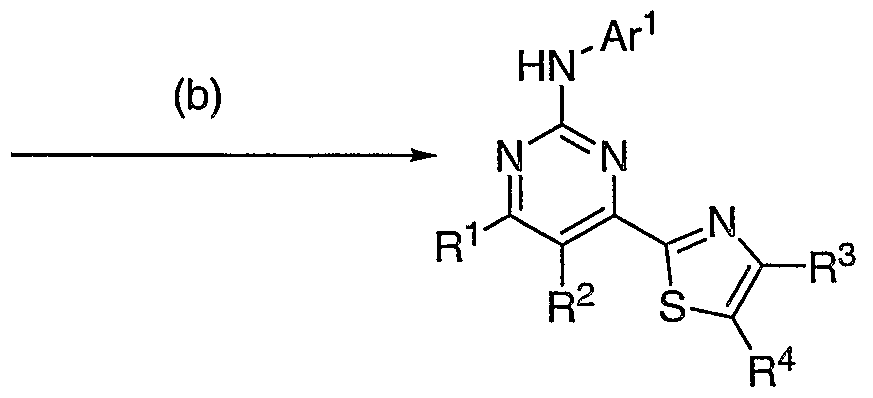
  • Scheme I shows a general synthetic route that may be used used for preparing compounds of formula I.
  • Reagents and conditions (a) DMF-DMA, THF, 12-18 hours, room temperature; (b) Ethanol, reflux, 12-18 hours.
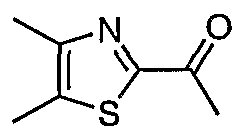
  • step (a) a solution of 2-acetyl thiazole A in THF is treated with dimethylforman ide-dimetlrylacelal and the resulting mixture sti ⁇ ed at room temperature over night. The reaction mixture is concentrated in vacuo and the concentrate triturated with diethyl ether to afford B.
  • step (b) guanidine C is combined with enaminone B in ethanol in a sealed tube. The resulting mixture is heated at reflux overnight then concentrated and the crude product purified by column chromatography to afford the desired pyrimidine compound I.
  • phenylguanidine C-i is prepared and used to generate compounds of general formula II, as depicted generally below.
  • Scheme UI depicts the synthesis of exemplary compounds where R 3 or R 4 isCH 2 OHorCH 2 NRR 7 : ?] Scheme III
  • Scheme IV below depicts the synthesis of exemplary compounds where R 3 is CN or CH 2 Br.
  • Scheme V depicts the synthesis of exemplary compounds where R >3 i •s CH 2 OMe or CH 2 CN.
  • Scheme VI depicts the synthesis of exemplary compounds where R is
  • Scheme VII below depicts the synthesis of exemplary compounds where both R 3 and R 4 are substituted (as depicted, where R 3 is Me and R 4 is (CH ) 2 OH).
  • Schemes VIII and IX below depict the synthesis of exemplary compounds where bbootthh RR 33 aanndd RR 44 aarree ssuubbssttiittuted (as shown, where both R 3 and R 4 are methyl) [00109] Scheme VIII _N
  • Schemes X, and XI below depict the synthesis of exemplary compounds where one of R 3 or R 4 is hydrogen and the other of R 3 or R 4 is NRR 7 .
  • reaction conditions are as follows: (a) n-BuLi, ethylacetate; (b) PTSA, HC(OMe) 3 , MeOH; (c) n-BuLi, CC14; (d) TFA, DCM; (e) DMF.DMA; (f) EPA, NaOH; (g) Piperazine, DMSO; (h) ethylene diamine; (i) n-BuLi, CBr 4 . [00112] Scheme X
  • Schemes XII, and XIII below depict the synthesis of exemplary compounds where R 3 and R 4 are taken together to form an optionally substituted saturated, partially unsaturated, or fully unsaturated 3-8-membered ring having 0-3 heteroatoms independently selected from nitrogen, oxygen, or sulfur. In certain exemplary embodiments, as depicted below, R 3 and R 4 are taken together to form an optionally substituted phenyl ring.
  • Scheme XII depict the synthesis of exemplary compounds where R 3 and R 4 are taken together to form an optionally substituted saturated, partially unsaturated, or fully unsaturated 3-8-membered ring having 0-3 heteroatoms independently selected from nitrogen, oxygen, or sulfur.
  • R 3 and R 4 are taken together to form an optionally substituted phenyl ring.
  • the present invention provides compounds that are inhibitors of protein kinases, and thus the present compounds are useful for the treatment of diseases, disorders, and conditions including, but not limited to immunodeficiency disorders, inflammatory diseases, allergic diseases, autoimmune diseases, proliferative disorders, immunologically-mediated diseases, or respiratory disorders.
  • pharmaceutically acceptable compositions are provided, wherein these compositions comprise any of the compounds as described herein, and optionally comprise a pharmaceutically acceptable carrier, adjuvant or vehicle. In certain embodiments, these compositions optionally further comprise one or more additional therapeutic agents.
  • certain of the compounds of present invention can exist in free form for treatment, or where appropriate, as a pharmaceutically acceptable derivative thereof.
  • a pharmaceutically acceptable derivative includes, but is not limited to, pharmaceutically acceptable salts, esters, salts of such esters, or any other adduct or derivative which upon administration to a patient in need is capable of providing, directly or indirectly, a compound as otherwise described herein, or a metabolite or residue thereof.
  • the term “pharmaceutically acceptable salt” refers to those salts which are, within the scope of sound medical judgement, suitable for use in contact with the tissues of humans and lower animals without undue toxicity, irritation, allergic response and the like, and are commensurate with a reasonable benefit/risk ratio.
  • a “pharmaceutically acceptable salt” means any non-toxic salt or salt of an ester of a compound of this invention that, upon administration to a recipient, is capable of providing, either directly or indirectly, a compound of this invention or an inhibitorily active metabolite or residue thereof.
  • the term “inhibitorily active metabolite or residue thereof” means that a metabolite or residue thereof is also an inhibitor of SYK or ZAP-70 kinase.
  • compositions of this invention include those derived from suitable inorganic and organic acids and bases.
  • Examples of pharmaceutically acceptable, nontoxic acid addition salts are salts of an amino group formed with inorganic acids such as hydrochloric acid, hydrobromic acid, phosphoric acid, sulfuric acid and perchloric acid or with organic acids such as acetic acid, oxalic acid, maleic acid, tartaric acid, citric acid, succinic acid or malonic acid or by using other methods used in the art such as ion exchange.
  • inorganic acids such as hydrochloric acid, hydrobromic acid, phosphoric acid, sulfuric acid and perchloric acid
  • organic acids such as acetic acid, oxalic acid, maleic acid, tartaric acid, citric acid, succinic acid or malonic acid or by using other methods used in the art such as ion exchange.
  • salts include adipate, alginate, ascorbate, aspartate, benzenesulfonate, benzoate, bisulfate, borate, butyrate, camphorate, camphorsulfonate, citrate, cyclopentanepropionate, digluconate, dodecylsulfate, ethanesulfonate, formate, fumarate, glucoheptonate, glycerophosphate, gluconate, hemisulfate, heptanoate, hexanoate, hydroiodide, 2-hydroxy-ethanesulfonate, lactobionate, lactate, laurate, lauryl sulfate, malate, maleate, malonate, methanesulfonate, 2- naphthalenesulfonate, nicotinate, nitrate, oleate, oxalate, palmitate, pamoate, pectinate
  • Salts derived from appropriate bases include alkali metal, alkaline earth metal, ammonium and N + (C 1- alkyl) 4 salts. This invention also envisions the quatemization of any basic nitrogen-containing groups of the compounds disclosed herein. Water or oil-soluble or dispersable products may be obtained by such quatemization.
  • Representative alkali or alkaline earth metal salts include sodium, lithium, potassium, calcium, magnesium, and the like.
  • Further pharmaceutically acceptable salts include, when appropriate, nontoxic ammonium, quaternary ammonium, and amine cations formed using counterions such as halide, hydroxide, carboxylate, sulfate, phosphate, nitrate, loweralkyl sulfonate and aryl sulfonate.
  • the pharmaceutically acceptable compositions of the present invention additionally comprise a pharmaceutically acceptable carrier, adjuvant, or vehicle, which, as used herein, includes any and all solvents, diluents, or other liquid vehicle, dispersion or suspension aids, surface active agents, isotonic agents, thickening or emulsifying agents, preservatives, solid binders, lubricants and the like, as suited to the particular dosage form desired.
  • a pharmaceutically acceptable carrier, adjuvant, or vehicle which, as used herein, includes any and all solvents, diluents, or other liquid vehicle, dispersion or suspension aids, surface active agents, isotonic agents, thickening or emulsifying agents, preservatives, solid binders, lubricants and the like, as suited to the particular dosage form desired.
  • Remington's Pharmaceutical Sciences, Sixteenth Edition, E. W. Martin (Mack Publishing Co., Easton, Pa., 1980) discloses various carriers used in formulating pharmaceutically acceptable compositions
  • any conventional carrier medium is incompatible with the compounds of the invention, such as by producing any undesirable biological effect or otherwise interacting in a deleterious manner with any other component(s) of the pharmaceutically acceptable composition, its use is contemplated to be within the scope of this invention.
  • materials which can serve as pharmaceutically acceptable carriers include, but are not limited to, ion exchangers, alumina, aluminum stearate, lecithin, serum proteins, such as human serum albumin, buffer substances such as phosphates, glycine, sorbic acid, or potassium sorbate, partial glyceride mixtures of saturated vegetable fatty acids, water, salts or electrolytes, such as protamine sulfate, disodium hydrogen phosphate, potassium hydrogen phosphate, sodium chloride, zinc salts, colloidal silica, magnesium trisilicate, polyvinyl py ⁇ olidone, polyacrylates, waxes, polyethylene-polyoxypropylene- block polymers, wool fat, sugars such as lactose, glucose and sucrose; starches such as corn starch and potato starch; cellulose and its derivatives such as sodium carboxymethyl cellulose, ethyl cellulose and cellulose acetate; powdered tragacanth; malt; gelatin; tal
  • a method for the treatment or lessening the severity of immunodeficiency disorders, inflammatory diseases, allergic diseases, autoimmune diseases, proliferative disorders, immunologically-mediated diseases, or respiratory disorders comprising administering an effective amount of a compound, or a pharmaceutically acceptable composition comprising a compound to a subject in need thereof.
  • an "effective amount" of the compound or pharmaceutically acceptable composition is that amount effective for treating or lessening the severity of immunodeficiency disorders, inflammatory diseases, allergic diseases, autoimmune diseases, proliferative disorders, immunologically-mediated diseases, or respiratory disorders.
  • the compounds and compositions, according to the method of the present invention may be administered using any amount and any route of administration effective for treating or lessening the severity of immunodeficiency disorders, inflammatory diseases, allergic diseases, autoimmune diseases, proliferative disorders, immunologically- mediated diseases, or respiratory disorders.
  • the exact amount required will vary from subject to subject, depending on the species, age, and general condition of the subject, the severity of the infection, the particular agent, its mode of administration, and the like.
  • the compounds of the invention are preferably formulated in dosage unit form for ease of administration and uniformity of dosage.
  • dosage unit form refers to a physically discrete unit of agent appropriate for the patient to be treated.
  • the specific effective dose level for any particular patient or organism will depend upon a variety of factors including the disorder being treated and the severity of the disorder; the activity of the specific compound employed; the specific composition employed; the age, body weight, general health, sex and diet of the patient; the time of administration, route of administration, and rate of excretion of the specific compound employed; the duration of the treatment; drugs used in combination or coincidental with the specific compound employed, and like factors well known in the medical arts.
  • patient means an animal, preferably a mammal, and most preferably a human.
  • compositions of this invention can be administered to humans and other animals orally, rectally, parenterally, intracisternally, intravaginally, intraperitoneally, topically (as by powders, ointments, or drops), bucally, as an oral or nasal spray, or the like, depending on the severity of the infection being treated.
  • the compounds of the invention may be administered orally or parenterally at dosage levels of about 0.01 mg/kg to about 50 mg/kg and preferably from about 1 mg/kg to about 25 mg/kg, of subject body weight per day, one or more times a day, to obtain the desired therapeutic effect.
  • Liquid dosage forms for oral administration include, but are not limited to, pharmaceutically acceptable emulsions, microemulsions, solutions, suspensions, syrups and elixirs.
  • the liquid dosage forms may contain inert diluents commonly used in the art such as, for example, water or other solvents, solubilizing agents and emulsifiers such as ethyl alcohol, isopropyl alcohol, ethyl carbonate, ethyl acetate, benzyl alcohol, benzyl benzoate, propylene glycol, 1,3-butylene glycol, dimethylformamide, oils (in particular, cottonseed, groundnut, corn, germ, olive, castor, and sesame oils), glycerol, tetrahydrofurfuryl alcohol, polyethylene glycols and fatty acid esters of sorbitan, and mixtures thereof.
  • inert diluents commonly used in the art such as, for example, water or other solvents,
  • the oral compositions can also include adjuvants such as wetting agents, emulsifying and suspending agents, sweetening, flavoring, and perfuming agents.
  • adjuvants such as wetting agents, emulsifying and suspending agents, sweetening, flavoring, and perfuming agents.
  • injectable preparations for example, sterile injectable aqueous or oleaginous suspensions may be formulated according to the known art using suitable dispersing or wetting agents and suspending agents.
  • the sterile injectable preparation may also be a sterile injectable solution, suspension or emulsion in a nontoxic parenterally acceptable diluent or solvent, for example, as a solution in 1,3-butanediol.
  • acceptable vehicles and solvents that may be employed are water, Ringer's solution, U.S.
  • sterile, fixed oils are conventionally employed as a solvent or suspending medium.
  • any bland fixed oil can be employed including synthetic mono- or diglycerides.
  • fatty acids such as oleic acid are used in the preparation of injectables.
  • the injectable formulations can be sterilized, for example, by filtration through a bacterial-retaining filter, or by incorporating sterilizing agents in the form of sterile solid compositions which can be dissolved or dispersed in sterile water or other sterile injectable medium prior to use.
  • a compound of the present invention In order to prolong the effect of a compound of the present invention, it is often desirable to slow the absorption of the compound from subcutaneous or intramuscular injection. This may be accomplished by the use of a liquid suspension of crystalline or amorphous material with poor water solubility. The rate of absorption of the compound then depends upon its rate of dissolution that, in turn, may depend upon crystal size and crystalline form. Alternatively, delayed absorption of a parenterally administered compound form is accomplished by dissolving or suspending the compound in an oil vehicle. Injectable depot forms are made by forming microencapsule matrices of the compound in biodegradable polymers such as polylactide-polyglycolide.
  • compositions for rectal or vaginal administration are preferably suppositories which can be prepared by mixing the compounds of this invention with suitable non-irritating excipients or carriers such as cocoa butter, polyethylene glycol or a suppository wax which are solid at ambient temperature but liquid at body temperature and therefore melt in the rectum or vaginal cavity and release the active compound.
  • Solid dosage forms for oral administration include capsules, tablets, pills, powders, and granules.
  • the active compound is mixed with at least one inert, pharmaceutically acceptable excipient or carrier such as sodium citrate or dicalcium phosphate and/or a) fillers or extenders such as starches, lactose, sucrose, glucose, mannitol, and silicic acid, b) binders such as, for example, carboxymethylcellulose, alginates, gelatin, polyvinylpyrrolidinone, sucrose, and acacia, c) humectants such as glycerol, d) disintegrating agents such as agar— agar, calcium carbonate, potato or tapioca starch, alginic acid, certain silicates, and sodium carbonate, e) solution retarding agents such as paraffin, f) absorption accelerators such as quaternary ammonium compounds, g) wetting agents such as, for example, cetyl
  • Solid compositions of a similar type may also be employed as fillers in soft and hard-filled gelatin capsules using such excipients as lactose or milk sugar as well as high molecular weight polyethylene glycols and the like.
  • the solid dosage forms of tablets, dragees, capsules, pills, and granules can be prepared with coatings and shells such as enteric coatings and other coatings well known in the pharmaceutical formulating art. They may optionally contain opacifying agents and can also be of a composition that they release the active ingredient(s) only, or preferentially, in a certain part of the intestinal tract, optionally, in a delayed manner. Examples of embedding compositions that can be used include polymeric substances and waxes. Solid compositions of a similar type may also be employed as fillers in soft and hard-filled gelatin capsules using such excipients as lactose or milk sugar as well as high molecular weight polethylene glycols and the like.
  • the active compounds can also be in micro-encapsulated form with one or more excipients as noted above.
  • the solid dosage forms of tablets, dragees, capsules, pills, and granules can be prepared with coatings and shells such as enteric coatings, release controlling coatings and other coatings well known in the pharmaceutical formulating art.
  • the active compound may be admixed with at least one inert diluent such as sucrose, lactose or starch.
  • Such dosage forms may also comprise, as is normal practice, additional substances other than inert diluents, e.g., tableting lubricants and other tableting aids such a magnesium stearate and microcrystalline cellulose.
  • the dosage forms may also comprise buffering agents. They may optionally contain opacifying agents and can also be of a composition that they release the active ingredient(s) only, or preferentially, in a certain part of the intestinal tract, optionally, in a delayed manner.
  • buffering agents include polymeric substances and waxes.
  • Dosage forms for topical or transdermal administration of a compound of this invention include ointments, pastes, creams, lotions, gels, powders, solutions, sprays, inhalants or patches.
  • the active component is admixed under sterile conditions with a pharmaceutically acceptable carrier and any needed preservatives or buffers as may be required.
  • Ophthalmic formulation, ear drops, and eye drops are also contemplated as being within the scope of this invention.
  • the present invention contemplates the use of transdermal patches, which have the added advantage of providing controlled delivery of a compound to the body.
  • Such dosage forms can be made by dissolving or dispensing the compound in the proper medium.
  • Absorption enhancers can also be used to increase the flux of the compound across the skin.
  • the rate can be controlled by either providing a rate controlling membrane or by dispersing the compound in a polymer matrix or gel.
  • the compounds of the invention are useful as inhibitors of protein kinases.
  • the compounds and compositions of the invention are inhibitors of one or more of SYK or ZAP-70, and thus, without wishing to be bound by any particular theory, the compounds and compositions are particularly useful for treating or lessening the severity of a disease, condition, or disorder where activation of one or more of SYK or ZAP-70 is implicated in the disease, condition, or disorder.
  • the disease, condition, or disorder may also be referred to as "SYK or ZAP-70-mediated disease" or disease symptom.
  • the present invention provides a method for treating or lessening the severity of a disease, condition, or disorder where activation or one or more of SYK or ZAP-70 is implicated in the disease state.
  • the activity of a compound utilized in this invention as an inhibitor of SYK or ZAP-70 may be assayed in vitro, in vivo or in a cell line.
  • In vitro assays include assays that determine inhibition of either the phosphorylation activity or ATPase activity of activated SYK or ZAP-70. Alternate in vitro assays quantitate the ability of the inhibitor to bind to SYK or ZAP-70. Inhibitor binding may be measured by radiolabelling the inhibitor prior to binding, isolating the inhibitor/SYK or inhibitor/ZAP-70, complex and determining the amount of radiolabel bound. Alternatively, inhibitor binding may be determined by running a competition experiment where new inhibitors are incubated with SYK or ZAP-70 bound to known radioligands.
  • the term "measurably inhibit”, as used herein means a measurable change in SYK or ZAP-70 activity between a sample comprising said composition and a SYK or ZAP-70 kinase and an equivalent sample comprising SYK or ZAP-70 kinase in the absence of said composition.
  • SYK-mediated disease or "SYK-mediated condition”, as used herein, means any disease or other deleterious condition in which SYK protein kinase is known to play a role. Such conditions include, without limitation, allergic disorders, especially asthma.
  • ZAP-70-mediated condition means any disease or other deleterious condition in which ZAP-70 is known to play a role.
  • Such conditions include, without limitation, autoimmune, inflammatory, proliferative, and hyperproliferative diseases and immunologically-mediated diseases including rejection of transplanted organs or tissues and Acquired Immunodeficiency Syndrome (AIDS).
  • AIDS Acquired Immunodeficiency Syndrome
  • ZAP-70-mediated conditions include diseases of the respiratory tract including, without limitation, reversible obstructive airways diseases including asthma, such as bronchial, allergic, intrinsic, extrinsic and dust asthma, particularly chronic or inveterate asthma (e.g. late asthma airways hyper-responsiveness) and bronchitis.
  • asthma reversible obstructive airways diseases
  • bronchial reversible obstructive airways diseases
  • allergic, intrinsic, extrinsic and dust asthma particularly chronic or inveterate asthma (e.g. late asthma airways hyper-responsiveness) and bronchitis.
  • ZAP-70 diseases include, without limitation, those conditions characterised by inflammation of the nasal mucus membrane, including acute rhinitis, allergic, atrophic thinitis and chronic rhinitis including rhinitis caseosa, hypertrophic rhinitis, rhinitis purulenta, rhinitis sicca and rhinitis medicamentosa; membranous rhinitis including croupous, fibrinous and pseudomembranous rhinitis and scrofoulous rhinitis, seasonal rhinitis including rhinitis nervosa (hay fever) and vasomotor rhinitis, sarcoidosis, farmer's lung and related diseases, fibroid lung and idiopathic interstitial pneumonia.
  • ZAP-70-mediated conditions also include diseases of the bone and joints including, without limitation, (pannus formation in) rheumatoid arthritis, seronegative spondyloarthropathis (including ankylosing spondylitis, psoriatic arthritis and Reiter's disease), Behcet's disease, Sjogren's syndrome, and systemic sclerosis.
  • diseases of the bone and joints including, without limitation, (pannus formation in) rheumatoid arthritis, seronegative spondyloarthropathis (including ankylosing spondylitis, psoriatic arthritis and Reiter's disease), Behcet's disease, Sjogren's syndrome, and systemic sclerosis.
  • ZAP-70-mediated conditions also include diseases and disorders of the skin, including, without limiation, psoriasis, systemic sclerosis, atopical dermatitis, contact dermatitis and other eczematous dermatitis, sebo ⁇ hoetic dermatitis, Lichen planus, Pemphigus, bullous Pemphigus, epidermolysis bullosa, urticaria, angiodermas, vasculitides, erythemas, cutaneous eosinophilias, uveitis, Alopecia, areata and vernal conjunctivitis.
  • diseases and disorders of the skin including, without limiation, psoriasis, systemic sclerosis, atopical dermatitis, contact dermatitis and other eczematous dermatitis, sebo ⁇ hoetic dermatitis, Lichen planus, Pemphigus, bullous Pemphigus, epiderm
  • ZAP-70-mediated conditions also include diseases and disorders of the gastrointestinal tract, including, without limitation, Coeliac disease, proctitis, eosinophilic gastro-enteritis, mastocytosis, pancreatitis, Crohn's disease, ulcerative colitis, food-related allergies which have effects remote from the gut, e.g. migraine, rhinitis and eczema.
  • ZAP-70-mediated conditions also include those diseases and disorders of other tissues and systemic disease, including, without limiation, multiple sclerosis, arth ⁇ rosclerosis, acquired immunodeficiency syndrome (AIDS), lupus erythematosus, systemic lupus, erythematosus, Hashimoto's thyroiditis, myasthenia gravis, type I diabetes, nephrotic syndrome, eosinophilia fascitis, hyper IgE syndrome, lepromatous leprosy, sezary syndrome and idiopathic thrombocytopenia purpura, restenosis following angioplasty, tumours (for example leukemia, lymphomas), artherosclerosis, and systemic lupus erythematosus.
  • AIDS acquired immunodeficiency syndrome
  • lupus erythematosus systemic lupus
  • erythematosus Hashimoto's thyroiditis
  • myasthenia gravis type I diabetes
  • ZAP-70-mediated conditions also include allograft rejection including, without limitation, acute and chronic allograft rejection following for example transplantation of kidney, heart, liver, lung, bone marrow, skin and cornea; and chronic graft versus host disease.
  • the compounds and pharmaceutically acceptable compositions of the present invention can be employed in combination therapies, that is, the compounds and pharmaceutically acceptable compositions can be administered concu ⁇ ently with, prior to, or subsequent to, one or more other desired therapeutics or medical procedures.
  • the particular combination of therapies (therapeutics or procedures) to employ in a combination regimen will take into account compatibility of the desired therapeutics and/or procedures and the desired therapeutic effect to be achieved.
  • the therapies employed may achieve a desired effect for the same disorder (for example, an inventive compound may be administered concu ⁇ ently with another agent used to treat the same disorder), or they may achieve different effects (e.g., control of any adverse effects).
  • additional therapeutic agents that are normally administered to treat or prevent a particular disease, or condition are known as "appropriate for the disease, or condition, being treated”.
  • the amount of additional therapeutic agent present in the compositions of this invention will be no more than the amount that would normally be administered in a composition comprising that therapeutic agent as the only active agent.
  • the amount of additional therapeutic agent in the presently disclosed compositions will range from about 50% to 100% of the amount normally present in a composition comprising that agent as the only therapeutically active agent.
  • the compounds of this invention or pharmaceutically acceptable compositions thereof may also be incorporated into compositions for coating implantable medical devices, such as prostheses, artificial valves, vascular grafts, stents and catheters.
  • the present invention in another aspect, includes a composition for coating an implantable device comprising a compound of the present invention as described generally above, and in classes and subclasses herein, and a carrier suitable for coating said implantable device.
  • the present invention includes an implantable device coated with a composition comprising a compound of the present invention as described generally above, and in classes and subclasses herein, and a carrier suitable for coating said implantable device.
  • Vascular stents for example, have been used to overcome restenosis (re- na ⁇ owing of the vessel wall after injury).
  • patients using stents or other implantable devices risk clot formation or platelet activation.
  • These unwanted effects may be prevented or mitigated by pre-coating the device with a pharmaceutically acceptable composition comprising a kinase inhibitor.
  • a pharmaceutically acceptable composition comprising a kinase inhibitor.
  • Suitable coatings and the general preparation of coated implantable devices are described in US Patents 6,099,562; 5,886,026; and 5,304,121.
  • the coatings are typically biocompatible polymeric materials such as a hydrogel polymer, polymethyldisiloxane, polycaprolactone, polyethylene glycol, polylactic acid, ethylene vinyl acetate, and mixtures thereof.
  • the coatings may optionally be further covered by a suitable topcoat of fluorosilicone, polysaccarides, polyethylene glycol, phospholipids or combinations thereof to impart controlled
  • Another aspect of the invention relates to inhibiting SYK or ZAP-70 activity in a biological sample or a patient, which method comprises administering to the patient, or contacting said biological sample with a compound of formula I or a composition comprising said compound.
  • biological sample includes, without limitation, cell cultures or extracts thereof; biopsied material obtained from a mammal or extracts thereof; and blood, saliva, urine, feces, semen, tears, or other body fluids or extracts thereof.
  • Inhibition of SYK or ZAP-70 kinase activity in a biological sample is useful for a variety of purposes that are known to one of skill in the art. Examples of such purposes include, but are not limited to, blood transfusion, organ-transplantation, biological specimen storage, and biological assays.
  • Example 3 2-[2-(3,5-Dimethyl-phenylamino)-pyrimidin-4-yl]-thiazole-4- carbaldehyde (9a).
  • Example 4 [4-(4-Bromomethyl-thiazol-2-yl)-pyrimidin-2-yl]-(3,5-dimethyl- phenyl)-amine (11a).
  • Triphenylphosphine (84 mg, 0.38 mmol) in DCM was added dropwise to a solution of alcohol 7 (100 mg, 0.32 mmol) and carbon tetrabromide (127 mg, 0.38 mmol) in
  • Example 5 (3,5-Dimethyl-phenyl)-[4-(4-methoxymethyl-thiazol-2-yl)-pyrimidin-
  • Example 6 ⁇ 2-[2-(3,5-Dimethyl-phenylamino)-pyrimidin-4-yl]-thiazol-4-yl ⁇ - acetonitrile (13a).
  • Example 7 ⁇ 2-[2-(3,5-Dimethyl-phenylamino)-pyrimidin-4-yl]-thiazol-4-yl ⁇ - acetic acid (14a).
  • Example 8 l- ⁇ 4-Methyl-5-[2-(tetrahydro-pyran-2-yloxy)-ethyl]-thiazol-2-yl ⁇ - ethanone (16).
  • 3-Amino-5-trifluoromethyl-phenol 45 To a solution of 3-Nitro-5- trifluoromethyl-phenol 44 (Log, 7.73mmol) was added a catalytic amount of 20% palladium hydroxide on carbon and the reaction was stirred under a hydrogen atmosphere (balloon) over the weekend resulting in complete conversion to product by TLC (40% EtOAc :Hexanes). The reaction was filtered to give 3-Amino-5-trifluoromethyl-phenol (1.2g, 6.76 mmol) as a brown/red oil.
  • N-(3-Hydroxy-5-trifluoromethyI-phenyl)-guanidine 46 A solution of 3- Amino-5 -trifluoromethyl-phenol (0.21g, 1.19mmol), cyanamide (0.5g, 1.19mmol), 4N HC1 hi dioxane (2.975ml, 1.19mmol) in dioxane (10ml) was heated in a sealed tube at 80° C overnight resulting in complete conversion to product by TLC (10% MeOH:CH 2 Cl 2 ). The reaction was partitioned between ethyl acetate/saturated NH 4 CI solution and extracted. Some product remained in the aqueous phase after multiple extractions.
  • Example 10 r4-(5-Piperazin-l-yl-thiazol-2-ylVpyrimidin-2-yll-(3.4.5- trimethoxy-phenvD-amine
  • Example 11 N ⁇ 2-[2-(3,5-Dimethyl-phenylamino)-pyrimidin-4-yl]-thiazol-5- yl ⁇ -ethane- 1 ,2-diamine
  • N-(3,5 dimethylphenyl) guanidinium nitrate was prepared using a procedure similar to that described in W09719065.
  • the product was isolated as a yellow solid after purification by HPLC with 0.1% TFA/water acetonitrile as eluant (35mg, 45% last step);
  • Example 12 [4-(5 -Piperazin- 1 -yl-thiazol-2- vD- yrimidin-2- yll -(3,5 dimethyl- phenvD-amine
  • This compound was prepared from l-(5-Bromo-thiazol-2-yl)-ethanone (prepared as described above) and N-(3,5 dimethylphenyl) guanidinium nitrate (prepared using a procedure similar to that described in W09719065) using procedures similar to those described in methods E-G.
  • This compound was prepared from l-(5-Piperidin-l-yl-thiazol-2-yl)-ethanone (prepared as described in method I) and N-(3,5 dimethylphenyl) guanidinium nitrate (prepared using a procedure similar to that described in W09719065) using procedures similar to those described in methods E-F.
  • This compound was prepared from l-(5-Dimethylamino-thiazol-2-yl)-ethanone (prepared from dimethylamine and l-(5-Bromo-thiazol-2-yl)-ethanone in a procedure similar to that described in method I) and N-(3,5 dimethylphenyl) guanidinium nitrate (prepared using a procedure similar to that described in W09719065) using procedures similar to those described in methods E-F.
  • Example 17 Methyl substituted thiazoles: [00249] 2-Chloro-4-f5-methyl-2'thiazolvnpyrimidine:
  • Table 2 Exemplary NMR data for certain compounds of the invention (compound numbers refer to those numbers depicted in Table 1) are depicted below in Table
  • An assay stock buffer solution was prepared containing all of the reagents listed above, with the exception of SYK, DTT, and the test compound of interest of the present invention.
  • 56 ⁇ l of the test reaction was placed in a 96 well plate followed by the addition of 1 ⁇ l of 2 mM DMSO stock containing the test compound of the present invnetion (final compound concentration 30 ⁇ M).
  • the plate was pre-incubated for -10 minutes at 30 °C and the reaction initiated by the addition of 10 ⁇ l of enzyme (final concentration 25 nM).
  • Rates of reaction were obtained using a BioRad Ultramark plate reader (Hercules, CA) over a 5 minute read time at 30°C, and Ki values for the compounds of the present invention were determined according to standard methods.
  • Compounds of the invention are useful as inhibitors of SYK.
  • the following compounds exhibit K; values of 5.0 ⁇ M or less: 1-1, 1-2, 1-4, 1-5, 1-6, 1-7, 1-8, 1-9, 1-10, 1-12, 1-14, 1-15, 1-16, 1-17, 1-18, 1-19, 1-20, 1-22, 1-23, 1-26, 1-27, 1-28, 1-29, 1-30, 1-31, 1-32, 1- 33, 1-34, 1-35, 1-36, 1-37, 1-38, 1-41, 1-42, 1-43, 1-44, 1-45, 1-46, 1-47, 1-48, 1-49, 1-50, 1-51, 1-52, 1-58, 1-63, 1-64, 1-66, 1-67, 1-70, 1-71, 1-72, 1-73, 1-74, 1-75, 1-76, 1-77, 1-78, 1-79, 1- 81, 1-83, 1-84, 1-85, 1-86, 1-87, 1-88, 1-89, 1-90, 1-91, 1-92, 1-93, 1-94, 1-
  • Example 2 ZAP-70 Inhibition Assay
  • Compounds were screened for their ability to inhibit ZAP-70 using a standard coupled enzyme assay (Fox et al., Protein Sci. 1998, 7, 2249). Assays were carried out in a mixture of 100 mM HEPES (pH 7.5), 10 mM MgCl 2 , 25 mM NaCl , 2 mM DTT and 3% DMSO. Final substrate concentrations in the assay were 100 ⁇ M ATP (Sigma Chemicals) and 20 ⁇ M peptide (poly-4EY, Sigma Chemicals). Assays were carried out at 30 °C and 60 nM ZAP-70.
  • An assay stock buffer solution was prepared containing all of the reagents listed above, with the exception of ZAP-70 and the test compound of interest of the present invention. 55 ⁇ l of the stock solution was placed in a 96 well plate followed by addition of 2 ⁇ l of DMSO stock containing serial dilutions of the test compound of the present invention (typically starting from a final concentration of 15 ⁇ M). The plate was preincubated for 10 minutes at 30°C and the reaction initiated by addition of 10 ⁇ l of enzyme (final concentration 60 nM). Initial reaction rates were determined with a Molecular Devices SpectraMax Plus plate reader over a 15 minute time course. Ki data was calculated from non-linear regression analysis using the Prism software package (GraphPad Prism version 3.0a for Macintosh, GraphPad Software, San Diego California, USA).
  • Compounds of the invention are useful as inhibitors of ZAP-70.
  • the following compounds exhibit Kj values of 5.0 ⁇ M or less: 1-1, 1-2, 1-4, 1-5, 1-6, 1-7, 1-8, 1-9, 1-10, 1-12, 1-14, 1-15, 1-16, 1-17, 1-18, 1-19, 1-20, 1-22, 1-23, 1-26, 1-27, 1-28, 1-29, 1-30, 1-31, 1-32, 1- 34, 1-35, 1-36, 1-37, 1-38, 1-41, 1-42, 1-43, 1-44, 1-45, 1-46, 1-47, 1-48, 1-49, 1-50, 1-51, 1-52, 1-63, 1-64, 1-66, 1-70, 1-71, 1-72, 1-73, 1-74, 1-75, 1-76, 1-77, 1-78, 1-79, 1-81, 1-83, 1-84, 1- 85, 1-86, 1-87, 1-88, 1-89, 1-90, 1-91, 1-92, 1-93, 1-94, 1-95, 1-97, 1-100, 1-

Landscapes

  • Health & Medical Sciences (AREA)
  • Chemical & Material Sciences (AREA)
  • Organic Chemistry (AREA)
  • Life Sciences & Earth Sciences (AREA)
  • Public Health (AREA)
  • General Chemical & Material Sciences (AREA)
  • Medicinal Chemistry (AREA)
  • Nuclear Medicine, Radiotherapy & Molecular Imaging (AREA)
  • Chemical Kinetics & Catalysis (AREA)
  • Pharmacology & Pharmacy (AREA)
  • Veterinary Medicine (AREA)
  • Animal Behavior & Ethology (AREA)
  • General Health & Medical Sciences (AREA)
  • Bioinformatics & Cheminformatics (AREA)
  • Engineering & Computer Science (AREA)
  • Immunology (AREA)
  • Pulmonology (AREA)
  • Transplantation (AREA)
  • Pain & Pain Management (AREA)
  • Rheumatology (AREA)
  • Pharmaceuticals Containing Other Organic And Inorganic Compounds (AREA)
  • Plural Heterocyclic Compounds (AREA)
  • Medicines That Contain Protein Lipid Enzymes And Other Medicines (AREA)

Abstract

The present invention relates to compounds useful of inhibitors of protein kinases. The invention also provides pharmaceutically acceptable compositions comprising said compounds and methods of using the compositions in the treatment of various disease, conditions, or disorders.

Description

THIAZOLES USEFUL AS INHIBITORS OF PROTEIN KINASES
CROSS-REFERENCE TO RELATED APPLICATIONS
The present application claims priority under 35 U.S.C. §119 to U.S. Provisional Application number: 60/457,468, filed March 25, 2003, entitled "Thiazoles Useful as Inhibitors of Protein Kinases", the entire contents of which is hereby incorporated by reference.
TECHNICAL FIELD OF THE INVENTION [0002] The present invention relates to compounds useful as inhibitors of protein kinases. The invention also provides pharmaceutically acceptable compositions comprising the compounds of the invention and methods of using the compositions in the treatment of various disorders.
BACKGROUND OF THE INVENTION [0003] The search for new therapeutic agents has been greatly aided in recent years by a better understanding of the structure of enzymes and other biomolecules associated with diseases. One important class of enzymes that has been the subject of extensive study is protein kinases.
[0004] Protein kinases constitute a large family of structurally related enzymes that are responsible for the control of a variety of signal transduction processes within the cell. (See, Hardie, G. and Hanks, S. The Protein Kinase Facts Book, I and II, Academic Press, San Diego, CA: 1995). Protein kinases are thought to have evolved from a common ancestral gene due to the conservation of their structure and catalytic function. Almost all kinases contain a similar 250-300 amino acid catalytic domain. The kinases may be categorized into families by the substrates they phosphorylate (e.g., protein-tyrosine, protein-serine/threonine, lipids, etc.). Sequence motifs have been identified that generally correspond to each of these kinase families (See, for example, Hanks, S.K., Hunter, T., FASEB J. 1995, 9, 576-596; Knighton et al., Science 1991, 253, 407-414; Hiles et al, Cell 1992, 70, 419-429; Kunz et al, Cell 1993, 73, 585-596; Garcia-Bustos et al, EMBO J. 1994, 13, 2352-2361). [0005] In general, protein kinases mediate intracellular signaling by effecting a phosphoryl transfer from a nucleoside triphosphate to a protein acceptor that is involved in a signaling pathway. These phosphorylation events act as molecular on/off switches that can modulate or regulate the target protein biological function. These phosphorylation events are ultimately triggered in response to a variety of extracellular and other stimuli. Examples of such stimuli include environmental and chemical stress signals (e.g., osmotic shock, heat shock, ultraviolet radiation, bacterial endotoxin, and H202), cytokines (e.g., interleukin-1 (IL- 1) and tumor necrosis factor (TNF- )), and growth factors (e.g., granulocyte macrophage- colony-stimulating factor (GM-CSF), and fibroblast growth factor (FGF)). An extracellular stimulus may affect one or more cellular responses related to cell growth, migration, differentiation, secretion of hormones, activation of transcription factors, muscle contraction, glucose metabolism, control of protein synthesis, and regulation of the cell cycle. [0006] Many diseases are associated with abnormal cellular responses triggered by protein kinase-mediated events as described above. These diseases include, but are not limited to, autoimmune diseases, inflammatory diseases, bone diseases, metabolic diseases, neurological and neurodegenerative diseases, cancer, cardiovascular diseases, allergies and asthma, Alzheimer's disease, and hormone-related diseases. Accordingly, there has been a substantial effort in medicinal chemistry to find protein kinase inhibitors that are effective as therapeutic agents.
[0007] Syk is a tyrosine kinase that plays a critical role in FcεRI mediated mast cell degranulation and eosinophil activation. Accordingly, Syk kinase is implicated in various allergic disorders, in particular asthma. It has been shown that Syk binds to the phosphorylated gamma chain of the FcεRI receptor via N-terminal SH2 domains and is essential for downstream signaling [Taylor et al, Mol. Cell. Biol. 1995, 15, 4149]. [0008] Inhibition of eosinophil apoptosis has been proposed as a key mechanism for the development of blood and tissue eosinophilia in asthma. E -5 and GM-CSF are upregulated in asthma and are proposed to cause blood and tissue eosinophilia by inhibition of eosinophil apoptosis. Inhibition of eosinophil apoptosis has been proposed as a key mechanism for the development of blood and tissue eosinophilia in asthma. It has been reported that Syk kinase is required for the prevention of eosinophil apoptosis by cytokines (using antisense) [Yousefi et al, J. Exp. Med. 1996, 183, 1407].
[0009] The role of Syk in FcγR dependent and independent response in bone marrow derived macrophages has been determined by using irradiated mouse chimeras reconstituted with fetal liver cells from Syk -/- embryos. Syk deficient macrophages were defective in phagocytosis induced by FcγR but showed normal phagocytosis in response to complement [Kiefer et al, Mol. Cell. Biol. 1998, 18, 4209]. It has also been reported that aerosolized Syk antisense suppresses Syk expression and mediator release from macrophages [Stenton et al., J. Immunology 2©00, 164, 3790].
[0010] ZAP-70 is essential for T-cell receptor signalling. Expression of this tyrosine kinase is restricted to T-cells and natural killer cells. The importance of ZAP-70 in T-cell function has been demonstrated in human patients, human T-cell lines and mice. Human patients suffering from a rare form of severe combined deficiency syndrome (SCED) possess homozygous mutations in ZAP-70 (reviewed in Elder J. of Pedriatric Hematology/Oncology 1997, 19(6), 546-550). These patients have profound immunodeficiency, lack CD8+ T-cells and have CD4+ T-cells that are unresponsive to T-cell receptor (TCR)-mediated stimulation. Following TCR activation these CD4+ cells show severe defects in Ca2+ mobilization, tyrosine phosphorylation of down-stream substrates, proliferation and E -2 production 70 (reviewed in Elder Pedriatric Research 39, 743-748). Human Jurkat cells lacking ZAP-70 also provide important insights into the critical role of ZAP-70 in T-cell receptor signalling. A Jurkat clone (pi 16) with no detectable ZAP-70 protein was shown to have defects in T-cell receptor signalling which could be corrected by re-introduction of wild type ZAP-70 (Williams et al., Molecular and Cellular Biology 1998, 18 (3), 1388-1399). Studies of mice lacking ZAP-70 also demonstrate a requirement of ZAP-70 in T-cell receptor signalling. ZAP-70-deficient mice have profound defects in T-cell development and T-cell receptor signalling in thymocytes is impaired (Negishi et al., Nature 1995 376, 435-438). [0011] The importance of the kinase domain in ZAP-70 function is demonstrated by studies of human patients and mice expressing identical mutations in the DLAARN motif within the kinase domain of ZAP-70. Inactivation of kinase activity by this mutation results in defective T-cell receptor signalling (Elder et al, J. Immunology 2001, 656-661). Catalytically inactive ZAP-70 (Lys369Arg) was also defective in restoring T-cell receptor signalling in a ZAP-70 deficient Jurkat cell clone (pi 16) (Williams et al., Molecular and Cellular Biology 1998, 28 (3), 1388-1399).
[0012] Accordingly, there is a great need to develop compounds useful as inhibitors of protein kinases. In particular, it would be desirable to develop compounds that are useful as inhibitors of SYK or ZAP-70, particularly given the inadequate treatments currently available for the majority of the disorders implicated in their activation. SUMMARY OF THE INVENTION [0013] It has now been found that compounds of this invention, and pharmaceutically acceptable compositions thereof, are effective as inhibitors of protein kinases. In certain embodiments, these compounds are effective as inhibitors of SYK or ZAP-70 protein kinases. These compounds have the general formula I:
Figure imgf000005_0001
I or a pharmaceutically acceptable salt thereof, wherein R1, R2, R3, R4, and Ar1 are as defined below.
[0014] These compounds and pharmaceutically acceptable compositions thereof are useful for treating or preventing a variety of diseases, disorders or conditions, including, but not limited to, immunodeficiency disorders, inflammatory diseases, allergic diseases, autoimmune diseases, proliferative disorders, immunologically-mediated diseases, or respiratory disorders, to name a few. The compounds provided by this invention are also useful for the study of kinases in biological and pathological phenomena; the study of intracellular signal transduction pathways mediated by such kinases; and the comparative evaluation of new kinase inhibitors.
DETAILED DESCRIPTION OF THE INVENTION
[0015] /. General Description of Compounds of the Invention: [0016] The present invention relates to a compound of formula I:
Figure imgf000005_0002
or a pharmaceutically acceptable salt thereof, wherein:
R1 and R2 are each independently R, halogen, CN, N02, or TR, or R1 and R2 taken together form an optionally substituted saturated, partially unsaturated, or fully unsaturated 5- or 6-membered ring having 0-3 heteroatoms independently selected from N, O, or S;
T is an optionally substituted C1-C4. alkylidene chain wherein up to two methylene units of T are optionally and independently replaced by O, N(R), C(O), S, SO, or S02;
Ar1 is an optionally substituted ring selected from: an aryl group selected from a 5-6 membered monocyclic or an 8-10 membered bicyclic ring having 0-5 heteroatoms independently selected from nitrogen, oxygen, or sulfur; a 3-8-membered saturated or partially unsaturated monocyclic ring having 0-3 heteroatoms independently selected from nitrogen, oxygen, or sulfur; or an 8-10-membered saturated or partially unsaturated bicyclic ring system having 0-5 heteroatoms independently selected from nitrogen, oxygen, or sulfur; wherein Ar1 is optionally substituted at one or more carbon atoms with 0-5 occurrences of -Q-R5, and at one or more substitutable nitrogen atoms with -R6 and each occurrence of R6 is independently R', -COR', -C02(C1-6 aliphatic), -CON(R ) , - S02N(R')2, or -S02R ;
R3 and R4 are each independently Z-R7, or R3 and R4 are taken together to form an optionally substituted saturated or partially unsaturated, or fully unsaturated 3-8 membered ring having 0-3 heteroatoms independently selected from nitrogen, oxygen, or sulfur wherein said ring is optionally substituted with 0-5 independent occurrences of Y-R ; each occurrence of Q, Z, and Y is independently a bond or an optionally substituted -C6 alkylidene chain wherein up to two non-adjacent methylene units of Q are optionally replaced by CO, C02, COCO, CONR, OCONR, NRNR, NRNRCO, NRCO, NRC02, NRCONR, SO, S02, NRS02, S02NR, NRS02NR, O, S, or NR; each occurrence of R5, R7 and R8 is independently R', halogen, N02, CN, OR', SR\ N(R')2, NR'C(0)R\ NR'C(0)N(R')2, NR'C02R\ C(0)R\ C02R\ OC(0)R', C(0)N(R')2, OC(0)N(R')2, SOR', S02R', S02N(R')2, NR'S02R\ NR'S02N(R')2, PO(OR')2, C(0)C(0)R', or C(0)CH2C(0)R'; and each occurrence of R is independently hydrogen or an optionally substituted C1-6 aliphatic group; and each occurrence of R' is independently hydrogen or an optionally substituted group selected from C1-8 aliphatic, C6-1o aryl, a heteroaryl ring having 5-10 ring atoms, or a heterocyclyl ring having 3-10 ring atoms, or wherein two occurrences of R taken together, R and R' taken together, or two occurrences of R' taken together, form an optionally substituted saturated, partially unsaturated, or fully unsaturated 3-8 membered ring having 0-3 heteroatoms independently selected from nitrogen, oxygen, or sulfur; provided that : i) R3 and R4 are not simultaneously hydrogen; and ii) when R3 and R4 are both methyl, or R3 is methyl and R4 is (CH2)2OH, then Ar1 is not 3, 4, 5-trimethoxyphenyl.
[0017] 2. Compounds and Definitions:
[0018] Compounds of this invention include those described generally above, and are further illustrated by the classes, subclasses, and species disclosed herein. As used herein, the following definitions shall apply unless otherwise indicated. For purposes of this invention, the chemical elements are identified in accordance with the Periodic Table of the Elements, CAS version, Handbook of Chemistry and Physics, 75th Ed. Additionally, general principles of organic chemistry are described in "Organic Chemistry", Thomas Sorrell, University Science Books, Sausalito: 1999, and "March's Advanced Organic Chemistry", 5th Ed., Ed.: Smith, M.B. and March, J., John Wiley & Sons, New York: 2001, the entire contents of which are hereby incorporated by reference.
[0019] As described herein, compounds of the invention may optionally be substituted with one or more substituents, such as are illustrated generally above, or as exemplified by particular classes, subclasses, and species of the invention. It will be appreciated that the phrase "optionally substituted" is used interchangeably with the phrase "substituted or unsubstituted." In general, the term "substituted", whether preceded by the term "optionally" or not, refers to the replacement of hydrogen radicals in a given structure with the radical of a specified substituent. Unless otherwise indicated, an optionally substituted group may have a substituent at each substitutable position of the group, and when more than one position in any given structure may be substituted with more than one substituent selected from a specified group, the substituent may be either the same or different at every position. Combinations of substituents envisioned by this invention are preferably those that result in the formation of stable or chemically feasible compounds. The term "stable", as used herein, refers to compounds that are not substantially altered when subjected to conditions to allow for their production, detection, and preferably their recovery, purification, and use for one or more of the purposes disclosed herein. In some embodiments, a stable compound or chemically feasible compound is one that is not substantially altered when kept at a temperature of 40°C or less, in the absence of moisture or other chemically reactive conditions, for at least a week.
[0020] The term "aliphatic" or "aliphatic group", as used herein, means a straight-chain (i.e., unbranched) or branched, substituted or unsubstituted hydrocarbon chain that is completely saturated or that contains one or more units of unsaturation, or a monocyclic hydrocarbon or bicyclic hydrocarbon that is completely saturated or that contains one or more units of unsaturation, but which is not aromatic (also referred to herein as "carbocycle" "cycloaliphatic" or "cycloalkyl"), that has a single point of attachment to the rest of the molecule. Unless otherwise specified, aliphatic groups contain 1-20 aliphatic carbon atoms. In some embodiments, aliphatic groups contain 1-10 aliphatic carbon atoms. In other embodiments, aliphatic groups contain 1-8 aliphatic carbon atoms. In still other embodiments, aliphatic groups contain 1-6 aliphatic carbon atoms, and in yet other embodiments aliphatic groups contain 1-4 aliphatic carbon atoms. In some embodiments, "cycloaliphatic" (or "carbocycle" or "cycloalkyl") refers to a monocyclic C3-C8 hydrocarbon or bicyclic C8-C12 hydrocarbon that is completely saturated or that contains one or more units of unsaturation, but which is not aromatic, that has a single point of attachment to the rest of the molecule wherein any individual ring in said bicyclic ring system has 3-7 members. Suitable aliphatic groups include, but are not limited to, linear or branched, substituted or unsubstituted alkyl, alkenyl, alkynyl groups and hybrids thereof such as (cycloalkyl)alkyl, (cycloalkenyl)alkyl or (cycloalkyl)alkenyl.
[0021] The term "heteroaliphatic", as used herein, means aliphatic groups wherein one or two carbon atoms are independently replaced by one or more of oxygen, sulfur, nitrogen, phosphorus, or silicon. Heteroaliphatic groups may be substituted or unsubstituted, branched or unbranched, cyclic or acyclic, and include "heterocycle", "heterocyclyl", "heterocycloahphatic", or "heterocyclic" groups.
[0022] The term "heterocycle", "heterocyclyl", "heterocycloahphatic", or "heterocyclic" as used herein means non-aromatic, monocyclic, bicyclic, or tricyclic ring systems in which one or more ring members is an independently selected heteroatom. In some embodiments, the "heterocycle", "heterocyclyl", "heterocycloahphatic", or "heterocyclic" group has three to fourteen ring members in which one or more ring members is a heteroatom independently selected from oxygen, sulfur, nitrogen, or phosphorus, and each ring in the system contains 3 to 7 ring members. [0023] The term "heteroatom" means one or more of oxygen, sulfur, nitrogen, phosphorus, or silicon (including, any oxidized form of nitrogen, sulfur, phosphorus, or silicon; the quaternized form of any basic nitrogen or; a substitutable nitrogen of a heterocyclic ring, for example N (as in 3,4-dihydro-2H-pyrrolyl), NΗ (as in pyrrolidinyl) or NR+ (as in N-substituted pyrrolidinyl)).
[0024] The term "unsaturated", as used herein, means that a moiety has one or more units of unsaturation.
[0025] The term "alkoxy", or "thioalkyl", as used herein, refers to an alkyl group, as previously defined, attached to the principal carbon chain through an oxygen ("alkoxy") or sulfur ("thioalkyl") atom.
[0026] The terms "haloalkyl", "haloalkenyl" and "haloalkoxy" means alkyl, alkenyl or alkoxy, as the case may be, substituted with one or more halogen atoms. The term "halogen" means F, Cl, Br, or I.
[0027] The term "aryl" used alone or as part of a larger moiety as in "aralkyl", "aralkoxy", or "aryloxyalkyl", refers to monocyclic, bicyclic, and tricyclic ring systems having a total of five to fourteen ring members, wherein at least one ring in the system is aromatic and wherein each ring in the system contains 3 to 7 ring members. The term "aryl" may be used interchangeably with the term "aryl ring". The term "aryl" also refers to heteroaryl ring systems as defined hereinbelow.
[0028] The term "heteroaryl", used alone or as part of a larger moiety as in "heteroaralkyl" or "heteroarylalkoxy", refers to monocyclic, bicyclic, and tricyclic ring systems having a total of five to fourteen ring members, wherein at least one ring in the system is aromatic, at least one ring in the system contains one or more heteroatoms, and wherein each ring in the system contains 3 to 7 ring members. The term "heteroaryl" may be used interchangeably with the term "heteroaryl ring" or the term "heteroaromatic". ' [0029] An aryl (including aralkyl, aralkoxy, aryloxyalkyl and the like) or heteroaryl (including heteroaralkyl and heteroarylalkoxy and the like) group may contain one or more substituents. Suitable substituents on the unsaturated carbon atom of an aryl or heteroaryl group are selected from halogen; -R°; -OR0; -SR°; 1,2-methylene-dioxy; 1,2-ethylenedioxy; phenyl (Ph) optionally substituted with R°; -O(Ph) optionally substituted with R°; -(CΗ2)1-2(Ph), optionally substituted with R°; -CH=CH(Ph), optionally substituted with R°; -N02; -CN; -N(R°)2; -NR°C(0)R°; -NR°C(0)N(R°)2; -NR°C02R°; -NR°NR°C(0)Ro; - NR°NR°C(0)N(R°)2; -NR°NR°C02R°; -C(0)C(O)Ro; -C(0)CH2C(0)R°; -C02R°; -C(0)R°; -C(0)N(R°)2; -OC(0)N(R°)2; -S(0)2R°; -S02N(R°)2; -S(0)R°; -NR°S02N(R°)2; -NR°S02R°; -C(=S)N(R°)2; -C(=NH)-N(R°)2; or -(CH2)0-2NHC(O)R° wherein each independent occurrence of R° is selected from hydrogen, optionally substituted C1-6 aliphatic, an unsubstituted 5-6 membered heteroaryl or heterocyclic ring, phenyl, -O(Ph), or -CH2(Ph), or, notwithstanding the definition above, two independent occurrences of R°, on the same substituent or different substituents, taken together with the atom(s) to which each R° group is bound, form a 3-8-membered cycloalkyl, heterocyclyl, aryl, or heteroaryl ring having 0-3 heteroatoms independently selected from nitrogen, oxygen, or sulfur. Optional substituents on the aliphatic group of R° are selected from NH , NH(C1- aliphatic), N(C1- aliphatic)2, halogen, C1-4aliphatic, OH, 0(C1-4aliphatic), N02, CN, C02H, C02(C1-4aliphatic), 0(haloC1-4 aliphatic), or haloC1-4aliphatic, wherein each of the foregoing C1-4aliphatic groups of R° is unsubstituted.
[0030] An aliphatic or heteroaliphatic group, or a non-aromatic heterocyclic ring may contain one or more substituents. Suitable substituents on the saturated carbon of an aliphatic or heteroaliphatic group, or of a non-aromatic heterocyclic ring are selected from those listed above for the unsaturated carbon of an aryl or heteroaryl group and additionally include the following: =0, =S, =NNHR*, =NN(R*)2, =NNHC(0)R*, =NNHC02(alkyl), =NNHS02(alkyl), or =NR , where each R is independently selected from hydrogen or an optionally substituted C1-6 aliphatic. Optional substituents on the aliphatic group of R* are selected from NH2, NH(C1-4 aliphatic), N(Cι-4 aliphatic)2, halogen, C1- aliphatic, OH, 0(C1- aliphatic), N02, CN, C02H, C02(C1-4 aliphatic), 0(halo C1- aliphatic), or halo(C1-4 aliphatic), wherein each of the foregoing C1-4aliphatic groups of R* is unsubstituted. [0031] Optional substituents on the nitrogen of a non-aromatic heterocyclic ring are selected from -R+, -N(R+)2, -C(0)R+, -C02R+, -C(0)C(0)R+, -C(0)CH2C(0)R+, -S02R+, -S02N(R+)2, -C(=S)N(R+)2, -C(=NH)-N(R+)2, or -NR+S02R+; wherein R+ is hydrogen, an optionally substituted C1-6 aliphatic, optionally substituted phenyl, optionally substituted -0(Ph), optionally substituted -CH2(Ph), optionally substituted -(CH2)1-2(Ph); optionally substituted -CH=CH(Ph); or an unsubstituted 5-6 membered heteroaryl or heterocyclic ring having one to four heteroatoms independently selected from oxygen, nitrogen, or sulfur, or, notwithstanding the definition above, two independent occurrences of R+, on the same substituent or different substituents, taken together with the atom(s) to which each R+ group is bound, form a 3-8-membered cycloalkyl, heterocyclyl, aryl, or heteroaryl ring having 0-3 heteroatoms independently selected from nitrogen, oxygen, or sulfur. Optional substituents on the aliphatic group or the phenyl ring of R+ are selected from NH2, NH(C1-4 aliphatic), N(C1-4 aliphatic)2, halogen, C1-4 aliphatic, OH, 0(C1- aliphatic), N02, CN, C02H, C02(C1-4 aliphatic), 0(halo C1-4 aliphatic), or halo(C1-4 aliphatic), wherein each of the foregoing Cι_ 4 aliphatic groups of R+ is unsubstituted.
[0032] The term "alkylidene chain" refers to a straight or branched carbon chain that may be fully saturated or have one or more units of unsaturation and has two points of attachment to the rest of the molecule.
[0033] As detailed above, in some embodiments, two independent occurrences of R° (or R+, or any other variable similarly defined herein), are taken together together with the atom(s) to which each variable is bound to form a 3-8-membered cycloalkyl, heterocyclyl, aryl, or heteroaryl ring having 0-3 heteroatoms independently selected from nitrogen, oxygen, or sulfur. Exemplary rings that are formed when two independent occurrences of R° (or R+, or any other variable similarly defined herein) are taken together with the atom(s) to which each variable is bound include, but are not limited to the following: a) two independent occurrences of R° (or R+, or any other variable similarly defined herein) that are bound to the same atom and are taken together with that atom to form a ring, for example, N(R°)2, where both occurrences of R° are taken together with the nitrogen atom to form a piperidin-1-yl, piperazin-1-yl, or morpholin-4-yl group; and b) two independent occurrences of R° (or R+, or any other variable similarly defined herein) that are bound to different atoms and are taken together with both of those atoms to form a ring, for example where a phenyl group is
substituted with two occurrences of OR°
Figure imgf000011_0001
these two occurrences of R° are taken together with the oxygen atoms to which they are bound to form a fused 6-membered
oxygen containing ring:
Figure imgf000011_0002
It will be appreciated that a variety of other rings can be formed when two independent occurrences of R° (or R+, or any other variable similarly defined herein) are taken together with the atom(s) to which each variable is bound and that the examples detailed above are not intended to be limiting.
[0034] Unless otherwise stated, structures depicted herein are also meant to include all isomeric (e.g., enantiomeric, diastereomeric, and geometric (or conformational)) forms of the structure; for example, the R and S configurations for each asymmetric center, (Z) and (E) double bond isomers, and (Z) and (E) conformational isomers. Therefore, single stereochemical isomers as well as enantiomeric, diastereomeric, and geometric (or conformational) mixtures of the present compounds are within the scope of the invention. Unless otherwise stated, all tautomeric forms of the compounds of the invention are within the scope of the invention. Additionally, unless otherwise stated, structures depicted herein are also meant to include compounds that differ only in the presence of one or more isotopically enriched atoms. For example, compounds having the present structures except for the replacement of hydrogen by deuterium or tritium, or the replacement of a carbon by a 13C- or 14C-enriched carbon are within the scope of this invention. Such compounds are useful, for example, as analytical tools or probes in biological assays.
[0035] 3. Description of Exemplary Compounds:
[0036] As described generally above for compounds of general formula I, Ar1 is an optionally substituted ring selected from: an aryl group selected from a 5-6 membered monocyclic or an 8-10 membered bicyclic ring having 0-5 heteroatoms independently selected from nitrogen, oxygen, or sulfur; a 3-8-membered saturated or partially unsaturated monocyclic ring having 0-3 heteroatoms independently selected from nitrogen, oxygen, or sulfur; or an 8-10-membered saturated or partially unsaturated bicyclic ring system having 0- 5 heteroatoms independently selected from nitrogen, oxygen, or sulfur, wherein Ar1 is optionally substituted at one or more carbon atoms with 0-5 occurrences of -Z-R5, and at one or more substitutable nitrogen atoms with -R6.
[0037] Preferred Ar1 groups of formula I are optionally substituted rings selected from:
(a) a phenyl, indanyl, or naphthyl ring;
(b) a 5-6 membered heterocyclic ring having 1-3 heteroatoms independently selected from nitrogen, oxygen, or sulfur; or
(c) a 5-6 membered monocyclic or 9-10 membered bicyclic heteroaryl ring having 1-3 heteroatoms independently selected from oxygen, nitrogen, or sulfur.
[0038] More preferred Ar1 groups of formula I are optionally substituted rings selected from:
(a) a phenyl ring;
(b) a 5-6 membered heterocyclic ring having 1-3 heteroatoms independently selected from nitrogen, oxygen, or sulfur; or
(c) a 5-6 membered monocyclic heteroaryl ring having 1-3 heteroatoms independently selected from oxygen, nitrogen, or sulfur. [0039] In still other embodiments, Ar1 groups of formula I are optionally substituted rings selected from any one of a-bb:
Figure imgf000013_0001
a
Figure imgf000013_0002
k
Figure imgf000013_0003
m n o
Figure imgf000013_0004
t
Figure imgf000013_0005
U V w
Figure imgf000014_0001
y
wherein x is 0-5.
Most preferred Ar1 rings are phenyl, pyrimidinyl, or pyridyl. [0041] In still other embodiments, for compounds described generally above and in classes and subclasses herein, Ar1 is not 3, 4, 5-trimethoxyphenyl.
[0042] As described generally above for compounds of general formula I, Ar is optionally substituted with up to 5 independent occurrences of Q-R5, wherein each occurrence of Q is independently a bond or is an optionally substituted Cι.-C6 alkylidene chain wherein up to two non-adjacent methylene units of Q are optionally replaced by CO, C02, COCO, CONR, OCONR, NRNR, NRNRCO, NRCO, NRC02, NRCONR, SO, S02, NRS02, S02NR, NRS02NR, O, S, or NR; and each occurrence of R5 is independently R', halogen, N02, CN, OR', SR', N(R')2, NR'C(0)R', NR'C(0)N(R')2, NR'C02R', C(0)R', C02R\ OC(0)R', C(0)N(R')2, OC(0)N(R')2, SOR', S02R', S02N(R')2, NR'S02R', NR'S02N(R')2, PO(OR')2, C(0)C(0)R', or C(0)CH2C(0)R' . In preferred embodiments, x is 0, 1, 2, or 3. In other preferred embodiments, x is 1, 2, or 3.
[0043] In yet other preferred embodients, Q is independently a bond or is an optionally substituted C1-C4 alkylidene chain wherein up to two non-adjacent methylene units of Q are optionally replaced by CO, C02, CONR, OCONR, NRCO, NRC02, NRS02, S02NR, O, S, or NR; and each occurrence of R5 is independently selected from R', halogen, N02, CN, OR', SR', N(R')2, NR'C(0)R', NR'C(0)N(R')2, NR'C02R', C(0)R', C02R\ OC(0)R', C(0)N(R')2, OC(0)N(R')2, SOR', S02R', S02N(R')2, NR'S02R', NR'S02N(R')2, PO(OR')2, C(0)C(0)R', or C(0)CH2C(0)R', and x is 0, 1, 2, or 3. In preferred embodiments, x is 1, 2, or 3.
[0044] Preferred Q-R5 substituents on Ar1 are CH2halogen, halogen, CH2CN, CN, CH2C02R', C02R\ CH2COR\ COR', R', CH2N02, N02, CH2OR', OR', CH2SR', SR', haloalkyl, CH2S02N(R')2, S02N(R')2, CH2N(R')25 N(R')2, NHCOR', CH2NHCOR', CH2PO(OR')2, PO(OR')2, or two adjacent occurrences of Q-R5, taken together with the atoms to which they are bound, form an optionally substituted saturated, partially unsaturated, or fully unsaturated 5-8-membered ring having 0-3 heteroatoms selected from nitrogen, oxygen, or sulfur.
[0045] More preferred Q-R5 substituents on Ar1 are fluoro, iodo, chloro, bromo, COCH3, CO2CH3, C1-4alkyl (for example, methyl, ethyl, propyl, cyclopropyl, n-butyl, cyclobuyl, or t- butyl), NH2, CH2NH2, NHMe, CH2NHMe, N(Me)2, CH2N(Me)2, N(Et)2, CH2N(Et)2, NH(phenyl), CO(C1-4alkyl), CH2CO(C1-4alkyl), NHCO(C1-4alkyl), CH2NHCO(C1-4alkyl), CN, CH2CN, OH, C1-4alkoxy (for example, OCH3, OCH2CH3, 0(CH2)2CH3, or 0(CH2)3CH3), optionally substituted benzyloxy, optionally substituted phenyloxy, CF , S02NH2, S02NHMe, optionally substituted S02(phenyl), S02(C1-4alkyl), CONH2, CH2PO(OR')2, or an optionally substituted group selected from a saturated, partially unsaturated, or fully unsaturated 5- or 6-membered ring having 0-3 heteroatoms independently selected from nitrogen, oxygen, or sulfur. Other preferred Ar1 substituents are those substituents where two adjacent occurrences of Q-R5, taken together with the atoms to which they are bound, and include a fused optionally substituted saturated, partially unsaturated, or fully unsaturated 5- or 6-membered ring having 0-3 heteroatoms selected from nitrogen, oxygen, or sulfur. In more preferred embodiments, these fused substituents formed by two adjacent occurrences of Q-R5 include an optionally substituted group selected from methylenedioxy, ethylenedioxy, propylenedioxy, thiazolyl, oxazolyl, pyrrolyl, pyrazolyl, imidazolyl, phenyl, pyridyl, pyrimidinyl, furyl, thiophene, pyran, pyrrolidinyl, piperidinyl, piperazinyl, or morpholinyl.
[0046] In yet other embodiments, Ar1 is phenyl and is substituted with two occurrences (x = 2) of Q-R5 and Ar1 is:
Figure imgf000015_0001
wherein each occurrence of QR5 is independently CH2halogen, halogen, CH2CN, CN, CH2C02R', C02R', CH2COR', COR', R', CH2N02, N02, CH2OR\ OR', CH2SR', SR', haloalkyl, CH2S02N(R')2, S02N(R')2, CH2N(R')2, N(R')2, NHCOR', CH2NHCOR', CH2PO(OR')2, PO(OR') . In certain preferred embodiments, each occurrence of QR is independently fluoro, iodo, chloro, bromo, COCH3, C02CH3, C1-4alkyl (for example, methyl, ethyl, propyl, cyclopropyl, n-butyl, cyclobuyl, or t-butyl), NH2, CH2NH2, NHMe, CH2NHMe, N(Me)2, CH2N(Me)2, N(Et)2, CH2N(Et)2, NH(phenyl), CO(C1-4alkyl), CH2CO(C1-4alkyl), NHCO(C1-4alkyl), CH2NHCO(C1-4alkyl), CN, CH2CN, OH, C1-4alkoxy (for example, OCH3, OCH2CH3, 0(CH2)2CH3, or 0(CH2)3CH3), optionally substituted benzyloxy, optionally substituted phenyloxy, CF3, S02NH2, S02NHMe, optionally substituted S02(phenyl), S02(C1-4alkyl), CONH2, CH2PO(OR')2, or an optionally substituted group selected from a saturated, partially unsaturated, or fully unsaturated 5- or 6-membered ring having 0-3 heteroatoms independently selected from nitrogen, oxygen, or sulfur. In still other preferred embodiments, both occurrences of QR5 are methyl. In yet other preferred embodiments, at least one occurrence of QR5 is CF3.
[0047] In yet other embodiments, Ar1 is phenyl and is substituted with three occurrences (x = 3) of Q-R5 and Ar1 is:
Figure imgf000016_0001
wherein each occurrence of QR5 is independently CH2halogen, halogen, CH2CN, CN, CH2C02R', C02R', CH2COR', COR', R\ CH2N02, N02, CH2OR', OR', CH2SR', SR', haloalkyl, CH2S02N(R')2, S02N(R')2, CH2N(R')2, N(R')2, NHCOR', CH2NHCOR', CH2PO(OR')2, PO(OR')2. In certain preferred embodiments, each occurrence of QR5 is independently fluoro, iodo, chloro, bromo, COCH3, C02CH , C1-4alkyl (for example, methyl, ethyl, propyl, cyclopropyl, n-butyl, cyclobuyl, or t-butyl), NH2, CH2NH2, NHMe, CH2NHMe, N(Me)2, CH2N(Me)2, N(Et)2, CH2N(Et)2, NH(phenyl), CO(C1-4alkyl), CH2CO(C1-4alkyl), NHCO(C1-4alkyl), CH2NHCO(C1-4alkyl), CN, CH2CN, OH, C1-4alkoxy (for example, OCH3, OCH2CH3, 0(CH2)2CH3, or 0(CH2)3CH3), optionally substituted benzyloxy, optionally substituted phenyloxy, CF3, S02NH2, S02NHMe, optionally substituted S0 (phenyl), S02(C1-4alkyl), CONH2, CH2PO(OR')2, or an optionally substituted group selected from a saturated, partially unsaturated, or fully unsaturated 5- or 6-membered ring having 0-3 heteroatoms independently selected from nitrogen, oxygen, or sulfur. In still other preferred embodiments, each occurrence of QR5 is independently fluoro, iodo, chloro, bromo, COCH3, C02CH3, C1-4alkyl (for example, methyl, ethyl, propyl, cyclopropyl, n-butyl, cyclobuyl, or t- butyl), NH2, CH2NH2, NHMe, CH2NHMe, N(Me)2, CH2N(Me)2, N(Et)2, CH2N(Et)2, NH(phenyl), CO(C1-4alkyl), CH2CO(C1-4alkyl), NHCO(C1-4alkyl), CH2NHCO(C1-4alkyl), CN, CH CN, OH, optionally substituted benzyloxy, optionally substituted phenyloxy, CF3, S02NH2, S02NHMe, optionally substituted S02(phenyl), S02(C1-4alkyl), CONH2, CH2PO(OR')2, or an optionally substituted group selected from a saturated, partially unsaturated, or fully unsaturated 5- or 6-membered ring having 0-3 heteroatoms independently selected from nitrogen, oxygen, or sulfur.
[0048] Each of the Q-R5 substituents described above are also optionally further substituted with one or more groups independently selected from R, OR, N(R)2, S02R, halogen, N02? CN, SR, S02N(R) , C0 R, C(0)R, or oxo. In more preferred embodiments, each of the Q-R5 groups described above are also optionally further substituted with one or two groups independently selected from methyl, ethyl, t-butyl, fluoro, chloro, bromo, oxo, CF3, OMe, OEt, CN, S02Me, S02NH2, NH2, NHMe, N(Me)2, SMe, SEt, OH, C(0)Me, N02, or CH2OH.
[0049] As described generally above for compounds of general formula I, R and R are each independently R, halogen, CN, N02, or TR, or R1 and R2 taken together form an optionally substituted saturated, partially unsaturated, or fully unsaturated 5- or 6-membered ring having 0-3 heteroatoms independently selected from N, O, or S. Preferred R and R groups of formula I are hydrogen, N(R)2, SR, OR, or TR, or R1 and R2, taken together form an optionally substituted saturated, partially unsaturated, or fully unsaturated 5-membered ring having 0-2 heteroatoms independently selected from N, O, or S. More preferred R1 and R2 groups are hydrogen, OH, CH3, CH2CH3, OCH3, CH2OH, CH2OCH3, CH2NH2, CH2NHCH3, NH2, or CH2NH2, or R1 and R2, taken together, form a fused optionally substituted pyrrolyl, pyrazolyl, or imidazolyl ring. Still other preferred groups include hydrogen, NH2, or CH2NH2.
[0050] As described generally above for compounds of formula I, R3 and R4 are each independently Z-R7, wherein Z is an optionally substituted C1-6alkylidene chain wherein up to three non-adjacent methylene units are optionally replaced by CO, C02, COCO, CONR, OCONR, NRNR, NRNRCO, NRCO, NRC02, NRCONR, SO, S02, NRS02, S02NR, NRS02NR, O, S, or NR, and each occurrence of R7 is independently R', halogen, N02, CN, OR', SR', N(R')2, NR'C(0)R\ NR'C(0)N(R')2, NR'C02R', C(0)R', C02R', OC(0)R', C(0)N(R')2, OC(0)N(R')2, SOR', S02R', S02N(R')2, NR'S02R', NR'S02N(R')2, PO(OR')2, C(0)C(0)R', or C(0)CH2C(0)R', or R3 and R4 are taken together to form an optionally substituted saturated, partially unsaturated, or fully unsaturated 3-8 membered ring having 0-3 heteroatoms independently selected from nitrogen, oxygen, or sulfur. [0051] In preferred embodiments R3 and R4 are each independently Z-R7 wherein Z is an optionally substituted Co-4 alkylidene chain wherein one methylene unit of Z is optionally replaced by O, NR, NRCO, NRC02, NRS02, CONR, C(O), C(0)0, and wherein R7 is selected from halogen, CN, N(R')2, NHCOR', or R', or wherein R3 and R4, taken together form an optionally substituted saturated, partially unsaturated, or fully unsaturated 5- or 6- membered ring having 0-3 heteroatoms independently selected from nitrogen, oxygen, or sulfur.
[0052] hi other preferred embodiments, R3 and R4 are each independently hydrogen, CN, halogen, OH, SH, NH2, C02H, COH, CONH2, S02NH2, N02, (CH2)nNRR7, wherein R and R7, taken together with the nitrogen atom to which they are bound foπn an optionally substituted 3-8-membered saturated or partially unsaturated ring having 1-3 heteroatoms selected from nitrogen, oxygen, or sulfur, or R3 and R4, taken together with the atoms to which they are bound, form an optionally substituted saturated, partially unsaturated, or fully unsaturated 5- or 6-membered ring having 0-3 heteroatoms independently selected from nitrogen, oxygen, or sulfur, and n is 0, 1, 2, 3, 4, or 5.
[0053] In still other preferred embodiments, one of R3 or R4 is hydrogen, and the other of R3 or R4 is (CH2)nhalogen, (CH2)nCN, (CH2)nOR7, (CH2)nNRR7, (CH2)nC(0)R7, (CH2)nC(0)R7 (CH2)nCH3, (CH2)nC(0)NRR7, (CH2)nSR7, wherein R7 is hydrogen, (CH2)mN(R')2, Ci-C4alkyl, an optionally substituted 5- or 6-membered aryl, aralkyl, heteroaryl, or heteroaralkyl group, or R and R7, taken together with the nitrogen atom to which they are bound form an optionally substituted 3-8-membered saturated or partially unsaturated ring having 1-3 heteroatoms selected from nitrogen, oxygen, or sulfur. In some embodiments, for compounds described directly above, R3 is hydrogen. In other embodiments, for compounds described directly above, R4 is hydrogen. [0054] In yet other preferred embodiments, R3 or R4 are each independently hydrogen, (CH2)nOR7, (CH2)nNRR7, (CH2)nCH3, (CH2)nSR7, (CH2)nC(0)R7, or (CH2)nC(0)R7, wherein R7 is (CH2)mN(R')2, Ci- alkyl, an optionally substituted 5- or 6-membered aryl, aralkyl, heteroaryl, or heteroaralkyl group, or R and R7, taken together with the nitrogen atom to which they are bound form an optionally substituted 3-8-membered saturated or partially unsaturated ring having 1-3 heteroatoms selected from nitrogen, oxygen, or sulfur, wherein n is 0 or 1 and m is 0 or 1, or R3 and R4; taken together with the atoms to which they are bound, form an optionally substituted saturated, partially unsaturated, or fully unsaturated 5- or 6- membered ring having 0-3 heteroatoms independently selected from nitrogen, oxygen, or sulfur. In some preferred embodiments, R3 is hydrogen, and R4 is (CH2)nOR7, (CH2)nNRR7, (CH2)nCH3, (CH2)nSR7, (CH2)nC(0)R7, or (CH2)nC(0)R7, wherein R7 is (CH2)mN(R')2, Q- C4alkyl, an optionally substituted 5- or 6-membered aryl, aralkyl, heteroaryl, or heteroaralkyl group, or R and R , taken together with the nitrogen atom to which they are bound form an optionally substituted 3-8-membered saturated or partially unsaturated ring having 1-3 heteroatoms selected from nitrogen, oxygen, or sulfur, n is 0 or 1 and m is 0 or 1. In other preferred embodiments, R4 is hydrogen and R3 is (CH2)nOR7, (CH2)nNRR7, (CH2)nCH3, (CH2)nSR7, (CH2)nC(0)R7, or (CH2)nC(0)R7, R7 is (CH2)mN(R')2, Cj-C4alkyl, an optionally substituted 5- or 6-membered aryl, aralkyl, heteroaryl, or heteroaralkyl group, or R and R7, taken together with the nitrogen atom to which they are bound form an optionally substituted 3-8-membered saturated or partially unsaturated ring having 1-3 heteroatoms selected from nitrogen, oxygen, or sulfur, wherein n is 0 or 1 and m is 0 or 1. In still other preferred embodiments, R3 and R4, taken together with the atoms to which they are bound, form an optionally substituted saturated, partially unsaturated, or fully unsaturated 5- or 6-membered ring having 0-3 heteroatoms independently selected from nitrogen, oxygen, or sulfur, and wherein said ring is optionally substituted with 0, 1, 2, 3, 4, or 5 occuπences of Y-R8. In preferred embodiments, each occurrence of Y-R8 is independently methyl, ethyl, t-butyl, fluoro, chloro, bromo, oxo, CF3, OMe, OEt, CN, S02Me, S02NH2, NH2, NHMe, N(Me)2, SMe, SEt, OH, C(0)Me, N02, or CH2OH.
•_*
[0055] The present invention additionally provides compounds wherein at least one of R or R4 is methyl and compounds have one of formulas I-A-i or I-A-ii:
Figure imgf000019_0001
I-A-i I-A-ii
[0056] In other preferred embodiments at least one of R3 or R4 is (CH2)nNRR7 and compounds have one of formulas I-B-i or I-B-ii:
Figure imgf000019_0002
I-B-i I-B-ii [0057] In other preferred embodiments at least one of R3 or R4 is (CH2)nOR7 and compounds have one of formulas I-C-i or I-C-ii:
Figure imgf000020_0001
I-C-i I-C-ii
[0058] In yet other prefeπed embodiments both R3 and R4 are methyl and compounds hhaavvee ffoorrmmuullaa II--DD--ii,, oorr RR33 aanndd RR44,, tt∑aken together, form an optionally substituted phenyl ring and compounds have formula I-E-i:
Figure imgf000020_0002
I-D-i I-E-i wherein q is 0-5.
[0059] In general, for compounds of formulas I-A-i, I-A-ii, I-B-i, I-B-ii, I-C-i, I-C-ii, I-
D-i, and I-E-i, Ar1 is an optionally substituted ring selected from: an aryl group selected from a 5-6 membered monocyclic or an 8-10 membered bicyclic ring having 0-5 heteroatoms independently selected from nitrogen, oxygen, or sulfur; a 3-8-membered saturated or partially unsaturated monocyclic ring having 0-3 heteroatoms independently selected from nitrogen, oxygen, or sulfur; or an 8-10-membered saturated or partially unsaturated bicyclic ring system having 0-5 heteroatoms independently selected from nitrogen, oxygen, or sulfur, wherein Ar1 is optionally substituted at one or more carbon atoms with 0-5 occurrences of - Z-R5, and at one or more substitutable nitrogen atoms with -R6. [0060] Preferred Ar1 groups for compounds of formulas I-A-i, I-A-ii, I-B-i, I-B-ii, I-C-i, I-C-ii, I-D-i, and I-E-i are optionally substituted rings selected from:
(a) a phenyl, indanyl, or naphthyl ring;
(b) a 5-6 membered heterocyclic ring having 1-3 heteroatoms independently selected from nitrogen, oxygen, or sulfur; or
(c) a 5-6 membered monocyclic or 9-10 membered bicyclic heteroaryl ring having 1-3 heteroatoms independently selected from oxygen, nitrogen, or sulfur.
[0061] More prefeπed Ar1 groups for compounds of formulas I-A-i, I-A-ii, I-B-i, I-B-ii, I-C-i, I-C-ii, I-D-i, and I-E-i are optionally substituted rings selected from:
(a) a phenyl ring;
(b) a 5-6 membered heterocyclic ring having 1-3 heteroatoms independently selected from nitrogen, oxygen, or sulfur; or
(c) a 5-6 membered monocyclic heteroaryl ring having 1-3 heteroatoms independently selected from oxygen, nitrogen, or sulfur.
[0062] In still other embodiments, prefeπed Ar1 groups for compounds of formulas I-A-i, I-A-ii, I-B-i, I-B-ii, I-C-i, I-C-ii, I-D-i, and I-E-i are optionally substituted rings selected from any one of a-bb:
Figure imgf000021_0001
Figure imgf000021_0002
e f g
Figure imgf000021_0003
k
Figure imgf000022_0001
m
Figure imgf000022_0002
Figure imgf000022_0003
U V w
Figure imgf000022_0004
y z aa bb
wherein Q and R are as defined generally above and in subsets herein, and x is 0-5.
[0063] Prefeπed Ar1 rings for compounds of formulas I-A-i, I-A-ii, I-B-i, I-B-ii, I-C-i, I-
C-ii, I-D-i, and I-E-i are phenyl, pyrimidinyl, or pyridyl.
[0064] In still other embodiments, for compounds of formulas I-A-i, I-A-ii, I-B-i, I-B-ii,
I-C-i, I-C-ii, I-D-i, and I-E-i, Ar1 is not 3, 4, 5-trimethoxyphenyl.
[0065] In prefeπed embodiments, for compounds of formulas I-A-i, I-A-ii, I-B-i, I-B-ii,
I-C-i, I-C-ii, I-D-i, and I-E-ϊ, Ar1 is optionally substituted phenyl and compounds have one of formulas II-A-i, II-A-ii, II-B-i, II-B-ii, II-C-i, Il-C-ii, II-D-i, and II-E-i:
Figure imgf000023_0001
II-A-i II-A-ii
Figure imgf000023_0002
II-B-i II-B-ii
Figure imgf000023_0003
II-C-i Il-C-ii
Figure imgf000023_0004
II-D-i II-E-i where x and q are each independently 0-5.
[0066] As described generally above, Ar1 is optionally substituted with up to 5 independent occuπences of Q-R5, wherein each occuσence of Q is independently a bond or is an optionally substituted Ci-Cβ alkylidene chain wherein up to two non-adjacent methylene units of Q are optionally replaced by CO, C02, COCO, CONR, OCONR, NRNR, NRNRCO, NRCO, NRC02, NRCONR, SO, S02, NRS02, S02NR, NRS02NR, O, S, or NR; and each occuπence of R5 is independently selected from R\ halogen, N0 , CN, OR', SR', N(R')2, NR'C(0)R', NR'C(0)N(R')2, NR'C02R\ C(0)R', C02R', OC(0)R', C(0)N(R')2, OC(0)N(R')2, SOR', S02R', S02N(R')2, NR'S02R', NR'S02N(R')2, PO(OR')2, C(0)C(0)R', or C(0)CH2C(0)R'. In prefeπed embodiments, x is 0, 1, 2, or 3. In other preferred embodiments, x is 1, 2, or 3.
[0067] In preferred embodients, for compounds of formulas I-A-i, I-A-ii, I-B-i, I-B-ii, I- C-i, I-C-ii, I-D-i, I-E-i, II-A-i, II-A-ii, II-B-i, II-B-ii, II-C-i, Il-C-ii, II-D-i, and II-E-i, Q is independently a bond or is an optionally substituted C1.-C4 alkylidene chain wherein up to two non-adjacent methylene units of Q are optionally replaced by CO, C02, CONR, OCONR, NRCO, NRC02, NRS02, S02NR, O, S, of NR; and each occuπence of R5 is independently selected from R', halogen, N02, CN, OR', SR', N(R')2, NR'C(0)R', NR'C(0)N(R')2, NR'C02R', C(0)R', C02R', OC(0)R', C(0)N(R')2, OC(0)N(R')2, SOR', S02R', S02N(R')2, NR'S02R', NR'S02N(R')2, PO(OR')2, C(0)C(0)R', or C(0)CH2C(0)R', and x is 0, 1, 2, or 3. hi prefeπed embodiments, x is 1, 2, or 3.
[0068] Prefeπed Q-R5 substituents on Ar1 for compounds of formulas I-A-i, I-A-ii, I-B-i, I-B-ii, I-C-i, I-C-ii, I-D-i, I-E-i, II-A-i, II-A-ii, II-B-i, II-B-ii, II-C-i, Il-C-ii, II-D-i, and II- E-i are CH2halogen, halogen, CH2CN, CN, CH2C02R', C02R\ CH2COR\ COR', R', CH2N02, N02, CH2OR', OR', CH2SR', SR', haloalkyl, CH2S02N(R')2, S02N(R')2, CH2N(R')2, N(R')2, NHCOR', CH2NHCOR', CH2PO(OR')2, PO(OR')2, or two adjacent occuπences of Q-R5, taken together with the atoms to which they are bound, form an optionally substituted saturated, partially unsaturated, or fully unsaturated 5-8-membered ring having 0-3 heteroatoms selected from nitrogen, oxygen, or sulfur.
[0069] More prefeπed Q-R5 substituents on Ar1 for compounds of formulas I-A-i, I-A-ii, I-B-i, I-B-ii, I-C-i, I-C-ii, I-D-i, I-E-i, II-A-i, II-A-ii, II-B-i, II-B-ii, II-C-is Il-C-ii, II-D-i, and II-E-i are fluoro, iodo, chloro, bromo, COCH3, C02CH3, C1-4alkyl (for example, methyl, ethyl, propyl, cyclopropyl, n-butyl, cyclobuyl, or t-butyl), NH2, CH2NH2, NHMe, CH2NHMe, N(Me)2, CH2N(Me)2, N(Et)2, CH2N(Et)2, NH(phenyl), CO(C1-4alkyl), CH2CO(C1-4alkyl), NHCO(C1-4alkyl), CH2NHCO(C1-4alkyl), CN, CH2CN, OH, C1-4alkoxy (for example, OCH3, OCH2CH3, 0(CH2)2CH3, or 0(CH2)3CH3), optionally substituted benzyloxy, optionally substituted phenyloxy, CF3, S02NH2, S02NHMe, optionally substituted S0 (phenyl), S0 (C1-4alkyl), CONH2, CH2PO(OR') , or an optionally substituted group selected from a saturated, partially unsaturated, or fully unsaturated 5- or 6-membered ring having 0-3 heteroatoms independently selected from nitrogen, oxygen, or sulfur. Other prefeπed Ar1 substituents are those substituents where two adjacent occurrences of Q-R5, taken together with the atoms to which they are bound, and include a fused optionally substituted saturated, partially unsaturated, or fully unsaturated 5- or 6-membered ring having 0-3 heteroatoms selected from nitrogen, oxygen, or sulfur. In more prefeπed embodiments, these fused substituents formed by two adjacent occuπences of Q-R5 include an optionally substituted group selected from methylenedioxy, ethylenedioxy, propylenedioxy, thiazolyl, oxazolyl, pyπolyl, pyrazolyl, imidazolyl, phenyl, pyridyl, pyrimidinyl, furyl, thiophene, pyran, pyπolidinyl, piperidinyl, piperazinyl, or morpholinyl.
[0070] In yet other embodiments, Ar1 is phenyl and is substituted with two occuπences (x = 2) of Q-R5 and Ar1 is:
Figure imgf000025_0001
wherein each occuπence of QR5 is independently CH2halogen, halogen, CH2CN, CN, CH2C02R', C02R', CH2COR', COR', R', CH2N02, N02, CH2OR\ OR', CH2SR', SR', haloalkyl, CH2S02N(R')2, S02N(R')2, CH2N(R')2, N(R')2, NHCOR', CH2NHCOR', CH2PO(OR')2, PO(OR')2. hi certain prefeπed embodiments, each occuπence of QR5 is independently fluoro, iodo, chloro, bromo, COCH3, C02CH3, C1- alkyl (for example, methyl, ethyl, propyl, cyclopropyl, n-butyl, cyclobuyl, or t-butyl), NH2, CH2NH2, NHMe, CH2NHMe, N(Me)2, CH2N(Me)2, N(Et)2, CH2N(Et)2, NH(phenyl), CO(C1-4alkyl), CH2CO(C1-4alkyl), NHCO(C1-4alkyl), CH2NHCO(C1-4alkyl), CN, CH2CN, OH, C1-4alkoxy (for example, OCH3, OCH2CH3, 0(CH2)2CH3, or 0(CH2)3CH3), optionally substituted benzyloxy, optionally substituted phenyloxy, CF3, S02NH2, S02NHMe, optionally substituted S02(phenyl), S02(C1- alkyl), CONH2, CH2PO(OR')2, or an optionally substituted group selected from a saturated, partially unsaturated, or fully unsaturated 5- or 6-membered ring having 0-3 heteroatoms independently selected from nitrogen, oxygen, or sulfur. In still other prefeπed embodiments, both occuπences of QR5 are methyl. In yet other preferred embodiments, at least one occuπence of QR5 is CF3.
[0071] In yet other embodiments, Ar1 is phenyl and is substituted with three occuπences
(x = 3) of Q-R5 and Ar1 is:
Figure imgf000026_0001
wherein each occurrence of QR5 is independently CH2halogen, halogen, CH CN, CN, CH2C02R', C02R', CH2COR\ COR', R', CH2N02, N02, CH2OR', OR', CH2SR', SR', haloalkyl, CH2S02N(R')2, S02N(R')2, CH2N(R')2, N(R')2, NHCOR', CH2NHCOR', CH2PO(OR')2, PO(OR')2. In certain prefeπed embodiments, each occuπence of QR5 is independently fluoro, iodo, chloro, bromo, COCH3, C02CH3, C1- alkyl (for example, methyl, ethyl, propyl, cyclopropyl, n-butyl, cyclobuyl, or t-butyl), NH2, CH2NH2, NHMe, CH2NHMe, N(Me)2, CH2N(Me)2, N(Et)2, CH2N(Et)2, NH(phenyl), CO(C1-4alkyl), CH2CO(C1-4alkyl), NHCO(C1-4alkyl), CH2NHCO(C1-4alkyl), CN, CH2CN, OH, C1-4alkoxy (for example, OCH3, OCH2CH3, 0(CH2)2CH3, or 0(CH2)3CH3), optionally substituted benzyloxy, optionally substituted phenyloxy, CF3, S02NH2, S02NHMe, optionally substituted S02(phenyl), S02(C1- alkyl), CONH2, CH2PO(OR')2, or an optionally substituted group selected from a saturated, partially unsaturated, or fully unsaturated 5- or 6-membered ring having 0-3 heteroatoms independently selected from nitrogen, oxygen, or sulfur. In still other prefeπed embodiments, each occuπence of QR5 is independently fluoro, iodo, chloro, bromo, COCH3, C02CH3, C1-4alkyl (for example, methyl, ethyl, propyl, cyclopropyl, n-butyl, cyclobuyl, or t- butyl), NH2, CH2NH2, NHMe, CH2NHMe, N(Me)2, CH2N(Me)2, N(Et)2, CH2N(Et)2, NHφhenyl), CO(C1-4alkyl), CH2CO(C1-4alkyl), NHCO(C1-4alkyl), CH2NHCO(C1-4alkyl), CN, CH2CN, OH, optionally substituted benzyloxy, optionally substituted phenyloxy, CF3, S02NH2, S02NHMe, optionally substituted S02(phenyl), S02(C1- alkyl), CONH2, CH2PO(OR')2, or an optionally substituted group selected from a saturated, partially unsaturated, or fully unsaturated 5- or 6-membered ring having 0-3 heteroatoms independently selected from nitrogen, oxygen, or sulfur.
[0072] Each of the Q-R5 substituents described above are also optionally further substituted with one or more groups independently selected from R, OR, N(R)2, S02R, halogen, N02, CN, SR, S02N(R)2, C02R, C(0)R, or oxo. In more prefeπed embodiments, each of the Q-R5 groups described above are also optionally further substituted with one or two groups independently selected from methyl, ethyl, t-butyl, fluoro, chloro, bromo, oxo, CF3, OMe, OEt, CN, SOzMe, S02NH2, NH2, NHMe, N(Me)2, SMe, SEt, OH, C(0)Me, N02, or CH2OH.
[0073] Preferred R1 and R2 groups for compounds of formulas I-A-i, I-A-ii, I-B-i, I-B-ii, I-C-i, I-C-ii, I-D-i, I-E-i, II-A-i, π-A-ii, II-B-i, π-B-ii, II-C-is ϊl-C-ii, II-D-i, and II-E-i are selected from hydrogen, N(R)2, SR, OR, or TR, or R1 and R2, taken together form an optionally substituted saturated, partially unsaturated, or fully unsaturated 5-membered ring having 0-2 heteroatoms independently selected from N, O, or S. More preferred R1 and R2 groups are hydrogen, OH, CH3, CH2CH3, OCH3, CH2OH, CH2OCH3, CH2NH2, CH2NHCH3j NH2, or CH2NH2, or R1 and R2, taken together, form a fused optionally substituted pyrrolyl, pyrazolyl, or imidazolyl ring. Still other prefeπed groups include hydrogen, NH2, or CH2NH2.
[0074] Preferred R3 groups of for compounds of formulas I-A-i and II-A-i are those wherein Z is a bond or is an optionally substituted C0- alkylidene chain wherein one methylene unit of Z is optionally replaced by O, NR, NRCO, NRC02, NRS02, CONR, C(O), C(0)0, and wherein R7 is selected from halogen, CN, N(R')2, NHCOR', or R'. In more preferred embodiments, R3 is (CH2)nhalogen, (CH2)nCN, (CH2)nOR7, (CH2)nNRR7, (CH2)nC(0)R7, (CH2)nC(0)R7 (CH2)nCH3, (CH2)nC(0)NRR7, (CH2)nSR7, wherein R7 is (CH2)mN(R')2, Ci-C4alkyl, an optionally substituted 5- or 6-membered aryl, aralkyl, heteroaryl, or heteroaralkyl group, or R and R , taken together with the nitrogen atom to which they are bound form an optionally substituted 3-8-membered saturated or partially unsaturated ring having 1-3 heteroatoms selected from nitrogen, oxygen, or sulfur, n is 0 or 1, and m is 0 or 1. In most preferred embodiments, R3 is hydrogen or methyl. [0075] Preferred R4 groups of for compounds of formulas I-A-ii and II-A-ii are those wherein Z is a bond or is an optionally substituted Co-4 alkylidene chain wherein one methylene unit of Z is optionally replaced by O, NR, NRCO, NRC02, NRS02, CONR, C(O), C(0)0, and wherein R7 is selected from halogen, CN, N(R')2, NHCOR', or R'. In more preferred embodiments, R4 is (CH2)„halogen, (CH2)nCN, (CH2)nOR7, (CH2)nNRR7, (CH2)nC(0)R7, (CH2)nC(0)R7 (CH2)nCH3, (CH2)„C(0)NRR7, (CH2)nSR7, wherein R7 is (CH2)mN(R')2, - alkyl, an optionally substituted 5- or 6-membered aryl, aralkyl, heteroaryl, or heteroaralkyl group, or R and R7, taken together with the nitrogen atom to which they are bound form an optionally substituted 3-8-membered saturated or partially unsaturated ring having 1-3 heteroatoms selected from nitrogen, oxygen, or sulfur, n is 0 or 1, and m is 0 or 1. In still other preferred embodiments, R4 is hydrogen or methyl. [0076] Preferred R3 groups of for compounds of formulas I-B-i and II-B-i are those wherein Z is a bond or is an optionally substituted C0- alkylidene chain wherein one methylene unit of Z is optionally replaced by O, NR, NRCO, NRC02, NRS02, CONR, C(O), C(0)0, and wherein R7 is selected from halogen, CN, N(R')2, NHCOR', or R'. In more preferred embodiments, R3 is (CH2)nhalogen, (CH2)nCN, (CH )nOR7, (CH2)„NRR7, (CH2)nC(0)R7, (CH2)nC(0)R7 (CH2)nCH3, (CH2)nC(0)NRR7, (CH2)„SR7, wherein R7 is (CH2)mN(R')2, C1-C4alkyl, an optionally substituted 5- or 6-membered aryl, aralkyl, heteroaryl, or heteroaralkyl group, or R and R7, taken together with the nitrogen atom to which they are bound form an optionally substituted 3-8-membered saturated or partially unsaturated ring having 1-3 heteroatoms selected from nitrogen, oxygen, or sulfur, n is 0 or 1, and m is 0 or 1. In most prefeπed embodiments, R3 is hydrogen or methyl. [0077] Preferred R4 groups of for compounds of formulas I-B-ii and II-B-ii are those wherein Z is a bond or is an optionally substituted C0-4 alkylidene chain wherein one methylene unit of Z is optionally replaced by O, NR, NRCO, NRC02, NRS02, CONR, C(O), C(0)0, and wherein R7 is selected from halogen, CN, N(R')2, NHCOR', or R'. In more preferred embodiments, R4 is (CH2)nhalogen, (CH2)nCN, (CH2)nOR7, (CH2)nNRR7, (CH2)nC(0)R7, (CH2)nC(0)R7 (CH2)nCH3, (CH2)nC(0)NRR7, (CH2)nSR7, wherein R7 is (CH2)mN(R')2, Cι-C4alkyl, an optionally substituted 5- or 6-membered aryl, aralkyl, heteroaryl, or heteroaralkyl group, or R and R7, taken together with the nitrogen atom to which they are bound form an optionally substituted 3-8-membered saturated or partially unsaturated ring having 1-3 heteroatoms selected from nitrogen, oxygen, or sulfur, n is 0 or 1, and m is 0 or 1. In still other preferred embodiments, R4 is hydrogen or methyl. [0078] Preferred R groups of for compounds of formulas I-C-i and II-C-i are those wherein Z is a bond or is an optionally substituted Co-4 alkylidene chain wherein one methylene unit of Z is optionally replaced by O, NR, NRCO, NRC02, NRS02, CONR, C(O), C(0)0, and wherein R7 is selected from halogen, CN, N(R')2, NHCOR', or R'. In more preferred embodiments, R3 is (CH2)nhalogen, (CH2)nCN, (CH2)nOR7, (CH2)nNRR7, (CH2)nC(0)R7, (CH2)nC(0)R7 (CH2)nCH3, (CH2)nC(0)NRR7, (CH2)„SR7, wherein R7 is (CH2)mN(R')2, Ci-C4alkyl, an optionally substituted 5- or 6-membered aryl, aralkyl, heteroaryl, or heteroaralkyl group, or R and R7, taken together with the nitrogen atom to which they are bound form an optionally substituted 3-8-membered saturated or partially unsaturated ring having 1-3 heteroatoms selected from nitrogen, oxygen, or sulfur, n is 0 or 1, and m is 0 or 1. In most preferred embodiments, R3 is hydrogen or methyl. [0079] Preferred R4 groups of for compounds of formulas I-C-ii and Il-C-ii are those wherein Z is a bond or is an optionally substituted C0-4 alkylidene chain wherein one methylene unit of Z is optionally replaced by O, NR, NRCO, NRC02, NRS02, CONR, C(O), C(0)0, and wherein R7 is selected from halogen, CN, N(R')2, NHCOR', or R'. In more prefeπed embodiments, R4 is (CH2)nhalogen, (CH2)nCN, (CH2)nOR7, (CH2)nNRR7, (CH2)nC(0)R7, (CH2)nC(0)R7 (CH2)nCH3, (CH2)nC(0)NRR7, (CH2)nSR7, wherein R7 is (CH2)mN(R')2, -Qalkyl, an optionally substituted 5- or 6-membered aryl, aralkyl, heteroaryl, or heteroaralkyl group, or R and R7, taken together with the nitrogen atom to which they are bound form an optionally substituted 3-8-membered saturated or partially unsaturated ring having 1-3 heteroatoms selected from nitrogen, oxygen, or sulfur, n is 0 or 1, and m is 0 or 1. In still other preferred embodiments, R4 is hydrogen or methyl. [0080] In still other preferred embodiments, for each of the embodiments described directly above n is 0. In yet other prefeπed embodiments, for each of the embodiments described directly above n is 1.
[0081] In still other prefeπed embodiments, for compounds of formulas I-E-i and II-E-i, where R3 and R4, taken together with the atoms to which they are bound, form an optionally substituted phenyl ring optionally substituted with 0, 1, 2, 3, 4, or 5 occuπences of Y-R , each occuπence of Y-R8 is independently methyl, ethyl, t-butyl, fluoro, chloro, bromo, oxo, CF3, OMe, OEt, CN, S02Me, S02NH2, NH2, NHMe, N(Me)2, SMe, SEt, OH, C(0)Me, N02, or CH2OH. In preferred embodiments, q is 0, 1, or 2.
[0082] In yet other preferred embodiments compounds have one of formulas II-A-i, II-B- i, or II-C-i, wherein the compound variables are defined as: a) x is 0, 1, 2, or 3 and Q-R5 is CH2halogen, halogen, CH2CN, CN, CH2C02R', C02R', CH2COR\ COR', R', CH2N02, N02, CH2OR', OR', CH2SR', SR', haloalkyl, CH2S02N(R')2, S02N(R')2, CH2N(R')2, N(R')2, NHCOR', CH2NHCOR', CH2PO(OR')2, PO(OR')2, or Q-R5, taken together with the atoms to which they are bound, form an optionally substituted saturated, partially unsaturated, or fully unsaturated 5-8-membered ring having 0-3 heteroatoms selected from nitrogen, oxygen, or sulfur; b) R1 and R2 are each independently hydrogen, N(R)2, SR, OR, or TR, or R1 and R , taken together form an optionally substituted saturated, partially unsaturated, or fully unsaturated 5-membered ring having 0-2 heteroatoms independently selected from N, O, or S; and c) R3 is (CH2)nhalogen, (CH2)nCN, (CH2)nOR7, (CH2)„NRR7, (CH2)nC(0)R7, (CH2)nC(0)R7 (CH2)nCH3, (CH2)nC(0)NRR7, (CH2)nSR7, wherein R7 is (CH2)mN(R')2, - C4alkyl, an optionally substituted 5- or 6-membered aryl, aralkyl, heteroaryl, or heteroaralkyl group, or R and R , taken together with the nitrogen atom to which they are bound form an optionally substituted 3-8-membered saturated or partially unsaturated ring having 1-3 heteroatoms selected from nitrogen, oxygen, or sulfur, n is 0 or 1, and m is 0 or 1.
[0083] In yet other preferred embodiments compounds have one of formulas II-A-ii, II- B-ii, or Il-C-ii, wherein one or more of the compound variables are defined as: a) x is 0, 1, 2, or 3, and Q-R5 is CH2halogen, halogen, CH2CN, CN, CH2C02R\ C02R\ CH2COR', COR', R\ CH2N02, N02, CH2OR\ OR', CH2SR\ SR', haloalkyl, CH2S02N(R')2, S02N(R')2, CH2N(R')2, N(R')2, NHCOR', CH2NHCOR', CH2PO(OR')2, PO(OR')2, or Q-R5, taken together with the atoms to which they are bound, form an optionally substituted saturated, partially unsaturated, or fully unsaturated 5-8-membered ring having 0-3 heteroatoms selected from nitrogen, oxygen, or sulfur; b) R1 and R2 are each independently hydrogen, N(R)2, SR, OR, or TR, or R1 and R , taken together form an optionally substituted saturated, partially unsaturated, or fully unsaturated 5-membered ring having 0-2 heteroatoms independently selected from N, O, or S; and c) R4 is (CH2)nhalogen, (CH2)nCN, (CH2)nOR7, (CH2)nNRR7, (CH2)nC(0)R7, (CH2)nC(0)R7 (CH2)nCH3, (CH2)nC(0)NRR7, (CH2)nSR7, wherein R7 is (CH2)mN(R')2, Q- C4alkyl, an optionally substituted 5- or 6-membered aryl, aralkyl, heteroaryl, or heteroaralkyl group, or R and R7, taken together with the nitrogen atom to which they are bound form an optionally substituted 3-8-membered saturated or partially unsaturated ring having 1-3 heteroatoms selected from nitrogen, oxygen, or sulfur, n is 0 or 1, and m is 0 or 1.
[0084] In yet other preferred embodiments compounds have formula II-E-i, wherein one or more of the compound variables are defined as: a) x is 0, 1, 2, or 3, and Q-R5 is CH2halogen, halogen, CH2CN, CN, CH2C02R\ C02R\ CH2COR', COR', R', CH2N02, N02, CH2OR', OR', CH2SR', SR', haloalkyl, CH2S02N(R')2, S02N(R')2, CH2N(R')2, N(R')2, NHCOR', CH2NHCOR', CH2PO(OR')2, PO(OR')2, or Q-R5, taken together with the atoms to which they are bound, form an optionally substituted saturated, partially unsaturated, or fully unsaturated 5-8-membered ring having 0-3 heteroatoms selected from nitrogen, oxygen, or sulfur; b) R1 and R2 are each independently hydrogen, N(R)2, SR, OR, or TR, or R1 and R2, taken together form an optionally substituted saturated, partially unsaturated, or fully unsaturated 5-membered ring having 0-2 heteroatoms independently selected from N, O, or S; and c) q is 0, 1, or 2, and each occuπence of Y-R8 is independently methyl, ethyl, t- butyl, fluoro, chloro, bromo, oxo, CF3, OMe, OEt, CN, S02Me, S02NH2, NH2, NHMe,
N(Me)2, SMe, SEt, OH, C(0)Me, N02, or CH2OH.
'85] Exemplary compounds of Formula I (and classes and subclasses thereof) are depicted in Table 1 below: [0086] Table 1. Examples of Compounds of Formula I:
Figure imgf000031_0001
Figure imgf000031_0002
Figure imgf000032_0001
1-7 1-8 1-9
Figure imgf000032_0002
-10 1-11 1-12
Figure imgf000032_0003
Figure imgf000032_0004
-16 1-17 1-18
Figure imgf000033_0001
-9 1-20 1-21
Figure imgf000033_0002
Figure imgf000033_0003
-25 1-26 1-27
Figure imgf000033_0004
-28 1-29 1-30
Figure imgf000034_0001
Figure imgf000034_0002
1-34 1-35 1-36
Figure imgf000034_0003
1-37 1-38 1-39
Figure imgf000034_0004
1-40 1-41 1-42
Figure imgf000035_0001
1-43 1-44 1-45
Figure imgf000035_0002
1-46 1-47 1-48
Figure imgf000035_0003
1-49 1-50 1-51
Figure imgf000036_0001
1-52 1-53 1-54
Figure imgf000036_0002
1-55 1-56 1-57
Figure imgf000036_0003
1-58 1-59
Figure imgf000037_0001
1-61 1-62 -63
Figure imgf000037_0002
1-64 1-65 1-66
Figure imgf000037_0003
1-67 1-68 1-69
Figure imgf000038_0001
1-70 1-71 1-72
Figure imgf000038_0002
1-73 1-74 1-75
Figure imgf000038_0003
1-76 1-77 1-78
Figure imgf000039_0001
1-79 1-80 1-81
Figure imgf000039_0002
1-82 1-83 1-84
Figure imgf000039_0003
1-85 1-86 1-87
Figure imgf000039_0004
-88 1-89 1-90
Figure imgf000040_0001
-91 1-92 1-93
Figure imgf000040_0002
-94 1-95 1-96
Figure imgf000040_0003
-97 1-98 1-99
Figure imgf000040_0004
-100 1-101 1-102
Figure imgf000041_0001
1-103 1-105
Figure imgf000041_0002
1-106 1-107 1-108
Figure imgf000041_0003
1-109 1-110 1-111
Figure imgf000042_0001
1-113 1-114 1-115
Figure imgf000042_0002
1-116 1-117 1-118
Figure imgf000042_0003
Figure imgf000042_0004
1-122 1-123 1-124
Figure imgf000043_0001
1-125 1-126 1-127
Figure imgf000043_0002
1-128 1-129 1-130
Figure imgf000043_0003
1-131 1-132 1-133
Figure imgf000043_0004
1-134 1-135 1-136
Figure imgf000044_0001
-137 1-138 1-139
Figure imgf000044_0002
-140 1-141 1-142
Figure imgf000044_0003
-143 1-144 1-145
Figure imgf000045_0001
1-146 1-147 1-148
Figure imgf000045_0002
1-149 1-150
Figure imgf000045_0003
1-151 1-152 1-153
Figure imgf000046_0001
1-154 1-155 1-156
Figure imgf000046_0002
1-157 1-158 1-159
Figure imgf000046_0003
1-160 1-161 1-162
Figure imgf000046_0004
1-163 1-164 1-165
Figure imgf000047_0001
1-167 1-168
Figure imgf000047_0002
1-169 1-170 1-171
Figure imgf000047_0003
1-172 1-173 1-174
Figure imgf000048_0001
Figure imgf000048_0002
1-175 1-176 1-177
Figure imgf000048_0003
1-178 1-179 1-180
Figure imgf000048_0004
1-181 1-182 1-183
Figure imgf000049_0001
1-184 1-185 1-186
Figure imgf000049_0002
1-187 1-188 1-189
Figure imgf000049_0003
1-190 1-191 1-192
Figure imgf000050_0001
1-193 1-194 1-195
Figure imgf000050_0002
Figure imgf000050_0003
1-196 1-197 1-198
H
Figure imgf000050_0004
1-199 1-200
Figure imgf000051_0001
1-201 1-202 1-203
Figure imgf000051_0002
1-204 1-205 1-206
Figure imgf000051_0003
1-207 1-208 1-209
Figure imgf000052_0001
1-210 1-211 1-212
Figure imgf000052_0002
1-213 1-214 1-215
Figure imgf000052_0003
1-216 1-217 1-218
Figure imgf000053_0001
1-219 1-220 1-221
Figure imgf000053_0002
1-222 1-223 1-224
Figure imgf000053_0003
1-225 1-226 1-227
Figure imgf000053_0004
Figure imgf000053_0005
1-228 1-229 1-230
Figure imgf000054_0001
1-231 1-232 1-233
Figure imgf000054_0002
1-234 1-235 1-236
Figure imgf000054_0003
1-237 1-238 1-239
Figure imgf000055_0001
-24 1-241
Figure imgf000055_0002
1-242 1-243 1-244
Figure imgf000055_0003
1-245 1-246 1-247
Figure imgf000055_0004
1-248 1-249 1-250
Figure imgf000056_0001
1-251 1-252 1-253
Figure imgf000056_0002
1-254 1-255 1-256
Figure imgf000056_0003
1-257 1-258 1-259
Figure imgf000056_0004
1-260 1-261 1-262
Figure imgf000057_0001
1-263 1-264
Figure imgf000057_0002
1-265 1-266
1-267 1-268
Figure imgf000057_0004
1-269 1-270 1-271
Figure imgf000058_0001
1-275 1-276 1-277
Figure imgf000058_0002
1-278 1-279 1-280
Figure imgf000058_0003
1-281 1-282 1-283 H
Figure imgf000059_0001
1-284 1-285 1-286
[0087] 4. General Synthetic Methodology:
[0088] The compounds of this invention may be prepared in general by methods known to those skilled in the art for analogous compounds, as illustrated by the general scheme below, and the preparative examples that follow.
[0089] Scheme I below shows a general synthetic route that may be used used for preparing compounds of formula I.
[0090] Scheme I;
Figure imgf000059_0002
B
Figure imgf000059_0003
[0091] Reagents and conditions: (a) DMF-DMA, THF, 12-18 hours, room temperature; (b) Ethanol, reflux, 12-18 hours.
[0092] In step (a), a solution of 2-acetyl thiazole A in THF is treated with dimethylforman ide-dimetlrylacelal and the resulting mixture stiπed at room temperature over night. The reaction mixture is concentrated in vacuo and the concentrate triturated with diethyl ether to afford B.
[0093] To prepare intermediate C, a mixture of Ar1NH and cyanamide in HCI (4N in dioxane) is heated at 120°C overnight. After cooling to room temperature, aqueous work-up affords the desired guanidine compound C. One of skill in the art would recognize that a wide variety of aryl guanidines may be prepared and may thus be used to prepare compounds of formula I with a wide variety of Ar1 rings.
[0094] In step (b), guanidine C is combined with enaminone B in ethanol in a sealed tube. The resulting mixture is heated at reflux overnight then concentrated and the crude product purified by column chromatography to afford the desired pyrimidine compound I.
The details of the conditions used for producing these compounds are set forth in the
Examples.
[0095] In one exemplary embodiment, phenylguanidine C-i is prepared and used to generate compounds of general formula II, as depicted generally below.
[0096] Scheme II;
Figure imgf000060_0001
B C-i
Figure imgf000060_0002
II [0097] Schemes III, IV, V, VI, VII, VIII, IX, X, XI, XII, and XIII below depict the synthesis of certain exemplary compounds of the invention.
[0098] Scheme UI below depicts the synthesis of exemplary compounds where R3 or R4 isCH2OHorCH2NRR7: ?] Scheme III
Figure imgf000061_0001
KOAc / HOAc DMF-DMA/neat/16h
Figure imgf000061_0002
sealed tube / 90°C
Figure imgf000061_0003
Figure imgf000061_0004
1)MsCI/TEA rt/5 min
Figure imgf000061_0005
[00100] Scheme IV below depicts the synthesis of exemplary compounds where R3 is CN or CH2Br.
[00101] Scheme IV
Figure imgf000062_0001
11
[00102] Scheme V depicts the synthesis of exemplary compounds where R >3 i •s CH2OMe or CH2CN.
[00103] Scheme V
Figure imgf000062_0002
13
[00104] Scheme VI depicts the synthesis of exemplary compounds where R is
CH2COOH.
[00105] Scheme VI
Figure imgf000063_0001
1
Scheme VII below depicts the synthesis of exemplary compounds where both R3 and R4 are substituted (as depicted, where R3 is Me and R4 is (CH )2OH).
[00107] Scheme VII
Figure imgf000063_0002
15 16
Figure imgf000063_0003
17
Figure imgf000063_0004
[00108] Schemes VIII and IX below depict the synthesis of exemplary compounds where bbootthh RR33 aanndd RR44 aarree ssuubbssttiittuted (as shown, where both R3 and R4 are methyl) [00109] Scheme VIII _N
"S
Figure imgf000064_0001
C-i
[00110] Scheme IX
Figure imgf000064_0002
C-i-a
[00111] Schemes X, and XI below depict the synthesis of exemplary compounds where one of R3 or R4 is hydrogen and the other of R3 or R4 is NRR7. For both Schemes X and XI reaction conditions are as follows: (a) n-BuLi, ethylacetate; (b) PTSA, HC(OMe)3, MeOH; (c) n-BuLi, CC14; (d) TFA, DCM; (e) DMF.DMA; (f) EPA, NaOH; (g) Piperazine, DMSO; (h) ethylene diamine; (i) n-BuLi, CBr4. [00112] Scheme X
Figure imgf000065_0001
25 27
Figure imgf000065_0002
29
Scheme XI:
Figure imgf000066_0001
25 26 27
Figure imgf000066_0002
C-i-b C-i-a
Figure imgf000066_0003
31 32
Figure imgf000066_0004
[00114] Schemes XII, and XIII below depict the synthesis of exemplary compounds where R3 and R4 are taken together to form an optionally substituted saturated, partially unsaturated, or fully unsaturated 3-8-membered ring having 0-3 heteroatoms independently selected from nitrogen, oxygen, or sulfur. In certain exemplary embodiments, as depicted below, R3 and R4 are taken together to form an optionally substituted phenyl ring. [00115] Scheme XII
Figure imgf000067_0001
Figure imgf000067_0002
[00116] Scheme XIII:
Figure imgf000067_0003
[00117] Although certain exemplary embodiments are depicted and described above and herein, it will be appreciated that additional compounds of the invention can be prepared according to the methods described generally above using appropriate starting materials by methods generally available to one of ordinary skill in the art. [00118] 5. Uses, Formulation and Administration [00119] Pharmaceutically acceptable compositions
[00120] As discussed above, the present invention provides compounds that are inhibitors of protein kinases, and thus the present compounds are useful for the treatment of diseases, disorders, and conditions including, but not limited to immunodeficiency disorders, inflammatory diseases, allergic diseases, autoimmune diseases, proliferative disorders, immunologically-mediated diseases, or respiratory disorders. Accordingly, in another aspect of the present invention, pharmaceutically acceptable compositions are provided, wherein these compositions comprise any of the compounds as described herein, and optionally comprise a pharmaceutically acceptable carrier, adjuvant or vehicle. In certain embodiments, these compositions optionally further comprise one or more additional therapeutic agents. [00121] It will also be appreciated that certain of the compounds of present invention can exist in free form for treatment, or where appropriate, as a pharmaceutically acceptable derivative thereof. According to the present invention, a pharmaceutically acceptable derivative includes, but is not limited to, pharmaceutically acceptable salts, esters, salts of such esters, or any other adduct or derivative which upon administration to a patient in need is capable of providing, directly or indirectly, a compound as otherwise described herein, or a metabolite or residue thereof.
[00122] As used herein, the term "pharmaceutically acceptable salt" refers to those salts which are, within the scope of sound medical judgement, suitable for use in contact with the tissues of humans and lower animals without undue toxicity, irritation, allergic response and the like, and are commensurate with a reasonable benefit/risk ratio. A "pharmaceutically acceptable salt" means any non-toxic salt or salt of an ester of a compound of this invention that, upon administration to a recipient, is capable of providing, either directly or indirectly, a compound of this invention or an inhibitorily active metabolite or residue thereof. As used herein, the term "inhibitorily active metabolite or residue thereof" means that a metabolite or residue thereof is also an inhibitor of SYK or ZAP-70 kinase.
[00123] Pharmaceutically acceptable salts are well known in the art. For example, S. M. Berge et al., describe pharmaceutically acceptable salts in detail in J. Pharmaceutical Sciences, 1977, 66, 1-19, incorporated herein by reference. Pharmaceutically acceptable salts of the compounds of this invention include those derived from suitable inorganic and organic acids and bases. Examples of pharmaceutically acceptable, nontoxic acid addition salts are salts of an amino group formed with inorganic acids such as hydrochloric acid, hydrobromic acid, phosphoric acid, sulfuric acid and perchloric acid or with organic acids such as acetic acid, oxalic acid, maleic acid, tartaric acid, citric acid, succinic acid or malonic acid or by using other methods used in the art such as ion exchange. Other pharmaceutically acceptable salts include adipate, alginate, ascorbate, aspartate, benzenesulfonate, benzoate, bisulfate, borate, butyrate, camphorate, camphorsulfonate, citrate, cyclopentanepropionate, digluconate, dodecylsulfate, ethanesulfonate, formate, fumarate, glucoheptonate, glycerophosphate, gluconate, hemisulfate, heptanoate, hexanoate, hydroiodide, 2-hydroxy-ethanesulfonate, lactobionate, lactate, laurate, lauryl sulfate, malate, maleate, malonate, methanesulfonate, 2- naphthalenesulfonate, nicotinate, nitrate, oleate, oxalate, palmitate, pamoate, pectinate, persulfate, 3-phenylpropionate, phosphate, picrate, pivalate, propionate, stearate, succinate, sulfate, tartrate, thiocyanate, p-toluenesulfonate, undecanoate, valerate salts, and the like. Salts derived from appropriate bases include alkali metal, alkaline earth metal, ammonium and N+(C1- alkyl)4 salts. This invention also envisions the quatemization of any basic nitrogen-containing groups of the compounds disclosed herein. Water or oil-soluble or dispersable products may be obtained by such quatemization. Representative alkali or alkaline earth metal salts include sodium, lithium, potassium, calcium, magnesium, and the like. Further pharmaceutically acceptable salts include, when appropriate, nontoxic ammonium, quaternary ammonium, and amine cations formed using counterions such as halide, hydroxide, carboxylate, sulfate, phosphate, nitrate, loweralkyl sulfonate and aryl sulfonate.
[00124] As described above, the pharmaceutically acceptable compositions of the present invention additionally comprise a pharmaceutically acceptable carrier, adjuvant, or vehicle, which, as used herein, includes any and all solvents, diluents, or other liquid vehicle, dispersion or suspension aids, surface active agents, isotonic agents, thickening or emulsifying agents, preservatives, solid binders, lubricants and the like, as suited to the particular dosage form desired. Remington's Pharmaceutical Sciences, Sixteenth Edition, E. W. Martin (Mack Publishing Co., Easton, Pa., 1980) discloses various carriers used in formulating pharmaceutically acceptable compositions and known techniques for the preparation thereof. Except insofar as any conventional carrier medium is incompatible with the compounds of the invention, such as by producing any undesirable biological effect or otherwise interacting in a deleterious manner with any other component(s) of the pharmaceutically acceptable composition, its use is contemplated to be within the scope of this invention. Some examples of materials which can serve as pharmaceutically acceptable carriers include, but are not limited to, ion exchangers, alumina, aluminum stearate, lecithin, serum proteins, such as human serum albumin, buffer substances such as phosphates, glycine, sorbic acid, or potassium sorbate, partial glyceride mixtures of saturated vegetable fatty acids, water, salts or electrolytes, such as protamine sulfate, disodium hydrogen phosphate, potassium hydrogen phosphate, sodium chloride, zinc salts, colloidal silica, magnesium trisilicate, polyvinyl pyπolidone, polyacrylates, waxes, polyethylene-polyoxypropylene- block polymers, wool fat, sugars such as lactose, glucose and sucrose; starches such as corn starch and potato starch; cellulose and its derivatives such as sodium carboxymethyl cellulose, ethyl cellulose and cellulose acetate; powdered tragacanth; malt; gelatin; talc; excipients such as cocoa butter and suppository waxes; oils such as peanut oil, cottonseed oil; safflower oil; sesame oil; olive oil; com oil and soybean oil; glycols; such a propylene glycol or polyethylene glycol; esters such as ethyl oleate and ethyl laurate; agar; buffering agents such as magnesium hydroxide and aluminum hydroxide; alginic acid; pyrogen-free water; isotonic saline; Ringer's solution; ethyl alcohol, and phosphate buffer solutions, as well as other non-toxic compatible lubricants such as sodium lauryl sulfate and magnesium stearate, as well as coloring agents, releasing agents, coating agents, sweetening, flavoring and perfuming agents, preservatives and antioxidants can also be present in the composition, according to the judgment of the formulator.
[00125] Uses of Compounds and Pharmaceutically acceptable compositions [00126] In yet another aspect, a method for the treatment or lessening the severity of immunodeficiency disorders, inflammatory diseases, allergic diseases, autoimmune diseases, proliferative disorders, immunologically-mediated diseases, or respiratory disorders is provided comprising administering an effective amount of a compound, or a pharmaceutically acceptable composition comprising a compound to a subject in need thereof. In certain embodiments of the present invention an "effective amount" of the compound or pharmaceutically acceptable composition is that amount effective for treating or lessening the severity of immunodeficiency disorders, inflammatory diseases, allergic diseases, autoimmune diseases, proliferative disorders, immunologically-mediated diseases, or respiratory disorders. The compounds and compositions, according to the method of the present invention, may be administered using any amount and any route of administration effective for treating or lessening the severity of immunodeficiency disorders, inflammatory diseases, allergic diseases, autoimmune diseases, proliferative disorders, immunologically- mediated diseases, or respiratory disorders. The exact amount required will vary from subject to subject, depending on the species, age, and general condition of the subject, the severity of the infection, the particular agent, its mode of administration, and the like. The compounds of the invention are preferably formulated in dosage unit form for ease of administration and uniformity of dosage. The expression "dosage unit form" as used herein refers to a physically discrete unit of agent appropriate for the patient to be treated. It will be understood, however, that the total daily usage of the compounds and compositions of the present invention will be decided by the attending physician within the scope of sound medical judgment. The specific effective dose level for any particular patient or organism will depend upon a variety of factors including the disorder being treated and the severity of the disorder; the activity of the specific compound employed; the specific composition employed; the age, body weight, general health, sex and diet of the patient; the time of administration, route of administration, and rate of excretion of the specific compound employed; the duration of the treatment; drugs used in combination or coincidental with the specific compound employed, and like factors well known in the medical arts. The term "patient", as used herein, means an animal, preferably a mammal, and most preferably a human.
[00127] The pharmaceutically acceptable compositions of this invention can be administered to humans and other animals orally, rectally, parenterally, intracisternally, intravaginally, intraperitoneally, topically (as by powders, ointments, or drops), bucally, as an oral or nasal spray, or the like, depending on the severity of the infection being treated. In certain embodiments, the compounds of the invention may be administered orally or parenterally at dosage levels of about 0.01 mg/kg to about 50 mg/kg and preferably from about 1 mg/kg to about 25 mg/kg, of subject body weight per day, one or more times a day, to obtain the desired therapeutic effect.
[00128] Liquid dosage forms for oral administration include, but are not limited to, pharmaceutically acceptable emulsions, microemulsions, solutions, suspensions, syrups and elixirs. In addition to the active compounds, the liquid dosage forms may contain inert diluents commonly used in the art such as, for example, water or other solvents, solubilizing agents and emulsifiers such as ethyl alcohol, isopropyl alcohol, ethyl carbonate, ethyl acetate, benzyl alcohol, benzyl benzoate, propylene glycol, 1,3-butylene glycol, dimethylformamide, oils (in particular, cottonseed, groundnut, corn, germ, olive, castor, and sesame oils), glycerol, tetrahydrofurfuryl alcohol, polyethylene glycols and fatty acid esters of sorbitan, and mixtures thereof. Besides inert diluents, the oral compositions can also include adjuvants such as wetting agents, emulsifying and suspending agents, sweetening, flavoring, and perfuming agents. [00129] Injectable preparations, for example, sterile injectable aqueous or oleaginous suspensions may be formulated according to the known art using suitable dispersing or wetting agents and suspending agents. The sterile injectable preparation may also be a sterile injectable solution, suspension or emulsion in a nontoxic parenterally acceptable diluent or solvent, for example, as a solution in 1,3-butanediol. Among the acceptable vehicles and solvents that may be employed are water, Ringer's solution, U.S. P. and isotonic sodium chloride solution. In addition, sterile, fixed oils are conventionally employed as a solvent or suspending medium. For this purpose any bland fixed oil can be employed including synthetic mono- or diglycerides. In addition, fatty acids such as oleic acid are used in the preparation of injectables.
[00130] The injectable formulations can be sterilized, for example, by filtration through a bacterial-retaining filter, or by incorporating sterilizing agents in the form of sterile solid compositions which can be dissolved or dispersed in sterile water or other sterile injectable medium prior to use.
[00131] In order to prolong the effect of a compound of the present invention, it is often desirable to slow the absorption of the compound from subcutaneous or intramuscular injection. This may be accomplished by the use of a liquid suspension of crystalline or amorphous material with poor water solubility. The rate of absorption of the compound then depends upon its rate of dissolution that, in turn, may depend upon crystal size and crystalline form. Alternatively, delayed absorption of a parenterally administered compound form is accomplished by dissolving or suspending the compound in an oil vehicle. Injectable depot forms are made by forming microencapsule matrices of the compound in biodegradable polymers such as polylactide-polyglycolide. Depending upon the ratio of compound to polymer and the nature of the particular polymer employed, the rate of compound release can be controlled. Examples of other biodegradable polymers include poly(orthoesters) and poly(anhydrides). Depot injectable formulations are also prepared by entrapping the compound in liposomes or microemulsions that are compatible with body tissues. [00132] Compositions for rectal or vaginal administration are preferably suppositories which can be prepared by mixing the compounds of this invention with suitable non-irritating excipients or carriers such as cocoa butter, polyethylene glycol or a suppository wax which are solid at ambient temperature but liquid at body temperature and therefore melt in the rectum or vaginal cavity and release the active compound.
[00133] Solid dosage forms for oral administration include capsules, tablets, pills, powders, and granules. In such solid dosage forms, the active compound is mixed with at least one inert, pharmaceutically acceptable excipient or carrier such as sodium citrate or dicalcium phosphate and/or a) fillers or extenders such as starches, lactose, sucrose, glucose, mannitol, and silicic acid, b) binders such as, for example, carboxymethylcellulose, alginates, gelatin, polyvinylpyrrolidinone, sucrose, and acacia, c) humectants such as glycerol, d) disintegrating agents such as agar— agar, calcium carbonate, potato or tapioca starch, alginic acid, certain silicates, and sodium carbonate, e) solution retarding agents such as paraffin, f) absorption accelerators such as quaternary ammonium compounds, g) wetting agents such as, for example, cetyl alcohol and glycerol monostearate, h) absorbents such as kaolin and bentonite clay, and i) lubricants such as talc, calcium stearate, magnesium stearate, solid polyethylene glycols, sodium lauryl sulfate, and mixtures thereof. In the case of capsules, tablets and pills, the dosage form may also comprise buffering agents.
[00134] Solid compositions of a similar type may also be employed as fillers in soft and hard-filled gelatin capsules using such excipients as lactose or milk sugar as well as high molecular weight polyethylene glycols and the like. The solid dosage forms of tablets, dragees, capsules, pills, and granules can be prepared with coatings and shells such as enteric coatings and other coatings well known in the pharmaceutical formulating art. They may optionally contain opacifying agents and can also be of a composition that they release the active ingredient(s) only, or preferentially, in a certain part of the intestinal tract, optionally, in a delayed manner. Examples of embedding compositions that can be used include polymeric substances and waxes. Solid compositions of a similar type may also be employed as fillers in soft and hard-filled gelatin capsules using such excipients as lactose or milk sugar as well as high molecular weight polethylene glycols and the like.
[00135] The active compounds can also be in micro-encapsulated form with one or more excipients as noted above. The solid dosage forms of tablets, dragees, capsules, pills, and granules can be prepared with coatings and shells such as enteric coatings, release controlling coatings and other coatings well known in the pharmaceutical formulating art. In such solid dosage forms the active compound may be admixed with at least one inert diluent such as sucrose, lactose or starch. Such dosage forms may also comprise, as is normal practice, additional substances other than inert diluents, e.g., tableting lubricants and other tableting aids such a magnesium stearate and microcrystalline cellulose. In the case of capsules, tablets and pills, the dosage forms may also comprise buffering agents. They may optionally contain opacifying agents and can also be of a composition that they release the active ingredient(s) only, or preferentially, in a certain part of the intestinal tract, optionally, in a delayed manner. Examples of embedding compositions that can be used include polymeric substances and waxes.
[00136] Dosage forms for topical or transdermal administration of a compound of this invention include ointments, pastes, creams, lotions, gels, powders, solutions, sprays, inhalants or patches. The active component is admixed under sterile conditions with a pharmaceutically acceptable carrier and any needed preservatives or buffers as may be required. Ophthalmic formulation, ear drops, and eye drops are also contemplated as being within the scope of this invention. Additionally, the present invention contemplates the use of transdermal patches, which have the added advantage of providing controlled delivery of a compound to the body. Such dosage forms can be made by dissolving or dispensing the compound in the proper medium. Absorption enhancers can also be used to increase the flux of the compound across the skin. The rate can be controlled by either providing a rate controlling membrane or by dispersing the compound in a polymer matrix or gel. [00137] As described generally above, the compounds of the invention are useful as inhibitors of protein kinases. In one embodiment, the compounds and compositions of the invention are inhibitors of one or more of SYK or ZAP-70, and thus, without wishing to be bound by any particular theory, the compounds and compositions are particularly useful for treating or lessening the severity of a disease, condition, or disorder where activation of one or more of SYK or ZAP-70 is implicated in the disease, condition, or disorder. When activation of SYK or ZAP-70 is implicated in a particular disease, condition, or disorder, the disease, condition, or disorder may also be referred to as "SYK or ZAP-70-mediated disease" or disease symptom. Accordingly, in another aspect, the present invention provides a method for treating or lessening the severity of a disease, condition, or disorder where activation or one or more of SYK or ZAP-70 is implicated in the disease state. [00138] The activity of a compound utilized in this invention as an inhibitor of SYK or ZAP-70, may be assayed in vitro, in vivo or in a cell line. In vitro assays include assays that determine inhibition of either the phosphorylation activity or ATPase activity of activated SYK or ZAP-70. Alternate in vitro assays quantitate the ability of the inhibitor to bind to SYK or ZAP-70. Inhibitor binding may be measured by radiolabelling the inhibitor prior to binding, isolating the inhibitor/SYK or inhibitor/ZAP-70, complex and determining the amount of radiolabel bound. Alternatively, inhibitor binding may be determined by running a competition experiment where new inhibitors are incubated with SYK or ZAP-70 bound to known radioligands. [00139] The term "measurably inhibit", as used herein means a measurable change in SYK or ZAP-70 activity between a sample comprising said composition and a SYK or ZAP-70 kinase and an equivalent sample comprising SYK or ZAP-70 kinase in the absence of said composition.
[00140] The term "SYK-mediated disease" or "SYK-mediated condition", as used herein, means any disease or other deleterious condition in which SYK protein kinase is known to play a role. Such conditions include, without limitation, allergic disorders, especially asthma.
[00141] The term "ZAP-70-mediated condition", as used herein means any disease or other deleterious condition in which ZAP-70 is known to play a role. Such conditions include, without limitation, autoimmune, inflammatory, proliferative, and hyperproliferative diseases and immunologically-mediated diseases including rejection of transplanted organs or tissues and Acquired Immunodeficiency Syndrome (AIDS).
[00142] For example, ZAP-70-mediated conditions include diseases of the respiratory tract including, without limitation, reversible obstructive airways diseases including asthma, such as bronchial, allergic, intrinsic, extrinsic and dust asthma, particularly chronic or inveterate asthma (e.g. late asthma airways hyper-responsiveness) and bronchitis. Additionally, ZAP-70 diseases include, without limitation, those conditions characterised by inflammation of the nasal mucus membrane, including acute rhinitis, allergic, atrophic thinitis and chronic rhinitis including rhinitis caseosa, hypertrophic rhinitis, rhinitis purulenta, rhinitis sicca and rhinitis medicamentosa; membranous rhinitis including croupous, fibrinous and pseudomembranous rhinitis and scrofoulous rhinitis, seasonal rhinitis including rhinitis nervosa (hay fever) and vasomotor rhinitis, sarcoidosis, farmer's lung and related diseases, fibroid lung and idiopathic interstitial pneumonia.
[00143] ZAP-70-mediated conditions also include diseases of the bone and joints including, without limitation, (pannus formation in) rheumatoid arthritis, seronegative spondyloarthropathis (including ankylosing spondylitis, psoriatic arthritis and Reiter's disease), Behcet's disease, Sjogren's syndrome, and systemic sclerosis. [00144] ZAP-70-mediated conditions also include diseases and disorders of the skin, including, without limiation, psoriasis, systemic sclerosis, atopical dermatitis, contact dermatitis and other eczematous dermatitis, seboπhoetic dermatitis, Lichen planus, Pemphigus, bullous Pemphigus, epidermolysis bullosa, urticaria, angiodermas, vasculitides, erythemas, cutaneous eosinophilias, uveitis, Alopecia, areata and vernal conjunctivitis. [00145] ZAP-70-mediated conditions also include diseases and disorders of the gastrointestinal tract, including, without limitation, Coeliac disease, proctitis, eosinophilic gastro-enteritis, mastocytosis, pancreatitis, Crohn's disease, ulcerative colitis, food-related allergies which have effects remote from the gut, e.g. migraine, rhinitis and eczema. [00146] ZAP-70-mediated conditions also include those diseases and disorders of other tissues and systemic disease, including, without limiation, multiple sclerosis, arthβrosclerosis, acquired immunodeficiency syndrome (AIDS), lupus erythematosus, systemic lupus, erythematosus, Hashimoto's thyroiditis, myasthenia gravis, type I diabetes, nephrotic syndrome, eosinophilia fascitis, hyper IgE syndrome, lepromatous leprosy, sezary syndrome and idiopathic thrombocytopenia purpura, restenosis following angioplasty, tumours (for example leukemia, lymphomas), artherosclerosis, and systemic lupus erythematosus. [00147] ZAP-70-mediated conditions also include allograft rejection including, without limitation, acute and chronic allograft rejection following for example transplantation of kidney, heart, liver, lung, bone marrow, skin and cornea; and chronic graft versus host disease.
[00148] It will also be appreciated that the compounds and pharmaceutically acceptable compositions of the present invention can be employed in combination therapies, that is, the compounds and pharmaceutically acceptable compositions can be administered concuπently with, prior to, or subsequent to, one or more other desired therapeutics or medical procedures. The particular combination of therapies (therapeutics or procedures) to employ in a combination regimen will take into account compatibility of the desired therapeutics and/or procedures and the desired therapeutic effect to be achieved. It will also be appreciated that the therapies employed may achieve a desired effect for the same disorder (for example, an inventive compound may be administered concuπently with another agent used to treat the same disorder), or they may achieve different effects (e.g., control of any adverse effects). As used herein, additional therapeutic agents that are normally administered to treat or prevent a particular disease, or condition, are known as "appropriate for the disease, or condition, being treated".
[00149] The amount of additional therapeutic agent present in the compositions of this invention will be no more than the amount that would normally be administered in a composition comprising that therapeutic agent as the only active agent. Preferably the amount of additional therapeutic agent in the presently disclosed compositions will range from about 50% to 100% of the amount normally present in a composition comprising that agent as the only therapeutically active agent. [00150] The compounds of this invention or pharmaceutically acceptable compositions thereof may also be incorporated into compositions for coating implantable medical devices, such as prostheses, artificial valves, vascular grafts, stents and catheters. Accordingly, the present invention, in another aspect, includes a composition for coating an implantable device comprising a compound of the present invention as described generally above, and in classes and subclasses herein, and a carrier suitable for coating said implantable device. In still another aspect, the present invention includes an implantable device coated with a composition comprising a compound of the present invention as described generally above, and in classes and subclasses herein, and a carrier suitable for coating said implantable device.
[00151] Vascular stents, for example, have been used to overcome restenosis (re- naπowing of the vessel wall after injury). However, patients using stents or other implantable devices risk clot formation or platelet activation. These unwanted effects may be prevented or mitigated by pre-coating the device with a pharmaceutically acceptable composition comprising a kinase inhibitor. Suitable coatings and the general preparation of coated implantable devices are described in US Patents 6,099,562; 5,886,026; and 5,304,121. The coatings are typically biocompatible polymeric materials such as a hydrogel polymer, polymethyldisiloxane, polycaprolactone, polyethylene glycol, polylactic acid, ethylene vinyl acetate, and mixtures thereof. The coatings may optionally be further covered by a suitable topcoat of fluorosilicone, polysaccarides, polyethylene glycol, phospholipids or combinations thereof to impart controlled release characteristics in the composition.
[00152] Another aspect of the invention relates to inhibiting SYK or ZAP-70 activity in a biological sample or a patient, which method comprises administering to the patient, or contacting said biological sample with a compound of formula I or a composition comprising said compound. The term "biological sample", as used herein, includes, without limitation, cell cultures or extracts thereof; biopsied material obtained from a mammal or extracts thereof; and blood, saliva, urine, feces, semen, tears, or other body fluids or extracts thereof. [00153] Inhibition of SYK or ZAP-70 kinase activity in a biological sample is useful for a variety of purposes that are known to one of skill in the art. Examples of such purposes include, but are not limited to, blood transfusion, organ-transplantation, biological specimen storage, and biological assays. EXAMPLES [00154] A) Synthesis of Exemplary Compounds of the Invention: [00155] Example 1:
[00156] l-(4-Methyl-thia^ol-2-yl)-ethanone (2a).
[00157] To a stirred solution of n-BuLi (2M in pentane; 22.4 mL, 0.045 mol) in 70 mL of dry ether at -78°C was added dropwise 4-methylthiazole (3.7 g, 0.037 mol) in 30 mL of ether over a period of 30 minutes. The mixture was stiπed for lh, then N-methoxy-N- methylacetamide (4.37 mL, 0.041 mol) was added dropwise over 10 minutes. After lh of stirring at -78°C the reaction mixture was washed with sat'd NaHC0 and extracted with ether. The organic layer was dried with Na2S04 and concentrated in vacuo to give 4.38 g
(85%) of 2a as an oil that was used directly for the next step. 1H NMR (CDC13) δ 7.2 (s, IH),
2.75 (s, 3H), 2.5 (s, 3H).
[00158] l-(4-Bromomethyl-thiazol-2-yl)-ethanone (3a).
[00159] A solution of 2a (4.38g, 0.031 mol), NBS (5.8g, 0.033 mol) and 100 mg of AIBN in 40 mL of carbon tetrachloride was heated at 70°C for 16h. Cooled to rt and the precipitate was filtered. The solvent was concentrated in vacuo to an oil that was subjected to flash chromatography (5% ethyl acetate/ 95% hexanes) to give 4.95g (72%) of the desired product
3a. 1H NMR (CDC13) δ 7.8 (s, IH), 4.8 (s, 2H), 2.8 (s, 3H).
[00160] Acetic acid 2-acetyl-thiazol-4-yImethyl ester (4a).
[00161] Bromide 3a (4.95g, 0.0224 mol) was heated with acetic acid (50 mL) and potassium acetate (2.64g, 0.0269 mol) at 100°C for 16 h. Diluted with ethyl acetate and washed with water 3 times. The organic layer was dried (Na2S04) and concentrated in vacuo to give a crude oil that was subjected to flash chromatography (20% ethyl acetate/ 80% hexanes) to give 2.48g (70%) of the desired product 4a. 1H NMR (CDC13) δ 7.8 (s, IH), 5.2
(s, 2H), 2.8 (s, 3H), 2.2 (s, 3H).
[00162] 3-Dimethylamino-l-(4-hydroxymethyl-thiazol-2-yl)-propenone (5a).
[00163] A solution of 4a (2.48g, 0.124 mol) in 8.3 mL of DMF-DMA was heated at 90°C in a sealed tube for 16 h. The precipitate that formed upon cooling was collected to give 2 g
(76%) of the desired enaminone 5a. 1H NMR (CDC13) δ 7.8 (bs, IH), 7.2 (s, IH), 6.1 (bs,
IH), 4.8 (s, 2H), 3.1 (s, 3H), 2.9 (s, 3H).
[00164] {2-[2-(3,5-Dimethyl-phenylamino)-pyrimidin-4-yl]-thiazol-4-yl}-methanol
(7 ). [00165] Guanidine 6 (868 mg, 0.0041 mol) and enaminone 5a (lg, 0.0061 mol) were mixed together with potassium carbonate (596 mg, 0.0011 mol) in 2 mL of DMF and heated at 90°C in a sealed tube for 16h. Cooled and diluted with ethyl acetate and washed several time with water (3X) and brine. The organic layer was dried (Na2S04) and concentrated in vacuo to a solid residue that was subjected to flash chromatography (10% methanol/ 90% dichloromethane) to give 1.14g (89%) of the desired pyrimidine 7. 1H NMR (CDC13) δ 8.4 (d, IH), 7.9 (bs, IH), 7.4 (d, IH), 7.3 (s, IH), 6.8 (s, IH), 4.8 (s, 2H), 2.2 (6H). [00166] Example 2: [4-(4-Alkylaminomethyl-thiazol-2-yl)-pyrimidin-2-yl]-(3,5- dimethyl-phenyl)-amine (8a).
[00167] To a solution of 7a (125 mg, 0.4 mmol) in 10 mL of anhydrous DCM was added mesyl chloride (93 uL, 1.2 mmol) followed by trietylamine. TLC showed the disapearance of 7 after 5 minutes. The reaction mixture was partitioned between DCM and water. The organic was washed with water and dried (Na2S04) and concentrated in vacuo to an oil that was used directly for the mesylate displacement by amines. The crude mesylate was dissolved in DCM and partitioned in 5 sealed test tubes and reacted with excess of amines for 16 h. The samples were blown down to dryness and dissolved in 1 mL DMSO and purified by reverse phase prep. HPLC (Water-MeCN; 10%-90%) with .1%TFA to give -30 mg of amines 8a TFA salts after lyophylization.
[00168] Example 3: 2-[2-(3,5-Dimethyl-phenylamino)-pyrimidin-4-yl]-thiazole-4- carbaldehyde (9a).
[00169] To a solution of 7a (100 mg, 0.320 mmol) and 163 uL of t-butanol in 2 mL of DCM was added 163 mg of Dess_Martin periodinane reagent. The reaction mixture was stiπed for lh after which it was quenched with sodium thiosulfate (1 mL). It was stirred until the two phase became clear. The organic layer was dried (Na2S04) and concentrated in vacuo to give 35 mg (38%) the crude aldehyde 9a that was used directly for the next step. 1H NMR (CDC13) δ 10.1 (s, IH), 8.3 (d, IH), 8.1 (s, IH), 7.5 (d, IH), 7.2 (s, 2H), 6.8 (s, IH), 2.3 (s, 6H).
[00170] 2-[2-(3,5-Dimethyl-phenylamino)-pyrimidin-4-yl]-thiazole-4-carbonitrile (10a). [00171] To a stirring solution of the crude aldehyde 9a (35 mg, 0.11 mmol) in 1 mL of ammonia water 28% solution and 0.1 mL of THF at rt was added iodine (32 mg, 0.12 mmol). The dark solution became colorless after 1 h of stirring. The reaction mixture was neutralized with .5mL of a 1M aqueous solution of HCI and extracted with ether. Concentrated m vacuo and passed through a short pad of silica gel (30% ethyl acetate/ 70% hexanes) to give 20 mg
(59%) of pure 10.
[00172] Example 4: [4-(4-Bromomethyl-thiazol-2-yl)-pyrimidin-2-yl]-(3,5-dimethyl- phenyl)-amine (11a).
[00173] Triphenylphosphine (84 mg, 0.38 mmol) in DCM was added dropwise to a solution of alcohol 7 (100 mg, 0.32 mmol) and carbon tetrabromide (127 mg, 0.38 mmol) in
DCM. Afetr 20 minutes of stirring, the reaction mixture was concentrated in vacuo to a solid residue that was subjected to flash chromatography (30% ethyl acetate/ 70% hexanes) to give
240 mg (67%) of the desired benzylic bromide 11a.
[00174] Example 5: (3,5-Dimethyl-phenyl)-[4-(4-methoxymethyl-thiazol-2-yl)-pyrimidin-
2-yl]-amine (12a).
[00175] Benzyl bromide 11a was dissolved in 0.4 mL of a 0.5 M solution of sodium methoxide in methanol and stiπed 16h at rt. Concentrated to dryness and patitionned with ethyl acetate and water. The organic layer was dried (Na2S04) and concentrated in vacuo to a solid residue. Purified by reverse phase prep. HPLC (Water-MeCN; 10%-90%) with
0.1%TFA to give 11 mg (34%) of methoxymethyl ether 12a.
[00176] Example 6: {2-[2-(3,5-Dimethyl-phenylamino)-pyrimidin-4-yl]-thiazol-4-yl}- acetonitrile (13a).
[00177] To a solution of benzyl bromide 11a (51 mg, 0.135 mmol) in 1 mL of DMF was added potassium cyanide (9 mg, 0.135 mmol) in 0.250 mL of water. The reaction mixture was stiπed at rt for 3 h. Two mL of water was added and the mixture was extracted with ethyl acetate. The organic phase was dried (Na2S04) and concentrated in vacuo. Purified by reverse phase prep. HPLC (Water-MeCN; 10%-90%) with 0.1%TFA to give 16 mg (37%)of the benzyl cyanide 13a.
[00178] Example 7: { 2-[2-(3,5-Dimethyl-phenylamino)-pyrimidin-4-yl]-thiazol-4-yl }- acetic acid (14a).
[00179] A solution of the above cyanide 13a was hydrolysed with a mixture of acetic acid and hydrochloric acid in water at 95°C to give crude acid 14a. Purified by reverse phase prep.
HPLC (Water-MeCN; 10%-90%) with 0.1%TFA to give 40 mg (39%) of the desired product.
[00180] Example 8: l-{4-Methyl-5-[2-(tetrahydro-pyran-2-yloxy)-ethyl]-thiazol-2-yl}- ethanone (16).
[00181] To a stiπed solution of n-BuLi (2M in pentane; 15.24 mL, 0.0305 mol) in 70 mL of dry ether at -78°C was added dropwise 29 (6.3 g, 0.0277 mol) in 30 mL of ether over a period of 30 minutes. The mixture was stirred for lh, then N-methoxy-N-methylacetamide (3.83 mL, 0.036 mol) was added dropwise over 10 minutes. After lh of stirring at -78°C the reaction mixture was washed with sat'd NaHC03 and extracted with ether. The organic layer was dried with Na2S04 and concentrated in vacuo to give 6.66 g (89%) of 16 as an oil that was used directly for the next step.
[00182] 3-Dimethylamino-l-{4-methyl-5-[2-(tetrahydro-pyran-2-yloxy)-ethyl]-thiazol-2- yl}-propenone (17).
[00183] A solution of 16 (6.66 g, 0.0247 mol) in 16 mL of DMF-DMA was heated at 90°C in a sealed tube for 16 h. The reaction mixture was concentrated under vacuum to give 8 g
(100%) of the desired enaminone 17 as an orange oil.
[00184] 2-{2-[2-(3,5-Dimethyl-phenylanήno)-pyrimidin-4-yl]-4-methyl-thiazol-5-yl}- ethanol (19a).
[00185] Title compound was prepared from enaminone 17 and the appropriate guanidine in the usual protocol to give the desired pyrimidine 18a. Deprotection of the THP group with a catalytic amount of p-toluensulfonic acid in methanol gave, after work up, the desired alcohol 19a.
[00186] Example 9: Preparation of disubstituted Ar1 compounds:
[00187] Scheme XIV:
H2, 20% Pd(OH)2
Figure imgf000081_0001
Figure imgf000081_0002
[00188] 3-Nϊtro-5-trifluoromethyl-phenol 44: To a solution of l-Methoxy-3-nitro-5- trifluoromethyl-benzene (3.5 g, 15.83 mmol) in 20 ml of CHC13 was added a solution of 1M boron tribromide (23.74ml, 23.74 mmol) and the reaction was stiπed at RT for 3 days resulting in conversion to product by TLC(20% EtOAc:Hexanes). The reaction was partitioned between CH2C12 / IN NaOH and extracted. The aqueous phase was acidified with IN HCI and again extracted with CH2C12. The organics were dried over sodium sulfate and stripped down in vacuo giving 3 -Nitro-5 -trifluoromethyl-phenol (1.4g, 6.76 mmol) as a yellow oil.
[00189] 3-Amino-5-trifluoromethyl-phenol 45: To a solution of 3-Nitro-5- trifluoromethyl-phenol 44 (Log, 7.73mmol) was added a catalytic amount of 20% palladium hydroxide on carbon and the reaction was stirred under a hydrogen atmosphere (balloon) over the weekend resulting in complete conversion to product by TLC (40% EtOAc :Hexanes). The reaction was filtered to give 3-Amino-5-trifluoromethyl-phenol (1.2g, 6.76 mmol) as a brown/red oil.
[00190] N-(3-Hydroxy-5-trifluoromethyI-phenyl)-guanidine 46: A solution of 3- Amino-5 -trifluoromethyl-phenol (0.21g, 1.19mmol), cyanamide (0.5g, 1.19mmol), 4N HC1 hi dioxane (2.975ml, 1.19mmol) in dioxane (10ml) was heated in a sealed tube at 80° C overnight resulting in complete conversion to product by TLC (10% MeOH:CH2Cl2). The reaction was partitioned between ethyl acetate/saturated NH4CI solution and extracted. Some product remained in the aqueous phase after multiple extractions. The crude product (0.65g, 0.297mmol) was sufficiently pure by LC/MS to use directly for the next step. [00191] Subsequent reaction with the appropriate thiazolyl reagent (using conditions similar to those detailed above and herein), yields the desired disubstituted Ar1 compounds. In one exemplary embodiment, a compound of formula 47 is prepared:
Figure imgf000082_0001
47
[00192] Example 10: r4-(5-Piperazin-l-yl-thiazol-2-ylVpyrimidin-2-yll-(3.4.5- trimethoxy-phenvD-amine
Figure imgf000083_0001
] Method A:
1 -Thiazol-2- yl-ethanone
[00195] To cooled (-78 °C) diethyl ether (30ml) was added n-butyllithium (13.2 ml of 2.5M solution in hexanes), followed by the dropwise addition of a solution of 2- bromothiazole (2.7ml) in diethyl ether (35ml) over 20 minutes. The resulting mixture was stirred for 30 minutes at -78 °C. Under rapid stirring, ethylacetate (5ml) was added over 2-3 minutes. The mixture was stiπed for 30 minutes at -78 °C, then allowed to warm to ambient and quenched with saturated sodium bicarbonate solution (50ml). More diethyl ether (50ml) and water (50ml) was added. The organic phase was separated, washed with water and brine, dried with magnesium sulfate, filtered and concentrated. The residue was purified by flash chromatography (20% ethyl acetate/petroleum ether) to afford the sub-title compound as a yellow oil (3.3g, 87%); 1H NMR (400Mhz, CDC13) δ 2.7 (3H, s), 7.65 (IH, s), 8.0 (IH, s); MS (ES+) 128.1 (M+l). [00196] Method B: [00197] 2-(l . l-Dimethoxy-ethyl)-thiazole
Figure imgf000083_0003
[00198] To a solution of l-Thiazol-2-yl-ethanone (7g) in dry methanol (100ml) was added trimethyl orthoformate (35ml) and p-toluenesulfonic acid (lOg) and the resulting mixture was heated at 50 °C for 12 hours. The mixture was cooled to ambient and concentrated, partitioned between saturated sodium bicarbonate and diethyl ether (100ml). The organic phase was removed and washed with saturated sodium bicarbonate and brine, dried (magnesium sulfate), filtered and concentrated to afford the sub-title compound as crude product. The product could be further purified if necessary by flash chromatography (20% ethyl acetate/petroleum ether) to afford the sub-title compound in quantitative yield as yellow oil (9.5g); 1H NMR (400Mhz, CDC13) δ 1.75 (3H, s), 3.25 (6H, s), 7.3 (IH, s), 7.85 (IH, s); MS (ES+) 174.1 (M+l). [00199] Method C:
•200] 5-Chloro-2-( 1 , 1 -dimethoxy-ethvD-thiazole
Figure imgf000084_0001
[00201] To a cooled (-78 °C) solution of 2-(l,l-Dimethoxy-ethyl)-thiazole_(4g) in THF (60ml) was added n-butyllithium (10ml of 2.5M solution in hexanes) over 5 minutes. The resulting mixture was stirred for 30 minutes at -78 C, then a solution of carbon tetrachloride (10ml) in THF (30ml) was added dropwise over 5 minutes. The resulting mixture was stirred for 30 minutes at -78 °C, then allowed to warm up to 0 °C and quenched with saturated ammonium chloride solution. The mixture was concentrated, diluted with water (100ml) and extracted with diethyl ether (100ml). The organic phase was removed, washed with water and brine, dried (magnesium sulfate), filtered and concentrated. The residue was purified by flash chromatography (10% ethyl acetate/petroleum ether) to afford the sub-titled compound as a yellow solid (3.6g, 69%); 1H NMR (400Mhz, CDC13) δ 1.70 (3H, s), 3.25 (6H, s), 7.6 (IH, s).
[00202] Method D:
[00203] l-(5-Chloro-thiazol-2-ylVethanone
Figure imgf000084_0002
[00204] To a solution of 5-Chloro-2-(l,l-dimethoxy-ethyl)-thiazole (3.5g) in dichloromethane (20ml) was added trifluoroacetic acid (30ml) and water (1ml). The resulting mixture was stirred overnight at ambient, concentrated to an oil, diluted with diethyl ether, washed with 10% sodium bicarbonate, water and brine, dried (magnesium sulfate), filtered and concentrated to afford the sub-titled compound as a yellow solid in quantitative yield (2.6g); 1H NMR (400Mhz, CDC13) δ 2.7 (3H, s), 7.8 (IH, s). [00205] Method E: [00206] r2-(5-Chloro-thiazol-2-ylVvinyll-dimethyl-amine
Figure imgf000085_0001
[00207] A solution of l-(5-Chloro-thiazol-2-yl)-ethanone (2.5g) in N,N'- dimethylformamide dimethyl acetal was refluxed for 6 hours. The mixture was allowed to cool down and concentrated to a solid. The residue was purified by flash chromatography (100% ethyl acetate) to afford the sub-titled compound as an orange solid (1.5g, 47%); 1H NMR (400Mhz, CDC13) δ 3.0 (3H, s), 3.2 (3H, s), 6.0 (IH, br d), 7.7 (IH, s), 7.9 (IH, br d); MS (ES+) 217.1 (M+l). [00208] Method F: [00209] r4-(5-Chloro-thiazol-2-yl)-pyrimidin-2-yll-(3.4.5-trimethoxy-phenyl)-amine
Figure imgf000085_0002
[00210] To a solution of [2-(5-Chloro-thiazol-2-yl)-vinyl]-dimethyl-amine (450mg) in isopropanol (10ml) was added N-(3,4,5 trimethoxyphenyl) guanidinium nitrate (560mg) (prepared using a procedure similar to that described in WO9719065) and sodium hydroxide (80mg). The resulting mixture was heated to reflux for 6 hours, then cooled to ambient and concentrated. The mixture was diluted with water (20ml) and extracted with ethylacetate (20ml), the organic phase was removed, washed with water, brine, dried (magnesium sulfate) and concentrated. The residue was purified by flash chromatography (30% ethylacetate/petroleum ether) to afford the sub-titled compound as an orange solid (260mg, 35%); IR (solid) 1570, 1508, 1453, 1422 cm-1; 1H ΝMR (400Mhz, CDC1S ) δ 3.8 (3H, s), 3.95 (6H, s), 7.15 (IH, s), 7.50 (IH, m), 7.75 (IH, s), 8.6 (IH, d); MS (ES+) 379.2 (M+l), (ES-) 377.2 (M-l). [00211] Method G
[00212] [4-(5-Piperazin-l-yl-thiazol-2-yl)-pyrimidin-2-yll-(3,4,5-trimethoxy-phenyl)- amine
Figure imgf000086_0001
[00213] To solution of [4-(5-Chloro-thiazol-2-yl)-pyrimidin-2-yl]-(3,4,5-trimethoxy- phenyl)-amine (150mg) in dimethylsulfoxide (2ml) was added piperazine (300mg). The mixture was heated to 100 °C for 5 hours then allowed to cool and concentrated under high vacuum to an oil. The residue was purified by HPLC with 0.1% TFA/water acetonitrile as eluant to afford the sub-titled compound as an yellow solid (40mg, 25%) ; IR (solid) 1567,1504, 1432, 1411 cm-1; 1H NMR (400Mhz, CDC13) δ 1.3-1.5 (IH, br s), 3.1 (4H, s), 3.25 (4H, s), 3.85 (3H, s), 3.95 (6H, s), 7.05 (IH, s), 7.15 (IH, s), 7.19 (IH, s), 7.40 (IH, m), 8.6 (IH, d); MS (ES+) 429.3 (M+l), (ES-) 427.3 (M-l).
[00214] Example 11: N { 2-[2-(3,5-Dimethyl-phenylamino)-pyrimidin-4-yl]-thiazol-5- yl } -ethane- 1 ,2-diamine
Figure imgf000086_0002
[00215] This compound was prepared using procedures similar to those described in methods A-G. N-(3,5 dimethylphenyl) guanidinium nitrate was prepared using a procedure similar to that described in W09719065. The product was isolated as a yellow solid after purification by HPLC with 0.1% TFA/water acetonitrile as eluant (35mg, 45% last step); IR (solid) 1622,1565, 1455, 1332 cm"1; 1H ΝMR (400Mhz, CDC13) δ 1.3 (2H, br s), 2.5 (6H, s), 3.0 (2H, s), 3.55 (2H, s), 6.7-6.8 (2H, m), 7.25 (IH, s), 7.35 (IH, s), 7.55 (IH, d), 8.35 (IH, s), 8.55 (IH, d); MS (ES+) 341.3 (M+l), (ES-) 339.3 (M-l).
[00216] Example 12: [4-(5 -Piperazin- 1 -yl-thiazol-2- vD- yrimidin-2- yll -(3,5 dimethyl- phenvD-amine
Figure imgf000086_0003
[00217] Method H:
[00218] 5-Bromo-2-Q.l-dimethoxy-ethylVthiazole
Figure imgf000087_0001
[00219] To a cooled (-78 °C) solution of 2-(l,l-Dimethoxy-ethyl)-thiazole_(5.5g) in THF (100ml) was added n-butyllithium (10ml of 2.5M solution in hexanes) over 5 minutes. The resulting mixture was stiπed for 30 minutes at -78 °C, then a solution of carbon tetrabromide(llg) in THF (40ml) was added dropwise over 5 minutes. The resulting mixture was stiπed for 30 minutes at -78 °C, then allowed to warm up to 0 °C and quenched with saturated ammonium chloride solution. The mixture was concentrated to remove the THF, diluted with water (100ml) and extracted with diethyl ether (100ml). The organic phase was removed, washed with water and brine, dried (magnesium sulfate), filtered and concentrated. The residue was purified by flash chromatography (5% ethyl acetate/petroleum ether) to afford the sub-titled compound as a orange oil (5.7g, 71%); 1H NMR (400Mhz, CDC13) δ 1.70 (3H, s), 3.25 (6H, s), 7.7 (IH, s); MS (ES+) 252 (MBr79+l), 222 (M-31, OCH3). [00220] l-(5-Bromo-thiazol-2-yl)-ethanone
Figure imgf000087_0002
[00221] This compound was prepared using a procedure similar to that described in method D. The product was isolated as a yellow solid (100% last step); 1H NMR (400Mhz, CDC13) δ 2.7 (6H, s), 7.9 (IH, s). [00222] [4-(5-Piperazin-l-yl-thiazol-2-yl)-pyrimidin-2-yl1-(3.5 dimethyl-phenyl)- amme
Figure imgf000087_0003
[00223] This compound was prepared from l-(5-Bromo-thiazol-2-yl)-ethanone (prepared as described above) and N-(3,5 dimethylphenyl) guanidinium nitrate (prepared using a procedure similar to that described in W09719065) using procedures similar to those described in methods E-G. The product was isolated as a yellow solid (31% last step); 1H ΝMR (400Mhz, CDC13) 2.35 (6H, s), 3.05 (4H, s), 3.25 (4H, s), 6.75 (IH, s), 7.05 (IH, s), 7.37 (3H, m), 8.45 (IH, d), 8.55 (IH, d); MS (ES+) 367.3 (M+l), (ES-) 365.3 (M-l). [00224] Example 13: (3.5-Dimethyl-phenyl)-r4-(5-piperidin-l-yl-thiazol-2-yl)-pyrimidin- 2-yll -amine
Figure imgf000088_0001
[00225] Method I
[00226] 1 -(5 -Piperidin- 1 - yl-thiazol-2- ylVethanone
Figure imgf000088_0002
[00227] To a solution of l-(5-Bromo-thiazol-2-yl)-ethanone (prepared as described above) (250mg) in dimethylsulfoxide (3ml) was added piperidine (0.3ml). The mixture was heated to 50 °C overnight, concentrated to an oil and the residue was purified by flash chromatography (30% ethylacetate/petroleum ether) to afford the sub-titled compound as an yellow solid (170mg, 68%); 1H ΝMR (400Mhz, CDC13) δ 1.6-1.8 (6H, m), 2.6 (3H, s), 3.25-3.35 (4H, m), 7.05 (IH, s); MS (ES+) 211.1 (M+l).
[00228] (3.5-Dimethyl-phenyl)-r4-(5-piperidin-l-yl-thiazoI-2-yl)-pyrimidin-2-vn- amine
Figure imgf000088_0003
[00229] This compound was prepared from l-(5-Piperidin-l-yl-thiazol-2-yl)-ethanone (prepared as described in method I) and N-(3,5 dimethylphenyl) guanidinium nitrate (prepared using a procedure similar to that described in W09719065) using procedures similar to those described in methods E-F. The product was isolated as a yellow solid (40% last step); IR (solid) 1561, 1474, 1407, 1244 cm"1; 1H ΝMR (400Mhz, CDC13) δ 1.6-1.7 (2H, m), 1.7-1.8 (4H, s), 2.4 (6H, s), 3.25-3.35 (4H, s), 6.75 (IH, s), 7.05 (IH, s), 7.1 (IH, s), 7.4 (2H, s), 7.5 (IH, m), 8.45 (IH, s); MS (ES+) 366.3 (M+l), (ES-) 364.3 (M-l). [00230] Example 14: f4-(5-Dimethylamino-thiazol-2-yl)-pyrimidin-2-yll-(3.5-dimethyl- phenyD-amine
Figure imgf000089_0001
[00231] This compound was prepared from l-(5-Dimethylamino-thiazol-2-yl)-ethanone (prepared from dimethylamine and l-(5-Bromo-thiazol-2-yl)-ethanone in a procedure similar to that described in method I) and N-(3,5 dimethylphenyl) guanidinium nitrate (prepared using a procedure similar to that described in W09719065) using procedures similar to those described in methods E-F. The product was isolated as a yellow solid (40% last step); IR (solid) 1738, 1365, 1217, cm"1; 1H ΝMR (400Mhz, CDC13) δ 2.35 (6H, s), 3.1 (6H, s), 6.75 (IH, s), 7.00 (IH, s), 7.37 (IH, s), 7.4 (2H, s), 8.45 (IH, d); ); MS (ES+) 326.2 (M+l), (ES-) 324.2 (M-l). [00232] Example 15: (4-Benzothiazol-2-yl-pyrimidin-2-yl)-(3,5-dimethyl-phenyl)-amine
Figure imgf000089_0002
[00233] Method A:
[00234] l-Benzothiazol-2-yl-ethanone
Figure imgf000089_0003
[00235] Butyllithium (10.2 mL, 16.3 mmol, 1.6 M,l.l Eq) was added dropwise to a stiπed solution of benzothiazole (1.6 mL, 14.8 mmol, 1.0 Eq) in anhydrous THF (15 mL) at -78 °C under nitrogen. The resultant solution was stiπed at -78 °C for one hour. N-Methoxy-N- methylacetamide (1.7 mL, 16.3 mmol, 1.1 Eq) was added in one portion and the reaction stirred at -78 °C for 3 hours. The resultant solution was allowed to warm to room temperature overnight. The reaction was quenched by the addition of 1M HCI (10 mL) and extracted with ethyl acetate (3 15 mL). The combined organic extracts were dried over solid MgS04 and filtered. The filtrate was concentrated under reduced pressure and purified by column chromatography (10% ethyl acetate in hexanes) to give the title compound as a yellow solid (1.0 g, 39% yield): 1H ΝMR (400Mhz, CDC13) δ 2.85 (3H, s), 7.54-7.62 (2H, m), 8.01 (IH, d), 8.21 (IH, d); MS: ES+ 178.0 (100%). [00236] Method B: [00237] l-Benzothiazol-2-yl-3-dimethylamino-propenone
Figure imgf000090_0001
[00238] A solution of l-Benzothiazol-2-yl-ethanone (1.0 g, 5.7 mmol, 1.0 Eq.) and dimethylformamide-dimethylacetal (2.4 mL, 17.7 mmol, 3.1 Eq.) in anhydrous THF (4 mL) was heated at reflux overnight. The resultant red solution was cooled to room temperature and the solvent removed in vacuo to give the title compound as a red solid (1.3 g, 98% yield ) that was used without further purification: 1H NMR (400Mhz, CDC13) δ 3.07 (3H, s), 3.25
(3H, s), 6.37 (IH, br d), 7.42-7.55 (2H, m), 7.99 (IH, d), 8.12 (IH, d); MS: ES+ 233.1
(100%).
[00239] Method C:
[00240] (4-Benzothiazol-2-yl-pyrimidin-2-yl)-(3.5-dimethyl-phenyl)-amine
Figure imgf000090_0002
[00241] l-Benzothiazol-2-yl-3-dimethylamino-propenone (348mg, 1.5mmol, leq.), 3,5- dimethylphenylguanidine nitrate (prepared using a procedure similar to that described in WO9719065) (339mg, 1.5mmol, leq.) and sodium hydroxide (66mg, 1.65mmol, l.leq.) were suspended in isopropanol (15mL) and the mixture was stirred at reflux overnight. The resulting dark suspension was allowed to cool to room temperature and diluted with water (lOmL). The solid precipitate was isolated by filtration and washed sequentially with water (2 x 5mL), isopropanol (2 x 5mL) and pentane (2 x 5mL) and then dried for 3 hours at 40C to give yellow solid (351mg, 70% yield): Mp 217-219 °C; 1H NMR (400Mhz, CDC13) δ 2.31 (6H, s), 6.68 (IH, s), 7.51-7.64 (5H, m), 8.26 (IH, d), 8.27 (IH, d), 9.86 (IH, br s); IR (solid): 16.29.0, 15.67.6, 1444.7 cm-1; MS: ES+ 333.18 (100%), ES- 331.20 (50%), 165.04 (100%). [00242] Example 16: 2-(3,5-dimethylanilino)-4-(4,5-dimethylthiazolo)-pyrimidine
Figure imgf000091_0001
[00243] Method D:
[00244] 2-Acetyl-4.5-dimethylthiazole
Figure imgf000091_0002
[00245] A solution of 4,5-dimethylthiazole (2.0g, 17.67mmol, leq.) in dry diethyl ether (20mL) was added slowly dropwise, over approximately 30 minutes, to a solution of butyllithium (7.8mL, 19.44mmol, 2.5M, l.leq.) in dry diethyl ether (20mL) at -70°C. The resultant solution was stiπed at -70°C for 30 minutes, -30°C for 20 minutes and then re- cooled to -70°C. Dry ethyl acetate (3.1 lg, 3.5mL, 35.34mmol, 2eq.) was added in one portion to the deep red solution and the cooling bath was removed. After 50 minutes stirring at room temperature the reaction mixture was poured into saturated NaHS04 and extracted with ethyl acetate (3 x 50mL). The combined organic extracts were washed with saturated Na2C03 (1 x 50mL), brine (1 x 50mL), dried over solid Na2S04 and filtered. The filtrate was concentrated under reduced pressure and the resultant greenish, mobile oil was purified by column chromatography (15% ethyl acetate in hexanes) on silica gel giving a yellow oil (1.81g, 66% yield): 1H (400Mhz, CDC13) δ 2.4(3H, s), 2.5(3H, s), 2.7(3H, s). [00246] 2-(3.5-dimethylanilino)-4-(4.5-dimethylthiazolo)-pyrimidine
Figure imgf000091_0003
[00247] This compound was prepared using method D and procedures similar to those described in methods B-C. The product was obtained as an orange solid (183.9mg, 62% yield): Mp. 177-179°C; 1H (400Mhz, DMSO) δ 2.3(6H, s), 2.4(3H, s), 2.45(3H, s), 6.6- 6.7(1H, s), 7.3-7.4(lH, m), 7.5(2H, s), 8.6(1H, m), 9.6-9.7(lH, s); IR(solid): 1532.1, 1532.9, 1568.1, 1586.0, 1615.1 cm"1; MS: ES+ 311.1(100%), 312.1(50%), 313.1(20%), ES" 309.(30%).
[00248] Example 17: Methyl substituted thiazoles: [00249] 2-Chloro-4-f5-methyl-2'thiazolvnpyrimidine:
Figure imgf000092_0001
[00250] To a cooled (-78°C) solution of nBuLi (2.5M hexanes, 4.1 ml) in diethyl ether (10ml) was added a solution of 5-methylthiazole (lg) in diethyl ether (10ml) dropwise over 30 minutes. The resulting mixture was stiπed for 30 minutes, then warmed to -30°C and stiπed for an additional 15 minutes. A solution of 2-chloropyrimidine (l.lg) in diethyl ether (25ml) was then added dropwise. The solution was stiπed at -30°C for 30 minutes, then warmed to 0°C and stiπed until the reaction was complete. Water (0.2ml) in THF (2.5ml) was then added followed by DDQ (2.27g) in THF (10ml) and the mixture stiπed at 0°C for 15 minutes. 3M sodium hydroxide (10ml) was then added and the mixture stiπed for an additional 5 minutes.
[00251] The mixture was then diluted with ethyl acetate and the organic phase removed. The aqueous phase was further extracted with ethyl acetate. The combined organic phases were washed with water, then brine, dried (magnesium sulfate), filtered and concentrated to give a crude product. This was further purified by triturating with hexanes. The title compound was obtained as a solid (lg, 47% yield); 1H NMR (400Mhz, CDC13) δ 2.61 (3H, s), 7.70 (IH, s), 8.00 (IH, d), 8.69 (IH, d).
[00252] General procedure for the reaction of 2-Chloro-4-(5-methyl- 2'thiazolyl)pyrimidine with amines.
Figure imgf000092_0002
[00253] A mixture of 2-Chloro-4-(5-methyl-2'thiazolyl)pyrimidine (lOOmg) and the appropriate amine (3 equivalents) in n-butanol (5ml) was heated at 85°C for 18-24 hours. The mixture was then cooled to ambient. The mixture was then concentrated and the crude dissolved in dichloromethane. The organic solution was washed with saturated sodium hydrogen carbonate, dried (magnesium sulfate), filtered and concentrated. The product was obtained by triturating with hexanes. Further purification by preparative HPLC was carried out if required.
[00254] Table 2: Exemplary NMR data for certain compounds of the invention (compound numbers refer to those numbers depicted in Table 1) are depicted below in Table
2:
Figure imgf000093_0001
Figure imgf000094_0001
)255] B) Biological Data: [00256] Example 1: SYK Inhibition Assay:
[00257] Compounds were screened for their ability to inhibit SYK using a standard coupled enzyme assay (Fox et al., Protein Sci. 1998, 7, 2249). Reactions were carried out in 100 mM HEPES (pH 7.5), 10 mM MgCl2, 25 mM NaCl, 1 mM DTT and 1.5% DMSO. Final substrate concentrations in the assay were 200 μM ATP (Sigma chemical Co.) and 4 μM poly Gly-Tyr peptide (Sigma Chemical Co.). Assays were carried out at 30 °C and 200 nM SYK. Final concentrations of the components of the coupled enzyme system were 2.5 mM phosphoenolpyruvate, 300 μM NADH, 30 μg/ml pyruvate kinase and 10 μg/ml lactate dehydrogenase.
[00258] An assay stock buffer solution was prepared containing all of the reagents listed above, with the exception of SYK, DTT, and the test compound of interest of the present invention. 56 μl of the test reaction was placed in a 96 well plate followed by the addition of 1 μl of 2 mM DMSO stock containing the test compound of the present invnetion (final compound concentration 30 μM). The plate was pre-incubated for -10 minutes at 30 °C and the reaction initiated by the addition of 10 μl of enzyme (final concentration 25 nM). Rates of reaction were obtained using a BioRad Ultramark plate reader (Hercules, CA) over a 5 minute read time at 30°C, and Ki values for the compounds of the present invention were determined according to standard methods.
[00259] Compounds of the invention are useful as inhibitors of SYK. The following compounds exhibit K; values of 5.0 μM or less: 1-1, 1-2, 1-4, 1-5, 1-6, 1-7, 1-8, 1-9, 1-10, 1-12, 1-14, 1-15, 1-16, 1-17, 1-18, 1-19, 1-20, 1-22, 1-23, 1-26, 1-27, 1-28, 1-29, 1-30, 1-31, 1-32, 1- 33, 1-34, 1-35, 1-36, 1-37, 1-38, 1-41, 1-42, 1-43, 1-44, 1-45, 1-46, 1-47, 1-48, 1-49, 1-50, 1-51, 1-52, 1-58, 1-63, 1-64, 1-66, 1-67, 1-70, 1-71, 1-72, 1-73, 1-74, 1-75, 1-76, 1-77, 1-78, 1-79, 1- 81, 1-83, 1-84, 1-85, 1-86, 1-87, 1-88, 1-89, 1-90, 1-91, 1-92, 1-93, 1-94, 1-95, 1-97, 1-100, 1- 102, 1-103, 1-106, 1-109, 1-110, 1-111, 1-112, 1-114, 1-115, 1-116, 1-118, 1-119, 1-120, 1-121, 1-122, 1-123, 1-124, 1-125, 1-126, 1-127, 1-128, 1-130, 1-131, 1-134, 1-135, 1-136, 1-137, 1- 138, 1-140, 1-141, 1-142, 1-143, 1-144, 1-145, 1-146, 1-149, 1-150, 1-151, 1-152, 1-153, 1-154, 1-155, 1-156, and 1-157. [00260] Example 2: ZAP-70 Inhibition Assay [00261] Compounds were screened for their ability to inhibit ZAP-70 using a standard coupled enzyme assay (Fox et al., Protein Sci. 1998, 7, 2249). Assays were carried out in a mixture of 100 mM HEPES (pH 7.5), 10 mM MgCl2, 25 mM NaCl , 2 mM DTT and 3% DMSO. Final substrate concentrations in the assay were 100 μM ATP (Sigma Chemicals) and 20 μM peptide (poly-4EY, Sigma Chemicals). Assays were carried out at 30 °C and 60 nM ZAP-70. Final concentrations of the components of the coupled enzyme system were 2.5 mM phosphoenolpyruvate, 300 μM NADH, 30 μg/ml pyruvate kinase and 10 μg/ml lactate dehydrogenase.
[00262] An assay stock buffer solution was prepared containing all of the reagents listed above, with the exception of ZAP-70 and the test compound of interest of the present invention. 55 μl of the stock solution was placed in a 96 well plate followed by addition of 2 μl of DMSO stock containing serial dilutions of the test compound of the present invention (typically starting from a final concentration of 15μM). The plate was preincubated for 10 minutes at 30°C and the reaction initiated by addition of 10 μl of enzyme (final concentration 60 nM). Initial reaction rates were determined with a Molecular Devices SpectraMax Plus plate reader over a 15 minute time course. Ki data was calculated from non-linear regression analysis using the Prism software package (GraphPad Prism version 3.0a for Macintosh, GraphPad Software, San Diego California, USA).
[00263] Compounds of the invention are useful as inhibitors of ZAP-70. The following compounds exhibit Kj values of 5.0 μM or less: 1-1, 1-2, 1-4, 1-5, 1-6, 1-7, 1-8, 1-9, 1-10, 1-12, 1-14, 1-15, 1-16, 1-17, 1-18, 1-19, 1-20, 1-22, 1-23, 1-26, 1-27, 1-28, 1-29, 1-30, 1-31, 1-32, 1- 34, 1-35, 1-36, 1-37, 1-38, 1-41, 1-42, 1-43, 1-44, 1-45, 1-46, 1-47, 1-48, 1-49, 1-50, 1-51, 1-52, 1-63, 1-64, 1-66, 1-70, 1-71, 1-72, 1-73, 1-74, 1-75, 1-76, 1-77, 1-78, 1-79, 1-81, 1-83, 1-84, 1- 85, 1-86, 1-87, 1-88, 1-89, 1-90, 1-91, 1-92, 1-93, 1-94, 1-95, 1-97, 1-100, 1-102, 1-103, 1-106, 1-109, 1-110, 1-111, 1-112, 1-114, 1-115, 1-116, 1-118, 1-119, 1-120, 1-121, 1-122, 1-123, 1- 124, 1-125, 1-127, 1-128, 1-130, 1-131, 1-134, 1-135, 1-136, 1-137, 1-138, 1-140, 1-141, 1-142, 1-143, 1-144, 1-145, 1-146, 1-149, 1-150, 1-152, 1-153, 1-154, 1-155, 1-156, and 1-157.
[00264] While a number of embodiments of this invention have been described, it is apparent that the basic examples described herein may be altered to provide other embodiments that utilize the compounds and methods of this invention. Therefore, it will be appreciated that the scope of this invention is to be defined by the appended claims rather than by the specific embodiments that have been represented by way of example.

Claims

1. A compound of formula (I) :
I
Figure imgf000096_0001
or a pharmaceutically acceptable salt thereof, wherein:
R1 and R2 are each independently R, halogen, CN, N0 , or TR, or R1 and R2 taken together form an optionally substituted saturated, partially unsaturated, or fully unsaturated 5- or 6-membered ring having 0-3 heteroatoms independently selected from N, O, or S;
T is an optionally substituted C C4 alkylidene chain wherein up to two methylene units of T are optionally and independently replaced by O, N(R), C(O), S, SO, or S02;
Ar1 is an optionally substituted ring selected from: an aryl group selected from a 5-6 membered monocyclic or an 8-10 membered bicyclic ring having 0-5 heteroatoms independently selected from nitrogen, oxygen, or sulfur; a 3-8-membered saturated or partially unsaturated ring having 0-3 heteroatoms independently selected from nitrogen, oxygen, or sulfur; or an 8-10-membered saturated or partially unsaturated, or fully unsaturated bicyclic ring system having 0-5 heteroatoms independently selected from nitrogen, oxygen, or sulfur; wherein Ar1 is optionally substituted at one or more carbon atoms with 0-5 occuπences of -Q-R5, and at one or more substitutable nitrogen atoms with -R6 and each occuπence of R6 is independently R', -COR', -C02(Cι-6 aliphatic), -CON(R )2, -S02N(R')2, or -SO2R ;
R3 and R4 are each independently Z-R7, or R3 and R4 are taken together to form an optionally substituted saturated, partially unsaturated, or fully unsaturated 3-8 membered ring having 0-3 heteroatoms independently selected from nitrogen, oxygen, or sulfur wherein said ring is optionally substituted with 0-5 independent occuπences of Y-R8; each occuπence of Q, Z, and Y is independently a bond or an optionally substituted d-C6 alkylidene chain wherein up to two non-adjacent methylene units of Q are optionally replaced by CO, C02, COCO, CONR, OCONR, NRNR, NRNRCO, NRCO, NRC02, NRCONR, SO, S02, NRS02, S02NR, NRS02NR, O, S, or NR; each occuπence of R5, R7 and R8 is independently R\ halogen, N02, CN, OR', SR', N(R')2, NR'C(0)R', NR'C(0)N(R')2, NR'C02R', C(0)R', C02R', OC(0)R5, C(0)N(R')2, OC(0)N(R')2, SOR', S02R', SQ2N(R')2, NR'S02R', NR'S02N(R')2, PO(OR')2, C(0)C(0)R', or C(0)CH2C(0)R'; and each occuπence of R is independently hydrogen or an optionally substituted C1-6 aliphatic group; and each occuπence of R' is independently hydrogen or an optionally substituted group selected from C1-8 aliphatic, C6-1o aryl, a heteroaryl ring having 5-10 ring atoms, or a heterocyclyl ring having 3-10 ring atoms, or wherein two occuπences of R taken together, R and R' taken together, or two occuπences of R' taken together, form an optionally substituted saturated, partially unsaturated, or fully unsaturated 3-8 membered ring having 0-3 heteroatoms independently selected from nitrogen, oxygen, or sulfur; provided that : i) R3 and R4 are not simultaneously hydrogen; and ii) when R3 and R4 are both methyl, or R3 is methyl and R4 is (CH2)2OH, then Ar1 is not 3, 4, 5-trimethoxyphenyl.
2. The compound of claim 1, wherein Ar1 are optionally substituted rings selected from:
(a) a phenyl, indanyl, or naphthyl ring;
(b) a 5-6 membered heterocyclic ring having 1-3 heteroatoms independently selected from nitrogen, oxygen, or sulfur; or
(c) a 5-6 membered monocyclic or 9-10 membered bicyclic heteroaryl ring having 1-3 heteroatoms independently selected from oxygen, nitrogen, or sulfur.
3. The compound of claim 1, wherein Ar1 are optionally substituted rings selected from:
(a) a phenyl ring; (b) a 5-6 membered heterocyclic ring having 1-3 heteroatoms independently selected from nitrogen, oxygen, or sulfur; or
(c) a 5-6 membered monocyclic heteroaryl ring having 1-3 heteroatoms independently selected from oxygen, nitrogen, or sulfur.
The compound of claim 1, wherein Ar1 is selected from any one of a-bb:
Figure imgf000098_0001
a
Figure imgf000098_0002
g h
QR5)X
Figure imgf000098_0003
Figure imgf000098_0004
Figure imgf000098_0005
m n o
Figure imgf000098_0006
α r s t
Figure imgf000099_0001
U V W X
Figure imgf000099_0002
aa bb
wherein x is 0-5.
5. The compound of claim 1, wherein Ar1 is optionally substituted phenyl, pyrimidinyl, or pyridyl.
6. The compound of claim 1, wherein Ar1 is phenyl and is substituted with two (x = 2) or three (x = 3) occuπrences of Q-R5 and Ar1 is one of the following structures:
Figure imgf000099_0003
wherein each occuπence of QR5 is independently CH2halogen, halogen, CH2CN, CN, CH2C02R', C02R', CH2COR', COR', R\ CH2N02, N02, CH2OR', OR', CH2SR', SR', haloalkyl, CH2S02N(R')2, S02N(R')2, CH2N(R')2, N(R')2, NHCOR', CH2NHCOR', CH2PO(OR')2, PO(OR')2.
7. The compound of claim 1, wherein Q is independently a bond or is an optionally substituted C1-C4 alkylidene chain wherein up to two non-adjacent methylene units of Q are optionally replaced by CO, C02, CONR, OCONR, NRCO, NRC02, NRS02, S02NR, O, S, or NR; and each occuπence of R5 is independently selected from R', halogen, N0 , CN, OR', SR', N(R')2, NR'C(0)R', NR'C(0)N(R')2, NR'C02R', C(O)R\ C02R', OC(0)R\ C(0)N(R')2, OC(0)N(R')2, SOR', S02R', S02N(R')2, NR'S02R', NR'S02N(R')2, PO(OR')2, C(0)C(0)R', or C(0)CH2C(0)R', and x is 0, 1, 2, or 3.
8. The compound of claim 1, wherein Q-R substituents on Ar are CH2halogen, halogen, CH2CN, CN, CH2CQ2R\ C02R\ CH2COR\ COR', R\ CH2N02, N02, CH2OR', OR', CH2SR5, SR', haloalkyl, CH2S02N(R')2, S02N(R')2, CH2N(R')2, N(R')2s NHCOR', CH2NHCOR', CH2PO(OR')2, PO(OR')2, or two adjacent occurrences of Q-R5, taken together with the atoms to which they are bound, form an optionally substituted saturated, partially unsaturated, or fully unsaturated 5-8-membered ring having 0-3 heteroatoms selected from nitrogen, oxygen, or sulfur.
9. The compound of claim 1, wherein Q-R substituents on Ar are fluoro, iodo, chloro, bromo, COCH3, C02CH3, C1-4alkyl, NH2, CH2NH2, NHMe, CH2NHMe, N(Me)2, CH2N(Me)2, N(Et)2, CH2N(Et)2, NH(phenyl), CO(C1-4alkyl), CH2CO(Cι-4alkyl), NHCO(C1-4alkyl), CH2NHCO(C1-4alkyl), CN, CH2CN, OH, C1-4alkoxy, optionally substituted benzyloxy, optionally substituted phenyloxy, CF3, S02NH2, S02NHMe, optionally substituted S02(phenyl), S02(C1-4alkyl), CONH2, CH2PO(OR')2, or an optionally substituted group selected from a saturated, partially unsaturated, or fully unsaturated 5- or 6-membered ring having 0-3 heteroatoms independently selected from nitrogen, oxygen, or sulfur.
10. The compound of claim 1, wherein R1 and R2 groups of formula I are each independently hydrogen, N(R)2, SR, OR, or TR, or R1 and R2, taken together form an optionally substituted saturated, partially unsaturated, or fully unsaturated 5-membered ring having 0-2 heteroatoms independently selected from N, O, or S.
11. The compound of claim 1, wherein R1 and R2 groups are each independently hydrogen, OH, CH3, CH2CH3, OCH3, CH2OH, CH2OCH3, CH2NH2, CH2NHCH3, NH2, or CH2NH2, or R1 and R2, taken together, form a fused optionally substituted pyrrolyl, pyrazolyl, or imidazolyl ring.
12. The compound of claim 1, wherein R3 and R4 are each independently Z-R7 wherein Z is an optionally substituted C0-4 alkylidene chain wherein one methylene unit of Z is optionally replaced by O, NR, NRCO, NRC02, NRS02, CONR, C(O), C(0)0, and wherein R7 is selected from halogen, CN, N(R')2, NHCOR', or R', or wherein R3 and R4, taken together form an optionally substituted saturated, partially unsaturated, or fully unsaturated 5- or 6-membered ring having 0-3 heteroatoms independently selected from nitrogen, oxygen, or sulfur.
13. The compound of claim 1, wherein R and R are each independently hydrogen, CN, halogen, OH, SH, NH2, C02H, COH, CONH2, S02NH2, N02, (CH2)nNRR7, wherein R and R , taken together with the nitrogen atom to which they are bound form an optionally substituted 3-8-membered saturated or partially unsaturated ring having 1-3 heteroatoms selected from nitrogen, oxygen, or sulfur, or R3 and R4, taken together with the atoms to which they are bound, form an optionally substituted saturated, partially unsaturated, or fully unsaturated 5- or 6-membered ring having 0-3 heteroatoms independently selected from nitrogen, oxygen, or sulfur, and n is 0, 1, 2, 3, 4, or 5.
14. The compound of claim 1 , wherein one of R or R is hydrogen, and the other of R or R4 is (CH2)nhalogen, (CH2)nCN, (CH2)nOR7, (CH2)nNRR7, (CH2)nC(0)R7, (CH2)nC(0)R7 (CH2)nCH3, (CH2)nC(0)NRR7, (CH2)nSR7, wherein R7 is hydrogen, (CH2)mN(R')2, Ci-C4alkyl, an optionally substituted 5- or 6-membered aryl, aralkyl, heteroaryl, or heteroaralkyl group, or R and R7, taken together with the nitrogen atom to which they are bound form an optionally substituted 3-8-membered saturated or partially unsaturated ring having 1-3 heteroatoms selected from nitrogen, oxygen, or sulfur.
15. The compound of claim 14, wherein R3 is hydrogen.
16. The compound of claim 14, wherein R is hydrogen.
17. The compound of claim 1, wherein R3 and R4, taken together with the atoms to which they are bound, form an optionally substituted saturated, partially unsaturated, or fully unsaturated 5- or 6-membered ring having 0-3 heteroatoms independently selected from nitrogen, oxygen, or sulfur, and wherein said ring is optionally substituted with 0, 1, 2, 3, 4, or 5 occurrences of Y-R8.
18. The compound of claim 17, wherein each occurrence of Y-R is independently methyl, ethyl, t-butyl, fluoro, chloro, bromo, oxo, CF3, OMe, OEt, CN, S02Me, S02NH2, NH2, NHMe, N(Me)2, SMe, SEt, OH, C(0)Me, N02, or CH2OH.
19. The compound of claim 1, having one of formulas I-A-i, I-A-ii, I-B-i, I-B-ii, I-C-i,
I-C-ii, I-D-i, or I-E-i:
Figure imgf000102_0001
I-A-i I-A-ii
Figure imgf000102_0002
I-B-i I-B-ii
Figure imgf000102_0003
I-C-i I-C-ii
Figure imgf000103_0001
I-D-i I-E-i wherein q is 0-5.
20. The compound of claim 19, wherein Ar1 is:
(a) a phenyl, indanyl, or naphthyl ring;
(b) a 5-6 membered heterocyclic ring having 1-3 heteroatoms independently selected from nitrogen, oxygen, or sulfur; or
(c) a 5-6 membered monocyclic or 9-10 membered bicyclic heteroaryl ring having 1-3 heteroatoms independently selected from oxygen, nitrogen, or sulfur.
21. The compound of claim 19, wherein Ar1 is:
(a) a phenyl ring;
(b) a 5-6 membered heterocyclic ring having 1-3 heteroatoms independently selected from nitrogen, oxygen, or sulfur; or
(c) a 5-6 membered monocyclic heteroaryl ring having 1-3 heteroatoms independently selected from oxygen, nitrogen, or sulfur.
22. The compound of claim 19, wherein Ar1 is any one of a-bb:
Figure imgf000103_0002
Figure imgf000103_0003
g
Figure imgf000104_0001
k
Figure imgf000104_0002
m n o
Figure imgf000104_0003
t
Figure imgf000104_0004
U V w x
Figure imgf000104_0005
y z aa bb
wherein Q and R5 are as defined generally above and in subsets herein, and x is 0-5.
23. The compound of claim 19, wherein Ar1 is phenyl, pyrimidinyl, or pyridyl.
24. The compound of claim 19, wherein Ar1 is phenyl and is substituted with two (x 2) or three (x = 3) occurrrences of Q-R5 and Ar1 is one of the following structures:
Figure imgf000105_0001
wherein each occurrence of QR5 is independently CH2halogen, halogen, CH2CN, CN, CH2C02R', C02R', CH2COR\ COR', R\ CH2N02, N02, CH2OR', OR', CH2SR', SR', haloalkyl, CH2S02N(R')2, S02N(R')2, CH2N(R')2, N(R')2, NHCOR', CH2NHCOR', CH2PO(OR')2, PO(OR')2.
25. The compound of claim 19, wherein Ar1 is optionally substituted phenyl and compounds have one of formulas II-A-i, II-A-ii, II-B-i, II-B-ii, II-C-i, Il-C-ii, II-D-i, or II-E-i:
Figure imgf000105_0002
II-A-i II-A-ii
Figure imgf000105_0003
II-B-i II-B-ii
Figure imgf000106_0001
II-C-i Il-C-ii
Figure imgf000106_0002
II-D-i II-E-i where x and q are each independently 0-5.
26. The compound of claim 25, wherein each occuπence of Q is independently a bond or is an optionally substituted C1.-C4 alkylidene chain wherein up to two non-adjacent methylene units of Q are optionally replaced by CO, C02, CONR, OCONR, NRCO, NRC02, NRSO2, S02NR, O, S, or NR; and each occuπence of R5 is independently selected from R', halogen, N02, CN, OR', SR', N(R')2, NR'C(0)R', NR'C(O)N(R')2, NR'C02R', C(0)R', C02R', OC(0)R', C(0)N(R')2, OC(0)N(R')2, SOR', S02R', S02N(R')2, NR'S02R', NR'S02N(R')2, PO(OR')2, C(0)C(0)R', or C(0)CH2C(0)R' , and x is O, 1, 2, or 3.
27. The compound of claim 25, wherein each occurrence of Q-R5 is independently CH2halogen, halogen, CH2CN, CN, CH2C02R\ C02R', CH2COR', COR', R', CH2N02, N02, CH2OR', OR', CH2SR', SR', haloalkyl, CH2S02N(R')2, S02N(R')2, CH2N(R')2, N(R')2, NHCOR', CH2NHCOR', CH2PO(OR')2, PO(OR')2, or two adjacent occuπences of Q-R5, taken together with the atoms to which they are bound, form an optionally substituted saturated, partially unsaturated, or fully unsaturated 5-8-membered ring having 0-3 heteroatoms selected from nitrogen, oxygen, or sulfur.
28. The compound of claim 25, wherein each occurrence of Q-R5 is independently fluoro, iodo, chloro, bromo, COCH3, CO2CH3, C1-4alkyl, NH2, CH2NH s NHMe, CH2NHMe, N(Me)2, CH2N(Me)2, N(Et)2, CH2N(Et)2, NH henyl), CO(C1-4 alkyl), CH2CO(C1-4alkyl), NHCO(C1-4alkyl), CH2NHCO(C1-4alkyl), CN, CH2CN, OH, Cι. alkoxy, optionally substituted benzyloxy, optionally substituted phenyloxy, CF3, S02NH2, S02NHMe, optionally substituted S02(phenyl), S02(C1-4alkyl), CONH2, CH2PO(OR')2, or an optionally substituted group selected from a saturated, partially unsaturated, or fully unsaturated 5- or 6-membered ring having 0-3 heteroatoms independently selected from nitrogen, oxygen, or sulfur.
29. The compound of claim 25, wherein R1 and R2 are each independently hydrogen, N(R)2, SR, OR, or TR, or R1 and R2, taken together form an optionally substituted saturated, partially unsaturated, or fully unsaturated 5-membered ring having 0-2 heteroatoms independently selected from N, O, or S.
30. The compound of claim 29, wherein R1 and R2 are each independently hydrogen, OH, CH3, CH2CH3, OCH3, CH2OH, CH2OCH3, CH2NH2, CH2NHCH3, NH2, or CH2NH2, or R1 and R2, taken together, form a fused optionally substituted pyrrolyl, pyrazolyl, or imidazolyl ring.
31. The compound of claim 25, wherein R is Z-R , wherein Z is a bond or is an optionally substituted Co-4 alkylidene chain wherein one methylene unit of Z is optionally replaced by O, NR, NRCO, NRCO2, NRSO2, CONR, C(O), C(0)0, and wherein R7 is halogen, CN, N(R')2, NHCOR', or R'.
32. The compound of claim 25, wherein R3 is (CH2)nhalogen, (CH2)nCN, (CH2)nOR7, (CH2)nNRR7, (CH2)nC(0)R7, (CH2)nC(0)R7 (CH2)nCH3, (CH2)nC(0)NRR7, (CH2)nSR7, wherein R7 is (CH2)raN(R')2, C1-C4alkyl, an optionally substituted 5- or 6-membered aryl, aralkyl, heteroaryl, or heteroaralkyl group, or R and R7, taken together with the nitrogen atom to which they are bound form an optionally substituted 3-8-membered saturated or partially unsaturated ring having 1-3 heteroatoms selected from nitrogen, oxygen, or sulfur, n is 0 or 1, and m is 0 or 1.
33. The compound of claim 25, wherein R4 is Z-R7, wherein Z is a bond or is an optionally substituted Co-4 alkylidene chain wherein one methylene unit of Z is optionally replaced by O, NR, NRCO, NRC02, NRS02, CONR, C(O), C(0)0, and wherein R7 is selected from halogen, CN, N(R')2, NHCOR', or R'.
34. The compound of claim 25, wherein R4 is (CH )nhalogen, (CH2)nCN, (CH2)nOR7, (CH2)nNRR7, (CH2)nC(0)R7 5 (CH2)nC(0)R7 (CH2)nCH3, (CH2)nC(0)NRR7, (CH2)nSR7, wherein R7 is (CH2)mN(R')2, CrC alkyl, an optionally substituted 5- or 6-membered aryl, aralkyl, heteroaryl, or heteroaralkyl group, or R and R7, taken together with the nitrogen atom to which they are bound form an optionally substituted 3-8-membered saturated or partially unsaturated ring having 1-3 heteroatoms selected from nitrogen, oxygen, or sulfur, n is 0 or 1, and m is 0 or 1.
35. The compound of claim 25, wherein q is 0, 1, or 2, and each occuπence of Y-R8 is independently methyl, ethyl, t-butyl, fluoro, chloro, bromo, oxo, CF3, OMe, OEt, CN, S02Me, S02NH2, NH2, NHMe, N(Me)2, SMe, SEt, OH, C(0)Me, N02, or CH2OH.
36. The compound of claim 25, wherein compounds have one of formulas II-A-i, II- B-i, or II-C-i, and the compound variables are defined as: a) x is 0, 1, 2, or 3, and Q-R5 is CH2halogen, halogen, CH2CN, CN, CH2C02R', C02R', CH2COR', COR', R', CH2N02, N02, CH2OR', OR', CH2SR', SR', haloalkyl, CH2S02N(R')2, S02N(R')2, CH2N(R')2, N(R')2, NHCOR', CH2NHCOR', CH2PO(OR')2, PO(OR')2, or Q-R5, taken together with the atoms to which they are bound, form an optionally substituted saturated, partially unsaturated, or fully unsaturated 5-8- membered ring having 0-3 heteroatoms selected from nitrogen, oxygen, or sulfur; b) R1 and R2 are each independently hydrogen, N(R)2, SR, OR, or TR, or R1 and R2, taken together form an optionally substituted saturated, partially unsaturated, or fully unsaturated 5-membered ring having 0-2 heteroatoms independently selected from N, O, or S; and c) R3 is (CH2)nhalogen, (CH2)„CN, (CH2)„OR7, (CH2)nNRR7, (CH2)nC(0)R7, (CH2)nC(0)R7 (CH2)„CH3, (CH2)nC(0)NRR7, (CH2)nSR7, wherein R7 is (CH2)mN(R')2, - alkyl, an optionally substituted 5- or 6-membered aryl, aralkyl, heteroaryl, or heteroaralkyl group, or R and R7, taken together with the nitrogen atom to which they are bound form an optionally substituted 3-8-membered saturated or partially unsaturated ring having 1-3 heteroatoms selected from nitrogen, oxygen, or sulfur, n is 0 or 1, and m is 0 or 1.
37. The compound of claim 25, wherein compounds have one of formulas II-A-ii, II- B-ii, or Il-C-ii, and one or more of the compound variables are defined as: a) x is 0, 1, 2, or 3, and Q-R5 is CH2halogen, halogen, CH2CN, CN, CH2C02R\ C02R\ CH2COR', COR', R', CH2N02, N02, CH2OR', OR', CH2SR', SR', haloalkyl, CH2S02N(R')2, S02N(R')2, CH2N(R')2, N(R')2, NHCOR', CH2NHCOR', CH2PO(OR')2, PO(OR')2, or Q-R5, taken together with the atoms to which they are bound, form an optionally substituted saturated, partially unsaturated, or fully unsaturated 5-8- membered ring having 0-3 heteroatoms selected from nitrogen, oxygen, or sulfur; b) R1 and R2 are each independently hydrogen, N(R)2, SR, OR, or TR, or R1 and R , taken together form an optionally substituted saturated, partially unsaturated, or fully unsaturated 5-membered ring having 0-2 heteroatoms independently selected from N, O, or S; and c) R4 is (CH2)nhalogen, (CH2)nCN, (CH2)nOR7, (CH2)nNRR7, (CH2)nC(0)R7, (CH2)nC(0)R7 (CH2)nCH3, (CH2)nC(0)NRR7, (CH2)nSR7, wherein R7 is (CH2)mN(R')2, Ci-C4alkyl, an optionally substituted 5- or 6-membered aryl, aralkyl, heteroaryl, or heteroaralkyl group, or R and R7, taken together with the nitrogen atom to which they are bound form an optionally substituted 3-8-membered saturated or partially unsaturated ring having 1-3 heteroatoms selected from nitrogen, oxygen, or sulfur, n is 0 or 1, and m is 0 or 1.
38. The compound of claim 25, wherein compounds have formula II-E-i, and one or more of the compound variables are defined as: a) x is 0, 1, 2, or 3, and Q-R5 is CH2halogen, halogen, CH2CN, CN, CH2C02R\ C02R', CH2COR', COR', R', CH2N02, NOz, CH2OR', OR', CH2SR', SR', haloalkyl, CH2S02N(R')2, S02N(R')2, CH2N(R')2, N(R')2, NHCOR', CH2NHCOR', CH2PO(OR')2, PO(OR')2, or Q-R5, taken together with the atoms to which they are bound, form an optionally substituted saturated, partially unsaturated, or fully unsaturated 5-8- membered ring having 0-3 heteroatoms selected from nitrogen, oxygen, or sulfur; b) R1 and R2 are each independently hydrogen, N(R)2, SR, OR, or TR, or R1 and R2, taken together form an optionally substituted saturated, partially unsaturated, or fully unsaturated 5-membered ring having 0-2 heteroatoms independently selected from N, O, or S; and c) q is 0, 1, or 2, and each occuπence of Y-R is independently methyl, ethyl, t-butyl, fluoro, chloro, bromo, oxo, CF3, OMe, OEt, CN, S02Me, S02NH2, NH2, NHMe, N(Me)2, SMe, SEt, OH, C(0)Me, N02, or CH2OH.
39. The compound of claim 1, selected from:
Figure imgf000110_0001
1-1 1-2 1-3
Figure imgf000110_0002
Figure imgf000111_0001
-7 -a 1-9
Figure imgf000111_0002
-10 1-11 1-12
Figure imgf000111_0003
-13 1-14 1-15
Figure imgf000111_0004
-16 1-17 1-18
Figure imgf000112_0001
-9 1-20 1-21
Figure imgf000112_0002
-22 1-23 1-24
Figure imgf000112_0003
-25 1-26 1-27
Figure imgf000112_0004
-28 1-29 1-30
Figure imgf000113_0001
Figure imgf000113_0002
1-34 1-35 1-36
Figure imgf000113_0003
1-37 1-38 1-39
Figure imgf000113_0004
1-40 1-41 1-42
Figure imgf000114_0001
1-43 1-44 1-45
Figure imgf000114_0002
1-46 1-47 1-48
Figure imgf000114_0003
1-49 1-50 1-51
Figure imgf000115_0001
1-52 1-53 1-54
Figure imgf000115_0002
1-55 1-56 1-57
Figure imgf000115_0003
1-58 1-59 1-60
Figure imgf000116_0001
1-61 1-62 1-63
Figure imgf000116_0002
1-64 1-65 1-66
Figure imgf000116_0003
1-67 1-68 1-69
1-70 1-71 1-72
Figure imgf000117_0002
1-73 1-74 1-75
Figure imgf000117_0003
1-76 1-77 1-78
Figure imgf000118_0001
1-79 1-81
Figure imgf000118_0002
1-82 1-83 1-84
Figure imgf000118_0003
1-85 1-86 1-87
Figure imgf000118_0004
1-88 1-89 1-90
Figure imgf000119_0001
1-91 1-92 1-93
Figure imgf000119_0002
1-94 1-95 1-96
Figure imgf000119_0003
1-97 1-98 1-99
Figure imgf000119_0004
1-100 1-101 1-102
Figure imgf000120_0001
1-103 1-104 1-105
Figure imgf000120_0002
1-106 1-107 1-108
Figure imgf000120_0003
1-109 1-110 1-111
Figure imgf000121_0001
1-113 1-114 1-115
Figure imgf000121_0002
1-116 1-117 1-118
Figure imgf000121_0003
1-119 1-120 1-121
Figure imgf000121_0004
1-122 1-123 1-124
Figure imgf000122_0001
1-125 1-12. 1-127
Figure imgf000122_0002
1-128 1-129 1-130
Figure imgf000122_0003
1-131 1-132 1-133
Figure imgf000122_0004
Figure imgf000123_0001
-137 1-138 1-139
Figure imgf000123_0002
-140 1-141 1-142
Figure imgf000123_0003
-143 1-144 1-145
Figure imgf000124_0001
1-146 1-147 1-148
Figure imgf000124_0002
1-149 1-150
Figure imgf000124_0003
1-151 1-152 1-153
Figure imgf000125_0001
1-154 1-155 1-15.
Figure imgf000125_0002
1-157 1-158 1-159
Figure imgf000125_0003
1-160 1-161 1-162
Figure imgf000125_0004
1-163 1-164 1-165
Figure imgf000126_0001
1-166 1-167 1-168
Figure imgf000126_0002
1-169 1-170 1-171
Figure imgf000126_0003
1-172 1-173 1-174
Figure imgf000127_0001
Figure imgf000127_0002
1-175 1-176 1-177
Figure imgf000127_0003
1-178 1-179 1-180
Figure imgf000127_0004
1-181 1-182 1-183
Figure imgf000128_0001
1-184 1-185 1-186
Figure imgf000128_0002
1-187 1-188 1-189
Figure imgf000128_0003
1-190 1-191 1-192
Figure imgf000129_0001
Figure imgf000129_0002
1-193 1-194 1-195
Figure imgf000129_0003
Figure imgf000129_0004
1-196 1-197 1-198
H
Figure imgf000129_0005
1-199 1-200
Figure imgf000130_0001
1-201 1-202 1-203
Figure imgf000130_0002
1-204 1-205 1-206
Figure imgf000130_0003
1-207 1-208 1-209
Figure imgf000131_0001
1-210 1-211 1-212
Figure imgf000131_0002
1-213 1-214 1-215
Figure imgf000131_0003
1-216 1-217 1-218
Figure imgf000132_0001
1-219 1-220 1-221
Figure imgf000132_0002
1-222 1-223 1-224
Figure imgf000132_0003
1-225 1-226 1-227
Figure imgf000132_0004
1-228 1-229 1-230
Figure imgf000133_0001
1-231 1-232 1-233
Figure imgf000133_0002
1-234 1-235 1-236
Figure imgf000133_0003
1-237 1-238 1-239
Figure imgf000134_0001
1-240 1-241
Figure imgf000134_0002
1-242 1-243 1-244
Figure imgf000134_0003
1-245 1-246 1-247
Figure imgf000134_0004
1-248 1-249 1-250
Figure imgf000135_0001
-251 -252 1-253
Figure imgf000135_0002
1-254 1-255 1-256
Figure imgf000135_0003
1-257 1-258 1-259
Figure imgf000135_0004
1-260 1-261 1-262
Figure imgf000136_0001
1-263 1-264
Figure imgf000136_0002
1-265 1-266
Figure imgf000136_0003
1-267 1-268
Figure imgf000136_0004
1-269 1-270 1-271
Figure imgf000137_0001
1-275 1-276 1-277
Figure imgf000137_0002
1-278 1-279 1-280
Figure imgf000137_0003
1-281 1-282 1-283
Figure imgf000138_0001
40. A composition comprising a compound of claim 1, and a pharmaceutically acceptable carrier, adjuvant, or vehicle.
41. The composition of claim 40, wherein the compound is in an amount to detectably inhibit SYK, or ZAP-70 protein kinase activity.
42. The composition of claim 40, additionally comprising a therapeutic agent selected from an anti-inflammatory agent, an anti-proliferative agent, an immunomodulatory or immunosuppressive agent, or an agent for treating immunodeficiency disorders.
43. A method of inhibiting SYK or ZAP-70 kinase activity in:
(a) a patient; or
(b) a biological sample; which method comprises administering to said patient, or contacting said biological sample with: a) a composition of claim 40; or b) a compound of claim 1.
44. A method of treating or lessening the severity of treatment or lessening the severity of an immunodeficiency disorder, inflammatory disease, allergic disease, autoimmune disease, proliferative disorder, immunologically-mediated disease, or respiratory disorder, comprising the step of administering to said patient: a) a composition of claim 40; or b) a compound of claim 1.
45. The method according to claim 44, comprising the additional step of administering to said patient an additional therapeutic agent selected from an anti-inflammatory agent, an anti-proliferative agent, an immunomodulatory or immunosuppressive agent, or an agent for treating immunodeficiency disorders, wherein: said additional therapeutic agent is appropriate for the disease being treated; and said additional therapeutic agent is administered together with said composition as a single dosage form or separately from said composition as part of a multiple dosage form.
46. The method according to claim 44, wherein the disease is an immune disorder.
47. The method according to claim 44, wherein the disease is asthma.
PCT/US2004/009166 2003-03-25 2004-03-25 Thiazoles useful as inhibitors of protein kinases Ceased WO2004087699A2 (en)

Priority Applications (5)

Application Number Priority Date Filing Date Title
AU2004225977A AU2004225977B2 (en) 2003-03-25 2004-03-25 Thiazoles useful as inhibitors of protein kinases
DE602004014117T DE602004014117D1 (en) 2003-03-25 2004-03-25 THIAZOLE FOR USE AS INHIBITORS OF PROTEIN KINASES
CA002523126A CA2523126A1 (en) 2003-03-25 2004-03-25 Thiazoles useful as inhibitors of protein kinases
EP04758338A EP1605946B1 (en) 2003-03-25 2004-03-25 Thiazoles useful as inhibitors of protein kinases
JP2006509290A JP2006522125A (en) 2003-03-25 2004-03-25 Thiazoles useful as protein kinase inhibitors

Applications Claiming Priority (2)

Application Number Priority Date Filing Date Title
US45746803P 2003-03-25 2003-03-25
US60/457,468 2003-03-25

Publications (2)

Publication Number Publication Date
WO2004087699A2 true WO2004087699A2 (en) 2004-10-14
WO2004087699A3 WO2004087699A3 (en) 2004-12-09

Family

ID=33131687

Family Applications (1)

Application Number Title Priority Date Filing Date
PCT/US2004/009166 Ceased WO2004087699A2 (en) 2003-03-25 2004-03-25 Thiazoles useful as inhibitors of protein kinases

Country Status (8)

Country Link
US (1) US7276502B2 (en)
EP (1) EP1605946B1 (en)
JP (1) JP2006522125A (en)
AT (1) ATE396731T1 (en)
AU (1) AU2004225977B2 (en)
CA (1) CA2523126A1 (en)
DE (1) DE602004014117D1 (en)
WO (1) WO2004087699A2 (en)

Cited By (70)

* Cited by examiner, † Cited by third party
Publication number Priority date Publication date Assignee Title
US6984652B2 (en) 2003-09-05 2006-01-10 Warner-Lambert Company Llc Gyrase inhibitors
WO2006093247A1 (en) * 2005-02-28 2006-09-08 Japan Tobacco Inc. NOVEL AMINOPYRIDINE COMPOUND WITH Syk INHIBITORY ACTIVITY
WO2007018325A1 (en) * 2005-08-05 2007-02-15 Il-Yang Pharm. Co., Ltd. N-phenyl-2-pyrimidine-amine derivatives and process for the preparation thereof
US7427626B2 (en) 2003-05-16 2008-09-23 Astrazeneca Ab 2-Anilino-4-(imidazol-5-yl)-pyrimidine derivatives and their use as cdk (cdk2) inhibitors
US7465728B2 (en) 2002-03-09 2008-12-16 Astrazeneca Ab Derivatives of 4-(imidazol-5-yl)-2-(4-sulfoanilino)pyrimidine with CDK inhibitory activity
JP2009501164A (en) * 2005-07-15 2009-01-15 4エスツェー アクチェンゲゼルシャフト 2-Arylbenzothiazole and use thereof
WO2008147626A3 (en) * 2007-05-24 2009-03-19 Vertex Pharma Thiazoles and pyrazoles useful as kinase inhibitors
WO2008137619A3 (en) * 2007-05-02 2009-03-19 Vertex Pharma Thiazoles and pyrazoles useful as kinase inhibitors
RU2363699C2 (en) * 2005-02-28 2009-08-10 Джапан Тобакко Инк. New aminopyridin derivative with inhibition activity in relation to syk
US7579344B2 (en) 2003-05-16 2009-08-25 Astrazeneca Ab Pyrimidine derivatives possessing cell-cycle inhibitors activity
WO2009103652A1 (en) * 2008-02-22 2009-08-27 F. Hoffmann-La Roche Ag Modulators for amyloid beta
US7655652B2 (en) 2004-02-03 2010-02-02 Astrazeneca Ab Imidazolo-5-yl-2-anilinopyrimidines as agents for the inhibition of cell proliferation
US7923450B2 (en) 2008-01-11 2011-04-12 Hoffmann-La Roche Inc. Modulators for amyloid beta
WO2011079051A1 (en) 2009-12-23 2011-06-30 Takeda Pharmaceutical Company Limited Fused heteroaromatic pyrrolidinones as syk inhibitors
US8084609B2 (en) 2006-12-22 2011-12-27 Hoffman-La Roche Inc. Spiropiperidine derivatives
US8222263B2 (en) 2007-03-14 2012-07-17 Exelixis Patent Company Llc Inhibitors of hedgehog pathway
EP2489663A1 (en) 2011-02-16 2012-08-22 Almirall, S.A. Compounds as syk kinase inhibitors
US8278335B2 (en) 2008-04-21 2012-10-02 Merck Sharp & Dohme Corp. Inhibitors of Janus kinases
US8288403B2 (en) 2008-11-10 2012-10-16 Hoffmann-La Roche Inc. Heterocyclic gamma secretase modulators
US8309566B2 (en) 2008-02-15 2012-11-13 Rigel Pharmaceuticals, Inc. Pyrimidine-2-amine compounds and their use as inhibitors of JAK kinases
WO2012177714A1 (en) 2011-06-22 2012-12-27 Takeda Pharmaceutical Company Limited Substituted 6-aza-isoindolin-1-one derivatives
US8389717B2 (en) 2008-10-09 2013-03-05 Hoffmann-La Roche Inc. Modulators for amyloid beta
CN103145641A (en) * 2013-03-18 2013-06-12 河南工业大学 Preparation method of 2-acyl benzothiazole derivative
US8486967B2 (en) 2010-02-17 2013-07-16 Hoffmann-La Roche Inc. Heteroaryl substituted piperidines
US8551984B2 (en) 2009-12-17 2013-10-08 Merck Sharp & Dohme Corp. Aminopyrimidines as SYK inhibitors
WO2013156608A1 (en) 2012-04-20 2013-10-24 Boehringer Ingelheim International Gmbh Amino-indolyl-substituted imidazolyl-pyrimidines and their use as medicaments
WO2014063068A1 (en) * 2012-10-18 2014-04-24 Dana-Farber Cancer Institute, Inc. Inhibitors of cyclin-dependent kinase 7 (cdk7)
US8735417B2 (en) 2009-12-17 2014-05-27 Merck Sharp & Dohme Corp. Aminopyrimidines as Syk inhibitors
US8853409B2 (en) 2007-09-21 2014-10-07 Array Biopharma Inc. Pyridin-2yl-amino-1, 2, 4-thiadiazole derivatives as glucokinase activators for the treatment of diabetes mellitus
WO2014202763A1 (en) * 2013-06-20 2014-12-24 Ab Science Benzimidazole derivatives as selective proteine kinase inhibitors
US8987456B2 (en) 2011-10-05 2015-03-24 Merck Sharp & Dohme Corp. 3-pyridyl carboxamide-containing spleen tyrosine kinase (SYK) inhibitors
US9006444B2 (en) 2011-10-05 2015-04-14 Merck Sharp & Dohme Corp. Phenyl carboxamide-containing spleen tyrosine kinase (SYK) inhibitors
US9073875B2 (en) 2012-11-20 2015-07-07 Vertex Pharmaceuticals Incorporated Compounds useful as inhibitors of indoleamine 2,3-dioxygenase
US9120785B2 (en) 2011-05-10 2015-09-01 Merck Sharp & Dohme Corp. Pyridyl aminopyridines as Syk inhibitors
WO2015134701A1 (en) 2014-03-07 2015-09-11 Bristol-Myers Squibb Company Dihydropyridinone mgat2 inhibitors for use in the treatment of metabolic disorders
US9145391B2 (en) 2011-05-10 2015-09-29 Merck Sharp & Dohme Corp. Bipyridylaminopyridines as Syk inhibitors
US9180127B2 (en) 2009-12-29 2015-11-10 Dana-Farber Cancer Institute, Inc. Type II Raf kinase inhibitors
US9216173B2 (en) 2011-10-05 2015-12-22 Merck Sharp & Dohme Corp. 2-Pyridyl carboxamide-containing spleen tyrosine kinase (SYK) inhibitors
CN105348216A (en) * 2015-11-09 2016-02-24 济南悟通化学科技有限公司 Synthetic method for 2-acetyl thiazole
US9290490B2 (en) 2011-05-10 2016-03-22 Merck Sharp & Dohme Corp. Aminopyrimidines as Syk inhibitors
US9382239B2 (en) 2011-11-17 2016-07-05 Dana-Farber Cancer Institute, Inc. Inhibitors of c-Jun-N-terminal kinase (JNK)
US9505784B2 (en) 2009-06-12 2016-11-29 Dana-Farber Cancer Institute, Inc. Fused 2-aminothiazole compounds
US9670196B2 (en) 2013-12-20 2017-06-06 Merck Sharp & Dohme Corp. Thiazole-substituted aminoheteroaryls as Spleen Tyrosine Kinase inhibitors
US9758522B2 (en) 2012-10-19 2017-09-12 Dana-Farber Cancer Institute, Inc. Hydrophobically tagged small molecules as inducers of protein degradation
US9775839B2 (en) 2014-03-13 2017-10-03 Merck Sharp & Dohme Corp. 2-pyrazine carboxamides as spleen tyrosine kinase inhibitors
US9783531B2 (en) 2013-12-20 2017-10-10 Merck Sharp & Dohme Corp. Thiazole-substituted aminoheteroaryls as spleen tyrosine kinase inhibitors
US9822107B2 (en) 2013-12-20 2017-11-21 Merck Sharp & Dohme Corp. Thiazole-substituted aminoheteroaryls as spleen tyrosine kinase inhibitors
US9862688B2 (en) 2014-04-23 2018-01-09 Dana-Farber Cancer Institute, Inc. Hydrophobically tagged janus kinase inhibitors and uses thereof
US10000483B2 (en) 2012-10-19 2018-06-19 Dana-Farber Cancer Institute, Inc. Bone marrow on X chromosome kinase (BMX) inhibitors and uses thereof
US10017477B2 (en) 2014-04-23 2018-07-10 Dana-Farber Cancer Institute, Inc. Janus kinase inhibitors and uses thereof
US10059690B2 (en) 2014-04-04 2018-08-28 Syros Pharmaceuticals, Inc. Inhibitors of cyclin-dependent kinase 7 (CDK7)
WO2019076817A1 (en) 2017-10-19 2019-04-25 Bayer Animal Health Gmbh Use of fused heteroaromatic pyrrolidones for treatment and prevention of diseases in animals
US10550121B2 (en) 2015-03-27 2020-02-04 Dana-Farber Cancer Institute, Inc. Inhibitors of cyclin-dependent kinases
US10702527B2 (en) 2015-06-12 2020-07-07 Dana-Farber Cancer Institute, Inc. Combination therapy of transcription inhibitors and kinase inhibitors
US10870651B2 (en) 2014-12-23 2020-12-22 Dana-Farber Cancer Institute, Inc. Inhibitors of cyclin-dependent kinase 7 (CDK7)
US10906889B2 (en) 2013-10-18 2021-02-02 Dana-Farber Cancer Institute, Inc. Polycyclic inhibitors of cyclin-dependent kinase 7 (CDK7)
US11040957B2 (en) 2013-10-18 2021-06-22 Dana-Farber Cancer Institute, Inc. Heteroaromatic compounds useful for the treatment of proliferative diseases
US11066404B2 (en) 2018-10-11 2021-07-20 Incyte Corporation Dihydropyrido[2,3-d]pyrimidinone compounds as CDK2 inhibitors
US11142507B2 (en) 2015-09-09 2021-10-12 Dana-Farber Cancer Institute, Inc. Inhibitors of cyclin-dependent kinases
US11384083B2 (en) 2019-02-15 2022-07-12 Incyte Corporation Substituted spiro[cyclopropane-1,5′-pyrrolo[2,3-d]pyrimidin]-6′(7′h)-ones as CDK2 inhibitors
US11427567B2 (en) 2019-08-14 2022-08-30 Incyte Corporation Imidazolyl pyrimidinylamine compounds as CDK2 inhibitors
US11440914B2 (en) 2019-05-01 2022-09-13 Incyte Corporation Tricyclic amine compounds as CDK2 inhibitors
US11447494B2 (en) 2019-05-01 2022-09-20 Incyte Corporation Tricyclic amine compounds as CDK2 inhibitors
US11472791B2 (en) 2019-03-05 2022-10-18 Incyte Corporation Pyrazolyl pyrimidinylamine compounds as CDK2 inhibitors
US11919904B2 (en) 2019-03-29 2024-03-05 Incyte Corporation Sulfonylamide compounds as CDK2 inhibitors
US11976073B2 (en) 2021-12-10 2024-05-07 Incyte Corporation Bicyclic amines as CDK2 inhibitors
US11981671B2 (en) 2021-06-21 2024-05-14 Incyte Corporation Bicyclic pyrazolyl amines as CDK2 inhibitors
US12187701B2 (en) 2018-06-25 2025-01-07 Dana-Farber Cancer Institute, Inc. Taire family kinase inhibitors and uses thereof
US12281126B2 (en) 2018-12-28 2025-04-22 Dana-Farber Cancer Institute, Inc. Inhibitors of cyclin-dependent kinase 7 and uses thereof
US12466828B2 (en) 2019-10-11 2025-11-11 Incyte Corporation Bicyclic amines as CDK2 inhibitors

Families Citing this family (15)

* Cited by examiner, † Cited by third party
Publication number Priority date Publication date Assignee Title
WO2002022605A1 (en) * 2000-09-15 2002-03-21 Vertex Pharmaceuticals Incorporated Pyrazole compounds useful as protein kinase inhibitors
US7442697B2 (en) 2002-03-09 2008-10-28 Astrazeneca Ab 4-imidazolyl substituted pyrimidine derivatives with CDK inhibitory activity
GB0205690D0 (en) 2002-03-09 2002-04-24 Astrazeneca Ab Chemical compounds
GB0205688D0 (en) 2002-03-09 2002-04-24 Astrazeneca Ab Chemical compounds
AU2004289174B2 (en) * 2003-07-29 2011-05-19 Signature R&D Holdings, Lcc Amino acid prodrugs
US7499040B2 (en) 2003-08-18 2009-03-03 Apple Inc. Movable touch pad with added functionality
GB0402653D0 (en) * 2004-02-06 2004-03-10 Cyclacel Ltd Compounds
WO2008090181A1 (en) * 2007-01-23 2008-07-31 Palau Pharma, S. A. Purine derivatives
TW201217365A (en) * 2010-08-11 2012-05-01 Millennium Pharm Inc Heteroaryls and uses thereof
EP2863916B1 (en) 2012-06-22 2018-07-18 Merck Sharp & Dohme Corp. Substituted pyridine spleen tyrosine kinase (syk) inhibitors
EP2863915B1 (en) 2012-06-22 2017-12-06 Merck Sharp & Dohme Corp. SUBSTITUTED DIAZINE AND TRIAZINE SPLEEN TYROSINE KINASE (Syk) INHIBITORS
US9353066B2 (en) 2012-08-20 2016-05-31 Merck Sharp & Dohme Corp. Substituted phenyl-Spleen Tyrosine Kinase (Syk) inhibitors
WO2017087818A1 (en) * 2015-11-19 2017-05-26 The Regents Of The University Of Michigan Dual src/p38 kinase inhibitor compounds and their use as therapeutic agents
CN112010844B (en) * 2019-05-31 2023-07-25 中国药科大学 Preparation method and application of N- (pyrimidine-2-yl) coumarin-7-amine derivative as protein kinase inhibitor
US12441707B2 (en) 2019-12-30 2025-10-14 Tyra Biosciences, Inc. Indazole compounds

Family Cites Families (4)

* Cited by examiner, † Cited by third party
Publication number Priority date Publication date Assignee Title
GB9523675D0 (en) * 1995-11-20 1996-01-24 Celltech Therapeutics Ltd Chemical compounds
GB9914258D0 (en) * 1999-06-18 1999-08-18 Celltech Therapeutics Ltd Chemical compounds
MXPA03010961A (en) 2001-05-31 2004-02-27 Vertex Pharma Thiazole compounds useful as inhibitors of protein kinases.
ES2274035T3 (en) * 2001-06-01 2007-05-16 Vertex Pharmaceuticals Incorporated USEFUL TIAZOL COMPOUNDS AS PROTEIN QUINASE INHIBITORS.

Cited By (112)

* Cited by examiner, † Cited by third party
Publication number Priority date Publication date Assignee Title
US7465728B2 (en) 2002-03-09 2008-12-16 Astrazeneca Ab Derivatives of 4-(imidazol-5-yl)-2-(4-sulfoanilino)pyrimidine with CDK inhibitory activity
US7427626B2 (en) 2003-05-16 2008-09-23 Astrazeneca Ab 2-Anilino-4-(imidazol-5-yl)-pyrimidine derivatives and their use as cdk (cdk2) inhibitors
US7579344B2 (en) 2003-05-16 2009-08-25 Astrazeneca Ab Pyrimidine derivatives possessing cell-cycle inhibitors activity
US6984652B2 (en) 2003-09-05 2006-01-10 Warner-Lambert Company Llc Gyrase inhibitors
US7655652B2 (en) 2004-02-03 2010-02-02 Astrazeneca Ab Imidazolo-5-yl-2-anilinopyrimidines as agents for the inhibition of cell proliferation
RU2363699C2 (en) * 2005-02-28 2009-08-10 Джапан Тобакко Инк. New aminopyridin derivative with inhibition activity in relation to syk
WO2006093247A1 (en) * 2005-02-28 2006-09-08 Japan Tobacco Inc. NOVEL AMINOPYRIDINE COMPOUND WITH Syk INHIBITORY ACTIVITY
US7803801B2 (en) 2005-02-28 2010-09-28 Japan Tobacco, Inc. Aminopyridine compounds having Syk inhibitory activity
KR100917511B1 (en) * 2005-02-28 2009-09-16 니뽄 다바코 산교 가부시키가이샤 Novel aminopyridine compound with syk inhibitory activity
JP2009501164A (en) * 2005-07-15 2009-01-15 4エスツェー アクチェンゲゼルシャフト 2-Arylbenzothiazole and use thereof
JP2009503060A (en) * 2005-08-05 2009-01-29 イル−ヤン ファーム カンパニー リミテッド N-phenyl-2-pyrimidin-amine derivative and process for its preparation
AU2005335298C1 (en) * 2005-08-05 2010-11-25 Il-Yang Pharm. Co., Ltd. N-phenyl-2-pyrimidine-amine derivatives and process for the preparation thereof
CN101155786B (en) * 2005-08-05 2012-08-29 一洋药品株式会社 N-phenyl-2-pyrimidine-amine derivatives and process for the preparation thereof
EA015103B1 (en) * 2005-08-05 2011-06-30 Ил-Янг Фарм. Ко., Лтд. N-phenyl-2-pyrimidine-amine derivatives and process for the preparation thereof
US7501424B2 (en) 2005-08-05 2009-03-10 Il-Yang Pharm. Co., Ltd. N-phenyl-2-pyrimidine-amine derivatives and process for the preparation thereof
AU2005335298B2 (en) * 2005-08-05 2010-05-27 Il-Yang Pharm. Co., Ltd. N-phenyl-2-pyrimidine-amine derivatives and process for the preparation thereof
WO2007018325A1 (en) * 2005-08-05 2007-02-15 Il-Yang Pharm. Co., Ltd. N-phenyl-2-pyrimidine-amine derivatives and process for the preparation thereof
US8084609B2 (en) 2006-12-22 2011-12-27 Hoffman-La Roche Inc. Spiropiperidine derivatives
US8754092B2 (en) 2007-03-14 2014-06-17 Exelixis Patent Company Llc Inhibitors of the hedgehog pathway
US8222263B2 (en) 2007-03-14 2012-07-17 Exelixis Patent Company Llc Inhibitors of hedgehog pathway
US8796294B2 (en) 2007-03-14 2014-08-05 Exelixis Patent Company Llc Inhibitors of the hedgehog pathway
WO2008137619A3 (en) * 2007-05-02 2009-03-19 Vertex Pharma Thiazoles and pyrazoles useful as kinase inhibitors
WO2008147626A3 (en) * 2007-05-24 2009-03-19 Vertex Pharma Thiazoles and pyrazoles useful as kinase inhibitors
US8853409B2 (en) 2007-09-21 2014-10-07 Array Biopharma Inc. Pyridin-2yl-amino-1, 2, 4-thiadiazole derivatives as glucokinase activators for the treatment of diabetes mellitus
US9079890B2 (en) 2007-09-21 2015-07-14 Array Biopharma Inc. Intermediates for the preparation of pyridin-2-yl-amino-1,2,4-thiadiazole derivatives
US7923450B2 (en) 2008-01-11 2011-04-12 Hoffmann-La Roche Inc. Modulators for amyloid beta
US8735418B2 (en) 2008-02-15 2014-05-27 Rigel Pharmaceuticals, Inc. Pyrimidine-2-amine compounds and their use as inhibitors of JAK kinases
US8309566B2 (en) 2008-02-15 2012-11-13 Rigel Pharmaceuticals, Inc. Pyrimidine-2-amine compounds and their use as inhibitors of JAK kinases
US9624229B2 (en) 2008-02-15 2017-04-18 Rigel Pharmaceuticals, Inc. Pyrimidine-2-amine compounds and their use as inhibitors of JAK kinases
AU2009216851B2 (en) * 2008-02-22 2013-11-07 F. Hoffmann-La Roche Ag Modulators for amyloid beta
WO2009103652A1 (en) * 2008-02-22 2009-08-27 F. Hoffmann-La Roche Ag Modulators for amyloid beta
CN101952275B (en) * 2008-02-22 2014-06-18 弗·哈夫曼-拉罗切有限公司 Modulators for amyloid protein beta
CN101952275A (en) * 2008-02-22 2011-01-19 弗·哈夫曼-拉罗切有限公司 Modulators for amyloid beta
US8962834B2 (en) 2008-02-22 2015-02-24 Hoffmann-La Roche Inc. Modulators of amyloid beta
US8278335B2 (en) 2008-04-21 2012-10-02 Merck Sharp & Dohme Corp. Inhibitors of Janus kinases
US8389717B2 (en) 2008-10-09 2013-03-05 Hoffmann-La Roche Inc. Modulators for amyloid beta
US8288403B2 (en) 2008-11-10 2012-10-16 Hoffmann-La Roche Inc. Heterocyclic gamma secretase modulators
US9505784B2 (en) 2009-06-12 2016-11-29 Dana-Farber Cancer Institute, Inc. Fused 2-aminothiazole compounds
US8759366B2 (en) 2009-12-17 2014-06-24 Merck Sharp & Dohme Corp. Aminopyrimidines as SYK inhibitors
US8551984B2 (en) 2009-12-17 2013-10-08 Merck Sharp & Dohme Corp. Aminopyrimidines as SYK inhibitors
US8735417B2 (en) 2009-12-17 2014-05-27 Merck Sharp & Dohme Corp. Aminopyrimidines as Syk inhibitors
EP2902392A1 (en) 2009-12-23 2015-08-05 Takeda Pharmaceutical Company Limited Fused heteroaromatic pyrrolidinones as syk inhibitors
EP3489236A1 (en) 2009-12-23 2019-05-29 Takeda Pharmaceutical Company Limited Process for the preparation of fused heteroaromatic pyrrolidinones
WO2011079051A1 (en) 2009-12-23 2011-06-30 Takeda Pharmaceutical Company Limited Fused heteroaromatic pyrrolidinones as syk inhibitors
EP3825316A1 (en) 2009-12-23 2021-05-26 Takeda Pharmaceutical Company Limited Fused heteroaromatic pyrrolidinones as syk inhibitors
US9181255B2 (en) 2009-12-23 2015-11-10 Takeda Pharmaceutical Company Limited Fused heteroaromatic pyrrolidinones as SYK inhibitors
US8440689B2 (en) 2009-12-23 2013-05-14 Takeda Pharmaceutical Company Limited Fused heteroaromatic pyrrolidinones
US9108970B2 (en) 2009-12-23 2015-08-18 Takeda Pharmaceutical Company Limited Fused heteroaromatic pyrrolidinones
US9180127B2 (en) 2009-12-29 2015-11-10 Dana-Farber Cancer Institute, Inc. Type II Raf kinase inhibitors
US11826365B2 (en) 2009-12-29 2023-11-28 Dana-Farber Cancer Institute, Inc. Type II raf kinase inhibitors
US8486967B2 (en) 2010-02-17 2013-07-16 Hoffmann-La Roche Inc. Heteroaryl substituted piperidines
EP2489663A1 (en) 2011-02-16 2012-08-22 Almirall, S.A. Compounds as syk kinase inhibitors
US9145391B2 (en) 2011-05-10 2015-09-29 Merck Sharp & Dohme Corp. Bipyridylaminopyridines as Syk inhibitors
US9290490B2 (en) 2011-05-10 2016-03-22 Merck Sharp & Dohme Corp. Aminopyrimidines as Syk inhibitors
US9120785B2 (en) 2011-05-10 2015-09-01 Merck Sharp & Dohme Corp. Pyridyl aminopyridines as Syk inhibitors
WO2012177714A1 (en) 2011-06-22 2012-12-27 Takeda Pharmaceutical Company Limited Substituted 6-aza-isoindolin-1-one derivatives
US9056873B2 (en) 2011-06-22 2015-06-16 Takeda Pharmaceutical Company Limited Substituted 6-aza-isoindolin-1-one derivatives
US9663514B2 (en) 2011-06-22 2017-05-30 Takeda Pharmaceutical Company Limited Substituted 6-aza-isoindolin-1-one derivatives
US9006444B2 (en) 2011-10-05 2015-04-14 Merck Sharp & Dohme Corp. Phenyl carboxamide-containing spleen tyrosine kinase (SYK) inhibitors
US8987456B2 (en) 2011-10-05 2015-03-24 Merck Sharp & Dohme Corp. 3-pyridyl carboxamide-containing spleen tyrosine kinase (SYK) inhibitors
US9216173B2 (en) 2011-10-05 2015-12-22 Merck Sharp & Dohme Corp. 2-Pyridyl carboxamide-containing spleen tyrosine kinase (SYK) inhibitors
US9382239B2 (en) 2011-11-17 2016-07-05 Dana-Farber Cancer Institute, Inc. Inhibitors of c-Jun-N-terminal kinase (JNK)
US10144730B2 (en) 2011-11-17 2018-12-04 Dana-Farber Cancer Institute, Inc. Inhibitors of c-Jun-N-terminal kinase (JNK)
US10981903B2 (en) 2011-11-17 2021-04-20 Dana-Farber Cancer Institute, Inc. Inhibitors of c-Jun-N-terminal kinase (JNK)
WO2013156608A1 (en) 2012-04-20 2013-10-24 Boehringer Ingelheim International Gmbh Amino-indolyl-substituted imidazolyl-pyrimidines and their use as medicaments
US10787436B2 (en) 2012-10-18 2020-09-29 Dana-Farber Cancer Institute, Inc. Inhibitors of cyclin-dependent kinase 7 (CDK7)
US10112927B2 (en) 2012-10-18 2018-10-30 Dana-Farber Cancer Institute, Inc. Inhibitors of cyclin-dependent kinase 7 (CDK7)
WO2014063068A1 (en) * 2012-10-18 2014-04-24 Dana-Farber Cancer Institute, Inc. Inhibitors of cyclin-dependent kinase 7 (cdk7)
USRE48175E1 (en) 2012-10-19 2020-08-25 Dana-Farber Cancer Institute, Inc. Hydrophobically tagged small molecules as inducers of protein degradation
US9758522B2 (en) 2012-10-19 2017-09-12 Dana-Farber Cancer Institute, Inc. Hydrophobically tagged small molecules as inducers of protein degradation
US10000483B2 (en) 2012-10-19 2018-06-19 Dana-Farber Cancer Institute, Inc. Bone marrow on X chromosome kinase (BMX) inhibitors and uses thereof
US9073875B2 (en) 2012-11-20 2015-07-07 Vertex Pharmaceuticals Incorporated Compounds useful as inhibitors of indoleamine 2,3-dioxygenase
US9499497B2 (en) 2012-11-20 2016-11-22 Vertex Pharmaceuticals Incorporated Compounds useful as inhibitors of indoleamine 2,3-dioxygenase
CN103145641A (en) * 2013-03-18 2013-06-12 河南工业大学 Preparation method of 2-acyl benzothiazole derivative
WO2014202763A1 (en) * 2013-06-20 2014-12-24 Ab Science Benzimidazole derivatives as selective proteine kinase inhibitors
US10202370B2 (en) 2013-06-20 2019-02-12 Ab Science Benzimidazole derivatives as selective proteine kinase inhibitors
US10906889B2 (en) 2013-10-18 2021-02-02 Dana-Farber Cancer Institute, Inc. Polycyclic inhibitors of cyclin-dependent kinase 7 (CDK7)
US11040957B2 (en) 2013-10-18 2021-06-22 Dana-Farber Cancer Institute, Inc. Heteroaromatic compounds useful for the treatment of proliferative diseases
US9783531B2 (en) 2013-12-20 2017-10-10 Merck Sharp & Dohme Corp. Thiazole-substituted aminoheteroaryls as spleen tyrosine kinase inhibitors
US9822107B2 (en) 2013-12-20 2017-11-21 Merck Sharp & Dohme Corp. Thiazole-substituted aminoheteroaryls as spleen tyrosine kinase inhibitors
US9670196B2 (en) 2013-12-20 2017-06-06 Merck Sharp & Dohme Corp. Thiazole-substituted aminoheteroaryls as Spleen Tyrosine Kinase inhibitors
WO2015134701A1 (en) 2014-03-07 2015-09-11 Bristol-Myers Squibb Company Dihydropyridinone mgat2 inhibitors for use in the treatment of metabolic disorders
US9775839B2 (en) 2014-03-13 2017-10-03 Merck Sharp & Dohme Corp. 2-pyrazine carboxamides as spleen tyrosine kinase inhibitors
US10106526B2 (en) 2014-04-04 2018-10-23 Syros Pharmaceuticals, Inc. Inhibitors of cyclin-dependent kinase 7 (CDK7)
US10059690B2 (en) 2014-04-04 2018-08-28 Syros Pharmaceuticals, Inc. Inhibitors of cyclin-dependent kinase 7 (CDK7)
US10017477B2 (en) 2014-04-23 2018-07-10 Dana-Farber Cancer Institute, Inc. Janus kinase inhibitors and uses thereof
US9862688B2 (en) 2014-04-23 2018-01-09 Dana-Farber Cancer Institute, Inc. Hydrophobically tagged janus kinase inhibitors and uses thereof
US10870651B2 (en) 2014-12-23 2020-12-22 Dana-Farber Cancer Institute, Inc. Inhibitors of cyclin-dependent kinase 7 (CDK7)
US12168663B2 (en) 2014-12-23 2024-12-17 Dana-Farber Cancer Institute, Inc. Inhibitors of cyclin-dependent kinase 7 (CDK7)
US10550121B2 (en) 2015-03-27 2020-02-04 Dana-Farber Cancer Institute, Inc. Inhibitors of cyclin-dependent kinases
USRE50776E1 (en) 2015-03-27 2026-02-03 Dana-Farber Cancer Institute, Inc. Inhibitors of cyclin-dependent kinases
US11325910B2 (en) 2015-03-27 2022-05-10 Dana-Farber Cancer Institute, Inc. Inhibitors of cyclin-dependent kinases
US12098154B2 (en) 2015-03-27 2024-09-24 Dana-Farber Cancer Institute, Inc. Inhibitors of cyclin-dependent kinases
US10702527B2 (en) 2015-06-12 2020-07-07 Dana-Farber Cancer Institute, Inc. Combination therapy of transcription inhibitors and kinase inhibitors
US11142507B2 (en) 2015-09-09 2021-10-12 Dana-Farber Cancer Institute, Inc. Inhibitors of cyclin-dependent kinases
CN105348216A (en) * 2015-11-09 2016-02-24 济南悟通化学科技有限公司 Synthetic method for 2-acetyl thiazole
WO2019076817A1 (en) 2017-10-19 2019-04-25 Bayer Animal Health Gmbh Use of fused heteroaromatic pyrrolidones for treatment and prevention of diseases in animals
US11077111B2 (en) 2017-10-19 2021-08-03 Bayer Animal Health Gmbh Use of fused heteroaromatic pyrrolidones for treatment and prevention of diseases in animals
US12187701B2 (en) 2018-06-25 2025-01-07 Dana-Farber Cancer Institute, Inc. Taire family kinase inhibitors and uses thereof
US11866432B2 (en) 2018-10-11 2024-01-09 Incyte Corporation Dihydropyrido[2,3-d]pyrimidinone compounds as CDK2 inhibitors
US11066404B2 (en) 2018-10-11 2021-07-20 Incyte Corporation Dihydropyrido[2,3-d]pyrimidinone compounds as CDK2 inhibitors
US12281126B2 (en) 2018-12-28 2025-04-22 Dana-Farber Cancer Institute, Inc. Inhibitors of cyclin-dependent kinase 7 and uses thereof
US11384083B2 (en) 2019-02-15 2022-07-12 Incyte Corporation Substituted spiro[cyclopropane-1,5′-pyrrolo[2,3-d]pyrimidin]-6′(7′h)-ones as CDK2 inhibitors
US11472791B2 (en) 2019-03-05 2022-10-18 Incyte Corporation Pyrazolyl pyrimidinylamine compounds as CDK2 inhibitors
US11919904B2 (en) 2019-03-29 2024-03-05 Incyte Corporation Sulfonylamide compounds as CDK2 inhibitors
US11447494B2 (en) 2019-05-01 2022-09-20 Incyte Corporation Tricyclic amine compounds as CDK2 inhibitors
US11440914B2 (en) 2019-05-01 2022-09-13 Incyte Corporation Tricyclic amine compounds as CDK2 inhibitors
US11427567B2 (en) 2019-08-14 2022-08-30 Incyte Corporation Imidazolyl pyrimidinylamine compounds as CDK2 inhibitors
US12312331B2 (en) 2019-08-14 2025-05-27 Incyte Corporation Imidazolyl pyrimidinylamine compounds as CDK2 inhibitors
US12466828B2 (en) 2019-10-11 2025-11-11 Incyte Corporation Bicyclic amines as CDK2 inhibitors
US11981671B2 (en) 2021-06-21 2024-05-14 Incyte Corporation Bicyclic pyrazolyl amines as CDK2 inhibitors
US11976073B2 (en) 2021-12-10 2024-05-07 Incyte Corporation Bicyclic amines as CDK2 inhibitors

Also Published As

Publication number Publication date
WO2004087699A3 (en) 2004-12-09
ATE396731T1 (en) 2008-06-15
US7276502B2 (en) 2007-10-02
AU2004225977A1 (en) 2004-10-14
US20050004150A1 (en) 2005-01-06
CA2523126A1 (en) 2004-10-14
JP2006522125A (en) 2006-09-28
AU2004225977B2 (en) 2011-03-24
EP1605946B1 (en) 2008-05-28
DE602004014117D1 (en) 2008-07-10
EP1605946A2 (en) 2005-12-21

Similar Documents

Publication Publication Date Title
AU2004225977B2 (en) Thiazoles useful as inhibitors of protein kinases
WO2004087698A2 (en) Thiazoles useful as inhibitors of protein kinases
JP7527309B2 (en) Fgfr inhibitors and their uses
AU2007235237B2 (en) Thiazoles, imidazoles, and pyrazoles useful as inhibitors of protein kinases
AU2002363177B2 (en) Aminobenzamide derivatives as glycogen synthase kinase 3Beta inhibitors
WO2021127643A1 (en) Fluoroalkyl-oxadiazoles and uses thereof
AU2003212833A1 (en) Indazole compounds useful as protein kinase inhibitors
WO2003064397A1 (en) Indazole compounds useful as protein kinase inhibitors
EP1562911A1 (en) Compositions useful as inhibitors of jak and other protein kinases
AU2007215161A1 (en) Pyrrolo(3,2-C) pyridines useful as inhibitors of protein kinases
WO2004058753A1 (en) Thiadiazoles or oxadiazoles and their use as inhibitors of jak protein kinase
US7855214B2 (en) Fused cyclic systems useful as inhibitors of TEC family protein kinases
TW201002715A (en) Heterocyclic compound having inhibitory activity on p13k
AU2006311797A1 (en) Aminopyrimidines useful as kinase inhibitors
AU2004276341B2 (en) Pyrazolopyrrole derivatives as protein kinase inhibitors
EP1603886B1 (en) 4-substituted-5-cyano-1h-pyrimidin-6-(thi)ones as gsk-3 inhibitors
WO2015197187A1 (en) Pyrazolyl-based carboxamides v

Legal Events

Date Code Title Description
AK Designated states

Kind code of ref document: A2

Designated state(s): AE AG AL AM AT AU AZ BA BB BG BR BW BY BZ CA CH CN CO CR CU CZ DE DK DM DZ EC EE EG ES FI GB GD GE GH GM HR HU ID IL IN IS JP KE KG KP KR KZ LC LK LR LS LT LU LV MA MD MG MK MN MW MX MZ NA NI NO NZ OM PG PH PL PT RO RU SC SD SE SG SK SL SY TJ TM TN TR TT TZ UA UG US UZ VC VN YU ZA ZM ZW

AL Designated countries for regional patents

Kind code of ref document: A2

Designated state(s): BW GH GM KE LS MW MZ SD SL SZ TZ UG ZM ZW AM AZ BY KG KZ MD RU TJ TM AT BE BG CH CY CZ DE DK EE ES FI FR GB GR HU IE IT LU MC NL PL PT RO SE SI SK TR BF BJ CF CG CI CM GA GN GQ GW ML MR NE SN TD TG

121 Ep: the epo has been informed by wipo that ep was designated in this application
WWE Wipo information: entry into national phase

Ref document number: 2006509290

Country of ref document: JP

WWE Wipo information: entry into national phase

Ref document number: 2004758338

Country of ref document: EP

Ref document number: 2004225977

Country of ref document: AU

WWE Wipo information: entry into national phase

Ref document number: 2523126

Country of ref document: CA

ENP Entry into the national phase

Ref document number: 2004225977

Country of ref document: AU

Date of ref document: 20040325

Kind code of ref document: A

WWP Wipo information: published in national office

Ref document number: 2004225977

Country of ref document: AU

WWP Wipo information: published in national office

Ref document number: 2004758338

Country of ref document: EP