WO2004101565A2 - Jnk inhibitors - Google Patents
Jnk inhibitors Download PDFInfo
- Publication number
- WO2004101565A2 WO2004101565A2 PCT/GB2004/002099 GB2004002099W WO2004101565A2 WO 2004101565 A2 WO2004101565 A2 WO 2004101565A2 GB 2004002099 W GB2004002099 W GB 2004002099W WO 2004101565 A2 WO2004101565 A2 WO 2004101565A2
- Authority
- WO
- WIPO (PCT)
- Prior art keywords
- compound
- formula
- cor
- disease
- alkyl
- Prior art date
- Legal status (The legal status is an assumption and is not a legal conclusion. Google has not performed a legal analysis and makes no representation as to the accuracy of the status listed.)
- Ceased
Links
- 0 **1c(ncc(*)c2)c2C(*)=C1 Chemical compound **1c(ncc(*)c2)c2C(*)=C1 0.000 description 6
- DAYAMKXDPZQQPQ-UHFFFAOYSA-N C(C1)CN2CNCNCN1C2 Chemical compound C(C1)CN2CNCNCN1C2 DAYAMKXDPZQQPQ-UHFFFAOYSA-N 0.000 description 1
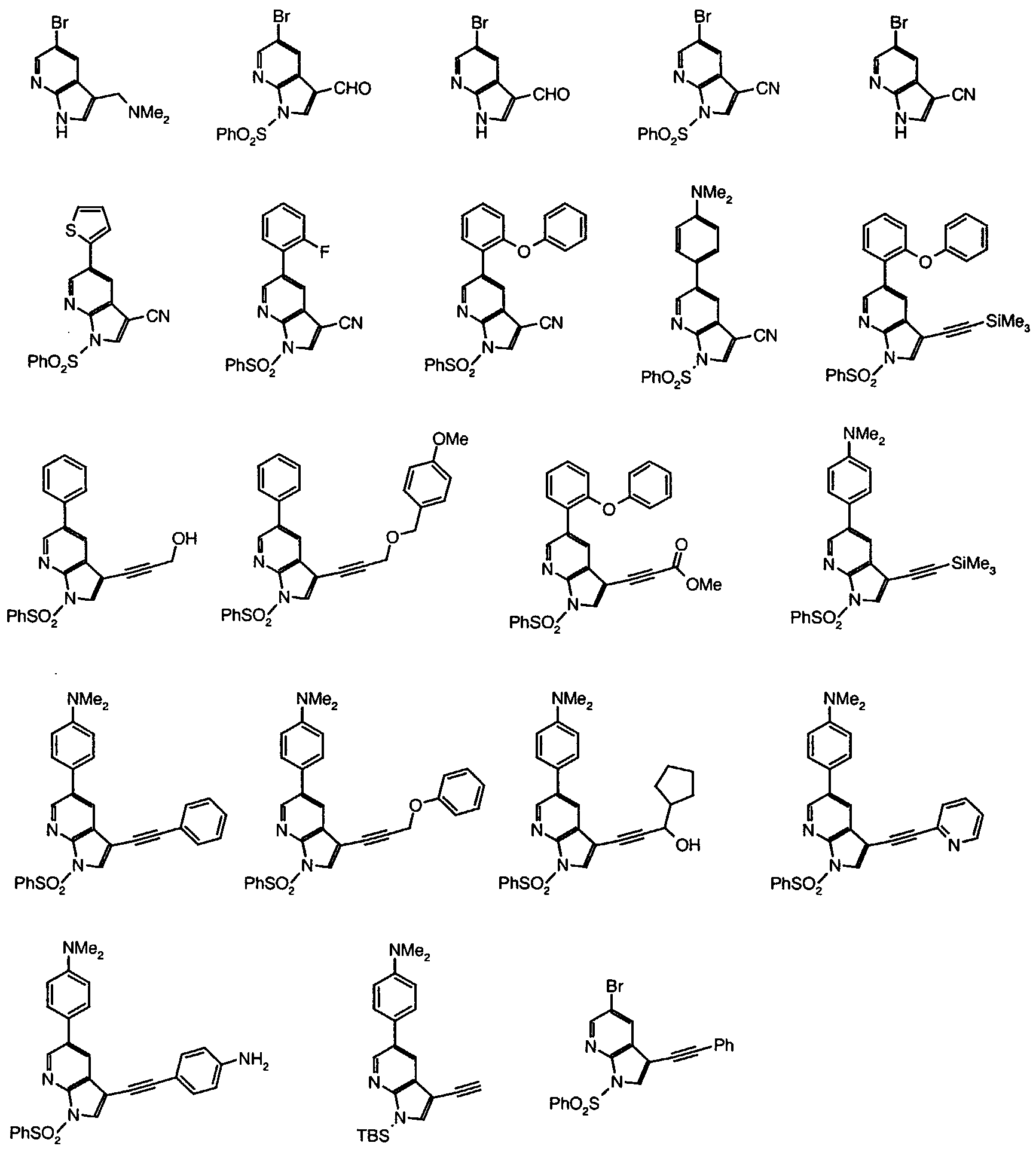
- WWLBJEIALPABFF-UHFFFAOYSA-N N#Cc1c[nH]c(nc2)c1cc2-c1ccc[s]1 Chemical compound N#Cc1c[nH]c(nc2)c1cc2-c1ccc[s]1 WWLBJEIALPABFF-UHFFFAOYSA-N 0.000 description 1
Classifications
-
- C—CHEMISTRY; METALLURGY
- C07—ORGANIC CHEMISTRY
- C07D—HETEROCYCLIC COMPOUNDS
- C07D471/00—Heterocyclic compounds containing nitrogen atoms as the only ring hetero atoms in the condensed system, at least one ring being a six-membered ring with one nitrogen atom, not provided for by groups C07D451/00 - C07D463/00
- C07D471/02—Heterocyclic compounds containing nitrogen atoms as the only ring hetero atoms in the condensed system, at least one ring being a six-membered ring with one nitrogen atom, not provided for by groups C07D451/00 - C07D463/00 in which the condensed system contains two hetero rings
- C07D471/04—Ortho-condensed systems
-
- A—HUMAN NECESSITIES
- A61—MEDICAL OR VETERINARY SCIENCE; HYGIENE
- A61P—SPECIFIC THERAPEUTIC ACTIVITY OF CHEMICAL COMPOUNDS OR MEDICINAL PREPARATIONS
- A61P25/00—Drugs for disorders of the nervous system
Definitions
- the present invention relates to novel compounds, their use in the inhibition of c-Jun N-terminal kinases, their use in medicine and particularly in the prevention and/or treatment of neurodegenerative disorders related to apoptosis and/or inflammation.
- the invention also provides processes for manufacture of said compounds, compositions containing them and processes for manufacturing such compositions.
- JNKs c-Jun N-terminal kinases
- MAPK mitogen-activated protein kinase
- JNKs are involved in response to various stimuli, including proinflammatory cytokines and environmental stress. JNKs, and JNK3 in particular, play an important role during apoptotic death of cells and therefore have been implicated in various disorders including stroke, traumatic brain injury and other neurodegenerative diseases such as Parkinson disease, Alzheimer disease and others. Since JNK activity is a physiological regulator of AP-1 transcriptional activity, JNK inhibitors are expected to reduce inflammatory response.
- Apoptosis is a form of cell death in which the cell actively participates in its own destruction in a process involving a characteristic series of biochemical and morphological changes, which are regulated by specific cell death genes.
- the apoptotic cell death is a process that has been observed in the developing mammalian nervous system.
- the inactivation by homologous recombination of genes that encode proteins that promote apoptosis, such as the caspase-3 or the Bax protein prevents developmental neuronal cell death.
- the destruction of genes that encode cell death suppressors such as Bcl-x, leads to enhanced neuronal cell death.
- apoptosis plays an important role in the pathology of acute and chronic neurodegenerative diseases.
- neuronal apoptosis is an important pathological feature of stroke, traumatic brain injury and other neurodegenerative diseases. Therefore, pharmacotherapy using inhibitors of neuronal apoptosis may provide a therapeutic benefit in neurodegenerative conditions.
- Antibodies specific for c-Jun protected NGF-deprived rat sympathetic neurones from apoptosis. Analogous neuroprotection due to expression of a c-Jun dominant negative mutant has been demonstrated, whereas overexpression of wild type c-Jun protein was sufficient to induce apoptosis in the presence of NGF. Estus and co-workers recently showed that an increase in c-Jun RNA levels occurs in cortical neurones undergoing apoptosis after treatment with ⁇ - amyloid peptide. It has also been shown that c-Jun is required for apoptosis in cerebellar granule neurones deprived of survival signals.
- JNKs c-Jun is activated by JNKs, which phosphorylate its transcriptional activation domain.
- JNKs In humans there are three JNK genes: JNK1, JNK2 and JNK3.
- the RNAs encoding JNK1 and JNK2 are expressed in many tissues, including the brain, but JNK3 is restricted to the nervous system and to a smaller extent the heart and testes.
- JNKs are strongly activated in cellular responses to various stresses such as UV radiation, heat shock, osmotic shock, DNA-damaging agents, and proinflammatory cytokines such as TNF ⁇ , LL-l ⁇ and others.
- Upstream regulators of the JNK pathway include kinases such as SEKl, MKK7 and MEKK1.
- Jun kinase activity is required for neuronal apoptosis in vitro.
- Overexpression of MEKK1 in sympathetic neurones increased c-Jun protein levels and phosphorylation and induced apoptosis in the presence of NGF indicating that activation of the Jun kinase pathway can trigger neuronal cell death.
- Jun kinase pathway has been shown to be necessary for the death of differentiated PC 12 cells deprived of NGF. Furthermore, compound CEP- 1347, which inhibits the c-Jun pathway (upstream of Jun kinase), protects motor neurones against cell death induced by survival factor withdrawal.
- JNK3 homozygous (-/-) knockout mice epileptic seizures and death of hippocampal CA3 neurones induced by injection of kainic acid is blocked. This indicates that JNK3 is involved in certain forms of neuronal cell death in vivo. It is also a critical component of GluR6-mediated excitotoxicity. Furthermore, JNK3 (-/-) mice appear to develop normally and are viable suggesting that JNK3 is not essential for development or viability.
- JNK3 Strong nuclear JNK3 immunoreactivity in the brain CA1 neurones of patients with acute hypoxia suggests that JNK3 is involved in hypoxia-related neurodegeneration. Transient hypoxia, may also trigger apoptosis through JNK signaling pathway in developing brain neurones.
- JNK3 immunoreactivity is colocalized with Alzheimer disease- affected neurones. Moreover JNK3 is related to neurofibrillary pathology of Alzheimer disease. In particular, JNK3 induces robust phosphorylation of amyloid precursor protein (APP) thus affecting its metabolism in disease state.
- APP amyloid precursor protein
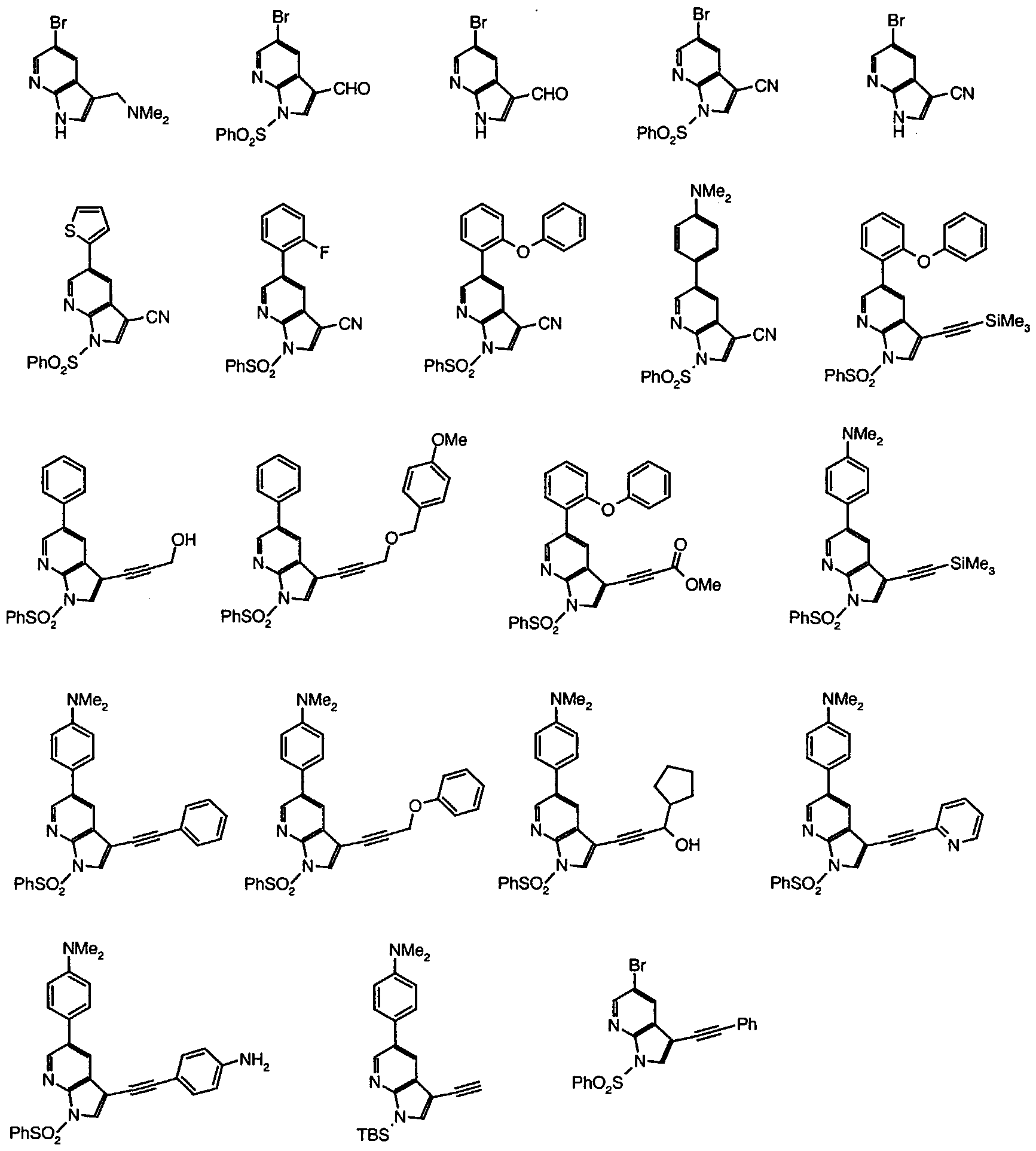
- the present inventors have provided compounds, which are inhibitors of c-Jun N-terminal kinases.
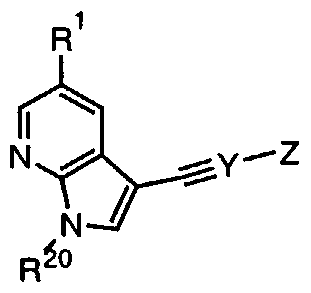
- the first aspect of the invention therefore relates to a compound of formula (I) as illustrated below:
- R 1 is an optionally substituted C 3 . 12 carbocyclyl or C 3 . 12 heterocyclyl group
- Y is N or C and Z is lone electron pair, hydrogen, C 1-12 alkyl, C 2-12 alkenyl, C 2-12 alkynyl, C 1-12 haloalkyl, C 3-12 carbocyclyl, C 3-12 heterocyclyl, (CH 2 ) n OR 2 , (CH 2 ) ⁇ NR 2 2 , CO 2 R 2 , COR 2 , CONR 2 2 , wherein the C 1-12 alkyl group optionally contains one or more insertions selected from -O-, -N(R )- -S-, - S(O)- and -S(O 2 )-; and each substitutable nitrogen atom in Z is optionally substituted by R 3 , COR 3 , S0 2 R 3 or CO 2 R 3 ; wherein n is 1 to 6, preferably n is 1, 2 or 3; wherein R
- each R optionally incorporates one or two insertions selected from the ggrroouupp ccoonnssiissttiinngg ooff --00--,, --NN((RR 4 ))--,, --SS((OO))-- aanndd -S(0 2 )-, wherein each R may be the same or different and is as defined below;
- R 3 is hydrogen, C 1-6 alkyl, C 1-6 haloalkyl, or C 6-12 aryl;
- R »4 is hydrogen, C 1-6 alkyl, C 1-6 haloalkyl or C 6-12 aryl;
- R 5 is hydrogen , C 1-12 alkyl, C 3-12 carbocyclyl or C 3-12 heterocyclyl, optionally substituted by one or more of C 1-6 alkyl, halogen, C 1-6 haloalkyl, OR 7 , SR 7 , N0 2 , CN, NR 7 R 7 , NR 7 COR 7 , NR 7 CONR 7 R 7 , NR 7 COR 7 , NR 7 C0 2 R 7 , C0 2 R 7 , COR 7 , CONR 7 2 , S(0) 2 R 7 , SONR 7 2 , S(0)R 7 , S0 2 NR 7 R 7 , NR 7 S(0) 2 R 7 , wherein the C 1-12 alkyl group optionally inco ⁇ orates one or two insertions selected from the group consisting of -O-, -N(R 7 )-, -S(O)- and -S(0 2 )-, wherein each R 7 may be the same or different and
- R 6 is hydrogen, .n alkyl, C 3- ⁇ 2 carbocyclyl or C 3-12 heterocyclyl, optionally substituted by one or more of C 1-6 alkyl, halogen, C 1-6 haloalkyl, OR 7 , SR 7 , N0 2 , CN, NR 7 R 7 , NR 7 COR 7 , NR 7 CONR 7 R 7 , NR 7 COR 7 , NR 7 C0 2 R 7 , C0 2 R 7 , COR 7 , CONR 7 2 , S(0) 2 R 7 , S(0)R 7 , S0 2 NR 7 R 7 , NR 7 S(0) 2 R 7 , wherein the C ⁇ -12 alkyl group optionally incorporates one or two insertions selected from the group consisting of -0-, -N(R 7 )-, -S(O)- and -S(0 2 )-, wherein each R 7 may be the same or different and is as defined below;
- R is hydrogen, C 1-6 alkyl, or C 1-6 haloalkyl
- the optionally substituted carbocyclyl or heterocyclyl group in R 1 and Z is optionally and independently fused to a partially saturated, unsaturated or fully saturated five to seven membered ring containing zero to three heteroatoms, and each substitutable carbon atom in R 1 or Z, including the optional fused ring, is optionally and independently substituted by one or more of halogen, C 1-12 alkyl, C 2- ⁇ 2 alkenyl, C 2-12 alkynyl, C 1-12 haloalkyl, C 3-12 carbocyclyl, C 3-12 heterocyclyl, (CH 2 ) n OR 12 , (CH 2 ) conflictNR l2 2 , OR 12 , SR 12 , N0 2 , CN, NR 12 2 , NR 12 COR 12 , NR 12 CONR ,2 2 , NR 12 COR 12 , NR 12 C0 2 R 12 , C0 2 R 12 , COR 12 , CONR 12 2 , S(0) 2 R
- R 12 is hydrogen , C x . ⁇ 2 alkyl, C 3-12 carbocyclyl or C 3- ⁇ 2 heterocyclyl, optionally substituted by one or more of C 1-6 alkyl, halogen, C 1-6 haloalkyl, OR 15 , SR 15 , N0 2 , CN, NR 15 R 15 , NR 15 COR 15 , NR l5 CONR 15 R 15 , NR 15 COR 15 , NR 15 C0 2 R 15 , C0 2 R 15 , COR 15 , CONR 15 2 , S(0) 2 R 15 , SONR 15 2 , S(0)R 15 , S0 2 NR 15 R 15 , NR 15 S(0) 2 R 15 , wherein the C 2 alkyl group optionally inco ⁇ orates one or two insertions selected from the group consisting of -0-, - N(R 15 )-, -S(O)- and -S(0 2 )-, wherein each R 15
- R 12 in NR 1 2 may form a partially saturated, unsaturated or fully saturated five to seven membered ring containing one to three heteroatoms, optionally and independently substituted with one or more of halogen, C 1-12 alkyl, C 2- ⁇ 2 alkenyl, C 2-12 alkynyl, C 1-12 haloalkyl, C 3-12 carbocyclyl, C 3 .
- R 13 is hydrogen, C 1-12 alkyl, C 3-12 carbocyclyl or C 3-12 heterocyclyl, optionally substituted by one or more of C 1-6 alkyl, halogen, C 1-6 haloalkyl, OR 15 , SR 15 , N0 2 , CN, NR 15 R 15 , NR 15 COR 15 , NR 15 CONR 15 R 15 , NR 15 COR 15 , NR 15 C0 2 R 15 , C0 2 R 15 , COR 15 , CONR 15 2 , S(0) 2 R 15 , S(0)R 15 , S0 2 NR 15 R 15 , NR 15 S(0) 2 R 15 , wherein the C 1-12 alkyl group optionally inco ⁇ orates one or two insertions selected from the group consisting of -0-, -N(R 15 )-, -S(O)- and - S(0 2 )-, wherein each R 15 may be the same or different and is as defined below;
- R 14 is hydrogen, C 1-6 alkyl, C 1-6 haloalkyl, or C 6-12 aryl;
- R 15 is hydrogen, C ⁇ -6 alkyl, or C 1-6 haloalkyl
- R 16 is hydrogen , C 1-12 alkyl, C 3- ⁇ 2 carbocyclyl or C 3-12 heterocyclyl, optionally substituted by one or more of C 1-6 alkyl, halogen, C 1-6 haloalkyl, OR 18 , SR 18 , N0 2 , CN, NR 18 R 18 , NR 18 COR 18 , NR 18 CONR 18 R 18 , NR 18 COR 18 , NR 18 C0 2 R 18 , C0 2 R 18 , COR 18 , CONR 18 2 , S(0) 2 R 18 , SONR 18 2 , S(0)R 18 , S0 2 NR I8 R 18 , NR 18 S(0) 2 R 18 , wherein the C 1-12 alkyl group optionally inco ⁇ orates one or two insertions selected from the group consisting of -0-, - N(R 18 )-, -S(O)- and -S(0 2 )-, wherein each R 18 may be the same or
- R 17 is hydrogen, -12 alkyl, C 3-12 carbocyclyl or C 3-12 heterocyclyl, optionally substituted by one or more of C 1-6 alkyl, halogen, C 1-6 haloalkyl, OR 18 , SR 18 , N0 2 , CN, NR 18 R 18 , NR 18 COR 18 , NR 18 CONR 18 R 18 , NR 18 COR 18 , NR 18 C0 2 R 18 , C0 2 R 18 , COR 18 , CONR 18 2 , S(0) 2 R 18 , S(0)R 18 , S0 2 NR 18 R 18 , NR 18 S(0) 2 R 18 , wherein the C 1-12 alkyl group optionally inco ⁇ orates one or two insertions selected from the group consisting of -O-, -N(R 18 )-, -S(O)- and - S(0 2 )-, wherein each R 18 may be the same or different and is as defined below;
- R 18 is hydrogen, C 1-6 alkyl, or C 1-6 haloalkyl
- a group as defined above contains two or more radicals e.g. the radical R 13 as for example in the groups S0 2 NR 13 R 13 and NR 13 COR 13
- the two or more radicals, e.g. R 13 may be the same or different.
- alkyl relates to both straight chain and branched alkyl radicals of 1 to 12 carbon atoms, preferably 1 to 8 carbon atoms and most preferably 1 to 4 carbon atoms including but not limited to methyl, ethyl, n-propyl, isopropyl, n-butyl, sec-butyl, isobutyl, tert-butyl n- pentyl, n-hexyl, n-heptyl, n-octyl.
- alkyl relates to a group having 1, 2, 3, 4, 5, 6, 7, 8, 9, 10, 11 or 12 carbon atoms.
- alkyl also encompasses cycloalkyl radicals including but not limited to cyclopropyl, cyclobutyl, CH 2 -cyclopropyl, CH 2 -cyclobutyl, cyclopentyl or cyclohexyl.
- cycloalkyl relates to a group having 3, 4, 5, 6, 7, 8, 9, 10, 11 or 12 carbon atoms. Cycloalkyl groups may be optionally substituted or fused to one or more carbocyclyl or heterocyclyl group.
- Haloalkyl relates to an alkyl radical as defined above preferably having 1 to 8 carbon atoms, preferably 1 to 4 carbon atoms substituted with one or more halide atoms for example one or more of F, Cl, Br or I, such as CH 2 CH 2 Br, CF 3 or CC1 3 .
- alkenyl means a straight chain or branched alkylenyl radical of 2 to 12 carbon atoms, preferably 2 to 6 carbon atoms and most preferably 2 to 4 carbon atoms, and containing one or more carbon-carbon double bonds and includes but is not limited to ethylene, n-propyl- 1-ene, n-propyl-2-ene, isopropylene, etc.
- alkenyl relates to a group having 2, 3, 4, 5, 6, 7, 8, 9, 10, 11 or 12 carbon atoms.
- alkynyl means a straight chain or branched alkynyl radical of 2 to 12 carbon atoms, preferably 2 to 6 carbon atoms and most preferably 2 to 4 carbon atoms, and containing one or more carbon-carbon triple bonds and includes but is not limited to ethynyl, 2- methylethynyl etc.
- alkynyl relates to a group having 2, 3, 4, 5, 6, 7, 8, 9, 10, 11 or 12 carbon atoms.
- Carbocyclyl relates to a saturated, partly unsaturated or unsaturated 3-12 membered hydrocarbon ring, preferably a 6-12 membered hydrocarbon ring, including cycloalkyl and aryl.
- Aryl means an aromatic 3-12 membered hydrocarbon preferably a 6-12 membered hydrocarbon containing one ring or being fused to one or more saturated or unsaturated rings including but not limited to phenyl, napthyl, anthracenyl or phenanthracenyl.
- Heteroaryl means an aromatic 3-12 membered aryl preferably a 5-12 membered aryl containing one or more heteroatoms selected from N, O or S and containing one ring or being fused to one or more saturated or unsaturated rings and;
- Heterocyclyl means a 3-12 membered ring system preferably a 5-12 membered aryl containing one or more heteroatoms selected from N, O or S and includes heteroaryl.
- the terms “carbocyclyl”, “aryl”, “heteroaryl” and “heterocyclyl” relate to a group having 3, 4, 5, 6, 7, 8, 9, 10, 11 or 12 carbon atoms.
- the heterocyclyl system can contain one ring or may be fused to one or more saturated or unsaturated rings; the heterocyclyl can be fully saturated, partially saturated or unsaturated and includes but is not limited to heteroaryl and heterocarbocyclyl.
- carbocyclyl or heterocyclyl groups include but are not limited to cyclohexyl, phenyl, acridine, benzimidazole, benzofuran, benzothiophene, benzoxazole, benzothiazole, carbazole, cinnoline, dioxin, dioxane, dioxolane, dithiane, dithiazine, dithiazole, dithiolane, furan, imidazole, imidazoline, imidazolidine, indole, indoline, indolizine, indazole, isoindole, isoquinoline, isoxazole, isothiazole, mo ⁇ holine, napthyridine,
- the term "fused" includes a polycyclic compound in which one ring contains one or more atoms preferably one, two or three atoms in common with one or more other ring.
- Halogen means F, Cl, Br or I, preferably Br and F.
- R 1 is preferably a five or six membered carbocyclyl or heterocyclyl group wherein the carbocyclyl or heterocyclyl group is optionally fused to one or more unsaturated rings.
- R 1 is preferably selected from phenyl, cyclohexyl, acridine, benzimidazole, benzofuran, benzothiophene, benzoxazole, benzothiazole, furan, imidazole, indole, isoindole, isoquinoline, isoxazole, isothiazole, mo ⁇ holine, napthaline, oxazole, phenazine, phenothiazine, phenoxazine, piperazine, piperidine, pyrazole, pyridazine, pyridine, pynole, quinoline, quinolizine, tetrahydrofuran, tetrazine, tetrazole, thiophene, thiazole, thiomo ⁇ holine, thianaphthalene, thiopyran, triazine, triazole, or trithiane.
- R 1 is phenyl, thiophene or pyridinyl.
- R 1 can be optionally substituted at any position on the carbocyclyl, heterocyclyl or optional fused ring.
- Substitution can occur at the ortho, meta or para positions relative to the pyridine ring.
- R 1 is a six-membered ring, substitution is preferably at the ortho and/or para positions, more preferably at the ortho position.
- R 1 is preferably substituted with one or more of OR 12 , NR 12 2 , SR 12 , (CH 2 ) radicalOR 12 , (CH 2 ) n NR 12 2 , halogen, C 1-6 alkyl, C 2-6 alkenyl, C 2-6 alkynyl, C 1-6 haloalkyl, N0 2 , CN, C0 2 R 12 , COR 12 , CONR 12 2 , S(0) 2 R 12 , S(0)R 12 or S0 2 NR 12 2 ; wherein R 12 is hydrogen, C 1-4 alkyl, C 5-12 heterocyclyl or C 6-12 aryl preferably phenyl, and n is 1, 2, 3, 4, 5 or 6,
- R 14 is optionally substituted by R 14 , COR 14 , S0 2 R 14 or C0 2 R 14 ; wherein R 14 is C 1-6 alkyl, C 1-6 haloalkyl, or C 6-12 aryl;
- the compounds of the first aspect may be provided as a salt, preferably as a pharmaceutically acceptable salt of compounds of formula (I).
- pharmaceutically acceptable salts of these compounds include a hydrate and those derived from organic acids such as acetic acid, malic acid, tartaric acid, citric acid, lactic acid, oxalic acid, succinic acid, fumaric acid, maleic acid, benzoic acid, salicylic acid, phenylacetic acid, mandelic acid, methanesulphonic acid, benzenesulphonic acid and p-toluenesulphonic acid, mineral acids such as hydrochloric and sulphuric acid and the like, giving methanesulphonate, benzenesulphonate, p-toluenesulphonate, hydrochloride and sulphate, and the like, respectively or those derived from bases such as organic and inorganic bases.
- suitable inorganic bases for the formation of salts of compounds for this invention include the hydroxides, carbonates, and bicarbonates of ammonia, lithium, sodium, calcium, potassium, aluminium, iron, magnesium, zinc and the like. Salts can also be formed with suitable organic bases.
- bases suitable for the formation of pharmaceutically acceptable base addition salts with compounds of the present invention include organic bases, which are nontoxic and strong enough to form salts.
- Such organic bases are already well known in the art and may include amino acids such as arginine and lysine, mono-, di-, or trihydroxyalkylamines such as mono-, di-, and triethanolamine, choline, mono-, di-, and trialkylamines, such as methylamine, dimethylamine, and trimethylamine, guanidine; N-methylglucosamine; N-methylpiperazine; mo ⁇ holine; ethylenediamine; N-benzylphenethylamine; tris(hydroxymethyl) aminome thane; and the like.
- amino acids such as arginine and lysine, mono-, di-, or trihydroxyalkylamines such as mono-, di-, and triethanolamine, choline, mono-, di-, and trialkylamines, such as methylamine, dimethylamine, and trimethylamine, guanidine; N-methylglucosamine; N-methylpiperazine; mo ⁇ holine; ethylenediamine; N-benzy
- Salts may be prepared in a conventional manner using methods well known in the art. Acid addition salts of said basic compounds may be prepared by dissolving the free base compounds according to the first or second aspects of the invention in aqueous or aqueous alcohol solution or other suitable solvents containing the required acid. Where a compound of the invention contains an acidic function, a base salt of said compound may be prepared by reacting said compound with a suitable base. The acid or base salt may separate directly or can be obtained by concentrating the solution e.g. by evaporation. The compounds of this invention may also exist in solvated or hydrated forms. The invention also extends to a prodrug of the aforementioned compounds such as an ester or amide thereof.
- a prodrug is any compound that may be converted under physiological conditions or by solvolysis to any of the compounds of the invention or to a pharmaceutically acceptable salt of the compounds of the invention.
- a prodrug may be inactive when administered to a subject but is converted in vivo to an active compound of the invention.
- the compounds of the invention may contain one or more asymmetric carbon atoms and may exist in racemic and optically active forms.
- the compounds of the invention may exist in trans or cis form.
- the first aspect of the invention covers all of these compounds.
- the second aspect of the invention provides a process for the manufacture of a compound of formula (I) as defined in the first aspect of the invention wherein a compound of formula (III) is converted to a compound of formula (I) by the removal of the group R 20 .
- R , Y and Z are as defined in the first aspect of the invention and R is an amino protecting group.
- the conditions for the removal of the group R 20 will depend on the identity of 0 90 the R group.
- R is sulfonamide
- the compound of formula (I) can be produced by the treatment of the compound of formula (III) under basic conditions, for instance using sodium hydroxide in water/ethanol.
- R 20 is sulfonamide, more preferably (R 30 ) 2 NSO 2 , most preferably benzenesulfonamide.
- a compound of formula (I) may undergo one or more further reactions to provide a different compound of formula (I).
- a compound may undergo a reduction, oxidation, elimination, substitution and/or addition reaction.
- a compound of formula (I) may undergo a Stille reaction, which can be carried out according to Stille (Angew. Chem., Int.ed, Engl. 1986, 25, 508; Mitchell Synthesis, 1992, 803) or Littke et al. (J. Am. Chem. Soc. 2002, 124, 6343), or a Suzuki reaction which can be carried out according to Suzuki (Pure Appl. Chem. 1991, 63, 419) or Littke et al. (J. Am. Chem. Soc.
- the third aspect of the invention provides a compound of formula (III)
- R Y and Z are as defined in the first aspect and R is a nitrogen protecting group defined in the second aspect of the invention.
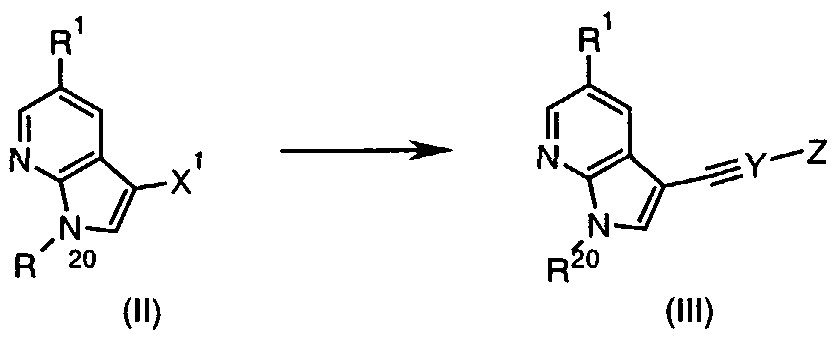
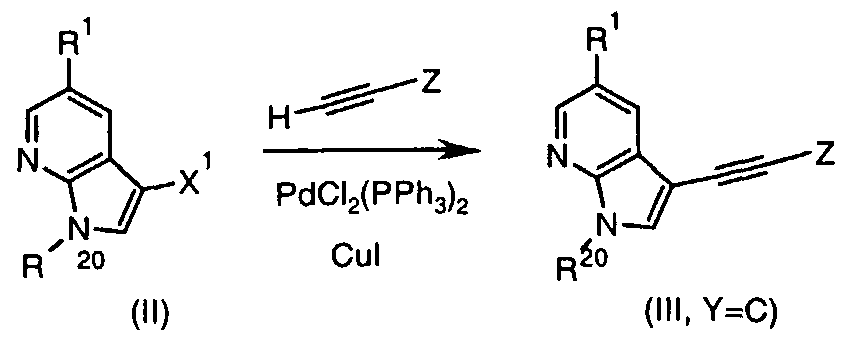
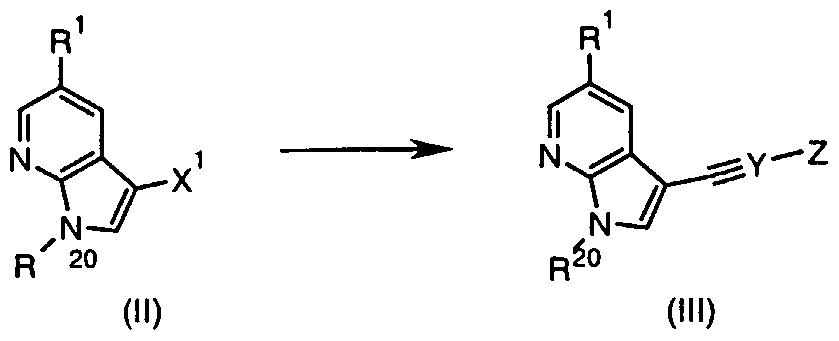
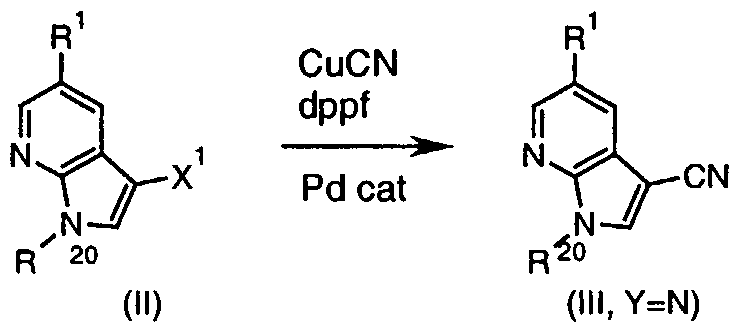
- the fourth aspect of the invention provides a process for the formation of a compound of formula (III) by the palladium catalyzed introduction of the group C ⁇ Y-Z into compound (II).
- R is an amino protecting group, such as R S0 2 ,
- R 20 is sulfonamide, most preferably benzenesulfonamide or (R 30 ) 2 NSO 2 .
- a compound of formula (III) may undergo one or more further reactions to provide a different compound of formula (III).
- a compound may undergo a reduction, oxidation, elimination, substitution and/or addition reaction.
- a compound of formula (III) may undergo a Stille reaction, which can be carried out according to Stille (Angew. Chem., Int.ed, Engl. 1986, 25, 508; Mitchell Synthesis, 1992, 803) or Littke et al. (J. Am. Chem. Soc. 2002, 124, 6343), or a Suzuki reaction which can be carried out according to Suzuki (Pure Appl. Chem. 1991, 63, 419) or Littke et al. (J. Am. Chem.
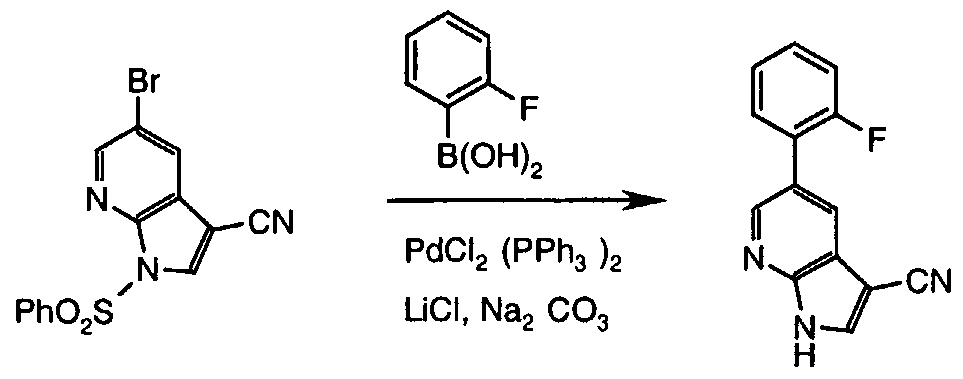
- the fifth aspect of the invention provides a process for the manufacture of a compound of formula (III) as defined in the third aspect of the invention comprising a a) reaction of a compound of formula (IV) with stannane R 1 - Sn(R 31 ) 3 in the presence of a palladium catalyst or b) reaction of a compound of formula (IV) with boronic acid or ester R [ -B(OR 32 ) 2 in a presence of a suitable palladium catalyst or c) reaction of a compound of formula (IV) with silane R 1 - Si(R 31 ) 3 in the presence of a palladium catalyst
- R 1 , Y and Z are as defined in the first aspect
- X 2 is a halide, preferably selected from Cl, Br or I, more preferably Br and R 20 is a nitrogen protecting group as defined in the second aspect of the invention
- each of R 31 is independently C 1-6 alkyl
- each of R 32 is independently hydrogen or Cj. 6 alkyl or wherein two R 32 groups together form a five, six or seven membered optionally ring with the boron and oxygen atoms, wherein the ring is optionally substituted with one or more C 1-6 alkyl group preferably methyl or ethyl.
- R 32 is
- R 33 is independently C 1-6 alkyl, F, OH
- reaction set out as option a) for the fifth aspect is a Stille reaction, which can be carried out according to Stille Angew. Chem., Int.ed, Engl. 1986, 25, 508; Mitchell Synthesis, 1992, 803 or Littke et al. (J. Am. Chem. Soc. 2002, 124, 6343),
- the reaction set out as option b) for the fifth aspect is a Suzuki reaction which can be carried out according to Suzuki (Pure Appl. Chem. 1991, 63, 419) or
- reaction set out as option c) for the fifth aspect is a Hiyama reaction which can be carried out according to Hatanaka et al. J. Org.
- the sixth aspect of the invention provides a process for the manufacture of compound of formula (I) as defined in the first aspect of the invention comprising a a) reaction of a compound of formula (V) with stannane R 1 - Sn(R 31 ) 3 in the presence of a palladium catalyst or b) reaction of a compound of formula (V) with boronic acid or ester R 1 -B(OR 32 ) 2 in a presence of a suitable palladium catalyst or c) reaction of a compound of formula (V) with silane R 1 - Si(R 31 ) 3 in the presence of a palladium catalyst
- X 2 is as defined in the fifth aspect, wherein R 1 , Y and Z are as defined in the first aspect, and wherein each of R 31 , R 32 , or R 33 are as defined in the fifth aspect
- reaction set out as option a) for the sixth aspect is a Stille reaction, which can be carried out according to Stille Angew. Chem., Int.ed, Engl. 1986, 25, 508; Mitchell Synthesis, 1992, 803 or Littke et al. (J. Am. Chem. Soc. 2002, 124, 6343),
- the reaction set out as option b) for the sixth aspect is a Suzuki reaction which can be carried out according to Suzuki (Pure Appl. Chem. 1991, 63, 419) or Littke et al. (J. Am. Chem. Soc. 2000, 122, 4020).
- reaction set out as option c) for the sixth aspect is a Hiyama reaction which can be carried out according to Hatanaka et al. J. Org. Chem. 1988, 53, 918, Hatanaka et al. Synlett, 1991, 845, Tamao et al. Tetrahedron Lett. 1989, 30, 6051, or Denmark et al. Org. Lett. 2000, 2, 565, ibid. 2491.
- the seventh aspect provides a compound of formula (V)
- Y and Z are as defined in the first aspect wherein X 2 is as defined in the fifth aspect, preferably X 2 is bromide.
- the eighth aspect of the invention provides a process for the manufacture of a compound of formula (V) as defined in the seventh aspect of the invention comprising the conversion of a compound of formula (IV) into a compound of formula (V) by removal of the group R 20
- the conditions for the removal of the group R will depend on the identity of the R 20 group.
- R ,20 ⁇ is sulfonamide
- the compound of formula (V) can be produced by the treatment of the compound of formula (IV) under basic conditions, for instance using sodium hydroxide in water/ethanol.
- the ninth aspect of the invention provides a compound of formula (IV)
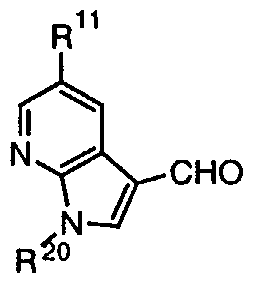
- the tenth aspect of the invention provides a process for the manufacture of a compound of formula (VII) comprising the reaction of aldoxime (VI) with selenium dioxide,
- R 11 is X 2 or R 1 wherein X 2 is as defined in the fifth aspect and wherein R 1 is defined in the first aspect; wherein R 20 is a nitrogen protecting group as defined in the second aspect of the invention.
- the eleventh aspect of the invention provides a compound of formula (VI)
- the invention encompasses both cis and trans isomers of (VI) and a mixture of isomers of (VI).
- the twelfth aspect of the invention provides a process for the manufacture of a compound of formula (VI) as defined in the eleventh aspect of the invention comprising the reaction of aldehyde (VIII) with hydroxylamine,
- the compound of formula (VI) can be generated in situ by the process of the twelfth aspect, and further reacted with selenium dioxide as set out in the tenth aspect.
- the compound of formula (VII) can therefore be produced from the compound of formula (VIII) via the compound of formula (VI) by the reaction of a compound of formula (VIII) with hydroxylamine to give a compound of formula (VI) as set out in the twelfth aspect, followed by the subsequent reaction of the aldoxime (VI) with selenium dioxide to give a compound of formula (VII) as set out in the tenth aspect.
- the compound of formula (VII) can be produced from a compound of formula (VIII) in a "one pot" synthesis under conditions similar to those used by Sosnovsky et al. (Synthesis, 1979, 722).
- a compound of formula (VI) may undergo one or more further reactions to provide a different compound of formula (VI).
- a compound may undergo a reduction, oxidation, elimination, substitution and/or addition reaction.
- a compound of formula (VI) may undergo a Stille reaction, which can be carried out according to Stille (Angew. Chem., Int.ed, Engl. 1986, 25, 508; Mitchell Synthesis, 1992, 803) or Littke et al. (J. Am. Chem. Soc. 2002, 124, 6343), or a Suzuki reaction which can be carried out according to Suzuki (Pure Appl. Chem. 1991, 63, 419) or Littke et al. (J. Am. Chem. Soc. 2000, 722, 4020).
- the thirteenth aspect of the invention provides a compound of formula (VIII)
- the fourteenth aspect of the invention provides a process for the manufacture of a compound of formula (VIII) as defined in the thirteenth aspect of the invention by the addition of the R 20 group to a compound of general formula (IX).
- Compound (VIII) can be produced by the initial formation of the relevant salt, for example by treatment with NaH in DMF, followed by reaction of the salt with an electrophile such as sulfonyl halide, acid chloride.
- an electrophile such as sulfonyl halide, acid chloride.
- a compound of formula (VIII) can be produced by the direct reaction of compound (IX) with an electrophile such as benzensulfonyl halide, preferably benzenesulfonyl chloride.
- This reaction is preferably carried out in the presence of base (such as sodium hydroxide) and a phase transfer catalyst such as tetra-n-butylammonium bromide or tetra-n- butylammonium hydrogen sulphate.
- base such as sodium hydroxide
- phase transfer catalyst such as tetra-n-butylammonium bromide or tetra-n- butylammonium hydrogen sulphate.
- a compound of formula (VIII) may undergo one or more further reactions to provide a different compound of formula (VIII).
- a compound may undergo a reduction, oxidation, elimination, substitution and/or addition reaction.
- a compound of formula (VIII) may undergo a Stille reaction, which can be carried out according to Stille (Angew. Chem., Int.ed, Engl. 1986, 25, 508; Mitchell Synthesis, 1992, 803) or Littke et al. (J. Am. Chem. Soc. 2002, 724, 6343), or a Suzuki reaction which can be carried out according to Suzuki (Pure Appl. Chem. 1991, 63, 419) or Littke et al. (J. Am. Chem. Soc. 2000, 722, 4020).
- the fifteenth aspect of the invention provides a compound of formula (IX) (IX) wherein R 11 is as defined in the tenth aspect.
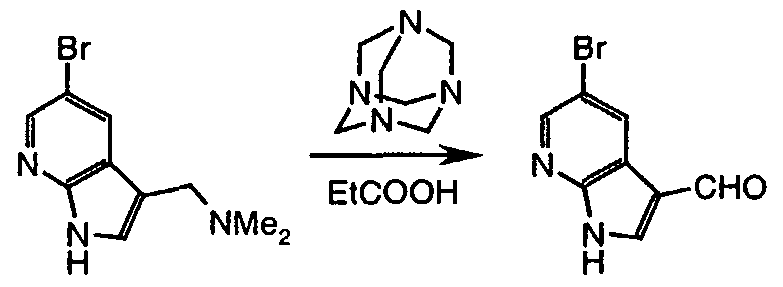
- the sixteenth aspect of the invention provides a process for the manufacture of a compound of formula (IX) as defined in the fifteenth aspect of the invention by the reaction of a compound of a formula (X) with hexamethylenetetramine in aqueous propionic acid.
- the reaction is carried out under the conditions similar to those used by Robison, M. M. and Robison, B. L. (J. Am. Chem. Soc. 1955, 77, 457).
- R is as defined in the tenth aspect, and R is as defined in the fifth aspect of the invention.
- a compound of formula (IX) may undergo one or more further reactions to provide a different compound of formula (IX).
- a compound may undergo a reduction, oxidation, elimination, substitution and/or addition reaction.
- a compound of formula (IX) may undergo a Stille reaction, which can be carried out according to Stille (Angew. Chem., Int.ed, Engl. 1986, 25, 508; Mitchell Synthesis, 1992, 803) or Littke et al. (J. Am. Chem. Soc. 2002, 124, 6343), or a Suzuki reaction which can be carried out according to Suzuki (Pure Appl. Chem. 1991, 63, 419) or Littke et al. (J. Am. Chem. Soc. 2000, 722, 4020).
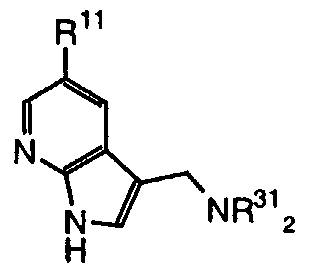
- the seventeenth aspect of the invention provides a compound of formula (X)
- R is as defined in the tenth aspect, and wherein R is as defined in the fifth aspect of the invention.
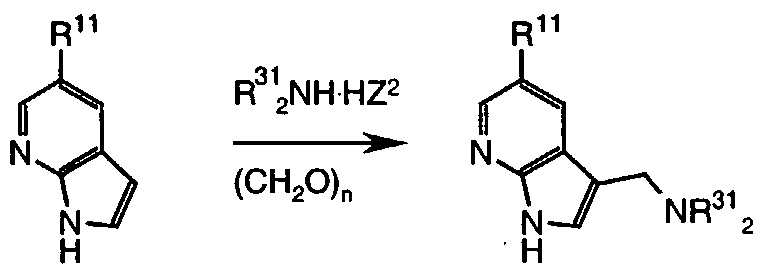
- the eighteenth aspect of the invention provides a process for the manufacture of a compound of formula (X) as defined in the seventeenth aspect of the invention by the reaction of a compound of a formula (IX) with a secondary amine and paraformaldehyde.
- R 11 is as defined in the tenth aspect, wherein R 31 is as defined is as defined in the fifth aspect of the invention and HZ 2 is HCl, HBr, HI, H 2 S0 4 , HN0 3 or H 3 P0 4 .
- the formation of the compound of formula (X) is carried out under the conditions similar to those used by Robison, M. M. and Robison, B. L. (J. Am. Chem. Soc. 1955, 77, 457).
- a compound of formula (X) may undergo one or more further reactions to provide a different compound of formula (X).
- a compound may undergo a reduction, oxidation, elimination, substitution and/or addition reaction.
- a compound of formula (X) may undergo a Stille reaction, which can be carried out according to Stille (Angew. Chem., Int.ed, Engl. 1986, 25, 508; Mitchell Synthesis, 1992, 803) or Littke et al. (J. Am. Chem. Soc. 2002, 124, 6343), or a Suzuki reaction which can be canied out according to Suzuki (Pure Appl. Chem. 1991, 63, 419) or Littke et al. (J. Am. Chem. Soc. 2000, 722, 4020).
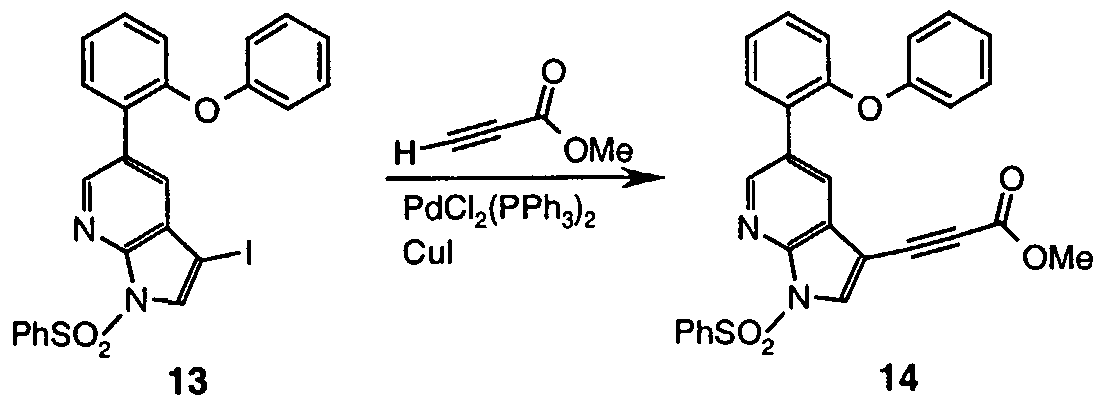
- the nineteenth aspect of the invention provides a process for the formation of a compound of formula (IV) by the palladium catalyzed introduction of the group C ⁇ Y-Z into compound (XII).
- the compound of formula (IV) can be produced from a compound of formula (XII) and acetylene H-C ⁇ C-Z by incubation with PdCl 2 (PPh 3 ) 2 and
- R is sulfonamide, most preferably benzenesulfonamide.
- a method for producing a compound of formula (XII) is disclosed in PCT/GB2004/000944.
- the present invention also encompasses a process for manufacturing a compound of the first aspect, the process comprising providing a starting material, which is commercially available or can be produced by a method known in the art, converting the starting material to form an intermediate compound of the third, seventh, ninth, eleventh, thirteenth, fifteenth or seventeenth aspects using a process as described above or a process known in the art (and optionally converting the intermediate compound so formed into another intermediate compound) and then converting the intermediate compound into a compound of the first aspect using a process as described above or a process known in the art (and optionally converting the compound of the first aspect so formed into another compound of the first aspect).
- the twentieth aspect of the invention provides a composition comprising a compound according to the first aspect of the invention in combination with a pharmaceutically acceptable carrier, diluent or excipient.
- the composition may also comprise one or more additional active agent, such as an anti-inflammatory agent (for example a p38 inhibitor, glutamate receptor antagonist, or a calcium channel antagonist), AMPA receptor antagonist, a chemotherapeutic agent and/or an antiproliferative agent.
- additional active agent such as an anti-inflammatory agent (for example a p38 inhibitor, glutamate receptor antagonist, or a calcium channel antagonist), AMPA receptor antagonist, a chemotherapeutic agent and/or an antiproliferative agent.
- Suitable carriers and/or diluents are well known in the art and include pharmaceutical grade starch, mannitol, lactose, magnesium stearate, sodium saccharin, talcum, cellulose, glucose, sucrose, (or other sugar), magnesium carbonate, gelatin, oil, alcohol, detergents, emulsifiers or water (preferably sterile).
- the composition may be a mixed preparation of a composition or may be a combined preparation for simultaneous, separate or sequential use (including administration).
- composition according to the invention for use in the aforementioned indications may be administered by any convenient method, for example by oral (including by inhalation), parenteral, mucosal (e.g. buccal, sublingual, nasal), rectal or transdermal administration and the compositions adapted accordingly.
- composition can be formulated as liquids or solids, for example solutions, syrups, suspensions or emulsions, tablets, capsules and lozenges.
- a liquid formulation will generally consist of a suspension or solution of the compound or physiologically acceptable salt in a suitable aqueous or non- aqueous liquid carrier(s) for example water, ethanol, glycerine, polyethylene glycol or an oil.
- a suitable aqueous or non- aqueous liquid carrier(s) for example water, ethanol, glycerine, polyethylene glycol or an oil.
- the formulation may also contain a suspending agent, preservative, flavouring or colouring agent.
- a composition in the form of a tablet can be prepared using any suitable pharmaceutical carrier(s) routinely used for preparing solid formulations.
- suitable pharmaceutical carrier(s) include magnesium stearate, starch, lactose, sucrose and microcrystalline cellulose.
- a composition in the form of a capsule can be prepared using routine encapsulation procedures. For example, powders, granules or pellets containing the active ingredient can be prepared using standard carriers and then filled into a hard gelatin capsule; alternatively, a dispersion or suspension can be prepared using any suitable pharmaceutical carrier(s), for example aqueous gums, celluloses, silicates or oils and the dispersion or suspension then filled into a soft gelatin capsule.
- compositions for oral administration may be designed to protect the active ingredient against degradation as it passes through the alimentary tract, for example by an outer coating of the formulation on a tablet or capsule.
- Typical parenteral compositions consist of a solution or suspension of the compound or physiologically acceptable salt in a sterile aqueous or non- aqueous carrier or parenterally acceptable oil, for example polyethylene glycol, polyvinyl pynolidone, lecithin, arachis oil or sesame oil.
- a sterile aqueous or non- aqueous carrier or parenterally acceptable oil for example polyethylene glycol, polyvinyl pynolidone, lecithin, arachis oil or sesame oil.
- the solution can be lyophilised and then reconstituted with a suitable solvent just prior to administration.
- compositions for nasal or oral administration may conveniently be formulated as aerosols, drops, gels and powders.
- Aerosol formulations typically comprise a solution or fine suspension of the active substance in a physiologically acceptable aqueous or non-aqueous solvent and are usually presented in single or multidose quantities in sterile form in a sealed container, which can take the form of a cartridge or refill for use with an atomising device.
- the sealed container may be a unitary dispensing device such as a single dose nasal inhaler or an aerosol dispenser fitted with a metering valve, which is intended for disposal once the contents of the container have been exhausted.
- the dosage form comprises an aerosol dispenser, it will contain a pharmaceutically acceptable propellant.
- the aerosol dosage forms can also take the form of a pump-atomiser.
- compositions suitable for buccal or sublingual administration include tablets, lozenges and pastilles, wherein the active ingredient is formulated with a carrier such as sugar and acacia, tragacanth, or gelatin and glycerin.
- a carrier such as sugar and acacia, tragacanth, or gelatin and glycerin.
- compositions for rectal or vaginal administration are conveniently in the form of suppositories (containing a conventional suppository base such as cocoa butter), pessaries, vaginal tabs, foams or enemas.
- compositions suitable for transdermal administration include ointments, gels, patches and injections including powder injections.
- composition is in unit dose form such as a tablet, capsule or ampoule.
- the twenty first aspect of the invention provides a process for the manufacture of a composition according to the twentieth aspect of the invention.
- the manufacture can be carried out by standard techniques well known in the art and involves combining a compound according to the first aspect of the invention and the pharmaceutically acceptable carrier or diluent.
- the composition may be in any form including a tablet, a liquid, a capsule, and a powder or in the form of a food product, e.g. a functional food. In the latter case the food product itself may act as the pharmaceutically acceptable carrier.
- the twenty-second aspect of the present invention relates to a compound of the first aspect, or a composition of the twentieth aspect, for use in medicine.
- the compounds of the present invention are inhibitors of JNK, such as JNK1, JNK2, or JNK3.
- the compounds of the present invention are inhibitors of JNK3.
- the compounds of the present invention inhibit JNK3 selectively (i.e. the compounds of the invention preferably show greater activity against JNK3 than JNK1 and 2).
- an inhibitor is any compound which reduces or prevents the activity of the JNK enzyme.
- this aspect provides a compound of the first aspect, or a composition of the twentieth aspect of the present invention, for the prevention or treatment of a JNK-mediated disorder.
- the compounds of the first aspect of the invention may thus be used for the inhibition of JNK, more preferably for the inhibition of JNK3.
- JNK-mediated disorder is any disease or deleterious condition in which JNK plays a role.
- Examples include neurodegenerative disorder (including dementia), inflammatory disease, a disorder linked to apoptosis, particularly neuronal apoptosis, autoimmune disease, destructive bone disorder, proliferative disorder, cancer, infectious disease, allergy, ischemia reperfusion injury, heart attack, angiogenic disorder, organ hypoxia, vascular hype ⁇ lasia, cardiac hypertrophy, thrombin induced platelet aggregation and any condition associated with prostaglandin endoperoxidase synthase-2.
- the compounds of the present invention may be used for any of these JNK-mediated disorders.
- the compounds of the present invention are particularly useful for the prevention or treatment of a neurodegenerative disorder.
- the neurodegenerative disorder results from apoptosis and/or inflammation.
- Examples of neurodegenerative disorders are: dementia; Alzheimer's disease; Parkinson's disease; Amyotrophic Lateral Sclerosis; Huntington's disease; senile chorea; Sydenham's chorea; hypoglycemia; head and spinal cord trauma including traumatic head injury; acute and chronic pain; epilepsy and seizures; olivopontocerebellar dementia; neuronal cell death; hypoxia-related neurodegeneration; acute hypoxia; glutamate toxicity including glutamate neurotoxicity; cerebral ischemia; dementia linked to meningitis and/or neurosis; cerebrovascular dementia; or dementia in an HJV-infected patient.
- the neurodegenerative disorder may be a peripheral neuropathy, including mononeuropathy, multiple mononeuropathy or polyneuropathy.
- peripheral neuropathy may be found in diabetes mellitus, Lyme disease or uremia; peripheral neuropathy caused by a toxic agent; demyelinating disease such as acute or chronic inflammatory polyneuropathy, leukodystrophies, or Guillain-Barre syndrome; multiple mononeuropathy secondary to a collagen vascular disorder (e.g. polyarteritis nodosa, SLE, Sj ⁇ gren's syndrome); multiple mononeuropathy secondary to sarcoidosis; multiple mononeuropathy secondary to a metabolic disease (e.g. diabetes or amyloidosis); or multiple mononeuropathy secondary to an infectious disease (e.g Lyme disease or HJV infection).
- demyelinating disease such as acute or chronic inflammatory polyneuropathy, leukodystrophies, or Guillain-Barre syndrome
- demyelinating disease such as acute or chronic inflammatory polyn
- the compounds of the invention can also be used to prevent or treat disorders resulting from inflammation. These include, for example, inflammatory bowel disorder, bronchitis, asthma, acute pancreatitis, chronic pancreatitis, allergies of various types, and possibly Alzheimer's disease.
- Autoimmune diseases which may also be treated or prevented by the compounds of the present invention include rheumatoid arthritis, systemic lupus erythematosus, glumerulonephritis, scleroderma, chronic thyroiditis, Graves' s disease, autoimmune gastritis, diabetes, autoimmune haemolytis anaemia, autoimmune neutropaenia, thrombocytopenia, atopic dermatitis, chronic active hepatitis, myasthenia gravis, multiple sclerosis, ulcerative colitis, Crohn's disease, psoriasis or graft vs host disease.
- a compound of the present invention may be administered simultaneously, subsequently or sequentially with one or more other active agent, such as an anti-inflammatory agent e.g. p38 inhibitor, AMP A receptor antagonist, glutamate receptor antagonist, calcium channel antagonist, a chemotherapeutic agent or an antiproliferative agent.
- an anti-inflammatory agent e.g. p38 inhibitor, AMP A receptor antagonist, glutamate receptor antagonist, calcium channel antagonist, a chemotherapeutic agent or an antiproliferative agent.
- a p38 inhibitor may be administered to a patient prior to administering a compound of the present invention.
- the compounds of the invention will normally be administered in a daily dosage regimen (for an adult patient) of, for example, an oral dose of between 1 mg and 2000 mg, preferably between 30 mg and 1000 mg, e.g. between 10 and 250 mg or an intravenous, subcutaneous, or intramuscular dose of between 0.1 mg and 100 mg, preferably between 0.1 mg and 50 mg, e.g. between 1 and 25 mg of the compound of the formula (I) or a physiologically acceptable salt thereof calculated as the free base, the compound being administered 1 to 4 times per day.
- the compounds will be administered for a period of continuous therapy, for example for a week or more.
- the twenty-third aspect of the invention relates to a method of treating or preventing a JNK-mediated disorder in an individual, which method comprises administering to said individual a compound of the first aspect or a composition of the twentieth aspect.
- the active compound is preferably administered in a cumulative effective amount.
- the individual may be in need of the treatment or prevention.
- Any of the JNK-mediated disorders listed above in relation to the twenty-second aspect may be the subject of treatment or prevention according to the twenty-third aspect.
- One or more other active agent may be administered to the individual simultaneously, subsequently or sequentially to administering the compound.
- the other active agent may be an anti-inflammatory agent such as a p38 inhibitor, glutamate receptor antagonist, AMPA receptor antagonist, calcium channel antagonist, a chemotherapeutic agent or an antiproliferative agent, but is preferably p38 inhibitor for acute treatment.
- an anti-inflammatory agent such as a p38 inhibitor, glutamate receptor antagonist, AMPA receptor antagonist, calcium channel antagonist, a chemotherapeutic agent or an antiproliferative agent, but is preferably p38 inhibitor for acute treatment.
- the twenty-fourth aspect of the present invention provides the use of a compound of the first aspect in the manufacture of a medicament for the prevention or treatment of a JNK-mediated disorder.
- the medicament may be used for treatment or prevention of any of the JNK-mediated disorders Usted above in relation to the twenty-second aspect.
- the compound of the present invention may be administered simultaneously, subsequently or sequentially with one or more other active agent, preferably a p38 inhibitor for acute treatment.
- an assay for determining the activity of the compounds of the present invention is for the JNK inhibiting activity of the compound, more preferably it is for the JNK3-specific inhibiting activity of the compounds.
- the compounds of the invention may be assayed in vitro, in vivo, in silico, or in a primary cell culture or a cell line. In vitro assays include assays that determine inhibition of either the kinase activity or ATPase activity of activated JNK.
- in vitro assays may quantitate the ability of a compound to bind JNK and may be measured either by radiolabelling the compound prior to binding, then isolating the inhibitor/JNK complex and determining the amount of the radiolabel bound or by running a competition experiment where new inhibitors are incubated with JNK bound to known radioligands.
- An example of an assay, which may be used, is Scintillation Proximity Assay (SPA), preferably using radiolabelled ATP.
- ELISA ELISA. Any type or isoform of JNK may be used in these assays.
- a method of inhibiting the activity or function of a JNK, particularly JNK3, which method comprises exposing a JNK to a compound or a composition of the first or twentieth aspect of the present invention.
- the method may be performed in a research model, in vitro, in silico, or in vivo such as in an animal model.
- a suitable animal model may be a kainic acid model in rat or mice, traumatic brain injury model in rat, or MPTP in mice.
- JNK2 and JNK3 assay compounds are prepared in six 2-fold dilutions with water and each concentration is tested in duplicate.
- JNKl assay compounds are prepared in four 5 -fold dilutions with water which are tested in triplicate. Controls are treated identically.
- JNK2/3 SPA 50 ⁇ l
- JNKl SPA 30 ⁇ l
- kinase solution JNK in 25 mM HEPES pH 7.5, lOmM Mg Acetate
- the plate is incubated for 30 minutes at room temperature.
- IC 50 values are calculated as the concentration of the compound being tested at which the phosphorylation of c-Jun is decreased to 50% of the control value.
- Example IC 50 values for the compounds of this invention are given in Table 1.
- Active p38 kinase 100 ng; Upstate was added to 2 ⁇ g GST-ATF2 substrate (NEB) in 250 mM Hepes pH 7.5/100 mM MgAc/50 ⁇ M ATP (final) in the presence or absence of compounds in 50 ⁇ l.
- the mixture was incubated at 30°C for 1 hour, and then diluted with 200 ⁇ l PBS-Tween (0.05 %). From this, duplicate volumes of 100 ⁇ l were added to a Reacti-Bind glutathione coated plate (Pierce) and incubated for 1 hour.
- IC 50 values are calculated as the concentration of the compound being tested at which the phosphorylation of ATF2 is decreased to 50% of the control value.
- Example IC 50 values for the compounds of this invention are given in Table 1 (last column).
Landscapes
- Chemical & Material Sciences (AREA)
- Organic Chemistry (AREA)
- Health & Medical Sciences (AREA)
- Engineering & Computer Science (AREA)
- Bioinformatics & Cheminformatics (AREA)
- Biomedical Technology (AREA)
- Neurology (AREA)
- Neurosurgery (AREA)
- Chemical Kinetics & Catalysis (AREA)
- General Chemical & Material Sciences (AREA)
- Medicinal Chemistry (AREA)
- Nuclear Medicine, Radiotherapy & Molecular Imaging (AREA)
- Pharmacology & Pharmacy (AREA)
- Life Sciences & Earth Sciences (AREA)
- Animal Behavior & Ethology (AREA)
- General Health & Medical Sciences (AREA)
- Public Health (AREA)
- Veterinary Medicine (AREA)
- Pharmaceuticals Containing Other Organic And Inorganic Compounds (AREA)
Abstract
Description

















Claims






Priority Applications (2)
| Application Number | Priority Date | Filing Date | Title |
|---|---|---|---|
| US10/554,808 US7612086B2 (en) | 2003-05-16 | 2004-05-14 | JNK inhibitors |
| EP04733011A EP1628975A2 (en) | 2003-05-16 | 2004-05-14 | Jnk inhibitors |
Applications Claiming Priority (6)
| Application Number | Priority Date | Filing Date | Title |
|---|---|---|---|
| GB0311313A GB0311313D0 (en) | 2003-05-16 | 2003-05-16 | JNK inhibitors |
| GB0311313.1 | 2003-05-16 | ||
| GB0315732A GB0315732D0 (en) | 2003-07-04 | 2003-07-04 | JNK inhibitors |
| GB0315732.8 | 2003-07-04 | ||
| GB0405053.0 | 2004-03-05 | ||
| GB0405053A GB0405053D0 (en) | 2004-03-05 | 2004-03-05 | JNK inhibitors |
Publications (2)
| Publication Number | Publication Date |
|---|---|
| WO2004101565A2 true WO2004101565A2 (en) | 2004-11-25 |
| WO2004101565A3 WO2004101565A3 (en) | 2005-02-03 |
Family
ID=33458157
Family Applications (1)
| Application Number | Title | Priority Date | Filing Date |
|---|---|---|---|
| PCT/GB2004/002099 Ceased WO2004101565A2 (en) | 2003-05-16 | 2004-05-14 | Jnk inhibitors |
Country Status (3)
| Country | Link |
|---|---|
| US (1) | US7612086B2 (en) |
| EP (1) | EP1628975A2 (en) |
| WO (1) | WO2004101565A2 (en) |
Cited By (17)
| Publication number | Priority date | Publication date | Assignee | Title |
|---|---|---|---|---|
| WO2006015123A1 (en) * | 2004-07-27 | 2006-02-09 | Sgx Pharmaceuticals, Inc. | Pyrrolo-pyridine kinase modulators |
| EP1676574A2 (en) | 2004-12-30 | 2006-07-05 | Johnson & Johnson Vision Care, Inc. | Methods for promoting survival of transplanted tissues and cells |
| EP1749829A1 (en) | 2005-08-05 | 2007-02-07 | Eisai London Research Laboratories Limited | JNK inhibitors |
| WO2007106236A3 (en) * | 2006-02-27 | 2007-12-21 | Sgx Pharmaceuticals Inc | Pyrrolo-pyridine kinase modulators |
| WO2008110508A1 (en) * | 2007-03-09 | 2008-09-18 | Glaxo Group Limited | Pyrrolo-pyridine derivatives for the treatment of disorders associated with inappropriate ikk1 activity |
| US7452993B2 (en) | 2004-07-27 | 2008-11-18 | Sgx Pharmaceuticals, Inc. | Fused ring heterocycle kinase modulators |
| US7626021B2 (en) | 2004-07-27 | 2009-12-01 | Sgx Pharmaceuticals, Inc. | Fused ring heterocycle kinase modulators |
| WO2010016490A1 (en) | 2008-08-05 | 2010-02-11 | 第一三共株式会社 | Imidazopyridin-2-on derivative |
| US8501812B2 (en) | 2005-03-29 | 2013-08-06 | University Of Massachusetts | Therapeutic methods for type I diabetes |
| US8741920B2 (en) | 2009-08-03 | 2014-06-03 | Hoffmann-La Roche, Inc. | Process for the manufacture of pharmaceutically active compounds |
| WO2014170248A1 (en) * | 2013-04-18 | 2014-10-23 | H. Lundbeck A/S | Arylpyrrolopyridine derived compounds as lrrk2 inhibitors |
| CN104817639A (en) * | 2015-05-08 | 2015-08-05 | 河北大学 | Preparation method and application of hexamethylenetetramine complete antigen |
| JP2015522602A (en) * | 2012-07-20 | 2015-08-06 | メタブレイン リサーチ | Imidazopyridine derivatives useful for the treatment of diabetes |
| US9624213B2 (en) | 2011-02-07 | 2017-04-18 | Plexxikon Inc. | Compounds and methods for kinase modulation, and indications therefor |
| US9663517B2 (en) | 2009-04-03 | 2017-05-30 | Plexxikon Inc. | Compositions and uses thereof |
| US9695169B2 (en) | 2012-05-31 | 2017-07-04 | Plexxikon Inc. | Synthesis of heterocyclic compounds |
| US9844539B2 (en) | 2007-07-17 | 2017-12-19 | Plexxikon Inc. | Compounds and methods for kinase modulation, and indications therefor |
Families Citing this family (10)
| Publication number | Priority date | Publication date | Assignee | Title |
|---|---|---|---|---|
| DE60316542T2 (en) * | 2002-03-28 | 2008-07-03 | Eisai R&D Management Co., Ltd. | 7-AZAINDOLE AS INHIBITORS C-JUN N-TERMINAL KINASES FOR THE TREATMENT OF NEURODEGENERATIVE DISORDER |
| CN1925855B (en) | 2003-12-19 | 2010-06-16 | 普莱希科公司 | Compounds and methods for developing Ret modulators |
| US7498342B2 (en) | 2004-06-17 | 2009-03-03 | Plexxikon, Inc. | Compounds modulating c-kit activity |
| WO2008063888A2 (en) | 2006-11-22 | 2008-05-29 | Plexxikon, Inc. | Compounds modulating c-fms and/or c-kit activity and uses therefor |
| CN106220623A (en) | 2009-11-06 | 2016-12-14 | 普莱希科公司 | Compounds and methods for and indication thereof for kinases regulation |
| AR085279A1 (en) | 2011-02-21 | 2013-09-18 | Plexxikon Inc | SOLID FORMS OF {3- [5- (4-CHLORINE-PHENYL) -1H-PIRROLO [2,3-B] PIRIDINA-3-CARBONIL] -2,4-DIFLUOR-PHENIL} -AMIDE OF PROPANE ACID-1- SULFONIC |
| WO2012178022A2 (en) * | 2011-06-24 | 2012-12-27 | University Of Massachusetts | Therapeutic applications targeting sarm1 |
| CN103833753B (en) * | 2012-11-22 | 2017-02-01 | 广东东阳光药业有限公司 | Alkynyl compound and its use method and purpose |
| WO2014089280A1 (en) * | 2012-12-07 | 2014-06-12 | Calitor Sciences, Llc | Alkynyl compounds and methods of use |
| EP3234110B1 (en) | 2014-12-18 | 2024-02-28 | President and Fellows of Harvard College | METHODS FOR GENERATING STEM CELL-DERIVED ß CELLS AND USES THEREOF |
Family Cites Families (33)
| Publication number | Priority date | Publication date | Assignee | Title |
|---|---|---|---|---|
| US4719216A (en) * | 1983-06-23 | 1988-01-12 | Mcneilab, Inc. | Hexahydropyrrolo(2,1-A)isoquinoline derivatives as antidepressants |
| US4719218A (en) | 1985-12-12 | 1988-01-12 | Smithkline Beckman Corporation | Pyrrolo[1,2-a]imidazole and pyrrolo[1,2-a]pyridine derivatives and their use as 5-lipoxygenase pathway inhibitor |
| GB9026926D0 (en) | 1990-12-12 | 1991-01-30 | Smith Kline French Lab | Novel process |
| ZA919797B (en) | 1990-12-13 | 1992-10-28 | Smithkline Beecham Corp | Bicyclo-5,6-dihydro-7h-pyrrolo-1,20-imidazol-7-ols and 7-ones |
| SE9100920D0 (en) * | 1991-03-27 | 1991-03-27 | Astra Ab | NEW ACTIVE COMPOUNDS |
| JP3119758B2 (en) * | 1993-02-24 | 2000-12-25 | 日清製粉株式会社 | 7-Azaindole derivative and antiulcer drug containing the same as active ingredient |
| FR2732969B1 (en) * | 1995-04-14 | 1997-05-16 | Adir | NOVEL PYRIDINIC COMPOUNDS, PROCESS FOR THEIR PREPARATION AND THE PHARMACEUTICAL COMPOSITIONS CONTAINING THEM |
| WO1998047899A1 (en) | 1997-04-24 | 1998-10-29 | Ortho-Mcneil Corporation, Inc. | Substituted pyrrolopyridines useful in the treatment of inflammatory diseases |
| GB9721437D0 (en) | 1997-10-10 | 1997-12-10 | Glaxo Group Ltd | Heteroaromatic compounds and their use in medicine |
| BR9812944A (en) | 1997-10-20 | 2000-08-08 | Hoffmann La Roche | Bicyclic kinase inhibitors |
| WO1999051233A1 (en) | 1998-04-02 | 1999-10-14 | Merck & Co., Inc. | Antagonists of gonadotropin releasing hormone |
| EP1124823A1 (en) | 1998-10-30 | 2001-08-22 | Merck & Co., Inc. | Thrombin inhibitors |
| WO2000026211A1 (en) | 1998-10-30 | 2000-05-11 | Merck & Co., Inc. | Thrombin inhibitors |
| CN1136217C (en) | 1998-12-17 | 2004-01-28 | 霍夫曼-拉罗奇有限公司 | 4-Aryloxindoles as JNK protein kinase inhibitors |
| KR20010108024A (en) | 1998-12-17 | 2001-12-07 | 프리돌린 클라우스너, 롤란드 비. 보레르 | 4,5-pyrazinoxindoles as protein kinase inhibitors |
| US6265403B1 (en) | 1999-01-20 | 2001-07-24 | Merck & Co., Inc. | Angiogenesis inhibitors |
| GB9904933D0 (en) | 1999-03-04 | 1999-04-28 | Glaxo Group Ltd | Compounds |
| US6239132B1 (en) | 1999-04-23 | 2001-05-29 | Merck & Co., Inc. | Thrombin inhibitors |
| DE60041763D1 (en) | 1999-04-23 | 2009-04-23 | Vertex Pharma | INHIBITORS OF C-JUN N-TERMINAL KINASEN (JNK) |
| KR20080028516A (en) | 1999-08-19 | 2008-03-31 | 시그널 파머슈티컬스 인크 | Pyrazoloanthrone and derivatives thereof as jnk inhibitors and their compositions |
| US6642375B2 (en) * | 1999-12-07 | 2003-11-04 | Fuji Photo Film Co., Ltd. | Fluorescent substances |
| WO2001047922A2 (en) | 1999-12-24 | 2001-07-05 | Aventis Pharma Limited | Azaindoles |
| DE60132975T2 (en) | 2000-01-06 | 2009-02-26 | Merck Frosst Canada Inc., Kirkland | NEW SUBSTANCES AND COMPOUNDS AS PROTEASE INHIBITORS |
| US6897231B2 (en) | 2000-07-31 | 2005-05-24 | Signal Pharmaceuticals, Inc. | Indazole derivatives as JNK inhibitors and compositions and methods related thereto |
| PE20020506A1 (en) | 2000-08-22 | 2002-07-09 | Glaxo Group Ltd | PIRAZOLE DERIVATIVES FUSED AS PROTEIN KINASE INHIBITORS |
| GB0108770D0 (en) * | 2001-04-06 | 2001-05-30 | Eisai London Res Lab Ltd | Inhibitors |
| WO2003028724A1 (en) | 2001-10-04 | 2003-04-10 | Smithkline Beecham Corporation | Chk1 kinase inhibitors |
| WO2003082869A1 (en) | 2002-03-28 | 2003-10-09 | Eisai Co., Ltd. | Azaindoles as inhibitors of c-jun n-terminal kinases |
| DE60316542T2 (en) * | 2002-03-28 | 2008-07-03 | Eisai R&D Management Co., Ltd. | 7-AZAINDOLE AS INHIBITORS C-JUN N-TERMINAL KINASES FOR THE TREATMENT OF NEURODEGENERATIVE DISORDER |
| SE0202463D0 (en) | 2002-08-14 | 2002-08-14 | Astrazeneca Ab | Novel compounds |
| EP2295433A3 (en) * | 2003-03-06 | 2011-07-06 | Eisai R&D Management Co., Ltd. | JNK inhibitors |
| GB0305142D0 (en) * | 2003-03-06 | 2003-04-09 | Eisai London Res Lab Ltd | Synthesis |
| GB0516156D0 (en) * | 2005-08-05 | 2005-09-14 | Eisai London Res Lab Ltd | JNK inhibitors |
-
2004
- 2004-05-14 US US10/554,808 patent/US7612086B2/en not_active Expired - Fee Related
- 2004-05-14 EP EP04733011A patent/EP1628975A2/en not_active Withdrawn
- 2004-05-14 WO PCT/GB2004/002099 patent/WO2004101565A2/en not_active Ceased
Cited By (29)
| Publication number | Priority date | Publication date | Assignee | Title |
|---|---|---|---|---|
| US8268994B2 (en) | 2004-07-27 | 2012-09-18 | Sgx Pharmaceuticals, Inc. | Fused ring heterocycle kinase modulators |
| US7601839B2 (en) | 2004-07-27 | 2009-10-13 | Sgx Pharmaceuticals Inc. | Pyrrolo-pyridine kinase modulators |
| WO2006015123A1 (en) * | 2004-07-27 | 2006-02-09 | Sgx Pharmaceuticals, Inc. | Pyrrolo-pyridine kinase modulators |
| US7906648B2 (en) | 2004-07-27 | 2011-03-15 | Sgx Pharmaceuticals, Inc. | Pyrrolo-pyridine kinase modulators |
| US7361763B2 (en) | 2004-07-27 | 2008-04-22 | Sgx Pharmaceuticals, Inc. | Pyrrolo-pyridine kinase modulators |
| US7361764B2 (en) | 2004-07-27 | 2008-04-22 | Sgx Pharmaceuticals, Inc. | Pyrrolo-pyridine kinase modulators |
| US7829558B2 (en) | 2004-07-27 | 2010-11-09 | Sgx Pharmaceuticals, Inc. | Fused ring heterocycle kinase modulators |
| US7452993B2 (en) | 2004-07-27 | 2008-11-18 | Sgx Pharmaceuticals, Inc. | Fused ring heterocycle kinase modulators |
| US7582637B2 (en) | 2004-07-27 | 2009-09-01 | Sgx Pharmaceuticals, Inc. | Pyrrolo-pyridine kinase modulators |
| US7626021B2 (en) | 2004-07-27 | 2009-12-01 | Sgx Pharmaceuticals, Inc. | Fused ring heterocycle kinase modulators |
| EP1676574A2 (en) | 2004-12-30 | 2006-07-05 | Johnson & Johnson Vision Care, Inc. | Methods for promoting survival of transplanted tissues and cells |
| US8501812B2 (en) | 2005-03-29 | 2013-08-06 | University Of Massachusetts | Therapeutic methods for type I diabetes |
| EP1749829A1 (en) | 2005-08-05 | 2007-02-07 | Eisai London Research Laboratories Limited | JNK inhibitors |
| WO2007106236A3 (en) * | 2006-02-27 | 2007-12-21 | Sgx Pharmaceuticals Inc | Pyrrolo-pyridine kinase modulators |
| WO2008110508A1 (en) * | 2007-03-09 | 2008-09-18 | Glaxo Group Limited | Pyrrolo-pyridine derivatives for the treatment of disorders associated with inappropriate ikk1 activity |
| US10426760B2 (en) | 2007-07-17 | 2019-10-01 | Plexxikon Inc. | Compounds and methods for kinase modulation, and indications therefor |
| US9844539B2 (en) | 2007-07-17 | 2017-12-19 | Plexxikon Inc. | Compounds and methods for kinase modulation, and indications therefor |
| WO2010016490A1 (en) | 2008-08-05 | 2010-02-11 | 第一三共株式会社 | Imidazopyridin-2-on derivative |
| US9663517B2 (en) | 2009-04-03 | 2017-05-30 | Plexxikon Inc. | Compositions and uses thereof |
| US8741920B2 (en) | 2009-08-03 | 2014-06-03 | Hoffmann-La Roche, Inc. | Process for the manufacture of pharmaceutically active compounds |
| US9624213B2 (en) | 2011-02-07 | 2017-04-18 | Plexxikon Inc. | Compounds and methods for kinase modulation, and indications therefor |
| US11337976B2 (en) | 2011-02-07 | 2022-05-24 | Plexxikon Inc. | Compounds and methods for kinase modulation, and indications therefor |
| US12076322B2 (en) | 2011-02-07 | 2024-09-03 | Plexxikon Inc. | Compounds and methods for kinase modulation, and indications therefor |
| US9695169B2 (en) | 2012-05-31 | 2017-07-04 | Plexxikon Inc. | Synthesis of heterocyclic compounds |
| JP2015522602A (en) * | 2012-07-20 | 2015-08-06 | メタブレイン リサーチ | Imidazopyridine derivatives useful for the treatment of diabetes |
| US9499542B2 (en) | 2013-04-18 | 2016-11-22 | H. Lundbeck A/S | Arylpyrrolopyridine derived compounds as LRRK2 inhibitors |
| US9675594B2 (en) | 2013-04-18 | 2017-06-13 | H. Lundbeck A/S | Arylpyrrolopyridine derived compounds as LRRK2 inhibitors |
| WO2014170248A1 (en) * | 2013-04-18 | 2014-10-23 | H. Lundbeck A/S | Arylpyrrolopyridine derived compounds as lrrk2 inhibitors |
| CN104817639A (en) * | 2015-05-08 | 2015-08-05 | 河北大学 | Preparation method and application of hexamethylenetetramine complete antigen |
Also Published As
| Publication number | Publication date |
|---|---|
| EP1628975A2 (en) | 2006-03-01 |
| US20070142366A1 (en) | 2007-06-21 |
| US7612086B2 (en) | 2009-11-03 |
| WO2004101565A3 (en) | 2005-02-03 |
Similar Documents
| Publication | Publication Date | Title |
|---|---|---|
| US7612086B2 (en) | JNK inhibitors | |
| EP1720871B1 (en) | 3,5-disubstituted 1h-pyrrolo [2,3-b] pyridines as jnk inhibitors | |
| EP1490364B1 (en) | 7-azaindoles as inhibitors of c-jun n-terminal kinases for the treatment of neurodegenerative disorders | |
| EP1490365B1 (en) | Azaindoles as inhibitors of c-jun n-terminal kinases | |
| US7432375B2 (en) | JNK inhibitors | |
| EP1373269A1 (en) | Jun kinase inhibitors | |
| JP4309653B2 (en) | Novel sulfonamide substituted pyrazolopyridine derivatives | |
| WO2004076458A1 (en) | Pyrazolo[1,5-a]pyrimidine derivatives | |
| WO2024148191A1 (en) | MODULATORS OF TNF-α ACTIVITY | |
| FR2941948A1 (en) | AZAINDOLE DERIVATIVES AS INHIBITOR OF ABL KINASE PROTEINS AND SRC | |
| CA3091342A1 (en) | Susbstituted aryl and heteroaryl acetamide derivatives and pharmaceutical compositions thereof useful as p300/cbp hat_inhibitors | |
| WO2016161572A1 (en) | TrkA KINASE INHIBITORS, COMPOSITIONS AND METHODS THEREOF | |
| WO2017094026A1 (en) | 3-pyrimidinyl pyrrolo [2,3-b] pyridine as new anticancer agents and the process for the preparation thereof | |
| KR101746199B1 (en) | GSK3 Nitrogen-Containing Heteroaryl Derivatives and Their Use as GSK3 Inhibitors | |
| CN115403581B (en) | Heterocyclic compounds as IRAK4 inhibitors | |
| CN116410202A (en) | Crystal form and preparation method of oxazabicyclic derivatives |
Legal Events
| Date | Code | Title | Description |
|---|---|---|---|
| AK | Designated states |
Kind code of ref document: A2 Designated state(s): AE AG AL AM AT AU AZ BA BB BG BR BW BY BZ CA CH CN CO CR CU CZ DE DK DM DZ EC EE EG ES FI GB GD GE GH GM HR HU ID IL IN IS JP KE KG KP KR KZ LC LK LR LS LT LU LV MA MD MG MK MN MW MX MZ NA NI NO NZ OM PG PH PL PT RO RU SC SD SE SG SK SL SY TJ TM TN TR TT TZ UA UG US UZ VC VN YU ZA ZM ZW |
|
| AL | Designated countries for regional patents |
Kind code of ref document: A2 Designated state(s): GM KE LS MW MZ NA SD SL SZ TZ UG ZM ZW AM AZ BY KG KZ MD RU TJ TM AT BE BG CH CY CZ DE DK EE ES FI FR GB GR HU IE IT LU MC NL PL PT RO SE SI SK TR BF BJ CF CG CI CM GA GN GQ GW ML MR NE SN TD TG |
|
| 121 | Ep: the epo has been informed by wipo that ep was designated in this application | ||
| WWE | Wipo information: entry into national phase |
Ref document number: 2004733011 Country of ref document: EP |
|
| WWP | Wipo information: published in national office |
Ref document number: 2004733011 Country of ref document: EP |
|
| WWE | Wipo information: entry into national phase |
Ref document number: 2007142366 Country of ref document: US Ref document number: 10554808 Country of ref document: US |
|
| WWP | Wipo information: published in national office |
Ref document number: 10554808 Country of ref document: US |