WO2004103559A2 - Coordination complex system comprising building blocks and use thereof as a catalyst - Google Patents
Coordination complex system comprising building blocks and use thereof as a catalyst Download PDFInfo
- Publication number
- WO2004103559A2 WO2004103559A2 PCT/EP2004/050906 EP2004050906W WO2004103559A2 WO 2004103559 A2 WO2004103559 A2 WO 2004103559A2 EP 2004050906 W EP2004050906 W EP 2004050906W WO 2004103559 A2 WO2004103559 A2 WO 2004103559A2
- Authority
- WO
- WIPO (PCT)
- Prior art keywords
- functional group
- template
- building blocks
- building block
- ligand
- Prior art date
- Legal status (The legal status is an assumption and is not a legal conclusion. Google has not performed a legal analysis and makes no representation as to the accuracy of the status listed.)
- Ceased
Links
Classifications
-
- B—PERFORMING OPERATIONS; TRANSPORTING
- B01—PHYSICAL OR CHEMICAL PROCESSES OR APPARATUS IN GENERAL
- B01J—CHEMICAL OR PHYSICAL PROCESSES, e.g. CATALYSIS OR COLLOID CHEMISTRY; THEIR RELEVANT APPARATUS
- B01J31/00—Catalysts comprising hydrides, coordination complexes or organic compounds
- B01J31/16—Catalysts comprising hydrides, coordination complexes or organic compounds containing coordination complexes
- B01J31/24—Phosphines, i.e. phosphorus bonded to only carbon atoms, or to both carbon and hydrogen atoms, including e.g. sp2-hybridised phosphorus compounds such as phosphabenzene, phosphole or anionic phospholide ligands
- B01J31/2495—Ligands comprising a phosphine-P atom and one or more further complexing phosphorus atoms covered by groups B01J31/1845 - B01J31/1885, e.g. phosphine/phosphinate or phospholyl/phosphonate ligands
-
- B—PERFORMING OPERATIONS; TRANSPORTING
- B01—PHYSICAL OR CHEMICAL PROCESSES OR APPARATUS IN GENERAL
- B01J—CHEMICAL OR PHYSICAL PROCESSES, e.g. CATALYSIS OR COLLOID CHEMISTRY; THEIR RELEVANT APPARATUS
- B01J31/00—Catalysts comprising hydrides, coordination complexes or organic compounds
- B01J31/16—Catalysts comprising hydrides, coordination complexes or organic compounds containing coordination complexes
-
- B—PERFORMING OPERATIONS; TRANSPORTING
- B01—PHYSICAL OR CHEMICAL PROCESSES OR APPARATUS IN GENERAL
- B01J—CHEMICAL OR PHYSICAL PROCESSES, e.g. CATALYSIS OR COLLOID CHEMISTRY; THEIR RELEVANT APPARATUS
- B01J31/00—Catalysts comprising hydrides, coordination complexes or organic compounds
-
- B—PERFORMING OPERATIONS; TRANSPORTING
- B01—PHYSICAL OR CHEMICAL PROCESSES OR APPARATUS IN GENERAL
- B01J—CHEMICAL OR PHYSICAL PROCESSES, e.g. CATALYSIS OR COLLOID CHEMISTRY; THEIR RELEVANT APPARATUS
- B01J31/00—Catalysts comprising hydrides, coordination complexes or organic compounds
- B01J31/02—Catalysts comprising hydrides, coordination complexes or organic compounds containing organic compounds or metal hydrides
- B01J31/06—Catalysts comprising hydrides, coordination complexes or organic compounds containing organic compounds or metal hydrides containing polymers
- B01J31/069—Hybrid organic-inorganic polymers, e.g. silica derivatized with organic groups
-
- B—PERFORMING OPERATIONS; TRANSPORTING
- B01—PHYSICAL OR CHEMICAL PROCESSES OR APPARATUS IN GENERAL
- B01J—CHEMICAL OR PHYSICAL PROCESSES, e.g. CATALYSIS OR COLLOID CHEMISTRY; THEIR RELEVANT APPARATUS
- B01J31/00—Catalysts comprising hydrides, coordination complexes or organic compounds
- B01J31/16—Catalysts comprising hydrides, coordination complexes or organic compounds containing coordination complexes
- B01J31/1608—Catalysts comprising hydrides, coordination complexes or organic compounds containing coordination complexes the ligands containing silicon
-
- B—PERFORMING OPERATIONS; TRANSPORTING
- B01—PHYSICAL OR CHEMICAL PROCESSES OR APPARATUS IN GENERAL
- B01J—CHEMICAL OR PHYSICAL PROCESSES, e.g. CATALYSIS OR COLLOID CHEMISTRY; THEIR RELEVANT APPARATUS
- B01J31/00—Catalysts comprising hydrides, coordination complexes or organic compounds
- B01J31/16—Catalysts comprising hydrides, coordination complexes or organic compounds containing coordination complexes
- B01J31/1616—Coordination complexes, e.g. organometallic complexes, immobilised on an inorganic support, e.g. ship-in-a-bottle type catalysts
- B01J31/1625—Coordination complexes, e.g. organometallic complexes, immobilised on an inorganic support, e.g. ship-in-a-bottle type catalysts immobilised by covalent linkages, i.e. pendant complexes with optional linking groups
- B01J31/1633—Coordination complexes, e.g. organometallic complexes, immobilised on an inorganic support, e.g. ship-in-a-bottle type catalysts immobilised by covalent linkages, i.e. pendant complexes with optional linking groups covalent linkages via silicon containing groups
-
- B—PERFORMING OPERATIONS; TRANSPORTING
- B01—PHYSICAL OR CHEMICAL PROCESSES OR APPARATUS IN GENERAL
- B01J—CHEMICAL OR PHYSICAL PROCESSES, e.g. CATALYSIS OR COLLOID CHEMISTRY; THEIR RELEVANT APPARATUS
- B01J31/00—Catalysts comprising hydrides, coordination complexes or organic compounds
- B01J31/16—Catalysts comprising hydrides, coordination complexes or organic compounds containing coordination complexes
- B01J31/165—Polymer immobilised coordination complexes, e.g. organometallic complexes
-
- B—PERFORMING OPERATIONS; TRANSPORTING
- B01—PHYSICAL OR CHEMICAL PROCESSES OR APPARATUS IN GENERAL
- B01J—CHEMICAL OR PHYSICAL PROCESSES, e.g. CATALYSIS OR COLLOID CHEMISTRY; THEIR RELEVANT APPARATUS
- B01J31/00—Catalysts comprising hydrides, coordination complexes or organic compounds
- B01J31/16—Catalysts comprising hydrides, coordination complexes or organic compounds containing coordination complexes
- B01J31/18—Catalysts comprising hydrides, coordination complexes or organic compounds containing coordination complexes containing nitrogen, phosphorus, arsenic or antimony as complexing atoms, e.g. in pyridine ligands, or in resonance therewith, e.g. in isocyanide ligands C=N-R or as complexed central atoms
- B01J31/1805—Catalysts comprising hydrides, coordination complexes or organic compounds containing coordination complexes containing nitrogen, phosphorus, arsenic or antimony as complexing atoms, e.g. in pyridine ligands, or in resonance therewith, e.g. in isocyanide ligands C=N-R or as complexed central atoms the ligands containing nitrogen
- B01J31/181—Cyclic ligands, including e.g. non-condensed polycyclic ligands, comprising at least one complexing nitrogen atom as ring member, e.g. pyridine
- B01J31/1825—Ligands comprising condensed ring systems, e.g. acridine, carbazole
- B01J31/183—Ligands comprising condensed ring systems, e.g. acridine, carbazole with more than one complexing nitrogen atom, e.g. phenanthroline
-
- B—PERFORMING OPERATIONS; TRANSPORTING
- B01—PHYSICAL OR CHEMICAL PROCESSES OR APPARATUS IN GENERAL
- B01J—CHEMICAL OR PHYSICAL PROCESSES, e.g. CATALYSIS OR COLLOID CHEMISTRY; THEIR RELEVANT APPARATUS
- B01J31/00—Catalysts comprising hydrides, coordination complexes or organic compounds
- B01J31/16—Catalysts comprising hydrides, coordination complexes or organic compounds containing coordination complexes
- B01J31/18—Catalysts comprising hydrides, coordination complexes or organic compounds containing coordination complexes containing nitrogen, phosphorus, arsenic or antimony as complexing atoms, e.g. in pyridine ligands, or in resonance therewith, e.g. in isocyanide ligands C=N-R or as complexed central atoms
- B01J31/189—Catalysts comprising hydrides, coordination complexes or organic compounds containing coordination complexes containing nitrogen, phosphorus, arsenic or antimony as complexing atoms, e.g. in pyridine ligands, or in resonance therewith, e.g. in isocyanide ligands C=N-R or as complexed central atoms containing both nitrogen and phosphorus as complexing atoms, including e.g. phosphino moieties, in one at least bidentate or bridging ligand
-
- B—PERFORMING OPERATIONS; TRANSPORTING
- B01—PHYSICAL OR CHEMICAL PROCESSES OR APPARATUS IN GENERAL
- B01J—CHEMICAL OR PHYSICAL PROCESSES, e.g. CATALYSIS OR COLLOID CHEMISTRY; THEIR RELEVANT APPARATUS
- B01J31/00—Catalysts comprising hydrides, coordination complexes or organic compounds
- B01J31/16—Catalysts comprising hydrides, coordination complexes or organic compounds containing coordination complexes
- B01J31/24—Phosphines, i.e. phosphorus bonded to only carbon atoms, or to both carbon and hydrogen atoms, including e.g. sp2-hybridised phosphorus compounds such as phosphabenzene, phosphole or anionic phospholide ligands
- B01J31/2404—Cyclic ligands, including e.g. non-condensed polycyclic ligands, the phosphine-P atom being a ring member or a substituent on the ring
- B01J31/2409—Cyclic ligands, including e.g. non-condensed polycyclic ligands, the phosphine-P atom being a ring member or a substituent on the ring with more than one complexing phosphine-P atom
-
- C—CHEMISTRY; METALLURGY
- C07—ORGANIC CHEMISTRY
- C07C—ACYCLIC OR CARBOCYCLIC COMPOUNDS
- C07C45/00—Preparation of compounds having >C = O groups bound only to carbon or hydrogen atoms; Preparation of chelates of such compounds
- C07C45/49—Preparation of compounds having >C = O groups bound only to carbon or hydrogen atoms; Preparation of chelates of such compounds by reaction with carbon monoxide
- C07C45/50—Preparation of compounds having >C = O groups bound only to carbon or hydrogen atoms; Preparation of chelates of such compounds by reaction with carbon monoxide by oxo-reactions
-
- C—CHEMISTRY; METALLURGY
- C07—ORGANIC CHEMISTRY
- C07C—ACYCLIC OR CARBOCYCLIC COMPOUNDS
- C07C45/00—Preparation of compounds having >C = O groups bound only to carbon or hydrogen atoms; Preparation of chelates of such compounds
- C07C45/61—Preparation of compounds having >C = O groups bound only to carbon or hydrogen atoms; Preparation of chelates of such compounds by reactions not involving the formation of >C = O groups
- C07C45/67—Preparation of compounds having >C = O groups bound only to carbon or hydrogen atoms; Preparation of chelates of such compounds by reactions not involving the formation of >C = O groups by isomerisation; by change of size of the carbon skeleton
- C07C45/68—Preparation of compounds having >C = O groups bound only to carbon or hydrogen atoms; Preparation of chelates of such compounds by reactions not involving the formation of >C = O groups by isomerisation; by change of size of the carbon skeleton by increase in the number of carbon atoms
- C07C45/72—Preparation of compounds having >C = O groups bound only to carbon or hydrogen atoms; Preparation of chelates of such compounds by reactions not involving the formation of >C = O groups by isomerisation; by change of size of the carbon skeleton by increase in the number of carbon atoms by reaction of compounds containing >C = O groups with the same or other compounds containing >C = O groups
-
- C—CHEMISTRY; METALLURGY
- C07—ORGANIC CHEMISTRY
- C07C—ACYCLIC OR CARBOCYCLIC COMPOUNDS
- C07C67/00—Preparation of carboxylic acid esters
- C07C67/28—Preparation of carboxylic acid esters by modifying the hydroxylic moiety of the ester, such modification not being an introduction of an ester group
- C07C67/293—Preparation of carboxylic acid esters by modifying the hydroxylic moiety of the ester, such modification not being an introduction of an ester group by isomerisation; by change of size of the carbon skeleton
-
- C—CHEMISTRY; METALLURGY
- C07—ORGANIC CHEMISTRY
- C07C—ACYCLIC OR CARBOCYCLIC COMPOUNDS
- C07C67/00—Preparation of carboxylic acid esters
- C07C67/30—Preparation of carboxylic acid esters by modifying the acid moiety of the ester, such modification not being an introduction of an ester group
- C07C67/303—Preparation of carboxylic acid esters by modifying the acid moiety of the ester, such modification not being an introduction of an ester group by hydrogenation of unsaturated carbon-to-carbon bonds
-
- C—CHEMISTRY; METALLURGY
- C07—ORGANIC CHEMISTRY
- C07F—ACYCLIC, CARBOCYCLIC OR HETEROCYCLIC COMPOUNDS CONTAINING ELEMENTS OTHER THAN CARBON, HYDROGEN, HALOGEN, OXYGEN, NITROGEN, SULFUR, SELENIUM OR TELLURIUM
- C07F15/00—Compounds containing elements of Groups 8, 9, 10 or 18 of the Periodic Table
-
- C—CHEMISTRY; METALLURGY
- C07—ORGANIC CHEMISTRY
- C07F—ACYCLIC, CARBOCYCLIC OR HETEROCYCLIC COMPOUNDS CONTAINING ELEMENTS OTHER THAN CARBON, HYDROGEN, HALOGEN, OXYGEN, NITROGEN, SULFUR, SELENIUM OR TELLURIUM
- C07F15/00—Compounds containing elements of Groups 8, 9, 10 or 18 of the Periodic Table
- C07F15/0006—Compounds containing elements of Groups 8, 9, 10 or 18 of the Periodic Table compounds of the platinum group
- C07F15/006—Palladium compounds
-
- C—CHEMISTRY; METALLURGY
- C07—ORGANIC CHEMISTRY
- C07F—ACYCLIC, CARBOCYCLIC OR HETEROCYCLIC COMPOUNDS CONTAINING ELEMENTS OTHER THAN CARBON, HYDROGEN, HALOGEN, OXYGEN, NITROGEN, SULFUR, SELENIUM OR TELLURIUM
- C07F15/00—Compounds containing elements of Groups 8, 9, 10 or 18 of the Periodic Table
- C07F15/0006—Compounds containing elements of Groups 8, 9, 10 or 18 of the Periodic Table compounds of the platinum group
- C07F15/006—Palladium compounds
- C07F15/0066—Palladium compounds without a metal-carbon linkage
-
- C—CHEMISTRY; METALLURGY
- C07—ORGANIC CHEMISTRY
- C07F—ACYCLIC, CARBOCYCLIC OR HETEROCYCLIC COMPOUNDS CONTAINING ELEMENTS OTHER THAN CARBON, HYDROGEN, HALOGEN, OXYGEN, NITROGEN, SULFUR, SELENIUM OR TELLURIUM
- C07F15/00—Compounds containing elements of Groups 8, 9, 10 or 18 of the Periodic Table
- C07F15/0006—Compounds containing elements of Groups 8, 9, 10 or 18 of the Periodic Table compounds of the platinum group
- C07F15/0073—Rhodium compounds
-
- C—CHEMISTRY; METALLURGY
- C07—ORGANIC CHEMISTRY
- C07F—ACYCLIC, CARBOCYCLIC OR HETEROCYCLIC COMPOUNDS CONTAINING ELEMENTS OTHER THAN CARBON, HYDROGEN, HALOGEN, OXYGEN, NITROGEN, SULFUR, SELENIUM OR TELLURIUM
- C07F15/00—Compounds containing elements of Groups 8, 9, 10 or 18 of the Periodic Table
- C07F15/0006—Compounds containing elements of Groups 8, 9, 10 or 18 of the Periodic Table compounds of the platinum group
- C07F15/0073—Rhodium compounds
- C07F15/008—Rhodium compounds without a metal-carbon linkage
-
- B—PERFORMING OPERATIONS; TRANSPORTING
- B01—PHYSICAL OR CHEMICAL PROCESSES OR APPARATUS IN GENERAL
- B01J—CHEMICAL OR PHYSICAL PROCESSES, e.g. CATALYSIS OR COLLOID CHEMISTRY; THEIR RELEVANT APPARATUS
- B01J2219/00—Chemical, physical or physico-chemical processes in general; Their relevant apparatus
- B01J2219/00274—Sequential or parallel reactions; Apparatus and devices for combinatorial chemistry or for making arrays; Chemical library technology
- B01J2219/00277—Apparatus
- B01J2219/00497—Features relating to the solid phase supports
-
- B—PERFORMING OPERATIONS; TRANSPORTING
- B01—PHYSICAL OR CHEMICAL PROCESSES OR APPARATUS IN GENERAL
- B01J—CHEMICAL OR PHYSICAL PROCESSES, e.g. CATALYSIS OR COLLOID CHEMISTRY; THEIR RELEVANT APPARATUS
- B01J2219/00—Chemical, physical or physico-chemical processes in general; Their relevant apparatus
- B01J2219/00274—Sequential or parallel reactions; Apparatus and devices for combinatorial chemistry or for making arrays; Chemical library technology
- B01J2219/00583—Features relative to the processes being carried out
- B01J2219/00603—Making arrays on substantially continuous surfaces
- B01J2219/00605—Making arrays on substantially continuous surfaces the compounds being directly bound or immobilised to solid supports
-
- B—PERFORMING OPERATIONS; TRANSPORTING
- B01—PHYSICAL OR CHEMICAL PROCESSES OR APPARATUS IN GENERAL
- B01J—CHEMICAL OR PHYSICAL PROCESSES, e.g. CATALYSIS OR COLLOID CHEMISTRY; THEIR RELEVANT APPARATUS
- B01J2219/00—Chemical, physical or physico-chemical processes in general; Their relevant apparatus
- B01J2219/00274—Sequential or parallel reactions; Apparatus and devices for combinatorial chemistry or for making arrays; Chemical library technology
- B01J2219/00583—Features relative to the processes being carried out
- B01J2219/00603—Making arrays on substantially continuous surfaces
- B01J2219/00605—Making arrays on substantially continuous surfaces the compounds being directly bound or immobilised to solid supports
- B01J2219/00612—Making arrays on substantially continuous surfaces the compounds being directly bound or immobilised to solid supports the surface being inorganic
-
- B—PERFORMING OPERATIONS; TRANSPORTING
- B01—PHYSICAL OR CHEMICAL PROCESSES OR APPARATUS IN GENERAL
- B01J—CHEMICAL OR PHYSICAL PROCESSES, e.g. CATALYSIS OR COLLOID CHEMISTRY; THEIR RELEVANT APPARATUS
- B01J2219/00—Chemical, physical or physico-chemical processes in general; Their relevant apparatus
- B01J2219/00274—Sequential or parallel reactions; Apparatus and devices for combinatorial chemistry or for making arrays; Chemical library technology
- B01J2219/00583—Features relative to the processes being carried out
- B01J2219/00603—Making arrays on substantially continuous surfaces
- B01J2219/00605—Making arrays on substantially continuous surfaces the compounds being directly bound or immobilised to solid supports
- B01J2219/00623—Immobilisation or binding
- B01J2219/00626—Covalent
-
- B—PERFORMING OPERATIONS; TRANSPORTING
- B01—PHYSICAL OR CHEMICAL PROCESSES OR APPARATUS IN GENERAL
- B01J—CHEMICAL OR PHYSICAL PROCESSES, e.g. CATALYSIS OR COLLOID CHEMISTRY; THEIR RELEVANT APPARATUS
- B01J2219/00—Chemical, physical or physico-chemical processes in general; Their relevant apparatus
- B01J2219/00274—Sequential or parallel reactions; Apparatus and devices for combinatorial chemistry or for making arrays; Chemical library technology
- B01J2219/00583—Features relative to the processes being carried out
- B01J2219/00603—Making arrays on substantially continuous surfaces
- B01J2219/00605—Making arrays on substantially continuous surfaces the compounds being directly bound or immobilised to solid supports
- B01J2219/00623—Immobilisation or binding
- B01J2219/00628—Ionic
-
- B—PERFORMING OPERATIONS; TRANSPORTING
- B01—PHYSICAL OR CHEMICAL PROCESSES OR APPARATUS IN GENERAL
- B01J—CHEMICAL OR PHYSICAL PROCESSES, e.g. CATALYSIS OR COLLOID CHEMISTRY; THEIR RELEVANT APPARATUS
- B01J2219/00—Chemical, physical or physico-chemical processes in general; Their relevant apparatus
- B01J2219/00274—Sequential or parallel reactions; Apparatus and devices for combinatorial chemistry or for making arrays; Chemical library technology
- B01J2219/00718—Type of compounds synthesised
- B01J2219/0072—Organic compounds
- B01J2219/00738—Organic catalysts
-
- B—PERFORMING OPERATIONS; TRANSPORTING
- B01—PHYSICAL OR CHEMICAL PROCESSES OR APPARATUS IN GENERAL
- B01J—CHEMICAL OR PHYSICAL PROCESSES, e.g. CATALYSIS OR COLLOID CHEMISTRY; THEIR RELEVANT APPARATUS
- B01J2231/00—Catalytic reactions performed with catalysts classified in B01J31/00
- B01J2231/10—Polymerisation reactions involving at least dual use catalysts, e.g. for both oligomerisation and polymerisation
- B01J2231/12—Olefin polymerisation or copolymerisation
-
- B—PERFORMING OPERATIONS; TRANSPORTING
- B01—PHYSICAL OR CHEMICAL PROCESSES OR APPARATUS IN GENERAL
- B01J—CHEMICAL OR PHYSICAL PROCESSES, e.g. CATALYSIS OR COLLOID CHEMISTRY; THEIR RELEVANT APPARATUS
- B01J2231/00—Catalytic reactions performed with catalysts classified in B01J31/00
- B01J2231/30—Addition reactions at carbon centres, i.e. to either C-C or C-X multiple bonds
- B01J2231/32—Addition reactions to C=C or C-C triple bonds
- B01J2231/321—Hydroformylation, metalformylation, carbonylation or hydroaminomethylation
-
- B—PERFORMING OPERATIONS; TRANSPORTING
- B01—PHYSICAL OR CHEMICAL PROCESSES OR APPARATUS IN GENERAL
- B01J—CHEMICAL OR PHYSICAL PROCESSES, e.g. CATALYSIS OR COLLOID CHEMISTRY; THEIR RELEVANT APPARATUS
- B01J2231/00—Catalytic reactions performed with catalysts classified in B01J31/00
- B01J2231/30—Addition reactions at carbon centres, i.e. to either C-C or C-X multiple bonds
- B01J2231/34—Other additions, e.g. Monsanto-type carbonylations, addition to 1,2-C=X or 1,2-C-X triplebonds, additions to 1,4-C=C-C=X or 1,4-C=-C-X triple bonds with X, e.g. O, S, NH/N
- B01J2231/341—1,2-additions, e.g. aldol or Knoevenagel condensations
- B01J2231/342—Aldol type reactions, i.e. nucleophilic addition of C-H acidic compounds, their R3Si- or metal complex analogues, to aldehydes or ketones
-
- B—PERFORMING OPERATIONS; TRANSPORTING
- B01—PHYSICAL OR CHEMICAL PROCESSES OR APPARATUS IN GENERAL
- B01J—CHEMICAL OR PHYSICAL PROCESSES, e.g. CATALYSIS OR COLLOID CHEMISTRY; THEIR RELEVANT APPARATUS
- B01J2231/00—Catalytic reactions performed with catalysts classified in B01J31/00
- B01J2231/30—Addition reactions at carbon centres, i.e. to either C-C or C-X multiple bonds
- B01J2231/34—Other additions, e.g. Monsanto-type carbonylations, addition to 1,2-C=X or 1,2-C-X triplebonds, additions to 1,4-C=C-C=X or 1,4-C=-C-X triple bonds with X, e.g. O, S, NH/N
- B01J2231/348—1,4-additions, e.g. conjugate additions
-
- B—PERFORMING OPERATIONS; TRANSPORTING
- B01—PHYSICAL OR CHEMICAL PROCESSES OR APPARATUS IN GENERAL
- B01J—CHEMICAL OR PHYSICAL PROCESSES, e.g. CATALYSIS OR COLLOID CHEMISTRY; THEIR RELEVANT APPARATUS
- B01J2231/00—Catalytic reactions performed with catalysts classified in B01J31/00
- B01J2231/40—Substitution reactions at carbon centres, e.g. C-C or C-X, i.e. carbon-hetero atom, cross-coupling, C-H activation or ring-opening reactions
- B01J2231/42—Catalytic cross-coupling, i.e. connection of previously not connected C-atoms or C- and X-atoms without rearrangement
- B01J2231/4205—C-C cross-coupling, e.g. metal catalyzed or Friedel-Crafts type
-
- B—PERFORMING OPERATIONS; TRANSPORTING
- B01—PHYSICAL OR CHEMICAL PROCESSES OR APPARATUS IN GENERAL
- B01J—CHEMICAL OR PHYSICAL PROCESSES, e.g. CATALYSIS OR COLLOID CHEMISTRY; THEIR RELEVANT APPARATUS
- B01J2231/00—Catalytic reactions performed with catalysts classified in B01J31/00
- B01J2231/40—Substitution reactions at carbon centres, e.g. C-C or C-X, i.e. carbon-hetero atom, cross-coupling, C-H activation or ring-opening reactions
- B01J2231/44—Allylic alkylation, amination, alkoxylation or analogues
-
- B—PERFORMING OPERATIONS; TRANSPORTING
- B01—PHYSICAL OR CHEMICAL PROCESSES OR APPARATUS IN GENERAL
- B01J—CHEMICAL OR PHYSICAL PROCESSES, e.g. CATALYSIS OR COLLOID CHEMISTRY; THEIR RELEVANT APPARATUS
- B01J2231/00—Catalytic reactions performed with catalysts classified in B01J31/00
- B01J2231/40—Substitution reactions at carbon centres, e.g. C-C or C-X, i.e. carbon-hetero atom, cross-coupling, C-H activation or ring-opening reactions
- B01J2231/46—C-H or C-C activation
-
- B—PERFORMING OPERATIONS; TRANSPORTING
- B01—PHYSICAL OR CHEMICAL PROCESSES OR APPARATUS IN GENERAL
- B01J—CHEMICAL OR PHYSICAL PROCESSES, e.g. CATALYSIS OR COLLOID CHEMISTRY; THEIR RELEVANT APPARATUS
- B01J2231/00—Catalytic reactions performed with catalysts classified in B01J31/00
- B01J2231/50—Redistribution or isomerisation reactions of C-C, C=C or C-C triple bonds
- B01J2231/52—Isomerisation reactions
-
- B—PERFORMING OPERATIONS; TRANSPORTING
- B01—PHYSICAL OR CHEMICAL PROCESSES OR APPARATUS IN GENERAL
- B01J—CHEMICAL OR PHYSICAL PROCESSES, e.g. CATALYSIS OR COLLOID CHEMISTRY; THEIR RELEVANT APPARATUS
- B01J2231/00—Catalytic reactions performed with catalysts classified in B01J31/00
- B01J2231/50—Redistribution or isomerisation reactions of C-C, C=C or C-C triple bonds
- B01J2231/54—Metathesis reactions, e.g. olefin metathesis
- B01J2231/543—Metathesis reactions, e.g. olefin metathesis alkene metathesis
-
- B—PERFORMING OPERATIONS; TRANSPORTING
- B01—PHYSICAL OR CHEMICAL PROCESSES OR APPARATUS IN GENERAL
- B01J—CHEMICAL OR PHYSICAL PROCESSES, e.g. CATALYSIS OR COLLOID CHEMISTRY; THEIR RELEVANT APPARATUS
- B01J2231/00—Catalytic reactions performed with catalysts classified in B01J31/00
- B01J2231/60—Reduction reactions, e.g. hydrogenation
- B01J2231/64—Reductions in general of organic substrates, e.g. hydride reductions or hydrogenations
- B01J2231/641—Hydrogenation of organic substrates, i.e. H2 or H-transfer hydrogenations, e.g. Fischer-Tropsch processes
- B01J2231/645—Hydrogenation of organic substrates, i.e. H2 or H-transfer hydrogenations, e.g. Fischer-Tropsch processes of C=C or C-C triple bonds
-
- B—PERFORMING OPERATIONS; TRANSPORTING
- B01—PHYSICAL OR CHEMICAL PROCESSES OR APPARATUS IN GENERAL
- B01J—CHEMICAL OR PHYSICAL PROCESSES, e.g. CATALYSIS OR COLLOID CHEMISTRY; THEIR RELEVANT APPARATUS
- B01J2531/00—Additional information regarding catalytic systems classified in B01J31/00
- B01J2531/02—Compositional aspects of complexes used, e.g. polynuclearity
- B01J2531/0238—Complexes comprising multidentate ligands, i.e. more than 2 ionic or coordinative bonds from the central metal to the ligand, the latter having at least two donor atoms, e.g. N, O, S, P
- B01J2531/0241—Rigid ligands, e.g. extended sp2-carbon frameworks or geminal di- or trisubstitution
- B01J2531/025—Ligands with a porphyrin ring system or analogues thereof, e.g. phthalocyanines, corroles
-
- B—PERFORMING OPERATIONS; TRANSPORTING
- B01—PHYSICAL OR CHEMICAL PROCESSES OR APPARATUS IN GENERAL
- B01J—CHEMICAL OR PHYSICAL PROCESSES, e.g. CATALYSIS OR COLLOID CHEMISTRY; THEIR RELEVANT APPARATUS
- B01J2531/00—Additional information regarding catalytic systems classified in B01J31/00
- B01J2531/02—Compositional aspects of complexes used, e.g. polynuclearity
- B01J2531/0286—Complexes comprising ligands or other components characterized by their function
- B01J2531/0291—Ligands adapted to form modular catalysts, e.g. self-associating building blocks as exemplified in the patent document EP-A-1 479 439
-
- B—PERFORMING OPERATIONS; TRANSPORTING
- B01—PHYSICAL OR CHEMICAL PROCESSES OR APPARATUS IN GENERAL
- B01J—CHEMICAL OR PHYSICAL PROCESSES, e.g. CATALYSIS OR COLLOID CHEMISTRY; THEIR RELEVANT APPARATUS
- B01J2531/00—Additional information regarding catalytic systems classified in B01J31/00
- B01J2531/20—Complexes comprising metals of Group II (IIA or IIB) as the central metal
- B01J2531/26—Zinc
-
- B—PERFORMING OPERATIONS; TRANSPORTING
- B01—PHYSICAL OR CHEMICAL PROCESSES OR APPARATUS IN GENERAL
- B01J—CHEMICAL OR PHYSICAL PROCESSES, e.g. CATALYSIS OR COLLOID CHEMISTRY; THEIR RELEVANT APPARATUS
- B01J2531/00—Additional information regarding catalytic systems classified in B01J31/00
- B01J2531/80—Complexes comprising metals of Group VIII as the central metal
- B01J2531/82—Metals of the platinum group
- B01J2531/822—Rhodium
-
- B—PERFORMING OPERATIONS; TRANSPORTING
- B01—PHYSICAL OR CHEMICAL PROCESSES OR APPARATUS IN GENERAL
- B01J—CHEMICAL OR PHYSICAL PROCESSES, e.g. CATALYSIS OR COLLOID CHEMISTRY; THEIR RELEVANT APPARATUS
- B01J2531/00—Additional information regarding catalytic systems classified in B01J31/00
- B01J2531/80—Complexes comprising metals of Group VIII as the central metal
- B01J2531/82—Metals of the platinum group
- B01J2531/824—Palladium
-
- B—PERFORMING OPERATIONS; TRANSPORTING
- B01—PHYSICAL OR CHEMICAL PROCESSES OR APPARATUS IN GENERAL
- B01J—CHEMICAL OR PHYSICAL PROCESSES, e.g. CATALYSIS OR COLLOID CHEMISTRY; THEIR RELEVANT APPARATUS
- B01J2540/00—Compositional aspects of coordination complexes or ligands in catalyst systems
- B01J2540/60—Groups characterized by their function
- B01J2540/68—Associating groups, e.g. with a second ligand or a substrate molecule via non-covalent interactions such as hydrogen bonds
-
- Y—GENERAL TAGGING OF NEW TECHNOLOGICAL DEVELOPMENTS; GENERAL TAGGING OF CROSS-SECTIONAL TECHNOLOGIES SPANNING OVER SEVERAL SECTIONS OF THE IPC; TECHNICAL SUBJECTS COVERED BY FORMER USPC CROSS-REFERENCE ART COLLECTIONS [XRACs] AND DIGESTS
- Y02—TECHNOLOGIES OR APPLICATIONS FOR MITIGATION OR ADAPTATION AGAINST CLIMATE CHANGE
- Y02P—CLIMATE CHANGE MITIGATION TECHNOLOGIES IN THE PRODUCTION OR PROCESSING OF GOODS
- Y02P20/00—Technologies relating to chemical industry
- Y02P20/50—Improvements relating to the production of bulk chemicals
Definitions
- the invention relates to a coordination complex system comprising a ligand having at least two donor moieties, which are complexed to at least a metal selected from a transition metal and lanthanide, to a catalyst system comprising said coordination complex system, to the use of said coordination complex system, and to a set and the use thereof of self-complementary building blocks for making a ligand two donor moieties for complexation to a metal.
- the present invention provides in such tool, and further provides new effective supramolecular techniques to construct ligands, particularly bidentate ligands, which can be formed by just mixing monomeric compounds.
- a phosphorus monodentate ligand building block equipped with a zinc (II) porphyrin moiety can selectively bind monodentate building block that have a nitrogen donor atom.
- Zn-N selective etal-ligand interactions
- a matrix of new self-assembled mono- and bidentate ligands can be created easily.
- This novel supramolecular strategy to prepare new assembled ligands was successfully applied in a combinatorial fashion and clearly simplifies the construction of catalyst libraries, for instance based on sophisticated phosphite-phosphine chelating ligands.
- Other objectives such as immobilizing well-defined binding sites based on different binding motives on, for instance, silica support that can be non-covalently functionalized with catalysts that have ligands with the complementary motive will become clear herein below.
- the ligation around the metal center, the chiral environment, the presence of a substrate binding site and the local polarity around the catalysts can be controlled. These are key parameters that direct catalyst properties as activity and selectivity.
- catalysts can be immobilized reversibly on dendrimers, silica, monolayers in an easy manner, enabling the rapid accumulation of information on the impact of catalyst immobilization on its performance. This leads to an extremely versatile modular approach, in which the environment of the catalysts can be controlled by reversible connection to supports, chiral environments, substrate binding-sites, mono- layers and aggregates, thereby creating a new set of selective catalysts systems.
- non-covalent anchoring also enables controlled de-functionalization of support, which enables the separation and re-use of support and catalyst. This can be relevant for multi-purpose reactors since the support can stay in the reactor while the catalyst (the same in the case of deactivation and a different one in the case a new reaction is required) can be replaced.
- non-covalent has the common meaning as used by the skilled person, i.e. any chemical or physical bonding that is not covalent.
- Non-covalent bonding for example, includes bonding via ionic interactions, hydrogen bonding, and reversible metal-ligand interactions.
- the spatial orientation of donor atoms coordinating to the catalytically active transition metal is of crucial importance for the properties in catalysis.
- these donor atoms were attached covalently to a ligand backbone thereby, depending on the rigidity of the backbone, enforcing (or supporting) certain coordination geometries around metal.
- this rigid conventional approach has been replaced by a non-covalent approach to control the ligation by assembly of ligands direct via complementary building blocks or by building blocks noncovalently bonded to each other via a template.
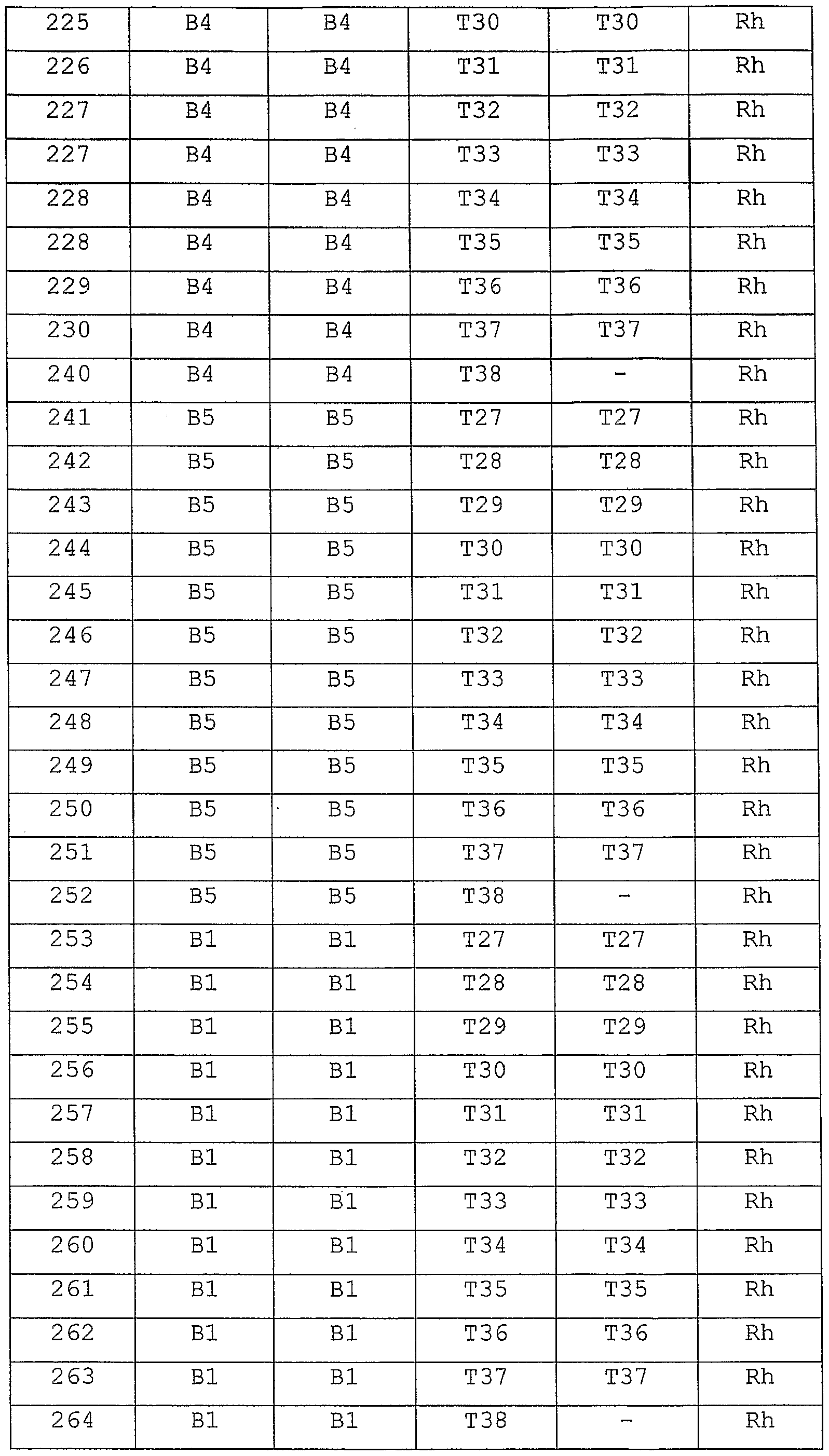
- the invention pertains to a coordination complex system comprising a ligand having at least two donor moieties, which are complexed to at least a metal selected from a transition metal and lanthanide, characterized in that the ligand comprises at least two building blocks, each having at least one functional group and at least one donor moiety, wherein one building block is non-covalently bonded through its functional group to a complementary functional group of another building block or of a template, wherein the template comprises at least one other functional group that is non-covalently bonded to a complementary functional group of another building block, and wherein all building block-template-building block structures are the same when the template contains more than two functional groups.
- the dynamic character of the system may lead to special reactivity of the catalyst system and it also enables the formation of dynamic combinatorial catalyst systems based on transition metal from which the catalyst can be selected by adding a selector, for instance a transition state analogue.
- At least one of the building blocks is immobilized onto an inorganic support, a polymeric organic support, or a hybrid support.
- the building blocks preferably have a molecular weight less than 5,000, more preferably less than 2,500.
- the chiral environment will also be controlled by assembly and it was shown that zinc (II) porphyrins in combination with pyridyl-phosphine building blocks are suitable for this approach.
- the pyridine is selectively coordinated to the zinc and the phosphine donor is still available for coordination to the catalytically active transition metal.
- the coordination complex system comprises a ligand having at least two donor moieties, which are complexed to at least a metal selected from a transition metal and lanthanide, characterized in that the ligand comprises 2 to 6 building blocks each having at least one functional group and at least one donor moiety, wherein at least one building block is non-covalently bonded through its functional group to a complementary functional group of a template .
- the system may further comprise a co-factor that is non-covalently bonded to a functional group of the ligand.
- a co-factor may be covalently bonded to another building block, or to the template or support.
- the template contains more than two functional groups all building block-template-building block structures are the same. For instance, when the template contains 8 functional groups and two functional groups form a pair whereas the six other functional groups form three similar other pairs, two building blocks are non-covalently attached to each of these pairs, and not to one functional group of the first pair and one functional group of another pair when such bonding gives rise to different spatial orientations
- the properties of the assembly may be different from the prior art catalysts, which for instance can result in higher reaction rates in the palladium catalyzed Heck reaction and the rhodium catalyzed hydroformylation.
- using bis-zinc-porphyrin systems as templates resulted in chelating bidentate ligands of which the catalytic performance (in activity and (enantio-) selectivity) strongly depended on the components of the assembly.
- FIG. 1 Examples of some of the hydrogen bond building blocks that can be used are shown in Chart I .
- Two identical building blocks can be assembled around a template resulting in a bidentate ligand with properties that depend on the template.
- a representative example is a building block comprising urea functionalities and benz- amidine, which can be used to form complexes with small anionic templates. The orientation of two urea units will strongly depend on the template.
- the catalytic performance of the assemblies can also be used as diagnostic tool by studying several reactions that are known to be sensitive to geometry changes (such as hydroformylation, carbonylation and allylic substitution) .
- Employing cationic transition or lanthanide metal complexes e.g.
- the coordination complex system preferably has a molar ratio between the ligand and the metal of between 0.2 and 100.
- the invention further relates to a catalyst system comprising the above-mentioned coordination complex system and the use of the coordination complex system as a catalyst, preferably for hydroformylation, hydrogenation, transfer hydrogenation, hydrocyanation, polymerization, isomerization, carbonylation, cross-coupling, metathesis, CH activation, allylic substitution, aldol condensation, and Michael addition.
- L x and L 2 are coordination moieties of the building blocks, M is transition or lanthanide metal.
- A) is an embodiment using a template; B) is an embodiment using self- complementary building blocks .
- the templates may include calix-arenes and rigid multi- aromatic systems.
- Bisporphyrin templates with two different metals are also suitable templates: nitrogen donor will coordinate selectively to the zinc atom and tin porphyrins are known to strongly coordinate carboxylate groups.
- Systems functionalized with two orthogonal binding sites can be prepared in which the catalyst and either the substrate molecule or a chiral cofactor can be fixed in a well-defined way using non-covalent interactions.
- the binding of the transition (or lanthanide) metal will be based on hydrogen bonding (ionic interactions) and the (guest) cofactor will be bound using metal-ligand interactions (such as pyridine-zinc coordination) .
- the binding on the porphyrin can be used for several types of guests including amino acids.
- Several analogues with different hydrogen bond functional groups thereby changing the position of the catalysts with respect to the binding site can be made.
- the invention therefore also relates to the use of at least two building blocks each having at least one functional group, wherein a functional group of one building block is complementary to a functional group of another building block or of a template to form through their functional groups a non-covalent bond between the building blocks or between the building blocks and the template, to obtain a ligand that with the metal forms the coordination complex system.
- Another aspect of the invention relates to the use of a set of self-complementary building blocks for making a ligand having at least two donor moieties for complexation to a metal selected from a transition metal and lanthanide, wherein the ligand comprises the set of building blocks, each building block having at least one functional group that is complementary to a functional group of another building block or of a template, and at least one donor moiety, wherein the building blocks are non-covalently bonded to each other or to the template through their complementary functional groups.
- the invention further pertains to the set comprising self-complementary building blocks, and optionally templates for making a ligand.
- the set may also comprise metals for coordination, for the above-mentioned use.
- metals for coordination for the above-mentioned use.
- 3 B ⁇ tetraarylporphyrins as well as trans-A 2 B 2 tetraarylporphyrins can easily be made by well- established synthetic procedures.
- reactive groups for further functionalization amines and isothiocyanate groups can be introduced, which are both reactive and easily accessible.
- porphyrins can be prepared (large quantities) and used as synthons for the synthesis of building blocks required for different ways of non-covalent immobilization.
- Examples of approaches of making tailor-made catalysts on a support are mixing trialkoxy-functionalized porphyrin with commercially available silica, immobilization via a sol-gel process, pre-assembly of the transition metal complex prior to immobilization, and post-modification of the immobilized porphyrins with the catalysts.
- Synthetically easily accessible porphyrins which are expected to form well-defined aggregates such as micelles and vesicles due to their amphiphilic character, can also be made according to this approach.
- Amphiphiles that form well-defined aggregates can be used for the assembly of catalysts. These amphiphiles can be prepared via ion-pairing by mixing a bis- anion with cationic amphiphiles.
- 1-Octene was purified over neutral alumina prior to its use. Solvents were dried prior to their use. Hexane, pentane, diethyl ether, THF (tetrahydrofuran) , toluene and benzene were distilled from sodium/benzophenone or calcium hydride (dichloromethane, triethylamine) . All solutions and solvents not stated above were degassed under argon prior to their use. All reactions were performed under Schlenk conditions using argon or purified nitrogen as inert atmosphere. Water and CDC1 3 were degassed and stored under nitrogen. Chemicals were purchased from Aldrich Chemical Co. and Acros Chimica and were used without further purification. The piperidine was filtered over neutral alumina prior to use.
- This compound was prepared as described for Bl, using freshly prepared (S) -3, 3' -bis (trimethylsilyl) -2, 2' -bisnaphthol phosphorochloridite (ref. Buisman, G. J. H.; van der Veen, L.
- This compound was prepared as described for Bl, using freshly prepared (R) -2, 2' -bisnaphthol phosphorochloridite. Yield (78 %) as a white solid.
- the porphyrin was purified using column chromatography (basic alumina, CH 2 C1 2 , upgrade 2 % methanol in CH 2 C1 2 ) , giving 1.09 g of 5- (3-hydroxyphenyl) - 10, 15, 20-tris (phenyl) .
- the zinc porphyrin was prepared by refluxing 5- (3-hydroxyphenyl) -10, 15, 20-tris (phenyl) in the presence of excess Zn(OAc) 2 .
- This compound was prepared as described for B14, using 5- (3-hydroxyphenyl) -10, 15, 20-tris (phenyl) -zinc (II) porphyrin. Yield (47 %) as a purple-red solid.
- This compound was prepared as described for B16, using freshly prepared (R) -2, 2' -bisnaphthol phosphorochloridite. Yield (46 %) as a purple-red solid.
- This compound was prepared as described for B16, using freshly prepared (S) -3, 3' -bis (trimethylsilyl) -2,2' - bisnaphthol phosphorochloridite. Yield (51 %) as a purple-red solid.
- This compound was formed after oxidation with air of B4.
- T13 This compound was prepared as described for T12, using the free base analogue of Til (Biemans, H. A. M.; Rowan, A. E.; Verhoeven, A,; Vanoppen, P.; Latterini, L.; Foeke a, J. ; Schenning, A. P. H. J. ; Meijer, E. W.; De Schryver, F. C; Nolte, R. J. M., J. Am . Chem . Soc. , 1998, 120, 11054) as starting material (89 %) as a purple solid.
- T25 was obtained after refluxing a suspension of T24 and silica in toluene for 5 hours.
- Rh (acac) (CO) 2 ligand to rhodium is 10, 1 ml of 1-octene, 1 ml of decane, 20 ml of toluene, 80 " C, 50 bar of CO/H 2 , 20 h .
- ligand to rhodium is 10 , 1 ml of 1-octene, 1 ml of decane, 20 ml of toluene , 80 ° C, 50 bar of CO/H 2 .
Landscapes
- Chemical & Material Sciences (AREA)
- Organic Chemistry (AREA)
- Chemical Kinetics & Catalysis (AREA)
- Engineering & Computer Science (AREA)
- Materials Engineering (AREA)
- Inorganic Chemistry (AREA)
- Catalysts (AREA)
- Transition And Organic Metals Composition Catalysts For Addition Polymerization (AREA)
- Organic Low-Molecular-Weight Compounds And Preparation Thereof (AREA)
- Low-Molecular Organic Synthesis Reactions Using Catalysts (AREA)
- Nitrogen Condensed Heterocyclic Rings (AREA)
- Nitrogen And Oxygen Or Sulfur-Condensed Heterocyclic Ring Systems (AREA)
Abstract
Description


Claims
Priority Applications (4)
| Application Number | Priority Date | Filing Date | Title |
|---|---|---|---|
| EP04741642A EP1633476A2 (en) | 2003-05-22 | 2004-05-24 | Coordination complex system comprising building blocks and use thereof as a cataylst |
| US10/557,706 US8216968B2 (en) | 2003-05-22 | 2004-05-24 | Coordination complex system comprising building blocks |
| JP2006530218A JP2007505153A (en) | 2003-05-22 | 2004-05-24 | Coordination complex systems containing building blocks |
| KR1020057022241A KR101049492B1 (en) | 2003-05-22 | 2004-05-24 | Coordination Complex Systems Including Building Blocks and Their Uses As Catalysts |
Applications Claiming Priority (2)
| Application Number | Priority Date | Filing Date | Title |
|---|---|---|---|
| EP03076827.9 | 2003-05-22 | ||
| EP03076827A EP1479439A1 (en) | 2003-05-22 | 2003-05-22 | Coordination complex system comprising building blocks and use thereof as a catalyst |
Publications (2)
| Publication Number | Publication Date |
|---|---|
| WO2004103559A2 true WO2004103559A2 (en) | 2004-12-02 |
| WO2004103559A3 WO2004103559A3 (en) | 2005-01-20 |
Family
ID=33041026
Family Applications (1)
| Application Number | Title | Priority Date | Filing Date |
|---|---|---|---|
| PCT/EP2004/050906 Ceased WO2004103559A2 (en) | 2003-05-22 | 2004-05-24 | Coordination complex system comprising building blocks and use thereof as a catalyst |
Country Status (6)
| Country | Link |
|---|---|
| US (1) | US8216968B2 (en) |
| EP (2) | EP1479439A1 (en) |
| JP (1) | JP2007505153A (en) |
| KR (1) | KR101049492B1 (en) |
| CN (1) | CN1826177A (en) |
| WO (1) | WO2004103559A2 (en) |
Cited By (4)
| Publication number | Priority date | Publication date | Assignee | Title |
|---|---|---|---|---|
| EP1816132A1 (en) | 2006-01-26 | 2007-08-08 | Engelhard Corporation | Process for the production of phosphorous compounds |
| WO2008031889A3 (en) * | 2006-09-15 | 2009-04-16 | Basf Se | Pnicogen-containing pseudochelating ligands |
| US8283276B2 (en) | 2007-11-22 | 2012-10-09 | Universiteit Van Amsterdam | Coordination complex system comprising tautomeric ligands |
| EP2559484A1 (en) | 2011-08-18 | 2013-02-20 | Universiteit van Amsterdam | Coordination complex system comprising a second bulding block without donor moiety |
Families Citing this family (12)
| Publication number | Priority date | Publication date | Assignee | Title |
|---|---|---|---|---|
| DE10355066A1 (en) * | 2003-11-25 | 2005-06-23 | Basf Ag | Process for asymmetric synthesis |
| US8324342B1 (en) * | 2007-06-13 | 2012-12-04 | Sandia Corporation | Porphyrin coordination polymer nanospheres and nanorods |
| JP2010030993A (en) * | 2008-06-24 | 2010-02-12 | Hoya Corp | Functional silane compound, coating liquid and manufacturing method of plastic lens |
| US8710275B2 (en) | 2012-05-31 | 2014-04-29 | Eastman Chemical Company | Catalysts and process for producing aldehydes |
| US8692027B2 (en) | 2012-05-31 | 2014-04-08 | Eastman Chemical Company | Catalysts and processes for preparing aldehydes |
| MX348089B (en) * | 2012-11-20 | 2017-05-25 | Univ Guanajuato | Method for the synthesis of solid heterogeneous chiral catalysts and their use in stereoselective reactions. |
| CN104667972B (en) * | 2013-11-28 | 2020-02-07 | 瓜纳华托大学 | Synthesis method of solid heterogeneous chiral catalyst and application of solid heterogeneous chiral catalyst in stereoselective reaction |
| CN104258908B (en) * | 2014-09-09 | 2016-08-17 | 中国工程物理研究院化工材料研究所 | A kind of preparation method of dual different rare-earth fluorescent probe compound |
| JP6614014B2 (en) * | 2016-04-26 | 2019-12-04 | 信越化学工業株式会社 | Nitrogen-containing organoxysilane compound and method for producing the same |
| US9649625B1 (en) | 2016-06-24 | 2017-05-16 | Eastman Chemical Company | Catalysts and processes for producing aldehydes |
| CN109675635B (en) * | 2019-02-22 | 2020-08-04 | 中南大学 | Non-covalent polymer catalyst suitable for 2,3, 6-trimethylphenol oxidation and preparation method thereof |
| CN109824679A (en) * | 2019-04-08 | 2019-05-31 | 中国科学院长春应用化学研究所 | A kind of preparation method of substituted aryl porphyrin |
Family Cites Families (4)
| Publication number | Priority date | Publication date | Assignee | Title |
|---|---|---|---|---|
| WO1998003521A1 (en) * | 1996-07-23 | 1998-01-29 | Symyx Technologies | Combinatorial synthesis and analysis of organometallic compounds and catalysts |
| AU2722700A (en) * | 1999-01-08 | 2000-07-24 | Symyx Technologies, Inc. | Apparatus and method for combinatorial research for catalysts and polymers |
| DE10313319A1 (en) | 2003-03-25 | 2004-10-07 | Basf Ag | Hydroformylation process |
| DE10355066A1 (en) * | 2003-11-25 | 2005-06-23 | Basf Ag | Process for asymmetric synthesis |
-
2003
- 2003-05-22 EP EP03076827A patent/EP1479439A1/en not_active Withdrawn
-
2004
- 2004-05-24 CN CNA2004800209365A patent/CN1826177A/en active Pending
- 2004-05-24 JP JP2006530218A patent/JP2007505153A/en active Pending
- 2004-05-24 KR KR1020057022241A patent/KR101049492B1/en not_active Expired - Fee Related
- 2004-05-24 WO PCT/EP2004/050906 patent/WO2004103559A2/en not_active Ceased
- 2004-05-24 EP EP04741642A patent/EP1633476A2/en not_active Withdrawn
- 2004-05-24 US US10/557,706 patent/US8216968B2/en not_active Expired - Fee Related
Cited By (4)
| Publication number | Priority date | Publication date | Assignee | Title |
|---|---|---|---|---|
| EP1816132A1 (en) | 2006-01-26 | 2007-08-08 | Engelhard Corporation | Process for the production of phosphorous compounds |
| WO2008031889A3 (en) * | 2006-09-15 | 2009-04-16 | Basf Se | Pnicogen-containing pseudochelating ligands |
| US8283276B2 (en) | 2007-11-22 | 2012-10-09 | Universiteit Van Amsterdam | Coordination complex system comprising tautomeric ligands |
| EP2559484A1 (en) | 2011-08-18 | 2013-02-20 | Universiteit van Amsterdam | Coordination complex system comprising a second bulding block without donor moiety |
Also Published As
| Publication number | Publication date |
|---|---|
| KR20060024381A (en) | 2006-03-16 |
| CN1826177A (en) | 2006-08-30 |
| JP2007505153A (en) | 2007-03-08 |
| US8216968B2 (en) | 2012-07-10 |
| EP1633476A2 (en) | 2006-03-15 |
| WO2004103559A3 (en) | 2005-01-20 |
| US20060258858A1 (en) | 2006-11-16 |
| EP1479439A1 (en) | 2004-11-24 |
| KR101049492B1 (en) | 2011-07-15 |
Similar Documents
| Publication | Publication Date | Title |
|---|---|---|
| US8216968B2 (en) | Coordination complex system comprising building blocks | |
| US6124476A (en) | Catalyst ligands, catalyst compositions, catalyst metal complexes and processes for cross-coupling aromatic boron compounds with aromatic halogens or perfluoroalkylsulfonates | |
| Wilkinson et al. | New directions in supramolecular transition metal catalysis | |
| van Koten | Pincer ligands as powerful tools for catalysis in organic synthesis | |
| CA2385421C (en) | Chiral phosphines, transition metal complexes thereof and uses thereof in asymmetric reactions | |
| Oosterom et al. | Catalysis in the core of a carbosilane dendrimer | |
| Breit | Recent advances in alkene hydroformylation | |
| JP2903483B2 (en) | Catalyst composition for polymer production of carbon monoxide and olefinically unsaturated compound | |
| US6268513B1 (en) | Phosphine ligands metal complexes and compositions thereof for cross-coupling reactions | |
| CA2611791A1 (en) | Stable cyclic (alkyl)(amino) carbenes as ligands for transition metal catalysts | |
| US6265601B1 (en) | Methods for using phosphine ligands in compositions for suzuki cross-coupling reactions | |
| Pruchnik et al. | Rhodium (I) acetylacetonato complexes with functionalized phosphines | |
| A. Stepanova et al. | Synthesis of aminophosphines and their applications in catalysis | |
| Ledger et al. | Pincer Phosphine Complexes of Ruthenium: Formation of Ru (P− O− P)(PPh3) HCl (P− O− P= xantphos, DPEphos,(Ph2PCH2CH2) 2O) and Ru (dppf)(PPh3) HCl and Characterization of Cationic Dioxygen, Dihydrogen, Dinitrogen, and Arene Coordinated Phosphine Products | |
| Ye et al. | Synthesis, structural characterization, and catalytic behaviour in Heck coupling of palladium (II) complexes containing pyrimidine-functionalized N-heterocyclic carbenes | |
| US6288253B1 (en) | Supported dendrimer catalyst | |
| CN101959898B (en) | The ruthenium complexe with the Ferrocenyl diphosp hine ligand of (P-P) coordination, the method preparing them and their purposes in homogeneous catalysis | |
| Slagt et al. | Supramolecular bidentate phosphorus ligands based on bis-zinc (II) and bis-tin (IV) porphyrin building blocks | |
| CA2536197C (en) | Diene-bis-aquo-rhodium(i) complexes, process for preparing them and their use | |
| US6103867A (en) | Catalyst systems for producing copolymers of carbon monoxide and olefinically unsaturated compounds | |
| CA2332088A1 (en) | Polymeric diphosphine ligands for homogeneously soluble hydrogenation catalysts, process for the production therof and use | |
| Smith | Platinum group metal chemistry of functionalised phosphines | |
| Kisala et al. | Pincer Complexes Based on Phosphinoaminopyridines: Synthesis, Structural Characterization and Catalytic Applications | |
| CN113980052A (en) | Monophosphate ligand, preparation method thereof and application thereof in hydroformylation reaction | |
| HK1098097A (en) | Coordination complex system comprising building blocks and use thereof as a catalyst |
Legal Events
| Date | Code | Title | Description |
|---|---|---|---|
| WWE | Wipo information: entry into national phase |
Ref document number: 200480020936.5 Country of ref document: CN |
|
| AK | Designated states |
Kind code of ref document: A2 Designated state(s): AE AG AL AM AT AU AZ BA BB BG BR BW BY BZ CA CH CN CO CR CU CZ DE DK DM DZ EC EE EG ES FI GB GD GE GH GM HR HU ID IL IN IS JP KE KG KP KR KZ LC LK LR LS LT LU LV MA MD MG MK MN MW MX MZ NA NI NO NZ OM PG PH PL PT RO RU SC SD SE SG SK SL SY TJ TM TN TR TT TZ UA UG US UZ VC VN YU ZA ZM ZW |
|
| AL | Designated countries for regional patents |
Kind code of ref document: A2 Designated state(s): BW GH GM KE LS MW MZ NA SD SL SZ TZ UG ZM ZW AM AZ BY KG KZ MD RU TJ TM AT BE BG CH CY CZ DE DK EE ES FI FR GB GR HU IE IT LU MC NL PL PT RO SE SI SK TR BF BJ CF CG CI CM GA GN GQ GW ML MR NE SN TD TG |
|
| 121 | Ep: the epo has been informed by wipo that ep was designated in this application | ||
| WWE | Wipo information: entry into national phase |
Ref document number: 2004741642 Country of ref document: EP |
|
| WWE | Wipo information: entry into national phase |
Ref document number: 2006530218 Country of ref document: JP Ref document number: 1020057022241 Country of ref document: KR |
|
| WWE | Wipo information: entry into national phase |
Ref document number: 2005/10370 Country of ref document: ZA Ref document number: 200510370 Country of ref document: ZA |
|
| WWE | Wipo information: entry into national phase |
Ref document number: 3488/CHENP/2005 Country of ref document: IN |
|
| WWP | Wipo information: published in national office |
Ref document number: 2004741642 Country of ref document: EP |
|
| WWP | Wipo information: published in national office |
Ref document number: 1020057022241 Country of ref document: KR |
|
| WWE | Wipo information: entry into national phase |
Ref document number: 2006258858 Country of ref document: US Ref document number: 10557706 Country of ref document: US |
|
| WWP | Wipo information: published in national office |
Ref document number: 10557706 Country of ref document: US |