WO2005009976A1 - Pyridazinyl- piperazines and their use as histamine h3 receptor ligands - Google Patents
Pyridazinyl- piperazines and their use as histamine h3 receptor ligands Download PDFInfo
- Publication number
- WO2005009976A1 WO2005009976A1 PCT/DK2004/000483 DK2004000483W WO2005009976A1 WO 2005009976 A1 WO2005009976 A1 WO 2005009976A1 DK 2004000483 W DK2004000483 W DK 2004000483W WO 2005009976 A1 WO2005009976 A1 WO 2005009976A1
- Authority
- WO
- WIPO (PCT)
- Prior art keywords
- treatment
- pharmaceutical composition
- preparation
- compound
- compounds
- Prior art date
- Legal status (The legal status is an assumption and is not a legal conclusion. Google has not performed a legal analysis and makes no representation as to the accuracy of the status listed.)
- Ceased
Links
Classifications
-
- C—CHEMISTRY; METALLURGY
- C07—ORGANIC CHEMISTRY
- C07D—HETEROCYCLIC COMPOUNDS
- C07D401/00—Heterocyclic compounds containing two or more hetero rings, having nitrogen atoms as the only ring hetero atoms, at least one ring being a six-membered ring with only one nitrogen atom
- C07D401/02—Heterocyclic compounds containing two or more hetero rings, having nitrogen atoms as the only ring hetero atoms, at least one ring being a six-membered ring with only one nitrogen atom containing two hetero rings
- C07D401/04—Heterocyclic compounds containing two or more hetero rings, having nitrogen atoms as the only ring hetero atoms, at least one ring being a six-membered ring with only one nitrogen atom containing two hetero rings directly linked by a ring-member-to-ring-member bond
-
- C—CHEMISTRY; METALLURGY
- C07—ORGANIC CHEMISTRY
- C07D—HETEROCYCLIC COMPOUNDS
- C07D237/00—Heterocyclic compounds containing 1,2-diazine or hydrogenated 1,2-diazine rings
- C07D237/02—Heterocyclic compounds containing 1,2-diazine or hydrogenated 1,2-diazine rings not condensed with other rings
- C07D237/06—Heterocyclic compounds containing 1,2-diazine or hydrogenated 1,2-diazine rings not condensed with other rings having three double bonds between ring members or between ring members and non-ring members
- C07D237/10—Heterocyclic compounds containing 1,2-diazine or hydrogenated 1,2-diazine rings not condensed with other rings having three double bonds between ring members or between ring members and non-ring members with hetero atoms or with carbon atoms having three bonds to hetero atoms with at the most one bond to halogen, e.g. ester or nitrile radicals, directly attached to ring carbon atoms
- C07D237/20—Nitrogen atoms
-
- A—HUMAN NECESSITIES
- A61—MEDICAL OR VETERINARY SCIENCE; HYGIENE
- A61P—SPECIFIC THERAPEUTIC ACTIVITY OF CHEMICAL COMPOUNDS OR MEDICINAL PREPARATIONS
- A61P1/00—Drugs for disorders of the alimentary tract or the digestive system
- A61P1/04—Drugs for disorders of the alimentary tract or the digestive system for ulcers, gastritis or reflux esophagitis, e.g. antacids, inhibitors of acid secretion, mucosal protectants
-
- A—HUMAN NECESSITIES
- A61—MEDICAL OR VETERINARY SCIENCE; HYGIENE
- A61P—SPECIFIC THERAPEUTIC ACTIVITY OF CHEMICAL COMPOUNDS OR MEDICINAL PREPARATIONS
- A61P11/00—Drugs for disorders of the respiratory system
- A61P11/02—Nasal agents, e.g. decongestants
-
- A—HUMAN NECESSITIES
- A61—MEDICAL OR VETERINARY SCIENCE; HYGIENE
- A61P—SPECIFIC THERAPEUTIC ACTIVITY OF CHEMICAL COMPOUNDS OR MEDICINAL PREPARATIONS
- A61P25/00—Drugs for disorders of the nervous system
- A61P25/18—Antipsychotics, i.e. neuroleptics; Drugs for mania or schizophrenia
-
- A—HUMAN NECESSITIES
- A61—MEDICAL OR VETERINARY SCIENCE; HYGIENE
- A61P—SPECIFIC THERAPEUTIC ACTIVITY OF CHEMICAL COMPOUNDS OR MEDICINAL PREPARATIONS
- A61P25/00—Drugs for disorders of the nervous system
- A61P25/28—Drugs for disorders of the nervous system for treating neurodegenerative disorders of the central nervous system, e.g. nootropic agents, cognition enhancers, drugs for treating Alzheimer's disease or other forms of dementia
-
- A—HUMAN NECESSITIES
- A61—MEDICAL OR VETERINARY SCIENCE; HYGIENE
- A61P—SPECIFIC THERAPEUTIC ACTIVITY OF CHEMICAL COMPOUNDS OR MEDICINAL PREPARATIONS
- A61P3/00—Drugs for disorders of the metabolism
- A61P3/04—Anorexiants; Antiobesity agents
-
- A—HUMAN NECESSITIES
- A61—MEDICAL OR VETERINARY SCIENCE; HYGIENE
- A61P—SPECIFIC THERAPEUTIC ACTIVITY OF CHEMICAL COMPOUNDS OR MEDICINAL PREPARATIONS
- A61P3/00—Drugs for disorders of the metabolism
- A61P3/08—Drugs for disorders of the metabolism for glucose homeostasis
- A61P3/10—Drugs for disorders of the metabolism for glucose homeostasis for hyperglycaemia, e.g. antidiabetics
-
- A—HUMAN NECESSITIES
- A61—MEDICAL OR VETERINARY SCIENCE; HYGIENE
- A61P—SPECIFIC THERAPEUTIC ACTIVITY OF CHEMICAL COMPOUNDS OR MEDICINAL PREPARATIONS
- A61P37/00—Drugs for immunological or allergic disorders
- A61P37/08—Antiallergic agents
-
- A—HUMAN NECESSITIES
- A61—MEDICAL OR VETERINARY SCIENCE; HYGIENE
- A61P—SPECIFIC THERAPEUTIC ACTIVITY OF CHEMICAL COMPOUNDS OR MEDICINAL PREPARATIONS
- A61P43/00—Drugs for specific purposes, not provided for in groups A61P1/00-A61P41/00
Definitions
- the present invention relates to novel piperazines, to the use of these compounds in pharmaceutical compositions, to pharmaceutical compositions comprising the compounds, and to methods of treatment employing these compounds or compositions.
- the present compounds show a high and selective binding affinity for the histamine H3 receptor, indicating histamine H3 receptor antagonistic, inverse agonistic or agonistic activity. As a result, the compounds are useful for the treatment of diseases or disorders related to the histamine H3 receptor.
- the existence of the histamine H3 receptor has been known for several years and the receptor is of current interest for the development of new medicaments. Recently, the human histamine H3 receptor has been cloned.
- the histamine H3 receptor is a presynaptic autorecep- tor located both in the central and the peripheral nervous system, the skin and in organs such as the lung, the intestine, probably the spleen and the gastrointestinal tract.
- Recent evi- dence suggests that the H3 receptor shows intrinsic, constitutive activity, in vitro as well as in vivo (ie it is active in the absence of an agonist). Compounds acting as inverse agonists can inhibit this activity.
- the histamine H3 receptor has been demonstrated to regulate the release of histamine and also of other neurotransmitters such as serotonin and acetylcholine.
- a histamine H3 receptor antagonist or inverse agonist would therefore be expected to increase the release of these neurotransmitters in the brain.
- a histamine H3 receptor agonist leads to an inhibition of the biosynthesis of histamine and an inhibition of the release of histamine and also of other neurotransmitters such as serotonin and acetylcholine.
- histamine H3 agonists and antagonists Most of these are imidazole derivatives. However, recently some imidazole-free ligands of the histamine H3 receptor have been described (see e.g. Linney et al., J. Med. Chem. 2000, 43, 2362-2370; US 6,316,475, WO 01/66534 and WO 01/74810). However, these compounds differ structurally from the present compounds.
- novel compounds which interact with the histamine H3 receptor would be a highly desirable contribution to the art.
- the present invention provides such a contribution to the art being based on the finding that a novel class of piperazines has a high and specific affinity to the histamine H3 receptor.
- the present compounds are useful in the treatment of a wide range of conditions and disorders in which an interaction with the histamine H3 receptor is beneficial.
- the compounds may find use, e.g., in the treatment of diseases of the central nervous system, the peripheral nervous system, the cardiovascular system, the pulmonary system, the gastrointestinal system and the endocrinological system.
- R 1 is selected from fluoro, bromo, iodo, hydroxy, trifluoromethoxy, C 2 . 6 -alkoxy, Ci-e-alkyl, amino, C 2 . 6 -alkylsulfanyl (-SH-C 2 - 6 -alkyl) , C 2 - 6 -alkylsulfinyl (-SO-C 2 - 6 -alkyl), C 2 .
- the invention also relates to the use of said compounds in therapy, and in particular to pharmaceutical compositions comprising said compounds.
- the invention relates to methods of treatment, the method comprising administering to a subject in need thereof an effective amount of one or more compounds according to formula I.
- the invention relates to the use of compounds according to formula I in the manufacture of medicaments.
- alkyl represents a saturated, branched or straight hydrocarbon group having the indicated number of carbon atoms.
- C ⁇ -alkyl C ⁇ -alkyl
- C ⁇ -alky! and “C 2 - 6 -alkyl” as used herein represent saturated, branched or straight hydrocarbon groups having from 1 to 3 carbon atoms, 1 to 8 carbon atoms and 2 to 6 carbon atoms, respectively.
- Typical alkyl groups include, but are not limited to, methyl, ethyl, n-propyl, isopropyl, butyl, isobutyl, sec-butyl, pentyl, hexyl and the like.
- C 2 . 6 -alkoxy refers to the radical -O-C 2 - 6 -alkyl, wherein C 2 - 6 -alkyl is as defined above.
- Representative examples are ethoxy, n-propoxy, isopropoxy, butoxy, sec- butoxy, terf-butoxy, pentoxy, isopentoxy, hexoxy, isohexoxy and the like.
- C ⁇ . 6 -alkylamino refers to the radical -NH-C ⁇ -alkyl, wherein d- 6 - alkyl is as defined above.
- Representative examples are methylamino, ethylamino, isopro- pylamino, n-propylamino, butylamino, pentylamino, hexylamino and the like.
- di-C ⁇ _ 6 -alkylamino refers to the radical -N(C 1 . 6 -alkyl) 2 , wherein C h alky! is as defined above. It should be understood that the C ⁇ . 6 -alkyl groups may be the same or different. Representative examples are dimethylamino. methylethylamino, diethylamino, diisopropylamino, di-n-propylamino, dibutylamino, dipentylamino, dihexylamino and the like.
- C 3 - 8 -cycloalkyl represents a monocyclic, carbocyclic group having from from 3 to 8 carbon atoms. Representative examples are cyclopropyl, cyclobutyl, cyclopentyl and the like.
- Representative examples are ethylsulfonyl, isopropylsulfonyl, n-propylsulfonyl, butylsulfonyl, pentylsulfonyl and the like.
- aryl as used herein is intended to include carbocyclic aromatic ring systems such as phenyl, biphenylyl, naphthyl, anthracenyl, phenanthrenyl, fluorenyl, indenyl, pentalenyl, azulenyl and the like.
- Aryl is also intended to include the partially hydrogenated derivatives of the carbocyclic systems enumerated above. Non-limiting examples of such partially hydro- genated derivatives are 1 ,2,3,4-tetrahydronaphthyl, 1 ,4-dihydronaphthyl and the like.
- heteroaryl as used herein is intended to include heterocyclic aromatic ring systems containing one or more heteroatoms selected from nitrogen, oxygen and sulfur such as furyl, thienyl, pyrrolyl, oxazolyl, thiazolyl, imidazolyl, isoxazolyl, isothiazolyl, 1,2,3-triazolyl, 1 ,2,4-triazolyl, pyranyl, pyridyl, pyridazinyl, pyrimidinyl, pyrazinyl, 1 ,2,3-triazinyl, 1 ,2,4-tri- azinyl, 1 ,3,5- triazinyl, 1 ,2,3-oxadiazolyl, 1 ,2,4-oxadiazolyl, 1 ,2,5-oxadiazolyl, 1 ,3,4-oxadi- azolyl, 1 ,2,3-thiadiazolyl, 1 ,2,4
- Heteroaryl is also intended to include the partially hydrogenated derivatives of the heterocyclic systems enumerated above.
- partially hydrogenated derivatives are 2,3-dihydrobenzofuranyl, pyrrolinyl, pyrazolinyl, indanyl, indolinyl, oxazolidinyl, oxazolinyl, oxazepinyl and the like.
- treatment means the management and care of a patient for the purpose of combating a disease, disorder or condition.
- the term is intended to include the delaying of the progression of the disease, disorder or condition, the alleviation or relief of symptoms and complications, and/or the cure or elimination of the disease, disorder or condi- tion.
- the patient to be treated is preferably a mammal, in particular a human being.
- an effective amount is intended to indicate an amount of a compound (in casu a compound according to formula I) which when administered a patient gives rise to a therapeutically relevant response. Said amount may vary depending on e.g. the sex, age, in the weight and condition of the patient. It lies within the skills of an ordinary trained physician to determine what an effective amount in any particular treatment is.
- R 1 represents bromo or cyano.
- the compounds of the present invention interact with the histamine H3 receptor and are accordingly believed to be particularly useful in the treatment of a variety of diseases or conditions in which histamine H3 interactions are beneficial.
- the invention provides the use of a compound according to formula (I) in a pharmaceutical composition.
- the pharmaceutical composition may in another aspect of the invention comprise, as an active ingredient, at least one compound according to formula (I) together with one or more pharmaceutically acceptable carriers or excipients.
- the invention provides such a pharmaceutical composition in unit dosage form, com- prising from about 0.05 mg to about 1000 mg, e.g. from about 0.1 mg to about 500 mg, such as from about 0.5 mg to about 200 mg of the compound according to formula (I).
- the invention provides the use of a compound of formula (I) as defined above for the preparation of a pharmaceutical composition for the treatment of diseases and disorders in which an inhibition of the H3 histamine receptor has a beneficial effect.
- the invention provides the use of a compound of formula (I) for the preparation of a pharmaceutical composition having histamine H3 antagonistic activity or histamine H3 inverse agonistic activity.
- the invention provides the use of a compound of formula (I) for the preparation of a pharmaceutical composition for the reduction of weight.
- the invention provides the use of a compound of formula (I) for the prepa- ration of a pharmaceutical composition for the treatment of overweight or obesity.
- the invention provides the use of a compound of formula (I) for the preparation of a pharmaceutical composition for the suppression of appetite or for satiety induction.
- the invention provides the use of a compound of formula (I) for the preparation of a pharmaceutical composition for the prevention and/or treatment of disorders and diseases related to overweight or obesity, such as dyslipidaemia, coronary heart disease, gallbladder disease, osteoarthritis and various types of cancer such as endometrial, breast, prostate and colon cancers.
- the invention provides the use of a compound of formula (I) for the preparation of a pharmaceutical composition for the prevention and/or treatment of eating disorders, such as bulimia or binge eating.
- the invention provides the use of a compound of formula (I) for the preparation of a pharmaceutical composition for the treatment of IGT (Impaired glucose tolerance).
- the invention provides the use of a compound of formula (I) for the preparation of a pharmaceutical composition for the treatment of type 2 diabetes.
- the invention provides the use of a compound of formula (I) for the preparation of a pharmaceutical composition for the delaying or prevention of the progression from IGT to type 2 diabetes.
- the invention provides the use of a compound of formula (I) for the preparation of a pharmaceutical composition for the delaying or prevention of the progression from non-insulin requiring type 2 diabetes to insulin requiring type 2 diabetes.
- the invention provides the use of a compound of formula (I) for the prepa- ration of a pharmaceutical composition for the treatment of diseases and disorders in which a stimulation of the H3 histamine receptor has a beneficial effect.
- the invention provides the use of a compound of formula (I) for the preparation of a pharmaceutical composition having histamine H3 agonistic activity.
- the invention provides the use of a compound of formula (I) for the preparation of a pharmaceutical composition for the treatment of allergic rhinitis, ulcer or anorexia.
- the invention provides the use of a compound of formula (I) for the prepa- ration of a pharmaceutical composition for the treatment of Alzheimer's disease, narcolepsy, attention deficit disorders or reduced wakefulness, or for the regulation of sleep.
- the invention relates to the use of a compound of formula (I) for the preparation of a pharmaceutical preparation for the treatment of airway disorders, such as asthma, for regulation of gastric acid secretion, or for treatment of diarrhoea.
- the invention provides a method for the treatment of disorders or diseases related to the H3 histamine receptor, the method comprising administering to a subject in need thereof an effective amount of a compound of the general formula (I) as defined above, or of a pharmaceutical composition comprising such a compound.
- the invention provides a method as described above, wherein the effective amount of the compound of the general formula (I) as defined above is in the range of from about 0.05 mg to about 2000 mg, preferably from about 0.1 mg to about 1000 mg, and more preferably from about 0.5 mg to about 500 mg per day.
- the invention relates to compounds which exhibit histamine H3 receptor antagonistic activity or inverse agonistic activity and which may accordingly be useful in the treatment of a wide range of conditions and disorders in which histamine H3 receptor block- ade is beneficial.
- the invention provides a method for reduction of weight, the method comprising administering to a subject in need thereof an effective amount of a compound of formula (I) as defined above.
- the invention provides a method for treatment of overweight or obesity, the method comprising administering to a subject in need thereof an effective amount of a compound of formula (I).
- the invention provides a method for suppression of appetite or for satiety induction, the method comprising administering to a subject in need thereof an effective amount of a compound of formula (I).
- the invention provides a method for prevention and/or treatment of disor- ders or diseases related to overweight or obesity, such as dyslipidaemia, coronary heart disease, gallbladder disease, osteoarthritis and various types of cancer, e.g. endometrial, breast, prostate or colon cancer, the method comprising administering to a subject in need thereof an effective amount of a compound of formula (I).
- disor- ders or diseases related to overweight or obesity such as dyslipidaemia, coronary heart disease, gallbladder disease, osteoarthritis and various types of cancer, e.g. endometrial, breast, prostate or colon cancer
- the invention provides a method for prevention and/or treatment of eating disorders, such as bulimia and binge eating, the method comprising administering to a subject in need thereof an effective amount of a compound of formula (I).
- the invention provides a method for the treatment of IGT (Impaired glucose tolerance), the method comprising administering to a subject in need thereof an effective amount of a compound of formula (I).
- IGT Paired glucose tolerance
- the invention provides a method for the treatment of type 2 diabetes, the method comprising administering to a subject in need thereof an effective amount of a compound of formula (I).
- the invention provides a method for the delaying or prevention of the progression from IGT to type 2 diabetes, the method comprising administering to a subject in need thereof an effective amount of a compound of formula (I).
- the invention provides a method for the delaying or prevention of the progression from non-insulin requiring type 2 diabetes to insulin requiring type 2 diabetes, the method comprising administering to a subject in need thereof an effective amount of a com- pound of formula (I).
- the invention relates to compounds which exhibit histamine H3 receptor agonistic activity and which may accordingly be useful in the treatment of a wide range of conditions and disorders in which histamine H3 receptor activation is beneficial.
- Compounds of the present invention may also be used for the treatment of airway disorders (such as asthma), as anti-diarrhoeals, and for the modulation of gastric acid secretion. Furthermore, compounds of the present invention may be used for the treatment of diseases associated with the regulation of sleep and wakefulness, and for the treatment of narcolepsy and attention deficit disorders.
- compounds of the invention may be used as CNS stimulants or as sedatives.
- the present compounds may also be used for the treatment of conditions associated with epilepsy.
- compounds of the invention may be used for the treatment of motion sickness and vertigo.
- they may be useful as regulators of hypothalamo- hypophyseal secretion, as antidepressants, as modulators of cerebral circulation, and in the treatment of irritable bowel syndrome.
- compounds of the present invention may be used for the treatment of dementia and Alzheimer's disease.
- Compounds of the present invention may also be useful for the treatment of allergic rhinitis, ulcer or anorexia.
- Compounds of the present invention may furthermore be useful for the treatment of migraine [see, e.g., McLeod et al., The Journal of Pharmacology and Experimental Therapeutics 287 (1998), 43-50] and for the treatment of myocardial infarction [see Mackins et al., Expert Opin- ion on Investigational Drugs 9 (2000), 2537-2542].
- treatment of a patient with a compound of the present invention is combined with diet and/or exercise.
- one of more compounds of the present invention is/are administered in combination with one or more further active substances in any suitable ra- tio(s).
- Such further active agents may, for example, be selected from antiobesity agents, antidiabetics, antidyslipidemic agents, antihypertensive agents, agents for the treatment of complications resulting from or associated with diabetes, and agents for the treatment of complications and disorders resulting from or associated with obesity.
- one or more compounds of the present invention may be administered in combination with one or more antiobesity agents or appetite regulating agents.
- Such agents may, for example, be selected from the group consisting of CART (cocaine amphetamine regulated transcript) agonists, NPY (neuropeptide Y) antagonists, MC4 (melanocortin 4) agonists, MC3 (melanocortin 3) agonists, orexin antagonists, TNF (tumor necrosis factor) agonists, CRF (corticotropin releasing factor) agonists, CRF BP (cor- ticotropin releasing factor binding protein) antagonists, urocortin agonists, ⁇ 3 adrenergic agonists such as CL-316243, AJ-9677, GW-0604, LY362884, LY377267 or AZ-40140, MSH (melanocyte-stimulating hormone) agonists, MCH (melanocyte-concentrating hormone) antagonists, CCK (cholecystokinin) agonists, serotonin re-uptake inhibitors such as fluoxetine
- an antiobesity agent administered in combination with one or more compounds of the invention is leptin.
- such an antiobesity agent is dexamphetamine or amphetamine.
- such an antiobesity agent is fenfluramine or dexfenfluramine.
- such an antiobesity agent is sibutramine.
- such an antiobesity agent is orlistat.
- such an antiobesity agent is mazindol or phentermine.
- such an antiobesity agent is phendimetrazine, diethylpropion, fluoxetine, bupropion, topiramate or ecopipam.
- one or more compounds of the present invention may be administered in combination with one or more antidiabetic agents.
- antidiabetic agents include insulin, insulin analogues and derivatives such as those disclosed in EP 0 792 290 (Novo Nordisk A/S), e.g. N ⁇ B29 -tetradecanoyl des (B30) human insulin, EP 0 214 826 and EP 0 705 275 (Novo Nordisk A/S), e.g. Asp 828 human insulin, US 5,504,188 (Eli Lilly), e.g. Lys B28 Pro 629 human insulin, EP 0 368 187 (Aventis), e.g.
- GLP-1 derivatives such as those disclosed in WO 98/08871 (Novo Nordisk A/S), incorporated herein by reference, as well as orally active hypoglycaemic agents.
- the orally active hypoglycaemic agents preferably comprise imidazolines, sulfonylureas, biguanides, meglitinides, oxadiazolidinediones, thiazolidinediones, insulin sensitizers, ⁇ - glucosidase inhibitors, agents acting on the ATP-dependent potassium channel of the ⁇ - cells, e.g.
- potassium channel openers such as those disclosed in WO 97/26265, WO 99/03861 and WO 00/37474 (Novo Nordisk A/S) which are incorporated herein by reference, or mitiglinide, or a potassium channel blocker, such as BTS-67582, nateglinide, gluca- gon antagonists, such as one of those disclosed in WO 99/01423 and WO 00/39088 (Novo Nordisk A S and Agouron Pharmaceuticals, Inc.), both of which are incorporated herein by reference, GLP-1 agonists, such as those disclosed in WO 00/42026 (Novo Nordisk A/S and Agouron Pharmaceuticals, Inc.), incorporated herein by reference, DPP-IV (dipeptidyl pepti- dase-IV) inhibitors, PTPase (protein tyrosine phosphatase) inhibitors, inhibitors of hepatic enzymes involved in stimulation of gluconeogenesis and/or glycogenolysis, glucose
- one or more compounds of the present invention may be administered in combination with insulin or an insulin analogue or derivative, such as N ⁇ B29 -tetradecanoyl des (B30) human insulin, Asp 628 human insulin, Lys B28 Pro 829 human insulin, Lantus®, or a mix-preparation comprising one or more of these.
- one or compounds of the present invention may be administered in combination with a sulfonylurea, e.g. tolbutamide, chlorpropamide, to- lazamide, glibenclamide, glipizide, glimepiride, glicazide or glyburide.
- one or more compounds of the present invention may be administered in combination with a biguanide, e.g. metformin.
- one or more compounds of the present invention may be administered in combination with a meglitinide, e.g. repaglinide or nateglinide.
- one or more compounds of the present invention may be administered in combination with a thiazolidinedione insulin sensitizer, e.g.
- troglita- zone ciglitazone, pioglitazone, rosiglitazone, isaglitazone, darglitazone, englitazone, CS- 011/CI-1037 or T 174, or a compound disclosed in WO 97/41097, WO 97/41119, WO 97/41120, WO 00/41121 and WO 98/45292 (Dr. Reddy's Research Foundation), all of which are incorporated herein by reference.
- one or more compounds of the present invention may be administered in combination with an insulin sensitizer, e.g.
- one or more compounds of the present invention may be administered in combination with an ⁇ -glucosidase inhibitor, e.g. voglibose, emigli- tate, miglitol or acarbose.
- an ⁇ -glucosidase inhibitor e.g. voglibose, emigli- tate, miglitol or acarbose.
- one or more compounds of the present invention may be administered in combination with an agent acting on the ATP-dependent potassium channel of the ⁇ -cells, e.g. tolbutamide, glibenclamide, glipizide, glicazide, BTS-67582 or repaglinide.
- an agent acting on the ATP-dependent potassium channel of the ⁇ -cells e.g. tolbutamide, glibenclamide, glipizide, glicazide, BTS-67582 or repaglinide.
- one or more compounds of the present invention may be administered in combination with nateglinide.
- one or more compounds of the present invention may be administered in combination with an antihyperlipidemic agent or antilipidemic agent, e.g. cholestyr- amine, colestipol, clofibrate, gemfibrozil, lovastatin, pravastatin, simvastatin, probucol or dex- trothyroxine.
- an antihyperlipidemic agent or antilipidemic agent e.g. cholestyr- amine, colestipol, clofibrate, gemfibrozil, lovastatin, pravastatin, simvastatin, probucol or dex- trothyroxine.
- one or more compounds of the present invention may be administered in combination with an antilipidemic agent, e.g. cholestyramine, colestipol, clofibrate, gemfibrozil, lovastatin, pravastatin, simvastatin, probucol or dextrothyroxine.
- an antilipidemic agent e.g. cholestyramine, colestipol, clofibrate, gemfibrozil, lovastatin, pravastatin, simvastatin, probucol or dextrothyroxine.
- an antilipidemic agent e.g. cholestyramine, colestipol, clofibrate, gemfibrozil, lovastatin, pravastatin, simvastatin, probucol or dextrothyroxine.
- one or more compounds of the present invention may be administered in combination with more than one of the above-mentioned compounds, e.g.
- metformin and a sulfonylurea such as glyburide; a sulfonylurea and acar- bose; nateglinide and metformin; acarbose and metformin; a sulfonylurea, metformin and troglitazone; insulin and a sulfonylurea; insulin and metformin; insulin, metformin and a sul- fonylurea; insulin and troglitazone; insulin and lovastatin; etc.
- metformin and a sulfonylurea such as glyburide; a sulfonylurea and acar- bose; nateglinide and metformin; acarbose and metformin; a sulfonylurea, metformin and troglitazone; insulin and a sulfonylurea; insulin and trogli
- one or more compounds of the present invention may be administered in combination with one or more antihypertensive agents.
- antihypertensive agents are ⁇ -blockers such as alprenolol, atenolol, timolol, pindolol, propranolol and metoprolol, ACE (angiotensin converting enzyme) inhibitors such as benazepril, captopril, enalapril, fosinopril, lisinopril, quinapril and ramipril, calcium channel blockers such as nifedipine, felodipine, nicardipine, isradipine, nimodipine, diltiazem and verapamil, and ⁇ -blockers such as doxa- zosin, urapidil, prazosin and terazosin.
- ⁇ -blockers such as alprenolol, atenolol
- the present invention also encompasses pharmaceutically acceptable salts of the present compounds.
- Such salts include pharmaceutically acceptable acid addition salts, pharmaceutically acceptable metal salts, ammonium and alkylated ammonium salts.
- Acid addition salts include salts of inorganic acids as well as organic acids. Representative examples of suitable inorganic acids include hydrochloric, hydrobromic, hydroiodic, phosphoric, sulfuric, nitric acids and the like.
- suitable organic acids include formic, acetic, trichloroacetic, trifluoroacetic, propionic, benzoic, cinnamic, citric, fumaric, glycolic, lactic, maleic, malic, malonic, mandelic, oxalic, picric, pyruvic, salicylic, succinic, methane- sulfonic, ethanesulfonic, tartaric, ascorbic, pamoic, bismethylene salicylic, ethanedisulfonic, gluconic, citraconic, aspartic, stearic, palmitic, EDTA, glycolic, p-aminobenzoic, glutamic, benzenesulfonic, p-toluenesulfonic acids and the like.
- compositions include the pharmaceutically acceptable salts listed in J. Pharm. Sci. 1977, 66, 2, which is incorporated herein by reference.
- Exam- pies of metal salts include lithium, sodium, potassium, magnesium salts and the like.
- ammonium and alkylated ammonium salts include ammonium, methylammonium, di- methylammonium, trimethylammonium, ethylammonium, hydroxyethylammonium, diethyl- ammonium, butylammonium, tetramethylammonium salts and the like.
- Also intended as pharmaceutically acceptable acid addition salts are the hydrates which the present compounds are able to form.
- the acid addition salts may be obtained as the direct products of compound synthesis.
- the free base may be dissolved in a suitable solvent containing the appropriate acid, and the salt isolated by evaporating the solvent or otherwise separating the salt and solvent.
- Compounds of the present invention may form solvates with standard low molecular weight solvents using methods well known to the person skilled in the art. Such solvates are also to be understood as being within the scope of the present invention.
- the invention also encompasses prodrugs of the present compounds which following administration undergo chemical conversion by metabolic processes before becoming active pharmacological substances. In general, such prodrugs will be functional derivatives of the present compounds which are readily convertible in vivo into the required compound of the formula (I). Conventional procedures for the selection and preparation of suitable prodrug derivatives are described, for example, in "Design of Prodrugs", ed. H. Bundgaard, Elsevier, 1985.
- the invention also encompasses active metabolites of the present compounds.
- the compounds of the invention may be administered alone or in combination with pharmaceutically acceptable carriers or excipients, in either single or multiple doses.
- the pharmaceutical compositions according to the invention may be formulated with pharmaceutically acceptable carriers or diluents as well as any other known adjuvants and excipients in accor- dance with conventional techniques, such as those disclosed in Remington: The Science and Practice of Pharmacy, 19 th Edition, Gennaro, Ed., Mack Publishing Co., Easton, PA, 1995.
- compositions may be specifically formulated for administration by any suitable route, such as the oral, rectal, nasal, pulmonary, topical (including buccal and sub- lingual), transdermal, intracisternal, intraperitoneal, vaginal or parenteral (including subcutaneous, intramuscular, intrathecal, intravenous and intradermal) route, the oral route being preferred. It will be appreciated that the preferred route will depend on the general condition and age of the subject to be treated, the nature of the condition to be treated and the active ingredient chosen.
- Pharmaceutical compositions for oral administration include solid dosage forms such as capsules, tablets, dragees, pills, lozenges, powders and granules.
- Liquid dosage forms for oral administration include solutions, emulsions, suspensions, syrups and elixirs.
- compositions for parenteral administration include sterile aqueous and non- aqueous injectable solutions, dispersions, suspensions or emulsions as well as sterile powders to be reconstituted in sterile injectable solutions or dispersions prior to use. Depot in- jectable formulations are also to be understood as being within the scope of the present invention.
- a typical oral dosage is in the range of from about 0.001 to about 100 mg/kg body weight per day, preferably from about 0.01 to about 50 mg/kg body weight per day, and more preferably from about 0.05 to about 10 mg/kg body weight per day, administered in one or more doses, such as from 1 to 3 doses.
- the exact dosage will depend upon the frequency and mode of administration, the sex, age, weight and general condition of the subject treated, the nature and severity of the condition treated and any concomitant diseases to be treated, and other factors evident to those skilled in the art.
- a typical unit dosage form for oral administration one or more times per day, such as from 1 to 3 times per day, may contain from 0.05 to about 1000 mg, preferably from about 0.1 to about 500 mg, and more preferably from about 0.5 mg to about 200 mg of a compound (or a salt or other derivative thereof as set forth above), according to the invention.
- the compounds of this invention are generally utilized as the free substance or as a pharmaceutically acceptable salt thereof.
- One example is an acid addition salt of a compound having a free base functionality.
- salts are prepared in a conventional manner by treating a solution or suspension of the free base form of the compound of formula (I) with a chemical equivalent (acid-base equivalent) of a pharmaceutically acceptable acid.
- a chemical equivalent as acid-base equivalent
- Physiologically acceptable salts of a compound of the invention having an hydroxy group include the anion of said compound in combination with a suitable cation, such as sodium or ammonium ion.
- a suitable cation such as sodium or ammonium ion.
- solutions of the novel compounds of the formula (I) in sterile aqueous solution, aqueous propylene glycol or sesame or peanut oil may be employed.
- Such aqueous solutions should be suitably buffered if necessary, and the liquid diluent first rendered isotonic with sufficient saline or glucose.
- the aqueous solutions are particularly suitable for intravenous, intramuscular, subcutaneous and intraperitoneal administration.
- the sterile aqueous media employed are all readily available by standard techniques known to those skilled in the art.
- Suitable pharmaceutical carriers include inert solid diluents or fillers, sterile aqueous solution and various organic solvents.
- solid carriers are lactose, terra alba, sucrose, cyclodextrin, talc, gelatine, agar, pectin, acacia, magnesium stearate, stearic acid or lower alkyl ethers of cellulose.
- liquid carriers are syrup, peanut oil, olive oil, phosphol- ipids, fatty acids, fatty acid amines, polyoxyethylenes or water.
- the carrier or diluent may include any sustained release material known in the art, such as glyceryl monostearate or glyceryl distearate, alone or mixed with a wax.
- sustained release material such as glyceryl monostearate or glyceryl distearate, alone or mixed with a wax.
- Formulations of the present invention suitable for oral administration may be presented as discrete units such as capsules or tablets, each containing a predetermined amount of the active ingredient, and which may include a suitable excipient. These formulations may be in the form of powder or granules, as a solution or suspension in an aqueous or non-aqueous liquid, or as an oil-in-water or water-in-oil liquid emulsion.
- the preparation may be tabletted, placed in a hard gelatine capsule in powder or pellet form or it can be in the form of a troche or lozenge.
- the amount of solid carrier may vary widely, but will usually be from about 25 mg to about 1 g.
- the preparation may be in the form of a syrup, emulsion, soft gelatine capsule or sterile injectable liquid, such as an aqueous or non-aqueous liquid suspension or solution.
- a typical tablet which may be prepared by conventional tabletting techniques, may contain: Core:
- the pharmaceutical composition of the invention may comprise the compound of the formula (I) in combination with one or more further pharmacologically active substances, e.g. substances chosen among those described in the foregoing.
- DIPEA diisopropylethylamine
- DMSO dimethylsulphoxide NMR
- NMR spectra were recorded on Bruker 300 MHz and 400 MHz instruments.
- LC-MS HPLC-MS was performed on a Perkin Elmer instrument (API 100).
- the column used was X- Terra C18, 5 ⁇ m, 50 X 3 mm, and elution was done at 1.5 ml/min at room temperature with a gradient of 5-90% acetonitrile in water with 0.01% trifluoroacetic acid over a period of 7.5 min.
- the RP-analyses was performed using an Alliance Waters 2695 system fitted with a Waters 2487 dual-band detector. UV detections were collected using a Symmetry C18 , 3.5 urn, 3.0 mm x 100 mm column. The elution is done with a linear gradient consisting of 5-90% acetonitrile, 90-0% water and 5% of 1% aqueous trifluoroacetic acid over a period of 8 minutes at a flow-rate of 1.0 min/min.
- the residue may be converted into an appropriate salt, such as the hydrochloride salt, by co-evaporation with an acid, such as 1 molar aqueous hydrochloric acid, ethanol and toluene, and the residue is then purified by recrystallization
- a compound of formula I may be prepared from a suitable monosubstituted piperazine and a suitable bromopyridazine in the presence of a suitable catalyst, such as, e. g., tris(dibenzylideneacetone)dipalladium, in a suitable solvent, such as toluene, at a suitable temperature between 0°C and 150°C.
- a suitable catalyst such as, e. g., tris(dibenzylideneacetone)dipalladium
- Chloropyridazines of the general formula (lla), (lib) or (lie) may be prepared by the general procedure (C):
- This compound was prepared according to General Procedure (A), starting from 1- isopropylpiperazine and 3-chloro-6-(4-bromophenyl)pyridazine, prepared as described in US patent No. 4,112,095. The compound was isolated as its hydrochloride salt.
- This compound was prepared according to General Procedure (A), starting from 1- isopropylpiperazine and 3-chloro-6-(4-ethanesulfinylphenyl)pyridazine, prepared according to General Procedure (C). The compound was isolated as its hydrochloride salt.
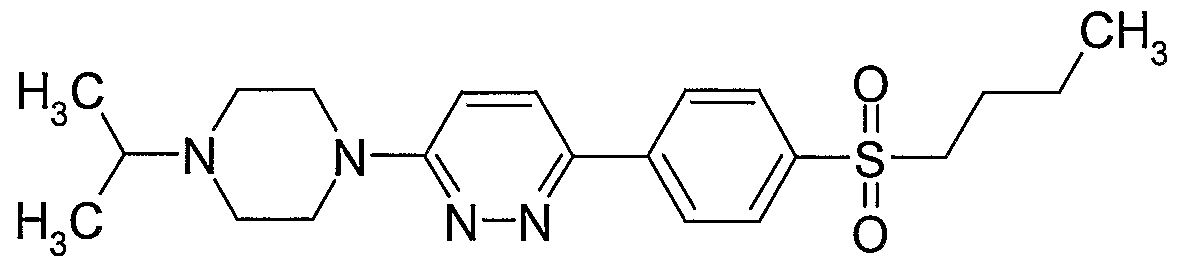
- This compound was prepared according to General Procedure (A), starting from 1- isopropylpiperazine and 3-[4-(butane-1-sulfonyl)phenyl]-6-chloropyridazine, prepared according to General Procedure (C). The compound was isolated as its hydrochloride salt.
- This compound was prepared according to General Procedure (A), starting from 1- isopropylpiperazine and 3-[4-(butane-1-sulfinyl)phenyl]-6-chloropyridazine, prepared according to General Procedure (C). The compound was isolated as its hydrochloride salt.
- This compound was prepared according to General Procedure (A), starting from 1- isopropylpiperazine and 3-chloro-6-[4-(propane-1-sulfonyl)phenyl]pyridazine, prepared according to General Procedure (C). The compound was isolated as its hydrochloride salt.
- This compound was prepared according to General Procedure (A), starting from 1- isopropylpiperazine and 3-chloro-6-[4-(propane-1-sulfinyl)phenyl]pyridazine, prepared according to General Procedure (C). The compound was isolated as its hydrochloride salt.
- the ability of the compounds to interact with the histamine H3 receptor can be determined by the following in vitro binding assays.
- Rat cerebral cortex is homogenized in ice cold K-Hepes, 5 mM MgCI 2 pH 7.1 buffer. After two differential centrifugations the last pellet is resuspended in fresh Hepes buffer containing 1 mg/ml bacitracin. Aliquots of the membrane suspension (400 ⁇ g/ml) are incubated for 60 min at 25°C with 30 pM [ 1 5 l]-iodoproxifan (a known histamine H3 receptor antagonist) and the test compound at various concentrations. The incubation is stopped by dilution with ice-cold medium, followed by rapid filtration through Whatman GF/B filters pretreated for 1 hour with 0.5% polyethyleneimine. The radioactivity retained on the filters is counted using a Cobra II auto gamma counter. The radioactivity of the filters is indirectly proportional to the binding affinity of the tested compound. The results are analyzed by non-linear regression analysis.
- the H3-receptor agonist ligand R- ⁇ -methyl[ 3 H]histamine is incubated with isolated rat cortex cell-membranes at 25 °C for 1 hour, followed by a filtration of the incubate through Whatman GF/B filters. Radioactivity retained on the filters is measured using a beta counter.
- Male Wistar rats 150-200 g are decapitated, and cerebral cortex is quickly dissected out and frozen immediately on dry ice. Tissue is kept at -80 °C until membrane preparation. During the membrane preparation the tissue is kept on ice all the time.
- Rat cerebral cortex is homogenized in 10 volumes (w/w) ice-cold Hepes buffer (20 mM Hepes, 5 mM MgCI 2 pH 7.1 (KOH) + 1 mg/ml bacitracin) using an Ultra-Turrax homogenizer for 30 seconds.
- the ho- mogenate is centrifuged at 140 g in 10 min.
- the supernatant is transferred to a new test tube and centrifuged for 30 min at 23 000 g.
- Pellet is resuspended in 5-10 ml Hepes buffer, homogenized and centrifuged for 10 min at 23 000 g. This short centrifugation step is repeated twice.
- the pellet is resuspended in 2-4 ml Hepes buffer and the protein concentration is determined.
- the membranes are diluted to a protein concentration of 5 mg/ml using Hepes buffer, aliquoted and stored at -80 °C until use.
- 50 ⁇ l test-compound, 100 ⁇ l membrane (200 ⁇ g/ml), 300 ⁇ l Hepes buffer and 50 ⁇ l R- ⁇ - methyl[ 3 H]histamine (1 nM) are mixed in a test tube.
- the compounds to be tested are dissolved in DMSO and further diluted in H 2 O to the desired concentrations.
- Radioligand and membranes are diluted in Hepes buffer + 1 mg/ml bacitracin.
- the mixture is incubated for 60 min at 25 °C. Incubation is terminated by addition of 5 ml ice-cold 0.9% NaCI, followed by rapid filtration through Whatman GF/B filters pre-treated for 1 hour with 0.5% polyethyle- neimine. The filters are washed with 2 x 5 ml ice-cold NaCI. To each filter is added a 3 ml scintillation cocktail, and the retained radioactivity is measured with a Packard Tri-Carb beta counter.
- IC 50 values are calculated by non-linear regression analysis of binding curves (6 points minimum) using the windows program GraphPad Prism, GraphPad software, USA.
- the human H3 receptor is cloned by PCR and subcloned into the pcDNA3 expression vector.
- Cells stably expressing the H3 receptor are generated by transfecting the H3-expression vectors into HEK 293 cells and using G418 to select for H3 clones.
- the human H3-HEK 293 clones are cultured in DMEM (GIBCO-BRL) with glutamax, 10% foetal calf serum, 1% peni- cillin/streptavidin and 1 mg/ml G 418 at 37 °C and 5% CO 2 .
- the confluent cells are rinsed with PBS and incubated with Versene (proteinase, GIBCO-BRL) for approximately 5 min.
- the cells are flushed with PBS and DMEM and the cell suspension collected in a tube and centrifuged for 5-10 min at 1500 rpm in a Heraeus Sepatech Megafuge 1.0.
- the pellet is resuspended in 10-20 vol. Hepes buffer [20 mM Hepes, 5 mM MgCI 2 , pH 7.1 (KOH)] and homogenized for 10-20 seconds using an Ultra-Turrax homogenizer.
- the homogenate is centrifuged for 30 min at 23 000 g.
- the pellet is resuspended in 5-10 ml Hepes buffer, homogenized 5-10 seconds with the Ultra-Turrax and centrifuged for 10 min at 23 000 g. Following this centrifugation step, the membrane pellet is resuspended in 2-4 ml Hepes buffer, homogenized with a syringe or Teflon homogenizer, and the protein concentration deter- mined. The membranes are diluted to a protein concentration of 1-5 mg/ml in Hepes buffer, aliquoted and kept at -80 °C until use.
- the compounds according to the invention have an IC 50 value as determined by one or more of the assays of less than 10 ⁇ M, more preferably less than 1 ⁇ M, and still more preferably less than 500 nM, such as less than 100 nM.
- the ability of the compounds to interact with the histamine H3 receptor as agonists, inverse agonists and/or antagonists, is determined by an in vitro functional assay utilizing membranes from HEK 293 cell expressing the human H3 receptors.
- the H3 receptor is cloned by PCR and subcloned into the pcDNA3 expression vector.
- Cells stably expressing the H3 receptor are generated by transfecting the H3-expression vectors into HEK 293 cells and using G418 to select for H3 clones.
- the human H3-HEK 293 clones are cultured in DMEM with glutamax, 10% foetal calf serum, 1% penicillin/streptavidin and 1 mg/ml G 418 at 37°C and 5% CO 2 .
- the H3 receptor expressing cells are washed once with phosphate buffered saline (PBS) and harvested using versene (GIBCO-BRL). PBS is added and the cells are centrifuged for 5 min at 188 g. The cell pellet is resuspended in stimulation buffer to a concentration of 1 x 10 6 cells/ml.
- cAMP accumulation is measured using the Flash Plate® cAMP assay (NENTM Life Science Products). The assay is generally performed as described by the manufacturer.
- test compound either agonists or inverse agonists alone, or agonist and antagonist in combination.
- the assay can be run in "agonist-mode" in which the test compound is added, in increasing concentration, on its own, to the cells, and cAMP is measured. If cAMP goes up, the compound in question is an inverse agonist; if cAMP does not change, it is a neutral antagonist, and if cAMP goes down, it is an agonist.
- the assay can also be run in the "antagonist-mode" in which a test compound is added, in increasing concentrations, together with increasing concentrations of a known H3 agonist (e.g. RAMHA). If the test compound is an antagonist, increasing concentrations of it cause a right-ward shift in the H3-agonist's dose-response curves.
- the final volume in each well is 100 ⁇ l. Test compounds are dissolved in DMSO and diluted in H 2 O. The mixture is shaken for 5 min, and allowed to stand for 25 min at room temperature. The reaction is stopped with 100 ⁇ l "Detection Mix" per well.
- EC 50 values are calculated by non-linear regression analy- sis of dose response curves (6 points minimum) using GraphPad Prism.
- Kb values are calculated by Schild plot analysis.
- the ability of the compounds to bind and interact with the human H3 receptor as agonists, inverse agonists and/or antagonists, is determined by a functional assay, named [ 35 S] GTP ⁇ S assay.
- the assay measures the activation of G proteins by catalyzing the exchange of guanosine 5'-diphosphate (GDP) by guanosine 5'-triphosphate (GTP) at the ⁇ -subunit.
- GDP guanosine 5'-diphosphate
- GTP guanosine 5'-triphosphate
- the GTP-bounded G proteins dissociate into two subunits, G ⁇ GT p and G ⁇ , which in turn regulate intracellular enzymes and ion channels.
- GTP is rapidly hydrolysed by the G ⁇ -sub- unit (GTPases) and the G protein is deactivated and ready for a new GTP exchange cycle.
- the cell pellet is homogenized in 10 ml ice-cold Hepes buffer (20 mM Hepes, 10 mM EDTA pH 7.4 (NaOH)) using an Ultra-Turrax homogenizer for 30 seconds and centrifuged for 15 min at 20.000 rpm. Following this centrifugation step, the membrane pellet is resuspended in 10 ml ice-cold Hepes buffer (20 mM Hepes, 0.1 mM EDTA pH 7.4 (NaOH)) and homogenized as described above. This procedure is repeated twice except for the last homogenization step, the protein concentration is determined, and membranes are diluted to a protein concentration of 2 mg/ml, aliquoted and kept at -80 °C until use.
- RAMHA H3- receptor agonist ligand R- ⁇ -methyl histamine
- test compound is diluted in the assay buffer (20 mM HEPES, 120 mM NaCI, 10 mM MgCI 2 pH 7.4 (NaOH)) at various concentrations followed by addition of 10 "8 nM RAMHA (only in the case where an inverse ago- nist/antagonist is examined), 3 ⁇ M GDP, 2.5 ⁇ g membranes, 0.5 mg SPA beads and 0.1 nM [ 35 S] GTP ⁇ S, and incubation for 2 hours with gentle shaking at room temperature. The plates are centrifuged at 1500 rpm for 10 min and the radioactivity is measured using a Top- counter. The results are analyzed by non-linear regression and the IC 50 value is determined.
- RAMHA and other H3 agonists stimulate the binding of [ 35 S] GTP ⁇ S to membranes expressing the H3 receptor.
- the antagonist/inverse agonist test the ability of increasing amounts of test compound to inhibit the increased [ 35 S] GTP ⁇ S binding by 10 "8 M RAMHA is measured as a decrease in radioactivity signal.
- the IC 50 value determined for an antagonist is the ability of this compound to inhibit the effect of 10 ⁇ 8 M RAMHA by 50%.
- the ability of increasing amounts of test compound is measured as an increase in radioactivity signal.
- the EC- 50 value determined for an agonist is the ability of this compound to increase the signal by 50% of the maximal signal that is obtained by 10 "5 M RAMHA.
- the antagonists and agonists according to the invention have an IC 50 /EC 5 o value (as determined by one or more of the assays described above) of less than 10 ⁇ M, more preferably less than 1 ⁇ M, and still more preferably less than 500 nM, such as less than 100 nM.
- the ability of the present compounds to reduce weight is determined using the in vivo open cage Schedule-fed rat model.
- SD Sprague-Dawley
- SD Male rats of an age of about 1% to 2 months and a weight of about 200-250 g are purchased from M ⁇ llegard Breeding and Research Centre A/S (Denmark).
- test compound is administered intraperitoneally or orally 30 min before the start of the sessions.
- One group of animals is administered the test compound at different doses, and a control group of animals receives vehicle.
- Food and water intake are monitored at 1 , 2 and 3 hours post administration.
Landscapes
- Health & Medical Sciences (AREA)
- Chemical & Material Sciences (AREA)
- Organic Chemistry (AREA)
- Engineering & Computer Science (AREA)
- Bioinformatics & Cheminformatics (AREA)
- General Health & Medical Sciences (AREA)
- Public Health (AREA)
- General Chemical & Material Sciences (AREA)
- Medicinal Chemistry (AREA)
- Nuclear Medicine, Radiotherapy & Molecular Imaging (AREA)
- Chemical Kinetics & Catalysis (AREA)
- Pharmacology & Pharmacy (AREA)
- Life Sciences & Earth Sciences (AREA)
- Animal Behavior & Ethology (AREA)
- Veterinary Medicine (AREA)
- Diabetes (AREA)
- Biomedical Technology (AREA)
- Neurosurgery (AREA)
- Neurology (AREA)
- Psychiatry (AREA)
- Obesity (AREA)
- Hematology (AREA)
- Pulmonology (AREA)
- Hospice & Palliative Care (AREA)
- Immunology (AREA)
- Child & Adolescent Psychology (AREA)
- Emergency Medicine (AREA)
- Endocrinology (AREA)
- Otolaryngology (AREA)
- Pharmaceuticals Containing Other Organic And Inorganic Compounds (AREA)
Abstract
Description




Claims

Priority Applications (13)
| Application Number | Priority Date | Filing Date | Title |
|---|---|---|---|
| DE602004026068T DE602004026068D1 (en) | 2003-07-29 | 2004-07-06 | PYRIDAZINYL PIPERAZINE AND ITS USE AS HISTAMINE H3 RECEPTOR LIGANDS |
| AU2004259263A AU2004259263B2 (en) | 2003-07-29 | 2004-07-06 | Pyridazinyl- piperazines and their use as histamine H3 receptor ligands |
| MXPA06001053A MXPA06001053A (en) | 2003-07-29 | 2004-07-06 | Pyridazinyl- piperazines and their use as histamine h3 receptor ligands. |
| EP04738980A EP1651615B1 (en) | 2003-07-29 | 2004-07-06 | Pyridazinyl- piperazines and their use as histamine h3 receptor ligands |
| BRPI0413048-0A BRPI0413048A (en) | 2003-07-29 | 2004-07-06 | compound, pharmaceutical composition, use of a compound, and method for treating histamine h3 receptor-related disorders or diseases |
| CA2532236A CA2532236C (en) | 2003-07-29 | 2004-07-06 | Pyridazinyl- piperazines and their use as histamine h3 receptor ligands |
| PL04738980T PL1651615T3 (en) | 2003-07-29 | 2004-07-06 | Pyridazinyl- piperazines and their use as histamine h3 receptor ligands |
| DK04738980.4T DK1651615T3 (en) | 2003-07-29 | 2004-07-06 | Pyridazinyl-piperazines and their use as histamine H3 receptor ligands |
| JP2006521396A JP4680903B2 (en) | 2003-07-29 | 2004-07-06 | Pyridazinyl-piperazine and their use as histamine H3 receptor ligands |
| AT04738980T ATE461178T1 (en) | 2003-07-29 | 2004-07-06 | PYRIDAZINYL-PIPERAZINE AND THEIR USE AS HISTAMINE H3 RECEPTOR LIGANDS |
| IL173161A IL173161A0 (en) | 2003-07-29 | 2006-01-16 | Pyridazinyl-piperazines and their use as histamine h3 receptor ligands |
| US11/334,207 US7294626B2 (en) | 2003-07-29 | 2006-01-18 | Piperazines |
| NO20061003A NO20061003L (en) | 2003-07-29 | 2006-02-28 | Pyridazine piperaines and their use as histamine H3 receptor ligands |
Applications Claiming Priority (4)
| Application Number | Priority Date | Filing Date | Title |
|---|---|---|---|
| DKPA200301107 | 2003-07-29 | ||
| DKPA200301107 | 2003-07-29 | ||
| US49269303P | 2003-08-05 | 2003-08-05 | |
| US60/492,693 | 2003-08-05 |
Related Child Applications (1)
| Application Number | Title | Priority Date | Filing Date |
|---|---|---|---|
| US11/334,207 Continuation US7294626B2 (en) | 2003-07-29 | 2006-01-18 | Piperazines |
Publications (1)
| Publication Number | Publication Date |
|---|---|
| WO2005009976A1 true WO2005009976A1 (en) | 2005-02-03 |
Family
ID=34105630
Family Applications (1)
| Application Number | Title | Priority Date | Filing Date |
|---|---|---|---|
| PCT/DK2004/000483 Ceased WO2005009976A1 (en) | 2003-07-29 | 2004-07-06 | Pyridazinyl- piperazines and their use as histamine h3 receptor ligands |
Country Status (19)
| Country | Link |
|---|---|
| US (1) | US7294626B2 (en) |
| EP (1) | EP1651615B1 (en) |
| JP (1) | JP4680903B2 (en) |
| KR (1) | KR20060054392A (en) |
| CN (1) | CN100584831C (en) |
| AT (1) | ATE461178T1 (en) |
| AU (1) | AU2004259263B2 (en) |
| BR (1) | BRPI0413048A (en) |
| CA (1) | CA2532236C (en) |
| DE (1) | DE602004026068D1 (en) |
| DK (1) | DK1651615T3 (en) |
| ES (1) | ES2342605T3 (en) |
| IL (1) | IL173161A0 (en) |
| MX (1) | MXPA06001053A (en) |
| NO (1) | NO20061003L (en) |
| PL (1) | PL1651615T3 (en) |
| PT (1) | PT1651615E (en) |
| RU (1) | RU2006101452A (en) |
| WO (1) | WO2005009976A1 (en) |
Cited By (46)
| Publication number | Priority date | Publication date | Assignee | Title |
|---|---|---|---|---|
| WO2006034440A3 (en) * | 2004-09-20 | 2006-08-10 | Xenon Pharmaceuticals Inc | Heterocyclic derivatives and their use as stearoyl-coa desaturase inhibitors |
| WO2006101521A2 (en) | 2004-09-20 | 2006-09-28 | Xenon Pharmaceuticals Inc. | Heterocyclic derivatives and their use as stearoyl-coa desaturase inhibitors |
| WO2007022937A1 (en) * | 2005-08-22 | 2007-03-01 | Glaxo Group Limited | Pyridazine derivatives with antiinflammatory activity |
| WO2007003604A3 (en) * | 2005-07-04 | 2007-06-21 | Novo Nordisk As | Hists1mine h3 receptor antagonists |
| WO2007127474A3 (en) * | 2006-04-28 | 2008-06-19 | Univ Northwestern | Compositions and treatments using pyridazine compounds and cholinesterase inhibitors |
| US7423147B2 (en) | 2004-03-31 | 2008-09-09 | Janssen Pharmaceutical, N.V. | Pyridine compounds as histamine H3 modulators |
| WO2008154126A1 (en) | 2007-06-11 | 2008-12-18 | High Point Pharmaceuticals, Llc | New heteocyclic h3 antagonists |
| WO2008145681A3 (en) * | 2007-05-31 | 2009-03-05 | Boehringer Ingelheim Int | Ccr2 receptor antagonists and uses thereof |
| JP2009161554A (en) * | 2005-10-27 | 2009-07-23 | Pfizer Prod Inc | Histamine-3-receptor antagonist |
| JP2009535344A (en) * | 2006-04-28 | 2009-10-01 | ノースウェスタン ユニバーシティ | Formulations containing pyridazine compounds for the treatment of neuroinflammatory diseases |
| JP2009538861A (en) * | 2006-05-29 | 2009-11-12 | ハイ ポイント ファーマシューティカルズ,リミティド ライアビリティ カンパニー | 3- (1,3-benzodioxol-5-yl) -6- (4-cyclopropylpiperazin-1-yl) -pyridazine, its salt, its solvate and its use as a histamine H3 receptor antagonist Law |
| US7777036B2 (en) | 2004-09-20 | 2010-08-17 | Xenon Pharmaceuticals Inc. | Heterocyclic derivatives and their use as therapeutic agents |
| US7777031B2 (en) | 2006-05-30 | 2010-08-17 | Janssen Pharmaceutica Nv | Substituted pyridyl amide compounds as modulators of the histamine H3 receptor |
| US7829712B2 (en) | 2004-09-20 | 2010-11-09 | Xenon Pharmaceuticals Inc. | Pyridazine derivatives for inhibiting human stearoyl-CoA-desaturase |
| US20110009315A1 (en) * | 2007-06-08 | 2011-01-13 | Ulrich Hersel | Long-acting transient polymer conjugates of exendin |
| US7888357B2 (en) | 2001-08-31 | 2011-02-15 | Northwestern University | Anti-inflammatory and protein kinase inhibitor compositions and related methods for downregulation of detrimental cellular responses and inhibition of cell death |
| US7919496B2 (en) | 2004-09-20 | 2011-04-05 | Xenon Pharmaceuticals Inc. | Heterocyclic derivatives for the treatment of diseases mediated by stearoyl-CoA desaturase enzymes |
| US7951805B2 (en) | 2004-09-20 | 2011-05-31 | Xenon Pharmaceuticals Inc. | Heterocyclic derivatives and their use as mediators of stearoyl-CoA desaturase |
| US8063047B2 (en) | 2004-11-02 | 2011-11-22 | Centre National De La Recherche Scientifique (Cnrs) | Pyridazine compounds and methods |
| US8071603B2 (en) | 2004-09-20 | 2011-12-06 | Xenon Pharmaceuticals Inc. | Heterocyclic derivatives and their use as stearoyl-CoA desaturase inhibitors |
| US8318927B2 (en) | 2006-05-23 | 2012-11-27 | High Point Pharmaceuticals, Llc | 6-(4-cyclopropylpiperazin-1-yl)-2′-methyl-[3, 4′]-bipyridine and its uses as a medicament |
| US8367672B2 (en) | 2004-11-02 | 2013-02-05 | Universite De Strasbourg | Pyridazine compounds, compositions and methods |
| US8466153B2 (en) | 2006-12-08 | 2013-06-18 | Janssen Pharmaceutica N.V. | Piperidinylamino-pyridazines and their use as fast dissociating dopamine 2 receptor antagonists |
| US8530474B2 (en) | 2008-07-03 | 2013-09-10 | Janssen Pharmaceutica Nv | Substituted 6-(1-piperazinyl)-pyridazines as 5-HT6 receptor antagonists |
| US8541457B2 (en) | 2005-06-03 | 2013-09-24 | Xenon Pharmaceuticals Inc. | Aminothiazole derivatives as human stearoyl-CoA desaturase inhibitors |
| WO2013151982A1 (en) | 2012-04-03 | 2013-10-10 | Arena Pharmaceuticals, Inc. | Methods and compounds useful in treating pruritus, and methods for identifying such compounds |
| US8765949B2 (en) | 2009-12-17 | 2014-07-01 | Boehringer Ingelheim International Gmbh | CCR2 receptor antagonists and uses thereof |
| US8791120B2 (en) | 2007-02-13 | 2014-07-29 | Janssen Pharmaceutica Nv | Fast-dissociating dopamine 2 receptor antagonists |
| US8829041B2 (en) | 2006-06-23 | 2014-09-09 | Abbvie Inc. | Cyclopropyl amine derivatives |
| US8835440B2 (en) | 2008-12-19 | 2014-09-16 | Boehringer Ingelheim International Gmbh | Cyclic pyrimidin-4-carboxamides as CCR2 receptor antagonists for treatment of inflammation, asthma and COPD |
| US8841313B2 (en) | 2010-05-17 | 2014-09-23 | Boehringer Ingelheim International Gmbh | CCR2 antagonists and uses thereof |
| US8853390B2 (en) | 2010-09-16 | 2014-10-07 | Abbvie Inc. | Processes for preparing 1,2-substituted cyclopropyl derivatives |
| US20140323492A1 (en) * | 2010-05-25 | 2014-10-30 | Boehringer Ingelheim International Gmbh | Ccr2 receptor antagonists |
| US8877745B2 (en) | 2010-05-12 | 2014-11-04 | Boehringer Ingelheim International Gmbh | CCR2 receptor antagonists, method for producing the same, and use thereof as medicaments |
| US8883776B2 (en) | 2007-11-20 | 2014-11-11 | Janssen Pharmaceutica N.V. | Cycloalkyloxy- and heterocycloalkyloxypyridine compounds as modulators of the histamine H3 receptor |
| US8895562B2 (en) | 2008-07-31 | 2014-11-25 | Janssen Pharmaceutica Nv | Piperazin-1-yl-trifluoromethyl-substituted-pyridines as fast dissociating dopamine 2 receptor antagonists |
| US8906921B2 (en) | 2007-04-23 | 2014-12-09 | Janssen Pharmaceutica Nv | 4-alkoxypyridazine derivatives as fast dissociating dopamine 2 receptor antagonists |
| US8933101B2 (en) | 2007-04-23 | 2015-01-13 | Janssen Pharmaceutica Nv | Thia(dia)zoles as fast dissociating dopamine 2 receptor antagonists |
| US8940743B2 (en) | 2005-10-26 | 2015-01-27 | Janssen Pharmaceutica Nv | Piperidin-4-yl-pyridazin-3-ylamine derivatives as fast dissociating dopamine 2 receptor antagonists |
| US8946218B2 (en) | 2010-05-12 | 2015-02-03 | Boehringer Ingelheim International Gmbh | CCR2 receptor antagonists, method for producing the same, and use thereof as medicaments |
| US8962656B2 (en) | 2010-06-01 | 2015-02-24 | Boehringer Ingelheim International Gmbh | CCR2 antagonists |
| US9108948B2 (en) | 2006-06-23 | 2015-08-18 | Abbvie Inc. | Cyclopropyl amine derivatives |
| US9108958B2 (en) | 2011-07-15 | 2015-08-18 | Boehringer Ingelheim International Gmbh | Selective CCR2 antagonists |
| US20150297539A1 (en) * | 2012-12-17 | 2015-10-22 | Metabolys | Composition and kit comprising piperazine derivatives and metformin, and use thereof in the treatment of diabetes |
| US9186353B2 (en) | 2009-04-27 | 2015-11-17 | Abbvie Inc. | Treatment of osteoarthritis pain |
| US10213428B2 (en) | 2015-07-02 | 2019-02-26 | Centrexion Therapeutics Corporation | (4-((3R,4R)-3-methoxytetrahydro-pyran-4-ylamino)piperidin-1-yl)(5-methyl-6-(((2R,6S)-6-(p-tolyl)tetrahydro-2H-pyran-2-yl)methylamino)pyrimidin-4-yl)methanone citrate |
Families Citing this family (3)
| Publication number | Priority date | Publication date | Assignee | Title |
|---|---|---|---|---|
| US20030236259A1 (en) * | 2002-02-05 | 2003-12-25 | Rolf Hohlweg | Novel aryl- and heteroarylpiperazines |
| EP1595881A1 (en) * | 2004-05-12 | 2005-11-16 | Pfizer Limited | Tetrahydronaphthyridine derivates useful as histamine H3 receptor ligands |
| JP4958787B2 (en) * | 2004-09-20 | 2012-06-20 | ゼノン・ファーマシューティカルズ・インコーポレイテッド | Pyridine derivatives for inhibiting human stearoyl-CoA desaturase |
Citations (1)
| Publication number | Priority date | Publication date | Assignee | Title |
|---|---|---|---|---|
| WO2003066604A2 (en) * | 2002-02-05 | 2003-08-14 | Novo Nordisk A/S | Novel aryl- and heteroarylpiperazines |
Family Cites Families (7)
| Publication number | Priority date | Publication date | Assignee | Title |
|---|---|---|---|---|
| US4144346A (en) | 1977-01-31 | 1979-03-13 | Janssen Pharmaceutica N.V. | Novel 1-(1,3-dioxolan-2-ylmethyl)-1H-imidazoles |
| FR2573075B1 (en) | 1984-09-14 | 1987-03-20 | Innothera Lab Sa | NEWS (PYRIDYL-2) -1 PIPERAZINES, THEIR PREPARATION PROCESS AND THEIR APPLICATION IN THERAPEUTICS |
| CN1158269C (en) | 1997-10-27 | 2004-07-21 | 阿古龙制药公司 | 4-aminothiazole derivs, their preparation and their use as inhibitors of cyclin-dependent kinases |
| AU2935200A (en) | 1999-04-30 | 2000-11-17 | Pfizer Products Inc. | Compounds for the treatment of obesity |
| WO2001066534A2 (en) | 2000-03-09 | 2001-09-13 | Abbott Laboratories | Cyclic and bicyclic diamino histamine-3 receptor antagonists |
| US6436939B2 (en) | 2000-03-31 | 2002-08-20 | Ortho-Mcneil Pharmaceutical, Inc. | Method for using 2-aryloxyalkylaminobenzoxazoles and 2-aryloxyalkylaminobenzothiazoles as H3 antagonists |
| US6316475B1 (en) | 2000-11-17 | 2001-11-13 | Abbott Laboratories | Aminoalkoxybiphenylcarboxamides as histamine-3 receptor ligands and their therapeutic applications |
-
2004
- 2004-07-06 MX MXPA06001053A patent/MXPA06001053A/en active IP Right Grant
- 2004-07-06 JP JP2006521396A patent/JP4680903B2/en not_active Expired - Fee Related
- 2004-07-06 RU RU2006101452/04A patent/RU2006101452A/en not_active Application Discontinuation
- 2004-07-06 DE DE602004026068T patent/DE602004026068D1/en not_active Expired - Lifetime
- 2004-07-06 WO PCT/DK2004/000483 patent/WO2005009976A1/en not_active Ceased
- 2004-07-06 ES ES04738980T patent/ES2342605T3/en not_active Expired - Lifetime
- 2004-07-06 BR BRPI0413048-0A patent/BRPI0413048A/en not_active IP Right Cessation
- 2004-07-06 EP EP04738980A patent/EP1651615B1/en not_active Expired - Lifetime
- 2004-07-06 DK DK04738980.4T patent/DK1651615T3/en active
- 2004-07-06 AU AU2004259263A patent/AU2004259263B2/en not_active Ceased
- 2004-07-06 CA CA2532236A patent/CA2532236C/en not_active Expired - Fee Related
- 2004-07-06 KR KR1020067002114A patent/KR20060054392A/en not_active Ceased
- 2004-07-06 CN CN200480021891A patent/CN100584831C/en not_active Expired - Fee Related
- 2004-07-06 AT AT04738980T patent/ATE461178T1/en active
- 2004-07-06 PL PL04738980T patent/PL1651615T3/en unknown
- 2004-07-06 PT PT04738980T patent/PT1651615E/en unknown
-
2006
- 2006-01-16 IL IL173161A patent/IL173161A0/en unknown
- 2006-01-18 US US11/334,207 patent/US7294626B2/en not_active Expired - Fee Related
- 2006-02-28 NO NO20061003A patent/NO20061003L/en not_active Application Discontinuation
Patent Citations (1)
| Publication number | Priority date | Publication date | Assignee | Title |
|---|---|---|---|---|
| WO2003066604A2 (en) * | 2002-02-05 | 2003-08-14 | Novo Nordisk A/S | Novel aryl- and heteroarylpiperazines |
Non-Patent Citations (1)
| Title |
|---|
| WALCZYNSKI K ET AL: "Non-imidazole histamine H3 ligands, part 2: new 2-substituted benzothiazoles as histamine H3 antagonists", ARCHIV DER PHARMAZIE, vol. 332, no. 11, 1999, pages 389 - 398, XP001097557 * |
Cited By (87)
| Publication number | Priority date | Publication date | Assignee | Title |
|---|---|---|---|---|
| US8088774B2 (en) | 2001-08-31 | 2012-01-03 | Northwestern University | Anti-inflammatory and protein kinase inhibitor compositions and related methods for downregulation of detrimental cellular responses and inhibition of cell death |
| US7888357B2 (en) | 2001-08-31 | 2011-02-15 | Northwestern University | Anti-inflammatory and protein kinase inhibitor compositions and related methods for downregulation of detrimental cellular responses and inhibition of cell death |
| US7423147B2 (en) | 2004-03-31 | 2008-09-09 | Janssen Pharmaceutical, N.V. | Pyridine compounds as histamine H3 modulators |
| US7947718B2 (en) | 2004-03-31 | 2011-05-24 | Janssen Pharmaceutica Nv | Isoxazole compounds as histamine H3 modulators |
| US8071603B2 (en) | 2004-09-20 | 2011-12-06 | Xenon Pharmaceuticals Inc. | Heterocyclic derivatives and their use as stearoyl-CoA desaturase inhibitors |
| US7829712B2 (en) | 2004-09-20 | 2010-11-09 | Xenon Pharmaceuticals Inc. | Pyridazine derivatives for inhibiting human stearoyl-CoA-desaturase |
| WO2006034440A3 (en) * | 2004-09-20 | 2006-08-10 | Xenon Pharmaceuticals Inc | Heterocyclic derivatives and their use as stearoyl-coa desaturase inhibitors |
| WO2006101521A2 (en) | 2004-09-20 | 2006-09-28 | Xenon Pharmaceuticals Inc. | Heterocyclic derivatives and their use as stearoyl-coa desaturase inhibitors |
| US8026360B2 (en) | 2004-09-20 | 2011-09-27 | Xenon Pharmaceuticals Inc. | Substituted pyridazines as stearoyl-CoA desaturase inhibitors |
| US7951805B2 (en) | 2004-09-20 | 2011-05-31 | Xenon Pharmaceuticals Inc. | Heterocyclic derivatives and their use as mediators of stearoyl-CoA desaturase |
| WO2006101521A3 (en) * | 2004-09-20 | 2006-12-28 | Xenon Pharmaceuticals Inc | Heterocyclic derivatives and their use as stearoyl-coa desaturase inhibitors |
| US7592343B2 (en) | 2004-09-20 | 2009-09-22 | Xenon Pharmaceuticals Inc. | Pyridazine-piperazine compounds and their use as stearoyl-CoA desaturase inhibitors |
| US7919496B2 (en) | 2004-09-20 | 2011-04-05 | Xenon Pharmaceuticals Inc. | Heterocyclic derivatives for the treatment of diseases mediated by stearoyl-CoA desaturase enzymes |
| EP2269610A3 (en) * | 2004-09-20 | 2011-03-09 | Xenon Pharmaceuticals Inc. | Heterocyclic derivatives and their use as stearoyl-coa desaturase inhibitors |
| US7767677B2 (en) | 2004-09-20 | 2010-08-03 | Xenon Pharmaceuticals Inc. | Heterocyclic derivatives and their use as stearoyl-CoA desaturase inhibitors |
| US7777036B2 (en) | 2004-09-20 | 2010-08-17 | Xenon Pharmaceuticals Inc. | Heterocyclic derivatives and their use as therapeutic agents |
| EP2266569A3 (en) * | 2004-09-20 | 2011-03-09 | Xenon Pharmaceuticals Inc. | Heterocyclic derivatives and their use as stearoyl-coa desaturase inhibitors |
| EP2266569A2 (en) | 2004-09-20 | 2010-12-29 | Xenon Pharmaceuticals Inc. | Heterocyclic derivatives and their use as stearoyl-coa desaturase inhibitors |
| US8063047B2 (en) | 2004-11-02 | 2011-11-22 | Centre National De La Recherche Scientifique (Cnrs) | Pyridazine compounds and methods |
| US8933076B2 (en) | 2004-11-02 | 2015-01-13 | Centre National De La Recherche Scientifique (Cnrs) | Pyridazine compounds, compositions and methods |
| US8367672B2 (en) | 2004-11-02 | 2013-02-05 | Universite De Strasbourg | Pyridazine compounds, compositions and methods |
| US9527819B2 (en) | 2004-11-02 | 2016-12-27 | Northwestern University | Pyridazine compounds, compositions and methods |
| US9663493B2 (en) | 2004-11-02 | 2017-05-30 | Northwestern University | Pyridazine compounds, compositions and methods |
| US8541457B2 (en) | 2005-06-03 | 2013-09-24 | Xenon Pharmaceuticals Inc. | Aminothiazole derivatives as human stearoyl-CoA desaturase inhibitors |
| US8846677B2 (en) | 2005-07-04 | 2014-09-30 | High Point Pharmaceuticals, Llc | Medicaments |
| JP2009500372A (en) * | 2005-07-04 | 2009-01-08 | トランステック ファーマ,インコーポレイティド | New medicine |
| EP2386554A1 (en) | 2005-07-04 | 2011-11-16 | High Point Pharmaceuticals, LLC | Compounds active at the histamine H3 receptor |
| AU2006264966B2 (en) * | 2005-07-04 | 2013-02-21 | High Point Pharmaceuticals, Llc | Histamine H3 receptor antagonists |
| EP2233470A1 (en) | 2005-07-04 | 2010-09-29 | High Point Pharmaceuticals, LLC | Histamine H3 receptor antagonists |
| WO2007003604A3 (en) * | 2005-07-04 | 2007-06-21 | Novo Nordisk As | Hists1mine h3 receptor antagonists |
| US8501739B2 (en) | 2005-07-04 | 2013-08-06 | High Point Pharmaceuticals, Llc | Medicaments |
| KR101286569B1 (en) | 2005-07-04 | 2013-07-23 | 하이 포인트 파마슈티칼스, 엘엘씨 | Novel medicaments |
| WO2007022937A1 (en) * | 2005-08-22 | 2007-03-01 | Glaxo Group Limited | Pyridazine derivatives with antiinflammatory activity |
| US8940743B2 (en) | 2005-10-26 | 2015-01-27 | Janssen Pharmaceutica Nv | Piperidin-4-yl-pyridazin-3-ylamine derivatives as fast dissociating dopamine 2 receptor antagonists |
| US9468640B2 (en) | 2005-10-26 | 2016-10-18 | Janssen Pharmaceutica Nv | Piperidin-4-yl-pyridazin-3-ylamine derivatives as fast dissociating dopamine 2 receptor antagonists |
| US9751860B2 (en) | 2005-10-26 | 2017-09-05 | Janssen Pharmaceutica Nv | Piperidin-4YL-pyridazin-3-ylamine derivatives as fast dissociating dopamine 2 receptor antagonists |
| JP2009161554A (en) * | 2005-10-27 | 2009-07-23 | Pfizer Prod Inc | Histamine-3-receptor antagonist |
| WO2007127474A3 (en) * | 2006-04-28 | 2008-06-19 | Univ Northwestern | Compositions and treatments using pyridazine compounds and cholinesterase inhibitors |
| US8158627B2 (en) | 2006-04-28 | 2012-04-17 | Northwestern University | Compositions and treatments using pyridazine compounds and cholinesterase inhibitors |
| US9408845B2 (en) | 2006-04-28 | 2016-08-09 | Northwestern University | Formulations containing pyridazine compounds |
| JP2009535344A (en) * | 2006-04-28 | 2009-10-01 | ノースウェスタン ユニバーシティ | Formulations containing pyridazine compounds for the treatment of neuroinflammatory diseases |
| US8318927B2 (en) | 2006-05-23 | 2012-11-27 | High Point Pharmaceuticals, Llc | 6-(4-cyclopropylpiperazin-1-yl)-2′-methyl-[3, 4′]-bipyridine and its uses as a medicament |
| JP2009538861A (en) * | 2006-05-29 | 2009-11-12 | ハイ ポイント ファーマシューティカルズ,リミティド ライアビリティ カンパニー | 3- (1,3-benzodioxol-5-yl) -6- (4-cyclopropylpiperazin-1-yl) -pyridazine, its salt, its solvate and its use as a histamine H3 receptor antagonist Law |
| US8378097B2 (en) | 2006-05-29 | 2013-02-19 | High Point Pharmaceuticals, Llc | 3-(1,3-benzodioxol-5-yl)-6-(4-cyclopropylpiperazin-1-yl)-pyridazine, its salts and solvates and its use as histamine H3 receptor antagonist |
| US8940731B2 (en) | 2006-05-30 | 2015-01-27 | Janssen Pharmaceutica Nv | Substituted pyridyl amide compounds as modulators of the histamine H3 receptor |
| US9321729B2 (en) | 2006-05-30 | 2016-04-26 | Janssen Pharmaceutica Nv | Substituted pyridyl amide compounds as modulators of the histamine H3 receptor |
| US8637520B2 (en) | 2006-05-30 | 2014-01-28 | Janssen Pharmaceutica Nv | Substituted pyridyl amide compounds as modulators of the histamine H3 receptor |
| US7777031B2 (en) | 2006-05-30 | 2010-08-17 | Janssen Pharmaceutica Nv | Substituted pyridyl amide compounds as modulators of the histamine H3 receptor |
| US8829041B2 (en) | 2006-06-23 | 2014-09-09 | Abbvie Inc. | Cyclopropyl amine derivatives |
| US9108948B2 (en) | 2006-06-23 | 2015-08-18 | Abbvie Inc. | Cyclopropyl amine derivatives |
| US8466153B2 (en) | 2006-12-08 | 2013-06-18 | Janssen Pharmaceutica N.V. | Piperidinylamino-pyridazines and their use as fast dissociating dopamine 2 receptor antagonists |
| US8791120B2 (en) | 2007-02-13 | 2014-07-29 | Janssen Pharmaceutica Nv | Fast-dissociating dopamine 2 receptor antagonists |
| US9422296B2 (en) | 2007-02-13 | 2016-08-23 | Janssen Pharmaceutica Nv | Fast-dissociating dopamine 2 receptor antagonists |
| US8906921B2 (en) | 2007-04-23 | 2014-12-09 | Janssen Pharmaceutica Nv | 4-alkoxypyridazine derivatives as fast dissociating dopamine 2 receptor antagonists |
| US8933101B2 (en) | 2007-04-23 | 2015-01-13 | Janssen Pharmaceutica Nv | Thia(dia)zoles as fast dissociating dopamine 2 receptor antagonists |
| WO2008145681A3 (en) * | 2007-05-31 | 2009-03-05 | Boehringer Ingelheim Int | Ccr2 receptor antagonists and uses thereof |
| US8653262B2 (en) | 2007-05-31 | 2014-02-18 | Boehringer Ingelheim International Gmbh | CCR2 receptor antagonists and uses thereof |
| US20110009315A1 (en) * | 2007-06-08 | 2011-01-13 | Ulrich Hersel | Long-acting transient polymer conjugates of exendin |
| WO2008154126A1 (en) | 2007-06-11 | 2008-12-18 | High Point Pharmaceuticals, Llc | New heteocyclic h3 antagonists |
| US8344001B2 (en) | 2007-06-11 | 2013-01-01 | High Point Pharmaceuticals, Llc | Heterocyclic H3 antagonists |
| US8883776B2 (en) | 2007-11-20 | 2014-11-11 | Janssen Pharmaceutica N.V. | Cycloalkyloxy- and heterocycloalkyloxypyridine compounds as modulators of the histamine H3 receptor |
| US8530474B2 (en) | 2008-07-03 | 2013-09-10 | Janssen Pharmaceutica Nv | Substituted 6-(1-piperazinyl)-pyridazines as 5-HT6 receptor antagonists |
| US8895562B2 (en) | 2008-07-31 | 2014-11-25 | Janssen Pharmaceutica Nv | Piperazin-1-yl-trifluoromethyl-substituted-pyridines as fast dissociating dopamine 2 receptor antagonists |
| US8835440B2 (en) | 2008-12-19 | 2014-09-16 | Boehringer Ingelheim International Gmbh | Cyclic pyrimidin-4-carboxamides as CCR2 receptor antagonists for treatment of inflammation, asthma and COPD |
| US9067951B2 (en) | 2008-12-19 | 2015-06-30 | Boehringer Ingelheim International Gmbh | Process and intermediates for the production of CCR2 antagonists |
| US9186353B2 (en) | 2009-04-27 | 2015-11-17 | Abbvie Inc. | Treatment of osteoarthritis pain |
| US11046706B2 (en) | 2009-12-17 | 2021-06-29 | Centrexion Therapeutics Corporation | CCR2 receptor antagonists and uses thereof |
| US11731981B2 (en) | 2009-12-17 | 2023-08-22 | Centrexion Therapeutics Corporation | CCR2 receptor antagonists and uses thereof |
| US10196402B2 (en) | 2009-12-17 | 2019-02-05 | Centrexion Therapeutics Corporation | CCR2 receptor antagonists and uses thereof |
| US9670222B2 (en) | 2009-12-17 | 2017-06-06 | Centrexion Therapeutics Corporation | CCR2 receptor antagonists and uses thereof |
| US8765949B2 (en) | 2009-12-17 | 2014-07-01 | Boehringer Ingelheim International Gmbh | CCR2 receptor antagonists and uses thereof |
| US12209094B2 (en) | 2009-12-17 | 2025-01-28 | Centrexion Therapeutics Corporation | CCR2 receptor antagonists and uses thereof |
| US8946218B2 (en) | 2010-05-12 | 2015-02-03 | Boehringer Ingelheim International Gmbh | CCR2 receptor antagonists, method for producing the same, and use thereof as medicaments |
| US8877745B2 (en) | 2010-05-12 | 2014-11-04 | Boehringer Ingelheim International Gmbh | CCR2 receptor antagonists, method for producing the same, and use thereof as medicaments |
| US8841313B2 (en) | 2010-05-17 | 2014-09-23 | Boehringer Ingelheim International Gmbh | CCR2 antagonists and uses thereof |
| US9018212B2 (en) | 2010-05-25 | 2015-04-28 | Boehringer Ingelheim International Gmbh | Pyridazine carboxamides as CCR2 receptor antagonists |
| US20140323492A1 (en) * | 2010-05-25 | 2014-10-30 | Boehringer Ingelheim International Gmbh | Ccr2 receptor antagonists |
| US8962656B2 (en) | 2010-06-01 | 2015-02-24 | Boehringer Ingelheim International Gmbh | CCR2 antagonists |
| US8853390B2 (en) | 2010-09-16 | 2014-10-07 | Abbvie Inc. | Processes for preparing 1,2-substituted cyclopropyl derivatives |
| US9108958B2 (en) | 2011-07-15 | 2015-08-18 | Boehringer Ingelheim International Gmbh | Selective CCR2 antagonists |
| WO2013151982A1 (en) | 2012-04-03 | 2013-10-10 | Arena Pharmaceuticals, Inc. | Methods and compounds useful in treating pruritus, and methods for identifying such compounds |
| US20150297539A1 (en) * | 2012-12-17 | 2015-10-22 | Metabolys | Composition and kit comprising piperazine derivatives and metformin, and use thereof in the treatment of diabetes |
| US9545387B2 (en) * | 2012-12-17 | 2017-01-17 | Metabolys | Composition and kit comprising piperazine derivatives and metformin, and use thereof in the treatment of diabetes |
| US10568885B2 (en) | 2015-07-02 | 2020-02-25 | Centrexion Therapeutics Corporation | (4-((3R,4R)-3-methoxytetrahydro-pyran-4-ylamino)piperidin-1-y1)(5-methyl-6-(((2R,6S)-6-(p-tolyl)tetrahydro-2H-pyran-2-citrate |
| US11147814B2 (en) | 2015-07-02 | 2021-10-19 | Centrexion Therapeutics Corporation | (4-((3R,4R)-3-methoxytetrahydro-pyran-4-ylamino)piperidin-1-yl)(5-methyl-6-(((2R,6S)-6-(p- tolyl)tetrahydro-2H-pyran-2-yl)methylamino)pyrimidin-4-yl)methanone citrate |
| US10213428B2 (en) | 2015-07-02 | 2019-02-26 | Centrexion Therapeutics Corporation | (4-((3R,4R)-3-methoxytetrahydro-pyran-4-ylamino)piperidin-1-yl)(5-methyl-6-(((2R,6S)-6-(p-tolyl)tetrahydro-2H-pyran-2-yl)methylamino)pyrimidin-4-yl)methanone citrate |
| US12076321B2 (en) | 2015-07-02 | 2024-09-03 | Centrexion Therapeutics Corporation | (4-((3R,4R)-3-methoxytetrahydro-pyran-4-ylamino)piperidin-1-yl)(5-methyl-6-(((2R,6S)-6-(p-tolyl)tetrahydro-2H-pyran-2-yl)methylamino)pyrimidin-4-yl)methanone citrate |
Also Published As
| Publication number | Publication date |
|---|---|
| MXPA06001053A (en) | 2006-04-11 |
| AU2004259263B2 (en) | 2010-12-16 |
| IL173161A0 (en) | 2006-06-11 |
| RU2006101452A (en) | 2006-06-27 |
| EP1651615B1 (en) | 2010-03-17 |
| JP2007500135A (en) | 2007-01-11 |
| DK1651615T3 (en) | 2010-05-25 |
| EP1651615A1 (en) | 2006-05-03 |
| CN1829699A (en) | 2006-09-06 |
| ATE461178T1 (en) | 2010-04-15 |
| KR20060054392A (en) | 2006-05-22 |
| US20060173012A1 (en) | 2006-08-03 |
| CA2532236A1 (en) | 2005-02-03 |
| PT1651615E (en) | 2010-04-29 |
| AU2004259263A1 (en) | 2005-02-03 |
| DE602004026068D1 (en) | 2010-04-29 |
| PL1651615T3 (en) | 2010-08-31 |
| NO20061003L (en) | 2006-04-26 |
| ES2342605T3 (en) | 2010-07-09 |
| JP4680903B2 (en) | 2011-05-11 |
| CA2532236C (en) | 2011-08-23 |
| CN100584831C (en) | 2010-01-27 |
| BRPI0413048A (en) | 2006-10-17 |
| US7294626B2 (en) | 2007-11-13 |
Similar Documents
| Publication | Publication Date | Title |
|---|---|---|
| EP1651615B1 (en) | Pyridazinyl- piperazines and their use as histamine h3 receptor ligands | |
| US6673829B2 (en) | Aminoazetidine,-pyrrolidine and -piperidine derivatives | |
| EP1430027B1 (en) | Novel aminoazetidine, -pyrrolidine and -piperidine derivatives | |
| EP2233470B1 (en) | Histamine H3 receptor antagonists | |
| JP5694661B2 (en) | 3- (1,3-Benzodioxol-5-yl) -6- (4-cyclopropylpiperazin-1-yl) -pyridazine, its salt, its solvate, and its use as a histamine H3 receptor antagonist Law | |
| US7064135B2 (en) | Substituted piperidines | |
| US8318927B2 (en) | 6-(4-cyclopropylpiperazin-1-yl)-2′-methyl-[3, 4′]-bipyridine and its uses as a medicament | |
| US20090264435A1 (en) | Novel Aryl- and Heteroarylpiperazines | |
| WO2003064411A1 (en) | Amides of aminoalkyl-substituted azetidines, pyrrolidines, piperidines and azepanes | |
| AU2003203143A1 (en) | Amides of aminoalkyl-substituted azetidines, pyrrolidines, piperidines and azepanes | |
| US20030195190A1 (en) | Amides of aminoalkyl-substituted azetidines, pyrrolidines, piperidines and azepanes | |
| EP1513842B1 (en) | Substituted hexahydropyrrolo (1,2-a)pyrazines, octahydropyrido(1,2-a)pyrazines and decahydropyrazino(1,2-a)azepines | |
| JP2005507906A (en) | Substituted piperidines and their use for the treatment of histamine H3 receptor related diseases | |
| US7186721B2 (en) | Substituted hexahydropyrrolo[1,2-a]pyrazines, octahydropyrido[1,2-a]-pyrazines and decahydropyrazino[1,2-a]azepines |
Legal Events
| Date | Code | Title | Description |
|---|---|---|---|
| WWE | Wipo information: entry into national phase |
Ref document number: 200480021891.3 Country of ref document: CN |
|
| AK | Designated states |
Kind code of ref document: A1 Designated state(s): AE AG AL AM AT AU AZ BA BB BG BR BW BY BZ CA CH CN CO CR CU CZ DE DK DM DZ EC EE EG ES FI GB GD GE GH GM HR HU ID IL IN IS JP KE KG KP KR KZ LC LK LR LS LT LU LV MA MD MG MK MN MW MX MZ NA NI NO NZ OM PG PH PL PT RO RU SC SD SE SG SK SL SY TJ TM TN TR TT TZ UA UG US UZ VC VN YU ZA ZM ZW |
|
| AL | Designated countries for regional patents |
Kind code of ref document: A1 Designated state(s): BW GH GM KE LS MW MZ NA SD SL SZ TZ UG ZM ZW AM AZ BY KG KZ MD RU TJ TM AT BE BG CH CY CZ DE DK EE ES FI FR GB GR HU IE IT LU MC NL PL PT RO SE SI SK TR BF BJ CF CG CI CM GA GN GQ GW ML MR NE SN TD TG |
|
| 121 | Ep: the epo has been informed by wipo that ep was designated in this application | ||
| ENP | Entry into the national phase |
Ref document number: 2532236 Country of ref document: CA |
|
| WWE | Wipo information: entry into national phase |
Ref document number: 2004259263 Country of ref document: AU |
|
| WWE | Wipo information: entry into national phase |
Ref document number: 2004738980 Country of ref document: EP |
|
| WWE | Wipo information: entry into national phase |
Ref document number: 11334207 Country of ref document: US |
|
| WWE | Wipo information: entry into national phase |
Ref document number: 2006/00676 Country of ref document: ZA Ref document number: 200600676 Country of ref document: ZA |
|
| WWE | Wipo information: entry into national phase |
Ref document number: PA/a/2006/001053 Country of ref document: MX |
|
| WWE | Wipo information: entry into national phase |
Ref document number: 2006521396 Country of ref document: JP Ref document number: 499/DELNP/2006 Country of ref document: IN |
|
| WWE | Wipo information: entry into national phase |
Ref document number: 1020067002114 Country of ref document: KR Ref document number: 1020067002108 Country of ref document: KR |
|
| WWW | Wipo information: withdrawn in national office |
Ref document number: 1020067002108 Country of ref document: KR |
|
| ENP | Entry into the national phase |
Ref document number: 2004259263 Country of ref document: AU Date of ref document: 20040706 Kind code of ref document: A |
|
| WWE | Wipo information: entry into national phase |
Ref document number: 2006101452 Country of ref document: RU |
|
| WWP | Wipo information: published in national office |
Ref document number: 2004738980 Country of ref document: EP |
|
| WWP | Wipo information: published in national office |
Ref document number: 1020067002114 Country of ref document: KR |
|
| WWP | Wipo information: published in national office |
Ref document number: 11334207 Country of ref document: US |
|
| ENP | Entry into the national phase |
Ref document number: PI0413048 Country of ref document: BR |