WO2005012234A1 - Compounds for modulating cell proliferation - Google Patents
Compounds for modulating cell proliferation Download PDFInfo
- Publication number
- WO2005012234A1 WO2005012234A1 PCT/CA2004/001431 CA2004001431W WO2005012234A1 WO 2005012234 A1 WO2005012234 A1 WO 2005012234A1 CA 2004001431 W CA2004001431 W CA 2004001431W WO 2005012234 A1 WO2005012234 A1 WO 2005012234A1
- Authority
- WO
- WIPO (PCT)
- Prior art keywords
- alkyl
- independently selected
- alkyb
- halo
- compound according
- Prior art date
- Legal status (The legal status is an assumption and is not a legal conclusion. Google has not performed a legal analysis and makes no representation as to the accuracy of the status listed.)
- Ceased
Links
- 0 **OC(C(C#N)=CC=C[C@@]1C=C(*)C(*)=C(*)C1)=O Chemical compound **OC(C(C#N)=CC=C[C@@]1C=C(*)C(*)=C(*)C1)=O 0.000 description 1
Classifications
-
- A—HUMAN NECESSITIES
- A61—MEDICAL OR VETERINARY SCIENCE; HYGIENE
- A61K—PREPARATIONS FOR MEDICAL, DENTAL OR TOILETRY PURPOSES
- A61K31/00—Medicinal preparations containing organic active ingredients
- A61K31/33—Heterocyclic compounds
- A61K31/395—Heterocyclic compounds having nitrogen as a ring hetero atom, e.g. guanethidine or rifamycins
- A61K31/435—Heterocyclic compounds having nitrogen as a ring hetero atom, e.g. guanethidine or rifamycins having six-membered rings with one nitrogen as the only ring hetero atom
- A61K31/44—Non condensed pyridines; Hydrogenated derivatives thereof
- A61K31/4402—Non condensed pyridines; Hydrogenated derivatives thereof only substituted in position 2, e.g. pheniramine, bisacodyl
-
- A—HUMAN NECESSITIES
- A61—MEDICAL OR VETERINARY SCIENCE; HYGIENE
- A61P—SPECIFIC THERAPEUTIC ACTIVITY OF CHEMICAL COMPOUNDS OR MEDICINAL PREPARATIONS
- A61P35/00—Antineoplastic agents
-
- C—CHEMISTRY; METALLURGY
- C07—ORGANIC CHEMISTRY
- C07C—ACYCLIC OR CARBOCYCLIC COMPOUNDS
- C07C255/00—Carboxylic acid nitriles
- C07C255/01—Carboxylic acid nitriles having cyano groups bound to acyclic carbon atoms
- C07C255/32—Carboxylic acid nitriles having cyano groups bound to acyclic carbon atoms having cyano groups bound to acyclic carbon atoms of a carbon skeleton containing at least one six-membered aromatic ring
- C07C255/41—Carboxylic acid nitriles having cyano groups bound to acyclic carbon atoms having cyano groups bound to acyclic carbon atoms of a carbon skeleton containing at least one six-membered aromatic ring the carbon skeleton being further substituted by carboxyl groups, other than cyano groups
-
- C—CHEMISTRY; METALLURGY
- C07—ORGANIC CHEMISTRY
- C07C—ACYCLIC OR CARBOCYCLIC COMPOUNDS
- C07C323/00—Thiols, sulfides, hydropolysulfides or polysulfides substituted by halogen, oxygen or nitrogen atoms, or by sulfur atoms not being part of thio groups
- C07C323/23—Thiols, sulfides, hydropolysulfides or polysulfides substituted by halogen, oxygen or nitrogen atoms, or by sulfur atoms not being part of thio groups containing thio groups and nitrogen atoms, not being part of nitro or nitroso groups, bound to the same carbon skeleton
- C07C323/46—Thiols, sulfides, hydropolysulfides or polysulfides substituted by halogen, oxygen or nitrogen atoms, or by sulfur atoms not being part of thio groups containing thio groups and nitrogen atoms, not being part of nitro or nitroso groups, bound to the same carbon skeleton having at least one of the nitrogen atoms, not being part of nitro or nitroso groups, further bound to other hetero atoms
-
- C—CHEMISTRY; METALLURGY
- C07—ORGANIC CHEMISTRY
- C07D—HETEROCYCLIC COMPOUNDS
- C07D213/00—Heterocyclic compounds containing six-membered rings, not condensed with other rings, with one nitrogen atom as the only ring hetero atom and three or more double bonds between ring members or between ring members and non-ring members
- C07D213/02—Heterocyclic compounds containing six-membered rings, not condensed with other rings, with one nitrogen atom as the only ring hetero atom and three or more double bonds between ring members or between ring members and non-ring members having three double bonds between ring members or between ring members and non-ring members
- C07D213/04—Heterocyclic compounds containing six-membered rings, not condensed with other rings, with one nitrogen atom as the only ring hetero atom and three or more double bonds between ring members or between ring members and non-ring members having three double bonds between ring members or between ring members and non-ring members having no bond between the ring nitrogen atom and a non-ring member or having only hydrogen or carbon atoms directly attached to the ring nitrogen atom
- C07D213/60—Heterocyclic compounds containing six-membered rings, not condensed with other rings, with one nitrogen atom as the only ring hetero atom and three or more double bonds between ring members or between ring members and non-ring members having three double bonds between ring members or between ring members and non-ring members having no bond between the ring nitrogen atom and a non-ring member or having only hydrogen or carbon atoms directly attached to the ring nitrogen atom with hetero atoms or with carbon atoms having three bonds to hetero atoms with at the most one bond to halogen, e.g. ester or nitrile radicals, directly attached to ring carbon atoms
- C07D213/62—Oxygen or sulfur atoms
- C07D213/70—Sulfur atoms
- C07D213/71—Sulfur atoms to which a second hetero atom is attached
Definitions
- This invention relates to compounds and their use for treating a variety of cell proliferative disorders.
- Compounds are provided that may be used for modulating abnormal cell proliferation, for example inhibiting cancer cell proliferation, and which preferably do not adversely affect normal cell proliferation.
- the present invention includes compounds of Formula I and salts, solvates and hydrates thereof:
- the present invention also provides compounds of Formula II and salts, solvates, and hydrate
- R , R , R are each independently selected from H, OH, C ⁇ - 6 alkyb C ⁇ - 6 alkoxy, C ⁇ - 6 alkyl(CO)0.
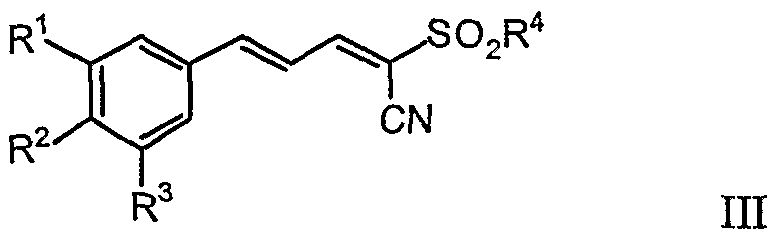
- the present invention includes compounds of Formula III and salts, solvates, and hydrates thereof:
- R 4 is selected from Ci- ⁇ alkyb phenyl and pyridyb wherein phenyl and pyridyl are unsubstituted or substituted with 1-4 substituents, independently selected from C ⁇ - 6 alkyb d- ⁇ alkoxy and halo.
- a pharmaceutical composition comprising a compound as set forth herein and a pharmaceutically acceptable carrier or diluent.
- a method for modulating cell proliferation comprising administering an effective amount of a compound as set forth herein to a cell or animal in need thereob
- the invention also includes a use of a compound as set forth herein to modulate cell proliferation, preferably inhibit cell proliferation, for example in cancer cells.
- the invention further provides for a use of a compound as set forth herein to prepare a medicament to modulate cell proliferation, preferably inhibit cell proliferation.
- the invention provides a method of modulating tyrosine kinase activity in a cell by administering an effective amount of a compound as set forth herein.
- the invention provides a method of inhibiting tyrosine kinase activity in a cell by administering an effective amount of a compound as set forth herein.
- the present invention also provides a use of a compound as set forth herein to modulate, preferably inhibit, tyrosine kinase activity.
- the present invention further provides a use of a compound as set forth herein to prepare a medicament to modulate tyrosine kinase activity, preferably inhibit tyrosine kinase activity. It is appreciated that the modulation of cell proliferation by the compounds herein may be effected by other mechanisms and that tyrosine kinase modulation may be just one mechanism. Accordingly, the compounds described herein are useful in the compositions and methods set forth herein without regard to the actual mechanism contributing to their effectiveness.
- C ⁇ - 6 alkyl as used herein means, unless otherwise stated, straight and/or branched chain alkyl radicals containing from one to six carbon atoms and includes methyl, ethyl, propyb isopropyb t-butyl and the like.
- Q- ⁇ alkoxy as used herein means, unless otherwise stated, straight and/or branched chain alkoxy radicals containing from one to six carbon atoms and includes methoxy. ethoxy, propyloxy, isopropyloxy, t-butoxy and the like.
- Chalky as used herein means, unless otherwise stated, straight and/or branched chain alkyl radicals containing from one to four carbon atoms and includes methyl, ethyl, propyl, isopropyb t-butyl and the like.
- C lkoxy as used herein means, unless otherwise stated, straight and or branched chain alkoxy radicals containing from one to four carbon atoms and includes methoxy, ethoxy, propyloxy, isopropyloxy, t-butoxy and the like.
- halo as used herein means halogen and includes chloro, fluoro, bromo, iodo and the like.
- pharmaceutically acceptable salt means an acid addition salt which is suitable for or compatible with the treatment of patients.
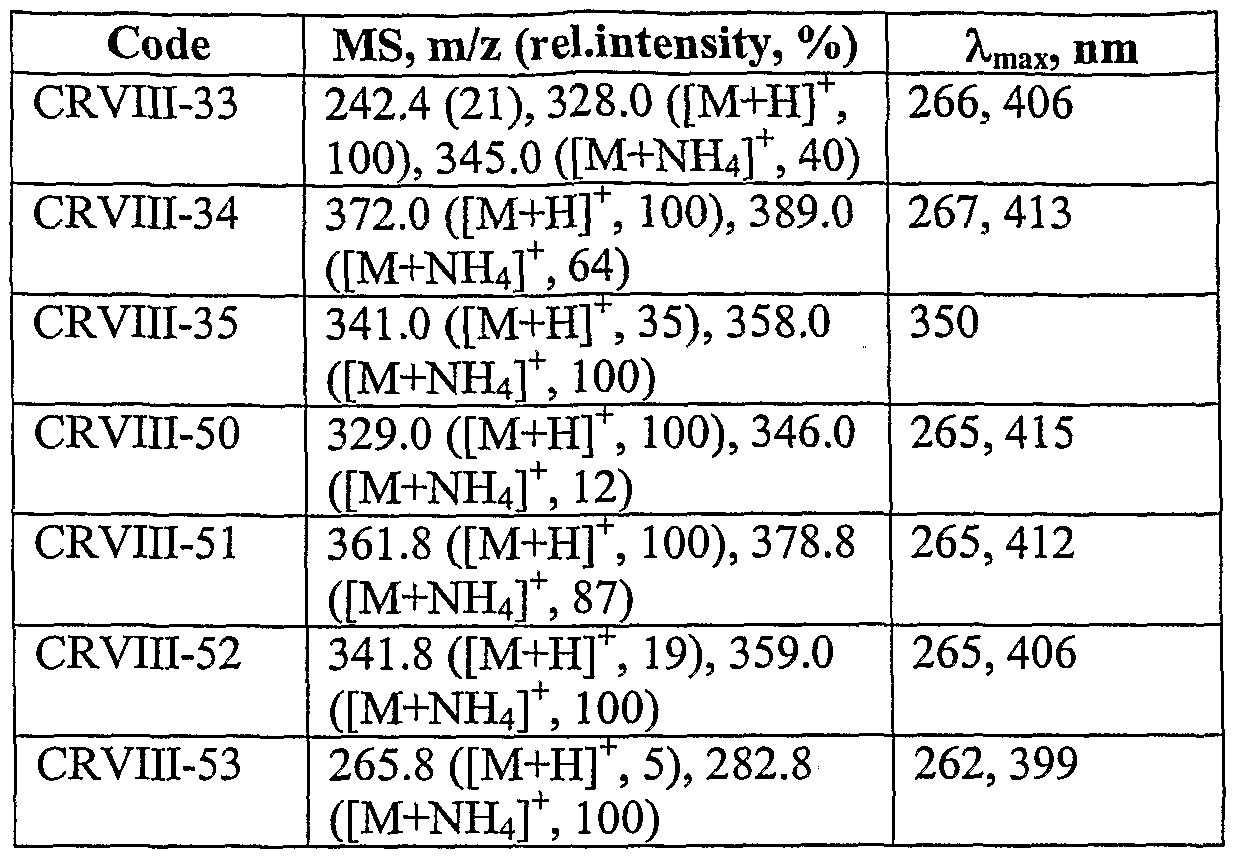
- compound(s) as set forth herein includes any compound of the Formulae I, II, lib and IV as defined herein (including all salts, solvates, or hydrates thereof) as well as any specific compound designated herein, such as CRIX-38, CRIX-39, CRTV-42, CR1N-46, CRVIII-33, CRVIII-34, CRVIII-35, CRVIII-49, CRVIII-50, CRVIII-51 , CRVIII-52, CRVIII-53, and CRIX-79 (including all salts, solvates or hydrates thereof).
- pharmaceutically acceptable acid addition salt means any non-toxic organic or inorganic salt of any base compounds represented by Formulae I-IV, or their intermediates.
- Illustrative inorganic acids which form suitable salts include hydrochloric, hydrobromic, sulfuric and phosphoric acids, as well as metal salts such as sodium monohydrogen orthophosphate and potassium hydrogen sulfate.
- Illustrative organic acids that form suitable salts include mono-, di-, and tricarboxylic acids such as glycolic, lactic, pyruvic, malonic, succinic, glutaric, fumaric, malic, tartaric, citric, ascorbic, maleic, benzoic, phenylacetic, cinnamic and salicylic acids, as well as sulfonic acids such as jo-toluenesulfonic and methanesulfonic acids.
- Either the mono or di-acid salts can be formed, and such salts may exist in either a hydrated, solvated or substantially anhydrous form.
- the acid addition salts of compounds as set forth herein are more soluble in water and various hydrophilic organic solvents, and generally demonstrate higher melting points in comparison to their free base forms.
- the selection of the appropriate salt will be known to one skilled in the art.
- Other non-pharmaceutically acceptable salts e.g. oxalates, maybe used, for example, in the isolation of compounds of Formulae I-IV for laboratory use, or for subsequent conversion to a pharmaceutically acceptable acid addition salt.
- solvate means a compound of Formulae I-IV, or a pharmaceutically acceptable salt of a compound of Formulae I-IV, wherein molecules of a suitable solvent are incorporated in the crystal lattice.
- a suitable solvent is physiologically tolerable at the dosage administered. Examples of suitable solvents are ethanob water and the like. When water is the solvent, the molecule is referred to as a "hydrate”.
- an "effective amount” or a “sufficient amount " of an agent as used herein is that amount sufficient to effect beneficial or desired results, including clinical results, and, as such, an "effective amount” depends upon the context in which it is being applied and would be understood by a person skilled in the art. For example, in the context of administering an agent that modulates cell proliferation, an effective amount of an agent is, for example, an amount sufficient to achieve such a modulation in cell proliferation as compared to the response obtained without administration of the agent.
- treatment is an approach for obtaining beneficial or desired results, including clinical results.
- beneficial or desired clinical results can include, but are not limited to, alleviation or amelioration of one or more symptoms or conditions, diminishment of extent of disease, stabilized (i.e., not worsening) state of disease, preventing spread of disease, delay or slowing of disease progression, amelioration or palliation of the disease state, and remission (whether partial or total), whether detectable or undetectable.
- Treatment can also mean prolonging survival as compared to expected survival if not receiving treatment.
- “Palliating" a disease or disorder means that the extent and/or undesirable clinical manifestations of a disorder or a disease state are lessened and/or time course of the progression is slowed or lengthened, as compared to not treating the disorder.
- prevention is art-recognized, and when used in relation to a condition, such as a local recurrence (e.g., pain), a disease such as cancer, a syndrome complex such as heart failure or any other medical condition, is well understood in the art, and includes administration of a composition which reduces the frequency of, or delays the onset of, symptoms of a medical condition in a subject relative to a subject which does not receive the composition.
- prevention of cancer includes, for example, reducing the number of detectable cancerous growths in a population of patients receiving a prophylactic treatment relative to an untreated control population, and/or delaying the appearance of detectable cancerous growths in a treated population versus an untreated control population, e.g., by a statistically and/or clinically significant amount.
- Prevention of an infection includes, for example, reducing the number of diagnoses of the infection in a treated population versus an untreated control population, and/or delaying the onset of symptoms of the infection in a treated population versus an untreated control population.
- Prevention of pain includes, for example, reducing the frequency of, or alternatively delaying, pain sensations experienced by subjects in a treated population versus an untreated control population.
- modulate includes the inhibition or suppression of a function or activity (such as cell proliferation) as well as the enhancement of a function or activity.
- a function or activity such as cancer cell proliferation is to reduce the function or activity when compared to otherwise same conditions except for a condition or parameter of interest, or alternatively, as compared to another conditions.
- a function or activity such as cell proliferation
- animal as used herein includes all members of the animal kingdom including human.
- the animal is preferably a human.
- a cell as used herein includes a plurality of cells. Administering a compound to a cell includes in vivo, ex vivo and in vitro administration.
- abnormal cell as used herein includes any cell type that is causitive or involved in a disease or condition and wherein it is desirable to modulate, enhance, or inhibit proliferation of the abnormal cell to treat the disease or condition.
- Compounds of the Invention Compounds are provided which may be used to modulate cell proliferation.
- the compounds may be useful in treating cell proliferative diseases such as cancer.
- the present invention provides compounds of Formula I, and salts, solvates or hydrates thereof:
- R 4 is unsubstituted Ar, or Ar substituted with 1-4 substituents, independently selected from Ci- ⁇ alkyb C ⁇ - 6 alkoxy and halo;
- R 1 , R 2 and R 3 are each independently selected from H, OH, OCH 3 , CH 3 CO 2 , NH 2 , N(CH 3 ) 2 , CH 3 CO H, and NO 2 .
- R 1 , R 2 , and R 3 are each independently selected from H, OH, and OCH 3 .
- R 4 is Ar.
- R 4 is unsubstituted Ar.
- R 4 is phenyl.
- Further embodiments of the invention include compounds of Formula I wherein X is (CH 2 ) n .
- n is 1-3; most preferably n is 1.
- compounds of Formula I include those in which at least one of R 1 , R 2 and R 3 is OH, more preferably at least two of R 1 , R 2 and R 3 are OH, while R 4 is Ar and n is 1-3.
- the present invention also provides a compound of Formula II and salts, solvates, and hydrates thereof:
- R 4 Ci-ealkyl
- n l-4.
- R 1 , R 2 and R 3 are each independently selected from H, OH, OCH 3 , CH 3 CO 2 , NH 2 , N(CH 3 ) 2 , CH 3 CONH, and NO 2 .
- R 1 , R 2 , and R 3 are each independently selected from H, OH, and OCH 3 .
- R 4 is Ci- ⁇ alkyb
- R 4 is methyl or ethyl. Most preferably, R 4 is methyl.
- Further embodiments of the invention include compounds of Formula II wherein n in 1-4. Preferably, n is 2-3; most preferably, n is 3.
- a compound of the invention is:
- the present invention provides compounds of Formula III, and salts, solvates or hydrates thereof:
- compounds of Formula II are those in which R , R , and R are each independently selected from H, OH, C ⁇ - 6 alkyb d- 6 alkoxy, Ci- 6 alkyl(CO)O.
- R 1 , R 2 and R 3 are each independently selected from H, OH, OCH 3 , CH 3 CO 2 , NH 2 , N(CH 3 ) 2 , CH 3 CONH, and NO 2 .
- R 1 , R 2 , and R 3 are each independently selected from H, OH, and OCH 3 .
- R 4 is selected from C ⁇ . 6 alkyb phenyl and pyridyb wherein phenyl and pyridyl are unsubstituted or substituted with 1-4 substituents, independently selected from Ci- ealkyb C ⁇ - 6 alkoxy and halo.
- R 4 is selected from phenyl and pyridyb wherein phenyl and pyridyl are unsubstituted or substituted with 1-3 substituents, independently selected from Ci- 4 alkyb C M alkoxy and halo.
- R 4 is selected from CH 3 and phenyl, wherein phenyl is unsubstituted or substituted with 1-2 substituents, independently selected from C h alky!, C M alkoxy and halo. In the most preferred embodiment R 4 is unsubstituted phenyl.
- compounds of Formula I include those in which at least one of R , R and R is OH, more preferably at least two of R 1 , R 2 and R 3 are OH, while R 4 is selected from unsubstituted phenyl and phenyl substituted with 1-4 substituents, independently selected from C ⁇ - 6 alkyb d- 6 alkoxy and halo.
- the compounds of the invention include:
- the present invention includes within its scope prodrugs of the compounds of the invention.
- prodrugs will be functional derivatives of a compound of the invention which are readily convertible in vivo into the compound from which it is notionally derived.
- Conventional procedures for the selection and preparation of suitable prodrugs are described, for example, in "Design of Prodrugs” ed. H. Bundgaard, Elsevier, 1985.
- the present invention includes radiolabeled forms of compounds of the invention, for example, compounds of the invention labeled by incorporation within the structure 3 H or 14 C or a radioactive halogen such as 125 I.
- Compounds of the general Formula I or II useful in the practice of this invention can be prepared by Rnoevenagel condensation of oc, ⁇ -unsaturated aldehydes, such as cinnamaldehyde or its various aryl-substituted homologues (V), with an ⁇ -cyano ester compound having an active ⁇ -methylene group (VI). Similar Rnoevenagel condensations using ylidenemalononitriles as active ⁇ -methylene group components were described in a review (F. Freeman. Chem. Rev. 1980, V. 80, P. 329- 350). Use of a reagent analogous to VI wherein the CO 2 X is replaced by SO 2 permits the preparation of compounds of Formulae III and IV.
- condensations may, for example, be carried out in a polar solvent, such as ethanob in the presence of catalytic amounts of a weak base, such as ⁇ -alanine.
- Reaction temperatures may be in the range of 20 to 100 °C, depending on the stability of the materials used in the condensation.
- a stronger base such as piperidine, may also be used to effect the condensation reaction.
- Compounds of Formula V may be commercially available, such as cinnamaldehyde, and its 3,5-dimethoxy-4-hydroxy and 4-nitro derivatives. Other compounds of Formula V may be prepared using straightforward procedures.
- R 1 , R 2 , R 3 -hydroxy substituted cinnamaldehydes can be prepared from the corresponding commercially available aryl substituted cinnamic acids.
- Scheme 2 gives an example of the preparation of 3,4-dihydroxycinnamaldehyde (caffeic aldehyde, Va) starting from 3,4-dihydroxycirmamic acid (VII).
- H0 X vii BDWS0 viii H0 X ⁇ a Compounds of Formula VI may be prepared, for example, by condensing cyanoacetic acid X with the appropriately substituted alcohol XI under standard conditions, as shown in Scheme 3.
- R , R , R substituents may be also converted from one functional group to another, for example by known reduction of nitro groups into amino groups and the further transformation into dialkylamino groups, or by known conversion of hydroxy groups to halo groups.
- the reactions outlined above may have to be modified, for instance by use of protective groups, to prevent side reactions due to reactive groups, such as reactive groups attached as substituents.
- protective groups to prevent side reactions due to reactive groups, such as reactive groups attached as substituents.
- This may be achieved by means of conventional protecting groups, for example as described in "Protective Groups in Organic Chemistry” McOmie, J.F.W. Ed., Plenum Press, 1973 and in Greene, T.W. and Wuts, P.G.M., "Protective Groups in Organic Synthesis", John Wiley & Sons, 1991.
- the formation of a desired compound salt is achieved using standard techniques.
- solvates of the compounds of the invention will vary depending on the compound and the solvate.
- solvates are formed by dissolving the compound in the appropriate solvent and isolating the solvate by cooling or using an antisolvent.
- the solvate is typically dried or azeotroped under ambient conditions.
- Prodrugs of the compounds of the invention maybe conventional esters formed with available hydroxy, amino or carboxyl group.
- R 1 , R 2 or R 3 when R 1 , R 2 or R 3 is OH in a compound as described herein it may be acylated using an activated acid in the presence of a base, and optionally, in inert solvent (e.g., an acid chloride in pyridine).
- Some common esters which have been utilized as prodrugs are phenyl esters, aliphatic (C 8 -C 24 ) esters, acyloxymethyl esters, carbamates and amino acid esters.
- a radiolabeled compound of the invention may be prepared using standard methods known in the art.
- tritium may be incorporated into a compound of the invention using standard techniques, for example by hydrogenation of a suitable precursor to a compound of the invention using tritium gas and a catalyst.
- a compound of the invention containing radioactive iodo may be prepared from the corresponding trialkyltin (suitably trimethyltin or tributyltin) derivative using standard iodination conditions, such as [ 125 I] sodium iodide in the presence of chloramine-T in a suitable solvent, such as dimethylformamide.
- the trialkyltin compound may be prepared from the corresponding non-radioactive halo, suitably iodo, compound using standard palladium-catalyzed stannylation conditions, for example hexamethylditin in the presence of tetrakis(triphenylphosphine) palladium (0) in an inert solvent, such as dioxane, and at elevated temperatures, suitably 50-100 °C.
- the present invention includes all uses of the compounds as set forth above, including their use in therapeutic methods and compositions for modulating cell proliferation, preferably inhibiting cell proliferation, their use in diagnostic assays, and their use as research tools.
- the present invention provides a method for modulating cell proliferation comprising administering an effective amount of a compound of the invention to a cell or animal in need thereof.
- the invention provides a method of inhibiting cell proliferation comprising administering an effective amount of a compound of the invention to a cell or animal in need thereob
- the method of the invention is useful in inhibiting the proliferation of abnormal but not normal cells.
- abnormal cells include any type of cell that is causative of or involved in a disease or condition and wherein it is desirable to modulate or inhibit the proliferation of the abnormal cell to treat the disease or condition.
- the present invention provides a method of inhibiting the proliferation of a cancer cell comprising administering an effective amount of a compound of the invention to a cell or animal in need thereof.
- the present invention also includes a use of a compound or composition of the invention in order to modulate, preferably inhibit, cell proliferation, preferably cancer cell proliferation.
- the present invention further includes a use of a compound or a composition of the invention to prepare a medicament to modulate, preferably inhibit, cell proliferation, preferably cancer cell proliferation.
- the cancer cell that can be treated with a compound of the invention may be any type of cancer including, but not limited to, hematopoietic malignancies, such as leukemia.
- the present invention provides a method of inhibiting the proliferation of a cell, comprising administering to a cell or animal in need thereof, an effective amount of a compound selected from:
- the compounds as set forth herein may be effective as ex vivo purging agents.
- cells may be removed from a patient and purged ex vivo with a compound of the invention. Such a purging should kill the abnormally proliferating cells while leaving normal cells intact. After purging, the treated cells can be washed and reintroduced into the patient.
- the activity of the compounds of the invention for modulating cell proliferation can be determined using standard assays known to those skilled in the art.
- abnormally proliferating cells include malignant or cancerous cells as well as cells such as t-cells that over-proliferate in autoimmune disorders and graft versus host disorders, endothelial and/or epithelial cells that over-proliferate in angiogenesis, and eosinophils that over-proliferate in allergy-related conditions.
- the cells may be cultured in the presence of one or more compounds of the invention, and the effect of the compound(s) on the proliferation of the cells can be assayed and compared to the proliferation of the cells in the absence of the compound.
- the compounds of the invention may be tyrosine kinase modulators and therefore, useful in modulating tyrosine kinase activity, including the inhibition of tyrosine kinase activity, for the treatment of various conditions such as all proliferative disorders as mentioned above. Accordingly, the invention provides a method of modulating tyrosine kinase activity by administering an effective amount of a compound as set forth herein to a cell or animal in need thereof. In a further aspect, the invention provides a method of inhibiting tyrosine kinase activity by administering an effective amount of a compound as set forth herein to a cell or animal in need thereob
- the compounds as set forth herein are preferably formulated into pharmaceutical compositions for administration to human subjects in a biologically compatible form suitable for administration in vivo. Accordingly, in another aspect, the present invention provides a pharmaceutical composition comprising a compound of the invention in admixture with a suitable diluent or carrier.
- compositions containing the compounds of the invention can be prepared by known methods for the preparation of pharmaceutically acceptable compositions which can be administered to subjects, such that an effective quantity of the active substance is combined in a mixture with a pharmaceutically acceptable vehicle.
- suitable vehicles are described, for example, in Remington's Pharmaceutical Sciences (Remington's Pharmaceutical Sciences, Mack Publishing Company, Easton, Pa., USA 1985).
- the compositions include, albeit not exclusively, solutions of the substances in association with one or more pharmaceutically acceptable vehicles or diluents, and contained in buffered solutions with a suitable pH and iso-osmotic with the physiological fluids.
- the compounds as set forth herein may be used in the form of the free base, in the form of salts, solvates and as hydrates. All forms are within the scope of the invention. Acid addition salts may be formed and provide a more convenient form for use; in practice, use of the salt form inherently amounts to use of the base form.
- the acids which can be used to prepare the acid addition salts include preferably those which produce, when combined with the free base, pharmaceutically acceptable salts, that is, salts whose anions are non-toxic to the animal organism in pharmaceutical doses of the salts, so that the beneficial properties inherent in the free base are not vitiated by side effects ascribable to the anions.
- Pharmaceutically acceptable salts within the scope of the invention include those derived from the following acids; mineral acids such as hydrochloric acid, sulfuric acid, phosphoric acid and sulfamic acid; and organic acids such as acetic acid, citric acid, lactic acid, tartaric acid, malonic acid, methanesulfonic acid, ethanesulfonic acid, benzenesulfonic acid, p-toluenesulfonic acid, cyclohexylsulfamic acid, quinic acid, and the like.
- compositions of the invention may be administered orally or parenterally.
- Parenteral administration includes intravenous, intraperitoneab subcutaneous, intramuscular, transepitheliab nasal, intrapulmonary, intrathecab rectal and topical modes of administration.
- Parenteral administration may be by continuous infusion over a selected period of time.
- a compound of the invention or a salt or solvate thereof may be orally administered, for example, with an inert diluent or with an assimilable edible career, or it may be enclosed in hard or soft shell gelatin capsules, or it may be compressed into tablets, or it may be incorporated directly with the food of the diet.
- the compound of the invention may be incorporated with excipient and used in the form of ingestible tablets, buccal tablets, troches, capsules, elixirs, suspensions, syrups, wafers, and the like.
- a compound of the invention may also be administered parenterally or intraperitoneally.
- Solutions of a compound of the invention as a free base or pharmacologically acceptable salt or solvate can be prepared in water suitably mixed with a surfactant such as hydroxypropylcellulose.
- Dispersions can also be prepared in glycerol, liquid polyethylene glycols, DMSO and mixtures thereof with or without alcohol, and in oils. Under ordinary conditions of storage and use, these preparations contain a preservative to prevent the growth of microorganisms.
- a person skilled in the art would know how to prepare suitable formulations. Conventional procedures and ingredients for the selection and preparation of suitable formulations are described, for example, in Remington's Pharmaceutical Sciences (1990 - 18th edition) and in The United States Pharmacopeia: The National Formulary (USP 24 NF19) published in 1999.
- the pharmaceutical forms suitable for injectable use include sterile aqueous solutions or dispersion and sterile powders for the extemporaneous preparation of sterile injectable solutions or dispersions. In all cases the form must be sterile and must be fluid to the extent that easy syringability exists.
- the compounds as set forth herein may be administered to an animal alone or in combination with pharmaceutically acceptable carriers, as noted above, the proportion of which is determined by the solubility and chemical nature of the compound, chosen route of administration and standard pharmaceutical practice.
- the dosage of the compounds and/or compositions as set forth herein can vary depending on many factors such as the pharmacodynamic properties of the compound, the mode of administration, the age, health and weight of the recipient, the nature and extent of the symptoms, the frequency of the treatment and the type of concurrent treatment, if any, and the clearance rate of the compound in the animal to be treated.
- One of skill in the art can determine the appropriate dosage based on the above factors.
- the compounds as set forth herein may be administered initially in a suitable dosage that may be adjusted as required, depending on the clinical response.
- the compounds as set forth herein may be used alone or in combination with other agents that modulate tyrosine kinase activity or in combination with other types of treatment (which may or may not modulate tyrosine kinase activity) for cell proliferative disorders.
- Agents known in the art that inhibit tyrosine kinase activity include, but are not limited to, antisense nucleic acid and ribozymes targeted to nucleic acid encoding a receptor tyrosine kinase, antibodies able to modulate tyrosine kinase activity and other small molecule tyrosine kinase inhibitors such as those described in US 5,891,917, US 5,217,999, US 5,773,476, US 5,935,993, US 5,656,655, US 5,677,329 and US 5,789,427.
- the compounds as set forth herein are also useful in diagnostic assays, screening assays and as research tools.
- the compounds as set forth herein may be useful in identifying or detecting a cell proliferative disorder.
- the compounds as set forth herein may be radiolabelled (as hereinbefore described) and contacted with a population of cells. The presence of the radiolabelled compound on the cells may indicate a cell proliferative disorder.
- the compounds as set forth herein may be used to identify other compounds that modulate cell proliferation or tyrosine kinase activity.
- the compounds of the invention may be used in receptor binding assays and assays to study the localization of tyrosine kinases. In such assays, the compounds may also be radiolabelled.
- the following non-limiting examples are illustrative of the present invention:
- Electrospray mass spectra were acquired on an API 111+ triple quadrupole mass spectrometer (PE Sciex, Thornhilb Canada). Samples were directly introduced into the electrospray ionization source using an HPLC pump. Thin layer chromatography was performed with UV- 254 aluminum-backed TLC sheets of 0.25 mm thickness (Kieselgel 60 F254, Merck, Germany).
- the following gradient system was employed: 20% of the buffer B in the buffer A for 10 min, followed by linearly increasing the percentage of the buffer B from 20 to 90% during 20 min.
- the flow rate was 1.0 mL/min.
- Vacuum distillations were done using Kugelrohr apparatus (Aldrich) at stated temperatures of an oven.
- Example 1 3,4-Dihydroxycinnamaldehyde (caffeoyl aldehyde) 3,4-Bis-(t-butyldimethylsilyloxy)cinnamyl alcohol (7.88 g, 20 mol) was dissolved in 1000 mL CH 2 C1 2 , 17.2 g activated MnO 2 (200 mmol) were added and the mixture was vigorously stirred for 24 h at 20 °C. MnO 2 was filtered off and the filtrate was taken to dryness. To the obtained 3,4-bis(tBDMS)caffeoyl aldehyde 250 mL of CHC1 3 was added followed by addition of /z-Bu NF monohydrate (11.6 g, 40 mmol).
- Example 2 Cyanoacetic acid benzyl ester (TVa) To a mixture of cyanoacetic acid (VII) 2.34 g (27.5 mmol) and benzyl alcohol (Villa) 2.70 g (25 mmol) in 60 mL of toluene 50 mg ofp-TsOH was added and the mixture was refluxed in a flask with a Dean-Stark trap for 24 h. The mixture was cooled down and toluene was washed with H 2 0 and toluene was evaporated. The residue was distilled in vacuo (Kugelrohr apparatus, 0.1 mm Hg, T. oven 170-180 °C). Yield 3.36 g (77%), a colorless oil. MS (m/z, rel. intensity, %): 167.0 ([M+NH 4 -CN] + , 27), 193.0 ([M+NH t , 100).
- Example 3 Cyanoacetic acid 2-[2-(2-mefhoxyethoxy)ethoxy] ester (IVb) To a mixture of cyanoacetic acid (VII) (9.4 g, 110 mmol and 2-[2-(2- methoxyethoxy)ethoxy]ethanol (VTlIb) (16.4 g, 100 mmol) in 60 mL of toluene 50 mg of »-TsOH was added and the mixture was refluxed in a flask with a Dean-Stark trap for 24 h. The mixture was cooled down and toluene was washed with H 2 O and toluene was evaporated.
- VII cyanoacetic acid
- VTlIb 2-[2-(2- methoxyethoxy)ethoxy]ethanol
- Example 4 Knoevenagel condensation of substituted acetonitriles with hydroxyl-substituted cinnamaldehydes To 0.2 mmol of 3,4-dihydroxycinnamaldehyde in 3 mL EtOH a corresponding substituted acetonitrile or the like was added followed by addition of 0.4 mmol of piperidine. A dark red solution was stirred at 20 °C for 0.5 h. 0.5 mL 1 N HCl and 5 mL of H 2 O were added and EtOH was evaporated with the stream of N 2 . The precipitated powder was filtered off, washed with H 2 O and dried in a desiccator in vacuo in the presence of solid NaOH.
- Example 5 Knoevenagel condensation of substituted acetonitriles with nitro- substituted cinnamaldehydes
- a corresponding substituted acetonitrile was added followed by addition of 0.5-1.0 mg of ⁇ -alanine.
- a deep yellow solution was stirred at 90 °C for 4 h.
- 0.5 mL 1 N HCl and 5 mL of H 2 O were added and EtOH was evaporated with the stream of N 2 .
- the precipitated powder was filtered off, and washed with H O.
- Example 6 Effect of Test Compounds Upon Normal Bone Marrow Differentiation in Culture
- a CFU-GEMM assay may be performed according to Fauser and Messner (1978, Blood, 52(6) 143-8) and Messner and Fausser (1980, Blut, 41(5) 327-33).
- Example 7 Killing of Philadelphia Positive Acute Lymphoblastic Leukemia by Low-dose Test Compounds in Culture.
- Ph+ ALL cells are plated in 1 ml volumes, in the absence of exogenous growth factors, into 35 mm petri dishes (Nunc, Gibco) containing alpha MEM (Gibco) plus 10% FCS (Cansera Rexdale, ON.) in 0.9% (vol/vol) methylcellulose (Fluka, Switzerland) with various concentrations of test compounds. Cultures are set at 37 °C, 5% CO 2 in a humidified atmosphere. Colonies consisting of more than 20 cells are counted at 12 days or earlier using an inverted microscope.
- Example 8 Killing of Philadelphia positive Z119 Acute Lymphoblastic Leukemia Cells by Low-dose Test Compounds in Culture.
- Zl 19 cells are plated in 1 mL volumes at a density of lxl 0 4 cells/mL, in the absence of exogenous growth factors, into 35 mm petri dishes (Nunc, Gibco) containing IMDM (Od, Toronto) plus 20% FCS (Cansera Rexdale, ON) in 0.9% (vol/vol) methylcellulose (Fluka, Switzerland) with various concentrations of test compounds. Cultures are set at 37 °C, 5% CO 2 in a humidified atmosphere. Colonies consisting of more than 20 cells are counted at 7 days or earlier using an inverted microscope. Results see Tables 4 and 8.
- Example 9 Killing of AML-3 Acute Myeloid Leukemia Cells by Low-dose Test Compounds in Culture
- OCI-AML-3 cells are plated in 35mm petri dishes (Nunc, Gibco) in 1 mL volumes at a density of 3.3x10 3 cells/mL, in the absence of exogenous growth factors, containing alpha MEM plus 20% FCS (Cansera, Rexdale Ont), and 0.9% (vol/vol) methylcellulose (Fluka, Switzerland) and various concentrations of test compounds. Cell cultures are incubated in a humidified atmosphere at 37 °C with 5% CO 2 .
- Colonies containing more than 20 cells are scored, using an inverted microscope, at 5- 6 days. Results see Tables 4 and 8.
Landscapes
- Chemical & Material Sciences (AREA)
- Organic Chemistry (AREA)
- Health & Medical Sciences (AREA)
- Life Sciences & Earth Sciences (AREA)
- Pharmacology & Pharmacy (AREA)
- Medicinal Chemistry (AREA)
- Animal Behavior & Ethology (AREA)
- General Health & Medical Sciences (AREA)
- Public Health (AREA)
- Veterinary Medicine (AREA)
- Epidemiology (AREA)
- Chemical Kinetics & Catalysis (AREA)
- General Chemical & Material Sciences (AREA)
- Nuclear Medicine, Radiotherapy & Molecular Imaging (AREA)
- Pharmaceuticals Containing Other Organic And Inorganic Compounds (AREA)
Abstract
Description






Claims


Priority Applications (3)
| Application Number | Priority Date | Filing Date | Title |
|---|---|---|---|
| US10/566,815 US20070197660A1 (en) | 2003-07-30 | 2004-07-30 | Compounds for modulating cell proliferation |
| EP04738022A EP1654220A4 (en) | 2003-07-30 | 2004-07-30 | COMPOUNDS FOR MODULATING CELL PROLIFERATION |
| CA002533287A CA2533287A1 (en) | 2003-07-30 | 2004-07-30 | Compounds for modulating cell proliferation |
Applications Claiming Priority (2)
| Application Number | Priority Date | Filing Date | Title |
|---|---|---|---|
| US49110903P | 2003-07-30 | 2003-07-30 | |
| US60/491,109 | 2003-07-30 |
Publications (1)
| Publication Number | Publication Date |
|---|---|
| WO2005012234A1 true WO2005012234A1 (en) | 2005-02-10 |
Family
ID=34115468
Family Applications (1)
| Application Number | Title | Priority Date | Filing Date |
|---|---|---|---|
| PCT/CA2004/001431 Ceased WO2005012234A1 (en) | 2003-07-30 | 2004-07-30 | Compounds for modulating cell proliferation |
Country Status (4)
| Country | Link |
|---|---|
| US (1) | US20070197660A1 (en) |
| EP (1) | EP1654220A4 (en) |
| CA (1) | CA2533287A1 (en) |
| WO (1) | WO2005012234A1 (en) |
Cited By (1)
| Publication number | Priority date | Publication date | Assignee | Title |
|---|---|---|---|---|
| EP1727822A4 (en) * | 2004-03-26 | 2007-05-09 | Hsc Res Dev Lp | Novel compounds for modulating cell proliferation |
Citations (7)
| Publication number | Priority date | Publication date | Assignee | Title |
|---|---|---|---|---|
| US3718472A (en) * | 1971-03-04 | 1973-02-27 | Eastman Kodak Co | Filter dyes for photographic elements |
| CA1264594A (en) * | 1984-08-23 | 1990-01-23 | Ranjana C. Patel | Sublimation transfer imaging system |
| WO1995024190A2 (en) * | 1994-03-07 | 1995-09-14 | Sugen, Inc. | Receptor tyrosine kinase inhibitors for inhibiting cell proliferative disorders and compositions thereof |
| WO1996010629A1 (en) * | 1994-10-03 | 1996-04-11 | Joslin Diabetes Center, Inc. | The irs family of genes |
| JP2001066605A (en) * | 1999-08-30 | 2001-03-16 | Hayashi Telempu Co Ltd | Liquid crystal alignment film, method of manufacturing the same, and liquid crystal display |
| WO2001079158A2 (en) * | 2000-04-13 | 2001-10-25 | Hsc Research And Development Limited Partnership | Compounds for modulating cell proliferation |
| WO2003062190A1 (en) * | 2002-01-18 | 2003-07-31 | The Hospital For Sick Children | Compounds for modulating cell proliferation |
Family Cites Families (24)
| Publication number | Priority date | Publication date | Assignee | Title |
|---|---|---|---|---|
| US3125597A (en) * | 1964-03-17 | chj oh | ||
| US2798881A (en) * | 1954-11-12 | 1957-07-09 | Du Pont | 4-(aminoaryl)-1, 3-butadiene-2-carbonitriles and their preparation |
| US3047606A (en) * | 1958-12-01 | 1962-07-31 | Rohm & Haas | Dialkyl 1-cyanovinylphosphonates, their preparation, and polymers and copolymers thereof |
| US3852683A (en) * | 1971-10-18 | 1974-12-03 | Eastman Kodak Co | Arylidene dye lasers |
| GB1572441A (en) * | 1975-12-23 | 1980-07-30 | Vickers Ltd | Photopolymerisable polymers with free carboxyl groups and printing plates therefrom |
| US4554238A (en) * | 1984-03-20 | 1985-11-19 | Minnesota Mining And Manufacturing Company | Spectrally-sensitized imaging system |
| US4632895A (en) * | 1984-08-23 | 1986-12-30 | Minnesota Mining And Manufacturing Company | Diffusion or sublimation transfer imaging system |
| US4617373A (en) * | 1985-02-15 | 1986-10-14 | Eastman Kodak Company | Condensation polymers and products therefrom |
| US4950467A (en) * | 1986-11-14 | 1990-08-21 | Ici Americas Inc. | Ultraviolet radiation absorbing compositions |
| US5217999A (en) * | 1987-12-24 | 1993-06-08 | Yissum Research Development Company Of The Hebrew University Of Jerusalem | Styryl compounds which inhibit EGF receptor protein tyrosine kinase |
| US5196147A (en) * | 1988-03-28 | 1993-03-23 | Teijin Limited | Organic nonlinear optical substance |
| US5418245A (en) * | 1990-04-16 | 1995-05-23 | Rhone-Poulenc Rorer International (Holdings) Inc. | Styryl-substituted monocyclic and bicyclic heteroaryl compounds which inhibit EGF receptor tyrosine kinase |
| US5196446A (en) * | 1990-04-16 | 1993-03-23 | Yissum Research Development Company Of The Hebrew University Of Jerusalem | Certain indole compounds which inhibit EGF receptor tyrosine kinase |
| US5712395A (en) * | 1992-11-13 | 1998-01-27 | Yissum Research Development Corp. | Compounds for the treatment of disorders related to vasculogenesis and/or angiogenesis |
| US5792771A (en) * | 1992-11-13 | 1998-08-11 | Sugen, Inc. | Quinazoline compounds and compositions thereof for the treatment of disease |
| US5763441A (en) * | 1992-11-13 | 1998-06-09 | Sugen, Inc. | Compounds for the treatment of disorders related to vasculogenesis and/or angiogenesis |
| US6177401B1 (en) * | 1992-11-13 | 2001-01-23 | Max-Planck-Gesellschaft Zur Forderung Der Wissenschaften | Use of organic compounds for the inhibition of Flk-1 mediated vasculogenesis and angiogenesis |
| US5700823A (en) * | 1994-01-07 | 1997-12-23 | Sugen, Inc. | Treatment of platelet derived growth factor related disorders such as cancers |
| US5656655A (en) * | 1994-03-17 | 1997-08-12 | Rhone-Poulenc Rorer Pharmaceuticals, Inc. | Styryl-substituted heteroaryl compounds which inhibit EGF receptor tyrosine kinase |
| WO1996040629A1 (en) * | 1995-06-07 | 1996-12-19 | Sugen, Inc. | Tyrphostin-like compounds for the treatment of cell proliferative disorders or cell differentiation disorders |
| US5578416A (en) * | 1995-11-20 | 1996-11-26 | Eastman Kodak Company | Cinnamal-nitrile dyes for laser recording element |
| US5990193A (en) * | 1995-12-12 | 1999-11-23 | University Of Pittsburgh | Polymers for reversible photoinduced sol gel transitions |
| JPH10136697A (en) * | 1996-10-29 | 1998-05-22 | Mitsubishi Electric Corp | Control device for vehicle generator |
| US5932580A (en) * | 1997-12-01 | 1999-08-03 | Yissum Research And Development Company Of The Hebrew University Of Jerusalem | PDGF receptor kinase inhibitory compounds their preparation and compositions |
-
2004
- 2004-07-30 EP EP04738022A patent/EP1654220A4/en not_active Withdrawn
- 2004-07-30 US US10/566,815 patent/US20070197660A1/en not_active Abandoned
- 2004-07-30 CA CA002533287A patent/CA2533287A1/en not_active Abandoned
- 2004-07-30 WO PCT/CA2004/001431 patent/WO2005012234A1/en not_active Ceased
Patent Citations (8)
| Publication number | Priority date | Publication date | Assignee | Title |
|---|---|---|---|---|
| US3718472A (en) * | 1971-03-04 | 1973-02-27 | Eastman Kodak Co | Filter dyes for photographic elements |
| CA1264594A (en) * | 1984-08-23 | 1990-01-23 | Ranjana C. Patel | Sublimation transfer imaging system |
| WO1995024190A2 (en) * | 1994-03-07 | 1995-09-14 | Sugen, Inc. | Receptor tyrosine kinase inhibitors for inhibiting cell proliferative disorders and compositions thereof |
| US5789427A (en) * | 1994-03-07 | 1998-08-04 | Sugen, Inc. | Methods and compositions for inhibiting cell proliferative disorders |
| WO1996010629A1 (en) * | 1994-10-03 | 1996-04-11 | Joslin Diabetes Center, Inc. | The irs family of genes |
| JP2001066605A (en) * | 1999-08-30 | 2001-03-16 | Hayashi Telempu Co Ltd | Liquid crystal alignment film, method of manufacturing the same, and liquid crystal display |
| WO2001079158A2 (en) * | 2000-04-13 | 2001-10-25 | Hsc Research And Development Limited Partnership | Compounds for modulating cell proliferation |
| WO2003062190A1 (en) * | 2002-01-18 | 2003-07-31 | The Hospital For Sick Children | Compounds for modulating cell proliferation |
Non-Patent Citations (2)
| Title |
|---|
| See also references of EP1654220A4 * |
| ZHONG ET AL.: "(E,E)2,4-pentadienenitrile, 5-(3-nitrophenyl)-2-(phenylsulfonyl)", CHINESE CHEMICAL LETTERS, vol. 2, no. 9, 1991, pages 683 - 689, XP008073109 * |
Cited By (2)
| Publication number | Priority date | Publication date | Assignee | Title |
|---|---|---|---|---|
| EP1727822A4 (en) * | 2004-03-26 | 2007-05-09 | Hsc Res Dev Lp | Novel compounds for modulating cell proliferation |
| US7598419B2 (en) | 2004-03-26 | 2009-10-06 | Hsc Research And Development Limited Partnership | Compounds for modulating cell proliferation |
Also Published As
| Publication number | Publication date |
|---|---|
| US20070197660A1 (en) | 2007-08-23 |
| CA2533287A1 (en) | 2005-02-10 |
| EP1654220A4 (en) | 2006-10-25 |
| EP1654220A1 (en) | 2006-05-10 |
Similar Documents
| Publication | Publication Date | Title |
|---|---|---|
| US20100331549A1 (en) | Novel compounds useful for modulating abnormal cell proliferation | |
| RU2277531C9 (en) | New compounds for modulation of cellular proliferation | |
| EP1467967B1 (en) | Compounds for modulating cell proliferation | |
| EP1802606B1 (en) | Arylcarboxamides and their use as anti-tumor agents | |
| AU2001248201A1 (en) | Compounds for modulating cell proliferation | |
| JP2005515252A6 (en) | Compounds that modulate cell proliferation | |
| CN107207469A (en) | For treat the deuterated compound of hematologic malignancies with and combinations thereof and method | |
| EP1654220A1 (en) | Compounds for modulating cell proliferation | |
| AU2003201558A1 (en) | Compounds for modulating cell proliferation | |
| US7598419B2 (en) | Compounds for modulating cell proliferation | |
| US7407989B2 (en) | Compounds useful for modulating abnormal cell proliferation | |
| KR20050044712A (en) | 1,3-diarylprop-2-en-1-ones, compositions containing same and use thereof | |
| JPH03148217A (en) | Pheoxypropylamine derivative or salt thereof and antiulcer containing same derivative or salt | |
| EP1752446A2 (en) | Compounds for modulating cell proliferation | |
| HK1103715A (en) | Compounds for modulating cell proliferation |
Legal Events
| Date | Code | Title | Description |
|---|---|---|---|
| AK | Designated states |
Kind code of ref document: A1 Designated state(s): AE AG AL AM AT AU AZ BA BB BG BR BW BY BZ CA CH CN CO CR CU CZ DE DK DM DZ EC EE EG ES FI GB GD GE GH GM HR HU ID IL IN IS JP KE KG KP KR KZ LC LK LR LS LT LU LV MA MD MG MK MN MW MX MZ NA NI NO NZ OM PG PH PL PT RO RU SC SD SE SG SK SL SY TJ TM TN TR TT TZ UA UG US UZ VC VN YU ZA ZM ZW |
|
| AL | Designated countries for regional patents |
Kind code of ref document: A1 Designated state(s): BW GH GM KE LS MW MZ NA SD SL SZ TZ UG ZM ZW AM AZ BY KG KZ MD RU TJ TM AT BE BG CH CY CZ DE DK EE ES FI FR GB GR HU IE IT LU MC NL PL PT RO SE SI SK TR BF BJ CF CG CI CM GA GN GQ GW ML MR NE SN TD TG |
|
| 121 | Ep: the epo has been informed by wipo that ep was designated in this application | ||
| ENP | Entry into the national phase |
Ref document number: 2533287 Country of ref document: CA |
|
| WWE | Wipo information: entry into national phase |
Ref document number: 2004738022 Country of ref document: EP |
|
| WWP | Wipo information: published in national office |
Ref document number: 2004738022 Country of ref document: EP |
|
| DPEN | Request for preliminary examination filed prior to expiration of 19th month from priority date (pct application filed from 20040101) | ||
| WWE | Wipo information: entry into national phase |
Ref document number: 2007197660 Country of ref document: US Ref document number: 10566815 Country of ref document: US |
|
| WWP | Wipo information: published in national office |
Ref document number: 10566815 Country of ref document: US |