WO2005023825A2 - Gapped oligomeric compounds having linked bicyclic sugar moieties at the termini - Google Patents
Gapped oligomeric compounds having linked bicyclic sugar moieties at the termini Download PDFInfo
- Publication number
- WO2005023825A2 WO2005023825A2 PCT/US2004/029650 US2004029650W WO2005023825A2 WO 2005023825 A2 WO2005023825 A2 WO 2005023825A2 US 2004029650 W US2004029650 W US 2004029650W WO 2005023825 A2 WO2005023825 A2 WO 2005023825A2
- Authority
- WO
- WIPO (PCT)
- Prior art keywords
- oligomeric compound
- independently
- oligomeric compounds
- rna
- target
- Prior art date
- Legal status (The legal status is an assumption and is not a legal conclusion. Google has not performed a legal analysis and makes no representation as to the accuracy of the status listed.)
- Ceased
Links
- 0 C*CC(N(CC*C(CN(CCC(C)**)C(C*C)=O)=O)CC(*)=O)=O Chemical compound C*CC(N(CC*C(CN(CCC(C)**)C(C*C)=O)=O)CC(*)=O)=O 0.000 description 3
Classifications
-
- C—CHEMISTRY; METALLURGY
- C07—ORGANIC CHEMISTRY
- C07H—SUGARS; DERIVATIVES THEREOF; NUCLEOSIDES; NUCLEOTIDES; NUCLEIC ACIDS
- C07H21/00—Compounds containing two or more mononucleotide units having separate phosphate or polyphosphate groups linked by saccharide radicals of nucleoside groups, e.g. nucleic acids
- C07H21/04—Compounds containing two or more mononucleotide units having separate phosphate or polyphosphate groups linked by saccharide radicals of nucleoside groups, e.g. nucleic acids with deoxyribosyl as saccharide radical
-
- A—HUMAN NECESSITIES
- A61—MEDICAL OR VETERINARY SCIENCE; HYGIENE
- A61P—SPECIFIC THERAPEUTIC ACTIVITY OF CHEMICAL COMPOUNDS OR MEDICINAL PREPARATIONS
- A61P43/00—Drugs for specific purposes, not provided for in groups A61P1/00-A61P41/00
Definitions
- the present invention relates to nucleoside compositions comprising novel bicyclic sugar moieties and oligomeric compounds comprising ⁇ at least one such nucleoside.
- the oligomeric compounds of the present invention typically will have enhanced binding affinity properties compared to unmodified oligomeric compounds.
- the oligomeric compounds are useful, for example, for investigative and therapeutic purposes.
- BACKGROUND OF THE INVENTION Nearly all disease states in multicellular organisms involve the action of proteins.
- Classic therapeutic approaches have focused on the interaction of proteins with other molecules in efforts to moderate the proteins' disease-causing or disease-potentiating activities.
- modulation of the production of proteins has been sought.
- a general object of some current therapeutic approaches is to interfere with or otherwise modulate gene expression.
- One method for inhibiting the expression of specific genes involves the use of oligonucleotides, particularly oligonucleotides that are complementary to a specific target messenger RNA (mRNA) sequence. Due to promising research results in recent years, oligonucleotides and oligonucleotide analogs are now accepted as therapeutic agents holding great promise for therapeutic and diagnostic methods.
- mRNA target messenger RNA
- Oligonucleotides and their analogs can be designed to have particular properties.
- a number of chemical modifications have been introduced into oligomeric compounds to increase their usefulness as therapeutic agents. Such modifications include those designed to increase binding affinity to a target strand, to increase cell penetration, to stabilize against nucleases and other enzymes that degrade or interfere with the structure or activity of the oligonucleotide, to provide a mode of disruption (terminating event) once the oligonucleotide is bound to a target, and to improve the pharmacokinetic properties of the oligonucleotide.
- bicyclic nucleoside compounds having bicyclic sugar moieties that are conformationally locked is locked nucleic acids or LNA (Koshkin et al., Tetrahedron, 1998, 54, 3607-3630; U.S. Patent No. 6,268,490 and 6,670,461). These compounds are also referred to in the literature as bicyclic nucleotide analogs (International Patent Application WO 98/39352), but this term is also applicable to a genus of compounds that includes other analogs in addition to LNAs. LNAs have been used in numerous studies where ribonucleoside mimics are desired.
- Such modified nucleosides mimic the 3'-endo sugar conformation of native ribonucleosides with the advantage of having enhanced binding affinity and increased resistance to nucleases.
- LNAs are discussed more thouroughly below.
- One group has added an additional methlene group to the LNA 2',4'-bridging group
- the present invention provides oligomeric compounds comprising the structure Ti- (Nu 1 -L 1 )ni-(Nu 2 -L 2 ) n2 -(Nu3-L 3 ) n3 -T wherein each Nui and Nu 3 is, independently, a high affinity modified nucleoside, wherein at least one nucleoside of Nui and/or at least one nucleoside of Nu 3 is a bicyclic sugar modified nucleoside comprising a 4'-CH 2 -O-2' bridge or a 4'-(CH 2 ) 2 -O-2' bridge.
- Each Nu 2 is a 2'-deoxy nucleoside and each L ls L 2 and L 3 is, independently, an internucleoside linking group.
- Each Ti and T 2 is, independently, H, a hydroxyl protecting group, an optionally linked conjugate group, or a covalent attachment to a solid support medium, nl is from 1 to about 6, n2 is from 11 to about 18, and n3 is from 2 to about 6.
- each of the hydroxyl protecting groups is, independently, 4,4'- dimethoxytrityl, monomethoxytrityl, 9-phenylxanthen-9-yl, 9-(p-methoxyphenyl)xanthen-9-yl, t- butyl, t-butoxymethyl, methoxymethyl, tetrahydropyranyl, 1-ethoxyethyl, l-(2- chloroethoxy)ethyl, 2-trimethylsilylethyl, p-chlorophenyl, 2,4-dinitrophenyl, benzyl, 2,6- dichlorobenzyl, diphenylmethyl, p,p-dinitrobenzhydryl, p-nitrobenzyl, triphenylmethyl, trimethylsilyl, triethylsilyl, t-butyldimethylsilyl, t-butyldiphenylsilyl, triphenylsilyl, be
- the support medium is a controlled pore glass, oxalyl-controlled pore glass, silica-containing particles, polymers of polystyrene, copolymers of polystyrene, copolymers of styrene and divinylbenzene, copolymers of dimethylacrylamide and N,N'- bisacryloylethylenediamine, soluble support medium, or PEPS.
- each L ls L 2 and L 3 is, independently, phosphodiester, phosphorothioate, chiral phosphorothioate, phosphorodithioate, phosphotriester, aminoalkylphosphotriester, methyl phosphonate, alkyl phosphonate, 5 '-alkylene phosphonate, chiral phosphonate, phosphinate, phosphoramidate, 3 '-amino phosphoramidate, aminoalkylphosphoramidate, thionophosphoramidate, thionoalkylphosphonate, thionoalkylphosphotriester, selenophosphate, boranophosphate, siloxane, sulfide, sulfoxide, sulfone, formacetyl, thioformacetyl, methylene formacetyl, thioformacetyl, sulfamate, methyleneimino, methylenehydrazino, s
- each of the intemucleoside linking groups is, independently, -CH 2 -NH-O-CH 2 -, -CH 2 -N(CH 3 )- O-CH 2 - or -CH 2 -O-N(CH 3 )-CH 2 -, -CH 2 -N(CH 3 )-N(CH 3 )-CH 2 -, or -O-N(CH 3 )-CH 2 -CH 2 -.
- each nucleoside comprises a heterocyclic base moiety that is, independently, adenine, guanine, thymine, cytosine, uracil, 5-methylcytosine, 5-hydroxymethyl cytosine, xanthine, hypoxanthine, 2-aminoadenine, alkyl derivatives of adenine and guanine, 2- thiouracil, 2-thiothymine, 2-thiocytosine, 5-halouracil, 5-halocytosine, 5-propynyl uracil, 5- propynyl cytosine, 6-azo uracil, 6-azo cytosine, 6-azo thymine, 5-uracil (pseudouracil), 4- thiouracil, 8-substituted adenines and guanines, 5-substituted uracils and cytosines, 7- methylguanine, 7-methyladenine, 8-azaguanine, 8-aza
- nl is from 1 to about 5, or from 1 to about 3, or from 2 to about 3. In some embodiments, n3 is from 2 to about 5, or from 2 to about 3. In some embodiments, n2 is from 12 to about 18, or from 12 to about 16, or from 14 to about 16. In some embodiments, the total of nl, n2 and n3 is from 14 to about 30, or from 14 to 24, or from 14 to 21, or from 16 to 21.
- nl is from 1 to about 3, n2 is 12 or 13, and n3 is 2 or 3; or nl is 3, n2 is 12 and n3 is 3; or nl is from 1 to about 3, n2 is 14 or 15 and n3 is 2 or 3; or nl is 2, n2 is 14 and n3 is 2; or nl is from 1 to about 3, n2 is 16 or 17 and n3 is 2 or 3; or nl is 2, n2 is 16 and n3 is 2.
- at least one Nui nucleoside and at least one Nu 3 nucleside is an LNA or ENA.
- at least one of the 5 '-most or 3 '-most terminal affinity modified nucleosides is an LNA or ENA.
- each Bx is a heterocyclic base moiety
- each X is, independently, O or S
- T ⁇ and T 2 are each, independently, H, a hydroxy protecting group, an optionally linked conjugate group, or a covalent attachment to a solid support medium
- each m is, independently, 1 or 2
- na is from 1 to about 6
- nb is from 11 to about 18
- nc is from 2 to about 6.
- each m is 1 or 2.
- At least one of Ti and T 2 is H or a hydroxyl protecting group, such as, 4,4'-dimethoxytrityl, monomethoxytrityl, 9- phenylxanthen-9-yl, 9-(p-methoxyphenyl)xanthen-9-yl, t-butyl, t-butoxymethyl, methoxymethyl, tetrahydropyranyl, 1-ethoxyethyl, l-(2-chloroethoxy)ethyl, 2-trimethylsilylethyl, p-chlorophenyl,
- a hydroxyl protecting group such as, 4,4'-dimethoxytrityl, monomethoxytrityl, 9- phenylxanthen-9-yl, 9-(p-methoxyphenyl)xanthen-9-yl, t-butyl, t-butoxymethyl, methoxymethyl, tetrahydropyranyl, 1-ethoxy
- 2,4-dinitrophenyl ⁇ benzyl, 2,6-dichlorobenzyl, diphenylmethyl, p,p-dinitrobenzhydryl, p- nitrobenzyl, triphenylmethyl, trimethylsilyl, triethylsilyl, t-butyldimethylsilyl, t- butyldiphenylsilyl, triphenylsilyl, benzoylformate, acetyl, chloroacetyl, trichloroacetyl, trifluoroacetyl, pivaloyl, benzoyl, p-phenylbenzoyl, mesyl, tosyl, 4,4',4"-tris- (benzyloxy)trityl, 4,4',4"-tris-(4,5-dichlorophthalimido)trityl, 4,4',4"-tris(levulinyloxy)trityl, 3-(imidazo
- the support medium is a controlled pore glass, oxalyl-controlled pore glass, silica-containing particles, polymers of polystyrene, copolymers of polystyrene, copolymers of styrene and divinylbenzene, copolymers of dimethylacrylamide and N,N'- bisacryloylethylenediamine, soluble support medium, or PEPS.
- each Bx is, independently, adenine, guanine, thymine, cytosine, uracil, 5-methylcytosine, 5-hydroxymethyl cytosine, xanthine, hypoxanthine, 2-aminoadenine, alkyl derivatives of adenine and guanine, 2-thiouracil, 2-thiothymine, 2-thiocytosine, 5- halouracil, 5-halocytosine, 5-propynyl uracil, 5-propynyl cytosine, 6-azo uracil, 6-azo cytosine, 6-azo thymine, 5-uracil (pseudouracil), 4-thiouracil, 8-substituted adenines and guanines, 5- substituted uracils and cytosines, 7-methylguanine, 7-methyladenine, 8-azaguanine, 8- azaadenine, 7-deazaguanine, 7-deazaguanine,
- na is from 1 to about 5, or from 1 to about 3, or from 2 to about 3.
- nc is from 2 to about 5, or from 2 to about 3.
- nb is from 12 to about 18, or from 12 to about 16, or from 14 to about 16.
- the total of na, nb and nc is from 14 to about 30, or from 14 to 24, or from 14 to 21, or from 16 to 21.
- na is from 1 to about 3, nb is 12 or 13 and nc is 2 or 3; or na is 3, nb is 12 and nc is 3; or na is from 1 to about 3, nb is 14 or 15 and nc is 2 or 3; or na is 2, nb is 14 and nc is 2; or na is from 1 to about 3, nb is 16 or 17 and nc is 2 or 3; or na is 2, nb is 16 and nc is 2.
- the present invention also provides methods of inhibiting gene expression comprising contacting one or more cells, a tissue, or an animal with any oligomeric compound described herein.
- the present invention provides bicyclic nucleoside analogs and oligomeric compounds having at least one of these bicyclic nucleoside analogs.
- Each of the bicyclic nucleoside analogs has a bridge between the 2' and 4'-positions of the ribofuranose sugar moiety.
- Oligomeric compounds having at least one of these bicyclic nucleoside analogs will be useful in the modulation of gene expression. More specifically, oligomeric compounds of the invention will modulate gene expression by hybridizing to a nucleic acid target resulting in loss of normal function of the target nucleic acid.
- the present invention provides gapped oligonucleosides having deoxy nucleosides in the gap and nucleosides modified to have enhanced affinity relative to unmodified nucleosides in the wings.
- Suitable linkages include phosphorothioate, phosphodiester and combinations of phosphorothioates and phosphodiesters.
- At least one of the nucleosides having enhanced affinity (high affinity modified nucleoside) comprises a bicyclic sugar moiety.
- Suitable nucleosides having bicyclic sugar moieties include "Locked Nucleic Acids" (LNAs) in which the 2'-hydroxyl group of the ribosyl sugar ring is linked to the 4' carbon atom of the sugar ring thereby forming a 2'-C,4'-C-oxymethylene linkage to form the bicyclic sugar moiety (reviewed in Elayadi et al, Curr. Opinion Invens. Drugs, 2001, 2, 558-561; Braasch et al, Chem. Biol, 2001, 8 1-7; and Orum et al, Curr. Opinion Mol. Ther., 2001, 3, 239-243; see also U.S.
- LNAs Locked Nucleic Acids
- locked nucleic acid has also been used in a broader sense in the literature to include any bicyclic structure that locks the sugar conformation such as the aformentioned 2'-C,4'-C-oxymethylene linkage which in one orientation locks the sugar into a 3'-endo conformation.
- Suitable nucleosides having bicyclic sugar moieties also include ENATM where an extra methylene group is added to the bridge to give ENATM (2'-O,4'-ethylene-bridged nucleic acid, 4'- (CH 2 ) 2 -O-2'; Singh et al, Chem.
- LNAs are commercially available from ProLigo (Paris, France and Boulder, CO, USA) and ENATMs are commercially available from Sigma Genosys Japan.
- LNA The basic structure of LNA showing the bicyclic ring system is shown below: wherein n can vary but from 1 to about 40 is what is routinely prepared, each Ti and T 2 is, independently, hydrogen, a hydroxyl protecting group, a linked nucleoside or a linked oligomeric compound, Bx is a heterocyclic base moiety and each Zi is, independently, an intemucleoside linking group such as for example phosphodiester or phosphorothioate.
- LNAs determined by 2D NMR spectroscopy have shown that the locked orientation of the LNA nucleotides, both in single-stranded LNA and in duplexes, constrains the phosphate backbone in such a way as to introduce a higher population of the N- type conformation (Petersen et al., J. Mol. Recognit, 2000, 13, 44-53). These conformations are associated with improved stacking of the nucleobases (Wengel et al., Nucleosides Nucleotides, 1999, 18, 1365-1370). LNA has been shown to form exceedingly stable LNA:LNA duplexes (Koshkin et al., J. Am. Chem.
- LNA:LNA hybridization was shown to be the most thermally stable nucleic acid type duplex system, and the RNA-mimicking character of LNA was established at the duplex level.
- Tm +15/+11) toward DNA complements.
- Tm +15/+11
- the universality of LNA-mediated hybridization has been stressed by the formation of exceedingly stable LNA:LNA duplexes.
- the RNA-mimicking of LNA was reflected with regard to the N- type conformational restriction of the monomers and to the secondary structure of the LNA:RNA duplex.
- LNAs also form duplexes with complementary DNA, RNA or LNA with high thermal affinities.
- Circular dichroism (CD) spectra show that duplexes involving fully modified LNA (esp. LNA:RNA) structurally resemble an A-form RNA:RNA duplex.
- Nuclear magnetic resonance (NMR) examination of an LNA:DNA duplex confirmed the 3'-endo conformation of an LNA monomer. Recognition of double-stranded DNA has also been demonstrated suggesting strand invasion by LNA. Studies of mismatched sequences show that LNAs obey the Watson- Crick base pairing rules with generally improved selectivity compared to the corresponding unmodified reference strands.
- DNALNA chimeras have been shown to efficiently inhibit gene expression when targeted to a variety of regions (5 '-untranslated region, region of the start codon or coding region) within the luciferase mRNA (Braasch et al, Nucleic Acids Research, 2002, 30, 5160-5167).
- Novel types of LNA-oligomeric compounds, as well as the LNAs are useful in a wide range of diagnostic and therapeutic applications. Among these are antisense applications, PCR applications, strand-displacement oligomers, substrates for nucleic acid polymerases and generally as nucleotide based drugs.
- LNA/DNA copolymers were not degraded readily in blood serum and cell extracts. LNA/DNA copolymers exhibited potent antisense activity in assay systems as disparate as G-protein-coupled receptor signaling in living rat brain and detection of reporter genes in Escherichia coli. Lipofectin- mediated efficient delivery of LNA into living human breast cancer cells has also been accomplished.
- V-L-LNA An isomer of LNA that has also been studied is V-L-LNA which has been shown to have superior stability against a 3'-exonuclease (Frieden et al, Nucleic Acids Research, 2003, 21, 6365-6372). The V-L-LNAs were incorporated into antisense gapmers and chimeras that showed potent antisense activity.
- the structure of V-L-LNA is shown below:
- ENATMs have similar properties to LNAs (4'-(CH 2 )-O-2'). ENATMs have enhanced affinity for DNA/RNA, are highly resistant to nuclease degradation and have been studied as antisense nucleic acids (see: Morita et al, Bioorg. Med. Chem., 2002, 12, 73-76; Morita et al, Bioorg. Med. Chem., 2003, 11, 2211-2226; Morita et al, Nucleic Acids Res. Suppl, 2002, Suppl.
- target nucleic acid or "nucleic acid target” is used for convenience to encompass any nucleic acid capable of being targeted including without limitation DNA, RNA (including pre-mRNA and mRNA or portions thereof) transcribed from such DNA, and also cDNA derived from such RNA.
- the target nucleic acid is a messenger RNA that is degraded by a mechanism involving a nuclease such as or RNaseH.
- antisense inhibition is typically based upon hydrogen bonding- based hybridization of oligonucleotide strands or segments such that at least one strand or segment is cleaved, degraded, or otherwise rendered inoperable. In this regard, it is presently suitable to target specific nucleic acid molecules and their functions for such antisense inhibition.
- the functions of DNA to be interfered include, but are not limited to, replication and transcription.
- Replication and transcription can be from an endogenous cellular template, a vector, a plasmid construct or otherwise.
- the functions of RNA to be interfered with include, but are not limited to, functions such as translocation of the RNA to a site of protein translation, translocation of the RNA to sites within the cell which are distant from the site of RNA synthesis, translation of protein from the RNA, splicing of the RNA to yield one or more RNA species, and catalytic activity or complex formation involving the RNA which may be engaged in or facilitated by the RNA.
- modulation and modulation of expression mean either an increase (stimulation) or a decrease (inhibition) in the amount or levels of a nucleic acid molecule encoding the gene, e.g., DNA or RNA. Inhibition is often the desired form of modulation of expression and mRNA is often a suitable target nucleic acid.
- oligomeric compound refers to a polymeric structure capable of hybridizing a region of a nucleic acid molecule. This term includes oligonucleotides, oligonucleosides, oligonucleotide analogs, oligonucleotide mimetics and combinations of these. Oligomeric compounds routinely prepared linearly but can be joined or otherwise prepared to be circular and may also include branching. Oligomeric compounds can hybridized to form double stranded compounds which can be blunt ended or may include overhangs. In general an oligomeric compound comprises a backbone of linked momeric subunits where each linked momeric subunit is directly or indirectly attached to a heterocyclic base moiety.
- nucleoside is a base-sugar combination.
- the base portion of the nucleoside is normally a heterocyclic base moiety.
- the two most common classes of such heterocyclic bases are purines and pyrimidines.
- Nucleotides are nucleosides that further include a phosphate group covalently linked to the sugar portion of the nucleoside.
- the phosphate group can be linked to either the 2', 3' or 5' hydroxyl moiety of the sugar.
- the phosphate groups covalently link adjacent nucleosides to one another to form a linear polymeric compound.
- the respective ends of this linear polymeric structure can be joined to form a circular structure by hybridization or by formation of a covalent bond, however, open linear structures are generally suitable.
- the phosphate groups are commonly referred to as forming the intemucleoside linkages of the oligonucleotide.
- oligonucleotide refers to an oligomer or polymer of ribonucleic acid (RNA) or deoxyribonucleic acid (DNA). This term includes oligonucleotides composed of naturally-occurring nucleobases, sugars and covalent intemucleoside linkages.
- oligonucleotide analog refers to oligonucleotides that have one or more non-naturally occurring portions which function in a similar manner to oligonulceotides.
- oligonucleoside refers to nucleosides that are joined by intemucleoside linkages that do not have phosphorus atoms. Intemucleoside linkages of this type include short chain alkyl, cycloalkyl, mixed heteroatom alkyl, mixed heteroatom cycloalkyl, one or more short chain heteroatomic and one or more short chain heterocyclic.
- intemucleoside linkages include, but are not limited to, siloxane, sulfide, sulfoxide, sulfone, acetyl, formacetyl, thioformacetyl, methylene formacetyl, thioformacetyl, alkeneyl, sulfamate; methyleneimino, methylenehydrazino, sulfonate, sulfonamide, amide and others having mixed N, O, S and CH 2 component parts.
- oligonucleosides include, but are not limited to, U.S.: 5,034,506; 5,166,315; 5,185,444; 5,214,134; 5,216,141; 5,235,033; 5,264,562; 5,264,564; 5,405,938; 5,434,257; 5,466,677; 5,470,967; 5,489,677; 5,541,307; 5,561,225; 5,596,086; 5,602,240; 5,610,289; 5,602,240; 5,608,046; 5,610,289; 5,618,704; 5,623,070; 5,663,312; 5,633,360; 5,677,437; 5,792,608; 5,646,269 and 5,677,439.
- oligomeric compounds such as antisense oligomeric compounds, antisense oligonucleotides, ribozymes, external guide sequence (EGS) oligonucleotides, alternate splicers, primers, probes, and other oligomeric compounds which hybridize to at least a portion of the target nucleic acid.
- these oligomeric compounds may be introduced in the form of single-stranded, double-stranded, circular or hairpin oligomeric compounds and may contain structural elements such as internal or terminal bulges or loops.
- the oligomeric compounds of the invention may elicit the action of one or more enzymes or structural proteins to effect modification of the target nucleic acid.
- RNAse H a cellular endonuclease which cleaves the RNA strand of an RNA:DNA duplex. It is known in the art that single- stranded antisense oligomeric compounds which are "DNA-like" elicit RNAse H. Activation of RNase H, therefore, results in cleavage of the RNA target, thereby greatly enhancing the efficiency of oligonucleotide-mediated inhibition of gene expression. Similar roles have been postulated for other ribonucleases such as those in the RNase III and ribonuclease L family of enzymes.
- antisense oligomeric compound is a single-stranded antisense oligonucleotide
- double-stranded stmctures such as double- stranded RNA (dsRNA) molecules
- dsRNA double- stranded RNA
- the nucleosides of the oligomeric compounds of the invention can have a variety of other modification so long as these other modifications either alone or in combination with other nucleosides enhance one or more of the desired properties described above.
- nucleotides that are incorporated into oligonucleotides of the invention can have sugar portions that correspond to naturally-occurring sugars or modified sugars.
- modified sugars include carbocyclic or acyclic sugars, sugars having substituent groups at one or more of their 2', 3' or 4' positions and sugars having substituents in place of one or more hydrogen atoms of the sugar.
- Additional nucleosides amenable to the present invention having altered base moieties and or altered sugar moieties are disclosed in United States Patent 3,687,808 and PCT application PCT/US89/02323. Altered base moieties or altered sugar moieties also include other modifications consistent with the spirit of this invention.
- oligonucleotides are best described as being structurally distinguishable from, yet functionally interchangeable with, naturally occurring or synthetic wild type oligonucleotides. All such oligonucleotides are comprehended by this invention so long as they function effectively to mimic the structure of a desired RNA or DNA strand.
- a class of representative base modifications include tricyclic cytosine analog, termed "G clamp” (Lin et al., J. Am. Chem. Soc, 1998, 120, 8531). This analog makes four hydrogen bonds to a complementary guanine (G) within a helix by simultaneously recognizing the Watson-Crick and Hoogsteen faces of the targeted G.
- oligonucleotides of the invention also can include phenoxazine-substituted bases of the type disclosed by Flanagan et al., Nat. Biotechnol., 1999, 17, 48-52.
- the present invention provides oligomeric compounds comprising the structure: T 1 -(Nu 1 -L 1 ) compassion 1 -(Nu 2 -L 2 )n 2 -(Nu3-L3)n3-T2 wherein: each Nui and Nu 3 is, independently, a high affinity modified nucleoside, wherein at least one of Nui and Nu 3 is a bicyclic sugar modified nucleoside comprising a 4'-CH 2 -O-2' bridge or a 4'-(CH 2 ) 2 -O-2* bridge; each Nu 2 is a 2'-deoxy nucleoside; each L l5 L 2 and L 3 is, independently, an intemucleoside linking group; each Ti and T 2 is, independently, H, a hydroxy protecting group, an optionally linked conjugate group, or a covalent attachment to a solid support medium; nl is from 1 to about 6; n2 is from 11 to about 18; and n3 is from 2 to about 6.
- each Ri and R 2 each is, independently, H, a nitrogen protecting group, or C ⁇ -C 10 alkyl.
- Ti is H or a hydroxyl protecting group.
- T 2 is H or a hydroxyl protecting group.
- each of the hydroxyl protecting groups is, independently, 4,4'- dimethoxytrityl, monomethoxytrityl, 9-phenylxanthen-9-yl, 9-(p-methoxyphenyl) xanthen-9-yl, t-butyl, t-butoxymethyl, methoxymethyl, tetrahydropyranyl, 1-ethoxyethyl, l-(2- chloroethoxy)ethyl, 2-trimethylsilylethyl, p-chlorophenyl, 2,4-dinitrophenyl, benzyl, 2,6- dichlorobenzyl, diphenylmethyl, p,p-dinitrobenzhydryl, p-nitrobenzyl, triphenylmethyl, trimethylsilyl, triethylsilyl, t-butyldimethylsilyl, t-butyldiphenylsilyl, triphenylsilyl,
- one of Ti and T 2 is a covalent attachment to a support medium, such as, for example, a controlled pore glass, oxalyl-controlled pore glass, silica-containing particles, polymers of polystyrene, copolymers of polystyrene, copolymers of styrene and divinylbenzene, copolymers of dimethylacrylamide and N,N'-bisacryloylethylenediamine, soluble support medium, or PEPS.
- a support medium such as, for example, a controlled pore glass, oxalyl-controlled pore glass, silica-containing particles, polymers of polystyrene, copolymers of polystyrene, copolymers of styrene and divinylbenzene, copolymers of dimethylacrylamide and N,N'-bisacryloylethylenediamine, soluble support medium, or PEPS.
- each L l5 L 2 and L 3 is, independently, phosphodiester, phosphorothioate, chiral phosphorothioate, phosphorodithioate, phosphotriester, aminoalkylphosphotriester, methyl phosphonate, alkyl phosphonate, 5'-alkylene phosphonate, chiral phosphonate, phosphinate, phosphoramidate, 3 '-amino phosphoramidate, aminoalkylphosphoramidate, thionophosphoramidate, thionoalkylphosphonate, thionoalkylphosphotriester, selenophosphate, or boranophosphate.
- each Li, L 2 and L3 is, independently, a phosphodiester or a phosphorothioate intemucleoside linking group.
- each L 1 ⁇ L 2 and L 3 is a phosphodiester intemucleoside linking group.
- each L l5 L 2 and L 3 is, independently, siloxane, sulfide, sulfoxide, sulfone, formacetyl, thioformacetyl, methylene formacetyl, thioformacetyl, sulfamate, methyleneimino, methylenehydrazino, sulfonate, sulfonamide, or amide.
- each of the intemucleoside linking groups is, independently, -CH 2 -NH-O-CH2-, -CH 2 -N(CH 3 )- O-CH 2 - or -CH 2 -O-N(CH 3 )-CH 2 -, -CH 2 -N(CH 3 )-N(CH 3 )-CH 2 -, or -O-N(CH 3 )-CH 2 -CH 2 -.
- each nucleoside comprises a heterocyclic base moiety that is, independently, adenine, guanine, thymine, cytosine, uracil, 5-methylcytosine, 5-hydroxymethyl cytosine, xanthine, hypoxanthine, 2-aminoadenine, alkyl derivatives of adenine and guanine, 2- thiouracil, 2-thiothymine, 2-thiocytosine, 5-halouracil, 5-halocytosine, 5-propynyl uracil, 5- propynyl cytosine, 6-azo uracil, 6-azo cytosine, 6-azo thymine, 5-uracil (pseudouracil), 4- thiouracil, 8-substituted adenines and guanines, 5-substituted uracils and cytosines, 7- methylguanine, 7-methyladenine, 8-azaguanine, 8-aza
- nl is from 1 to about 5, or from 1 to about 3, or from 2 to about 3.
- n3 is from 2 to about 5, or from 2 to about 3.
- n2 is from 12 to about 18, or from 12 to about 16, or from 14 to about 16.
- the total of nl, n2 and n3 is from 14 to about 30; or the total of nl, n2 and n3 is from 14 to 24; or the total of nl, n2 and n3 is from 14 to 21; or the total of nl, n2 and n3 is from 16 to 21.
- nl is from 1 to about 3, n2 is 12 or 13 and n3 is 2 or 3; or nl is 3, n2 is 12 and n3 is 3; or nl is from 1 to about 3, n2 is 14 or 15 and n3 is 2 or 3; or nl is 2, n2 is 14 and n3 is 2; or nl is from 1 to about 3, n2 is 16 or 17 and n3 is 2 or 3; or nl is 2, n2 is 16 and n3 is 2.
- at least one Nui nucleoside and at least one Nu 3 nucleside is an LNA or ENA.
- At least one of the 5'-most or 3'-most terminal affinity modified nucleosides is an LNA or ENA.
- the terminal most 5' and/or 3' nucleoside can, independently, be either LNA or ENA.
- the present invention also provides oligomeric compounds comprsing the structure:
- each Bx is a heterocyclic base moiety
- each X is, independently, O or S
- Ti and T2 are each, independently, H, a hydroxy protecting group, an optionally linked conjugate group, or a covalent attachment to a solid support medium
- each m is, independently, 1 or 2
- na is from 1 to about 6
- nb is from 11 to about 18
- nc is from 2 to about 6.
- each m is 1 or 2.
- at least one of Ti and T 2 is H or a hydroxyl protecting group.
- each of the hydroxyl protecting groups is, independently, 4,4'-dimethoxytrityl, monomethoxytrityl, 9-phenylxanthen-9-yl, 9-(p- methoxyphenyl)xanthen-9-yl, t-butyl, t-butoxymethyl, methoxymethyl, tetrahydropyranyl, 1- ethoxyethyl, l-(2-chloroethoxy)ethyl, 2-trimethylsilylethyl, p-chlorophenyl, 2,4-dinitrophenyl, benzyl, 2,6-dichlorobenzyl, diphenylmethyl, p,p-dinitrobenzhydryl, p-nitrobenzyl, triphenylmethyl, trimethylsilyl, triethylsilyl, t-butyldimethylsilyl, t-butyldiphenylsilyl, triphenylsilyl, triphen
- one of Ti and T 2 is a covalent attachment to a support medium such as, for example, a controlled pore glass, oxalyl-controlled pore glass, silica-containing particles, polymers of polystyrene, copolymers of polystyrene, copolymers of styrene and divinylbenzene, copolymers of dimethylacrylamide and N,N'-bisacryloylethylenediamine, soluble support medium, or PEPS .
- each L l5 L 2 and L 3 is, independently, a phosphodiester or a phosphorothioate intemucleoside linking group.
- each Li, L 2 and L 3 is a phosphodiester intemucleoside linking group.
- each Bx is, independently, adenine, guanine, thymine, cytosine, uracil, 5-methylcytosine, 5-hydroxymethyl cytosine, xanthine, hypoxanthine, 2-aminoadenine, alkyl derivatives of adenine and guanine, 2-thiouracil, 2-thiothymine, 2-thiocytosine, 5- halouracil, 5-halocytosine, 5-propynyl uracil, 5-propynyl cytosine, 6-azo uracil, 6-azo cytosine, 6-azo thymine, 5-uracil (pseudouracil), 4-thiouracil, 8-substituted adenines and guanines, 5- substituted uracils and cytosines, 7-methylguanine, 7-methyladen
- nl is from 1 to about 5 (e.g., 1, 2, 3, 4, 5), or from 1 to about 3 (e.g., 1, 2, 3), or from 2 to about 3.
- n3 is from 2 to about 5 (e.g., 2, 3, 4, 5), or from 2 to about 3.
- n2 is from 12 to about 18 (e.g., 12, 13, 14, 15, 16, 17, 18), or from 12 to about 16 (e.g., 12, 13, 14, 15, 16), or from 14 to about 16 (e.g., 14, 15, 16).
- the total of nl, n2 and n3 is from 14 to about 30 (e.g., 14, 15, 16, 17, 18, 19, 20, 21, 22, 23, 24, 25, 26, 27, 28, 29, 30); or the total of nl, n2 and n3 is from 14 to 24 (e.g., 14, 15, 16, 17, 18, 19, 20, 21, 22, 23, 24); or the total of nl, n2 and n3 is from 14 to 21 (e.g., 14, 15, 16, 17, 18, 19, 20, 21); or the total of nl, n2 and n3 is from 16 to 21 (e.g., 16, 17, 18, 19, 20, 21).
- nl is from 1 to about 3, n2 is 12 or 13 and n3 is 2 or 3; or nl is 3, n2 is 12 and n3 is 3; or nl is from 1 to about 3, n2 is 14 or 15 and n3 is 2 or 3; or nl is 2, n2 is 14 and n3 is 2; or nl is from 1 to about 3, n2 is 16 or 17 and n3 is 2 or 3; or nl is 2, n2 is 16 and n3 is 2. Oligomer Synthesis Oligomerization of modified and unmodified nucleosides is performed according to literature procedures for DNA (Protocols for Oligonucleotides and Analogs, Ed.
- any other means for such synthesis known in the art may additionally or alternatively be employed. It is well known to use similar techniques to prepare oligonucleotides such as the phosphorothioates and alkylated derivatives.
- the present invention is also useful for the preparation of oligomeric compounds incorporating at least one 2'-O-protected nucleoside. After incorporation and appropriate deprotection the 2'-O-protected nucleoside will be converted to a ribonucleoside at the position of incorporation.
- the number and position of the 2-ribonucleoside units in the final oligomeric compound can vary from one at any site or the strategy can be used to prepare up to a full 2'-OH modified oligomeric compound.
- All 2'-O-protecting groups amenable to the synthesis of oligomeric compounds are included in the present invention.
- a protected nucleoside is attached to a solid support by for example a succinate linker.
- the oligonucleotide is elongated by repeated cycles of deprotecting the 5'-terminal hydroxyl group, coupling of a further nucleoside unit, capping and oxidation (alternatively sulfurization).
- the completed oligonucleotide is cleaved from the solid support with the removal of phosphate protecting groups and exocyclic amino protecting groups by treatment with an ammonia solution.
- Some of the protecting groups used initially for oligoribonucleotide synthesis included tetrahydropyran-1-yl and 4- methoxytetrahydropyran-4-yl. These two groups are not compatible with all 5'-O-protecting groups so modified versions were used with 5'-DMT groups such as l-(2-fluorophenyl)-4- methoxypiperidin-4-yl (Fpmp).
- Reese has identified a number of piperidine derivatives (like Fpmp) that are useful in the synthesis of oligoribonucleotides including l-((chloro-4-methyI)- phenyl)-4'-methoxypiperidin-4-yl (Reese et al., Tetrahedron Lett., 1986, 27, 2291).
- Another approach was to replace the standard 5'-DMT (dimethoxytrityl) group with protecting groups that were removed under non-acidic conditions such as levulinyl and 9- fluorenylmethoxycarbonyl. Such groups enable the use of acid labile 2'-protecting groups for oligoribonucleotide synthesis.
- One photolabile group that was examined was the (2-(nitrobenzyl)oxy)methyl (nbm) protecting group (Schwartz et al., Bioorg. Med. Chem. Lett., 1992, 2, 1019).
- One 2'-O-protecting group that was prepared to be used orthogonally to the TOM group was 2'-O-((R)-l-(2- nitrophenyl)ethyloxy)methyl) ((R)-mnbm).
- RNA synthesis strategies that are presently being used commercially include 5'-O-DMT-2'- O-t-butyldimethylsiiyl (TBDMS), 5'-O-DMT-2'-O-(l (2-fluorophenyl)-4-methoxypiperidin-4-yl) (FPMP), 2'-O-((triisopropylsilyl)oxy)methyl (2'-O-CH 2 -O-Si(iPr) 3 (TOM), and the 5'-O-silyl ether-2'-ACE (5'-O-bis(trimethylsiloxy)cyclododecyloxysilyl ether (DOD)-2'-O-bis(2- acetoxyethoxy)methyl (ACE
- RNA synthesis activator advertised to reduce coupling times especially with TOM and TBDMS chemistries. Such an activator would also be amenable to the present invention.
- TBDMS 5'-O-DMT-2'-O-t-butyldimethylsilyl
- TOM 2'-O-((triisopropylsilyl)oxy)methyl
- DOD/ACE (5'-O-bis(trimethylsiloxy)cyclododecyloxysilyl ether-2'-O-bis(2- acetoxyethoxy)methyl
- FPMP 5'-O-DMT-2'-O-(l(2-fluorophenyl)-4-methoxypiperidin-4-yl) . All of the aforementioned RNA synthesis strategies are amenable to the present invention. Strategies that would be a hybrid of the above e.g.
- oligomeric compounds having at least one ribonucleoside incorporated and all the possible configurations falling in between these two extremes are encompassed by the present invention.
- the corresponding oligomeric comounds can be hybridized to further oligomeric compounds including oligoribonucleotides having regions of complementarity to form double-stranded (duplexed) oligomeric compounds.
- double stranded oligonucleotide moieties have been shown in the art to modulate target expression and regulate translation as well as RNA processsing via an antisense mechanism.
- double-stranded moieties may be subject to chemical modifications (Fire et al., Nature, 1998, 391, 806-811; Timmons and Fire, Nature 1998, 395, 854; Timmons et al., Gene, 2001, 263, 103-112; Tabara et al., Science, 1998, 282, 430-431; Montgomery et al., Proc. Natl. Acad. Sci. USA, 1998, 95, 15502-15507; Tuschl et al., Genes Dev., 1999, 13, 3191-3197; Elbashir et al., Nature, 2001, 411, 494-498; Elbashir et al., Genes Dev. 2001, 15, 188-200).
- oligomeric compounds of the present invention can also be applied in the areas of drug discovery and target validation.
- the present invention comprehends the use of the oligomeric compounds and suitable targets identified herein in drag discovery efforts to elucidate relationships that exist between proteins and a disease state, phenotype, or condition.
- These methods include detecting or modulating a target peptide comprising contacting a sample, tissue, cell, or organism with the oligomeric compounds of the present invention, measuring the nucleic acid or protein level of the target and/or a related phenotypic or chemical endpoint at some time after treatment, and optionally comparing the measured value to a non- treated sample or sample treated with a further oligomeric compound of the invention.
- These methods can also be performed in parallel or in combination with other experiments to determine the function of unknown genes for the process of target validation or to determine the validity of a particular gene product as a target for treatment or prevention of a particular disease, condition, or phenotype.
- RNAi activity Effect of nucleoside modifications on RNAi activity is evaluated according to existing literature (Elbashir et al., Nature (2001), 411, 494-498; Nishikura et al., Cell (2001), 107, 415- 416; and Bass et al., Cell (2000), 101, 235-238.)
- a number of chemical functional groups can be introduced into compounds of the invention in a blocked form and subsequently deblocked to form a final, desired compound. Such as groups directly or indirectly attached at the heterocyclic bases, the intemucleoside linkages and the sugar substituent groups at the 2', 3' and 5'-positions.
- Protecting groups can be selected to block functional groups located in a growing oligomeric compound during iterative oligonucleotide synthesis while other positions can be selectively deblocked as needed.
- a blocking group renders a chemical functionality of a larger molecule inert to specific reaction conditions and can later be removed from such functionality without substantially damaging the remainder of the molecule (Greene and Wuts, Protective Groups in Organic Synthesis, 3rd ed, John- Wiley & Sons, New York, 1999).
- the nitrogen atom of amino groups can be blocked as phthalimido groups, as 9-fluorenylmethoxycarbonyl (FMOC) groups, and with triphenylmethylsulfenyl, t-BOC or benzyl groups.
- Carboxyl groups can be blocked as acetyl groups. Representative hydroxyl protecting groups are described by Beaucage et al., Tetrahedron 1992, 48, 2223.
- Suitable hydroxyl protecting groups are acid-labile, such as the trityl, monomethoxytrityl, dimethoxytrityl, trimethoxytrityl, 9-phenylxanthine-9-yl (Pixyl) and 9-(p-methoxyphenyl)xanthine-9-yl (MOX).
- Chemical functional groups can also be "blocked” by including them in a precursor form.
- an azido group can be used considered as a "blocked” form of an amine since the azido group is easily converted to the amine.
- Amino-protecting groups stable to acid treatment are selectively removed with base treatment, and are used to make reactive amino groups selectively available for substitution.
- Examples of such groups are the Fmoc (E. Atherton and R.C. Sheppard in The Peptides, S. Udenfriend, J. Meienhofer, Eds., Academic Press, Orlando, 1987, volume 9, p.l), and various substituted sulfonylethyl carbamates exemplified by the Nsc group (Samukov et al., Tetrahedron Lett, 1994, 35:7821; Verhart and Tesser, Rec Trav. Chim. Pays-Bas, 1987, 107, 621).
- Additional amino-protecting groups include but are not limited to, carbamate-protecting groups, such as 2-trimethylsilylethoxycarbonyl (Teoc), 1 -methyl- 1 -(4- biphenylyl)ethoxycarbonyl (Bpoc), t-butoxycarbonyl (BOC), allyloxycarbonyl (Alloc), 9- fluorenylmethyloxycarbonyl (Fmoc), and benzyloxycarbonyl (Cbz); amide-protecting groups, such as formyl, acetyl, trihaloacetyl, benzoyl, and nitrophenylacetyl; sulfonamide-protecting groups, such as 2-nitrobenzenesulfonyl; and imine- and cyclic imide-protecting groups, such as phthalimido and dithiasuccinoyl.
- carbamate-protecting groups such as 2-trimethylsilylethoxycarbonyl (Teoc), 1 -
- Support media is used for attachment of a first nucleoside or other synthon which is then iteratively elongated to give a final oligomeric compound or other polymer such as a polypeptide.
- Support media can be selected to be insoluble or have variable solubility in different solvents to allow the growing support bound polymer to be either in or out of solution as desired.
- Traditional support media such as solid supports are for the most part insoluble and are routinely placed in a reaction vessel while reagents and solvents react and or wash the growing chain until cleavage the final polymeric compound.
- support media is intended to include all forms of support known to the art skilled for the synthesis of oligomeric compounds and related compounds such as peptides.
- Some representative support media include but are not limited to the following: controlled pore glass (CPG); oxalyl-controlled pore glass (see, e.g., Alul, et al., Nucleic Acids Research 1991, 19, 1527); silica-containing particles, such as porous glass beads and silica gel such as that formed by the reaction of trichloro-(3-(4- chloromethyl)phenyl)propylsilane and porous glass beads (see Parr and Grohmann, Angew. Chem. Internal. Ed.
- CPG controlled pore glass
- oxalyl-controlled pore glass see, e.g., Alul, et al., Nucleic Acids Research 1991, 19, 1527
- silica-containing particles such as porous glass beads and silica gel such as that formed by the reaction of trichloro-(3-(4- chloromethyl)phenyl)propylsilane and porous glass beads (see Parr and Grohmann
- PEPS support a polyethylene (PE) film with pendant long-chain polystyrene (PS) grafts (molecular weight on the order of 106, (see Berg, et al, J. Am. Chem. Soc, 1989, 111, 8024 and International Patent Application WO 90/02749).
- the loading capacity of the film is as high as that of a beaded matrix with the additional flexibility to accomodate multiple syntheses simultaneously.
- the PEPS film may be fashioned in the form of discrete, labeled sheets, each serving as an individual compartment.
- Further support media amenable to the present invention include without limitation particles based upon copolymers of dimethylacrylamide cross-linked with N,N'- bisacryloylethylenediamine, including a known amount of N-tertbutoxycarbonyl-beta-alanyl-N'- acryloylhexamethylenediamine.
- spacer molecules are typically added via the beta alanyl group, followed thereafter by the amino acid residue subunits.
- the beta alanyl-containing monomer can be replaced with an acryloyl safcosine monomer during polymerization to form resin beads.
- the polymerization is followed by reaction of the beads with ethylenediamine to form resin particles that contain primary amines as the covalently linked functionality.
- the polyacrylamide-based supports are relatively more hydrophilic than are the polystyrene-based supports and are usually used with polar aprotic solvents including dimethylformamide, dimethylacetamide, N-methylpyrrolidone and the like (see Atherton, et al., J. Am. Chem.
- Further support media amenable to the present invention include without limitation a composite of a resin and another material that is also substantially inert to the organic synthesis reaction conditions employed.
- One exemplary composite see Scott, et al, J. Chrom. Sci., 1971, 9, 577) utilizes glass particles coated with a hydrophobic, cross-linked styrene polymer containing reactive chloromethyl groups, and is supplied by Northgate Laboratories, Inc., of Hamden, Conn., USA.
- Another exemplary composite contains a core of fluorinated ethylene polymer onto which has been grafted polystyrene (see Kent and Merrifield, Israel J. Chem. 1978, 17, 243 and van Rietschoten in Peptides 1974, Y. Wolman, Ed., Wiley and Sons, New York, 1975, pp. 113-116).
- Contiguous solid supports other than PEPS such as cotton sheets (Lebl and Eichler, Peptide Res. 1989, 2, 232) and hydroxypropylacrylate-coated polypropylene membranes (Daniels, et al., Tetrahedron Lett. 1989, 4345).
- Acrylic acid-grafted polyethylene-rods and 96- microtiter wells to immobilize the growing peptide chains and to perform the compartmentalized synthesis.
- a "tea bag” containing traditionally-used polymer beads (Houghten, Proc. Natl. Acad. Sci. USA, 1985, 82, 5131).
- Simultaneous use of two different supports with different densities (Tregear, Chemistry and Biology of Peptides, J. Meienhofer, ed., Ann Arbor Sci. Publ., Ann Arbor, 1972 pp. 175-178).
- a first nucleoside (having protecting groups on any exocyclic amine functionalities present) is attached to an appropriate glass bead support and activated phosphite compounds (typically nucleotide phosphoramidites, also bearing appropriate protecting groups) are added stepwise to elongate the growing oligonucleotide.
- activated phosphite compounds typically nucleotide phosphoramidites, also bearing appropriate protecting groups
- nucleoside is a base-sugar combination.
- the base portion of the nucleoside is normally a heterocyclic base.
- the two most common classes of such heterocyclic bases are the purines and the pyrimidines.
- Nucleotides are nucleosides that further include a phosphate group covalently linked to the sugar portion of the nucleoside.
- the phosphate group can be linked to either the 2', 3' or 5' hydroxyl moiety of the sugar.
- the phosphate groups covalently link adjacent nucleosides to one another to form a linear polymeric compound.
- the respective ends of this linear polymeric compound can be further joined to form a circular compound, however, linear compounds are generally suitable.
- linear compounds may have internal nucleobase complementarity and may therefore fold in a manner as to produce a fully or partially double-stranded compound.
- the phosphate groups are commonly referred to as forming the intemucleoside linkage or in conjunction with the sugar ring the backbone of the oligonucleotide.
- the normal intemucleoside linkage that makes up the backbone of RNA and DNA is a 3' to 5' phosphodiester linkage.
- Modified Intemucleoside Linkages Specific examples of suitable oligomeric compounds useful in this invention include oligonucleotides containing modified e.g. non-naturally occurring intemucleoside linkages.
- oligonucleotides having modified intemucleoside linkages include intemucleoside linkages that retain a phosphorus atom and intemucleoside linkages that do not have a phosphorus atom.
- modified oligonucleotides that do not have a phosphorus atom in their intemucleoside backbone can also be considered to be oligonucleosides.
- modification of the intemucleotide linkage did not significantly interfere with RNAi activity.
- certain oligomeric compounds of the invention can also have one or more modified intemucleoside linkages.
- a suitable phosphorus containing modified intemucleoside linkage is the phosphorothioate intemucleoside linkage.
- Suitable modified oligonucleotide backbones containing a phosphorus atom therein include, for example, phosphorothioates, chiral phosphorothioates, phosphorodithioates, phosphotriesters, aminoalkylphosphotriesters, methyl and other alkyl phosphonates including 3'- alkylene phosphonates, 5'-alkylene phosphonates and chiral phosphonates, phosphinates, phosphoramidates including 3 '-amino phosphoramidate and aminoalkylphosphoramidates, thionophosphoramidates, thionoalkylphosphonates, thionoalkylphosphotriesters, selenophosphates and boranophosphates having normal 3'-5' linkages, 2 -5' linked analogs of these, and those having inverted polarity wherein one or more intemucleotide linkages is a 3' to 3', 5' to 5' or 2' to 2
- Suitable oligonucleotides having inverted polarity comprise a single 3' to 3' linkage at the 3'-most intemucleotide linkage i.e. a single inverted nucleoside residue which may be abasic (the nucleobase is missing or has a hydroxyl group in place thereof).
- Various salts, mixed salts and free acid forms are also included. Representative U.S.
- MMI type intemucleoside linkages are disclosed in the above referenced U.S. patent 5,489,677.
- Suitable amide intemucleoside linkages are disclosed in the above referenced U.S. patent 5,602,240.
- Suitable modified oligonucleotide backbones that do not include a phosphorus atom therein have backbones that are formed by short chain alkyl or cycloalkyl intemucleoside linkages, mixed heteroatom and alkyl or cycloalkyl intemucleoside linkages, or one or more short chain heteroatomic or heterocyclic intemucleoside linkages.
- morpholino linkages formed in part from the sugar portion of a nucleoside
- siloxane backbones sulfide, sulfoxide and sulfone backbones
- formacetyl and thioformacetyl backbones methylene formacetyl and thioformacetyl backbones
- riboacetyl backbones alkene containing backbones; sulfamate backbones; methyleneimino and methylenehydrazino backbones; sulfonate and sulfonamide backbones; amide backbones; and others having mixed N, O, S and CH 2 component parts .
- oligonucleosides include, but are not limited to, U.S.: 5,034,506; 5,166,315; 5,185,444; 5,214,134; 5,216,141; 5,235,033; 5,264,562; 5,264,564; 5,405,938; 5,434,257; 5,466,677; 5,470,967; 5,489,677; 5,541,307; 5,561,225; 5,596,086; 5,602,240; 5,610,289; 5,602,240; 5,608,046; 5,610,289; 5,618,704; 5,623,070; 5,663,312; 5,633,360; 5,677,437; 5,792,608; 5,646,269 and 5,677,439.
- the nucleoside components of the oligomeric compounds are connected to each other by optionally protected phosphorothioate intemucleoside linkages.
- Representative protecting groups for phosphorus containing intemucleoside linkages such as phosphite, phosphodiester and phosphorothioate linages include ⁇ -cyanoethyl, diphenylsilylethyl, ⁇ -cyanobutenyl, cyano p-xylyl (CPX), N-methyl-N-trifluoroacetyl ethyl (META), acetoxy phenoxy ethyl (APE) and butene-4-yl groups. See for example U.S. Patents Nos.
- mimetic as it is applied to oligonucleotides is intended to include oligomeric compounds wherein only the furanose ring or both the furanose ring and the intemucleotide linkage are replaced with novel groups, replacement of only the furanose ring is also referred to in the art as being a sugar surrogate.
- the heterocyclic base moiety or a modified heterocyclic base moiety is maintained for hybridization with an appropriate target nucleic acid.
- a peptide nucleic acid PNA
- PNA oligomeric compounds the sugar-backbone of an oligonucleotide is replaced with an amide containing backbone, in particular an aminoethylglycine backbone.
- the nucleobases are retained and are bound directly or indirectly to aza nitrogen atoms of the amide portion of the backbone.
- Representative United States patents that teach the preparation of PNA oligomeric compounds include, but are not limited to, U.S.: 5,539,082; 5,714,331; and 5,719,262. Further teaching of PNA oligomeric compounds can be found in Nielsen et al., Science, 1991, 254, 1497-1500.
- PNA peptide nucleic acids
- the backbone in PNA compounds is two or more linked aminoethylglycine units which gives PNA an amide containing backbone.
- the heterocyclic base moieties are bound directly or indirectly to aza nitrogen atoms of the amide portion of the backbone.
- Representative United States patents that teach the preparation of PNA compounds include, but are not limited to, U.S.: 5,539,082; 5,714,331; and 5,719,262. Further teaching of PNA compounds can be found in Nielsen et al., Science, 1991, 254, 1497-1500.
- PNA has been modified to incorporate numerous modifications since the basic PNA structure was first prepared. The basic structure is shown below:
- Bx is a heterocyclic base moiety
- T 4 is hydrogen, an amino protecting group, -C(O)R 5 , substituted or unsubstituted Ci- C 12 alkyl, substituted or unsubstituted C 2 -Ci 2 alkenyl, substituted or unsubstituted C 2 -C1 2 alkynyl, alkylsulfonyl, arylsulfonyl, a chemical functional group, a reporter group, a conjugate group, a D or L -amino acid linked via the ⁇ -carboxyl group or optionally through the ⁇ - carboxyl group when the amino acid is aspartic acid or glutamic acid or a peptide derived from D, L or mixed D and L amino acids linked through a carboxyl group, wherein the substituent groups are selected from hydroxyl, amino, alkoxy, carboxy, benzyl, phenyl, nitro, thiol, thioalkoxy,
- oligonucleotide mimetic Another class of oligonucleotide mimetic that has been studied is based on linked morpholino units (morpholino nucleic acid) having heterocyclic bases attached to the morpholino ring.
- a number of linking groups have been reported that link the morpholino monomeric units in a morpholino nucleic acid.
- One class of linking groups have been selected to give a non-ionic oligomeric compound.
- the non-ionic morpholino-based oligomeric compounds are less likely to have undesired interactions with cellular proteins.
- Morpholino-based oligomeric compounds are non-ionic mimics of oligonucleotides which are less likely to form undesired interactions with cellular proteins (Dwaine A. Braasch and David R. Corey,
- Morpholino-based oligomeric compounds are disclosed in United States Patent 5,034,506, issued July 23, 1991.
- the morpholino class of oligomeric compounds have been prepared having a variety of different linking groups joining the monomeric subunits.
- Morpholino nucleic acids have been prepared having a variety of different linking groups (L2) joining the monomeric subunits.
- L2 linking groups
- Ti is hydroxyl or a protected hydroxyl
- T is hydrogen or a phosphate or phosphate derivative
- L 2 is a linking group
- n is from 2 to about 50.
- a further class of oligonucleotide mimetic is referred to as cyclohexenyl nucleic acids
- CeNA The furanose ring normally present in an DNA/RNA molecule is replaced with a cyclohenyl ring.
- CeNA DMT protected phosphoramidite monomers have been prepared and used for oligomeric compound synthesis following classical phosphoramidite chemistry. Fully modified CeNA oligomeric compounds and oligonucleotides having specific positions modified with CeNA have been prepared and studied (see Wang et al, J. Am. Chem. Soc, 2000, 122,
- CeNA CeNA monomers into a DNA chain increases its stability of a DNA/RNA hybrid.
- CeNA oligoadenylates formed complexes with RNA and DNA complements with similar stability to the native complexes.
- the study of incorporating CeNA structures into natural nucleic acid structures was shown by NMR and circular dichroism to proceed with easy conformational adaptation.
- Furthermore the incorporation of CeNA into a sequence targeting RNA was stable to serum and able to activate E. Coli RNase resulting in cleavage of the target RNA strand.
- the general formula of CeNA is shown below:
- each Bx is a heterocyclic base moiety; Ti is hydroxyl or a protected hydroxyl; and T2 is hydroxyl or a protected hydroxyl.
- Another class of oligonucleotide mimetic can be prepared from one or more anhydrohexitol nucleosides (see, Wouters and Herdewijn, Bioorg. Med. Chem. Lett., 1999, 9, 1563-1566) and would have the general formula:
- oligonucleotide mimetics have been prepared to incude bicyclic and tricyclic nucleoside analogs having the formulas (amidite monomers shown):
- oligonucleotide mimetic incorporates a phosphorus group in a backbone the backbone.
- This class of olignucleotide mimetic is reported to have useful physical and biological and pharmacological properties in the areas of inhibiting gene expression (antisense oligonucleotides, ribozymes, sense oligonucleotides and triplex-forming oligonucleotides), as probes for the detection of nucleic acids and as auxiliaries for use in molecular biology.
- the general formula for definitions of Markush variables see: United States Patents 5,874,553 and 6,127,346) is shown below.
- Oligomeric compounds of the invention may also contain one or more substituted sugar moieties.
- Suiotable oligomeric compounds comprise a sugar substituent group selected from: OH; F; O-, S-, or N-alkyl; O-, S-, or N-alkenyl; O-, S- or N-alkynyl; or O-alkyl-O-alkyl, wherein the alkyl, alkenyl and alkynyl may be substituted or unsubstituted d to Ci2 alkyl or C2 to C l2 alkenyl and alkynyl.
- oligonucleotides comprise a sugar substituent group selected from: Ci to C 12 lower alkyl, substituted lower alkyl, alkenyl, alkynyl, alkaryl, aralkyl, O-alkaryl or O-aralkyl, SH, SCH 3 , OCN, CI, Br, CN, CF 3 , OCF 3 , SOCH 3 , SO 2 CH 3 , ONO 2 , NO 2 , N 3 , NH 2 , heterocycloalkyl, heterocycloalkaryl, aminoalkylamino, polyalkylamino, substituted silyl, an RNA cleaving group, a reporter group, an intercalator, a group for improving the pharmacokinetic properties of an oligonucleotide, or a group for improving the pharmacodynamic properties of an oligonucleotide, and other substituents having similar properties.
- a sugar substituent group selected from: Ci to C 12 lower alkyl, substituted
- One modification includes 2'-methoxyethoxy (2'-O-CH 2 CH 2 OCH 3 , also known as 2'- O-(2-methoxyethyl) or 2'-MOE) (Martin et al, Helv. Chim. Acta, 1995, 78, 486-504) i.e., an alkoxyalkoxy group.
- Another modification includes 2'-dimethylaminooxyethoxy, i.e., a O(CH2) 2 ON(CH 3 ) 2 group, also known as 2'-DMAOE, as described in examples hereinbelow, and 2'-dimethylaminoethoxyethoxy (also known in the art as 2'-O-dimethyl-amino-ethoxy-ethyl or 2'-DMAEOE), i.e., 2'-O-CH 2 -O- CH 2 -N(CH 3 ) 2 .
- 2'-Sugar substituent groups may be in the arabino (up) position or ribo (down) position.
- One 2'-arabino modification is 2'-F.
- Similar modifications may also be made at other positions on the oligomeric compoiund, particularly the 3' position of the sugar on the 3' terminal nucleoside or in 2'-5' linked oligonucleotides and the 5' position of 5' terminal nucleotide.
- Oligomeric compounds may also have sugar mimetics such as cyclobutyl moieties in place of the pentofuranosyl sugar.
- Representative United States patents that teach the preparation of such modified sugar structures include, but are not limited to, U.S.: 4,981,957; 5,118,800; 5,319,080 5,359,044; 5,393,878; 5,446,137; 5,466,786; 5,514,785; 5,519,134; 5,567,811; 5,576,427 5,591,722; 5,597,909; 5,610,300; 5,627,053; 5,639,873; 5,646,265; 5,658,873; 5,670,633 5,192,1 Al; and 5,700,920, certain of which are commonly owned with the instant application.
- sugar substituent groups include groups of formula I a or II a :
- R b is O, S or NH;
- Rp and Rq are each independently hydrogen or C ⁇ -Ci2 alkyl;
- R r is -R x -R v ;
- each R s , R t , R u and R v is, independently, hydrogen, C(O)R w , substituted or unsubstituted -C ⁇ alkyl, substituted or unsubstituted C2-C12 alkenyl, substituted or unsubstituted C 2 -C 12 alkynyl, alkylsulfonyl, arylsulfonyl, a chemical functional group or a conjugate group, wherein the substituent groups are selected from hydroxyl, amino, alkoxy, carboxy, benzyl, phenyl, nitro, thiol, thioalkoxy, halogen, alkyl, aryl, alkenyl and alkynyl; or optionally, R u and R v , together form a phthalimido mo
- R f , R g and R h comprise a ring system having from about 4 to about 7 carbon atoms or having from about 3 to about 6 carbon atoms and 1 or 2 heteroatoms wherein said heteroatoms are selected from oxygen, nitrogen and sulfur and wherein said ring system is aliphatic, unsaturated aliphatic, aromatic, or saturated or unsaturated heterocyclic;
- Rj is alkyl or haloalkyl having 1 to about 10 carbon atoms, alkenyl having 2 to about 10 carbon atoms, alkynyl having 2 to about 10 carbon atoms, aryl having 6 to about 14 carbon atoms, N(R k )(R m ) OR k , halo, SR k or CN;
- m a is 1 to about 10; each mb is, independently, 0 or 1 ;
- mc is 0 or an integer from 1 to 10
- Representative guanidino substituent groups that are shown in formula III and IV are disclosed in co-owned United States Patent Application 09/349,040, entitled “Functionalized Oligomers” filed July 7, 1999.
- Representative acetamido substituent groups are disclosed in United States Patent . 6,147,200.
- Representative dimethylaminoethyloxyethyl substituent groups are disclosed in International Patent Application PCT/US99/17895, entitled “2'-O-Dimethylaminoethyloxyethyl- Oligomeric compounds", filed August 6, 1999.
- Oligomeric compounds may also include nucleobase (often referred to in the art simply as “base” or “heterocyclic base moiety") modifications or substitutions.
- nucleobase often referred to in the art simply as “base” or “heterocyclic base moiety” modifications or substitutions.
- “unmodified” or “natural” nucleobases include the purine bases adenine (A) and guanine (G), and the pyrimidine bases thymine (T), cytosine (C) and uracil (U).
- Modified nucleobases also referred herein as heterocyclic base moieties include other synthetic and natural nucleobases such as 5-methylcytosine (5-me-C), 5-hydroxymethyl cytosine, xanthine, hypoxanthine, 2- aminoadenine, 6-methyl and other alkyl derivatives of adenine and guanine, 2-propyl and other alkyl derivatives of adenine and guanine, 2-thiouracil, 2-thiothymine and 2-thiocytosine, 5- halouracil and cytosine, 5-propynyl (-C ⁇ C-CH 3 ) uracil and cytosine and other alkynyl derivatives of pyrimidine bases, 6-azo uracil, cytosine and thymine, 5-uracil (pseudouracil), 4- thiouracil, 8-halo, 8-amino, 8-thiol, 8-thioalkyl, 8-hydroxyl and other 8
- Heterocyclic base moieties may also include those in which the purine or pyrimidine base is replaced with other heterocycles, for example 7-deaza-adenine, 7-deazaguanosine, 2- aminopyridine and 2-pyridone.
- Further nucleobases include those disclosed in United States Patent No. 3,687,808, those disclosed in The Concise Encyclopedia Of Polymer Science And Engineering, pages 858-859, Kroschwitz, J.I., ed.
- nucleobases are particularly useful for increasing the binding affinity of the oligomeric compounds of the invention. These include 5- substituted pyrimidines, 6-azapyrimidines and N-2, N-6 and O-6 substituted purines, including 2-aminopropyladenine, 5-propynyluracil and 5-propynylcytosine.
- oligomeric compounds are prepared having polycyclic heterocyclic compounds in place of one or more heterocyclic base moieties. A number of tricyclic heterocyclic comounds have been previously reported.
- the gain in helical stability does not compromise the specificity of the oligonucleotides.
- the T m data indicate an even greater discrimination between the perfect match and mismatched sequences compared to dC5 me . It was suggested that the tethered amino group serves as an additional hydrogen bond donor to interact with the Hoogsteen face, namely the 06, of a complementary guanine thereby forming 4 hydrogen bonds.
- Conjugates Another substitution that can be appended to the oligomeric compounds of the invention involves the linkage of one or more moieties or conjugates which enhance the activity, cellular distribution or cellular uptake of the resulting oligomeric compounds.
- modified oligomeric compounds are prepared by covalently attaching conjugate groups to functional groups such as hydroxyl or amino groups.
- Conjugate groups of the invention include intercalators, reporter molecules, polyamines, polyamides, polyethylene glycols, polyethers, groups that enhance the pharmacodynamic properties of oligomers, and groups that enhance the pharmacokinetic properties of oligomers.
- Typical conjugates groups include cholesterols, lipids, phospholipids, biotin, phenazine, folate, phenanthridine, anthra- quinone, acridine, fluoresceins, rhodamines, coumarins, and dyes.
- Groups that enhance the pharmacodynamic properties include groups that improve oligomer uptake, enhance oligomer resistance to degradation, and/or strengthen sequence- specific hybridization with RNA.
- Groups that enhance the pharmacokinetic properties include groups that improve oligomer uptake, distribution, metabolism or excretion. Representative conjugate groups are disclosed in International Patent Application PCT/US92/09196, filed October 23, 1992.
- Conjugate moieties include but are not limited to lipid moieties such as a cholesterol moiety (Letsinger et al., Proc. Natl. Acad. Sci. USA, 1989, 86, 6553-6556), cholic acid (Manoharan et al, Bioorg. Med. Chem. Let., 1994, 4, 1053-1060), a thioether, e.g., hexyl-S- tritylthiol (Manoharan et al., Ann. N.Y. Acad. Sci., 1992, 660, 306-309; Manoharan et al., Bioorg. Med. Chem.
- lipid moieties such as a cholesterol moiety (Letsinger et al., Proc. Natl. Acad. Sci. USA, 1989, 86, 6553-6556), cholic acid (Manoharan et al, Bioorg. Med. Chem. Let., 1994, 4, 1053-10
- Acids Res., 1990, 18, 3777-3783 a polyamine or a polyethylene glycol chain (Manoharan et al., Nucleosides & Nucleotides, 1995, 14, 969-973), or adamantane acetic acid (Manoharan et al., Tetrahedron Lett., 1995, 36, 3651- 3654), a palmityl moiety (Mishra et al., Biochim. Biophys. Acta, 1995, 1264, 229-237), or an octadecylamine or hexylamino-carbonyl-oxycholesterol moiety (Crooke et al, J. Pharmacol. Exp.
- the oligomeric compounds of the mvention may also be conjugated to active drag substances, for example, aspirin, warfarin, phenylbutazone, ibuprofen, suprofen, fenbufen, ketoprofen, (5)-(+)-pranoprofen, carprofen, dansylsarcosine, 2,3,5-triiodobenzoic acid, flufenamic acid, folinic acid, a benzothiadiazide, chlorothiazide, a diazepine, indometliicin, a barbiturate, a cephalosporin, a sulfa drug, an antidiabetic, an antibacterial or an antibiotic.
- active drag substances for example, aspirin, warfarin, phenylbutazone, ibuprofen, suprofen, fenbufen, ketoprofen, (5)-(+)-pranoprofen, carprof
- Oligonucleotide-drug conjugates and their preparation are described in United States Patent Application 09/334,130 (filed June 15, 1999).
- Representative United States patents that teach the preparation of such oligonucleotide conjugates include, but are not limited to, U.S.: 4,828,979; 4,948,882; 5,218,105; 5,525,465; 5,541,313 5,545,730; 5,552,538; 5,578,717, 5,580,731; 5,580,731; 5,591,584; 5,109,124 5,118,802 5,138,045; 5,414,077; 5,486,603; 5,512,439; 5,578,718; 5,608,046; 4,587,044 4,605,735 4,667,025; 4,762,779; 4,789,737; 4,824,941; 4,835,263; 4,876,335;' 4,904,582 4,958,013 5,082,830; 5,112,963; 5,214,
- Chimeric oligomeric compounds It is not necessary for all positions in a oligomeric compound to be uniformly modified, and in fact more than one of the aforementioned modifications may be incorporated in a single oligomeric compound or even at a single monomeric subunit such as a nucleoside within a oligomeric compound.
- the present invention also includes oligomeric compounds which are chimeric oligomeric compounds. "Chimeric" oligomeric compounds or "chimeras,” in the context of this invention, are oligomeric compounds which contain two or more chemically distinct regions, each made up of at least one monomer unit, i.e., a nucleotide in the case of a nucleic acid based oligomer.
- Chimeric oligomeric compounds typically contain at least one region modified so as to confer increased resistance to nuclease degradation, increased cellular uptake, and/or increased binding affinity for the target nucleic acid.
- An additional region of the oligomeric compound may serve as a substrate for enzymes capable of cleaving RNA:DNA or RNA:RNA hybrids.
- RNase H is a cellular endonuclease which cleaves the RNA strand of an RNA:DNA duplex. Activation of RNase H, therefore, results in cleavage of the RNA target, thereby greatly enhancing the efficiency of inhibition of gene expression.
- Chimeric oligomeric compounds of the invention may be formed as composite structures of two or more oligonucleotides, oligonucleotide analogs, oligonucleosides and/or oligonucleotide mimetics as described above.
- oligomeric compounds have also been referred to in the art as hybrids hemimers, gapmers or inverted gapmers.
- Representative United States patents that teach the preparation of such hybrid structures include, but are not limited to, U.S.: 5,013,830; 5,149,797; 5,220,007; 5,256,775; 5,366,878; 5,403,711; 5,491,133; 5,565,350; 5,623,065; 5,652,355; 5,652,356; and 5,700,922.
- 3 '-endo modifications In one aspect of the present invention oligomeric compounds include nucleosides synthetically modified to induce a 3 '-endo sugar conformation.
- a nucleoside can incorporate synthetic modifications of the heterocyclic base, the sugar moiety or both to induce a desired 3'- endo sugar conformation. These modified nucleosides are used to mimic RNA like nucleosides so that particular properties of an oligomeric compound can be enhanced while maintaining the desirable 3'-endo conformational geometry.
- RNA type duplex A form helix, predominantly 3'-endo
- RNA interference a requirement (e.g. trigger) of RNA interference which is supported in part by the fact that duplexes composed of 2'-deoxy-2'-F-nucleosides appears efficient in triggering RNAi response in the C. elegans system.
- Properties that are enhanced by using more stable 3'-endo nucleosides include but are not limited to modulation of pharmacokinetic properties through modification of protein binding, protein off-rate, absorption and clearance; modulation of nuclease stability as well as chemical stability; modulation of the binding affinity and specificity of the oligomer (affinity and specificity for enzymes as well as for complementary sequences); and increasing efficacy of RNA cleavage.
- the present invention provides oligomeric triggers of RNAi having one or more nucleosides modified in such a way as to favor a C3'-endo type conformation.
- C2'-endo/Southern C3'-endo/Northern Nucleoside conformation is influenced by various factors including substitution at the 2', 3' or 4' -positions of the pentofuranosyl sugar. Electronegative substituents generally prefer the axial positions, while sterically demanding substituents generally prefer the equatorial positions (Principles of Nucleic Acid Structure, Wolfgang Sanger, 1984, Springer- Verlag). Modification of the 2' position to favor the 3 '-endo conformation can be achieved while maintaining the 2'-OH as a recognition element, as illustrated in Figure 2, below (Gallo et al., Tetrahedron (2001), 57, 5707-5713. Harry-O'kura et al, J.
- preference for the 3'-endo conformation can be achieved by deletion of the 2'-OH as exemplified by 2'deoxy-2'F-nucleosides (Kawasaki et al., J. Med. Chem. (1993), 36, 831-841), which adopts the 3'-endo conformation positioning the electronegative fluorine atom in the axial position.
- oligomeric triggers of RNAi response might be composed of one or more nucleosides modified in such a way that conformation is locked into a C3'-endo type conformation, i.e. Locked Nucleic Acid (LNA, Singh et al, Chem. Commun. (1998), 4, 455- 456), and ethylene bridged Nucleic Acids (ENA, Morita et al, Bioorganic & Medicinal Chemistry Letters (2002), 12, 73-76.)
- LNA Locked Nucleic Acid
- ENA ethylene bridged Nucleic Acids
- modified nucleosides and their oligomers can be estimated by various methods such as molecular dynamics calculations, nuclear magnetic resonance spectroscopy and CD measurements. Hence, modifications predicted to induce RNA like conformations, A-form duplex geometry in an oligomeric context, are selected for use in the modified oligoncleotides of the present invention.
- the synthesis of numerous of the modified nucleosides amenable to the present invention are known in the art (see for example, Chemistry of Nucleosides and Nucleotides Vol 1-3, ed. Leroy B. Townsend, 1988, Plenum press., and the examples section below).
- Nucleosides known to be inhibitors/substrates for RNA dependent RNA polymerases for example HCV NS5B.
- the present invention is directed to oligonucleotides that are prepared having enhanced properties compared to native RNA against nucleic acid targets.
- a target is identified and an oligonucleotide is selected having an effective length and sequence that is complementary to a portion of the target sequence.
- Each nucleoside of the selected sequence is scrutinized for possible enhancing modifications. Another modification would be the replacement of one or more RNA nucleosides with nucleosides that have the same 3 '-endo conformational geometry.
- oligomeric compounds of the present invention include at least one 5'-modified phosphate group on a single strand or on at least one 5'-position of a double stranded sequence or sequences.
- RNA:RNA duplexes are more stable and have higher melting temperatures (Tm) than DNA:DNA duplexes (Sanger et al., Principles of Nucleic Acid Structure, 1984, Springer-Verlag; New York, NY.; Lesnik et al., Biochemistry, 1995, 34, 10807-10815; Conte et al., Nucleic Acids Res., 1997, 25, 2627-2634).
- Tm melting temperatures
- the increased stability of RNA has been attributed to several structural features, most notably the improved base stacking interactions that result from an A-form geometry (Searle et al., Nucleic Acids Res., 1993, 21, 2051-2056).
- RNA biases the sugar toward a C3' endo pucker, i.e., also designated as Northern pucker, which causes the duplex to favor the A-form geometry.
- a C3' endo pucker i.e., also designated as Northern pucker
- the 2' hydroxyl groups of RNA can form a network of water mediated hydrogen bonds that help stabilize the RNA duplex (Egli et al, Biochemistry, 1996, 35, 8489-8494).
- deoxy nucleic acids prefer a C2' endo sugar pucker, i.e., also known as Southern pucker, which is thought to impart a less stable B-form geometry (Sanger, W. (1984) Principles of Nucleic Acid Structure, Springer- Verlag, New York, NY).
- B-form geometry is inclusive of both C2'-endo pucker and O4'-endo pucker. This is consistent with Berger, et. al., Nucleic Acids Research, 1998, 26, 2473- 5 2480, who pointed out that in considering the furanose conformations which give rise to B-form duplexes consideration should also be given to a O4'-endo pucker contribution.
- DNA:RNA hybrid duplexes are usually less stable than pure RNA:RNA duplexes, and depending on their sequence may be either more or less stable than DNA:DNA duplexes (Searle et al., Nucleic Acids Res., 1993, 21, 2051-2056).
- hybrid0 duplex The structure of a hybrid0 duplex is intermediate between A- and B-form geometries, which may result in poor stacking interactions (Lane et al., Eur. J. Biochem., 1993, 215, 297-306; Fedoroff et al., J. Mol. Biol, 1993, 233, 509-523; Gonzalez et al., Biochemistry, 1995, 34, 4969-4982; Horton et al., J. Mol. Biol., 1996, 264, 521-533).
- the stability of the duplex formed between a target RNA and a synthetic sequence is central to therapies such as but not limited to antisense and RNA 5 interference as these mechanisms require the binding of a synthetic oligonucleotide strand to an RNA target strand.
- therapies such as but not limited to antisense and RNA 5 interference as these mechanisms require the binding of a synthetic oligonucleotide strand to an RNA target strand.
- antisense effective inhibition of the mRNA requires that the antisense DNA have a very high binding affinity with the mRNA. Otherwise the desired interaction between the synthetic oligonucleotide strand and target mRNA strand will occur infrequently, resulting in decreased efficacyl0
- One routinely used method of modifying the sugar puckering is the substitution of the sugar at the 2'-position with a substituent group that influences the sugar geometry.
- the influence on ring conformation is dependant on the nature of the substituent at the 2'-position.
- a number of different substituents have been studied to determine their sugar puckering effect.
- 2'-halogens have been studied showing that the 2'-fluoro derivative exhibits the largest5 population (65%) of the C3'-endo form, and the 2'-iodo exhibits the lowest population (7%).
- the populations of adenosine (2'-OH) versus deoxyadenosine (2'-H) are 36% and 19%, respectively.
- the effect of the 2'-fluoro group of adenosine dimers (2'-deoxy-2'-fluoroadenosine - 2'-deoxy-2'-fluoro-adenosine) is further correlated to the stabilization of the stacked conformation.0
- the relative duplex stability can be enhanced by replacement of 2'-OH groups with 2'-F groups thereby increasing the C3'-endo population. It is assumed that the highly polar nature of the 2'-F bond and the extreme preference for C3'-endo puckering may stabilize the stacked conformation in an A-form duplex.
- oligonucleotides having the 2'-MOE modification displayed improved RNA affinity and higher nuclease resistance.
- Chimeric oligonucleotides having 2'-MOE substituents in the wing nucleosides and an internal region of deoxy-phosphorothioate nucleotides also termed a gapped oligonucleotide or gapmer
- 2'-MOE substituted oligonucleotides have also shown outstanding promise as antisense agents in several disease states.
- alkyl means C ⁇ -C 12 , Ci-C 8 , or C ⁇ -C 6 , straight or (where possible) branched chain aliphatic hydrocarbyl.
- heteroalkyl means Ci-C 12 , C ⁇ -C 8 , or Ci-C 6 , straight or (where possible) branched chain aliphatic hydrocarbyl containing at least one or about 1 to about 3 hetero atoms in the chain, including the terminal portion of the chain. Suitable heteroatoms include N, O and S.
- cycloalkyl means C 3 -C 12 , C 3 -C 8 , or C 3 -C 6 , aliphatic hydrocarbyl ring.
- alkenyl means C 2 -Ci 2 , C 2 -C 8 , or C 2 -C 6 alkenyl, which may be straight or (where possible) branched hydrocarbyl moiety, which contains at least one carbon-carbon double bond.
- alkynyl means C 2 -C 12 , C 2 -C 8 , or C 2 -C 6 alkynyl, which may be straight or (where possible) branched hydrocarbyl moiety, which contains at least one carbon-carbon triple bond.
- heterocycloalkyl means a ring moiety containing at least three ring members, at least one of which is carbon, and of which 1, 2 or three ring members are other than carbon.
- the number of carbon atoms can vary from 1 to about 12, or 1 to about 6, and the total number of ring members can vary from three to about 15, or from about 3 to about 8.
- Suitable ring heteroatoms are N, O and S.
- Suitable heterocycloalkyl groups include morpholino, thiomorpholino, piperidinyl, piperazinyl, homopiperidinyl, homopiperazinyl, homomorpholino, homothiomorpholino, pyrrolodinyl, tetrahydrooxazolyl, tetrahydroimidazolyl, tetrahydrothiazoiyl, tetrahydroisoxazolyl, tetrahydropyrrazolyl, furanyl, pyranyl, and tetrahydroisothiazolyl .
- aryl means any hydrocarbon ring structure containing at least one aryl ring.
- Suitable aryl rings have about 6 to about 20 ring carbons. Suitable aryl rings include phenyl, napthyl, anthracenyl, and phenanthrenyl. Unless otherwise defined herein, hetaryl means a ring moiety containing at least one fully unsaturated ring, the ring consisting of carbon and non-carbon atoms. The ring system can contain about 1 to about 4 rings. The number of carbon atoms can vary from 1 to about 12, or 1 to about 6, and the total number of ring members can vary from three to about 15, or from about 3 to about 8. Suitable ring heteroatoms are N, O and S.
- Suitable hetaryl moieties include, but are not limited to, pyrazolyl, thiophenyl, pyridyl, imidazolyl, tetrazolyl, pyridyl, pyrimidinyl, purinyl, quinazolinyl, quinoxalinyl, benzimidazolyl, benzothiophenyl, and the like.
- a moiety is defined as a compound moiety, such as hetarylalkyl (hetaryl and alkyl), aralkyl (aryl and alkyl), etc.
- each of the sub-moieties is as defined herein.
- an electron withdrawing group is a group, such as the cyano or isocyanato group that draws electronic charge away from the carbon to which it is attached.
- Other electron withdrawing groups of note include those whose electronegativities exceed that of carbon, for example halogen, nitro, or phenyl substituted in the ortho- or para- position with one or more cyano, isothiocyanato, nitro or halo groups.
- the terms halogen and halo have their ordinary meanings.
- Suitable halo (halogen) substituents are CI, Br, and I.
- the aforementioned optional substituents are, unless otherwise herein defined, suitable substituents depending upon desired properties.
- halogens include those described in US Patents No.
- the present invention discloses novel nucleosides comprising bicyclic sugar moieties and oligomeric compounds comprising at least one such nucleoside.
- the bicylcic sugar moieties have a locked 3 '-endo sugar conformation which provides nucleosides having A form, RNA like without having some of the undesirable properties associated with native RNA nucleosides.
- One of the immediate advantages is the nuclease stability gained by replacing RNA nucleosides with locked e.g. bicyclic sugar nucleosides.
- the bicyclic sugar modified nucleosides are also expected to have enhanced binding affinity that has been previously reported for LNA (3-8 °C per modification).
- the nucleosides of the present invention have a bridge from the 2', to the 4'-position defined by -Q ⁇ -Q 2 -Q 3 - as shown below in structure I.
- Bx is a heterocyclic base moiety
- each T a and T b is, independently, H, a hydroxyl protecting group, an activated phosphorus moiety, a conjugate group or a covalent attachment to a support medium
- Ri is C ⁇ -C 12 alkyl or an amino protecting group.
- the present invention also provides for oligomeric compounds having at least one nucleoside having a bicyclic sugar moiety of structure I.
- the nucleosides of structure I can be used to modify the properties an oligomeric compound. Such a nucleoside can be put into an oligonucleotide or an oligonucleoside in a single position or at multiple positions to create a hemimer, blockmer, gapmer or a more complicated alternating or chimeric oligomeric compound.
- the nucleosides having structure I can also be used to modify properties of oligomeric comounds that comprise more complicated chemistries to prepare oligomeric compounds that are essentially oligonucleotide mimics such as, for example, peptide nucleic acids (PNA), mo ⁇ holino nucleic acids, cyclohexenyl nucleic acids (CeNA), anhydrohexitol nucleic acids, locked nucleic acids (LNA and ENA), bicyclic and tricyclic nucleic acids, phosphonomonoester nucleic acids and cyclobutyl nucleic acids.
- PNA peptide nucleic acids
- CeNA cyclohexenyl nucleic acids
- LNA and ENA locked nucleic acids
- bicyclic and tricyclic nucleic acids phosphonomonoester nucleic acids and cyclobutyl nucleic acids.
- activated phosphoras composition includes monomers and oligomers that have an activated phosphorus-containing substituent group that is reactive with a hydroxyl group of another monomeric or oligomeric compound to form a phosphorus-containing intemucleotide linkage.
- activated phosphoras groups contain activated phosphorus atoms in P ⁇ valence state and are known in the art and include, but are not limited to, phosphoramidite, H-phosphonate, phosphate triesters and chiral auxiliaries.
- One sn- thetic solid phase synthesis utilizes phosphoramidites as activated phosphates.
- the phosphoramidites utilize P ⁇ chemistry.
- the intermediate phosphite compounds are subsequently oxidized to the P v state using known methods to yield, in some embodiments, phosphodiester or phosphorothioate intemucleotide linkages. Additional activated phosphates and phosphites are disclosed in Tetrahedron Report Number 309 (Beaucage and Iyer, Tetrahedron, 1992, 48, 2223- 2311).
- Activated phosphoras groups are useful in the preparation of a wide range of oligomeric compounds including but not limited to oligonucleosides and oligonucleotides as well as oligonucleotides that have been modified or conjugated with other groups at the base or sugar or both.
- oligonucleotide mimetics including but not limited to peptide nucleic acids (PNA), morpholino nucleic acids, cyclohexenyl nucleic acids (CeNA), anhydrohexitol nucleic acids, locked nucleic acids (LNA and ENA), bicyclic and tricyclic nucleic acids, phosphonomonoester nucleic acids and cyclobutyl nucleic acids.
- PNA peptide nucleic acids
- CeNA cyclohexenyl nucleic acids
- LNA and ENA locked nucleic acids
- bicyclic and tricyclic nucleic acids phosphonomonoester nucleic acids and cyclobutyl nucleic acids.
- a phosphoramidite synthon is reacted under appropriate conditions with a reactive hydroxyl group to form a phosphite linkage that is further oxidized to a phosphodiester or phosphorothioate linkage.
- This approach commonly utilizes nucleoside phosphoramidites of the formula:
- Bx' is an optionally protected heterocyclic base moiety
- Ri' is, independently, H or an optionally protected sugar substituent group
- T 3 > is H, a hydroxyl protecting group, a nucleoside, a nucleotide, an oligonucleoside or an oligonucleotide
- L ⁇ is N(R ⁇ )R 2
- Ri and R 2 is, independently, C ⁇ -C 12 straight or branched chain alkyl; or R] and R 2 are joined together to form a 4- to 7-membered heterocyclic ring system including the nitrogen atom to which Ri and R 2 are attached, wherein the ring system optionally includes at least one additional heteroatom selected from O, N and S
- L 2 is Pg-O-, Pg-S-, Ci-Ci2 straight or branched chain alkyl, CH 3 (CH 2 ) 0-1 o-O- or - NRjR
- Pg is a protecting/blocking group
- R 5 and R$ is
- Groups that are attached to the phosphoras atom of intemucleotide linkages before and after oxidation can include nitrogen containing cyclic moieties such as mo ⁇ holine.
- Such oxidized intemucleoside linkages include a phosphoromo ⁇ holidothioate linkage (Wilk et al., Nucleosides and nucleotides, 1991, 10, 319-322).
- cyclic moieties amenable to the present invention include mono-, bi- or tricyclic ring moieties which may be substituted with groups such as oxo, acyl, alkoxy, alkoxycarbonyl, alkyl, alkenyl, alkynyl, amino, amido, azido, aryl, heteroaryl, carboxylic acid, cyano, guanidino, halo, haloalkyl, haloalkoxy, hydrazino, ODMT, alkylsulfonyl, nitro, sulfide, sulfone, sulfonamide, thiol and thioalkoxy.
- groups such as oxo, acyl, alkoxy, alkoxycarbonyl, alkyl, alkenyl, alkynyl, amino, amido, azido, aryl, heteroaryl, carboxylic acid, cyano, guanidino, halo, hal
- Hybridization means the pairing of complementary strands of oligomeric compounds.
- one mechanism of pairing involves hydrogen bonding, which may be Watson-Crick, Hoogsteen or reversed Hoogsteen hydrogen bonding, between complementary nucleoside or nucleotide bases (nucleobases) of the strands of oligomeric compounds.
- nucleobases complementary nucleoside or nucleotide bases
- adenine and thymine are complementary nucleobases which pair through the formation of hydrogen bonds.
- Hybridization can occur under varying circumstances.
- An antisense oligomeric compound is specifically hybridizable when binding of the compound to the target nucleic acid interferes with the normal function of the target nucleic acid to cause a loss of activity, and there is a sufficient degree of complementarity to avoid non- specific binding of the antisense oligomeric compound to non-target nucleic acid sequences under conditions in which specific binding is desired, i.e., under physiological conditions in the case of in vivo assays or therapeutic treatment, and under conditions in which assays are performed in the case of in vitro assays.
- the phrase "stringent hybridization conditions” or “stringent conditions” refers to conditions under which an oligomeric compound of the invention will hybridize to its target sequence, but to a minimal number of other sequences.
- Stringent conditions are sequence-dependent and will vary with different circumstances and in the context of this invention, "stringent conditions” under which oligomeric compounds hybridize to a target sequence are determined by the nature and composition of the oligomeric compounds and the assays in which they are being investigated. "Complementary,” as used herein, refers to the capacity for precise pairing of two nucleobases regardless of where the two are located.
- a nucleobase at a certain position of an oligomeric compound is capable of hydrogen bonding with a nucleobase at a certain position of a target nucleic acid, the target nucleic acid being a DNA, RNA, or oligonucleotide molecule
- the position of hydrogen bonding between the oligonucleotide and the target nucleic acid is considered to be a complementary position.
- the oligomeric compound and the further DNA, RNA, or oligonucleotide molecule are complementary to each other when a sufficient number of complementary positions in each molecule are occupied by nucleobases which can hydrogen bond with each other.
- oligonucleotide and “complementary” are terms which are used to indicate a sufficient degree of precise pairing or complementarity over a sufficient number of nucleobases such that stable and specific binding occurs between the oligonucleotide and a target nucleic acid. It is understood in the art that the sequence of an antisense oligomeric compound need not be 100% complementary to that of its target nucleic acid to be specifically hybridizable. Moreover, an oligonucleotide may hybridize over one or more segments such that intervening or adjacent segments are not involved in the hybridization event (e.g., a loop structure or hai ⁇ in structure).
- the oligomeric compounds of the present invention can comprise at least 70%, at least 80%, at least 90%, at least 95%, or at least 99% sequence complementarity to a target region within the target nucleic acid sequence to which they are targeted.
- an antisense oligomeric compound in which 18 of 20 nucleobases of the antisense oligomeric compound are complementary to a target region, and would therefore specifically hybridize, would represent 90 percent complementarity.
- the remaining noncomplementary nucleobases may be clustered or interspersed with complementary nucleobases and need not be contiguous to each other or to complementary nucleobases.
- an antisense oligomeric compound which is 18 nucleobases in length having 4 (four) noncomplementary nucleobases which are flanked by two regions of complete complementarity with the target nucleic acid would have 77.8% overall complementarity with the target nucleic acid and would thus fall within the scope of the present invention.
- Percent complementarity of an antisense oligomeric compound with a region of a target nucleic acid can be determined routinely using BLAST programs (basic local alignment search tools) and PowerBLAST programs known in the art (Altschul et al, J. Mol. Biol., 1990, 215, 403-410; Zhang and Madden, Genome Res., 1997, 7, 649-656).
- Targets of the invention can be a multistep process.
- the process usually begins with the identification of a target nucleic acid whose function is to be modulated.
- This target nucleic acid may be, for example, a cellular gene (or mRNA transcribed from the gene) whose expression is associated with a particular disorder or disease state, or a nucleic acid molecule from an infectious agent.
- the targeting process usually also includes determination of at least one target region, segment, or site within the target nucleic acid for the antisense interaction to occur such that the desired effect, e.g., modulation of expression, will result.
- region is defined as a portion of the target nucleic acid having at least one identifiable structure, function, or characteristic.
- segments are defined as smaller or sub-portions of regions within a target nucleic acid.
- Sites are defined as positions within a target nucleic acid. The terms region, segment, and site can also be used to describe an oligomeric compound of the invention such as for example a gapped oligomeric compound having 3 separate segments.
- the translation initiation codon is typically 5'-AUG (in transcribed mRNA molecules; 5'-ATG in the corresponding DNA molecule), the translation initiation codon is also referred to as the "AUG codon,” the “start codon” or the “AUG start codon.”
- a minority of genes have a translation initiation codon having the RNA sequence 5'-GUG, 5*-UUG or 5'-CUG, and 5'-AUA, 5'-ACG and 5'-CUG have been shown to function in vivo.
- translation initiation codon and “start codon” can encompass many codon sequences, even though the initiator amino acid in each instance is typically methionine (in eukaryotes) or formylmethionine (in prokaryotes). It is also known in the art that eukaryotic and prokaryotic genes may have two or more alternative start codons, any one of which may be preferentially utilized for translation initiation in a particular cell type or tissue, or under a particular set of conditions.
- start codon and “translation initiation codon” refer to the codon or codons that are used in vivo to initiate translation of an mRNA transcribed from a gene encoding a nucleic acid target, regardless of the sequence(s) of such codons. It is also known in the art that a translation termination codon (or "stop codon") of a gene may have one of three sequences, i.e., 5'-UAA, 5'-UAG and 5'-UGA (the corresponding DNA sequences are 5'-TAA, 5'-TAG and 5'-TGA, respectively).
- start codon region and “translation initiation codon region” refer to a portion of such an mRNA or gene that encompasses from about 25 to about 50 contiguous nucleotides in either direction (i.e., 5' or 3') from a translation initiation codon.
- stop codon region and “translation termination codon region” refer to a portion of such an mRNA or gene that encompasses from about 25 to about 50 contiguous nucleotides in either direction (i.e., 5' or 3') from a translation termination codon.
- the "start codon region” (or “translation initiation codon region”) and the “stop codon region” (or “translation termination codon region”) are all regions which may be targeted effectively with the oligomeric compounds of the present invention.
- a suitable region is the intragenic region encompassing the translation initiation or termination codon of the open reading frame (ORF) of a gene.
- target regions include the 5' untranslated region (5'UTR), known in the art to refer to the portion of an mRNA in the 5' direction from the translation initiation codon, and thus including nucleotides between the 5' cap site and the translation initiation codon of an mRNA (or corresponding nucleotides on the gene), and the 3' untranslated region (3'UTR), known in the art to refer to the portion of an mRNA in the 3' direction from the translation termination codon, and thus including nucleotides between the translation termination codon and 3' end of an mRNA (or corresponding nucleotides on the gene).
- 5'UTR 5' untranslated region
- 3'UTR 3' untranslated region
- the 5' cap site of an mRNA comprises an N7- methylated guanosine residue joined to the 5'-most residue of the mRNA via a 5'-5' triphosphate linkage.
- the 5' cap region of an mRNA is considered to include the 5' cap structure itself as well as the first 50 nucleotides adjacent to the cap site. It is also suitable to target the 5' cap region.
- some eukaryotic mRNA transcripts are directly translated, many contain one or more regions, known as "introns,” which are excised from a transcript before it is translated. The remaining (and therefore translated) regions are known as "exons" and are spliced together to form a continuous mRNA sequence.
- Targeting splice sites i.e., intron-exon junctions or exon-intron junctions
- intron-exon junctions or exon-intron junctions may also be particularly useful in situations where aberrant splicing is implicated in disease, or where an ove ⁇ roduction of a particular splice product is implicated in disease.
- Aberrant fusion junctions due to rearrangements or deletions are also suitable target sites.
- fusion transcripts produced via the process of splicing of two (or more) mRNAs from different gene sources are known as "fusion transcripts.”
- introns can be effectively targeted using antisense oligomeric compounds targeted to, for example, DNA or pre- mRNA.
- alternative RNA transcripts can be produced from the same genomic region of DNA.
- pre-mRNA variants are transcripts produced from the same genomic DNA that differ from other transcripts produced from the same genomic DNA in either their start or stop position and contain both intronic and exonic sequences. Upon excision of one or more exon or intron regions, or portions thereof during splicing, pre-mRNA variants produce smaller "mRNA variants.” Consequently, mRNA variants are processed pre-mRNA variants and each unique pre-mRNA variant must always produce a unique mRNA variant as a result of splicing.
- mRNA variants are also known as "alternative splice variants.” If no splicing of the pre-mRNA variant occurs then the pre-mRNA variant is identical to the mRNA variant. It is also known in the art that variants can be produced through the use of alternative signals to start or stop transcription and that pre-mRNAs and mRNAs can possess more that one start codon or stop codon. Variants that originate from a pre-mRNA or mRNA that use alternative start codons are known as "alternative start variants" of that pre-mRNA or mRNA. Those transcripts that use an alternative stop codon are known as “alternative stop variants" of that pre-mRNA or mRNA.
- suitable target nucleic acids The locations on the target nucleic acid to which the oligomeric compounds hybridize are hereinbelow referred to as "suitable target segments.”
- suitable target segment is defined as at least an 8-nucleobase portion of a target region to which an active oligomeric compound is targeted. While not wishing to be bound by theory, it is presently believed that these target segments represent portions of the target nucleic acid which are accessible for hybridization.
- oligomeric compounds include oligomeric compounds that comprise at least the 8 consecutive nucleobases from the 5'-terminus of a targeted nucleic acid e.g. a cellular gene or mRNA transcribed from the gene (the remaining nucleobases being a consecutive stretch of the same oligonucleotide beginning immediately upstream of the 5'- terminus of the compound which is specifically hybridizable to the target nucleic acid and continuing until the oligonucleotide contains from about 8 to about 80 nucleobases).
- a targeted nucleic acid e.g. a cellular gene or mRNA transcribed from the gene (the remaining nucleobases being a consecutive stretch of the same oligonucleotide beginning immediately upstream of the 5'- terminus of the compound which is specifically hybridizable to the target nucleic acid and continuing until the oligonucleotide contains from about 8 to about 80 nucleobases).
- Additional suitable oligomeric compounds are represented by oligonucleotide sequences that comprise at least the 8 consecutive nucleobases from the 3'-terminus of one of the illustrative compounds (the remaining nucleobases being a consecutive stretch of the same oligonucleotide beginning immediately downstream of the 3'-terminus of the compound which is specifically hybridizable to the target nucleic acid and continuing until the oligonucleotide contains from about 8 to about 80 nucleobases).
- One having skill in the art armed with the suitable compounds illustrated herein will be able, without undue experimentation, to identify further oligomeric compounds.
- oligomeric compounds are chosen which are sufficiently complementary to the target, i.e., hybridize sufficiently well and with sufficient specificity, to give the desired effect.
- a series of nucleic acid duplexes comprising the oligomeric compounds of the present invention and their complements can be designed for a specific target or targets.
- the ends of the strands may be modified by the addition of one or more natural or modified nucleobases to form an overhang.
- the sense strand of the duplex is then designed and synthesized as the complement of the antisense strand and may also contain modifications or additions to either terminus.
- both strands of the duplex would be complementary over the central nucleobases, each having overhangs at one or both termini.
- a duplex comprising an antisense oligomeric compound having the sequence CGAGAGGCGGACGGGACCG (SEQ ID NO:l) and having a two-nucleobase overhang of deoxythymidine(dT) would have the following structure: cgagaggcggacgggaccgTT Antisense Strand (SEQ ID NO: 1) I I I I I I I I I I I 1 I I I I I I I I I I I I TTgctctccgcctgccctggc Complement Strand (SEQ ID NO:2)
- RNA strands of the duplex can be synthesized by methods disclosed herein or purchased from various RNA synthesis companies such as for example Dharmacon Research Inc., (Lafayette, CO) (see also the section on RNA synthesis below).
- the complementary strands are annealed.
- the single strands are aliquoted and diluted to a concentration of 50 ⁇ M.
- 30 ⁇ L of each strand is combined with 15 ⁇ L of a 5X solution of annealing buffer.
- the final concentration of the buffer is 100 mM potassium acetate, 30 mM HEPES-KOH pH 7.4, and 2mM magnesium acetate.
- the final volume is 75 ⁇ L.
- This solution is incubated for 1 minute at 90°C and then centrifuged for 15 seconds. The tube is allowed to sit for 1 hour at 37°C at which time the dsRNA duplexes are used in experimentation.
- the final concentration of the dsRNA compound is 20 uM.
- This solution can be stored frozen (- 20°C) and freeze-thawed up to 5 times.
- the desired synthetic duplexs are evaluated for their ability to modulate target expression.
- they are treated with synthetic duplexs comprising at least one oligomeric compound of the invention.
- synthetic duplexs comprising at least one oligomeric compound of the invention.
- For cells grown in 96-well plates, wells are washed once with 200 ⁇ L OPTI-MEM- 1 reduced-serum medium (Gibco BRL) and then treated with 130 ⁇ L of OPTI-MEM- 1 containing 12 ⁇ g/mL LIPOFECTLN (Gibco BRL) and the desired dsRNA compound at a final concentration of 200 nM. After 5 hours of treatment, the medium is replaced with fresh medium.
- RNA is isolated and target reduction measured by RT-PCR.
- the "suitable target segments” identified herein may be employed in a screen for additional oligomeric compounds that modulate the expression of a target.
- “Modulators” are those oligomeric compounds that decrease or increase the expression of a nucleic acid molecule encoding a target and which comprise at least an 8-nucleobase portion which is complementary to a suitable target segment.
- the screening method comprises the steps of contacting a suitable target segment of a nucleic acid molecule encoding a target with one or more candidate modulators, and selecting for one or more candidate modulators which decrease or increase the expression of a nucleic acid molecule encoding a target.
- the candidate modulator or modulators are capable of modulating (e.g. either decreasing or increasing) the expression of a nucleic acid molecule encoding a target
- the modulator may then be employed in further investigative studies of the function of a target, or for use as a research, diagnostic, or therapeutic agent in accordance with the present invention.
- the suitable target segments of the present invention may also be combined with their respective complementary antisense oligomeric compounds of the present invention to form stabilized double-stranded (duplexed) oligonucleotides. Screening and Target Validation
- "suitable target segments” may be employed in a screen for additional oligomeric compounds that modulate the expression of a selected protein.
- Modulators are those oligomeric compounds that decrease or increase the expression of a nucleic acid molecule encoding a protein and which comprise at least an 8-nucleobase portion which is complementary to a suitable target segment.
- the screening method comprises the steps of contacting a suitable target segment of a nucleic acid molecule encoding a protein with one or more candidate modulators, and selecting for one or more candidate modulators which decrease or increase the expression of a nucleic acid molecule encoding a protein. Once it is shown that the candidate modulator or modulators are capable of modulating (e.g.
- the modulator may then be employed in further investigative studies of the function of the peptide, or for use as a research, diagnostic, or therapeutic agent in accordance with the present invention.
- the oligomeric compounds of the present invention can also be applied in the areas of drag discovery and target validation.
- the present invention comprehends the use of the oligomeric compounds and suitable targets identified herein in drag discovery efforts to elucidate relationships that exist between proteins and a disease state, phenotype, or condition.
- These methods include detecting or modulating a target peptide comprising contacting a sample, tissue, cell, or organism with the oligomeric compounds of the present invention, measuring the nucleic acid or protein level of the target and/or a related phenotypic or chemical endpoint at some time after treatment, and optionally comparing the measured value to a non-treated sample or sample treated with a further oligomeric compound of the invention.
- These methods can also be performed in parallel or in combination with other experiments to determine the function of unknown genes for the process of target validation or to determine the validity of a particular gene product as a target for treatment or prevention of a particular disease, condition, or phenotype.
- RNAi activity Effect of nucleoside modifications on RNAi activity is evaluated according to existing literature (Elbashir et al, Nature (2001), 411, 494-498; Nishikura et al., Cell (2001), 107, 415- 416; and Bass et al., Cell (2000), 101, 235-238.) Kits, Research Reagents, Diagnostics, and Therapeutics
- the oligomeric compounds of the present invention can be utilized for diagnostics, therapeutics, prophylaxis and as research reagents and kits.
- antisense oligonucleotides which are able to inhibit gene expression with 17, specificity, are often used by those of ordinary skill to elucidate the function of particular genes or to distinguish between functions of various members of a biological pathway.
- the oligomeric compounds of the present invention can be used as tools in differential and/or combinatorial analyses to elucidate expression patterns of a portion or the entire complement of genes expressed within cells and tissues.
- expression patterns within cells or tissues treated with one or more antisense oligomeric compounds are compared to control cells or tissues not treated with antisense oligomeric compounds and the patterns produced are analyzed for differential levels of gene expression as they pertain, for example, to disease association, signaling pathway, cellular localization, expression level, size, structure or function of the genes examined.
- oligomeric compounds of the invention are useful for research and diagnostics, because these oligomeric compounds hybridize to nucleic acids encoding proteins.
- oligonucleotides that are shown to hybridize with such efficiency and under such conditions as disclosed herein as to be effective protein inhibitors will also be effective primers or probes under conditions favoring gene amplification or detection, respectively.
- These primers and probes are useful in methods requiring the specific detection of nucleic acid molecules encoding proteins and in the amplification of the nucleic acid molecules for detection or for use in further studies.
- Hybridization of the antisense oligonucleotides, particularly the primers and probes, of the invention with a nucleic acid can be detected by means known in the art.
- Such means may include conjugation of an enzyme to the oligonucleotide, radiolabelling of the oligonucleotide or any other suitable detection means. Kits using such detection means for detecting the level of selected proteins in a sample may also be prepared. The specificity and sensitivity of antisense is also harnessed by those of skill in the art for therapeutic uses. Antisense oligomeric compounds have been employed as therapeutic moieties in the treatment of disease states in animals, including humans. Antisense oligonucleotide drags, including ribozymes, have been safely and effectively administered to humans and numerous clinical trials are presently underway.
- antisense oligomeric compounds can be useful therapeutic modalities that can be configured to be useful in treatment regimes for the treatment of cells, tissues and animals, especially humans.
- an animal such as a human, suspected of having a disease or disorder which can be treated by modulating the expression of a selected protein is treated by administering antisense oligomeric compounds in accordance with this invention.
- the methods comprise the step of administering to the animal in need of treatment, a therapeutically effective amount of a protein inhibitor.
- the protein inhibitors of the present invention effectively inhibit the activity of the protein or inhibit the expression of the protein.
- the activity or expression of a protein in an animal or in vitro is inhibited by at least 10%, by at least 20%, by at least 30%, by at least 40%, by at least 50%, by at least 60%, by at least 70%, by at least 80%, by at least 90%, by at least 95%, by at least 99%, or by 100%.
- the reduction of the expression of a protein may be measured in serum, adipose tissue, liver or any other body fluid, tissue or organ of the animal.
- the cells contained within the fluids, tissues or organs being analyzed can contain a nucleic acid molecule encoding a protein and/or the protein itself.
- the oligomeric compounds of the invention can be utilized in pharmaceutical compositions by adding an effective amount of a oligomeric compound to a suitable pharmaceutically acceptable diluent or carrier. Use of the oligomeric compounds and methods of the invention may also be useful prophylactically.
- Formulations The oligomeric compounds of the invention may also be admixed, encapsulated, conjugated or otherwise associated with other molecules, molecule structures or mixtures of compounds, as for example, liposomes, receptor-targeted molecules, oral, rectal, topical or other formulations, for assisting in uptake, distribution and/or abso ⁇ tion.
- Representative United States patents that teach the preparation of such uptake, distribution and/or abso ⁇ tion-assisting formulations include, but are not limited to, U.S.: 5,108,921; 5,354,844; 5,416,016; 5,459,127; 5,521,291; 5,543,158; 5,547,932; 5,583,020; 5,591,721; 4,426,330; 4,534,899; 5,013,556; 5,108,921; 5,213,804; 5,227,170; 5,264,221; 5,356,633; 5,395,619; 5,416,016; 5,417,978; 5,462,854; 5,469,854; 5,512,295; 5,527,528; 5,534,259; 5,543,152; 5,556,948; 5,580,575; and 5,595,756.
- the antisense oligomeric compounds of the invention encompass any pharmaceutically acceptable salts, esters, or salts of such esters, or any other compound which, upon administration to an animal, including a human, is capable of providing (directly or indirectly) the biologically active metabolite or residue thereof. Accordingly, for example, the disclosure is also drawn to prodrags and pharmaceutically acceptable salts of the oligomeric compounds of the invention, pharmaceutically acceptable salts of such prodrags, and other bioequivalents.
- prodrag indicates a therapeutic agent that is prepared in an inactive form that is converted to an active form (i.e., drug) within the body or cells thereof by the action of endogenous enzymes or other chemicals and/or conditions.
- prodrag versions of the oligonucleotides of the invention are prepared as SATE ((S-acetyl-2-thioethyl) phosphate) derivatives according to the methods disclosed in WO 93/24510 to Gosselin et al, published December 9, 1993 or in WO 94/26764 and U.S. 5,770,713 to Imbach et al.
- pharmaceutically acceptable salts refers to physiologically and pharmaceutically acceptable salts of the oligomeric compounds of the invention: i.e., salts that retain the desired biological activity of the parent compound and do not impart undesired toxicological effects thereto.
- the present invention also includes pharmaceutical compositions and formulations which include the antisense oligomeric compounds of the invention.
- the pharmaceutical compositions of the present invention may be administered in a number of ways depending upon whether local or systemic treatment is desired and upon the area to be treated.
- Administration may be topical (including ophthalmic and to mucous membranes including vaginal and rectal delivery), pulmonary, e.g., by inhalation or insufflation of powders or aerosols, including by nebulizer; intratracheal, intranasal, epidermal and transdermal), oral or parenteral
- Parenteral administration includes intravenous, intraarterial, subcutaneous, intraperitoneal or intramuscular injection or infusion; or intracranial, e.g., intrathecal or intraventricular, administration.
- Oligonucleotides with at least one 2'-O-methoxyethyl modification are believed to be particularly useful for oral administration.
- compositions and formulations for topical administration may include transdermal patches, ointments, lotions, creams, gels, drops, suppositories, sprays, liquids and powders.
- Conventional pharmaceutical carriers, aqueous, powder or oily bases, thickeners and the like may be necessary or desirable.
- Coated condoms, gloves and the like may also be useful.
- the pharmaceutical formulations of the present invention which may conveniently be presented in unit dosage form, may be prepared according to conventional techniques well known in the pharmaceutical industry. Such techniques include the step of bringing into association the active ingredients with the pharmaceutical carrier(s) or excipient(s).
- compositions of the present invention are prepared by uniformly and intimately bringing into association the active ingredients with liquid carriers or finely divided solid carriers or both, and then, if necessary, shaping the product.
- the compositions of the present invention may be formulated into any of many possible dosage forms such as, but not limited to, tablets, capsules, gel capsules, liquid syrups, soft gels, suppositories, and enemas.
- the compositions of the present invention may also be formulated as suspensions in aqueous, non-aqueous or mixed media.
- Aqueous suspensions may further contain substances which increase the viscosity of the suspension including, for example, sodium carboxymethylcellulose, sorbitol and/or dextran.
- the suspension may also contain stabilizers.
- compositions of the present invention include, but are not limited to, solutions, emulsions, foams and liposome-containing formulations.
- the pharmaceutical compositions and formulations of the present invention may comprise one or more penetration enhancers, carriers, excipients or other active or inactive ingredients.
- Emulsions are typically heterogenous systems of one liquid dispersed in another in the form of droplets usually exceeding 0.1 ⁇ m in diameter. Emulsions may contain additional components in addition to the dispersed phases, and the active drug which may be present as a solution in either the aqueous phase, oily phase or itself as a separate phase.
- Microemulsions are included as an embodiment of the present invention. Emulsions and their uses are well known in the art and are further described in U.S.
- Formulations of the present invention include liposomal formulations.
- liposome means a vesicle composed of amphiphilic lipids arranged in a spherical bilayer or bilayers. Liposomes are unilamellar or multilamellar vesicles which have a membrane formed from a lipophilic material and an aqueous interior that contains the composition to be delivered. Cationic liposomes are positively charged liposomes which are believed to interact with negatively charged DNA molecules to form a stable complex. Liposomes that are pH-sensitive or negatively-charged are believed to entrap DNA rather than complex with it.
- Liposomes also include "sterically stabilized" liposomes, a term which, as used herein, refers to liposomes comprising one or more specialized lipids that, when inco ⁇ orated into liposomes, result in enhanced circulation lifetimes relative to liposomes lacking such specialized lipids.
- sterically stabilized liposomes are those in which part of the vesicle-forming lipid portion of the liposome comprises one or more glycolipids or is derivatized with one or more hydrophilic polymers, such as a polyethylene glycol (PEG) moiety.
- PEG polyethylene glycol
- Patent 6,287,860 The pharmaceutical formulations and compositions of the present invention may also include surfactants.
- surfactants The use of surfactants in drug products, formulations and in emulsions is well known in the art. Surfactants and their uses are further described in U.S. Patent 6,287,860.
- the present invention employs various penetration enhancers to effect the efficient delivery of nucleic acids, particularly oligonucleotides. In addition to aiding the diffusion of non-lipophilic drugs across cell membranes, penetration enhancers also enhance the permeability of lipophilic drags.
- Penetration enhancers may be classified as belonging to one of five broad categories, i.e., surfactants, fatty acids, bile salts, chelating agents, and non- chelating non-surfactants. Penetration enhancers and their uses are further described in U.S. Patent 6,287,860.
- formulations are routinely designed according to their intended use, i.e. route of administration. Suitable formulations for topical administration include those in which the oligonucleotides of the invention are in admixture with a topical delivery agent such as lipids, liposomes, fatty acids, fatty acid esters, steroids, chelating agents and surfactants.
- Suitable lipids and liposomes include neutral (e.g. dioleoylphosphatidyl DOPE ethanolamine, dimyristoylphosphatidyl choline DMPC, distearolyphosphatidyl choline) negative (e.g. dimyristoylphosphatidyl glycerol DMPG) and cationic (e.g. dioleoyltetramethylaminopropyl DOTAP and dioleoylphosphatidyl ethanolamine DOTMA).
- neutral e.g. dioleoylphosphatidyl DOPE ethanolamine, dimyristoylphosphatidyl choline DMPC, distearolyphosphatidyl choline
- negative e.g. dimyristoylphosphatidyl glycerol DMPG
- cationic e.g. dioleoyltetramethylaminopropyl DOTAP and dioleoyl
- oligonucleotides may be complexed to lipids, in particular to cationic lipids.
- lipids in particular to cationic lipids.
- Suitable fatty acids and esters, pharmaceutically acceptable salts thereof, and their uses are further described in U.S. Patent 6,287,860.
- Topical formulations are described in detail in United States patent application 09/315,298 filed on May 20, 1999.
- Compositions and formulations for oral administration include powders or granules, microparticulates, nanoparticulates, suspensions or solutions in water or non-aqueous media, capsules, gel capsules, sachets, tablets or minitablets. Thickeners, flavoring agents, diluents, emulsifiers, dispersing aids or binders may be desirable.
- Suitable oral formulations are those in which oligonucleotides of the invention are administered in conjunction with one or more penetration enhancers surfactants and chelators.
- Suitable surfactants include fatty acids and/or esters or salts thereof, bile acids and/or salts thereof. Suitable bile acids/salts and fatty acids and their uses are further described in U.S. Patent 6,287,860.
- Also suitable are combinations of penetration enhancers, for example, fatty acids/salts in combination with bile acids/salts. A suitable combination is the sodium salt of lauric acid, capric acid and UDCA.
- Further penetration enhancers include polyoxyethylene-9-lauryl ether, polyoxyethylene-20-cetyl ether.
- Oligonucleotides of the invention may be delivered orally, in granular form including sprayed dried particles, or complexed to form micro or nanoparticles. Oligonucleotide complexing agents and their uses are further described in U.S. Patent 6,287,860. Oral formulations for oligonucleotides and their preparation are described in detail in United States applications 09/108,673 (filed July 1, 1998), 09/315,298 (filed May 20, 1999) and 10/071,822, filed February 8, 2002.
- compositions and formulations for parenteral, intrathecal or intraventricular administration may include sterile aqueous solutions which may also contain buffers, diluents and other suitable additives such as, but not limited to, penetration enhancers, carrier compounds and other pharmaceutically acceptable carriers or excipients.
- sterile aqueous solutions which may also contain buffers, diluents and other suitable additives such as, but not limited to, penetration enhancers, carrier compounds and other pharmaceutically acceptable carriers or excipients.
- Certain embodiments of the invention provide pharmaceutical compositions containing one or more oligomeric compounds and one or more other chemotherapeutic agents which function by a non-antisense mechanism.
- chemotherapeutic agents include but are not limited to cancer chemotherapeutic drugs such as daunorubicin, daunomycin, dactinomycin, doxorubicin, epirabicin, idarubicin, esorubicin, bleomycin, mafosfamide, ifosfamide, cytosine arabinoside, bis-chloroethylnitrosurea, busulfan, mitomycin C, actinomycin D, mithramycin, prednisone, hydroxyprogesterone, testosterone, tamoxifen, dacarbazine, procarbazine, hexamethylmelamine, pentamethylmelamine, mitoxantrone, amsacrine, chlorambucil, methylcyclohexylnitrosurea, nitrogen mustards, melphalan, cyclophosphamide, 6- mercaptopurine, 6-thioguanine, cytarabine, 5-a cancer
- chemotherapeutic agents When used with the oligomeric compounds of the invention, such chemotherapeutic agents may be used individually (e.g., 5-FU and oligonucleotide), sequentially (e.g., 5-FU and oligonucleotide for a period of time followed by MTX and oligonucleotide), or in combination with one or more other such chemotherapeutic agents (e.g., 5-FU, MTX and oligonucleotide, or 5-FU, radiotherapy and oligonucleotide).
- chemotherapeutic agents may be used individually (e.g., 5-FU and oligonucleotide), sequentially (e.g., 5-FU and oligonucleotide for a period of time followed by MTX and oligonucleotide), or in combination with one or more other such chemotherapeutic agents (e.g., 5-FU, MTX and oligonucleotide, or 5-FU, radiotherapy
- Anti-inflammatory drugs including but not limited to nonsteroidal anti- inflammatory drugs and corticosteroids, and antiviral drags, including but not limited to ribivirin, vidarabine, acyclovir and ganciclovir, may also be combined in compositions of the invention.
- Combinations of antisense oligomeric compounds and other non-antisense drugs are also within the scope of this invention. Two or more combined compounds such as two oligomeric compounds or one oligomeric compound combined further compounds may be used together or sequentially.
- compositions of the invention may contain one or more antisense oligomeric compounds, particularly oligonucleotides, targeted to a first nucleic acid and one or more additional antisense oligomeric compounds targeted to a second nucleic acid target.
- compositions of the invention may contain two or more antisense oligomeric compounds targeted to different regions of the same nucleic acid target. Numerous examples of antisense oligomeric compounds are known in the art. Two or more combined compounds may be used together or sequentially Dosing The formulation of therapeutic compositions and their subsequent administration (dosing) is believed to be within the skill of those in the art.
- Dosing is dependent on severity and responsiveness of the disease state to be treated, with the course of treatment lasting from several days to several months, or until a cure is effected or a diminution of the disease state is achieved.
- Optimal dosing schedules can be calculated from measurements of drug accumulation in the body of the patient. Persons of ordinary skill can easily determine optimum dosages, dosing methodologies and repetition rates. Optimum dosages may vary depending on the relative potency of individual oligonucleotides, and can generally be estimated based on EC 50 s found to be effective in in vitro and in vivo animal models.
- dosage is from 0.01 ⁇ g to 100 g per kg of body weight, from 0.1 ⁇ g to 10 g per kg of body weight, from 1 ⁇ g to 1 g per kg of body weight, from 10 ⁇ g to 100 mg per kg of body weight, from 100 ⁇ g to 10 mg per kg of body weight, or from 100 ⁇ g to 1 mg per kg of body weight, and may be given once or more daily, weekly, monthly or yearly, or even once every 2 to 20 years. Persons of ordinary skill in the art can easily estimate repetition rates for dosing based on measured residence times and concentrations of the drag in bodily fluids or tissues.
- oligonucleotide is administered in maintenance doses, ranging from 0.01 ug to 100 g per kg of body weight, once or more daily, to once every 20 years. While the present invention has been described with specificity in accordance with certain of its embodiments, the following examples serve only to illustrate the invention and are not intended to limit the same.
- Example 1 Synthesis of chimeric LNA/ENA-DNA oligonucleotides
- Chimeric LNA/ENA 2'-deoxy oligonucleotides include the "gap" segment of linked 2'- deoxynucleotides positioned between 5' and 3' "wing" segments of linked LNA/ENA nucleotides. Oligonucleotides of the this type are known in the art as “gapmers” or gapped oligonucleotides.
- Oligonucleotides can be synthesized using the automated synthesizer and 2'-deoxy-5'- dimethoxytrityl-3'-O-phosphoramidite for the DNA portion and 5'-dimethoxytrityl-LNA-3'-O- phosphoramidite for 5' and 3' wings (LNA amidites are available from Glen Research or Exiqon). Used LNA phosphoamidites are listed below: - 5'-Dimethoxytrityl-N-benzoyl-(2'-O,4'-C methylene)-Adenosine,3'-[(2-cyanoethyl)-(N,N- diisopropyl)] -phosphoramidite
- Phosphorothioate linkages were generated using phenylacethyl disulphide (PADS), available from Acharya Chemicals.
- PADS phenylacethyl disulphide
- the standard synthesis cycle can be modified by inco ⁇ orating coupling steps with increased coupling reaction times for the inco ⁇ oration of 5'-dimethoxytrityl-LNA-3'-O- phosphoramidite (5'-dimethoxytrityl-ENA-3'-O-phosphoramidite).
- the fully protected oligonucleotide (attached to the solid support) can be then washed with a mixture of triethylamine/acetonitril (1/1, v/v) in order to remove 2-cyanoethyl group (and eliminate CNET formation).
- Oligonucleotide Isolation After cleavage from the solid support and deblocking in concentrated ammonium hydroxide at 55°C for 12-16 hours, oligonucleotide products were purified by direct loading on ion exchange column (without removal of NH4OH). Ion exchange HPLC was achieved with an EXPLORER HPLC system (AMERSHAM). Components of the HPLC system were controlled by a UNICORN software package. A SOURCE Q 30, 250 X 25 mm, column and a linear gradient from 0% to 60% of 2.5M NaCl in 30 minutes at constant NaOH concentration (50 mM) were used to purify the synthesized oligomers. The flow rate was 12 ml/min.
- oligonucleotides Fractions containing product with purity higher that 90% were combined and desalted using RP-HPLC. Purified oligonucleotides were analyzed by electrospray mass spectroscopy (molecular weight determination) and by capillary gel elecfrophoresis and judged to be at least 92-95% full length material.
- Example 2 LNA Gapmers targeted to mouse TRADD: in vivo study Six-week old male Balb/c mice (Jackson Laboratory, Bar Harbor, ME) were injected with compounds targeted to TRADD. Each treatment group was comprised of four animals. Animals were dosed via intraperitoneal injection twice per week for three weeks. The LNA gapmers ISIS 335385, ISIS 353878, and ISIS 353879 were evaluated at doses of 40, 12, or 4 mg/kg (4.5, 1.5, or 0.5 ⁇ mol/kg, respectively). The 2 ' -MOE gapmers ISIS 325585, ISIS325587, and ISIS 325588 were similarly administered.
- ISIS 353878 an oligomeric compound comprised of a twelve 2'-deoxynucleotide gap flanked by three LNAs on both the 3' and 5' ends, caused reduction in TRADD mRNA levels comparable to that produced by ISIS 325588, an oligomeric compound comprised of a twelve 2'-deoxynucleotide gap flanked by three 2'-MOE nucleotides on both the 3' and 5' ends.
- Example 3 Synthesis of Nucleoside Phosphoramidites
- the following compounds, including amidites and their intermediates were prepared as described in US Patent 6,426,220 and published PCT WO 02/36743; 5'-O-Dimethoxytrityl- thymidine intermediate for 5-methyl dC amidite, 5'-O-Dimethoxytrityl-2'-deoxy-5- methylcytidine intermediate for 5-methyl-dC amidite, 5'-O-Dimethoxytrityl-2'-deoxy-N4- benzoyl-5-methylcytidine penultimate intermediate for 5-methyl dC amidite, (5'-0-(4,4'- Dimethoxytriphenylmethyl)-2'-deoxy-N 4 -benzoyl-5-methylcytidin-3'-O-yl)-2- cyanoethyl-N,N- diisopropylphosphoramidite (5-methyl dC amidite), 2'-Fl
- Example 4 Oligonucleotide and oligonucleoside synthesis
- the antisense oligomeric compounds used in accordance with this invention may be conveniently and routinely made through the well-known technique of solid phase synthesis.
- Equipment for such synthesis is sold by several vendors including, for example, Applied Biosystems (Foster City, CA). Any other means for such synthesis known in the art may additionally or alternatively be employed. It is well known to use similar techniques to prepare oligonucleotides such as the phosphorothioates and alkylated derivatives.
- the thiation reaction step time was increased to 180 sec and preceded by the normal capping step.
- the oligonucleotides were recovered by precipitating with >3 volumes of ethanol from a 1 M NH OAc solution.
- Phosphinate oligonucleotides are prepared as described in U.S. Patent 5,508,270.
- Alkyl phosphonate oligonucleotides are prepared as described in U.S. Patent 4,469,863.
- 3'-Deoxy-3 '-methylene phosphonate oligonucleotides are prepared as described in U.S.
- Patents 5,610,289 or 5,625,050 Phosphoramidite oligonucleotides are prepared as described in U.S. Patent, 5,256,775 or U.S. Patent 5,366,878. Alkylphosphonothioate oligonucleotides are prepared as described in published PCT applications PCT/US94/00902 and PCT/US93/06976 (published as WO 94/17093 and WO 94/02499, respectively). 3'-Deoxy-3'-amino phosphoramidate oligonucleotides are prepared as described in U.S. Patent 5,476,925. Phosphotriester oligonucleotides are prepared as described in U.S. Patent 5,023,243.
- Formacetal and thioformacetal linked oligonucleosides are prepared as described in U.S. Patents 5,264,562 and 5,264,564.
- Ethylene oxide linked oligonucleosides are prepared as described in U.S. Patent 5,223,618.
- RNA Synthesis chemistry is based on the selective inco ⁇ oration of various protecting groups at strategic intermediary reactions.
- a useful class of protecting groups includes silyl ethers.
- bulky silyl ethers are used to protect the 5 '-hydroxyl in combination with an acid-labile orthoester protecting group on the 2'-hydroxyl
- This set of protecting groups is then used with standard solid-phase synthesis technology. It is important to lastly remove the acid labile orthoester protecting group after all other synthetic steps.
- the early use of the silyl protecting groups during synthesis ensures facile removal when desired, without undesired deprotection of 2' hydroxyl.
- RNA oligonucleotides were synthesized. RNA oligonucleotides are synthesized in a stepwise fashion. Each nucleotide is added sequentially (3'- to 5 '-direction) to a solid support-bound oligonucleotide. The first nucleoside at the 3 '-end of the chain is covalently attached to a solid support. The nucleotide precursor, a ribonucleoside phosphoramidite, and activator are added, coupling the second base onto the 5'- end of the first nucleoside.
- the support is washed and any unreacted 5'-hydroxyl groups are capped with acetic anhydride to yield 5'-acetyl moieties.
- the linkage is then oxidized to the more stable and ultimately desired P(V) linkage.
- the 5'- silyl group is cleaved with fluoride.
- the cycle is repeated for each subsequent nucleotide.
- the methyl protecting groups on the phosphates are cleaved in 30 minutes utilizing 1 M disodium-2-carbamoyl-2-cyanoethylene-l,l-dithiolate trihydrate (S 2 Na 2 ) in DMF.
- the deprotection solution is washed from the solid support-bound oligonucleotide using water.
- the support is then treated with 40% methylamine in water for 10 minutes at 55 °C. This releases the RNA oligonucleotides into solution, deprotects the exocyclic amines, and modifies the 2'- groups.
- the oligonucleotides can be analyzed by anion exchange HPLC at this stage.
- the 2'-orthoester groups are the last protecting groups to be removed.
- the ethylene glycol monoacetate orthoester protecting group developed by Dharmacon Research, Inc (Lafayette, CO) is one example of a useful orthoester protecting group which, has the following important properties.
- the oligonucleotide is treated with methylamine which not only cleaves the oligonucleotide from the solid support but also removes the acetyl groups from the orthoesters.
- the resulting 2-ethyl-hydroxyl substituents on the orthoester are less electron withdrawing than the acetylated precursor.
- the modified orthoester becomes more labile to acid-catalyzed hydrolysis. Specifically, the rate of cleavage is approximately 10 times faster after the acetyl groups are removed.
- this orthoester possesses sufficient stability in order to be compatible with oligonucleotide synthesis and yet, when subsequently modified, permits deprotection to be carried out under relatively mild aqueous conditions compatible with the final RNA oligonucleotide product.
- methods of RNA synthesis are well known in the art (Scaringe, S. A. Ph.D. Thesis, University of Colorado, 1996; Scaringe, S. A., et al, J. Am. Chem. Soc, 1998, 120, 11820-11821; Matteucci, M. D. and Carathers, M. H. J. Am. Chem. Soc, 1981, 103, 3185- 3191; Beaucage, S. L.
- RNA antisense oligomeric compounds (RNA oligonucleotides) of the present invention can be synthesized by the methods herein or purchased from Dharmacon Research, Inc (Lafayette, CO). Once synthesized, complementary RNA antisense oligomeric compounds can then be annealed by methods known in the art to form double stranded (duplexed) antisense oligomeric compounds.
- duplexes can be formed by combining 30 ⁇ l of each of the complementary strands of RNA oligonucleotides (50 uM RNA oligonucleotide solution) and 15 ⁇ l of 5X annealing buffer (100 mM potassium acetate, 30 mM HEPES-KOH pH 7.4, 2 mM magnesium acetate) followed by heating for 1 minute at 90°C, then 1 hour at 37°C.
- 5X annealing buffer 100 mM potassium acetate, 30 mM HEPES-KOH pH 7.4, 2 mM magnesium acetate
- the resulting duplexed antisense oligomeric compounds can be used in kits, assays, screens, or other methods to investigate the role of a target nucleic acid.
- Example 6 Synthesis of Chimeric Oligonucleotides
- Chimeric oligonucleotides, oligonucleosides or mixed oligonucleotides/oligonucleosides of the invention can be of several different types. These include a first type wherein the "gap" segment of linked nucleosides is positioned between 5' and 3' "wing" segments of linked nucleosides and a second "open end” type wherein the "gap” segment is located at either the 3' or the 5' terminus of the oligomeric compound. Oligonucleotides of the first type are also known in the art as “gapmers” or gapped oligonucleotides.
- Oligonucleotides of the second type are also known in the art as “hemimers” or “wingmers.” (2'-0-Me)—(2'-deoxy)—(2'-0-Me) Chimeric Phosphorothioate Oligonucleotides Chimeric oligonucleotides having 2'-O-alkyl phosphorothioate and 2'-deoxy phosphorothioate oligonucleotide segments are synthesized using an Applied Biosystems automated DNA synthesizer Model 394, as above.
- Oligonucleotides are synthesized using the automated synthesizer and 2'-deoxy-5'-dimethoxytrityl-3'-O-phosphoramidite for the DNA portion and 5'-dimethoxytrityl-2'-O-methyl-3'-O-phosphoramidite for 5' and 3' wings.
- the standard synthesis cycle is modified by inco ⁇ orating coupling steps with increased reaction times for the S'-dimethoxytrityl ⁇ '-O-methyl-S'-O-phosphoramidite.
- the fully protected oligonucleotide is cleaved from the support and deprotected in concentrated ammonia (NH OH) for 12-16 hr at 55°C.
- the deprotected oligo is then recovered by an appropriate method (precipitation, column chromatography, volume reduced in vacuo and analyzed spetrophotometrically for yield and for purity by capillary elecfrophoresis and by mass spectrometry.
- (methoxyethyl) phosphodiester) chimeric oligonucleotides are prepared as per the above procedure for the 2'-O-methyl chimeric oligonucleotide with the substitution of 2'-O- (methoxyethyl) amidites for the 2'-O-methyl amidites, oxidation with iodine to generate the phosphodiester intemucleotide linkages within the wing portions of the chimeric structures and sulfurization utilizing 3,H-1,2 benzodithiole-3-one 1,1 dioxide (Beaucage Reagent) to generate the phosphorothioate intemucleotide linkages for the center gap.
- Other chimeric oligonucleotides, chimeric oligonucleosides and mixed chimeric oligonucleotides/oligonucleosides are synthesized according to United States patent 5,623,065.
- Example 7 Oligonucleotide Isolation After cleavage from the controlled pore glass solid support and deblocking in concentrated ammonium hydroxide at 55°C for 12-16 hours, the oligonucleotides or oligonucleosides are recovered by precipitation out of 1 M NH OAc with >3 volumes of ethanol. Synthesized oligonucleotides were analyzed by electrospray mass spectroscopy (molecular weight determination) and by capillary gel elecfrophoresis and judged to be at least 70% full length material.
- Example 8 Oligonucleotide Synthesis - 96 Well Plate Format Oligonucleotides were synthesized via solid phase P(III) phosphoramidite chemistry on an automated synthesizer capable of assembling 96 sequences simultaneously in a 96-well format. Phosphodiester intemucleotide linkages were afforded by oxidation with aqueous iodine. Phosphorothioate intemucleotide linkages were generated by sulfurization utilizing 3,H-1,2 benzodithiole-3-one 1,1 dioxide (Beaucage Reagent) in anhydrous acetonitrile.
- Standard base- protected beta-cyanoethyl-diiso-propyl phosphoramidites were purchased from commercial vendors (e.g. PE-Applied Biosystems, Foster City, CA, or Pharmacia, Piscataway, NJ). Non-standard nucleosides are synthesized as per standard or patented methods. They are utilized as base protected beta-cyanoethyldiisopropyl phosphoramidites. Oligonucleotides were cleaved from support and deprotected with concentrated NH 4 OH at elevated temperature (55-60°C) for 12-16 hours and the released product then dried in vacuo.
- Example 9 Oligonucleotide Analysis 96 Well Plate Format The concentration of oligonucleotide in each well was assessed by dilution of samples and UV abso ⁇ tion spectroscopy. The full-length integrity of the individual products was evaluated by capillary elecfrophoresis (CE) in either the 96-well format (Beckman P/ACETM MDQ) or, for individually prepared samples, on a commercial CE apparatus (e.g., Beckman P/ACETM 5000, ABI 270).
- CE capillary elecfrophoresis
- Example 10 Cell culture and oligonucleotide treatment
- the effect of oligomeric compounds on target nucleic acid expression can be tested in any of a variety of cell types provided that the target nucleic acid is present at measurable levels. This can be routinely determined using, for example, PCR or Northern blot analysis. The following cell types are provided for illustrative pu ⁇ oses, but other cell types can be routinely used, provided that the target is expressed in the cell type chosen. This can be readily determined by methods routine in the art, for example Northern blot analysis, ribonuclease protection assays, or RT-PCR.
- T-24 cells The human transitional cell bladder carcinoma cell line T-24 was obtained from the American Type Culture Collection (ATCC) (Manassas, VA).
- T-24 cells were routinely cultured in complete McCoy's 5 A basal media (Invitrogen Co ⁇ oration, Carlsbad, CA) supplemented with 10% fetal calf serum (Invitrogen Co ⁇ oration, Carlsbad, CA), penicillin 100 units per mL, and streptomycin 100 micrograms per mL (Invitrogen Co ⁇ oration, Carlsbad, CA).
- Cells were routinely passaged by trypsinization and dilution when they reached 90% confluence. Cells were seeded into 96-well plates (Falcon-Primaria #353872) at a density of 7000 cells/well for use in RT-PCR analysis.
- A549 cells The human lung carcinoma cell line A549 was obtained from the American Type Culture Collection (ATCC) (Manassas, VA). A549 cells were routinely cultured in DMEM basal media (Invitrogen Co ⁇ oration, Carlsbad, CA) supplemented with 10% fetal calf serum (Invitrogen Co ⁇ oration, Carlsbad, CA), penicillin 100 units per mL, and streptomycin 100 micrograms per mL (Invitrogen Co ⁇ oration, Carlsbad, CA).
- ATCC American Type Culture Collection
- NHDF cells Human, neonatal dermal fibroblast (NHDF) were obtained from the Clonetics Co ⁇ oration (Walkersville, MD). NHDFs were routinely maintained in Fibroblast Growth Medium (Clonetics Co ⁇ oration, Walkersville, MD) supplemented as recommended by the supplier. Cells were maintained for up to 10 passages as recommended by the supplier.
- HEK cells Human embryonic keratinocytes (HEK) were obtained from the Clonetics Co ⁇ oration (Walkersville, MD). HEKs were routinely maintained in Keratinocyte Growth Medium (Clonetics Co ⁇ oration, Walkersville, MD) formulated as recommended by the supplier.
- MCF-7 cells The human breast carcinoma cell line MCF-7 is obtained from the American Type Culture Collection (Manassas, VA). These cells contain a wild-type p53 gene. MCF-7 cells are routinely cultured in DMEM low glucose (Gibco/Life Technologies, Gaithersburg, MD) supplemented with 10% fetal calf serum (Gibco/Life Technologies, Gaithersburg, MD). Cells are routinely passaged by trypsinization and dilution when they reach 90% confluence. Cells are seeded into 96-well plates (Falcon-Primaria #3872) at a density of 7000 cells/well for treatment with the oligomeric compounds of the invention.
- HepB3 cells The human hepatoma cell line HepB3 (Hep3B2.1-7) is obtained from the American Type Culture Collection (ATCC-ATCC Catalog # HB-8064) (Manassas, VA). This cell line was initially derived from a hepatocellular carcinoma of an 8-yr-old black male. The cells are epithelial in mo ⁇ hology and are tumorigenic in nude mice.
- HepB3 cells are routinely cultured in Minimum Essential Medium (MEM) with Earle's Balanced Salt Solution, 2 mM L-glutamine, 1.5 g/L sodium bicarbonate, 0.1 mM nonessential amino acids, 1.0 mM sodium pyruvate (ATCC #20-2003, Manassas, VA) and with 10% heat-inactivated fetal bovine serum (Gibco/Life Technologies, Gaithersburg, MD). Cells are routinely passaged by trypsinization and dilution when they reach 90% confluence.
- Primary mouse hepatocytes Primary mouse hepatocytes are prepared from CD-I mice purchased from Charles River Labs.
- hepatocytes are routinely cultured in Hepatocyte Attachment Media (Invitrogen Life Technologies, Carlsbad, CA) supplemented with 10% Fetal Bovine Serum (Invitrogen Life Technologies, Carlsbad, CA), 250 nM dexamethasone (Sigma- Aldrich Co ⁇ oration, St. Louis, MO), 10 nM bovine insulin (Sigma- Aldrich Co ⁇ oration, St. Louis, MO).
- Cells are seeded into 96-well plates (Falcon-Primaria #353872, BD Biosciences, Bedford, MA) at a density of 4000-6000 cells/well for treatment with the oligomeric compounds of the invention.
- oligomeric compounds When cells reached 65-75% confluency, they were treated with oligonucleotide. For cells grown in 96-well plates, wells were washed once with 100 ⁇ L OPTI-MEMTM- 1 reduced- serum medium (Invitrogen Co ⁇ oration, Carlsbad, CA) and then treated with 130 ⁇ L of OPTI- MEMTM-! containing 3.75 ⁇ g/mL LIPOFECTLNTM (Invitrogen Co ⁇ oration, Carlsbad, CA) and the desired concentration of oligonucleotide. Cells are treated and data are obtained in triplicate. After 4-7 hours of treatment at 37°C, the medium was replaced with fresh medium.
- OPTI-MEMTM- 1 reduced- serum medium Invitrogen Co ⁇ oration, Carlsbad, CA
- LIPOFECTLNTM Invitrogen Co ⁇ oration, Carlsbad, CA
- oligonucleotide concentration varies from cell line to cell line.
- the cells are treated with a positive control oligonucleotide at a range of concentrations.
- the positive control oligonucleotide is selected from either ISIS 13920 (TCCGTCATCGCTCCTCAGGG, SEQ ID NO: 10) which is targeted to human H-ras, or ISIS 18078, (GTGCGCGCGAGCCCGAAATC, SEQ ID NO:l 1) which is targeted to human Jun-N-terminal kinase-2 (JNK2).
- Both controls are 2'-O-methoxyethyl gapmers (2'-O-methoxyethyls shown in bold) with a phosphorothioate backbone.
- the positive control oligonucleotide is ISIS 15770, ATGCATTCTGCCCCCAAGGA, SEQ ID NO: 12, a 2'-O- methoxyethyl gapmer (2'-O-methoxyethyls shown in bold) with a phosphorothioate backbone which is targeted to both mouse and rat c-raf.
- the concentration of positive control oligonucleotide that results in 80% inhibition of c-H-ras (for ISIS 13920), JNK2 (for ISIS 18078) or c-raf (for ISIS 15770) mRNA is then utilized as the screening concentration for new oligonucleotides in subsequent experiments for that cell line. If 80% inhibition is not achieved, the lowest concentration of positive control oligonucleotide that results in 60% inhibition of c-H- ras, JNK2 or c-raf mRNA is then utilized as the oligonucleotide screening concentration in subsequent experiments for that cell line. If 60% inhibition is not achieved, that particular cell line is deemed as unsuitable for oligonucleotide transfection experiments.
- concentrations of antisense oligonucleotides used herein are from 50 nM to 300 nM.
- Example 11 Analysis of oligonucleotide inhibition of a target expression
- Antisense modulation of a target expression can be assayed in a variety of ways known in the art.
- a target mRNA levels can be quantitated by, e.g., Northern blot analysis, competitive polymerase chain reaction (PCR), or real-time PCR (RT-PCR). Real-time quantitative PCR is presently suitable.
- RNA analysis can be performed on total cellular RNA or poly(A)+ mRNA.
- One method of RNA analysis of the present invention is the use of total cellular RNA as described in other examples herein. Methods of RNA isolation are well known in the art. Northern blot analysis is also routine in the art.
- PCR Real-time quantitative
- ABI PRISMTM 7600, 7700, or 7900 Sequence Detection System available from PE-Applied Biosystems, Foster City, CA and used according to manufacturer's instructions.
- Protein levels of a target can be quantitated in a variety of ways well known in the art, such as immunoprecipitation, Western blot analysis (immunoblotting), enzyme-linked immunosorbent assay (ELISA) or fluorescence-activated cell sorting (FACS).
- Antibodies directed to a target can be identified and obtained from a variety of sources, such as the MSRS catalog of antibodies (Aerie Co ⁇ oration, Birmingham, MI), or can be prepared via conventional monoclonal or polyclonal antibody generation methods well known in the art.
- Example 12 Design of phenotypic assays and in vivo studies for the use of a target inhibitors
- Phenotypic assays Once a target inhibitors have been identified by the methods disclosed herein, the oligomeric compounds are further investigated in one or more phenotypic assays, each having measurable endpoints predictive of efficacy in the treatment of a particular disease state or condition. Phenotypic assays, kits and reagents for their use are well known to those skilled in the art and are herein used to investigate the role and/or association of a target in health and disease.
- phenotypic assays which can be purchased from any one of several commercial vendors, include those for determining cell viability, cytotoxicity, proliferation or cell survival (Molecular Probes, Eugene, OR; PerkinElmer, Boston, MA), protein-based assays including enzymatic assays (Panvera, LLC, Madison, WI; BD Biosciences, Franklin Lakes, NJ; Oncogene Research Products, San Diego, CA), cell regulation, signal transduction, inflammation, oxidative processes and apoptosis (Assay Designs Inc., Ann Arbor, MI), triglyceride accumulation (Sigma- Aldrich, St.
- angiogenesis assays i.e., MCF-7 cells selected for breast cancer studies; adipocytes for obesity studies
- a target inhibitors identified from the in vitro studies as well as control compounds at optimal concentrations which are determined by the methods described above.
- treated and untreated cells are analyzed by one or more methods specific for the assay to determine phenotypic outcomes and endpoints.
- Phenotypic endpoints include changes in cell morphology over time or treatment dose as well as changes in levels of cellular components such as proteins, lipids, nucleic acids, hormones, saccharides or metals. Measurements of cellular status which include pH, stage of the cell cycle, intake or excretion of biological indicators by the cell, are also endpoints of interest. Analysis of the geneotype of the cell (measurement of the expression of one or more of the genes of the cell) after treatment is also used as an indicator of the efficacy or potency of the a target inhibitors. Hallmark genes, or those genes suspected to be associated with a specific disease state, condition, or phenotype, are measured in both treated and untreated cells.
- Volunteers receive either the a target inhibitor or placebo for eight week period with biological parameters associated with the indicated disease state or condition being measured at the beginning (baseline measurements before any treatment), end (after the final treatment), and at regular intervals during the study period.
- Such measurements include the levels of nucleic acid molecules encoding a target or a target protein levels in body fluids, tissues or organs compared to pre-treatment levels.
- Other measurements include, but are not limited to, indices of the disease state or condition being treated, body weight, blood pressure, serum titers of pharmacologic indicators of disease or toxicity as well as ADME (abso ⁇ tion, distribution, metabolism and excretion) measurements.
- Information recorded for each patient includes age (years), gender, height (cm), family history of disease state or condition (yes/no), motivation rating (some/moderate/great) and number and type of previous treatment regimens for the indicated disease or condition.
- Volunteers taking part in this study are healthy adults (age 18 to 65 years) and roughly an equal number of males and females participate in the study. Volunteers with certain characteristics are equally distributed for placebo and a target inhibitor treatment. In general, the volunteers treated with placebo have little or no response to treatment, whereas the volunteers treated with the a target inhibitor show positive trends in their disease state or condition index at the conclusion of the study.
- Poly(A) + mRNA isolation Poly(A)+ mRNA was isolated according to Miura et al, (Clin. Chem., 1996, 42, 1758- 1764). Other methods for poly(A)+ mRNA isolation are routine in the art. Briefly, for cells grown on 96-well plates, growth medium was removed from the cells and each well was washed with 200 ⁇ L cold PBS. 60 ⁇ L lysis buffer (10 mM Tris-HCl, pH 7.6, 1 mM EDTA, 0.5 M NaCl, 0.5% NP-40, 20 mM vanadyl-ribonucleoside complex) was added to each well, the plate was gently agitated and then incubated at room temperature for five minutes.
- lysis buffer (10 mM Tris-HCl, pH 7.6, 1 mM EDTA, 0.5 M NaCl, 0.5% NP-40, 20 mM vanadyl-ribonucleoside complex
- the samples were then transferred to the RNEASY 96TM well plate attached to a QIAVAC manifold fitted with a waste collection tray and attached to a vacuum source. Vacuum was applied fc minute. 500 ⁇ L of Buffer RW1 was added to each well of the RNEASY 96TM plate and incubated 15 minutes and the vacuum was again applied for 1 minute. An additional 500 ⁇ L of Buffer RW1 ⁇ added to each well of the RNEASY 96TM plate and the vacuum was applied for 2 minutes. 1 mL Buffer RPE was then added to each well of the RNEASY 96TM plate and the vacuum applied fo period of 90 seconds. The Buffer RPE wash was then repeated and the vacuum was applied for additional 3 minutes.
- the repetitive pipetting and elution steps may be automated using a QIAGEN Bio-
- Robot 9604 (Qiagen, Inc., Valencia CA). Essentially, after lysing of the cells on the culture plate, the plate is transferred to the robot deck where the pipetting, DNase treatment and elution steps are carried out.
- Example 14 Real-time Quantitative PCR Analysis of a target mRNA Levels Quantitation of a target mRNA levels was accomplished by real-time quantitative PCR using the ABI PRISMTM 7600, 7700, or 7900 Sequence Detection System (PE-Applied Biosystems, Foster City, CA) according to manufacturer's instructions. This is a closed-tube, non-gel-based, fluorescence detection system which allows high-throughput quantitation of polymerase chain reaction (PCR) products in real-time. As opposed to standard PCR in which amplification products are quantitated after the PCR is completed, products in real-time quantitative PCR are quantitated as they accumulate.
- ABI PRISMTM 7600, 7700, or 7900 Sequence Detection System PE-Applied Biosystems, Foster City, CA
- This is a closed-tube, non-gel-based, fluorescence detection system which allows high-throughput quantitation of polymerase chain reaction (PCR) products in real-time.
- PCR polymerase chain
- oligonucleotide probe that anneals specifically between the forward and reverse PCR primers, and contains two fluorescent dyes.
- a reporter dye e.g., FAM or JOE, obtained from either PE-Applied Biosystems, Foster City, CA, Operon Technologies Inc., Alameda, CA or Integrated DNA Technologies Inc., Coralville, IA
- a quencher dye e.g., TAMRA, obtained from either PE-Applied Biosystems, Foster City, CA, Operon Technologies Inc., Alameda, CA or Integrated DNA Technologies Inc., Coralville, IA
- reporter dye emission is quenched by the proximity of the 3' quencher dye.
- annealing of the probe to the target sequence creates a substrate that can be cleaved by the 5'-exonuclease activity of Taq polymerase.
- cleavage of the 5 probe by Taq polymerase releases the reporter dye from the remainder of the probe (and hence from the quencher moiety) and a sequence-specific fluorescent signal is generated.
- additional reporter dye molecules are cleaved from their respective probes, and the fluorescence intensity is monitored at regular intervals by laser optics built into the ABI PRISMTM Sequence Detection System. In each assay, a series of parallel reactions containing
- 25 reactions were carried out by adding 20 ⁇ L PCR cocktail (2.5x PCR buffer minus MgCl 2 , 6.6 mM MgCl 2 , 375 ⁇ M each of dATP, dCTP, dCTP and dGTP, 375 nM each of forward primer and reverse primer, 125 nM of probe, 4 Units RNAse inhibitor, 1.25 Units PLATINUM® Taq, 5 Units MuLV reverse transcriptase, and 2.5x ROX dye) to 96-well plates containing 30 ⁇ L total RNA solution (20-200 ng). The RT reaction was carried out by incubation for 30 minutes at
- RNA quantification by RiboGreenTM are taught in Jones, L.J., et al, (Analytical Biochemistry, 1998, 265, 368-374).
- 170 ⁇ L of RiboGreenTM working reagent (RiboGreenTM reagent diluted 1:350 in lOmM Tris-HCl, 1 mM EDTA, pH 7.5) is pipetted into a 96-well plate containing 30 ⁇ L purified, cellular RNA.
- the plate is read in a CytoFluor 4000 (PE Applied Biosystems) with excitation at 485nm and emission at 530nm. Probes and are designed to hybridize to a human a target sequence, using published sequence information.
- Example 15 Northern blot analysis of a target mRNA levels Eighteen hours after antisense treatment, cell monolayers were washed twice with cold PBS and lysed in 1 mL RNAZOLTM (TEL-TEST "B” Inc., Friendswood, TX). Total RNA was prepared following manufacturer's recommended protocols. Twenty micrograms of total RNA was fractionated by elecfrophoresis through 1.2% agarose gels containing 1.1% formaldehyde using a MOPS buffer system (AMRESCO, Inc. Solon, OH).
- MOPS buffer system AMRESCO, Inc. Solon, OH
- STRATALINKERTM UV Crosslinker 2400 Stratagene, Inc, La Jolla, CA
- QUICKHYBTM hybridization solution Stratagene, La JoUa, CA
- a human a target specific primer probe set is prepared by PCR To normalize for variations in loading and transfer efficiency membranes are stripped and probed for human glyceraldehyde-3-phosphate dehydrogenase (GAPDH) RNA (Clontech, Palo Alto, CA). Hybridized membranes were visualized and quantitated using a PHOSPHORIMAGERTM and IMAGEQUANTTM Software V3.3 (Molecular Dynamics, Sunnyvale, CA). Data was normalized to GAPDH levels in untreated controls.
- Example 16 Antisense inhibition of human a target expression by oligonucleotides
- a series of oligomeric compounds are designed to target different regions of the human target RNA.
- the oligomeric compounds are analyzed for their effect on human target mRNA levels by quantitative real-time PCR as described in other examples herein. Data are averages from three experiments.
- the target regions to which these suitable sequences are complementary are herein referred to as "suitable target segments” and are therefore suitable for targeting by oligomeric compounds of the present mvention.
- the sequences represent the reverse complement of the suitable antisense oligomeric compounds.
- antisense oligomeric compounds include antisense oligomeric compounds, antisense oligonucleotides, ribozymes, external guide sequence (EGS) oligonucleotides, alternate splicers, primers, probes, and other short oligomeric compounds which hybridize to at least a portion of the target nucleic acid.
- GCS external guide sequence
- Example 17 Western blot analysis of a target protein levels
- Western blot analysis is carried out using standard methods. Cells are harvested 16-20 h after oligonucleotide treatment, washed once with PBS, suspended in Laemmli buffer (100 ⁇ l/well), boiled for 5 minutes and loaded on a 16% SDS-PAGE gel. Gels are run for 1.5 hours at 150 V, and transferred to membrane for western blotting. Appropriate primary antibody directed to a target is used, with a radiolabeled or fluorescently labeled secondary antibody directed against the primary antibody species. Bands are visualized using a PHOSPHORIMAGERTM (Molecular Dynamics, Sunnyvale CA).
Landscapes
- Chemical & Material Sciences (AREA)
- Health & Medical Sciences (AREA)
- Life Sciences & Earth Sciences (AREA)
- Organic Chemistry (AREA)
- Biochemistry (AREA)
- Molecular Biology (AREA)
- Engineering & Computer Science (AREA)
- General Health & Medical Sciences (AREA)
- Biotechnology (AREA)
- Genetics & Genomics (AREA)
- Bioinformatics & Cheminformatics (AREA)
- Chemical Kinetics & Catalysis (AREA)
- General Chemical & Material Sciences (AREA)
- Medicinal Chemistry (AREA)
- Nuclear Medicine, Radiotherapy & Molecular Imaging (AREA)
- Pharmacology & Pharmacy (AREA)
- Animal Behavior & Ethology (AREA)
- Public Health (AREA)
- Veterinary Medicine (AREA)
- Saccharide Compounds (AREA)
- Pharmaceuticals Containing Other Organic And Inorganic Compounds (AREA)
- Medicines That Contain Protein Lipid Enzymes And Other Medicines (AREA)
Abstract
Description


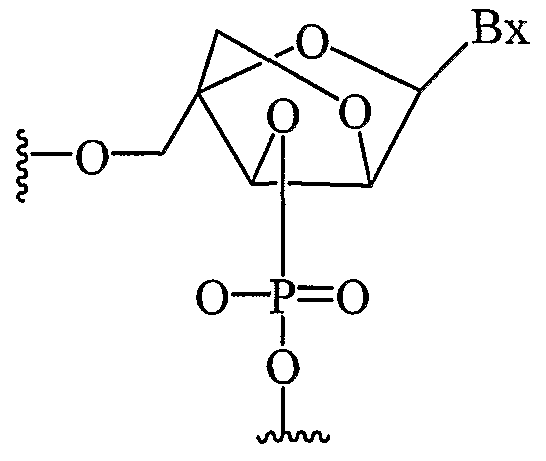


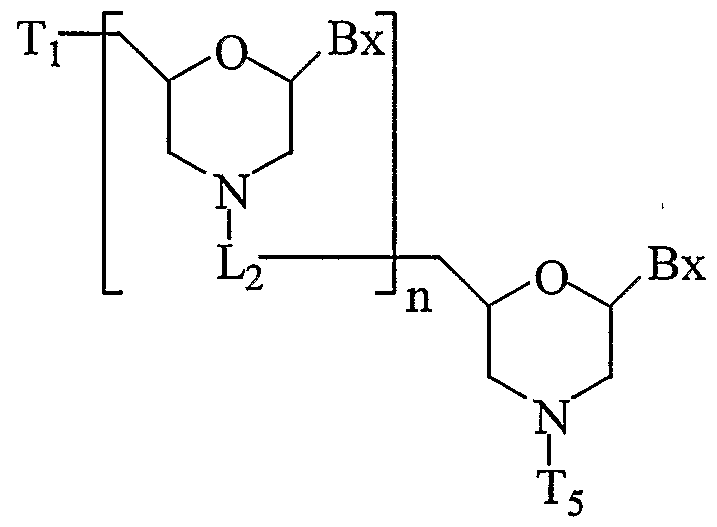


Claims

Priority Applications (4)
| Application Number | Priority Date | Filing Date | Title |
|---|---|---|---|
| EP04788694A EP1670810A4 (en) | 2003-09-09 | 2004-09-09 | HOLLOW OLIGOMER COMPOUNDS COMPRISING BICYCLIC SUGAR FRACTIONS LINKED TO THE END |
| JP2006526330A JP2007505138A (en) | 2003-09-09 | 2004-09-09 | Gapped oligomeric compounds having a bicyclic sugar moiety linked to the end |
| AU2004270741A AU2004270741B2 (en) | 2003-09-09 | 2004-09-09 | Gapped oligomeric compounds having linked bicyclic sugar moieties at the termini |
| CA002538174A CA2538174A1 (en) | 2003-09-09 | 2004-09-09 | Gapped oligomeric compounds having linked bicyclic sugar moieties at the termini |
Applications Claiming Priority (8)
| Application Number | Priority Date | Filing Date | Title |
|---|---|---|---|
| US50171903P | 2003-09-09 | 2003-09-09 | |
| US60/501,719 | 2003-09-09 | ||
| US56803904P | 2004-05-03 | 2004-05-03 | |
| US60/568,039 | 2004-05-03 | ||
| US56848904P | 2004-05-06 | 2004-05-06 | |
| US60/568,489 | 2004-05-06 | ||
| US10/872,106 | 2004-06-18 | ||
| US10/872,106 US20050053981A1 (en) | 2003-09-09 | 2004-06-18 | Gapped oligomeric compounds having linked bicyclic sugar moieties at the termini |
Publications (2)
| Publication Number | Publication Date |
|---|---|
| WO2005023825A2 true WO2005023825A2 (en) | 2005-03-17 |
| WO2005023825A3 WO2005023825A3 (en) | 2005-12-22 |
Family
ID=34229435
Family Applications (1)
| Application Number | Title | Priority Date | Filing Date |
|---|---|---|---|
| PCT/US2004/029650 Ceased WO2005023825A2 (en) | 2003-09-09 | 2004-09-09 | Gapped oligomeric compounds having linked bicyclic sugar moieties at the termini |
Country Status (6)
| Country | Link |
|---|---|
| US (2) | US20050053981A1 (en) |
| EP (1) | EP1670810A4 (en) |
| JP (1) | JP2007505138A (en) |
| AU (1) | AU2004270741B2 (en) |
| CA (1) | CA2538174A1 (en) |
| WO (1) | WO2005023825A2 (en) |
Cited By (36)
| Publication number | Priority date | Publication date | Assignee | Title |
|---|---|---|---|---|
| JP2010507579A (en) * | 2006-10-18 | 2010-03-11 | アイシス ファーマシューティカルズ, インコーポレーテッド | Antisense compound |
| US7919472B2 (en) | 2004-09-17 | 2011-04-05 | Isis Pharmaceuticals, Inc. | Enhanced antisense oligonucleotides |
| US8563528B2 (en) | 2009-07-21 | 2013-10-22 | Santaris Pharma A/S | Antisense oligomers targeting PCSK9 |
| WO2014043544A1 (en) | 2012-09-14 | 2014-03-20 | Rana Therapeutics, Inc. | Multimeric oligonucleotide compounds |
| WO2016055601A1 (en) | 2014-10-10 | 2016-04-14 | F. Hoffmann-La Roche Ag | Galnac phosphoramidites, nucleic acid conjugates thereof and their use |
| US9394333B2 (en) | 2008-12-02 | 2016-07-19 | Wave Life Sciences Japan | Method for the synthesis of phosphorus atom modified nucleic acids |
| US9598458B2 (en) | 2012-07-13 | 2017-03-21 | Wave Life Sciences Japan, Inc. | Asymmetric auxiliary group |
| US9605019B2 (en) | 2011-07-19 | 2017-03-28 | Wave Life Sciences Ltd. | Methods for the synthesis of functionalized nucleic acids |
| US9617547B2 (en) | 2012-07-13 | 2017-04-11 | Shin Nippon Biomedical Laboratories, Ltd. | Chiral nucleic acid adjuvant |
| EP2363481B1 (en) | 2006-05-05 | 2017-04-12 | Ionis Pharmaceuticals, Inc. | Compounds and methods for modulating gene expression |
| US9695418B2 (en) | 2012-10-11 | 2017-07-04 | Ionis Pharmaceuticals, Inc. | Oligomeric compounds comprising bicyclic nucleosides and uses thereof |
| US9744183B2 (en) | 2009-07-06 | 2017-08-29 | Wave Life Sciences Ltd. | Nucleic acid prodrugs and methods of use thereof |
| US9879265B2 (en) | 2013-06-27 | 2018-01-30 | Roche Innovation Center Copenhagen A/S | Oligonucleotide conjugates |
| US9914922B2 (en) | 2012-04-20 | 2018-03-13 | Ionis Pharmaceuticals, Inc. | Oligomeric compounds comprising bicyclic nucleotides and uses thereof |
| US9982257B2 (en) | 2012-07-13 | 2018-05-29 | Wave Life Sciences Ltd. | Chiral control |
| US10017764B2 (en) | 2011-02-08 | 2018-07-10 | Ionis Pharmaceuticals, Inc. | Oligomeric compounds comprising bicyclic nucleotides and uses thereof |
| US10144933B2 (en) | 2014-01-15 | 2018-12-04 | Shin Nippon Biomedical Laboratories, Ltd. | Chiral nucleic acid adjuvant having immunity induction activity, and immunity induction activator |
| US10149905B2 (en) | 2014-01-15 | 2018-12-11 | Shin Nippon Biomedical Laboratories, Ltd. | Chiral nucleic acid adjuvant having antitumor effect and antitumor agent |
| US10160969B2 (en) | 2014-01-16 | 2018-12-25 | Wave Life Sciences Ltd. | Chiral design |
| US10322173B2 (en) | 2014-01-15 | 2019-06-18 | Shin Nippon Biomedical Laboratories, Ltd. | Chiral nucleic acid adjuvant having anti-allergic activity, and anti-allergic agent |
| EP3533873A1 (en) | 2011-09-14 | 2019-09-04 | Translate Bio MA, Inc. | Multimeric oligonucleotide compounds |
| US10428019B2 (en) | 2010-09-24 | 2019-10-01 | Wave Life Sciences Ltd. | Chiral auxiliaries |
| US11633498B2 (en) | 2021-07-09 | 2023-04-25 | Dyne Therapeutics, Inc. | Muscle targeting complexes and uses thereof for treating myotonic dystrophy |
| US11679161B2 (en) | 2021-07-09 | 2023-06-20 | Dyne Therapeutics, Inc. | Muscle targeting complexes and uses thereof for treating facioscapulohumeral muscular dystrophy |
| US11732261B2 (en) | 2011-08-11 | 2023-08-22 | Ionis Pharmaceuticals, Inc. | Selective antisense compounds and uses thereof |
| US11787869B2 (en) | 2018-08-02 | 2023-10-17 | Dyne Therapeutics, Inc. | Methods of using muscle targeting complexes to deliver an oligonucleotide to a subject having facioscapulohumeral muscular dystrophy or a disease associated with muscle weakness |
| EP4271816A1 (en) | 2020-12-31 | 2023-11-08 | Dyne Therapeutics, Inc. | Muscle targeting complexes and uses thereof for treating myotonic dystrophy |
| WO2024026474A1 (en) | 2022-07-29 | 2024-02-01 | Regeneron Pharmaceuticals, Inc. | Compositions and methods for transferrin receptor (tfr)-mediated delivery to the brain and muscle |
| US11911484B2 (en) | 2018-08-02 | 2024-02-27 | Dyne Therapeutics, Inc. | Muscle targeting complexes and uses thereof for treating myotonic dystrophy |
| US11931421B2 (en) | 2022-04-15 | 2024-03-19 | Dyne Therapeutics, Inc. | Muscle targeting complexes and formulations for treating myotonic dystrophy |
| WO2024098002A1 (en) | 2022-11-04 | 2024-05-10 | Regeneron Pharmaceuticals, Inc. | Calcium voltage-gated channel auxiliary subunit gamma 1 (cacng1) binding proteins and cacng1-mediated delivery to skeletal muscle |
| WO2024107765A2 (en) | 2022-11-14 | 2024-05-23 | Regeneron Pharmaceuticals, Inc. | Compositions and methods for fibroblast growth factor receptor 3-mediated delivery to astrocytes |
| US12018087B2 (en) | 2018-08-02 | 2024-06-25 | Dyne Therapeutics, Inc. | Muscle-targeting complexes comprising an anti-transferrin receptor antibody linked to an oligonucleotide and methods of delivering oligonucleotide to a subject |
| US12097263B2 (en) | 2018-08-02 | 2024-09-24 | Dyne Therapeutics, Inc. | Muscle targeting complexes and uses thereof for treating myotonic dystrophy |
| US12102687B2 (en) | 2021-07-09 | 2024-10-01 | Dyne Therapeutics, Inc. | Muscle targeting complexes and uses thereof for treating myotonic dystrophy |
| US12370264B1 (en) | 2018-08-02 | 2025-07-29 | Dyne Therapeutics, Inc. | Complexes comprising an anti-transferrin receptor antibody linked to an oligonucleotide and method of delivering oligonucleotide to a subject |
Families Citing this family (34)
| Publication number | Priority date | Publication date | Assignee | Title |
|---|---|---|---|---|
| US7399853B2 (en) * | 2003-04-28 | 2008-07-15 | Isis Pharmaceuticals | Modulation of glucagon receptor expression |
| EP1687410A4 (en) * | 2003-10-07 | 2008-04-09 | Isis Pharmaceuticals Inc | ANTISENSE OLIGONUCLEOTIDES OPTIMIZED TO TARGET THE KIDNEY |
| US20050191653A1 (en) * | 2003-11-03 | 2005-09-01 | Freier Susan M. | Modulation of SGLT2 expression |
| WO2007035771A2 (en) * | 2005-09-19 | 2007-03-29 | Johnson & Johnson Pharmaceutical Research & Development, L.L.C. | Modulation of glucagon receptor expression |
| BRPI0616370A2 (en) * | 2005-09-19 | 2011-06-14 | Johnson & Johnson Pharmaceutical Res & Dev L L C | modulation of glucocorticoid receptor expression |
| JP5467999B2 (en) * | 2007-06-22 | 2014-04-09 | キージーン・エン・フェー | Target nucleotide exchange using improved modified oligonucleotides |
| DK2548962T3 (en) | 2007-09-19 | 2016-04-11 | Applied Biosystems Llc | Sirna sequence-independent modification formats to reduce off-target phenotype effects in RNAI and stabilized forms thereof |
| DK2285819T3 (en) * | 2008-04-04 | 2013-12-02 | Isis Pharmaceuticals Inc | OLIGOMER COMPOUNDS INCLUDING NEUTRAL BONDED, TERMINAL BICYCLIC NUCLEOSIDES |
| EP2310504A1 (en) * | 2008-07-03 | 2011-04-20 | Santaris Pharma A/S | Rna antagonist compounds for the inhibition of expression of mitochondrial glycerol-3-phosphate acyltransferase 1 (mtgpat1) |
| US8255305B2 (en) * | 2009-09-15 | 2012-08-28 | Chicago Mercantile Exchange Inc. | Ratio spreads for contracts of different sizes in implied market trading |
| ES2796556T3 (en) | 2011-09-20 | 2020-11-27 | Ionis Pharmaceuticals Inc | Antisense modulation of GCGR expression |
| JP2015501155A (en) | 2011-10-25 | 2015-01-15 | アイシス ファーマシューティカルズ, インコーポレーテッド | Antisense regulation of GCCR expression |
| US10260089B2 (en) | 2012-10-29 | 2019-04-16 | The Research Foundation Of The State University Of New York | Compositions and methods for recognition of RNA using triple helical peptide nucleic acids |
| GB201410693D0 (en) | 2014-06-16 | 2014-07-30 | Univ Southampton | Splicing modulation |
| CN107109411B (en) | 2014-10-03 | 2022-07-01 | 冷泉港实验室 | Targeted increase in nuclear gene export |
| EP3254104B1 (en) | 2015-02-04 | 2021-08-25 | Bristol-Myers Squibb Company | Methods of selecting therapeutic molecules |
| AU2016215155A1 (en) | 2015-02-04 | 2017-08-17 | F. Hoffmann-La Roche Ag | Tau antisense oligomers and uses thereof |
| WO2016137923A1 (en) * | 2015-02-23 | 2016-09-01 | Ionis Pharmaceuticals, Inc. | Method for solution phase detritylation of oligomeric compounds |
| EP3359685B1 (en) | 2015-10-09 | 2026-01-28 | University Of Southampton | Modulation of gene expression for deregulated protein expression |
| AU2016355178B9 (en) | 2015-11-19 | 2019-05-30 | Massachusetts Institute Of Technology | Lymphocyte antigen CD5-like (CD5L)-interleukin 12B (p40) heterodimers in immunity |
| EP3933041B1 (en) | 2015-12-14 | 2024-01-31 | Cold Spring Harbor Laboratory | Antisense oligomers for treatment of autosomal dominant retardation |
| US11096956B2 (en) | 2015-12-14 | 2021-08-24 | Stoke Therapeutics, Inc. | Antisense oligomers and uses thereof |
| WO2017174610A1 (en) * | 2016-04-05 | 2017-10-12 | Universite De Strasbourg | Intra-droplet surface engineering to capture a molecular target |
| SG10201913477UA (en) | 2016-04-29 | 2020-02-27 | Univ Nanyang Tech | G-quadruplex-containing antisense oligonucleotides |
| US20200216845A1 (en) * | 2017-01-13 | 2020-07-09 | Roche Innovation Center Copenhagen A/S | Antisense oligonucleotides for modulating rela expression |
| WO2018195486A1 (en) | 2017-04-21 | 2018-10-25 | The Broad Institute, Inc. | Targeted delivery to beta cells |
| SG11202001590RA (en) | 2017-08-25 | 2020-03-30 | Stoke Therapeutics Inc | Antisense oligomers for treatment of conditions and diseases |
| CA3099522C (en) * | 2017-09-19 | 2024-10-08 | The Governors Of The University Of Alberta | Gapmers and methods of using the same for treatment of muscular dystrophy |
| BR112020013994A2 (en) | 2018-01-12 | 2020-12-08 | Bristol-Myers Squibb Company | ANTISENSE OLIGONUCLEOTIDS THAT DRIVE ALPHA-SYNUCLEIN AND THEIR USES |
| EA202091693A1 (en) | 2018-01-12 | 2021-04-14 | Бристол-Маерс Сквибб Компани | ANTI-SENSE OLIGONUCLEOTIDES TARGETINGLY AFFECTING ALPHA-SYNUCLEINE AND THEIR APPLICATIONS |
| US12060558B2 (en) | 2018-05-04 | 2024-08-13 | Stoke Therapeutics, Inc. | Methods and compositions for treatment of cholesteryl ester storage disease |
| KR20210134003A (en) | 2019-02-27 | 2021-11-08 | 스톡 테라퓨틱스, 인크. | Antisense oligomers for the treatment of conditions and diseases |
| US12241830B2 (en) | 2019-12-06 | 2025-03-04 | Broad Institute, Inc. | Living biosensors |
| BR112022022889A2 (en) | 2020-05-11 | 2023-04-04 | Stoke Therapeutics Inc | OPA1 ANTI-SENSE OLIGOMERS FOR TREATMENT OF CONDITIONS AND DISEASES |
Family Cites Families (188)
| Publication number | Priority date | Publication date | Assignee | Title |
|---|---|---|---|---|
| US3687808A (en) | 1969-08-14 | 1972-08-29 | Univ Leland Stanford Junior | Synthetic polynucleotides |
| US4469863A (en) | 1980-11-12 | 1984-09-04 | Ts O Paul O P | Nonionic nucleic acid alkyl and aryl phosphonates and processes for manufacture and use thereof |
| US5023243A (en) * | 1981-10-23 | 1991-06-11 | Molecular Biosystems, Inc. | Oligonucleotide therapeutic agent and method of making same |
| US4476301A (en) | 1982-04-29 | 1984-10-09 | Centre National De La Recherche Scientifique | Oligonucleotides, a process for preparing the same and their application as mediators of the action of interferon |
| JPS5927900A (en) | 1982-08-09 | 1984-02-14 | Wakunaga Seiyaku Kk | Oligonucleotide derivative and its preparation |
| FR2540122B1 (en) * | 1983-01-27 | 1985-11-29 | Centre Nat Rech Scient | NOVEL COMPOUNDS COMPRISING A SEQUENCE OF OLIGONUCLEOTIDE LINKED TO AN INTERCALATION AGENT, THEIR SYNTHESIS PROCESS AND THEIR APPLICATION |
| US4605735A (en) | 1983-02-14 | 1986-08-12 | Wakunaga Seiyaku Kabushiki Kaisha | Oligonucleotide derivatives |
| US4948882A (en) | 1983-02-22 | 1990-08-14 | Syngene, Inc. | Single-stranded labelled oligonucleotides, reactive monomers and methods of synthesis |
| US4824941A (en) * | 1983-03-10 | 1989-04-25 | Julian Gordon | Specific antibody to the native form of 2'5'-oligonucleotides, the method of preparation and the use as reagents in immunoassays or for binding 2'5'-oligonucleotides in biological systems |
| DE3329892A1 (en) * | 1983-08-18 | 1985-03-07 | Köster, Hubert, Prof. Dr., 2000 Hamburg | METHOD FOR PRODUCING OLIGONUCLEOTIDES |
| USRE34069E (en) | 1983-08-18 | 1992-09-15 | Biosyntech Gmbh | Process for the preparation of oligonucleotides |
| US4587044A (en) * | 1983-09-01 | 1986-05-06 | The Johns Hopkins University | Linkage of proteins to nucleic acids |
| US5118802A (en) * | 1983-12-20 | 1992-06-02 | California Institute Of Technology | DNA-reporter conjugates linked via the 2' or 5'-primary amino group of the 5'-terminal nucleoside |
| US5118800A (en) * | 1983-12-20 | 1992-06-02 | California Institute Of Technology | Oligonucleotides possessing a primary amino group in the terminal nucleotide |
| US5550111A (en) | 1984-07-11 | 1996-08-27 | Temple University-Of The Commonwealth System Of Higher Education | Dual action 2',5'-oligoadenylate antiviral derivatives and uses thereof |
| FR2567892B1 (en) * | 1984-07-19 | 1989-02-17 | Centre Nat Rech Scient | NOVEL OLIGONUCLEOTIDES, THEIR PREPARATION PROCESS AND THEIR APPLICATIONS AS MEDIATORS IN DEVELOPING THE EFFECTS OF INTERFERONS |
| US5430136A (en) | 1984-10-16 | 1995-07-04 | Chiron Corporation | Oligonucleotides having selectably cleavable and/or abasic sites |
| US5367066A (en) | 1984-10-16 | 1994-11-22 | Chiron Corporation | Oligonucleotides with selectably cleavable and/or abasic sites |
| US5258506A (en) | 1984-10-16 | 1993-11-02 | Chiron Corporation | Photolabile reagents for incorporation into oligonucleotide chains |
| US4828979A (en) * | 1984-11-08 | 1989-05-09 | Life Technologies, Inc. | Nucleotide analogs for nucleic acid labeling and detection |
| FR2575751B1 (en) * | 1985-01-08 | 1987-04-03 | Pasteur Institut | NOVEL ADENOSINE DERIVATIVE NUCLEOSIDES, THEIR PREPARATION AND THEIR BIOLOGICAL APPLICATIONS |
| US5405938A (en) * | 1989-12-20 | 1995-04-11 | Anti-Gene Development Group | Sequence-specific binding polymers for duplex nucleic acids |
| US5166315A (en) | 1989-12-20 | 1992-11-24 | Anti-Gene Development Group | Sequence-specific binding polymers for duplex nucleic acids |
| US5185444A (en) * | 1985-03-15 | 1993-02-09 | Anti-Gene Deveopment Group | Uncharged morpolino-based polymers having phosphorous containing chiral intersubunit linkages |
| US5034506A (en) * | 1985-03-15 | 1991-07-23 | Anti-Gene Development Group | Uncharged morpholino-based polymers having achiral intersubunit linkages |
| US5235033A (en) | 1985-03-15 | 1993-08-10 | Anti-Gene Development Group | Alpha-morpholino ribonucleoside derivatives and polymers thereof |
| US4762779A (en) | 1985-06-13 | 1988-08-09 | Amgen Inc. | Compositions and methods for functionalizing nucleic acids |
| US5317098A (en) * | 1986-03-17 | 1994-05-31 | Hiroaki Shizuya | Non-radioisotope tagging of fragments |
| JPS638396A (en) | 1986-06-30 | 1988-01-14 | Wakunaga Pharmaceut Co Ltd | Poly-labeled oligonucleotide derivative |
| DE3788914T2 (en) * | 1986-09-08 | 1994-08-25 | Ajinomoto Kk | Compounds for cleaving RNA at a specific position, oligomers used in the preparation of these compounds and starting materials for the synthesis of these oligomers. |
| US5264423A (en) | 1987-03-25 | 1993-11-23 | The United States Of America As Represented By The Department Of Health And Human Services | Inhibitors for replication of retroviruses and for the expression of oncogene products |
| US5276019A (en) * | 1987-03-25 | 1994-01-04 | The United States Of America As Represented By The Department Of Health And Human Services | Inhibitors for replication of retroviruses and for the expression of oncogene products |
| US4904582A (en) * | 1987-06-11 | 1990-02-27 | Synthetic Genetics | Novel amphiphilic nucleic acid conjugates |
| AU598946B2 (en) | 1987-06-24 | 1990-07-05 | Howard Florey Institute Of Experimental Physiology And Medicine | Nucleoside derivatives |
| US5585481A (en) | 1987-09-21 | 1996-12-17 | Gen-Probe Incorporated | Linking reagents for nucleotide probes |
| US4924624A (en) * | 1987-10-22 | 1990-05-15 | Temple University-Of The Commonwealth System Of Higher Education | 2,',5'-phosphorothioate oligoadenylates and plant antiviral uses thereof |
| US5188897A (en) * | 1987-10-22 | 1993-02-23 | Temple University Of The Commonwealth System Of Higher Education | Encapsulated 2',5'-phosphorothioate oligoadenylates |
| US5525465A (en) * | 1987-10-28 | 1996-06-11 | Howard Florey Institute Of Experimental Physiology And Medicine | Oligonucleotide-polyamide conjugates and methods of production and applications of the same |
| DE3738460A1 (en) * | 1987-11-12 | 1989-05-24 | Max Planck Gesellschaft | MODIFIED OLIGONUCLEOTIDS |
| US5403711A (en) * | 1987-11-30 | 1995-04-04 | University Of Iowa Research Foundation | Nucleic acid hybridization and amplification method for detection of specific sequences in which a complementary labeled nucleic acid probe is cleaved |
| ATE151467T1 (en) * | 1987-11-30 | 1997-04-15 | Univ Iowa Res Found | DNA MOLECULES STABILIZED BY MODIFICATIONS TO THE 3'-TERMINAL PHOSPHODIESTER BOND, THEIR USE AS NUCLEIC ACID PROBE AND AS THERAPEUTIC AGENTS FOR INHIBITING THE EXPRESSION OF SPECIFIC TARGET GENES |
| US5082830A (en) * | 1988-02-26 | 1992-01-21 | Enzo Biochem, Inc. | End labeled nucleotide probe |
| WO1989009221A1 (en) * | 1988-03-25 | 1989-10-05 | University Of Virginia Alumni Patents Foundation | Oligonucleotide n-alkylphosphoramidates |
| US5278302A (en) * | 1988-05-26 | 1994-01-11 | University Patents, Inc. | Polynucleotide phosphorodithioates |
| US5109124A (en) * | 1988-06-01 | 1992-04-28 | Biogen, Inc. | Nucleic acid probe linked to a label having a terminal cysteine |
| US5216141A (en) * | 1988-06-06 | 1993-06-01 | Benner Steven A | Oligonucleotide analogs containing sulfur linkages |
| US5175273A (en) | 1988-07-01 | 1992-12-29 | Genentech, Inc. | Nucleic acid intercalating agents |
| US5262536A (en) | 1988-09-15 | 1993-11-16 | E. I. Du Pont De Nemours And Company | Reagents for the preparation of 5'-tagged oligonucleotides |
| US5194599A (en) | 1988-09-23 | 1993-03-16 | Gilead Sciences, Inc. | Hydrogen phosphonodithioate compositions |
| US5512439A (en) * | 1988-11-21 | 1996-04-30 | Dynal As | Oligonucleotide-linked magnetic particles and uses thereof |
| US5599923A (en) * | 1989-03-06 | 1997-02-04 | Board Of Regents, University Of Tx | Texaphyrin metal complexes having improved functionalization |
| US5457183A (en) | 1989-03-06 | 1995-10-10 | Board Of Regents, The University Of Texas System | Hydroxylated texaphyrins |
| US5391723A (en) * | 1989-05-31 | 1995-02-21 | Neorx Corporation | Oligonucleotide conjugates |
| US5256775A (en) | 1989-06-05 | 1993-10-26 | Gilead Sciences, Inc. | Exonuclease-resistant oligonucleotides |
| US4958013A (en) | 1989-06-06 | 1990-09-18 | Northwestern University | Cholesteryl modified oligonucleotides |
| US5451463A (en) | 1989-08-28 | 1995-09-19 | Clontech Laboratories, Inc. | Non-nucleoside 1,3-diol reagents for labeling synthetic oligonucleotides |
| US5134066A (en) * | 1989-08-29 | 1992-07-28 | Monsanto Company | Improved probes using nucleosides containing 3-dezauracil analogs |
| US5254469A (en) | 1989-09-12 | 1993-10-19 | Eastman Kodak Company | Oligonucleotide-enzyme conjugate that can be used as a probe in hybridization assays and polymerase chain reaction procedures |
| US5591722A (en) * | 1989-09-15 | 1997-01-07 | Southern Research Institute | 2'-deoxy-4'-thioribonucleosides and their antiviral activity |
| US5399676A (en) * | 1989-10-23 | 1995-03-21 | Gilead Sciences | Oligonucleotides with inverted polarity |
| US5721218A (en) * | 1989-10-23 | 1998-02-24 | Gilead Sciences, Inc. | Oligonucleotides with inverted polarity |
| US5264562A (en) | 1989-10-24 | 1993-11-23 | Gilead Sciences, Inc. | Oligonucleotide analogs with novel linkages |
| US5264564A (en) | 1989-10-24 | 1993-11-23 | Gilead Sciences | Oligonucleotide analogs with novel linkages |
| ATE269870T1 (en) | 1989-10-24 | 2004-07-15 | Isis Pharmaceuticals Inc | 2'-MODIFIED OLIGONUCLEOTIDES |
| US5292873A (en) * | 1989-11-29 | 1994-03-08 | The Research Foundation Of State University Of New York | Nucleic acids labeled with naphthoquinone probe |
| US5177198A (en) | 1989-11-30 | 1993-01-05 | University Of N.C. At Chapel Hill | Process for preparing oligoribonucleoside and oligodeoxyribonucleoside boranophosphates |
| US5130302A (en) * | 1989-12-20 | 1992-07-14 | Boron Bilogicals, Inc. | Boronated nucleoside, nucleotide and oligonucleotide compounds, compositions and methods for using same |
| US5486603A (en) * | 1990-01-08 | 1996-01-23 | Gilead Sciences, Inc. | Oligonucleotide having enhanced binding affinity |
| US5623065A (en) * | 1990-08-13 | 1997-04-22 | Isis Pharmaceuticals, Inc. | Gapped 2' modified oligonucleotides |
| US5670633A (en) | 1990-01-11 | 1997-09-23 | Isis Pharmaceuticals, Inc. | Sugar modified oligonucleotides that detect and modulate gene expression |
| US5459255A (en) | 1990-01-11 | 1995-10-17 | Isis Pharmaceuticals, Inc. | N-2 substituted purines |
| US5587361A (en) | 1991-10-15 | 1996-12-24 | Isis Pharmaceuticals, Inc. | Oligonucleotides having phosphorothioate linkages of high chiral purity |
| US5587470A (en) * | 1990-01-11 | 1996-12-24 | Isis Pharmaceuticals, Inc. | 3-deazapurines |
| US5578718A (en) | 1990-01-11 | 1996-11-26 | Isis Pharmaceuticals, Inc. | Thiol-derivatized nucleosides |
| US5681941A (en) | 1990-01-11 | 1997-10-28 | Isis Pharmaceuticals, Inc. | Substituted purines and oligonucleotide cross-linking |
| US5646265A (en) | 1990-01-11 | 1997-07-08 | Isis Pharmceuticals, Inc. | Process for the preparation of 2'-O-alkyl purine phosphoramidites |
| US5220007A (en) * | 1990-02-15 | 1993-06-15 | The Worcester Foundation For Experimental Biology | Method of site-specific alteration of RNA and production of encoded polypeptides |
| US5149797A (en) | 1990-02-15 | 1992-09-22 | The Worcester Foundation For Experimental Biology | Method of site-specific alteration of rna and production of encoded polypeptides |
| AU7579991A (en) * | 1990-02-20 | 1991-09-18 | Gilead Sciences, Inc. | Pseudonucleosides and pseudonucleotides and their polymers |
| US5214136A (en) * | 1990-02-20 | 1993-05-25 | Gilead Sciences, Inc. | Anthraquinone-derivatives oligonucleotides |
| US5321131A (en) * | 1990-03-08 | 1994-06-14 | Hybridon, Inc. | Site-specific functionalization of oligodeoxynucleotides for non-radioactive labelling |
| US5470967A (en) | 1990-04-10 | 1995-11-28 | The Dupont Merck Pharmaceutical Company | Oligonucleotide analogs with sulfamate linkages |
| GB9009980D0 (en) | 1990-05-03 | 1990-06-27 | Amersham Int Plc | Phosphoramidite derivatives,their preparation and the use thereof in the incorporation of reporter groups on synthetic oligonucleotides |
| ES2116977T3 (en) * | 1990-05-11 | 1998-08-01 | Microprobe Corp | SOLID SUPPORTS FOR NUCLEIC ACID HYBRIDIZATION TESTS AND METHODS TO IMMOBILIZE OLIGONUCLEOTIDES IN A COVALENT WAY. |
| US5618704A (en) * | 1990-07-27 | 1997-04-08 | Isis Pharmacueticals, Inc. | Backbone-modified oligonucleotide analogs and preparation thereof through radical coupling |
| US5623070A (en) * | 1990-07-27 | 1997-04-22 | Isis Pharmaceuticals, Inc. | Heteroatomic oligonucleoside linkages |
| US5602240A (en) * | 1990-07-27 | 1997-02-11 | Ciba Geigy Ag. | Backbone modified oligonucleotide analogs |
| US5677437A (en) | 1990-07-27 | 1997-10-14 | Isis Pharmaceuticals, Inc. | Heteroatomic oligonucleoside linkages |
| US5688941A (en) | 1990-07-27 | 1997-11-18 | Isis Pharmaceuticals, Inc. | Methods of making conjugated 4' desmethyl nucleoside analog compounds |
| US5541307A (en) | 1990-07-27 | 1996-07-30 | Isis Pharmaceuticals, Inc. | Backbone modified oligonucleotide analogs and solid phase synthesis thereof |
| US5218105A (en) * | 1990-07-27 | 1993-06-08 | Isis Pharmaceuticals | Polyamine conjugated oligonucleotides |
| BR9106702A (en) * | 1990-07-27 | 1993-06-08 | Isis Pharmaceuticals Inc | ANALOG OF OLIGONUCLEOTIDEOS AND PROCESSES TO MODULATE THE PRODUCTION OF A PROTEIN BY AN ORGANISM AND TO TREAT AN ORGANISM |
| US5608046A (en) * | 1990-07-27 | 1997-03-04 | Isis Pharmaceuticals, Inc. | Conjugated 4'-desmethyl nucleoside analog compounds |
| US5610289A (en) * | 1990-07-27 | 1997-03-11 | Isis Pharmaceuticals, Inc. | Backbone modified oligonucleotide analogues |
| US5138045A (en) | 1990-07-27 | 1992-08-11 | Isis Pharmaceuticals | Polyamine conjugated oligonucleotides |
| US5489677A (en) * | 1990-07-27 | 1996-02-06 | Isis Pharmaceuticals, Inc. | Oligonucleoside linkages containing adjacent oxygen and nitrogen atoms |
| ES2083593T3 (en) | 1990-08-03 | 1996-04-16 | Sterling Winthrop Inc | COMPOUNDS AND METHODS TO INHIBIT THE EXPRESSION OF GENES. |
| US5245022A (en) | 1990-08-03 | 1993-09-14 | Sterling Drug, Inc. | Exonuclease resistant terminally substituted oligonucleotides |
| US5177196A (en) * | 1990-08-16 | 1993-01-05 | Microprobe Corporation | Oligo (α-arabinofuranosyl nucleotides) and α-arabinofuranosyl precursors thereof |
| US5512667A (en) * | 1990-08-28 | 1996-04-30 | Reed; Michael W. | Trifunctional intermediates for preparing 3'-tailed oligonucleotides |
| US5214134A (en) * | 1990-09-12 | 1993-05-25 | Sterling Winthrop Inc. | Process of linking nucleosides with a siloxane bridge |
| US5561225A (en) | 1990-09-19 | 1996-10-01 | Southern Research Institute | Polynucleotide analogs containing sulfonate and sulfonamide internucleoside linkages |
| CA2092002A1 (en) * | 1990-09-20 | 1992-03-21 | Mark Matteucci | Modified internucleoside linkages |
| US5432272A (en) * | 1990-10-09 | 1995-07-11 | Benner; Steven A. | Method for incorporating into a DNA or RNA oligonucleotide using nucleotides bearing heterocyclic bases |
| WO1992008728A1 (en) * | 1990-11-08 | 1992-05-29 | Hybridon, Inc. | Incorporation of multiple reporter groups on synthetic oligonucleotides |
| US5672697A (en) | 1991-02-08 | 1997-09-30 | Gilead Sciences, Inc. | Nucleoside 5'-methylene phosphonates |
| US5539082A (en) * | 1993-04-26 | 1996-07-23 | Nielsen; Peter E. | Peptide nucleic acids |
| US5714331A (en) * | 1991-05-24 | 1998-02-03 | Buchardt, Deceased; Ole | Peptide nucleic acids having enhanced binding affinity, sequence specificity and solubility |
| US5719262A (en) * | 1993-11-22 | 1998-02-17 | Buchardt, Deceased; Ole | Peptide nucleic acids having amino acid side chains |
| US5371241A (en) | 1991-07-19 | 1994-12-06 | Pharmacia P-L Biochemicals Inc. | Fluorescein labelled phosphoramidites |
| US5571799A (en) | 1991-08-12 | 1996-11-05 | Basco, Ltd. | (2'-5') oligoadenylate analogues useful as inhibitors of host-v5.-graft response |
| EP0538194B1 (en) * | 1991-10-17 | 1997-06-04 | Novartis AG | Bicyclic nucleosides, oligonucleotides, their method of preparation and intermediates therein |
| US5594121A (en) * | 1991-11-07 | 1997-01-14 | Gilead Sciences, Inc. | Enhanced triple-helix and double-helix formation with oligomers containing modified purines |
| TW393513B (en) | 1991-11-26 | 2000-06-11 | Isis Pharmaceuticals Inc | Enhanced triple-helix and double-helix formation with oligomers containing modified pyrimidines |
| AU3222793A (en) | 1991-11-26 | 1993-06-28 | Gilead Sciences, Inc. | Enhanced triple-helix and double-helix formation with oligomers containing modified pyrimidines |
| US5484908A (en) * | 1991-11-26 | 1996-01-16 | Gilead Sciences, Inc. | Oligonucleotides containing 5-propynyl pyrimidines |
| US5792608A (en) | 1991-12-12 | 1998-08-11 | Gilead Sciences, Inc. | Nuclease stable and binding competent oligomers and methods for their use |
| US5359044A (en) | 1991-12-13 | 1994-10-25 | Isis Pharmaceuticals | Cyclobutyl oligonucleotide surrogates |
| US5700922A (en) | 1991-12-24 | 1997-12-23 | Isis Pharmaceuticals, Inc. | PNA-DNA-PNA chimeric macromolecules |
| US5595726A (en) * | 1992-01-21 | 1997-01-21 | Pharmacyclics, Inc. | Chromophore probe for detection of nucleic acid |
| US5565552A (en) | 1992-01-21 | 1996-10-15 | Pharmacyclics, Inc. | Method of expanded porphyrin-oligonucleotide conjugate synthesis |
| FR2687679B1 (en) * | 1992-02-05 | 1994-10-28 | Centre Nat Rech Scient | OLIGOTHIONUCLEOTIDES. |
| US5633360A (en) * | 1992-04-14 | 1997-05-27 | Gilead Sciences, Inc. | Oligonucleotide analogs capable of passive cell membrane permeation |
| US5434257A (en) * | 1992-06-01 | 1995-07-18 | Gilead Sciences, Inc. | Binding compentent oligomers containing unsaturated 3',5' and 2',5' linkages |
| EP0577558A2 (en) | 1992-07-01 | 1994-01-05 | Ciba-Geigy Ag | Carbocyclic nucleosides having bicyclic rings, oligonucleotides therefrom, process for their preparation, their use and intermediates |
| US5272250A (en) | 1992-07-10 | 1993-12-21 | Spielvogel Bernard F | Boronated phosphoramidate compounds |
| US5652355A (en) | 1992-07-23 | 1997-07-29 | Worcester Foundation For Experimental Biology | Hybrid oligonucleotide phosphorothioates |
| US5985558A (en) | 1997-04-14 | 1999-11-16 | Isis Pharmaceuticals Inc. | Antisense oligonucleotide compositions and methods for the inibition of c-Jun and c-Fos |
| US5872242A (en) * | 1992-10-05 | 1999-02-16 | Isis Pharmaceuticals, Inc. | Antisense oligonucleotide inhibition of ras |
| US5574142A (en) | 1992-12-15 | 1996-11-12 | Microprobe Corporation | Peptide linkers for improved oligonucleotide delivery |
| US5476925A (en) | 1993-02-01 | 1995-12-19 | Northwestern University | Oligodeoxyribonucleotides including 3'-aminonucleoside-phosphoramidate linkages and terminal 3'-amino groups |
| GB9304618D0 (en) | 1993-03-06 | 1993-04-21 | Ciba Geigy Ag | Chemical compounds |
| AU6449394A (en) | 1993-03-30 | 1994-10-24 | Sterling Winthrop Inc. | Acyclic nucleoside analogs and oligonucleotide sequences containing them |
| CA2159629A1 (en) | 1993-03-31 | 1994-10-13 | Sanofi | Oligonucleotides with amide linkages replacing phosphodiester linkages |
| DE4311944A1 (en) | 1993-04-10 | 1994-10-13 | Degussa | Coated sodium percarbonate particles, process for their preparation and detergent, cleaning and bleaching compositions containing them |
| DE4317189A1 (en) * | 1993-05-22 | 1994-11-24 | Huels Chemische Werke Ag | Molten, aliphatic dicarboxylic acids |
| US5614621A (en) * | 1993-07-29 | 1997-03-25 | Isis Pharmaceuticals, Inc. | Process for preparing oligonucleotides using silyl-containing diamino phosphorous reagents |
| US5502177A (en) * | 1993-09-17 | 1996-03-26 | Gilead Sciences, Inc. | Pyrimidine derivatives for labeled binding partners |
| US5801154A (en) | 1993-10-18 | 1998-09-01 | Isis Pharmaceuticals, Inc. | Antisense oligonucleotide modulation of multidrug resistance-associated protein |
| US5457187A (en) | 1993-12-08 | 1995-10-10 | Board Of Regents University Of Nebraska | Oligonucleotides containing 5-fluorouracil |
| US5446137B1 (en) | 1993-12-09 | 1998-10-06 | Behringwerke Ag | Oligonucleotides containing 4'-substituted nucleotides |
| EP0733059B1 (en) | 1993-12-09 | 2000-09-13 | Thomas Jefferson University | Compounds and methods for site-directed mutations in eukaryotic cells |
| US5519134A (en) * | 1994-01-11 | 1996-05-21 | Isis Pharmaceuticals, Inc. | Pyrrolidine-containing monomers and oligomers |
| US5596091A (en) * | 1994-03-18 | 1997-01-21 | The Regents Of The University Of California | Antisense oligonucleotides comprising 5-aminoalkyl pyrimidine nucleotides |
| US5627053A (en) * | 1994-03-29 | 1997-05-06 | Ribozyme Pharmaceuticals, Inc. | 2'deoxy-2'-alkylnucleotide containing nucleic acid |
| US5625050A (en) * | 1994-03-31 | 1997-04-29 | Amgen Inc. | Modified oligonucleotides and intermediates useful in nucleic acid therapeutics |
| US5646269A (en) | 1994-04-28 | 1997-07-08 | Gilead Sciences, Inc. | Method for oligonucleotide analog synthesis |
| US5525711A (en) * | 1994-05-18 | 1996-06-11 | The United States Of America As Represented By The Secretary Of The Department Of Health And Human Services | Pteridine nucleotide analogs as fluorescent DNA probes |
| US5597696A (en) * | 1994-07-18 | 1997-01-28 | Becton Dickinson And Company | Covalent cyanine dye oligonucleotide conjugates |
| US5580731A (en) * | 1994-08-25 | 1996-12-03 | Chiron Corporation | N-4 modified pyrimidine deoxynucleotides and oligonucleotide probes synthesized therewith |
| US5597909A (en) * | 1994-08-25 | 1997-01-28 | Chiron Corporation | Polynucleotide reagents containing modified deoxyribose moieties, and associated methods of synthesis and use |
| US5792747A (en) | 1995-01-24 | 1998-08-11 | The Administrators Of The Tulane Educational Fund | Highly potent agonists of growth hormone releasing hormone |
| ATE206131T1 (en) * | 1995-03-13 | 2001-10-15 | Aventis Pharma Gmbh | PHOSPHONOMONOESTERNUCLIC ACIDS, METHOD FOR THEIR PRODUCTION AND THEIR USE |
| US5652356A (en) | 1995-08-17 | 1997-07-29 | Hybridon, Inc. | Inverted chimeric and hybrid oligonucleotides |
| US5705621A (en) * | 1995-11-17 | 1998-01-06 | Isis Pharmaceuticals, Inc. | Oligomeric phosphite, phosphodiester, Phosphorothioate and phosphorodithioate compounds and intermediates for preparing same |
| CA2255673C (en) * | 1996-05-17 | 2000-04-04 | Pioneer Hi-Bred International, Inc. | Promoter elements conferring root-preferred gene expression |
| US5898031A (en) * | 1996-06-06 | 1999-04-27 | Isis Pharmaceuticals, Inc. | Oligoribonucleotides for cleaving RNA |
| ES2192672T3 (en) * | 1996-11-18 | 2003-10-16 | Takeshi Imanishi | NEW ANALOGS OF NUCLEOTIDES. |
| US5760209A (en) * | 1997-03-03 | 1998-06-02 | Isis Pharmaceuticals, Inc. | Protecting group for synthesizing oligonucleotide analogs |
| JP3756313B2 (en) | 1997-03-07 | 2006-03-15 | 武 今西 | Novel bicyclonucleosides and oligonucleotide analogues |
| US5963588A (en) | 1997-03-21 | 1999-10-05 | Motorola, Inc. | Apparatus for modulating/demodulating signals |
| US6794499B2 (en) | 1997-09-12 | 2004-09-21 | Exiqon A/S | Oligonucleotide analogues |
| AU9063398A (en) * | 1997-09-12 | 1999-04-05 | Exiqon A/S | Oligonucleotide analogues |
| US6028183A (en) * | 1997-11-07 | 2000-02-22 | Gilead Sciences, Inc. | Pyrimidine derivatives and oligonucleotides containing same |
| US6007992A (en) | 1997-11-10 | 1999-12-28 | Gilead Sciences, Inc. | Pyrimidine derivatives for labeled binding partners |
| US6020475A (en) * | 1998-02-10 | 2000-02-01 | Isis Pharmeuticals, Inc. | Process for the synthesis of oligomeric compounds |
| US6238921B1 (en) * | 1998-03-26 | 2001-05-29 | Isis Pharmaceuticals, Inc. | Antisense oligonucleotide modulation of human mdm2 expression |
| US20030203862A1 (en) | 1998-03-26 | 2003-10-30 | Miraglia Loren J. | Antisense modulation of MDM2 expression |
| US6326478B1 (en) | 1998-07-08 | 2001-12-04 | Isis Pharmaceuticals, Inc. | Process for the synthesis of oligomeric compounds |
| US6228642B1 (en) * | 1998-10-05 | 2001-05-08 | Isis Pharmaceuticals, Inc. | Antisense oligonucleotide modulation of tumor necrosis factor-(α) (TNF-α) expression |
| US6080580A (en) * | 1998-10-05 | 2000-06-27 | Isis Pharmaceuticals Inc. | Antisense oligonucleotide modulation of tumor necrosis factor-α (TNF-α) expression |
| US6169177B1 (en) * | 1998-11-06 | 2001-01-02 | Isis Pharmaceuticals, Inc. | Processes for the synthesis of oligomeric compounds |
| US6465628B1 (en) | 1999-02-04 | 2002-10-15 | Isis Pharmaceuticals, Inc. | Process for the synthesis of oligomeric compounds |
| CZ296576B6 (en) | 1999-02-12 | 2006-04-12 | Sankyo Company Limited | Nucleoside analogue, oligonucleotide analogue, pharmaceutical composition, probe and a primer containing thereof |
| JP4148662B2 (en) * | 2000-08-10 | 2008-09-10 | 第一三共株式会社 | Nucleic acid reagents and pharmaceuticals containing nucleosides and oligonucleotide analogs |
| US6900187B2 (en) * | 1999-02-26 | 2005-05-31 | The University Of British Columbia | TRPM-2 antisense therapy using an oligonucleotide having 2′-O-(2-methoxy)ethyl modifications |
| US6121437A (en) | 1999-03-16 | 2000-09-19 | Isis Pharmaceuticals, Inc. | Phosphate and thiophosphate protecting groups |
| EP1178999B1 (en) * | 1999-05-04 | 2007-03-14 | Santaris Pharma A/S | L-ribo-lna analogues |
| US20020068709A1 (en) * | 1999-12-23 | 2002-06-06 | Henrik Orum | Therapeutic uses of LNA-modified oligonucleotides |
| WO2002018388A1 (en) * | 2000-08-29 | 2002-03-07 | Takeshi Imanishi | Novel nucleoside analogs and oligonucleotide derivatives containing these analogs |
| ATE293688T1 (en) * | 2000-09-06 | 2005-05-15 | Univ Mcgill | CHIMERIC ANTISENSE OLIGONUCLEOTIDES FROM ARABINOFURANOSE ANALOGUES AND DEOXYRIBOSE NUCLEOTIDES |
| JP4413493B2 (en) * | 2000-10-04 | 2010-02-10 | サンタリス ファーマ アー/エス | Improved method for the synthesis of purine LNA analogues |
| US7425545B2 (en) * | 2001-07-25 | 2008-09-16 | Isis Pharmaceuticals, Inc. | Modulation of C-reactive protein expression |
| JP2003192692A (en) * | 2001-10-18 | 2003-07-09 | Sankyo Co Ltd | Vegf antisense compound |
| WO2003085110A2 (en) * | 2002-04-05 | 2003-10-16 | Santaris Pharma A/S | Oligomeric compounds for the modulation hif-1alpha expression |
| JP2004050545A (en) * | 2002-07-18 | 2004-02-19 | Konica Minolta Holdings Inc | Ink jet recording method |
| US20050142581A1 (en) * | 2003-09-04 | 2005-06-30 | Griffey Richard H. | Microrna as ligands and target molecules |
| US20050074801A1 (en) * | 2003-09-09 | 2005-04-07 | Monia Brett P. | Chimeric oligomeric compounds comprising alternating regions of northern and southern conformational geometry |
-
2004
- 2004-06-18 US US10/872,106 patent/US20050053981A1/en not_active Abandoned
- 2004-09-08 US US10/935,958 patent/US8703728B2/en active Active
- 2004-09-09 CA CA002538174A patent/CA2538174A1/en not_active Abandoned
- 2004-09-09 JP JP2006526330A patent/JP2007505138A/en active Pending
- 2004-09-09 WO PCT/US2004/029650 patent/WO2005023825A2/en not_active Ceased
- 2004-09-09 EP EP04788694A patent/EP1670810A4/en not_active Withdrawn
- 2004-09-09 AU AU2004270741A patent/AU2004270741B2/en not_active Ceased
Non-Patent Citations (1)
| Title |
|---|
| See references of EP1670810A4 * |
Cited By (68)
| Publication number | Priority date | Publication date | Assignee | Title |
|---|---|---|---|---|
| US7919472B2 (en) | 2004-09-17 | 2011-04-05 | Isis Pharmaceuticals, Inc. | Enhanced antisense oligonucleotides |
| EP2363481B1 (en) | 2006-05-05 | 2017-04-12 | Ionis Pharmaceuticals, Inc. | Compounds and methods for modulating gene expression |
| JP2014221817A (en) * | 2006-10-18 | 2014-11-27 | アイシス ファーマシューティカルズ, インコーポレーテッド | Antisense compound |
| EP3916095A1 (en) * | 2006-10-18 | 2021-12-01 | Ionis Pharmaceuticals, Inc. | Antisense compounds |
| EP2092065B2 (en) † | 2006-10-18 | 2019-07-24 | Ionis Pharmaceuticals, Inc. | Antisense compounds |
| EP3202905A1 (en) * | 2006-10-18 | 2017-08-09 | Ionis Pharmaceuticals, Inc. | Antisense compounds |
| JP2010507579A (en) * | 2006-10-18 | 2010-03-11 | アイシス ファーマシューティカルズ, インコーポレーテッド | Antisense compound |
| US9550988B2 (en) | 2006-10-18 | 2017-01-24 | Ionis Pharmaceuticals, Inc. | Antisense compounds |
| EP2410054B1 (en) * | 2006-10-18 | 2017-01-25 | Ionis Pharmaceuticals, Inc. | Antisense compounds |
| US9394333B2 (en) | 2008-12-02 | 2016-07-19 | Wave Life Sciences Japan | Method for the synthesis of phosphorus atom modified nucleic acids |
| US9695211B2 (en) | 2008-12-02 | 2017-07-04 | Wave Life Sciences Japan, Inc. | Method for the synthesis of phosphorus atom modified nucleic acids |
| US10329318B2 (en) | 2008-12-02 | 2019-06-25 | Wave Life Sciences Ltd. | Method for the synthesis of phosphorus atom modified nucleic acids |
| US10307434B2 (en) | 2009-07-06 | 2019-06-04 | Wave Life Sciences Ltd. | Nucleic acid prodrugs and methods of use thereof |
| US9744183B2 (en) | 2009-07-06 | 2017-08-29 | Wave Life Sciences Ltd. | Nucleic acid prodrugs and methods of use thereof |
| US8563528B2 (en) | 2009-07-21 | 2013-10-22 | Santaris Pharma A/S | Antisense oligomers targeting PCSK9 |
| US10428019B2 (en) | 2010-09-24 | 2019-10-01 | Wave Life Sciences Ltd. | Chiral auxiliaries |
| US10017764B2 (en) | 2011-02-08 | 2018-07-10 | Ionis Pharmaceuticals, Inc. | Oligomeric compounds comprising bicyclic nucleotides and uses thereof |
| US9605019B2 (en) | 2011-07-19 | 2017-03-28 | Wave Life Sciences Ltd. | Methods for the synthesis of functionalized nucleic acids |
| US10280192B2 (en) | 2011-07-19 | 2019-05-07 | Wave Life Sciences Ltd. | Methods for the synthesis of functionalized nucleic acids |
| US11732261B2 (en) | 2011-08-11 | 2023-08-22 | Ionis Pharmaceuticals, Inc. | Selective antisense compounds and uses thereof |
| EP3533873A1 (en) | 2011-09-14 | 2019-09-04 | Translate Bio MA, Inc. | Multimeric oligonucleotide compounds |
| US9914922B2 (en) | 2012-04-20 | 2018-03-13 | Ionis Pharmaceuticals, Inc. | Oligomeric compounds comprising bicyclic nucleotides and uses thereof |
| US11566245B2 (en) | 2012-04-20 | 2023-01-31 | Ionis Pharmaceuticals, Inc. | Oligomeric compounds comprising bicyclic nucleotides and uses thereof |
| US10590413B2 (en) | 2012-07-13 | 2020-03-17 | Wave Life Sciences Ltd. | Chiral control |
| US10167309B2 (en) | 2012-07-13 | 2019-01-01 | Wave Life Sciences Ltd. | Asymmetric auxiliary group |
| US9598458B2 (en) | 2012-07-13 | 2017-03-21 | Wave Life Sciences Japan, Inc. | Asymmetric auxiliary group |
| US9617547B2 (en) | 2012-07-13 | 2017-04-11 | Shin Nippon Biomedical Laboratories, Ltd. | Chiral nucleic acid adjuvant |
| US9982257B2 (en) | 2012-07-13 | 2018-05-29 | Wave Life Sciences Ltd. | Chiral control |
| WO2014043544A1 (en) | 2012-09-14 | 2014-03-20 | Rana Therapeutics, Inc. | Multimeric oligonucleotide compounds |
| US9695418B2 (en) | 2012-10-11 | 2017-07-04 | Ionis Pharmaceuticals, Inc. | Oligomeric compounds comprising bicyclic nucleosides and uses thereof |
| US9879265B2 (en) | 2013-06-27 | 2018-01-30 | Roche Innovation Center Copenhagen A/S | Oligonucleotide conjugates |
| US10385342B2 (en) | 2013-06-27 | 2019-08-20 | Roche Innovation Center Copenhagen A/S | Methods of treatment using antisense oligomers and conjugates targeting PCSK9 |
| US11739332B2 (en) | 2013-06-27 | 2023-08-29 | Roche Innovation Center Copenhagen A/S | Antisense oligomers targeting PCSK9 |
| US10370668B2 (en) | 2013-06-27 | 2019-08-06 | Roche Innovation Center Copenhagen A/S | Manufacture of antisense oligomers and conjugates targeting PCSK9 |
| US10443058B2 (en) | 2013-06-27 | 2019-10-15 | Roche Innovation Center Copenhagen A/S | Antisense oligomers targeting PCSK9 |
| US12421516B2 (en) | 2013-06-27 | 2025-09-23 | Roche Innovation Center Copenhagen A/S | Antisense oligomers targeting PCSK9 |
| US10144933B2 (en) | 2014-01-15 | 2018-12-04 | Shin Nippon Biomedical Laboratories, Ltd. | Chiral nucleic acid adjuvant having immunity induction activity, and immunity induction activator |
| US10322173B2 (en) | 2014-01-15 | 2019-06-18 | Shin Nippon Biomedical Laboratories, Ltd. | Chiral nucleic acid adjuvant having anti-allergic activity, and anti-allergic agent |
| US10149905B2 (en) | 2014-01-15 | 2018-12-11 | Shin Nippon Biomedical Laboratories, Ltd. | Chiral nucleic acid adjuvant having antitumor effect and antitumor agent |
| US10160969B2 (en) | 2014-01-16 | 2018-12-25 | Wave Life Sciences Ltd. | Chiral design |
| US11505569B2 (en) | 2014-10-10 | 2022-11-22 | Hoffmann-La Roche Inc. | GalNAc phosphoramidites, nucleic acid conjugates thereof and their use |
| WO2016055601A1 (en) | 2014-10-10 | 2016-04-14 | F. Hoffmann-La Roche Ag | Galnac phosphoramidites, nucleic acid conjugates thereof and their use |
| US12173078B2 (en) | 2018-08-02 | 2024-12-24 | Dyne Therapeutics, Inc. | Complexes comprising an anti-transferrin receptor antibody linked to an oligonucleotide |
| US12097263B2 (en) | 2018-08-02 | 2024-09-24 | Dyne Therapeutics, Inc. | Muscle targeting complexes and uses thereof for treating myotonic dystrophy |
| US11795233B2 (en) | 2018-08-02 | 2023-10-24 | Dyne Therapeutics, Inc. | Muscle-targeting complex comprising an anti-transferrin receptor antibody linked to an oligonucleotide |
| US11795234B2 (en) | 2018-08-02 | 2023-10-24 | Dyne Therapeutics, Inc. | Methods of producing muscle-targeting complexes comprising an anti-transferrin receptor antibody linked to an oligonucleotide |
| US12496352B2 (en) | 2018-08-02 | 2025-12-16 | Dyne Therapeutics, Inc. | Muscle targeting complexes and uses thereof for treating myotonic dystrophy |
| US12460011B2 (en) | 2018-08-02 | 2025-11-04 | Dyne Therapeutics, Inc. | Complexes comprising an anti-transferrin receptor antibody linked to an oligonucleotide and method of delivering an oligonucleotide to a subject |
| US12428487B2 (en) | 2018-08-02 | 2025-09-30 | Dyne Therapeutics, Inc. | Complexes comprising an anti-transferrin receptor antibody linked to an oligonicleotide and method of delivering oligonucleotide to a subject |
| US11911484B2 (en) | 2018-08-02 | 2024-02-27 | Dyne Therapeutics, Inc. | Muscle targeting complexes and uses thereof for treating myotonic dystrophy |
| US12370264B1 (en) | 2018-08-02 | 2025-07-29 | Dyne Therapeutics, Inc. | Complexes comprising an anti-transferrin receptor antibody linked to an oligonucleotide and method of delivering oligonucleotide to a subject |
| US12325753B2 (en) | 2018-08-02 | 2025-06-10 | Dyne Therapeutics, Inc. | Method of using an anti-transferrin receptor antibody to deliver an oligonucleotide to a subject having facioscapulohumeral muscular dystrophy |
| US12319743B2 (en) | 2018-08-02 | 2025-06-03 | Dyne Therapeutics, Inc. | Complexes comprising an anti-transferrin receptor antibody linked to an oligonucleotide and method of delivering oligonucleotide to a subject |
| US12012460B2 (en) | 2018-08-02 | 2024-06-18 | Dyne Therapeutics, Inc. | Muscle-targeting complexes comprising an anti-transferrin receptor antibody linked to an oligonucleotide |
| US12018087B2 (en) | 2018-08-02 | 2024-06-25 | Dyne Therapeutics, Inc. | Muscle-targeting complexes comprising an anti-transferrin receptor antibody linked to an oligonucleotide and methods of delivering oligonucleotide to a subject |
| US11787869B2 (en) | 2018-08-02 | 2023-10-17 | Dyne Therapeutics, Inc. | Methods of using muscle targeting complexes to deliver an oligonucleotide to a subject having facioscapulohumeral muscular dystrophy or a disease associated with muscle weakness |
| US12280122B2 (en) | 2018-08-02 | 2025-04-22 | Dyne Therapeutics, Inc. | Muscle targeting complexes and uses thereof for treating myotonic dystrophy |
| US12173079B2 (en) | 2018-08-02 | 2024-12-24 | Dyne Therapeutics, Inc. | Muscle-targeting complexes comprising an anti-transferrin receptor antibody linked to an oligonucleotide |
| EP4271816A1 (en) | 2020-12-31 | 2023-11-08 | Dyne Therapeutics, Inc. | Muscle targeting complexes and uses thereof for treating myotonic dystrophy |
| US11679161B2 (en) | 2021-07-09 | 2023-06-20 | Dyne Therapeutics, Inc. | Muscle targeting complexes and uses thereof for treating facioscapulohumeral muscular dystrophy |
| US12102687B2 (en) | 2021-07-09 | 2024-10-01 | Dyne Therapeutics, Inc. | Muscle targeting complexes and uses thereof for treating myotonic dystrophy |
| US11633498B2 (en) | 2021-07-09 | 2023-04-25 | Dyne Therapeutics, Inc. | Muscle targeting complexes and uses thereof for treating myotonic dystrophy |
| US11844843B2 (en) | 2021-07-09 | 2023-12-19 | Dyne Therapeutics, Inc. | Muscle targeting complexes and uses thereof for treating facioscapulohumeral muscular dystrophy |
| US11931421B2 (en) | 2022-04-15 | 2024-03-19 | Dyne Therapeutics, Inc. | Muscle targeting complexes and formulations for treating myotonic dystrophy |
| US12440574B2 (en) | 2022-04-15 | 2025-10-14 | Dyne Therapeutics, Inc. | Muscle targeting complexes and formulations for treating myotonic dystrophy |
| WO2024026474A1 (en) | 2022-07-29 | 2024-02-01 | Regeneron Pharmaceuticals, Inc. | Compositions and methods for transferrin receptor (tfr)-mediated delivery to the brain and muscle |
| WO2024098002A1 (en) | 2022-11-04 | 2024-05-10 | Regeneron Pharmaceuticals, Inc. | Calcium voltage-gated channel auxiliary subunit gamma 1 (cacng1) binding proteins and cacng1-mediated delivery to skeletal muscle |
| WO2024107765A2 (en) | 2022-11-14 | 2024-05-23 | Regeneron Pharmaceuticals, Inc. | Compositions and methods for fibroblast growth factor receptor 3-mediated delivery to astrocytes |
Also Published As
| Publication number | Publication date |
|---|---|
| AU2004270741B2 (en) | 2011-02-24 |
| US20050053981A1 (en) | 2005-03-10 |
| WO2005023825A3 (en) | 2005-12-22 |
| JP2007505138A (en) | 2007-03-08 |
| US8703728B2 (en) | 2014-04-22 |
| EP1670810A4 (en) | 2010-05-26 |
| AU2004270741A1 (en) | 2005-03-17 |
| US20050059066A1 (en) | 2005-03-17 |
| EP1670810A2 (en) | 2006-06-21 |
| CA2538174A1 (en) | 2005-03-17 |
Similar Documents
| Publication | Publication Date | Title |
|---|---|---|
| AU2004270741B2 (en) | Gapped oligomeric compounds having linked bicyclic sugar moieties at the termini | |
| EP1562971B1 (en) | Polycyclic sugar surrogate-containing oligomeric compounds and compositions for use in gene modulation | |
| US8124745B2 (en) | Polycyclic sugar surrogate-containing oligomeric compounds and compositions for use in gene modulation | |
| AU2004274021B2 (en) | 4'-thionucleosides and oligomeric compounds | |
| US20040161844A1 (en) | Sugar and backbone-surrogate-containing oligomeric compounds and compositions for use in gene modulation | |
| WO2004043978A2 (en) | 2'-methoxy substituted oligomeric compounds and compositions for use in gene modulations | |
| WO2004041924A2 (en) | Non-phosphorous-linked oligomeric compounds and their use in gene modulation | |
| EP1560839A2 (en) | Chimeric oligomeric compounds and their use in gene modulation | |
| WO2004044134A2 (en) | Phosphorous-linked oligomeric compounds and their use in gene modulation | |
| WO2004044131A2 (en) | Cross-linked oligomeric compounds and their use in gene modulation | |
| WO2004044135A2 (en) | Structural motifs and oligomeric compounds and their use in gene modulation | |
| WO2004044137A2 (en) | Modified oligomeric compounds and compositions for use in gene modulation | |
| AU2011203091B2 (en) | Chimeric oligomeric compounds and their use in gene modulation | |
| WO2006034321A2 (en) | Oligomeric compounds effecting drosha-mediated cleavage |
Legal Events
| Date | Code | Title | Description |
|---|---|---|---|
| AK | Designated states |
Kind code of ref document: A2 Designated state(s): AE AG AL AM AT AU AZ BA BB BG BR BW BY BZ CA CH CN CO CR CU CZ DE DK DM DZ EC EE EG ES FI GB GD GE GH GM HR HU ID IL IN IS JP KE KG KP KR KZ LC LK LR LS LT LU LV MA MD MG MK MN MW MX MZ NA NI NO NZ OM PG PH PL PT RO RU SC SD SE SG SK SL SY TJ TM TN TR TT TZ UA UG US UZ VC VN YU ZA ZM ZW |
|
| AL | Designated countries for regional patents |
Kind code of ref document: A2 Designated state(s): BW GH GM KE LS MW MZ NA SD SL SZ TZ UG ZM ZW AM AZ BY KG KZ MD RU TJ TM AT BE BG CH CY CZ DE DK EE ES FI FR GB GR HU IE IT LU MC NL PL PT RO SE SI SK TR BF BJ CF CG CI CM GA GN GQ GW ML MR NE SN TD TG |
|
| 121 | Ep: the epo has been informed by wipo that ep was designated in this application | ||
| WWE | Wipo information: entry into national phase |
Ref document number: 2538174 Country of ref document: CA |
|
| WWE | Wipo information: entry into national phase |
Ref document number: 2006526330 Country of ref document: JP Ref document number: 2004270741 Country of ref document: AU |
|
| ENP | Entry into the national phase |
Ref document number: 2004270741 Country of ref document: AU Date of ref document: 20040909 Kind code of ref document: A |
|
| WWP | Wipo information: published in national office |
Ref document number: 2004270741 Country of ref document: AU |
|
| WWE | Wipo information: entry into national phase |
Ref document number: 2004788694 Country of ref document: EP |
|
| WWP | Wipo information: published in national office |
Ref document number: 2004788694 Country of ref document: EP |