WO2005042494A1 - Isopentylcarboxanilide zur bekämpfung von unterwünschten mikroorganismen - Google Patents
Isopentylcarboxanilide zur bekämpfung von unterwünschten mikroorganismen Download PDFInfo
- Publication number
- WO2005042494A1 WO2005042494A1 PCT/EP2004/011408 EP2004011408W WO2005042494A1 WO 2005042494 A1 WO2005042494 A1 WO 2005042494A1 EP 2004011408 W EP2004011408 W EP 2004011408W WO 2005042494 A1 WO2005042494 A1 WO 2005042494A1
- Authority
- WO
- WIPO (PCT)
- Prior art keywords
- alkyl
- chlorine
- fluorine
- haloalkyl
- halogen
- Prior art date
- Legal status (The legal status is an assumption and is not a legal conclusion. Google has not performed a legal analysis and makes no representation as to the accuracy of the status listed.)
- Ceased
Links
- 0 Cc1c(*)c(*)c(C)[s]1 Chemical compound Cc1c(*)c(*)c(C)[s]1 0.000 description 8
Classifications
-
- C—CHEMISTRY; METALLURGY
- C07—ORGANIC CHEMISTRY
- C07D—HETEROCYCLIC COMPOUNDS
- C07D213/00—Heterocyclic compounds containing six-membered rings, not condensed with other rings, with one nitrogen atom as the only ring hetero atom and three or more double bonds between ring members or between ring members and non-ring members
- C07D213/02—Heterocyclic compounds containing six-membered rings, not condensed with other rings, with one nitrogen atom as the only ring hetero atom and three or more double bonds between ring members or between ring members and non-ring members having three double bonds between ring members or between ring members and non-ring members
- C07D213/04—Heterocyclic compounds containing six-membered rings, not condensed with other rings, with one nitrogen atom as the only ring hetero atom and three or more double bonds between ring members or between ring members and non-ring members having three double bonds between ring members or between ring members and non-ring members having no bond between the ring nitrogen atom and a non-ring member or having only hydrogen or carbon atoms directly attached to the ring nitrogen atom
- C07D213/60—Heterocyclic compounds containing six-membered rings, not condensed with other rings, with one nitrogen atom as the only ring hetero atom and three or more double bonds between ring members or between ring members and non-ring members having three double bonds between ring members or between ring members and non-ring members having no bond between the ring nitrogen atom and a non-ring member or having only hydrogen or carbon atoms directly attached to the ring nitrogen atom with hetero atoms or with carbon atoms having three bonds to hetero atoms with at the most one bond to halogen, e.g. ester or nitrile radicals, directly attached to ring carbon atoms
- C07D213/78—Carbon atoms having three bonds to hetero atoms, with at the most one bond to halogen, e.g. ester or nitrile radicals
- C07D213/81—Amides; Imides
- C07D213/82—Amides; Imides in position 3
-
- A—HUMAN NECESSITIES
- A01—AGRICULTURE; FORESTRY; ANIMAL HUSBANDRY; HUNTING; TRAPPING; FISHING
- A01N—PRESERVATION OF BODIES OF HUMANS OR ANIMALS OR PLANTS OR PARTS THEREOF; BIOCIDES, e.g. AS DISINFECTANTS, AS PESTICIDES OR AS HERBICIDES; PEST REPELLANTS OR ATTRACTANTS; PLANT GROWTH REGULATORS
- A01N37/00—Biocides, pest repellants or attractants, or plant growth regulators containing organic compounds containing a carbon atom having three bonds to hetero atoms with at the most two bonds to halogen, e.g. carboxylic acids
- A01N37/18—Biocides, pest repellants or attractants, or plant growth regulators containing organic compounds containing a carbon atom having three bonds to hetero atoms with at the most two bonds to halogen, e.g. carboxylic acids containing the group —CO—N<, e.g. carboxylic acid amides or imides; Thio analogues thereof
- A01N37/22—Biocides, pest repellants or attractants, or plant growth regulators containing organic compounds containing a carbon atom having three bonds to hetero atoms with at the most two bonds to halogen, e.g. carboxylic acids containing the group —CO—N<, e.g. carboxylic acid amides or imides; Thio analogues thereof the nitrogen atom being directly attached to an aromatic ring system, e.g. anilides
-
- A—HUMAN NECESSITIES
- A01—AGRICULTURE; FORESTRY; ANIMAL HUSBANDRY; HUNTING; TRAPPING; FISHING
- A01N—PRESERVATION OF BODIES OF HUMANS OR ANIMALS OR PLANTS OR PARTS THEREOF; BIOCIDES, e.g. AS DISINFECTANTS, AS PESTICIDES OR AS HERBICIDES; PEST REPELLANTS OR ATTRACTANTS; PLANT GROWTH REGULATORS
- A01N43/00—Biocides, pest repellants or attractants, or plant growth regulators containing heterocyclic compounds
- A01N43/02—Biocides, pest repellants or attractants, or plant growth regulators containing heterocyclic compounds having rings with one or more oxygen or sulfur atoms as the only ring hetero atoms
- A01N43/04—Biocides, pest repellants or attractants, or plant growth regulators containing heterocyclic compounds having rings with one or more oxygen or sulfur atoms as the only ring hetero atoms with one hetero atom
- A01N43/06—Biocides, pest repellants or attractants, or plant growth regulators containing heterocyclic compounds having rings with one or more oxygen or sulfur atoms as the only ring hetero atoms with one hetero atom five-membered rings
- A01N43/08—Biocides, pest repellants or attractants, or plant growth regulators containing heterocyclic compounds having rings with one or more oxygen or sulfur atoms as the only ring hetero atoms with one hetero atom five-membered rings with oxygen as the ring hetero atom
-
- A—HUMAN NECESSITIES
- A01—AGRICULTURE; FORESTRY; ANIMAL HUSBANDRY; HUNTING; TRAPPING; FISHING
- A01N—PRESERVATION OF BODIES OF HUMANS OR ANIMALS OR PLANTS OR PARTS THEREOF; BIOCIDES, e.g. AS DISINFECTANTS, AS PESTICIDES OR AS HERBICIDES; PEST REPELLANTS OR ATTRACTANTS; PLANT GROWTH REGULATORS
- A01N43/00—Biocides, pest repellants or attractants, or plant growth regulators containing heterocyclic compounds
- A01N43/02—Biocides, pest repellants or attractants, or plant growth regulators containing heterocyclic compounds having rings with one or more oxygen or sulfur atoms as the only ring hetero atoms
- A01N43/04—Biocides, pest repellants or attractants, or plant growth regulators containing heterocyclic compounds having rings with one or more oxygen or sulfur atoms as the only ring hetero atoms with one hetero atom
- A01N43/06—Biocides, pest repellants or attractants, or plant growth regulators containing heterocyclic compounds having rings with one or more oxygen or sulfur atoms as the only ring hetero atoms with one hetero atom five-membered rings
- A01N43/10—Biocides, pest repellants or attractants, or plant growth regulators containing heterocyclic compounds having rings with one or more oxygen or sulfur atoms as the only ring hetero atoms with one hetero atom five-membered rings with sulfur as the ring hetero atom
-
- A—HUMAN NECESSITIES
- A01—AGRICULTURE; FORESTRY; ANIMAL HUSBANDRY; HUNTING; TRAPPING; FISHING
- A01N—PRESERVATION OF BODIES OF HUMANS OR ANIMALS OR PLANTS OR PARTS THEREOF; BIOCIDES, e.g. AS DISINFECTANTS, AS PESTICIDES OR AS HERBICIDES; PEST REPELLANTS OR ATTRACTANTS; PLANT GROWTH REGULATORS
- A01N43/00—Biocides, pest repellants or attractants, or plant growth regulators containing heterocyclic compounds
- A01N43/34—Biocides, pest repellants or attractants, or plant growth regulators containing heterocyclic compounds having rings with one nitrogen atom as the only ring hetero atom
- A01N43/40—Biocides, pest repellants or attractants, or plant growth regulators containing heterocyclic compounds having rings with one nitrogen atom as the only ring hetero atom six-membered rings
-
- A—HUMAN NECESSITIES
- A01—AGRICULTURE; FORESTRY; ANIMAL HUSBANDRY; HUNTING; TRAPPING; FISHING
- A01N—PRESERVATION OF BODIES OF HUMANS OR ANIMALS OR PLANTS OR PARTS THEREOF; BIOCIDES, e.g. AS DISINFECTANTS, AS PESTICIDES OR AS HERBICIDES; PEST REPELLANTS OR ATTRACTANTS; PLANT GROWTH REGULATORS
- A01N43/00—Biocides, pest repellants or attractants, or plant growth regulators containing heterocyclic compounds
- A01N43/48—Biocides, pest repellants or attractants, or plant growth regulators containing heterocyclic compounds having rings with two nitrogen atoms as the only ring hetero atoms
- A01N43/56—1,2-Diazoles; Hydrogenated 1,2-diazoles
-
- A—HUMAN NECESSITIES
- A01—AGRICULTURE; FORESTRY; ANIMAL HUSBANDRY; HUNTING; TRAPPING; FISHING
- A01N—PRESERVATION OF BODIES OF HUMANS OR ANIMALS OR PLANTS OR PARTS THEREOF; BIOCIDES, e.g. AS DISINFECTANTS, AS PESTICIDES OR AS HERBICIDES; PEST REPELLANTS OR ATTRACTANTS; PLANT GROWTH REGULATORS
- A01N43/00—Biocides, pest repellants or attractants, or plant growth regulators containing heterocyclic compounds
- A01N43/72—Biocides, pest repellants or attractants, or plant growth regulators containing heterocyclic compounds having rings with nitrogen atoms and oxygen or sulfur atoms as ring hetero atoms
- A01N43/74—Biocides, pest repellants or attractants, or plant growth regulators containing heterocyclic compounds having rings with nitrogen atoms and oxygen or sulfur atoms as ring hetero atoms five-membered rings with one nitrogen atom and either one oxygen atom or one sulfur atom in positions 1,3
- A01N43/78—1,3-Thiazoles; Hydrogenated 1,3-thiazoles
-
- C—CHEMISTRY; METALLURGY
- C07—ORGANIC CHEMISTRY
- C07C—ACYCLIC OR CARBOCYCLIC COMPOUNDS
- C07C211/00—Compounds containing amino groups bound to a carbon skeleton
- C07C211/43—Compounds containing amino groups bound to a carbon skeleton having amino groups bound to carbon atoms of six-membered aromatic rings of the carbon skeleton
- C07C211/44—Compounds containing amino groups bound to a carbon skeleton having amino groups bound to carbon atoms of six-membered aromatic rings of the carbon skeleton having amino groups bound to only one six-membered aromatic ring
- C07C211/45—Monoamines
- C07C211/46—Aniline
-
- C—CHEMISTRY; METALLURGY
- C07—ORGANIC CHEMISTRY
- C07C—ACYCLIC OR CARBOCYCLIC COMPOUNDS
- C07C211/00—Compounds containing amino groups bound to a carbon skeleton
- C07C211/43—Compounds containing amino groups bound to a carbon skeleton having amino groups bound to carbon atoms of six-membered aromatic rings of the carbon skeleton
- C07C211/44—Compounds containing amino groups bound to a carbon skeleton having amino groups bound to carbon atoms of six-membered aromatic rings of the carbon skeleton having amino groups bound to only one six-membered aromatic ring
- C07C211/52—Compounds containing amino groups bound to a carbon skeleton having amino groups bound to carbon atoms of six-membered aromatic rings of the carbon skeleton having amino groups bound to only one six-membered aromatic ring the carbon skeleton being further substituted by halogen atoms or by nitro or nitroso groups
-
- C—CHEMISTRY; METALLURGY
- C07—ORGANIC CHEMISTRY
- C07C—ACYCLIC OR CARBOCYCLIC COMPOUNDS
- C07C233/00—Carboxylic acid amides
- C07C233/64—Carboxylic acid amides having carbon atoms of carboxamide groups bound to carbon atoms of six-membered aromatic rings
- C07C233/65—Carboxylic acid amides having carbon atoms of carboxamide groups bound to carbon atoms of six-membered aromatic rings having the nitrogen atoms of the carboxamide groups bound to hydrogen atoms or to carbon atoms of unsubstituted hydrocarbon radicals
-
- C—CHEMISTRY; METALLURGY
- C07—ORGANIC CHEMISTRY
- C07C—ACYCLIC OR CARBOCYCLIC COMPOUNDS
- C07C233/00—Carboxylic acid amides
- C07C233/64—Carboxylic acid amides having carbon atoms of carboxamide groups bound to carbon atoms of six-membered aromatic rings
- C07C233/66—Carboxylic acid amides having carbon atoms of carboxamide groups bound to carbon atoms of six-membered aromatic rings having the nitrogen atom of at least one of the carboxamide groups bound to a carbon atom of a hydrocarbon radical substituted by halogen atoms or by nitro or nitroso groups
-
- C—CHEMISTRY; METALLURGY
- C07—ORGANIC CHEMISTRY
- C07D—HETEROCYCLIC COMPOUNDS
- C07D231/00—Heterocyclic compounds containing 1,2-diazole or hydrogenated 1,2-diazole rings
- C07D231/02—Heterocyclic compounds containing 1,2-diazole or hydrogenated 1,2-diazole rings not condensed with other rings
- C07D231/10—Heterocyclic compounds containing 1,2-diazole or hydrogenated 1,2-diazole rings not condensed with other rings having two or three double bonds between ring members or between ring members and non-ring members
- C07D231/14—Heterocyclic compounds containing 1,2-diazole or hydrogenated 1,2-diazole rings not condensed with other rings having two or three double bonds between ring members or between ring members and non-ring members with hetero atoms or with carbon atoms having three bonds to hetero atoms with at the most one bond to halogen, e.g. ester or nitrile radicals, directly attached to ring carbon atoms
-
- C—CHEMISTRY; METALLURGY
- C07—ORGANIC CHEMISTRY
- C07D—HETEROCYCLIC COMPOUNDS
- C07D277/00—Heterocyclic compounds containing 1,3-thiazole or hydrogenated 1,3-thiazole rings
- C07D277/02—Heterocyclic compounds containing 1,3-thiazole or hydrogenated 1,3-thiazole rings not condensed with other rings
- C07D277/20—Heterocyclic compounds containing 1,3-thiazole or hydrogenated 1,3-thiazole rings not condensed with other rings having two or three double bonds between ring members or between ring members and non-ring members
- C07D277/32—Heterocyclic compounds containing 1,3-thiazole or hydrogenated 1,3-thiazole rings not condensed with other rings having two or three double bonds between ring members or between ring members and non-ring members with hetero atoms or with carbon atoms having three bonds to hetero atoms with at the most one bond to halogen, e.g. ester or nitrile radicals, directly attached to ring carbon atoms
- C07D277/56—Carbon atoms having three bonds to hetero atoms with at the most one bond to halogen
-
- C—CHEMISTRY; METALLURGY
- C07—ORGANIC CHEMISTRY
- C07D—HETEROCYCLIC COMPOUNDS
- C07D307/00—Heterocyclic compounds containing five-membered rings having one oxygen atom as the only ring hetero atom
- C07D307/02—Heterocyclic compounds containing five-membered rings having one oxygen atom as the only ring hetero atom not condensed with other rings
- C07D307/34—Heterocyclic compounds containing five-membered rings having one oxygen atom as the only ring hetero atom not condensed with other rings having two or three double bonds between ring members or between ring members and non-ring members
- C07D307/56—Heterocyclic compounds containing five-membered rings having one oxygen atom as the only ring hetero atom not condensed with other rings having two or three double bonds between ring members or between ring members and non-ring members with hetero atoms or with carbon atoms having three bonds to hetero atoms with at the most one bond to halogen, e.g. ester or nitrile radicals, directly attached to ring carbon atoms
- C07D307/68—Carbon atoms having three bonds to hetero atoms with at the most one bond to halogen
-
- C—CHEMISTRY; METALLURGY
- C07—ORGANIC CHEMISTRY
- C07D—HETEROCYCLIC COMPOUNDS
- C07D333/00—Heterocyclic compounds containing five-membered rings having one sulfur atom as the only ring hetero atom
- C07D333/02—Heterocyclic compounds containing five-membered rings having one sulfur atom as the only ring hetero atom not condensed with other rings
- C07D333/04—Heterocyclic compounds containing five-membered rings having one sulfur atom as the only ring hetero atom not condensed with other rings not substituted on the ring sulphur atom
- C07D333/26—Heterocyclic compounds containing five-membered rings having one sulfur atom as the only ring hetero atom not condensed with other rings not substituted on the ring sulphur atom with hetero atoms or with carbon atoms having three bonds to hetero atoms with at the most one bond to halogen, e.g. ester or nitrile radicals, directly attached to ring carbon atoms
- C07D333/38—Carbon atoms having three bonds to hetero atoms with at the most one bond to halogen, e.g. ester or nitrile radicals
Definitions
- the present invention relates to new isopentylcarboxanilides, several processes for their preparation and their use for controlling unwanted microorganisms.
- R 1 for hydrogen, CC 8 alkyl, C 1 -CVAl ylsulfinyl, dC 6 arylsulfonyl, C 1 -C 4 Alkoxy-C 1 -C 4 alkyl, C 3 -C 8 cycloalkyl; C, -C 6 haloalkyl, C r C 4 haloalkylthio, C r C 4 haloalkyl sulf ⁇ nyl, C ⁇ -C4-haloalkylsulfonyl, halo-C ⁇ -C4-alkoxy-C ⁇ -C alkyl, C 3 -C 8- halo-cycloalkyl, each with 1 to 9 fluorine, chlorine and / or bromine atoms; Formyl, formyl-C ⁇ -C 3 - alkyl, (CC 3 )
- R 2 represents hydrogen, fluorine, chlorine, methyl or trifluoromethyl
- R 3 is hydrogen, halogen, C ⁇ -C8 alkyl, CC is 8 haloalkyl, R 4 is hydrogen, C r C 8 alkyl, CC 8 alkoxy, C r C 4 alkoxy-C, -C 4 - alkyl, C 3 -C 8 cycloalkyl; C r C 6 haloalkyl, C 1 -C 6 haloalkoxy, halogen ⁇ alkoxy-Ci-Gi-alkyl, C 3 -C 8 halocycloalkyl each having 1 to 9 fluorine, chlorine and / or bromine atoms,
- R 5 and R 6 each independently are hydrogen, C 8 -alkyl, C 4 -alkoxy-C ⁇ -C 4 alkyl, C 3 -C 8 cycloalkyl; -Cs-haloalkyl, halo -CC 4 -alkoxy-C r C 4 -alkyl, C 3 -C 8 -halo-cycloalkyl, each with 1 to 9 fluorine, chlorine and / or bromine atoms,
- R 5 and R 6 together with the nitrogen atom to which they are attached, form a saturated heterocycle with 5 to 8 ring atoms which is optionally mono- or polysubstituted, identically or differently, by halogen or CC 4 -alkyl, the heterocycle 1 or 2 more may contain non-adjacent heteroatoms from the series oxygen, sulfur or NR 9 ,
- R 7 and R 8 independently of one another for hydrogen, -CC 8 alkyl, C 3 -C 8 cycloalkyl; Q-Cs-haloalkyl, C 3 -C 8 -halogenocycloalkyl each having 1 to 9 fluorine, chlorine and / or bromine atoms,
- R 7 and R 8 together with the nitrogen atom to which they are attached form an optionally mono- or polysubstituted, identical or different, halogen or CC 4 alkyl-substituted saturated heterocycle having 5 to 8 ring atoms, the heterocycle 1 or 2 more may contain non-adjacent heteroatoms from the series oxygen, sulfur or NR 9 ,
- R 9 represents hydrogen or C r C 5 alkyl
- (AI) is in which R 10 for hydrogen, hydroxy, formyl, cyano, halogen, nitro, CC 4 alkyl, CC 4 alkoxy, C r C 4 alkylthio, C 3 -C 6 cycloalkyl, C] -C 4 haloalkyl, -Q -Halogenalk- oxy or -CC 4 -haloalkylthio, each with 1 to 5 halogen atoms, aminocarbonyl or aminocarbonyl -CC-C 4 alkyl, R 11 represents hydrogen, halogen, cyano, C, -C 4 alkyl, - alkoxy , C 1 -C 4 alkylthio, - C 4 haloalkyl or CC 4 haloalkylthio, each with 1 to 5 halogen atoms, and R 12 for hydrogen, C, -C 4 alkyl, hydroxy-C C 4 alkyl, C 2 -C 6 alkenyl, C
- A represents the rest of the formula (A2), in which 4 alkyl or C 4 -Halo-, R 13 and R 14 are independently hydrogen, halogen, CC genalkyl having 1 to 5 halogen atoms and R 15 represents halogen, cyano or C 4 -alkyl, or C ⁇ -C 4 haloalkyl or C 1 -C 4 -alkoxy, each with 1 to 5 halogen atoms, or
- A stands for the rest of the formula (A3) (A3), in which R 16 and R 17 independently of one another are hydrogen, halogen, C 1 -C 4 -alkyl or C 1 -C 4 haloalkyl having 1 to 5 halogen atoms and R 18 is hydrogen, C 1 -C 4 alkyl or C 1 -C 4 Haloalkyl having 1 to 5 halogen atoms, or A for the rest of the formula (A4)
- (A4) is in which R 19 is hydrogen, halogen, hydroxy, cyano, -C ö -alkyl, C haloalkyl, CC 4 - represents halogenoalkoxy or C ⁇ -C4-haloalkylthio having in each case 1 to 5 halogen atoms, or A is the radical of the formula ( A5)
- R represents CC alkyl or -CC 4 haloalkyl having 1 to 5 halogen atoms, or
- R 24 and R 25 independently of one another are hydrogen, halogen, amino, CC 4 -alkyl or - C 4 -haloalkyl having 1 to 5 halogen atoms and R 26 is hydrogen, C r C 4 -alkyl or CC 4 -haloalkyl with 1 to 5 halogen atoms, with the proviso that R 24 and R 26 do not simultaneously stand for methyl if R 25 stands for hydrogen, or A for the rest of the formula (A 10) (A10) stands in which R 27 and R 28 independently represent hydrogen, halogen, amino, nitro, -GrAlkyl or CC 4 haloalkyl with 1 to 5 halogen atoms and R 29 for halogen, C r C 4 alkyl or CC 4 haloalkyl with 1 to 5 Halogen atoms, or
- A stands for the rest of the formula (A1) (All), in which R 30 represents hydrogen, halogen, amino, CC 4 alkyl armno, di (C 1 -C 4 alkyl) amino, cyano, C 1 -C 4 alkyl or C 1 -C 4 haloalkyl having 1 to 5 halogen atoms and R 31 represents halogen , Hydroxy, dQ-alkyl, Q- alkoxy, C 3 -C 6 cycloalkyl, -C 4 - haloalkyl or -C-C 4 haloalkoxy, each with 1 to 5 halogen atoms, with the proviso that R 31 is not trifluoromethyl , Difluoromethyl or methyl when R 3 is hydrogen and R 30 is methyl, or A is the rest of the formula (A12)
- AI 2 stands in which R 32 is hydrogen, halogen, amino, ⁇ -Alkylarnino, di- (C ⁇ -C4 alkyl) amino, cyano, C 4 alkyl or C ⁇ -C 4 -halogenoalkyl having 1 to 5 halogen atoms is and R 33 is Halogen, C] -C 4 alkyl or Ci-G t -haloalkyl having 1 to 5 halogen atoms, or
- A represents the rest of the formula (A 13) I 3), in which R 34 stands for hydrogen or C, -C 4 alkyl and R 35 stands for halogen or CC 4 alkyl, or
- a for the rest of formula (A 14) (AI 4) is in which R represents hydrogen, halogen, -CC alkyl or -CC 4 haloalkyl having 1 to 5 halogen atoms, or
- (AI 5) is in which R 37 represents halogen, hydroxy, CC 4 -alkyl, QQ-alkoxy, QQ-alkylthio, QQ-haloalkyl, QQ-haloalkylthio or QQ-haloalkoxy, each having 1 to 5 halogen atoms, or
- R 38 for hydrogen, cyano, Ci-Q-alkyl, C ⁇ -C 4 haloalkyl with 1 to 5 halogen atoms, QQ-alkoxy-QQ-alkyl, hydroxy-QQ-alkyl, C ⁇ -C 4 alkylsulfonyl, di (Q- C 4 -alkyl) aminosulfonyl, Cj-Q-alkylcarbonyl or represents optionally substituted phenylsulfonyl or benzoyl, R 39 represents hydrogen, halogen, Ci-Q-alkyl or QQ-haloalkyl having 1 to 5 halogen atoms, R 40 represents hydrogen, Halogen, cyano, QQ-alkyl or QQ-haloalkyl with 1 to 5 halogen atoms, R 41 stands for hydrogen, halogen, Ci-Q-alkyl or QQ-haloalkyl with 1 to 5 halogen atoms, with the proviso that
- (AI 7) is in which R 4 "stands for QQ-alkyl.
- the compounds of the invention can optionally be used as mixtures of various possible isomeric forms, in particular stereoisomers, such as. B. E and Z, threo and erythro, and optical isomers, but optionally also of tautomers are present. Both the E and the Z isomers, as well as the threo- and erythro- as well as the optical isomers, any mixtures of these isomers and the possible tautomeric forms are claimed.
- isopentylcarboxanilides of the formula (I) are obtained by a) carboxylic acid derivatives of the formula (H) in which A has the meanings given above and X 1 represents halogen or hydroxy, with an aniline derivative of the formula (IU)
- L, A and R 3 have the meanings given above with halides of the formula (TV) R 1-A_ ⁇ 2 (rV ) in which X 2 represents chlorine, bromine or iodine, R ' "A represents QQ-alkyl, QQ-alkylsulfinyl, QQ-alkylsulfonyl, QQ-alkoxy-QQ-alkyl, QQ-cycloalkyl; QQ-haloalkyl, QQ-haloalkylthio, QQ-haloalkylsulfinyl, QQ-haloalkylsulfonyl, halogen-QQ-alkoxy-QQ-alkyl, QQ-halogenocycloalkyl, each with 1 to 9 fluorine, chlorine and / or bromine atoms; Formyl, formyl-QQ-alkyl, (QQ-alkyl) carbonyl-Q-C3-alkyl, (QQ-
- R 1 , R 2 , R 3 and A have the meanings given above, optionally hydrogenated in the presence of a diluent and optionally in the presence of a catalyst, or e) isopentine derivatives of the formula (VH) in which R 1 , R 2 , R 3 and A have the meanings given above, optionally hydrogenated in the presence of a diluent and optionally in the presence of a catalyst.
- Formula (I) generally defines the isopentylcarboxanilides according to the invention. Preferred radical definitions of the formulas mentioned above and below are given below. These definitions apply equally to the end products of the formula (I) and to all intermediates.
- L preferably represents L 1 , where R 2 can each have the general, preferred, particularly preferred, very particularly preferred or particularly preferred meanings. L also preferably represents L-2.
- L also preferably represents L-3.
- L also preferably represents L-4.
- L particularly preferably represents L 1 , where R 2 can each have the general, preferred, particularly preferred, very particularly preferred or particularly preferred meanings.
- L is also particularly preferably L-2.
- L very particularly preferably represents L 1 , where R 2 can each have the general, preferred, particularly preferred, very particularly preferred or particularly preferred meanings.
- R 1 preferably represents hydrogen, QQ-alkyl, QQ-alkylsulfmyl, QQ-alkylsulfonyl, Q-Q-alkoxy-QQ-alkyl, QQ-cycloalkyl; QQ-haloalkyl, QQ-haloalkylthio, Q-Q-haloalkylsulfinyl, CrQ-haloalkylsulfonyl, halogen-QQ-alkoxy-QQ-alkyl, QQ-halocycloalkyl each having 1 to 9 fluorine, chlorine and / or bromine atoms; Formyl, formyl-QQ-alkyl, (QQ-alkycarbonyl-QQ-alkyl, (QQ-alkoxy) carbonyl-QQ- alkyl; Halogen (QQ-alkyl) carbonyl-QC 3 -alkyl, halogen (-C-C 3 -alkoxy) carbonyl-
- R 1 particularly preferably represents hydrogen, methyl, ethyl, n- or iso-propyl, n-, iso-, sec- or tert-butyl, pentyl or hexyl, methylsulfinyl, ethylsulfinyl, n- or iso-propylsulfinyl, n-, iso-, sec- or tert-butylsulfinyl, methylsulfonyl, ethylsulfonyl, n- or iso-propylsulfonyl, n-, iso-, sec- or tert-butylsulfonyl, methoxymethyl, methoxyethyl, ethoxymethyl, ethoxyethyl, cyclopropyl, cyclopentyl, cyclohexyl, Trifluoromethyl, trichloromethyl, trifluoromethyl, di
- R 2 preferably represents hydrogen.
- R 2 also preferably represents fluorine, fluorine being particularly preferably in the 4-, 5- or 6-position, very particularly preferably in the 4- or 6-position, in particular in the 4-position of the anilide radical [cf. formula (I) above].
- R 2 also preferably represents chlorine, chlorine being particularly preferably in the 5-position of the anilide residue [cf. formula (I) above]. Chlorine is also particularly preferably in the 4-position of the anilide residue. R 2 also preferably represents methyl, methyl being particularly preferably in the 3-position of the anilide radical [cf. formula (I) above]. R 2 also preferably stands for trifluoromethyl, trifluoromethyl being particularly preferably in the 4- or 5-position of the anilide residue [cf. formula (I) above].
- R 3 preferably represents hydrogen, fluorine, chlorine, bromine, iodine, QQ-alkyl, QQ-haloalkyl with 1 to 13 fluorine, chlorine and / or bromine atoms.
- R 3 particularly preferably represents hydrogen, fluorine, chlorine, bromine, methyl, ethyl, n-, isopropyl, n-, iso-, sec-, tert-butyl or QC 4 -haloalkyl with 1 to 9 fluorine, chlorine - and / or bromine atoms.
- R 3 very particularly preferably represents hydrogen, fluorine, chlorine, methyl, ethyl or trifluoromethyl.
- R 4 preferably represents hydrogen, QQ-alkyl, QQ-alkoxy, QQ-alkoxy-QQ-alkyl, Q-Q-cycloalkyl; QQ-haloalkyl, QQ-haloalkoxy, halogen-QQ-alkoxy-QQ-alkyl, QQ-halocycloalkyl, each with 1 to 9 fluorine, chlorine and / or bromine atoms.
- R 4 particularly preferably represents hydrogen, methyl, ethyl, n- or iso-propyl, tert-butyl, methoxy, ethoxy, n- or iso-propoxy, tert-butoxy, cyclopropyl; Trifluoromethyl, trifluoromethoxy.
- R 5 and R 6 independently of one another preferably represent hydrogen, QQ-alkyl, QQ-alkoxy-Q-Q-alkyl, QQ-cycloalkyl; QQ-haloalkyl, halogen-QQ-alkoxy-QQ-alkyl, QQ-halocycloalkyl, each with 1 to 9 fluorine, chlorine and / or bromine atoms.
- R 5 and R 6 together with the nitrogen atom to which they are attached, preferably form a saturated heterocycle with 5 to 8 ring atoms, which is optionally monosubstituted to tetrasubstituted, identically or differently, by halogen or Q-Q-alkyl, the heterocycle 1 or 2 further, non-neighboring heteroatoms from the series oxygen, sulfur or NR 9 can contain.
- R 5 and R 6 independently of one another particularly preferably represent hydrogen, methyl, ethyl, n- or isopropyl, n-, iso-, sec- or tert-butyl, methoxymethyl, methoxyethyl, ethoxymethyl, ethoxyethyl, cyclopropyl, cyclopentyl, cyclohexyl ; Trifluoromethyl, trichloromethyl, trifluoroethyl, trifluoromethoxymethyl.
- R 5 and R together with the nitrogen atom to which they are attached, particularly preferably form a saturated heterocycle from the morpholine series which may be monosubstituted to tetrasubstituted, identically or differently, by fluorine, chlorine, bromine or methyl, Thiomorpholine or piperazine, where the piperazine on the second nitrogen atom can be substituted by R 9 .
- R 7 and R 8 independently of one another preferably represent hydrogen, QQ-alkyl, C 3 -C 6 -cycloalkyl; QQ-haloalkyl, QQ-halocycloalkyl, each with 1 to 9 fluorine, chlorine and / or bromine atoms.
- R 7 and R 8 together with the nitrogen atom to which they are attached, preferably form a saturated heterocycle having 5 to 8 ring atoms, which may be mono- or polysubstituted, identically or differently, by halogen or Q-Q-alkyl, the heterocycle 1 or 2 further, non-neighboring heteroatoms from the series oxygen, sulfur or NR 9 can contain.
- R 7 and R 8 independently of one another particularly preferably represent hydrogen, methyl, ethyl, n- or isopropyl, n-, iso-, sec- or tert-butyl, methoxymethyl, methoxyethyl, ethoxymethyl, ethoxyethyl, cyclopropyl, cyclopentyl, cyclohexyl ; Trifluoromethyl, trichloromethyl, trifluoroethyl, trifluoromethoxymethyl.
- R 7 and R 8 together with the nitrogen atom to which they are attached, particularly preferably form a saturated heterocycle from the series morpholine, thiomorpholine or piperazine, which is optionally monosubstituted to tetrasubstituted, identically or differently, by fluorine, chlorine, bromine or methyl, where the piperazine on the second nitrogen atom can be substituted by R 9 .
- R 9 preferably represents hydrogen or QC 4 alkyl.
- R 9 particularly preferably represents hydrogen, methyl, ethyl, n- or isopropyl, n-, iso-, sec- or tert-butyl.
- A preferably represents one of the radicals A1, A2, A3, A4, A5, A6, A9, A10, All, A12, A13, A14, A15 or A16.
- A is also very particularly preferably the radical A2.
- A also particularly preferably stands for the rest A4.
- A also particularly preferably stands for the rest A5.
- A also very particularly preferably represents the radical A6.
- A also very particularly preferably represents the radical A9.
- A also very particularly preferably represents the rest Al 1.
- A also very particularly preferably represents the radical A12.
- A also very particularly preferably represents the radical A 13.
- A also very particularly preferably represents the radical A14.
- A also very particularly preferably represents the rest of AI 6.
- R 10 preferably represents hydrogen, hydroxyl, fo ⁇ rryl, cyano, fluorine, chlorine, bromine, iodine, methyl, ethyl, isopropyl, methoxy, ethoxy, methylthio, ethylthio, cyclopropyl, QQ-haloalkyl, QQ-haloalkoxy, each with 1 to 5 fluorine, chlorine and / or bromine atoms, trifluoromethylthio, difluoromethylthio, aminocarbonyl, ammocarbonylmethyl or aminocarbonylethyl with the proviso that R 10 is not iodine, if R n is hydrogen and with the proviso that R 10 is not for Trifluoromethyl or difluoromethyl is when R 3 and R ⁇ are hydrogen and R 12 is methyl.
- R 10 particularly preferably represents hydrogen, hydroxy, formyl, fluorine, chlorine, bromine, iodine, methyl, ethyl, isopropyl, methoxy, ethoxy, monofluoromethyl, monofluoromethyl, difluoromethyl, trifluoromethyl, difluorochloromethyl, trichloromethyl, dichloromethyl, pentafluoroethyl, Cyclopropyl, methoxy, ethoxy, trifluoromethoxy, difluoromethoxy, trichloromethoxy, methylthio, ethylthio, trifluoromethylthio or difluoromethylthio, with the proviso that R 10 is not iodine, ⁇ venn R n is hydrogen, and with the proviso that R 10 is not represents trifluoromethyl or difluoromethyl when R 3 and R ⁇ are hydrogen and R 12 is methyl.
- R 10 very particularly preferably represents hydrogen, hydroxyl, formyl, fluorine, chlorine, bromine, iodine, methyl, ethyl, isopropyl, methoxy, cyclopropyl, monofluoromethyl, monofluoromethyl, difluoromethyl, dichloromethyl, trifluoromethyl, difluorochloromethyl, trichloromethyl, -CHFCH 3 or difluoromethoxy, with the proviso that R 10 is not iodine, Rvenn R ⁇ is hydrogen, and with the proviso that R 10 is not trifluoromethyl or difluoromethyl when R 3 and R ⁇ are hydrogen and R 12 is methyl stand.
- R 10 particularly preferably represents hydrogen, hydroxyl, formyl, chlorine, methyl, ethyl, methoxy, cyclopropyl, monofluoromethyl, difluoromethyl, dichloromethyl, trifluoromethyl, -CHFCH3 or difluoromethoxy, with the proviso that R 10 does not represent trifluoromethyl or difluoromethyl, when R 3 and R n are hydrogen and R 12 is methyl.
- R ⁇ preferably represents hydrogen, chlorine, bromine, iodine, methyl, ethyl, methoxy, ethoxy, methylthio, ethylthio, QQ-haloalkyl with 1 to 5 fluorine, chlorine and / or bromine atoms,
- R ⁇ particularly preferably represents hydrogen, chlorine, bromine, iodine, methyl or -CHFCH 3 .
- R 12 preferably represents hydrogen, methyl, ethyl, n-propyl, isopropyl, QQ-haloalkyl with 1 to 5 fluorine, chlorine and / or bromine atoms, hydroxymethyl, hydroxyethyl, cyclopropyl, cyclopentyl, cyclohexyl or phenyl.
- R 12 particularly preferably represents hydrogen, methyl, ethyl, isopropyl, trifluoromethyl, difluoromethyl, hydroxymethyl, hydroxyethyl or phenyl.
- R 12 very particularly preferably represents hydrogen, methyl, trifluoromethyl or phenyl.
- R 12 particularly preferably represents methyl
- R 13 and R 14 independently of one another preferably represent hydrogen, fluorine, chlorine, bromine, methyl, ethyl or QQ-haloalkyl with 1 to 5 fluorine, chlorine and / or bromine atoms.
- R 13 and R 14 independently of one another particularly preferably represent hydrogen, fluorine, chlorine, bromine, methyl, ethyl, difluoromethyl, trifluoromethyl, difluorochloromethyl or trichloromethyl.
- R 13 and R 14 independently of one another very particularly preferably represent hydrogen, fluorine, chlorine, bromine, methyl, ethyl, difluoromethyl, trifluoromethyl or trichloromethyl.
- R 13 and R 14 particularly preferably each represent hydrogen.
- R 1S preferably represents fluorine, chlorine, bromine, iodine, cyano, methyl, ethyl, QQ-haloalkyl or QQ-haloalkoxy, each with 1 to 5 fluorine, chlorine and / or bromine atoms.
- R 15 particularly preferably represents fluorine, chlorine, bromine, iodine, cyano, methyl, trifluoromethyl, trifluoromethoxy, difluoromethoxy, difluorochloromethoxy or trichloromethoxy.
- R 15 very particularly preferably represents fluorine, chlorine, bromine, iodine, methyl, trifluoromethyl or trifluoromethoxy.
- R 15 particularly preferably represents chlorine or methyl.
- R 16 and R 17 independently of one another preferably represent hydrogen, fluorine, chlorine, bromine, methyl, ethyl or QQ-haloalkyl with 1 to 5 fluorine, chlorine and / or bromine atoms.
- R 16 and R 17 independently of one another particularly preferably represent hydrogen, fluorine, chlorine, bromine, methyl, ethyl, difluoromethyl, trifluoromethyl, difluorochloromethyl or trichloromethyl.
- R 16 and R 17 independently of one another very particularly preferably represent hydrogen, fluorine, chlorine, bromine or methyl.
- R 16 and R 17 particularly preferably each represent hydrogen.
- R 18 preferably represents hydrogen, methyl, ethyl or QQ-haloalkyl with 1 to 5 fluorine, chlorine and / or bromine atoms.
- R 18 particularly preferably represents hydrogen, methyl or trifluoromethyl.
- R 18 very particularly preferably represents methyl.
- R 19 preferably represents hydrogen, fluorine, chlorine, bromine, iodine, hydroxy, cyano, QQ-alkyl, Q-Q-haloalkyl, QQ-haloalkoxy or QQ-haloalkylthio, each with 1 to 5 fluorine, chlorine and / or bromine atoms.
- R 19 particularly preferably represents hydrogen, fluorine, chlorine, bromine, iodine, hydroxy, cyano, methyl, ethyl, n-propyl, iso-propyl, n-butyl, iso-butyl, sec-butyl, tert-butyl, difluoromethyl, Trifluoromethyl, difluorochloromethyl, trichloromethyl, trifluoromethoxy, difluoromethoxy, difluorochloromethoxy, trichloromethoxy, trifluoromethylthio, difluoromethylthio, difluorochloromethylthio or trichloromethylthio.
- R 19 very particularly preferably represents hydrogen, fluorine, chlorine, bromine, iodine, methyl, difluoromethyl, trifluoromethyl or trichloromethyl.
- R 19 particularly preferably represents iodine, methyl, difluoromethyl or trifluoromethyl.
- R 20 preferably represents fluorine, chlorine, bromine, iodine, hydroxy, cyano, QQ-alkyl, methoxy, ethoxy, methylthio, ethylthio, difluoromethylthio, trifluoromethylthio, QQ-haloalkyl or Q-Q-haloalkoxy, each with 1 to 5 fluorine, chlorine and or bromine atoms.
- R 20 particularly preferably represents fluorine, chlorine, bromine, iodine, hydroxy, cyano, methyl, ethyl, n-propyl, iso-propyl, n-butyl, iso-butyl, sec-butyl, tert-butyl, trifluoromethyl, difluoromethyl, Difluorochloromethyl, trichloromethyl, methoxy, ethoxy, methylthio, ethylthio, difluoromethylthio, trifluoromethylthio, trifluoromethoxy, difluoromethoxy, difluorochloromethoxy or trichloromethoxy.
- R 20 very particularly preferably represents fluorine, chlorine, bromine, iodine, methyl, trifluoromethyl, difluoromethyl or trichloromethyl.
- R 21 preferably represents hydrogen, fluorine, chlorine, bromine, iodine, cyano, QQ-alkyl, methoxy, ethoxy, methylthio, ethylthio, QQ-haloalkyl or Ci-Q-haloalkoxy, each with 1 to 5 fluorine, chlorine and / or bromine atoms , QQ-Alkylsulf ⁇ nyl or QQ-Alkylsulfonyl.
- R 21 particularly preferably represents hydrogen, fluorine, chlorine, bromine, iodine, cyano, n-propyl, isopropyl, n-butyl, iso-butyl, sec-butyl, tert-butyl, trifluoromethyl, difluoromethyl, difluorochloromethyl, trichloromethyl, Methoxy, ethoxy, methylthio, ethylthio, trifluoromethoxy, difluoromethoxy, difluorochloromethoxy, trichloromethoxy, methylsulfinyl or methylsulfonyl.
- R 21 very particularly preferably represents hydrogen, fluorine, chlorine, bromine, iodine, n-propyl, isopropyl, n-butyl, isobutyl, sec-butyl, tert-butyl, trifluoromethyl, difluoromethyl, trichloromethyl, methylsulfinyl or methylsulfonyl , R 21 particularly preferably represents hydrogen.
- R 22 preferably represents methyl, ethyl or QQ-haloalkyl with 1 to 5 fluorine, chlorine and / or bromine atoms.
- R 22 particularly preferably represents methyl, ethyl, trifluoromethyl, difluoromethyl, difluorochloromethyl or trichloromethyl.
- R 22 very particularly preferably represents methyl, trifluoromethyl, difluoromethyl or trichloromethyl.
- R 23 preferably represents methyl, ethyl or QQ-haloalkyl with 1 to 5 fluorine, chlorine and / or bromine atoms.
- R 23 particularly preferably represents methyl, ethyl, trifluoromethyl, difluoromethyl, difluorochloromethyl or trichloromethyl.
- R 23 very particularly preferably represents methyl, trifluoromethyl, difluoromethyl or trichloromethyl.
- R 24 and R 25 independently of one another preferably represent hydrogen, fluorine, chlorine, bromine, amino, methyl, ethyl or QQ-haloalkyl with 1 to 5 fluorine, chlorine and / or bromine atoms.
- R 24 and R 25 independently of one another particularly preferably represent hydrogen, fluorine, chlorine, bromine, methyl, ethyl, trifluoromethyl, difluoromethyl, difluorochloromethyl or trichloromethyl.
- R 24 and R 25 independently of one another very particularly preferably represent hydrogen, fluorine, chlorine, bromine or methyl.
- R 24 and R 25 particularly preferably each represent hydrogen.
- R 26 preferably represents hydrogen, fluorine, chlorine, bromine, iodine, methyl, ethyl or QQ-haloalkyl with 1 to 5 fluorine, chlorine and / or bromine atoms.
- R 26 particularly preferably represents hydrogen, fluorine, chlorine, bromine, iodine, methyl, ethyl, trifluoromethyl, difluoromethyl, difluorochloromethyl or trichloromethyl.
- R 26 very particularly preferably represents hydrogen, fluorine, chlorine, bromine, methyl or trifluoromethyl.
- R 26 particularly preferably represents methyl or trifluoromethyl.
- R 27 and R 28 independently of one another preferably represent hydrogen, fluorine, chlorine, bromine, amino, nitro, methyl, ethyl or QQ-haloalkyl with 1 to 5 fluorine, chlorine and / or bromine atoms.
- R 27 and R 28 independently of one another very particularly preferably represent hydrogen, fluorine, chlorine, bromine, methyl, trifluoromethyl, difluoromethyl or trichloromethyl.
- R 27 and R 28 particularly preferably each represent hydrogen.
- R 29 preferably represents fluorine, chlorine, bromine, methyl, ethyl or QC 2 haloalkyl with 1 to 5 fluorine, chlorine and or bromine atoms.
- R 29 particularly preferably represents fluorine, chlorine, bromine, methyl, ethyl, trifluoromethyl, difluoromethyl, difluorochloromethyl or trichloromethyl.
- R 29 very particularly preferably represents fluorine, chlorine, bromine, methyl, trifluoromethyl, difluoromethyl or trichloromethyl.
- R 29 particularly preferably represents methyl.
- R 30 preferably represents hydrogen, fluorine, chlorine, bromine, amino, Ci-Q-alkylamino, di (QQ-alkyl) amino, cyano, methyl, ethyl or QQ-haloalkyl with 1 to 5 fluorine, chlorine and / or bromine atoms.
- R 30 particularly preferably represents hydrogen, fluorine, chlorine, bromine, amino, methylamino, dimethylamino, cyano, methyl, ethyl, trifluoromethyl, difluoromethyl, difluorochloromethyl or trichloromethyl.
- R 30 very particularly preferably represents hydrogen, fluorine, chlorine, bromine, amino, methylamino, dimethylamino, methyl, trifluoromethyl, difluoromethyl or trichloromethyl.
- R 30 particularly preferably represents amino, methylamino, dimethylamino, methyl or trifluoromethyl.
- R 31 preferably represents fluorine, chlorine, bromine, hydroxy, methyl, ethyl, methoxy, ethoxy, cyclopropyl, QQ-haloalkyl or QQ-haloalkoxy with 1 to 5 fluorine, chlorine and / or bromine atoms.
- R 31 particularly preferably represents fluorine, chlorine, bromine, hydroxyl, methyl, ethyl, methoxy, ethoxy, cyclopropyl, trifluoromethyl, difluoromethyl, difluorochloromethyl or trichloromethyl.
- R 31 very particularly preferably represents fluorine, chlorine, bromine, hydroxy, methyl, methoxy, cyclopropyl, trifluoromethyl, difluoromethyl or trichloromethyl.
- R 32 preferably represents hydrogen, fluorine, chlorine, bromine, amino, -CC alkylamino, di (QQ-alkyl) amino, cyano, methyl, ethyl or QQ-haloalkyl with 1 to 5 fluorine, chlorine and / or bromine atoms.
- R 32 particularly preferably represents hydrogen, fluorine, chlorine, bromine, amino, methylamino, dimethylamino, cyano, methyl, ethyl, trifluoromethyl, difluoromethyl, difluorochloromethyl or trichloromethyl.
- R 32 very particularly preferably represents hydrogen, fluorine, chlorine, bromine, amino, methylamino, dimethylamino, methyl, trifluoromethyl, difluoromethyl or trichloromethyl.
- R 32 particularly preferably represents amino, methylamino, dimethylamino, methyl or trifluoromethyl.
- R 33 preferably represents fluorine, chlorine, bromine, methyl, ethyl or QQ-haloalkyl with 1 to 5 fluorine, chlorine and / or bromine atoms.
- R 33 particularly preferably represents fluorine, chlorine, bromine, methyl, ethyl, trifluoromethyl, difluoromethyl, difluorochloromethyl or trichloromethyl.
- R 33 very particularly preferably represents fluorine, chlorine, bromine, methyl, trifluoromethyl, difluoromethyl or trichloromethyl.
- R 33 particularly preferably represents methyl, trifluoromethyl or difluoromethyl.
- R preferably represents hydrogen, methyl or ethyl.
- R> 3 particularly preferably represents methyl
- R 35 preferably represents fluorine, chlorine, bromine, methyl or ethyl.
- R 35 particularly preferably represents fluorine, chlorine or methyl.
- R 36 preferably represents hydrogen, fluorine, chlorine, bromine, methyl, ethyl or QQ-haloalkyl with 1 to 5 fluorine, chlorine and / or bromine atoms.
- R 36 particularly preferably represents hydrogen, fluorine, chlorine, bromine, methyl or trifluoromethyl.
- R 37 preferably represents fluorine, chlorine, bromine, iodine, hydroxy, QQ-alkyl, methoxy, ethoxy, methylthio, ethylthio, difluoromethylthio, trifluoromethylthio, QC 2 -haloalkyl or Q-Q-haloalkoxy, each with 1 to 5 fluorine, chlorine and / or bromine atoms.
- R 37 particularly preferably represents fluorine, chlorine, bromine, iodine, methyl, ethyl, n-propyl, isopropyl, n-butyl, isobutyl, sec-butyl, tert-butyl, trifluoromethyl, difluoromethyl, difluorochloromethyl, trichloromethyl.
- R 37 very particularly preferably represents fluorine, chlorine, bromine, iodine, methyl, trifluoromethyl, difluoromethyl or trichloromethyl.
- R 38 preferably represents hydrogen, methyl, ethyl, QQ-haloalkyl with 1 to 5 fluorine, chlorine and / or bromine atoms, QQ-alkoxy-QQ-alkyl, hydroxymethyl, hydroxyethyl, methylsulfonyl or dimethylaminosulfonyl.
- R 38 particularly preferably represents hydrogen, methyl, ethyl, trifluoromethyl, methoxymethyl, ethoxymethyl, hydroxymethyl or hydroxyethyl.
- R 38 very particularly preferably represents methyl or methoxymethyl.
- R 39 preferably represents hydrogen, fluorine, chlorine, bromine, methyl, ethyl or QQ-haloalkyl with 1 to 5 fluorine, chlorine and / or bromine atoms.
- R 39 particularly preferably represents hydrogen, fluorine, chlorine, bromine, methyl, ethyl, trifluoromethyl, difluoromethyl or trichloromethyl.
- R 39 very particularly preferably represents hydrogen or methyl.
- R 40 preferably represents hydrogen, fluorine, chlorine, bromine, cyano, methyl, ethyl, isopropyl or QQ-haloalkyl with 1 to 5 fluorine, chlorine and / or bromine atoms.
- R 40 particularly preferably represents hydrogen, fluorine, chlorine, bromine, cyano, methyl, ethyl, isopropyl, trifluoromethyl, difluoromethyl, difluorochloromethyl or trichloromethyl.
- R 40 very particularly preferably represents hydrogen, fluorine, methyl or trifluoromethyl.
- R 41 preferably represents hydrogen, fluorine, chlorine, bromine, methyl, ethyl or QQ-haloalkyl with 1 to 5 fluorine, chlorine and / or bromine atoms.
- R 41 particularly preferably represents hydrogen, fluorine, chlorine, bromine, iodine, methyl or trifluoromethyl.
- R 41 very particularly preferably represents hydrogen or trifluoromethyl.
- R 42 preferably represents methyl, ethyl, n-propyl or isopropyl.
- R 42 is particularly preferably methyl or ethyl.
- R 3 is halogen, preferably fluorine, chlorine, bromine or iodine, particularly preferably fluorine, chlorine or bromine, very particularly preferably for
- R 3 is for QQ-alkyl, preferably for
- QQ-alkyl particularly preferably methyl, ethyl, n-, iso-propyl, n-, iso-, sec- or tert-butyl, very particularly preferably methyl or ethyl.
- R 3 for QQ-haloalkyl preferably for QQ-haloalkyl with 1 to 13 fluorine, chlorine and / or bromine atoms, particularly preferably for QQ-haloalkyl with 1 to 9 fluorine, Chlorine and / or bromine atoms, very particularly preferably represents trifluoromethyl.
- Saturated or unsaturated hydrocarbon tests such as alkyl or alkenyl can also be used in connection with heteroatoms, e.g. in alkoxy, where possible, be straight-chain or branched.
- Optionally substituted radicals can be mono- or polysubstituted, and in the case of multiple substitutions the substituents can be the same or different.
- Halogen substituted residues such as e.g. Haloalkyl, are halogenated once or several times. In the case of multiple halogenation, the halogen atoms can be the same or different.
- Halogen stands for fluorine, chlorine, bromine and iodine, in particular for fluorine, chlorine and bromine.
- Preferred, particularly preferred or very particularly preferred are compounds of the formula (I) which each carry the substituents mentioned under preferred, particularly preferred or very particularly preferred.
- process (a) If 5-fluoro-1,3-dimethyl-1H-pyrazole-4-carbonyl chloride and [2- (3-methylbutyl) phenyl] amine are used as starting materials, process (a) according to the invention can be carried out by the following formula scheme can be illustrated:
- Formula ( ⁇ ) provides a general definition of the carboxylic acid derivatives required as starting materials for carrying out process (a) according to the invention.
- A has preferred, particularly preferred or very particularly preferred those meanings which have already been given as preferred, particularly preferred or very particularly preferred for A in connection with the description of the compounds of the formula (I) according to the invention.
- X 1 preferably represents chlorine, bromine or hydroxy.
- the carboxylic acid derivatives of the formula (11) are known and / or can be prepared by known processes (cf. WO 93/11117, EP-A 0 545 099, EP-A 0 589 301 and EP-A 0 589 313).
- Formula (10) provides a general definition of the aniline derivatives which are further required as starting materials for carrying out process (a) according to the invention.
- L, R 1 and R 3 have preferred, particularly preferably or very particularly preferably those meanings which have already occurred in connection with the description of the compounds of the formula according to the invention (I) for these radicals as preferred, particularly preferred or very particularly preferred.
- aniline derivatives of the formula (IQ), in which L stands for L-1, are partly new.
- Aniline derivatives of the formula (Uf) in which L is L-1 can be prepared by, f) cyanoanilines of the formula (V i)
- R 1 , R 2 and R 3 have the meanings given above, in a second step with hydrazine (or hydrazine hydrate) in the presence of a base (for example alkali or alkaline earth metal hydroxides such as sodium hydroxide or potassium hydroxide) and, if appropriate, in the presence of a Converts diluent.
- a base for example alkali or alkaline earth metal hydroxides such as sodium hydroxide or potassium hydroxide
- the formula (VflT) provides a general definition of the cyanoanilines required as starting materials for carrying out process (f) according to the invention.
- R 1 and R 2 have preferred, particularly preferably or very particularly preferably those meanings which, in connection with the description of the compounds of the formula (T>) as preferred, particularly preferred or very particularly preferred for these residues were specified.
- the cyanoanilines of the formula (VIII) are known and / or can be prepared by known processes. Cyanoanilines of the formula (VTfl) in which R 1 is not hydrogen can be obtained by using cyanoanilines of the formula (Va)
- Formula (IX) provides a general definition of the Grignard reagents which are further required as starting materials for carrying out process (f) according to the invention.
- R 3 has preferably, particularly preferably or very particularly preferably those meanings which, in connection with the description of the compounds of the formula (I) according to the invention, have been indicated as preferred, particularly preferred or very particularly preferred for this radical were.
- X 3 preferably represents bromine.
- the Grignard reagents of the formula (TX) are known or can be obtained by known processes.
- alkanonanilines of the formula (X) which are run through as intermediates in process (f) according to the invention are new and likewise the subject of this application.
- the radicals R 1 , R 2 and R 3 have preferred, particularly preferably or very particularly preferably, those meanings which are already preferred for these radicals in connection with the description of the compounds of the formula (I) according to the invention, were particularly preferred or very particularly preferably specified.
- Hydrazine (or hydrazine hydrate), which is also required as a reagent in process (f) according to the invention, is a known synthetic chemical.
- the method (f) according to the invention can be carried out in various variants. It is thus possible first to prepare cyanoanilines of the formula (Va) to give the corresponding alkanonanilines of the formula (VTI-a) in which R 2 and R 3 have the meanings given above, which is then optionally with halides of the formula (IV) D 1 -A v 2 R —X (iv) in which R 1_A has the meanings given above, in the presence of a Base and in the presence of a diluent to the corresponding alkanonanilines of the formula (X). [The reaction conditions of process (b) apply accordingly.]
- R 1_B for QQ-alkyl, QQ-alkylsulfinyl, QC 6 -alkylsulfonyl, QQ-alkoxy-QQ-alkyl, QQ-cycloalkyl; CC 6 -haloalkyl, CC 4 -haloalkylthio, QQ-haloalkylsulfinyl, QQ-haloalkylsulfonyl, halo -CC 4 -alkoxy-C r C -alkyl, C 3 -C 8 -halo-cycloalkyl, each with 1 to 9 fluoro-, Chlorine and / or bromine atoms; Formyl, formyl-QQ-alkyl, (QC 3 -alkyl) carbonyl-QQ-alkyl, (QQ-alkoxy) carbonyl-QC 3 -alkyl; Halogen (QQ-alkyl) carbonyl-Q
- R 3 are applied to R 1_B and R 3 "B accordingly, whereby in case a) R 1_B does not stand for hydrogen and in case b) R 3" B does not stand for hydrogen.
- the preferred, particularly preferred or very particularly preferred meanings of R 2 , R 4 , R 5 , R 6 , R and R also apply to the new compounds of the formula (Dl-b).
- Meanings have optionally hydrogenated in the presence of a diluent and optionally in the presence of a catalyst.
- Formula (XI) provides a general definition of the aniline halides required as starting materials for carrying out process (g) according to the invention.
- R 2 has preferred, particularly preferred or very particularly preferred those meanings which have already been given as preferred, particularly preferred or very particularly preferred for this radical in connection with the description of the compounds of the formula (I) according to the invention were.
- R 1_A preferably, particularly preferably or very particularly preferably has those meanings which together with the description of the compounds of the formula (TV) as preferred, particularly preferred or very particularly preferred for this radical.
- aniline halides of formula (XI) are known and / or can be prepared by known methods, e.g. can be obtained from the corresponding derivatives unsubstituted on nitrogen by reaction with the halides of the formula (IV).
- Formula (XU) provides a general definition of the alkynes still required as starting materials for carrying out process (g) according to the invention.
- R 3 has preferred, particularly preferred or very particularly preferred those meanings which have already been given as preferred, particularly preferred or very particularly preferred for this radical in connection with the description of the compounds of the formula (I) according to the invention were.
- the alkynes of the formula (XU) are known.
- R 2 and R 3 have preferred, particularly preferably or very particularly preferably those meanings which, in connection with the description of the compounds of the formula (I) according to the invention, are preferred, particularly preferred or very particularly preferred for these residues were specified.
- R 1_A preferably, particularly preferably or very particularly preferably has those meanings which are given as preferred, particularly preferred or very particularly preferred for this radical in connection with the description of the compounds of the formula (IV).
- alkynanilines of the formula (XIO) are known. They are obtained by process (g) according to the invention.
- R 1_A is selected accordingly in order to fulfill the function of a protective group which, after the process (g) according to the invention, is used again by customary methods can be removed.
- Aniline derivatives of the formula (JE) in which L is L-2, L-3 or L-4 and R 1 is not hydrogen can be obtained by using anilines of the formula ( ⁇ i-c) in which
- L 1 stands for L-2, L-3 or L-4 and
- L-2, L-3, L-4 and R 3 have the meanings given above, with halides of the formula (IV) p1-A ⁇ 2 RX (rv) in which R ⁇ A and X 2 has the meanings indicated above, in In the presence of a base and in the presence of a diluent. [The reaction conditions of process (b) apply accordingly.]
- Formula (Ia) provides a general definition of the isopentylcarboxanilides required as starting materials for carrying out process (b) according to the invention.
- R 2 , R 3 and A have preferred, particularly preferably or very particularly preferably those meanings which, in connection with the description of the compounds of the formula (I) according to the invention, are preferred, particularly preferred or were very particularly preferably specified for these radicals.
- Formula (IV) provides a general definition of the halides which are further required as starting materials for carrying out process (b) according to the invention.
- R 1_A preferably represents QQ-alkyl, QQ-alkylsulfinyl, QQ-alkylsulfonyl, QQ-alkoxy-Q-Q-alkyl, QQ-cycloalkyl; QQ-haloalkyl, QQ-haloalkylthio, QQ-haloal- kylsulfinyl, QQ-haloalkylsulfonyl, halo -CC 3 -alkoxy-C 3 -alkyl, QQ-halocycloalkyl, each with 1 to 9 fluorine, chlorine and / or bromine atoms; Formyl, formyl-Q-Q-alkyl, (QQ-alkyl) carbonyl-QQ-alkyl, (QC 3 -alkoxy) carbonyl-QQ-alkyl; Halogen (CrC 3 -alkyl) carbonyl -CC 3 -alkyl, halogen- (
- R 1_A particularly preferably represents methyl, ethyl, n- or iso-propyl, n-, iso-, sec- or tert-butyl, pentyl or hexyl, methylsulfinyl, ethylsulfinyl, n- or iso-propylsulfinyl, n-, iso- , sec- or tert-butylsulfinyl, methylsulfonyl, ethylsulfonyl, n- or iso-propylsulfonyl, n-, iso-, sec- or tert-butylsulfonyl, methoxymethyl, methoxyethyl, ethoxymethyl, ethoxyethyl, cyclopropyl, cyclopentyl, cyclohexyl, trifluoromethyl, trichl Trifluoroethyl,
- X 2 preferably represents chlorine or bromine.
- Formula (V) provides a general definition of the isopentone derivatives required as starting materials for carrying out process (c) according to the invention.
- R 1 , R 2 , R 3 and A have preferred, particularly preferably or very particularly preferably those meanings which have already been given preference in connection with the description of the compounds of the formula (I) according to the invention were preferred or very particularly preferred for these radicals.
- the isopentone derivatives of the formula (V) are new. They are obtained by h) carboxylic acid derivatives of the formula (H) O), A ⁇ . (H in which A has the meanings given above and X 1 represents halogen or hydroxy, with alkanonanilines of the formula (X)
- R 1 , R 2 and R 3 have the meanings given above, if appropriate in the presence of a catalyst, if appropriate in the presence of a condensing agent, if appropriate in the presence of an acid binder and if appropriate in the presence of a diluent.
- Formula (VT) provides a general definition of the isopentene derivatives required as starting materials for carrying out process (d) according to the invention.
- R 1 , R 2 , R 3 and A have preferred, particularly preferably or very particularly preferably those meanings which have been preferred, particularly preferred or particularly preferred in connection with the description of the compounds of the formula (I) according to the invention were very particularly preferably indicated for these residues.
- the isopentene derivatives of the formula (VI) are new. They are obtained by j) carboxamides of the formula (XTV)
- R 1 , R 2 and A have preferred, particularly preferably or very particularly preferably those meanings which have been preferred, particularly preferred or very particularly in connection with the description of the compounds of the formula (I) according to the invention were preferably given for these residues.
- X 5 preferably represents bromine or -OSO 2 CF 3 .
- the carboxamides of the formula (XIV) are known or can be obtained by known methods (cf. WO 02/08195 and WO 02/08197).
- Formula (XV) provides a general definition of the alkenes which are further required as starting materials for carrying out process (j) according to the invention.
- R 3 has preferred, particularly preferred or very particularly preferred those meanings which have already been given as preferred, particularly preferred or very particularly preferred for this radical in connection with the description of the compounds of the formula (I) according to the invention were.
- the alkenes of the formula (XV) are known.
- Formula (VE) provides a general definition of the isopentene derivatives required as starting materials for carrying out process (e) according to the invention.
- R 1 , R 2 , R 3 and A have preferred, particularly preferred or very particularly preferred those meanings which have been preferred, particularly preferred or particularly preferred in connection with the description of the compounds of the formula (I) according to the invention were very particularly preferably indicated for these residues.
- the isopentin derivatives of the formula (VE), in which A is not AI, are new.
- the isopentine derivatives of the formula (VE) are obtained by k) carboxamides of the formula (XIV)
- R 1 , R 2 and A have the meanings given above and X 5 represents chlorine, bromine, iodine or -OSO 2 CF 3 , with alkynes of the formula (KE) R ⁇ CH, H ZZ ⁇ (x ⁇ ) CH 3 in which R 3 has the meanings given above, in the presence of a catalyst, if appropriate in the presence of a base and if appropriate in the presence of a diluent.
- Suitable diluents for carrying out processes (a) and (h) according to the invention are all inert organic solvents. These preferably include aliphatic, alicyclic or aromatic hydrocarbons, such as, for example, petroleum ether, hexane, heptane, cyclohexane, methylcyclohexane, benzene, toluene, xylene or decalin; halogenated hydrocarbons, such as chlorobenzene, dichlorobenzene, dichloromethane, chloroform, carbon tetrachloride, dichloroethane or trichloroethane; Ethers, such as diethyl ether, diisopropyl ether, methyl t-butyl ether, methyl t-amyl ether, dioxane, tetrahydrofuran, 1,2-dimethoxyethane, 1,2-diethoxyethane or anisole or amide, such as
- Processes (a) and (h) according to the invention are optionally carried out in the presence of a suitable acid acceptor.
- a suitable acid acceptor All common inorganic or organic bases come as such question.
- These preferably include alkaline earth metal or alkali metal hydrides, hydroxides, amides, alcoholates, acetates, carbonates or hydrogen carbonates, such as, for example, sodium hydride, sodium amide, sodium methylate, sodium ethylate, potassium tert-butoxide, sodium hydroxide , Potassium hydroxide, ammonium hydroxide, sodium acetate, potassium acetate, calcium acetate, ammonium acetate, sodium carbonate, potassium carbonate, potassium hydrogen carbonate, sodium hydrogen carbonate or ammonium carbonate, and also tertiary amines, such as trimethylamine, triemylamine, tributylamine, N, N-dimethylaniline, N, N-dimethylbenzylamine, pyridine N-methyl
- Processes (a) and (h) according to the invention are optionally carried out in the presence of a suitable condensing agent.
- a suitable condensing agent All condensation agents that can normally be used for such amidation reactions are suitable as such.
- Acid halide formers such as phosgene, phosphorus tribromide, phosphorus trichloride, phosphorus pentachloride, phosphorus oxychloride or thionyl chloride may be mentioned as examples;
- Anhydride formers such as ethyl chloroformate, methyl chloroformate, isopropyl chloroformate, isobutyl chloroformate or methanesulfonyl chloride;
- Carbodiimides such as N, N'-dicyclohexylcarbodiimide (DCC) or other customary condensing agents, such as phosphorus pentoxide, polyphosphoric acid, N, N'-carbonyldiimidazole, 2-e
- Processes (a) and (h) according to the invention are optionally carried out in the presence of a catalyst.
- a catalyst examples include 4-dimethylaminopyridine, 1-hydroxybenzotriazole or dimemylformamide.
- reaction temperatures can be varied within a substantial range when carrying out processes (a) and (h) according to the invention. In general, temperatures from 0 ° C to 150 ° C, preferably at temperatures from 0 ° C to 80 ° C.
- 0.2 to 5 mol, preferably 0.5 to 2 mol, of alkanonaniline of the formula are generally employed per mol of the carboxylic acid derivative of the formula (H) (X) a.
- Suitable diluents for carrying out process (b) according to the invention are all inert organic solvents.
- aliphatic, alicyclic or aromatic hydrocarbons such as, for example, petroleum ether, hexane, heptane, cyclohexane, methylcyclohexane, benzene, toluene, xylene or decalin; halogenated hydrocarbons, such as chlorobenzene, dichlorobenzene, dichloromethane, chloroform, carbon tetrachloride, dichloroethane or trichloroethane; Ethers, such as diethyl ether, diisopropyl ether, methyl tert-butyl ether, methyl tert-amyl ether, dioxane, tetrahydrofuran, 1,2-dimethoxyethane, 1,2-diethoxyethane or anisole or amides, such as N, N-dimethylformamide, N, N- Dimethylacetamide, N-methylformanilide, N-
- Process (b) according to the invention is carried out in the presence of a base.
- a base All conventional inorganic or organic bases are suitable as such. These preferably include alkaline earth metal or alkali metal hydrides, hydroxides, amides, alcoholates, acetates, carbonates or hydrogen carbonates, such as, for example, sodium hydride, sodium amide, sodium methylate, sodium ethylate, potassium tert-butoxide, sodium hydroxide, potassium hydroxide , Ammonium hydroxide, sodium acetate, potassium acetate, calcium acetate, ammonium acetate, sodium carbonate, potassium carbonate, potassium hydrogen carbonate, sodium hydrogen carbonate or cesium carbonate, and also tertiary amines, such as trimethylamine, triethylamine, tributylamine, N, N-dimethylaniline, N, N-dimethyl benzylamine, pyridine, N-methylpiperidine, N-methylmo holin, N, N
- reaction temperatures can be varied within a substantial range when carrying out process (b) according to the invention. In general, temperatures from 0 ° C to 150 ° C, preferably at temperatures from 20 ° C to 110 ° C.
- 0.2 to 5 mol, preferably 0.5 to 2 mol, of halide of the formula (TV) are generally employed per mole of the isopentylcarboxanilide of the formula (Ia) ) on.
- inert organic solvents are suitable as diluents for carrying out process (c) according to the invention and the second step of process (f).
- These preferably include aliphatic, alicyclic or aromatic hydrocarbons, such as, for example, petroleum ether, hexane, heptane, cyclohexane, methylcyclohexane, benzene, toluene, xylene or decalin; halogenated hydrocarbons, such as chlorobenzene, dichlorobenzene, dichloromethane, chloroform, carbon tetrachloride, dichloroethane or trichloroethane; Ethers, such as diethyl ether, diisopropyl ether, methyl t-butyl ether, methyl t-arnyl ether, dioxane, tetrahydrofuran, 1,2-dimethoxy ethane, 1,2-diethoxyethane or ani
- Process (c) according to the invention and the second step of process (f) are carried out in the presence of a base.
- a base such as alkaline earth metal or alkali metal hydroxides, such as sodium hydroxide, potassium hydroxide, ammonium hydroxide, are preferred.
- reaction temperatures can be varied within a substantial range. In general, temperatures from 100 ° C to 300 ° C, preferably at temperatures from 150 ° C to 250 ° C.
- 0.2 to 5 mol, preferably 0.5 to 3 mol, of hydrazine (or.) are generally employed per mole of the isopentone derivative of the formula (V) Hydrazine hydrate).
- Suitable diluents for carrying out processes (d) and (e) according to the invention and the second step of process (g) are all inert organic solvents.
- These preferably include aliphatic or alicyclic hydrocarbons, such as petroleum ether, hexane, heptane, cyclohexane, methylcyclohexane or decalin; Ethers, such as diethyl ether, diisopropyl ether, methyl t-butyl ether, methyl t-amyl ether, dioxane, tetrahydrofuran, 1,2-dimethoxyethane or 1,2-diethoxyethane; Alcohols, such as methanol, ethanol, n- or iso-propanol, n-, iso-, sec- or tert-butanol, ethanediol, propane-1,2-diol, ethoxyethanol, methoxyethanol, diethylene glycol
- Processes (d) and (e) according to the invention and the second step of process (g) are carried out in the presence of a catalyst.
- a catalyst As such, all catalysts that are suitable for Hydrogenations are commonly used. Examples include: Raney nickel, palladium or platinum, optionally on a carrier material, such as activated carbon.
- reaction temperatures can be varied within a substantial range. In general, temperatures from 0 ° C to 150 ° C, preferably at temperatures from 20 ° C to 100 ° C.
- the processes (d) and (e) according to the invention and the second step of process (g) are carried out under a hydrogen pressure between 0.5 and 200 bar, preferably between 2 and 50 bar, particularly preferably between 3 and 10 bar.
- Suitable diluents for carrying out the first step of process (f) are all inert organic solvents. These preferably include aliphatic or alicyclic hydrocarbons, such as petroleum ether, hexane, heptane, cyclohexane, methylcyclohexane or decalin; Ethers, such as diethyl ether, diisopropyl ether, methyl t-butyl ether, methyl t-amyl ether, dioxane, tetrahydrofuran, 1,2-dimethoxyethane or 1,2-diethoxyethane.
- aliphatic or alicyclic hydrocarbons such as petroleum ether, hexane, heptane, cyclohexane, methylcyclohexane or decalin
- Ethers such as diethyl ether, diisopropyl ether, methyl t-butyl ether, methyl t-a
- reaction temperatures can be varied within a substantial range when carrying out the first step of process (f). In general, temperatures from 0 ° C to 200 ° C, preferably at temperatures from 20 ° C to 150 ° C.
- inert organic solvents are suitable as diluents for carrying out the first step of process (g) and processes (j) and (k) according to the invention.
- These preferably include nitriles, such as acetonitrile, propionitrile, n- or i-butyronitrile or benzonitrile or amides, such as N, N-dimethylformamide, N, N-dimethylacetamide, N-methylformanilide, N-methylpyrrolidone or hexamethylphosphoric acid triamide; Ethers, such as diethyl ether, diisopropyl ether, Methyl t-butyl ether, methyl t-amyl ether, dioxane, tetrahydrofuran, 1,2-dimethoxyethane or 1,2-
- the first step of process (g) and processes (j) and (k) according to the invention are optionally carried out in the presence of a suitable acid acceptor.
- a suitable acid acceptor All conventional inorganic or organic bases are suitable as such. These preferably include alkaline earth metal or alkali metal hydrides, hydroxides, amides, alcoholates, acetates, carbonates or hydrogen carbonates, such as, for example, sodium hydride, sodium amide, sodium methylate, sodium ethylate, potassium tert-butylate , Sodium hydroxide, potassium hydroxide, ammonium hydroxide, sodium acetate, potassium acetate, calcium acetate, ammonium acetate, sodium carbonate, potassium carbonate, potassium hydrogen carbonate, sodium hydrogen carbonate or ammonium carbonate, and also tertiary amines, such as trimethylamine, triethylamine, tributylamine, N, N-dimethylaniline, N, N- Dimethyl-benzylamine,
- the first step of process (g) and processes (j) and (k) according to the invention are carried out in the presence of one or more catalysts.
- Palladium salts or complexes are particularly suitable for this.
- Palladium chloride, palladium acetate, tetrakis (triphenylphosphine) palladium or bis (triphenylphosphine) palladium dichloride are preferably used for this purpose.
- a palladium complex can also be generated in the reaction mixture if a palladium salt and a complex ligand are added separately to the reaction.
- Organophosphorus compounds are preferred as ligands.
- Examples include: triphenylphosphine, tri-o-tolylphosphine, 2,2'-bis (diphenylphosphino) -l, r-binaphthyl, dicyclohexylphosphine biphenyl, 1,4-bis (diphenylphosphino) butane, bisdiphenylphosphinoferrocene, di (tert.
- ligands can also be dispensed with.
- the first step of process (g) and processes (j) and (k) according to the invention are also optionally carried out in the presence of a further metal salt, such as copper salts, for example copper (I) iodide.
- a further metal salt such as copper salts, for example copper (I) iodide.
- reaction temperatures can be varied within a substantial range. In the Generally one works at temperatures from 20 ° C to 180 ° C, preferably at temperatures from 50 ° C to 150 ° C.
- the substances according to the invention have a strong microbicidal action and can be used to control unwanted microorganisms, such as fungi and bacteria, in crop protection and in material protection.
- Fungicides can be used to protect plants against Plasmodiophoromycetes, Oomycetes, Chytridiomycetes, Zygomycetes, Ascomycetes, Basidiomycetes and Deuteromycetes.
- Bactericides can be used in crop protection to combat Pseudomonadaceae, Rhizobiaceae, Enterobacteriaceae, Corynebacteriaceae and Streptomycetaceae.
- Xanthomonas species such as, for example, Xanthomonas campestris pv. Oryzae
- Pseudomonas species such as, for example, Pseudomonas syringae pv. Lachrymans
- Erwinia species such as, for example, Erwinia amylovora
- Pythium species such as, for example, Pythium ultimum
- Phytophthora species such as, for example, Phytophthora infestans
- Pseudoperonospora species such as, for example, Pseudoperonospora humuli or
- Plasmopara species such as, for example, Plasmopara viticola
- Bremia species such as, for example, Bremia lactucae
- Peronospora species such as, for example, Peronospora pisi or P. brassicae
- Peronospora species such as, for example, Peronospora pisi or P. brassicae
- Erysiphe species such as, for example, Erysiphe graminis
- Sphaerotheca species such as, for example, Sphaerotheca fuliginea
- Podosphaera species such as, for example, Podosphaera leucotricha
- Venturia species such as, for example, Venturia inaequalis
- Pyrenophora species such as, for example, Pyrenophora teres or P. graminea
- Drechslera (Conidial form: Drechslera, Syn: Helminthosporium);
- Cochliobolus species such as, for example, Cochliobolus sativus
- Drechslera (Conidial form: Drechslera, Syn: Helminthosporium);
- Uromyces species such as, for example, Uromyces appendiculatus
- Puccinia species such as, for example, Puccinia recondita
- Sclerotinia species such as, for example, Sclerotinia sclerotiorum
- Tilletia species such as, for example, Tilletia caries
- Ustilago species such as, for example, Ustilago nuda or Ustilago avenae;
- Pellicularia species such as, for example, Pellicularia sasakii
- Pyricularia species such as, for example, Pyricularia oryzae
- Fusarium species such as, for example, Fusarium culmorum
- Botrytis species such as, for example, Botrytis cinerea
- Septoria species such as, for example, Septoria nodorum
- Leptosphaeria species such as, for example, Leptosphaeria nodorum
- Cercospora species such as, for example, Cercospora canescens
- Alternaria species such as, for example, Altemaria brassicae;
- Pseudocercosporella species such as, for example, Pseudocercosporella he ⁇ otrichoides
- Rhizoctonia species such as, for example, Rhizoctonia solani.
- the active substances according to the invention also have a strong strengthening effect in plants. They are therefore suitable for mobilizing the plant's own defenses against attack by unwanted microorganisms.
- plant-strengthening (resistance-inducing) substances are to be understood as substances which are able to stimulate the defense system of plants in such a way that the treated plants are subsequently inoculated with undesired microorganisms develop extensive resistance to these microorganisms.
- Undesired microorganisms are to be understood in the present case as phytopathogenic fungi, bacteria and viruses.
- the substances according to the invention can thus be used to protect plants against the infestation by the named pathogens within a certain period of time after the treatment.
- the period within which protection is brought about generally extends from 1 to 10 days, preferably 1 to 7 days after the treatment of the plants with the active compounds.
- the active compounds according to the invention can be used with particularly good success in combating cereal diseases, for example against Puccinia species, and for diseases in wine, fruit and vegetable cultivation, for example against Botrytis, Venturia or Altemaria species.
- the active compounds according to the invention are also suitable for increasing the crop yield. They are also less toxic and have good plant tolerance.
- the active compounds according to the invention can, if appropriate in certain concentrations and application rates, also be used as herbicides, for influencing plant growth and for combating animal pests. If appropriate, they can also be used as intermediates and products for the synthesis of further active ingredients.
- Plants are understood here to mean all plants and plant populations, such as desired and undesired wild plants or crop plants (including naturally occurring crop plants).
- Crop plants can be plants which can be obtained by conventional breeding and optimization methods or by biotechnological and genetic engineering methods or combinations of these methods, including the transgenic plants and including the plant cultivars which can or cannot be protected by plant breeders' rights.
- Plant parts are to be understood to mean all above-ground and underground parts and organs of plants, such as shoots, leaves, flowers and roots, examples being leaves, needles, stems, stems, flowers, fruiting bodies, fruits and seeds, and roots, tubers and rhizomes.
- the plant parts also include crops and vegetative and generative propagation material, including for example cuttings, tubers, rhizomes, offshoots and seeds.
- the treatment according to the invention of the plants and parts of plants with the active compounds takes place directly or by acting on their surroundings, living space or storage space according to the usual treatment methods, e.g. by dipping, spraying, vaporizing, atomizing, scattering, spreading and, in the case of propagation material, in particular in the case of seeds, furthermore by coating in one or more layers.
- the substances according to the invention can be used to protect technical materials against attack and destruction by undesired microorganisms.
- technical materials are understood to mean non-living materials that have been prepared for use in technology.
- technical materials which are to be protected against microbial change or destruction by active substances according to the invention can be adhesives, glues, paper and cardboard, textiles, leather, wood, paints and plastic articles, cooling lubricants and other materials which can be attacked or decomposed by microorganisms .
- parts of production systems for example cooling water circuits, are also mentioned which can be impaired by the multiplication of microorganisms.
- technical materials are preferably adhesives, glues, papers and cartons, leather, wood, paints, cooling lubricants and heat transfer liquids, particularly preferably wood.
- Bacteria, fungi, yeasts, algae and mucilaginous organisms may be mentioned as microorganisms which can cause degradation or a change in the technical materials.
- the active compounds according to the invention preferably act against fungi, in particular mold, wood-discoloring and wood-destroying fungi (Basidiomycetes) and against mucus organisms and algae.
- Microorganisms of the following genera may be mentioned, for example:
- Alternaria such as Alternaria tenuis
- Aspergillus such as Aspergillus niger
- Chaetomium like Chaetomium globosum
- Coniophora such as Coniophora puetana
- Lentinus such as Lentinus tigrinus
- Penicillium such as Penicillium glaucum
- Polyporus such as Polyporus versicolor
- Aureobasidium such as Aureobasidium pullulans
- Sclerophoma such as Sclerophoma pityophila
- Trichoderma such as Trichoderma viride
- Escherichia such as Escherichia coli
- Pseudomonas such as Pseudomonas aeruginosa
- Staphylococcus such as Staphylococcus aureus.
- the active ingredients can be converted into the customary formulations, such as solutions, emulsions, suspensions, powders, foams, pastes, granules, aerosols, very fine encapsulations in polymeric substances and in coating compositions for seeds, and ULV -Cold and warm mist formulations.
- formulations are prepared in a known manner, for example by mixing the active ingredients with extenders, that is to say liquid solvents, pressurized liquefied gases and / or solid carriers, optionally using surface-active agents, that is to say emulsifiers and / or dispersants and / or foam-generating agents. If water is used as an extender, organic solvents can, for example, also be used as auxiliary solvents.
- extenders that is to say liquid solvents, pressurized liquefied gases and / or solid carriers, optionally using surface-active agents, that is to say emulsifiers and / or dispersants and / or foam-generating agents.
- surface-active agents that is to say emulsifiers and / or dispersants and / or foam-generating agents.
- organic solvents can, for example, also be used as auxiliary solvents.
- aromatics such as xylene, toluene or alkylnaphthalenes
- chlorinated aromatics or chlorinated aliphatic hydrocarbons such as chlorobenzenes, chlorethylenes or methylene chloride
- aliphatic hydrocarbons such as cyclohexane or paraffins, for example petroleum fractions
- alcohols such as butanol or glycol
- Ethers and esters ketones such as acetone, methyl ethyl ketone, methyl isobutyl ketone or cyclohexanone
- strongly polar solvents such as dimethylformamide and diethyl sulfoxide, and water.
- Liquefied gaseous extenders or carriers mean liquids which are gaseous at normal temperature and under normal pressure, for example aerosol propellants, such as halogenated hydrocarbons and butane, propane, nitrogen and carbon dioxide.
- Solid carrier materials come into question: for example natural rock powders such as kaolins, clays, talc, chalk, quartz, attapulgite, montmorillonite or diatomaceous earth and synthetic rock powders such as highly disperse silica, aluminum oxide and silicates.
- Solid carriers for granules are possible: e.g.
- Suitable emulsifiers and / or foaming agents are: for example nonionic and anionic emulsifiers, such as polyoxyethylene fatty acid esters, polyoxyethylene fatty alcohol ethers, for example alkylaryl polyglycol ethers, alkyl sulfonates, alkyl sulfates, aryl sulfonates and protein hydrolyzates.
- Possible dispersants are: eg lignin sulfate and methyl cellulose.
- Adhesives such as carboxymethyl cellulose, natural and synthetic powdery, granular or latex-shaped polymers, such as gum arabic, polyvinyl alcohol, polyvinyl acetate, and natural phospholipids, such as cephalins and lecithins, and synthetic phospholipids can be used in the formulations.
- Other additives can be mineral and vegetable oils.
- Dyes such as inorganic pigments, e.g. Iron oxide, titanium oxide, ferrocyan blue and organic dyes such as alizarin, azo and metal phthalocyanine dyes and trace nutrients such as salts of iron, manganese, boron, copper, cobalt, molybdenum and zinc can be used.
- the formulations generally contain between 0.1 and 95 percent by weight of active compound, preferably between 0.5 and 90%.
- the active compounds according to the invention can also be used in a mixture with known fungicides, bactericides, acaricides, nematicides or insecticides, in order, for example, to broaden the spectrum of activity or to prevent the development of resistance.
- fungicides bactericides
- acaricides nematicides or insecticides
- synergistic effects are obtained, i.e. the effectiveness of the mixture is greater than the effectiveness of the individual components.
- isoprothiolane Isovaledione; kasugamycin; Kresoxim-methyl; mancozeb; maneb; Meferimzone;
- mepanipyrim mepronil; metalaxyl; Metalaxyl-M; metconazole; methasulfocarb; Methfuroxam;
- metiram metiram; metominostrobin; Metsulfovax; mildiomycin; myclobutanil; myclozoline; natamycin; nicobifen; Nitro Thal-isopropyl; Noviflumuron; nuarimol; ofurace; orysastrobin; oxadixyl; Oxolinic acid; Oxpoconazole; oxycarboxin; Oxyfenthiin; paclobutrazol; Pefurazoate; penconazole; pencycuron;
- phosdiphen phthalides; picoxystrobin; piperalin; Polyoxins; Polyoxorim; Probenazole; prochloraz; Procymidones; propamocarb; Propanosine-sodium; propiconazole; propineb; proquinazid; prothioconazole;
- pyraclostrobin Pyrazohos; pyrifenox; pyrimethanil; pyroquilon; Pyroxyfur; Pyrrolnitrine; Quinconazole; quinoxyfen; quintozene; Simeconazole; spiroxamine; Sulfur; tebuconazole; tecloftalam; Tecnazene; Tetcyclacis; tetraconazole; thiabendazole; Thicyofen; Thifluzamide; Thiophanate-methyl;
- the compounds of the formula (I) according to the invention also have very good antimycotic effects. They have a very broad spectrum of antifungal effects, in particular against dermatophytes and shoot fungi, mold and diphasic fungi (eg against Candida species such as Candida albicans, Candida glabrata) and Epidermophyton floccosum, Aspergillus species such as Aspergillus nig and Aspergillus , Trichophyton species such as Trichophyton mentagrophytes, Microsporon species such as Microsporon canis and audouinii.
- Candida species such as Candida albicans, Candida glabrata
- Epidermophyton floccosum eg against Aspergillus species such as Aspergillus nig and Aspergillus
- Trichophyton species such as Trichophyton mentagrophytes
- Microsporon species such as Microsporon canis and audouinii.
- the list of these fungi is in no way a limitation of
- the active compounds can be used as such, in the form of their formulations or the use forms prepared therefrom, such as ready-to-use solutions, suspensions, wettable powders, pastes, soluble powders, dusts and granules. They are used in the customary manner, for example by watering, spraying, atomizing, scattering, dusting, foaming, brushing, etc. It is also possible to remove the active ingredients using the ultra-low-volume process. bring or inject the drug preparation or the drug itself into the soil. The seeds of the plants can also be treated.
- the application rates can be varied within a relatively wide range, depending on the type of application.
- the active compound application rates are generally between 0.1 and 10,000 g / ha, preferably between 10 and 1,000 g / ha.
- the active compound application rates are generally between 0.001 and 50 g per kilogram of seed, preferably between 0.01 and 10 g per kilogram of seed.
- the active compound application rates are generally between 0.1 and 10,000 g / ha, preferably between 1 and 5,000 g / ha.
- all plants and their parts can be treated.
- wild plant species or plant species and their parts obtained by conventional biological breeding methods such as crossing or protoplast fusion
- transgenic plants and plant cultivars which have been obtained by genetic engineering methods if appropriate in combination with conventional methods (genetically modified organisms) and their parts are treated.
- the term “parts” or “parts of plants” or “parts of plants” was explained above.
- Plants of the plant varieties which are in each case commercially available or in use are particularly preferably treated according to the invention.
- Plant cultivars are understood to mean plants with new properties (“traits”) which have been cultivated by conventional breeding, by mutagenesis or by recombinant DNA techniques. These can be cultivars, breeds, bio- and genotypes.
- the treatment according to the invention can also cause superadditive (“synergistic”) effects.
- superadditive for example, reduced application rates and / or widening of the activity spectrum and / or one Enhancing the effect of the substances and agents which can be used according to the invention, better plant growth, increased tolerance to high or low temperatures, increased tolerance to drought or to water or soil salt content, increased flowering performance, easier harvesting, acceleration of ripening, higher crop yields, higher quality and / or higher nutritional value of the harvested products, higher shelf life and / or workability of the harvested products possible, which go beyond the effects that are actually to be expected.
- the preferred transgenic plants or plant cultivars to be treated according to the invention include all plants which have received genetic material through the genetic engineering modification, which gives these plants particularly advantageous valuable properties (“traits”). Examples of such properties are better plant growth, Increased tolerance to high or low temperatures, increased tolerance to drought or to water or soil salt content, increased flowering performance, easier harvesting, acceleration of ripening, higher harvest yields, higher quality and / or higher nutritional value of the harvested products, higher storability and / or workability of the Further and particularly highlighted examples of such properties are an increased defense of the plants against animal and microbial pests, such as against insects, mites, phytopathogenic fungi, bacteria and / or viruses as well as an increased tolerance of the plants to certain herbicidal active ingredients.
- transgenic plants are the important cultivated plants, such as cereals (wheat, rice), corn, soybeans, potatoes, cotton, tobacco, rapeseed and fruit plants (with the fruits apples, pears, citrus fruits and grapes), with corn, soybeans, potatoes , Cotton, tobacco and rapeseed are highlighted.
- the traits are particularly emphasized as the plants' increased defense against insects, arachnids, nematodes and snails due to the toxins arising in the plants, in particular those which are caused by the genetic material from Bacillus thuringiensis (eg by the genes Cry ⁇ A (a) , CryIA (b), Cry ⁇ A (c), CryUA, CryDIA, Gyi ⁇ B2, Cry9c Cry2Ab, Cry3Bb and CryTF as well as their combinations) are generated in the plants (hereinafter "Bt plants”).
- Bacillus thuringiensis eg by the genes Cry ⁇ A (a) , CryIA (b), Cry ⁇ A (c), CryUA, CryDIA, Gyi ⁇ B2, Cry9c Cry2Ab, Cry3Bb and CryTF as well as their combinations
- the increased defense of plants against fungi, bacteria and viruses by systemic acquired resistance (SAR), systemin, phytoalexins, elicitors and resistance genes and correspondingly expressed proteins and toxins are also particularly emphasized as properties (“traits”).
- properties (“traits”) the increased tolerance of the plants to certain herbicidal active substances, for example imidazolinones, sulfonylureas, glyphosate or phosphinotricin (for example "PAT" gene) are also particularly emphasized.
- the genes conferring the desired properties (“traits”) can also be found in combinations with one another in the transgenic plants.
- t plants are corn varieties, cotton varieties, soy varieties and potato varieties which are marketed under the trade names YIELD GARD® (eg maize , Cotton, soy), KnockOut® (e.g. maize), StarLink® (e.g. maize), Bollgard® (cotton), Nucoton® (cotton) and NewLeaf® (potato).
- herbicide-tolerant plants are maize varieties, cotton varieties and soy varieties that are marketed under the trade names Roundup Ready® (tolerance to glyphosate e.g. corn, cotton, soy), Liberty Link® (tolerance to phosphinotricin, e.g.
- rapeseed rapeseed
- IMI® tolerance to Imidazolinone
- STS® tolerance to sulfonylureas such as maize
- the herbicide-resistant plants include the varieties marketed under the name Clearf ⁇ eld® (eg maize). Of course, these statements also apply to those developed in the future or to the future
- plants listed can be treated particularly advantageously according to the invention with the compounds of the general formula (I) or the active compound mixtures according to the invention.
- the preferred ranges given above for the active substances or mixtures also apply to the treatment of these plants. Plant treatment with the compounds or mixtures specifically listed in the present text should be particularly emphasized.
- a solution of 29.5 g (0.25 mol) of antraniliconitrile in 150 ml of tetrahydrofuran is added dropwise to a suspension consisting of 18.2 g (0.75 mol) of magnesium, 375 ml of a 2 M solution of isobutylmagnesium bromide in tetrahydrofuran and 15 ml of diethyl ether.
- 100 ml of water are added to the reaction mixture at 0 ° C., and the pH is adjusted to 6 using hydrochloric acid.
- the organic phase is washed with water and dried over magnesium sulfate.
- the logP values specified in the tables and manufacturing examples above are determined in accordance with EEC Directive 79/831 Annex V.A8 by HPLC (High Performance Liquid Chromatography) on a phase reversal column (C 18). Temperature: 43 ° C.
- the determination is carried out in the acidic range at pH 2.3 with 0.1% aqueous phosphoric acid and acetonitrile as eluents; linear gradient from 10% acetonitrile to 90% acetonitrile.
- the calibration is carried out with unbranched alkan-2-ones (with 3 to 16 carbon atoms) whose logP values are known (determination of the logP values on the basis of the retention times by linear interpolation between two successive alkanones).
- the lambda max values were determined using the UV spectra from 200 nm to 400 nm in the maxima of the chromatographic signals.
- Solvent 24.5 parts by weight of acetone 24.5 parts by weight of dimethylacetamide emulsifier: 1 part by weight of alkyl aryl polyglycol ether
- active compound 1 part by weight of active compound is mixed with the stated amounts of solvent and emulsifier and the concentrate is diluted with water to the desired concentration.
- Evaluation is carried out 10 days after the inoculation. 0% means an efficiency that corresponds to that of the control, while an efficiency of 100% means that no infection is observed.
- Solvent 24.5 parts by weight of acetone 24.5 parts by weight of dimethylacetamide emulsifier: 1 part by weight of alkyl aryl polyglycol ether
- active compound 1 part by weight of active compound is mixed with the stated amounts of solvent and emulsifier and the concentrate is diluted with water to the desired concentration.
- the plants are then placed in the greenhouse at approximately 21.degree. C. and a relative atmospheric humidity of approximately 90%.
- Botrytis test (bean) / protective
- Solvent 24.5 parts by weight of acetone 24.5 parts by weight of dimethylacetamide emulsifier: 1 part by weight of alkyl aryl polyglycol ether
- active compound 1 part by weight of active compound is mixed with the stated amounts of solvent and emulsifier and the concentrate is diluted with water to the desired concentration.
- Botrytis test (bean) / protective
- Emulsifier 1 part by weight of alkylaryl polyglycol ether
- active compound 1 part by weight of active compound is mixed with the stated amounts of solvent and emulsifier and the concentrate is diluted with water to the desired concentration.
- the plants are then placed in a greenhouse at a temperature of approximately 20.degree. C. and a relative atmospheric humidity of 80% in order to promote the development of rust pustules.
- Evaluation is carried out 8 days after the inoculation. 0% means an efficiency that corresponds to that of the control, while an efficiency of 100% means that no infection is observed.
- Emulsifier 1 part by weight of alkylaryl polyglycol ether
- active compound 1 part by weight of active compound is mixed with the stated amounts of solvent and emulsifier and the concentrate is diluted with water to the desired concentration.
- Evaluation is carried out 7 days after the inoculation. 0% means an efficiency that corresponds to that of the control, while an efficiency of 100% means that no infection is observed.
Landscapes
- Chemical & Material Sciences (AREA)
- Organic Chemistry (AREA)
- Life Sciences & Earth Sciences (AREA)
- Dentistry (AREA)
- Wood Science & Technology (AREA)
- Plant Pathology (AREA)
- Health & Medical Sciences (AREA)
- Engineering & Computer Science (AREA)
- Agronomy & Crop Science (AREA)
- General Health & Medical Sciences (AREA)
- Pest Control & Pesticides (AREA)
- Zoology (AREA)
- Environmental Sciences (AREA)
- Agricultural Chemicals And Associated Chemicals (AREA)
- Organic Low-Molecular-Weight Compounds And Preparation Thereof (AREA)
- Preparation Of Compounds By Using Micro-Organisms (AREA)
- Pharmaceuticals Containing Other Organic And Inorganic Compounds (AREA)
Abstract
Description


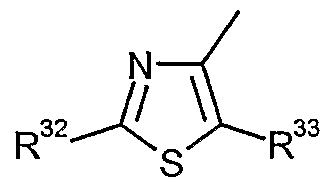


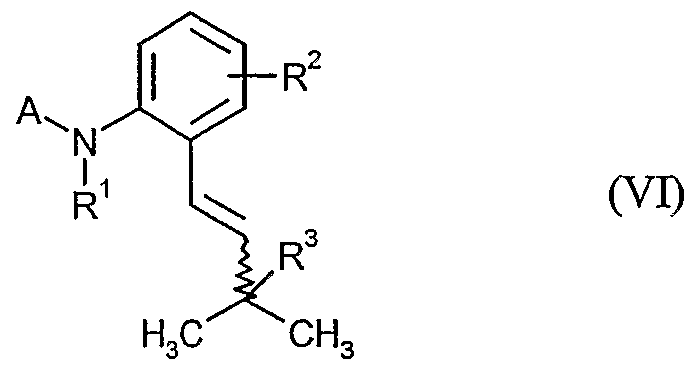


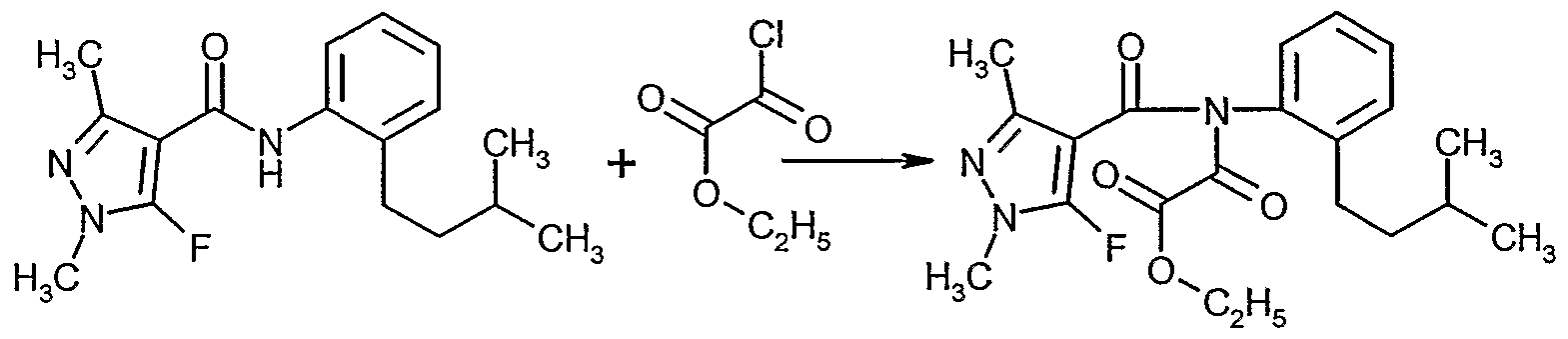


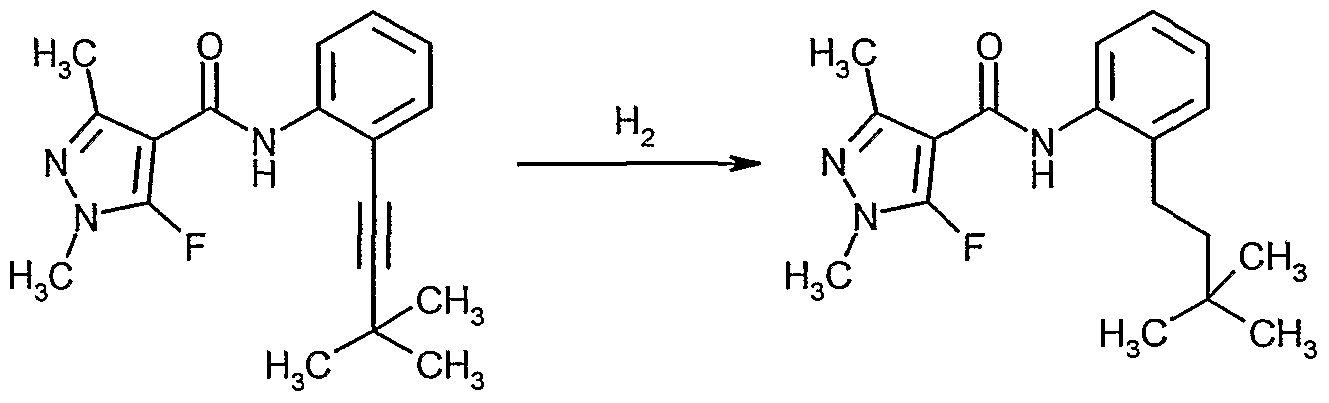


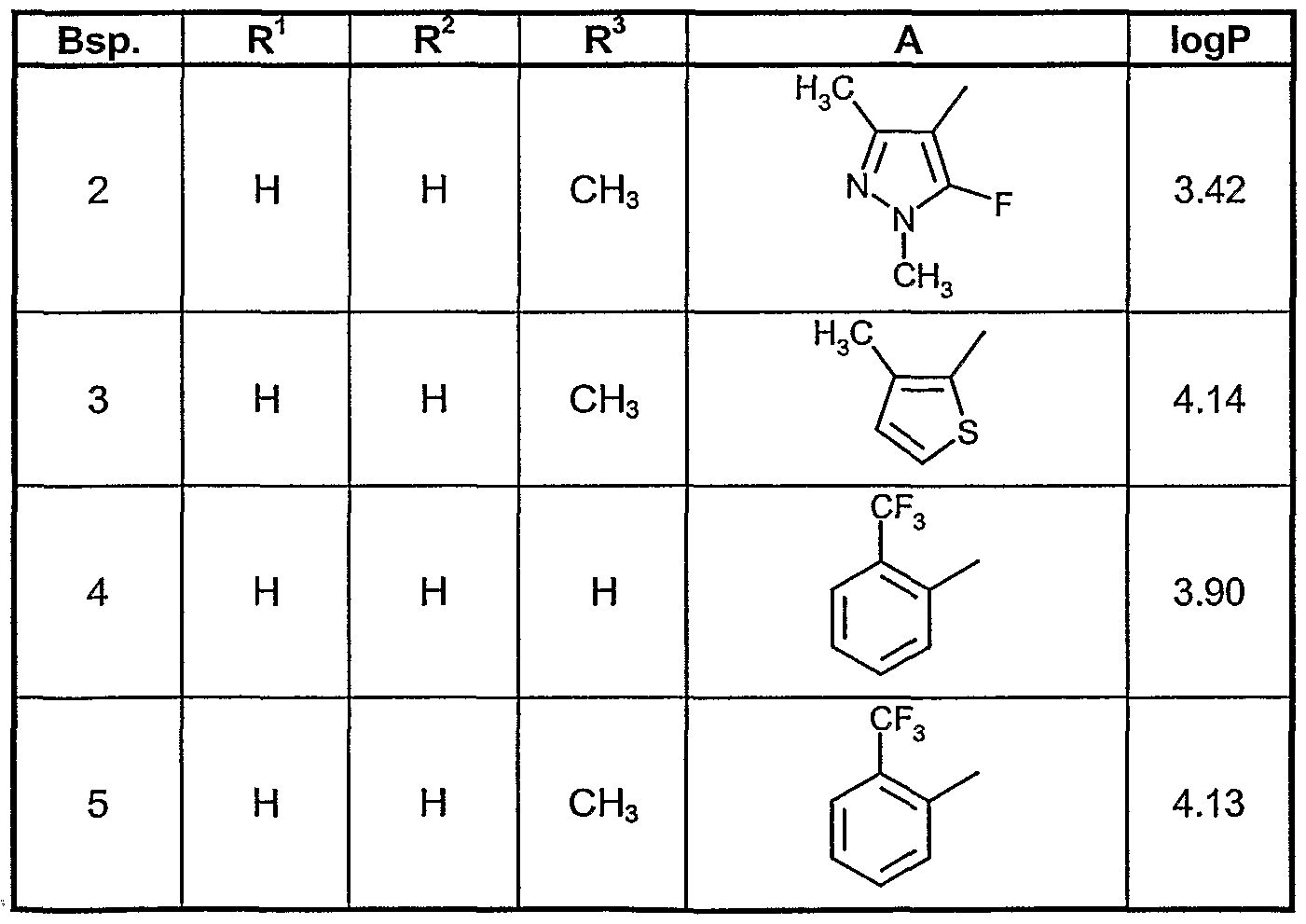


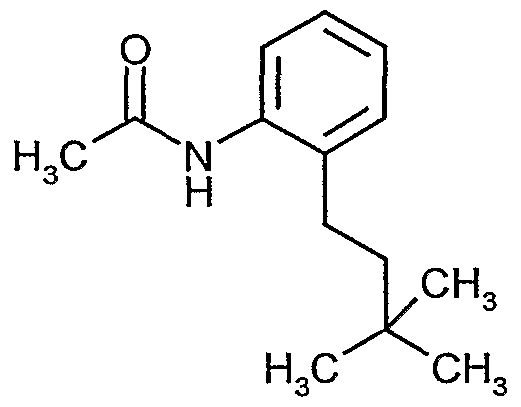


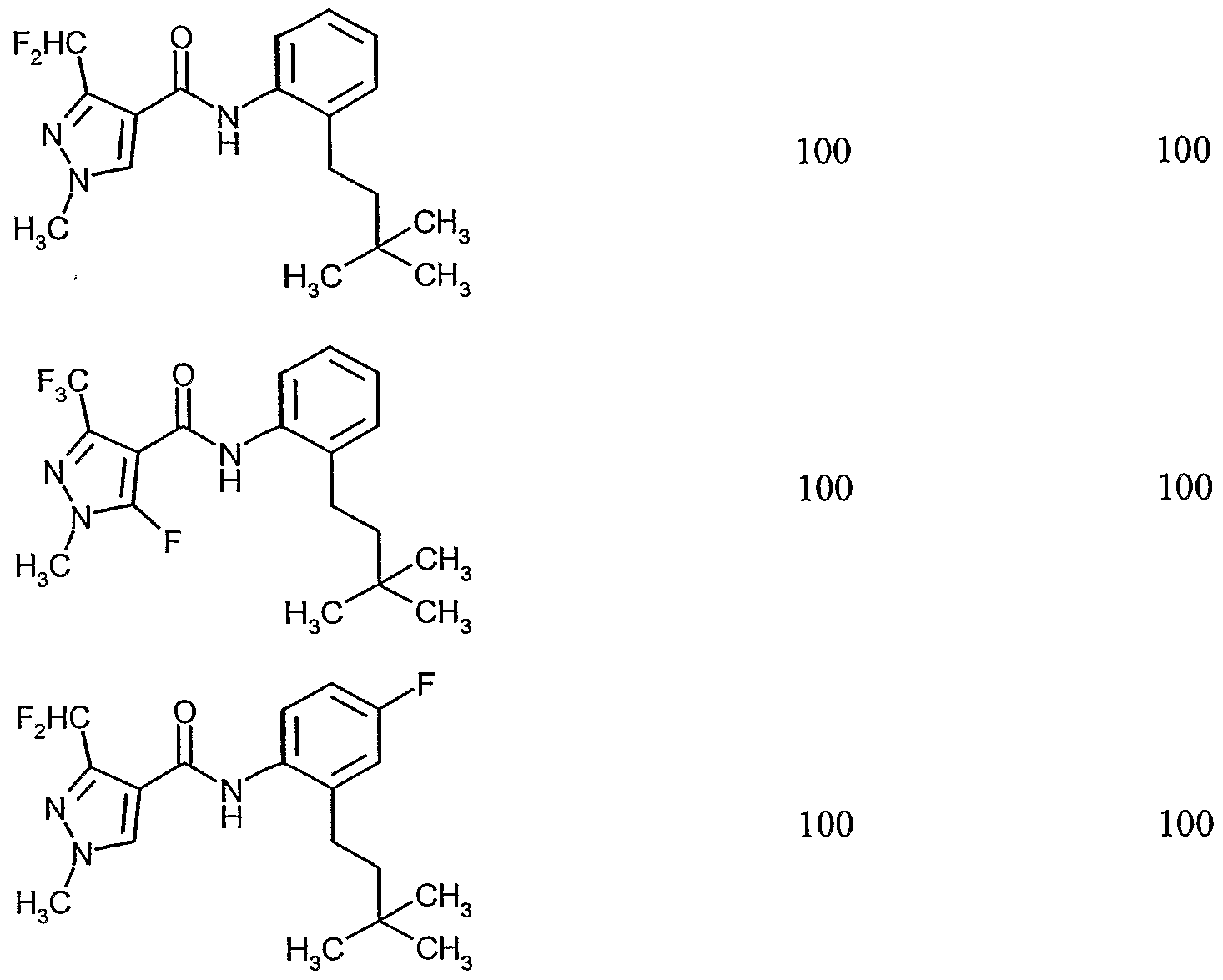





Claims


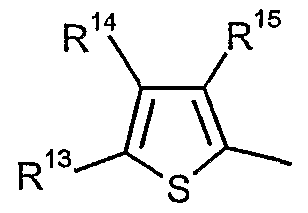


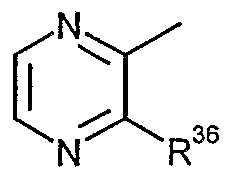


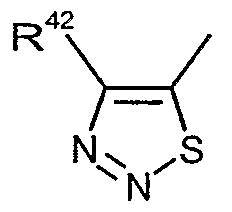


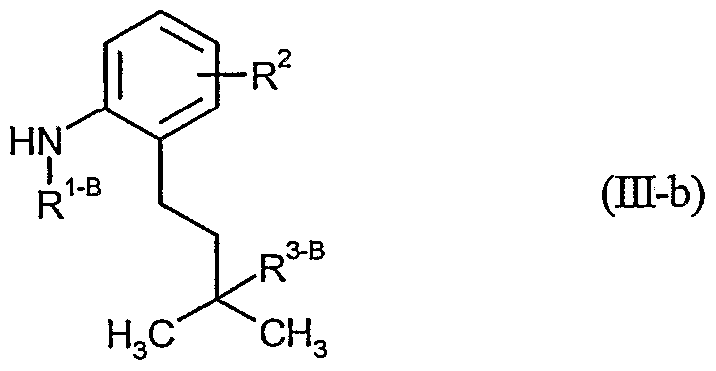


Priority Applications (10)
| Application Number | Priority Date | Filing Date | Title |
|---|---|---|---|
| AU2004285636A AU2004285636A1 (en) | 2003-10-23 | 2004-10-12 | Isopentyl carboxanilides for combating undesired micro-organisms |
| MXPA06004308A MXPA06004308A (es) | 2003-10-23 | 2004-10-12 | Isopentilcarboxanilidas para la lucha contra los microorganismos indeseables. |
| EA200600779A EA011551B1 (ru) | 2003-10-23 | 2004-10-12 | Изопентилкарбоксанилиды для борьбы с нежелательными микроорганизмами |
| CA2543054A CA2543054C (en) | 2003-10-23 | 2004-10-12 | Isopentylcarboxanilides for combating undesired micro-organisms |
| US10/576,060 US7879760B2 (en) | 2003-10-23 | 2004-10-12 | Isopentyl carboxanilides for combating undesired micro-organisms |
| EP04790302A EP1680407A1 (de) | 2003-10-23 | 2004-10-12 | Isopentylcarboxanilide zur bekämpfung von unerwünschten mikroorganismen |
| BRPI0415848A BRPI0415848B1 (pt) | 2003-10-23 | 2004-10-12 | isopentilcarboxanilidas, seu processo de preparação, seu uso e seus intermediários, composição e seu processo de preparação, e método para controlar microorganismos indesejados |
| JP2006535997A JP4783734B2 (ja) | 2003-10-23 | 2004-10-12 | 望ましくない微生物の防除のためのイソペンチルカルボキシアニリド |
| UAA200605604A UA84302C2 (ru) | 2003-10-23 | 2004-12-10 | Изопентилкарбоксанилиды и способ борьбы с нежелательными микроорганизмами |
| IL174898A IL174898A0 (en) | 2003-10-23 | 2006-04-10 | Isopentyl carboxanilides for combating undesired micro-organisms |
Applications Claiming Priority (4)
| Application Number | Priority Date | Filing Date | Title |
|---|---|---|---|
| DE10349498.7 | 2003-10-23 | ||
| DE10349498 | 2003-10-23 | ||
| DE10352067A DE10352067A1 (de) | 2003-10-23 | 2003-11-07 | Isopentylcarboxanilide |
| DE10352067.8 | 2003-11-07 |
Publications (1)
| Publication Number | Publication Date |
|---|---|
| WO2005042494A1 true WO2005042494A1 (de) | 2005-05-12 |
Family
ID=34553311
Family Applications (1)
| Application Number | Title | Priority Date | Filing Date |
|---|---|---|---|
| PCT/EP2004/011408 Ceased WO2005042494A1 (de) | 2003-10-23 | 2004-10-12 | Isopentylcarboxanilide zur bekämpfung von unterwünschten mikroorganismen |
Country Status (8)
| Country | Link |
|---|---|
| US (1) | US7879760B2 (de) |
| EP (1) | EP1680407A1 (de) |
| AR (1) | AR046776A1 (de) |
| AU (1) | AU2004285636A1 (de) |
| BR (1) | BRPI0415848B1 (de) |
| CA (1) | CA2543054C (de) |
| MX (1) | MXPA06004308A (de) |
| WO (1) | WO2005042494A1 (de) |
Cited By (6)
| Publication number | Priority date | Publication date | Assignee | Title |
|---|---|---|---|---|
| WO2006131221A3 (de) * | 2005-06-07 | 2007-08-23 | Bayer Cropscience Ag | Carboxamide |
| WO2007104437A1 (de) * | 2006-03-15 | 2007-09-20 | Bayer Cropscience Ag | Fungizide wirkstoffkombinationen |
| WO2008006574A3 (de) * | 2006-07-14 | 2008-03-20 | Bayer Cropscience Ag | Nitrobenzol-derivate sowie ein verfahren zum herstellen dieser 1' alkylnitrobenzole und alkylaniline |
| EP2000029A1 (de) * | 2007-06-06 | 2008-12-10 | Bayer CropScience AG | Insektizide und fungizide Wirkstoffkombinationen |
| WO2012065947A1 (en) | 2010-11-15 | 2012-05-24 | Bayer Cropscience Ag | 5-halogenopyrazolecarboxamides |
| WO2012065945A1 (en) | 2010-11-15 | 2012-05-24 | Bayer Cropscience Ag | 5-halogenopyrazole(thio)carboxamides |
Families Citing this family (9)
| Publication number | Priority date | Publication date | Assignee | Title |
|---|---|---|---|---|
| DE10347090A1 (de) * | 2003-10-10 | 2005-05-04 | Bayer Cropscience Ag | Synergistische fungizide Wirkstoffkombinationen |
| DE102005009458A1 (de) * | 2005-03-02 | 2006-09-07 | Bayer Cropscience Ag | Pyrazolylcarboxanilide |
| DE102005035300A1 (de) | 2005-07-28 | 2007-02-01 | Bayer Cropscience Ag | Synergistische fungizide Wirkstoffkombinationen |
| US9210651B2 (en) | 2005-10-27 | 2015-12-08 | Qualcomm Incorporated | Method and apparatus for bootstraping information in a communication system |
| JP5712504B2 (ja) | 2010-04-27 | 2015-05-07 | 住友化学株式会社 | 有害生物防除組成物およびその用途 |
| CN102858167B (zh) | 2010-04-27 | 2016-03-16 | 住友化学株式会社 | 杀虫组合物及其用途 |
| PH12012502025A1 (en) | 2010-04-28 | 2013-01-21 | Sumitomo Chemical Co | Plant disease control composition and its use |
| AU2011246799B9 (en) | 2010-04-28 | 2015-07-30 | Sumitomo Chemical Company, Limited | Pesticidal composition and its use |
| JP5724211B2 (ja) | 2010-04-28 | 2015-05-27 | 住友化学株式会社 | 植物病害防除組成物およびその用途 |
Citations (4)
| Publication number | Priority date | Publication date | Assignee | Title |
|---|---|---|---|---|
| EP0824099A1 (de) * | 1996-08-15 | 1998-02-18 | MITSUI TOATSU CHEMICALS, Inc. | Substituiertes Carboxanilid-Derivat und dieses als aktiven Bestandteil enthaltendes Mittel zur Bekämpfung von Pflanzenkrankheiten |
| WO2002038542A1 (en) * | 2000-11-08 | 2002-05-16 | Syngenta Participations Ag | Pyrrolcarboxamides and pyrrolcarbothioamides and their agrochemical uses |
| WO2003010149A1 (de) * | 2001-07-25 | 2003-02-06 | Bayer Cropscience Ag | Pyrazolylcarboxanilide als fungizide |
| WO2004002481A1 (en) * | 2002-06-27 | 2004-01-08 | Novo Nordisk A/S | Aryl carbonyl derivatives as therapeutic agents |
Family Cites Families (16)
| Publication number | Priority date | Publication date | Assignee | Title |
|---|---|---|---|---|
| CA2081935C (en) | 1991-11-22 | 2004-05-25 | Karl Eicken | Anilide derivatives and their use for combating botrytis |
| US5223526A (en) | 1991-12-06 | 1993-06-29 | Monsanto Company | Pyrazole carboxanilide fungicides and use |
| DE4231519A1 (de) | 1992-09-21 | 1994-03-24 | Basf Ag | Cyclohex(en)ylcarbonsäureamide, Verfahren zu ihrer Herstellung und sie enthaltende Mittel zur Bekämpfung von Schadpilzen |
| DE4231517A1 (de) | 1992-09-21 | 1994-03-24 | Basf Ag | Carbonsäureanilide, Verfahren zu ihrer Herstellung und sie enthaltende Mittel zur Bekämpfung von Schadpilzen |
| US5977168A (en) | 1994-04-15 | 1999-11-02 | Sankyo Company, Limited | Wood preservative compositions containing dimethylfurancarboxyanilide derivatives |
| ES2169773T3 (es) * | 1995-04-11 | 2002-07-16 | Mitsui Chemicals Inc | Derivados de tiofeno sustituido y fungicidas agricolas y horticolas que contienen dichos derivados como ingrediente activo. |
| GB9510459D0 (en) | 1995-05-24 | 1995-07-19 | Zeneca Ltd | Bicyclic amines |
| AUPO284396A0 (en) * | 1996-10-08 | 1996-10-31 | Fujisawa Pharmaceutical Co., Ltd. | Benzodiazepine derivatives |
| GB9624611D0 (en) | 1996-11-26 | 1997-01-15 | Zeneca Ltd | Bicyclic amine compounds |
| ES2216131T3 (es) | 1996-11-26 | 2004-10-16 | Syngenta Limited | Derivados de 8-azabiciclo 3,2,1 )octano-,8- azabiciclo 3,2.1) oct-6- eno- 9-azabiciclo 3.3.1) nonano-, 9-aza -3- oxabiciclo 3.3.1) nonano - y 9 -aza-3- tiabiciclo 3.3.1) nonano, su preparacion y su uso como insecticidas. |
| JPH11335364A (ja) | 1998-05-22 | 1999-12-07 | Mitsui Chem Inc | 新規な酸アニリド誘導体およびこれを有効成分とする植物病害防除剤 |
| GB9817548D0 (en) | 1998-08-12 | 1998-10-07 | Novartis Ag | Organic compounds |
| IL153928A0 (en) | 2000-07-24 | 2003-07-31 | Bayer Cropscience Ag | Biphenyl carboxamides |
| GB0101996D0 (en) | 2001-01-25 | 2001-03-14 | Syngenta Participations Ag | Organtic compounds |
| DE60226875D1 (de) * | 2001-08-15 | 2008-07-10 | Du Pont | Orthosubstituierte arylamide zur bekämpfung von wirbellosen schädlingen |
| EP1628962B1 (de) * | 2003-05-21 | 2014-10-01 | Bayer Intellectual Property GmbH | Iodpyrazolylcarboxanilide |
-
2004
- 2004-10-12 AU AU2004285636A patent/AU2004285636A1/en not_active Abandoned
- 2004-10-12 US US10/576,060 patent/US7879760B2/en not_active Expired - Fee Related
- 2004-10-12 CA CA2543054A patent/CA2543054C/en not_active Expired - Fee Related
- 2004-10-12 WO PCT/EP2004/011408 patent/WO2005042494A1/de not_active Ceased
- 2004-10-12 EP EP04790302A patent/EP1680407A1/de not_active Withdrawn
- 2004-10-12 BR BRPI0415848A patent/BRPI0415848B1/pt not_active IP Right Cessation
- 2004-10-12 MX MXPA06004308A patent/MXPA06004308A/es active IP Right Grant
- 2004-10-20 AR ARP040103796A patent/AR046776A1/es not_active Application Discontinuation
Patent Citations (4)
| Publication number | Priority date | Publication date | Assignee | Title |
|---|---|---|---|---|
| EP0824099A1 (de) * | 1996-08-15 | 1998-02-18 | MITSUI TOATSU CHEMICALS, Inc. | Substituiertes Carboxanilid-Derivat und dieses als aktiven Bestandteil enthaltendes Mittel zur Bekämpfung von Pflanzenkrankheiten |
| WO2002038542A1 (en) * | 2000-11-08 | 2002-05-16 | Syngenta Participations Ag | Pyrrolcarboxamides and pyrrolcarbothioamides and their agrochemical uses |
| WO2003010149A1 (de) * | 2001-07-25 | 2003-02-06 | Bayer Cropscience Ag | Pyrazolylcarboxanilide als fungizide |
| WO2004002481A1 (en) * | 2002-06-27 | 2004-01-08 | Novo Nordisk A/S | Aryl carbonyl derivatives as therapeutic agents |
Non-Patent Citations (9)
| Title |
|---|
| DATABASE BEILSTEIN BEILSTEIN INSTITUTE FOR ORGANIC CHEMISTRY, FRANKFURT-MAIN, DE; 1976, XP002313919, Database accession no. BRN 2832215 * |
| DATABASE BEILSTEIN BEILSTEIN INSTITUTE FOR ORGANIC CHEMISTRY, FRANKFURT-MAIN, DE; 2000, XP002313920, Database accession no. BRN 8617070 * |
| DATABASE CAPLUS CHEMICAL ABSTRACTS SERVICE, COLUMBUS, OHIO, US; 1958, XP002313918, retrieved from STN Database accession no. 2004:20494 * |
| DATABASE CAPLUS CHEMICAL ABSTRACTS SERVICE, COLUMBUS, OHIO, US; 8 January 2004 (2004-01-08), XP002313917, retrieved from STN Database accession no. 1958:113426 * |
| HANNIG ET AL, PHARMAZIE, vol. 31, 1976, pages 535 - 536 * |
| HARVEY ET AL, J.CHEM.SOC. ABSTRACTS, 1958, pages 2060 - 2062 * |
| KESSLER ET AL: "Indole synthesis by controlled carbolithiation of o-aminostyrenes", J.ORG.CHEM, vol. 69, no. 23, July 2004 (2004-07-01), pages 7836 - 46, XP002313916 * |
| See also references of EP1680407A1 * |
| TABUCHI ET AL, CME.PHARM.BULL, vol. 48, no. 1, 2000, pages 1 - 15 * |
Cited By (7)
| Publication number | Priority date | Publication date | Assignee | Title |
|---|---|---|---|---|
| WO2006131221A3 (de) * | 2005-06-07 | 2007-08-23 | Bayer Cropscience Ag | Carboxamide |
| WO2007104437A1 (de) * | 2006-03-15 | 2007-09-20 | Bayer Cropscience Ag | Fungizide wirkstoffkombinationen |
| WO2008006574A3 (de) * | 2006-07-14 | 2008-03-20 | Bayer Cropscience Ag | Nitrobenzol-derivate sowie ein verfahren zum herstellen dieser 1' alkylnitrobenzole und alkylaniline |
| EP2000029A1 (de) * | 2007-06-06 | 2008-12-10 | Bayer CropScience AG | Insektizide und fungizide Wirkstoffkombinationen |
| WO2012065947A1 (en) | 2010-11-15 | 2012-05-24 | Bayer Cropscience Ag | 5-halogenopyrazolecarboxamides |
| WO2012065945A1 (en) | 2010-11-15 | 2012-05-24 | Bayer Cropscience Ag | 5-halogenopyrazole(thio)carboxamides |
| US9375004B2 (en) | 2010-11-15 | 2016-06-28 | Bayer Intellectual Property Gmbh | 5-halogenopyrazolecarboxamides |
Also Published As
| Publication number | Publication date |
|---|---|
| BRPI0415848B1 (pt) | 2017-04-25 |
| EP1680407A1 (de) | 2006-07-19 |
| CA2543054C (en) | 2013-02-12 |
| AU2004285636A1 (en) | 2005-05-12 |
| US20070004921A1 (en) | 2007-01-04 |
| CA2543054A1 (en) | 2005-05-12 |
| MXPA06004308A (es) | 2006-06-05 |
| US7879760B2 (en) | 2011-02-01 |
| BRPI0415848A (pt) | 2007-01-02 |
| AR046776A1 (es) | 2005-12-21 |
Similar Documents
| Publication | Publication Date | Title |
|---|---|---|
| EP1490342B1 (de) | Disubstituierte pyrazolylcarboxanilide | |
| EP1628962B1 (de) | Iodpyrazolylcarboxanilide | |
| EP1590330B1 (de) | Pyrazolylcarboxanilide zur bekämpfung von unerwünschten mikroorganismen | |
| DE102004005786A1 (de) | Haloalkylcarboxamide | |
| DE102004005787A1 (de) | Carboxamide | |
| EP2192115B1 (de) | 1,3-dimethylbutylcarboxanilide zur bekämpfung von unerwünschten mikrorganismen | |
| US7879760B2 (en) | Isopentyl carboxanilides for combating undesired micro-organisms | |
| EP1678142B1 (de) | Hexylcarboxanilide und deren verwendung zur bekämpfung von unerwünschten mikroorganismen | |
| EP1558592B1 (de) | Thiazol-(bi)cycloalkyl-carboxanilide | |
| EP1687315B1 (de) | Silylierte carboxamide | |
| EP1678143B8 (de) | N-substituierte pyrazolylcarboxanilide | |
| EP1501786A1 (de) | Biphenylcarboxamide | |
| EP1551816B1 (de) | Thiazolylbiphenylamide | |
| WO2003069995A1 (de) | Mikrobizide mittel auf basis von biphenylbenzamid-derivaten | |
| DE102004012901A1 (de) | Silylierte Carboxamide | |
| EP1501820B1 (de) | Methylthiophencarboxanilide | |
| EP1628948A1 (de) | Difluormethylbenzanilide und deren verwendung zur bekämpfung von mikroorganismen, sowie zwischenprodukte und deren herstellung | |
| DE10352067A1 (de) | Isopentylcarboxanilide | |
| DE10325439A1 (de) | Iodpyrazolylcarboxanilide | |
| DE10352082A1 (de) | Hexylcarboxanilide | |
| DE102004005317A1 (de) | Optisch aktive Carboxamide | |
| DE10306244A1 (de) | Oxathiincarboxamide | |
| DE10321270A1 (de) | Oxathiincarboxamide |
Legal Events
| Date | Code | Title | Description |
|---|---|---|---|
| WWE | Wipo information: entry into national phase |
Ref document number: 200480031176.8 Country of ref document: CN |
|
| AK | Designated states |
Kind code of ref document: A1 Designated state(s): AE AG AL AM AT AU AZ BA BB BG BR BW BY BZ CA CH CN CO CR CU CZ DE DK DM DZ EC EE EG ES FI GB GD GE GH GM HR HU ID IL IN IS JP KE KG KP KR KZ LC LK LR LS LT LU LV MA MD MG MK MN MW MX MZ NA NI NO NZ OM PG PH PL PT RO RU SC SD SE SG SK SL SY TJ TM TN TR TT TZ UA UG US UZ VC VN YU ZA ZM ZW |
|
| AL | Designated countries for regional patents |
Kind code of ref document: A1 Designated state(s): BW GH GM KE LS MW MZ NA SD SL SZ TZ UG ZM ZW AM AZ BY KG KZ MD RU TJ TM AT BE BG CH CY CZ DE DK EE ES FI FR GB GR HU IE IT LU MC NL PL PT RO SE SI SK TR BF BJ CF CG CI CM GA GN GQ GW ML MR NE SN TD TG |
|
| 121 | Ep: the epo has been informed by wipo that ep was designated in this application | ||
| WWE | Wipo information: entry into national phase |
Ref document number: 2004790302 Country of ref document: EP |
|
| WWE | Wipo information: entry into national phase |
Ref document number: CR2006-008334 Country of ref document: CR |
|
| WWW | Wipo information: withdrawn in national office |
Ref document number: CR2006-008334 Country of ref document: CR |
|
| WWE | Wipo information: entry into national phase |
Ref document number: 174898 Country of ref document: IL |
|
| WWE | Wipo information: entry into national phase |
Ref document number: 2006/03061 Country of ref document: ZA Ref document number: PA/a/2006/004308 Country of ref document: MX Ref document number: 200603061 Country of ref document: ZA |
|
| WWE | Wipo information: entry into national phase |
Ref document number: 06037219 Country of ref document: CO |
|
| WWE | Wipo information: entry into national phase |
Ref document number: 12006500791 Country of ref document: PH Ref document number: 2543054 Country of ref document: CA Ref document number: 546720 Country of ref document: NZ |
|
| WWE | Wipo information: entry into national phase |
Ref document number: 2006535997 Country of ref document: JP |
|
| WWE | Wipo information: entry into national phase |
Ref document number: 2004285636 Country of ref document: AU |
|
| WWE | Wipo information: entry into national phase |
Ref document number: 200600779 Country of ref document: EA |
|
| ENP | Entry into the national phase |
Ref document number: 2004285636 Country of ref document: AU Date of ref document: 20041012 Kind code of ref document: A |
|
| WWP | Wipo information: published in national office |
Ref document number: 2004285636 Country of ref document: AU |
|
| WWP | Wipo information: published in national office |
Ref document number: 2004790302 Country of ref document: EP |
|
| WWE | Wipo information: entry into national phase |
Ref document number: 2007004921 Country of ref document: US Ref document number: 10576060 Country of ref document: US |
|
| WWP | Wipo information: published in national office |
Ref document number: CR2006-008334 Country of ref document: CR |
|
| ENP | Entry into the national phase |
Ref document number: PI0415848 Country of ref document: BR |
|
| WWP | Wipo information: published in national office |
Ref document number: 10576060 Country of ref document: US |