WO2005083122A2 - Method for detecting a microorganism in a fecal specimen - Google Patents
Method for detecting a microorganism in a fecal specimen Download PDFInfo
- Publication number
- WO2005083122A2 WO2005083122A2 PCT/NL2005/000138 NL2005000138W WO2005083122A2 WO 2005083122 A2 WO2005083122 A2 WO 2005083122A2 NL 2005000138 W NL2005000138 W NL 2005000138W WO 2005083122 A2 WO2005083122 A2 WO 2005083122A2
- Authority
- WO
- WIPO (PCT)
- Prior art keywords
- nucleic acid
- fecal
- species
- microorganism
- pcr
- Prior art date
- Legal status (The legal status is an assumption and is not a legal conclusion. Google has not performed a legal analysis and makes no representation as to the accuracy of the status listed.)
- Ceased
Links
Classifications
-
- C—CHEMISTRY; METALLURGY
- C12—BIOCHEMISTRY; BEER; SPIRITS; WINE; VINEGAR; MICROBIOLOGY; ENZYMOLOGY; MUTATION OR GENETIC ENGINEERING
- C12Q—MEASURING OR TESTING PROCESSES INVOLVING ENZYMES, NUCLEIC ACIDS OR MICROORGANISMS; COMPOSITIONS OR TEST PAPERS THEREFOR; PROCESSES OF PREPARING SUCH COMPOSITIONS; CONDITION-RESPONSIVE CONTROL IN MICROBIOLOGICAL OR ENZYMOLOGICAL PROCESSES
- C12Q1/00—Measuring or testing processes involving enzymes, nucleic acids or microorganisms; Compositions therefor; Processes of preparing such compositions
- C12Q1/68—Measuring or testing processes involving enzymes, nucleic acids or microorganisms; Compositions therefor; Processes of preparing such compositions involving nucleic acids
- C12Q1/6876—Nucleic acid products used in the analysis of nucleic acids, e.g. primers or probes
- C12Q1/6888—Nucleic acid products used in the analysis of nucleic acids, e.g. primers or probes for detection or identification of organisms
- C12Q1/689—Nucleic acid products used in the analysis of nucleic acids, e.g. primers or probes for detection or identification of organisms for bacteria
-
- Y—GENERAL TAGGING OF NEW TECHNOLOGICAL DEVELOPMENTS; GENERAL TAGGING OF CROSS-SECTIONAL TECHNOLOGIES SPANNING OVER SEVERAL SECTIONS OF THE IPC; TECHNICAL SUBJECTS COVERED BY FORMER USPC CROSS-REFERENCE ART COLLECTIONS [XRACs] AND DIGESTS
- Y02—TECHNOLOGIES OR APPLICATIONS FOR MITIGATION OR ADAPTATION AGAINST CLIMATE CHANGE
- Y02A—TECHNOLOGIES FOR ADAPTATION TO CLIMATE CHANGE
- Y02A50/00—TECHNOLOGIES FOR ADAPTATION TO CLIMATE CHANGE in human health protection, e.g. against extreme weather
- Y02A50/30—Against vector-borne diseases, e.g. mosquito-borne, fly-borne, tick-borne or waterborne diseases whose impact is exacerbated by climate change
Definitions
- the present invention relates to detection of microorganisms in specimens for the purposes of inter aha diagnoses, screenings, quarantaine inspections, and clinical tests. Specifically, it relates to detection and quantification of enteropathogenic bacteria in a fecal specimen, including Shigella species, Salmonella species, enterohemorrhagic Escherichia coli or Verocytotoxin- producing Escherichia coli, Vibrio cholerae, Campylobacter species and Clostridium perfringens.
- Detection of pathogenic bacteria such as Shigella species, Salmonella species, enterohemorrhagic Escherichia coli (hereinafter referred to as EHEC) or Verocytotoxin-producing Escherichia coli (hereinafter referred to as VTEC), Vibrio cholerae, and Clostridium perfringens is an important task in the field of medicine and public hygiene, and various methods have been used.
- EHEC enterohemorrhagic Escherichia coli
- VTEC Verocytotoxin-producing Escherichia coli
- Vibrio cholerae Vibrio cholerae
- Clostridium perfringens is an important task in the field of medicine and public hygiene, and various methods have been used.
- detection of a pathogenic bacterial strain involves isolation of several pathogenic bacterial colonies and identification of the species of the bacteria by serological or biochemical methods.
- Shigella species In the case of Shigella species, this has been achieved by culturing and isolating the target bacterium from specimens of patient stools, food, or the like, using a medium, such as DHL agar or MacConkey's agar, and then further culturing the bacterium using a medium such as TSI agar or LIM agar for the purpose of identification.
- a medium such as DHL agar or MacConkey's agar
- culturing is conducted for isolation of the bacteria from specimens of patient stools or vomits, food or wiping samples, etc., followed by inoculation to TSI agar, SIM medium, VP-MR medium or lysine decarboxylation test medium and subsequent overnight culture at 37°C, to confirm Salmonella species, and the serotype is determined using a commercially available set of antisera against O and H antigens.
- EHEC or VTEC has been found to cause hemolytic uremic syndrome in children, as well as food poisoning symptoms, typically hemorrhagic colitis, and recently stress has been placed on detection of this bacterium in clinical tests.
- specimens are patient stools, food, or water samples (drinking water, river water, etc.) collected from the environment surrounding the patient.
- EHEC EHEC
- VTEC EHEC
- specimens are patient stools or food, water samples (drinking water, river water, sea water, etc.) or samples collected from the environment surrounding the patient.
- PCR-based methods are much faster compared to DNA probing or hybridisation techniques.
- the detection of microorganisms in a biological sample by PCR can generally be divided into four steps: (1) sample collection, (2) sample preparation, (3) nucleic acid (DNA) amplification by PCR and (4) detection of amplified PCR products.
- PCR has become a very rapid and reliable tool for the molecular biology- based diagnosis of a variety of micro-organisms.
- PCR has been apphed for the detection of microorganisms from microbial cultures and directly from clinical samples.
- a major problem with PCR is that it is very sensitive for inhibition. Fecal specimens are among the most complex specimens for direct PCR testing (i.e.
- PCR inhibitors found in stool specimens include heme, bihrubins, polysaccharides, bile salts and microorganisms other than the organism(s) of interest. The presence of PCR inhibitors determines, to a large extent, the sensitivity of the PCR-based method.
- a major challenge in developing PCR-based detection methods that are suitable for fecal specimens is the development of a suitable sample preparation step to overcome problems caused by PCR inhibitors and to improve the efficiency DNA isolation.
- the sample preparation step typically involves the addition of a relatively large volume of a lysis buffer to fecal material in order to make the nucleic acids accessible for isolation.
- Methods 84 (2000) 1-4 describe the detection and quantification of human cytomegalovirus DNA in feces wherein fecal material (a 25-50% [vol/vol] suspension) is lysed in 20 volumes of lysis buffer.
- fecal material a 25-50% [vol/vol] suspension
- 900 ul lysis buffer is added to 50 ⁇ l of a 30% [vol/vol] fecal suspension (J Clinical Microbiology 2000, Vol.38, No.9 p.3442-3444). Van der Hoek et al. (J.
- WO 92/00983 describes the 4-fold dilution of a fecal sample (diluted in transport medium to an unspecified concentration) in a lysis solution prior to nucleic acid extraction in a method to determine the presence of Bacteroides gingivalis in the sample.
- the invention now provides the insight that significantly better results are obtained with PCR-technology apphed to detect a microorganism in a fecal specimen if (e.g. during the sample preparation step) feces is mixed with a smaller relative volume of lysis buffer compared to the relative volumes of lysis buffer that have been used thus far.
- a method for detecting the presence of a microorganism in a fecal specimen characterized in that said method comprises the preparation of a 25-50% [wt/vol] fecal lysate.
- a 35-50% [wt/vol] fecal lysate, more preferred a 40-50% [wt/vol] lysate is prepared.
- feces as used herein generally refers to an undiluted fecal specimen obtained from a subject e.g. a stool sample.
- a fecal sample may be of human or animal origin.
- a fecal lysate according to the invention is typically prepared by mixing feces (e.g.
- a stool specimen with a liquid capable of extracting DNA from the fecal material, such as a lysis buffer.
- a supernatant is obtained comprising among others nucleic acid material extracted from the fecal material.
- a method further comprises the steps of b) isolating a nucleic acid from said fecal lysate; c) subjecting said nucleic acid to a nucleic acid amphfication assay using a set of at least two nucleic acid amplification primers specific for said microorganism of interest; and d) detecting amplified nucleic acid to determine whether said microorganism is present in said fecal specimen.
- a lysis buffer for use in a method according to the invention preferably comprises a chaotropic salt.
- step a This allows to subject the supernatant obtained from the fecal lysate in the sample preparation step (herein referred to as step a) to a highly efficient DNA isolation method reported by Boom et al. (Boom et al., (1990 "Rapid and simple method for purification of nucleic acids”; J. Clin. Microbiol. 28:495- 503).
- This method is essentially based on the binding of nucleic acids to an acid- treated silica matrix in the presence of a chaotropic salt. According to this pubUshed method, the DNA is then eluted from the silica matrix using a low-salt solution.
- step c of a method according to the invention to detect a microorganism of interest in a fecal specimen a nucleic acid isolated from a fecal lysate is subjected to a nucleic acid amplification assay using a set of at least two nucleic acid amplification primers specific for said microorganism of interest.
- said nucleic acid amplification assay comprises a polymerase chain reaction (PCR) technology, preferably Real Time (RT)-PCR.
- PCR polymerase chain reaction
- RT Real Time
- Microorganisms which can be detected essentially include all microorganisms, such as viruses, bacteria and protozoa, that may be present in a fecal specimen. Of course, it is preferred that specific nucleic acid probes are available or can be designed to detect the microorganism using a nucleic acid amplification assay.
- said microorganism is a bacterium such as a pathogenic bacterium, preferably selected from the group essentially consisting of
- Salmonella species Campylobacter species, Shigella species and Escherichia species such as enteropathogenic Escherichia coli, Salmonella enterica typhimurium, and Shigella flexneri.
- a microorganism for example a pathogenic bacterium such as a Salmonella species with high sensitivity and high specificity.
- Salmonella enterica strains from the epidemiologically important serotypes including Agona, Bovismofibicans, Barncaster, Bradenburg, Braenderup, Bredeney, Broughton, Cannstatt, Cremieu, Deby, Dublin, Enetritidis, Eppendorf, Falkensee, Hadar, Heidelberg, Indiana, Infantis, Kottbus, Krefeld, Livingstone, Mbandaka, Montevideo, Niloese, Putten, Saint Paul, Senftenberg, Taksony, Tennessee, Thomson, Typhimurium, Virchow and 4.12:b:-.
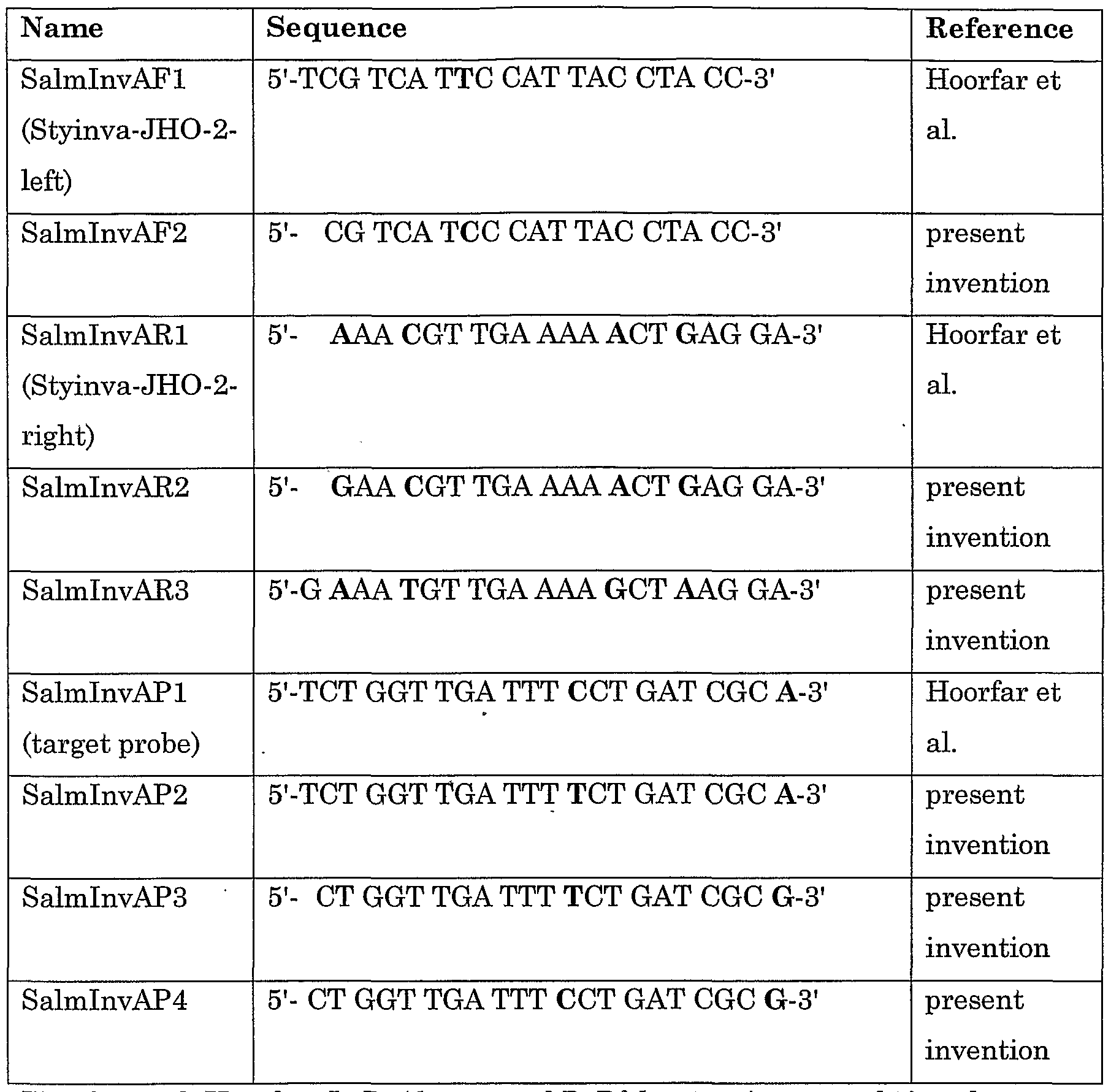
- a nucleic acid extract is obtained from a fecal lysate according to the invention and this extract is subsequently subjected to a PCR assay to detect the presence of a Salmonella spp. in a fecal specimen using at least one nucleic acid amplification primer that is selected from the nucleic acid sequences set out in Table I.
- the results obtained with a method according to the invention were compared with those obtained using three commonly used commercial DNA- isolation kits. Both the recovery of DNA isolated from feces was determined (see Example 1), as well as the performance of the isolated DNA in a Real-Time PCR assay to detect Salmonella invA (see Example 2).
- the average recovery of DNA when using a method as provided herein was 86%, versus an average recovery of 50-82% achieved with commercial kits.
- the percentage of samples with a recovery of 50% or more was 96% when using a method as provided herein, versus 44-87% for the commercial kits.
- the novel DNA isolation procedure also showed very good results with respect to the quahty of the isolated and the suitability of the DNA extract for PCR analysis.
- the PCR performance of a DNA extract according to the invention was comparable to that of a DNA extract obtained using one of the commercial kits, the DNA recovery when using such a kit was much lower compared to the method of the invention.
- a method as provided herein combines an optimal DNA recovery with a very good DNA quahty (e.g.
- the invention also provides the use of a method according to the invention to detect the presence of a microorganism in a fecal specimen.
- the invention provides an oligonucleotide with a nucleic acid sequence shown in Table 2, consisting of 5'-CG TCA TCC CAT TAG CTA CC-3' (SalmInvAF2) ; 5'- GAA CGT TGA AAA ACT GAG GA-3' (SalmInvAR2), 5'G AAA TGT TGA AAA GCT AAG GA - 3' (SalmInvAR3) , 5'-TCT GGT TGA TTT TCT GAT CGC A- 3' (SalmInvAP2); 5'- CT GGT TGA TTT TCT GAT CGC G- 3' (SalmInvAP3) and 5'- CT GGT TGA TTT CCT GAT CGC G-3' (SalmInvAP4).
- Table 2 consisting of 5'-CG TCA TCC CAT TAG CTA CC-3' (SalmInvAF2) ; 5'- GAA CGT TGA AAA ACT GAG GA-3' (SalmInv
- Said oligonucleotide is advantageously used to detect a Salmonella spp. nucleic amplification primer or a nucleic acid target probe (also known as detection probe).
- a nucleic acid amplification primer is selected from the group consisting of SalmInvAF2, SalmInvAR2 and SalmInvAR3 and/or a nucleic acid target probe is selected from the group consisting of SalmInvAP2, SalmInvAP3 and SalmInvAP4. It will be apparent to a person skilled in the art that variant primers and probes other than those of Table 2 may be designed and used for amplification and detection of Salmonella spp.
- variant ohgonucleotides (which are herein defined as sequences that exhibit at least 65%, more preferably at least 80% homology with the ohgonucleotide sequences of Table 2) are considered suitable for use in a method of the present invention.
- a probe is preferably conjugated with a dye, such as a fluorochrome, more preferred with two dyes to allow detection of said probe.
- a nucleic acid target probe according to the invention is labelled at the 5' end with a reporter fluorochrome (e.g. 6-carboxyfl.uorescein, 6-FAM) and a quencher fluorochrome (e.g. 6-carboxy-tetramethyl-rhodamine, TAMRA) added at any T position or at the 3' end.
- a reporter fluorochrome e.g. 6-carboxyfl.uorescein, 6-FAM
- a quencher fluorochrome e.g. 6-carboxy-tetramethyl-rhodamine, TAMRA
- amplification primer and/or a target probe according to the invention is provided to detect a Salmonella species in a sample, preferably using (RT)-PCR-based technology.
- a sample can be any type of biological sample or specimen, including patient stools or vomits, a water sample or a food sample.
- an amphfication primer and/or a target probe according to the invention is used to detect a Salmonella species in veterinary applications.
- the sample may or may not be enriched for Salmonella.
- Salmonella DNA is amplified in a nucleic acid amplification assay to detect a Salmonella species using at least one primer selected from the primers set out in Table II.
- the amplified DNA can be detected using a target probe of the invention.
- a Salmonella assay as provided herein appears to be highly suitable for large scale analyses, e.g. in a chnical diagnostic setting, of chnical samples.
- a total number of 215 fecal samples that were positive in a conventional Salmonella-culturing diagnostic test, 196 samples tested positive and 19 samples tested negative in a PCR-assay of the invention (performed essentially as described in Example 1). This gives a sensitivity of 91,2%.
- the invention provides a kit for the detection of a Salmonella species, comprising a pair of nucleic acid amplification primers specific for a Salmonella species, wherein at least one primer or probe is selected from the nucleic acid sequences set out in Table 2, or a variant thereof.
- RT-PCR Real-Time-PCR
- Feces was stored until use at -20°C.
- the sample was pretreated for DNA extraction as follows.
- a 35-50% [wt/vol] fecal lysate was prepared in lysis buffer L6 (5.25 M GuSCN (guanidinium thiocyanate), 50 mM Tris-HCl [pH 6.4], 20 mM EDTA (ethylenediamine tetra acetic acid), 1.3 % [wt/vol] Triton X-100).
- lysis buffer L6 5.25 M GuSCN (guanidinium thiocyanate), 50 mM Tris-HCl [pH 6.4], 20 mM EDTA (ethylenediamine tetra acetic acid), 1.3 % [wt/vol] Triton X-100).
- 100 mg feces was mixed with 200 ⁇ l lysis buffer L6 to yield a 50%
- [wt/vol] fecal suspension, or 50 mg feces was mixed with 125 ⁇ l L6 buffer to give a 40% [wt/vol] fecal suspension.
- the lysate was vortexed and subsequently shaken for 20 minutes using a shaking apparatus such as a mini-beadbeater-8 at a low number of revolutions to ensure gentle shaking of the suspension. Thereafter, the lysate was centrifuged for 2 minutes in a bench top centrifuge at 12000 x g and 100 ⁇ l supernatant was used as input in the subsequent DNA isolation step.
- DNA isolation was performed essentially according to the method of Boom et al.
- the protocol for DNA extraction used in the present invention is based on pubhcations by Boom et al. (1990) "Rapid and simple method for purification of nucleic acids”; J. Clin. Microbiol. 28:495-503; by Boom et al. (2000) "Detection and quantitation of human cytomegalovirus DNA in feces”; J. Virol. Methods.
- silica-particles 100 ⁇ l of the nucleic acid-containing fecal- supernatant (obtained in the sample pretreatment step described above) was added. This mixture was vortexed and subsequently incubated for 10 minutes at room temperature. Following incubation, the mixture was vortexed again and centrifuged for 15 seconds in a bench top centrifuge at 12,000 x g. The resulting supernatant was removed and the sihca-nucleic acid was washed twice with L2 (5.25 M GuSCN, 50 mM Tris-HCl [pH 6.4]), twice with 70% (vol/vol) ethanol and once with acetone.
- L2 5.25 M GuSCN, 50 mM Tris-HCl [pH 6.4]
- the sihca-nucleic acid pellet was dried at 56°C in a heating block.
- 100 ⁇ l TE buffer (10 mM Tris- HCl, 1 mM EDTA, pH 8,0) was added followed by vortexing and a 10-minutes incubation at 56°C.
- the mixture was centrifuged for 2 minutes in a bench top centrifuge at 12,000 x g. The resulting supernatant was used for the subsequent PCR analysis.
- DNA amplification and detection of amplified products by RT-PCR Real-Time PCR was performed using an ABI Prism 7700 Sequence Detection System using a PCR mix (25 ⁇ l) comprising the following components; lx TaqMan Universal PCR Master Mix, 150 nM SalmlnvAFl (Styinva-JHO-2-left), 150 nM SalmInvAF2, 75 nM SalmlnvARl (Styinva-JHO-2-right), 75 nM SalmInvAR2, 150 nM SalmInvAR3, 100 nM SalmlnvAPl (target probe), 100 nM SalmInvAP2, 100 nM SalmInvAP3, 100 nM SalmInvAP4, 0.5 ⁇ g BSA (Roche, 711 454) and 5 ⁇ l DNA eluate (the PCR mix was adjusted to a total volume of 25 ⁇ l with 'water for molecular biology" (Sigma, W 4502)).
- Table 1 shows the sequences of the nucleic acid amphflcation primers and the target probes that were used.
- Table 2 only contains the novel oligonucleotide sequences from Table 1 that can be used either as primer or probe.
- the mix was analyzed in the ABI Prism 7700 SDS system using the following thermoprofile; 2 minutes at 50°C, 10 minutes at 95°C, followed by 45 cycles at 15 seconds at 95°C, 15 seconds at 50°C and 60 seconds at 60°C. The results obtained were analyzed using the sequence detection software from Apphed Biosystems. From each sample to be analyzed, a PCR reaction was performed in duplicate; one without a spike and one with a spike of 15 pg Salmonella ⁇ irchow DNA, to monitor the inhibitory effect on the PCR reaction.
- Hoorfar et al Hoorfar, J., P. Ahrens, and P. Radstrom. Automated 5' nuclease PCR assay for identification of Salmonella enterica. 2000. J. Chn. Microbiol. 38:3429-3435.
- the performance of the novel method for extracting DNA from feces was compared with the procedures of three widely used commercial DNA extraction kits. Subsequently, the DNA extracts were subjected to a PCR analysis for the detection of a micro-organism (in this case Salmonella spp.)
- a micro-organism in this case Salmonella spp.
- a DNA isolation procedure to obtain a fecal DNA extract should meet the following criteria: 1. DNA recovery is high, preferably 100%, although for feces a minimal recovery of 50% is acceptable. 2. The DNA extract obtained should contain no factors which can disturb subsequent analytical steps (e.g. polymerase inhibitors).
- the comparison was made on the basis of the following criteria : a) a good DNA recovery for an arbitrary sample was judged as a recovery of > 50%. b) A bad recovery for an arbitrary sample was judged as a recovery of ⁇ 50%. c) The average recovery of all samples within a method should be as high as possible. d) No inhibition should be observed in the PCR assay. e) In chnical samples, the agreement with the gold standard (culturing for the micro-organism) should be maximal.
- Methods 1. Method of the invention, herein further referred to as "Boom SLGD” 2. Roche High Pure PCR Template Kit (HPPT) 3. Roche MagNA Pure LC DNA Isolation Kit III (Bacteria, Fungi) (automated extraction) (MPLC) 4. QIAGEN Stool DNA Mini Kit
- Recovery analysis BOOM SLGD 100 fecal samples that were randomly selected from routine diagnostic samples for fecal analysis (1 Salmonella culture positive- sample). DNA was extracted as described in Example 1. Recovery analysis HPPT, MPLC, QIAGEN: 46 samples which were positive in a Salmonella culture test and 32 Salmonella negative fecal samples. DNA was extracted according to the manufacturer's instructions. In all four different DNA extraction methods, the sample to be extracted was spiked with 4 ⁇ g Hindlll digested phage ⁇ DNA fragments. Following DNA isolation, the amount of DNA present in the DNA extract was compared to a 100% recovery marker using agarose gel electrophoresis. The recovery was visually estimated by 4 individuals to yield a mean percentage of recovery for a given sample. To determine the total recovery performance of each of the 4 methods tested, the mean recoveries of all samples extracted with a certain method were averaged.
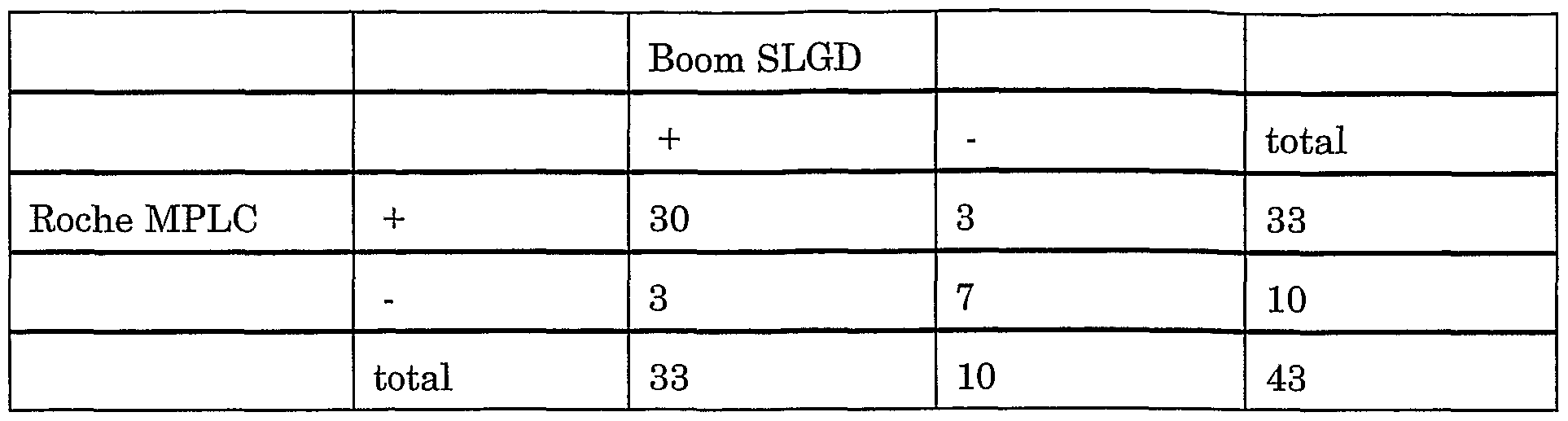
- Table 4A shows that of the 43 fecal specimens tested (all known to be Salmonella positive on the basis of culturing tests), 30 specimens tested positive when extracted with the Boom SLGD method as well as with the commercial Roche MPLC kit. Seven specimens tested negative using either one of the extraction methods, whereas 3 specimens tested negative with one method yet positive with the other.
- Tables 4A and 4B indicate that, with respect to the suitabihty for PCR analysis, an extract obtained with the Boom SLGD method is of approximately equal quahty when compared to extracts prepared using the Roche MPLC or Roche HPPT kit.
- the Boom SLGD method allows to detect more Salmonella positive specimens when compared to the QIAGEN kit; 35 (out of the 46) specimens were identified as positive when Boom SLGD extracts were prepared, versus 32 when the QIAGEN kit was used. It should be noted that the Boom SLGD procedure was tested as the last of the four procedures. This means that any detrimental effects of repeated freeze-thawing of the fecal samples (e.g. DNA degradation) were at the expense of the Boom SLGD procedure.
- Table 4A Roche MPLC kit compared to Boom SLGD
- a method provided by the present invention is advantageously used to detect a microorganism in a fecal sample using PCR technology.
Landscapes
- Chemical & Material Sciences (AREA)
- Life Sciences & Earth Sciences (AREA)
- Analytical Chemistry (AREA)
- Proteomics, Peptides & Aminoacids (AREA)
- Organic Chemistry (AREA)
- Zoology (AREA)
- Wood Science & Technology (AREA)
- Health & Medical Sciences (AREA)
- Engineering & Computer Science (AREA)
- Microbiology (AREA)
- Immunology (AREA)
- Molecular Biology (AREA)
- Biotechnology (AREA)
- Biophysics (AREA)
- Physics & Mathematics (AREA)
- Biochemistry (AREA)
- Bioinformatics & Cheminformatics (AREA)
- General Engineering & Computer Science (AREA)
- General Health & Medical Sciences (AREA)
- Genetics & Genomics (AREA)
- Measuring Or Testing Involving Enzymes Or Micro-Organisms (AREA)
Abstract
Description




Claims
Priority Applications (4)
| Application Number | Priority Date | Filing Date | Title |
|---|---|---|---|
| EP05722007A EP1730302A2 (en) | 2004-02-27 | 2005-02-25 | Method for detecting a microorganism in a fecal specimen |
| CA002557543A CA2557543A1 (en) | 2004-02-27 | 2005-02-25 | Method for detecting a microorganism in a fecal specimen |
| AU2005217124A AU2005217124A1 (en) | 2004-02-27 | 2005-02-25 | Method for detecting a microorganism in a fecal specimen |
| US11/510,287 US20070065851A1 (en) | 2004-02-27 | 2006-08-25 | Method for detecting a microorganism in a fecal specimen |
Applications Claiming Priority (2)
| Application Number | Priority Date | Filing Date | Title |
|---|---|---|---|
| EP04075632 | 2004-02-27 | ||
| EP04075632.2 | 2004-02-27 |
Related Child Applications (1)
| Application Number | Title | Priority Date | Filing Date |
|---|---|---|---|
| US11/510,287 Continuation US20070065851A1 (en) | 2004-02-27 | 2006-08-25 | Method for detecting a microorganism in a fecal specimen |
Publications (2)
| Publication Number | Publication Date |
|---|---|
| WO2005083122A2 true WO2005083122A2 (en) | 2005-09-09 |
| WO2005083122A3 WO2005083122A3 (en) | 2006-03-23 |
Family
ID=34896054
Family Applications (1)
| Application Number | Title | Priority Date | Filing Date |
|---|---|---|---|
| PCT/NL2005/000138 Ceased WO2005083122A2 (en) | 2004-02-27 | 2005-02-25 | Method for detecting a microorganism in a fecal specimen |
Country Status (5)
| Country | Link |
|---|---|
| US (1) | US20070065851A1 (en) |
| EP (1) | EP1730302A2 (en) |
| AU (1) | AU2005217124A1 (en) |
| CA (1) | CA2557543A1 (en) |
| WO (1) | WO2005083122A2 (en) |
Cited By (10)
| Publication number | Priority date | Publication date | Assignee | Title |
|---|---|---|---|---|
| US8637249B2 (en) | 2008-11-14 | 2014-01-28 | Gen-Probe Incorporated | Compositions, kits and methods for detection of Campylobacter nucleic acid |
| ITMI20131473A1 (en) * | 2013-09-06 | 2015-03-07 | Sofar Spa | METHOD OF ASSESSING THE EFFECTS OF A COMPOSITION INCLUDING MICRO-ORGANISMS ON THE INTESTINAL MICROBIOTE |
| US10724106B2 (en) | 2012-06-27 | 2020-07-28 | Mobidiag Oy | Method for determining the presence of diarrhoea causing pathogens |
| US11400124B2 (en) | 2016-05-13 | 2022-08-02 | Sofar S.P.A. | Use of probiotics for improving protein absorption |
| US11464814B2 (en) | 2014-04-23 | 2022-10-11 | Sofar Spa | Topical composition for use in the treatment of inflammatory bowel disease |
| US11591416B2 (en) | 2016-12-02 | 2023-02-28 | Sofar S.P.A. | Exopolysaccharides and uses thereof |
| US11751597B2 (en) | 2019-11-05 | 2023-09-12 | Alfasigma S.P.A. | Compositions comprising bacterial strains for use in increasing the bioavailability of amino acids derived from proteins, and related food product methods and systems |
| US11752179B2 (en) | 2016-06-08 | 2023-09-12 | Alfasigma S.P.A. | Medical use of probiotics |
| US11839634B2 (en) | 2013-09-06 | 2023-12-12 | Alfasigma S.P.A. | Use of a composition comprising microorganisms to increase the intestinal production of butyric acid, folic acid or niacin and/or decrease the intestinal production of succinic acid |
| US11896631B2 (en) | 2016-12-16 | 2024-02-13 | Alfasigma S.P.A. | Probiotics for use in the treatment of diverticulosis and diverticular disease |
Families Citing this family (2)
| Publication number | Priority date | Publication date | Assignee | Title |
|---|---|---|---|---|
| WO2011017013A2 (en) * | 2009-07-27 | 2011-02-10 | The University Of North Carolina At Chapel Hill | Enterococcus and fecal bacteroides for rapid water quality assessment |
| WO2014209849A1 (en) * | 2013-06-24 | 2014-12-31 | Idexx Laboratories, Inc. | Animal colony monitoring using fecal samples |
Family Cites Families (4)
| Publication number | Priority date | Publication date | Assignee | Title |
|---|---|---|---|---|
| CA2087105C (en) * | 1990-07-13 | 2000-09-12 | Jeffrey Van Ness | Non-corrosive composition and methods useful for the extraction of nucleic acids |
| US5130423A (en) * | 1990-07-13 | 1992-07-14 | Microprobe Corporation | Non-corrosive compositions and methods useful for the extraction of nucleic acids |
| JP2003199572A (en) * | 2001-12-28 | 2003-07-15 | Eiken Chem Co Ltd | Primers for detection of Salmonella spp. And detection methods using the same |
| KR100457355B1 (en) * | 2002-03-27 | 2004-11-16 | 삼성에버랜드 주식회사 | Pcr primers for amplifying the gene of pathogenic microorganism, and method and test kit for detecting pathogenic microorganism by using the same |
-
2005
- 2005-02-25 CA CA002557543A patent/CA2557543A1/en not_active Abandoned
- 2005-02-25 WO PCT/NL2005/000138 patent/WO2005083122A2/en not_active Ceased
- 2005-02-25 AU AU2005217124A patent/AU2005217124A1/en not_active Abandoned
- 2005-02-25 EP EP05722007A patent/EP1730302A2/en not_active Withdrawn
-
2006
- 2006-08-25 US US11/510,287 patent/US20070065851A1/en not_active Abandoned
Cited By (14)
| Publication number | Priority date | Publication date | Assignee | Title |
|---|---|---|---|---|
| US10829824B2 (en) | 2008-11-14 | 2020-11-10 | Gen-Probe Incorporated | Compositions, kits and methods for detection of campylobacter nucleic acid |
| US8637249B2 (en) | 2008-11-14 | 2014-01-28 | Gen-Probe Incorporated | Compositions, kits and methods for detection of Campylobacter nucleic acid |
| US9175353B2 (en) | 2008-11-14 | 2015-11-03 | Gen-Probe Incorporated | Compositions, kits and methods for detection of campylobacter nucleic acid |
| US10724106B2 (en) | 2012-06-27 | 2020-07-28 | Mobidiag Oy | Method for determining the presence of diarrhoea causing pathogens |
| US11839634B2 (en) | 2013-09-06 | 2023-12-12 | Alfasigma S.P.A. | Use of a composition comprising microorganisms to increase the intestinal production of butyric acid, folic acid or niacin and/or decrease the intestinal production of succinic acid |
| EA034795B1 (en) * | 2013-09-06 | 2020-03-23 | Софар С.П.А. | Method for determining changes of faecal microbiota of an individual after intake of a composition comprising microorganisms |
| WO2015033304A1 (en) * | 2013-09-06 | 2015-03-12 | Sofar S.P.A. | Method for evaluating the effects of a composition comprising microorganisms on intestinal microbiota |
| ITMI20131473A1 (en) * | 2013-09-06 | 2015-03-07 | Sofar Spa | METHOD OF ASSESSING THE EFFECTS OF A COMPOSITION INCLUDING MICRO-ORGANISMS ON THE INTESTINAL MICROBIOTE |
| US11464814B2 (en) | 2014-04-23 | 2022-10-11 | Sofar Spa | Topical composition for use in the treatment of inflammatory bowel disease |
| US11400124B2 (en) | 2016-05-13 | 2022-08-02 | Sofar S.P.A. | Use of probiotics for improving protein absorption |
| US11752179B2 (en) | 2016-06-08 | 2023-09-12 | Alfasigma S.P.A. | Medical use of probiotics |
| US11591416B2 (en) | 2016-12-02 | 2023-02-28 | Sofar S.P.A. | Exopolysaccharides and uses thereof |
| US11896631B2 (en) | 2016-12-16 | 2024-02-13 | Alfasigma S.P.A. | Probiotics for use in the treatment of diverticulosis and diverticular disease |
| US11751597B2 (en) | 2019-11-05 | 2023-09-12 | Alfasigma S.P.A. | Compositions comprising bacterial strains for use in increasing the bioavailability of amino acids derived from proteins, and related food product methods and systems |
Also Published As
| Publication number | Publication date |
|---|---|
| EP1730302A2 (en) | 2006-12-13 |
| US20070065851A1 (en) | 2007-03-22 |
| CA2557543A1 (en) | 2005-09-09 |
| WO2005083122A3 (en) | 2006-03-23 |
| AU2005217124A1 (en) | 2005-09-09 |
Similar Documents
| Publication | Publication Date | Title |
|---|---|---|
| Miller et al. | Evaluation of Gen-Probe Amplified Mycobacterium Tuberculosis Direct Test and PCR for direct detection of Mycobacterium tuberculosis in clinical specimens | |
| JP2814422B2 (en) | Mycobacteria detection by multiple nucleic acid amplification | |
| Mangiapan et al. | Sequence capture-PCR improves detection of mycobacterial DNA in clinical specimens | |
| Sethabutr et al. | Detection of PCR products of the ipaH gene from Shigella and enteroinvasive Escherichia coli by enzyme linked immunosorbent assay | |
| US6867021B2 (en) | Multiplex RT-PCR/PCR for simultaneous detection of bovine coronavirus, bovine rotavirus, Cryptosporidium parvum, and Escherichia coli | |
| Khan et al. | Comparative diagnosis of typhoid fever by polymerase chain reaction and widal test in Southern Districts (Bannu, Lakki Marwat and DI Khan) of Khyber Pakhtunkhwa, Pakistan | |
| JP3134940B2 (en) | Amplification and detection of Mycobacterium avium complex | |
| CA2553286C (en) | Method for detecting pathogenic mycobacteria in clinical specimens | |
| CN102918155A (en) | Primer and probe for detecting chlamydia trachomatis, and method for detecting chlamydia trachomatis using same | |
| Gill et al. | Enzyme-linked immunosorbent assay of nucleic acid sequence-based amplification for molecular detection of M. tuberculosis | |
| US20070065851A1 (en) | Method for detecting a microorganism in a fecal specimen | |
| JP5238248B2 (en) | Method for quantitative analysis of microorganisms targeting rRNA | |
| KR102557450B1 (en) | Composition for detecting Salmonella spp. based on CRISPR-Cas, and Salmonella spp. detection method using the same | |
| Paton et al. | Methods for detection of STEC in humans: an overview | |
| Aslanzadeh et al. | Comparison of culture and acid-fast bacilli stain to PCR for detection ofMycobacterium tuberculosisin clinical samples | |
| WO2009061752A1 (en) | Methods for detecting toxigenic microbes | |
| Yousef | Detection of bacterial pathogens in different matrices: current practices and challenges | |
| DK1922415T3 (en) | USE OF BOTH RD9 AND IS6110 AS nucleic acid targets FOR DIAGNOSIS OF TUBERCULOSIS, AND PROVISION OF MULTIPLEX-SUITABLE IS6110 AND RD9 TARGETS | |
| Matsiota-Bernard et al. | Detection of Legionella pneumophila DNA in urine and serum samples from patients with pneumonia | |
| JPH10210980A (en) | Oligonucleotide for detecting lactic acid bacteria and method for detecting the bacteria | |
| Berg et al. | Extraction of Chlamydia pneumoniae DNA from vascular tissue for use in PCR: an evaluation of four procedures | |
| JP2012187067A (en) | Method for quantifying bacterium of genus lactobacillus | |
| EP3822370A1 (en) | Method of determining the presence of a hyper-virulent clostridioides difficile strain of the b1/nap1/027 group in a sample | |
| WO2006123295A2 (en) | Dna fragments, primers, kits, and methods for amplification the detection and identification of clinically relevant candida species | |
| CN102311950A (en) | Nucleotide specific to wzt of Legionella pneumophila serogroup 1 and application thereof |
Legal Events
| Date | Code | Title | Description |
|---|---|---|---|
| AK | Designated states |
Kind code of ref document: A2 Designated state(s): AE AG AL AM AT AU AZ BA BB BG BR BW BY BZ CA CH CN CO CR CU CZ DE DK DM DZ EC EE EG ES FI GB GD GE GH GM HR HU ID IL IN IS JP KE KG KP KR KZ LC LK LR LS LT LU LV MA MD MG MK MN MW MX MZ NA NI NO NZ OM PG PH PL PT RO RU SC SD SE SG SK SL SM SY TJ TM TN TR TT TZ UA UG US UZ VC VN YU ZA ZM ZW |
|
| AL | Designated countries for regional patents |
Kind code of ref document: A2 Designated state(s): BW GH GM KE LS MW MZ NA SD SL SZ TZ UG ZM ZW AM AZ BY KG KZ MD RU TJ TM AT BE BG CH CY CZ DE DK EE ES FI FR GB GR HU IE IS IT LT LU MC NL PL PT RO SE SI SK TR BF BJ CF CG CI CM GA GN GQ GW ML MR NE SN TD TG |
|
| 121 | Ep: the epo has been informed by wipo that ep was designated in this application | ||
| WWE | Wipo information: entry into national phase |
Ref document number: 2005217124 Country of ref document: AU |
|
| WWE | Wipo information: entry into national phase |
Ref document number: 549422 Country of ref document: NZ |
|
| WWE | Wipo information: entry into national phase |
Ref document number: 11510287 Country of ref document: US Ref document number: 2557543 Country of ref document: CA |
|
| ENP | Entry into the national phase |
Ref document number: 2005217124 Country of ref document: AU Date of ref document: 20050225 Kind code of ref document: A |
|
| WWP | Wipo information: published in national office |
Ref document number: 2005217124 Country of ref document: AU |
|
| WWE | Wipo information: entry into national phase |
Ref document number: 2005722007 Country of ref document: EP |
|
| WWP | Wipo information: published in national office |
Ref document number: 2005722007 Country of ref document: EP |
|
| WWP | Wipo information: published in national office |
Ref document number: 11510287 Country of ref document: US |