WO2005095418A1 - Sulfonamide-thiazolpyridine derivatives as glucokinase activators useful the treatment of type 2 diabetes - Google Patents
Sulfonamide-thiazolpyridine derivatives as glucokinase activators useful the treatment of type 2 diabetes Download PDFInfo
- Publication number
- WO2005095418A1 WO2005095418A1 PCT/EP2005/003456 EP2005003456W WO2005095418A1 WO 2005095418 A1 WO2005095418 A1 WO 2005095418A1 EP 2005003456 W EP2005003456 W EP 2005003456W WO 2005095418 A1 WO2005095418 A1 WO 2005095418A1
- Authority
- WO
- WIPO (PCT)
- Prior art keywords
- methoxy
- pyridin
- cyclopentyl
- thiazolo
- phenyl
- Prior art date
- Legal status (The legal status is an assumption and is not a legal conclusion. Google has not performed a legal analysis and makes no representation as to the accuracy of the status listed.)
- Ceased
Links
- 0 B*(CN(*)C(C1)=O)CN1S(c1ccc([C@](C*)(CNc2nc(ccc(*)n3)c3[s]2)C=O)cc1)(=O)=O Chemical compound B*(CN(*)C(C1)=O)CN1S(c1ccc([C@](C*)(CNc2nc(ccc(*)n3)c3[s]2)C=O)cc1)(=O)=O 0.000 description 1
- FDTXHXNLSXQYKA-UHFFFAOYSA-N CC(C)N(C(C)C)S(c1ccc(C(CC2CCCC2)C(Nc2nc(ccc(OC)n3)c3[s]2)=O)cc1)(=O)=O Chemical compound CC(C)N(C(C)C)S(c1ccc(C(CC2CCCC2)C(Nc2nc(ccc(OC)n3)c3[s]2)=O)cc1)(=O)=O FDTXHXNLSXQYKA-UHFFFAOYSA-N 0.000 description 1
- GMGMDWSPSKXMJH-NRFANRHFSA-N CN(CC1)CCN1S(c1ccc([C@H](CC2CCCC2)C(Nc2nc(ccc(OC)n3)c3[s]2)=O)cc1)(=O)=O Chemical compound CN(CC1)CCN1S(c1ccc([C@H](CC2CCCC2)C(Nc2nc(ccc(OC)n3)c3[s]2)=O)cc1)(=O)=O GMGMDWSPSKXMJH-NRFANRHFSA-N 0.000 description 1
Classifications
-
- C—CHEMISTRY; METALLURGY
- C07—ORGANIC CHEMISTRY
- C07D—HETEROCYCLIC COMPOUNDS
- C07D513/00—Heterocyclic compounds containing in the condensed system at least one hetero ring having nitrogen and sulfur atoms as the only ring hetero atoms, not provided for in groups C07D463/00, C07D477/00 or C07D499/00 - C07D507/00
- C07D513/02—Heterocyclic compounds containing in the condensed system at least one hetero ring having nitrogen and sulfur atoms as the only ring hetero atoms, not provided for in groups C07D463/00, C07D477/00 or C07D499/00 - C07D507/00 in which the condensed system contains two hetero rings
- C07D513/04—Ortho-condensed systems
-
- A—HUMAN NECESSITIES
- A61—MEDICAL OR VETERINARY SCIENCE; HYGIENE
- A61K—PREPARATIONS FOR MEDICAL, DENTAL OR TOILETRY PURPOSES
- A61K31/00—Medicinal preparations containing organic active ingredients
- A61K31/33—Heterocyclic compounds
- A61K31/395—Heterocyclic compounds having nitrogen as a ring hetero atom, e.g. guanethidine or rifamycins
- A61K31/41—Heterocyclic compounds having nitrogen as a ring hetero atom, e.g. guanethidine or rifamycins having five-membered rings with two or more ring hetero atoms, at least one of which being nitrogen, e.g. tetrazole
- A61K31/425—Thiazoles
- A61K31/429—Thiazoles condensed with heterocyclic ring systems
-
- A—HUMAN NECESSITIES
- A61—MEDICAL OR VETERINARY SCIENCE; HYGIENE
- A61P—SPECIFIC THERAPEUTIC ACTIVITY OF CHEMICAL COMPOUNDS OR MEDICINAL PREPARATIONS
- A61P3/00—Drugs for disorders of the metabolism
- A61P3/04—Anorexiants; Antiobesity agents
-
- A—HUMAN NECESSITIES
- A61—MEDICAL OR VETERINARY SCIENCE; HYGIENE
- A61P—SPECIFIC THERAPEUTIC ACTIVITY OF CHEMICAL COMPOUNDS OR MEDICINAL PREPARATIONS
- A61P3/00—Drugs for disorders of the metabolism
- A61P3/08—Drugs for disorders of the metabolism for glucose homeostasis
- A61P3/10—Drugs for disorders of the metabolism for glucose homeostasis for hyperglycaemia, e.g. antidiabetics
-
- A—HUMAN NECESSITIES
- A61—MEDICAL OR VETERINARY SCIENCE; HYGIENE
- A61P—SPECIFIC THERAPEUTIC ACTIVITY OF CHEMICAL COMPOUNDS OR MEDICINAL PREPARATIONS
- A61P43/00—Drugs for specific purposes, not provided for in groups A61P1/00-A61P41/00
Definitions
- the present invention relates to thiazolopyridine derivatives, pharmaceutical compositions containing them, and to methods of treating glucokinase mediated conditions, in particular, impaired glucose tolerance and Type 2 diabetes, by employing such compounds.
- Ri is hydrogen, halogen, cyano, nitro, optionally substituted alkyl, alkoxy, alkylthio, alkylthiono, sulfonyl, carboxy, carbamoyl, sulfamoyl or optionally substituted amino;
- R 2 is C 3 -C 6 cycloalkyl or C 3 -C 6 heterocyclyl;
- R 3 is hydrogen, halogen, cyano, lower alkyl or lower alkoxy;
- R is hydrogen, optionally substituted alkyl, or cycloalkyl;
- R 5 is -(CR 6 R 7 ) m -W-R 8 in which R 6 and R 7 are independently hydrogen, optionally substituted alkyl or cycloalkyl; or R 6 and R 7 combined are alkylene which together with the carbon atom to which they are attached form a 3- to 7-membered ring;
- m is zero or an integer from 1 to 5;
- W is -NR
- R-io is optionally substituted alkyl, cycloalkyl, aryl, heteroaryl, aralkyl or heteroaralkyl
- R 11 is hydrogen or lower alkyl
- R-n and R 10 combined are alkylene which together with the nitrogen atom to which they are attached form a 4- to 7-membered ring
- W is absent
- R 8 is hydrogen, optionally substituted C ⁇ C ⁇ alkyl, cycloalkyl, aryl or heterocyclyl
- R 8 and R 9 combined are alkylene which together with the nitrogen atom to which they are attached form a 4- to 7-membered ring
- R 5 and R 4 combined are alkylene which together with the nitrogen atom to which they are attached form a 4- to 7-membered ring
- R 5 and R_j taken together ⁇ /ith the nitrogen atom to which they are attached form a 6- to 12-membered fused, bridged or spiral bicyclic ring, which may be optionally substituted or may contain
- the compounds of the present invention provide pharmacological agents which are glucokinase activators and, thus, may be employed for the treatment of glucokinase mediated conditions. Accordingly, the compounds of formula (I) may be employed for prevention and treatment of impaired glucose tolerance, Type 2 diabetes and obesity.
- optionally substituted alkyl refers to unsubstituted or substituted straight- or branched-chain hydrocarbon groups having 1-20 carbon atoms, preferably 1-10 carbon atoms.
- exemplary unsubstituted alkyl groups include methyl, ethyl, propyl, isopropyl, n-butyl, f-butyl, isobutyl, pentyl, hexyl, isohexyl, heptyl, 4,4-dimethylpentyl, octyl and the like.
- Substituted alkyl groups include, but are not limited to, alkyl groups substituted by one or more of the following groups: halo, hydroxy, alkanoyl, alkoxy, alkanoyloxy, thiol, alkylthio, alkylthiono, sulfonyl, sulfamoyl, carbamoyl, cyano, carboxy, acyl, aryl, alkenyl, alkynyl, aralkoxy, guanidino, optionally substituted amino, heterocyclyl including imidazolyl, furyl, thienyl, thiazolyl, pyrrolidyl, pyridyl, pyrimidyl and the like.
- lower alkyl refers to those alkyl groups as described above having 1-7, preferably 2-4 carbon atoms.
- halogen or “halo” refers to fluorine, chlorine, bromine and iodine.
- alkenyl refers to a ny of the above alkyl groups having at least two carbon atoms and further containing a carbon to carbon double bond at the point of attachment. Groups having 2-4 carbon atoms are preferred.
- alkynyl refers to any of the above alkyl groups having at least two carbon atoms and further containing a carbon to carbon triple bond at the point of attachment. Groups having 2-4 carbon atoms are preferred.
- alkylene refers to a straight-chain bridge of 4-6 carbon atoms connected by single bonds, e.g., -(CH 2 ) X -, wherein x is 4-6, which may be interrupted with one or more heteroatoms selected from O, S, S(O), S(O) 2 or NR, wherein R may be hydrogen, alkyl, cycloalkyl, aryl, heterocyclyl, aralkyl, heteroaralkyl, acyl, carbamoyl, sulfonyl, alkoxycarbonyl, aryloxycarbonyl or aralkoxycarbonyl and the like; and the alkylene may further be substituted with one or more substituents selected from optionally substituted alkyl, cycloalkyl, aryl, heterocyclyl, oxo, halogen, hydroxy, carboxy, alkoxy, alkoxycarbonyl and the like.
- cycloalkyl refers to optionally substituted monocyclic, bicyclic or tricyclic hydrocarbon groups of 3-12 carbon atoms, each of which may contain one or more carbon to carbon double bonds, or the cycloalkyl may be substituted by one or more substituents, such as alkyl, halo, oxo, hydroxy, alkoxy, alkanoyl, acylamino, carbamoyl, alkylamino, dialkylamino, thiol, alkylthio, cyano, carboxy, alkoxycarbonyl, sulfonyl, sulfonamido, sulfamoyl, heterocyclyl and the like.
- substituents such as alkyl, halo, oxo, hydroxy, alkoxy, alkanoyl, acylamino, carbamoyl, alkylamino, dialkylamino, thiol, alkylthio, cyano, carboxy
- Exemplary monocyclic hydrocarbon groups include, but are not limited to, cyclopropyl, cyclobutyl, cyclopentyl, cyclopentenyl, cyclohexyl and cyclohexenyl and the like.
- bicyclic hydrocarbon groups include bornyl, indyl, hexahydroindyl, tetrahydronaphthyl, decahydronaphthyl, bicyclo[2.1.1]hexyl, bicyclo[2.2.1]heptyl, bicyclo[2.2.1]heptenyl, 6,6-dirnethylbicyclo[3.1.1]heptyl, 2,6,6-trimethylbicyclo[3.1.1]heptyl, bicyclo[2.2.2]octyl and the like.
- Exemplary tricyclic hydrocarbon groups include adamantyl and the like.
- alkoxy refers to alkyl-O-.
- alkanoyl refers to alkyl-C(O)-.
- alkanoyloxy refers to alkyl-C(O)-O-.
- alkylamino and “dialkylamino” refer to alkyl-NH- and (alkyl) 2 N-, respectively.
- alkanoylamino refers to alkyl-C(O)-NH-_
- alkylthio refers to alkyl-S-.
- alkylthiono refers to alkyl-S(O)-.
- alkylsulfonyl refers to alkyl-S(O) 2 -.
- alkoxycarbonyl refers to alkyl-O-C(O)-.
- alkoxycarbonyloxy refers to alkyl-O-C(0)O-.
- carbamoyl refers to H 2 NC(O)-, alkyl-NH C(O)-, (alkyl) 2 NC(O)-, aryl-NHC(O)-, alkyl(aryl)-NC(O)-, heteroaryl-NHC(O)-, alkyl(heteroaryl)-NC(O)-, aralkyl-NHC(O)-, alkyl(aralkyl)-NC(O)- and the like.
- sulfamoyl refers to H 2 NS(O) 2 -, alkyl-NH S(O) 2 -, (alkyl) 2 NS(O) 2 -, aryl-NHS(O) 2 -, alkyl(aryl)-NS(O) 2 -, (aryl) 2 NS(O) 2 -, heteroaryi-NHS(O) 2 -, aralkyl-NHS(O) 2 -, heteroaralkyl- NHS(O) 2 - and the like.
- sulfonamido refers to alkyl-S(O) 2 -NH-, aryl-S(O) 2 -NH-, aralkyl-S(O) 2 -NH-, heteroaryl-S(O) 2 -NH-. heteroaralkyl-S(O) 2 -NH-, a!kyl-S(O) 2 -N(alkyl)-, aryl-S(O) 2 -N(alkyl)-, aralkyl-S(O) 2 -N(alkyl)-, heteroaryl-S(O) 2 -N(alkyl)-, heteroaralkyl-S(O) 2 -N(alkyl)- and the like.
- sulfonyl refers to alkylsulfonyl, arylsulfonyl, heteroarylsulfonyl, aralkylsulfonyl, heteroaralkylsulfonyl and the like.
- optionally substituted amino refers to a primary or secondary amino group which may optionally be substituted by a substituent such as acyl, sulfonyl, alkoxycarbonyl, cycloalkoxycarbonyl, aryloxycarbonyl, heteroaryloxycarbonyl, aralkoxycarbonyl, heteroaralkoxycarbonyl, carbamoyl and the like.
- aryl refers to monocyclic or bicyclic aromatic hydrocarbon groups having 6-12 carbon atoms in the ring portion, such as phenyl, biphenyl, naphtthyl and tetrahydronaphthyl, each of which may optionally be substituted by 1-4 substituents, such as optionally substituted alkyl, trifluoromethyl, cycloalkyl, halo, hydroxy, alkoxy, acyl, alkanoyloxy, aryloxy, optionally substituted amino, thiol, alkylthio, arylthio, nitro, cyano, carboxy, alkoxycarbonyl, carbamoyl, alkylthiono, sulfonyl, sulfonamido, heterocyclyl and tine like.
- monocyclic aryl refers to optionally substituted phenyl as described under aryl.
- aralkyl refers to an aryl group bonded directly througfi an alkyl group, such as benzyl.
- aralkanoyl refers to aralkyl-C(O)-.
- aralkylthio refers to aralkyl-S-.
- alkoxy refers to an aryl group bonded directly through an alkoxy group.
- arylsulfonyl refers to aryl-S(O) 2 -.
- arylthio refers to aryl-S-.
- aroyl refers to aryl-C(O)-.
- aroyloxy refers to aryl-C(O)-O-.
- aroylamino refers to aryl-C(O)-NH-.
- aryloxycarbonyl refers to aryl-O-C(O)-.
- heterocyclyl refers to an optionally substituted, fully saturated or unsaturated, aromatic or nonaromatic cyclic group, e.g., which is a 4- to 7-membered monocyclic, 7- to 12-membered bicyclic or 10- to 15-membered tricyclic ring system, which has at least one heteroatom in at least one carbon atom-containing ring.
- Each ring of the heterocyclic group containing a heteroatom may have 1 , 2 or 3 heteroatoms selected from nitrogen atoms, oxygen atoms and sulfur atoms, where the nitrogen and sulfur heteroatoms may also optionally be oxidized.
- the heterocyclic group may be attached at a heteroatom or a carbon atom.
- Exemplary monocyclic heterocyclic groups include pyrrolidinyl, pyrrolyl, pyrazolyl, oxetanyl, pyrazolinyl, imidazolyl, imidazolinyl, imidazolidinyl, triazolyl, oxazolyl, oxazolidinyl, isoxazolinyl, isoxazolyl, thiazolyl, thiadiazolyl, thiazolidinyl, isothiazolyl, isothiazolidinyl, furyl, tetrahydrofuryl, thienyl, oxadiazolyl, piperidinyl, piperazinyl, 2-oxopiperazinyl, 2-oxopiperidinyl, 2-oxopyrrolodinyl, 2-oxoazepinyl, azepinyl, 4-piperidonyl, pyridyl, pyrazinyl, pyrimidinyl
- bicyclic heterocyclic groups include indolyl, dihydroidolyl, benzothiazolyl, benzoxazinyl, benzoxazolyl, benzothienyl, benzothiazinyl, quinuclid ⁇ nyl, quinolinyl, tetrahydroquinolinyl, decahydroquinolinyl, isoquinolinyl, tetrahydroisoquinolinyl, decahydroisoquinolinyl, benzimidazolyl, benzopyranyl, indolizinyl, t>enzofuryl, chromonyl, coumarinyl, benzopyranyl, cinnolinyl, quinoxalinyl, indazolyl, pyrrolopyridyl, furopyridinyl (such as furo[2,3-c]pyridinyl, furo[3,2-b]-pyridinyl] or furo[2,
- Exemplary tricyclic heterocyclic groups include carbazolyl, dibenzoazepinyl, dithienoazepinyl, benzindolyl, phenanthrolinyl, acridinyl, phenanthridinyl, phenoxazinyl, phenothiazinyl, xanthenyl, carbolinyl and the like.
- heterocyclyl includes substituted heterocyclic groups.
- heterocyclooxy denotes a heterocyclic group bonded through an oxygen bridge.
- heterocycloalkyl refers to nonaromatic heterocyclic groups as described above.
- heteroaryl refers to an aromatic heterocycle, e.g., monocyclic or bicyclic aryl, such as pyrrolyl, pyrazolyl, imidazolyl, triazolyl, oxazolyl, isoxazolyl, thiazolyl, isothiazolyl, furyl, thienyl, pyridyl, pyrazinyl, pyrimidinyl, pyridazinyl, indolyl, benzothiazolyl, benzoxa-2olyl, benzothienyl, quinolinyl, isoquinolinyl, benzimidazolyl, benzofuryl and the like, optionally substituted by, e.g., lower alkyl, lower alkoxy or halo.
- heteroarylsulfonyl refers to heteroaryl-S(O) 2 -.
- heteroaroyl refers to heteroaryl-C(O)-.
- heteroaroylamino refers to heteroaryl-C(O)NH-.
- heteroaryl refers to a heteroaryl group bonded through an alkyl group.
- heteroaralkanoyl refers to heteroaralkyl-C(O)-.
- heteroaralkanoylamino refers to heteroaralkyl-C(O)NH-.
- acyl refers to alkanoyl, aroyl, heteroaroyl, aralkanoyl, heteroaralkanoyl and the like.
- acylamino refers to alkanoylamino, aroylamino, heteroaroylamino, aralkanoylamino, heteroaralkanoylamino and the like.
- salts of the compounds of the present invention refer to salts formed with acids, namely acid addition salts, such as of mineral acids, organic carboxylic acids and organic sulfonic acids, e.g., hydrochloric acid, maleic acid and methanesulfonic acid, respectively.
- salts of the compounds of the invention refer to salts formed with bases, namely cationic salts, such as alkali and alkaline earth metal salts, e.g., sodium, lithium, potassium, calcium and magnesium, as well as ammonium salts, e.g., ammonium, trimethylammonium, diethylammonium and tris(hydroxymethyl)-methyl- ammonium salts and salts with amino acids provided an acidic group constitutes part of the structure.
- bases namely cationic salts, such as alkali and alkaline earth metal salts, e.g., sodium, lithium, potassium, calcium and magnesium
- ammonium salts e.g., ammonium, trimethylammonium, diethylammonium and tris(hydroxymethyl)-methyl- ammonium salts and salts with amino acids provided an acidic group constitutes part of the structure.
- the present invention provides thiazolopyridine derivatives of formula (I), pharmaceutical compositions containing them, methods for preparing said compounds, and methods of treating glucokinase mediated conditions by administration of a therapeutically effective amount of a compound of the present invention, or a pharmaceutical composition thereof.
- Ri is hydrogen, halogen, cyano, nitro, alkoxy, carboxy, carbamoyl or optionally substituted amino
- R 2 is C 3 -C 6 cycloalkyl or C 3 -C 6 heterocyclyl
- R 3 is hydrogen, halogen, cyano, lower alkyl or lower alkoxy
- R 4 is hydrogen or lower alkyl
- R 5 is -(CR 6 R 7 ) m -W-R 8 in which R 6 and R 7 are independently hydrogen or optionally substituted lower alkyl
- m is zero or an integer from 1 to 5
- W is -NR 9 - in which R 9 is hydrogen or lower alkyl
- R 9 is -C(O)R 10 , -C(O)OR 10 , or -C(O)NR 10 R.
- R-io is optionally substituted alkyl, cycloalkyl, aryl, heteroaryl, aralkyl or heteroaralkyl
- R 11 is hydrogen or lower alkyl
- Rii and R 10 combined are alkylene which together with the nitrogen atom to which they are attached form a 5- to 7-membered ring
- W is absent
- R 8 is hydrogen, optionally substituted C C 7 alkyl, cycloalkyl, aryl or heterocyclyl
- R 8 and R 9 combined are alkylene which together with the nitrogen atom to which they are attached form a 5- to 7-membered ring
- R 5 and R 4 combined are alkylene which together with the nitrogen atom to which they are attached form a 5- to 7-membered ring; or an enantiomer thereof; or an enantiomeric mixture thereof; or a pharmaceutically acceptable salt thereof.
- R.o is optionally substituted alkyl, cycloalkyl, aryl, heteroaryl, aralkyl or heteroaralkyl
- Rn is hydrogen or lower alkyl
- Rn and R 10 combined are alkylene which together with the nitrogen atom to which they are attached form a 5- to 7-membered ring
- R 8 is hydrogen, optionally substituted C C 7 alkyl, cycloalkyl, aryl or heterocyclyl
- R 8 and R 9 combined are alkylene which together with the nitrogen atom to which they are attached form a 5- to 7-membered ring; or an enantiomer thereof; or an enantiomeric mixture thereof; or a pharmaceutically acceptable salt thereof.
- Ri is hydrogen, halogen,C 1 -C 4 alkoxy, carboxy or carbamoyl;
- R 2 is C 3 -C 5 cycloalkyl;
- R 3 is hydrogen;
- R 6 and R 7 are hydrogen; or an enantiomer thereof; or an enantiomeric mixture thereof; or a pharmaceutically acceptable salt thereof.
- i hydrogen, halogen, C 1 -C 4 alkoxy, carboxy or carbamoyl; R 2 s C 3 -C 5 cycloalkyl; R 4 s hydrogen or lower alkyl; R 8 s hydrogen, optionally substituted d-C 7 alkyl, cycloalkyl, aryl or heterocyclyl; R 9 s hydrogen or lower alkyl; or R 9 s -C(O)R ⁇ o, -C(O)OR 10 , or -C(O)NR 10 R.
- R-io is optionally substituted alkyl, cycloalkyl, aryl, heteroaryl, aralkyl or heteroaralkyl;
- Rn is hydrogen or lower alkyl;
- R u and R 10 combined are alkylene which together with the nitrogen atom to which they are attached form a 5- to 7-membered ring; or
- R 9 and R 8 combined are alkylene which together with the nitrogen atom to which they are attached form a 5- to 7-membered ring; or an enantiomer thereof; or an enantiomeric mixture thereof; or a pharmaceutically acceptable salt thereof.
- R 2 is cyclopentyl; or an enantiomer thereof; or an enantiomeric mixture thereof; or a pharmaceutically acceptable salt thereof.
- R 4 and R 5 are alkylene which together with the nitrogen atom to which they are attached form a 5- to 7-membered ring; or an enantiomer thereof; or an enantiomeric mixture thereof; or a pharmaceutically acceptable salt thereof.
- Ri is hydrogen, halogen, C 1 -C 4 alkoxy, carboxy or carbamoyl;
- R 2 is C 3 -C 5 cycloalkyl;
- R 12 is hydrogen, optionally substituted lower alkyl, cycloalkyl, aryl, heteroaryl, aralkyl or heteroaralkyl; or
- R.2 is -C(O)R 15 , -C(O)OR 15 , or -C(O)NR 15 R ⁇ 6 in which R 15 optionally substituted alkyl, cycloalkyl, aryl, heteroaryl, aralkyl or heteroaralkyl;
- R 16 is hydrogen or lower alkyl; or Ri 6 and R 15 combined are alkylene which together with the nitrogen atom to which they are attached form a 5- to 7-membered ring;
- R- ⁇ 3 and R ⁇ are independently hydrogen or lower alkyl; or an enantiomer thereof; or an enantiomeric mixture thereof; or a
- R 2 is cyclopentyl; or an enantiomer thereof; or an enantiomeric mixture thereof; or a pharmaceutically acceptable salt thereof.
- R- is methoxy
- R z is cyclopentyl
- R 13 and R are independently hydrogen or methyl
- R 13 and R are independently hydrogen or methyl
- R 13 and R are independently hydrogen or methyl
- R 13 and R are independently hydrogen or methyl
- R 13 and R are independently hydrogen or methyl
- R 13 and R are independently hydrogen or methyl
- R 13 and R are independently hydrogen or methyl
- R 13 and R are independently hydrogen or methyl
- an enantiomer thereof or an enantiomeric mixture thereof; or a pharmaceutically acceptable salt thereof.
- R T is hydrogen, halogen, C- ⁇ -C 4 alkoxy, carboxy or carbamoyl;
- R 2 is C 3 -C 5 cycloalkyl;
- R 17 is hydrogen, optionally substituted lower alkyl, cycloalkyl, aryl, heteroaryl, aralkyl or heteroaralkyl; ; .
- R 18 is hydrogen or lower alkyl; or an enantiomer thereof; or an enantiomeric mixture thereof; or a pharmaceutically acceptable salt thereof.
- R-i is methoxy
- R 2 is cyclopentyl
- R 18 is hydrogen or methyl
- R 18 is hydrogen or methyl
- Ri is hydrogen, halogen, C-VC 4 alkoxy, carboxy or carbamoyl;
- R 2 is C 3 -C 5 cycloalkyl;
- R 12 is hydrogen, optionally substituted lower alkyl, cycloalkyl, aryl, heteroaryl, aralkyl or heteroaralkyl; or
- R 12 is -C(O)R 15 , -C(O)OR 15 , or -C(O)NR 15 R ⁇ 6 in which R 15 optionally substituted alkyl, cycloalkyl, aryl, heteroaryl, aralkyl or heteroaralkyl;
- R 16 is hydrogen or lower alkyl; or
- R 6 and R 15 combined are alkylene which together with the nitrogen atom to which they are attached form a 5- to 7-membered ring; R .
- R 2 o, R 2 ⁇ and R 22 are independently hydrogen, optionally substituted lower alkyl, cycloalkyl, aryl or heterocyclyl; or an enantiomer thereof; or an enantiomeric mixture thereof; or a pharmaceutically acceptable salt thereof.
- R 2 is cyclopentyl; or an enantiomer thereof; or an enantiomeric mixture thereof; or a pharmaceutically acceptable salt thereof.
- R-i is methoxy
- R 2 is cyclopentyl
- an enantiomer thereof or an enantiomeric mixture thereof; or a pharmaceutically acceptable salt thereof.
- R 4 and R 5 taken together with the nitrogen atom to which they are attached form a 8- to 12-membered fused, bridged or spiral bicyclic ring, which may be optionally substituted or may contain 1 to 3 other heteroatoms selected from oxygen, nitrogen and sulfur; or an enantiomer thereof; or an enantiomeric mixture thereof; or a pharmaceutically acceptable salt thereof.
- R 4 and R 5 taken together with the nitrogen atom to which they are attached form a 8- to 12-membered fused, bridged or spiral bicyclic ring, which may be optionally substitute
- Ri is hydrogen, halogen, C ⁇ -C alkoxy, carboxy or carbamoyl;
- R 2 is C 3 -C 5 cycloalkyl;
- R 12 is hydrogen, optionally substituted lower alkyl, cycloalkyl, aryl, heteroaryl, aralkyl or heteroaralkyl; or
- R 23 is -C(O)Ri5, -C(O)OR 15 , or -C(O)NR ⁇ 5 R ⁇ 6 in which R 15 optionally substituted alkyl, cycloalkyl, aryl, heteroaryl, aralkyl or heteroaralkyl;
- R 16 is hydrogen or lower alkyl; or
- R 16 and R 5 combined are alkylene which together with the nitrogen atom to which they are attached form a 5- to 7-membered ring; or
- R 23 and R 2 combined are alkylene which together with the nitrogen and carbon atoms to which they are attached form a 4- to 7-membered ring;
- the compounds of the invention depending on the nature of the substituents possess one or more asymmetric centers.
- the resulting diastereoisomers, optical isomers, i.e., enantiomers, and geometric isomers, and mixtures thereof, are encompassed by the instant invention.
- Preferred are the compounds of the present invention wherein the substituent at the carbon atom adjacent to the amide group attains the / ⁇ -configuration.
- Ri' represents Ri as defined herein above, or Ri' is a group convertible to Ri, with an activated derivative of a carboxylic acid of the formula
- R 2 , R 3 and R 4 have meanings as defined herein, and R 5 ' represents R 5 as defined herein above, or R 5 ' is a group convertible to R 5 , to afford a compound of the formula
- an activated derivative of a carboxylic acid e.g., those corresponding to carboxylic acids of formula (III)
- an activated derivative of a carboxylic acid include acid chlorides, bromides and fluorides, mixed anhydrides, lower alkyl esters and activated esters thereof, and adducts formed with coupling agents, such as 1-ethyl-3-(3-dimethylaminopropyl)carbodiimide hydrochloride (EDCI), 1-hydroxy benzotriazole (HOBt), O-(1 ,2-dihydro-2-oxo-1-pyridyl)- N,N,N',N -tetramethyluronium tetrafluoroborate, benzotriazole-1-yl-oxy-tris-pyrrolidino- phosphonium hexafluorophosphate (P
- Mixed anhydrides are preferably such from pivalic acid, or lower alkyl hemiesters of carbonic acids, such as ethyl or isobutyl analogs.
- Activated esters include, for example, succinimido, phthalimido or 4-nitrophenyl esters.
- reaction of an activated derivative of a carboxylic acid, e.g., those corresponding to carboxylic acids of formula (III), with an amine, e.g., those of formula (II), may be carried out in the presence of a base, such as pyridine, triethylamine (TEA), diisopropylethylamine (DIEA) or N-methylmorpholine (NMM) in an inert organic solvent, such as dichloromethane (DCM), N,N-dimethylformamide (DMF) or tetrahydrofuran (THF), or a mixture of solvents thereof.
- a base such as pyridine, triethylamine (TEA), diisopropylethylamine (DIEA) or N-methylmorpholine (NMM)
- an inert organic solvent such as dichloromethane (DCM), N,N-dimethylformamide (DMF) or tetrahydrofuran (THF), or a
- Carboxylic acids of formula (III) may be converted to their activated derivatives using methods described herein or according to methods generally known in the art, e.g., a carboxylic acid of formula (III) may be treated with a chlorinating agent, such as thionyl chloride or oxalyl chloride, to afford a corresponding acid chloride thereof, or by the treatment of a coupling agent such as EDCI or HOBt, or a mixture of coupling agents thereof.
- a chlorinating agent such as thionyl chloride or oxalyl chloride
- Amines of formula (II) and carboxylic acids of formula (III) are known, or if they are novel they may be prepared using methods described herein in the illustrative Examples, or modifications thereof, or using methods well known in the art.
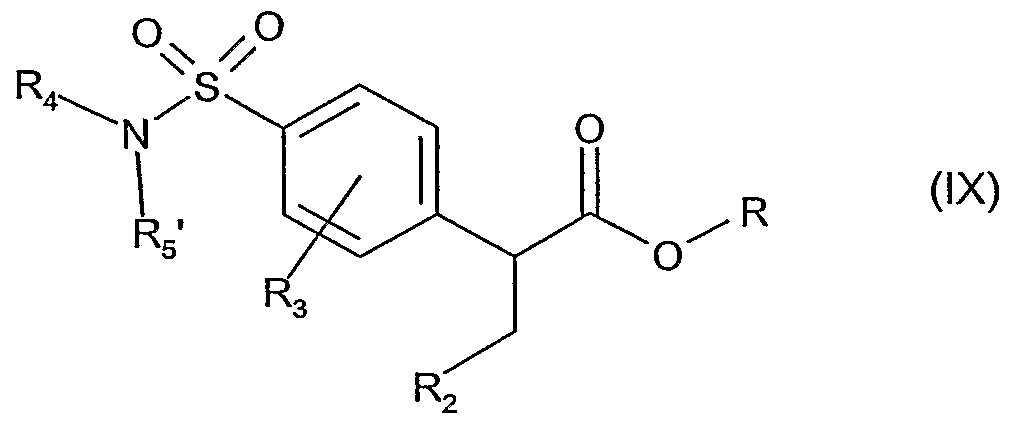
- compounds of formula (III) may be prepared by treating an ester of the formula
- R 3 has a meaning as defined herein above, and R is lower alkyl, preferably, methyl or ethyl, with chlorosulfonic acid to afford a compound of the formula wherein R 3 and R have meanings as defined herein above, optionally in the presence of an intrinsic organic solvent.
- the reaction is carried out without an intrinsic organic solvent.
- a compound of formula (V) may then be treated with an amine of the formula R 4 -NH-R 5 ' (VI), or an acid addition salt thereof, wherein R 4 and R 5 ' have meanings as defined herein above, in the presence of a base, such as pyridine, TEA, DIEA or NMM, in an inert organic solvent, such as DCM, DMF or THF, or a mixture of solvents thereof, to afford a compound of the formula
- reaction is conducted at a temperature ranging from about -4°C to room temperature (RT), more preferably, the reaction temperature is about 0°C.
- a resulting compound of formula (VII) may then be treated with a base, such as sodium hydride, lithium diisopropylamide (LDA) or lithium bis(trimethylsilyl)amide (LHMDS), preferably LDA, followed by addition of an alkylating agent of the formula R 2 -(CH 2 )-Lg (VIII) wherein R 2 has a meaning as defined herein above, and Lg represents a leaving group, such as chloride, bromide, iodide, mesylate, tosylate or triflate, preferably iodide, to afford a compound of the formula wherein R 2 , R 3 , R 4 , R 5 ' and R have meanings as defined herein above.
- a base such as sodium hydride, lithium diisopropylamide (LDA) or lithium bis(trimethylsilyl)amide (LHMDS), preferably LDA
- LDA lithium diisopropylamide
- LHMDS lithium bis(trimethylsilyl
- the alkylation step is preferably conducted in a polar organic solvent, such as THF, DMF, N-methylpyrrolidone (NMP), 1 ,3-dimethyl-3,4,5,6-tetrahydro-2(7H)-pyridone (DMPU) or 1 ,3-dimethyl-3,4,5,6- tetrahydro-2(7H)-pyrimidinone (DMTP), or in a mixture of solvents thereof.
- a polar organic solvent such as THF, DMF, N-methylpyrrolidone (NMP), 1 ,3-dimethyl-3,4,5,6-tetrahydro-2(7H)-pyridone (DMPU) or 1 ,3-dimethyl-3,4,5,6- tetrahydro-2(7H)-pyrimidinone (DMTP), or in a mixture of solvents thereof.
- a polar organic solvent such as THF, DMF, N-methylpyrrolidone (NMP), 1 ,3-
- a resulting compound of formula (IX) may then be hydrolyzed, e.g., in the presence of an aqueous base such as sodium, lithium or potassium hydroxide and an organic solvent such as THF or lower alcohol, preferably, methanol or ethanol, to afford a carboxylic acid of formula (III) wherein R 2 , R 3 , R 4 and R 5 ' have meanings as defined herein above.
- an aqueous base such as sodium, lithium or potassium hydroxide
- organic solvent such as THF or lower alcohol, preferably, methanol or ethanol
- a carboxylic acid of formula (III) may then be coupled with an amine of formula (II) under reaction conditions as described herein above to afford a compound of formula (I') wherein Ri', R 2 , R3, R and R 5 ' have meanings as defined herein above, e.g., via conversion of the acid to the corresponding acid chloride or in the presence of a coupling agent such as EDCI, HOBt or PyBOP, or a mixture of coupling agents thereof.
- a coupling agent such as EDCI, HOBt or PyBOP, or a mixture of coupling agents thereof.
- R 2 and R 3 have meanings as defined herein above, and Ri' represents Ri as defined herein above, or Ri' is a group convertible to Ri, with an amine of the formula R 4 -NH-R 5 ' (VI), or an acid addition salt thereof, wherein R has a meaning as defined herein, and R 5 ' represents R 5 as defined herein above, or R 5 ' is a group convertible to R 5 , in the presence of a base, such as pyridine, TEA, DIEA or NMM, in an inert organic solvent, such as DCM, DMF or THF, or a mixture of solvents thereof, to afford a compound of the formula
- a base such as pyridine, TEA, DIEA or NMM
- an inert organic solvent such as DCM, DMF or THF, or a mixture of solvents thereof
- Ri', R 2 , R 3 , R 4 and R 5 ' have meanings as defined herein above.
- R 3 and R have meanings as defined herein above, with a base, such as sodium hydride, LDA or LHMDS, preferably LDA, followed by addition of an alkylating agent of the formula R 2 -(CH 2 )-Lg (VIII) wherein R 2 has a meaning as defined herein above, and Lg represents a leaving group, such as chloride, bromide, iodide, mesylate, tosylate or triflate, preferably iodide, to afford a compound of the formula
- the alkylation step is preferably conducted in a polar organic solvent, such as THF, DMF, NMP, DMPU or DMTP, or in a mixture of solvents thereof.
- a polar organic solvent such as THF, DMF, NMP, DMPU or DMTP
- a resulting compound of formula (XII) may then be hydrolyzed, e.g., in the presence of an aqueous base, such as sodium, lithium or potassium hydroxide and an organic solvent such as THF or lower alcohol, preferably, methanol or ethanol, to afford a carboxylic acid of the formula
- R 2 and R 3 have meanings as defined herein above.
- a carboxylic acid of formula (XIII) may then be coupled with an amine of formula (II) under reaction conditions as described herein above to afford a compound of the formula
- Ri', R 2 and R 3 have meanings as defined herein above, e.g., via conversion of the acid to the corresponding acid chloride or in the presence of a coupling agent, such as EDCI, HOBt or PyBOP, or a mixture of coupling agents thereof.
- a coupling agent such as EDCI, HOBt or PyBOP, or a mixture of coupling agents thereof.
- a resulting compound of formula (XIV) may then be converted to a sulfonyl chloride derivative of the formula wherein R-,', R 2 and R 3 have meanings as defined herein above, by reduction of the nitro group to the amino group, e.g., using iron powder in the presence of a mixture of acetic acid and a lower alcohol, such as ethanol, followed by diazotization reaction and subsequent treatment with, e.g., sulfur dioxide in the presence of copper(ll) chloride and acetic acid.
- a sulfonyl chloride derivative of formula (XV) may be treated with an amine of the formula or an acid addition salt thereof, wherein R and R 5 ' ave meanings as defined herein above, in the presence of a base, such as pyridine, TEA, Dl EA or NMM, in an inert organic solvent, such as DCM, DMF or THF, or a mixture of solvents thereof, to afford a compound of formula (I') wherein Ri', R 2 , R 3 , R 4 and R 5 ' have meanings as defined herein above.
- a base such as pyridine, TEA, Dl EA or NMM
- an inert organic solvent such as DCM, DMF or THF
- protecting groups are to protect the functional groups from undesired reactions with reaction components under the conditions used for carrying out a desired chemical transformation.
- the need and choice of protecting groups for a particular reaction is known to those skilled in the art and depends on the nature of the functional group to be protected (hydroxyl group, amino group, etc.), the structure and stability of the molecule of which the substituent is a part and the reaction conditions.
- the above-mentioned reactions are carried out according to standard methods, in the presence or absence of diluent, preferably, such as are inert to the reagents and are solvents thereof, of catalysts, condensing or said other agents, respectively and/or inert atmospheres, at low temperatures, RT or elevated temperatures, preferably at or near the boiling point of the solvents used, and at atmospheric or super-atmospheric pressure.
- diluent preferably, such as are inert to the reagents and are solvents thereof, of catalysts, condensing or said other agents, respectively and/or inert atmospheres, at low temperatures, RT or elevated temperatures, preferably at or near the boiling point of the solvents used, and at atmospheric or super-atmospheric pressure.
- the invention further includes any variant of the present processes, in which an intermediate product obtainable at any stage thereof is used as starting material and the remaining steps are carried out, or in which the starting materials are formed in situ under the reaction conditions, or in which the reaction components are used in the form of their salts or optically pure antipodes.
- the invention also relates to any novel starting materials, intermediates and processes for their manufacture.
- the new compounds may be in the form of one of the possible isomers or mixtures thereof, for example, as substantially pure geometric (cis or trans) isomers, diastereomers, optical isomers (antipodes), racemates or mixtures thereof.
- the aforesaid possible isomers or mixtures thereof are within the purview of this invention.
- Any resulting mixtures of isomers can be separated on the basis of the physicochemical differences of the constituents, into the pure geometric or optical isomers, diastereomers, racemates, for example, by chromatography and/or fractional crystallization.
- Any resulting racemates of final products or intermediate e.g., acids of formulae (III) and (XIII)
- the thiazolopyridine moiety may be employed to resolve the compounds of the present invention into their optical antipodes, e.g., by fractional crystallization of a salt formed with an optically active acid, e.g., tartaric acid, dibenzoyl tartaric acid, diacetyl tartaric acid, di-O,O'-p-toluoyl tartaric acid, mandelic acid, malic acid or camphor-10-sulfonic acid. Racemic products can also be resolved by chiral chromatography, e.g., high pressure liquid chromatography (HPLC) using a chiral adsorbent.
- HPLC high pressure liquid chromatography
- compounds of the invention are either obtained in the free form, or in a salt form thereof, preferably, in a pharmaceutically acceptable salt form thereof, or as a prodrug derivative thereof.
- salts may be converted into salts with pharmaceutically acceptable bases.
- Such salts include alkali metal salts, like sodium, lithium and potassium salts; alkaline earth metal salts, like calcium and magnesium salts; ammonium salts with organic bases, e.g., trimethyiamine salts, diethylamine salts, tris(hydroxymethyl)methylamine salts, dicyclohexylamine salts and N-methyl-D-glucamine salts; salts with amino acids like arginine, lysine and the like.
- Salts may be formed using conventional methods, advantageously in the presence of an ethereal or alcoholic solvent, such as a lower alkanol.
- the salts may be precipitated with ethers, e.g., diethyl ether. Resulting salts may be converted into the free compounds by treatment with acids. These or other salts can also be used for purification of the compounds obtained.
- Compounds of the invention may be converted into acid addition salts, especially pharmaceutically acceptable salts. These are formed, e.g., with inorganic acids, such as mineral acids, e.g., sulfuric acid, phosphoric or hydrohalic acid, or with organic carboxylic acids, such as (C C 4 )-a!kanecarboxylic acids which, e.g., are unsubstituted or substituted by halogen, e.g., acetic acid, such as saturated or unsaturated dicarboxylic acids, e.g., oxalic, succinic, maleic or fumaric acid, such as hydroxycarboxylic acids, e.g., glycolic, lactic, malic, tartaric or citric acid, such as amino acids, e.g., aspartic or glutamic acid, or with organic sulfonic acids, such as (C ⁇ -C )-alkylsuIfonic acids, e.g., methane
- Prodrug derivatives of any compound of the invention are derivatives of said compounds which following administration release the parent compound in vivo via some chemical or physiological process, e.g., a prodrug on being brought to the physiological pH or through enzyme action is converted to the parent compound.
- exemplary prodrug derivatives are, e.g., esters of free carboxylic acids and S-acyl and O-acyl derivatives of thiols, alcohols or phenols, wherein acyl has a meaning as defined herein.
- ester derivatives convertible by solvolysis under physiological conditions to the parent carboxylic acid, e.g., lower alkyl esters, cycloalkyl esters, lower alkenyl esters, benzyl esters, mono- or di-substituted lower alkyl esters, such as the co-(amino, mono- or di-lower alkylamino, carboxy, lower alkoxyca rbonyl)-lower alkyl esters, the ⁇ -(Iower alkanoyloxy, lower alkoxycarbonyl or di-lower alkylaminocarbonyl)-lower alkyl esters, such as the pivaloyloxymethyl ester and the like conventionally used in the art.
- lower alkyl esters e.g., lower alkyl esters, cycloalkyl esters, lower alkenyl esters, benzyl esters, mono- or di-substituted lower alkyl esters, such as the co
- prodrug derivatives In view of the close relationship between the free compounds, the prodrug derivatives and the compounds in the form of their salts, whenever a compound is referred to in this context, a prodrug derivative and a corresponding salt is also intended, provided such is possible or appropriate under the circumstances.
- the compounds, including their salts, can also be obtained in the form of their hydrates, or include other solvents used for their crystallization.
- the compounds of the present invention may be employed for the treatment of conditions mediated by glucokinase activity. Such compounds may thus be employed therapeutically for the treatment of impaired glucose tolerance, Type 2 diabetes and obesity.
- the present invention further provides pharmaceutical compositions comprising a therapeutically effective amount of a pharmacologically active compound of the instant invention, alone or in combination with one or more pharmaceutically acceptable carriers.
- compositions according to the invention are those suitable for enteral, such as oral or rectal; transdermal and parenteral administration to mammals, including man, for the treatment of conditions mediated by glucokinase activity.
- enteral such as oral or rectal
- transdermal and parenteral administration to mammals, including man, for the treatment of conditions mediated by glucokinase activity.
- Such conditions include impaired glucose tolerance, Type 2 diabetes and obesity.
- the pharmacologically active compounds of the invention may be employed in the manufacture of pharmaceutical compositions comprising an effective amount thereof in conjunction or admixture with excipients or carriers suitable for either enteral or parenteral application.
- Injectable compositions are preferably aqueous isotonic solutions or suspensions, and suppositories are advantageously prepared from fatty emulsions or suspensions.
- compositions may be sterilized and/or contain adjuvants, such as preserving, stabilizing, wetting or emulsifying agents, solution promoters, salts for regulating the osmotic pressure and/or buffers. In addition, they may also contain other therapeutically valuable substances.
- adjuvants such as preserving, stabilizing, wetting or emulsifying agents, solution promoters, salts for regulating the osmotic pressure and/or buffers.
- Said compositions are prepared according to conventional mixing, granulating or coating methods, respectively, and contain about 0.1-75%, preferably about 1-50%, of the active ingredient.
- Suitable formulations for transdermal application include a therapeutically effective amount of a compound of the invention with carrier.
- Advantageous carriers include absorbable pharmacologically acceptable solvents to assist passage through the skin of the host.
- transdermal devices are in the form of a bandage comprising a backing member, a reservoir containing the compound optionally with carriers, optionally a rate controlling barrier to deliver the compound of the skin of the host at a controlled and predetermined rate over a prolonged period of time, and means to secure the device to the skin.
- the present invention provides pharmaceutical compositions as described above for the treatment of conditions mediated by glucokinase activity, preferably, impaired glucose tolerance, Type 2 diabetes and obesity.
- compositions may contain a therapeutically effective amount of a compound of the invention as defined above, either alone or in a combination with another therapeutic agent, e.g., each at an effective therapeutic dose as reported in the art.
- therapeutic agents include: a) antidiabetic agents, such as insulin, insulin derivatives and mimetics; insulin secretagogues such as the sulfonylureas, e.g., Glipizide, glyburide and Amaryl; insulinotropic sulfonylurea receptor ligands such as meglitinides, e.g., nateglinide and repaglinide; protein tyrosine phosphatase-1 B (PTP-1 B) inhibitors such as PTP-112; GSK3 (glycogen synthase kinase-3) inhibitors such as SB-517955, SB-4195052, SB-216763, NN-57-05441 and NN-57- 05445; RXR lig
- a compound of the present invention may be administered either simultaneously, before or after the other active ingredient, either separately by the same or different route of administration or together in the same pharmaceutical formulation.
- compositions comprising a therapeutically effective amount of a compound of the invention in combination with a therapeutically effective amount of another therapeutic agent, preferably selected from anti- diabetics, hypolipidemic agents, anti-obesity agents or anti-hypertensive agents, most preferably from antidiabetics or hypolipidemic agents as described above.
- another therapeutic agent preferably selected from anti- diabetics, hypolipidemic agents, anti-obesity agents or anti-hypertensive agents, most preferably from antidiabetics or hypolipidemic agents as described above.
- the present invention further relates to pharmaceutical com ositions as described above for use as a medicament.
- the present invention further relates to use of pharmaceutical compositions or combinations as described above for the preparation of a medicament for the treatment of conditions mediated by glucokinase activity, preferably, impaired glucose tolerance, Type 2 diabetes and obesity.
- the present invention also relates to a compound of formula (I) for use as a medicament; to the use of a compound of formula (I) for the preparation of a pharmaceutical composition for the prevention and/or treatment of conditions mediated by glucokinase activity, and to a pharmaceutical composition for use in conditions mediated by glucokinase activity comprising a compound of formula (I), or a pharmaceutically acceptable salt thereof, in association with a pharmaceutically acceptable diluent or carrier therefore.
- the present invention further provides a method for the prevention and/or treatment of conditions mediated by glucokinase activity, which comprises administering a therapeutically effective amount of a compound of the present invention.
- a unit dosage for a mammal of about 50-70 kg may contain between about 1 mg and 1000 mg, advantageously between about 5-500 mg of the active ingredient.
- the therapeutically effective dosage of active compound is dependent on the species of warm-blooded animal (mammal), the body weight, age and individual condition, on the form of administration, and on the compound involved.
- the present invention also provides a therapeutic combination, e.g., a kit, kit of parts, e.g., for use in any method as defined herein, comprising a compound of formula (I), or a pharmaceutically acceptable salt thereof, to be used concomitantly or in sequence with at least one pharmaceutical composition comprising at least another therapeutic agent, preferably selected from anti-diabetic agents, hypolipidemic agents, anti-obesity agents and anti-hypertensive agents, or a pharmaceutically acceptable salt thereof.
- the kit may comprise instructions for its administration.
- kits of parts comprising: (i) a pharmaceutical composition of the invention; and (ii) a pharmaceutical composition comprising a compound selected from an anti-diabetic, a hypolipidemic agent, an anti-obesity agent and an anti- hypertensive agent, or a pharmaceutically acceptable salt thereof, in the form of two separate units of the components (i) to (ii).
- the present invention provides a method as defined above comprising co- administration, e.g., concomitantly or in sequence, of a therapeutically effective amount of a compound of formula (I), or a pharmaceutically acceptable salt thereof, and a second drug substance, said second drug substance being an anti-diabetic, a h-ypolipidemic agent, an anti-obesity agent or an anti-hypertensive agent, e.g., as indicated above.
- a compound of the invention is administered to a mammal in need thereof.
- a compound of the invention is used for the treatment of a disease which responds to modulation of the glucokinase activity.
- the condition associated with glucokinase activity is selected from impaired glucose tolerance, Type 2 diabetes and obesity.
- the present invention provides a method or use which comprises administering a compound of formula (I) in combination with a therapeutically effective amount o an anti- diabetic agent, a hypolipidemic agent, an anti-obesity agent or an anti-hypertensi /e agent.
- the present invention provides a method or use which comprises administering a compound of formula (I) in the form of a pharmaceutical composition as described herein.
- treatment embraces all the different forms or modes of treatment as known to those of the pertinent art and in particular includes preventive, curative, delay of progression and palliative treatment.
- the above-cited properties are demonstrable in vitro and in vivo tests using advantageously mammals, e.g., mice, rats, dogs, monkeys or isolated organs, tissues and preparations thereof.
- Said compounds can be applied in vitro in the form of solutions, e.g., preferably aqueous solutions, and in vivo either enterally, parenterally, advantageously intravenously, e.g., as a suspension or in aqueous solution.
- the dosage in vitro may range between about 10 ⁇ 2 molar and 10 "9 molar concentrations.
- a therapeutically effective amount in vJvo may range depending on the route of administration, between about 0.1 mg/kg and 1O00 mg/kg, preferably between about 1 mg/kg and 100 mg/kg.
- the glucokinase activation in vitro may be determined by measuring the activation of recombinant GST-GK by a compound of the present invention in the absence or the presence of GKRP, a 68,000 Da protein inhibitor of GK. In these assays, formation of glucose-6-phosphate is coupled directly to the formation of thioNADH. GST-GK catalyzes the reaction of glucose and Mg-ATP to produce glucose-6-phosphate and ADP. Glucose-6- phosphate dehydrogenase (G6PDH) reduces thionicotinamide (thioNAD) to thioNADH. The assay measures the formation of NADH at 405 nM.
- the basic GK assay components are as follows: 25 mM HEPES (pH 7.1), 25 m KCI, 2.5 mM MgCI 2 , 1 mM ATP (Sigma A-5394), 1 mM DTT, 1 mM thioNAD (Sigma T-7375), 80 units/mL G6PDH (Sigma G-5885), 10 mM glucose and 8.7 mg/mL GST-GK (1 10 nM).
- 20 ⁇ M Fructose-1 -phosphate (F-6-P) and 25 ⁇ g/mL of recombinant GKRP (370 nM) are added to these assay components.
- F-1-P at 1 ⁇ M is used as a control in the GK/GKRP assay.
- F-1-P reverses inhibition of GST-GK by GKRP.
- the assay is done in standard, 96-well, round-bottom plates and the total assay volume is 25 ⁇ L.
- Compounds are serially diluted into 100% DMSO and 0.5 ⁇ L of diluted con ⁇ pouf nd in 100% DMSO is added to the assay plate.
- Assay reagents (24.5 ⁇ L) are added using a Zymark robotic platform.
- Buffer containing HEPES, MgCI 2 , KCI, thioNAD, G6PDH, F-6-P, glucose, GKRP and GST-GK, are added (5 ⁇ L) using the Zymark 8-channel hand p>ipet.
- the reaction is then initiated by adding 19.5 ⁇ L of buffer containing HEPES, MgCI 2 , KCI, DTT and ATP using the Zymark Reagent Addition Station/Reagent Addition Module.
- the plates are then delivered via the Zymark XP arm to a Thermomax plate reader and read k ⁇ netically over three min at 405 nM at RT. Units are expressed as milli-optical density per minute (mOD/min).
- glucokinase activation in rat hepatocytes may be determined as follows:
- Hepatocytes are isolated by collagenase perfusion of the livers of overnight-fasted male Harlen Sprague-Dawley rats (Charles River Laboratories, Raleigh, NC) as previously described (see Berry et al., J. Cell Biol., Vol. 43, pp. 506-520 (1969)). The cells ares washed three times each with 100 mL of glucose-free Dulbecco's Modified Eagle medium (DMEM, Gibco BRL) containing 5% fetal bovine serum (FBS) and then suspended in glucose-free DMEM/5% FBS.
- DMEM glucose-free Dulbecco's Modified Eagle medium
- FBS fetal bovine serum
- Cells are plated in collagen coated 24-well plates (Becton Dickinson) at a density of 3 x 10 5 cells/well in 1 mL of William's Medium E (Sigma) supplemented with 5% FBS, and incubated at 37°C in 5% CO 2 /95% air. After cell attachment ( ⁇ 4 h), the medium is replaced with serum-free DMEM containing 5 mM glucose and 10 nM dexamethasone (Sigma), and cells are cultured further for 16-20 h prior to use.
- DMEM serum-free DMEM containing 5 mM glucose and 10 nM dexamethasone
- the rate of glucose phosphorylation is determined by the release of 3 H 2 O from [2- 3 H]glucose.
- the medium from the cultured hepatocytes is removed, and the cells are pre-incubated in 150 ⁇ L of fresh serum-free DMEM containing 5 mM glucose and compound (1 , 10 and 30 ⁇ M) or DMSO for 3 h at 37°C. The final concentration of DMSO is 0.2%.
- the medium is then removed and 150 ⁇ L of a fresh mixture of DMEM/5 mM glucose containing compound or DMSO, and 1 ⁇ Ci of [2- 3 H]glucose (NEN) is added.
- cells are pre-incubated in serum-free DMEM/5 mM glucose medium containing DMSO for 3 h and then are incubated for 1 h in labeled glucose medium containing 0.5 mM fructose/DMSO (precursor of F-1-P, AnalaR ® from BDH). All conditions are tested in quadruplicate where one well per plate received 200 ⁇ L of the appropriate medium plus labeled glucose (instead of 150 ⁇ L) of which 50 ⁇ L is immediately removed and placed in a 1.2 mL microfuge tube (Costar) containing 10 ⁇ L of 1 N HCI. This sample is used as a 0-minute time point for determining background 3 H 2 O release (exchange values). Following the addition of the labeled glucose media, hepatocytes are incubated at 37°C on a slow moving rocker for 1 h.
- labeled glucose medium containing 0.5 mM fructose/DMSO (precursor of F-1-P, AnalaR ® from B
- the culture medium On termination of the incubation, 50 ⁇ L of the culture medium is collected into microfuge tubes containing 10 ⁇ L of 1 N HCI, and determination of 3 H 2 O.
- the tubes are left uncapped and each is placed inside a 20 mL glass scintillation vial (Wheaton) containing 1.5 mL of deionized water.
- the vials are capped tightly and incubated at 37°C in a dry incubator for 2 days ( 3 H 2 0 from the reaction mixture will equilibrate with the water in the vial).
- a standard curve is generated using [ 3 H]H 2 O (NEN) to correct for exchange.
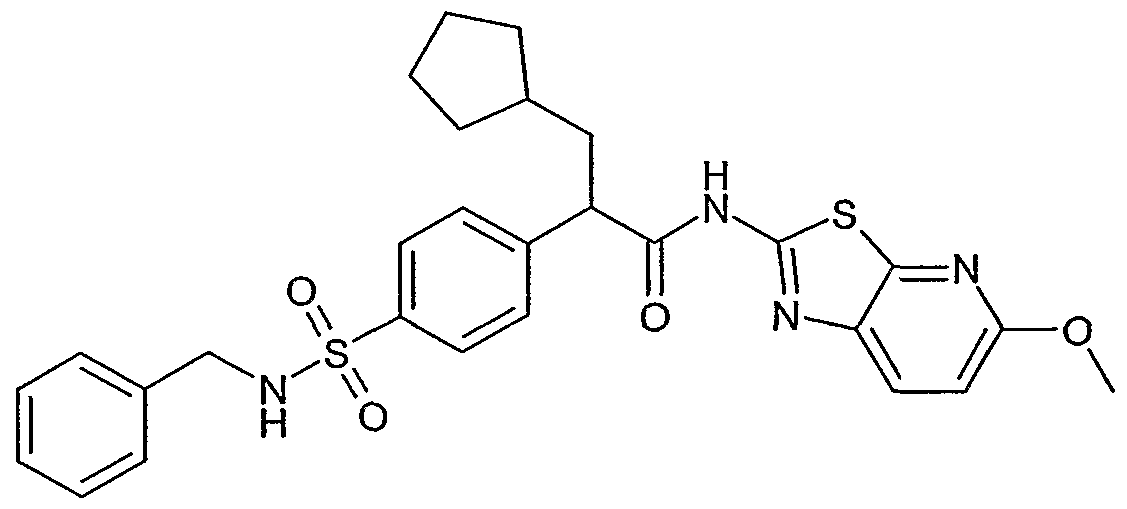
- the compound of Example 1 demonstrates an EC 50 of about 251 nM in the in vitro assay measuring the activation of recombinant GST-GK.
- the salt A is dissolved in 1 ,4-dioxane (500 mL) and heated at 100°C for 1 h.
- the clear reaction solution is cooled to RT (27°C) and stirred for 10 h.
- the crystallized product is collected by filtration under vacuum, washed with 50 mL of hexane, and dried under vacuum to afford salt B.
- the salt B is dissolved in 1 ,4-dioxane (290 mL) and heated at 100°C for 1 h.
- the clear reaction solution is cooled to RT (27°C) and stirred for 10 h.
- the crystallized product is collected by filtration under vacuum, washed with 30 mL of hexane, and dried under vacuum to afford salt C.
- the salt C is dissolved in 1 ,4-dioxane (100 mL) and heated at 100°C for 1 h.
- the clear reaction solution is cooled to RT (27°C) and stirred for 10 h.
- the crystallized product is collected by filtration under vacuum, washed with 30ml of hexane, and dried under vacuum to afford salt D.
- the salt D is treated with aqueous hydrochloric acid solution (20 mL, 1 mL of concentrated hydrochloric acid diluted with 100 mL of water) and stirred for 5 min.
- aqueous hydrochloric acid solution (20 mL, 1 mL of concentrated hydrochloric acid diluted with 100 mL of water) and stirred for 5 min.
- the white solid precipitates out and is collected by vacuum filtration, washed with 10 mL of cold water, 5 mL of isopropanol and 20 mL of hexane, and dried under vacuum to yield the hydrochloride salt of (R)-(-)-3-cyclopentyl-2-[4-(4-methyl-piperazine-1-sulfonyl)-phenyl]-propionic acid, salt E.
- the salt E is neutralized by stirring with aqueous sodium bicarbonate solution (10 mL, 1 g of sodium bicarbonate dissolved in 120 mL of water) for 5 min.
- the precipitated solid is collected by filtration, washed with 10 mL of cold water, 100 mL of hexane, and dried to afford (R)-(-)-3-cyclopentyl-2-[4-(4-methyl-piperazine-1-sulfonyl)-phenyl]-propionic acid: m.p. 202.2-203.4°C.
- the title compound may be obtained by the resolution of the racemic title compound of Example 1 using the following preparative chiral HPLC method:
- Solvent A water:methanol:acetonitrile (10:80:10 v/v/v);
- Solvent B water:methanol:acetonitri!e (05:90:05 v/v/v);
- gradient program (time, min / %B): 0/0, 20/0, 50/100, 55/0, 70/0;
- the resulting yellow solution is then added to 180 mL of the Green Solution (prepared by bubbling 74 g of sulfur dioxide gas into 740 mL of glacial acetic acid followed by addition of 30 g of CuCI 2 in 35-40 mL water.
- the resulting mixture is filtered through filter paper to obtain a clear green solution) and the mixture is stirred at RT overnight (the initial black- green solution transforms to a light green solution after 24 h).
- the resulting mixture is poured onto 500 g of ice and the precipitated solids are collected by filtration, washed with water and then dissolved in ethyl acetate, washed with brine, dried over anhydrous magnesium sulfate, filtered and evaporated to afford a yellow foam.
- the title E compound 4-[2-cyclopentyl-1-(5-methoxy-thiazolo[5,4-b]pyridin-2-yIcarbamoyl)- ethyl]-benzenesulfonyl chloride may be reacted with the desired amine of formula R 4 -NH-R 5 ' according to methods well know in the art, e.g., using reaction conditions as described in Example 1 for the preparation of the title C compound.
Landscapes
- Health & Medical Sciences (AREA)
- Chemical & Material Sciences (AREA)
- Organic Chemistry (AREA)
- Veterinary Medicine (AREA)
- Pharmacology & Pharmacy (AREA)
- Public Health (AREA)
- General Health & Medical Sciences (AREA)
- Animal Behavior & Ethology (AREA)
- Life Sciences & Earth Sciences (AREA)
- Diabetes (AREA)
- Medicinal Chemistry (AREA)
- General Chemical & Material Sciences (AREA)
- Engineering & Computer Science (AREA)
- Nuclear Medicine, Radiotherapy & Molecular Imaging (AREA)
- Chemical Kinetics & Catalysis (AREA)
- Bioinformatics & Cheminformatics (AREA)
- Obesity (AREA)
- Hematology (AREA)
- Child & Adolescent Psychology (AREA)
- Emergency Medicine (AREA)
- Endocrinology (AREA)
- Epidemiology (AREA)
- Nitrogen And Oxygen Or Sulfur-Condensed Heterocyclic Ring Systems (AREA)
- Pharmaceuticals Containing Other Organic And Inorganic Compounds (AREA)
Abstract
Description






Claims


Priority Applications (13)
| Application Number | Priority Date | Filing Date | Title |
|---|---|---|---|
| JP2007505512A JP4700684B2 (en) | 2004-04-02 | 2005-04-01 | Sulfonamide-thiazolopyridine derivatives as glucokinase activators useful in the treatment of type 2 diabetes |
| AU2005229416A AU2005229416B2 (en) | 2004-04-02 | 2005-04-01 | Sulfonamide-thiazolpyridine derivatives as glucokinase activators useful the treatment of type 2 diabetes |
| EP05731007A EP1735322B1 (en) | 2004-04-02 | 2005-04-01 | Sulfonamide-thiazolpyridine derivatives as glucokinase activators useful for the treatment of type 2 diabetes |
| AT05731007T ATE524479T1 (en) | 2004-04-02 | 2005-04-01 | SULFONAMIDTHIAZOLEPYRIDINE DERIVATIVES AS GLUCOKINASE ACTIVATIONS SUITABLE FOR THE TREATMENT OF TYPE 2 DIABETES |
| CA2560689A CA2560689C (en) | 2004-04-02 | 2005-04-01 | Sulfonamide-thiazolpyridine derivatives as glucokinase activators useful in the treatment of type 2 diabetes |
| CN2005800178910A CN1960995B (en) | 2004-04-02 | 2005-04-01 | Sulfonamide-thiazolopyridine derivatives useful for treating type 2 diabetes as glucokinase activators |
| US11/547,046 US7750020B2 (en) | 2004-04-02 | 2005-04-01 | Sulfonamide-thiazolpyridine derivatives as glucokinase activators useful the treatment of Type 2 diabetes |
| BRPI0509573-5A BRPI0509573A (en) | 2004-04-02 | 2005-04-01 | sulfonamide thiazolpyridine derivatives as useful glucokinase activators for the treatment of type 2 diabetes |
| ARP050103320A AR050913A1 (en) | 2004-04-02 | 2005-08-09 | COMPOUNDS DERIVED FROM THIAZOLPIRIDINE AS GLUCOQUINASE ACTIVATORS; PHARMACEUTICAL COMPOSITIONS THAT CONTAIN THEM AND THEIR USE IN MEDICINES FOR THE TREATMENT OF TYPE II DIABETES |
| PE2006000347A PE20061353A1 (en) | 2004-04-02 | 2006-03-29 | SULFONAMIDE-THIAZOLOPYRIDINE COMPOUNDS AS GLUCOCINASE ACTIVATORS |
| IL178151A IL178151A0 (en) | 2004-04-02 | 2006-09-18 | Sulfonamide-thiazolpyridine derivatives as glucokinase activators useful in the treatment of type 2 diabetes |
| TNP2006000315A TNSN06315A1 (en) | 2004-04-02 | 2006-09-29 | Sulfonamide-thiazolpyridine derivatives as glucokinase activators useful the treatment of type 2 diabetes |
| NO20064929A NO20064929L (en) | 2004-04-02 | 2006-10-27 | Sulfonamide-thiazole pyridine derivatives as glucokinase activators useful in the treatment of type 2 diabetes |
Applications Claiming Priority (2)
| Application Number | Priority Date | Filing Date | Title |
|---|---|---|---|
| US55918404P | 2004-04-02 | 2004-04-02 | |
| US60/559,184 | 2004-04-02 |
Publications (1)
| Publication Number | Publication Date |
|---|---|
| WO2005095418A1 true WO2005095418A1 (en) | 2005-10-13 |
Family
ID=34963913
Family Applications (1)
| Application Number | Title | Priority Date | Filing Date |
|---|---|---|---|
| PCT/EP2005/003456 Ceased WO2005095418A1 (en) | 2004-04-02 | 2005-04-01 | Sulfonamide-thiazolpyridine derivatives as glucokinase activators useful the treatment of type 2 diabetes |
Country Status (19)
| Country | Link |
|---|---|
| US (1) | US7750020B2 (en) |
| EP (1) | EP1735322B1 (en) |
| JP (1) | JP4700684B2 (en) |
| KR (1) | KR100830007B1 (en) |
| CN (1) | CN1960995B (en) |
| AR (1) | AR050913A1 (en) |
| AT (1) | ATE524479T1 (en) |
| AU (1) | AU2005229416B2 (en) |
| BR (1) | BRPI0509573A (en) |
| CA (1) | CA2560689C (en) |
| EC (1) | ECSP066894A (en) |
| IL (1) | IL178151A0 (en) |
| MA (1) | MA28528B1 (en) |
| NO (1) | NO20064929L (en) |
| PE (1) | PE20061353A1 (en) |
| PT (1) | PT1735322E (en) |
| RU (1) | RU2412192C2 (en) |
| TN (1) | TNSN06315A1 (en) |
| WO (1) | WO2005095418A1 (en) |
Cited By (32)
| Publication number | Priority date | Publication date | Assignee | Title |
|---|---|---|---|---|
| US7199140B2 (en) | 2001-06-26 | 2007-04-03 | Astrazeneca Ab | Vinyl phenyl derivatives as GLK activators |
| WO2007041366A1 (en) | 2005-09-30 | 2007-04-12 | Novartis Ag | Sulfonamide derivatives as glycokinase activators useful in the treatment of type 2 diabetes |
| US7230108B2 (en) | 2002-11-19 | 2007-06-12 | Astrazeneca Ab | Quinoline derivatives as glucokinase ligands |
| WO2007041365A3 (en) * | 2005-09-30 | 2007-06-21 | Novartis Ag | 3-cyclyl-2- (4-sulfamo yl-phenyl) -n-cyclyl-propionamide derivatives useful in the treatment of impaired glucose tolerance and diabetes |
| WO2007128761A2 (en) | 2006-05-04 | 2007-11-15 | Boehringer Ingelheim International Gmbh | Uses of dpp-iv inhibitors |
| WO2008119734A3 (en) * | 2007-03-29 | 2009-01-15 | Novartis Ag | Process for the manufacture of organic compounds |
| JP2009513720A (en) * | 2005-11-01 | 2009-04-02 | ジヤンセン・フアーマシユーチカ・ナームローゼ・フエンノートシヤツプ | Substituted cycloalkyl pyrrolones as allosteric modulators of glucokinase |
| JP2009513704A (en) * | 2005-11-01 | 2009-04-02 | ジヤンセン・フアーマシユーチカ・ナームローゼ・フエンノートシヤツプ | Substituted dihydroisoindolones as allosteric modulators of glucokinase |
| JP2009513711A (en) * | 2005-11-01 | 2009-04-02 | ジヤンセン・フアーマシユーチカ・ナームローゼ・フエンノートシヤツプ | Substituted pyrolones as allosteric modulators of glucokinase |
| US7524957B2 (en) | 2001-08-17 | 2009-04-28 | Astrazeneca Ab | Compounds effecting glucokinase |
| JP2009518286A (en) * | 2005-11-01 | 2009-05-07 | ジヤンセン・フアーマシユーチカ・ナームローゼ・フエンノートシヤツプ | Dihydroisoindolone as an allosteric modulator of glucokinase |
| WO2009091014A1 (en) | 2008-01-18 | 2009-07-23 | Astellas Pharma Inc. | Phenyl acetamide derivative |
| US7642263B2 (en) | 2005-07-09 | 2010-01-05 | Astrazeneca Ab | Heteroaryl benzamide derivatives for use as GLK activators in the treatment of diabetes |
| WO2010029461A1 (en) * | 2008-09-11 | 2010-03-18 | Pfizer Inc. | Heteroaryls amide derivatives and their use as glucokinase activators |
| US7741327B2 (en) | 2008-04-16 | 2010-06-22 | Hoffmann-La Roche Inc. | Pyrrolidinone glucokinase activators |
| US7812167B2 (en) | 2002-10-03 | 2010-10-12 | Novartis, Ag | Substituted (thiazol-2-yl)-amides or sulfonamides as glucokinase activators useful in the treatment of type 2 diabetes |
| JP2010540679A (en) * | 2007-10-08 | 2010-12-24 | アドビヌス・セラピューティクス・プライベート・リミテッド | Acetamide derivatives as glucokinase activators, their preparation and pharmaceutical applications |
| US7935699B2 (en) | 2006-07-24 | 2011-05-03 | Hoffmann-La Roche Inc. | Pyrazole glucokinase activators |
| CN101417987B (en) * | 2007-10-24 | 2011-07-13 | 山东轩竹医药科技有限公司 | DPP-IV inhibitor with sulfonamide formyl piperazine structure |
| WO2011123572A1 (en) | 2010-03-31 | 2011-10-06 | The Scripps Research Institute | Reprogramming cells |
| US8222416B2 (en) | 2009-12-14 | 2012-07-17 | Hoffmann-La Roche Inc. | Azaindole glucokinase activators |
| US8247442B2 (en) | 2006-03-29 | 2012-08-21 | Purdue Pharma L.P. | Benzenesulfonamide compounds and their use |
| US8258134B2 (en) | 2008-04-16 | 2012-09-04 | Hoffmann-La Roche Inc. | Pyridazinone glucokinase activators |
| US8399486B2 (en) | 2007-04-09 | 2013-03-19 | Purdue Pharma L.P. | Benzenesulfonyl compounds and the use thereof |
| US8455496B2 (en) | 2009-03-11 | 2013-06-04 | Pfizer Inc. | Benzofuranyl derivatives |
| US8563730B2 (en) | 2008-05-16 | 2013-10-22 | Takeda San Diego, Inc. | Pyrazole and fused pyrazole glucokinase activators |
| WO2013173382A1 (en) * | 2012-05-15 | 2013-11-21 | Amgen Inc. | Benzothiophene sulfonamides and other compounds that interact with glucokinase regulatory protein |
| US8765736B2 (en) | 2007-09-28 | 2014-07-01 | Purdue Pharma L.P. | Benzenesulfonamide compounds and the use thereof |
| US8791264B2 (en) | 2006-04-13 | 2014-07-29 | Purdue Pharma L.P. | Benzenesulfonamide compounds and their use as blockers of calcium channels |
| US8937181B2 (en) | 2006-04-13 | 2015-01-20 | Purdue Pharma L.P. | Benzenesulfonamide compounds and the use thereof |
| US8946440B2 (en) | 2008-04-28 | 2015-02-03 | Kyorin Pharmaceutical Co., Ltd. | Cyclopentylacrylamide derivative |
| US9000174B2 (en) | 2004-10-14 | 2015-04-07 | Purdue Pharma L.P. | 4-phenylsulfonamidopiperidines as calcium channel blockers |
Families Citing this family (19)
| Publication number | Priority date | Publication date | Assignee | Title |
|---|---|---|---|---|
| AU2005229415B2 (en) * | 2004-04-02 | 2009-05-14 | Novartis Ag | Thiazolopyridine derivatives, pharmaceutical conditions containing them and methods of treating glucokinase mediated conditions |
| TW200831081A (en) | 2006-12-25 | 2008-08-01 | Kyorin Seiyaku Kk | Glucokinase activator |
| MX2009009525A (en) * | 2007-03-07 | 2009-09-16 | Kyorin Seiyaku Kk | Glucokinase activator. |
| EP2440058A4 (en) | 2009-06-12 | 2012-11-21 | Dana Farber Cancer Inst Inc | FOUNDED HETEROCYCLIC COMPOUNDS AND USES THEREOF |
| US9180127B2 (en) | 2009-12-29 | 2015-11-10 | Dana-Farber Cancer Institute, Inc. | Type II Raf kinase inhibitors |
| CA2856291C (en) | 2011-11-17 | 2020-08-11 | Dana-Farber Cancer Institute, Inc. | Inhibitors of c-jun-n-terminal kinase (jnk) |
| EP2909194A1 (en) | 2012-10-18 | 2015-08-26 | Dana-Farber Cancer Institute, Inc. | Inhibitors of cyclin-dependent kinase 7 (cdk7) |
| US10000483B2 (en) | 2012-10-19 | 2018-06-19 | Dana-Farber Cancer Institute, Inc. | Bone marrow on X chromosome kinase (BMX) inhibitors and uses thereof |
| US9758522B2 (en) | 2012-10-19 | 2017-09-12 | Dana-Farber Cancer Institute, Inc. | Hydrophobically tagged small molecules as inducers of protein degradation |
| EP3057955B1 (en) | 2013-10-18 | 2018-04-11 | Syros Pharmaceuticals, Inc. | Heteroaromatic compounds useful for the treatment of prolferative diseases |
| US10047070B2 (en) | 2013-10-18 | 2018-08-14 | Dana-Farber Cancer Institute, Inc. | Polycyclic inhibitors of cyclin-dependent kinase 7 (CDK7) |
| US9862688B2 (en) | 2014-04-23 | 2018-01-09 | Dana-Farber Cancer Institute, Inc. | Hydrophobically tagged janus kinase inhibitors and uses thereof |
| US10017477B2 (en) | 2014-04-23 | 2018-07-10 | Dana-Farber Cancer Institute, Inc. | Janus kinase inhibitors and uses thereof |
| AU2015371251B2 (en) | 2014-12-23 | 2020-06-11 | Dana-Farber Cancer Institute, Inc. | Inhibitors of cyclin-dependent kinase 7 (CDK7) |
| HK1246645A1 (en) | 2015-03-27 | 2018-09-14 | 达纳-法伯癌症研究所股份有限公司 | Inhibitors of cyclin-dependent kinases |
| US10702527B2 (en) | 2015-06-12 | 2020-07-07 | Dana-Farber Cancer Institute, Inc. | Combination therapy of transcription inhibitors and kinase inhibitors |
| EP3347018B1 (en) | 2015-09-09 | 2021-09-01 | Dana-Farber Cancer Institute, Inc. | Inhibitors of cyclin-dependent kinases |
| US12187701B2 (en) | 2018-06-25 | 2025-01-07 | Dana-Farber Cancer Institute, Inc. | Taire family kinase inhibitors and uses thereof |
| JP7660063B2 (en) | 2018-12-28 | 2025-04-10 | ダナ-ファーバー キャンサー インスティテュート, インコーポレイテッド | Inhibitors of cyclin-dependent kinase 7 and their uses |
Citations (3)
| Publication number | Priority date | Publication date | Assignee | Title |
|---|---|---|---|---|
| WO2002046173A1 (en) * | 2000-12-06 | 2002-06-13 | F. Hoffmann-La Roche Ag | Fused heteroaromatic glucokinase activators |
| WO2003080585A1 (en) * | 2002-03-26 | 2003-10-02 | Banyu Pharmaceutical Co., Ltd. | Novel aminobenzamide derivative |
| WO2004050645A1 (en) * | 2002-10-03 | 2004-06-17 | Novartis Ag | Substituted (thiazol-2-yl) -amide or sulfonamide as glycokinase activators useful in the treatment of type 2 diabetes |
Family Cites Families (34)
| Publication number | Priority date | Publication date | Assignee | Title |
|---|---|---|---|---|
| US6610846B1 (en) * | 1999-03-29 | 2003-08-26 | Hoffman-La Roche Inc. | Heteroaromatic glucokinase activators |
| RU2242469C2 (en) * | 1999-03-29 | 2004-12-20 | Ф.Хоффманн-Ля Рош Аг | Glucokinase activating agents |
| SI1169312T1 (en) * | 1999-03-29 | 2005-02-28 | F. Hoffmann-La Roche Ag | Glucokinase activators |
| US6320050B1 (en) * | 1999-03-29 | 2001-11-20 | Hoffmann-La Roche Inc. | Heteroaromatic glucokinase activators |
| US6353111B1 (en) * | 1999-12-15 | 2002-03-05 | Hoffmann-La Roche Inc. | Trans olefinic glucokinase activators |
| KR100502033B1 (en) | 2000-05-03 | 2005-07-25 | 에프. 호프만-라 로슈 아게 | Alkynyl phenyl heteroaromatic glucokinase activators |
| AU2001252270B2 (en) * | 2000-05-03 | 2005-12-15 | F. Hoffmann-La Roche Ag | Hydantoin-containing glucokinase activators |
| AU778036B2 (en) * | 2000-05-08 | 2004-11-11 | F. Hoffmann-La Roche Ag | Substituted phenylacetamides and their use as glucokinase activators |
| US6489485B2 (en) * | 2000-05-08 | 2002-12-03 | Hoffmann-La Roche Inc. | Para-amine substituted phenylamide glucokinase activators |
| KR100519826B1 (en) | 2000-05-08 | 2005-10-06 | 에프. 호프만-라 로슈 아게 | Para-amine substituted phenylamide glucokinase activators |
| MXPA03000365A (en) * | 2000-07-20 | 2003-05-27 | Hoffmann La Roche | Alpha-acyl and alpha-heteroatom-substituted benzene acetamide glucokinase activators. |
| US6369232B1 (en) * | 2000-08-15 | 2002-04-09 | Hoffmann-La Roche Inc. | Tetrazolyl-phenyl acetamide glucokinase activators |
| US6433188B1 (en) * | 2000-12-06 | 2002-08-13 | Wendy Lea Corbett | Fused heteroaromatic glucokinase activators |
| US6482951B2 (en) | 2000-12-13 | 2002-11-19 | Hoffmann-La Roche Inc. | Isoindolin-1-one glucokinase activators |
| SE0102764D0 (en) | 2001-08-17 | 2001-08-17 | Astrazeneca Ab | Compounds |
| US6911545B2 (en) | 2001-12-19 | 2005-06-28 | Hoffman-La Roche Inc. | Crystals of glucokinase and methods of growing them |
| WO2003055482A1 (en) | 2001-12-21 | 2003-07-10 | Novo Nordisk A/S | Amide derivatives as gk activators |
| EP1501815B1 (en) | 2002-04-26 | 2006-11-22 | F. Hoffmann-La Roche Ag | Substituted phenylacetamides and their use as glucokinase activators |
| WO2003097824A1 (en) | 2002-05-16 | 2003-11-27 | Banyu Pharmaceutical Co., Ltd. | Crystal of glucokinase protein, and method for drug design using the crystal |
| BR0312023A (en) | 2002-06-27 | 2005-03-22 | Novo Nordisk As | Compound, glucose kinase activating compound, method for preventing hypoglycemia, use of a compound, and pharmaceutical composition |
| RU2309956C2 (en) | 2002-10-03 | 2007-11-10 | Ф.Хоффманн-Ля Рош Аг | Indole-3-carboxamide derivatives as activators of glucokinase |
| PE20040801A1 (en) | 2002-12-12 | 2004-11-25 | Hoffmann La Roche | PYRAZINE AND PYRIDINE 5-SUBSTITUTED DERIVATIVES AS GLUCOKINASE ACTIVATORS |
| AU2003294376A1 (en) | 2003-01-06 | 2004-08-10 | Eli Lilly And Company | Heteroaryl compounds |
| DE60336850D1 (en) | 2003-01-06 | 2011-06-01 | Lilly Co Eli | Substituierte arylcyclopropylacetamide als glucokinaseaktivatoren |
| WO2004072066A1 (en) | 2003-02-11 | 2004-08-26 | Prosidion Limited | Tri(cyclo) substituted amide glucokinase activator compounds |
| PL378117A1 (en) | 2003-02-11 | 2006-03-06 | Prosidion Limited | Tri(cyclo) substituted amide compounds |
| EP1598349B1 (en) | 2003-02-13 | 2011-07-27 | Msd K.K. | Novel 2-pyridinecarboxamide derivatives |
| NZ541824A (en) | 2003-02-26 | 2010-04-30 | Banyu Pharma Co Ltd | Heteroarylcarbamoylbenzene derivatives as glucokinase activators |
| AU2005229415B2 (en) * | 2004-04-02 | 2009-05-14 | Novartis Ag | Thiazolopyridine derivatives, pharmaceutical conditions containing them and methods of treating glucokinase mediated conditions |
| CA2563192A1 (en) | 2004-04-21 | 2005-11-03 | Prosidion Limited | Tri(cyclo) substituted amide compounds |
| AU2005271016A1 (en) | 2004-08-12 | 2006-02-16 | Prosidion Limited | Substituted phenylacetamides and their use as glucokinase activators |
| CN101137631A (en) | 2004-12-03 | 2008-03-05 | 转化技术制药公司 | Heteroaromatic glucokinase activator |
| GT200600428A (en) * | 2005-09-30 | 2007-05-21 | ORGANIC COMPOUNDS | |
| GT200600429A (en) * | 2005-09-30 | 2007-04-30 | ORGANIC COMPOUNDS |
-
2005
- 2005-04-01 US US11/547,046 patent/US7750020B2/en not_active Expired - Fee Related
- 2005-04-01 PT PT05731007T patent/PT1735322E/en unknown
- 2005-04-01 AT AT05731007T patent/ATE524479T1/en not_active IP Right Cessation
- 2005-04-01 CA CA2560689A patent/CA2560689C/en not_active Expired - Fee Related
- 2005-04-01 BR BRPI0509573-5A patent/BRPI0509573A/en not_active IP Right Cessation
- 2005-04-01 KR KR1020067020441A patent/KR100830007B1/en not_active Expired - Fee Related
- 2005-04-01 EP EP05731007A patent/EP1735322B1/en not_active Expired - Lifetime
- 2005-04-01 CN CN2005800178910A patent/CN1960995B/en not_active Expired - Fee Related
- 2005-04-01 WO PCT/EP2005/003456 patent/WO2005095418A1/en not_active Ceased
- 2005-04-01 AU AU2005229416A patent/AU2005229416B2/en not_active Ceased
- 2005-04-01 RU RU2006138433/04A patent/RU2412192C2/en not_active IP Right Cessation
- 2005-04-01 JP JP2007505512A patent/JP4700684B2/en not_active Expired - Fee Related
- 2005-08-09 AR ARP050103320A patent/AR050913A1/en not_active Application Discontinuation
-
2006
- 2006-03-29 PE PE2006000347A patent/PE20061353A1/en not_active Application Discontinuation
- 2006-09-18 IL IL178151A patent/IL178151A0/en unknown
- 2006-09-29 TN TNP2006000315A patent/TNSN06315A1/en unknown
- 2006-09-29 EC EC2006006894A patent/ECSP066894A/en unknown
- 2006-10-11 MA MA29381A patent/MA28528B1/en unknown
- 2006-10-27 NO NO20064929A patent/NO20064929L/en not_active Application Discontinuation
Patent Citations (3)
| Publication number | Priority date | Publication date | Assignee | Title |
|---|---|---|---|---|
| WO2002046173A1 (en) * | 2000-12-06 | 2002-06-13 | F. Hoffmann-La Roche Ag | Fused heteroaromatic glucokinase activators |
| WO2003080585A1 (en) * | 2002-03-26 | 2003-10-02 | Banyu Pharmaceutical Co., Ltd. | Novel aminobenzamide derivative |
| WO2004050645A1 (en) * | 2002-10-03 | 2004-06-17 | Novartis Ag | Substituted (thiazol-2-yl) -amide or sulfonamide as glycokinase activators useful in the treatment of type 2 diabetes |
Cited By (50)
| Publication number | Priority date | Publication date | Assignee | Title |
|---|---|---|---|---|
| US7199140B2 (en) | 2001-06-26 | 2007-04-03 | Astrazeneca Ab | Vinyl phenyl derivatives as GLK activators |
| US7524957B2 (en) | 2001-08-17 | 2009-04-28 | Astrazeneca Ab | Compounds effecting glucokinase |
| US7812167B2 (en) | 2002-10-03 | 2010-10-12 | Novartis, Ag | Substituted (thiazol-2-yl)-amides or sulfonamides as glucokinase activators useful in the treatment of type 2 diabetes |
| US7230108B2 (en) | 2002-11-19 | 2007-06-12 | Astrazeneca Ab | Quinoline derivatives as glucokinase ligands |
| US9000174B2 (en) | 2004-10-14 | 2015-04-07 | Purdue Pharma L.P. | 4-phenylsulfonamidopiperidines as calcium channel blockers |
| US7642259B2 (en) | 2005-07-09 | 2010-01-05 | Astrazeneca Ab | Heteroaryl benzamide derivatives for use as GLK activators in the treatment of diabetes |
| US7642263B2 (en) | 2005-07-09 | 2010-01-05 | Astrazeneca Ab | Heteroaryl benzamide derivatives for use as GLK activators in the treatment of diabetes |
| US8252931B2 (en) | 2005-09-30 | 2012-08-28 | Novartis Ag | Thiazolo[5,4-B]pyridine glucokinase activators |
| EP2298779A1 (en) * | 2005-09-30 | 2011-03-23 | Novartis AG | Sulfonamide derivatives as glycokinase activators useful in the treatment of type 2 diabetes |
| EP2554540A3 (en) * | 2005-09-30 | 2013-05-22 | Novartis AG | 3-Cyclyl-2-(4-sulfamoyl-phenyl)-n-cyclyl-propionamide derivatives useful in the treatment of impaired glucose tolerance and diabetes |
| WO2007041365A3 (en) * | 2005-09-30 | 2007-06-21 | Novartis Ag | 3-cyclyl-2- (4-sulfamo yl-phenyl) -n-cyclyl-propionamide derivatives useful in the treatment of impaired glucose tolerance and diabetes |
| WO2007041366A1 (en) | 2005-09-30 | 2007-04-12 | Novartis Ag | Sulfonamide derivatives as glycokinase activators useful in the treatment of type 2 diabetes |
| US7795257B2 (en) | 2005-09-30 | 2010-09-14 | Novartis Ag | Organic compounds |
| JP2009513711A (en) * | 2005-11-01 | 2009-04-02 | ジヤンセン・フアーマシユーチカ・ナームローゼ・フエンノートシヤツプ | Substituted pyrolones as allosteric modulators of glucokinase |
| JP2009513720A (en) * | 2005-11-01 | 2009-04-02 | ジヤンセン・フアーマシユーチカ・ナームローゼ・フエンノートシヤツプ | Substituted cycloalkyl pyrrolones as allosteric modulators of glucokinase |
| US8796313B2 (en) | 2005-11-01 | 2014-08-05 | Janssen Pharmaceutica N.V. | Substituted dihydroisoindolones as allosteric modulators of glucokinase |
| JP2009518286A (en) * | 2005-11-01 | 2009-05-07 | ジヤンセン・フアーマシユーチカ・ナームローゼ・フエンノートシヤツプ | Dihydroisoindolone as an allosteric modulator of glucokinase |
| JP2009513704A (en) * | 2005-11-01 | 2009-04-02 | ジヤンセン・フアーマシユーチカ・ナームローゼ・フエンノートシヤツプ | Substituted dihydroisoindolones as allosteric modulators of glucokinase |
| US8247442B2 (en) | 2006-03-29 | 2012-08-21 | Purdue Pharma L.P. | Benzenesulfonamide compounds and their use |
| US8937181B2 (en) | 2006-04-13 | 2015-01-20 | Purdue Pharma L.P. | Benzenesulfonamide compounds and the use thereof |
| US8791264B2 (en) | 2006-04-13 | 2014-07-29 | Purdue Pharma L.P. | Benzenesulfonamide compounds and their use as blockers of calcium channels |
| EP2351568A2 (en) | 2006-05-04 | 2011-08-03 | Boehringer Ingelheim International GmbH | Uses of dpp-iv inhibitors |
| WO2007128761A2 (en) | 2006-05-04 | 2007-11-15 | Boehringer Ingelheim International Gmbh | Uses of dpp-iv inhibitors |
| US7935699B2 (en) | 2006-07-24 | 2011-05-03 | Hoffmann-La Roche Inc. | Pyrazole glucokinase activators |
| WO2008119734A3 (en) * | 2007-03-29 | 2009-01-15 | Novartis Ag | Process for the manufacture of organic compounds |
| US8399486B2 (en) | 2007-04-09 | 2013-03-19 | Purdue Pharma L.P. | Benzenesulfonyl compounds and the use thereof |
| US8765736B2 (en) | 2007-09-28 | 2014-07-01 | Purdue Pharma L.P. | Benzenesulfonamide compounds and the use thereof |
| JP2010540679A (en) * | 2007-10-08 | 2010-12-24 | アドビヌス・セラピューティクス・プライベート・リミテッド | Acetamide derivatives as glucokinase activators, their preparation and pharmaceutical applications |
| CN101417987B (en) * | 2007-10-24 | 2011-07-13 | 山东轩竹医药科技有限公司 | DPP-IV inhibitor with sulfonamide formyl piperazine structure |
| WO2009091014A1 (en) | 2008-01-18 | 2009-07-23 | Astellas Pharma Inc. | Phenyl acetamide derivative |
| US8329707B2 (en) | 2008-01-18 | 2012-12-11 | Astellas Pharma Inc. | Substituted pyrazine compounds |
| US8258134B2 (en) | 2008-04-16 | 2012-09-04 | Hoffmann-La Roche Inc. | Pyridazinone glucokinase activators |
| US7741327B2 (en) | 2008-04-16 | 2010-06-22 | Hoffmann-La Roche Inc. | Pyrrolidinone glucokinase activators |
| US9452977B2 (en) | 2008-04-28 | 2016-09-27 | Kyorin Pharmaceutical Co., Ltd. | Cyclopentylacrylamide derivative |
| US8946440B2 (en) | 2008-04-28 | 2015-02-03 | Kyorin Pharmaceutical Co., Ltd. | Cyclopentylacrylamide derivative |
| US8563730B2 (en) | 2008-05-16 | 2013-10-22 | Takeda San Diego, Inc. | Pyrazole and fused pyrazole glucokinase activators |
| US9139598B2 (en) | 2008-05-16 | 2015-09-22 | Takeda California, Inc. | Glucokinase activators |
| CN102216276A (en) * | 2008-09-11 | 2011-10-12 | 辉瑞大药厂 | Substituted Heteroaryls |
| US8389552B2 (en) | 2008-09-11 | 2013-03-05 | Pfizer Inc. | (S)-6-(2-(4-(cyclobutylsulfonyl)-1H-imidazol-1-yl)-3-cyclopentylpropanamido)nicotinic acid useful as a glucokinase activator |
| WO2010029461A1 (en) * | 2008-09-11 | 2010-03-18 | Pfizer Inc. | Heteroaryls amide derivatives and their use as glucokinase activators |
| TWI382026B (en) * | 2008-09-11 | 2013-01-11 | Pfizer | Substituted heteroaryls |
| US8329920B2 (en) | 2008-09-11 | 2012-12-11 | Pfizer Inc. | Substituted imidazoles useful for treating type II diabetes |
| US7977367B2 (en) | 2008-09-11 | 2011-07-12 | Pfizer Inc | Substituted imidazole propanamide glucokinase activators |
| US8735396B2 (en) | 2009-03-11 | 2014-05-27 | Pfizer Inc. | Benzofuranyl derivatives |
| US8455496B2 (en) | 2009-03-11 | 2013-06-04 | Pfizer Inc. | Benzofuranyl derivatives |
| US8222416B2 (en) | 2009-12-14 | 2012-07-17 | Hoffmann-La Roche Inc. | Azaindole glucokinase activators |
| WO2011123572A1 (en) | 2010-03-31 | 2011-10-06 | The Scripps Research Institute | Reprogramming cells |
| EP3199623A1 (en) | 2010-03-31 | 2017-08-02 | The Scripps Research Institute | Reprogramming cells |
| EP3936608A1 (en) | 2010-03-31 | 2022-01-12 | The Scripps Research Institute | Reprogramming cells |
| WO2013173382A1 (en) * | 2012-05-15 | 2013-11-21 | Amgen Inc. | Benzothiophene sulfonamides and other compounds that interact with glucokinase regulatory protein |
Also Published As
| Publication number | Publication date |
|---|---|
| AU2005229416B2 (en) | 2009-03-26 |
| US7750020B2 (en) | 2010-07-06 |
| BRPI0509573A (en) | 2007-09-25 |
| ATE524479T1 (en) | 2011-09-15 |
| EP1735322B1 (en) | 2011-09-14 |
| ECSP066894A (en) | 2006-11-24 |
| US20080103167A1 (en) | 2008-05-01 |
| AU2005229416A1 (en) | 2005-10-13 |
| CN1960995B (en) | 2010-12-08 |
| EP1735322A1 (en) | 2006-12-27 |
| CA2560689C (en) | 2011-03-01 |
| RU2412192C2 (en) | 2011-02-20 |
| JP4700684B2 (en) | 2011-06-15 |
| PE20061353A1 (en) | 2006-12-29 |
| KR100830007B1 (en) | 2008-05-15 |
| PT1735322E (en) | 2012-01-12 |
| TNSN06315A1 (en) | 2007-12-03 |
| NO20064929L (en) | 2006-12-20 |
| MA28528B1 (en) | 2007-04-03 |
| CN1960995A (en) | 2007-05-09 |
| IL178151A0 (en) | 2006-12-31 |
| RU2006138433A (en) | 2008-05-10 |
| KR20060131955A (en) | 2006-12-20 |
| CA2560689A1 (en) | 2005-10-13 |
| JP2007530632A (en) | 2007-11-01 |
| AR050913A1 (en) | 2006-12-06 |
Similar Documents
| Publication | Publication Date | Title |
|---|---|---|
| JP4700684B2 (en) | Sulfonamide-thiazolopyridine derivatives as glucokinase activators useful in the treatment of type 2 diabetes | |
| AU2006297127B2 (en) | 3-cyclyl-2- (4-sulfamo yl-phenyl) -n-cyclyl-propionamide derivatives useful in the treatment of impaired glucose tolerance and diabetes | |
| US7812167B2 (en) | Substituted (thiazol-2-yl)-amides or sulfonamides as glucokinase activators useful in the treatment of type 2 diabetes | |
| AU2006297128B2 (en) | Sulfonamide derivatives as glycokinase activators useful in the treatment of type 2 diabetes | |
| AU2005229415B2 (en) | Thiazolopyridine derivatives, pharmaceutical conditions containing them and methods of treating glucokinase mediated conditions | |
| MXPA06011232A (en) | Sulfonamide-thiazolpyridine derivatives as glucokinase activators useful the treatment of type 2 diabetes |
Legal Events
| Date | Code | Title | Description |
|---|---|---|---|
| AK | Designated states |
Kind code of ref document: A1 Designated state(s): AE AG AL AM AT AU AZ BA BB BG BR BW BY BZ CA CH CN CO CR CU CZ DE DK DM DZ EC EE EG ES FI GB GD GE GH GM HR HU ID IL IN IS JP KE KG KP KR KZ LC LK LR LS LT LU LV MA MD MG MK MN MW MX MZ NA NI NO NZ OM PG PH PL PT RO RU SC SD SE SG SK SL SM SY TJ TM TN TR TT TZ UA UG US UZ VC VN YU ZA ZM ZW |
|
| AL | Designated countries for regional patents |
Kind code of ref document: A1 Designated state(s): BW GH GM KE LS MW MZ NA SD SL SZ TZ UG ZM ZW AM AZ BY KG KZ MD RU TJ TM AT BE BG CH CY CZ DE DK EE ES FI FR GB GR HU IE IS IT LT LU MC NL PL PT RO SE SI SK TR BF BJ CF CG CI CM GA GN GQ GW ML MR NE SN TD TG |
|
| 121 | Ep: the epo has been informed by wipo that ep was designated in this application | ||
| WWE | Wipo information: entry into national phase |
Ref document number: 2005731007 Country of ref document: EP Ref document number: 200607697 Country of ref document: ZA |
|
| WWE | Wipo information: entry into national phase |
Ref document number: 2005229416 Country of ref document: AU |
|
| WWE | Wipo information: entry into national phase |
Ref document number: 178151 Country of ref document: IL Ref document number: 549927 Country of ref document: NZ |
|
| WWE | Wipo information: entry into national phase |
Ref document number: 2560689 Country of ref document: CA Ref document number: 12006501863 Country of ref document: PH |
|
| WWE | Wipo information: entry into national phase |
Ref document number: 3603/CHENP/2006 Country of ref document: IN |
|
| WWE | Wipo information: entry into national phase |
Ref document number: PA/a/2006/011232 Country of ref document: MX Ref document number: 1020067020441 Country of ref document: KR Ref document number: 06098541 Country of ref document: CO |
|
| WWE | Wipo information: entry into national phase |
Ref document number: 2007505512 Country of ref document: JP |
|
| NENP | Non-entry into the national phase |
Ref country code: DE |
|
| WWW | Wipo information: withdrawn in national office |
Ref document number: DE |
|
| ENP | Entry into the national phase |
Ref document number: 2005229416 Country of ref document: AU Date of ref document: 20050401 Kind code of ref document: A |
|
| WWP | Wipo information: published in national office |
Ref document number: 2005229416 Country of ref document: AU |
|
| WWE | Wipo information: entry into national phase |
Ref document number: DZP2006000533 Country of ref document: DZ Ref document number: DZP2005000533 Country of ref document: DZ |
|
| WWE | Wipo information: entry into national phase |
Ref document number: 2006138433 Country of ref document: RU |
|
| WWE | Wipo information: entry into national phase |
Ref document number: 200580017891.0 Country of ref document: CN |
|
| WWP | Wipo information: published in national office |
Ref document number: 1020067020441 Country of ref document: KR |
|
| WWP | Wipo information: published in national office |
Ref document number: 2005731007 Country of ref document: EP |
|
| WWE | Wipo information: entry into national phase |
Ref document number: 11547046 Country of ref document: US |
|
| ENP | Entry into the national phase |
Ref document number: PI0509573 Country of ref document: BR |
|
| WWP | Wipo information: published in national office |
Ref document number: 11547046 Country of ref document: US |