WO2005123660A2 - Polycationic compounds and uses thereof - Google Patents
Polycationic compounds and uses thereof Download PDFInfo
- Publication number
- WO2005123660A2 WO2005123660A2 PCT/US2005/021323 US2005021323W WO2005123660A2 WO 2005123660 A2 WO2005123660 A2 WO 2005123660A2 US 2005021323 W US2005021323 W US 2005021323W WO 2005123660 A2 WO2005123660 A2 WO 2005123660A2
- Authority
- WO
- WIPO (PCT)
- Prior art keywords
- compound
- polycationic
- angiogenesis
- cancer
- arylamide
- Prior art date
- Legal status (The legal status is an assumption and is not a legal conclusion. Google has not performed a legal analysis and makes no representation as to the accuracy of the status listed.)
- Ceased
Links
- 0 **c(c(C(Nc1c(**)c(N*)cc(*)c1)=O)c1)cc(**)c1C(Nc1cc(*)cc(N*)c1**)=O Chemical compound **c(c(C(Nc1c(**)c(N*)cc(*)c1)=O)c1)cc(**)c1C(Nc1cc(*)cc(N*)c1**)=O 0.000 description 2
Classifications
-
- A—HUMAN NECESSITIES
- A61—MEDICAL OR VETERINARY SCIENCE; HYGIENE
- A61K—PREPARATIONS FOR MEDICAL, DENTAL OR TOILETRY PURPOSES
- A61K31/00—Medicinal preparations containing organic active ingredients
- A61K31/16—Amides, e.g. hydroxamic acids
- A61K31/165—Amides, e.g. hydroxamic acids having aromatic rings, e.g. colchicine, atenolol, progabide
- A61K31/166—Amides, e.g. hydroxamic acids having aromatic rings, e.g. colchicine, atenolol, progabide having the carbon of a carboxamide group directly attached to the aromatic ring, e.g. procainamide, procarbazine, metoclopramide, labetalol
-
- C—CHEMISTRY; METALLURGY
- C07—ORGANIC CHEMISTRY
- C07C—ACYCLIC OR CARBOCYCLIC COMPOUNDS
- C07C323/00—Thiols, sulfides, hydropolysulfides or polysulfides substituted by halogen, oxygen or nitrogen atoms, or by sulfur atoms not being part of thio groups
- C07C323/50—Thiols, sulfides, hydropolysulfides or polysulfides substituted by halogen, oxygen or nitrogen atoms, or by sulfur atoms not being part of thio groups containing thio groups and carboxyl groups bound to the same carbon skeleton
- C07C323/62—Thiols, sulfides, hydropolysulfides or polysulfides substituted by halogen, oxygen or nitrogen atoms, or by sulfur atoms not being part of thio groups containing thio groups and carboxyl groups bound to the same carbon skeleton having the sulfur atom of at least one of the thio groups bound to a carbon atom of a six-membered aromatic ring of the carbon skeleton
- C07C323/63—Thiols, sulfides, hydropolysulfides or polysulfides substituted by halogen, oxygen or nitrogen atoms, or by sulfur atoms not being part of thio groups containing thio groups and carboxyl groups bound to the same carbon skeleton having the sulfur atom of at least one of the thio groups bound to a carbon atom of a six-membered aromatic ring of the carbon skeleton the carbon skeleton being further substituted by nitrogen atoms, not being part of nitro or nitroso groups
-
- A—HUMAN NECESSITIES
- A61—MEDICAL OR VETERINARY SCIENCE; HYGIENE
- A61K—PREPARATIONS FOR MEDICAL, DENTAL OR TOILETRY PURPOSES
- A61K31/00—Medicinal preparations containing organic active ingredients
- A61K31/16—Amides, e.g. hydroxamic acids
- A61K31/165—Amides, e.g. hydroxamic acids having aromatic rings, e.g. colchicine, atenolol, progabide
- A61K31/167—Amides, e.g. hydroxamic acids having aromatic rings, e.g. colchicine, atenolol, progabide having the nitrogen of a carboxamide group directly attached to the aromatic ring, e.g. lidocaine, paracetamol
-
- A—HUMAN NECESSITIES
- A61—MEDICAL OR VETERINARY SCIENCE; HYGIENE
- A61K—PREPARATIONS FOR MEDICAL, DENTAL OR TOILETRY PURPOSES
- A61K31/00—Medicinal preparations containing organic active ingredients
- A61K31/16—Amides, e.g. hydroxamic acids
- A61K31/17—Amides, e.g. hydroxamic acids having the group >N—C(O)—N< or >N—C(S)—N<, e.g. urea, thiourea, carmustine
-
- A—HUMAN NECESSITIES
- A61—MEDICAL OR VETERINARY SCIENCE; HYGIENE
- A61P—SPECIFIC THERAPEUTIC ACTIVITY OF CHEMICAL COMPOUNDS OR MEDICINAL PREPARATIONS
- A61P1/00—Drugs for disorders of the alimentary tract or the digestive system
-
- A—HUMAN NECESSITIES
- A61—MEDICAL OR VETERINARY SCIENCE; HYGIENE
- A61P—SPECIFIC THERAPEUTIC ACTIVITY OF CHEMICAL COMPOUNDS OR MEDICINAL PREPARATIONS
- A61P1/00—Drugs for disorders of the alimentary tract or the digestive system
- A61P1/04—Drugs for disorders of the alimentary tract or the digestive system for ulcers, gastritis or reflux esophagitis, e.g. antacids, inhibitors of acid secretion, mucosal protectants
-
- A—HUMAN NECESSITIES
- A61—MEDICAL OR VETERINARY SCIENCE; HYGIENE
- A61P—SPECIFIC THERAPEUTIC ACTIVITY OF CHEMICAL COMPOUNDS OR MEDICINAL PREPARATIONS
- A61P15/00—Drugs for genital or sexual disorders; Contraceptives
-
- A—HUMAN NECESSITIES
- A61—MEDICAL OR VETERINARY SCIENCE; HYGIENE
- A61P—SPECIFIC THERAPEUTIC ACTIVITY OF CHEMICAL COMPOUNDS OR MEDICINAL PREPARATIONS
- A61P15/00—Drugs for genital or sexual disorders; Contraceptives
- A61P15/08—Drugs for genital or sexual disorders; Contraceptives for gonadal disorders or for enhancing fertility, e.g. inducers of ovulation or of spermatogenesis
-
- A—HUMAN NECESSITIES
- A61—MEDICAL OR VETERINARY SCIENCE; HYGIENE
- A61P—SPECIFIC THERAPEUTIC ACTIVITY OF CHEMICAL COMPOUNDS OR MEDICINAL PREPARATIONS
- A61P17/00—Drugs for dermatological disorders
-
- A—HUMAN NECESSITIES
- A61—MEDICAL OR VETERINARY SCIENCE; HYGIENE
- A61P—SPECIFIC THERAPEUTIC ACTIVITY OF CHEMICAL COMPOUNDS OR MEDICINAL PREPARATIONS
- A61P17/00—Drugs for dermatological disorders
- A61P17/02—Drugs for dermatological disorders for treating wounds, ulcers, burns, scars, keloids, or the like
-
- A—HUMAN NECESSITIES
- A61—MEDICAL OR VETERINARY SCIENCE; HYGIENE
- A61P—SPECIFIC THERAPEUTIC ACTIVITY OF CHEMICAL COMPOUNDS OR MEDICINAL PREPARATIONS
- A61P17/00—Drugs for dermatological disorders
- A61P17/06—Antipsoriatics
-
- A—HUMAN NECESSITIES
- A61—MEDICAL OR VETERINARY SCIENCE; HYGIENE
- A61P—SPECIFIC THERAPEUTIC ACTIVITY OF CHEMICAL COMPOUNDS OR MEDICINAL PREPARATIONS
- A61P19/00—Drugs for skeletal disorders
- A61P19/02—Drugs for skeletal disorders for joint disorders, e.g. arthritis, arthrosis
-
- A—HUMAN NECESSITIES
- A61—MEDICAL OR VETERINARY SCIENCE; HYGIENE
- A61P—SPECIFIC THERAPEUTIC ACTIVITY OF CHEMICAL COMPOUNDS OR MEDICINAL PREPARATIONS
- A61P25/00—Drugs for disorders of the nervous system
-
- A—HUMAN NECESSITIES
- A61—MEDICAL OR VETERINARY SCIENCE; HYGIENE
- A61P—SPECIFIC THERAPEUTIC ACTIVITY OF CHEMICAL COMPOUNDS OR MEDICINAL PREPARATIONS
- A61P27/00—Drugs for disorders of the senses
-
- A—HUMAN NECESSITIES
- A61—MEDICAL OR VETERINARY SCIENCE; HYGIENE
- A61P—SPECIFIC THERAPEUTIC ACTIVITY OF CHEMICAL COMPOUNDS OR MEDICINAL PREPARATIONS
- A61P27/00—Drugs for disorders of the senses
- A61P27/02—Ophthalmic agents
-
- A—HUMAN NECESSITIES
- A61—MEDICAL OR VETERINARY SCIENCE; HYGIENE
- A61P—SPECIFIC THERAPEUTIC ACTIVITY OF CHEMICAL COMPOUNDS OR MEDICINAL PREPARATIONS
- A61P27/00—Drugs for disorders of the senses
- A61P27/02—Ophthalmic agents
- A61P27/06—Antiglaucoma agents or miotics
-
- A—HUMAN NECESSITIES
- A61—MEDICAL OR VETERINARY SCIENCE; HYGIENE
- A61P—SPECIFIC THERAPEUTIC ACTIVITY OF CHEMICAL COMPOUNDS OR MEDICINAL PREPARATIONS
- A61P27/00—Drugs for disorders of the senses
- A61P27/02—Ophthalmic agents
- A61P27/10—Ophthalmic agents for accommodation disorders, e.g. myopia
-
- A—HUMAN NECESSITIES
- A61—MEDICAL OR VETERINARY SCIENCE; HYGIENE
- A61P—SPECIFIC THERAPEUTIC ACTIVITY OF CHEMICAL COMPOUNDS OR MEDICINAL PREPARATIONS
- A61P29/00—Non-central analgesic, antipyretic or antiinflammatory agents, e.g. antirheumatic agents; Non-steroidal antiinflammatory drugs [NSAID]
-
- A—HUMAN NECESSITIES
- A61—MEDICAL OR VETERINARY SCIENCE; HYGIENE
- A61P—SPECIFIC THERAPEUTIC ACTIVITY OF CHEMICAL COMPOUNDS OR MEDICINAL PREPARATIONS
- A61P3/00—Drugs for disorders of the metabolism
- A61P3/08—Drugs for disorders of the metabolism for glucose homeostasis
- A61P3/10—Drugs for disorders of the metabolism for glucose homeostasis for hyperglycaemia, e.g. antidiabetics
-
- A—HUMAN NECESSITIES
- A61—MEDICAL OR VETERINARY SCIENCE; HYGIENE
- A61P—SPECIFIC THERAPEUTIC ACTIVITY OF CHEMICAL COMPOUNDS OR MEDICINAL PREPARATIONS
- A61P31/00—Antiinfectives, i.e. antibiotics, antiseptics, chemotherapeutics
- A61P31/12—Antivirals
- A61P31/14—Antivirals for RNA viruses
- A61P31/18—Antivirals for RNA viruses for HIV
-
- A—HUMAN NECESSITIES
- A61—MEDICAL OR VETERINARY SCIENCE; HYGIENE
- A61P—SPECIFIC THERAPEUTIC ACTIVITY OF CHEMICAL COMPOUNDS OR MEDICINAL PREPARATIONS
- A61P35/00—Antineoplastic agents
-
- A—HUMAN NECESSITIES
- A61—MEDICAL OR VETERINARY SCIENCE; HYGIENE
- A61P—SPECIFIC THERAPEUTIC ACTIVITY OF CHEMICAL COMPOUNDS OR MEDICINAL PREPARATIONS
- A61P35/00—Antineoplastic agents
- A61P35/02—Antineoplastic agents specific for leukemia
-
- A—HUMAN NECESSITIES
- A61—MEDICAL OR VETERINARY SCIENCE; HYGIENE
- A61P—SPECIFIC THERAPEUTIC ACTIVITY OF CHEMICAL COMPOUNDS OR MEDICINAL PREPARATIONS
- A61P41/00—Drugs used in surgical methods, e.g. surgery adjuvants for preventing adhesion or for vitreum substitution
-
- A—HUMAN NECESSITIES
- A61—MEDICAL OR VETERINARY SCIENCE; HYGIENE
- A61P—SPECIFIC THERAPEUTIC ACTIVITY OF CHEMICAL COMPOUNDS OR MEDICINAL PREPARATIONS
- A61P43/00—Drugs for specific purposes, not provided for in groups A61P1/00-A61P41/00
-
- A—HUMAN NECESSITIES
- A61—MEDICAL OR VETERINARY SCIENCE; HYGIENE
- A61P—SPECIFIC THERAPEUTIC ACTIVITY OF CHEMICAL COMPOUNDS OR MEDICINAL PREPARATIONS
- A61P7/00—Drugs for disorders of the blood or the extracellular fluid
-
- A—HUMAN NECESSITIES
- A61—MEDICAL OR VETERINARY SCIENCE; HYGIENE
- A61P—SPECIFIC THERAPEUTIC ACTIVITY OF CHEMICAL COMPOUNDS OR MEDICINAL PREPARATIONS
- A61P7/00—Drugs for disorders of the blood or the extracellular fluid
- A61P7/04—Antihaemorrhagics; Procoagulants; Haemostatic agents; Antifibrinolytic agents
-
- A—HUMAN NECESSITIES
- A61—MEDICAL OR VETERINARY SCIENCE; HYGIENE
- A61P—SPECIFIC THERAPEUTIC ACTIVITY OF CHEMICAL COMPOUNDS OR MEDICINAL PREPARATIONS
- A61P9/00—Drugs for disorders of the cardiovascular system
-
- A—HUMAN NECESSITIES
- A61—MEDICAL OR VETERINARY SCIENCE; HYGIENE
- A61P—SPECIFIC THERAPEUTIC ACTIVITY OF CHEMICAL COMPOUNDS OR MEDICINAL PREPARATIONS
- A61P9/00—Drugs for disorders of the cardiovascular system
- A61P9/10—Drugs for disorders of the cardiovascular system for treating ischaemic or atherosclerotic diseases, e.g. antianginal drugs, coronary vasodilators, drugs for myocardial infarction, retinopathy, cerebrovascula insufficiency, renal arteriosclerosis
-
- A—HUMAN NECESSITIES
- A61—MEDICAL OR VETERINARY SCIENCE; HYGIENE
- A61P—SPECIFIC THERAPEUTIC ACTIVITY OF CHEMICAL COMPOUNDS OR MEDICINAL PREPARATIONS
- A61P9/00—Drugs for disorders of the cardiovascular system
- A61P9/14—Vasoprotectives; Antihaemorrhoidals; Drugs for varicose therapy; Capillary stabilisers
-
- C—CHEMISTRY; METALLURGY
- C07—ORGANIC CHEMISTRY
- C07C—ACYCLIC OR CARBOCYCLIC COMPOUNDS
- C07C219/00—Compounds containing amino and esterified hydroxy groups bound to the same carbon skeleton
- C07C219/02—Compounds containing amino and esterified hydroxy groups bound to the same carbon skeleton having esterified hydroxy groups and amino groups bound to acyclic carbon atoms of the same carbon skeleton
- C07C219/04—Compounds containing amino and esterified hydroxy groups bound to the same carbon skeleton having esterified hydroxy groups and amino groups bound to acyclic carbon atoms of the same carbon skeleton the carbon skeleton being acyclic and saturated
- C07C219/06—Compounds containing amino and esterified hydroxy groups bound to the same carbon skeleton having esterified hydroxy groups and amino groups bound to acyclic carbon atoms of the same carbon skeleton the carbon skeleton being acyclic and saturated having the hydroxy groups esterified by carboxylic acids having the esterifying carboxyl groups bound to hydrogen atoms or to acyclic carbon atoms of an acyclic saturated carbon skeleton
-
- C—CHEMISTRY; METALLURGY
- C07—ORGANIC CHEMISTRY
- C07C—ACYCLIC OR CARBOCYCLIC COMPOUNDS
- C07C235/00—Carboxylic acid amides, the carbon skeleton of the acid part being further substituted by oxygen atoms
- C07C235/02—Carboxylic acid amides, the carbon skeleton of the acid part being further substituted by oxygen atoms having carbon atoms of carboxamide groups bound to acyclic carbon atoms and singly-bound oxygen atoms bound to the same carbon skeleton
- C07C235/04—Carboxylic acid amides, the carbon skeleton of the acid part being further substituted by oxygen atoms having carbon atoms of carboxamide groups bound to acyclic carbon atoms and singly-bound oxygen atoms bound to the same carbon skeleton the carbon skeleton being acyclic and saturated
- C07C235/18—Carboxylic acid amides, the carbon skeleton of the acid part being further substituted by oxygen atoms having carbon atoms of carboxamide groups bound to acyclic carbon atoms and singly-bound oxygen atoms bound to the same carbon skeleton the carbon skeleton being acyclic and saturated having at least one of the singly-bound oxygen atoms further bound to a carbon atom of a six-membered aromatic ring, e.g. phenoxyacetamides
- C07C235/20—Carboxylic acid amides, the carbon skeleton of the acid part being further substituted by oxygen atoms having carbon atoms of carboxamide groups bound to acyclic carbon atoms and singly-bound oxygen atoms bound to the same carbon skeleton the carbon skeleton being acyclic and saturated having at least one of the singly-bound oxygen atoms further bound to a carbon atom of a six-membered aromatic ring, e.g. phenoxyacetamides having the nitrogen atoms of the carboxamide groups bound to hydrogen atoms or to acyclic carbon atoms
-
- C—CHEMISTRY; METALLURGY
- C07—ORGANIC CHEMISTRY
- C07C—ACYCLIC OR CARBOCYCLIC COMPOUNDS
- C07C235/00—Carboxylic acid amides, the carbon skeleton of the acid part being further substituted by oxygen atoms
- C07C235/42—Carboxylic acid amides, the carbon skeleton of the acid part being further substituted by oxygen atoms having carbon atoms of carboxamide groups bound to carbon atoms of six-membered aromatic rings and singly-bound oxygen atoms bound to the same carbon skeleton
- C07C235/44—Carboxylic acid amides, the carbon skeleton of the acid part being further substituted by oxygen atoms having carbon atoms of carboxamide groups bound to carbon atoms of six-membered aromatic rings and singly-bound oxygen atoms bound to the same carbon skeleton with carbon atoms of carboxamide groups and singly-bound oxygen atoms bound to carbon atoms of the same non-condensed six-membered aromatic ring
- C07C235/56—Carboxylic acid amides, the carbon skeleton of the acid part being further substituted by oxygen atoms having carbon atoms of carboxamide groups bound to carbon atoms of six-membered aromatic rings and singly-bound oxygen atoms bound to the same carbon skeleton with carbon atoms of carboxamide groups and singly-bound oxygen atoms bound to carbon atoms of the same non-condensed six-membered aromatic ring having the nitrogen atom of at least one of the carboxamide groups bound to a carbon atom of a six-membered aromatic ring
-
- C—CHEMISTRY; METALLURGY
- C07—ORGANIC CHEMISTRY
- C07C—ACYCLIC OR CARBOCYCLIC COMPOUNDS
- C07C235/00—Carboxylic acid amides, the carbon skeleton of the acid part being further substituted by oxygen atoms
- C07C235/42—Carboxylic acid amides, the carbon skeleton of the acid part being further substituted by oxygen atoms having carbon atoms of carboxamide groups bound to carbon atoms of six-membered aromatic rings and singly-bound oxygen atoms bound to the same carbon skeleton
- C07C235/44—Carboxylic acid amides, the carbon skeleton of the acid part being further substituted by oxygen atoms having carbon atoms of carboxamide groups bound to carbon atoms of six-membered aromatic rings and singly-bound oxygen atoms bound to the same carbon skeleton with carbon atoms of carboxamide groups and singly-bound oxygen atoms bound to carbon atoms of the same non-condensed six-membered aromatic ring
- C07C235/58—Carboxylic acid amides, the carbon skeleton of the acid part being further substituted by oxygen atoms having carbon atoms of carboxamide groups bound to carbon atoms of six-membered aromatic rings and singly-bound oxygen atoms bound to the same carbon skeleton with carbon atoms of carboxamide groups and singly-bound oxygen atoms bound to carbon atoms of the same non-condensed six-membered aromatic ring with carbon atoms of carboxamide groups and singly-bound oxygen atoms, bound in ortho-position to carbon atoms of the same non-condensed six-membered aromatic ring
- C07C235/60—Carboxylic acid amides, the carbon skeleton of the acid part being further substituted by oxygen atoms having carbon atoms of carboxamide groups bound to carbon atoms of six-membered aromatic rings and singly-bound oxygen atoms bound to the same carbon skeleton with carbon atoms of carboxamide groups and singly-bound oxygen atoms bound to carbon atoms of the same non-condensed six-membered aromatic ring with carbon atoms of carboxamide groups and singly-bound oxygen atoms, bound in ortho-position to carbon atoms of the same non-condensed six-membered aromatic ring having the nitrogen atoms of the carboxamide groups bound to hydrogen atoms or to acyclic carbon atoms
-
- C—CHEMISTRY; METALLURGY
- C07—ORGANIC CHEMISTRY
- C07C—ACYCLIC OR CARBOCYCLIC COMPOUNDS
- C07C235/00—Carboxylic acid amides, the carbon skeleton of the acid part being further substituted by oxygen atoms
- C07C235/42—Carboxylic acid amides, the carbon skeleton of the acid part being further substituted by oxygen atoms having carbon atoms of carboxamide groups bound to carbon atoms of six-membered aromatic rings and singly-bound oxygen atoms bound to the same carbon skeleton
- C07C235/44—Carboxylic acid amides, the carbon skeleton of the acid part being further substituted by oxygen atoms having carbon atoms of carboxamide groups bound to carbon atoms of six-membered aromatic rings and singly-bound oxygen atoms bound to the same carbon skeleton with carbon atoms of carboxamide groups and singly-bound oxygen atoms bound to carbon atoms of the same non-condensed six-membered aromatic ring
- C07C235/58—Carboxylic acid amides, the carbon skeleton of the acid part being further substituted by oxygen atoms having carbon atoms of carboxamide groups bound to carbon atoms of six-membered aromatic rings and singly-bound oxygen atoms bound to the same carbon skeleton with carbon atoms of carboxamide groups and singly-bound oxygen atoms bound to carbon atoms of the same non-condensed six-membered aromatic ring with carbon atoms of carboxamide groups and singly-bound oxygen atoms, bound in ortho-position to carbon atoms of the same non-condensed six-membered aromatic ring
- C07C235/62—Carboxylic acid amides, the carbon skeleton of the acid part being further substituted by oxygen atoms having carbon atoms of carboxamide groups bound to carbon atoms of six-membered aromatic rings and singly-bound oxygen atoms bound to the same carbon skeleton with carbon atoms of carboxamide groups and singly-bound oxygen atoms bound to carbon atoms of the same non-condensed six-membered aromatic ring with carbon atoms of carboxamide groups and singly-bound oxygen atoms, bound in ortho-position to carbon atoms of the same non-condensed six-membered aromatic ring having the nitrogen atom of at least one of the carboxamide groups bound to a carbon atom of a ring other than a six-membered aromatic ring
-
- C—CHEMISTRY; METALLURGY
- C07—ORGANIC CHEMISTRY
- C07C—ACYCLIC OR CARBOCYCLIC COMPOUNDS
- C07C237/00—Carboxylic acid amides, the carbon skeleton of the acid part being further substituted by amino groups
- C07C237/28—Carboxylic acid amides, the carbon skeleton of the acid part being further substituted by amino groups having the carbon atom of at least one of the carboxamide groups bound to a carbon atom of a non-condensed six-membered aromatic ring of the carbon skeleton
- C07C237/40—Carboxylic acid amides, the carbon skeleton of the acid part being further substituted by amino groups having the carbon atom of at least one of the carboxamide groups bound to a carbon atom of a non-condensed six-membered aromatic ring of the carbon skeleton having the nitrogen atom of the carboxamide group bound to a carbon atom of a six-membered aromatic ring
-
- C—CHEMISTRY; METALLURGY
- C07—ORGANIC CHEMISTRY
- C07C—ACYCLIC OR CARBOCYCLIC COMPOUNDS
- C07C237/00—Carboxylic acid amides, the carbon skeleton of the acid part being further substituted by amino groups
- C07C237/28—Carboxylic acid amides, the carbon skeleton of the acid part being further substituted by amino groups having the carbon atom of at least one of the carboxamide groups bound to a carbon atom of a non-condensed six-membered aromatic ring of the carbon skeleton
- C07C237/42—Carboxylic acid amides, the carbon skeleton of the acid part being further substituted by amino groups having the carbon atom of at least one of the carboxamide groups bound to a carbon atom of a non-condensed six-membered aromatic ring of the carbon skeleton having nitrogen atoms of amino groups bound to the carbon skeleton of the acid part, further acylated
-
- C—CHEMISTRY; METALLURGY
- C07—ORGANIC CHEMISTRY
- C07C—ACYCLIC OR CARBOCYCLIC COMPOUNDS
- C07C237/00—Carboxylic acid amides, the carbon skeleton of the acid part being further substituted by amino groups
- C07C237/28—Carboxylic acid amides, the carbon skeleton of the acid part being further substituted by amino groups having the carbon atom of at least one of the carboxamide groups bound to a carbon atom of a non-condensed six-membered aromatic ring of the carbon skeleton
- C07C237/44—Carboxylic acid amides, the carbon skeleton of the acid part being further substituted by amino groups having the carbon atom of at least one of the carboxamide groups bound to a carbon atom of a non-condensed six-membered aromatic ring of the carbon skeleton having carbon atoms of carboxamide groups, amino groups and singly-bound oxygen atoms bound to carbon atoms of the same non-condensed six-membered aromatic ring
-
- C—CHEMISTRY; METALLURGY
- C07—ORGANIC CHEMISTRY
- C07C—ACYCLIC OR CARBOCYCLIC COMPOUNDS
- C07C243/00—Compounds containing chains of nitrogen atoms singly-bound to each other, e.g. hydrazines, triazanes
- C07C243/24—Hydrazines having nitrogen atoms of hydrazine groups acylated by carboxylic acids
- C07C243/38—Hydrazines having nitrogen atoms of hydrazine groups acylated by carboxylic acids with acylating carboxyl groups bound to carbon atoms of six-membered aromatic rings
-
- C—CHEMISTRY; METALLURGY
- C07—ORGANIC CHEMISTRY
- C07C—ACYCLIC OR CARBOCYCLIC COMPOUNDS
- C07C279/00—Derivatives of guanidine, i.e. compounds containing the group, the singly-bound nitrogen atoms not being part of nitro or nitroso groups
- C07C279/04—Derivatives of guanidine, i.e. compounds containing the group, the singly-bound nitrogen atoms not being part of nitro or nitroso groups having nitrogen atoms of guanidine groups bound to acyclic carbon atoms of a carbon skeleton
- C07C279/12—Derivatives of guanidine, i.e. compounds containing the group, the singly-bound nitrogen atoms not being part of nitro or nitroso groups having nitrogen atoms of guanidine groups bound to acyclic carbon atoms of a carbon skeleton being further substituted by nitrogen atoms not being part of nitro or nitroso groups
-
- C—CHEMISTRY; METALLURGY
- C07—ORGANIC CHEMISTRY
- C07C—ACYCLIC OR CARBOCYCLIC COMPOUNDS
- C07C279/00—Derivatives of guanidine, i.e. compounds containing the group, the singly-bound nitrogen atoms not being part of nitro or nitroso groups
- C07C279/04—Derivatives of guanidine, i.e. compounds containing the group, the singly-bound nitrogen atoms not being part of nitro or nitroso groups having nitrogen atoms of guanidine groups bound to acyclic carbon atoms of a carbon skeleton
- C07C279/14—Derivatives of guanidine, i.e. compounds containing the group, the singly-bound nitrogen atoms not being part of nitro or nitroso groups having nitrogen atoms of guanidine groups bound to acyclic carbon atoms of a carbon skeleton being further substituted by carboxyl groups
-
- C—CHEMISTRY; METALLURGY
- C07—ORGANIC CHEMISTRY
- C07C—ACYCLIC OR CARBOCYCLIC COMPOUNDS
- C07C323/00—Thiols, sulfides, hydropolysulfides or polysulfides substituted by halogen, oxygen or nitrogen atoms, or by sulfur atoms not being part of thio groups
- C07C323/23—Thiols, sulfides, hydropolysulfides or polysulfides substituted by halogen, oxygen or nitrogen atoms, or by sulfur atoms not being part of thio groups containing thio groups and nitrogen atoms, not being part of nitro or nitroso groups, bound to the same carbon skeleton
- C07C323/39—Thiols, sulfides, hydropolysulfides or polysulfides substituted by halogen, oxygen or nitrogen atoms, or by sulfur atoms not being part of thio groups containing thio groups and nitrogen atoms, not being part of nitro or nitroso groups, bound to the same carbon skeleton at least one of the nitrogen atoms being part of any of the groups, X being a hetero atom, Y being any atom
- C07C323/40—Y being a hydrogen or a carbon atom
- C07C323/42—Y being a carbon atom of a six-membered aromatic ring
-
- C—CHEMISTRY; METALLURGY
- C07—ORGANIC CHEMISTRY
- C07D—HETEROCYCLIC COMPOUNDS
- C07D239/00—Heterocyclic compounds containing 1,3-diazine or hydrogenated 1,3-diazine rings
- C07D239/02—Heterocyclic compounds containing 1,3-diazine or hydrogenated 1,3-diazine rings not condensed with other rings
- C07D239/24—Heterocyclic compounds containing 1,3-diazine or hydrogenated 1,3-diazine rings not condensed with other rings having three or more double bonds between ring members or between ring members and non-ring members
- C07D239/28—Heterocyclic compounds containing 1,3-diazine or hydrogenated 1,3-diazine rings not condensed with other rings having three or more double bonds between ring members or between ring members and non-ring members with hetero atoms or with carbon atoms having three bonds to hetero atoms with at the most one bond to halogen, directly attached to ring carbon atoms
-
- C—CHEMISTRY; METALLURGY
- C07—ORGANIC CHEMISTRY
- C07C—ACYCLIC OR CARBOCYCLIC COMPOUNDS
- C07C2601/00—Systems containing only non-condensed rings
- C07C2601/12—Systems containing only non-condensed rings with a six-membered ring
- C07C2601/14—The ring being saturated
-
- C—CHEMISTRY; METALLURGY
- C07—ORGANIC CHEMISTRY
- C07C—ACYCLIC OR CARBOCYCLIC COMPOUNDS
- C07C2603/00—Systems containing at least three condensed rings
- C07C2603/92—Systems containing at least three condensed rings with a condensed ring system consisting of at least two mutually uncondensed aromatic ring systems, linked by an annular structure formed by carbon chains on non-adjacent positions of the aromatic system, e.g. cyclophanes
Definitions
- Angiogenesis is the development of new blood vessels from preexisting blood vessels Physiologically, angiogenesis ensures proper development of mature organisms, prepares the womb for egg implantation, and plays a key role in wound healing, fracture repair, and the establishment and maintenance of pregnancy. Angiogenesis is also associated with pathological conditions associated with a number of disease states such as cancer, inflammation, and ocular diseases.
- Angiogenesis or "neovascularization” is a multi-step process controlled by the balance of pro- and anti-angiogenic factors. The latter stages of this process involve proliferation and organization of endothelial cells (EC) into tube-like structures. Growth factors such as fibroblast growth factor 2 (FGF2) and vascular endothelial growth factor (VEGF) are thought to be key players in promoting endothelial cell growth and differentiation. The endothelial cell is the pivotal component of the angiogenic process and responds to many cytokines through its cell surface receptors and intracellular signaling mechanisms.
- Control of angiogenesis is a complex process involving local release of vascular growth factors, extracellular matrix adhesion molecules, and metabolic factors.
- FGF fibroblast growth factor
- VEGF vascular endothelial growth factor
- MAPK mitogen-activated protein kinase
- ERK1/2 mitogen-activated protein kinase signal transduction cascade
- angiogenesis is desirable in situations where vascularization is to be established or extended, such as, but not limited to, stroke, heart disease, ulcers, scleroderma and infertility.
- inhibition of angiogenesis would be a useful therapy for restricting the unregulated growth of blood vessels, for example, in tumor growth.
- Inhibition of angiogenesis can be achieved by inhibiting endothelial cell response to angiogenic stimuli as suggested by Folkman et al., Cancer Biology 3:89-96 (1992), where examples of endothelial cell response inhibitors such as angiostatic steroids, fungally derived products such as fumagilin, platelet factor 4, thrombospondin, alpha-interferon, vitamin D analogs, and D-penicillarnine are described.
- endothelial cell response inhibitors such as angiostatic steroids, fungally derived products such as fumagilin, platelet factor 4, thrombospondin, alpha-interferon, vitamin D analogs, and D-penicillarnine are described.
- endothelial cell response inhibitors such as angiostatic steroids, fungally derived products such as fumagilin, platelet factor 4, thrombospondin, alpha-interferon, vitamin D analogs, and D-penicillarnine are described.
- Inhibiting an undesired angiogenic processes may provide a therapeutic treatment and/or preventive against inappropriate or undesired angiogenesis. Conversely, promoting an angiogenic process may provide a therapeutic treatment for those diseases states that would benefit from angiogenesis.
- Aspects of the invention disclosed herein provide amphiphilic compounds, such as polycationic compounds, for their anti- angiogenic properties. The ability to inhibit angiogenesis may provide an effective therapeutic tool for modulating angiogenic diseases and/or conditions.
- An aspect of the present invention relates to polycationic compounds and compositions containing polycationic compounds useful in modulating angiogenesis.
- Another aspect of the present invention relates to a method of modulating angiogenesis in an animal or human in need thereof comprising administering to said animal a therapeutically effective amount of a polycationic compound.
- a further aspect of the present invention also relates to a method of treating or preventing a disease or disorder in an animal or human in need thereof, comprising administering to said animal a therapeutically effective amount of an polycationic compound.
- DESCRIPTION OF FIGURES [0011] The file of this patent contains at least one photograph or drawing executed in color. Copies of this patent with color drawing(s) or photograph(s) will be provided by the Patent and Trademark Office upon request and payment of necessary fee. [0012] Fig.
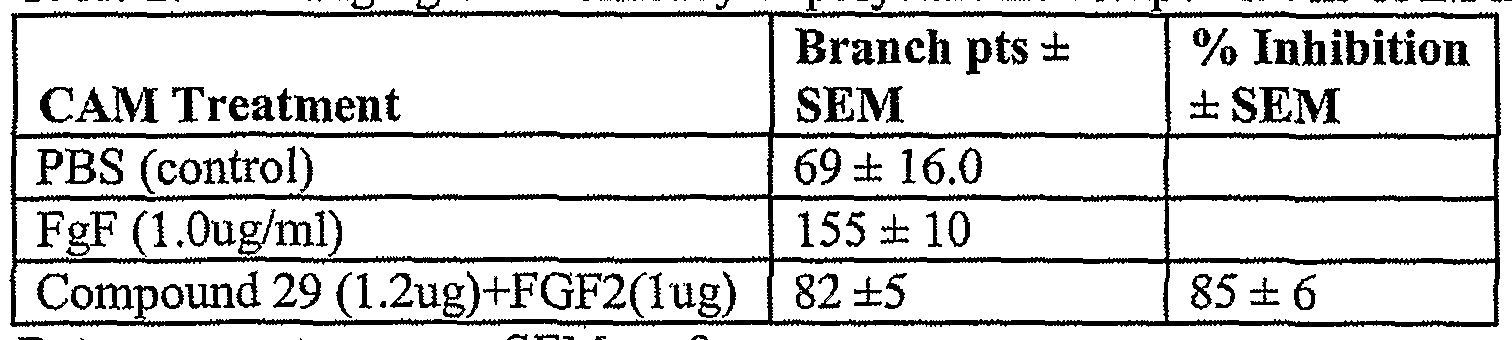
- Fig. 1 depicts the effect of polycationic compounds in the CAM model of angiogenesis.
- Fig. 2 is a bar graph depicting the percent inhibition of Factor Xa of polycationic compounds of the present invention.
- Fig. 3 is a graph depicting the effect of COMPOUND 110002, a polycationic compound of the present invention, on coagulation time. DESCRIPTION OF THE INVENTION [0015] Before the present compositions and methods are described, it is to be understood that this invention is not limited to the particular molecules, compositions, methodologies or protocols described, as these may vary.
- angiogenesis refers to the generation of new blood supply, e.g., blood capillaries, vessels, and veins, from existing blood vessel tissue (e.g., vasculature).
- the process of angiogenesis can involve a number of tissue cell types including, for example, endothelial cells which form a single cell layer lining of all blood vessels and are involved with regulating exchanges between the bloodstream and the surrounding tissues.
- New blood vessels can develop from the walls of existing small vessels by the outgrowth of endothelial cells.
- Angiogenesis is also involved in tumor growth as it provides tumors with blood supply necessary for tumor cell survival and proliferation (growth).
- a "therapeutically effective amount” in reference to pharmaceutical compositions is an amount sufficient to decrease or prevent the symptoms associated with a medical condition or infirmity, to normalize body functions in disease or disorders that result in impairment of specific bodily functions, or to provide improvement in one or more of the clinically measured parameters of the disease.
- a therapeutically effective amount of a polycationic compound is an amount sufficient to decrease or inhibit angiogenesis.
- aspects of the present invention relate to methods of modulating angiogenesis in an animal in need thereof comprising administering to the animal a therapeutically effective amount of a polycationic compound. Aspects of the present invention also relate to methods of treating or preventing a disease or disorder in an animal in need thereof, comprising administering to the animal a therapeutically effective amount of a polycationic compound.
- the polycationic compounds preferably exhibit a rigid or semi-rigid backbone, such that the structure is torsionaliy-constrained, that displays positively-charged sidegroups on one face of the backbone.
- the positively charged sidegroups are optimally distributed along the length of the backbone and optimally separated from the backbone by a carbon spacer that may optionally contain one or more heteroatoms. Torsional freedom along the backbone may be stabilized by intramolecular hydrogen bonding, steric constraints or cyclization. While preferred formulas of various polycationic compounds, such as arylamides, hydrazides, calixrenes and salicylamides, are described, other suitable sidegroups that may be used to stabilize the positive charge include, for example, (A-G): A B C D E F G
- the polycationic compound is an arylamide oligomer compound of the formula:
- X is O or S
- Ri is C ⁇ -C straight or branched chain alkyl
- Ri is optionally substituted with one or more -NH 2 or
- Z is a bond
- R 2 is hydrogen or Ct-C 9 straight or branched chain alkyl; wherein said R 2 is optionally substituted with one or more - NH 2 or
- R 2 is -X- R ⁇ ;
- Rs is or methylene, wherein said methylene is substituted with C 1 -C 9 straight or branched chain alkyl, wherein said C1-C9 straight or branched chain alkyl is optionally substituted with one or more -NH 2 or
- the arylamide oligomer compound is a compound of the formula:
- the compound is an arylamide of the formula:
- X is O or S
- Y is O or S
- R 2 is Ci to C 9 straight or branched alkyl, where R 2 is optionally substituted with one or
- R 3 is Ci to C 9 straight or branched alkyl, where R 3 is optionally substituted with one or
- X is O or S
- Y is O or S
- Z is a bond, Ci to C 9 straight or branched alkyl, or a 1,4-cyclohexyl alkyl, where A is optionally
- R 2 is Ci to C straight or branched alkyl, where R 2 is optionally substituted with one or
- R 3 is Ci to C 9 straight or branched alkyl, where R 3 is optionally substituted with one or
- Ri is -A or -O-A, where A is Ci to C 9 straight or branched alkyl;
- R 2 is Ci to C 9 straight or branched alkyl, where R 2 is optionally substituted with one or
- the polycationic compound is a salicylamide of the formula:
- n 2 to 10
- R 2 is H or
- R 2 is Ci to C 9 straight or branched alkyl, where R 2 is optionally substituted with one or R 3 is Ci to C 9 straight or branched alkyl, where R 2 is optionally substituted with one or NH 2 more -NH2, -N(CH3)2 or H ;
- R 4 4 is OH, NH2 or , where A is OH or NH2.
- the polycationic compound is selected from the group consisting of Compound 1, Compound 2, Compound 3, Compound 4, Compound 5, Compound 6, Compound 7, Compound 8, Compound 9, Compound 10, Compound 11, Compound 12, Compound 13, Compound 14, Compound 15, Compound 16, Compound 17, Compound 18, Compound 19, Compound 20, Compound 21, Compound 22, Compound 23, Compound 24, Compound 25, Compound 26, Compound 27, Compound 28, Compound 29, Compound 30, Compound 31, Compound 32, Compound 33, Compound 34, Compound 35, Compound 26, Compound 37, Compound 38, Compound 39, Compound 40, Compound 41, Compound 42, Compound 43, Compound 44, Compound 45, Compound 46, Compound 47, Compound 48, Compound 49, Compound 50, Compound 51, Compound 52, Compound 53, Compound 54 and Compound 55, as depicted below in Table 1.
- the polycationic compound comprises Compound 26, Compound 28, Compound 29, Compound 34, Compound 48, or Compound 50 or a combination thereof.
- Other polycationic compounds useful in the methods of the present invention are those described in WO 02/072007 entitled “Facially Amphiphilic Polymers as Anti-Infective Agents” filed March 7, 2002, WO 02/100295 entitled “"Facially Amphiphilic Polymers as Anti-Infective Agents” filed March 7, 2002 and WO 04//082634 entitled “Facially Amphiphillic Polymers and Oligomers and Uses Thereof filed on March 17, 2004.
- a compound for modulating angiogenesis comprising a therapeutically effective amount of a polycationic compound.
- the polycationic compound is an arylamide oligomer compound of the formula:
- X is O or S
- Ri is C 1 -C 9 straight or branched chain alkyl
- Ri is optionally substituted with one or more -NH2 or
- Z is a bond
- R 2 is hydrogen or C 1 -C9 straight or branched chain alkyl; wherein said R 2 is optionally substituted with one or more NH 2 or
- R 3 is or methylene, wherein said methylene is substituted with d to C 9 straight or branched chain alkyl, wherein said Ci to C 9 straight or branched chain alkyl is optionally substituted with one or more -NH 2 or
- the compound is an arylamide of the formula:
- R 2 is Ci to C 9 straight or branched alkyl, where R 2 is optionally substituted with one or 3 is Ci to C 9 straight or branched alkyl, where R 3 is optionally substituted with one or
- the polycationic compound is a hydrazide of the formula:
- n l to l0;
- X is O or S
- Y is O or S
- Z is a bond, Ci to C 9 straight or branched alkyl, or a 1,4-cyclohexyl or branched alkyl, where A is optionally
- R 2 is C to C 9 straight or branched alkyl, where R 2 is optionally substituted with one or NH 2
- R 3 is Ci to C 9 straight or branched alkyl, where R 3 is optionally substituted with one or
- the polycationic compound is a calixrene of the formula:
- n 2-8, more preferably 4-8;
- Ri is -A or -O-A, where A is Ci to C 9 straight or branched alkyl;
- R 2 is Ci to C 9 straight or branched alkyl, where R 2 is optionally substituted with one or [0038]
- the polycationic compound is a salicylamide of the formula:
- n 2 to 10
- Ri is H or R 2 is Ci to C 9 straight or branched alkyl, where R 2 is optionally substituted with one or NH 2
- R 2 is Ci to C9 straight or branched alkyl, where R 2 is optionally substituted with one or
- the compound comprises Compound 1, Compound 2, Compound 3, Compound 4, Compound 5, Compound 6, Compound 7, Compound 8, Compound 9, Compound 10, Compound 11, Compound 12, Compound 13, Compound 14, Compound 15, Compound 16, Compound 17, Compound 18, Compound 19, Compound 20, Compound 21, Compound 22, Compound 23, Compound 24, Compound 25, Compound 26, Compound 27, Compound 28, Compound 29, Compound 30, Compound 31, Compound 32, Compound 33, Compound 34, Compound 35, Compound 26, Compound 37, Compound 38, Compound 39, Compound 40, Compound 41, Compound 42, Compound 43, Compound 44, Compound 45, Compound 46, Compound 47, Compound 48, Compound 49, Compound 50, Compound 51, Compound 52, Compound 53, Compound 54 ,Compound 55, or a combination thereof.
- the compound comprises Compound 26, Compound 28, Compound 29, Compound 34, Com
- a compound for modulating angiogenesis comprising a therapeutically effective amount of a polycationic compound.
- the compound may contain a therapeutically effective amount of a polycationic compound to promote angiogenesis.
- the compound may contain a therapeutically effective amount of a polycationic compound to inhibit angiogenesis.
- the compound is an arylamide of the formula:
- R 2 is Ci to C 9 straight or branched alkyl, where R 2 is optionally substituted with one or
- R 3 is Ci to C 9 straight or branched alkyl, where R 3 is optionally substituted with one or
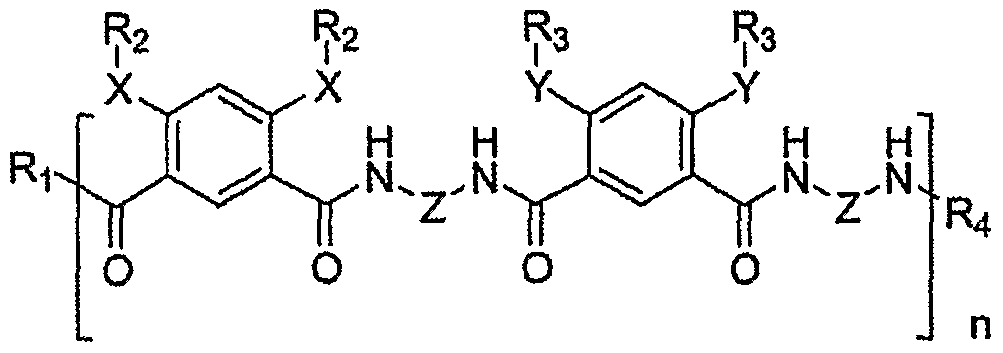
- the polycationic compound is a hydrazide of the formula:
- n l to 10;
- X is O or S
- Y is O or S
- Z is a bond, Ci to C 9 straight or branched alkyl, or a 1,4-cyclohexyl
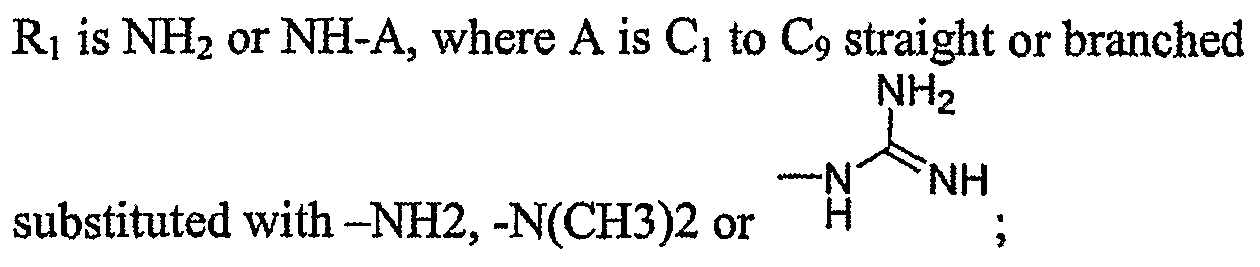
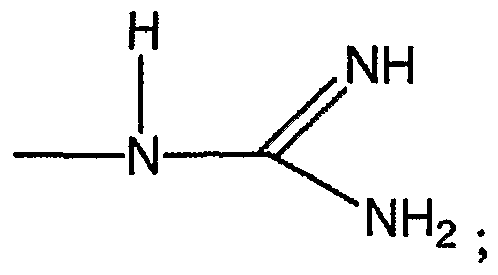
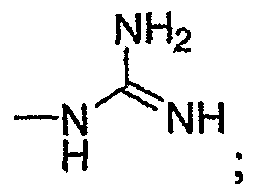
- Ri is NH 2 , or NH-A, where A is Ci to C 9 straight or branched alkyl, where A is H 2
- R 2 is Ci to C 9 straight or branched alkyl, where R 2 is optionally substituted with one or 3 is Ci to C 9 straight or branched alkyl, where R3 is optionally substituted with one or
- the polycationic compound is a calixarene of the formula:
- n 2-8, more preferably 4-8;
- R 2 is -A or-O-A, where A is Ci to Q > straight or branched alkyl;
- R 2 is Ci to C9 straight or branched alkyl, where R 2 is optionally substituted with one or [0047]
- the polycationic compound is a salicylamide of the formula:
- n 2 to 10
- R 2 is Ci to C straight or branched alkyl, where R 2 is optionally substituted with one or
- R 3 is C] to C 9 straight or branched alkyl, where R 2 is optionally substituted with one or
- the polycationic compounds of the present invention may be useful in the treatment of a disease or disorder associated with angiogenesis.
- the compound comprises a therapeutically effective amount of Compound 26, Compound 28, Compound 29, Compound 34, Compound 48, or Compound 50 or a combination thereof.
- the polycationic compounds may be used to treat or prevent a disease or disorder associated with insufficient angiogenesis.
- diseases include, for example, stroke, heart disease, ulcers, infertility and scleroderma.
- the polycationic compounds may be used to treat or prevent a disease or disorder associated with excessive angiogenesis.
- diseases include, for example, cancer, rheumatoid arthritis, AIDS complications, psoriasis and blindness.
- cancer refers to any malignant growth or tumor caused by abnormal and uncontrolled cell division; it may spread to other parts of the body through the lymphatic system or the blood stream. Cancer include both solid tumors and blood- borne tumors.
- Solid tumors include, or example, but not limited to Kaposi's sarcoma, hemangiomas, solid tumors, blood-borne tumors, breast cancer, lung cancer, ovarian cancer, testicular cancer, colon cancer, rhabdomyosarcoma, retinoblastoma, Ewing's sarcoma, neuroblastoma, and osteosarcoma.
- Angiogenesis is also associated with blood- borne tumors, such as leukemias, any of various acute or chronic neopiastic diseases of the bone marrow in which unrestrained proliferation of white blood cells occurs, usually accompanied by anemia, impaired blood clotting, and enlargement of the lymph nodes, liver and spleen.
- the disease or disorder is lung cancer, breast cancer, prostate cancer, colon cancer, renal cancer, bladder cancer, pancreatic cancer, glioblastoma, neuroblastoma, blindness, macular degeneration, diabetic retinopathy, corneal transplant, myopic degeneration, complications related to AIDS, arthritis, rheumatoid arthritis, psoriasis, scleroderma, inflammatory bowel disease, stroke, heart disease, ulcers and infertility.
- neovascular diseases of the eye or example, corneal neovascularization, neovascular glaucoma, retrolental fibroblasia and macular degeneration), arteriovenous malformations, conditions of excessive bleeding (menorrhagia), Osier-Webber Syndrome, myocardial angiogenesis, plaque neovascularization, telangiectasia, hemophiliac joints, angiofibroma, and wound granulation.
- the anti-angiogenic compositions provided herein are also useful in the treatment of diseases of excessive or abnormal stimulation of endothelial cells.
- tumors and cancer associated disorders e.g., retinal tumor growth, benign tumors (e.g., hemangiomas, acoustic neuromas, neurofibromas, trachomas, and pyogenic granulomas), solid tumors, blood borne tumors (e.g., leukemias, angiofibromas, and kaposi sarcoma), tumor metastases, and other cancers which require neovascularization to support tumor growth), ocular neovascular-disorders (e.g., diabetic retinopathy, macular degeneration, retinopathy of prematurity, neovascular glaucoma, corneal
- the polycationic compounds are used in conjunction with other angiogenesis inhibitors.
- Angiogenic inhibitors are known in the art and can be prepared by known methods. For a description of angiogenic inhibitors and targets see, for example, Chen et al., Cancer Res. 55:4230-4233 (1995), Good et al, Proc. Natl. Acad. Sci.
- the polycationic compounds are used in conjunction with other therapies, such as standard anti-inflammatory therapies, standard ocular therapies, standard dermal therapies, radiotherapy, tumor surgery, and conventional chemotherapy directed against solid tumors and for the control of establishment of metastases.
- therapies such as standard anti-inflammatory therapies, standard ocular therapies, standard dermal therapies, radiotherapy, tumor surgery, and conventional chemotherapy directed against solid tumors and for the control of establishment of metastases.
- the administration of the angiogenesis inhibitor is typically conducted during or after chemotherapy at time where the tumor tissue should respond to toxic assault by inducing angiogenesis to recover by the provision of a blood supply and nutrients to the tumor tissue. Additionally, it is preferred to administer such angiogenesis inhibitors after surgery where solid tumors have been removed as a prophylaxis against metastasis.
- Cytotoxic or chemotherapeutic agents are those known in the art such as aziridine thiotepa, alkyl sulfonate, nitrosoureas, platinum complexes, NO classic alkylators, folate analogs, purine analogs, adenosine analogs, pyrimidine analogs, substituted urea, antitumor antibiotics, microtubulle agents, and asprignase.
- Another aspect of this invention relates to the use of polycationic compounds in the inhibition of angiogenesis-mediated processes alone or in combination with other existing anti-inflammatory, anti-angiogenesis, anti-cancer, and ocular therapies.
- Polycationic compounds represent an effective strategy for the prevention and treatment of angiogenesis-mediated disorders in cancer, inflammatory, and ocular diseases.
- the compounds described above may be administered in a formulation including polycationic compounds and derivatives together with an acceptable carrier for the mode of administration.
- Suitable pharmaceutically acceptable carriers for oral, rectal, topical or parenteral (including subcutaneous, intraperitoneal, intramuscular and intravenous) administration are known to those of skill in the art.
- the carrier must be pharmaceutically acceptable in the sense of being compatible with the other ingredients of the formulation and not deleterious to the recipient thereof.
- Formulations suitable for parenteral administration conveniently include sterile aqueous preparation of the active compound, which is preferably isotonic with the blood of the recipient.
- Such formulations may conveniently contain distilled water, 5% dextrose in distilled water or saline.
- Useful formulations also include concentrated solutions or solids containing the compound of formula (I), which upon dilution with an appropriate solvent give a solution suitable for parental administration above.
- a compound can be incorporated into an inert carrier in discrete units such as capsules, cachets, tablets or lozenges, each containing a predetermined amount of the active compound; as a powder or granules; or a suspension or solution in an aqueous liquid or non-aqueous liquid, e.g., a syrup, an elixir, an emulsion or a draught.
- Suitable carriers may be starches or sugars and include lubricants, flavorings, binders, and other materials of the same nature.
- a tablet may be made by compression or molding, optionally with one or more accessory ingredients.
- Compressed tablets may be prepared by compressing in a suitable machine the active compound in a free-flowing form, e.g., a powder or granules, optionally mixed with accessory ingredients, e.g., binders, lubricants, inert diluents, surface active or dispersing agents. Molded tablets may be made by molding in a suitable machine, a mixture of the powdered active compound with any suitable carrier. [0061] A syrup or suspension may be made by adding the active compound to a concentrated, aqueous solution of a sugar, e.g., sucrose, to which may also be added any accessory ingredients.
- a sugar e.g., sucrose
- Such accessory ingredients may include flavoring, an agent to retard crystallization of the sugar or an agent to increase the solubility of any other ingredient, e.g., as a polyhydric alcohol, for example, glycerol or sorbitol.
- Formulations for rectal administration may be presented as a suppository with a conventional carrier, e.g., cocoa butter or Witepsoi S55 (trademark of Dynamite Nobel Chemical, Germany), for a suppository base.
- the compound may be administered in liposomes or microspheres (or microparticles). Methods for preparing liposomes and microspheres for administration to a patient are well known to those of skill in the art. U.S. Pat.
- the compound can be incorporated and the micro-spheres/nano-spheres, or composite of both, implanted for slow release over a period of time ranging from days to months. See, for example, U.S. Pat. Nos. 4,906,474, 4,925,673 and 3,625,214, and Jein, TIPS 19:155-157 (1998), the contents of which are hereby incorporated by reference.
- the polycationic compounds of the present invention exhibit anti- angiogenic effects in vitro and in vivo.
- the polycationic compounds of the present invention exhibit antagonistic effects against heparin.
- the anti-angiogenic effects of the polycationic compounds may be due, at least in part to the polycationic compounds ability to antagonize heparin' s role in facilitating activation of FGF and VEGF receptors.
- various materials were obtained as follows. All reagents were chemical grade and purchased from Sigma Chemical Co. (St. Louis, MO) or through VWR Scientific (Bridgeport, NJ). Cortisone acetate, bovine serum albumin (BSA), and gelatin solution (2% type B from bovine skin) were purchased from Sigma Chemical Co. (St. Louis, MO).
- M199 growth medium with BarPs salts, basic FGF, Insulin-Transferrin-Selenium-G Supplement (I-T-Se) 100X, Dulbecco's phosphate buffered salt solution (PBS) with and without Ca+2 and Mg+2 and 0.5 M EDTA were obtained from Gibco BRL (Grand Island, NY).
- Human umbilical vein endothelial cells (HUVEC), endothelial cell basal medium (serum-free, EBM), endothelial growth medium (EGM) (supplemented with growth factors, fetal calf serum), and 0.025% trypsin/0.01% EDTA solution were purchased from Clonetics Inc. (San Diego, CA).
- TSU-Pr tumor cells Human prostrate (TSU-Pr) tumor cells were obtained from American Type Culture Collection (Rockville, MD). Matrigel ® matrix and human collagen type HI were purchased from Becton Dickinson (Bedford, MA). HEMA-3 fixative and staining solutions were purchased from Biochemical Sciences, Inc. (Swedesboro, NJ). Fertilized chicken eggs were purchased from Charles River Laboratories, SPAFAS Avian Products & Services (North Franklin, CT). In vivo neovascularization was examined by the method previously described by Auerbach et al. (Auerbach et al., J. Dev. Biol, 41:391- 394 (1974), which is hereby incorporated by reference in its entirety).
- EXAMPLE 1 The following example illustrates the anti-angiogenic effect of exemplary polycationic compounds of the present invention.
- Ten-day old embryos were purchased from Spafas, Inc. (Preston, CT) and were incubated at 37°C with 55% relative humidity.
- a small hole was punctured in the shell concealing the air sac with a hypodermic needle.
- a second hole was punctured in the shell on the broadside of the egg directly over an avascular portion of the embryonic membrane, as observed during candling.
- a false air sac was created beneath the second hole by the application of negative pressure to the first hole, which caused the chorioallantoic membrane (CAM) to separate from the shell.
- CAM chorioallantoic membrane
- Filter disks of #1 filter paper (Whatman International, United Kingdom) were soaked in 3 mg/mL cortisone acetate (Sigma, St. Louis, MO) in a solution of 95% ethanol and water and subsequently air dried under sterile conditions.
- FGF2 Life Technologies, Gaithersburg, Maryland
- CAM tissue directly beneath FGF2-saturated filter disk was resected from embryos treated 48 hours prior with test compound or control. Tissues were washed three times with PBS. Sections were placed in a 35-mm petri dish (Nalgen Nunc, Rochester, New York) and examined under a SV6 stereomicroscope (Karl Zeiss, Thornwood, New York) at 50X magnification.
- CAM tissue directly beneath FGF2-saturated filter disk was resected from embryos treated 48 h prior with compound or control. Tissues were washed three times with PBS. Sections were placed in a 35-mm petri dish (Nalge Nunc, Rochester, New York) and examined under a SV6 stereomicroscope (Karl Zeiss, Thornwood, New York) at 50X magnification.
- Matrigel® matrix was placed in a cold twenty-four-multiwell plate. Matrigel® matrix was allowed to polymerize during incubation at 37°C for 30 minutes.
- HMVEC Human umbilical vein endothelial cells
- EBM endothelial cell basal medium
- BSA bovine serum albumin
- I-T-Se Insulin- Transferrin-Selenium-G supplement
- HUVEC were trypsinized and centrifuged and, subsequently, washed twice in phosphate buffered saline (PBS). After counting, cell density was adjusted to 35,000 cells/mL.
- PBS phosphate buffered saline
- FGF2 human fibroblast growth factor basic
- polycationic compounds see Table IB
- This example relates to cellular migration assays. These assays were performed using a Neuroprobe 96 well disposable che otaxis chamber with an 8 ⁇ m pore size. This chamber allowed for quantitation of cellular migration towards a gradient of either vitronectm or osteopontin. Cultured cells were removed following a standardized method using EDTA / Trypsin (0.01% / 0.025%). Following removal, the cells were washed twice and resuspended (2x10 ⁇ /ml) in EBM (Endothelial cell basal media, Clonetics Inc.).
- This station consisted of six individual reagent units each with a 30 ml volume capacity. Individual units were filled with one of the following reagents: PBS, formaldehyde, Triton X-100, or rhodamine-phalloidin. Using this technique, filters were gently dipped into the appropriate solution, thus minimizing migrated cell loss. This technique allowed for maximum quantitation of cell migration and provided reproducible results with minimal inter and intra assay variability (Bozarth et al, Methods In Cell Science, 19 (3): 179-187, 1997; Penno et al, J. Method In Cell Science, 19 (3): 189-195, 1997). [0077] As illustrated in Table 6 below, the polycationic compounds of the present invention inhibit human umbilical vein endothelial migration.
- the 1 lU/ml (250x) stock solution of anti-thrombin and a 336 mM stock solution of NaCl were diluted into a total volume of 50 ⁇ l buffer so that the final anti-thrombin concentration was 0.004 lU/sample well and the NaCl was 150 mM/sample well.
- 1 ⁇ l of the compound to be tested, final concentration 10 ⁇ g/ml (corresponding to 0.5 logarithmic antagonist dilution) is added to the sample well. The samples are mixed and allowed to incubate at room temperature for 20 minutes.
- Factor Xa As illustrated in Figure 2 and Table 7 above, the polycationic compounds of the present invention inhibited Factor Xa.
- Factor Xa Inhibition EC50. To determine the concentration of polycationic compound that causes about 50% lysis of human red blood cells, fixed heparin concentrations were used and different amounts of heparin antagonists were added. Results are depicted in Table 8. Table 8. FactorXa Inhibition: EC50
- the polycationic compounds of the present invention exhibit varying degrees of inhibition of Factor Xa.
- EXAMPLE 5 [0083] The following example illustrates the effect of a polycationic compound of the present invention on coagulation time.
- the anti-heparin assay as described herein was used.
- the assay contained either 1 mg/L, 2 mg/L or 4 mg 1 of heparin and increasing amounts of Compound 26 was added.
- Table 9 and Figure 3 depict the effect of Compound 26 on coagulation time.
Landscapes
- Chemical & Material Sciences (AREA)
- Organic Chemistry (AREA)
- Health & Medical Sciences (AREA)
- Life Sciences & Earth Sciences (AREA)
- Medicinal Chemistry (AREA)
- Pharmacology & Pharmacy (AREA)
- Animal Behavior & Ethology (AREA)
- General Health & Medical Sciences (AREA)
- Public Health (AREA)
- Veterinary Medicine (AREA)
- Chemical Kinetics & Catalysis (AREA)
- General Chemical & Material Sciences (AREA)
- Nuclear Medicine, Radiotherapy & Molecular Imaging (AREA)
- Bioinformatics & Cheminformatics (AREA)
- Engineering & Computer Science (AREA)
- Diabetes (AREA)
- Epidemiology (AREA)
- Ophthalmology & Optometry (AREA)
- Hematology (AREA)
- Pain & Pain Management (AREA)
- Dermatology (AREA)
- Endocrinology (AREA)
- Reproductive Health (AREA)
- Cardiology (AREA)
- Heart & Thoracic Surgery (AREA)
- Vascular Medicine (AREA)
- Virology (AREA)
- Rheumatology (AREA)
- Oncology (AREA)
- Biomedical Technology (AREA)
- Emergency Medicine (AREA)
- Tropical Medicine & Parasitology (AREA)
- Surgery (AREA)
- Obesity (AREA)
- Communicable Diseases (AREA)
- Neurology (AREA)
- Neurosurgery (AREA)
- Gynecology & Obstetrics (AREA)
- Pregnancy & Childbirth (AREA)
- Molecular Biology (AREA)
Abstract
Description












Claims


Priority Applications (7)
| Application Number | Priority Date | Filing Date | Title |
|---|---|---|---|
| ES05760811T ES2433663T3 (en) | 2004-06-15 | 2005-06-15 | Polycationic compounds and uses thereof |
| CN2005800194487A CN1997622B (en) | 2004-06-15 | 2005-06-15 | Polycationic compounds and uses thereof |
| CA002570248A CA2570248A1 (en) | 2004-06-15 | 2005-06-15 | Polycationic compounds and uses thereof |
| EP05760811.9A EP1756041B1 (en) | 2004-06-15 | 2005-06-15 | Polycationic compounds and uses thereof |
| JP2007516741A JP5209302B2 (en) | 2004-06-15 | 2005-06-15 | Polycation compounds and their use |
| AU2005254574A AU2005254574B2 (en) | 2004-06-15 | 2005-06-15 | Polycationic compounds and uses thereof |
| KR1020127009850A KR101161575B1 (en) | 2004-06-15 | 2005-06-15 | Polycationic compounds and uses thereof |
Applications Claiming Priority (2)
| Application Number | Priority Date | Filing Date | Title |
|---|---|---|---|
| US57928204P | 2004-06-15 | 2004-06-15 | |
| US60/579,282 | 2004-06-15 |
Publications (2)
| Publication Number | Publication Date |
|---|---|
| WO2005123660A2 true WO2005123660A2 (en) | 2005-12-29 |
| WO2005123660A3 WO2005123660A3 (en) | 2006-02-02 |
Family
ID=35510317
Family Applications (1)
| Application Number | Title | Priority Date | Filing Date |
|---|---|---|---|
| PCT/US2005/021323 Ceased WO2005123660A2 (en) | 2004-06-15 | 2005-06-15 | Polycationic compounds and uses thereof |
Country Status (9)
| Country | Link |
|---|---|
| US (6) | US7553876B2 (en) |
| EP (2) | EP2380872B1 (en) |
| JP (2) | JP5209302B2 (en) |
| KR (1) | KR101172722B1 (en) |
| CN (2) | CN1997622B (en) |
| AU (1) | AU2005254574B2 (en) |
| CA (1) | CA2570248A1 (en) |
| ES (2) | ES2433663T3 (en) |
| WO (1) | WO2005123660A2 (en) |
Cited By (14)
| Publication number | Priority date | Publication date | Assignee | Title |
|---|---|---|---|---|
| EP1711455A4 (en) * | 2004-01-23 | 2007-11-07 | Univ Pennsylvania | POLYARYL AND POLYARYLALKYNYL OLIGOMERS AMPHIPHILES AT THE FACIAL LEVEL |
| EP1855704A4 (en) * | 2005-02-25 | 2009-12-02 | Univ Pennsylvania | AMPHIPHILIC FACIAL POLYMERS AND OLIGOMERS, COMPOSITION THEREOF AND USE THEREOF IN CANCER TREATMENT METHODS |
| FR2939666A1 (en) * | 2008-12-17 | 2010-06-18 | Inst Radioprot Et De Surete Nu | COSMETIC AND PHARMACEUTICAL FORMULATIONS OF CALIX MOLECULES [6] ARENES |
| EP2389067A4 (en) * | 2008-12-10 | 2012-06-13 | Polymedix Inc | ANTIMICROBIAL MOLECULE FOR THE TREATMENT OF MYCOBACTERIUM STRAINS RESISTANT TO MULTIPLE MEDICINES AND HIGH RESISTANCE TO MEDICINES |
| US8207228B2 (en) | 2004-10-04 | 2012-06-26 | Regents Of The University Of Minnesota | Calixarene-based peptide conformation mimetics, methods of use, and methods of making |
| US8236800B2 (en) | 2003-03-17 | 2012-08-07 | The Trustees Of The University Of Pennsylvania | Facially amphiphilic polymers and oligomers and uses thereof |
| US8278309B2 (en) | 2008-10-27 | 2012-10-02 | Polymedix, Inc. | Synthetic mimetics of host defense and uses thereof |
| WO2012158672A2 (en) | 2011-05-16 | 2012-11-22 | Polymedix, Inc. | Compounds for use in treatment of mucositis |
| US8889163B2 (en) | 2001-03-08 | 2014-11-18 | The Trustees Of The University Of Pennsylvania | Facially amphiphilic polymers as anti-infective agents |
| US9192623B2 (en) | 2006-12-29 | 2015-11-24 | Cellceutix Corporation | Arylamide compounds and compositions and uses thereof |
| WO2016055976A1 (en) | 2014-10-09 | 2016-04-14 | Distretto Tecnologico Sicilia Micro E Nano Sistemi S.C.A.R.L. | Nanostructured formulations for the delivery of silibinin and other active ingredients for treating ocular diseases |
| US20160243117A1 (en) * | 2015-02-20 | 2016-08-25 | Cellceutix Corporation | Host Defense Protein (HDP) Mimetics For Prophylaxis And/Or Treatment Of Inflammatory Diseases Of The Gastrointestinal Tract |
| US9469616B2 (en) | 2011-12-13 | 2016-10-18 | Cellceutix Corporation | Cyclic compounds and methods of making and using the same |
| US11771694B2 (en) | 2020-06-05 | 2023-10-03 | Innovation Pharmaceuticals Inc. | Arylamide compounds for treatment and prevention of viral infections |
Families Citing this family (10)
| Publication number | Priority date | Publication date | Assignee | Title |
|---|---|---|---|---|
| AU2005254574B2 (en) * | 2004-06-15 | 2012-02-02 | Polymedix, Inc. | Polycationic compounds and uses thereof |
| JP5027659B2 (en) * | 2004-07-23 | 2012-09-19 | ザ トラスティーズ オブ ザ ユニバーシティ オブ ペンシルバニア | Antimicrobial copolymers and uses thereof |
| AU2005272585B2 (en) * | 2004-08-18 | 2011-03-03 | Polymedix, Inc. | Amphiphilic polynorbornene derivatives and methods of using the same |
| MX2012004685A (en) * | 2009-10-22 | 2012-06-14 | Polydemix Inc | Processes for preparing a polymeric compound. |
| CN101891889B (en) * | 2010-08-18 | 2012-05-23 | 中国科学院长春应用化学研究所 | Cationic polymer and its preparation method |
| US8981025B2 (en) | 2011-02-10 | 2015-03-17 | Corning Incorporated | Polymerizable catonic peptide monomers and polymers |
| US10386286B2 (en) | 2012-11-16 | 2019-08-20 | Chevron U.S.A. Inc. | Methods and systems for determining minimum porosity for presence of clathrates in sediment |
| US20140254321A1 (en) | 2013-03-08 | 2014-09-11 | Chevron U.S.A. Inc. | Methods and systems for determining clathrate presence and saturation using simulated well logs |
| US10067252B2 (en) | 2016-07-25 | 2018-09-04 | Chevron U.S.A. Inc. | Methods and systems for identifying a clathrate deposit |
| US10823147B2 (en) * | 2016-12-16 | 2020-11-03 | General Electric Company | Wind farm topology and method of operating the same |
Citations (4)
| Publication number | Priority date | Publication date | Assignee | Title |
|---|---|---|---|---|
| WO1998003573A1 (en) | 1996-07-17 | 1998-01-29 | Biomolecular Research Institute Ltd. | Angiogenic inhibitory compounds |
| WO2002060488A1 (en) | 2001-01-30 | 2002-08-08 | Universite Catholique De Louvain | Anti-tumor compounds |
| US20040097401A1 (en) | 2002-11-14 | 2004-05-20 | Debatosh Datta | Lysine in therapeutic angiogenesis, particularly in treating ischaemic conditions |
| WO2004082634A2 (en) | 2003-03-17 | 2004-09-30 | The Trustees Of The University Of Pennsylvania | Facially amphiphilic polymers and oligomers and uses thereof |
Family Cites Families (13)
| Publication number | Priority date | Publication date | Assignee | Title |
|---|---|---|---|---|
| US3625214A (en) | 1970-05-18 | 1971-12-07 | Alza Corp | Drug-delivery device |
| US4906474A (en) | 1983-03-22 | 1990-03-06 | Massachusetts Institute Of Technology | Bioerodible polyanhydrides for controlled drug delivery |
| US4789734A (en) | 1985-08-06 | 1988-12-06 | La Jolla Cancer Research Foundation | Vitronectin specific cell receptor derived from mammalian mesenchymal tissue |
| EP0545913B1 (en) | 1986-08-18 | 1999-02-24 | Emisphere Technologies, Inc. | Delivery systems for pharmacological agents |
| US5092885A (en) * | 1987-02-12 | 1992-03-03 | The Government Of The United States Of America As Represented By The Secretary Of The Department Of Health And Human Services | Peptides with laminin activity |
| US5112946A (en) * | 1989-07-06 | 1992-05-12 | Repligen Corporation | Modified pf4 compositions and methods of use |
| US5192744A (en) * | 1990-01-12 | 1993-03-09 | Northwestern University | Method of inhibiting angiogenesis of tumors |
| ATE130517T1 (en) * | 1990-08-08 | 1995-12-15 | Takeda Chemical Industries Ltd | INTRAVASCULAR EMBOLIZING AGENT CONTAINING A SUBSTANCE INHIBITING ANGIOGENESIS. |
| CA2110095A1 (en) | 1992-12-08 | 1994-06-09 | Teruo Komoto | Arylamide derivatives |
| EP2289524A1 (en) * | 2001-03-08 | 2011-03-02 | The Trustees Of The University Of Pennsylvania | Facially amphiphillic polymers as anti-infective agents |
| AU2005254574B2 (en) * | 2004-06-15 | 2012-02-02 | Polymedix, Inc. | Polycationic compounds and uses thereof |
| GB0422877D0 (en) * | 2004-10-14 | 2004-11-17 | Univ Glasgow | Bioactive polymers |
| US20060241052A1 (en) * | 2005-02-25 | 2006-10-26 | Degrado William F | Facially amphiphilic polymers and oligomers, compositions thereof, and use thereof in methods of treating cancer |
-
2005
- 2005-06-15 AU AU2005254574A patent/AU2005254574B2/en not_active Ceased
- 2005-06-15 EP EP11171395.4A patent/EP2380872B1/en not_active Expired - Lifetime
- 2005-06-15 EP EP05760811.9A patent/EP1756041B1/en not_active Expired - Lifetime
- 2005-06-15 JP JP2007516741A patent/JP5209302B2/en not_active Expired - Fee Related
- 2005-06-15 ES ES05760811T patent/ES2433663T3/en not_active Expired - Lifetime
- 2005-06-15 ES ES11171395.4T patent/ES2468892T3/en not_active Expired - Lifetime
- 2005-06-15 CN CN2005800194487A patent/CN1997622B/en not_active Expired - Fee Related
- 2005-06-15 KR KR1020077001010A patent/KR101172722B1/en not_active Expired - Fee Related
- 2005-06-15 WO PCT/US2005/021323 patent/WO2005123660A2/en not_active Ceased
- 2005-06-15 US US11/154,962 patent/US7553876B2/en not_active Expired - Fee Related
- 2005-06-15 CA CA002570248A patent/CA2570248A1/en not_active Abandoned
- 2005-06-15 CN CN2012100320142A patent/CN102653515A/en active Pending
-
2009
- 2009-05-14 US US12/465,995 patent/US7745662B2/en not_active Expired - Fee Related
-
2010
- 2010-03-10 US US12/720,734 patent/US8232428B2/en not_active Expired - Fee Related
- 2010-12-17 US US12/971,006 patent/US8129566B2/en not_active Expired - Fee Related
-
2011
- 2011-09-15 JP JP2011202178A patent/JP2012046525A/en active Pending
-
2012
- 2012-06-21 US US13/529,249 patent/US8507723B2/en not_active Expired - Fee Related
-
2013
- 2013-08-12 US US13/965,128 patent/US20140051762A1/en not_active Abandoned
Patent Citations (4)
| Publication number | Priority date | Publication date | Assignee | Title |
|---|---|---|---|---|
| WO1998003573A1 (en) | 1996-07-17 | 1998-01-29 | Biomolecular Research Institute Ltd. | Angiogenic inhibitory compounds |
| WO2002060488A1 (en) | 2001-01-30 | 2002-08-08 | Universite Catholique De Louvain | Anti-tumor compounds |
| US20040097401A1 (en) | 2002-11-14 | 2004-05-20 | Debatosh Datta | Lysine in therapeutic angiogenesis, particularly in treating ischaemic conditions |
| WO2004082634A2 (en) | 2003-03-17 | 2004-09-30 | The Trustees Of The University Of Pennsylvania | Facially amphiphilic polymers and oligomers and uses thereof |
Non-Patent Citations (2)
| Title |
|---|
| DINGS RUUD P.M. ET AL., ANGIOGENESIS, vol. 6, no. 2, 1 January 2003 (2003-01-01), pages 83 - 91 |
| See also references of EP1756041A4 |
Cited By (38)
| Publication number | Priority date | Publication date | Assignee | Title |
|---|---|---|---|---|
| US8889163B2 (en) | 2001-03-08 | 2014-11-18 | The Trustees Of The University Of Pennsylvania | Facially amphiphilic polymers as anti-infective agents |
| US8236800B2 (en) | 2003-03-17 | 2012-08-07 | The Trustees Of The University Of Pennsylvania | Facially amphiphilic polymers and oligomers and uses thereof |
| US9241917B2 (en) | 2003-03-17 | 2016-01-26 | The Trustees Of The University Of Pennsylvania | Facially amphiphilic polymers and oligomers and uses thereof |
| US8455490B2 (en) | 2003-03-17 | 2013-06-04 | The Trustees Of The University Of Pennsylvania | Facially amphiphilic polymers and oligomers and uses thereof |
| US8222456B2 (en) | 2004-01-23 | 2012-07-17 | The Trustees Of The University Of Pennsylvania | Facially amphiphilic polyaryl and polyarylalkynyl polymers and oligomers and uses thereof |
| EP1711455A4 (en) * | 2004-01-23 | 2007-11-07 | Univ Pennsylvania | POLYARYL AND POLYARYLALKYNYL OLIGOMERS AMPHIPHILES AT THE FACIAL LEVEL |
| US8716530B2 (en) | 2004-01-23 | 2014-05-06 | The Trustess Of The University Of Pennsylvania | Facially amphiphilic polyaryl and polyarylalkynyl polymers and oligomers and uses thereof |
| US8642656B2 (en) | 2004-10-04 | 2014-02-04 | Regents Of The University Of Minnesota | Calixarene-based peptide conformation mimetics, methods of use, and methods of making |
| US8207228B2 (en) | 2004-10-04 | 2012-06-26 | Regents Of The University Of Minnesota | Calixarene-based peptide conformation mimetics, methods of use, and methods of making |
| US8716343B2 (en) | 2004-10-04 | 2014-05-06 | Regents Of The University Of Minnesota | Calixarene-based peptide conformation mimetics, methods of use, and methods of making |
| EP1855704A4 (en) * | 2005-02-25 | 2009-12-02 | Univ Pennsylvania | AMPHIPHILIC FACIAL POLYMERS AND OLIGOMERS, COMPOSITION THEREOF AND USE THEREOF IN CANCER TREATMENT METHODS |
| EP2298074A3 (en) * | 2005-02-25 | 2011-10-26 | The Trustees Of The University Of Pennsylvania | Facially amphiphilic polymers and oligomers, compositions thereof, and use thereof in methods of treating cancer |
| EP2433627A1 (en) * | 2005-02-25 | 2012-03-28 | The Trustees Of The University Of Pennsylvania | Facially amphiphilic polymers and oligomers, compositions thereof, and use thereof in methods of treating cancer |
| US10166232B2 (en) | 2006-12-29 | 2019-01-01 | Innovation Pharmaceuticals Inc. | Arylamide compounds and compositions and uses thereof |
| US9192623B2 (en) | 2006-12-29 | 2015-11-24 | Cellceutix Corporation | Arylamide compounds and compositions and uses thereof |
| US8975262B2 (en) | 2008-10-27 | 2015-03-10 | Cellceutix Corporation | Synthetic mimetics of host defense and uses thereof |
| US8278309B2 (en) | 2008-10-27 | 2012-10-02 | Polymedix, Inc. | Synthetic mimetics of host defense and uses thereof |
| EP2389067A4 (en) * | 2008-12-10 | 2012-06-13 | Polymedix Inc | ANTIMICROBIAL MOLECULE FOR THE TREATMENT OF MYCOBACTERIUM STRAINS RESISTANT TO MULTIPLE MEDICINES AND HIGH RESISTANCE TO MEDICINES |
| WO2010070049A1 (en) * | 2008-12-17 | 2010-06-24 | Institut De Radioprotection Et De Surete Nucleaire | Cosmetic and pharmaceutical formulations of calixarene molecules |
| FR2939666A1 (en) * | 2008-12-17 | 2010-06-18 | Inst Radioprot Et De Surete Nu | COSMETIC AND PHARMACEUTICAL FORMULATIONS OF CALIX MOLECULES [6] ARENES |
| US8987334B2 (en) | 2008-12-17 | 2015-03-24 | Institut De Radioprotection Et De Surete Nucleaire | Cosmetic and pharmaceutical formulations of calixarene molecules |
| WO2012158672A2 (en) | 2011-05-16 | 2012-11-22 | Polymedix, Inc. | Compounds for use in treatment of mucositis |
| US9795575B2 (en) | 2011-05-16 | 2017-10-24 | Innovation Pharmaceuticals Inc. | Compounds for use in treatment of mucositis |
| US8802683B2 (en) | 2011-05-16 | 2014-08-12 | Cellceutix Corporation | Compounds for use in treatment of mucositis |
| CN103957710A (en) * | 2011-05-16 | 2014-07-30 | 塞尔西优蒂克斯公司 | Compounds for the treatment of mucositis |
| US10603294B2 (en) | 2011-05-16 | 2020-03-31 | Innovation Pharmaceuticals Inc. | Compounds for use in treatment of mucositis |
| CN103957710B (en) * | 2011-05-16 | 2016-04-20 | 塞尔西优蒂克斯公司 | Compounds for the treatment of mucositis |
| US10206894B2 (en) | 2011-05-16 | 2019-02-19 | Innovation Pharmaceuticals Inc. | Compounds for use in treatment of mucositis |
| US9457027B2 (en) | 2011-05-16 | 2016-10-04 | Cellceutix Corporation | Compounds for use in treatment of mucostis |
| EP2709619A4 (en) * | 2011-05-16 | 2015-04-22 | Cellceutix Corp | COMPOUNDS FOR THE TREATMENT OF MUCOSITY |
| US9155738B2 (en) | 2011-05-16 | 2015-10-13 | Cellceutix Corporation | Compounds for use in treatment of mucostitis |
| US9469616B2 (en) | 2011-12-13 | 2016-10-18 | Cellceutix Corporation | Cyclic compounds and methods of making and using the same |
| EP3587392A1 (en) | 2014-10-09 | 2020-01-01 | Distretto Tecnologico Sicilia Micro e Nano Sistemi S.C.A.R.L. | Nanostructured formulations for the delivery of silibinin and other active ingredients for treating ocular diseases |
| WO2016055976A1 (en) | 2014-10-09 | 2016-04-14 | Distretto Tecnologico Sicilia Micro E Nano Sistemi S.C.A.R.L. | Nanostructured formulations for the delivery of silibinin and other active ingredients for treating ocular diseases |
| EP3258927A4 (en) * | 2015-02-20 | 2018-11-21 | Innovation Pharmaceuticals Inc. | Host defense protein (hdp) mimetics for prophylaxis and/or treatment of inflammatory diseases of the gastrointestinal tract |
| US20160243117A1 (en) * | 2015-02-20 | 2016-08-25 | Cellceutix Corporation | Host Defense Protein (HDP) Mimetics For Prophylaxis And/Or Treatment Of Inflammatory Diseases Of The Gastrointestinal Tract |
| AU2016220373B2 (en) * | 2015-02-20 | 2020-10-22 | Innovation Pharmaceuticals Inc. | Host defense protein (HDP) mimetics for prophylaxis and/or treatment of inflammatory diseases of the gastrointestinal tract |
| US11771694B2 (en) | 2020-06-05 | 2023-10-03 | Innovation Pharmaceuticals Inc. | Arylamide compounds for treatment and prevention of viral infections |
Also Published As
| Publication number | Publication date |
|---|---|
| US20110124664A1 (en) | 2011-05-26 |
| US20140051762A1 (en) | 2014-02-20 |
| US7745662B2 (en) | 2010-06-29 |
| ES2468892T3 (en) | 2014-06-17 |
| US20120322878A1 (en) | 2012-12-20 |
| KR20070043970A (en) | 2007-04-26 |
| US20100298344A1 (en) | 2010-11-25 |
| US20060041024A1 (en) | 2006-02-23 |
| KR101172722B1 (en) | 2012-08-16 |
| JP2012046525A (en) | 2012-03-08 |
| ES2433663T3 (en) | 2013-12-12 |
| AU2005254574A1 (en) | 2005-12-29 |
| EP1756041A4 (en) | 2010-10-06 |
| AU2005254574B2 (en) | 2012-02-02 |
| US7553876B2 (en) | 2009-06-30 |
| JP2008502703A (en) | 2008-01-31 |
| EP2380872B1 (en) | 2014-04-23 |
| US20090239811A1 (en) | 2009-09-24 |
| US8507723B2 (en) | 2013-08-13 |
| EP2380872A1 (en) | 2011-10-26 |
| US8232428B2 (en) | 2012-07-31 |
| CA2570248A1 (en) | 2005-12-29 |
| CN1997622B (en) | 2012-08-22 |
| EP1756041B1 (en) | 2013-08-07 |
| CN102653515A (en) | 2012-09-05 |
| WO2005123660A3 (en) | 2006-02-02 |
| JP5209302B2 (en) | 2013-06-12 |
| CN1997622A (en) | 2007-07-11 |
| EP1756041A2 (en) | 2007-02-28 |
| US8129566B2 (en) | 2012-03-06 |
Similar Documents
| Publication | Publication Date | Title |
|---|---|---|
| US7745662B2 (en) | Polycationic compounds and uses thereof | |
| US8518451B2 (en) | Thyroid hormone analogs and methods of use | |
| US20140072635A1 (en) | Thyroid hormone analogs and methods of use | |
| US12447154B2 (en) | Use of pyrrolopyrimidine compound for treating hemophagocytic syndrome | |
| CA2167805A1 (en) | Methods of treating apoptosis and associated conditions | |
| CA2384287A1 (en) | Methods of treating proliferative disorders | |
| US20060104944A1 (en) | Activators and inhibitors of protease activated receptor2 (PAR2) and methods of use | |
| KR101161575B1 (en) | Polycationic compounds and uses thereof | |
| US8481529B2 (en) | Combination cancer chemotherapy | |
| WO2007005670A2 (en) | Natural and synthetic sulfoxide, selenone and selenoxide analogs and polymer conjugated forms thereof for the modulation of angiogenesis | |
| CA2547053C (en) | Compositions and methods for treatment of cardiovascular disorders and diseases | |
| WO2026082873A1 (en) | Use of caspase-1 inhibitors for treating ineffective erythropoiesis in patients suffering from sickle cell disease | |
| IL175923A (en) | Compositions for treatment of cardiovascular disorders and diseases |
Legal Events
| Date | Code | Title | Description |
|---|---|---|---|
| AK | Designated states |
Kind code of ref document: A2 Designated state(s): AE AG AL AM AT AU AZ BA BB BG BR BW BY BZ CA CH CN CO CR CU CZ DE DK DM DZ EC EE EG ES FI GB GD GE GH GM HR HU ID IL IN IS JP KE KG KM KP KR KZ LC LK LR LS LT LU LV MA MD MG MK MN MW MX MZ NA NG NI NO NZ OM PG PH PL PT RO RU SC SD SE SG SK SL SM SY TJ TM TN TR TT TZ UA UG US UZ VC VN YU ZA ZM ZW |
|
| AL | Designated countries for regional patents |
Kind code of ref document: A2 Designated state(s): BW GH GM KE LS MW MZ NA SD SL SZ TZ UG ZM ZW AM AZ BY KG KZ MD RU TJ TM AT BE BG CH CY CZ DE DK EE ES FI FR GB GR HU IE IS IT LT LU MC NL PL PT RO SE SI SK TR BF BJ CF CG CI CM GA GN GQ GW ML MR NE SN TD TG |
|
| 121 | Ep: the epo has been informed by wipo that ep was designated in this application | ||
| WWE | Wipo information: entry into national phase |
Ref document number: 2005254574 Country of ref document: AU |
|
| WWE | Wipo information: entry into national phase |
Ref document number: 2005760811 Country of ref document: EP |
|
| WWE | Wipo information: entry into national phase |
Ref document number: 1526/MUMNP/2006 Country of ref document: IN Ref document number: 2570248 Country of ref document: CA |
|
| WWE | Wipo information: entry into national phase |
Ref document number: 200580019448.7 Country of ref document: CN |
|
| WWE | Wipo information: entry into national phase |
Ref document number: 2007516741 Country of ref document: JP |
|
| NENP | Non-entry into the national phase |
Ref country code: DE |
|
| WWW | Wipo information: withdrawn in national office |
Ref document number: DE |
|
| ENP | Entry into the national phase |
Ref document number: 2005254574 Country of ref document: AU Date of ref document: 20050615 Kind code of ref document: A |
|
| WWP | Wipo information: published in national office |
Ref document number: 2005254574 Country of ref document: AU |
|
| WWE | Wipo information: entry into national phase |
Ref document number: 1020077001010 Country of ref document: KR |
|
| WWP | Wipo information: published in national office |
Ref document number: 2005760811 Country of ref document: EP |