WO2005123770A1 - Mediators of reverse cholesterol transport for the treatment of hypercholesterolemia - Google Patents

Mediators of reverse cholesterol transport for the treatment of hypercholesterolemia Download PDF

Info

Publication number
WO2005123770A1
WO2005123770A1 PCT/US2005/020662 US2005020662W WO2005123770A1 WO 2005123770 A1 WO2005123770 A1 WO 2005123770A1 US 2005020662 W US2005020662 W US 2005020662W WO 2005123770 A1 WO2005123770 A1 WO 2005123770A1
Authority
WO
WIPO (PCT)
Prior art keywords
bip
glutaric
succinic
mmol
agmatine
Prior art date
Legal status (The legal status is an assumption and is not a legal conclusion. Google has not performed a legal analysis and makes no representation as to the accuracy of the status listed.)
Ceased
Application number
PCT/US2005/020662
Other languages
French (fr)
Inventor
Jagadish C. Sircar
Victor Charles Vassar
Igor Nikoulin
Kashinatham Alisala
Current Assignee (The listed assignees may be inaccurate. Google has not performed a legal analysis and makes no representation or warranty as to the accuracy of the list.)
Avanir Pharmaceuticals Inc
Original Assignee
Avanir Pharmaceuticals Inc
Priority date (The priority date is an assumption and is not a legal conclusion. Google has not performed a legal analysis and makes no representation as to the accuracy of the date listed.)
Filing date
Publication date
Application filed by Avanir Pharmaceuticals Inc filed Critical Avanir Pharmaceuticals Inc
Priority to AU2005255013A priority Critical patent/AU2005255013A1/en
Priority to JP2007527789A priority patent/JP2008509228A/en
Priority to EP05758676A priority patent/EP1753782A1/en
Priority to MXJL06000068A priority patent/MXJL06000068A/en
Priority to CA002568543A priority patent/CA2568543A1/en
Priority to BRPI0511945-6A priority patent/BRPI0511945A/en
Publication of WO2005123770A1 publication Critical patent/WO2005123770A1/en
Priority to IL179302A priority patent/IL179302A0/en
Anticipated expiration legal-status Critical
Priority to NO20070140A priority patent/NO20070140L/en
Ceased legal-status Critical Current

Links

Classifications

    • CCHEMISTRY; METALLURGY
    • C07ORGANIC CHEMISTRY
    • C07KPEPTIDES
    • C07K14/00Peptides having more than 20 amino acids; Gastrins; Somatostatins; Melanotropins; Derivatives thereof
    • C07K14/435Peptides having more than 20 amino acids; Gastrins; Somatostatins; Melanotropins; Derivatives thereof from animals; from humans
    • C07K14/775Apolipopeptides
    • AHUMAN NECESSITIES
    • A61MEDICAL OR VETERINARY SCIENCE; HYGIENE
    • A61KPREPARATIONS FOR MEDICAL, DENTAL OR TOILETRY PURPOSES
    • A61K38/00Medicinal preparations containing peptides
    • A61K38/04Peptides having up to 20 amino acids in a fully defined sequence; Derivatives thereof
    • AHUMAN NECESSITIES
    • A61MEDICAL OR VETERINARY SCIENCE; HYGIENE
    • A61KPREPARATIONS FOR MEDICAL, DENTAL OR TOILETRY PURPOSES
    • A61K31/00Medicinal preparations containing organic active ingredients
    • A61K31/185Acids; Anhydrides, halides or salts thereof, e.g. sulfur acids, imidic, hydrazonic or hydroximic acids
    • A61K31/19Carboxylic acids, e.g. valproic acid
    • A61K31/195Carboxylic acids, e.g. valproic acid having an amino group
    • A61K31/197Carboxylic acids, e.g. valproic acid having an amino group the amino and the carboxyl groups being attached to the same acyclic carbon chain, e.g. gamma-aminobutyric acid [GABA], beta-alanine, epsilon-aminocaproic acid or pantothenic acid
    • A61K31/198Alpha-amino acids, e.g. alanine or edetic acid [EDTA]
    • AHUMAN NECESSITIES
    • A61MEDICAL OR VETERINARY SCIENCE; HYGIENE
    • A61KPREPARATIONS FOR MEDICAL, DENTAL OR TOILETRY PURPOSES
    • A61K31/00Medicinal preparations containing organic active ingredients
    • A61K31/33Heterocyclic compounds
    • A61K31/395Heterocyclic compounds having nitrogen as a ring hetero atom, e.g. guanethidine or rifamycins
    • A61K31/41Heterocyclic compounds having nitrogen as a ring hetero atom, e.g. guanethidine or rifamycins having five-membered rings with two or more ring hetero atoms, at least one of which being nitrogen, e.g. tetrazole
    • A61K31/4151,2-Diazoles
    • AHUMAN NECESSITIES
    • A61MEDICAL OR VETERINARY SCIENCE; HYGIENE
    • A61KPREPARATIONS FOR MEDICAL, DENTAL OR TOILETRY PURPOSES
    • A61K31/00Medicinal preparations containing organic active ingredients
    • A61K31/33Heterocyclic compounds
    • A61K31/395Heterocyclic compounds having nitrogen as a ring hetero atom, e.g. guanethidine or rifamycins
    • A61K31/41Heterocyclic compounds having nitrogen as a ring hetero atom, e.g. guanethidine or rifamycins having five-membered rings with two or more ring hetero atoms, at least one of which being nitrogen, e.g. tetrazole
    • A61K31/41641,3-Diazoles
    • A61K31/4172Imidazole-alkanecarboxylic acids, e.g. histidine
    • AHUMAN NECESSITIES
    • A61MEDICAL OR VETERINARY SCIENCE; HYGIENE
    • A61KPREPARATIONS FOR MEDICAL, DENTAL OR TOILETRY PURPOSES
    • A61K31/00Medicinal preparations containing organic active ingredients
    • A61K31/33Heterocyclic compounds
    • A61K31/395Heterocyclic compounds having nitrogen as a ring hetero atom, e.g. guanethidine or rifamycins
    • A61K31/495Heterocyclic compounds having nitrogen as a ring hetero atom, e.g. guanethidine or rifamycins having six-membered rings with two or more nitrogen atoms as the only ring heteroatoms, e.g. piperazine or tetrazines
    • A61K31/505Pyrimidines; Hydrogenated pyrimidines, e.g. trimethoprim
    • AHUMAN NECESSITIES
    • A61MEDICAL OR VETERINARY SCIENCE; HYGIENE
    • A61KPREPARATIONS FOR MEDICAL, DENTAL OR TOILETRY PURPOSES
    • A61K38/00Medicinal preparations containing peptides
    • A61K38/04Peptides having up to 20 amino acids in a fully defined sequence; Derivatives thereof
    • A61K38/06Tripeptides
    • AHUMAN NECESSITIES
    • A61MEDICAL OR VETERINARY SCIENCE; HYGIENE
    • A61PSPECIFIC THERAPEUTIC ACTIVITY OF CHEMICAL COMPOUNDS OR MEDICINAL PREPARATIONS
    • A61P3/00Drugs for disorders of the metabolism
    • A61P3/06Antihyperlipidemics
    • AHUMAN NECESSITIES
    • A61MEDICAL OR VETERINARY SCIENCE; HYGIENE
    • A61PSPECIFIC THERAPEUTIC ACTIVITY OF CHEMICAL COMPOUNDS OR MEDICINAL PREPARATIONS
    • A61P9/00Drugs for disorders of the cardiovascular system
    • A61P9/10Drugs for disorders of the cardiovascular system for treating ischaemic or atherosclerotic diseases, e.g. antianginal drugs, coronary vasodilators, drugs for myocardial infarction, retinopathy, cerebrovascula insufficiency, renal arteriosclerosis
    • AHUMAN NECESSITIES
    • A61MEDICAL OR VETERINARY SCIENCE; HYGIENE
    • A61PSPECIFIC THERAPEUTIC ACTIVITY OF CHEMICAL COMPOUNDS OR MEDICINAL PREPARATIONS
    • A61P9/00Drugs for disorders of the cardiovascular system
    • A61P9/12Antihypertensives
    • CCHEMISTRY; METALLURGY
    • C07ORGANIC CHEMISTRY
    • C07KPEPTIDES
    • C07K5/00Peptides containing up to four amino acids in a fully defined sequence; Derivatives thereof
    • C07K5/04Peptides containing up to four amino acids in a fully defined sequence; Derivatives thereof containing only normal peptide links
    • C07K5/06Dipeptides
    • C07K5/06008Dipeptides with the first amino acid being neutral
    • C07K5/06078Dipeptides with the first amino acid being neutral and aromatic or cycloaliphatic
    • CCHEMISTRY; METALLURGY
    • C07ORGANIC CHEMISTRY
    • C07KPEPTIDES
    • C07K5/00Peptides containing up to four amino acids in a fully defined sequence; Derivatives thereof
    • C07K5/04Peptides containing up to four amino acids in a fully defined sequence; Derivatives thereof containing only normal peptide links
    • C07K5/06Dipeptides
    • C07K5/06086Dipeptides with the first amino acid being basic
    • C07K5/06095Arg-amino acid
    • CCHEMISTRY; METALLURGY
    • C07ORGANIC CHEMISTRY
    • C07KPEPTIDES
    • C07K5/00Peptides containing up to four amino acids in a fully defined sequence; Derivatives thereof
    • C07K5/04Peptides containing up to four amino acids in a fully defined sequence; Derivatives thereof containing only normal peptide links
    • C07K5/06Dipeptides
    • C07K5/06104Dipeptides with the first amino acid being acidic
    • CCHEMISTRY; METALLURGY
    • C07ORGANIC CHEMISTRY
    • C07KPEPTIDES
    • C07K5/00Peptides containing up to four amino acids in a fully defined sequence; Derivatives thereof
    • C07K5/04Peptides containing up to four amino acids in a fully defined sequence; Derivatives thereof containing only normal peptide links
    • C07K5/06Dipeptides
    • C07K5/06139Dipeptides with the first amino acid being heterocyclic

Definitions

  • Hypercholesterolemia and atherosclerosis are leading causes of cardiovascular diseases, including hypertension, coronary artery disease, heart attack and stroke. About 1.1 million individuals suffer from heart attack each year in the United States alone, the costs of which are estimated to exceed $117 billion. Although there are numerous pharmaceutical strategies for lowering cholesterol levels in the blood, many of these have undesirable side effects and have raised safety concerns. Moreover, none of the commercially available drug therapies adequately stimulate reverse cholesterol transport, an important metabolic pathway that removes cholesterol from the body. [0004] Circulating cholesterol is carried by plasma lipoproteins - particles of complex lipid and protein composition that transport lipids in the blood. Low density lipoproteins (LDL), and high density lipoproteins (HDL) are the major cholesterol carriers.
  • LDL Low density lipoproteins
  • HDL high density lipoproteins
  • LDL are believed to be responsible for the delivery of cholesterol from the liver (where it is synthesized or obtained from dietary sources) to extrahepatic tissues in the body.
  • the term "reverse cholesterol transport” describes the transport of cholesterol from extrahepatic tissues to the liver where it is catabolized and eliminated. It is believed that plasma HDL particles play a major role in the reverse transport process, acting as scavengers of tissue cholesterol. [0005] Compelling evidence supports the concept that lipids deposited in atherosclerotic lesions are derived primarily from plasma LDL; thus, LDLs have popularly become known as the "bad" cholesterol. In contrast, plasma HDL levels correlate inversely with coronary heart disease - indeed, high plasma levels of HDL are regarded as a negative risk factor.
  • HDLs have popularly become known as the "good" cholesterol.
  • the amount of intracellular cholesterol liberated from the LDLs controls cellular cholesterol metabolism.
  • the accumulation of cellular cholesterol derived from LDLs controls three processes: (1) it reduces cellular cholesterol synthesis by turning off the synthesis of HMGCoA reductase, a key enzyme in the cholesterol biosynthetic pathway; (2) the incoming LDL-derived cholesterol promotes storage of cholesterol by activating LCAT, the cellular enzyme which converts cholesterol into cholesteryl esters that are deposited in storage droplets; and (3) the accumulation of cholesterol within the cell drives a feedback mechanism that inhibits cellular synthesis of new LDL receptors. Cells, therefore, adjust their complement of LDL receptors so that enough cholesterol is brought in to meet their metabolic needs, without overloading.
  • RCT Reverse cholesterol transport
  • the RCT consists mainly of three steps: (1) cholesterol efflux, the initial removal of cholesterol from peripheral cells; (2) cholesterol esterification by the action of lecithin: cholesterol acyltransferase (LCAT), preventing a re-entry of effluxed cholesterol into the peripheral cells; and (3) uptake/delivery of HDL cholesteryl ester to liver cells.
  • LCAT is the key enzyme in the RCT pathway and is produced mainly in the liver and circulates in plasma associated with the HDL fraction. LCAT converts cell derived cholesterol to cholesteryl esters which are sequestered in HDL destined for removal.
  • the RCT pathway is mediated by HDLs.
  • HDL is a generic term for lipoprotein particles which are characterized by their high density.
  • the main lipidic constituents of HDL complexes are various phospholipids, cholesterol (ester) and triglycerides.
  • the most prominent apolipoprotein components are A-I and A-II which determine the functional characteristics of HDL.
  • Each HDL particle contains at least one copy (and usually two to four copies) of apolipoprotein A-l (ApoA-I).
  • ApoA-I is synthesized by the liver and small intestine as preproapolipoprotein which is secreted as a proprotein that is rapidly cleaved to generate a mature polypeptide having 243 amino acid residues.
  • ApoA-I consists mainly of 6 to 8 different 22 amino acid repeats spaced by a linker moiety which is often proline, and in some cases consists of a stretch made up of several residues.
  • ApoA-I forms three types of stable complexes with lipids: small, lipid-poor complexes referred to as pre-beta-1 HDL; flattened discoidal particles containing polar lipids (phospholipid and cholesterol) referred to as pre-beta-2 HDL; and spherical particles containing both polar and nonpolar lipids, referred to as spherical or mature HDL (HDL 3 and HDL 2 ).
  • statins which inhibit cholesterol synthesis by blocking HMGCoA - the key enzyme involved in cholesterol biosynthesis [e.g., lovastatin (MEVACOR, Merck & Co., Inc.), a natural product derived from a strain of Aspergillus, pravastatin (PRAVACHOL, Bristol- Myers Squibb Co.), and atorvastatin (LIPITOR, Warner Lambert)];
  • niacin is a water-soluble vitamin B-complex which diminishes production of VLDL and is effective at lowering LDL;
  • fibrates are used to lower serum triglycerides by reducing the VLDL fraction and may in some patient populations give rise to modest reductions of plasma cholesterol via the same mechanism [e.g., clofibrate (ATROMID-S, Wyeth-Ayerst Laboratories), and gemfibrozil (LOPID, Parke-Davis)];
  • estrogen replacement therapy may lower cholesterol levels in post-menopausal women
  • ApoA-I Agonists for Treatment of Hypercholesterolemia [0015] In view of the potential role of HDL, i.e., both ApoA-I and its associated phospholipid, in the protection against atherosclerotic disease, human clinical trials utilizing recombinantly produced ApoA-I were commenced, discontinued and apparently re-commenced by UCB Belgium (Pharmaprojects, Oct. 27, 1995; IMS R&D Focus, Jun. 30, 1997; Drug Status Update, 1997, Atherosclerosis 2(6):261-265); see also M. Eriksson at Congress, "The Role of HDL in Disease Prevention," Nov. 7-9, 1996, Fort Worth; Lacko & Miller, 1997, J. Lip. Res.
  • ApoA-I is a large protein that is difficult and expensive to produce; significant manufacturing and reproducibility problems must be overcome with respect to stability during storage, delivery of an active product and half-life in vivo.
  • attempts have been made to prepare peptides that mimic ApoA-I. Since the key activities of ApoA-I have been attributed to the presence of multiple repeats of a unique secondary structural feature in the protein - a class A amphipathic ⁇ -helix (Segrest, 1974, FEBS Lett.
  • ELK peptide 22-residue peptide composed entirely of Glu, Lys and Leu residues arranged periodically so as to form an amphipathic ⁇ -helix with equal -hydrophilic and hydrophobic faces
  • ELK peptide was shown to effectively associate with phospholipids and mimic some of the physical and chemical properties of ApoA-I (Kaiser et al, 1983, PNAS USA 80:1137-1140; Kaiser et al, 1984, Science 223:249-255; Fukushima et al, 1980, supra; Nakagawa et al, 1985, J. Am. Chem. Soc. 107:7087-7092).
  • LAP- 16, LAP-20 and LAP-24 containing 16, 20 and 24 amino acid residues, respectively.
  • These model amphipathic peptides share no sequence homology with the apolipoproteins and were designed to have hydrophilic faces organized in a manner unlike the class A-type amphipathic helical domains associated with apolipoproteins (Segrest et al, 1992, J. Lipid Res. 33:141-166). From these studies, the authors concluded that a minimal length of 20 residues is necessary to confer lipid-binding properties to model amphipathic peptides.
  • the helix formed by this peptide has positively charged amino acid residues clustered at the hydrophilic-hydrophobic interface, negatively charged amino acid residues clustered at the center of the hydrophilic face and a hydrophobic angle of less than 180°. While a dimer of this peptide is somewhat effective in activating LCAT, the monomer exhibited poor lipid binding properties (Venkatachalapathi et al, 1991, supra). [0022] Based primarily on in vitro studies with the peptides described above, a set of "rules" has emerged for designing peptides which mimic the function of ApoA-I.
  • a mediator of reverse cholesterol transport is disclosed, comprising the structure:
  • A, B, and C may be in any order, and wherein: [0026] A comprises an amino acid or analog thereof, comprising an acidic group or a bioisostere thereof; [0027] B comprises an amino acid or analog thereof, comprising a lipophilic group; and [0028] C comprises an amino acid or analog thereof, comprising a basic group or a bioisostere thereof; [0029] wherein at least one of the alpha amino or alpha carboxy groups have been removed from their respective amino or carboxy terminal amino acids or analogs thereof.
  • the alpha amino group is preferably capped with a protecting group selected from the group consisting of acetyl, phenylacetyl, benzoyl, pivolyl, 9- fluorenylmethyloxycarbonyl, 2-napthylic acid, nicotinic acid, a CH 3 — (CH 2 ) n — CO — where n ranges from 1 to 20, di-tert-butyl-4-hydroxy-phenyl, naphthyl, substituted naphthyl, FMOC, biphenyl, substituted phenyl, substituted heterocycles, alkyl, aryl, substituted aryl, cycloalkyl, fused cycloalkyl, saturated heteroaryl, and substituted saturated heteroaryl.
  • a protecting group selected from the group consisting of acetyl, phenylacetyl, benzoyl, pivolyl, 9- fluorenylmethyloxycarbonyl, 2-napthylic acid,
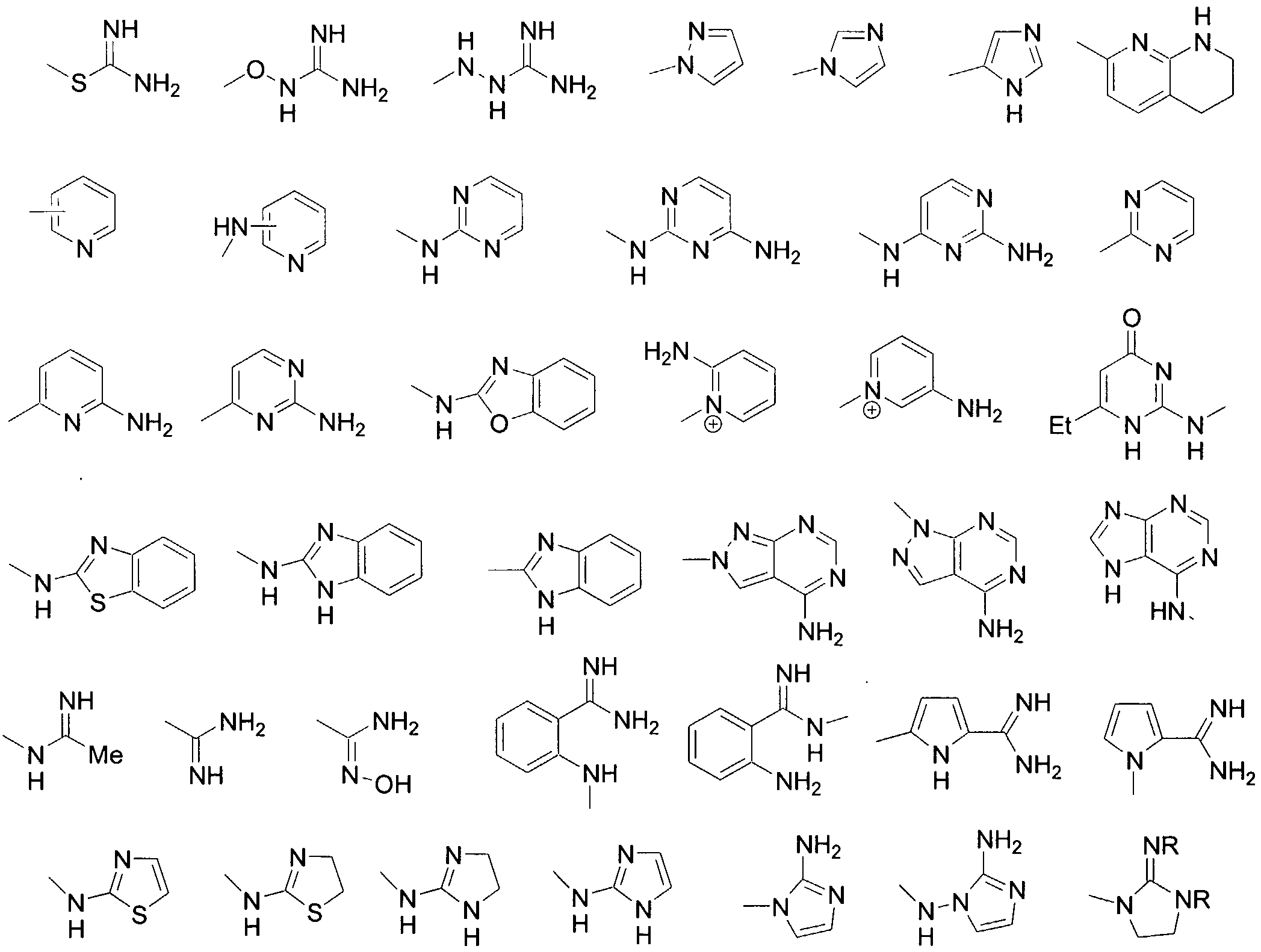
  • Bioisosteres of the basic group may be selected from the group consisting of:
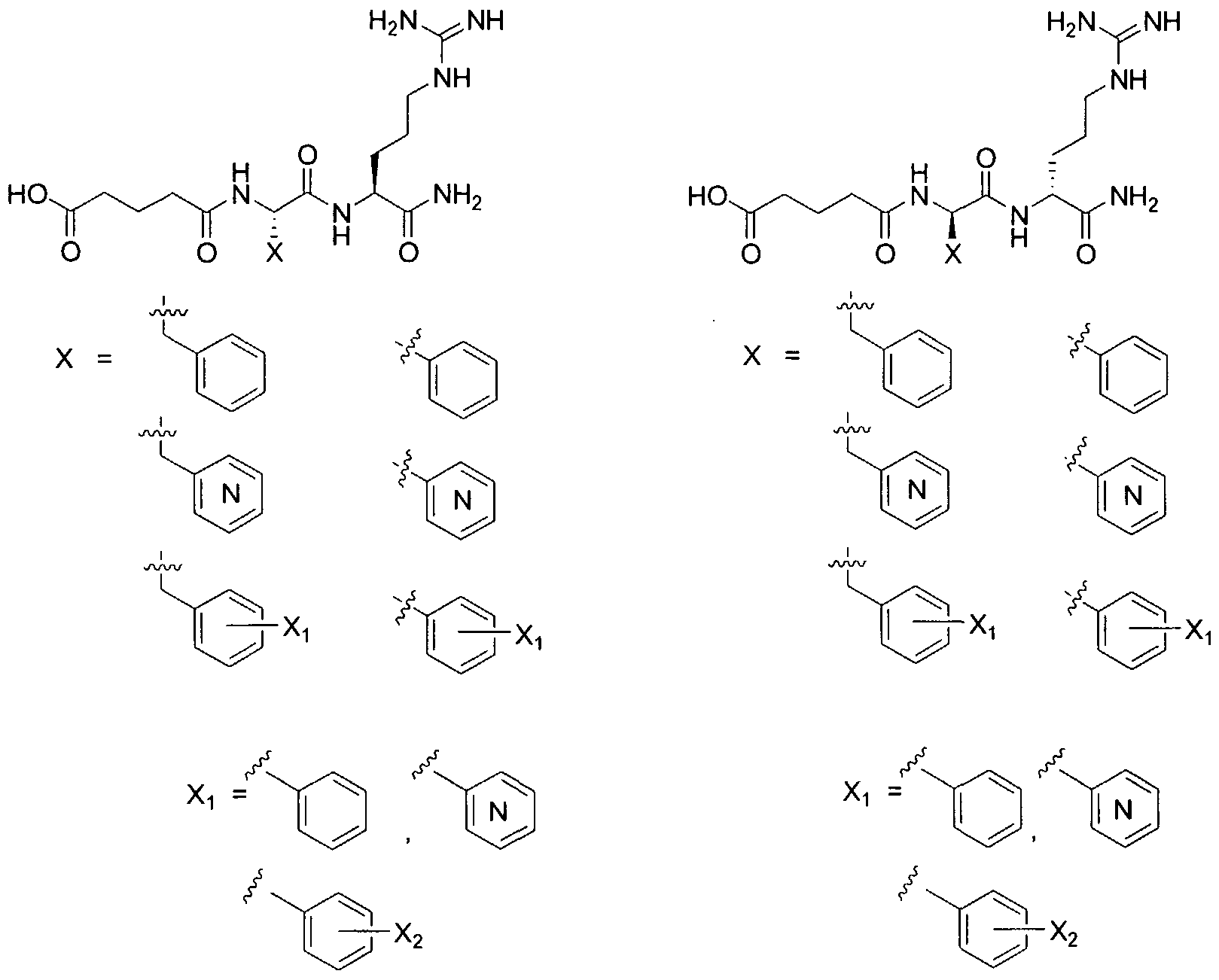
  • a half-denuded mediator may have the structure:
  • X is selected from the group consisting of:
  • Xi is ; wherein X 2 is F, Cl, Br, I, C 0-6 alkyl, OCH 3 , CF 3 , or OCF 3 ; wherein X 3 is Cl, C 0-6 alkyl, OCH 3 ; and wherein n is 1 or 2.
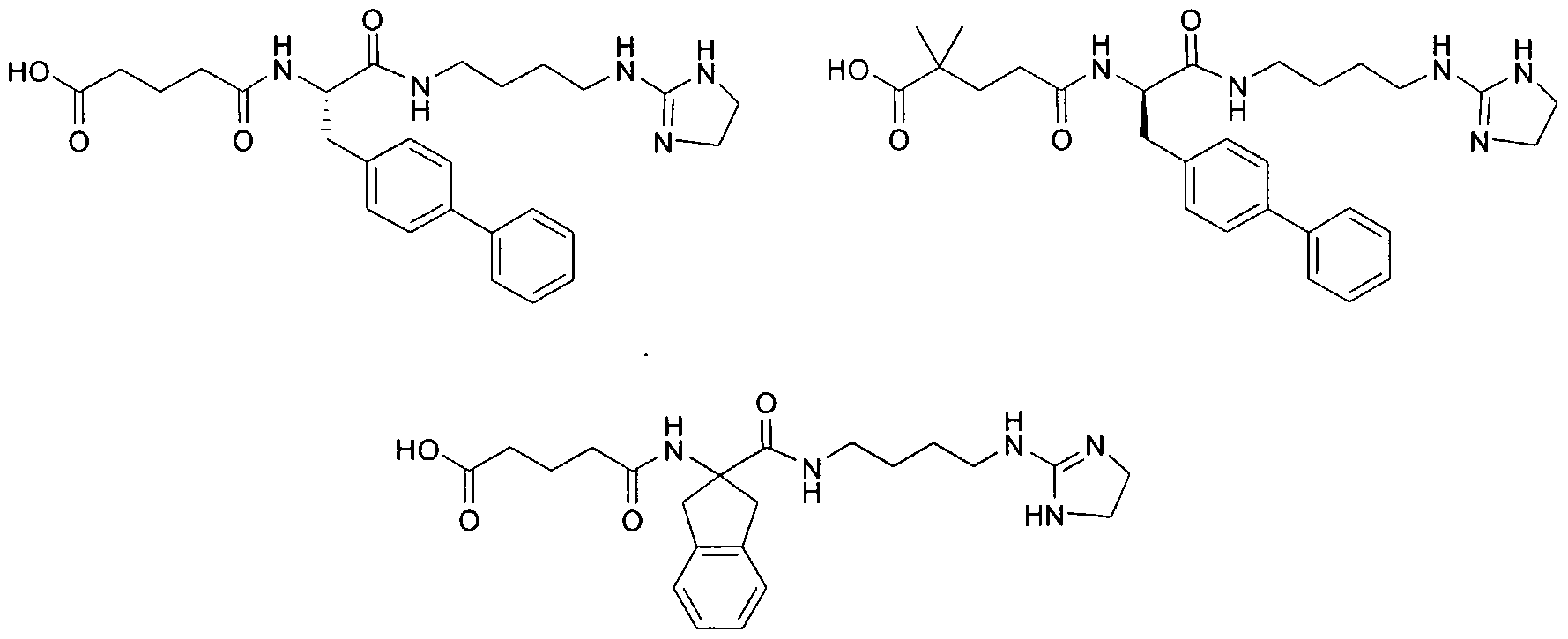
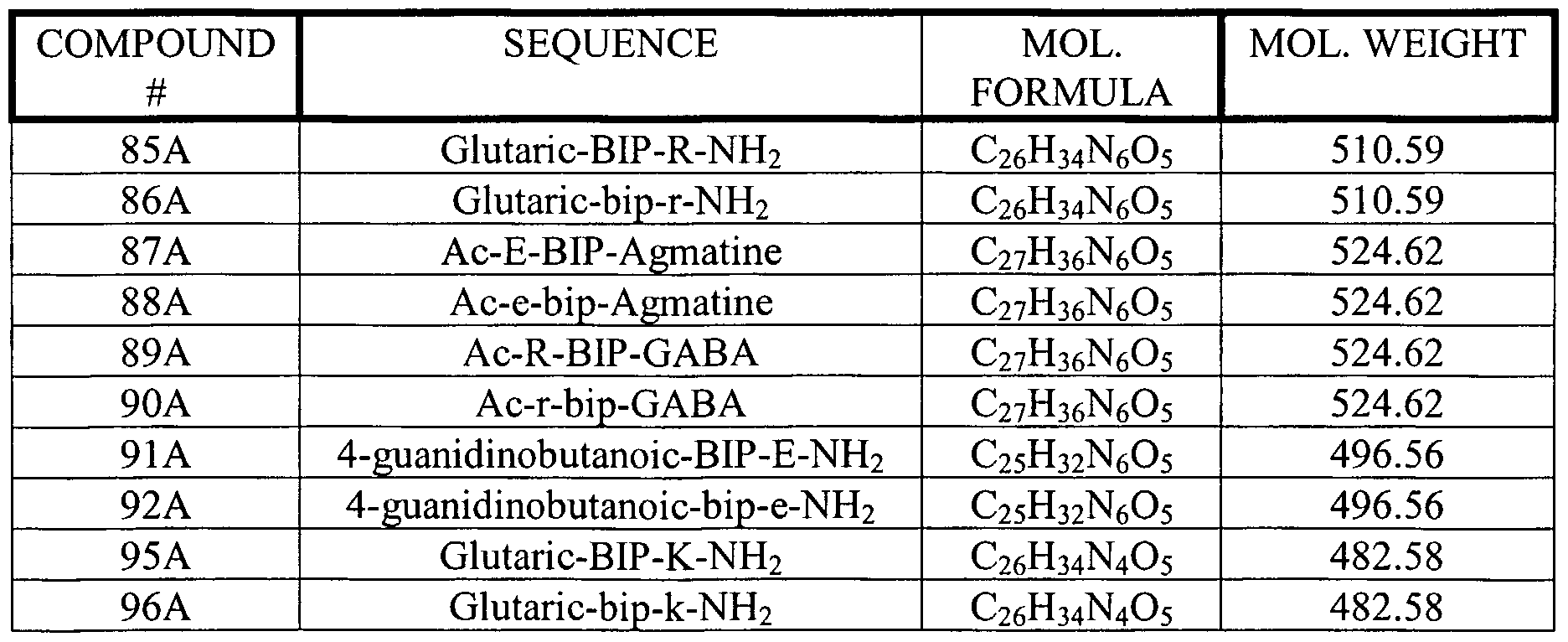
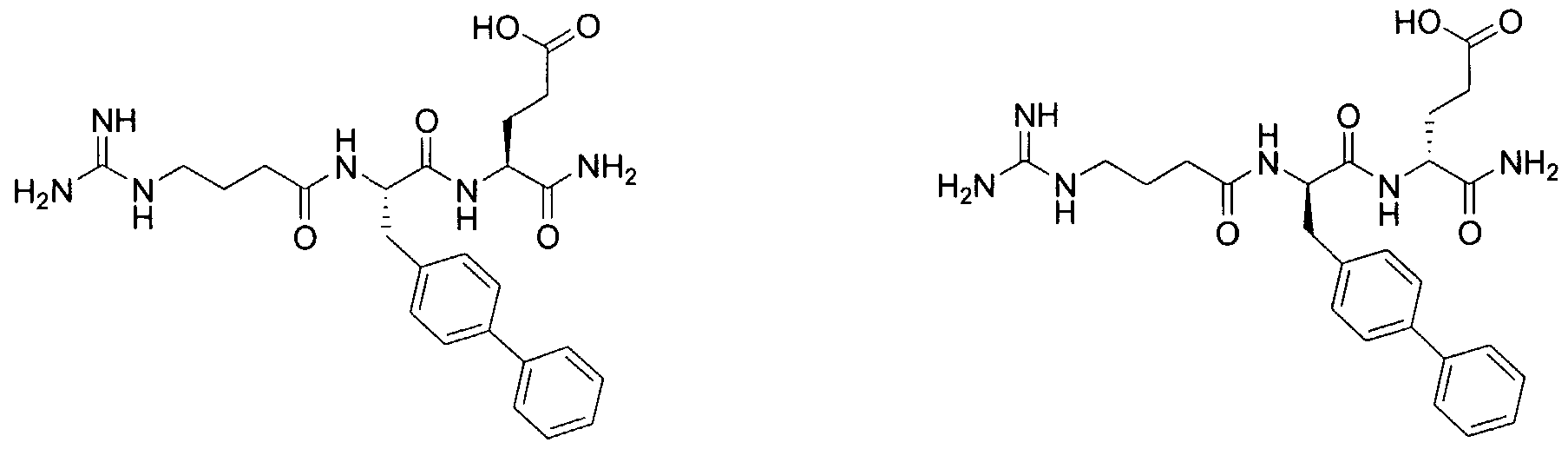
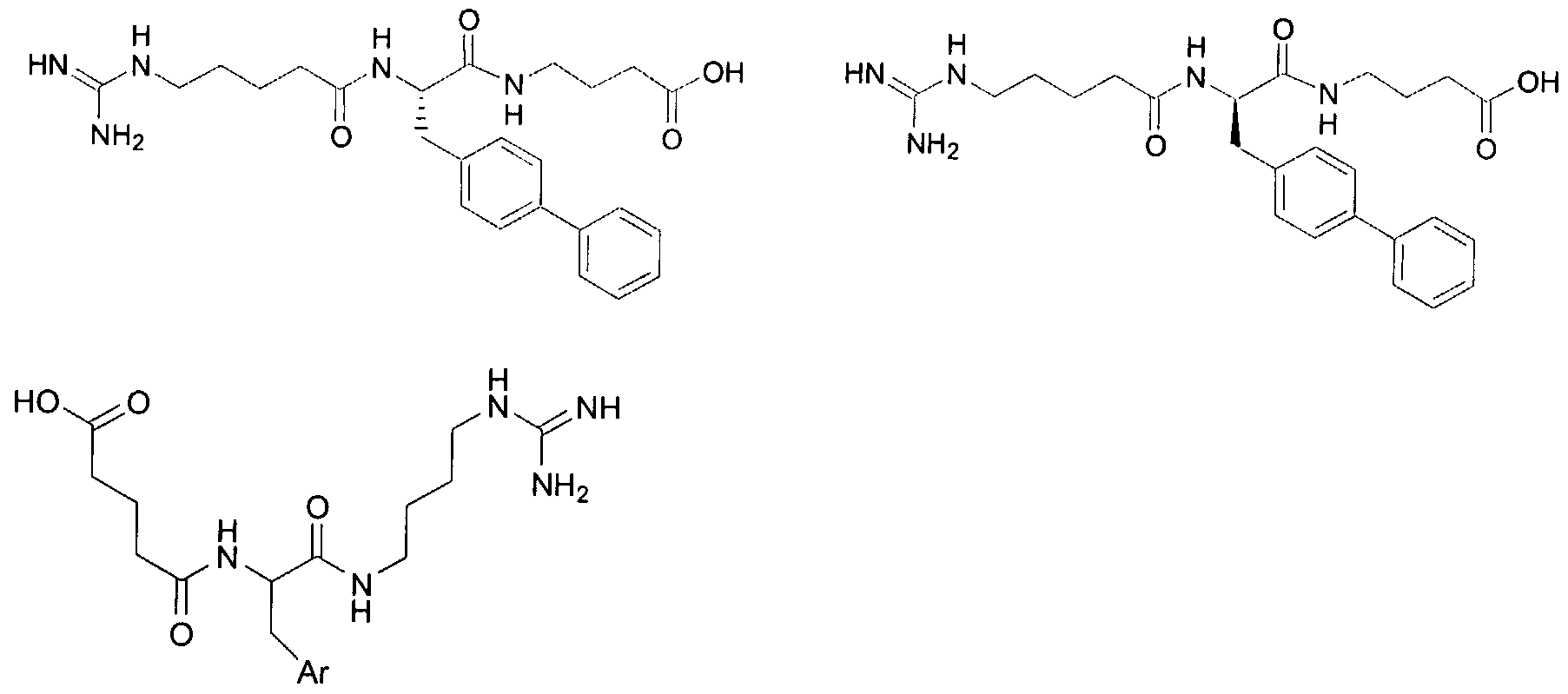
  • a half-denuded mediator may be selected from the group consisting of: Glutaric-BIP-R-NH 2 , Glutaric-bip-r-NH 2 , Ac-E-BIP-Agmatine, Ac-e-bip-Agmatine, Ac-R-BIP-GABA, Ac-r-bip-GABA, 4-guanidinobutanoic-BIP-E-NH 2 , 4-guanidinobutanoic-bip-e- NH 2 , Glutaric-BIP-K-NH 2 , and Glutaric-bip-k-NH 2 .
  • a half-denuded mediator may be selected from the group consisting of: 2,2-dimethylglutaric-f-r-NH2, 2,2-dimethylglutaric-F-R-NH 2 , Gluraric-F-R-NH 2 , Gluraric-f-r-NH 2 , Succinic-bip-r-NH 2 , Succinic-BIP-R-NH 2 , Succinic-F-R-NH 2 , Succinic-f-r-NH 2 , 2,2-dimethylglutaric-bip-r-NH 2 , 2,2-dimethylglutaric-BIP-R-NH 2 , Dimethylsuccinic-bip-r-NH 2 , Dimethylsuccinic-BIP-R-NH 2 , Glutaric-F-K-NH 2 , Succinic-F-K-NH 2 , Succinic-f-k-NH 2 , 2,2- dimethylglutaric-F-K-NH
  • Dimethylsuccinic-F-K-NH 2 Dimethylsuccinic-Aic-r-NH 2 , 2,2-dimethylglutaric-Aic-r-NH 2 , Glutaric-Aic-r-NH 2 , Succinic-Aic-r-NH 2 , Glutaric-Aic-R-NH 2 , Tetrazolamideglutaric-BIP-R-NH 2 , 3,3-dimethylglutaric-Aic-R-NH 2 , Dimethylsuccinic-Aic-R-NH 2 , and 2,2-dimethylglutaric-Aic-R- NH 2 .
  • Fully-denuded mediators in accordance with preferred embodiements of the present invention may be selected from the group consisting of:
  • the mediators of the present invention may be selected from the group consisting of: Glutaric-bip-r, E-BIP-Agmatine, (4- carbamoylbutyl)guanidine-BIP-E, Glutaric-bip-k, (4-carbamoylbutyl)guanidine-bip-GABA, (4- carbamoylbutyl)guanidine-BIP-GABA, Glutaric-Aic-Agmatine, (4-carbamoylbutyl)guanidine- phe-GABA, 4,4-dimethylglutaric-phe-Agmatine, Dimet.glutaric-F-R, Glutaric-F-R, Glutaric-f-r, Succinic-bip-r, Succinic-BIP-R, Succinic-f-r, Dimet.glutaric-bip-r, Dimet.glutaric-BIP-R, Dimet
  • the mediators may be selected from Dimet.succinic-phe-k, Dimet.glutaric-F-R, or Glutaric-F-R.
  • any underivatized amino and/or carboxy terminal amino acid residues in the above lists of preferred mediators are capped with a protecting group.
  • the alpha amino group is capped with a protecting group, such as an acetyl or a di-tert-butyl-4-hydroxy-phenyl.
  • the alpha carboxy group is capped with a protecting group such as an amine or a di-tert-butyl-4-hydroxy-phenyl.
  • any other protecting groups disclosed herein may also be used.
  • mediators of RCT in preferred embodiments of the invention mimic ApoA-I function and activity.
  • these mediators are molecules comprising three regions, an acidic region, a lipophilic (e.g., aromatic) region, and a basic region.
  • the molecules preferably contain a positively charged region, a negatively charged region, and an uncharged, lipophilic region.
  • the locations of the regions with respect to one another can vary between molecules; thus, in a preferred embodiment, the molecules mediate RCT regardless of the relative positions of the three regions within each molecule.
  • the molecular template or model comprises an acidic amino acid-derived residue, a lipophilic amino acid-derived residue, and a basic amino acid-derived residue, linked in any order to form a mediator of RCT
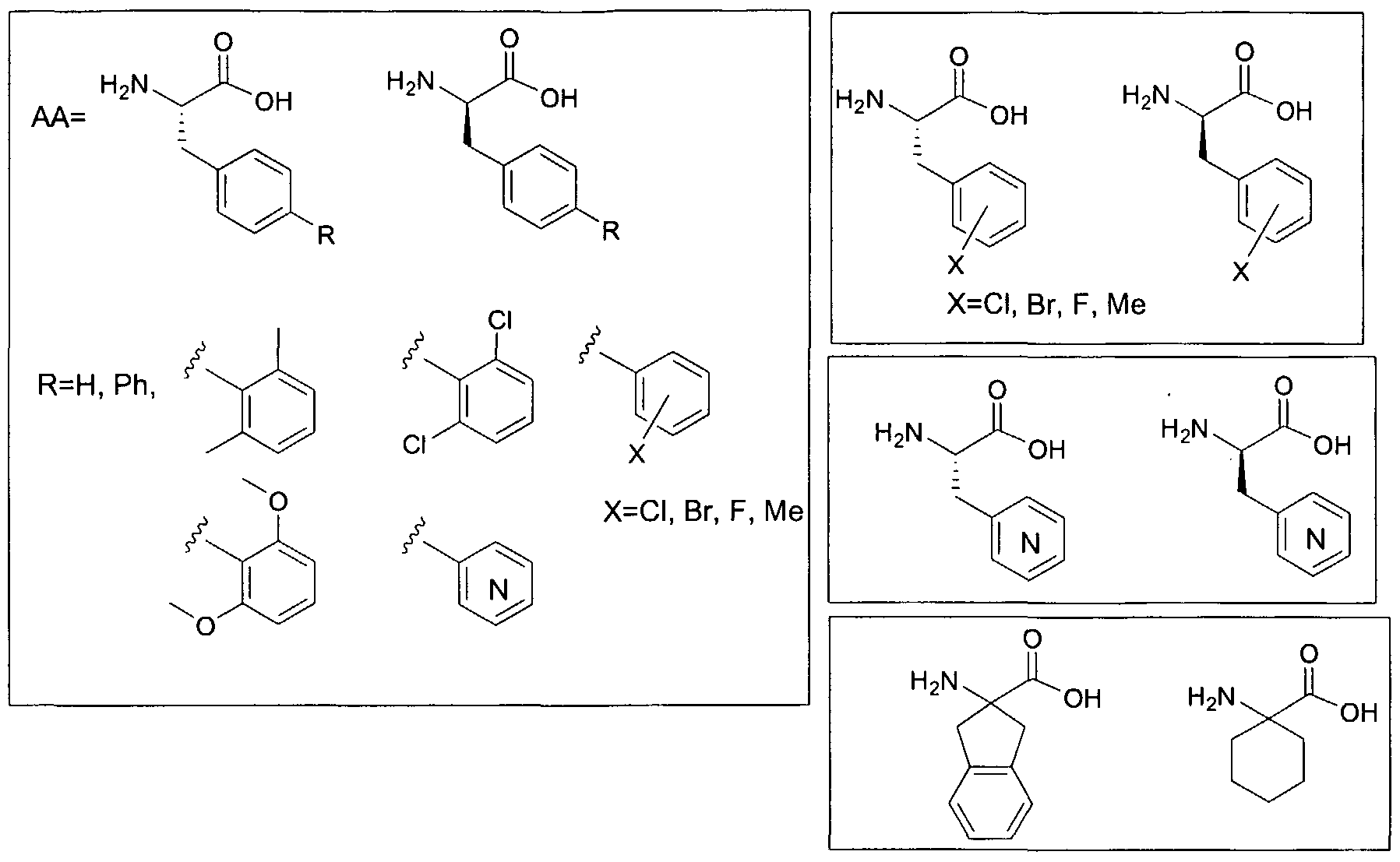
  • the molecular model can be embodied by a single residue having acidic, lipophilic and basic regions, such as for example, the amino acid, phenylalanine.
  • the molecular mediators of RCT comprise trimers of natural D- or L- amino acids, amino acid analogs (synthetic or semisynthetic), and amino acid derivatives.
  • a trimer may include an acidic amino acid residue or analog thereof, an aromatic or lipophilic amino acid residue or analog thereof, and a basic amino acid residue or analog thereof, the residues being joined by peptide or amide bond linkages.
  • the trimer sequence EFR comprises an acidic residue (glutamic acid), an aromatic residue (phenylalanine) and a basic amino acid residue (arginine). While the molecular mediators of RCT share the common aspect of reducing serum cholesterol through enhancing direct and/or indirect RCT pathways (i.e., increasing cholesterol efflux), ability to activate LCAT, and ability to increase serum HDL concentration.
  • the mediator of reverse cholesterol transport preferably comprises an acid group, a lipophilic group and a basic group, and comprises the sequence: X1-X2-Y3, Y1-X2-X3, or Y1-X2-Y3 wherein: XI is an acidic amino acid or analog thereor; X2 is an aromatic or a lipophilic amino acid or analog thereof; X3 is a basic amino acid or analog thereof; Yl is an acidic amino acid analog without the alpha amino group; and Y3 is a basic amino acid analog without the alpha carboxy group.
  • the amino terminal alpha amino group when present (e.g., XI), it further comprises a first protecting group, and when the carboxy terminal alpha carboxy group is present (e.g., X3), it further comprises a second protecting group.
  • the first (amino terminal) protecting groups are preferably selected from the group consisting of an acetyl, phenylacetyl, pivolyl, 2-napthylic acid, nicotinic acid, a CH 3 — (CH 2 ) n — CO — where n ranges from 1 to 20, and an amide of acetyl, phenylacetyl, di-tert-butyl-4-hydroxy-phenyl, naphthyl, substituted naphthyl, FMOC, biphenyl, substituted phenyl, substituted heterocycles, alkyl, aryl, substituted aryl, cycloalkyl, fused cycloalkyl, saturated heteroaryl, substituted saturated hetero
  • R di-tert-butyl-4-hydroxy-phenyl, naphthyl, substituted naphthyl, FMOC, biphenyl, substituted phenyl, substituted heterocycles, alkyl, aryl, substituted aryl, cycloalkyl, fused cycloalkyl, saturated heteroaryl, substituted saturated heteroaryl and the like.
  • the order of the acidic, lipophilic and basic amino acids (or analogs thereof) can be scrambled
  • the mediator can be inco ⁇ orated into a larger entity, such as a peptide of about 3 to 10 amino acids, or a molecule.
  • amino acid can also refer to a molecule of the general formula NH 2 -CHR-COOH or the residue within a peptide bearing the parent amino acid, where "R”is one of a number of different side chains.
  • R can be a substituent referring to one of the twenty genetically coded amino acids.
  • R can also be a substituent referring to one that is not of the twenty genetically coded amino acids.
  • amino acid residue refers to the portion of the amino acid which remains after losing a water molecule when it is joined to another amino acid.
  • amino acid analog refers to a structural derivative of an amino acid parent compound that differs from it by at least one element, such as for example, an alpha amino group or an acidic amino acid in which the acidic R group has been replaced with a bioisostere thereof.
  • element such as for example, an alpha amino group or an acidic amino acid in which the acidic R group has been replaced with a bioisostere thereof.
  • half-denuded and “denuded” embodiments of the present invention comprise amino acid analogs since these versions vary from a traditional amino acid structure in missing at least an element, such as an alpha amino or carboxy group.
  • modified amino acid refers more particularly to an amino acid bearing an "R" substituent that does not correspond to one of the twenty genetically coded amino acids — as such modified amino acids fall within the broader class of amino acid analogs.
  • the term “fully protected” refers to a preferred embodiment in which both the amino and carboxyl terminals comprise protecting groups.
  • half-denuded refers to a preferred embodiment in which one of the alpha amino group or the alpha carboxy group is missing from the respective amino or carboxy terminal amino acid residues or analogs thereof. The remaining alpha amino or alpha carboxy group is capped with a protecting group.
  • the term "denuded” or “fully-denuded” refers to a preferred embodiment in which both the alpha amino and alpha carboxy groups have been removed from the respective amino or carboxy terminal amino acid residues or analogs thereof.
  • Certain compounds can exist in tautomeric forms. All such isomers including diastereomers and enantiomers are covered by the embodiments. It is assumed that the certain compounds are present in either of the tautomeric forms or mixture thereof.
  • the shorter mediators of RCT are easier and less costly to produce, they are chemically and conformationally more stable, the preferred conformations remain relatively rigid, there is little or no intra-molecular interactions within the peptide chain, and the shorter peptides exhibit a higher degree of oral availability. Multiple copies of these shorter peptides might bind to the HDL or LDL producing the same effect of a more restrained large peptide.
  • ApoA-I multifunctionality may be based on the contributions of its multiple ⁇ -helical domains, it is also possible that even a single function of ApoA-I, e.g., LCAT activation, can be mediated in a redundant manner by more than one of the ⁇ -helical domains. Thus, in a preferred aspect of the present invention, multiple functions of ApoA-I may be mimicked by the disclosed mediators of RCT which are directed to a single sub-domain. [0049] Three functional features of ApoA-I are widely accepted as major criteria for ApoA-I agonist design: (1) ability to associate with phospholipids; (2) ability to activate LCAT; and (3) ability to promote efflux of cholesterol from the cells.
  • the molecular mediators of RCT in accordance with some modes of the preferred embodiments may exhibit only the last functional feature — ability to increase RCT.
  • ApoA-I directs the cholesterol flux into the liver via a receptor-mediated process and modulates pre- ⁇ -HDL (primary acceptor of cholesterol from peripheral tissues) production via a PLTP driven reaction.
  • pre- ⁇ -HDL primary acceptor of cholesterol from peripheral tissues
  • the molecular mediators of the preferred embodiments will preferably be able to associate with phospholipids and bind to the liver (i.e., to serve as ligand for liver lipoprotein binding sites).
  • mediators of RCT that exhibit preferential lipid binding conformation, increase cholesterol flux to the liver by facilitating direct and/or indirect reverse cholesterol transport, improve the plasma lipoprotein profile, and subsequently prevent the progression or/and even promote the regression of atherosclerotic lesions.
  • the mediators of RCT of the preferred embodiments can be prepared in stable bulk or unit dosage forms, e.g., lyophilized products, that can be reconstituted before use in vivo or reformulated.
  • the preferred embodiments include the pharmaceutical formulations and the use of such preparations in the treatment of hyperlipidemia, hypercholesterolemia, coronary heart disease, atherosclerosis, diabetes, obesity, Alzheimer's Disease, multiple sclerosis, conditions related to hyperlipidemia, such as inflammation, and other conditions such as endotoxemia causing septic shock.
  • the preferred embodiments are illustrated by working examples which demonstrate that the mediators of RCT associate with the HDL and LDL component of plasma, and can increase the concentration of HDL and pre- ⁇ -HDL particles, and lower plasma levels of LDL. Thus promote direct and indirect RCT.
  • the mediators of RCT of the preferred embodiments increase human LDL mediated cholesterol accumulation in human hepatocytes (HepG2 cells).
  • the mediators of RCT are also efficient at activating PLTP and thus promote the formation of pre- ⁇ - HDL particles.
  • Increase of HDL cholesterol served as indirect evidence of LCAT involvement (LCAT activation was not shown directly (in vitro)) in the RCT.
  • Use of the mediators of RCT of the preferred embodiments in vivo in animal models results in an increase in serum HDL concentration.
  • the preferred embodiments are set forth in more detail in the subsections below, which describe composition and structure of the mediators of RCT, including half-denuded versions, and denuded versions; modified amino acids that can be used within the structures of the mediators of RCT; structural and functional characterization; methods of preparation of bulk and unit dosage formulations; and methods of use.
  • the mediators of RCT of the preferred embodiments are generally peptide-like molecules comprising at least one amino acid analog, which mimic the activity of ApoA-I.
  • at least one amide linkage in the peptide is replaced with a substituted amide, an isostere of an amide or an amide mimetic.
  • one or more amide linkages can be replaced with peptidomimetic or amide mimetic moieties which do not significantly interfere with the structure or activity of the mediators. Suitable amide mimetic moieties are described, for example, in Olson et al, 1993, J. Med. Chem. 36:3039-3049.
  • an acidic and/or basic R group has been replaced by a bioisostere thereof.
  • Amino Acids One-Letter Symbol Common Abbreviation Alanine A Ala Arginine R Arg Amino Acids One-Letter Symbol Common Abbreviation Asparagine N Asn Aspartic acid D Asp Cysteine C Cys Glutamine Q Gin Glutamic acid E Glu Glycine G Gly Histidine H His Isoleucine I He Leucine L Leu Lysine K Lys Phenylalanine F Phe Proline P Pro Serine S Ser Threonine T Thr Tryptophan W Trp Tyrosine Y Tyr Valine V Val
  • Certain amino acid residues in the mediators of RCT can be replaced with other amino acid residues or analogs thereof without significantly deleteriously affecting, and in many cases even enhancing, the activity of the mediator.
  • also contemplated by the preferred embodiments are altered or mutated forms of the mediators of RCT wherein at least one defined amino acid residue in the structure is substituted with another amino acid residue or derivative and/or analog thereof.
  • the amino acid substitutions are conservative, i.e., the replacing amino acid residue or analog thereof has physical and chemical properties that are similar to the amino acid residue being replaced.
  • the amino acids can be conveniently classified into two main categories—hydrophilic and hydrophobic— depending primarily on the physical-chemical characteristics of the amino acid side chain. These two main categories can be further classified into subcategories that more distinctly define the characteristics of the amino acid side chains.
  • hydrophilic amino acids can be further subdivided into acidic, basic and polar amino acids.
  • hydrophobic amino acids can be further subdivided into nonpolar and aromatic amino acids.
  • hydrophilic amino acid refers to an amino acid exhibiting a hydrophobicity of less than zero according to the normalized consensus hydrophobicity scale of Eisenberg et al., 1984, J. Mol. Biol. 179:125-142. Genetically encoded hydrophilic amino acids include Thr (T), Ser (S), His (H), Glu (E), Asn (N), Gin (Q), Asp (D), Lys (K) and Arg (R).
  • hydrophobic amino acid refers to an amino acid exhibiting a hydrophobicity of greater than zero according to the normalized consensus hydrophobicity scale of Eisenberg, 1984, J.
  • hydrophobic amino acids include Pro (P), He (I), Phe (F), Val (V), Leu (L), Tip (W), Met (M), Ala (A), Gly (G) and Tyr (Y).
  • acidic amino acids typically have negatively charged side chains at physiological pH due to loss of a hydrogen ion.
  • Genetically encoded acidic amino acids include Glu (E) and Asp (D).
  • basic amino acid refers to a hydrophilic amino acid having a side chain pK value of greater than 7.
  • Basic amino acids typically have positively charged side chains at physiological pH due to association with hydronium ion. Genetically encoded basic amino acids include His (H), Arg (R) and Lys (K). [0062]
  • the term "polar amino acid” refers to a hydrophilic amino acid having a side chain that is uncharged at physiological pH, but which has at least one bond in which the pair of electrons shared in common by two atoms is held more closely by one of the atoms.
  • Genetically encoded polar amino acids include Asn (N), Gin (Q) Ser (S) and Thr (T).
  • nonpolar amino acid refers to a hydrophobic amino acid having a side chain that is uncharged at physiological pH and which has bonds in which the pair of electrons shared in common by two atoms is generally held equally by each of the two atoms (i.e., the side chain is not polar). Genetically encoded nonpolar amino acids include Leu (L), Val (V), He (I), Met (M), Gly (G) and Ala (A).
  • aromatic amino acid refers to a hydrophobic amino acid with a side chain having at least one aromatic or heteroaromatic ring.
  • the aromatic or heteroaromatic ring may contain one or more substituents such as — OH, — SH, — CN, — F, — Cl, — Br, —I, — NO 2 , — NO, — NH 2 , — NHR, — NRR, — C(O)R, — C(O)OH, — C(O)OR, — C(O)NH 2 , — C(O)NHR, — C(O)NRR and the like where each R is independently (C
  • aliphatic amino acid refers to a hydrophobic amino acid having an aliphatic hydrocarbon side chain. Genetically encoded aliphatic amino acids include Ala (A), Val (V), Leu (L) and He (I). [0066] The amino acid residue Cys (C) is unusual in that it can form disulfide bridges with other Cys (C) residues or other sulfanyl-containing amino acids.
  • Cys (C) residues and other amino acids with — SH containing side chains
  • Cys (C) residues contribute net hydrophobic or hydrophilic character to a peptide. While Cys (C) exhibits a hydrophobicity of 0.29 according to the normalized consensus scale of Eisenberg (Eisenberg, 1984, supra), it is to be understood that for purposes of the preferred embodiments Cys (C) is categorized as a polar hydrophilic amino acid, notwithstanding the general classifications defined above. [0067] As will be appreciated by those of skill in the art, the above-defined categories are not mutually exclusive.
  • amino acids having side chains exhibiting two or more physical- chemical properties can be included in multiple categories.
  • amino acid side chains having aromatic moieties that are further substituted with polar substituents, such as Tyr (Y) may exhibit both aromatic hydrophobic properties and polar or hydrophilic properties, and can therefore be included in both the aromatic and polar categories.
  • polar substituents such as Tyr (Y)
  • the appropriate categorization of any amino acid will be apparent to those of skill in the art, especially in light of the detailed disclosure provided herein.
  • the amino acid substitutions need not be, and in certain embodiments preferably are not, restricted to the genetically encoded amino acids.
  • the preferred mediators of RCT contain genetically non-encoded amino acids.
  • amino acid residues in the mediators of RCT may be substituted with naturally occurring non-encoded amino acids and synthetic amino acids.
  • Certain commonly encountered amino acids which provide useful substitutions for the mediators of RCT include, but are not limited to, ⁇ -alanine ( ⁇ -Ala) and other omega-amino acids such as 3-aminopropionic acid, 2,3-diaminopropionic acid (Dpr), 4-aminobutyric acid and so forth; ⁇ -aminoisobutyric acid (Aib); ⁇ -aminohexanoic acid (Aha); ⁇ -aminovaleric acid (Ava); N- methylglycine or sarcosine (MeGly); ornithine (Orn); citrulline (Cit); t-butylalanine (t-BuA); t- butylglycine (t-BuG); N-methylisoleucine (Melle); phenylglycine (Phg); cyclohexylalanine (Cha); norleucine (Nle); naphthylalanine (Nal); 4-phen
  • the mediators may advantageously be composed of at least one D-enantiomeric amino acid. Mediators containing such D-amino acids are thought to be more stable to degradation in the oral cavity, gut or serum than are peptides composed exclusively of L-amino acids.
  • Linkers [0074] The mediators of RCT can be connected or linked in a head-to-tail fashion (i.e., N-terminus to C-terminus), a head-to-head fashion, (i.e., N-terminus to N-terminus), a tail-to-tail fashion (i.e., C-terminus to C-terminus), or combinations thereof.
  • the linker can be any bifunctional molecule capable of covalently linking two amino acids or analogs thereof to one another.
  • linkers are bifunctional molecules in which the functional groups are capable of being covalently attached to the N- and/or C-terminus of a peptide.
  • Functional groups suitable for attachment to the N- or C-terminus of peptides are well known in the art, as are suitable chemistries for effecting such covalent bond formation.
  • Linkers of sufficient length and flexibility include, but are not limited to, Pro (P), Gly (G), Cys-Cys,Gly-Gly, H 2 N— (CH 2 ) n — COOH where n is 1 to 12, preferably 4 to 6; H 2 N-aryl- COOH and carbohydrates.
  • no separate linkers per se are used at all.
  • the acidic, lipophilic and basic moitites are all part of a single molecule.
  • Modified Amino Acids Used Within the Structures of the Mediators of RCT [0076]
  • the protected, half-denuded and denuded versions further comprise modified amino acids, i.e., amino acids bearing an R substituent that does not correspond to one of the twenty genetically coded R groups.
  • the terms "bioisostere”, “bioisosteric replacement”, “bioisosterism” and closely related terms as used herein have the same meanings as those generally recognized in the art. Bioisosteres are atoms, ions, or molecules in which the peripheral layers of electrons can be considered identical.
  • bioisostere is usually used to mean a portion of an overall molecule, as opposed to the entire molecule itself.
  • Bioisosteric replacement involves using one bioisostere to replace another with the expectation of maintaining or slightly modifying the biological activity of the first bioisostere.
  • the bioisosteres in this case are thus atoms or groups of atoms having similar size, shape and electron density.
  • Bioisosterism arises from a reasonable expectation that a proposed bioisosteric replacement will result in maintenance of similar biological properties. Such a reasonable expectation may be based on structural similarity alone. This is especially true in those cases where a number of particulars are known regarding the characteristic domains of the receptor, etc. involved, to which the bioisosteres are bound or which works upon said bioisosteres in some manner.
  • Examples of bioisosteres for carboxylic acid and guanidine groups are shown below.
  • the structure and function of the mediators of RCT of the preferred embodiments, including the multimeric forms described above, can be assayed in order to select active compounds.
  • the peptides or peptide analogs can be assayed for their ability to bind lipids, to form complexes with lipids, to activate LCAT, and to promote cholesterol efflux, etc.
  • Methods and assays for analyzing the structure and/or function of the peptides are well-known in the art. Preferred methods are provided in the working examples, infra.
  • the nuclear magnetic resonance (NMR) assays described, infra can be used to analyze the structure of the peptides or peptide analogues-particularly the degree of helicity in the presence of lipids.
  • the ability to bind lipids can be determined using the fluorescence spectroscopy assay described, infra.
  • the ability of the peptides and/or peptide analogues to activate LCAT can be readily determined using the LCAT activation described, infra.
  • the in vitro and in vivo assays described, infra can be used to evaluate the half-life, distribution, cholesterol efflux and effects on RCT.
  • the mediators of RCT can be further defined by way of preferred embodiments.
  • a molecule comprising an amino acid- based composition having three independent regions: an acidic region, an aromatic or lipophilic region, and a basic region.
  • the relative locations of the regions with respect to one another can vary between molecular mediators; the molecules mediate RCT regardless of the position of the three regions within each molecule.
  • the aromatic region of the trimer may consist of nicotinic acid with an acidic or basic side chain(s).
  • the aromatic region of the trimer may consist of 4-phenyl phenylalanine.
  • the molecular mediators comprising an amino acid-based trimeric structure can optionally be capped by a lipophilic group(s) on the amino or carboxyl terminal at either end or both ends to improve the physicochemical properties of the molecular mediators of RCT and take advantage of the natural or active transport (absorption) system of fat or lipophilic materials into the body.
  • the capping groups may be D or L enantiomers or non-enantiomeric molecules or groups.
  • the N-terminal capping groups are selected from the group consisting of acetyl, phenylacetyl, di-tert-butyl-4-hydroxy- phenyl, naphthyl, substituted naphthyl, FMOC, biphenyl, substituted phenyl, substituted heterocycles, alkyl, aryl, substituted aryl, cycloalkyl, fused cycloalkyl, saturated heteroaryl, substituted saturated heteroaryl and the like.
  • the abbreviations used for the D-enantiomers of the genetically encoded amino acids are lower-case equivalents of the one-letter symbols shown in Table 1. For example, "R” designates L-arginine and "r” designates D-arginine.
  • the N- terminus is acetylated and the C-terminus is amidated.
  • PhAc denotes phenylacetylated.
  • BIP denotes biphenylalanine.
  • Amino acid substitutions need not be, and in certain embodiments preferably are not, restricted to the genetically encoded amino acids.
  • amino acid residues in the mediators of RCT may be substituted with naturally occurring non-encoded amino acids and synthetic amino acids.
  • Metabolically Protected Version [0090] Examples of preferred metabolically protected versions of RCT mediators are shown below. Compounds with substituted alpha carbons to acids can be stable to elimination reactions. Substituted guanidines may help prevent elimination reactions.
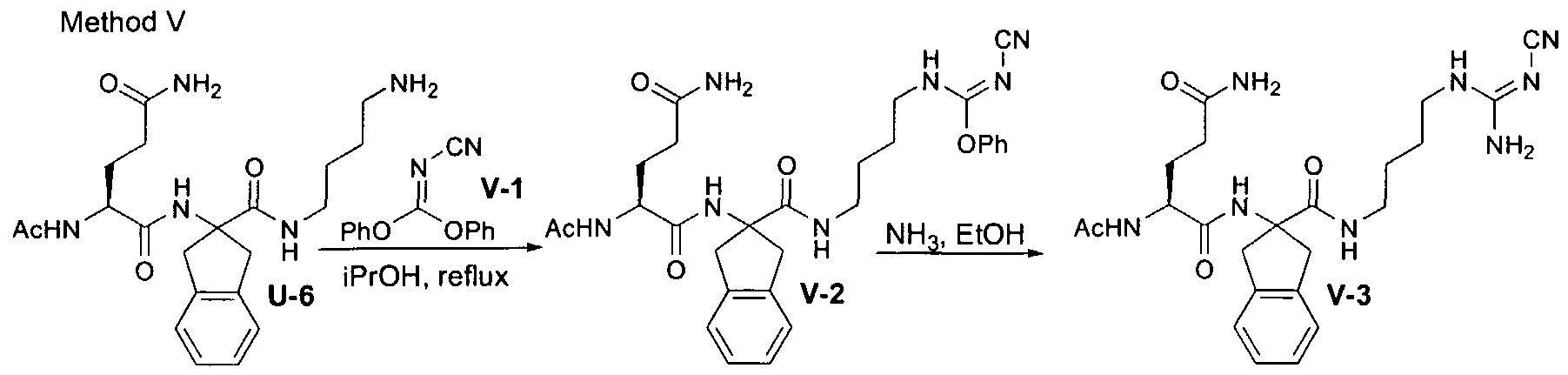
  • Half-denuded Mediators [0091] Examples of preferred half-denuded embodiments of RCT mediators are shown below together with synthetic schemes.
  • X 2 F, Cl, Br, I, C 0 . 6 alkyl
  • X 2 F, Cl, Br, I, C 0 . 6 alkyl, OCH 3 ,CF 3 , OCF 3 OCH 3 ,CF 3 , OCF 3
  • AA indicates Biphenyl and AA 2 indicates Arginine or Lysine HALF DENUDED
  • X 2 F, Cl, Br, I, C 0 _ 6 alkyl
  • X 2 F, Cl, Br, I, C 0 . 6 alkyl, OCH 3 ,CF 3 , OCF 3 OCH 3 ,CF 3 , OCF 3
  • X 2 F, Cl, Br, I, Co- 6 alkyl
  • X 2 F, Cl, Br, I, CQ-6 alkyl, OCH 3 ,CF 3 , OCF 3 OCH 3 ,CF 3 , OCF 3
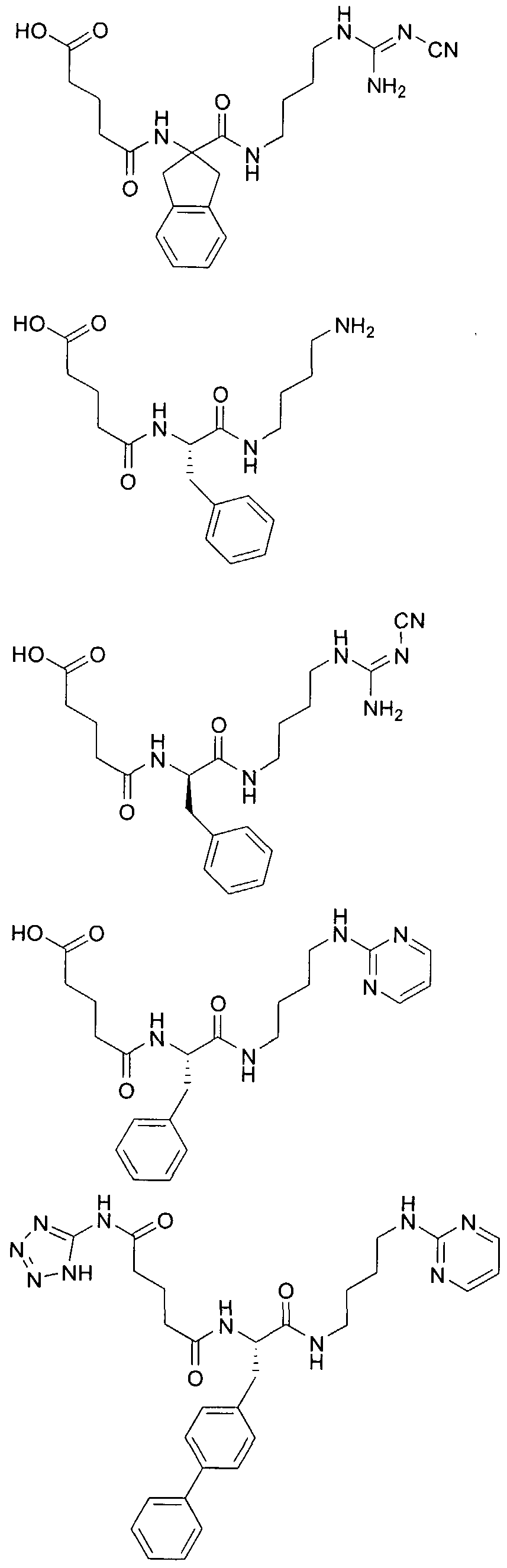
  • the mediators are selected from the group consisting of: Glutaric-bip-r, E-BIP-Agmatine, (4-carbamoylbutyl)guanidine-BIP-E, Glutaric-bip-k, (4-carbamoylbutyl)guanidine-bip-GABA, (4-carbamoylbutyl)guanidine-BIP-GABA, Glutaric-Aic- Agmatine, (4-carbamoylbutyl)guanidine-phe-GABA, 4,4-dimethylglutaric-phe-Agmatine,
  • succinic-Phe-K 3, 3 -dimethyl glutaric-phe-agmatine, Dimet.succinic-Aic-r, glutaric-f- (ethano)Agmatine, Glutaric-Aic-r, Succinic-Aic-r, Glutaric-Aic-R, (lH-tetrazol-5-5-yl)glutaramide- BIP-R, 2,2-dimethylsuccinic-Phe-agmatine, Dimet.
  • Succinic-Aic-R 3,3-spirocyclopentylglutaric- Phe-agmatine, 3,3-dimethylglutaric-F-agmatine, glutaric-Phe-agmatine(Bis-Boc), glutaric-f- cyanoagmatine, glutaric(tetrazoleamide)-BIP-agmatine(pyrimidine), Succinic-BIP-agmatine (pyrimidine), 3,3-spirocyclohexylglutaric-bip-agmatine (pyrimidine), 3,3-Dimethylglutaric-bip- agmatine (pyrimidine), 3,3-spirocyclopentylglutaric-Aic-agmatine (pyrimidine), 3,3- Dimethylglutaric-Aic-agmatine (pyrimidine), 3,3-spirocyclopentylglutaric-Phe-3-
  • any underivatized amino and/or carboxy terminal amino acid residues in the above list of preferred mediators are capped with a protecting group.
  • the alpha amino group is capped with a protecting group, such as an acetyl or a di-tert-butyl-4-hydroxy-phenyl.
  • the alpha carboxy group is capped with a protecting group such as an amine or a di-tert-butyl-4-hydroxy-phenyl.
  • any other protecting groups may also be used.
  • the mediators of the preferred embodiments may be prepared using virtually any art-known technique for the preparation of peptides.
  • the peptides may be prepared using conventional step- wise solution or solid phase peptide syntheses.
  • the half-denuded mediators of RCT may be prepared using conventional step- wise solution or solid phase synthesis (see, e.g., Chemical Approaches to the Synthesis of Peptides and Proteins, Williams et al., Eds., 1997, CRC Press, Boca Raton Fla., and references cited therein; Solid Phase Peptide Synthesis: A Practical Approach, Atherton & Sheppard, Eds., 1989, IRL Press, Oxford, England, and references cited therein).
  • attachment of the first amino acid entails chemically reacting its carboxyl-terminal (C-terminal) end with derivatized resin to form the carboxyl-terminal end of the oligopeptide.
  • the alpha-amino end of the amino acid is typically blocked with a t-butoxy-carbonyl group (Boc) or with a 9-fluorenylmethyloxycarbonyl (FMOC) group to prevent the amino group which could otherwise react from participating in the coupling reaction.
  • the side chain groups of the amino acids if reactive, are also blocked (or protected) by various benzyl -derived protecting groups in the form of ethers, thioethers, esters, and carbamates.
  • next step and subsequent repetitive cycles involve deblocking the amino- terminal (N-terminal) resin-bound amino acid (or terminal residue of the peptide chain) to remove the alpha-amino blocking group, followed by chemical addition (coupling) of the next blocked amino acid. This process is repeated for however many cycles are necessary to synthesize the entire peptide chain of interest.
  • the resin-bound peptide is thoroughly washed to remove any residual reactants before proceeding to the next.
  • the solid support particles facilitate removal of reagents at any given step as the resin and resin-bound peptide can be readily filtered and washed while being held in a column or device with porous openings.
  • Synthesized peptides may be released from the resin by acid catalysis (typically with hydrofluoric acid or trifluoroacetic acid), which cleaves the peptide from the resin leaving an amide or carboxyl group on its C-terminal amino acid. Acidolytic cleavage also serves to remove the protecting groups from the side chains of the amino acids in the synthesized peptide. Finished peptides can then be purified by any one of a variety of chromatography methods. [0103] In accordance with a preferred embodiment, the peptides and peptide derivative mediators of RCT were synthesized by solid-phase synthesis methods with N a -FMOC chemistry.
  • N a -FMOC protected amino acids and Rink amide MBHA resin and Wang resin were purchased from Novabiochem (San Diego, CA) or Chem-Impex Intl (Wood Dale, IL).
  • Other chemicals and solvents were purchased from the following sources: trifluoroacetic acid (TFA), anisole, 1,2- ethanedithiol, thioanisole, piperidine, acetic anhydride, 2-Naphthoic acid and Pivaloic acid (Aldrich, Milwaukee, Wl), HOBt and NMP (Chem-Impex Intl, Wood Dale, IL), dichloromethane, methanol and HPLC grade solvents from Fischer Scientific, Pittsburgh, PA.
  • TFA trifluoroacetic acid
  • anisole 1,2- ethanedithiol, thioanisole
  • piperidine acetic anhydride
  • 2-Naphthoic acid and Pivaloic acid Aldrich, Milwaukee, Wl
  • the purity of the peptides was checked by LC/MS.
  • the purification of the peptides was achieved using Preparative HPLC system (Agilent technologies, 1100 Series) on a C ⁇ 8 -bonded silica column (Tosoh Biospec preparative column, ODS-80TM, Dim: 21.5 mm x 30cm).
  • the peptides were eluted with a gradient system [50% to 90% of B solvent (acetonitrile:water 60:40 with 0.1% TFA)].
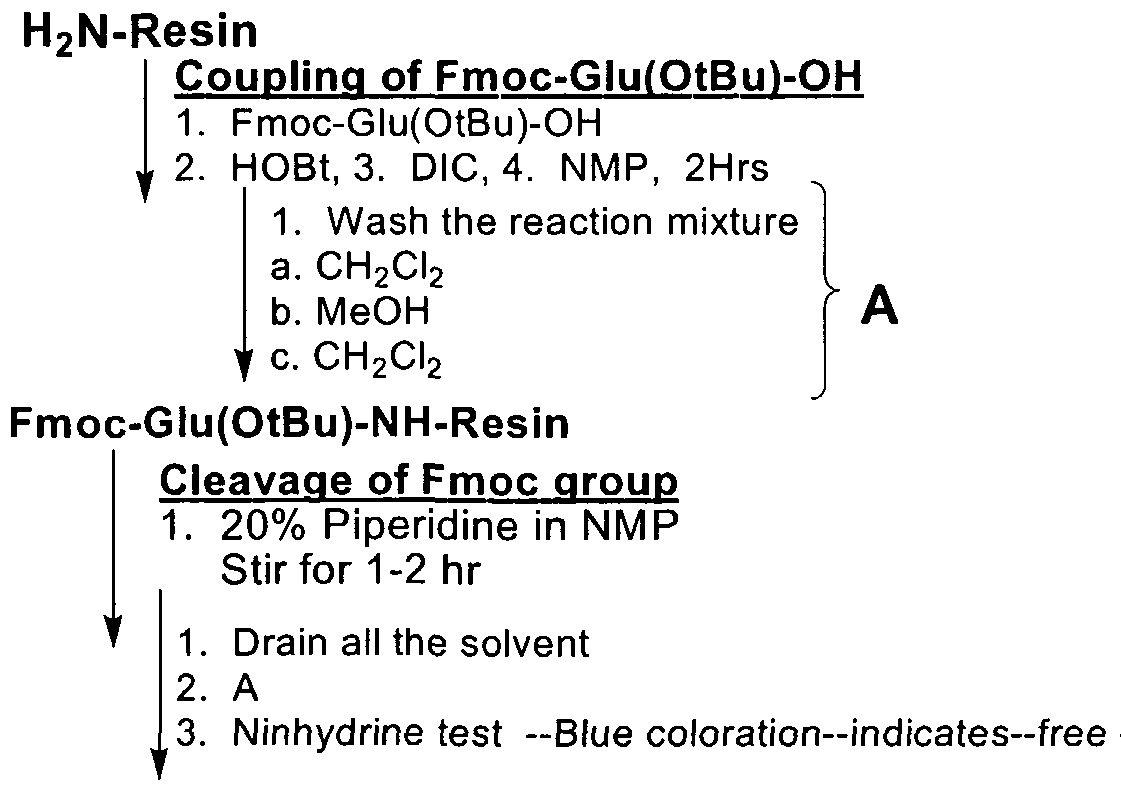
  • All peptides were synthesized in a stepwise fashion via the solid-phase method, using Rink amide MBHA resin (0.5-0.66 mmol/g) or wang resin (1.2 mmol/g).
  • the side chain's protecting groups were Arg (Pbf), Glu (OtBu) and Asp (OtBu).
  • Each FMOC-protected amino acid was coupled to this resin using a 1.5 to 3-fold excess of the protected amino acids.
  • the coupling reagents were N-hydroxybenzotriazole (HOBt) and dusopropyl carbodiimide (DIC), and the coupling was monitored by Ninhydrin test.
  • the FMOC group was removed with 20% piperidine in NMP 30-60 minutes treatment and then successive washes with CH 2 C1 2 , 10%TEA in CH 2 C1 2 , Methanol and CH 2 C1 2 . Coupling steps were followed by acetylation or with other capping groups as necessary.
  • the crude peptide was purified by HPLC using preparative C-18 column (reverse phase) with a gradient system 50 - 90% B in 40 minutes [Buffer A: water containing 0.1% (v/v) TFA, Buffer B: Acetonitrile: water (60:40) containing 0.1% (v/v) TFA].
  • Buffer A water containing 0.1% (v/v) TFA
  • Buffer B Acetonitrile: water (60:40) containing 0.1% (v/v) TFA
  • the pure fractions were concentrated in vacuo, for example, over Speedvac or lyophilization. The yields varied from 5% to 20%.
  • the peptides of the preferred embodiments may be prepared by way of segment condensation, i.e., the joining together of small constituent peptide chains to form a larger peptide chain, as described, for example, in Liu et al., 1996, Tetrahedron Lett.
  • Mediators of RCT containing N- and/or C-terminal blocking groups can be prepared using standard techniques of organic chemistry. For example, methods for acylating the N-terminus of a peptide or amidating or esterifying the C-terminus of a peptide are well-known in the art. Modes of carrying other modifications at the N- and/or C-terminus will be apparent to those of skill in the art, as will modes of protecting any side-chain functionalities as may be necessary to attach terminal blocking groups.
  • the mediators of RCT of the preferred embodiments can be used to treat any disorder in animals, especially mammals including humans, for which lowering serum cholesterol is beneficial, including without limitation conditions in which increasing serum HDL concentration, activating LCAT, and promoting cholesterol efflux and RCT is beneficial.
  • Such conditions include, but are not limited to hyperlipidemia, and especially hypercholesterolemia, and cardiovascular disease such as atherosclerosis (including treatment and prevention of atherosclerosis) and coronary artery disease; restenosis (e.g., preventing or treating atherosclerotic plaques which develop as a consequence of medical procedures such as balloon angioplasty); and other disorders, such as ischemia, and endotoxemia, which often results in septic shock.
  • the mediators of RCT can be used alone or in combination therapy with other drugs used to treat the foregoing conditions.
  • Such therapies include, but are not limited to simultaneous or sequential administration of the drugs involved.
  • the formulations of molecular mediators of RCT can be administered with any one or more of the cholesterol lowering therapies currently in use; e.g., bile-acid resins, niacin, and/or statins.
  • Such a combined treatment regimen may produce particularly beneficial therapeutic effects since each drug acts on a different target in cholesterol synthesis and transport; i.e., bile-acid resins affect cholesterol recycling, the chylomicron and LDL population; niacin primarily affects the VLDL and LDL population; the statins inhibit cholesterol synthesis, decreasing the LDL population (and perhaps increasing LDL receptor expression); whereas the mediators of RCT affect RCT, increase HDL, increase LCAT activity and promote cholesterol efflux.
  • the mediators of RCT may be used in conjunction with fibrates to treat hyperlipidemia, hypercholesterolemia and/or cardiovascular disease such as atherosclerosis.
  • the mediators of RCT of the preferred embodiments can be used in combination with the anti-microbials and anti-inflammatory agents currently used to treat septic shock induced by endotoxin.
  • the mediators of RCT of the preferred embodiments can be formulated as peptide-based compositions or as peptide-lipid complexes which can be administered to subjects in a variety of ways, preferrably via oral administration, to deliver the mediators of RCT to the circulation. Exemplary formulations and treatment regimens are described below.
  • methods are provided for ameliorating and/or preventing one or more symptoms of hypercholesterolemia and/or atherosclerosis.
  • the methods preferably involve administering to an organism, preferably a mammal, more preferably a human one or more of the mediators of the preferred embodiments (or mimetics of such peptides).
  • the mediator(s) can be administered, as described herein, according to any of a number of standard methods including, but not limited to injection, suppository, nasal spray, time-release implant, transdermal patch, and the like.
  • the mediator(s) are administered orally (e.g. as a syrup, capsule, or tablet).
  • the methods involve the administration of a single polypeptide of the preferred embodiments or the administration of two or more different polypeptides.
  • the polypeptides can be provided as monomers or in dimeric, oligomeric or polymeric forms.
  • the multimeric forms may comprise associated monomers (e.g. ionically or hydrophobically linked) while certain other multimeric forms comprise covalently linked monomers (directly linked or through a linker).
  • preferred embodiments are described with respect to use in humans, it is also suitable for animal, e.g. veterinary use.
  • preferred organisms include, but are not limited to humans, non-human primates, canines, equines, felines, porcines, ungulates, largomorphs, and the like.
  • the methods of the preferred embodiments are not limited to humans or non- human animals showing one or more symptom(s) of hypercholesterolemia and/or atherosclerosis (e.g., hypertension, plaque formation and rupture, reduction in clinical events such as heart attack, angina, or stroke, high levels of low density lipoprotein, high levels of very low density lipoprotein, or inflammatory proteins, etc.), but are useful in a prophylactic context.
  • the mediators of the preferred embodiments may be administered to organisms to prevent the onset/development of one or more symptoms of hypercholesterolemia and/or atherosclerosis.
  • Particularly preferred subjects in this context are subjects showing one or more risk factors for atherosclerosis (e.g., family history, hypertension, obesity, high alcohol consumption, smoking, high blood cholesterol, high blood triglycerides, elevated blood LDL, VLDL, IDL, or low HDL, diabetes, or a family history of diabetes, high blood lipids, heart attack, angina or stroke, etc.).
  • the preferred embodiments include the pharmaceutical formulations and the use of such preparations in the treatment of hyperlipidemia, hypercholesterolemia, coronary heart disease, atherosclerosis, diabetes, obesity, Alzheimer's Disease, multiple sclerosis, conditions related to hyperlipidemia, such as inflammation, and other conditions such as endotoxemia causing septic shock.
  • the mediators of RCT can be synthesized or manufactured using any technique described in earlier sections pertaining to synthesis and purification of the mediators of RCT. Stable preparations which have a long shelf life may be made by lyophilizing the mediators — either to prepare bulk for reformulation, or to prepare individual aliquots or dosage units which can be reconstituted by rehydration with sterile water or an appropriate sterile buffered solution prior to administration to a subject. [0121] In another preferred embodiment, the mediators of RCT may be formulated and administered in a peptide-lipid complex.
  • the peptide-lipid complexes can conveniently be prepared by any of a number of methods described below. Stable preparations having a long shelf life may be made by lyophilization — the co-lyophilization procedure described below being the preferred approach.
  • the lyophilized peptide-lipid complexes can be used to prepare bulk for pharmaceutical reformulation, or to prepare individual aliquots or dosage units which can be reconstituted by rehydration with sterile water or an appropriate buffered solution prior to administration to a subject.
  • peptide-lipid vesicles or complexes A variety of methods well known to those skilled in the art can be used to prepare the peptide-lipid vesicles or complexes. To this end, a number of available techniques for preparing liposomes or proteoliposomes may be used.
  • the mediator can be cosonicated (using a bath or probe sonicator) with appropriate lipids to form complexes.
  • the peptide can be combined with preformed lipid vesicles resulting in the spontaneous formation of peptide-lipid complexes.
  • the peptide-lipid complexes can be formed by a detergent dialysis method; e.g., a mixture of the mediator, lipid and detergent is dialyzed to remove the detergent and reconstitute or form peptide-lipid complexes (e.g., see Jonas et al., 1986, Methods in Enzymol 128:553-582).
  • a detergent dialysis method e.g., a mixture of the mediator, lipid and detergent is dialyzed to remove the detergent and reconstitute or form peptide-lipid complexes.
  • the mediator and lipid are combined in a solvent system which co-solubilizes each ingredient and can be completely removed by lyophilization.
  • the protein(s), peptide(s) or derivatives/analogs thereof, to be incorporated into the particles can be dissolved in an aqueous or organic solvent or mixture of solvents (solvent 1).
  • the (phospho)lipid component is dissolved in an aqueous or organic solvent or mixture of solvents (solvent 2) which is miscible with solvent 1, and the two solutions are mixed.
  • the mediator and lipid can be inco ⁇ orated into a co-solvent system; i.e., a mixture of the miscible solvents.
  • a suitable proportion of mediator to lipids is first determined empirically so that the resulting complexes possess the appropriate physical and chemical properties; i.e., usually (but not necessarily) similar in size to HDL.
  • the resulting mixture is frozen and lyophilized to dryness. Sometimes an additional solvent must be added to the mixture to facilitate lyophilization.
  • This lyophilized product can be stored for long periods and will remain stable. [0124]
  • the lyophilized product can be reconstituted in order to obtain a solution or suspension of the peptide-lipid complex.
  • the lyophilized powder may be rehydrated with an aqueous solution to a suitable volume (often 5 mgs peptide/ml which is convenient for intravenous injection).
  • the lyophilized powder is rehydrated with phosphate buffered saline or a physiological saline solution.
  • the mixture may have to be agitated or vortexed to facilitate rehydration, and in most cases, the reconstitution step should be conducted at a temperature equal to or greater than the phase transition temperature of the lipid component of the complexes.
  • a clear preparation of reconstituted lipid-protein complexes results.
  • An aliquot of the resulting reconstituted preparation can be characterized to confirm that the complexes in the preparation have the desired size distribution; e.g., the size distribution of HDL. Gel filtration chromatography can be used to this end.
  • a Pharmacia Superose 6 FPLC gel filtration chromatography system can be used.
  • the buffer used contains 150 mM NaCI in 50 mM phosphate buffer, pH 7.4.
  • a typical sample volume is 20 to 200 microliters of complexes containing 5 mgs peptide/ml.
  • the column flow rate is 0.5 mls/min.
  • a series of proteins of known molecular weight and Stokes' diameter as well as human HDL are preferably used as standards to calibrate the column.
  • the proteins and lipoprotein complexes are monitored by absorbance or scattering of light of wavelength 254 or 280 nm.
  • the mediators of RCT can be complexed with a variety of lipids, including saturated, unsaturated, natural and synthetic lipids and/or phospholipids.
  • Suitable lipids include, but are not limited to, small alkyl chain phospholipids, egg phosphatidylcholine, soybean phosphatidylcholine, dipalmitoylphosphatidylcholine, dimyristoylphosphatidylcholine, distearoylphosphatidylcholine 1 -myristoyl-2-palmitoylphosphatidylcholine, 1 -palmitoyl-2- myristoylphosphatidylcholine, 1 -palmitoyl-2-stearoylphosphatidylcholine, 1 -stearoyl-2- palmitoylphosphatidylcholine, dioleoylphosphatidylcholine dioleophosphatidylethanolamine, dilauroylphosphatidylglycerol
  • the pharmaceutical formulation of the preferred embodiments contain the mediators of RCT or the peptide-lipid complex as the active ingredient in a pharmaceutically acceptable carrier suitable for administration and delivery in vivo.
  • the mediators may contain acidic and/or basic termini and/or side chains, they can be included in the formulations in either the form of free acids or bases, or in the form of pharmaceutically acceptable salts.
  • injectable preparations include sterile suspensions, solutions or emulsions of the active ingredient in aqueous or oily vehicles.
  • the compositions may also contain formulating agents, such as suspending, stabilizing and/or dispersing agent.
  • the formulations for injection may be presented in unit dosage form, e.g., in ampules or in multidose containers, and may contain added preservatives.
  • the injectable formulation may be provided in powder form for reconstitution with a suitable vehicle, including but not: limited to sterile pyrogen free water, buffer, dextrose solution, etc., before use.
  • a suitable vehicle including but not: limited to sterile pyrogen free water, buffer, dextrose solution, etc.
  • the mediators of RCT may be lyophilized, or the co-lyophilized peptide-lipid complex may be prepared.
  • the stored preparations can be supplied in unit dosage forms and reconstituted prior to use in vivo.
  • the active ingredient can be formulated as a depot preparation, for administration by implantation; e.g., subcutaneous, intradermal, or intramuscular injection.
  • the active ingredient may be formulated with suitable polymeric or hydrophobic materials (e.g., as an emulsion in an acceptable oil) or ion exchange resins, or as sparingly soluble derivatives; e.g., as a sparingly soluble salt form of the mediators of RCT.
  • transdermal delivery systems manufactured as an adhesive disc or patch which slowly releases the active ingredient for percutaneous abso ⁇ tion may be used.
  • permeation enhancers may be used to facilitate transdermal penetration of the active ingredient.
  • the pharmaceutical compositions may take the form of, for example, tablets or capsules prepared by conventional means with pharmaceutically acceptable excipients such as binding agents (e.g., pregelatinised maize starch, polyvinylpyrrolidone or hydroxypropyl methylcellulose); fillers (e.g., lactose, microcrystalline cellulose or calcium hydrogen phosphate); lubricants (e.g., magnesium stearate, talc or silica); disintegrants (e.g., potato starch or sodium starch glycolate); or wetting agents (e.g., sodium lauryl sulfate).
  • binding agents e.g., pregelatinised maize starch, polyvinylpyrrolidone or hydroxypropyl methylcellulose
  • fillers e.g., lactose, microcrystalline cellulose or calcium hydrogen phosphate
  • lubricants e.g., magnesium stearate, talc or silica
  • disintegrants e.g., potato star
  • Liquid preparations for oral administration may take the form of, for example, solutions, syrups or suspensions, or they may be presented as a dry product for constitution with water or other suitable vehicle before use.
  • Such liquid preparations may be prepared by conventional means with pharmaceutically acceptable additives such as suspending agents (e.g., sorbitol syrup, cellulose derivatives or hydrogenated edible fats); emulsifying agents (e.g., lecithin or acacia); non-aqueous vehicles (e.g., almond oil, oily esters, ethyl alcohol or fractionated vegetable oils); and preservatives (e.g., methyl or propyl-p- hydroxybenzoates or sorbic acid).
  • suspending agents e.g., sorbitol syrup, cellulose derivatives or hydrogenated edible fats
  • emulsifying agents e.g., lecithin or acacia
  • non-aqueous vehicles e.g., almond oil, oily esters, eth
  • compositions may also contain buffer salts, flavoring, coloring and sweetening agents as appropriate.
  • Preparations for oral administration may be suitably formulated to give controlled release of the active compound.
  • buccal administration the compositions may take the form of tablets or lozenges formulated in conventional manner.
  • the active ingredient may be formulated as solutions (for retention enemas) suppositories or ointments.
  • the active ingredient can be conveniently delivered in the form of an aerosol spray presentation from pressurized packs or a nebulizer, with the use of a suitable propellant, e.g., dichlorodifiuoromethane, trichlorofluoromethane, dichlorotetrafluoroethane, carbon dioxide or other suitable gas.
  • a suitable propellant e.g., dichlorodifiuoromethane, trichlorofluoromethane, dichlorotetrafluoroethane, carbon dioxide or other suitable gas.
  • a suitable propellant e.g., dichlorodifiuoromethane, trichlorofluoromethane, dichlorotetrafluoroethane, carbon dioxide or other suitable gas.
  • a suitable propellant e.g., dichlorodifiuoromethane, trichlorofluoromethane, dichlorotetrafluoroethane, carbon dioxide or other
  • compositions may, if desired, be presented in a pack or dispenser device which may contain one or more unit dosage forms containing the active ingredient.
  • the pack may for example comprise metal or plastic foil, such as a blister pack.
  • the pack or dispenser device may be accompanied by instructions for administration.
  • the mediators of RCT and/or peptide-lipid complexes of the preferred embodiments may be administered by any suitable route that ensures bioavailability in the circulation. This can be achieved by parenteral routes of administration, including intravenous (IV), intramuscular (IM), intradermal, subcutaneous (SC) and intraperitoneal (IP) injections. However, other routes of administration may be used.
  • abso ⁇ tion through the gastrointestinal tract can be accomplished by oral routes of administration (including but not limited to ingestion, buccal and sublingual routes) provided appropriate formulations (e.g., enteric coatings) are used to avoid or minimize degradation of the active ingredient, e.g., in the harsh environments of the oral mucosa, stomach and/or small intestine.
  • Oral administration has the advantage of easy of use and therefore enhanced compliance.
  • administration via mucosal tissue such as vaginal and rectal modes of administration may be utilized to avoid or minimize degradation in the gastrointestinal tract.
  • the formulations of the preferred embodiments can be administered transcutaneously (e.g., transdermally), or by inhalation.
  • the preferred route may vary with the condition, age and compliance of the recipient.
  • the actual dose of mediators of RCT or peptide-lipid complex used will vary with the route of administration, and should be adjusted to achieve circulating plasma concentrations of 1.0 mg/1 to 2 g/1.
  • Data obtained in animal model systems described herein show that the ApoA-I agonists of the preferred embodiments associate with the HDL component, and have a projected half-life in humans of about five days.
  • the mediators of RCT can be administered by injection at a dose between 0.5 mg/kg to 100 mg/kg once a week.
  • desirable serum levels may be maintained by continuous infusion or by intermittent infusion providing about 0.1 mg/kg/hr to 100 mg/kg/hr.
  • Toxicity and therapeutic efficacy of the various mediators of RCT can be determined using standard pharmaceutical procedures in cell culture or experimental animals for determining the LD 50 (the dose lethal to 50% of the population) and the ED 50 (the dose therapeutically effective in 50% of the population). The dose ratio between toxic and therapeutic effects is the therapeutic index and it can be expressed as the ratio LD 50 /ED 50 . ApoA-I peptide agonists which exhibit large therapeutic indices are preferred.
  • the mediators of RCT of the preferred embodiments can be used in assays in vitro to measure serum HDL, e.g., for diagnostic pu ⁇ oses. Because the mediators of RCT associate with the HDL and LDL component of serum, the agonists can be used as "markers" for the HDL and LDL population. Moreover, the agonists can be used as markers for the subpopulation of HDL that are effective in RCT. To this end, the agonist can be added to or mixed with a patient serum sample; after an appropriate incubation time, the HDL component can be assayed by detecting the inco ⁇ orated mediators of RCT.
  • labeled mediator can be used in imaging procedures (e.g., CAT scans, MRI scans) to visualize the circulatory system, or to monitor RCT, or to visualize accumulation of HDL at fatty streaks, atherosclerotic lesions, etc. (where the HDL should be active in cholesterol efflux).
  • imaging procedures e.g., CAT scans, MRI scans
  • HDL should be active in cholesterol efflux
  • the mediators of RCT in accordance with preferred embodiments can be evaluated for potential clinical efficacy by various in vitro assays, for example, by their ability to activate LCAT in vitro.
  • substrate vesicles small unilamellar vesicles or "SUVs" composed of egg phophatidylcholine (EPC) or l-palmitoyl-2-oleyl-phosphatidyl-choline (POPC) and radiolabelled cholesterol are preincubated with equivalent masses either of peptide or ApoA-I (isolated from human plasma).
  • the reaction is initiated by addition of LCAT (purified from human plasma).
  • Native ApoA-I which was used as positive control, represents 100% activation activity.
  • Specific activity i.e., units of activity (LCAT activation)/unit of mass
  • concentration of mediator that achieves maximum LCAT activation.
  • a series of concentrations of the peptide e.g., a limiting dilution
  • concentration which achieves maximal LCAT activation i.e., percentage conversion of cholesterol to cholesterol ester
  • the vesicles used in the LCAT assay are SUVs composed of egg phosphatidylcholine (EPC) or l-palmitoyl-2-oleyl-phosphatidylcholine (POPC) and cholesterol with a molar ratio of 20:1.
  • EPC egg phosphatidylcholine
  • POPC l-palmitoyl-2-oleyl-phosphatidylcholine
  • vesicle stock solution sufficient for 40 assays, 7.7 mg EPC (or 7.6 mg POPC; 10 ⁇ mol), 78 ⁇ g (0.2 ⁇ mol) 4- 14 C-cholesterol, 116 ⁇ g cholesterol (0.3 ⁇ mol) are dissolved in 5 ml xylene and lyophilized. Thereafter 4 ml of assay buffer is added to the dry powder and sonicated under nitrogen atmosphere at 4°C. Sonication conditions: Branson 250 sonicator, 10 mm tip, 6x5 minutes; Assay buffer: 10 mM Tris, 0.14 M NaCI, 1 mM EDTA, pH 7.4.
  • LCAT lipoprotein deficient serum
  • LPDS lipoprotein deficient serum
  • Phenylsepharose Chromatography [0145] The following materials and conditions were used for the phenylsepharose chromatography. Solid phase: phenylsepharose fast flow, high subst.
  • the fractions containing protein are pooled (pool size: 180 ml) and used for Affigelblue chromatography.
  • Affigelblue Chromatography [0147] The phenylsepharose pool is dialyzed overnight at 4°C against 20 mM Tris-HCI , pH7.4, 0.01% sodium azide. The pool volume is reduced by ultrafiltration (Amicon YM30) to 50- 60 ml and loaded on an Affigelblue column. Solid phase: Affigelblue, Biorad, 153-7301 column, XK26/20, gel bed height: ca. 13 cm; column volume: approx. 70 ml.
  • Anti-ApoA-I affinity chromatography was performed on Affigel-Hz material (Biorad), to which the anti-ApoA-I abs have been coupled covalently.
  • Column: XK16/20, V 16 ml.
  • the column was equilibrated with PBS pH 7.4. Two ml of the ConA pool was dialyzed for 2 hours against PBS before loading onto the column. Flow rates: loading: 15 ml/hour washing (PBS) 40 ml/hour.
  • the column is regenerated with 0.1 M.
  • Binding and degradation of low density lipoproteins by cultured human fibroblasts were determined at final specific activities of 500-900 cpm/ng as described (Goldstein and Brown 1974 J. Biol. Chem. 249:5153-5162). In every case, >99% radioactivity was precipitable by incubation of the lipoproteins at 4°C with 10% (wt/vol) trichloroacetic acid (TCA). The Tyr residue was attached to N-Terminus of each mediator to enable its radioiodination. The mediators were radioiodinated with Na 125 I (ICN), using lodo-Beads (Pierce Chemicals) and following the manufacturer's protocol, to a specific activity of 800-1000 cpm ng.
  • radiolabeled mediators could be synthesized by coupling l4 C- labeled FMOC-Pro as the N-terminal amino acid.
  • L-[U- 14 C]X specific activity 9.25 GBq/mmol, can be used for the synthesis of labeled agonists containing X. The synthesis may be carried out according to Lapatsanis, Synthesis, 1983, 671-173.
  • the chloroform solution containing 14 C-peptide X is used directly for peptide synthesis.
  • a peptide resin containing amino acids 2-22 can be synthesized automatically as described above and used for the synthesis.
  • the sequence of the peptide is determined by Edman degradation.
  • the coupling is performed as previously described except that HATU (O-(7- azabenzotriazol-l-yl)l-, 1,3,3-tetramethyluroniumhexafluorophosphate) is preferably used instead of TBTU.
  • a second coupling with unlabeled FMOC-L-X is carried out manually.
  • radiolabeled mediator may be injected intraperitoneally into mice which were fed normal mouse chow or the atherogenic Thomas-Harcroft modified diet (resulting in severely elevated VLDL and IDL cholesterol). Blood samples are taken at multiple time intervals for assessment of radioactivity in plasma.
  • Stability in Human Serum 100 ⁇ g of labeled mediator may be mixed with 2 ml of fresh human plasma (at 37°C) and delipidated either immediately (control sample) or after 8 days of incubation at 37°C (test sample).
  • Isolated HDL is adjusted to a final concentration of 1.0 mg/ml with physiological saline based on protein content determined by Bradford protein assay.
  • An aliquot of 300 ⁇ l is removed from the isolated HDL preparation and incubated with 100 ⁇ l labeled mediator (0.2-1.0 ⁇ g/ ⁇ l) for two hours at 37°C. Multiple separate incubations are analyzed including a blank containing 100 ⁇ l physiological saline and four dilutions of labeled mediator.
  • the association of mediators with human lipoprotein fractions can be determined by incubating labeled mediator with each lipoprotein class (HDL, LDL and VLDL) and a mixture of the different lipoprotein classes.
  • Labeled mediator is incubated with HDL, LDL and VLDL at a mediato ⁇ phospholipid ratio of 1 :5 (mass ratio) for 2 h at 37° C.
  • the required amount of lipoprotein (volumes based on amount needed to yield 1000 ⁇ g) is mixed with 0.2 ml of mediator stock solution (1 mg/ml) and the solution is brought up to 2.2 ml using 0.9% of NaCI.
  • the top two fractions contain the floating lipoproteins, the other fractions (3-5) correspond to proteins/peptides in solution.
  • Selective Binding to HDL Lipids [0159] Human plasma (2 ml) is incubated with 20, 40, 60, 80, and 100 ⁇ g of labeled mediator for 2 hr at 37°C. The lipoproteins are separated by adjusting the density to 1.21 g/ml and centrifugation in TLA 100.3 rotor at 100,000 ⁇ m (300,000 g) for 36 hr at 4° C. The top 900 ⁇ l (in 300 ⁇ l fractions) is taken for the analysis.
  • the lipid film is redissolved in buffer containing cholate (43°C) and the peptide solution is added at a 3:1 phospholipid/peptide weight ratio.
  • the mixture is incubated overnight at 43° C and dialyzed at 43°C (24 hr), room temperature (24 hr) and 4°C (24 hr), with three changes of buffer (large volumes) at temperature point.
  • the complexes may be filter sterilized (0.22 ⁇ m) for injection and storage at 4°C.
  • the particles may be separated on a gel filtration column (Superose 6 HR). The position of the peak containing the particles is identified by measuring the phospholipid concentration in each fraction. From the elution volume, the Stokes radius can be determined. The concentration of mediator in the complex is determined by measuring the phenylalanine content (by HPLC) following a 16 hr acid hydrolysis.
  • Injection in the Rabbit Male New Zealand White rabbits (2.5-3 kg) are injected intravenously with a dose of phospholipid/mediator complex (5 or 10 mg/kg bodyweight, expressed as peptide) in a single bolus injection not exceeding 10-15 ml.
  • the animals are slightly sedated before the manipulations. Blood samples (collected on EDTA) are taken before and 5, 15, 30, 60, 240 and 1440 minutes after injection. The hematocrit (Het) is determined for each sample. Samples are aliquoted and stored at -20°C before analysis. Analysis of the Rabbit Sera [0164] The total plasma cholesterol, plasma triglycerides and plasma phospholipids are determined enzymatically using commercially available assays, for example, according to the manufacturer's protocols (Boehringer Mannheim, Mannheim, Germany and Biomerieux, 69280, Marcy-L'etoile, France).
  • the plasma lipoprotein profiles of the fractions obtained after the separation of the plasma into its lipoprotein fractions may be determined by spinning in a sucrose density gradient. For example, fractions are collected and the levels of phospholipid and cholesterol can be measured by conventional enzymatic analysis in the fractions corresponding to the VLDL, ILDL, LDL and HDL lipoprotein densities.
  • AiA indicates either Glutamic acid or Arginine (in reverse sequence)
  • AA 3 indicates either Arginine or Glutamic acid (in reverse sequence)
  • R indicates various substitutions, Phenyl, Substituted phenyl, halogens, -CH 3 , -OCH 3 , Pyridine, etc.
  • Pd catalysis examples include, for example, Pd(PPh 3 ) 4 /Na 2 CO 3 and Pd(PPh 3 )Cl 2 /KOH
  • the solution was decanted and the solid was washed thoroughly with ether.
  • the resulting crude peptide was dissolved in buffer (acetonitrile:water 60:40 with 0.1% TFA) and dried.
  • the crude peptide was purified by HPLC using preparative C-18 column (reverse phase) with a gradient system 35 - 50% B in 33 minutes (12 mL per minute) [Buffer A: water containing 0.1% (v/v) TFA, Buffer B: Acetonitrile containing 0.1% (v/v) TFA].
  • the pure fractions were lyophilized.
  • X 2 F, Cl, Br, I.
  • CQ-6 alkyl, x 2 F, C , Br, 1.
  • TFA Thioanisole, EDT, Anisole AA, indicates Biphenyl and AA 2 indicates Arginine or Lysine
  • AAi indicates Glutamic acid and AA 2 indicates Biphenyl
  • Examples of synthesized compounds include the following compounds:
  • X 2 F, Cl , Br, 1, C 0 . 6 alkyl
  • X 2 F, Cl, Br, I, C 0 . 6 alkyl, OCH 3 ,CF 3 , OCF 3 OCH 3 ,CF 3 , OCF 3
  • Examples of synthesized compounds include the following compounds:
  • Glutaric acid amide-D-Phe-agmatine [0181] The amino amide (0.544 g, 1.14 mmol) was dissolved in DCM (10 mL) then treated with glutaric anhydride (0.269 g, 2.36 mmol); the reaction mixture was stirred overnight and then the solvent removed. The crude mixture was the dissolved in a 1 :1 mixture of DCM:TFA (10 mL) and stirred 2h. The crude product was then purified by reverse phase HPLC (MeCN:water:TFA; 35:65:0.5 to 50:50:0.5 over 20 min, solvent removed by lyophilizer) to afford the desired product (206 mg) as a TFA salt.
  • the intermediate A-3 was dissolved in DCM (10 mL) then treated with piperidine (1.4 mL, 14.1 mmol), the reaction mixture was stirred 5 h at rt then the solvent removed under reduced pressure.
  • the pure amine A-4 (0.5 g, 1.05 mmol) was obtained after purification by column chromatography (silica gel 20:1 ; CHC1 3 :TEA).
  • the amine A-4 was dissolved in DCM (10 mL) then treated with glutaric anhydride (0.15 g, 1.3 mmol) the reaction mixture was stirred overnight and then the solvent removed.
  • the crude product A-5 was dissolved in a 1 :1 mixture of DCM:TFA (5 mL:5 mL) and stirred 4 h.
  • Boc-D-Bip-(4-aminobutanoic acid benzyl ester) (B-3) [0186] The Boc-D-Bip(4,4) Phenylalanine (0.682 g, 2.0 mmol) was dissolved in DCM (20 mL) then triethylamine (0.84 mL) was added followed by PyBOP (1.14 g, 2.2 mmol). The reaction mixture was stirred 10 min then the pTsOH salt of benzyl 4-aminobutanoate (0.77 g, 2.1 mmol) was added. The reaction mixture was stirred 4 h then the reaction was quenched with water (40 mL). The aqueous layer was extracted with DCM (3X20 mL).
  • the reaction mixture was treated with benzyl 4-aminobutyrate » para- toluenesulphonic acid B-2 (0.77 g, 2.1 mmol) and stirred 4h.
  • the reaction was quenched with water (40 mL) and the aqueous layer extracted with DCM (3X20 mL).
  • the combined organic layers were washed with aqueous saturated NaHCO 3 (80 mL), water (80 mL), and brine (80 mL), dried over Na 2 SO 4 , filtered and concentrated under reduced pressure.
  • the crude product B-3 was purified by flash chromatography (DCM:MeOH).
  • the solid B-3 (0.92 g) was cooled in a round bottom flask with an ice bath then treated with TFA (4.5 mL) and stirred 1 h. The excess TFA was removed and the residue triturated with ether. The solid B-4 was stored overnight at -20 °C and then collected by filtration. The TFA salt B-4 was used in the next step without further purification.
  • a solution of 5- ⁇ ⁇ V-dibenzyloxycarbonylguanidinopentanoic acid B-5 (0.75 g, 1.76 mmol) in THF (3 mL) was treated with N,JV-carbonyldiimidazole (0.29 g, 1.76 mmol) and stirred 30 min (until bubbling ceased).
  • the crude product C-6 was dissolved in DMF and water, and treated with NaHCO 3 (0.10 g, bubbling occurred).
  • the crude product C-6 was purified by reverse phase HPLC (acetonitrile:water) and then the solvent was removed by lyophilization to afford the desired product (46 mg).
  • the solid D-3 was dissolved in DCM (10 mL) then treated with 4-(aminomethyl)piperidine (1.2 g, 10.5 mmol), the reaction mixture was stirred 2h at rt then diluted with chloroform (20 mL). The organic layer was washed with brine (2X30 mL), phosphate buffer pH 5.5 (3X30mL), brine (30 mL), dried over Na 2 SO 4 , filtered and concentrated under reduced pressure. The crude product D-4 was taken directly to the next step. The amine D-4 (0.228 g, 0.48 mmol) was suspended in THF (1.5 mL) then treated with succinic anhydride (0.055 g, 0.48 mmol) and stirred 1.0 h at rt.
  • the solvent was removed under reduced pressure to afford a gummy residue D-5.
  • the residue D-5 was dissolved in DCM (2 mL), cooled to 0 °C and treated with TFA (2 mL). The mixture was stirred 3 h and then the solvent was removed under reduced pressure.
  • the crude product D-6 was dissolved in water (2 mL) and treated with NaHCO 3 (0.055 g, bubbling occurred). The crude product was purified by reverse phase HPLC (acetonitrile:water) and then the solvent was removed by lyophilization to afford the desired product (57 mg).
  • the mixture was cooled in an ice bath and then HCI gas was bubbled through the solution for 5 min followed by stirring an additional 45 min at the same temperature.
  • the mixture was allowed to warm to rt and stirred 15 min. then the solvent was removed under reduced pressure.
  • the crude product E-6 was dissolved in water (2.5 mL) and treated with NaHCO (0.065 g, bubbling occurred).
  • the crude product E-6 was purified by reverse phase HPLC (acetonitrile:water) and then the solvent was removed by lyophilization to afford the desired product (56 mg).
  • the reaction mixture was stirred 1 h at 0°C and then the reaction was quenched with water (15 mL).
  • the aqueous layer was extracted with DCM (3X10 mL).
  • the combined organic layers were washed with water (25 mL), brine (25 mL), dried over Na 2 SO 4 , filtered and concentrated under reduced pressure.
  • the residue E-3 was precipitated with ether then the ether removed and the remaining solid triturated with hexanes. The solid was collected by filtration and used directly in the next step without further purification.
  • the reaction mixture was stirred 15 min at 0°C and then the reaction was allowed to warm to rt and stirred 2 h.
  • the reaction was quenched with water (5 mL) and the aqueous layer was extracted with DCM (3X5 mL).
  • the combined organic layers were washed with water (10 mL), brine (10 mL), dried over Na 2 SO 4 , filtered and concentrated under reduced pressure to afford the intermediate F-3, which was used directly in the next step.
  • the solid F-3 was dissolved in DCM (3 mL) then treated with 4- (aminomethyl)piperidine (0.29 g, 2.5 mmol), the reaction mixture was stirred 3 h at rt then diluted with chloroform (8 mL).
  • the organic layer was washed with brine (2X10 mL), phosphate buffer pH 5.5 (3X10mL), brine (10 mL), dried over Na 2 SO 4 , filtered and concentrated under reduced pressure.
  • the crude product F-4 was taken directly to the next step.
  • the amine F-4 was dissolved in THF (1.0 mL) then treated with glutaric anhydride (0.03 g, 0.26 mmol) and stirred 1 h at rt. The solvent was removed under reduced pressure too afford the crude product.
  • the crude product F-5 was purified by reverse phase HPLC (acetonitrile:water) to afford the desired compound as a white solid (17 mg).
  • the solid G-3 was dissolved in a mixture of ethylacetate (10 mL) and ethanol (10 mL), placed under a nitrogen atmosphere, then 10% Pd/C (0.44 g) was added. The mixture was placed under hydrogen (balloon) and stirred 6 h. The hydrogen atmosphere was then replaced with nitrogen and the solid removed by filtration. The solvent was removed under reduced pressure and the residue sonicated with hexanes: ether to afford white solid G-4 used without further purification in the next step.
  • the intermediate amine G-4 (0.42 g, 1.2 mmol) was dissolved in acetonitrile (8.5 mL) treated with 2-methylthio-2-imidazoline hydroiodide G-5 (0.30 g, 1.2 mmol) and refluxed 3 h. The solvent was removed under reduced pressure then ether added and again removed under reduced pressure to afford G-6 as a white foam. The resulting white foam G-6 was dissolved in isopropyl alcohol (8 mL). The resulting solution was cooled in an ice bath then HCI gas was bubbled through the solution for 5 min, the mixture was stirred and additional 15 min then the solvent removed under reduced pressure.
  • N-((R)-l-(4-(4.5-dihydro-lH-imidazol-2-ylamino)butylcarbamoyl)-2-phenylethyl)-4- formylbutanamide [0210].
  • N-Boc-D-phenylalanine H-l (0.27 g, 1.0 mmol) in DCM (10 mL) at 0 °C was added PyBOP (0.52 g, 1.0 mmol) the resultant mixture was stirred 5 min then allowed to warm to rt and stirred an additional 30 min.
  • the reaction mixture was treated with N- carbobenzoxy-l,4-diaminobutane hydrochloride H-2 (0.26 g, 1.0 mmol) followed by triethlyamine (0.44 mL, 3.2 mmol) and stirred 4 h.
  • the reaction was quenched with water (20 mL) and the aqueous layer extracted with DCM (3X10 mL).
  • the combined organic layers were washed with water (30 mL), brine (30 mL), dried over Na 2 SO , filtered and concentrated under reduced pressure. The residue was triturated with ethe ⁇ hexanes and the solid H-3 collected by filtration.
  • the resultant solid H-3 was dissolved in a mixture of ethylacetate (2 mL) and ethanol (4 mL), placed under a nitrogen atmosphere, then 10% Pd/C (0.10 g) was added. The mixture was placed under hydrogen (balloon) and stirred 6 h. The hydrogen atmosphere was then replaced with nitrogen and the solid removed by filtration. The solvent was removed under reduced pressure and the residue sonicated with hexanes:ether to afford white solid H-4 that was collected by filtration and used without further purification in the next step.
  • the intermediate amine H-4 (0.145 g, 0.43 mmol) was dissolved in acetonitrile (3.0 mL) treated with 2-methylthio-2-imidazoline hydroiodide H-5 (0.10 g, 0.43 mmol) and refluxed 2 h. The mixture was allowed to cool to rt and the solvent was removed under reduced pressure. The residue was treated with ether and then the ether was removed under reduced pressure to afford H-6 as a white foam.
  • the intermediate H-6 was dissolved in methyl alcohol (5 mL) and cooled to 0°C and then HCI gas was bubbled through the solution for 5 min. The solvent was removed under reduced pressure and the crude product H-7 was used directly in the next step.
  • the solid 1-3 was dissolved in DCM (10 mL), cooled to 0°C and treated with TFA (10 mL). The reaction mixture was stirred 30 min then allowed to warm to rt and stirred 3 h, the solvent was subsequently removed under reduced pressure. The residue was dissolved in chloroform (30 mL) and then the organic solution was washed with saturated aqueous NaHCO 3 (20 mL), brine (20 mL), dried over Na 2 SO , filtered and concentrated under reduced pressure. The crude product 1-4 was taken directly to the next step.
  • the amine 1-4 (0.62, 1.63 mmol) was dissolved in THF (6.6 mL) then treated with glutaric anhydride (0.186 g, 1.63 mmol) and stirred overnight at rt. Additional glutaric anhydride (0.009 g, 0.08 mmol) and triethylamine (0.05 mL, 0.34 mmol) were added, the mixture was stirred overnight and then the solvent removed under reduced pressure. The residue was dissolved in DCM (15 mL) and the partitioned with 1 M HCI (15 mL). The aqueous layer was extracted with DCM (2X10 mL).
  • the crude product 1-5 was used directly in the next step.
  • the intermediate 1-5 was dissolved in THF under nitrogen then 10% Pd/C was added followed by methanol.
  • the mixture was placed under hydrogen (balloon) and stirred overnight.
  • the mixture was placed under nitrogen then the solid removed by filtration.
  • the solvent was removed under reduced pressure.
  • the crude product 1-6 was purified by reverse phase HPLC (acetonitrile:water) to afford the desired compound as a white solid (151 mg).
  • the solid K-3 was dissolved in DCM (11 mL) then treated with 4-(aminomethyl)piperidine (1.0 g, 8.8 mmol), the reaction mixture was stirred lh at rt then diluted with chloroform (25 mL). The organic layer was washed with brine (2X30 mL), phosphate buffer pH 5.5 (3X30mL), brine (30 mL), dried over Na 2 SO 4 , filtered and concentrated under reduced pressure. The crude product K-4 was taken directly to the next step.
  • the amine K-4 (0.30 g, 0.89 mmol) was dissolved in THF (3.5 mL) then treated with glutaric anhydride (0.11 g, 0.99 mmol) and stirred 3 h at rt.
  • the product K-5 was precipitated by addition of ether and ethylacetate.
  • the solid K-5 was collected by filtration.
  • the solid K-5 was suspended in DCM (3.5 mL), cooled to 0 °C and treated with TFA (3.5 mL). The mixture was stirred 30 min at 0°C then allowed to warm to rt and stirred 2 h. The solvent was removed under reduced pressure.
  • Method L 4-((R)-l-(4-(2-cyanoguanidino)butylcarbamoyl)-2-phenylethylcarbamoyl)butanoic acid [0214] Starting from N-FMOC-D-phenylalanine pentafluorophenyl ester following the general procedure Method K afforded intermediate K-6.
  • the intermediate K-6 (0.192 g, 0.55 mmol) was dissolved in isopropyl alcohol (8 mL) and triethylamine (0.08 mL, 0.57 mmol) then diphenyl cyanocarbonimidate L-l (0.13 g, 0.55 mmol) was added and the stirring mixture was heated to reflux.
  • the solid M-3 was dissolved in THF (4.5 mL) placed under a nitrogen atmosphere then 10% Pd/C (0.084 g) was added followed by methanol (8.5 mL). The mixture was placed under hydrogen (balloon) and stirred overnight. The hydrogen atmosphere was then replaced with nitrogen and the solid removed by filtration. The solvent was removed under reduced pressure to afford a solid M-4 used without further purification in the next step.
  • the intermediate M-4 (0.285 g, 0.85 mmol) was dissolved in ethyl alcohol (4 mL) then treated with 2-chloropyrimidine M-5 (0.196 g, 1.7 mmol) and diisopropylethylamine (0.3 mL, 1.7 mmol).
  • the reaction mixture was refluxed for 22 h then allowed to cool to rt.
  • the solvent was removed under reduced pressure to afford the product M-6.
  • the residue was dissolved in DCM (20 mL) and then partitioned with water (25 mL).
  • the aqueous layer was extracted with DCM (3X15 mL).
  • the combined organic layers were washed with water (25 mL) and brine (25 mL), dried over Na 2 SO 4 , filtered and concentrated under reduced pressure.
  • the crude product M-6 was used in the next step without further purification.
  • the solid M-6 was dissolved in DCM (3.5 mL), cooled to 0°C and treated with TFA (3.5 mL).
  • the reaction mixture was stirred 30 min then allowed to warm to rt and stirred 2h, the solvent was subsequently removed under reduced pressure.
  • the crude product M-7 was taken directly to the next step.
  • the amine M-7 was dissolved in a THF (3.5 mL) and triethylamine (0.22 mL) mixture was then treated with glutaric anhydride (0.094 g, 0.82 mmol) and stirred overnight at rt.
  • the crude product M-8 was purified by reverse phase HPLC (acetonitrile:water) to afford the desired compound (45 mg) as a white solid.
  • the solid O-3 was dissolved in THF (8.8 mL) then 10% Pd/C (0.44 g) was added, under a nitrogen atmosphere, followed by and methanol (17.5 mL). The mixture was placed under hydrogen (balloon) and stirred overnight. The hydrogen atmosphere was then replaced with nitrogen and the solid removed by filtration. The solvent was removed under reduced pressure to afford white solid O-4 used without further purification in the next step.
  • the intermediate O-4 (0.653 g, 1.88 mmol) was dissolved in ethyl alcohol (8.8 mL) then treated with 2-chloropyrimidine O-5 (0.42 g, 3.6 mmol) and diisopropylethylamine (0.63 mL, 3.6 mmol).
  • the reaction mixture was refluxed overnight then allowed to cool to rt. The solvent was removed under reduced pressure. The residue was dissolved in DCM (40 mL) and then partitioned with water (50 mL). The aqueous layer was extracted with DCM (3X25 mL). The combined organic layers were washed with water (50 mL) and brine (50 mL), dried over Na 2 SO 4 , filtered and concentrated under reduced pressure. The crude product O-6 was used in the next step without further purification. The solid O-6 was dissolved in DCM (7.5 mL), cooled to 0 °C and treated with TFA (7.5 mL).
  • the reaction mixture was stirred 30 min then allowed to warm to rt and stirred 3 h, the solvent was subsequently removed under reduced pressure.
  • the crude mixture was dissolved in chloroform (40 mL) and the solution was partitioned with saturated aqueous NaHCO 3 (50 mL). The aqueous layer was extracted with chloroform (2X40 mL). The combined organic layers were washed with brine (60 mL), dried over Na 2 SO 4 , filtered and concentrated under reduced pressure.
  • the crude product O-7 was used in the next step.
  • N-FMOC-D-glutamic acid 5-tert-butyl ester O-8 (0.30 g, 0.71 mmol) in dichloromethane (3.5 mL) was added 1-hydroxybenzotriazole (0.095 g, 0.71 mmol) followed by EDAC ⁇ Cl (0.14 g, 0.71 mmol), the mixture went clear over 30 min.
  • the solution was treated with the amine O-7 (0.23 g, 0.71 mmol) in DCM (2 mL) via cannula and stirred overnight. The reaction was quenched with water (10 mL) then the aqueous layer was extracted with DCM (3X15 mL).
  • the combined organic layers were washed with water (20 mL) and brine (20 mL), dried over Na 2 SO 4 , filtered and concentrated under reduced pressure.
  • the crude product O-9 was used in the next step.
  • the crude material O-9 was dissolved in DCM (5mL) then treated with piperidine (0.7 mL).
  • the reaction mixture was stirred 2 h then the solvent was removed under reduced pressure.
  • the crude material O-10 was dissolved in DCM (3 mL) then treated with acetic anhydride (0.15 mL, 1.6 mmol).
  • the mixture was stirred 2 h then treated with an additional portion of acetic anhydride (0.05 mL, 0.53 mmol) and triethylamine (0.1 mL, 0.72 mmol).
  • the crude product O-12 was dissolved in water (2.5 mL) and DMSO (0.5 mL) then NaHCO 3 was added until bubbling ceased.
  • the crude product O-12 was purified by reverse phase HPLC (acetonitrile:water) to afford the desired compound (41 mg).
  • 1-hydroxybenzotriazole 0.10 g, 0.75 mmol
  • the reaction mixture was stirred overnight then the solvent was removed under reduced pressure.
  • the crude product P-2 was suspended in water then treated with 1 M NaOH (0.8 mL), the remaining solid was removed by filtration.
  • the aqueous solution was acidified and solid was removed by filtration.
  • the crude product P-2 was purified by reverse phase HPLC (acetonitrile:water) to afford the desired compound (18 mg).
  • the reaction was quenched with saturated aqueous NaHCO 3 (25 mL).
  • the aqueous layer was extracted with DCM (3X15 mL).
  • the combined organic layers were washed with water (50 mL), brine (50 mL), dried over Na 2 SO 4 , filtered and concentrated under reduced pressure.
  • the crude product R-3 was used directly in the next step without further purification.
  • the residue R-3 was dissolved in DCM (20 mL) then treated piperidine (2.0 mL, 20 mmol), the reaction mixture was stirred 2 h at rt then the solvent was removed. A portion of the crude product R-4 was taken to the next step.
  • the crude amine R-4 (0.1 g, 0.4 mmol) was dissolved in THF (1.5 mL) then treated with 3,3- tetramethyleneglutaric anhydride (0.067 g, 0.40 mmol) and stirred 2 h then an additional portion of 3, 3 -tetramethyleneglutaric anhydride (0.067 g, 0.40 mmol) was added and the mixture was stirred overnight.
  • the solvent was removed under reduced pressure and the crude product R-5 was purified by reverse phase HPLC (acetonitrile:water). The solvent was removed on the lyophilizer to afford the desired product (58 mg).
  • the mixture was placed under hydrogen (balloon) and stirred overnight. The hydrogen atmosphere was then replaced with nitrogen and the solid removed by filtration. The solvent was removed under reduced pressure and the crude product S-4 was used without further purification in the next step.
  • the crude amine S-4 (0.11 g, 0.33 mmol) was dissolved in THF (1.5 mL) then treated with 3,3-tetramethyleneglutaric anhydride (0.061 g, 0.36 mmol) and stirred overnight.
  • the solvent was removed under reduced pressure and the crude product S-5 was purified by reverse phase HPLC (acetonitrile: water). The solvent was removed on the lyophilizer to afford the desired product (62 mg).
  • the mixture was placed under hydrogen (balloon) and stirred overnight. The hydrogen atmosphere was then replaced with nitrogen and the solid removed by filtration. The solvent was removed under reduced pressure and the crude product T-4 was used without further purification in the next step.
  • the crude amine T-4 (0.18 g, 0.60 mmol) was dissolved in THF (3.0 mL) and DMF (0.5 mL) then treated with 3,3-tetramethyleneglutaric anhydride (0.10 g, 0. 6 mmol) and stirred overnight.
  • the solvent was removed under reduced pressure and the crude product T-5 was purified by reverse phase HPLC (acetonitrile:water). The solvent was removed on the lyophilizer to afford the desired product (32 mg).
  • the solution was treated with the amine 1-4 (0.70 g, 1.84 mmol) in DCM (7 mL) via cannula and stirred overnight.
  • the reaction was quenched with water (25 mL) then the aqueous layer was extracted with DCM (3X10 mL).
  • the combined organic layers were washed with water (50 mL), brine (50 mL), dried over Na 2 SO 4 , filtered and concentrated under reduced pressure.
  • the crude product U-2 was taken directly to the next step.
  • the solid U-2 was dissolved in DCM (20 mL) then treated with 4- (aminomethyl)piperidine (2.1 g, 18.4 mmol), the reaction mixture was stirred 2 h then diluted with chloroform (40 mL).
  • Tribble et al. ( ⁇ 992) Atherosclerosis, 93, 189-199 Trigatti et al. (1999) Proc. Natl Acad. Sci. USA, 96, 9322-9327

Landscapes

  • Health & Medical Sciences (AREA)
  • Chemical & Material Sciences (AREA)
  • Life Sciences & Earth Sciences (AREA)
  • General Health & Medical Sciences (AREA)
  • Medicinal Chemistry (AREA)
  • Organic Chemistry (AREA)
  • Pharmacology & Pharmacy (AREA)
  • Veterinary Medicine (AREA)
  • Public Health (AREA)
  • Animal Behavior & Ethology (AREA)
  • Proteomics, Peptides & Aminoacids (AREA)
  • Epidemiology (AREA)
  • Biophysics (AREA)
  • Molecular Biology (AREA)
  • Genetics & Genomics (AREA)
  • Biochemistry (AREA)
  • Engineering & Computer Science (AREA)
  • Bioinformatics & Cheminformatics (AREA)
  • Gastroenterology & Hepatology (AREA)
  • Immunology (AREA)
  • General Chemical & Material Sciences (AREA)
  • Chemical Kinetics & Catalysis (AREA)
  • Nuclear Medicine, Radiotherapy & Molecular Imaging (AREA)
  • Heart & Thoracic Surgery (AREA)
  • Cardiology (AREA)
  • Toxicology (AREA)
  • Urology & Nephrology (AREA)
  • Vascular Medicine (AREA)
  • Hematology (AREA)
  • Obesity (AREA)
  • Diabetes (AREA)
  • Zoology (AREA)
  • Medicines That Contain Protein Lipid Enzymes And Other Medicines (AREA)
  • Acyclic And Carbocyclic Compounds In Medicinal Compositions (AREA)
  • Steroid Compounds (AREA)
  • Peptides Or Proteins (AREA)
  • Medicines Containing Plant Substances (AREA)
  • Pharmaceuticals Containing Other Organic And Inorganic Compounds (AREA)

Abstract

The present invention provides compositions adapted to enhance reverse cholesterol transport in mammals. The compositions are suitable for oral delivery and useful in the treatment and/or prevention of hypercholesterolemia, atherosclerosis and associated cardiovascular diseases.

Description

MEDIATORS OF REVERSE CHOLESTEROL TRANSPORT FOR THE TREATMENT OF HYPERCHOLESTEROLEMIA
Cross-Reference to Related Application [0001] This application claims priority under 35 U.S.C. § 119(e) of U.S. Provisional Patent Application No. 60/667,368, filed April 1, 2005, and U.S. Provisional Patent Application No. 60/578,226, filed June 9, 2004, herein entirely incorporated by reference. Background of the Invention Field of the Invention [0002] The invention relates to small molecule mediators of reverse cholesterol transport (RCT) for treating hypercholesterolemia and associated cardiovascular diseases and other diseases. Description of the Related Art [0003] It is now well-established that elevated serum cholesterol ("hypercholesterolemia") is a causal factor in the develoment of atherosclerosis, a progressive accumulation of cholesterol within the arterial walls. Hypercholesterolemia and atherosclerosis are leading causes of cardiovascular diseases, including hypertension, coronary artery disease, heart attack and stroke. About 1.1 million individuals suffer from heart attack each year in the United States alone, the costs of which are estimated to exceed $117 billion. Although there are numerous pharmaceutical strategies for lowering cholesterol levels in the blood, many of these have undesirable side effects and have raised safety concerns. Moreover, none of the commercially available drug therapies adequately stimulate reverse cholesterol transport, an important metabolic pathway that removes cholesterol from the body. [0004] Circulating cholesterol is carried by plasma lipoproteins - particles of complex lipid and protein composition that transport lipids in the blood. Low density lipoproteins (LDL), and high density lipoproteins (HDL) are the major cholesterol carriers. LDL are believed to be responsible for the delivery of cholesterol from the liver (where it is synthesized or obtained from dietary sources) to extrahepatic tissues in the body. The term "reverse cholesterol transport" describes the transport of cholesterol from extrahepatic tissues to the liver where it is catabolized and eliminated. It is believed that plasma HDL particles play a major role in the reverse transport process, acting as scavengers of tissue cholesterol. [0005] Compelling evidence supports the concept that lipids deposited in atherosclerotic lesions are derived primarily from plasma LDL; thus, LDLs have popularly become known as the "bad" cholesterol. In contrast, plasma HDL levels correlate inversely with coronary heart disease - indeed, high plasma levels of HDL are regarded as a negative risk factor. It is hypothesized that high levels of plasma HDL are not only protective against coronary artery disease, but may actually induce regression of atherosclerotic plaques (e.g. see Badimon et al, 1992, Circulation 86 (Suppl. III):86-94). Thus, HDLs have popularly become known as the "good" cholesterol. [0006] The amount of intracellular cholesterol liberated from the LDLs controls cellular cholesterol metabolism. The accumulation of cellular cholesterol derived from LDLs controls three processes: (1) it reduces cellular cholesterol synthesis by turning off the synthesis of HMGCoA reductase, a key enzyme in the cholesterol biosynthetic pathway; (2) the incoming LDL-derived cholesterol promotes storage of cholesterol by activating LCAT, the cellular enzyme which converts cholesterol into cholesteryl esters that are deposited in storage droplets; and (3) the accumulation of cholesterol within the cell drives a feedback mechanism that inhibits cellular synthesis of new LDL receptors. Cells, therefore, adjust their complement of LDL receptors so that enough cholesterol is brought in to meet their metabolic needs, without overloading. (For a review, see Brown & Goldstein, In: The Pharmacological Basis Of Therapeutics, 8th Ed., Goodman & Gilman, Pergamon Press, NY, 1990, Ch. 36, pp. 874-896). [0007] Reverse cholesterol transport (RCT) is the pathway by which peripheral cell cholesterol can be returned to the liver for recycling to extrahepatic tissues, or excreted into the intestine as bile. The RCT pathway represents the only means of eliminating cholesterol from most extrahepatic tissues. The RCT consists mainly of three steps: (1) cholesterol efflux, the initial removal of cholesterol from peripheral cells; (2) cholesterol esterification by the action of lecithin: cholesterol acyltransferase (LCAT), preventing a re-entry of effluxed cholesterol into the peripheral cells; and (3) uptake/delivery of HDL cholesteryl ester to liver cells. LCAT is the key enzyme in the RCT pathway and is produced mainly in the liver and circulates in plasma associated with the HDL fraction. LCAT converts cell derived cholesterol to cholesteryl esters which are sequestered in HDL destined for removal. The RCT pathway is mediated by HDLs. [0008] HDL is a generic term for lipoprotein particles which are characterized by their high density. The main lipidic constituents of HDL complexes are various phospholipids, cholesterol (ester) and triglycerides. The most prominent apolipoprotein components are A-I and A-II which determine the functional characteristics of HDL. [0009] Each HDL particle contains at least one copy (and usually two to four copies) of apolipoprotein A-l (ApoA-I). ApoA-I is synthesized by the liver and small intestine as preproapolipoprotein which is secreted as a proprotein that is rapidly cleaved to generate a mature polypeptide having 243 amino acid residues. ApoA-I consists mainly of 6 to 8 different 22 amino acid repeats spaced by a linker moiety which is often proline, and in some cases consists of a stretch made up of several residues. ApoA-I forms three types of stable complexes with lipids: small, lipid-poor complexes referred to as pre-beta-1 HDL; flattened discoidal particles containing polar lipids (phospholipid and cholesterol) referred to as pre-beta-2 HDL; and spherical particles containing both polar and nonpolar lipids, referred to as spherical or mature HDL (HDL3 and HDL2). Although most HDL in circulation contains both ApoA-I and ApoA-II, the fraction of HDL which contains only ApoA-I (AI-HDL) appears to be more effective in RCT. Epidemiologic studies support the hypothesis that AI-HDL is anti-atherogenic. (Parra et al., 1992, Arterioscler. Thromb. 12:701-707; Decossin et al, 1997, Eur. J. Clin. Invest. 27:299-307). [0010] Several lines of evidence based on data obtained in vivo implicate the HDL and its major protein component, ApoA-I, in the prevention of atherosclerotic lesions, and potentially, the regression of plaques-making these attractive targets for therapeutic intervention. First, an inverse correlation exists between serum ApoA-I (HDL) concentration and atherogenesis in man (Gordon & Rifkind, 1989, N. Eng. J. Med. 321:1311-1316; Gordon et al, 1989, Circulation 79:8- 15). Indeed, specific subpopulations of HDL have been associated with a reduced . risk for atherosclerosis in humans (Miller, 1987, Amer. Heart 113:589-597; Cheung et al, 1991, Lipid Res. 32:383-394); Fruchart & Ailhaud, 1992, Clin. Chem. 38:79). [0011] Second, animal studies support the protective role of ApoA-I (HDL). Treatment of cholesterol fed rabbits with ApoA-I or HDL reduced the development and progression of plaque (fatty streaks) in cholesterol-fed rabbits (Koizumi et al, 1988, J. Lipid Res. 29:1405-1415; Badimon et al, 1989, Lab. Invest. 60:455-461; Badimon et al, 1990, J. Clin. Invest. 85:1234- 1241). However, the efficacy varied depending upon the source of HDL (Beitz et al, 1992, Prostaglandins, Leukotrienes and Essential Fatty Acids 47:149-152; Mezdour et al, 1995, Atherosclerosis 113:237-246). [0012] Third, direct evidence for the role of ApoA-I was obtained from experiments involving transgenic animals. The expression of the human gene for ApoA-I transferred to mice genetically predisposed to diet-induced atherosclerosis protected against the development of aortic lesions (Rubin et al, 1991, Nature 353:265-267). The ApoA-I transgene was also shown to suppress atherosclerosis in ApoE-deficient mice and in Apo(a) transgenic mice (Paszty et al, 1994, J. Clin. Invest. 94:899-903; Plump et al, 1994, PNAS. USA 91:9607-9611 ; Liu et al, 1994, J. Lipid Res. 35:2263-2266). Similar results were observed in transgenic rabbits expressing human ApoA-I (Duverger, 1996, Circulation 94:713-717; Duverger et al, 1996, Arterioscler. Thromb. Vase. Biol. 16:1424-1429), and in transgenic rats where elevated levels of human ApoA-I protected against atherosclerosis and inhibited restenosis following balloon angioplasty (Burkey et al, 1992, Circulation, Supplement I, 86:1-472, Abstract No. 1876; Burkey et al, 1995, J. Lipid Res. 36:1463- 1473). Current Treatments for Hypercholesterolemia and other Dyslipidemias [0013] In the past two decades or so, the segregation of cholesterolemic compounds into HDL and LDL regulators and recognition of the desirability of decreasing blood levels of LDL has led to the development of a number of drugs. However, many of these drugs have undesirable side effects and/or are contraindicated in certain patients, particularly when administered in combination with other drugs. These drugs and therapeutic strategies include: (1) bile-acid-binding resins, which interrupt the recycling of bile acids from the intestine to the liver [e.g., cholestyramine (QUESTRAN LIGHT, Bristol-Myers Squibb), and colestipol hydrochloride (COLESTID, Pharmacia & Upjohn Company)];
(2) statins, which inhibit cholesterol synthesis by blocking HMGCoA - the key enzyme involved in cholesterol biosynthesis [e.g., lovastatin (MEVACOR, Merck & Co., Inc.), a natural product derived from a strain of Aspergillus, pravastatin (PRAVACHOL, Bristol- Myers Squibb Co.), and atorvastatin (LIPITOR, Warner Lambert)];
(3) niacin is a water-soluble vitamin B-complex which diminishes production of VLDL and is effective at lowering LDL;
(4) fibrates are used to lower serum triglycerides by reducing the VLDL fraction and may in some patient populations give rise to modest reductions of plasma cholesterol via the same mechanism [e.g., clofibrate (ATROMID-S, Wyeth-Ayerst Laboratories), and gemfibrozil (LOPID, Parke-Davis)];
(5) estrogen replacement therapy may lower cholesterol levels in post-menopausal women;
(6) long chain alpha,omego-dicarboxylic acids have been reported to lower serum triglyceride and cholesterol (See, e.g., Bisgaier et al., 1998, J. Lipid Res. 39:17-30; WO 98/30530; U.S. Pat. No. 4,689,344; WO 99/00116; U.S. Pat. No. 5,756,344; U.S. Pat. No. 3,773,946; U.S. Pat. No. 4,689,344; U.S. Pat. No. 4,689,344; U.S. Pat. No. 4,689,344; and U.S. Pat. No. 3,930,024);
(7) other compounds including ethers (See, e.g., U.S. Pat. No. 4,711,896; U.S. Pat. No. 5,756,544; U.S. Pat. No. 6,506,799), phosphates of dolichol (U.S. Pat. No. 4,613,593), and azolidinedione derivatives (U.S. Pat. No. 4,287,200) are disclosed as lowering serum triglyceride and cholesterol levels. [0014] None of these currently available drugs for lowering cholesterol safely elevate HDL levels and stimulate RCT. Indeed, most of these current treatment strategies appear to operate on the cholesterol transport pathway, modulating dietary intake, recycling, synthesis of cholesterol, and the VLDL population. ApoA-I Agonists for Treatment of Hypercholesterolemia [0015] In view of the potential role of HDL, i.e., both ApoA-I and its associated phospholipid, in the protection against atherosclerotic disease, human clinical trials utilizing recombinantly produced ApoA-I were commenced, discontinued and apparently re-commenced by UCB Belgium (Pharmaprojects, Oct. 27, 1995; IMS R&D Focus, Jun. 30, 1997; Drug Status Update, 1997, Atherosclerosis 2(6):261-265); see also M. Eriksson at Congress, "The Role of HDL in Disease Prevention," Nov. 7-9, 1996, Fort Worth; Lacko & Miller, 1997, J. Lip. Res. 38:1267- 1273; and WO 94/13819) and were commenced and discontinued by Bio-Tech (Pharmaprojects, Apr. 7, 1989). Trials were also attempted using ApoA-I to treat septic shock (Opal, "Reconstituted HDL as a Treatment Strategy for Sepsis," IBC's 7th International Conference on Sepsis, Apr. 28-30, 1997, Washington, D.C.; Gouni et al, 1993, J. Lipid Res. 94:139-146; Levine, WO 96/04916). However, there are many pitfalls associated with the production and use of ApoA-I, making it less than ideal as a drug; e.g., ApoA-I is a large protein that is difficult and expensive to produce; significant manufacturing and reproducibility problems must be overcome with respect to stability during storage, delivery of an active product and half-life in vivo. [0016] In view of these drawbacks, attempts have been made to prepare peptides that mimic ApoA-I. Since the key activities of ApoA-I have been attributed to the presence of multiple repeats of a unique secondary structural feature in the protein - a class A amphipathic α-helix (Segrest, 1974, FEBS Lett. 38:247-253; Segrest et al, 1990, PROTEINS: Structure, Function and Genetics 8:103-117), most efforts to design peptides which mimic the activity of ApoA-I have focused on designing peptides which form class A-type amphipathic α-helices (See e.g., Background discussions in U.S. Pat. Nos. 6,376,464 and 6,506,799; incoφorated herein in their entirety by reference thereto). [0017] In one study, Fukushima et al. synthesized a 22-residue peptide composed entirely of Glu, Lys and Leu residues arranged periodically so as to form an amphipathic α-helix with equal -hydrophilic and hydrophobic faces ("ELK peptide") (Fukushima et al, 1979, J. Amer. Chem. Soc. 101(13):3703-3704; Fukushima et al, 1980, J. Biol. Chem. 255:10651-10657). The ELK peptide shares 41% sequence homology with the 198-219 fragment of ApoA-I. The ELK peptide was shown to effectively associate with phospholipids and mimic some of the physical and chemical properties of ApoA-I (Kaiser et al, 1983, PNAS USA 80:1137-1140; Kaiser et al, 1984, Science 223:249-255; Fukushima et al, 1980, supra; Nakagawa et al, 1985, J. Am. Chem. Soc. 107:7087-7092). A dimer of this 22-residue peptide was later found to more closely mimic ApoA-I than the monomer; based on these results, it was suggested that the 44-mer, which is punctuated in the middle by a helix breaker (either Gly or Pro), represented the minimal functional domain in ApoA-I (Nakagawa et al, 1985, supra). [0018] Another study involved model amphipathic peptides called "LAP peptides" (Pownall et al, 1980, PNAS VSA 77(6):3154-3158; Sparrow et al, 1981, In: Peptides: Synthesis- Structure-Function, Roch and Gross, Eds., Pierce Chem. Co., Rockford, IL, 253-256). Based on lipid binding studies with fragments of native apolipoproteins, several LAP peptides were designed, named LAP- 16, LAP-20 and LAP-24 (containing 16, 20 and 24 amino acid residues, respectively). These model amphipathic peptides share no sequence homology with the apolipoproteins and were designed to have hydrophilic faces organized in a manner unlike the class A-type amphipathic helical domains associated with apolipoproteins (Segrest et al, 1992, J. Lipid Res. 33:141-166). From these studies, the authors concluded that a minimal length of 20 residues is necessary to confer lipid-binding properties to model amphipathic peptides. [0019] Studies with mutants of LAP20 containing a proline residue at different positions in the sequence indicated that a direct relationship exists between lipid binding and LCAT activation, but that the helical potential of a peptide alone does not lead to LCAT activation (Ponsin et al, 1986, J. Biol. Chem. 261(20):9202-9205). Moreover, the presence of this helix breaker (Pro) close to the middle of the peptide reduced its affinity for phospholipid surfaces as well as its ability to activate LCAT. While certain of the LAP peptides were shown to bind phospholipids (Sparrow et al, supra), controversy exists as to the extent to which LAP peptides are helical in the presence of lipids (Buchko et al, 1996, J. Biol. Chem. 271(6):3039-3045; Zhong et al, 1994, Peptide Research 7(2):99-106). [0020] Segrest et al. have synthesized peptides composed of 18 to 24 amino acid residues that share no sequence homology with the helices of ApoA-I (Kannelis et al, 1980, J. Biol. Chem. 255(3):11464-11472; Segrest et al, 1983, J. Biol Chem. 258:2290-2295). The sequences were specifically designed to mimic the amphipathic helical domains of class A exchangeable apolipoproteins in terms of hydrophobic moment (Eisenberg et al, 1982, Nature 299:371-374) and charge distribution (Segrest et al, 1990, Proteins 8:103-117; U.S. Pat. No. 4,643,988). One 18- residue peptide, the "18A" peptide, was designed to be a model class-A α-helix (Segrest et al, 1990, supra). Studies with these peptides and other peptides having a reversed charged distribution, like the "18R" peptide, have consistently shown that charge distribution is critical for activity; peptides with a reversed charge distribution exhibit decreased lipid affinity relative to the 18A class-A mimics and a lower helical content in the presence of lipids (Kanellis et al, 1980, J. Biol. Chem. 255:11464-11472; Anantharamaiah et al, 1985, J. Biol. Chem. 260:10248-10255; Chung et al, 1985, J. Biol. Chem. 260:10256-10262; Epand et al, 1987, J. Biol. Chem. 262:9389-9396; Anantharamaiah et al, \99\, Adv. Exp. Med. Biol. 285:131-140). [0021] A "consensus" peptide containing 22-amino acid residues based on the sequences of the helices of human ApoA-I has also been designed (Anantharamaiah et al, 1990, Arteriosclerosis 10(1):95-105; Venkatachalapathi et al, 1991, Mol. Conformation and Biol. Interactions, Indian Acad. Sci. B:585-596). The sequence was constructed by identifying the most prevalent residue at each position of the hypothesized helices of human ApoA-I. Like the peptides described above, the helix formed by this peptide has positively charged amino acid residues clustered at the hydrophilic-hydrophobic interface, negatively charged amino acid residues clustered at the center of the hydrophilic face and a hydrophobic angle of less than 180°. While a dimer of this peptide is somewhat effective in activating LCAT, the monomer exhibited poor lipid binding properties (Venkatachalapathi et al, 1991, supra). [0022] Based primarily on in vitro studies with the peptides described above, a set of "rules" has emerged for designing peptides which mimic the function of ApoA-I. Significantly, it is thought that an amphipathic α-helix having positively charged residues clustered at the hydrophilic- hydrophobic interface and negatively charged amino acid residues clustered at the center of the hydrophilic face is required for lipid affinity and LCAT activation (Venkatachalapathi et al, 1991, supra). Anantharamaiah et al. have also indicated that the negatively charged Glu residue at position 13 of the consensus 22-mer peptide, which is positioned within the hydrophobic face of the α-helix, plays an important role in LCAT activation (Anantharamaiah et al, 1991, supra). Furthermore, Brasseur has indicated that a hydrophobic angle (pho angle) of less than 180° is required for optimal lipid-apolipoprotein complex stability, and also accounts for the formation of discoidal particles having the peptides around the edge of the lipid bilayer (Brasseur, 1991, J. Biol. Chem. 66(24):16120-16127). Rosseneu et al. have also insisted that a hydrophobic angle of less than 180° is required for LCAT activation (WO 93/25581). [0023] However, despite the progress in elucidating "rules" for designing ApoA-I agonists, to date the best ApoA-I agonists are reported as having less than 40% of the activity of intact ApoA-I. None of the peptide agonists described in the literature have been demonstrated to be useful as a drug. Thus, there is a need for the development of a stable molecule that mimics the activity of ApoA-I and which is relatively simple and cost-effective to produce. Preferably, candidate molecules would mediate both indirect and direct RCT. Such molecules would be smaller than existing peptide agonists, and have broader functional spectra. However, the "rules" for designing efficacious mediators of RCT have not been fully elucidated and the principles for designing organic molecules with the function of ApoA-I are unknown. Summary of the Invention [0024] A mediator of reverse cholesterol transport is disclosed, comprising the structure:
Figure imgf000010_0001
[0025] wherein A, B, and C may be in any order, and wherein: [0026] A comprises an amino acid or analog thereof, comprising an acidic group or a bioisostere thereof; [0027] B comprises an amino acid or analog thereof, comprising a lipophilic group; and [0028] C comprises an amino acid or analog thereof, comprising a basic group or a bioisostere thereof; [0029] wherein at least one of the alpha amino or alpha carboxy groups have been removed from their respective amino or carboxy terminal amino acids or analogs thereof.
[0030J If not removed, the alpha amino group is preferably capped with a protecting group selected from the group consisting of acetyl, phenylacetyl, benzoyl, pivolyl, 9- fluorenylmethyloxycarbonyl, 2-napthylic acid, nicotinic acid, a CH3 — (CH2)n — CO — where n ranges from 1 to 20, di-tert-butyl-4-hydroxy-phenyl, naphthyl, substituted naphthyl, FMOC, biphenyl, substituted phenyl, substituted heterocycles, alkyl, aryl, substituted aryl, cycloalkyl, fused cycloalkyl, saturated heteroaryl, and substituted saturated heteroaryl. [0031] If not removed, the alpha carboxy group is preferably capped with a protecting group selected from the group consisting of an amine, such as RNH where R = H, di-tert-butyl-4- hydroxy-phenyl, naphthyl, substituted naphthyl, FMOC, biphenyl, substituted phenyl, substituted heterocycles, alkyl, aryl, substituted aryl, cycloalkyl, fused cycloalkyl, saturated heteroaryl, and substituted saturated heteroaryl. [0032] Bioisosteres of the acidic group may be selected from the group consisting of:
Figure imgf000011_0001
Bioisosteres of the basic group may be selected from the group consisting of:
~ H,
Figure imgf000012_0001
S O NH NH N -NH, NH N -OH . . . "N NH2 N X NH2 N A \../\ NHMe N NMe2 NH, N NH, N NH, H H H H NH2 H
Figure imgf000012_0002
In one embodiment, a half-denuded mediator may have the structure:
Figure imgf000013_0001
Figure imgf000013_0002
Figure imgf000013_0003
wherein X is selected from the group consisting of:
Figure imgf000013_0004
Figure imgf000014_0001
wherein Xi is ; wherein X2 is F, Cl, Br, I, C0-6 alkyl, OCH3, CF3, or OCF3; wherein X3 is Cl, C0-6 alkyl, OCH3; and wherein n is 1 or 2.
[0033] In one embodiment, a half-denuded mediator may be selected from the group consisting of: Glutaric-BIP-R-NH2, Glutaric-bip-r-NH2, Ac-E-BIP-Agmatine, Ac-e-bip-Agmatine, Ac-R-BIP-GABA, Ac-r-bip-GABA, 4-guanidinobutanoic-BIP-E-NH2, 4-guanidinobutanoic-bip-e- NH2, Glutaric-BIP-K-NH2, and Glutaric-bip-k-NH2. [0034] In another embodiment, a half-denuded mediator may be selected from the group consisting of: 2,2-dimethylglutaric-f-r-NH2, 2,2-dimethylglutaric-F-R-NH2, Gluraric-F-R-NH2, Gluraric-f-r-NH2, Succinic-bip-r-NH2, Succinic-BIP-R-NH2, Succinic-F-R-NH2, Succinic-f-r-NH2, 2,2-dimethylglutaric-bip-r-NH2, 2,2-dimethylglutaric-BIP-R-NH2, Dimethylsuccinic-bip-r-NH2, Dimethylsuccinic-BIP-R-NH2, Glutaric-F-K-NH2, Succinic-F-K-NH2, Succinic-f-k-NH2, 2,2- dimethylglutaric-F-K-NH2, 2,2-dimehtylglutaric-f-k-NH2, Dimethylsuccinic-f-k-NH2,
Dimethylsuccinic-F-K-NH2, Dimethylsuccinic-Aic-r-NH2, 2,2-dimethylglutaric-Aic-r-NH2, Glutaric-Aic-r-NH2, Succinic-Aic-r-NH2, Glutaric-Aic-R-NH2, Tetrazolamideglutaric-BIP-R-NH2, 3,3-dimethylglutaric-Aic-R-NH2, Dimethylsuccinic-Aic-R-NH2, and 2,2-dimethylglutaric-Aic-R- NH2.
[0035] Fully-denuded mediators in accordance with preferred embodiements of the present invention may be selected from the group consisting of:
Figure imgf000015_0001
Figure imgf000015_0002
Figure imgf000016_0001
Figure imgf000016_0002
Figure imgf000017_0001
Figure imgf000017_0002
Figure imgf000017_0003
Figure imgf000018_0001
Figure imgf000018_0002
Figure imgf000018_0003
Figure imgf000019_0001
Figure imgf000020_0001
Figure imgf000021_0001
Figure imgf000022_0001
Figure imgf000022_0002
O
Figure imgf000022_0003
Figure imgf000022_0004
Figure imgf000023_0001
1. [0036] In preferred embodiments, the mediators of the present invention may be selected from the group consisting of: Glutaric-bip-r, E-BIP-Agmatine, (4- carbamoylbutyl)guanidine-BIP-E, Glutaric-bip-k, (4-carbamoylbutyl)guanidine-bip-GABA, (4- carbamoylbutyl)guanidine-BIP-GABA, Glutaric-Aic-Agmatine, (4-carbamoylbutyl)guanidine- phe-GABA, 4,4-dimethylglutaric-phe-Agmatine, Dimet.glutaric-F-R, Glutaric-F-R, Glutaric-f-r, Succinic-bip-r, Succinic-BIP-R, Succinic-f-r, Dimet.glutaric-bip-r, Dimet.glutaric-BIP-R, Dimet.succinic-BIP-R, Succinic-phe-k, Dimet.succinic-phe-k, Dimet.succinic-Phe-K, 3,3- dimethylglutaric-phe-agmatine, Dimet.succinic-Aic-r, glutaric-f-(ethano)Agmatine, Glutaric-Aic- r, Succinic-Aic-r, Glutaric-Aic-R, (lH-tetrazol-5-5-yl)glutaramide-BIP-R, 2,2-dimethylsuccinic- Phe-agmatine, Dimet.Succinic-Aic-R, 3,3-spirocyclopentylglutaric-Phe-agmatine, 3,3- dimethylglutaric-F-agmatine, glutaric-Phe-agmatine(Bis-Boc), glutaric-f-cyanoagmatine, glutaric(tetrazoleamide)-BIP-agmatine(pyrimidine), Succinic-BIP-agmatine (pyrimidine), 3,3- spirocyclohexylglutaric-bip-agmatine (pyrimidine), 3,3-Dimethylglutaric-bip-agmatine (pyrimidine), 3,3-spirocyclopentylglutaric-Aic-agmatine (pyrimidine), 3,3-Dimethylglutaric-Aic- agmatine (pyrimidine), 3,3-spirocyclopentylglutaric-Phe-3-(dimethylamino)butane, 4,4- Dimethylglutaric-bip-agmatine (pyrimidine), and 3,3-spirocyclopentylglutaric-bip-3- (dimethylamino)propane, wherein any underivatized amino and/or carboxy terminal amino acid is capped with a protecting group. [0037] In other preferred embodiments, the mediators may be selected from Dimet.succinic-phe-k, Dimet.glutaric-F-R, or Glutaric-F-R. [0038] Although not necessarily shown, any underivatized amino and/or carboxy terminal amino acid residues in the above lists of preferred mediators are capped with a protecting group. Thus, if not removed, the alpha amino group is capped with a protecting group, such as an acetyl or a di-tert-butyl-4-hydroxy-phenyl. Likewise, if not removed, the alpha carboxy group is capped with a protecting group such as an amine or a di-tert-butyl-4-hydroxy-phenyl. Of course, any other protecting groups disclosed herein may also be used.
Detailed Description of the Preferred Embodiment [0039] The mediators of RCT in preferred embodiments of the invention mimic ApoA-I function and activity. In a broad aspect, these mediators are molecules comprising three regions, an acidic region, a lipophilic (e.g., aromatic) region, and a basic region. The molecules preferably contain a positively charged region, a negatively charged region, and an uncharged, lipophilic region. The locations of the regions with respect to one another can vary between molecules; thus, in a preferred embodiment, the molecules mediate RCT regardless of the relative positions of the three regions within each molecule. Whereas in some preferred embodiments, the molecular template or model comprises an acidic amino acid-derived residue, a lipophilic amino acid-derived residue, and a basic amino acid-derived residue, linked in any order to form a mediator of RCT, in other preferred embodiments, the molecular model can be embodied by a single residue having acidic, lipophilic and basic regions, such as for example, the amino acid, phenylalanine. [0040] In some preferred embodiments, the molecular mediators of RCT comprise trimers of natural D- or L- amino acids, amino acid analogs (synthetic or semisynthetic), and amino acid derivatives. For example, a trimer may include an acidic amino acid residue or analog thereof, an aromatic or lipophilic amino acid residue or analog thereof, and a basic amino acid residue or analog thereof, the residues being joined by peptide or amide bond linkages. For example, the trimer sequence EFR comprises an acidic residue (glutamic acid), an aromatic residue (phenylalanine) and a basic amino acid residue (arginine). While the molecular mediators of RCT share the common aspect of reducing serum cholesterol through enhancing direct and/or indirect RCT pathways (i.e., increasing cholesterol efflux), ability to activate LCAT, and ability to increase serum HDL concentration. [0041] In another preferred embodiment, the mediator of reverse cholesterol transport preferably comprises an acid group, a lipophilic group and a basic group, and comprises the sequence: X1-X2-Y3, Y1-X2-X3, or Y1-X2-Y3 wherein: XI is an acidic amino acid or analog thereor; X2 is an aromatic or a lipophilic amino acid or analog thereof; X3 is a basic amino acid or analog thereof; Yl is an acidic amino acid analog without the alpha amino group; and Y3 is a basic amino acid analog without the alpha carboxy group. When the amino terminal alpha amino group is present (e.g., XI), it further comprises a first protecting group, and when the carboxy terminal alpha carboxy group is present (e.g., X3), it further comprises a second protecting group. The first (amino terminal) protecting groups are preferably selected from the group consisting of an acetyl, phenylacetyl, pivolyl, 2-napthylic acid, nicotinic acid, a CH3 — (CH2)n — CO — where n ranges from 1 to 20, and an amide of acetyl, phenylacetyl, di-tert-butyl-4-hydroxy-phenyl, naphthyl, substituted naphthyl, FMOC, biphenyl, substituted phenyl, substituted heterocycles, alkyl, aryl, substituted aryl, cycloalkyl, fused cycloalkyl, saturated heteroaryl, substituted saturated heteroaryl and the like. The second (carboxy terminal) protecting groups are preferably selected from the group consisting of an amine such as RNH2 where R = di-tert-butyl-4-hydroxy-phenyl, naphthyl, substituted naphthyl, FMOC, biphenyl, substituted phenyl, substituted heterocycles, alkyl, aryl, substituted aryl, cycloalkyl, fused cycloalkyl, saturated heteroaryl, substituted saturated heteroaryl and the like. The order of the acidic, lipophilic and basic amino acids (or analogs thereof) can be scrambled in any and all possible ways to provide compounds that retain the basic features of the molecular model. [0042] In another embodiment, the mediator can be incoφorated into a larger entity, such as a peptide of about 3 to 10 amino acids, or a molecule. [0043] As used herein, the term "amino acid" can also refer to a molecule of the general formula NH2-CHR-COOH or the residue within a peptide bearing the parent amino acid, where "R"is one of a number of different side chains. "R" can be a substituent referring to one of the twenty genetically coded amino acids. "R" can also be a substituent referring to one that is not of the twenty genetically coded amino acids. As used herein, the term "amino acid residue" refers to the portion of the amino acid which remains after losing a water molecule when it is joined to another amino acid. As used herein, the term "amino acid analog" refers to a structural derivative of an amino acid parent compound that differs from it by at least one element, such as for example, an alpha amino group or an acidic amino acid in which the acidic R group has been replaced with a bioisostere thereof. As such "half-denuded" and "denuded" embodiments of the present invention comprise amino acid analogs since these versions vary from a traditional amino acid structure in missing at least an element, such as an alpha amino or carboxy group. The term "modified amino acid" refers more particularly to an amino acid bearing an "R" substituent that does not correspond to one of the twenty genetically coded amino acids — as such modified amino acids fall within the broader class of amino acid analogs. [0044] As used herein, the term "fully protected" refers to a preferred embodiment in which both the amino and carboxyl terminals comprise protecting groups. [0045] As used herein, the term "half-denuded" refers to a preferred embodiment in which one of the alpha amino group or the alpha carboxy group is missing from the respective amino or carboxy terminal amino acid residues or analogs thereof. The remaining alpha amino or alpha carboxy group is capped with a protecting group. [0046] As used herein, the term "denuded" or "fully-denuded" refers to a preferred embodiment in which both the alpha amino and alpha carboxy groups have been removed from the respective amino or carboxy terminal amino acid residues or analogs thereof. [0047] Certain compounds can exist in tautomeric forms. All such isomers including diastereomers and enantiomers are covered by the embodiments. It is assumed that the certain compounds are present in either of the tautomeric forms or mixture thereof. RCT Mediation [0048] To date, efforts at designing ApoA-I agonists have focused on the 22-mer unit structures, e.g., the "consensus 22-mer" of Anantharamaiah et al, 1990, Arteriosclerosis 10(1):95- 105; Venkatachalapathi et al, 1991, Mol. Conformation and Biol. Interactions, Indian Acad. Sci. B:585-596, which are capable of forming amphipathic α-helices in the presence of lipids. (See e.g., U.S. Pat. No. 6,376,464 directed at peptide mimetics derived from modifications of the consensus 22-mer). There are several advantages of using such relatively short peptides compared to longer 22-mers. For example, the shorter mediators of RCT are easier and less costly to produce, they are chemically and conformationally more stable, the preferred conformations remain relatively rigid, there is little or no intra-molecular interactions within the peptide chain, and the shorter peptides exhibit a higher degree of oral availability. Multiple copies of these shorter peptides might bind to the HDL or LDL producing the same effect of a more restrained large peptide. Although ApoA-I multifunctionality may be based on the contributions of its multiple α-helical domains, it is also possible that even a single function of ApoA-I, e.g., LCAT activation, can be mediated in a redundant manner by more than one of the α-helical domains. Thus, in a preferred aspect of the present invention, multiple functions of ApoA-I may be mimicked by the disclosed mediators of RCT which are directed to a single sub-domain. [0049] Three functional features of ApoA-I are widely accepted as major criteria for ApoA-I agonist design: (1) ability to associate with phospholipids; (2) ability to activate LCAT; and (3) ability to promote efflux of cholesterol from the cells. The molecular mediators of RCT in accordance with some modes of the preferred embodiments may exhibit only the last functional feature — ability to increase RCT. However, quite a few other properties of ApoA-I, which are often overlooked, make ApoA-I a particularly attractive target for therapeutic intervention. For example, ApoA-I directs the cholesterol flux into the liver via a receptor-mediated process and modulates pre-β-HDL (primary acceptor of cholesterol from peripheral tissues) production via a PLTP driven reaction. However, these features allow broadening of the potential usefulness of ApoA-I mimetic molecules. This, entirely novel approach to viewing ApoA-I mimetic function, will allow use of the peptides or amino acid-derived small molecules, which are disclosed herein, to facilitate direct RCT (via HDL pathway) as well as indirect RCT (i.e., to intercept and clear the LDLs from circulation, by redirecting their flux to the liver). To be capable of enhancing indirect RCT, the molecular mediators of the preferred embodiments will preferably be able to associate with phospholipids and bind to the liver (i.e., to serve as ligand for liver lipoprotein binding sites). [0050] Thus, a goal of the research efforts which led to the preferred embodiments was to identify, design, and synthesize mediators of RCT that exhibit preferential lipid binding conformation, increase cholesterol flux to the liver by facilitating direct and/or indirect reverse cholesterol transport, improve the plasma lipoprotein profile, and subsequently prevent the progression or/and even promote the regression of atherosclerotic lesions. [0051] The mediators of RCT of the preferred embodiments can be prepared in stable bulk or unit dosage forms, e.g., lyophilized products, that can be reconstituted before use in vivo or reformulated. The preferred embodiments include the pharmaceutical formulations and the use of such preparations in the treatment of hyperlipidemia, hypercholesterolemia, coronary heart disease, atherosclerosis, diabetes, obesity, Alzheimer's Disease, multiple sclerosis, conditions related to hyperlipidemia, such as inflammation, and other conditions such as endotoxemia causing septic shock. [0052] The preferred embodiments are illustrated by working examples which demonstrate that the mediators of RCT associate with the HDL and LDL component of plasma, and can increase the concentration of HDL and pre-β-HDL particles, and lower plasma levels of LDL. Thus promote direct and indirect RCT. The mediators of RCT of the preferred embodiments increase human LDL mediated cholesterol accumulation in human hepatocytes (HepG2 cells). The mediators of RCT are also efficient at activating PLTP and thus promote the formation of pre-β- HDL particles. Increase of HDL cholesterol served as indirect evidence of LCAT involvement (LCAT activation was not shown directly (in vitro)) in the RCT. Use of the mediators of RCT of the preferred embodiments in vivo in animal models results in an increase in serum HDL concentration. [0053] The preferred embodiments are set forth in more detail in the subsections below, which describe composition and structure of the mediators of RCT, including half-denuded versions, and denuded versions; modified amino acids that can be used within the structures of the mediators of RCT; structural and functional characterization; methods of preparation of bulk and unit dosage formulations; and methods of use. Mediator Structure and Function [0054] The mediators of RCT of the preferred embodiments are generally peptide-like molecules comprising at least one amino acid analog, which mimic the activity of ApoA-I. In some embodiments, at least one amide linkage in the peptide is replaced with a substituted amide, an isostere of an amide or an amide mimetic. Additionally, one or more amide linkages can be replaced with peptidomimetic or amide mimetic moieties which do not significantly interfere with the structure or activity of the mediators. Suitable amide mimetic moieties are described, for example, in Olson et al, 1993, J. Med. Chem. 36:3039-3049. In other preferred embodiments, an acidic and/or basic R group has been replaced by a bioisostere thereof. [0055] As used herein, the abbreviations for the genetically encoded L-enantiomeric amino acids are conventional and are as follows: The D-amino acids are designated by lower case, e.g. D-alanine = a, etc. Table 1
Amino Acids One-Letter Symbol Common Abbreviation Alanine A Ala Arginine R Arg Amino Acids One-Letter Symbol Common Abbreviation Asparagine N Asn Aspartic acid D Asp Cysteine C Cys Glutamine Q Gin Glutamic acid E Glu Glycine G Gly Histidine H His Isoleucine I He Leucine L Leu Lysine K Lys Phenylalanine F Phe Proline P Pro Serine S Ser Threonine T Thr Tryptophan W Trp Tyrosine Y Tyr Valine V Val
[0056] Certain amino acid residues in the mediators of RCT can be replaced with other amino acid residues or analogs thereof without significantly deleteriously affecting, and in many cases even enhancing, the activity of the mediator. Thus, also contemplated by the preferred embodiments are altered or mutated forms of the mediators of RCT wherein at least one defined amino acid residue in the structure is substituted with another amino acid residue or derivative and/or analog thereof. It will be recognized that in preferred embodiments of the invention, the amino acid substitutions are conservative, i.e., the replacing amino acid residue or analog thereof has physical and chemical properties that are similar to the amino acid residue being replaced. [0057] For purposes of determining conservative amino acid substitutions, the amino acids can be conveniently classified into two main categories—hydrophilic and hydrophobic— depending primarily on the physical-chemical characteristics of the amino acid side chain. These two main categories can be further classified into subcategories that more distinctly define the characteristics of the amino acid side chains. For example, the class of hydrophilic amino acids can be further subdivided into acidic, basic and polar amino acids. The class of hydrophobic amino acids can be further subdivided into nonpolar and aromatic amino acids. The definitions of the various categories of amino acids that define ApoA-I are as follows: [0058] The term "hydrophilic amino acid" refers to an amino acid exhibiting a hydrophobicity of less than zero according to the normalized consensus hydrophobicity scale of Eisenberg et al., 1984, J. Mol. Biol. 179:125-142. Genetically encoded hydrophilic amino acids include Thr (T), Ser (S), His (H), Glu (E), Asn (N), Gin (Q), Asp (D), Lys (K) and Arg (R). [0059] The term "hydrophobic amino acid" refers to an amino acid exhibiting a hydrophobicity of greater than zero according to the normalized consensus hydrophobicity scale of Eisenberg, 1984, J. Mol. Biol. 179:1.25-142. Genetically encoded hydrophobic amino acids include Pro (P), He (I), Phe (F), Val (V), Leu (L), Tip (W), Met (M), Ala (A), Gly (G) and Tyr (Y). [0060] The term "acidic amino acid" refers to a hydrophilic amino acid having a side chain pK value of less than 7. Acidic amino acids typically have negatively charged side chains at physiological pH due to loss of a hydrogen ion. Genetically encoded acidic amino acids include Glu (E) and Asp (D). [0061] The term "basic amino acid" refers to a hydrophilic amino acid having a side chain pK value of greater than 7. Basic amino acids typically have positively charged side chains at physiological pH due to association with hydronium ion. Genetically encoded basic amino acids include His (H), Arg (R) and Lys (K). [0062] The term "polar amino acid" refers to a hydrophilic amino acid having a side chain that is uncharged at physiological pH, but which has at least one bond in which the pair of electrons shared in common by two atoms is held more closely by one of the atoms. Genetically encoded polar amino acids include Asn (N), Gin (Q) Ser (S) and Thr (T). [0063] The term "nonpolar amino acid" refers to a hydrophobic amino acid having a side chain that is uncharged at physiological pH and which has bonds in which the pair of electrons shared in common by two atoms is generally held equally by each of the two atoms (i.e., the side chain is not polar). Genetically encoded nonpolar amino acids include Leu (L), Val (V), He (I), Met (M), Gly (G) and Ala (A). [0064] The term "aromatic amino acid" refers to a hydrophobic amino acid with a side chain having at least one aromatic or heteroaromatic ring. The aromatic or heteroaromatic ring may contain one or more substituents such as — OH, — SH, — CN, — F, — Cl, — Br, —I, — NO2, — NO, — NH2, — NHR, — NRR, — C(O)R, — C(O)OH, — C(O)OR, — C(O)NH2, — C(O)NHR, — C(O)NRR and the like where each R is independently (C| - C6) alkyl, substituted (Ci - C6) alkyl, (Ci - C6) alkenyl, substituted ( - C6) alkenyl, (Ci - C6) alkynyl, substituted (C, - C6) alkynyl, (C5 - C20) aryl, substituted (C5 - C20) aryl, (C - C26) alkaryl, substituted (C6 - C26) alkaryl, 5-20 membered heteroaryl, substituted 5-20 membered heteroaryl, 6-26 membered alkheteroaryl or substituted 6-26 membered alkheteroaryl. Genetically encoded aromatic amino acids include Phe (F), Tyr (Y) and Trp (W). [0065] The term "aliphatic amino acid" refers to a hydrophobic amino acid having an aliphatic hydrocarbon side chain. Genetically encoded aliphatic amino acids include Ala (A), Val (V), Leu (L) and He (I). [0066] The amino acid residue Cys (C) is unusual in that it can form disulfide bridges with other Cys (C) residues or other sulfanyl-containing amino acids. The ability of Cys (C) residues (and other amino acids with — SH containing side chains) to exist in a peptide in either the reduced free — SH or oxidized disulfide-bridged form affects whether Cys (C) residues contribute net hydrophobic or hydrophilic character to a peptide. While Cys (C) exhibits a hydrophobicity of 0.29 according to the normalized consensus scale of Eisenberg (Eisenberg, 1984, supra), it is to be understood that for purposes of the preferred embodiments Cys (C) is categorized as a polar hydrophilic amino acid, notwithstanding the general classifications defined above. [0067] As will be appreciated by those of skill in the art, the above-defined categories are not mutually exclusive. Thus, amino acids having side chains exhibiting two or more physical- chemical properties can be included in multiple categories. For example, amino acid side chains having aromatic moieties that are further substituted with polar substituents, such as Tyr (Y), may exhibit both aromatic hydrophobic properties and polar or hydrophilic properties, and can therefore be included in both the aromatic and polar categories. The appropriate categorization of any amino acid will be apparent to those of skill in the art, especially in light of the detailed disclosure provided herein. [0068] While the above-defined categories have been exemplified in terms of the genetically encoded amino acids, the amino acid substitutions need not be, and in certain embodiments preferably are not, restricted to the genetically encoded amino acids. Indeed, many of the preferred mediators of RCT contain genetically non-encoded amino acids. Thus, in addition to the naturally occurring genetically encoded amino acids, amino acid residues in the mediators of RCT may be substituted with naturally occurring non-encoded amino acids and synthetic amino acids. [0069] Certain commonly encountered amino acids which provide useful substitutions for the mediators of RCT include, but are not limited to, β-alanine (β-Ala) and other omega-amino acids such as 3-aminopropionic acid, 2,3-diaminopropionic acid (Dpr), 4-aminobutyric acid and so forth; α-aminoisobutyric acid (Aib); ε-aminohexanoic acid (Aha); δ-aminovaleric acid (Ava); N- methylglycine or sarcosine (MeGly); ornithine (Orn); citrulline (Cit); t-butylalanine (t-BuA); t- butylglycine (t-BuG); N-methylisoleucine (Melle); phenylglycine (Phg); cyclohexylalanine (Cha); norleucine (Nle); naphthylalanine (Nal); 4-phenylphenylalanine, 4-chlorophenylalanine (Phe(4-Cl)); 2-fluorophenylalanine (Phe(2-F)); 3-fluorophenylalanine (Phe(3-F)); 4-fluorophenylalanine (Phe(4- F)); penicillamine (Pen); l,2,3,4-tetrahydroisoquinoline-3-carboxylic acid (Tic); β-2-thienylalanine (Thi); methionine sulfoxide (MSO); homoarginine (hArg); N-acetyl lysine (AcLys); 2,4- diaminobutyric acid (Dbu); 2,3-diaminobutyric acid (Dab); p-aminophenylalanine (Phe (pNH2)); N- methyl valine (MeVal); homocysteine (hCys), homophenylalanine (hPhe) and homoserine (hSer); hydroxyproline (Hyp), homoproline (hPro), N-methylated amino acids and peptoids (N-substituted glycines). [0070] Other amino acid residues not specifically mentioned herein can be readily categorized based on their observed physical and chemical properties in light of the definitions provided herein. [0071] The classifications of the genetically encoded and common non-encoded amino acids according to the categories defined above are summarized in Table 2, below. It is to be understood that Table 2 is for illustrative puφoses only and does not puφort to be an exhaustive list of amino acid residues and derivatives that can be used to substitute the mediators of RCT described herein.
Table 2. CLASSIFICATIONS OF COMMONLY ENCOUNTERED AMINO ACIDS Classification Genetically Encoded Non-Genetically Encoded
Hydrophobic Aromatic F, Y, W Phg, Nal, Thi, Tic, Phe (4-C1), Phe (2-F), Phe (3-F), Phe (4-F), hPhe
Nonpolar L, V, I, M, G, A, P t-BuA, t-BuG, Melle, Nle, MeVal, Cha, McGly, Aib
Aliphatic A, V, L, I b-Ala, Dpr, Aib, Aha, MeGly, t-BuA, t-BuG, Melle, Cha, Nle, MeVal
Hydrophilic
Acidic D, E
Basic H, K, R Dpr, Orn, hArg, Phe(p-NH2), Dbu, Dab
Polar C, Q, N, S. T Cit, AcLys, MSO, bAla, hSer
Helix-Breaking P, G D-Pro and other D-amino acids (in L-peptides)
[0072] Other amino acid residues not specifically mentioned herein can be readily categorized based on their observed physical and chemical properties in light of the definitions provided herein. [0073] While in most instances, the amino acids of the mediators of RCT will be substituted with D-enantiomeric amino acids, the substitutions are not limited to D-enantiomeric amino acids. Thus, also included in the definition of "mutated" or "altered" forms are those situations where an D-amino acid is replaced with an identical L-amino acid (e.g., D-Arg— »L-Arg) or with a L-amino acid of the same category or subcategory (e.g., D-Arg D-Lys), and vice versa. The mediators may advantageously be composed of at least one D-enantiomeric amino acid. Mediators containing such D-amino acids are thought to be more stable to degradation in the oral cavity, gut or serum than are peptides composed exclusively of L-amino acids. Linkers [0074] The mediators of RCT can be connected or linked in a head-to-tail fashion (i.e., N-terminus to C-terminus), a head-to-head fashion, (i.e., N-terminus to N-terminus), a tail-to-tail fashion (i.e., C-terminus to C-terminus), or combinations thereof. The linker can be any bifunctional molecule capable of covalently linking two amino acids or analogs thereof to one another. Thus, suitable linkers are bifunctional molecules in which the functional groups are capable of being covalently attached to the N- and/or C-terminus of a peptide. Functional groups suitable for attachment to the N- or C-terminus of peptides are well known in the art, as are suitable chemistries for effecting such covalent bond formation. [0075] Linkers of sufficient length and flexibility include, but are not limited to, Pro (P), Gly (G), Cys-Cys,Gly-Gly, H2N— (CH2)n— COOH where n is 1 to 12, preferably 4 to 6; H2N-aryl- COOH and carbohydrates. However, in some embodiments, no separate linkers per se are used at all. Instead, the acidic, lipophilic and basic moitites are all part of a single molecule. Modified Amino Acids Used Within the Structures of the Mediators of RCT [0076] In preferred embodiments, the protected, half-denuded and denuded versions further comprise modified amino acids, i.e., amino acids bearing an R substituent that does not correspond to one of the twenty genetically coded R groups. [0077] The terms "bioisostere", "bioisosteric replacement", "bioisosterism" and closely related terms as used herein have the same meanings as those generally recognized in the art. Bioisosteres are atoms, ions, or molecules in which the peripheral layers of electrons can be considered identical. The term bioisostere is usually used to mean a portion of an overall molecule, as opposed to the entire molecule itself. Bioisosteric replacement involves using one bioisostere to replace another with the expectation of maintaining or slightly modifying the biological activity of the first bioisostere. The bioisosteres in this case are thus atoms or groups of atoms having similar size, shape and electron density. Bioisosterism arises from a reasonable expectation that a proposed bioisosteric replacement will result in maintenance of similar biological properties. Such a reasonable expectation may be based on structural similarity alone. This is especially true in those cases where a number of particulars are known regarding the characteristic domains of the receptor, etc. involved, to which the bioisosteres are bound or which works upon said bioisosteres in some manner. [0078] Examples of bioisosteres for carboxylic acid and guanidine groups are shown below.
Carboxylic Acid Bioisosteres (R = H/alkyi)
Figure imgf000035_0001
Guanidine Bioisosteres (R = H/alkyl)
-CN NH -NO? .i-Ac N-C02Et NH NH NH N A ~N. H, " N NH? N .A ".NH? N A . NH, NNHH?? " N NH, N' .. NA. NA NH, H H H H H H H NH
Figure imgf000036_0001
Analysis of Structure and Function [0079J The structure and function of the mediators of RCT of the preferred embodiments, including the multimeric forms described above, can be assayed in order to select active compounds. For example, the peptides or peptide analogs can be assayed for their ability to bind lipids, to form complexes with lipids, to activate LCAT, and to promote cholesterol efflux, etc. [0080] Methods and assays for analyzing the structure and/or function of the peptides are well-known in the art. Preferred methods are provided in the working examples, infra. For example, the nuclear magnetic resonance (NMR) assays described, infra, can be used to analyze the structure of the peptides or peptide analogues-particularly the degree of helicity in the presence of lipids. The ability to bind lipids can be determined using the fluorescence spectroscopy assay described, infra. The ability of the peptides and/or peptide analogues to activate LCAT can be readily determined using the LCAT activation described, infra. The in vitro and in vivo assays described, infra, can be used to evaluate the half-life, distribution, cholesterol efflux and effects on RCT. [0081] The mediators of RCT can be further defined by way of preferred embodiments. [0082] In one preferred embodiment, there is a molecule comprising an amino acid- based composition having three independent regions: an acidic region, an aromatic or lipophilic region, and a basic region. The relative locations of the regions with respect to one another can vary between molecular mediators; the molecules mediate RCT regardless of the position of the three regions within each molecule. [0083] In another preferred embodiment, the aromatic region of the trimer may consist of nicotinic acid with an acidic or basic side chain(s). [0084] In another preferred embodiment, the aromatic region of the trimer may consist of 4-phenyl phenylalanine. [0085] In another preferred variation, the molecular mediators comprising an amino acid-based trimeric structure can optionally be capped by a lipophilic group(s) on the amino or carboxyl terminal at either end or both ends to improve the physicochemical properties of the molecular mediators of RCT and take advantage of the natural or active transport (absorption) system of fat or lipophilic materials into the body. The capping groups may be D or L enantiomers or non-enantiomeric molecules or groups. In preferred embodiments, the N-terminal capping groups are selected from the group consisting of acetyl, phenylacetyl, di-tert-butyl-4-hydroxy- phenyl, naphthyl, substituted naphthyl, FMOC, biphenyl, substituted phenyl, substituted heterocycles, alkyl, aryl, substituted aryl, cycloalkyl, fused cycloalkyl, saturated heteroaryl, substituted saturated heteroaryl and the like. The C-terminal is preferably capped with an amine such as RNH2 where R = di-tert-butyl-4-hydroxy-phenyl, naphthyl, substituted naphthyl, FMOC, biphenyl, substituted phenyl, substituted heterocycles, alkyl, aryl, substituted aryl, cycloalkyl, fused cycloalkyl, saturated heteroaryl, substituted saturated heteroaryl, and the like. [0086] The abbreviations used for the D-enantiomers of the genetically encoded amino acids are lower-case equivalents of the one-letter symbols shown in Table 1. For example, "R" designates L-arginine and "r" designates D-arginine. Unless otherwise specified (eg. "OH"), the N- terminus is acetylated and the C-terminus is amidated. [0087] PhAc denotes phenylacetylated. [0088] BIP denotes biphenylalanine. [0089] Amino acid substitutions need not be, and in certain embodiments preferably are not, restricted to the genetically encoded amino acids. Thus, in addition to the naturally occurring genetically encoded amino acids, amino acid residues in the mediators of RCT may be substituted with naturally occurring non-encoded amino acids and synthetic amino acids. Metabolically Protected Version [0090] Examples of preferred metabolically protected versions of RCT mediators are shown below. Compounds with substituted alpha carbons to acids can be stable to elimination reactions. Substituted guanidines may help prevent elimination reactions.
Figure imgf000038_0001
Figure imgf000039_0001
Figure imgf000039_0002
Half-denuded Mediators [0091] Examples of preferred half-denuded embodiments of RCT mediators are shown below together with synthetic schemes.
HALF DENUDED H
Figure imgf000040_0001
Figure imgf000040_0002
Figure imgf000040_0003
X2 = F, Cl, Br, I, C0.6 alkyl, X2 = F, Cl, Br, I, C0.6 alkyl, OCH3,CF3, OCF3 OCH3,CF3, OCF3
Figure imgf000040_0004
X3= Cl, C0.6 alkyl, OCH3 X3= Cl, C0-6 alkyl, OCH3 General Scheme: .0. n O n=1,2. H2N-AArAAr DMAP/NMP HO N-AArAAr n H n=1,2
AA, indicates Biphenyl and AA2 indicates Arginine or Lysine HALF DENUDED
Figure imgf000041_0001
Figure imgf000041_0002
Figure imgf000041_0003
X2 = F, Cl, Br, I, C0_6 alkyl, X2 = F, Cl, Br, I, C0.6 alkyl, OCH3,CF3, OCF3 OCH3,CF3, OCF3
Figure imgf000041_0004
X3= Cl, C0.6 alkyl, OCH3 X3= Cl, C0^ alkyl, OCH3
Scheme-2
Ac-AA AA2-OH
Figure imgf000041_0005
Figure imgf000041_0006
REVERSE HALF DENUDED
Figure imgf000042_0001
Figure imgf000042_0002
Figure imgf000042_0003
X2 = F, Cl, Br, I, Co-6 alkyl, X2 = F, Cl, Br, I, CQ-6 alkyl, OCH3,CF3, OCF3 OCH3,CF3, OCF3
Figure imgf000042_0004
X3= Cl, C0-6 alkyl, OCH3 X3= Cl, CQ-6 alkyl, OCH3 REVERSE HALF DENUDED
Figure imgf000043_0001
x, = X1 = I -rx2 ' 0- X2 = F, Cl, Br, I, C0.6 alkyl, X2 = F, Cl , Br, I, C0.6 alkyl, 0CH3,CF3, OCF3 0CH3,CF3, OCF3
Figure imgf000043_0002
X3= Cl, CQ.6 alkyl, OCH3 X3= Cl, C0-6 alkyl, 0CH3
Denuded Versions [0092] Examples of preferred denuded versions of RCT mediators are shown below.
Figure imgf000044_0001
Figure imgf000044_0002
Figure imgf000045_0001
Figure imgf000045_0002
[0093] Further examples of preferred denuded versions of RCT mediators are shown below. Compounds with tetrazole amides in place of acids can be stable to elimination reactions.
Figure imgf000046_0001
Figure imgf000046_0002
Figure imgf000046_0003
[0094] Examples of preferred denuded versions of RCT mediators are shown below, including synthetic schemes.
Scheme 3 H Fmoc-N-AA-OH
Fmoc deprotection
Figure imgf000047_0001
Figure imgf000047_0002
Scheme 4 Coupling agent, solvent H H H Fmoc-N-AA-OH Fmoc-N-AA— N VN. ^.NHBoc H H2N^N. . NHBoc n=1 H to 4 T NBoc n T n=1 to 4 NBoc
Fmoc deprotection H2N-AA—
Figure imgf000048_0001
Figure imgf000048_0002
Scheme 5 H Boc deprotection.
Boc-N-AA-OH
Figure imgf000048_0003
Figure imgf000048_0004
[0095] Examples of some bioisosterically modified amino acids that can be used in the RCT mediators are shown below.
Figure imgf000049_0001
Preferred Mediators [0096] In certain preferred embodiments, the mediators are selected from the group consisting of: Glutaric-bip-r, E-BIP-Agmatine, (4-carbamoylbutyl)guanidine-BIP-E, Glutaric-bip-k, (4-carbamoylbutyl)guanidine-bip-GABA, (4-carbamoylbutyl)guanidine-BIP-GABA, Glutaric-Aic- Agmatine, (4-carbamoylbutyl)guanidine-phe-GABA, 4,4-dimethylglutaric-phe-Agmatine,
Dimet.glutaric-F-R, Glutaric-F-R, Glutaric-f-r, Succinic-bip-r, Succinic-BIP-R, Succinic-f-r, Dimet. glutaric-bip-r, Dimet.glutaric-BIP-R, Dimet.succinic-BIP-R, Succinic-phe-k, Dimet. succinic- phe-k, Dimet. succinic-Phe-K, 3, 3 -dimethyl glutaric-phe-agmatine, Dimet.succinic-Aic-r, glutaric-f- (ethano)Agmatine, Glutaric-Aic-r, Succinic-Aic-r, Glutaric-Aic-R, (lH-tetrazol-5-5-yl)glutaramide- BIP-R, 2,2-dimethylsuccinic-Phe-agmatine, Dimet. Succinic-Aic-R, 3,3-spirocyclopentylglutaric- Phe-agmatine, 3,3-dimethylglutaric-F-agmatine, glutaric-Phe-agmatine(Bis-Boc), glutaric-f- cyanoagmatine, glutaric(tetrazoleamide)-BIP-agmatine(pyrimidine), Succinic-BIP-agmatine (pyrimidine), 3,3-spirocyclohexylglutaric-bip-agmatine (pyrimidine), 3,3-Dimethylglutaric-bip- agmatine (pyrimidine), 3,3-spirocyclopentylglutaric-Aic-agmatine (pyrimidine), 3,3- Dimethylglutaric-Aic-agmatine (pyrimidine), 3,3-spirocyclopentylglutaric-Phe-3-
(dimethylamino)butane, 4,4-Dimethylglutaric-bip-agmatine (pyrimidine), and 3,3- spirocyclopentylglutaric-bip-3-(dimethylamino)propane, wherein any underivatized amino and/or carboxy terminal amino acid is capped with a protecting group. Other preferred mediators may be selected from Dimet.succinic-phe-k, MeO2C-phenyl-f-phenyl-NH2, Dimet.glutaric-F-R, or Glutaric-F-R. [0097] Although not necessarily shown, any underivatized amino and/or carboxy terminal amino acid residues in the above list of preferred mediators are capped with a protecting group. Thus, if not removed, the alpha amino group is capped with a protecting group, such as an acetyl or a di-tert-butyl-4-hydroxy-phenyl. Likewise, if not removed, the alpha carboxy group is capped with a protecting group such as an amine or a di-tert-butyl-4-hydroxy-phenyl. Of course, any other protecting groups may also be used. For example, the amino terminal protecting groups are preferably selected from the group consisting of an acetyl, phenylacetyl, pivolyl, 2-napthylic acid, nicotinic acid, a CH — (CH2)n — CO — where n ranges from 1 to 20, and an amide of acetyl, phenylacetyl, di-tert-butyl-4-hydroxy-phenyl, naphthyl, substituted naphthyl, FMOC, biphenyl, substituted phenyl, substituted heterocycles, alkyl, aryl, substituted aryl, cycloalkyl, fused cycloalkyl, saturated heteroaryl, substituted saturated heteroaryl and the like; whereas the carboxy terminal protecting groups are preferably selected from the group consisting of an amine such as RNH where R = di-tert-butyl-4-hydroxy-phenyl, naphthyl, substituted naphthyl, FMOC, biphenyl, substituted phenyl, substituted heterocycles, alkyl, aryl, substituted aryl, cycloalkyl, fused cycloalkyl, saturated heteroaryl, substituted saturated heteroaryl and the like. Synthetic Methods [0098] The mediators of the preferred embodiments may be prepared using virtually any art-known technique for the preparation of peptides. For example, the peptides may be prepared using conventional step- wise solution or solid phase peptide syntheses. [0099] The half-denuded mediators of RCT may be prepared using conventional step- wise solution or solid phase synthesis (see, e.g., Chemical Approaches to the Synthesis of Peptides and Proteins, Williams et al., Eds., 1997, CRC Press, Boca Raton Fla., and references cited therein; Solid Phase Peptide Synthesis: A Practical Approach, Atherton & Sheppard, Eds., 1989, IRL Press, Oxford, England, and references cited therein). [0100] In conventional solid-phase synthesis, attachment of the first amino acid entails chemically reacting its carboxyl-terminal (C-terminal) end with derivatized resin to form the carboxyl-terminal end of the oligopeptide. The alpha-amino end of the amino acid is typically blocked with a t-butoxy-carbonyl group (Boc) or with a 9-fluorenylmethyloxycarbonyl (FMOC) group to prevent the amino group which could otherwise react from participating in the coupling reaction. The side chain groups of the amino acids, if reactive, are also blocked (or protected) by various benzyl -derived protecting groups in the form of ethers, thioethers, esters, and carbamates. [0101] The next step and subsequent repetitive cycles involve deblocking the amino- terminal (N-terminal) resin-bound amino acid (or terminal residue of the peptide chain) to remove the alpha-amino blocking group, followed by chemical addition (coupling) of the next blocked amino acid. This process is repeated for however many cycles are necessary to synthesize the entire peptide chain of interest. After each of the coupling and deblocking steps, the resin-bound peptide is thoroughly washed to remove any residual reactants before proceeding to the next. The solid support particles facilitate removal of reagents at any given step as the resin and resin-bound peptide can be readily filtered and washed while being held in a column or device with porous openings. [0102] Synthesized peptides may be released from the resin by acid catalysis (typically with hydrofluoric acid or trifluoroacetic acid), which cleaves the peptide from the resin leaving an amide or carboxyl group on its C-terminal amino acid. Acidolytic cleavage also serves to remove the protecting groups from the side chains of the amino acids in the synthesized peptide. Finished peptides can then be purified by any one of a variety of chromatography methods. [0103] In accordance with a preferred embodiment, the peptides and peptide derivative mediators of RCT were synthesized by solid-phase synthesis methods with Na-FMOC chemistry. Na-FMOC protected amino acids and Rink amide MBHA resin and Wang resin were purchased from Novabiochem (San Diego, CA) or Chem-Impex Intl (Wood Dale, IL). Other chemicals and solvents were purchased from the following sources: trifluoroacetic acid (TFA), anisole, 1,2- ethanedithiol, thioanisole, piperidine, acetic anhydride, 2-Naphthoic acid and Pivaloic acid (Aldrich, Milwaukee, Wl), HOBt and NMP (Chem-Impex Intl, Wood Dale, IL), dichloromethane, methanol and HPLC grade solvents from Fischer Scientific, Pittsburgh, PA. The purity of the peptides was checked by LC/MS. The purification of the peptides was achieved using Preparative HPLC system (Agilent technologies, 1100 Series) on a Cι8-bonded silica column (Tosoh Biospec preparative column, ODS-80TM, Dim: 21.5 mm x 30cm). The peptides were eluted with a gradient system [50% to 90% of B solvent (acetonitrile:water 60:40 with 0.1% TFA)]. [0104] All peptides were synthesized in a stepwise fashion via the solid-phase method, using Rink amide MBHA resin (0.5-0.66 mmol/g) or wang resin (1.2 mmol/g). The side chain's protecting groups were Arg (Pbf), Glu (OtBu) and Asp (OtBu). Each FMOC-protected amino acid was coupled to this resin using a 1.5 to 3-fold excess of the protected amino acids. The coupling reagents were N-hydroxybenzotriazole (HOBt) and dusopropyl carbodiimide (DIC), and the coupling was monitored by Ninhydrin test. The FMOC group was removed with 20% piperidine in NMP 30-60 minutes treatment and then successive washes with CH2C12, 10%TEA in CH2C12, Methanol and CH2C12. Coupling steps were followed by acetylation or with other capping groups as necessary. [0105] A mixture of TFA, thioanisole, ethanedithiol and anisole (90:5:3:2, v/v) was used (4-5 hours at room temperature) to cleave the peptide from the peptide-resin and remove all of the side chain protecting groups. The crude peptide mixture was filtered from the sintered funnel, which was washed with TFA (2-3 times). The filtrate was concentrated into thick syrup and added into cold ether. The peptide precipitated as a white solid after keeping overnight in the freezer and centrifugation. The solution was decanted and the solid was washed thoroughly with ether. The resulting crude peptide was dissolved in buffer (acetonitrile:water 60:40 with 0.1% TFA) and dried. The crude peptide was purified by HPLC using preparative C-18 column (reverse phase) with a gradient system 50 - 90% B in 40 minutes [Buffer A: water containing 0.1% (v/v) TFA, Buffer B: Acetonitrile: water (60:40) containing 0.1% (v/v) TFA]. The pure fractions were concentrated in vacuo, for example, over Speedvac or lyophilization. The yields varied from 5% to 20%. [0106] Alternatively, the peptides of the preferred embodiments may be prepared by way of segment condensation, i.e., the joining together of small constituent peptide chains to form a larger peptide chain, as described, for example, in Liu et al., 1996, Tetrahedron Lett. 37(7):933- 936; Baca, et al., 1995, J. Am. Chem. Soc. 117:1881-1887; Tam et al., 1995, Int. J. Peptide Protein Res. 45:209-216; Schnolzer and Kent, 1992, Science 256:221-225; Liu and Tam, 1994, J. Am. Chem. Soc. 116(10):4149-4153; Liu and Tam, 1994, PNAS. USA 91:6584-6588; Yamashiro and Li, 1988, Int. J. Peptide Protein Res. 31:322-334; Nakagawa et al., 1985, J. Am Chem. Soc. 107:7087- 7083; Nokihara et al., 1989, Peptides 1988:166-168; Kneib-Cordonnier et al., 1990, Int. J. Pept. Protein Res. 35:527-538; the disclosures of which are incorporated herein in their entirety by reference thereto). Other methods useful for synthesizing the peptides of the preferred embodiments are described in Nakagawa et al., 1985, J. Am. Chem. Soc. 107:7087-7092. [0107] For peptides produced by segment condensation, the coupling efficiency of the condensation step can be significantly increased by increasing the coupling time. Typically, increasing the coupling time results in increased racemization of the product (Sieber et al., 1970, Helv. Chim. Ada 53:2135-2150). Mediators of RCT containing N- and/or C-terminal blocking groups can be prepared using standard techniques of organic chemistry. For example, methods for acylating the N-terminus of a peptide or amidating or esterifying the C-terminus of a peptide are well-known in the art. Modes of carrying other modifications at the N- and/or C-terminus will be apparent to those of skill in the art, as will modes of protecting any side-chain functionalities as may be necessary to attach terminal blocking groups. [0108] Likewise, for example, methods for deprotection of a protecting group on the N- terminus of a peptide or the C-terminus of a peptide are well-known in the art. Modes of carrying other modifications at the N- and/or C-terminus will be apparent to those of skill in the art, as will modes of deprotecting any side-chain functionalities as may be necessary to remove terminal blocking groups. [0109] Pharmaceutically acceptable salts (counter ions) can be conveniently prepared by ion-exchange chromatography or other methods as are well known in the art.
[0110] Additional chemically synthesized amino acid-derived protected compounds are shown in the following Table 3. TABLE 3
Figure imgf000053_0001
Pharmaceutical Formulations and Methods of Treatment [0111] The mediators of RCT of the preferred embodiments can be used to treat any disorder in animals, especially mammals including humans, for which lowering serum cholesterol is beneficial, including without limitation conditions in which increasing serum HDL concentration, activating LCAT, and promoting cholesterol efflux and RCT is beneficial. Such conditions include, but are not limited to hyperlipidemia, and especially hypercholesterolemia, and cardiovascular disease such as atherosclerosis (including treatment and prevention of atherosclerosis) and coronary artery disease; restenosis (e.g., preventing or treating atherosclerotic plaques which develop as a consequence of medical procedures such as balloon angioplasty); and other disorders, such as ischemia, and endotoxemia, which often results in septic shock. The mediators of RCT can be used alone or in combination therapy with other drugs used to treat the foregoing conditions. Such therapies include, but are not limited to simultaneous or sequential administration of the drugs involved. [0112] For example, in the treatment of hypercholesterolemia or atherosclerosis, the formulations of molecular mediators of RCT can be administered with any one or more of the cholesterol lowering therapies currently in use; e.g., bile-acid resins, niacin, and/or statins. Such a combined treatment regimen may produce particularly beneficial therapeutic effects since each drug acts on a different target in cholesterol synthesis and transport; i.e., bile-acid resins affect cholesterol recycling, the chylomicron and LDL population; niacin primarily affects the VLDL and LDL population; the statins inhibit cholesterol synthesis, decreasing the LDL population (and perhaps increasing LDL receptor expression); whereas the mediators of RCT affect RCT, increase HDL, increase LCAT activity and promote cholesterol efflux. [0113] The mediators of RCT may be used in conjunction with fibrates to treat hyperlipidemia, hypercholesterolemia and/or cardiovascular disease such as atherosclerosis. [0114] The mediators of RCT of the preferred embodiments can be used in combination with the anti-microbials and anti-inflammatory agents currently used to treat septic shock induced by endotoxin. [0115] The mediators of RCT of the preferred embodiments can be formulated as peptide-based compositions or as peptide-lipid complexes which can be administered to subjects in a variety of ways, preferrably via oral administration, to deliver the mediators of RCT to the circulation. Exemplary formulations and treatment regimens are described below. [0116] In another preferred embodiment, methods are provided for ameliorating and/or preventing one or more symptoms of hypercholesterolemia and/or atherosclerosis. The methods preferably involve administering to an organism, preferably a mammal, more preferably a human one or more of the mediators of the preferred embodiments (or mimetics of such peptides). The mediator(s) can be administered, as described herein, according to any of a number of standard methods including, but not limited to injection, suppository, nasal spray, time-release implant, transdermal patch, and the like. In one particularly preferred embodiment, the mediator(s) are administered orally (e.g. as a syrup, capsule, or tablet). [0117] The methods involve the administration of a single polypeptide of the preferred embodiments or the administration of two or more different polypeptides. The polypeptides can be provided as monomers or in dimeric, oligomeric or polymeric forms. In certain embodiments, the multimeric forms may comprise associated monomers (e.g. ionically or hydrophobically linked) while certain other multimeric forms comprise covalently linked monomers (directly linked or through a linker). [0118] While the preferred embodiments are described with respect to use in humans, it is also suitable for animal, e.g. veterinary use. Thus preferred organisms include, but are not limited to humans, non-human primates, canines, equines, felines, porcines, ungulates, largomorphs, and the like. [0119] The methods of the preferred embodiments are not limited to humans or non- human animals showing one or more symptom(s) of hypercholesterolemia and/or atherosclerosis (e.g., hypertension, plaque formation and rupture, reduction in clinical events such as heart attack, angina, or stroke, high levels of low density lipoprotein, high levels of very low density lipoprotein, or inflammatory proteins, etc.), but are useful in a prophylactic context. Thus, the mediators of the preferred embodiments (or mimetics thereof) may be administered to organisms to prevent the onset/development of one or more symptoms of hypercholesterolemia and/or atherosclerosis. Particularly preferred subjects in this context are subjects showing one or more risk factors for atherosclerosis (e.g., family history, hypertension, obesity, high alcohol consumption, smoking, high blood cholesterol, high blood triglycerides, elevated blood LDL, VLDL, IDL, or low HDL, diabetes, or a family history of diabetes, high blood lipids, heart attack, angina or stroke, etc.). The preferred embodiments include the pharmaceutical formulations and the use of such preparations in the treatment of hyperlipidemia, hypercholesterolemia, coronary heart disease, atherosclerosis, diabetes, obesity, Alzheimer's Disease, multiple sclerosis, conditions related to hyperlipidemia, such as inflammation, and other conditions such as endotoxemia causing septic shock. [0120] In one preferred embodiment, the mediators of RCT can be synthesized or manufactured using any technique described in earlier sections pertaining to synthesis and purification of the mediators of RCT. Stable preparations which have a long shelf life may be made by lyophilizing the mediators — either to prepare bulk for reformulation, or to prepare individual aliquots or dosage units which can be reconstituted by rehydration with sterile water or an appropriate sterile buffered solution prior to administration to a subject. [0121] In another preferred embodiment, the mediators of RCT may be formulated and administered in a peptide-lipid complex. This approach has some advantages since the complex should have an increased half-life in the circulation, particularly when the complex has a similar size and density to HDL, and especially the pre-β-1 or pre-β-2 HDL populations. The peptide-lipid complexes can conveniently be prepared by any of a number of methods described below. Stable preparations having a long shelf life may be made by lyophilization — the co-lyophilization procedure described below being the preferred approach. The lyophilized peptide-lipid complexes can be used to prepare bulk for pharmaceutical reformulation, or to prepare individual aliquots or dosage units which can be reconstituted by rehydration with sterile water or an appropriate buffered solution prior to administration to a subject. [0122] A variety of methods well known to those skilled in the art can be used to prepare the peptide-lipid vesicles or complexes. To this end, a number of available techniques for preparing liposomes or proteoliposomes may be used. For example, the mediator can be cosonicated (using a bath or probe sonicator) with appropriate lipids to form complexes. Alternatively the peptide can be combined with preformed lipid vesicles resulting in the spontaneous formation of peptide-lipid complexes. In yet another alternative, the peptide-lipid complexes can be formed by a detergent dialysis method; e.g., a mixture of the mediator, lipid and detergent is dialyzed to remove the detergent and reconstitute or form peptide-lipid complexes (e.g., see Jonas et al., 1986, Methods in Enzymol 128:553-582). [0123] While the foregoing approaches are feasible, each method presents its own peculiar production problems in terms of cost, yield, reproducibility and safety. In accordance with one preferred method, the mediator and lipid are combined in a solvent system which co-solubilizes each ingredient and can be completely removed by lyophilization. To this end, solvent pairs should be carefully selected to ensure co-solubility of both the amphipathic peptide and the lipid. In one embodiment, the protein(s), peptide(s) or derivatives/analogs thereof, to be incorporated into the particles can be dissolved in an aqueous or organic solvent or mixture of solvents (solvent 1). The (phospho)lipid component is dissolved in an aqueous or organic solvent or mixture of solvents (solvent 2) which is miscible with solvent 1, and the two solutions are mixed. Alternatively, the mediator and lipid can be incoφorated into a co-solvent system; i.e., a mixture of the miscible solvents. A suitable proportion of mediator to lipids is first determined empirically so that the resulting complexes possess the appropriate physical and chemical properties; i.e., usually (but not necessarily) similar in size to HDL. The resulting mixture is frozen and lyophilized to dryness. Sometimes an additional solvent must be added to the mixture to facilitate lyophilization. This lyophilized product can be stored for long periods and will remain stable. [0124] The lyophilized product can be reconstituted in order to obtain a solution or suspension of the peptide-lipid complex. To this end, the lyophilized powder may be rehydrated with an aqueous solution to a suitable volume (often 5 mgs peptide/ml which is convenient for intravenous injection). In a preferred embodiment the lyophilized powder is rehydrated with phosphate buffered saline or a physiological saline solution. The mixture may have to be agitated or vortexed to facilitate rehydration, and in most cases, the reconstitution step should be conducted at a temperature equal to or greater than the phase transition temperature of the lipid component of the complexes. Within minutes, a clear preparation of reconstituted lipid-protein complexes results. [0125] An aliquot of the resulting reconstituted preparation can be characterized to confirm that the complexes in the preparation have the desired size distribution; e.g., the size distribution of HDL. Gel filtration chromatography can be used to this end. For example, a Pharmacia Superose 6 FPLC gel filtration chromatography system can be used. The buffer used contains 150 mM NaCI in 50 mM phosphate buffer, pH 7.4. A typical sample volume is 20 to 200 microliters of complexes containing 5 mgs peptide/ml. The column flow rate is 0.5 mls/min. A series of proteins of known molecular weight and Stokes' diameter as well as human HDL are preferably used as standards to calibrate the column. The proteins and lipoprotein complexes are monitored by absorbance or scattering of light of wavelength 254 or 280 nm. [0126] The mediators of RCT can be complexed with a variety of lipids, including saturated, unsaturated, natural and synthetic lipids and/or phospholipids. Suitable lipids include, but are not limited to, small alkyl chain phospholipids, egg phosphatidylcholine, soybean phosphatidylcholine, dipalmitoylphosphatidylcholine, dimyristoylphosphatidylcholine, distearoylphosphatidylcholine 1 -myristoyl-2-palmitoylphosphatidylcholine, 1 -palmitoyl-2- myristoylphosphatidylcholine, 1 -palmitoyl-2-stearoylphosphatidylcholine, 1 -stearoyl-2- palmitoylphosphatidylcholine, dioleoylphosphatidylcholine dioleophosphatidylethanolamine, dilauroylphosphatidylglycerol phosphatidylcholine, phosphatidylserine, phosphatidylethanolamine, phosphatidylinositol, sphingomyelin, sphingolipids, phosphatidylglycerol, diphosphatidylglycerol, dimyristoylphosphatidylglycerol, dipalmitoylphosphatidylglycerol, distearoylphosphatidylglycerol, dioleoylphosphatidyl glycerol, dimyristoylphosphatidic acid, dipalmitoylphosphatidic acid, dimyristoylphosphatidylethanolamine, dipalmitoylphosphatidylethanolamine, dimyristoylphosphatidylserine, dipalmitoylphosphatidylserine, brain phosphatidylserine, brain sphingomyelin, dipalmitoylsphingomyelin, distearoylsphingomyelin, phosphatidic acid, galactocerebroside, gangliosides, cerebrosides, dilaurylphosphatidylcholine, (l,3)-D-mannosyl- (l,3)diglyceride, aminophenylglycoside, 3-cholesteryl-6'-(glycosylthio)hexyl ether glycolipids, and cholesterol and its derivatives. [0127] The pharmaceutical formulation of the preferred embodiments contain the mediators of RCT or the peptide-lipid complex as the active ingredient in a pharmaceutically acceptable carrier suitable for administration and delivery in vivo. As the mediators may contain acidic and/or basic termini and/or side chains, they can be included in the formulations in either the form of free acids or bases, or in the form of pharmaceutically acceptable salts. [0128] Injectable preparations include sterile suspensions, solutions or emulsions of the active ingredient in aqueous or oily vehicles. The compositions may also contain formulating agents, such as suspending, stabilizing and/or dispersing agent. The formulations for injection may be presented in unit dosage form, e.g., in ampules or in multidose containers, and may contain added preservatives. [0129] Alternatively, the injectable formulation may be provided in powder form for reconstitution with a suitable vehicle, including but not: limited to sterile pyrogen free water, buffer, dextrose solution, etc., before use. To this end, the mediators of RCT may be lyophilized, or the co-lyophilized peptide-lipid complex may be prepared. The stored preparations can be supplied in unit dosage forms and reconstituted prior to use in vivo. [0130] For prolonged delivery, the active ingredient can be formulated as a depot preparation, for administration by implantation; e.g., subcutaneous, intradermal, or intramuscular injection. Thus, for example, the active ingredient may be formulated with suitable polymeric or hydrophobic materials (e.g., as an emulsion in an acceptable oil) or ion exchange resins, or as sparingly soluble derivatives; e.g., as a sparingly soluble salt form of the mediators of RCT. [0131] Alternatively, transdermal delivery systems manufactured as an adhesive disc or patch which slowly releases the active ingredient for percutaneous absoφtion may be used. To this end, permeation enhancers may be used to facilitate transdermal penetration of the active ingredient. A particular benefit may be achieved by incoφorating the mediators of RCT of the preferred embodiments or the peptide-lipid complex into a nitroglycerin patch for use in patients with ischemic heart disease and hypercholesterolemia. [0132] For oral administration, the pharmaceutical compositions may take the form of, for example, tablets or capsules prepared by conventional means with pharmaceutically acceptable excipients such as binding agents (e.g., pregelatinised maize starch, polyvinylpyrrolidone or hydroxypropyl methylcellulose); fillers (e.g., lactose, microcrystalline cellulose or calcium hydrogen phosphate); lubricants (e.g., magnesium stearate, talc or silica); disintegrants (e.g., potato starch or sodium starch glycolate); or wetting agents (e.g., sodium lauryl sulfate). The tablets may be coated by methods well known in the art. Liquid preparations for oral administration may take the form of, for example, solutions, syrups or suspensions, or they may be presented as a dry product for constitution with water or other suitable vehicle before use. Such liquid preparations may be prepared by conventional means with pharmaceutically acceptable additives such as suspending agents (e.g., sorbitol syrup, cellulose derivatives or hydrogenated edible fats); emulsifying agents (e.g., lecithin or acacia); non-aqueous vehicles (e.g., almond oil, oily esters, ethyl alcohol or fractionated vegetable oils); and preservatives (e.g., methyl or propyl-p- hydroxybenzoates or sorbic acid). The preparations may also contain buffer salts, flavoring, coloring and sweetening agents as appropriate. Preparations for oral administration may be suitably formulated to give controlled release of the active compound. [0133] For buccal administration, the compositions may take the form of tablets or lozenges formulated in conventional manner. For rectal and vaginal routes of administration, the active ingredient may be formulated as solutions (for retention enemas) suppositories or ointments. [0134] For administration by inhalation, the active ingredient can be conveniently delivered in the form of an aerosol spray presentation from pressurized packs or a nebulizer, with the use of a suitable propellant, e.g., dichlorodifiuoromethane, trichlorofluoromethane, dichlorotetrafluoroethane, carbon dioxide or other suitable gas. In the case of a pressurized aerosol the dosage unit may be determined by providing a valve to deliver a metered amount. Capsules and cartridges of e.g. gelatin for use in an inhaler or insufflator may be formulated containing a powder mix of the compound and a suitable powder base such as lactose or starch. [0135] The compositions may, if desired, be presented in a pack or dispenser device which may contain one or more unit dosage forms containing the active ingredient. The pack may for example comprise metal or plastic foil, such as a blister pack. The pack or dispenser device may be accompanied by instructions for administration. [0136] The mediators of RCT and/or peptide-lipid complexes of the preferred embodiments may be administered by any suitable route that ensures bioavailability in the circulation. This can be achieved by parenteral routes of administration, including intravenous (IV), intramuscular (IM), intradermal, subcutaneous (SC) and intraperitoneal (IP) injections. However, other routes of administration may be used. For example, absoφtion through the gastrointestinal tract can be accomplished by oral routes of administration (including but not limited to ingestion, buccal and sublingual routes) provided appropriate formulations (e.g., enteric coatings) are used to avoid or minimize degradation of the active ingredient, e.g., in the harsh environments of the oral mucosa, stomach and/or small intestine. Oral administration has the advantage of easy of use and therefore enhanced compliance. Alternatively, administration via mucosal tissue such as vaginal and rectal modes of administration may be utilized to avoid or minimize degradation in the gastrointestinal tract. In yet another alternative, the formulations of the preferred embodiments can be administered transcutaneously (e.g., transdermally), or by inhalation. It will be appreciated that the preferred route may vary with the condition, age and compliance of the recipient. [0137] The actual dose of mediators of RCT or peptide-lipid complex used will vary with the route of administration, and should be adjusted to achieve circulating plasma concentrations of 1.0 mg/1 to 2 g/1. Data obtained in animal model systems described herein show that the ApoA-I agonists of the preferred embodiments associate with the HDL component, and have a projected half-life in humans of about five days. Thus, in one embodiment, the mediators of RCT can be administered by injection at a dose between 0.5 mg/kg to 100 mg/kg once a week. In another embodiment, desirable serum levels may be maintained by continuous infusion or by intermittent infusion providing about 0.1 mg/kg/hr to 100 mg/kg/hr. [0138] Toxicity and therapeutic efficacy of the various mediators of RCT can be determined using standard pharmaceutical procedures in cell culture or experimental animals for determining the LD50 (the dose lethal to 50% of the population) and the ED50 (the dose therapeutically effective in 50% of the population). The dose ratio between toxic and therapeutic effects is the therapeutic index and it can be expressed as the ratio LD50 /ED50. ApoA-I peptide agonists which exhibit large therapeutic indices are preferred. Other Uses [0139] The mediators of RCT of the preferred embodiments can be used in assays in vitro to measure serum HDL, e.g., for diagnostic puφoses. Because the mediators of RCT associate with the HDL and LDL component of serum, the agonists can be used as "markers" for the HDL and LDL population. Moreover, the agonists can be used as markers for the subpopulation of HDL that are effective in RCT. To this end, the agonist can be added to or mixed with a patient serum sample; after an appropriate incubation time, the HDL component can be assayed by detecting the incoφorated mediators of RCT. This can be accomplished using labeled agonist (e.g., radiolabels, fluorescent labels, enzyme labels, dyes, etc.), or by immunoassays using antibodies (or antibody fragments) specific for the agonist. [0140] Alternatively, labeled mediator can be used in imaging procedures (e.g., CAT scans, MRI scans) to visualize the circulatory system, or to monitor RCT, or to visualize accumulation of HDL at fatty streaks, atherosclerotic lesions, etc. (where the HDL should be active in cholesterol efflux).
Assays For Analysis of Mediators of Reverse Cholesterol Transport LCAT Activation Assay [0141] The mediators of RCT in accordance with preferred embodiments can be evaluated for potential clinical efficacy by various in vitro assays, for example, by their ability to activate LCAT in vitro. In the LCAT assay, substrate vesicles (small unilamellar vesicles or "SUVs") composed of egg phophatidylcholine (EPC) or l-palmitoyl-2-oleyl-phosphatidyl-choline (POPC) and radiolabelled cholesterol are preincubated with equivalent masses either of peptide or ApoA-I (isolated from human plasma). The reaction is initiated by addition of LCAT (purified from human plasma). Native ApoA-I, which was used as positive control, represents 100% activation activity. "Specific activity" (i.e., units of activity (LCAT activation)/unit of mass) of the molecular mediators can be calculated as the concentration of mediator that achieves maximum LCAT activation. For example, a series of concentrations of the peptide (e.g., a limiting dilution) can be assayed to determine the "specific activity" for the mediator—the concentration which achieves maximal LCAT activation (i.e., percentage conversion of cholesterol to cholesterol ester) at a specific timepoint in the assay (e.g., 1 hr.). When plotting percentage conversion of cholesterol at, e.g., 1 hr., against the concentration of peptide used, the "specific activity" can be identified as the concentration of mediator that achieves a plateau on the plotted curve. Preparation of Substrate Vesicles [0142] The vesicles used in the LCAT assay are SUVs composed of egg phosphatidylcholine (EPC) or l-palmitoyl-2-oleyl-phosphatidylcholine (POPC) and cholesterol with a molar ratio of 20:1. To prepare a vesicle stock solution sufficient for 40 assays, 7.7 mg EPC (or 7.6 mg POPC; 10 μmol), 78 μg (0.2 μmol) 4-14 C-cholesterol, 116 μg cholesterol (0.3 μmol) are dissolved in 5 ml xylene and lyophilized. Thereafter 4 ml of assay buffer is added to the dry powder and sonicated under nitrogen atmosphere at 4°C. Sonication conditions: Branson 250 sonicator, 10 mm tip, 6x5 minutes; Assay buffer: 10 mM Tris, 0.14 M NaCI, 1 mM EDTA, pH 7.4. The sonicated mixture is centrifuged 6 times for 5 minutes each time at 14,000 φm (16,000χg) to remove titanium particles. The resulting clear solution is used for the enzyme assay. Purification of LCAT [0143] For the LCAT purification, dextran sulfate/Mg2+ treatment of human plasma is used to obtain lipoprotein deficient serum (LPDS), which is sequentially chromatographed on Phenylsepharose, Affigelblue, ConcanavalinA sepharose and anti-ApoA-I affinity chromatography. Preparation of LPDS [0144] To prepare LPDS, 500 ml plasma is added to 50 ml dextran sulfate (MW=500,000) solution. Stir 20 minutes. Centrifuge for 30 minutes at 3000 φm (16,000xg) at 4°C. Use supernatant (LPDS) for further purification (ca. 500 ml). Phenylsepharose Chromatography [0145] The following materials and conditions were used for the phenylsepharose chromatography. Solid phase: phenylsepharose fast flow, high subst. grade, Pharmaciacolumn: XK26/40, gel bed height: 33 cm, V = ca, 175 mlflow rates: 200 ml/hr (sample)wash: 200 ml/hr (buffer)elution: 80 ml/hr (distilled water)buffer: 10 mM Tris, 140 mM NaCI, 1 mM EDTA pH 7.4, 0.01% sodium azide. [0146] Equilibrate the column in Tris-buffer, add 29 g NaCI to 500 ml LPDS and apply to the column., Wash with several volumes of Tris buffer until the absoφtion at 280 nm wavelength is approximately at the baseline, then start the elution with distilled water. The fractions containing protein are pooled (pool size: 180 ml) and used for Affigelblue chromatography. Affigelblue Chromatography [0147] The phenylsepharose pool is dialyzed overnight at 4°C against 20 mM Tris-HCI , pH7.4, 0.01% sodium azide. The pool volume is reduced by ultrafiltration (Amicon YM30) to 50- 60 ml and loaded on an Affigelblue column. Solid phase: Affigelblue, Biorad, 153-7301 column, XK26/20, gel bed height: ca. 13 cm; column volume: approx. 70 ml. Flow rates: loading: 15 ml/h wash: 50 ml/h. Equilibrate column in Tris-buffer. Apply phenylsepharose pool to column. Start in parallel to collect fractions. Wash with Tris-buffer. The pooled fractions (170 ml) were used for ConA chromatography. ConA Chromatography [0148] The Affigelblue pool was reduced via Amicon (YM30) to 30-40 ml and dialyzed against ConA starting buffer (1 mM Tris HCI pH7.4; 1 mM MgCl2, 1 mM MnCl2, 1 mM CaCl2, 0.01% sodium azide) overnight at 4°C. Solid phase: ConA sepharose (Pharmacia) column: XK26/20, gel bed height: 14 cm (75 ml). Flow rates: loading 40 ml/h washing (with starting buffer): 90 ml/h elution: 50 ml/h, 0.2M Methyl-α-D-mannoside in 1 mM Tris, pH 7.4. The protein fractions of the mannoside elutions were collected (110 ml), and the volume was reduced by ultrafiltration (YM30) to 44 ml. The ConA pool was divided in 2 ml aliquots, which are stored at - 20°C. Anti-ApoA-I Affinity Chromatography [0149] Anti-ApoA-I affinity chromatography was performed on Affigel-Hz material (Biorad), to which the anti-ApoA-I abs have been coupled covalently. Column: XK16/20, V = 16 ml. The column was equilibrated with PBS pH 7.4. Two ml of the ConA pool was dialyzed for 2 hours against PBS before loading onto the column. Flow rates: loading: 15 ml/hour washing (PBS) 40 ml/hour. The pooled protein fractions (V=14 ml) are used for LCAT assays. The column is regenerated with 0.1 M. Citrate buffer (pH 4.5) to elute bound A-I (100 ml), and immediately after this procedure reequilibrated with PBS. Pharmacokinetics of the Mediators of RCT [0150] The following experimental protocols can be used to demonstrate that the mediators of RCT are stable in the circulation and associate with the HDL component of plasma. Synthesis and/or Radiolabeling of Peptide Agonists [0151] The l25I-labeled LDL was prepared by the iodine monochloride procedure to a specific activity of 500-900 cpm/ng (Goldstein and Brown 1974 J. Biol. Chem. 249:5153-5162). Binding and degradation of low density lipoproteins by cultured human fibroblasts were determined at final specific activities of 500-900 cpm/ng as described (Goldstein and Brown 1974 J. Biol. Chem. 249:5153-5162). In every case, >99% radioactivity was precipitable by incubation of the lipoproteins at 4°C with 10% (wt/vol) trichloroacetic acid (TCA). The Tyr residue was attached to N-Terminus of each mediator to enable its radioiodination. The mediators were radioiodinated with Na125I (ICN), using lodo-Beads (Pierce Chemicals) and following the manufacturer's protocol, to a specific activity of 800-1000 cpm ng. After dialysis, the precipitable radioactivity (10% TCA) of the peptides was always >97%. [0152] Alternatively, radiolabeled mediators could be synthesized by coupling l4C- labeled FMOC-Pro as the N-terminal amino acid. L-[U-14 C]X, specific activity 9.25 GBq/mmol, can be used for the synthesis of labeled agonists containing X. The synthesis may be carried out according to Lapatsanis, Synthesis, 1983, 671-173. Briefly, 250 μM (29.6 mg) of unlabeled L-X is dissolved in 225 μl of a 9% Na2 CO3 solution and added to a solution (9% Na2CO3) of 9.25 MBq (250 μM) l4C-labeled L-X. The liquid is cooled down to 0° C, mixed with 600 μM (202 mg) 9- fluorenylmethyl-N-succinirnidylcarbonate (FMOC-OSu) in 0.75 ml DMF and shaken at room temperature for 4 hr. Thereafter, the mixture is extracted with Diethylether (2 x5ml) and chloroform (1 x5ml), the remaining aqueous phase is acidified with 30% HCI and extracted with chloroform (5x8 ml). The organic phase is dried over Na SO4ι filtered off and the volume is reduced under nitrogen flow to 5 ml. The purity was estimated by TLC (CHC13 :MeOH:Hac, 9:1 :0.1 v/v/v, stationary phase HPTLC silicagel 60, Merck, Germany) with UV detection, e.g., radiochemical purity: Linear Analyzer, Berthold, Germany; reaction yields may be approximately 90% (as determined by LSC). [0153] The chloroform solution containing 14C-peptide X is used directly for peptide synthesis. A peptide resin containing amino acids 2-22, can be synthesized automatically as described above and used for the synthesis. The sequence of the peptide is determined by Edman degradation. The coupling is performed as previously described except that HATU (O-(7- azabenzotriazol-l-yl)l-, 1,3,3-tetramethyluroniumhexafluorophosphate) is preferably used instead of TBTU. A second coupling with unlabeled FMOC-L-X is carried out manually. Pharmacokinetics in Mice [0154] In each experiment, 300 - 500 μg/kg (0.3 - 0.5 mg/kg) [or more such as 2.5 mg/k] radiolabeled mediator may be injected intraperitoneally into mice which were fed normal mouse chow or the atherogenic Thomas-Harcroft modified diet (resulting in severely elevated VLDL and IDL cholesterol). Blood samples are taken at multiple time intervals for assessment of radioactivity in plasma. Stability in Human Serum [0155] 100 μg of labeled mediator may be mixed with 2 ml of fresh human plasma (at 37°C) and delipidated either immediately (control sample) or after 8 days of incubation at 37°C (test sample). Delipidation is carried out by extracting the lipids with an equal volume of 2:1 (v/v) chloroform:methanol. The samples are loaded onto a reverse-phase Cι8 HPLC column and eluted with a linear gradient (25-58% over 33 min) of acetonitrile (containing 0.1% w TFA). Elution profiles are followed by absorbance (220 nm) and radioactivity. Formation of Pre-β Like Particles [0156] Human HDL may be isolated by KBr density ultra centrifugation at density d = 1.21 g/ml to obtain top fraction followed by Superose 6 gel filtration chromatography to separate HDL from other lipoproteins. Isolated HDL is adjusted to a final concentration of 1.0 mg/ml with physiological saline based on protein content determined by Bradford protein assay. An aliquot of 300 μl is removed from the isolated HDL preparation and incubated with 100 μl labeled mediator (0.2-1.0 μg/μl) for two hours at 37°C. Multiple separate incubations are analyzed including a blank containing 100 μl physiological saline and four dilutions of labeled mediator. For example: (i) 0.20 μg/μl peptide:HDL ratio = 1 :15; (ii) 0.30 μg/μl peptide:HDL ratio = 1 :10; (iii) 0.60 μg/μl peptide:HDL ratio = 1 :5; and (iv) 1.00 μg/μl peptide:HDL ratio = 1 :3. Following the two hour incubation, a 200 μl aliquot of the sample (total volume = 400 μl) is loaded onto a Superose 6 gel filtration column for lipoprotein separation and analysis and 100 μl is used to determine total radioactivity loaded. Association of Mediators With Human Lipoproteins [0157] The association of mediators with human lipoprotein fractions can be determined by incubating labeled mediator with each lipoprotein class (HDL, LDL and VLDL) and a mixture of the different lipoprotein classes. HDL, LDL and VLDL are isolated by KBr density gradient ultracentrifugation at d = 1.21 g/ml and purified by FPLC on a Superose 6B column size exclusion column (chromatography is carried out with a flow rate of 0.7 ml/min and a running buffer of 1 mM Tris (pH 8), 115 mM NaCI, 2 mM EDTA and 0.0% NaN3). Labeled mediator is incubated with HDL, LDL and VLDL at a mediatoπphospholipid ratio of 1 :5 (mass ratio) for 2 h at 37° C. The required amount of lipoprotein (volumes based on amount needed to yield 1000 μg) is mixed with 0.2 ml of mediator stock solution (1 mg/ml) and the solution is brought up to 2.2 ml using 0.9% of NaCI. [0158] After incubating for 2 hr at 37°C, an aliquot (0.1 ml) is removed for determination of the total radioactivity (e.g., by liquid scintilation counting or gamma counting depending on labeling isotope), the density of the remaining incubation mixture is adjusted to 1.21 g/ml with KBr, and the samples centrifuged at 100,000 φm (300,000 g) for 24 hours at 4° C in a TLA 100.3 rotor using a Beckman tabletop ultracentrifuge. The resulting supernatant is fractionated by removing 0.3 ml aliquots from the top of each sample for a total of 5 fractions, and 0.05 ml of each fraction is used for counting. The top two fractions contain the floating lipoproteins, the other fractions (3-5) correspond to proteins/peptides in solution. Selective Binding to HDL Lipids [0159] Human plasma (2 ml) is incubated with 20, 40, 60, 80, and 100 μg of labeled mediator for 2 hr at 37°C. The lipoproteins are separated by adjusting the density to 1.21 g/ml and centrifugation in TLA 100.3 rotor at 100,000 φm (300,000 g) for 36 hr at 4° C. The top 900 μl (in 300 μl fractions) is taken for the analysis. 50 μl from each 300 μl fraction is counted for radioactivity and 200 μl from each fraction is analyzed by FPLC (Superose 6/Superose 12 combination column). Use of the Mediators in Animal Model Systems [0160] The efficacy of the mediators of RCT of the preferred embodiments can be demonstrated in rabbits or other suitable animal models. Preparation of the Phospholipid/Peptide Complexes [0161] Small discoidal particles consisting of phospholipid (DPPC) and peptide are prepared following the cholate dialysis method. The phospholipid is dissolved in chloroform and dried under a stream of nitrogen. The peptide is dissolved in buffer (saline) at a concentration of 1- 2 mg/ml. The lipid film is redissolved in buffer containing cholate (43°C) and the peptide solution is added at a 3:1 phospholipid/peptide weight ratio. The mixture is incubated overnight at 43° C and dialyzed at 43°C (24 hr), room temperature (24 hr) and 4°C (24 hr), with three changes of buffer (large volumes) at temperature point. The complexes may be filter sterilized (0.22 μm) for injection and storage at 4°C.
Isolation and Characterization of the Peptide/Phospholipid Particles [0162] The particles may be separated on a gel filtration column (Superose 6 HR). The position of the peak containing the particles is identified by measuring the phospholipid concentration in each fraction. From the elution volume, the Stokes radius can be determined. The concentration of mediator in the complex is determined by measuring the phenylalanine content (by HPLC) following a 16 hr acid hydrolysis. Injection in the Rabbit [0163] Male New Zealand White rabbits (2.5-3 kg) are injected intravenously with a dose of phospholipid/mediator complex (5 or 10 mg/kg bodyweight, expressed as peptide) in a single bolus injection not exceeding 10-15 ml. The animals are slightly sedated before the manipulations. Blood samples (collected on EDTA) are taken before and 5, 15, 30, 60, 240 and 1440 minutes after injection. The hematocrit (Het) is determined for each sample. Samples are aliquoted and stored at -20°C before analysis. Analysis of the Rabbit Sera [0164] The total plasma cholesterol, plasma triglycerides and plasma phospholipids are determined enzymatically using commercially available assays, for example, according to the manufacturer's protocols (Boehringer Mannheim, Mannheim, Germany and Biomerieux, 69280, Marcy-L'etoile, France). [0165] The plasma lipoprotein profiles of the fractions obtained after the separation of the plasma into its lipoprotein fractions may be determined by spinning in a sucrose density gradient. For example, fractions are collected and the levels of phospholipid and cholesterol can be measured by conventional enzymatic analysis in the fractions corresponding to the VLDL, ILDL, LDL and HDL lipoprotein densities.
Synthesis of RCT Mediators Bearing Modified Amino Acids Synthesis of Lipophilic Group Modified Peptide Sequence: f Suzuki Coupling on Solid Support)
Figure imgf000068_0001
AiA indicates either Glutamic acid or Arginine (in reverse sequence)
AA3 indicates either Arginine or Glutamic acid (in reverse sequence)
R indicates various substitutions, Phenyl, Substituted phenyl, halogens, -CH3, -OCH3, Pyridine, etc.
Examples of Pd catalysis include, for example, Pd(PPh3)4/Na2CO3 and Pd(PPh3)Cl2/KOH
[0166] In a round bottom flask was added resin bound iodo compound (1 G), Pd(PPh3)2Cl2 (14 mg, 0.02 mmol) or equivalence of Pd(PPh3)4 and excess of phenyl boronic acid (3.0 mmol). The solids were flushed with Argon prior to the addition of anhydrous DMF and stirred at room temperature for few minutes and was added 50 μL of aqueous KOH. The stirring was continued at 80°C for overnight. [0167] After completion of the reaction it was filtered through cintered glass funnel and washed with CH2C12, MeOH, Water and CH2CI2 to remove the unreacted starting materials. The resin was dried over vaccum and used for next step to obtain the final product. Cleavage of resin and side protecting groups followed by HPLC purification: [0168] A mixture of TFA, thioanisole, ethanedithiol and anisole (90:5:3:2, v/v) was used (4-5 hours at room temperature) to cleave the peptide from the peptide-resin and remove all of the side chain protecting groups. The crude peptide mixture was filtered from the sintered funnel, which was washed with TFA (2-3 times). The filtrate was concentrated into thick syrup and added into cold ether. The peptide precipitated as a white solid after keeping overnight in the freezer and centrifugation. The solution was decanted and the solid was washed thoroughly with ether. The resulting crude peptide was dissolved in buffer (acetonitrile:water 60:40 with 0.1% TFA) and dried. The crude peptide was purified by HPLC using preparative C-18 column (reverse phase) with a gradient system 35 - 50% B in 33 minutes (12 mL per minute) [Buffer A: water containing 0.1% (v/v) TFA, Buffer B: Acetonitrile containing 0.1% (v/v) TFA]. The pure fractions were lyophilized.
Synthesis of Half-denuded (Regular Series) Compounds: [0169] The resin bound dipeptide was reacted with Glutaric or succinic anhydride (2.0 mmol), DMAP (0.25 mmol) was gently mixed for 2 hours in NMP (10 mL) at room temperature. The resin was filtered and washed successively with CH2C1 , Methanol and followed by CH2C12 (15 mL each). A mixture of TFA/Thioanisole/EDT/Anisole (90:5:3:2) was used for side chain deprotection of amino acids and cleavage of the synthesized peptides from the resin. Crude peptides were precipitated by addition of cold diethyl ether (Et2O). The peptide precipitated as a white solid after keeping overnight in the. freezer and centrifugation. The solution was decanted and the solid was washed thoroughly with ether. The resulting crude peptide was dissolved in buffer (acetonitrile:water 60:40 with 0.1% TFA) and dried. The crude peptide was purified by HPLC using preparative C-18 column (reverse phase) with a gradient system 35 - 50% B in 30 minutes (12 mL per minute) [Buffer A: water containing 0.1% (v/v) TFA, Buffer B: Acetonitrile containing 0.1% (v/v) TFA]. And 3 minutes as a post run. The pure fractions were lyophilized. [0170] Examples of synthesized compounds include the following compounds.
Figure imgf000069_0001
Figure imgf000070_0001
[0171] Other examples of synthesized compounds include the following compounds shown the following Table 4.
Table 4
Figure imgf000070_0002
Figure imgf000071_0001
[0172] Additional examples of compounds include the following compounds shown below with synthetic schemes.
HALF DENUDED
Figure imgf000072_0001
X2 = F, Cl, Br, I. CQ-6 alkyl, x2 = F, C , Br, 1. CQ-6 alkyl, OCH3,CF3, OCF3 OCH3,CF3 OCF3
Figure imgf000072_0002
X3= Cl, C0-6 alkyl, OCH3 X3= Cl, Co.6 alkyl, OCH3 General Scheme:
H2N-AArAA
TFA, Thioanisole, EDT, Anisole
Figure imgf000072_0003
AA, indicates Biphenyl and AA2 indicates Arginine or Lysine
Synthesis of Half-denuded (Regular Series) Compounds [0173] The resin bound dipeptide [Ac-Glu (OtBu)-bip-resin] was treated with 1% TFA in CH2C12 for 2 hrs gave the side chain protected crude dipeptide. This dipeptide (0.5 mmol) was stirred at 0°C with HOBt (0.5 mmol), EDCI (0.5 mmol) for 15-20 minutes and protected Agmatine (0.5 mmol) was added. The solution was warmed to room temperature and stirred for 3 hrs. The reaction was quenched with water (15 mL). The aqueous layer was extracted with CH2C12 (2X10mL). The combined organic layer were washed with brine (15 mL), dried over Mg2SO4, filtered and concentrated. A mixture of TFA/CH2C12 (3:7) was used for side chain deprotection of amino acids. Crude peptides were precipitated by addition of cold diethyl ether (Et2O). By using above-mentioned conditions the crude peptide was purified.
General Scheme:
Ac-AA AA2-OH
Figure imgf000073_0001
Figure imgf000073_0002
AAi indicates Glutamic acid and AA2 indicates Biphenyl
[0174] Examples of synthesized compounds include the following compounds:
Figure imgf000073_0003
L-Series D-Series [0175] Additional examples of compounds include the following compounds: HALF DENUDED
Figure imgf000074_0001
Figure imgf000074_0002
Figure imgf000074_0003
X2 = F, Cl , Br, 1, C0.6 alkyl, X2 = F, Cl, Br, I, C0.6 alkyl, OCH3,CF3, OCF3 OCH3,CF3, OCF3
Figure imgf000074_0004
X3= Cl, C0-6 alkyl, OCH3 X3= Cl, C0-6 alkyl, OCH3
Synthesis of Half-denuded (Reverse Series') Compounds: [0176] These compounds have been prepared by using standard SPPS protocol using Wang Resin and Rink amide MBHA resin. WANG RESIN (100-200 MESH) MG) (Substitution 0.6 mmol/q)
1 . Wash twice with CH2CI2 and 10% Triethylamine in CH2CI2 will remove acid impurities.
Coupling of GABA 1. Fmoc-GABA-OH 2. HOBt, 3. DIC, 4. NMP, 2Hrs 1. Wash the reaction mixture a. CH2CI2 b. MeOH c. CH2CI2 Fmoc-GABA-WANG Resin Cleavage of Fmoc group 1. 20% Piperidine in NMP Stir for 1 -2 hr 1. Drain all the solvent 2. A 1 3. Ninhydrine test -Blue coloration-indicates-free -NH2 group NH2-GABA--WANG Resin Elongation of peptide chain with BIP and Arg (PBf)-OH
Fmoc-Arg (PBf)-BIP-GABA--WANG Resin 20% Piperidine in NMP Stir for 1 -2 hr
NH2-Arg (PBf)-BIP-GABA--WANG Resin 30% Ac20 in CH2CI2 Stir for 1-2 hr
Ac-NH-Arg (PBf)-BIP-GABA-WANG Resin Cleavage of resin and side chain protecting groups using TFA./Thioanisole/EDT/Anisole (90:5:3:2) Crude peptide (Ac-Arg-BIP-GABA-OH Rink amide MBHA Resin (1G) (Substitution 0.66 mmol/g) Fmoc-HN-Resin Cleavage of Fmoc group 1 . 20% Piperidine in NMP Stir for 1 -2 hr
-NH2 group
Figure imgf000076_0001
NH2-Glu(OtBu)-NH-Resin Elongation of peptide chain with BIP and Amatine Derivatives
Agma (BOC)-BIP-Glu(OtBu)-NH-Resin Cleavage of resin and side chain protecting groups using TFAVThioanisole/EDT/Anisole (90:5:3:2) Crude peptide (Agma-BIP-Glu-NH2)
[0177] Examples of synthesized compounds include the following compounds:
Figure imgf000076_0002
Figure imgf000077_0001
General Analytical Methods [0178] All reagents were of commercial quality. Solvents were dried and purified by standard methods. Amino acid derivatives were obtained from Bachem Feinchemikalien AG. Analytical TLC was performed on aluminum sheets coated with a 0.2 mm layer of silica gel 60 F254, Merck, and preparative TLC was performed on 20 cm x 20 cm glass plates coated with a 2 mm layer of silica gel PF2 4, Merck. Silica gel 60 (230-400 mesh), Merck, was used for flash chromatography. Preparative radial chromatography was performed on 20 cm diameter glass plates coated with a 2 mm layer of silica gel PF25 , Merck. Melting points were taken on a micro-hot- stage apparatus and are uncorrected. 1H NMR spectra were recorded with Brucker 400 spectrometer, operating at 400 MHz, using TMS or solvent as reference. C NMR spectra were recorded with Brucker 400 spectrometer, operating at 50 or 100 MHz. Elemental analyses were obtained on a CH-O-RAPID apparatus. Analytical RP HPLC was performed on Waters Bondapak Cι8 (3.9 mm x 300 mm, 4 rtn) or Novapak Cι8 (3.9 mm x 150 mm, 4 βm) columns with a flow rate of 1 mL/min and using a tunable UV detector set at 214 nm. Mixtures of CH CN (solvent A) and 0.05% TFA in H2O (solvent B) were used as mobile phases. Analytical and preparative HPLC of the final products was performed on a Phenomenex Luna 5μ C|8 (2) (60 mm x 21.2 mm) column with a flow rate of 15 mL/min, using a tunable UV detector set at 254 nm. Mixtures of CH CN and H O were used as mobile phases in gradient mode. ESI-MS experiments were performed, in positive mode, on a Hewlett-Packard 1 100 MSD apparatus. Method A
Figure imgf000078_0001
Figure imgf000078_0002
Met hod Al FMOC-D-Phe-Bis-Boc-aematine (A-3) [0179] The FMOC-D-Phenylalanine (1.125 g, 2.9 mmol) and 1-hydroxybenzotriazole (HOBt, 2.9 mmol) were suspended in dichloromethane (15 mL); the subsequent addition of ED AC afforded a clear solution, which was stirred 30 min at rt. The solution was then treated with BisBOC-agmatine (0.56 g, 2.9 mmol) dissolved in DCM (15 mL) via cannula. The reaction mixture was stirred 5 hrs then quenched with water (50 mL). The aqueous layer was extracted with DCM (3X15 mL). The combined organic layers were washed with brine (50 mL), dried over MgSO , filtered and concentrated under reduced pressure. The crude product was taken directly to the next step. NH2-D-Phe-Bis-Boc-agmatine ( A-4) [0180] The crude FMOC protected amino amide was dissolved in DMF (20 mL) then treated with piperidine (2.9 mL, 10 equiv.), the reaction was stirred 8 h at rt then the solvent was removed under reduced pressure. The product was obtained after purification by column chromatography (silica gel 15:1; CHC13:TEA) to afford pure amino amide (0.95 g, 1.99 mmol) in
69% yield.
Glutaric acid amide-D-Phe-agmatine (A-6) [0181] The amino amide (0.544 g, 1.14 mmol) was dissolved in DCM (10 mL) then treated with glutaric anhydride (0.269 g, 2.36 mmol); the reaction mixture was stirred overnight and then the solvent removed. The crude mixture was the dissolved in a 1 :1 mixture of DCM:TFA (10 mL) and stirred 2h. The crude product was then purified by reverse phase HPLC (MeCN:water:TFA; 35:65:0.5 to 50:50:0.5 over 20 min, solvent removed by lyophilizer) to afford the desired product (206 mg) as a TFA salt. Method A2 4-((S)- 1 -(4-guanidinobutylcarbamoyl)-2-phenylethylcarbamoyl')butanoic acid [0182] To a solution of N-FMOC-L-phenylalanine A-l (0.50 g, 1.4 mmol) in dichloromethane (14 mL) was added 1 -hydroxybenzotriazole (0.19 g, 1.4 mmol), which was then treated with EDAC»HC1 (0.27 g, 1.42 mmol). The reaction mixture afforded a clear solution, which was stirred 30 min at rt. The solution was cooled to 0 °C then treated with NJ -di-tert- butoxycarbonylagmatine A-2 (0.47 g, 1.4 mmol). The reaction mixture was allowed to warm to rt and stirred 6 hrs. The reaction was quenched with water (25 mL) then the aqueous layer was extracted with DCM (3X7 mL). The combined organic layers were washed with brine (25 mL), dried over MgSO4, filtered and concentrated under reduced pressure affording A-3. The crude A-3 was taken directly to the next step. The intermediate A-3 was dissolved in DCM (10 mL) then treated with piperidine (1.4 mL, 14.1 mmol), the reaction mixture was stirred 5 h at rt then the solvent removed under reduced pressure. The pure amine A-4 (0.5 g, 1.05 mmol) was obtained after purification by column chromatography (silica gel 20:1 ; CHC13:TEA). The amine A-4 was dissolved in DCM (10 mL) then treated with glutaric anhydride (0.15 g, 1.3 mmol) the reaction mixture was stirred overnight and then the solvent removed. The crude product A-5 was dissolved in a 1 :1 mixture of DCM:TFA (5 mL:5 mL) and stirred 4 h. The solvent was removed under reduced pressure and ether added, the ether mixture was stored overnight -20 °C the ether was then decanted from the white solid A-6. The crude product A-6 was dissolved in water (2 mL) then treated with NaHCO3 (bubbling occurred) and purified by reverse phase HPLC (acetonitrile:water). The solvent was removed by lyophilizer to afford the desired product (75 mg).; Η-NMR (DMSO- d6): δ 1.35-2.25 (series of m, 11H), 2.70 (dd, J= 10.8, 13.6 Hz, 1H), 2.85-3.00 (m, 2H), 3.05-3.20 (m, 2H), 3.25-3.40 (m, 1H), 4.35-4.45 (m, 1H), 7.06 (br s, 1H), 7.10-7.30 (m, 7H), 8.20 (d, J = 8.8 Hz, 1H), 8.26 (d, J = 4.8 Hz, 1H); EIMS: 392.5 (MH)+. Anal.
(C,9H29N5O4'0.28CF3COOH'0.65 H2O) C, H, N. 4-((S)-l-(4-guanidinobutylcarbamovπ-2-(4-(phenyl)phenyl)ethylcarbamovπbutanoic acid [0183] To a solution of N-FMOC-L-biphenylalanine A-l (0.21 g, 0.46 mmol) in dichloromethane (4 mL) was added 1-hydroxybenzotriazole (0.064 g, 0.48 mmol) followed by treatment with EDACΗC1 (0.109 g, 0.57 mmol). The mixture was stirred 30 min at rt then N,N- di-tert-butoxycarbonylagmatine A-2 (0.47 g, 1.4 mmol) was added and the mixture was stirred overnight. The reaction was quenched with water (20 mL) then the aqueous layer was extracted with DCM (3X10 mL). The combined organic layers were washed with brine (20 mL), dried over MgSO4, filtered and concentrated under reduced pressure. The crude product A-3 was taken directly to the next step. The product A-3 was dissolved in DMF (2.8 mL) then treated with piperidine (0.4 mL, 4.0 mmol), the reaction mixture was stirred 4 h at rt then the solvent removed under reduced pressure to afford A-4. The crude amine A-4 was dissolved in DCM (7.5 mL) then treated with glutaric anhydride (0.11 g, 0.99 mmol) the reaction mixture was stirred overnight to afford intermediate A-5 then treated with TFA (1.3 mL) and stirred overnight. The solvent was removed under reduced pressure and the crude product A-6 was purified by reverse phase HPLC (acetonitrile:water:TFA). The solvent was removed on the lyophilizer to afford the desired product (70 mg). EIMS: 468.6 (MH)+. 4-((R)- 1 -(4-guanidinobutylcarbamoylV2-(4-(phenyl)phenvI)ethylcarbamoyl) butanoic acid [0184] Starting from N-FMOC-D-biphenylalanine (0.21 g, 0.46 mmol) according to general procedure Method A2 afforded the desired product (57 mg). EIMS: 468.6 (MH)+. [0185] Examples of synthesized compounds using Method Al or A2 include:
Synthesized Using Method A
Figure imgf000081_0001
Figure imgf000081_0002
Method B
Figure imgf000081_0003
Method Bl
Boc-D-Bip-(4-aminobutanoic acid benzyl ester) (B-3) [0186] The Boc-D-Bip(4,4) Phenylalanine (0.682 g, 2.0 mmol) was dissolved in DCM (20 mL) then triethylamine (0.84 mL) was added followed by PyBOP (1.14 g, 2.2 mmol). The reaction mixture was stirred 10 min then the pTsOH salt of benzyl 4-aminobutanoate (0.77 g, 2.1 mmol) was added. The reaction mixture was stirred 4 h then the reaction was quenched with water (40 mL). The aqueous layer was extracted with DCM (3X20 mL). The combined organic layers were washed with saturated aqueous sodium bicarbonate (80 mL), water (80 mL), and brine (80 mL), dried over Na2SO4, filtered and concentrated under reduced pressure. The crude mixture was purified by column chromatography (silica gel, DCM to DCM:MeOH 45:1) to afford the desired product (0.92 g, 1.8 mmol) in 90% yield. NH2-D-Bip-(4-aminobutanoic acid benzyl ester) (B-4) [0187] The flask containing the Boc protected amino amide (0.92 g, 1.8 mmol) was cooled in an ice bath then TFA (4.5 mL) was added. The reaction mixture was allowed to warm to rt and stirred 1 h then the excess TFA was removed under reduced pressure to afford a residue. Ether was added to the crude residue then stored at -20 °C overnight , the mixture was sonicated to afford the desired product (0.76 g) as a white solid (TFA salt) that was collected by filtration. Bis-Cbz-5-guanidinopentanoic acid amide-D-Bip-(4-aminobutanoic acid benzyl ester) (B-6) [0188] The bis-Cbz-5-guanidinopentanoic acid (0.735 g, 1.72 mmol) was dissolved in THF (3 mL) then CDI (0.279, 1.72 mmol) was added; after a few minutes bubbling could be seen. The reaction mixture was stirred an additional 20 min after the bubbling ceased. The afore described TFA amino amide salt (0.76 g, 1.44 mmol) was added to the reaction mixture and after a few minutes the solution went clear. The reaction mixture was stirred until precipitate formed making further stirring impossible. The solid was collected by filtration rinsing with ether and water. The product (1.16 g, 1.4 mmol) was placed on hi vacuum to removed residual solvent. 5-Guanidinopentanoic acid amide-D-Bip-(4-aminobutanoic acid) (B-7) [0189] The final product precursor (1.16 g, 1.40 mmol) was suspended in DMF (7 mL) then 10% Pd/C (0.175 mg) was added followed by methane sulfonic acid (0.095 mL). The stirred suspension was placed under a hydrogen atmosphere (balloon) and stirred 20 h. The solid was removed by Alteration and the solvent removed. The crude product was purified by reverse phase HPLC (MeCN:water; 5:95 to 85:15 over 15 min, solvent removed by lyophilizer) to afford the desired product (0.30 g). Method B2 4-[(R)-3-biphenyl-4-yl-2-(5-guanidino-pentanoylamino)-propionylamino]-butyric acid [0190] To a solution of N-Boc-D-biphenylalanine B-l (0.68 g, 2.0 mmol) in DCM (20 mL) was added triethylamine (0.84 mL, 6.0 mmol) followed by PyBOP the resultant mixture was stirred 10 min. The reaction mixture was treated with benzyl 4-aminobutyrate»para- toluenesulphonic acid B-2 (0.77 g, 2.1 mmol) and stirred 4h. The reaction was quenched with water (40 mL) and the aqueous layer extracted with DCM (3X20 mL). The combined organic layers were washed with aqueous saturated NaHCO3 (80 mL), water (80 mL), and brine (80 mL), dried over Na2SO4, filtered and concentrated under reduced pressure. The crude product B-3 was purified by flash chromatography (DCM:MeOH). The solid B-3 (0.92 g) was cooled in a round bottom flask with an ice bath then treated with TFA (4.5 mL) and stirred 1 h. The excess TFA was removed and the residue triturated with ether. The solid B-4 was stored overnight at -20 °C and then collected by filtration. The TFA salt B-4 was used in the next step without further purification. A solution of 5-Λ ^V-dibenzyloxycarbonylguanidinopentanoic acid B-5 (0.75 g, 1.76 mmol) in THF (3 mL) was treated with N,JV-carbonyldiimidazole (0.29 g, 1.76 mmol) and stirred 30 min (until bubbling ceased). To the stirring solution was added the previously made B-4, the mixture was stirred 2 h until stirring was no longer possible. The solid B-6 was collected by filtration and rinsed with ether then used in the next step without further purification. The solid B-6 was dissolved in DMF (5.9 mL) and placed under a nitrogen atmosphere, then 10% Pd/C was added followed by methanesulphonic acid (0.085 mL, 1.23 mmol). The mixture was placed under hydrogen and stirred overnight. The hydrogen atmosphere was then replaced with nitrogen and the solid was removed by filtration. The solvent was removed under reduced pressure and the crude product B-7 was purified by reverse phase HPLC (acetonitrile: water). The solvent was removed by lyophilization to afford the desired product (214 mg). MP decomposed 269°C; Η-NMR (DMSO- d6): δ 1.30-1.70 (series of m, 6H), 1.85-1.95 (m, 1H), 2.02 (t, J = 6.6 Hz, 2H), 2.15-2.25 (m, 1H), 2.77 (dd, J = 10.2, 13.8 Hz, 1H), 2.85-3.35 (series of m, 5H), 4.35-4.45 (m, 1H), 7.06 (br s, 1H), 7.25-7.4 (m, 3H), 7.44 (t, J= 8.0 Hz, 2H), 7.55 (d, J= 8.4 Hz, 2H), 7.64 (d, J= 8.4 Hz) 8.18 (t, J = 5.0 Hz, 1H), 8.26 (d, J = 8.8 Hz, 1H), 9.93 (br s, 1H); EIMS: 468.7 (MH)+. Anal. (C25H33N5O4'2.0 H2O) C, H, N. 4-[(S)-3-biphenyl-4-yl-2-(5-guanidino-pentanoylamino)-propionylamino]-butyric acid [0191] Starting from N-Boc-L-biphenylalanine (0.68 g, 2.0 mmol) according to general procedure Method B afforded the desired compound (303 mg). Η-NMR (DMSO-d6): δ 1.30-1.70 (series of m, 6H), 1.85-1.95 (m, 1H), 2.02 (t, J = 6.6 Hz, 2H), 2.15-2.25 (m, 1H), 2.77 (dd, J = 10.2, 13.8 Hz, IH), 2.85-3.35 (series of m, 5H), 4.35-4.45 (m, IH), 7.06 (br s, IH), 7.25-7.4 (m, 3H), 7.44 (t, J= 8.0 Hz, 2H), 7.55 (d, J= 8.4 Hz, 2H), 7.64 (d, J= 8.4 Hz) 8.18 (t, J- 5.0 Hz, IH), 8.26 (d, J = 8.8 Hz, IH), 9.81 (br s, IH); EIMS: 468.7 (MH)+. Anal. (C25H33N5O4'1.8 H2O) C, H, N. 4-[(R)-3-phenyl-2-(5-guanidino-pentanoylamino)-propionylamino1-butyric acid [0192] Starting from N-Boc-D-phenylalanine (0.53 g, 2.0 mmol) according to general procedure Method B afforded the desired compound (152 mg). Η-NMR (DMSO-d6): δ 1.25-1.65 (series of m, 6H), 1.85-2.00 (m, IH), 2.03 (t, J = 7.0 Hz, 2H), 2.10-2.20 (m, IH), 2.72 (dd, J = 10.0, 13.6 Hz, IH), 2.85-3.25 (series of m, 6H), 4.33-4.43 (m, IH), 7.10-7.30 (m, 7H), 8.11 (t, J = 5.2 Hz, IH), 8.16 (d, J = 8.8 Hz, IH), 9.17 (br s, IH); EIMS: 392.5 (MH)+. Anal. (Cι9H29N5O4'0.5 MeSO3H»0.5 H2O) C, H, N. 4-[(S)-3-phenyl-2-(5-guanidino-pentanoylamino)-propionylamino]-butyric acid [0193] Starting from N-Boc-L-phenylalanine (0.53 g, 2.0 mmol) according to general procedure Method B afforded the desired compound (140 mg). Η-NMR (DMSO-d6): δ 1.25-1.65 (series of m, 6H), 1.95-2.15 (m, 4H), 2.03 (t, J = 7.0 Hz, 2H), 2.10-2.20 (m, IH), 2.72 (dd, J = 10.0, 13.6 Hz, IH), 2.90-3.15 (series of m, 6H), 4.35-4.50 (m, IH), 7.10-7.30 (m, 5H), 7.50 (br s, IH), 8.07 (t, J= 5.4 Hz, IH), 8.13 (d, J= 8.4 Hz, IH), 8.60 (br s, IH); EIMS: 392.5 (MH)+. Anal. (Cι9H29N5O4 »0.55 MeSO3H'0.5 H2O) C, H, N. [0194] Examples of synthesized compounds using Method B include:
Synthesized Using Method B
Figure imgf000084_0001
Figure imgf000084_0002
Method C
Figure imgf000085_0001
Method C 4-(2-(4-guanidinobutylcarbamoyl)-2,3-dihydro-lH-inden-2-ylcarbamoyl)butanoic acid [0195] To a suspension of N-FMOC-2-aminoindane-2-carboxylic acid C-l (0.20 g, 0.50 mmol) in dichloromethane (5 mL) was added EDACΗCl (0.10 g, 0.52 mmol), the mixture went clear over 30 min. The solution was treated with 7V,7V-di-tert-butoxycarbonylagmatine C-2 (0.174 g, 0.53 mmol) and stirred 3 h. The reaction was quenched with water (15 mL) then the aqueous layer was extracted with DCM (3X5 mL). The combined organic layers were washed with water (15 mL) and brine (15 mL), dried over Na2SO4, filtered and concentrated under reduced pressure. The crude product C-3 was taken directly to the next step. The solid C-3 was dissolved in DCM (4 mL) then treated with 4-(aminomethyl)piperidine, 4-AMP, (0.54 g, 4.7 mmol), the reaction mixture was stirred overnight at rt then diluted with chloroform (9 mL). The organic layer was washed with phosphate buffer pH 5.5 (3X15mL), water (15 ml), brine (15 mL), dried over Na2SO4, filtered and concentrated under reduced pressure. The crude product C-4 was taken directly to the next step. The amine C-4 (0.172 g, 0.47 mmol) was dissolved in DCM (2.5 mL) then treated with glutaric anhydride (0.14 g, 1.2 mmol) and stirred 4.5 h at rt. The solvent was removed under reduced pressure too afford a residue C-5, which was then treated with TFA. The mixture was stirred 2 h and then the excess TFA was removed under reduced pressure. The crude product C-6 was dissolved in DMF and water, and treated with NaHCO3 (0.10 g, bubbling occurred). The crude product C-6 was purified by reverse phase HPLC (acetonitrile:water) and then the solvent was removed by lyophilization to afford the desired product (46 mg). Η-NMR (DMSO-d6): 1.45-1.75 (series of m, 6H), 2.00 (t, J = 7.0 Hz, 2H), 2.10 (t, J = 6.6 Hz, 2H), 3.00-3.15 (m, 4H), 3.20 (d, J = 16.4 Hz, 2H), 3.43 (d, J= 16.8 Hz, 2H), 7.0-7.2 (m, 6H), 8.21 (s, IH); EIMS: 404.5 (MH)+. Anal. (C20ιH29N5O4 »0.5 CF3COOH H2O «0.5 H2O) C, H, N.
Figure imgf000086_0001
Method D 3-((S)-l-(4-guanidinobutylcarbamoyl)-2-phenylethylcarbamoyl)propanoic acid [0196] To a suspension of N-FMOC-L-phenylalanine D-1 (0.387 g, 1.0 mmol) in dichloromethane (5 mL) at 0 °C was added triethyl amine (0.15 mL, 1.1 mmol), the solution went clear and then was treated with TBTU (0.32 g, 1.0 mmol). The reaction was allowed to warm to rt and stirred 1.5 h. The solution was treated with N^V-di-tert-butoxycarbonylagmatine D-2 (0.330 g, 1.0 mmol) and stirred lh 20min. The reaction was quenched with water (10 mL) and then the aqueous layer was extracted with DCM (3X5 mL). The combined organic layers were washed with water (15 mL) and brine (15 mL), dried over Na2SO4, filtered and concentrated under reduced pressure. The crude product D-3 was taken directly to the next step. The solid D-3 was dissolved in DCM (10 mL) then treated with 4-(aminomethyl)piperidine (1.2 g, 10.5 mmol), the reaction mixture was stirred 2h at rt then diluted with chloroform (20 mL). The organic layer was washed with brine (2X30 mL), phosphate buffer pH 5.5 (3X30mL), brine (30 mL), dried over Na2SO4, filtered and concentrated under reduced pressure. The crude product D-4 was taken directly to the next step. The amine D-4 (0.228 g, 0.48 mmol) was suspended in THF (1.5 mL) then treated with succinic anhydride (0.055 g, 0.48 mmol) and stirred 1.0 h at rt. The solvent was removed under reduced pressure to afford a gummy residue D-5. The residue D-5 was dissolved in DCM (2 mL), cooled to 0 °C and treated with TFA (2 mL). The mixture was stirred 3 h and then the solvent was removed under reduced pressure. The crude product D-6 was dissolved in water (2 mL) and treated with NaHCO3 (0.055 g, bubbling occurred). The crude product was purified by reverse phase HPLC (acetonitrile:water) and then the solvent was removed by lyophilization to afford the desired product (57 mg). Η-NMR (DMSO-d6): δ 1.40-1.68 (series of m, 4H), 1.75-1.85 (m, IH), 2.05- 2.40 (series of m, 3H), 2.72 (dd, J= 10.8, 14.0 Hz, IH), 2.95-3.25 (series of m, 5H), 4.23-4.35 (m, IH), 7.03 (br s, 2H), 7.15-7.30 (m, 5H), 7.90 (t, J= 4.6 Hz, IH), 8.20 (d, J= 8.4 Hz, IH); EIMS: 378.5 (MH)+. Anal. (Cι8H27N5O4 »0.07 CF3COOH»2.10 H2O) C, H, N. 4-((S)- 1 -(4-guanidinobutylcarbamoyl)-2-phenylethylcarbamoyl)-2.2-dimethylbutanoic acid [0197] Starting from N-FMOC-L-phenylalanine following the general procedure Method D using 2,2-dimethylglutaric anhydride as the cyclic anhydride yielded the desired compound (40 mg). Η-NMR (DMSO-d6): δ 0.96 (s, 6H), 1.30-2.15 (series of m, 8H), 2.73 (dd, J = 9.6, 13.6 Hz, IH), 2.90-3.35 (series of m, 6H), 4.30-4.45 (m, IH), 7.03 (br s, 2H), 7.10-7.35 (m, 7H), 7.81 (br s, IH), 8.09 (d, J = 8.8 Hz, IH), 9.41 (br s, IH); EIMS: 420.5 (MH)+. Anal. (C2ιH33N5O4»0.47CF3COOH'0.2 H2O) C, H, N. 3-((S)-l-(4-guanidinobutylcarbamoyl)-2-phenylethylcarbamoyl)-2,2-dimethylpropanoic acid [0198] Starting from N-FMOC-L-phenylalanine following the general procedure Method D using 2,2-dimethylglutaric anhydride as the cyclic anhydride yielded the desired compound (54 mg). 1H-NMR (DMSO-d6): δ 1.01 (s, 3H), 1.15 (s, 3H), 1.40-1.65 (m, 4H), 1.74 (d, J = 13.6Hz, IH), 2.37 (d, J = 13.6Hz, IH), 2.71 (dd, J = 10.6, 13.8 Hz, IH), 2.90-3.25 (m, 5H), 4.20-4.21 (m, IH), 7.01 (br s, 2H), 7.12-7.28 (m, 5H), 8.09 (d, , J = 8.4Hz, 2H), 9.7 (br s, IH); EIMS: 406.5 (MH)+. Anal. (C20H3ιN5O4 »0.2 CF3COOH»1.0 H2O) C, H, N. 3-((S)-l-(4-guanidinobutylcarbamoyl)-2-phenylethylcarbamoyl)-3,3-dimethylpropanoic acid [0199] Starting from N-FMOC-L-phenylalanine following the general procedure Method D using 2,2-dimethylglutaric anhydride as the cyclic anhydride yielded the desired compound (30 mg). Η-NMR (DMSO-d6): δ 0.80 (s, 3H), 0.84 (s, 3H), 1.40-1.70 (m, 4H), 2.04 (d, J- 14.8Hz, IH), 2.56 (d, J= 14.8Hz, IH), 2.83 (dd, J= 12.0, 13.6 Hz, IH), 2.90-3.35 (series of m, 5H), 4.3-4.4 (m, IH), 6.90 (s, 2H), 7.1-7.3 (m, 5H), 7.56 (d, J = 8.8 Hz, 2H), 8.28 (s, IH), 10.19 (br s, IH); EIMS: 406.5 (MH)+. Anal. (C20H31N5O4*0.2 CF3COOH»1.0 H2O) C, H, N.
Figure imgf000088_0001
Method E 3-((R)-l-(4-guanidinobutylcarbamoyl)-2-phenylethylcarbamoyl)-2.2-dimethylpropanoic acid [0200] To a solution of N-FMOC-D-phenylalanine pentafluorophenyl ester E-l (0.556 g, 1.0 mmol) in THF (5 mL) at 0°C was added triethyl amine (0.14 mL, 1.0 mmol) followed by Λ N-di-tert-butoxycarbonylagmatine E-2 (0.330 g, 1.0 mmol) and stirred 30 min. The reaction mixture was allowed to warm to rt and stirred 4 h. The reaction was quenched with water (15 mL) and then the aqueous layer was extracted with DCM (3X10 mL). The combined organic layers were washed with water (30 mL) and brine (30 mL), dried over Na2SO4, filtered and concentrated under reduced pressure to afford a solid E-3. The solid was suspended in hexanes, cooled to - 20 °C then collected by filtration. The product E-3 was taken directly to the next step. The solid E-3 was dissolved in DCM (8 mL) then treated with 4-(aminomethyl)piperidine (1.2 g, 10.5 mmol), the reaction mixture was stirred lh at rt then diluted with chloroform (17 mL). The organic layer was washed with brine (35 mL), phosphate buffer pH 5.5 (3X30mL), brine (24 mL), dried over Na2SO4, filtered and concentrated under reduced pressure. The amine E-4 (0.35 g, 0.73 mmol) was suspended in THF (1.0 mL) then treated with 2,2-dimethylsuccinic anhydride (0.118 g, 0.92 mmol) and stirred 1.5 h at rt. The solvent was removed under reduced pressure to afford a white residue E-5 taken directly to the next step without further purification. The residue was dissolved in isopropyl alcohol (5 mL). The mixture was cooled in an ice bath and then HCI gas was bubbled through the solution for 5 min followed by stirring an additional 45 min at the same temperature. The mixture was allowed to warm to rt and stirred 15 min. then the solvent was removed under reduced pressure. The crude product E-6 was dissolved in water (2.5 mL) and treated with NaHCO (0.065 g, bubbling occurred). The crude product E-6 was purified by reverse phase HPLC (acetonitrile:water) and then the solvent was removed by lyophilization to afford the desired product (56 mg). 1H-NMR (DMSO-d6): δ 1.00 (s, 3H), 1.13 (s, 3H), 1.40- 1.65 (m, 4H), 1.78 (d, J = 13.6Hz, IH), 2.37 (d, J = 13.6Hz, IH), 2.71 (dd, J = 10.6, 13.8 Hz, IH), 2.90-3.25 (m, 5H), 4.20- 4.21 (m, IH), 7.06 (br s, 2H), 7.12-7.28 (m, 5H), 8.05-8.14 (m, 2H); EIMS: 406.5 (MH)+. Anal. (C2oH3,N5O4»2.0 H2O) C, H, N. 4-((R)- 1 -(4-guanidinobutylcarbamoyl)-2-phenylethylcarbamoyl)butanoic acid [0201] To a solution of N-FMOC-D-phenylalanine pentafluorophenyl ester E-l (0.56 g, 1.0 mmol) in THF (4.5 mL) at 0°C was added triethylamine (0.14 mL, 1.0 mmol) followed by treatment with V,N'-di-tert-butoxycarbonylagmatine E-2 (0.343 g, 1.0 mmol). The reaction mixture was stirred 1 h at 0°C and then the reaction was quenched with water (15 mL). The aqueous layer was extracted with DCM (3X10 mL). The combined organic layers were washed with water (25 mL), brine (25 mL), dried over Na2SO4, filtered and concentrated under reduced pressure. The residue E-3 was precipitated with ether then the ether removed and the remaining solid triturated with hexanes. The solid was collected by filtration and used directly in the next step without further purification. The solid E-3 was dissolved in DCM (10 mL) then treated with 4- (aminomethyl)piperidine (1.0 g, 8.8 mmol), the reaction mixture was stirred 1 h at rt then diluted with chloroform (18 mL). The organic layer was washed with brine (30 mL), phosphate buffer pH 5.5 (3X30mL), brine (30 mL), dried over Na2SO4, filtered and concentrated under reduced pressure. A portion of the crude product E-4 was taken directly to the next step. The crude amine E-4 (0.22 g, 0.46 mmol) was dissolved in THF (2.5 mL) then treated with glutaric anhydride (0.11 g, 0.99 mmol) and stirred 2 h at rt. The solvent was removed under reduced pressure too afford a glassy residue E-5. The residue was sonicated with ether to afford a solid that was stored overnight at - 20°C. The ether was removed and then the solid E-5 was dissolved in DCM (2 mL), cooled to 0 °C and treated with TFA. The mixture was allowed to warm to rt and stirred 1 h. The solvent was removed under reduced pressure and the resultant residue E-6 dissolved in water (2 mL) then treated with NaHCO (bubbling occurred). The crude product E-6 was purified by reverse phase HPLC (acetonitrile:water) and then the solvent was removed by lyophilizer to afford the desired product (81 mg). 1H-NMR (DMSO-d6): δ 1.35-2.25 (series of m, 1 IH), 2.70 (dd, J= 10.8, 13.6 Hz,
IH), 2.85-3.00 (m, 2H), 3.05-3.20 (m, 2H), 3.25-3.40 (m, IH), 4.35-4.45 (m, IH), 7.10-7.30 (m,
7H), 8.15-8.25 (m, 2H), 9.57 (br s, IH); EIMS: 392.5 (MH)+. Anal. (C,9H29N5O4'2.0 H2O) C, H,
N.
3-((R)-l-(4-guanidinobutylcarbamoyl)-2-phenylethylcarbamoyl)propanoic acid [0202] Starting from N-FMOC-D-phenylalanine pentafluorophenyl ester following the general procedure Method E using succinic anhydride as the cyclic anhydride yielded 90 mg of the desired compound. Η-NMR (DMSO-d6): δ 1.40-1.85 (series of m, 5H), 2.05-2.40 (series of m, 3H), 2.71 (dd, J = 11.6, 14.0 Hz, IH), 2.95-3.35 (series of m, 6H), 4.20-4.35 (m, IH), 6.95 (br s, 2H), 7.10-7.30 (m, 5H), 7.89 (t, J = 4.4 Hz, IH), 8.22 (d, J = 8.4 Hz, IH), 10.0 (s, IH); EIMS: 378.5 (MH)+. Anal. (Cι8H27N5O4 «0.11 CF3COOH»1.44 H2O) C, H, N. 4-((R)- 1 -(4-guanidinobutylcarbamoyl)-2-phenylethylcarbamoyl)-2.2-dimethylbutanoic acid [0203] Starting from N-FMOC-D-phenylalanine pentafluorophenyl ester following the general procedure Method E using 2,2-dimethylglutaric anhydride as the cyclic anhydride yielded the desired compound (72 mg). MP 169°C; Η-NMR (DMSO-d6): δ 0.939 (s, 3H), 0.942 (s, 3H), 1.25-2.15 (series of m, 8H), 2.73 (dd, J = 9.6, 13.6 Hz, IH), 2.85-3.35 (series of m, 6H), 4.30-4.45 (m, IH), 7.03 (br s, 2H), 7.0-7.3 (m, 8H), 7.74 (s, IH), 8.09 (d, J = 8.8 Hz, IH), 10.02 (s, IH); EIMS: 420.5 (MH)+. Anal. (C2ιH33N5O4 »2.0 H2O) C, H, N. 4-((R)- 1 -(4-guanidinobutylcarbamoyl)-2-phenylethylcarbamoyl)-3.3-dimethylbutanoic acid [0204] Starting from N-FMOC-D-phenylalanine pentafluorophenyl ester following the general procedure Method E using 3,3-dimethylglutaric anhydride as the cyclic anhydride yielded the desired compound (46 mg). Η-NMR (DMSO-d6): δ 0.85 (s, 3H), 0.99 (s, 3H), 1.35-1.65 (m, 4H), 1.93 (s, 2H), 2.02 (d, J= 12.8, IH), 2.13 (d, J= 12.8Hz, IH), 2.70-3.20 (series of m, 5H), 2.56 (d, J= 14.8Hz, IH), 2.83 (dd, J= 12.0, 13.6 Hz, IH), 2.90-3.35 (series of m, 5H), 4.40 (dd, J= 7.8, 13.8 Hz, IH), 7.0 (br s, 2H), 7.1-7.3 (m, 5H), 8.10 (d, J = 4.8 Hz, IH), 9.23 (d, J = 8.0 Hz, IH), 10.1 (br s, IH); EIMS: 420.5 (MH)+. Anal. (C2ιH33N5O4'0.25 CF3COOH»2.04 H2O) C, H, N. 4-((S)-l-(4-guanidinobutylcarbamoyl)-2-phenylethylcarbamoyl)-3.3-tetramethylenebutanoic acid [0205] Starting from N-FMOC-L-phenylalanine pentafluorophenyl ester following the general procedure Method E using 3,3-tetramethyleneglutaric anhydride as the cyclic anhydride yielded the desired compound (64 mg). Η-NMR (DMSO-d6): 1.10-1.70 (series of m, 12H), 1.97 (dd, J= 11.4, 19.8Hz, 2H), 2.04 (d, J = 13.6 Hz, IH), 2.22 (d, J = 13.6 Hz, IH), 2.77 (dd, J= 8.8, 13.6Hz, IH), 2.80-3.20 (series of m, 4H) 4.35-4.45 (m, IH), 6.95 (s, 2H), 7.1-7.3 (m, 5H), 8.26 (d, J= 5.6 Hz, IH), 8.77 (d, J= 8.4 Hz, IH), 10.0 (br s, IH); EIMS: 446.5 (MH)+. Anal. (C23H3sN5O4 •2.0 H2O) C, H, N. 4-((S)- 1 -(4-guanidinobutylcarbamoyl)-2-phenylethylcarbamoyl)-3,3-pentamethylenebutanoic acid [0206] Starting from N-FMOC-L-phenylalanine pentafluorophenyl ester following the general procedure Method E using 1,1-cyclohexanediacetic anhydride as the cyclic anhydride yielded the desired compound (24 mg). Η-NMR (DMSO-d6): 1.10-1.60 (series of m, 14H), 1.95- 2.10 (m, 3H), 2.19 (d, J = 13.2 Hz, IH), 2.70-3.15 (series of, 5H), 4.40 (dd, J = 7.8, 14.2Hz, IH), 6.96 (s, 2H), 7.1-7.3 (m, 5H), 8.13 (d, J = 5.2 Hz, IH), 9.24 (d, J = 7.6 Hz, IH), 10.0 (br s, IH); EIMS: 460.6 (MH)+. Anal. (C24H37N5O4 »2.0 H2O) C, H, N. 4-((S)- 1 -(4-guanidinobutylcarbamoyl)-2-phenylethylcarbamoyl)-3.3-dimethylbutanoic acid [0207] Starting from N-FMOC-L-phenylalanine pentafluorophenyl ester following the general procedure Method E using 3,3-dimethylglutaric anhydride as the anhydride yielded the desired compound (76 mg). Η-NMR (DMSO-d6): 0.85 (s, 3H), 0.99 (s, 3H), 1.35-1.60 (m, 4H), 1.93 (s, 2H), 2.02 (d, J = 13.2 Hz, IH), 2.12 (d, J = 13.2 Hz, IH), 2.70-3.15 (series of, 5H), 4.40 (dd, J = 8.0, 14.0Hz, IH), 6.95 (s, 2H), 7.1-7.3 (m, 5H), 8.05-8.15 (m, IH), 9.22 (d, J = 8.0 Hz, IH), 10.09 ( s, IH); EIMS: 420.5 (MH)+. Anal. (C2ιH33N5O4 »1.3 H2O) C, H, N.
Figure imgf000091_0001
Method F
4-((S)-l-(4-(2.3-di-tert-butoxycarbonylguanidino)butylcarbamoyl)-2- phenylethylcarbamovDbutanoic acid [0208] To a solution of N-FMOC-L-phenylalanine pentafluorophenyl ester F-l (0.185 g, 0.33 mmol) in THF (1.5 mL) at 0°C was added triethylamine (0.05 mL, 0.36 mmol) followed by treatment with N^V-di-tert-butoxycarbonylagmatine F-2 (0.111 g, 0.34 mmol). The reaction mixture was stirred 15 min at 0°C and then the reaction was allowed to warm to rt and stirred 2 h. The reaction was quenched with water (5 mL) and the aqueous layer was extracted with DCM (3X5 mL). The combined organic layers were washed with water (10 mL), brine (10 mL), dried over Na2SO4, filtered and concentrated under reduced pressure to afford the intermediate F-3, which was used directly in the next step. The solid F-3 was dissolved in DCM (3 mL) then treated with 4- (aminomethyl)piperidine (0.29 g, 2.5 mmol), the reaction mixture was stirred 3 h at rt then diluted with chloroform (8 mL). The organic layer was washed with brine (2X10 mL), phosphate buffer pH 5.5 (3X10mL), brine (10 mL), dried over Na2SO4, filtered and concentrated under reduced pressure. The crude product F-4 was taken directly to the next step. The amine F-4 was dissolved in THF (1.0 mL) then treated with glutaric anhydride (0.03 g, 0.26 mmol) and stirred 1 h at rt. The solvent was removed under reduced pressure too afford the crude product. The crude product F-5 was purified by reverse phase HPLC (acetonitrile:water) to afford the desired compound as a white solid (17 mg). MP 86°C; Η-NMR (DMSO-d6): 1.35-1.45 (m, 4H), 1.38 (s, 9H), 1.47 (s, 9H), 1.50- 1.65 (m, 2H), 2.00-2.15 (m, 4H), 2.60-3.35 (series of, 7H), 4.40-4.45 (m, IH), 6.95 (s, 2H), 7.1-7.3 (m, 5H), 7.96 (t, J = 5.6 Hz, IH), 8.06 (d, J = 8.4 Hz, IH), 8.26 (t, J = 5.4 Hz, IH); EIMS: 592.7 (MH)+. Anal. (C29H45N5O8 O.55 H2O) C, H, N.
Figure imgf000092_0001
Method G N-f4-(4.5-dihvdro-lH-imidazol-2-ylamino)butyl)-2-(4-formyl-4-methylpentanamido)-2.3-dihydro- 1 H-indene-2-carboxamide [0209] To a suspension of N-Boc-2-aminoindane-2-carboxylic acid G-l (0.55 g, 2.0 mmol) in dichloromethane (20 mL) was added EDACΗCl (0.39 g, 2.0 mmol), the mixture went clear over 30 min. The solution was treated with N-carbobenzoxy-l,4-diaminobutane hydrochloride G-2 (0.52 g, 2.0 mmol) followed by triethylamine (0.28 mL, 2.0 mmol) and stirred overnight. The reaction was quenched with water (60 mL) then the aqueous layer was extracted with DCM (3X20 mL). The combined organic layers were washed with water (50 L) and brine (50 mL), dried over Na2SO4, filtered and concentrated under reduced pressure. The crude product G-3 was used in the next step without further purification. The solid G-3 was dissolved in a mixture of ethylacetate (10 mL) and ethanol (10 mL), placed under a nitrogen atmosphere, then 10% Pd/C (0.44 g) was added. The mixture was placed under hydrogen (balloon) and stirred 6 h. The hydrogen atmosphere was then replaced with nitrogen and the solid removed by filtration. The solvent was removed under reduced pressure and the residue sonicated with hexanes: ether to afford white solid G-4 used without further purification in the next step. The intermediate amine G-4 (0.42 g, 1.2 mmol) was dissolved in acetonitrile (8.5 mL) treated with 2-methylthio-2-imidazoline hydroiodide G-5 (0.30 g, 1.2 mmol) and refluxed 3 h. The solvent was removed under reduced pressure then ether added and again removed under reduced pressure to afford G-6 as a white foam. The resulting white foam G-6 was dissolved in isopropyl alcohol (8 mL). The resulting solution was cooled in an ice bath then HCI gas was bubbled through the solution for 5 min, the mixture was stirred and additional 15 min then the solvent removed under reduced pressure. The residue G-7 was dissolved in DMF (8.5 mL) then triethlyamine (0.18 mL, 1.29 mmol) was added followed by 2,2-dimethylglutaric anhydride and the mixture was stirred overnight. The solvent was removed under reduced pressure and the residue G-8 dissolved in water (1 mL) and treated with NaHCO3 (0.2 g). The crude product G-8 was purified by reverse phase HPLC (acetonitrile:water) and then the solvent was removed on the lyophilizer to afford the desired product (79 mg). Η-NMR (DMSO-d6): δ 0.95 (s, 6H), 1.40 (br s, 4H), 1.59 (t, J= 7.8Hz, 2H), 2.07 (t, J= 7.8Hz, 2H), 3.06 (br s, 4H), 3.13 (d, J= 16.8 Hz, 2H), 3.43 (d, J= 16.8 Hz, 2H), 3.54 (br s, 4H), 7.05-7.20 (m, 4H), 7.56 (t, J = 5.4 Hz, IH), 7.96 (s, IH), 8.09 (br s, IH), 11.0 (br s, IH), 11.1 (br s, IH); EIMS: 458.5 (MH)+. Anal. (C24H35N5O4 »2.12 H2O) C, H, N.
Figure imgf000094_0001
Method H
N-((R)-l-(4-(4.5-dihydro-lH-imidazol-2-ylamino)butylcarbamoyl)-2-phenylethyl)-4- formylbutanamide [0210]. To a solution of N-Boc-D-phenylalanine H-l (0.27 g, 1.0 mmol) in DCM (10 mL) at 0 °C was added PyBOP (0.52 g, 1.0 mmol) the resultant mixture was stirred 5 min then allowed to warm to rt and stirred an additional 30 min. The reaction mixture was treated with N- carbobenzoxy-l,4-diaminobutane hydrochloride H-2 (0.26 g, 1.0 mmol) followed by triethlyamine (0.44 mL, 3.2 mmol) and stirred 4 h. The reaction was quenched with water (20 mL) and the aqueous layer extracted with DCM (3X10 mL). The combined organic layers were washed with water (30 mL), brine (30 mL), dried over Na2SO , filtered and concentrated under reduced pressure. The residue was triturated with etheπhexanes and the solid H-3 collected by filtration. The resultant solid H-3 was dissolved in a mixture of ethylacetate (2 mL) and ethanol (4 mL), placed under a nitrogen atmosphere, then 10% Pd/C (0.10 g) was added. The mixture was placed under hydrogen (balloon) and stirred 6 h. The hydrogen atmosphere was then replaced with nitrogen and the solid removed by filtration. The solvent was removed under reduced pressure and the residue sonicated with hexanes:ether to afford white solid H-4 that was collected by filtration and used without further purification in the next step. The intermediate amine H-4 (0.145 g, 0.43 mmol) was dissolved in acetonitrile (3.0 mL) treated with 2-methylthio-2-imidazoline hydroiodide H-5 (0.10 g, 0.43 mmol) and refluxed 2 h. The mixture was allowed to cool to rt and the solvent was removed under reduced pressure. The residue was treated with ether and then the ether was removed under reduced pressure to afford H-6 as a white foam. The intermediate H-6 was dissolved in methyl alcohol (5 mL) and cooled to 0°C and then HCI gas was bubbled through the solution for 5 min. The solvent was removed under reduced pressure and the crude product H-7 was used directly in the next step. The residue H-7 was dissolved in a mixture of THF (2.5 mL), DMF (3.0 mL) and DCM (2 mL) then triethlyamine (0.12 mL, 0.86 mmol) was added followed by glutaric anhydride. The mixture was stirred 4 h then the solvents were removed under reduced pressure.' The residue was dissolved in water (2 mL) and DMSO (drops) and then treated with NaHCO3 (0.088 g, bubbling occurred). The crude product H-8 was purified by reverse phase HPLC (acetonitrile:water) and then the solvent was removed by lyophilization to afford the desired product (22 mg). 1H-NMR (DMSO-d6): 1.25-2.25 (series of m, 11H), 2.69 (dd, J = 10.8, 13.6Hz, IH), 2.85-3.20 (series of m, 5H), 3.54 (s, 4H), 4.35-4.45 (m, IH), 7.1-7.3 (m, 5H), 8.09 (d, J= 4.8 Hz, IH), 8.19 (d, J = 8.8 Hz, IH), 10.8 (br s, IH), 10.9 (br s, IH); EIMS: 418.5 (MH)+. Anal. (C2ιH31N5O4 «2.0 H2O) C, H, N.
Figure imgf000095_0001
Method I
4-(2-(4-aminobutylcarbamoyl)-2,3-dihydro- 1 H-inden-2-ylcarbamoyl)butanoic acid [0211] To a suspension of N-Boc-2-aminoindane-2-carboxylic acid 1-1 (0.55 g, 2.0 mmol) in dichloromethane (20 mL) was added EDAC»HC1 (0.40 g, 2.1 mmol), the mixture went clear over 30 min. The solution was treated with N-carbobenzoxy-l,4-diaminobutane hydrochloride 1-2 (0.53 g, 2.0 mmol) followed by triethylamine (0.28 mL, 2.0 mmol) and stirred overnight. The reaction was quenched with water (40 mL) then the aqueous layer was extracted with DCM (3X15 mL). The combined organic layers were washed with water (40 mL) and brine (40 mL), dried over Na2SO4, filtered and concentrated under reduced pressure. The resultant residue was treated with ethylacetate:hexanes to afford a white solid 1-3 collected by filtration and used in the next step without further purification. The solid 1-3 was dissolved in DCM (10 mL), cooled to 0°C and treated with TFA (10 mL). The reaction mixture was stirred 30 min then allowed to warm to rt and stirred 3 h, the solvent was subsequently removed under reduced pressure. The residue was dissolved in chloroform (30 mL) and then the organic solution was washed with saturated aqueous NaHCO3 (20 mL), brine (20 mL), dried over Na2SO , filtered and concentrated under reduced pressure. The crude product 1-4 was taken directly to the next step. The amine 1-4 (0.62, 1.63 mmol) was dissolved in THF (6.6 mL) then treated with glutaric anhydride (0.186 g, 1.63 mmol) and stirred overnight at rt. Additional glutaric anhydride (0.009 g, 0.08 mmol) and triethylamine (0.05 mL, 0.34 mmol) were added, the mixture was stirred overnight and then the solvent removed under reduced pressure. The residue was dissolved in DCM (15 mL) and the partitioned with 1 M HCI (15 mL). The aqueous layer was extracted with DCM (2X10 mL). The combined organic layers were washed with water (25 mL), brine (20 mL), dried over Na2SO4, filtered and concentrated under reduced pressure. The crude product 1-5 was used directly in the next step. The intermediate 1-5 was dissolved in THF under nitrogen then 10% Pd/C was added followed by methanol. The mixture was placed under hydrogen (balloon) and stirred overnight. The mixture was placed under nitrogen then the solid removed by filtration. The solvent was removed under reduced pressure. The crude product 1-6 was purified by reverse phase HPLC (acetonitrile:water) to afford the desired compound as a white solid (151 mg). MP 132°C; Η-NMR (DMSO-d6): 1.40-1.50 (m, 2H), 1.50-1.60 (m, 2H), 1.60-1.70 (m, 2H), 1.98 (t, J = 6.8 Hz, 2H), 2.08 (t, J= 6.6 Hz, 2H), 2.71 (t, J= 7.4 Hz, 2H), 3.07 (dd, J= 5.4, 11.0 Hz, 2H), 3.17 (d, J = 16.8 Hz, 2H), 3.43 (d, J = 16.8 Hz, 2H), 7.1-7.2 (m, 4H), 8.17 (t, J = 5.2 Hz, IH), 8.30-8.40 (m, IH); EIMS: 362.7 (MH)+. Anal. (Cl9H27N3O4 -3.75 H2O) C, H, N.
Figure imgf000097_0001
Method J
4-(2-(4-(2-cvanoguanidino)butylcarbamoyl)-2,3-dihydro- 1 H-inden-2-ylcarbamoyl)butanoic acid [0212] A solution of 1-8 (0.140 g, 0.39 mmol) in isopropyl alcohol (5 mL) was treated with diphenyl cyanocarbonimidate J-1 (0.093 g, 0.39 mmol) and heated to reflux 3h. The mixture was allowed to cool to rt and then the solvent was removed under reduced pressure. The crude material J-2 was taken directly to the next step. The residue J-2 was dissolved in ethyl alcohol (6 mL) then cooled to 0°C and ammonia gas was bubbled through the solution. The reaction vessel was sealed and the mixture was stirred 17 h at rt. The vessel was then vented in the hood and the solvent was removed under reduced pressure. The crude product J-3 was purified by reverse phase HPLC (acetonitrile: water) to afford the desired compound as a white solid (22 mg). MP 105°C; lH- NMR (DMSO-d6): 1.38 (s, 4H), 1.60-1.70 (m, 2H), 2.05-2.20 (m, 4H), 2.95-3.08 (m, 4H), 3.13 (d, J= 16.8 Hz, 2H), 3.44 (t, J= 16.8 Hz, 2H), 6.75 (br s, 2H), 7.05-7.20 (m, 5H), 7.78 (br s, IH), 8.20 (s, IH); EIMS: 429.5 (MH)+. Anal. (C2ιH28N6O4 -1.00 H2O) C, H, N.
Figure imgf000098_0001
Method
4-((S)- 1 -(4-aminobutylcarbamoyl)-2-phenylethylcarbamoyl)butanoic acid [0213] To a solution of N-FMOC-L-phenylalanine pentafluorophenyl ester K-l (0.56 g, 1.0 mmol) in THF (4.5 mL) at 0°C was added triethylamine (0.14 mL, 1.0 mmol) followed by treatment with N-(4-aminobutyl)carbamic acid tert-butyl ester K-2 (0.195 mL, 1.0 mmol). The reaction mixture was allowed to warm to rt and stirred 3 h. The reaction was quenched with water (15 mL) and the aqueous layer was extracted with DCM (3X15 mL). The combined organic layers were washed with water (50 mL), brine (50 mL), dried over Na2SO4, filtered and concentrated under reduced pressure. The residue was precipitated with ether then the ether removed and the remaining solid triturated with ethyl acetate:hexanes. The solid K-3 was collected by filtration and used directly in the next step without further purification. The solid K-3 was dissolved in DCM (11 mL) then treated with 4-(aminomethyl)piperidine (1.0 g, 8.8 mmol), the reaction mixture was stirred lh at rt then diluted with chloroform (25 mL). The organic layer was washed with brine (2X30 mL), phosphate buffer pH 5.5 (3X30mL), brine (30 mL), dried over Na2SO4, filtered and concentrated under reduced pressure. The crude product K-4 was taken directly to the next step. The amine K-4 (0.30 g, 0.89 mmol) was dissolved in THF (3.5 mL) then treated with glutaric anhydride (0.11 g, 0.99 mmol) and stirred 3 h at rt. The product K-5 was precipitated by addition of ether and ethylacetate. The solid K-5 was collected by filtration. The solid K-5 was suspended in DCM (3.5 mL), cooled to 0 °C and treated with TFA (3.5 mL). The mixture was stirred 30 min at 0°C then allowed to warm to rt and stirred 2 h. The solvent was removed under reduced pressure. The crude product K-6 was dissolved in water (1 mL) and DMF (1 mL) and then treated with NaHCO3 (0.063 g, bubbling occurred) the purified by reverse phase HPLC (acetonitrile:water) to afford the desired compound (12 mg) as a white solid. MP 192-206°C; Η-NMR (DMSO-d6 and D2O): 1.25-1.60 (series of m, 6H), 1.92 (t, J = 7.6 Hz, 2H), 2.00-2.10 (m, 2H) 2.65-2.80 (m, 3H), 2.90-3.05 (m, 3H), 4.31 (dd, J = 5.6, 9.6 Hz, IH), 7.10-7.30 (m, 5H); EIMS: 350.5 (MH)+. Anal. (C18H27N3O4 O.55 CF3COOH»0.45 H2O) C, H, N.
Figure imgf000099_0001
Method L 4-((R)-l-(4-(2-cyanoguanidino)butylcarbamoyl)-2-phenylethylcarbamoyl)butanoic acid [0214] Starting from N-FMOC-D-phenylalanine pentafluorophenyl ester following the general procedure Method K afforded intermediate K-6. The intermediate K-6 (0.192 g, 0.55 mmol) was dissolved in isopropyl alcohol (8 mL) and triethylamine (0.08 mL, 0.57 mmol) then diphenyl cyanocarbonimidate L-l (0.13 g, 0.55 mmol) was added and the stirring mixture was heated to reflux. The mixture was stirred overnight at reflux then allowed to cool to rt. An additional portion of diphenyl cyanocarbonimidate L-l (0.072 g, 0.30 mmol) and triethylamine (0.05 mL, 0.36 mmol) were added to the reaction mixture and then the mixture was heated to reflux overnight. The mixture was allowed to cool to rt and then the solvent was removed under reduced pressure. The crude material L-2 was taken directly to the next step. The residue L-2 was dissolved in ethyl alcohol (8.5 mL) then cooled to 0°C and ammonia gas was bubbled through the solution for 3 min. The reaction vessel was sealed and the mixture was stirred 22 h at rt. The vessel was then vented in the hood and the solvent was removed under reduced pressure. The crude product L-3 was purified by reverse phase HPLC (acetonitrile: water) to afford the desired compound (10 mg) as a white solid. MP 63°C; Η-NMR (DMSO-d6): 0.9-1.0 (m, 3H), 1.2-1.4 (m, 5H), 1.5-1.7 (m, 2H), 1.9-2.2 (m, 4H), 2.6-2.8 (m, IH), 2.85-3.15 (m, 6H), 4.3-4.5 (m, IH), 6.82 (br s, 2H), 7.1-7.3 (m, 6H), 7.95-8.15 (m, 2H); EIMS: 417.5 (MH)+. Anal. (C2oH28N6O4'0.4 EtOH»1.20 H2O) C, H, N.
Figure imgf000100_0001
Method M
4-((S)- 1 -(4-(pyrimidin-2-ylamino)butylcarbamoyl)-2-phenylethylcarbamoyl)butanoic acid [0215] To a solution of N-Boc-L-phenylalanine M-1 (0.53 g, 2.0 mmol) in dichloromethane (15 mL) was added 1-hydroxybenzotriazole (0.27 g, 2.0 mmol) followed by EDACΗCl (0.39 g, 2.0 mmol), the mixture went clear over 30 min. The solution was treated with 7V-carbobenzoxy-l,4-diaminobutane hydrochloride M-2 (0.52 g, 2.0 mmol) followed by triethylamine (0.3 mL, 2.0 mmol) and stirred 5 h. The reaction was quenched with water (30 mL) then the aqueous layer was extracted with DCM (3X10 mL). The combined organic layers were washed with water (50 mL) and brine (30 mL), dried over Na2SO4, filtered and concentrated under reduced pressure. The crude product M-3 was triturated with ethylacetate:hexanes to afford a white solid that was collected by filtration. The product M-3 was used in the next step without further purification. The solid M-3 was dissolved in THF (4.5 mL) placed under a nitrogen atmosphere then 10% Pd/C (0.084 g) was added followed by methanol (8.5 mL). The mixture was placed under hydrogen (balloon) and stirred overnight. The hydrogen atmosphere was then replaced with nitrogen and the solid removed by filtration. The solvent was removed under reduced pressure to afford a solid M-4 used without further purification in the next step. The intermediate M-4 (0.285 g, 0.85 mmol) was dissolved in ethyl alcohol (4 mL) then treated with 2-chloropyrimidine M-5 (0.196 g, 1.7 mmol) and diisopropylethylamine (0.3 mL, 1.7 mmol). The reaction mixture was refluxed for 22 h then allowed to cool to rt. The solvent was removed under reduced pressure to afford the product M-6. The residue was dissolved in DCM (20 mL) and then partitioned with water (25 mL). The aqueous layer was extracted with DCM (3X15 mL). The combined organic layers were washed with water (25 mL) and brine (25 mL), dried over Na2SO4, filtered and concentrated under reduced pressure. The crude product M-6 was used in the next step without further purification. The solid M-6 was dissolved in DCM (3.5 mL), cooled to 0°C and treated with TFA (3.5 mL). The reaction mixture was stirred 30 min then allowed to warm to rt and stirred 2h, the solvent was subsequently removed under reduced pressure. The crude product M-7 was taken directly to the next step. The amine M-7 was dissolved in a THF (3.5 mL) and triethylamine (0.22 mL) mixture was then treated with glutaric anhydride (0.094 g, 0.82 mmol) and stirred overnight at rt. The crude product M-8 was purified by reverse phase HPLC (acetonitrile:water) to afford the desired compound (45 mg) as a white solid. MP 186°C; Η-NMR (DMSO-d6): 1.30-1.70 (series of m, 6H), 1.95-2.15 (m, 4H), 2.71 (br t, J = 11.8 Hz, IH), 2.85-3.15 (m, 3H), 3.21 (br d, J = 6.0 Hz, 2H), 4.35-4.50 (m, IH), 6.45-6.55 (m, IH), 7.10-7.30 (m, 6H), 7.96 (br s, IH), 8.05 (d, J= 8.0 Hz, IH), 8.23 (br d, J= 4.4 Hz, 2H); EIMS: 428.5 (MH)+. Anal. (C22H29N5O4) C, H, N. 4-{(S)-2-biphenyl-4-yl-l-[4-(pyrimidin-2-ylamino)-butylcarbamoyl1-ethylcarbamoyl|-butyric acid [0216] Starting from N-Boc-L-biphenylalanine following the general procedure Method M afforded the desired compound (56 mg) as a white solid. MP 228°C; Η-NMR (DMSO-d6): 1.35-1.50 (m, 4H), 1.55-1.65 (m, 2H), 2.00-2.15 (m, 4H), 2.77 (dd, J= 9.6, 13.6 Hz, IH), 2.90-3.15 (m, 4H), 3.21 (dd, J= 6.6, 12.6 Hz, 2H), 4.40-4.55 (m, IH), 6.51 (t, J= 4.8 Hz, IH), 7.11 (t, J= 5.8 Hz, IH), 7.25-7.35 (m, 3H), 7.43 (t, J = 7.6 Hz, 2H), 7.54 (d, J = 8.4 Hz, 2H), 7.62 (d, J= 7.2 Hz, 2H), 8.01 (t, J= 5.4 Hz, IH), 8.11 (d, J= 8.4 Hz, IH), 8.2-8.3 (m, 2H); EIMS: 504.3 (MH)+. Anal. (C28H33N5O4) C, H, N. 4-{(R)-2-biphenyl-4-yl-l-[4-(pyrimidin-2-ylamino)-butylcarbamoyl]-ethylcarbamoyll-butyric acid [0217] Starting from N-Boc-D-biphenylalanine following the general procedure Method M afforded the desired compound (50 mg) as a white solid. MP 227°C; Η-NMR (DMSO- d6): 1.30-1.70 (series of m, 6H), 2.00-2.15 (m, 4H), 2.77 (dd, J = 9.6, 13.2 Hz, IH), 2.90-3.15 (m, 3H), 3.21 (q, J= 6.4 Hz, 2H), 4.40-4.55 (m, IH), 6.51 (t, J= 4.8 Hz, IH), 7.12 (t, J= 5.8 Hz, IH), 7.25-7.40 (m, 3H), 7.43 (t, J= 7.6 Hz, 2H), 7.54 (d, J= 8.0 Hz, 2H), 7.62 (d, J= 7.2 Hz, 2H), 8.00 (t, J = 5.6 Hz, IH), 8.10 (d, J = 8.8 Hz, IH), 8.23 (d, J = 4.8 Hz, 2H); EIMS: 504.3 (MH)+. Anal. (C28H33N5O4 »0.20 H2O) C, H, N.
4-((R)-l-(4-(pyrimidin-2-ylamino)butylcarbamoyl)-2-phenylethylcarbamoyl)-2,2-dimethylbutanoic acid [0218] Starting from N-Boc-D-phenyl alanine following the general procedure Method M afforded the desired compound (60 mg). Η-NMR (DMSO-d6): 1.01 (s, 6H), 1.30-1.60 (m, 6H), 1.90-2.10 (m, 2H), 2.71 (dd, J = 9.6, 13.6 Hz, IH), 2.80-3.15 (series of m, 3H), 3.21 (q, J= 6.6 Hz, 2H), 4.35-4.45 (m, IH), 6.51 (t, J = 4.6 Hz, IH), 7.05-7.25 (m, 6H), 7.95 (t, J = 5.6 Hz, IH), 8.08 (d, J = 8.4 Hz, IH), 8.23 (d, J = 4.8 Hz, IH); EIMS: 456.5 (MH)+. Anal. (C24H33N5O4.0.08 CF3COOH) C, H, N.
4-((R)-l-(4-(pyrimidin-2-ylamino)butylcarbamoyl)-2-phenylethylcarbamoyl)-3,3-dimethylbutanoic acid [0219] Starting from N-Boc-D-phenylalanine following the general procedure Method M afforded the desired compound (64 mg). Η-NMR (DMSO-d6): 0.83 (s, 3H), 0.86 (s, 3H), 1.30-
1.50 (m, 4H), 2.05-2.20 (m, 4H), 2.71 (dd, J= 9.8, 13.8 Hz, IH), 2.85-3.15 (series of m, 3H), 3.21 (q, J = 6.4 Hz, 2H), 4.40-4.55 (m, IH), 6.51 (t, J= 4.6 Hz, IH), 7.05-7.30 (m, 6H), 7.96 (t, J= 5.6 Hz, IH), 8.08 (d, J = 8.4 Hz, IH), 8.23 (d, J = 4.8 Hz, IH); EIMS: 456.5 (MH)+. Anal. (C24H33N5O4'0.08 CF3COOH»0.02 MeCN) C, H, N. N-{(S)-2-biphenyl-4-yl-l-[4-(pyrimidin-2-ylamino)-butylcarbamoyl]-ethyl|-succinamic acid [0220] Starting from N-Boc-L-biphenylalanine following the general procedure Method M afforded the desired compound (72 mg). MP 200-205°C; Η-NMR (DMSO-d6): 1.30-1.60 (m, 4H), 2.20-2.40 (m, 4H), 2.70-3.15 (series of m, 4H), 3.21 (q, J = 6.2 Hz, 2H), 4.40-4.50 (m, IH),
6.51 (t, J= 4.6 Hz, IH), 7.12 (t, J= 5.6 Hz, IH), 7.29 (d, J= 8.4 Hz, 2H), 7.34 (d, J= 7.2 Hz, IH), 7.44 (t, J= 7.6 Hz, 2H), 7.55 (d, J= 8.0 Hz, 2H), 7.63 (d, J= 7.6 Hz, 2H), 7.93 (t, J= 5.4 Hz, IH), 8.15-8.30 (m, 3H); EIMS: 490.6 (MH)+. Anal. (C27H3,N5O4) C, H, N. 4-{(S)-2-biphenyl-4-yl-l-[4-(pyrimidin-2-ylamino)-butylcarbamoyl]-ethylcarbamoyl}-3,3- tetramethylenebutyric acid - [0221] Starting from N-Boc-L-biphenylalanine following the general procedure Method M afforded the desired compound (72 mg). MP 95-102°C; Η-NMR (DMSO-d6): 1.10-1.60 (m, 12H), 2.10-2.40 (m, 4H), 2.76 (dd, J = 10, 13.6 Hz, IH), 2.90-3.15 (m, 3H), 3.22 (q, J = 6.4 Hz, 2H), 4.45-4.60 (m, IH), 6.51 (t, J = 4.8 Hz, IH), 7.12 (t, J = 5.8 Hz, IH), 7.25-7.40 (m, 3H), 7.44 (t, J= 7.6 Hz, 2H), 7.54 (d, J= 8.4 Hz, 2H), 7.61 (d, J= 8.4 Hz, 2H), 7.99 (t, J= 5.6 Hz, IH), 8.13 (d, J = 8.4 Hz, IH), 8.15-8.30 (m, 2H); EIMS: 558.5 (MH)+. Anal. (C32H39N5O4»0.25 H2O) C, H, N. 4-{(S)-2-biphenyl-4-yl-l-[4-(pyrimidin-2-ylamino)-butylcarbamoyl]-ethylcarbamoyl|-3.3- pentamethylenebutyric acid [0222] Starting from N-Boc-L-biphenylalanine following the general procedure Method M afforded the desired compound (97 mg). MP 96-110°C; Η-NMR (DMSO-d6): 1.00-1.60 (m, 14H), 2.10-2.40 (m, 4H), 2.76 (dd, J = 10.4, 13.6 Hz, IH), 2.95-3.15 (m, 3H), 3.22 (q, J = 6.4 Hz, 2H), 4.50-4.60 (m, IH), 6.51 (t, J= 4.8 Hz, IH), 7.12 (t, J= 5.6 Hz, IH), 7.25-7.40 (m, 3H), 7.44 (t, J= 7.6 Hz, 2H), 7.54 (d, J= 8.4 Hz, 2H), 7.61 (d, J= 7.6 Hz, 2H), 8.01 (t, J= 5.6 Hz, IH), 8.17 (d, J = 8.4 Hz, IH), 8.20-8.30 (m, 2H); EIMS: 572.8 (MH)+. Anal. (C33H4IN5O4 »0.30 H2O) C, H, N.
4-{(S)-2-biphenyl-4-yl-l-[4-(pyrimidin-2-ylamino)-butylcarbamoyl]-ethylcarbamoyl}-3.3- dimethylbutyric acid [0223] Starting from N-Boc-L-biphenylalanine following the general procedure Method M afforded the desired compound (72 mg). MP 66-89°C; Η-NMR (DMSO-d6): 0.84 (s, 3H), 0.87 (s, 3H), 1.30-1.60 (m, 4H), 2.0-2.2 (m, 4H), 2.77 (dd, J = 10.0, 13.6 Hz, IH), 2.90-3.15 (m, 3H), 3.22 (q, J = 6.4 Hz, 2H), 4.40-4.60 (m, IH), 6.53 (t, J= 4.8 Hz, IH), 7.15-7.25 (m, IH), 7.28-7.37 (m, 3H), 7.43 (t, J = 7.6 Hz, 2H), 7.54 (d, J = 8.4 Hz, 2H), 7.57-7.65 (m, 2H), 8.00 (t, J = 5.6 Hz, IH), 8.10 (d, J = 8.4 Hz, IH), 8.27 (d, J = 4.8 Hz, 2H); EIMS: 532.5 (MH)+. Anal. (C30H37N5O4 .OO H2O) C, H, N.
4-{(S)-2-biphenyl-4-yl-l-[4-(pyrimidin-2-ylamino)-butylcarbamoyl]-ethylcarbamoyl}-2.2- dimethylbutyric acid [0224] Starting from N-Boc-L-biphenylalanine following the general procedure Method M afforded the desired compound (91 mg). MP 76-101°C; Η-NMR (DMSO-d6): 1.01 (s, 6H), 1.30-1.70 (series of m, 6H), 1.95-2.10 (m, 2H), 2.76 (dd, J = 9.6, 13.6 Hz, IH), 2.90-3.15 (m, 3H), 3.21 (q, J= 6.2 Hz, 2H), 4.40-4.50 (m, IH), 6.51 (t, J= 4.8 Hz, IH), 7.1 1 (t, J= 5.8 Hz, IH), 7.25- 7.37 (m, 3H), 7.44 (t, J= 7.6 Hz, 2H), 7.54 (d, J= 8.4 Hz, 2H), 7.63 (d, J= 7.2 Hz, 2H), 7.99 (t, J = 5.6 Hz, IH), 8.12 (d, J = 8.4 Hz, IH), 8.26 (d, J = 4.6 Hz, 2H); EIMS: 532.5 (MH)+. Anal. (C3oH37N5O4'0.5 H2O) C, H, N.
4-((R)-2-biphenyl-4-yl-l-[4-(pyrimidin-2-ylamino)-butylcarbamoyl]-ethylcarbamoyl}-3.3- pentamethylenebutyric acid [0225] Starting from N-Boc-D-biphenylalanine following the general procedure Method M afforded the desired compound (97 mg). MP 88-105°C; Η-NMR (DMSO-d6): 1.00- 1.60 (series of m, 14H), 2.10-2.40 (m, 4H), 2.74 (dd, J = 10.2, 13.8 Hz, IH), 2.90-3.15 (m, 3H), 3.20 (q, J = 6.2 Hz, 2H), 4.50-4.60 (m, IH), 6.49 (t, J= 4.6 Hz, IH), 7.11 (t, J= 5.8 Hz, IH), 7.25- 7.35 (m, 3H), 7.42 (t, J= 7.6 Hz, 2H), 7.53 (d, J= 8.0 Hz, 2H), 7.60 (d, J= 7.2 Hz, 2H), 7.99 (t, J = 5.6 Hz, IH), 8.15 (d, J = 8.4 Hz, IH), 8.20-8.30 (m, 2H); EIMS: 572.7 (MH)+. Anal. (C33H41N5O4«0.50 H2O) C, H, N. N-{(R)-2-biphenyl-4-yl-l-[4-(pyrimidin-2-ylamino)-butylcarbamoyl]-ethyl}-succinamic acid [0226] Starting from N-Boc-D-biphenylalanine following the general procedure Method M afforded the desired compound (70 mg). MP 200-207°C; Η-NMR (DMSO-d6): 1.30- 1.60 (m, 4H), 2.20-2.40 (m, 4H), 2.74 (dd, J= 9.2, 13.6 Hz, IH), 2.90-3.15 (m, 3H), 3.21 (q, J= 6.4 Hz, 2H), 4.40-4.50 (m, IH), 6.51 (t, J = 4.8 Hz, IH), 7.11 (t, J = 5.8 Hz, IH), 7.25-7.35 (m, 3H), 7.44 (t, J= 7.6 Hz, 2H), 7.55 (d, J= 8.4 Hz, 2H), 7.63 (d, J= 7.2 Hz, 2H), 7.94 (t, J= 5.6 Hz, IH), 8.18 (d, J= 8.4 Hz, IH), 8.20-8.30 (m, 2H); EIMS: 490.6 (MH)+. Anal. (C27H31N5O4'0.50 H2O) C, H, N.
4-{(R)-2-biphenyl-4-yl-l-[4-(pyrimidin-2-ylamino)-butylcarbamoyl]-ethylcarbamoyl|-3.3- tetramethylenebutyric acid [0227] Starting from N-Boc-D-biphenylalanine following the general procedure Method M afforded the desired compound (85 mg). MP 85-98°C; Η-NMR (DMSO-d6): 1.10-1.60 (series of m, 12H), 2.10-2.40 (m, 4H), 2.76 (dd, J= 10.0, 13.6 Hz, IH), 2.95-3.15 (m, 3H), 3.22 (q, J= 6.2 Hz, 2H), 4.45-4.60 (m, IH), 6.51 (t, J= 4.8 Hz, IH), 7.11 (t, J= 5.8 Hz, IH), 7.25-7.40 (m, 3H), 7.44 (t, J= 7.6 Hz, 2H), 7.54 (d, J= 8.0 Hz, 2H), 7.61 (d, J= 6.8 Hz, 2H), 7.99 (t, J= 5.6 Hz,. IH), 8.13 (d, J = 8.4 Hz, IH), 8.20-8.30 (m, 2H); EIMS: 490.6 (MH)+. Anal. (C27H3,N5O4O.50 H2O) C, H, N.
4-{(R)-2-biphenyl-4-yl-l-[4-(pyrimidin-2-ylamino)-butylcarbamoyl]-ethylcarbamoyl}-3,3- dimethylbutyric acid [0228] Starting from N-Boc-D-biphenylalanine following the general procedure Method M afforded the desired compound (85 mg). MP 77-95°C; Η-NMR (DMSO-d6): 0.84 (s, 3H), 0.87 (s, 3H), 1.30-1.60 (m, 4H), 2.00-2.20 (m, 4H), 2.77 (dd, J= 9.6, 13.6 Hz, IH), 2.90-3.15 (m, 3H), 3.21 (q, J = 6.4 Hz, 2H), 4.45-4.60 (m, IH), 6.51 (t, J = 4.8 Hz, IH), 7.11 (t, J = 5.8 Hz, IH), 7.25-7.40 (m, 3H), 7.43 (t, J= 1.6 Hz, 2H), 7.54 (d, J= 8.0 Hz, 2H), 7.61 (d, J = 7.2 Hz, 2H), 7.99 (t, J = 5.6 Hz, IH), 8.12 (d, J = 8.4 Hz, IH), 8.20-8.30 (m, 2H); EIMS: 532.5 (MH)+. Anal. (C3oH37N5O4'0.50 H2O) C, H, N. 4-(2-(4-(pyrimidin-2-ylamino)butylcarbamoyl)-2.3-dihvdro-lH-inden-2-ylcarbamoyl)-3,3- tetramethylenebutanoic acid [0229] Starting from N-Boc-2-aminoindane-2-carboxylic acid following the general procedure Method M afforded the desired compound (85 mg). MP 77-95°C; Η-NMR (DMSO- d6): 1.30-1.60 (m, 12H), 2.23 (s, 2H), 2.29 (s, 2H), 3.06 (q, J = 6.2 Hz, 2H), 3.12 (d, J = 16.4 Hz, 2H), 3.22 (q, J= 6.6 Hz, 2H), 3.43 (d, J= 16.8 Hz, 2H), 6.52 (t, J= 4.8 Hz, IH), 7.05-7.20 (m, 5H), 7.64 (t, J = 5.8 Hz, IH), 8.20-8.30 (m, 3H); EIMS: 532.5 (MH)+. Anal. (C3oH37N5O4O.50 H2O) C, H, N.
4-(2-(4-(pyrimidin-2-ylamino)butylcarbamoyl)-2 -dihydro-lH-inden-2-ylcarbamoyl)-3,3- dimethylbutanoic acid [0230] Starting from N-Boc-2-aminoindane-2-carboxylic acid following the general procedure Method M afforded the desired compound (21 mg). MP 70-83°C; Η-NMR (DMSO- d6): 0.93 (s, 6H), 1.30-1.60 (m, 4H), 2.07 (s, IH), 2.11 (s, 2H), 2.16 (s, 2H), 3.06 (q, J = 6.8 Hz, 2H), 3.13 (d, J- 16.4 Hz, 2H), 3.22 (q, J = 6.4 Hz, 2H), 3.43 (d, J= 16.8 Hz, 2H), 6.52 (t, J= 4.8 Hz, IH), 7.05-7.20 (m, 5H), 7.64 (t, J= 6.0 Hz, IH), 8.20-8.30 (m, 3H); EIMS: 468.6 (MH)+. Anal. (C25H33N5O4 »1.10 H2O) C, H, N.
4-{(R)-2-biphenyl-4-yl-l-[4-(pyrimidin-2-ylamino)-butylcarbamoyl]-ethylcarbamoyl}-2,2- dimethylbutyric acid [0231] Starting from N-Boc-D-biphenylalanine following the general procedure Method M afforded the desired compound (62 mg). MP 85-98°C; Η-NMR (DMSO-d6): 1.01 (s, 6H), 1.30-1.70 (series of m, 6H), 1.90-2.10 (m, 2H), 2.76 (dd, J = 9.6, 13.6 Hz, IH), 2.90-3.15 (m, 3H), 3.21 (q, J= 6.2 Hz, 2H), 4.40-4.50 (m, IH), 6.51 (t, J= 4.8 Hz, IH), 7.11 (t, J= 5.8 Hz, IH), 7.25-7.40 (m, 3H), 7.44 (t, J= 7.6 Hz, 2H), 7.54 (d, J= 8.4 Hz, 2H), 7.62 (d, J= 8.0 Hz, 2H), 7.98 (t, J = 5.4 Hz, IH), 8.12 (d, J = 8.4 Hz, IH), 8.26 (d, J = 4.8 Hz, 2H); EIMS: 532.5 (MH)+. Anal. (C30H37N5O4'0.75 H2O) C, H, N.
4-(2-(4-(pyrimidin-2-ylamino)butylcarbamoyl)-2,3-dihydro-lH-inden-2-ylcarbamoyl)-3.3- pentamethylenebutanoic acid [0232] Starting from N-Boc-2-aminoindane-2-carboxylic acid following the general procedure Method M afforded the desired compound (40 mg). MP 89-98°C; Η-NMR (DMSO- d6): 1.20-1.55 (m, 15H), 2.21 (s, 2H), 2.27 (s, 2H), 3.06 (q, J = 6.4 Hz, 2H), 3.13 (d, J = 16.4 Hz, 2H), 3.22 (q, J= 6.4 Hz, 2H), 3.42 (d, J= 16.8 Hz, 2H), 6.52 (t, J= 4.6 Hz, IH), 7.05-7.20 (m, 5H), 7.65 (t, J= 5.8 Hz, IH), 8.20-8.30 (m, 3H); EIMS: 508.6 (MH)+. Anal. (C28H37N5O4O.80 H2O) C, H, N.
Figure imgf000106_0001
Method N
Pentanedioic acid ((S)-2-biphenyl-4-yl-l-[4-(pyrimidin-2-ylamino)-butylcarbamoyl]-ethyl|-amide
(lH-tetrazol-5yl)-amide [0233] A suspension of M-8 (0.203 g, 0.40 mmol) in THF (3 mL) was treated with N,N'-carbonyldiimidazole (0.071 g, 0.44 mmol) and heated to 60°C for 30 min. The mixture was cooled to rt then DMF (0.5 mL) was added which afforded a clear solution. The solution was heated to 60°C for 15 min then allowed to cool to rt and treated with triethylamine (0.063 mL, 0.45 mmol) followed by 5-aminotetrazole (0.035 g, 0.40 mmol). The mixture was heated to reflux for 5 h then allowed to cool to rt. The solvent was removed under reduced pressure then 10% citric acid was added and the resulting precipitate was collected by filtration. The crude product N-l was purified by reverse phase HPLC to afford the desired compound (23 mg) as a white solid. MP 237°C decomposed; Η-NMR (DMSO-d6): 1.3-1.5 (m, 4H), 1.65-1.80 (m, 2H), 2.05-2.15 (m, 2H), 2.20-2.40 (m, 2H), 2.77 (dd, J = 9.6, 13.6 Hz, IH), 2.90-3.15 (m, 4H), 3.21 (dd, J = 6.4, 12.8 Hz, 2H), 4.40-4.55 (m, IH), 6.51 (t, J = 4.8 Hz, IH), 7.11 (t, J= 5.8 Hz, IH), 7.25-7.35 (m, 3H), 7.39 (t, J= 7.4 Hz, 2H), 7.54 (d, J= 8.0 Hz, 2H), 7.58 (d, J= 7.2 Hz, 2H), 8.02 (t, J= 5.6 Hz, IH), 8.13 (d, J = 8.4 Hz, IH), 8.2-8.3 (m, 2H); EIMS: 571.5 (MH)+. Anal. (C29H340O3O.21 citric acid) C, H, N.
Figure imgf000107_0001
Method O
(R)-4-(2-(4-(pyrimidin-2-ylamino)butylcarbamoyl)-2.3-dihydro-lH-inden-2-ylcarbamoyl)-4- acetamidobutanoic acid [0234] To a suspension of N-Boc-2-aminoindane-2-carboxylic acid O-l (0.56 g, 2.0 mmol) in dichloromethane (20 mL) was added EDAC»HCl (0.38 g, 2.0 mmol), the mixture went clear over 30 min. The solution was treated with N-carbobenzoxy-l,4-diaminobutane hydrochloride O-2 (0.52 g, 2.0 mmol) followed by triethlyamine (0.3 mL, 2.0 mmol) and stirred overnight. The reaction was quenched with water (30 mL) then the aqueous layer was extracted with DCM (3X10 mL). The combined organic layers were washed with water (50 mL) and brine (30 mL), dried over Na2SO4, filtered and concentrated under reduced pressure. The crude product O-3 was used in the next step without further purification. The solid O-3 was dissolved in THF (8.8 mL) then 10% Pd/C (0.44 g) was added, under a nitrogen atmosphere, followed by and methanol (17.5 mL). The mixture was placed under hydrogen (balloon) and stirred overnight. The hydrogen atmosphere was then replaced with nitrogen and the solid removed by filtration. The solvent was removed under reduced pressure to afford white solid O-4 used without further purification in the next step. The intermediate O-4 (0.653 g, 1.88 mmol) was dissolved in ethyl alcohol (8.8 mL) then treated with 2-chloropyrimidine O-5 (0.42 g, 3.6 mmol) and diisopropylethylamine (0.63 mL, 3.6 mmol). The reaction mixture was refluxed overnight then allowed to cool to rt. The solvent was removed under reduced pressure. The residue was dissolved in DCM (40 mL) and then partitioned with water (50 mL). The aqueous layer was extracted with DCM (3X25 mL). The combined organic layers were washed with water (50 mL) and brine (50 mL), dried over Na2SO4, filtered and concentrated under reduced pressure. The crude product O-6 was used in the next step without further purification. The solid O-6 was dissolved in DCM (7.5 mL), cooled to 0 °C and treated with TFA (7.5 mL). The reaction mixture was stirred 30 min then allowed to warm to rt and stirred 3 h, the solvent was subsequently removed under reduced pressure. The crude mixture was dissolved in chloroform (40 mL) and the solution was partitioned with saturated aqueous NaHCO3 (50 mL). The aqueous layer was extracted with chloroform (2X40 mL). The combined organic layers were washed with brine (60 mL), dried over Na2SO4, filtered and concentrated under reduced pressure. The crude product O-7 was used in the next step. To a solution of N-FMOC-D-glutamic acid 5-tert-butyl ester O-8 (0.30 g, 0.71 mmol) in dichloromethane (3.5 mL) was added 1-hydroxybenzotriazole (0.095 g, 0.71 mmol) followed by EDACΗCl (0.14 g, 0.71 mmol), the mixture went clear over 30 min. The solution was treated with the amine O-7 (0.23 g, 0.71 mmol) in DCM (2 mL) via cannula and stirred overnight. The reaction was quenched with water (10 mL) then the aqueous layer was extracted with DCM (3X15 mL). The combined organic layers were washed with water (20 mL) and brine (20 mL), dried over Na2SO4, filtered and concentrated under reduced pressure. The crude product O-9 was used in the next step. The crude material O-9 was dissolved in DCM (5mL) then treated with piperidine (0.7 mL). The reaction mixture was stirred 2 h then the solvent was removed under reduced pressure. The crude material O-10 was dissolved in DCM (3 mL) then treated with acetic anhydride (0.15 mL, 1.6 mmol). The mixture was stirred 2 h then treated with an additional portion of acetic anhydride (0.05 mL, 0.53 mmol) and triethylamine (0.1 mL, 0.72 mmol). The mixture was stirred overnight then diluted with chloroform (7 mL). The organic solution was washed with aqueous saturated NaHCO (10 mL), dried over Na2SO4, filtered and concentrated under reduced pressure. The resulting residue was triturated with etheπhexanes and the crude material O-ll was used directly in the next step. The intermediate O-ll was dissolved in DCM (2 mL) then cooled to 0 °C and treated with TFA (2 mL). The reaction mixture was allowed to warm to rt and stirred 1 h 15 min. The solvent was removed under reduced pressure to afford the crude product O-12. The crude product O-12 was dissolved in water (2.5 mL) and DMSO (0.5 mL) then NaHCO3 was added until bubbling ceased. The crude product O-12 was purified by reverse phase HPLC (acetonitrile:water) to afford the desired compound (41 mg). Η-NMR (DMSO-d6): 1.35-1.75 (series of m, 6H), 1.79 (s, 3H), 1.80-2.00 (m, 2H), 3.00-3.30 (series of m, 7H), 3.44 (d, J= 3.2 Hz, 2H), 3.80-3.90 (m, IH), 6.51 (t, J = 4.6 Hz, IH), 7.05-7.25 (m, 5H), 7.86 (t, J = 5.6 Hz, IH), 8.24 (d, J = 4.8 Hz, 2H), 8.66 (s, IH); EIMS: 497.6 (MH)+. Anal. (C25H32N6O5 »1.0 NaO.l CF3COOH»2.0 H2O) C, H, N.
(S)-4-(2-(4-(pyrimidin-2-ylamino)butylcarbamoyl)-2,3-dihydro-lH-inden-2-ylcarbamoyl)-4- acetamidobutanoic acid [0235] Using N-FMOC-L-glutamic acid 5-tert-butyl ester following the general procedure Method O afforded the desired compound (20 mg). MP 75°C; Η-NMR (DMSO-d6): 1.35-1.55 (m, 4H), 1.60-1.80 (m, 2H), 1.82 (s, 3H), 2.00-2.25 (m, 2H), 3.05 (q, J = 6.0 Hz, 2H), 3.10-3.30 (m, 5H), 3.52 (d, J- 16.8 Hz, 2H), 3.95-4.05 (m, IH), 6.54 (t, J= 4.8 Hz, IH), 7.10-7.30 (m, 5H), 7.53 (t, J = 5.8 Hz, IH), 8.18 (d, J = 6.0 Hz, IH), 8.26 (d, J = 4.4 Hz, 2H), 8.51 (s, IH); EIMS: 497.6 (MH)+. Anal. (C25H32N6O5 »2.0 H2O) C, H, N.
Figure imgf000109_0001
Method P
Pentanedioic acid {(S)-2-phenyl-l-[4-(pyrimidin-2-ylamino)-butylcarbamoyl]-ethyl}-amide (1H- tetrazol-5yl)-amide [0236] To a solution of 4-(lH-tetrazol-5-ylcarbamoyl)butanoic acid P-1 in DMF (4.2 mL) was added DIC (0.12 mL, 0.77 mmol) followed by 1-hydroxybenzotriazole (0.10 g, 0.75 mmol). The reaction mixture was stirred 5 min then treated with M-7 in DMF (4.2 mL) via cannula. The reaction mixture was stirred overnight then the solvent was removed under reduced pressure. The crude product P-2 was suspended in water then treated with 1 M NaOH (0.8 mL), the remaining solid was removed by filtration. The aqueous solution was acidified and solid was removed by filtration. The crude product P-2 was purified by reverse phase HPLC (acetonitrile:water) to afford the desired compound (18 mg). Η-NMR (DMSO-d6): δ 1.30-1.5 (m, 4H), 1.65-1.75 (m, 2H), 2.00-2.15 (m, 2H), 2.33 (t, J= 7.4 Hz, IH), 2.72 (dd, J= 9.2, 13.6 Hz, IH), 2.85-3.15 (m, 3H), 3.20 (q, J= 6.6 Hz, 2H), 4.40-4.50 (m, IH), 6.51 (t, J= 4.6 Hz, IH), 7.05-7.25 (m, 6H), 7.97 (t, J = 5.8 Hz, IH), 8.07 (d, J = 8.4 Hz, IH), 8.23 (d, J = 4.4 Hz, 2H); EIMS: 495.6 (MH)+.
Figure imgf000110_0001
Method O
(S)-4-(2-(4-(guanidino)butylcarbamoyl)-2.3-dihydro-lH-inden-2-ylcarbamoyl)-4- acetamidobutanoic amide [0237] To a solution of N-FMOC-L-Nδ-trityl-glutamine Q-1 (0.305 g, 0.50 mmol) in dichloromethane (3 mL) was added 1-hydroxybenzotriazole (0.070 g, 0.5 mmol) followed by EDACΗCl (0.098 g, 0.5 mmol), the mixture went clear over 30 min. The solution was treated with C-4 (0.24 g, 0.5 mmol) in DCM (2 mL) via cannula and the reaction mixture was stirred 3h. The reaction was quenched with water (10 mL) then the aqueous layer was extracted with DCM (3X5 mL). The combined organic layers were washed with water (15 mL) and brine (15 mL), dried over Na2SO4, filtered and concentrated under reduced pressure. The crude product Q-2 was taken directly to the next step. The solid Q-2 was dissolved in DCM (5 mL) then treated with 4- (aminomethyl)piperidine (0.57 g, 5.0 mmol), the reaction mixture was stirred 2 h then diluted with DCM (15 mL). The organic layer was washed with brine (2X15 mL), phosphate buffer pH 5.5 (2X15mL), brine (25 mL), dried over Na2SO , filtered and concentrated under reduced pressure to afford Q-3. The crude material Q-3 was dissolved in DCM (4 mL) then treated with triethylamine (0.11 mL, 0.79 mmol) followed by acetic anhydride (0.09 mL, 0.95 mmol). The reaction mixture was stirred overnight then diluted with DCM (10 mL). The organic solution was partitioned with aqueous saturated NaHCO3 (10 mL). The aqueous layer was extracted with DCM (5 mL). The combined organic layers were washed with brine (15 mL), dried over Na2SO4, filtered and concentrated under reduced pressure. The crude material Q-4 was used directly in the next step. The intermediate Q-4 was dissolved in DCM (4 mL) then triisoproplysilane was added. The mixture was then cooled to 0°C and treated with TFA (1 mL). The reaction mixture was allowed to warm to rt and stirred 3h. The solvent was removed under reduced pressure to afford Q-5, which was dissolved in water, DMF, and DMSO then NaHCO (32 mg, bubbling occurred) was added. The crude product Q-5 was purified by reverse phase HPLC (acetonitrile:water) to afford the desired compound (89 mg). Η-NMR (DMSO-d6): 1.42 (br s, 5H), 1.60-1.80 (m, 3H), 1.83 (s, 3H), 1.90-2.10 (m, 2H), 3.00-3.60 (series of m, 10H), 3.90-4.00 (m, IH), 6.80 (br s, 3H), 7.10-7.40 (m, 8H), 7.49 (t, J= 5.2 Hz, IH), 7.59 (t, J= 5.8 Hz, IH), 8.21 (d, J= 5.8 Hz, IH), 8.56 (s, IH); EIMS: 460.5 (MH)+. Anal. (C25H32N6O5 -1.04 CF3COOH-1.50 H2O) C, H, N. (R)-4-(2-(4-(guanidino)butylcarbamoyl)-2,3-dihvdro-lH-inden-2-ylcarbamoyl)-4- acetamidobutanoic amide [0238] The compound was prepared by using N-FMOC-D-N -trityl-glutamine according to general procedure Method Q to yield 95 mg of the desired compound. Η-NMR (DMSO-d6): 1.42 (br s, 5H), 1.60-1.80 (m, 2H), 1.79 (s, IH), 1.83 (s, 3H), 1.90-2.10 (m, 2H), 3.00-3.60 (series of m, 10H), 3.90-4.00 (m, IH), 6.80 (br s, 3H), 7.10-7.40 (m, 9H), 7.50 (t, J= 5.4 Hz, IH), 7.59 (t, J = 5.6 Hz, IH), 8.21 (d, J = 5.6 Hz, IH), 8.56 (s, IH); EIMS: 460.5 (MH)+. Anal. (C25H32N6O5'1.20 CF3COOH'0.7 H2O) C, H, N.
Figure imgf000112_0001
Method R
4-((S)-l-(3-(dimethylamino)propylcarbamoyl)-2-phenylethylcarbamoyl)-3,3- tetramethylenebutanoic acid [0239] To a solution of N-FMOC-L-phenylalanine pentafluorophenyl ester R-l (1.11 g, 2.0 mmol) in THF (9 mL) at 0°C was added 3-dimethylamino-l-propylamine R-2 (0.26 mL, 2.1 mmol). The reaction mixture was stirred 15 min then allowed to warm to rt and stirred 2 h. The reaction was quenched with saturated aqueous NaHCO3 (25 mL). The aqueous layer was extracted with DCM (3X15 mL). The combined organic layers were washed with water (50 mL), brine (50 mL), dried over Na2SO4, filtered and concentrated under reduced pressure. The crude product R-3 was used directly in the next step without further purification. The residue R-3 was dissolved in DCM (20 mL) then treated piperidine (2.0 mL, 20 mmol), the reaction mixture was stirred 2 h at rt then the solvent was removed. A portion of the crude product R-4 was taken to the next step. The crude amine R-4 (0.1 g, 0.4 mmol) was dissolved in THF (1.5 mL) then treated with 3,3- tetramethyleneglutaric anhydride (0.067 g, 0.40 mmol) and stirred 2 h then an additional portion of 3, 3 -tetramethyleneglutaric anhydride (0.067 g, 0.40 mmol) was added and the mixture was stirred overnight. The solvent was removed under reduced pressure and the crude product R-5 was purified by reverse phase HPLC (acetonitrile:water). The solvent was removed on the lyophilizer to afford the desired product (58 mg). Η-NMR (DMSO-d6): 0.93 (s, 6H), 1.20-1.60 (series of m, 1 1H), 2.12 (dd, J = 6.6, 13.8 Hz, 2H), 2.19 (s, 6H), 2.20-2.40 (m, 4H), 2.72 (dd, J = 9.8, 13.8 Hz, IH), 2.95-3.15 (m, 3H), 4.28 (br s, 2H), 4.40-4.50 (m, IH), 7.10-7.30 (m, 5H), 8.04 (t, J = 5.8 Hz, IH), 8.26 (d, J= 8.4 Hz, IH); EIMS: 418.5 (MH)+. Anal. (C23H35N3O4 »0.75 H2O) C, H, N.
I l l 4-((S)-l-(3-(dimethylamino)propylcarbamoyl)-2-phenylethylcarbamoyl)-3.3- pentamethylenebutanoic acid [0240] Starting from N-FMOC-L-phenylalanine pentafluorophenyl ester following the general procedure Method R using 1,1-cyclohexanediacetic anhydride as the anhydride yielded the desired compound (78 mg). MP 59-75°C; Η-NMR (DMSO-d6): 1.10-1.60 (series of m, 13H), 2.0- 2.4 (series of m, 7H), 2.18 (s, 6H), 2.72 (dd, J = 10.2, 13.8 Hz, IH), 2.90-3.20 (m, 3H), 4.40-4.50 (m, IH), 7.10-7.30 (m, 5H), 8.03 (t, J= 5.6 Hz, IH), 8.28 (d, J= 8.0 Hz, IH); EIMS: 432.5 (MH)+. Anal. (C24H37N3O4*1.75 H2O) C, H, N.
Method S
Figure imgf000113_0001
Method S
4-{(R)-2-biphenyl-4-yl-l-[3-(dimethylamino)-propylcarbamoyl]-ethylcarbamoyl|-3,3- tetramethylenebutyric acid [0241] To a solution of N-Cbz-D-biphenylalanine S-l (0.375 g, 1.0 mmol) in dichloromethane (10 mL) was added 1-hydroxybenzotriazole (0.135 g, 1.0 mmol) followed by EDAC'HCl (0.192 g, 1.0 mmol), the mixture went clear over 30 min. The solution was treated with 3 -dimethylamino-1 -propyl amine S-2 (0.13 mL, 1.0 mmol) and the reaction mixture was stirred 2h. The reaction was quenched with water (20 mL) then the aqueous layer was extracted with DCM (3X15 mL). The combined organic layers were washed with water (50 mL) and brine (25 mL), dried over Na SO4, filtered and concentrated under reduced pressure. The crude product S-3 was used in the next step without further purification. The resultant solid S-3 was dissolved in THF (5.0 mL) placed under a nitrogen atmosphere then 10% Pd/C (0.065 g) was added followed by methanol (10.0 mL). The mixture was placed under hydrogen (balloon) and stirred overnight. The hydrogen atmosphere was then replaced with nitrogen and the solid removed by filtration. The solvent was removed under reduced pressure and the crude product S-4 was used without further purification in the next step. The crude amine S-4 (0.11 g, 0.33 mmol) was dissolved in THF (1.5 mL) then treated with 3,3-tetramethyleneglutaric anhydride (0.061 g, 0.36 mmol) and stirred overnight. The solvent was removed under reduced pressure and the crude product S-5 was purified by reverse phase HPLC (acetonitrile: water). The solvent was removed on the lyophilizer to afford the desired product (62 mg). [0242] MP 62-73°C; Η-NMR (DMSO-d6): 1.20-1.60 (series of m, 12H), 2.1-2.2 (m, 2H), 2.20 (s, 6H), 2.25-2.40 (m, 4H), 2.77 (dd, J= 10.0, 13.6 Hz, IH), 3.00-3.15 (m, 4H), 4.45-4.55 (m, IH), 7.25-7.40 (m, 3H), 7.44 (t, J = 7.6 Hz, 2H), 7.55 (d, J = 8.4 Hz, 2H), 7.62 (d, J= 7.2 Hz, 2H), 8.04 (t, J = 5.6 Hz, IH), 8.12 (d, J = 8.4 Hz, IH), 8.17 (d, J = 8.4 Hz, IH); EIMS: 494.8 (MH)+. Anal. (C29H39N3O4 »2.05 H2O) C, H, N.
4-((R)-2-biphenyl-4-yl-l-[3-(dimethylamino)-propylcarbamoyl]-ethylcarbamoyl}-3.3- pentamethylenebutyric acid [0243] Starting from N-Cbz-D-biphenylalanine following the general procedure Method S using 1,1-cyclohexanediacetic anhydride as the cyclic anhydride yielded the desired compound (76 mg). MP 85-95°C; Η-NMR (DMSO-d6): 1.10-1.60 (series of m, 13H), 2.1-4.2 (series of m, 7H), 2.17 (s, 6H), 2.25-2.40 (m, 4H), 2.77 (dd, J = 10.0, 13.6 Hz, IH), 3.00-3.15 (m, 3H), 4.45-4.55 (m, IH), 7.25-7.40 (m, 3H), 7.44 (t, J = 7.6 Hz, 2H), 7.55 (d, J = 8.4 Hz, 2H), 7.62 (d, J = 7.2 Hz, 2H), 8.05 (t, J = 5.4 Hz, IH), 8.29 (d, J = 8.0 Hz, IH); EIMS: 508.6 (MH)+. Anal. (C30H4IN3O4'2.0 H2O) C, H, N.
4- {(R)-2-biphenyl-4-yl- 1 -[3-(dimethylamino)-propylcarbamoyll-ethylcarbamoyl} -3.3- dimethylbutyric acid , [0244] Starting from N-Cbz-D-biphenylalanine following the general procedure Method S using 3,3-dimethylglutaric anhydride as the anhydride yielded the desired compound (50 mg). MP 84-92°C; Η-NMR (DMSO-d6): 0.87 (s, 3H), 0.89 (s, 3H), 1.40-1.60 (m, 2H), 2.06 (d, J = 13.6 Hz, 2H), 7H), 2.14 (s, 6H), 2.15-2.35 (m, 4H), 2.78 (dd, J = 9.6, 13.6 Hz, IH), 2.95-3.10 (m, 3H), 4.45-4.55 (m, IH), 7.25-7.40 (m, 3H), 7.44 (t, J = 7.6 Hz, 2H), 7.55 (d, J = 8.4 Hz, 2H), 7.62 (d, J= 6.8 Hz, 2H), 8.02 (t, J= 5.4 Hz, IH), 8.22 (br d, J= 8.4 Hz, IH); EIMS: 468.5 (MH)+. Anal. (C27H37N3O4'0.25 HC1»0.5 H2O) C, H, N.
Figure imgf000115_0001
Method T
4-{(S)-2-phenyl-l-[4-(diethylamino)-butylcarbamoyl]-ethylcarbamoyl)-3.3-tetramethylenebutyric acid [0245] To a solution of N-Cbz-L-phenylalanine T-l (0.598 g, 2.0 mmol) in dichloromethane (20 mL) was added 1-hydroxybenzotriazole (0.27 g, 2.0 mmol) followed by EDAC»HC1 (0.384 g, 2.0 mmol), the mixture went clear over 30 min. The solution was treated with 4-diethylamino-l-butylamine T-2 (0.35 mL, 2.0 mmol) and the reaction mixture was stirred 2.5h. The reaction was quenched with water (40 mL) then the aqueous layer was extracted with DCM (3X20 mL). The combined organic layers were washed with water (100 mL) and brine (50 mL), dried over Na2SO4, filtered and concentrated under reduced pressure. The crude product T-3 was used in the next step without further purification. The resultant solid T-3 was dissolved in THF (10 mL) placed under a nitrogen atmosphere then 10% Pd/C (0.10 g) was added followed by methanol (20 mL). The mixture was placed under hydrogen (balloon) and stirred overnight. The hydrogen atmosphere was then replaced with nitrogen and the solid removed by filtration. The solvent was removed under reduced pressure and the crude product T-4 was used without further purification in the next step. The crude amine T-4 (0.18 g, 0.60 mmol) was dissolved in THF (3.0 mL) and DMF (0.5 mL) then treated with 3,3-tetramethyleneglutaric anhydride (0.10 g, 0. 6 mmol) and stirred overnight. The solvent was removed under reduced pressure and the crude product T-5 was purified by reverse phase HPLC (acetonitrile:water). The solvent was removed on the lyophilizer to afford the desired product (32 mg). MP 62-68°C; Η-NMR (DMSO-d6): 1.01 (t, J = 7.2 Hz, 6H), 1.20-1.60 (series of m, 13H), 2.05-2.30 (series of m, 4H), 2.45-2.55 (m, 4H), 2.62 (q, J = 7.2 Hz, 4H), 2.73 (dd, J = 9.4, 13.8 Hz, IH), 2.90-3.20 (series of m, 3H), 4.12 (br s), 4.40-4.50 (m, IH), 7.10-7.30 (m, 5H), 8.02 (t, J= 5.6 Hz, IH), 8.43 (d, J= 8.4 Hz, IH); EIMS: 460.6 (MH)+. Anal. (C26H4|N3O4»1.10 H2O) C, H, N.s
Figure imgf000116_0001
Method U
(S)-4-(2-(4-(pyrimidin-2-ylamino)butylcarbamoyl)-2.3-dihvdro-lH-inden-2-ylcarbamoyl)-4- acetamidobutanoic amide [0246] To a solution of N-FMOC-L-Nδ-trityl-glutamine U-l (1.12 g, 1.84 mmol) in dichloromethane (11 mL) was added 1-hydroxybenzotriazole (0.25 g, 1.84 mmol) followed by EDAC»HC1 (0.353 g, 1.85 mmol), the mixture went clear over 30 min. The solution was treated with the amine 1-4 (0.70 g, 1.84 mmol) in DCM (7 mL) via cannula and stirred overnight. The reaction was quenched with water (25 mL) then the aqueous layer was extracted with DCM (3X10 mL). The combined organic layers were washed with water (50 mL), brine (50 mL), dried over Na2SO4, filtered and concentrated under reduced pressure. The crude product U-2 was taken directly to the next step. The solid U-2 was dissolved in DCM (20 mL) then treated with 4- (aminomethyl)piperidine (2.1 g, 18.4 mmol), the reaction mixture was stirred 2 h then diluted with chloroform (40 mL). The organic layer was washed with brine (60 mL), phosphate buffer pH 5.5 (3X60mL), saturated aqueous NaHCO3 (60 mL), brine (60 mL), dried over Na2SO , filtered and concentrated under reduced pressure. The crude material U-3 was dissolved in DCM (20 mL) then treated with triethylamine (0.53 mL, 3.8 mmol) followed by acetic anhydride (0.44 mL, 4.7 mmol). The reaction mixture was stirred overnight then diluted with DCM (10 mL). The organic solution was partitioned with aqueous saturated NaHCO (50 mL). The aqueous layer was extracted with DCM (10 mL). The combined organic layers were washed with brine (50 mL), dried over Na2SO4, filtered and concentrated under reduced pressure. The crude material U-4 was used directly in the next step. The intermediate U-4 was dissolved in DCM (10 mL) then triisoproplysilane (0.26 mL, 1.27 mmol) was added. The mixture was then cooled to 0 °C and treated with TFA (4 mL). The reaction mixture was allowed to warm to rt and stirred 2h. The crude material was purified by column chromatography (silica gel, gradient 10:0.5:0.1 to 10:1 :0.2; DCM:MeOH:triethylamine) to afford the intermediate U-5 for the next step. The residue U-5 (0.59 g, 1.07 mmol) was dissolved in THF (5 mL) placed under a nitrogen atmosphere then 10% Pd/C (0.065 g) was added followed by methanol (10 mL). The mixture was placed under hydrogen (balloon) and stirred overnight. The hydrogen atmosphere was then replaced with nitrogen and the solid removed by filtration. The solvent was removed under reduced pressure to afford a solid U-6 used without further purification in the next step. The intermediate U-6 (0.18 g, 0.42 mmol) was dissolved in ethyl alcohol (3 mL) then treated with 2-chloropyrimidine U-7 (0.096 g, 0.84 mmol) and diisopropylethylamine (0.15 mL, 0.86 mmol). The reaction mixture was refluxed overnight then allowed to cool to rt. The solvent was removed under reduced pressure and the crude product U-8 was purified by reverse phase HPLC (acetonitrile:water). The solvent was removed on the lyophilizer to afford the desired product (61 mg). MP 76-89°C; Η-NMR (DMSO-d6): 1.3-1.6 (m, 4H), 1.6-1.80 (m, 2H), 1.82 (s, 3H), 1.90-2.10 (m, 2H), 3.05 (q, J = 5.8 Hz, 2H), 3.10-3.30 (m, 4H), 3.53 (d, J = 16.8 Hz, IH), 3.90-4.05 (m, IH), 6.52 (t, J = 4.8 Hz, IH), 6.77 (br s, IH), 7.05-7.30 (m, 6H), 7.53 (t, J= 5.8 Hz, IH), 8.15-8.35 (m, 3H), 8.54 (s, IH); EIMS: 496.6 (MH)+. Anal. (C25H33N7O4'0.25 HC1'0.05 EtOH »1.15 H2O) C, H, N.
Figure imgf000118_0001
Method V
(S)-4-(2-(4-(2-cyanoguanidino)butylcarbamoyl)-2.3-dihydro-lH-inden-2-ylcarbamoyl)-4- acetamidobutanoic amide [0247] Dissolved U-6 (0.192 g, 0.55 mmol) in isopropyl alcohol (20 mL) then added diphenyl cyanocarbonimidate V-l (0.22 g, 0.92 mmol) and heated to reflux. The mixture was stirred overnight. An additional portion of diphenyl cyanocarbonimidate (0.072 g, 0.30 mmol) and triethylamine (0.05 mL, 0.36 mmol) were added to the reaction mixture and then the mixture was heated to reflux 1.5h. he mixture was allowed to cool to rt and then the solvent was removed under reduced pressure. The crude material V-2 was taken directly to the next step. Dissolved the residue V-2 in ethyl alcohol (20 mL) then cooled to 0°C and bubbled ammonia gas through the solution for 1 min. The reaction vessel was sealed and the mixture was stirred 5 h at 50 °C. The vessel was then vented in the hood and the solvent was removed under reduced pressure. The crude product V- 3 was purified by reverse phase HPLC (acetonitrile:water) to afford the desired compound (27 mg) as a white solid. MP 122-133°C; Η-NMR (DMSO-d6): 1.37 (br s, 4H), 1.6-1.80 (m, 2H), 1.83 (s, 3H), 1.90-2.10 (m, 2H), 2.95-3.10 (m, 4H), 3.19 (t, J = 15.4 Hz, 2H), 3.53 (d, J = 16.4 Hz, IH), 3.90-4.05 (m, IH), 6.52 (t, J= 4.8 Hz, IH), 6.78 (br s, 2H), 7.10-7.30 (m, 5H), 7.55 (t, J= 5.8 Hz, IH), 8.19 (d, J = 6.0 Hz, IH), 8.54 (s, IH); EIMS: 485.5 (MH)+. Anal. (C23H32N8O4 «0.16 CF3COOH'0.5 H2O) C, H, N.
[0248] Many modifications and variations of the embodiments described herein may be made without parting from the scope, as is apparent to those skilled in the art. The specific embodiments described herein are offered by way of example only. REFERENCES CITED (and incorporated herein by reference thereto):
Alam et al. (2001) J. Biol Chem. 276, 15641-15649
Anantharamaiah et al. (1985) J. Biol. Chem. 260, 10248-10255
Anantharamaiah et al. (1987) J. Lipid Res. 29, 309-318
Anantharamaiah et al. (1990) Arteriosclerosis, 10, 95-105
Arai et al. (1999) J. Biol Chem. 274, 2366-2371
Argraves et al. (1997) J. Clin. Invest. 100, 2170-2181
Austin et al. (1988) JAMA, 260, 1917-1921
Austin et al. (1990) Circulation, 82, 495-506
Banka et al. (1994) J. Biol. Chem. 269, 10288-10297
Barbaras et al. (1987) Biochem. Biophys. Res. Commun. 142, 63-69
Barter P (2000) Arterioscl Thromb. Vase. Biol. 20, 2029
Berneis and Krauss (2002) J. Lipid Res. 43, 1363-1379
Bhatnagar A. (1999) in Lipoproteins and Health Disease, pp. 737-752, Arnold, Loudon
Bolibar et al. (2000) Thromb. Haemost. 84, 955-961
Boren et al. (2001) J. Biol Chem. 276, 9214-9218
Brouillette and Anantharamaiah (1995) Biochim. Biophys. Ada. 1256, 103-129
Brunzell JD (1995) in The Meatbolic and Molecular Bases of Inherited Disorders, pp. 1913-1932,
McGraw-Hill, Inc., New York
Buchko et al. (1996) J. Biol. Chem. 271, 3039-3045
Camejo et al. (1985) Atherosclerosis, 55, 93-105
Campos et al. (1992) Arteriosclerosis Thrombosis, 12, 187-193
Canner et al. (1986) JACC, 8, 1245-1255
Cao et al. (2002) J. Biol. Chem. 277, 39561-39565
Castelli et al. (1986) JAMA, 256, 2835-2838
Castro and Fielding (1998) Biochemistry, 27, 25-29
Chait et al. (1993) Am. J Med. 94, 350-356
Chambenoit et al. (2001) J. Biol Chem. 276, 9955-9960;
Chang et al. (1997) Annu Rev Biochem. 66, 613-638
Chapman et al. (1998) Eur Heart J, Suppl A: A24-30
Chen and Albers (1985) Biochim Biophys. Ada, 836, 275-285
Chen et al. (2000) J. Biol. Chem. 275, 30794-30800
Cohen et al. (1999) Curr Opin Lipidol. 10, 259-268
Collet et al. (1997) J. Lipid Res. 38, 634-644
Collet et al. (1999) J. Lipid Res. 40, 1185-1193
Curtiss and Boisvert (2000) Curr. Opin. Lipidol. 11, 243-251
Datta et al. (2001) J. Lipid Res. 42, 1096-1104
Davis et al. (2002) J. Lipid Res. 43, 533-543 de Graaf et al. (1993) J. Clin. Endocrinol Metab. 76, 197-202
Downs et al. (1998) JAMA, 279, 1615-1622
Duverger et al. (1996) Circulation, 94, 713-717
Ehnholm et al. (1998) J. Lipid Res. 39, 1248-1253
Epand et al. (1987) J. Biol. Chem. 262, 9389-9396
Eriksson et al. (1999) Circulation, 100, 594-598
Fan et al. (2001) J. Biol Chem. 276, 40071-40079
Fidge NH (1999) J. Lipid Res. 40, 187-201 Fielding et al. (1994) Biochemistry, 33, 6981-6985
Fitch WM (1977) Genetics, 86, 623-644
Fogelman et al. (2003) United States Patent Application Publication, US 2003/0045460 Al
Fόger et al. (\996) Arterioscler Thromb Vase Biology, 16, 1430-1436
Foger et al. (1999) J. Biol. Chem. 274, 36912-36920
Frank and Marcel (2000) J. Lipid Res. 41, 853-872
Frick et al. (1987) N. England J. Medicine, 317, 1237-1245
Fuskushima et al. (1980) J. Biol Chem. 255, 10651-10657
Gamble et al. (1978) J. Lipid Res. 16,1068-1070
Garber et al. (1992) Arteriosclerosis and Thrombosis, 12, 886-894
Garber et al. (2001) J. Lipid Res. 42, 545-552
Garcia et al. (1996) Biochemistry, 35, 13064-13071
Genest et al. (1991) Am J Cardiol. 61, 1185-1189
Genest et al. (1992) Circulation, 85, 2025-2033
Genest et al. (1999) J. Invest. Med. 47, 31-42
Gibbons et al. (1995) Am. J. Med. 99, 378-385
Gillotte et al. (1999) J. Biol. Chem. 21 A, 2021-2028
Glomset JA (1968) J. Lipid Res. 9, 155-167
Goldberg I. (1996) J. Lipid Res. 37, 693-707
Golder-Novoselsky et al. (1995) Biochim. Biophys. Ada, 1254, 217-220
Goldstein and Brown (1974) J. Biol Chem. 249,5153-5162
Gordon et al. (1989) NEngl J. Med. 321, 1311-1315
Gotto AM (2001) Circulation, 103, 2213
Griffin et al. (1994) Atherosclerosis, 106, 241-253
Groen et al. (2001) J. Clin. Invest. 108, 843-850
Hajjar and Haberland (1997) J. Biol. Chem. 272, 22975-22978
Hara and Yokoyama (1991) J. Biol. Chem. 266, 3080-3086
Hedrick et al. (2001) J. Lipid Res. 42, 563-570
Huang et al. (\995) Arterioscler. Thromb. Vase. Biology, 15, 1412-1418
Huang et al. (1997) Arterioscler. Thromb. Vase. Biol. 17, 2010-2015
Hulley et al. (1998) JAMA, 280, 605-613
Huuskonen and Ehnholm (2000) Curr. Opin. Lipidol 11, 285-289
Huuskonen et al. (2000) Atherosclerosis, 151, 451-461
Ikewaki et al. (1993) J. Clin. Invest. 92, 1650-1658
Ikewaki et al. (1995) rter/αsc/er. Thromb. Vase. Biology, 15, 306-312
Ishigami et al. (1994) J. Biochem. (Tokyo) 116, 257-262
Jaakkola et al. (1993) Coron. Artery Dis. 4, 379-385
Jauhianen et al. (1993) J. Biol. Chem. 268, 4032-4036
Jiang et al. (1996) J. Clin. Invest. 98, 2373-2380
Jiang et al. (1999) J. Clin. Invest. 103, 907-914
Jonas A (1991) Biochim. Biophys, Acta, 1084, 205-220
Jones et al. (1998) Am. J. Cardiol. 81, 582-587
Kaiser and Kezdy (1983) Proc. Natl. Acad. Sci. USA, 80, 1137-1140
Kanellis et al. (1980) J Biol. Chem. 255, 11464-11472
Kawano et al. (2000) J. Biol. Chem. 275, 29477-29481
Kozarsky et al. (2000) Arterioscler. Thromb. Vase. Biology, 20, 721-727
Krauss and Burke (1981) J. Lipid Res. 23, 97-104 Krieger M. (1998) Proc. Natl. Acad. Sci. USA. 95, 4077-4080
La Belle and Krauss (1990) J Lipid Res., ,31, 1577-1588
Lindholm et al. (1998) Biochemistry, 37, 4863-4868
Liu and Krieger (2002) J. Biol. Chem. 277, 34125-34135
Lund-Katz et al. (1993) In "Peptides: Chemistry and Biology" (R. Haughten, ed.) ESCOM Press,
Leiden, The Netherlands
Lusa et al. (1996) Biochem. J. 313, 275-282
Main et al. (1996) Biochim Biophys Acta, 29, 17-24
Marotti et al. (1993) Nature, 364, 73-75
Martin-Jadraque et al. (1996) Arch. Intern. Med. 156, 1081-1088
Marzal-Casacuberta et al. (1996) J. Biol Chem. 271, 6720-6728
Matsumoto et al. (1997) J. Biol. Chem. 272, 16778-16782
McLachlan AD (1977) Nature, 267, 465-466
McLean et al. (1991) Biochemistry, 30, 31-37
McManus et al. (2000) J. Biol. Chem. 275, 5043-5051
Mendez et al. (1994) J. Clin. Invest. 94, 1698-1705
Meng et al. (1995) J. Biol. Chem. 270, 8588-8596
Merkel et al. (2002) J. Lipid Res. 43, 1997-2006
Miccoli et al. (1997) J. Lipid Res. 38, 1242-1253
Miettinen et al. (\991) Arterioscler. Thromb. Vase. Biology, 17, 3021-3032
Miller et al. (1987) Am Heart J. 113, 589-597
Milner et al. (1991) Biochim Biophys Acta, 26, 1082, 71-78
Mishra et al. (1994) J. Biol. Chem. 269, 7185-7191
Mishra et al. (1995) J. Biol. Chem. 270, 1602-161 1
Mishra et al. (1998) Biochemistry, 37, 10313-10324
Morton RE (1999) Curr Opin Lipidol. 10, 321-327
Nagano et al. (2002) J. Lipid Res. 43, 1011-1018
Naito HK (1985) Ann. NY Acad. Sci, 454, 230-238
Nakagawa et al. (1985) J. Am. Chem. Soc. 107, 7087-7092
Ohnishi and Yokoyama (1993) Biochemistry, 32 (19), 5029-5035
Oka et al. (2000) Clin. Chem. 46, 1357-1364
Oka et al. (2000) J. Lipid Res. 41, 1651-1657
Oka et al. (2002) J. Lipid Res. 43, 1236-1243
Okamoto et al. (2000) Nature, 13, 406 (6792): 203-7
Oram and Lawn (200 \) J. Lipid Res. 42, 1173-1179
Oram and Yokoyama (1997) J Lipid Res. 37, 2473-2491
Packard and Shepherd (1997) Arteriosclerosis, Thromb, Vase. Biology, 17, 3542-3556
Palgunachari et al. (1996) Arterioscler. Thromb. Vase. Biol. 16, 328-338
Plump et al. (1997) Pre. Natl. Acad. Sci. USA, 91, 9607-9611
Ponsin et al. (1986a) J. Biol. Chem. 261, 9202-9205
Ponsin et al. (1986b) J. Clin. Invest. 11, 559-567
Pownall et al. (1980) Proc. Natl. Acad. Sci. USA, 77(6), 3154-3158
Pownall et al. (1985) Biochim. Biophys. Acta, 833, 456-462
Puchois et al. (1987) Atherosclerosis, 68, 35-40
Pussinen et al. (1997) J. Lipid Res. 38, 12-21
Pussinen et al. (1998) J. Lipid Res. 39, 152-161
Qin et al. (2000) J. Lipid Res. 41, 269-276 Ramsamy et al. (2000) J. Biol. Chem. 275, 33480-33486
Remaley et al. (1997) Arterioscler Thromb. Vase. Biology, 17, 1813-1821
Reschly et al. (2002) J. Biol. Chem. 277, 9645-9654
Riemens et al. (1998) Atherosclerosis, 140, 71-79
Riemens et al. (1999) J. Lipid Res. 40, 1459-1466
Rinninger et al. (1998) J. Lipid Res. 39, 1335-1348
Ross R. (1993) Nature, 362, 801-809
Rothblat et al. (1999) J. Lipid Res. 40, 781-796
Rubin et al. (1991) Nature, 353, 265-267
Rubins, et al. (1999) N. Engl J. Med. 341, 410-418
Santamarina-Fojo and Dugi (1994) Curr. Opin. Lipidol. 5, 117-125
Santamarina-Fojo et al. (2000) Curr. Opin. Lipidol. 11, 261-215
Schissel et al. (1996) J. Clin. Invest. 98, 1455-1464
Second Report of the Expert Panel (1994) Circulation, 89, 1329-1445
Segrest et al. (1983) Journal Biol Chem. 258, 2290-2295
Segrest et al. (1994) Advances in Protein Chem. 45, 303-369
Segrest et al. (2001) J. Lipid Res. 42, 1346-1367
Segrest JP (1974) FEBS Lett. 38, 247-253
Settasation et al. (2000) J. Biol. Chem. 276, 26898-26905
Shaefer EJ (1994) Eur. J. Clin. Invest. 24, 441-443
Shatara et al. (2000) Can. J. Physiol Pharmacol. 78, 367-371
Shepherd et al. (1995) N Engl J. Med. 333, 1301-1307
Sorci-Thomas et al. (1990) J. Biol. Chem. 265, 2665-2670
Sorci-Thomas et al. (2000) J. Biol Chem. 275, 12156-12163
Sparks et al. (1992) J. Biol. Chem. 267, 25839-25847
Sparrow et al. (1981) In: "Peptides: Synthesis-Structure-Function, " Roch and Gross, Eds., Pierce
Chem. Co., Rockford, IL. 253-256
Sparrow et al. (2002) J. Biol. Chem. 277, 10021-10027
Srinivas et al. (1990) Virology, 176, 48-57
Stein and Stein (1999) Atherosclerosis, 144, 285-303
Steiner et al. (1987) Circulation, 75, 124-130
Steinmetz and Utermann (1985) J. Biol. Chem. 260, 2258-2264
Sviridov et al. (1996) Biochemistry, 35, 189-196
Sviridov et al. (2000) J. Biol. Chem. 275, 19707-19712
Sviridov et al. (2000) J. Lipid Res. 41, 1872-1882
Swinkels et al. (1989) Arteriosclerosis, 9, 604-613
Tall and Wang (2000) J. Clin. Invest. 106, 1205-1207
Tall et al. (2000) Arterioscler. Thromb, Vase. Biol. 20, 1 185-1 188
Tall et al. (2001) J. Clin. Invest. 108, 1273-1275
Tangirala et al. (1999) Circulation, 100, 1816-1822
Temel et al. (2002) J. Biol. Chem. 277, 26565-26572
The BIP study group (2000) Circulation, 102, 21-27
The International Task Force for Prevention of Coronary Heart Disease
(1998) NutrMetab Cardiovasc Dis. 8, 205-271
Thuahnai et al. (2001) J. Biol. Chem. 276, 43801-43808
Tribble et al. (\992) Atherosclerosis, 93, 189-199 Trigatti et al. (1999) Proc. Natl Acad. Sci. USA, 96, 9322-9327
Tu et al. (1993) J. Biol. Chem. 268, 23098-23105
Utermann et al. (1984) Eur. J. Biochem. 144, 325-331
Vakkilainen et al. (2002) J. Lipid Res. 43, 598-603 van Eck et al. (2002) Proc. Natl. Acad. Sci. U.S.A., 99, 6298-6303
Venkatachalapathi et al. (1993) Proteins, 15, 349-359 von Eckardstein A. (1996) Curr Opin Lipidol. 1, 308-319 von Eckardstein and Assmann (2000) Curr Opin Lipidol. 11, 627-637 von Eckardstein et al. (1995) rter/øsc/er. Thromb. Vase. Biol. 15, 690-701 von Eckardstein et al. (1996) Biochim. Biophys. Acta, 1301, 255-262 von Eckardstein et al. (2001) Arterioscl Thromb. Vase. Biol. 21, 13
Webb et al. (2002; J. Lipid Res. 43, 1890-1898
Whayne et al. (1981) Atherosclerosis, 39, 411-424
Yamashita et al. (1991) Metabolism, 40, 756-763
Yamazaki et al. (1983) J. Biol. Chem. 258, 5847-5853
Zhong et al. (1994) Peptide Research, 7(2): 99-106
(1984) JAMA, 251, 365-374

Claims

WHAT IS CLAIMED IS: 2. A mediator of reverse cholesterol transport, comprising the structure:
Figure imgf000124_0001
wherein A, B, and C may be in any order, and wherein: A comprises an amino acid or analog thereof, comprising an acidic group or a bioisostere thereof; B comprises an amino acid or analog thereof, comprising a lipophilic group; and C comprises an amino acid or analog thereof, comprising a basic group or a bioisostere thereof; wherein at least one of the alpha amino or alpha carboxy groups have been removed from their respective amino or carboxy terminal amino acids or analogs thereof.
3. The mediator of Claim 1, wherein if not removed, the alpha amino group is capped with a protecting group selected from the group consisting of acetyl, phenylacetyl, benzoyl, pivolyl, 9-fluorenylmethyloxycarbonyl, 2-napthylic acid, nicotinic acid, a CH — (CH2)n — CO — where n ranges from 1 to 20, di-tert-butyl-4-hydroxy-phenyl, naphthyl, substituted naphthyl, FMOC, biphenyl, substituted phenyl, substituted heterocycles, alkyl, aryl, substituted aryl, cycloalkyl, fused cycloalkyl, saturated heteroaryl, and substituted saturated heteroaryl.
4. The mediator of Claim 1, wherein if not removed, the alpha carboxy group is capped with a protecting group selected from the group consisting of an amine, such as RNH where R = H, di-tert-butyl-4-hydroxy-phenyl, naphthyl, substituted naphthyl, FMOC, biphenyl, substituted phenyl, substituted heterocycles, alkyl, aryl, substituted aryl, cycloalkyl, fused cycloalkyl, saturated heteroaryl, and substituted saturated heteroaryl.
5. The mediator of Claim 1, wherein the bioisostere of the acidic group is selected from the group consisting of:
Figure imgf000125_0001
6. The mediator of Claim 1 , wherein the bioisostere of the basic group is selected from the group consisting of:
Figure imgf000126_0001
OOHH NH2
Figure imgf000126_0002
Figure imgf000126_0003
7. The mediator of Claim 1, wherein the mediator is half-denuded and has the structure:
Figure imgf000126_0004
Figure imgf000127_0001
Figure imgf000127_0002
wherein X is selected from the group consisting of:
Figure imgf000127_0004
Figure imgf000127_0005
Figure imgf000127_0003
wherein Xi is wherein X2 is F, Cl, Br, I, C0-6 alkyl, OCH3, CF3, or OCF3; wherein X3 is Cl, Co-6 alkyl, OCH3; and wherein n is 1 or 2.
8. The mediator of Claim 1, wherein the mediator is half-denuded and selected from the group consisting of: Glutaric-BIP-R-NH2, Glutaric-bip-r-NH2, Ac-E-BIP-Agmatine, Ac-e-bip- Agmatine, Ac-R-BIP-GABA, Ac-r-bip-GABA, 4-guanidinobutanoic-BIP-E-NH2, 4- guanidinobutanoic-bip-e-NH2, Glutaric-BIP-K-NH2, and Glutaric-bip-k-NH2.
9. The mediator of Claim 1, wherein the mediator is half-denuded and selected from the group consisting of: 2,2-dimethylglutaric-f-r-NH2, 2,2-dimethylglutaric-F-R-NH2, Gluraric-F-R- NH2, Gluraric-f-r-NH2, Succinic-bip-r-NH2, Succinic-BIP-R-NH2, Succinic-F-R-NH2, Succinic-f- r-NH2, 2,2-dimethylglutaric-bip-r-NH2, 2,2-dimethylglutaric-BIP-R-NH2, Dimethylsuccinic-bip-r- NH2, Dimethylsuccinic-BIP-R-NH2, Glutaric-F-K-NH2, Succinic-F-K-NH2, Succinic-f-k-NH2, 2,2-dimethylglutaric-F-K-NH2, 2,2-dimehtylglutaric-f-k-NH2, Dimethylsuccinic-f-k-NH2, Dimethylsuccinic-F-K-NH2, Dimethylsuccinic-Aic-r-NH2, 2,2-dimethylglutaric- Aic-r-NH2, Glutaric-Aic-r-NH2, Succinic-Aic-r-NH2, Glutaric-Aic-R-NH2, Tetrazolamideglutaric-BIP-R- NH2, 3, 3 -dimethyl glutaric-Aic-R-NH2, Dimethylsuccinic-Aic-R-NH2, and 2,2-dimethylglutaric- Aic-R-NH2.
10. The mediator of Claim 1, wherein the mediator is fully-denuded and selected from the group consisting of:
Figure imgf000129_0001
Figure imgf000130_0001
Figure imgf000130_0002
Figure imgf000131_0001
Figure imgf000131_0002
Figure imgf000131_0003
Figure imgf000132_0001
Figure imgf000132_0002
Figure imgf000133_0001
Figure imgf000134_0001
Figure imgf000135_0001
Figure imgf000136_0001
Figure imgf000136_0002
O
Figure imgf000136_0003
Figure imgf000137_0001
11. A mediator of reverse cholesterol transport, comprising a compound selected from the group consisting of Glutaric-bip-r, E-BIP-Agmatine, (4-carbamoylbutyl)guanidine-BIP-E, Glutaric-bip-k, (4-carbamoylbutyl)guanidine-bip-GABA, (4-carbamoylbutyl)guanidine-BIP- GABA, Glutaric-Aic-Agmatine, (4-carbamoylbutyl)guanidine-phe-GABA, 4,4-dimethylglutaric- phe-Agmatine, Dimet.glutaric-F-R, Glutaric-F-R, Glutaric-f-r, Succinic-bip-r, Succinic-BIP-R, Succinic-f-r, Dimet.glutaric-bip-r, Dimet.glutaric-BIP-R, Dimet. succinic-BIP-R, Succinic-phe-k, Dimet.succinic-phe-k, Dimet. succinic-Phe-K, 3,3-dimethylglutaric-phe-agmatine, Dimet.succinic- Aic-r, glutaric-f-(ethano)Agmatine, Glutaric- Aic-r, Succinic- Aic-r, Glutaric-Aic-R, (lH-tetrazol- 5-5-yl)glutaramide-BIP-R, 2,2-dimethylsuccinic-Phe-agmatine, Dimet. Succinic- Aic-R, 3,3- spirocyclopentylglutaric-Phe-agmatine, 3, 3 -dimethyl glutaric-F-agmatine, glutaric-Phe- agmatine(Bis-Boc), glutaric-f-cyanoagmatine, glutaric(tetrazoleamide)-BIP-agmatine(pyrimidine), Succinic-BIP-agmatine (pyrimidine), 3,3-spirocyclohexylglutaric-bip-agmatine (pyrimidine), 3,3- Dimethylglutaric-bip-agmatine (pyrimidine), 3,3-spirocyclopentylglutaric-Aic-agmatine (pyrimidine), 3,3-Dimethylglutaric-Aic-agmatine (pyrimidine), 3,3-spirocyclopentylglutaric-Phe- 3-(dimethylamino)butane, 4,4-Dimethylglutaric-bip-agmatine (pyrimidine), and 3,3- spirocyclopentylglutaric-bip-3-(dimethylamino)propane, wherein any underivatized amino and/or carboxy terminal amino acid is capped with a protecting group.
12. The compound Dimet.succinic-phe-k, wherein k further comprises a protecting group.
13. The compound Dimet.glutaric-F-R, wherein R further comprises a protecting group.
14. The compound Glutaric-F-R, wherein R further comprises a protecting group.
PCT/US2005/020662 2004-06-09 2005-06-09 Mediators of reverse cholesterol transport for the treatment of hypercholesterolemia Ceased WO2005123770A1 (en)

Priority Applications (8)

Application Number Priority Date Filing Date Title
AU2005255013A AU2005255013A1 (en) 2004-06-09 2005-06-09 Mediators of reverse cholesterol transport for the treatment of hypercholesterolemia
JP2007527789A JP2008509228A (en) 2004-06-09 2005-06-09 Mediator of reverse cholesterol transport for the treatment of hypercholesterolemia
EP05758676A EP1753782A1 (en) 2004-06-09 2005-06-09 Mediators of reverse cholesterol transport for the treatment of hypercholesterolemia
MXJL06000068A MXJL06000068A (en) 2004-06-09 2005-06-09 Mediators of reverse cholesterol transport for the treatment of hypercholesterolemia.
CA002568543A CA2568543A1 (en) 2004-06-09 2005-06-09 Mediators of reverse cholesterol transport for the treatment of hypercholesterolemia
BRPI0511945-6A BRPI0511945A (en) 2004-06-09 2005-06-09 reverse cholesterol transport mediators for the treatment of hypercholesterolemia
IL179302A IL179302A0 (en) 2004-06-09 2006-11-15 Mediators of reverse cholesterol transport for the treatment of hypercholesterolemia
NO20070140A NO20070140L (en) 2004-06-09 2007-01-08 Mediators of reverse cholesterol transport for the treatment of hypercholesterolemia

Applications Claiming Priority (4)

Application Number Priority Date Filing Date Title
US57822604P 2004-06-09 2004-06-09
US60/578,226 2004-06-09
US66736805P 2005-04-01 2005-04-01
US60/667,368 2005-04-01

Publications (1)

Publication Number Publication Date
WO2005123770A1 true WO2005123770A1 (en) 2005-12-29

Family

ID=34982204

Family Applications (1)

Application Number Title Priority Date Filing Date
PCT/US2005/020662 Ceased WO2005123770A1 (en) 2004-06-09 2005-06-09 Mediators of reverse cholesterol transport for the treatment of hypercholesterolemia

Country Status (15)

Country Link
US (1) US20070004644A1 (en)
EP (1) EP1753782A1 (en)
JP (1) JP2008509228A (en)
KR (1) KR20070029198A (en)
AR (1) AR049081A1 (en)
AU (1) AU2005255013A1 (en)
BR (1) BRPI0511945A (en)
CA (1) CA2568543A1 (en)
IL (1) IL179302A0 (en)
MX (1) MXJL06000068A (en)
NO (1) NO20070140L (en)
PE (1) PE20060082A1 (en)
TW (1) TW200603795A (en)
UY (1) UY28952A1 (en)
WO (1) WO2005123770A1 (en)

Cited By (1)

* Cited by examiner, † Cited by third party
Publication number Priority date Publication date Assignee Title
EP2397488A4 (en) * 2009-02-16 2014-03-19 Uchrezhdenie Rossiiskoi Akademii Meditsynskikh Nauk Niinst Farmakologii Im V V Zakusova Ramn DIPEPTIDE MIMETICS OF NEUROTROPHINS NGF AND BDNF

Citations (1)

* Cited by examiner, † Cited by third party
Publication number Priority date Publication date Assignee Title
WO2004094471A2 (en) * 2003-04-22 2004-11-04 Avanir Pharmaceuticals Mediators of reverse cholesterol transport for the treatment of hypercholesterolemia

Family Cites Families (16)

* Cited by examiner, † Cited by third party
Publication number Priority date Publication date Assignee Title
US3930024A (en) * 1969-09-02 1975-12-30 Parke Davis & Co Pharmaceutical compositions and methods
US3773946A (en) * 1969-09-02 1973-11-20 Parke Davis & Co Triglyceride-lowering compositions and methods
JPS5522636A (en) * 1978-08-04 1980-02-18 Takeda Chem Ind Ltd Thiazoliding derivative
IL64542A0 (en) * 1981-12-15 1982-03-31 Yissum Res Dev Co Long-chain alpha,omega-dicarboxylic acids and derivatives thereof and pharmaceutical compositions containing them
JPS60136512A (en) * 1983-12-26 1985-07-20 Eisai Co Ltd Remedy and preventive for hyperlipemia
US4643988A (en) * 1984-05-15 1987-02-17 Research Corporation Amphipathic peptides
DE3423166A1 (en) * 1984-06-22 1986-01-02 Epis S.A., Zug ALPHA, OMEGA DICARBONIC ACIDS, METHOD FOR THE PRODUCTION THEREOF AND MEDICINAL PRODUCTS CONTAINING THESE COMPOUNDS
US5648387A (en) * 1995-03-24 1997-07-15 Warner-Lambert Company Carboxyalkylethers, formulations, and treatment of vascular diseases
WO1999003880A1 (en) * 1997-07-15 1999-01-28 Novo Nordisk A/S Nociceptin analogues
US6004925A (en) * 1997-09-29 1999-12-21 J. L. Dasseux Apolipoprotein A-I agonists and their use to treat dyslipidemic disorders
US6410802B1 (en) * 1999-04-01 2002-06-25 Esperion Therapeutics, Inc. Methods for synthesizing ether compounds and intermediates therefor
US7148197B2 (en) * 2000-08-24 2006-12-12 The Regents Of The University Of California Orally administered small peptides synergize statin activity
US6664230B1 (en) * 2000-08-24 2003-12-16 The Regents Of The University Of California Orally administered peptides to ameliorate atherosclerosis
FR2820435B1 (en) * 2001-02-05 2004-02-27 Genfit S A METHODS OF IDENTIFYING COMPOUNDS MODULATING THE REVERSE TRANSPORT OF CHOLESTEROL
US20060009487A1 (en) * 2004-06-09 2006-01-12 Sircar Jagadish C Heterocyclic derivatives for treatment of hyperlipidemia and related diseases
TW200603794A (en) * 2004-06-09 2006-02-01 Avanir Pharmaceuticals Small molecules for treatment of hypercholesterolemia and related diseases

Patent Citations (1)

* Cited by examiner, † Cited by third party
Publication number Priority date Publication date Assignee Title
WO2004094471A2 (en) * 2003-04-22 2004-11-04 Avanir Pharmaceuticals Mediators of reverse cholesterol transport for the treatment of hypercholesterolemia

Cited By (2)

* Cited by examiner, † Cited by third party
Publication number Priority date Publication date Assignee Title
EP2397488A4 (en) * 2009-02-16 2014-03-19 Uchrezhdenie Rossiiskoi Akademii Meditsynskikh Nauk Niinst Farmakologii Im V V Zakusova Ramn DIPEPTIDE MIMETICS OF NEUROTROPHINS NGF AND BDNF
US9683014B2 (en) 2009-02-16 2017-06-20 Uchrezhdenie Rossiiskoi Akademii Meditsynskikh Nauk Nauchno-Issledovatelsky Institut Farmakologii Imeni V.V.Zakusova Ramn Dipeptide mimetics of NGF and BDNF neurotrophins

Also Published As

Publication number Publication date
TW200603795A (en) 2006-02-01
KR20070029198A (en) 2007-03-13
AU2005255013A1 (en) 2005-12-29
PE20060082A1 (en) 2006-02-09
CA2568543A1 (en) 2005-12-29
NO20070140L (en) 2007-03-07
IL179302A0 (en) 2007-03-08
AR049081A1 (en) 2006-06-21
JP2008509228A (en) 2008-03-27
EP1753782A1 (en) 2007-02-21
BRPI0511945A (en) 2008-01-29
US20070004644A1 (en) 2007-01-04
UY28952A1 (en) 2006-01-31
MXJL06000068A (en) 2007-04-10

Similar Documents

Publication Publication Date Title
US6265377B1 (en) Apolipoprotein A-I agonists and their use to treat dyslipidemic disorders
DE69837809T2 (en) APOLIPOPROTEIN A-I AGONISTS AND THEIR USE FOR THE TREATMENT OF DISLIPIDEMIC ILLNESSES
AU2005201985A1 (en) Apolipoprotein A-I agonists and their use to treat dyslipidemic disorders
US20060009487A1 (en) Heterocyclic derivatives for treatment of hyperlipidemia and related diseases
US20060166891A1 (en) Mediators of reverse cholesterol transport for the treatment of hypercholesterolemia
WO2006049597A1 (en) Amino acid-derived compounds as modulators of the reverse cholesterol transport
US20050159362A1 (en) Mediators of reverse cholesterol transport for the treatment of hypercholesterolemia
US20070004644A1 (en) Mediators of reverse cholesterol transport for the treatment of hypercholesterolemia
US20050277690A1 (en) Small molecules for treatment of hypercholesterolemia and related diseases
CN1984928A (en) Mediators of reverse cholesterol transport for the treatment of hypercholesterolemia
MXPA00003049A (en) Apolipoprotein a-i agonists and their use to treat dyslipidemic disorders

Legal Events

Date Code Title Description
AK Designated states

Kind code of ref document: A1

Designated state(s): AE AG AL AM AT AU AZ BA BB BG BR BW BY BZ CA CH CN CO CR CU CZ DE DK DM DZ EC EE EG ES FI GB GD GE GH GM HR HU ID IL IN IS JP KE KG KM KP KR KZ LC LK LR LS LT LU LV MA MD MG MK MN MW MX MZ NA NG NI NO NZ OM PG PH PL PT RO RU SC SD SE SG SK SL SM SY TJ TM TN TR TT TZ UA UG US UZ VC VN YU ZA ZM ZW

AL Designated countries for regional patents

Kind code of ref document: A1

Designated state(s): BW GH GM KE LS MW MZ NA SD SL SZ TZ UG ZM ZW AM AZ BY KG KZ MD RU TJ TM AT BE BG CH CY CZ DE DK EE ES FI FR GB GR HU IE IS IT LT LU MC NL PL PT RO SE SI SK TR BF BJ CF CG CI CM GA GN GQ GW ML MR NE SN TD TG

121 Ep: the epo has been informed by wipo that ep was designated in this application
WWE Wipo information: entry into national phase

Ref document number: 2006/09323

Country of ref document: ZA

Ref document number: 200609323

Country of ref document: ZA

WWE Wipo information: entry into national phase

Ref document number: 3330/KOLNP/2006

Country of ref document: IN

WWE Wipo information: entry into national phase

Ref document number: 551293

Country of ref document: NZ

WWE Wipo information: entry into national phase

Ref document number: 2005758676

Country of ref document: EP

Ref document number: 179302

Country of ref document: IL

WWE Wipo information: entry into national phase

Ref document number: 2568543

Country of ref document: CA

WWE Wipo information: entry into national phase

Ref document number: 2005255013

Country of ref document: AU

WWE Wipo information: entry into national phase

Ref document number: 12006502399

Country of ref document: PH

WWE Wipo information: entry into national phase

Ref document number: 2007527789

Country of ref document: JP

Ref document number: 200580018667.3

Country of ref document: CN

WWE Wipo information: entry into national phase

Ref document number: JL/a/2006/000068

Country of ref document: MX

NENP Non-entry into the national phase

Ref country code: DE

WWW Wipo information: withdrawn in national office

Ref document number: DE

WWE Wipo information: entry into national phase

Ref document number: 1020067026458

Country of ref document: KR

WWE Wipo information: entry into national phase

Ref document number: 06130108

Country of ref document: CO

ENP Entry into the national phase

Ref document number: 2005255013

Country of ref document: AU

Date of ref document: 20050609

Kind code of ref document: A

WWP Wipo information: published in national office

Ref document number: 2005255013

Country of ref document: AU

WWE Wipo information: entry into national phase

Ref document number: 2006146477

Country of ref document: RU

WWP Wipo information: published in national office

Ref document number: 2005758676

Country of ref document: EP

WWP Wipo information: published in national office

Ref document number: 1020067026458

Country of ref document: KR

ENP Entry into the national phase

Ref document number: PI0511945

Country of ref document: BR