WO2006000555A2 - Novel unsaturated tetracyclic tetrahydrofuran derivatives - Google Patents
Novel unsaturated tetracyclic tetrahydrofuran derivatives Download PDFInfo
- Publication number
- WO2006000555A2 WO2006000555A2 PCT/EP2005/052891 EP2005052891W WO2006000555A2 WO 2006000555 A2 WO2006000555 A2 WO 2006000555A2 EP 2005052891 W EP2005052891 W EP 2005052891W WO 2006000555 A2 WO2006000555 A2 WO 2006000555A2
- Authority
- WO
- WIPO (PCT)
- Prior art keywords
- mono
- alkyl
- group
- formula
- aryl
- Prior art date
- Legal status (The legal status is an assumption and is not a legal conclusion. Google has not performed a legal analysis and makes no representation as to the accuracy of the status listed.)
- Ceased
Links
- ORLXIRZXGMXFPU-UHFFFAOYSA-N CN(C)CC(C1)OC(c2c(C3)[s]cc2)=C1c1c3cccc1 Chemical compound CN(C)CC(C1)OC(c2c(C3)[s]cc2)=C1c1c3cccc1 ORLXIRZXGMXFPU-UHFFFAOYSA-N 0.000 description 1
- FSOJBQKBIKTMRI-UHFFFAOYSA-N CN(C)CCC(C1)OC(c2c3)=C1c1ccccc1Cc2ccc3F Chemical compound CN(C)CCC(C1)OC(c2c3)=C1c1ccccc1Cc2ccc3F FSOJBQKBIKTMRI-UHFFFAOYSA-N 0.000 description 1
- PBMVJUGNSFXUPC-UHFFFAOYSA-N Fc1ccc(C2=[O]C2c2ccccc2C2)c2c1 Chemical compound Fc1ccc(C2=[O]C2c2ccccc2C2)c2c1 PBMVJUGNSFXUPC-UHFFFAOYSA-N 0.000 description 1
Classifications
-
- C—CHEMISTRY; METALLURGY
- C07—ORGANIC CHEMISTRY
- C07D—HETEROCYCLIC COMPOUNDS
- C07D307/00—Heterocyclic compounds containing five-membered rings having one oxygen atom as the only ring hetero atom
- C07D307/77—Heterocyclic compounds containing five-membered rings having one oxygen atom as the only ring hetero atom ortho- or peri-condensed with carbocyclic rings or ring systems
- C07D307/93—Heterocyclic compounds containing five-membered rings having one oxygen atom as the only ring hetero atom ortho- or peri-condensed with carbocyclic rings or ring systems condensed with a ring other than six-membered
- C07D307/935—Not further condensed cyclopenta [b] furans or hydrogenated cyclopenta [b] furans
-
- A—HUMAN NECESSITIES
- A61—MEDICAL OR VETERINARY SCIENCE; HYGIENE
- A61P—SPECIFIC THERAPEUTIC ACTIVITY OF CHEMICAL COMPOUNDS OR MEDICINAL PREPARATIONS
- A61P15/00—Drugs for genital or sexual disorders; Contraceptives
-
- A—HUMAN NECESSITIES
- A61—MEDICAL OR VETERINARY SCIENCE; HYGIENE
- A61P—SPECIFIC THERAPEUTIC ACTIVITY OF CHEMICAL COMPOUNDS OR MEDICINAL PREPARATIONS
- A61P25/00—Drugs for disorders of the nervous system
-
- A—HUMAN NECESSITIES
- A61—MEDICAL OR VETERINARY SCIENCE; HYGIENE
- A61P—SPECIFIC THERAPEUTIC ACTIVITY OF CHEMICAL COMPOUNDS OR MEDICINAL PREPARATIONS
- A61P25/00—Drugs for disorders of the nervous system
- A61P25/06—Antimigraine agents
-
- A—HUMAN NECESSITIES
- A61—MEDICAL OR VETERINARY SCIENCE; HYGIENE
- A61P—SPECIFIC THERAPEUTIC ACTIVITY OF CHEMICAL COMPOUNDS OR MEDICINAL PREPARATIONS
- A61P25/00—Drugs for disorders of the nervous system
- A61P25/18—Antipsychotics, i.e. neuroleptics; Drugs for mania or schizophrenia
-
- A—HUMAN NECESSITIES
- A61—MEDICAL OR VETERINARY SCIENCE; HYGIENE
- A61P—SPECIFIC THERAPEUTIC ACTIVITY OF CHEMICAL COMPOUNDS OR MEDICINAL PREPARATIONS
- A61P25/00—Drugs for disorders of the nervous system
- A61P25/20—Hypnotics; Sedatives
-
- A—HUMAN NECESSITIES
- A61—MEDICAL OR VETERINARY SCIENCE; HYGIENE
- A61P—SPECIFIC THERAPEUTIC ACTIVITY OF CHEMICAL COMPOUNDS OR MEDICINAL PREPARATIONS
- A61P25/00—Drugs for disorders of the nervous system
- A61P25/22—Anxiolytics
-
- A—HUMAN NECESSITIES
- A61—MEDICAL OR VETERINARY SCIENCE; HYGIENE
- A61P—SPECIFIC THERAPEUTIC ACTIVITY OF CHEMICAL COMPOUNDS OR MEDICINAL PREPARATIONS
- A61P25/00—Drugs for disorders of the nervous system
- A61P25/24—Antidepressants
-
- A—HUMAN NECESSITIES
- A61—MEDICAL OR VETERINARY SCIENCE; HYGIENE
- A61P—SPECIFIC THERAPEUTIC ACTIVITY OF CHEMICAL COMPOUNDS OR MEDICINAL PREPARATIONS
- A61P25/00—Drugs for disorders of the nervous system
- A61P25/28—Drugs for disorders of the nervous system for treating neurodegenerative disorders of the central nervous system, e.g. nootropic agents, cognition enhancers, drugs for treating Alzheimer's disease or other forms of dementia
-
- A—HUMAN NECESSITIES
- A61—MEDICAL OR VETERINARY SCIENCE; HYGIENE
- A61P—SPECIFIC THERAPEUTIC ACTIVITY OF CHEMICAL COMPOUNDS OR MEDICINAL PREPARATIONS
- A61P25/00—Drugs for disorders of the nervous system
- A61P25/30—Drugs for disorders of the nervous system for treating abuse or dependence
-
- A—HUMAN NECESSITIES
- A61—MEDICAL OR VETERINARY SCIENCE; HYGIENE
- A61P—SPECIFIC THERAPEUTIC ACTIVITY OF CHEMICAL COMPOUNDS OR MEDICINAL PREPARATIONS
- A61P3/00—Drugs for disorders of the metabolism
- A61P3/04—Anorexiants; Antiobesity agents
-
- A—HUMAN NECESSITIES
- A61—MEDICAL OR VETERINARY SCIENCE; HYGIENE
- A61P—SPECIFIC THERAPEUTIC ACTIVITY OF CHEMICAL COMPOUNDS OR MEDICINAL PREPARATIONS
- A61P43/00—Drugs for specific purposes, not provided for in groups A61P1/00-A61P41/00
-
- C—CHEMISTRY; METALLURGY
- C07—ORGANIC CHEMISTRY
- C07D—HETEROCYCLIC COMPOUNDS
- C07D303/00—Compounds containing three-membered rings having one oxygen atom as the only ring hetero atom
- C07D303/02—Compounds containing oxirane rings
- C07D303/08—Compounds containing oxirane rings with hydrocarbon radicals, substituted by halogen atoms, nitro radicals or nitroso radicals
- C07D303/10—Compounds containing oxirane rings with hydrocarbon radicals, substituted by halogen atoms, nitro radicals or nitroso radicals in which the oxirane rings are condensed with a carbocyclic ring system having three or more relevant rings
-
- C—CHEMISTRY; METALLURGY
- C07—ORGANIC CHEMISTRY
- C07D—HETEROCYCLIC COMPOUNDS
- C07D317/00—Heterocyclic compounds containing five-membered rings having two oxygen atoms as the only ring hetero atoms
- C07D317/08—Heterocyclic compounds containing five-membered rings having two oxygen atoms as the only ring hetero atoms having the hetero atoms in positions 1 and 3
- C07D317/10—Heterocyclic compounds containing five-membered rings having two oxygen atoms as the only ring hetero atoms having the hetero atoms in positions 1 and 3 not condensed with other rings
- C07D317/14—Heterocyclic compounds containing five-membered rings having two oxygen atoms as the only ring hetero atoms having the hetero atoms in positions 1 and 3 not condensed with other rings with substituted hydrocarbon radicals attached to ring carbon atoms
- C07D317/26—Radicals substituted by doubly bound oxygen or sulfur atoms or by two such atoms singly bound to the same carbon atom
-
- C—CHEMISTRY; METALLURGY
- C07—ORGANIC CHEMISTRY
- C07D—HETEROCYCLIC COMPOUNDS
- C07D333/00—Heterocyclic compounds containing five-membered rings having one sulfur atom as the only ring hetero atom
- C07D333/50—Heterocyclic compounds containing five-membered rings having one sulfur atom as the only ring hetero atom condensed with carbocyclic rings or ring systems
- C07D333/78—Heterocyclic compounds containing five-membered rings having one sulfur atom as the only ring hetero atom condensed with carbocyclic rings or ring systems condensed with rings other than six-membered or with ring systems containing such rings
- C07D333/80—Seven-membered rings
-
- C—CHEMISTRY; METALLURGY
- C07—ORGANIC CHEMISTRY
- C07D—HETEROCYCLIC COMPOUNDS
- C07D335/00—Heterocyclic compounds containing six-membered rings having one sulfur atom as the only ring hetero atom
- C07D335/04—Heterocyclic compounds containing six-membered rings having one sulfur atom as the only ring hetero atom condensed with carbocyclic rings or ring systems
-
- C—CHEMISTRY; METALLURGY
- C07—ORGANIC CHEMISTRY
- C07D—HETEROCYCLIC COMPOUNDS
- C07D405/00—Heterocyclic compounds containing both one or more hetero rings having oxygen atoms as the only ring hetero atoms, and one or more rings having nitrogen as the only ring hetero atom
- C07D405/02—Heterocyclic compounds containing both one or more hetero rings having oxygen atoms as the only ring hetero atoms, and one or more rings having nitrogen as the only ring hetero atom containing two hetero rings
- C07D405/06—Heterocyclic compounds containing both one or more hetero rings having oxygen atoms as the only ring hetero atoms, and one or more rings having nitrogen as the only ring hetero atom containing two hetero rings linked by a carbon chain containing only aliphatic carbon atoms
-
- C—CHEMISTRY; METALLURGY
- C07—ORGANIC CHEMISTRY
- C07D—HETEROCYCLIC COMPOUNDS
- C07D405/00—Heterocyclic compounds containing both one or more hetero rings having oxygen atoms as the only ring hetero atoms, and one or more rings having nitrogen as the only ring hetero atom
- C07D405/02—Heterocyclic compounds containing both one or more hetero rings having oxygen atoms as the only ring hetero atoms, and one or more rings having nitrogen as the only ring hetero atom containing two hetero rings
- C07D405/12—Heterocyclic compounds containing both one or more hetero rings having oxygen atoms as the only ring hetero atoms, and one or more rings having nitrogen as the only ring hetero atom containing two hetero rings linked by a chain containing hetero atoms as chain links
-
- C—CHEMISTRY; METALLURGY
- C07—ORGANIC CHEMISTRY
- C07D—HETEROCYCLIC COMPOUNDS
- C07D491/00—Heterocyclic compounds containing in the condensed ring system both one or more rings having oxygen atoms as the only ring hetero atoms and one or more rings having nitrogen atoms as the only ring hetero atoms, not provided for by groups C07D451/00 - C07D459/00, C07D463/00, C07D477/00 or C07D489/00
- C07D491/02—Heterocyclic compounds containing in the condensed ring system both one or more rings having oxygen atoms as the only ring hetero atoms and one or more rings having nitrogen atoms as the only ring hetero atoms, not provided for by groups C07D451/00 - C07D459/00, C07D463/00, C07D477/00 or C07D489/00 in which the condensed system contains two hetero rings
- C07D491/04—Ortho-condensed systems
-
- C—CHEMISTRY; METALLURGY
- C07—ORGANIC CHEMISTRY
- C07D—HETEROCYCLIC COMPOUNDS
- C07D491/00—Heterocyclic compounds containing in the condensed ring system both one or more rings having oxygen atoms as the only ring hetero atoms and one or more rings having nitrogen atoms as the only ring hetero atoms, not provided for by groups C07D451/00 - C07D459/00, C07D463/00, C07D477/00 or C07D489/00
- C07D491/02—Heterocyclic compounds containing in the condensed ring system both one or more rings having oxygen atoms as the only ring hetero atoms and one or more rings having nitrogen atoms as the only ring hetero atoms, not provided for by groups C07D451/00 - C07D459/00, C07D463/00, C07D477/00 or C07D489/00 in which the condensed system contains two hetero rings
- C07D491/10—Spiro-condensed systems
-
- C—CHEMISTRY; METALLURGY
- C07—ORGANIC CHEMISTRY
- C07D—HETEROCYCLIC COMPOUNDS
- C07D493/00—Heterocyclic compounds containing oxygen atoms as the only ring hetero atoms in the condensed system
- C07D493/02—Heterocyclic compounds containing oxygen atoms as the only ring hetero atoms in the condensed system in which the condensed system contains two hetero rings
- C07D493/04—Ortho-condensed systems
-
- C—CHEMISTRY; METALLURGY
- C07—ORGANIC CHEMISTRY
- C07D—HETEROCYCLIC COMPOUNDS
- C07D495/00—Heterocyclic compounds containing in the condensed system at least one hetero ring having sulfur atoms as the only ring hetero atoms
- C07D495/02—Heterocyclic compounds containing in the condensed system at least one hetero ring having sulfur atoms as the only ring hetero atoms in which the condensed system contains two hetero rings
- C07D495/04—Ortho-condensed systems
-
- C—CHEMISTRY; METALLURGY
- C07—ORGANIC CHEMISTRY
- C07D—HETEROCYCLIC COMPOUNDS
- C07D495/00—Heterocyclic compounds containing in the condensed system at least one hetero ring having sulfur atoms as the only ring hetero atoms
- C07D495/12—Heterocyclic compounds containing in the condensed system at least one hetero ring having sulfur atoms as the only ring hetero atoms in which the condensed system contains three hetero rings
- C07D495/14—Ortho-condensed systems
Definitions
- This invention concerns novel substituted unsaturated tetracyclic tetrahydrofiiran derivatives with binding affinities towards serotonin receptors, in particular 5-HT 2A and 5-HT 2 C receptors, and towards dopamine receptors, in particular dopamine D2 receptors and with norepinephrine reuptake inhibition properties, pharmaceutical compositions comprising the compounds according to the invention, the use thereof as a medicine, in particular for the prevention and/or treatment of a range of psychiatric and neurological disorders, in particular certain psychotic, cardiovascular and gastrokinetic disorders and processes for their production.
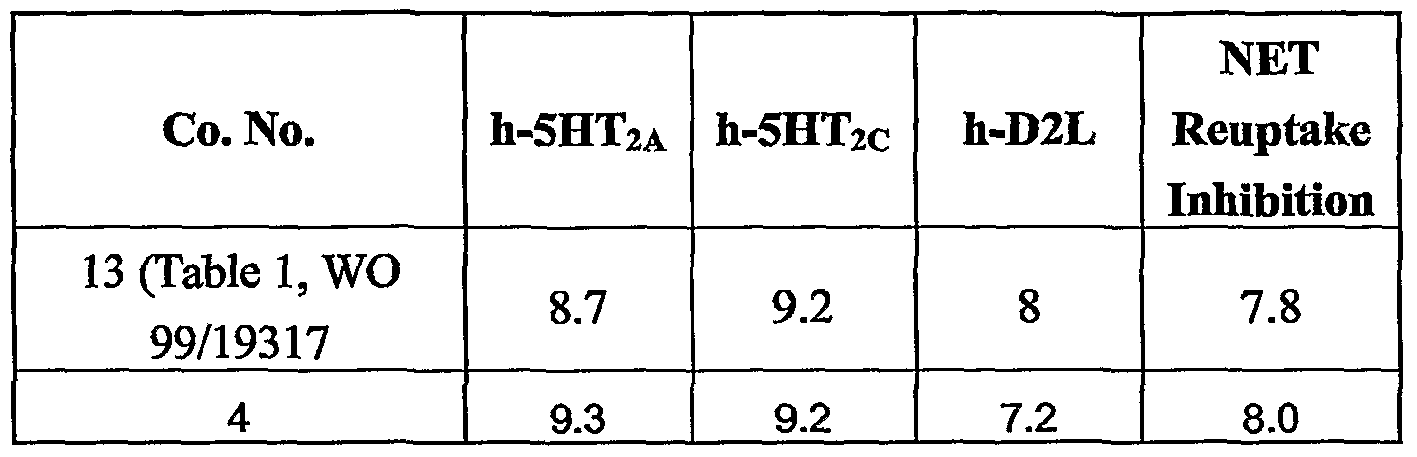
- WO 99/19317 published April 22, 1999 (Janssen Pharmaceutica N. V.) discloses substituted tetracyclic tetrahydrofuran derivatives with a specific halogen substitution pattern on the dibenzoazepine, dibenzooxepine, dibenzothiepine or dibenzosuberane ring.
- the compounds are useful in the treatment or prevention of CNS disorders, cardiovascular disorders or gastrointestinal disorders and show a faster onset of action over the compounds as disclosed in WO 97/38991.
- WO 03/040122 published May 15, 2003 (Janssen Pharmaceutica N. V.) discloses mandelate salts of the compounds according to WO 97/38991 and WO 99/19317. Said salts were surprisingly found to be more stable at enhanced temperature and relative humidity than the compounds disclosed in WO 97/38991 and WO 99/19317.
- each R 3 is, independently from each other, selected from the group of halo ; hydroxy ; alkyloxy ; aryloxy ; alkyl ; aryl ; alkylcarbonyl ; alkyloxycarbonyl ; arylcarbonyl ; aryloxycarbonyl and mono-or di(alkyl)amino ; or two R 3 -radicals may form together a bivalent radical of Formula -CR 5 R 5 -CR 5 R 5 -O- (b-1) ; -O-CR 5 R 5 -CR 5 R 5 - (b-2) ; -O-CR 5 R 5 -CR 5 R 5 -O- (b-3) ; -O-CR 5 R 5 -CR 5 R 5 -CR 5 R 5 - (b-7) wherein P is an integer, equal to zero, I, 2, 3 or 4 ; q is an integer, equal to 1 or 2 ; m is an integer, equal to zero, 1, 2 or 3 ;
- the present compounds differ structurally from the compounds of WO 97/38991 and WO 99/19317 by inter alia the presence of a double bond between carbon atoms 3a and 12b, thereby reducing the number of asymmetric centers from 3 to 1 and, thus, the number of possible enantiomers from 8 to 2. Consequently, the compounds of the present invention have a much simpler structure than the prior art compounds, which facilitates chemical synthesis enormously.
- the invention relates to a compound according to the general Formula (I), the pharmaceutically acceptable acid or base addition salts thereof, the stereochemically isomeric forms thereof, the N-oxide form thereof and a prodrug thereof, wherein: n is equal to 1 or 2 ; i, j are, independently from each other, equal to zero or 1 ; r is equal to 0 or 1 ; R 1 and R 2 are, each independently from each other, hydrogen ; alkyl ; alkenyl ; aryl ; arylalkenyl ; arylcarbonylalkyl ; alkyloxycarbonylalkyl ; aryloxycarbonyl ; alkyloxycarbonylalkylcarbonyl ; aminocarbonylalkyl ; mono- or di(alkyl)aminocarbonylalkyl ; mono- or di(aryl)ammocarbonylalkyl ; mono- or di(alkyl)aminocarbonyl- alkeny
- the invention relates to a compound according to the general Formula (I), the pharmaceutically acceptable acid or base addition salts thereof, the stereochemically isomeric forms thereof, the JV-oxide form thereof and a prodrug thereof, wherein: n is equal to 1 ; i is equal to 0 ; j is equal to 1 ; r is equal to 0 ; R 1 OTd R 2 are, each independently from each other, hydrogen or methyl A andB are phenyl ; R 9 is halo ; R 10 is hydrogen ; Y is O ; halo is fluoro, chloro or bromo.
- the general Formula (I) the pharmaceutically acceptable acid or base addition salts thereof, the stereochemically isomeric forms thereof, the JV-oxide form thereof and a prodrug thereof, wherein: n is equal to 1 ; i is equal to 0 ; j is equal to 1 ; r is equal to 0 ; R 1 OTd R 2 are, each independently from each other, hydrogen
- alkyl is defined as a monovalent straight or branched saturated hydrocarbon radical having from 1 to 6 carbon atoms, for example methyl, ethyl, propyl, butyl, 1-methylpropyl, 1,1-dimethylethyl, pentyl, hexyl ; alkyl further defines a monovalent cyclic saturated hydrocarbon radical having from 3 to 6 carbon atoms, for example cyclopropyl, methylcyclopropyl, cyclobutyl, cyclopentyl and cyclohexyl.
- alkyl also comprises an alkyl radical that is optionally substituted on one or more carbon atoms with one or more phenyl, halo, cyano, oxo, hydroxy, formyl and amino radicals, for example hydroxyalkyl, in particular hydroxymethyl and hydroxyethyl and polyhaloalkyl, in particular difluoromethyl and trifluoromethyl.
- halo is generic to fluoro, chloro, bromo and iodo.
- the pharmaceutically acceptable salts are defined to comprise the therapeutically active non-toxic acid addition salts forms that the compounds according to Formula (I) are able to form.
- Said salts can be obtained by treating the base form of the compounds according to Formula (T) with appropriate acids, for example inorganic acids, for example hydrohalic acid, in particular hydrochloric acid, hydrobromic acid, sulforic acid, nitric acid and phosphoric acid ; organic acids, for example acetic acid, hydroxyacetic acid, propanoic acid, lactic acid, pyruvic acid, oxalic acid, malonic acid, succinic acid, maleic acid, mandelic acid, fumaric acid, malic acid, tartaric acid, citric acid, methanesulfonic acid, ethanesulfonic acid, benzenesulfonic acid, p-toluenesulfonic acid, cyclamic acid, salicylic acid, p-aminosalicylic acid and pamoic acid.
- the compounds according to Formula (T) containing acidic protons may also be converted into their therapeutically active non-toxic metal or amine addition salts forms by treatment with appropriate organic and inorganic bases.
- Appropriate base salts forms comprise, for example, the ammonium salts, the alkaline and earth alkaline metal salts, in particular lithium, sodium, potassium, magnesium and calcium salts, salts with organic bases, e.g. the benzathine, JV-methyl-D-glucamine, hybramine salts, and salts with amino acids, for example arginine and lysine.
- salts forms can be converted into the free forms by treatment with an appropriate base or acid.
- addition salt as used in the framework of this application also comprises the solvates that the compounds according to Formula (T) as well as the salts thereof, are able to form.
- Such solvates are, for example, hydrates and alcoholates.
- the iV-oxide forms of the compounds according to Formula (T) are meant to comprise those compounds of Formula (T) wherein one or several nitrogen atoms are oxidized to the so-called JV-oxide, particularly those N-oxides wherein one or more tertiary nitrogens (e.g of the piperazinyl or piperidinyl radical) are JV-oxidized.
- Such JST-oxides can easily be obtained by a skilled person without any inventive skills and they are obvious alternatives for the compounds according to Formula (T) since these compounds are metabolites, which are formed by oxidation in the human body upon uptake .
- oxidation is normally the first step involved in drug metabolism (Textbook of Organic Medicinal and Pharmaceutical Chemistry, 1977, pages 70- 75).
- the metabolite form of a compound can also be administered to a human instead of the compound per se, with much the same effects.
- the compounds according to the invention possess at least 1 oxydizable nitrogen (tertiary amines moiety). It is therefore highly likely that JV-oxides are to form in the human metabolism.
- the compounds of Formula (I) may be converted to the corresponding iV-oxide forms following art-known procedures for converting a trivalent nitrogen into its JV-oxide form.
- Said iV-oxidation reaction may generally be carried out by reacting the starting material of Formula (!) with an appropriate organic or inorganic peroxide.
- Appropriate inorganic peroxides comprise, for example, hydrogen peroxide, alkali metal or earth alkaline metal peroxides, e.g.
- organic peroxides may comprise peroxy acids such as, for example, benzenecarboperoxoic acid or halo substituted benzenecarboperoxoic acid, e.g. 3-chlorobenzenecarboperoxoic acid, peroxoalkanoic acids, e.g. peroxoacetic acid, alkylhydroperoxides, e.g. tert-butyl hydroperoxide.
- Suitable solvents are, for example, water, lower alkanols, e.g. ethanol and the like, hydrocarbons, e.g. toluene, ketones, e.g. 2-butanone, halogenated hydrocarbons, e.g. dichloromethane, and mixtures of such solvents.
- stereochemically isomeric forms as used hereinbefore defines all the possible isomeric forms that the compounds of Formula (I) may possess. Unless otherwise mentioned or indicated, the chemical designation of compounds denotes the mixture of all possible stereochemically isomeric forms, said mixtures containing all diastereomers and enantiomers of the basic molecular structure. More in particular, stereogenic centers may have the R- or S-configuration; substituents on bivalent cyclic (partially) saturated radicals may have either the cis- or trans-configuration. Compounds encompassing double bonds can have an E or Z-stereochemistry at said double bond. Stereochemically isomeric forms of the compounds of Formula (I) are obviously intended to be embraced within the scope of this invention.
- R or S descriptor is assigned (based on Cahn-Lngold-Prelog sequence rule) to the lowest-numbered chiral center, the reference center.
- R* and S* each indicate optically pure stereogenic centers with undetermined absolute configuration. If " ⁇ ” and " ⁇ " are used: the position of the highest priority s ⁇ bstituent on the asymmetric carbon atom in the ring system having the lowest ring number, is arbitrarily always in the " ⁇ " position of the mean plane determined by the ring system.
- the position of the highest priority substituent on the other asymmetric carbon atom in the ring system (hydrogen atom in compounds according to Formula (I)) relative to the position of the highest priority substituent on the reference atom is denominated " ⁇ ", if it is on the same side of the mean plane determined by the ring system, or " ⁇ ", if it is on the other side of the mean plane determined by the ring system.
- the compounds of Formula (I) have at least one asymmetric center at carbon atom 2. Said asymmetric center and any other asymmetric center, which may be present (e.g. at atom 8), are indicated by the descriptors R and S. When e.g. a monocyanomethylene moiety is present in the compounds of Formula (T) at position 8, said moiety may have the E- or Z-configuration.
- the invention also comprises derivative compounds (usually called "pro-drugs") of the pharmacologically active compounds according to the invention, which are degraded in vivo to yield the compounds according to the invention.
- Pro-drugs are usually (but not always) of lower potency at the target receptor than the compounds to which they are degraded.
- Pro-drugs are particularly useful when the desired compound has chemical or physical properties that make its administration difficult or inefficient. For example, the desired compound may be only poorly soluble, it may be poorly transported across the mucosal epithelium, or it may have an undesirably short plasma half-life. Further discussion on pro-drugs may be found in Stella, V. J. et al, "Prodrugs", DrugDelivety Systems, 1985, pp. 112-176, andDrugs, 1985, 29, pp. 455- 473.
- Pro-drugs forms of the pharmacologically-active compounds according to the invention will generally be compounds according to Formula (T), the pharmaceutically acceptable acid or base addition salts thereof, the stereochemically isomeric forms thereof and the N-oxide form thereof, having an acid group which is esterified or amidated. Included in such esterified acid groups are groups of the Formula -COOR X , where R x is a Chalky!, phenyl, benzyl or one of the following groups:
- Amidated groups include groups of the Formula- CONR y R z , wherein R y is H, Ci- ⁇ alkyl, phenyl or benzyl and R z is -OH, H, Ci ⁇ alkyl, phenyl or benzyl.
- Compounds according to the invention having an amino group may be derivatised with a ketone or an aldehyde such as formaldehyde to form a Mannich base. This base will hydrolyze with first order kinetics in aqueous solution.
- the compounds of Formula (I) as prepared in the processes described below may be synthesized in the form of racemic mixtures of enantiomers that can be separated from one another following art-known resolution procedures.
- the racemic compounds of Formula (I) may be converted into the corresponding diastereomeric salt forms by reaction with a suitable chiral acid. Said diastereomeric salt forms are subsequently separated, for example, by selective or4ractional crystallization and the enantiomers are liberated therefrom by alkali.
- An alternative manner of separating the enantiomeric forms of the compounds of Formula (I) involves liquid chromatography using a chiral stationary phase.
- Said pure stereochemicaHy isomeric forms may also be derived from the corresponding pure stereochemicaHy isomeric forms of the appropriate starting materials, provided that the reaction occurs stereospecifically.
- said compound would be synthesized by stereospecific methods of preparation. These methods will advantageously employ enantiomerically pure starting materials.
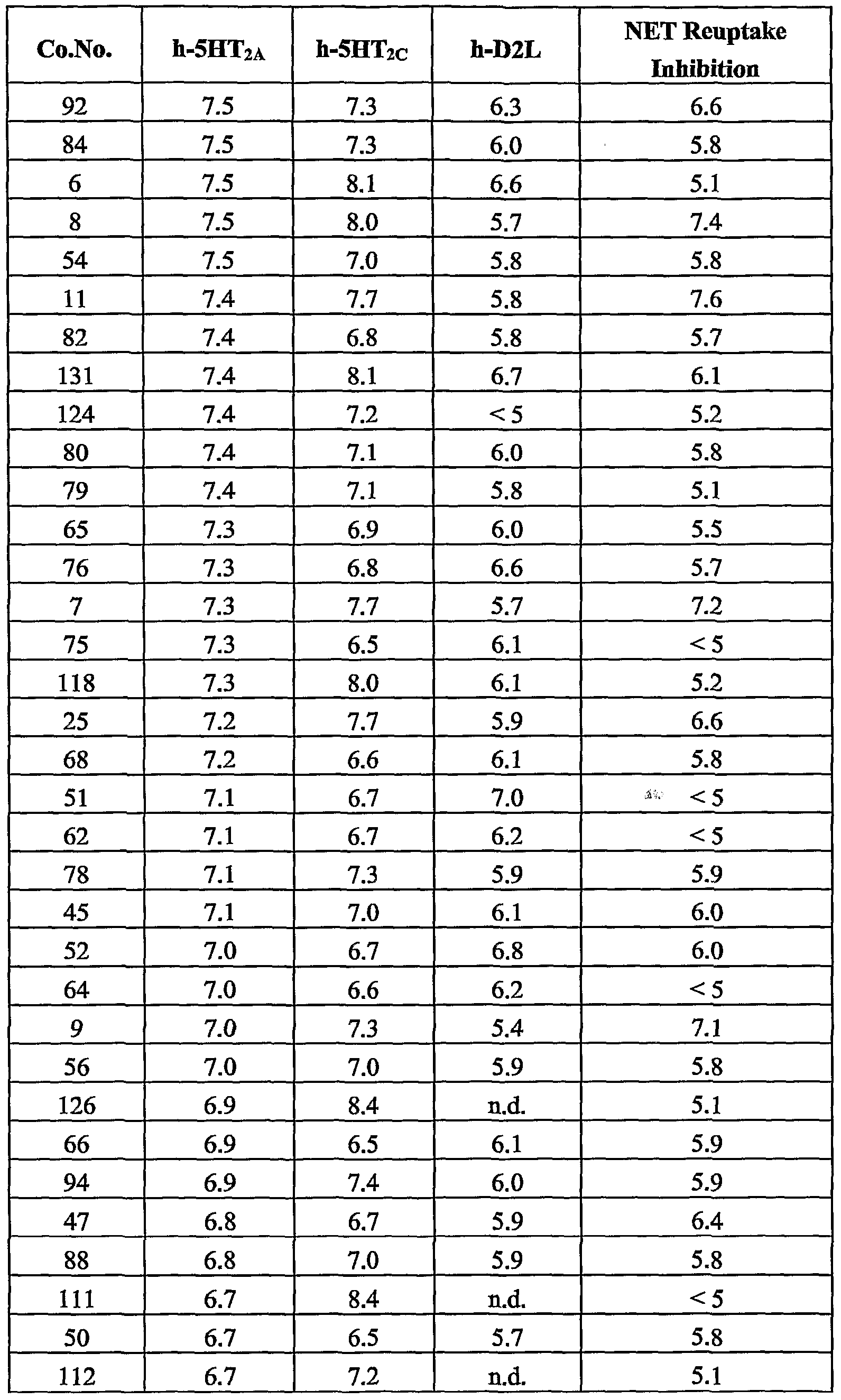
- Pharmacology The compounds of the present invention show affinity for 5-HT2 receptors, particularly for 5-HT2A and 5-HT2C receptors (nomenclature as described by D. Hoyer in "Serotonin (5-HT) in neurologic and psychiatric disorders" edited by M.D.
- the compounds of the present invention also have favourable physicochemical properties. For instance, they are chemically stable compounds.
- the compounds according to the invention are useful as a medicine, in particular in the prophylactic and therapeutic treatment of conditions mediated through either of these receptors.
- the invention therefore relates to a compound according to the general Formula (I), the pharmaceutically acceptable acid or base addition salts thereof, the stereochemically isomeric forms thereof, the JV-oxide form thereof and prodrugs thereof, for use as a medicine.
- the invention also relates to the use of a compound according to the general Formula (J), the pharmaceutically acceptable acid or base addition salts thereof, the stereochemically isomeric forms thereof, the JV-oxide form thereof and prodrugs thereof for the manufacture of a medicament for treating, either prophylactic or therapeutic or both, conditions mediated through the 5-HT2, and D2 receptor, as well as the through norepinephrine reuptake inhibition.
- J general Formula (J)
- the pharmaceutically acceptable acid or base addition salts thereof the stereochemically isomeric forms thereof, the JV-oxide form thereof and prodrugs thereof for the manufacture of a medicament for treating, either prophylactic or therapeutic or both, conditions mediated through the 5-HT2, and D2 receptor, as well as the through norepinephrine reuptake inhibition.
- the compounds of Formula (T) are useful as therapeutic agents in the treatment or the prevention of central nervous system disorders like anxiety, depression and mild depression, bipolar disorders, sleep- and sexual disorders, psychosis, borderline psychosis, schizophrenia, migraine, personality disorders or obsessive-compulsive disorders, social phobias or panic attacks, organic mental disorders, mental disorders in children such as ADHD, aggression, memory disorders and attitude disorders in older people, addiction, obesity, bulimia and similar disorders.
- the present compounds may be used as anxiolytics, antidepressants, antipsychotics, anti-schizophrenia agents, anti-migraine agents and as agents having the potential to overrule the addictive properties of drugs of abuse.
- the compounds of Formula (I) may also be used as therapeutic agents in the treatment of motoric disorders. It may be advantageous to use the present compounds in combination with classical therapeutic agents for such disorders.
- the compounds of Formula (I) may also serve in the treatment or the prevention of damage to the nervous system caused by trauma, stroke, neurodegenerative illnesses and the like; cardiovascular disorders like high blood pressure, thrombosis, stroke, and the like; and gastrointestinal disorders like dysfunction of the motility of the gastrointestinal system and the like.
- the present invention also provides a method of treating warm-blooded animals suffering from such diseases, said method comprising the systemic administration of a therapeutic amount of a compound of Formula (I) effective in treating the above described disorders, in particular, in treating anxiety, psychosis, degression, migraine and addictive properties of drugs of abuse.
- the present invention thus also relates to compounds of Formula (I) as defined hereinabove for use as a medicine, in particular, the compounds of Formula (T) may be used for the manufacture of a medicament for treating anxiety, psychosis, depression, migraine and addictive properties of drugs of abuse.
- An effective therapeutic daily amount would be from about 0.01 mg/kg to about 10 mg/kg body weight, more preferably from about 0.05 mg/kg to about 1 mg/kg body weight.
- the invention also relates to a pharmaceutical composition
- a pharmaceutical composition comprising a pharmaceutically acceptable carrier and, as active ingredient, a therapeutically effective amount of a compound according to the invention, in particular a compound according to Formula (I), the pharmaceutically acceptable acid or base addition salts thereof, the stereochemically isomeric forms thereof, the N-oxide form thereof and a prodrug thereof.
- a compound according to the invention in particular a compound according to Formula (I), the pharmaceutically acceptable acid or base addition salts thereof, the stereochemically isomeric forms thereof, the N-oxide form thereof and a prodrug thereof.
- the compounds according to the invention in particular the compounds according to Formula (I), the pharmaceutically acceptable acid or base addition salts thereof, the stereochemically isomeric forms thereof, theiVT-oxide form thereof and the prodrugs thereof, or any subgroup or combination thereof may be Formulated into various pharmaceutical forms for administration purposes.
- compositions there may be cited all compositions usually employed for systemically administering drugs.
- a pharmaceutically acceptable carrier which carrier may take a wide variety of forms depending on the form of preparation desired for administration.
- compositions are desirable in unitary dosage form suitable, in particular, for administration orally, rectally, percutaneously, by parenteral injection or by inhalation.
- any of the usual pharmaceutical media may be employed such as, for example, water, glycols, oils, alcohols and the like in the case of oral liquid preparations such as suspensions, syrups, elixirs, emulsions and solutions; or solid carriers such as starches, sugars, kaolin, diluents, lubricants, binders, disintegrating agents and the like in the case of powders, pills, capsules and tablets.
- tablets and capsules represent the most advantageous oral dosage unit forms in which case solid pharmaceutical carriers are obviously employed.
- the carrier will usually comprise sterile water, at least in large part, though other ingredients, for example, to aid solubility, may be included.
- injectable solutions for example, may be prepared in which the carrier comprises saline solution, glucose solution or a mixture of saline and glucose solution.
- injectable suspensions may also be prepared in which case appropriate liquid carriers, suspending agents and the like may be employed.
- solid form preparations that are intended to be converted, shortly before use, to liquid form preparations.
- the carrier optionally comprises a penetration enhancing agent and/or a suitable wetting agent, optionally combined with suitable additives of any nature in minor proportions, which additives do not introduce a significant deleterious effect on the skin. Said additives may facilitate the administration to the skin and/or may be helpful for preparing the desired compositions.
- These compositions may be administered in various ways, e.g., as a transdermal patch, as a spot-on, as an ointment. It is especially advantageous to Formulate the aforementioned pharmaceutical compositions in unit dosage form for ease of administration and uniformity of dosage.
- Unit dosage form refers to physically discrete units suitable as unitary dosages, each unit containing a predetermined quantity of active ingredient calculated to produce the desired therapeutic effect in association with the required pharmaceutical carrier.
- unit dosage forms are tablets (including scored or coated tablets), capsules, pills, powder packets, wafers, suppositories, injectable solutions or suspensions and the like, and segregated multiples thereof.
- compositions comprising said compounds for administration orally are especially advantageous.
- ⁇ -, ⁇ — or ⁇ -cyclodextrins or their derivatives in particular hydroxyalkyl substituted cyclodextrins, e.g. 2-hydroxypropyl- ⁇ -cyclodextrin.
- co-solvents such as alcohols may improve the solubility and/or the stability of the compounds according to the invention in pharmaceutical compositions.
- Step 1 Reaction of an intermediate compound of Formula (IV) with a reagent of Formula (V).
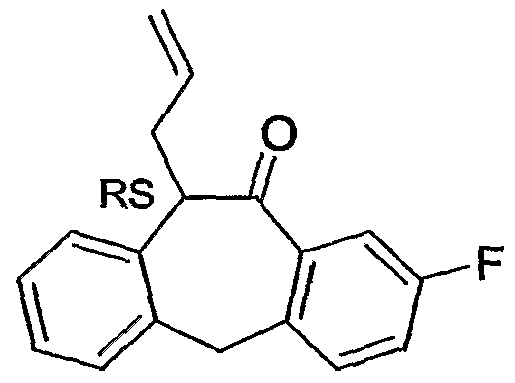
- This reaction can be done by any one of the art-known procedures for alkylation of ketones in position ⁇ under acidic or basic reaction conditions (for example the reaction can be done in an organic solvent such as, for example, dichloromethane, with abase such as, for example, lithium diisopropylamine and using allyl bromide as the alkylating agent) and yields an intermediate compound of Formula (III) wherein R 9 , i, j, ring A, ring B and X all have the meaning as described above for a final compound of Formula (I).
- M is a suitable group for an alkylation reaction, such as, for example halo, hydroxy or acetoxy.
- an intermediate of Formula (III) can be obtained via a Claisen rearrangement by heating an intermediate of Formula (HIa), for example at 220 0 C, in an organic solvent such as toluene.
- Intermediates of Formula (DIa) can be prepared by an O-allylation reaction of an intermediate of Formula (TV) with allylbromide, in an organic solvent such as DMF, in the presence of a suitable base such as, for example, potassium carbonate. The reaction is best conducted at elevated temperatures such as, for example, 60 0 C.
- Step 2 Reaction of an intermediate compound of Formula (III) with a cyclizating agent, such as, for example, bis(pyridine)iodonium(I) tetrafluoroborate, in an organic solvent, such as, for example dichloromethane, gives an intermediate compound of Formula (II) wherein W represents a suitable leaving group, preferably a halo, alkyl- or arylsulphonyloxy-, in particular 4-(methylphenyl)sulphonyloxy- or iodo.
- An intermediate compound of Formula QI) wherein R 9 , i, j, ring A, ring B and X all have the meaning as described above for a final compound of Formula (T), and wherein W represents said leaving group, is new.
- Step 3 AT-alkylation of an intermediate compound of Formula (II) with an amine of Formula HNR 1 R 2 , wherein R 1 and R 2 are defined as in Formula (I), by any of the art- known procedures gives a final compound of Formula (I).
- said N-alkylation can conveniently be carried out as described in WO 97/38991 in a reaction-inert solvent such as, for example, methanol, methylisobutyl ketone, NJNf- dimethylformamide or dimethylsulfoxide, and optionally in the presence of a suitable base.
- a reaction-inert solvent such as, for example, methanol, methylisobutyl ketone, NJNf- dimethylformamide or dimethylsulfoxide, and optionally in the presence of a suitable base.
- Stirring and elevated temperatures, for instance reflux temperature may enhance the rate of the reaction.
- Typical reaction conditions are 8 hours at 130 0 C.
- JV-alkylation may also be performed using the procedure described by Monkovic et al. (J. Med. Chem. (1973), 16(4), p. 403-407) which involves the use of a pressurised reaction vessel.
- said iV-alkylation may also be performed by heating at high temperature, for example 120 0 C, an intermediate of Formula(II), an amine of Formula NHR ⁇ and a base, for example calcium oxide, in an organic solvent such as THF, in a pressurised reaction vessel.
- Step 1 Cyclization of an intermediate compound of Formula (VI) (which can be prepared according to WO 03/048146 and WO 03/048147) in an acidic reaction media, such as, for example, hydrochloric acid in isopropyl alcohol, gives an intermediate compound of Formula (VII) wherein R 9 , i, j, ring A, ring B and X all have the meaning as described above for a final compound of Formula (I).
- an acidic reaction media such as, for example, hydrochloric acid in isopropyl alcohol
- Step 2 0-alkylation of an intermediate compound of Formula (VTI) with a suitable alkylating agent, such as, for example, 4-(methylphenyl)sulphonylchloride, by any of the art-known procedures gives an intermediate compound of Formula (II) which is new.
- a suitable alkylating agent such as, for example, 4-(methylphenyl)sulphonylchloride
- This intermediate compound can be treated, for example, as in Step (3) for Route A, yielding a final compound of Formula (T).
- Step 1 Epoxydation of the double bond of an intermediate compound of Formula (III) by any of the art-known procedures, such as, for instance, using 3-chloroperbenzoic acid, in an inert solvent such as, for example, dichloromethane, yields an intermediate compound of Formula (VIE).
- Typical reaction conditions are stirring at room temperature for 8 hours.
- Step 2 Rearrangement of an intermediate compound of Formula (VIlI) under acidic conditions, such as, for example, Amberlyst 15, in an inert solvent such as, for example, dichloromethane, yields an intermediate compound of Formula (VII).
- This intermediate compound can be treated, for example, as in Step (2) for Route B, yielding a final compound of Formula (TI) which can be treated, for example, as in Step (3) for Route A, yielding a compound of Formula (I).
- a final compound of Formula (Ib) wherein R 9 , i, j, ring A, ring B, X, R 3 , R 4 , p and q all have the meaning as described above, can be prepared by reaction of a compound of Formula (Ia) (prepared by any of the preparation routes A, B, C as mentioned above) with a suitable alkylating agent, such as an acid halide-, isocyanate-, sulphonychloride derivatives, by any of the art-known procedures (such as, for example, in the presence of a suitable base such as polymer bound supported diisopropylethylamine, in an inert solvent such as, for example, dichloromethane).
- a suitable alkylating agent such as an acid halide-, isocyanate-, sulphonychloride derivatives
- Stepl The same procedure described in Step 1 for route B. Cyclization of an u- intermediate of Formula (Via) in an acidic reaction media, s ⁇ ch as, for example 10 hydrochloric acid in isopropylic alcohol at room temperature gives an intermediate compound of Formula (VHa), which is novel.
- Step2 The same procedure described in step 2 of Route B. 0-Alkylation of an intermediate compound of Formula (Vila) with a suitable alkylating agent such as for 15 example 4-(methylphenyl)sulphonyl chloride, by any of the art known procedures, gives an intermediate compound of Formula (Ha), which is new.
- a suitable alkylating agent such as for 15 example 4-(methylphenyl)sulphonyl chloride
- Step 3 This intermediate of Formula (Ila) can be treated, for example as in step 3 for route A, with an amine such as, for example methylamine, and a base such as, for 20 example CaO, in an organic solvent such as, for example THF, at high temperatures, for example 120 0 C, in pressurised reaction vessel for 8 hours, yielding a final compound of Formula (Ia), which is novel.
- an amine such as, for example methylamine
- a base such as, for 20 example CaO
- organic solvent such as, for example THF
- the compounds of Formula (I) as prepared in the hereinabove described processes are generally racemic mixtures of enantiomers which can be separated from one another following art-known resolution procedures.
- the racemic compounds of Formula (I) which are sufficiently basic or acidic may be converted into the corresponding diastereomeric salt forms by reaction with a suitable chiral acid respectively with a suitable chiral base. Said diastereomeric salt forms are subsequently separated, for example, by selective or fractional crystallization and the enantiomers are liberated thereftom by alkali or acid.
- An alternative manner of separating the enantiomeric forms of the compounds of Formula (I) involves liquid chromatography using a chiral stationary phase.
- Said pure stereochemically isomeric forms may also be derived from the corresponding pure stereochemically isomeric forms of the appropriate starting materials, provided that the reaction occurs stereospecifically.
- said compound will be synthesized by stereospecific methods of preparation. These methods will advantageously employ enantiomerically pure starting materials.
- RT room temperature
- HATU 7H-l,2,3-triazolo[4,5- b]pyridinium3-oxide
- T ⁇ F means tetrahydroftiran
- MTBE means tert-butyl methyl ester
- DMAP 4- dimethylaminopyridine
- DBPEA means diisopropylethylamine
- D?E means diisopropylether
- DMF means N,N-dimethylformamide.
- intermediate 15 intermediate 16 A mixture of intermediate compound 14 (prepared according to A5.b) (0.00473 mol), Pyridinium chlorochromate (0.0071 mol) and NaOAc (0.0123 mol) in CH 2 Cl 2 (100 mL) was stirred for 2 hours at room temperature, then the reaction mixture was diluted with CH 2 Cl 2 (100 mL) and filtered over silica gel. The organic layer was concentrated and the solvent was evaporated under reduced pressure. The obtained residue (1 g) was purified by short open column chromatography (eluent: Heptane/EtOAc 95/5). Two product fractions were collected and the solvent was evaporated. Yield fraction 1: 0.21 g of intermediate compound 15 and yield fraction 2: 0.3 g of intermediate compound 16. d. Preparation of intermediate compound 17
- intermediate 29 intermediate 30 To a mixture of intermediate compounds 27 and 28 (2g; 6.92 mmol) in CH 2 Ck (40 mL), pyridinium chlorochromate (2.84 g; 13.14 mmol) was added and the resulting mixture was stirred for 3 hours. The mixture was filtered over silicagel and the filtrate was vacumm concentrate. The residue thus obtained was purified by flash chromatography (eluent: heptane/CH 2 Cl 2 , 4:1) to give intermediate compound 29 and intermediate compound 30.
- the vials were shaken overnight in a Bohdan apparatus.
- PS-triamine (3 equivalents, electrophile scavenger) and PS-isocyanate (3 equivalents, (nucleophile scavenger) were added to the vials, to scavenge the reactants, and the reaction mixtures was shaken for 6 hours.
- the resins were filtered off and washed twice with CH2CI2.
- the combined organic layers were shaken with Amberlyst 15 (3 equivalents) in a Bohdan apparatus overnight (first step of a catch and release process). The resin was filtered off and washed twice with MeOH. The liquids were discarded.
- the HPLC gradient was supplied by a HP 1100 from Agilent with a column heater set at 40 0 C. Flow from the column was passed through photodiode array (PDA) detector and then split to a Light Scattering detector (ELSD) and to a Waters-Micromass Time of Flight (ToF) mass spectrometer with an electrospray ionization source operated simultaneously in positive and negative ionization mode.
- PDA photodiode array
- ELSD Light Scattering detector
- ToF Waters-Micromass Time of Flight
- Reversed phase HPLC was carried out on a XDB-Cl 8 cartridge (3.5 ⁇ m, 4.6 x 30 mm) from Agilent, with a flow rate of 1 ml/min.
- Three mobile phases (mobile phase A: 0.5 g/1 ammoniumacetate solution, mobile phase B: acetonitrile; mobile phase C: methanol) were employed to run a gradient condition from 80 % A, 10 % B,10 % C to 50 % B and 50 % C in 6.0 min., to 100 % B at 6.5 min., kept till 7.0 min and reequilibrated with 80 % A 3 10 % B and 10 %C at 7.6 min. that was kept till 9.0 min. An injection volume of 5 ⁇ L was used.
- High Resolution Mass spectra were acquired by scanning from 100 to 750 in 1 s using a dwell time of 1 s.
- the capillary needle voltage was 3 kV and the source temperature was maintained at 140 0 C. Nitrogen was used as the nebulizer gas. Cone voltage was 30 V for both positive and negative ionization mode. Leucine-enkephaline was the reference used for the lock spray. Data acquisition was performed with a Waters- Micromass MassLynx-Openlynx data system. Unless otherwise specified, the parent peak mass corresponds to the free base + H + .
- the interaction of the test compounds with the receptors is assessed in competition binding experiments.
- Various concentrations of the test compound are added to the incubation mixture containing the tissue preparation and the radioligand. Binding of the radioligand will be inhibited by the test compound in proportion to its binding affinity and its concentration.
- the affinities of the compounds for the 5-HT 2 receptors were measured by means of radioligand binding studies conducted with: (a) human cloned 5-HT 2 A receptor, expressed in L929 cells using [ 125 I]R91150 as radioligand and (b) human cloned 5-HT 2C receptor, expressed in CHO cells using [ 3 H]mesulergine as radioligand.
- Example C.2 In vitro determination of NET reuptake inhibition Cortex from rat brain was collected and homogenised using an Ultra-Turrax T25 and a Dual homogeniser in ice-cold homogenising buffer containing Tris, NaCl and KCl (50 mM, 120 mM and 5 mM, respectively, pH 7.4) prior to dilution to an appropriate protein concentration optimised for specific and non-specific binding. Binding was performed with radioligand [ 3 H]Nixosetine (NEN, NET-1084, specific activity ⁇ 70 Ci/mmol) diluted in ice cold assay buffer containing Tris, NaCl and KCl (50 mM, 300 mM and 5 mM, respectively, pH 7.4).
- NNN radioligand
- Example C.3 In vitro binding affinity for human D2r, receptor
- Active ingredient as used throughout these examples relates to a compound of Formula (T), a pharmaceutically acceptable acid addition salt, a stereochemically isomeric form thereof or a AT-oxide form thereof.
- Example D.I ORAL SOLUTION r Methyl 4-hydroxybenzoate (9 g) and propyl 4-hydroxybenzoate ( 1 g) were dissolved in boiling purified water (41). Ih 3 1 of this solution were dissolved first 2,3-dihydroxybutanedioic acid ( 10 g) and thereafter A.I (20 g). The latter solution was combined with the remaining part of the former solution and 1,2,3-propanetriol (121) and sorbitol 70% solution (3 1) were added thereto. Sodium saccharin (40 g) were dissolved in water (500 ml) and raspberry (2 ml) and gooseberry essence (2 ml) were added. The latter solution was combined with the former, water was added q.s. to a volume of 201 providing an oral solution comprising 5 mg of the active ingredient per teaspoonful (5 ml). The resulting solution was filled in suitable containers.
- ORAL SOLUTION r Methyl 4-hydroxybenzoate (9 g) and propyl 4-hydroxybenzoate ( 1
- Example D.2 FILM-COATED TABLETS E ⁇ "i ⁇ Mation.oft ⁇ Wet.core
- a mixture of A.I. (100 g), lactose (570 g) and starch (200 g) was mixed well and thereafter humidified with a solution of sodium dodecyl sulfate (5 g) and polyvinylpyrrolidone (10 g) in water (200 ml).
- the wet powder mixture was sieved, dried and sieved again. Then there was added microcrystalline cellulose (100 g) and hydrogenated vegetable oil (15 g). The whole was mixed well and compressed into tablets, giving 10.000 tablets, each containing 10 mg of the active ingredient.
- Example D.3 INJECTABLE SOLUTION Methyl 4-hydroxybenzoate (1.8 g) and propyl 4-hydroxybenzoate (0.2 g) were dissolved in boiling water (500 ml) for injection. After cooling to about 50°C there were added while stirring lactic acid (4 g), propylene glycol (0.05 g) and A.I. (4 g). The solution was cooled to room temperature and supplemented with water for injection q.s. ad 1000 ml, giving a solution comprising 4 mg/ml of A.I.. The solution was sterilized by filtration and filled in sterile containers.
Landscapes
- Chemical & Material Sciences (AREA)
- Organic Chemistry (AREA)
- Health & Medical Sciences (AREA)
- Engineering & Computer Science (AREA)
- Bioinformatics & Cheminformatics (AREA)
- General Health & Medical Sciences (AREA)
- Animal Behavior & Ethology (AREA)
- Veterinary Medicine (AREA)
- Chemical Kinetics & Catalysis (AREA)
- General Chemical & Material Sciences (AREA)
- Medicinal Chemistry (AREA)
- Nuclear Medicine, Radiotherapy & Molecular Imaging (AREA)
- Public Health (AREA)
- Pharmacology & Pharmacy (AREA)
- Life Sciences & Earth Sciences (AREA)
- Neurology (AREA)
- Neurosurgery (AREA)
- Biomedical Technology (AREA)
- Psychiatry (AREA)
- Pain & Pain Management (AREA)
- Anesthesiology (AREA)
- Endocrinology (AREA)
- Hospice & Palliative Care (AREA)
- Hematology (AREA)
- Child & Adolescent Psychology (AREA)
- Diabetes (AREA)
- Addiction (AREA)
- Obesity (AREA)
- Reproductive Health (AREA)
- Pharmaceuticals Containing Other Organic And Inorganic Compounds (AREA)
- Heterocyclic Carbon Compounds Containing A Hetero Ring Having Oxygen Or Sulfur (AREA)
- Furan Compounds (AREA)
- Nitrogen Condensed Heterocyclic Rings (AREA)
- Plural Heterocyclic Compounds (AREA)
Abstract
Description











Claims


Priority Applications (7)
| Application Number | Priority Date | Filing Date | Title |
|---|---|---|---|
| CA2568752A CA2568752C (en) | 2004-06-23 | 2005-06-21 | Novel unsaturated tetracyclic tetrahydrofuran derivatives |
| EP05760941A EP1761545A2 (en) | 2004-06-23 | 2005-06-21 | Novel unsaturated tetracyclic tetrahydrofuran derivatives |
| AU2005256625A AU2005256625B2 (en) | 2004-06-23 | 2005-06-21 | Novel unsaturated tetracyclic tetrahydrofuran derivatives |
| US11/571,090 US8022102B2 (en) | 2004-06-23 | 2005-06-21 | Unsaturated tetracyclic tetrahydrofuran derivatives |
| JP2007517291A JP4823221B2 (en) | 2004-06-23 | 2005-06-21 | New unsaturated tetracyclic tetrahydrofuran derivatives |
| US13/214,344 US20120035170A1 (en) | 2004-06-23 | 2011-08-22 | Novel unsaturated tetracyclic tetrahydrofuran derivatives |
| US13/487,300 US20120238563A1 (en) | 2004-06-23 | 2012-06-04 | Novel unsaturated tetracyclic tetrahydrofuran derivatives |
Applications Claiming Priority (2)
| Application Number | Priority Date | Filing Date | Title |
|---|---|---|---|
| EPPCT/EP2004/051204 | 2004-06-23 | ||
| EP2004051204 | 2004-06-23 |
Related Child Applications (1)
| Application Number | Title | Priority Date | Filing Date |
|---|---|---|---|
| US13/214,344 Division US20120035170A1 (en) | 2004-06-23 | 2011-08-22 | Novel unsaturated tetracyclic tetrahydrofuran derivatives |
Publications (2)
| Publication Number | Publication Date |
|---|---|
| WO2006000555A2 true WO2006000555A2 (en) | 2006-01-05 |
| WO2006000555A3 WO2006000555A3 (en) | 2006-08-17 |
Family
ID=34957911
Family Applications (1)
| Application Number | Title | Priority Date | Filing Date |
|---|---|---|---|
| PCT/EP2005/052891 Ceased WO2006000555A2 (en) | 2004-06-23 | 2005-06-21 | Novel unsaturated tetracyclic tetrahydrofuran derivatives |
Country Status (9)
| Country | Link |
|---|---|
| US (3) | US8022102B2 (en) |
| EP (1) | EP1761545A2 (en) |
| JP (1) | JP4823221B2 (en) |
| CN (1) | CN1972949A (en) |
| AR (1) | AR049450A1 (en) |
| AU (1) | AU2005256625B2 (en) |
| CA (1) | CA2568752C (en) |
| TW (1) | TW200613295A (en) |
| WO (1) | WO2006000555A2 (en) |
Cited By (3)
| Publication number | Priority date | Publication date | Assignee | Title |
|---|---|---|---|---|
| EP1824820A2 (en) * | 2004-12-07 | 2007-08-29 | Janssen Pharmaceutica N.V. | Substituted tetracyclic tetrahydrofuran,pyrrolidine and tetrahydrothiophene derivatives |
| EP1891073A1 (en) * | 2005-05-26 | 2008-02-27 | Janssen Pharmaceutica N.V. | Novel substituted tetracyclic tetrahydrofuran, pyrrolidine and tetrahydrothiophene derivatives and their use as a medicament |
| US8434354B2 (en) | 2009-03-06 | 2013-05-07 | Bp Corporation North America Inc. | Apparatus and method for a wireless sensor to monitor barrier system integrity |
Families Citing this family (1)
| Publication number | Priority date | Publication date | Assignee | Title |
|---|---|---|---|---|
| CN110818720A (en) * | 2019-11-19 | 2020-02-21 | 上海阳帆医药科技有限公司 | Melatonin (MT1/MT2) receptor agonist, preparation method and application thereof |
Citations (2)
| Publication number | Priority date | Publication date | Assignee | Title |
|---|---|---|---|---|
| WO1997038991A1 (en) | 1996-04-12 | 1997-10-23 | Janssen Pharmaceutica N.V. | Substituted tetracyclic tetrahydrofuran derivatives |
| WO1999019317A1 (en) | 1997-10-10 | 1999-04-22 | Janssen Pharmaceutica N.V. | Halogen substituted tetracyclic tetrahydrofuran derivatives |
Family Cites Families (1)
| Publication number | Priority date | Publication date | Assignee | Title |
|---|---|---|---|---|
| HRP20020441A2 (en) * | 2002-05-21 | 2003-12-31 | Pliva D D | 1-oxa-dibenzoazulen as inhibitor of production of tumor necrosis factors and intermediate for preparation thereof |
-
2005
- 2005-06-21 EP EP05760941A patent/EP1761545A2/en not_active Withdrawn
- 2005-06-21 WO PCT/EP2005/052891 patent/WO2006000555A2/en not_active Ceased
- 2005-06-21 US US11/571,090 patent/US8022102B2/en not_active Expired - Fee Related
- 2005-06-21 AU AU2005256625A patent/AU2005256625B2/en not_active Ceased
- 2005-06-21 CN CNA2005800208634A patent/CN1972949A/en active Pending
- 2005-06-21 CA CA2568752A patent/CA2568752C/en not_active Expired - Fee Related
- 2005-06-21 JP JP2007517291A patent/JP4823221B2/en not_active Expired - Fee Related
- 2005-06-22 TW TW094120714A patent/TW200613295A/en unknown
- 2005-06-22 AR ARP050102572A patent/AR049450A1/en not_active Application Discontinuation
-
2011
- 2011-08-22 US US13/214,344 patent/US20120035170A1/en not_active Abandoned
-
2012
- 2012-06-04 US US13/487,300 patent/US20120238563A1/en not_active Abandoned
Patent Citations (2)
| Publication number | Priority date | Publication date | Assignee | Title |
|---|---|---|---|---|
| WO1997038991A1 (en) | 1996-04-12 | 1997-10-23 | Janssen Pharmaceutica N.V. | Substituted tetracyclic tetrahydrofuran derivatives |
| WO1999019317A1 (en) | 1997-10-10 | 1999-04-22 | Janssen Pharmaceutica N.V. | Halogen substituted tetracyclic tetrahydrofuran derivatives |
Cited By (3)
| Publication number | Priority date | Publication date | Assignee | Title |
|---|---|---|---|---|
| EP1824820A2 (en) * | 2004-12-07 | 2007-08-29 | Janssen Pharmaceutica N.V. | Substituted tetracyclic tetrahydrofuran,pyrrolidine and tetrahydrothiophene derivatives |
| EP1891073A1 (en) * | 2005-05-26 | 2008-02-27 | Janssen Pharmaceutica N.V. | Novel substituted tetracyclic tetrahydrofuran, pyrrolidine and tetrahydrothiophene derivatives and their use as a medicament |
| US8434354B2 (en) | 2009-03-06 | 2013-05-07 | Bp Corporation North America Inc. | Apparatus and method for a wireless sensor to monitor barrier system integrity |
Also Published As
| Publication number | Publication date |
|---|---|
| EP1761545A2 (en) | 2007-03-14 |
| US20120238563A1 (en) | 2012-09-20 |
| JP4823221B2 (en) | 2011-11-24 |
| US20120035170A1 (en) | 2012-02-09 |
| AU2005256625A1 (en) | 2006-01-05 |
| CN1972949A (en) | 2007-05-30 |
| WO2006000555A3 (en) | 2006-08-17 |
| CA2568752C (en) | 2013-05-07 |
| JP2008503544A (en) | 2008-02-07 |
| AU2005256625B2 (en) | 2011-01-27 |
| US8022102B2 (en) | 2011-09-20 |
| US20070191469A1 (en) | 2007-08-16 |
| AR049450A1 (en) | 2006-08-02 |
| TW200613295A (en) | 2006-05-01 |
| CA2568752A1 (en) | 2006-01-05 |
Similar Documents
| Publication | Publication Date | Title |
|---|---|---|
| US8404729B2 (en) | Heterocyclic tetracyclic tetrahydrofuran derivatives | |
| RU2401257C2 (en) | Novel substituted tetracyclic derivatives of tetrahydropyran, pyrrolidine and tetrahydrothiophene | |
| US20120238563A1 (en) | Novel unsaturated tetracyclic tetrahydrofuran derivatives | |
| US20070197525A1 (en) | Novel tetracyclic tetrahydrofuran derivatives | |
| AU2006259020C1 (en) | Novel tetracyclic tetrahydrofuran derivatives containing a cyclic amine side chain | |
| US20090023721A1 (en) | Novel Substituted Tetracyclic Tetrahydrofuran, Pyrrolidine and Tetrahydrothiophene Derivatives and Their Use as a Medicament | |
| WO2006122944A1 (en) | Selected tetracyclic tetrahydrofuran derivatives containing a cyclic amine side chain |
Legal Events
| Date | Code | Title | Description |
|---|---|---|---|
| AK | Designated states |
Kind code of ref document: A2 Designated state(s): AE AG AL AM AT AU AZ BA BB BG BR BW BY BZ CA CH CN CO CR CU CZ DE DK DM DZ EC EE EG ES FI GB GD GE GH GM HR HU ID IL IN IS JP KE KG KM KP KR KZ LC LK LR LS LT LU LV MA MD MG MK MN MW MX MZ NA NG NI NO NZ OM PG PH PL PT RO RU SC SD SE SG SK SL SM SY TJ TM TN TR TT TZ UA UG US UZ VC VN YU ZA ZM ZW |
|
| AL | Designated countries for regional patents |
Kind code of ref document: A2 Designated state(s): BW GH GM KE LS MW MZ NA SD SL SZ TZ UG ZM ZW AM AZ BY KG KZ MD RU TJ TM AT BE BG CH CY CZ DE DK EE ES FI FR GB GR HU IE IS IT LT LU MC NL PL PT RO SE SI SK TR BF BJ CF CG CI CM GA GN GQ GW ML MR NE SN TD TG |
|
| 121 | Ep: the epo has been informed by wipo that ep was designated in this application | ||
| WWE | Wipo information: entry into national phase |
Ref document number: 2005256625 Country of ref document: AU |
|
| WWE | Wipo information: entry into national phase |
Ref document number: 2568752 Country of ref document: CA |
|
| WWE | Wipo information: entry into national phase |
Ref document number: 2005760941 Country of ref document: EP |
|
| WWE | Wipo information: entry into national phase |
Ref document number: 2007517291 Country of ref document: JP |
|
| ENP | Entry into the national phase |
Ref document number: 2005256625 Country of ref document: AU Date of ref document: 20050621 Kind code of ref document: A |
|
| WWP | Wipo information: published in national office |
Ref document number: 2005256625 Country of ref document: AU |
|
| WWE | Wipo information: entry into national phase |
Ref document number: 11571090 Country of ref document: US Ref document number: 2007191469 Country of ref document: US |
|
| WWE | Wipo information: entry into national phase |
Ref document number: 200580020863.4 Country of ref document: CN |
|
| NENP | Non-entry into the national phase |
Ref country code: DE |
|
| WWW | Wipo information: withdrawn in national office |
Ref document number: DE |
|
| WWP | Wipo information: published in national office |
Ref document number: 2005760941 Country of ref document: EP |
|
| WWP | Wipo information: published in national office |
Ref document number: 11571090 Country of ref document: US |