WO2006006878A1 - Fungicidal compositions - Google Patents
Fungicidal compositions Download PDFInfo
- Publication number
- WO2006006878A1 WO2006006878A1 PCT/NZ2005/000167 NZ2005000167W WO2006006878A1 WO 2006006878 A1 WO2006006878 A1 WO 2006006878A1 NZ 2005000167 W NZ2005000167 W NZ 2005000167W WO 2006006878 A1 WO2006006878 A1 WO 2006006878A1
- Authority
- WO
- WIPO (PCT)
- Prior art keywords
- composition
- pathogens
- amf
- antioxidant
- treatments
- Prior art date
- Legal status (The legal status is an assumption and is not a legal conclusion. Google has not performed a legal analysis and makes no representation as to the accuracy of the status listed.)
- Ceased
Links
Classifications
-
- A—HUMAN NECESSITIES
- A01—AGRICULTURE; FORESTRY; ANIMAL HUSBANDRY; HUNTING; TRAPPING; FISHING
- A01N—PRESERVATION OF BODIES OF HUMANS OR ANIMALS OR PLANTS OR PARTS THEREOF; BIOCIDES, e.g. AS DISINFECTANTS, AS PESTICIDES OR AS HERBICIDES; PEST REPELLANTS OR ATTRACTANTS; PLANT GROWTH REGULATORS
- A01N65/00—Biocides, pest repellants or attractants, or plant growth regulators containing material from algae, lichens, bryophyta, multi-cellular fungi or plants, or extracts thereof
- A01N65/08—Magnoliopsida [dicotyledons]
- A01N65/20—Fabaceae or Leguminosae [Pea or Legume family], e.g. pea, lentil, soybean, clover, acacia, honey locust, derris or millettia
-
- A—HUMAN NECESSITIES
- A01—AGRICULTURE; FORESTRY; ANIMAL HUSBANDRY; HUNTING; TRAPPING; FISHING
- A01N—PRESERVATION OF BODIES OF HUMANS OR ANIMALS OR PLANTS OR PARTS THEREOF; BIOCIDES, e.g. AS DISINFECTANTS, AS PESTICIDES OR AS HERBICIDES; PEST REPELLANTS OR ATTRACTANTS; PLANT GROWTH REGULATORS
- A01N37/00—Biocides, pest repellants or attractants, or plant growth regulators containing organic compounds containing a carbon atom having three bonds to hetero atoms with at the most two bonds to halogen, e.g. carboxylic acids
- A01N37/12—Biocides, pest repellants or attractants, or plant growth regulators containing organic compounds containing a carbon atom having three bonds to hetero atoms with at the most two bonds to halogen, e.g. carboxylic acids containing the group, wherein Cn means a carbon skeleton not containing a ring; Thio analogues thereof
-
- A—HUMAN NECESSITIES
- A01—AGRICULTURE; FORESTRY; ANIMAL HUSBANDRY; HUNTING; TRAPPING; FISHING
- A01N—PRESERVATION OF BODIES OF HUMANS OR ANIMALS OR PLANTS OR PARTS THEREOF; BIOCIDES, e.g. AS DISINFECTANTS, AS PESTICIDES OR AS HERBICIDES; PEST REPELLANTS OR ATTRACTANTS; PLANT GROWTH REGULATORS
- A01N63/00—Biocides, pest repellants or attractants, or plant growth regulators containing microorganisms, viruses, microbial fungi, animals or substances produced by, or obtained from, microorganisms, viruses, microbial fungi or animals, e.g. enzymes or fermentates
- A01N63/10—Animals; Substances produced thereby or obtained therefrom
-
- A—HUMAN NECESSITIES
- A01—AGRICULTURE; FORESTRY; ANIMAL HUSBANDRY; HUNTING; TRAPPING; FISHING
- A01N—PRESERVATION OF BODIES OF HUMANS OR ANIMALS OR PLANTS OR PARTS THEREOF; BIOCIDES, e.g. AS DISINFECTANTS, AS PESTICIDES OR AS HERBICIDES; PEST REPELLANTS OR ATTRACTANTS; PLANT GROWTH REGULATORS
- A01N65/00—Biocides, pest repellants or attractants, or plant growth regulators containing material from algae, lichens, bryophyta, multi-cellular fungi or plants, or extracts thereof
-
- A—HUMAN NECESSITIES
- A01—AGRICULTURE; FORESTRY; ANIMAL HUSBANDRY; HUNTING; TRAPPING; FISHING
- A01N—PRESERVATION OF BODIES OF HUMANS OR ANIMALS OR PLANTS OR PARTS THEREOF; BIOCIDES, e.g. AS DISINFECTANTS, AS PESTICIDES OR AS HERBICIDES; PEST REPELLANTS OR ATTRACTANTS; PLANT GROWTH REGULATORS
- A01N65/00—Biocides, pest repellants or attractants, or plant growth regulators containing material from algae, lichens, bryophyta, multi-cellular fungi or plants, or extracts thereof
- A01N65/08—Magnoliopsida [dicotyledons]
-
- A—HUMAN NECESSITIES
- A01—AGRICULTURE; FORESTRY; ANIMAL HUSBANDRY; HUNTING; TRAPPING; FISHING
- A01N—PRESERVATION OF BODIES OF HUMANS OR ANIMALS OR PLANTS OR PARTS THEREOF; BIOCIDES, e.g. AS DISINFECTANTS, AS PESTICIDES OR AS HERBICIDES; PEST REPELLANTS OR ATTRACTANTS; PLANT GROWTH REGULATORS
- A01N65/00—Biocides, pest repellants or attractants, or plant growth regulators containing material from algae, lichens, bryophyta, multi-cellular fungi or plants, or extracts thereof
- A01N65/08—Magnoliopsida [dicotyledons]
- A01N65/36—Rutaceae [Rue family], e.g. lime, orange, lemon, corktree or pricklyash
-
- A—HUMAN NECESSITIES
- A01—AGRICULTURE; FORESTRY; ANIMAL HUSBANDRY; HUNTING; TRAPPING; FISHING
- A01N—PRESERVATION OF BODIES OF HUMANS OR ANIMALS OR PLANTS OR PARTS THEREOF; BIOCIDES, e.g. AS DISINFECTANTS, AS PESTICIDES OR AS HERBICIDES; PEST REPELLANTS OR ATTRACTANTS; PLANT GROWTH REGULATORS
- A01N65/00—Biocides, pest repellants or attractants, or plant growth regulators containing material from algae, lichens, bryophyta, multi-cellular fungi or plants, or extracts thereof
- A01N65/40—Liliopsida [monocotyledons]
-
- Y—GENERAL TAGGING OF NEW TECHNOLOGICAL DEVELOPMENTS; GENERAL TAGGING OF CROSS-SECTIONAL TECHNOLOGIES SPANNING OVER SEVERAL SECTIONS OF THE IPC; TECHNICAL SUBJECTS COVERED BY FORMER USPC CROSS-REFERENCE ART COLLECTIONS [XRACs] AND DIGESTS
- Y02—TECHNOLOGIES OR APPLICATIONS FOR MITIGATION OR ADAPTATION AGAINST CLIMATE CHANGE
- Y02A—TECHNOLOGIES FOR ADAPTATION TO CLIMATE CHANGE
- Y02A50/00—TECHNOLOGIES FOR ADAPTATION TO CLIMATE CHANGE in human health protection, e.g. against extreme weather
- Y02A50/30—Against vector-borne diseases, e.g. mosquito-borne, fly-borne, tick-borne or waterborne diseases whose impact is exacerbated by climate change
Definitions
- the present invention relates to fungicidal compositions and particularly fungicidal compositions comprising anhydrous milk fat (AMF), soybean oil and/or coconut fat.
- AMF anhydrous milk fat
- soybean oil soybean oil
- coconut fat anhydrous milk fat
- the invention also relates to a fungicidal method employing a composition of the invention.
- Powdery mildew (PM) is one of the most serious global diseases of cucurbit, apple, rose, grape and cereal crops.
- the ubiquitous disease creates considerable problems because it reduces the photosynthetic area of leaves, which in turn diminishes yield (50- 100% in the absence of control) and product quality.
- Fatty acids are reported to be toxic to diverse fungi and bacteria (3-5).
- plant oils olive oil, canola oil, corn oil, grape seed oil, peanut oil, safflower oil, soya bean oil and sunflower oil
- mineral oils JMS stylet oil
- Problems associated with using whole- or skim-milk products as fungicides include milk spoilage, development of unpleasant odours, handling difficulties, application problems, poor durability of control, and unwanted growth of other non-target organisms, e.g. sooty mould.
- Fungicides containing free fatty acids and/or plant or animal oils/fats can be expensive, clog agricultural spray equipment, provide only variable disease control, have phyto-toxic effects and may be restricted products in organic systems.
- the invention provides a fungicidal composition
- a fungicidal composition comprising
- anhydrous milk fat AMF
- soybean oil optionally one or more of soybean oil, olive oil and coconut fat, and
- the invention provides a fungicidal composition comprising:
- soybean oil and optionally one or more of anhydrous milk fat (AMF), olive oil and coconut fat; and (b) one or more of an agriculturally acceptable carrier, an emulsifier and an antioxidant.
- AMF anhydrous milk fat
- composition of the invention comprising soybean oil wherein the composition comprises Tween 80 the composition further comprises an emulsifier.
- composition of the invention comprising soybean oil it is provided that the composition does not comprise only soybean oil and Tween 80.
- the invention provides a fungicidal composition comprising:
- coconut fat optionally one or more of anhydrous milk fat (AMF), olive oil and soybean oil; and
- the agriculturally acceptable carrier comprises water.
- a composition of the invention is an aqueous composition.
- a composition of the invention is a liquid composition.
- composition of the invention is liquid or solid concentrate.
- a composition of the invention comprises at least about 1, 2, 3, 4, 5, 6, 7, 8, 9, 10, 11, 12, 13, 14, 15, 16, 17, 18, 19, 20, 21, 22, 23, 24, 25, 26, 27, 28, 29 or 30 g/L of AMF and useful ranges may be selected between any of the foregoing values, for example, from about 10 to about 20 g/L. In one embodiment the composition comprises from about 1 g/L to about 30 g/L of AMF. In one embodiment the composition comprises from about 5 g/L to about 20 g/L of AMF. In one embodiment the composition comprises from about 5 g/L to about 15 g/L of AMF. In one embodiment the composition comprises from about 7 g/L to about 14 g/L of AMF.
- a composition of the invention comprises at least about 0.1, 0.2, 0.3, 0.4, 0.5, 0.6, 0.7, 0.8, 0.9, 1.0, 1.1, 1.2, 1.3, 1.4, 1.5, 1.6, 1.7, 1.8, 1.9, 2.0, 2.1, 2.2, 2.3,
- compositions comprising from about 0.1 to about 3.0 % w/v of AMF. In one embodiment the composition comprises from about 0.5 to about 2.0 % w/v of AMF. In one embodiment the composition comprises from about 0.5 to about 1.5 % w/v of AMF. In one embodiment the composition comprises from about 0.7 to about 1.4 % w/v of AMF.
- a composition of the invention comprises at least about 1, 2, 3, 4, 5, 6, 7, 8, 9, 10, 11, 12, 13, 14, 15, 16, 17, 18, 19, 20, 21, 22, 23, 24, 25, 26, 27, 28, 29 or 30 g/L of coconut fat and useful ranges may be selected between any of the foregoing values, for example, from about 10 to about 20 g/L. In one embodiment the composition comprises from about 1 g/L to about 30 g/L of coconut fat. In one embodiment the composition comprises from about 5 g/L to about 25 g/L of coconut fat. In one embodiment the composition comprises from about 7 g/L to about 20 g/L of coconut fat.
- a composition of the invention comprises at least about 0.1, 0.2, 0.3, 0.4, 0.5, 0.6, 0.7, 0.8, 0.9, 1.0, 1.1, 1.2, 1.3, 1.4, 1.5, 1.6, 1.7, 1.8, 1.9, 2.0, 2.1, 2.2, 2.3, 2.4, 2.5, 2.6, 2.7, 2.8, 2.9 or 3.0 % weight by volume (w/v) of coconut fat and useful ranges may be selected between any of the foregoing values, for example, from about 1.0 to about 2.0 % w/v.
- the composition comprises from about 0.1 to about 3.0 % w/v of coconut fat.
- the composition comprises from about 0.5 to about 2.5 % w/v of coconut fat.
- the composition comprises from about 0.7 to about 2.0 % w/v of coconut fat.
- a composition of the invention comprises at least about 1, 2, 3, 4, 5, 6, 7, 8, 9, 10, 11, 12, 13, 14, 15, 16, 17, 18, 19, 20, 21, 22, 23, 24, 25, 26, 27, 28, 29 or 30 ml/L of olive oil and useful ranges may be selected between any of the foregoing values, for example, from about 10 to about 20 ml/L. In one embodiment the composition comprises from about 1 ml/L to about 30 ml/L of olive oil. In one embodiment the composition comprises from about 5 ml/L to about 25 ml/L of olive oil. In one embodiment the composition comprises from about 7 ml/L to about 20 ml/L of olive oil.
- a composition of the invention comprises at least about 0.1, 0.2, 0.3, 0.4, 0.5, 0.6, 0.7, 0.8, 0.9, 1.0, 1.1, 1.2, 1.3, 1.4, 1.5, 1.6, 1.7, 1.8, 1.9, 2.0, 2.1, 2.2, 2.3, 2.4, 2.5, 2.6, 2.7, 2.8, 2.9 or 3.0 % by volume (v/v) of olive oil and useful ranges may be selected between any of the foregoing values, for example, from about 1.0 to about 2.0 % v/v.
- the composition comprises from about 0.1 to about 3.0 % v/v of olive oil.
- the composition comprises from about 0.5 to about 2.5 % v/v of olive oil.
- the composition comprises from about 0.7 to about 2.0 % v/v of olive oil.
- composition of the invention comprises at least about 1, 2, 3, 4, 5, 6, 7, 8, 9, 10, 11, 12, 13, 14, 15, 16, 17, 18, 19, 20, 21, 22, 23, 24, 25, 26, 27, 28, 29, 30,
- compositions comprising from about 1 ml/L to about 40 ml/L of soybean oil. In one embodiment the composition comprises from about 5 ml/L to about 30 ml/L of soybean oil. In one embodiment the composition comprises from about 7 ml/L to about 20 ml/L of soybean oil.
- a composition of the invention comprises at least about 0.1, 0.2, 0.3, 0.4, 0.5, 0.6, 0.7, 0.8, 0.9, 1.0, 1.1, 1.2, 1.3, 1.4, 1.5, 1.6, 1.7, 1.8, 1.9, 2.0, 2.1, 2.2, 2.3, 2.4, 2.5, 2.6, 2.7, 2.8, 2.9, 3.0, 3.1, 3.2, 3.3, 3.4, 3.5, 3.6, 3.7, 3.8, 3.9 or 4.0 % by volume (v/v) of soybean oil and useful ranges may be selected between any of the foregoing values, for example, from about 1.0 to about 2.0 % v/v.
- composition comprises from about 0.1 to about 4.0 % v/v of soybean oil. hi one embodiment the composition comprises from about 0.5 to about 3.0 % v/v of soybean oil. In one embodiment the composition comprises from about 0.7 to about 2.0 % v/v of soybean oil.
- the emulsifier is selected from the group comprising glycerin fatty acid esters (monoglycerides, MG); mono- and di-glycerides (MG & DG) (e.g. Grindsted HV 40, Poem J-2021); distilled monoglycerides; citric acid esters of MG (CMG) (e.g. Grindsted Citrem Nl 2 VegTM); diacetyl tartaric acid esters of mono- and di-glycerides (DATEMs) (e.g. Panodan AL 10TM); polyglycerol esters of fatty acids (PGE) (e.g.
- Grindsted PGE 20 VegTM polyglycerol polyricinoleate
- PGPR polyglycerol polyricinoleate
- sorbitan esters of fatty acids e.g. Palsgaard 7463TM
- sucrose esters of fatty acids calcium stearoyl lactylates
- calcium stearoyl lactylates e.g. Grindsted CSL P 80TM
- sodium stearoyl lactylates e.g. Grindsted CSL P 80TM
- lecithin including enzyme digested lecithin
- casemates such as sodium casemates including Alanate 191TM.
- the emulsifier is selected from the group comprising gums, preferably xanthan gum, preferably a xanthan gum from corn; a polysorbate 80; a composition comprising polyethylene oxide and oleic acid, preferably comprising 90% polyethylene oxide and 10% oleic acid (e.g. Palsgaard 7463TM); sodium casemate, preferably 93% sodium caseinate (e.g. Alanate 191TM); and food grade mono- and di- glycerides derived from vegetable and animal fats but without addition of acids like tartatic acid (Grindsted HV 40TM).
- gums preferably xanthan gum, preferably a xanthan gum from corn
- a polysorbate 80 a composition comprising polyethylene oxide and oleic acid, preferably comprising 90% polyethylene oxide and 10% oleic acid (e.g. Palsgaard 7463TM); sodium casemate, preferably 93% sodium caseinate (e.g. Alanate 191TM); and food grade mono- and di
- the emulsifier is selected from the group comprising citric acid esters of MG (CMG); diacetyl tartaric acid esters of mono- and di-glycerides (DATEMs) (e.g. Panodan AL 10TM); polyglycerol esters of fatty acids (PGE); polyglycerol polyricinoleate (PGPR); calcium stearoyl lactylates; and lecithin (including enzyme digested lecithin).
- CMG citric acid esters of MG
- DATEMs diacetyl tartaric acid esters of mono- and di-glycerides
- PGE polyglycerol esters of fatty acids
- PGPR polyglycerol polyricinoleate
- calcium stearoyl lactylates calcium stearoyl lactylates
- lecithin including enzyme digested lecithin
- a composition of the invention comprises at least about 0.5, 1, 1.5, 2, 2.5, 3, 3.5, 4, 4.5, 5, 5.5, 6, 6.5, 7, 7.5, 8, 8.5, 9, 9.5 or 10 g/L of an emulsifier and useful ranges may be selected between any of the foregoing values, for example, from about 5g/L to about 8 g/L.
- the composition comprises from about 1 to about 10 g/L of an emulsifier.
- the composition comprises from about 3 g/L to about 5 g/L of an emulsifier.
- a composition of the invention comprises at least about 0.05, 0.1, 0.15, 0.2, 0.25, 0.3, 0.35, 0.4, 0.45, 0.5, 0.55, 0.6, 0.65, 0.7, 0.75, 0.8, 0.85, 0.9, 0.95 or 1.0 % weight by volume (w/v) of an emulsifier and useful ranges may be selected between any of the foregoing values, for example, from about 0.5 to about 0.8 % w/v.
- the composition comprises from about 0.1 to about 1.0 % w/v of an emulsifier.
- the composition comprises from about 0.3 to about 0.5 % w/v of an emulsifier.
- the antioxidant comprises one or more antioxidant agents selected from the group comprising ascorbyl palmitate (e.g. Grindox AP kosherTM), tocopherol (e.g. Grindox TOCO70TM), alpha-tocopherol, rosemary extract, propyl gallate, tertiary butylhydroquinone (TBHQ) (e.g. Grindox 204TM), butylated hydroxyanisole (BHA), butylated hydroxytoluene (BHT) and chelating agents.
- ascorbyl palmitate e.g. Grindox AP kosherTM
- tocopherol e.g. Grindox TOCO70TM
- alpha-tocopherol rosemary extract
- BHA butylated hydroxyanisole
- BHT butylated hydroxytoluene
- the antioxidant is selected from the group comprising a composition comprising propyl gallate and food-grade citric acid monoglyceride esters, preferably 20% propyl gallate and 80% food-grade citric acid monoglyceride ester (Grindox 122TM); a composition comprising BHA and vegetable oil, preferably 20% BHA and 80% vegetable oil (Grindox 105TM); and a rosemary extract comprising about 5% phenolic diterpenes (i.e.
- carnosic acid and carnosol from Rosemarinus officinalis and 95% of a mixture comprising propylene glycol, mono- and di-glycerides of fatty acids, and acetic acid esters of mono- and di-glycerides of fatty acids (Guardian Rosemary ExtractTM).
- a composition of the invention comprises at least about 0.1, 0.2, 0.3, 0.4, 0.5, 0.6, 0.7, 0.8, 0.9, 1.0, 1.1, 1.2, 1.3, 1.4, 1.5, 1.6, 1.7, 1.8, 1.9, 2.0, 2.5, 3.0, 3.5, 4.0, 4.5 or 5.0 g/L of an antioxidant and useful ranges may be selected between any of the foregoing values, for example, from about 0.5 g/L to about 1.5 g/L.
- the composition comprises from about 0.1 to about 5 g/L of an antioxidant.
- the composition comprises about 1 g/L of an antioxidant.
- a composition of the invention comprises at least about 0.01, 0.02, 0.03, 0.04, 0.05, 0.06, 0.07, 0.08, 0.09, 0.10, 0.11, 0.12, 0.13, 0.14, 0.15, 0.16, 0.17, 0.18, 0.19, 0.20, 0.25, 0.30, 0.35, 0.40, 0.45 or 0.50 % weight by volume (w/v) of an antioxidant and useful ranges may be selected between any of the foregoing values, for example, from about 0.05 to about 0.15 % w/v.
- the composition comprises from about 0.01 to about 0.5 % w/v of an antioxidant. In one embodiment the composition comprises about 0.1 % w/v of an antioxidant.
- composition of the invention comprises from about 1 g/L to about
- composition is an aqueous composition. In one embodiment the composition further comprises water.
- a composition of the invention comprises from about 5 g/L to about 15 g/L of AMF, from about 2 g/L to about 6 g/L of an emulsifier, from about 0.5 g/L to about 1.5 g/L of an antioxidant and optionally one or more of soybean oil, olive oil and coconut fat.
- the composition is an aqueous composition, hi one embodiment the composition further comprises water.
- a composition of the invention comprises about 7 g/L to about 14 g/L of AMF, about 4 to 5 g/L of an emulsifier, about 1 g/L of an antioxidant and optionally one or more of soybean oil, olive oil and coconut fat.
- the composition is an aqueous composition, hi one embodiment the composition further comprises water.
- composition of the invention is shelf stable.
- composition of the invention is sprayable and optionally further comprises one or more spray adjuvants.
- composition of the invention is formulated as a dip, a spray or a concentrate.
- composition of the invention may further comprise at least one additional agricultural agent.
- a composition of the invention may be formulated for delivery separately, simultaneously or sequentially with at least one additional agricultural agent.
- composition of the invention may further comprise at least one additional fungicide.
- a composition of the invention may be formulated for delivery separately, simultaneously or sequentially with at least one additional fungicide.
- Preferred additional fungicides include but are not limited to natural fungicides, organic fungicides, sulphur-based fungicides, copper/calcium fungicides and elicitors of plant host defences.
- a composition of the invention is mildly phyto-toxic and preferably is not phyto-toxic.
- a composition of the invention is able to prevent fungal infection. In another embodiment, a composition of the invention is able to prevent and control fungal infection. Preferably a composition of the invention is able to prevent or prevent and control infection caused by one or more pathogens selected from powdery mildew (PM), sooty mould, Botrytis mould, grape sour bunch rot, and banana leaf spot pathogens.
- PM powdery mildew
- sooty mould sooty mould
- Botrytis mould Botrytis mould
- grape sour bunch rot and banana leaf spot pathogens.
- a composition of the invention is able to prevent or prevent and control infection caused by one or more pathogens selected from PM pathogens including Sphaerotheca pathogens such as Sphaerotheca fuliginea, Erysiphe pathogens such as Erysiphe cichomcearum, Uncinula pathogens such as Uncinula necator,
- Sphaerotheca pathogens such as Sphaerotheca fuliginea
- Erysiphe pathogens such as Erysiphe cichomcearum
- Uncinula pathogens such as Uncinula necator
- Erysiphe pathogens such as Erysiphe graminis f. sp. tritici, Sphaerotheca pathogens such as Sphaerotheca pannosa var. rosae and Podosphaera pathogens such as Podosphaera leucotricha; Botrytis pathogens including Botrytis cinerea; sooty mould pathogens; grape sour bunch rot pathogens; downy mildew pathogens including
- Plasmopara pathogens such as Plasmopara viticola; and banana leaf spot pathogens including Mycosphaerella pathogens such as Mycosphaerella ⁇ jiensis (Black Sigatoka or Black Leaf Streak), Mycosphaerella musicola (Yellow Sigatoka) and Mycosphaerella musae (Speckle).
- Mycosphaerella pathogens such as Mycosphaerella ⁇ jiensis (Black Sigatoka or Black Leaf Streak), Mycosphaerella musicola (Yellow Sigatoka) and Mycosphaerella musae (Speckle).
- composition of the invention is able to inhibit germination of fungal spores, preferably spores of one or more of Botrytis cinerea, Cladosporium cladosporiodes, and Moniliniafi-ucticola.
- the invention provides use of a composition of the invention in the manufacture of an agent for the prevention or control of fungal infection.
- the invention provides use of a composition of the invention in the manufacture of an agent for the prevention or control of infection caused by one or more pathogens selected from powdery mildew (PM), sooty mould, Botrytis mould, grape sour bunch rot, and banana leaf spot pathogens, preferably PM pathogens including Sphaerotheca pathogens such as Sphaerotheca fiiliginea, Erysiphe pathogens such as Erysiphe cichoracearum, UncinuJa pathogens such as Uncinula necator, Erysiphe pathogens such as Erysiphe graminis f. sp.
- PM pathogens including Sphaerotheca pathogens such as Sphaerotheca fiiliginea, Erysiphe pathogens such as Erysiphe cichoracearum, UncinuJa pathogens such as Uncinula necator, Erysiphe pathogens such as Er
- Sphaerotheca pathogens such as Sphaerotheca pannosa var. rosae and Podosphaera pathogens such as Podosphaera leucotricha
- Botrytis pathogens including Botrytis cinerea; sooty mould pathogens; grape sour bunch rot pathogens; downy mildew pathogens including PIasmopara pathogens such as PIasmopara viticola
- banana leaf spot pathogens including Mycosphaerella pathogens such as Mycosphaerella fijiensis (Black Sigatoka or Black Leaf Streak), Mycosphaerella musicola (Yellow Sigatoka) and Mycosphaerella musae (Speckle).
- the invention provides use of a composition of the invention in the manufacture of an agent that inhibits germination of fungal spores, preferably spores of one or more of Botrytis cinerea, Cladosporium cladosporiodes, and Monilinia fructicola.
- the invention provides a method of preventing or controlling a fungal infection comprising application of a composition of the invention to a subject in need thereof.
- the invention provides a method of preventing or controlling an infection caused by one or more pathogens selected from powdery mildew (PM), sooty mould, Botrytis mould, grape sour bunch rot, and banana leaf spot pathogens, preferably PM pathogens including Sphaerotheca pathogens such as Sphaerotheca fuliginea, Erysiphe pathogens such as Erysiphe cichoracearum, Uncinula pathogens such as Uncinula necator, Erysiphe pathogens such as Erysiphe graminis f. sp. tritici, Sphaerotheca pathogens such as Sphaerotheca pannosa var.
- PM pathogens including powdery mildew (PM), sooty mould, Botrytis mould, grape sour bunch rot, and banana leaf spot pathogens, preferably PM pathogens including Sphaerotheca pathogens such as Sphaerotheca fuligine
- Podosphaera pathogens such as Podosphaera leucotricha; Botrytis pathogens including Botrytis cinerea; sooty mould pathogens; grape sour bunch rot pathogens; downy mildew pathogens including PIasmopara pathogens such as PIasmopara viticola; and banana leaf spot pathogens including Mycosphaerella pathogens such as Mycosphaerella fijiensis (Black Sigatoka or Black Leaf Streak), Mycosphaerella musicola (Yellow Sigatoka) and Mycosphaerella musae (Speckle), comprising application of a composition of the invention to a subject in need thereof.
- Botrytis pathogens including Botrytis cinerea; sooty mould pathogens; grape sour bunch rot pathogens; downy mildew pathogens including PIasmopara pathogens such as PIasmopara viticola;
- the invention provides a method of inhibiting germination of fungal spores, preferably spores of one or more of Botrytis cinerea, Cladosporium cladosporiodes, and Monilinia fructicola, comprising application of a composition of the invention to a subject in need thereof.
- composition of the invention may be applied separately, simultaneously or sequentially with at least one additional agricultural agent.
- composition of the invention may be applied separately, simultaneously or sequentially with at least one additional fungicide.
- the subject comprises a plant, plant material or any surface that may contact harvested crops including harvesting equipment, packaging equipment and packaging material.
- the composition is applied at least about every 1, 2, 3, 4, 5, 6, 7, 8, 9, 10, 11, 12, 13, 14, 15, 16, 17, 18, 19, 20, 21, 22, 23, 24, 25, 26, 27, 28, 29, 30, 60, 90, 120, 150 or 180 days.
- the composition is applied about every 1 to about every 7 days, about every 1 to about every 14 days, about every 1 to about every 21 days, about every 1 to about every 28 days or about every 1 to about every 35 days.
- the composition is applied about every 1 to about every 30 days, about every 1 to about every 60 days or about every 1 to about every 90 days.
- the composition is applied about every 1 to about every 7 days, about every 7 to about every 14 days, about every 14 to about every 21 days, about every 21 to about every 28 days or about every 28 to about every 35 days.
- weight by volume refers to the mass (in grams) of a substance dissolved in or mixed with 100 milliliters of solution or mixture. Thus 1% w/v is equal to 1 gram per deciliter (g/dL) or 10 grams per liter (g/L). It is intended that reference to a range of numbers disclosed herein (for example, 1 to 10) also incorporates reference to all rational numbers within that range (for example, 1, 1.1, 2, 3, 3.9, 4, 5, 6, 6.5, 7, 8, 9 and 10) and also any range of rational numbers within that range (for example, 2 to 8, 1.5 to 5.5 and 3.1 to 4.7) and, therefore, all sub-ranges of all ranges expressly disclosed herein are hereby expressly disclosed. These are only examples of what is specifically intended and all possible combinations of numerical values between the lowest value and the highest value enumerated are to be considered to be expressly stated in this application in a similar manner.
- Figure 1 shows the Powdery Mildew leaf standard area diagrams from Spencer (9).
- Figure 2 shows the effects of Trial 1 treatment application on PM disease severity on 'Delica' squash leaves, six weeks after initial treatment application.
- the data required a square root (SQRT) transformation to satisfy the assumptions required for ANOVA (normal distribution and homogeneity of variances.)
- the corresponding untransformed values for each data point are given in parentheses.
- Figure 3 shows the effects of Trial 1 treatment application on PM disease severity on 'Black Jack' zucchini leaves, six weeks after initial treatment application.
- ANOVA analysis necessitated a square root (SQRT) data transformation.
- SQL square root
- Figure 4 shows the effects of the Trial 2 Main Treatments on PM disease severity on non-inoculated (naturally infected) 'Delica' squash leaves after six weeks of treatment application.
- Figure 5 shows activity of some of the Trial 2 Main Treatments over time on existing PM infections on inoculated 'Delica' squash leaves.
- Figure 6 shows the effects of the Trial 3 Main Treatments on PM disease severity on non-inoculated 'Delica' squash leaves, after seven weeks of treatment application.
- Figure 7 shows the effects of the Trial 3 Additional Treatments on PM disease severity on non-inoculated 'Delica' squash leaves over time.
- Figure 8 shows the effects of Trial 3 Additional Treatments on PM disease severity on inoculated 'Delica' squash leaves over time.
- Figure 9 shows the percentage leaf canopy area of 'Chardonnay' grapevines in Trial 5 infected by PM, assessed after a 4-month spray programme. Fifty leaves per plot were inspected for mildew incidence (percentage leaves infected) and severity (percentage leaf area covered by mildew), with percentage of total canopy infected calculated as the product of disease incidence and mean severity.
- Figure 10 shows the total 'Chardonnay' grape berry yield (kg) per vine in Trial 5.
- Figure 11 shows the PM leaf standard area diagrams for use on wheat, from James (11).
- the LSD bar applies to within- colurnn comparisons only, owing to the hierarchical nature of the nested design.
- the LSD bar applies to within-column comparisons only, owing to the hierarchical nature of the nested design.
- Figure 14 shows the effects of the Trial 7 treatment application on PM disease severity on 'Delica' squash leaves, after 6 weeks of treatment application.
- Figure 15 shows effects of Trial 8 treatment application on PM disease severity on 'Sahara' rose bushes, after 6 weeks of treatment application.
- Figure 16 shows the effects of Trial 9 treatment application on PM disease severity on leaves of 'Royal Gala' apple seedlings, after 7 weeks of treatment application.
- Figure 17 shows the effects of Trial 9 treatment application on PM disease incidence on leaves of 'Royal Gala' apple seedlings, after 7 weeks of treatment application.
- Figure 18 shows the effects of Trial 9 treatment application on 'Royal Gala' apple seedling dry weights, after 7 weeks of treatment application.
- Figure 19 shows the effects of Trial 9 treatment application on 'Royal Gala' apple seedling heights, after 7 weeks of treatment application.
- the data required a loge transformation to satisfy the assumptions required for ANOVA (normal distribution and homogeneity of variances). The corresponding untransformed values for each data point are given in parentheses.
- Figure 20 shows the effects of Trial 10 media amendment on Mycosphaerella fijiensis colony number.
- ANOVA analysis necessitated a square root (SQRT) data transformation.
- the corresponding untransformed values for each data point are given in parentheses.
- Figure 21 shows the effects of Trial 10 media amendment on Mycosphaerella fijiensis colony diameter.
- Figure 22 shows the effect of Trial 11 treatments on the percentage of fruit crop of 'Chardonnay' grapes infected by Botrytis cinerea, assessed after a 4-month spray programme.
- Figure 23 shows the effect of Trial 11 treatments on percentage leaf burn in a 'Chardonnay' grapevine canopy, assessed after a 4-month spray programme.
- Figure 24 shows the total 'Chardonnay' grape berry yield (kg/m) in Trial 11.
- the present invention relates in one aspect to a fungicidal composition
- a fungicidal composition comprising anhydrous milk fat (AMF) and optionally one or more of soybean oil, olive oil and coconut fat; and one or more of a carrier, an emulsifier and an antioxidant.
- AMF anhydrous milk fat
- soybean oil optionally one or more of soybean oil, olive oil and coconut fat
- a carrier optionally one or more of a carrier, an emulsifier and an antioxidant.
- the present invention relates to a fungicidal composition
- a fungicidal composition comprising soybean oil and optionally one or more of AMF, olive oil and coconut fat; and one or more of a carrier, an emulsifier and an antioxidant.
- the one or more of a carrier, an emulsifier and an antioxidant is not only Tween 80.
- the present invention relates to a fungicidal composition comprising coconut fat and optionally one or more of soybean oil, olive oil and AMF; and one or more of a carrier, an emulsifier and an antioxidant.
- anhydrous milk fat as used herein is intended to mean a substantially anhydrous composition comprising at least about 85, 85.5, 86, 86.5, 87, 87.5, 88, 88.5, 89, 89.5, 90, 90.5, 91, 91.5, 92, 92.5, 93, 93.5, 94, 94.5, 95, 95.5, 96, 96.5, 97, 97.5, 98, 98.5 or 99 % milk fat by weight, preferably 99.1, 99.2, 99.3, 99.4, 99.5, 99.6, 99.7, 99.8 or 99.9 % milk fat by weight, and useful ranges may be selected between any of the foregoing values, for example, from about 85.5 to about 99.8 % milk fat by weight.
- AMF is produced by separation and phase-inversion of cream.
- AMF is produced by concentrating cream to 70 to 80 % milk fat by subjecting cream to centrifugal separation. The resulting oil-in- water emulsion is then subjected to phase inversion. Phase inversion is carried out to produce a water-in-oil emulsion using a device able to mechanically shear fat membranes.
- the water-in-oil emulsion is subjected to a centrifugation step to produce a composition comprising 95 to 99 % milk fat.
- the 95 to 99 % milk fat composition is subjected to a centrifugation step to produce a composition comprising 99 to 99.5 % milk fat.
- the 99 to 99.5 % milk fat composition is dehydrated under vacuum to produce an AMF composition comprising about 99.8 % fat.
- anhydrous milk fat (AMF) herein is intended to include milk fat compositions produced during the course of AMF production (“AMF precursors").
- compositions of the invention are sprayable and may be sprayed onto a subject in need thereof, or formulated as a concentrate that is sprayable on addition of agriculturally acceptable carriers and/or spray adjuvants.
- Preferred compositions of the invention are shelf stable.
- shelf stable is intended to mean that a composition of the invention does not separate out into separate phases, develop offensive odours and/or develop microbial growth.
- agriculturally acceptable carrier intended to include any material that facilitates application of a composition of the invention to the intended subject, which may for example be a plant, plant material or equipment, or that facilitates storage, transport or handling.
- Carriers used in compositions for application to plants and plant material are preferably non-phytotoxic or only mildly phytotoxic.
- a suitable carrier may be a solid, liquid or gas depending on the desired formulation.
- preferred carriers include polar liquid carriers such as water, mineral oils and vegetable oils.
- liquid carriers include but are not limited to water; alcohols, particularly butanol or glycol, as well as their ethers or esters, particularly methylglycol acetate; ketones, particularly acetone, cyclohexanone, methylethyl ketone, methylisobutylketone, or isophorone; petroleum fractions such as paraffmic or aromatic hydrocarbons, particularly xylenes or alkyl naphthalenes; mineral or vegetable oils; aliphatic chlorinated hydrocarbons, particularly trichloroethane or methylene chloride; aromatic chlorinated hydrocarbons, particularly chlorobenzenes; water-soluble or strongly polar solvents such as dimethylformamide, dimethyl sulfoxide, or N- methylpyrrolidone; liquefied gases; or the like or a mixture thereof.
- solid carriers include but are not limited to fillers such as kaolin, bentonite, dolomite, calcium carbonate, talc, powdered magnesia, Fuller's earth, gypsum, diatomaceous earth and China clay.
- a carrier which provides for slow or delayed release of a compound of the invention may also be included in a composition of the invention.
- compositions of the invention in various embodiments, preferably mitigate, ameliorate or avoid at least one problem associated with existing fungicides such as spoilage of whole or skim milk based products, development of unpleasant odours, handling difficulties, application problems, poor durability of control, unwanted growth of other non-target organisms such as sooty mould, expense, variability of disease control, phytotoxicity and regulatory restrictions.
- existing fungicides such as spoilage of whole or skim milk based products, development of unpleasant odours, handling difficulties, application problems, poor durability of control, unwanted growth of other non-target organisms such as sooty mould, expense, variability of disease control, phytotoxicity and regulatory restrictions.
- a composition of the invention is able to prevent fungal infection. In another embodiment, a composition of the invention is able to prevent and control fungal infection. Preferably a composition of the invention is able to prevent or prevent and control infection caused by one or more pathogens selected from powdery mildew (PM), sooty mould, Botrytis mould, grape sour bunch rot, and banana leaf spot pathogens.
- PM powdery mildew
- sooty mould sooty mould
- Botrytis mould Botrytis mould
- grape sour bunch rot and banana leaf spot pathogens.
- control fungal infection is intended to mean at least maintaining, preferably maintaining or reducing, and more preferably reducing, the degree of infection by a pathogen including but not limited to the pathogens listed below.
- control fungal infection preferably means the composition is able to substantially eradicate an existing fungal infection by a pathogen including but not limited to the pathogens listed below.
- a composition of the invention is able to prevent or prevent and control infection caused by one or more pathogens including but not limited to PM pathogens including Sphaerotheca pathogens such as Sphoerotheca fuliginea, Erysiphe pathogens such as Erysiphe cichoracearum (cucurbit PM), Uncinula pathogens such as Uncinula necator (grape PM), Erysiphe pathogens such as Erysiphe graminis f. sp. Tritici (wheat PM), Sphaerotheca pathogens such as Sphaerotheca pannosa var.
- PM pathogens including Sphaerotheca pathogens such as Sphoerotheca fuliginea, Erysiphe pathogens such as Erysiphe cichoracearum (cucurbit PM), Uncinula pathogens such as Uncinula necator (grape PM), Erysiphe pathogens
- Botrytis pathogens including Botrytis cinerea (grey mould on grape); sooty mould pathogens (including Cladosporium cladosporiodes); grape sour bunch rot pathogens (a complex of fungi e.g. Penicillium spp., Aspergillus spp., yeasts (e.g. Candida krusei), and acetic acid bacteria (e.g.
- Acetobacter spp. that cause a wet rot on grape bunches
- downy mildew pathogens including Plasmopara pathogens such as Plasmopara viticola
- banana leaf spot pathogens including Mycosphaerella pathogens such as Mycosphaerella fijiensis (Black Sigatoka or Black Leaf Streak), Mycosphaerella musicola (Yellow Sigatoka) and Mycosphaerella musae (Speckle).
- a composition of the invention is able to inhibit germination of fungal spores, preferably spores of one or more of Botrytis cinerea, Cladosporium cladosporiodes, and Monilinia fructicola.
- the present invention also relates to use of a composition of the invention in manufacture of an agent for the prevention or control of fungal infection, preferably a fungal infection caused by one or more of the pathogens listed above, and use in the manufacture of an agent that inhibits the germination of one or more of the pathogens list above.
- the invention also relates to a method of preventing or controlling a fungal infection, preferably a fungal infection caused by one or more of the pathogens listed above, comprising application of a composition of the invention to a subject in need thereof.
- the invention also relates to a method of inhibiting germination of fungal spores, preferably fungal spores of one or more of the pathogens listed above, comprising application of a composition of the invention to a subject in need thereof.
- the term "subject" is intended to include any target surface to which a compound or composition of the invention may be applied, for example to a plant, plant material including roots, bulbs, tubers, corms, leaves, flowers, seeds, stems, callus tissue, nuts, grains, fruit, cuttings, root stock, scions, harvested crops including roots, bulbs, tubers, corms, leaves, flowers, seeds, stems, callus tissue, nuts, grains, fruit, cuttings, root stock, scions , or any surface that may contact harvested crops including harvesting equipment, packaging equipment and packaging material.
- the subject comprises a plant, plant material or any surface that may contact harvested crops including harvesting equipment, packaging equipment and packaging material.
- a composition of the invention is applied immediately before use of the harvesting equipment, packaging equipment or packaging material.
- a composition of the invention is formulated as a dip, a spray or a concentrate.
- a composition of the invention may further comprise at least one additional agricultural agent.
- a composition of the invention may be delivered separately, simultaneously or sequentially with at least one additional agricultural agent.
- a composition of the invention may further comprise at least one additional fungicide.
- a composition of the invention may be delivered separately, simultaneously or sequentially with at least one additional fungicide.
- compositions of the invention containing an additional agricultural agent such as an additional fungicide or planning delivery of a composition of the invention separately, simultaneously or sequentially with an additional agricultural agent such as an additional fungicide it may be desirable to assess the degree of phytotoxicity resulting from application of the compositions to plant material over time. This may be assessed according to the methodology presented in the examples below.
- Assessment of a composition of the invention or a composition of the invention including or delivered with an additional agricultural agent such as an additional fungicide may include assessment of:
- the composition comprises at least about 1 g/L, preferably from about 1 g/L to about 30 g/L, and more preferably about 5 g/L to about 20 g/L of AMF. In a highly preferred embodiment, the composition comprises about 7 g/L to about 14 g/L of AMF. In one embodiment, the composition comprises at least about 1 g/L, preferably from about 1 g/L to about 30 g/L, and more preferably about 5 g/L to about 25 g/L of coconut fat. In a highly preferred embodiment, the composition comprises about 7 g/L to about 20 g/L of coconut fat.
- the composition comprises at least about 1 ml/L, preferably from about 1 ml/L to about 30 ml/L, and more preferably about 5 ml/L to about 25 ml/L of olive oil. In a highly preferred embodiment, the composition comprises about 7 ml/L to about 20 ml/L of olive oil.
- the composition comprises at least about 1 ml/L, preferably from about 1 ml/L to about 40 ml/L, and more preferably about 5 ml/L to about 30 ml/L of soybean oil. In a highly preferred embodiment, the composition comprises about 7 ml/L to about 20 ml/L of soybean oil.
- Emulsifiers useful herein include but are not limited to glycerin fatty acid esters (monoglycerides, MG); mono- and di-glycerides (MG & DG) (e.g. Grindsted HV 40TM, Poem J-2021TM); distilled monoglycerides; citric acid esters of MG (CMG); diacetyl tartaric acid esters of mono- and di-glycerides (DATEMs) (e.g. Panodan AL 10TM); polyglycerol esters of fatty acids (PGE); polyglycerol polyricinoleate (PGPR); sorbitan esters of fatty acids (e.g.
- MG monoglycerides
- MG & DG mono- and di-glycerides
- DATEMs diacetyl tartaric acid esters of mono- and di-glycerides
- PGE polyglycerol esters of fatty acids
- PGPR polyglycerol poly
- Preferred emulsifiers include diacetyl tartaric acid esters of mono- and di-glycerides (DATEMs) which are GRAS (generally regarded as safe by the FDA or EEC) emulsifiers for foodstuffs.
- DATEMs are formed by reacting diacetyltartaric anhydride with partial glycerides of edible oils, fats or fat-forming fatty acids.
- Sources of glycerides for the production of DATEMs include soy oil, palm oil, sunflower oil, beef tallow and monoglycerides.
- DATEMs may be obtained commercially from, for example, Danisco Ingredients.
- DATEMs are made using standard techniques well known in the art (see for example, Schuster and Adams, Rev. Fr. Corporation Gras, 29(9):357-365, 1981) and those produced from glycerides of edible fats or from fatty acids may exist in a variety of isomeric forms (see for example, Food Emulsions, Second Edition, Revised and Expanded, ed. By Larsson and Friberg, Marcel Dekker, Inc., New York, 1990).
- Panodan AL 10TM comprises diacetyl tartaric acid esters of mono- and di-glycerides derived from food grade vegetable and/or animal triglycerides, preferably soybean oil triglycerides and may include glycerides comprising lauric, palmitic, stearic, oleic, linoleic and/or linolenic acids.
- the emulsifier is selected from the group comprising gums, preferably xanthan gum, preferably a xanthan gum from corn; a polysorbate 80; a composition comprising polyethylene oxide and oleic acid, preferably comprising 90% polyethylene oxide and 10% oleic acid (Palsgaard 7463TM); sodium casemate, preferably 93% sodium caseinate (Alanate 191TM); and food grade mono- and di- glycerides derived from vegetable and animal fats (but without addition of acids like tartaric acid) (Grindsted HV 40TM).
- gums preferably xanthan gum, preferably a xanthan gum from corn
- a polysorbate 80 a composition comprising polyethylene oxide and oleic acid, preferably comprising 90% polyethylene oxide and 10% oleic acid (Palsgaard 7463TM); sodium casemate, preferably 93% sodium caseinate (Alanate 191TM); and food grade mono- and di- glycerides derived from vegetable and
- the composition comprises at least about 0.5 g/L, preferably about 1 to about 10 g/L and more preferably about 3 g/L to about 5 g/L of emulsifier.
- the antioxidant comprises one or more antioxidant agents selected from ascorbyl palmitate (e.g. Grindox AP kosherTM), tocopherol (e.g. Grindox TOCO70TM), alpha-tocopherol, rosemary extract, propyl gallate, tertiary butylhydroquinone (TBHQ) (e.g. Grindox 204TM), butylated hydroxyanisole (BHA), butylated hydroxytoluene (BHT) and chelating agents.
- ascorbyl palmitate e.g. Grindox AP kosherTM
- tocopherol e.g. Grindox TOCO70TM
- alpha-tocopherol rosemary extract
- BHA butylated hydroxyanisole
- BHT butylated hydroxytoluene
- the antioxidant is selected from the group comprising a composition comprising propyl gallate and food-grade citric acid monoglyceride esters, preferably 20% propyl gallate and 80% food-grade citric acid monoglyceride ester (Grindox 122TM); a composition comprising BHA and vegetable oil, preferably 20% BHA and 80% vegetable oil (Grindox 105TM); and a rosemary extract comprising about 5% phenolic diterpenes (i.e.
- carnosic acid and carnosol from Rosemarinus officinalis and 95% of a mixture comprising propylene glycol, mono- and di-glycerides of fatty acids, and acetic acid esters of mono- and di-glycerides of fatty acids (Guardian Rosemary ExtractTM).
- compositions comprises at least about 0.1 g/L, preferably about 0.1 to about 5 g/L and more preferably about 1 g/L of antioxidant.
- the composition comprises about 5 to 20 g/L of AMF, about 5 g/L of emulsifier, about 1 g/L of antioxidant and optionally one or more of soybean oil, olive oil and coconut fat.
- a composition of the invention is an aqueous composition.
- a composition of the invention is a liquid composition.
- Formulation of a liquid composition of the invention comprising AMF or coconut fat preferably comprises melting the fat, preferably by heating to about 40 °C, combining an emulsifier with the molten fat then mixing the emulsified molten fat with water, preferably water that is at about 40 to 90 °C, under shear conditions to produce an oil- in-water emulsion.
- Formulation of a liquid composition of the invention comprising soybean oil preferably comprises warming the oil, preferably to about 40 °C, combining an emulsifier with the warmed oil then mixing the emulsified oil with water, preferably water that is at about 40 to 90 °C, under shear conditions to produce an oil-in-water emulsion.
- composition of the invention is a solid composition.
- Formulation of a solid composition of the invention preferably comprises spray-drying or freeze-drying a composition of the invention or adsorbing a composition of the invention into an adsorbent.
- composition of the invention is a concentrate, preferably a liquid concentrate (including but not limited to an aqueous concentrate) or solid concentrate.
- the invention also provides a water soluble sachet comprising a composition of the invention, preferably a concentrate of the invention.
- a composition of the invention comprises at least about 1, 2, 3, 4, 5, 6, 7, 8, 9, 10, 11, 12, 13, 14, 15, 16, 17, 18, 19, 20, 21, 22, 23, 24, 25, 26, 27, 28, 29 or 30 g/L of AMF and useful ranges may be selected between any of the foregoing values, for example, from about 10 to about 20 g/L.
- the composition comprises from about 1 g/L to about 30 g/L of AMF.
- the composition comprises from about 5 g/L to about 20 g/L of AMF.
- the composition comprises from about 5 g/L to about 15 g/L of AMF.
- Li one embodiment the composition comprises from about 7 g/L to about 14 g/L of AMF.
- a composition of the invention comprises at least about 0.1, 0.2, 0.3, 0.4, 0.5, 0.6, 0.7, 0.8, 0.9, 1.0, 1.1, 1.2, 1.3, 1.4, 1.5, 1.6, 1.7, 1.8, 1.9, 2.0, 2.1, 2.2, 2.3,
- compositions comprises from about 0.1 to about 3.0 % w/v of AMF.
- composition comprises from about 0.5 to about 2.0 % w/v of AMF.
- composition comprises from about 0.5 to about 1.5 % w/v of AMF.
- composition comprises from about 0.7 to about 1.4 % w/v of AMF.
- a composition of the invention comprises at least about 1, 2, 3, 4, 5, 6, 7, 8, 9, 10, 11, 12, 13, 14, 15, 16, 17, 18, 19, 20, 21, 22, 23, 24, 25, 26, 27, 28, 29 or 30 g/L of coconut fat and useful ranges may be selected between any of the foregoing values, for example, from about 10 to about 20 g/L. In one embodiment the composition comprises from about 1 g/L to about 30 g/L of coconut fat. hi one embodiment the composition comprises from about 5 g/L to about 25 g/L of coconut fat. In one embodiment the composition comprises from about 7 g/L to about 20 g/L of coconut fat.
- a composition of the invention comprises at least about 0.1, 0.2, 0.3, 0.4, 0.5, 0.6, 0.7, 0.8, 0.9, 1.0, 1.1, 1.2, 1.3, 1.4, 1.5, 1.6, 1.7, 1.8, 1.9, 2.0, 2.1, 2.2, 2.3, 2.4, 2.5, 2.6, 2.7, 2.8, 2.9 or 3.0 % weight by volume (w/v) of coconut fat and useful ranges may be selected between any of the foregoing values, for example, from about 1.0 to about 2.0 % w/v.
- the composition comprises from about 0.1 to about 3.0 % w/v of coconut fat.
- the composition comprises from about 0.5 to about 2.5 % w/v of coconut fat.
- the composition comprises from about 0.7 to about 2.0 % w/v of coconut fat.
- composition of the invention comprises at least about 1, 2, 3, 4, 5,
- compositions comprises from about 1 ml/L to about 30 ml/L of olive oil. In one embodiment the composition comprises from about 5 ml/L to about 25 ml/L of olive oil.
- the composition comprises from about 7 ml/L to about 20 ml/L of olive oil.
- a composition of the invention comprises at least about 0.1, 0.2, 0.3, 0.4, 0.5, 0.6, 0.7, 0.8, 0.9, 1.0, 1.1, 1.2, 1.3, 1.4, 1.5, 1.6, 1.7, 1.8, 1.9, 2.0, 2.1, 2.2, 2.3, 2.4, 2.5, 2.6, 2.7, 2.8, 2.9 or 3.0 % by volume (v/v) of olive oil and useful ranges may be selected between any of the foregoing values, for example, from about 1.0 to about 2.0 % v/v.
- the composition comprises from about 0.1 to about 3.0 % v/v of olive oil.
- the composition comprises from about 0.5 to about 2.5 % v/v of olive oil.
- the composition comprises from about 0.7 to about 2.0 % v/v of olive oil.
- composition of the invention comprises at least about 1, 2, 3, 4, 5, 6, 7, 8, 9, 10, 11, 12, 13, 14, 15, 16, 17, 18, 19, 20, 21, 22, 23, 24, 25, 26, 27, 28, 29, 30,
- compositions comprising from about 1 ml/L to about 40 ml/L of soybean oil. In one embodiment the composition comprises from about 5 ml/L to about 30 ml/L of soybean oil. In one embodiment the composition comprises from about 7 ml/L to about 20 ml/L of soybean oil.
- composition of the invention comprises at least about 0.1, 0.2, 0.3,
- compositions comprise from about 0.1 to about 4.0 % v/v of soybean oil. In one embodiment the composition comprises from about 0.5 to about 3.0 % v/v of soybean oil. In one embodiment the composition comprises from about 0.7 to about 2.0 % v/v of soybean oil.
- a composition of the invention comprises at least about 0.5, 1, 1.5, 2, 2.5, 3, 3.5, 4, 4.5, 5, 5.5, 6, 6.5, 7, 7.5, 8, 8.5, 9, 9.5 or 10 g/L of an emulsifier and useful ranges may be selected between any of the foregoing values, for example, from about 5g/L to about 8 g/L.
- the composition comprises from about 1 to about 10 g/L of an emulsifier.
- the composition comprises from about 3 g/L to about 5 g/L of an emulsifier.
- a composition of the invention comprises at least about 0.05, 0.1, 0.15, 0.2, 0.25, 0.3, 0.35, 0.4, 0.45, 0.5, 0.55, 0.6, 0.65, 0.7, 0.75, 0.8, 0.85, 0.9, 0.95 or 1.0 % weight by volume (w/v) of an emulsifier and useful ranges may be selected between any of the foregoing values, for example, from about 0.5 to about 0.8 % w/v.
- the composition comprises from about 0.1 to about 1.0 % w/v of an emulsifier.
- the composition comprises from about 0.3 to about 0.5 % w/v of an emulsifier.
- a composition of the invention comprises at least about 0.1, 0.2, 0.3, 0.4, 0.5, 0.6, 0.7, 0.8, 0.9, 1.0, 1.1, 1.2, 1.3, 1.4, 1.5, 1.6, 1.7, 1.8, 1.9, 2.0, 2.5, 3.0, 3.5, 4.0, 4.5 or 5.0 g/L of an antioxidant and useful ranges may be selected between any of the foregoing values, for example, from about 0.5 g/L to about 1.5 g/L.
- the composition comprises from about 0.1 to about 5 g/L of an antioxidant.
- the composition comprises about 1 g/L of an antioxidant.
- a composition of the invention comprises at least about 0.01, 0.02, 0.03, 0.04, 0.05, 0.06, 0.07, 0.08, 0.09, 0.10, 0.11, 0.12, 0.13, 0.14, 0.15, 0.16, 0.17, 0.18, 0.19, 0.20, 0.25, 0.30, 0.35, 0.40, 0.45 or 0.50 % weight by volume (w/v) of an antioxidant and useful ranges may be selected between any of the foregoing values, for example, from about 0.05 to about 0.15 % w/v.
- the composition comprises from about 0.01 to about 0.5 % w/v of an antioxidant.
- the composition comprises about 0.1 % w/v of an antioxidant.
- a composition of the invention comprises at least about 0.1, 0.2, 0.3, 0.4, 0.5, 0.6, 0.7, 0.8, 0.9, 1.0, 1.1, 1.2, 1.3, 1.4, 1.5, 1.6, 1.7, 1.8, 1.9, 2.0, 2.5, 3.0, 3.5, 4.0, 4.5, 5.0, 6, 7, 8, 9, 10, 11, 12, 13, 14, 15, 16, 17, 18, 19, 20, 21, 22, 23, 24, 25, 26, 27, 28, 29 or 30 g/L of at least one additional agricultural agent, preferably at least one additional fungicide and useful ranges may be selected between any of the foregoing values, for example, from about 10 to about 20 g/L.
- composition of the invention comprises at least about 0.01, 0.02, 0.03, 0.04, 0.05, 0.06, 0.07, 0.08, 0.09, 0.10, 0.11, 0.12, 0.13, 0.14, 0.15, 0.16, 0.17,
- At least one additional agricultural agent preferably at least one additional fungicide and useful ranges may be selected between any of the foregoing values, for example, from about 1.0 to about 2.0 % w/v.
- a concentrate of the invention may include an agriculturally acceptable carrier, may require addition of an agriculturally acceptable carrier or may require addition of a further amount of an agriculturally acceptable carrier that is already present in the concentrate in a lesser amount.
- a concentrate of the invention is formulated so that when the concentrate is diluted for use the resulting composition provides an AMF, coconut fat, olive oil, soybean oil, emulsifier and/or antioxidant concentration selected from the concentrations listed above.
- a concentrate of the invention comprises at least about 1, 2, 3, 4, 5, 6, 7, 8, 9, 10, 11, 12, 13, 14, 15, 16, 17, 18, 19, 20, 21, 22, 23, 24, 25, 26, 27, 28, 29 or 30 g of AMF.
- a concentrate of the invention comprises at least about 1, 2, 3, 4, 5, 6, 7, 8, 9, 10, 11, 12, 13, 14, 15, 16, 17, 18, 19, 20, 21, 22, 23, 24, 25, 26, 27, 28, 29 or 30 g of coconut fat. In one embodiment a concentrate of the invention comprises at least about 1, 2, 3, 4, 5, 6, 7, 8, 9, 10, 11, 12, 13, 14, 15, 16, 17, 18, 19, 20, 21, 22, 23, 24, 25, 26, 27, 28, 29 or 30 ml of olive oil.
- a concentrate of the invention comprises at least about 1, 2, 3, 4, 5, 6, 7, 8, 9, 10, 11, 12, 13, 14, 15, 16, 17, 18, 19, 20, 21, 22, 23, 24, 25, 26, 27, 28, 29, 30, 31, 32, 33, 34, 35, 36, 37, 38, 39 or 40 ml of soybean oil.
- a concentrate of the invention comprises at least about 0.5, 1, 1.5, 2, 2.5, 3, 3.5, 4, 4.5, 5, 5.5, 6, 6.5, 7, 7.5, 8, 8.5, 9, 9.5 or 10 g of an emulsifier.
- a concentrate of the invention comprises at least about 0.1, 0.2, 0.3, 0.4, 0.5, 0.6, 0.7, 0.8, 0.9, 1.0, 1.1, 1.2, 1.3, 1.4, 1.5, 1.6, 1.7, 1.8, 1.9, 2.0, 2.5, 3.0, 3.5, 4.0, 4.5 or 5.0 g of an antioxidant.
- a concentrate of the invention comprises at least about 0.1, 0.2, 0.3, 0.4, 0.5, 0.6, 0.7, 0.8, 0.9, 1.0, 1.1, 1.2, 1.3, 1.4, 1.5, 1.6, 1.7, 1.8, 1.9, 2.0, 2.5, 3.0, 3.5, 4.0, 4.5, 5.0, 6, 7, 8, 9, 10, 11, 12, 13, 14, 15, 16, 17, 18, 19, 20, 21, 22, 23, 24, 25, 26, 27, 28, 29 or 30 g of at least one additional agricultural agent, preferably at least one additional fungicide.
- a composition of the invention is mildly phyto-toxic and preferably the composition is not phyto-toxic.
- the term "mildly phyto-toxic” is intended to mean that the level of phyto-toxicity does not substantially effect plant yield or quality and preferably means that a composition of the invention may cause small blemishes (5-15 mm 2 ) on plant leaves, and may cause necrotic or chlorotic patches (>15mrn 2 ) and leaf distortion, but preferably should not kill more than 30%, preferably not more than 20% of a leaf on a plant to which a composition of the invention is applied.
- plant yield is intended to refer to the product yield of a plant or population of plants.
- the yield may be the yield of a product including but not limited to one or more of whole plants or plant parts such as roots, bulbs, corms, tubers, leaves, cuttings, flowers, stems, fruits and seeds or other propagative material.
- the composition is applied at least about every 1, 2, 3, 4, 5, 6, 7, 8, 9, 10, 11, 12, 13, 14, 15, 16, 17, 18, 19, 20, 21, 22, 23, 24, 25, 26, 27, 28, 29, 30, 60, 90, 120, 150 or 180 days.
- the composition is applied about every 1 to about every 7 days, about every 1 to about every 14 days, about every 1 to about every 21 days, about every 1 to about every 28 days or about every 1 to about every 35 days.
- composition is applied about every 1 to about every 30 days, about every 1 to about every 60 days or about every 1 to about every 90 days. In one embodiment the composition is applied about every 1 to about every 7 days, about every 7 to about every 14 days, about every 14 to about every 21 days, about every 21 to about every 28 days or about every 28 to about every 35 days.
- the composition is applied at least about 1, 2, 3, 4, 5, 6, 7, 8, 9, 10, 11, 12, 13, 14, 15, 16, 17, 18, 19, 20, 21, 22, 23, 24, 25, 26, 27, 28, 29 or 30 times per season.
- the subject is grape vines and a composition of the invention may be applied up to within 6 weeks of harvest (pre-vintage).
- the subject is a squash plant and a composition of the invention may be applied within the first half of the season.
- the subject is an apple seedling and a composition of the invention may be applied throughout the seedling stage.
- composition of the invention is applied separately, simultaneously or sequentially with at least one additional agricultural agent.
- a method of the invention comprises application of a composition of the invention to a surface in need thereof for a first period and application of at least one additional agricultural agent to the surface for a second period.
- a method of the invention comprises application of at least one additional agricultural agent to a surface in need thereof for a first period and application of a composition of the invention to the surface for a second period.
- a composition of the invention is delivered separately, simultaneously or sequentially with at least one additional fungicide.
- a method of the invention comprises application of a composition of the invention to a surface in need thereof for a first period and application of at least one additional fungicide to the surface for a second period.
- a method of the invention comprises application of at least one additional fungicide to a surface in need thereof for a first period and application of a composition of the invention to the surface for a second period.
- the method of this embodiment results in a degree of control of the target pathogen substantially similar to or greater than that obtainable through use of the additional fungicide alone, while avoiding the need to use the additional fungicide throughout the entire growing season.
- the subject comprises grape vines and the first period comprises the first half of a growing season or a period selected from the periods up to pre-capfall, 5% capfall, 90% capfall, post bloom, berries pea size, pre-bunch closure, post bunch closure or veraison.
- the first period comprises the growing season up to veraison.
- the subject comprises grape vines and the second period comprises the second half of a growing season or a period selected from the periods following veraison, 4 weeks pre-vintage or 2 weeks pre-vintage.
- compositions of the invention can be applied to a subject in a number of ways, for example, they can be applied directly to plant parts such as roots, bulbs, corms, tubers, leaves, cuttings, flowers, stems, fruits and/or the foliage of a tree, or to seeds or other propagative material, or to other medium in which the trees are growing or are to be planted, or they can be sprayed on or dusted on.
- an agriculturally acceptable carrier can be solid or liquid.
- Carriers useful herein include any substance typically used to formulate agricultural composition.
- the agriculturally acceptable carrier maybe selected from the group comprising fillers, solvents, excipients, surfactants, suspending agents, speaders/stickers (adhesives), antifoaming agents, dispersants, wetting agents, drift reducing agents, auxiliaries, adjuvants or a mixture thereof.
- compositions of the invention may be formulated as, for example, concentrates, solutions, sprays, aerosols, immersion baths, dips, emulsions, wettable powders, soluble powders, suspension concentrates, dusts, granules, water dispersible granules, microcapsules, pastes, gels and other formulation types by well-established procedures.
- These procedures include mixing and/or milling of the active ingredients with agriculturally acceptable carrier substances, such as fillers, solvents, excipients, surfactants, suspending agents, speaders/stickers (adhesives), antifoaming agents, dispersants, wetting agents, drift reducing agents, auxiliaries and adjuvants.
- agriculturally acceptable carrier substances such as fillers, solvents, excipients, surfactants, suspending agents, speaders/stickers (adhesives), antifoaming agents, dispersants, wetting agents, drift reducing agents, auxiliaries and adjuvants.
- solid carriers include but are not limited to mineral earths such as silicic acids, silica gels, silicates, talc, kaolin, attapulgus clay, limestone, lime, chalk, bole, loess, clay, dolomite, diatomaceous earth, aluminas calcium sulfate, magnesium sulfate, magnesium oxide, ground plastics, fertilizers such as ammonium sulfate, ammonium phosphate, ammonium nitrate, and ureas, and vegetable products such as grain meals, bark meal, wood meal, and nutshell meal, cellulosic powders and the like.
- mineral earths such as silicic acids, silica gels, silicates, talc, kaolin, attapulgus clay, limestone, lime, chalk, bole, loess, clay, dolomite, diatomaceous earth, aluminas calcium sulfate, magnesium sulfate, magnesium oxide, ground plastics, fertilizers such
- solid carriers for granules the following are suitable: crushed or fractionated natural rocks such as calcite, marble, pumice, sepiolite and dolomite; synthetic granules of inorganic or organic meals; granules of organic material such as sawdust, coconut shells, corn cobs, corn husks or tobacco stalks; kieselguhr, tricalcium phosphate, powdered cork, or absorbent carbon black; water soluble polymers, resins, waxes; or solid fertilizers.
- Such solid compositions may, if desired, contain one or more compatible wetting, dispersing, emulsifying or coloring agents which, when solid, may also serve as a diluent.
- the carrier may also be liquid, for example, water; alcohols, particularly butanol or glycol, as well as their ethers or esters, particularly methylglycol acetate; ketones, particularly acetone, cyclohexanone, methylethyl ketone, methylisobutylketone, or isophorone; petroleum fractions such as paraffmic or aromatic hydrocarbons, particularly xylenes or alkyl naphthalenes; mineral or vegetable oils; aliphatic chlorinated hydrocarbons, particularly trichloroethane or methylene chloride; aromatic chlorinated hydrocarbons, particularly chlorobenzenes; water-soluble or strongly polar solvents such as dimethylformamide, dimethyl sulfoxide, or N- methylpyrrolidone; liquefied gases; or the like or a mixture thereof.
- alcohols particularly butanol or glycol
- their ethers or esters particularly methylglycol acetate
- ketones particularly ace
- surfactants include nonionic surfactants, anionic surfactants, cationic surfactants and/or amphoteric surfactants and promote the ability of aggregates to remain in solution during spraying.
- Spreaders/stickers promote the ability of the compositions of the invention to adhere to plant surfaces.
- surfactants, spreaders/stickers include but are not limited to Tween and Triton (Rhom and Hass Company), Fortune®, Pulse, C. Daxoil, Codacide oil®, D-C talc, Supamet Oil, Bond®, Penetrant, Glowelt® and Freeway, alkali metal, alkaline earth metal and ammonium salts of aromatic sulfonic acids, e.g., ligninsulfonic acid, phenolsulfonic acid, naphthalenesulfonic acid and dibutylnaphthalenesulfonic acid, and of fatty acids, alkyl and alkylaryl sulfonates, and alkyl, lauryl ether and fatty alcohol sulfates, and salts of sulfated hexadecanols, heptadecanols, and octadecanol
- wetting agents reduce surface tension of water in the composition and thus increase the surface area over which a given amount of the composition may be applied.
- wetting agents include but are not limited to salts of polyacrylic acids, salts of lignosulfonic acids, salts of phenolsulfonic or naphthalenesulfonic acids, poly condensates of ethylene oxide with fatty alcohols or fatty acids or fatty esters or fatty amines, substituted phenols (particularly alkylphenols or arylphenols), salts of sulfosuccinic acid esters, taurine derivatives (particularly alkyltaurates), phosphoric esters of alcohols or of polycondensates of ethylene oxide with phenols, esters of fatty acids with polyols, or sulfate, sulfonate or phosphate functional derivatives of the above compounds.
- the preferred method of applying the compound or composition of the invention is to spray a dilute or concentrated solution by handgun or commercial airblast.
- compositions of the present invention may be used alone or in combination with one or more other agricultural agents, including pesticides, insecticides, acaracides, additional fungicides, bactericides, herbicides, antibiotics, antimicrobials, nemacides, rodenticides, entomopathogens, phermones, attractants, plant growth regulators, plant hormones, insect growth regulators, chemosterilants, microbial pest control agents, repellents, viruses, phagostimulents, plant nutrients, plant fertilisers and biological controls.
- other agricultural agents including pesticides, insecticides, acaracides, additional fungicides, bactericides, herbicides, antibiotics, antimicrobials, nemacides, rodenticides, entomopathogens, phermones, attractants, plant growth regulators, plant hormones, insect growth regulators, chemosterilants, microbial pest control agents, repellents, viruses, phagostimulents, plant
- plant nutrients include but are not limited to nitrogen, magnesium, calcium, boron, potassium, copper, iron, phosphorus, manganese, molybdenum, cobalt, boron, copper, silicon, selenium, nickel, aluminum, chromium and zinc.
- antibiotics include but are not limited to oxytetracyline and streptomycin.
- fungicides include but are not limited to the following classes of fungicides: carboxamides, benzimidazoles, triazoles, hydroxypyridines, dicarboxamides, phenylamides, thiadiazoles, carbamates, cyano-oximes, cinnamic acid derivatives, morpholines, imidazoles, beta-methoxy acrylates and pyridines/pyrimidines.
- fungicides include but are not limited to natural fungicides, organic fungicides, sulphur-based fungicides, copper/calcium fungicides and elicitors of plant host defences.
- natural fungicides include but are not limited to whole milk, whey, fatty acids or esterified fatty acids.
- organic fungicides include but are not limited to any fungicide which passes an organic certification standard such as biocontrol agents, natural products, elicitors (some of may also be classed as natural products), and sulphur and copper fungicides (limited to restricted use).
- sulphur-based fungicide is KumulusTM DF (BASF, Germany).
- An example of a copper fungicide is Kocide® 2000 DF (Griffin Corporation, USA).
- elicitors include but are not limited to chitosan, BionTM, BABA (DL-3- amino-n-butanoic acid, ⁇ -aminobutyric acid) and MilsanaTM (Western Farm Service, Inc., USA).
- non-organic fungicides may be employed.
- non ⁇ organic fungicides include but are not limited to BravoTM (for control of PM on cucurbits); SupershieldTM (Yates, NZ) (for control of Botrytis and PM on roses); Topas® 200EW (for control of PM on grapes and cucurbits); FlintTM (for control of PM on apples and cucurbits); Amistar® WG (for control of rust and PM on cereals); and CaptanTM, DithaneTM, EuparenTM, RovralTM, ScalaTM, ShirlanTM, SwitchTM and TeldorTM (for control of Botrytis on grapes).
- pesticides include but are not limited to azoxystrobin, bitertanol, carboxin, Cu 2 O, cymoxanil, cyproconazole, cyprodinil, dichlofluamid, difenoconazole, diniconazole, epoxiconazole, fenpiclonil, fludioxonil, fluquiconazole, flusilazole, flutriafol, furalaxyl, guazatin, hexaconazole, hymexazol, imazalil, imibenconazole, ipconazole, kresoxim-methyl, mancozeb, metalaxyl, R-metalaxyl, metconazole, oxadixyl, pefurazoate, penconazole, pencycuron, prochloraz, propiconazole, pyroquilone, SSF-109, spirox
- compositions of the invention may be confirmed using an assay system such as that described in the Examples.
- compositions of the invention may also be confirmed using field trial assay systems. For example, confirmation of the ability of compositions of the invention to prevent fungal growth may be obtained by applying a compound or composition of the invention to plant material and then inoculating with a target organism. Efficacy is confirmed by the absence of growth or less growth of the target organism than an untreated control.
- compositions of the invention to treat fungal growth may be obtained by inoculating plant material with a target organism and then applying a composition of the invention. Efficacy is confirmed by a reduction in the degree of growth or the disappearance of the target organism compared to an untreated control.
- the media contained a complex mix of fertilisers (2 kg/m 3 dolomite, 1 kg/m 3 gypsum, 1 kg/m 3 hydraflo, 2 kg/m 3 lime, 5 kg/m 3 Osmocote Plus, 1.5 kg/m 3 Osmoform Pre-mix, 1 kg/m 3 Super). Flowers, fruit and secondary shoots were removed throughout the course of the experiments, as were growing tips once the plants had reached an adequate size (11+ true leaves). Squash plants were trained up taut strings suspended from the glasshouse roof. Plants were randomly assigned to treatment groups (8 replicates per group) with one replicate plant from each treatment being randomly positioned on a separate table (block) in the glasshouse.
- Treatment applications were at 7-day intervals and involved spraying all leaves to run- off (approximately 5 ml per leaf) using hand-held mister-bottles.
- the first two spray applications to disease-free plants commenced 7 and 2 days before artificial inoculation, when the plants had at least 8 true leaves (i.e. were 5-6 weeks old), with the third application 2 days after inoculation, and five weekly applications thereafter.
- All milk ingredients tested were supplied by NZMP (NZ) Ltd, and solutions of these ingredients were prepared the day before application and stored overnight at 4°C.
- the first 2 true leaves on each plant were artificially inoculated with PM conidia from the cucurbit PM pathogen Sphaerotheca fuliginea. These were obtained from naturally infected glasshouse-grown squash plants. Spores from a detached source leaf were tapped onto the adaxial surface of each true leaf that was to be inoculated. Spores were applied in the same manner to Petri dishes with a known surface area (56.75 cm 2 ) and volume (10 ml) of sterile water containing 0.01% (v/v) Tween 20.
- Table 1 Powder Mildew leaf disease ratin scale from S encer 9 .
- the first assessment was made 2 weeks after the initial treatment application, and then at 4 and 6 weeks. These data were analysed as a repeated measures design (RMD) to determine the treatment effect on disease severity over time. Treatment differences at 6 weeks only were also assessed as a randomised block design (RBD), by analysis of variance (ANOVA), with means separation by Fisher's Least Significant Difference (LSD) (P ⁇ 0.05), using SAS software, version 8.01 TS (SAS Institute, Cary, NC).
- RMD repeated measures design
- ANOVA analysis of variance
- LSD Least Significant Difference
- Table 2 Arbitrar scale used to describe leaf condition for Trial 1.
- a rating of A/B indicates a leaf condition intermediate between states A and B.
- AMF treatments were prepared by by dissolving HV40TM (4 g/L) emulsifier in hot (70°C) water and adding AMF, followed by blending for 30-6Os. The solution was cooled to at least 30-40°C before application.
- Grindox 122TM is an antioxidant, compatible with fats and oils and required prior dissolution in liquefied AMF (> 40°C). Treatments 1 and 4-6 were produced by adding the components to water and mixing.
- Figure 2 shows the effects of Table 3 treatments on PM disease severity on non- inoculated 'Delica' squash leaves, six weeks after initial treatment application.
- Sooty mould was abundant in all treatments except sulphur, AMF and AMF+antiox. Sooty mould incidence was mild to non-existent on AMF-treated plants and was most severe for the whole milk and cream 55 treatments.
- Figure 3 shows the effects of treatment application on PM disease severity on non- inoculated 'Black Jack' zucchini leaves, six weeks after initial treatment application. Whitefly and sooty mould were present as described for the squash plants.
- Treatment applications were normally at 7-day intervals (although 14 and 21 day intervals were also used in Trial 3) and involved spraying all leaves to run-off (approximately 5 ml per leaf) using hand-held mister-bottles.
- the first application commenced 3-4 days after artificial inoculation (except for elicitor treatments in Trial 3), when the non-inoculated leaves on plants were still largely disease-free, and plants had up to 8 true leaves (i.e. were 5-6 weeks old).
- RMD repeated measures design
- RBD repeated measures design
- ANOVA analysis of variance
- LSD Least Significant Difference
- Table 4 Arbitrar scale used to describe leaf condition for Trials 2 and 3.
- results for non-inoculated (naturally infected) and inoculated (artificially inoculated) leaves are presented separately.
- the ability of a treatment to control PM infection was tested for by comparing final levels of infection (after 6 weeks of treatment application) against original infection levels.
- a randomised block design comprising 8 blocks (tables in the glasshouse) and 15 treatments (including water sprayed and fungicide treated control plants), with one replicate plant per treatment per block. Treatments were first applied 4 days after artificial inoculation of the first true leaf, and weekly thereafter. There were 6 treatment applications in total.
- Treatments were sourced as follows: KumulusTM DF (BASF, Germany); AMF and Alanate 191TM (NZMP Ltd); Grindox 122TM antioxidant and DATEM PanodanTM AL 10 emulsifier (Danisco Ltd, Brabrand, Denmark); Synertrol Horti Oil (Organic Crop Protectants, NSW, Australia); Fish oil - Bio-SeaTM (SeaLord Group Ltd, Nelson, New Zealand); Soya oil (Amco brand, Goodman Fielder NZ Ltd, Auckland, NZ); coconut fat (Punja and Sons Ltd., Latutoka, Fiji); olive oil (Rizzzoli brand, Italy); NatamaxTM (Danisco Ltd, Brabrand, Denmark); and AlacoTM cream powder 70 (NZMP (NZ) Ltd).
- Figure 4 shows the effects of the Trial 2 Main Treatments on PM disease severity on non-inoculated leaves after six weeks of treatment application.
- Table 7 The effects of Trial 2 main treatments on PM disease severity on non inoculated 'Delica' squash leaves over time.
- Table 8 The effects of Trial 2 main treatments on PM disease severity on inoculated 'Delica' s uash leaves over time.
- Treatments were sourced as follows: Xanthan gum and Palsgaard 7463 (Hawkins Watts Ltd, Auckland, NZ); Bion (Syngenta, NC, USA); BABA (DL-3-amino-n-butanoic acid, ⁇ -aminobutyric acid) (Sigma-Aldrich, NSW, Australia); Chitosan (Sigma-Aldrich, NSW, Australia); Caprylic acid, capric acid and linoleic acid (Sigma-Aldrich, NSW, Australia); Monolaurin (Danisco Ltd, Brabrand, Denmark); and Poem J-2021 (Riken Vitamin Co. Ltd, Tokyo, Japan.).
- AMF+DATEM+Grindox 122 All other treatments were first applied 3 days after artificial inoculation and at weekly (treatments 1-4, 7-8, 10-12, 16-20), fortnightly
- treatment 5 treatment 5
- 3 weekly intervals treatments 6 and 9 thereafter.
- Botrytis cinerea (causal agent of grey mould on grapes, kiwifruit, tomatoes, strawberries, etc)
- Monilinia fructicola (causal agent of brown rot on stonefrait)
- Cladosporium cladosporiodes one of the fungi that can cause sooty mould
- Figure 6 shows the effects of the Trial 3 Main Treatments on disease severity in non- inoculated plants after 7 weeks of treatment.
- Figure 6 does not present any value for the "Capry+CA+LA” treatment because all non-inoculated leaves were dead due to severe phyto-toxicity.
- Leaf health ratings of non-inoculated leaves from Trial 3 after 7 weeks of treatment application are shown in Table 12. Leaf health ratings were assessed using the criteria described in Table 4. Each value presented in Table 12 is a median value rather than an arithmetic mean.
- Table 12 Leaf health ratings for Trial 3 main treatments.
- Treatments were first applied 3 days after artificial inoculation of leaf 1, and at weekly intervals thereafter. There were 4 replicates per treatment, with two replicates per table per glasshouse.
- Table 16 compares germination inhibition of Botrytis cinerea, Cladosporium cladosporiodes, and Monilinia fructicola spores by Trial 3 treatments, after 24 hours incubation at 19 0 C.
- Table 16 Germination inhibition of Botrytis cinerea, Cladosporum cladosporiodes, and Monilinia fructicola spores by Trial 3 treatment preparations, after 24 hours incubation at 19°C.
- the Overall Rating is the sum of all the germination scores for each treatment (maximum possible value: 12 (greatest inhibition); minimum: 0 (no inhibition)).
- ACVM Agricultural Compounds and Veterinary Medicines
- the accelerated storage test (http://www.nzfsa.govt.nz/acvm/publications/standards- guidelines/chem-pc.pdf - last accessed 11 July 2005, see also 23 ACVM 06/05) comprised storing 3 batches of each product for 2 weeks at 54 0 C, conditions thought to approximate 2 years storage at ambient temperature.
- PV peroxide value
- AV p-anisidine value
- FFA free fatty acids
- Peroxide value measures hydroperoxides, intermediate compounds of lipid oxidation that can be further oxidised to produce powerful aroma compounds.
- Anisidine value measures ⁇ / ⁇ unsaturated aldehydes, which are by-products of lipid oxidation
- Free fatty acids these tend to increase as complex lipids are degraded. Short chain fatty acids also contribute to odours, but are difficult to detect by this assay.
- the TOTOX number (AV + (2x PV)) was also calculated for all samples tested. This number provides a single estimate of both intermediate and end products resulting from lipid oxidation.
- the three emulsions tested are set out in Table 17.
- Table 17 Treatments sub ected to accelerated storage trial.
- Botrytis cinerea, sour rot and powdery mildew disease incidences (percentage of bunches/leaves infected) and severities (percentage of leaf/bunch area covered by disease) were assessed using 50 leaves/bunches per plot. Percentage of total fruit crop/leaf canopy infected was calculated as the product of disease incidence and mean severity. PM infections on fruit were assessed at veraison. PM infections on leaves, B. cinerea and sour rot infections on fruit and yield (kg fruit/vine) were assessed at harvest. The experiment was analysed as a randomised block design with 4 replicate vines per treatment, with each replicate vine in a separate row (plot). ANOVA and means separation by LSD (P ⁇ 0.05) were performed using SAS software, version 8.02 (SAS Institute, Cary, NC).
- the fungicides, Rovral® FLO and Scala® are produced by Bayer AG, Germany; Captan WG by Crop Care Australasia (Brisbane, Australia); Switch® by Syngenta (Basel, Switzerland); Dithan® M45 WDG by Dow AgroSciences (IN, USA), Shirlan® By Zeneca Ltd (Hertfordshire, UK) and Kocide® 2000 DF by the Griffin Corporation,
- Table 20 Trial 5 treatment a lication schedule.
- Table 22 shows the effects of Trial 5 treatments on the percentage of total fruit crop infected by Botrytis cinerea, assessed at harvest. Data required a log ⁇ transformation to satisfy the assumptions of ANOVA (normal distribution and homogeneity of variances). Corresponding untransformed values are provided in parentheses.
- Table 22 Effect of Trial 5 treatments on the percentage of total fruit crop infected by Botrytis cinerea, assessed at harvest.
- Table 23 shows the effects of Trial 5 treatments on the percentage of total fruit crop infected by sour rots, assessed at harvest. Data required a log e transformation to satisfy the assumptions of ANOVA (normal distribution and homogeneity of variances). Corresponding untransformed values are provided in parentheses.
- Table 23 Effect of Trial 5 treatments on the percentage of total fruit crop infected by sour rots, assessed at harvest.
- Leaves were sprayed to run-off using a hand-held spray bottle, with a total of 9 spray applications being made over a course of 7 weeks (2 sprays/week for the first fortnight, and 1 spray/week thereafter).
- Disease severity on the 3 most basal leaves of each plant was assessed using percent leaf area infection diagrams (Figure 11), and the rating scale shown in Table 24. Disease ratings for the three leaves were averaged to give one value per plant. Since disease assessments were made on different leaves on each assessment date, data from each assessment date was analysed separately, using a nested design, with treatments nested within pots and plants within treatments and pots.
- Table 24 Wheat PM leaf disease rating scale.
- RMD repeated measures design
- RBD repeated measures design
- ANOVA analysis of variance
- LSD Least Significant Difference
- Treatments were sourced as follows:
- Figure 14 shows the effects of Table 26 treatments on PM disease severity on 'Delica' squash leaves, after 6 weeks of treatment application.
- Table 27 Leaf health ratings of 'Delica' squash leaves after 6 weeks of treatment a lication
- Table 28 The effects of Trial 7 treatments on PM disease severity on naturally- infected 'Delica' squash leaves over time.
- Mature rose plants of the PM-susceptible cultivar 'Sahara' were pruned to a height of approximately 40cm and potted into 20 cm diam. plastic pots with Dalton's potting mix. Plants were maintained in a controlled environment (CE) room set at a constant temperature of 2O 0 C and a 16 h photoperiod. Pots were hand- watered with tap water every two to three days. The plants were left for three weeks to establish, form new leaf growth, and infect naturally with PM before commencement of the trial. Roses buds and flowers were removed throughout the course of the trial.
- CE controlled environment
- Figure 15 shows that "Soy” and “AMF” were the best treatments providing significantly better PM disease control than “Supershield” fungicide, which in turn had significantly reduced disease relative to the "Water” and “Unsprayed” treatments.
- Leaf assessments were carried out immediately prior to each spray application and one week after the last spray. Assessments of PM disease severity were based on the disease rating scale in Table 1. At each assessment, the number of leaves on each apple seedling was determined, excluding all the fresh unexpended juvenile leaves, and ratings were given for every individual leaf and the mean leaf disease rating was calculated for each plant. Disease incidence was determined as the percentage of leaves expressing PM out of the total number of leaves on each plant At the conclusion of the experiment, two harvest parameters were measured. The plants were excised at ground level, and plant height (cm) was measured from ground level to the tip of the stem. Excised plants were oven-dried at 8O 0 C and dry weights of the above ground plant parts were determined.
- Suspensions of a mixture of spores and mycelial fragments of Strain 298 of Mycosphaerella fijiensis were spread over the following growth media.
- Plates were inoculated, incubated at 23 to 24°C with a 12 hour photoperiod and assessed after 25 days growth.
- Mature grapevines (Vitis vinifera) cv. Chardonnay were allowed to infect naturally. There were six treatments as shown in Table 31. Nine sprays were applied between capfall and harvest as detailed in Table 32, at an application rate of 500 L/ha during capfall and thereafter at 800 L/ha. The milk fat and soy fungicides were prepared as emulsifiable concentrates, diluted 25-fold with water immediately prior to use.
- Percentage of total fruit crop infected by Botrytis cinerea and powdery mildew was calculated as the product of disease incidence (percentage of bunches infected) and mean disease severity (percentage of bunch area covered by disease), using a sample size of 50 bunches per plot. PM infections on fruit were assessed at veraison. B. cinerea infections on fruit, yield (kg fruit/m)and percent canopy leaf burn were assessed at harvest. The experiment was analysed as a randomised block design with 5 blocks and one plot of two vines per treatment per block. The outermost 1.5 m of each plot was disregarded when sampling bunches. ANOVA and means separation by LSD (P ⁇ 0.05) were performed using SAS software, version 8.02 (SAS Institute, Cary, NC).
- the fungicide Captan WG is produced by Crop Care Australasia (Brisbane, Australia); Scala®, Euparen® Multi, and Teldor® by Bayer AG, Germany; Switch®, and Topas® 200EW by Syngenta (Basel, Switzerland); and Kumulus® DF by BASF, Germany.
- Table 32 Trial 11 treatment a lication schedule.
- Table 33 shows the effects of Trial 11 treatments on the percentage of total fruit crop infected by PM, assessed at veraison. Data required a log e transformation to satisfy the assumptions of ANOVA (normal distribution and homogeneity of variances). Corresponding untransformed values are provided in parentheses. Table 33: Effect of Trial 11 treatments on the percentage of total fruit crop infected by PM, assessed at veraison.
- Crop yield were highest in the "AMF/Late Fung” treatment, followed by “Std Fung” ( Figure 24). The yields of these 2 treatments were significantly greater than the "PM Fung Only” treatment, with all other treatment yields intermediate between these upper and lower values ( Figure 24). INDUSTRIAL APPLICATION
- compositions and methods of the invention have applications in the management (prevention and control) of fungal growth in commercial and small scale crop production.
- compositions of the invention may be applied in any suitable form but are preferably sprayable.
- compositions and methods of the invention allow a reduction in the use of systemic fungicides.
- compositions and methods of the invention are useful to control Powdery Mildew (PM), Botrytis diseases and Sour Rots in grapes.
- compositions and methods of the invention are useful to control PM in field and glasshouse-grown cucurbits (squash, pumpkins, zucchini, melons, cucumbers).
- compositions and methods of the invention are useful to control PM on apple seedlings in nurseries.
- compositions and methods of the invention are useful to control powdery mildew on roses.
- compositions and methods of the invention are useful to control Botrytis on other crops, for example tomatoes and ornamental varieties.
Landscapes
- Life Sciences & Earth Sciences (AREA)
- Health & Medical Sciences (AREA)
- General Health & Medical Sciences (AREA)
- Engineering & Computer Science (AREA)
- Zoology (AREA)
- Wood Science & Technology (AREA)
- Plant Pathology (AREA)
- Dentistry (AREA)
- Agronomy & Crop Science (AREA)
- Environmental Sciences (AREA)
- Natural Medicines & Medicinal Plants (AREA)
- Microbiology (AREA)
- Biotechnology (AREA)
- Mycology (AREA)
- Pest Control & Pesticides (AREA)
- Botany (AREA)
- Virology (AREA)
- Agricultural Chemicals And Associated Chemicals (AREA)
Abstract
Description
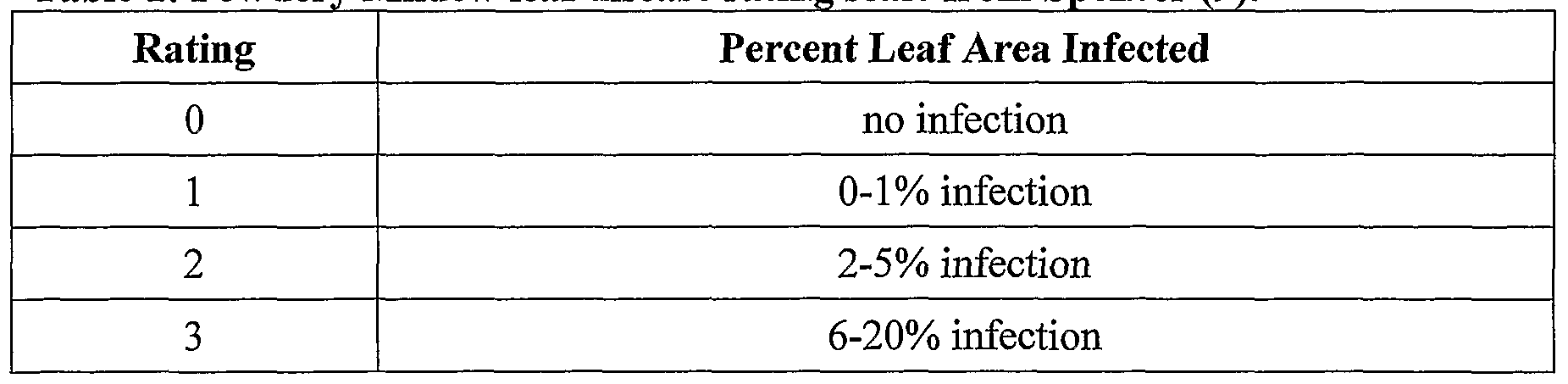


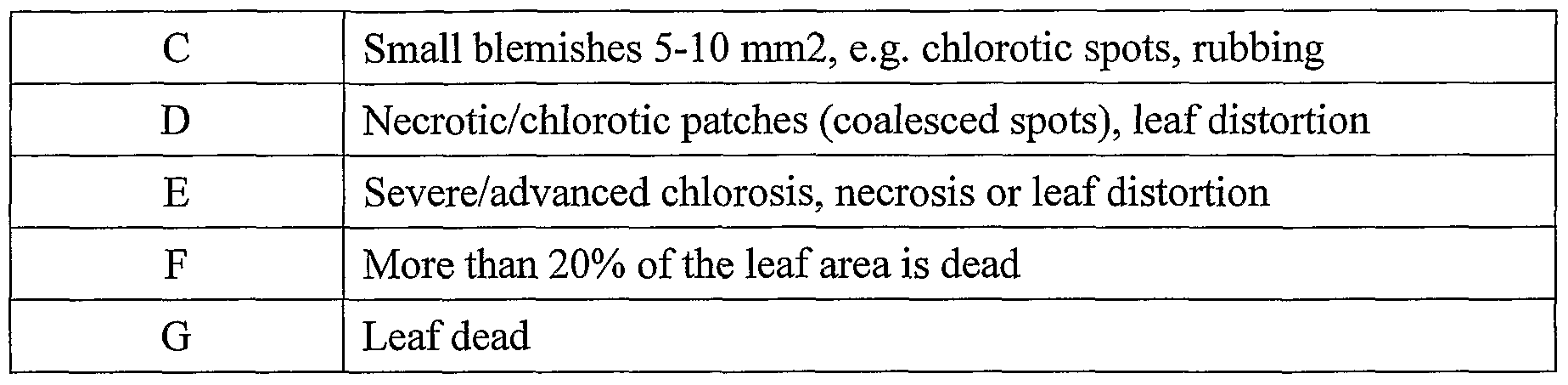


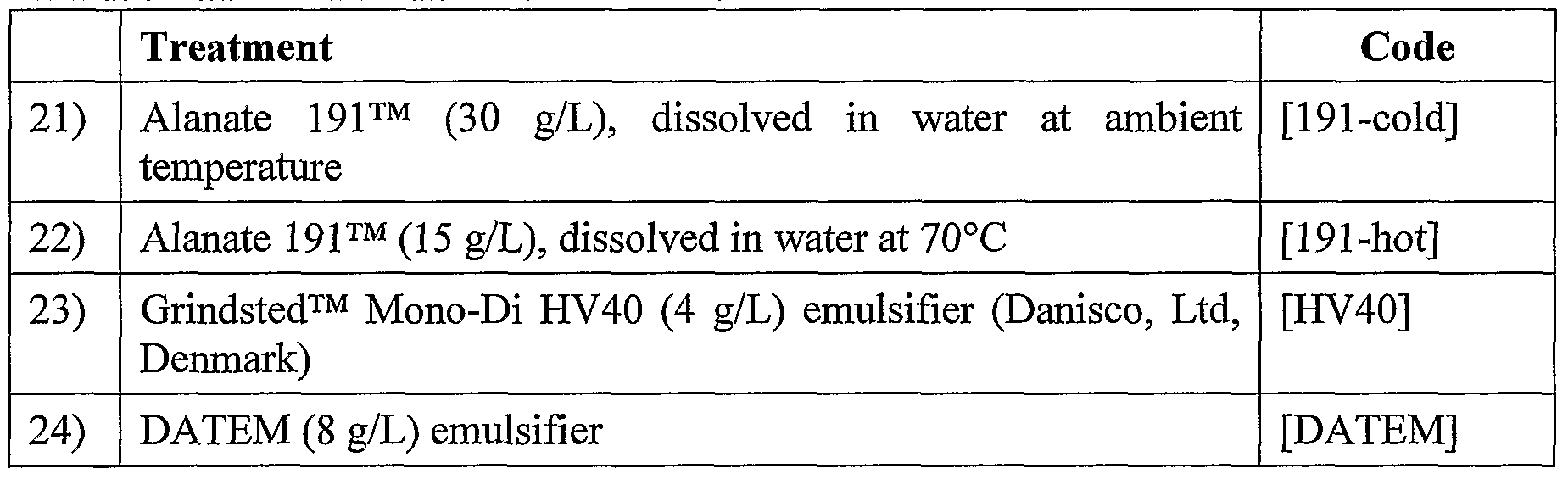


Claims
Priority Applications (9)
| Application Number | Priority Date | Filing Date | Title |
|---|---|---|---|
| AU2005263039A AU2005263039B2 (en) | 2004-07-09 | 2005-07-11 | Fungicidal compositions |
| EP05764503.8A EP1765084B1 (en) | 2004-07-09 | 2005-07-11 | Fungicidal compositions |
| ES05764503.8T ES2560239T3 (en) | 2004-07-09 | 2005-07-11 | Fungicidal compositions |
| US11/631,974 US8349769B2 (en) | 2004-07-09 | 2005-07-11 | Fungicidal compositions |
| PT15190349T PT3001906T (en) | 2004-07-09 | 2005-07-11 | Method of preventing or controlling a fungal infection |
| EP15190349.9A EP3001906B1 (en) | 2004-07-09 | 2005-07-11 | Method of preventing or controlling a fungal infection |
| PL15190349T PL3001906T3 (en) | 2004-07-09 | 2005-07-11 | Method of preventing or controlling a fungal infection |
| US12/845,873 US20110064831A1 (en) | 2004-07-09 | 2010-07-29 | Fungicidal compositions |
| US14/264,627 US9510600B2 (en) | 2004-07-09 | 2014-04-29 | Fungicidal compositions |
Applications Claiming Priority (2)
| Application Number | Priority Date | Filing Date | Title |
|---|---|---|---|
| NZ534007 | 2004-07-09 | ||
| NZ534007A NZ534007A (en) | 2004-07-09 | 2004-07-09 | Fungicidal composition comprising anhydrous milk fat (AMF) and soybean oil for the treatment of Powdery Mildew |
Related Child Applications (2)
| Application Number | Title | Priority Date | Filing Date |
|---|---|---|---|
| US11/631,974 A-371-Of-International US8349769B2 (en) | 2004-07-09 | 2005-07-11 | Fungicidal compositions |
| US12/845,873 Division US20110064831A1 (en) | 2004-07-09 | 2010-07-29 | Fungicidal compositions |
Publications (1)
| Publication Number | Publication Date |
|---|---|
| WO2006006878A1 true WO2006006878A1 (en) | 2006-01-19 |
Family
ID=35784156
Family Applications (1)
| Application Number | Title | Priority Date | Filing Date |
|---|---|---|---|
| PCT/NZ2005/000167 Ceased WO2006006878A1 (en) | 2004-07-09 | 2005-07-11 | Fungicidal compositions |
Country Status (10)
| Country | Link |
|---|---|
| US (3) | US8349769B2 (en) |
| EP (2) | EP1765084B1 (en) |
| AU (2) | AU2005263039B2 (en) |
| CL (1) | CL2011000458A1 (en) |
| ES (2) | ES2692993T3 (en) |
| NZ (1) | NZ534007A (en) |
| PL (1) | PL3001906T3 (en) |
| PT (1) | PT3001906T (en) |
| TR (1) | TR201815317T4 (en) |
| WO (1) | WO2006006878A1 (en) |
Cited By (3)
| Publication number | Priority date | Publication date | Assignee | Title |
|---|---|---|---|---|
| EP2189062A1 (en) | 2008-11-25 | 2010-05-26 | Indena S.P.A. | Plant extracts for use as phytochemicals |
| WO2011026796A1 (en) * | 2009-09-01 | 2011-03-10 | Basf Se | Synergistic fungicidal mixtures comprising lactylates and method for combating phytopathogenic fungi |
| WO2012074486A1 (en) * | 2010-11-30 | 2012-06-07 | Oro Agri International Ltd | Milk-based pesticidal formulation |
Families Citing this family (7)
| Publication number | Priority date | Publication date | Assignee | Title |
|---|---|---|---|---|
| CN101870622A (en) * | 2010-05-10 | 2010-10-27 | 陈茂松 | Composition of pesticides |
| JP2013231003A (en) * | 2012-04-27 | 2013-11-14 | Institute Of Physical & Chemical Research | Control agent for black sigatoka disease |
| US10736327B2 (en) | 2013-03-14 | 2020-08-11 | Griffith Foods International Inc. | Natural fungicide composition |
| CN103340218B (en) * | 2013-05-31 | 2015-02-11 | 句容市杨修林果园 | A kind of natural fungicide for preventing and treating peach tree brown rot and preparation method thereof |
| WO2016007556A1 (en) * | 2014-07-07 | 2016-01-14 | Reoxcyn Discoveries Group, Inc. | Methods and systems for improving plant health |
| MX2021008863A (en) | 2019-02-03 | 2021-10-13 | Terviva Inc | Methods for controlling black sigatoka in bananas using pongamia oil and formulations thereof. |
| US11938121B2 (en) | 2020-04-15 | 2024-03-26 | Purdue Research Foundation | Treatment of infections and biofilm formation using a cellulose synthase inhibitor |
Citations (7)
| Publication number | Priority date | Publication date | Assignee | Title |
|---|---|---|---|---|
| JPS5347532A (en) * | 1976-10-08 | 1978-04-28 | Kumiai Chem Ind Co Ltd | Fungicide comosition for agriculture and horticulture |
| JPH02124806A (en) * | 1988-07-15 | 1990-05-14 | Chugai Pharmaceut Co Ltd | Plant growth aceelerator |
| WO1990009110A1 (en) * | 1989-02-17 | 1990-08-23 | Wisconsin Alumni Research Foundation | Methods of preserving products and novel compositions therefor |
| CZ35093A3 (en) | 1993-03-05 | 1994-11-16 | Antonin Ing Veverka | Plant protection agent with fungicidal activity |
| WO2001049296A1 (en) * | 1999-12-30 | 2001-07-12 | The Regents Of The University Of Michigan | Antimicrobial compositions and methods of use |
| JP2002293709A (en) * | 2001-03-29 | 2002-10-09 | Katakura Chikkarin Co Ltd | Plant disease control material and its use |
| DE10129855A1 (en) * | 2001-06-21 | 2003-01-02 | Bayer Ag | Suspension concentrates based on oil |
Family Cites Families (20)
| Publication number | Priority date | Publication date | Assignee | Title |
|---|---|---|---|---|
| US3764346A (en) * | 1968-04-08 | 1973-10-09 | Beatrice Foods Co | Spray dried essential oil composition |
| US3947589A (en) * | 1971-01-23 | 1976-03-30 | Rikagaku Kenkyusho | Fungicidal methods employing amino acid derivatives |
| JPS5347632A (en) * | 1976-10-09 | 1978-04-28 | Hiroshi Mito | Operational guide system for vehicle |
| US4404040A (en) * | 1981-07-01 | 1983-09-13 | Economics Laboratory, Inc. | Short chain fatty acid sanitizing composition and methods |
| US4891385A (en) * | 1981-11-23 | 1990-01-02 | Mobay Corporation | Insecticidal compositions |
| FR2551324B1 (en) | 1983-09-01 | 1986-07-18 | Coutant Christian | COMPOSITION AND METHOD FOR PHYTOSANITARY TREATMENT |
| US5208257A (en) * | 1986-04-21 | 1993-05-04 | Kabara Jon J | Topical antimicrobial pharmaceutical compositions and methods |
| US5035741A (en) * | 1989-10-13 | 1991-07-30 | Safer, Inc. | Fatty acid based emulsifiable concentrate having herbicidal activity |
| US5098468A (en) * | 1989-10-13 | 1992-03-24 | Safer, Inc. | Fatty acid based emulsifiable concentrate having herbicidal activity |
| US5093124A (en) * | 1989-11-20 | 1992-03-03 | Safer, Inc. | Fatty acid-based pesticide with reduced phytotoxicity |
| US6103768A (en) * | 1991-05-01 | 2000-08-15 | Mycogen Corporation | Fatty acid based compositions and methods for the control of plant infections and pests |
| FR2689729B1 (en) * | 1992-04-09 | 1994-06-03 | Roussel Uclaf | NOVEL PESTICIDE COMPOSITIONS CONTAINING A PYRETHRINOUIDE. |
| GB9500983D0 (en) | 1995-01-19 | 1995-03-08 | Agrevo Uk Ltd | Pesticidal compositions |
| AU5174596A (en) | 1995-03-08 | 1996-10-02 | Mycogen Corporation | Fatty acid based compositions and methods for the control of plant infections and pests |
| EP0914040A1 (en) * | 1995-11-28 | 1999-05-12 | Michael D. Wider | Antimicrobial composition and methods of use therefor |
| US5866606A (en) | 1996-07-31 | 1999-02-02 | Abbott Laboratories | Nutritional formulations containing water-miscible lipid derivatives as anti-microbial agents |
| WO2000027195A1 (en) | 1998-03-13 | 2000-05-18 | Meiji Milk Products Co., Ltd. | Insecticide, acaricide, and antibacterial agent for plant |
| US6231865B1 (en) * | 1998-03-26 | 2001-05-15 | Safer Gro Laboratories, Inc. | Natural pesticide |
| US20030206882A1 (en) * | 2002-05-03 | 2003-11-06 | Richter Francis L. | Fatty acid sanitizer |
| AU2003278334A1 (en) * | 2002-10-30 | 2004-05-25 | Danisco A/S | Material |
-
2004
- 2004-07-09 NZ NZ534007A patent/NZ534007A/en not_active IP Right Cessation
-
2005
- 2005-07-11 US US11/631,974 patent/US8349769B2/en not_active Expired - Fee Related
- 2005-07-11 ES ES15190349.9T patent/ES2692993T3/en not_active Expired - Lifetime
- 2005-07-11 EP EP05764503.8A patent/EP1765084B1/en not_active Expired - Lifetime
- 2005-07-11 ES ES05764503.8T patent/ES2560239T3/en not_active Expired - Lifetime
- 2005-07-11 WO PCT/NZ2005/000167 patent/WO2006006878A1/en not_active Ceased
- 2005-07-11 PT PT15190349T patent/PT3001906T/en unknown
- 2005-07-11 EP EP15190349.9A patent/EP3001906B1/en not_active Expired - Lifetime
- 2005-07-11 AU AU2005263039A patent/AU2005263039B2/en not_active Ceased
- 2005-07-11 TR TR2018/15317T patent/TR201815317T4/en unknown
- 2005-07-11 PL PL15190349T patent/PL3001906T3/en unknown
-
2010
- 2010-07-29 US US12/845,873 patent/US20110064831A1/en not_active Abandoned
-
2011
- 2011-03-02 CL CL2011000458A patent/CL2011000458A1/en unknown
- 2011-03-22 AU AU2011201263A patent/AU2011201263B2/en not_active Ceased
-
2014
- 2014-04-29 US US14/264,627 patent/US9510600B2/en not_active Expired - Fee Related
Patent Citations (8)
| Publication number | Priority date | Publication date | Assignee | Title |
|---|---|---|---|---|
| JPS5347532A (en) * | 1976-10-08 | 1978-04-28 | Kumiai Chem Ind Co Ltd | Fungicide comosition for agriculture and horticulture |
| JPH02124806A (en) * | 1988-07-15 | 1990-05-14 | Chugai Pharmaceut Co Ltd | Plant growth aceelerator |
| WO1990009110A1 (en) * | 1989-02-17 | 1990-08-23 | Wisconsin Alumni Research Foundation | Methods of preserving products and novel compositions therefor |
| CZ35093A3 (en) | 1993-03-05 | 1994-11-16 | Antonin Ing Veverka | Plant protection agent with fungicidal activity |
| CZ282052B6 (en) * | 1993-03-05 | 1997-05-14 | Antonín Ing. Veverka | Plant protection agent with fungicidal activity |
| WO2001049296A1 (en) * | 1999-12-30 | 2001-07-12 | The Regents Of The University Of Michigan | Antimicrobial compositions and methods of use |
| JP2002293709A (en) * | 2001-03-29 | 2002-10-09 | Katakura Chikkarin Co Ltd | Plant disease control material and its use |
| DE10129855A1 (en) * | 2001-06-21 | 2003-01-02 | Bayer Ag | Suspension concentrates based on oil |
Non-Patent Citations (9)
| Title |
|---|
| "Food Emulsions", 1990, MARCEL DEKKER, INC. |
| BETTIOL W.: "Effectiveness of cow's milk against zucchini squasg pow", CROP PROTECTION, vol. 18, no. 8, 1999, pages 489 - 492, XP001106770 * |
| BETTIOL, CROP PROTECTION, vol. 18, 1999, pages 489 - 492 |
| DATABASE CAPLUS [online] XP008112350, accession no. STN Database accession no. 128:85441 * |
| DATABASE CAPLUS [online] XP008112351, accession no. STN Database accession no. 89:175025 * |
| DATABASE WPI Week 20039, 9 October 2002 Derwent World Patents Index; Class C03, AN 2003-188043, XP008111899 * |
| PATENT ABSTRACTS OF JAPAN vol. 014, no. 342 * |
| SCHUSTER; ADAMS, REV. FR. CORPS GRAS, vol. 29, no. 9, 1981, pages 357 - 365 |
| See also references of EP1765084A4 |
Cited By (4)
| Publication number | Priority date | Publication date | Assignee | Title |
|---|---|---|---|---|
| EP2189062A1 (en) | 2008-11-25 | 2010-05-26 | Indena S.P.A. | Plant extracts for use as phytochemicals |
| RU2535367C2 (en) * | 2008-11-25 | 2014-12-10 | Индена С.П.А. | Vegetable extracts used as phytochemical preparations |
| WO2011026796A1 (en) * | 2009-09-01 | 2011-03-10 | Basf Se | Synergistic fungicidal mixtures comprising lactylates and method for combating phytopathogenic fungi |
| WO2012074486A1 (en) * | 2010-11-30 | 2012-06-07 | Oro Agri International Ltd | Milk-based pesticidal formulation |
Also Published As
| Publication number | Publication date |
|---|---|
| US20110064831A1 (en) | 2011-03-17 |
| PT3001906T (en) | 2018-11-16 |
| US20140335196A1 (en) | 2014-11-13 |
| EP1765084A1 (en) | 2007-03-28 |
| EP3001906B1 (en) | 2018-08-15 |
| EP1765084B1 (en) | 2015-11-18 |
| US8349769B2 (en) | 2013-01-08 |
| EP3001906A1 (en) | 2016-04-06 |
| US20080233202A1 (en) | 2008-09-25 |
| NZ534007A (en) | 2007-06-29 |
| AU2011201263B2 (en) | 2012-09-20 |
| US9510600B2 (en) | 2016-12-06 |
| EP1765084A4 (en) | 2013-01-02 |
| PL3001906T3 (en) | 2019-01-31 |
| ES2692993T3 (en) | 2018-12-07 |
| CL2011000458A1 (en) | 2011-07-01 |
| AU2005263039B2 (en) | 2011-05-12 |
| TR201815317T4 (en) | 2018-11-21 |
| AU2011201263A1 (en) | 2011-04-14 |
| ES2560239T3 (en) | 2016-02-18 |
| AU2005263039A1 (en) | 2006-01-19 |
Similar Documents
| Publication | Publication Date | Title |
|---|---|---|
| US9510600B2 (en) | Fungicidal compositions | |
| KR101992087B1 (en) | A method for increasing the vigor and/or crop yield of agricultural plants under essentially non-existent pathogen pressure | |
| US20240049709A1 (en) | Method of controlling fungal infections in plants | |
| US20160128336A1 (en) | Microbial agriculture | |
| EP4018831A1 (en) | Agent for controlling scald disease and method for controlling scald disease | |
| US20160286822A1 (en) | Molluscicidal Agents and Uses Thereof | |
| NZ555132A (en) | Sprayable aqueous fungicidal composition comprising soybean oil and anhydrous milk fat (AMF) for the treatment of Powdery Mildew | |
| WO2018210875A1 (en) | Use of nootkatone for post-harvest treatment, food preservation and shelf-life extension | |
| Navi et al. | Biological control of fungal plant pathogens. | |
| CN111316995B (en) | Pesticide composition, pesticide preparation and application of pesticide composition and pesticide preparation | |
| WO2018210870A1 (en) | Use of nootkatone for controlling phytopathogenic microbes | |
| Renganathan et al. | Induction of defense related enzymes against crown rot in banana fruits treated with plant oils and plant extracts | |
| CZ38194U1 (en) | A fungicide | |
| KR20250075061A (en) | A Composition For Controlling Plant Diseases Comprising Lemon Balm Essential Oil | |
| CZ38013U1 (en) | A fungicide | |
| Navi et al. | Plant Pathogens | |
| Navi et al. | Biological Control of Fungal | |
| NZ750504A (en) | Antimicrobial Compositions and Related Methods of Use |
Legal Events
| Date | Code | Title | Description |
|---|---|---|---|
| AK | Designated states |
Kind code of ref document: A1 Designated state(s): AE AG AL AM AT AU AZ BA BB BG BR BW BY BZ CA CH CN CO CR CU CZ DE DK DM DZ EC EE EG ES FI GB GD GE GH GM HR HU ID IL IN IS JP KE KG KM KP KR KZ LC LK LR LS LT LU LV MA MD MG MK MN MW MX MZ NA NG NI NO NZ OM PG PH PL PT RO RU SC SD SE SG SK SL SM SY TJ TM TN TR TT TZ UA UG US UZ VC VN YU ZA ZM ZW |
|
| AL | Designated countries for regional patents |
Kind code of ref document: A1 Designated state(s): BW GH GM KE LS MW MZ NA SD SL SZ TZ UG ZM ZW AM AZ BY KG KZ MD RU TJ TM AT BE BG CH CY CZ DE DK EE ES FI FR GB GR HU IE IS IT LT LU LV MC NL PL PT RO SE SI SK TR BF BJ CF CG CI CM GA GN GQ GW ML MR NE SN TD TG |
|
| 121 | Ep: the epo has been informed by wipo that ep was designated in this application | ||
| DPEN | Request for preliminary examination filed prior to expiration of 19th month from priority date (pct application filed from 20040101) | ||
| WWE | Wipo information: entry into national phase |
Ref document number: 2005263039 Country of ref document: AU |
|
| WWE | Wipo information: entry into national phase |
Ref document number: 2005764503 Country of ref document: EP |
|
| NENP | Non-entry into the national phase |
Ref country code: DE |
|
| WWW | Wipo information: withdrawn in national office |
Country of ref document: DE |
|
| ENP | Entry into the national phase |
Ref document number: 2005263039 Country of ref document: AU Date of ref document: 20050711 Kind code of ref document: A |
|
| WWP | Wipo information: published in national office |
Ref document number: 2005263039 Country of ref document: AU |
|
| WWP | Wipo information: published in national office |
Ref document number: 2005764503 Country of ref document: EP |
|
| WWE | Wipo information: entry into national phase |
Ref document number: 11631974 Country of ref document: US |