WO2006008612A2 - Preparation of beta-amino acids having affinity for the alpha-2-delta protein - Google Patents
Preparation of beta-amino acids having affinity for the alpha-2-delta protein Download PDFInfo
- Publication number
- WO2006008612A2 WO2006008612A2 PCT/IB2005/001966 IB2005001966W WO2006008612A2 WO 2006008612 A2 WO2006008612 A2 WO 2006008612A2 IB 2005001966 W IB2005001966 W IB 2005001966W WO 2006008612 A2 WO2006008612 A2 WO 2006008612A2
- Authority
- WO
- WIPO (PCT)
- Prior art keywords
- formula
- methyl
- alkyl
- aryl
- ethyl ester
- Prior art date
- Legal status (The legal status is an assumption and is not a legal conclusion. Google has not performed a legal analysis and makes no representation as to the accuracy of the status listed.)
- Ceased
Links
- 0 *C[C@@](*)(CC(N)=CC(*)=O)C#I Chemical compound *C[C@@](*)(CC(N)=CC(*)=O)C#I 0.000 description 12
Classifications
-
- C—CHEMISTRY; METALLURGY
- C07—ORGANIC CHEMISTRY
- C07C—ACYCLIC OR CARBOCYCLIC COMPOUNDS
- C07C231/00—Preparation of carboxylic acid amides
- C07C231/16—Preparation of optical isomers
- C07C231/18—Preparation of optical isomers by stereospecific synthesis
-
- C—CHEMISTRY; METALLURGY
- C07—ORGANIC CHEMISTRY
- C07D—HETEROCYCLIC COMPOUNDS
- C07D233/00—Heterocyclic compounds containing 1,3-diazole or hydrogenated 1,3-diazole rings, not condensed with other rings
- C07D233/54—Heterocyclic compounds containing 1,3-diazole or hydrogenated 1,3-diazole rings, not condensed with other rings having two double bonds between ring members or between ring members and non-ring members
-
- A—HUMAN NECESSITIES
- A61—MEDICAL OR VETERINARY SCIENCE; HYGIENE
- A61P—SPECIFIC THERAPEUTIC ACTIVITY OF CHEMICAL COMPOUNDS OR MEDICINAL PREPARATIONS
- A61P1/00—Drugs for disorders of the alimentary tract or the digestive system
- A61P1/04—Drugs for disorders of the alimentary tract or the digestive system for ulcers, gastritis or reflux esophagitis, e.g. antacids, inhibitors of acid secretion, mucosal protectants
-
- A—HUMAN NECESSITIES
- A61—MEDICAL OR VETERINARY SCIENCE; HYGIENE
- A61P—SPECIFIC THERAPEUTIC ACTIVITY OF CHEMICAL COMPOUNDS OR MEDICINAL PREPARATIONS
- A61P1/00—Drugs for disorders of the alimentary tract or the digestive system
- A61P1/14—Prodigestives, e.g. acids, enzymes, appetite stimulants, antidyspeptics, tonics, antiflatulents
-
- A—HUMAN NECESSITIES
- A61—MEDICAL OR VETERINARY SCIENCE; HYGIENE
- A61P—SPECIFIC THERAPEUTIC ACTIVITY OF CHEMICAL COMPOUNDS OR MEDICINAL PREPARATIONS
- A61P21/00—Drugs for disorders of the muscular or neuromuscular system
-
- A—HUMAN NECESSITIES
- A61—MEDICAL OR VETERINARY SCIENCE; HYGIENE
- A61P—SPECIFIC THERAPEUTIC ACTIVITY OF CHEMICAL COMPOUNDS OR MEDICINAL PREPARATIONS
- A61P25/00—Drugs for disorders of the nervous system
- A61P25/04—Centrally acting analgesics, e.g. opioids
-
- A—HUMAN NECESSITIES
- A61—MEDICAL OR VETERINARY SCIENCE; HYGIENE
- A61P—SPECIFIC THERAPEUTIC ACTIVITY OF CHEMICAL COMPOUNDS OR MEDICINAL PREPARATIONS
- A61P25/00—Drugs for disorders of the nervous system
- A61P25/06—Antimigraine agents
-
- A—HUMAN NECESSITIES
- A61—MEDICAL OR VETERINARY SCIENCE; HYGIENE
- A61P—SPECIFIC THERAPEUTIC ACTIVITY OF CHEMICAL COMPOUNDS OR MEDICINAL PREPARATIONS
- A61P25/00—Drugs for disorders of the nervous system
- A61P25/08—Antiepileptics; Anticonvulsants
-
- A—HUMAN NECESSITIES
- A61—MEDICAL OR VETERINARY SCIENCE; HYGIENE
- A61P—SPECIFIC THERAPEUTIC ACTIVITY OF CHEMICAL COMPOUNDS OR MEDICINAL PREPARATIONS
- A61P25/00—Drugs for disorders of the nervous system
- A61P25/20—Hypnotics; Sedatives
-
- A—HUMAN NECESSITIES
- A61—MEDICAL OR VETERINARY SCIENCE; HYGIENE
- A61P—SPECIFIC THERAPEUTIC ACTIVITY OF CHEMICAL COMPOUNDS OR MEDICINAL PREPARATIONS
- A61P25/00—Drugs for disorders of the nervous system
- A61P25/22—Anxiolytics
-
- A—HUMAN NECESSITIES
- A61—MEDICAL OR VETERINARY SCIENCE; HYGIENE
- A61P—SPECIFIC THERAPEUTIC ACTIVITY OF CHEMICAL COMPOUNDS OR MEDICINAL PREPARATIONS
- A61P25/00—Drugs for disorders of the nervous system
- A61P25/24—Antidepressants
-
- A—HUMAN NECESSITIES
- A61—MEDICAL OR VETERINARY SCIENCE; HYGIENE
- A61P—SPECIFIC THERAPEUTIC ACTIVITY OF CHEMICAL COMPOUNDS OR MEDICINAL PREPARATIONS
- A61P25/00—Drugs for disorders of the nervous system
- A61P25/28—Drugs for disorders of the nervous system for treating neurodegenerative disorders of the central nervous system, e.g. nootropic agents, cognition enhancers, drugs for treating Alzheimer's disease or other forms of dementia
-
- A—HUMAN NECESSITIES
- A61—MEDICAL OR VETERINARY SCIENCE; HYGIENE
- A61P—SPECIFIC THERAPEUTIC ACTIVITY OF CHEMICAL COMPOUNDS OR MEDICINAL PREPARATIONS
- A61P43/00—Drugs for specific purposes, not provided for in groups A61P1/00-A61P41/00
-
- C—CHEMISTRY; METALLURGY
- C07—ORGANIC CHEMISTRY
- C07C—ACYCLIC OR CARBOCYCLIC COMPOUNDS
- C07C227/00—Preparation of compounds containing amino and carboxyl groups bound to the same carbon skeleton
- C07C227/14—Preparation of compounds containing amino and carboxyl groups bound to the same carbon skeleton from compounds containing already amino and carboxyl groups or derivatives thereof
- C07C227/18—Preparation of compounds containing amino and carboxyl groups bound to the same carbon skeleton from compounds containing already amino and carboxyl groups or derivatives thereof by reactions involving amino or carboxyl groups, e.g. hydrolysis of esters or amides, by formation of halides, salts or esters
-
- C—CHEMISTRY; METALLURGY
- C07—ORGANIC CHEMISTRY
- C07C—ACYCLIC OR CARBOCYCLIC COMPOUNDS
- C07C227/00—Preparation of compounds containing amino and carboxyl groups bound to the same carbon skeleton
- C07C227/30—Preparation of optical isomers
- C07C227/32—Preparation of optical isomers by stereospecific synthesis
-
- C—CHEMISTRY; METALLURGY
- C07—ORGANIC CHEMISTRY
- C07C—ACYCLIC OR CARBOCYCLIC COMPOUNDS
- C07C229/00—Compounds containing amino and carboxyl groups bound to the same carbon skeleton
- C07C229/02—Compounds containing amino and carboxyl groups bound to the same carbon skeleton having amino and carboxyl groups bound to acyclic carbon atoms of the same carbon skeleton
- C07C229/30—Compounds containing amino and carboxyl groups bound to the same carbon skeleton having amino and carboxyl groups bound to acyclic carbon atoms of the same carbon skeleton the carbon skeleton being acyclic and unsaturated
-
- C—CHEMISTRY; METALLURGY
- C07—ORGANIC CHEMISTRY
- C07C—ACYCLIC OR CARBOCYCLIC COMPOUNDS
- C07C233/00—Carboxylic acid amides
- C07C233/01—Carboxylic acid amides having carbon atoms of carboxamide groups bound to hydrogen atoms or to acyclic carbon atoms
- C07C233/45—Carboxylic acid amides having carbon atoms of carboxamide groups bound to hydrogen atoms or to acyclic carbon atoms having the nitrogen atom of at least one of the carboxamide groups bound to a carbon atom of a hydrocarbon radical substituted by carboxyl groups
- C07C233/46—Carboxylic acid amides having carbon atoms of carboxamide groups bound to hydrogen atoms or to acyclic carbon atoms having the nitrogen atom of at least one of the carboxamide groups bound to a carbon atom of a hydrocarbon radical substituted by carboxyl groups with the substituted hydrocarbon radical bound to the nitrogen atom of the carboxamide group by an acyclic carbon atom
- C07C233/47—Carboxylic acid amides having carbon atoms of carboxamide groups bound to hydrogen atoms or to acyclic carbon atoms having the nitrogen atom of at least one of the carboxamide groups bound to a carbon atom of a hydrocarbon radical substituted by carboxyl groups with the substituted hydrocarbon radical bound to the nitrogen atom of the carboxamide group by an acyclic carbon atom having the carbon atom of the carboxamide group bound to a hydrogen atom or to a carbon atom of an acyclic saturated carbon skeleton
-
- C—CHEMISTRY; METALLURGY
- C07—ORGANIC CHEMISTRY
- C07C—ACYCLIC OR CARBOCYCLIC COMPOUNDS
- C07C309/00—Sulfonic acids; Halides, esters, or anhydrides thereof
- C07C309/63—Esters of sulfonic acids
- C07C309/64—Esters of sulfonic acids having sulfur atoms of esterified sulfo groups bound to acyclic carbon atoms
- C07C309/65—Esters of sulfonic acids having sulfur atoms of esterified sulfo groups bound to acyclic carbon atoms of a saturated carbon skeleton
- C07C309/66—Methanesulfonates
-
- C—CHEMISTRY; METALLURGY
- C07—ORGANIC CHEMISTRY
- C07C—ACYCLIC OR CARBOCYCLIC COMPOUNDS
- C07C309/00—Sulfonic acids; Halides, esters, or anhydrides thereof
- C07C309/63—Esters of sulfonic acids
- C07C309/72—Esters of sulfonic acids having sulfur atoms of esterified sulfo groups bound to carbon atoms of six-membered aromatic rings of a carbon skeleton
- C07C309/73—Esters of sulfonic acids having sulfur atoms of esterified sulfo groups bound to carbon atoms of six-membered aromatic rings of a carbon skeleton to carbon atoms of non-condensed six-membered aromatic rings
-
- C—CHEMISTRY; METALLURGY
- C07—ORGANIC CHEMISTRY
- C07C—ACYCLIC OR CARBOCYCLIC COMPOUNDS
- C07C59/00—Compounds having carboxyl groups bound to acyclic carbon atoms and containing any of the groups OH, O—metal, —CHO, keto, ether, groups, groups, or groups
- C07C59/01—Saturated compounds having only one carboxyl group and containing hydroxy or O-metal groups
-
- C—CHEMISTRY; METALLURGY
- C07—ORGANIC CHEMISTRY
- C07C—ACYCLIC OR CARBOCYCLIC COMPOUNDS
- C07C67/00—Preparation of carboxylic acid esters
- C07C67/30—Preparation of carboxylic acid esters by modifying the acid moiety of the ester, such modification not being an introduction of an ester group
- C07C67/317—Preparation of carboxylic acid esters by modifying the acid moiety of the ester, such modification not being an introduction of an ester group by splitting-off hydrogen or functional groups; by hydrogenolysis of functional groups
- C07C67/32—Decarboxylation
-
- C—CHEMISTRY; METALLURGY
- C07—ORGANIC CHEMISTRY
- C07C—ACYCLIC OR CARBOCYCLIC COMPOUNDS
- C07C69/00—Esters of carboxylic acids; Esters of carbonic or haloformic acids
- C07C69/52—Esters of acyclic unsaturated carboxylic acids having the esterified carboxyl group bound to an acyclic carbon atom
- C07C69/533—Monocarboxylic acid esters having only one carbon-to-carbon double bond
-
- C—CHEMISTRY; METALLURGY
- C07—ORGANIC CHEMISTRY
- C07C—ACYCLIC OR CARBOCYCLIC COMPOUNDS
- C07C69/00—Esters of carboxylic acids; Esters of carbonic or haloformic acids
- C07C69/66—Esters of carboxylic acids having esterified carboxylic groups bound to acyclic carbon atoms and having any of the groups OH, O—metal, —CHO, keto, ether, acyloxy, groups, groups, or in the acid moiety
- C07C69/67—Esters of carboxylic acids having esterified carboxylic groups bound to acyclic carbon atoms and having any of the groups OH, O—metal, —CHO, keto, ether, acyloxy, groups, groups, or in the acid moiety of saturated acids
- C07C69/675—Esters of carboxylic acids having esterified carboxylic groups bound to acyclic carbon atoms and having any of the groups OH, O—metal, —CHO, keto, ether, acyloxy, groups, groups, or in the acid moiety of saturated acids of saturated hydroxy-carboxylic acids
-
- C—CHEMISTRY; METALLURGY
- C07—ORGANIC CHEMISTRY
- C07C—ACYCLIC OR CARBOCYCLIC COMPOUNDS
- C07C69/00—Esters of carboxylic acids; Esters of carbonic or haloformic acids
- C07C69/66—Esters of carboxylic acids having esterified carboxylic groups bound to acyclic carbon atoms and having any of the groups OH, O—metal, —CHO, keto, ether, acyloxy, groups, groups, or in the acid moiety
- C07C69/67—Esters of carboxylic acids having esterified carboxylic groups bound to acyclic carbon atoms and having any of the groups OH, O—metal, —CHO, keto, ether, acyloxy, groups, groups, or in the acid moiety of saturated acids
- C07C69/716—Esters of keto-carboxylic acids or aldehydo-carboxylic acids
-
- C—CHEMISTRY; METALLURGY
- C07—ORGANIC CHEMISTRY
- C07D—HETEROCYCLIC COMPOUNDS
- C07D205/00—Heterocyclic compounds containing four-membered rings with one nitrogen atom as the only ring hetero atom
- C07D205/02—Heterocyclic compounds containing four-membered rings with one nitrogen atom as the only ring hetero atom not condensed with other rings
- C07D205/06—Heterocyclic compounds containing four-membered rings with one nitrogen atom as the only ring hetero atom not condensed with other rings having one double bond between ring members or between a ring member and a non-ring member
- C07D205/08—Heterocyclic compounds containing four-membered rings with one nitrogen atom as the only ring hetero atom not condensed with other rings having one double bond between ring members or between a ring member and a non-ring member with one oxygen atom directly attached in position 2, e.g. beta-lactams
-
- C—CHEMISTRY; METALLURGY
- C07—ORGANIC CHEMISTRY
- C07B—GENERAL METHODS OF ORGANIC CHEMISTRY; APPARATUS THEREFOR
- C07B2200/00—Indexing scheme relating to specific properties of organic compounds
- C07B2200/07—Optical isomers
-
- Y—GENERAL TAGGING OF NEW TECHNOLOGICAL DEVELOPMENTS; GENERAL TAGGING OF CROSS-SECTIONAL TECHNOLOGIES SPANNING OVER SEVERAL SECTIONS OF THE IPC; TECHNICAL SUBJECTS COVERED BY FORMER USPC CROSS-REFERENCE ART COLLECTIONS [XRACs] AND DIGESTS
- Y02—TECHNOLOGIES OR APPLICATIONS FOR MITIGATION OR ADAPTATION AGAINST CLIMATE CHANGE
- Y02P—CLIMATE CHANGE MITIGATION TECHNOLOGIES IN THE PRODUCTION OR PROCESSING OF GOODS
- Y02P20/00—Technologies relating to chemical industry
- Y02P20/50—Improvements relating to the production of bulk chemicals
- Y02P20/582—Recycling of unreacted starting or intermediate materials
Definitions
- This invention relates to materials and methods for preparing optically- active ⁇ -amino acids that bind to the alpha-2-delta ( ⁇ 2 ⁇ ) subunit of a calcium channel.
- These compounds including their pharmaceutically acceptable complexes, salts, solvates and hydrates, are useful for treating pain, fibromyalgia, and a variety of psychiatric and sleep disorders.
- sleep disorders such as insomnia; fibromyalgia; epilepsy; neuropathic pain, including acute and chronic pain; migraine; hot flashes; pain associated with irritable bowel syndrome; restless leg syndrome; anorexia; panic disorder; depression; seasonal affective disorders; and anxiety, including general anxiety disorder, obsessive compulsive behavior, and attention deficit hyperactivity disorder, among others.
- the present invention provides comparatively efficient and cost-effective methods for preparing compounds of Formula 1,
- R 1 and R 2 are independently hydrogen atoms or C 1-3 alkyl optionally substituted with one to five fluorine atoms, provided that when R 1 is a hydrogen atom, R 2 is not a hydrogen atom; and
- R 3 is C 1-6 alkyl, C 3-6 cycloalkyl, C 3-6 cycloalkyl-C 1-6 alkyl, aryl, aryl- C 1-3 alkyl, or arylamino, wherein each alkyl of R 3 is optionally substituted with one to five fluorine atoms, and each aryl of R 3 is optionally substituted with from one to three substituents independently selected from chloro, fluoro, amino, nitro, cyano, C 1-3 alkylamino, C 1-3 alkyl optionally substituted with one to three fluorine atoms, and C 1-3 alkoxy optionally substituted with from one to three fluorine atoms.
- One aspect of the present invention includes reacting a compound of Formula 2,
- R 1 , R 2 , and R 3 in Formula 2, Formula 3, and Formula 4 are as defined in Formula 1;
- R 4 in Formula 2, Formula 3, and Formula 4 is a hydrogen atom, C 1-6 alkyl, C 2-6 alkenyl, C 2-6 alkynyl, C 3-7 cycloalkyl, C 3-7 cycloalkenyl, halo-C 1-7 alkyl, halo- C 2-7 alkenyl, halo-C 2-7 alkynyl, aryl-C 1-6 alkyl, aryl-C2-6 alkenyl, or aryl-C 2-6 alkynyl or a cation selected from a Group 1 metal ion, a Group 2 metal ion, a primary ammonium ion or a secondary ammonium ion; and
- R 5 in Formula 2 and R 19 in Formula 3 are independently hydrogen atom, carboxy, C 1-7 alkanoyl, C 2-7 alkenoyl, C 2-7 alkynoyl, C 3-7 cycloalkanoyl, C 3-7 cycloalkenoyl, halo-C 1-7 alkanoyl, halo-C 2-7 alkenoyl, halo-C 2-7 alkynoyl, C 1-6 alkoxycarbonyl, halo-C 1-6 alkoxycarbonyl, C 3-7 cycloalkoxycarbonyl, aryl- C 1-7 alkanoyl, aryl-C 2-7 alkenoyl, aryl-C 2-7 alkynoyl, aryloxycarbonyl, or aryl- C 1-6 alkoxycarbonyl, provided that R 5 is not a hydrogen atom; and optionally converting the compound of Formula 3 or its diastereomer to the compound of Formula 1 or its diastereomer
- a useful chiral catalyst for asymmetric hydrogenation of the compounds of Formula 2 or Formula 4 includes a chiral ligand bound to a transition metal through one or more phosphorus atoms.
- Such catalysts include (R ⁇ S ⁇ -TANGPhos, (R)- BESTAPINE, (R)-eTCFP, or (R)-mTCFP, or stereoisomers thereof, which are bound to rhodium.
- the asymmetric hydrogenation is typically carried out using a single chiral catalyst.
- the method may also employ multiple chiral catalysts in which the prochiral substrate (Formula 2 or Formula 4) is reacted successively with first and second chiral catalysts (e.g., (R)-BINAPINE and (R)-mTCFP, respectively, or opposite enantiomers thereof).
- first and second chiral catalysts e.g., (R)-BINAPINE and (R)-mTCFP, respectively, or opposite enantiomers thereof.
- the first chiral catalyst has greater stereoselectivity than the second chiral catalyst under the same conditions
- the second chiral catalyst has a faster rate of reaction than the first chiral catalyst under the same conditions.
- the compound of Formula 2 may be prepared by reacting the compound of Formula 4,
- R 5 in Formula 5 is as defined in Formula 2 and X in Formula 5 is a hydroxy or a leaving group, such as halogeno, aryloxy or heteroaryloxy, or -OC(O)R 15 , in which R 15 is C 1-6 alkyl, C 2-6 alkenyl, C 2-6 alkynyl, C 3-12 cycloalkyl, halo-C 1-6 alkyl, halo-C 2-6 alkenyl, halo-C 2-6 alkynyl, aryl, aryl-C 1-6 alkyl, heterocyclyl, heteroaryl, or heteroaryl-C 1-6 alkyl.
- R 15 is C 1-6 alkyl, C 2-6 alkenyl, C 2-6 alkynyl, C 3-12 cycloalkyl, halo-C 1-6 alkyl, halo-C 2-6 alkenyl, halo-C 2-6 alkynyl, aryl, aryl-C 1-6 al
- the compound of Formula 4 may be prepared by reacting a compound of Formula 6,
- ammonia source e.g., ammonia or a mixture of ammonium acetate and acetic acid
- R 1 , R 2 , and R 3 in Formula 6 are as defined in Formula 1 and R 4 is as defined in Formula 2.
- Another aspect of the present invention includes reducing an amino moiety of a compound of Formula 7,
- R 1 , R 2 , and R 3 in Formula 7 are as defined in Formula 1 and R 6 is C 1-6 alkyl (e.g., methyl), C 2-6 alkenyl (e.g., allyl) or aryl-C 1-3 alkyl (e.g., benzyl); and optionally converting the compound of Formula 1 or its diastereomer to a pharmaceutically acceptable complex, salt, solvate or hydrate.
- the amino moiety may be reduced by reacting the compound of Formula 7 with H 2 in the presence of a catalyst.
- a catalyst include transition metal catalysts, such as Pd/C and Raney nickel.
- the compound of Formula 7 may be prepared by reacting a compound of Formula 8,
- R , R , and R in Formula 8 are as defined in Formula 1 and R 6 is as defined in Formula 7.
- the compound of Formula 8 may be prepared by cyclizing a compound of Formula 9,
- R , R , and R in Formula 9 are as defined in Formula 1 and R 6 is as defined in Formula 7.
- the hydroxy moiety in Formula 9 may be activated (e.g., by conversion to a sulfonate ester) to give an activated alcohol, which is subsequently cyclized by treatment with a base (e.g., a carbonate).
- the compound of Formula 9 may be prepared by reacting a compound of Formula 10,
- R , R , and R in Formula 10 are as defined in Formula 1 and R in Formula 11 is as defined in Formula 7.
- the carboxylic acid moiety of the compound of Formula 10 may be activated using a coupling agent, such as DMT-MM.
- the compound of Formula 10 may be prepared by reacting the above compound of Formula 6 with H 2 in the presence of a chiral catalyst to give a compound of Formula 12,
- R 1 , R 2 , R 3 , and R 4 in Formula 12 are as defined in Formula 1 and Formula 2; and optionally converting the compound of Formula 12, or its diastereomer, to the compound of Formula 10.
- An additional aspect of the present invention includes reducing an amine moiety of a compound of Formula 13,
- R 1 , R 2 , R 3 , and R 4 in Formula 37 and Formula 13 are as defined in Formula 1 and Formula 2, respectively, and R 7 in Formula 13 is Ci -6 alkyl, C 2-6 alkenyl (e.g., allyl) or aryl-C 1-3 alkyl (e.g., benzyl); and optionally converting the compound of Formula 37 or its diastereomer to the compound of Formula 1 or its diastereomer or to a pharmaceutically acceptable complex, salt, solvate or hydrate of the compound of Formula 1 or its diastereomer.
- the amine moiety of the compound of Formula 13 may be reduced by reacting the compound of Formula 13 with H 2 in the presence of a catalyst.
- a catalyst include transition metal catalysts, such as Pd/C and Raney nickel.
- the compound of Formula 13 may be prepared by treating a compound of Formula 14,
- R , 1 , R TJ 2 , and R > 3 i •n Formula 15 are as defined in Formula 1, R in Formula 15 is as defined in Formula 2, and R 7 in Formula 14 is as defined in Formula 13.
- the compound of Formula 15 may be prepared by reacting a compound of Formula 16,
- R 1 , R 2 , and R 3 in Formula 16 are as defined in Formula 1
- R 4 in Formula 16 is as defined in Formula 2
- R 8 is a leaving group.
- the compound of Formula 16 may be prepared by reacting a compound of Formula 17,
- R 8 is R 9 O-
- R 1 , R 2 , and R 3 in Formula 17 are as defined in Formula 1
- R 4 in Formula 17 is as defined in Formula 2
- R 9 is tosyl, mesyl, brosyl, closyl, nosyl, or triflyl
- X 2 is halogen or R 9 O-.
- the compound of Formula 17 may be prepared by reducing a ⁇ -carbonyl moiety of the above compound of Formula 6.
- the compound of Formula 6 may be reacted with H 2 in the presence of a catalyst to give the compound of Formula 17.
- Useful catalysts include transition metal catalysts, such as platinum and ruthenium-based catalysts.
- the compound of Formula 15 may be prepared by reacting a compound of Formula 39,
- R , R , and R in Formula 39 are as defined in Formula 1 and R in Formula 39 is as defined in Formula 2.
- the compound of Formula 39 may be prepared by reacting a compound of Formula 38,
- the present invention also provides methods of making compounds of Formula 6, above.
- another aspect of the present invention includes treating a compound of Formula 19,
- R 1 , R 2 , R 3 , and R 4 in Formula 19 are as defined in Formula 1 and Formula 2.
- the compound of Formula 19 may be prepared by reacting a compound of Formula 20,
- R 1 , R 2 , and R 3 in Formula 20 and R in Formula 21 are as defined in Formula 1 and Formula 2, and R 10 in Formula 20 is a leaving group, such as a chiral oxazolidin-2- one-3-yl or an imidazol-1-yl.
- Useful chiral oxazolidin-2-one-3-yls include (5)-4- isopropyloxazolidin-2-one-3-yl, (i?)-4-isopropyloxazolidin-2-one-3-yl, (S)-4- benzyloxazolidin-2-one-3-yl, (/?)-4-benzyloxazolidin ⁇ 2-one-3-yl, (5)-4- phenyloxazolidin-2-one-3-yl, (7?) ⁇ 4-phenyloxazolidin-2-one-3-yl, (45',5i?)-4-methyl-5- phenyloxazolidin-2-one-3-yl, or (4i?,55)-4-methyl-5-phenyloxazolidin-2-one-3-yl or stereoisomers thereof.
- the compound of Formula 20 may be prepared by reacting a compound of Formula 22,
- coupling agent examples include CDI, DCC, DMT-MM, FDPP, TATU, BOP, PyBOP, EDCI, diisopropyl carbodiimide, isopropenyl chloroformate, isobutyl chloroformate, iV,2V-bis-(2-oxo-3-oxazolidmyl)- phosphinic chloride, diphenylphosphoryl azide, diphenylphosphinic chloride, or diphenylphosphoryl cyanide.
- the compound of Formula 22 may be prepared by hydrolyzing a compound of Formula 23,
- R , R , and R in Formula 23 are as defined in Formula 1.
- the compound of Formula 23 may be prepared by reacting a compound of Formula 24,
- the compound of Formula 24 may be prepared by reacting a compound of Formula 25,
- Formula 25 are as defined in Formula 1, R in Formula 26 is a tosyl, mesyl, brosyl, closyl, nosyl, or triflyl, and X is halogen.
- the compound of Formula 22 may be prepared by hydrolyzing a compound of Formula 27,
- R 1 , R 2 , and R 3 in Formula 27 are as defined in Formula 1, and R 13 , R 14 , R 15 , and R 16 are independently hydrogen atom, C 1-6 alkyl, C 3-6 cycloalkyl, C 3-6 cycloalkyl- C 1-6 alkyl, aryl, or aryl-Ci- 3 alkyl, provided that R 15 and R 16 are different and are not both hydrogen atoms.
- An additional aspect of the present invention includes treating a compound of Formula 33,
- Formula 1 and Formula 2, and R in Formula 32 is a leaving group.
- the compound of Formula 32 may be prepared by reacting a compound of Formula 34,
- the present invention also provides compounds represented by Formula 2 to 4, 6 to 10, 12, 13, 15 to 17, 19, 20, 22, and 39, which are given above, and includes their complexes, salts, solvates, hydrates, opposite enantiomers, diastereomers, geometric isomers, and mixtures.
- R , R , and R in Formula 40 are as defined above in Formula 1;
- R 20 is a hydrogen atom, hydroxy, R 6 -O-NH-, R 9 O- or R 19 -NH-, or
- R 21 is a hydrogen atom, C 1-6 alkyl, C 2-6 alkenyl, C 2-6 alkynyl,
- R 6 , R 7 , R 9 , and R 19 are as defined in Formula 7, Formula 13, Formula 18, and Formula 3, respectively.
- a further aspect of the present invention provides compounds of Formula 39,
- R 1 , R 2 , and R 3 in Formula 39 are as defined in Formula 1, and R 4 is as defined above in Formula 2.
- R , R , and R in Formula 41 are as defined in Formula 1, R is as defined in Formula 2, and R is a hydrogen atom or carboxy.
- R 1 , R 2 , and R 3 in Formula 42 are as defined in Formula 1, and R is a hydrogen atom or a chiral oxazolidin-2-one-3-yl.
- the present invention also includes the following compounds, as well as their pharmaceutically acceptable complexes, salts, solvates, hydrates, opposite enantiomers, diastereomers, geometric isomers, and mixtures:
- the present invention includes all complexes and salts, whether pharmaceutically acceptable or not, solvates, hydrates, and polymorphic forms of the disclosed compounds.
- Certain compounds may contain an alkenyl or cyclic group, so that cisltrans (or ZIE) stereoisomers are possible, or may contain a keto or oxime group, so that tautomerism may occur.
- the present invention generally includes all ZIE isomers and tautomeric forms, whether they are pure, substantially pure, or mixtures.
- wavy bonds When attached to a stereogenic center, the wavy bonds refer to both stereoisomers, either individually or as mixtures. Likewise, when attached to a double bond, the wavy bonds indicate a Z-isomer, an E-isomer, or a mixture of Z and
- Substituted groups are those in which one or more hydrogen atoms have been replaced with one or more non-hydrogen atoms or groups, provided that valence requirements are met and that a chemically stable compound results from the substitution.
- Alkyl refers to straight chain and branched saturated hydrocarbon groups, generally having a specified number of carbon atoms (i.e., C 1-6 alkyl refers to an alkyl group having 1, 2, 3, 4, 5, or 6 carbon atoms).
- alkyl groups include, without limitation, methyl, ethyl, n-propyl, /-propyl, ⁇ -butyl, s-butyl, /-butyl, t-butyl, pent-1-yl, pent-2-yl, pent-3-yl, 3-methylbut-l-yl, 3-methylbut-2-yl, 2- methylbut-2-yl, 2,2,2-trimethyleth-l-yl, n-hexyl, and the like.
- Alkenyl refers to straight chain and branched hydrocarbon groups having one or more unsaturated carbon-carbon bonds, and generally having a specified number of carbon atoms.
- alkenyl groups include, without limitation, ethenyl, 1-propen-l-yl, l-propen-2-yl, 2-propen-l-yl, 1-buten-l-yl, 1- buten-2-yl, 3-buten-l-yl, 3-buten-2-yl, 2-buten-l-yl, 2-buten-2-yl, 2-methyl- 1-propen- l-yl, 2-methyl-2-propen-l-yl, 1,3-butadien-l-yl, l,3-butadien-2-yl, and the like.
- Alkynyl refers to straight chain or branched hydrocarbon groups having one or more triple carbon-carbon bonds, and generally having a specified number of carbon atoms.
- alkynyl groups include, without limitation, ethynyl, 1- propyn-1-yl, 2-propyn-l-yl, 1-butyn-l-yl, 3-butyn-l-yl, 3-butyn-2-yl, 2-butyn-l-yl, and the like.
- alkanoyl refers to alkyl-C(O)-, where alkyl is defined above, and generally includes a specified number of carbon atoms, including the carbonyl carbon.
- alkanoyl groups include, without limitation, formyl, acetyl, propionyl, butyryl, pentanoyl, hexanoyl, and the like.
- alkenoyl and alkynoyl refer, respectively, to alkenyl-C(O)- and alkynyl-C(O)-, where alkenyl and alkynyl are defined above. References to alkenoyl and alkynoyl generally include a specified number of carbon atoms, excluding the carbonyl carbon.
- alkenoyl groups include, without limitation, propenoyl, 2-methylpropenoyl, 2-butenoyl, 3-butenoyl, 2-methyl-2-butenoyl, 2-methyl-3- butenoyl, 3-methyl-3-butenoyl, 2-pentenoyl, 3-pentenoyl, 4-pentenoyl, and the like.
- alkynoyl groups include, without limitation, propynoyl, 2-butynoyl, 3- butynoyl, 2-pentynoyl, 3-pentynoyl, 4-pentynoyl, and the like.
- alkoxy and “alkoxycarbonyl” refer, respectively, to alkyl-O-, alkenyl-O, and alkynyl-O, and to alkyl-O-C(O)-, alkenyl-O-C(O)-, alkynyl-O-C(O)-, where alkyl, alkenyl, and alkynyl are defined above.
- alkoxy groups include, without limitation, methoxy, ethoxy, n-propoxy, /-propoxy, n-butoxy, s-butoxy, t- butoxy, n-pentoxy, s-pentoxy, and the like.
- alkoxycarbonyl groups include, without limitation, methoxycarbonyl, ethoxycarbonyl, n-propoxycarbonyl, i- propoxycarbonyl, n-butoxycarbonyl, s-butoxycarbonyl, t-butoxycarbonyl, n- pentoxycarbonyl, s-pentoxycarbonyl, and the like.
- Halo “Halo,” “halogen” and “halogeno” may be used interchangeably, and refer to fluoro, chloro, bromo, and iodo.
- Haloalkyl refers, respectively, to alkyl, alkenyl, alkynyl, alkanoyl, alkenoyl, alkynoyl, alkoxy, and alkoxycarbonyl groups substituted with one or more halogen atoms, where alkyl, alkenyl, alkynyl, alkanoyl, alkenoyl, alkynoyl, alkoxy, and alkoxycarbonyl are defined above.
- haloalkyl groups include, without limitation, trifluoromethyl, trichloromethyl, pentafluoroethyl, pentachloroethyl, and the like.
- Cycloalkyl refers to saturated monocyclic and bicyclic hydrocarbon rings, generally having a specified number of carbon atoms that comprise the ring (i.e., C 3-7 cycloalkyl refers to a cycloalkyl group having 3, 4, 5, 6 or 7 carbon atoms as ring members).
- the cycloalkyl may be attached to a parent group or to a substrate at any ring atom, unless such attachment would violate valence requirements.
- the cycloalkyl groups may include one or more non-hydrogen substituents unless such substitution would violate valence requirements.
- Useful substituents include, without limitation, alkyl, alkenyl, alkynyl, haloalkyl, haloalkenyl, haloalkynyl, alkoxy, alkoxycarbonyl, alkanoyl, and halo, as defined above, and hydroxy, mercapto, nitro, and amino.
- Examples of monocyclic cycloalkyl groups include, without limitation, cyclopropyl, cyclobutyl, cyclopentyl, cyclohexyl, and the like.
- Examples of bicyclic cycloalkyl groups include, without limitation, bicyclo[1.1.0]butyl, bicyclo[l.l.l]pentyl, bicyclo[2.1.0]pentyl, bicyclo[2.1.1]hexyl, bicyclo[3.1.0]hexyl, bicyclo[2.2.1]heptyl, bicyclo[3.2.0]heptyl, bicyclo[3.1.1]heptyl, bicyclo[4.1.0]heptyl, bicyclo[2.2.2]octyl, bicyclo[3.2.1]octyl, bicyclo[4.1.1]octyl, bicyclo[3.3.0]octyl, bicyclo[4.2.0]octyl, bicyclo[3.3.1]n
- Cycloalkenyl refers monocyclic and bicyclic hydrocarbon rings having one or more unsaturated carbon-carbon bonds and generally having a specified number of carbon atoms that comprise the ring (i.e., C 3-7 cycloalkenyl refers to a cycloalkenyl group having 3, 4, 5, 6 or 7 carbon atoms as ring members).
- the cycloalkenyl may be attached to a parent group or to a substrate at any ring atom, unless such attachment would violate valence requirements.
- the cycloalkenyl groups may include one or more non-hydrogen substituents unless such substitution would violate valence requirements.
- Useful substituents include, without limitation, alkyl, alkenyl, alkynyl, haloalkyl, haloalkenyl, haloalkynyl, alkoxy, alkoxycarbonyl, alkanoyl, and halo, as defined above, and hydroxy, mercapto, nitro, and amino.
- Cycloalkanoyl and “cycloalkenoyl” refer to cycloalkyl-C(O)- and cycloalkenyl-C(O)-, respectively, where cycloalkyl and cycloalkenyl are defined above.
- References to cycloalkanoyl and cycloalkenoyl generally include a specified number of carbon atoms, excluding the carbonyl carbon.
- cycloalkanoyl groups include, without limitation, cyclopropanoyl, cyclobutanoyl, cyclopentanoyl, cyclohexanoyl, cycloheptanoyl, 1-cyclobutenoyl, 2-cyclobutenoyl, 1-cyclopentenoyl, 2-cyclopentenoyl, 3-cyclopentenoyl, 1-cyclohexenoyl, 2-cyclohexenoyl, 3- cyclohexenoyl, and the like.
- Cycloalkoxy and “cycloalkoxycarbonyl” refer, respectively, to cycloalkyl-O- and cycloalkenyl-0 and to cycloalkyl-O-C(O)- and cycloalkenyl-O- C(O)-, where cycloalkyl and cycloalkenyl are defined above.
- References to cycloalkoxy and cycloalkoxycarbonyl generally include a specified number of carbon atoms, excluding the carbonyl carbon.
- cycloalkoxy groups include, without limitation, cyclopropoxy, cyclobutoxy, cyclopentoxy, cyclohexoxy, 1- cyclobutenoxy, 2-cyclobutenoxy, 1-cyclopentenoxy, 2-cyclopentenoxy, 3- cyclopentenoxy, 1-cyclohexenoxy, 2-cyclohexenoxy, 3-cyclohexenoxy, and the like.
- cycloalkoxycarbonyl groups include, without limitation, 99 cyclopropoxycarbonyl, cyclobutoxycarbonyl, cyclopentoxycarbonyl, cyclohexoxycarbonyl, l-cyclobutenoxycarbonyl, 2-cyclobutenoxycarbonyl, 1- cyclopentenoxycarbonyl, l-cyclopentenoxycarbonyl, S-cyclopentenoxycarbonyl, 1- cyclohexenoxycarbonyl, l-cyclohexenoxycarbonyl, 3-cyclohexenoxycarbonyl, and the like.
- Aryl and “arylene” refer to monovalent and divalent aromatic groups, respectively, including 5- and 6-membered monocyclic aromatic groups that contain 0 to 4 heteroatoms independently selected from nitrogen, oxygen, and sulfur.
- monocyclic aryl groups include, without limitation, phenyl, pyrrolyl, furanyl, thiopheneyl, thiazolyl, isothiazolyl, imidazolyl, triazolyl, tetrazolyl, pyrazolyl, oxazolyl, isooxazolyl, pyridinyl, pyrazinyl, pyridazinyl, pyrimidinyl, and the like.
- Aryl and arylene groups also include bicyclic groups, tricyclic groups, etc., including fused 5- and 6-membered rings described above.
- multicyclic aryl groups include, without limitation, naphthyl, biphenyl, anthracenyl, pyrenyl, carbazolyl, benzoxazolyl, benzodioxazolyl, benzothiazolyl, benzoimidazolyl, benzothiopheneyl, quinolinyl, isoquinolinyl, indolyl, benzofuranyl, purinyl, indolizinyl, and the like.
- aryl and arylene groups may be attached to a parent group or to a substrate at any ring atom, unless such attachment would violate valence requirements.
- aryl and arylene groups may include one or more non-hydrogen substituents unless such substitution would violate valence requirements.
- Useful substituents include, without limitation, alkyl, alkenyl, alkynyl, haloalkyl, haloalkenyl, haloalkynyl, cycloalkyl, cycloalkenyl, alkoxy, cycloalkoxy, alkanoyl, cycloalkanoyl, cycloalkenoyl, alkoxycarbonyl, cycloalkoxycarbonyl, and halo, as defined above, and hydroxy, mercapto, nitro, amino, and alkylamino.
- Heterocycle and “heterocyclyl” refer to saturated, partially unsaturated, or unsaturated monocyclic or bicyclic rings having from 5 to 7 or from 7 to 11 ring members, respectively. These groups have ring members made up of carbon atoms and from 1 to 4 heteroatoms that are independently nitrogen, oxygen or sulfur, and may include any bicyclic group in which any of the above-defined monocyclic heterocycles are fused to a benzene ring. The nitrogen and sulfur heteroatoms may optionally be oxidized.
- the heterocyclic ring may be attached to a parent group or to O -2 a substrate at any heteroatom or carbon atom unless such attachment would violate valence requirements.
- any of the carbon or nitrogen ring members may include a non-hydrogen substituent unless such substitution would violate valence requirements.
- Useful substituents include, without limitation, alkyl, alkenyl, alkynyl, haloalkyl, haloalkenyl, haloalkynyl, cycloalkyl, cycloalkenyl, alkoxy, cycloalkoxy, alkanoyl, cycloalkanoyl, cycloalkenoyl, alkoxycarbonyl, cycloalkoxycarbonyl, and halo, as defined above, and hydroxy, mercapto, nitro, amino, and alkylamino.
- heterocycles include, without limitation, acridinyl, azocinyl, benzimidazolyl, benzofuranyl, benzothiofuranyl, benzothiophenyl, benzoxazolyl, benzthiazolyl, benztriazolyl, benztetrazolyl, benzisoxazolyl, benzisothiazolyl, benzimidazolinyl, carbazolyl, 4aH-carbazolyl, carbolinyl, chromanyl, chromenyl, cinnolinyl, decahydroquinolinyl, 2H, 6H-l,5,2-dithiazinyl, dihydrofuro[2,3- b]tetrahydrofuran, furanyl, furazanyl, imidazolidinyl, imidazolinyl, imidazolyl, IH- indazolyl, indolenyl, indolin
- ⁇ eteroaryl and “heteroarylene” refer, respectively, to monovalent and divalent heterocycles or heterocyclyl groups, as defined above, which are aromatic. ⁇ eteroaryl and heteroarylene groups represent a subset of aryl and arylene groups, respectively.
- Arylalkyl and “heteroarylalkyl” refer, respectively, to aryl-alkyl and heteroaryl-alkyl, where aryl, heteroaryl, and alkyl are defined above. Examples include, without limitation, benzyl, fluorenylmethyl, imidazol-2-yl-methyl, and the like.
- Arylalkanoyl refers, respectively, to aryl-alkanoyl, heteroaryl-alkanoyl, aryl-alkenoyl, heteroaryl-alkenoyl, aryl-alkynoyl, and heteroaryl-alkynoyl, where aryl, heteroaryl, alkanoyl, alkenoyl, and alkynoyl are defined above.
- Examples include, without limitation, benzoyl, benzylcarbonyl, fluorenoyl, fluorenylmethylcarbonyl, imidazol-2-oyl, imidazol-2-yl-methylcarbonyl, phenylethenecarbonyl, 1-phenylethenecarbonyl, 1-phenyl-propenecarbonyl, 2-phenyl- propenecarbonyl, 3-phenyl-propenecarbonyl, imidazol-2-yl-ethenecarbonyl, 1- (imidazol-2-yl)-ethenecarbonyl, l-(imidazol-2-yl)-propenecarbonyl, 2-(imidazol ⁇ 2- yl)-propenecarbonyl, 3 -(imidazol-2-yl)-propenecarbonyl, phenylethynecarbonyl, phenylpropynecarbonyl, (imidazol-2-yl)-ethyn
- Arylalkoxy and “heteroarylalkoxy” refer, respectively, to aryl-alkoxy and heteroaryl-alkoxy, where aryl, heteroaryl, and alkoxy are defined above. Examples include, without limitation, benzyloxy, fluorenylmethyloxy, imidazol-2-yl- methyloxy, and the like.
- Aryloxy and “heteroaryloxy” refer, respectively, to aryl-O- and heteroaryl-O-, where aryl and heteroaryl are defined above. Examples include, without limitation, phenoxy, imidazol-2-yloxy, and the like.
- Aryloxycarbonyl refers, respectively, to aryloxy-C(O)-, heteroaryloxy- C(O)-, arylalkoxy-C(O)-, and heteroarylalkoxy-C(O)-, where aryloxy, heteroaryloxy, arylalkoxy, and heteroarylalkoxy are defined above.
- Leaving group refers to any group that leaves a molecule during a fragmentation process, including substitution reactions, elimination reactions, and addition-elimination reactions. Leaving groups may be nucleofugal, in which the group leaves with a pair of electrons that formerly served as the bond between the leaving group .and the molecule, or may be electrofugal, in which the group leaves without the pair of electrons.
- nucleofugal leaving group The ability of a nucleofugal leaving group to leave depends on its base strength, with the strongest bases being the poorest leaving groups.
- Common nucleofugal leaving groups include nitrogen (e.g., from diazonium salts); sulfonates, including alkylsulfonates (e.g., mesylate), fluoroalkylsulfonates (e.g., triflate, hexaflate, nonaflate, and tresylate), and arylsulfonates (e.g., tosylate, brosylate, closylate, and nosylate).
- Others include carbonates, halide ions, carboxylate anions, phenolate ions, and alkoxides.
- Some stronger bases, such as NH 2 and OH " can be made better leaving groups by treatment with an acid.
- Common electrofugal leaving groups include the proton, CO 2 , and metals.
- Enantiomeric excess or "ee” is a measure, for a given sample, of the excess of one enantiomer over a racemic sample of a chiral compound and is expressed as a percentage. Enantiomeric excess is defined as 100 x (er - 1) / (er + 1), where "er” is the ratio of the more abundant enantiomer to the less abundant enantiomer.
- Diastereomeric excess or "de” is a measure, for a given sample, of the excess of one diastereomer over a sample having equal amounts of diastereomers and is expressed as a percentage. Diastereomeric excess is defined as 100 x (dr - 1) / (dr + 1), where "dr” is the ratio of a more abundant diastereomer to a less abundant diastereomer.
- Stepselective refer to a given process (e.g., hydrogenation) that yields more of one stereoisomer, enantiomer, or diastereoisomer than of another, respectively.
- High level of stereoselectivity refers to a given process that yields products having an excess of one stereoisomer, enantiomer, or diastereoisomer, which comprises at least about 90% of the products.
- a high level of enantioselectivity or diastereoselectivity would correspond to an ee or de of at least about 80%.
- Steps of the invention refer, respectively, to a sample of a compound that has more of one stereoisomer, enantiomer or diastereomer than another.
- the degree of enrichment may be measured by % of total product, or for a pair of enantiomers or diastereomers, by ee or de.
- substantially pure stereoisomer refers, respectively, to a sample containing a stereoisomer, enantiomer, or diastereomer, which comprises at least about 95% of the sample.
- a substantially pure enantiomer or diastereomer would correspond to samples having an ee or de of about 90% or greater.
- a "pure stereoisomer,” “pure enantiomer,” “pure diastereomer,” and variants thereof, refer, respectively, to a sample containing a stereoisomer, enantiomer, or diastereomer, which comprises at least about 99.5% of the sample.
- a pure enantiomer or pure diastereomer would correspond to samples having an ee or de of about 99% or greater.
- Optesite enantiomer refers to a molecule that is a non-superimposable mirror image of a reference molecule, which may be obtained by inverting all of the stereogenic centers of the reference molecule. For example, if the reference molecule has S absolute stereochemical configuration, then the opposite enantiomer has R absolute stereochemical configuration. Likewise, if the reference molecule has S,S absolute stereochemical configuration, then the opposite enantiomer has R,R stereochemical configuration, and so on.
- Stepoisomers of a specified compound refer to the opposite enantiomer of the compound and to any diastereoisomers or geometric isomers (Z/E) of the compound.
- Z/E geometric isomers
- the specified compound has S,R,Z stereochemical configuration
- its stereoisomers would include its opposite enantiomer having R,S,Z configuration, its diastereomers having S,S,Z configuration and R,R,Z configuration
- its geometric isomers having S,R,E configuration, R,S,E configuration, S,S,E configuration, and R,R,E configuration.
- Solvate refers to a molecular complex comprising a disclosed or claimed compound and a stoichiometric or non-stoichiometric amount of one or more solvent molecules (e.g., EtOH).
- solvent molecules e.g., EtOH
- Hydrate refers to a solvate comprising a disclosed or claimed compound and a stoichiometric or non-stoichiometric amount of water.
- “Pharmaceutically acceptable complexes, salts, solvates, or hydrates” refers to complexes, acid or base addition salts, solvates or hydrates of claimed and disclosed compounds, which are within the scope of sound medical judgment, suitable for use in contact with the tissues of patients without undue toxicity, irritation, allergic response, and the like, commensurate with a reasonable benefit/risk ratio, and effective for their intended use.
- Pre-catalyst or “catalyst precursor” refers to a compound or set of compounds that are converted into a catalyst prior to use.
- Treating refers to reversing, alleviating, inhibiting the progress of, or preventing a disorder or condition to which such term applies, or to preventing one or more symptoms of such disorder or condition.
- Treatment refers to the act of "treating,” as defined immediately above.
- certain compounds can be prepared using protecting groups, which prevent undesirable chemical reaction at otherwise reactive sites.
- Protecting groups may also be used to enhance solubility or otherwise modify physical properties of a compound.
- protecting group strategies a description of materials and methods for installing and removing protecting groups, and a compilation of useful protecting groups for common functional groups, including amines, carboxylic acids, alcohols, ketones, aldehydes, and the like, see T. W. Greene and P. G. Wuts, Protecting Groups in Organic Chemistry (1999) and P. Kocienski, Protective Groups (2000), which are herein incorporated by reference in their entirety for all purposes.
- the chemical transformations described throughout the specification may be carried out using substantially stoichiometric amounts of reactants, though certain reactions may benefit from using an excess of one or more of the reactants. Additionally, many of the reactions disclosed throughout the specification may be carried out at about RT, but particular reactions may require the use of higher temperatures (e.g., reflux conditions) or lower temperatures, depending on reaction kinetics, yields, and the like. Many of the chemical transformations may also employ one or more compatible solvents, which may influence the reaction rate and yield. Depending on the nature of the reactants, the one or more solvents may be ' polar protic solvents, polar aprotic solvents, non-polar solvents, or some combination. Any reference in the disclosure to a stoichiometric range, a temperature range, a pH range, etc., includes the indicated endpoints.
- This disclosure concerns materials and methods for preparing optically active ⁇ -amino acids represented by Formula 1, above, including diastereomers thereof and pharmaceutically acceptable complexes, salts, solvates and hydrates thereof.
- the claimed and disclosed methods provide compounds of Formula 1 that are stereoisomerically enriched, and which in many cases, are pure or substantially pure stereoisomers.
- the compounds of Formula 1 have at least two stereogenic centers and include substituents R 1 , R 2 , and R 3 .
- Substituents R 1 and R 2 are independently hydrogen atoms or C 1-3 alkyl optionally substituted with one to five fluorine atoms, provided that when R 1 is a hydrogen atom, R 2 is not a hydrogen atom.
- Substituent R 3 is C 1-6 alkyl, C 3-6 cycloalkyl, C 3-6 cycloalkyl-C 1-6 alkyl, aryl, aryl-C 1-3 alkyl, or arylamino, wherein each alkyl of R is optionally substituted with one to five fluorine atoms, and each aryl of R is optionally substituted with from one to three substituents independently selected from chloro, fluoro, amino, nitro, cyano, C 1-3 alkylamino, C 1-3 alkyl optionally substituted with one to three fluorine atoms, and C 1-3 alkoxy optionally substituted with from one to three fluorine atoms.
- R 1 independently hydrogen or C 1-3 alkyl, provided that R and R are not both hydrogen, and those in which R 3 is C 1-6 alkyl.
- Representative compounds of Formula 1 also include those in which R 1 is hydrogen, R 2 is methyl, and R 3 is methyl, ethyl or n- propyl, i.e., (3 1 S,5i?)-3-amino-5-methyl-heptanoic acid, (35,5/?)-3-amino-5-methyl- octanoic acid, and (35,5i?)-3-amino-5-methyl-nonanoic acid.
- Scheme I illustrates a method of preparing a desired stereoisomer of the compound of Formula 1.
- the stereoselective synthesis includes reacting an optically active ⁇ -dicarbonyl (Formula 6) with a source of ammonia to give an optically active enamine (Formula 4) that is optionally reacted with an acylating agent (Formula 5) to give an optically active enamide (Formula 2).
- the enamine (Formula 4) or the enamide (Formula 2) is reacted with hydrogen in the presence of a chiral catalyst to yield the compound of Formula 3, which is optionally hydrolyzed to the compound of Formula 1 by treatment with an acid or base.
- Substituents R 1 , R 2 , and R 3 in Formula 2, 3, 4 and 6 are as defined in Formula 1; substituent R 4 in Formula 2, 3, 4, and 6 is a hydrogen atom, C 1-6 alkyl, C 2-6 alkenyl, C 2-6 alkynyl, C 3-7 cycloalkyl, C 3-7 cycloalkenyl, halo-C 1-7 alkyl, halo-C 2-7 alkenyl, halo-C 2-7 alkynyl, aryl-C 1-6 alkyl, aryl-C 2-6 alkenyl, or aryl-C 2-6 alkynyl or a cation selected from a Group 1 metal ion, a Group 2 metal ion, a primary ammonium ion or a secondary ammonium ion; and substituents R 5 in Formula 2 and Formula 5 and R in Formula 3 are independently hydrogen atom, carboxy, C 1-7 alkanoyl, C 2-7 alkenoy
- R 1 , R 2 , R 3 , etc. when used in a subsequent formula, will have the same definition as in the earlier formula.
- R in a first formula is hydrogen atom, halogeno, or C 1-6 alkyl
- R in a second formula is also hydrogen, halogeno, or C 1-6 alkyl.
- the ⁇ -dicarbonyl (Formula 6) may be prepared using methods illustrated in Scheme IV and Scheme V, below, and is converted to the enamine (Formula 4) through treatment with an ammonia source.
- Representative ⁇ -dicarbonyl compounds (Formula 6) include various C 1-6 alkyl esters of (2?)-5-methyl-3-oxo-heptanoic acid, (/?)-5-methyl-3-oxo-octanoic acid, and (i?)-5-methyl-3-oxo-nonanoic acid.
- Examples of ⁇ -dicarbonyls thus include (/?)-5-methyl-3-oxo-heptanoic acid ethyl ester, (R)S- methyl-3-oxo-octanoic acid ethyl ester, and (Z?)-5-methyl-3-oxo-nonanoic acid ethyl ester.
- Useful sources of ammonia include ammonia and ammonium acetate, among others. See, e.g., P. G. Baraldi et al., Synthesis (ll):902-903 (1983). The reaction is typically carried out with excess ammonium acetate (e.g., 1.2 eq. or greater) in a protic solvent, such as EtOH or HOAc, and at RT or above (up to reflux temperature).
- a protic solvent such as EtOH or HOAc
- the enamine (Formula 4) is optionally converted to the enamide (Formula 2) via contact with an acylating agent (Formula 5).
- Representative enamines include C 1-6 alkyl esters of the Z- and E-isomers of (R)-3- amino-5-methyl-hept-2-enoic acid, (i?)-3-amino-5-methyl-oct-2-enoic acid, and (R)-3- amino-5-methyl-non-2-enoic acid.
- Examples of enamines thus include the Z- and E- isomers of (/?)-3-amino-5-methyl-hept-2-enoic acid ethyl ester, (/?)-3-amino-5- methyl-oct-2-eiioic acid ethyl ester, and (/?)-3-amino-5-methyl-non-2-enoic acid ethyl ester.
- Useful acylating agents include carboxylic acids, which have been activated either prior to contacting the enamine (Formula 4) or in-situ (i.e., in the presence of the enamine using an appropriate coupling agent).
- Representative activated carboxylic acids include acid halides, anhydrides, mixed carbonates, and the like, in which X 1 is a leaving group, such as halogeno, aryloxy (e.g. phenoxy, 3,5- dimethoxyphenoxy, etc.) and heteroaryloxy (e.g., imidazolyloxy), or -OC(O)R 15 , in which R 15 is C 1-6 alkyl, C 2-6 alkenyl, C 2-6 alkynyl, C 3-12 cycloalkyl, halo-C 1-6 alkyl, halo-C 2-6 alkenyl, halo-C 2-6 alkynyl, aryl, aryl-C 1-6 alkyl, heterocyclyl, heteroaryl, or heteroaryl-Ci. 6 alkyl.
- X 1 is a leaving group, such as halogeno, aryloxy (e.g. phenoxy, 3,5- dimethoxyphenoxy, etc.) and hetero
- Suitable acylating agents include carboxylic acids, which are activated in-situ using a coupling agent.
- the reaction is carried out in an aprotic solvent, such as ACN, DMF, DMSO, toluene, MeCl 2 , NMP, THF, etc., and may also employ a catalyst.
- Coupling agents include, but are not limited to DCC, DMT-MM, FDPP, TATU, BOP, PyBOP, EDCI, diisopropyl carbodiimide, isopropenyl chloroformate, isobutyl chloroformate, iV,iV-bis-(2-oxo-3-oxazolidinyl) ⁇ phosphinic chloride, diphenylphosphoryl azide, diphenylphosphinic chloride, and diphenylphosphoryl cyanide.
- Useful catalysts for the coupling reaction include DMAP, HODhbt, HOBt, and HOAt.
- optically active enamine (Formula 4) or enamide (Formula 2) undergoes asymmetric hydrogenation in the presence of a chiral catalyst to give the compound of Formula 3.
- useful enamide hydrogenation substrates (Formula 2) include individual Z- or E-isomers or a mixture of Z- and E- isomers, and include C 1-6 alkyl esters of the Z- and E- isomers of (/?)-3-acetylamino-5- methyl-hept-2-enoic acid, (i?)-3-acetylamino-5-methyl-oct-2-enoic acid, and (R)-3- acetylamino-5-methyl-non-2-enoic acid.
- Examples of useful enamides thus include the Z- and E- isomers of (i?) ⁇ 3-acetylamino-5-methyl-hept-2-enoic acid ethyl ester, (i?)-3-acetylamino-5-methyl-oct-2-enoic acid ethyl ester, and (i?)-3-acetylamino-5- methyl-non-2-enoic acid ethyl ester.
- the method may optionally include converting the carboxylic acid to a Group 1, Group 2, or ammonium salt prior to asymmetric hydrogenation through contact with a suitable base, such as a primary amine (e.g., t-BuNH 2 ), a secondary amine (DIPEA), and the like.
- a suitable base such as a primary amine (e.g., t-BuNH 2 ), a secondary amine (DIPEA), and the like.
- a salt of the enamide (Formula 2) or enamine (Formula 4) may increase conversion, improve stereoselectivity, or provide other advantages.
- the method may employ an inorganic salt of the carboxylic acid obtained through contact with a suitable base such as NaOH, Na 2 CO 2 , LiOH, Ca(OH) 2 , and the like.
- the asymmetric hydrogenation generates an excess (de) of a diastereoisomer of Formula 3.
- a de of the desired diastereoisomer of about 50 % or greater is desirable; a de of about 70 % or greater is more desirable; and a de of about 85 % is still more desirable.
- Particularly useful asymmetric hydrogenations are those in which the de of the desired diastereoisomer is about 90 % or greater.
- a desired diastereoisomer or enantiomer is considered to be substantially pure if it has a de or ee of 95 % or greater.
- the asymmetric hydrogenation of the enamide (Formula 2) or enamine (Formula 4) employs a chiral catalyst having the requisite stereochemistry.
- Useful chiral catalysts include, without limitation, cyclic or acyclic, chiral phosphine ligands (e.g., monophosphines, bisphosphines, bisphospholanes, etc.) or phosphinite ligands bound to transition metals, such as ruthenium, rhodium, iridium or palladium.
- Ru-, Rh-, Ir- or Pd-phosphine, phosphinite or phosphino oxazoline complexes are optically active because they possess a chiral phosphorus atom or a chiral group connected to a phosphorus atom, or because in the case of BINAP and similar atropisomeric ligands, they possess axial chirality.
- Useful chiral ligands include, without limitation, BisP*; (R)-BINAPINE; (S)-Me-ferrocene- Ketalphos, (R 5 R)-DIOP; (R 5 R)-DIPAMP; (R)-(S)-BPPFA; (S,S)-BPPM; (+)-CAMP; (S 5 S)-CHIRAPHOS; (R)-PROPHOS; (R 5 R)-NORPHOS; (R)-BINAP; (R)-CYCPHOS; (R 5 R)-BDPP; (R 5 R)-DEGUPHOS; (R 5 R)-Me-DUPHOS; (R 5 R)-Et-DUPHOS; (R 5 R)-/- Pr-DUPHOS; (R 5 R)-Me-BPE; (R 5 R)-Et-BPE (R)-PNNP; (R)-BICHEP; (R,S,R,S)-Me- PENNPHOS;
- Other useful chiral ligands include, without limitation, (R) ⁇ (-)-l-[(S)-2- (di(3,5-bistrifluoromethylphenyl)phosphino)ferrocenyl]ethyldicyclohexyl-phosphine; (R)-(-)-l-[(S)-2-(di(3,5-bis-trifluoromethylphenyl)phosphino)ferrocen-yl]ethyldi(3,5- dimethylphenyl)phosphine; (R)-(-)-l-[(S)-2-(di-t-butylphosphino)ferro- cenyl]ethyldi(3,5-dimethylphenyl)phosphine; (R)-(-)-l-[(S)-2-(dicyclohexylphosphi- no)ferrocenyl]ethyldi-t-butyl
- Useful ligands may also include stereoisomers (enantiomers and diastereoisomers) of the chiral ligands described in the preceding paragraphs, which may be obtained by inverting all or some of the stereogenic centers of a given ligand or by inverting the stereogenic axis of an atropoisomeric ligand.
- useful chiral ligands may also include (,S)-Cl-MeO-BIPHEP; (S)-PHA ⁇ EPHOS; (5,S)-Me-DUPHOS; (5,S)-Et-DUPHOS; (S)-BINAP; (S)-ToI-BINAP; (R)-(R)- JOSIPHOS; (S)-(S)-JOSIPHOS; (S)-eTCFP; (S)-mTCFP and so on.
- a catalyst precursor or pre-catalyst is a compound or set of compounds, which are converted into the chiral catalyst prior to use.
- Catalyst precursors typically comprise Ru, Rh, Ir or Pd complexed with the phosphine ligand and either a diene (e.g., norboradiene, COD, (2-methylallyl) 2 , etc.) or a halide (Cl or Br) or a diene and a halide, in the presence of a counterion, X “ , such as OTf " , PF 6 “ , BF 4 “ , SbF 6 “ , ClO 4 " , etc.
- a diene e.g., norboradiene, COD, (2-methylallyl) 2 , etc.
- a halide Cl or Br
- a catalyst precursor comprised of the complex, [(bisphosphine ligand)Rh(COD)] + X ⁇ may be converted to a chiral catalyst by hydrogenating the diene (COD) in MeOH to yield [(bisphosphine ligand)Rh(MeOH) 2 ] + X ⁇ MeOH is subsequently displaced by the enamide (Formula 2) or enamine (Formula 4), which undergoes enantioselective hydrogenation to the desired chiral compound (Formula 3).
- Examples of chiral catalysts or catalyst precursors include (+)-TMBTP- ruthenium(II) chloride acetone complex; (S)-Cl-MeO-B EPHEP-ruthenium(II) chloride Et 3 N complex; (S)-BINAP-rathenium(II) Br 2 complex; (S)-tol-BINAP-ruthenium(II) Br 2 complex; [((3i?,4i?)-3,4-bis(diphenylphosphino)-l-methylpyrrolidine)-rhodium- (l,5-cyclooctadiene)]-tetrafluoroborate complex; [((R,R,S,S)-TANGPhos)-rhodium(I)- bis(l,5-cyclooctadiene)]-trifluoromethane sulfonate complex; [(R)-BINAPINE- rhodium-(l,5-cyclooctaidene
- the molar ratio of the substrate and catalyst may depend on, among other things, H 2 pressure, reaction temperature, and solvent (if any).
- the substrate-to- catalyst ratio exceeds about 100:1 or 200:1, and substrate-to-catalyst ratios of about 1000: 1 or 2000: 1 are common.
- the chiral catalyst may be recycled, higher substrate-to-catalyst ratios are more useful.
- the asymmetric hydrogenation is typically carried out at about RT or above, and under about 10 kPa (0.1 atm) or more of H 2 .
- the temperature of the reaction mixture may range from about 20°C to about 80°C, and the H 2 pressure may range from about 10 kPa to about 5000 kPa or higher, but more typically, ranges from about 10 kPa to about 100 kPa.
- the combination of temperature, H 2 pressure, and substrate-to-catalyst ratio is generally selected to provide substantially complete conversion (i.e., about 95 wt %) of the substrate (Formula 2 or 4) within about 24 h. With many of the chiral catalysts, decreasing the H 2 pressure increases the enantioselectivity.
- a variety of solvents may be used in the asymmetric hydrogenation, including protic solvents, such as water, MeOH, EtOH, and z ' -PrOH.
- Other useful solvents include aprotic polar solvents, such as THF, ethyl acetate, and acetone.
- the stereoselective hydrogenation may employ a single solvent or may employ a mixture of solvents, such as THF and MeOH, THF and water, EtOH and water, MeOH and water, and the like.
- the method may provide for reacting the enamide or enamine successively with first and second chiral catalysts to exploit the comparatively greater stereoselectivity, but lower reaction rate of the first (or second) chiral catalyst.
- the method provides for reacting the substrate with hydrogen in the presence of a chiral catalyst comprised of (R)-BINAPINE or its opposite enantiomer, followed by reaction in the presence of a chiral catalyst comprised of (R)-mTCFP or its opposite enantiomer.
- the method optionally provides for conversion of the hydrogenation product (Formula 3) into the optically active ⁇ -amino acid (Formula 1).
- the ester and amide moieties may be hydrolyzed by treatment with an acid or a base or by treatment with a base (or acid) followed by treatment with an acid (or base).
- treating the compound of Formula 3 with HCl, H 2 SO 4 , and the like, with excess H 2 O generates the ⁇ -amino acid (Formula 1) or an acid addition salt.
- Treating the compound of Formula 3 with an aqueous inorganic base such as LiOH, KOH, NaOH, CsOH, Na 2 CO 3 , K 2 CO 3 , Cs 2 CO 3 , and the like, in an optional polar solvent (e.g., THF, MeOH, EtOH, acetone, ACN, etc.) gives a base addition salt of a ⁇ -amido acid, which may be treated with an acid to generate the ⁇ -amino acid (Formula 1) or an acid addition salt.
- R 19 in Formula 3 is hydrogen, the ester moiety may be hydrolyzed by treatment with an acid or base to give the ⁇ -amino acid (Formula 1) or an acid or base addition salt.
- ester and amide hydrolysis may be carried out at RT or at temperatures up to reflux temperature, and if desired, treatment of the acid or base addition salts with a suitable base (e.g., NaOH) or acid (e.g., HCl) gives the free amino acid (zwitterion).
- a suitable base e.g., NaOH
- acid e.g., HCl
- Useful compounds represented by Formula 3 include ⁇ -amino and ⁇ - amido C 1-6 alkyl esters in which R 1 and R 2 are independently hydrogen or C 1-3 alkyl, provided that R 1 and R 2 are not both hydrogen, and those in which R 3 is C 1-6 alkyl.
- Useful compounds of Formula 3 also include those in which R is hydrogen, R is methyl, and R is methyl, ethyl or n-propyl, i.e., C 1-6 alkyl esters of (3,S',5/?)-3-amino- 5-methyl-heptanoic acid, (35,5/?)-3-amino-5-methyl-octanoic acid, (3S,5R)-3-amhio- 5-methyl-nonanoic acid, (35,5/?)-3-acetylamino-5-methyl-heptanoic acid, (3S,5R)-3- acetylamino-5-methyl-octanoic acid, and (3S,5R)-3-acetylamino-5-methyl-nonanoic acid.
- Examples of useful ⁇ -amino C 1-6 alkyl esters thus include (3S,5/?)-3-amino-5- methyl-heptanoic acid ethyl ester, (35',5i?)-3-amino-5-methyl-octanoic acid ethyl ester, and (35 r ,5i?)-3-amino-5-methyl-nonanoic acid ethyl ester.
- useful ⁇ - amido C 1-6 alkyl esters include (3S,5R)-3-acetylamino-5-methyl-heptanoic acid ethyl ester, (3S,5R)-3-acetylamino ⁇ 5-methyl-octanoic acid ethyl ester, and (3S,5R)-3- acetylamino-5-methyl-nonanoic acid ethyl ester.
- Compounds of Formula 3 also include ⁇ -amido acids in which R 1 and R 2 are independently hydrogen or C 1-3 alkyl, provided that R 1 and R 2 are not both hydrogen, and those in which R 3 is C 1-6 alkyl.
- Useful ⁇ -amido acids of Formula 3 also include those in which R is hydrogen, R is methyl, and R is methyl, ethyl or n- propyl, i.e., (3S,5i?)-3-acetylamino ⁇ 5-methyl-heptanoic acid, (35',5/?)-3-acetylamino- 5-methyl-octanoic acid, and (3S,5R)-3-acetylamino-5-methyl-nonanoic acid.
- the compound of Formula 1, or its diastereoisomer may be further enriched through, e.g., fractional recrystallization or chromatography or by recrystallization in a suitable solvent.
- compounds of Formula 1 or 3 may be enriched through treatment with an enzyme such as a lipase or amidase.
- Scheme II illustrates another method for preparing the desired stereoisomer of the compound of Formula 1.
- the stereoselective synthesis includes reacting an optically active ⁇ -dicarbonyl (Formula 6) with hydrogen in the presence of a chiral catalyst to yield an optically active ⁇ -hydroxy carboxylic acid derivative (Formula 12) that is subsequently hydrolyzed to give the corresponding ⁇ -hydroxy acid (Formula 10).
- the activated acid is reacted with an amine (Formula 11) to give an optically active amide (Formula 9), which is cyclized under Mitsunobu conditions (e.g., Ph 3 P, DEAD, dry THF) to give a chiral lactam (Formula 8) with inversion of the stereocenter.
- Mitsunobu conditions e.g., Ph 3 P, DEAD, dry THF
- a chiral lactam (Formula 8) with inversion of the stereocenter.
- other useful azodicarboxylates include DBAD, DIAD, and l,l'-(azodicarbonyl)dipiperidine.
- the alcohol (Formula 9) may be activated by conversion to a sulfonate ester (e.g., reaction with MsCl and pyridine), which is subsequently cyclized by treatment with a base (e.g., a carbonate).
- a base e.g., a carbonate.
- Treatment of the lactam (Formula 8) with an acid or base gives a secondary amine (Formula 7), which is subsequently reduced via, e.g., catalytic hydrogenolysis to give the compound of Formula 1.
- Substituents R 1 , R 2 , and R 3 in Formula 7 to 10 and Formula 12 are as defined in Formula 1; substituent R 4 in Formula 12 is as defined in Formula 6; and substituent R 6 in Formula 7 to 9 and Formula 11 is aryl-C 1-3 alkyl (e.g., benzyl, 3,5-dimethoxybenzyl, etc.), C 1-6 alkyl (e.g., methyl) or C 2-6 alkenyl (e.g., allyl).
- aryl-C 1-3 alkyl e.g., benzyl, 3,5-dimethoxybenzyl, etc.
- C 1-6 alkyl e.g., methyl
- C 2-6 alkenyl e.g., allyl
- the chiral catalyst should promote the formation of a hydroxy-substituted stereocenter (Formula 12) having the opposite stereochemical configuration as that of the ⁇ -carbon of the final product (Formula 1).
- reagents and conditions for coupling the ⁇ -hydroxy carboxylic acid (Formula 10) and the primary amine (Formula 11) to give the chiral amide (Formula 9) include reagents and conditions described in Scheme I for acylation of the enamine (Formula 4).
- the ⁇ -hydroxy carboxylic acid (Formula 10) may be activated in-situ with a coupling agent (e.g., DMT-MM) and reacted with a primary amine (e.g., BnONH 2 or BnONH 3 + Cl " ) to give the chiral amide (Formula 9 in which R 6 is Bn).
- Useful ⁇ -hydroxy carboxylic acids include (3R,5R)-3- hydroxy-5-methyl-heptanoic acid, (3/?,5i?)-3-hydroxy-5-methyl-octanoic acid, and (3/?,5i?)-3-hydroxy-5-methyl-nonanoic acid.
- Representative ⁇ -hydroxy amides include aryl-C 1-3 alkyl amides derived from the aforementioned carboxylic acids, including (3i?,5/?)-3-hydroxy-5-methyl-heptanoic acid benzyloxy- amide, (3/?,5/?)-3-hydroxy-5-methyl-octanoic acid benzyloxy-amide, and (3R,5R)-3- hydroxy-5-methyl-nonanoic acid benzyloxy-amide.
- reagents and conditions for hydrolyzing the ⁇ -hydroxy carboxylic acid derivative (Formula 12) or the lactam (Formula 8) include reagents and conditions described in Scheme I for hydrolysis of the amino acid ester (Formula 3).
- Useful, ⁇ -hydroxy carboxylic acid derivatives (Formula 12) include C 1-6 alkyl esters of (3/?,5/?)-3-hydroxy-5-methyl-heptanoic acid, (3R,5i?)-3-hydroxy- 5-methyl-octanoic acid, and (3R,5i?)-3-hydroxy-5-methyl-nonanoic acid.
- Examples of useful ⁇ -hydroxy C 1-6 alkyl esters include (3/?,5/?)-3-hydroxy-5-methyl-heptanoic acid ethyl ester, (3i?,5i?)-3-hydroxy-5-methyl-octanoic acid ethyl ester, and (3R,5K)- 3-hydroxy-5-methyl-nonanoic acid ethyl ester.
- Representative lactams include (2/?,45>l-(aryl-C 1-3 alkyloxy)-4-(2-methyl-butyl)-azetidin-2-one, (2R,45)-1- (aryl-Ci- 3 alkyloxy)-4-(2-methyl-butyl)-azetidin-2-one, and (2 ⁇ ,45)-l-(aryl- C 1-3 alkyloxy)-4-(2-methyl-butyl)-azetidin-2-ones.
- Hydrogenolysis is carried out in the presence of a catalyst and one or more polar solvents, including without limitation, alcohols, ethers, esters and acids, such as MeOH, EtOH, IPA, THF, EtOAc, and HOAc.
- the reaction may be carried out at temperatures ranging from about 5°C to about 100 0 C, though reactions at RT are common.
- the substrate-to-catalyst ratio may range from about 1:1 to about 1000: 1, based on weight, and H 2 pressure may range from about atmospheric pressure, 0 psig, to about 1500 psig. More typically, the substrate-to-catalyst ratios range from about 4:1 to about 20:1, and H 2 pressures range from about 25 psig to about 150 psig.
- Useful substrates include those in which R 1 and R 2 are independently hydrogen or C 1-3 alkyl, provided that R and R are not both hydrogen, and those in which R 3 is C 1-6 alkyl.
- Representative compounds of Formula 7 include those in which R 1 is hydrogen, R 2 is methyl, R 3 is methyl, ethyl or n-propyl, and R 6 is benzyl, i.e., (3S,5R)-3-benzyloxyamino-5-methyl-heptanoic acid, (3,S,5i?)-3- benzyloxyamino-5-methyl-octanoic acid, and (3S,5i?)-3-benzyloxyamino-5-methyl- nonanoic acid.
- Useful catalysts include, without limitation, heterogeneous catalysts containing from about 0.1% to about 20%, and more typically, from about 1% to about 5%, by weight, of transition metals such as Ni, Pd, Pt, Rh, Re, Ru, and Ir, including oxides and combinations thereof, which are typically supported on various materials, including Al 2 O 3 , C, CaCO 3 , SrCO 3 , BaSO 4 , MgO, SiO 2 , TiO 2 , ZrO 2 , and the like. Many of these metals, including Pd, may be doped with an amine, sulfide, or a second metal, such as Pb, Cu, or Zn.
- transition metals such as Ni, Pd, Pt, Rh, Re, Ru, and Ir, including oxides and combinations thereof, which are typically supported on various materials, including Al 2 O 3 , C, CaCO 3 , SrCO 3 , BaSO 4 , MgO, SiO 2 , TiO 2 , ZrO 2
- Useful catalysts thus include palladium catalysts such as Pd/C, Pd/SrCO 3 , PdZAl 2 O 3 , Pd/MgO, PdZCaCO 3 , PdZBaSO 4 , PdO, Pd black, PdCl 2 , and the like, containing from about 1% to about 5% Pd, based on weight.
- Other useful catalysts include Raney nickel, RhZC, RuZC, ReZC, PtO 2 , RhZC, RuO 2 , and the like.
- Scheme III illustrates an additional method for preparing the desired stereoisomer of the compound of Formula 1.
- the stereoselective synthesis includes reducing an optically active ⁇ -dicarbonyl (Formula 6) by, e.g., reacting it with hydrogen in the presence of a metal catalyst, to give an optically active ⁇ -hydroxy carboxylic acid derivative (Formula 17).
- Substituents R 1 , R 2 , and R 3 and substituent R in Formula 13, 15 to 17, and 37 are as defined in Formula 1 and Formula 6, respectively;
- substituent R 7 in Formula 13 and 14 is C 1-6 alkyl, C 2-6 alkenyl, or aryl-C 1-3 alkyl;
- substituent R 8 in Formula 16 is a leaving group (e.g., R 9 O-);
- substituent R 9 in Formula 18 is tosyl, mesyl, brosyl, closyl (p-chloro- benzenesulfonyl), nosyl, or triflyl;
- substituent X 2 in Formula 18 is halogeno or R 9 O-.
- Representative optically active secondary or tertiary amines include ⁇ -amino C 1-6 alkyl esters of (lS,3S,5R)-3-[benzyl-(l-phenyl- ethyl)-amino]-5-methyl-heptanoic acid, (15',35',5/?)-3-[benzyl-(l-phenyl-ethyl)- amino]-5-methyl-octanoic acid, and (15 r ,35,5i?)-3-[benzyl-(l-phenyl-ethyl)-amino]-5- methyl-nonanoic acid.
- Examples of useful ⁇ -amino C 1-6 alkyl esters thus include (15,3 1 S r ,5/?)-3-[benzyl-(l-phenyl-ethyl)-amino]-5-methyl-heptanoic acid ethyl ester, (15,3iS',5i?)-3-[benzyl-(l-phenyl-ethyl)-amino]-5-methyl-octanoic acid ethyl ester, and (15',35,5/?)-3-[benzyl-(l-phenyl-ethyl)-amino]-5-methyl-nonanoic acid ethyl ester.
- ⁇ -hydroxy moiety of the compound of Formula 17 is activated via reaction with the compound of Formula 18.
- Useful ⁇ - hydroxy carboxylic acid derivatives include C 1-6 alkyl esters of (5i?)-3- hydroxy-5-methyl-heptanoic acid, (5i?)-3-hydroxy-5-methyl-octanoic acid, and (5R)- 3-hydroxy-5-methyl-nonanoic acid.
- Representative ⁇ -hydroxy C 1-6 alkyl esters thus include (52?)-3-hydroxy-5-methyl-heptanoic acid ethyl ester, (5/?)-3-hydroxy-5- methyl-octanoic acid ethyl ester, and (5i?)-3-hydroxy-5-methyl-nonanoic acid ethyl ester.
- Useful compounds of Formula 18 include sulfonylating agents, such as TsCl, MsCl, BsCl, NsCl, TfCl, and the like, and their corresponding anhydrides (e.g., /7-toluenesulfonic acid anhydride).
- compounds of Formula 17 may be reacted with TsCl in the presence of pyridine and an aprotic solvent, such as ethyl acetate, MeCl 2 , ACN, THF, and the like, to give C 1-6 alkyl esters of (5R)-5-methyl-3- (toluene-4-sulfonyloxy)-heptanoic acid, (5/?)-5-methyl-3-(toluene-4-sulfonyloxy)- octanoic acid, and (5i?)-5-methyl-3-(toluene-4-sulfonyloxy)-nonanoic acid.
- an aprotic solvent such as ethyl acetate, MeCl 2 , ACN, THF, and the like
- compounds of Formula 17 may be reacted with MsCl in the presence of a an aprotic solvent and a strong or hindered base, such as Et 3 N, to give C 1-6 alkyl esters of (5R)-3- methanesulfonyloxy-5-methyl-heptanoic acid, (5/?)-3-methanesulfonyloxy-5-methyl- octanoic acid, and (5/?)-3-methanesulfonyloxy-5-methyl-nonanoic acid.
- a strong or hindered base such as Et 3 N
- the resulting intermediate (Formula 16) is reacted with a base to give an unsaturated carboxylic acid derivative (Formula 15).
- the reaction is typically carried out at RT or above and in the presence of an aprotic solvent, such as ethyl acetate, THF, MeCl 2 , ACN, and the like.
- Useful bases include strong or hindered bases (i.e., non-nucleophilic bases) such as Et 3 N, t- BuOK, DBN, DBU, and the like.
- Useful substrates for the conjugate addition include Z- or E-isomers or a mixture of Z- and E- isomers of the unsaturated carboxylic acid derivative (Formula 15) and include C 1-6 alkyl esters of the Z- and E-isomers of (R)-5- methyl-hept-2-enoic acid, (/?)-5-methyl-oct-2-enoic acid, and (i?)-5-methyl-non ⁇ 2- enoic acid.
- Examples include the Z- and E-isomers of (/?)-5-methyl-hept-2 ⁇ enoic acid ethyl ester, (/?)-5-methyl-oct ⁇ 2 ⁇ enoic acid ethyl ester, and (i?)-5-methyl-non-2-enoic acid ethyl ester.
- Useful chiral amines include (i?)-(+)-N-benzyl- ⁇ - methylbenzylamine, (5>(-)-N-benzyl- ⁇ -methylbenzylamine, and the like. See S. G. Davies and O. Ichihara, Tetrahedron: Asymmetry 2(3): 183-186 (1991); and /. Chem. Soc, Perkins Trans. 1 2931-2938 (2001).
- the chiral amine (Formula 14) is typically treated with a strong base, such as n-BuLi and the like, in an ethereal solvent, such as Et 2 O, THF, etc., and at a temperature of about -78°C to RT.
- a strong base such as n-BuLi and the like
- Et 2 O, THF, etc. ethereal solvent
- the resulting deprotonated amine is subsequently reacted with the unsaturated carboxylic acid derivative (Formula 15) to give the optically active secondary or tertiary amine (Formula 13) having the desired stereochemical configuration.
- Scheme III shows an ⁇ alternative method for preparing the compound of Formula 15.
- the method includes reacting a sorbate ester (Formula 38) or amide with a Grignard reagent (Formula 29) and a catalytic amount of another metal (e.g., copper salt) and an optional chiral catalyst.
- the resulting enantiomerically enriched compound (Formula 39) is subsequently isomerized by treatment with a base (e.g., triethylamine) in a polar solvent (e.g., THF) to give the compound of Formula 15.
- a base e.g., triethylamine
- a polar solvent e.g., THF
- the compound of Formula 39 may be isomerized by treatment with a metal catalyst, including Ru, Rh or Pd salts complexed with a counterion, such as a halogen anion, COD, and the like.
- a metal catalyst including Ru, Rh or Pd salts complexed with a counterion, such as a halogen anion, COD, and the like.
- Compounds of Formula 15 and 39 may also be enantiomerically enriched by treatment with a lipase under standard conditions.
- the optional chiral catalysts may include those described above in connection with the asymmetric hydrogenation of the enamide (Formula 2) and enamine (Formula 4) in Scheme I.
- Substituents R 1 , R 2 , and R 3 and substituent R 4 in Formula 29, 38 and 39 are as defined in Formula 1 and Formula 6, respectively, and substituent X 4 in Formula 29 is halogeno.
- Useful compounds of Formula 39 thus include, without limitation, C 1-6 alkyl esters of the Z- and E-isomers of (i?)-5-methyl-hept-3-enoic acid, (/?)-5-methyl-oct-3-enoic acid, and (i?)-5-methyl-non-3-enoic acid.
- Examples include the Z- and E-isomers of (/?)-5-methyl-hept-3-enoic acid ethyl ester, (/?)-5-methyl-oct- 3-enoic acid ethyl ester, and (i?)-5-methyl-non-3-enoic acid ethyl ester.
- the compound of Formula 37 may be prepared from the compound of Formula 15 by catalytic asymmetric conjugate addition of an amine. See, e.g., Hamashima et al., Organic Letters 6:1861-1864 (2004), the complete disclosure of which is herein incorporated by reference.
- Scheme IV illustrates a method for preparing ⁇ -dicarbonyls (Formula 6) used in Scheme I, II, and III.
- the method includes activating a chiral alcohol (Formula 25) via, e.g., reaction with a sulfonylating agent (Formula 26), to give an intermediate (Formula 24), which is subsequently treated with a source of cyanide ion to yield an optically active nitrile (Formula 23). Hydrolyzing the nitrile (Formula 23) through contact with an acid gives a chiral carboxylic acid (Formula 22 or salt), which is subsequently activated through, e.g., reaction with a coupling agent such as CDI.
- a coupling agent such as CDI.
- the activated carboxylic acid derivative (Formula 20) is reacted with a malonic acid salt or ester (Formula 21) in the presence of a base to give an ⁇ - substituted malonic acid intermediate (Formula 19), which is decarboxylated by treatment with an acid to provide the desired ⁇ -dicarbonyl (Formula 6).
- Useful sulfonylating agents include those described in connection with Formula 18; useful sources of cyanide ion include, without limitation, sodium cyanide, potassium cyanide, zinc cyanide, hydrogen cyanide, acetone cyariohydrin, and the like, either alone or in combination.
- the method may employ an activated prochiral enoate (Formula 30), which is reacted with a deprotonated chiral oxazolidinone to give an TV-acylated oxazolidinone (Formula 28).
- the deprotonated oxazolidinone may be prepared from a chiral oxazolidinone (Formula 31) by separate treatment with a strong base (e.g., /i-BuLi) or by in-situ treatment with a hindered base (e.g., Et 3 N).
- the JV-acylated oxazolidinone (Formula 28) is subsequently reacted with a Grignard reagent (Formula 29) in the presence of a copper salt (e.g., CuBrDMS) to give a conjugate addition product (Formula 27).
- a copper salt e.g., CuBrDMS
- the conjugate addition product (Formula 27 or Formula 20 in which R 10 is a chiral oxazolidin-2-one-3-yl) may be reacted with the malonic acid derivative (Formula 21) to give the ⁇ -substituted malonic acid intermediate (Formula 19).
- the chiral side chain may be cleaved following asymmetric synthesis via, e.g., acid or base hydrolysis, using for instance, an alkali metal hydroxide or peroxide such as LiOOH in aq. THF followed by reduction, to give the carboxylic acid of Formula 22 or a salt thereof and to regenerate the chiral auxiliary
- R 1 , R 2 , and R 3 in Formula 19, 20, 22 to 25, and 27, 28 and 30 are as defined above in Formula 1;
- R 4 in Formula 19 and 21 is as defined in Formula 2;
- R 10 , R 11 , and R 17 in Formula 20, 24, and 30 are leaving groups, which may be the same or different;
- R 12 in Formula 26 is a tosyl, mesyl, brosyl, closyl, nosyl, or triflyl;
- X 3 in Formula 26 is halogeno;
- R 13 , R 14 , R 15 , and R 16 in Formula 27, 28, and 31 are independently hydrogen atom, C 1-6 alkyl, C 3-6 cycloalkyl, C 3-6 cycloalkyl-C 1-6 alkyl, aryl, or aryl-C 1-3 alkyl, provided that R 15 and R 16 are not both hydrogen atoms.
- representative chiral alcohols (Formula 25) and corresponding activated forms (Formula 24) include, without limitation, (2?)-2-methyl-butanol, (/?)-2-methyl ⁇ pentanol, (/?)-2-methyl-hexanol, (R)-2- methyl- 1 -(toluene-4-sulf onyloxy)-butane, (/?)-2-methyl- 1 -(toluene-4-sulf onyloxy)- pentane, (R)-2-methyl- 1 -(toluene-4-sulfonyloxy)-hexane, (R)- 1 -methanesulf onyloxy- 2-methyl-butane, (R)-I -methanesulf onyloxy-2-methyl-pentane, and (R)-I- methanesulfonyloxy-2-methyl-hexane.
- nitriles (Formula 23), chiral carboxylic acids (Formula 22) and corresponding activated forms (Formula 20) include, without limitation, (/?)-3-methyl-pentanenitrile, (i?)-3-methyl-hexanenitrile, (R)-3 -methyl-heptanenitrile, (R)- 1 -imidazol- 1 -yl-3 -methyl-pentan- 1 -one, (R)- 1 - imidazol- 1 -yl-3 -methyl-hexan- 1 -one, and (R)- 1 -imidazol- 1 -yl-3 -methyl-heptan- 1 -one.
- representative activated prochiral enoates include, without limitation, acid halides of the Z- and E- isomers of but-2-enoic acid, such as but-2-enoyl chloride.
- Representative chiral oxazolidinones include, without limitation, (7?)-4-isopropyl-oxazolidin-2-one, (/?)-4-phenyl- oxazolidin-2-one, (R)-4-benzyl-oxazolidin-2-one, and (4/?,5S)-4-methyl-5-phenyl- oxazolidin-2-one.
- representative N-acylated oxazolidinones include, without limitation, the Z- and E-isomers of (i?)-3-(but-2-enoyl)-4-isopropyl- oxazolidin-2-one, (i?) ⁇ 3-(but-2-enoyl)-4-phenyl-oxazolidin-2-one, (i?)-4-benzyl-3- (but-2-enoyl)-oxazolidin-2-one, and (4/?,55')-3-(but-2-enoyl)-4-methyl-5-phenyl- oxazolidin-2-one.
- representative Michael adducts include, without limitation, (i?,/?)-4-isopropyl-3-(3-methyl-pentanoyl)- oxazolidin-2-one, (/?,/?)-4-isopropyl-3-(3-methyl-hexanoyl)-oxazolidin-2-one, (R,R)- 4-isopropyl-3-(3-methyl-heptanoyl)-oxazolidin-2-one, (7?,/?)-3-(3-methyl-pentanoyl)- 4-phenyl-oxazolidin-2-one, (R,i?)-3-(3-methyl-hexanoyl)-4-phenyl-oxazolidin-2-one, (i?,/?)-3-(3-methyl-heptanoyl)-4-phenyl-oxazolidin-2-one, (i?,i?)-4-benzyl-3-(3-(3-(3-)
- Scheme V illustrates another method for preparing the ⁇ -dicarbonyl (Formula 6) used in Scheme I, II, and III.
- the method includes activating a chiral alcohol (Formula 34) via, e.g., reaction with a sulfonylating agent (Formula 26), to give an intermediate (Formula 32), which is subsequently reacted with a deprotonated acetoacetate derivative (Formula 36).
- the resulting chiral anion (Formula 35) or a corresponding salt is treated with an acid to yield, via tautomerization, the desired ⁇ - dicarbonyl (Formula 6).
- the displacement of substituent R 18 results in inversion of the stereogenic center and occurs via attack by a dianion intermediate (Formula 36 or corresponding salt).
- the dianion (Formula 36) may be prepared by treating an acetoacetate derivative (Formula 33) successively with one or more equivalents of a first base (e.g., LiH, NaH, etc.) and a second base (e.g., BuLi) that are strong enough to deprotonate, respectively, the central methylene and terminal methyl groups.
- the acetoacetate derivative may be treated with two or more equivalents of a single base that can deprotonate the terminal methyl group.
- substituents R , R , and R in Formula 32 and 34 are as defined above in Formula 1; R 4 in Formula 33 and 36 is as defined above in Formula 2; and R 18 is a leaving group.
- representative chiral alcohols (Formula 34) and corresponding activated forms (Formula 32) include, without limitation, (S)-butan-2-ol, (5)-pentan-2-ol, (S)-hex-2-ol, (5)-2-(toluene-4- sulfonyloxy)-butane, ( ⁇ S)-2-(toluene-4-sulfonyloxy)-pentane, ( ⁇ S)-2-(toluene-4- sulfonyloxy)-hexane, (S)-2-(chlorobenzene ⁇ 4 ⁇ sulfonyloxy) ⁇ butane, (S)-2- (chlorobenzene-4-sulfonyloxy)-pentane, (>S')-2-(chlorobenzene-4-sulfonyloxy)-hexane, (5)-2-methanesulfony
- Representative acetoacetate derivatives include, without limitation, C 1-6 alkyl esters of acetoacetate, including acetoacetate ethyl ester.
- Representative dianions include, without limitation, Z- and E-isomers of 1-C 1-6 alkoxy-buta-l,3-diene-l,3-diol dianions, such as (Z)- and (E)-I- ethoxy-buta-l,3-diene-l,3-diol dianion.
- representative chiral anions include, without limitation, Z- and E-isomers of (R)-I-C 1-6 alkoxy-4- methyl-hex-l-en-2-ol anion, (R)-I-C 1-6 alkoxy-4-methyl-hept-l-en-2-ol anion, and (R)-I-C 1-6 alkoxy-4-methyl-oct-l-en-2-ol anion, which include Z- and E-isomers of (R)- 1 -ethoxycarbonyl-4-methyl-hex- 1 -en-2-ol anion, (R)- 1 -ethoxycarbonyl-4-methyl- hept-l-en-2-ol anion, and (R)- l-ethoxycarbonyl-4-methyl-oct-l -en-2-ol anion.
- the activation of the chiral alcohol (Formula 34), subsequent displacement of R 18 (Formula 32), and treatment of the chiral anion (Formula 35) with acid may be carried out at about -5O 0 C to reflux, while the preparation of the dianion (Formula 36) generally occurs at temperatures less than about 0 0 C, and more typically, at temperatures less than about -3O 0 C but greater than about -80 0 C.
- salts include, without limitation, acid addition salts (including di-acids) and base salts.
- Pharmaceutically acceptable acid addition salts include nontoxic salts derived from inorganic acids such as hydrochloric, nitric, phosphoric, sulfuric, hydrobromic, hydroiodic, hydrofluoric, phosphorous, and the like, as well nontoxic salts derived from organic acids, such as aliphatic mono- and dicarboxylic acids, phenyl-substituted alkanoic acids, hydroxy alkanoic acids, alkanedioic acids, aromatic acids, aliphatic and aromatic sulfonic acids, etc.
- Such salts thus include sulfate, pyrosulfate, bisulfate, sulfite, bisulfite, nitrate, phosphate, monohydrogenphosphate, dihydrogenphosphate, metaphosphate, pyrophosphate, chloride, bromide, iodide, acetate, trifluoroacetate, propionate, caprylate, isobutyrate, oxalate, malonate, succinate, suberate, sebacate, fumarate, maleate, mandelate, benzoate, chlorobenzoate, methylbenzoate, dinitrobenzoate, phthalate, benzenesulfonate, toluenesulfonate, phenylacetate, citrate, lactate, malate, tartrate, methanesulfonate, and the like.
- Pharmaceutically acceptable base salts include nontoxic salts derived from bases, including metal cations, such as an alkali or alkaline earth metal cation, as well as amines.
- suitable metal cations include, without limitation, sodium cations (Na + ), potassium cations (K + ), magnesium cations (Mg 2+ ), calcium cations (Ca 2+ ), and the like.
- suitable amines include, without limitation, iV,iV'-dibenzylethylenediamine, chloroprocaine, choline, diethanolamine, dicyclohexylamine, ethylenediamine, N-methylglucamine, and procaine.
- Disclosed and claimed compounds may exist in both unsolvated and solvated forms and as other types of complexes besides salts.
- Useful complexes include clathrates or compound-host inclusion complexes where the compound and host are present in stoichiometric or non-stoichiometric amounts.
- Useful complexes may also contain two or more organic, inorganic, or organic and inorganic components in stoichiometric or non-stoichiometric amounts.
- the resulting complexes may be ionized, partially ionized, or non-ionized.
- solvates also include hydrates and solvates in which the crystallization solvent may be isotopically substituted, e.g. D 2 O, d 6 -acetone, d 6 - DMSO, etc.
- references to an unsolvated form of a compound also include the corresponding solvated or hydrated form of the compound.
- the disclosed compounds also include all pharmaceutically acceptable isotopic variations, in which at least one atom is replaced by an atom having the same atomic number, but an atomic mass different from the atomic mass usually found in nature.
- isotopes suitable for inclusion in the disclosed compounds include, without limitation, isotopes of hydrogen, such as H and H; isotopes of carbon, such as 13 C and 14 C; isotopes of nitrogen, such as 15 N; isotopes of oxygen, such as 17 O and 18 O; isotopes of phosphorus, such as 31 P and 32 P; isotopes of sulfur, such as 35 S; isotopes of fluorine, such as F; and isotopes of chlorine, such as 36 Cl.
- Use of isotopic variations e.g., deuterium, H
- certain isotopic variations of the disclosed compounds may incorporate a radioactive isotope (e.g., tritium, 3 H, or 1 C), which may be useful in drug and/or substrate tissue distribution studies.
- the hexane layer is concentrated by vacuum distillation giving (i?)-3-methyl-hexanenitrile as an oil.
- the oil is reacted by adding aq HCl and heating the mixture to 5O 0 C to 60 0 C for 6 hours.
- the reaction mixture is extracted with diethyl ether and the organic layer is concentrated by vacuum distillation, which provides the titled compound as an oil.
- the oil was diluted with ethyl acetate (60 L), concentrated by vacuum distillation, again diluted with EtOAc (60 L), cooled to -10 0 C to -20 C and further diluted with methanesulfonyl chloride (12.1 kg).
- the resulting solution was cooled to -10°C to -20 C and Et 3 N (26 kg) was slowly added while maintaining the temperature below 20°C.
- the solution was warmed to 40°C to 6O 0 C for at least 12 hours, then cooled to O 0 C to 10 0 C, and quenched by the addition of aq HCl.
- the organic solution was washed with water and concentrated by vacuum distillation resulting in an oil.
- the resulting solution was heated to 80°C to 100°C for a minimum of 12 hours and admixed with toluene.
- the solution was partitioned into upper and lower layers. The lower layer was separated and concentrated by vacuum distillation to a volume of about 50 L.
- the solution was cooled and the resulting precipitate was collected by filtration, washed with toluene, then dried under vacuum to provide an off-white solid (7 kg).
- the solid was recrystallized from isopropanol and toluene to give the titled compound as a white product (5 kg, 30% yield).
- the oil was diluted with ethyl acetate (60 L), concentrated by vacuum distillation, diluted again with EtOAc (60 L), cooled to -10 to -20 C, and further diluted with methanesulfonyl chloride (12.1 kg).
- the solution was cooled to -10°C to -20 0 C and Et 3 N (23 kg) was slowly added while maintaining the temperature below 2O 0 C.
- the solution was warmed to about 5O 0 C for at least 12 hours, cooled to 0°C to 1O 0 C, and quenched with aq HCl.
- the organic solution was washed with water and concentrated by vacuum distillation resulting in an oil.
- the solution was heated to 80°C to 100°C for a minimum of 12 hours and then admixed with toluene.
- the solution was partitioned into upper and lower layers. The lower layer was separated and concentrated by vacuum distillation to a volume of about 100 L.
- the solution was diluted with concentrated aq. HCl (12 kg) and cooled. The resulting precipitate was collected by filtration, washed with toluene, then dried under vacuum to give an off-white solid (21 kg).
- the solid was recrystallized twice from aq HCl to provide the titled compound as a white solid (11 kg, 40% yield).
- EXAMPLE 17 Preparation of (35',5/?)-3-acetylamino-5-methyl-octanoic acid ethyl ester via asymmetric hydrogenation of (i?,Z)-3-acetylamino-5-methyl-oct-2-enoic acid ethyl ester using (i?,i?,5',5')-TangPhos-Rh catalyst
- the flask was then placed in a nitrogen-filled glove bag along with a vial containing bis(l,5-cyclooctadiene)Rh(I)trifluoromethane sulfonate (0.123 g, 0.263 mmol, 1.00 mol%) and a vial containing (R,R,S,S)- TangPhos (0.070 g, 0.245 mmol, 0.93 mol%).
- the vials were opened and their contents were charged to the flask.
- the flask, which contained the catalyst precursors, was sealed, moved to a hood, purged again with vacuum and nitrogen, and held under a positive nitrogen pressure.
- reaction flask was again inerted (with agitation) using several vacuum/nitrogen purges. Hydrogen was then introduced as a rapid stream that was vented through a bubbler. After about 10 minutes the hydrogen flow rate was reduced so that it maintained a small positive pressure, estimated at about 5 psig to about 10 psig, as indicated by the bubbler. The reaction was run at ambient temperature, without heating or cooling to give the titled compound. Samples were taken via syringe for TLC and chiral GC analysis, and the reaction was found to be complete after about 4 hours (97.1% de via chiral GC).
- EXAMPLE 18 Preparation of (S ⁇ SR ⁇ -acetylamino-S-methyl-octanoic acid ethyl ester via asymmetric hydrogenation of (R,Z)-3-acetylamino-5-methyl-oct-2-enoic acid ethyl ester using (R)-BINAPINE-Rh catalyst
- EXAMPLE 19 Preparation of (3 l S',5R)-3-acetylamino-5-methyl-octanoic acid ethyl ester via asymmetric hydrogenation of (R,Z)-3-acetylamino-5-methyl-oct-2-enoic acid ethyl ester using (R)-mTCFP-Rh catalyst
- a portion of the enamine (25 g) was dissolved in toluene (150 mL), and reacted further by adding acetic anhydride (24 g) and pyridine (24 mL) and heating the mixture at 100°C to 110°C for 16 hours.
- the reaction mixture was cooled to 10°C to 2O 0 C and quenched by the addition of water.
- the reaction mixture was partitioned into upper and lower layers and the upper layer was washed with dilute aqueous NaHSO 4 , water, and was concentrated to give the titled compound as an oil (26 g).
- a pressure vessel was charged with (/?)-5-Methyl-3-oxo-nonanoic acid ethyl ester (50 g), EtOH (250 mL), and ammonia (about 8 g). The resulting mixture was allowed to react at 50°C for about 20 hours. The mixture was subsequently cooled to RT and concentrated by vacuum distillation. The resulting concentrate was dissolved in octane and concentrated by vacuum distillation to give the titled compound as an oil (50 g).
- EXAMPLE 24 Preparation of (3S,5R)-3-acetylamino-5-methyl-nonanoic acid ethyl ester via asymmetric hydrogenation of (R,Z)-3-acetylamino-5-methyl-non-2-enoic acid ethyl ester using (R)-BINAPINE-Rh catalyst and (R)-mTCFP-Rh catalyst
- a pressure vessel was charged with (R,Z)-3-acetylamino-5-methyl-non-2- enoic acid ethyl ester (100 kg) and MeOH (320 kg) and was purged with nitrogen.
- (R)-BINAPINE-Rh(COD)BF 4 500 g was added and rinsed into the vessel using nitrogen-purged MeOH (20 L).
- the reaction vessel was purged with hydrogen and the contents allowed to react at 35 0 C under 25 psig H 2 for 2 to 5 days.
- (R)-mTCFP- Rh(COD)BF 4 (about 60 g) was added and rinsed into the vessel using nitrogen-purged MeOH (20 L).
- the solution was cooled to 35°C to 50°C, washed with toluene (300 L), and concentrated slightly by vacuum distillation.
- the resulting concentrate was diluted with toluene (300 L).
- Adding 35% aq HCl (150 L) and slowly cooling the solution to about 10°C resulted in a solid precipitate, which was collected by filtration and washed with hexane and dried.
- the solids were dissolved in /-PrOH and were recrystallized by adding hexanes and slowly cooling the solution. The solids were collected by filtration, washed with hexanes, and then dried to give the titled compound as a solid (51 kg, 39% yield).
- a pressure vessel is charged with (i?,Z)-3-amino-5-methyl-non-2-enoic acid ethyl ester (10 g) and 2,2,2-trifluoroethanol (32 g) and the contents are purged with nitrogen.
- To the vessel is added (R)-(S)- JOSIPHOS-Rh(COD)BF 4 (50 mg).
- the vessel contents are purged with hydrogen and are reacted at 50°C under 100 psig H 2 for 1 to 2 days or until the reaction is complete.
- the mixture is concentrated by vacuum distillation to give the above titled compound.
Landscapes
- Chemical & Material Sciences (AREA)
- Organic Chemistry (AREA)
- Health & Medical Sciences (AREA)
- Chemical Kinetics & Catalysis (AREA)
- Bioinformatics & Cheminformatics (AREA)
- Engineering & Computer Science (AREA)
- Veterinary Medicine (AREA)
- Nuclear Medicine, Radiotherapy & Molecular Imaging (AREA)
- Medicinal Chemistry (AREA)
- Pharmacology & Pharmacy (AREA)
- Life Sciences & Earth Sciences (AREA)
- Animal Behavior & Ethology (AREA)
- General Health & Medical Sciences (AREA)
- Public Health (AREA)
- General Chemical & Material Sciences (AREA)
- Neurology (AREA)
- Biomedical Technology (AREA)
- Neurosurgery (AREA)
- Pain & Pain Management (AREA)
- Psychiatry (AREA)
- Nutrition Science (AREA)
- Anesthesiology (AREA)
- Hospice & Palliative Care (AREA)
- Orthopedic Medicine & Surgery (AREA)
- Physical Education & Sports Medicine (AREA)
- Organic Low-Molecular-Weight Compounds And Preparation Thereof (AREA)
- Pharmaceuticals Containing Other Organic And Inorganic Compounds (AREA)
- Peptides Or Proteins (AREA)
- Low-Molecular Organic Synthesis Reactions Using Catalysts (AREA)
Abstract
Description


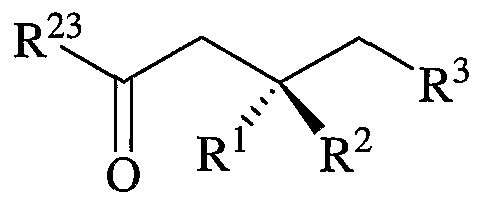





Claims


Priority Applications (9)
| Application Number | Priority Date | Filing Date | Title |
|---|---|---|---|
| MXPA06014662A MXPA06014662A (en) | 2004-07-09 | 2005-06-27 | Preparation of beta-amino acids having affinity for the alpha-2-delta protein. |
| BRPI0513028-0A BRPI0513028A (en) | 2004-07-09 | 2005-06-27 | preparation of beta amino acids having affinity for alpha-2-delta protein |
| EP05754890A EP1768952A2 (en) | 2004-07-09 | 2005-06-27 | Preparation of beta-amino acids having affinity for the alpha-2-delta protein |
| RU2007100355/04A RU2007100355A (en) | 2004-07-09 | 2005-06-27 | Obtaining beta-amino acids possessing affinity for alpha-2-delta protein |
| JP2007519908A JP2008505879A (en) | 2004-07-09 | 2005-06-27 | Production of beta-amino acids with affinity for alpha-2-delta protein |
| CA002573128A CA2573128A1 (en) | 2004-07-09 | 2005-06-27 | Preparation of beta-amino acids having affinity for the alpha-2-delta protein |
| US11/909,318 US20090247743A1 (en) | 2004-07-09 | 2005-06-27 | Preparation of beta-amino acids having affinity for the alpha-2-delta protein |
| IL179851A IL179851A0 (en) | 2004-07-09 | 2006-12-05 | Preparation of beta-amino acids having affinity for the alpha-2-delta protein |
| NO20065643A NO20065643L (en) | 2004-07-09 | 2006-12-06 | Preparation of beta-amino acids having affinity for the alpha-2-delta protein |
Applications Claiming Priority (4)
| Application Number | Priority Date | Filing Date | Title |
|---|---|---|---|
| US58651204P | 2004-07-09 | 2004-07-09 | |
| US60/586,512 | 2004-07-09 | ||
| US66504105P | 2005-03-24 | 2005-03-24 | |
| US60/665,041 | 2005-03-24 |
Publications (2)
| Publication Number | Publication Date |
|---|---|
| WO2006008612A2 true WO2006008612A2 (en) | 2006-01-26 |
| WO2006008612A3 WO2006008612A3 (en) | 2006-04-20 |
Family
ID=35033554
Family Applications (1)
| Application Number | Title | Priority Date | Filing Date |
|---|---|---|---|
| PCT/IB2005/001966 Ceased WO2006008612A2 (en) | 2004-07-09 | 2005-06-27 | Preparation of beta-amino acids having affinity for the alpha-2-delta protein |
Country Status (13)
| Country | Link |
|---|---|
| US (1) | US20090247743A1 (en) |
| EP (1) | EP1768952A2 (en) |
| JP (1) | JP2008505879A (en) |
| KR (1) | KR20080019732A (en) |
| AR (1) | AR049968A1 (en) |
| AU (1) | AU2005264036A1 (en) |
| BR (1) | BRPI0513028A (en) |
| CA (1) | CA2573128A1 (en) |
| IL (1) | IL179851A0 (en) |
| MX (1) | MXPA06014662A (en) |
| RU (1) | RU2007100355A (en) |
| TW (1) | TW200616935A (en) |
| WO (1) | WO2006008612A2 (en) |
Cited By (1)
| Publication number | Priority date | Publication date | Assignee | Title |
|---|---|---|---|---|
| JP2010500403A (en) * | 2006-08-16 | 2010-01-07 | エルジー ライフサイエンス リミテッド | Novel process for producing 3-amino-5-fluoro-4-dialkoxypentanoic acid ester |
Family Cites Families (10)
| Publication number | Priority date | Publication date | Assignee | Title |
|---|---|---|---|---|
| US4801724A (en) * | 1987-06-05 | 1989-01-31 | Hoffmann-La Roche Inc. | Vitamin E intermediate |
| US4942249A (en) * | 1987-06-05 | 1990-07-17 | Hoffmann-La Roche Inc. | Process for producing vitamin E |
| US4877890A (en) * | 1987-06-05 | 1989-10-31 | Hoffmann-La Roche Inc. | Vitamin E intermediate |
| JP2627679B2 (en) * | 1990-10-19 | 1997-07-09 | 高砂香料工業株式会社 | Optically active compound, liquid crystal composition containing the same, and liquid crystal electro-optical element |
| GB9326432D0 (en) * | 1993-12-24 | 1994-02-23 | Oxford Asymmetry Ltd | Improvements in or relating to chiral anxiliaries |
| JP3798949B2 (en) * | 2001-03-06 | 2006-07-19 | エヌ・イーケムキャット株式会社 | Hydrocracking catalyst |
| NI200300043A (en) * | 2002-03-28 | 2003-11-05 | Warner Lambert Co | AMINO ACIDS WITH AFFINITY FOR THE PROTEIN a2DELTA. |
| US20040092522A1 (en) * | 2002-08-15 | 2004-05-13 | Field Mark John | Synergistic combinations |
| GB0219024D0 (en) * | 2002-08-15 | 2002-09-25 | Pfizer Ltd | Synergistic combinations |
| AP2006003544A0 (en) * | 2003-09-25 | 2006-04-30 | Warner Lambert Co | Amino acids with affinity for the alpha2delta-protein. |
-
2005
- 2005-06-27 CA CA002573128A patent/CA2573128A1/en not_active Abandoned
- 2005-06-27 MX MXPA06014662A patent/MXPA06014662A/en unknown
- 2005-06-27 EP EP05754890A patent/EP1768952A2/en not_active Withdrawn
- 2005-06-27 AU AU2005264036A patent/AU2005264036A1/en not_active Abandoned
- 2005-06-27 KR KR1020087003716A patent/KR20080019732A/en not_active Abandoned
- 2005-06-27 WO PCT/IB2005/001966 patent/WO2006008612A2/en not_active Ceased
- 2005-06-27 US US11/909,318 patent/US20090247743A1/en not_active Abandoned
- 2005-06-27 JP JP2007519908A patent/JP2008505879A/en not_active Withdrawn
- 2005-06-27 BR BRPI0513028-0A patent/BRPI0513028A/en not_active IP Right Cessation
- 2005-06-27 RU RU2007100355/04A patent/RU2007100355A/en not_active Application Discontinuation
- 2005-07-07 AR ARP050102822A patent/AR049968A1/en not_active Application Discontinuation
- 2005-07-08 TW TW094123090A patent/TW200616935A/en unknown
-
2006
- 2006-12-05 IL IL179851A patent/IL179851A0/en unknown
Cited By (1)
| Publication number | Priority date | Publication date | Assignee | Title |
|---|---|---|---|---|
| JP2010500403A (en) * | 2006-08-16 | 2010-01-07 | エルジー ライフサイエンス リミテッド | Novel process for producing 3-amino-5-fluoro-4-dialkoxypentanoic acid ester |
Also Published As
| Publication number | Publication date |
|---|---|
| EP1768952A2 (en) | 2007-04-04 |
| RU2007100355A (en) | 2008-07-20 |
| MXPA06014662A (en) | 2007-02-12 |
| BRPI0513028A (en) | 2008-04-22 |
| TW200616935A (en) | 2006-06-01 |
| US20090247743A1 (en) | 2009-10-01 |
| AR049968A1 (en) | 2006-09-20 |
| WO2006008612A3 (en) | 2006-04-20 |
| KR20080019732A (en) | 2008-03-04 |
| AU2005264036A1 (en) | 2006-01-26 |
| JP2008505879A (en) | 2008-02-28 |
| IL179851A0 (en) | 2007-05-15 |
| CA2573128A1 (en) | 2006-01-26 |
Similar Documents
| Publication | Publication Date | Title |
|---|---|---|
| Ojima et al. | New and effective routes to fluoro analogs of aliphatic and aromatic amino acids | |
| US20090124820A1 (en) | C1-Symmetric Bisphospine Ligands and Their Use in the Asymmetric Synthesis of Pregabalin | |
| RS51210B (en) | OBTAINING PREGABALLINS AND RELATED UNITS | |
| EP2173698A2 (en) | Process for the synthesis of intermediates of renin inhibitors such as aliskiren | |
| US7179934B2 (en) | Amino acids with affinity for the α2δ-protein | |
| TW201718462A (en) | Process for the manufacture of organic compounds and intermediates | |
| EP1768952A2 (en) | Preparation of beta-amino acids having affinity for the alpha-2-delta protein | |
| WO2006100606A2 (en) | Preparation of beta-amino acid precursors via indium (iii) mediated markovnikov addition and knoevenagel condensation | |
| EP2017259A2 (en) | Preparation of gamma-amino acids having affinity for the alpha-2-delta protein | |
| US20080194841A1 (en) | Preparation of Optically Pure Beta-Amino Acids Having Affinity for the Alpha-Delta Protein | |
| CN101027278A (en) | Preparation of beta-amino acids having affinity for the alpha-2-delta protein | |
| KR20070019787A (en) | Method for preparing beta-amino acid having affinity for alpha-2-delta protein | |
| HK1105407A (en) | Preparation of beta-amino acids having affinity for the alpha-2-delta protein | |
| RU2529996C2 (en) | Method for enantioselective synthesis of (s)-pregabalin | |
| RU2643373C2 (en) | Method of producing (s)-3-aminomethyl-5-methylhexanoic acid | |
| CA2615490A1 (en) | Stereoselective synthesis of 3,4-disubstituted cyclopentanones and related compounds | |
| WO2017051326A1 (en) | New processes and intermediates useful in synthesis of nep inhibitors |
Legal Events
| Date | Code | Title | Description |
|---|---|---|---|
| AK | Designated states |
Kind code of ref document: A2 Designated state(s): AE AG AL AM AT AU AZ BA BB BG BR BW BY BZ CA CH CN CO CR CU CZ DE DK DM DZ EC EE EG ES FI GB GD GE GH GM HR HU ID IL IN IS JP KE KG KM KP KR KZ LC LK LR LS LT LU LV MA MD MG MK MN MW MX MZ NA NG NI NO NZ OM PG PH PL PT RO RU SC SD SE SG SK SL SM SY TJ TM TN TR TT TZ UA UG US UZ VC VN YU ZA ZM ZW |
|
| AL | Designated countries for regional patents |
Kind code of ref document: A2 Designated state(s): GM KE LS MW MZ NA SD SL SZ TZ UG ZM ZW AM AZ BY KG KZ MD RU TJ TM AT BE BG CH CY CZ DE DK EE ES FI FR GB GR HU IE IS IT LT LU MC NL PL PT RO SE SI SK TR BF BJ CF CG CI CM GA GN GQ GW ML MR NE SN TD TG |
|
| DPE2 | Request for preliminary examination filed before expiration of 19th month from priority date (pct application filed from 20040101) | ||
| 121 | Ep: the epo has been informed by wipo that ep was designated in this application | ||
| WWE | Wipo information: entry into national phase |
Ref document number: 2006/10148 Country of ref document: ZA Ref document number: 200610148 Country of ref document: ZA |
|
| WWE | Wipo information: entry into national phase |
Ref document number: 179851 Country of ref document: IL |
|
| WWE | Wipo information: entry into national phase |
Ref document number: 551896 Country of ref document: NZ |
|
| WWE | Wipo information: entry into national phase |
Ref document number: 2005264036 Country of ref document: AU |
|
| WWE | Wipo information: entry into national phase |
Ref document number: PA/a/2006/014662 Country of ref document: MX |
|
| WWE | Wipo information: entry into national phase |
Ref document number: 7956/DELNP/2006 Country of ref document: IN |
|
| WWE | Wipo information: entry into national phase |
Ref document number: 06130664 Country of ref document: CO |
|
| WWE | Wipo information: entry into national phase |
Ref document number: 12007500066 Country of ref document: PH Ref document number: 2573128 Country of ref document: CA |
|
| WWE | Wipo information: entry into national phase |
Ref document number: 1020077000450 Country of ref document: KR |
|
| WWE | Wipo information: entry into national phase |
Ref document number: 200580023175.3 Country of ref document: CN Ref document number: 2007100355 Country of ref document: RU Ref document number: 2007519908 Country of ref document: JP |
|
| NENP | Non-entry into the national phase |
Ref country code: DE |
|
| WWW | Wipo information: withdrawn in national office |
Ref document number: DE |
|
| ENP | Entry into the national phase |
Ref document number: 2005264036 Country of ref document: AU Date of ref document: 20050627 Kind code of ref document: A |
|
| WWE | Wipo information: entry into national phase |
Ref document number: 2005754890 Country of ref document: EP |
|
| WWP | Wipo information: published in national office |
Ref document number: 2005264036 Country of ref document: AU |
|
| WWE | Wipo information: entry into national phase |
Ref document number: 1200700294 Country of ref document: VN |
|
| WWP | Wipo information: published in national office |
Ref document number: 1020077000450 Country of ref document: KR |
|
| WWP | Wipo information: published in national office |
Ref document number: 2005754890 Country of ref document: EP |
|
| WWE | Wipo information: entry into national phase |
Ref document number: 11909318 Country of ref document: US |
|
| ENP | Entry into the national phase |
Ref document number: PI0513028 Country of ref document: BR |