WO2006017896A1 - Metabolism-modulating agents and uses therefor - Google Patents
Metabolism-modulating agents and uses therefor Download PDFInfo
- Publication number
- WO2006017896A1 WO2006017896A1 PCT/AU2005/001235 AU2005001235W WO2006017896A1 WO 2006017896 A1 WO2006017896 A1 WO 2006017896A1 AU 2005001235 W AU2005001235 W AU 2005001235W WO 2006017896 A1 WO2006017896 A1 WO 2006017896A1
- Authority
- WO
- WIPO (PCT)
- Prior art keywords
- alkyl
- methyl
- methoxy
- straight
- phenyl
- Prior art date
- Legal status (The legal status is an assumption and is not a legal conclusion. Google has not performed a legal analysis and makes no representation as to the accuracy of the status listed.)
- Ceased
Links
- 0 CC1OICC(C(C(*)(C(*)=O)N)N)=C1 Chemical compound CC1OICC(C(C(*)(C(*)=O)N)N)=C1 0.000 description 14
- KSSSVNILIYFMPF-UHFFFAOYSA-N CC(C)(C)NC(N)=C(N)N Chemical compound CC(C)(C)NC(N)=C(N)N KSSSVNILIYFMPF-UHFFFAOYSA-N 0.000 description 1
- UAEPNZWRGJTJPN-UHFFFAOYSA-N CC1CCCCC1 Chemical compound CC1CCCCC1 UAEPNZWRGJTJPN-UHFFFAOYSA-N 0.000 description 1
- XEULNLVPMLGAOM-UHFFFAOYSA-N CCC(C=C(C1)C(C)=O)=C1N Chemical compound CCC(C=C(C1)C(C)=O)=C1N XEULNLVPMLGAOM-UHFFFAOYSA-N 0.000 description 1
- FAAJRJFOPWSMKM-UHFFFAOYSA-N CCC(CCC1C(C(N)=O)N)=C1N Chemical compound CCC(CCC1C(C(N)=O)N)=C1N FAAJRJFOPWSMKM-UHFFFAOYSA-N 0.000 description 1
- VDEZDRDIPRVOTI-UHFFFAOYSA-N OC(C(F)(P)P)=O Chemical compound OC(C(F)(P)P)=O VDEZDRDIPRVOTI-UHFFFAOYSA-N 0.000 description 1
Classifications
-
- A—HUMAN NECESSITIES
- A61—MEDICAL OR VETERINARY SCIENCE; HYGIENE
- A61K—PREPARATIONS FOR MEDICAL, DENTAL OR TOILETRY PURPOSES
- A61K31/00—Medicinal preparations containing organic active ingredients
- A61K31/33—Heterocyclic compounds
- A61K31/335—Heterocyclic compounds having oxygen as the only ring hetero atom, e.g. fungichromin
- A61K31/365—Lactones
-
- A—HUMAN NECESSITIES
- A61—MEDICAL OR VETERINARY SCIENCE; HYGIENE
- A61K—PREPARATIONS FOR MEDICAL, DENTAL OR TOILETRY PURPOSES
- A61K31/00—Medicinal preparations containing organic active ingredients
-
- A—HUMAN NECESSITIES
- A61—MEDICAL OR VETERINARY SCIENCE; HYGIENE
- A61K—PREPARATIONS FOR MEDICAL, DENTAL OR TOILETRY PURPOSES
- A61K31/00—Medicinal preparations containing organic active ingredients
- A61K31/21—Esters, e.g. nitroglycerine, selenocyanates
- A61K31/27—Esters, e.g. nitroglycerine, selenocyanates of carbamic or thiocarbamic acids, meprobamate, carbachol, neostigmine
-
- A—HUMAN NECESSITIES
- A61—MEDICAL OR VETERINARY SCIENCE; HYGIENE
- A61K—PREPARATIONS FOR MEDICAL, DENTAL OR TOILETRY PURPOSES
- A61K31/00—Medicinal preparations containing organic active ingredients
- A61K31/33—Heterocyclic compounds
- A61K31/395—Heterocyclic compounds having nitrogen as a ring hetero atom, e.g. guanethidine or rifamycins
- A61K31/495—Heterocyclic compounds having nitrogen as a ring hetero atom, e.g. guanethidine or rifamycins having six-membered rings with two or more nitrogen atoms as the only ring heteroatoms, e.g. piperazine or tetrazines
- A61K31/505—Pyrimidines; Hydrogenated pyrimidines, e.g. trimethoprim
-
- A—HUMAN NECESSITIES
- A61—MEDICAL OR VETERINARY SCIENCE; HYGIENE
- A61K—PREPARATIONS FOR MEDICAL, DENTAL OR TOILETRY PURPOSES
- A61K31/00—Medicinal preparations containing organic active ingredients
- A61K31/33—Heterocyclic compounds
- A61K31/395—Heterocyclic compounds having nitrogen as a ring hetero atom, e.g. guanethidine or rifamycins
- A61K31/535—Heterocyclic compounds having nitrogen as a ring hetero atom, e.g. guanethidine or rifamycins having six-membered rings with at least one nitrogen and one oxygen as the ring hetero atoms, e.g. 1,2-oxazines
- A61K31/5375—1,4-Oxazines, e.g. morpholine
- A61K31/5377—1,4-Oxazines, e.g. morpholine not condensed and containing further heterocyclic rings, e.g. timolol
-
- A—HUMAN NECESSITIES
- A61—MEDICAL OR VETERINARY SCIENCE; HYGIENE
- A61P—SPECIFIC THERAPEUTIC ACTIVITY OF CHEMICAL COMPOUNDS OR MEDICINAL PREPARATIONS
- A61P3/00—Drugs for disorders of the metabolism
-
- A—HUMAN NECESSITIES
- A61—MEDICAL OR VETERINARY SCIENCE; HYGIENE
- A61P—SPECIFIC THERAPEUTIC ACTIVITY OF CHEMICAL COMPOUNDS OR MEDICINAL PREPARATIONS
- A61P3/00—Drugs for disorders of the metabolism
- A61P3/04—Anorexiants; Antiobesity agents
-
- A—HUMAN NECESSITIES
- A61—MEDICAL OR VETERINARY SCIENCE; HYGIENE
- A61P—SPECIFIC THERAPEUTIC ACTIVITY OF CHEMICAL COMPOUNDS OR MEDICINAL PREPARATIONS
- A61P3/00—Drugs for disorders of the metabolism
- A61P3/06—Antihyperlipidemics
-
- A—HUMAN NECESSITIES
- A61—MEDICAL OR VETERINARY SCIENCE; HYGIENE
- A61P—SPECIFIC THERAPEUTIC ACTIVITY OF CHEMICAL COMPOUNDS OR MEDICINAL PREPARATIONS
- A61P43/00—Drugs for specific purposes, not provided for in groups A61P1/00-A61P41/00
-
- A—HUMAN NECESSITIES
- A61—MEDICAL OR VETERINARY SCIENCE; HYGIENE
- A61P—SPECIFIC THERAPEUTIC ACTIVITY OF CHEMICAL COMPOUNDS OR MEDICINAL PREPARATIONS
- A61P7/00—Drugs for disorders of the blood or the extracellular fluid
-
- G—PHYSICS
- G01—MEASURING; TESTING
- G01N—INVESTIGATING OR ANALYSING MATERIALS BY DETERMINING THEIR CHEMICAL OR PHYSICAL PROPERTIES
- G01N2333/00—Assays involving biological materials from specific organisms or of a specific nature
- G01N2333/90—Enzymes; Proenzymes
- G01N2333/902—Oxidoreductases (1.)
- G01N2333/904—Oxidoreductases (1.) acting on CHOH groups as donors, e.g. glucose oxidase, lactate dehydrogenase (1.1)
-
- G—PHYSICS
- G01—MEASURING; TESTING
- G01N—INVESTIGATING OR ANALYSING MATERIALS BY DETERMINING THEIR CHEMICAL OR PHYSICAL PROPERTIES
- G01N2500/00—Screening for compounds of potential therapeutic value
- G01N2500/02—Screening involving studying the effect of compounds C on the interaction between interacting molecules A and B (e.g. A = enzyme and B = substrate for A, or A = receptor and B = ligand for the receptor)
-
- G—PHYSICS
- G01—MEASURING; TESTING
- G01N—INVESTIGATING OR ANALYSING MATERIALS BY DETERMINING THEIR CHEMICAL OR PHYSICAL PROPERTIES
- G01N2800/00—Detection or diagnosis of diseases
- G01N2800/04—Endocrine or metabolic disorders
- G01N2800/044—Hyperlipemia or hypolipemia, e.g. dyslipidaemia, obesity
Definitions
- This invention relates generally to methods and agents for modulating adipogenesis. More particularly, the present invention relates to molecules that modulate the level or functional activity of inosine-5' monophosphate dehydrogenase (IMPDH) and to their use in modulating the accumulation of lipids in adipocytes and/or the differentiation of preadipocytes to adipocytes.
- IMPDH inosine-5' monophosphate dehydrogenase
- the present invention relates to molecules that reduce, impair or abrogate the level or functional activity of EVfPDH, including antagonist molecules that are specific for Impdh polynucleotides or their expression products, and to the use of these molecules for the negative regulation of adipogenesis, including down-regulating the differentiation potential and/or proliferation of preadipocytes and/or the accumulation of lipids in adipocytes.
- the present invention also extends to the use of IMPDH agonist molecules, including Impdh polynucleotides and IMPDH polypeptides, as well as their biologically active fragments, variants and derivatives, for increasing the differentiation potential and/or proliferation of preadipocytes and/or for increasing the accumulation of lipids in adipocytes.
- the invention relates to the use of IMPDH modulatory agents in methods for treating or preventing adiposity-related conditions including, but not limited to, obesity, lipoma, lipomatosis, cachexia or lipodystrophy or the loss of adipose tissue in trauma or atrophic conditions.
- adiposity-related conditions including, but not limited to, obesity, lipoma, lipomatosis, cachexia or lipodystrophy or the loss of adipose tissue in trauma or atrophic conditions.
- Insulin is the major anabolic hormone promoting uptake and storage of molecules, including glucose, amino acids and fatty acids (1).
- Insulin acts through a cell surface tyrosine kinase receptor that phosphorylates downstream substrates.
- Tyrosine phosphorylation of substrates such as the Insulin Receptor Substrate (IRS) family of scaffold proteins, serves to recruit SH2 domain containing proteins, including PI 3 -kinase, leading to propagation of insulin signalling cascades (1).
- IRS Insulin Receptor Substrate
- Inosine-5' monophosphate dehydrogenase is a highly conserved, ubiquitously expressed enzyme, which catalyses a key step in the de novo biosynthesis of guanine nucleotide, the NAD-dependent conversion of inosine monophosphate (IMP) to xanthosine monophosphate (XMP) (3).
- IMPDH inosine monophosphate
- XMP xanthosine monophosphate
- IMPDH represents a principal target for therapeutic intervention in anti-neoplastic and immunosuppressive treatments and has been the subject of intensive biochemical research (7).
- Recently mutations in IMPDH type I have been shown to cause the RPlO form of the degenerative retinal disorder autosomal dominant retinitis pigmentosa (adRP) in humans (8, 9).
- Lipid bodies facilitate storage of intracellular lipid in mammalian cells (10). They are ubiquitous, ranging in size from 50 nm to 100 ⁇ m, and are made up of a neutral lipid core of diacylglycerol, triacylglycerol (TAG) and sterol ester surrounded by a phospholipid monolayer.
- TAG triacylglycerol
- lipid bodies Several proteins have been shown to associate with lipid bodies, the best characterised being adipocyte differentiation-related protein (ADRP) or adipophilin (the latter will be referred to as adipophilin to prevent confusion with adRP)(l 1, 12) and perilipin (13, 14) which form a proteinaceous coat around the lipid bodies (15).
- ADRP adipocyte differentiation-related protein
- adipophilin to prevent confusion with adRP
- perilipin 13, 14
- EVIPDH is a target of the insulin signal transduction pathway and a novel lipid body associated protein.
- the present inventor also found that insulin stimulates phosphorylation and translocation of IMPDH to lipid bodies, the sites of intracellular lipid storage, and both events are blocked by inhibition of PI 3 -kinase.
- oleate was shown to stimulate robust translocation of IMPDH to lipid bodies in the absence of detectable phosphorylation although this translocation was found to be sensitive to PI 3- kinase inhibition.
- PDGF platelet derived growth factor
- adipogenesis or lipid accumulation can be modulated in vivo by modulating the level or functional activity (e.g., enzymic activity or level of phosphorylation) of IMPDH.
- This proposal has been reduced to practice in molecules and methods for modulating the level or functional activity of IMPDH as means of inhibiting or promoting adipogenesis in adiposity-related conditions, or for diagnosing predisposition to obesity, as described hereinafter.
- the present invention provides methods for modulating adipogenesis, which are useful inter alia in the treatment or prevention of adiposity-related conditions. These methods generally comprise contacting a cell with an agent for a time and under conditions sufficient to modulate an IMPDH.
- the IMPDH is selected from IMPDH type I and DVIPDH type II.
- suitable agents include small molecules, such as nucleic acids, peptides, polypeptides, peptidomimetics, carbohydrates, lipids or other organic (carbon containing) or inorganic molecules, as further described herein.
- the cell is contacted with an agent that modulates the expression of an Impdh gene or the level or functional activity of an expression product of that gene.
- the cell is suitably an adipocyte, typically a white adipocyte, or precursor thereof (e.g., a preadipocyte).
- the agent reduces the expression of an Impdh gene or the level or functional activity of an expression product of that gene.
- the agent may antagonise the function of an IMPDH, including reducing or abrogating the activity of its catalytic site or the interaction between an EVIPDH and a protein kinase (e.g., PI 3-kinase and PDKl).
- the agent may antagonise the function of a protein kinase that phosphorylates IMPDH (e.g., PI 3- kinase and PDKl) or an upstream activator of the protein kinase (e.g., a PDGF or a PDGF receptor).
- the agent inhibits the function of a molecule (e.g., a protein kinase) that interacts directly with IMPDH.
- a molecule e.g., a protein kinase
- the agents antagonise the IMPDH and are therefore useful for directly or indirectly reducing or abrogating the accumulation of lipids in an adipocyte or the differentiation potential and/or proliferation of a preadipocyte.
- the agent increases the expression of an Impdh gene or the level or functional activity of an expression product of that gene.
- the agent may agonise the function of an IMPDH, including enhancing, promoting or otherwise capacitating the activity of its catalytic site or the interaction between an EVIPDH and a protein kinase.
- the agents agonise DVIPDH and are useful therefore for directly or indirectly increasing the accumulation of lipids in an adipocyte or the differentiation potential and/or proliferation of a preadipocyte.
- the agent increases or reduces the expression of the Impdh gene or the level or functional activity of an expression product of that gene by at least 10%, 20%, 30%, 40%, 50%, 60%, 70%, 80%, 90% relative to the expression, level or functional activity in the absence of the agent.
- the invention provides methods for identifying agents that modulate adipogenesis: These methods typically comprise contacting a preparation with a test agent, wherein the preparation comprises (i) a polypeptide comprising an amino acid sequence corresponding to at least a biologically active fragment of an DVIPDH polypeptide, or to a variant or derivative thereof; or (ii) a polynucleotide comprising at least a portion of a genetic sequence that regulates the expression of an Impdh gene, which is operably linked to a reporter gene.
- a detected change in the level and/or functional activity of the polypeptide, or an expression product of the reporter gene, relative to a normal or reference level and/or functional activity in the absence of the test agent indicates that the agent modulates adipogenesis.
- agents that test positive in the above methods are useful for modulating adipogenesis in adiposity-related conditions.
- the adiposity-related conditions include, but are not restricted to, obesity, lipoma, lipomatosis, cachexia or lipodystrophy or the loss of adipose tissue in trauma or atrophic conditions.
- another aspect of the present invention contemplates the use of an agent, which is optionally formulated with a pharmaceutically acceptable carrier or diluent, for inhibiting or decreasing adipogenesis, or for controlling adipogenesis in obesity or in conditions of localised, abnormal increases in adipogenesis, wherein the agent antagonises IMPDH, as broadly described above.
- the present invention resides in the use of an agent, which is optionally formulated with a pharmaceutically acceptable carrier or diluent, for stimulating adipogenesis in the treatment or prophylaxis of cachexia or in conditions of localised deficiencies in adiposity, wherein the agent agonises IMPDH, as broadly described above.
- the agent used in the above methods is characterised in that it binds to an expression product of an Impdh gene or to a genetic sequence (e.g., a transcriptional element) that modulates the expression of the gene, as determined by: contacting a preparation comprising at least a portion of an expression product of a gene as broadly described above, or a variant or derivative of the expression product, or a genetic sequence that modulates the expression of the gene, with the agent; and detecting a change in the level or functional activity of the at least a portion of the expression product, or the variant or derivative, or of a product expressed from the genetic sequence.
- a genetic sequence e.g., a transcriptional element
- an agent which inhibits or otherwise decreases adipogenesis binds to an IMPDH or to a genetic sequence (e.g., a transcriptional element) that modulates the expression of an Impdh gene, as determined by: contacting a preparation comprising an IMPDH polypeptide or biologically active fragment thereof, or variant or derivative of these, or a genetic sequence that modulates the expression of an Impdh gene; and detecting a decrease in the level or functional activity of the IMPDH polypeptide or biologically active fragment thereof, or variant or derivative, or of a product expressed from the genetic sequence.
- a genetic sequence e.g., a transcriptional element
- an agent which inhibits or otherwise decreases adipogenesis antagonises the binding between an IMPDH and a protein kinase, as determined by: contacting an IMPDH and a protein kinase with the agent and measuring the binding of the IMPDH with the protein kinase.
- agents can bind to the IMPDH or to the protein kinase and test positive when they reduce or abrogate the binding of the IMPDH with the protein kinase.
- the agents can be small molecules or antigen-binding molecules specific for the IMPDH or for the protein kinase.
- an agent which inhibits or otherwise decreases adipogenesis antagonises an IMPDH, as determined by: contacting a first sample of cells selected from adipocytes or their precursors with insulin and measuring lipid accumulation in those cells; contacting a second sample of cells selected from adipocytes or their precursors with insulin and with an agent, and measuring lipid accumulation in those cells; and comparing the lipid accumulation in the first sample of cells with the lipid accumulation in the second sample of cells, wherein lower lipid accumulation in the second sample of cells than in the first sample of cells is indicative of an agent that inhibits or otherwise decreases adipogenesis.
- the agents may antagonise the IMPDH, for example, by interfering with the phosphorylation of the IMPDH, or by interfering with the catalytic site or inhibiting the catalytic activity of the IMPDH.
- an agent which inhibits or otherwise decreases adipogenesis antagonises an IMPDH as determined by: administering to an animal model, or a human, an agent that antagonises IMPDH, and measuring the animal's responsiveness to the agent.
- the method can be practiced with agents as described above and animals can be examined for inhibition or reduction of adipogenesis in obesity or in conditions of localised, abnormal increases in adipogenesis.
- an agent which stimulates adipogenesis binds to an IMPDH or to a genetic sequence (e.g., a transcriptional element) that modulates the expression of an Impdh gene as determined by: contacting a preparation comprising an IMPDH polypeptide or biologically active fragment thereof, or variant or derivative of these, or a genetic sequence that modulates the expression of an Impdh gene; and detecting an increase in the level or functional activity of the IMPDH polypeptide or biologically active fragment thereof, or variant or derivative, or of a product expressed from the genetic sequence.
- a genetic sequence e.g., a transcriptional element
- an agent which stimulates adipogenesis agonises an IMPDH as determined by: contacting an IMPDH and a protein kinase with the agent and measuring the binding of the EVIPDH with the protein kinase.
- agents can bind to the IMPDH or to the protein kinase and test positive when they stimulate the IMPDH interaction with the protein kinase.
- the agents can be small molecules or antigen-binding molecules specific for the IMPDH or the protein kinase.
- an agent which stimulates adipogenesis agonises an IMPDH as determined by: contacting a first sample of cells selected from adipocytes or their precursors with insulin and measuring lipid accumulation in those cells; contacting a second sample of cells selected from adipocytes or their precursors with insulin and with an agent, and measuring lipid accumulation in those cells; and comparing the lipid accumulation in the first sample of cells with the lipid accumulation in the second sample of cells, wherein higher lipid accumulation in the second sample of cells than in the first sample of cells is indicative of an agent that stimulates adipogenesis.
- compounds may agonise IMPDH, for example, by stimulating the association of the IMPDH with a protein kinase, by stimulating the phosphorylation of the IMPDH, or by stimulating the catalytic activity of IMPDH.
- an agent which stimulates adipogenesis agonises an IMPDH as determined by: administering to an animal model, or a human, an agent that agonises IMPDH, and measuring the animal's responsiveness to the agent.
- the method can be practiced with agents as described above and animals can be examined for stimulating adipogenesis in the treatment or prophylaxis of cachexia or in conditions of localised deficiencies in adiposity.
- Still another aspect of the present invention provides methods of producing an agent for modulating adipogenesis in adiposity-related conditions. These methods generally comprise: testing an agent suspected of modulating IMPDH as broadly described above; and synthesising the agent on the basis that it tests positive for the modulation. Suitably, the method further comprises derivatising the agent, and optionally formulating the derivatised agent with a pharmaceutically acceptable carrier and/or diluent, to improve the efficacy of the agent for treating or preventing the adiposity-related condition(s). [0027] According to another aspect, the present invention provides methods for detecting the presence or diagnosing the risk of an adiposity-related condition in a patient.
- the present invention encompasses methods for detecting the presence or diagnosing the risk of a condition associated with aberrantly increased adiposity in a patient. These methods generally comprise determining the presence of an aberrant Impdh gene or of an aberrant expression product of that gene in a biological sample obtained from the patient, wherein the aberrant gene or the aberrant expression product correlates with the presence or risk of the condition.
- Conditions associated with aberrantly increased adiposity include, but are not limited to, obesity or conditions of localised, abnormal increases in adipogenesis such as lipoma and lipomatosis.
- Another aspect of the present invention provides methods for detecting the presence or diagnosing the risk of a condition associated with aberrantly increased adiposity in a patient.
- These methods generally comprise determining in a cell a level or functional activity of an expression product of an Impdh gene, which is different than a normal (e.g., non-obese) reference level or functional activity of the expression product.
- the method comprises determining an increase or elevation in the level or functional activity of the expression product of the Impdh gene.
- Another aspect of the present invention contemplates methods for inhibiting or reducing adipogenesis in obesity or in conditions of localised, abnormal increases in adipogenesis. These methods generally comprise administering to a patient in need of such treatment an adipogenesis-inhibiting effective amount of an agent which reduces the level or functional activity of IMPDH as broadly described above, and optionally a pharmaceutically acceptable carrier or diluent.
- Yet another aspect of the present invention contemplates methods for treatment or prophylaxis of cachexia or conditions of localised deficiencies in adiposity. These methods generally comprise administering to a patient in need of such treatment an adipogenesis-enhancing effective amount of an agent which increases the level or functional activity of an IMPDH as broadly described above, and optionally a pharmaceutically acceptable carrier or diluent.
- Still another aspect of the present invention provides the use of an agent as broadly described above in the preparation of a medicament for treating or preventing an adiposity-related condition.
- Figure 1 consists of photographic and graphical representations showing the identification of IMPDH as an insulin-regulated phosphoprotein.
- Panel (A) 3T3-L1 adipocytes were labelled with 32 P and incubated in the absence or presence of insulin (1 ⁇ M - 15 min), or wortmannin (100 nM - 25 min) followed by insulin as indicated. Cells were homogenised and fractionated by differential centrifugation to isolate the HSP fraction, as described in materials and methods, which was analysed by 2-DE and autoradiography.
- IMPDH was immunoprecipitated from cell lysates and immunoprecipitates analysed by SDS-PAGE and autoradiography ( 32 P).
- Phospho amino acids were identified by 2-DE and autoradiography. The position of cold marker phospho amino acids; S - phospho Ser, T - phospho Thr and Y - phospho Tyr are shown. P - partial hydrolysis products. O - origin. All images are representative of at least three independent experiments.
- Figure 2 consists of graphical and photographic representations showing the lack of effect of insulin on IMPDH activity.
- the pellet was resuspended and incubated on ice for 60 min in buffer containing: 1 -No addition; 2-1% Triton-X- 100; 3 - 60 mM ⁇ -octylglucoside; 4 - 0.1 M Na 2 CO 3 - ⁇ H 11 ; 5 - 1 M NaCl, and then re-pelleted by centrifugation.
- the association of IMPDH, IRS-I and Insulin Receptor (IR) proteins in the pellet were determined by immunoblotting.
- FIG. 3 is a photographic representation showing that insulin and oleate promote translocation of IMPDH to lipid bodies.
- Figure 4 consists of photographic and graphical representations showing that PI 3- kinase is required for IMPDH translocation and association with lipid bodies.
- Panel (D) CHO.IR cells were treated with oleate in the absence (-) or presence of Ly (+) for 24 h. The post nuclear supernatant was subjected to flotation analysis by centrifugation. Fractions (162 ⁇ L) were collected from the top (fraction 1) to the bottom (fraction 14) of the gradient, distribution of adipophilin (Adip), IMPDH, IRS-I and the insulin receptor (IR) was determined by immunoblotting of equal volumes from fractions as indicated. Results are representative of three separate experiments. [0037] Figure 5 is a photographic representation showing that oleate does not stimulate phosphorylation of IMPDH.
- IMPDH was immunoprecipitated from cell lysates and immunoprecipitates analysed by SDS-PAGE and autoradiography ( 32 P) and immunoblotting (IMPDH).
- FIG. 6 is a photographic representation showing that PDGF stimulates phosphorylation of IMPDH.
- 3T3-L1 fibroblasts were labelled with 32 P and pretreated with wortmannin (100 nM - 25 min) then treated with insulin (1 ⁇ M - 15 min) or PDGF (50 ng/mL - 15 min) as indicated.
- IMPDH was immunoprecipitated from cell lysates and immunoprecipitates analysed by SDS-PAGE and autoradiography ( 32 P).
- FIG. 7 is a photographic representation showing expression of IMPDH during adipogenesis.
- A 3T3-L1 preadipocytes were induced to differentiate (day 0) into mature adipocytes and images were captured on the days indicated. The differentiation protocol is indicated below, showing the periods of differentiation (days 0-3), post-differentiation (3-6) and maintenance (6-9).
- B 3T3-L1 cells and
- C primary human preadipocytes were harvested on the days indicated and analysed by immunoblotting for IMPDH or CAP (a marker of differentiation). In 3T3-L1 cells IMPDH expression peaks between days 3 to 6. A similar trend is observed upon differentiation of primary human preadipocytes, with IMPDH showing a transient, 5- to 10-fold, increase in expression during differentiation. Data are representative of at least 4 independent experiments.
- Figure 8 is a graphical representation showing clonal expansion and protein accumulation during adipogenesis of 3T3-L1 cells and primary human preadipocytes.
- A 3T3-L1 preadipocytes and
- B primary human preadipocytes were induced to differentiate (day 0) into mature adipocytes and cell number and protein accumulation was determined on the days indicated by Syto60 staining and protein assay.
- Data are representative of at least 3 independent experiments with measurements performed in triplicate, (sem were less than 10% - not shown).
- Figure 9 consists of photographic and graphical representations showing that inhibition of IMPDH with MPA blocks adipogenesis.
- A 3T3-L1 preadipocytes were induced to differentiate in the absence (control) or presence of the specific inhibitor mycophenolic acid (MPA - 1 ⁇ M) for 6 days. Images were captured on day 8 of differentiation. MPA treatment blocks lipid accumulation as observed in control cells by the appearance of large lipid droplets.
- B 3T3-L1 adipocytes were induced to differentiate in the absence or presence of increasing MPA for the first 6 days of differentiation. Cells were harvested on day 8 and G3PDH activity and total protein determined.
- the graph shows G3PDH activity (mU/mL) and fold increase in protein (compared to non-differentiated cells).
- the IC 50 of MPA is 0.1-0.2 ⁇ M. Data are representative of at least 3 independent experiments with measurements performed in duplicate, (sem were less than 10% - not shown)
- Figure 10 consists of graphical and photographic representations characterizing the inhibition of adipogenesis of 3T3-L1 cells by MPA.
- Figure 11 consists of photographic and graphical representations showing that supplementation with guanosine reverses the effects of inhibition of IMPDH.
- A Lipid accumulation and
- B G3PDH activity in 3T3-L1 cells treated -/+ l ⁇ M MPA -/+ 60 or 300 ⁇ M guanosine. 60 ⁇ M guanosine reversed the effects of MPA treatment, whereas treatment with 300 ⁇ M guanosine alone reduced adipogenesis as determined morphologically and biochemically.
- C Reversal of MPA induced increase in IMPDH expression by co-treatment with guanosine.
- D Reversal of effects of MPA on clonal expansion by co-treatment with 60 ⁇ M guanosine.
- Figure 12 consists of photographic and graphical representations showing that MPA and guanosine inhibit adipogenesis of primary human preadipocytes.
- A Primary human preadipocytes were differentiated in the absence (control) or presence of 1 ⁇ M MPA. MPA treatment reduced lipid accumulation as determined by the reduction in appearance of lipid droplets.
- B Induction of G3PDH activity was reduced by inhibition of MPDH by treatment with 1 ⁇ M MPA.
- allelic polynucleotide refers to a polynucleotide which is distinguished from a "normal" reference polynucleotide by the substitution, deletion or addition of at least one nucleotide and which correlates with the presence or risk of adipogenic defects including an elevated rate of adipogenesis compared to a non-obese, reference value.
- allelic polypeptide refers to a polypeptide which is distinguished from a "normal” reference polypeptide by the substitution, deletion or addition of at least one amino acid residue and which correlates with the presence or risk of adipogenic defects including an elevated rate of adipogenesis compared to a non-obese, reference value.
- aliphatic ring or "cycloalkyl” means a monocyclic saturated aliphatic hydrocarbon group and may have a specified number of carbon atoms.
- cycloalkyl includes, but is not limited to, cyclopropyl, methyl-cyclopropyl, 2,2-dimethyl-cyclobutyl, 2-ethyl- cyclopentyl, cyclohexyl.
- alkenyl refers to a non- aromatic hydrocarbon radical, straight, branched or cyclic, containing from 2 to 10 carbon atoms and at least one carbon to carbon double bond. Suitably one carbon to carbon double bond is present, and up to four non-aromatic carbon-carbon double bonds may be present.
- C 2 -C 6 alkenyl means an alkenyl radical having from 2 to 6 carbon atoms.
- Alkenyl groups include, but are not limited to, ethenyl, propenyl, butenyl, 2-methylbutenyl and cyclohexenyl. The straight, branched or cyclic portion of the alkenyl group may contain double bonds and may be substituted if a substituted alkenyl group is indicated.
- alkenylene refers to a straight, branched or cyclic, preferably straight or branched, bivalent aliphatic hydrocarbon group, preferably having from 2 to about 20 carbon atoms and at least one double bond, more preferably 2 to 12 carbons, even more preferably lower alkenylene.
- the alkenylene group is optionally substituted with one or more "alkyl group substituents.” There may be optionally inserted along the alkenylene group one or more oxygen, sulphur or substituted or unsubstituted nitrogen atoms, where the nitrogen substituent is alkyl as previously described.
- the term "lower alkenylene” refers to alkenylene groups having 2 to 6 carbons. Preferred alkenylene groups are lower alkenylene, with alkenylene of 3 to 4 carbon atoms being particularly preferred.
- alkoxy represents either a cyclic or non-cyclic alkyl group attached through an oxygen bridge. "Alkoxy” therefore encompasses the definitions of alkyl and cycloalkyl above.
- alkoxy groups include but are not limited to methoxy, oxy ethoxy, n-propyloxy, i-propyloxy, cyclopentyloxy and cyclohexyloxy.
- alkyl is intended to include both branched and straight-chain saturated aliphatic hydrocarbon group and may have a specified number of carbon atoms.
- Ci-Ci 0 as in “Q-Cioalkyl” is defined to include groups having 1, 2, 3, 4, 5, 6, 7, 8, 9 or 10 carbons in linear or branched arrangement.
- Ci-Ci O alkyl specifically includes, but is not limited to, methyl, ethyl, n-propyl, i-propyl, n-butyl, t-butyl, i-butyl, pentyl, hexyl, heptyl, octyl, nonyl, decyl.
- arylalkylidene refers to an alkylidene group in which either R' or R" is and aryl group.
- diarylalkylidene refers to an alkylidene group in which R' and R" are both aryl groups
- diheteroarylalkylidene refers to an alkylidene group in which R' and R" are both heteroaryl groups.
- alkynyl refers to a hydrocarbon radical straight, branched or cyclic, containing from 2 to 10 carbon atoms and at least one carbon to carbon triple bond. Up to three carbon-carbon triple bonds may be present.
- C 2 -C 6 alkynyl means an alkynyl radical having from 2 to 6 carbon atoms.
- Alkynyl groups include, but are not limited to, ethynyl, propynyl, butynyl, 3-methylbutynyl and so on.
- the straight, branched or cyclic portion of the alkynyl group may contain triple bonds and may be substituted if a substituted alkynyl group is indicated.
- alkylene refers to a straight, branched or cyclic, preferably straight or branched, bivalent aliphatic hydrocarbon group, preferably having from 1 to about 20 carbon atoms, more preferably 1 to 12 carbons, even more preferably lower alkylene.
- the alkylene group is optionally substituted with one or more "alkyl group substituents.” There may be optionally inserted along the alkylene group one or more oxygen, sulphur or substituted or unsubstituted nitrogen atoms, where the nitrogen substituent is alkyl as previously described.
- alkylene groups include methylene (-CH 2 -), ethylene (-CH 2 CH 2 -), propylene (-(CH 2 ) 3 -), cyclohexylene (-C 6 Hi 0 -), methylenedioxy (-0-CH 2 -O-) and ethylenedioxy (-O-(CH 2 ) 2 -O-).
- lower alkylene refers to alkylene groups having 1 to 6 carbons.
- Preferred alkylene groups are lower alkylene, with alkylene of 1 to 3 carbon atoms being particularly preferred.
- alkynylene refers to a straight, branched or cyclic, preferably straight or branched, bivalent aliphatic hydrocarbon group, preferably having from 2 to about 20 carbon atoms and at least one triple bond, more preferably 2 to 12 carbons, even more preferably lower alkynylene.
- the alkynylene group is optionally substituted with one or more "alkyl group substituents.” There may be optionally inserted along the alkynylene group one or more oxygen, sulphur or substituted or unsubstituted nitrogen atoms, where the nitrogen substituent is alkyl as previously described.
- lower alkynylene refers to alkynylene groups having 2 to 6 carbons.
- Preferred alkynylene groups are lower alkynylene, with alkynylene of 3 to 4 carbon atoms being particularly preferred.
- antigen-binding molecule a molecule that has binding affinity for a target antigen. It will be understood that this term extends to immunoglobulins, immunoglobulin fragments and non-immunoglobulin derived protein frameworks that exhibit antigen-binding activity.
- Antigenic or immunogenic activity refers to the ability of a polypeptide, fragment, variant or derivative according to the invention to produce an antigenic or immunogenic response in an animal, suitably a mammal, to which it is administered, wherein the response includes the production of elements which specifically bind the polypeptide or fragment thereof.
- Alkyl means alkyl as defined above which is substituted with an aryl group as defined above, e.g.,-CH 2 phenyl,-(CH 2 ) 2 phenyl,-(CH 2 ) 3 phenyl,-H 2 CH(CH 3 )CH 2 phenyl, and the like and derivatives thereof.
- aromatic or aryl is intended to mean any stable monocyclic or bicyclic carbon ring of up to 7 atoms in each ring, wherein at least one ring is aromatic.
- aryl elements include, but are not limited to, phenyl, naphthyl, tetrahydronaphthyl, indanyl, biphenyl, phenanthryl, anthryl or acenaphthyl.
- substituents may be defined with a range of carbons that includes zero, such as (C 0 -C 6 )alkylene-aryl. If aryl is taken to be phenyl, this definition would include phenyl itself as well as, for example,-CH 2 Ph,-CH 2 CH 2 Ph, CH(CH 3 )CH 2 CH(CH 3 )Ph.
- arylene refers to a monocyclic or polycyclic, preferably monocyclic, bivalent aromatic group, preferably having from 3 to about 20 carbon atoms and at least one aromatic ring, more preferably 3 to 12 carbons, even more preferably lower arylene.
- the arylene group is optionally substituted with one or more "alkyl group substituents.” There may be optionally inserted around the arylene group one or more oxygen, sulphur or substituted or unsubstituted nitrogen atoms, where the nitrogen substituent is alkyl as previously described.
- Exemplary arylene groups include 1,2-, 1,3-and 1 ,4-phenylene.
- the term "lower arylene” refers to arylene groups having 5 or 6 carbons. Preferred arylene groups are lower arylene.
- arylidene refers to an unsaturated cyclic bivalent group where both points of attachment are on the same atom of the ring.
- exemplary arylidene groups include, but are not limited to, quinone methide moieties that have the formula:
- Heteroarylidene groups are arylidene groups where one or two, preferably two, of the atoms in the ring are heteroatoms, such as, but not limited to, O, S and
- the compounds described herein may possess asymmetric centres and are therefore capable of existing in more than one stereoisomeric form.
- the invention thus also relates to compounds in substantially pure isomeric form at one or more asymmetric centres e.g., greater than about 90% ee, such as about 95% or 97% ee or greater than 99% ee, as well as mixtures, including racemic mixtures, thereof.
- Such isomers may be naturally occurring or may be prepared by asymmetric synthesis, for example using chiral intermediates, or by chiral resolution.
- biologically active fragment is meant a fragment of a full-length parent polypeptide which fragment retains an activity of the parent polypeptide.
- biologically active fragment includes deletion variants and small peptides, for example of at least 6, 7, 8, 9, 10, 11, 12, 13, 14, 15, 16, 17, 18, 19, 20, 21, 22, 23, 24, 25, 26, 27, 28, 29, 30, 35, 40, 45, 50 contiguous amino acid residues, which comprise an activity of the parent polypeptide.
- Peptides of this type may be obtained through the application of standard recombinant nucleic acid techniques or synthesised using conventional liquid or solid phase synthesis techniques.
- peptides can be produced by digestion of a polypeptide of the invention with proteinases such as endoLys-C, endoArg-C, endoGlu-C and staphylococcus V8-protease.
- the digested fragments can be purified by, for example, high performance liquid chromatographic (HPLC) techniques.
- biological sample refers to a sample that may be extracted, untreated, treated, diluted or concentrated from a patient.
- the biological sample is a tissue biopsy, more preferably from subcutaneous or omental tissue biopsy.
- condition of localised, abnormal increases in adipogenesis includes pathologies characterised by and/or associated with anatomically localised disregulated adipogenesis that lead to circumscribed depositions of fat tissue. Such conditions include but are not limited to lipoma and lipomatosis.
- derivative is meant a polypeptide that has been derived from the basic sequence by modification, for example by conjugation or complexing with other chemical moieties or by post-translational modification techniques as would be understood in the art.
- derivative also includes within its scope alterations that have been made to a parent sequence including additions or deletions that provide for functional equivalent molecules.
- differentiation potential means the capacity of a preadipocyte to respond, or the magnitude of the response, to a signal which promotes its functional maturation into an adipocyte.
- An "increase in differentiation potential” may be seen to be conferred by a test molecule wherein, for example, a co-culture of preadipocytes with the test molecule for a sufficient time and under appropriate conditions results in an increase in the response of the preadipocytes to a differentiation-inducing agent, which may be observed inter alia as a rise in the number of preadipocytes undergoing differentiation or an increase in the rate at which the preadipocytes undergo differentiation.
- an effective amount in the context of modulating an activity or of treating or preventing a condition is meant the administration of that amount of active ingredient to an individual in need of such modulation, treatment or prophylaxis, either in a single dose or as part of a series, that is effective for modulation of that effect or for treatment or prophylaxis or improvement of that condition.
- improvements in an individual suffering conditions of localised, abnormal increases in adipogenesis include reduced fat deposits, increased leanness, weight loss and an improvement in the symptoms relating to cardiovascular disease and diabetes.
- the effective amount will vary depending upon the health and physical condition of the individual to be treated, the taxonomic group of individual to be treated, the formulation of the composition, the assessment of the medical situation, and other relevant factors. It is expected that the amount will fall in a relatively broad range that can be determined through routine trials.
- function refers to a biological, enzymatic, or therapeutic function.
- Impdh polynucleotide or “functional IMPDH polypeptide” is meant an Impdh polynucleotide or an IMPDH polypeptide having no structural or functional defects and which do not correlate with the presence or risk of adipogenic defects including elevated or impaired adipogenesis.
- the term "gene” as used herein refers to any and all discrete coding regions of the cell's genome, as well as associated non-coding and regulatory regions.
- the gene is also intended to mean the open reading frame encoding specific polypeptides, introns, and adjacent 5' and 3' non- coding nucleotide sequences involved in the regulation of expression.
- the gene may further comprise control signals such as promoters, enhancers, termination and/or polyadenylation signals that are naturally associated with a given gene, or heterologous control signals.
- the DNA sequences may be cDNA or genomic DNA or a fragment thereof.
- the gene may be introduced into an appropriate vector for extrachromosomal maintenance or for integration into the host.
- halo or “halogen” as used herein is intended to include chloro, fluoro, bromo and iodo.
- Heteroaralkyl means alkyl as defined above which is substituted with a heteroaryl group, e.g.,-CH 2 pyridinyl,-(CH 2 ) 2 pyrimidinyl,-(CH 2 ) 3 imidazolyl, and the like, and derivatives thereof.
- heteroaryl or “heteroaromatic”, as used herein, represents a stable monocyclic or bicyclic ring of up to 7 atoms in each ring, wherein at least one ring is aromatic and contains from 1 to 4 heteroatoms selected from the group consisting of O, N and S.
- Heteroaryl groups within the scope of this definition include but are not limited to: acridinyl, carbazolyl, cinnolinyl, quinoxalinyl, pyrrazolyl, indolyl, benzotriazolyl, furanyl, thienyl, benzothienyl, bezofuranyl, quinolinyl, isoquinolinyl, oxazolyl, isoxazolyl, indolyl, pyrazinyl, pyridazinyl, pyridinyl, pyrimidinyl, pyrrolyl, tetrahydroquinoline.
- heteroaryl is also understood to include the N-oxide derivative of any nitrogen-containing heteroaryl.
- heterocyclyl and “heteroaryl” include, but are not limited to, the following: benzoimidazolyl, benzofuranyl, benzofurazanyl, benzopyrazolyl, benzotriazolyl, benzothiophenyl, benzoxazolyl, carbazolyl, carbolinyl, cinnolinyl, furanyl, imidazoyl, indolinyl, indolyl, indolazinyl, indazolyl, isobenzofuranyl, isoindolyl, isoquinolyl, isothiazolyl, isoxazolyl, naphthpyridinyl, oxadiazolyl, oxazolyl, oxazoline, isoxazoline, oxetanyl, pyranyl, pyrazinyl, pyrazolyl, pyridazinyl, pyridopyridiny
- heteroarylene refers to a bivalent monocyclic or multicyclic ring system, preferably of about 3 to about 15 members where one or more, more preferably 1 to 3 of the atoms in the ring system is a heteroatom, that is, an element other than carbon, for example, nitrogen, oxygen and sulfur atoms.
- the heteroarylene group may be optionally substituted with one or more, preferably 1 to 3, aryl group substituents.
- Exemplary heteroarylene groups include, for example, 1,4- imidazolylene.
- heterocycle As used herein is intended to mean a 5 -to 10-membered nonaromatic heterocycle containing from 1 to 4 heteroatoms selected from the group consisting of O, N and S, and includes bicyclic groups.
- Heterocyclylalkyl means alkyl as defined above which is substituted with a heterocycle group, e.g.,-CH 2 pyrrolidin-l-yl,-(CH 2 ) 2 piperidin-l-yl, and the like, and derivatives thereof.
- "Hybridisation” is used herein to denote the pairing of complementary nucleotide sequences to produce a DNA-DNA hybrid or a DNA-RNA hybrid.
- Complementary base sequences are those sequences that are related by the base-pairing rules. In DNA, A pairs with T and C pairs with G. In RNA U pairs with A and C pairs with G.
- match and “mismatch” as used herein refer to the hybridisation potential of paired nucleotides in complementary nucleic acid strands. Matched nucleotides hybridise efficiently, such as the classical A-T and G-C base pair mentioned above. Mismatches are other combinations of nucleotides that do not hybridise efficiently.
- hydrocarbyl as used herein includes any radical containing carbon and hydrogen including saturated, unsaturated, aromatic, straight or branched chain or cyclic including polycyclic groups. Hydrocarbyl includes but is not limited to Cj-Cgalkyl, CrCgalkenyl, C 2 -C 8 alkynyl, C 3 -Ci 0 cycloalkyl, aryl such as phenyl and naphthyl, Ar (C r C 8 )alkyl such as benzyl, any of which may be optionally substituted.
- immuno-interactive includes reference to any interaction, reaction, or other form of association between molecules and in particular where one of the molecules is, or mimics, a component of the immune system.
- isolated is meant material that is substantially or essentially free from components that normally accompany it in its native state.
- modulating is meant increasing or decreasing, either directly or indirectly, the level or functional activity of a target molecule.
- an agent may indirectly modulate the level/activity by interacting with a molecule other than the target molecule.
- indirect modulation of a gene encoding a target polypeptide includes within its scope modulation of the expression of a first nucleic acid molecule, wherein an expression product of the first nucleic acid molecule modulates the expression of a nucleic acid molecule encoding the target polypeptide.
- the term "obesity" as used herein includes conditions where there is an increase in body fat beyond the physical requirement as a result of excess accumulation of adipose tissue in the body.
- the term obesity includes but is not limited to the following conditions: adult-onset obesity; alimentary obesity; endogenous or metabolic obesity; endocrine obesity; familial obesity; hyperinsulinar obesity; hyperplastic-hypertrophic obesity; hypogonadal obesity; hypothyroid obesity; lifelong obesity; morbid obesity and exogenous obesity.
- a sample such as, for example, a polynucleotide extract or polypeptide extract is isolated from, or derived from, a particular source of the host.
- the extract can be obtained from a tissue or a biological fluid isolated directly from the host.
- oligonucleotide refers to a polymer composed of a multiplicity of nucleotide residues (deoxyribonucleotides or ribonucleotides, or related structural variants or synthetic analogues thereof) linked via phosphodiester bonds (or related structural variants or synthetic analogues thereof).
- oligonucleotide typically refers to a nucleotide polymer in which the nucleotide residues and linkages between them are naturally occurring, it will be understood that the term also includes within its scope various analogues including, but not restricted to, peptide nucleic acids (PNAs), phosphoramidates, phosphorothioates, methyl phosphonates, 2-O- methyl ribonucleic acids, and the like. The exact size of the molecule can vary depending on the particular application.
- PNAs peptide nucleic acids
- phosphoramidates phosphoramidates
- phosphorothioates phosphorothioates
- methyl phosphonates 2-O- methyl ribonucleic acids
- oligonucleotide is typically rather short in length, generally from about 10 to 30 nucleotide residues, but the term can refer to molecules of any length, although the term “polynucleotide” or “nucleic acid” is typically used for large oligonucleotides.
- operably linked is meant that transcriptional and translational regulatory polynucleotides are positioned relative to a polypeptide-encoding polynucleotide in such a manner that the polynucleotide is transcribed and the polypeptide is translated.
- patient refers to patients of human or other animal origin and includes any individual it is desired to examine or treat using the methods of the invention. However, it will be understood that “patient” does not imply that symptoms are present.
- Suitable animals that fall within the scope of the invention include, but are not restricted to, primates, livestock animals (e.g., sheep, cows, horses, donkeys, pigs), laboratory test animals (e.g., rabbits, mice, rats, guinea pigs, hamsters), companion animals (e.g., cats, dogs) and captive wild animals (e.g., foxes, deer, dingoes, avians, reptiles).
- pharmaceutically acceptable carrier is meant a solid or liquid filler, diluent or encapsulating substance that can be safely used in topical or systemic administration to a mammal.
- Phenylalkyl means alkyl as defined above which is substituted with phenyl, e.g.,- CH 2 phenyl,-(CH 2 ) 2 phenyl,-(CH 2 ) 3 phenyl, CH 3 CH(CH 3 )CH 2 phenyl, and the like and derivatives thereof. Phenylalkyl is a subset of the aralkyl group.
- polynucleotide or “nucleic acid” as used herein designates mKNA, RNA, cRNA, cDNA or DNA.
- the term typically refers to oligonucleotides greater than 30 nucleotide residues in length.
- polynucleotide variant and “variant” refer to polynucleotides displaying substantial sequence identity with a reference polynucleotide sequence or polynucleotides that hybridise with a reference sequence under stringent conditions as known in the art (see for example Sambrook et al., Molecular Cloning. A Laboratory Manual", Cold Spring Harbor Press, 1989). These terms also encompass polynucleotides in which one or more nucleotides have been added or deleted, or replaced with different nucleotides.
- polynucleotide variant and “variant” also include naturally- occurring allelic variants.
- Polypeptide “peptide” and “protein” are used interchangeably herein to refer to a polymer of amino acid residues and to variants and synthetic analogues of the same. Thus, these terms apply to amino acid polymers in which one or more amino acid residues is a synthetic non-naturally occurring amino acid, such as a chemical analogue of a corresponding naturally occurring amino acid, as well as to naturally occurring amino acid polymers.
- polypeptide variant refers to polypeptides in which one or more amino acids have been replaced by different amino acids. It is well understood in the art that some amino acids may be changed to others with broadly similar properties without changing the nature of the activity of the polypeptide (conservative substitutions) as described hereinafter. These terms also encompass polypeptides in which one or more amino acids have been added or deleted, or replaced with different amino acids.
- primer is meant an oligonucleotide which, when paired with a strand of
- DNA is capable of initiating the synthesis of a primer extension product in the presence of a suitable polymerising agent.
- the primer is preferably single-stranded for maximum efficiency in amplification but can alternatively be double-stranded.
- a primer must be sufficiently long to prime the synthesis of extension products in the presence of the polymerisation agent. The length of the primer depends on many factors, including application, temperature to be employed, template reaction conditions, other reagents, and source of primers. For example, depending on the complexity of the target sequence, the oligonucleotide primer typically contains 15 to 35 or more nucleotide residues, although it can contain fewer nucleotide residues.
- Primers can be large polynucleotides, such as from about 200 nucleotide residues to several kilobases or more. Primers can be selected to be “substantially complementary” to the sequence on the template to which it is designed to hybridise and serve as a site for the initiation of synthesis. By “substantially complementary”, it is meant that the primer is sufficiently complementary to hybridise with a target polynucleotide. Preferably, the primer contains no mismatches with the template to which it is designed to hybridise but this is not essential. For example, non-complementary nucleotide residues can be attached to the 5' end of the primer, with the remainder of the primer sequence being complementary to the template.
- non-complementary nucleotide residues or a stretch of non-complementary nucleotide residues can be interspersed into a primer, provided that the primer sequence has sufficient complementarity with the sequence of the template to hybridise therewith and thereby form a template for synthesis of the extension product of the primer.
- Probe refers to a molecule that binds to a specific sequence or sub-sequence or other moiety of another molecule. Unless otherwise indicated, the term “probe” typically refers to a polynucleotide probe that binds to another polynucleotide, often called the "target polynucleotide", through complementary base pairing. Probes can bind target polynucleotides lacking complete sequence complementarity with the probe, depending on the stringency of the hybridisation conditions. Probes can be labelled directly or indirectly.
- recombinant polynucleotide refers to a polynucleotide formed in vitro by the manipulation of a polynucleotide into a form not normally found in nature.
- the recombinant polynucleotide can be in the form of an expression vector.
- expression vectors include transcriptional and translational regulatory polynucleotide operably linked to the polynucleotide.
- pseudohalides are groups that behave substantially similar to halides. Such groups can be used in the same manner and treated in the same manner as halides (X, in which X is a halogen, such as Cl or Br). Pseudohalides include, but are not limited to cyanide, cyanate, thiocyanate, selenocyanate, trifluoromethyl and azide.
- reporter molecule as used in the present specification is meant a molecule that, by its chemical nature, provides an analytically identifiable signal that allows the detection of a complex comprising an antigen-binding molecule and its target antigen.
- reporter molecule also extends to use of cell agglutination or inhibition of agglutination such as red blood cells on latex beads, and the like.
- vector is meant a polynucleotide molecule, preferably a DNA molecule derived, for example, from a plasmid, bacteriophage, yeast or virus, into which a polynucleotide can be inserted or cloned.
- a vector preferably contains one or more unique restriction sites and can be capable of autonomous replication in a defined host cell including a target cell or tissue or a progenitor cell or tissue thereof, or be integrable with the genome of the defined host such that the cloned sequence is reproducible.
- the vector can be an autonomously replicating vector, i.e., a vector that exists as an extrachromosomal entity, the replication of which is independent of chromosomal replication, e.g., a linear or closed circular plasmid, an extrachromosomal element, a minichromosome, or an artificial chromosome.
- the vector can contain any means for assuring self- replication.
- the vector can be one which, when introduced into the host cell, is integrated into the genome and replicated together with the chromosome(s) into which it has been integrated.
- a vector system can comprise a single vector or plasmid, two or more vectors or plasmids, which together contain the total DNA to be introduced into the genome of the host cell, or a transposon.
- the choice of the vector will typically depend on the compatibility of the vector with the host cell into which the vector is to be introduced.
- the vector is preferably a viral or viral-derived vector, which is operably functional in animal and preferably mammalian cells.
- Such vector may be derived from a poxvirus, an adenovirus or yeast.
- the vector can also include a selection marker such as an antibiotic resistance gene that can be used for selection of suitable transformants.
- resistance genes are known to those of skill in the art and include the nptll gene that confers resistance to the antibiotics kanamycin and G418 (Geneticin®) and the hph gene which confers resistance to the antibiotic hygromycin B.
- wild-type and "normal” are used interchangeably to refer to the phenotype that is characteristic of most of the members of the species occurring naturally and contrast for example with the phenotype of a mutant.
- underscoring or italicising the name of a gene shall indicate the gene, in contrast to its protein product, which is indicated by the name of the gene in the absence of any underscoring or italicising.
- "Impdh-1” shall mean the Impdh-1 gene
- "IMPDH-I” shall indicate the protein product or products generated from transcription and translation and alternative splicing of the "Impdh-1" gene.
- the present invention is predicated in part on the identification of inosine-5' monophosphate dehydrogenase (IMPDH), a key enzyme in de novo guanine nucleotide biosynthesis, as a novel lipid body-associated protein.
- IMPDH inosine-5' monophosphate dehydrogenase
- ER endoplasmic reticulum
- EMPDH plays a role in the dynamic regulation of lipid bodies and fatty acid metabolism and that its activity is regulated by subcellular redistribution in response to extracellular factors that modify lipid metabolism. It is proposed, therefore, that modulators of the level or functional activity of IMPDH will be useful inter alia for the treatment or prevention of adiposity-related conditions including, but not restricted to, obesity, conditions of localised, abnormal increases in adipogenesis, cachexia and conditions of localised deficiencies in adiposity as well as in the study of excess adipogenesis and insufficient adipogenesis.
- the present invention provides methods for modulating adipogenesis, comprising contacting a cell with an agent for a time and under conditions sufficient to modulate the level or functional activity of IMPDH, including agents that interact directly with IMPDH or with elements that modulate Impdh gene expression or with an intracellular binding partner of IMPDH (e.g., a protein kinase such as PI 3-kinase and PDKl).
- the cell is an adipocyte or a precursor thereof such as but not limited to a preadipocyte.
- the agent modulates the expression of an Impdh gene (e.g., Impdh- 1, Impdh-2) or an upstream regulator of its expression or the level or functional activity of an expression product of such genes.
- an Impdh gene e.g., Impdh- 1, Impdh-2
- adipogenesis is stimulated by enhancing the expression of the Impdh gene or the level or functional activity of its expression product or by enhancing or reducing the expression of the regulator gene or the level or functional activity of its expression product, depending upon whether it is a repressor or activator of the Impdh gene or its expression product.
- adipogenesis is decreased or abrogated by reducing or abrogating the expression of the Impdh gene or the level or functional activity of its expression product or by enhancing or reducing the expression of the regulator gene or the level or functional activity of its expression product, depending upon whether it is a repressor or activator of the Impdh gene or its expression product, respectively.
- the agent when reduced adipogenesis is required, the agent is used to reduce or impair the adipogenic potential of adipocytes or their precursors including, for example, reducing or impairing the formation of adipocytes or lipid accumulation within adipocytes in the treatment of obesity or conditions of localised abnormal increases in adipogenesis.
- Conditions contemplated in such treatment regimes include pathologies which are associated with or secondary to, obesity, such as atherosclerosis, hypertension, diabetes including insulin resistance / type II diabetes and endocrine or other metabolic diseases or conditions.
- Conditions of localised, abnormal increases in adipogenesis may include adipose tumours (lipomas and liposarcomas) and lipomatosis.
- the agent when increased adipogenesis is required, the agent is used to enhance adipogenesis including, for example, improving fat deposition in conditions associated with cachexia or in conditions of localised deficiencies in adiposity.
- Suitable agents for reducing or abrogating gene expression include, but are not restricted to, oligoribonucleotide sequences, including anti-sense RNA and DNA molecules and ribozymes, that function to inhibit the translation, for example, of IMPDH-encoding mRNA.
- Anti- sense RNA and DNA molecules act to directly block the translation of mRNA by binding to targeted mRNA and preventing protein translation.
- antisense DNA oligodeoxyribonucleotides derived from the translation initiation site, e.g., between -10 and +10 regions are preferred.
- Ribozymes are enzymatic RNA molecules capable of catalysing the specific cleavage of RNA.
- the mechanism of ribozyme action involves sequence specific hybridisation of the ribozyme molecule to complementary target RNA, followed by a endonucleolytic cleavage.
- engineered hammerhead motif ribozyme molecules that specifically and efficiently catalyse endonucleolytic cleavage of target sequences.
- Specific ribozyme cleavage sites within any potential RNA target are initially identified by scanning the target molecule for ribozyme cleavage sites which include the following sequences, GUA, GUU and GUC.
- RNA sequences of between 15 and 20 ribonucleotides corresponding to the region of the target gene containing the cleavage site may be evaluated for predicted structural features such as secondary structure that may render the oligonucleotide sequence unsuitable.
- the suitability of candidate targets may also be evaluated by testing their accessibility to hybridisation with complementary oligonucleotides, using ribonuclease protection assays.
- Both anti-sense RNA and DNA molecules and ribozymes may be prepared by any method known in the art for the synthesis of RNA molecules. These include techniques for chemically synthesising oligodeoxyribonucleotides well known in the art such as for example solid phase phosphoramidite chemical synthesis.
- RNA molecules may be generated by in vitro and in vivo transcription of DNA sequences encoding the antisense RNA molecule.
- DNA sequences may be incorporated into a wide variety of vectors which incorporate suitable RNA polymerase promoters such as the T7 or SP6 polymerase promoters.
- RNA polymerase promoters such as the T7 or SP6 polymerase promoters.
- antisense cDNA constructs that synthesise antisense RNA constitutively or inducibly, depending on the promoter used, can be introduced stably into cell lines.
- DNA molecules may be introduced as a means of increasing intracellular stability and half-life. Possible modifications include but are not limited to the addition of flanking sequences of ribo-or deoxy-nucleotides to the 5' or 3' ends of the molecule or the use of phosphorothioate or 2' O-methyl rather than phosphodiesterase linkages within the oligodeoxyribonucleotide backbone.
- RNA molecules that mediate RNA interference (RNAi) of a target gene or gene transcript can be used to reduce or abrogate gene expression.
- RNAi refers to interference with or destruction of the product of a target gene by introducing a single stranded, and typically a double stranded RNA (dsRNA) that is homologous to the transcript of a target gene.
- dsRNA double stranded RNA
- dsRNA/?er se and especially dsRNA-producing constructs corresponding to at least a portion of a target gene may be used to reduce or abrogate its expression.
- RNAi-mediated inhibition of gene expression may be accomplished using any of the techniques reported in the art, for instance by transfecting a nucleic acid construct encoding a stem-loop or hairpin RNA structure into the genome of the target cell, or by expressing a transfected nucleic acid construct having homology for a target gene from between convergent promoters, or as a head to head or tail to tail duplication from behind a single promoter. Any similar construct may be used so long as it produces a single RNA having the ability to fold back on itself and produce a dsRNA, or so long as it produces two separate RNA transcripts which then anneal to form a dsRNA having homology to a target gene.
- RNAi-encoding nucleic acids can vary in the level of homology they contain toward the target gene transcript, i.e., with dsRNAs of 100 to 200 base pairs having at least about 85% homology with the target gene, and longer dsRNAs, i.e., 300 to 100 base pairs, having at least about 75% homology to the target gene.
- RNA-encoding constructs that express a single RNA transcript designed to anneal to a separately expressed RNA, or single constructs expressing separate transcripts from convergent promoters are suitably at least about 100 nucleotides in length.
- RNA-encoding constructs that express a single RNA designed to form a dsRNA via internal folding are usually at least about 200 nucleotides in length.
- the promoter used to express the dsRNA-forming construct may be any type of promoter if the resulting dsRNA is specific for a gene product in the cell lineage targeted for destruction.
- the promoter may be lineage specific in that it is only expressed in cells of a particular development lineage. This might be advantageous where some overlap in homology is observed with a gene that is expressed in a non-targeted cell lineage.
- the promoter may also be inducible by externally controlled factors, or by intracellular environmental factors.
- RNA molecules of about 21 to about 23 nucleotides which direct cleavage of specific mRNA to which they correspond, as for example described by Tuschl et al. in U.S. Patent Application Publication No. 20020086356, can be utilised for mediating RNAi.
- Such 21-23 nt RNA molecules can comprise a 3' hydroxyl group, can be single-stranded or double stranded (as two 21-23 nt RNAs) wherein the dsRNA molecules can be blunt ended or comprise overhanging ends (e.g., 5', 3').
- an anti-TMPDH antigen-binding molecule e.g., a neutralising antibody
- an anti-TMPDH antigen-binding molecule e.g., a neutralising antibody
- inhibition or abrogation of IMPDH activity is achieved through reduction in IMPDH expression, IMPDH mutation (in particular, but not exclusively, of phosphorylation sites), prevention of EVIPDH multimerisation or aggregation, through approaches that interfere with phosphorylation e.g., by blockading the interaction between IMPDH and a protein kinase (e.g., PI 3 kinase or PDKl) or through approaches that interfere with ligand (e.g., inosine monophosphate (IMP))-enzyme interaction e.g., via blockade of the active binding sites or relevant associated motifs.
- a protein kinase e.g., PI 3 kinase or PDKl
- ligand e.g., inosine monophosphate (IMP)
- Such strategies include blocking antibodies to, or small molecule inhibitors of, IMPDH multimerisation, phosphorylation or enzyme site (e.g., catalytic or cofactor site).
- IMPDH antagonist molecules may include IMPDH inhibitor fragments, e.g., fragments which comprise IMPDH tetramerisation/oligomerisation sites but which lack the IMPDH active site, or fragments that comprise a mutated IMPDH active site which can bind IMP but which is unable to convert IMP to XMP.
- the IMPDH antagonists are small molecule inhibitors.
- the EV1PDH antagonist is selected from mycophenolic acid and derivatives thereof as disclosed, for example, in
- R 1 is H or lower alkyl having 1 to 6 carbon atoms
- R 2 is H, lower alkyl having 1 to 6 carbon atoms or-phenyl-4-CC> 2 R3, in which
- R 3 is H, lower alkyl having 1 to 6 carbon atoms or a pharmaceutically acceptable cation
- R 4 and R 5 are each independently H or lower alkyl having 1 to 6 carbon atoms;
- Xi and Yj are each independently O or S; and [0136] q is an integer of 1 -6.
- Ri is selected from the group consisting of:
- A is oxygen or sulfur; [0143] q is an integer from 0-6; [0144] R 2 is alkyl, haloalkyl or -NR 4 R 5 , where:
- R 4 and R 5 are independently H, alkyl, haloalkyl, cycloalkyl, phenyl optionally monosubstituted with halogen, hydroxy, carboxy, chlorocarbonyl, sulfonylamino, nitro, cyano, phenyl, alkyl, acyl, alkoxycarbonyl, acylamino, dialkylamino or dialkylaminoethoxycarbonyl, phenyl optionally disubstituted with hydroxy, carboxy, nitro or alkyl, or benzyl optionally substituted with dialkylamino;
- R 3 is H, alkyl or a pharmaceutically acceptable cation;
- Q and Qi are independently H or -CO 2 R 3 ;
- Z 1 is selected from the group consisting of: IH-tetrazolyl, -CH 2 OH, -CHO, -CN,- C(O)A 2 R 6 and-C(O)NR 7 R 8 , in which:
- a 2 is oxygen or sulfur
- Re is H, alkyl, alkenyl, cycloalkyl, optionally substituted phenyl, optionally substituted benzyl or a pharmaceutically acceptable cation;
- R7 and R 8 are independently H, alkyl or cycloalkyl, or R 7 and R 8 taken together are -CCHj) 2 O(CHOr-, -CCHO 4 - or -CCHOr-.
- Z is hydrogen or-C(O)R, where R is lower alkyl or aryl, and the pharmaceutically acceptable salts thereof.
- m is an integer from two to four;
- Z is selected from Formulae (a), (b), (c), or (d), as follows:
- R 2 is hydrogen, alkyl having seven or more carbon atoms including cycloalkyl such as adamantyl, or -NR 2 R 3 , where R 2 is hydrogen or lower alkyl, and R 3 is hydrogen, lower alkyl,- phenyl-4-CO 2 R 2 or a pharmaceutically acceptable cation;
- R 4 is hydrogen, alkyl, aryl or -NR 2 R 3 ;
- n is an integer from zero to six, and; [0168] R 5 is hydrogen, lower alkyl, or a pharmaceutically acceptable cation;
- R 6 and R 7 are independently hydrogen or -CO 2 R 5 ; and [0172] Y is lower alkylene of four to six carbon atoms, or lower alkylene of three to five carbon atoms and one member that is-O-,-S-or ⁇ N-R 8 , where R 8 is hydrogen or alkyl of one to five carbon atoms.
- m is an integer from two to four;
- Z 1 is hydrogen Or-C(O)R 9 ,
- R 9 is lower alkyl or aryl; and [0178] Y 1 is lower alkylene of four to six carbon atoms, or lower alkylene of three to five carbon atoms and one member that is-O-,-S-, or ⁇ N-R 8
- R 8 is hydrogen or alkyl of one to five carbon atoms; and the pharmaceutically acceptable salts thereof;
- Exemplary compounds include mycophenolate mofetil, the morpholinoethyl ester of mycophenolic acid, which has the chemical name morpholinoethyl E-6-(l,3-dihydro-4hydroxy-6- methoxy-7-methyl-3-oxo-5-isobenzofuranyl)-4-methyl-4-hexenoate, and derivatives thereof, which are described, for example, in U.S. Patent No. 4,753,935.
- R 1 is hydrogen or lower alkyl
- R 2 is hydrogen, lower alkyl, -C(O)R 3 , -C(O)NR 4 R 5 , -CO 2 R6, or -SO 2 R 3
- R 3 is hydrogen, lower alkyl, halo lower alkyl or optionally substituted phenyl
- R 4 is hydrogen, lower alkyl or optionally substituted phenyl
- R 5 is hydrogen, lower alkyl or optionally substituted phenyl
- R 6 is lower alkyl or optionally substituted phenyl
- m is an integer from two to four;
- Y is lower alkylene of four to six carbon atoms or lower alkylene of three to five carbon atoms and one member that is -O-, -S-, or -N(R 8 ) - where R 8 is hydrogen or lower alkyl,
- Representative compounds falling within the scope of Formula (VI) include, but are not limited to: ethyl (E)-6-(l,3-dihydro-4-amino-6-methoxy-7-methyl-3-oxoisobenzofuran-5-yl)-4- methyl-4-hexenoate; n-propyl (E)-6-(l ,3-dihydro-4-amino-6-methoxy-7-methyl-3-oxoisobenzofuran- 5-yl)-4-methyl-4-hexenoate; isopropyl (E)-6-(l ,3-dihydro-4-amino-6-methoxy-7-methyl-3- oxoisobenzofuran-5-yl)-4-methyl-4-hexenoate; t-butyl (E)-6-(l,3-dihydro-4-amino-6-methoxy-7- methyl-3-oxoisobenzofuran-5-yl)
- mycophenolic acid derivatives are based on 6- substituted mycophenolic acid, which have a structure represented by formula (VII):
- R 1 is H or C(O)R 10 , where R 10 is lower alkyl, aryl or NH-aryl;
- R 2 is lower alkyl, cycloalkyl, vinyl, fluorovinyl, difluorovinyl, trifluorovinyl, alkenyl, -C ⁇ C-R 11 , allenyl, CHO or CH 2 OR 12 , where
- R 11 is H or lower alkyl
- R 12 is H or 4-methoxybenzyl
- Z is a side chain selected from Formulae ZA, ZB, ZC, ZD, ZE, ZF, ZG and ZH:
- Z 1 is H, lower alkyl, halo or CF 3 ;
- Z 2 is H, lower alkyl, lower alkoxy, aryl, or CH 2 -Z 11 , where
- Z 11 is halo, CN, aryl or heteroaryl
- Z 3 is H, lower alkyl, lower alkenyl, lower alkoxy, phenyl, or S(O) m -lower alkyl, where m is 0, 1 or 2;
- Z 4 is H, lower alkyl, or phenyl; [0215] or Z 3 and Z 4 taken together with the carbon to which they are attached form cycloalkyl of three to five carbon atoms; and
- G is OH, lower alkoxy, lower thioalkyl, NG 1 G 2 , 0-(CH 2 V-NG 1 G 2 , or 0-(CH 2 ),-
- n is an integer from 1 to 6
- G 1 is H or lower alkyl
- G 2 is H or lower alkyl
- G 3 is lower alkylene of four to six carbon atoms, or lower alkylene of three to five carbon atoms plus one member that is -O-, -S-, or -N(G4)- where G 4 is H or lower alkyl; or
- Z 8 is H, lower alkyl or forms a double bond with D 2 ;
- G is as defined above;
- D 3 is -CH 2 - or -CH 2 -CH 2 -;
- G is as defined above;
- Z 6 is H, lower alkyl, COOH, NH 2 , azido or halo;
- Z 7 is H, lower alkyl or halo
- Z 1 and G are as defined above; or
- D 3 , Z 2 , Z 3 , Z 4 and G are as defined above; or
- D 4 is -CH 2 -, -CH 2 -CH 2 - -CH 2 -CH 2 -CH 2 -O- or -0-CH 2 -;
- Z 1 and G are as defined above;
- Representative compounds falling within the scope of Formula (VII) include, but are not limited to: methyl (E)-2-[2-[2-[l,3-dihydro-6-methoxy-7-methyl-3-oxo-4-p- toluenesulfonyloxyis Whyfuran-5-yl]ethylidene]cyclopent-l -yl] acetate; methyl 3 -(1 ,3-dihydro-6- methoxy-7-methyl-3-oxo-4-p-toluenesulfonyloxy-5-isobenzofuranylmethyl)-2-methylcyclopent-2-en- 1-ylacetate; ethyl (E)-3-[2-(l,3-dihydro-6-methoxy-7-rnethyl-3-oxo-4-p- toluenesulfonyloxyisobenzofuran-S-ytye
- the IMPDH antagonist is selected from compounds with structures represented by formula (VIII):
- A is selected from:
- the first of said substituents, if present, is selected from R 1 or R 3
- the second of said substituents, if present, is R 1 ;
- B is a saturated, unsaturated or partially saturated monocyclic or bicyclic ring system optionally comprising up to 4 heteroatoms selected from N, O, or S and selected from the formulae:
- each X is the number of hydrogen atoms necessary to complete proper valence
- the first of said substituents is selected from R 1 , R 2 , R 4 or R 5 ,
- the second of said substituents is selected from R 1 or R 4 .
- D is selected from C(O), C(S), or S(O) 2 ; wherein:
- each R 1 is independently selected from 1,2-methylenedioxy, 1,2-ethylenedioxy, R 6 or (CH 2 ),, -Y;
- n 0, 1 or 2;
- Y is selected from halogen, CN, NO 2 , CF 3 , OCF 3 , OH, SR 6 , S(O)R 6 , SO 2 R 6 , NH 2 ,
- each R 2 is independently selected from or branched alkyl, or (C 1 - C 4 )-straight or branched alkenyl or alkynyl; and each R 2 optionally comprises up to 2 substituents, wherein: [0273] the first of said substituents, if present, is selected from R 1 , R 4 and R 5 , and
- the second of said substituents is R 1 ;
- R 3 is selected from a monocyclic or a bicyclic ring system consisting of 5 to 6 members per ring, wherein said ring system optionally comprises up to 4 heteroatoms selected from N, O, or S, and wherein a CH 2 adjacent to any of said N, O, or S heteroatoms is optionally substituted with C(O); and each R 3 optionally comprises up to 3 substituents, wherein:
- the first of said substituents, if present, is selected from R 1 , R 2 , R 4 or R 5 ,
- the second of said substituents, if present, is selected from R 1 or R , and
- the third of said substituents, if present, is R 1 ;
- each R 4 is independently selected from OR 5 , OC(O)R 6 , OC(O)R 5 , OC(O)OR 6 , OC(O)OR 5 , OC(O)N(R 6 ) 2 , OP(O)(OR 6 ) 2 , SR 6 , SR 5 , S(O)R 6 , S(O)R 5 , SO 2 R 6 , SO 2 R 5 , SO 2 N(R 6 ) 2 , SO 2 NR 5 R 6 , SO 3 R 6 , C(O)R 5 , C(O)OR 5 , C(O)R 6 , C(O)OR 6 , NC(O)C(O)R 6 , NC(O)C(O)R 5 ,
- NC(O)C(O)OR 6 NC(O)C(O)N(R 6 ) 2 , C(O)N(R 6 ) 2 , C(O)N(OR 6 )R 6 , C(O)N(OR 6 )R 5 , C(NOR 6 )R 6 , C(NOR 6 )R 5 , N(R 6 ) 2 , NR 6 C(O)R 1 , NR 6 C(O)R 6 , NR 6 C(O)R 5 , NR 6 C(O)OR 6 , NR 6 C(O)OR 5 , NR 6 C(O)N(R 6 ) 2 , NR 6 C(O)NR 5 R 6 , NR 6 SO 2 R 6 , NR 6 SO 2 R 5 , NR 6 SO 2 N(R 6 ) 2 , NR 6 SO 2 NR 5 R 6 , N(OR 6 )R 6 , N(OR 6 )R 5 , P(O)(OR 6 ,
- each R 6 is independently selected from H, or branched alkyl, or (C 2 -C 4 )-straight or branched alkenyl; and each R 6 optionally comprises a substituent that is R 7 ;
- R 7 is a monocyclic or a bicyclic ring system consisting of 5 to 6 members per ring, wherein said ring system optionally comprises up to 4 heteroatoms selected from N, O, or S, and wherein a CH 2 adjacent to said N, O or S maybe substituted with C(O); and each R 7 optionally comprises up to 2 substituents independently chosen from H, (Q-C ⁇ -straight or branched alkyl, (C 2 - C 4 )-straight or branched alkenyl, 1,2-methylenedioxy, 1,2-ethylenedioxy, or (CH 2 ) n -Z;
- n 0, 1 or 2;
- Z is selected from halogen, CN, NO 2 , CF 3 , OCF 3 , OH, S ⁇ -C ⁇ -alkyl, SO(C 1 -C 4 )- alkyl, NH 2 , NH(d-C 4 )-alkyl, N((Ci-C 4 )-alkyl) 2 , N((C 1 -C 4 )-alkyl)R s , COOH, C(O)O(Cj-C 4 )-alkyl or O(Ci-C 4 )-alkyl; and [0285] R 8 is an amino protecting group; and
- any carbon atom in any A, R 2 or R 6 is optionally replaced by O, S, SO, SO 2 , NH, or N(Cj-C 4 )-alkyl,
- the compounds of formula (VIII) have structures represented by formula (IX):
- A, B and D are as defined above;
- E is oxygen or sulfur
- G and G' are independently selected from R 1 or hydrogen.
- the compounds of formula (VIII) have structures represented by formula (X):
- B, D, E, G and G' are defined as above and B' is a saturated, unsaturated or partially saturated monocyclic or bicyclic ring system optionally comprising up to 4 heteroatoms selected from N, O, or S and selected from the formulae:
- each X is the number of hydrogen atoms necessary to complete proper valence
- B' optionally comprises up to 3 substituents, wherein: [0301] the first of said substituents, if present, is selected from R 1 , R 2 , R 4 or R 5 , [0302] the second of said substituents, if present, is selected from R 1 or R 4 , and
- the third of said substituents is R 1 ; wherein X, R 1 , R 2 , R 4 and R 5 are defined as above.
- B and B' are phenyl groups comprising at least one substituent each. These compounds are suitably represented by formula (XI):
- K is selected from R 1 or R 4 ; and J is selected from R 1 , R 2 or R 4 .
- Representative compounds of formula (XI) include those wherein D is -C(O)-, those wherein E is oxygen; those wherein J is NR 6 C(O)R 5 or NR 6 C(O)R 6 , preferably NR 6 C(O)R 6 , more preferably N(CH 3 )C(O)R 6 , and more preferably N(CH 3 )C(O)CH 3 ; those wherein K is (CH 2 ) H -Y, preferably OCH 3 (i.e., n is 0, Y is OR 6 , and R 6 is CH 3 ); and those wherein G is hydrogen. More preferred compounds of formula (XI) are those wherein:
- J is NR 6 C(O)R 5 or NR 6 C(O)R 6 ;
- K is (CHz) n -Y
- D is -C(O)-; [0315] E is oxygen; [0317] K is OCH 3 ; and [0318] G is hydrogen. [0319] Even more preferably in such compounds, J is N(CH 3 )C(O)R 6 .
- Alternate representative compounds are those of formula (XI) wherein J is R 2 , those wherein D is -C(O)-, those wherein E is oxygen, those wherein J is R 2 substituted with R 4 ' preferably wherein R 4 is NR 6 C(O)OR 5 or NR 6 C(O)OR 6 , more preferably wherein R 4 is NR 6 C(O)OR 5 , more preferably wherein R 4 is NHC(O)OR 5 , and more preferably wherein R 4 is NHC(0)0-3- tetrahydrofuranyl, those wherein K is (CH 2 ),,- Y, preferably wherein K is OCH 3 , those wherein G is hydrogen, and those wherein:
- D is -C(O)-
- E is oxygen
- K is OCH 3 ;
- G is hydrogen
- the compounds of formula (VIII) are those having structures represented by formula (XII):
- the IMPDH antagonist is selected from compounds of formula XI wherein K is selected from R 1 or R 4 ; and J is selected from R 1 , R 2 , R 4 , and R 9 wherein, R 1 , R 2 , and R 4 , are as defined above for formula (VIII) and R 9 is independently selected from (Ci-C 4 )- straight or branched alkyl, or (C 2 -C 4 )-straight or branched alkenyl or alkynyl; and each R 9 optionally comprises up to 2 substituents selected from NR 6 C(O)OR 10 , wherein R 6 is as defined above and R 10 is selected from (C 1 -C 5 )-straight or branched alkyl optionally comprising up to two substituents selected from NR 6 R 8 J , SR 6 , SO 2 R 6 ,-(CH 2 ) ⁇ — SR 6 ,-(CH 2 ),,— OR 6 , and OR 6
- the compounds of formula (VIII) have structures represented by formula (XIII):
- K is selected from R 1 and R 4 ; and A, D, R 1 and R 4 are each independently as defined for formula (VIII).
- the IMPDH antagonist is selected from compounds of formula XIII wherein D is -C(O)-, those wherein A is a monocyclic aromatic ring substituted with 1-2 substituents selected from the group consisting OfNR 6 C(O)R 6 , NR 6 C(O)R 5 , CH 2 NR 6 C(O)OR 6 , and CH 2 NR 6 C(O)OR 5 , those wherein A is a monocyclic aromatic ring substituted with 1 -2 substituents selected from the group consisting Of CH 2 NR 6 C(O)OR 6 and CH 2 NR 6 C(O)OR 5 ' those A is a monocyclic aromatic ring substituted with CH 2 NR 6 C(O)OR 5 ' those wherein A is a monocyclic aromatic ring substituted with CH 2 NHC(O)OR 5 ' those wherein A is a monocyclic aromatic ring substituted with CH 2 NHC(O)OR 5 ' those wherein A is a monocyclic aromatic ring substituted with CH
- A is a monocyclic aromatic ring substituted with CH 2 NHC(O)O-3-tetrahydrofuryl
- K is OCH 3 .
- D is as defined for formula (VIII) and K is as defined in formula (XI).
- the compounds of formula (VIH) have structures represented by formula (XV):
- D is selected from C(O), C(S) and S(O) 2 ;
- K is selected from R 1 and R 4 ;
- J is selected from R 1 , R 2 , and R 4 .
- Preferred compounds of formula (XV) include those wherein D is -C(O)-, those wherein J is NR 6 C(O)R 5 or NR 6 C(O)R 6 , those wherein J is NR 6 C(O)R 6 , those wherein J is N(CH 3 )C(O)R 6 ' those wherein J is N(CH 3 )C(O)CH 3 , those wherein K is (CH 2 ) « -Y, those wherein K is OCH 3 , and those wherein:
- K is OCH 3 ; and [0348] J is N(CH 3 )C(O)CH 3 .
- the IMPDH antagonist is selected from compounds with structures represented by formula (XVI):
- A is a saturated, unsaturated or partially saturated monocyclic or bicyclic ring system optionally comprising up to 4 heteroatoms selected from N, O, and S wherein each A optionally comprises up to 4 substituents selected from R 1 , R 4 and R 5 ;
- each R 1 is halogen, CN, NO 2 , CF 3 , OCF 3 , OH, R 3 , OR 3 , 1 ,2-methylenedioxy, 1,2- ethylenedioxy, SR 3 .
- each R 2 is independently R 1 or a monocyclic ring system consisting of 5 to 6 members per ring, wherein said ring system optionally comprises up to 4 heteroatoms selected from N, O, and S, and wherein a CH 2 adjacent to said N, O or S maybe substituted with C(O); and each R 2 optionally comprises up to 2 substituents, each substituent independently selected from R 1 ;
- each R 3 is independently (Ci-C 4 )-straight or branched alkyl, or (C 2 -C 4 )-straight or branched alkenyl or alkynyl;
- each R 4 is independently (Ci-C 6 )-straight or branched alkyl, or (C 2 -C 6 )-straight or branched alkenyl or alkynyl; and each R 4 optionally comprises up to 2 substituents, wherein:
- the first of said substituents, if present, is R 1 , R 5 or R.sup.8, and [0360] the second of said substituents, if present, is R 1 ;
- each R 5 is independently selected from OR 6 , OC(O)R 7 , OC(O)R 6 , OC(O)OR 7 , OC(O)OR 6 , OC(O)N(R 7 ) 2 , OP(O)(OR 7 ) 2 , SR 7 , SR 6 , S(O)R 7 , S(O)R 6 , SO 2 R 7 , SO 2 R 6 , SO 2 N(R 7 ) 2 , SO 2 NR 6 R 7 , SO 3 R 7 , C(O)R 6 , C(O)OR 6 , C(O)R 7 , C(O)OR 7 , NC(O)C(O)R 7 , NC(O)C(O)R 6 ,
- NC(O)C(O)OR 7 NC(O)C(O)N(R 7 ) 2 , C(O)N(R 7 ) 2 , C(O)N(OR 7 )R 7 , C(O)N(OR 7 )R 6 , C(NOR 7 )R 7 , C(NOR 7 )R 6 , N(R 7 ) 2 , NR 7 C(O)R 6 , NR 7 C(O)R 7 , NR 6 C(O)R 6 , NR 7 C(O)OR 7 , NR 7 C(O)OR 6 , NR 7 C(O)N(R 7 ) 2 , NR 7 C(O)NR 6 R 7 , NR 7 SO 2 R 7 , NR 7 SO 2 R 6 , NR 7 SO 2 N(R 7 ) 2 , NR 7 SO 2 NR 6 R 7 , N(OR 7 )R 7 , N(OR 7 )R 6 , P(O)(OR 7 ,
- R 6 is a monocyclic or a bicyclic ring system consisting of 5 to 6 members per ring, wherein said ring system optionally comprises up to 4 heteroatoms selected from N, O, and S, and wherein a CH 2 adjacent to any of said N, O, or S heteroatoms is optionally substituted with C(O); and each R 6 optionally comprises up to 3 substituents, each substituent independently selected from R 1 ;
- each R 7 is independently H, (Ci-C 4 )-straight or branched alkyl, or (C 2 -C 4 ) straight or branched alkenyl; and each R 7 optionally comprises a substituent that is R 8 ;
- R 8 is a monocyclic or a bicyclic ring system consisting of 5 to 6 members per ring, wherein said ring system optionally comprises up to 4 heteroatoms selected from N, O, and S, and wherein a CH 2 adjacent to said N, O or S maybe substituted with C(O); and each R 8 optionally comprises up to 2 substituents independently chosen from H, (Ci-C 4 )-straight or branched alkyl, (C 2 - C 4 ) straight or branched alkenyl, 1,2-methylenedioxy, 1,2-ethylenedioxy and (CH 2 ) H -R 1 ;
- n 0, 1 or 2;
- R 9 is an amino protecting group
- any carbon atom in any R 3 , R 4 or R 7 is optionally replaced by O, S, SO, SO 2 NH, or N(Ci-C 4 )-alkyl,
- the compounds of formula (XVI) have a structure represented by formula (XVII):
- R 10 , R 11 , R 12 and R 13 are each independently selected from R 1 and R 4 , wherein only one of R 10 , R 11 , R 12 and R 13 may simultaneously be R 4 ;
- X and Y are independently selected from CH 2 , CHR 3 , CHR 4 , O, S, NH, NR 3 , NR 4 , CH, CR 3 , CR 4 , and N.
- the compounds of formula (XVI) have a structure represented by formula (XVIII): [0375] (XVIII)
- R 1 , R 10 , R 11 , R 12 , R 13 , X and Y are as defined in formula (X) and Z is O, S, NH or NR 3 , wherein R 3 is as defined in formula (DC).
- the compounds of formula (XVI) have a structure represented by formula (XIX):
- R 1 , R 2 , A, X and Y are as defined for formula (XVII).
- the IMPDH antagonist is selected from compounds with structures represented by formula (XX):
- A is R 3 or R 4 ;
- R 3 is a 5-or 6-membered heterocyclic ring system containing up to 4 heteroatoms selected from N, O, and S, said heterocyclic ring system being optionally substituted with 0-3 R 5 , wherein when R 5 is hydroxy, the heterocycle may undergo tautomerisation to an oxo species, or exist as an equilibrium mixture of both tautomers;
- R 5 is selected from H, halogen, NO 2 , C r C 4 alkyl, C 3 -C 10 cycloalkyl, C 2 -C 6 alkenyl, C 2 -C 6 alkynyl, haloalkyl, haloalkoxy, OH, oxo, C 1 -C 4 alkoxy, C 1 -C 4 alkylcarbonyl, CN, NH 2 , NHR 6 , NR 6 R 7 , SR 7 , S(O)R 7 , SO 2 R 7 , SO 3 R 7 , SO 2 NR 6 , CO 2 H, CO 2 R 6 , and CONR 6 R 7 ; [0392] R is H or C 1 -C 4 alkyl;
- R 6 , R 7 and R 8 are each independently selected from H, C 1 -C 6 alkyl, C 3 -Ci 0 cycloalkyl, C 2 -C 6 alkenyl, C 2 -C 6 alkynyl, C 1 -C 6 alkylcarbonyl, C 3 -C 7 cycloalkyl(d-C 5 alkyl)carbonyl, Ci-C 6 alkoxycarbonyl, aryl(C 0 -Cs alkyl)carbonyl, ary ⁇ Q-Cs alkyloxy)carbonyl, heterocyclic(Co-C 5 alkyl)carbonyl, heterocyclic(C 1 -C 5 alkoxy)carbonyl, Ci-C 6 alkylsulfonyl, arylsulfonyl, heteroarylsulfonyl, C 0 -C 4 alkylaryl, C 0 -C 4 alkylheterocyclic, wherein said cycloal
- R 6 and R 7 , or R 6 and R 8 , or R 7 and R 8 when both substituents are on the same nitrogen atom [as in (-NR 6 R 7 ) or (-NR 7 R 8 )], can be taken together with the nitrogen atom to which they are attached to form a heterocycle selected from 1-aziridinyl, 1-azetidinyl, 1- piperidinyl, 1-morpholinyl, 1-pyrrolidinyl, thiamorpholinyl, thiazolidinyl, 1-piperazinyl, 1-imidazolyl, 3-azabicyclo[3,2,2]nonan-3-yl, and 1-tetrazolyl, the said heterocycle being optionally substituted with 0-3 groups selected from oxo, C 0 -C 4 alkylQH, C 0 -C 4 alkylOC r C 4 alkyl, C 0 -C 4 alkylCONH 2 , C 0 0
- n is an integer having a value from 0-4;
- m is an integer having a value from 2-6;
- p is an integer having a value from 1-3;
- q is an integer having a value from 0-3;
- r is an integer having a value from 0-6;
- R 9 is H or C x -C 4 alkyl
- R 10 is selected from H or Ci-C 4 alkyl, C 1 -C 4 alkylhydroxy, C 1 -C 4 alkylaryl or C x -C 4 alkylheteroaryl, wherein said aryl or heteroaryl group may be substituted with 0-3 groups independently selected from H, halogen, NO 2 , Cj-C 4 alkyl, C 3 -Ci 0 cycloalkyl, C 2 -C 6 alkenyl, C 2 -C 6 alkynyl, haloalkyl, haloalkoxy, OH, C x -C 4 alkoxy, C x -C 4 alkylcarbonyl, CN, NH 2 , NR 6 R 7 , SR 6 , S(O)R 6 , SO 2 R 6 , SO 3 R 6 , SO 2 NR 6 , CO 2 H, CO 2 R 6
- R 6 CONR 7 (CR 9 R 10 ) n SO 2 (CR 9 R l ⁇ SO 2 NR 7 (CR 9 R 10 ) » CO(CR 9 R 10 ), R 6 , SO 2 NR 6 (CR 9 R 10 ) m OR 6 , C 2 -C 6 alkenyl, C 3 -C 10 cycloalkyl, C 3 -Ci O cycloalkylmethyl, aryl, heterocyclic and alkylaryl, wherein said aryl groups may be substituted with 0-2 substituents independently selected R 12 ;
- the compounds of formula (XX) have a structure represented by any one of the following formulae:
- R 3 is a 5-or 6-membered heterocyclic ring system containing up to 4 heteroatoms selected from N, O, and S, said heterocyclic ring system being optionally substituted with R 5 , wherein when R 5 is hydroxy, the heterocycle may undergo tautomerisation to an oxo species, or exist as an equilibrium mixture of both tautomers
- Representative compounds falling within the scope of formula (XVI) include, but are not limited to: N 3 -[3-methoxy-4-(5-oxazolyl)phenyl]-l-phenyl-lH-l,2,4-triazole-3,5-diamine; N 3 - [3 -methoxy-4-(5 -oxazoly l)pheny I]- 1 -(2-pyridiny I)- IH-1 ,2,4-triazole-3 , 5 -diamine; 1 -cyclohexyl-N 5 - [3 - methoxy-4-(5-oxazolyl)phenyl]-lH-l,2,4-triazole-3,5-diamine and l-cyclohexyl-N 3 -[3-methoxy-4-(5- oxazolyl)phenyl]-lH-l,2,4-triazole-3,5-diamine; N 3 -[3-meth
- the IMPDH antagonist is selected from compounds with structures represented by formula (XXI):
- X is selected from the group consisting of -C(O)- -C(S)- and -S(O) 2 -;
- the first of said substituents is selected from the group consisting of R 1 , R 2 , and R 3 ;
- the second of said substituents, if present, is selected from the group consisting of
- the third of said substituents is selected from the group consisting of R 1 and R 2 ;
- R 2 is selected from halogen, CN, NO 2 , CF 3 , (C 0 -C 4 alkyl)OR 3 , OCF 3 , OC(O)R 3 , OC(O)OR 3 , 0(C)NR 3 R 4 , (C 0 -C 4 alkyl)C(O)R 3 , (C 0 -C 4 alkyl)C(O)OR 3 , (C 0 -C 4 alkyl)C(O)OR 3 , (C 0 - C 4 alkyl)C(O)NR 3 R 4 , (C 0 -C 4 alkyl)CONR 3 S(O) 2 R 5 , (C 0 -C 4 alkyl)C(O)N(OR 3 )R 3 , (C 0 -C 4 alkyl)SR 3 , (C 0 -C 4 alkyl)SR 3 , (C 0 -C 4 alkyl)SR 3 , (C
- R 3 is selected from hydrogen, (C 1 -C 4 ) alkyl, (C 2 -C 4 )alkenyl or (C 2 -C 4 )alkynyl, aryl(Co -C 4 ) alkyl-, heterocyclic(C 0 -C 4 ) alkyl- and cycloalkyl(C 0 -C 4 ) alkyl-, wherein said groups are substituted with 0-2 substituents independently selected from R 6 ;
- R 4 is selected from hydrogen, (C t -C 4 ) alkyl, (C 2 -C 4 )-alkenyl, (C 2 -C 4 )alkynyl, aryl(C 0 -C 4 )alkyl-, heterocyclic(C 0 -C 4 )alkyl-, cycloalkyl(C 0 -C 4 ) alkyl-, (C 0 -C 4 )alkylcarbonyl, aryl(C 0 -C 4 )alkylcarbonyl, heterocyclic(Co -C 4 )alkylcarbonyl, (Ci -C 4 )alkyloxycarbonyl, aryl(Ci - C 4 )alkyloxycarbonyl, and heterocyclic(Ci -C 4 )alkyloxycarbonyl, wherein said groups are substituted with 0-2 substituents independently selected from R 6 ;
- R 3 and R 4 when both substituents are on the same nitrogen atom, as in (-NR 3 R 4 ), can be taken together with the nitrogen atom to which they are attached to form a heterocycle selected from the group consisting of 1-aziridinyl, 1-azetidinyl, 1-piperidinyl, 1- morpholinyl, 1-pyrrolidinyl, thiamorpholinyl, thiazolidinyl, and 1-piperazinyl, said heterocycle being optionally substituted with 0-3 groups selected from the group consisting of oxo, R 6 , Ci -C 6 alkyl, C 3 - C 7 cycloalkyl(Co -C 4 alkyl)-, Ci -C 6 alkylcarbonyl, C 3 -C 7 cycloalkyl(C 0 -C 5 alkyl)carbonyl, C x -C 6 alkoxycarbonyl, C 3 -C 7 cycloalkyl
- aryl or heterocyclic groups are substituted with 0-2 substituents independently selected from the group consisting of Ci -C 4 alkyl, Ci -C 4 alkoxy, F, Cl, Br, CF 3 , CN, and NO 2 ;
- R 5 is selected from (C] -C 4 ) alkyl, (C 2 -C 4 ) alkenyl, (C 2 -C 4 )alkynyl, aryl(C 0 -C 4 ) alkyl-, heterocyclic(Co -C 4 ) alkyl-, and cycloalkyl(C 0 -C 4 ) alkyl-, and each R 3 optionally comprises up to 2 different or identical substituents selected from R 6 ;
- R 6 is selected from H, halogen, NO 2 , CN, Ci -C 4 alkyl, C 3 -C 10 cycloalkyl, C 2 -C 6 alkenyl, C 2 -C 6 alkynyl, haloalkyl, haloalkoxy, OH, hydroxy Ci -C 4 alkyl, C 1 -C 4 alkoxy, Ci -C 4 alkylcarbonyl, NH 2 , (C 0 -C 4 alkyl) 0 -2 alkylamino, C 0 -C 4 alkylthio, Ci -C 4 alkylsulfonyl, aryl C 0 -C 4 alkylsulfonyl, (C 0 -C 4 alkyl) 0 , alkylaminosulfonyl-, (Co -C 4 alkylcarbonylaminosulfonyl-, arylC 0 -C 4 alkyls
- the second of said substituents is selected from R 7 , R 8 , R 9 , R 10 , R 11 , R 12 ;
- the third of said substituents, if present is selected from R 10 , R 11 , and R 12 ;
- R 7 is selected from (C 0 -C 6 ) alkyl, (C 2 -C 6 ) alkenyl or (C 2 -C 6 ) alkynyl and R 7 is substituted with:
- R 8 is selected from (C 0 -C 6 ) alkyl, (C 2 -C 6 ) alkenyl or (C 2 -C 6 )alkynyl and R 8 is substituted with:
- R 9 is selected from (C 0 -C 6 )-alkyl or (C 2 -C 6 )-alkenyl or (C 2 -C 6 )alkynyl and R 9 is substituted with:
- Z 1 is selected from the group consisting of O, S, and NR 3 ;
- Z 2 is selected from the group consisting of H, Ci -C 4 alkyl, C 3 -C 6 cycloalkyl, CN,
- Z 3 is selected from the group consisting of OR 3 , SR 3 , and NR 3 R 4 ;
- Z 4 is selected from the group consisting of H, halo, Ci -C 4 alkyl, C 3 -C 6 cycloalkyl, CN, CF 3 , heterocycle, NO 2 , C(O)R 3 , C(O) 2 R 3 , C(O)NR 3 R 4 , S(O) 2 NR 3 R 4 , and S(O) 2 R 5 ;
- Z 5 is selected from the group consisting of halo, CN, CF 3 , heterocycle, NO 2 , C(O)R 3 , C(O) 2 R 3 , C(O)NR 3 R 4 , S(O) 2 NR 3 R 4 , and S(O) 2 R 5 ;
- Z 6 is selected from the group consisting of H, C(O)H, C(O)R 3 , C(O)OR 5 , C(O)NR 3
- Z 7 is selected from the group consisting of OH, OR 3 and NR 3 R 4 ,
- R 10 is selected from hydrogen, (Ci -C 4 ) alkyl, (C 2 -C 4 )alkenyl or alkynyl, aryl, heterocyclic, and cycloalkyl, and each R 10 optionally comprises up to 3 substituents selected from R 11 or R 12 ;
- R 11 is selected from the group consisting of H, halogen, NO 2 , CN, Ci -C 4 alkyl, C 3 - Cio cycloalkyl, C 2 -C 6 alkenyl, C 2 -C 6 alkynyl, haloalkyl, haloalkoxy, OH, Ci -C 4 alkoxy, Ci -C 4 alkylcarbonyl, NH 2 , (C 0 -C 4 alkyl) 0 -2 alkylamino, C 0 -C 4 alkylthio, Ci -C 4 alkylsulfonyl, aryl Co -C 4 alkylsulfonyl, (Co -C 4 alkyl)o-2 alkylaminosulfonyl-, (Co -C 4 alkylcarbonylaminosulfonyl-, arylC 0 -C 4 alkylsulfonylaminocarbonyl, Ci
- R 12 is selected from H, alkyl, (Ci -C 6 ) alkyloxy, C 3 -C 6 cycloalkyl, heterocycle and aryl,
- the compounds of formula (XXI) have a structure represented by the formula:
- V is -C(NZ 2 )-or -C(CZ 9 Z 10 )-;
- Z 2 is selected from the group consisting of lower alkyl, cycloalkyl, CN, CF 3 , heterocycle, NO 2 , C(O)R 3 , C(O) 2 R 3 , C(O)NR 3 R 4 , S(O) 2 NR 3 R 4 , and S(O) 2 R 5 ;
- Z 9 is selected the group consisting of H, lower alkyl, cycloalkyl, CN, CF 3 , heterocycle, NO 2 , C(O)R 3 , C(O) 2 R 4 , C(O)NR 3 R 4 , S(O) 2 NR 3 R 4 , and S(O) 2 R 5 ;
- Z 10 is selected the group consisting of CN, CF 3 , heterocycle, NO 2 , C(O)R 3 , C(O) 2 R 3 , C(O)NR 3 R 4 , S(O) 2 NR 3 R 4 , and S(O) 2 R 5 ;
- a 1 is C or CS 1 ;
- a 2 1 is selected from the group consisting of
- a 3 1 is selected from the group consisting of
- a 4 1 is selected from the group consisting of
- a 5 is selected from the group consisting of
- a 6 is selected from the group consisting of
- a 4 , A 6 and the atoms to which they are attached together may form a bicyclic ring system containing 0-2 additional heteroatoms selected from nitrogen, oxygen and sulphur;
- a 5 , A 6 and the atoms to which they are attached together may form a bicyclic ring system containing 0-2 additional heteroatoms selected from nitrogen, oxygen and sulphur;
- S 1 is selected from H, C 1 -C 3 alkyl and halo;
- S 2 is selected from H, Cj -C 3 alkyl and halo;
- S 3 is selected from H, Ci -C 3 alkyl and halo;
- S 4 is selected from H, R 1 , R 2 or R 3 ;
- S 5 is selected from H, R 1 , R 2 or R 3 ;
- S 6 is selected from R 1 , R 2 or R 5 ;
- S 7 is selected from R 3 , or R 4 ;
- R 2 is selected from halogen, CN, NO 2 , CF 3 , (C 0 -C 4 alkyl)OR 3 , OCF 3 , OC(O)R 3 , OC(O)OR 3 , 0(C)NR 3 R 4 , (C 0 -C 4 alkyl)C(O)R 3 , (C 0 -C 4 alkyl)C(O)OR 3 , C 0 -C 4 alkyl)C(O)OR 3 , (C 4 - C 4 alkyl)C(O)NR 3 R 4 , (C 0 -C 4 alkyl)CONR 3 S(O) 2 R 5 , (C 0 -C 4 alkyl)C(O)N(OR 3 )R 3 , (C 0 -C 4 alkyl)SR 3 , (C 0 -C 4 alkyl)SR 3 , (C 0 -C 4 alkyl)SR 3 , (C 0
- R 3 is selected from hydrogen, (C 1 -C 4 ) alkyl, (C 2 -C 4 )alkenyl, (C 2 -C 4 )alkynyl, aryl(Co -C 4 ) alkyl-, heterocyclic(C 0 -C 4 ) alkyl-, and cycloalkyl(C 0 -C 4 ) alkyl-, wherein said groups are substituted with 0-2 substituents independently selected from R 6 ;
- R 4 is selected from hydrogen, (C 1 -C 4 ) alkyl, (C 2 -C 4 )-alkenyl, (C 2 -C 4 )alkynyl, aryl(C 0 -C 4 )alkyl-, heterocyclic(C 0 -C 4 )alkyl-, cycloalkyl, (C 0 -C 4 )alkylcarbonyl, aryl(C 0 - C 4 )alkyl
- aryl or heterocyclic groups are substituted with 0-2 substituents independently selected from the group consisting Of C 1 -C 4 alkyl, Ci -C 4 alkoxy, F, Cl, Br, CF 3 , CN, and NO 2 ;
- R 5 is selected from (C 1 -C 4 )alkyl, (C 2 -C 4 )alkenyl, (C 2 -C 4 )alkynyl, aryl(C 0 -C 4 ) alkyl-, heterocyclic(C 0 -C 4 ) alkyl-, or cycloalkyl(Co -C 4 ) alkyl-, and each R 3 optionally comprises up to 2 different or identical substituents selected from R 6 ; [0515] R 5 a is selected from (C 1 -C 4 )alkyl, (C 2 -C 4 )alkenyl, (C 2 -C 4 )alkynyl, aryKQ -C 4 ) alkyl-, heterocyclic ⁇ -C 4 ) alkyl-, or cycloalkyl ⁇ Q -C 4 ) alkyl-, and each R 3 optionally comprises up to 2 different or identical substituents selected from R 6 ;
- R 6 is selected from H, halogen, NO 2 , CN, C 1 -C 4 alkyl, C 3 -Ci 0 cycloalkyl, C 2 -C 6 alkenyl, C 2 -C 6 alkynyl, haloalkyl, haloalkoxy, OH, hydroxy C 1 -C 4 alkyl, C 1 -C 4 alkoxy, Ci -C 4 alkylcarbonyl, NH 2 , (C 0 -C 4 alkyl) 0 -2 alkylamino, C 0 - 4 alkylthio, C 1 -C 4 alkylsulfonyl, aryl C 0 -C 4 alkylsulfonyl, (C 0 - 4 alkyl)o-2 alkylaminosulfonyl-, (Co -C 4 alkylcarbonylaminosulfonyl-, arylC 0 -C 4 alkyl
- M is selected from the group consisting of:
- M 1 is C or CP 1 ;
- M 2 is selected from the group consisting of
- M 3 is selected from the group consisting of [0529] 1) a heteroatom selected from the group consisting of nitrogen, oxygen and sulfur,
- M 5 is selected from the group consisting of
- M 6 is selected from the group consisting of
- M 4 , M 6 and the atoms to which they are attached together may form a bicyclic ring system containing 0-2 additional heteroatoms selected from nitrogen, oxygen and sulphur;
- M 5 , M 6 and the atoms to which they are attached together may form a bicyclic ring system containing 0-2 additional heteroatoms selected from nitrogen, oxygen and sulphur;
- P 1 is selected from H, C 1 -C 3 alkyl or halo
- P 2 is selected from H, C 1 -C 3 alkyl or halo
- P 3 is selected from H, C 1 -C 3 alkyl or halo
- P 4 is selected from R 2 , R 5 , R 7 , R 8 or R 9 ;
- P 5 is selected from H, R 2 or R 3 ;
- P 6 is selected from H, R 2 , R 3 , R 4 , R 7 , R 8 or R 9 ;
- P 7 is selected from R 3 or R 4 ;
- R 7 is selected from (C 0 -C 6 ) alkyl, (C 2 -C 6 ) alkenyl or (C 2 -C 6 )alkynyl and R 7 is substituted with:
- R 8 is elected from (C 0 -C 6 ) alkyl, (C 2 -C 6 ) alkenyl or (C 2 -C 6 )alkynyl and R 8 is substituted with :
- R 9 is selected from (C 0 -C 6 ) alkyl or (C 2 -C 6 ) alkenyl or alkynyl and R 9 is substituted with:
- Z 1 is selected from the group consisting of O, S, and NR 3 ;
- Z 2 is selected from the group consisting of H, Ci -C 4 alkyl, C 3 -C 6 cycloalkyl, CN,
- Z 3 is selected from the group consisting of OR 3 , SR 3 , and NR 3 R 4 ;
- Z 4 is selected from the group consisting of H, halo, Ci -C 4 alkyl, C 3 -C 6 cycloalkyl, CN, CF 3 , heterocycle, NO 2 , C(O)R 3 , C(O) 2 R 3 , C(O)NR 3 R 4 , S(O) 2 NR 3 R 4 , and S(O) 2 R 5 ;
- Z 5 is selected from the group consisting of halo, CN, CF 3 , heterocycle, NO 2 ,
- Z 6 is selected from the group consisting of H, C(O)H, C(O)R 3 , C(O)OR 4 , C(O)NR 3 R 4 , S(O)R 5 and S(O) 2 R 5 ;
- Z 7 is selected from the group consisting of OH, OR 3 and NR 3 R 4 ,
- R 10 is selected from hydrogen, (C 1 -C 4 ) alkyl, (C 2 -C 4 )alkenyl or alkynyl, aryl, heterocyclic, and cycloalkyl, wherein said groups are substituted with 0-2 substituents independently selected from R 11 or R 12 ;
- R 11 is selected from the group consisting of H, halogen, NO 2 , CN, Ci -C 4 alkyl, C 3 - Cio cycloalkyl, C 2 -C 6 alkenyl, C 2 -Ce alkynyl, haloalkyl, haloalkoxy, OH, Ci -C 4 alkoxy, Ci -C 4 alkylcarbonyl, NH 2 , (C 0 -C 4 alkyl) 0 -2 alkylamino, C 0 -C 4 alkylthio, Ci -C 4 alkylsulfonyl, aryl C 0 -C 4 alkylsulfonyl, (C 0 -C 4 alkyl) 0 -2 alkylaminosulfonyl-, (Co -C 4 alkylcarbonylaminosulfonyl-, arylCo -C 4 alkylsulfonylaminocarbony
- R 12 is selected from H, alkyl, (Ci -C 6 ) alkyloxy, C 3 -C 6 cycloalkyl, heterocyclic and aryl.
- Representative compounds falling within the scope of formula (XXII) include, but are not limited to: N-[3-[[[(cyanoamino)phenoxymethylene]amino]methyl]phenyl]-N'-[3-methoxy-4- (5-oxazolyl)phenyl]urea; N-[3-[[[[Amino(cyanoamino)methylene]amino]methyl]phenyl]-N'-[3- methoxy-4-(5-oxazolyl)phenyl]urea; N-[3-[[[[(cyanoamino)(4- morpholinyl)methylene]amino]methyl]phenyl]-N'-[3-me thoxy-4-(5-oxazolyl)phenyl]
- the IMPDH antagonist is selected from compounds with structures represented by formula (XXIII):
- each of Ri and R 2 is independently selected from hydrogen; -CF 3 ; -(Ci-C 6 )- straight or branched alkyl; -(C 2 -C fi )-straight or branched alkenyl or alkynyl; -(Ci-C 6 )-straight or branched alkyl-R 7 ; -[(C 2 -C 6 )-straight or branched alkenyl or alkynyl]-R 7 or -R 7 ; and wherein at least one of Ri or R 2 is -(C r C 6 )-straight or branched alkyl-R ? ; -[(C 2 -C 6 )-straight or branched alkenyl or alkynyl]-R 7 or -R 7
- Ri and R 2 are alternatively taken together to form tetrahydrofuranyl, wherein when R 9 is hydrogen, (R)-methyl, (R)-ethyl or (R)-hydroxymethyl, one hydrogen atom in said tetrahydrofuran is replaced by -OR 6 or -R 7 , and wherein when R 9 is (S)-methyl, (S)-ethyl or (S)- hydroxymethyl, one hydrogen atom in said tetrahydrofuran is optionally replaced by -OR 6 or -R 7 ;
- R 9 is hydrogen, (R)-methyl, (R)-ethyl or (R)-hydroxymethyl and each of Ri and R 2 are independently hydrogen, unsubstituted -(Ci-C 6 )-straight or branched alkyl, or unsubstituted -(C 2 -C 6 )-straight or branched alkenyl or alkynyl, then the portion of the compound represented by -CH(Ri)R 2 is a Cs-Ci 2 straight or branched alkyl, alkenyl or alkynyl;
- each R 3 is independently selected from halo, CN, -OR 4 , or -N(Rs) 2 ;
- R 4 is selected from hydrogen, -(Ci-C 6 )-straight or branched alkyl, -(C 2 -C 6 )-straight or branched alkenyl or alkynyl, -[(Ci-C 6 )-straight or branched alkyl]-R 7 , -[(C 2 -C 6 )-straight or branched alkenyl or alkynyl]-R 7 , -C(O)-[(C r C 6 )-straight or branched alkyl] , -C(O)-[(C 2 -C 6 )-straight or branched alkenyl or alkynyl], -C(O)-[(C r C 6 )-straight or branched alkyl]-N(R 8 ) 2 , -C(OH(C 2 -C 6 )- straight or branched alkenyl or alkynyl]
- R 6 is selected from -C(O)-CH 3 , -CH 2 -C(O)-OH, -CH 2 -C(O)-O-tBu, -CH 2 - CN, or -CH 2 -C.ident.CH;
- each R 7 is a monocyclic or bicyclic ring system wherein in said ring system:
- each ring comprises 3 to 7 ring atoms independently selected from C, N, O or S; [0595] ii. no more than 4 ring atoms are selected from N, O or S;
- any S is optionally replaced with S(O) or S(O) 2 ;
- each R 8 is independently selected from hydrogen or -[C 1 -C 4 ]-straight or branched alkyl; [0599] wherein in any ring system in said compound up to 3 hydrogen atoms bound to the ring atoms are optionally and independently replaced with halo, hydroxy, nitro, cyano, amino, (C 1 -C 4 )- straight or branched alkyl; or branched alkyl, (C 2 -C 4 )-straight or branched alkenyl or alkynyl, or O-(C 2 -C 4 )-straight or branched alkenyl or alkynyl; and
- R 9 is selected from hydrogen, (R)-methyl, (S)-methyl, (R)-ethyl, (S)-ethyl, (R)- hydroxymethyl or (S)-hydroxymethyl;
- Ri 1 is selected from halo, -0-(C 1 -C 3 ) straight alkyl, or -0-(C 2 -C 3 ) straight alkenyl or alkynyl.
- the compounds of formula (XXIII) have a structure represented by the formula:
- Ri and R 2 are as defined above for formula (XXIII).
- the compounds of formula (XX ⁇ i) have a structure represented by the formula:
- R 9 is selected from (R)-methyl, (S)-methyl, (R)-ethyl, (S)-ethyl, (R)- hydroxymethyl or (S)-hydroxymethyl;
- R 1 , R 2 , Rio and Rn are as defined above for formula (XXIII).
- R 9 is selected from (S)-methyl, (S)-ethyl, or (S)-hydroxymethyl methyl. More suitably, R 9 is (S)-methyl.
- At least one of Ri or R 2 is selected from hydrogen, methyl, ethyl, n-propyl, isopropyl, n-butyl, t-butyl, n-pentyl, phenyl, pyridyl, -CH 2 OCH 3 , -CH 2 CN, -CH 2 OCH 2 CH 2 CN, -CH 2 C(CH 3 ) 2 CH 2 CH 2 CN, -CH 2 C(CH 2 CH 3 ) 2 CH 2 CH 2 CN, -CH 2 CH 2 CN, -CH 2 N(CH 2 CH 2 CN) 2 , -CH 2 N(CH 3 )CH 2 CH 2 CN, -CH(NH 2 )CH 2 CN, -CH 2 Cl, -CH 2 OH, -CH 2 CH 2 OH, -CH 2 CH 2 OH, -CH 2 CH 2 CH 2 CH 2
- n is O or l.
- one of Ri or R 2 is selected from hydrogen, ethyl or phenyl; and the other Of R 1 or R 2 is selected from -CH 2 OH, - CH 2 CN, -CH 2 CH 2 CN or CH 2 N(CH 2 CH 3 ) 2 ; or Ri and R 2 are taken together to form a 3- tetrahydrofuranyl moiety.
- R 1 and R 2 are taken together to form a 3-tetrahydrofuranyl moiety that is substituted by -ORe.
- the IMPDH antagonist is selected from compounds with structures represented by formula (XXIV):
- R 1 and R 2 are each independently selected from the group consisting of H, F, Cl, Br, I, NO 2 , CF 3 , CN, OCF 3 , OH, C 1 -C 4 alkoxy-, C 1 -C 4 alkylcarbonyl-, Ci -C 6 alkyl, hydroxy Ci -C 4 alkyl-, C 3 -C 6 alkenyl, C 3 -C 6 alkynyl, C 3 -CJ 0 cycloalkyl(C 0 -C 4 alkyl
- R 1 and R 2 when on adjacent carbon atoms, and when taken together are methylenedioxy or ethylenedioxy;
- R 3 is a 5- or 6-membered heterocyclic ring system containing up to 4 heteroatoms selected from N, O, and S, said heterocyclic ring system being optionally substituted with 0-3 R 5 , wherein when Rs is hydroxy the heterocycle may undergo tautomerisation to an oxo species or may exist as an equilibrium mixture of both tautomers;
- R 6 is selected from the group consisting of H, Ci -C 8 alkyl, C 3 -C 6 alkenyl, C 3 -C 6 alkynyl, C 3 -Ci 0 cycloalkyl(C 0 -C 4 alkyl)-, aryl(C 0 -C 4 alkyl)-, and heterocyclic (C 0 -C 4 alkyl)-, [0631] wherein said aryl or heterocyclic groups are substituted with 0-2 substituents independently selected from the group consisting of Ci -C 4 alkyl, Ci -C 4 alkoxy, hydroxy C 0 -C 4 alkyl, oxo, F, Cl, Br, CF 3 , NO 2 , CN, OCF 3 , NH 2 , NHR 7 , NR 7 R 8 , SR 7 , S(O)R 7 , SO 2 R 7 , SO 2 NR 7 R 8 , CO 2 H, CO 2 R
- R 7 and R 8 are each independently selected from the group consisting of H, Ci -C 8 alkyl, C 3 -C 6 alkenyl, C 3 -C, alkynyl, C 3 -Ci 0 cycloalkyl(C 0 -C 4 alkyl)-, Ci -C 6 alkylcarbonyl, C 3 -C 7 cycloalkyl(Co -C5 alkyl)carbonyl, Ci -C 6 alkoxycarbonyl, C 3 -C 7 cycloalkyl(Co -C 5 alkoxy)carbonyl, aryl(Ci -C 5 alkoxy)carbonyl, arylsulfonyl, aryl(C 0 -C 4 alkyl)-, heterocyclic ⁇ 1 -C 5 alkoxy)carbonyl, heterocyclic sulfonyl and heterocyclic (C 0 -C 4 alkyl)-, wherein said aryl or hetero
- R 9 is selected from the group consisting of H, Ci -C 8 alkyl, C 3 -C 6 alkenyl, C 3 -Ci 0 cycloalkyl(Co -C 4 alkyl)-, aryl(Co -C 4 alkyl)-, and heterocyclic(C 0 -C 4 alkyl)-,
- aryl or heterocyclic groups are substituted with 0-2 substituents dependently selected from the group consisting of Ci -C 4 alkyl, Cj -C 4 alkoxy, F, Cl, Br, CF 3 , and NO 2
- R 10 is selected from the group consisting of H, F, Cl, Br, Ci -C 6 alkoxy, Ci -C 8 alkyl, C 3 -C 6 alkenyl, C 3 -Ci 0 cycloalkyl(C 0 -C 4 alkyl)-, aryl(C 0 -C 4 alkyl)-, and terocyclic(C 0 -C 4 alkyl)-, wherein said aryl or heterocyclic groups are substituted with 0-2 substituents independently selected from the group consisting of Ci -C 4 alkyl, Ci -C 4 alkoxy, F, Cl, Br, CF 3 , CN, and NO 2 ;
- R 11 is selected from the group consisting of H, F, Cl, Br, OMe, Ci -C 8 alkyl, C 3 -C 6 alkenyl, C 3 -Ci 0 cycloalkyl(C 0 -C 4 alkyl)-, aryl(C 0 -C 4 alkyl)-, and heterocyclic(Co -C 4 alkyl)-, wherein said aryl or heterocyclic groups are substituted with 0-2 substituents independently selected from the group consisting of Ci -C 4 alkyl, C 1 -C 4 alkoxy, F, Cl, Br, CF 3 , CN, and NO 2 ; [0642] alternatively, R 10 and R 11 , when on the same carbon atom [as in (-CR 10 R 11 -)], can be taken together with the carbon atoms to which they are attached to form a 3-7 membered carbocyclic or 3-7 membered heterocyclic non-aromatic ring system,
- R 12 is selected from the group consisting of H, Ci -C 8 alkyl, C 3 -C 6 alkenyl, C 3 -Ci 0 cycloalkyl(Co -C 4 alkyl)-, monocyclic or bicyclic aryl(C 0 -C 4 alkyl)-, and monocyclic or bicyclic 5-10 membered heterocycIic(C 0 -C 4 alkyl)-, and -CZ 1 Z 2 Z 3 ,
- Z 1 is selected from the group consisting Of C 1 -C 8 alkyl, C 2 -C 6 alkenyl, C 2 -C 6 alkynyl, Ci -C 6 hydroxyalkyl, Ci -C 4 alkoxy Ci -C 4 alkyl, aryl(C 0 -C 4 alkyl)-, and 4-10 membered heterocyclic (C 0 -C 4 alkyl)-,
- Z 2 is selected from the group consisting of Ci -C 8 alkyl, C 2 -C 6 alkenyl, C 2 -C 6 alkynyl, Ci -C 6 hydroxyalkyl, C 1 -C 4 alkoxy C 1 -C 4 alkyl, C 1 -C 6 NR 1 ? R 1 8, aryl(C 0 -C 4 alkyl)-, and 4- 10 membered heterocyclic (Co -C 4 alkyl)-,
- Z 1 and Z 2 when on the same carbon atom [as in (-CZ 1 Z 2 -)], can be taken together with the carbon atoms to which they are attached to form a 3-7 membered carbocyclic or 3-7 membered heterocyclic non-aromatic ring system, said carbocyclic or heterocyclic ring being optionally substituted with 0-2 substituents independently selected from R 14 .
- R 13 is selected from the group consisting of H, Ci -C 8 alkyl, C 3 -C 6 alkenyl, C 3 -C )0 cycloalkyl(C 0 -C 4 alkyl)-, Ci -C 6 alkylcarbonyl, Ci -C 6 alkylsulfonyl, C 3 -C 7 cycloalkyl(C 0 -C 5 alkyl)carbonyl, Ci -C 6 alkoxy carbonyl, C 3 -C 7 cycloalkyl(C 0 -C 5 alkoxy)carbonyl, aryl(C 0 -C 4 alkyl)-, aryl(Ci -C 5 alkoxy)carbonyl , arylsulfonyl, heterocyclic(C 0 -C 4 alkyl), heterocyclic(Ci -C 5 alkoxy)carbonyl, and heterocyclicsulfonyl,
- aryl or heterocyclic groups are substituted with 0-2 substituents independently selected from the group consisting of Ci -C 4 alkyl, Ci -C 4 alkoxy, F, Cl, Br, CF 3 , CN, and NO 2 ;
- R 12 and R 13 when both are on the same nitrogen atom [as in (-NR 12 R 13 )] can be taken together with the nitrogen atom to which they are attached to form a heterocycle selected from 1-aziridinyl, 1-azetidinyl, 1-piperidinyl, 1-morpholinyl, 1-pyrrolidinyl, thiamorpholinyl, thiazolidinyl, and 1-piperazinyl, [0657] said heterocycle being optionally substituted with 0-3 groups independently selected from oxo, Ci -Ce alkyl, C 3 -C 7 cycloalkyl(C 0 -C 4 alkyl)-, Ci -C 6 alkylcarbonyl, C 3 -C 7 cycloalkyl(C 0 -C 5 alkyl)carbonyl, Ci -C 6 alkoxycarbonyl, C 3 -C 7 cycloalkyl(Co -C 5 alkoxy)carbon
- -C 4 alkyl)-, R 6 O(CR 10 R n ) 2 -6 R 6 NC( O) (C 0 -C 4 alkyl)-, R 6 R 7 N(CR 10 R ⁇ ) 2 -6 R 6 R 7 N
- R 15 is selected from the group consisting of H, halo, cyano, Ci -C 8 alkyl, C 3 -C 6 alkenyl, and C 3 -Ci 0 cycloalkyl(C 0 -C 4 alkyl)-, aryl(C 0 -C 4 alkyl)-, and heterocyclic(C 0 -C 4 alkyl)-,
- R 16 is selected from the group consisting of H, halo, cyano, C 1 -C 8 alkyl, C 3 -Ce alkenyl, C 3 -Ci 0 cycloalkyl(C 0 -C 4 alkyl)-, aryl(C 0 -C 4 alkyl)-, and heterocyclic(C 0 -C 4 alkyl)-,
- R 15 and R 16 can be taken together with the carbon atoms to which they are attached to form a 3-7 membered carbocyclic aromatic or nonaromatic ring system, or a 3-7 membered heterocyclic aromatic or nonaromatic ring system, said carbocyclic or heterocyclic ring being optionally substituted with 0-2 substituents independently selected from the group consisting of Ci -C 4 alkyl, C 1 -C 4 alkoxy, F, Cl, Br, CF 3 , NO 2 ; [0668] R 17 is selected from the group consisting of H, Ci -C 8 alkyl, C 3 -C 6 alkenyl, C 3 -C 1 O cycloalkyl(C 0 -C 4 alkyl)-, Ci -C 6 alkylcarbonyl, C 1 -C 6 alkylsulfonyl, C 3 -C 7 cycloalkyl(C 0 -C 5 alkyl)carbonyl, Ci -
- aryl or heterocyclic groups are substituted with 0-2 substituents independently selected from the group consisting of Ci -C 4 alkyl, Ci -C 4 alkoxy, Ci -C 4 alkoxy Cj -C 4 alkyl, oxo, F, Cl, Br, CF 3 , CN, and NO 2 ;
- R 18 is selected from the group consisting of H, Ci -C 8 alkyl, C 3 -C 6 alkenyl, C 3 -Ci 0 cycloalkyl(Co -C 4 alkyl)-, aryl(C 0 -C 4 alkyl)-, and heterocyclic(C 0 -C 4 alkyl),
- R 17 and R 18 when both are on the same nitrogen atom [as in (-NR 12 R )] can be taken together with the nitrogen atom to which they are attached to form a heterocycle selected from 1 -aziridinyl, 1-azetidinyl, 1-piperidinyl, 1-morpholinyl, 1 -pyrrolidinyl, thiamorpholinyl, thiazolidinyl, and 1 -piperazinyl, [0673] said heterocycle being optionally substituted with 0-3 groups selected from oxo, Cj
- Representative compounds falling within the scope of formula (XXIV) include, but are not limited to: N-(4-fluorophenyl)-N2-[3-methoxy-4-(5-oxazolyl)phenyl]glycinamide ; N-[3- methoxy-4-(5-oxazolyl)phenyl]-N2-phenylglycinamide ; N-[3-methoxy-4-(5-oxazolyl)phenyl]-N2-(3- methylphenyl)glycinamide ; [[3-methoxy-4-(5-oxazolyl)phenyl]amino]oxoacetic acid Ethyl Ester ; N- [3 -methoxy-4-(5 -oxazoly l)phenyl] -N'-pheny lethanediamide ; N-[3 -methoxy-4-(5 -oxazoly l)phenyl] -N
- the IMPDH antagonist is selected from compounds with structures represented by formula (XXVI):
- X is selected from -C(O)-N(R 6 )- -N(Re)-C(O)- -CH 2 -N(R 6 )- -N(Rg)-CH 2 -, - N(Re)-S(O) 2 - -S(O) 2 -N(R 6 )- -C(R 12 )(Rn)-C(O)- -C(O)-C(R 12 )(R 12 )- -C(R 12 )(R 12 )-S(O) 2 -, - S(O) 2 -C(R 12 )(R 12 )- -S(O) 2 (O) 2 -O- -0-S(O) 2 -, -NR 6 -C(O)-Y- or Y-C(O)-NR 6 -; wherein
- each R 6 is independently selected from hydrogen, C 1 -C 4 straight or branched alkyl, C 1 -C 4 straight or branched alkenyl or alkynyl, Ar-substituted-C]-C 4 straight or branched alkyl, or Ar- substituted-C 2 -C 4 straight or branched alkenyl or alkynyl; wherein
- R 6 is optionally substituted with up to 3 substituents independently selected from halo, hydroxy, nitro, cyano or amino;
- each Rj 2 is independently selected from R 63 W-[C]-C 4 straight or branched alkyl], W-[C 2 -C 4 straight or branched alkenyl or alkynyl], Ar-substituted- [W-C 1 -C 4 straight or branched alkyl], Ar-substituted-[W-[C 2 -C 4 straight or branched alkenyl or alkynyl], O-Ar, N(R ⁇ )-Ar, S-Ar, S(O)-Ar, S(O) 2 -Ar, S-C(O)H, N(R 6 ) ⁇ (O)H, or O-C(O)H; [0684] wherein W is O- 0-C(O)- S-, S(O)-, S(O) 2 -, S-C(O)- N(R 6 )- or N(R 6 )-
- each R 12 is optionally and independently substituted with up to 3 substituents independently selected from halo, hydroxy, nitro, cyano or amino and
- each Of R 1 , R 2 , R 3 , R 4 , R 5 , R 7 , R 8 , R 9 , R 10 and R 11 is independently selected from hydrogen, halo, hydroxy, cyano, nitro, amino, -C(O)NH 2 , Z- ⁇ Q-C ⁇ -straight or branched alkyl], Z- [(C 2 -C 4 )-straight or branched alkenyl or alkynyl], Ar-substituted-[(C 2 -C 4 )-straight or branched alkyl], Ar-substituted-[(C 2 -C 4 )-straight or branched alkenyl or alkynyl], Ar, Q-Ar, [(C r C 4 )-straight or branched alkyl]-Q-Ar, [(C 2 -C 4 )-straight or branched alkenyl or alkynyl]-Q-Ar,
- Z is selected from a bond, O- S- S(O) 2 - C(O)- OC(O)- or N(H)C(O)-;
- Q is selected from O, -O-C(O)-, -C(O)-O-, -N(H)-C(O)-O-, -0-N(H)-C(O)- -N(H)-C(O)-, -C(O)-N(H)- -0-C(O)-N(H)- or -C(O)-N(H)-O;
- Ar is selected from phenyl, 1-naphthyl, 2-naphthyl, indenyl, azulenyl, fluorenyl, anthracenyl, 2-furyl, 3 -fury 1, 2-thienyl, 3-thienyl, 2-pyridyl, 3-pyridyl, 4-pyridyl, pyrrolyl, oxazolyl, thiazolyl, imidazolyl, pyraxolyl, 2-pyrazolinyl, pyrazolidinyl, isoxazolyl, isotriazolyl, 1,2,3- oxadiazolyl, 1,2,3-triazolyl, 1,3,4-thiadiazolyl, pyridazinyl, pyrimidinyl, pyrazinyl, 1,3,5-triazinyl, 1,3,5-trithianyl, indolizinyl, indolyl, isoindo
- each R ]4 is a monocyclic or a bicyclic ring system consisting of 3 to 7 members per ring, wherein said ring system optionally comprises up to 4 heteroatoms selected from N, O, and S; wherein a CH 2 adjacent to said N, O or S may be substituted with C(O); and wherein Ri 4 optionally comprises up to 2 substituents independently selected from (Ci-C 4 )-straight or branched alkyl, (C 2 - C 4 )-straight or branched alkenyl, 1,-2-methylenedioxy, 1,2-ethylenedioxy, (CH 2 ),, -Ri 6 , -S-(CH 2 ) n - Ri 6 , -S(O)-(CH 2 ) n -Ri 6 , -S(O) 2 -(CH 2 ),, -Ri 6 , -0-(CH 2 ),, -Rj 6 , or -N(Ri 8 MCH 2
- R ]6 is selected from halogen, -CN, -NO 2 , -CF 3 , -OCF 3 , -OH, -S-(Ci-C 4 )-alkyl, -
- each R 15 is independently selected from -ORi 7 , or -N(Ri 8 ) 2 ;
- R 17 is selected from hydrogen, -(Ci-C 6 )-straight alkyl, -(Ci-C 6 )-straight alkyl-Ar, - C(OHCrC 6 )-straight or branched alkyl, -C(O)-Ar, or -(C r C 6 )-straight alkyl-CN; and
- each R ]8 is independently selected from -(Ci-C 6 )-straight or branched alkyl, -(C 1 - C 6 )-straight or branched alkyl-Ar, -(Ci-C 6 )-straight alkyl-CN, -(C r C 6 )-straight alkyl-OH, -(C 1 -C 6 )- straight alkyl-OR 17 , -C(OHC r C 6 )-straight or branched alkyl, -C(O)-Ar, -S(O) 2 -(C 1 -C 6 )-straight or branched alkyl, or -S(O) 2 -Ar; wherein
- any alkyl, alkenyl or alkynyl group is optionally substituted with 1 to 3 independently selected halo groups; and any Ar, aromatic carbocyclic ring or heterocyclic ring is optionally substituted with 1 to 3 substituents independently selected from halo, hydroxy, nitro, cyano, amino, (CrC 4 )-straight or branched alkyl; O- ⁇ CrQ-straight or branched alkyl, (CrC 4 )-straight or branched alkenyl or alkynyl, or O-(C 2 -C 4 )-straight or branched alkenyl or alkynyl; and
- any Ar, aromatic carbocyclic ring or heterocyclic ring is optionally benzofused.
- R 1 , R 2 , R 3 , R 4 , or R 5 is hydrogen
- R 1 , R 2 , R 3 , R 4 , or R 5 comprises Ar; [0703] at least two of R 7 , R 8 , R 9 , R 10 or R 1 ⁇ is hydrogen; and
- the compounds according to formula (XXVI) specifically exclude those wherein X is -NH-S(O) 2 - or -S(O) 2 -N(H)- one Of R 1 , R 2 , R 3 , R 4 , R 5 , R 7 , R 8 , R 9 , R 10 or Rn is 0-(Ci-C 4 )-straight or branched alkyl, seven Of R 1 , R 2 , R 3 , R 4 , R 5 , R 7 , R 8 , R 9 , R 1 O or R 11 is hydrogen and the remaining two Of R 1 , R 2 , R 3 , R 4 , R 5 , R 7 , R 8 , R 9 , R 10 or R 11 are bound together to form a 5 to 6-membered aromatic carbocyclic or heterocyclic ring.
- the compounds according to formula (XXVI) specifically exclude those wherein X is -NH-S(O) 2 - or -S(O) 2 -N(H)- two of R 1 , R 2 , R 3 , R 4 , R 5 , R 7 , R 8 , R9, Rio or R 11 are O-CQ-C ⁇ -straight or branched alkyl, seven Of R 1 , R 2 , R 3 , R 4 , R 5 , R 7 , R 8 , R 9 , R 1 O or R 11 is hydrogen and the remaining one OfR 1 , R 2 , R 3 , R 4 , R 5 , R 7 , Rg, R 9 , Ri 0 or R 11 is -NO 2 , -CN or -Ar.
- the compounds according to formula (XXVI) specifically exclude those wherein X is -NH-S(O) 2 - or -S(O) 2 -N(H)- two Of R 1 , R 2 , R 3 , R 4 , R 5 , R 7 , R 8 , R 9 , R 10 or R 11 are O-(CrC 4 )-straight or branched alkyl, six Of R 1 , R 2 , R 3 , R 4 , R 5 , R 7 , R 8 , R 9 , R 1 O or R 11 is hydrogen and the remaining two Of R 1 , R 2 , R 3 , R 4 , R 5 , R 7 , R 8 , R 9 , Rio or R 11 are both halo.
- the compounds according to formula (XXVI) specifically exclude those wherein X is -NH-S(O) 2 - or -S(O) 2 -N(H)-, one Of R 1 , R 2 , R 3 , R 4 , R 5 , R 7 , R 8 , R 9 , R 10 or Rn is Ar and the remaining 9 of R 1 , R 2 , R 3 , R 4 , R 5 , R 7 , R 8 , R 9 , R 10 or R 11 are each hydrogen.
- the compounds according to formula (XXVI) specifically exclude those wherein X is -N(H)-C(O)-S- or -S-C(O)-N(H)-, one Of R 1 , R 2 , R 3 , R 4 , R 5 , R 7 , R 8 , R 9 , Rio or R 11 is -OH, eight Of R 1 , R 2 , R 3 , Rt, R 5 , R 7 , R 8 , R 9 , Rio or Rn are hydrogen and the remaining one Of R 1 , R 2 , R 3 , R 4 , R 5 , R 7 , R 8 , R9, Rio or R n is halo; and those wherein X is -N(H)-C(O)-S- or -S- C(O)-N(H)- one Of R 1 , R 2 , R 3 , R 4 , R 5 , R 7 , R 8 , R 9 ,
- the compounds according to formula (XXVI) specifically exclude those wherein, when X is -C(O)-N(R 5 )- or -N(Rs)-C(O)-, two adjacent groups selected from either R 1 , R 2 , R 3 , R 4 and R 5 , or from R 7 , R 8 , R 9 , R 1O and R 11 may not be taken together with the carbon atoms to which they are bound to form a 6-membered aromatic carbocyclic ring.
- R 1 is selected from H, (Ci-C 4 )-straight or branched alkyl, OH, O- ⁇ CrC ⁇ -straight or branched alkyl, O-Ar, OCF 3 , halo, cyano or S- ⁇ d-C ⁇ -straight or branched alkyl. In alternate embodiments, R 1 is H when R 2 is not H.
- R 2 is selected from H, (C r C 4 )-straight or branched alkyl, Ar, O-(C r C 4 )- straight or branched alkyl, O-Ar, OCF 3 , halo, cyano, C(O)NH 2 or S(O) 2 -(Ci-C 4 )-straight or branched alkyl.
- R 2 is H.
- R 3 is typically selected from H, Ar, cyano, ⁇ -(CrC ⁇ -straight or branched alkyl, O-Ar, S-(C r C 4 )-straight or branched alkyl;, CF 3 or OCF 3 .
- R 4 is selected from H, (CrC 4 )-straight or branched alkyl, OH, O-(C r C 4 )-straight or branched alkyl, O-Ar, OCF 3 ; halo, cyano or S-(C r C 4 )-straight or branched alkyl.
- R 5 is suitably selected from H, (CrC 4 )-straight or branched alkyl, Ar, 0-(Ci-C 4 )- straight or branched alkyl, O-Ar, OCF 3 , halo, cyano, C(O)NH 2 or S(O) 2 -(Ci-GO-straight or branched alkyl.
- R 5 is H.
- R 7 is selected from H, OH, OC(OHC r C 4 )-straight or branched alkyl,
- O-(Ci-C 4 )-straight or branched alkyl O-Ar, amino, or N(H)C(O)-(Ci-C 4 )-straight or branched alkyl. Even more typically is when R 7 is OH.
- R 8 is suitably H, (CrC ⁇ -straight or branched alkyl, O- ⁇ d-C ⁇ -straight or branched alkyl, or (C r C 4 )-straight or branched alkyl-N(H)C(O)O-Ar.
- R 9 is selected from H, or branched alkyl, O-(Ci-C 4 )-straight or branched alkyl, or R 9 is taken together with Rio and the carbon atoms to which they are bound to form a fused benzene ring. More preferred is when R 9 and Rio are taken together with the carbon atoms to which they are bound to form a fused benzene ring.
- Ri 0 is selected from H, (Ci-C 4 )-straight or branched alkyl, 0-(Ci-C 4 )- straight or branched alkyl, or R ⁇ is taken together with R 9 and the carbon atoms to which they are bound to form a fused benzene ring.
- Rn is selected from H, OH, OC(O)-(C i-C 4 )-straight or branched alkyl, O-(Ci-C 4 )-straight or branched alkyl, O-Ar, amino, or N(H)C(0)-(Ci-C 4 )-straight or branched alkyl.
- Rn is H.
- the IMPDH antagonist is selected from mizoribine, mizoribine aglycone, mycophenolate mofetil, tiazoflirin, viramidine, and ribivarin, as described fro example in U.S. Patent Application Publication No. 20040127435 published July 1, 2004.
- the IMPDH antagonist may antagonise the function of a protein kinase that phosphorylates IMPDH (e.g., PI 3-kinase and PDKl) or an upstream activator of the protein kinase (e.g., a PDGF or a PDGF receptor).
- a protein kinase that phosphorylates IMPDH e.g., PI 3-kinase and PDKl
- an upstream activator of the protein kinase e.g., a PDGF or a PDGF receptor
- illustrative PDGF receptor inhibitors and methods for their preparation are in particular generically and specifically disclosed in the patent applications EP 0 564 409 Al and WO 99/03854, in particular in the compound claims and the final products of the working examples.
- a non-limiting example of such an inhibitor is a N-phenyl-2- pyrimidine-amine derivative of formula (XXVII):
- Ri is 4-pyrazinyl; 1-methyl-lH-pyrrolyl; amino- or amino-lower alkyl-substituted phenyl, wherein the amino group in each case is free, alkylated or acylated; lH-indolyl or IH- imidazolyl bonded at a five-membered ring carbon atom; or unsubstituted or lower alkyl-substituted pyridyl bonded at a ring carbon atom and unsubstituted or substituted at the nitrogen atom by oxygen;
- R.2 and R 3 are each independently of the other hydrogen or lower alkyl
- one or two of the radicals R), R 5 , Re, R 7 and R 8 are each nitro, fluoro-substituted lower alkoxy or a radical of formula XXVIII
- Rg is hydrogen or lower alkyl
- X is oxo, thio, imino, N-lower alkyl-imino, hydroximino or O-lower alkyl-hydroximino
- Y is oxygen or the group NH
- n is 0 or 1
- Ri 0 is an aliphatic radical having at least 5 carbon atoms, or an aromatic, aromatic-aliphatic, cycloaliphatic, cycloaliphatic-aliphatic, heterocyclic or heterocyclic-aliphatic radical, and
- the remaining radicals R 4 , R5, R 5 , R 7 and R 8 are each independently of the others hydrogen, lower alkyl that is unsubstituted or substituted by free or alkylated amino, piperazinyl, piperidinyl, pyrrolidinyl or by morpholinyl, or lower alkanoyl, trifluoromethyl, free, etherified or esterified hydroxy, free, alkylated or acylated amino or free or esterified carboxy.
- the present invention also contemplates the use, in the subject method of modulating adipogenesis, of gene or expression product inhibitors identified according to methods described for example in Section 4, infra.
- Agents that may be used to enhance the activity of an LVlPDH polypeptide include any suitable inducer or stabilising/activating agents which can be identified or produced by standard protocols as disclosed for example in Section 4 infra or using non-human animal models.
- stimulation of IMPDH activity can be achieved by overexpression of the IMPDH, or through mutations that promote IMPDH tetramerisation/oligomerisation in the absence of ligand and subsequent constitutive activation.
- non-ligand molecules that induce IMPDH tetramerisation/oligomerisation can be used to produce a similar effect.
- the agent is suitably selected from an IMPDH agonising antigen-binding molecule, a Impdh polynucleotide or an IMPDH polypeptide or a polynucleotide whose expression product enhances, promotes or otherwise capacitates the interaction between an IMPDH and a kinase, or the polypeptide expression product of the polynucleotide.
- Sequence information for producing Impdh polynucleotides and IMPDH polypeptides is available in publicly available databases such as GenBank and EMBL. Such molecules can be easily manufactured by persons of skill in the art using standard techniques.
- the modulatory agents of the invention will suitably affect or modulate adipogenesis.
- the cells that are the subject of testing are typically adipocytes or preadipocytes.
- Preadipocytes are the cell type whose differentiation via adipogenesis creates new adipocytes.
- the proliferation of the latter cell type, and the lipid accumulation therein, leads to increases in adiposity which precede obesity, and conversely, excessive loss of adipocytes in the absence of adipogenesis leads to excessively low adiposity, as occurs in cachexia or conditions of localised deficiencies in adiposity.
- the ability of modulatory agents to inhibit or stimulate the differentiation potential of preadipocytes can be measured using cultured preadipocytes, including cell lines (e.g., 3T3-L1 cells) or primary cells (e.g., isolated from mouse, rat or human) or in vivo by administering molecules of the present invention to the appropriate animal model.
- Assays for measuring preadipocyte proliferation and differentiation are also well known in the art.
- assays measuring proliferation include such assays as assessment of preadipocyte cell number following exposure to a proliferative growth medium using a formazan colorimetric assay (Promega).
- Preadipocyte differentiation potential is assessed by the measurement of glyceroI-3-phosphate dehydrogenase (G3PDH) enzyme activity and triacylglycerol accumulation.
- G3PDH glyceroI-3-phosphate dehydrogenase
- Assays for measuring adipocyte proliferation and lipid accumulation are also well known.
- adipocyte size and number can be determined using the method of Hirsch and Gallian (1968, J. Lipid Res. 9: 110-119) or modifications thereof as described, for example, by Cartwright (Determination of adipose cellularity. In: Biology of the Adipocyte, edited by G. J. Hausman, and R. J. Martin. New York: Van Nostrand Reinhold, 1987, p. 229-254).
- lipid accumulation in adipocytes can be measured using Oil Red-O staining, which stain neutral lipids in cells.
- the amount of staining is directly proportional to the amount of lipid in the cell and can be measured spectrophotometrically.
- In vivo evaluation tools which are well known to practitioners in the art, are available for evaluating the effect of IMPDH-modulatory agents as described herein on the differentiation potential of preadipocytes into adipocytes.
- Such differentiation results in the accumulation of adipose tissue, and assay means for measuring the amount of such tissue in a patient include skin fold measurements using an adipometer.
- This assay involves the integration of skin fold thicknesses from suitable areas (e.g., triceps, biceps, subscapular and suprailiac regions) to obtain a body fat percentage value.
- IMPDH-modulatory agents as described herein may also have applications for enhancing adipogenesis in conditions where severe depletion of fat deposits occur, generally referred to herein by the terms cachexia and cachexia-related conditions.
- Other applications include in the clinical management of conditions where localised deficiencies in adipogenesis exist. Such conditions include lipodystrophy and regional loss of adipose tissue from physical injury, burns or atrophic disease. Such conditions may result from inter alia cancer, cardiac disease, malaria and advanced renal failure.
- the methods of the present invention may prevent or retard adipose tissue wastage associated with such pathological conditions.
- the invention also features methods of screening for agents that modulate the level or functional activity of an IMPDH.
- the methods comprise: (1) contacting a preparation with a test agent, wherein the preparation contains (i) a polypeptide comprising an amino acid sequence corresponding to at least a biologically active fragment of an IMPDH polypeptide, or to a variant or derivative thereof; or (ii) a polynucleotide comprising at least a portion of a genetic sequence that regulates the level or functional activity of the IMPDH polypeptide, which is operably linked to a reporter gene; and (2) detecting a change in the level and/or functional activity of the IMPDH polypeptide, or an expression product of the reporter gene, relative to a normal or reference level and/or functional activity in the absence of the test agent, which indicates that the agent modulates the level or functional activity of the IMPDH.
- any suitable assay for detecting, measuring or otherwise determining modulation of adipogenesis is contemplated by the present invention.
- Assays of a suitable nature are known to persons of skill in the art and examples of these are described in Section 3 supra
- Modulators falling within the scope of the present invention include agonists and antagonists of the level or functional activity of IMPDH, including antagonistic antigen-binding molecules, and inhibitor peptide fragments, antisense molecules, ribozymes, RNAi molecules and co- suppression molecules and kinase inhibitors, as for example described in Section 3.
- Agonists include agonistic antigen-binding molecules, IMPDH polypeptides or their biologically active fragments, variants and derivatives, molecules which increase IMPDH promoter activity or interfere with negative regulatory mechanisms and molecules which overcome any negative regulatory mechanism.
- Candidate agents encompass numerous chemical classes, though typically they are organic molecules, preferably small organic compounds having a molecular weight of more than 50 and less than about 2,500 Dalton.
- Candidate agents comprise functional groups necessary for structural interaction with proteins, particularly hydrogen bonding, and typically include at least an amine, carbonyl, hydroxyl or carboxyl group, preferably at least two of the functional chemical groups.
- the candidate agent often comprises cyclical carbon or heterocyclic structures or aromatic or polyaromatic structures substituted with one or more of the above functional groups.
- Candidate agents are also found among biomolecules including, but not limited to: peptides, saccharides, fatty acids, steroids, purines, pyrimidines, derivatives, structural analogues or combinations thereof.
- Small (non-peptide) molecule modulators of a IMPDH polypeptide are particularly advantageous.
- small molecules are desirable because such molecules are more readily absorbed after oral administration, have fewer potential antigenic determinants, or are more likely to cross the cell membrane than larger, protein-based pharmaceuticals.
- Small organic molecules may also have the ability to gain entry into an appropriate cell and affect the expression of a gene (eg by interacting with the regulatory region or transcription factors involved in gene expression); or affect the activity of a gene by inhibiting or enhancing the binding of accessory molecules.
- libraries of natural compounds in the form of bacterial, fungal, plant and animal extracts are available or readily produced.
- natural or synthetically produced libraries and compounds are readily modified through conventional chemical, physical and biochemical means, and may be used to produce combinatorial libraries.
- Known pharmacological agents may be subjected to directed or random chemical modifications, such as acylation, alkylation, esterif ⁇ cation, amidification, etc to produce structural analogues.
- Screening may also be directed to known pharmacologically active compounds and chemical analogues thereof.
- Screening for modulatory agents according to the invention can be achieved by any suitable method.
- the method may include contacting a cell expressing a polynucleotide corresponding to an Impdh gene with an agent suspected of having the modulatory activity and screening for the modulation of the level or functional activity of a protein encoded by the polynucleotide, or the modulation of the level of a transcript encoded by the polynucleotide, or the modulation of the activity or expression of a downstream cellular target of the protein or of the transcript (hereafter referred to as target molecules).
- target molecules a downstream cellular target of the protein or of the transcript
- Detecting such modulation can be achieved utilising techniques including, but not restricted to, ELISA, cell-based ELISA, inhibition ELISA, Western blots, immunoprecipitation, slot or dot blot assays, immunostaining, RIA, scintillation proximity assays, fluorescent immunoassays using antigen-binding molecule conjugates or antigen conjugates of fluorescent substances such as fluorescein or rhodamine, Ouchterlony double diffusion analysis, immunoassays employing an avidin-biotin or a streptavidin-biotin detection system, and nucleic acid detection assays including reverse transcriptase polymerase chain reaction (RT-PCR).
- ELISA ELISA
- cell-based ELISA inhibition ELISA
- Western blots Western blots
- immunoprecipitation slot or dot blot assays
- slot or dot blot assays immunostaining
- RIA scintillation proximity assay
- a polynucleotide from which an IMPDH polypeptide is regulated or expressed may be naturally occurring in the cell which is the subject of testing or it may have been introduced into the host cell for the purpose of testing.
- the naturally-occurring or introduced polynucleotide may be constitutively expressed - thereby providing a model useful in screening for agents which down-regulate expression of an encoded product of the sequence wherein the down regulation can be at the nucleic acid or expression product level - or may require activation - thereby providing a model useful in screening for agents that up-regulate expression of an encoded product of the sequence.
- a polynucleotide may comprise the entire coding sequence that codes for an IMPDH polypeptide or it may comprise a portion of that coding sequence (e.g., the catalytic domain of an IMPDH, the DNA/RNA-binding domain of an IMPDH, or the tetramerisation/oligomerisation domain of an IMPDH) or a portion that regulates expression of an Impdh gene (e.g., an Impdh promoter).
- the promoter that is naturally associated with the polynucleotide may be introduced into the cell that is the subject of testing.
- detecting modulation of the promoter activity can be achieved, for example, by operably linking the promoter to a suitable reporter polynucleotide including, but not restricted to, green fluorescent protein (GFP), luciferase, D-galactosidase and catecholamine acetyl transferase (CAT). Modulation of expression may be determined by measuring the activity associated with the reporter polynucleotide.
- the subject of detection could be a downstream regulatory target of an IMPDH, rather than the IMPDH itself or a reporter molecule operably linked to a promoter of a gene encoding a product the expression of which is regulated by an IMPDH.
- These methods provide a mechanism for performing high throughput screening of putative modulatory agents such as proteinaceous or non-proteinaceous agents comprising synthetic, combinatorial, chemical and natural libraries. These methods will also facilitate the detection of agents which bind either the polynucleotide encoding the target molecule or which modulate the expression of an upstream molecule, which subsequently modulates the expression of the polynucleotide encoding the target molecule. Accordingly, these methods provide a mechanism of detecting agents that either directly or indirectly modulate the expression or activity of a target molecule according to the invention.
- the present invention provides assays for identifying small molecules or other compounds (i.e., modulatory agents) which are capable of inducing or inhibiting the level or functional activity of IMPDH.
- the assays may be performed in vitro using non- transformed cells, immortalised cell lines, or recombinant cell lines.
- the assays may detect the presence of increased or decreased expression of genes or production of proteins on the basis of increased or decreased mRNA expression (using, for example, nucleic acid probes that hybridise to an Impdh gene or coding sequence), increased or decreased levels of IMPDH (using, for example, antigen binding molecules that are immuno-interactive with an IMPDH polypeptide), or increased or decreased levels of expression of a reporter gene (e.g., GFP, ⁇ -galactosidase or luciferase) operably linked to an Impdh regulatory region (e.g., a promoter or enhancer) in a recombinant construct.
- a reporter gene e.g., GFP, ⁇ -galactosidase or luciferase
- an Impdh regulatory region e.g., a promoter or enhancer
- the cells are preadipocytes or adipocytes. Using suitable nucleic acid probes or antigen-binding molecules, detection of changes in the level and or functional activity of an Impdh expression product, and thus identification of the compound as agonist or antagonist of the target molecule, requires only routine experimentation.
- recombinant assays are employed in which a reporter gene encoding, for example, GFP, ⁇ -galactosidase or luciferase is operably linked to the 5' regulatory regions of an IMPDH polypeptide.
- a reporter gene encoding, for example, GFP, ⁇ -galactosidase or luciferase
- Such regulatory regions may be easily isolated and cloned by one of ordinary skill in the art.
- the reporter gene and regulatory regions are joined in-frame (or in each of the three possible reading frames) so that transcription and translation of the reporter gene may proceed under the control of the regulatory elements of the target molecule related gene.
- the recombinant construct may then be introduced into any appropriate cell type although mammalian cells are desirable, and human cells are more desirable.
- the transformed cells may be grown in culture and, after establishing the baseline level of expression of the reporter gene, test compounds may be added to the medium.
- test compounds may be added to the medium.
- methods of identifying agents that inhibit IMPDH activity are provided in which a purified preparation of an IMPDH polypeptide is incubated in the presence and absence of a candidate agent under conditions in which the IMPDH is active, and the level of IMPDH activity is measured by a suitable assay.
- an IMPDH inhibitor can be identified by measuring the ability of a candidate agent to decrease DVIPDH activity in a cell (e.g., a preadipocyte or adipocyte).
- a preadipocyte is exposed to, or cultured in the presence and absence of, a candidate agent under conditions in which the IMPDH is active in the preadipocytes, and an activity relating to adipogenesis such as the inhibition or reduction of the differentiation potential of the preadipocyte is detected.
- an adipocyte is exposed to, or cultured in the presence and absence of, a candidate agent under conditions in which the IMPDH is active in the adipocyte, and an activity relating to adipogenesis such as the inhibition or reduction of lipid accumulation in or the proliferation of the adipocyte is detected.
- An agent tests positive if it inhibits any of these activities.
- a method of identifying agents that increase IMPDH activity in which a purified preparation of an IMPDH polypeptide is incubated in the presence and absence of a candidate agent under conditions in which the IMPDH is active, and the level of IMPDH activity is measured by a suitable assay.
- an EvlPDH stimulator or activator can be identified by measuring the ability of a candidate agent to increase DVIPDH activity or activation in a cell (e.g., a preadipocyte or adipocyte).
- a preadipocyte is exposed to, or cultured in the presence and absence of, a candidate agent under conditions in which the EVIPDH is active in the preadipocytes, and an activity relating to adipogenesis such as the enhancement of the differentiation potential of the preadipocyte is detected.
- an adipocyte is exposed to, or cultured in the presence and absence of, a candidate agent under conditions in which the IMPDH is active in the adipocyte, and an activity relating to adipogenesis such as the enhancement of lipid accumulation in or the proliferation of the adipocyte is detected.
- An agent tests positive if it enhances any of these activities.
- random peptide libraries consisting of a large number of possible combinations of amino acids attached to a solid phase support may be used to identify peptides that are able to bind to an IMPDH polypeptide or to a functional domain thereof. Identification of molecules that are able to bind to an EVIPDH polypeptide may be accomplished by screening a peptide library with a recombinant soluble EVIPDH polypeptide. The EVIPDH polypeptide may be purified, recombinantly expressed or synthesised by any suitable technique.
- polypeptides may be conveniently prepared by a person skilled in the art using standard protocols as for example described in Sambrook, et al, (1989, supra) in particular Sections 16 and 17; Ausubel et al, ("Current Protocols in Molecular Biology", John Wiley & Sons Inc, 1994-1998), in particular Chapters 10 and 16; and Coligan et al, ("Current Protocols in Immunology", (John Wiley & Sons, Inc, 1995-1997), in particular Chapters 1, 5 and 6.
- an IMPDH polypeptide may be synthesised using solution synthesis or solid phase synthesis as described, for example, in Chapter 9 of Atherton and Shephard ⁇ supra) and in Roberge et al (1995, Science 269: 202).
- the EVIPDH polypeptide can be conjugated to any suitable reporter molecule, including enzymes such as alkaline phosphatase and horseradish peroxidase and fluorescent reporter molecules such as fluorescein isothiocynate (FITC), phycoerythrin (PE) and rhodamine. Conjugation of any given reporter molecule, with an IMPDH polypeptide, may be performed using techniques that are routine in the art.
- IMPDH expression vectors may be engineered to express a chimeric IMPDH polypeptide containing an epitope for which a commercially available antigen-binding molecule exists.
- the epitope specific antigen-binding molecule may be tagged using methods known in the art including labelling with enzymes, fluorescent dyes or coloured or magnetic beads.
- the "tagged" target polypeptide conjugate is incubated with the random peptide library for 30 minutes to one hour at 22° C to allow complex formation between target polypeptide and peptide species within the library.
- the library is then washed to remove any unbound target polypeptide.
- the target polypeptide has been conjugated to alkaline phosphatase or horseradish peroxidase the whole library is poured into a petri dish containing a substrate for either alkaline phosphatase or peroxidase, for example, 5-bromo-4-chloro-3-indoyl phosphate (BCIP) or 3,3',4,4"-diamnobenzidine (DAB), respectively.
- BCIP 5-bromo-4-chloro-3-indoyl phosphate
- DAB 3,3',4,4"-diamnobenzidine
- the peptide/solid phase-target polypeptide complex changes color, and can be easily identified and isolated physically under a dissecting microscope with a micromanipulator. If a fluorescently tagged target polypeptide has been used, complexes may be isolated by fluorescent activated sorting. If a chimeric target polypeptide having a heterologous epitope has been used, detection of the peptide/target polypeptide complex may be accomplished by using a labeled epitope specific antigen- binding molecule. Once isolated, the identity of the peptide attached to the solid phase support may be determined by peptide sequencing.
- Impdh genes are considered to be associated with adipogenesis, and in particular, in differentiation of preadipocytes and/or in adipocyte lipid accumulation, it is proposed that aberrations in expression of such genes may underlie or contribute to dysfunctional adipogenesis including elevated adipogenesis that may be linked with a predisposition to developing obesity or obesity-related conditions, including but not limited to: familial obesity, atherosclerosis, hypertension and diabetes.
- the present invention contemplates a method for detecting the presence or diagnosing the risk of obesity in a patient, comprising determining the presence of an aberrant Impdh gene or an aberrant expression product of that gene in a biological sample obtained from the patient, wherein the aberrant gene or the aberrant expression product correlates with the presence of or predisposition to developing obesity or obesity-related conditions.
- the method comprises detecting a level and/or functional activity of an expression product of the Impdh gene, which is different than a normal reference level and/or functional activity of that expression product.
- a level and/or functional activity of an expression product of the Impdh gene which is different than a normal reference level and/or functional activity of that expression product.
- the presence of, or the probable affliction with, obesity is diagnosed when an Impdh gene product is expressed at a detectably higher level as compared to the level at which it is expressed in normal, non-obese patients or in non-affected patients.
- obesity is diagnosed by detecting a functional activity of an expression product of an Impdh gene, which is increased or elevated relative to a normal, non-obese reference functional activity of that gene.
- Impdh gene it will be desirable to qualitatively or quantitatively determine protein levels or transcription levels of an Impdh gene. Alternatively or additionally, it may be desirable to search for aberrant structural Impdh genes and their regulatory regions.
- the biological sample can be any suitable tissue (e.g., a biopsy of omental tissue, which desirably includes white adipose tissue) or fluid.
- One embodiment of the instant invention comprises a method for detecting an increase in the expression of an Impdh gene. For example, one may detect the expression of an Impdh gene by qualitatively or quantitatively determining the transcripts of the Impdh gene in a cell (e.g., a preadipocyte or adipocyte). Another embodiment of the instant invention comprises a method for detecting an increase in the expression or function of an Impdh gene by examining the genes and transcripts of a cell.
- nucleic acid can be isolated from cells contained in the biological sample, according to standard methodologies (Sambrook, et al, "Molecular Cloning.
- the nucleic acid may be genomic DNA or fractionated or whole cell RNA. Where RNA is used, it may be desired to convert the RNA to a complementary DNA. In one embodiment, the RNA is whole cell RNA; in another, it is poly-A RNA. In one embodiment, the nucleic acid is amplified by a nucleic acid amplification technique.
- Suitable nucleic acid amplification techniques are well known to the skilled person, and include the polymerase chain reaction (PCR) as for example described in Ausubel et al ⁇ supra); strand displacement amplification (SDA) as for example described in U.S.
- PCR polymerase chain reaction
- SDA strand displacement amplification
- Patent No 5,422,252 rolling circle replication (RCR) as for example described in Liu et al., (1996) and International application WO 92/01813) and Lizardi et al, (International Application WO 97/19193); nucleic acid sequence-based amplification (NASBA) as for example described by Sooknanan et al, (1994, Biotechniques 17:1077-1080); and Q- ⁇ replicase amplification as for example described by Tyagi et al, (1996, Proc. Natl. Acad. Set USA 93: 5395- 5400).
- RCR rolling circle replication
- NASBA nucleic acid sequence-based amplification
- Tyagi et al (1996, Proc. Natl. Acad. Set USA 93: 5395- 5400
- the specific nucleic acid of interest is identified in the sample directly using amplification or with a second, known nucleic acid following amplification.
- the identified product is detected.
- the detection may be performed by visual means (e.g., ethidium bromide staining of a gel).
- the detection may involve indirect identification of the product via chemiluminescence, radioactive scintigraphy of radio label or fluorescent label or even via a system using electrical or thermal impulse signals (Affymax Technology; Bellus, 1994, J Macromol. ScL Pure, Appl. Chem., A31(l): 1355-1376).
- FISH fluorescent in situ hybridisation
- PFGE pulse field gel electrophoresis
- SSCA single-stranded conformation analysis
- ASO allele-specific oligonucleotide
- dot blot analysis denaturing gradient gel electrophoresis
- RFLP RFLP
- PCR-SSCP PCR-SSCP
- Antigen-binding molecules that are immuno-interactive with an IMPDH polypeptide can be used in measuring an increase or decrease in the expression of Impdh genes.
- the present invention also contemplates antigen-binding molecules that bind specifically to an expression product of an Impdh gene.
- the antigen-binding molecules may comprise whole polyclonal antibodies. Such antibodies may be prepared, for example, by injecting a target molecule of the invention into a production species, which may include mice or rabbits, to obtain polyclonal antisera. Methods of producing polyclonal antibodies are well known to those skilled in the art.
- monoclonal antibodies may be produced using the standard method as described, for example, by K ⁇ hler and Milstein (1975, Nature 256, 495-497), or by more recent modifications thereof as described, for example, in Coligan et al, (1991, supra) by immortalising spleen or other antibody-producing cells derived from a production species which has been inoculated with target molecule of the invention.
- the invention also contemplates as antigen-binding molecules Fv, Fab, Fab' and F(ab') 2 immunoglobulin fragments.
- the antigen-binding molecule may be in the form of a synthetic stabilised Fv fragment, a single variable region domain (also known as a dAbs), a "minibody” and the like as known in the art.
- humanised antibodies are produced by transferring complementary determining regions from heavy and light variable chains of a non human (e.g., rodent, preferably mouse) immunoglobulin into a human variable domain. Typical residues of human antibodies are then substituted in the framework regions of the non human counterparts.
- the use of antibody components derived from humanised antibodies obviates potential problems associated with the immunogenicity of non human constant regions. General techniques for cloning non human, particular murine, immunoglobulin variable domains are described, for example, by Orlandi et al. (1989, Proc. Natl. Acad. Sci. USA 86: 3833).
- the above antigen-binding molecules have utility in measuring directly or indirectly modulation of Impdh gene expression in healthy and diseased states, through techniques such as ELISAs and Western blotting.
- Illustrative assay strategies which can be used to detect a target polypeptide of the invention include, but are not limited to, immunoassays involving the binding of an antigen-binding molecule to the target polypeptide (e.g., an IMPDH polypeptide) in the sample, and the detection of a complex comprising the antigen-binding molecule and the target polypeptide.
- Exemplary immunoassays are those that can measure the level or functional activity of a target molecule of the invention.
- an antigen-binding molecule that is immuno-interactive with a target polypeptide of the invention is contacted with a biological sample suspected of containing the target polypeptide.
- concentration of a complex comprising the antigen-binding molecule and the target polypeptide is measured and the measured complex concentration is then related to the concentration of target polypeptide in the sample.
- the presence of an aberrant concentration, especially an elevated concentration, of the target polypeptide is indicative of the presence of, or probable affliction with, adipogenic dysfunction including obesity.
- an antigen-binding molecule according to the invention having a reporter molecule associated therewith may be utilised in immunoassays.
- immunoassays include, but are not limited to, radioimmunoassays (RIAs), enzyme-linked immunosorbent assays (ELISAs) and immunochromatographic techniques (ICTs), Western blotting which are well known to those of skill in the art.
- RIAs radioimmunoassays
- ELISAs enzyme-linked immunosorbent assays
- ICTs immunochromatographic techniques
- Western blotting which are well known to those of skill in the art.
- Coligan et al. (1994, supra) which discloses a variety of immunoassays that may be used in accordance with the present invention.
- Immunoassays may include competitive assays as understood in the art or as for example described infra. It will be understood that the present invention encompasses qualitative and quantitative immunoassays.
- Suitable immunoassay techniques are described for example in U.S. Patent Nos. 4,016,043, 4, 424,279 and 4,018,653. These include both single-site and two-site assays of the non ⁇ competitive types, as well as the traditional competitive binding assays. These assays also include direct binding of a labelled antigen-binding molecule to an IMPDH polypeptide antigen. [0776] Two site assays are particularly favoured for use in the present invention. A number of variations of these assays exist, all of which are intended to be encompassed by the present invention.
- an unlabelled antigen-binding molecule such as an unlabelled antibody is immobilised on a solid substrate and the sample to be tested brought into contact with the bound molecule.
- another antigen-binding molecule suitably a second antibody specific to the antigen, labelled with a reporter molecule capable of producing a detectable signal is then added and incubated, allowing time sufficient for the formation of another complex of antibody-antigen-labelled antibody. Any un-reacted material is washed away and the presence of the antigen is determined by observation of a signal produced by the reporter molecule.
- the results may be either qualitative, by simple observation of the visible signal, or may be quantitated by comparing with a control sample containing known amounts of antigen.
- Variations on the forward assay include a simultaneous assay, in which both sample and labelled antibody are added simultaneously to the bound antibody. These techniques are well known to those skilled in the art, including minor variations as will be readily apparent.
- the sample is one that might contain an antigen including a tissue or fluid as described above.
- a first antibody having specificity for the antigen or antigenic parts thereof is either covalently or passively bound to a solid surface.
- the solid surface is typically glass or a polymer, the most commonly used polymers being cellulose, polyacrylamide, nylon, polystyrene, polyvinyl chloride or polypropylene.
- the solid supports may be in the form of tubes, beads, discs or microplates, or any other surface suitable for conducting an immunoassay.
- the binding processes are well known in the art and generally consist of cross-linking, covalently binding or physically adsorbing, the polymer-antibody complex to the solid support, which is then washed in preparation for the test sample. An aliquot of the sample to be tested is then added to the solid phase complex and incubated for a period of time sufficient and under suitable conditions to allow binding of any antigen present to the antibody.
- the antigen-antibody complex is washed and dried and incubated with a second antibody specific for a portion of the antigen.
- the second antibody has generally a reporter molecule associated therewith that is used to indicate the binding of the second antibody to the antigen.
- the amount of labelled antibody that binds, as determined by the associated reporter molecule, is proportional to the amount of antigen bound to the immobilised first antibody.
- An alternative method involves immobilising the antigen in the biological sample and then exposing the immobilised antigen to specific antibody that may or may not be labelled with a reporter molecule. Depending on the amount of target and the strength of the reporter molecule signal, a bound antigen may be detectable by direct labelling with the antibody. Alternatively, a second labelled antibody, specific to the first antibody is exposed to the target-first antibody complex to form a target-first antibody-second antibody tertiary complex. The complex is detected by the signal emitted by the reporter molecule.
- the reporter molecule associated with the antigen-binding molecule may include the following: (a) direct attachment of the reporter molecule to the antigen-binding molecule; (b) indirect attachment of the reporter molecule to the antigen-binding molecule; i.e., attachment of the reporter molecule to another assay reagent which subsequently binds to the antigen-binding molecule; and (c) attachment to a subsequent reaction product of the antigen-binding molecule.
- the reporter molecule may be selected from a group including a chromogen, a catalyst, an enzyme, a fluorochrome, a chemiluminescent molecule, a lanthanide ion such as Europium (Eu 34 ), a radioisotope and a direct visual label.
- Suitable enzymes useful in the present invention include alkaline phosphatase, horseradish peroxidase, luciferase, ⁇ -galactosidase, glucose oxidase, lysozyme, malate dehydrogenase and the like.
- the enzymes may be used alone or in combination with a second enzyme that is in solution.
- Suitable fluorochromes include, but are not limited to, fluorescein isothiocyanate (FITC), tetramethylrhodamine isothiocyanate (TRITC), R-Phycoerythrin (RPE), and Texas Red.
- FITC fluorescein isothiocyanate
- TRITC tetramethylrhodamine isothiocyanate
- RPE R-Phycoerythrin
- Texas Red Texas Red
- Other exemplary fluorochromes include those discussed by Dower et al. (International Publication WO 93/06121). Reference also may be made to the fluorochromes described in U.S. Patents 5,573,909 (Singer et al), 5,326,692 (Brinkley et al). Alternatively, reference may be made to the fluorochromes described in U.S. Patent Nos. 5,227,487, 5,274,113, 5,405,975, 5,433,896, 5,442,045, 5,451,
- an enzyme is conjugated to the second antibody, generally by means of glutaraldehyde or periodates.
- the substrates to be used with the specific enzymes are generally chosen for the production of, upon hydrolysis by the corresponding enzyme, a detectable colour change. Examples of suitable enzymes include those described supra. It is also possible to employ fluorogenic substrates, which yield a fluorescent product rather than the chromogenic substrates noted above. In all cases, the enzyme-labelled antibody is added to the first antibody-antigen complex. It is then allowed to bind, and excess reagent is washed away.
- a solution containing the appropriate substrate is then added to the complex of antibody-antigen-antibody.
- the substrate will react with the enzyme linked to the second antibody, giving a qualitative visual signal, which may be further quantitated, usually spectrophotometrically, to give an indication of the amount of antigen which was present in the sample.
- fluorescent compounds such as fluorescein, rhodamine and the lanthanide, europium (EU) may be chemically coupled to antibodies without altering their binding capacity.
- the fluorochrome- labelled antibody When activated by illumination with light of a particular wavelength, the fluorochrome- labelled antibody adsorbs the light energy, inducing a state to excitability in the molecule, followed by emission of the light at a characteristic colour visually detectable with a light microscope.
- the fluorescent-labelled antibody is allowed to bind to the first antibody-antigen complex. After washing off the unbound reagent, the remaining tertiary complex is then exposed to light of an appropriate wavelength. The fluorescence observed indicates the presence of the antigen of interest.
- Immunofluorometric assays are well established in the art. However, other reporter molecules, such as radioisotope, chemiluminescent or bioluminescent molecules may also be employed. [0786] It will be well understood that other means of testing IMPDH polypeptide levels are available, including, for instance, those involving testing for an altered level of kinase binding activity to an IMPDH polypeptide, or Western blot analysis of IMPDH polypeptide levels in tissues, cells or fluids using anti-IMPDH antigen-binding molecules, or assaying the amount of antigen- binding molecule or other IMPDH binding partner which is not bound to a sample, and subtracting from the total amount of antigen-binding molecule or binding partner added.
- IFMA Immunofluorometric assays
- agents that antagonise IMPDH activity are useful as actives for the treatment or prophylaxis of excess adipogenesis, including obesity, obesity-related conditions, lipomas and lipomatosis. It is also proposed that agents that agonise IMPDH activity are useful for enhancing adipogenesis for example in cachexia and cachexia-related conditions. Such drugs can be administered to a patient either by themselves, or in pharmaceutical compositions where they are mixed with a suitable pharmaceutically acceptable carrier. [0788]
- the adipogenesis-modulating agents of the present invention may be conjugated with biological targeting agents which enable their activity to be restricted to particular cell types.
- Such biological-targeting agents include substances which are immuno-interactive with cell-specific surface antigens.
- an agent which modulates the activity of an EVIPDH polypeptide may be conjugated with an agent which is immuno-interactive with a preadipocyte-specific protein or a protein whose expression is substantially enhanced during adipogenesis, such as, for example, adipose differentiation related protein (ADRP).
- ADRP adipose differentiation related protein
- the drugs may be formulated and administered systemically or locally. Techniques for formulation and administration may be found in "Remington's Pharmaceutical Sciences," Mack Publishing Co., Easton, Pa., latest edition. Suitable routes may, for example, include oral, rectal, transmucosal, or intestinal administration; parenteral delivery, including intramuscular, subcutaneous, intramedullary injections, as well as intrathecal, direct intraventricular, intravenous, intraperitoneal, intranasal, or intraocular injections.
- the drugs of the invention may be formulated in aqueous solutions, preferably in physiologically compatible buffers such as Hanks' solution, Ringer's solution, or physiological saline buffer.
- penetrants appropriate to the barrier to be permeated are used in the formulation. Such penetrants are generally known in the art. Intra-muscular and subcutaneous injection is appropriate, for example, for administration of immunogenic compositions, vaccines and DNA vaccines.
- the drugs can be formulated readily using pharmaceutically acceptable carriers well known in the art into dosages suitable for oral administration. Such carriers enable the compounds of the invention to be formulated in dosage forms such as tablets, pills, capsules, liquids, gels, syrups, slurries, suspensions and the like, for oral ingestion by a patient to be treated.
- These carriers may be selected from sugars, starches, cellulose and its derivatives, malt, gelatine, talc, calcium sulphate, vegetable oils, synthetic oils, polyols, alginic acid, phosphate buffered solutions, emulsif ⁇ ers, isotonic saline, and pyrogen-free water.
- compositions suitable for use in the present invention include compositions wherein the active ingredients are contained in an effective amount to achieve its intended purpose.
- the dose of drug administered to a patient should be sufficient to effect a beneficial response in the patient over time such as an enhancement or reduction in adipogenesis.
- the quantity of the drug(s) to be administered may depend on the subject to be treated inclusive of the age, sex, weight and general health condition thereof. In this regard, precise amounts of the drug(s) for administration will depend on the judgement of the practitioner.
- the physician may evaluate tissue levels o ⁇ lmpdh expression products, and degree of adiposity. In any event, those of skill in the art may readily determine suitable dosages of the drugs of the invention.
- compositions for parenteral administration include aqueous solutions of the active compounds in water-soluble form. Additionally, suspensions of the active compounds may be prepared as appropriate oily injection suspensions. Suitable lipophilic solvents or vehicles include fatty oils such as sesame oil, or synthetic fatty acid esters, such as ethyl oleate or triglycerides, or liposomes. Aqueous injection suspensions may contain substances which increase the viscosity of the suspension, such as sodium carboxymethyl cellulose, sorbitol, or dextran. Optionally, the suspension may also contain suitable stabilisers or agents which increase the solubility of the compounds to allow for the preparation of highly concentrated solutions.
- compositions for oral use can be obtained by combining the active compounds with solid excipient, optionally grinding a resulting mixture, and processing the mixture of granules, after adding suitable auxiliaries, if desired, to obtain tablets or dragee cores.
- suitable excipients are, in particular, fillers such as sugars, including lactose, sucrose, mannitol, or sorbitol; cellulose preparations such as., for example, maize starch, wheat starch, rice starch, potato starch, gelatine, gum tragacanth, methyl cellulose, hydroxypropylmethyl-cellulose, sodium
- compositions may be prepared by any of the methods of pharmacy but all methods include the step of bringing into association one or more drugs as described above with the carrier which constitutes one or more necessary ingredients.
- the pharmaceutical compositions of the present invention may be manufactured in a manner that is itself known, e.g., by means of conventional mixing, dissolving, granulating, dragee-making, levigating, emulsifying, encapsulating, entrapping or lyophilising processes.
- Dragee cores are provided with suitable coatings.
- suitable coatings may be used, which may optionally contain gum arabic, talc, polyvinyl pyrrolidone, carbopol gel, polyethylene glycol, or titanium dioxide, lacquer solutions, and suitable organic solvents or solvent mixtures.
- Dyestuffs or pigments may be added to the tablets or dragee coatings for identification or to characterise different combinations of active compound doses.
- compositions which can be used orally include push-fit capsules made of gelatine, as well as soft, sealed capsules made of gelatine and a plasticiser, such as glycerol or sorbitol.
- the push-fit capsules can contain the active ingredients in admixture with filler such as lactose, binders such as starches, or lubricants such as talc or magnesium stearate and, optionally, stabilisers.
- the active compounds may be dissolved or suspended in suitable liquids, such as fatty oils, liquid paraffin, or liquid polyethylene glycols.
- stabilisers may be added.
- Dosage forms of the drugs of the invention may also include injecting or implanting controlled releasing devices designed specifically for this purpose or other forms of implants modified to act additionally in this fashion.
- Controlled release of an agent of the invention may be effected by coating the same, for example, with hydrophobic polymers including acrylic resins, waxes, higher aliphatic alcohols, polylactic and polyglycolic acids and certain cellulose derivatives such as hydroxypropylmethyl cellulose.
- controlled release may be effected by using other polymer matrices, liposomes or microspheres.
- the drugs of the invention may be provided as salts with pharmaceutically compatible counterions.
- Pharmaceutically compatible salts may be formed with many acids, including but not limited to hydrochloric, sulphuric, acetic, lactic, tartaric, malic, succinic, etc. Salts tend to be more soluble in aqueous or other protonic solvents that are the corresponding free base forms.
- the therapeutically effective dose can be estimated initially from cell culture assays.
- a dose can be formulated in animal models to achieve a circulating concentration range that includes the IC50 as determined in cell culture (e.g., the concentration of a test agent, which achieves a half-maximal inhibition or enhancement in activity of an EVIPDH polypeptide). Such information can be used to more accurately determine useful doses in humans.
- Toxicity and therapeutic efficacy of such drugs can be determined by standard pharmaceutical procedures in cell cultures or experimental animals, e.g., for determining the LD50 (the dose lethal to 50% of the population) and the ED50 (the dose therapeutically effective in 50% of the population).
- the dose ratio between toxic and therapeutic effects is the therapeutic index and it can be expressed as the ratio LD50/ED50.
- Compounds that exhibit large therapeutic indices are preferred.
- the data obtained from these cell culture assays and animal studies can be used in formulating a range of dosage for use in human.
- the dosage of such compounds lies preferably within a range of circulating concentrations that include the ED50 with little or no toxicity.
- the dosage may vary within this range depending upon the dosage form employed and the route of administration utilised.
- the exact formulation, route of administration and dosage can be chosen by the individual physician in view of the patient's condition. (See for example Fingl et al, 1975, in "The Pharmacological Basis of Therapeutics", Ch. 1 pi).
- Dosage amount and interval may be adjusted individually to provide plasma levels of the active agent which are sufficient to maintain IMPDH-inhibitory or enhancement effects.
- Usual patient dosages for systemic administration range from 1-2000 mg/day, commonly from 1-250 mg/day, and typically from 10-150 mg/day. Stated in terms of patient body weight, usual dosages range from 0.02-25 mg/kg/day, commonly from 0.02-3 mg/kg/day, typically from 0.2-1.5 mg/kg/day. Stated in terms of patient body surface areas, usual dosages range from 0.5-1200 mg/m 2 /day, commonly from 0.5-150 mg/ni 2 /day, typically from 5-100 mg/m 2 /day.
- the liposomes will be targeted to and taken up selectively by the tissue.
- the effective local concentration of the agent may not be related to plasma concentration.
- the present invention also contemplates a method of gene therapy of a mammal.
- a method of gene therapy of a mammal utilises a gene therapy construct which includes an isolated polynucleotide comprising a nucleotide sequence encoding an IMPDH polypeptide, or a biologically active fragment thereof, wherein the polynucleotide is ligated into a gene therapy vector which provides one or more regulatory sequences that direct expression of the polynucleotide in the mammal.
- gene therapy vectors are derived from viral DNA sequences such as adenovirus, adeno-associated viruses, herpes-simplex viruses and retroviruses.
- Impdh Suitable gene therapy vectors currently available to the skilled person may be found, for example, in Robbins et al. (1998, Proc. Natl. Acad. ScL USA 95:10182-10187). If "anti-sense” therapy is contemplated (e.g., Impdh), then one or more selected portions of an Impdh polynucleotide may be oriented 3' ⁇ 5' in the gene therapy vector.
- Impdh an Impdh polynucleotide
- Administration of the gene therapy construct to the mammal may include delivery via direct oral intake, systemic injection, or delivery to selected tissue(s) or cells, or indirectly via delivery to cells isolated from the mammal or a compatible donor.
- An example of the latter approach would be stem-cell therapy, wherein isolated stem cells having potential for growth and differentiation are transfected with the vector comprising an Impdh polynucleotide. The stem-cells are cultured for a period and then transferred to the mammal being treated.
- Delivery of the gene therapy construct to cells or tissues of the mammal or the compatible donor may be facilitated by microprojectile bombardment, liposome mediated transfection (e.g., lipofectin or lipofectamine), electroporation, calcium phosphate or DEAE-dextran-mediated transfection, for example.
- liposome mediated transfection e.g., lipofectin or lipofectamine
- electroporation calcium phosphate
- calcium phosphate or DEAE-dextran-mediated transfection for example.
- suitable delivery methods may be found in Chapter 9 of Ausubel et al, (1994-1998, supra).
- a polynucleotide encoding IMPDH-I may be introduced into a cell to enhance the ability of that cell to promote adipogenesis, conversely, Impdh-1 antisense sequences such as 3' ⁇ 5' oligonucleotides may be introduced to decrease or impair differentiation of the cell to an adipocyte or lipid accumulation in an adipocyte.
- a polynucleotide encoding a modulatory agent of the invention may be used as a therapeutic or prophylactic composition in the form of a "naked DNA" composition as is known in the art.
- an expression vector comprising the polynucleotide operably linked to a regulatory polynucleotide (e.g. a promoter, transcriptional terminator, enhancer etc) may be introduced into an animal, preferably a mammal, where it causes production of a modulatory agent in vivo, preferably in preadipocyte tissue.
- a regulatory polynucleotide e.g. a promoter, transcriptional terminator, enhancer etc
- the step of introducing the expression vector into a target cell or tissue will differ depending on the intended use and species, and can involve one or more of non-viral and viral vectors, cationic liposomes, retroviruses, and adenoviruses such as, for example, described in Mulligan, R.C., (1993).
- Such methods can include, for example:
- (B) General systemic delivery by injection of DNA, (Calabretta et al, 1993), or RNA, alone or in combination with liposomes (Zhu et al, 1993), viral capsids or nanoparticles (Bertling et al, 1991) or any other mediator of delivery.
- Improved targeting might be achieved by linking the polynucleotide/expression vector to a targeting molecule (the so-called "magic bullet" approach employing, for example, an antigen-binding molecule), or by local application by injection, surgical implantation or any other means, of another factor or factors required for the activity of the protein encoded by the expression vector, or of cells responsive to the protein.
- the liposome may be targeted to adipocytes by the incorporation of immuno-interactive agents into the liposome coat which are specific for adipocyte-surface antigens.
- the modification can be mediated by plasmid, bacteriophage, cosmid, viral (such as adenoviral or retroviral; Mulligan, 1993; Miller, 1992; Salmons et al, 1993) or other vectors, or other agents of modification such as liposomes (Zhu et al, 1993), viral capsids or nanoparticles (Bertling et al, 1991), or any other mediator of modification.
- viral such as adenoviral or retroviral
- Mulligan 1993
- Miller Miller
- Salmons et al, 1993 or other vectors
- agents of modification such as liposomes (Zhu et al, 1993), viral capsids or nanoparticles (Bertling et al, 1991), or any other mediator of modification.
- the use of cells as a delivery vehicle for genes or gene products has been described by Barr et al, 1991 and by Dhawan et al, 1991.
- Treated cells can be delivered
- Insulin stimulation increased incorporation Of 32 P into IMPDH immunoprecipitated from 3T3-L1 adipocytes or Chinese hamster ovary cells overexpressing the insulin receptor (CHO.IR) and this effect was dependent on PI 3-kinase activity (Figure 1C).
- the inventor did not formally test for the involvement of MAPK as PDGF stimulated MAPK activation but not DVIPDH phosphorylation in differentiated 3T3-L1 adipocytes (2). With the exception of an unknown insulin- regulated kinase the remaining candidates include PI 3 -kinase and PDKl. Alternatively, insulin may promote increased IMPDH phosphorylation through inhibition of a serine phosphatase, which is currently being investigated by the inventor.
- HVIPDH high speed pellet
- Figure 2B large protein polypeptide complexes
- 3T3-L1 adipocytes include 3T3-L1 fibroblasts (data not shown) as well as fibroblasts derived from vimentin knockout mice ( Figure 3C).
- these cells lack intermediate filaments (28), which form a cage like structure around lipid bodies, this observation suggests that intermediate filaments are not essential for the association of IMPDH with lipid bodies.
- Translocation of IMPDH to lipid bodies in HepG2 cells (data not shown) and primary rat hepatocytes (Figure 3D) was also observed. Labelling of IMPDH associated with lipid bodies typically resembled that observed for adipophilin, a marker for lipid bodies ( Figure 3D).
- IMPDH was identified as a novel target of the insulin signal transduction cascade and a lipid body associated protein. Insulin promotes phosphorylation and translocation of IMPDH to lipid bodies. Treatment of cells with the fatty acid oleate also promotes translocation of IMPDH to lipid bodies and inhibition of oleate-induced IMPDH translocation correlates with reduced lipid accumulation. These observations are consistent with a role for IMPDH enzyme in lipid body metabolism. [0826] IMPDH catalyses a key step in the synthesis of guanine nucleotides, at a branch point in the pathway for purine nucleotide biosynthesis.
- EVIPDH is a key regulator of the production and balance of GTP and ATP and is subject to feedback inhibition by GMP. In contrast to current understanding of its biochemistry (7), there is a paucity of knowledge regarding the cell biological properties of IMPDH. [0827] Using both morphological and biochemical approaches, the inventor was able to show that insulin or oleic acid promoted a redistribution of EVIPDH to lipid bodies. Insulin-or oleate- induced translocation was blocked by inhibition of PI 3 -kinase, as was insulin-stimulated IMPDH phosphorylation. However, the inventor could find no evidence of oleic acid-induced phosphorylation of IMPDH.
- Insulin promotes an increase in intracellular lipids by regulation of multiple events (1).
- Treatment of cells with oleic acid also increases synthesis and storage of TAGs in lipid bodies.
- the translocation of IMPDH to lipid bodies occurs during periods of increased synthesis of TAGs and lipid bodies, both of which are synthesised at the ER by processes which are poorly understood (10).
- the current model suggests neutral lipids accumulate within specific microdomains of the ER membrane forcing the monolayers apart until the lipid body eventually buds off into the cytoplasm, surrounded by an ER derived phospholipid monolayer (20).
- a constitutive cycle of lipid body formation and turnover, also occurring at the ER may occur at low levels in most cells and this cycle may be upregulated in response to extracellular factors (10).
- Such a cycle may explain the appearance of lipid bodies as both independent structures and continuations of the ER (33).
- IMPDH may be recruited to only a subset of lipid bodies.
- IMPDH was also found to be present on the same lipid bodies as PDI, although there was no evidence for localisation of IMPDH to the ER.
- IMPDH may be recruited to lipid bodies that are involved in dynamic reorganisation at the ER.
- One possibility is that IMPDH is involved in the biogenesis of nascent lipid bodies at the ER or an alternative explanation is that IMPDH is recruited to those lipid bodies that are undergoing turnover at the ER.
- lipid bodies are thought to serve important roles in various aspects of lipid trafficking including transport of lipid intermediates and lipid membrane components as well as specialised roles in certain cell types (10, 36).
- lipid bodies appear to play an important role in the process of lipid trafficking in the retina (37) and this is thought to be critical for viability of the photoreceptors, especially the rods (38).
- Mutations in DVIPDH type I which are not predicted to interfere with IMPDH activity (8, 9, 39), cause the RPlO form of the degenerative retinal disorder adRP (8, 9), a condition characterised by degeneration of the rods (40).
- IMPDH 3 like Nir2 may be required for efficient membrane turnover in rods, through its association with lipid bodies, and that mutant forms of EVIPDH may be defective in this process.
- a role for lipid bodies in common metabolic disorders has been suggested, with increased numbers of lipid bodies or "ectopic fat” found in skeletal muscle or liver from insulin resistant patients with obesity and type 2 diabetes (42, 43).
- the inventor has identified EVIPDH as a novel lipid body associated protein. IMPDH translocates to lipid bodies in response to insulin or oleate in a PI 3 -kinase dependent manner and inhibition of this process correlates with reduced lipid accumulation. Based on these observations, the inventor proposes that alterations in lipid body dynamics, possibly biogenesis, may be facilitated at least in part by the actions of IMPDH.
- PDGF STIMULATES PHOSPHORYLATION OF IMPDH [0832] Platelet Derived Growth Factor (PDGF) stimulated IMPDH phosphorylation in
- EVIPDH protein expression was examined during differentiation of the murine 3T3- Ll cell line, which is arguably the best characterised model of adipogenesis.
- IMPDH expression was increased markedly and transiently during differentiation of the 3T3-L1 cells ( Figure 7B).
- the period of maximal IMPDH expression correlated with the period of maximal lipid body formation (days 3-6) ( Figures 7 A & B).
- a recently described in vitro model of primary human preadipocyte adipogenesis was also employed, which is dependent on continued culture in the presence of FGF-I for efficient differentiation (52).
- FGF-I FGF-I for efficient differentiation
- IMPDH is REQUIRED FOR ADIPOGENESIS OF PRIMARY HUMAN ADIPOCYTES
- Reagents were from Sigma unless specified otherwise. Tissue culture media and Lipofectamine were from Invitrogen Life Technologies Inc. (Victoria, Australia). Foetal calf serum was from Trace Biosciences (Clayton, Australia). Insulin and C2-ceramide were from Calbiochem (La Jolla, CA). 32 P; was from ICN (NSW, Australia). Monoclonal IMPDH antibody, raised against purified Chinese hamster IMPDH protein, has been described previously (45). Monoclonal and polyclonal anti- influenza hemagluttinin (HA) antibodies were from Babco (Richmond, CA) and Sigma. Polyclonal IR and IRS-I antibodies were from Santa Cruz Biotechnology (Santa Cruz, CA).
- Polyclonal phospho Akt (Ser 473 ) and pan Akt antibodies were from Upstate Biotechnology (Lake Placid, NY) and Cell Signaling Technology (Beverly, MA). Monoclonal PDI and adipophilin antibodies were from Affinity Bioreagents (Golden, CO) and Progen (Heidelberg, Germany). Monoclonal tubulin antibody was from Sigma. Polyclonal CEBP ⁇ and CEBP ⁇ antibodies were from Santa Cruz (CA, USA). Polyclonal PPAR ⁇ antibody was from Cell Signaling Technology (Beverly, MA). Peroxidase-coupled secondary- antibodies were from Amersham Pharmacia Biotech (Little Chalfont, UK).
- Alexa 488-and 594- conjugated secondary-antibodies were from Molecular Probes (Eugene, OR). Protein concentration was determined using the Pierce BCA protein assay (Rockford, IL). Protein G-agarose was from Pierce. Sequence encoding a HA-epitope tag was inserted at the 5' end of the human EVIPDH type I or type II cDNA by PCR. Following sequence confirmation, HA-IMPDH type I or type II cDNAs were inserted into pcDNA 3.1+, downstream of the CMV promoter.
- 3T3-L1 cells CHO.IR cells (46) and fibroblast cells derived from vimentin null (Vim '7" ) mice were cultured as described (28, 47). Human preadipocytes were cultured and differentiated as described (47). Transfections were performed using Lipofectamine. Cells were serum starved for at least 2 h before treatment with insulin (1 ⁇ M, 15 min) or pre-treatment with wortmannin (100 nM, 25 min), LY294002 (50 ⁇ M, 10 min) or C2-ceramide (100 ⁇ M, 2 h) followed by insulin or oleate.
- Subcellular fractionation was performed as previously described (24, 47). In brief, cells were rinsed twice in ice-cold HES buffer (20 niM HEPES, pH 7.4, 1 mM EDTA, 250 mM sucrose) and homogenised in the same buffer supplemented with phosphatase and protease inhibitors. Subcellular fractions were isolated by differential centrifugation. After a clearing spin of 2,000 x g for 10 min, lysates were centrifuged at 18,000 x g for 20 min to pellet the crude PM fraction. This pellet was resuspended in HES buffer with inhibitors and centrifuged again at 2,000 x g for 10 min to remove contaminating material.
- the supernatant from this spin was centrifuged again at 18,000 x g for 20 min to pellet the PM fraction.
- the supernatant from the first 18,000 x g spin was centrifuged at 170,000 x g for 75 min to generate the High speed pellet (HSP) and the supernatant (Cytosol).
- HSP High speed pellet
- Cytosol the supernatant
- Radiolabelling and subcellular fractionation of cells followed by 2-DE and liquid chromatography / tandem mass spectrometry were essentially performed as described (2, 48).
- cells were harvested in lysis buffer (50 mM HEPES (pH 7.4), 150 mM NaCl, 1% Triton-X-100, 1 InM Na 3 VO 4 , 30 mM NaF, 1OmM Na 4 P 2 O 7 , 10 mM EDTA, 1 ⁇ g/mL aprotinin, 1 ⁇ g/ml leupeptin, 2 mM PMSF) and clarified by centrifugation (2,000 x g for 10 min).
- lysis buffer 50 mM HEPES (pH 7.4)
- 150 mM NaCl 150 mM NaCl
- 1% Triton-X-100 1 InM Na 3 VO 4
- 30 mM NaF 1OmM Na 4 P 2 O 7
- 10 mM EDTA 1 ⁇ g/mL
- the IMPDH activity assay was based on that described (49).
- Cells were harvested on ice in assay buffer (100 mM Tris (pH 8), 100 mM KCl, 3 mM EDTA, 1 mM DTT, 30 mM NaF, 10 mM Na 4 P 2 O 7 , 1 ⁇ g/mL aprotinin, 1 ⁇ g/mL leupeptin, ImM PMSF), homogenised by 15 passes through a 22G needle and clarified by centrifugation (2,000 x g for 10 min). Samples (200 ⁇ L) were transferred to a 96-well plate (Corning Costar) and NAD and IMP added to a final concentration of 0.25 mM.
- Fluorescence microscopy was performed as described (50) except cells were fixed in 4% paraformaldehyde in PBS for 1 h before permeabilising in 0.1% saponin for 5 min.
- For lipid body staining cells were mounted on moviol containing Nile red (1:1,000 from a saturated stock solution in acetone). Cells were viewed using either a Leica DMR SP laser scanning confocal microscope or Bio-Rad Radiance 2000 confocal microscope. Scoring of cells exhibiting localisation of IMPDH at lipid bodies was performed in a blinded fashion, with at least 100 cells counted for each condition.
- lipids were rinsed three times in water and lipids were extracted by incubation in 100% isopropanol for 15 min. Quantification of lipids was determined by measuring Oil red-0 staining at A 492nm . Protein concentration was determined in parallel and values were normalised to protein. Values are presented as percentage of control, set at 100% for each experiment.
- Sucrose gradient analysis was based on the method described by Pol et al. (16). Following incubation in the presence of 200 ⁇ M oleic acid-/+ LY294002 for 24 h, cells (in 10 cm dishes) were scraped into 150 ⁇ L of homogenisation buffer (50 mM HEPES-KOH (pH 7.4), 50 mM KCI, 10 mM EGTA, 1.92 mM MgCl 2 , 10 mM NaF, 1 mM Na 4 P 2 O 7 , 2 mM Na 3 VO 4 , 1 ⁇ g/mL aprotinin, 1 ⁇ g/mL leupeptin, 1 mM PMSF), homogenised by gentle sonication (2 x 5 sec) followed by 15 passes through a 22G needle.
- homogenisation buffer 50 mM HEPES-KOH (pH 7.4), 50 mM KCI, 10 mM EGTA, 1.92 mM MgCl 2
- reaction was initiated by addition of DAP and the rate of change in A 340 was measured using a FLUOstar Optimem spectrophotometer (BMG labtech, Victoria Australia). Each of three culture wells was assayed in duplicate with a reagent blank containing distilled water instead of substrate (DAP). An aliquot of the supernatant was assayed to determine protein concentration.
- Blocked cells were then incubated in blocking buffer containing Syto60 (1/10,000 dilution) and DAPI (4' 6-diamidino-2-phenylindole, 1/500 dilution) for 45 min (in the dark) with gentle shaking. Cells were washed 3 times 10 min in PBS containing 0.1% Tween-20 with gentle shaking. Finally, wells were aspirated and Syto60 staining was detected and quantitated using the LI-COR Odyssey Infrared Imaging System. DAPI was detected by fluorescence microscopy and was used to validate the Syto60 data in preliminary experiments.
- Liu P Ying Y, Zhao Y, Mundy DI, Zhu M, Anderson RGW.
- CHO K2 cell lipid droplets appear to be metabolic organelles involved in membrane traffic. J Biol Chem 2004;279:3787-3792.
- Brown DA Lipid droplets: Proteins floating on a pool of fat. Curr Biol 2001;l l:R446-
- Adipose differentiation-related protein is an ubiquitously expressed lipid storage droplet-associated protein. J Lipid Res 1997;38:2249-2263.
- ADRP Adipose differentiation-related protein
- Fibroblast growth factor 1 a key regulator of human adipogenesis. Diabetes 53 , 3097-3106
Landscapes
- Health & Medical Sciences (AREA)
- Medicinal Chemistry (AREA)
- Veterinary Medicine (AREA)
- Public Health (AREA)
- General Health & Medical Sciences (AREA)
- Animal Behavior & Ethology (AREA)
- Life Sciences & Earth Sciences (AREA)
- Chemical & Material Sciences (AREA)
- Pharmacology & Pharmacy (AREA)
- Epidemiology (AREA)
- Organic Chemistry (AREA)
- Nuclear Medicine, Radiotherapy & Molecular Imaging (AREA)
- General Chemical & Material Sciences (AREA)
- Chemical Kinetics & Catalysis (AREA)
- Bioinformatics & Cheminformatics (AREA)
- Engineering & Computer Science (AREA)
- Hematology (AREA)
- Diabetes (AREA)
- Obesity (AREA)
- Emergency Medicine (AREA)
- Child & Adolescent Psychology (AREA)
- Pharmaceuticals Containing Other Organic And Inorganic Compounds (AREA)
- Acyclic And Carbocyclic Compounds In Medicinal Compositions (AREA)
- Investigating Or Analysing Biological Materials (AREA)
- Measuring Or Testing Involving Enzymes Or Micro-Organisms (AREA)
- Micro-Organisms Or Cultivation Processes Thereof (AREA)
- Medicines That Contain Protein Lipid Enzymes And Other Medicines (AREA)
Abstract
Description


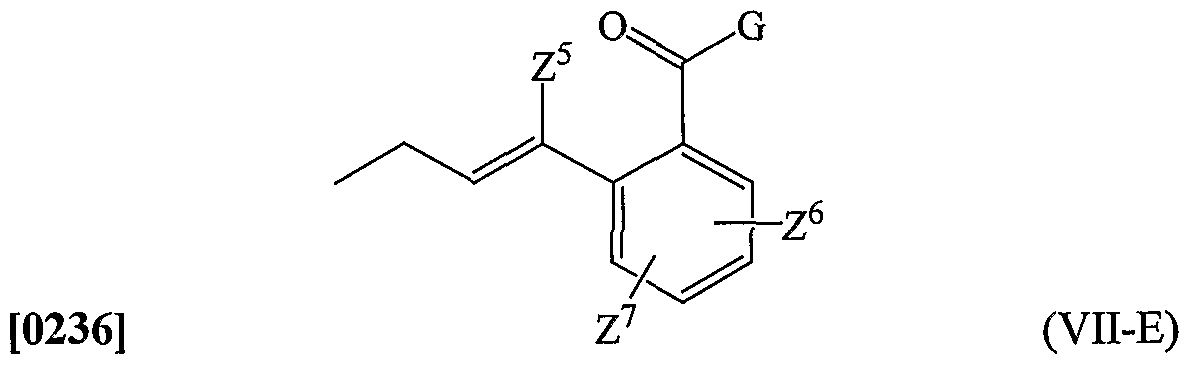
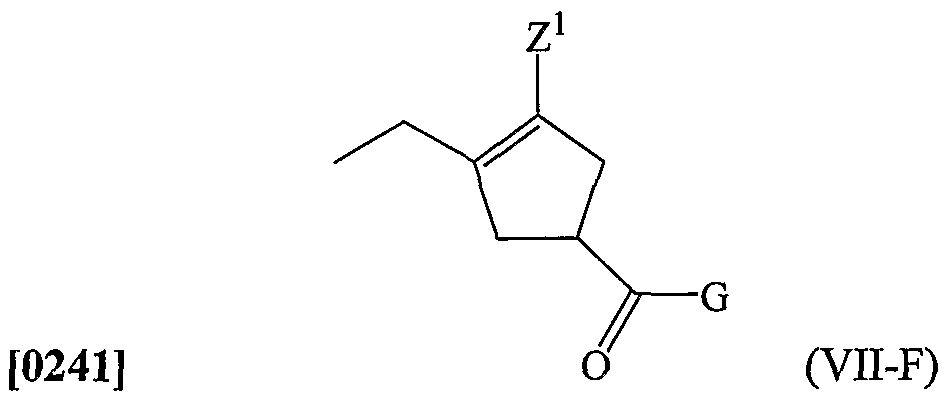





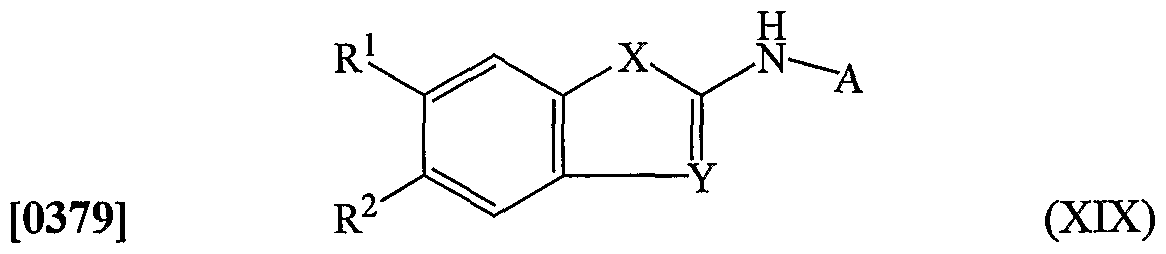


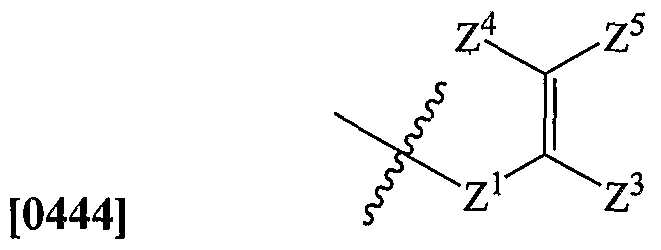


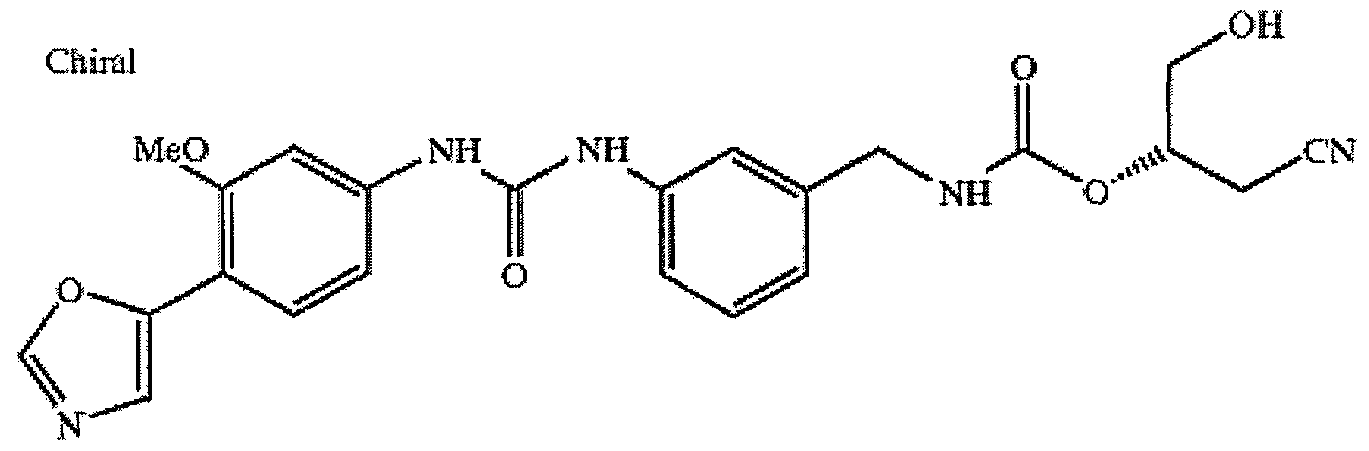


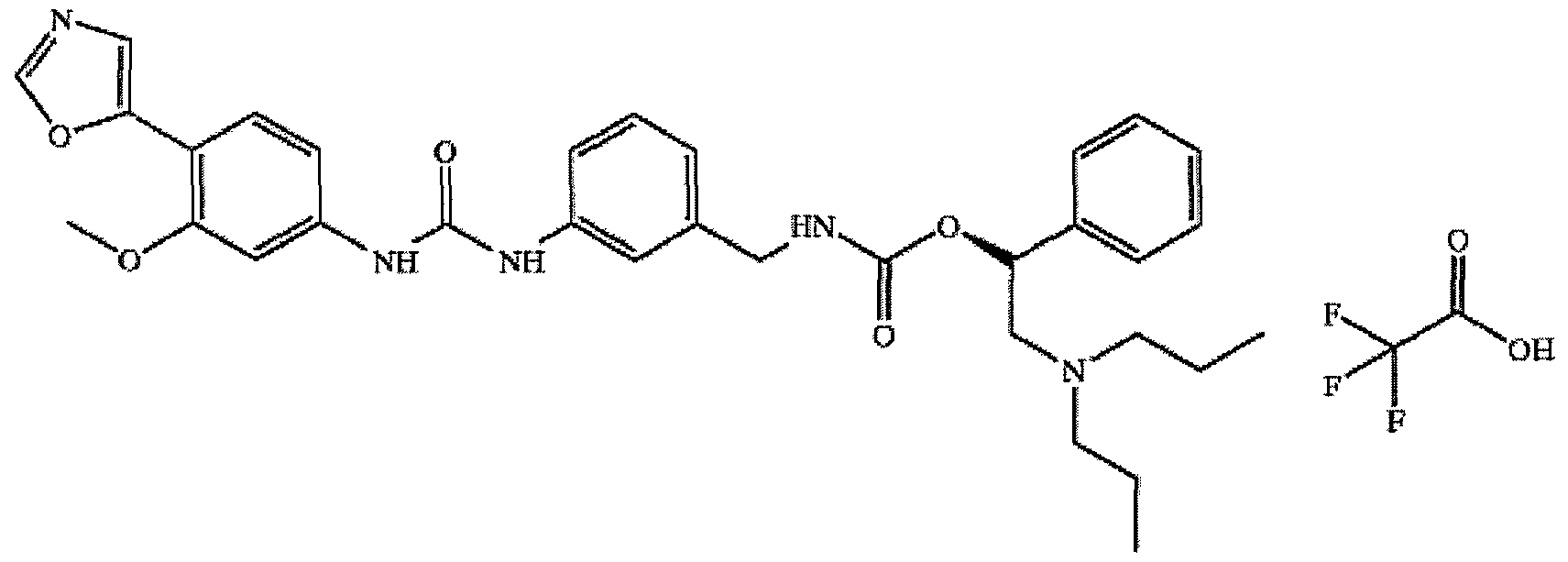


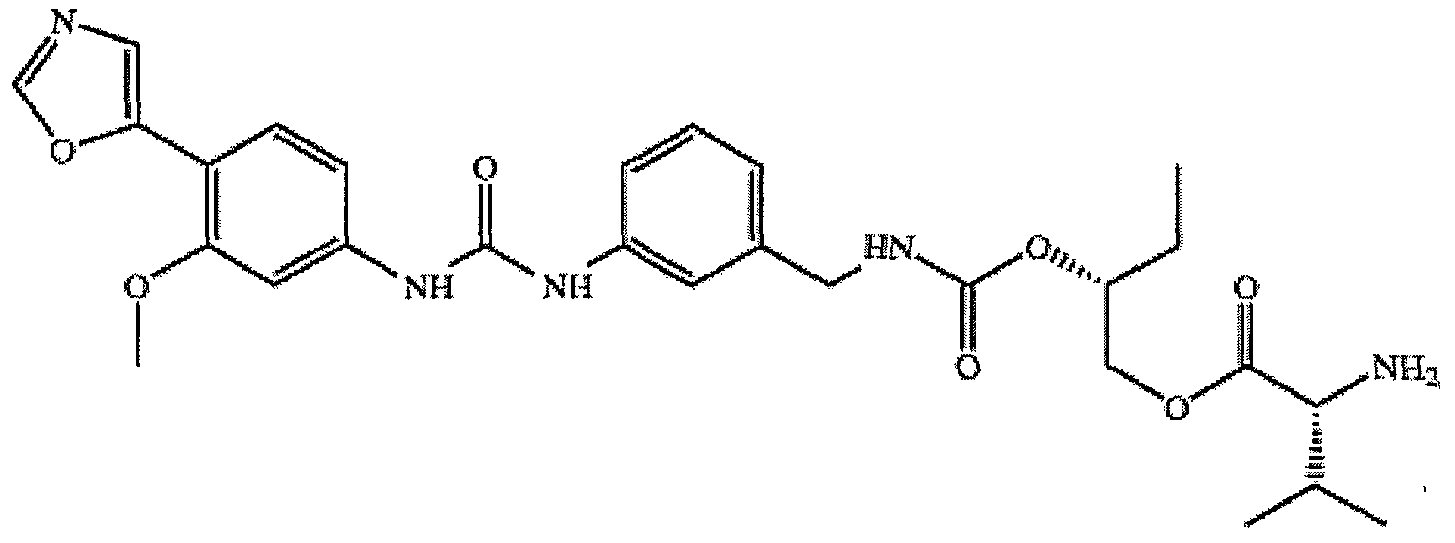


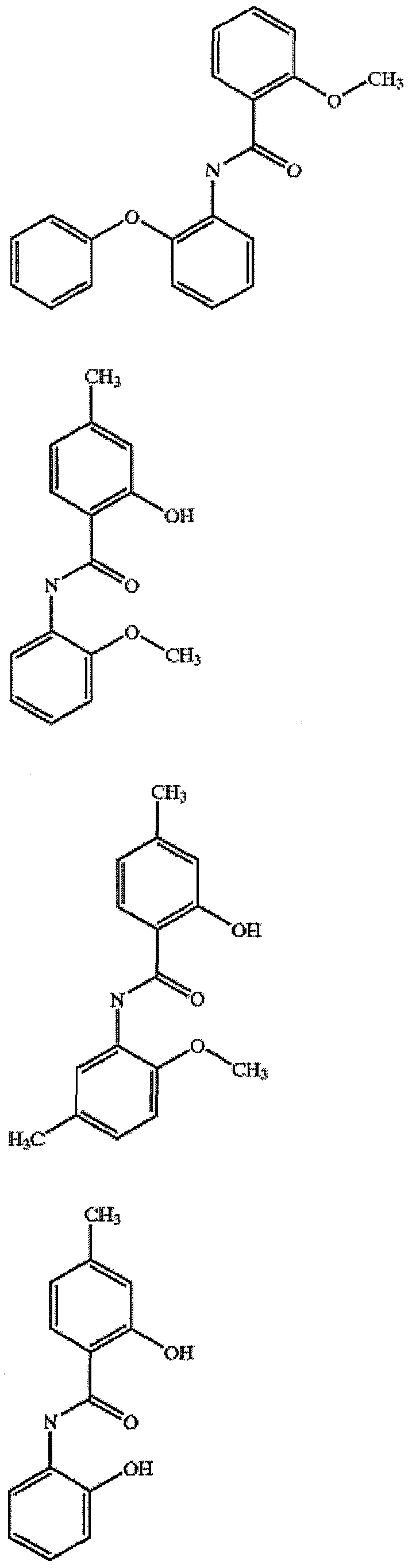


Claims


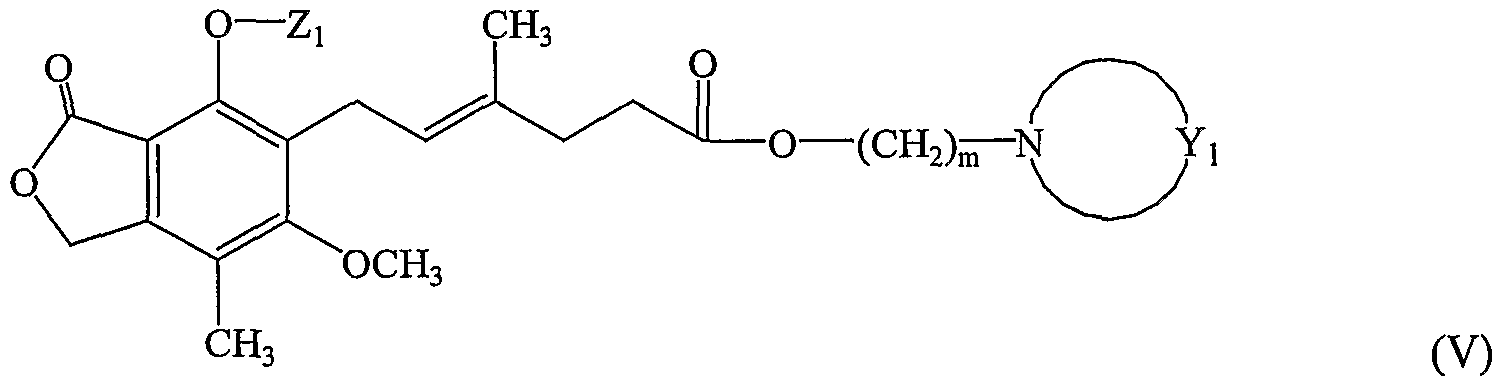


Priority Applications (4)
| Application Number | Priority Date | Filing Date | Title |
|---|---|---|---|
| AU2005274681A AU2005274681A1 (en) | 2004-08-16 | 2005-08-16 | Metabolism-modulating agents and uses therefor |
| JP2007526122A JP2008517584A (en) | 2004-08-16 | 2005-08-16 | Metabolic regulators and uses therefor |
| CA002577169A CA2577169A1 (en) | 2004-08-16 | 2005-08-16 | Metabolism-modulating agents and uses therefor |
| EP05773612A EP1786415A4 (en) | 2004-08-16 | 2005-08-16 | Metabolism-modulating agents and uses therefor |
Applications Claiming Priority (2)
| Application Number | Priority Date | Filing Date | Title |
|---|---|---|---|
| US60179704P | 2004-08-16 | 2004-08-16 | |
| US60/601,797 | 2004-08-16 |
Publications (1)
| Publication Number | Publication Date |
|---|---|
| WO2006017896A1 true WO2006017896A1 (en) | 2006-02-23 |
Family
ID=35907170
Family Applications (1)
| Application Number | Title | Priority Date | Filing Date |
|---|---|---|---|
| PCT/AU2005/001235 Ceased WO2006017896A1 (en) | 2004-08-16 | 2005-08-16 | Metabolism-modulating agents and uses therefor |
Country Status (6)
| Country | Link |
|---|---|
| US (1) | US7915255B2 (en) |
| EP (1) | EP1786415A4 (en) |
| JP (1) | JP2008517584A (en) |
| AU (1) | AU2005274681A1 (en) |
| CA (1) | CA2577169A1 (en) |
| WO (1) | WO2006017896A1 (en) |
Cited By (6)
| Publication number | Priority date | Publication date | Assignee | Title |
|---|---|---|---|---|
| US8609717B2 (en) | 2010-08-18 | 2013-12-17 | Samumed, Llc | β- and γ-diketones and γ-hydroxyketones as WNT/β-catenin signaling pathway activators |
| US9533976B2 (en) | 2013-02-22 | 2017-01-03 | Samumed, Llc | γ-diketones as WNT/β-catenin signaling pathway activators |
| US9795550B2 (en) | 2014-08-20 | 2017-10-24 | Samumed, Llc | Gamma-diketones for treatment and prevention of aging skin and wrinkles |
| CN116693597A (en) * | 2023-03-09 | 2023-09-05 | 南京大学 | Method for nitrosation of tyrosine in phenol derivatives, polypeptides and proteins |
| US11827627B2 (en) | 2021-06-04 | 2023-11-28 | Vertex Pharmaceuticals Incorporated | N-(hydroxyalkyl (hetero)aryl) tetrahydrofuran carboxamides as modulators of sodium channels |
| US11834441B2 (en) | 2019-12-06 | 2023-12-05 | Vertex Pharmaceuticals Incorporated | Substituted tetrahydrofurans as modulators of sodium channels |
Families Citing this family (1)
| Publication number | Priority date | Publication date | Assignee | Title |
|---|---|---|---|---|
| WO2021178368A1 (en) * | 2020-03-02 | 2021-09-10 | University Of Cincinnati | Methods of controlling bodyweight by modulating phosphatidylinositol 5-phosphate 4-kinase beta activity |
Family Cites Families (4)
| Publication number | Priority date | Publication date | Assignee | Title |
|---|---|---|---|---|
| US4753935A (en) * | 1987-01-30 | 1988-06-28 | Syntex (U.S.A.) Inc. | Morpholinoethylesters of mycophenolic acid and pharmaceutical compositions |
| DE19948126A1 (en) * | 1999-10-06 | 2001-04-12 | Max Delbrueck Centrum | Pharmaceutical agent for the treatment of cachexia and / or cardiogenic shock |
| US7179791B2 (en) * | 2001-01-11 | 2007-02-20 | Duke University | Inhibiting GS-FDH to modulate NO bioactivity |
| JP2002241276A (en) * | 2001-02-16 | 2002-08-28 | Kaken Pharmaceut Co Ltd | Adipocyte differentiation inhibitor containing mycophenolic acid |
-
2005
- 2005-08-16 AU AU2005274681A patent/AU2005274681A1/en not_active Abandoned
- 2005-08-16 JP JP2007526122A patent/JP2008517584A/en not_active Withdrawn
- 2005-08-16 US US11/205,279 patent/US7915255B2/en not_active Expired - Fee Related
- 2005-08-16 WO PCT/AU2005/001235 patent/WO2006017896A1/en not_active Ceased
- 2005-08-16 EP EP05773612A patent/EP1786415A4/en not_active Withdrawn
- 2005-08-16 CA CA002577169A patent/CA2577169A1/en not_active Abandoned
Non-Patent Citations (3)
| Title |
|---|
| See also references of EP1786415A4 * |
| WHITEHEAD J. P. ET AL: "Insulin and oleate promote translocation of inosine-5' monophosphate dehydrogenase to lipid bodies", TRAFFIC, vol. 5, no. 10, October 2004 (2004-10-01), pages 739 - 749, XP008095784 * |
| WITTERS L. A. ET AL: "Modulation of acetyl-CoA carboxylase by inhibitors of IMP dehydrogenase: implications for insulin regulation", ARCH. BIOCHEM. BIOPHYS., vol. 252, no. 1, January 1987 (1987-01-01), pages 130 - 135, XP024760166 * |
Cited By (22)
| Publication number | Priority date | Publication date | Assignee | Title |
|---|---|---|---|---|
| US8629176B1 (en) | 2010-08-18 | 2014-01-14 | Samumed, Llc | β- and γ-diketones and γ-hydroxyketones as WNT/ β-catenin signaling pathway activators |
| US8921413B2 (en) | 2010-08-18 | 2014-12-30 | Samumed, Llc | β- and γ-diketones and γ-hydroxyketones as WNT/ β-catenin signaling pathway activators |
| US9303010B2 (en) | 2010-08-18 | 2016-04-05 | Samumed, Llc | β- and γ-diketones and γ-hydroxyketones as Wnt/β-catenin signaling pathway activators |
| US9493437B2 (en) | 2010-08-18 | 2016-11-15 | Samumed, Llc | β- and γ-diketones and γ-hydroxyketones as Wnt/ β-catenin signaling pathway activators |
| US9884053B2 (en) | 2010-08-18 | 2018-02-06 | Samumed, Llc | β- and γ-diketones and γ-hydroxyketones as WNT/β-catenin signaling pathway activators |
| US10314832B2 (en) | 2010-08-18 | 2019-06-11 | Samumed, Llc | β- and γ-diketones and γ-hydroxyketones as Wnt/β-catenin signaling pathway activators |
| US8609717B2 (en) | 2010-08-18 | 2013-12-17 | Samumed, Llc | β- and γ-diketones and γ-hydroxyketones as WNT/β-catenin signaling pathway activators |
| US11034682B2 (en) | 2013-02-22 | 2021-06-15 | Samumed, Llc | Gamma-diketones as wnt/β-catenin signaling pathway activators |
| US9533976B2 (en) | 2013-02-22 | 2017-01-03 | Samumed, Llc | γ-diketones as WNT/β-catenin signaling pathway activators |
| US11673885B2 (en) | 2013-02-22 | 2023-06-13 | Biosplice Therapeutics, Inc. | γ-diketones as Wnt/β-catenin signaling pathway activators |
| US9951053B2 (en) | 2013-02-22 | 2018-04-24 | Samumed, Llc | γ-diketones as Wnt/β-catenin signaling pathway activators |
| US10457672B2 (en) | 2013-02-22 | 2019-10-29 | Samumed, Llc | γ-diketones as Wnt/β-catenin signaling pathway activators |
| US10434052B2 (en) | 2014-08-20 | 2019-10-08 | Samumed, Llc | Gamma-diketones for treatment and prevention of aging skin and wrinkles |
| US11077046B2 (en) | 2014-08-20 | 2021-08-03 | Biosplice Therapeutics, Inc. | Gamma-diketones for treatment and prevention of aging skin and wrinkles |
| US9795550B2 (en) | 2014-08-20 | 2017-10-24 | Samumed, Llc | Gamma-diketones for treatment and prevention of aging skin and wrinkles |
| US11839679B2 (en) | 2014-08-20 | 2023-12-12 | Biosplice Therapeutics, Inc. | Gamma-diketones for treatment and prevention of aging skin and wrinkles |
| US11834441B2 (en) | 2019-12-06 | 2023-12-05 | Vertex Pharmaceuticals Incorporated | Substituted tetrahydrofurans as modulators of sodium channels |
| US11919887B2 (en) | 2019-12-06 | 2024-03-05 | Vertex Pharmaceuticals Incorporated | Substituted tetrahydrofurans as modulators of sodium channels |
| US12247021B2 (en) | 2019-12-06 | 2025-03-11 | Vertex Pharmaceuticals Incorporated | Substituted tetrahydrofurans as modulators of sodium channels |
| US11827627B2 (en) | 2021-06-04 | 2023-11-28 | Vertex Pharmaceuticals Incorporated | N-(hydroxyalkyl (hetero)aryl) tetrahydrofuran carboxamides as modulators of sodium channels |
| US12258333B2 (en) | 2021-06-04 | 2025-03-25 | Vertex Pharmaceuticals Incorporated | N-(hydroxyalkyl (hetero)aryl) tetrahydrofuran carboxamides as modulators of sodium channels |
| CN116693597A (en) * | 2023-03-09 | 2023-09-05 | 南京大学 | Method for nitrosation of tyrosine in phenol derivatives, polypeptides and proteins |
Also Published As
| Publication number | Publication date |
|---|---|
| EP1786415A1 (en) | 2007-05-23 |
| EP1786415A4 (en) | 2010-01-20 |
| US20060106097A1 (en) | 2006-05-18 |
| AU2005274681A1 (en) | 2006-02-23 |
| US7915255B2 (en) | 2011-03-29 |
| JP2008517584A (en) | 2008-05-29 |
| CA2577169A1 (en) | 2006-02-23 |
Similar Documents
| Publication | Publication Date | Title |
|---|---|---|
| Horike et al. | AMP-activated protein kinase activation increases phosphorylation of glycogen synthase kinase 3β and thereby reduces cAMP-responsive element transcriptional activity and phosphoenolpyruvate carboxykinase C gene expression in the liver | |
| Wang et al. | Prostaglandin E2 induces interleukin-6 expression in human chondrocytes via cAMP/protein kinase A-and phosphatidylinositol 3-kinase-dependent NF-κB activation | |
| US20140221455A1 (en) | Differentiation modulating agents and uses therefor | |
| JP6680759B2 (en) | Medical use of artemisinin compounds and gephyrin agonists | |
| US7022484B2 (en) | Methods for treating neuropathological states and neurogenic inflammatory states and methods for identifying compounds useful therein | |
| US10526418B2 (en) | Modulators of ACYL-COA lysocardiolipin acyltransferase 1 (ALCAT1) and uses thereof | |
| WO2008016730A2 (en) | Compositions and methods for reducing cellular fat | |
| JP5539653B2 (en) | Compositions and methods by treatment with tyrosine kinase inhibitors to reduce cellular fat and predict cardiotoxicity | |
| Machado et al. | α− Calcitonin gene-related peptide inhibits autophagy and calpain systems and maintains the stability of neuromuscular junction in denervated muscles | |
| Myung et al. | Heat shock protein 90 inhibitor induces apoptosis and attenuates activation of hepatic stellate cells | |
| Li et al. | Calenduloside e modulates macrophage polarization via KLF2-regulated glycolysis, contributing to attenuates atherosclerosis | |
| US7915255B2 (en) | Metabolism-modulating agents and uses therefor | |
| Florio et al. | Basic fibroblast growth factor activates endothelial nitric-oxide synthase in CHO-K1 cells via the activation of ceramide synthesis | |
| Forget et al. | Impact of basic FGF expression in astrocytes on dopamine neuron synaptic function and development | |
| Bu et al. | Activated central galanin type 1 receptor alleviated insulin resistance in diabetic rat muscle | |
| Petecchia et al. | Mechanisms of bradykinin-induced contraction in human fetal lung fibroblasts | |
| Woodmansee et al. | The proliferative status of thyrotropes is dependent on modulation of specific cell cycle regulators by thyroid hormone | |
| Li et al. | Suppressive effects of leflunomide on leptin-induced TIMP-1 production involves on hepatic stellate cell proliferation and apoptosis | |
| Al Gwairi et al. | Multiple growth factors, but not VEGF, stimulate glycosaminoglycan hyperelongation in retinal choroidal endothelial cells | |
| Hoffmann et al. | Tenilsetam prevents early diabetic retinopathy without correcting pericyte loss | |
| Shi et al. | Andrographolide inhibits murine embryonic neuronal development through PFKFB3-mediated glycolytic pathway | |
| WO2005065686A1 (en) | Differentiation modulating agents and uses therefor | |
| Yokoseki et al. | Chromatin remodeler BRD9 represses transcription of PPARα target genes including CPT1A to suppress lipid metabolism | |
| Yasar et al. | Homocysteine Affects Vascular Smooth Muscle Cell Proliferation by Interacting with Angiotensin II Type 1 and Type 2 Receptors | |
| WO2009038289A2 (en) | Pharmaceutical compositions for preventing or treating fibrosis |
Legal Events
| Date | Code | Title | Description |
|---|---|---|---|
| AK | Designated states |
Kind code of ref document: A1 Designated state(s): AE AG AL AM AT AU AZ BA BB BG BR BW BY BZ CA CH CN CO CR CU CZ DE DK DM DZ EC EE EG ES FI GB GD GE GH GM HR HU ID IL IN IS JP KE KG KM KP KR KZ LC LK LR LS LT LU LV MA MD MG MK MN MW MX MZ NA NG NI NO NZ OM PG PH PL PT RO RU SC SD SE SG SK SL SM SY TJ TM TN TR TT TZ UA UG US UZ VC VN YU ZA ZM ZW |
|
| AL | Designated countries for regional patents |
Kind code of ref document: A1 Designated state(s): GM KE LS MW MZ NA SD SL SZ TZ UG ZM ZW AM AZ BY KG KZ MD RU TJ TM AT BE BG CH CY CZ DE DK EE ES FI FR GB GR HU IE IS IT LT LU LV MC NL PL PT RO SE SI SK TR BF BJ CF CG CI CM GA GN GQ GW ML MR NE SN TD TG |
|
| 121 | Ep: the epo has been informed by wipo that ep was designated in this application | ||
| DPE1 | Request for preliminary examination filed after expiration of 19th month from priority date (pct application filed from 20040101) | ||
| WWE | Wipo information: entry into national phase |
Ref document number: 2005274681 Country of ref document: AU |
|
| WWE | Wipo information: entry into national phase |
Ref document number: 2577169 Country of ref document: CA |
|
| WWE | Wipo information: entry into national phase |
Ref document number: 553255 Country of ref document: NZ Ref document number: 2007526122 Country of ref document: JP |
|
| NENP | Non-entry into the national phase |
Ref country code: DE |
|
| ENP | Entry into the national phase |
Ref document number: 2005274681 Country of ref document: AU Date of ref document: 20050816 Kind code of ref document: A |
|
| WWP | Wipo information: published in national office |
Ref document number: 2005274681 Country of ref document: AU |
|
| WWE | Wipo information: entry into national phase |
Ref document number: 2005773612 Country of ref document: EP |
|
| WWP | Wipo information: published in national office |
Ref document number: 2005773612 Country of ref document: EP |