WO2006024820A1 - Isoxazoline derivatives and their use as herbicides - Google Patents
Isoxazoline derivatives and their use as herbicides Download PDFInfo
- Publication number
- WO2006024820A1 WO2006024820A1 PCT/GB2005/003228 GB2005003228W WO2006024820A1 WO 2006024820 A1 WO2006024820 A1 WO 2006024820A1 GB 2005003228 W GB2005003228 W GB 2005003228W WO 2006024820 A1 WO2006024820 A1 WO 2006024820A1
- Authority
- WO
- WIPO (PCT)
- Prior art keywords
- formula
- compound
- alkyl
- substituted
- phenyl
- Prior art date
- Legal status (The legal status is an assumption and is not a legal conclusion. Google has not performed a legal analysis and makes no representation as to the accuracy of the status listed.)
- Ceased
Links
- XXUZEGNONGKRMB-UHFFFAOYSA-N CC(C)(C1)ON=C1S(C(c(c(C(F)(F)F)n[n]1C)c1OC1COC1)(F)F)(=O)=O Chemical compound CC(C)(C1)ON=C1S(C(c(c(C(F)(F)F)n[n]1C)c1OC1COC1)(F)F)(=O)=O XXUZEGNONGKRMB-UHFFFAOYSA-N 0.000 description 1
- INNTZBZCSLFQCS-UHFFFAOYSA-N CC(C)(C1)ON=C1S(C(c(c(C(F)(F)F)n[n]1C)c1OC1COC1)F)(=O)=O Chemical compound CC(C)(C1)ON=C1S(C(c(c(C(F)(F)F)n[n]1C)c1OC1COC1)F)(=O)=O INNTZBZCSLFQCS-UHFFFAOYSA-N 0.000 description 1
- AGNCTEYWDYNLCT-UHFFFAOYSA-N CC(C)(C1)ON=C1S(C(c(c(F)ccc1)c1F)(F)Br)(=O)=O Chemical compound CC(C)(C1)ON=C1S(C(c(c(F)ccc1)c1F)(F)Br)(=O)=O AGNCTEYWDYNLCT-UHFFFAOYSA-N 0.000 description 1
- NARJDQRYHHCTGE-UHFFFAOYSA-N CC(C)(C1)ON=C1S(C(c(c(F)ccc1)c1F)F)(=O)=O Chemical compound CC(C)(C1)ON=C1S(C(c(c(F)ccc1)c1F)F)(=O)=O NARJDQRYHHCTGE-UHFFFAOYSA-N 0.000 description 1
- INCOVWJZVJYEAC-UHFFFAOYSA-N CC(C)(C1)ON=C1S(C)(=O)=O Chemical compound CC(C)(C1)ON=C1S(C)(=O)=O INCOVWJZVJYEAC-UHFFFAOYSA-N 0.000 description 1
- DGNZBXYLZZKJMP-UHFFFAOYSA-N CC(C)(C1)ON=C1S(Cc1cc(OC)n[o]1)(=O)=O Chemical compound CC(C)(C1)ON=C1S(Cc1cc(OC)n[o]1)(=O)=O DGNZBXYLZZKJMP-UHFFFAOYSA-N 0.000 description 1
- OKTUOSWDBDEBSX-UHFFFAOYSA-N CC(C)(C1)ON=C1SCc1c(C#N)[s]nc1C Chemical compound CC(C)(C1)ON=C1SCc1c(C#N)[s]nc1C OKTUOSWDBDEBSX-UHFFFAOYSA-N 0.000 description 1
- BLUCNUOYTAESRE-UHFFFAOYSA-N CC(C)(C1)ON=C1SCc1n[n](C)cc1C(F)(F)F Chemical compound CC(C)(C1)ON=C1SCc1n[n](C)cc1C(F)(F)F BLUCNUOYTAESRE-UHFFFAOYSA-N 0.000 description 1
- MFLVGYWDGKIAGP-UHFFFAOYSA-N CC(c1ccccc1)S(C1=NOC(C)(C)C1)(=O)=O Chemical compound CC(c1ccccc1)S(C1=NOC(C)(C)C1)(=O)=O MFLVGYWDGKIAGP-UHFFFAOYSA-N 0.000 description 1
- ORIQIOLYTKHVIG-PLNGDYQASA-N CCOC(/C(/C)=C(/C(F)(F)F)\N)=O Chemical compound CCOC(/C(/C)=C(/C(F)(F)F)\N)=O ORIQIOLYTKHVIG-PLNGDYQASA-N 0.000 description 1
- POCXMFTVJCJZTK-UHFFFAOYSA-N C[n]1nc(C(F)(F)F)c(CBr)c1OC1COC1 Chemical compound C[n]1nc(C(F)(F)F)c(CBr)c1OC1COC1 POCXMFTVJCJZTK-UHFFFAOYSA-N 0.000 description 1
- YOOQCLLGWKFPOU-UHFFFAOYSA-N C[n]1nc(CO)c(C(F)(F)F)c1 Chemical compound C[n]1nc(CO)c(C(F)(F)F)c1 YOOQCLLGWKFPOU-UHFFFAOYSA-N 0.000 description 1
- SHRBPDNRPIFELJ-UHFFFAOYSA-N Cc1c(C(F)(F)F)[n](C)nc1O Chemical compound Cc1c(C(F)(F)F)[n](C)nc1O SHRBPDNRPIFELJ-UHFFFAOYSA-N 0.000 description 1
- DEUJAGLZSKGNER-UHFFFAOYSA-N Cc1cc(C2CC2)n[o]1 Chemical compound Cc1cc(C2CC2)n[o]1 DEUJAGLZSKGNER-UHFFFAOYSA-N 0.000 description 1
- KQGNVLFUTPFLKO-UHFFFAOYSA-N Cc1n[o]c(C2CC2)c1 Chemical compound Cc1n[o]c(C2CC2)c1 KQGNVLFUTPFLKO-UHFFFAOYSA-N 0.000 description 1
Classifications
-
- C—CHEMISTRY; METALLURGY
- C07—ORGANIC CHEMISTRY
- C07D—HETEROCYCLIC COMPOUNDS
- C07D261/00—Heterocyclic compounds containing 1,2-oxazole or hydrogenated 1,2-oxazole rings
- C07D261/02—Heterocyclic compounds containing 1,2-oxazole or hydrogenated 1,2-oxazole rings not condensed with other rings
- C07D261/06—Heterocyclic compounds containing 1,2-oxazole or hydrogenated 1,2-oxazole rings not condensed with other rings having two or more double bonds between ring members or between ring members and non-ring members
- C07D261/10—Heterocyclic compounds containing 1,2-oxazole or hydrogenated 1,2-oxazole rings not condensed with other rings having two or more double bonds between ring members or between ring members and non-ring members with hetero atoms or with carbon atoms having three bonds to hetero atoms with at the most one bond to halogen, e.g. ester or nitrile radicals, directly attached to ring carbon atoms
-
- A—HUMAN NECESSITIES
- A01—AGRICULTURE; FORESTRY; ANIMAL HUSBANDRY; HUNTING; TRAPPING; FISHING
- A01N—PRESERVATION OF BODIES OF HUMANS OR ANIMALS OR PLANTS OR PARTS THEREOF; BIOCIDES, e.g. AS DISINFECTANTS, AS PESTICIDES OR AS HERBICIDES; PEST REPELLANTS OR ATTRACTANTS; PLANT GROWTH REGULATORS
- A01N43/00—Biocides, pest repellants or attractants, or plant growth regulators containing heterocyclic compounds
- A01N43/72—Biocides, pest repellants or attractants, or plant growth regulators containing heterocyclic compounds having rings with nitrogen atoms and oxygen or sulfur atoms as ring hetero atoms
- A01N43/80—Biocides, pest repellants or attractants, or plant growth regulators containing heterocyclic compounds having rings with nitrogen atoms and oxygen or sulfur atoms as ring hetero atoms five-membered rings with one nitrogen atom and either one oxygen atom or one sulfur atom in positions 1,2
-
- C—CHEMISTRY; METALLURGY
- C07—ORGANIC CHEMISTRY
- C07D—HETEROCYCLIC COMPOUNDS
- C07D413/00—Heterocyclic compounds containing two or more hetero rings, at least one ring having nitrogen and oxygen atoms as the only ring hetero atoms
- C07D413/02—Heterocyclic compounds containing two or more hetero rings, at least one ring having nitrogen and oxygen atoms as the only ring hetero atoms containing two hetero rings
- C07D413/12—Heterocyclic compounds containing two or more hetero rings, at least one ring having nitrogen and oxygen atoms as the only ring hetero atoms containing two hetero rings linked by a chain containing hetero atoms as chain links
-
- C—CHEMISTRY; METALLURGY
- C07—ORGANIC CHEMISTRY
- C07D—HETEROCYCLIC COMPOUNDS
- C07D417/00—Heterocyclic compounds containing two or more hetero rings, at least one ring having nitrogen and sulfur atoms as the only ring hetero atoms, not provided for by group C07D415/00
- C07D417/02—Heterocyclic compounds containing two or more hetero rings, at least one ring having nitrogen and sulfur atoms as the only ring hetero atoms, not provided for by group C07D415/00 containing two hetero rings
- C07D417/12—Heterocyclic compounds containing two or more hetero rings, at least one ring having nitrogen and sulfur atoms as the only ring hetero atoms, not provided for by group C07D415/00 containing two hetero rings linked by a chain containing hetero atoms as chain links
Definitions
- the present invention relates to novel, herbicidal isoxazoline compounds, to processes for their preparation, to compositions comprising those compounds, and to their use in controlling weeds, especially in crops of useful plants, or in inhibiting plant growth.
- Isoxazoline compounds which display a herbicidal action are described, for example, in WO 01/012613, WO 02/062770, WO 03/000686, WO 04/010165 and JP 2005/035924. The preparation of these compounds is also described in WO 04/013106. Novel isoxazoline compounds which display herbicidal and growth-inhibiting properties have now been found.
- the present invention accordingly relates to compounds of formula I
- R 1 and R 2 are each independently of the other hydrogen, Ci-C 10 haloalkyl, C 3 -C 8 cycloalkyl or C 3 -C 8 cycloalkyl-C 1 -C 3 alkyl, or
- R 3 and R 4 are each independently of the other hydrogen, Ci-Cjoalkyl, Q-Ciohaloalkyl, CrCgcycloalkyl-Q-Qoalkyl, Q-C ⁇ alkoxy-Ci-Qoalkyl or C 3 -C 8 cycloalkyl, or R 3 and R 4 together with the carbon atom to which they are bonded form a C 3 -C 7 ring, or R 1 with R 3 or R and together with the carbon atoms to which they are bonded form a C 5 -C 8 ring, or
- R 5 and R 6 are each independently of the other C 3 -C 6 cycloalkyl, d-C 6 haloalkyl, C 1 -C 6 - hydroxyalkyl, pyrrolyl-CH 2 -, pyrazolyl-CH 2 -, 4,5-dihydropyrazolyl-CH 2 -, triazolyl-CH 2 - , imidazolyl-CH 2 -, tetrazolyl-CH 2 -, indolyl-CH 2 -, indazolyl-CH 2 -, benzotriazolyl-CH 2 ⁇ , C 2 -C 6 alkenyl, C 2 -C 6 alkynyl, C 2 -C 6 haloalkenyl, CrC6alkylcarbonyloxy-C 2 -C 6 alkenyl, C 2
- R 5 and R 6 are each independently of the other benzyloxycarbonyl or benzyloxycarbonyl substituted by one to three R 9 , or R 5 and R 6 are each independently of the other nitro, formyl, carboxyl, halogen, azido, thiocyanato, tri(Ci-C 6 alkyl)silyl, Ci-C 6 alkylcarbonyl-C 1 -C 2 alkyl, Q-C 6 alkoxycarbonyl-
- C 2 alkyl-NO 2 , mercapto, phenylthio or phenylthio substituted by one to three R 9 , or R 5 and R 6 are each independently of the other pyridylthio, Ci-C 6 alkylthio, Ci-C 6 halo- alkylthio, C 1 -C 6 alkylthio-C 1 -C 6 alkyl, Q-C 6 alkylsulfmyl, C r C 6 haloalkylsulfinyl, Q-
- R 5 and R 6 are each independently of the other phenylsulfinyl or phenylsulfinyl substituted by one to three R 9 , or
- R 5 and R 6 are each independently of the other phenylsulfonyl or phenylsulfonyl substituted by one to three R 9 , or
- R 5 and R 6 are each independently of the other hydroxyl, Q-C 6 alkoxy, Q-C 6 haloalkoxy, Q-C 6 alkylsulfonyloxy, Q ⁇ C 6 haloalkylsulfonyloxy, phenoxy or phenoxy substituted by one to three R 9 , or
- R 5 and R 6 are each independently of the other benzyl or benzyl substituted by one to three R 9 , or
- R 5 and R 6 are each independently of the other benzyloxy or benzyloxy substituted by one to three R 9 , or
- R 5 and R 6 are each independently of the other -CONH-SO 2 -Q-C 6 alkyl, -CONH-SO 2 -
- R 5 and R 6 are each independently of the other -OCO-Q-C 6 alkyl, -OCO-Q-Cerenzalkyl,
- R 5 and R 6 are each independently of the other -OCONH-C r C 6 alkyl, -OCONH- Q-Qhaloalkyl, -OCONH-phenyl or -OCONH-phenyl substituted by one to three R 9 , or R and R are each independently of the other -CONR R wherein R and R are each independently of the other hydrogen, Ci-C 6 alkyl, C 3 -C 6 cycloalkyl, Q-C ⁇ haloalkyl, phenyl or phenyl substituted by CrQhaloalkyl, nitro, cyano or by halogen, or R 7 and R 8 together form a C 3 -Csalkylene group which optionally contains one oxygen or sulfur atom or one to two amino or Ci-C 6 alkylamino groups, or
- R 5 and R 6 are each independently of the other phenyl or naphthyl, which is optionally substituted by one to three substituents independently selected from Q-C ⁇ alkyl, C 3 -C 6 cycloalkyl, C r C 6 haloalkyl, Ci-C 6 hydroxyalkyl, C 2 -C 6 alkenyl, C 2 -C 6 alkynyl, C 2 -C 6 haloalkenyl, C]-C 6 alkylcarbonyl, Ci-C 6 alkoxycarbonyl, benzyloxycarbonyl or benzyloxycarbonyl substituted by one to three R 9 , nitro, cyano, formyl, carboxyl, halogen, azido, thiocyanato, tri(Ci-C 6 alkyl)silyl, mercapto, phenylthio or phenylthio substituted by one to three R , phenylsulfinyl or phen
- Y is hydrogen, Ci-C 6 alkyl, C 3 -C 6 cycloalkyl, Q-Qhaloalkyl, C 2 -C 6 alkenyl, C 2 -C 6 alkynyl, C 2 -C 6 haloalkenyl, C]-C 6 alkylcarbonyl, Ci-C ⁇ alkoxycarbonyl, nitro, cyano, formyl, hydroxyl, carboxyl, halogen, azido, thiocyanato, tri(Ci-C 6 alkyl)silyl, Ci-C 6 alkyl- thio, Ci-C 6 alkylsulfmyl, CpC ⁇ alkylsulfonyl, benzylsulfonyl or benzylsulfonyl substituted by one to three R , or
- Y is phenylsulfonyl or phenylsulfonyl substituted by one to three R , or
- Y is C]-C 6 alkoxy, Q-Qhaloalkoxy, C]-C 6 alkylsulfonyloxy, CrQhaloalkylsulfonyloxy, phenoxy or phenoxy substituted by one to three R 9 , or
- Y is benzyloxy or benzyloxy substituted by one to three R 9 , or
- Y is -CONH-SO 2 -CrC 6 alkyl or -CONH-SO 2 -C 1 -C 6 haloalkyl, or
- Y is phenyl, naphthyl or tetrahydronaphthyl, which is optionally substituted by one to three substituents independently selected from Q-Cgalkyl, C 3 -C 6 cycloalkyl, C 1 -C 6 ImIo- alkyl, Ci-Qhydroxyalkyl, CrC ⁇ alkoxy-Q-C ⁇ alkyl, C 2 -C 6 alkenyl, C 2 -C 6 alkynyl,
- Y is a 5- to 10-membered heterocycle containing one to three nitrogen, oxygen or sulfur atoms, which is optionally benzo-fused, and which is optionally substituted by one to three substituents independently selected from C ! -C 6 alkyl, C 3 -C 6 cycloalkyl, C 1 -C 6 ImIo- alkyl, Ci-C 6 hydroxyalkyl, Ci-C 6 alkoxy-C,-C 6 alkyl, C 2 -C 6 alkenyl, C 2 -C 6 alkynyl, C 2 -C 6 haloalkenyl, C]-C 6 alkylcarbonyl, Ci-Qhaloalkylcarbonyl, C]-C 6 alkoxycarbonyl, nitro, cyano, formyl, carboxyl, halogen, azido, thiocyanato, mercapto, -SF 5 , d-dalkylthio, Ci-C 6 alkylsulfmy
- R 9 are independently from each other d-C 6 haloalkyl, d-C 6 alkoxycarbonyl, nitro, cyano, formyl, carboxyl or halogen; and to N-oxides, salts and optical isomers of compounds of formula I.
- the compounds of the invention may contain one or more asymmetric carbon atoms, for example, in the -CR 5 R 6 - group and may exist as enantiomers (or as pairs of diastereoisomers) or as mixtures of such. Further, when m is 1, the compounds of the invention are sulfoxides, which can exists in two enantiomeric forms, and the adjacent carbon can also exists in two enantiomeric forms. Compounds of general formula I can therefore exist as racemates, diastereoisomers, or single enantiomers, and the invention includes all possible isomers or isomer mixtures in all proportions. It is to be expected that for any given compound, one isomer may be more herbicidal than another.
- alkyl groups and alkyl moieties of alkoxy, alkylthio, etc. suitably contain from 1 to 10, typically from 1 to 6, carbon atoms in the form of straight or branched chains. Examples are methyl, ethyl, zz-and zso-propyl and n-, sec-, iso- and tert-butyl.
- cycloalkyl groups and cycloalkyl moieties of cycloalkoxy, cycloalkyl-alkoxy, etc. suitably contain from 3 to 8, typically from 3 to 6, carbon atoms. Examples are cyclopropyl, cyclobutyl, cyclopentyl and cyclohexyl.
- the cycloalkyl radicals may be in bi- or tri-cyclic form.
- haloalkyl groups and haloalkyl moieties of haloalkoxy, haloalkylthio, etc. also suitably contain from 1 to 6, typically from 1 to 4, carbon atoms in the form of straight or branched chains. Examples are difluoromethyl and 2,2,2-trifluoroethyl.
- hydroxyalkyl groups also suitably contain from 1 to 6, typically from 1 to 4, carbon atoms in the form of straight or branched chains. Examples are 1 ,2-dihydroxy ethyl and 3-hydroxypropyl.
- alkenyl and alkynyl moieties also suitably contain from 2 to 6, typically from 2 to 4, carbon atoms in the form of straight or branched chains.
- Examples are allyl, but-2-enyl, 3-methylbut-2-enyl, ethynyl, propargyl and but-2- ynyl.
- haloalkenyl groups and haloalkynyl groups also suitably contain from 2 to 6, typically from 2 to 4, carbon atoms in the form of straight or branched chains. Examples are trifluoroallyl and l-chloroprop-l-yn-3-yl.
- Halo includes fluoro, chloro, bromo and iodo. Most commonly it is fluoro, chloro or bromo and usually fluoro or chloro.
- alkylene groups suitably contain from 1 to 10, typically from 1 to 6, carbon atoms in the form of straight or branched chains.
- alkylene groups suitably contain from 1 to 10, typically from 1 to 6, carbon atoms in the form of straight or branched chains. Examples are methylene, ethylene, n-and w ⁇ -propylene and n-, sec-, iso- and tert-butylene.
- heterocyclic groups suitably are 5- to 10- membered rings containing one to three nitrogen, oxygen or sulfur atoms, which may be optionally benzo-fused.
- Examples are furyl, thienyl, pyrrolyl, pyrazolyl, imidazolyl, 1,2,3-triazolyl, 1 ,2,4-triazolyl, tetrazolyl, oxazolyl, isoxazolyl, thiazolyl, isothiazolyl, 1 ,2,3-oxadiazolyl, 1 ,2,4-oxadiazolyl, 1,3,4-oxadiazolyl, 1 ,2,5-oxadiazolyl, 1,2,3- thiadiazolyl, 1 ,2,4-thiadiazolyl, 1,3,4-thiadiazolyl, 1,2,5-thiadiazolyl, pyridyl, pyrimidinyl, pyridazinyl, pyrazinyl, 1,2,3--thi
- the 3- to 10-membered rings which may be present as substituents in the compounds according to the invention include both carbocyclic and heterocyclic, aromatic and non-aromatic rings. Such rings may be in the form of single rings or in the form of polycyclic rings. They may carry further substituents and/or be benzo-fused.
- phenyl, naphthyl, anthryl, indenyl and phenanthrenyl the above-mentioned cycloalkyl radicals, and also rings containing oxygen, sulfur or nitrogen atoms, such as tetrahydrofuranyl, tetrahydropyranyl, 1,3- dioxolanyl, 1,3-dioxanyl, 1 ,4-dioxanyl, and morpholinyl, also furyl, thienyl, pyrrolyl, pyrazolyl, imidazolyl, 1,2,3-triazolyl, 1 ,2,4-triazolyl, tetrazolyl, oxazolyl, isoxazolyl, thiazolyl, isothiazolyl, 1,2,3-oxadiazolyl, 1 ,2,4-oxadiazolyl, 1,3,4-oxadiazolyl, 1,2,5- oxadiazoly
- R 5 or R 6 is independently a heterocycle-methyl group, for example imidazolyl-CHa-, the heterocycle is connected to the methyl group by a nitrogen.
- the invention also includes N-oxides of the compounds of formula I.
- the invention relates likewise to the salts which the compounds of formula I are able to form with amines, alkali metal and alkaline earth metal bases and quaternary ammonium bases.
- alkali metal and alkaline earth metal hydroxides as salt formers, special mention should be made of the hydroxides of lithium, sodium, potassium, magnesium and calcium, but especially the hydroxides of sodium and potassium.
- the compounds of formula I according to the invention also include hydrates which may be formed during the salt formation.
- amines suitable for ammonium salt formation include ammonia as well as primary, secondary and tertiary Q-Cisalkylamines, C]-C 4 hydroxyalkylamines and C 2 -C 4 alkoxyalkylamines, for example methylamine, ethylamine, n-propylamine, isopropylamine, the four butylamine isomers, n-amylamine, isoamylamine, hexylamine, heptylamine, octylamine, nonylamine, decylamine, pentadecylamine, hexadecylamine, heptadecylamine, octadecylamine, methylethylamine, methylisopropylamine, methylhexylamine, methylnonylamine, methylpentadecylamine, methyloctadecylamine, ethylbuty
- Preferred quaternary ammonium bases suitable for salt formation correspond, for example, to the formula [N(R 3 R b R 0 Rd )]OH wherein R a , R b , Rc and Rd are each independently of the others C)-C 4 alkyl.
- R a , R b , Rc and Rd are each independently of the others C)-C 4 alkyl.
- Other suitable tetraalkylammonium bases with other anions can be obtained, for example, by anion exchange reactions.
- this invention relates to compounds of formula I wherein
- R 1 and R 2 are each independently of the other hydrogen, Ci-Cioalkyl, Ci-Ciohaloalkyl, C 3 -C 8 cycloalkyl or C 3 -Cgcycloalkyl-Ci-C 3 alkyl, or
- R 1 and R 2 together with the carbon atom to which they are bonded form a C 3 -C 7 ring
- R 3 and R 4 are each independently of the other hydrogen, Q-Qoalkyl, Q-Qohaloalkyl, CrCgcycloalkyl-Ci-Cioalkyl, C r C 6 alkoxy-Ci-Ci 0 alkyl or C 3 -C 8 Cy cloalkyl, or
- R 3 and R 4 together with the carbon atom to which they are bonded form a C 3 -C 7 ring, or R 1 with R 3 or R 4 and together with the carbon atoms to which they are bonded form a C 5 -C 8 ring, or R 2 with R 3 or R 4 and together with the carbon atoms to which they are bonded form a Cs-Csring,
- R 5 and R 6 are each independently of the other C 3 -C 6 cycloalkyl, C]-C 6 haloalkyl, C 1 -C 6 - hydroxyalkyl, pyrrolyl-CH 2 -, pyrazolyl-CH 2 -, triazolyl-CH 2 -, imidazolyl-CH 2 -, tetrazolyl-CH 2 -, indolyl-CH2-, indazolyl-CH2-, benzotriazolyl-CH2-, C 2 -C 6 alkenyl, C 2 -C 6 alkynyl, C 2 -C 6 haloalkenyl, C 2 -C 6 alkenyloxy, C 2 -C 6 alkynyloxy, C 1 - C 6 alkylcarbonyl, Ci-C ⁇ haloalkylcarbonyl, phenyl carbonyl or phenylcarbonyl substituted by CrC 6 haloalkyl, CrC
- R 5 and R 6 are each independently of the other phenoxy carbonyl or phenoxycarbonyl substituted by Q-Cehaloalkyl, Ci-C 6 alkoxycarbonyl, nitro, cyano, formyl, carboxyl or by halogen, or
- R 5 and R 6 are each independently of the other benzyloxycarbonyl or benzyloxycarbonyl substituted by Q-C ⁇ haloalkyl, CrC ⁇ alkoxycarbonyl, nitro, cyano, formyl, carboxyl or by halogen, or R 5 and R 6 are each independently of the other nitro, formyl, carboxyl, halogen, azido, thiocyanato, tri(Ci-C 6 alkyl)silyl, C 1 -C 6 alkylcarbonyl-C 1 -C 2 alkyl, Q-Cealkoxycarbonyl- C 1 -C2alkyl, cyano-C 1 -C 2 alkyl, C 1 -C 6 alkylaminocarbonyl-C 1 -C2alkyl, di-d- C 6 alkylaminocarbonyl-C 1 -C 2 alkyl, C 1 -C 6 alkoxy-C 1 -C2alkyl,
- R 5 and R 6 are each independently of the other hydroxyl, Q-Qalkoxy, Ci-C ⁇ haloalkoxy, Ci-C ⁇ alkylsulfohyloxy, d-C ⁇ haloalkylsulfonyloxy, phenoxy or phenoxy substituted by CrC ⁇ haloalkyl, C]-C 6 alkoxycarbonyl, nitro, cyano, formyl, carboxyl or by halogen, or R 5 and R 6 are each independently of the other benzyl or benzyl substituted by Ci-C 6 haloalkyl, Ci-Cealkoxycarbonyl, nitro, cyano, formyl, carboxyl or by halogen, or R 5 and R 6 are each independently of the other benzyloxy or benzyloxy substituted by CrC 6 haloalkyl, CrC ⁇ a ⁇ koxycarbonyl, nitro, cyano, formyl, carboxyl or
- R 5 and R 6 are each independently of the other -OCONH-C 1 -C 6 alkyl, -OCONH- CrCehaloalkyl, -OCONH-phenyl or -OCONH-phenyl substituted by Q-Cehaloalkyl, C 1 - C 6 alkoxycarbonyl, carboxyl, nitro, cyano or by halogen, or R 5 and R 6 are each independently of the other -CONR 7 R 8 wherein R 7 and R 8 are each independently of the other hydrogen, Q-C ⁇ alkyl, C 3 -C 6 cycloalkyl, Ci-C 6 haloalkyl, phenyl or phenyl substituted by CrQhaloalkyl, nitro, cyano or by halogen, or R 7 and R 8 together form a C 3 -Csalkylene group which may contain one or more oxygen or sulfur atoms or one or more amino or alkylamino groups, or R 5 and R 6 are
- -C 6 haloalkyl Ci-C ⁇ alkoxycarbonyl, carboxyl, nitro, cyano or by halogen, or by -CONR 7 R 8 wherein R 7 and R 8 are each independently of the other hydrogen, Cj-C 6 alkyl, Ci-C 6 haloalkyl, C 3 -C 6 cycloalkyl, phenyl or phenyl substituted by nitro, cyano or by halogen, or R 7 and R 8 together form a C 3 -C 8 alkylene group which may contain one or more oxygen or sulfur atoms or one or more amino or alkylamino groups, or R 5 and R are each independently of the other a 5- to 10-membered heterocycle containing one or more nitrogen, oxygen or sulfur atoms, which heterocycle may be benzo-fused, and which heterocycle may be substituted by Ci-C 6 alkyl, C 3 -C 6 cycloalkyl, CrCehaloalkyl, Q-Ce-hydroxy
- Y is hydrogen, C ! -C 6 alkyl, C 3 -C 6 cycloalkyl, d-C 6 haloalkyl, C 2 -C 6 alkenyl, C 2 -C ⁇ alkynyl, C 2 -C 6 haloalkenyl, d-C 6 alkylcarbonyl, d-C 6 alkoxycarbonyl, nitro, cyano, formyl, hydroxyl, carboxyl, halogen, azido, thiocyanato, tri(Cj-C 6 alkyl)silyl, C 1 - C 6 alkylthio, C]-C 6 alkylsulfinyl, d-C 6 alkylsulfonyl, benzylsulfonyl or benzylsulfonyl substituted by Ci-C 6 haloalkyl, C]-C 6 alkoxycarbonyl, carboxyl, nitro, cyano or by
- Y is phenylsulfonyl or phenylsulfonyl substituted by C]-C 6 haloalkyl, C 1 - C 6 alkoxycarbonyl, carboxyl, nitro, cyano or by halogen, or
- Y is d-C 6 alkoxy, d-C 6 haloalkoxy, d-C 6 alkylsulfonyloxy, d-C 6 haloalkylsulfonyloxy, phenoxy or phenoxy substituted by d-C 6 haloalkyl, d-C 6 alkoxycarbonyl, carboxyl, nitro, cyano or by halogen, or
- Y is benzyloxy or benzyloxy substituted by d-C 6 haloalkyl, Ci-C 6 alkoxycarbonyl, carboxyl, nitro, cyano or by halogen, or
- Y is -CONH-SO 2 -d-C 6 alkyl or -CONH-SO 2 -d-C 6 haloalkyl, or Y is phenyl, naphthyl or tetrahydronaphthyl, which rings may be substituted by Ci-C 6 alkyl, C 3 -C 6 cycloalkyl, d-Qhaloalkyl, Ci-C 6 hydroxyalkyl, C 2 -C 6 alkenyl, C 2 -C 6 alkynyl, C 2 -C 6 haloalkenyl, Cj-C 6 alkylcarbonyl, Ci-C ⁇ haloalkylcarbonyl, C 1 - C ⁇ alkoxycarbonyl, benzyloxycarbonyl, nitro, cyano, formyl, carboxyl, halogen, azido, thiocyanato, tri(d-C 6 alkyl)silyl, mercapto, phen
- Y is a 5- to 10-membered heterocycle containing one or more nitrogen, oxygen or sulfur atoms, which heterocycle may be benzo-fused, and which heterocycle may be substituted by Ci-C 6 alkyl, C 3 -C 6 cycloalkyl, Ci-C 6 haloalkyl, Q-Cehydroxyalkyl, C 2 -C 6 alkenyl, C 2 -C 6 alkynyl, C 2 -C 6 haloalkenyl, d-C ⁇ alkylcarbonyl, Ci-C 6 haloalkylcarbonyl, C 1 - C 6 alkoxycarbonyl, nitro, cyano, formyl, carboxyl, halogen, azido, thiocyanato, M(C 1 - C 6 alkyl)silyl, mercapto, -SF 5 , C]-C 6 alkylthio, Q-C ⁇ alkylsulfinyl, Ci-C 6 alky
- Alkyl and alkoxy radicals appearing in the substituent definitions are, for example, methyl, methoxy, ethyl, ethoxy, propyl, propoxy, butyl, butoxy, hexyl, hexyloxy, nonyl, nonyloxy and decyl and decyloxy and also branched isomers thereof.
- Suitable alkenyl and alkynyl radicals are derived from the mentioned alkyl radicals.
- Cycloalkyl radicals are generally cyclopropyl, cyclobutyl, cyclopentyl, cyclohexyl, cycloheptyl and cyclooctyl.
- the cycloalkyl radicals may be in bi- or tri-cyclic form.
- Phenyl radicals may be in substituted form.
- Y may be a phenyl radical which can be substituted, for example, by alkoxy or by alkoxy substituted by halogen etc..
- the 3- to 10-membered rings which may be present as substituents in the compounds according to the invention include both carbocyclic and heterocyclic, aromatic and non-aromatic rings. Such rings may be in the form of single rings or in the form of polycyclic rings. They may carry further substituents and/or be benzo-fused.
- phenyl, naphthyl, anthryl, indenyl and phenanthrenyl the above-mentioned cycloalkyl radicals, and also rings containing oxygen, sulfur or nitrogen atoms, such as 1,3-dioxalanyl, dihydro-l,3-dioxolyl, tetrahydrofuranyl and morpholinyl, also furyl, thienyl, pyrrolyl, pyrazolyl, imidazolyl, 1,2,3-triazolyl, 1 ,2,4-triazolyl, oxazolyl, isoxazolyl, isothiazolyl, 1,2,3-oxadiazolyl, 1,2,4- oxadiazolyl, 1,3,4-oxadiazolyl, 1,2,5-oxadiazolyl, dihydroisoxazolyl, 1,2,3-thiadiazolyl, 1 ,2,4-thiadiazolyl
- the invention also includes N-oxides of the compounds of formula I.
- the invention also includes the optical isomers of the compounds of formula I, especially those which have a chiral carbon atom in the -CR 5 R 6 - group.
- Tablel the optical isomers of the compounds of formula I, especially those which have a chiral carbon atom in the -CR 5 R 6 - group.
- Table 8 consists of 240 compounds of the general formula 1.2, where R 5 is chloro, and R 1 , R 2 , R 3 , R 4 , m, R 6 , R 17 , R 18 and R 19 have the values listed in Table 7.
- compound 1 of Table 8 is the same as compound 1 of Table 7 except that in compound 1 of Table 8 R 5 is chloro instead of bromo.
- compounds 2 to 240 of Table 8 are the same as compounds 2 to 240 of Table 7, respectively, except that in the compounds of Table 8 R 5 is chloro instead of bromo.
- Table 9 consists of 240 compounds of the general formula 1.2, where R 5 is fluoro, and R 1 , R 2 , R 3 , R 4 , m, R 6 , R 17 , R 18 and R 19 have the values listed in Table 7.
- compound 1 of Table 9 is the same as compound 1 of Table 7 except that in compound 1 of Table 9 R 5 is fluoro instead of bromo.
- compounds 2 to 240 of Table 9 are the same as compounds 2 to 240 of Table 7, respectively, except that in the compounds of Table 9 R 5 is fluoro instead of bromo.
- Table 10 :
- Table 10 consists of 240 compounds of the general formula 1.2, where R 5 is iodo, and R 1 , R 2 , R 3 , R 4 , m, R 6 , R 17 , R 18 and R 19 have the values listed in Table 7.
- compound 1 of Table 10 is the same as compound 1 of Table 7 except that in compound 1 of Table 10 R 5 is iodo instead of bromo.
- compounds 2 to 240 of Table 10 are the same as compounds 2 to 240 of Table 7, respectively, except that in the compounds of Table 10 R 5 is iodo instead of bromo.
- Table 11 consists of 240 compounds of the general formula 1.2, where R 5 is trifmoromethyl, and R 1 , R 2 , R 3 , R 4 , m, R 6 , R 17 , R 18 and R 19 have the values listed in
- Table 12 consists of 240 compounds of the general formula 1.2, where R 6 is fluoro, and R 1 , R 2 , R 3 , R 4 , m, R 5 , R 17 , R 18 and R 19 have the values listed in Table 7.
- compound 1 of Table 12 is the same as compound 1 of Table 7 except that in compound 1 of Table 12 R 6 is fluoro instead of hydrogen.
- compounds 2 to 240 of Table 12 are the same as compounds 2 to 240 of Table 7, respectively, except that in the compounds of Table 12 R 6 is fluoro instead of hydrogen.
- Table 13 consists of 240 compounds of the general formula 1.2, where R 5 is chloro and R 6 is fluoro, and R 1 , R 2 , R 3 , R 4 , m, R 17 , R 18 and R 19 have the values listed in Table 7.
- compound 1 of Table 13 is the same as compound 1 of Table 12 except that in compound 1 of Table 13 R 5 is chloro instead of bromo.
- compounds 2 to 240 of Table 13 are the same as compounds 2 to 240 of Table 12, respectively, except that in the compounds of Table 13 R is chloro instead of bromo.
- Table 14 :
- Table 14 consists of 240 compounds of the general formula 1.2, where R 5 and R 6 are fluoro, and R 1 , R 2 , R 3 , R 4 , m, R 17 , R 18 and R 19 have the values listed in Table 7.
- compound 1 of Table 14 is the same as compound 1 of Table 12 except that in compound 1 of Table 14 R 5 is fluoro instead of bromo.
- compounds 2 to 240 of Table 14 are the same as compounds 2 to 240 of Table 12, respectively, except that in the compounds of Table 14 R 5 is fluoro instead of bromo.
- Table 15 consists of 240 compounds of the general formula 1.2, where R 5 is iodo and R 6 is fluoro, and R 1 , R 2 , R 3 , R 4 , m, R 17 , R 18 and R 19 have the values listed in Table 7.
- compound 1 of Table 15 is the same as compound 1 of Table 12 except that in compound 1 of Table 15 R 5 is iodo instead of bromo.
- compounds 2 to 240 of Table 15 are the same as compounds 2 to 240 of Table 12, respectively, except that in the compounds of Table 15 R 5 is iodo instead of bromo.
- Table 16 Table 16:
- Table 16 consists of 240 compounds of the general formula 1.2, where R 5 is trifiuoromethyl and R 6 is fluoro, and R 1 , R 2 , R 3 , R 4 , m, R 17 , R 18 and R 19 have the values listed in Table 7.
- compound 1 of Table 16 is the same as compound 1 of Table 12 except that in compound 1 of Table 16 R 5 is trifiuoromethyl instead of bromo.
- compounds 2 to 240 of Table 16 are the same as compounds 2 to 240 of Table 12, respectively, except that in the compounds of Table 16 R 5 is trifiuoromethyl instead of bromo.
- Table 17 consists of 240 compounds of the general formula 1.2, where R 6 is bromo, and R 1 , R 2 , R 3 , R 4 , m, R 5 , R 17 , R 18 and R 19 have the values listed in Table 7.
- compound 1 of Table 17 is the same as compound 1 of Table 7 except that in compound 1 of Table 17 R is bromo instead of hydrogen.
- compounds 2 to 240 of Table 17 are the same as compounds 2 to 240 of Table 7, respectively, except that in the compounds of Table 17 R 6 is bromo instead of hydrogen.
- Table 18 :
- Table 18 consists of 240 compounds of the general formula 1.2, where R 5 is chloro and R 6 is bromo, and R 1 , R 2 , R 3 , R 4 , m, R 17 , R 18 and R 19 have the values listed in Table 7.
- compound 1 of Table 18 is the same as compound 1 of Table 17 except that in compound 1 of Table 18 R 5 is chloro instead of bromo.
- compounds 2 to 240 of Table 18 are the same as compounds 2 to 240 of Table 17, respectively, except that in the compounds of Table 18 R 5 is chloro instead of bromo.
- Table 19 consists of 240 compounds of the general formula 1.2, where R 5 is iodo and R 6 is bromo, and R 1 , R 2 , R 3 , R 4 , m, R 17 , R 18 and R 19 have the values listed in Table 7.
- compound 1 of Table 19 is the same as compound 1 of Table 17 except that in compound 1 of Table 19 R 5 is iodo instead of bromo.
- compounds 2 to 240 of Table 19 are the same as compounds 2 to 240 of Table 17, respectively, except that in the compounds of Table 19 R 5 is iodo instead of bromo.
- Table 20 :
- Table 20 consists of 240 compounds of the general formula 1.2, where R 5 is trifluoromethyl and R 6 is bromo, and R 1 , R 2 , R 3 , R 4 , m, R 17 , R 18 and R 19 have the values listed in Table 7.
- compound 1 of Table 20 is the same as compound 1 of Table 17 except that in compound 1 of Table 20 R 5 is trifluoromethyl instead of bromo.
- compounds 2 to 240 of Table 20 are the same as compounds 2 to 240 of Table 17, respectively, except that in the compounds of Table 20 R is trifluoromethyl instead of bromo.
- Table 21 consists of 240 compounds of the general formula 1.2, where R 5 and R are chloro, and R 1 , R 2 , R 3 , R 4 , m, R 17 , R 18 and R 19 have the values listed in Table 7.
- compound 1 of Table 21 is the same as compound 1 of Table 7 except that in compound 1 of Table 21 R 5 is chloro instead of bromo and R 6 is chloro instead of hydrogen.
- compounds 2 to 240 of Table 21 are the same as compounds 2 to 240 of Table 7, respectively, except that in the compounds of Table 21 R 5 is chloro instead of bromo and R is chloro instead of hydrogen.
- Table 22 consists of 240 compounds of the general formula 1.2, where R 5 is iodo and R 6 is chloro, and R 1 , R 2 , R 3 , R 4 , m, R 17 , R 18 and R 19 have the values listed in Table 7.
- compound 1 of Table 22 is the same as compound 1 of Table 21 except that in compound 1 of Table 22 R 5 is iodo instead of chloro.
- compounds 2 to 240 of Table 22 are the same as compounds 2 to 240 of Table 21, respectively, except that in the compounds of Table 22 R 5 is iodo instead of chloro.
- Table 23 :
- Table 23 consists of 240 compounds of the general formula 1.2, where R 5 is trifluoromethyl and R 6 is chloro, and R 1 , R 2 , R 3 , R 4 , m, R 17 , R 18 and R 19 have the values listed in Table 7.
- compound 1 of Table 23 is the same as compound 1 of Table 21 except that in compound 1 of Table 23 R 5 is trifluoromethyl instead of chloro.
- compounds 2 to 240 of Table 23 are the same as compounds 2 to 240 of Table 21, respectively, except that in the compounds of Table 23 R is trifluoromethyl instead of chloro.
- Table 24 consists of 240 compounds of the general formula 1.2, where R 5 and R 6 are iodo, and R 1 , R 2 , R 3 , R 4 , m, R 17 , R 18 and R 19 have the values listed in Table 7.
- compound 1 of Table 24 is the same as compound 1 of Table 7 except that in compound 1 of Table 24 R 5 is iodo instead of bromo and R 6 is iodo instead of hydrogen.
- compounds 2 to 240 of Table 24 are the same as compounds 2 to 240 of Table 7, respectively, except that in the compounds of Table 24 R 5 is iodo instead of bromo and R 6 is iodo instead of hydrogen.
- Table 25 Table 25:
- Table 25 consists of 240 compounds of the general formula 1.2, where R 5 is trifluoromethyl and R 6 is iodo, and R 1 , R 2 , R 3 , R 4 , m, R 17 , R 18 and R 19 have the values listed in Table 7.
- compound 1 of Table 25 is the same as compound 1 of Table 24 except that in compound 1 of Table 25 R 5 is trifluoromethyl instead of iodo.
- compounds 2 to 240 of Table 25 are the same as compounds 2 to 240 of Table 24, respectively, except that in the compounds of Table 25 R 5 is trifluoromethyl instead of iodo.
- Table 26 consists of 240 compounds of the general formula 1.2, where R 5 and R 6 are trifluoromethyl, and R 1 , R 2 , R 3 , R 4 , m, R 17 , R 18 and R 19 have the values listed in Table 7.
- compound 1 of Table 26 is the same as compound 1 of Table 7 except that in compound 1 of Table 26 R 5 is trifluoromethyl instead of bromo and R 6 is trifluoromethyl instead of hydrogen.
- compounds 2 to 240 of Table 26 are the same as compounds 2 to 240 of Table 7, respectively, except that in the compounds of Table 26 R 5 is trifluoromethyl instead of bromo and R 6 is trifluoromethyl instead of hydrogen.
- a group of preferred compounds of formula I comprises those wherein R 1 and R 2 are both d-Cioalkyl; R 3 and R 4 are both hydrogen; R 5 and R 6 are each independently of the other Q-C ⁇ haloalkyl, Q-C ⁇ hydroxyalkyl, pyrazolyl-CH 2 -, 4,5-dihydropyrazolyl-CH 2 -, triazolyl-CHa-, imidazolyl-CH 2 -, indazolyl- CH 2 -, C 2 -C 6 alkenyl, C 2 -C 6 alkynyl, Ci-C ⁇ haloalkenyl, CrQalkylcarbonyloxy- C 2 -C 6 alkenyl, CrC ⁇ alkylcarbonyl, Q-C ⁇ haloalkylcarbonyl, C 3 -C 6 cycloalkylcarbonyl, or Cj-CealkoxyCi-Cealkylcarbonyl, or R 5 and R
- R 5 and R 6 are each independently of the other benzyl or benzyl substituted by one to three halogen, or R 5 and R 6 are each independently of the other -CONR 7 R 8 wherein R 7 and R 8 are each independently of the other hydrogen, Ci-C 6 alkyl, C 3 -C 6 cycloalkyl, Q-C ⁇ haloalkyl, phenyl or phenyl substituted by CrC ⁇ haloalkyl, nitro, cyano or by halogen, and R 6 may additionally be hydrogen, cyano, Ci-Qalkyl or C!-C 6 alkoxycarbonyl, or R 5 and R 6 together with the carbon atom to which they are bonded form a 3- to 10- membered ring which is optionally substituted by one to four substituents independently selected from Ci-C 6 alkyl, C 2 -C 6 alkenyl, CrC 6 alkoxycarbonyl, halogen, nitro, or phenylcarbonyl, or R 5
- Y is phenyl, which is optionally substituted by one to three substituents independently selected from Ci-C ⁇ alkyl, Q-Qhaloalkyl, CrQalkoxycarbonyl, nitro, cyano, halogen, C r C 6 alkylthio, CrQhaloalkylthio, C r C 6 alkylsulfinyl, Q-Cehaloalkylsulfmyl, C 1 - C 6 alkylsulfonyl, CrC ⁇ haloalkylsulfonyl, Q-Qalkoxy, CrQhaloalkoxy, C 2 -C 6 alkenyl- oxy, C 2 -C 6 alkynyloxy, Ci-C 6 alkylsulfonyloxy, C]-C 6 haloalkylsulfonyloxy, phenyl or phenyl substituted by Ci-C 6 haloalkyl, nitro, cyano or by
- Y is a 5- to 10-membered heterocycle containing one to three nitrogen, oxygen or sulfur atoms, which is optionally substituted by one to three substituents independently selected from CrC ⁇ alkyl, C 3 -C 6 cycloalkyl, C]-C 6 haloalkyl, Ci-C 6 alkoxy-C !
- a group of especially preferred compounds of formula I comprises those wherein
- R 1 and R 2 are both d-C ⁇ alkyl
- R 3 and R 4 are both hydrogen
- R 5 and R 6 are each independently of the other CrC ⁇ haloalkyl, MaZoIyI-CH 2 -, imidazolyl-
- R 5 and R 6 are each independently of the other halogen, C 1 -C 6 alkoxycarbonyl-C 1 -C 2 alkyl, or C 1 -C 6 alkoxy-C 1 -C 2 alkyl, or R 5 and R 6 are each independently of the other benzylsulfonyl, or R 5 and R 6 are each independently of the other -CONH 2 , and R 6 may additionally be hydrogen, CrC 6 alkyl or Q-Qalkoxycarbonyl, or R 5 and R 6 together with the carbon atom to which they are bonded form a 3- to 10- membered ring which is optionally substituted by one to four substituents independently selected from C]-C 6 alkyl, C 2 -C 6 alkenyl, halogen, or nitro, or
- Y is phenyl, which is optionally substituted by one to three substituents independently selected from CrC ⁇ alkyl, Q-Qhaloalkyl, CrQalkoxycarbonyl, cyano, halogen, Q- C 6 alkylmio, Q-Qhaloalkylthio, C 1 -C 6 alkylsulfmyl, Q-Cehaloalkylsulfmyl, C 1 - C 6 alkoxy, Q-Qhaloalkoxy, CrQalkylsulfonyloxy, or phenyl, or
- Y is a 5- to 10-membered heterocycle containing one to three nitrogen, oxygen or sulfur atoms, which is optionally substituted by one to three substituents independently selected from CrQalkyl, C 3 -C 6 cycloalkyl, d-C 6 haloalkyl, cyano, halogen, Q-C ⁇ alkoxy, or C 1 - C 6 haloalkoxy; and to N-oxides, salts and optical isomers of compounds of formula I.
- a group of preferred compounds of formula I comprises those wherein R 1 and R" are each independently of the other hydrogen, methyl, ethyl, cyclopropyl, cyclobutyl, fluoromethyl, chloromethyl, difluoromethyl or trifluoromethyl, or R 1 and R 2 together with the carbon atom to which they are bonded form a C 3 - or C 4 -ring, R 3 and R 4 are each independently of * the other hydrogen, methyl, ethyl, cyclopropyl, cyclobutyl, fluoromethyl, chloromethyl, difluoromethyl or trifluoromethyl, or R 3 and R 4 together with the carbon atom to which they are bonded form a C 3 - or C 4 -ring, or
- a group of especially preferred compounds of formula I comprises those wherein R 1 , R 2 , R 3 and R 4 are each independently of the others hydrogen, methyl, fiuoromethyl, chloromethyl, difiuoromethyl or trifluoromethyl.
- a further group of especially preferred compounds of formula I comprises those wherein R 1 and R 2 are both C 1 -C 1O aIlCyI.
- a further group of especially preferred compounds of formula I comprises those wherein R 1 and R 2 are both methyl.
- Another group of especially preferred compounds of formula I comprises those wherein R 3 and R 4 are both hydrogen.
- a further group of especially preferred compounds of formula I comprises those wherein m is 1 or 2.
- a further group of very especially preferred compounds of formula I comprises those wherein m is 2.
- a group of preferred compounds of formula I comprises those wherein R 5 and R 6 are each independently of the other fluoro, chloro, bromo, iodo, acetyl, 1-acetyloxy- ethen-1-yl, benzylsulfonyl, carbamoyl, chloroacetyl, N-cyclopropyl-carbamoyl, cyclopropylcarbonyl, N,N-diethyl-carbamoyl, 2-diethylphosphonato-eth- 1 -yl, difluoroacetyl, N-(2,2-difluoroethyl)-carbamoyl, l,l-difluoroprop-l-en-3-yl, 4,5- dihydropyrazol- 1 -ylmethyl, 2-(N,N-dimethyl-carbamoyl)-eth- 1 -yl, 2-ethoxycarbonyl-eth- 1-
- R 5 and R 6 together with the carbon they are bonded to form 1 -chloro- 1- methoxycarbonyl-cyclopropyl, cyclopropyl, 1,1-dichlorocyclopropyl, nitro-cyclopropyl, phenylcarbonyl-cyclopropyl, propen-2-yl-cyclo ⁇ ropyl, or vinyl-cyclopropyl, or R 5 and R 6 together with the carbon they are bonded to form 3-acetyloxy-2- acetyloxyacetyloxy-propylidene, 2-acetyloxy-propylidene, butylidene, N 5 N- dimethylaminoethylidene, or 3-methoxy-2-methoxyacetyloxy-propylidene.
- a group of especially preferred compounds of formula I comprises those wherein R 5 and R 6 are each independently of the other fluoro, chloro, bromo, iodo, acetyl, 1- acetyloxy-ethen-1-yl, benzylsulfonyl, carbamoyl, chloroacetyl, cyclopropylcarbonyl, difluoroacetyl, l,l-difluoroprop-l-en-3-yl, imidazol-1-ylmethyl, methoxymethyl, 2- methoxy-eth-1-yl, methoxymethyl, propargyl, 1,2,4-triazol-l-ylmethyl, or trifluoromethyl, and
- R 6 is additionally hydrogen, ethyl, methoxycarbonyl or methyl, or
- R 5 and R 6 together with the carbon they are bonded to form cyclopropyl, 1 ,1- dichlorocyclopropyl, nitro-cyclopropyl, or vinyl-cyclopropyl, or R 5 and R 6 together with the carbon they are bonded to form 2-acetyloxy- propylidene.
- a group of preferred compounds of formula I comprises those wherein R 5 and R 6 are each independently of the other fluoro, chloro, bromo, iodo, acetyl, 1-acetyloxy- ethen-1-yl, benzylsulfonyl, carbamoyl, chloroacetyl, N-cyclopropyl-carbamoyl, cyclopropylcarbonyl, N,N-diethyl-carbamoyl, 2-diethylphosphonato-eth-l-yl, difluoroacetyl, N-(2,2-difluoroethyl)-carbamoyl, l,l-difluoroprop-l-en-3-yl, 4,5- dihydropyrazol- 1 -ylmethyl, 2-(N,N-dimethyl-carbamoyl)-eth- 1 -yl, 2-ethoxycarbonyl-eth- 1-y
- a group of especially preferred compounds of formula I comprises those wherein R 5 and R 6 are each independently of the other fluoro, chloro, bromo, iodo, acetyl, 1- aeetyloxy-ethen-1-yl, benzylsulfonyl, carbamoyl, chloroacetyl, cyclopropylcarbonyl, difluoroacetyl, l,l-difluoro ⁇ rop-l-en-3-yl, imidazol-1-ylmethyl, methoxymethyl, 2- methoxy-eth-1-yl, methoxymethyl, propargyl, 1,2,4-triazol-l-ylmethyl, or trifluoromethyl, and R 6 is additionally hydrogen, ethyl, methoxycarbonyl or methyl.
- a group of preferred compounds of formula I comprises those wherein R 5 and R 6 together with the carbon they are bonded to form 1 -chloro- 1-methoxycarbonyl- cyclopropyl, cyclopropyl, 1,1-dichlorocyclo ⁇ ropyl, nitro-cyclopropyl, phenylcarbonyl- cyclopropyl, propen-2-yl-cyclo ⁇ ropyl, or vinyl-cyclopropyl.
- a group of especially preferred compounds of formula I comprises those wherein R 5 and R 6 together with the carbon they are bonded to form cyclopropyl, 1,1- dichlorocyclopropyl, nitro-cyclopropyl, or vinyl-cyclopropyl.
- a group of preferred compounds of formula I comprises those wherein R 5 and R 6 together with the carbon they are bonded to form S-acetyloxy ⁇ -acetyloxyacetyloxy- propylidene, 2-acetyloxy-propylidene, butylidene, N,N-dimethylaminoethylidene, or 3- methoxy-2-methoxyacetyloxy-propylidene.
- a group of especially preferred compounds of formula I comprises those wherein R 5 and R 6 together with the carbon they are bonded to form 2-acetyloxy-propylidene.
- a group of especially preferred compounds of formula I comprises those wherein
- R 5 and R 6 are each independently of the other cyclopropyl, difluoromethyl, trifluoromethyl, trifluoroethyl, hydroxymethyl, methoxymethyl, methylthiomethyl, methylsulfinylmethyl, methylsulfonylmethyl, vinyl, difluorovinyl, dichlorovinyl, ethynyl, propargyl, acetyl, trifluoroacetyl, methoxycarbonylethyl, nitro, formyl, bromine, chlorine, fluorine, iodine, azido, trimethylsilyl, methoxycarbonylmethyl, ethoxycarbonylmethyl, cyanomethyl, cyanoethyl, -CH 2 CH 2 CON(CH 3 ) 2 , - CH 2 CH 2 P(O)(OCH 3 ) 2 , -CH 2 CH 2 P(O)(OC 2 H 5 ) 2 , -CH 2 CH 2 COCH 3
- a further group of especially preferred compounds of formula I comprises those wherein R 5 and R 6 are each independently of the other phenyl or naphthyl, which rings may be substituted by fluorine, chlorine, bromine, iodine, trifluoromethyl, cyclopropyl, methyl, methylthio, methylsulfinyl, methylsulfonyl, trifluoromethylthio, trifluoromethylsulfinyl, trifluoromethylsulfonyl, methoxy, ethoxy, trifluoromethoxy, difluoromethoxy, cyano, nitro, methoxycarbonyl, -CONH 2 or by carboxyl, and R may
- i additionally be hydrogen, cyano, methyl, ethyl, isopropyl, methoxycarbonyl, ethoxycarbonyl or benzyl oxycarbonyl or halogen or trifluoromethyl.
- a further group of especially preferred compounds of formula I comprises those wherein R 5 and R 6 are each independently of the other 1,3-dioxalanyl, tetrahydrofuranyl, morpholinyl, furyl, thienyl, pyrrolyl, pyrazolyl, imidazolyl, 1,2,3-triazolyl, 1,2,4- triazolyl, oxazolyl, thiazolyl, isoxazolyl, isothiazolyl, 1,2,3-oxadiazolyl, 1,2,4- oxadiazolyl, 1,3,4-oxadiazolyl, 1,2,5-oxadiazolyl, 1,2,3-thiadiazolyl, 1 ,2,4-thiadiazolyl, 1,3,4-thiadiazolyl, 1,2,5-thiadiazolyl, pyridyl, pyrimidinyl, pyridazinyl, pyrazinyl, 1,2,3- triazinyl, 1,2,4
- a further group of especially preferred compounds of formula I comprises those wherein R 5 and R 6 are each independently of the other 1,3-dioxalanyl, tetrahydrofuranyl, morpholinyl, furyl, thienyl, pyrrolyl, pyrazolyl, imidazolyl, 1,2,3-triazolyl, 1,2,4- triazolyl, oxazolyl, isoxazolyl, isothiazolyl, 1,2,3-oxadiazolyl, 1,2,4-oxadiazolyl, 1,3,4- oxadiazolyl, 1,2,5-oxadiazolyl, 1,2,3-thiadiazolyl, 1 ,2,4-thiadiazolyl, 1,3,4-thiadiazolyl, , 1,2,5-thiadiazolyl, pyridyl, pyrimidinyl, pyridazinyl, pyrazinyl, 1,2,3-triazinyl, 1,2,4- triazin
- a further group of especially preferred compounds of formula I comprises those wherein R 5 and R 6 together with the carbon atom to which they are bonded form a cyclopropyl ring which may be substituted by methyl, trifluoromethyl, methoxycarbonyl, ethoxycarbonyl, nitro, vinyl, 2-propenyl, acetyl, phenylcarbonyl, phenyl, trifluoroacetyl, methylsulfonyl, cyano, chlorine, fluorine, bromine or by methoxy.
- a further group of especially preferred compounds of formula I comprises those wherein R 5 and R 6 together with the carbon atom to which they are bonded form a 3- to 6-membered heterocycle containing a nitrogen, oxygen or sulfur atom, which heterocycle may be substituted by methyl, trifluoromethyl, methoxycarbonyl, ethoxycarbonyl, trifluoroacetyl, trifluoromethylsulfonyl, methylsulfonyl, acetyl, phenyl, cyano, chlorine, fluorine, bromine or by methoxy.
- a further group of especially preferred compounds of formula I comprises those wherein R 1 , R 2 , R 3 , R 4 , m, n and Y are as defined above and R 5 and R 6 together with the carbon atom to which they are bonded form a 3- to 10-membered ring which may contain one or more nitrogen, oxygen or sulfur atoms, especially a 3- to 6-membered carbocyclic ring, more especially cyclopropyl, and which may be substituted by alkyl, haloalkyl, alkoxy, alkoxycarbonyl, halogen, nitro or by cyano.
- a further group of very especially preferred compounds of formula I comprises those wherein R 5 and R 6 are each independently of the other cyclopropyl, difluoromethyl, trifluoromethyl, trifluoroethyl, vinyl, difluorovinyl, dichlorovinyl, ethynyl, propargyl, acetyl, trifluoroacetyl, benzyloxycarbonyl, nitro, formyl, bromine, chlorine, fluorine, iodine, azido, trimethylsilyl, methoxycarbonylmethyl, ethoxycarbonylmethyl, cyanomethyl, mercapto, phenylthio, methylthio, methylsulfmyl, methylsulfonyl, benzylsulfonyl, phenylsulfmyl, phenylsulfonyl, trifluoromethylthio, trifluoromethylsulfinyl, trifluoromethyls
- a further group of very especially preferred compounds of formula I comprises those wherein R 5 and R 6 are each independently of the other phenyl or naphthyl, which rings may be substituted by fluorine, chlorine, trifluoromethyl, methylsulfonyl, methoxy, trifluoromethoxy, cyano, nitro or by methoxycarbonyl and R 6 may additionally be hydrogen, cyano, methyl, ethyl, methoxycarbonyl or ethoxycarbonyl or halogen or trifluoromethyl.
- a further group of very especially preferred compounds of formula I comprises those wherein R 5 and R 6 are each independently of the other isothiazolyl, isoxazolyl, pyrazolyl, thiadiazolyl, oxadiazolyl, dihydroisoxazolyl or a radical of formula > which rings may be substituted by methyl or methoxy and R 6 may
- a further group of very especially preferred compounds of formula I comprises those wherein R 5 and R together with the carbon atom to which they are bonded form a cyclopropyl ring which may be substituted by methoxycarbonyl, ethoxycarbonyl, cyano, trifluoromethyl, methoxy, nitro, vinyl, bromine, fluorine or by chlorine.
- a further group of especially preferred compounds of formula I comprises those wherein R 1 , R 2 , R 3 , R 4 , R 6 , m, n and Y are as defined above and R 5 is halogen.
- a further group of especially preferred compounds of formula I comprises those wherein R 1 , R 2 , R 3 , R 4 , m, n and Y are as defined above and R 5 and R 6 are both halogen.
- a further group of especially preferred compounds of formula I comprises those wherein R 1 , R 2 , R 3 , R 4 , R 6 , m, n and Y are as defined above and R 5 is fluorine.
- a further group of especially preferred compounds of formula I comprises those wherein R 1 , R 2 , R 3 , R 4 , m, n and Y are as defined above and R 5 and R 6 are both fluorine.
- a further group of especially preferred compounds of formula I comprises those wherein R 1 , R , R , R , R , m, n and Y are as defined above and R is chlorine.
- a further group of especially preferred compounds of formula I comprises those wherein R 1 , R 2 , R 3 , R 4 , m, n and Y are as defined above and R 5 and R 6 are both chlorine.
- a further group of especially preferred compounds of formula I comprises those wherein R 1 , R 2 , R 3 , R 4 , m, n and Y are as defined above and R 5 is fluorine and R 6 is chlorine.
- a further group of especially preferred compounds of formula I comprises those wherein R 1 , R 2 , R 3 , R 4 , R 6 , m, n and Y are as defined above and R 5 is CrC 6 haloalkyl, especially trifluoromethyl.
- a further group of especially preferred compounds of formula I comprises those wherein n is 1 or 2.
- a further group of very especially preferred compounds of formula I comprises those wherein n is i.
- a further group of especially preferred compounds of formula I comprises those wherein Y is hydrogen, methyl, ethyl, propyl, butyl, cyclopropyl, trifluoromethyl, trifluoroethyl, vinyl, ethynyl, difluoro vinyl, propargyl, acetyl, methoxycarbonyl, ethoxycarbonyl, nitro, cyano, formyl, hydroxyl, carboxyl, halogen, azido, thiocyanato, trimethylsilyl, methylthio, methylsulfonyl, ethylsulfonyl, benzylsulfonyl, phenylsulfonyl, methoxy, ethoxy, propoxy, butoxy, difluoromethoxy, trifluoromethoxy, trifluoroethoxy, methylsulfonyloxy, trifluoromethylsulfonyloxy, phenoxy, benz
- a group of preferred compounds of formula I comprises those wherein Y is phenyl which is optionally substituted by one to three substituents independently selected from fluoro, chloro, cyano, difluoromethoxy, ethoxycarbonyl, methoxy, methoxy ⁇ carbonyl, methyl, methylsulfonyloxy, nitro, phenyl, propargyloxy, trifluoromethoxy, trifluoromethyl, trifluoromethylthio or trifluoromethylsulfinyl.
- a group of especially preferred compounds of formula I comprises those wherein Y is phenyl which is optionally substituted by one to three substituents independently selected from fluoro, chloro, cyano, difluoromethoxy, ethoxycarbonyl, methoxy, methoxycarbonyl, methyl, methylsulfonyloxy, phenyl, trifluoromethoxy, trifluoromethyl, trifluoromethylthio or trifluoromethylsulfinyl.
- a further group of especially preferred compounds of formula I comprises those wherein Y is phenyl.
- a further group of especially preferred compounds of formula I comprises those wherein Y is 2-biphenyl.
- a further group of especially preferred compounds of formula I comprises those wherein Y is 6-chloro-2-fluorophenyl.
- a further group of especially preferred compounds of formula I comprises those wherein Y is 2-cyanophenyl.
- a further group of especially preferred compounds of formula I comprises those wherein Y is 2-difiuoromethoxyphenyl.
- a further group of especially preferred compounds of formula I comprises those wherein Y is 2,3-difluorophenyl.
- a further group of especially preferred compounds of formula I comprises those wherein Y is 2,4-difluorophenyl.
- a further group of especially preferred compounds of formula I comprises those wherein Y is 2,5-difluorophenyl.
- a further group of especially preferred compounds of formula I comprises those wherein Y is 2,6-difluorophenyl.
- a further group of especially preferred compounds of formula I comprises those wherein Y is 3,5-difluorophenyl.
- a further group of especially preferred compounds of formula I comprises those wherein Y is 2,6-difluoro-3-tolyl.
- a further group of especially preferred compounds of formula I comprises those wherein Y is 3,5-dimethoxyphenyl.
- a further group of especially preferred compounds of formula I comprises those wherein Y is 2-fluorophenyl.
- a further group of especially preferred compounds of formula I comprises those wherein Y is 2-fluoro-4-ethoxycarbonylphenyl.
- a further group of especially preferred compounds of formula I comprises those wherein Y is 2-fluoro-4-methoxycarbonylphenyl.
- a further group of especially preferred compounds of formula I comprises those wherein Y is 2-fluoro-6-trifluoromethylphenyl.
- a further group of especially preferred compounds of formula I comprises those wherein Y is 2-methoxyphenyl.
- a further group of especially preferred compounds of formula I comprises those wherein Y is 2-methylsulfonyloxyphenyl.
- a further group of especially preferred compounds of formula I comprises those wherein Y is 2-tolyl.
- a further group of especially preferred compounds of formula I comprises those wherein Y is 3-tolyl.
- a further group of especially preferred compounds of formula I comprises those wherein Y is 2-trifluoromethoxyphenyl.
- a further group of especially preferred compounds of formula I comprises those wherein Y is 2-trifluoromethylphenyl.
- a further group of especially preferred compounds of formula I comprises those wherein Y is 2-trifluoromethylsulfmylphenyl.
- a further group of especially preferred compounds of formula I comprises those wherein Y is 2-trifluoromethylthiophenyl.
- a group of preferred compounds of formula I comprises those wherein Y is pyrazolyl which is optionally substituted by one to three substituents independently selected from chloro, 2,2-difluoroethoxy, difluoromethoxy, ethoxy, methoxy, methyl, oxetan-3-yloxy, zsO-propylsulfonyl, 2,2,2-trifluoroethoxy or trifluoromethyl.
- a group of especially preferred compounds of formula I comprises those wherein Y is pyrazol-3-yl, most preferably 1 -methyl -4-trifluoromethyl-pyrazol-3-yl.
- a group of especially preferred compounds of formula I comprises those wherein Y is pyrazol-4-yl.
- a further group of especially preferred compounds of formula I comprises those wherein Y is 5-chloro-l-methyl-3-trifluoromethyl-pyrazol-4-yl.
- a further group of especially preferred compounds of formula I comprises those wherein Y is 3 -difluoromethoxy- l-methyl-5-trifluoromethyl-pyrazol-4-yl.
- a further group of especially preferred compounds of formula I comprises those wherein Y is 5-difluoromethoxy-l-methyl-3-trifluoromethyl-pyrazol-4-yl.
- a further group of especially preferred compounds of formula I comprises those wherein Y is l,3-dimethyl-5-(2,2,2-trifluoroethoxy)-pyrazol-4-yl.
- a further group of especially preferred compounds of formula I comprises those wherein Y is 5-ethoxy-l-methyl-3-trifluoromethyl-pyrazol-4-yl.
- a group of especially preferred compounds of formula I comprises those wherein
- Y is pyrazol-5-yl.
- a group of especially preferred compounds of formula I comprises those wherein
- Y is 1 -methyl-5-(2,2-difluoroethoxy)-3-trifluoromethyl-pyrazol-4-yl.
- a group of especially preferred compounds of formula I comprises those wherein
- Y is l-methyl-5-methoxy-3-trifluoromethyl-pyrazol-4-yl.
- a group of especially preferred compounds of formula I comprises those wherein
- Y is l-methyl-5-(oxetan-3-yloxy)-3-trifluoromethyl-pyrazol-4-yl.
- a group of especially preferred compounds of formula I comprises those wherein Y is l-methyl-5-w ⁇ -propylsulfonyl-3-trifluoromethyl-pyrazol-4-yl.
- a group of especially preferred compounds of formula I comprises those wherein
- Y is 1 -methyl-5-(2,2,2-trifluoroethoxy)-3-trifluoromethyl-pyrazol-4-yl.
- a group of especially preferred compounds of formula I comprises those wherein
- Y is l-methyl-3-trifluoromethyl-pyrazol-4-yl.
- a group of preferred compounds of formula I comprises those wherein Y is imidazolyl which is optionally substituted by one to three substituents independently selected from methyl.
- a group of especially preferred compounds of formula I comprises those wherein
- Y is imidazol-2-yl, most preferably l-methylimidazol-2-yI.
- a group of preferred compounds of formula I comprises those wherein Y is isoxazolyl which is optionally substituted by one or two substituents independently selected from bromo, cyclopropyl, methoxy or methyl.
- a group of especially preferred compounds of formula I comprises those wherein
- Y is isoxazol-3-yl, most preferably 5-methylisoxazol-3-yl.
- a group of especially preferred compounds of formula I comprises those wherein
- Y is isoxazol-4-yl, most preferably 3,5-dimethylisoxazol-4-yl, 3-cycloproyl-5- methylisoxazol-4-yl or 5-cyclopropyl-3-methylisoxazol-4-yl.
- a group of especially preferred compounds of formula I comprises those wherein
- Y is isoxazol-5-yl, most preferably 3-methoxyisoxazol-5-yl or 3-bromo-4-methyl- isoxazol-5-yl.
- a group of preferred compounds of formula I comprises those wherein Y is isothiazolyl which is optionally substituted by one or two substituents independently selected from cyano or methyl.
- a group of especially preferred compounds of formula I comprises those wherein
- Y is isothiazol-4-yl, most preferably 5-cyano-3-methylisothiazol-4-yl.
- a group of preferred compounds of formula I comprises those wherein Y is thiazolyl which is optionally substituted by one or two substituents independently selected from ethoxy, ethyl, methoxymethyl and trifiuoromethyl.
- a group of especially preferred compounds of formula I comprises those wherein
- Y is thiazol-5-yl, most preferably 4-ethoxy-2-trifluoromethylthiazol-5-yl or 2-ethyl-4- methoxymethylthiazol-5-yl.
- a group of preferred compounds of formula I comprises those wherein Y is pyridyl which is optionally substituted by one to three substituents independently selected from chloro, methyl, or trifiuoromethyl.
- a group of especially preferred compounds of formula I comprises those wherein
- Y is pyrid-3-yl, most preferably 2-chloropyrid-3-yl or 2-methyl-6-trifluoromethyl-pyrid- 3-yl.
- a group of preferred compounds of formula I comprises those wherein Y is 4H- benzo-l,3-dioxinyl which is optionally substituted by one or two fluorine atoms.
- a group of especially preferred compounds of formula I comprises those wherein
- Y is 4H-benzo-l,3-dioxin-8-yl, most preferably 6-fluoro-4H-benzo-l,3-dioxin-8-yl.
- a group of preferred compounds of formula I comprises those wherein Y is benzo-l,3-dioxolyl which is optionally substituted by one or two fluorine atoms.
- a group of especially preferred compounds of formula I comprises those wherein
- Y is benzo-l,3-dioxol-5-yl, most preferably 2,2-difluoro-benzo-l,3-dioxol-5-yl.
- a further group of especially preferred compounds of formula I comprises those wherein Y is phenyl, naphthyl, tetrahydronaphthyl, 1,3-dioxalanyl, tetrahydrofuranyl, morpholinyl, furyl, thienyl, pyrrolyl, pyrazolyl, imidazolyl, 1,2,3-triazolyl, 1,2,4- triazolyl, oxazolyl, thiazolyl, isoxazolyl, isothiazolyl, 1,2,3-oxadiazolyl, 1,2,4- oxadiazolyl, 1,3,4-oxadiazolyl, 1,2,5-oxadiazolyl, 1,2,3-thiadiazolyl, 1,2,4-thiadiazolyl, 1,3,4-thiadiazolyl, 1,2,5-thiadiazolyl, pyridyl, pyrimidinyl, pyridazinyl, pyrazinyl
- a further group of especially preferred compounds of formula I comprises those wherein Y is phenyl, naphthyl, tetrahydronaphthyl, 1,3-dioxalanyl, tetrahydrofuranyl, morpholinyl, furyl, thienyl, pyrrolyl, pyrazolyl, imidazolyl, 1 ,2,3-triazolyl, 1 ,2,4- triazolyl, oxazolyl, isoxazolyl, isothiazolyl, 1,2,3-oxadiazolyl, 1,2,4-oxadiazolyl, 1,3,4- oxadiazolyl, 1,2,5-oxadiazolyl, 1,2,3-thiadiazolyl, 1,2,4-thiadiazolyl, 1,3,4-thiadiazolyl, 1 ,2,5-thiadiazolyl, pyridyl, pyrimidinyl, pyridazinyl, pyrazinyl
- a further group of veiy especially preferred compounds of formula I comprises those wherein Y is phenyl, pyrimidin-5-yl, pyridin-3-yl, thiazol-2-yl, thiazol-5-yl, isothiazol-4-yl, isoxazol-3-yl, isoxazol-4-yl, isoxazol-5-yl, imidazol-2-yl, pyrazol-4-yl, pyrazol-5-yl, thiophen-3-yl, 4H-benzo-l ,3-dioxin-8-yl or benzo-l,3-dioxol-5-yl, where all of these heterocycles can be further substituted, preferably by the substituents shown in Tables 1 to 26.
- a further group of very especially preferred compounds of formula I comprises those wherein Y is phenyl, pyrimidin-5-yl, pyridin-3-yl, isothiazol-4-yl, isoxazol-4-yl, pyrazol-4-yl, pyrazol-5-yl or thiophen-3-yl, where all of these heterocycles can be further substituted, preferably by the substituents shown in Tables 1 to 26.
- the compounds of formula I wherein R 1 , R 2 , R 3 , R 4 , R 5 , R 6 and Y are as defined above, m is 2, and n is 1, can be prepared by processes known per se, by reacting e.g. the compounds of formula Ia wherein R 1 , R 2 , R 3 ; R and Y are as defined above, and m is 2, a) in a single step or stepwise in succession with compounds of the formula R 5 -X and/or R 6 -X, wherein R 5 and R are as defined above and X is a suitable leaving group such as e.g.
- halogen such as bromide, a carboxylate, such as acetate, an alkyl- or aryl-sulfonate, such as p-toluene- sulfonate, an imide, such as succinimide, a sulfonimide, such as bis(phenylsulfonyl)- imide, or a haloalkylsulfonate, such as trifluoromethylsulfonate, in the presence of a base, optionally in the presence of a diluent, preferably an inert solvent, and optionally in the presence of a complexing agent in a temperature range of from -12O 0 C to 100 0 C, preferably from -8O 0 C to 5O 0 C.
- G is an electron-withdrawing group, such as cyano, nitro, P(O)(O-C 1 -C 6 alkyl) 2 , CON(C 1 -C 6 alkyl) 2 , CONH(C r C 6 alkyl), Q-C ⁇ alkoxycarbonyl, Q-Qalkylsulfonyl or Ci-C 4 alkylcarbonyl, optionally in the presence of a base, optionally in the presence of a diluent and optionally in the presence of a complexing agent in a temperature range of from -12O 0 C to 100 0 C, preferably from -8O 0 C to 5O 0 C.
- Such processes are known in the literature and are described, for example, in J. Org. Chem., 2002 (67) 5216-5225 and Heterocycles, 2002 (57) 2267-2278.
- A may be O or S and R c is CrC 6 alkyl, Q-Cehaloalkyl, phenyl (unsubstituted or substituted on the phenyl ring by C]-C 6 haloalkyl, nitro, cyano, halogen), benzyl (unsubstituted or substituted by Q-Cehaloalkyl, nitro, cyano, halogen), tri-Ci-C 4 alkyl- silyl, Cj-Qalkylcarbonyl, Ci-C ⁇ haloalkylcarbonyl, benzylcarbonyl (unsubstituted or substituted by Ci-C 6 haloalkyl, nitro, cyano, halogen), phenylcarbonyl (unsubstituted or substituted by Ci-C 6 haloalkyl, nitro, cyano, halogen), Ci-C 6 alkylsulfonyl, Ci-C 6 halo-
- R D1 and R D2 are hydrogen or Ci-C ⁇ alkyl and Z is a suitable counter-ion, e.g. halogen, optionally in the presence of a base, optionally in the presence of a diluent, optionally in the presence of a complexing agent and optionally in the presence of a
- Lewis acid in a temperature range of from -120 0 C to 100 0 C, preferably from -80 0 C to
- Reagent ii) can be generated in situ from N,N,N ⁇ N'-tetramethyldiaminornethane in the presence of acetic anhydride as described in Tetrahedron Lett., 2004 (45) 3345-3348.
- X A and X B are each independently of the other a suitable leaving group, such as Cl, OCCl 3 or 1-imidazolyl, and compounds of formula
- HNR 7 R 8 wherein R 7 and R are as defined above, in the presence of a base, optionally in the presence of a diluent and optionally in the presence of a c ⁇ mplexing agent in a temperature range of from -12O 0 C to 100 0 C, preferably from -80 0 C to 50 0 C.
- inert solvents such as e.g. hydrocarbons, ethers, such as THF or 1 ,2-dimethoxyethane, N,N-dimethylformamide or halogenated hydrocarbons, such as dichloromethane, or optionally mixtures thereof.
- the base can be, for example, an alkyl-lithium compound, such as methyl-lithium, n-butyl- lithium and ter?-butyl-lithium, a lithium dialkylamide, such as lithium diisopropylamide, a metal hydride, preferably an alkali metal hydride, such as sodium hydride, or an alkali metal amide, such as sodium amide, a metal bis(tri(Ci-C 6 alkyl)silyl)amide, such as lithium bis(trimethylsilyl)amide, a metal alkoxide, such as potassium tert-bntoxide, or a phosphazene base, such as N'-tert-butyl-N,N,N',N',N",N"-hexamethylphosphorimidic triamide (P 1 - 1 Bu), 1 -ethyl-2,2,4,4,4-pentakis(dimethylamino)-2-lambda 5 -5,4
- the complexing agent can be, for example, 1,3 -dimethyl -3, 4,5,6-tetrahydro-2(lH)-pyrimi- dinone (DMPU), hexamethylphosphoramide (HMPA) and tetramethylethylenediamine (TMEDA).
- the Lewis acid can be, for example, SnCl 4 , AlCl 3 and ZnCl 2 .
- Process steps a), b), c) and e) can be carried out independently, repeatedly or in combination with each other.
- process a) is useful for the preparation of a compound of formula I wherein R 1 , R 2 , R 3 , R 4 and Y are as defined above, R 5 is halogen, R 6 is hydrogen or halogen, m is 2, and n is 1, by halogenation of a compound of formula Ia (see above), wherein R 1 , R , R , R and Y are defined as above, and m is 2, in a single step or stepwise in succession with compounds of formula R 5 -X and/or R 6 -X, wherein R 5 and/or R 6 are halogen, e.g.
- N-fluorobenzenesulfonimide N-fluorobenzenesulfonimide
- SELECTFLUOR 1 -(chloromethyl)-4-fluoro- 1 ,4-diazoniabicyclo[2.2.2]octane bis(tetrafluoroborate)
- N-chlorosuccinimide N-chlorosuccinimide
- N-bromosuccinimide N-bromosuccinimide
- PTT N-iodosuccinimide
- halogenations are conveniently carried out in an inert solvent, preferably an ether, e.g. THF, and in the presence of a base, preferably phosphazene bases, e.g. 1 -ter/-butyl- 2,2,4,4,4-pentakis(dimethylamino)-2-lambda 5 -5,4-lambda 5 -5-catenadi(phosphazene) (P 2 - 1 Bu) or l-ethyl-2,2,4,4,4-pentakis(dimethylamino)-2-lambda 5 -5,4 lambda 5 -5-catena- di(phosphazene) (P 2 -Et), or 2,8,9-triisobutyl-2,5,8,9-tetraaza-l-phosphabicyclo[3.3.3]un- decane (Verkade's base), in a temperature range from 0 0 C to 5O 0 C,
- the halogenations are carried out in the presence of alkoxide bases, e.g. potassium tert-butoxide, in the presence of a diluent, preferably an ether, e.g. THF, in a temperature range from -100 0 C to 5O 0 C, preferably from -80 0 C to 0 0 C.
- a diluent preferably an ether, e.g. THF
- the halogenations are carried out in the presence of an alkyl -lithium compound, e.g. n-butyl lithium, in the presence of a complexing agent, e.g.
- DMPU 1,3-dimethyl- 3,4,5,6-tetrahydro-2(lH)-pyrimidinone
- a diluent preferably an ether, e.g. THF
- the halogenations are carried out in the presence of a metal bis(tri(C]- C 6 alkyl)silyl)amide, e.g. sodium bis(trimethylsilyl)amide
- a diluent preferably an ether, e.g.
- process a) is useful for the preparation of a compound of formula I wherein R 1 , R 2 , R 3 , R 4 , R 5 and Y are as defined above, R 6 is Q-Cioalkyl or halogen, m is 2, and n is 1, by reaction of a compound of formula Ib,
- R 1 , R 2 , R 3 , R 4 and Y are defined as above, m is 2, and R 6 is Q-Qoalkyl, e.g. methyl, or halogen, e.g. chlorine or fluorine, with a compound of formula R 5 -X, wherein R 5 is as defined above, and X is a suitable leaving group as described above, in the presence of abase, optionally in the presence of a diluent, preferably an inert solvent, and optionally in the presence of a complexing agent in a temperature range of from -120 0 C to 100 0 C, preferably from -8O 0 C to 5O 0 C.
- process a) is useful for the preparation of a compound of formula I wherein R 1 , R 2 , R 3 , R 4 and Y are as defined above, R 5 is halogen, R 6 is Ci-Cioalkyl or halogen, m is 2, and n is 1 , by halogenation of a compound of formula Ib,
- R 1 , R 2 , R 3 , R 4 and Y are defined as above, m is 2, and R 6 is C 1 -C]QaIlCyI, e.g. methyl, or halogen, e.g. chlorine or fluorine, with a compound of formula R 5 -X, wherein R 5 is halogen, e.g. fluorine, chlorine, bromine and iodine, and X is a suitable leaving group as described above.
- Preferred reagents are N-fluorobenzenesulfonimide (NFSI) or l-(chloromethyl)-4-fluoro-l,4-diazoniabicyclo[2.2.2]octane bis(tetrafluoroborate) (SELECTFLUOR) for the fluorination, N-chlorosuccinimide (NCS) or hexachloroethane for the chlorination, N-bromosuccinimide (NBS) or phenyl trimethylamino tribromide (PTT) for the bromination and N-iodosuccinimide (NIS) for the iodination.
- NFSI N-fluorobenzenesulfonimide
- SELECTFLUOR l-(chloromethyl)-4-fluoro-l,4-diazoniabicyclo[2.2.2]octane bis(tetrafluoroborate)
- NFS N-
- the halogenations are conveniently carried out in an inert solvent, preferably an ether, e.g. THF, and in the presence of a base, preferably phosphazene bases, e.g. 2,2,4,4,4-pentakis(dimethylamino)-2-lambda 5 -5 ,4-lambda 5 -5-catenadi(phosphazene) (P 2 - 1 Bu) or 1 -ethyl-2,2,4,4,4-pentakis(dimethylamino)-2-lambda 5 -5,4-lambda 5 -5-catena- di(phosphazene) (P 2 -Et), or 2,8,9-triisobutyl-2,5,8,9-tetraaza-l-phosphabicyclo[3.3.3]un- decane (Verkade's base), in a temperature range from O 0 C to 5O 0 C, preferably from O 0
- the halogenations are carried out in the presence of alkoxide bases, e.g. potassium tert-butoxide, in the presence of a diluent, preferably an ether, e.g. THF, in a temperature range from -100 0 C to 5O 0 C, preferably from -8O 0 C to 0 0 C.
- a diluent preferably an ether, e.g. THF
- the halogenations are carried out in the presence of an alkyl-lithium compound, e.g. n-butyl lithium, in the presence of a complexing agent, e.g.
- DMPU 1,3-dimethyl- 3,4,5,6-tetrahydro-2(lH)-pyrimidinone
- a diluent preferably an ether, e.g. THF
- the halogenations are carried out in the presence of a metal Ws(M(C 1 - C 6 alkyl)silyl)amide, e.g. sodium bis(trimethylsilyl)amide
- a diluent preferably an ether, e.g.
- R 1 , R 2 , R 3 , R 4 , R 5 and Y are as defined above, R N is CrQalkyl or allyl, and m is 2, by decarboxylating those compounds.
- a base e.g. an alkali metal hydroxide, such as NaOH or LiOH (J. Org. Chem., 1998 (63) 220-221), optionally in the presence of a mineral acid or organic acid such as e.g. HCl, H 2 SO 4 or acetic acid (Synthesis, 1997 (6) 691-695), or optionally under neutral conditions (Tetrahedron 1995 (51) 8573-8584; J. Chem.
- ethers such as THF or dioxane
- alcohols such as methanol or ethanol, DMSO or water, or mixtures thereof
- the reaction is usually carried out in a temperature range of from -2O 0 C to 200 0 C, preferably from 25 0 C to 160 0 C.
- the compounds of formula II wherein R 1 , R 2 , R 3 , R 4 , R 5 and Y are as defined above, R N is Ci-C 6 alkyl or allyl, and m is 2, can be prepared, for example, starting from compounds of formula II wherein R 1 , R 2 , R 3 , R 4 and Y are as defined above, R 5 is hydrogen, R N is CrQalkyl or allyl, and m is 2, by processes described under a) to c), or e), as the case may be.
- R 5 is hydrogen, R N is CrC 6 alkyl or allyl, and m is 2, can be prepared, for example, starting from compounds- of formula Ia (see above) wherein R 1 , R 2 , R 3 , R 4 and Y are as defined above, and m is 2, by processes described under a) using the reagent R N -O 2 CX A wherein R N is CrC 6 alkyl or allyl and X A is a suitable leaving group as described above.
- compounds of formula II wherein R 1 , R 2 , R 3 , R 4 and Y are as defined above, R is hydrogen, R N is C 1 -QaUCyI or allyl, and m is 2, are obtainable from compounds of formula III
- R 1 , R 2 , R 3 and R 4 are as defined above, R N is Ci-C 6 alkyl or allyl, and m is 2, by reacting with compounds of formula Y-X c wherein Y is an activated, electron-poor aromatic or heteroaromatic group and X is a suitable leaving group such as e.g. halogen, nitro, alkyl- or aryl-sulfonate, such as methylsulfonate or phenylsulfonate, haloalkyl- sulfonate, such as trifluoromethylsulfonate, optionally in the presence of a base, e.g.
- a lithium dialkylamide such as lithium diisopropylamide
- a metal hydride preferably an alkali metal hydride, such as sodium hydride
- a metal bis(tri(CrC 6 alkyl)silyl)amide such as lithium bis(trimethylsilyl)amide
- a metal alkoxide such as potassium fert-butoxide, or phosphazene base, such as N'-tert-butyl-N,N,N',N',N",N"-hexamethylphosphorimidic triamide (P 1 - 1 Bu)
- l-ethyl-2,2,4,4,4-pentakis(dimethylamino)-2-lambda 5 -5,4-lambda 5 -5- catenadi(phosphazene) P 2 -Et), 1 -ter?-butyl-2,2,4,4,4-pentakis(dimethylamino)-2- lambda 5
- THF, DMF or dioxane in a temperature range of from -120 0 C to 15O 0 C, preferably from -2O 0 C to 120 0 C.
- Such processes are known in the literature and are described e.g. in Synthesis 1997 (6) 691-695 and Chem. Heterocycl. Compd. (Engl. Trans) 1984 (20) 676-680.
- a peroxy acid such as 3-chloroperoxybenzoic acid, peracetic acid, hydrogen peroxide, an alkoxyperoxide or a periodate, such as sodium periodate, optionally in the presence of a diluent, such as a halogenated hydrocarbon, e.g. dichloromethane, 1,2-dichloroethane, an alcohol, e.g. methanol, N,N-dimethylformamide, water or acetic acid or a mixture thereof.
- a diluent such as a halogenated hydrocarbon, e.g. dichloromethane, 1,2-dichloroethane, an alcohol, e.g. methanol, N,N-dimethylformamide, water or acetic acid or a mixture thereof.
- the reactions are usually carried out in a temperature range of from -80 0 C to 120 0 C, preferably from -20 0 C to 5O 0 C.
- Such processes are known in the literature and
- oxidizing agent is required to convert a sulfide, were m is 0, to the corresponding sulfoxide, where m is 1 , or to convert a sulfoxide, where m is 1 , to the corresponding sulfone, where m is 2.
- Two equivalents of oxidizing agent are required to convert a sulfide, where m is 0, to the corresponding sulfone, where m is 2.
- R 1 , R 2 , R 3 and R 4 are as defined above and X D is a suitable leaving group such as halogen, e.g. chloride, an alkyl- or aryl-sulfonyl group, e.g. methylsulfonyl or phenylsulfonyl, a haloalkylsulfonyl group, e.g. trifluoromethylsulfonyl, or nitro, by reaction with compounds of formula V
- R N is Q-Qalkyl or allyl, optionally in the presence of a base, an alkali metal hydride, e.g. sodium hydride, an alkali metal carbonate, such as potassium or sodium carbonate, a basic amine, e.g. triethylamine or pyridine, optionally in the presence of a diluent, e.g. DMF, acetone or an ether, such as THF, in a temperature range of from -20 0 C to 12O 0 C, preferably from -O 0 C to 8O 0 C.
- a base an alkali metal hydride, e.g. sodium hydride, an alkali metal carbonate, such as potassium or sodium carbonate, a basic amine, e.g. triethylamine or pyridine, optionally in the presence of a diluent, e.g. DMF, acetone or an ether, such as THF, in a temperature range of
- the compounds of formula VI are examples of compounds of formula I wherein R 5 and R 6 together with the carbon atom to which they are bonded form a cyclopropyl ring which is optionally substituted by one to four substituents independently selected from Ci-C 6 alkyl, d-C 6 alkoxycarbonyl, d-C 6 alkylcarbonyl, nitro or phenylcarbonyl, m is 2, and n is 1.
- R 5 and R 6 together with the carbon atom to which they are bonded form a cyclopropyl ring which is optionally substituted by one to four substituents independently selected from Ci-C 6 alkyl, d-C 6 alkoxycarbonyl, d-C 6 alkylcarbonyl, nitro or phenylcarbonyl, m is 2, and n is 1.
- the compounds of formula VI are examples of compounds of formula I wherein R 5 and R 6 together with the carbon atom to which they are bonded form a cyclopropyl ring which
- R 1 , R 2 , R 3 , R 4 and Y are as defined above, m is 2, R D3 and R D4 are hydrogen or C ! -C 6 alkyl, and R CY1 and R CY2 are hydrogen, halogen, CrQalkoxycarbonyl, C 1 - C ⁇ alkylcarbonyl, phenylcarbonyl or nitro, can be prepared by processes known per se, starting from compounds of formula VII
- R 1 , R 2 , R 3 , R 4 and Y are as defined above, m is 2, and R D3 and R D4 are hydrogen or CrC 6 alkyl, which can in turn be prepared as described under process d), for example, by reaction with a tri(C]-C 6 alkyl)sulfonium halide, such as trimethylsulfonium iodide, or a tri(Ci-C 6 )alkylsulfoxonium halide, such as trimethylsulfoxonium iodide, in the presence of a base, e.g.
- an alkali metal hydride such as NaH or an alkali metal hydroxide, such as NaOH, KOH
- a diluent such as DMSO, DMF, water, dichloromethane or a mixture thereof, usually in a temperature range of from 0 0 C to 5O 0 C (Indian. J. Chem. Sect. B; 1982 (21) 1092-1094; J. Chem. Soc, Perkin Trans. 1, 1997 (20) 3035-3042)
- diazomethane in the presence of a diluent, e.g. an ether, such as diethyl ether, usually in a temperature range of from -25°C to 0 0 C (Heterocycles, 1995 (40) 191-204) or by reaction with a compound of formula,
- R and R are halogen, Cj-Cealkoxycarbonyl, Ci-C 6 alkylcarbonyl, phenylcarbonyl or nitro
- R CY1 can additionally be hydrogen
- X L is a suitable leaving group, such as halogen, in the presence of a base, such as an alkali metal hydroxide, e.g. NaOH, or an alkyl-lithium compound, e.g.
- a lithium dialkylamide such as lithium diisopropylamide
- a metal hydride preferably an alkali metal hydride, such as sodium hydride, or a metal such as lithium bis(trimethylsilyl)amide, or a alkali metal carbonate, such as potassium carbonate, in the presence of a diluent, e.g. tetrahydrofuran (THF), acetonitrile, water or a halogenated hydrocarbon, such as chloroform, or a mixture, of these solvents, for example water and chloroform, optionally in the presence of a phase transfer catalyst, e.g.
- THF tetrahydrofuran
- acetonitrile acetonitrile
- water or a halogenated hydrocarbon such as chloroform, or a mixture, of these solvents, for example water and chloroform
- a phase transfer catalyst e.g.
- R 1 , R 2 , R 3 , R 4 and Y are as defined above, R D3 and R 4 are hydrogen or Cj-C 6 alkyl, m is 1 or 2, as a Michael acceptor with nucleophiles of the formula R D5 -M or R D5 -H, wherein R D5 -M is a suitable salt or an organometal compound in which M is e.g.
- R D5 is a nucleophile, such as CrC ⁇ alkyl, Ci-C 6 alkoxy, C]- C 6 alkylthio, Q-Cealkylsulf ⁇ nyl, Q-Qalkylsulfonyl, cyano, nitro-Ci-C 6 -alkyl-, imidazolyl, triazolyl, indazolyl, or pyrazolyl.
- the compounds R D5 -M can either be preformed or generated in situ.
- R D5 -H wherein R D5 is, for example, imidazolyl, triazolyl, indazolyl, or pyrazolyl under neutral conditions.
- solvents can be used ethers such as THF, halogenated solvent, such as dichloromethane, alcohols such as methanol, acetonitrile or acetone in a temperature range of from -120 0 C to 100 0 C, preferably from -8O 0 C to 5O 0 C.
- the compounds of formula I wherein R 1 , R 2 , R 3 , R 4 , R 5 , R 6 , Y and n are as defined above, and m is 1 or 2, can, furthermore, be prepared by processes known per se by starting from compounds of formula I wherein R 1 , R 2 , R 3 , R 4 , R 5 , R 6 , Y and n are as defined above, and m is 0 or 1 , respectively, and reacting those compounds with suitable organic or inorganic oxidising agents, e.g.
- a peroxy acid such as 3-chloroperoxybenzoic acid, peracetic acid, hydrogen peroxide, an alkoxyperoxide or a periodate, such as sodium periodate, optionally in the presence of a diluent, such as a halogenated hydro- carbon, e.g. dichloromethane, 1 ,2-dichloroethane, an alcohol, e.g. methanol, N,N- dimethylformamide, water or acetic acid or a mixture thereof.
- the reactions are usually carried out in a temperature range of from -8O 0 C to 15O 0 C, preferably from -2O 0 C to 12O 0 C.
- Such processes are known in the literature and are described e.g. in J.
- oxidizing agent is required to convert a sulfide, were m is 0, to the corresponding sulfoxide, where m is 1, or to convert a sulfoxide, where m is 1 , to the corresponding sulfone, where m is 2.
- Two equivalents of oxidizing agent are required to convert a sulfide, where m is 0, to the corresponding sulfone, where m is 2.
- the compounds of formula I wherein R 1 , R 2 , R , R 4 , R 5 , R 6 and Y are as defined above, m is 0, and n is 1, can be prepared, for example, by starting from compounds of formula I, wherein R 1 , R 2 , R 3 , R 4 and Y are as defined above, R 5 , R 6 are hydrogen, m is 0, and n is 1, or compounds of formula I, wherein R , R 2 , R 3 , R , R s and Y are as defined above, R 6 is hydrogen, m is 0, and n is i,
- R 1 , R 2 , R 3 , R 4 and Y are as defined above, R 5 is X E , and X E in turn is halogen, R 6 is hydrogen, m is 0, and n is 1, or compounds of formula I wherein R 1 , R 2 , R 3 , R 4 , R 5 and Y are as defined above, R 6 is X E , and X E in turn is halogen, m is 0, and n is 1, respectively, optionally in the presence of a diluent, e.g. acetic acid or a halogenated hydrocarbon, such as CCl 4 or dichloromethane, in a temperature range of from -8O 0 C to 120 0 C, preferably from -20 0 C to 6O 0 C.
- a diluent e.g. acetic acid or a halogenated hydrocarbon, such as CCl 4 or dichloromethane
- HMPA hexamethylphosphoramide
- DMPU l,3-dimethyl-3,4,5,6-tetrahydro-2(lH)- pyrimidinone
- a diluent e.g. acetonitrile, dichloromethane, ether or THF
- a temperature range of from -120 0 C to 100 0 C, preferably from -8O 0 C to 80 0 C.
- R 1 , R 2 , R 3 , R 4 , R 6 and Y are as defined above, in an inert solvent first with an N- halosuccinimide and then with one of the above-mentioned oxidising agents.
- compounds of formula I wherein R 1 , R 2 , R 3 , R 4 , R 5 , R 6 and Y are as defined above, m is 0, and n is i can be prepared by reacting a compound of formula VIII wherein R 5 , R 6 and Y are defined as above, and X F is a leaving group such as halogen e.g. bromide or chloride, or alkylsulfonate, e.g. methylsulfonate, or arylsulfonate, e.g. tosylate, with thiourea, optionally in the presence of a diluent e.g. an alcohol, e.g.
- R 1 , R 2 , R 3 and R 4 are defined as above, and X D is a suitable leaving group such as halogen, e.g. chloride, an alkyl- or aryl-sulfonyl group, e.g. methylsulfonyl or phenylsulfonyl, a haloalkylsulfonyl group, e.g. trifluoromethylsulfonyl, or nitro, in the presence of a base, such as a carbonate, e.g. potassium carbonate, sodium carbonate or potassium bicarbonate, or a hydroxide, e.g. potassium hydroxide, or an alkoxide, e.g.
- halogen e.g. chloride
- an alkyl- or aryl-sulfonyl group e.g. methylsulfonyl or phenylsulfonyl
- sodium alkoxide optionally in the presence of a diluent, such as an alcohol, e.g. ethanol, an ether, e.g. 1,4-dioxane, THF, a polar solvent, e.g. water, DMF, or a mixture of solvents, e.g. a mixture of 1,4-dioxane and water, in a temperature range of from 20 0 C to 200 0 C, preferably from 5O 0 C to 15O 0 C, optionally in the presence of an inert gas e.g. nitrogen, and optionally under microwave irradiation.
- a diluent such as an alcohol, e.g. ethanol, an ether, e.g. 1,4-dioxane, THF, a polar solvent, e.g. water, DMF, or a mixture of solvents, e.g. a mixture of 1,4-dioxane and water, in a temperature range
- a further method of preparing intermediates of formula XI, wherein R 5 , R 6 and Y are as defined above, is to react a compound of the formula IX, wherein R 5 , R 6 and Y are defined as above, with thiourea in the presence of an acid, for example a mineral acid such as hydrochloric acid or hydrobromic acid, or sulfuric acid, or an organic acid such as trifluoroacetic acid, and optionally in the presence of a diluent, such as an ether, e.g.
- 1,4-dioxane THF, a polar solvent, e.g. water, DMF, or a mixture of solvents, e.g. a mixture of 1,4-dioxane and water, in a temperature range of from 20 0 C to 27O 0 C, preferably from 2O 0 C to 15O 0 C, optionally under microwave irradiation.
- a polar solvent e.g. water, DMF
- solvents e.g. a mixture of 1,4-dioxane and water
- R 5 , R 6 and Y are as defined above, m is 0, and n is 1, is to react compound of the formula XII wherein R 5 , R 6 and Y are as defined above,
- X D is a suitable leaving group such as halogen, e.g. chloride, an alkyl- or aryl-sulfonyl group, e.g. methylsulfonyl or phenylsulfonyl, a haloalkylsulfonyl group, e.g. trifluoromethyl- sulfonyl, or nitro, in the presence of a base, e.g. potassium carbonate, optionally in the presence of a diluent e.g.
- halogen e.g. chloride
- an alkyl- or aryl-sulfonyl group e.g. methylsulfonyl or phenylsulfonyl
- a haloalkylsulfonyl group e.g. trifluoromethyl- sulfonyl
- a base e.g. potassium carbonate
- DMF in a temperature range of from 0 0 C to 100 0 C, preferably from 2O 0 C to 5O 0 C and optionally under an inert atmosphere, e.g. nitrogen.
- an inert atmosphere e.g. nitrogen.
- R 5 is Q-Colialoalkyl, in particular perfluoroalkyl, for example trifluoromethyl
- compounds of the formula I wherein R 1 , R 2 , R 3 , R 4 and Y are as defined above, R 6 is hydrogen, CrQalkyl or CrQhaloalkyl, m is 0, and n is 1, can be conveniently prepared by reacting carbonyl compounds of the formula XIII
- Y is as defined above, and R 6 is hydrogen, Q-Cealkyl or CrC ⁇ haloalkyl, with a reagent R 5 -X G , wherein X G is a trialkylsilyl group, e.g. trimethylsilyl, in the presence of an initiator, such as a fluoride salt, e.g. caesium fluoride, tetrabutylammonium fluoride, potassium fluoride, or an alkoxide salt, and an optional diluent, such as an ether, e.g.
- an initiator such as a fluoride salt, e.g. caesium fluoride, tetrabutylammonium fluoride, potassium fluoride, or an alkoxide salt
- an optional diluent such as an ether, e.g.
- THF, 1,4-dioxane in a temperature range of from 0 0 C to 100 0 C, preferably from 20 0 C to 3O 0 C, to fo ⁇ n the silylated intermediate of the formula XIV.
- the silylated intermediate of formula XIV is desilylated without isolation or purification in the presence of an acid, e.g. hydrochloric acid, hydrobromic acid, or acetic acid, and optionally in the presence of an additional diluent, such as an ether, e.g. THF, 1,4- dioxane, a polar solvent, e.g.
- the alcohols obtained in such fashion can be derivatised as described in e.g. WO 01/012613 and WO 02/062770, e.g. first by replacing the alcohol with a more suitable leaving group, such as a halogen, for example bromide, or alkylsulfonate, for example methylsulfonate, or arylsulfonate, for example tosylate, and then by reacting with compounds of the formula IV (see above) wherein R 1 , R 2 , R 3 and R 4 are as defined above and X D is a suitable leaving group e.g.
- a more suitable leaving group such as a halogen, for example bromide, or alkylsulfonate, for example methylsulfonate, or arylsulfonate, for example tosylate
- a suitable leaving group such as a halogen, for example bromide, or alkylsulfonate, for example methylsulfonate,
- halogen such as chloride, an alkylsulfonyl group, such as methylsulfonyl, or an aryl-sulfonyl group, such as phenylsulfonyl, in the presence of a base, e.g. potassium carbonate, sodium hydrosulfide hydrate or Rongalit salt
- a base e.g. potassium carbonate, sodium hydrosulfide hydrate or Rongalit salt
- hydroxy methanesulfinic acid sodium salt and hydrate optionally in the presence of a diluent, e.g. DMF, in a temperature range of from -20 0 C to 150 0 C, preferably from 0 0 C to 4O 0 C, optionally in the presence of an inert gas, for example nitrogen.
- a diluent e.g. DMF
- an inert gas for example nitrogen.
- compounds of formula IX wherein R 5 and R 6 are hydrogen can be prepared from compounds of formula XV by reacting with reagent XVI
- a diluent such as a halogenated hydrocarbon such as dichloromethane, a hydrocarbon such as hexane, an alcohol such as ethanol, N-N-dimethylformamide, tetrahydrofuran (THF) or a mixture thereof.
- a diluent such as a halogenated hydrocarbon such as dichloromethane, a hydrocarbon such as hexane, an alcohol such as ethanol, N-N-dimethylformamide, tetrahydrofuran (THF) or
- the compounds of formula I according to the invention can be used as herbicides in unmodified fo ⁇ n, as obtained in the synthesis, but they are generally formulated into herbicidal compositions in various ways using formulation adjuvants, such as carriers, solvents and surface-active substances.
- formulation adjuvants such as carriers, solvents and surface-active substances.
- the formulations can be in various physical forms, e.g.
- the formulations can be prepared e.g. by mixing the active ingredient with the formulation adjuvants in order to obtain compositions in the form of finely divided solids, granules, solutions, dispersions or emulsions.
- the active ingredients can also be formulated with other adjuvants, such as finely divided solids, mineral oils, oils of vegetable or animal origin, modified oils of vegetable or animal origin, organic solvents, water, surface-active substances or combinations thereof.
- the active ingredients can also be contained in very fine microcapsules consisting of a polymer. Microcapsules contain the active ingredients in a porous carrier. This enables the active ingredients to be released into the environment in controlled amounts (e.g. slow-release). Microcapsules usually have a diameter of from 0.1 to 500 microns.
- the active ingredients contain active ingredients in an amount of about from 25 to 95 % by weight of the capsule weight.
- the active ingredients can be in the form of a monolithic solid, in the form of fine particles in solid or liquid dispersion or in the form of a suitable solution.
- the encapsulating membranes comprise, for example, natural or synthetic rubbers, cellulose, styrene/butadiene copolymers, polyacrylonitrile, polyacrylate, polyesters, polyamides, polyureas, polyurethane or chemically modified polymers and starch xanthates or other polymers that are known to the person skilled in the art in this connection.
- very fine microcapsules can be formed in which the active ingredient is contained in the form of finely divided particles in a solid matrix of base substance, but the microcapsules are not themselves encapsulated.
- liquid carriers there may be used: water, toluene, xylene, petroleum ether, vegetable oils, acetone, methyl ethyl ketone, cyclohexanone, acid anhydrides, acetonitrile, acetophenone, amyl acetate, 2- butanone, butylene carbonate, chlorobenzene, cyclohexane, cyclohexanol, alkyl esters of acetic acid, diacetone alcohol, 1 ,2-dichloropropane, diethanolamine, p-diethylbenzene, diethylene glycol, diethylene glycol abietate, diethylene glycol butyl ether, diethylene glycol ethyl ether, diethylene glycol methyl ether, N,N-dimethylformamide, dimethyl sulfoxide, 1,4-dioxane, dipropylene
- Water is generally the carrier of choice for diluting the concentrates.
- suitable solid carriers are, for example, talc, titanium dioxide, pyrophyllite clay, silica, attapulgite clay, kieselguhr, limestone, calcium carbonate, bentonite, calcium montmorillonite, cottonseed husks, wheat flour, soybean flour, pumice, wood flour, ground walnut shells, lignin and similar substances, as described, for example, in CFR 180.1001.
- a large number of surface-active substances can advantageously be used in both solid and liquid formulations, especially in those formulations which can be diluted with a carrier prior to use.
- Surface-active substances may be anionic, cationic, non-ionic or polymeric and they can be used as emulsifiers, wetting agents or suspending agents or for other purposes.
- Typical surface-active substances include, for example, salts of alkyl sulfates, such as diethanolammonium lauryl sulfate; salts of alkylarylsulfonates, such as calcium dodecylbenzenesulfonate; alkylphenol/alkylene oxide addition products, such as nonylphenol ethoxylate; alcohol/alkylene oxide addition products, such as tridecylalcohol ethoxylate; soaps, such as sodium stearate; salts of alkylnaphthalenesulfonates, such as sodium dibutylnaphthalenesulfonate; dialkyl esters of sulfosuccinate salts, such as sodium di(2-ethylhexyl)sulfosuccinate; sorbi
- Further adjuvants that can usually be used in pesticidal formulations include crystallisation inhibitors, viscosity modifiers, suspending agents, dyes, anti-oxidants, foaming agents, light absorbers, mixing auxiliaries, antifoams, complexing agents, neutralising or pH-modifying substances and buffers, corrosion inhibitors, fragrances, wetting agents, take-up enhancers, micronutrients, plasticisers, glidants, lubricants, dispersants, thickeners, antifreezes, microbicides, and also liquid and solid fertilisers.
- compositions according to the invention can additionally include an additive comprising an oil of vegetable or animal origin, a mineral oil, alkyl esters of such oils or mixtures of such oils and oil derivatives.
- the amount of oil additive in the composition according to the invention is generally from 0.01 to 10 %, based on the spray mixture.
- the oil additive can be added to the spray tank in the desired concentration after the spray mixture has been prepared.
- Preferred oil additives comprise mineral oils or an oil of vegetable origin, for example rapeseed oil, olive oil or sunflower oil, emulsified vegetable oil, such as AMIGO® (Rh ⁇ ne-Poulenc Canada Inc.), alkyl esters of oils of vegetable origin, for example the methyl derivatives, or an oil of animal origin, such as fish oil or beef tallow.
- a preferred additive contains, for example, as active components essentially 80 % by weight alkyl esters of fish oils and 15 % by weight methylated rapeseed oil, and also 5 % by weight of customary emulsifiers and pH modifiers.
- Especially preferred oil additives comprise alkyl esters Of C 8 -C 22 fatty acids, especially the methyl derivatives Of C 12 -Ci 8 fatty acids, for example the methyl esters of lauric acid, palmitic acid and oleic acid, being of importance.
- Those esters are known as methyl laurate (CAS-111-82-0), methyl palmitate (CAS-112-39-0) and methyl oleate (CAS-1 12-62-9).
- a preferred fatty acid methyl ester derivative is Emery® 2230 and 2231 (Cognis GmbH).
- Those and other oil derivatives are also known from the Compendium of Herbicide Adjuvants, 5th Edition, Southern Illinois University, 2000.
- the application and action of the oil additives can be further improved by combination with surface-active substances, such as non-ionic, anionic or cationic surfactants.
- surface-active substances such as non-ionic, anionic or cationic surfactants.
- suitable anionic, non-ionic and cationic surfactants are listed bn pages 7 and 8 of WO 97/34485.
- Preferred surface-active substances are anionic surfactants of the dodecylbenzylsulfonate type, especially the calcium salts thereof, and also non-ionic surfactants of the fatty alcohol ethoxylate type. Special preference is given to ethoxylated Ci 2 -C 22 fatty alcohols having a degree of ethoxylation of from 5 to 40.
- Examples of commercially available surfactants are the Genapol types (Clariant AG).
- silicone surfactants especially polyalkyl-oxide-modified heptamethyltriloxanes which are commercially available e.g. as Silwet L-77®, and also perfluorinated surfactants.
- concentration of the surface-active substances in relation to the total additive is generally from 1 to 30 % by weight.
- oil additives consisting of mixtures of oil or mineral oils or derivatives thereof with surfactants are
- the mentioned surface-active substances may be used in the formulations on their own, that is to say without oil additives.
- an organic solvent to the oil additive/surfactant mixture may contribute to an additional enhancement of action.
- suitable solvents are, for example, Solvesso® (ESSO) or Aromatic Solvent® (Exxon Corporation).
- the concentration of such solvents can be from 10 to 80 % by weight of the total weight.
- Oil additives that are present in admixture with solvents are described, for example, in US-A-
- MERGE® BASF Corporation
- a further oil additive that is preferred according to the invention is SCORE® (Syngenta Crop Protection Canada).
- formulations of alkylpyrrolidones e.g. Agrimax®
- formulations of synthetic lattices e.g. polyacrylamide, polyvinyl compounds or poly-1-p-menthene (e.g.
- the herbicidal compositions generally comprise from 0.1 to 99 % by weight, especially from 0.1 to 95 % by weight, compounds of formula I and from 1 to 99.9 % by weight of a formulation adjuvant which preferably includes from 0 to 25 % by weight of a surface-active substance.
- a formulation adjuvant which preferably includes from 0 to 25 % by weight of a surface-active substance.
- commercial products will preferably be formulated as concentrates, the end user will normally employ dilute formulations.
- the rates of application of compounds of formula I may vary within wide limits and depend on the nature of the soil, the method of application (pre- or post-emergence; seed dressing; application to the seed furrow; no tillage application etc.), the crop plant, the grass or weed to be controlled, the prevailing climatic conditions, and other factors governed by the method of application, the time of application and the target crop.
- the compounds of formula I according to the invention are generally applied at a rate of from
- Emulsifiable concentrates active ingredient: 1 to 95 %, preferably 60 to 90 % surface-active agent: 1 to 30 %, preferably 5 to 20 % liquid carrier: 1 to 80 %, preferably 1 to 35 %
- Dusts active ingredient: 0.1 to 10 %, preferably 0.1 to 5 % solid carrier: 99.9 to 90 %, preferably 99.9 to 99 %
- Suspension concentrates active ingredient: 5 to 75 %, preferably 10 to 50 % water: 94 to 24 %, preferably 88 to 30 % surface-active agent: 1 to 40 %, preferably 2 to 30 %
- Wettable powders active ingredient: 0.5 to 90 %, preferably 1 to 80 % surface-active agent: 0.5 to 20 %, preferably 1 to 15 % solid carrier: 5 to 95 %, preferably 15 to 90 %
- Granules active ingredient: 0.1 to 30 %, preferably 0.1 to 15 % solid carrier: 99.5 to 70 %, preferably
- Emulsifiable concentrates a) b) c) d) active ingredient 5% 10% 25% 50% calcium dodecylbenzenesulfonate 6% 8% 6% 8% castor oil polyglycol ether 4% - 4% 4%
- Emulsions of any desired concentration can be obtained from such concentrates by dilution with water.
- the solutions are suitable for use in the form of microdrops.
- Wettable powders a) b) c) d) active ingredient 5% 25% 50% 80% sodium lignosulfonate 4% - 3% - sodium lauryl sulfate 2% 3% - 4% sodium diisobutylnaphthalene- sulfonate - 6% 5% 6% octylphenol polyglycol ether - 1 % 2% -
- the active ingredient is mixed thoroughly with the adjuvants and the mixture is thoroughly ground in a suitable mill, affording wettable powders which can be diluted with water to give suspensions of any desired concentration.
- the finely ground active ingredient is uniformly applied, in a mixer, to the carrier moistened with polyethylene glycol.
- Non-dusty coated granules are obtained in this manner.
- the active ingredient is mixed and ground with the adjuvants, and the mixture is moistened with water.
- the mixture is extruded and then dried in a stream of air.
- Ready-to-use dusts are obtained by mixing the active ingredient with the carriers and grinding the mixture in a suitable mill.
- Suspension concentrates a) b) c) d) active ingredient 3% 10% 25% 50% ethylene glycol 5% 5% 5% nonylphenol polyglycol ether - 1% 2% - (15 mol of ethylene oxide) sodium lignosulfonate 3% 3% 4% 5% carboxymethylcellulose 1% 1% 1% 1% 1%
- the finely ground active ingredient is intimately mixed with the adjuvants, giving a suspension concentrate from which suspensions of any desired concentration can be obtained by dilution with water.
- the invention relates also to a method for the selective control of grasses and weeds in crops of useful plants, wherein the useful plants or the area of cultivation or locus thereof is treated with the compounds of formula I.
- Useful plant crops in which the composition according to the invention can be used include especially maize, soybeans, cotton, cereals, e.g. wheat and barley, rice, sugar cane, sugar beet, sunflowers and rape. Crops are to be understood as also including those crops which have been rendered tolerant to herbicides or classes of herbicides (e.g.
- ALS-, GS-, EPSPS-, PPO- and HPPD-inhibitors by conventional methods of breeding or by genetic engineering.
- An example of a crop that has been rendered tolerant to imidazolinones, e.g. imazamox, by conventional methods of breeding is Clearfield® summer rape (canola).
- crops that have been rendered tolerant to herbicides by genetic engineering methods include e.g. glyphosate- and glufosinate-resistant maize varieties commercially available under the trade names RoundupReady® and
- the weeds to be controlled may be both monocotyledonous and dicotyledonous weeds, for example Stellaria, Nasturtium, Agrostis, Digitaria, Avena,
- Crops are also to be understood as being those which have been rendered resistant to harmful insects by genetic engineering methods, for example Bt maize (resistant to European corn borer), Bt cotton (resistant to cotton boll weevil) and also Bt potatoes (resistant to Colorado beetle).
- Bt maize resistant to European corn borer
- Bt cotton resistant to cotton boll weevil
- Bt potatoes resistant to Colorado beetle
- Bt maize are the Bt 176 maize hybrids of NK® (Syngenta Seeds).
- the Bt toxin is a protein that is formed naturally by Bacillus thuringiensis soil bacteria.
- Examples of toxins, or transgenic plants able to synthesise such toxins, are described in EP-A-451 878, EP-A-374 753, WO 93/07278, WO 95/34656, WO 03/052073 and EP-A-427 529.
- Examples of transgenic plants comprising one or more genes that code for an insecticidal resistance and express one or more toxins are KnockOut® (maize), Yield Gard® (maize), NuCOTIN33B® (cotton), Bollgard® (cotton), NewLeaf® (potatoes), NatureGard® and Protexcta®. Plant crops or seed material thereof can be both resistant to herbicides and, at the same time, resistant to insect feeding ("stacked" transgenic events).
- seed can have the ability to express an insecticidal Cry3 protein while at the same time being tolerant to glyphosate.
- Crops are also to be understood as being those which are obtained by conventional methods of breeding or genetic engineering and contain so-called output traits (e.g. improved storage stability, higher nutritional value and improved flavour).
- the compounds of formula I according to the invention can also be used in combination with one or more other herbicides.
- the following mixtures of the compound of formula I are important: compound of formula I + acetochlor, compound of formula I + acifluorfen, compound of formula I + acifluorfen-sodium, compound of formula I + aclonifen, compound of formula I + acrolein, compound of formula I + alachlor, compound of formula I + alloxydim, compound of formula I + allyl alcohol, compound of formula I + ametryn, compound of formula I + amicarbazone, compound of formula I + amidosulfuron, compound of formula I + aminopyralid, compound of formula I + amitrole, compound of formula I + ammonium sulfamate, compound of formula I + anilofos, compound of formula I + asulam, compound of formula I + atraton, compound of formula I +
- the mixing partners of the compound of formula I may also be in the form of esters or salts, as mentioned e.g. in The Pesticide Manual, 12th Edition (BCPC), 2000.
- the mixing ratio of the compound of formula I to the mixing partner is preferably from l : 100 to 1000:1.
- the mixtures can advantageously be used in the above-mentioned formulations (in which case "active ingredient” relates to the respective mixture of compound of formula I with the mixing partner).
- Preferred mixtures of a compound of formula I with one or more further herbicides include:
- mixtures of a compound of formula I with atrazine, metribuzin, prometryn or with terbuthylazine i.e. compound of formula I + atrazine, compound of formula I + metribuzin, compound of formula I + prometryn, and compound of formula I + terbuthylazine.
- Mixtures of a compound of formula I with isoxaflutole and a triazine Mixtures of a compound of formula I with isoxaflutole and glyphosate (e.g. compound of formula I + isoxaflutole + glyphosate).
- Mixtures of a compound of formula I with sulcotrione and a triazine Mixtures of a compound of formula I with sulcotrione and glyphosate (e.g. compound of formula I + sulcotrione + glyphosate).
- Mixtures of a compound of formula I with sulcotrione and glufosinate e.g. compound of formula I + sulcotrione + glufosinate.
- Mixtures of a compound of formula I with a triazolinone e.g. compound of formula I + amicarbazone.
- a compound of formula I with a PPO inhibitor (e.g. compound of formula I + fomesafen, compound of formula I + flumioxazin, compound of formula I + sulfentrazone, compound of formula I + [3-[2-chloro-4-fluoro-5-(l-methyl-6-trifluoro- methyl-2,4-dioxo-l,2,3,4-tetrahydropyrimidin-3-yl)phenoxy]-2-pyridyloxy]acetic acid ethyl ester).
- a PPO inhibitor e.g. compound of formula I + fomesafen, compound of formula I + flumioxazin, compound of formula I + sulfentrazone, compound of formula I + [3-[2-chloro-4-fluoro-5-(l-methyl-6-trifluoro- methyl-2,4-dioxo-l,2,3,4-tetrahydropyrimidin-3-yl)phenoxy]-2-pyr
- mixtures of a compound of formula I with flumioxazin, sulfentrazone or [3-[2-chloro-4-fluoro-5-(l-methyl-6-trifluoromethyl-2,4- dioxo-l,2,3,4-tetrahydropyrimidin-3-yl)phenoxy]-2-pyridyloxy]acetic acid ethyl ester i.e.
- Mixtures of a compound of formula I with paraquat i.e. compound of formula I + paraquat.
- Mixtures of a compound of formula I with pendimethalin or trifluralin i.e. compound of formula I + pendimethalin, compound of formula I + trifluralin.
- Particularly preferred are mixtures of a compound of formula I with pendimethalin (i.e. compound of formula I + pendimethalin).
- Mixtures of a compound of formula I with metazachlor i.e. compound of formula I + metazachlor.
- Mixtures of a compound of formula I with clodinafop or with pinoxaden i.e. compound of formula I + clodinafop, and compound of formula I + pinoxaden).
- the compounds of formula I according to the invention can also be used in combination with safeners.
- mixtures of a compound of formula I according to the invention with one or more further herbicides can also be used in combination with one or more safeners.
- the safeners can be cloquintocet-mexyl (CAS RN 99607-70-2J or a lithium, sodium, potassium, calcium, magnesium, aluminium, iron, ammonium, quaternary ammonium, sulfonium or phosphonium salt thereof such as those disclosed in WO 02/34048, fenchlorazol-ethyl (CAS RN 103112-35-2) and the corresponding acid (CAS RN 103112-36-3), mefenpyr-diethyl (CAS RN 135590-91-9) and the corresponding di-acid (CAS RN 135591-00-3), isoxadifen-ethyl (CAS RN 163520-33-0) and the corresponding acid (CAS RN 209866-92-2
- the mixing ratio of compound of formula I to safener is from 100: 1 to 1 :10, especially from 20: 1 to 1 :1.
- mixtures can advantageously be used in the above-mentioned formulations (in which case "active ingredient” relates to the respective mixture of compound of formula I with the safener).
- Preferred mixtures of a compound of formula I with further herbicides and safeners include:
- Mixtures of a compound of formula I with glyphosate and a safener Mixtures of a compound of formula I with glufosinate and a safener.
- Mixtures of a compound of formula I with mesotrione and glyphosate and a safener Mixtures of a compound of formula I with mesotrione and glufosinate and a safener.
- Mixtures of a compound of formula I with sulcotrione and a safener Mixtures of a compound of formula I with sulcotrione and a triazine and a safener.
- Example Pl Preparation of 3-[l-(2,6-difluoro-phenyl)-2-(4-fluoro-phenyl)- ethanesulfonyl]-5,5-dimethyl.-4,5-dihydroisoxazole
- Phosphazene base 1 -ethyl-2,2,4,4,4-pentakis(dimethylamino)-2-lambda 5 -5,4- lambda 5 -5-catenadi(phosphazene) (P 2 -Et) (0.61 ml, 1.6 mmol) was added dropwise to a solution of 3-(2,6-difluoro-phenylmethanesulfonyl)-5,5-dimethyl-4,5-dihydroisoxazole (0.3 g, 1.04 mmol) in THF (2 ml) at room temperature.
- N-iodosuccinimide (187 mg, 0.83 mmol) was added. The mixture was stirred for 1 hour and allowed to warm slowly to room temperature. The reaction was quenched by addition of aqueous ammonium chloride solution. Extraction was carried out several times with ethyl acetate. The combined organic phases were dried over magnesium sulfate and concentrated. The crude product was purified by chromatography on silica gel (eluent: ethyl acetate / hexane) and recrystallised from isopropyl alcohol to give the product (Compound No. 1.25 of Table 27) as a white solid (HO mg, 38 % yield).
- Example P3 Preparation of 3-[chloro-(2,6-difluoro-phenyl)-methanesulfonyl]-5,5- dimethyl-4,5-dihydroisoxazole
- N-Chlorosuccinimide (0.39 g, 2.93 mmol) was added to a solution of 3- (2,6-difluoro-phenylmethanesulfanyl)-5,5-dimethyl-4,5-dihydroisoxazole (0.5 g, 1.95 mmol) in dichloromethane (25 ml) at 45 0 C and the mixture was stirred for 2.5 hours at 45°C. The solution was cooled to O 0 C and 3-chloroperoxybenzoic acid (mCPBA) (50- 60% weight content) (1.68 g, 4.90 mmol) was added in portions.
- mCPBA 3-chloroperoxybenzoic acid
- Example P4 Preparation of 4-(2,6-difluoro-phenyl)-4-(5,5-dimethyl-4,5-dihydro- isoxazole-3-sulfonvD-butyric acid ethyl ester
- Example P5 Preparation of N-cyclopropyl-2-(2,6-difluoro-phenyl)-2-(5,5-dimethyl-4,5- dihydroisoxazole-3-sulfonyiyacetamide
- Phosphazene base 1 -emyl-2,2,4,4,4-pentakis(dimethylamino)-2-lambda 5 -5,4- lambda 5 -5-catenadi(phosphazene) (P 2 -Et) (0.68 ml, 1.37 mmol) was added at O 0 C to a solution of 3-(2,6-difluoro-phenylmethanesulfonyl)-5,5-dimethyl-4,5-dihydroisoxazole (180 mg, 0.62 mmol) in THF (5 ml).
- Trimethylsulfoxonium iodide (0.28 g, 1.25 mmol) was added to a suspension of sodium hydride (60% by weight in paraffin oil) (0.052 g, 1.3 mmol) in DMSO (4 ml). The mixture was stirred for 30 minutes at room temperature. A solution of 3-[l-(2,6- difluoro-phenyl)-ethenesulfonyl]-5,5-dimethyl-4,5-dihydroisoxazole (prepared according to Example P12) (80% purity) (0.3 g, 0.8 mmol) in DMSO (2 ml) was added dropwise. The mixture was stirred at room temperature for 1 hour. The reaction was quenched by addition of saturated aqueous ammonium chloride solution and the mixture was extracted several times with diethyl ether. The combined organic phases were dried over magnesium sulfate and concentrated. Purification by chromatography on silica gel
- Example P7 Preparation of 3-[l-chloro-l-(2,6-difluoro-phenyl)-4,4-difluoro-but-3-ene- l-sulfonyl1-5,5-dimethyl-4,5-dihvdroisoxazole
- Example P8 Preparation of 3-[chloro-m-tolyl-methanesulfonyl]-5,5-dimethyl-4,5- dihvdroisoxazole and 3-[dichloro-m-tolyl-methanesulfonyl]-5.5-dimethyl-4,5-dihydro- isoxazole
- Phosphazene base 1 -ethyl-2,2,4,4,4-pentakis(dimethylamino)-2-lambda 5 -5,4- lambda 5 -5-catenadi(phosphazene) (P 2 -Et) (0.34 ml, 0.68 mmol) was added dropwise at 0 0 C to a solution of 3-(3-methyl-phenylmethanesulfonyl)-5,5-dimethyl-4,5-dihydro- isoxazole (0.2 g, 0.79 mmol) in THF (4 ml). The solution was stirred for 10 minutes at room temperature.
- N-chlorosuccinimide (0.13 g, 0.95 mmol) was added and the mixture was stirred for 2 hours at room temperature. The reaction was quenched by addition of aqueous hydrochloric acid (2M). The mixture was diluted with ethyl acetate and the two phases were separated. The organic phase was washed several times with brine, dried over magnesium sulfate and concentrated. The crude product was purified by chromatography on silica gel (eluent: ethyl acetate / hexane) which gave the mono-chloro product (Compound No. 1.30 of Table 27) as a white solid (76 mg, 32% yield) and the di-chloro product (Compound No.
- Phosphazene base l-tert-butyl-2,2,4,4,4-pentakis(dimethylamino)-2 lambda 5 -5,4- lambda 5 -5-catenadi(phosphazene) (P 2 - 1 Bu) (2M in THF) (0.38 ml, 0.77 mmol) was added dropwise at O 0 C to a solution of 3-[chloro-(2,6-difluoro-phenyl)methanesulfonyl]-5,5- dimethyl-4,5-dihydroisoxazole (prepared according to Example P3) (0.2 g, 0.64 mmol) in THF (5 ml). The solution was stirred for 10 minutes at room temperature.
- N- chlorosuccinirnide (0.10 g, 0.77 mmol) was added and the mixture was stirred for 1 hour at room temperature. The reaction was quenched by addition of aqueous hydrochloric acid (2M). The mixture was diluted with ethyl acetate and the two phases were separated. The organic phase was washed several times with brine, dried over magnesium sulfate and concentrated. The crude product was recrystallised from ethanol to give the product (Compound No. 1.26 of Table 27) as a white solid (110 mg, 48% yield).
- Oxetane-3-ol (6.12 g, 82.7 mmol) was added dropwise to potassium tert-butoxide (IM in THF) (69.6 ml, 69.6 mmol) at room temperature.
- IM in THF potassium tert-butoxide
- 5-Chloro-l-methyl-3 ⁇ trifluoromethyl-lH-pyrazole-4-carbaldehyde (9.86 g, 46.4 mmol) was dissolved in THF (40 ml) and added slowly to the solution. After 25 minutes the mixture was concentrated and the residue partitioned between ethyl acetate and water. The two phases were separated and the aqueous phase was extracted several times with ethyl acetate.
- Example 14 Preparation of S ⁇ -dimethyl-S-fl-methyl-S-foxetan-S-yloxyyS-trifluoro- methyl-lH-pyrazoM-ylmethylsulfanylj ⁇ S-dihydroisoxazole
- Example Pl 1 Preparation of 3- ⁇ fluoro-[l-methyl-5-(oxetan-3-yloxyV3-trifluoromethyl- lH-pyrazol-4-yl1-methanesulfonyl ⁇ -5,5-dimethyl-4,5-dihydroisoxazole and 3- ⁇ difluoro-
- N-Fluorobenzenesulfonimide (0.15 g, 0.77 mmol) was added and the mixture was stirred for 1 hour. The reaction was quenched by addition of aqueous hydrochloric acid (2M). The mixture was diluted with ethyl acetate and the two phases were separated. The organic phase was washed several times with brine, dried over magnesium sulfate and concentrated. The crude product was purified by chromatography on silica gel (eluent: ethyl acetate / hexane) to give the product (Compound No. 1.21 of Table 27) as a white solid (44 mg, 98% yield).
- Example P14 Preparation of 3-[fluoro-(2-trifluoromethoxy-phenyl)-methanesulfonyl]- 5.5-dimethyl-4,5-dihvdroisoxazole
- Example P15 Preparation of 3-[difluoro-(5-methoxy-l-methyl-3-trifluoromethyl-lH- pyrazol-4-yl)-methanesulfonyl]-5,5-dimemyl-4,5-dihydroisoxazole
- Example 17 Preparation of 4-bromo-3-cyclopropyl-5-methyl-isoxazole and 4-bromo-5- cyclopropyl-S-methyl-isoxazole
- Example 18 Preparation of 3-cyclopropyl-4-formyl-5-rnethyl-isoxazole and 5- cyclopropyl-4-formyl-3-methyl-isoxazole
- Example 111 Preparation of 3-cyclopropyl-4-(5,5-dimethyl-4,5-dihydroisoxazol-3-yl- sulfanylmethyD- 5 -methyl-isoxazole and 5 -cyclopropyl-4-( ' 5, 5 -dimethyl-4, 5 -dihydro- isoxazol-3-ylsulfanylmethylV3-methyl-isoxazole
- Example 112 Preparation of 3-cyclopropyl-4-(5,5-dimethyl-4,5-dihydroisoxazol-3- ylsulfonylmethyl)-5-methyl-isoxazole and 5-cvclopropyl-4-(5,5-dirnethyl-4,5-dihydro- isoxazol-3-ylsulfonylmethyl)-3-methyl-isoxazole
- Example P16 Preparation of 4-[ " chloro-(5,5-dimethyl-4,5-dihydroisoxazol-3-ylsulfonyl)- methyl]-5-cyclopropyl-3-methyl-isoxazole and 5-cyclopropyl-4-[dichloro-( ' 5 1 5-dimethyl- 4,5-dihydroisoxazole-3-sulfonyl)methyl]-3-methyl-isoxazole
- Example P 17 Preparation of 4-[chloro-(5,5-dimethyl-4,5-dihydroisoxazole-3-sulfonyl)- methyli-S-cyclopropyl-S-methyl-isoxazole
- Example P18 Preparation of 4-[(5,5-dimethyl-4,5-dihydroisoxazole-3-sulfonyl)-fluoro- methyl]-3-methyl-isothiazole-5-carbonitrile and 4-[(5.5-dimethyl-4,5-dihydroisoxazole- 3-sulfonyl)-difluoro-methyll-3-methyl-isothiazole-5-carbonitrile
- Example P19 Preparation of 5-[(5,5-dimethyl-4,5-dihvdroisoxazole-3-sulfonyl)-fluoro- methyl]-3-methoxy-isoxazole and 5-[(5,5-dimethyl-4,5-dihydroisoxazole-3-sulfonyl)- difluoro-methyl]-3-methoxy-isoxazole
- Example P20 Preparation of 5-[chloro-(5.5-dimethyl-4,5-dihydroisoxazole-3-sulfonyl)- methyl]-3-methoxy-isoxazole and 5-[dichloro-(5,5-dimethyl-4,5-dihydroisoxazole-3- sulfonviymethyll-3-methoxy-isoxazole
- Example 122 Preparation of l-methyl-4-trifluoromethyl-lH-pyrazole-3-carboxylic acid ethyl ester and l-methyl-3-trifluoromethyl-lH-pyrazole-4-carboxylic acid ethyl ester
- Lithium aluminium hydride (IM in THF) (11 ml, 11 mmol) was added dropwise to a solution of l-methyl-4-trifluoromethyl-lH-pyrazole-3-carboxylic acid (1.94 g, 10 mmol) in THF (20 ml) under nitrogen. More THF (20 ml) was added to facilitate the stirring. After stirring for 5 hours at room temperature the reaction was quenched by addition of water (0.5 ml), 15% aqueous sodium hydroxide (0.5 ml), and more water (0.5 ml). Ethyl acetate (50 ml) and magnesium sulfate (25 g) were added and the mixture stored at room temperature for 18 hours.
- Example P21 Preparation of 3-
- Phosphazene base 1 -tert-butyl-2,2,4,4,4-pentakis(dimethylamino)-2-lambda 5 -5,4- lambda 5 -5-catenadi(phos ⁇ hazene) (P 2 - 1 Bu) (2M in THF) (0.65 ml, 1.3 mmol) was added to a solution of 5,5-dimethyl-3-(l-methyl-4-trifluoromethyl-lH-pyrazol-3-ylmethane- sulfonyl)-4,5-dihydroisoxazole (200 mg, 0.61 mmol) in THF (6 ml) at room temperature.
- N-fluorobenzenesulfonimide (NFSI) (410 mg, 1.3 mmol) was added. The mixture was stirred at room temperature for 3 hours and stored at room temperature for 17 hours. The mixture was concentrated and the residue dissolved in ethyl acetate (100 ml) and passed through silica gel. The filtrate was concentrated and the residue was % purified using preparative HPLC on silica gel (eluent: dichloromethane) which gave the mono-fluoro product (Compound No. 4.04 of Table 30) as a white solid (87 mg, 41% yield) and the di-fluoro product (Compound No. 4.05 of Table 30) as a white solid (72 mg, 33% yield).
- Example 127 Preparation of (1 -methyl- lH-imidazol-2-ylVmethanol
- Freon gas 50 ml was condensed into a reaction flask cooled to -78°C and 1,4- dimethyl-5-trifluoromethyl-lH-pyrazol-3-ol (4.5 g, 25 mmol) and tetrabutylphosphonium bromide (2.8 g, 8.25 mmol) in dichloromethane (75 ml) were added.
- Aqueous sodium hydroxide solution (50% by weight) (75 ml) was added dropwise at -78 0 C. The mixture was allowed to warm to room temperature and was stirred for 3 hours. The reaction was quenched by addition of water. The two phases were separated and the aqueous phase extracted with dichloromethane.
- Example 135 Preparation of 3-bromo-5-f5,5-dimethyl-4,5-dihydroisoxazol-3-ylsulfanyl- methylV4-methyl-isoxazole and 3-bromo-4-(5,5-dimethyl-4,5-dihydroisoxazol-3-yl- sulfanylmethyl)-5-methyl-isoxazole
- Dibromoformaldoxime (prepared according to Synlett 2002, 3071) (944 mg, 4.68 mmol) and sodium hydrogencarbonate (872 mg, 10.37 mmol) were added to a solution of 3-but-2-ynylsulfanyl-5,5-dimethyl-4,5-dihydroisoxazole (428 mg, 2.34 mmol) in ethyl acetate (4 ml) and the mixture was heated under reflux for 4 days. The mixture was allowed to cool to room temperature and was partitioned between water and ethyl acetate. The aqueous phase was extracted with ethyl acetate. The combined organic phases were washed with brine, dried over magnesium sulfate and concentrated.
- Example 136 Preparation of 3-bromo-5-(5,5-dimethyl-4 1 5-dihvdroisoxazole-3-sulfonyl- methyl)-4-methyl-isoxazole and 3-bromo-4-(5,5-dimethyl-4,5-dihydroisoxazole-3- sulfonylmethyl)-5-methyl-isoxazole
- 3-Chloroperoxybenzoic acid (mCPBA) (70% by weight) (774 mg, 2.24 mmol) was added to a solution of 3-bromo-5-(5,5-dimethyl-4,5-dihydroisoxazol-3-ylsulfanyl- methyl)-4-methyl-isoxazole and 3 -bromo-4-(5 , 5 -dimethyl -4, 5 -dihydroisoxazol-3 -yl- sulfanylmethyl)-5-methyl-isoxazole (310 mg, 1.02 mmol) in dichloromethane (5 ml) at 0°C. The mixture was allowed to warm to room temperature and was stirred at room temperature for 24 hours.
- the reaction was quenched by addition of saturated aqueous sodium hydrogencarbonate solution.
- the two phases were separated and the aqueous phase was extracted with dichloromethane.
- the combined organic phases were washed with 20% aqueous sodium metabisulf ⁇ te solution, with saturated aqueous sodium hydrogencarbonate solution, dried over magnesium sulfate and concentrated.
- the residue was purified by chromatography on silica gel (eluent: ethyl acetate / hexane) to give the mixture of products as a white solid.
- Phosphazene base 1 -ethyl-2,2,4,4,4-pentakis(dimethylamino-2-lambda 5 -5,4- lambda 5 -5-catenadi(phosphazene) (P 2 -Et) (0.216 ml, 0.65 mmol) was added dropwise to a solution of 3-bromo-5-(5,5-dimethyl-4,5-dihydroisoxazole-3-sulfonylmethyl)-4- methyl-isoxazole (106 mg, 0.31 mmol) in THF (3 ml) at 0°C.
- N- fluorobenzenesulfonimide (NFSI) (205 mg, 0.65 mmol) was added. The mixture was stirred at 0 0 C for 20 minutes and then allowed to warm to room temperature. The mixture was stirred at room temperature for 4 hours. The reaction was quenched by addition of aqueous hydrochloric acid (2M) and extracted twice with ethyl acetate. The combined organic phases were washed with brine, dried over magnesium sulfate and concentrated. The residue was purified by chromatography on silica gel (eluent: ethyl acetate / hexane) to give the product (Compound No. 5.06 of Table 31) as a white solid (65 mg, 56% yield).
- Example 137 Preparation of l-(2,6-difluoro-phenyl)-2,2,2-trifluoroethanol
- N-Bromosuccinimide (NBS) (500 mg, 2.9 mmol) was added to a solution of 1- (2,6-difluoro-phenyl)-2,2,2-trifluoroethanol (500 mg, 1.8 mmol) and triphenyl phosphite (0.75 ml, 2.8 mmol) in dichloromethane (5 ml) at room temperature. The mixture was stirred for 6 hours at room temperature and stored at room temperature for 48 hours. The mixture was filtered, the filtrate concentrated and the residue absorbed on to silica gel. The crude product was purified by chromatography on silica gel (eluent: ethyl acetate / hexane) to give the product as a colourless oil (240 mg, 48% yield) which was used without further purification.
- NBS N-Bromosuccinimide
- Example P24 Preparation of S.S-dimethyl-S- ⁇ - ⁇ rifluoro-l- ⁇ -methyl-S- ⁇ - trifluoro-ethoxyyS -trifluoromethyl-1 H-pyrazol-4-yl]-ethanesulfmyl ⁇ -4,5-dihydro- isoxazole
- N-fluorobenzene- sulfonimide (NFSI) (190 mg, 0.6 mmol) was added. The mixture was stirred at room temperature for 15 minutes. The mixture was absorbed onto silica gel and purified by chromatography on silica gel (eluent: ethyl acetate / hexane) to give the product
- 2,6-Difluorbenzylthiol (0.33 g, 2 mmol) and potassium carbonate (1.84 g, 13 mmol) were added to a solution of 3-chloro-5,5-dirnethylisoxazoline (0.26 g, 2 mmol) in dry DMF (7.5 ml) under nitrogen.
- the mixture was stirred for 5 hours at room temperature and stored at room temperature for 1 week.
- the mixture was filtered and the filtrate diluted with water.
- the aqueous phase was extracted with ethyl acetate twice.
- the combined organic extracts were washed with water and brine, dried over magnesium sulfate and concentrated.
- Example 143 Preparation of 3-(2,6-difluoro-benzylsulfanyl)-5,5-dimethyl-4,5-dihydro- isoxazole
- Potassium carbonate (1.68 g, 12 mmol) was suspended in DMF (50 ml) and iso- propylthiol (1 ml, 11 mmol) added. The suspension was stirred at room temperature for 15 minutes before a solution of 5-chloro-l-methyl-3-trifluoromethyl-lH-pyrazole-4- carbaldehyde (2.12 g, lOmmol) in DMF (5 ml) was added. The reaction was stirred at room temperature for 16 hours. The reaction was partitioned between aqueous ammonium chloride solution and diethyl ether and the two phases were separated.
- 2,2,2-Trifluoroethanol (7.11 ml, 97.6 mmol) was added dropwise to potassium tert-butoxide (IM in THF) (97.6 ml, 97.6 mmol) at O 0 C.
- IM in THF potassium tert-butoxide
- Example P30 Preparation of acetic acid l-[chloro-2,6-difluoro-phenyl]-(5,5-dimethyl- 4,5-dihydroisoxazole-3-sulfonyl)-methyl " l-vinyl ester
- Example P31 Preparation of acetic acid 2-(2,6-difluoro-phenyl)-2-f5,5-dimethyl-4,5- dihydroisoxazole-3 -sulfonylV 1 -methyl-vinyl ester
- the following compounds are either commercially available or can be prepared by known literature methods and were derivatised using the method described in e.g. Example 14 or Example 145, oxidised using the method described in e.g. Example 121 or Example 126, and then fluorinated using the method described in e.g. Example P21 : 8- chloromethyl-6-fluoro-4H-benzo-l,3-dioxine, 3-chloromethyl-5-rnethyl-isoxazole, 5- chloro-2-nitrobenzyl bromide (prepared according to J. Heterocycl. Chem.
- the following compound is either commercially available or can be prepared by known literature methods and were reduced using the method described in e.g. Example 124, derivatised using the method described in e.g. Example 128, oxidised using the method described in e.g. Example 126 and then fluorinated using the method described in e.g. Example P21 : 4-ethyl-2-methoxymethyl-thiazole-5-carboxylic acid (prepared according to EP 434620).
- the following compound is either commercially available or can be prepared by known literature methods and were reduced using the method described in e.g. Example 124, derivatised using the method described in e.g. Example 125, oxidised using the method described in e.g. Example 126 and then fluorinated using the method described in e.g. Example P21 : l-methyM-trifluoromethyl-lH-pyrazole ⁇ -carboxylic acid.
- Example 124 The following compounds are either commercially available or can be prepared by known literature methods and were reduced using the method described in e.g. Example 124, derivatised using the method described in e.g. Example 125, oxidised using the method described in e.g. Example 126 and then fluorinated using the method described in e.g. Example P21 : 2-chloro-nicotinic acid ethyl ester and 2-methyl-6- trifluoromethyl-nicotinic acid ethyl ester (prepared according to WO 00/015615 and WO 01/094339).
- test plants were sown in seed trays under greenhouse conditions. A standard earth was used as the culture substrate.
- the herbicides were applied both by themselves and in a mixture with safeners to the soil surface.
- the application was carried out with an aqueous suspension of the test substances, prepared from a 25% wettable powder (Example F3, b according to WO 97/34485) or from a suspension concentrate (Example F8 according to WO 97/34485), to achieve a field equivalent of 200 1/ha.
- test substances showed good results. The same results were obtained when the compounds of the formula I were formulated in accordance with the other Examples of WO 97/34485.
- test plants were sown in containers under glasshouse conditions. A standard earth was used as the culture substrate.
- GS 11 a maize growth stage of one leaf
- the herbicides were applied both by themselves and in a mixture with safeners to the soil and leaf surface.
- the application was carried out with an aqueous suspension of the test substances, prepared from a 25% wettable powder (Example F3,b according to WO 97/34485) or a suspension concentrate (Example F8 according to WO 97/34485), to achieve a field equivalent of 200 1/ha.
Landscapes
- Chemical & Material Sciences (AREA)
- Organic Chemistry (AREA)
- Life Sciences & Earth Sciences (AREA)
- Agronomy & Crop Science (AREA)
- Pest Control & Pesticides (AREA)
- Plant Pathology (AREA)
- Health & Medical Sciences (AREA)
- Engineering & Computer Science (AREA)
- Dentistry (AREA)
- General Health & Medical Sciences (AREA)
- Wood Science & Technology (AREA)
- Zoology (AREA)
- Environmental Sciences (AREA)
- Plural Heterocyclic Compounds (AREA)
- Agricultural Chemicals And Associated Chemicals (AREA)
- Heterocyclic Carbon Compounds Containing A Hetero Ring Having Nitrogen And Oxygen As The Only Ring Hetero Atoms (AREA)
- Organic Low-Molecular-Weight Compounds And Preparation Thereof (AREA)
Abstract
Description

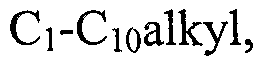



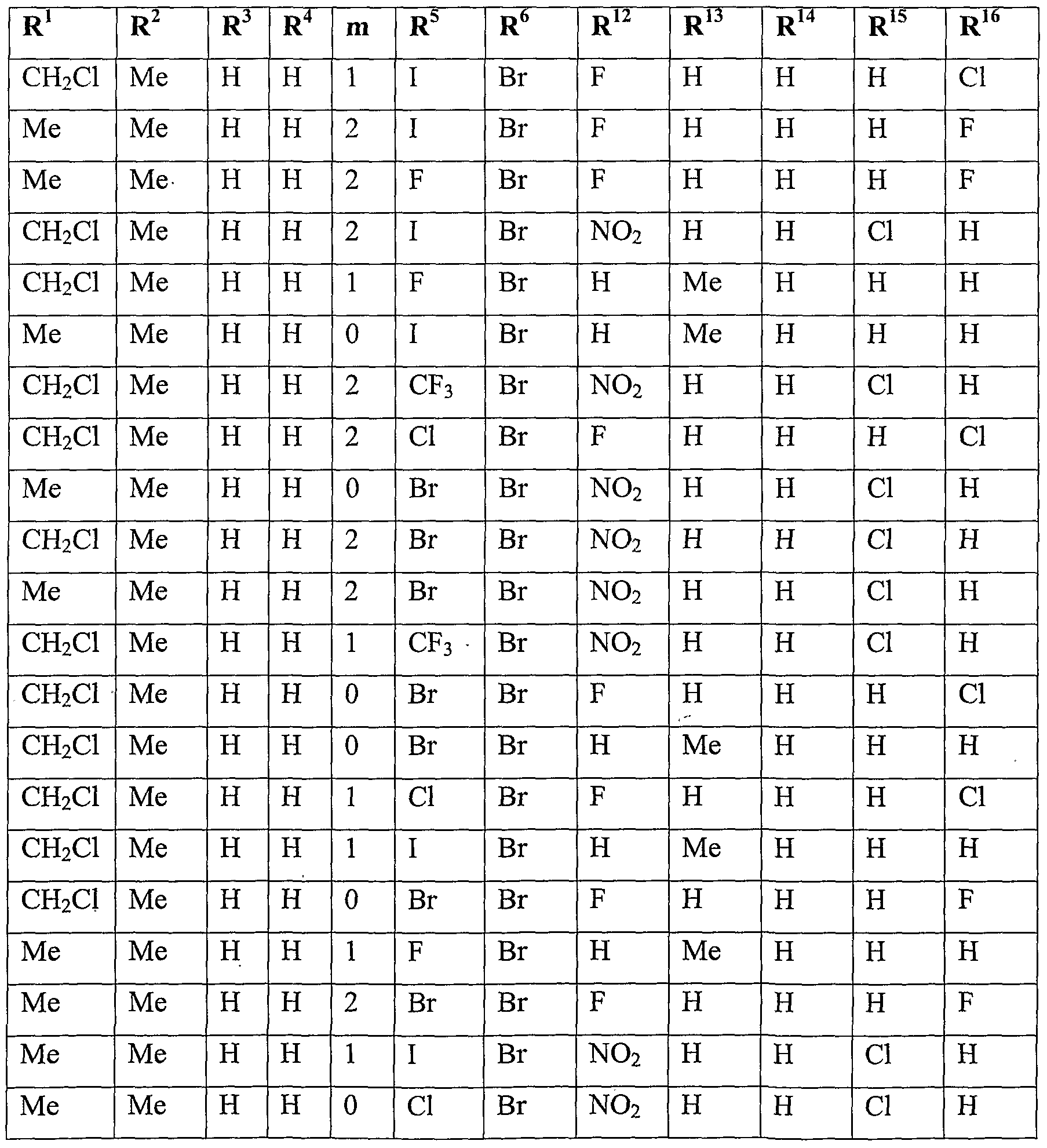


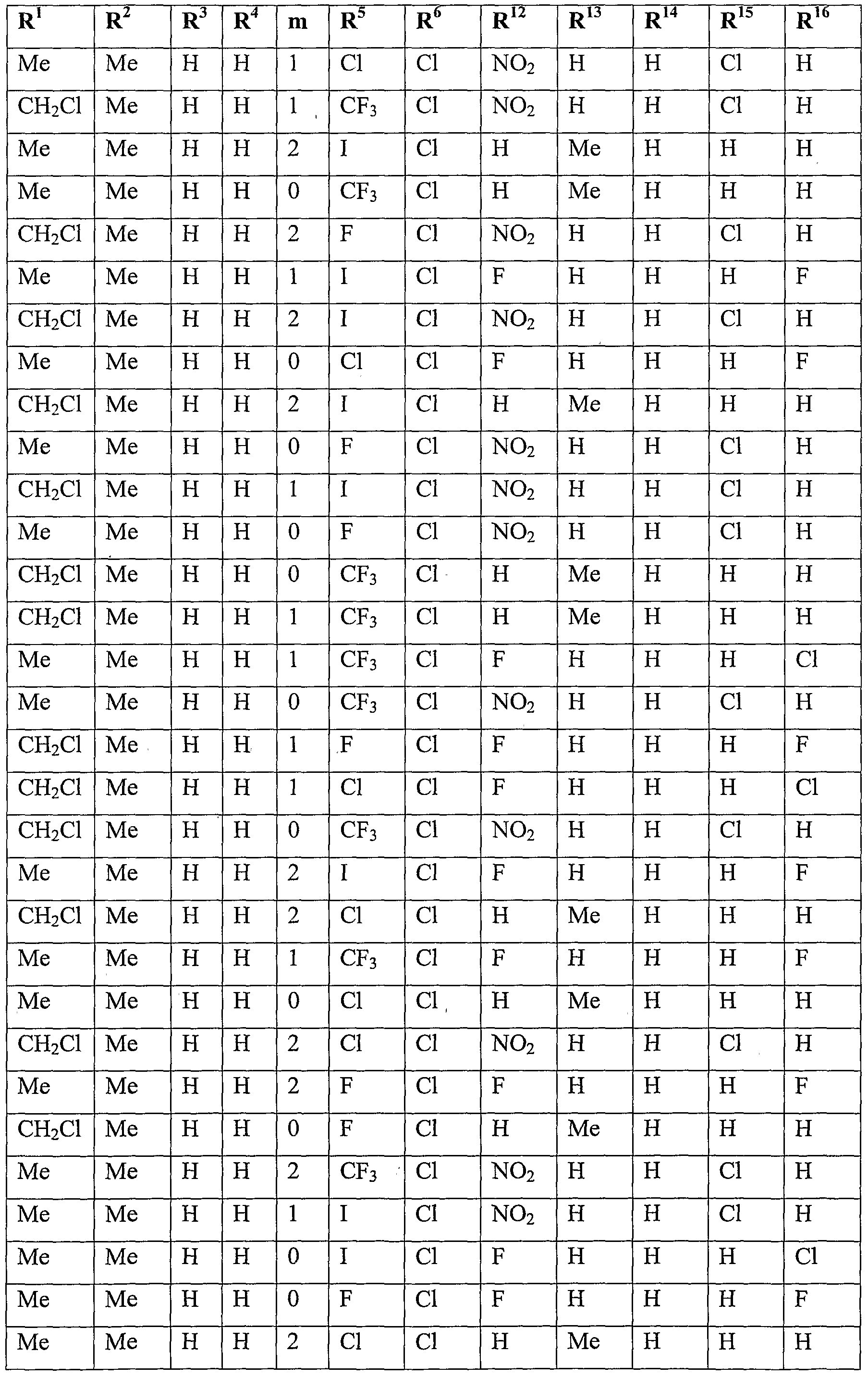


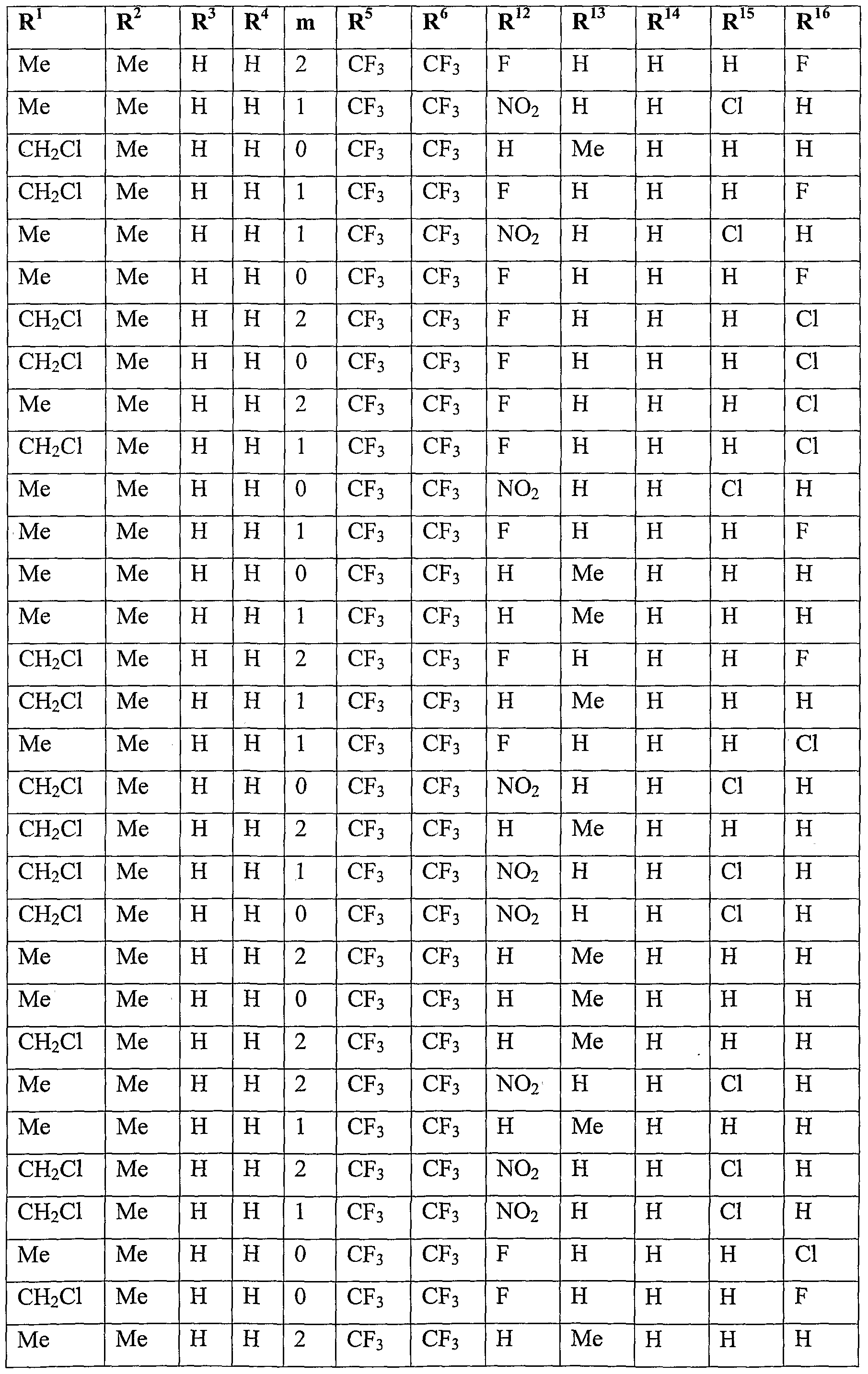





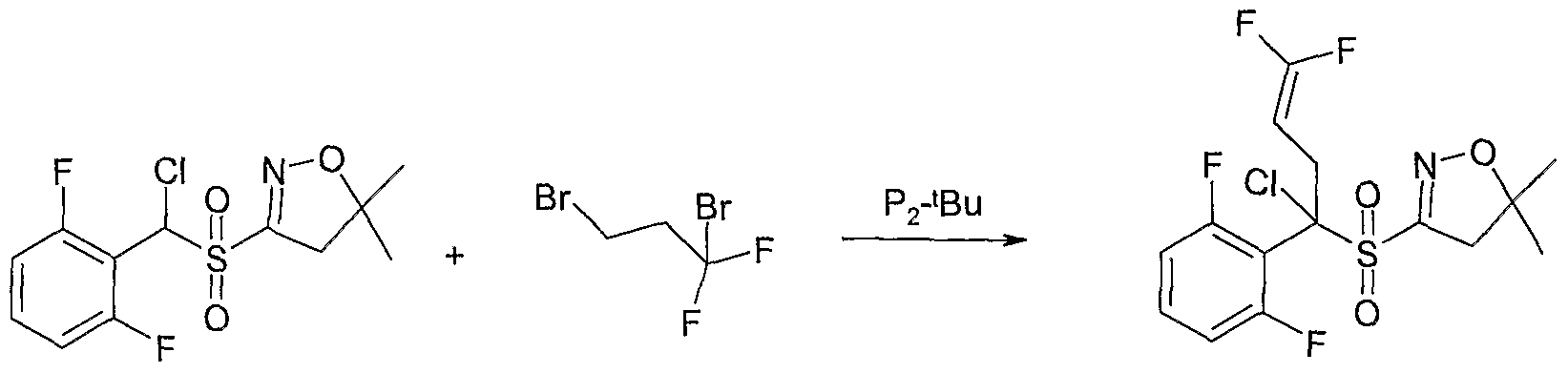


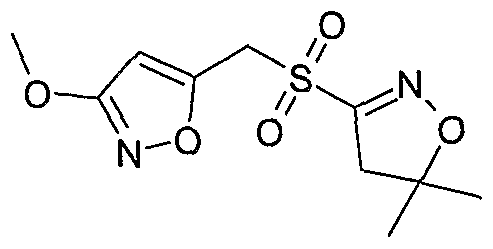


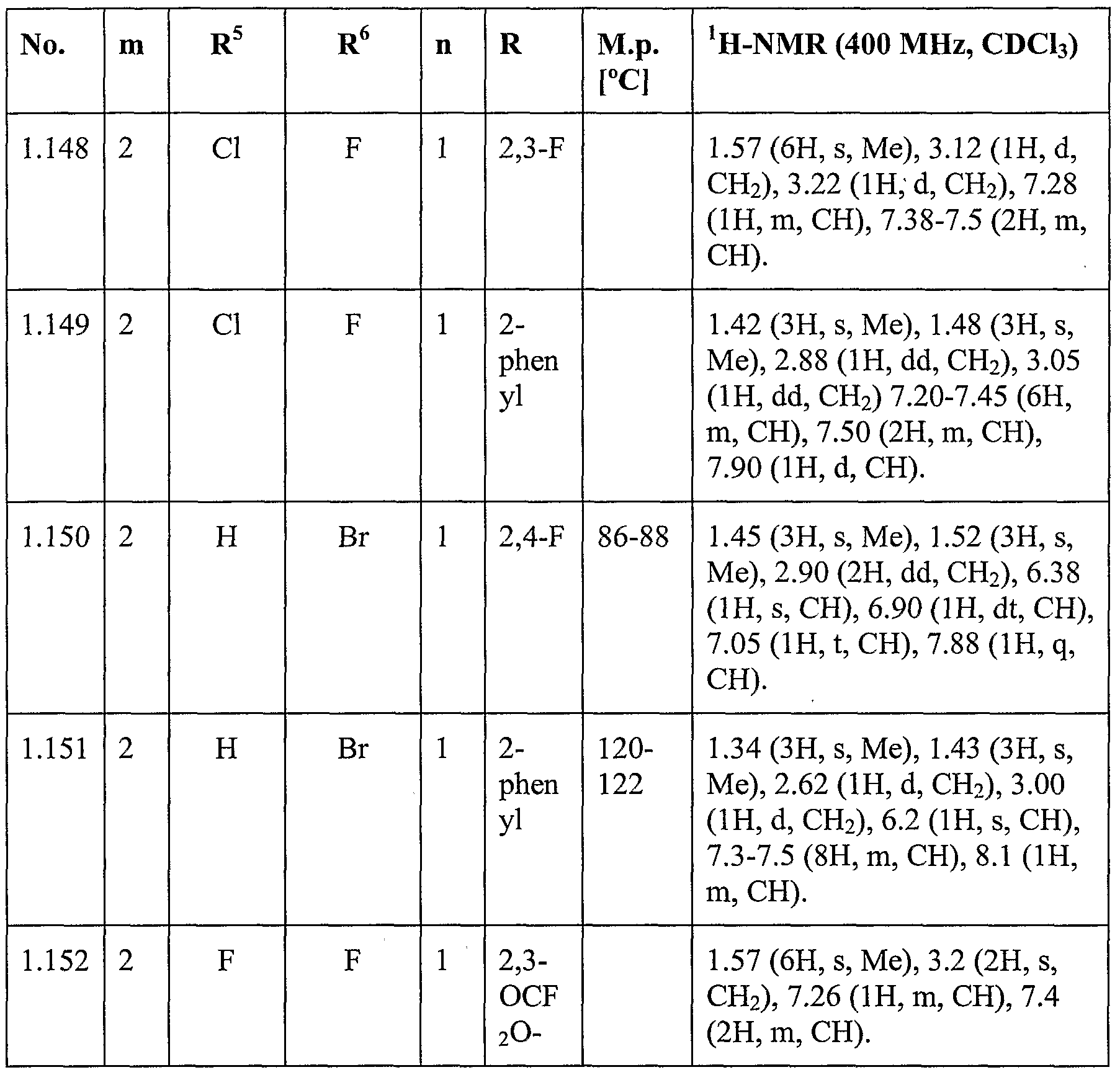


Claims


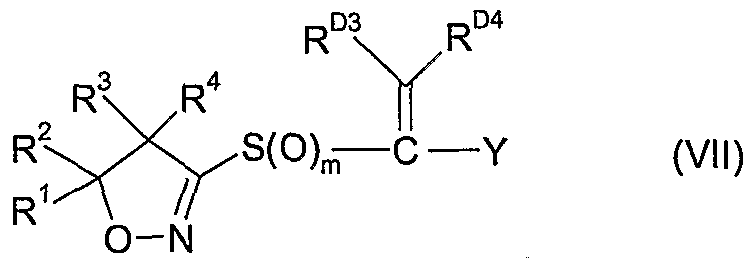


Priority Applications (19)
| Application Number | Priority Date | Filing Date | Title |
|---|---|---|---|
| EA200700545A EA012848B1 (en) | 2004-09-03 | 2005-08-17 | Isoxazoline derivatives and their use as herbicides |
| CN2005800379924A CN101052628B (en) | 2004-09-03 | 2005-08-17 | Isoxazoline derivatives and their use as herbicides |
| SI200530996T SI1789401T1 (en) | 2004-09-03 | 2005-08-17 | Isoxazoline derivatives and their use as herbicides |
| DE602005019752T DE602005019752D1 (en) | 2004-09-03 | 2005-08-17 | ISOXAZOLINE DERIVATIVES AND THEIR USE AS HERBICIDES |
| BRPI0514880-4A BRPI0514880A (en) | 2004-09-03 | 2005-08-17 | compost, process for preparation thereof, herbicidal composition, and method for controlling grasses and weeds in useful plant crops |
| KR1020077006965A KR101278609B1 (en) | 2004-09-03 | 2005-08-17 | Isoxazoline derivatives and their use as herbicides |
| DK05771917.1T DK1789401T3 (en) | 2004-09-03 | 2005-08-17 | Isoxazoline derivatives and their use as herbicides |
| CA2577495A CA2577495C (en) | 2004-09-03 | 2005-08-17 | Isoxazoline derivatives and their use as herbicides |
| HR20100294T HRP20100294T1 (en) | 2004-09-03 | 2005-08-17 | ISOXAZOLINE DERIVATIVES AND THEIR USE AS A HERBICIDE |
| MX2007002645A MX2007002645A (en) | 2004-09-03 | 2005-08-17 | Isoxazoline derivatives and their use as herbicides. |
| US11/574,648 US8680290B2 (en) | 2004-09-03 | 2005-08-17 | Isoxazoline derivatives and their use as herbicides |
| RSP-2010/0243A RS51323B (en) | 2004-09-03 | 2005-08-17 | ISOXAZOLONE DERIVATIVES AND THEIR USE AS HERBICIDES |
| AT05771917T ATE459605T1 (en) | 2004-09-03 | 2005-08-17 | ISOXAZOLINE DERIVATIVES AND THEIR USE AS HERBICIDES |
| NZ553172A NZ553172A (en) | 2004-09-03 | 2005-08-17 | Isoxazoline derivatives and their use as herbicides |
| EP05771917A EP1789401B1 (en) | 2004-09-03 | 2005-08-17 | Isoxazoline derivatives and their use as herbicides |
| PL05771917T PL1789401T3 (en) | 2004-09-03 | 2005-08-17 | Isoxazoline derivatives and their use as herbicides |
| JP2007528958A JP2008511596A (en) | 2004-09-03 | 2005-08-17 | Isoxazoline derivatives and their use as herbicides |
| AU2005279042A AU2005279042A1 (en) | 2004-09-03 | 2005-08-17 | Isoxazoline derivatives and their use as herbicides |
| IL181512A IL181512A0 (en) | 2004-09-03 | 2007-02-22 | Isoxazoline derivatives and their use as herbicides |
Applications Claiming Priority (6)
| Application Number | Priority Date | Filing Date | Title |
|---|---|---|---|
| GB0419634.1 | 2004-09-03 | ||
| GB0419634A GB0419634D0 (en) | 2004-09-03 | 2004-09-03 | Novel herbicides |
| GB0420645.4 | 2004-09-16 | ||
| GB0420645A GB0420645D0 (en) | 2004-09-16 | 2004-09-16 | Novel herbicides |
| GB0502486.4 | 2005-02-07 | ||
| GB0502486A GB0502486D0 (en) | 2005-02-07 | 2005-02-07 | Novel herbicides |
Publications (1)
| Publication Number | Publication Date |
|---|---|
| WO2006024820A1 true WO2006024820A1 (en) | 2006-03-09 |
Family
ID=35431596
Family Applications (1)
| Application Number | Title | Priority Date | Filing Date |
|---|---|---|---|
| PCT/GB2005/003228 Ceased WO2006024820A1 (en) | 2004-09-03 | 2005-08-17 | Isoxazoline derivatives and their use as herbicides |
Country Status (27)
| Country | Link |
|---|---|
| US (1) | US8680290B2 (en) |
| EP (1) | EP1789401B1 (en) |
| JP (2) | JP2008511596A (en) |
| KR (1) | KR101278609B1 (en) |
| AR (1) | AR050793A1 (en) |
| AT (1) | ATE459605T1 (en) |
| AU (1) | AU2005279042A1 (en) |
| BR (1) | BRPI0514880A (en) |
| CA (1) | CA2577495C (en) |
| CY (1) | CY1110025T1 (en) |
| DE (1) | DE602005019752D1 (en) |
| DK (1) | DK1789401T3 (en) |
| EA (1) | EA012848B1 (en) |
| EC (1) | ECSP077290A (en) |
| ES (1) | ES2338135T3 (en) |
| GT (1) | GT200500240A (en) |
| HN (1) | HN2005000497A (en) |
| HR (1) | HRP20100294T1 (en) |
| IL (1) | IL181512A0 (en) |
| MX (1) | MX2007002645A (en) |
| NZ (1) | NZ553172A (en) |
| PL (1) | PL1789401T3 (en) |
| PT (1) | PT1789401E (en) |
| RS (1) | RS51323B (en) |
| SI (1) | SI1789401T1 (en) |
| SV (1) | SV2006002215A (en) |
| WO (1) | WO2006024820A1 (en) |
Cited By (198)
| Publication number | Priority date | Publication date | Assignee | Title |
|---|---|---|---|---|
| WO2007003294A1 (en) * | 2005-07-06 | 2007-01-11 | Bayer Cropscience Ag | 3-[1-halo-1-aryl-methane-sulfonyl]- and 3-[1-halo-1-heteroaryl-methane-sulfonyl]-isoxazoline derivatives, method for the production thereof, and use of the same as herbicides and plant growth regulators |
| WO2007006409A3 (en) * | 2005-07-07 | 2007-04-05 | Bayer Cropscience Gmbh | Herbicide-safener combination |
| WO2007071900A1 (en) * | 2005-12-21 | 2007-06-28 | Syngenta Limited | Novel herbicides |
| WO2007096576A1 (en) * | 2006-02-27 | 2007-08-30 | Syngenta Limited | Herbicidal isoxazoline compounds |
| WO2008074991A1 (en) * | 2006-12-21 | 2008-06-26 | Syngenta Limited | Novel herbicides |
| DE102007012168A1 (en) | 2007-03-12 | 2008-09-18 | Bayer Cropscience Ag | New thiazole derivatives useful as herbicides and plant growth regulators |
| WO2008114493A1 (en) | 2007-03-16 | 2008-09-25 | Kumiai Chemical Industry Co., Ltd. | Herbicide composition |
| US7465805B2 (en) | 2004-10-05 | 2008-12-16 | Syngenta Limited | Isoxazoline derivatives and their use as herbicides |
| EP2065374A1 (en) | 2007-11-30 | 2009-06-03 | Bayer CropScience AG | 2-(benzyl- and 1H-pyrazol-4-ylmethyl)sulfinyl-thiazol-derivatives as herbicides and plant growth regulators |
| EP2065373A1 (en) | 2007-11-30 | 2009-06-03 | Bayer CropScience AG | Chiral 3-(benzylsulfinyl)-5,5-dimethyl-4,5-dihydroisoxazole and 5,5-dimethyl-3-[(1H-pyrazol-4-ylmethyl) sulfinyl]-4,5-dihydroisoxazole derivatives, methods for their preparation and their use as herbicides and plant growth regulators |
| EP2112149A1 (en) | 2008-04-22 | 2009-10-28 | Bayer CropScience Aktiengesellschaft | 2-[(1H-Pyrazol-4-ylmethyl)-sulfonyl]-oxazole derivatives, 2-[(1H-pyrazol-4-ylmethyl)-sulfanyl]-oxazole derivatives and chiral 2-[(1H-pyrazol-4-ylmethyl)-sulfinyl]-oxazole derivatives, method for production of same and their use as herbicides and plant growth regulators |
| EP2112143A1 (en) | 2008-04-22 | 2009-10-28 | Bayer CropScience AG | 2-(benzylsulfonyl)-oxazol-derivatives, chiral 2-(benzylsulfinyl]-oxazol derivatives, 2-(benzylsulfanyl-oxazol) derivatives, process for their preparation, as well as their use as herbicide and plant growth regulators |
| WO2009158258A1 (en) * | 2008-06-25 | 2009-12-30 | E. I. Du Pont De Nemours And Company | Herbicidal dihydro oxo six-membered azinyl isoxazolines |
| WO2010116122A2 (en) | 2009-04-06 | 2010-10-14 | Syngenta Limited | Herbicidal compounds |
| US7833939B2 (en) * | 2002-08-07 | 2010-11-16 | Kumiai Chemical Industry Co., Ltd. | Herbicide compositions |
| WO2010145992A1 (en) | 2009-06-19 | 2010-12-23 | Basf Se | Herbicidal benzoxazinones |
| WO2011018486A2 (en) | 2009-08-14 | 2011-02-17 | Basf Se | Herbicidally active composition comprising benzoxazinones |
| WO2011033251A1 (en) | 2009-09-16 | 2011-03-24 | Syngenta Limited | Herbicidal isoxazoline derivatives |
| WO2011039172A2 (en) | 2009-09-30 | 2011-04-07 | Basf Se | Low volatile amine salts of anionic pesticides |
| WO2011051393A1 (en) | 2009-11-02 | 2011-05-05 | Basf Se | Herbicidal tetrahydrophthalimides |
| WO2011057935A1 (en) | 2009-11-13 | 2011-05-19 | Basf Se | 3-(3,4-dihydro-2h-benzo [1,4]oxazin-6-yl)-1h-pyrimidin-2,4-dione compounds as herbicides |
| WO2011134539A1 (en) | 2010-04-30 | 2011-11-03 | Basf Se | Use of oxylipins as safeners and safening herbicidal compositions comprising oxylipins |
| US8110530B2 (en) * | 2006-12-21 | 2012-02-07 | Kumiai Chemical Industry Co., Ltd. | Herbicidal composition |
| WO2012041789A1 (en) | 2010-10-01 | 2012-04-05 | Basf Se | Herbicidal benzoxazinones |
| GB2484411A (en) * | 2010-10-08 | 2012-04-11 | Syngenta Ltd | Processes and intermediates for making isoxazoline herbicides |
| WO2012045721A2 (en) | 2010-10-05 | 2012-04-12 | Syngenta Limited | Herbicidal compounds |
| WO2012080239A1 (en) | 2010-12-15 | 2012-06-21 | Basf Se | Herbicidal compositions |
| WO2012084755A1 (en) | 2010-12-23 | 2012-06-28 | Basf Se | Substituted pyridines having herbicidal activity |
| EP2474226A1 (en) | 2011-01-07 | 2012-07-11 | Basf Se | Herbicidally active composition comprising cyanobutyrates |
| WO2012136703A1 (en) | 2011-04-08 | 2012-10-11 | Syngenta Limited | Herbicidal compounds |
| WO2012168397A1 (en) | 2011-06-09 | 2012-12-13 | Basf Se | Substituted pyridines having herbicidal activity |
| WO2012168241A1 (en) | 2011-06-09 | 2012-12-13 | Basf Se | Substituted pyrazines having herbicidal activity |
| WO2013040049A1 (en) | 2011-09-13 | 2013-03-21 | Monsanto Technology Llc | Methods and compositions for weed control |
| WO2013039990A1 (en) | 2011-09-13 | 2013-03-21 | Monsanto Technology Llc | Methods and compositions for weed control |
| WO2013040021A1 (en) | 2011-09-13 | 2013-03-21 | Monsanto Technology Llc | Methods and compositions for weed control |
| WO2013040117A1 (en) | 2011-09-13 | 2013-03-21 | Monsanto Technology Llc | Methods and compositions for weed control |
| WO2013050421A1 (en) | 2011-10-04 | 2013-04-11 | Syngenta Limited | Herbicidal pyridazinone derivatives |
| WO2013083774A1 (en) | 2011-12-09 | 2013-06-13 | Syngenta Limited | Herbicidal compounds |
| WO2013092834A1 (en) | 2011-12-21 | 2013-06-27 | Syngenta Limited | Herbicidal compounds |
| WO2013139760A1 (en) | 2012-03-20 | 2013-09-26 | Syngenta Limited | Herbicidal compounds |
| WO2013144231A1 (en) | 2012-03-29 | 2013-10-03 | Syngenta Limited | Herbicidal compounds |
| WO2013144234A1 (en) | 2012-03-29 | 2013-10-03 | Syngenta Limited | 1,2,4 -triazole derivatives as herbicidals |
| DE112011104396T5 (en) | 2010-12-16 | 2013-10-10 | Basf Se | Plants with increased tolerance to herbicides |
| WO2013178585A1 (en) | 2012-06-01 | 2013-12-05 | Basf Se | Substituted pyridine compounds having herbicidal activity |
| WO2013189984A2 (en) | 2012-06-19 | 2013-12-27 | Basf Se | Plants having increased tolerance to herbicides |
| EP2700634A1 (en) | 2012-08-20 | 2014-02-26 | Basf Se | 5-difluoromethylpyrazole amides having herbicidal activity |
| EP2700635A1 (en) | 2012-08-20 | 2014-02-26 | Basf Se | 5-Trifluoromethylpyrazole amides having herbicidal activity |
| WO2014102065A1 (en) | 2012-12-31 | 2014-07-03 | Basf Se | Herbicidal composition comprising a cornexistin |
| WO2014151255A1 (en) | 2013-03-15 | 2014-09-25 | Monsanto Technology Llc | Methods and compositions for weed control |
| WO2014187705A1 (en) | 2013-05-24 | 2014-11-27 | Basf Se | Substituted pyridine compounds having herbicidal activity |
| WO2014206835A1 (en) | 2013-06-26 | 2014-12-31 | Basf Se | Methods for improving the efficacy of anionic herbicides under hard water conditions and suitable compositions |
| EP2868197A1 (en) | 2013-11-05 | 2015-05-06 | Basf Se | Herbicidal compositions |
| EP2868196A1 (en) | 2013-11-05 | 2015-05-06 | Basf Se | Herbicidal compositions |
| WO2015108982A2 (en) | 2014-01-15 | 2015-07-23 | Monsanto Technology Llc | Methods and compositions for weed control using epsps polynucleotides |
| US9121022B2 (en) | 2010-03-08 | 2015-09-01 | Monsanto Technology Llc | Method for controlling herbicide-resistant plants |
| WO2015150465A2 (en) | 2014-04-03 | 2015-10-08 | Basf Se | Plants having increased tolerance to herbicides |
| WO2015150541A1 (en) | 2014-04-03 | 2015-10-08 | Basf Se | Diaminotriazine compound useful as herbicide |
| EP2930174A1 (en) | 2014-04-07 | 2015-10-14 | Basf Se | Diaminotriazine derivatives as herbicides |
| WO2015162169A1 (en) | 2014-04-23 | 2015-10-29 | Basf Se | Diaminotriazine compounds as herbicides |
| WO2016116870A1 (en) | 2015-01-21 | 2016-07-28 | Basf Se | Plants having increased tolerance to herbicides |
| WO2016120116A1 (en) | 2015-01-29 | 2016-08-04 | Basf Se | Herbicidal phenylpyridines |
| US9416363B2 (en) | 2011-09-13 | 2016-08-16 | Monsanto Technology Llc | Methods and compositions for weed control |
| US9422557B2 (en) | 2011-09-13 | 2016-08-23 | Monsanto Technology Llc | Methods and compositions for weed control |
| EP3112016A1 (en) | 2015-07-02 | 2017-01-04 | Basf Se | Microcapsules containing benzoxazinones |
| US9540642B2 (en) | 2013-11-04 | 2017-01-10 | The United States Of America, As Represented By The Secretary Of Agriculture | Compositions and methods for controlling arthropod parasite and pest infestations |
| EP3135113A1 (en) | 2015-08-31 | 2017-03-01 | Basf Se | Use of herbicidal compositions for controlling unwanted vegetation |
| WO2017080905A1 (en) | 2015-11-12 | 2017-05-18 | Basf Se | Herbicidal compositions comprising isoxazolo[5,4-b]pyridines |
| WO2017125395A1 (en) | 2016-01-22 | 2017-07-27 | Basf Se | Biodegradable polyester capsules comprising an aqueous core and a pesticide |
| US9777288B2 (en) | 2013-07-19 | 2017-10-03 | Monsanto Technology Llc | Compositions and methods for controlling leptinotarsa |
| WO2017202768A1 (en) | 2016-05-24 | 2017-11-30 | Basf Se | Herbicidal uracilpyrid |
| WO2017202774A1 (en) | 2016-05-24 | 2017-11-30 | Basf Se | Method for controlling ppo resistant weeds |
| US9850496B2 (en) | 2013-07-19 | 2017-12-26 | Monsanto Technology Llc | Compositions and methods for controlling Leptinotarsa |
| WO2018015180A1 (en) | 2016-07-20 | 2018-01-25 | Basf Se | Herbicidal compositions comprising phenylpyrimidines |
| EP3275877A1 (en) | 2016-07-28 | 2018-01-31 | Basf Se | Herbicidal pyridine compounds |
| WO2018019860A1 (en) | 2016-07-27 | 2018-02-01 | BASF Agro B.V. | Plants having increased tolerance to herbicides |
| WO2018019755A1 (en) | 2016-07-26 | 2018-02-01 | Basf Se | Herbicidal pyridine compounds |
| WO2018019574A1 (en) | 2016-07-28 | 2018-02-01 | Basf Se | Herbicidal pyrimidine compounds |
| WO2018019555A1 (en) | 2016-07-26 | 2018-02-01 | Basf Se | Herbicidal pyrimidine compounds |
| WO2018019554A1 (en) | 2016-07-25 | 2018-02-01 | Basf Se | Herbicidal pyrimidine compounds |
| WO2018019765A1 (en) | 2016-07-27 | 2018-02-01 | Basf Se | Herbicidal pyrimidine compounds |
| WO2018019721A1 (en) | 2016-07-26 | 2018-02-01 | Basf Se | Herbicidal pyridine compounds |
| WO2018019629A1 (en) | 2016-07-27 | 2018-02-01 | Basf Se | Agroformulation of microcapsules with an anionic c6-c10 codispersant |
| WO2018019758A1 (en) | 2016-07-26 | 2018-02-01 | Basf Se | Herbicidal pyridine compounds |
| WO2018019845A1 (en) | 2016-07-29 | 2018-02-01 | Basf Se | Method for controlling ppo resistant weeds |
| WO2018019552A1 (en) | 2016-07-25 | 2018-02-01 | Basf Se | Herbicidal pyrimidine compounds |
| WO2018019842A1 (en) | 2016-07-29 | 2018-02-01 | Basf Se | Method for controlling ppo resistant weeds |
| WO2018019767A1 (en) | 2016-07-27 | 2018-02-01 | Basf Se | Herbicidal pyridine compounds |
| WO2018019770A1 (en) | 2016-07-28 | 2018-02-01 | Basf Se | Herbicidal pyridine compounds |
| EP3278667A1 (en) | 2016-08-05 | 2018-02-07 | Basf Se | Method for controlling ppo-inhibitor resistant weeds |
| WO2018024695A1 (en) | 2016-08-05 | 2018-02-08 | Basf Se | Method for controlling ppo resistant weeds |
| WO2018024696A1 (en) | 2016-08-05 | 2018-02-08 | Basf Se | Method for controlling ppo resistant weeds |
| EP3281524A1 (en) | 2016-08-09 | 2018-02-14 | Basf Se | Method for controlling ppo resistant weeds |
| EP3281523A1 (en) | 2016-08-09 | 2018-02-14 | Basf Se | Method for controlling ppo resistant weeds |
| EP3281525A1 (en) | 2016-08-09 | 2018-02-14 | Basf Se | Method for controlling ppo resistant weeds |
| WO2018029030A1 (en) | 2016-08-09 | 2018-02-15 | Basf Se | Method for controlling ppo resistant weeds |
| WO2018029031A1 (en) | 2016-08-09 | 2018-02-15 | Basf Se | Method for controlling ppo resistant weeds |
| WO2018029029A1 (en) | 2016-08-09 | 2018-02-15 | Basf Se | Method for controlling ppo resistant weeds |
| WO2018077875A1 (en) | 2016-10-28 | 2018-05-03 | Syngenta Participations Ag | Herbicidal pyridazinone compounds |
| WO2018095811A1 (en) | 2016-11-28 | 2018-05-31 | Basf Se | Diaminotriazine compounds |
| WO2018108695A1 (en) | 2016-12-16 | 2018-06-21 | Basf Se | Herbicidal phenyltriazolinones |
| WO2018114759A1 (en) | 2016-12-20 | 2018-06-28 | BASF Agro B.V. | Plants having increased tolerance to herbicides |
| US10041068B2 (en) | 2013-01-01 | 2018-08-07 | A. B. Seeds Ltd. | Isolated dsRNA molecules and methods of using same for silencing target molecules of interest |
| US10041087B2 (en) | 2012-06-19 | 2018-08-07 | BASF Agro B.V. | Plants having increased tolerance to herbicides |
| WO2018141594A1 (en) | 2017-02-02 | 2018-08-09 | Basf Se | Enhancement of soil herbicide activity with anionic alkoxylated phenols |
| WO2018166822A1 (en) | 2017-03-14 | 2018-09-20 | Basf Se | Herbicidal azines |
| US10087460B2 (en) | 2013-08-12 | 2018-10-02 | BASF Agro B.V. | Transgenic or non-transgenic plants with mutated protoporphyrinogen oxidase having increased tolerance to herbicides |
| WO2018178039A1 (en) | 2017-03-31 | 2018-10-04 | Basf Se | Crystalline forms of ethyl[3-[2-chloro-4-fluoro-5-(1-methyl-6-trifluoromethyl-2,4-dioxo-1,2,3,4-tetrahydropyrimidin-3-yl)phenoxy]-2-pyridyloxy]acetate |
| WO2018229041A1 (en) | 2017-06-14 | 2018-12-20 | Basf Se | Herbicidal pyrimidine compounds |
| WO2019030104A1 (en) | 2017-08-09 | 2019-02-14 | Basf Se | Herbicidal mixtures comprising l-glufosinate or its salt and at least one vlcfa inhibitor |
| US10240162B2 (en) | 2012-05-24 | 2019-03-26 | A.B. Seeds Ltd. | Compositions and methods for silencing gene expression |
| WO2019101533A1 (en) | 2017-11-27 | 2019-05-31 | Basf Se | Crystalline forms of ethyl 2-[[3-[[3-chloro-5-fluoro-6-[3-methyl-2,6-dioxo-4-(trifluoromethyl)pyrimidin-1-yl]-2-pyridyl]oxy]-2-pyridyl]oxy]acetate |
| WO2019101551A1 (en) | 2017-11-23 | 2019-05-31 | Basf Se | Herbicidal phenylethers |
| WO2019101513A1 (en) | 2017-11-23 | 2019-05-31 | Basf Se | Herbicidal pyridylethers |
| WO2019101560A1 (en) | 2017-11-22 | 2019-05-31 | Basf Se | Benzoxaborole compounds |
| WO2019106568A1 (en) | 2017-11-29 | 2019-06-06 | Basf Se | Plants having increased tolerance to herbicides |
| WO2019121352A1 (en) | 2017-12-20 | 2019-06-27 | Basf Se | Herbicidal pyrimidine compounds |
| WO2019121373A1 (en) | 2017-12-20 | 2019-06-27 | Basf Se | Herbicidal pyrimidine compounds |
| WO2019121374A1 (en) | 2017-12-20 | 2019-06-27 | Basf Se | Herbicidal pyrimidine compounds |
| WO2019121408A1 (en) | 2017-12-20 | 2019-06-27 | Basf Se | Herbicidal pyrimidine compounds |
| US10378012B2 (en) | 2014-07-29 | 2019-08-13 | Monsanto Technology Llc | Compositions and methods for controlling insect pests |
| WO2019158378A1 (en) | 2018-02-16 | 2019-08-22 | Basf Se | Herbicidal mixtures |
| US10392630B2 (en) | 2013-08-12 | 2019-08-27 | BASF Agro B.V. | Plants having increased tolerance to herbicides |
| WO2019175712A1 (en) | 2018-03-14 | 2019-09-19 | Basf Corporation | New uses for catechol molecules as inhibitors to glutathione s-transferase metabolic pathways |
| WO2019175713A1 (en) | 2018-03-14 | 2019-09-19 | Basf Corporation | New catechol molecules and their use as inhibitors to p450 related metabolic pathways |
| WO2019238427A1 (en) | 2018-06-13 | 2019-12-19 | Basf Se | Crystalline form of ethyl 2-[2-[2-chloro-4-fluoro-5-[3-methyl-2,6-dioxo-4-(trifluoromethyl)pyrimidin-1-yl]phenoxy]phenoxy]acetate |
| WO2019243358A1 (en) | 2018-06-19 | 2019-12-26 | Syngenta Crop Protection Ag | Herbicidal compounds |
| US10557138B2 (en) | 2013-12-10 | 2020-02-11 | Beeologics, Inc. | Compositions and methods for virus control in Varroa mite and bees |
| WO2020058009A1 (en) | 2018-09-18 | 2020-03-26 | Basf Se | Diaminotriazine compounds |
| US10609930B2 (en) | 2013-03-13 | 2020-04-07 | Monsanto Technology Llc | Methods and compositions for weed control |
| US10612019B2 (en) | 2013-03-13 | 2020-04-07 | Monsanto Technology Llc | Methods and compositions for weed control |
| US10655136B2 (en) | 2015-06-03 | 2020-05-19 | Monsanto Technology Llc | Methods and compositions for introducing nucleic acids into plants |
| US10683505B2 (en) | 2013-01-01 | 2020-06-16 | Monsanto Technology Llc | Methods of introducing dsRNA to plant seeds for modulating gene expression |
| US10760086B2 (en) | 2011-09-13 | 2020-09-01 | Monsanto Technology Llc | Methods and compositions for weed control |
| US10801028B2 (en) | 2009-10-14 | 2020-10-13 | Beeologics Inc. | Compositions for controlling Varroa mites in bees |
| US10808249B2 (en) | 2011-09-13 | 2020-10-20 | Monsanto Technology Llc | Methods and compositions for weed control |
| US10806146B2 (en) | 2011-09-13 | 2020-10-20 | Monsanto Technology Llc | Methods and compositions for weed control |
| US10829828B2 (en) | 2011-09-13 | 2020-11-10 | Monsanto Technology Llc | Methods and compositions for weed control |
| US10883103B2 (en) | 2015-06-02 | 2021-01-05 | Monsanto Technology Llc | Compositions and methods for delivery of a polynucleotide into a plant |
| US10888579B2 (en) | 2007-11-07 | 2021-01-12 | Beeologics Inc. | Compositions for conferring tolerance to viral disease in social insects, and the use thereof |
| WO2021013969A1 (en) | 2019-07-25 | 2021-01-28 | Syngenta Crop Protection Ag | 3-[(hydrazono)methyl]-n-(tetrazol-5-yl)-benzamide and 3-[(hydrazono)methyl]-n-(1,3,4-oxadiazol-2-yl)-benzamide derivatives as herbicides |
| WO2021002484A3 (en) * | 2019-10-31 | 2021-03-11 | クミアイ化学工業株式会社 | Herbicide and production method for intermediate thereof |
| US10968449B2 (en) | 2015-01-22 | 2021-04-06 | Monsanto Technology Llc | Compositions and methods for controlling Leptinotarsa |
| US10988764B2 (en) | 2014-06-23 | 2021-04-27 | Monsanto Technology Llc | Compositions and methods for regulating gene expression via RNA interference |
| WO2021148303A1 (en) | 2020-01-23 | 2021-07-29 | Basf Se | Glufosinate formulations containing amines or ammonium salts |
| US11091770B2 (en) | 2014-04-01 | 2021-08-17 | Monsanto Technology Llc | Compositions and methods for controlling insect pests |
| EP3868749A1 (en) | 2016-03-23 | 2021-08-25 | Syngenta Participations Ag | Herbicidal compounds |
| WO2021170464A1 (en) | 2020-02-28 | 2021-09-02 | Basf Se | Herbicidal malonamides |
| US11109591B2 (en) | 2017-04-24 | 2021-09-07 | Taminco Bvba | Single phase liquids of alkanolamine salts of dicamba |
| WO2021191035A1 (en) | 2020-03-25 | 2021-09-30 | Basf Se | Dioxazolines and their use as herbicides |
| WO2021209268A1 (en) | 2020-04-14 | 2021-10-21 | Basf Se | Beta-lactams and their use as herbicides |
| WO2021224040A1 (en) | 2020-05-05 | 2021-11-11 | Basf Se | Condensed isoxazoline derivatives and their use as herbicides |
| CN113754648A (en) * | 2020-06-02 | 2021-12-07 | 山东润博生物科技有限公司 | Preparation method of xaflufen and intermediate thereof |
| WO2022008285A1 (en) | 2020-07-07 | 2022-01-13 | BASF Agro B.V. | Method for controlling undesirable vegetation in an aquatic environment |
| US11311014B2 (en) | 2017-03-31 | 2022-04-26 | Basf Se | Crystalline forms of ethyl[3-[2-chloro-4-fluoro-5-(1-methyl-6-trifluoromethyl-2,4-dioxo-1,2,3,4-tetrahydropyrimidin-3-yl)phenoxy]-2-pyridyloxy]acetate |
| WO2022112351A1 (en) | 2020-11-25 | 2022-06-02 | Basf Se | Herbicidal malonamides |
| WO2022112347A1 (en) | 2020-11-25 | 2022-06-02 | Basf Se | Herbicidal malonamides |
| US11351149B2 (en) | 2020-09-03 | 2022-06-07 | Pfizer Inc. | Nitrile-containing antiviral compounds |
| EP4008185A1 (en) | 2020-12-03 | 2022-06-08 | BASF Agro B.V. | Herbicidal composition comprising a saflufenacil microparticles |
| EP4011205A1 (en) | 2020-12-08 | 2022-06-15 | Basf Se | Microparticle compositions comprising trifludimoxazin |
| WO2022161802A1 (en) | 2021-01-27 | 2022-08-04 | Basf Se | Diaminotriazine compounds |
| WO2022161801A1 (en) | 2021-01-27 | 2022-08-04 | Basf Se | Diaminotriazine compounds |
| EP4049749A1 (en) | 2021-02-25 | 2022-08-31 | Basf Se | New microcapsules containing active substances |
| EP4056038A1 (en) | 2021-03-10 | 2022-09-14 | Basf Se | Microparticles containing active substances |
| WO2022189190A1 (en) | 2021-03-09 | 2022-09-15 | Basf Se | Malonamides and their use as herbicides |
| US11499162B2 (en) | 2016-07-15 | 2022-11-15 | Basf Se | Plants having increased tolerance to herbicides |
| WO2022268564A1 (en) | 2021-06-23 | 2022-12-29 | Basf Se | Herbicidal aryldihydrofurane carboxylates |
| WO2023025854A1 (en) | 2021-08-25 | 2023-03-02 | Basf Se | Herbicidal malonamides |
| WO2023025855A1 (en) | 2021-08-25 | 2023-03-02 | Basf Se | Herbicidal malonamides |
| WO2023031161A1 (en) | 2021-09-03 | 2023-03-09 | BASF Agricultural Solutions Seed US LLC | Plants having increased tolerance to herbicides |
| WO2023030934A1 (en) | 2021-08-31 | 2023-03-09 | Basf Se | Herbicidal composition comprising phenyluracils |
| WO2023031200A1 (en) | 2021-08-31 | 2023-03-09 | Basf Se | Herbicidal malonamides containing a condensed ring system |
| WO2023031199A1 (en) | 2021-08-31 | 2023-03-09 | Basf Se | Herbicidal malonamides containing monocyclic heteroaromatic rings |
| WO2023036636A1 (en) | 2021-09-09 | 2023-03-16 | Basf Se | New microparticles containing active substances |
| WO2023110491A1 (en) | 2021-12-16 | 2023-06-22 | BASF Agro B.V. | Method for controlling undesirable vegetation in an aquatic environment |
| EP4177244A3 (en) * | 2020-07-10 | 2023-08-09 | Adama Agan Ltd. | Process and intermediates for the preparation of pyroxasulfone and fenoxasulfone |
| WO2023194957A1 (en) * | 2022-04-08 | 2023-10-12 | Upl Limited | A process for preparation of 3-[5-(difluoromethoxy)-1- methyl-3-(trifluoromethyl)pyrazol-4- ylmethylsulfonyl]-4,5-dihydro-5,5-dimethyl-1,2-oxazole and its intermediates |
| WO2023208447A1 (en) | 2022-04-25 | 2023-11-02 | Basf Se | An emulsifiable concentrate having a (substituted) benzaldehyde-based solvent system |
| US11807857B2 (en) | 2014-06-25 | 2023-11-07 | Monsanto Technology Llc | Methods and compositions for delivering nucleic acids to plant cells and regulating gene expression |
| WO2023227676A1 (en) | 2022-05-25 | 2023-11-30 | Basf Se | Herbicidal malonic acid monoamides and malonamide esters |
| WO2024012905A1 (en) | 2022-07-13 | 2024-01-18 | Basf Se | Herbicidal composition comprising azine compounds |
| EP4338592A1 (en) | 2022-09-15 | 2024-03-20 | Basf Se | Use of compound for improving the efficacy of herbicides |
| WO2024056517A1 (en) | 2022-09-14 | 2024-03-21 | Basf Se | Use of an alkylether sulfate for improving the efficacy of herbicides |
| US11939587B2 (en) | 2018-01-17 | 2024-03-26 | Basf Se | Plants having increased tolerance to herbicides |
| US11959086B2 (en) | 2016-05-20 | 2024-04-16 | BASF Agro B.V. | Dual transit peptides for targeting polypeptides |
| WO2024099118A1 (en) | 2022-11-09 | 2024-05-16 | 青岛清原化合物有限公司 | Oxabicycloalkane compounds, preparation method therefor, and herbicidal composition and use thereof |
| WO2024126113A1 (en) | 2022-12-12 | 2024-06-20 | BASF Agricultural Solutions Seed US LLC | Plants having increased tolerance to herbicides |
| US12018267B2 (en) | 2015-10-22 | 2024-06-25 | Basf Se | Plants having increased tolerance to herbicides |
| US12203089B2 (en) | 2015-10-22 | 2025-01-21 | Basf Se | Plants having increased tolerance to herbicides |
| WO2025114052A1 (en) | 2023-11-29 | 2025-06-05 | Basf Se | Ternary herbicidal composition comprising azine compounds |
| US12338446B2 (en) | 2015-06-17 | 2025-06-24 | BASF Agro B.V. | Plants having increased tolerance to herbicides |
| WO2025153657A2 (en) | 2024-01-17 | 2025-07-24 | Basf Se | Plants having increased tolerance to herbicides |
| WO2025153595A1 (en) | 2024-01-17 | 2025-07-24 | Basf Se | Plants having increased tolerance to herbicides |
| WO2025242699A1 (en) | 2024-05-22 | 2025-11-27 | Basf Se | Method for improving rainfastness of an agrochemical active ingredient |
| WO2026003150A1 (en) | 2024-06-28 | 2026-01-02 | Basf Se | Plants with mutated tubulin polypeptide having increased tolerance to herbicides |
| WO2026021913A1 (en) | 2024-07-23 | 2026-01-29 | Basf Se | Herbicidal 2-phenoxybutanoylamides |
| EP4696682A1 (en) | 2024-08-14 | 2026-02-18 | Basf Se | Herbicidal thiocarbamates carrying an ether-substituted phenyl ring |
| EP4696681A1 (en) | 2024-08-14 | 2026-02-18 | Basf Se | Herbicidal thiocarbamates carrying an isoxazolin-substituted phenyl ring |
| US12577240B2 (en) | 2020-07-11 | 2026-03-17 | Pfizer Inc. | Antiviral heteroaryl ketone derivatives |
Families Citing this family (5)
| Publication number | Priority date | Publication date | Assignee | Title |
|---|---|---|---|---|
| WO2007003296A1 (en) * | 2005-07-06 | 2007-01-11 | Bayer Cropscience Ag | Herbicide-safener combination |
| DE102006050148A1 (en) * | 2006-10-25 | 2008-04-30 | Bayer Cropscience Ag | New trifluoromethoxy-phenyl substituted tetramic acid-derivatives useful to combat parasites including insects, arachnid, helminth, nematode and mollusk and/or undesirable plant growth and in hygienic sectors |
| JP5472638B2 (en) * | 2008-03-18 | 2014-04-16 | 日産化学工業株式会社 | Process for producing 1- (substituted phenyl) -1-substituted silyl ethers, alcohols or ketones and intermediates |
| CN111789113A (en) * | 2020-07-19 | 2020-10-20 | 江苏云帆化工有限公司 | A kind of propargyl fluchlore dry suspension agent and preparation method thereof |
| IN202121008116A (en) | 2021-02-26 | 2022-09-02 |
Citations (9)
| Publication number | Priority date | Publication date | Assignee | Title |
|---|---|---|---|---|
| JPH08225548A (en) * | 1994-12-12 | 1996-09-03 | Sankyo Co Ltd | Herbicidal isoxazoline derivative |
| JPH09328483A (en) * | 1996-06-11 | 1997-12-22 | Sankyo Co Ltd | Herbicidal isoxazoline derivative |
| WO2001012613A1 (en) | 1999-08-10 | 2001-02-22 | Kumiai Chemical Industry Co., Ltd. | Isoxazoline derivatives and herbicides containing the same as the active ingredient |
| WO2002062770A1 (en) | 2001-02-08 | 2002-08-15 | Kumiai Chemical Industry Co., Ltd. | Isoxazoline derivative and herbicide comprising the same as active ingredient |
| WO2003000686A1 (en) | 2001-06-21 | 2003-01-03 | Kumiai Chemical Industry Co., Ltd. | Isoxazoline derivatives and herbicides |
| WO2003010165A1 (en) * | 2001-07-24 | 2003-02-06 | Kumiai Chemical Industry Co., Ltd. | Isoxazoline derivatives and herbicides for agricultural and horticultural use |
| WO2004010165A2 (en) | 2002-07-18 | 2004-01-29 | Chiaro Networks Ltd. | Optical assembly and method for manufacture |
| WO2004013106A1 (en) | 2002-08-01 | 2004-02-12 | Ihara Chemical Industry Co., Ltd. | Pyrazole derivatives and process for the production thereof |
| JP2005035924A (en) | 2003-07-14 | 2005-02-10 | Kumiai Chem Ind Co Ltd | 2-Isoxazoline derivatives and herbicides containing them as active ingredients |
Family Cites Families (5)
| Publication number | Priority date | Publication date | Assignee | Title |
|---|---|---|---|---|
| US4394155A (en) * | 1981-02-05 | 1983-07-19 | Uniroyal, Inc. | Substituted pyridine 1-oxide herbicides |
| DE3310337A1 (en) * | 1983-03-22 | 1984-09-27 | Europäisches Laboratorium für Molekularbiologie (EMBL), 6900 Heidelberg | METHOD FOR CARRYING OUT HYBRIDIZATION REACTIONS |
| GB2145558A (en) * | 1983-08-23 | 1985-03-27 | Standard Telephones Cables Ltd | Field effect transistor |
| AU2611200A (en) * | 1999-01-14 | 2000-08-01 | Monsanto Technology Llc | Triazole sulfones having herbicidal activity |
| JP2003096059A (en) * | 2001-09-21 | 2003-04-03 | Otsuka Chem Co Ltd | Thiazole compound and herbicidal composition containing the same |
-
2005
- 2005-08-17 EA EA200700545A patent/EA012848B1/en not_active IP Right Cessation
- 2005-08-17 AU AU2005279042A patent/AU2005279042A1/en not_active Abandoned
- 2005-08-17 EP EP05771917A patent/EP1789401B1/en not_active Expired - Lifetime
- 2005-08-17 AT AT05771917T patent/ATE459605T1/en active
- 2005-08-17 BR BRPI0514880-4A patent/BRPI0514880A/en not_active Application Discontinuation
- 2005-08-17 MX MX2007002645A patent/MX2007002645A/en active IP Right Grant
- 2005-08-17 JP JP2007528958A patent/JP2008511596A/en not_active Withdrawn
- 2005-08-17 SI SI200530996T patent/SI1789401T1/en unknown
- 2005-08-17 DE DE602005019752T patent/DE602005019752D1/en not_active Expired - Lifetime
- 2005-08-17 US US11/574,648 patent/US8680290B2/en not_active Expired - Fee Related
- 2005-08-17 HR HR20100294T patent/HRP20100294T1/en unknown
- 2005-08-17 NZ NZ553172A patent/NZ553172A/en not_active IP Right Cessation
- 2005-08-17 CA CA2577495A patent/CA2577495C/en not_active Expired - Fee Related
- 2005-08-17 PL PL05771917T patent/PL1789401T3/en unknown
- 2005-08-17 WO PCT/GB2005/003228 patent/WO2006024820A1/en not_active Ceased
- 2005-08-17 ES ES05771917T patent/ES2338135T3/en not_active Expired - Lifetime
- 2005-08-17 RS RSP-2010/0243A patent/RS51323B/en unknown
- 2005-08-17 PT PT05771917T patent/PT1789401E/en unknown
- 2005-08-17 KR KR1020077006965A patent/KR101278609B1/en not_active Expired - Fee Related
- 2005-08-17 DK DK05771917.1T patent/DK1789401T3/en active
- 2005-08-31 HN HN2005000497A patent/HN2005000497A/en unknown
- 2005-09-01 GT GT200500240A patent/GT200500240A/en unknown
- 2005-09-02 AR ARP050103680A patent/AR050793A1/en unknown
- 2005-09-02 SV SV2005002215A patent/SV2006002215A/en unknown
-
2007
- 2007-02-22 IL IL181512A patent/IL181512A0/en unknown
- 2007-03-01 EC EC2007007290A patent/ECSP077290A/en unknown
-
2010
- 2010-05-13 CY CY20101100412T patent/CY1110025T1/en unknown
-
2012
- 2012-04-19 JP JP2012095363A patent/JP5559237B2/en not_active Expired - Fee Related
Patent Citations (12)
| Publication number | Priority date | Publication date | Assignee | Title |
|---|---|---|---|---|
| JPH08225548A (en) * | 1994-12-12 | 1996-09-03 | Sankyo Co Ltd | Herbicidal isoxazoline derivative |
| JPH09328483A (en) * | 1996-06-11 | 1997-12-22 | Sankyo Co Ltd | Herbicidal isoxazoline derivative |
| WO2001012613A1 (en) | 1999-08-10 | 2001-02-22 | Kumiai Chemical Industry Co., Ltd. | Isoxazoline derivatives and herbicides containing the same as the active ingredient |
| EP1203768A1 (en) * | 1999-08-10 | 2002-05-08 | Kumiai Chemical Industry Co., Ltd. | Isoxazoline derivatives and herbicides containing the same as the active ingredient |
| WO2002062770A1 (en) | 2001-02-08 | 2002-08-15 | Kumiai Chemical Industry Co., Ltd. | Isoxazoline derivative and herbicide comprising the same as active ingredient |
| EP1364946A1 (en) * | 2001-02-08 | 2003-11-26 | Kumiai Chemical Industry Co., Ltd. | Isoxazoline derivative and herbicide comprising the same as active ingredient |
| WO2003000686A1 (en) | 2001-06-21 | 2003-01-03 | Kumiai Chemical Industry Co., Ltd. | Isoxazoline derivatives and herbicides |
| EP1405853A1 (en) * | 2001-06-21 | 2004-04-07 | Kumiai Chemical Industry Co., Ltd. | Isoxazoline derivatives and herbicides |
| WO2003010165A1 (en) * | 2001-07-24 | 2003-02-06 | Kumiai Chemical Industry Co., Ltd. | Isoxazoline derivatives and herbicides for agricultural and horticultural use |
| WO2004010165A2 (en) | 2002-07-18 | 2004-01-29 | Chiaro Networks Ltd. | Optical assembly and method for manufacture |
| WO2004013106A1 (en) | 2002-08-01 | 2004-02-12 | Ihara Chemical Industry Co., Ltd. | Pyrazole derivatives and process for the production thereof |
| JP2005035924A (en) | 2003-07-14 | 2005-02-10 | Kumiai Chem Ind Co Ltd | 2-Isoxazoline derivatives and herbicides containing them as active ingredients |
Non-Patent Citations (3)
| Title |
|---|
| PATENT ABSTRACTS OF JAPAN vol. 1997, no. 01 31 January 1997 (1997-01-31) * |
| PATENT ABSTRACTS OF JAPAN vol. 1998, no. 04 31 March 1998 (1998-03-31) * |
| PATENT ABSTRACTS OF JAPAN vol. 2005, no. 12 5 December 2003 (2003-12-05) * |
Cited By (263)
| Publication number | Priority date | Publication date | Assignee | Title |
|---|---|---|---|---|
| US7833939B2 (en) * | 2002-08-07 | 2010-11-16 | Kumiai Chemical Industry Co., Ltd. | Herbicide compositions |
| US7465805B2 (en) | 2004-10-05 | 2008-12-16 | Syngenta Limited | Isoxazoline derivatives and their use as herbicides |
| WO2007003294A1 (en) * | 2005-07-06 | 2007-01-11 | Bayer Cropscience Ag | 3-[1-halo-1-aryl-methane-sulfonyl]- and 3-[1-halo-1-heteroaryl-methane-sulfonyl]-isoxazoline derivatives, method for the production thereof, and use of the same as herbicides and plant growth regulators |
| WO2007006409A3 (en) * | 2005-07-07 | 2007-04-05 | Bayer Cropscience Gmbh | Herbicide-safener combination |
| WO2007071900A1 (en) * | 2005-12-21 | 2007-06-28 | Syngenta Limited | Novel herbicides |
| WO2007096576A1 (en) * | 2006-02-27 | 2007-08-30 | Syngenta Limited | Herbicidal isoxazoline compounds |
| JP2009536149A (en) * | 2006-02-27 | 2009-10-08 | シンジェンタ リミテッド | Isoxazoline compounds for herbicidal use |
| WO2008074991A1 (en) * | 2006-12-21 | 2008-06-26 | Syngenta Limited | Novel herbicides |
| US8110530B2 (en) * | 2006-12-21 | 2012-02-07 | Kumiai Chemical Industry Co., Ltd. | Herbicidal composition |
| US8283291B2 (en) | 2006-12-21 | 2012-10-09 | Kumiai Chemical Industry Co., Ltd. | Herbicidal composition |
| DE102007012168A1 (en) | 2007-03-12 | 2008-09-18 | Bayer Cropscience Ag | New thiazole derivatives useful as herbicides and plant growth regulators |
| WO2008114493A1 (en) | 2007-03-16 | 2008-09-25 | Kumiai Chemical Industry Co., Ltd. | Herbicide composition |
| JP5380278B2 (en) * | 2007-03-16 | 2014-01-08 | クミアイ化学工業株式会社 | Herbicidal composition |
| CN101636084B (en) * | 2007-03-16 | 2013-10-16 | 组合化学工业株式会社 | Herbicidal composition |
| CN101636084A (en) * | 2007-03-16 | 2010-01-27 | 组合化学工业株式会社 | herbicide composition |
| TWI425911B (en) * | 2007-03-16 | 2014-02-11 | Kumiai Chemical Industry Co | Herbicide composition |
| KR101538176B1 (en) * | 2007-03-16 | 2015-07-20 | 구미아이 가가쿠 고교 가부시키가이샤 | Herbicide composition |
| US8114814B2 (en) * | 2007-03-16 | 2012-02-14 | Kumiai Chemical Industry Co., Ltd. | Herbicide composition |
| US10888579B2 (en) | 2007-11-07 | 2021-01-12 | Beeologics Inc. | Compositions for conferring tolerance to viral disease in social insects, and the use thereof |
| US8754234B2 (en) | 2007-11-30 | 2014-06-17 | Bayer Cropscience Ag | Chiral 2-(benzylsulfinyl)thiazole derivatives and 2-[(1H-pyrazol-4-ylmethyl)sulfinyl]thiazole derivatives, processes for their preparation and their use as herbicides and plant growth regulators |
| US8895471B2 (en) | 2007-11-30 | 2014-11-25 | Bayer Cropscience Ag | Chiral3-(benzylsulfinyl)-5,5-dimethyl-4,5-dihydroisoxazole derivatives and 5,5-dimethyl-3-[(1h-pyrazol-4-ylmethyl)sulfinyl]-4,5-dihyddroisoxazole derivatives, method for the production thereof, and use of same as herbicides and plant growth regulators |
| EP2065373A1 (en) | 2007-11-30 | 2009-06-03 | Bayer CropScience AG | Chiral 3-(benzylsulfinyl)-5,5-dimethyl-4,5-dihydroisoxazole and 5,5-dimethyl-3-[(1H-pyrazol-4-ylmethyl) sulfinyl]-4,5-dihydroisoxazole derivatives, methods for their preparation and their use as herbicides and plant growth regulators |
| US8420570B2 (en) | 2007-11-30 | 2013-04-16 | Bayer Cropscience Ag | Chiral 3-(benzylsulfinyl)-5,5-dimethyl-4,5-dihydroisoxazole derivatives and 5,5-dimethyl-3-[(1H-pyrazol-4-ylmethyl)sulfinyl]-4,5-dihydroisoxazole derivatives, method for the production thereof, and use of same as herbicides and plant growth regulations |
| EP2065374A1 (en) | 2007-11-30 | 2009-06-03 | Bayer CropScience AG | 2-(benzyl- and 1H-pyrazol-4-ylmethyl)sulfinyl-thiazol-derivatives as herbicides and plant growth regulators |
| EP2112143A1 (en) | 2008-04-22 | 2009-10-28 | Bayer CropScience AG | 2-(benzylsulfonyl)-oxazol-derivatives, chiral 2-(benzylsulfinyl]-oxazol derivatives, 2-(benzylsulfanyl-oxazol) derivatives, process for their preparation, as well as their use as herbicide and plant growth regulators |
| EP2112149A1 (en) | 2008-04-22 | 2009-10-28 | Bayer CropScience Aktiengesellschaft | 2-[(1H-Pyrazol-4-ylmethyl)-sulfonyl]-oxazole derivatives, 2-[(1H-pyrazol-4-ylmethyl)-sulfanyl]-oxazole derivatives and chiral 2-[(1H-pyrazol-4-ylmethyl)-sulfinyl]-oxazole derivatives, method for production of same and their use as herbicides and plant growth regulators |
| WO2009158258A1 (en) * | 2008-06-25 | 2009-12-30 | E. I. Du Pont De Nemours And Company | Herbicidal dihydro oxo six-membered azinyl isoxazolines |
| WO2010116122A3 (en) * | 2009-04-06 | 2010-12-16 | Syngenta Limited | Herbicidal quinoline and 1,8 -naphthyridine compounds |
| US8450243B2 (en) | 2009-04-06 | 2013-05-28 | Syngenta Limited | Herbicidal quinoline and 1,8-naphthyridine compounds |
| WO2010116122A2 (en) | 2009-04-06 | 2010-10-14 | Syngenta Limited | Herbicidal compounds |
| WO2010145992A1 (en) | 2009-06-19 | 2010-12-23 | Basf Se | Herbicidal benzoxazinones |
| WO2011018486A2 (en) | 2009-08-14 | 2011-02-17 | Basf Se | Herbicidally active composition comprising benzoxazinones |
| WO2011033251A1 (en) | 2009-09-16 | 2011-03-24 | Syngenta Limited | Herbicidal isoxazoline derivatives |
| EP2638803A1 (en) | 2009-09-30 | 2013-09-18 | Basf Se | Low volatile amine salts of anionic pesticides |
| EP2638804A1 (en) | 2009-09-30 | 2013-09-18 | Basf Se | Low volatile amine salts of anionic pesticides |
| WO2011039172A2 (en) | 2009-09-30 | 2011-04-07 | Basf Se | Low volatile amine salts of anionic pesticides |
| US10801028B2 (en) | 2009-10-14 | 2020-10-13 | Beeologics Inc. | Compositions for controlling Varroa mites in bees |
| WO2011051393A1 (en) | 2009-11-02 | 2011-05-05 | Basf Se | Herbicidal tetrahydrophthalimides |
| WO2011057935A1 (en) | 2009-11-13 | 2011-05-19 | Basf Se | 3-(3,4-dihydro-2h-benzo [1,4]oxazin-6-yl)-1h-pyrimidin-2,4-dione compounds as herbicides |
| US11812738B2 (en) | 2010-03-08 | 2023-11-14 | Monsanto Technology Llc | Polynucleotide molecules for gene regulation in plants |
| US9988634B2 (en) | 2010-03-08 | 2018-06-05 | Monsanto Technology Llc | Polynucleotide molecules for gene regulation in plants |
| US9121022B2 (en) | 2010-03-08 | 2015-09-01 | Monsanto Technology Llc | Method for controlling herbicide-resistant plants |
| WO2011134539A1 (en) | 2010-04-30 | 2011-11-03 | Basf Se | Use of oxylipins as safeners and safening herbicidal compositions comprising oxylipins |
| WO2012041789A1 (en) | 2010-10-01 | 2012-04-05 | Basf Se | Herbicidal benzoxazinones |
| WO2012045721A2 (en) | 2010-10-05 | 2012-04-12 | Syngenta Limited | Herbicidal compounds |
| GB2484411A (en) * | 2010-10-08 | 2012-04-11 | Syngenta Ltd | Processes and intermediates for making isoxazoline herbicides |
| WO2012080239A1 (en) | 2010-12-15 | 2012-06-21 | Basf Se | Herbicidal compositions |
| US11274313B2 (en) | 2010-12-16 | 2022-03-15 | BASF Agro B.V. | Plants having increased tolerance to herbicides |
| US12570994B2 (en) | 2010-12-16 | 2026-03-10 | BASF Agro B.V. | Plants having increased tolerance to herbicides |
| DE112011104396T5 (en) | 2010-12-16 | 2013-10-10 | Basf Se | Plants with increased tolerance to herbicides |
| WO2012084755A1 (en) | 2010-12-23 | 2012-06-28 | Basf Se | Substituted pyridines having herbicidal activity |
| EP2474226A1 (en) | 2011-01-07 | 2012-07-11 | Basf Se | Herbicidally active composition comprising cyanobutyrates |
| WO2012136703A1 (en) | 2011-04-08 | 2012-10-11 | Syngenta Limited | Herbicidal compounds |
| WO2012168397A1 (en) | 2011-06-09 | 2012-12-13 | Basf Se | Substituted pyridines having herbicidal activity |
| WO2012168241A1 (en) | 2011-06-09 | 2012-12-13 | Basf Se | Substituted pyrazines having herbicidal activity |
| WO2013039990A1 (en) | 2011-09-13 | 2013-03-21 | Monsanto Technology Llc | Methods and compositions for weed control |
| US10760086B2 (en) | 2011-09-13 | 2020-09-01 | Monsanto Technology Llc | Methods and compositions for weed control |
| EP3382027A2 (en) | 2011-09-13 | 2018-10-03 | Monsanto Technology LLC | Methods and compositions for weed control |
| EP3434779A1 (en) | 2011-09-13 | 2019-01-30 | Monsanto Technology LLC | Methods and compositions for weed control |
| US9422558B2 (en) | 2011-09-13 | 2016-08-23 | Monsanto Technology Llc | Methods and compositions for weed control |
| EP3434780A1 (en) | 2011-09-13 | 2019-01-30 | Monsanto Technology LLC | Methods and compositions for weed control |
| US9422557B2 (en) | 2011-09-13 | 2016-08-23 | Monsanto Technology Llc | Methods and compositions for weed control |
| US9416363B2 (en) | 2011-09-13 | 2016-08-16 | Monsanto Technology Llc | Methods and compositions for weed control |
| WO2013040049A1 (en) | 2011-09-13 | 2013-03-21 | Monsanto Technology Llc | Methods and compositions for weed control |
| WO2013040021A1 (en) | 2011-09-13 | 2013-03-21 | Monsanto Technology Llc | Methods and compositions for weed control |
| US10829828B2 (en) | 2011-09-13 | 2020-11-10 | Monsanto Technology Llc | Methods and compositions for weed control |
| EP3296402A2 (en) | 2011-09-13 | 2018-03-21 | Monsanto Technology LLC | Methods and compositions for weed control |
| US10806146B2 (en) | 2011-09-13 | 2020-10-20 | Monsanto Technology Llc | Methods and compositions for weed control |
| US10808249B2 (en) | 2011-09-13 | 2020-10-20 | Monsanto Technology Llc | Methods and compositions for weed control |
| WO2013040117A1 (en) | 2011-09-13 | 2013-03-21 | Monsanto Technology Llc | Methods and compositions for weed control |
| WO2013050421A1 (en) | 2011-10-04 | 2013-04-11 | Syngenta Limited | Herbicidal pyridazinone derivatives |
| WO2013083774A1 (en) | 2011-12-09 | 2013-06-13 | Syngenta Limited | Herbicidal compounds |
| WO2013092834A1 (en) | 2011-12-21 | 2013-06-27 | Syngenta Limited | Herbicidal compounds |
| WO2013139760A1 (en) | 2012-03-20 | 2013-09-26 | Syngenta Limited | Herbicidal compounds |
| WO2013144231A1 (en) | 2012-03-29 | 2013-10-03 | Syngenta Limited | Herbicidal compounds |
| WO2013144234A1 (en) | 2012-03-29 | 2013-10-03 | Syngenta Limited | 1,2,4 -triazole derivatives as herbicidals |
| US10240161B2 (en) | 2012-05-24 | 2019-03-26 | A.B. Seeds Ltd. | Compositions and methods for silencing gene expression |
| US10934555B2 (en) | 2012-05-24 | 2021-03-02 | Monsanto Technology Llc | Compositions and methods for silencing gene expression |
| US10240162B2 (en) | 2012-05-24 | 2019-03-26 | A.B. Seeds Ltd. | Compositions and methods for silencing gene expression |
| WO2013178585A1 (en) | 2012-06-01 | 2013-12-05 | Basf Se | Substituted pyridine compounds having herbicidal activity |
| US11441154B2 (en) | 2012-06-19 | 2022-09-13 | BASF Agro B.V. | Plants having increased tolerance to herbicides |
| WO2013189984A2 (en) | 2012-06-19 | 2013-12-27 | Basf Se | Plants having increased tolerance to herbicides |
| US10041087B2 (en) | 2012-06-19 | 2018-08-07 | BASF Agro B.V. | Plants having increased tolerance to herbicides |
| US10100329B2 (en) | 2012-06-19 | 2018-10-16 | BASF Agro B.V. | Plants having increased tolerance to herbicides |
| US11572571B2 (en) | 2012-06-19 | 2023-02-07 | BASF Agro B.V. | Plants having increased tolerance to herbicides |
| US12529066B2 (en) | 2012-06-19 | 2026-01-20 | BASF Agro B.V. | Plants having increased tolerance to herbicides |
| EP2700634A1 (en) | 2012-08-20 | 2014-02-26 | Basf Se | 5-difluoromethylpyrazole amides having herbicidal activity |
| EP2700635A1 (en) | 2012-08-20 | 2014-02-26 | Basf Se | 5-Trifluoromethylpyrazole amides having herbicidal activity |
| WO2014102065A1 (en) | 2012-12-31 | 2014-07-03 | Basf Se | Herbicidal composition comprising a cornexistin |
| US10041068B2 (en) | 2013-01-01 | 2018-08-07 | A. B. Seeds Ltd. | Isolated dsRNA molecules and methods of using same for silencing target molecules of interest |
| US10683505B2 (en) | 2013-01-01 | 2020-06-16 | Monsanto Technology Llc | Methods of introducing dsRNA to plant seeds for modulating gene expression |
| US10609930B2 (en) | 2013-03-13 | 2020-04-07 | Monsanto Technology Llc | Methods and compositions for weed control |
| US10612019B2 (en) | 2013-03-13 | 2020-04-07 | Monsanto Technology Llc | Methods and compositions for weed control |
| WO2014151255A1 (en) | 2013-03-15 | 2014-09-25 | Monsanto Technology Llc | Methods and compositions for weed control |
| US10568328B2 (en) | 2013-03-15 | 2020-02-25 | Monsanto Technology Llc | Methods and compositions for weed control |
| WO2014187705A1 (en) | 2013-05-24 | 2014-11-27 | Basf Se | Substituted pyridine compounds having herbicidal activity |
| WO2014206835A1 (en) | 2013-06-26 | 2014-12-31 | Basf Se | Methods for improving the efficacy of anionic herbicides under hard water conditions and suitable compositions |
| US9856495B2 (en) | 2013-07-19 | 2018-01-02 | Monsanto Technology Llc | Compositions and methods for controlling Leptinotarsa |
| US11377667B2 (en) | 2013-07-19 | 2022-07-05 | Monsanto Technology Llc | Compositions and methods for controlling Leptinotarsa |
| US10597676B2 (en) | 2013-07-19 | 2020-03-24 | Monsanto Technology Llc | Compositions and methods for controlling Leptinotarsa |
| US9850496B2 (en) | 2013-07-19 | 2017-12-26 | Monsanto Technology Llc | Compositions and methods for controlling Leptinotarsa |
| US9777288B2 (en) | 2013-07-19 | 2017-10-03 | Monsanto Technology Llc | Compositions and methods for controlling leptinotarsa |
| US10392630B2 (en) | 2013-08-12 | 2019-08-27 | BASF Agro B.V. | Plants having increased tolerance to herbicides |
| US11827896B2 (en) | 2013-08-12 | 2023-11-28 | BASF Agro B.V. | Plants having increased tolerance to herbicides |
| US11866720B2 (en) | 2013-08-12 | 2024-01-09 | BASF Agro B.V. | Transgenic or non-transgenic plants with mutated protoporphyrinogen oxidase having increased tolerance to herbicides |
| US10982227B2 (en) | 2013-08-12 | 2021-04-20 | BASF Agro B.V. | Transgenic or non-transgenic plants with mutated protoporphyrinogen oxidase having increased tolerance to herbicides |
| US10968462B2 (en) | 2013-08-12 | 2021-04-06 | BASF Agro B.V. | Plants having increased tolerance to herbicides |
| US10087460B2 (en) | 2013-08-12 | 2018-10-02 | BASF Agro B.V. | Transgenic or non-transgenic plants with mutated protoporphyrinogen oxidase having increased tolerance to herbicides |
| US9540642B2 (en) | 2013-11-04 | 2017-01-10 | The United States Of America, As Represented By The Secretary Of Agriculture | Compositions and methods for controlling arthropod parasite and pest infestations |
| US10100306B2 (en) | 2013-11-04 | 2018-10-16 | Monsanto Technology Llc | Compositions and methods for controlling arthropod parasite and pest infestations |
| US10927374B2 (en) | 2013-11-04 | 2021-02-23 | Monsanto Technology Llc | Compositions and methods for controlling arthropod parasite and pest infestations |
| EP2868197A1 (en) | 2013-11-05 | 2015-05-06 | Basf Se | Herbicidal compositions |
| EP2868196A1 (en) | 2013-11-05 | 2015-05-06 | Basf Se | Herbicidal compositions |
| US10557138B2 (en) | 2013-12-10 | 2020-02-11 | Beeologics, Inc. | Compositions and methods for virus control in Varroa mite and bees |
| WO2015108982A2 (en) | 2014-01-15 | 2015-07-23 | Monsanto Technology Llc | Methods and compositions for weed control using epsps polynucleotides |
| US10334848B2 (en) | 2014-01-15 | 2019-07-02 | Monsanto Technology Llc | Methods and compositions for weed control using EPSPS polynucleotides |
| US11091770B2 (en) | 2014-04-01 | 2021-08-17 | Monsanto Technology Llc | Compositions and methods for controlling insect pests |
| WO2015150541A1 (en) | 2014-04-03 | 2015-10-08 | Basf Se | Diaminotriazine compound useful as herbicide |
| WO2015150465A2 (en) | 2014-04-03 | 2015-10-08 | Basf Se | Plants having increased tolerance to herbicides |
| EP2930174A1 (en) | 2014-04-07 | 2015-10-14 | Basf Se | Diaminotriazine derivatives as herbicides |
| WO2015162169A1 (en) | 2014-04-23 | 2015-10-29 | Basf Se | Diaminotriazine compounds as herbicides |
| US10988764B2 (en) | 2014-06-23 | 2021-04-27 | Monsanto Technology Llc | Compositions and methods for regulating gene expression via RNA interference |
| US11807857B2 (en) | 2014-06-25 | 2023-11-07 | Monsanto Technology Llc | Methods and compositions for delivering nucleic acids to plant cells and regulating gene expression |
| US11124792B2 (en) | 2014-07-29 | 2021-09-21 | Monsanto Technology Llc | Compositions and methods for controlling insect pests |
| US10378012B2 (en) | 2014-07-29 | 2019-08-13 | Monsanto Technology Llc | Compositions and methods for controlling insect pests |
| WO2016116870A1 (en) | 2015-01-21 | 2016-07-28 | Basf Se | Plants having increased tolerance to herbicides |
| US10968449B2 (en) | 2015-01-22 | 2021-04-06 | Monsanto Technology Llc | Compositions and methods for controlling Leptinotarsa |
| WO2016120116A1 (en) | 2015-01-29 | 2016-08-04 | Basf Se | Herbicidal phenylpyridines |
| US10883103B2 (en) | 2015-06-02 | 2021-01-05 | Monsanto Technology Llc | Compositions and methods for delivery of a polynucleotide into a plant |
| US10655136B2 (en) | 2015-06-03 | 2020-05-19 | Monsanto Technology Llc | Methods and compositions for introducing nucleic acids into plants |
| US12338446B2 (en) | 2015-06-17 | 2025-06-24 | BASF Agro B.V. | Plants having increased tolerance to herbicides |
| EP3112016A1 (en) | 2015-07-02 | 2017-01-04 | Basf Se | Microcapsules containing benzoxazinones |
| EP3135113A1 (en) | 2015-08-31 | 2017-03-01 | Basf Se | Use of herbicidal compositions for controlling unwanted vegetation |
| US12018267B2 (en) | 2015-10-22 | 2024-06-25 | Basf Se | Plants having increased tolerance to herbicides |
| US12203089B2 (en) | 2015-10-22 | 2025-01-21 | Basf Se | Plants having increased tolerance to herbicides |
| WO2017080905A1 (en) | 2015-11-12 | 2017-05-18 | Basf Se | Herbicidal compositions comprising isoxazolo[5,4-b]pyridines |
| WO2017125395A1 (en) | 2016-01-22 | 2017-07-27 | Basf Se | Biodegradable polyester capsules comprising an aqueous core and a pesticide |
| EP3868749A1 (en) | 2016-03-23 | 2021-08-25 | Syngenta Participations Ag | Herbicidal compounds |
| US11959086B2 (en) | 2016-05-20 | 2024-04-16 | BASF Agro B.V. | Dual transit peptides for targeting polypeptides |
| WO2017202768A1 (en) | 2016-05-24 | 2017-11-30 | Basf Se | Herbicidal uracilpyrid |
| WO2017202774A1 (en) | 2016-05-24 | 2017-11-30 | Basf Se | Method for controlling ppo resistant weeds |
| US11499162B2 (en) | 2016-07-15 | 2022-11-15 | Basf Se | Plants having increased tolerance to herbicides |
| WO2018015180A1 (en) | 2016-07-20 | 2018-01-25 | Basf Se | Herbicidal compositions comprising phenylpyrimidines |
| WO2018019552A1 (en) | 2016-07-25 | 2018-02-01 | Basf Se | Herbicidal pyrimidine compounds |
| WO2018019554A1 (en) | 2016-07-25 | 2018-02-01 | Basf Se | Herbicidal pyrimidine compounds |
| WO2018019555A1 (en) | 2016-07-26 | 2018-02-01 | Basf Se | Herbicidal pyrimidine compounds |
| WO2018019755A1 (en) | 2016-07-26 | 2018-02-01 | Basf Se | Herbicidal pyridine compounds |
| WO2018019758A1 (en) | 2016-07-26 | 2018-02-01 | Basf Se | Herbicidal pyridine compounds |
| WO2018019721A1 (en) | 2016-07-26 | 2018-02-01 | Basf Se | Herbicidal pyridine compounds |
| WO2018019860A1 (en) | 2016-07-27 | 2018-02-01 | BASF Agro B.V. | Plants having increased tolerance to herbicides |
| WO2018019765A1 (en) | 2016-07-27 | 2018-02-01 | Basf Se | Herbicidal pyrimidine compounds |
| US12279612B2 (en) | 2016-07-27 | 2025-04-22 | Basf Se | Agroformulation of microcapsules with an anionic C6—C10 codispersant |
| WO2018019767A1 (en) | 2016-07-27 | 2018-02-01 | Basf Se | Herbicidal pyridine compounds |
| WO2018019629A1 (en) | 2016-07-27 | 2018-02-01 | Basf Se | Agroformulation of microcapsules with an anionic c6-c10 codispersant |
| US11149030B2 (en) | 2016-07-27 | 2021-10-19 | BASF Agro B.V. | Plants having increased tolerance to herbicides |
| WO2018019574A1 (en) | 2016-07-28 | 2018-02-01 | Basf Se | Herbicidal pyrimidine compounds |
| WO2018019770A1 (en) | 2016-07-28 | 2018-02-01 | Basf Se | Herbicidal pyridine compounds |
| EP3275877A1 (en) | 2016-07-28 | 2018-01-31 | Basf Se | Herbicidal pyridine compounds |
| WO2018019845A1 (en) | 2016-07-29 | 2018-02-01 | Basf Se | Method for controlling ppo resistant weeds |
| WO2018019842A1 (en) | 2016-07-29 | 2018-02-01 | Basf Se | Method for controlling ppo resistant weeds |
| WO2018024696A1 (en) | 2016-08-05 | 2018-02-08 | Basf Se | Method for controlling ppo resistant weeds |
| EP3278667A1 (en) | 2016-08-05 | 2018-02-07 | Basf Se | Method for controlling ppo-inhibitor resistant weeds |
| WO2018024695A1 (en) | 2016-08-05 | 2018-02-08 | Basf Se | Method for controlling ppo resistant weeds |
| WO2018029031A1 (en) | 2016-08-09 | 2018-02-15 | Basf Se | Method for controlling ppo resistant weeds |
| EP3281523A1 (en) | 2016-08-09 | 2018-02-14 | Basf Se | Method for controlling ppo resistant weeds |
| EP3281524A1 (en) | 2016-08-09 | 2018-02-14 | Basf Se | Method for controlling ppo resistant weeds |
| WO2018029030A1 (en) | 2016-08-09 | 2018-02-15 | Basf Se | Method for controlling ppo resistant weeds |
| WO2018029029A1 (en) | 2016-08-09 | 2018-02-15 | Basf Se | Method for controlling ppo resistant weeds |
| EP3281525A1 (en) | 2016-08-09 | 2018-02-14 | Basf Se | Method for controlling ppo resistant weeds |
| WO2018077875A1 (en) | 2016-10-28 | 2018-05-03 | Syngenta Participations Ag | Herbicidal pyridazinone compounds |
| WO2018095811A1 (en) | 2016-11-28 | 2018-05-31 | Basf Se | Diaminotriazine compounds |
| WO2018108695A1 (en) | 2016-12-16 | 2018-06-21 | Basf Se | Herbicidal phenyltriazolinones |
| US11879132B2 (en) | 2016-12-20 | 2024-01-23 | BASF Agro B.V. | Plants having increased tolerance to herbicides |
| WO2018114759A1 (en) | 2016-12-20 | 2018-06-28 | BASF Agro B.V. | Plants having increased tolerance to herbicides |
| WO2018141594A1 (en) | 2017-02-02 | 2018-08-09 | Basf Se | Enhancement of soil herbicide activity with anionic alkoxylated phenols |
| WO2018166822A1 (en) | 2017-03-14 | 2018-09-20 | Basf Se | Herbicidal azines |
| US11311014B2 (en) | 2017-03-31 | 2022-04-26 | Basf Se | Crystalline forms of ethyl[3-[2-chloro-4-fluoro-5-(1-methyl-6-trifluoromethyl-2,4-dioxo-1,2,3,4-tetrahydropyrimidin-3-yl)phenoxy]-2-pyridyloxy]acetate |
| WO2018178039A1 (en) | 2017-03-31 | 2018-10-04 | Basf Se | Crystalline forms of ethyl[3-[2-chloro-4-fluoro-5-(1-methyl-6-trifluoromethyl-2,4-dioxo-1,2,3,4-tetrahydropyrimidin-3-yl)phenoxy]-2-pyridyloxy]acetate |
| US11109591B2 (en) | 2017-04-24 | 2021-09-07 | Taminco Bvba | Single phase liquids of alkanolamine salts of dicamba |
| WO2018229041A1 (en) | 2017-06-14 | 2018-12-20 | Basf Se | Herbicidal pyrimidine compounds |
| WO2019030104A1 (en) | 2017-08-09 | 2019-02-14 | Basf Se | Herbicidal mixtures comprising l-glufosinate or its salt and at least one vlcfa inhibitor |
| US12133530B2 (en) | 2017-08-09 | 2024-11-05 | Basf Se | Herbicidal mixtures comprising L-glufosinate or its salt and at least one VLCFA inhibitor |
| US12075782B2 (en) | 2017-08-09 | 2024-09-03 | Basf Se | Herbicidal mixtures comprising L-glufosinate or its salt and at least one VLCFA inhibitor |
| US11350631B2 (en) | 2017-08-09 | 2022-06-07 | Basf Se | Herbicidal mixtures comprising l-glufosinate or its salt and at least one VLCFA inhibitor |
| WO2019101560A1 (en) | 2017-11-22 | 2019-05-31 | Basf Se | Benzoxaborole compounds |
| WO2019101551A1 (en) | 2017-11-23 | 2019-05-31 | Basf Se | Herbicidal phenylethers |
| WO2019101513A1 (en) | 2017-11-23 | 2019-05-31 | Basf Se | Herbicidal pyridylethers |
| WO2019101533A1 (en) | 2017-11-27 | 2019-05-31 | Basf Se | Crystalline forms of ethyl 2-[[3-[[3-chloro-5-fluoro-6-[3-methyl-2,6-dioxo-4-(trifluoromethyl)pyrimidin-1-yl]-2-pyridyl]oxy]-2-pyridyl]oxy]acetate |
| WO2019106568A1 (en) | 2017-11-29 | 2019-06-06 | Basf Se | Plants having increased tolerance to herbicides |
| US12123010B2 (en) | 2017-11-29 | 2024-10-22 | Basf Se | Plants having increased tolerance to herbicides |
| US11479786B2 (en) | 2017-11-29 | 2022-10-25 | Basf Se | Plants having increased tolerance to herbicides |
| WO2019121408A1 (en) | 2017-12-20 | 2019-06-27 | Basf Se | Herbicidal pyrimidine compounds |
| WO2019121373A1 (en) | 2017-12-20 | 2019-06-27 | Basf Se | Herbicidal pyrimidine compounds |
| WO2019121352A1 (en) | 2017-12-20 | 2019-06-27 | Basf Se | Herbicidal pyrimidine compounds |
| WO2019121374A1 (en) | 2017-12-20 | 2019-06-27 | Basf Se | Herbicidal pyrimidine compounds |
| US11939587B2 (en) | 2018-01-17 | 2024-03-26 | Basf Se | Plants having increased tolerance to herbicides |
| WO2019158378A1 (en) | 2018-02-16 | 2019-08-22 | Basf Se | Herbicidal mixtures |
| WO2019175713A1 (en) | 2018-03-14 | 2019-09-19 | Basf Corporation | New catechol molecules and their use as inhibitors to p450 related metabolic pathways |
| WO2019175712A1 (en) | 2018-03-14 | 2019-09-19 | Basf Corporation | New uses for catechol molecules as inhibitors to glutathione s-transferase metabolic pathways |
| WO2019238427A1 (en) | 2018-06-13 | 2019-12-19 | Basf Se | Crystalline form of ethyl 2-[2-[2-chloro-4-fluoro-5-[3-methyl-2,6-dioxo-4-(trifluoromethyl)pyrimidin-1-yl]phenoxy]phenoxy]acetate |
| WO2019243358A1 (en) | 2018-06-19 | 2019-12-26 | Syngenta Crop Protection Ag | Herbicidal compounds |
| WO2020058009A1 (en) | 2018-09-18 | 2020-03-26 | Basf Se | Diaminotriazine compounds |
| WO2021013969A1 (en) | 2019-07-25 | 2021-01-28 | Syngenta Crop Protection Ag | 3-[(hydrazono)methyl]-n-(tetrazol-5-yl)-benzamide and 3-[(hydrazono)methyl]-n-(1,3,4-oxadiazol-2-yl)-benzamide derivatives as herbicides |
| IL292532B1 (en) * | 2019-10-31 | 2024-04-01 | Kumiai Chemical Industry Co | Process for the production of herbicide and its intermediates |
| KR20220097436A (en) * | 2019-10-31 | 2022-07-07 | 구미아이 가가쿠 고교 가부시키가이샤 | Method for producing herbicides and intermediates thereof |
| KR102523028B1 (en) | 2019-10-31 | 2023-04-17 | 구미아이 가가쿠 고교 가부시키가이샤 | Method for manufacturing herbicides and intermediates thereof |
| JPWO2021002484A1 (en) * | 2019-10-31 | 2021-09-13 | クミアイ化学工業株式会社 | Method for manufacturing herbicides and their intermediates |
| WO2021002484A3 (en) * | 2019-10-31 | 2021-03-11 | クミアイ化学工業株式会社 | Herbicide and production method for intermediate thereof |
| EP4053125B1 (en) | 2019-10-31 | 2024-12-04 | Kumiai Chemical Industry Co., Ltd. | Process for the production of a pyroxasulfone herbicide |
| CN112969697A (en) * | 2019-10-31 | 2021-06-15 | 组合化学工业株式会社 | Process for producing herbicide and intermediate thereof |
| EP4053125A4 (en) * | 2019-10-31 | 2023-07-05 | Kumiai Chemical Industry Co., Ltd. | HERBICIDE AND METHOD OF MANUFACTURE OF AN INTERMEDIATE THEREOF |
| WO2021148302A1 (en) | 2020-01-23 | 2021-07-29 | Basf Se | Novel additives for agrochemical formulations |
| WO2021148303A1 (en) | 2020-01-23 | 2021-07-29 | Basf Se | Glufosinate formulations containing amines or ammonium salts |
| WO2021170464A1 (en) | 2020-02-28 | 2021-09-02 | Basf Se | Herbicidal malonamides |
| WO2021191035A1 (en) | 2020-03-25 | 2021-09-30 | Basf Se | Dioxazolines and their use as herbicides |
| WO2021209268A1 (en) | 2020-04-14 | 2021-10-21 | Basf Se | Beta-lactams and their use as herbicides |
| WO2021224040A1 (en) | 2020-05-05 | 2021-11-11 | Basf Se | Condensed isoxazoline derivatives and their use as herbicides |
| CN113754648B (en) * | 2020-06-02 | 2023-02-17 | 山东润博生物科技有限公司 | Preparation method of xaflufen and intermediate thereof |
| CN113754648A (en) * | 2020-06-02 | 2021-12-07 | 山东润博生物科技有限公司 | Preparation method of xaflufen and intermediate thereof |
| WO2022008285A1 (en) | 2020-07-07 | 2022-01-13 | BASF Agro B.V. | Method for controlling undesirable vegetation in an aquatic environment |
| EP4177244A3 (en) * | 2020-07-10 | 2023-08-09 | Adama Agan Ltd. | Process and intermediates for the preparation of pyroxasulfone and fenoxasulfone |
| US12577240B2 (en) | 2020-07-11 | 2026-03-17 | Pfizer Inc. | Antiviral heteroaryl ketone derivatives |
| US11351149B2 (en) | 2020-09-03 | 2022-06-07 | Pfizer Inc. | Nitrile-containing antiviral compounds |
| US11541034B2 (en) | 2020-09-03 | 2023-01-03 | Pfizer Inc. | Nitrile-containing antiviral compounds |
| US11452711B2 (en) | 2020-09-03 | 2022-09-27 | Pfizer Inc. | Nitrile-containing antiviral compounds |
| WO2022112347A1 (en) | 2020-11-25 | 2022-06-02 | Basf Se | Herbicidal malonamides |
| WO2022112351A1 (en) | 2020-11-25 | 2022-06-02 | Basf Se | Herbicidal malonamides |
| EP4008185A1 (en) | 2020-12-03 | 2022-06-08 | BASF Agro B.V. | Herbicidal composition comprising a saflufenacil microparticles |
| EP4011205A1 (en) | 2020-12-08 | 2022-06-15 | Basf Se | Microparticle compositions comprising trifludimoxazin |
| WO2022161802A1 (en) | 2021-01-27 | 2022-08-04 | Basf Se | Diaminotriazine compounds |
| WO2022161801A1 (en) | 2021-01-27 | 2022-08-04 | Basf Se | Diaminotriazine compounds |
| EP4049749A1 (en) | 2021-02-25 | 2022-08-31 | Basf Se | New microcapsules containing active substances |
| WO2022179911A1 (en) | 2021-02-25 | 2022-09-01 | Basf Se | New microcapsules containing active substances |
| WO2022189190A1 (en) | 2021-03-09 | 2022-09-15 | Basf Se | Malonamides and their use as herbicides |
| EP4056038A1 (en) | 2021-03-10 | 2022-09-14 | Basf Se | Microparticles containing active substances |
| WO2022189208A1 (en) | 2021-03-10 | 2022-09-15 | Basf Se | New microparticles containing active substances |
| WO2022268564A1 (en) | 2021-06-23 | 2022-12-29 | Basf Se | Herbicidal aryldihydrofurane carboxylates |
| WO2022268563A1 (en) | 2021-06-23 | 2022-12-29 | Basf Se | Herbicidal arylcyclopentene carboxamides |
| WO2023025854A1 (en) | 2021-08-25 | 2023-03-02 | Basf Se | Herbicidal malonamides |
| WO2023025855A1 (en) | 2021-08-25 | 2023-03-02 | Basf Se | Herbicidal malonamides |
| WO2023030934A1 (en) | 2021-08-31 | 2023-03-09 | Basf Se | Herbicidal composition comprising phenyluracils |
| WO2023031200A1 (en) | 2021-08-31 | 2023-03-09 | Basf Se | Herbicidal malonamides containing a condensed ring system |
| WO2023031199A1 (en) | 2021-08-31 | 2023-03-09 | Basf Se | Herbicidal malonamides containing monocyclic heteroaromatic rings |
| WO2023031161A1 (en) | 2021-09-03 | 2023-03-09 | BASF Agricultural Solutions Seed US LLC | Plants having increased tolerance to herbicides |
| WO2023036636A1 (en) | 2021-09-09 | 2023-03-16 | Basf Se | New microparticles containing active substances |
| WO2023110491A1 (en) | 2021-12-16 | 2023-06-22 | BASF Agro B.V. | Method for controlling undesirable vegetation in an aquatic environment |
| WO2023194957A1 (en) * | 2022-04-08 | 2023-10-12 | Upl Limited | A process for preparation of 3-[5-(difluoromethoxy)-1- methyl-3-(trifluoromethyl)pyrazol-4- ylmethylsulfonyl]-4,5-dihydro-5,5-dimethyl-1,2-oxazole and its intermediates |
| WO2023208447A1 (en) | 2022-04-25 | 2023-11-02 | Basf Se | An emulsifiable concentrate having a (substituted) benzaldehyde-based solvent system |
| WO2023227676A1 (en) | 2022-05-25 | 2023-11-30 | Basf Se | Herbicidal malonic acid monoamides and malonamide esters |
| WO2024012905A1 (en) | 2022-07-13 | 2024-01-18 | Basf Se | Herbicidal composition comprising azine compounds |
| WO2024056517A1 (en) | 2022-09-14 | 2024-03-21 | Basf Se | Use of an alkylether sulfate for improving the efficacy of herbicides |
| EP4338592A1 (en) | 2022-09-15 | 2024-03-20 | Basf Se | Use of compound for improving the efficacy of herbicides |
| EP4617275A1 (en) | 2022-11-09 | 2025-09-17 | Qingdao KingAgroot Chemical Compound Co., Ltd. | Oxabicycloalkane compounds, preparation method therefor, and herbicidal composition and use thereof |
| WO2024099118A1 (en) | 2022-11-09 | 2024-05-16 | 青岛清原化合物有限公司 | Oxabicycloalkane compounds, preparation method therefor, and herbicidal composition and use thereof |
| WO2024126113A1 (en) | 2022-12-12 | 2024-06-20 | BASF Agricultural Solutions Seed US LLC | Plants having increased tolerance to herbicides |
| WO2025114052A1 (en) | 2023-11-29 | 2025-06-05 | Basf Se | Ternary herbicidal composition comprising azine compounds |
| WO2025153595A1 (en) | 2024-01-17 | 2025-07-24 | Basf Se | Plants having increased tolerance to herbicides |
| WO2025153657A2 (en) | 2024-01-17 | 2025-07-24 | Basf Se | Plants having increased tolerance to herbicides |
| WO2025242699A1 (en) | 2024-05-22 | 2025-11-27 | Basf Se | Method for improving rainfastness of an agrochemical active ingredient |
| WO2026003150A1 (en) | 2024-06-28 | 2026-01-02 | Basf Se | Plants with mutated tubulin polypeptide having increased tolerance to herbicides |
| WO2026021913A1 (en) | 2024-07-23 | 2026-01-29 | Basf Se | Herbicidal 2-phenoxybutanoylamides |
| EP4696682A1 (en) | 2024-08-14 | 2026-02-18 | Basf Se | Herbicidal thiocarbamates carrying an ether-substituted phenyl ring |
| EP4696681A1 (en) | 2024-08-14 | 2026-02-18 | Basf Se | Herbicidal thiocarbamates carrying an isoxazolin-substituted phenyl ring |
Also Published As
| Publication number | Publication date |
|---|---|
| BRPI0514880A (en) | 2008-06-24 |
| JP2008511596A (en) | 2008-04-17 |
| CA2577495C (en) | 2013-08-06 |
| RS51323B (en) | 2010-12-31 |
| EP1789401A1 (en) | 2007-05-30 |
| AR050793A1 (en) | 2006-11-22 |
| EA200700545A1 (en) | 2007-08-31 |
| US8680290B2 (en) | 2014-03-25 |
| PT1789401E (en) | 2010-03-18 |
| MX2007002645A (en) | 2007-04-27 |
| US20080139390A1 (en) | 2008-06-12 |
| EP1789401B1 (en) | 2010-03-03 |
| KR101278609B1 (en) | 2013-06-25 |
| ATE459605T1 (en) | 2010-03-15 |
| NZ553172A (en) | 2009-07-31 |
| HRP20100294T1 (en) | 2010-06-30 |
| EA012848B1 (en) | 2009-12-30 |
| SV2006002215A (en) | 2006-05-25 |
| JP5559237B2 (en) | 2014-07-23 |
| CA2577495A1 (en) | 2006-03-09 |
| AU2005279042A1 (en) | 2006-03-09 |
| SI1789401T1 (en) | 2010-07-30 |
| KR20070047838A (en) | 2007-05-07 |
| GT200500240A (en) | 2006-04-10 |
| JP2012149091A (en) | 2012-08-09 |
| DE602005019752D1 (en) | 2010-04-15 |
| DK1789401T3 (en) | 2010-05-25 |
| ECSP077290A (en) | 2007-04-26 |
| IL181512A0 (en) | 2007-07-04 |
| HN2005000497A (en) | 2010-06-08 |
| ES2338135T3 (en) | 2010-05-04 |
| PL1789401T3 (en) | 2010-07-30 |
| CY1110025T1 (en) | 2015-01-14 |
Similar Documents
| Publication | Publication Date | Title |
|---|---|---|
| US8680290B2 (en) | Isoxazoline derivatives and their use as herbicides | |
| US7465805B2 (en) | Isoxazoline derivatives and their use as herbicides | |
| EP1991542B1 (en) | Herbicidal isoxazoline compounds | |
| US20090042726A1 (en) | Novel Herbicides | |
| US20090048112A1 (en) | Novel Herbicides | |
| WO2008074991A1 (en) | Novel herbicides | |
| CN101052628B (en) | Isoxazoline derivatives and their use as herbicides |
Legal Events
| Date | Code | Title | Description |
|---|---|---|---|
| AK | Designated states |
Kind code of ref document: A1 Designated state(s): AE AG AL AM AT AU AZ BA BB BG BR BW BY BZ CA CH CN CO CR CU CZ DE DK DM DZ EC EE EG ES FI GB GD GE GH GM HR HU ID IL IN IS JP KE KG KM KP KR KZ LC LK LR LS LT LU LV MA MD MG MK MN MW MX MZ NA NG NI NO NZ OM PG PH PL PT RO RU SC SD SE SG SK SL SM SY TJ TM TN TR TT TZ UA UG US UZ VC VN YU ZA ZM ZW |
|
| AL | Designated countries for regional patents |
Kind code of ref document: A1 Designated state(s): BW GH GM KE LS MW MZ NA SD SL SZ TZ UG ZM ZW AM AZ BY KG KZ MD RU TJ TM AT BE BG CH CY CZ DE DK EE ES FI FR GB GR HU IE IS IT LT LU LV MC NL PL PT RO SE SI SK TR BF BJ CF CG CI CM GA GN GQ GW ML MR NE SN TD TG |
|
| 121 | Ep: the epo has been informed by wipo that ep was designated in this application | ||
| WWE | Wipo information: entry into national phase |
Ref document number: 553172 Country of ref document: NZ |
|
| WWE | Wipo information: entry into national phase |
Ref document number: 2005771917 Country of ref document: EP Ref document number: 200701330 Country of ref document: ZA Ref document number: 2577495 Country of ref document: CA |
|
| WWE | Wipo information: entry into national phase |
Ref document number: 181512 Country of ref document: IL |
|
| WWE | Wipo information: entry into national phase |
Ref document number: 2005279042 Country of ref document: AU Ref document number: 07019090 Country of ref document: CO Ref document number: 1548/DELNP/2007 Country of ref document: IN |
|
| WWE | Wipo information: entry into national phase |
Ref document number: 2007528958 Country of ref document: JP |
|
| WWE | Wipo information: entry into national phase |
Ref document number: MX/a/2007/002645 Country of ref document: MX Ref document number: 11574648 Country of ref document: US |
|
| NENP | Non-entry into the national phase |
Ref country code: DE |
|
| ENP | Entry into the national phase |
Ref document number: 2005279042 Country of ref document: AU Date of ref document: 20050817 Kind code of ref document: A |
|
| WWP | Wipo information: published in national office |
Ref document number: 2005279042 Country of ref document: AU |
|
| WWE | Wipo information: entry into national phase |
Ref document number: 1020077006965 Country of ref document: KR |
|
| WWE | Wipo information: entry into national phase |
Ref document number: 200700545 Country of ref document: EA |
|
| WWE | Wipo information: entry into national phase |
Ref document number: 200580037992.4 Country of ref document: CN |
|
| WWP | Wipo information: published in national office |
Ref document number: 2005771917 Country of ref document: EP |
|
| ENP | Entry into the national phase |
Ref document number: PI0514880 Country of ref document: BR |
|
| WWE | Wipo information: entry into national phase |
Ref document number: P-2010/0243 Country of ref document: RS |