WO2006047479A2 - C-fms kinase inhibitors - Google Patents
C-fms kinase inhibitors Download PDFInfo
- Publication number
- WO2006047479A2 WO2006047479A2 PCT/US2005/038307 US2005038307W WO2006047479A2 WO 2006047479 A2 WO2006047479 A2 WO 2006047479A2 US 2005038307 W US2005038307 W US 2005038307W WO 2006047479 A2 WO2006047479 A2 WO 2006047479A2
- Authority
- WO
- WIPO (PCT)
- Prior art keywords
- phenyl
- piperidin
- cyano
- alkyl
- carboxylic acid
- Prior art date
- Legal status (The legal status is an assumption and is not a legal conclusion. Google has not performed a legal analysis and makes no representation as to the accuracy of the status listed.)
- Ceased
Links
- HCMDHCGHFVZCNE-UHFFFAOYSA-N CC(NC(CC1)CCN1c(cccc1)c1N)=O Chemical compound CC(NC(CC1)CCN1c(cccc1)c1N)=O HCMDHCGHFVZCNE-UHFFFAOYSA-N 0.000 description 1
- 0 Cc1c[n](*)c(C(O)=O)n1 Chemical compound Cc1c[n](*)c(C(O)=O)n1 0.000 description 1
Classifications
-
- C—CHEMISTRY; METALLURGY
- C07—ORGANIC CHEMISTRY
- C07D—HETEROCYCLIC COMPOUNDS
- C07D405/00—Heterocyclic compounds containing both one or more hetero rings having oxygen atoms as the only ring hetero atoms, and one or more rings having nitrogen as the only ring hetero atom
- C07D405/02—Heterocyclic compounds containing both one or more hetero rings having oxygen atoms as the only ring hetero atoms, and one or more rings having nitrogen as the only ring hetero atom containing two hetero rings
- C07D405/12—Heterocyclic compounds containing both one or more hetero rings having oxygen atoms as the only ring hetero atoms, and one or more rings having nitrogen as the only ring hetero atom containing two hetero rings linked by a chain containing hetero atoms as chain links
-
- A—HUMAN NECESSITIES
- A61—MEDICAL OR VETERINARY SCIENCE; HYGIENE
- A61P—SPECIFIC THERAPEUTIC ACTIVITY OF CHEMICAL COMPOUNDS OR MEDICINAL PREPARATIONS
- A61P13/00—Drugs for disorders of the urinary system
- A61P13/12—Drugs for disorders of the urinary system of the kidneys
-
- A—HUMAN NECESSITIES
- A61—MEDICAL OR VETERINARY SCIENCE; HYGIENE
- A61P—SPECIFIC THERAPEUTIC ACTIVITY OF CHEMICAL COMPOUNDS OR MEDICINAL PREPARATIONS
- A61P17/00—Drugs for dermatological disorders
- A61P17/06—Antipsoriatics
-
- A—HUMAN NECESSITIES
- A61—MEDICAL OR VETERINARY SCIENCE; HYGIENE
- A61P—SPECIFIC THERAPEUTIC ACTIVITY OF CHEMICAL COMPOUNDS OR MEDICINAL PREPARATIONS
- A61P19/00—Drugs for skeletal disorders
- A61P19/02—Drugs for skeletal disorders for joint disorders, e.g. arthritis, arthrosis
-
- A—HUMAN NECESSITIES
- A61—MEDICAL OR VETERINARY SCIENCE; HYGIENE
- A61P—SPECIFIC THERAPEUTIC ACTIVITY OF CHEMICAL COMPOUNDS OR MEDICINAL PREPARATIONS
- A61P25/00—Drugs for disorders of the nervous system
- A61P25/18—Antipsychotics, i.e. neuroleptics; Drugs for mania or schizophrenia
-
- A—HUMAN NECESSITIES
- A61—MEDICAL OR VETERINARY SCIENCE; HYGIENE
- A61P—SPECIFIC THERAPEUTIC ACTIVITY OF CHEMICAL COMPOUNDS OR MEDICINAL PREPARATIONS
- A61P25/00—Drugs for disorders of the nervous system
- A61P25/28—Drugs for disorders of the nervous system for treating neurodegenerative disorders of the central nervous system, e.g. nootropic agents, cognition enhancers, drugs for treating Alzheimer's disease or other forms of dementia
-
- A—HUMAN NECESSITIES
- A61—MEDICAL OR VETERINARY SCIENCE; HYGIENE
- A61P—SPECIFIC THERAPEUTIC ACTIVITY OF CHEMICAL COMPOUNDS OR MEDICINAL PREPARATIONS
- A61P29/00—Non-central analgesic, antipyretic or antiinflammatory agents, e.g. antirheumatic agents; Non-steroidal antiinflammatory drugs [NSAID]
-
- A—HUMAN NECESSITIES
- A61—MEDICAL OR VETERINARY SCIENCE; HYGIENE
- A61P—SPECIFIC THERAPEUTIC ACTIVITY OF CHEMICAL COMPOUNDS OR MEDICINAL PREPARATIONS
- A61P3/00—Drugs for disorders of the metabolism
- A61P3/08—Drugs for disorders of the metabolism for glucose homeostasis
- A61P3/10—Drugs for disorders of the metabolism for glucose homeostasis for hyperglycaemia, e.g. antidiabetics
-
- A—HUMAN NECESSITIES
- A61—MEDICAL OR VETERINARY SCIENCE; HYGIENE
- A61P—SPECIFIC THERAPEUTIC ACTIVITY OF CHEMICAL COMPOUNDS OR MEDICINAL PREPARATIONS
- A61P35/00—Antineoplastic agents
-
- A—HUMAN NECESSITIES
- A61—MEDICAL OR VETERINARY SCIENCE; HYGIENE
- A61P—SPECIFIC THERAPEUTIC ACTIVITY OF CHEMICAL COMPOUNDS OR MEDICINAL PREPARATIONS
- A61P43/00—Drugs for specific purposes, not provided for in groups A61P1/00-A61P41/00
-
- A—HUMAN NECESSITIES
- A61—MEDICAL OR VETERINARY SCIENCE; HYGIENE
- A61P—SPECIFIC THERAPEUTIC ACTIVITY OF CHEMICAL COMPOUNDS OR MEDICINAL PREPARATIONS
- A61P9/00—Drugs for disorders of the cardiovascular system
-
- A—HUMAN NECESSITIES
- A61—MEDICAL OR VETERINARY SCIENCE; HYGIENE
- A61P—SPECIFIC THERAPEUTIC ACTIVITY OF CHEMICAL COMPOUNDS OR MEDICINAL PREPARATIONS
- A61P9/00—Drugs for disorders of the cardiovascular system
- A61P9/10—Drugs for disorders of the cardiovascular system for treating ischaemic or atherosclerotic diseases, e.g. antianginal drugs, coronary vasodilators, drugs for myocardial infarction, retinopathy, cerebrovascula insufficiency, renal arteriosclerosis
-
- C—CHEMISTRY; METALLURGY
- C07—ORGANIC CHEMISTRY
- C07D—HETEROCYCLIC COMPOUNDS
- C07D207/00—Heterocyclic compounds containing five-membered rings not condensed with other rings, with one nitrogen atom as the only ring hetero atom
- C07D207/02—Heterocyclic compounds containing five-membered rings not condensed with other rings, with one nitrogen atom as the only ring hetero atom with only hydrogen or carbon atoms directly attached to the ring nitrogen atom
- C07D207/30—Heterocyclic compounds containing five-membered rings not condensed with other rings, with one nitrogen atom as the only ring hetero atom with only hydrogen or carbon atoms directly attached to the ring nitrogen atom having two double bonds between ring members or between ring members and non-ring members
- C07D207/34—Heterocyclic compounds containing five-membered rings not condensed with other rings, with one nitrogen atom as the only ring hetero atom with only hydrogen or carbon atoms directly attached to the ring nitrogen atom having two double bonds between ring members or between ring members and non-ring members with hetero atoms or with carbon atoms having three bonds to hetero atoms with at the most one bond to halogen, e.g. ester or nitrile radicals, directly attached to ring carbon atoms
- C07D207/36—Oxygen or sulfur atoms
- C07D207/40—2,5-Pyrrolidine-diones
- C07D207/416—2,5-Pyrrolidine-diones with hetero atoms or with carbon atoms having three bonds to hetero atoms with at the most one bond to halogen, e.g. ester or nitrile radicals, directly attached to other ring carbon atoms
-
- C—CHEMISTRY; METALLURGY
- C07—ORGANIC CHEMISTRY
- C07D—HETEROCYCLIC COMPOUNDS
- C07D233/00—Heterocyclic compounds containing 1,3-diazole or hydrogenated 1,3-diazole rings, not condensed with other rings
- C07D233/54—Heterocyclic compounds containing 1,3-diazole or hydrogenated 1,3-diazole rings, not condensed with other rings having two double bonds between ring members or between ring members and non-ring members
- C07D233/66—Heterocyclic compounds containing 1,3-diazole or hydrogenated 1,3-diazole rings, not condensed with other rings having two double bonds between ring members or between ring members and non-ring members with hetero atoms or with carbon atoms having three bonds to hetero atoms with at the most one bond to halogen, e.g. ester or nitrile radicals, directly attached to ring carbon atoms
- C07D233/90—Carbon atoms having three bonds to hetero atoms with at the most one bond to halogen, e.g. ester or nitrile radicals
-
- C—CHEMISTRY; METALLURGY
- C07—ORGANIC CHEMISTRY
- C07D—HETEROCYCLIC COMPOUNDS
- C07D307/00—Heterocyclic compounds containing five-membered rings having one oxygen atom as the only ring hetero atom
- C07D307/02—Heterocyclic compounds containing five-membered rings having one oxygen atom as the only ring hetero atom not condensed with other rings
- C07D307/34—Heterocyclic compounds containing five-membered rings having one oxygen atom as the only ring hetero atom not condensed with other rings having two or three double bonds between ring members or between ring members and non-ring members
- C07D307/56—Heterocyclic compounds containing five-membered rings having one oxygen atom as the only ring hetero atom not condensed with other rings having two or three double bonds between ring members or between ring members and non-ring members with hetero atoms or with carbon atoms having three bonds to hetero atoms with at the most one bond to halogen, e.g. ester or nitrile radicals, directly attached to ring carbon atoms
- C07D307/68—Carbon atoms having three bonds to hetero atoms with at the most one bond to halogen
-
- C—CHEMISTRY; METALLURGY
- C07—ORGANIC CHEMISTRY
- C07D—HETEROCYCLIC COMPOUNDS
- C07D409/00—Heterocyclic compounds containing two or more hetero rings, at least one ring having sulfur atoms as the only ring hetero atoms
- C07D409/02—Heterocyclic compounds containing two or more hetero rings, at least one ring having sulfur atoms as the only ring hetero atoms containing two hetero rings
- C07D409/12—Heterocyclic compounds containing two or more hetero rings, at least one ring having sulfur atoms as the only ring hetero atoms containing two hetero rings linked by a chain containing hetero atoms as chain links
Definitions
- the invention relates to novel compounds that function as protein tyrosine kinase inhibitors. More particularly, the invention relates to novel compounds that function as inhibitors of c-fms kinase.
- Protein kinases are enzymes that serve as key components of signal transduction pathways by catalyzing the transfer of the terminal phosphate from ATP to the hydroxy group of tyrosine, serine and threonine residues of proteins.
- protein kinase inhibitors and substrates are valuable tools for assessing the physiological consequences of protein kinase activation.
- the overexpression or inappropriate expression of normal or mutant protein kinases in mammals has been demonstrated to play significant roles in the development of many diseases, including cancer and diabetes.
- Protein kinases can be divided into two classes: those which preferentially phosphorylate tyrosine residues (protein tyrosine kinases) and those which preferentially phosphorylate serine and/or threonine residues (protein serine/threonine kinases). Protein tyrosine kinases perform diverse functions ranging from stimulation of cell growth and differentiation to arrest of cell proliferation. They can be classified as either receptor protein tyrosine kinases or intracellular protein tyrosine kinases. The receptor protein tyrosine kinases, which possess an extracellular ligand binding domain and an intracellular catalytic domain with intrinsic tyrosine kinase activity, are distributed among 20 subfamilies.
- Receptor tyrosine kinases of the epidermal growth factor (“EGF") family which includes HER-I, HER-2/neu and HER-3 receptors, contain an extracellular binding domain, a transmembrane domain and an intracellular cytoplasmic catalytic domain. Receptor binding leads to the initiation of multiple intracellular tyrosine kinase dependent phosphorylation processes, which ultimately results in oncogene transcription.
- EGF epidermal growth factor
- Insulin receptor IR
- insulin-like growth factor I receptor IGF-IR
- IGF-IR insulin-like growth factor I receptor
- Platelet derived growth factor (“PDGF”) receptors mediate cellular responses that include proliferation, migration and survival and include PDGFR, the stem cell factor receptor (c-kit) and c-fms. These receptors have been linked to diseases such as atherosclerosis, fibrosis and proliferative vitreoretinopathy.
- PDGF platelet derived growth factor
- Fibroblast growth factor (“FGR”) receptors consist of four receptors which are responsible for the production of blood vessels, for limb outgrowth, and for the growth and differentiation of numerous cell types.
- VEGF Vascular endothelial growth factor
- FIt-I VEGFR-I
- KDR VEGFR-2
- VEGFR-3 VEGFR-3
- a related group of receptors, tie-1 and tie-2 kinases, have been identified in vascular endothelium and hematopoietic cells.
- VEGF receptors have been linked to vasculogenesis and angiogenesis.
- Intracellular protein tyrosine kinases are also known as non-receptor protein tyrosine kinases. Over 24 such kinases have been identified and have been classified into 11 subfamilies. The serine/threonine protein kinases, like the cellular protein tyrosine kinases, are predominantly intracellular.
- Diabetes, angiogenesis, psoriasis, restenosis, ocular diseases, schizophrenia, rheumatoid arthritis, cardiovascular disease and cancer are exemplary of pathogenic conditions that have been linked with abnormal protein tyrosine kinase activity.
- U.S. Patent Nos. 6,383,790; 6,346,625; 6,235,746; 6,100,254 and PCT International Applications WO 01/47897, WO 00/27820 and WO 02/068406 are indicative of recent attempts to synthesize such inhibitors.
- the invention addresses the current need for selective and potent protein tyrosine kinase inhibitors by providing potent inhibitors of c-fms kinase.
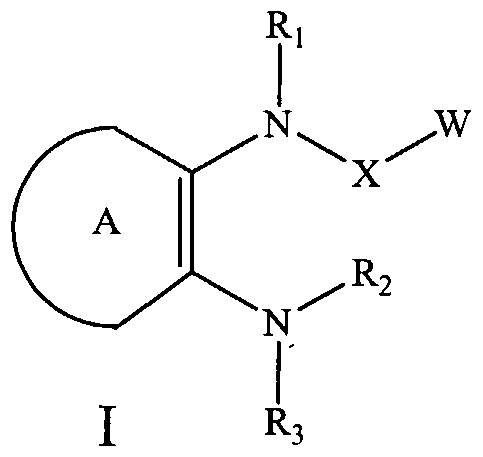
- One embodiment of the invention is directed to the novel compounds of Formula I:
- A is phenyl, naphthyl or biphenyl, each of which may be optionally substituted with one or more of -C i- 6 alkyl, amino, aminoalkyl, hydroxyalkyl, alkoxyalkyl, sulfonamidoalkyl, guanidinoalkyl, heteroaryl, halogen, hydroxy, -CF 3 , alkoxy, aryl, aralkyl, heteroaralkyl, aryloxy, arylalkoxy, -OCF 3 , -OCO-alkyl, -COR 3 , -CN, -C(NH)NH 2 , -COOR 3 , -CONR a R b , -N(R a )COR b , -NO 2 , -SO 2 R a , -SO 3 R 3 or -SO 2 NR a R b ; or
- a 5- to 7-membered mono- or a 8- to 10-membered bicyclic heteroaromatic ring having from one to four heteroatoms selected from N, O or S, and may be optionally substituted with one or more Of -Ci -6 alkyl, amino, aminoalkyl, hydroxyalkyl, alkoxyalkyl, sulfonamidoalkyl, guanidinoalkyl, heteroaryl, halogen, hydroxy, -CF 3 , alkoxy, aryl, aralkyl, heteroaralkyl, aryloxy, arylalkoxy, -OCF 3 , -OCO-alkyl, -COR 3 , -CN, -C(NH)NH 2 , -COOR 3 , -C0NR a R b , -N(R 3 )CORb, -NO 2 , -SO 2 R 3 , -SO 3 R 3 or -SO 2 NR 3
- R 2 and R 3 are independently
- R 2 and R 3 taken together with the attached nitrogen, form a 5- to 7-membered heterocyclic or heteroaromatic ring containing from one to three heteroatoms selected from N, O or S, which may be optionally substituted with -C 1-6 alkyl, amino, aminoalkyl, hydroxyalkyl, alkoxyalkyl, heteroaryl, halogen, hydroxy, -CF 3 , alkoxy, aryl, aralkyl, heteroaralkyl, aryloxy, arylalkoxy, -OCF 3 , -OCO-alkyl, -OCO-alkylamino, -OCO-alkylamido, -COR 3 , -CN, -COOR 3 , -C0NR 3 R b , -N(R a )C0R b , -NO 2 , -SO 2 R 3 , -SO 3 R 3 or -SO 2 NR a R b ; and
- W is phenyl, naphthyl or biphenyl, each of which may be optionally substituted with one or more of Ci -4 alkyl, amino, aminoalkyl, hydroxyalkyl, alkoxyalkyl, halogen, hydroxy, -CF 3 , alkoxy, aryloxy, arylalkoxy, -OCF 3 , -COR 3 , -CN, -C(NH)NH 2 , -COOR 3 , -CONR a R b , -NHC0R a R b , -NHSO 2 R 3 , -NO 2 , -SOR 3 , -SO 3 R 3 or -SO 2 NR a R b ; or
- R 3 and R b are independently hydrogen, alkyl, cycloalkyl, haloalkyl, aryl, aralkyl, heteroaralkyl or heteroaryl.
- the compounds of Formulae I and II are especially potent inhibitors of the c-fms protein tyrosine kinase.
- the compounds of Formula III are expected to exhibit similar inhibitory potencies.
- the invention also relates to methods of inhibiting protein tyrosine kinase activity in a mammal by administration of a therapeutically effective amount of at least one compound of Formula I, II or III.
- A is phenyl, naphthyl or biphenyl, each of which may be optionally substituted with one or more of -Ci- 6 alkyl, amino, aminoalkyl, hydroxyalkyl, alkoxyalkyl, sulfonamidoalkyl, guanidinoalkyl, heteroaryl, halogen, hydroxy, -CF 3 , alkoxy, aryl, aralkyl, heteroaralkyl, aryloxy, arylalkoxy, -OCF 3 , -OCO-alkyl, -COR 3 , -CN 5 -C(NH)NH 2 , -COOR 3 , -C0NR 3 R b , -N(R 3 )CORb, -NO 2 , -SO 2 R 3 , -SO 3 R 3 or -S0 2 NR a R b ; or a 5- to 7-membered mono- or a 8- to 10-member
- R 2 and R 3 are independently
- W is phenyl, naphthyl or biphenyl, each of which may be optionally substituted with one or more of Ci -4 alkyl, amino, aminoalkyl, hydroxyalkyl, alkoxyalkyl, halogen, hydroxy, -CF 3 , alkoxy, aryloxy, arylalkoxy, -OCF 3 , -COR 3 , -CN, -C(NH)NH 2 , -COOR 3 , -C0NR a R b , -NHCOR 3 Rb, -NHSO 2 R 3 , -NO 2 , -SOR 3 , -SO 3 R 3 or -SO 2 NR a R b ; or
- R 3 and Rb are independently hydrogen, alkyl, cycloalkyl, haloalkyl, aryl, aralkyl, heteroaralkyl or heteroaryl.
- Preferred compounds of Formula I are those wherein A is phenyl; Ri is -H; and
- R 2 and R 3 taken together with the attached nitrogen, form a piperidine, piperazine, morpholine, thiomorpholine, pyrrolidine, pyrroline, pyrazolidine, pyrazoline, imidazolidine or imidazoline ring which may be optionally substituted with -Ci -6 alkyl, amino, aminoalkyl, hydroxyalkyl, alkoxyalkyl, heteroaryl, halogen, hydroxy, -CF 3 , alkoxy, aryl, aralkyl, heteroaralkyl, aryloxy, arylalkoxy, -OCF 3 , -OCO-alkyl, -OCO-alkylamino, -OCO-alkylamido, -COR 3 , -CN, -COOR 3 , -CONR 3 Rb, -N(R 3 )CORb, -NO 2 , -SO 2 R 3 , -SO 3 R 3 or
- R 3 and Rb are independently hydrogen, alkyl, cycloalkyl, haloalkyl, aryl, aralkyl, heteroaralkyl or heteroaryl.
- Particularly preferred compounds of Formula I are those wherein A is phenyl; Ri is -H;
- R 2 and R 3 taken together with the attached nitrogen, form a piperidine, piperazine, morpholine, thiomorpholine, pyrrolidine, pyrroline, pyrazolidine, pyrazoline, imidazolidine or imidazoline ring which may be optionally substituted with -Ci -6 alkyl, amino, aminoalkyl, hydroxyalkyl, alkoxyalkyl, heteroaryl, halogen, hydroxy, -CF 3 , alkoxy, aryl, aralkyl, heteroaralkyl, aryloxy, arylalkoxy, -OCF 3 , -OCO-alkyl, -OCO-alkylamino, -OCO-alkylamido, -COR 3 , -CN, -C(NH)NH 2 , -COOR 3 , -CONR 3 Rb, -N(R a )C0R b , -NO 2 , -C
- R 3 and Rb are independently hydrogen, alkyl, cycloalkyl, haloalkyl, aryl, aralkyl, heteroaralkyl or heteroaryl.
- the most preferred compounds of Formula I include, but are not limited to, 5-cyano-furan-2- carboxylic acid [2-(4-acetylamino-piperidin-l-yl)-phenyl]-amide, 5-cyano-lH-pyrrole-2- carboxylic acid (2-piperidin-l-yl-phenyl)-amide, 5-cyano-furan-2-carboxylic acid (4-methoxy-2- piperidin-l-yl-phenyl)-amide, 5-cyano-furan-2-carboxylic acid (4-imidazol-l-yl-2-piperidin-l- yl-phenyl)-amide, 5-cyano-furan-2-carboxylic acid (4-dimethylamino-2-piperidin-l-yl-phenyl)- amide, 5-cyano-furan-2-carboxylic acid [2-(4,4-difluoro-piperidin-l-yl)-phenyl]-amide, 5-cyano
- the invention also relates to methods of inhibiting protein tyrosine kinase activity in a mammal by administration of a therapeutically effective amount of at least one compound of Formula.
- a preferred tyrosine kinase is c-fms.
- the invention is considered to include the enantiomeric, diastereomeric and tautomeric forms of all compounds of Formula I as well as their racemic mixtures.
- some of the compounds represented by Formulae I may be prodrugs, i.e., derivatives of an acting drug that possess superior delivery capabilities and therapeutic value as compared to the acting drug. Prodrugs are transformed into active drugs by in vivo enzymatic or chemical processes.
- alkyl refers to both linear and branched chain radicals of up to 12 carbon atoms, unless otherwise indicated, and includes, but is not limited to, methyl, ethyl, propyl, isopropyl, butyl, isobutyl, sec-butyl, tert-butyl, pentyl, isopentyl, hexyl, isohexyl, heptyl, octyl, 2,2,4-trimethylpentyl, nonyl, decyl, undecyl and dodecyl.
- cycloalkyl refers to a saturated or partially unsaturated ring composed of from 3 to 8 carbon atoms. Alkyl substituents may optionally be present on the ring. Examples include cyclopropyl, 1,1 -dimethyl cyclobutyl, 1,2,3-trimethylcyclopentyl, cyclohexyl and cyclohexenyl.
- heterocyclyl refers to a nonaromatic (i.e. saturated or partially unsaturated) ring composed of from 3 to 7 carbon atoms and at least one heteroatom selected from N, O or S.
- Alkyl substituents may optionally be present on the ring. Examples include tetrahydrofuryl, dihydropyranyl, piperidyl, 2,5-dimethypiperidyl, morpholinyl, piperazinyl, thiomorpholinyl, pyrrolidinyl, pyrrolinyl, pyrazolidinyl, pyrazolinyl, imidazolidinyl and imidazolinyl.
- heterocyclylalkyl refers to a Ci -6 alkyl group containing a heterocyclyl substituent. Examples include dihydropyranylethyl and 2-morpholinylpropyl.
- hydroxyalkyl refers to at least one hydroxyl group bonded to any carbon atom along an alkyl chain.
- aminoalkyl refers to at least one primary or secondary amino group bonded to any carbon atom along an alkyl chain.
- alkoxyalkyl refers to at least one alkoxy group bonded to any carbon atom along an alkyl chain.
- polyalkoxyalkyl refers to long-chain alkoxy compounds and includes polyethylene glycols of discreet or monodispersed sizes.
- thioalkyl refers to at least one sulfur group bonded to any carbon atom along an alkyl chain.
- the sulfur group may be at any oxidation state and includes sulfoxides, sulfones and sulfates.
- carboxyalkyl refers to at least one carboxylate group bonded to any carbon atom along an alkyl chain.
- carboxylate group includes carboxylic acids and alkyl, cycloalkyl, aryl or aralkyl carboxylate esters.
- heteroaryl refers to 5- to 7-membered mono- or 8- to 10- membered bicyclic aromatic ring systems, any ring of which may contain from one to four heteroatoms selected from N, O or S where the nitrogen and sulfur atoms can exist in any allowed oxidation state.
- Examples include benzimidazolyl, benzothiazolyl, benzothienyl, benzoxazolyl, furyl, imidazolyl, isothiazolyl, isoxazolyl, oxazolyl, pyrazinyl, pyrazolyl, pyridyl, pyrimidinyl, pyrrolyl, quinolinyl, thiazolyl and thienyl.
- heteroarylkyl refers to a Ci -6 alkyl group having a heteroaryl substituent. Examples include furylethyl and 2-quinolinylpropyl.
- heteroatom refers to a nitrogen atom, an oxygen atom or a sulfur atom wherein the nitrogen and sulfur atoms can exist in any allowed oxidation states.
- alkoxy refers to straight or branched chain radicals of up to 12 carbon atoms, unless otherwise indicated, bonded to an oxygen atom. Examples include methoxy, ethoxy, propoxy, isopropoxy and butoxy.
- aryl refers to monocyclic or bicyclic aromatic ring systems containing from 6 to 12 carbons in the ring. Alkyl substituents may optionally be present on the ring. Examples include benzene, biphenyl and napththalene.
- aralkyl refers to a C 1-6 alkyl group containing an aryl substituent. Examples include benzyl, phenylethyl or 2-naphthylmethyl.
- heteroarylkyl refers to a Ci -6 alkyl group containing a heteroaryl substituent. Examples include furylmethyl and pyridylpropyl.
- aryloxy refers to an oxygen atom bound to an aryl substituent. Examples include phenoxy and benzyloxy.
- arylalkoxy refers to an alkoxy group bound to an aryl substituent. Examples include phenylmethyl ether.
- acyl refers to the group -C(O)R 3 , where R 3 is alkyl, aryl, aralkyl, heteroaryl and heteroaralkyl.
- An “acylating agent” adds the -C(O)R 3 group to a molecule.
- sulfonyl refers to the group -S(O) 2 R 3 , where R 3 is hydrogen, alkyl, cycloalkyl, haloalkyl, aryl, aralkyl, heteroaryl and heteroaralkyl.
- a "sulfonylating agent” adds the -S(O) 2 R 3 group to a molecule.
- the compounds of Formula I represent novel potent inhibitors of protein tyrosine kinases, such as c-fms, and may be useful in the prevention and treatment of disorders resulting from actions of these kinases.
- the invention also provides methods of inhibiting a protein tyrosine kinase comprising contacting the protein tyrosine kinase with an effective inhibitory amount of at least one of the
- a preferred tyrosine kinase is c-fms.
- at least one of the compounds of Formula I is combined with a known tyrosine kinase inhibitor.
- the protein tyrosine kinases inhibited by the compounds of Formula I are located in cells, in a mammal or in vitro. In the case of mammals, which includes humans, a therapeutically effective amount of a pharmaceutically acceptable form of at least one of the compounds of Formula I is administered.
- the invention further provides methods of treating cancer in mammals, including humans, by administration of a therapeutically effective amount of a pharmaceutically acceptable composition of least one compound of Formula I.
- exemplary cancers include, but are not limited to, breast cancer, colon cancer, stomach cancer, hairy cell leukemia and non-small lung carcinoma.
- an effective amount of at least one compound of Formula I is administered in combination with an effective amount of a chemotherapeutic agent.
- the invention also provides methods of treating cardiovascular and inflammatory diseases in mammals, including humans, by administration of a therapeutically effective amount of a pharmaceutically acceptable form of at least one of the compounds of Formula I.
- diseases that may be effectively treated include glomerulonephritis, rheumatoid arthritis, psoriasis, diabetes, tumor related angiogenesis, restenosis, schizophrenia and Alzheimer's dementia.
- the compounds of the invention may be administered in an effective amount within the dosage range of about 0.5 mg to about 10 g, preferably between about 0.5 mg to about 5 g, in single or divided daily doses.
- the dosage administered will be affected by factors such as the route of administration, the health, weight and age of the recipient, the frequency of the treatment and the presence of concurrent and unrelated treatments.
- the compounds of Formula I may be formulated into pharmaceutical compositions comprising any known pharmaceutically acceptable carriers.
- exemplary carriers include, but are not limited to, any suitable solvents, dispersion media, coatings, antibacterial and antifungal agents and isotonic agents.
- exemplary excipients that may also be components of the formulation include fillers, binders, disintegrating agents and lubricants.
- the pharmaceutically-acceptable salts of the compounds of Formula I include the conventional non-toxic salts or the quaternary ammonium salts which are formed from inorganic or organic acids or bases.
- acid addition salts include acetate, adipate, benzoate, benzenesulfonate, citrate, camphorate, dodecylsulfate, hydrochloride, hydrobromide, lactate, maleate, methanesulfonate, nitrate, oxalate, pivalate, propionate, succinate, sulfate and tartrate.
- Base salts include ammonium salts, alkali metal salts such as sodium and potassium salts, alkaline earth metal salts such as calcium and magnesium salts, salts with organic bases such as dicyclohexylamine salts and salts with amino acids such as arginine. Also, the basic nitrogen-containing groups may be quaternized with, for example, alkyl halides.
- compositions of the invention may be administered by any means that accomplish their intended purpose. Examples include administration by parenteral, subcutaneous, intravenous, intramuscular, intraperitoneal, transdermal, buccal or ocular routes. Alternatively or concurrently, administration may be by the oral route.
- suitable formulations for parenteral administration include aqueous solutions of the active compounds in water-soluble form, for example, water-soluble salts, acidic solutions, alkaline solutions, dextrose-water solutions, isotonic carbohydrate solutions and cyclodextrin inclusion complexes.
- the compounds of Formula I may be prepared by either solid phase support methodology or by solution-phase synthesis. Exemplary synthetic routes for generating amides of the invention are described below.
- Scheme 1 illustrates general methodology for the preparation of compounds of Formula I.
- Compounds of Formula 1-2 can be obtained by nucleophilic aromatic substitution on compounds of Formula 1-3 (where Li is a leaving group such as a halogen, preferably fluoro or chloro) with amines R 2 R 3 NH followed by reduction of the nitro group.
- Nucleophilic aromatic displacements can be performed in the presence of a suitable base such as excess R 2 R 3 NH, triethylamine (NEt 3 ) or K 2 CO 3 in a suitable solvent such as dimethylformamide (DMF). Nitro reductions can be performed according to standard synthetic methodologies (for a review, see M.
- compounds of Formula 1-2 can be obtained by ortho-halogenation (preferably bromination) of amino compounds of Formula 1-1 followed by metal-catalyzed aminations with R 2 R 3 NH.
- ortho-halogenation preferably bromination
- metal-catalyzed aminations with R 2 R 3 NH.
- Catalysts suitable for aminations include metal complexes and salts of palladium and copper as described below and in the aforementioned references.
- the NH 2 group may be optionally protected prior to the coupling using a number of protecting groups such as tert-butoxycarbonyl (BOC) (see, for example, M. C. Harris, et al, Org. Lett., 4:2885-8 (2002).) (For examples of amine protecting groups and their use, see Theodora
- N-bromosuccinimide N-bromosuccinimide
- DMF N, N- dimethylformamide
- DCM dichloromethane
- acetonitrile a suitable solvent such as N, N- dimethylformamide (DMF), dichloromethane (DCM) or acetonitrile.
- Metal-catalyzed aminations can be performed according to standard methodology, preferably in the presence of a palladium catalyst such as Pd 2 (dba) 3 or Pd(OAc) 2 , a ligand such as BINAP or preferably 2- diphenylphoshino-2'-(N,N-dimethylamino)biphenyl, a base such as Cs 2 CO 3 , and a suitable solvent such as toluene, dioxane or DME.
- a palladium catalyst such as Pd 2 (dba) 3 or Pd(OAc) 2
- a ligand such as BINAP or preferably 2- diphenylphoshino-2'-(N,N-dimethylamino)biphenyl
- a base such as Cs 2 CO 3
- a suitable solvent such as toluene, dioxane or DME.
- suitable reagents preferably trifluoroacetic acid in DCM
- Compounds of Formula 1-4 can be prepared by reaction of compounds of Formula 1-2 with carboxylic acids WCOOH according to standard procedures for amide bond formation (for a review, see: M. Bodansky and A. Bodansky, The Practice of Peptide Synthesis, Springer- Verlag, NY (1984)) or by reaction with acid chlorides WCOCl or activated esters WCO 2 Rq (where Rq is a leaving group such as pentafluorophenyl or N-succinimide).
- the preferred reaction conditions for coupling with WCOOH are: when W is a furan, oxalyl chloride in DCM with DMF as a catalyst to form the acid chloride WCOCl and then coupling in the presence of a trialkylamine such as N,N-diisopropylethylamine (DIEA); when W is a pyrrole, l-(3- dimethylaminopropyl)-3-carbodiimide hydrochloride (EDCI) and 1-hydroxybenzotriazole (HOBt); and when W is an imidazole, the preferred conditions are bromotri(pyrrolidino)phosphonium hexafluorophosphate (PyBroP) and DIEA in DCM.
- a trialkylamine such as N,N-diisopropylethylamine (DIEA)
- EDCI l-(3- dimethylaminopropyl)-3-carbodiimide hydrochloride
- leaving groups preferably fluoro or chloro
- they can undergo direct nucleophilic aromatic substitution by ammonia and azide anion or by amines, alcohols, thiols and other nucleophiles in the presence of a suitable base such as K 2 CO 3 , DIEA OrNEt 3 .
- a suitable base such as K 2 CO 3 , DIEA OrNEt 3 .
- the leaving group is suitable for metal-catalyzed couplings (preferably bromo or trifluoromethanesulfonyloxy), a number of cross-coupling reactions (such as Suzuki or Stille reactions) may be performed to introduce aryl, heteroaryl, alkenyl or cycloalkenyl groups (for reviews, see N. Miyaura, A. Suzuki, Chem. Rev., 95:2457 (1995), J. K. Stille, Angew. Chem, Int. Ed. Engl, 25: 508024 (1986) and A. Suzuki in Metal-Catalyzed Coupling Reactions, F. Deiderich, P. Stang, Eds., Wiley- VCH, Weinheim (1988)).
- metal-catalyzed couplings preferably bromo or trifluoromethanesulfonyloxy
- a number of cross-coupling reactions such as Suzuki or Stille reactions
- Metal-catalyzed cross-couplings can be performed according to standard methodology, preferably in the presence of a palladium catalyst such as tetrakistriphenylphosphine Pd 0 (Pd(PPh 3 ) 4 ), an aqueous base such aq. Na 2 CO 3 , and a suitable solvent such as toluene, ethanol, DME, or DMF.
- a palladium catalyst such as tetrakistriphenylphosphine Pd 0 (Pd(PPh 3 ) 4
- an aqueous base such as aq. Na 2 CO 3
- a suitable solvent such as toluene, ethanol, DME, or DMF.
- Other metal-catalyzed coupling reactions that can be employed include aromatic and heteroaromatic amination and amidation (for reviews, see references for amination chemistry cited above for conversion of Formulas 1-1 to 1-2.)
- the initial substituents formed can be further derivatized as described below to provide the final substitution of Formula I.
- substituents on compounds of Formula 1-4 may be further derivatized to provide compounds of Formula 1-5.
- Protecting groups on compounds of Formula 1-4 can be removed according to standard synthetic methodologies (see Theodora W. Greene and Peter G. M. Wuts, John Wiley and Sons, Inc., NY (1991)) and can be then subjected to further derivatization.
- Examples of further derivatization of compounds of 1-4 to provide compounds of Formulae 1-5 include, but are not limited to: when compounds of Formula 1-4 contain a primary or secondary amine, the amine may be reacted with aldehydes or ketones in the presence of a reducing agent such as sodium triacetoxyborohydride (see Abdel-Magid reference above) to reductively alkylate the amine; with acid chlorides or carboxylic acids and an amide bond forming reagent as described above to form amides; with sulfonyl chlorides to form sulfonamides; with isocyanates or carbamyl chlorides to form ureas; with aryl or heteroaryl halides in the presence of a palladium catalyst as described above (see Buchwald and Hartwig references above) to attach aryl and heteroaryl groups to the amines.
- a reducing agent such as sodium triacetoxyborohydride (see Abdel-Magid reference above) to reductively
- Basic amines may be oxidized to N-oxides and conversely N-oxides may be reduced to basic amines.
- compounds of Formula 1-4 contain a sulfide, either acyclic or cyclic, the sulfide can be further oxidized to the corresponding sulfoxides or sulfones.
- Sulfoxides can be obtained by oxidation using an appropriate oxidant such as one equivalent of weta-chloroperoxybenzoic acid(MCPBA) or by treatment with NaIO 4 (see, for example, J. Regan, et al, J. Med.
- Chem., 46: 4676-86 (2003)) and sulfones can be obtained using two equivalents of MCPBA or by treatment with 4-methylmorpholine N-oxide and catalytic osmium tetroxide (see, for example, PCT application WO 01/47919).
- step (e) 5-cyano-furan-2-carbonyl chloride (66 mg, 0.43 mmol) was allowed to react with 4-methoxy-2-piperidin- 1-yl-phenylamine (67 mg, 0.32 mmol, as prepared in the previous step) in the presence of DIEA (164 ⁇ L, 0.940 mmol) for 2 h to afford 62 mg (60%) of the title compound as a yellow solid.
- step (d) 4-imidazol- 1 -yl-2-piperidin- 1 -yl- phenylamine (69 mg, 0.28 mmol, as prepared in the previous step) was allowed to react with 5-
- step (c) dimethyl-(4-nitro-3-piperidin-l-yl- phenyl)-amine (100 mg, 0.4 mmol, as prepared in the previous step) was stirred with 80 mg 5% Pd-C in 5 mL MeOH under H 2 to afford 89 mg (100%) of the title compound as an oil, which was used immediately without further purification.
- Mass spectrum (ESI, m/z) calcd. for Ci 3 H 2 IN 3 , 220.1 (M+H), found 220.1.
- step (d) 4-N,N-dimethyl-2-piperidin-l -yl- benzene- 1,4-diamine (89 mg, 0.4 mmol, as prepared in the previous step) was allowed to react with 5-cyano-furan-2-carbonyl chloride (236 mg, 1.5 mmol) in the presence of DIEA (0.15 mL, 0.88 mmol) to afford 84.7 mg (63%) of the title compound as a yellow powder.
- step (c) 4,4-difluoro-l-(2-nitro-phenyl)- piperidine (128 mg, 0.520 mmol, as prepared in the previous step) was stirred with 80 mg 5% Pd-C in 4 mL of MeOH under H 2 to afford 76 mg (69%) of the title compound as a dark oil, which was used immediately due to apparent instability.
- step (d) 2-(4,4-difluoro-piperidin-l-yl)- phenylamine (76 mg, 0.35 mmol) was allowed to react with 5-cyano-furan-2-carbonyl chloride (62 mg, 0.40 mmol) in the presence of DIEA (134 ⁇ L, 0.770 mmol) to afford 42 mg (36%) of the title compound as a tan solid.
- step (c) l-(5-ethoxy-2-nitro-phenyl)-piperidine (78 mg, 0.31 mmol, as prepared in the previous step) was stirred with 42 mg of 5% Pd-C under H 2 to afford 64 mg (94%) of the title compound which was used immediately without further purification.
- step (d) 4-ethoxy-2-piperidin-l -yl-phenylamine (64 mg, 0.29 mmol, as prepared in the previous step) was allowed to react with 5-cyano-furan-2- carbonyl chloride (66.6 mg, 0.430 mmol) in the presence of DIEA (111 ⁇ L, 0.63 mmol) to afford 53 mg (54%) of the title compound as a light yellow solid.
- step (c) l-(2-chloro-6-nitro-phenyl)-piperidine (79 mg, 0.32 mmol, as prepared in the previous step) was stirred with 44 mg of 5% Pd-C under H 2 for Ih 30 min to afford 54 mg (80%) of the title compound, contaminated with the des-chloro derivative, which was used immediately without further purification.
- step (d) 3 -chloro-2-piperidin- 1 -yl-phenylamine (54 mg, 0.25 mmol, as prepared in the previous step) was allowed to react with 5-cyano-furan-2- carbonyl chloride (55.8 mg, 0.360 mmol) in the presence of DIEA (95 ⁇ L, 0.55 mmol) to afford 8.4 mg (10%) of the title compound as a yellow solid.
- step (a) 2-chloro-3-methylnitrobenzene (264 mg, 1.53 mmol) was heated to 110 °C overnight in 3 mL of piperidine to afford 128 mg (35%) of the title compound and an undetermined amount of starting material.
- step (c) l-(2-methyl-6-nitro-phenyl)-piperidine (74 mg , 0.38 mmol, as prepared in the previous step) was stirred with 5% Pd-C (50 mg) under H 2 to afford 66mg (91%) of the title compound as an oil.
- step (d) 3-methyl-2-piperidin-l-yl-phenylamine (68 mg, 0.35 mmol, as prepared in the previous step) was allowed to react with 5-cyano-furan-2- carbonyl chloride (65 mg, 0.42 mmol) in the presence of DIEA (134 ⁇ L, 0.77 mmol) to afford 13 mg (12%) of the title compound as a waxy yellow solid.
- step (a) Using a procedure similar to Example 4, step (a), a solution of 1 -(5-fluoro-2-nitro- phenyl)-piperidine (98 mg, 0.43 mmol, as prepared in Example 5, step (a)), pyrazole (67.8 mg, 0.600 mmol), and NaOH (22.4 mg, 0.560 mmol) were heated in 3 mL of DMSO overnight to afford 100 mg (85%) the title compound as a yellow solid.
- step (b) l-(2-nitro-5-pyrazol-l-yl-phenyl)- piperidine (100 mg, 0.31 mmol, as prepared in the previous step) was allowed to react with TiCl 3 (1.80 mL, 2.94 mmol) in 3 mL of THF to afford 72 mg (94%) of 2-piperidin-l-yl-4-pyrazol-l-yl- phenylamine, which was allowed to react in a manner similar to Example 3, step (d), with 5- cyano-furan-2-carbonyl chloride (67.5 mg, 0.43 mmol) in the presence of DIEA (111 ⁇ L, 0.6 mmol) to afford 52.7 mg (47%) of the title compound as a light yellow solid.
- step (c) iV-methyl-N-(4-nitro-3-piperidin-l-yl- phenyl)-acetamide (67 mg , 0.24 mmol, as prepared in the previous step) was stirred with 5% Pd-C (45 mg) under H 2 to afford N-(4-amino-3-piperidin-l-yl-phenyl)-N-methyl-acetamide which was used immediately.
- step (d) this was coupled to 5-cyano-furan-2-carbonyl chloride (52 mg, 0.33 mmol) in the presence of DIEA (107 ⁇ L, 0.55 mmol) to afford 7.3 mg (8 %)of the title compound as a waxy solid.
- step (d) N-(4-amino-3-piperidin-l-yl-phenyi)- acetamide (40 mg, 0.17 mmol, as prepared in the previous step) was allowed to react with 5- cyano-furan-2-carbonyl chloride (27 mg, 0.17 mmol) in the presence of DIEA (65 ⁇ L, 0.37 mmol) to afford 23 mg (38%) of the title compound as a yellow solid.
- SH-Imidazole ⁇ -carboxylic acid (2-piperidin-l-yl-phenyl)-amide bis(trifluoroacetic acid salt).
- the title compound was prepared by coupling 4-cyano-l-(2-trimethylsilanyl- ethoxymethyl)-lH-imidazole-2-carboxylate potassium salt (as prepared in the previous step) and 2-piperidin-l-yl-phenylamine according to the procedure in Example 14, step (b) followed by SEM deprotection according to the procedure in Example 14, step (c).
- the title compound was purified by RP- ⁇ PLC (C 18), eluting with 10-70% CH 3 CN in 0.1% TFA/H 2 O over 15 min.
Landscapes
- Chemical & Material Sciences (AREA)
- Organic Chemistry (AREA)
- Health & Medical Sciences (AREA)
- Engineering & Computer Science (AREA)
- Bioinformatics & Cheminformatics (AREA)
- Chemical Kinetics & Catalysis (AREA)
- Public Health (AREA)
- General Chemical & Material Sciences (AREA)
- Medicinal Chemistry (AREA)
- Nuclear Medicine, Radiotherapy & Molecular Imaging (AREA)
- Veterinary Medicine (AREA)
- Pharmacology & Pharmacy (AREA)
- Life Sciences & Earth Sciences (AREA)
- Animal Behavior & Ethology (AREA)
- General Health & Medical Sciences (AREA)
- Neurosurgery (AREA)
- Biomedical Technology (AREA)
- Diabetes (AREA)
- Neurology (AREA)
- Rheumatology (AREA)
- Psychiatry (AREA)
- Cardiology (AREA)
- Heart & Thoracic Surgery (AREA)
- Urology & Nephrology (AREA)
- Obesity (AREA)
- Dermatology (AREA)
- Vascular Medicine (AREA)
- Hematology (AREA)
- Endocrinology (AREA)
- Pain & Pain Management (AREA)
- Emergency Medicine (AREA)
- Hospice & Palliative Care (AREA)
- Immunology (AREA)
- Orthopedic Medicine & Surgery (AREA)
- Physical Education & Sports Medicine (AREA)
- Pharmaceuticals Containing Other Organic And Inorganic Compounds (AREA)
- Plural Heterocyclic Compounds (AREA)
- Pyrrole Compounds (AREA)
Abstract
Description



Claims

Priority Applications (3)
| Application Number | Priority Date | Filing Date | Title |
|---|---|---|---|
| JP2007538155A JP2008517942A (en) | 2004-10-22 | 2005-10-20 | Inhibitor of C-FMS kinase |
| EP05817168A EP1812425A2 (en) | 2004-10-22 | 2005-10-20 | C-fms kinase inhibitors |
| AU2005299476A AU2005299476A1 (en) | 2004-10-22 | 2005-10-20 | c-fms kinase inhibitors |
Applications Claiming Priority (2)
| Application Number | Priority Date | Filing Date | Title |
|---|---|---|---|
| US10/970,865 US7427683B2 (en) | 2003-04-25 | 2004-10-22 | c-fms kinase inhibitors |
| US10/970,865 | 2004-10-22 |
Publications (2)
| Publication Number | Publication Date |
|---|---|
| WO2006047479A2 true WO2006047479A2 (en) | 2006-05-04 |
| WO2006047479A3 WO2006047479A3 (en) | 2007-01-04 |
Family
ID=36228363
Family Applications (1)
| Application Number | Title | Priority Date | Filing Date |
|---|---|---|---|
| PCT/US2005/038307 Ceased WO2006047479A2 (en) | 2004-10-22 | 2005-10-20 | C-fms kinase inhibitors |
Country Status (6)
| Country | Link |
|---|---|
| US (1) | US7427683B2 (en) |
| EP (1) | EP1812425A2 (en) |
| JP (1) | JP2008517942A (en) |
| CN (1) | CN101248062A (en) |
| AU (1) | AU2005299476A1 (en) |
| WO (1) | WO2006047479A2 (en) |
Cited By (5)
| Publication number | Priority date | Publication date | Assignee | Title |
|---|---|---|---|---|
| US7705042B2 (en) * | 2004-10-22 | 2010-04-27 | Janssen Pharmaceutica Nv | Class of arylamide compounds useful as inhibitors of c-fms kinase |
| JP2011501752A (en) * | 2007-10-17 | 2011-01-13 | ジヤンセン・フアーマシユーチカ・ナームローゼ・フエンノートシヤツプ | Inhibitors of c-fms kinase |
| US8163746B2 (en) | 2006-04-19 | 2012-04-24 | Astellas Pharma Inc. | Azolecarboxamide derivative |
| US8304547B2 (en) | 2007-10-24 | 2012-11-06 | Astellas Pharma Inc. | Azolecarboxamide compound or salt thereof |
| WO2021144360A1 (en) | 2020-01-17 | 2021-07-22 | F. Hoffmann-La Roche Ag | Small molecule csf-1r inhibitors in therapeutic and cosmetic uses |
Families Citing this family (19)
| Publication number | Priority date | Publication date | Assignee | Title |
|---|---|---|---|---|
| US7790724B2 (en) * | 2003-04-25 | 2010-09-07 | Janssen Pharmaceutica N.V. | c-fms kinase inhibitors |
| WO2004096795A2 (en) * | 2003-04-25 | 2004-11-11 | 3-Dimensional Pharmaceuticals, Inc. | C-fms kinase inhibitors |
| US7427683B2 (en) | 2003-04-25 | 2008-09-23 | Ortho-Mcneil Pharmaceutical, Inc. | c-fms kinase inhibitors |
| US20050113566A1 (en) * | 2003-04-25 | 2005-05-26 | Player Mark R. | Inhibitors of C-FMS kinase |
| US20060281788A1 (en) * | 2005-06-10 | 2006-12-14 | Baumann Christian A | Synergistic modulation of flt3 kinase using a flt3 inhibitor and a farnesyl transferase inhibitor |
| EP1951234A2 (en) | 2005-10-18 | 2008-08-06 | Janssen Pharmaceutica N.V. | Method of inhibiting flt3 kinase |
| EP2016057A1 (en) * | 2006-04-20 | 2009-01-21 | Janssen Pharmaceutica N.V. | C-fms kinase inhibitors |
| EP2016070B1 (en) | 2006-04-20 | 2016-01-13 | Janssen Pharmaceutica N.V. | Inhibitors of c-fms kinase |
| MX2008013533A (en) * | 2006-04-20 | 2009-01-15 | Janssen Pharmaceutica Nv | Heterocyclic compounds as inhibitors of c-fms kinase. |
| MX2008013532A (en) * | 2006-04-20 | 2009-01-15 | Janssen Pharmaceutica Nv | Inhibitors of c-fms kinase. |
| US8697716B2 (en) | 2006-04-20 | 2014-04-15 | Janssen Pharmaceutica Nv | Method of inhibiting C-KIT kinase |
| CA2673683C (en) | 2007-01-11 | 2014-07-29 | Critical Outcome Technologies, Inc. | Compounds and method for treatment of cancer |
| CA2707492A1 (en) * | 2007-12-13 | 2009-06-18 | Amgen Inc. | Gamma secretase modulators |
| CA2710039C (en) | 2007-12-26 | 2018-07-03 | Critical Outcome Technologies, Inc. | Semicarbazones, thiosemicarbazones and related compounds and methods for treatment of cancer |
| CA2730890C (en) | 2008-07-17 | 2018-05-15 | Critical Outcome Technologies Inc. | Thiosemicarbazone inhibitor compounds and cancer treatment methods |
| CA2794952C (en) | 2010-04-01 | 2018-05-15 | Critical Outcome Technologies Inc. | Compounds and method for treatment of hiv |
| CN107266405A (en) | 2012-08-07 | 2017-10-20 | 詹森药业有限公司 | Method for preparing c fms kinase inhibitors |
| CN104870454B (en) * | 2012-08-07 | 2020-03-03 | 詹森药业有限公司 | Process for the preparation of heterocyclic ester derivatives |
| CN115466226B (en) * | 2022-10-24 | 2023-04-11 | 济南悟通生物科技有限公司 | Synthesis method of 2-cyanopyrazine |
Family Cites Families (39)
| Publication number | Priority date | Publication date | Assignee | Title |
|---|---|---|---|---|
| US3717579A (en) * | 1970-10-05 | 1973-02-20 | Goldschmidt Ag Th | Biocidal preparation |
| JPS555502B1 (en) * | 1971-07-31 | 1980-02-07 | ||
| JPS52133939A (en) | 1976-04-30 | 1977-11-09 | Ihara Chem Ind Co Ltd | Preparation of 2-substituted benzanilides |
| US4172947A (en) * | 1977-01-07 | 1979-10-30 | Westwood Pharmaceuticals, Inc. | 1-(2-Acylaminophenyl)imidazoles |
| US4186199A (en) * | 1978-11-02 | 1980-01-29 | American Hoechst Corporation | Indolo-,1,2-dihydroindolo-, and 1,2,6,7-tetrahydroindolo [1,7-ab][1,5] benzodiazepines |
| US5962490A (en) * | 1987-09-25 | 1999-10-05 | Texas Biotechnology Corporation | Thienyl-, furyl- and pyrrolyl-sulfonamides and derivatives thereof that modulate the activity of endothelin |
| US5258357A (en) * | 1989-10-07 | 1993-11-02 | Basf Aktiengesellschaft | Carboxamides, their preparation and their use as herbicides |
| EP0679157B1 (en) * | 1993-01-15 | 1997-11-19 | G.D. Searle & Co. | Novel 3,4-diaryl thiophenes and analogs thereof having use as antiinflammatory agents |
| US5700823A (en) | 1994-01-07 | 1997-12-23 | Sugen, Inc. | Treatment of platelet derived growth factor related disorders such as cancers |
| US5977168A (en) * | 1994-04-15 | 1999-11-02 | Sankyo Company, Limited | Wood preservative compositions containing dimethylfurancarboxyanilide derivatives |
| US6191165B1 (en) * | 1996-05-31 | 2001-02-20 | Allelix Neuroscience Inc. | Pharmaceutical for treatment of neurological and neuropsychiatric disorders |
| US5854285A (en) * | 1997-04-03 | 1998-12-29 | Natpro, Inc. | Protein kinase inhibitor |
| US7041702B1 (en) * | 1997-10-21 | 2006-05-09 | Scion Pharmaceuticals, Inc. | Pharmaceutically active compounds and methods of use |
| CN1278167A (en) * | 1997-10-27 | 2000-12-27 | 住友制药株式会社 | Amide derivatives |
| WO1999021837A1 (en) * | 1997-10-27 | 1999-05-06 | Isk Americas Incorporated | Substituted benzene compounds, process for their preparation, and herbicidal and defoliant compositions containing them |
| IL141396A0 (en) * | 1998-08-20 | 2002-03-10 | Agouron Pharma | Non-peptide gnrh agents, methods and intermediates for their preparation |
| GB9824579D0 (en) | 1998-11-10 | 1999-01-06 | Novartis Ag | Organic compounds |
| AU2825000A (en) * | 1999-03-10 | 2000-09-28 | Shionogi & Co., Ltd. | Medicinal compositions with (2.2.1) and (3.1.1) bicycloskeleton antagonistic to both of pgd2/txa2 receptors |
| NZ513639A (en) | 1999-04-15 | 2004-02-27 | Bristol Myers Squibb Co | Cyclic protein tyrosine kinase inhibitors |
| AU757680B2 (en) | 1999-07-01 | 2003-02-27 | Taisho Pharmaceutical Co., Ltd. | Aminobenzoic acid derivatives |
| US7115660B2 (en) * | 2001-03-27 | 2006-10-03 | The Scripps Research Institute | Methods for inhibiting angiogenesis and tumor growth |
| UA75093C2 (en) | 2000-10-06 | 2006-03-15 | Dimensional Pharm Inc | Aminopyridinyl-,aminoguanidinyl-, and alkoxyguanidinesubstituted phenylsubstituted phenylacetamides as protease inhibitors |
| US7105682B2 (en) | 2001-01-12 | 2006-09-12 | Amgen Inc. | Substituted amine derivatives and methods of use |
| US6734207B2 (en) * | 2001-04-20 | 2004-05-11 | Parker Hughes Institute | Cytotoxic compounds |
| DE60206782T2 (en) * | 2001-07-09 | 2006-07-13 | Aventis Pharmaceuticals Inc. | SUBSTITUTED AMIDES, SULPHONAMIDES, AND UREAIDS WITH KINASEHORMS EFFECT |
| SE0102617D0 (en) * | 2001-07-25 | 2001-07-25 | Astrazeneca Ab | Novel compounds |
| WO2003075853A2 (en) * | 2002-03-08 | 2003-09-18 | Bristol-Myers Squibb Company | Cyclic derivatives as modulators of chemokine receptor activity |
| DE10222884A1 (en) * | 2002-05-23 | 2003-12-04 | Bayer Cropscience Ag | furancarboxamides |
| EA008769B1 (en) | 2002-06-05 | 2007-08-31 | Инститьют Оф Медисинал Молекьюлар Дизайн. Инк. | Therapeutic drug for diabetes |
| EA008622B1 (en) | 2002-06-05 | 2007-06-29 | Инститьют Оф Медисинал Молекьюлар Дизайн. Инк. | Immunity-related protein kinase inhibitors |
| AU2003265382A1 (en) | 2002-08-23 | 2004-03-11 | Pharmacia & Upjohn Company Llc | Antibacterial benzoic acid derivatives |
| AU2003258491A1 (en) | 2002-09-05 | 2004-03-29 | Neurosearch A/S | Amide derivatives and their use as chloride channel blockers |
| AU2003294441A1 (en) * | 2002-11-22 | 2004-06-18 | Bristol-Myers Squibb Company | 1-aryl-2-hydroxyethyl amides as potassium channel openers |
| US7109243B2 (en) * | 2003-03-24 | 2006-09-19 | Irm Llc | Inhibitors of cathepsin S |
| US20050113566A1 (en) * | 2003-04-25 | 2005-05-26 | Player Mark R. | Inhibitors of C-FMS kinase |
| US7427683B2 (en) | 2003-04-25 | 2008-09-23 | Ortho-Mcneil Pharmaceutical, Inc. | c-fms kinase inhibitors |
| WO2004096795A2 (en) | 2003-04-25 | 2004-11-11 | 3-Dimensional Pharmaceuticals, Inc. | C-fms kinase inhibitors |
| ES2611604T3 (en) | 2004-10-22 | 2017-05-09 | Janssen Pharmaceutica Nv | C fms kinase inhibitors |
| US7705042B2 (en) | 2004-10-22 | 2010-04-27 | Janssen Pharmaceutica Nv | Class of arylamide compounds useful as inhibitors of c-fms kinase |
-
2004
- 2004-10-22 US US10/970,865 patent/US7427683B2/en not_active Expired - Lifetime
-
2005
- 2005-10-20 WO PCT/US2005/038307 patent/WO2006047479A2/en not_active Ceased
- 2005-10-20 AU AU2005299476A patent/AU2005299476A1/en not_active Abandoned
- 2005-10-20 JP JP2007538155A patent/JP2008517942A/en active Pending
- 2005-10-20 CN CNA2005800445131A patent/CN101248062A/en active Pending
- 2005-10-20 EP EP05817168A patent/EP1812425A2/en not_active Withdrawn
Cited By (5)
| Publication number | Priority date | Publication date | Assignee | Title |
|---|---|---|---|---|
| US7705042B2 (en) * | 2004-10-22 | 2010-04-27 | Janssen Pharmaceutica Nv | Class of arylamide compounds useful as inhibitors of c-fms kinase |
| US8163746B2 (en) | 2006-04-19 | 2012-04-24 | Astellas Pharma Inc. | Azolecarboxamide derivative |
| JP2011501752A (en) * | 2007-10-17 | 2011-01-13 | ジヤンセン・フアーマシユーチカ・ナームローゼ・フエンノートシヤツプ | Inhibitors of c-fms kinase |
| US8304547B2 (en) | 2007-10-24 | 2012-11-06 | Astellas Pharma Inc. | Azolecarboxamide compound or salt thereof |
| WO2021144360A1 (en) | 2020-01-17 | 2021-07-22 | F. Hoffmann-La Roche Ag | Small molecule csf-1r inhibitors in therapeutic and cosmetic uses |
Also Published As
| Publication number | Publication date |
|---|---|
| WO2006047479A3 (en) | 2007-01-04 |
| US20050131022A1 (en) | 2005-06-16 |
| EP1812425A2 (en) | 2007-08-01 |
| JP2008517942A (en) | 2008-05-29 |
| US7427683B2 (en) | 2008-09-23 |
| AU2005299476A1 (en) | 2006-05-04 |
| CN101248062A (en) | 2008-08-20 |
Similar Documents
| Publication | Publication Date | Title |
|---|---|---|
| US7427683B2 (en) | c-fms kinase inhibitors | |
| EP1807407B1 (en) | Aromatic amides as inhibitors of c-fms kinase | |
| JP5480619B2 (en) | Inhibitors of c-fms kinase | |
| US7429603B2 (en) | C-fms kinase inhibitors | |
| JP5331679B2 (en) | Inhibitors of c-fms kinase | |
| US20050113566A1 (en) | Inhibitors of C-FMS kinase | |
| WO2005082001A2 (en) | Advanced isothiazole based protein kinase inhibitors | |
| CA2649512A1 (en) | C-fms kinase inhibitors | |
| HK1133878B (en) | Inhibitors of c-fms kinase | |
| HK1193607A (en) | Aromatic amides as inhibitors of c-fms kinase |
Legal Events
| Date | Code | Title | Description |
|---|---|---|---|
| WWE | Wipo information: entry into national phase |
Ref document number: 200580044513.1 Country of ref document: CN |
|
| AK | Designated states |
Kind code of ref document: A2 Designated state(s): AE AG AL AM AT AU AZ BA BB BG BW BY BZ CA CH CN CO CR CU CZ DK DM DZ EC EE EG ES FI GB GD GH GM HR HU ID IL IN IS JP KE KG KP KR KZ LC LK LR LS LT LU LV LY MD MG MK MN MW MX MZ NA NG NO NZ OM PG PH PL PT RO RU SC SD SG SK SL SM SY TJ TM TN TR TT TZ UG US UZ VC VN YU ZA ZM |
|
| AL | Designated countries for regional patents |
Kind code of ref document: A2 Designated state(s): BW GH GM KE LS MW MZ NA SD SZ TZ UG ZM ZW AM AZ BY KG MD RU TJ TM AT BE BG CH CY DE DK EE ES FI FR GB GR HU IE IS IT LU LV MC NL PL PT RO SE SI SK TR BF BJ CF CG CI CM GA GN GQ GW MR NE SN TD TG |
|
| WWE | Wipo information: entry into national phase |
Ref document number: 2005299476 Country of ref document: AU |
|
| WWE | Wipo information: entry into national phase |
Ref document number: 2007538155 Country of ref document: JP |
|
| NENP | Non-entry into the national phase |
Ref country code: DE |
|
| WWE | Wipo information: entry into national phase |
Ref document number: 1561/KOLNP/2007 Country of ref document: IN |
|
| WWE | Wipo information: entry into national phase |
Ref document number: 2005817168 Country of ref document: EP |
|
| WWP | Wipo information: published in national office |
Ref document number: 2005817168 Country of ref document: EP |