WO2006113910A2 - Inhibitors of microsomal triglyceride transfer protein and apo-b secretion - Google Patents
Inhibitors of microsomal triglyceride transfer protein and apo-b secretion Download PDFInfo
- Publication number
- WO2006113910A2 WO2006113910A2 PCT/US2006/015146 US2006015146W WO2006113910A2 WO 2006113910 A2 WO2006113910 A2 WO 2006113910A2 US 2006015146 W US2006015146 W US 2006015146W WO 2006113910 A2 WO2006113910 A2 WO 2006113910A2
- Authority
- WO
- WIPO (PCT)
- Prior art keywords
- compound
- alkyl
- compounds
- apo
- secretion
- Prior art date
- Legal status (The legal status is an assumption and is not a legal conclusion. Google has not performed a legal analysis and makes no representation as to the accuracy of the status listed.)
- Ceased
Links
- ATCLYGWLWQGFMM-UHFFFAOYSA-N CC(C)Oc1cccc(C(Nc2ccc(CN(CC3)C(Oc4ccccc4)=O)c3c2)=O)c1-c1ccc(C(F)(F)F)cc1 Chemical compound CC(C)Oc1cccc(C(Nc2ccc(CN(CC3)C(Oc4ccccc4)=O)c3c2)=O)c1-c1ccc(C(F)(F)F)cc1 ATCLYGWLWQGFMM-UHFFFAOYSA-N 0.000 description 1
- JLOVDWPFNSMIEY-UHFFFAOYSA-N COc1c(-c2ccc(C(F)(F)F)cc2)c(C(O)=O)ccc1 Chemical compound COc1c(-c2ccc(C(F)(F)F)cc2)c(C(O)=O)ccc1 JLOVDWPFNSMIEY-UHFFFAOYSA-N 0.000 description 1
Classifications
-
- C—CHEMISTRY; METALLURGY
- C07—ORGANIC CHEMISTRY
- C07D—HETEROCYCLIC COMPOUNDS
- C07D217/00—Heterocyclic compounds containing isoquinoline or hydrogenated isoquinoline ring systems
- C07D217/02—Heterocyclic compounds containing isoquinoline or hydrogenated isoquinoline ring systems with only hydrogen atoms or radicals containing only carbon and hydrogen atoms, directly attached to carbon atoms of the nitrogen-containing ring; Alkylene-bis-isoquinolines
- C07D217/06—Heterocyclic compounds containing isoquinoline or hydrogenated isoquinoline ring systems with only hydrogen atoms or radicals containing only carbon and hydrogen atoms, directly attached to carbon atoms of the nitrogen-containing ring; Alkylene-bis-isoquinolines with the ring nitrogen atom acylated by carboxylic or carbonic acids, or with sulfur or nitrogen analogues thereof, e.g. carbamates
-
- C—CHEMISTRY; METALLURGY
- C07—ORGANIC CHEMISTRY
- C07D—HETEROCYCLIC COMPOUNDS
- C07D217/00—Heterocyclic compounds containing isoquinoline or hydrogenated isoquinoline ring systems
- C07D217/22—Heterocyclic compounds containing isoquinoline or hydrogenated isoquinoline ring systems with hetero atoms or with carbon atoms having three bonds to hetero atoms with at the most one bond to halogen, e.g. ester or nitrile radicals, directly attached to carbon atoms of the nitrogen-containing ring
- C07D217/26—Carbon atoms having three bonds to hetero atoms with at the most one bond to halogen
-
- A—HUMAN NECESSITIES
- A61—MEDICAL OR VETERINARY SCIENCE; HYGIENE
- A61K—PREPARATIONS FOR MEDICAL, DENTAL OR TOILETRY PURPOSES
- A61K31/00—Medicinal preparations containing organic active ingredients
- A61K31/16—Amides, e.g. hydroxamic acids
- A61K31/18—Sulfonamides
-
- A—HUMAN NECESSITIES
- A61—MEDICAL OR VETERINARY SCIENCE; HYGIENE
- A61K—PREPARATIONS FOR MEDICAL, DENTAL OR TOILETRY PURPOSES
- A61K31/00—Medicinal preparations containing organic active ingredients
- A61K31/33—Heterocyclic compounds
- A61K31/395—Heterocyclic compounds having nitrogen as a ring hetero atom, e.g. guanethidine or rifamycins
- A61K31/435—Heterocyclic compounds having nitrogen as a ring hetero atom, e.g. guanethidine or rifamycins having six-membered rings with one nitrogen as the only ring hetero atom
- A61K31/47—Quinolines; Isoquinolines
-
- A—HUMAN NECESSITIES
- A61—MEDICAL OR VETERINARY SCIENCE; HYGIENE
- A61K—PREPARATIONS FOR MEDICAL, DENTAL OR TOILETRY PURPOSES
- A61K31/00—Medicinal preparations containing organic active ingredients
- A61K31/33—Heterocyclic compounds
- A61K31/395—Heterocyclic compounds having nitrogen as a ring hetero atom, e.g. guanethidine or rifamycins
- A61K31/435—Heterocyclic compounds having nitrogen as a ring hetero atom, e.g. guanethidine or rifamycins having six-membered rings with one nitrogen as the only ring hetero atom
- A61K31/47—Quinolines; Isoquinolines
- A61K31/472—Non-condensed isoquinolines, e.g. papaverine
-
- A—HUMAN NECESSITIES
- A61—MEDICAL OR VETERINARY SCIENCE; HYGIENE
- A61K—PREPARATIONS FOR MEDICAL, DENTAL OR TOILETRY PURPOSES
- A61K31/00—Medicinal preparations containing organic active ingredients
- A61K31/33—Heterocyclic compounds
- A61K31/395—Heterocyclic compounds having nitrogen as a ring hetero atom, e.g. guanethidine or rifamycins
- A61K31/435—Heterocyclic compounds having nitrogen as a ring hetero atom, e.g. guanethidine or rifamycins having six-membered rings with one nitrogen as the only ring hetero atom
- A61K31/47—Quinolines; Isoquinolines
- A61K31/472—Non-condensed isoquinolines, e.g. papaverine
- A61K31/4725—Non-condensed isoquinolines, e.g. papaverine containing further heterocyclic rings
-
- A—HUMAN NECESSITIES
- A61—MEDICAL OR VETERINARY SCIENCE; HYGIENE
- A61K—PREPARATIONS FOR MEDICAL, DENTAL OR TOILETRY PURPOSES
- A61K45/00—Medicinal preparations containing active ingredients not provided for in groups A61K31/00 - A61K41/00
- A61K45/06—Mixtures of active ingredients without chemical characterisation, e.g. antiphlogistics and cardiaca
-
- A—HUMAN NECESSITIES
- A61—MEDICAL OR VETERINARY SCIENCE; HYGIENE
- A61P—SPECIFIC THERAPEUTIC ACTIVITY OF CHEMICAL COMPOUNDS OR MEDICINAL PREPARATIONS
- A61P1/00—Drugs for disorders of the alimentary tract or the digestive system
- A61P1/18—Drugs for disorders of the alimentary tract or the digestive system for pancreatic disorders, e.g. pancreatic enzymes
-
- A—HUMAN NECESSITIES
- A61—MEDICAL OR VETERINARY SCIENCE; HYGIENE
- A61P—SPECIFIC THERAPEUTIC ACTIVITY OF CHEMICAL COMPOUNDS OR MEDICINAL PREPARATIONS
- A61P3/00—Drugs for disorders of the metabolism
-
- A—HUMAN NECESSITIES
- A61—MEDICAL OR VETERINARY SCIENCE; HYGIENE
- A61P—SPECIFIC THERAPEUTIC ACTIVITY OF CHEMICAL COMPOUNDS OR MEDICINAL PREPARATIONS
- A61P3/00—Drugs for disorders of the metabolism
- A61P3/04—Anorexiants; Antiobesity agents
-
- A—HUMAN NECESSITIES
- A61—MEDICAL OR VETERINARY SCIENCE; HYGIENE
- A61P—SPECIFIC THERAPEUTIC ACTIVITY OF CHEMICAL COMPOUNDS OR MEDICINAL PREPARATIONS
- A61P3/00—Drugs for disorders of the metabolism
- A61P3/06—Antihyperlipidemics
-
- A—HUMAN NECESSITIES
- A61—MEDICAL OR VETERINARY SCIENCE; HYGIENE
- A61P—SPECIFIC THERAPEUTIC ACTIVITY OF CHEMICAL COMPOUNDS OR MEDICINAL PREPARATIONS
- A61P3/00—Drugs for disorders of the metabolism
- A61P3/08—Drugs for disorders of the metabolism for glucose homeostasis
- A61P3/10—Drugs for disorders of the metabolism for glucose homeostasis for hyperglycaemia, e.g. antidiabetics
-
- A—HUMAN NECESSITIES
- A61—MEDICAL OR VETERINARY SCIENCE; HYGIENE
- A61P—SPECIFIC THERAPEUTIC ACTIVITY OF CHEMICAL COMPOUNDS OR MEDICINAL PREPARATIONS
- A61P43/00—Drugs for specific purposes, not provided for in groups A61P1/00-A61P41/00
-
- A—HUMAN NECESSITIES
- A61—MEDICAL OR VETERINARY SCIENCE; HYGIENE
- A61P—SPECIFIC THERAPEUTIC ACTIVITY OF CHEMICAL COMPOUNDS OR MEDICINAL PREPARATIONS
- A61P9/00—Drugs for disorders of the cardiovascular system
- A61P9/10—Drugs for disorders of the cardiovascular system for treating ischaemic or atherosclerotic diseases, e.g. antianginal drugs, coronary vasodilators, drugs for myocardial infarction, retinopathy, cerebrovascula insufficiency, renal arteriosclerosis
-
- C—CHEMISTRY; METALLURGY
- C07—ORGANIC CHEMISTRY
- C07D—HETEROCYCLIC COMPOUNDS
- C07D401/00—Heterocyclic compounds containing two or more hetero rings, having nitrogen atoms as the only ring hetero atoms, at least one ring being a six-membered ring with only one nitrogen atom
- C07D401/02—Heterocyclic compounds containing two or more hetero rings, having nitrogen atoms as the only ring hetero atoms, at least one ring being a six-membered ring with only one nitrogen atom containing two hetero rings
- C07D401/04—Heterocyclic compounds containing two or more hetero rings, having nitrogen atoms as the only ring hetero atoms, at least one ring being a six-membered ring with only one nitrogen atom containing two hetero rings directly linked by a ring-member-to-ring-member bond
-
- C—CHEMISTRY; METALLURGY
- C07—ORGANIC CHEMISTRY
- C07D—HETEROCYCLIC COMPOUNDS
- C07D405/00—Heterocyclic compounds containing both one or more hetero rings having oxygen atoms as the only ring hetero atoms, and one or more rings having nitrogen as the only ring hetero atom
- C07D405/02—Heterocyclic compounds containing both one or more hetero rings having oxygen atoms as the only ring hetero atoms, and one or more rings having nitrogen as the only ring hetero atom containing two hetero rings
- C07D405/04—Heterocyclic compounds containing both one or more hetero rings having oxygen atoms as the only ring hetero atoms, and one or more rings having nitrogen as the only ring hetero atom containing two hetero rings directly linked by a ring-member-to-ring-member bond
-
- C—CHEMISTRY; METALLURGY
- C07—ORGANIC CHEMISTRY
- C07D—HETEROCYCLIC COMPOUNDS
- C07D417/00—Heterocyclic compounds containing two or more hetero rings, at least one ring having nitrogen and sulfur atoms as the only ring hetero atoms, not provided for by group C07D415/00
- C07D417/02—Heterocyclic compounds containing two or more hetero rings, at least one ring having nitrogen and sulfur atoms as the only ring hetero atoms, not provided for by group C07D415/00 containing two hetero rings
- C07D417/04—Heterocyclic compounds containing two or more hetero rings, at least one ring having nitrogen and sulfur atoms as the only ring hetero atoms, not provided for by group C07D415/00 containing two hetero rings directly linked by a ring-member-to-ring-member bond
Definitions
- the present invention relates to compounds which are inhibitors of microsomal triglyceride transfer protein and/or apolipoprotein B (Apo B) secretion. These compounds can be useful for the prevention and treatment of various diseases, particularly atherosclerosis and its clinical sequelae, for lowering serum lipids, and related ailments.
- the invention further relates to pharmaceutical compositions comprising the compounds and to methods of treating diseases, such as hypertriglyceridemia, hyperchylomicronemia, atherosclerosis, obesity, and related conditions using the compounds.
- a method for decreasing apolipoprotein B (apo B) secretion is also provided.
- Microsomal triglyceride transfer protein catalyzes the transport of triglyceride, cholesteryl ester, and phospholipids.
- MTP has been identified as an agent that may be involved in the assembly of Apo B-containing lipoproteins and biomolecules that contribute to the formation of atherosclerotic lesions.
- Compounds that can inhibit MTP and/or inhibit Apo B secretion can be useful in the treatment of atherosclerosis and related diseases (see, e.g., U.S. Patent No. 5,919,795, incorporated herein by reference).
- These compounds are also useful in the treating diseases or conditions in which, by inhibiting MTP and/or Apo B secretion, serum cholesterol and triglyceride levels are reduced.
- diseases or conditions include hypertriglyceridemia, hypercholesterolemia, pancreatits, and obesity; and hyperchylomicronemia and hyperlipidemla associated with pancreatitis, obesity, and diabetes. Therefore, there is a need for compounds that inhibit MTP that are effective in treating diseases or conditions, such as atherosclerosis and related diseases, and/or can provide an effective lowering of serum apo B in mammals or humans.
- the present invention provides compounds of Formula I:
- R 1 is alkyl (optionally substituted, e.g., with one to three substituents, e.g., halogen, amino, or alkoxy groups), R 4 R 5 NC(O)CH 2 , cycloalkyl, heterocyclyl, or heterocyclylalkyl;
- X 1 is a direct bond, O, S, -N(R 6 )-, C(O)NR 6 , OrN(R 6 )C(O);
- X 2 is O, -N(R 6 )-, or S;
- X 3 is a direct bond, O, -N(R 6 )-, -CH 2 -, arylene, or S;
- R 3 is H, alkyl, cycloalkyl, heterocyclyl, aryl, heteroaryl, heteroalkyl, aralkyl, alkylcarbonyl, alkoxycarbonyl, arylcarbonyl, aryloxycarbonyl, -OH, alkoxy, aryloxy, -SH, thioalkyl, thioaryl, or NR 4 R 5 ;
- R 4 and R5 are, independently for each occurrence, H, alkyl, cycloalkyl, heterocyclyl, aryl, heteroaryl, heteroalkyl, aralkyl, aminocarbonyl, alkylcarbonyl, alkoxycarbonyl, arylcarbonyl, or aryloxycarbonyl;
- R 6 is, independently for each occurrence, H or alkyl; m is O or 1; and n is an integer from O to 3; provided that if m is O, X 3 is a direct bond or CH 2 ; or a pharmaceutically acceptable salt, solvate, ester or hydrate thereof.
- X 1 is O.
- R 1 is alkyl, more preferably methyl, ethyl, or isopropyl.
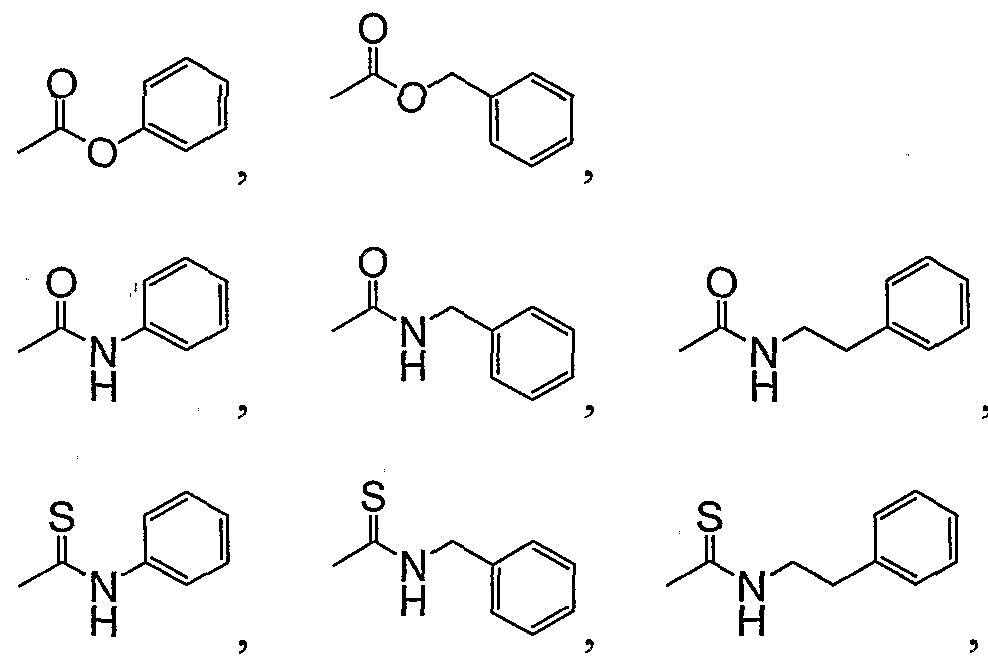
- R 1 and X 1 taken together form a moiety selected from the group consisting of : H 3 C-O-, CH 3 CH 2 -O-, (CHs) 2 CH-O-,
- m is 1. Li certain preferred embodiments, when m is 1, X 3 is O or NH. In certain preferred embodiments, n is O, 1 or 2. In certain preferred embodiments, R 3 is aryl, more preferably unsubstituted or substituted phenyl. In other preferred embodiments, R 3 is cycloalkyl, heterocyclyl, heteroaryl, or alkoxy. In certain preferred embodiments, the moiety
- R 11 is selected from:
- R 12 is selected from:
- R 11 is -OCH 3 . In certain preferred embodiments, R 11 is not H.
- R 11 is not H.
- the present invention is drawn to a pharmaceutical composition
- a pharmaceutical composition comprising a compound of Formula I or II and a pharmaceutically acceptable carrier.
- the compounds of Formula I or II, or a composition comprising a compound of Formula I or II can be used for treating a variety of diseases or conditions including, but not limited to, hypertriglyceridemia, atherosclerosis, pancreatitis, obesity, hypercholesteremia, hyperchylomicronemia, hyperlipidemia, and diabetes. Furthermore, a method for treating or preventing such a disease or condition, such as atherosclerosis and related conditions, in a subject (e.g., a mammal including a human), is provided in accordance with the present invention.
- a subject e.g., a mammal including a human
- the method comprises administering to a subject (e.g., a mammal including a human) in need of such a treatment, an effective amount of a compound of Formula I or II, such that the disease or condition is treated or prevented.
- a subject e.g., a mammal including a human
- the present invention also provides a method of decreasing apo B secretion in a subject
- a mammal or a human comprising administering to said subject a compound of Formula I or II, or a pharmaceutical composition comprising a compound of Formula I or II, in an amount sufficient to decrease the levels or amount of secretion of apo B in the subject.
- Figure 1 is a depiction of the proton NMR of a MTP inhibitor of the present invention (compound 6).
- Figure 2 is a depiction of the mass spectrum of a MTP inhibitor of the present invention (compound 6).
- Figure 3 is a depiction of the proton NMR of a MTP inhibitor of the present invention
- Figure 4 is a depiction of the 13 Carbon-NMR of a MTP inhibitor of the present invention (compound 15).
- Figure 5 is a depiction of the mass spectrum of a MTP inhibitor of the present invention (compound 15).
- the present invention provides compounds. Li one embodiment, the compounds are represented by Formula I:
- R 1 is alkyl (optionally substituted, e.g., with one to three substituents, e.g., halogen, amino, or alkoxy groups), R 4 R 5 NC(O)CH 2 , cycloalkyl, heterocyclyl, or heterocyclylalkyl;
- X 1 is a direct bond, O, S, -N(R 6 )-, C(O)NR 6 , OrN(R 6 )C(O);
- X 2 is O, -N(R 6 )-, or S;
- X 3 is a direct bond, O, -N(R 6 )-, -CH 2 -, arylene, or S;
- R 3 is H, alkyl, cycloalkyl, heterocyclyl, aryl, heteroaryl, heteroalkyl, aralkyl, alkylcarbonyl, alkoxycarbonyl, arylcarbonyl, aryloxycarbonyl, -OH, alkoxy, aryloxy, -SH, thioalkyl, thioaryl, or NR 4 Rs;
- R 4 and R 5 are, independently for each occurrence, H, alkyl, cycloalkyl, heterocyclyl, aryl, heteroaryl, heteroalkyl, aralkyl, aminocarbonyl, alkylcarbonyl, alkoxycarbonyl, arylcarbonyl, or aryloxycarbonyl;
- R 6 is, independently for each occurrence, H or alkyl;
- m is O or 1 ; and n is an integer from O to 3; provided that if m is O, X 3 is a direct bond or CH 2 ; or a pharmaceutically acceptable salt, solvate, ester or hydrate thereof.
- X 1 is O.
- R 1 is alkyl, more preferably methyl.
- R 1 and X 1 taken together form a moiety selected from the group consisting of: O
- (CrC 6 -alkyl)-O- (e.g., H 3 C-O-, CH 3 CH 2 -O-, (CH 3 ) 2 CH-O- ); 0 H 3 ;
- m is 1. In certain preferred embodiments, when m is 1, X 3 is O or NH. In certain preferred embodiments, n is O, 1 or 2. hi certain preferred embodiments, R 3 is aryl, more preferably unsubstituted or substituted phenyl. In other preferred embodiments, R 3 is cycloalkyl, heterocyclyl, heteroaryl, or alkoxy. hi certain preferred embodiments, the moiety
- Ar is optionally substituted aryl or optionally substituted heteroaryl; Cy is optionally substituted cycloalkyl or optionally substituted heterocyclyl; AIk is optionally substituted alkyl; n is 0-3; and p is 1-3.
- n is O or 1.
- Ar is optionally substituted phenyl or optionally substituted furan-2-yl; Cy is optionally substituted cyclopropyl or tetrahydrofuran-2-yl; and AIk is methyl, ethyl, or isopropyl.
- the moiety is optionally substituted aryl or optionally substituted heteroaryl
- Cy is optionally substituted cycloalkyl or optionally substituted heterocyclyl
- AIk is optionally substituted alkyl
- n is 0-3
- p is 1-3.
- n is O or 1.
- Ar is optionally substituted phenyl or optionally substituted furan-2-yl; Cy is optionally substituted
- R 11 is selected from:
- R 12 is selected from:
- R 11 is -OCH 3 . In certain preferred embodiments, R 11 is not H.
- alkyl means a saturated straight chain or branched non-cyclic hydrocarbon typically having from 1 to 10 carbon atoms, more preferably from 1 to 6 carbon atoms.
- Representative straight chain alkyls include methyl, ethyl, n-propyl, n-butyl, n-pentyl, n- .
- branched alkyls include isopropyl, sec-butyl, isobutyl, tert-butyl, isopentyl, 2- methylbutyl, 3-methylbutyl, 2-methylpentyl, 3-methylpentyl, 4- methylpentyl, 2- methylhexyl, 3-methylhexyl, 4-methylhexyl, 5-methylhexyl, 2, 3- dimethylbutyl, 2,3- dimethylpentyl, 2, 4-dimethylpentyl, 2, 3-dimethylhexyl, 2,4-dimethylhexyl, 2, 5-dimethylhexyl, 2, 2-dimethylpentyl, 2, 2-dmiethylhexyl, 3, 3-dimethylpentyl, 3, 3- dimethylhexyl, 4,4-dimethylhexyl, 2-
- cycloalkyl refers to a cyclic alkyl group having from 3 to 10 carbon atoms in the ring, more preferably 3-6 carbon atoms in the ring.
- exemplary cycloalkyl groups include cyclopropyl, cyclobutyl, cyclopentyl, and cyclohexyl.
- Cycloalkyls may be substituted by one or more substituents (e.g., one to three substituents) as described above for alkyl groups.
- heterocycle or “heterocyclyl” means a monocyclic or polycyclic heterocyclic ring (typically having 3- to 14-members) which is either a saturated ring or a unsaturated non-aromatic ring.
- a 3-membered heterocycle can contain up to 3 heteroatoms, and a 4- to 14-membered heterocycle can contain from 1 to about 8 heteroatoms.
- Each heteroatom is independently selected from nitrogen, which can be quaternized; oxygen; and sulfur, including sulfoxide and sulfone.
- the heterocycle may be attached via any heteroatom or carbon atom.
- heterocycles include morpholinyl, thiomorpholinyl, pyrrolidinonyl, pyrrolidinyl, piperidinyl, piperazinyl, hydantoinyl, valerolactamyl, oxiranyl, oxetanyl, tetrahydrofuranyl, tetrahydropyranyl, tetrahydropyrindinyl, tetrahydropyrimidinyl, tetrahydrothiophenyl, tetrahydrothiopyranyl, and the like.
- a heteroatom may be substituted with a protecting group known to those of ordinary skill in the art, for example, the hydrogen on a nitrogen may be substituted with a tert-butoxycarbonyl group.
- the heterocyclyl may be optionally substituted with one or more substituents, e.g., one to three substituents (including without limitation a halogen atom, an alkyl radical, or aryl radical). Only stable isomers of such substituted heterocyclic groups are contemplated in this definition.
- Heterocyclyl groups can be substituted or unsubstituted.
- an "aromatic ring” or “aryl” means a monocyclic or polycyclic- aromatic ring or ring radical comprising carbon and hydrogen atoms.
- suitable aryl groups include, but are not limited to, phenyl, tolyl, anthacenyl, fluorenyl, indenyl, azulenyl, and naphthyl, as well as benzo-fused carbocyclic moieties such as 5,6,7,8-tetrahydronaphthyl.
- An aryl group can be unsubstituted or, optionally, substituted with one or more substituents, e.g., one to three substituents (including without limitation alkyl (preferably, lower alkyl or alkyl substituted with one or more halo), hydroxy, alkoxy (preferably, lower alkoxy), alkylthio, cyano, halo, amino, and nitro.
- the aryl group is a monocyclic ring, wherein the ring comprises 6 carbon atoms.
- heteroaromatic or “heteroaryl” means a monocyclic or polycyclic heteroaromatic ring (or radical thereof) comprising carbon atom ring members and one or more heteroatom ring members (such as, for example, oxygen, sulfur or nitrogen).
- the heteroaromatic ring has from 5 to about 14 ring members in which at least 1 ring member is a heteroatom selected from oxygen, sulfur and nitrogen.
- the heteroaromatic ring is a 5- or 6- membered ring and may contain from 1 to about 4 heteroatoms.
- the heteroaromatic ring system has a 7 to 14 ring members and may contain from 1 to about 7 heteroatoms.
- heteroaryls include pyridyl, furyl, thienyl, pyrrolyl, oxazolyl, imidazolyl, indolizinyl, thiazolyl, isoxazolyl, pyrazolyl, isothiazolyl, pyridazinyl, pyrimidinyl, pyrazinyl, triazinyl, triazolyl, pyridinyl, thiadiazolyl, pyrazinyl, quinolyl, isoquniolyl, indazolyl, benzoxazolyl, benzofuryl, benzothiazolyl, indolizinyl, imidazopyridinyl, isothiazolyl, tetrazolyl, benzimidazolyl, benzoxazolyl, benzothiazolyl, benzothiadiazolyl, benzoxadiazolyl, indolyl, tetrahydroindolyl
- heteroaryl groups may be optionally substituted with one or more substituents, e.g., one to three substituents as described for aryl groups.
- substituents e.g., one to three substituents as described for aryl groups.
- halogen or halo means -F, -Cl, -Br or -I.
- alkylene refers to an alkyl group that has two points of attachment to two moieties (e.g., (-CH 2 -), -(CH 2 CH 2 -),
- Alkylene groups may be unsubstituted or optionally substituted with one or more substituents, e.g., 1-3 substituents as described for alkyl groups.
- substituents e.g., 1-3 substituents as described for alkyl groups.
- Exemplary alkylene groups include methylene, ethylene, and propylene.
- arylene refers to an aryl or heteroaryl group that has two points of attachment to two moieties.
- Arylene groups may be unsubstituted or optionally substituted with one or more substituents, e.g., 1-3 substituents as described for alkyl groups.
- exemplary arylene groups include phenyl- 1,2-diyl, phenyl-l,3-diyl, and phenyl- 1,4-diyl-; thiazol-2,4-diyl, and the like.
- aralkyl refers to an aryl group that is attached to another moiety via an alkylene linker.
- Aralkyl groups may be unsubstituted or optionally substituted with one or more substituents, e.g., 1-3 substituents as described for alkyl groups.
- heterocyclylalkyl refers to a heterocyclyl group that is attached to another moiety via an alkylene linker. Heterocyclylalkyl groups may be unsubstituted or optionally substituted with one or more substituents, e.g., 1-3 substituents as described for alkyl groups.
- alkylcarbonyl refers to the group -C(O)-alkyl.
- the alkyl portion of the alkylcarbonyl moiety can be unsubstituted or optionally substituted with one or more substituents, e.g., 1-3 substituents as described above for alkyl groups.
- alkoxycarbonyl refers to the group -C(O)-O-alkyl.
- the alkyl portion of the alkoxycarbonyl moiety can be unsubstituted or optionally substituted with one or more substituents, e.g., 1-3 substituents as described above for alkyl groups.
- arylcarbonyl refers to the group -C(O)-aryl or -C(O)- heteroaryl.
- the aryl or heteroaryl portion of the arylcarbonyl moiety can be unsubstituted or optionally substituted with one or more substituents, e.g., 1-3 substituents as described above for alkyl groups.
- aryloxycarbonyl refers to the group -C(O)-O-aryl or -C(O)- O-heteroaryl.
- the aryl or heteroaryl portion of the aryloxycarbonyl moiety can be unsubstituted or optionally substituted with one or more substituents, e.g., 1-3 substituents as described above for alkyl groups.
- aminocarbonyl refers to the groups -C(O)-NR a R b , in which
- R a and R b are independently H, alkyl, aryl, heteroaryl, cycloalkyl, or heterocyclyl.
- the alkyl, aryl, heteroaryl, cycloalkyl, or heterocyclyl portion of the aminocarbonyl moiety can be unsubstituted or optionally substituted with one or more substituents, e.g., 1-3 substituents as described above for alkyl groups.
- alkoxy refers to the group -O-alkyl.
- the alkyl portion of the alkoxy moiety can be unsubstituted or optionally substituted with one or more substituents, e.g., 1-3 substituents as described above for alkyl groups.
- aryloxy refers to the group -O-aryl or -O-heteroaryl.
- the aryl or heteroaryl portion of the aryloxy moiety can be unsubstituted or optionally substituted with one or more substituents, e.g., 1-3 substituents as described above for alkyl groups.
- thioalkoxy refers to the group -S-alkyl.
- the alkyl portion of the thioalkoxy moiety can be unsubstituted or optionally substituted with one or more substituents, e.g., 1-3 substituents as described above for alkyl groups.
- thioaryloxy refers to the group -S-aryl or -S-heteroaryl.
- the aryl or heteroaryl portion of the thioaryloxy moiety can be unsubstituted or optionally substituted with one or more substituents, e.g., 1-3 substituents as described above for alkyl groups.
- the present invention provides pharmaceutical compositions comprising a compound of Formula I or II and a pharmaceutically acceptable carrier.
- the compounds of Formula I or II or compositions comprising the compounds of Formula I or II can be used for treating a variety of diseases or conditions including, but not limited to, atherosclerosis, pancreatitis, obesity, hypercholesteremia, hypertriglyceridemia, hyperlipidemia, and diabetes.
- a method for treating such a disease or condition, such as atherosclerosis and related conditions, in a mammal or a human comprises administering to a subject (e.g., a mammal, including a human) in need of such a treatment an effective amount of a compound of Formula I or II, or a pharmaceutical composition comprising an effective amount of a compound of Formula I or II, such that the disease or condition is treated.
- a subject e.g., a mammal, including a human
- a pharmaceutical composition comprising an effective amount of a compound of Formula I or II, such that the disease or condition is treated.
- the compound is administered in an amount sufficient to decrease the secretion of apolipoprotein B.
- the present invention also provides for a method of decreasing apo B secretion in a mammal or human, comprising administering to a mammal or a human of a compound of
- Formula I or II or a pharmaceutical composition comprising a compound of Formula I or II, in an amount sufficient to decrease the levels or amount of secretion of apo B.
- the invention further provides a pharmaceutical composition suitable for the treatment of conditions including hypertriglyceridemia, atherosclerosis, pancreatitis, obesity, hypercholesterolemia, hyperchylomicronemia, hyperlipidemia, and diabetes, comprising a compound of Formula I or II as hereinbefore defined, and a pharmaceutically acceptable carrier.
- the compounds of this invention inhibit or decrease apo B secretion, likely by the inhibition of MTP, although it may be possible that other mechanisms are involved as well.
- the compounds are useful in any of the diseases or conditions in which apo B, serum cholesterol, and/or triglyceride levels are elevated.
- the invention further provides a method of treating a condition selected from hypertriglyceridemia, atherosclerosis, pancreatitis, obesity, hypercholesteremia, hyperchylomicronemia, hyperlipidemia, and diabetes, comprising administering to a mammal, especially a human, in need of such treatment an amount of a compound of Formula I or II as defined above sufficient to decrease the secretion of apolipoprotein B.
- treating includes preventative as well as disease remitative treatment.
- the invention further provides a method of decreasing apo B secretion in a mammal, especially a human, comprising administering to said mammal an apo B-(secretion) decreasing amount of a compound of Formula I or II as defined above.
- the kit includes an effective amount of a compound of this invention (e.g., a compound of Formula I or Formula II) in unit dosage form, together with instructions for administering the compound to a subject suffering from or susceptible to diseases or conditions in which apo B, serum cholesterol, and/or triglyceride levels are elevated (including without limitation hypertriglyceridemia, atherosclerosis, pancreatitis, obesity, hypercholesteremia, hyperchylomicronemia, hyperlipidemia, and diabetes), preferably wherein the effective amount of compound is less than 1000 mg (more preferably less than 500 mg) of the compound.
- a compound of this invention e.g., a compound of Formula I or Formula II
- instructions for administering the compound to a subject suffering from or susceptible to diseases or conditions in which apo B, serum cholesterol, and/or triglyceride levels are elevated (including without limitation hypertriglyceridemia, atherosclerosis, pancreatitis, obesity, hypercholesteremia, hyperchylomicronemia, hyperlipidemia, and diabetes),
- the kit comprises a sterile container which contains the compound; such containers can be boxes, ampules, bottles, vials, tubes, bags, pouches, blister- packs, or other suitable container form known in the art.
- a sterile container which contains the compound; such containers can be boxes, ampules, bottles, vials, tubes, bags, pouches, blister- packs, or other suitable container form known in the art.
- Such containers can be made of plastic, glass, laminated paper, metal foil, or other materials suitable for holding medicaments.
- the instructions will generally include information about the use of the compound for treatment or prevention of diseases or conditions in which apo B, serum cholesterol, and/or triglyceride levels are elevated (including without limitation hypertriglyceridemia, atherosclerosis, pancreatitis, obesity, hypercholesteremia, hyperchylomicronemia, hyperlipidemia, and diabetes); in preferred embodiments, the instructions include at least one of the following: description of the compound; dosage schedule and administration for treatment of diseases or conditions in which apo B, serum cholesterol, and/or triglyceride levels are elevated; precautions; warnings; indications; counter-indications; overdosage information; adverse reactions; animal pharmacology; clinical studies; and/or references.
- the instructions may be printed directly on the container (when present), or as a label applied to the container, or as a separate sheet, pamphlet, card, or folder supplied in or with the container.
- the present invention provides intermediate compounds that are useful for the synthesis of the MTP inhibitor compounds of the invention.
- R 1 and X 1 have the meanings described in connection with Formula I or II
- R 7 is selected from the group consisting of OH, O-Cat (in which Cat is a cation (e.g., a proton, a metal cation such as sodium, lithium, potassium, calcium, ammonium, and the like)), a C 1 - C 6 alkoxy group, and a leaving group (including a halogen such as chloride or bromide, a tosylate or mesylate, a pentafluorophenol, and the like).
- the present invention also provides intermediates useful in the preparation of compounds of Formula I or Formula II.
- a preferred intermediate compound of the present invention is described by structure 2 shown below.
- the present invention further provides a method of forming the compounds of Formula I or II of the present invention by a synthetic process.
- Compounds of Formula I or II can also be made by processes which include processes known in the chemical arts for the production of similar compounds. Such processes for the manufacture of a compound of Formula I or II as defined above are provided as further features of the invention and are illustrated by the procedures discussed below.
- Conventional methods and/or techniques of purification and separation known to those skilled in the art can be used to isolate the compounds of this invention. Such techniques include all types of chromatography (HPLC, column chromatography using common adsorbents such as silica gel, and thin layer chromatography), recrystallization, and differential (i.e., liquid- liquid) extraction techniques.
- the compounds herein form cationic salts such as acid addition salts and the expression
- “pharmaceutically-acceptable salts” is intended to define but not be limited to such salts as the hydrochloride, hydrobromide, sulfate, hydrogen sulfate, phosphate, hydrogen phosphate, dihydrogenphosphate, acetate, succinate, citrate, benzoate, ascorbate, lactate, pamoate, tartrate, methanesulfonate (mesylate) and p-toluenesulfonate (tosylate) salts. For many compounds polyaddition salts are feasible.
- the acid addition salts of the compounds of the present invention are readily prepared by reacting the base forms with the appropriate acid.
- the salt is of a monobasic acid (e.g., the hydrochloride, the hydrobromide, the p-toluenesulfonate, the acetate)
- the hydrogen form of a dibasic acid e.g., the hydrogen sulfate, the succinate
- the dihydrogen form of a tribasic acid e.g., the dihydrogen phosphate, the citrate
- at least one molar equivalent and usually a molar excess of the acid is employed.
- salts as the sulfate, the hemisuccinate, the hydrogen phosphate or the phosphate
- the appropriate and exact chemical equivalents of acid will generally be used.
- the free base and the acid are usually combined in a co-solvent from which the desired salt precipitates, or can be otherwise isolated by concentration and/or addition of a non-solvent.
- the term "pharmaceutically acceptable salt,” as used herein, can refer to a salt prepared from a compound of Formula I or II having an acidic functional group, such as a carboxylic acid functional group, and a pharmaceutically acceptable inorganic or organic base.
- Suitable bases include, but are not limited to, hydroxides of alkali metals such as sodium, potassium, and lithium; hydroxides of alkaline earth metal such as calcium and magnesium; hydroxides of other metals, such as aluminum and zinc; ammonia, and organic amines, such as unsubstituted or hydroxy-substituted mono-, di-, or trialkylamines; dicyclohexylamine; tributyl amine; pyridine; N-methyl,N-ethylamine; diethylamine; triethylamine; mono-, bis-, or tris-(2-hydroxy-lower alkyl amines), such as mono-, bis-, or tris-(2-hydroxyethyl)- amine, 2-hydroxy-tert-butylamine, or tris-(hydroxymethyl)methylamine, N, N,-di-lower alkyl-N-(hydroxy lower alkyl)-amines, such as N,N-dimethyl-N-(2-
- Step 1 From alcohol to triflate
- Step 5 Coupling with N-Boc tetrahydroisoquinoline
- Step 7 Formation of thiourea
- the compounds of the present invention are orally administrable and are accordingly used in combination with a pharmaceutically acceptable carrier or diluent suitable to oral dosage forms.
- suitable pharmaceutically-acceptable carriers include inert solid fillers or diluents and sterile aqueous or organic solutions.
- the active compound will be present in such pharmaceutical compositions in amounts sufficient to provide the desired dosage amount in the range described below.
- the compounds can be combined with a suitable solid or liquid carrier or diluent to form capsules, tablets, powders, syrups, solutions, suspensions and the like.
- the pharmaceutical compositions may, if desired, contain additional components such as flavorants, sweeteners, excipients and the like.
- the tablets, pills, capsules, and the like may also contain a binder such as gum tragacanth, acacia, corn starch or gelatin; excipients such as dicalcium phosphate; a disintegrating agent such as corn starch, potato starch, alginic acid; a lubricant such as magnesium stearate; and a sweetening agent such as sucrose, lactose or saccharin.
- a dosage unit form is a capsule, it may contain, in addition to materials of the above type, a liquid carrier such as a fatty oil.
- tablets may be coated with shellac, sugar or both.
- a syrup or elixir may contain, in addition to the active ingredient, sucrose as a sweetening agent, methyl and propylparabens as preservatives, a dye and a flavoring such as cherry or orange flavor.
- These active compounds may also be administered parenterally.
- the compounds can be combined with sterile aqueous or organic media to form injectable solutions or suspensions. Solutions or suspensions of these active compounds can be prepared in water suitably mixed with a surfactant such as hydroxypropylcellulose.
- Dispersions can also be prepared in sesame or peanut oil, ethanol, water, polyol (e.g., glycerol, propylene glycol and liquid polyethylene glycol), suitable mixtures thereof, vegetable oils, N-methyl glucamine, polyvinylpyrrolidone and mixtures thereof in oils as well as aqueous solutions of water-soluble pharmaceutically acceptable salts of the compounds.
- polyol e.g., glycerol, propylene glycol and liquid polyethylene glycol
- suitable mixtures thereof vegetable oils, N-methyl glucamine, polyvinylpyrrolidone and mixtures thereof in oils as well as aqueous solutions of water-soluble pharmaceutically acceptable salts of the compounds.
- these preparations contain a preservative to prevent the growth of microorganisms.
- the injectable solutions prepared in this manner can then be administered intravenously, intraperitoneally, subcutaneously, or intramuscularly.
- the pharmaceutical forms suitable for injectable use include sterile aqueous solutions or dispersions and sterile powders for the extemporaneous preparation of sterile injectable solutions or dispersions.
- the form must be sterile and must be fluid to the extent that easy syingability exists. It must be stable under the conditions of manufacture and storage and must be preserved against the contaminating action of microorganisms such as bacteria and fungi.
- a compound of Formula I or II which is administered will generally be varied according to principles well known in the art taking into account the severity of the condition being treated and the route of administration, hi general, a compound of Formula I or II will be administered to a warm blooded animal (such as a human) so that an effective dose, usually a daily dose administered in unitary or divided portions, is received, for example a dose in the range of about 0.1 to about 15 mg/kg body weight, preferably about 1 to about 5 mg/kg body weight.
- the total daily dose received will generally be between 1 and 1200 mg, preferably between 5 and 800 mg.
- a compound of Formula I or II may be administered in divided doses taken with meals, e.g., three times daily, in which case each dose can be, e.g., between 5 and 500 mg.
- the compounds of this invention may be used in conjunction with other pharmaceutical agents, including other lipid lowering agents.
- Such agents include cholesterol biosynthesis inhibitors, especially HMG CoA reductase inhibitors (such as atorvastatin, pravastatin, simvastatin, lovastatin, fluvastatin, cerivastatin, rosuvastatin, and pitivastatin (itavastatin/risivastatin)); squalene synthetase inhibitors; bile acid sequestrants such as cholestyramine; fibrates (bezafibrate, clofibrate, fenofibrate); cholesterol absorption inhibitors such as ezetimibe and pamaqueside; and niacin.
- HMG CoA reductase inhibitors such as atorvastatin, pravastatin, simvastatin, lovastatin, fluvastatin, cerivastatin, rosuvastatin, and pitivastatin (
- test compound is considered to be active if it is active in any of the following screens.
- the activity of a compound according to the invention can be assessed by measuring inhibition of apo B secretion in HepG2 cells.
- Activity can also be confirmed if a test compound inhibits MTP activity directly.
- Inhibition of MTP activity by a compound can be quantitated by observing the inhibition of transfer of radiolabeled triglyceride from donor vesicles to acceptor vesicles in the presence of soluble human MTP.
- the present invention is illustrated by the following Examples. However, it should be understood that the invention is not limited to the specific details of these examples.
- HepG2 cells were grown in MEM Eagle's medium containing 10% fetal bovine serum with 1% penicillin/streptomycin in an incubator (5% CO 2 , 100% relative humidity, 37 °C). At ca. 85% confluency, the cells were treated with test compounds (0.2 % DMSO) at appropriate concentrations in triplicate. After 24 hour incubation with the test compounds, growth media were collected from each sample. Concentrations for apo-B and apoAl were determined using ELISA. Mouse anti-human Apo-B and ApoAl antibody and Alk-phos conjugated secondary antibody (goat) was used in ELISA. Triplicate data in six half-log concentrations were used to calculate an IC 50 value for each compound.
- test compounds 0.2 DMSO
- Table 1 depicts the activity of several compounds of Formula I or II according to the present invention. Permeability was measured in a bidirectional Caco-2 assay with analysis by fluorescence and HPLC.
- HPLC shows a retention time of 9.351 minutes with a C 16 column and 5-95% acetonitrile gradient over 10 minutes.
- High resolution mass spectrometry shows an (M-HNa) + peak
- HPLC shows a retention time of 8.996 minutes with a C 16 column and 5-95% acetonitrile gradient over 10 minutes.
- High resolution mass spectrometry shows an (M+H) peak consistent
- the MTP inhibitors of the invention exhibit selective inhibition activity towards HepG2- 20 ApoBl that is associated with the VLDL lipoproteins secreted by the intestine while remaining inert towards HepG2-ApoAl, which is related to HDL (Table 1).
- One desired characteristic of a compound is the combination of permeability as shown in the Caco-2 permeability assay and cellular activity as shown in the HepG2 and Caco-2 ApoB assays. These assays indicate that the compounds of the invention exhibit selective permeability. Such selective permeability may result in these compounds having the ability to permeate the intestinal membrane, but not cross it, which is expected to minimize side effects.
- the MTP inhibitor compounds of the invention are expected to exhibit selective activity in the intestine without exhibiting undesirable systemic exposure, when administered orally.
Landscapes
- Health & Medical Sciences (AREA)
- Chemical & Material Sciences (AREA)
- Organic Chemistry (AREA)
- Animal Behavior & Ethology (AREA)
- Veterinary Medicine (AREA)
- Public Health (AREA)
- General Health & Medical Sciences (AREA)
- Pharmacology & Pharmacy (AREA)
- Medicinal Chemistry (AREA)
- Life Sciences & Earth Sciences (AREA)
- Epidemiology (AREA)
- Bioinformatics & Cheminformatics (AREA)
- Engineering & Computer Science (AREA)
- Chemical Kinetics & Catalysis (AREA)
- General Chemical & Material Sciences (AREA)
- Nuclear Medicine, Radiotherapy & Molecular Imaging (AREA)
- Diabetes (AREA)
- Obesity (AREA)
- Hematology (AREA)
- Vascular Medicine (AREA)
- Emergency Medicine (AREA)
- Endocrinology (AREA)
- Cardiology (AREA)
- Heart & Thoracic Surgery (AREA)
- Child & Adolescent Psychology (AREA)
- Urology & Nephrology (AREA)
- Pharmaceuticals Containing Other Organic And Inorganic Compounds (AREA)
- Medicines That Contain Protein Lipid Enzymes And Other Medicines (AREA)
- Acyclic And Carbocyclic Compounds In Medicinal Compositions (AREA)
- Heterocyclic Carbon Compounds Containing A Hetero Ring Having Nitrogen And Oxygen As The Only Ring Hetero Atoms (AREA)
- Other In-Based Heterocyclic Compounds (AREA)
- Plural Heterocyclic Compounds (AREA)
Abstract
Description


Claims




Priority Applications (12)
| Application Number | Priority Date | Filing Date | Title |
|---|---|---|---|
| NZ563009A NZ563009A (en) | 2005-04-19 | 2006-04-19 | Inhibitors of microsomal triglyceride transfer protein and Apo-B secretion |
| BRPI0607555-0A BRPI0607555A2 (en) | 2005-04-19 | 2006-04-19 | inhibitors of triglyceride transfer microsomal protein and apo-b secretion |
| JP2008507927A JP5356017B2 (en) | 2005-04-19 | 2006-04-19 | Inhibitors of microsomal triglyceride transfer protein and APO-B secretion |
| CA2605510A CA2605510C (en) | 2005-04-19 | 2006-04-19 | Inhibitors of microsomal triglyceride transfer protein and apo-b secretion |
| AU2006236226A AU2006236226B2 (en) | 2005-04-19 | 2006-04-19 | Inhibitors of microsomal triglyceride transfer protein and Apo-B secretion |
| CN200680021707.4A CN101198588B (en) | 2005-04-19 | 2006-04-19 | Inhibitors of microsomal triglyceride transfer protein and apo-B secretion |
| EA200702271A EA024768B1 (en) | 2005-04-19 | 2006-04-19 | Inhibitors of microsomal triglyceride transfer protein and apo-b secretion |
| EP06751011.5A EP1877369B1 (en) | 2005-04-19 | 2006-04-19 | Inhibitors of microsomal triglyceride transfer protein and apo-b secretion |
| ES06751011T ES2430319T3 (en) | 2005-04-19 | 2006-04-19 | Inhibitors of microsomal triglyceride transfer protein and apo-B secretion |
| MX2007013133A MX2007013133A (en) | 2005-04-19 | 2006-04-19 | Inhibitors of microsomal triglyceride transfer protein and apo-b secretion. |
| IL186820A IL186820A0 (en) | 2005-04-19 | 2007-10-21 | Inhibitors of microsomal triglyceride transfer protein and apo-b secretion |
| NO20075731A NO20075731L (en) | 2005-04-19 | 2007-11-09 | Inhibitors of microsomal triglyceride transfer protein and APO-B secretion |
Applications Claiming Priority (4)
| Application Number | Priority Date | Filing Date | Title |
|---|---|---|---|
| US67277805P | 2005-04-19 | 2005-04-19 | |
| US60/672,778 | 2005-04-19 | ||
| US75539005P | 2005-12-30 | 2005-12-30 | |
| US60/755,390 | 2005-12-30 |
Publications (2)
| Publication Number | Publication Date |
|---|---|
| WO2006113910A2 true WO2006113910A2 (en) | 2006-10-26 |
| WO2006113910A3 WO2006113910A3 (en) | 2007-03-22 |
Family
ID=37115969
Family Applications (1)
| Application Number | Title | Priority Date | Filing Date |
|---|---|---|---|
| PCT/US2006/015146 Ceased WO2006113910A2 (en) | 2005-04-19 | 2006-04-19 | Inhibitors of microsomal triglyceride transfer protein and apo-b secretion |
Country Status (19)
| Country | Link |
|---|---|
| US (2) | US8980915B2 (en) |
| EP (1) | EP1877369B1 (en) |
| JP (1) | JP5356017B2 (en) |
| KR (1) | KR20080015792A (en) |
| AU (1) | AU2006236226B2 (en) |
| BR (1) | BRPI0607555A2 (en) |
| CA (1) | CA2605510C (en) |
| CR (1) | CR9528A (en) |
| EA (1) | EA024768B1 (en) |
| EC (1) | ECSP077913A (en) |
| ES (1) | ES2430319T3 (en) |
| GE (1) | GEP20104878B (en) |
| IL (1) | IL186820A0 (en) |
| MX (1) | MX2007013133A (en) |
| NI (1) | NI200700272A (en) |
| NO (1) | NO20075731L (en) |
| NZ (1) | NZ563009A (en) |
| SG (1) | SG164371A1 (en) |
| WO (1) | WO2006113910A2 (en) |
Cited By (19)
| Publication number | Priority date | Publication date | Assignee | Title |
|---|---|---|---|---|
| WO2008097428A3 (en) * | 2007-02-02 | 2008-09-25 | Irm Llc | Compounds and compositions as modulators of gpr119 activity |
| WO2009021740A2 (en) | 2007-08-15 | 2009-02-19 | Sanofis-Aventis | Substituted tetrahydronaphthalenes, process for the preparation thereof and the use thereof as medicaments |
| WO2011157827A1 (en) | 2010-06-18 | 2011-12-22 | Sanofi | Azolopyridin-3-one derivatives as inhibitors of lipases and phospholipases |
| US8163708B2 (en) | 2006-04-03 | 2012-04-24 | Santaris Pharma A/S | Pharmaceutical composition comprising anti-mirna antisense oligonucleotide |
| WO2012120054A1 (en) | 2011-03-08 | 2012-09-13 | Sanofi | Di- and tri-substituted oxathiazine derivates, method for the production thereof, use thereof as medicine and drug containing said derivatives and use thereof |
| WO2012120056A1 (en) | 2011-03-08 | 2012-09-13 | Sanofi | Tetrasubstituted oxathiazine derivatives, method for producing them, their use as medicine and drug containing said derivatives and the use thereof |
| WO2012120053A1 (en) | 2011-03-08 | 2012-09-13 | Sanofi | Branched oxathiazine derivatives, method for the production thereof, use thereof as medicine and drug containing said derivatives and use thereof |
| WO2012120052A1 (en) | 2011-03-08 | 2012-09-13 | Sanofi | Oxathiazine derivatives substituted with carbocycles or heterocycles, method for producing same, drugs containing said compounds, and use thereof |
| WO2012120055A1 (en) | 2011-03-08 | 2012-09-13 | Sanofi | Di- and tri-substituted oxathiazine derivates, method for the production thereof, use thereof as medicine and drug containing said derivatives and use thereof |
| US8288356B2 (en) | 2007-10-04 | 2012-10-16 | Santaris Pharma A/S | MicroRNAs |
| US8361980B2 (en) | 2008-03-07 | 2013-01-29 | Santaris Pharma A/S | Pharmaceutical compositions for treatment of microRNA related diseases |
| US8470791B2 (en) | 2007-03-22 | 2013-06-25 | Santaris Pharma A/S | RNA antagonist compounds for the inhibition of Apo-B100 expression |
| US8492357B2 (en) | 2008-08-01 | 2013-07-23 | Santaris Pharma A/S | Micro-RNA mediated modulation of colony stimulating factors |
| US8563528B2 (en) | 2009-07-21 | 2013-10-22 | Santaris Pharma A/S | Antisense oligomers targeting PCSK9 |
| US8580756B2 (en) | 2007-03-22 | 2013-11-12 | Santaris Pharma A/S | Short oligomer antagonist compounds for the modulation of target mRNA |
| US8729250B2 (en) | 2006-04-03 | 2014-05-20 | Joacim Elmén | Antisense oligonucleotides for inhibition of microRNA-21 |
| US9034837B2 (en) | 2009-04-24 | 2015-05-19 | Roche Innovation Center Copenhagen A/S | Pharmaceutical compositions for treatment of HCV patients that are poor-responders to interferon |
| US9879265B2 (en) | 2013-06-27 | 2018-01-30 | Roche Innovation Center Copenhagen A/S | Oligonucleotide conjugates |
| US20230321073A1 (en) * | 2020-08-06 | 2023-10-12 | Response IP Holding Company, LLC | Compositions and methods for treating metabolic dysregulation |
Families Citing this family (3)
| Publication number | Priority date | Publication date | Assignee | Title |
|---|---|---|---|---|
| EA024768B1 (en) | 2005-04-19 | 2016-10-31 | Сюрфэйс Лоджикс, Инк. | Inhibitors of microsomal triglyceride transfer protein and apo-b secretion |
| NZ720946A (en) | 2009-04-29 | 2017-09-29 | Amarin Pharmaceuticals Ie Ltd | Pharmaceutical compositions comprising epa and a cardiovascular agent and methods of using the same |
| US12453728B1 (en) | 2024-08-08 | 2025-10-28 | Redux Therapeutics, Llc | Compositions comprising inhibitors of microsomal triglyceride transfer protein and Apo-B secretion |
Family Cites Families (15)
| Publication number | Priority date | Publication date | Assignee | Title |
|---|---|---|---|---|
| DE69110828T2 (en) * | 1990-10-16 | 1995-11-30 | Takeda Chemical Industries Ltd | Heterocyclic amine derivatives, their preparation and their use. |
| US5739135A (en) | 1993-09-03 | 1998-04-14 | Bristol-Myers Squibb Company | Inhibitors of microsomal triglyceride transfer protein and method |
| WO1996040640A1 (en) | 1995-06-07 | 1996-12-19 | Pfizer Inc. | BIPHENYL-2-CARBOXYLIC ACID-TETRAHYDRO-ISOQUINOLIN-6-YL AMIDE DERIVATIVES, THEIR PREPARATION AND THEIR USE AS INHIBITORS OF MICROSOMAL TRIGLYCERIDE TRANSFER PROTEIN AND/OR APOLIPOPROTEIN B (Apo B) SECRETION |
| EP1181954A3 (en) | 1995-06-07 | 2002-08-21 | Pfizer Inc. | Biphenyl-2-carboxylic acid-tetrahydro-isoquinolin-6-yl amide derivatives, their preparation and use as inhibitors of microsomal triglyceride transfer protein and/or apolipoprotein B (ApoB) secretion |
| DK0832069T3 (en) * | 1995-06-07 | 2003-04-22 | Pfizer | Biphenyl-2-carboxylic acid tetrahydroisoquinolin-6-ylamide derivatives, their preparation and their use as inhibitors of secretion of microsomal triglyceride transfer protein and / or apolipoprotein B (Apo B) |
| ATE264833T1 (en) | 1996-01-16 | 2004-05-15 | Bristol Myers Squibb Co | CONFORMATION-RESTRICTED AROMATIC MICROSOMAL TRIGLYCERIDE TRANSFER PROTEIN INHIBITORS AND METHODS |
| TR199901180T2 (en) * | 1996-11-27 | 1999-08-23 | Pfizer Inc. | Apo B-Salg�lama / MTP inhibitor amides. |
| IL139450A0 (en) | 1999-11-10 | 2001-11-25 | Pfizer Prod Inc | Methods of administering apo b-secretion/mtp inhibitors |
| US6878707B2 (en) | 2000-01-18 | 2005-04-12 | Novartis Ag | Carboxamides useful as inhibitors of microsomal triglyceride transfer protein and of apolipoprotein b secretion |
| AU2001262185A1 (en) | 2000-04-10 | 2001-10-23 | Novartis Ag | Substituted (hetero)aryl carboxamide derivatives as microsomal triglyceride transfer protein (mtp) and apolipoprotein b (apo b) secretion |
| JO2654B1 (en) * | 2000-09-04 | 2012-06-17 | شركة جانسين فارماسوتيكا ان. في | Polyarylcarboxamides useful as lipid lowering agents |
| US20050038035A1 (en) | 2001-11-28 | 2005-02-17 | Hisashi Takasugi | Heterocyclic amide compounds as apolipoprotein b inhibitors |
| JP2003231633A (en) | 2002-02-06 | 2003-08-19 | Tanabe Seiyaku Co Ltd | Pharmaceutical composition |
| EA010369B1 (en) * | 2004-02-04 | 2008-08-29 | Пфайзер Продактс Инк. | Substituted quinoline compounds |
| EA024768B1 (en) | 2005-04-19 | 2016-10-31 | Сюрфэйс Лоджикс, Инк. | Inhibitors of microsomal triglyceride transfer protein and apo-b secretion |
-
2006
- 2006-04-19 EA EA200702271A patent/EA024768B1/en not_active IP Right Cessation
- 2006-04-19 EP EP06751011.5A patent/EP1877369B1/en not_active Expired - Lifetime
- 2006-04-19 CA CA2605510A patent/CA2605510C/en not_active Expired - Lifetime
- 2006-04-19 KR KR1020077026556A patent/KR20080015792A/en not_active Ceased
- 2006-04-19 JP JP2008507927A patent/JP5356017B2/en not_active Expired - Lifetime
- 2006-04-19 ES ES06751011T patent/ES2430319T3/en not_active Expired - Lifetime
- 2006-04-19 MX MX2007013133A patent/MX2007013133A/en not_active Application Discontinuation
- 2006-04-19 AU AU2006236226A patent/AU2006236226B2/en not_active Ceased
- 2006-04-19 SG SG201005219-9A patent/SG164371A1/en unknown
- 2006-04-19 WO PCT/US2006/015146 patent/WO2006113910A2/en not_active Ceased
- 2006-04-19 BR BRPI0607555-0A patent/BRPI0607555A2/en not_active IP Right Cessation
- 2006-04-19 GE GEAP200610378A patent/GEP20104878B/en unknown
- 2006-04-19 NZ NZ563009A patent/NZ563009A/en not_active IP Right Cessation
- 2006-04-19 US US11/407,500 patent/US8980915B2/en active Active
-
2007
- 2007-10-19 NI NI200700272A patent/NI200700272A/en unknown
- 2007-10-21 IL IL186820A patent/IL186820A0/en unknown
- 2007-11-09 NO NO20075731A patent/NO20075731L/en not_active Application Discontinuation
- 2007-11-16 CR CR9528A patent/CR9528A/en not_active Application Discontinuation
- 2007-11-19 EC EC2007007913A patent/ECSP077913A/en unknown
-
2015
- 2015-03-17 US US14/660,453 patent/US9656960B2/en not_active Expired - Lifetime
Non-Patent Citations (1)
| Title |
|---|
| See references of EP1877369A4 * |
Cited By (30)
| Publication number | Priority date | Publication date | Assignee | Title |
|---|---|---|---|---|
| US8163708B2 (en) | 2006-04-03 | 2012-04-24 | Santaris Pharma A/S | Pharmaceutical composition comprising anti-mirna antisense oligonucleotide |
| US8729250B2 (en) | 2006-04-03 | 2014-05-20 | Joacim Elmén | Antisense oligonucleotides for inhibition of microRNA-21 |
| WO2008097428A3 (en) * | 2007-02-02 | 2008-09-25 | Irm Llc | Compounds and compositions as modulators of gpr119 activity |
| JP2010518001A (en) * | 2007-02-02 | 2010-05-27 | アイアールエム・リミテッド・ライアビリティ・カンパニー | Compounds and compositions as modulators of GPR119 activity |
| US8470791B2 (en) | 2007-03-22 | 2013-06-25 | Santaris Pharma A/S | RNA antagonist compounds for the inhibition of Apo-B100 expression |
| US8580756B2 (en) | 2007-03-22 | 2013-11-12 | Santaris Pharma A/S | Short oligomer antagonist compounds for the modulation of target mRNA |
| WO2009021740A2 (en) | 2007-08-15 | 2009-02-19 | Sanofis-Aventis | Substituted tetrahydronaphthalenes, process for the preparation thereof and the use thereof as medicaments |
| US8906871B2 (en) | 2007-10-04 | 2014-12-09 | Santaris Pharma A/S | MicromiRs |
| US10450564B2 (en) | 2007-10-04 | 2019-10-22 | Roche Innovation Center Copenhagen A/S | Micromirs |
| US8288356B2 (en) | 2007-10-04 | 2012-10-16 | Santaris Pharma A/S | MicroRNAs |
| US8440637B2 (en) | 2007-10-04 | 2013-05-14 | Santaris Pharma A/S | Combination treatment for the treatment of hepatitis C virus infection |
| US8361980B2 (en) | 2008-03-07 | 2013-01-29 | Santaris Pharma A/S | Pharmaceutical compositions for treatment of microRNA related diseases |
| US8404659B2 (en) | 2008-03-07 | 2013-03-26 | Santaris Pharma A/S | Pharmaceutical compositions for treatment of MicroRNA related diseases |
| US8492357B2 (en) | 2008-08-01 | 2013-07-23 | Santaris Pharma A/S | Micro-RNA mediated modulation of colony stimulating factors |
| US9034837B2 (en) | 2009-04-24 | 2015-05-19 | Roche Innovation Center Copenhagen A/S | Pharmaceutical compositions for treatment of HCV patients that are poor-responders to interferon |
| US8563528B2 (en) | 2009-07-21 | 2013-10-22 | Santaris Pharma A/S | Antisense oligomers targeting PCSK9 |
| WO2011157827A1 (en) | 2010-06-18 | 2011-12-22 | Sanofi | Azolopyridin-3-one derivatives as inhibitors of lipases and phospholipases |
| WO2012120053A1 (en) | 2011-03-08 | 2012-09-13 | Sanofi | Branched oxathiazine derivatives, method for the production thereof, use thereof as medicine and drug containing said derivatives and use thereof |
| WO2012120055A1 (en) | 2011-03-08 | 2012-09-13 | Sanofi | Di- and tri-substituted oxathiazine derivates, method for the production thereof, use thereof as medicine and drug containing said derivatives and use thereof |
| WO2012120052A1 (en) | 2011-03-08 | 2012-09-13 | Sanofi | Oxathiazine derivatives substituted with carbocycles or heterocycles, method for producing same, drugs containing said compounds, and use thereof |
| WO2012120056A1 (en) | 2011-03-08 | 2012-09-13 | Sanofi | Tetrasubstituted oxathiazine derivatives, method for producing them, their use as medicine and drug containing said derivatives and the use thereof |
| WO2012120054A1 (en) | 2011-03-08 | 2012-09-13 | Sanofi | Di- and tri-substituted oxathiazine derivates, method for the production thereof, use thereof as medicine and drug containing said derivatives and use thereof |
| US9879265B2 (en) | 2013-06-27 | 2018-01-30 | Roche Innovation Center Copenhagen A/S | Oligonucleotide conjugates |
| US10370668B2 (en) | 2013-06-27 | 2019-08-06 | Roche Innovation Center Copenhagen A/S | Manufacture of antisense oligomers and conjugates targeting PCSK9 |
| US10385342B2 (en) | 2013-06-27 | 2019-08-20 | Roche Innovation Center Copenhagen A/S | Methods of treatment using antisense oligomers and conjugates targeting PCSK9 |
| US10443058B2 (en) | 2013-06-27 | 2019-10-15 | Roche Innovation Center Copenhagen A/S | Antisense oligomers targeting PCSK9 |
| US11739332B2 (en) | 2013-06-27 | 2023-08-29 | Roche Innovation Center Copenhagen A/S | Antisense oligomers targeting PCSK9 |
| US12421516B2 (en) | 2013-06-27 | 2025-09-23 | Roche Innovation Center Copenhagen A/S | Antisense oligomers targeting PCSK9 |
| US20230321073A1 (en) * | 2020-08-06 | 2023-10-12 | Response IP Holding Company, LLC | Compositions and methods for treating metabolic dysregulation |
| EP4192579A4 (en) * | 2020-08-06 | 2024-08-14 | Response IP Holding Company, LLC | Compositions and methods for treating metabolic dysregulation |
Also Published As
| Publication number | Publication date |
|---|---|
| BRPI0607555A2 (en) | 2009-09-15 |
| WO2006113910A3 (en) | 2007-03-22 |
| US20160039765A1 (en) | 2016-02-11 |
| US20070027183A1 (en) | 2007-02-01 |
| MX2007013133A (en) | 2008-03-14 |
| NZ563009A (en) | 2011-05-27 |
| US9656960B2 (en) | 2017-05-23 |
| NO20075731L (en) | 2008-01-17 |
| EP1877369A2 (en) | 2008-01-16 |
| US8980915B2 (en) | 2015-03-17 |
| SG164371A1 (en) | 2010-09-29 |
| CA2605510C (en) | 2013-12-24 |
| CA2605510A1 (en) | 2006-10-26 |
| NI200700272A (en) | 2008-07-11 |
| IL186820A0 (en) | 2008-02-09 |
| JP5356017B2 (en) | 2013-12-04 |
| CR9528A (en) | 2008-05-21 |
| GEP20104878B (en) | 2010-01-11 |
| EA200702271A1 (en) | 2008-04-28 |
| AU2006236226B2 (en) | 2012-07-05 |
| EP1877369A4 (en) | 2010-04-14 |
| KR20080015792A (en) | 2008-02-20 |
| EP1877369B1 (en) | 2013-07-10 |
| ECSP077913A (en) | 2008-01-23 |
| EA024768B1 (en) | 2016-10-31 |
| AU2006236226A1 (en) | 2006-10-26 |
| ES2430319T3 (en) | 2013-11-20 |
| JP2008538568A (en) | 2008-10-30 |
Similar Documents
| Publication | Publication Date | Title |
|---|---|---|
| US9656960B2 (en) | Inhibitors of microsomal triglyceride transfer protein and apo-B secretion | |
| EP0904273B1 (en) | Mesylate trihydrate salt of 5-(2-(4-(1,2-benzisothiazol-3-yl)-1-piperazinyl)ethyl)-6-chloro-1,3-dihydro-2(1h)-indol-2-one (=ziprasidone), its preparation and its use as dopamine d2 antagonist | |
| CA3134545A1 (en) | Pharmaceutical compositions and combinations comprising inhibitors of the androgen receptor and uses thereof | |
| EP4072548A1 (en) | Compositions and methods for substituted 7-(piperazin-1-yl)pyrazolo[1,5-a]pyrimidine analogs as inhibitors of kras | |
| EP4317146A1 (en) | Tetrahydronaphthalene compound, and preparation method therefor and use thereof in medicine | |
| KR20220012274A (en) | Fluorine-containing compounds and their anticancer medicinal uses | |
| KR870000913B1 (en) | Method for preparing benzothiazine dioxide derivative | |
| CN107922340B (en) | 1,2,3, 4-tetrahydroisoquinoline derivatives, preparation method and application thereof | |
| RU2091379C1 (en) | Diphenylmethylpiperazine derivatives or their pharmaceutically acceptable salt | |
| CN102746291B (en) | 13-substituted berberine derivatives and preparation method thereof, and uses of 13-substituted berberine derivatives as anti-tuberculosis drugs | |
| WO2019144805A1 (en) | Substituted phenylethylamine compound and preparation method and use thereof | |
| NL8005238A (en) | CYCLOHEXANE CARBONIC ACID DERIVATIVES. | |
| CA1294276C (en) | Benzothiazine dioxide derivatives | |
| MX2013011283A (en) | Derivatives of sulindac, use thereof and preparation thereof. | |
| CN101198588B (en) | Inhibitors of microsomal triglyceride transfer protein and apo-B secretion | |
| WO2002030896A1 (en) | 2,2-diphenylbutanamide derivatives and medicines containing the same | |
| US3081302A (en) | Certain-p-acetaminophenoxyacetamido derivatives | |
| AU672234B2 (en) | Non-metabolizable clomiphene analogs for treatment of tamoxifen-resistant tumors | |
| RS49672B (en) | DIPHENYLALKYL-TETRAHYDROPYRIDINES, PROCEDURE FOR THEIR PREPARATION AND THE PHARMACEUTICAL PREPARATIONS CONTAINING THEM | |
| US7038061B2 (en) | Crystalline anhydrous and monohydrate benzoate salts of (2′S,3S)-3-hydroxy-N-(2-[N-methyl-N-4-(N-propylamino-carbonyl)phenyl]amino-2-phenyl)-ethylpyrrolidine | |
| US4060617A (en) | Esters of the ophyllinylacetic acid | |
| WO2006095922A1 (en) | Tetrahydroisoquinoline compound and medicinal use thereof | |
| EA050862B1 (en) | TETRAHYDRONAPHTHALENE COMPOUND, A METHOD FOR ITS PRODUCTION, AND ITS MEDICAL USE | |
| US5164505A (en) | N-phenyl-N'-alkyl-N'-pyridylmethyl-bis-diamino-5-methylene-1,3-dioxane-4,6-diones | |
| JPH05194502A (en) | N,n',n'-trisubstituted 5-bis-aminomethylene-1,3- dioxane-4,6-dione inhibitor of acyl coa: cholesterol acyltransferase |
Legal Events
| Date | Code | Title | Description |
|---|---|---|---|
| WWE | Wipo information: entry into national phase |
Ref document number: 200680021707.4 Country of ref document: CN |
|
| 121 | Ep: the epo has been informed by wipo that ep was designated in this application | ||
| ENP | Entry into the national phase |
Ref document number: 2605510 Country of ref document: CA Ref document number: 2008507927 Country of ref document: JP Kind code of ref document: A |
|
| WWE | Wipo information: entry into national phase |
Ref document number: 12007502327 Country of ref document: PH Country of ref document: MX Ref document number: MX/a/2007/013133 |
|
| NENP | Non-entry into the national phase |
Ref country code: DE |
|
| WWE | Wipo information: entry into national phase |
Ref document number: 186820 Country of ref document: IL |
|
| WWE | Wipo information: entry into national phase |
Ref document number: 2006236226 Country of ref document: AU |
|
| WWE | Wipo information: entry into national phase |
Ref document number: 563009 Country of ref document: NZ |
|
| WWE | Wipo information: entry into national phase |
Ref document number: 07120782 Country of ref document: CO Ref document number: 1020077026556 Country of ref document: KR |
|
| WWE | Wipo information: entry into national phase |
Ref document number: 10378 Country of ref document: GE Ref document number: 2006751011 Country of ref document: EP Ref document number: CR2007-009528 Country of ref document: CR |
|
| WWW | Wipo information: withdrawn in national office |
Ref document number: CR2007-009528 Country of ref document: CR |
|
| NENP | Non-entry into the national phase |
Ref country code: RU |
|
| WWE | Wipo information: entry into national phase |
Ref document number: 5224/CHENP/2007 Country of ref document: IN Ref document number: 1200702433 Country of ref document: VN |
|
| WWE | Wipo information: entry into national phase |
Ref document number: 200702271 Country of ref document: EA |
|
| ENP | Entry into the national phase |
Ref document number: 2006236226 Country of ref document: AU Date of ref document: 20060419 Kind code of ref document: A |
|
| WWP | Wipo information: published in national office |
Ref document number: CR2007-009528 Country of ref document: CR |
|
| ENP | Entry into the national phase |
Ref document number: PI0607555 Country of ref document: BR Kind code of ref document: A2 |