WO2006117242A2 - Verfahren zur charakterisierung der transaktivierungs- und transrespressionsaktivität von glukokortikoidrezeptor-liganden in primären immunzellen - Google Patents
Verfahren zur charakterisierung der transaktivierungs- und transrespressionsaktivität von glukokortikoidrezeptor-liganden in primären immunzellen Download PDFInfo
- Publication number
- WO2006117242A2 WO2006117242A2 PCT/EP2006/004409 EP2006004409W WO2006117242A2 WO 2006117242 A2 WO2006117242 A2 WO 2006117242A2 EP 2006004409 W EP2006004409 W EP 2006004409W WO 2006117242 A2 WO2006117242 A2 WO 2006117242A2
- Authority
- WO
- WIPO (PCT)
- Prior art keywords
- transactivation
- ligands
- activity
- transrepression
- expression
- Prior art date
- Legal status (The legal status is an assumption and is not a legal conclusion. Google has not performed a legal analysis and makes no representation as to the accuracy of the status listed.)
- Ceased
Links
- ZCLWXNDTBAHJBH-UHFFFAOYSA-N CC(C)(CC(C(F)(F)F)(C(Nc(cc1C(C)=NO2)ccc1C2=O)=O)O)c1c2OCOc2ccc1 Chemical compound CC(C)(CC(C(F)(F)F)(C(Nc(cc1C(C)=NO2)ccc1C2=O)=O)O)c1c2OCOc2ccc1 ZCLWXNDTBAHJBH-UHFFFAOYSA-N 0.000 description 1
Classifications
-
- G—PHYSICS
- G01—MEASURING; TESTING
- G01N—INVESTIGATING OR ANALYSING MATERIALS BY DETERMINING THEIR CHEMICAL OR PHYSICAL PROPERTIES
- G01N33/00—Investigating or analysing materials by specific methods not covered by groups G01N1/00 - G01N31/00
- G01N33/48—Biological material, e.g. blood, urine; Haemocytometers
- G01N33/50—Chemical analysis of biological material, e.g. blood, urine; Testing involving biospecific ligand binding methods; Immunological testing
- G01N33/74—Chemical analysis of biological material, e.g. blood, urine; Testing involving biospecific ligand binding methods; Immunological testing involving hormones or other non-cytokine intercellular protein regulatory factors such as growth factors, including receptors to hormones and growth factors
-
- G—PHYSICS
- G01—MEASURING; TESTING
- G01N—INVESTIGATING OR ANALYSING MATERIALS BY DETERMINING THEIR CHEMICAL OR PHYSICAL PROPERTIES
- G01N33/00—Investigating or analysing materials by specific methods not covered by groups G01N1/00 - G01N31/00
- G01N33/48—Biological material, e.g. blood, urine; Haemocytometers
- G01N33/50—Chemical analysis of biological material, e.g. blood, urine; Testing involving biospecific ligand binding methods; Immunological testing
- G01N33/5005—Chemical analysis of biological material, e.g. blood, urine; Testing involving biospecific ligand binding methods; Immunological testing involving human or animal cells
- G01N33/5008—Chemical analysis of biological material, e.g. blood, urine; Testing involving biospecific ligand binding methods; Immunological testing involving human or animal cells for testing or evaluating the effect of chemical or biological compounds, e.g. drugs, cosmetics
- G01N33/502—Chemical analysis of biological material, e.g. blood, urine; Testing involving biospecific ligand binding methods; Immunological testing involving human or animal cells for testing or evaluating the effect of chemical or biological compounds, e.g. drugs, cosmetics for testing non-proliferative effects
- G01N33/5023—Chemical analysis of biological material, e.g. blood, urine; Testing involving biospecific ligand binding methods; Immunological testing involving human or animal cells for testing or evaluating the effect of chemical or biological compounds, e.g. drugs, cosmetics for testing non-proliferative effects on expression patterns
-
- G—PHYSICS
- G01—MEASURING; TESTING
- G01N—INVESTIGATING OR ANALYSING MATERIALS BY DETERMINING THEIR CHEMICAL OR PHYSICAL PROPERTIES
- G01N33/00—Investigating or analysing materials by specific methods not covered by groups G01N1/00 - G01N31/00
- G01N33/48—Biological material, e.g. blood, urine; Haemocytometers
- G01N33/50—Chemical analysis of biological material, e.g. blood, urine; Testing involving biospecific ligand binding methods; Immunological testing
-
- G—PHYSICS
- G01—MEASURING; TESTING
- G01N—INVESTIGATING OR ANALYSING MATERIALS BY DETERMINING THEIR CHEMICAL OR PHYSICAL PROPERTIES
- G01N33/00—Investigating or analysing materials by specific methods not covered by groups G01N1/00 - G01N31/00
- G01N33/48—Biological material, e.g. blood, urine; Haemocytometers
- G01N33/50—Chemical analysis of biological material, e.g. blood, urine; Testing involving biospecific ligand binding methods; Immunological testing
- G01N33/5005—Chemical analysis of biological material, e.g. blood, urine; Testing involving biospecific ligand binding methods; Immunological testing involving human or animal cells
- G01N33/5008—Chemical analysis of biological material, e.g. blood, urine; Testing involving biospecific ligand binding methods; Immunological testing involving human or animal cells for testing or evaluating the effect of chemical or biological compounds, e.g. drugs, cosmetics
- G01N33/5044—Chemical analysis of biological material, e.g. blood, urine; Testing involving biospecific ligand binding methods; Immunological testing involving human or animal cells for testing or evaluating the effect of chemical or biological compounds, e.g. drugs, cosmetics involving specific cell types
- G01N33/5047—Cells of the immune system
-
- G—PHYSICS
- G01—MEASURING; TESTING
- G01N—INVESTIGATING OR ANALYSING MATERIALS BY DETERMINING THEIR CHEMICAL OR PHYSICAL PROPERTIES
- G01N33/00—Investigating or analysing materials by specific methods not covered by groups G01N1/00 - G01N31/00
- G01N33/48—Biological material, e.g. blood, urine; Haemocytometers
- G01N33/50—Chemical analysis of biological material, e.g. blood, urine; Testing involving biospecific ligand binding methods; Immunological testing
- G01N33/74—Chemical analysis of biological material, e.g. blood, urine; Testing involving biospecific ligand binding methods; Immunological testing involving hormones or other non-cytokine intercellular protein regulatory factors such as growth factors, including receptors to hormones and growth factors
- G01N33/743—Steroid hormones
-
- G—PHYSICS
- G01—MEASURING; TESTING
- G01N—INVESTIGATING OR ANALYSING MATERIALS BY DETERMINING THEIR CHEMICAL OR PHYSICAL PROPERTIES
- G01N2333/00—Assays involving biological materials from specific organisms or of a specific nature
- G01N2333/435—Assays involving biological materials from specific organisms or of a specific nature from animals; from humans
- G01N2333/705—Assays involving receptors, cell surface antigens or cell surface determinants
- G01N2333/72—Assays involving receptors, cell surface antigens or cell surface determinants for hormones
- G01N2333/723—Steroid/thyroid hormone superfamily, e.g. GR, EcR, androgen receptor, oestrogen receptor
Definitions
- the invention relates to a method for characterizing the transactivation and transrepression activity of glucocorticoid receptor (GR) ligands by gene and / or protein expression analysis in primary immune cells.
- GR glucocorticoid receptor
- Glucocorticoids are among the most commonly used drugs in the clinic. They have significant effects on the inflammatory and immune systems and on the metabolism. The different effects are mediated by different mechanisms via the glucocorticoid receptor (GR).
- Selective glucocorticoid receptor (GR) ligands represent a new class of GR ligands that influence the GR mechanisms of gene regulation, transactivation and transrepression of genes, selectively agonistically or antagonistically.
- a dissociation of the transactivation and the transrepression activity of GR ligands or of agonistic and antagonistic effects of GR ligands is possible. This is intended to selectively influence the therapeutic profile of GR ligands.
- Examples include the application of GR ligands upon initiation of inflammation or detection of effects of GR ligand after metabolic loading or after administration of metabolism regulating hormones. This approach is associated with significant burden or unreasonable in human studies. On the other hand, under experimental conditions, the GR ligand-mediated gene regulation is examined directly in the extracted target organs or in organ samples. This approach is usually not possible for human studies.
- the idea was to define genes in primary immune cells that, in their regulation, reflect the transactivation and transrepression activity of GR ligands.
- GR ligands that, in their regulation, reflect the transactivation and transrepression activity of GR ligands.
- the regulation of the selected genes by the selective GR ligands was further characterized in dose / effect and kinetic studies. Kinetic studies in animal models demonstrated the reproducibility of gene regulation under in vivo conditions.
- GR ligands particularly suitable for detecting the transrepression activity of GR ligands in unstimulated primary immune cells was the suppression of gene expression of IL-1ß, IL-8, Rantes and especially TNF- ⁇ .
- the parameters were able to characterize both the agonistic and antagonistic effects of selective GR ligands or standard glucocorticoids on the transactivation or transrepression activity of the GR both in vitro and after in vivo administration. The use of these parameters to characterize the molecular mechanism of GR ligands is new.
- the detectability of the parameters in unstimulated primary immune cells also allows a direct determination of the parameters in blood samples of GR ligand-treated organisms. This provides easy accessibility for the examination material for in vivo investigations.
- the parameters can be determined in blood samples from organisms treated with GR ligands, without an additional burden on the blood collection. An additional intervention for the administration of the corresponding GR ligand and for blood sampling is not necessary.
- the mandatory blood volume for the examinations is less than one milliliter.
- the parameters can be detected in whole blood assays, so that an impairment of the results, eg by cell separation, is eliminated. Commercially available detection systems are available for this purpose.
- the parameters are suitable as biomarkers for the characterization of the molecular wVo mechanism of GR ligands in human studies.
- the selected parameters for the transrepression (suppression of the expression of the inflammatory mediators IL-1ß, IL-8, Rantes and in particular of TNF- ⁇ ) additionally allow a characterization of the anti-inflammatory and immunomodulatory effect of GR ligands.
- the transactivation and transrepression activity decisively determines the effects of GR ligands in the organism, the characterization of the defined gene and / or protein expression parameters in the unstimulated primary immune cells of the peripheral blood can contribute to the healthy already in early studies To obtain information about the molecular in vivo mechanism and thus the expected effect / side effect profile of the GR ligand (eg Phase I studies).
- Primary immune cells in the sense of the patent are all immune cells of the living organism.
- the immune cells of the blood, the bone marrow and the lymphatic organs are meant (eg thymus, spleen, lymph nodes, Peyer 's plaques). Very particularly preferred are the immune cells of the blood. Principle of the method
- the method describes the characterization of the molecular mechanism of glucocorticoid receptor (GR) ligands (standard glucocorticoids and selective GR ligands) by analysis of gene and protein expression of GR-sensitive genes in primary immune cells.
- GR glucocorticoid receptor
- Selective GR ligands represent a new class of GR ligands that serve the two mechanisms of GR mediated regulation of gene expression, transactivation or transrepression of sensitive genes, to varying degrees. These may be agonists, partial agonists, partial antagonists and antagonists for the particular mechanism. According to the GR-mediated antiinflammatory, immunosuppressive and metabolic effects, indications for selective GR ligands may be indicated. inflammatory diseases or conditions with altered metabolic activity. An essential prerequisite for the discovery, successful development, and clinical use of such novel GR ligands is the characterization of their molecular mechanism in relevant in vitro and in vivo experiments and in Phase I and human clinical trials.
- the aim of the method is to investigate the transrepression and transactivation activity of selective GR ligands and standard glucocorticoids by means of changes in gene and / or protein expression or protein release in experimental in vitro or in vivo studies as well as in phase I and human clinical trials unstimulated immune cells, in lymphoid organs and in the blood.
- parameters were selected and analyzed in more detail. Key selection criteria were 1) the correlation of gene regulation with the transrepression or transactivation activity of selective GR ligands, 2) consistent gene regulation in unstimulated primary immune cells, and 3) rapid response in in vitro assays and good and sustained Detectability in wVo application of GR ligands.
- HLA-DR co-processing molecules
- CD86 co-processing molecules
- IFN- ⁇ R1, TNF-R1, IL-1R1, IL-2R ⁇ , IL-13Ra, CXCR4, GITR cytokine receptors
- other genes ⁇ 2 adrenoceptor, heme oxygenase 1, IL-2, MIF, annexin i, thrombospondin 1
- Detection of the regulation of expression of the listed parameters may be accomplished by methods for mRNA detection (e.g., quantitative real-time PCR) and / or for protein detection (e.g., flow cytometry, immunoassays, Western blotting) in the primary immune cells.
- mRNA detection e.g., quantitative real-time PCR
- protein detection e.g., flow cytometry, immunoassays, Western blotting
- Secreted proteins can be detected in culture supernatants, serum, plasma and other biological fluids.
- the detection methods are known - they are also sufficiently described in the literature, so that their execution is possible.
- the assays for GR ligand-mediated regulation of gene and / or protein expression can be used to detect the competitive or non-competitive agonist as well as antagonist activity of substances for the transactivation or transrepression mechanism of the GR. For the latter, the antagonization of the effects of another added GR ligand is examined. In in v / Vo experiments the antagonization of endogenous glucocorticoid effects can additionally be characterized.
- the presented method is suitable for the characterization of the molecular mechanism of GR ligands in in vitro and in vivo experiments and in phase I biomarker assays and human clinical trials.
- the adrenal glands of the healthy adult produce between 40 and 80 ⁇ mol (15 and 30 mg, 8-10 mg / m 2 ) of endogenous cortisone daily.
- Plasma concentration is determined by secretion, inactivation rate, and free cortisol formation, and shows a clear circadian profile.
- the circadian cycle, interactions with the autonomic nervous system and with physical and emotional stress, as well as the response to hypoglycaemia and systemic inflammation are controlled by the regulation of adrenal cortisone production by the hypothalamic-pituitary-adrenocortical (HPA) axis.
- HPA hypothalamic-pituitary-adrenocortical
- the hypothalamic corticotropin-releasing hormone (CRH) triggered by the above-mentioned stimuli induces the production of the adrenocorticotropic hormone (ACTH) from the pituitary gland, which increases cortisone synthesis by stimulating the adrenal cortex.
- ACTH adrenocorticotropic hormone
- Systemically elevated glucocorticoid levels inhibit CRH synthesis and ACTH release as part of negative feedback regulation.
- the 11 ß-HSD I catalyzes the conversion biologically inactive
- 11-ß-HSD II promotes the conversion of active cortisol into inactive cortisone.
- the system is localized mainly in the liver but also in other tissues, as well as in adipose tissue (Tomlinson JW;
- the effects of glucocorticosteroids are mediated by the glucocorticoid receptor (GR).
- GR glucocorticoid receptor
- the GR belongs to the protein family of nuclear receptors that
- Binding of their respective ligand can be activated as transcription factors and Influence the expression of certain target genes.
- the binding of the ligand to the GR present in the cytoplasm of the cell induces a change in the receptor conformation, which in turn results in a translocation of the now ligand-bound GR into the cell nucleus.
- the activated GR is able to influence the expression of target genes positively or negatively.
- the GR In the case of positive regulation of gene expression (transactivation), the GR binds as a homodimer to specific sequences (glucocorticoid response elements, GREs) in the promoter of sensitive genes. That dimerization of GRs is a prerequisite for transactivation has been demonstrated by mutational analyzes in vitro and in vivo (Reichardt HM, Cell, 1998, 93: 531, Heck S, EMBO J. 1994, 13: 4087). However, recent findings suggest that many, but not all GR induced transactivation events are dependent on dimerization of the receptor (Rogatsky I, PNAS 2003, 100: 13845).
- the ligand-activated GR is also able to inhibit the expression of certain target genes (transrepression).
- the most common mechanism of negative regulation is by binding the activated GR as a monomer to other transcription factors already linked to the DNA. This binding suppresses the activity of the other transcription factors and thus also the expression of the target gene.
- binding of the activated GR to so-called negative GREs occurs in promoters of some genes. In this case, the binding of the GR to a displacement leads to other transcription factors which are essential for the induction of the expression of the gene.
- binding of the GR to the nGREs prevents transcription of the corresponding target genes.
- the GR is able to intervene in certain signal transmission pathways of the MAP kinases and thus mediate its effects.
- TAT tyrosine aminotransferase
- glutamine synthetase or tryptophan oxygenase Becker PB, Nature 1986, 324: 686, Schmid E, Eur. J. Blochen). 1987.165: 499; Danesch U, EMBO J. 1987,6: 625; Gaunitz F, Biochem. Biophys. Res. Commun. 2002.296: 1026).
- Glucocorticosteroids are also regulated by the regulation of the expression of some fat / protein involved in the fat balance. It has been shown that the hormone sensitive lipase HSL and the lipoprotein lipase LPL are up-regulated by glucocorticoids (Zilberfarb V, Diabetologia 2001, 44: 377).
- VLDLR VLDLR
- Anti-inflammatory and immunomodulatory activity is achieved by glucocorticoids by interfering with inflammatory signaling pathways. This is done either by inhibiting the activity of cells of the adaptive or innate immune system or by directly interfering with the pro-inflammatory, cytokine-controlled signaling pathways.
- the main mechanism for the anti-inflammatory and immunosuppressive activity of glucocorticoids has been described as transrepression.
- cytokines eg TNF- ⁇ , GMCSF 1 IL-1 ⁇ , IL-2, IL-3, IL-12
- Chemokines eg IL-8, RANTES, eotaxin, MIP
- enzymes iNOS, COX-2
- ICM-1 Adhesion molecules
- non-genomic effects such as disruption of MAP kinase signaling pathways, are also attributed to involvement in the anti-inflammatory and immunosuppressive effects of glucocorticosteroids.
- glucocorticosteroids may also be associated with chronic excess of existing glucocorticoids (eg endogenous hypercortisolism or therapeutic glucocorticoid administration) but also a number of undesirable effects such as the induction of hyperglycemia and the onset of diabetes mellitus, hypertension, muscle atrophy and / or myopathy, trunk fatty tissue, osteoporosis, etc. to lead.
- chronic excess of existing glucocorticoids eg endogenous hypercortisolism or therapeutic glucocorticoid administration
- undesirable effects such as the induction of hyperglycemia and the onset of diabetes mellitus, hypertension, muscle atrophy and / or myopathy, trunk fatty tissue, osteoporosis, etc. to lead.
- effects that interfere with the glucose and fat budgets are regulated to a significant degree by glucocorticoid-induced transactivation processes.
- other enzymes involved in protein catabolism e.g. glutamate dehydrogenase, glutamate oxalate transaminase and serine dehydratase, induced by glucocorticoid administration (Timmerman M, Exp. Biol. Med. (Maywood) 2003,228: 100; Barouki R, Eur. J. Biochem. 186: 79; Su Y, Arch. Biochem., Biophys., 1992, 299: 239). Permanently upregulated gluconeogenesis can lead to hyperglycemia, insulin resistance, and diabetes mellitus.
- the key enzymes of gluconeogenesis in the liver are induced by glucocorticosteroids.
- Constant immunosuppression due to chronic glucocorticoid treatment or endogenous hypercortisolism may lead to an increased risk of infection.
- the mechanisms involved are essentially those which are responsible for the therapeutic effects (anti-inflammatory and / or immunosuppressive).
- the GR is also involved in the increased risk of infection by direct induction of viral promoters.
- Selective GR ligands represent a new class of GR ligands that express the two mechanisms for regulating gene expression, transactivation, or the Transrepression of sensitive genes to a varying extent (Schaecke H, PNAS 2004, 101: 227 & Curr. Opin., Investig. Drugs, 2004, 5: 524).
- Glucocorticoids and / or standard therapeutic glucocorticoids comparable, increased, reduced and reversed effects in the transactivation or in the transrepression and their different combinations are possible.
- agonists may be agonists, partial agonists, partial antagonists and antagonists for the particular mechanism.
- antagonistic effects are defined by the direct effects of GR ligands on the expression of sensitive genes and / or promoter constructs
- antagonistic effects are characterized by inhibiting the effects of other ligands on the GR.
- Corresponding example assays for this are listed below in the characterization of the molecular mechanism of two selective GR agonists (SEGRA), from WO 00/32584 Compound 1 and from WO 02/10143 Compound 2 from Schering AG.
- transactivation agonistic ligands of the GR activate the receptor by their binding in the form that it is able to induce their transcription by binding to the GREs in promoter regions of sensitive genes.
- antagonists are called antagonists.
- Another group of ligands may be termed partial agonists or antagonists become. These induce only partially agonistic or antagonistic GR activities.
- the antagonistic or partial agonist activities of GR ligands are dependent on the cellular background and the structure of the promoter, which regulates the expression of sensitive genes.
- transrepression agonistic ligands of GR activate the receptor by their binding in the form that the ligand-activated receptor is able to inhibit the expression of certain target genes. This can be done by interaction and subsequent inhibition of the action of other transcription factors or by binding to negative GREs. Partial agonists, partial antagonists and antagonists in transrepression mediate this GR effect only partially and / or inhibit the agonistic action of other GR ligands in transrepression.
- Treatment with selective GR ligands has its indications for use wherever standard glucocorticoids are indicated.
- a dissociated effect on GR may be an advantage of the selective GR ligands in terms of reduced induction relative to standard glucocorticoids induction of adverse effects, i. lead to an improved effect / side effect profile.
- selective GR ligands can be used to antagonize the adverse effects of existing GR ligands.
- a selective substitution of deficient effects of the endogenous glucocorticoids by selective GR ligands is possible without the side effects of unwanted effects being mediated at the GR.
- Glucocorticoids are among the most widely used anti-inflammatory and immunosuppressive drugs (Franchimont D, Ann NY Acad Sei. 2004, 1024: 124). However, their use is limited by some severe and non-reversible side effects. It has been shown that the transrepression activity of GR is essential for the anti-inflammatory and immunosuppressive effect of GR ligands, while important side effects (eg induction of GR ligands) are shown Gluconeogenesis) via transactivation (Schaecke H, Pharmacol. Ther. 2002, 96: 23).
- Selective GR ligands with reduced transactivation activity with retained transrepression activity could be effective anti-inflammatory and immunosuppressive drugs that induce, in comparison with standard glucocorticoids, reduced side effects mediated substantially via the transactivation mechanism.
- endogenous cervical isolism A pathophysiological significance of a, z.T. Tissue-specific, increased activity of endogenous glucocorticoids is being discussed for a variety of diseases and syndromes (e.g., diabetes mellitus, stem adiposity, metabolic syndrome, hypertension, atherosclerosis). These syndromes are characterized by increased metabolic effects of endogenous glucocorticoids (including hyperglycemia, hyperlipidemia) with their adverse consequences. In addition, chronic low-level inflammation (Li JJ, Medical Hypotheses 2005, 64: 236; Wang M, Nutr. Metab. (Lond), 2005: 2, 3, Dandona P, Circulation. 111: 1448). However, treatment with standard glucocorticoids approved today is not indicated due to the expected increase in the undesirable metabolic effects.
- Selective GR ligands with a (partial) antagonistic effect in transactivation could decrease the adverse metabolic effects of endogenous glucocorticoids via different mechanisms. These include the inhibition of endogenous glucocorticoid synthesis via inhibition of the hypothalamic-pituitary-adrenocortical axis and the competitive and / or non-competitive antagonization of metabolic effects of endogenous glucocorticoids on GR. In addition, agonism of the selective GR ligand in transrepression could curb chronic inflammation. Treatment of conditions with a deficiency of metabolic effects
- glucocorticosteroids In various predominantly severe diseases, the additional metabolic effects of glucocorticosteroids are desired. This includes cachexia, e.g. in tumors, cardiovascular diseases or HIV infection. However, these conditions are also characterized by an immune depression that would be exacerbated by treatment with standard glucocorticoids (Mulligan K, Int J Cardio, 2002, 35, 51; Tijerina AJ, Dimens Cht Care Nurs., 2004, 23, 237).
- the direct detection of gene regulation in the primary immune cells can be carried out by mRNA detection, for example by RT-PCR or other amplification methods or methods for direct mRNA detection.
- mRNA detection for example by RT-PCR or other amplification methods or methods for direct mRNA detection.
- flow cytometry, immunoassays or Western ⁇ / of methods can be used for protein detection.
- the protein detection can be carried out on or in the cells, in cell lysates or in the supernatants of cell cultures or in plasma, serum or other biological fluids.
- the aim of the methodology is to characterize the molecular mechanism of GR ligands by means of the regulation of the expression of genes and / or proteins in primary immune cells
- Prednisolone is the standard GK, compared to which the SEGRA substances should show an increased dissociation and which could be the reference substance in clinical studies with SEGRA development candidates. It is clear to the person skilled in the art that the normalization could in principle also be applied to any other glucocorticoid.
- the prednisolone / GR ligand quotient was formed for gene suppression, ie a low value ( ⁇ 1) indicates a relatively weaker suppression by the GR ligand (higher value in the residual gene expression) Normalization of the quotient "GR ligand / prednisolone" is formed, ie a value ⁇ 1 indicates a relatively weaker induction by the GR ligand.
- the aim was to characterize the extent of dissociation of a substance by a value that summarizes the different effects on the expression of various transrepression and transactivation parameters.
- a dissociation factor was therefore defined which represents the dissociation of transactivation and transrepression activity on the basis of the induction or suppression of selected genes.
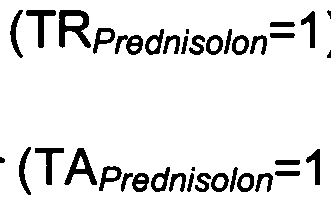
- the ratio is thus the nth root of the product of n different prednisolone normalized transrepression parameters divided by the mth root of the product of m different prednisolone normalized transactivation parameters.
- Suitable transrepression parameters are all known parameters, including the expression of co-accessory molecules (HLA-DR, CD86). Particularly suitable parameters are IL-1 ⁇ , IL-8, Rantes - particularly preferred is TNF- ⁇ .
- transactivation parameters are all known parameters, including the expression of cytokine receptors (IFN- ⁇ R1, TNF-R1, IL-1 R1, IL-2R ⁇ , IL-13Ra, CXCR4, GITR) and other genes (ß2-adrenoreceptor, heme oxygenase 1 , IL-2, MIF, annexin 1, thrombospondin 1).
- cytokine receptors IFN- ⁇ R1, TNF-R1, IL-1 R1, IL-2R ⁇ , IL-13Ra, CXCR4, GITR
- ß2-adrenoreceptor heme oxygenase 1 , IL-2, MIF, annexin 1, thrombospondin 1
- glutamine synthetase and GILZ are particularly those of CD163 and FKBP51.
- any can be selected and used according to the above formula for determining the ratio according to formula 1.
- TNF- ⁇ and IL-1 ⁇ are preferably selected.
- CD163 and FKBP51 are preferably selected.
- a ratio between transrepression and transactivation parameters is formed according to the following formula 2:
- RNA detection the total RNA was isolated from the respective samples (human PBMC or human whole blood or spleen cells of mice), transcribed into the cDNA and subsequently amplified and detected by means of real-time TaqMan PCR (Applied Biosystems). Relative quantitation compared to the HPRT housekeeping gene expression is shown, in each case the ratio of the result for the GR ligand to the result of the vehicle control.
- Flow cytometric detection of the expression of receptors on the human immune cells was performed with commercially available fluorescently labeled monoclonal antibodies against the corresponding receptor proteins. The labeling was in whole blood. Flow cytometric analysis was performed after erythrocyte lysing using a FACScalibur flow cytometer (Becton Dickinson). Shown is the mean fluorescence activity.
- mice The wVo effect of prednisolone on the expression of genes inhibited by standard glucocorticoids (TNF- ⁇ , IL-1 ⁇ , Rantes) was examined in the spleen cells of mice after 24 hours.
- HLA-DR MHC class II
- cytokine receptors eg TNF-R1, IFN- ⁇ R1, IL-1R1, IL-2R ⁇ , IL-13Ra , GITR, CXCR4
- CD163, FKBP51 annexin 1 IL-2, ⁇ 2 adrenoreceptor, MIF, GILZ, heme oxygenase 1, thrombospondin 1 and glutamine synthetase.
- TNF-R1, IFN- ⁇ R1, IL-1R1, IL-2R ⁇ , IL-13Ra , GITR, CXCR4 CD163, FKBP51, annexin 1, IL-2, ⁇ 2 adrenoreceptor, MIF, GILZ, heme oxygenase 1, thrombospondin 1 and glutamine synthetase.
- the figure shows the induction of genes by prednisolone in 4-hr cultures of human PBMC.
- the expression of selected genes was detected in the spleen cells of n-treated mice.
- the substances undergo receptor binding assays to demonstrate binding to the GR and, at the same time, selectivity to the GR.
- glucocorticoid receptor GR
- other steroid hormone receptors mineralocorticoid receptor (MR), progesterone receptor (PR) and androgen receptor (AR)
- MR glucocorticoid receptor
- PR progesterone receptor
- AR androgen receptor
- extracts from Sf9 cells which were infected with baculoviruses which contain the coding sequences for the respective steroid hormone receptor were used.
- the substances show a high to very high affinity for GR.
- the mouse mammary tumor virus (MMTV) promoter contains specific binding sites for the activated GR (so-called GREs). This promoter was cloned in front of a reporter gene (luciferase) and the construct was stably integrated into the genome of the human cell line HeLa (cervix carcinoma cells). The addition of test and reference substances activates the MMTV promoter and expresses the luciferase whose activity can be detected by photometric measurement.
- GREs activated GR
- HeLa cervix carcinoma cells
- tyrosine aminotransferase TAT
- GREs tyrosine aminotransferase
- H4IIE3 rat hepatoma cells
- a promoter system which contains parts of the collagenase promoter.
- the promoter was placed in front of a reporter gene (luciferase) and the resulting construct was stably integrated into the genome of the human cell line HeLa. After stimulation of the cells with phorbol ester this promoter is activated.
- the administration of SEGRA test substances and glucocorticoids inhibits the phorbol ester-induced promoter activity. The detection takes place via the photometric determination of the luciferase activity.
- the activities of SEGRA substances in the respective transactivation and transrepression systems are determined in comparison to the activities of the reference substance dexamethasone.
- the SEGRA substance compound 1 has been tested as an agonist in the two mentioned transactivation assays.
- compound 2 is a clear antagonist with respect to the MMTV promoter.
- the substance antagonizes those induced by dexamethasone
- Promoter behaves compound 2 as a partial agonist. With a power of 67 ⁇
- the SEGRA substances show a comparable inhibition of the expression of cytokines in human PBMC as parameters for the transrepression activity.
- transactivation parameters CD163 and FKBP51 are induced only by prednisolone, but not by the antagonist in transactivation, Compound 2.
- the concomitant administration of compound 2 and prednisolone results in a significantly lower induction of transactivation parameters compared to the sole administration of prednisolone.
- CD163 expression is reduced by compound 2 in all approaches.
- the genes selected for in vivo regulation of expression were characterized in the spleen cells of SEGRA-treated mice after 24 hours.
- Compound 1 Treatment with the agonist in transactivation, Compound 1, leads to a marked induction of the expression of FKBP51, CD163, GILZ and glutamine synthetase in the spleen cells. In contrast, the antagonist in transactivation, compound 2, reduces the expression of these genes.
- Schering AG has been shown to be able to demonstrate that the expression of defined genes and / or proteins in the test system of the unstimulated primary immune cells is suitable for examining the molecular mechanism of selective GR ligands, based on Seller Selective GR (SEGRA) agonists their agonistic or antagonistic in vitro and wVo activity in the transactivation or transrepression to characterize.
- SEGRA Seller Selective GR
- the aim was to characterize the extent of dissociation of a substance by a value that summarizes the different effects on the expression of various transrepression and transactivation parameters.
- a dissociation factor was therefore defined which represents the dissociation of transactivation and transrepression activity on the basis of the induction or suppression of selected genes.
- TNF- ⁇ and IL-1 ⁇ were selected.
- CD163 and FKBP51 are used to detect transactivation activity.
- the ratios were calculated after normalization of gene expression levels to prednisolone from the quotient of the geometric mean of the parameters for transrepression (TNF- ⁇ and IL-1 ⁇ ) and for transactivation (CD 163 and FKBP51). Mean values ⁇ SD.
- a ratio (dissociation factor) was determined from the gene expression values in PBMC cultures, which characterizes the differentiated dissociated molecular mechanism of the SEGRA test substances compared to prednisolone. Especially for the TA antagonist, a good persistence of the ratio increase (starting with the 2 hour value) over time is observed.
- the standard GC prednisolone and dexamethasone are largely comparable in terms of their transrepression and transactivation properties at all times using this dissociation factor.
- Parameters for gene suppression were TNF- ⁇ and IL-1 ⁇ , parameters for gene induction CD163 and FKBP51.
- the dissociation factor was calculated according to the formula 2 explained from the quotient of the geometric mean values of the transrepression and the transactivation parameters.
- the above figure graphically illustrates the kinetics of dissociation ratios versus prednisolone for the SEGRA test substances.
- the greatest in wVo dissociation was detectable 24 hours after application.
- the lowest dissociation was observed for all SEGRA test substances after 6 hours.
- the levels were even significantly lower compared to prednisolone.
- the ratios were calculated after normalization of gene expression levels to prednisolone from the quotient of the geometric mean of the parameters for transrepression (TNF- ⁇ and IL-1 ⁇ ) and for transactivation (CD 163 and FKBP51).
- the selected parameters also proved to be suitable in vivo to represent the transrepression and transactivation activity of the GR ligands and the dissociated effect of the TA partial agonist and the TA antagonist.
- the selected parameters were lower in Vivo dissociation in the mouse spleen cells and not as consistent as in the in w 'fro-tests on human PBMC. At least partly responsible for this is the lower activity of the SEGRA test substances in the in vivo suppression of the transrepression parameters TNF- ⁇ and IL-1 ⁇ .
- the parameters can also be used to directly represent antagonism by preventing TA-mediated gene induction by a standard glucocorticoid, such as prednisolone, in primary human immune cells, while TR-mediated inhibition, e.g. TNFa expression is not affected. That is, one sees a dissociation in antagonism.
Landscapes
- Health & Medical Sciences (AREA)
- Life Sciences & Earth Sciences (AREA)
- Engineering & Computer Science (AREA)
- Immunology (AREA)
- Biomedical Technology (AREA)
- Molecular Biology (AREA)
- Urology & Nephrology (AREA)
- Hematology (AREA)
- Chemical & Material Sciences (AREA)
- Cell Biology (AREA)
- Physics & Mathematics (AREA)
- Pathology (AREA)
- Food Science & Technology (AREA)
- Medicinal Chemistry (AREA)
- Biotechnology (AREA)
- Analytical Chemistry (AREA)
- Biochemistry (AREA)
- General Health & Medical Sciences (AREA)
- General Physics & Mathematics (AREA)
- Microbiology (AREA)
- Bioinformatics & Cheminformatics (AREA)
- Toxicology (AREA)
- Tropical Medicine & Parasitology (AREA)
- Endocrinology (AREA)
- Measuring Or Testing Involving Enzymes Or Micro-Organisms (AREA)
- Preparation Of Compounds By Using Micro-Organisms (AREA)
- Peptides Or Proteins (AREA)
- Investigating Or Analysing Biological Materials (AREA)
- Pharmaceuticals Containing Other Organic And Inorganic Compounds (AREA)
- Micro-Organisms Or Cultivation Processes Thereof (AREA)
Abstract
Description



Claims


Priority Applications (8)
| Application Number | Priority Date | Filing Date | Title |
|---|---|---|---|
| BRPI0607663-7A BRPI0607663A2 (pt) | 2005-04-29 | 2006-05-02 | processo para a caracterização da atividade de transativação e transrepressão de ligantes do receptor glicocorticóide em células imunológicas primárias |
| MX2007013504A MX2007013504A (es) | 2005-04-29 | 2006-05-02 | Proceso para la caracterizacion de la actividad de transactivacion y transrepresion de ligandos de receptores de glucocorticoides en celulas inmunes primarias. |
| EP06753555A EP1877803A2 (de) | 2005-04-29 | 2006-05-02 | Verfahren zur charakterisierung der transaktivierungs- und transrespressionsaktivität von glukokortikoidrezeptor-liganden in primären immunzellen |
| AU2006243359A AU2006243359A1 (en) | 2005-04-29 | 2006-05-02 | Method for characterizing the transactivation and transrepression activity of glucocorticoid receptor ligands in primary immune cells |
| JP2008508172A JP2008538903A (ja) | 2005-04-29 | 2006-05-02 | 初代免疫細胞におけるグルココルチコイド受容体リガンドのトランス活性化及びトランス抑制の特徴づけのための方法 |
| CA002605011A CA2605011A1 (en) | 2005-04-29 | 2006-05-02 | Process for characterization of the transactivation and transrepression activity of glucocorticoid receptor ligands in primary immune cells |
| IL186545A IL186545A0 (en) | 2005-04-29 | 2007-10-10 | Method for characterizing the transactivation and transgression activity or glucocorticoid receptor ligands in primary immune cells |
| NO20076140A NO20076140L (no) | 2005-04-29 | 2007-11-28 | Fremgangsmate for karakterisering av transaktiverings- og transundertrykkings-aktiviteten til glukokortikoidreseptorligander i primaere immunceller |
Applications Claiming Priority (4)
| Application Number | Priority Date | Filing Date | Title |
|---|---|---|---|
| DE102005020711 | 2005-04-29 | ||
| DE102005020711.1 | 2005-04-29 | ||
| US67999305P | 2005-05-12 | 2005-05-12 | |
| US60/679,993 | 2005-05-12 |
Publications (2)
| Publication Number | Publication Date |
|---|---|
| WO2006117242A2 true WO2006117242A2 (de) | 2006-11-09 |
| WO2006117242A3 WO2006117242A3 (de) | 2007-04-26 |
Family
ID=36675955
Family Applications (1)
| Application Number | Title | Priority Date | Filing Date |
|---|---|---|---|
| PCT/EP2006/004409 Ceased WO2006117242A2 (de) | 2005-04-29 | 2006-05-02 | Verfahren zur charakterisierung der transaktivierungs- und transrespressionsaktivität von glukokortikoidrezeptor-liganden in primären immunzellen |
Country Status (9)
| Country | Link |
|---|---|
| EP (1) | EP1877803A2 (de) |
| JP (1) | JP2008538903A (de) |
| KR (1) | KR20080014753A (de) |
| AU (1) | AU2006243359A1 (de) |
| CA (1) | CA2605011A1 (de) |
| IL (1) | IL186545A0 (de) |
| MX (1) | MX2007013504A (de) |
| NO (1) | NO20076140L (de) |
| WO (1) | WO2006117242A2 (de) |
Family Cites Families (1)
| Publication number | Priority date | Publication date | Assignee | Title |
|---|---|---|---|---|
| US7622260B2 (en) * | 2001-09-05 | 2009-11-24 | The Brigham And Women's Hospital, Inc. | Diagnostic and prognostic tests |
-
2006
- 2006-05-02 JP JP2008508172A patent/JP2008538903A/ja active Pending
- 2006-05-02 WO PCT/EP2006/004409 patent/WO2006117242A2/de not_active Ceased
- 2006-05-02 AU AU2006243359A patent/AU2006243359A1/en not_active Abandoned
- 2006-05-02 CA CA002605011A patent/CA2605011A1/en not_active Abandoned
- 2006-05-02 EP EP06753555A patent/EP1877803A2/de not_active Withdrawn
- 2006-05-02 MX MX2007013504A patent/MX2007013504A/es not_active Application Discontinuation
- 2006-05-02 KR KR1020077024790A patent/KR20080014753A/ko not_active Withdrawn
-
2007
- 2007-10-10 IL IL186545A patent/IL186545A0/en unknown
- 2007-11-28 NO NO20076140A patent/NO20076140L/no unknown
Also Published As
| Publication number | Publication date |
|---|---|
| AU2006243359A1 (en) | 2006-11-09 |
| AU2006243359A8 (en) | 2006-11-09 |
| NO20076140L (no) | 2007-11-28 |
| KR20080014753A (ko) | 2008-02-14 |
| CA2605011A1 (en) | 2006-11-09 |
| JP2008538903A (ja) | 2008-11-13 |
| EP1877803A2 (de) | 2008-01-16 |
| MX2007013504A (es) | 2008-01-11 |
| WO2006117242A3 (de) | 2007-04-26 |
| IL186545A0 (en) | 2008-01-20 |
Similar Documents
| Publication | Publication Date | Title |
|---|---|---|
| Hall et al. | Stromal cell-derived factor 1, a novel target of estrogen receptor action, mediates the mitogenic effects of estradiol in ovarian and breast cancer cells | |
| Kumsta et al. | Cortisol and ACTH responses to psychosocial stress are modulated by corticosteroid binding globulin levels | |
| De Kloet et al. | Corticosteroids and the brain | |
| Kaiser et al. | Sp1, steroidogenic factor 1 (SF-1), and early growth response protein 1 (egr-1) binding sites form a tripartite gonadotropin-releasing hormone response element in the rat luteinizing hormone-β gene promoter: an integral role for SF-1 | |
| Müller et al. | Selective activation of the hypothalamic vasopressinergic system in mice deficient for the corticotropin-releasing hormone receptor 1 is dependent on glucocorticoids | |
| Roseboom et al. | Predator threat induces behavioral inhibition, pituitary-adrenal activation and changes in amygdala CRF-binding protein gene expression | |
| Vulliémoz et al. | Central infusion of agouti-related peptide suppresses pulsatile luteinizing hormone release in the ovariectomized rhesus monkey | |
| DE69835301T2 (de) | Verfahren zum identifizieren oder screenen von agonisten für und antagonisten gegen ppar | |
| Wadekar et al. | Inhibition of heat shock transcription factor by GR | |
| Neuhof et al. | Large acid-evoked currents, mediated by ASIC1a, accompany differentiation in human dopaminergic neurons | |
| EP1255113B1 (de) | Verfahren zur Testung des hormonellen Effekts von Substanzen | |
| DE10305212A1 (de) | Verwendung der sgk-Genfamilie zur Diagnose und zur Therapie von Katarakt und Glaukom | |
| EP1877803A2 (de) | Verfahren zur charakterisierung der transaktivierungs- und transrespressionsaktivität von glukokortikoidrezeptor-liganden in primären immunzellen | |
| DE102006021267A1 (de) | Verfahren zur Charakterisierung der Transaktivierungs- und Transrespressionsaktivität von Glukokortikoid-rezeptor-Liganden in primären Immunzellen | |
| EP1371988B1 (de) | Verfahren zur Testung des hormonellen Effekts von Substanzen | |
| US20060275800A1 (en) | Process for characterization of the transactivation and transrepression activity of glucocorticoid receptor ligands in primary immune cells | |
| Schulz et al. | Novel ligands: fine tuning the transcriptional activity of the glucocorticoid receptor | |
| DE10226674B4 (de) | Verfahren zur Testung des hormonellen Effekts von Substanzen | |
| DE60116109T2 (de) | In vitro Screening nach Liganden des Östrogenrezeptors | |
| Grinevich et al. | Hypertrophy and altered activity of the adrenal cortex in Homer 1 knockout mice | |
| DE10054639B4 (de) | Verwendung von RanBPM als Co-Modulator von Steroidhormonrezeptoren | |
| DE102011015142A1 (de) | Agens zur Prophylaxe und Behandlung altersassoziierter Krankheiten und Störungen sowie zur Verlängerung der Lebensdauer | |
| HK1115190A (en) | Method for characterizing the transactivation and transgression activity of glucocorticoid receptor ligands in primary immune cells | |
| DE69813677T2 (de) | Humäne Serumglucocorticoidregulierte Kinase, ein Ziel für chronischer Nierenerkrankung und diabetische Nephropathie | |
| Whitnall | Corticotropin-Releasing Hormone Neurosecretory Cells: Regulation of Peptide Expression and Release |
Legal Events
| Date | Code | Title | Description |
|---|---|---|---|
| 121 | Ep: the epo has been informed by wipo that ep was designated in this application | ||
| WWE | Wipo information: entry into national phase |
Ref document number: 2006753555 Country of ref document: EP |
|
| WWE | Wipo information: entry into national phase |
Ref document number: 186545 Country of ref document: IL |
|
| WWE | Wipo information: entry into national phase |
Ref document number: 2605011 Country of ref document: CA |
|
| WWE | Wipo information: entry into national phase |
Ref document number: 562692 Country of ref document: NZ |
|
| WWE | Wipo information: entry into national phase |
Ref document number: 2008508172 Country of ref document: JP |
|
| WWE | Wipo information: entry into national phase |
Ref document number: 1020077024790 Country of ref document: KR |
|
| WWE | Wipo information: entry into national phase |
Ref document number: MX/a/2007/013504 Country of ref document: MX Ref document number: 200680014619.1 Country of ref document: CN |
|
| NENP | Non-entry into the national phase |
Ref country code: RU |
|
| WWE | Wipo information: entry into national phase |
Ref document number: 2006243359 Country of ref document: AU |
|
| WWW | Wipo information: withdrawn in national office |
Ref document number: RU |
|
| ENP | Entry into the national phase |
Ref document number: 2006243359 Country of ref document: AU Date of ref document: 20060502 Kind code of ref document: A |
|
| WWP | Wipo information: published in national office |
Ref document number: 2006243359 Country of ref document: AU |
|
| WWP | Wipo information: published in national office |
Ref document number: 2006753555 Country of ref document: EP |
|
| ENP | Entry into the national phase |
Ref document number: PI0607663 Country of ref document: BR Kind code of ref document: A2 |