WO2006129085A2 - High affinity melan-a t cell receptors - Google Patents

High affinity melan-a t cell receptors Download PDF

Info

Publication number
WO2006129085A2
WO2006129085A2 PCT/GB2006/001980 GB2006001980W WO2006129085A2 WO 2006129085 A2 WO2006129085 A2 WO 2006129085A2 GB 2006001980 W GB2006001980 W GB 2006001980W WO 2006129085 A2 WO2006129085 A2 WO 2006129085A2
Authority
WO
WIPO (PCT)
Prior art keywords
tcr
seq
chain variable
variable region
amino acid
Prior art date
Legal status (The legal status is an assumption and is not a legal conclusion. Google has not performed a legal analysis and makes no representation as to the accuracy of the status listed.)
Ceased
Application number
PCT/GB2006/001980
Other languages
French (fr)
Other versions
WO2006129085A3 (en
Inventor
Bent Karsten Jakobsen
Nathaniel Ross Liddy
Current Assignee (The listed assignees may be inaccurate. Google has not performed a legal analysis and makes no representation or warranty as to the accuracy of the list.)
Avidex Ltd
Medigene Ltd
Original Assignee
Avidex Ltd
Medigene Ltd
Priority date (The priority date is an assumption and is not a legal conclusion. Google has not performed a legal analysis and makes no representation as to the accuracy of the date listed.)
Filing date
Publication date
Application filed by Avidex Ltd, Medigene Ltd filed Critical Avidex Ltd
Priority to US11/915,766 priority Critical patent/US8217144B2/en
Priority to BRPI0611326-5A priority patent/BRPI0611326A2/en
Priority to JP2008514187A priority patent/JP2008545426A/en
Priority to AU2006253941A priority patent/AU2006253941B2/en
Priority to EA200702677A priority patent/EA012507B1/en
Priority to EP06744042A priority patent/EP1893642A2/en
Priority to CN2006800195624A priority patent/CN101189261B/en
Priority to MX2007014919A priority patent/MX2007014919A/en
Priority to CA002610786A priority patent/CA2610786A1/en
Publication of WO2006129085A2 publication Critical patent/WO2006129085A2/en
Publication of WO2006129085A3 publication Critical patent/WO2006129085A3/en
Anticipated expiration legal-status Critical
Ceased legal-status Critical Current

Links

Classifications

    • CCHEMISTRY; METALLURGY
    • C07ORGANIC CHEMISTRY
    • C07KPEPTIDES
    • C07K14/00Peptides having more than 20 amino acids; Gastrins; Somatostatins; Melanotropins; Derivatives thereof
    • C07K14/435Peptides having more than 20 amino acids; Gastrins; Somatostatins; Melanotropins; Derivatives thereof from animals; from humans
    • C07K14/705Receptors; Cell surface antigens; Cell surface determinants
    • C07K14/70503Immunoglobulin superfamily
    • C07K14/7051T-cell receptor (TcR)-CD3 complex
    • AHUMAN NECESSITIES
    • A61MEDICAL OR VETERINARY SCIENCE; HYGIENE
    • A61PSPECIFIC THERAPEUTIC ACTIVITY OF CHEMICAL COMPOUNDS OR MEDICINAL PREPARATIONS
    • A61P31/00Antiinfectives, i.e. antibiotics, antiseptics, chemotherapeutics
    • AHUMAN NECESSITIES
    • A61MEDICAL OR VETERINARY SCIENCE; HYGIENE
    • A61PSPECIFIC THERAPEUTIC ACTIVITY OF CHEMICAL COMPOUNDS OR MEDICINAL PREPARATIONS
    • A61P35/00Antineoplastic agents

Definitions

  • the present invention relates to T cell receptors (TCRs) having the property of binding to AAGIGILTV-HLA-A* 0201 and comprising at least one TCR ⁇ chain variable domain and/or at least one TCR ⁇ chain variable domain CHARACTERISED IN THAT said TCR has a K D for the said AAGIGILTV-HLA-A*0201 complex of less than or equal to 3 ⁇ M and/or an off-rate (k Off ) of 1 x 10 "3 Sl or slower
  • AAGIGILTV peptide is derived from the Melan-A (Mart- 1 ) protein that is expressed by the majority of fresh melanoma samples and approximately 60% of Melanoma cell lines, as well as normal melanocytes. ((Coulie et al, (1994) J. Exp. Med. 180: (1) 1-4) and Kawakami et al, (1994) PNAS USA 91: 3515)
  • the Class I HLA molecules of these cancerous cells present peptides from this protein, including AAGIGILTV (SEQ ID NO: 43) (MeIa n -A 27-35 ).
  • the AAGIGILTV-HLA-A*0201 complex appears to be an immuno-dominant target for Melanoma-specific T cells. ((Kawakami et al, (1994) PNAS USA 91: 3515) and (Rivoltini et al, (1995) J Immunol 154: 2257) Therefore, this peptide-HLA complex provides a cancer marker that TCRs can target, for example for the purpose of delivering cytotoxic or immuno- stimulatory agents to the cancer cells. However, for that purpose it would be desirable if the TCR had a higher affinity and/or a slower off-rate for the peptide-HLA complex than native TCRs specific for that complex.
  • TCRs having high affinity (K D ) of the interaction less than or equal to 3 ⁇ M and/or an off-rate (k Off ) of 1 x 10 "3 S " l or slower for the AAGIGILTV-HLA-A*0201 complex.
  • K D affinity
  • k Off off-rate
  • the present invention provides a T-cell receptor (TCR) having the property of binding to AAGIGILTV-HLA-A* 0201 and comprising at least one TCR ⁇ chain variable domain and/or at least one TCR ⁇ chain variable domain CHARACTERISED IN THAT said TCR has a K D for the said AAGIGILTV-HLA-A* 0201 complex of less than or equal to 3 ⁇ M and/or an off-rate (k Off ) of 1 x 10 "3 Sl or slower.
  • TCR T-cell receptor
  • said TCRs have a K D for the AAGIGILTV-HLA-A* 0201 complex of less than or equal to l ⁇ M.
  • the KD measurement can be made by any of the known methods.
  • a preferred method is the Surface Plasmon Resonance (Biacore) method of Example 4.
  • the interaction of a disulfide-linked soluble variant of the native MEL TCR (see SEQ ID NO: 9 for TCR ⁇ chain and SEQ ID NO: 10 for TCR ⁇ chain) and the AAGIGILTV-HLA-A* 0201 complex has a K D of approximately 4 ⁇ M as measured by the Biacore-base method of Example 4.
  • the native MEL TCR specific for the AAGIGILTV-HLA-A* 0201 complex has the following Valpha chain and Vbeta chain gene usage (using the terminology of the T cell receptor Factsbook, (2001) LeFranc and LeFranc, Academic Press, ISBN 0-12- 441352-8, see below):
  • Beta chain - TRBV 30
  • the native MEL TCR can be used as a template into which various mutations that impart high affinity and/or a slow off-rate for the interaction between TCRs of the invention and the AAGIGILTV-HLA-A* 0201 complex can be introduced.
  • the invention includes TCRs which are mutated relative to the native MEL TCR a chain variable region (see Figure Ia and SEQ ID No: 1) and/or ⁇ chain variable region (see Figure Ib and SEQ ID NO: 2) in at least one complementarity determining region (CDR) and/or variable region framework region thereof.
  • CDR complementarity determining region
  • HV4 regions may be mutated so as to produce a high affinity mutant.
  • TCRs exist in heterodimeric ⁇ or ⁇ forms. However, recombinant TCRs consisting of a single TCR ⁇ or TCR ⁇ chain have previously been shown to bind to peptide MHC molecules.
  • the TCR of the invention comprise both an ⁇ chain variable domain and an TCR ⁇ chain variable domain.
  • the mutation(s) in the TCR ⁇ chain sequence and/or TCR ⁇ chain sequence may be one or more of substitution(s), deletion(s) or insertion(s).
  • These mutations can be carried out using any appropriate method including, but not limited to, those based on polymerase chain reaction (PCR), restriction enzyme-based cloning, or ligation independent cloning (LIC) procedures. These methods are detailed in many of the standard molecular biology texts.
  • Phage display provides one means by which libraries of TCR variants can be generated. Methods suitable for the phage display and subsequent screening of libraries of TCR variants each containing a non-native disulfide interchain bond are detailed in (Li et ah, (2005) Nature Biotech 23 (3): 349-354) and WO 2004/04404.
  • any ⁇ TCR that comprises similar Valpha and Vbeta gene usage and therefore amino acid sequence to that of the MEL TCR could make a convenient template TCR. It would then be possible to introduce into the DNA encoding one or both of the variable regions of the template ⁇ TCR the changes required to produce the mutated high affinity TCRs of the invention. As will be obvious to those skilled in the art, the necessary mutations could be introduced by a number of methods, for example site-directed mutagenesis.
  • the TCR amino acid sequences herein are generally provided including an N-terminal methionine (Met or M) residue. As will be known to those skilled in the art this residue may be removed during the production of recombinant proteins. As will also be obvious to those skilled in the art, it may be possible to truncate the sequences provided at the C-terminus and/or N-terminus thereof, by 1, 2, 3, 4, 5 or more residues, without substantially affecting the pMHC binding characteristics of the TCR, all such trivial variants are encompassed by the present invention.
  • variable region is understood to encompass all amino acids of a given TCR which are not included within the constant domain as encoded by the TRAC gene for TCR ⁇ chains and either the TRBCl or TRBC2 for TCR ⁇ chains.
  • variable domain is understood to encompass all amino acids of a given TCR which are included within the amino acid sequence encoded by a TRAV gene for TCR ⁇ chains and a TRBV gene for TCR ⁇ chains.
  • Embodiments of the invention include mutated TCRs which comprise mutation of one or more of alpha chain variable region amino acids corresponding to: 28D, 29R, 3OG, 31S 3 49M, 511, 53S, 54N, 72Y, 94V, 95A, 96G, 97K, 98S, and 99T, for example the mutations corresponding to: 28D ⁇ F, 28D ⁇ Y, 28D ⁇ S, 28D ⁇ N,
  • Embodiments of the invention include mutated TCRs which comprise mutation of one or more of beta chain variable region amino acids corresponding to: 45L, 51 S, 52 V, 53 G, 541, 761, 10OG, 101 T, 102G, 103E, 104L and 105F, using the numbering shown in SEQ ID NO: 2 is/are mutated, for example the mutations corresponding to:
  • TCRs comprising one of the mutated alpha chain variable region amino acid sequences shown in Figure 6 (SEQ ID Nos: 11 to 24) or Figure 20 (SEQ ID NOs: 47 to 53). Phenotypically silent variants of such TCRs also form part of this invention.
  • TCRs comprising one of the mutated beta chain variable region amino acid sequences shown in Figure 21 (SEQ ID Nos: 54 to 67). Phenotypically silent variants of such TCRs also form part of this invention.
  • TCRs exist in heterodimeric ⁇ or ⁇ forms. However, recombinant TCRs consisting of ⁇ or ⁇ homodimers have previously been shown to bind to peptide MHC molecules. Therefore, one embodiment of the invention is provided by TCR ⁇ or TCR ⁇ homodimers.
  • TCRs of the invention comprising the alpha chain variable region amino acid sequence and the beta chain variable region amino acid sequence combinations listed below, phenotypically silent variants of such TCRs also form part of this invention:
  • TCRs of the invention comprising the variable region combinations detailed above further comprise the alpha chain constant region amino acid sequence shown in Figure 7a (SEQ ID NO: 25) and one of the beta chain amino acid constant region sequences shown in Figures 7b and 7c (SEQ ID NOs: 26 and 27) or phenotypically silent variants thereof.
  • the term "phenotypically silent variants" is understood to refer to those TCRs which have a K D for the said AAGIGILTV-HLA-A*0201 complex of less than or equal to 3 ⁇ M.
  • TCRs that incorporate minor changes in the constant and/or variable regions thereof compared to those detailed above without altering the affinity and/or off-rate for the interaction with the AAGIGILTV-HLA-A*0201 complex.
  • Such trivial variants are included in the scope of this invention.
  • Those TCRs in which one or more conservative substitutions have been made also form part of this invention.
  • the TCRs of the invention are in the form of either single chain TCRs (scTCRs) or dimeric TCRs (dTCRs) as described in WO 04/033685 and WO 03/020763.
  • a suitable scTCR form comprises a first segment constituted by an amino acid sequence corresponding to a TCR ⁇ chain variable region, a second segment constituted by an amino acid sequence corresponding to a TCR ⁇ chain variable region sequence fused to the N terminus of an amino acid sequence corresponding to a TCR ⁇ chain constant domain extracellular sequence, and a linker sequence linking the C terminus of the first segment to the N terminus of the second segment.
  • the first segment may be constituted by an amino acid sequence corresponding to a TCR ⁇ chain variable region;
  • the second segment may be constituted by an amino acid sequence corresponding to a TCR ⁇ chain variable region sequence fused to the N terminus of an amino acid sequence corresponding to a TCR ⁇ chain constant domain extracellular sequence
  • the above scTCRs may further comprise a disulfide bond between the first and second chains, said disulfide bond being one which has no equivalent in native ⁇ T cell receptors, and wherein the length of the linker sequence and the position of the disulfide bond being such that the variable domain sequences of the first and second segments are mutually orientated substantially as in native ⁇ T cell receptors.
  • the first segment may be constituted by an amino acid sequence corresponding to a TCR ⁇ chain variable region sequence fused to the N terminus of an amino acid sequence corresponding to a TCR ⁇ chain constant domain extracellular sequence
  • the second segment may be constituted by an amino acid sequence corresponding to a TCR ⁇ chain variable region fused to the N terminus of an amino acid sequence corresponding to TCR ⁇ chain constant domain extracellular sequence
  • a disulfide bond may be provided between the first and second chains, said disulfide bond being one which has no equivalent in native ⁇ T cell receptors.
  • the linker sequence may link the C terminus of the first segment to the N terminus of the second segment, and may have the formula -PGGG- (SGGGG) n -P- wherein n is 5 or 6 and P is proline, G is glycine and S is serine.
  • a suitable dTCR form of the TCRs of the present invention comprises a first polypeptide wherein a sequence corresponding to a TCR ⁇ chain variable region sequence is fused to the N terminus of a sequence corresponding to a TCR ⁇ chain constant domain extracellular sequence, and a second polypeptide wherein a sequence corresponding to a TCR ⁇ chain variable region sequence fused to the N terminus a sequence corresponding to a TCR ⁇ chain constant domain extracellular sequence, the first and second polypeptides being linked by a disulfide bond which has no equivalent in native ⁇ T cell receptors.
  • the first polypeptide may comprise a TCR ⁇ chain variable region sequence is fused to the N terminus of a sequence corresponding to a TCR ⁇ chain constant domain extracellular sequence, and a second polypeptide wherein a sequence corresponding to a TCR ⁇ chain variable region sequence is fused to the N terminus a sequence corresponding to a TCR ⁇ chain constant domain extracellular sequence, the first and second polypeptides being linked by a disulfide bond between cysteine residues substituted for Thr 48 of exon 1 of TRAC*01 and Ser 57 of exon 1 of TRBC1*O1 or TRBC2*01 or the non-human equivalent thereof.
  • the dTCR or scTCR form of the TCRs of the invention may have amino acid sequences corresponding to human ⁇ TCR extracellular constant and variable region sequences, and a disulfide bond may link amino acid residues of the said constant domain sequences, which disulfide bond has no equivalent in native TCRs.
  • the disulfide bond is between cysteine residues corresponding to amino acid residues whose ⁇ carbon atoms are less than 0.6 nm apart in native TCRs, for example between cysteine residues substituted for Thr 48 of exon 1 of TRAC*01 and Ser 57 of exon 1 of TRBCl *01 or TRBC2*01 or the non-human equivalent thereof.
  • Other sites where cysteines can be introduced to form the disulfide bond are the following residues in exon 1 of TRAC*01 for the TCR ⁇ chain and TRBCl *01 or TRBC2*01 for the TCR ⁇ chain:
  • TCR of the invention which is a dTCR comprising a first polypeptide wherein a sequence corresponding to a TCR ⁇ chain variable region sequence is fused to the N terminus of a sequence corresponding to a TCR ⁇ chain constant domain extracellular sequence, and
  • a second polypeptide wherein a sequence corresponding to a TCR ⁇ chain variable region sequence fused to the N terminus a sequence corresponding to a TCR ⁇ chain constant domain extracellular sequence, the first and second polypeptides being linked by a disulfide bond which has no equivalent in native ⁇ T cell between cysteine residues substituted for Thr 48 of exon 1 of TRAC*01 and Ser 57 of exon 1 of TRBCl *01 or TRBC2*01 or the non-human equivalent thereof.
  • the dTCR or scTCR form of the TCRs of the invention may include a disulfide bond between residues corresponding to those linked by a disulfide bond in native TCRs.
  • the dTCR or scTCR form of the TCRs of the invention preferably does not contain a sequence corresponding to transmembrane or cytoplasmic sequences of native TCRs.
  • alpha chain amino acid sequence of SEQ ID NO: 29 and beta chain amino acid sequence SEQ ID NO: 72 the alpha chain amino acid sequence of SEQ ID NO: 29 and beta chain amino acid sequence SEQ ID NO: 73.
  • nucleic acid or nucleic acids encoding TCRs of the invention may be provided in a form which has been adapted for expression in a prokaryote or eukaryote host cell.
  • Suitable host cells include, but are not limited to, bacterial, yeast, mammalian or insect cells.
  • the host cell may be a human T cell or a human haematopoietic stem cell.
  • nucleic acid or nucleic acids is/are mutated to reflect the codon preference of the host cell in to which it is introduced.
  • the mutations introduced are silent mutations which do not affect the amino acid sequence of the polypeptide or polypeptides thereby encoded.
  • GeneArt (Regensburg, Germany) offer a suitable nucleic acid optimisation service (GeneOptimizerTM).
  • WO 2004/059556 owned by GeneArt, provides further details of the optimisation process.
  • Further currently preferred embodiments of the invention are provided by nucleic acids consisting of one of the full-length TCR ⁇ chain DNA sequences of SEQ ID Nos
  • nucleic acid complementary to any of the foregoing, or a corresponding RNA sequence also forms part of this invention.
  • nucleic acid or nucleic acids encoding TCRs of the invention may also comprise non-coding (intron) sequences.
  • amino acids sequences of SEQ ID Nos: 33, 35 and 37 comprise the high affinity MEL TCR alpha chain variable regions of SEQ ID Nos: 11, 15 and 23 respectively.
  • a leader sequence and the extracellular, transmembrane, and cytoplasmic TCR sequences are identical to A leader sequence and the extracellular, transmembrane, and cytoplasmic TCR sequences.
  • the full-length DNA sequences provided herein also include restriction enzyme recognition sequences to facilitate ligation into the vector of choice.
  • a TCR of the invention is associated with at least one polyalkylene glycol chain(s). This association may be cause in a number of ways known to those skilled in the art.
  • the polyalkylene chain(s) is/are covalently linked to the TCR.
  • the polyethylene glycol chains of the present aspect of the invention comprise at least two polyethylene repeating units.
  • One aspect of the invention provides a multivalent TCR complex comprising at least two TCRs of the invention.
  • at least two TCR molecules are linked via linker moieties to form multivalent complexes.
  • the complexes are water soluble, so the linker moiety should be selected accordingly.
  • the linker moiety should be capable of attachment to defined positions on the TCR molecules, so that the structural diversity of the complexes formed is minimised.
  • One embodiment of the present aspect is provided by a TCR complex of the invention wherein the polymer chain or peptidic linker sequence extends between amino acid residues of each TCR which are not located in a variable region sequence of the TCR.
  • the linker moieties should be chosen with due regard to their pharmaceutical suitability, for example their immunogenicity.
  • linker moieties which fulfil the above desirable criteria are known in the art, for example the art of linking antibody fragments.
  • a TCR complex of the invention in which the TCRs are linked by a polyalkylene glycol chain provides one embodiment of the present aspect.
  • hydrophilic polymers such as polyalkylene glycols.
  • the most commonly used of this class are based on polyethylene glycol or PEG, the structure of which is shown below. HOCH 2 CH 2 O (CH 2 CH 2 O) n -CH 2 CH 2 OH
  • n is greater than two.
  • suitable, optionally substituted, polyalkylene glycols include polypropylene glycol, and copolymers of ethylene glycol and propylene glycol.
  • Such polymers may be used to treat or conjugate therapeutic agents, particularly polypeptide or protein therapeutics, to achieve beneficial changes to the PK profile of the therapeutic, for example reduced renal clearance, improved plasma half-life, reduced immunogenicity, and improved solubility.
  • therapeutic agents particularly polypeptide or protein therapeutics
  • Such improvements in the PK profile of the PEG-therapeutic conjugate are believe to result from the PEG molecule or molecules forming a 'shell' around the therapeutic which sterically hinders the reaction with the immune system and reduces proteolytic degradation.
  • the size of the hydrophilic polymer used my in particular be selected on the basis of the intended therapeutic use of the TCR complex.
  • the polymer used can have a linear or branched conformation.
  • Branched PEG molecules, or derivatives thereof, can be induced by the addition of branching moieties including glycerol and glycerol oligomers, pentaerythritol, sorbitol and lysine.
  • the polymer will have a chemically reactive group or groups in its structure, for example at one or both termini, and/or on branches from the backbone, to enable the polymer to link to target sites in the TCR.
  • This chemically reactive group or groups may be attached directly to the hydrophilic polymer, or there may be a spacer group/moiety between the hydrophilic polymer and the reactive chemistry as shown below:
  • a TCR complex of the invention in which a divalent alkylene spacer radical is located between the polyalkylene glycol chain and its point of attachment to a TCR of the complex provides a further embodiment of the present aspect.
  • a TCR complex of the invention in which the polyalkylene glycol chain comprises at least two polyethylene glycol repeating units provides a further embodiment of the present aspect.
  • hydrophilic polymers linked, directly or via a spacer, to reactive chemistries that may be of use in the present invention. These suppliers include Nektar Therapeutics (CA, USA), NOF Corporation (Japan), Sunbio (South Korea) and Enzon Pharmaceuticals (NJ, USA).
  • hydrophilic polymers linked, directly or via a spacer, to reactive chemistries that may be of use in the present invention include, but are not limited to, the following:
  • coupling chemistries can be used to couple polymer molecules to protein and peptide therapeutics.
  • the choice of the most appropriate coupling chemistry is largely dependant on the desired coupling site.
  • the following coupling chemistries have been used attached to one or more of the termini of PEG molecules (Source: Nektar Molecular Engineering Catalogue 2003):
  • non-PEG based polymers also provide suitable linkers for multimerising the TCRs of the present invention.
  • linkers for multimerising the TCRs of the present invention.
  • moieties containing maleimide termini linked by aliphatic chains such as BMH and BMOE (Pierce, products Nos. 22330 and 22323) can be used.
  • Peptidic linkers are the other class of TCR linkers. These linkers are comprised of chains of amino acids, and function to produce simple linkers or multimerisation domains onto which TCR molecules can be attached.
  • the biotin / streptavidin system has previously been used to produce TCR tetramers (see WO/99/60119) for in- vitro binding studies.
  • strepavidin is a microbially-derived polypeptide and as such not ideally suited to use in a therapeutic.
  • a TCR complex of the invention in which the TCRs are linked by a peptidic linker derived from a human multimerisation domain provides a further embodiment of the present aspect.
  • a multivalent TCR complex of the invention comprising at least two TCRs provides a final embodiment of this aspect, wherein at least one of said TCRs is associated with a therapeutic agent.
  • a TCR (or multivalent complex thereof) of the present invention may alternatively or additionally comprise a reactive cysteine at the C-terminal or N- terminal of the alpha or beta chains thereof.
  • the TCR of the invention may be associated with a therapeutic agent or detectable moiety.
  • said therapeutic agent or detectable moiety may be covalently linked to the TCR.
  • said therapeutic agent or detectable moiety is covalently linked to the C-terminus of one or both TCR chains.
  • the scTCR or one or both of the dTCR chains of TCRs of the present invention may be labelled with an detectable moiety, for example a label that is suitable for diagnostic purposes.
  • Such labelled TCRs are useful in a method for detecting a AAGIGILTV -HL A-A* 0201 complex which method comprises contacting the TCR ligand with a TCR (or a multimeric high affinity TCR complex) which is specific for the TCR ligand; and detecting binding to the TCR ligand.
  • fluorescent streptavidin can be used to provide a detectable label.
  • Such a fluorescently-labelled TCR tetramer is suitable for use in FACS analysis, for example to detect antigen presenting cells carrying theAAGIGILTV-HLA-A*0201 complex for which these high affinity TCRs are specific.
  • TCR-specific antibodies in particular monoclonal antibodies.
  • anti-TCR antibodies such as ⁇ Fl and ⁇ Fl, which recognise the constant domains of the ⁇ and ⁇ chains, respectively.
  • a TCR (or multivalent complex thereof) of the present invention may alternatively or additionally be associated with (e.g. covalently or otherwise linked to) a therapeutic agent which may be, for example, a toxic moiety for use in cell killing, or an immune effector molecule such as an interleukin or a cytokine.
  • a multivalent TCR complex of the invention may have enhanced binding capability for a TCR ligand compared to a non-multimeric wild-type or T cell receptor heterodimer of the invention.
  • the multivalent TCR complexes according to the invention are particularly useful for tracking or targeting cells presenting particular antigens in vitro or in vivo, and are also useful as intermediates for the production of further multivalent TCR complexes having such uses. These TCRs or multivalent TCR complexes may therefore be provided in a pharmaceutically acceptable formulation for use in vivo.
  • the invention also provides a method for delivering a therapeutic agent to a target cell, which method comprises contacting potential target cells with a TCR or multivalent TCR complex in accordance with the invention under conditions to allow attachment of the TCR or multivalent TCR complex to the target cell, said TCR or multivalent
  • TCR complex being specific for the AAGIGILTV-HLA-A*0201 complex and having the therapeutic agent associated therewith.
  • the soluble TCR or multivalent TCR complex of the present invention can be used to deliver therapeutic agents to the location of cells presenting a particular antigen. This would be useful in many situations and, in particular, against tumours. A therapeutic agent could be delivered such that it would exercise its effect locally but not only on the cell it binds to.
  • one particular strategy envisages anti-tumour molecules linked to TCRs or multivalent TCR complexes according to the invention specific for tumour antigens.
  • therapeutic agents could be employed for this use, for instance radioactive compounds, enzymes (perforin for example) or chemotherapeutic agents (cis-platin for example).
  • radioactive compounds for instance
  • enzymes perforin for example
  • chemotherapeutic agents cis-platin for example.
  • the toxin could be inside a liposome linked to streptavidin so that the compound is released slowly. This will prevent damaging effects during the transport in the body and ensure that the toxin has maximum effect after binding of the TCR to the relevant antigen presenting cells.
  • cytotoxic agents i.e. compounds with the ability to kill mammalian cells having a molecular weight of less than 700 daltons. Such compounds could also contain toxic metals capable of having a cytotoxic effect. Furthermore, it is to be understood that these small molecule cytotoxic agents also include pro-drugs, i.e. compounds that decay or are converted under physiological conditions to release cytotoxic agents.
  • agents include cis-platin, maytansine derivatives, rachelmycin, calicheamicin, docetaxel, etoposide, gemcitabine, ifosfamide, irinotecan, melphalan, mitoxantrone, sorfimer sodiumphotofrin II, temozolmide, topotecan, trimetreate glucuronate, auristatin E vincristine and doxorubicin; • peptide cytotoxins, i.e. proteins or fragments thereof with the ability to kill mammalian cells.
  • radio-nuclides i.e. unstable isotopes of elements which decay with the concurrent emission of one or more of ⁇ or ⁇ particles, or ⁇ rays, including but not limited to, iodine 131, rhenium 186, indium 111, yttrium 90, bismuth 210 and 213, actinium 225 and astatine 213; chelating agents may be used to facilitate the association of these radio-nuclides to the high affinity TCRs, or multimers thereof;
  • prodrugs including but not limited to, antibody directed enzyme pro-drugs
  • immuno-stimulants i.e. moieties which stimulate immune response.
  • cytokines such as IL-2 and IFN, superantigens and mutants thereof, pHLA complexes and chemokines such as IL-8, platelet factor 4, melanoma growth stimulatory protein, etc, antibodies or fragments thereof, complement activators, xenogeneic protein domains, allogeneic protein domains, viral/bacterial protein domains, viral/bacterial peptides and anti-T cell determinant antibodies (e.g. anti-CD3 or anti-CD28).
  • Antibody fragments and variants/analogues which are suitable for use in the compositions and methods described herein include, but are not limited to, the following.
  • Minibodies - These constructs consist of antibodies with a truncated Fc portion. As such they retain the complete binding domains of the antibody from which are derived.
  • Fab fragments - These comprise a single immunoglobulin light chain covalently- linked to part of an immunoglobulin heavy chain. As such, Fab fragments comprise a single antigen combining site. Fab fragments are defined by the portion of an IgG that can be liberated by treatment with papain. Such fragments are commonly produced via recombinant DNA techniques. (Reeves et ah, (2000) Lecture Notes on Immunology (4th Edition) Published by Blackwell Science)
  • F(ab') 2 fragments comprise both antigen combining sites and the hinge region from a single antibody.
  • F(ab') 2 fragments are defined by the portion of an IgG that can be liberated by treatment with pepsin. Such fragments are commonly produced via recombinant DNA techniques. (Reeves et ah, (2000) Lecture Notes on Immunology (4th Edition) Published by Blackwell Science)
  • Fv fragments - comprise an immunoglobulin variable heavy domain linked to an immunoglobulin variable light domain.
  • Fv designs have been produced. These include dsFvs, in which the association between the two domains is enhanced by an introduced disulfide bond. Alternatively, scFvs can be formed using a peptide linker to bind the two domains together as a single polypeptide.
  • Fvs constructs containing a variable domain of a heavy or light immunoglobulin chain associated to the variable and constant domain of the corresponding immunoglobulin heavy or light chain have also been produced. FV have also been multimerised to form diabodies and triabodies (Maynard et al, (2000) Annu Rev BiomedEng 2 339-376)
  • NanobodiesTM - These constructs comprise synthetic single immunoglobulin variable heavy domain derived from a camelid (e.g. camel or llama) antibody.
  • Domantis (Belgium) comprise an affinity matured single immunoglobulin variable heavy domain or immunoglobulin variable light domain.
  • the defining functional characteristic of antibodies in the context of the present invention is their ability to bind specifically to a target ligand. As is known to those skilled in the art it is possible to engineer such binding characteristics into a range of other proteins.
  • Examples of antibody variants and analogues suitable for use in the compositions and methods of the present invention include, but are not limited to, the following.
  • Protein scaffold-based binding polypeptides - This family of binding constructs comprise mutated analogues of proteins which contain native binding loops.
  • Affibodies marketed by Affibody (Sweden), which are based on a three-helix motif derived from one of the IgG binding domains of Staphylococcus aureus Protein A.
  • Evibodies marketed by EvoGenix (Australia) which are based on the extracellular domains of CTLA-4into which domains similar to antibody binding loops are grafted.
  • Cytokine Traps marketed by Regeneron Pharmaceuticals (US), graft cytokine receptor domains into antibody scaffolds.
  • anti-CD3 antibodies can be raised to any of the polypeptide chains from which this complex is formed (i.e. ⁇ , ⁇ , ⁇ , ⁇ , and ⁇ CD3 chains)
  • Antibodies which bind to the ⁇ CD3 chain are the preferred anti-CD3 antibodies for use in the compositions and methods of the present invention.
  • Soluble TCRs or multivalent TCR complexes of the invention may be linked to an enzyme capable of converting a prodrug to a drug. This allows the prodrug to be converted to the drug only at the site where it is required (i.e. targeted by the sTCR). It is expected that the high affinity AAGIGILTV (SEQ ID NO: 43)-HLA-A*0201 specific TCRs disclosed herein may be used in methods for the diagnosis and treatment of cancer.
  • the localisation in the vicinity of tumours or metastasis would enhance the effect of toxins or immunostimulants.
  • the vaccine antigen could be localised in the vicinity of antigen presenting cells, thus enhancing the efficacy of the antigen.
  • the method can also be applied for imaging purposes.
  • an isolated cell presenting a TCR of the invention may be a human T cell or a human haematopoietic stem cell
  • a pharmaceutical composition comprising:
  • a TCR or a multivalent TCR complex of the invention (optionally associated with a therapeutic agent), or a plurality of cells presenting at least one TCR of the invention, or a nucleic acid or nucleic acids encoding a TCR of the invention together with a pharmaceutically acceptable carrier;
  • the invention also provides a method of treatment of cancer comprising administering to a subject suffering such cancer disease an effective amount of a TCR or a multivalent TCR complex of the invention (optionally associated with a therapeutic agent), or a plurality of cells presenting at least one TCR of the invention, or a nucleic acid or nucleic acids encoding a TCR of the invention.
  • the invention provides for the use of a TCR or a multivalent TCR complex of the invention (optionally associated with a therapeutic agent), or a plurality of cells presenting at least one TCR of the invention, or a nucleic acid or nucleic acids encoding a TCR of the invention in the preparation of a composition for the treatment of cancer.
  • the cancers that are amenable to treatment by compositions comprising the TCRs of the invention will be Melan-A cancers.
  • Therapeutic or imaging TCRs in accordance with the invention will usually be supplied as part of a sterile, pharmaceutical composition which will normally include a pharmaceutically acceptable carrier.
  • This pharmaceutical composition may be in any suitable form, (depending upon the desired method of administering it to a patient). It may be provided in unit dosage form, will generally be provided in a sealed container and may be provided as part of a kit. Such a kit would normally (although not necessarily) include instructions for use. It may include a plurality of said unit dosage forms.
  • the pharmaceutical composition may be adapted for administration by any appropriate route, for example parenteral, transdermal or via inhalation, preferably a parenteral (including subcutaneous, intramuscular, or, most preferably intravenous) route.
  • a parenteral route for example parenteral, transdermal or via inhalation, preferably a parenteral (including subcutaneous, intramuscular, or, most preferably intravenous) route.
  • Such compositions may be prepared by any method known in the art of pharmacy, for example by mixing the active ingredient with the carrier(s) or excipient(s) under sterile conditions.
  • Dosages of the substances of the present invention can vary between wide limits, depending upon the disease or disorder to be treated, the age and condition of the individual to be treated, etc. and a physician will ultimately determine appropriate dosages to be used.
  • a scTCR or dTCR (which preferably is constituted by constant and variable sequences corresponding to human sequences) of the present invention may be provided in substantially pure form, or as a purified or isolated preparation. For example, it may be provided in a form which is substantially free of other proteins.
  • the invention also provides a method of identifying a high affinity TCR having the property of binding to AAGIGILTV-HLA-A*0201 CHARACTERISED IN THAT the TCR (i) comprises at least one TCR ⁇ chain variable domain and/or at least one TCR ⁇ chain variable domain and (ii) has a K D for the said AAGIGILTV-HLA-A*0201 complex of less than 3 ⁇ M said method comprising:
  • Figure Ia and Ib provide the alpha chain variable region amino acid and beta chain variable region amino acid sequences of the native MEL TCR respectively.
  • Figures 2a and 2b provide respectively the DNA sequence of soluble versions of the native MEL TCR ⁇ and ⁇ chains.
  • Figures 3 a and 3b provide respectively the MEL TCR ⁇ and ⁇ chain extracellular amino acid sequences produced from the DNA sequences of Figures 2a and 2b.
  • Figures 4a and 4b provide respectively the DNA sequence of soluble versions of the MEL TCR ⁇ and ⁇ chains mutated to include additional cysteine residues to form a non-native disulphide bond.
  • the mutated codon in each chain is indicated by shading and the introduced restriction enzyme recognition sites are underlined.
  • Figures 5a and 5b show respectively the MEL TCR ⁇ and ⁇ chain extracellular amino acid sequences produced from the DNA sequences of Figures 4a and 4b.
  • the introduced cysteine in each chain is indicated by shading.
  • Figure 6 provides the alpha chain variable region amino acid sequences of high affinity MEL TCR variants. The mutated residues are underlined
  • Figure 7a provides the amino acid sequence of a truncated form of TRAC.
  • Figure 7b provides the amino acid sequence of a truncated form of TRBCl.
  • Figure 7c provides the amino acid sequence of a truncated form of TRBC2.
  • Figure 8a provides the plasmid map of the pEX202 plasmid.
  • Figure 8b provides the DNA sequence of the pEX202 plasmid.
  • Figure 9a details the alpha chain amino acid sequences of a preferred soluble high affinity MEL TCR variant.
  • Figure 9b details the beta chain amino acid sequences of the wild-type soluble MEL TCR using the TRBC2 encoded constant region fused via a peptide linker to wild-type human IL-2.
  • the linker and IL-2 sequences are in italics.
  • Figure 10 provides the Biacore response curve generated for the interaction of a wild- type soluble disulfide-linked MEL TCR and HL A- AAGIGILT V-HL A- A* 0201
  • Figures l la and l ib provide the full-length wild-type MEL TCR alpha chain DNA sequence mutated in order to produce enhanced expression in human cells and the amino acid sequence thereby encoded respectively.
  • Figures 12a and 12b provide the full-length high affinity cl MEL TCR alpha chain DNA sequence mutated in order to produce enhanced expression in human cells and the amino acid sequence thereby encoded respectively.
  • Figures 13a and 13b provide the full-length high affinity eld MEL TCR alpha chain DNA sequence mutated in order to produce enhanced expression in human cells and the amino acid sequence thereby encoded respectively.
  • Figures 14a and 14b provide the full length high affinity c9 MEL TCR alpha chain sequence mutated in order to produce enhanced expression in human cells and the amino acid sequence thereby encoded respectively.
  • Figures 15a and 15b provide the full-length c9 MEL TCR alpha chain sequence mutated in order to produce enhanced expression in human cells and the amino acid sequence thereby encoded respectively.
  • Figure 16 Provides an ELISPOT assay demonstrating the ability of a soluble disulfide- linked version of the high affinity cl WT Mel TCR to inhibit the activation of a Mel- specific CTL Clone.
  • Figures 17a and 17b provide the full-length wild-type MEL TCR alpha chain ORF encoding and wild-type MEL TCR beta chain ORF encoding DNA sequences respectively.
  • Figure 18 provides the full-length cl MEL TCR alpha chain ORF encoding DNA sequence comprising wild-type DNA codons except for those encoding the mutated amino acids.
  • Figure 19a provides FACS data on the level of TCR expression achieved by transfection of Jurkat cells with non-codon-optimsed DNA encoding a cl alpha / WT beta MEL TCR.
  • Figure 19b provides FACS data on the level of TCR expression achieved by transfection of Jurkat cells with codon-optimsed DNA encoding a cl alpha / WT beta MEL TCR
  • Figure 20 provides the amino acid sequences of the variable regions of additional high affinity MEL TCR alpha chains.
  • the mutated residues are underlined
  • Figure 21 provides the amino acid sequences of the variable regions of high affinity MEL TCR beta chains. The mutated residues are underlined
  • Figure 22 provides the amino acid sequences of soluble high affinity MEL TCR alpha chains comprising with a non-native cysteine residue.
  • the non-native cysteine residue is highlighted and the mutated residues are underlined.
  • Figure 23 provides the amino acid sequences of soluble high affinity MEL TCR beta chains comprising with a non-native cysteine residue. The non-native cysteine residue is highlighted and the mutated residues are underlined.
  • Example 1 Production of a soluble disulfide-linked TCR comprising the native MEL variable domains
  • Figures 4a and 4b provide the DNA sequences of soluble disulfide-linked alpha and beta chains from the wild-type MEL TCR which is specific for the AAGIGILTV- HLA-A* 0201 complex. These DNA sequences can be synthesised de-novo by a number of contract research companies, for example GeneArt (Regensburg, Germany). Restriction enzyme recognition sites are also added to these DNA sequences in order to facilitate ligation of these DNA sequences into pGMT7 -based expression plasmids, which contain the T7 promoter for high level expression in E.coli strain BL21-DE3(pLysS) (Pan et al, Biotechniques (2000) 29 (6): 1234-8)
  • Ligation Ligated plasmids are transformed into competent E.coli strain XLl -blue cells and plated out on LB/agar plates containing 100mg/ml ampicillin. Following incubation overnight at 37 0 C, single colonies are picked and grown in 10 ml LB containing 100mg/ml ampicillin overnight at 37 0 C with shaking. Cloned plasmids are purified using a Miniprep kit (Qiagen) and the insert is sequenced using an automated DNA sequencer (Lark Technologies).
  • Figures 5a and 5b show respectively the soluble disulfide-linked wild-type MEL TCR ⁇ and ⁇ chain extracellular amino acid sequences produced from the DNA sequences of Figures 4a and 4b. The restriction enzyme recognition sequences in these DNA sequences are underlined.
  • the soluble disulfide-linked native MEL TCR produced as described in Example 1 can be used a template from which to produce the TCRs of the invention which have an increased affinity for the AAGIGILTV (SEQ ID NO: 43) -HLA-A*0201 complex.
  • Phage display is one means by which libraries of HIV Gag TCR variants can be generated in order to identify high affinity mutants.
  • TCR phage display and screening methods described in Li et ah, (2005) Nature Biotech 23 (3): 349-354 can be adapted and applied to HIV Gag TCRs.
  • Mutagenesis is carried out using the following conditions: 50ng plasmid template, l ⁇ l of 1OmM dNTP, 5 ⁇ l of 10x Pfu DNA polymerase buffer as supplied by the manufacturer, 25 pmol of fwd primer, 25 pmol of rev primer, l ⁇ l pfu DNA polymerase in total volume 50 ⁇ l. After an initial denaturation step of 2 mins at 95C, the reaction is subjected to 25 cycles of denaturation (95C, 10 sees), annealing (55C 10 sees), and elongation (72C, 8 mins). The resulting product is digested with Dpnl restriction enzyme to remove the template plasmid and transformed into E. coli strain XLl -blue. Mutagenesis was verified by sequencing.
  • the pEX202 expression plasmids containing the MEL TCR ⁇ -chains and MEL TCR ⁇ -chains as prepared in Examples 1 or 2 are transformed separately into E.coli strain BL21pLysS, and single ampicillin-resistant colonies are grown at 37 0 C in TYP (ampicillin lOO ⁇ g/ml) medium to OD 600 of 0.4 before inducing protein expression with 0.5mM IPTG. Cells are harvested three hours post-induction by centrifugation for 30 minutes at 4000rpm in a Beckman J-6B.
  • Cell pellets are re-suspended in a buffer containing 5OmM Tris-HCI, 25% (w/v) sucrose, ImM NaEDTA, 0.1% (w/v) NaAzide, 1OmM DTT, pH 8.0. After an overnight freeze-thaw step, re-suspended cells are sonicated in 1 minute bursts for a total of around 10 minutes in a Milsonix XL2020 sonicator using a standard 12mm diameter probe. Inclusion body pellets are recovered by centrifugation for 30 minutes at 13000rpm in a Beckman J2-21 centrifuge. Three detergent washes are then carried out to remove cell debris and membrane components.
  • Triton buffer 5OmM Tris-HCI, 0.5% Triton-XlOO, 20OmM NaCI, 1OmM NaEDTA, 0.1% (w/v) NaAzide, 2mM DTT, pH 8.0
  • Detergent and salt is then removed by a similar wash in the following buffer: 5OmM Tris-HCI, ImM NaEDTA, 0.1% (w/v) NaAzide, 2mM DTT, pH 8.0.
  • the inclusion bodies were divided into 30 mg aliquots and frozen at -70°C.
  • Inclusion body protein yield is quantitated by solubilising with 6M guanidine-HCl and measurement with a Bradford dye-binding assay (PerBio). Approximately 30mg of TCR ⁇ chain and 60mg of TCR ⁇ chain solubilised inclusion bodies are thawed from frozen stocks, samples were then mixed and the mixture diluted into 15ml of a guanidine solution (6 M Guanidine-hydrochloride, 1OmM Sodium Acetate, 1OmM EDTA), to ensure complete chain de-naturation.
  • a guanidine solution 6 M Guanidine-hydrochloride, 1OmM Sodium Acetate, 1OmM EDTA
  • the guanidine solution containing fully reduced and denatured TCR chains is then injected into 1 litre of the following refolding buffer: 10OmM Tris pH 8.5, 40OmM L-Arginine, 2mM EDTA, 5mM reduced Glutathione, 0.5mM oxidised Glutathione, 5M urea, 0.2mM PMSF.
  • the redox couple (2-mercaptoethylamine and cystamine (to final concentrations of 6.6mM and 3.7mM, respectively) are added approximately 5 minutes before addition of the denatured TCR chains.
  • the solution is left for 5 hrs ⁇ 15minutes.
  • the refolded TCR is dialysed in Spectrapor 1 membrane (Spectrum; Product No.
  • sTCR is separated from degradation products and impurities by loading the dialysed refold onto a POROS 50HQ anion exchange column and eluting bound protein with a gradient of 0-50OmM NaCI over 50 column volumes using an Akta purifier (Pharmacia). Peak fractions are stored at 4°C and analysed by Coomassie-stained SDS-PAGE before being pooled and concentrated. Finally, the sTCR is purified and characterised using a Superdex 200HR gel filtration column pre-equilibrated in HBS- EP buffer (10 mM HEPES pH 7.4, 150 mM NaCl, 3.5 mM EDTA, 0.05% nonidet p40). The peak eluting at a relative molecular weight of approximately 50 kDa is pooled and concentrated prior to characterisation by BIAcore surface plasmon resonance analysis.
  • Example 4 Biacore surface plasmon resonance characterisation ofsTCR binding to specific pMHC
  • Biacore 3000TM surface plasmon resonance biosensor
  • Manual injection of HLA complex allows the precise level of immobilised class I molecules to be manipulated easily.
  • HLA-A*0201 molecules were refolded in vitro from bacterially- expressed inclusion bodies containing the constituent subunit proteins and synthetic peptide, followed by purification and in vitro enzymatic biotinylation (O'Callaghan et al. (1999) Anal. Biochem. 266: 9-15).
  • HLA-A* 0201 -heavy chain was expressed with a C-terminal biotinylation tag which replaces the transmembrane and cytoplasmic domains of the protein in an appropriate construct.
  • Inclusion body expression levels of ⁇ 75 mg/litre bacterial culture were obtained.
  • the MHC light-chain or ⁇ 2- microglobulin was also expressed as inclusion bodies in E.coli from an appropriate construct, at a level of ⁇ 500 mg/litre bacterial culture.
  • E. coli cells were lysed and inclusion bodies are purified to approximately 80% purity. Protein from inclusion bodies was denatured in 6 M guanidine-HCl, 50 mM Tris pH 8.1, 100 mM NaCl, 10 mM DTT, 10 mM EDTA, and was refolded at a concentration of 30 mg/litre heavy chain, 30 mg/litre ⁇ 2m into 0.4 M L-Arginine-HCl, 100 mM Tris pH 8.1, 3.7 mM cystamine, 6.6mM ⁇ -cysteamine, 4 mg/ml of the AAGIGILTV peptide required to be loaded by the HLA-A*0201 molecule, by addition of a single pulse of denatured protein into refold buffer at ⁇ 5 0 C. Refolding was allowed to reach completion at 4 0 C for at least 1 hour.
  • Buffer was exchanged by dialysis in 10 volumes of 10 mM Tris pH 8.1. Two changes of buffer were necessary to reduce the ionic strength of the solution sufficiently.
  • the protein solution was then filtered through a 1.5 ⁇ m cellulose acetate filter and loaded onto a POROS 50HQ anion exchange column (8 ml bed volume). Protein was eluted with a linear 0-500 mM NaCl gradient. HLA-A* 0201 -peptide complex eluted at approximately 250 mM NaCl, and peak fractions were collected, a cocktail of protease inhibitors (Calbiochem) was added and the fractions were chilled on ice.
  • Biotinylation tagged pMHC molecules were buffer exchanged into 10 mM Tris pH
  • the biotinylated pHLA-A*0201 molecules were purified using gel filtration chromatography. A Pharmacia Superdex 75 HR 10/30 column was pre-equilibrated with filtered PBS and 1 ml of the biotinylation reaction mixture was loaded and the column was developed with PBS at 0.5 ml/min. Biotinylated pHLA-A*0201 molecules eluted as a single peak at approximately 15 ml. Fractions containing protein were pooled, chilled on ice, and protease inhibitor cocktail was added. Protein concentration was determined using a Coomassie-binding assay (PerBio) and aliquots of biotinylated pHLA-A*0201 molecules were stored frozen at -2O 0 C. Streptavidin was immobilised by standard amine coupling methods.
  • PerBio Coomassie-binding assay
  • Such immobilised complexes are capable of binding both T-cell receptors and the coreceptor CD8 ⁇ , both of which may be injected in the soluble phase. Specific binding of TCR is obtained even at low concentrations (at least 40 ⁇ g/ml), implying the TCR is relatively stable.
  • the pMHC binding properties of sTCR are observed to be qualitatively and quantitatively similar if sTCR is used either in the soluble or immobilised phase. This is an important control for partial activity of soluble species and also suggests that biotinylated pMHC complexes are biologically as active as non- bio tinylated complexes.
  • SPR surface plasmon resonance
  • Serial dilutions of the wild-type or mutated MEL sTCR were prepared and injected at constant flow rate of 5 ⁇ l min-1 over two different flow cells; one coated with -1000 RU of specific AAGIGILTV-HLA-A*0201 complex, the second coated with -1000 RU of non-specific HLA- A2 -peptide complex.
  • Response was normalised for each concentration using the measurement from the control cell. Normalised data response was plotted versus concentration of TCR sample and fitted to a hyperbola in order to calculate the equilibrium binding constant, K D - (Price & Dwek, Principles and Problems in Physical Chemistry for Biochemists (2 n Edition) 1979, Clarendon Press, Oxford).
  • K D was determined by experimentally measuring the dissociation rate constant, kd, and the association rate constant, ka.
  • the equilibrium constant K D was calculated as kd/ka.
  • TCR was injected over two different cells one coated with -300 RU of specific HLA- A2- AAGIGILTV complex, the second coated with -300 RU of non-specific HLA- A2 -peptide complex.
  • Flow rate was set at 50 ⁇ l/min. Typically 250 ⁇ l of TCR at ⁇ 3 ⁇ M concentration was injected. Buffer was then flowed over until the response had returned to baseline.
  • Kinetic parameters were calculated using Biaevaluation software. The dissociation phase was also fitted to a single exponential decay equation enabling calculation of half-life.
  • TCRs containing the variable region usage specified in the following table have a K D of less than or equal to 3 ⁇ M. Based on experience with high affinity TCRs other than the present MEL TCRs (see for example Li et ah, Nature Biotech 2005 23 (3): 349- 354) it is expected that some or all of the TCRs specified in the following table will have k Off of 1 x 10 "3 S " l or slower, and indeed that has been shown to be the case by the preparation of soluble TCRs comprising these variable domains. (See Table 1 below)
  • Table 1 Biacore data for the interaction of high affinity soluble disulfide-linked MEL TCRs comprising defined variable regions and the cognate AAGIGILTV -HLA- A*0201 peptide-MHC.
  • the methods substantially as described in Examples 1 to 3 can be used to produce a soluble high affinity MEL TCR -WT human IL-2 fusion protein. Briefly, the DNA encoding the desired linker and WT human IL-2 are added into the 3' end of the DNA sequence of the soluble disulfide-linked wild-type MEL TCR beta chain immediately prior to the TAA ("Stop") codon.
  • Figure 9b provides the amino acid sequence of a fusion protein comprising a disulfide-linked wild-type MEL TCR beta chain fused to WT human IL-2 via linker sequence.(SEQ ID NO: 30) The linker and IL-2 portion of this fusion protein are indicated in italics.
  • the DNA encoding this construct can then be ligated into pEX202.
  • the soluble high affinity MEL TCR- IL-2 fusion protein can then be expressed by combining this beta chain fusion protein with a soluble high affinity disulfide-linked MEL TCR alpha chain containing any of the variable regions detailed in Figure 6 (SEQ ID NOs: 11 - 24) using the methods substantially as described in Example 3.
  • Figure 9a (SEQ ID NO: 29) provides the amino acid sequence of a soluble high affinity disulfide-linked MEL TCR alpha chain containing the variable region detailed in SEQ ID NO: 11.
  • Example 6 ELISPOT assay for assessing in-vitro inhibition of cyto-toxic T cell (CTL) activation by soluble high affinity Mel CIcWT Mel TCRs
  • the following method provides a means of assessing the ability of Mel cl cWT high affinity Mel TCRs to inhibit the activation AAGIGILT V-HLA- A* 0201 reactive T cell clones.
  • the soluble Mel cl cWT high affinity Mel TCR utilised in this experiment contained the Mel TCR alpha chain variable domain and WT Mel TCR beta chain variable regions of (SEQ ID NO: 11) and (SEQ ID NO: 2) respectively.
  • the full amino acid sequences of the TCR alpha and beta chains of this soluble disulfide-linked TCR are provided by Figure 9a (SEQ ID NO:29) and Figure 5b (SEQ ID NO: 10) respectively.
  • Assay media 10% FCS (heat-inactivated, Gibco, cat# 10108-165), 88% RPMI 1640 (Gibco, cat# 42401-018), 1% glutamine (Gibco, cat# 25030-024) and 1% penicillin/streptomycin (Gibco, cat# 15070-063).
  • Wash buffer 0.01 M PBS/0.05% Tween 20 (1 sachet of Phosphate buffered saline with Tween 20, ⁇ H7.4 from Sigma, Cat. # P-3563 dissolved in 1 litre distilled water gives final composition 0.01 M PBS, 0.138 M NaCl, 0.0027 M KCl, 0.05 % Tween 20).
  • Diaclone EliSpot kit contains all other reagents required i.e. capture and detection antibodies, skimmed milk powder, BSA, streptavidin-alkaline phosphatase, BCIP/NBT solution (Human IFN- ⁇ PVDF Eli-spot 20 x 96 wells with plates (IDS cat# DC-856.051.020, DC-856.000.000.
  • the following method is based on the manufacturers instructions supplied with each kit but contains some alterations.
  • Method 100 ⁇ l capture antibody was diluted in 10 ml sterile PBS per plate. 100 ⁇ l diluted capture antibody was aliquoted into each well and left overnight at 4 0 C, or for 2 hr at room temperature. The plates were then washed three times with 450 ⁇ l wash buffer, Ultrawash 96-well plate washer, (Thermo Life Sciences) to remove excess capture antibody. 100 ⁇ l of 2% skimmed milk was then added to each well. (One vial of skimmed milk powder as supplied with the ELISPOT kit was dissolved in 50 ml sterile PBS). The plates were then incubated at room temperature for two hours before washing washed a further three times with 450 ⁇ l wash buffer, Ultrawash 96-well plate washer, (Thermo Life Sciences)
  • Mel 624 and Mel 526 target cancer cells were detached from their tissue culture flasks using trypsin, washed once by centrifugation (280 x g for 10 minutes) in assay media and re-suspended at lxlO 6 /ml in the same media. 50ul of this suspension was then added to the assay plate to give a total target cell number of 50,000 cells/well.
  • ELAGIGILTV-pulsed T2 target cells were also used as a Control.
  • This analogue peptide was used as it has a higher affinity for HLA-A* 0201 than the WT peptide.
  • These peptide-pulsed cells were washed once by centrifugation (280 x g for 10 minutes) in assay media and re-suspended at lxlO 6 /ml in the same media. 50ul of this suspension was then added to the assay plate to give a total target cell number of 50,000 cells/well.
  • the soluble Mel cl cWT high affinity Mel TCR high affinity Mel TCRs were diluted in assay media at a 3x concentration to give a Ix final when 50ul was added to the plate in a final volume of 150 ⁇ l.
  • the concentration range of high affinity Mel TCRs tested was l ⁇ M- InM.
  • Test samples 50 ⁇ l Mel 624 or Mel 526 target cells
  • target cells 50 ⁇ l of the highest concentration soluble of an irrelevant (HLA-A* 0201 - Tax-specific) high affinity mTCR 50 ⁇ l assay media
  • the plates were then incubated overnight at 37°C/5% CO 2 .
  • the plates were then washed six times with wash buffer before tapping out excess buffer.
  • 550 ⁇ l distilled water was then added to each vial of detection antibody supplied with the ELISPOT kit to prepare a diluted solution.
  • 100 ⁇ l of the diluted detection antibody solution was then further diluted in 10 ml PBS/1% BSA per plate and 100 ⁇ l of the diluted detection antibody solution was aliquoted into each well.
  • the plates were then incubated at room temperature for 90 minutes.
  • the number of spots that appeared in each well is proportional to the number of T cells activated. Therefore, any decrease in the number of spots in the wells containing the high affinity Mel TCR indicates inhibition of KA/C5 CTL Clone activation.
  • Example 7 Comparison of TCR expression levels on Jurkat cells transfected with codon-optimised and non-codon optimised DNA encoding a high affinity (cla WT ⁇ ) MEL TCR
  • ORF codon-optimised MEL ⁇ wt full length TCR chain (The ORFs of these sequences are provided in Figure 12a (SEQ ID NO: 33) and Figure 15a (SEQ ID NO: 39) respectively).
  • Transfection was achieved by electroporation using 0.4cm cuvettes using conditions of 0.27 kV and 975 ⁇ F in a BioRad Genepulser apparatus.
  • FACs staining data shown in Figure 19a and Figure 19b are the level of cognate pMHC tetramer staining obtained for Jurkat cells transfected with the non-codon optimised and codon optimised DNA encoding the cl alpha / WT beta MEL TCR. These data demonstrate that a high level of TCR surface expression was achieved using the codon optimised DNA compared to that achieved using the corresponding non-codon optimised DNA.

Landscapes

  • Health & Medical Sciences (AREA)
  • Chemical & Material Sciences (AREA)
  • Life Sciences & Earth Sciences (AREA)
  • Immunology (AREA)
  • Organic Chemistry (AREA)
  • Medicinal Chemistry (AREA)
  • General Health & Medical Sciences (AREA)
  • Chemical Kinetics & Catalysis (AREA)
  • Animal Behavior & Ethology (AREA)
  • Biophysics (AREA)
  • Gastroenterology & Hepatology (AREA)
  • Genetics & Genomics (AREA)
  • Zoology (AREA)
  • Molecular Biology (AREA)
  • Proteomics, Peptides & Aminoacids (AREA)
  • Toxicology (AREA)
  • Cell Biology (AREA)
  • General Chemical & Material Sciences (AREA)
  • Nuclear Medicine, Radiotherapy & Molecular Imaging (AREA)
  • Pharmacology & Pharmacy (AREA)
  • Biochemistry (AREA)
  • Public Health (AREA)
  • Veterinary Medicine (AREA)
  • Communicable Diseases (AREA)
  • Oncology (AREA)
  • Peptides Or Proteins (AREA)
  • Micro-Organisms Or Cultivation Processes Thereof (AREA)
  • Medicines That Contain Protein Lipid Enzymes And Other Medicines (AREA)
  • Pharmaceuticals Containing Other Organic And Inorganic Compounds (AREA)
  • Medicines Containing Material From Animals Or Micro-Organisms (AREA)
  • Investigating Or Analysing Biological Materials (AREA)
  • Medicinal Preparation (AREA)

Abstract

The present invention provides TCRs having an affinity (KD) of less than or equal to 3μM, and/or an off-rate (koff) of 1x10⁻³ S-1 or slower, for the AAGIGILTV-HLA- A* 0201 complex.. Such TCRs are useful, either alone or associated with a therapeutic agent, for targeting cancer cells presenting that complex.

Description

High Affinity Melan-A T cell receptors
The present invention relates to T cell receptors (TCRs) having the property of binding to AAGIGILTV-HLA-A* 0201 and comprising at least one TCR α chain variable domain and/or at least one TCR β chain variable domain CHARACTERISED IN THAT said TCR has a KD for the said AAGIGILTV-HLA-A*0201 complex of less than or equal to 3 μM and/or an off-rate (kOff) of 1 x 10"3 Sl or slower
Background to the Invention The AAGIGILTV peptide is derived from the Melan-A (Mart- 1 ) protein that is expressed by the majority of fresh melanoma samples and approximately 60% of Melanoma cell lines, as well as normal melanocytes. ((Coulie et al, (1994) J. Exp. Med. 180: (1) 1-4) and Kawakami et al, (1994) PNAS USA 91: 3515) The Class I HLA molecules of these cancerous cells present peptides from this protein, including AAGIGILTV (SEQ ID NO: 43) (MeIan-A27-35). The AAGIGILTV-HLA-A*0201 complex appears to be an immuno-dominant target for Melanoma-specific T cells. ((Kawakami et al, (1994) PNAS USA 91: 3515) and (Rivoltini et al, (1995) J Immunol 154: 2257) Therefore, this peptide-HLA complex provides a cancer marker that TCRs can target, for example for the purpose of delivering cytotoxic or immuno- stimulatory agents to the cancer cells. However, for that purpose it would be desirable if the TCR had a higher affinity and/or a slower off-rate for the peptide-HLA complex than native TCRs specific for that complex.
Brief Description of the Invention This invention makes available for the first time TCRs having high affinity (KD) of the interaction less than or equal to 3μM and/or an off-rate (kOff) of 1 x 10"3 S"l or slower for the AAGIGILTV-HLA-A*0201 complex. Such TCRs are useful, either alone or associated with a therapeutic agent for targeting cancer cells presenting that complex. Detailed Description of the Invention
The present invention provides a T-cell receptor (TCR) having the property of binding to AAGIGILTV-HLA-A* 0201 and comprising at least one TCR α chain variable domain and/or at least one TCR β chain variable domain CHARACTERISED IN THAT said TCR has a KD for the said AAGIGILTV-HLA-A* 0201 complex of less than or equal to 3μM and/or an off-rate (kOff) of 1 x 10"3 Sl or slower.
In a further embodiment the present invention said TCRs have a KD for the AAGIGILTV-HLA-A* 0201 complex of less than or equal to lμM.
The KD measurement can be made by any of the known methods. A preferred method is the Surface Plasmon Resonance (Biacore) method of Example 4.
For comparison, the interaction of a disulfide-linked soluble variant of the native MEL TCR (see SEQ ID NO: 9 for TCR α chain and SEQ ID NO: 10 for TCR β chain) and the AAGIGILTV-HLA-A* 0201 complex has a KD of approximately 4μM as measured by the Biacore-base method of Example 4.
The native MEL TCR specific for the AAGIGILTV-HLA-A* 0201 complex has the following Valpha chain and Vbeta chain gene usage (using the terminology of the T cell receptor Factsbook, (2001) LeFranc and LeFranc, Academic Press, ISBN 0-12- 441352-8, see below):
Alpha chain - TRAV 12-2 Beta chain: - TRBV 30
The native MEL TCR can be used as a template into which various mutations that impart high affinity and/or a slow off-rate for the interaction between TCRs of the invention and the AAGIGILTV-HLA-A* 0201 complex can be introduced. Thus the invention includes TCRs which are mutated relative to the native MEL TCR a chain variable region (see Figure Ia and SEQ ID No: 1) and/or β chain variable region (see Figure Ib and SEQ ID NO: 2) in at least one complementarity determining region (CDR) and/or variable region framework region thereof. It is also contemplated that other hypervariable regions in the variable regions of the TCRs of the invention, such as the hypervariable 4 (HV4) regions, may be mutated so as to produce a high affinity mutant.
Native TCRs exist in heterodimeric αβ or γδ forms. However, recombinant TCRs consisting of a single TCR α or TCR β chain have previously been shown to bind to peptide MHC molecules.
In one embodiment the TCR of the invention comprise both an α chain variable domain and an TCR β chain variable domain.
As will be obvious to those skilled in the art the mutation(s) in the TCR α chain sequence and/or TCR β chain sequence may be one or more of substitution(s), deletion(s) or insertion(s). These mutations can be carried out using any appropriate method including, but not limited to, those based on polymerase chain reaction (PCR), restriction enzyme-based cloning, or ligation independent cloning (LIC) procedures. These methods are detailed in many of the standard molecular biology texts. For further details regarding polymerase chain reaction (PCR) mutagenesis and restriction enzyme-based cloning see (Sambrook & Russell, (2001) Molecular Cloning - A Laboratory Manual (3 rd Ed.) CSHL Press) Further information on LIC procedures can be found in (Rashtchian, (1995) Curr Opin Biotechnol 6 (1): 30-6). Phage display provides one means by which libraries of TCR variants can be generated. Methods suitable for the phage display and subsequent screening of libraries of TCR variants each containing a non-native disulfide interchain bond are detailed in (Li et ah, (2005) Nature Biotech 23 (3): 349-354) and WO 2004/04404.
It should be noted that any αβ TCR that comprises similar Valpha and Vbeta gene usage and therefore amino acid sequence to that of the MEL TCR could make a convenient template TCR. It would then be possible to introduce into the DNA encoding one or both of the variable regions of the template αβ TCR the changes required to produce the mutated high affinity TCRs of the invention. As will be obvious to those skilled in the art, the necessary mutations could be introduced by a number of methods, for example site-directed mutagenesis.
Unless stated to the contrary, the TCR amino acid sequences herein are generally provided including an N-terminal methionine (Met or M) residue. As will be known to those skilled in the art this residue may be removed during the production of recombinant proteins. As will also be obvious to those skilled in the art, it may be possible to truncate the sequences provided at the C-terminus and/or N-terminus thereof, by 1, 2, 3, 4, 5 or more residues, without substantially affecting the pMHC binding characteristics of the TCR, all such trivial variants are encompassed by the present invention.
As used herein the term "variable region" is understood to encompass all amino acids of a given TCR which are not included within the constant domain as encoded by the TRAC gene for TCR α chains and either the TRBCl or TRBC2 for TCR β chains. (T cell receptor Factsbook, (2001) LeFranc and LeFranc, Academic Press, ISBN 0-12- 441352-8)
As used herein the term "variable domain" is understood to encompass all amino acids of a given TCR which are included within the amino acid sequence encoded by a TRAV gene for TCR α chains and a TRBV gene for TCR β chains. (T cell receptor Factsbook, (2001) LeFranc and LeFranc, Academic Press, ISBN 0-12-441352-8)
Embodiments of the invention include mutated TCRs which comprise mutation of one or more of alpha chain variable region amino acids corresponding to: 28D, 29R, 3OG, 31S3 49M, 511, 53S, 54N, 72Y, 94V, 95A, 96G, 97K, 98S, and 99T, for example the mutations corresponding to: 28D→F, 28D→Y, 28D→S, 28D→N,
29R→Q, 29R→L, 29R→I, 29R→F,
30G→H,
31S→A, 49M→I,
51I→T,
53S→R,
54N→E,
72Y→H, 94V→D, 94V→P, 94V→S, 94V→L, 94V→N, 95 A→G,
95A→S, 95A→E,
96G→N, 96G→P, 96G→V, 96G→M, 96G→L, 96G→R,
97K→R, 97K→Y, 97K→V, 97K→L, 97K→H, 97K→G, 97K→I, 97K→P,
98S→L, 98S→M, 98S→R, 99T→L or 99T→R
The numbering used above is the same as that shown in Figure Ia and SEQ ID No: 1
Embodiments of the invention include mutated TCRs which comprise mutation of one or more of beta chain variable region amino acids corresponding to: 45L, 51 S, 52 V, 53 G, 541, 761, 10OG, 101 T, 102G, 103E, 104L and 105F, using the numbering shown in SEQ ID NO: 2 is/are mutated, for example the mutations corresponding to:
45L→P, 51 S→Y, 51 S→F, 51 S→W,
52V→G,
53G→P,
54I→F, 54→Y,
76I→V, lOOG→N, lOlT→M, lOlT→L, lOlT-→V, 102G→S, 102G→N, 102G→T, 103E→G, 104L→W,
105F→S, 105F→A, 105F→Q, 105F→D or 105F→E
The numbering used above is the same as that shown in Figure Ib and SEQ ID No: 2
Further preferred embodiments of the invention are provided by TCRs comprising one of the mutated alpha chain variable region amino acid sequences shown in Figure 6 (SEQ ID Nos: 11 to 24) or Figure 20 (SEQ ID NOs: 47 to 53). Phenotypically silent variants of such TCRs also form part of this invention.
Further preferred embodiments of the invention are provided by TCRs comprising one of the mutated beta chain variable region amino acid sequences shown in Figure 21 (SEQ ID Nos: 54 to 67). Phenotypically silent variants of such TCRs also form part of this invention.
Native TCRs exist in heterodimeric αβ or γδ forms. However, recombinant TCRs consisting of αα or ββ homodimers have previously been shown to bind to peptide MHC molecules. Therefore, one embodiment of the invention is provided by TCR αα or TCR ββ homodimers.
Further preferred embodiments are provided by TCRs of the invention comprising the alpha chain variable region amino acid sequence and the beta chain variable region amino acid sequence combinations listed below, phenotypically silent variants of such TCRs also form part of this invention:
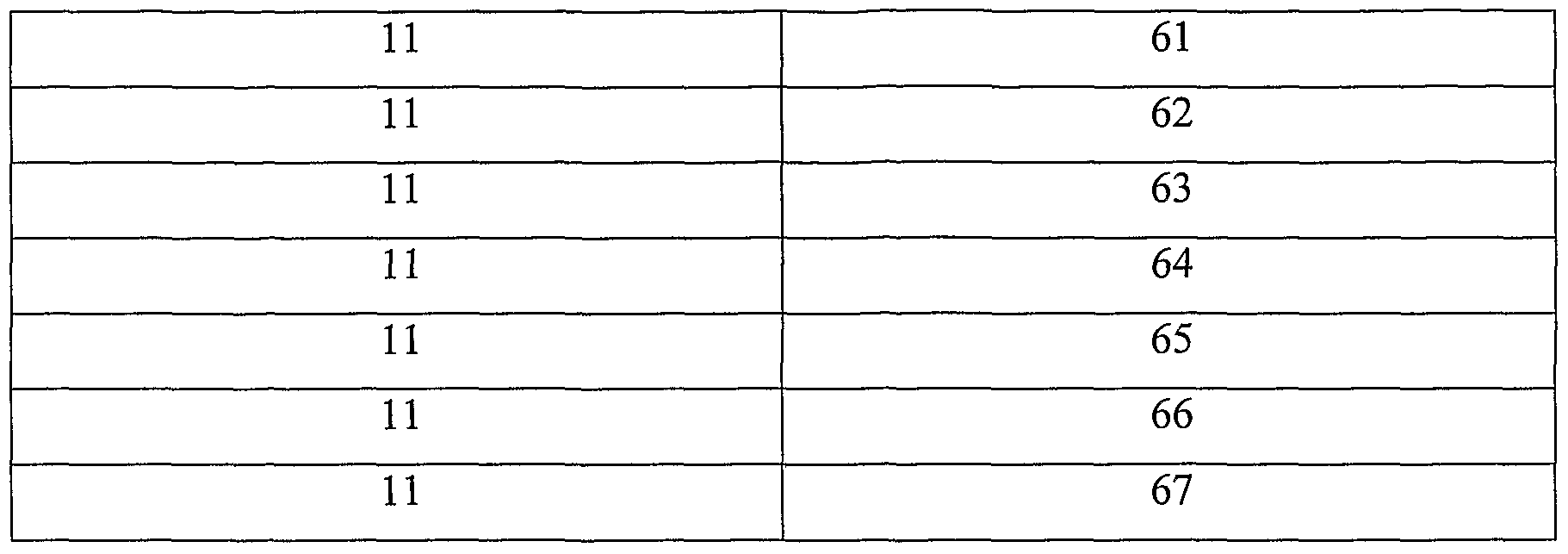
Figure imgf000008_0001
Figure imgf000009_0001
Preferred embodiments provide TCRs of the invention comprising:
the alpha chain variable region shown in the SEQ ID NO: 11 and the beta chain variable region shown in the SEQ ID NO: 2,
the alpha chain variable region shown in the SEQ ID NO: 47 and the beta chain variable region shown in the SEQ ID NO: 2.
the alpha chain variable region shown in the SEQ ID NO: 48 and the beta chain variable region shown in the SEQ ID NO: 2.
the alpha chain variable region shown in the SEQ ID NO: 53 and the beta chain variable region shown in the SEQ ID NO: 2.
the alpha chain variable region shown in the SEQ ID NO: 11 and the beta chain variable region shown in the SEQ ID NO: 54.
the alpha chain variable region shown in the SEQ ID NO: 11 and the beta chain variable region shown in the SEQ ID NO: 55.
the alpha chain variable region shown in the SEQ ID NO: 11 and the beta chain variable region shown in the SEQ ID NO: 56. the alpha chain variable region shown in the SEQ ID NO: 11 and the beta chain variable region shown in the SEQ ID NO: 57.
the alpha chain variable region shown in the SEQ ID NO: 11 and the beta chain variable region shown in the SEQ ID NO: 58.
the alpha chain variable region shown in the SEQ ID NO: 11 and the beta chain variable region shown in the SEQ ID NO: 62.
the alpha chain variable region shown in the SEQ ID NO: 11 and the beta chain variable region shown in the SEQ ID NO: 65.
the alpha chain variable region shown in the SEQ ID NO: 11 and the beta chain variable region shown in the SEQ ID NO: 66.
Or phenotypically silent variants of any of the above TCRs.
In another preferred embodiment TCRs of the invention comprising the variable region combinations detailed above further comprise the alpha chain constant region amino acid sequence shown in Figure 7a (SEQ ID NO: 25) and one of the beta chain amino acid constant region sequences shown in Figures 7b and 7c (SEQ ID NOs: 26 and 27) or phenotypically silent variants thereof.
As used herein the term "phenotypically silent variants" is understood to refer to those TCRs which have a KD for the said AAGIGILTV-HLA-A*0201 complex of less than or equal to 3μM. For example, as is known to those skilled in the art, it may be possible to produce TCRs that incorporate minor changes in the constant and/or variable regions thereof compared to those detailed above without altering the affinity and/or off-rate for the interaction with the AAGIGILTV-HLA-A*0201 complex. Such trivial variants are included in the scope of this invention. Those TCRs in which one or more conservative substitutions have been made also form part of this invention. In one broad aspect, the TCRs of the invention are in the form of either single chain TCRs (scTCRs) or dimeric TCRs (dTCRs) as described in WO 04/033685 and WO 03/020763.
A suitable scTCR form comprises a first segment constituted by an amino acid sequence corresponding to a TCR α chain variable region, a second segment constituted by an amino acid sequence corresponding to a TCR β chain variable region sequence fused to the N terminus of an amino acid sequence corresponding to a TCR β chain constant domain extracellular sequence, and a linker sequence linking the C terminus of the first segment to the N terminus of the second segment.
Alternatively the first segment may be constituted by an amino acid sequence corresponding to a TCR β chain variable region; the second segment may be constituted by an amino acid sequence corresponding to a TCR α chain variable region sequence fused to the N terminus of an amino acid sequence corresponding to a TCR α chain constant domain extracellular sequence
The above scTCRs may further comprise a disulfide bond between the first and second chains, said disulfide bond being one which has no equivalent in native αβT cell receptors, and wherein the length of the linker sequence and the position of the disulfide bond being such that the variable domain sequences of the first and second segments are mutually orientated substantially as in native αβ T cell receptors.
More specifically the first segment may be constituted by an amino acid sequence corresponding to a TCR α chain variable region sequence fused to the N terminus of an amino acid sequence corresponding to a TCR α chain constant domain extracellular sequence, the second segment may be constituted by an amino acid sequence corresponding to a TCR β chain variable region fused to the N terminus of an amino acid sequence corresponding to TCR β chain constant domain extracellular sequence, and a disulfide bond may be provided between the first and second chains, said disulfide bond being one which has no equivalent in native αβ T cell receptors.
In the above scTCR forms, the linker sequence may link the C terminus of the first segment to the N terminus of the second segment, and may have the formula -PGGG- (SGGGG)n-P- wherein n is 5 or 6 and P is proline, G is glycine and S is serine.
-PGGG-SGGGGSGGGGSGGGGSGGGGSGGGG-P (SEQ ID NO: 41) -PGGG-SGGGGSGGGGSGGGGSGGGGSGGGGSGGGG-P (SEQ ID NO: 42)
A suitable dTCR form of the TCRs of the present invention comprises a first polypeptide wherein a sequence corresponding to a TCR α chain variable region sequence is fused to the N terminus of a sequence corresponding to a TCR α chain constant domain extracellular sequence, and a second polypeptide wherein a sequence corresponding to a TCR β chain variable region sequence fused to the N terminus a sequence corresponding to a TCR β chain constant domain extracellular sequence, the first and second polypeptides being linked by a disulfide bond which has no equivalent in native αβ T cell receptors.
The first polypeptide may comprise a TCR α chain variable region sequence is fused to the N terminus of a sequence corresponding to a TCR α chain constant domain extracellular sequence, and a second polypeptide wherein a sequence corresponding to a TCR β chain variable region sequence is fused to the N terminus a sequence corresponding to a TCR β chain constant domain extracellular sequence, the first and second polypeptides being linked by a disulfide bond between cysteine residues substituted for Thr 48 of exon 1 of TRAC*01 and Ser 57 of exon 1 of TRBC1*O1 or TRBC2*01 or the non-human equivalent thereof. ("TRAC" etc. nomenclature herein as per T cell receptor Factsbook, (2001) LeFranc and LeFranc, Academic Press, ISBN 0-12-441352-8) The dTCR or scTCR form of the TCRs of the invention may have amino acid sequences corresponding to human αβ TCR extracellular constant and variable region sequences, and a disulfide bond may link amino acid residues of the said constant domain sequences, which disulfide bond has no equivalent in native TCRs. The disulfide bond is between cysteine residues corresponding to amino acid residues whose β carbon atoms are less than 0.6 nm apart in native TCRs, for example between cysteine residues substituted for Thr 48 of exon 1 of TRAC*01 and Ser 57 of exon 1 of TRBCl *01 or TRBC2*01 or the non-human equivalent thereof. Other sites where cysteines can be introduced to form the disulfide bond are the following residues in exon 1 of TRAC*01 for the TCR α chain and TRBCl *01 or TRBC2*01 for the TCR β chain:
Figure imgf000013_0001
Specific embodiments of the invention provided a TCR of the invention which is a dTCR comprising a first polypeptide wherein a sequence corresponding to a TCR α chain variable region sequence is fused to the N terminus of a sequence corresponding to a TCR α chain constant domain extracellular sequence, and
a second polypeptide wherein a sequence corresponding to a TCR β chain variable region sequence fused to the N terminus a sequence corresponding to a TCR β chain constant domain extracellular sequence, the first and second polypeptides being linked by a disulfide bond which has no equivalent in native αβ T cell between cysteine residues substituted for Thr 48 of exon 1 of TRAC*01 and Ser 57 of exon 1 of TRBCl *01 or TRBC2*01 or the non-human equivalent thereof.
In addition to the non-native disulfide bond referred to above, the dTCR or scTCR form of the TCRs of the invention may include a disulfide bond between residues corresponding to those linked by a disulfide bond in native TCRs.
The dTCR or scTCR form of the TCRs of the invention preferably does not contain a sequence corresponding to transmembrane or cytoplasmic sequences of native TCRs.
Currently preferred embodiments of the invention provide soluble TCRs comprising:
the alpha chain amino acid sequence of SEQ ID NO: 29 and beta chain amino acid sequence SEQ ID NO: 10.
the alpha chain amino acid sequence of SEQ ID NO: 68 and beta chain amino acid sequence SEQ ID NO: 10.
the alpha chain amino acid sequence of SEQ ID NO: 69 and beta chain amino acid sequence SEQ ID NO: 10.
the alpha chain amino acid sequence of SEQ ID NO: 70 and beta chain amino acid sequence SEQ ID NO: 10.
the alpha chain amino acid sequence of SEQ ID NO: 29 and beta chain amino acid sequence SEQ ID NO: 71.
the alpha chain amino acid sequence of SEQ ID NO: 29 and beta chain amino acid sequence SEQ ID NO: 72. the alpha chain amino acid sequence of SEQ ID NO: 29 and beta chain amino acid sequence SEQ ID NO: 73.
the alpha chain amino acid sequence of SEQ ID NO: 29 and beta chain amino acid sequence SEQ ID NO: 74.
the alpha chain amino acid sequence of SEQ ID NO: 29 and beta chain amino acid sequence SEQ ID NO: 75.
the alpha chain amino acid sequence of SEQ ID NO: 29 and beta chain amino acid sequence SEQ ID NO: 76.
the alpha chain amino acid sequence of SEQ ID NO: 29 and beta chain amino acid sequence SEQ ID NO: 77.
the alpha chain amino acid sequence of SEQ ID NO: 29 and beta chain amino acid sequence SEQ ID NO: 78.
Also provided is a nucleic acid or nucleic acids encoding TCRs of the invention. Such a nucleic acid or nucleic acids may be provided in a form which has been adapted for expression in a prokaryote or eukaryote host cell. Suitable host cells include, but are not limited to, bacterial, yeast, mammalian or insect cells. For example, the host cell may be a human T cell or a human haematopoietic stem cell.
Such adapted nucleic acid or nucleic acids is/are mutated to reflect the codon preference of the host cell in to which it is introduced. The mutations introduced are silent mutations which do not affect the amino acid sequence of the polypeptide or polypeptides thereby encoded. GeneArt (Regensburg, Germany) offer a suitable nucleic acid optimisation service (GeneOptimizer™). WO 2004/059556, owned by GeneArt, provides further details of the optimisation process. Further currently preferred embodiments of the invention are provided by nucleic acids consisting of one of the full-length TCR α chain DNA sequences of SEQ ID Nos
33, 35 or 37 (Figures 12a, 13a, or 14a, respectively) and the TCR β chain DNA sequence of SEQ ID No 39 (Shown in Figure 15a). A nucleic acid complementary to any of the foregoing, or a corresponding RNA sequence also forms part of this invention. Furthermore, as will be obvious to those skilled in the art such nucleic acid or nucleic acids encoding TCRs of the invention may also comprise non-coding (intron) sequences.
The full-length wild-type and high affinity MEL TCR chain DNA sequences of SEQ ID Nos: 31, 33, 35, 37 and 39 encode the amino acid sequences of SEQ ID Nos: 32,
34, 36, 38, and 40 respectively. (Figures 1 Ib, 12b, 13b, 14b and 15b respectively)
The amino acids sequences of SEQ ID Nos: 33, 35 and 37 comprise the high affinity MEL TCR alpha chain variable regions of SEQ ID Nos: 11, 15 and 23 respectively.
As will be obvious to those skilled in the art such full-length TCR chain DNA sequences encode for the following sequences:
A leader sequence and the extracellular, transmembrane, and cytoplasmic TCR sequences.
The full-length DNA sequences provided herein also include restriction enzyme recognition sequences to facilitate ligation into the vector of choice.
PEGylated TCR Monomers
In one particular embodiment a TCR of the invention is associated with at least one polyalkylene glycol chain(s). This association may be cause in a number of ways known to those skilled in the art. In a preferred embodiment the polyalkylene chain(s) is/are covalently linked to the TCR. In a further embodiment the polyethylene glycol chains of the present aspect of the invention comprise at least two polyethylene repeating units.
Multivalent TCR Complexes
One aspect of the invention provides a multivalent TCR complex comprising at least two TCRs of the invention. In one embodiment of this aspect, at least two TCR molecules are linked via linker moieties to form multivalent complexes. Preferably the complexes are water soluble, so the linker moiety should be selected accordingly. Furthermore, it is preferable that the linker moiety should be capable of attachment to defined positions on the TCR molecules, so that the structural diversity of the complexes formed is minimised. One embodiment of the present aspect is provided by a TCR complex of the invention wherein the polymer chain or peptidic linker sequence extends between amino acid residues of each TCR which are not located in a variable region sequence of the TCR.
Since the complexes of the invention may be for use in medicine, the linker moieties should be chosen with due regard to their pharmaceutical suitability, for example their immunogenicity.
Examples of linker moieties which fulfil the above desirable criteria are known in the art, for example the art of linking antibody fragments.
There are two classes of linker that are preferred for use in the production of multivalent TCR molecules of the present invention. A TCR complex of the invention in which the TCRs are linked by a polyalkylene glycol chain provides one embodiment of the present aspect.
The first are hydrophilic polymers such as polyalkylene glycols. The most commonly used of this class are based on polyethylene glycol or PEG, the structure of which is shown below. HOCH2CH2O (CH2CH2O)n-CH2CH2OH
Wherein n is greater than two. However, others are based on other suitable, optionally substituted, polyalkylene glycols include polypropylene glycol, and copolymers of ethylene glycol and propylene glycol.
Such polymers may be used to treat or conjugate therapeutic agents, particularly polypeptide or protein therapeutics, to achieve beneficial changes to the PK profile of the therapeutic, for example reduced renal clearance, improved plasma half-life, reduced immunogenicity, and improved solubility. Such improvements in the PK profile of the PEG-therapeutic conjugate are believe to result from the PEG molecule or molecules forming a 'shell' around the therapeutic which sterically hinders the reaction with the immune system and reduces proteolytic degradation. (Casey et al, (2000) Tumor Targetting 4 235-244) The size of the hydrophilic polymer used my in particular be selected on the basis of the intended therapeutic use of the TCR complex. Thus for example, where the product is intended to leave the circulation and penetrate tissue, for example for use in the treatment of a tumour, it may be advantageous to use low molecular weight polymers in the order of 5 KDa. There are numerous review papers and books that detail the use of PEG and similar molecules in pharmaceutical formulations. For example, see Harris (1992) Polyethylene Glycol Chemistry - Biotechnical and Biomedical Applications, Plenum, New York, NY. or Harris & Zalipsky (1997) Chemistry and Biological Applications of Polyethylene Glycol ACS Books, Washington, D. C.
The polymer used can have a linear or branched conformation. Branched PEG molecules, or derivatives thereof, can be induced by the addition of branching moieties including glycerol and glycerol oligomers, pentaerythritol, sorbitol and lysine.
Usually, the polymer will have a chemically reactive group or groups in its structure, for example at one or both termini, and/or on branches from the backbone, to enable the polymer to link to target sites in the TCR. This chemically reactive group or groups may be attached directly to the hydrophilic polymer, or there may be a spacer group/moiety between the hydrophilic polymer and the reactive chemistry as shown below:
Reactive chemistry-Hydrophilic polymer-Reactive chemistry
Reactive chemistry-Spacer-Hydrophilic polymer-Spacer-Reactive chemistry
The spacer used in the formation of constructs of the type outlined above may be any organic moiety that is a non-reactive, chemically stable, chain, Such spacers include, by are not limited to the following: -(CHb)n- wherein n = 2 to 5 -(CH2)3NHCO(CH2)2
A TCR complex of the invention in which a divalent alkylene spacer radical is located between the polyalkylene glycol chain and its point of attachment to a TCR of the complex provides a further embodiment of the present aspect.
A TCR complex of the invention in which the polyalkylene glycol chain comprises at least two polyethylene glycol repeating units provides a further embodiment of the present aspect.
There are a number of commercial suppliers of hydrophilic polymers linked, directly or via a spacer, to reactive chemistries that may be of use in the present invention. These suppliers include Nektar Therapeutics (CA, USA), NOF Corporation (Japan), Sunbio (South Korea) and Enzon Pharmaceuticals (NJ, USA).
Commercially available hydrophilic polymers linked, directly or via a spacer, to reactive chemistries that may be of use in the present invention include, but are not limited to, the following:
Figure imgf000020_0001
A wide variety of coupling chemistries can be used to couple polymer molecules to protein and peptide therapeutics. The choice of the most appropriate coupling chemistry is largely dependant on the desired coupling site. For example, the following coupling chemistries have been used attached to one or more of the termini of PEG molecules (Source: Nektar Molecular Engineering Catalogue 2003):
N-maleimide
Vinyl sulfone Benzotriazole carbonate
Succinimidyl proprionate
Succinimidyl butanoate
Thio-ester
Acetaldehydes Acrylates
Biotin
Primary amines
As stated above non-PEG based polymers also provide suitable linkers for multimerising the TCRs of the present invention. For example, moieties containing maleimide termini linked by aliphatic chains such as BMH and BMOE (Pierce, products Nos. 22330 and 22323) can be used.
Peptidic linkers are the other class of TCR linkers. These linkers are comprised of chains of amino acids, and function to produce simple linkers or multimerisation domains onto which TCR molecules can be attached. The biotin / streptavidin system has previously been used to produce TCR tetramers (see WO/99/60119) for in- vitro binding studies. However, strepavidin is a microbially-derived polypeptide and as such not ideally suited to use in a therapeutic.
A TCR complex of the invention in which the TCRs are linked by a peptidic linker derived from a human multimerisation domain provides a further embodiment of the present aspect.
There are a number of human proteins that contain a multimerisation domain that could be used in the production of multivalent TCR complexes. For example the tetramerisation domain of p53 which has been utilised to produce tetramers of scFv antibody fragments which exhibited increased serum persistence and significantly reduced off-rate compared to the monomeric scFv fragment. (Willuda et al. (2001) J Biol. Chem. 276 (17): 14385-14392) Haemoglobin also has a tetramerisation domain that could potentially be used for this kind of application.
A multivalent TCR complex of the invention comprising at least two TCRs provides a final embodiment of this aspect, wherein at least one of said TCRs is associated with a therapeutic agent.
In one aspect a TCR (or multivalent complex thereof) of the present invention may alternatively or additionally comprise a reactive cysteine at the C-terminal or N- terminal of the alpha or beta chains thereof.
Diagnostic and therapeutic Use
In one aspect the TCR of the invention may be associated with a therapeutic agent or detectable moiety. For example, said therapeutic agent or detectable moiety may be covalently linked to the TCR.
In one embodiment of the invention said therapeutic agent or detectable moiety is covalently linked to the C-terminus of one or both TCR chains.
In one aspect the scTCR or one or both of the dTCR chains of TCRs of the present invention may be labelled with an detectable moiety, for example a label that is suitable for diagnostic purposes. Such labelled TCRs are useful in a method for detecting a AAGIGILTV -HL A-A* 0201 complex which method comprises contacting the TCR ligand with a TCR (or a multimeric high affinity TCR complex) which is specific for the TCR ligand; and detecting binding to the TCR ligand. In tetrameric TCR complexes formed for example, using biotinylated heterodimers, fluorescent streptavidin can be used to provide a detectable label. Such a fluorescently-labelled TCR tetramer is suitable for use in FACS analysis, for example to detect antigen presenting cells carrying theAAGIGILTV-HLA-A*0201 complex for which these high affinity TCRs are specific.
Another manner in which the soluble TCRs of the present invention may be detected is by the use of TCR-specific antibodies, in particular monoclonal antibodies. There are many commercially available anti-TCR antibodies, such as αFl and βFl, which recognise the constant domains of the α and β chains, respectively.
In a further aspect a TCR (or multivalent complex thereof) of the present invention may alternatively or additionally be associated with (e.g. covalently or otherwise linked to) a therapeutic agent which may be, for example, a toxic moiety for use in cell killing, or an immune effector molecule such as an interleukin or a cytokine. A multivalent TCR complex of the invention may have enhanced binding capability for a TCR ligand compared to a non-multimeric wild-type or T cell receptor heterodimer of the invention. Thus, the multivalent TCR complexes according to the invention are particularly useful for tracking or targeting cells presenting particular antigens in vitro or in vivo, and are also useful as intermediates for the production of further multivalent TCR complexes having such uses. These TCRs or multivalent TCR complexes may therefore be provided in a pharmaceutically acceptable formulation for use in vivo.
The invention also provides a method for delivering a therapeutic agent to a target cell, which method comprises contacting potential target cells with a TCR or multivalent TCR complex in accordance with the invention under conditions to allow attachment of the TCR or multivalent TCR complex to the target cell, said TCR or multivalent
TCR complex being specific for the AAGIGILTV-HLA-A*0201 complex and having the therapeutic agent associated therewith.
In particular, the soluble TCR or multivalent TCR complex of the present invention can be used to deliver therapeutic agents to the location of cells presenting a particular antigen. This would be useful in many situations and, in particular, against tumours. A therapeutic agent could be delivered such that it would exercise its effect locally but not only on the cell it binds to. Thus, one particular strategy envisages anti-tumour molecules linked to TCRs or multivalent TCR complexes according to the invention specific for tumour antigens.
Many therapeutic agents could be employed for this use, for instance radioactive compounds, enzymes (perforin for example) or chemotherapeutic agents (cis-platin for example). To ensure that toxic effects are exercised in the desired location the toxin could be inside a liposome linked to streptavidin so that the compound is released slowly. This will prevent damaging effects during the transport in the body and ensure that the toxin has maximum effect after binding of the TCR to the relevant antigen presenting cells.
Other suitable therapeutic agents include: • small molecule cytotoxic agents, i.e. compounds with the ability to kill mammalian cells having a molecular weight of less than 700 daltons. Such compounds could also contain toxic metals capable of having a cytotoxic effect. Furthermore, it is to be understood that these small molecule cytotoxic agents also include pro-drugs, i.e. compounds that decay or are converted under physiological conditions to release cytotoxic agents. Examples of such agents include cis-platin, maytansine derivatives, rachelmycin, calicheamicin, docetaxel, etoposide, gemcitabine, ifosfamide, irinotecan, melphalan, mitoxantrone, sorfimer sodiumphotofrin II, temozolmide, topotecan, trimetreate glucuronate, auristatin E vincristine and doxorubicin; • peptide cytotoxins, i.e. proteins or fragments thereof with the ability to kill mammalian cells. Including but not limited to, ricin, diphtheria toxin, pseudomonas bacterial exotoxin A, DNAase and RNAase; • radio-nuclides, i.e. unstable isotopes of elements which decay with the concurrent emission of one or more of α or β particles, or γ rays, including but not limited to, iodine 131, rhenium 186, indium 111, yttrium 90, bismuth 210 and 213, actinium 225 and astatine 213; chelating agents may be used to facilitate the association of these radio-nuclides to the high affinity TCRs, or multimers thereof;
• prodrugs, including but not limited to, antibody directed enzyme pro-drugs;
• immuno-stimulants, i.e. moieties which stimulate immune response. Including but not limited to, cytokines such as IL-2 and IFN, superantigens and mutants thereof, pHLA complexes and chemokines such as IL-8, platelet factor 4, melanoma growth stimulatory protein, etc, antibodies or fragments thereof, complement activators, xenogeneic protein domains, allogeneic protein domains, viral/bacterial protein domains, viral/bacterial peptides and anti-T cell determinant antibodies (e.g. anti-CD3 or anti-CD28).
Functional antibody fragments and variants
Antibody fragments and variants/analogues which are suitable for use in the compositions and methods described herein include, but are not limited to, the following.
Antibody Fragments
As is known to those skilled in the art, it is possible to produce fragments of a given antibody which retain substantially the same binding characteristics as those of the parent antibody. The following provides details of such fragments:
Minibodies - These constructs consist of antibodies with a truncated Fc portion. As such they retain the complete binding domains of the antibody from which are derived.
Fab fragments - These comprise a single immunoglobulin light chain covalently- linked to part of an immunoglobulin heavy chain. As such, Fab fragments comprise a single antigen combining site. Fab fragments are defined by the portion of an IgG that can be liberated by treatment with papain. Such fragments are commonly produced via recombinant DNA techniques. (Reeves et ah, (2000) Lecture Notes on Immunology (4th Edition) Published by Blackwell Science)
F(ab')2 fragments - These comprise both antigen combining sites and the hinge region from a single antibody. F(ab')2 fragments are defined by the portion of an IgG that can be liberated by treatment with pepsin. Such fragments are commonly produced via recombinant DNA techniques. (Reeves et ah, (2000) Lecture Notes on Immunology (4th Edition) Published by Blackwell Science)
Fv fragments - These comprise an immunoglobulin variable heavy domain linked to an immunoglobulin variable light domain. A number of Fv designs have been produced. These include dsFvs, in which the association between the two domains is enhanced by an introduced disulfide bond. Alternatively, scFvs can be formed using a peptide linker to bind the two domains together as a single polypeptide. Fvs constructs containing a variable domain of a heavy or light immunoglobulin chain associated to the variable and constant domain of the corresponding immunoglobulin heavy or light chain have also been produced. FV have also been multimerised to form diabodies and triabodies (Maynard et al, (2000) Annu Rev BiomedEng 2 339-376)
Nanobodies™ - These constructs, marketed by Ablynx (Belgium), comprise synthetic single immunoglobulin variable heavy domain derived from a camelid (e.g. camel or llama) antibody.
Domain Antibodies - These constructs, marketed by Domantis (Belgium), comprise an affinity matured single immunoglobulin variable heavy domain or immunoglobulin variable light domain.
Antibody variants and analogues
The defining functional characteristic of antibodies in the context of the present invention is their ability to bind specifically to a target ligand. As is known to those skilled in the art it is possible to engineer such binding characteristics into a range of other proteins. Examples of antibody variants and analogues suitable for use in the compositions and methods of the present invention include, but are not limited to, the following.
Protein scaffold-based binding polypeptides - This family of binding constructs comprise mutated analogues of proteins which contain native binding loops. Examples include Affibodies, marketed by Affibody (Sweden), which are based on a three-helix motif derived from one of the IgG binding domains of Staphylococcus aureus Protein A. Another example is provided by Evibodies, marketed by EvoGenix (Australia) which are based on the extracellular domains of CTLA-4into which domains similar to antibody binding loops are grafted. A final example, Cytokine Traps marketed by Regeneron Pharmaceuticals (US), graft cytokine receptor domains into antibody scaffolds. (Nygren et al, (2000) Current Opinion in Structural biology 7:463-469) provides a review of the uses of scaffolds for engineering novel binding sites in proteins. This review mentions the following proteins as sources of scaffolds: CPl zinc finger, Tendamistat, Z domain (a protein A analogue), PSTl, Coiled coils, LACI- Dl and cytochrome b562. Other protein scaffold studies have reported the use of Fibronectin, Green fluorescent protein (GFP) and ankyrin repeats.
As is known to those skilled in the art antibodies or fragments, variants or analogues thereof can be produced which bind to various parts of a given protein ligand. For example, anti-CD3 antibodies can be raised to any of the polypeptide chains from which this complex is formed (i.e.γ, δ, ε, ζ, and η CD3 chains) Antibodies which bind to the ε CD3 chain are the preferred anti-CD3 antibodies for use in the compositions and methods of the present invention.
Soluble TCRs or multivalent TCR complexes of the invention may be linked to an enzyme capable of converting a prodrug to a drug. This allows the prodrug to be converted to the drug only at the site where it is required (i.e. targeted by the sTCR). It is expected that the high affinity AAGIGILTV (SEQ ID NO: 43)-HLA-A*0201 specific TCRs disclosed herein may be used in methods for the diagnosis and treatment of cancer.
For cancer treatment, the localisation in the vicinity of tumours or metastasis would enhance the effect of toxins or immunostimulants. For vaccine delivery, the vaccine antigen could be localised in the vicinity of antigen presenting cells, thus enhancing the efficacy of the antigen. The method can also be applied for imaging purposes.
One embodiment is provided by an isolated cell presenting a TCR of the invention. For example, said cell may be a human T cell or a human haematopoietic stem cell Further embodiments of the invention are provided by a pharmaceutical composition comprising:
a TCR or a multivalent TCR complex of the invention (optionally associated with a therapeutic agent), or a plurality of cells presenting at least one TCR of the invention, or a nucleic acid or nucleic acids encoding a TCR of the invention together with a pharmaceutically acceptable carrier;
The invention also provides a method of treatment of cancer comprising administering to a subject suffering such cancer disease an effective amount of a TCR or a multivalent TCR complex of the invention (optionally associated with a therapeutic agent), or a plurality of cells presenting at least one TCR of the invention, or a nucleic acid or nucleic acids encoding a TCR of the invention. In a related embodiment the invention provides for the use of a TCR or a multivalent TCR complex of the invention (optionally associated with a therapeutic agent), or a plurality of cells presenting at least one TCR of the invention, or a nucleic acid or nucleic acids encoding a TCR of the invention in the preparation of a composition for the treatment of cancer. As will be obvious to those skilled in the art, the cancers that are amenable to treatment by compositions comprising the TCRs of the invention will be Melan-A cancers.
Therapeutic or imaging TCRs in accordance with the invention will usually be supplied as part of a sterile, pharmaceutical composition which will normally include a pharmaceutically acceptable carrier. This pharmaceutical composition may be in any suitable form, (depending upon the desired method of administering it to a patient). It may be provided in unit dosage form, will generally be provided in a sealed container and may be provided as part of a kit. Such a kit would normally (although not necessarily) include instructions for use. It may include a plurality of said unit dosage forms.
The pharmaceutical composition may be adapted for administration by any appropriate route, for example parenteral, transdermal or via inhalation, preferably a parenteral (including subcutaneous, intramuscular, or, most preferably intravenous) route. Such compositions may be prepared by any method known in the art of pharmacy, for example by mixing the active ingredient with the carrier(s) or excipient(s) under sterile conditions.
Dosages of the substances of the present invention can vary between wide limits, depending upon the disease or disorder to be treated, the age and condition of the individual to be treated, etc. and a physician will ultimately determine appropriate dosages to be used.
Additional Aspects A scTCR or dTCR (which preferably is constituted by constant and variable sequences corresponding to human sequences) of the present invention may be provided in substantially pure form, or as a purified or isolated preparation. For example, it may be provided in a form which is substantially free of other proteins.
The invention also provides a method of identifying a high affinity TCR having the property of binding to AAGIGILTV-HLA-A*0201 CHARACTERISED IN THAT the TCR (i) comprises at least one TCR α chain variable domain and/or at least one TCR β chain variable domain and (ii) has a KD for the said AAGIGILTV-HLA-A*0201 complex of less than 3μM said method comprising:
(a) the production of a diverse library of TCRs comprising the α and β chain variable domains of the MEL TCR wherein one or both of the α and β chain variable domains comprise a mutation(s);
(b) contacting said diverse library of TCRs with AAGIGILTV -HLA- A* 0201 under conditions suitable to allow the binding of the TCRs to AAGIGILTV-HLA-A*0201;and
(c) measuring the KQ of the interaction.
Preferred features of each aspect of the invention are as for each of the other aspects mutatis mutandis. The prior art documents mentioned herein are incorporated to the fullest extent permitted by law.
Examples
The invention is further described in the following examples, which do not limit the scope of the invention in any way.
Reference is made in the following to the accompanying drawings in which:
Figure Ia and Ib provide the alpha chain variable region amino acid and beta chain variable region amino acid sequences of the native MEL TCR respectively.
Figures 2a and 2b provide respectively the DNA sequence of soluble versions of the native MEL TCR α and β chains.
Figures 3 a and 3b provide respectively the MEL TCR α and β chain extracellular amino acid sequences produced from the DNA sequences of Figures 2a and 2b. Figures 4a and 4b provide respectively the DNA sequence of soluble versions of the MEL TCR α and β chains mutated to include additional cysteine residues to form a non-native disulphide bond. The mutated codon in each chain is indicated by shading and the introduced restriction enzyme recognition sites are underlined.
Figures 5a and 5b show respectively the MEL TCR α and β chain extracellular amino acid sequences produced from the DNA sequences of Figures 4a and 4b. The introduced cysteine in each chain is indicated by shading.
Figure 6 provides the alpha chain variable region amino acid sequences of high affinity MEL TCR variants. The mutated residues are underlined
Figure 7a provides the amino acid sequence of a truncated form of TRAC.
Figure 7b provides the amino acid sequence of a truncated form of TRBCl.
Figure 7c provides the amino acid sequence of a truncated form of TRBC2.
Figure 8a provides the plasmid map of the pEX202 plasmid.
Figure 8b provides the DNA sequence of the pEX202 plasmid.
Figure 9a details the alpha chain amino acid sequences of a preferred soluble high affinity MEL TCR variant.
Figure 9b details the beta chain amino acid sequences of the wild-type soluble MEL TCR using the TRBC2 encoded constant region fused via a peptide linker to wild-type human IL-2. The linker and IL-2 sequences are in italics. Figure 10 provides the Biacore response curve generated for the interaction of a wild- type soluble disulfide-linked MEL TCR and HL A- AAGIGILT V-HL A- A* 0201
Figures l la and l ib provide the full-length wild-type MEL TCR alpha chain DNA sequence mutated in order to produce enhanced expression in human cells and the amino acid sequence thereby encoded respectively.
Figures 12a and 12b provide the full-length high affinity cl MEL TCR alpha chain DNA sequence mutated in order to produce enhanced expression in human cells and the amino acid sequence thereby encoded respectively.
Figures 13a and 13b provide the full-length high affinity eld MEL TCR alpha chain DNA sequence mutated in order to produce enhanced expression in human cells and the amino acid sequence thereby encoded respectively.
Figures 14a and 14b provide the full length high affinity c9 MEL TCR alpha chain sequence mutated in order to produce enhanced expression in human cells and the amino acid sequence thereby encoded respectively.
Figures 15a and 15b provide the full-length c9 MEL TCR alpha chain sequence mutated in order to produce enhanced expression in human cells and the amino acid sequence thereby encoded respectively.
Figure 16 Provides an ELISPOT assay demonstrating the ability of a soluble disulfide- linked version of the high affinity cl WT Mel TCR to inhibit the activation of a Mel- specific CTL Clone.
Figures 17a and 17b provide the full-length wild-type MEL TCR alpha chain ORF encoding and wild-type MEL TCR beta chain ORF encoding DNA sequences respectively. Figure 18 provides the full-length cl MEL TCR alpha chain ORF encoding DNA sequence comprising wild-type DNA codons except for those encoding the mutated amino acids.
Figure 19a provides FACS data on the level of TCR expression achieved by transfection of Jurkat cells with non-codon-optimsed DNA encoding a cl alpha / WT beta MEL TCR.
Figure 19b provides FACS data on the level of TCR expression achieved by transfection of Jurkat cells with codon-optimsed DNA encoding a cl alpha / WT beta MEL TCR
Figure 20 provides the amino acid sequences of the variable regions of additional high affinity MEL TCR alpha chains. The mutated residues are underlined
Figure 21 provides the amino acid sequences of the variable regions of high affinity MEL TCR beta chains. The mutated residues are underlined
Figure 22 provides the amino acid sequences of soluble high affinity MEL TCR alpha chains comprising with a non-native cysteine residue. The non-native cysteine residue is highlighted and the mutated residues are underlined.
Figure 23 provides the amino acid sequences of soluble high affinity MEL TCR beta chains comprising with a non-native cysteine residue. The non-native cysteine residue is highlighted and the mutated residues are underlined. Example 1 - Production of a soluble disulfide-linked TCR comprising the native MEL variable domains
Figures 4a and 4b provide the DNA sequences of soluble disulfide-linked alpha and beta chains from the wild-type MEL TCR which is specific for the AAGIGILTV- HLA-A* 0201 complex. These DNA sequences can be synthesised de-novo by a number of contract research companies, for example GeneArt (Regensburg, Germany). Restriction enzyme recognition sites are also added to these DNA sequences in order to facilitate ligation of these DNA sequences into pGMT7 -based expression plasmids, which contain the T7 promoter for high level expression in E.coli strain BL21-DE3(pLysS) (Pan et al, Biotechniques (2000) 29 (6): 1234-8)
The DNA sequences encoding each TCR chain cut with Ndel and HindIII are ligated into separate pEX202 pGMT7 -based vectors, which are also cut with Ndel and HindIII. (See Figure 8a for the plasmid map of pEX202, and Figure 8b for the DNA sequence of this vector (SEQ ID NO: 28))
Restriction enzyme recognition sites as introduced into DNA encoding the soluble wild-type MEL TCR chains:
Ndel- CATATG HindIII- AAGCTT
Ligation Ligated plasmids are transformed into competent E.coli strain XLl -blue cells and plated out on LB/agar plates containing 100mg/ml ampicillin. Following incubation overnight at 370C, single colonies are picked and grown in 10 ml LB containing 100mg/ml ampicillin overnight at 370C with shaking. Cloned plasmids are purified using a Miniprep kit (Qiagen) and the insert is sequenced using an automated DNA sequencer (Lark Technologies). Figures 5a and 5b show respectively the soluble disulfide-linked wild-type MEL TCR α and β chain extracellular amino acid sequences produced from the DNA sequences of Figures 4a and 4b. The restriction enzyme recognition sequences in these DNA sequences are underlined.
Example 2- Production of high affinity variants of the soluble disulfide linked MEL TCR
The soluble disulfide-linked native MEL TCR produced as described in Example 1 can be used a template from which to produce the TCRs of the invention which have an increased affinity for the AAGIGILTV (SEQ ID NO: 43) -HLA-A*0201 complex.
Phage display is one means by which libraries of HIV Gag TCR variants can be generated in order to identify high affinity mutants. For example, the TCR phage display and screening methods described in (Li et ah, (2005) Nature Biotech 23 (3): 349-354) can be adapted and applied to HIV Gag TCRs.
The amino sequences of the mutated TCR alpha variable regions which, when combined with the wild-type MEL beta variable region, demonstrate high affinity for the AAGIGILTV-HLA-A*0201 complex are listed in Figure 6. (SEQ ID Nos: 11-24) As is known to those skilled in the art the necessary codon changes required to produce these mutated chains can be introduced into the DNA encoding these chains by site-directed mutagenesis. (QuickChange™ Site-Directed Mutagenesis Kit from Stratagene)
Briefly, this is achieved by using primers that incorporate the desired codon change(s) and the pEX202 plasmids containing the relevant MEL TCR chain DNA as a template for the mutagenesis:
Mutagenesis is carried out using the following conditions: 50ng plasmid template, lμl of 1OmM dNTP, 5 μl of 10x Pfu DNA polymerase buffer as supplied by the manufacturer, 25 pmol of fwd primer, 25 pmol of rev primer, lμl pfu DNA polymerase in total volume 50 μl. After an initial denaturation step of 2 mins at 95C, the reaction is subjected to 25 cycles of denaturation (95C, 10 sees), annealing (55C 10 sees), and elongation (72C, 8 mins). The resulting product is digested with Dpnl restriction enzyme to remove the template plasmid and transformed into E. coli strain XLl -blue. Mutagenesis was verified by sequencing.
Example 3 — Expression, refolding and purification of soluble TCR
The pEX202 expression plasmids containing the MEL TCR α-chains and MEL TCR β-chains as prepared in Examples 1 or 2 are transformed separately into E.coli strain BL21pLysS, and single ampicillin-resistant colonies are grown at 370C in TYP (ampicillin lOOμg/ml) medium to OD600 of 0.4 before inducing protein expression with 0.5mM IPTG. Cells are harvested three hours post-induction by centrifugation for 30 minutes at 4000rpm in a Beckman J-6B. Cell pellets are re-suspended in a buffer containing 5OmM Tris-HCI, 25% (w/v) sucrose, ImM NaEDTA, 0.1% (w/v) NaAzide, 1OmM DTT, pH 8.0. After an overnight freeze-thaw step, re-suspended cells are sonicated in 1 minute bursts for a total of around 10 minutes in a Milsonix XL2020 sonicator using a standard 12mm diameter probe. Inclusion body pellets are recovered by centrifugation for 30 minutes at 13000rpm in a Beckman J2-21 centrifuge. Three detergent washes are then carried out to remove cell debris and membrane components. Each time the inclusion body pellet is homogenised in a Triton buffer (5OmM Tris-HCI, 0.5% Triton-XlOO, 20OmM NaCI, 1OmM NaEDTA, 0.1% (w/v) NaAzide, 2mM DTT, pH 8.0) before being pelleted by centrifugation for 15 minutes at 13000rpm in a Beckman J2-21. Detergent and salt is then removed by a similar wash in the following buffer: 5OmM Tris-HCI, ImM NaEDTA, 0.1% (w/v) NaAzide, 2mM DTT, pH 8.0. Finally, the inclusion bodies were divided into 30 mg aliquots and frozen at -70°C. Inclusion body protein yield is quantitated by solubilising with 6M guanidine-HCl and measurement with a Bradford dye-binding assay (PerBio). Approximately 30mg of TCR β chain and 60mg of TCR α chain solubilised inclusion bodies are thawed from frozen stocks, samples were then mixed and the mixture diluted into 15ml of a guanidine solution (6 M Guanidine-hydrochloride, 1OmM Sodium Acetate, 1OmM EDTA), to ensure complete chain de-naturation. The guanidine solution containing fully reduced and denatured TCR chains is then injected into 1 litre of the following refolding buffer: 10OmM Tris pH 8.5, 40OmM L-Arginine, 2mM EDTA, 5mM reduced Glutathione, 0.5mM oxidised Glutathione, 5M urea, 0.2mM PMSF. The redox couple (2-mercaptoethylamine and cystamine (to final concentrations of 6.6mM and 3.7mM, respectively) are added approximately 5 minutes before addition of the denatured TCR chains. The solution is left for 5 hrs ± 15minutes. The refolded TCR is dialysed in Spectrapor 1 membrane (Spectrum; Product No. 132670) against 10 L 10 mM Tris pH 8.1 at 5°C ± 3°C for 18-20 hours. After this time, the dialysis buffer is changed to fresh 10 mM Tris pH 8.1 (10 L) and dialysis was continued at 5°C ± 3°C for another 20-22 hours.
sTCR is separated from degradation products and impurities by loading the dialysed refold onto a POROS 50HQ anion exchange column and eluting bound protein with a gradient of 0-50OmM NaCI over 50 column volumes using an Akta purifier (Pharmacia). Peak fractions are stored at 4°C and analysed by Coomassie-stained SDS-PAGE before being pooled and concentrated. Finally, the sTCR is purified and characterised using a Superdex 200HR gel filtration column pre-equilibrated in HBS- EP buffer (10 mM HEPES pH 7.4, 150 mM NaCl, 3.5 mM EDTA, 0.05% nonidet p40). The peak eluting at a relative molecular weight of approximately 50 kDa is pooled and concentrated prior to characterisation by BIAcore surface plasmon resonance analysis.
Example 4 — Biacore surface plasmon resonance characterisation ofsTCR binding to specific pMHC A surface plasmon resonance biosensor (Biacore 3000™ ) was used to analyse the binding of a soluble MEL TCRs to the cognate peptide-MHC ligand. This was facilitated by producing single pMHC complexes (described below) which were immobilised to a streptavidin-coated binding surface in a semi-oriented fashion, allowing efficient testing of the binding of a soluble T-cell receptor to up to four different pMHC (immobilised on separate flow cells) simultaneously. Manual injection of HLA complex allows the precise level of immobilised class I molecules to be manipulated easily.
Biotinylated class I HLA-A*0201 molecules were refolded in vitro from bacterially- expressed inclusion bodies containing the constituent subunit proteins and synthetic peptide, followed by purification and in vitro enzymatic biotinylation (O'Callaghan et al. (1999) Anal. Biochem. 266: 9-15). HLA-A* 0201 -heavy chain was expressed with a C-terminal biotinylation tag which replaces the transmembrane and cytoplasmic domains of the protein in an appropriate construct. Inclusion body expression levels of ~75 mg/litre bacterial culture were obtained. The MHC light-chain or β2- microglobulin was also expressed as inclusion bodies in E.coli from an appropriate construct, at a level of ~500 mg/litre bacterial culture.
E. coli cells were lysed and inclusion bodies are purified to approximately 80% purity. Protein from inclusion bodies was denatured in 6 M guanidine-HCl, 50 mM Tris pH 8.1, 100 mM NaCl, 10 mM DTT, 10 mM EDTA, and was refolded at a concentration of 30 mg/litre heavy chain, 30 mg/litre β2m into 0.4 M L-Arginine-HCl, 100 mM Tris pH 8.1, 3.7 mM cystamine, 6.6mM β-cysteamine, 4 mg/ml of the AAGIGILTV peptide required to be loaded by the HLA-A*0201 molecule, by addition of a single pulse of denatured protein into refold buffer at < 50C. Refolding was allowed to reach completion at 40C for at least 1 hour.
Buffer was exchanged by dialysis in 10 volumes of 10 mM Tris pH 8.1. Two changes of buffer were necessary to reduce the ionic strength of the solution sufficiently. The protein solution was then filtered through a 1.5μm cellulose acetate filter and loaded onto a POROS 50HQ anion exchange column (8 ml bed volume). Protein was eluted with a linear 0-500 mM NaCl gradient. HLA-A* 0201 -peptide complex eluted at approximately 250 mM NaCl, and peak fractions were collected, a cocktail of protease inhibitors (Calbiochem) was added and the fractions were chilled on ice.
Biotinylation tagged pMHC molecules were buffer exchanged into 10 mM Tris pH
8.1, 5 mM NaCl using a Pharmacia fast desalting column equilibrated in the same buffer. Immediately upon elution, the protein-containing fractions were chilled on ice and protease inhibitor cocktail (Calbiochem) was added. Biotinylation reagents were then added: 1 mM biotin, 5 mM ATP (buffered to pH 8), 7.5 mM MgC12, and 5 μg/ml BirA enzyme (purified according to O'Callaghan et al. (1999) Anal. Biochem. 266: 9- 15). The mixture was then allowed to incubate at room temperature overnight.
The biotinylated pHLA-A*0201 molecules were purified using gel filtration chromatography. A Pharmacia Superdex 75 HR 10/30 column was pre-equilibrated with filtered PBS and 1 ml of the biotinylation reaction mixture was loaded and the column was developed with PBS at 0.5 ml/min. Biotinylated pHLA-A*0201 molecules eluted as a single peak at approximately 15 ml. Fractions containing protein were pooled, chilled on ice, and protease inhibitor cocktail was added. Protein concentration was determined using a Coomassie-binding assay (PerBio) and aliquots of biotinylated pHLA-A*0201 molecules were stored frozen at -2O0C. Streptavidin was immobilised by standard amine coupling methods.
Such immobilised complexes are capable of binding both T-cell receptors and the coreceptor CD8αα, both of which may be injected in the soluble phase. Specific binding of TCR is obtained even at low concentrations (at least 40μg/ml), implying the TCR is relatively stable. The pMHC binding properties of sTCR are observed to be qualitatively and quantitatively similar if sTCR is used either in the soluble or immobilised phase. This is an important control for partial activity of soluble species and also suggests that biotinylated pMHC complexes are biologically as active as non- bio tinylated complexes. The interactions between soluble MEL TCRs containing a novel inter-chain bond and its cognate pMHC or an irrelevant pMHC combination, the production of which is described above, were analysed on a Biacore 3000™ surface plasmon resonance (SPR) biosensor. SPR measures changes in refractive index expressed in response units (RU) near a sensor surface within a small flow cell, a principle that can be used to detect receptor ligand interactions and to analyse their affinity and kinetic parameters. The probe flow cells were prepared by immobilising the individual HLA- peptide complexes in separate flow cells via binding between the biotin cross linked onto β2m and streptavidin which have been chemically cross linked to the activated surface of the flow cells. The assay was then performed by passing sTCR over the surfaces of the different flow cells at a constant flow rate, measuring the SPR response in doing so.
To measure Equilibrium binding constant
Serial dilutions of the wild-type or mutated MEL sTCR were prepared and injected at constant flow rate of 5 μl min-1 over two different flow cells; one coated with -1000 RU of specific AAGIGILTV-HLA-A*0201 complex, the second coated with -1000 RU of non-specific HLA- A2 -peptide complex. Response was normalised for each concentration using the measurement from the control cell. Normalised data response was plotted versus concentration of TCR sample and fitted to a hyperbola in order to calculate the equilibrium binding constant, KD- (Price & Dwek, Principles and Problems in Physical Chemistry for Biochemists (2n Edition) 1979, Clarendon Press, Oxford).
To measure Kinetic Parameters
For high affinity TCRs KD was determined by experimentally measuring the dissociation rate constant, kd, and the association rate constant, ka. The equilibrium constant KD was calculated as kd/ka.
TCR was injected over two different cells one coated with -300 RU of specific HLA- A2- AAGIGILTV complex, the second coated with -300 RU of non-specific HLA- A2 -peptide complex. Flow rate was set at 50 μl/min. Typically 250 μl of TCR at ~3 μM concentration was injected. Buffer was then flowed over until the response had returned to baseline. Kinetic parameters were calculated using Biaevaluation software. The dissociation phase was also fitted to a single exponential decay equation enabling calculation of half-life.
Results
The interaction between a soluble disulfide-linked wild-type MEL TCR (consisting of the α and β TCR chains detailed in SEQ ID NOs 9 and 10 respectively) and the AAGIGILTV-HLA-A* 0201 complex was analysed using the above methods and demonstrated a KD of 4 μM. (See Figure 12 for Biacore response curve)
TCRs containing the variable region usage specified in the following table have a KD of less than or equal to 3 μM. Based on experience with high affinity TCRs other than the present MEL TCRs (see for example Li et ah, Nature Biotech 2005 23 (3): 349- 354) it is expected that some or all of the TCRs specified in the following table will have kOff of 1 x 10"3 S"l or slower, and indeed that has been shown to be the case by the preparation of soluble TCRs comprising these variable domains. (See Table 1 below)
Figure imgf000041_0001
Figure imgf000042_0001
Figure imgf000043_0001
Table 1 - Biacore data for the interaction of high affinity soluble disulfide-linked MEL TCRs comprising defined variable regions and the cognate AAGIGILTV -HLA- A*0201 peptide-MHC.
Example 5 - Production of a soluble high affinity MEL TCR -WT human IL-2 fusion protein
The methods substantially as described in Examples 1 to 3 can be used to produce a soluble high affinity MEL TCR -WT human IL-2 fusion protein. Briefly, the DNA encoding the desired linker and WT human IL-2 are added into the 3' end of the DNA sequence of the soluble disulfide-linked wild-type MEL TCR beta chain immediately prior to the TAA ("Stop") codon. Figure 9b provides the amino acid sequence of a fusion protein comprising a disulfide-linked wild-type MEL TCR beta chain fused to WT human IL-2 via linker sequence.(SEQ ID NO: 30) The linker and IL-2 portion of this fusion protein are indicated in italics. The DNA encoding this construct can then be ligated into pEX202. The soluble high affinity MEL TCR- IL-2 fusion protein can then be expressed by combining this beta chain fusion protein with a soluble high affinity disulfide-linked MEL TCR alpha chain containing any of the variable regions detailed in Figure 6 (SEQ ID NOs: 11 - 24) using the methods substantially as described in Example 3. For example, Figure 9a (SEQ ID NO: 29) provides the amino acid sequence of a soluble high affinity disulfide-linked MEL TCR alpha chain containing the variable region detailed in SEQ ID NO: 11.
Example 6 — ELISPOT assay for assessing in-vitro inhibition of cyto-toxic T cell (CTL) activation by soluble high affinity Mel CIcWT Mel TCRs
The following method provides a means of assessing the ability of Mel cl cWT high affinity Mel TCRs to inhibit the activation AAGIGILT V-HLA- A* 0201 reactive T cell clones.
The soluble Mel cl cWT high affinity Mel TCR utilised in this experiment contained the Mel TCR alpha chain variable domain and WT Mel TCR beta chain variable regions of (SEQ ID NO: 11) and (SEQ ID NO: 2) respectively. The full amino acid sequences of the TCR alpha and beta chains of this soluble disulfide-linked TCR are provided by Figure 9a (SEQ ID NO:29) and Figure 5b (SEQ ID NO: 10) respectively.
Reagents:
Assay media: 10% FCS (heat-inactivated, Gibco, cat# 10108-165), 88% RPMI 1640 (Gibco, cat# 42401-018), 1% glutamine (Gibco, cat# 25030-024) and 1% penicillin/streptomycin (Gibco, cat# 15070-063).
Wash buffer: 0.01 M PBS/0.05% Tween 20 (1 sachet of Phosphate buffered saline with Tween 20, ρH7.4 from Sigma, Cat. # P-3563 dissolved in 1 litre distilled water gives final composition 0.01 M PBS, 0.138 M NaCl, 0.0027 M KCl, 0.05 % Tween 20).
PBS (Gibco, cat#10010-015).
Diaclone EliSpot kit (IDS) EliSpot kit contains all other reagents required i.e. capture and detection antibodies, skimmed milk powder, BSA, streptavidin-alkaline phosphatase, BCIP/NBT solution (Human IFN-γ PVDF Eli-spot 20 x 96 wells with plates (IDS cat# DC-856.051.020, DC-856.000.000.
The following method is based on the manufacturers instructions supplied with each kit but contains some alterations.
Method 100 μl capture antibody was diluted in 10 ml sterile PBS per plate. 100 μl diluted capture antibody was aliquoted into each well and left overnight at 40C, or for 2 hr at room temperature. The plates were then washed three times with 450 μl wash buffer, Ultrawash 96-well plate washer, (Thermo Life Sciences) to remove excess capture antibody. 100 μl of 2% skimmed milk was then added to each well. (One vial of skimmed milk powder as supplied with the ELISPOT kit was dissolved in 50 ml sterile PBS). The plates were then incubated at room temperature for two hours before washing washed a further three times with 450μl wash buffer, Ultrawash 96-well plate washer, (Thermo Life Sciences)
Mel 624 and Mel 526 target cancer cells were detached from their tissue culture flasks using trypsin, washed once by centrifugation (280 x g for 10 minutes) in assay media and re-suspended at lxlO6/ml in the same media. 50ul of this suspension was then added to the assay plate to give a total target cell number of 50,000 cells/well.
ELAGIGILTV-pulsed T2 target cells were also used as a Control. This analogue peptide was used as it has a higher affinity for HLA-A* 0201 than the WT peptide. These peptide-pulsed cells were washed once by centrifugation (280 x g for 10 minutes) in assay media and re-suspended at lxlO6/ml in the same media. 50ul of this suspension was then added to the assay plate to give a total target cell number of 50,000 cells/well.
A T cell clone (KA/C5) (effector cells), raised by autologous stimulation with the ELAGIGILTV peptide, was harvested by centrifugation (280 x g for 10 min) and re- suspended at 1x10⁵ cells/ml in assay media to give 5000 cells/ well when 50μl was added to the assay plate.
The soluble Mel cl cWT high affinity Mel TCR high affinity Mel TCRs were diluted in assay media at a 3x concentration to give a Ix final when 50ul was added to the plate in a final volume of 150μl. The concentration range of high affinity Mel TCRs tested was lμM- InM.
Wells containing the following were then prepared, (the final reaction volume in each well was lOOμl):
Test samples (added in order) 50 μl Mel 624 or Mel 526 target cells
50ul of the desired concentration of soluble high affinity Mel cl cWT TCRs.
50ul KA/C5 T cell clone effector cells.
Negative Controls 50 μl target cells
50ul of the highest concentration of soluble high affinity Mel cl cWT TCRs. 50 μl assay media And
50μl effector cells
50μl of the highest concentration soluble high affinity Mel cl cWT TCRs 50μl assay media And
50μl effector cells
50 μl target cells 50 μl of the highest concentration soluble of an irrelevant (HLA-A* 0201 - Tax-specific) high affinity mTCR 50μl assay media
Positive Controls 50 μl Mel 624, Mel 526 or peptide-pulsed T2 target cells 50 μl effector cells 50μl assay media
The plates were then incubated overnight at 37°C/5% CO2. The plates were then washed six times with wash buffer before tapping out excess buffer. 550 μl distilled water was then added to each vial of detection antibody supplied with the ELISPOT kit to prepare a diluted solution. 100 μl of the diluted detection antibody solution was then further diluted in 10 ml PBS/1% BSA per plate and 100 μl of the diluted detection antibody solution was aliquoted into each well. The plates were then incubated at room temperature for 90 minutes.
After this time the plates were washed three times with wash buffer (three times with 450 μl wash buffer, Ultrawash 96-well plate washer (Thermo Life Sciences) and tapped dry. 10 μl streptavidin- Alkaline phosphatase was then diluted with 10 ml with PBS/1% BSA per plate and 100 μl of the diluted streptavidin was added to each well and incubated at room temperature for 1 hr. The plates were then washed again three times with 450 μl wash buffer and tapped dry.
100 μl of the BCIP/NBT supplied solution was added to each well and the plates are covered in foil and left to develop for 5 - 15 min. The plates were checked regularly during this period for spot formation in order to decide when to terminate the reaction. The plates were then washed thoroughly in tap water and shaken before being taken apart and left to dry on the bench.
Once dry the plates were read using an ELISPOT reader (Autoimmun Diagnotistika, Germany).
The number of spots that appeared in each well is proportional to the number of T cells activated. Therefore, any decrease in the number of spots in the wells containing the high affinity Mel TCR indicates inhibition of KA/C5 CTL Clone activation.
Results
As shown in Figure 16 the soluble cl cWT high affinity Mel TCRs were effective at inhibiting KA/C5 CTL clone activation. These data indicate that 100% inhibition of CTL activation was achieved using lμM soluble cl cWT high affinity Mel TCRs.
Example 7 ' — Comparison of TCR expression levels on Jurkat cells transfected with codon-optimised and non-codon optimised DNA encoding a high affinity (cla WTβ) MEL TCR
4 x 10⁶ Jurkat cells grown in RMPI containing 10% heat-inactivated fetal calf serum medium cells were washed in serum-free medium and transfected with either:
a) 5μg of endotoxin-free plasmid pCIneo containing the non-codon optimised sequence encoding MELα cl mutant full length TCR chain plus 5μg of endotoxin-free plasmid pCI containing the non-codon optimised sequence encoding MELβ wt full length TCR chain (The ORFs of these sequences are provided in Figure 18 (SEQ ID NO: 46) and Figure 17b (SEQ ID NO: 45) respectively); or
b) 5μg of endotoxin-free plasmid pCIneo containing an ORF codon-optimised MELα cl mutant full length TCR chain plus 5μg of endotoxin-free plasmid pCI containing an
ORF codon-optimised MELβ wt full length TCR chain (The ORFs of these sequences are provided in Figure 12a (SEQ ID NO: 33) and Figure 15a (SEQ ID NO: 39) respectively).
Transfection was achieved by electroporation using 0.4cm cuvettes using conditions of 0.27 kV and 975 μF in a BioRad Genepulser apparatus.
Cells were placed in 6ml of RPMI containing 20% heat-inactivated fetal calf serum at 37 C for 72 hours.
Cells were stained in a volume of lOOμl PBS using 1 μl (0.54μg) of PE-labelled streptavidin p/HLA-A2 tetramer (peptide was either heteroclytic MEL peptide ELAGIGILTV or a negative control NY-ESO peptide SLLMWITQC). After 20 minutes at room temperature the cells were washed once in 5ml RPMI and re-suspended in 800μl RPMI and analysed on a FC500 Beckman Coulter instrument.
Results
FACs staining data shown in Figure 19a and Figure 19b are the level of cognate pMHC tetramer staining obtained for Jurkat cells transfected with the non-codon optimised and codon optimised DNA encoding the cl alpha / WT beta MEL TCR. These data demonstrate that a high level of TCR surface expression was achieved using the codon optimised DNA compared to that achieved using the corresponding non-codon optimised DNA.

Claims

Claims
1. A T-cell receptor (TCR) having the property of binding to AAGIGILTV-HLA- A* 0201 and comprising at least one TCR α chain variable domain and/or at least one TCR β chain variable domain CHARACTERISED IN THAT said TCR has a KD for the said AAGIGILTV-HLA-A*0201 complex of less than or equal to 3 μM and/or an off-rate (koff) of 1 x 10"3 S"l or slower.
2. A T-cell receptor (TCR) as claimed in claim 1 CHARACTERISED IN THAT said TCR has a KD for the said AAGIGILTV-HL A- A* 0201 complex of less than or equal to 1 μM.
3. A TCR as claimed in claim 1 or claim 2 comprising both an α chain variable domain and an TCR β chain variable domain.
4. A TCR as claimed in claim 1 or claim 2 which is an αα or ββ homodimer.
5. A T-cell receptor (TCR) as claimed in any of the preceding claims wherein the said KD and/or kOff is/are as measured by Surface Plasmon Resonance.
6. A TCR as claimed in any of the preceding claims which is mutated relative to the native MEL TCR α chain variable region (SEQ ID No: 1) and/or β chain variable region (SEQ ID NO: 2) in at least one complementarity determining region thereof.
7. A TCR as claimed in any of the preceding claims which is mutated relative to the native MEL TCR α chain variable region (SEQ ID No: 1) and/or β chain variable region (SEQ ID NO: 2) in at least one variable region framework region thereof.
8. A TCR as claimed in any of the preceding claims wherein one or more of alpha chain variable region amino acids 28D, 29R, 30G, 3 IS, 49M, 511, 53S, 54N3 72Y, 94V, 95A, 96G, 97K, 98S, and 99T using the numbering shown in SEQ ID NO: 1 is/are mutated.
9. A TCR as claimed in any of the preceding claims wherein one or more of beta chain variable region amino acids 45L, 51S, 52V5 53G, 541, 761, 10OG, 101T, 102G,
103E, 104L and 105F, using the numbering shown in SEQ ID NO: 2 is/are mutated.
10. A TCR as claimed in any of claims 1 to 7 comprising one or more alpha chain variable region mutations corresponding to 28D→F, 28D→Y, 28D→S, 28D→N, 29R→Q, 29R→L, 29R→I, 29R→F, 30G→H, 31S-→A, 49M→I, 51I→T5 53S→R,
54N→E, 72Y→H, 94V→D, 94V→P5 94V→S, 94V→L, 94V→N, 95A→G, 95A→S, 95A→E, 9G6→N, 96G→P, 96G→V, 96G→M, 96G→L, 96G→R, 97K→R, 97K→Y, 97K→V, 97K→L, 97K→H, 97K→G, 97K→I, 97K→P, 98S→L, 98S→M, 98S→R, 99T→L or 99T→R using the numbering shown in SEQ ID NO: 1.
11. A TCR as claimed in any of claims 1 to 7 or 10 comprising one or more beta chain variable region mutations corresponding to 45L→P, 51S→Y, 51S-→F, 51S→W, 52V→G, 53G→P, 54I→F, 54→Y, 7I6→V, lOOG→N, lOlT→M, lOlT→L, lOlT→V, 102G→S, 102G→N, 102G→T, 103E→G, 104L→W, 105F→S, 105F→A, 105F→Q, 105F→D,or 105F→E using the numbering shown in SEQ ID NO: 2.
12. A TCR as claimed in any of claims 1 to 7 comprising one of the alpha chain variable region amino acid sequences of SEQ ID Nos: 11 to 24 or 47 to 53.
13. A TCR as claimed in any of claims 1 to 7 or 12 comprising one of the beta chain variable region amino acid sequences of SEQ ID Nos: 54 to 67.
14. A TCR as claimed in claim 3 comprising the alpha and beta chain variable region pairings shown in the following table:
Figure imgf000052_0001
Figure imgf000053_0001
15. A TCR as claimed in claim 3 comprising the alpha chain variable region shown in the SEQ ID NO: 11 and the beta chain variable region shown in the SEQ ID NO: 2.
16. A TCR as claimed in claim 3 comprising the alpha chain variable region shown in the SEQ ID NO 47: and the beta chain variable region shown in the SEQ ID NO: 2.
17. A TCR as claimed in claim 3 comprising the alpha chain variable region shown in the SEQ ID NO: 48 and the beta chain variable region shown in the SEQ ID NO: 2.
18. A TCR as claimed in claim 3 comprising the alpha chain variable region shown in the SEQ ID NO: 53 and the beta chain variable region shown in the SEQ ID NO: 2.
19. A TCR as claimed in claim 3 comprising the alpha chain variable region shown in the SEQ ID NO: 11 and the beta chain variable region shown in the SEQ ID NO: 54.
20. A TCR as claimed in claim 3 comprising the alpha chain variable region shown in the SEQ ID NO: 11 and the beta chain variable region shown in the SEQ ID NO: 55.
21. A TCR as claimed in claim 3 comprising the alpha chain variable region shown in the SEQ ID NO: 11 and the beta chain variable region shown in the SEQ ID NO: 56.
22. A TCR as claimed in claim 3 comprising the alpha chain variable region shown in the SEQ ID NO: 11 and the beta chain variable region shown in the SEQ ID NO: 57.
23. A TCR as claimed in claim 3 comprising the alpha chain variable region shown in the SEQ ID NO: 11 and the beta chain variable region shown in the SEQ ID NO: 58.
24. A TCR as claimed in claim 3 comprising the alpha chain variable region shown in the SEQ ID NO: 11 and the beta chain variable region shown in the SEQ ID NO: 62.
25. A TCR as claimed in claim 3 comprising the alpha chain variable region shown in the SEQ ID NO: 11 and the beta chain variable region shown in the SEQ ID NO: 65.
26. A TCR as claimed in claim 3 comprising the alpha chain variable region shown in the SEQ ID NO: 11 and the beta chain variable region shown in the SEQ ID NO: 66.
27. A TCR as claimed in any preceding claim further comprising the alpha chain constant region amino acid sequence shown in SEQ ID NO: 25, and/or one of the beta chain amino acid constant region sequences shown in SEQ ID NOs: 26 and 27.
28. A TCR as claimed in any preceding claim which is a dimeric T cell receptor (dTCR) or a single chain T cell receptor (scTCR).
29. A TCR as claimed in of claims 5 to 28 which is an scTCR comprising a first segment constituted by an amino acid sequence corresponding to a TCR α chain variable region
a second segment constituted by an amino acid sequence corresponding to a TCR β chain variable region sequence fused to the N terminus of an amino acid sequence corresponding to a TCR β chain constant domain extracellular sequence, and
a linker sequence linking the C terminus of the first segment to the N terminus of the second segment.
30. A TCR as claimed in any of claims 5 to 28 which is an scTCR comprising a first segment constituted by an amino acid sequence corresponding to a TCR β chain variable region
a second segment constituted by an amino acid sequence corresponding to a
TCR α chain variable region sequence fused to the N terminus of an amino acid sequence corresponding to a TCR α chain constant domain extracellular sequence, and
a linker sequence linking the C terminus of the first segment to the N terminus of the second segment.
31. A TCR as claimed in claim 29 or 30 further comprising a disulfide bond between bond between the first and second chains, said disulfide bond being one which has no equivalent in native αβT cell receptors, and wherein the length of the linker sequence and the position of the disulfide bond being such that the variable domain sequences of the first and second segments are mutually orientated substantially as in native αβ T cell receptors.
32. A scTCR as claimed in any of claims 29 to 31 wherein in the binding part the linker sequence links the C terminus of the first segment to the N terminus of the second segment.
33. A scTCR as claimed in any of claims 29 to 32 wherein in the binding part the linker sequence has the formula -PGGG-(SGGGG)5-P- (SEQ ID NO: 41) or -PGGG- (SGGGG)6-P- (SEQ ID NO: 42) wherein P is proline, G is glycine and S is serine.
34. A TCR as claimed in any of claims 1 to 3 or 5 to 28 which is a dTCR comprising a first polypeptide wherein a sequence corresponding to a TCR α chain variable region sequence is fused to the N terminus of a sequence corresponding to a TCR α chain constant domain extracellular sequence, and
a second polypeptide wherein a sequence corresponding to a TCR β chain variable region sequence fused to the N terminus a sequence corresponding to a TCR β chain constant domain extracellular sequence,
the first and second polypeptides being linked by a disulfide bond which has no equivalent in native αβ T cell receptors.
35. A TCR as claimed in claim 34 wherein the disulfide bond links amino acid residues of the said constant domain sequences, which disulfide bond has no equivalent in native TCRs.
36. A TCR as claimed in claim 35 wherein the said disulfide bond is between cysteine residues corresponding to amino acid residues whose β carbon atoms are less than 0.6 run apart in native TCRs.
37 A TCR as claimed in claim 35 wherein the said disulfide bond is between cysteine residues substituted for Thr 48 of exon 1 of TRAC*01 and Ser 57 of exon 1 ofTRBCl*01 or TRBC2*01 or the non-human equivalent thereof.
38. A TCR as claimed in any of claims 1 to 3 or 5 to 28 which is a dTCR comprising a first polypeptide wherein a sequence corresponding to a TCR α chain variable region sequence is fused to the N terminus of a sequence corresponding to a TCR a chain constant domain extracellular sequence, and
a second polypeptide wherein a sequence corresponding to a TCR β chain variable region sequence fused to the N terminus a sequence corresponding to a TCR β chain constant domain extracellular sequence,
the first and second polypeptides being linked by a disulfide bond which has no equivalent in native αβ T cell between cysteine residues substituted for Thr 48 of exon 1 ofTRAC*01 and Ser 57 of exon 1 ofTRBCl*01 or TRBC2*01 or the non-human equivalent thereof.
39. A TCR as claimed in any of claims 14 to 38 wherein the dTCR or scTCR binding part includes a disulfide bond between residues corresponding to those linked by a disulfide bond in native TCRs.
40. A TCR as claimed in any of claims 14 to 39 wherein the dTCR or scTCR binding part does not contain a sequence corresponding to transmembrane or cytoplasmic sequences of native TCRs.
41. A soluble TCR comprising the alpha chain amino acid sequence of SEQ ID NO: 29 and beta chain amino acid sequence of SEQ ID NO: 10
42. A soluble TCR comprising the alpha chain amino acid sequence of SEQ ID NO: 68 and beta chain amino acid sequence SEQ ID NO: 10.
43. A soluble TCR comprising the alpha chain amino acid sequence of SEQ ID NO: 69 and beta chain amino acid sequence SEQ ID NO: 10.
44. A soluble TCR comprising the alpha chain amino acid sequence of SEQ ID NO: 70 and beta chain amino acid sequence SEQ ID NO: 10.
45. A soluble TCR comprising the alpha chain amino acid sequence of SEQ ID NO: 29 and beta chain amino acid sequence SEQ ID NO: 71.
46. A soluble TCR comprising the alpha chain amino acid sequence of SEQ ID NO: 29 and beta chain amino acid sequence SEQ ID NO: 72.
47. A soluble TCR comprising the alpha chain amino acid sequence of SEQ ID NO: 29 and beta chain amino acid sequence SEQ ID NO: 73.
48. A soluble TCR comprising the alpha chain amino acid sequence of SEQ ID NO: 29 and beta chain amino acid sequence SEQ ID NO: 74.
49. A soluble TCR comprising the alpha chain amino acid sequence of SEQ ID NO: 29 and beta chain amino acid sequence SEQ ID NO: 75.
50. A soluble TCR comprising the alpha chain amino acid sequence of SEQ ID NO: 29 and beta chain amino acid sequence SEQ ID NO: 76.
51. A soluble TCR comprising the alpha chain amino acid sequence of SEQ ID NO: 29 and beta chain amino acid sequence SEQ ID NO: 77.
52. A soluble TCR comprising the alpha chain amino acid sequence of SEQ ID NO: 29 and beta chain amino acid sequence SEQ ID NO: 78.
53. A TCR as claimed in any preceding claim wherein the TCR is associated with at least one polyalkylene glycol chain(s).
54. A TCR as claimed in claim 53 wherein the polyalkylene glycol chain(s) is/are covalently linked to the TCR.
55. A TCR as claimed in claim 53 or claim 54 wherein the polyalkylene glycol chain(s) comprise(s) at least two polyethylene glycol repeating units.
56. A TCR as claimed in any preceding claim further comprising a reactive cysteine at the C terminal or N-terminal of the alpha or beta chains thereof.
57 A TCR as claimed in any preceding claim associated with a therapeutic agent or detectable moiety.
58. A TCR as claimed in claim 57 wherein the TCR is covalently linked to a therapeutic agent or detectable moiety.
59. A TCR as claimed in claim 57 wherein the therapeutic agent or detectable moiety is covalently linked to the C terminus of one or both TCR chains.
60 A TCR as claimed in any of claims 57 to 59 associated with a therapeutic agent which is an immune effector molecule.
61. A TCR as claimed in claim 60 wherein the immune effector molecule is a cytokine.
62. A TCR as claimed in claim 60 wherein the immune effector molecule is IL-2, or a functional variant or fragment thereof.
63. A TCR as claimed in any of claims 57 to 59 wherein the therapeutic agent is a cytotoxic agent.
64. A TCR as claimed in any of claims 57 to 49 wherein the therapeutic agent is a radionuclide.
65. A multivalent TCR complex comprising at least two TCRs as claimed in any of the preceding claims.
66. A multivalent TCR complex comprising at least two TCRs as claimed in any of the preceding claims linked by a non-peptidic polymer chain or a peptidic linker sequence.
67. A TCR complex as claimed in claim 65 wherein the polymer chain or peptidic linker sequence extends between amino acid residues of each TCR which are not located in a variable region sequence of the TCR.
68. A TCR complex as claimed in either of claims 66 or 67 in which the TCRs are linked by a polyalkylene glycol chain or a peptidic linker derived from a human multimerisation domain.
69. A TCR complex as claimed in claim 68 wherein a divalent alkylene spacer radical is located between the polyalkylene glycol chain and its point of attachment to a TCR of the complex.
70. A TCR complex as claimed in claim 68 or claim 69 wherein the polyalkylene glycol chain comprises at least two polyethylene glycol repeating units.
71. A multivalent TCR complex comprising at least two TCRs as claimed in any of claims 1 to 56 wherein (i) at least one of said TCRs is associated with a therapeutic agent as claimed in any of claims 57 to 64.
72. An isolated cell presenting a TCR as defined in any of claims 1 to 52.
73. An isolated cell as claimed in claim 72 which is a human T cell or a human haematopoietic stem cell.
74. A nucleic acid or nucleic acids encoding a TCR as claimed in any of the preceding claims.
75. A nucleic acid or nucleic acids as claimed in claim 74, adapted for expression in a bacterial, yeast, mammalian or insect cell.
76. A nucleic acid or nucleic acids as claimed in claim 74 adapted for expression in a human T cell or a human haematopoietic stem cell.
77. Nucleic acid as claimed in claim 76 consisting of one of the full-length TCR α chain DNA sequences of SEQ ID Nos 33, 35 or 37 and the TCR β chain DNA sequence of SEQ ID No 39 or a nucleic acid complementary thereto or a corresponding RNA sequence .
78. A pharmaceutical composition comprising a TCR or a multivalent TCR complex as claimed in any of claims 1 to 71, or a plurality of cells as claimed in claims 72 or 73, or a nucleic acid or nucleic acids as claimed in any of claims 74 to 77 together with a pharmaceutically acceptable carrier.
79 A method of treatment of cancer comprising administering to a subject suffering such cancer an effective amount of a TCR or a multivalent TCR complex as claimed in any of claims 1 to 7I3 or a plurality of cells as claimed in claims 72 or 73, or a nucleic acid or nucleic acids as claimed in any of claims 74 to 77.
80 The use of a TCR or a multivalent TCR complex as claimed in any of claims 1 to 71, or a plurality of cells as claimed in claims 72 or 73, or a nucleic acid or nucleic acids as claimed in any of claims 74 to 77 in the preparation of a composition for the treatment of cancer.
81. A method of identifying a high affinity TCR having the property of binding to AAGIGILTV~HLA-A*0201 CHARACTERISED IN THAT the TCR (i) comprises at least one TCR α chain variable domain and/or at least one TCR β chain variable domain and (ii) has a KD for the said AAGIGILTV -HLA- A* 0201 complex of less than 3 μM said method comprising:
(a) the production of a diverse library of TCRs comprising the α and β chain variable domains of the MEL TCR wherein one or both of the α and β chain variable domains comprise a mutation(s); (b) contacting said diverse library of TCRs with AAGIGILTV-HLA-
A* 0201 under conditions suitable to allow the binding of the TCRs to AAGIGILTV-HLA-A*0201 ;and
(c) measuring the KQ of the interaction.
PCT/GB2006/001980 2005-06-01 2006-05-31 High affinity melan-a t cell receptors Ceased WO2006129085A2 (en)

Priority Applications (9)

Application Number Priority Date Filing Date Title
US11/915,766 US8217144B2 (en) 2005-06-01 2006-05-31 High affinity Melan-A T cell receptors
BRPI0611326-5A BRPI0611326A2 (en) 2005-06-01 2006-05-31 high affinity t-cell receptors
JP2008514187A JP2008545426A (en) 2005-06-01 2006-05-31 High affinity melan-AT cell receptor
AU2006253941A AU2006253941B2 (en) 2005-06-01 2006-05-31 High affinity Melan-A T cell receptors
EA200702677A EA012507B1 (en) 2005-06-01 2006-05-31 High affinity melan-a t-cell receptors
EP06744042A EP1893642A2 (en) 2005-06-01 2006-05-31 High affinity melan-a t cell receptors
CN2006800195624A CN101189261B (en) 2005-06-01 2006-05-31 High affinity melan-A t cell receptors
MX2007014919A MX2007014919A (en) 2005-06-01 2006-05-31 High affinity melan-a t cell receptors.
CA002610786A CA2610786A1 (en) 2005-06-01 2006-05-31 High affinity melan-a t cell receptors

Applications Claiming Priority (2)

Application Number Priority Date Filing Date Title
GBGB0511124.0A GB0511124D0 (en) 2005-06-01 2005-06-01 High affinity melan-a t cell receptors
GB0511124.0 2005-06-01

Publications (2)

Publication Number Publication Date
WO2006129085A2 true WO2006129085A2 (en) 2006-12-07
WO2006129085A3 WO2006129085A3 (en) 2007-02-01

Family

ID=34834931

Family Applications (1)

Application Number Title Priority Date Filing Date
PCT/GB2006/001980 Ceased WO2006129085A2 (en) 2005-06-01 2006-05-31 High affinity melan-a t cell receptors

Country Status (12)

Country Link
US (1) US8217144B2 (en)
EP (1) EP1893642A2 (en)
JP (1) JP2008545426A (en)
CN (1) CN101189261B (en)
AU (1) AU2006253941B2 (en)
BR (1) BRPI0611326A2 (en)
CA (1) CA2610786A1 (en)
EA (1) EA012507B1 (en)
GB (1) GB0511124D0 (en)
MX (1) MX2007014919A (en)
WO (1) WO2006129085A2 (en)
ZA (1) ZA200710009B (en)

Cited By (11)

* Cited by examiner, † Cited by third party
Publication number Priority date Publication date Assignee Title
WO2008038002A3 (en) * 2006-09-29 2008-07-24 Medigene Ltd T cell therapies
WO2010026377A1 (en) * 2008-09-04 2010-03-11 Immunocore Ltd. Diabetes t cell receptors
US8119772B2 (en) * 2006-09-29 2012-02-21 California Institute Of Technology MART-1 T cell receptors
US8519100B2 (en) 2009-07-03 2013-08-27 Immunocore Ltd. Non-naturally occurring T cell receptors
WO2015077607A1 (en) 2013-11-22 2015-05-28 The Board Of Trustees Of The University Of Illinois Engineered high-affinity human t cell receptors
EP2944652A1 (en) * 2014-05-13 2015-11-18 Technische Universität München Glypican-3-specific T-cell receptors and their uses for immunotherapy of hepatocellular carcinoma
WO2017046198A1 (en) * 2015-09-15 2017-03-23 Adaptimmune Limited Tcr libraries
AU2012225766B2 (en) * 2011-03-04 2017-07-13 Shire Human Genetic Therapies, Inc. Peptide linkers for polypeptide compositions and methods for using same
US11136575B2 (en) 2015-09-15 2021-10-05 Immunocore Limited TCR libraries
US11203627B2 (en) * 2014-10-08 2021-12-21 Adaptimmune Limited T cell receptors
US11827688B2 (en) 2016-06-02 2023-11-28 Immunocore Limited Dosing regimen for GP100-specific TCR—anti-CD3 SCFV fusion protein

Families Citing this family (19)

* Cited by examiner, † Cited by third party
Publication number Priority date Publication date Assignee Title
US7994298B2 (en) 2004-09-24 2011-08-09 Trustees Of Dartmouth College Chimeric NK receptor and methods for treating cancer
WO2008039818A2 (en) * 2006-09-26 2008-04-03 Government Of The United States Of America, Represented By The Secretary, Department Of Health And Human Services Modified t cell receptors and related materials and methods
US12492376B2 (en) 2009-10-29 2025-12-09 The Trustees Of Dartmouth College T-cell receptor-deficient T cell compositions
WO2011059836A2 (en) 2009-10-29 2011-05-19 Trustees Of Dartmouth College T cell receptor-deficient t cell compositions
US9273283B2 (en) 2009-10-29 2016-03-01 The Trustees Of Dartmouth College Method of producing T cell receptor-deficient T cells expressing a chimeric receptor
US9833476B2 (en) 2011-08-31 2017-12-05 The Trustees Of Dartmouth College NKP30 receptor targeted therapeutics
SG10201609210SA (en) * 2012-05-03 2016-12-29 Hutchinson Fred Cancer Res Enhanced affinity t cell receptors and methods for making the same
ES2719495T5 (en) 2012-05-07 2025-09-10 Dartmouth College Anti-b7-h6 antibody, fusion proteins, and methods of using the same
EP3718556A3 (en) 2012-08-31 2020-12-30 University Of Virginia Patent Foundation Target peptides for immunotherapy and diagnostics
EP4088737A3 (en) 2012-09-05 2023-02-08 University Of Virginia Patent Foundation Target peptides for colorectal cancer therapy and diagnostics
CA2945816A1 (en) 2014-04-15 2015-10-22 University Of Virginia Patent Foundation Isolated t cell receptors and methods of use therefor
WO2016014725A1 (en) * 2014-07-22 2016-01-28 The University Of Notre Dame Du Lac Molecular constructs and uses thereof
GB201506642D0 (en) 2015-04-20 2015-06-03 Ucl Business Plc T cell receptor
NL2014935B1 (en) 2015-06-08 2017-02-03 Applied Immune Tech Ltd T cell receptor like antibodies having fine specificity.
GB201617714D0 (en) 2016-10-19 2016-11-30 Ucl Business Plc T Cell receptor
MX2019010972A (en) * 2017-03-15 2019-12-02 Hutchinson Fred Cancer Res SPECIFIC T-LYMPHOCYTE RECEPTORS (TCR) OF HIGH AFFINITY ANTIGEN ASSOCIATED WITH MELANOMA 1 (MAGE-A1) AND USES OF THEM.
US11352389B2 (en) * 2017-06-30 2022-06-07 Academisch Ziekenhuis Leiden (H.O.D.N. Leids Universitair Medisch Centrum) Treatment of haematological malignancies
US20200308279A1 (en) 2017-10-06 2020-10-01 Oslo Universitetssykehus Hf Chimeric antigen receptors
CN112646024B (en) * 2019-10-10 2023-03-24 香雪生命科学技术(广东)有限公司 T cell receptor for identifying KRAS mutation and coding sequence thereof

Citations (3)

* Cited by examiner, † Cited by third party
Publication number Priority date Publication date Assignee Title
WO2003020763A2 (en) 2001-08-31 2003-03-13 Avidex Limited Soluble t cell receptor
WO2004004404A2 (en) 2002-06-27 2004-01-08 Qualcomm Incorporated Controlling geographic location information of devices operating in wireless communication systems
WO2004033685A1 (en) 2002-10-09 2004-04-22 Avidex Ltd Single chain recombinant t cell receptors

Family Cites Families (4)

* Cited by examiner, † Cited by third party
Publication number Priority date Publication date Assignee Title
DE60327795D1 (en) * 2002-11-09 2009-07-09 Immunocore Ltd T CELL RECEPTOR "DISPLAY"
JP2006523437A (en) * 2002-12-03 2006-10-19 アヴィデックス リミテッド Receptor complex
DK1765860T3 (en) * 2004-05-19 2009-03-09 Immunocore Ltd New-ESO-T. cell receptor with high affinity
NZ550815A (en) * 2004-05-19 2009-04-30 Immunocore Ltd Method of improving T cell receptors

Patent Citations (3)

* Cited by examiner, † Cited by third party
Publication number Priority date Publication date Assignee Title
WO2003020763A2 (en) 2001-08-31 2003-03-13 Avidex Limited Soluble t cell receptor
WO2004004404A2 (en) 2002-06-27 2004-01-08 Qualcomm Incorporated Controlling geographic location information of devices operating in wireless communication systems
WO2004033685A1 (en) 2002-10-09 2004-04-22 Avidex Ltd Single chain recombinant t cell receptors

Non-Patent Citations (12)

* Cited by examiner, † Cited by third party
Title
CASEY ET AL., TUMOR TARGETTING, vol. 4, 2000, pages 235 - 244
COULIE ET AL., J. EXP. MED., vol. 180, no. 1, 1994, pages 1 - 4
HARRIS: "Polyethylene Glycol Chemistry - Biotechnical and Biomedical Applications", 1992, PLENUM
HARRIS; ZALIPSKY: "Chemistry and Biological Applications of Polyethylene Glycol", 1997, ACS BOOKS
KAWAKAMI ET AL., PNAS USA, vol. 91, 1994, pages 3515
KAWAKAMI ET AL., PNAS, vol. 91, 1994, pages 3515
LEFRANC; LEFRANC: "T cell receptor Factsbook", 2001, ACADEMIC PRESS
LI ET AL., NATURE BIOTECH, vol. 23, no. 3, 2005, pages 349 - 354
RASHTCHIAN, CURR OPIN BIOTECHNOL, vol. 6, no. 1, 1995, pages 30 - 6
RIVOLTINI ET AL., J. IMMUNOL, vol. 154, 1995, pages 2257
SAMBROOK; RUSSELL: "Molecular Cloning - A Laboratory Manual", 2001, CSHL PRESS
WILLUDA ET AL., J; BIOL. CHEM., vol. 276, no. 17, 2001, pages 14385 - 14392

Cited By (23)

* Cited by examiner, † Cited by third party
Publication number Priority date Publication date Assignee Title
WO2008038002A3 (en) * 2006-09-29 2008-07-24 Medigene Ltd T cell therapies
US8119772B2 (en) * 2006-09-29 2012-02-21 California Institute Of Technology MART-1 T cell receptors
US8552150B2 (en) 2006-09-29 2013-10-08 California Institute Of Technology MART-1 T cell receptors
WO2010026377A1 (en) * 2008-09-04 2010-03-11 Immunocore Ltd. Diabetes t cell receptors
US8519100B2 (en) 2009-07-03 2013-08-27 Immunocore Ltd. Non-naturally occurring T cell receptors
US9068178B2 (en) 2009-07-03 2015-06-30 Immunocore Ltd. Nucleic acid molecules encoding non-naturally occurring T cell receptors and cells thereof
AU2019202865B2 (en) * 2011-03-04 2021-04-01 Shire Human Genetic Therapies, Inc. Peptide linkers for polypeptide compositions and methods for using same
AU2012225766B9 (en) * 2011-03-04 2017-08-31 Shire Human Genetic Therapies, Inc. Peptide linkers for polypeptide compositions and methods for using same
AU2012225766B2 (en) * 2011-03-04 2017-07-13 Shire Human Genetic Therapies, Inc. Peptide linkers for polypeptide compositions and methods for using same
EP3071594A4 (en) * 2013-11-22 2017-05-03 The Board of Trustees of the University of Illionis Engineered high-affinity human t cell receptors
AU2014352826B2 (en) * 2013-11-22 2019-08-01 The Board Of Trustees Of The University Of Illinois Engineered high-affinity human T cell receptors
WO2015077607A1 (en) 2013-11-22 2015-05-28 The Board Of Trustees Of The University Of Illinois Engineered high-affinity human t cell receptors
US10344075B2 (en) 2013-11-22 2019-07-09 The Board Of Trustees Of The University Of Illinois Engineered high-affinity human t cell receptors
US10023625B2 (en) 2013-11-22 2018-07-17 The Board Of Trustees Of The University Of Illinois Engineered high-affinity human T cell receptors
EP2944652A1 (en) * 2014-05-13 2015-11-18 Technische Universität München Glypican-3-specific T-cell receptors and their uses for immunotherapy of hepatocellular carcinoma
WO2015173112A1 (en) * 2014-05-13 2015-11-19 Technische Universität München Glypican-3-specific t-cell receptors and their uses for immunotherapy of hepatocellular carcinoma
US11203627B2 (en) * 2014-10-08 2021-12-21 Adaptimmune Limited T cell receptors
CN108699729A (en) * 2015-09-15 2018-10-23 艾达普特免疫有限公司 The libraries TCR
WO2017046198A1 (en) * 2015-09-15 2017-03-23 Adaptimmune Limited Tcr libraries
US11124556B2 (en) 2015-09-15 2021-09-21 Immunocore Limited TCR libraries
US11136575B2 (en) 2015-09-15 2021-10-05 Immunocore Limited TCR libraries
CN108699729B (en) * 2015-09-15 2022-07-12 艾达普特免疫有限公司 TCR library
US11827688B2 (en) 2016-06-02 2023-11-28 Immunocore Limited Dosing regimen for GP100-specific TCR—anti-CD3 SCFV fusion protein

Also Published As

Publication number Publication date
CN101189261B (en) 2012-12-05
JP2008545426A (en) 2008-12-18
EA200702677A1 (en) 2008-06-30
AU2006253941A1 (en) 2006-12-07
MX2007014919A (en) 2009-02-16
CA2610786A1 (en) 2006-12-07
WO2006129085A3 (en) 2007-02-01
US8217144B2 (en) 2012-07-10
ZA200710009B (en) 2008-09-25
GB0511124D0 (en) 2005-07-06
CN101189261A (en) 2008-05-28
US20080292549A1 (en) 2008-11-27
AU2006253941B2 (en) 2012-04-12
EP1893642A2 (en) 2008-03-05
AU2006253941A2 (en) 2008-03-06
BRPI0611326A2 (en) 2010-08-31
EA012507B1 (en) 2009-10-30

Similar Documents

Publication Publication Date Title
US8217144B2 (en) High affinity Melan-A T cell receptors
US20210061878A1 (en) High affinity ny-eso t cell receptors
EP1885754B1 (en) T cell receptors which specifically bind to vygfvracl-hla-a24
WO2011001152A1 (en) T cell receptors
EP1863842A2 (en) High affinity hiv t cell receptors
US8017730B2 (en) T cell receptors which specifically bind to VYGFVRACL-HLA-A24
EP1758935B1 (en) High affinity telomerase t cell receptors

Legal Events

Date Code Title Description
WWE Wipo information: entry into national phase

Ref document number: MX/A/2007/014919

Country of ref document: MX

WWE Wipo information: entry into national phase

Ref document number: 2006253941

Country of ref document: AU

WWE Wipo information: entry into national phase

Ref document number: 2008514187

Country of ref document: JP

Ref document number: 2610786

Country of ref document: CA

WWE Wipo information: entry into national phase

Ref document number: 200680019562.4

Country of ref document: CN

NENP Non-entry into the national phase

Ref country code: DE

WWW Wipo information: withdrawn in national office

Ref document number: DE

ENP Entry into the national phase

Ref document number: 2006253941

Country of ref document: AU

Date of ref document: 20060531

Kind code of ref document: A

WWP Wipo information: published in national office

Ref document number: 2006253941

Country of ref document: AU

WWE Wipo information: entry into national phase

Ref document number: 2006744042

Country of ref document: EP

WWE Wipo information: entry into national phase

Ref document number: 200702677

Country of ref document: EA

WWE Wipo information: entry into national phase

Ref document number: 3/CHENP/2008

Country of ref document: IN

121 Ep: the epo has been informed by wipo that ep was designated in this application

Ref document number: 06744042

Country of ref document: EP

Kind code of ref document: A2

WWP Wipo information: published in national office

Ref document number: 2006744042

Country of ref document: EP

WWE Wipo information: entry into national phase

Ref document number: 11915766

Country of ref document: US

ENP Entry into the national phase

Ref document number: PI0611326

Country of ref document: BR

Kind code of ref document: A2