WO2006134606A1 - A novel process for the preparation of lercanidipine - Google Patents
A novel process for the preparation of lercanidipine Download PDFInfo
- Publication number
- WO2006134606A1 WO2006134606A1 PCT/IN2005/000198 IN2005000198W WO2006134606A1 WO 2006134606 A1 WO2006134606 A1 WO 2006134606A1 IN 2005000198 W IN2005000198 W IN 2005000198W WO 2006134606 A1 WO2006134606 A1 WO 2006134606A1
- Authority
- WO
- WIPO (PCT)
- Prior art keywords
- process according
- formula
- lercanidipine
- solvent
- amine
- Prior art date
- Legal status (The legal status is an assumption and is not a legal conclusion. Google has not performed a legal analysis and makes no representation as to the accuracy of the status listed.)
- Ceased
Links
Classifications
-
- C—CHEMISTRY; METALLURGY
- C07—ORGANIC CHEMISTRY
- C07D—HETEROCYCLIC COMPOUNDS
- C07D211/00—Heterocyclic compounds containing hydrogenated pyridine rings, not condensed with other rings
- C07D211/04—Heterocyclic compounds containing hydrogenated pyridine rings, not condensed with other rings with only hydrogen or carbon atoms directly attached to the ring nitrogen atom
- C07D211/80—Heterocyclic compounds containing hydrogenated pyridine rings, not condensed with other rings with only hydrogen or carbon atoms directly attached to the ring nitrogen atom having two double bonds between ring members or between ring members and non-ring members
- C07D211/84—Heterocyclic compounds containing hydrogenated pyridine rings, not condensed with other rings with only hydrogen or carbon atoms directly attached to the ring nitrogen atom having two double bonds between ring members or between ring members and non-ring members with hetero atoms or with carbon atoms having three bonds to hetero atoms, with at the most one bond to halogen directly attached to ring carbon atoms
- C07D211/90—Carbon atoms having three bonds to hetero atoms with at the most one bond to halogen
-
- C—CHEMISTRY; METALLURGY
- C07—ORGANIC CHEMISTRY
- C07D—HETEROCYCLIC COMPOUNDS
- C07D211/00—Heterocyclic compounds containing hydrogenated pyridine rings, not condensed with other rings
- C07D211/04—Heterocyclic compounds containing hydrogenated pyridine rings, not condensed with other rings with only hydrogen or carbon atoms directly attached to the ring nitrogen atom
- C07D211/80—Heterocyclic compounds containing hydrogenated pyridine rings, not condensed with other rings with only hydrogen or carbon atoms directly attached to the ring nitrogen atom having two double bonds between ring members or between ring members and non-ring members
- C07D211/82—Heterocyclic compounds containing hydrogenated pyridine rings, not condensed with other rings with only hydrogen or carbon atoms directly attached to the ring nitrogen atom having two double bonds between ring members or between ring members and non-ring members with only hydrogen atoms, hydrocarbon or substituted hydrocarbon radicals, directly attached to ring carbon atoms
Definitions
- the present invention provides a novel process for the preparation of high purity lercanidipine and pharmaceutically acceptable acid addition salts of lercanidipine; and solvates and hydrates thereof, in lesser reaction time with improved yield.
- U.S. Patent No. 4,705,797 disclosed novel asymmetric diesters of 1 ,4- dihydro-2,6-dimethyl-pyridine-3,5-dicarboxylic acid, stereochemically isomeric forms and pharmaceutically acceptable salts thereof. These compounds are antihypertensive agents.
- Lercanidipine chemically 1 ,4-dihydro-2,6- dimethyM-CS-nitrophenyO-S.S-pyridinedicarboxylic acid 2-[(3,3-diphenyIpropyl) methylamino]-1,1-dimethylethyl methyl ester is an antagonist of type-L calcium channels, and has been found to be very active as an antihypertensive and as an agent for the treatment of angina and coronary disease.
- Lercanidipine is represented by the following structure:
- 2,6-dimethyl-5-methoxycarbonyl-4-(3- nitrophenyl)-1 ,4-dihydropyridine-3-carboxylic acid is halogenated with a halogenating agent in an aprotic solvent, followed by treatment with 2,N- dimethyI-N-(3,3-dipheny!propyI)-1-amino-2-propanol in an aprotic solvent and isolating the resultant lercanidipine as its anhydrous hydrochloride.
- This process involves direct condensation of 2,N7dimethyl-N-(3,3-diphenyIpropyl)-1-amino-2- propanol with 2,6-dimethyl-5-methoxycarbonyl-4-(3-nitrophenyl)-1 ,4-dihydro- pyridine-3-carbonyl chloride.
- the present invention is an improved, commercially viable process solving the aforesaid problems associated with processes described in the prior art.
- the object of the present invention is to provide a process for preparing lercanidipine and pharmaceutically acceptable acid addition salts of lercanidipine; and solvates and hydrates thereof in high purity and in high yield using novel intermediates in lesser reaction time.
- R is independently alkyl, and X is CI or Br in an aprotic solvent to give a silylated alcohol of formula IV:
- lercanidipine of formula I and optionally converted lercanidipine formed into a pharmaceutically acceptable acid addition salts of lercanidipine.
- SiIyI compounds of the formula IV are novel and forms part of the invention.
- Iercanidipine of formula I and optionally converted lercanidipine formed into a pharmaceutically acceptable acid addition salts of lercanidipine.
- R is independently methyl or ethyl and more preferably R is methyl.
- Aprotic solvent is preferably selected from chlorinated solvents such as methylene chloride, ethylene chloride and chloroform; and hydrocarbon solvents such as n-hexane, n-heptane and cyclohexane. More preferable solvent is methylene chloride or n-heptane.
- the reaction in step (a) is carried out in presence of an organic base, preferably amines such as triethyl amine, trimethyl amine or N,N-diisopropylethyI amine, and more preferably triethyl amine.
- an organic base preferably amines such as triethyl amine, trimethyl amine or N,N-diisopropylethyI amine, and more preferably triethyl amine.
- the reaction is preferably carried out at -10 0 C to O 0 C, more preferably at
- the silylation is normally completed in less than 5 hours, usually 1 hour 30 minutes to 3 hours.
- silyl compound of the formula IV are novel and forms part of the invention.
- the compounds of formula IV wherein R is independently methyl or ethyl are preferable.
- the compound of formula IV, wherein R is methyl is more preferable.
- step b) of the silyl compound of formula IV with the acid chloride of formula V is normally completed in less than 5 hours, usually 1 hour 30 minutes to 3 hours.
- the reaction medium of step (a) containing the silyl compound may preferably directly be used, or the silyl compound may be isolated from the reaction medium for example by distilling off the solvent and then used in the step (b).
- the reaction medium obtained by converting the corresponding carboxylic acid of formula V to the acid chloride by known processes may be used as a source of the acid chloride of formula V.
- the reaction is preferably carried out at 0 - 8O 0 C and more preferably at 0 - 4O 0 C.
- the reaction is normally completed within 4 hours, usually within 2 hours. After the reaction is completed, the reaction mass is washed with water to remove by-products and salts, crystallized form a suitable solvent or a mixture of solvents by conventional means.
- aprotic solvents are used in the step (b).
- the preferable aprotic solvent is selected from chlorinated solvents such as methylene chloride, ethylene chloride; and hydrocarbon solvents such as n-hexane, n-heptane and cyclohexane. More preferable solvent is methylene chloride or n-heptane.
- alkyl includes lower alkyl such as (CrC 4 )- alkyl, preferably methyl or ethyl.
- Lercanidipine and pharmaceutically acceptable salts of lercanidipine also represents their solvates and hydrates.
- Preferable pharmaceutically acceptable acid addition salt of formula I are the salts of lercanidipine obtained from hydrochloric acid, hydrobromic acid, hydroiodic acid, methanesulfonic acid and benzenesulfonic acid; more preferable salt being lercanidipine hydrochloride.
- Example Step-I 2,6-DimethyI-5-methoxycarbonyl-4-(3-nitrophenyl)-1 ,4-dihydroyridine-3- carboxylic acid (6.5 gm) is suspended in methylene chloride (39 ml), N 1 N'- dimethylformamide (7.5 ml) is added and then cooled to -10 0 C under N 2 atmosphere. Thionyl chloride (3.5 gm) is slowly added to the reaction mass at 10 0 C to -5 0 C and maintain for 1 hour at the same temperature to obtain 2,6- dimethyl-5-methoxycarbonyl-4-(3-nitrophenyI)-1 ,4-dihydropyridine-3-carbonyl chloride as a clear solution.
- 2,N-Dimethyl-N-(3,3-diphenylpropyI)-1-amino-2-propanol (5.0 gm) is dissolved in methylene chloride (25 ml) at 25 - 30 0 C, triethylamine (2.5 gm) is added and then the contents are cooled to 10 - 15 0 C under N 2 atmosphere.
- Trimethylsilyl chloride (2.5 gm) is slowly added to the reaction mass while maintaining the temperature in between 10 - 15 0 C, the mass temperature is raised to 25 - 30 0 C and maintain for 2 hours at the same temperature to give the reaction mass having 2,N-dimethyl-2-(trimethylsilyIoxy)-N-(3,3-diphenylpropyl)- 1-propanamine.
- reaction mass of 2,N-dimethyl-2-(trimethylsilyloxy)-N-(3,3- diphenylpropyl)-1-propanamine, obtained in step-ll, is slowly added to 2,6- dimethyl-5-methoxycarbonyl-4-(3-nitrophenyl)-1 ,4-dihydropyridine-3-carbonyl chloride solution obtained in step-l at -10 0 C to O 0 C.
- the mass temperature is slowly raised to 25 - 30 0 C and stirred for 2 hours at the same temperature. Then the reaction mass is cooled to 5 - 10 0 C, water (30 ml) is added and stirred for 15 minutes.
- the resulting organic layer is washed with 20%W/W aqueous sodium chloride solution, dried over sodium sulfate and concentrated the organic layer under vacuum.
- the organic layer is striped off with ethyl acetate, ethyl acetate (80 ml) is added, seeded with pure Lercanidipine hydrochloride and stirred for 20 hours at 25 - 30 0 C. Filtered the solid and slurried with ethyl acetate, filtered the solid and washed with ethyl acetate.
- the resulting solid is purified in ethyl alcohol/ethyl acetate mixture to give 11 gm of 99.5% pure lercanidipine hydrochloride.
Landscapes
- Chemical & Material Sciences (AREA)
- Organic Chemistry (AREA)
- Hydrogenated Pyridines (AREA)
- Organic Low-Molecular-Weight Compounds And Preparation Thereof (AREA)
- Pharmaceuticals Containing Other Organic And Inorganic Compounds (AREA)
Abstract
The invention provides a novel process for the preparation of lercanidipine or a pharmaceutical acceptable salt using novel intermediates. Thus, 2,N-dimethyl-N-(3,3-diphenylpropyl)-1-amino-2-propanol is reacted with trimethylsilyl chloride in presence of triethyl amine in methylene chloride to give 2,N-dimethyl-2-(trimethylsilyloxy)-N-(3,3-diphenylpropyl)-1-propanamine, which is then reacted with 2,6-dimethyl-5-methoxycarbonyl-4-(3-nitrophenyl)-1,4-dihydropyridine-3-carbonyl chloride for 2 hours and crystallized to obtain lercanidipine hydrochloride.
Description
A NOVEL PROCESS FOR THE PREPARATION OF LERCANIPIPINE
FIELD OF THE INVENTION
The present invention provides a novel process for the preparation of high purity lercanidipine and pharmaceutically acceptable acid addition salts of lercanidipine; and solvates and hydrates thereof, in lesser reaction time with improved yield.
BACKGROUND OF THE INVENTION
U.S. Patent No. 4,705,797 disclosed novel asymmetric diesters of 1 ,4- dihydro-2,6-dimethyl-pyridine-3,5-dicarboxylic acid, stereochemically isomeric forms and pharmaceutically acceptable salts thereof. These compounds are antihypertensive agents. Among them Lercanidipine, chemically 1 ,4-dihydro-2,6- dimethyM-CS-nitrophenyO-S.S-pyridinedicarboxylic acid 2-[(3,3-diphenyIpropyl) methylamino]-1,1-dimethylethyl methyl ester is an antagonist of type-L calcium channels, and has been found to be very active as an antihypertensive and as an agent for the treatment of angina and coronary disease. Lercanidipine is represented by the following structure:

Processes for the preparations of Lercanidipine and related compounds were disclosed in U.S. Patent No. 4,705,797 and WO 96/35668 A1.
According to U.S. Patent No. 4,705,797, 2,N-dimethyl-N-(3,3- diphenylpropyl)-1-amino-2-propanol is esterified with diketene to form 1 ,1 ,N- trimethyl-N-(3,3-diphenylpropyl)-2-amino-2-propanol, which is then coupled with 3-nitrobenzaldehyde to give 1 ,1 ,N-trimethyl-N-(3,3-diphenyIpropyl)-2-aminoethyl α-acetyI-3-nitrocinnamate, followed by cyclization with methyl 3-aminocrotonate in refluxing isopropanol to give lercanidipine hydrochloride hemihydrate. The
yield of lercanidipine obtained according to the process described in U.S. Patent No.4,705,797 is poor and the process involves column chromatographic purifications. Methods involving column chromatographic purifications cannot be used for large-scale operations, thereby making the process commercially not viable.
According to WO 96/35668, 2,6-dimethyl-5-methoxycarbonyl-4-(3- nitrophenyl)-1 ,4-dihydropyridine-3-carboxylic acid is halogenated with a halogenating agent in an aprotic solvent, followed by treatment with 2,N- dimethyI-N-(3,3-dipheny!propyI)-1-amino-2-propanol in an aprotic solvent and isolating the resultant lercanidipine as its anhydrous hydrochloride. This process involves direct condensation of 2,N7dimethyl-N-(3,3-diphenyIpropyl)-1-amino-2- propanol with 2,6-dimethyl-5-methoxycarbonyl-4-(3-nitrophenyl)-1 ,4-dihydro- pyridine-3-carbonyl chloride.
The reaction requires longer time to complete and the yield obtained is not satisfactory.
The present invention is an improved, commercially viable process solving the aforesaid problems associated with processes described in the prior art.
The object of the present invention is to provide a process for preparing lercanidipine and pharmaceutically acceptable acid addition salts of lercanidipine; and solvates and hydrates thereof in high purity and in high yield using novel intermediates in lesser reaction time.
SUMMARY OF THE INVENTION According to the present invention, there is provided an improved process for preparing lercanidipine of formula I:


with a silyl compound of formula III:
R3SiX Hl
wherein R is independently alkyl, and X is CI or Br in an aprotic solvent to give a silylated alcohol of formula IV:

wherein R is as defined above; b) reacting the silylated alcohol of formula IV with the acid chloride of formula V:
to give lercanidipine of formula I and optionally converted lercanidipine formed into a pharmaceutically acceptable acid addition salts of lercanidipine.
SiIyI compounds of the formula IV are novel and forms part of the invention.
DETAILED DESCRIPTION OF THE INVENTION
According to the present invention, there is provided an improved process for preparing Iercanidipine of formula I:

or a pharmaceutically acceptable salt thereof; which comprises: a) reacting the alcohol of formula II:
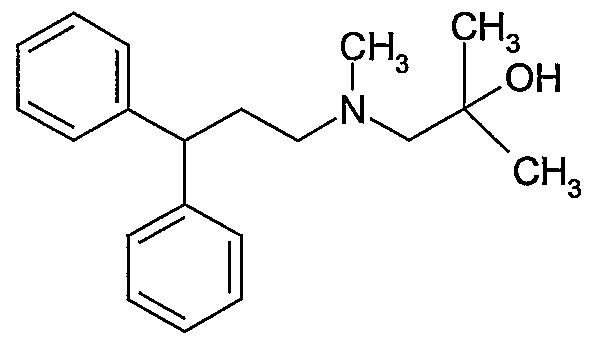

wherein R is as defined above;
b) reacting the silylated alcohol of formula IV with the acid chloride of formula V:

to give Iercanidipine of formula I and optionally converted lercanidipine formed into a pharmaceutically acceptable acid addition salts of lercanidipine.
Preferably R is independently methyl or ethyl and more preferably R is methyl.
Aprotic solvent is preferably selected from chlorinated solvents such as methylene chloride, ethylene chloride and chloroform; and hydrocarbon solvents such as n-hexane, n-heptane and cyclohexane. More preferable solvent is methylene chloride or n-heptane.
The reaction in step (a) is carried out in presence of an organic base, preferably amines such as triethyl amine, trimethyl amine or N,N-diisopropylethyI amine, and more preferably triethyl amine. The reaction is preferably carried out at -100C to O0C, more preferably at
-50C to O0C.
The silylation is normally completed in less than 5 hours, usually 1 hour 30 minutes to 3 hours.
The silyl compound of the formula IV are novel and forms part of the invention.
The compounds of formula IV wherein R is independently methyl or ethyl are preferable. The compound of formula IV, wherein R is methyl is more preferable.
The reaction (step b) of the silyl compound of formula IV with the acid chloride of formula V is normally completed in less than 5 hours, usually 1 hour 30 minutes to 3 hours.
The reaction medium of step (a) containing the silyl compound may preferably directly be used, or the silyl compound may be isolated from the reaction medium for example by distilling off the solvent and then used in the step (b). The reaction medium obtained by converting the corresponding carboxylic acid of formula V to the acid chloride by known processes may be used as a source of the acid chloride of formula V. The reaction is preferably carried out at 0 - 8O0C and more preferably at 0 - 4O0C.
The reaction is normally completed within 4 hours, usually within 2 hours. After the reaction is completed, the reaction mass is washed with water to remove by-products and salts, crystallized form a suitable solvent or a mixture of solvents by conventional means.
Preferably aprotic solvents are used in the step (b). The preferable aprotic solvent is selected from chlorinated solvents such as methylene chloride, ethylene chloride; and hydrocarbon solvents such as n-hexane, n-heptane and cyclohexane. More preferable solvent is methylene chloride or n-heptane.
If not otherwise defined herein alkyl includes lower alkyl such as (CrC4)- alkyl, preferably methyl or ethyl.
Lercanidipine and pharmaceutically acceptable salts of lercanidipine also represents their solvates and hydrates.
Preferable pharmaceutically acceptable acid addition salt of formula I, but not limited to, are the salts of lercanidipine obtained from hydrochloric acid, hydrobromic acid, hydroiodic acid, methanesulfonic acid and benzenesulfonic acid; more preferable salt being lercanidipine hydrochloride. The invention will now be further described by the following example, which is illustrative rather than limiting.
Example Step-I: 2,6-DimethyI-5-methoxycarbonyl-4-(3-nitrophenyl)-1 ,4-dihydroyridine-3- carboxylic acid (6.5 gm) is suspended in methylene chloride (39 ml), N1N'- dimethylformamide (7.5 ml) is added and then cooled to -100C under N2 atmosphere. Thionyl chloride (3.5 gm) is slowly added to the reaction mass at 100C to -50C and maintain for 1 hour at the same temperature to obtain 2,6-
dimethyl-5-methoxycarbonyl-4-(3-nitrophenyI)-1 ,4-dihydropyridine-3-carbonyl chloride as a clear solution.
Step-ll:
2,N-Dimethyl-N-(3,3-diphenylpropyI)-1-amino-2-propanol (5.0 gm) is dissolved in methylene chloride (25 ml) at 25 - 300C, triethylamine (2.5 gm) is added and then the contents are cooled to 10 - 150C under N2 atmosphere. Trimethylsilyl chloride (2.5 gm) is slowly added to the reaction mass while maintaining the temperature in between 10 - 150C, the mass temperature is raised to 25 - 300C and maintain for 2 hours at the same temperature to give the reaction mass having 2,N-dimethyl-2-(trimethylsilyIoxy)-N-(3,3-diphenylpropyl)- 1-propanamine. Step-ll I:
The reaction mass of 2,N-dimethyl-2-(trimethylsilyloxy)-N-(3,3- diphenylpropyl)-1-propanamine, obtained in step-ll, is slowly added to 2,6- dimethyl-5-methoxycarbonyl-4-(3-nitrophenyl)-1 ,4-dihydropyridine-3-carbonyl chloride solution obtained in step-l at -100C to O0C. The mass temperature is slowly raised to 25 - 300C and stirred for 2 hours at the same temperature. Then the reaction mass is cooled to 5 - 100C, water (30 ml) is added and stirred for 15 minutes. The resulting organic layer is washed with 20%W/W aqueous sodium chloride solution, dried over sodium sulfate and concentrated the organic layer under vacuum. The organic layer is striped off with ethyl acetate, ethyl acetate (80 ml) is added, seeded with pure Lercanidipine hydrochloride and stirred for 20 hours at 25 - 300C. Filtered the solid and slurried with ethyl acetate, filtered the solid and washed with ethyl acetate. The resulting solid is purified in ethyl alcohol/ethyl acetate mixture to give 11 gm of 99.5% pure lercanidipine hydrochloride.
Claims
1. A process for preparation lercanidipine of formula

or a pharmaceutically acceptable salt thereof; which comprises: a) reacting the alcohol of formula II:

with a silyl compound of formula III:
R3SiX -III wherein R is independently alkyl, and X is Cl or Br in an aprotic solvent to give a silylated alcohol of formula IV:
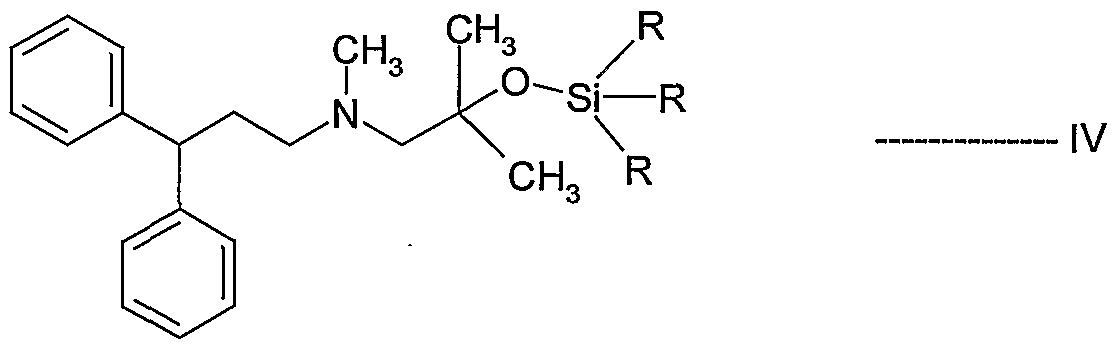
wherein R is as defined above; b) reacting the silylated alcohol of formula IV with the acid chloride of formula V: 
to give lercanidipine of formula I and optionally converted lercanidipine formed into a pharmaceutically acceptable acid addition salts of lercanidipine.
2. The process according to claim 1 , wherein the step (a) is carried out in the presence of an organic base.
3. The process according to claim 2, wherein the organic base is an amine.
4. The process according to claim 3, wherein the amine is triethyl amine, trimethyl amine or N,N-diisopropylethyl amine.
5. The process according to claim 4, wherein the amine is triethyl amine.
6. The process according to claim 1 , wherein the aprotic solvent is a chlorinated solvent or a hydrocarbon solvent.
7. The process according to claim 6, wherein the chlorinated solvent is selected from methylene chloride and chloroform.
8. The process according to claim 7, wherein the chlorinated solvent is methylene chloride.
9. The process according to claim 6, wherein the hydrocarbon solvent is selected from n-hexane, cyclohexane and n-heptane.
10. The process according to claim 9, wherein the hydrocarbon solvent is n- hexane.
1 1. The process according to claim 1 , wherein the silylation reaction is carried out at -1O0C tO O0C.
12. The process according to claim 11 , wherein the silylation reaction is carried out at -50C to O0C.
13. The process according to claim 1 , wherein the R of formula IM is independently methyl or ethyl.
14. The process according to claim 13, wherein the R is methyl.
15. The process according to claim 1 , wherein the X is Cl.
16. The process according to claim 1 , wherein the step (b) is carried out in an aprotic solvent.
17. The process according to claim 16, wherein the aprotic solvent is a chlorinated solvent or a hydrocarbon solvent.
18. The process according to claim 17, wherein the chlorinated solvent is methylene chloride or chloroform.
19. The process according to claim 18, wherein the chlorinated solvent is methylene chloride.
20. The process according to claim 17, wherein the hydrocarbon solvent is n- hexane, cyclohexane or n-heptane.
21. The process according to claim 1 , wherein the step (b) is carried out at 0- 8O0C.
22. The process according to claim 21 , wherein the reaction is carried out at 0- 4O0C.
23. Compound of formula IV:

Wherein R is alkyl.
24. The compound of claim 23, wherein R is independently methyl or ethyl.
25. The compound of claim 24, wherein R is methyl.
Priority Applications (10)
| Application Number | Priority Date | Filing Date | Title |
|---|---|---|---|
| PCT/IN2005/000198 WO2006134606A1 (en) | 2005-06-15 | 2005-06-15 | A novel process for the preparation of lercanidipine |
| DE602005017199T DE602005017199D1 (en) | 2005-06-15 | 2005-06-15 | NEW METHOD FOR THE PRODUCTION OF LERCANIDIPINE |
| ES05760546T ES2335026T3 (en) | 2005-06-15 | 2005-06-15 | NEW LERCANIPIDINE PREPARATION PROCEDURE. |
| US11/570,533 US7687653B2 (en) | 2005-06-15 | 2005-06-15 | Process for the preparation of lercanidipine |
| EP05760546A EP1891009B1 (en) | 2005-06-15 | 2005-06-15 | A novel process for the preparation of lercanidipine |
| PT05760546T PT1891009E (en) | 2005-06-15 | 2005-06-15 | A novel process for the preparation of lercanidipine |
| PL05760546T PL1891009T3 (en) | 2005-06-15 | 2005-06-15 | A novel process for the preparation of lercanidipine |
| AT05760546T ATE445602T1 (en) | 2005-06-15 | 2005-06-15 | NEW PROCESS FOR PRODUCING LERCANIDIPINE |
| SI200530875T SI1891009T1 (en) | 2005-06-15 | 2005-06-15 | A novel process for the preparation of lercanidipine |
| US12/603,896 US7772401B2 (en) | 2005-06-15 | 2009-10-22 | Process for the preparation of lercanidipine |
Applications Claiming Priority (1)
| Application Number | Priority Date | Filing Date | Title |
|---|---|---|---|
| PCT/IN2005/000198 WO2006134606A1 (en) | 2005-06-15 | 2005-06-15 | A novel process for the preparation of lercanidipine |
Related Child Applications (2)
| Application Number | Title | Priority Date | Filing Date |
|---|---|---|---|
| US11/570,533 A-371-Of-International US7687653B2 (en) | 2005-06-15 | 2005-06-15 | Process for the preparation of lercanidipine |
| US12/603,896 Division US7772401B2 (en) | 2005-06-15 | 2009-10-22 | Process for the preparation of lercanidipine |
Publications (1)
| Publication Number | Publication Date |
|---|---|
| WO2006134606A1 true WO2006134606A1 (en) | 2006-12-21 |
Family
ID=37531991
Family Applications (1)
| Application Number | Title | Priority Date | Filing Date |
|---|---|---|---|
| PCT/IN2005/000198 Ceased WO2006134606A1 (en) | 2005-06-15 | 2005-06-15 | A novel process for the preparation of lercanidipine |
Country Status (9)
| Country | Link |
|---|---|
| US (2) | US7687653B2 (en) |
| EP (1) | EP1891009B1 (en) |
| AT (1) | ATE445602T1 (en) |
| DE (1) | DE602005017199D1 (en) |
| ES (1) | ES2335026T3 (en) |
| PL (1) | PL1891009T3 (en) |
| PT (1) | PT1891009E (en) |
| SI (1) | SI1891009T1 (en) |
| WO (1) | WO2006134606A1 (en) |
Cited By (3)
| Publication number | Priority date | Publication date | Assignee | Title |
|---|---|---|---|---|
| WO2007031865A3 (en) * | 2005-09-16 | 2007-08-30 | Glenmark Pharmaceuticals Ltd | Polymorphic form of lercanidipine hydrochloride and process for the preparation thereof |
| WO2008040367A1 (en) * | 2006-08-01 | 2008-04-10 | Union Quimico-Farmaceutica S.A. | Lercanidipine hydrobromide, a process for its preparation, crystalline forms and compositions thereof |
| CN102020602B (en) * | 2009-09-18 | 2013-12-25 | 深圳信立泰药业股份有限公司 | Crystal form of lercanidipine hydrochloride and preparation method thereof and crystal form-containing medicinal composition |
Families Citing this family (2)
| Publication number | Priority date | Publication date | Assignee | Title |
|---|---|---|---|---|
| DE602005017199D1 (en) | 2005-06-15 | 2009-11-26 | Hetero Drugs Ltd | NEW METHOD FOR THE PRODUCTION OF LERCANIDIPINE |
| CN117945985A (en) * | 2024-01-12 | 2024-04-30 | 福安药业集团重庆博圣制药有限公司 | Preparation method of lercanidipine hydrochloride |
Citations (4)
| Publication number | Priority date | Publication date | Assignee | Title |
|---|---|---|---|---|
| EP0060897A1 (en) * | 1980-10-03 | 1982-09-29 | Yoshitomi Pharmaceutical Industries, Ltd. | 1,4-dihydropyridine-3,5-dicarboxylic ester derivatives |
| US4705797A (en) * | 1984-02-14 | 1987-11-10 | Recordati S.A., Chemical And Pharmaceutical Company | N-(3,3-diphenylpropyl) aminoethyl esters of 1,4-dihydro-2,6-dimethyl-pyridine-3,5-dicarboxylic acid, compositions and use |
| WO1996035668A1 (en) * | 1995-05-12 | 1996-11-14 | Recordati S.A., Chemical And Pharmaceutical Company | A process for the preparation of lercanidipine hydrochloride |
| WO1996035666A1 (en) * | 1995-05-10 | 1996-11-14 | F.Hoffmann-La Roche Ag | Benzyl piperidine derivatives as pharmaceutical agents |
Family Cites Families (1)
| Publication number | Priority date | Publication date | Assignee | Title |
|---|---|---|---|---|
| DE602005017199D1 (en) | 2005-06-15 | 2009-11-26 | Hetero Drugs Ltd | NEW METHOD FOR THE PRODUCTION OF LERCANIDIPINE |
-
2005
- 2005-06-15 DE DE602005017199T patent/DE602005017199D1/en not_active Expired - Lifetime
- 2005-06-15 PL PL05760546T patent/PL1891009T3/en unknown
- 2005-06-15 EP EP05760546A patent/EP1891009B1/en not_active Expired - Lifetime
- 2005-06-15 PT PT05760546T patent/PT1891009E/en unknown
- 2005-06-15 US US11/570,533 patent/US7687653B2/en not_active Expired - Fee Related
- 2005-06-15 ES ES05760546T patent/ES2335026T3/en not_active Expired - Lifetime
- 2005-06-15 WO PCT/IN2005/000198 patent/WO2006134606A1/en not_active Ceased
- 2005-06-15 SI SI200530875T patent/SI1891009T1/en unknown
- 2005-06-15 AT AT05760546T patent/ATE445602T1/en not_active IP Right Cessation
-
2009
- 2009-10-22 US US12/603,896 patent/US7772401B2/en not_active Expired - Fee Related
Patent Citations (4)
| Publication number | Priority date | Publication date | Assignee | Title |
|---|---|---|---|---|
| EP0060897A1 (en) * | 1980-10-03 | 1982-09-29 | Yoshitomi Pharmaceutical Industries, Ltd. | 1,4-dihydropyridine-3,5-dicarboxylic ester derivatives |
| US4705797A (en) * | 1984-02-14 | 1987-11-10 | Recordati S.A., Chemical And Pharmaceutical Company | N-(3,3-diphenylpropyl) aminoethyl esters of 1,4-dihydro-2,6-dimethyl-pyridine-3,5-dicarboxylic acid, compositions and use |
| WO1996035666A1 (en) * | 1995-05-10 | 1996-11-14 | F.Hoffmann-La Roche Ag | Benzyl piperidine derivatives as pharmaceutical agents |
| WO1996035668A1 (en) * | 1995-05-12 | 1996-11-14 | Recordati S.A., Chemical And Pharmaceutical Company | A process for the preparation of lercanidipine hydrochloride |
Cited By (4)
| Publication number | Priority date | Publication date | Assignee | Title |
|---|---|---|---|---|
| WO2007031865A3 (en) * | 2005-09-16 | 2007-08-30 | Glenmark Pharmaceuticals Ltd | Polymorphic form of lercanidipine hydrochloride and process for the preparation thereof |
| US8097729B2 (en) | 2005-09-16 | 2012-01-17 | Glenmark Generics Ltd. | Polymorphic form of lercanidipine hydrochloride and process for the preparation thereof |
| WO2008040367A1 (en) * | 2006-08-01 | 2008-04-10 | Union Quimico-Farmaceutica S.A. | Lercanidipine hydrobromide, a process for its preparation, crystalline forms and compositions thereof |
| CN102020602B (en) * | 2009-09-18 | 2013-12-25 | 深圳信立泰药业股份有限公司 | Crystal form of lercanidipine hydrochloride and preparation method thereof and crystal form-containing medicinal composition |
Also Published As
| Publication number | Publication date |
|---|---|
| US20090227800A1 (en) | 2009-09-10 |
| EP1891009B1 (en) | 2009-10-14 |
| PT1891009E (en) | 2010-01-19 |
| EP1891009A1 (en) | 2008-02-27 |
| PL1891009T3 (en) | 2010-03-31 |
| ATE445602T1 (en) | 2009-10-15 |
| ES2335026T3 (en) | 2010-03-18 |
| SI1891009T1 (en) | 2010-02-26 |
| US7772401B2 (en) | 2010-08-10 |
| US7687653B2 (en) | 2010-03-30 |
| US20100087653A1 (en) | 2010-04-08 |
| DE602005017199D1 (en) | 2009-11-26 |
Similar Documents
| Publication | Publication Date | Title |
|---|---|---|
| IE57715B1 (en) | Asymmetrical diesters of 1,4-dihydro-2,6-dimethyl-pyridine-3,5-dicarboxylic acid | |
| US7772401B2 (en) | Process for the preparation of lercanidipine | |
| JP4038622B2 (en) | Method for preparing lercanidipine hydrochloride | |
| CN1141297C (en) | Preparation method of amlodipine besylate | |
| JP4587497B2 (en) | New manufacturing method | |
| US6388091B1 (en) | Process for the preparation of 1,2,3,9-tetrahydro-9-methyl-3-{(2-methyl-1H-imidazol-1-yl)methyl}-4H-carbazol-4-one | |
| JP2004508378A (en) | Intermediates in the production of cephalosporins | |
| US7772400B2 (en) | Optical resolution method of amlodipine | |
| US20110040097A1 (en) | Process for preparing lercanidipine hydrochloride | |
| JP2641542B2 (en) | Method for producing asymmetric dihydropyridines | |
| JP4425632B2 (en) | Synthesis of 4- (piperidyl) (2-pyridyl) methanone- (E) -O-methyloxime and its salts | |
| WO2007054969A2 (en) | Process for the preparation of lercanidipine and amorphous form of lercanidipine hydrochloride | |
| JP2004536142A (en) | Method for producing 1,2,4-triaminobenzolcarbamic acid ester | |
| KR100396011B1 (en) | New highly selective process for the preparation of enantiomerically pure phenylsubtituted 1,4-dihydropyridine-3,5-dicarboxylic acid derivatives | |
| JP7379381B2 (en) | Intermediates and processes for the manufacture of linagliptin and its salts | |
| JP2005506357A5 (en) | ||
| JP3748933B2 (en) | Process for producing 1-substituted azetidinone derivatives | |
| JP3006904B2 (en) | Method for producing 1,4-dihydropyridine derivative and intermediate thereof | |
| KR20060104761A (en) | Method for preparing lercanidipine hydrochloride | |
| JPH08217749A (en) | New method for producing nicardipine hydrochloride and a new synthetic intermediate | |
| CN101910148B (en) | High purity synthetic process for the preparation of dodecahydro-naptho-furanyl-carbamic acid ester intermediates | |
| EP1841764A1 (en) | Process for ziprasidone using novel intermediates | |
| CZ296780B6 (en) | Process for preparing amide | |
| JPH0455426B2 (en) | ||
| HK1010539B (en) | Method for the synthesis of a benzimidazole compound |
Legal Events
| Date | Code | Title | Description |
|---|---|---|---|
| WWE | Wipo information: entry into national phase |
Ref document number: 3477/CHENP/2006 Country of ref document: IN |
|
| WWE | Wipo information: entry into national phase |
Ref document number: 11570533 Country of ref document: US |
|
| 121 | Ep: the epo has been informed by wipo that ep was designated in this application | ||
| WWE | Wipo information: entry into national phase |
Ref document number: 2005760546 Country of ref document: EP |
|
| NENP | Non-entry into the national phase |
Ref country code: DE |
|
| WWW | Wipo information: withdrawn in national office |
Ref document number: DE |
|
| WWP | Wipo information: published in national office |
Ref document number: 2005760546 Country of ref document: EP |