WO2006136857A1 - Dihydropyrimidone multimers and their use as human neutrophil elastase inhibitors - Google Patents

Dihydropyrimidone multimers and their use as human neutrophil elastase inhibitors Download PDF

Info

Publication number
WO2006136857A1
WO2006136857A1 PCT/GB2006/002337 GB2006002337W WO2006136857A1 WO 2006136857 A1 WO2006136857 A1 WO 2006136857A1 GB 2006002337 W GB2006002337 W GB 2006002337W WO 2006136857 A1 WO2006136857 A1 WO 2006136857A1
Authority
WO
WIPO (PCT)
Prior art keywords
alkyl
group
compound according
alkoxy
heteroaryl
Prior art date
Legal status (The legal status is an assumption and is not a legal conclusion. Google has not performed a legal analysis and makes no representation as to the accuracy of the status listed.)
Ceased
Application number
PCT/GB2006/002337
Other languages
French (fr)
Inventor
Harry Finch
Christine Edwards
Nicholas Charles Ray
Mary Frances Fitzgerald
Current Assignee (The listed assignees may be inaccurate. Google has not performed a legal analysis and makes no representation or warranty as to the accuracy of the list.)
Argenta Discovery Ltd
Original Assignee
Argenta Discovery Ltd
Priority date (The priority date is an assumption and is not a legal conclusion. Google has not performed a legal analysis and makes no representation as to the accuracy of the date listed.)
Filing date
Publication date
Application filed by Argenta Discovery Ltd filed Critical Argenta Discovery Ltd
Priority to US11/993,699 priority Critical patent/US20090105268A1/en
Priority to JP2008517602A priority patent/JP2008543920A/en
Priority to EP06755623A priority patent/EP1893584A1/en
Publication of WO2006136857A1 publication Critical patent/WO2006136857A1/en
Anticipated expiration legal-status Critical
Ceased legal-status Critical Current

Links

Classifications

    • CCHEMISTRY; METALLURGY
    • C07ORGANIC CHEMISTRY
    • C07DHETEROCYCLIC COMPOUNDS
    • C07D239/00Heterocyclic compounds containing 1,3-diazine or hydrogenated 1,3-diazine rings
    • C07D239/02Heterocyclic compounds containing 1,3-diazine or hydrogenated 1,3-diazine rings not condensed with other rings
    • C07D239/20Heterocyclic compounds containing 1,3-diazine or hydrogenated 1,3-diazine rings not condensed with other rings having two double bonds between ring members or between ring members and non-ring members
    • C07D239/22Heterocyclic compounds containing 1,3-diazine or hydrogenated 1,3-diazine rings not condensed with other rings having two double bonds between ring members or between ring members and non-ring members with hetero atoms directly attached to ring carbon atoms
    • AHUMAN NECESSITIES
    • A61MEDICAL OR VETERINARY SCIENCE; HYGIENE
    • A61KPREPARATIONS FOR MEDICAL, DENTAL OR TOILETRY PURPOSES
    • A61K31/00Medicinal preparations containing organic active ingredients
    • A61K31/33Heterocyclic compounds
    • A61K31/395Heterocyclic compounds having nitrogen as a ring hetero atom, e.g. guanethidine or rifamycins
    • A61K31/495Heterocyclic compounds having nitrogen as a ring hetero atom, e.g. guanethidine or rifamycins having six-membered rings with two or more nitrogen atoms as the only ring heteroatoms, e.g. piperazine or tetrazines
    • A61K31/505Pyrimidines; Hydrogenated pyrimidines, e.g. trimethoprim
    • A61K31/513Pyrimidines; Hydrogenated pyrimidines, e.g. trimethoprim having oxo groups directly attached to the heterocyclic ring, e.g. cytosine
    • AHUMAN NECESSITIES
    • A61MEDICAL OR VETERINARY SCIENCE; HYGIENE
    • A61KPREPARATIONS FOR MEDICAL, DENTAL OR TOILETRY PURPOSES
    • A61K47/00Medicinal preparations characterised by the non-active ingredients used, e.g. carriers or inert additives; Targeting or modifying agents chemically bound to the active ingredient
    • A61K47/50Medicinal preparations characterised by the non-active ingredients used, e.g. carriers or inert additives; Targeting or modifying agents chemically bound to the active ingredient the non-active ingredient being chemically bound to the active ingredient, e.g. polymer-drug conjugates
    • A61K47/51Medicinal preparations characterised by the non-active ingredients used, e.g. carriers or inert additives; Targeting or modifying agents chemically bound to the active ingredient the non-active ingredient being chemically bound to the active ingredient, e.g. polymer-drug conjugates the non-active ingredient being a modifying agent
    • A61K47/54Medicinal preparations characterised by the non-active ingredients used, e.g. carriers or inert additives; Targeting or modifying agents chemically bound to the active ingredient the non-active ingredient being chemically bound to the active ingredient, e.g. polymer-drug conjugates the non-active ingredient being a modifying agent the modifying agent being an organic compound
    • A61K47/55Medicinal preparations characterised by the non-active ingredients used, e.g. carriers or inert additives; Targeting or modifying agents chemically bound to the active ingredient the non-active ingredient being chemically bound to the active ingredient, e.g. polymer-drug conjugates the non-active ingredient being a modifying agent the modifying agent being an organic compound the modifying agent being also a pharmacologically or therapeutically active agent, i.e. the entire conjugate being a codrug
    • AHUMAN NECESSITIES
    • A61MEDICAL OR VETERINARY SCIENCE; HYGIENE
    • A61PSPECIFIC THERAPEUTIC ACTIVITY OF CHEMICAL COMPOUNDS OR MEDICINAL PREPARATIONS
    • A61P1/00Drugs for disorders of the alimentary tract or the digestive system
    • A61P1/04Drugs for disorders of the alimentary tract or the digestive system for ulcers, gastritis or reflux esophagitis, e.g. antacids, inhibitors of acid secretion, mucosal protectants
    • AHUMAN NECESSITIES
    • A61MEDICAL OR VETERINARY SCIENCE; HYGIENE
    • A61PSPECIFIC THERAPEUTIC ACTIVITY OF CHEMICAL COMPOUNDS OR MEDICINAL PREPARATIONS
    • A61P11/00Drugs for disorders of the respiratory system
    • AHUMAN NECESSITIES
    • A61MEDICAL OR VETERINARY SCIENCE; HYGIENE
    • A61PSPECIFIC THERAPEUTIC ACTIVITY OF CHEMICAL COMPOUNDS OR MEDICINAL PREPARATIONS
    • A61P11/00Drugs for disorders of the respiratory system
    • A61P11/06Antiasthmatics
    • AHUMAN NECESSITIES
    • A61MEDICAL OR VETERINARY SCIENCE; HYGIENE
    • A61PSPECIFIC THERAPEUTIC ACTIVITY OF CHEMICAL COMPOUNDS OR MEDICINAL PREPARATIONS
    • A61P43/00Drugs for specific purposes, not provided for in groups A61P1/00-A61P41/00
    • CCHEMISTRY; METALLURGY
    • C07ORGANIC CHEMISTRY
    • C07DHETEROCYCLIC COMPOUNDS
    • C07D401/00Heterocyclic compounds containing two or more hetero rings, having nitrogen atoms as the only ring hetero atoms, at least one ring being a six-membered ring with only one nitrogen atom
    • C07D401/14Heterocyclic compounds containing two or more hetero rings, having nitrogen atoms as the only ring hetero atoms, at least one ring being a six-membered ring with only one nitrogen atom containing three or more hetero rings
    • CCHEMISTRY; METALLURGY
    • C07ORGANIC CHEMISTRY
    • C07DHETEROCYCLIC COMPOUNDS
    • C07D403/00Heterocyclic compounds containing two or more hetero rings, having nitrogen atoms as the only ring hetero atoms, not provided for by group C07D401/00
    • C07D403/14Heterocyclic compounds containing two or more hetero rings, having nitrogen atoms as the only ring hetero atoms, not provided for by group C07D401/00 containing three or more hetero rings

Definitions

  • This invention relates to heterocyclic compounds and their use in therapy.
  • Human neutrophil elastase is a 32 kDa serine proteinase found in the azurophilic granules of neutrophils. It has a role in the degradation of a wide range of extracellular matrix proteins, including fibronectin, laminin, proteoglycans, Type III and Type IV collagens as well as elastin (Bieth, G. In Regulation of Matrix accumulation, Mecham, R. P. (Eds), Academic Press, NY, USA 1986, 217-306). HNE has long been considered to play an important role in homeostasis through repair and disposal of damaged tissues via degradation of the tissue structural proteins.
  • HNE has been implicated in the upregulation of IL-8 gene expression and also induces IL-8 release from the epithelial cells of the lung.
  • IL-8 In animal models of Chronic Obstructive Pulmonary Disease induced by tobacco smoke exposure both small molecule inhibitors and protein inhibitors of HNE inhibit the inflammatory response and the development of emphysema (Wright, J. L. et al. Am. J. Respir. Crit. Care Med.2002, 166, 954-960; Churg, A. et al. Am. J. Respir. Crit. Care Med.2003, 168, 199-207).
  • HNE may play a role both in matrix destruction and in amplifying inflammatory responses in chronic respiratory diseases where neutrophil influx is a characteristic feature.
  • HNE is believed to play a role in several pulmonary diseases, including chronic obstructive pulmonary disease (COPD), cystic fibrosis (CF), acute respiratory distress syndrome (ARDS), pulmonary emphysema, pneumonia, severe asthma, sarcoidosis, bronchiectasis and lung fibrosis. It is also implicated in several cardiovascular diseases in which tissue remodelling is involved, for example, in heart failure and the generation of ischaemic tissue injury following acute myocardial infarction.
  • COPD chronic obstructive pulmonary disease
  • CF cystic fibrosis
  • ARDS acute respiratory distress syndrome
  • Elevated HNE levels are also correlated with the severity of inflammation in inflammatory bowel disease (Silberer H et al, Clin Lab.2005;51 (3-4):117-26) and may play a role in impaired mucosal repair in patients with ulcerative colitis.
  • COPD is an umbrella term encompassing three different pathological conditions, all of which contribute to limitation of airflow: chronic bronchitis, emphysema and small- airway disease. Generally all three will exist to varying extents in patients presenting with COPD, and all three may be due to neutrophil-mediated inflammation, as supported by the increased number of neutrophils observed in bronchoalveolar leakage (BAL) fluids of COPD patients (Thompson, A.
  • BAL bronchoalveolar leakage
  • the major pathogenic determinant in COPD has long been considered to be the protease-anti-protease balance (also known as the 'elastase:anti-elastase hypothesis'), in which an imbalance of HNE and endogenous antiproteases such as ⁇ 1 - antitrypsin (Ci 1 -AT) 1 Secretory leukocyte protease inhibitor (SLPI) and pre-elafin leads to the various inflammatory disorders of COPD.
  • protease-anti-protease balance also known as the 'elastase:anti-elastase hypothesis'
  • an imbalance of HNE and endogenous antiproteases such as ⁇ 1 - antitrypsin (Ci 1 -AT) 1 Secretory leukocyte protease inhibitor (SLPI) and pre-elafin leads to the various inflammatory disorders of COPD.
  • Multimeric ligands consist of multiple binding domains which are tethered together through a suitable scaffold.
  • Multimeric compounds are unlikely to be orally bioavailable (as predicted by Lipinski's "Rule of 5") which may be advantageous where an inhaled route of administration to the lungs is targeted, since even after inhaled administration, a large proportion of drug is likely to enter the Gl tract. Thus such compounds may be expected to show reduced systemic exposure after inhalation administration and hence an improved toxicity profile over orally administered therapies.
  • Monomers of formula (II) are described as inhibitors of human neutrophil elastase in WO2004/024700, WO2004/024701 , GB2392910, WO2005/082863 and WO2005/082864. Summary of the Invention
  • a first aspect of the invention is a compound of formula (I) or formula (IV):
  • each M is independently an inhibitor of HNE; and each L is independently a linker group; t is 2 to 20; and G is aryl, heteroaryl, alkyl, cycloalkyl, nitrogen, a dendrimer or a group of any of formulae (V) to (VII):
  • Ar is aryl or heteroaryl; and u is 2-20;
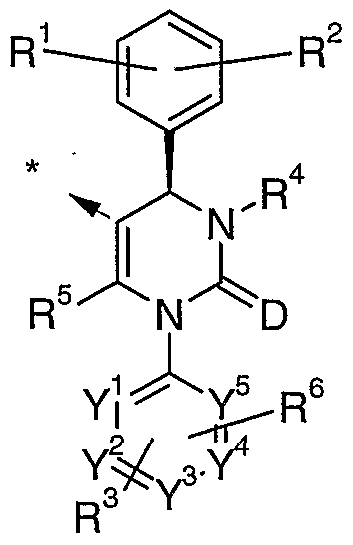
  • M is a group of Formula (II)
  • A is aryl or heteroaryl; D is oxygen or sulphur;
  • R 1 , R 2 and R 3 are independently each hydrogen, halogen, nitro, cyano, alkyl, hydroxy or alkoxy, wherein alkyl and alkoxy can be further substituted with one to three identical or different radicals selected from the group consisting of halogen, hydroxy and alkoxy;
  • R 4 is hydrogen, alkyl, alkylcarbonyl, alkoxycarbonyl, alkenoxycarbonyl, hydroxycarbonyl, aminocarbonyl, arylcarbonyl, heteroarylcarbonyl, heterocycloalkylcarbonyl, heteroaryl, heterocycloalkyl or cyano, wherein alkylcarbonyl, alkoxycarbonyl, and aminocarbonyl can be further substituted with one to three identical or different radicals selected from the group consisting of cycloalkyl, hydroxy, alkoxy, alkoxycarbonyl, hydroxycarbonyl, aminocarbonyl, cyano, amino, heteroaryl, heterocycloalkyl and tri-(alkyl)-silyl, and wherein heteroarylcarbonyl, heterocycloalkylcarbonyl, heteroaryl and heterocycloalkyl can be further substituted with alkyl; or
  • R 4 represents a group of Formula (VIII)
  • R 4A , R 4B , R 4D , R 4E , R 4G , R 4H , R 41 and R 4J are independently hydrogen or alkyl, or R 4H and R 41 may may be joined together with the nitrogen atom to which they are attached to form a ring;
  • R 4F is a lone pair or R 4F is alkyl and the nitrogen atom to which it is attached is quaternary and carries a positive charge;
  • R 4G is a lone pair or R 4C is alkyl and the nitrogen atom to which it is attached is quaternary and carries a positive charge; or any two of R 4C , R 4D or R 4E may be joined together with the nitrogen atom to which they are attached to form a ring, optionally containing a further heteroatom selected from oxygen or nitrogen; v1 is 1-3; v2 is 1-6;
  • R 5 is alkyl, which can be substituted with one to three identical or different radicals selected from the group consisting of halogen, hydroxy, alkoxy, alkenoxy, alkylthio, amino, hydroxycarbonyl, alkoxycarbonyl and the radical -O-(alkyl)-O-(alkyl); or R 5 is amino;
  • R 6 is halogen, nitro, cyano, alkyl, hydroxy or alkoxy, wherein alkyl and alkoxy can be further substituted with one to three identical or different radicals selected from the group consisting of halogen, hydroxy and alkoxy; and ⁇ i ⁇ ⁇ 2 ⁇ ⁇ 3 ⁇ ⁇ 4 and ⁇ 5 are j nc j e p enc
  • L a is a bond or group -C(O)-;
  • L b is a bond or group -C(O)-;
  • R 7 is a bond or an alkylene or cycloalkylene group;
  • W is a bond or is selected from the following divalent radicals
  • R 8A is an alkylene or cycloalkylene group
  • R 8B is an alkylene or cycloalkylene group, or a group of Formula A 2 ;
  • R 9A is hydrogen or alkyl; one of R 9B or R 9C is a lone pair and the other is hydrogen or alkyl, or R 9B and R 9C are both alkyl, in which case the nitrogen to which they are attached is quaternary and carries a positive charge; or R 9B and R 9C may be joined together with the nitrogen to which they are attached to form a ring;
  • R 10A is hydrogen or alkyl;
  • R 10B and R 10G are independently hydrogen or alkyl, or alternatively R 10B and R 10C may be joined together to form a ring; m2 is 1-3;
  • a 2 is selected from one of the following groups
  • Ar 1 , Ar 2 are independently an aryl or heteroaryl group; or a pharmaceutically acceptable salt, solvate or N-oxide thereof.
  • Compounds of the invention may be useful in the treatment or prevention of diseases in which HNE is implicated, for example chronic obstructive pulmonary disease (COPD), chronic bronchitis, lung fibrosis, pneumonia, acute respiratory distress syndrome (ARDS), pulmonary emphysema, smoking-induced emphysema, severe asthma, sarcoidosis, bronchiectasis, cystic fibrosis, inflammatory bowel disease; ulcerative colitis and Crohn's disease.
  • COPD chronic obstructive pulmonary disease
  • COPD chronic obstructive pulmonary disease
  • ARDS acute respiratory distress syndrome
  • pulmonary emphysema smoking-induced emphysema
  • severe asthma sarcoidosis
  • bronchiectasis cystic fibrosis
  • inflammatory bowel disease ulcerative colitis and Crohn's disease.
  • Another aspect of the invention is a pharmaceutical composition
  • a pharmaceutical composition comprising a compound of the invention and a pharmaceutically acceptable carrier or excipient.
  • Another aspect of the invention is the use of a compound of the invention for the manufacture of a medicament for the treatment or prevention of a disease or condition in which HNE is implicated.
  • compounds of the invention may be used in a method of therapy, for the treatment of a patient suffering from a condition or disease as defined above.
  • Alkylcarbonyl means a -CO-alkyl group in which the alkyl group is as described herein.
  • exemplary acyl groups include -COCH 3 and -COCH(CH 3 ) 2 .
  • Acylamino means a -NR-acyl group in which R and acyl are as described herein.
  • exemplary acylamino groups include -NHCOCH 3 and -N(CH 3 )COCH 3 .
  • Alkenoxy means an -O-alkenyl group in which alkenyl is as described below.
  • Alkenoxycarbonyl means a -COO-alkenyl group which alkenyl is as described below.
  • Exemplary groups includes -C(O)O-allyl.
  • Alkoxy and “alkyloxy” means an -O-alkyl group in which alkyl is as described below.
  • exemplary alkoxy groups include methoxy (-OCH 3 ) and ethoxy (-OC 2 H 5 ).
  • Alkoxycarbonyl means a -COO-alkyl group in which alkyl is as defined below.
  • exemplary alkoxycarbonyl groups include methoxycarbonyl and ethoxycarbonyl.
  • Alkyl or “lower alkyl”, as a group or part of a group, refers to a straight or branched chain saturated hydrocarbon group having from 1 to 12, preferably 1 to 6, carbon atoms, in the chain.
  • exemplary alkyl groups include methyl, ethyl, 1 -propyl and 2- propyl.
  • alkenyl as a group or part of a group refers to a straight or branched chain hydrocarbon group having from 1 to 12, preferably 1 to 6, carbon atoms and one carbon- carbon double bond in the chain.
  • alkenyl groups include ethenyl, 1 -propenyl, and 2-propenyI.
  • Alkylamino means a -NH-alkyl group in which alkyl is as defined above.
  • exemplary alkylamino groups include methylamino and ethylamino.
  • Alkylene means an -alkyl- group in which alkyl is as defined previously.
  • exemplary alkylene groups include -CH 2 -, -(CH 2 ) 2 - and -C(CH 3 )HCH 2 -.
  • Alkenylene means an -alkenyl- group in which alkenyl is as defined previously.
  • Alkylthio means a -S-alkyl group in which alkyl is as defined above.
  • Exemplary alkylthio groups include methylthio and ethylthio.
  • Amino means a -NR 1 R 2 group where R 1 and R 2 may be independently a hydrogen atom, alkyl, aryl, arylalkyl, alkenyl, alkynyl, heteroaryl or heterocycloalkyl group, (i.e. The amino group may be primary, secondary or tertiary). Exemplary amino groups include -NH 2 , NHCH 3 , -NHPh, -N(CH 3 ) 2 , etc.
  • Aminocarbonyl means a -CO-NRR group in which R is as herein described.
  • exemplary aminocarbonyl groups include -CONH 2 , -CONHCH 3 and -CONH-phenyl.
  • Ammonium means a quarternary nitrogen group -N + R 1 R 2 R 3 where R 1 , R 2 and
  • R 3 are alkyl, aryl, alkenyl, arylalkyl, heteroaryl, heterocycloalkyl, and the nitrogen atom carries a formal positive charge.
  • Aryl as a group or part of a group denotes an optionally substituted monocyclic or multicyclic aromatic carbocyclic moiety of from 6 to 14 carbon atoms, preferably from 6 to 10 carbon atoms, such as phenyl or naphthyl.
  • the aryl group may be substituted by one or more substituent groups.
  • Arylalkyl means an aryl-alkyl- group in which the aryl and alkyl moieties are as previously described.
  • Exemplary arylalkyl groups include benzyl, phenethyl and naphthlenemethyl.
  • Arylalkyloxy means an aryl-alkyloxy- group in which the aryl and alkyloxy moieties are as previously described. Preferred arylalkyloxy groups contain a C 1 4 alkyl moiety.
  • Exemplary arylalkyl groups include benzyloxy.
  • exemplary groups include benzoyl (-C(O)Ph).
  • Aryloxy means an -O-aryl group in which aryl is described above.
  • Exemplary aryloxy groups include phenoxy.
  • Cyclic amine means an optionally substituted 3 to 8 membered monocyclic cycloalkyl ring system where one of the ring carbon atoms is replaced by nitrogen, and which may optionally contain an additional heteroatom selected from O, S or NR (where R is as described herein).
  • Exemplary cyclic amines include pyrrolidine, piperidine, morpholine, piperazine and ⁇ /-methylpiperazine.
  • the cyclic amine group may be substituted by one or more substituent groups.
  • Cycloalkyl means an optionally substituted saturated monocyclic or bicyclic ring system of from 3 to 12 carbon atoms, preferably from 3 to 8 carbon atoms, and more preferably from 3 to 6 carbon atoms.
  • Exemplary monocyclic cycloalkyl rings include cyclopropyl, cyclopentyl, cyclohexyl and cycloheptyl.
  • the cycloalkyl group may be substituted by one or more substituent groups.
  • Cyloalkylene means means an optionally substituted saturated monocyclic or bicyclic ring system of from 3 to 12 carbon atoms, preferably from 3 to 8 carbon atoms, and more preferably from 3 to 6 carbon atoms, as a bivalent radical.
  • Exemplary cycloalkylene groups include cyclohexane-1 ,4-diyl.
  • Cycloalkylalkyl means a cycloalkyl-alkyl- group in which the cycloalkyl and alkyl moieties are as previously described.
  • Exemplary monocyclic cycloalkylalkyl groups include cyclopropylmethyl, cyclopentylmethyl, cyclohexylmethyl and cycloheptylmethyl.
  • “Dendrimer” means a multifunctional core group with a branching group attached to each functional site. Each branching site can be attached to another branching molecule and this process may be repeated multiple times.
  • Halo or halogen means fluoro, chloro, bromo, or iodo.
  • Haloalkoxy means an -O-alkyl group in which the alkyl is substituted by one or more halogen atoms. Exemplary haloalkyl groups include trifluoromethoxy and difluoromethoxy.
  • Haloalkyl means an alkyl group which is substituted by one or more halo atoms.
  • Exemplary haloalkyl groups include trifluoromethyl.
  • Heteroaryl as a group or part of a group denotes an optionally substituted aromatic monocyclic or multicyclic organic moiety of from 5 to 14 ring atoms, preferably from 5 to 10 ring atoms, in which one or more of the ring atoms is/are element(s) other than carbon, for example nitrogen, oxygen or sulfur.
  • Examples of such groups include benzimidazolyl, benzoxazolyl, benzothiazolyl, benzofuranyl, benzothienyl, furyl, imidazolyl, indolyl, indolizinyl, isoxazolyl, isoquinolinyl, isothiazolyl, oxazolyl, oxadiazolyi, pyrazinyl, pyridazinyl, pyrazolyl, pyridyl, pyrimidinyl, pyrrolyl, quinazolinyl, quinolinyl, tetrazolyl, 1 ,3,4-thiadiazolyl, thiazolyl, thienyl and triazolyl groups.
  • the heteroaryl group may be substituted by one or more substituent groups.
  • the heteroaryl group may be attached to the remainder of the compound of the invention by any available carbon or nitrogen atom.
  • Heteroarylcarbonyl means a heteroaryl group attached to a carbonyl group - C(O)-.
  • exemplary groups are pyridine-2-carbonyl, thiophene-2-carbonyl.
  • Heteroaryloxy means a heteroaryloxy- group in which the heteroaryl is as previously described.
  • exemplary heteroaryloxy groups include pyridyloxy.
  • Heterocycloalkyl means: (i) an optionally substituted cycloalkyl group of from 4 to 8 ring members which contains one or more heteroatoms selected from O, S or NR; (ii) a cycloalkyl group of from 4 to 8 ring members which contains CONR and CONRCO
  • heterocycloalkyl group may be substituted by one or more substituent groups.
  • the heterocycloalkyl group may be attached to the remainder of the compound by any available carbon or nitrogen atom.
  • Heterocycloalkylalkyl means a heterocycloalkyl-alkyl- group in which the heterocycloalkyl and alkyl moieties are as previously described.
  • Hydrocarbonyl means a group -COOH.
  • “Pharmaceutically acceptable salt” means a physiologically or toxicologically tolerable salt and include, when appropriate, pharmaceutically acceptable base addition salts and pharmaceutically acceptable acid addition salts.
  • pharmaceutically acceptable base addition salts that may be formed include sodium, potassium, calcium, magnesium and ammonium salts, or salts with organic amines, such as, diethylamine, ⁇ /-methyl-glucamine, diethanolamine or amino acids (e.g.
  • a compound of the invention contains a basic group, such as an amino group
  • pharmaceutically acceptable acid addition salts that may be formed include hydrochlorides, hydrobromides, phosphates, acetates, citrates, lactates, tartrates, malonates, methanesulphonates and the like.
  • “Pharmaceutically acceptable salt” also means quaternary ammonium salts. In this case, the acceptable salts may be chlorides, bromides, iodides, mesylates, tosylates, succinates and the like.
  • Prodrug refers to a compound which is convertible in vivo by metabolic means (e.g. by hydrolysis, reduction or oxidation) to a compound of the invention.
  • metabolic means e.g. by hydrolysis, reduction or oxidation
  • an ester prodrug of a compound of the invention containing a hydroxy group may be convertible by hydrolysis in vivoto the parent molecule.
  • Suitable esters of compounds of the invention containing a hydroxy group are for example acetates, citrates, lactates, tartrates, malonates, oxalates, salicylates, propionates, succinates, fumarates, maleates, methylene-bis- ⁇ -hydroxynaphthoates, gentisates, isethionates, di-p-toluoyltartrates, methanesulfonates, ethanesulfonates, benzenesulfonates, p-toluenesulfonates, naphthalene bis sulfonates, cyclohexylsulfamates and quinates.
  • ester prodrug of a compound of the invention containing a carboxy group may be convertible by hydrolysis in v/Voto the parent molecule.
  • ester prodrugs are those described by F. J. Leinweber, Drug Metab. Res., 1987, 18, 379.
  • “Saturated” pertains to compounds and/or groups which do not have any carbon- carbon double bonds or carbon-carbon triple bonds.
  • Suitable optional substituent groups include acyl (e.g. -COCHJ 1 alkoxy (e.g., -OCHJ, alkoxycarbonyl (e.g. -COOCH 3 ), alkylamino (e.g. -NHCH 3 ), alkylsulfinyl (e.g. -SOCH 3 ), alkylsulfonyl (e.g. -SO 2 CH 3 ), alkylthio (e.g.
  • -SCH 3 ), -NH 2 , aminoacyl (e.g. -CON(CH 3 ) 2 ), aminoalkyl (e.g. -CH 2 NH 2 ), arylalkyl (e.g. -CH 2 Ph Or -CH 2 -CH 2 -Ph), cyano, dialkylamino (e.g. -N(CH g ) 2 ), halo, haloalkoxy (e.g. -OCF 3 or -OCHF 2 ), haloalkyl (e.g. -CF 3 ), alkyl (e.g.
  • -CH 3 or -CH 2 CH 3 -OH, -CHO, -NO 2 , aryl (optionally substituted with alkoxy, haloalkoxy, halogen, alkyl or haloalkyl), heteroaryl (optionally substituted with alkoxy, haloalkoxy, halogen, alkyl or haloalkyl), heterocycloalkyl, aminoacyl (e.g. -CONH 2 , - CONHCH 3 ), aminosulfonyl (e.g. -SO 2 NH 2 , -SO 2 NHCH 3 ), acylamino (e.g. -NHCOCH 3 ), sulfonylamino (e.g.
  • heteroarylalkyl cyclic amine (e.g. morpholine), aryloxy, heteroaryloxy, arylalkyloxy (e.g. benzyloxy) and heteroarylalkyloxy.
  • Alkylene or alkenylene groups may be optionally substituted. Suitable optional substituent groups include alkoxy (e.g., -OCH 3 ), alkylamino (e.g. -NHCH 3 ), alkylsulfinyl
  • alkylsulfonyl e.g. -SO,CH J, alkylthio (e.g. -SCHJ, -NH 2 , aminoalkyl (e.g. - CH NHJ, arylalkyl (e.g. -CH 9 Ph or -CH -CH -Ph), cyano, dialkylamino (e.g. -N(CHJJ, halo, haloalkoxy (e.g. -OCF 3 or -OCHF 2 ), haloalkyl (e.g. -CF 3 ), alkyl (e.g. -CH 3 or - CH 0 CHJ, -OH, -CHO, and -NO 2 .
  • alkyl e.g. -CH 3 or - CH 0 CHJ, -OH, -CHO, and -NO 2 .
  • Compounds of the invention may exist in one or more geometrical, optical, enantiomeric, diastereomeric and tautomeric forms, including but not limited to cis- and frans-forms, E- and Z-forms, R-, S- and meso-forms, keto-, and enol-forms. Unless otherwise stated a reference to a particular compound includes all such isomeric forms, including racemic and other mixtures thereof. Where appropriate such isomers can be separated from their mixtures by the application or adaptation of known methods (e.g. chromatographic techniques and recrystallisation techniques). Where appropriate such isomers may be prepared by the application of adaptation of known methods (e.g. asymmetric synthesis).
  • G may be a group of any of formulae (V) to (VII) or a dendrimer.
  • groups of formulae (V) to (VII) include, but are not limited to phenoxyphenyl, biphenyl, bipyridyl, ethylenediamino, propylenediamino and the like. It is to be understood that the number of possible attachment points is dictated by the valency of the groups present, so that for example, biphenyl can contain up to 10 possible attachments (5 on each phenyl ring), and ethylenediamine can possess up to 4 possible attachments (2 on each terminal amine).
  • An example of a dendrimer suitable for use in the invention is:
  • each M is the same or different and is a group of formula (II) as defined herein.
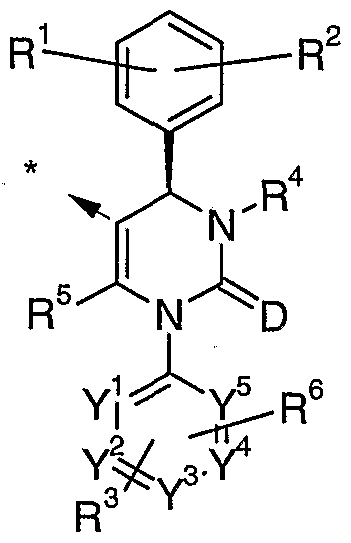
  • formula (II) the arrow denotes the point of attachment of M to the linker L.
  • L is a group of Formula (III) as defined herein.
  • compounds are of Formula (I).
  • A is a phenyl ring.
  • R 1 is a cyano group and R 2 is a hydrogen atom.
  • D is an oxygen atom.
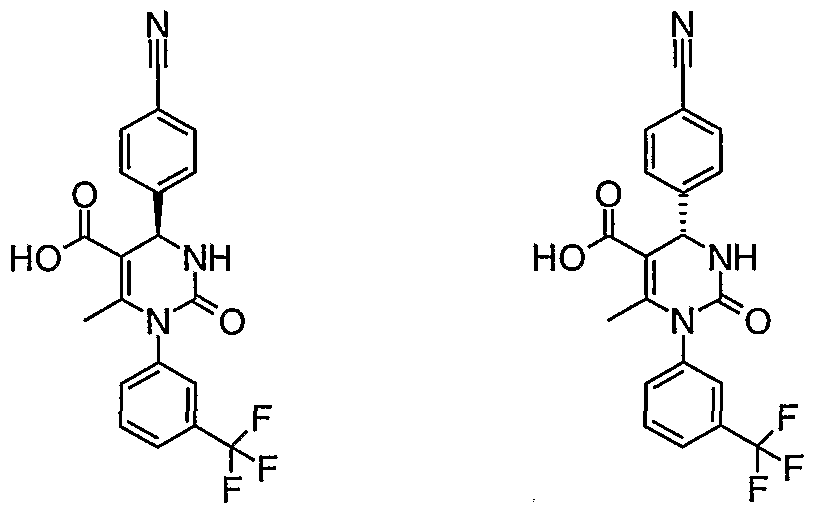
  • the groups M have the stereochemistry shown below;
  • R 6 is a haloalkyl group.
  • Y 1 -Y 5 are carbon atoms.
  • L a is a group C(O).
  • R 7 and L b are a bond.
  • W is a radical
  • W is the radical -N(R 9A ) - R 8B - N(R 9A ) - R 8B -
  • R 5 is an alkyl group. In yet another preferred embodiment R 5 is a methyl group. In one embodiment R 4 is a hydrogen atom In a further embodiment R 4 is a group of Formula (VIII)
  • Preferred compounds of the invention include those of the Examples, e.g. of Examples 1 , 2, 3, 4, 5, 6, 7, 8, 9, 10, 11 , 12, 13, 14, 15, 16, 17, 18, 19, 20, 21 , 22, 23, 24, 25, 26, 27, 28, 29, 30, 32, 34, 36, 37 and 38.
  • the therapeutic utility of the present compounds is pertinent to any disease that is known to be at least partially mediated by the action of human neutrophil elastase.
  • the present compounds may be beneficial in the treatment of chronic obstructive pulmonary disease (COPD), cystic fibrosis (CF), acute respiratory, distress syndrome (ARDS), pulmonary emphysema, pneumonia and lung fibrosis.
  • COPD chronic obstructive pulmonary disease
  • CF cystic fibrosis
  • ARDS acute respiratory, distress syndrome
  • pulmonary emphysema pulmonary emphysema
  • pneumonia and lung fibrosis lung fibrosis.
  • the present invention is also concerned with pharmaceutical formulations comprising, as an active ingredient, a compound of the invention.
  • Other compounds may be combined with compounds of this invention for the prevention and treatment of inflammatory diseases of the lung.
  • the present invention is also concerned with pharmaceutical compositions for preventing and treating inflammatory diseases of the lung comprising a therapeutically effective amount of a compound of the invention and one or more other therapeutic agents.
  • Suitable therapeutic agents for a combination therapy with compounds of the invention include: (1 ) a corticosteroid, for example fluticasone, ciclesonide or budesonide; (2) a ⁇ 2-adrenoreceptor agonist, for example salmeterol, indacaterol orformeterol; (3) a leukotriene modulator, for example montelukast or pranlukast; (4) muscarinic-3 (M3) receptor antagonists such as tiotropium bromide; (5) bronchodilators that possess both M3 receptor antagonism and ⁇ 2-adrenoreceptor agonism in a single molecule (6) phosphodiesterase-IV (PDE-IV) inhibitors, for example roflumilast or cilomilast; (7) an antitussive agent, such as codeine or dextramorphan;(8) a non-steroidal antiinflammatory agent (NSAID), for example ibuprofen or ketoprofen; (9)
  • the weight ratio of the first and second active ingredients may be varied and will depend upon the effective dose of each ingredient. Generally, an effective dose of each will be used.
  • prophylactic or therapeutic dose of a compound of the invention will, of course, vary with the nature of the severity of the condition to be treated and with the particular compound and its route of administration. It will also vary according to the age, weight and response of the individual patient. In general, the daily dose range will lie within the range of from about 0.001 mg to about 100 mg per kg body weight of a mammal, preferably 0.01 mg to about 50 mg per kg, and most preferably 0.1 to 10 mg per kg, in single or divided doses. On the other hand, it may be necessary to use dosages outside these limits in some cases.
  • compositions which comprise a compound of the invention and a pharmaceutically acceptable carrier.
  • composition is intended to encompass a product comprising the active ingredient(s), and the inert ingredient(s) (pharmaceutically acceptable excipients) that make up the carrier, as well as any product which results, directly or indirectly, from combination, complexation or aggregation of any two or more of the ingredients, or from dissociation of one or more of the ingredients, or from other types of reactions or interactions of one or more of the ingredients.
  • the pharmaceutical compositions of the present invention encompass any composition made by admixing a compound of the invention, additional active ingredient(s), and pharmaceutically acceptable excipients.
  • compositions of the present invention comprise a compound of the invention as an active ingredient or a pharmaceutically acceptable salt thereof, and may also contain a pharmaceutically acceptable carrier and optionally other therapeutic ingredients.
  • pharmaceutically acceptable salts refers to salts prepared from pharmaceutically acceptable non-toxic bases or acids including inorganic bases or acids and organic bases or acids.
  • any suitable route of administration may be employed for providing a mammal, especially a human, with an effective dosage of a compound of the present invention.
  • the active compound may be administered by any convenient, suitable or effective route.
  • Suitable routes of administration are known to those skilled in the art, and include oral, intravenous, rectal, parenteral, topical, ocular, nasal, buccal and pulmonary. Delivery by inhalation is preferred.
  • compositions suitable for administration by inhalation are known, and may include carriers and/or diluents that are known for use in such compositions.
  • the composition may contain 0.01-99% by weight of active compound.
  • a unit dose comprises the active compound in an amount of 1 ⁇ g to 10 mg.
  • the most suitable dosage level may be determined by any suitable method known to one skilled in the art. It will be understood, however, that the specific amount for any particular patient will depend upon a variety of factors, including the activity of the specific compound that is used, the age, body weight, diet, general health and sex of the patient, time of administration, the route of administration, the rate of excretion, the use of any other drugs, and the severity of the disease undergoing treatment.
  • the active compound is preferably in the form of microparticles. They may be prepared by a variety of techniques, including spray-drying, freeze-drying and micronisation.
  • a composition of the invention may be prepared as a suspension for delivery from a nebuliser or as an aerosol in a liquid propellant, for example for use in a pressurised metered dose inhaler (PMDI).
  • PMDI pressurised metered dose inhaler
  • Propellants suitable for use in a PMDI are known to the skilled person, and include CFC-12, HFA-134a, HFA- 227, HCFC-22 (CCI2F2) and HFA-152 (CH4F2 and isobutane).
  • a composition of the invention is in dry powder form, for delivery using a dry powder inhaler (DPI).
  • DPI dry powder inhaler
  • Microparticles for delivery by administration may be formulated with excipients that aid delivery and release.
  • microparticles may be formulated with large carrier particles that aid flow from the DPI into the lung.
  • Suitable carrier particles are known, and include lactose particles; they may have a mass median aerodynamic diameter of greater than 90 ⁇ m.
  • a preferred composition is:
  • Compounds of the invention may be used in combination with other drugs that are used in the treatment/prevention/suppression or amelioration of the diseases or conditions for which present compounds are useful. Such other drugs may be administered, by a route and in an amount commonly used therefore, contemporaneously or sequentially with a compound of the invention. When a compound of the invention is used contemporaneously with one or more other drugs, a pharmaceutical composition containing such other drugs in addition to the compound of the invention is preferred.
  • compositions of the present invention include those that also contain one or more other active ingredients, in addition to a compound of the invention.
  • Aerosol generation can be carried out using, for example, pressure-driven jet atomizers or ultrasonic atomizers, preferably using propellant-driven metered aerosols or propellant- free administration of micronized active compounds from, for example, inhalation capsules or other "dry powder" delivery systems.
  • the active compounds may be dosed as described depending on the inhaler system used.
  • the administration forms may additionally contain excipients, such as, for example, propellants (e.g. Frigen in the case of metered aerosols), surface-active substances, emulsifiers, stabilizers, preservatives, flavorings, fillers (e.g. lactose in the case of powder inhalers) or, if appropriate, further active compounds.
  • the compounds of the invention of the present invention can be prepared according to the procedures of the following schemes and examples, using appropriate materials, and are further exemplified by the following specific examples. Moreover, by utilising the procedures described with the disclosure contained herein, one of ordinary skill in the art can readily prepare additional compounds of the present invention claimed herein.
  • the compounds illustrated in the examples are not, however, to be construed as forming the only genus that is considered as the invention.
  • the examples further illustrate details for the preparation of the compounds of the present invention. Those skilled in the art will readily understand that known variations of the conditions and processes of the following preparative procedures can be used to prepare these compounds.
  • the compounds of the invention may be isolated in the form of their pharmaceutically acceptable salts, such as those described previously herein above.
  • the free acid form corresponding to isolated salts can be generated by neutralisation with a suitable acid such as acetic acid and hydrochloric acid and extraction of the liberated free acid into an organic solvent followed by evaporation.
  • a suitable acid such as acetic acid and hydrochloric acid
  • the free acid form isolated in this manner can be further converted into another pharmaceutically acceptable salt by dissolution in an organic solvent followed by addition of the appropriate base and subsequent evaporation, precipitation, or crystallisation.
  • reaction Schemes illustrate how compounds of the invention, in particular the Example compounds, may be prepared. It will be understood that the processes detailed below are solely for the purpose of illustrating the invention and should not be construed as limiting. A process utilising similar or analogous reagents and/or conditions known to one skilled in the art may also be used to obtain a compound of the invention. The following reaction schemes illustrate how compounds of the invention, in particular the Example compounds, may be prepared. It will be understood that the processes detailed below are solely for the purpose of illustrating the invention and should not be construed as limiting. A process utilising similar or analogous reagents and/or conditions known to one skilled in the art may also be used to obtain a compound of the invention.
  • the monomers may be joined together by a range of standard chemistries, for example, reaction with a suitable bifunctional linker molecule in the presence of a suitable reagent and optional solvent, Scheme 1 (Route A).
  • An alternative methodology involves attachment of a spacer group incorporating a second functional group, which subsequently allows attachment of a bidentate linker molecule, Scheme 1 (Route B).
  • the linker part of the dimer may be modified after dimerisation.
  • X nucleophilic group e.g. NHR, OH
  • G reactive group e.g. CHO, CO 2 H, NH 2 etc.
  • reaction of the monomer with a suitable diamine or diol can be effected in the presence of a base and coupling reagent, for example HATU, and optional solvent.
  • a base and coupling reagent for example HATU
  • Reaction of the monomer with a protected aminoaldehyde (protected as an acetal), in the presence of a suitable base and coupling reagent, and optional solvent, followed by deprotection leads to an intermediate that can be reacted with a suitable bidentate species, such as a diamine, to generate compounds of the invention, Scheme 2.
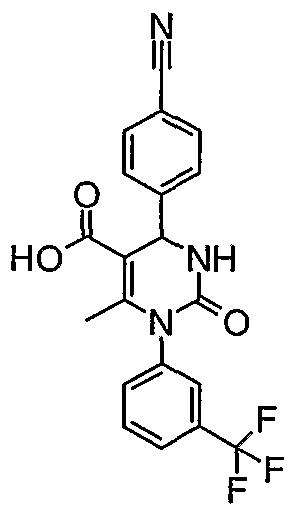
  • the monomers of Formula (II) may be prepared as racemates according to methods described in WO2004024700, WO2004024701 , GB2392910, WO200508263 and WO2005082864.
  • the monomers may be separated by chiral HPLC into their enantiomers.
  • the monomer (as a carboxylic acid) may be resolved by formation of diastereomeric salts with a suitable chiral base, such as norephedrine, followed by fractional recrystallisation, Scheme 3.
  • N-3 may be functionalised via alkylation with a suitably activated alkane in the presence of a suitable base, for example a metal hydride, and optional solvent. Suitable leaving groups include halogen and sulfonate.
  • N-3 of the monomer may be acylated with an acid halide under similar conditions. This group (R in Schemes 1-4) may be modified further in subsequent steps. Prior protection of the carboxylic acid by, for example, conversion to the corresponding allyl ester, is required to prevent unwanted side- reactions.
  • Compounds that are quaternary ammonium salts can be generated by reaction of the parent amine with a suitably activated alkane.
  • Suitable leaving groups include halogen and sulfonate.
  • 'Isolute SPE Si cartridge' refers to a pre-packed polypropylene column containing unbonded activated silica with irregular particles with average size of 50 ⁇ m and nominal 6OA porosity.
  • 'lsolute SCX-2 cartridge' refers to a pre-packed polypropylene column containing a non end-capped propylsulphonic acid functionalised silica strong cation exchange sorbent. All solvents and commercial reagents were used as received. After HPLC purification, fractions containing product were combined and freeze-dried to give the product as a white or off-white solid. In some cases, where the compound contained a basic centre, the product was obtained as the formate salt.
  • Phenyl hexyl column (250 x 21.20 mm Luna column with 5 ⁇ m particle size), eluting with a gradient of A: water + 0.1 % TFA; B: acetonitrile + 0.1 % TFA at a flow rate of 5 ml/min with UV detection at 254 nm.
  • Amylose tris(3,5-dirnethylphenylcarbamate) (250 x 20 mm CHIRALPAK IA column with 5 ⁇ m particle size), eluting with an isocratic mixture of ethanol (15%) in n-heptane +
  • DIPEA di-isopropylethylamine
  • EDCI 1-(3-dimethylaminopropyl)-3-ethylcarbodiimide hydrochloride
  • HATU O-(7-Azabenzotriazol-1 -yl)-N,N,N',N'- tetramethyluroniumhexafluorophosphate.
  • TFA trifluoroacetic acid
  • Example 2 was prepared from intermediate 3 (100 mg) and tetra(ethylene) glycol by a similar procedure to that used in Example 1 , and purified using HPLC (System 2).
  • Example 4 was prepared from Intermediate 3 and 4,9-dioxa-1 ,12-dodecanediamine by a similar method to that used in the synthesis of Example 3.
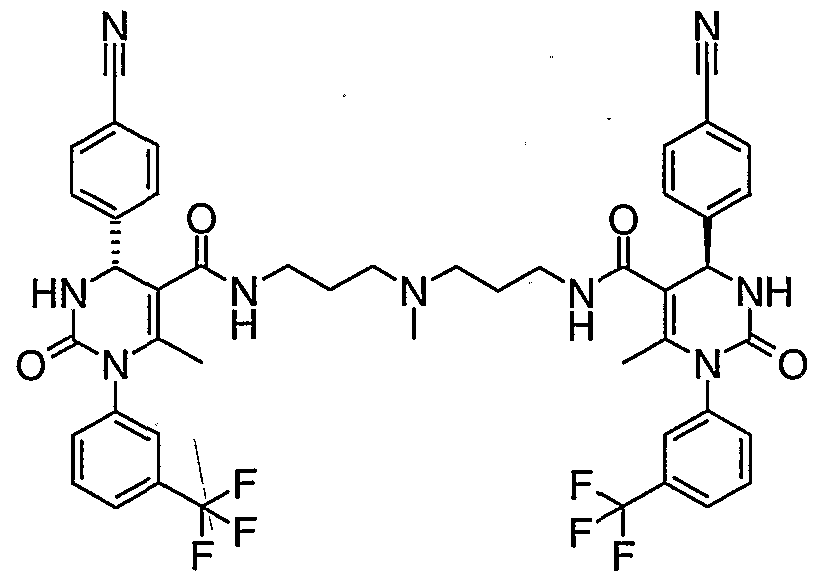
  • Example 15 was prepared from Intermediate 10 and 3,3'-diamino-N-methyldipropylamine using a procedure similar to that used in the synthesis of Example 5.
  • the crude product was dissolved in MeOH and loaded onto an SCX-2 cartridge (10 g) which had been pre- treated with MeOH.
  • the cartridge was flushed with MeOH and then the product was eluted with 2M NH 3 in MeOH.
  • Intermediate 15 was obtained as a pale yellow foam.
  • Example 16 was prepared from Intermediate 4 and triethylenetetramine using a similar procedure to that used in the synthesis of Example 5.
  • the crude product was purified on an lsolute SPE Si Il cartridge (10 g) eluting with 0-50% MeOH in EtOAc and isolated as a white solid.
  • a small sample was further purified using HPLC (System 1).
  • Example 15 (212 mg, 0.201 mmol) was treated with 1 M NaOH (25 ml) and MeOH (15 ml). The reaction mixture was stirred at RT for 1.5 h. The mixture was acidified using 1 M HCI (50 ml) and extracted with EtOAc (3 x 60 ml). The organic extracts were combined, washed with brine (50 ml), and dried (Na 2 SO 4 ). Evaporation gave the diacid as a white solid.
  • Example 18 was prepared from Example 17 and 4 equivalents of 3,3'-diamino-N- methyldipropylamine using conditions to those used in the synthesis of Example 5. Purification was achieved using HPLC (System 1) and example 18 was obtained as a white solid.
  • Example 15 (150 mg, 0.142 mmol) was dissolved in DCM (20 ml) and iodomethane (5 ml) was added. The solution was allowed to stand at RT for 60 h. The volatiles were evaporated.
  • Example 20 was prepared from example 19 using a similar method to that used in the synthesis of example 17. Purification was achieved by trituration with Et 2 CVDCM (5:1) giving the diacid as a pale yellow solid.
  • Example 21 was prepared from Example 20 and 4 equivalents of 3,3'-diamino-N- methyldipropylamine using conditions to those used in the synthesis of Example 5. Purification was achieved using HPLC (System 1) and example 21 was obtained as a pale cream solid.
  • Example 16 (102 mg, 0.112 mmol) was dissolved in DCM (10 ml) and 1 ,1'- thiocarbonyldipyridone (13 mg, 0.0559 mmol) was added. The solution was heated under reflux for 4 h and then allowed to stand at RT for 3 days. The DCM was evaporated and the residue was chromatographed on an lsolute SPE Si Il cartridge (5 g) eluting with 0- 10% MeOH in EtOAc. The product-containing fractions were combined and eluted through an lsolute SPE SCX-2 cartridge, flushing with MeOH. Evaporation gave a white solid.
  • Example 31 (66 mg, 0.0691 mmol) and iodomethane (2 ml) were dissolved in IMS (6 ml) and the solution was allowed to stand at RT for 24 h. The volatiles were evaporated and the residue was dissolved in 2M NH 3 in EtOH (5 ml). The solution was heated at 50 3 C for 2 h, after which time the solvent was evaporated and the product was purified using HPLC (System 1). Example 32 was obtained as a white solid.
  • Example 33 A solution of Example 33 (190 mg, 0.189 mmol) in MeOH (10 ml) was treated with a solution of potassium carbonate (261 mg, 1.89 mmol) in water (4 ml). After stirring for 30 min the solution was diluted with water (70 ml) and extracted with EtOAc (100 ml). The organic extract was dried (Na 2 SO 4 ) and evaporated. Purification was achieved using HPLC (System 1) giving a white solid.
  • Example 35 was prepared from Intermediate 4 and Intermediate 12 by a method similar to that used in the synthesis of Example 33. Yield: 70% LC-MS (Method 4): Rt 3.61 min, m/z 1036 [MH]+ Example 36
  • Example 36 was synthesized from Example 35 using a procedure similar to that used in the preparation of Example 34. Purification was achieved using HPLC (System 1).
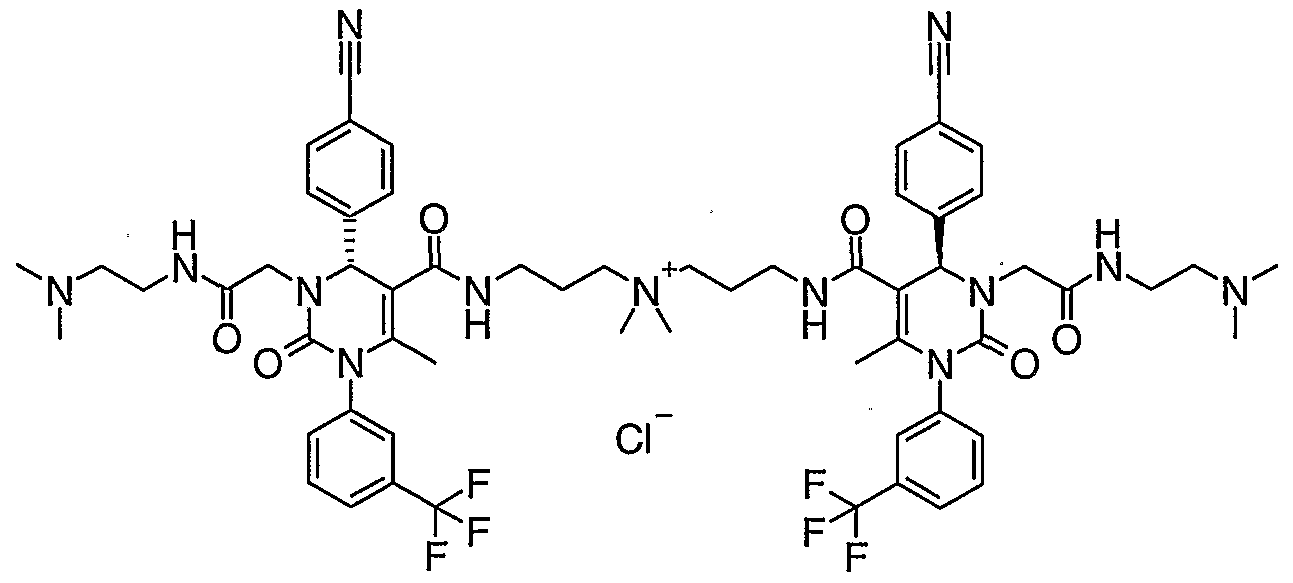
  • Example 6 (131 mg, 0.144 mmol) was dissolved in DCM (15 ml) and iodomethane (4 ml) was added. The reaction mixture was allowed to stand for 65 h before evaporation of the volatile materials. The mixture was purified using HPLC (System 1).
  • Example 38 was synthesized from Example 8 using a procedure similar to that used in the preparation of Example 37.
  • Assays were performed in 96-well plates at a total assay volume of 100 ⁇ l.
  • the final concentration of the enzyme human leukocyte elastase, Sigma E8140
  • a peptide substrate (MeO-Suc-Ala-Ala-Pro-ValAMC, Calbiochem #324745) was used, at the final concentration of 100 ⁇ M.
  • the final concentration of DMSO was 1 % in the assay buffer (0.05M Tris.HCI, pH 7.5, 0.1 M NaCI; 0.1 M CaCI2; 0.0005% brij-35).
  • the enzymatic reaction was started by adding the enzyme.
  • the enzymatic reaction was performed at RT and after 30mins stopped by adding 50 ⁇ l soybean trypsin inhibitor (Sigma T-9003) at a final concentration of 50 ⁇ g/well. Fluorescence was read on the FLEXstation (Molecular Devices) using 380 nm excitation and 460 nm emission filters. The potency of the compounds was determined from a concentration series of 10 concentrations in range from 1000 nM to 0.051 nM. The results are means of two independent experiments, each performed in duplicate.
  • the enzymatic reaction was started by adding the enzyme.
  • the enzymatic reaction was performed at RT and read after 120 minutes. Fluorescence was read on the
  • FLEXstation (Molecular Devices) using 485 nm excitation and 530 nm emission filters.
  • the potency of the compounds was determined from a concentration series of 10 concentrations in range from 2500OnM to 1 nM. The results are means of two independent experiments, each performed in duplicate.
  • a common, generic substrate was used for all proteases: fluorescently labelled casein (Molecular Probes, E-6639), at the final concentration of 20 ⁇ g/ml (Cathepsin G and Chymotrypsin), 10 ⁇ g/ml (Plasmin and Thrombin) or 5 ⁇ g/ml (Proteinase 3 and Trypsin).
  • the final concentration of the substrate was close to the respective K m values as determined for this substrate.
  • the final concentration of DMSO was 5% in the assay buffer (0.05M Tris.HCI, pH 7.5, 0.1 M NaCI; 0.1 M CaCI2; 0.0005% brij-35). The enzymatic reaction was started by adding the enzyme.
  • the enzymatic reaction was performed at RT for 60min. Fluorescence was read on the FLEXstation (Molecular Devices) using 589 nm excitation and 617 nm emission filters. The potency of the compounds was determined from a concentration series of 8 concentrations in range from 500 ⁇ M to 0.2 ⁇ M. The results are means of two independent experiments, each performed in duplicate.
  • the compounds tested showed selectivities for a range of proteases fromi to >300 fold.
  • Intracellular Elastase (controlled with lysed cell elastase) PMNs were isolated as described previously. PMNs were added to 96-well polypropylene plates and DMSO or compound added to each well to give 150 ⁇ l volume. The plate was incubated at 37°C for 30minutes. Cells were washed by centrifugation and lysed with HBSS containing 0.04% triton. Cell debris was pelleted and the supernatant transferred to a fresh pate, with compounds or DMSO. Fluorogenic AAPV substrate was added to all wells and the plate was read using a Spectramax Gemini Ex 380nm Em 460 for 30minutes at 37°C.
  • Neutrophil Released Elastase Activity Assay Human, Mouse, Guinea Pig
  • Guinea pigs were treated with an LPS aerosol. Animals were left for 4 hours, euthanized and the lungs lavaged to recover PMN. Bronchoalveolar lavage fluid (BAL) was spun at 40Og for 10minutes and the cells resuspended in HBSS. 10 ⁇ M cytocholasin B was added to the cell suspension and incubated at 370C for 5 minutes after which 1 ⁇ M fMLP was added for a further 5 minutes. Cells were centrifuged at 40Og for 10 minutes. 'Elastase rich supernatant' was transferred to a fresh tube.
  • BAL Bronchoalveolar lavage fluid
  • mice were anaesthetised and treated with LPS i.n. Animals were left for 4 hours, euthanized and the lungs lavaged to recover PMN. Bronchoalveolar lavage fluid (BAL) was centrifuged at 40Og for 10minutes and the cells resuspended in 1 ml of HBSS.10 ⁇ M cytocholasin B was added to the cell suspension and incubated at 370C for 5 minutes after which 1 ⁇ M fMLP was added for a further 5 minutes. Cells were centrifuged at 40Og for 10 minutes. 'Elastase rich supernatant' was transferred to a fresh tube. Generation of Human Released Neutrophil Elastase, from Humans
  • Human PMN were isolated as described previously. 10 ⁇ M cytocholasin B was added to the cell suspension and incubated at 370C for 5 minutes after which 1 ⁇ M fMLP was added for a further 5 minutes. Cells were centrifuged at 40Og for 10 minutes. 'Elastase rich supernatant' was transferred to a fresh tube. To a clear bottomed 96-well plate compounds were added and incubated for 5 minutes at 37)C with 'elastase rich' supernatant. Fluorogenic AAPV substrate was added to all wells and the plate read using a Spectramax Gemini Ex 380nm Em 460 for 30 minutes at 37°C. For comparison, an activity matched control of human elastase was also run. HNE induced lung haemorrhage in the rat
  • HNE human neutrophil elastase
  • the vehicle used was 1 % DMSO/Saline. Inhibitors were dissolved in 1 % DMSO before the addition of 0.9% saline.
  • HNE human neutrophil elastase
  • Animals either received vehicle or compound at a dose volume of 0.5ml/kg. Animals that had been allowed to recover after dosing were terminally anaesthetised with hypnorm:hypnovel:water (1.5:1 :2 at 2.7ml/kg). Once sufficiently anaesthetised, HNE (600units/ml) or sterile saline was administered by transoral tracheal instillation at a volume of 100 ⁇ l using a Penn Century microsprayer. Animals were kept warm in a temperature controlled box and given top up doses of anaesthetic as required to ensure continuous anaesthesia until termination.
  • HNE 600units/ml
  • sterile saline was administered by transoral tracheal instillation at a volume of 100 ⁇ l using a Penn Century microsprayer. Animals were kept warm in a temperature controlled box and given top up doses of anaesthetic as required to ensure continuous anaesthesia until termination.
  • the BALF was centrifuged at 1000 r.p.m. for 10 minutes in a centrifuge cooled to between 4 and 10oC. The supernatant was discarded and the cell pellet resuspended in 1 ml 0.1 % CETAB/PBS to lyse the cells. Cell lysates were frozen until spectrophotometric analysis for blood content could be made. Standards were prepared by making solutions of whole rat blood in 0.1% CETAB/PBS.
  • a standard curve was constructed by measuring the OD (at 415nm) of different concentrations of blood in 0.1% CETAB/PBS (30, 10, 7, 3, 1 , 0.3, 0.1 ⁇ l/ml).

Landscapes

  • Chemical & Material Sciences (AREA)
  • Health & Medical Sciences (AREA)
  • Organic Chemistry (AREA)
  • General Health & Medical Sciences (AREA)
  • Public Health (AREA)
  • Veterinary Medicine (AREA)
  • Medicinal Chemistry (AREA)
  • Engineering & Computer Science (AREA)
  • Bioinformatics & Cheminformatics (AREA)
  • Pharmacology & Pharmacy (AREA)
  • Life Sciences & Earth Sciences (AREA)
  • Animal Behavior & Ethology (AREA)
  • Nuclear Medicine, Radiotherapy & Molecular Imaging (AREA)
  • Chemical Kinetics & Catalysis (AREA)
  • General Chemical & Material Sciences (AREA)
  • Epidemiology (AREA)
  • Pulmonology (AREA)
  • Pharmaceuticals Containing Other Organic And Inorganic Compounds (AREA)
  • Plural Heterocyclic Compounds (AREA)

Abstract

A compound of formula M-L-M (I) wherein L is a linker and each M is independently a group of formula (II) is useful in therapy, e.g. of respiratory diseases.

Description

DIHYDROPYRIMIDONE MULTIMERS AND THEIR USE AS HUMAN NEUTROPHIL ELASTASE INHIBITORS
Field of the Invention
This invention relates to heterocyclic compounds and their use in therapy. Background to the invention Human neutrophil elastase is a 32 kDa serine proteinase found in the azurophilic granules of neutrophils. It has a role in the degradation of a wide range of extracellular matrix proteins, including fibronectin, laminin, proteoglycans, Type III and Type IV collagens as well as elastin (Bieth, G. In Regulation of Matrix accumulation, Mecham, R. P. (Eds), Academic Press, NY, USA 1986, 217-306). HNE has long been considered to play an important role in homeostasis through repair and disposal of damaged tissues via degradation of the tissue structural proteins. It is also relevant in the defence against bacterial invasion by means of degradation of the bacterial body. In addition to its effects on matrix tissues, HNE has been implicated in the upregulation of IL-8 gene expression and also induces IL-8 release from the epithelial cells of the lung. In animal models of Chronic Obstructive Pulmonary Disease induced by tobacco smoke exposure both small molecule inhibitors and protein inhibitors of HNE inhibit the inflammatory response and the development of emphysema (Wright, J. L. et al. Am. J. Respir. Crit. Care Med.2002, 166, 954-960; Churg, A. et al. Am. J. Respir. Crit. Care Med.2003, 168, 199-207). Thus, HNE may play a role both in matrix destruction and in amplifying inflammatory responses in chronic respiratory diseases where neutrophil influx is a characteristic feature. Indeed, HNE is believed to play a role in several pulmonary diseases, including chronic obstructive pulmonary disease (COPD), cystic fibrosis (CF), acute respiratory distress syndrome (ARDS), pulmonary emphysema, pneumonia, severe asthma, sarcoidosis, bronchiectasis and lung fibrosis. It is also implicated in several cardiovascular diseases in which tissue remodelling is involved, for example, in heart failure and the generation of ischaemic tissue injury following acute myocardial infarction. Elevated HNE levels are also correlated with the severity of inflammation in inflammatory bowel disease (Silberer H et al, Clin Lab.2005;51 (3-4):117-26) and may play a role in impaired mucosal repair in patients with ulcerative colitis. COPD is an umbrella term encompassing three different pathological conditions, all of which contribute to limitation of airflow: chronic bronchitis, emphysema and small- airway disease. Generally all three will exist to varying extents in patients presenting with COPD, and all three may be due to neutrophil-mediated inflammation, as supported by the increased number of neutrophils observed in bronchoalveolar leakage (BAL) fluids of COPD patients (Thompson, A. B.; Daughton, D.; et al. Am. Rev. Respir. Dis. 1989, 140, 1527-1537). The major pathogenic determinant in COPD has long been considered to be the protease-anti-protease balance (also known as the 'elastase:anti-elastase hypothesis'), in which an imbalance of HNE and endogenous antiproteases such as α1 - antitrypsin (Ci1-AT)1 Secretory leukocyte protease inhibitor (SLPI) and pre-elafin leads to the various inflammatory disorders of COPD. Individuals that have a genetic deficiency of the protease inhibitor α1 -antitrypsin (α1 -AT) develop emphysema that increases in severity over time (Laurrell, C. B.; Erikkson, S Scand. J. CHn. Invest. 1963 15, 132-140). An excess of HNE is therefore destructive, leading to the breakdown of pulmonary morphology with loss of elasticity and destruction of alveolar attachments of airways in the lung (emphysema) whilst simultaneously increasing microvascular permeability and mucus hypersecretion (chronic bronchitis). Multimeric ligands consist of multiple binding domains which are tethered together through a suitable scaffold. Hence individual binding domains are linked together into a single molecule, increasing the probability that the multimer will bind simultaneously with multiple active sites resulting in high-affinity interactions (Handl, H. L. etal. Expert Opin. Ther. Targets 2004, 8, 565-586; Han, Y. F. et al., Bioorg. Med. Chem. Letts. 1999, 7, 2569-2575). Also, multiple binding interactions with relatively high off-rates can combine to yield an overall low off-rate for the multimeric ligand. Thus, a molecule consisting of a suitable linker and ligands may be expected to show advantage over the monomeric ligands alone in terms of potency and/or duration of action. Multimeric compounds are unlikely to be orally bioavailable (as predicted by Lipinski's "Rule of 5") which may be advantageous where an inhaled route of administration to the lungs is targeted, since even after inhaled administration, a large proportion of drug is likely to enter the Gl tract. Thus such compounds may be expected to show reduced systemic exposure after inhalation administration and hence an improved toxicity profile over orally administered therapies. Monomers of formula (II) are described as inhibitors of human neutrophil elastase in WO2004/024700, WO2004/024701 , GB2392910, WO2005/082863 and WO2005/082864. Summary of the Invention
A first aspect of the invention is a compound of formula (I) or formula (IV):
(M)-(L)-(M) (I)
[(M)-(L)],-G (IV) wherein each M is independently an inhibitor of HNE; and each L is independently a linker group; t is 2 to 20; and G is aryl, heteroaryl, alkyl, cycloalkyl, nitrogen, a dendrimer or a group of any of formulae (V) to (VII):
Figure imgf000004_0001
U
(V) (Vl) (VII)
wherein
Ar is aryl or heteroaryl; and u is 2-20;
M is a group of Formula (II)
Figure imgf000004_0002
wherein
A is aryl or heteroaryl; D is oxygen or sulphur;
R1, R2 and R3 are independently each hydrogen, halogen, nitro, cyano, alkyl, hydroxy or alkoxy, wherein alkyl and alkoxy can be further substituted with one to three identical or different radicals selected from the group consisting of halogen, hydroxy and alkoxy;
R4 is hydrogen, alkyl, alkylcarbonyl, alkoxycarbonyl, alkenoxycarbonyl, hydroxycarbonyl, aminocarbonyl, arylcarbonyl, heteroarylcarbonyl, heterocycloalkylcarbonyl, heteroaryl, heterocycloalkyl or cyano, wherein alkylcarbonyl, alkoxycarbonyl, and aminocarbonyl can be further substituted with one to three identical or different radicals selected from the group consisting of cycloalkyl, hydroxy, alkoxy, alkoxycarbonyl, hydroxycarbonyl, aminocarbonyl, cyano, amino, heteroaryl, heterocycloalkyl and tri-(alkyl)-silyl, and wherein heteroarylcarbonyl, heterocycloalkylcarbonyl, heteroaryl and heterocycloalkyl can be further substituted with alkyl; or
R4 represents a group of Formula (VIII)
Figure imgf000005_0001
wherein
R4A, R4B, R4D, R4E, R4G, R4H, R41 and R4J are independently hydrogen or alkyl, or R4H and R41 may may be joined together with the nitrogen atom to which they are attached to form a ring; R4F is a lone pair or R4F is alkyl and the nitrogen atom to which it is attached is quaternary and carries a positive charge;
R4G is a lone pair or R4C is alkyl and the nitrogen atom to which it is attached is quaternary and carries a positive charge; or any two of R4C, R4D or R4E may be joined together with the nitrogen atom to which they are attached to form a ring, optionally containing a further heteroatom selected from oxygen or nitrogen; v1 is 1-3; v2 is 1-6;
R5 is alkyl, which can be substituted with one to three identical or different radicals selected from the group consisting of halogen, hydroxy, alkoxy, alkenoxy, alkylthio, amino, hydroxycarbonyl, alkoxycarbonyl and the radical -O-(alkyl)-O-(alkyl); or R5 is amino;
R6 is halogen, nitro, cyano, alkyl, hydroxy or alkoxy, wherein alkyl and alkoxy can be further substituted with one to three identical or different radicals selected from the group consisting of halogen, hydroxy and alkoxy; and γ i ^ γ2 ^ γ3 ^ γ4 and γ5 are jncjepenc|entiy each C or N, with the proviso that the ring in which they are comprised contains no more than 2 N atoms; L is a linker group of Formula (III)
- La - R7 -Lb - W - Lb - R7 - La -...(lll) wherein
La is a bond or group -C(O)-; Lbis a bond or group -C(O)-; R7 is a bond or an alkylene or cycloalkylene group; W is a bond or is selected from the following divalent radicals
-(0 - R8A)m1 - 0-
-N(R9A) - (O - R8A)m1 - R8A - N(R9A)-
-N(R9A) - R8B - N(R9B)(R9G) - R8B - N(R9A)-
-N(R9A) - R8B - N(R10B)C(=NR10A)(NR10C) - R8B - N(R9A)- -N(R9A) - R8B - N(R9A)-
-N(R9A) - R8B - N(R9A) - R8B - N(R9A) - R8B - N(R9A)-
* —- N N *"
Figure imgf000006_0001
Figure imgf000006_0002
wherein ml is 1-4;
R8A is an alkylene or cycloalkylene group;
R8B is an alkylene or cycloalkylene group, or a group of Formula A2; R9A is hydrogen or alkyl; one of R9B or R9C is a lone pair and the other is hydrogen or alkyl, or R9B and R9C are both alkyl, in which case the nitrogen to which they are attached is quaternary and carries a positive charge; or R9B and R9C may be joined together with the nitrogen to which they are attached to form a ring; R10A is hydrogen or alkyl;
R10B and R10G are independently hydrogen or alkyl, or alternatively R10B and R10C may be joined together to form a ring; m2 is 1-3;
A1 is selected from the groups -N(R9A)-R8-N(R9B)(R9C)-R8-N(R9A)-, -N(R9A)-R8-N(R10B)C(=NR10A)(NR10C)-R8-N(R9A)-;
A2 is selected from one of the following groups;
Figure imgf000006_0003
wherein Ar1, Ar2 are independently an aryl or heteroaryl group; or a pharmaceutically acceptable salt, solvate or N-oxide thereof.
Compounds of the invention may be described as dimers, when there are two groups M. The linker L may however carry one or more further groups M. It will be appreciated that any compound of the invention may be used in the form of a prodrug.
Compounds of the invention may be useful in the treatment or prevention of diseases in which HNE is implicated, for example chronic obstructive pulmonary disease (COPD), chronic bronchitis, lung fibrosis, pneumonia, acute respiratory distress syndrome (ARDS), pulmonary emphysema, smoking-induced emphysema, severe asthma, sarcoidosis, bronchiectasis, cystic fibrosis, inflammatory bowel disease; ulcerative colitis and Crohn's disease.
Another aspect of the invention is a pharmaceutical composition comprising a compound of the invention and a pharmaceutically acceptable carrier or excipient. Another aspect of the invention is the use of a compound of the invention for the manufacture of a medicament for the treatment or prevention of a disease or condition in which HNE is implicated. Thus, compounds of the invention may be used in a method of therapy, for the treatment of a patient suffering from a condition or disease as defined above. Description of Preferred Embodiments
"Alkylcarbonyl" means a -CO-alkyl group in which the alkyl group is as described herein. Exemplary acyl groups include -COCH3 and -COCH(CH3)2.
"Acylamino" means a -NR-acyl group in which R and acyl are as described herein. Exemplary acylamino groups include -NHCOCH3 and -N(CH3)COCH3. "Alkenoxy" means an -O-alkenyl group in which alkenyl is as described below.
Exemplary groups includes -O-allyl (-OCH2CH=CH2)
"Alkenoxycarbonyl" means a -COO-alkenyl group which alkenyl is as described below. Exemplary groups includes -C(O)O-allyl.
"Alkoxy" and "alkyloxy" means an -O-alkyl group in which alkyl is as described below. Exemplary alkoxy groups include methoxy (-OCH3) and ethoxy (-OC2H5).
"Alkoxycarbonyl" means a -COO-alkyl group in which alkyl is as defined below. Exemplary alkoxycarbonyl groups include methoxycarbonyl and ethoxycarbonyl.
"Alkyl" or "lower alkyl", as a group or part of a group, refers to a straight or branched chain saturated hydrocarbon group having from 1 to 12, preferably 1 to 6, carbon atoms, in the chain. Exemplary alkyl groups include methyl, ethyl, 1 -propyl and 2- propyl.
"Alkenyl" as a group or part of a group refers to a straight or branched chain hydrocarbon group having from 1 to 12, preferably 1 to 6, carbon atoms and one carbon- carbon double bond in the chain. Exemplary alkenyl groups include ethenyl, 1 -propenyl, and 2-propenyI.
"Alkylamino" means a -NH-alkyl group in which alkyl is as defined above. Exemplary alkylamino groups include methylamino and ethylamino.
"Alkylene means an -alkyl- group in which alkyl is as defined previously. Exemplary alkylene groups include -CH2-, -(CH2)2- and -C(CH3)HCH2-.
"Alkenylene" means an -alkenyl- group in which alkenyl is as defined previously. Exemplary alkenylene groups include -CH=CH-, -CH=CHCH2-, and -CH2CH=CH-. "Alkylthio" means a -S-alkyl group in which alkyl is as defined above. Exemplary alkylthio groups include methylthio and ethylthio.
"Amino" means a -NR1R2 group where R1 and R2 may be independently a hydrogen atom, alkyl, aryl, arylalkyl, alkenyl, alkynyl, heteroaryl or heterocycloalkyl group, (i.e. The amino group may be primary, secondary or tertiary). Exemplary amino groups include -NH2, NHCH3, -NHPh, -N(CH3)2, etc.
"Aminocarbonyl" means a -CO-NRR group in which R is as herein described. Exemplary aminocarbonyl groups include -CONH2, -CONHCH3 and -CONH-phenyl.
"Aminoalkyl" means an alkyl-NH2 group in which alkyl is as previously described. Exemplary aminoalkyl groups include -CH2NH2. "Ammonium" means a quarternary nitrogen group -N+R1 R2R3 where R1 , R2 and
R3 are alkyl, aryl, alkenyl, arylalkyl, heteroaryl, heterocycloalkyl, and the nitrogen atom carries a formal positive charge.
"Aryl" as a group or part of a group denotes an optionally substituted monocyclic or multicyclic aromatic carbocyclic moiety of from 6 to 14 carbon atoms, preferably from 6 to 10 carbon atoms, such as phenyl or naphthyl. The aryl group may be substituted by one or more substituent groups.
"Arylalkyl" means an aryl-alkyl- group in which the aryl and alkyl moieties are as previously described. Exemplary arylalkyl groups include benzyl, phenethyl and naphthlenemethyl. "Arylalkyloxy" means an aryl-alkyloxy- group in which the aryl and alkyloxy moieties are as previously described. Preferred arylalkyloxy groups contain a C1 4 alkyl moiety. Exemplary arylalkyl groups include benzyloxy.
"Arylcarbonyl" means an aromatic ring joined to a carbonyl group -(C=O). Exemplary groups include benzoyl (-C(O)Ph). "Aryloxy" means an -O-aryl group in which aryl is described above. Exemplary aryloxy groups include phenoxy.
"Cyclic amine" means an optionally substituted 3 to 8 membered monocyclic cycloalkyl ring system where one of the ring carbon atoms is replaced by nitrogen, and which may optionally contain an additional heteroatom selected from O, S or NR (where R is as described herein). Exemplary cyclic amines include pyrrolidine, piperidine, morpholine, piperazine and Λ/-methylpiperazine. The cyclic amine group may be substituted by one or more substituent groups.
"Cycloalkyl" means an optionally substituted saturated monocyclic or bicyclic ring system of from 3 to 12 carbon atoms, preferably from 3 to 8 carbon atoms, and more preferably from 3 to 6 carbon atoms. Exemplary monocyclic cycloalkyl rings include cyclopropyl, cyclopentyl, cyclohexyl and cycloheptyl. The cycloalkyl group may be substituted by one or more substituent groups.
"Cyloalkylene" means means an optionally substituted saturated monocyclic or bicyclic ring system of from 3 to 12 carbon atoms, preferably from 3 to 8 carbon atoms, and more preferably from 3 to 6 carbon atoms, as a bivalent radical. Exemplary cycloalkylene groups include cyclohexane-1 ,4-diyl. "Cycloalkylalkyl" means a cycloalkyl-alkyl- group in which the cycloalkyl and alkyl moieties are as previously described. Exemplary monocyclic cycloalkylalkyl groups include cyclopropylmethyl, cyclopentylmethyl, cyclohexylmethyl and cycloheptylmethyl.
"Dendrimer" means a multifunctional core group with a branching group attached to each functional site. Each branching site can be attached to another branching molecule and this process may be repeated multiple times.
"Halo" or "halogen" means fluoro, chloro, bromo, or iodo. "Haloalkoxy" means an -O-alkyl group in which the alkyl is substituted by one or more halogen atoms. Exemplary haloalkyl groups include trifluoromethoxy and difluoromethoxy. "Haloalkyl" means an alkyl group which is substituted by one or more halo atoms.
Exemplary haloalkyl groups include trifluoromethyl.
"Heteroaryl" as a group or part of a group denotes an optionally substituted aromatic monocyclic or multicyclic organic moiety of from 5 to 14 ring atoms, preferably from 5 to 10 ring atoms, in which one or more of the ring atoms is/are element(s) other than carbon, for example nitrogen, oxygen or sulfur. Examples of such groups include benzimidazolyl, benzoxazolyl, benzothiazolyl, benzofuranyl, benzothienyl, furyl, imidazolyl, indolyl, indolizinyl, isoxazolyl, isoquinolinyl, isothiazolyl, oxazolyl, oxadiazolyi, pyrazinyl, pyridazinyl, pyrazolyl, pyridyl, pyrimidinyl, pyrrolyl, quinazolinyl, quinolinyl, tetrazolyl, 1 ,3,4-thiadiazolyl, thiazolyl, thienyl and triazolyl groups. The heteroaryl group may be substituted by one or more substituent groups. The heteroaryl group may be attached to the remainder of the compound of the invention by any available carbon or nitrogen atom.
"Heteroarylcarbonyl" means a heteroaryl group attached to a carbonyl group - C(O)-. Exemplary groups are pyridine-2-carbonyl, thiophene-2-carbonyl.
"Heteroaryloxy" means a heteroaryloxy- group in which the heteroaryl is as previously described. Exemplary heteroaryloxy groups include pyridyloxy.
"Heterocycloalkyl" means: (i) an optionally substituted cycloalkyl group of from 4 to 8 ring members which contains one or more heteroatoms selected from O, S or NR; (ii) a cycloalkyl group of from 4 to 8 ring members which contains CONR and CONRCO
(examples of such groups include succinimidyl and 2-oxopyrrolidinyl). The heterocycloalkyl group may be substituted by one or more substituent groups. The heterocycloalkyl group may be attached to the remainder of the compound by any available carbon or nitrogen atom.
"Heterocycloalkylalkyl" means a heterocycloalkyl-alkyl- group in which the heterocycloalkyl and alkyl moieties are as previously described.
"Hydroxycarbonyl" means a group -COOH.
"Pharmaceutically acceptable salt" means a physiologically or toxicologically tolerable salt and include, when appropriate, pharmaceutically acceptable base addition salts and pharmaceutically acceptable acid addition salts. For example (i) where a compound of the invention contains one or more acidic groups, for example carboxy groups, pharmaceutically acceptable base addition salts that may be formed include sodium, potassium, calcium, magnesium and ammonium salts, or salts with organic amines, such as, diethylamine, Λ/-methyl-glucamine, diethanolamine or amino acids (e.g. lysine) and the like; (ii) where a compound of the invention contains a basic group, such as an amino group, pharmaceutically acceptable acid addition salts that may be formed include hydrochlorides, hydrobromides, phosphates, acetates, citrates, lactates, tartrates, malonates, methanesulphonates and the like. "Pharmaceutically acceptable salt" also means quaternary ammonium salts. In this case, the acceptable salts may be chlorides, bromides, iodides, mesylates, tosylates, succinates and the like.
It will be understood that, as used herein, references to the compounds of the invention are meant to also include the pharmaceutically acceptable salts.
"Prodrug" refers to a compound which is convertible in vivo by metabolic means (e.g. by hydrolysis, reduction or oxidation) to a compound of the invention. For example an ester prodrug of a compound of the invention containing a hydroxy group may be convertible by hydrolysis in vivoto the parent molecule. Suitable esters of compounds of the invention containing a hydroxy group, are for example acetates, citrates, lactates, tartrates, malonates, oxalates, salicylates, propionates, succinates, fumarates, maleates, methylene-bis-β-hydroxynaphthoates, gentisates, isethionates, di-p-toluoyltartrates, methanesulfonates, ethanesulfonates, benzenesulfonates, p-toluenesulfonates, naphthalene bis sulfonates, cyclohexylsulfamates and quinates. As another example an ester prodrug of a compound of the invention containing a carboxy group may be convertible by hydrolysis in v/Voto the parent molecule. Examples of ester prodrugs are those described by F. J. Leinweber, Drug Metab. Res., 1987, 18, 379.
It will be understood that, as used in herein, references to the compounds of the invention are meant to also include the prodrug forms.
"Saturated" pertains to compounds and/or groups which do not have any carbon- carbon double bonds or carbon-carbon triple bonds.
\ The cyclic groups referred to above, namely, aryl, heteroaryl, cycloalkyl, and heterocycloalkyl, may be substituted by one or more substituent groups. Suitable optional substituent groups include acyl (e.g. -COCHJ1 alkoxy (e.g., -OCHJ, alkoxycarbonyl (e.g. -COOCH3), alkylamino (e.g. -NHCH3), alkylsulfinyl (e.g. -SOCH3), alkylsulfonyl (e.g. -SO2CH3), alkylthio (e.g. -SCH3), -NH2, aminoacyl (e.g. -CON(CH3)2), aminoalkyl (e.g. -CH2NH2), arylalkyl (e.g. -CH2Ph Or -CH2-CH2-Ph), cyano, dialkylamino (e.g. -N(CHg)2), halo, haloalkoxy (e.g. -OCF3 or -OCHF2), haloalkyl (e.g. -CF3), alkyl (e.g. -CH3 or -CH2CH3), -OH, -CHO, -NO2, aryl (optionally substituted with alkoxy, haloalkoxy, halogen, alkyl or haloalkyl), heteroaryl (optionally substituted with alkoxy, haloalkoxy, halogen, alkyl or haloalkyl), heterocycloalkyl, aminoacyl (e.g. -CONH2, - CONHCH3), aminosulfonyl (e.g. -SO2NH2, -SO2NHCH3), acylamino (e.g. -NHCOCH3), sulfonylamino (e.g. -NHSO2CH3), heteroarylalkyl, cyclic amine (e.g. morpholine), aryloxy, heteroaryloxy, arylalkyloxy (e.g. benzyloxy) and heteroarylalkyloxy.
Alkylene or alkenylene groups may be optionally substituted. Suitable optional substituent groups include alkoxy (e.g., -OCH3), alkylamino (e.g. -NHCH3), alkylsulfinyl
(e.g. -SOCHJ, alkylsulfonyl (e.g. -SO,CH J, alkylthio (e.g. -SCHJ, -NH2, aminoalkyl (e.g. - CH NHJ, arylalkyl (e.g. -CH9Ph or -CH -CH -Ph), cyano, dialkylamino (e.g. -N(CHJJ, halo, haloalkoxy (e.g. -OCF3 or -OCHF2), haloalkyl (e.g. -CF3), alkyl (e.g. -CH3 or - CH0CHJ, -OH, -CHO, and -NO2.
Compounds of the invention may exist in one or more geometrical, optical, enantiomeric, diastereomeric and tautomeric forms, including but not limited to cis- and frans-forms, E- and Z-forms, R-, S- and meso-forms, keto-, and enol-forms. Unless otherwise stated a reference to a particular compound includes all such isomeric forms, including racemic and other mixtures thereof. Where appropriate such isomers can be separated from their mixtures by the application or adaptation of known methods (e.g. chromatographic techniques and recrystallisation techniques). Where appropriate such isomers may be prepared by the application of adaptation of known methods (e.g. asymmetric synthesis). G may be a group of any of formulae (V) to (VII) or a dendrimer. Examples of groups of formulae (V) to (VII) include, but are not limited to phenoxyphenyl, biphenyl, bipyridyl, ethylenediamino, propylenediamino and the like. It is to be understood that the number of possible attachment points is dictated by the valency of the groups present, so that for example, biphenyl can contain up to 10 possible attachments (5 on each phenyl ring), and ethylenediamine can possess up to 4 possible attachments (2 on each terminal amine). An example of a dendrimer suitable for use in the invention is:
Figure imgf000012_0001
Certain compounds and combinations of substituents are preferred. Certain preferences are given in the subclaims.
In a preferred embodiment, each M is the same or different and is a group of formula (II) as defined herein. In formula (II), the arrow denotes the point of attachment of M to the linker L. Preferably, L is a group of Formula (III) as defined herein.
In a preferred embodiment, compounds are of Formula (I). In a preferred embodiment, A is a phenyl ring.
In one embodiment, R1 is a cyano group and R2 is a hydrogen atom. In a preferred embodiment, D is an oxygen atom.
In another preferred embodiment, the groups M have the stereochemistry shown below;
Figure imgf000012_0002
In one preferred embodiment R6 is a haloalkyl group. In one preferred embodiment, Y1 -Y5 are carbon atoms. In a preferred embodiment, La is a group C(O). In one preferred embodiment R7 and Lb are a bond. In a preferred embodiment, W is a radical
In a further preferred
Figure imgf000013_0001
- R8B - N(R9B)(R9C) - R8B - N(R9A)-.
In another preferred embodiment, W is the radical -N(R9A) - R8B - N(R10B)C(=NR10A)(NR10C) - R8B - N(R9A)-. In another preferred embodiment, W is the radical -N(R9A) - R8B - N(R9A) - R8B -
Figure imgf000013_0002
In yet another preferred embodiment R5 is an alkyl group. In yet another preferred embodiment R5 is a methyl group. In one embodiment R4 is a hydrogen atom In a further embodiment R4 is a group of Formula (VIII)
Figure imgf000013_0003
Preferred compounds of the invention include those of the Examples, e.g. of Examples 1 , 2, 3, 4, 5, 6, 7, 8, 9, 10, 11 , 12, 13, 14, 15, 16, 17, 18, 19, 20, 21 , 22, 23, 24, 25, 26, 27, 28, 29, 30, 32, 34, 36, 37 and 38.
The therapeutic utility of the present compounds is pertinent to any disease that is known to be at least partially mediated by the action of human neutrophil elastase. For example, the present compounds may be beneficial in the treatment of chronic obstructive pulmonary disease (COPD), cystic fibrosis (CF), acute respiratory, distress syndrome (ARDS), pulmonary emphysema, pneumonia and lung fibrosis.
The present invention is also concerned with pharmaceutical formulations comprising, as an active ingredient, a compound of the invention. Other compounds may be combined with compounds of this invention for the prevention and treatment of inflammatory diseases of the lung. Thus the present invention is also concerned with pharmaceutical compositions for preventing and treating inflammatory diseases of the lung comprising a therapeutically effective amount of a compound of the invention and one or more other therapeutic agents. Suitable therapeutic agents for a combination therapy with compounds of the invention include: (1 ) a corticosteroid, for example fluticasone, ciclesonide or budesonide; (2) a β2-adrenoreceptor agonist, for example salmeterol, indacaterol orformeterol; (3) a leukotriene modulator, for example montelukast or pranlukast; (4) muscarinic-3 (M3) receptor antagonists such as tiotropium bromide; (5) bronchodilators that possess both M3 receptor antagonism and β2-adrenoreceptor agonism in a single molecule (6) phosphodiesterase-IV (PDE-IV) inhibitors, for example roflumilast or cilomilast; (7) an antitussive agent, such as codeine or dextramorphan;(8) a non-steroidal antiinflammatory agent (NSAID), for example ibuprofen or ketoprofen; (9) kinase inhibitors such as p38 MAP kinase inhibitors, IKK2 inhibitors and (10) receptor antagonists for cytokines and chemokines for example IL-8, MCP-1 , TNFα and IL-I β
The weight ratio of the first and second active ingredients may be varied and will depend upon the effective dose of each ingredient. Generally, an effective dose of each will be used.
The magnitude of prophylactic or therapeutic dose of a compound of the invention will, of course, vary with the nature of the severity of the condition to be treated and with the particular compound and its route of administration. It will also vary according to the age, weight and response of the individual patient. In general, the daily dose range will lie within the range of from about 0.001 mg to about 100 mg per kg body weight of a mammal, preferably 0.01 mg to about 50 mg per kg, and most preferably 0.1 to 10 mg per kg, in single or divided doses. On the other hand, it may be necessary to use dosages outside these limits in some cases.
Another aspect of the present invention provides pharmaceutical compositions which comprise a compound of the invention and a pharmaceutically acceptable carrier. The term "composition", as in pharmaceutical composition, is intended to encompass a product comprising the active ingredient(s), and the inert ingredient(s) (pharmaceutically acceptable excipients) that make up the carrier, as well as any product which results, directly or indirectly, from combination, complexation or aggregation of any two or more of the ingredients, or from dissociation of one or more of the ingredients, or from other types of reactions or interactions of one or more of the ingredients. Accordingly, the pharmaceutical compositions of the present invention encompass any composition made by admixing a compound of the invention, additional active ingredient(s), and pharmaceutically acceptable excipients. The pharmaceutical compositions of the present invention comprise a compound of the invention as an active ingredient or a pharmaceutically acceptable salt thereof, and may also contain a pharmaceutically acceptable carrier and optionally other therapeutic ingredients. The term "pharmaceutically acceptable salts" refers to salts prepared from pharmaceutically acceptable non-toxic bases or acids including inorganic bases or acids and organic bases or acids.
Any suitable route of administration may be employed for providing a mammal, especially a human, with an effective dosage of a compound of the present invention. In therapeutic use, the active compound may be administered by any convenient, suitable or effective route. Suitable routes of administration are known to those skilled in the art, and include oral, intravenous, rectal, parenteral, topical, ocular, nasal, buccal and pulmonary. Delivery by inhalation is preferred.
Compositions suitable for administration by inhalation are known, and may include carriers and/or diluents that are known for use in such compositions. The composition may contain 0.01-99% by weight of active compound. Preferably, a unit dose comprises the active compound in an amount of 1 μg to 10 mg.
The most suitable dosage level may be determined by any suitable method known to one skilled in the art. It will be understood, however, that the specific amount for any particular patient will depend upon a variety of factors, including the activity of the specific compound that is used, the age, body weight, diet, general health and sex of the patient, time of administration, the route of administration, the rate of excretion, the use of any other drugs, and the severity of the disease undergoing treatment.
For delivery by inhalation, the active compound is preferably in the form of microparticles. They may be prepared by a variety of techniques, including spray-drying, freeze-drying and micronisation.
By way of example, a composition of the invention may be prepared as a suspension for delivery from a nebuliser or as an aerosol in a liquid propellant, for example for use in a pressurised metered dose inhaler (PMDI). Propellants suitable for use in a PMDI are known to the skilled person, and include CFC-12, HFA-134a, HFA- 227, HCFC-22 (CCI2F2) and HFA-152 (CH4F2 and isobutane).
In a preferred embodiment of the invention, a composition of the invention is in dry powder form, for delivery using a dry powder inhaler (DPI). Many types of DPI are known.
Microparticles for delivery by administration may be formulated with excipients that aid delivery and release. For example, in a dry powder formulation, microparticles may be formulated with large carrier particles that aid flow from the DPI into the lung.
Suitable carrier particles are known, and include lactose particles; they may have a mass median aerodynamic diameter of greater than 90 μm.
In the case of an aerosol-based formulation, a preferred composition is:
Compound of the invention 24 mg / canister
Lecithin, NF Liq. Cone. 1.2 mg / canister Trichlorofluoromethane, NF 4.025 g / canister
Dichlorodifluoromethane, NF 12.15 g / canister.
Compounds of the invention may be used in combination with other drugs that are used in the treatment/prevention/suppression or amelioration of the diseases or conditions for which present compounds are useful. Such other drugs may be administered, by a route and in an amount commonly used therefore, contemporaneously or sequentially with a compound of the invention. When a compound of the invention is used contemporaneously with one or more other drugs, a pharmaceutical composition containing such other drugs in addition to the compound of the invention is preferred.
Accordingly, the pharmaceutical compositions of the present invention include those that also contain one or more other active ingredients, in addition to a compound of the invention.
The agents of the invention may be administered in inhaled form. Aerosol generation can be carried out using, for example, pressure-driven jet atomizers or ultrasonic atomizers, preferably using propellant-driven metered aerosols or propellant- free administration of micronized active compounds from, for example, inhalation capsules or other "dry powder" delivery systems.
The active compounds may be dosed as described depending on the inhaler system used. In addition to the active compounds, the administration forms may additionally contain excipients, such as, for example, propellants (e.g. Frigen in the case of metered aerosols), surface-active substances, emulsifiers, stabilizers, preservatives, flavorings, fillers (e.g. lactose in the case of powder inhalers) or, if appropriate, further active compounds.
For the purposes of inhalation, a large number of systems are available with which aerosols of optimum particle size can be generated and administered, using an inhalation technique which is appropriate for the patient. In addition to the use of adaptors (spacers, expanders) and pear-shaped containers (e.g. Nebulator®,
Volumatic®), and automatic devices emitting a puffer spray (Autohaler®), for metered aerosols, in particular in the case of powder inhalers, a number of technical solutions are available (e.g. Diskhaler®, Rotadisk®, Turbohaler® or the inhalers for example as described EP-A-0505321).
The compounds of the invention of the present invention can be prepared according to the procedures of the following schemes and examples, using appropriate materials, and are further exemplified by the following specific examples. Moreover, by utilising the procedures described with the disclosure contained herein, one of ordinary skill in the art can readily prepare additional compounds of the present invention claimed herein. The compounds illustrated in the examples are not, however, to be construed as forming the only genus that is considered as the invention. The examples further illustrate details for the preparation of the compounds of the present invention. Those skilled in the art will readily understand that known variations of the conditions and processes of the following preparative procedures can be used to prepare these compounds. The compounds of the invention may be isolated in the form of their pharmaceutically acceptable salts, such as those described previously herein above. The free acid form corresponding to isolated salts can be generated by neutralisation with a suitable acid such as acetic acid and hydrochloric acid and extraction of the liberated free acid into an organic solvent followed by evaporation. The free acid form isolated in this manner can be further converted into another pharmaceutically acceptable salt by dissolution in an organic solvent followed by addition of the appropriate base and subsequent evaporation, precipitation, or crystallisation.
It may be necessary to protect reactive functional groups (e.g. hydroxy, amino, thio or carboxy) in intermediates used in the preparation of compounds of the invention to avoid their unwanted participation in a reaction leading to the formation of the compounds. Conventional protecting groups, for example those described by T. W. Greene and P. G. M. Wuts in "Protective groups in organic chemistry" John Wiley and Sons, 1999, may be used.
The following reaction Schemes illustrate how compounds of the invention, in particular the Example compounds, may be prepared. It will be understood that the processes detailed below are solely for the purpose of illustrating the invention and should not be construed as limiting. A process utilising similar or analogous reagents and/or conditions known to one skilled in the art may also be used to obtain a compound of the invention. The following reaction schemes illustrate how compounds of the invention, in particular the Example compounds, may be prepared. It will be understood that the processes detailed below are solely for the purpose of illustrating the invention and should not be construed as limiting. A process utilising similar or analogous reagents and/or conditions known to one skilled in the art may also be used to obtain a compound of the invention.
The monomers may be joined together by a range of standard chemistries, for example, reaction with a suitable bifunctional linker molecule in the presence of a suitable reagent and optional solvent, Scheme 1 (Route A). An alternative methodology involves attachment of a spacer group incorporating a second functional group, which subsequently allows attachment of a bidentate linker molecule, Scheme 1 (Route B). The linker part of the dimer may be modified after dimerisation.
X = nucleophilic group e.g. NHR, OH
Y = spacer eg (CH2)n
G = reactive group e.g. CHO, CO2H, NH2 etc.
X-Y-linker-Y-X coupling agent
Route A
Figure imgf000018_0001
Figure imgf000018_0002
Scheme 1
More specifically to the example compounds, reaction of the monomer with a suitable diamine or diol can be effected in the presence of a base and coupling reagent, for example HATU, and optional solvent. Reaction of the monomer with a protected aminoaldehyde (protected as an acetal), in the presence of a suitable base and coupling reagent, and optional solvent, followed by deprotection leads to an intermediate that can be reacted with a suitable bidentate species, such as a diamine, to generate compounds of the invention, Scheme 2.
Figure imgf000019_0001
Figure imgf000019_0002
Scheme 2
The monomers of Formula (II) may be prepared as racemates according to methods described in WO2004024700, WO2004024701 , GB2392910, WO200508263 and WO2005082864. The monomers may be separated by chiral HPLC into their enantiomers. Alternatively the monomer (as a carboxylic acid) may be resolved by formation of diastereomeric salts with a suitable chiral base, such as norephedrine, followed by fractional recrystallisation, Scheme 3.
N-3 may be functionalised via alkylation with a suitably activated alkane in the presence of a suitable base, for example a metal hydride, and optional solvent. Suitable leaving groups include halogen and sulfonate. Similarly, N-3 of the monomer may be acylated with an acid halide under similar conditions. This group (R in Schemes 1-4) may be modified further in subsequent steps. Prior protection of the carboxylic acid by, for example, conversion to the corresponding allyl ester, is required to prevent unwanted side- reactions.
Figure imgf000020_0001
Intermediate 4
R = CH2CO2Me, Intermediate 10
Figure imgf000020_0002
Scheme 3
Compounds of Formula (II) containing a cyclic guanidine moiety in the linker group may be prepared according to the method outlined in Scheme 4.
Figure imgf000021_0001
Scheme 4
Compounds that are quaternary ammonium salts can be generated by reaction of the parent amine with a suitably activated alkane. Suitable leaving groups include halogen and sulfonate.
The following Examples illustrate the invention. General Experimental Details:
Where products were purified using an lsolute SPE Si Il cartridge, 'Isolute SPE Si cartridge' refers to a pre-packed polypropylene column containing unbonded activated silica with irregular particles with average size of 50 μm and nominal 6OA porosity. Where an Isolute SCX-2 cartridge is used, 'lsolute SCX-2 cartridge' refers to a pre-packed polypropylene column containing a non end-capped propylsulphonic acid functionalised silica strong cation exchange sorbent. All solvents and commercial reagents were used as received. After HPLC purification, fractions containing product were combined and freeze-dried to give the product as a white or off-white solid. In some cases, where the compound contained a basic centre, the product was obtained as the formate salt.
Preparative HPLC conditions:
HPLC system 1 :
C18-reverse-phase column (100 x 22.5 mm i.d Genesis column with 7 μm particle size), eluting with a gradient of A: water + 0.1 % formic acid; B: acetonitrile + 0.1 % formic acid at a flow rate of 5 ml/min and gradient of 1 %/min increasing in B. UV detection at
230 nm.
HPLC system 2:
Phenyl hexyl column (250 x 21.20 mm Luna column with 5 μm particle size), eluting with a gradient of A: water + 0.1 % TFA; B: acetonitrile + 0.1 % TFA at a flow rate of 5 ml/min with UV detection at 254 nm.
HPLC system 3:
Amylose tris(3,5-dirnethylphenylcarbamate) (250 x 20 mm CHIRALPAK IA column with 5 μm particle size), eluting with an isocratic mixture of ethanol (15%) in n-heptane +
0.1 % TFA at a flow rate of 10 ml/min with UV detection at 254 nm. The Liquid Chromatography Mass Spectroscopy (LC/MS) systems used:
LC-MS method 1 :
Micromass Platform LCT with a C18-reverse-phase column (100 x 3.0 mm
Higgins Clipeus with 5 μm particle size), elution with A: water + 0.1 % formic acid; B: acetonitrile + 0.1 % formic acid. Gradient:
Gradient - Time flow ml/min %A %B
0.00 1.0 95 5
1.00 1.0 95 5
15.00 1.0 5 95
20.00 1.0 5 95
22.00 1.0 95 5
25.00 1.0 95 5
Detection - MS, ELS, UV (100 μl split to MS with in-line UV detector) MS ionisation method - Electrospray (positive ion) LC-MS method 2:
Micromass Platform LCT with a C18-reverse-phase column (30 x 4.6 mm Phenomenex Luna 3 μm particle size), elution with A: water + 0.1% formic acid; B: acetonitrile + 0.1 % formic acid. Gradient:
Gradient - Time flow ml/min %A %B
0.00 2.0 95 5
0.50 2.0 95 5
4.50 2.0 5 95
5.50 2.0 5 95
6.00 2.0 95 5
Detection - MS, ELS, UV (100 μl split to MS with in-line UV detector)
MS ionisation method - Electrospray (positive and negative ion) LC-MS method 3:
Waters Micromass ZQ with a C18-reverse-phase column (30 x 4.6 mm
Phenomenex Luna 3 μm particle size), elution with A: water + 0.1% formic acid; B: acetonitrile + 0.1 % formic acid. Gradient:
Gradient - Time flow ml/min %A %B 0.00 2.0 95 5
0.50 2.0 95 5
4.50 2.0 5 95
5.50 2.0 5 95
6.00 2.0 95 5
Detection - MS, ELS1 UV (100 μl split to MS with in-line UV detector)
MS ionisation method - Electrospray (positive and negative ion)
LC-MS method 4:
Waters Micromass ZMD with a C18-reverse-phase column (30 x 4.6 mm Phenomenex Luna 3 μm particle size), elution with A: water + 0.1 % formic acid; B: acetonitrile + 0.1 % formic acid. Gradient:
Gradient - Time flow ml/mm %A %B
0.00 2.0 95 5
0.50 2.0 95 5 4.50 2.0 5 95
5.50 2.0 5 95
6.00 2.0 95 5 Detection - MS, ELS, UV (100 μl split to MS with in-line UV detector) MS ionisation method - Electrospray (positive and negative ion)
Abbreviations used in the experimental section:
DCM = dichloromethane
DCE = 1 ,1-dichloroethane
DIPEA = di-isopropylethylamine EDCI = 1-(3-dimethylaminopropyl)-3-ethylcarbodiimide hydrochloride
DMAP = dimethylaminopyridine
RT = room temperature
HATU = O-(7-Azabenzotriazol-1 -yl)-N,N,N',N'- tetramethyluroniumhexafluorophosphate. TFA = trifluoroacetic acid
Rt = retention time
IMS = industrial methylated spirits
THF = tetrahydrofuran
DMF = N,N-dimethylformamide IPA = isopropyl alcohol
SPE = solid phase extraction
SCX = strong cation exchange
Intermediate 1
Figure imgf000024_0001
Intermediate 1 was prepared according to W 02004/024700.
Intermediate 2 Polyphosphoric acid (350 g) (1.9 I) and stirred, mechanically, whilst 3-(trifluoromethyl)phenylurea (129 g), 4-cyanobenzaldehyde (100 g) and benzyl acetoacetate (121.3 g) were added. The resulting mixture was heated at reflux overnight. The bulk of the solvent was evaporated under reduced pressure and the residue partitioned between water and EtOAc. The organic phase was washed with water, aqueous K2CO3 solution, water, brine, dried (Na2SO4) and evaporated. The residue was triturated with diethyl ether to give Intermediate 2 as a yellow solid. Yield: 216.6g (70%)
1H-NMR (400 MHz, DMSO-d6): δ = 8.38 (1 H1 d), 7.84 (2H, m), 7.80-7.55 (6H m), 7.30 (3H, m), 7.15 (2H, m), 5.13 (1H, d), 5.06 (1H, d), 5.39 (1 H, d), 2.08 (3H, s).
Intermediate 3
Figure imgf000025_0002
Intermediate 2 (215 g, 0.54 mol) was suspended in EtOAc (1.5 I) and IMS (500 ml) was added. The mixture was warmed slightly by immersion in a warm water bath (ca. 40gC) until homogeneous and then treated, under nitrogen, with Pd(OH)2 on carbon (20 g, 20% w/w, 50% water wet). The flask was sealed and evacuated and then the mixture was stirred under an atmosphere of hydrogen whilst keeping warm by replenishment of the warm water bath. After ca.4-6 h, the flask was evacuated and the mixture filtered through 'hyflo'. The filtrate was evaporated under vacuum and the residue triturated with diethyl ether to furnish Intermediate 3 as a solid which was used directly in the next step.
Intermediate 4
Figure imgf000026_0001
Intermediate 3 (156.2 g) was suspended in IPA (1500 ml) and treated with L-(-)- norephedrine. The mixture became homogeneous and then began to deposit a solid. After stirring for ca. 6 h the solid was filtered off and washed with IPA and sucked as dry as possible on the filter. The cake was removed and dissolved in a minimum amount of hot IPA (ca. 2.5 I) and allowed to cool, with stirring, overnight. The mixture was filtered and washed with IPA and dried to give a white solid. This was partitioned between EtOAc and 2M HCI until all solid had dissolved. The organic layer was washed with brine, dried (Na2SO4) and evaporated to give Intermediate 4 as a colourless foam (61.7 g). Yield: 61.7 g (29%)
1H-NMR (400 MHz, DMSO-d6): δ = 12.48 (1 H, br s), 8.32 (1 H, d), 7.88 (2H, m), 7.79-7.54 (6H, m), 5.36 (1 H, d), 4.03 (2H, q), 2.05 (3H, s), 1.18 (3H, t).
Intermediates 4 and 5
Figure imgf000026_0002
Intermediate 3 was separated into its enantiomers using HPLC (System 3). The first enantiomer to elute was Intermediate 5.
Intermediate 6
Figure imgf000027_0001
To a solution of Intermediate 4 (1.40 g, 3.49 mmol), 1 -amino-2,3-diethoxypropane (513 mg, 3.49 mmol), and DIPEA (2.25 g, 17.45 mmol) in DMF (50 ml) was added HATU (1.592 g, 4.19 mmol). The solution was allowed to stand at RT for 2 h and the DMF was evaporated. The residue was partitioned between EtOAc (150 ml) and sat. aqueous NaHCO3 (200 ml). The organic layer was separated and the aqueous was extracted further with EtOAc (2 x 150 ml). The combined extracts were washed with water (200 ml), brine (100 ml), dried (Na2SO4) and evaporated. The crude product was purified on an lsolute SPE Si Il cartridge (20 g) eluting with 40-60% EtOAc in pentane and then 100% EtOAc to afford a cream solid.
Yield: 1.59 g (86%)
LC-MS (Method 3): Rt 3.06 min, m/z 553 [MNa]+
lntermediate 7
Figure imgf000027_0002
A solution of Intermediate 6 (1.59 g, 3.00 mmol) in THF (20 ml) was treated with 1 M HCI (20 ml). The solution was allowed to stand at RT for 15 min before reduction of the THF in vacuo. The mixture was diluted with water (100 ml) and the product was extracted with EtOAc (150 ml). The organic layer was separated, washed with water (100 ml) and brine (50 ml), dried (Na2SO4) and evaporated. Chromatography using an lsolute SPE Si Il cartridge (20 g) and eluting with 60-100% EtOAc in pentane gave the aldehyde as a white foam.
Yield: 820 mg (60%)
LC-MS (Method 2): Rt = 2.96 min, m/z 457 [MH]+ Intermediate 8
Figure imgf000028_0001
Intermediate 4 (5.00 g, 12.47 mmol) was dissolved in toluene (250 ml) and oxalyl chloride (1.30 ml) was added. The reaction mixture was stirred whilst a catalytic amount of DMF (25 drops) was added. After stirring for 1 h, allyl alcohol (1.81 ml, 31.18 mmol) was added and the reaction mixture was stirred for a further 2.5 h. The solvent was removed and the residue was dissolved in EtOAc (300 ml). The solution was washed with sat. aqueous NaHCO3 (200 ml), water (200 ml) and brine (100 ml), dried (Na2SO4) and evaporated to give a pale yellow foam.
Yield: 4.80 g (87%)
LC-MS (Method 4): Rt 3.77 min, m/z 442 [MH]+
Intermediate 9
Figure imgf000028_0002
Intermediate 8 (730 mg, 1.655 mmol) was dissolved in DMF (15 ml) and the solution was cooled to -102C under argon. Sodium hydride (60% dispersion in mineral oil) (99 mg, 2.48 mmol) was added and the reaction mixture was stirred for 10 min before the addition of methyl bromoacetate (279 mg, 1.821 mmol). After stirring for 1 h, the reaction was quenched by the addition of sat. aqueous NH4CI (20 ml). The mixture was extracted with EtOAc (2 x 150 ml) and the combined organic extracts were washed with brine (100 ml), dried (Na2SO4) and evaporated. The crude product was purified on an lsolute SPE Si Il cartridge (10 g) eluting with pentane and then 30-35% EtOAc in pentane. The product was obtained as a white foam. Yield: 612 mg (72%) LC-MS (Method 4): Rt 4.00 min, m/z 514 [MH]+ Intermediate 10
Figure imgf000029_0001
Intermediate 9 (612 mg, 1.193 mmol) and morpholine (1 ml, 11.93 mmol) were dissolved in THF (6 ml) and a catalytic amount of tetrakis(triphenylphosphine) palladium(O) (10 mg, 0.008 mmol) was added. The solution was stirred at RT under nitrogen for 1.5 h and the solvent was evaporated. The residue was dissolved in EtOAc (50 ml) and the solution was washed with 1 M HCI (50 ml), water (40 ml) and brine (30 ml), dried (Na2SO4) and evaporated to give the product as a pale yellow foam.
Yield: 553 mg (98%)
LC-MS (Method 4): Rt 3.35 min, m/z 474 [MH]+
Intermediate 11
Figure imgf000029_0002
Prepared according to Bartoli, S.; Jensen, K. B.; Kilburn, J. D. J. Org. Chem.: (2003) 68, 9416-9422.
Intermediate 12
Figure imgf000029_0003
Prepared according to Bartoli, S.; Jensen, K. B.; Kilburn, J. D. J. Org. Chem.: (2003) 68, 9416-9422.
Intermediate 13
Figure imgf000030_0001
Boc-Piperazine (0.5 g, 2.69 mmol), 1 ,2-dibromoethane (253 mg, 1.34 mmol) and NaHCO3 (564 mg, 6.72 mmol) in acetonitrile (20 ml) were heated at 900C for 17h. After cooling to RT, the solvent was removed and the residue was dissolved in EtOAc (80 ml). The organic solution was washed with water (50 ml) and brine (20 ml), dried (Na2SO4) and evaporated to give Intermediate 13 as a white solid. Yield: 426 mg (80%) LC-MS (Method 2): Rt 0.34/2.05 min, m/z 399 [MH+]
Intermediate 14
Figure imgf000030_0002
Piperazine (144 mg, 1.68 mmol), 3-(Boc-amino)propyl bromide (800 mg, 3.36 mmol) and NaHCO3 (722 mg, 8.4 mmol) were stirred in acetonitrile (20 ml) at 900C for 18 h. The solvent was removed and water (30 ml) and EtOAc (60 ml) were added then the layers separated. The organic layer was dried (MgSO4) and evaporated. Yield: 588 mg (88%) LC-MS (Method 2): Rt 0.35/1.84 min, 401 m/z [MH+]
Intermediate 15
Figure imgf000030_0003
N-Boc piperazine (2.0 g, 10.75 mmol), glutaraldehyde (50% aqueous solution, 1.08 ml, 5.37 mmol) and sodium triacetoxyborohydride (3.68 g, 17.2 mmol) in DCE (30 ml) were stirred at RT under nitrogen for 3 h. The reaction mixture was quenched using sat. aqueous NaHCO3, extracted with EtOAc, dried (MgSO4) and evaporated to give a colourless oil which solidified on standing. Yield: 2.00 g (42%) LC-MS (Method 3): Rt 0.26/1.5 min, 441 m/z [MH+]
Intermediate 16
Figure imgf000031_0001
4,4'-Biphenyldicarboxylic acid (2.0 g, 8.3 mmol), Λ/-Boc-piperazine (3.38 g, 18.2 mmol), HATU (6.55 g, 18.2 mmol) and DIPEA (9.4 ml, 55 mmol) were suspended in DMF (30 ml) and stirred at RT for 30 min. The mixture was divided into three portions and each was irradiated in the microwave at 1000C for 5 min before the samples were re-combined, diluted with diethyl ether and filtered. The solid was washed with diethyl ether and suction dried to an off-white powder. Yield: 3.04 g (63%) LC-MS (Method 2): Rt 3.79 min, 579 m/z [MH+]
10
The following compounds were prepared from a di-acid and Λ/-Boc-piperazine by a procedure similar to that used for the synthesis of Intermediate 16:
Figure imgf000031_0002
H-NMR (400 MHz, MeOD): δ = 7.47 (1 H, d); 7.11 (1 H, d); 3.32-3.60 (16h, br s); 1.41 15 (18H, s) Intermediate 22
Figure imgf000032_0001
Intermediate 15 (1.0 g, 2.27 mmol) was dissolved in DCM (4 ml) and TFA (4 ml) was added. The mixture was stirred at RT for 30 min. The solvent was removed and the residue was taken up into 1 :1 DCM/MeOH and applied to an SCX-2 cartridge. After washing with 1 :1 DCM/MeOH then MeOH, the product was eluted with 2M NH3 in MeOH.
The solvent was removed.
Yield: 676 mg (100% (contains solvent))
LC-MS (Method 2): Rt 0.26 min, 241 m/z [MH+]
The following compounds were prepared using a procedure similar to that used for the synthesis of Intermediate 22:
Figure imgf000032_0002
Example 1
Figure imgf000033_0001
Intermediate 3 (200 mg, 0.499 mmol), DMAP (65 mg, 0.533 mmol), EDCI (96 mg, 0.503 mmol), and 1 ,10-decanediol (39 mg, 0.244 mmol) were dissolved in DCM (2 ml) and the solution was stirred for 17 h. The solvent was removed and the mixture was purified by HPLC (System 2).
Yield: 42 mg (18%)
LC-MS (Method 1): Rt 15.45, m/z 941.13 [MH]+
Example 2
Figure imgf000033_0002
Example 2 was prepared from intermediate 3 (100 mg) and tetra(ethylene) glycol by a similar procedure to that used in Example 1 , and purified using HPLC (System 2).
Yield: 62 mg (56%)
LC-MS (Method 1): Rt 12.80 min, m/z 961.17 [MH+] Example 3
Figure imgf000034_0001
A solution of intermediate 3 (200 mg, 0.499 mmol), 1 ,10-diaminodecane (39 mg, 0.227 mmol), DIPEA (87 μl, 0.500 mmol), and HATU (190 mg, 0.500 mmol) in acetonitrile (2 ml) was stirred at RT for 17 h. The solvent was removed and the mixture was purified by HPLC (System 2).
Yield: 67 mg (26%)
LC-MS (Method 1): Rt 12.64, m/z 939.30 [MH]+
Example 4
Figure imgf000034_0002
Example 4 was prepared from Intermediate 3 and 4,9-dioxa-1 ,12-dodecanediamine by a similar method to that used in the synthesis of Example 3.
Yield: 58%
LC-MS (Method 1): Rt 11.30, m/z 971.20 [MH]+ Example 5
Figure imgf000035_0001
Intermediate 4 (117 g, 0.292 mmol), 3,3'-diamino-N-methyldipropylamine (21 mg, 0.146 mmol) and DIPEA (254 μl, 1.46 mmol) were dissolved in DMF (6 ml). HATU (133 mg, 0.350 mmol) was added and the solution was allowed to stand at RT for 2.5 h. The DMF was evaporated and the residue was dissolved in EtOAc (100 ml). The organic solution was washed with aqueous NaHCO3 (60 ml), water (50 ml) and brine (40 ml). After drying (Na2SO4), the solvent was removed and the crude product was purified using HPLC (System 1). Yield: 38 mg (14%) LC-MS (Method 1): Rt 7.92 min, m/z 912.23 [MH+]
The following examples were prepared in a similar manner:
Figure imgf000035_0002
Figure imgf000036_0001
Example 15
Figure imgf000037_0001
Example 15 was prepared from Intermediate 10 and 3,3'-diamino-N-methyldipropylamine using a procedure similar to that used in the synthesis of Example 5. The crude product was dissolved in MeOH and loaded onto an SCX-2 cartridge (10 g) which had been pre- treated with MeOH. The cartridge was flushed with MeOH and then the product was eluted with 2M NH3 in MeOH. Intermediate 15 was obtained as a pale yellow foam.
Yield: 30%
LC-MS (Method 4): Rt 3.83 min, m/z 1056 [MH]+
Example 16
Figure imgf000037_0002
Example 16 was prepared from Intermediate 4 and triethylenetetramine using a similar procedure to that used in the synthesis of Example 5. The crude product was purified on an lsolute SPE Si Il cartridge (10 g) eluting with 0-50% MeOH in EtOAc and isolated as a white solid. A small sample was further purified using HPLC (System 1).
Yield: 21%
LC-MS (Method 1): 6.89 min, m/z 913.05 min Example 17
Figure imgf000038_0001
Example 15 (212 mg, 0.201 mmol) was treated with 1 M NaOH (25 ml) and MeOH (15 ml). The reaction mixture was stirred at RT for 1.5 h. The mixture was acidified using 1 M HCI (50 ml) and extracted with EtOAc (3 x 60 ml). The organic extracts were combined, washed with brine (50 ml), and dried (Na2SO4). Evaporation gave the diacid as a white solid.
Yield: 115 mg (56%)
LC-MS (Method 2): Rt 2.73 min, m/z 1028 [MH]+
Example 18
Figure imgf000038_0002
Example 18 was prepared from Example 17 and 4 equivalents of 3,3'-diamino-N- methyldipropylamine using conditions to those used in the synthesis of Example 5. Purification was achieved using HPLC (System 1) and example 18 was obtained as a white solid.
Yield: 13%
LC-MS (Method 1): Rt 5.78 min, m/z 1168.33 [MH]+
Example 19
Figure imgf000039_0001
Example 15 (150 mg, 0.142 mmol) was dissolved in DCM (20 ml) and iodomethane (5 ml) was added. The solution was allowed to stand at RT for 60 h. The volatiles were evaporated.
Yield: quantitative
LC-MS (Method 4): Rt 2.86 min, m/z 1070 [M]+
Example 20
Figure imgf000039_0002
Example 20 was prepared from example 19 using a similar method to that used in the synthesis of example 17. Purification was achieved by trituration with Et2CVDCM (5:1) giving the diacid as a pale yellow solid.
Yield: 80%
LC-MS (Method 4): Rt 2.74 min, m/z 1042 [M]+
Example 21
Figure imgf000039_0003
Example 21 was prepared from Example 20 and 4 equivalents of 3,3'-diamino-N- methyldipropylamine using conditions to those used in the synthesis of Example 5. Purification was achieved using HPLC (System 1) and example 21 was obtained as a pale cream solid.
Yield: 4%
LC-MS (Method 1): Rt 5.96 min, m/z 1182.07 [M]+
Example 22
Figure imgf000040_0001
Intermediate 7 (82 mg, 0.180 mmol) and 1 ,7-diaminoheptane (11 mg, 0.090 mmol) were dissolved in DCE (4 ml). To the solution was added 4A molecular sieves and sodium triacetoxyborohydride (43 mg, 0.203 mmol), and the reaction was stirred at RT for 1 h. The mixture was diluted with DCE (20 ml) and filtered. Evaporation gave a residue, which was purified by HPLC (System 1) giving a white solid. Yield: 10 mg (5%)
LC-MS (Method 1): Rt 6.96 min, m/z 1011.36 [MH]+
The following examples were prepared in a similar manner from Intermediate 7 and the diamine indicated:
Figure imgf000041_0001
Figure imgf000042_0001
Example 31
Figure imgf000042_0002
Example 16 (102 mg, 0.112 mmol) was dissolved in DCM (10 ml) and 1 ,1'- thiocarbonyldipyridone (13 mg, 0.0559 mmol) was added. The solution was heated under reflux for 4 h and then allowed to stand at RT for 3 days. The DCM was evaporated and the residue was chromatographed on an lsolute SPE Si Il cartridge (5 g) eluting with 0- 10% MeOH in EtOAc. The product-containing fractions were combined and eluted through an lsolute SPE SCX-2 cartridge, flushing with MeOH. Evaporation gave a white solid.
Yield: 66 mg (78%)
LC-MS (Method 4): Rt 3.45 min, m/z 955 [MH]+ Example 32
Figure imgf000043_0001
Example 31 (66 mg, 0.0691 mmol) and iodomethane (2 ml) were dissolved in IMS (6 ml) and the solution was allowed to stand at RT for 24 h. The volatiles were evaporated and the residue was dissolved in 2M NH3 in EtOH (5 ml). The solution was heated at 503C for 2 h, after which time the solvent was evaporated and the product was purified using HPLC (System 1). Example 32 was obtained as a white solid.
Yield: 12 mg (19%)
LC-MS (Method 1): Rt 8.02 min, m/z 938.05 [MH]+
Example 33
Figure imgf000043_0002
Intermediate 11 (181 mg, 0.411 mmol) was dissolved in 20% TFA in DCM (20 ml) and the solution was allowed to stand for 3 h before toluene (50 ml) was added and the volatiles were evaporated. The residue was dissolved in DMF (20 ml) and Intermediate 4 (329 mg, 0.903 mmol), DIPEA (1 ml) and HATU (343 mg, 0.903 mmol) were added. The solution was allowed to stand at RT for 1 h before evaporation of the solvent. The residue was dissolved in EtOAc (100 ml). The organic solution was washed with aqueous NaHCO3 (60 ml), water (50 ml) and brine (40 ml). After drying (Na2SO4), the solvent was removed and the residual gum was triturated with diethyl ether. Further purification was achieved by chromatography on an lsolute SPE Si Il cartridge (10 g) eluting with EtOAc then 2-4% MeOH in EtOAc, and example 33 was obtained as a white solid. Yield: 190 mg (46%) LC-MS (Method 3): Rt 3.44 min, m/z 1008 [MH]+
Example 34
Figure imgf000044_0001
A solution of Example 33 (190 mg, 0.189 mmol) in MeOH (10 ml) was treated with a solution of potassium carbonate (261 mg, 1.89 mmol) in water (4 ml). After stirring for 30 min the solution was diluted with water (70 ml) and extracted with EtOAc (100 ml). The organic extract was dried (Na2SO4) and evaporated. Purification was achieved using HPLC (System 1) giving a white solid.
Yield: 93 mg (54%)
LC-MS (Method 1): Rt 8.07 min, m/z 912.21 [MH]+
Example 35
Figure imgf000044_0002
Example 35 was prepared from Intermediate 4 and Intermediate 12 by a method similar to that used in the synthesis of Example 33. Yield: 70% LC-MS (Method 4): Rt 3.61 min, m/z 1036 [MH]+ Example 36
Figure imgf000045_0001
Example 36 was synthesized from Example 35 using a procedure similar to that used in the preparation of Example 34. Purification was achieved using HPLC (System 1).
Yield: 28%
LC-MS (Method 1): Rt 7.93 min, m/z 940.15 [MH]+
Example 37
Figure imgf000045_0002
Example 6 (131 mg, 0.144 mmol) was dissolved in DCM (15 ml) and iodomethane (4 ml) was added. The reaction mixture was allowed to stand for 65 h before evaporation of the volatile materials. The mixture was purified using HPLC (System 1).
Yield: 52 mg (34%)
LC-MS (Method 1): Rt 7.88 min, m/z 926.07 [M]+
Example 38
Figure imgf000045_0003
Example 38 was synthesized from Example 8 using a procedure similar to that used in the preparation of Example 37.
Yield: 31 %
LC-MS (Method 1): Rt 7.98 min, m/z 898.33 [M]+
Elastase inhibition assays
Various compounds of the invention were tested for their inhibitory activity towards HNE. Fluorescent peptide substrate
Assays were performed in 96-well plates at a total assay volume of 100μl. The final concentration of the enzyme (human leukocyte elastase, Sigma E8140) was 0.00036 units/well. A peptide substrate (MeO-Suc-Ala-Ala-Pro-ValAMC, Calbiochem #324745) was used, at the final concentration of 100μM. The final concentration of DMSO was 1 % in the assay buffer (0.05M Tris.HCI, pH 7.5, 0.1 M NaCI; 0.1 M CaCI2; 0.0005% brij-35).
The enzymatic reaction was started by adding the enzyme. The enzymatic reaction was performed at RT and after 30mins stopped by adding 50μl soybean trypsin inhibitor (Sigma T-9003) at a final concentration of 50μg/well. Fluorescence was read on the FLEXstation (Molecular Devices) using 380 nm excitation and 460 nm emission filters. The potency of the compounds was determined from a concentration series of 10 concentrations in range from 1000 nM to 0.051 nM. The results are means of two independent experiments, each performed in duplicate.
The compounds tested were shown to have IC50 values for HNE in the range 1- 100OnM.
Using Fluorescently labelled elastin
Assays were performed in 96-well plate at a total assay volume of 10Oμl. The final concentration of the enzyme (human leukocyte elastase, Sigma E8140) was 0.002 units/well. Fluorescently labelled, solubilised elastin from bovine neck ligament
(Molecular Probes, E-12056) was used at the final concentration of 15μg/ml. The final concentration of DMSO was 2.5% in the assay buffer (0.1 M Tris-HCL,pH8.0, containing
0.2mM sodium azide).
The enzymatic reaction was started by adding the enzyme. The enzymatic reaction was performed at RT and read after 120 minutes. Fluorescence was read on the
FLEXstation (Molecular Devices) using 485 nm excitation and 530 nm emission filters.
The potency of the compounds was determined from a concentration series of 10 concentrations in range from 2500OnM to 1 nM. The results are means of two independent experiments, each performed in duplicate.
The compounds tested were shown to have IC50 values for HNE in the range 1- 100OnM.
Elastase Selectivity Assays
Selectivity for elastase inhibition was determined by testing the compounds against a panel of 6 proteases: plasmin, thrombin, cathepsin G, proteinase 3, trypsin, chymotrypsin (all sourced from Sigma, cat. No. P1867, T1063, C4428, P0615, T6424, C8949 respectively). Assays were performed in 96-well plate at a total assay volume of 100μl. A common, generic substrate was used for all proteases: fluorescently labelled casein (Molecular Probes, E-6639), at the final concentration of 20μg/ml (Cathepsin G and Chymotrypsin), 10μg/ml (Plasmin and Thrombin) or 5μg/ml (Proteinase 3 and Trypsin). The final concentration of the substrate was close to the respective Km values as determined for this substrate. The final concentration of DMSO was 5% in the assay buffer (0.05M Tris.HCI, pH 7.5, 0.1 M NaCI; 0.1 M CaCI2; 0.0005% brij-35). The enzymatic reaction was started by adding the enzyme. The enzymatic reaction was performed at RT for 60min. Fluorescence was read on the FLEXstation (Molecular Devices) using 589 nm excitation and 617 nm emission filters. The potency of the compounds was determined from a concentration series of 8 concentrations in range from 500μM to 0.2μM. The results are means of two independent experiments, each performed in duplicate.
The compounds tested showed selectivities for a range of proteases fromi to >300 fold.
Membrane Bound Elastase
Blood was collected from healthy human volunteers. PMNs were isolated by density centrif ugation on ficol and red blood cells lysed hypotonically Cells were fixed with paraformaldehyde / gluteraldehyde and washed by centrifugation. Compounds were made up in HBSS containing and incubated for 5 minutes at 37°C with cells. Fluorogenic AAPV substrate (Calbiochem #324745) was added to each well to make 100μl final volume and the plate read using a Spectramax Gemini Ex 380nm Em 460 for 30minutes at 37°C. Compounds of the invention examined in this assay were found to exhibit IC50 values of less than 10OnM, preferably less than 2OnM.
Intracellular Elastase (controlled with lysed cell elastase) PMNs were isolated as described previously. PMNs were added to 96-well polypropylene plates and DMSO or compound added to each well to give 150μl volume. The plate was incubated at 37°C for 30minutes. Cells were washed by centrifugation and lysed with HBSS containing 0.04% triton. Cell debris was pelleted and the supernatant transferred to a fresh pate, with compounds or DMSO. Fluorogenic AAPV substrate was added to all wells and the plate was read using a Spectramax Gemini Ex 380nm Em 460 for 30minutes at 37°C.
Neutrophil Released Elastase Activity Assay (Human, Mouse, Guinea Pig) Generation of Released Neutrophil Elastase, from Guinea Pigs
Guinea pigs were treated with an LPS aerosol. Animals were left for 4 hours, euthanized and the lungs lavaged to recover PMN. Bronchoalveolar lavage fluid (BAL) was spun at 40Og for 10minutes and the cells resuspended in HBSS. 10μM cytocholasin B was added to the cell suspension and incubated at 370C for 5 minutes after which 1 μM fMLP was added for a further 5 minutes. Cells were centrifuged at 40Og for 10 minutes. 'Elastase rich supernatant' was transferred to a fresh tube.
Generation of Released Neutrophil Elastase, from Mice
Mice were anaesthetised and treated with LPS i.n. Animals were left for 4 hours, euthanized and the lungs lavaged to recover PMN. Bronchoalveolar lavage fluid (BAL) was centrifuged at 40Og for 10minutes and the cells resuspended in 1 ml of HBSS.10μM cytocholasin B was added to the cell suspension and incubated at 370C for 5 minutes after which 1μM fMLP was added for a further 5 minutes. Cells were centrifuged at 40Og for 10 minutes. 'Elastase rich supernatant' was transferred to a fresh tube. Generation of Human Released Neutrophil Elastase, from Humans
Human PMN were isolated as described previously. 10μM cytocholasin B was added to the cell suspension and incubated at 370C for 5 minutes after which 1 μM fMLP was added for a further 5 minutes. Cells were centrifuged at 40Og for 10 minutes. 'Elastase rich supernatant' was transferred to a fresh tube. To a clear bottomed 96-well plate compounds were added and incubated for 5 minutes at 37)C with 'elastase rich' supernatant. Fluorogenic AAPV substrate was added to all wells and the plate read using a Spectramax Gemini Ex 380nm Em 460 for 30 minutes at 37°C. For comparison, an activity matched control of human elastase was also run. HNE induced lung haemorrhage in the rat
Instillation of human neutrophil elastase (HNE) into rat lung causes acute lung damage. The extent of this injury can be assessed by measuring lung haemorrhage. Male Sprague Dawley rats (175-22Og) were obtained from Harlan UK Ltd., full barrier- bred and certified free from specified micro-organisms on receipt. Animals were weighed and randomly assigned to treatment groups (7-12 animals per group).
The vehicle used was 1 % DMSO/Saline. Inhibitors were dissolved in 1 % DMSO before the addition of 0.9% saline.
Animals in each study used to determine the efficacy of the elastase inhibitors delivered locally to the lung by a variety of routes. Rats were anaesthetised with the inhaled anaesthetic lsoflurane (4%) when the dose was given from 30 minutes to 6h prior to human neutrophil elastase (HNE) administration or terminally anaesthetised with hypnorm:hypnovel:water (1.5:1 :2 at 2.7ml/kg) when the predose was given at less than 30 minutes prior to HNE administration and dosed either intratracheally (i.t.) by transoral administration using a Penn Century microsprayer or intranasally (i.n.) by dropping the fluid on to the nares. Animals either received vehicle or compound at a dose volume of 0.5ml/kg. Animals that had been allowed to recover after dosing were terminally anaesthetised with hypnorm:hypnovel:water (1.5:1 :2 at 2.7ml/kg). Once sufficiently anaesthetised, HNE (600units/ml) or sterile saline was administered by transoral tracheal instillation at a volume of 100μl using a Penn Century microsprayer. Animals were kept warm in a temperature controlled box and given top up doses of anaesthetic as required to ensure continuous anaesthesia until termination.
Animals were sacrificed (0.5ml to 1 ml sodium pentobarbitone) one hour post HNE challenge. The trachea was exposed and a small incision made between two tracheal rings allowing a cannula (10gauge, O.D. 2-10mm, Portex Ltd.) to be inserted approximately 2cm into the trachea towards the lung. This was secured into place with a cotton ligature. The lungs were then lavaged (BAL) three times with fresh 4ml aliquots of heparinised (10units/ml) phosphate buffered saline (PBS). The resultant BALF was kept on ice until it was centrifuged.
The BALF was centrifuged at 1000 r.p.m. for 10 minutes in a centrifuge cooled to between 4 and 10oC. The supernatant was discarded and the cell pellet resuspended in 1 ml 0.1 % CETAB/PBS to lyse the cells. Cell lysates were frozen until spectrophotometric analysis for blood content could be made. Standards were prepared by making solutions of whole rat blood in 0.1% CETAB/PBS.
Once defrosted 10Oμl of each lysed cell suspension was placed into a separate well of a 96 well flat bottomed plate. All samples were tested in duplicate and 10Oμl 0.1 % CETAB/PBS was included on the plate as a blank. The OD of the contents of each well was measured at 415nm using a spectramax 250 (Molecular devices).
A standard curve was constructed by measuring the OD (at 415nm) of different concentrations of blood in 0.1% CETAB/PBS (30, 10, 7, 3, 1 , 0.3, 0.1 μl/ml).
The amount of blood in each experimental sample was calculated by comparison to the standard curve. Data were then analysed as below:
1 ) The mean OD for duplicates was calculated
2) The value for the blank was subtracted from the value for all other samples
3) Data were assessed to evaluate the normality of distribution. The compounds were shown to have desirable HNE inhibitory activity.

Claims

1. A compound of formula (I)
M-L-M (I) wherein L is a linker and each M is independently a group of formula (II):
Figure imgf000051_0001
wherein
A is aryl or heteroaryl; D is oxygen or sulphur;
R1, R2 and R3 are independently each hydrogen, halogen, nitro, cyano, alkyl, hydroxy or alkoxy, wherein alkyl and alkoxy can be further substituted with one to three identical or different radicals selected from the group consisting of halogen, hydroxy and alkoxy;
R4 is hydrogen, alkyl, alkylcarbonyl, alkoxycarbonyl, alkenoxycarbonyl, hydroxycarbonyl, aminocarbonyl, arylcarbonyl, heteroarylcarbonyl, heterocycloalkylcarbonyl, heteroaryl, heterocycloalkyl or cyano, wherein alkylcarbonyl, alkoxycarbonyl, and aminocarbonyl can be further substituted with one to three identical or different radicals selected from the group consisting of cycloalkyl, hydroxy, alkoxy, alkoxycarbonyl, hydroxycarbonyl, aminocarbonyl, cyano, amino, heteroaryl, heterocycloalkyl and tri-(alkyl)-silyl, and wherein heteroarylcarbonyl, heterocycloalkylcarbonyl, heteroaryl and heterocycloalkyl can be further substituted with alkyl; or
R4 represents a group of Formula (VIII)
Figure imgf000052_0001
wherein
R4A, R4B, R4D, R4E, R4G, R4H, R41 and R4J are independently hydrogen or alkyl, or R4H and R41 may may be joined together with the nitrogen atom to which they are attached to form a ring;
R4F is a lone pair or R4F is alkyl and the nitrogen atom to which it is attached is quaternary and carries a positive charge;
R4C is a lone pair or R4C is alkyl and the nitrogen atom to which it is attached is quaternary and carries a positive charge; or any two of R4C, R4D or R4E may be joined together with the nitrogen atom to which they are attached to form a ring, optionally containing a further heteroatom selected from oxygen or nitrogen; v1 is 1-3; v2 is 1 -6; R5 is alkyl, which can be substituted with one to three identical or different radicals selected from the group consisting of halogen, hydroxy, alkoxy, alkenoxy, alkylthio, amino, hydroxycarbonyl, alkoxycarbonyl and the radical -O-(alkyl)-O-(alkyl); or R5 is amino;
R6 is halogen, nitro, cyano, alkyl, hydroxy or alkoxy, wherein alkyl and alkoxy can be further substituted with one to three identical or different radicals selected from the group consisting of halogen, hydroxy and alkoxy; and
Y1 , Y2, Y3, Y4 and Y5 are independently each C or N, with the proviso that the ring in which they are comprised contains no more than 2 N atoms or a pharmaceutically acceptable salt, solvate or N-oxide thereof.
2. A compound according to claim 1 , wherein A is phenyl.
3. A compound according to claim 1 , wherein the groups M have the stereochemistry shown below;
Figure imgf000053_0001
4. A compound according to any preceding claim, wherein R1 is hydrogen.
5. A compound according to any preceding claim, wherein R2 is -CN.
6. A compound according to any preceding claim, wherein R3 is hydrogen.
7. A compound according to any preceding claim, wherein R4 is hydrogen.
8. A compound according to any of claims 1 to 6, wherein R4 is of Formula (VIII) as defined in claim 1.
9. A compound according to any preceding claim, wherein R5 is methyl.
10. A compound according to any preceding claim, wherein R6 is trifluoromethyl.
11. A compound according to any preceding claim, wherein none of Y1 , Y2, Y3, Y4 and Y5 is N.
12. A compound according to any preceding claim, wherein D is oxygen.
13. A compound according to any preceding claim, which is of the formula (IV) (M-L)4-G (IV) wherein t is 2 to 20; and
G is aryl, heteroaryl, alkyl, cycloalkyl, nitrogen, a dendrimer or a group of any of formulae (V) to (VII):
Ar^°NAr Ar-Ar NI fN u (V) (Vl) (VII) wherein
Ar is aryl or heteroaryl; and u is 2 to 20.
14. A compound according to claim 12, wherein G is phenoxyphenyl, biphenyl, bipyridyl, ethylenediamino, propylenediamino or a dendrimer.
15. A compound according to any preceding claim, wherein L is a group of formula (III)
- La - R7 -Lb - W - Lb - R7 - La -...(Ill) wherein La is a bond or group -C(O)-; Lb is a bond or group -C(O)-; R7 is a bond or an alkylene or cycloalkylene group; W is a bond or is selected from the following divalent radicals -(0 - R8A)m1 - 0-
-N(R9A) - (O - R8A)m1 - R8A - N(R9A)-
-N(R9A) - R8B - N(R9B)(R9C) - R8B - N(R9A)-
-N(R9A) - R8B - N(R10B)C(=NR10A)(NR10C) - R8B - N(R9A)-
-N(R9A) - R8B - N(R9A)- -N(R9A) - R8B - N(R9A) - R8B - N(R9A) - R8B - N(R9A)-
* -*- N N -*- *" • * ^- N N-11R16N N -*- *" md m2 m2
Figure imgf000054_0001
wherein ml is 1-4; R8A is an alkylene or cycloalkylene group;
R8B is an alkylene or cycloalkylene group, or a group of Formula A2; R9A is hydrogen or alkyl; one of R9B or R9G is a lone pair and the other is hydrogen or alkyl, or R9B and R9C are both alkyl, in which case the nitrogen to which they are attached is quaternary and carries a positive charge; or R9B and R9C together with the nitrogen to which they are attached form a ring;
R10A is hydrogen or alkyl;
R10B and R10C are independently hydrogen or alkyl, or alternatively R10B and R10C may be joined together to form a ring; m2 is 1-3;
A1 is -N(R9A)-R8-N(R9B)(R9C)-R8-N(R9A)- or , -N(R9A)-R8-N(R10B)C(=NR10A)(NR10C) -R8-N(R9A)-; and
A2 is one of the following groups
Figure imgf000054_0002
wherein Ar1 and Ar2 are each independently an aryl or heteroaryl group.
16. A compound according to claim 14, wherein each La is independently -C(O)- or a covalent bond.
17. A compound according to claim 16, wherein La is a group C(O).
18. A compound according to any of claims 15 to 17, wherein R7 and Lb comprise a bond.
19. A compound according to any of claims 15 to 18, wherein W is -N(R9A)-R8B- N(R9B)(R9C)-R8B-N(R9A)-.
20. A compound according to any of claims 15 to 18, wherein W is -N(R9A)-R8B- N(R10B)C(=NR10A)(NR10C)-R8B-N(R9A).
21. A compound according to any of claims 15 to 18, wherein W is
Figure imgf000055_0001
22. A compound according to any of claims 15 to 18, wherein W is -N(R9A) - R8B - N(R9A) - R8B - N(R9A) - R8B - N(R9A)-.
23. A compound according to any of claims 15 to 18, wherein W is
,R10A
N
N N
R10B R10C
24. A compound according to any of claims 15 to 18, wherein W is -N(R9B)(R9G)-.
25. A compound according to any preceding claim, wherein A is aryl or heteroaryl; D is oxygen or sulphur; R1, R2 and R3 are independently each hydrogen, halogen, nitro, cyano, alkyl, hydroxy or alkoxy, wherein alkyl and alkoxy can be further substituted with one to three identical or different radicals selected from the group consisting of halogen, hydroxy and alkoxy;
R4 is hydrogen, alkyl, alkylcarbonyl, alkoxycarbonyl, alkenoxycarbonyl, hydroxycarbonyl, aminocarbonyl, arylcarbonyl, heteroarylcarbonyl, heterocycloalkylcarbonyl, heteroaryl, heterocycloalkyl or cyano, wherein alkylcarbonyl, alkoxycarbonyl, and aminocarbonyl can be further substituted with one to three identical or different radicals selected from the group consisting of cycloalkyl, hydroxy, alkoxy, alkoxycarbonyl, hydroxycarbonyl, aminocarbonyl, cyano, amino, heteroaryl, heterocycloalkyl and tri-(alkyl)-silyl, and wherein heteroarylcarbonyl, heterocycloalkylcarbonyl, heteroaryl and heterocycloalkyl can be further substituted with alkyl; or R4 represents a group of Formula (VIII);
Figure imgf000056_0001
wherein R4A, R4B, R4D, R4E, R4G, R4H, R41 and R4J are independently hydrogen or alkyl, or R4H and R41 may may be joined together with the nitrogen atom to which they are attached to form a ring;
R4F is a lone pair or R4F is alkyl and the nitrogen atom to which it is attached is quaternary and carries a positive charge; R4C is a lone pair or R4C is alkyl and the nitrogen atom to which it is attached is quaternary and carries a positive charge; or any two of R4G, R4D or R4E may be joined together with the nitrogen atom to which they are attached to form a ring, optionally containing a further heteroatom selected from oxygen or nitrogen; v1 is 1-3; v2 is 1-6;
R5 is alkyl, which can be substituted with one to three identical or different radicals selected from the group consisting of halogen, hydroxy, alkoxy, alkenoxy, alkylthio, amino, hydroxycarbonyl, alkoxycarbonyl and the radical -O-(alkyl)-O-(alkyl); or R5 is amino;
R6 is halogen, nitro, cyano, alkyl, hydroxy or alkoxy, wherein alkyl and alkoxy can be further substituted with one to three identical or different radicals selected from the group consisting of halogen, hydroxy and alkoxy; and
Y1 , Y2, Y3, Y4 and Y5 are independently each C or N, with the proviso that the ring in which they are comprised contains no more than 2 N atoms.
26. A compound according to claim 1 , as defined in any of Examples 1 to 38.
27. A compound according to claim 1 , as defined in any of Examples 1 to 17.
28. A compound according to claim 1 , as defined in any of Examples 7, 8, 16, 18, 21 , 32, 34, 36, 37, 38.
29. A compound according to any preceding claim, for use in therapy.
30. A pharmaceutical composition comprising a compound of any of claims 1 to 28 and a pharmaceutically acceptable carrier or excipient.
31. Use of a compound according to any of claims 1 to 28for the manufacture of a medicament for use in therapy of a condition selected from asthma, inflammatory bowel diseases, chronic obstructive pulmonary disease (COPD), chronic bronchitis, lung fibrosis, pneumonia, acute respiratory distress syndrome (ARDS), pulmonary emphysema, smoking-induced emphysema, sarcoidosis, bronchiectasis or cystic fibrosis (CF).
32. Use according to claim 31 , wherein the condition is COPD.
33. Use according to claim 31 , wherein the condition is CF.
34. Use according to claim 31 , wherein the condition is ulcerative colitis or Crohn's disease.
35. Use according to any of claims 31 to 34, wherein the condition is respiratory and the medicament is to be administered via the inhaled route.
PCT/GB2006/002337 2005-06-24 2006-06-26 Dihydropyrimidone multimers and their use as human neutrophil elastase inhibitors Ceased WO2006136857A1 (en)

Priority Applications (3)

Application Number Priority Date Filing Date Title
US11/993,699 US20090105268A1 (en) 2005-06-24 2006-06-26 Dihydropyrimidone Multimers and Their Use as Human Neutrophil, Elastase Inhibitors
JP2008517602A JP2008543920A (en) 2005-06-24 2006-06-26 Dihydropyrimidone multimers and their use as human neutrophil elastase inhibitors
EP06755623A EP1893584A1 (en) 2005-06-24 2006-06-26 Dihydropyrimidone multimers and their use as human neutrophil elastase inhibitors

Applications Claiming Priority (2)

Application Number Priority Date Filing Date Title
GB0512940.8 2005-06-24
GBGB0512940.8A GB0512940D0 (en) 2005-06-24 2005-06-24 Compounds and their use

Publications (1)

Publication Number Publication Date
WO2006136857A1 true WO2006136857A1 (en) 2006-12-28

Family

ID=34856116

Family Applications (1)

Application Number Title Priority Date Filing Date
PCT/GB2006/002337 Ceased WO2006136857A1 (en) 2005-06-24 2006-06-26 Dihydropyrimidone multimers and their use as human neutrophil elastase inhibitors

Country Status (6)

Country Link
US (1) US20090105268A1 (en)
EP (1) EP1893584A1 (en)
JP (1) JP2008543920A (en)
CN (1) CN101243055A (en)
GB (1) GB0512940D0 (en)
WO (1) WO2006136857A1 (en)

Cited By (27)

* Cited by examiner, † Cited by third party
Publication number Priority date Publication date Assignee Title
WO2008003412A1 (en) * 2006-07-01 2008-01-10 Bayer Healthcare Ag The use of 1,4-diaryl-dihydropyrimidine-2-on derivatives for treating pulmonary arterial hypertension
WO2008030158A1 (en) * 2006-09-04 2008-03-13 Astrazeneca Ab Multimeric heterocyclic compounds useful as neutrophil elastase inhibitors
WO2009060158A1 (en) * 2007-11-07 2009-05-14 Argenta Discovery Limited 4- (4-cyanophenyl) -1- (3-trifluoromethylphenyl) -3,4, 6, 7-tetrahydro-1h-pyrrolo [3, 4- d] pyrimidine-2, 5-dione derivatives and their use as human neutrophil elastase inhibitors
DE102007061766A1 (en) 2007-12-20 2009-06-25 Bayer Healthcare Ag New 4-(4-cyano-2-thioaryl)-dihydro-pyrimidinone compounds are human neutrophil elastase inhibitor, useful for the treatment or prevention of e.g. pulmonary arterial hypertonia, acute lung injury and diseases of the cardiovascular system
DE102008022521A1 (en) 2008-05-07 2009-11-12 Bayer Schering Pharma Aktiengesellschaft 1,4-Diaryl-pyrimidopyridazine-2,5-diones and their use
DE102008052013A1 (en) 2008-10-17 2010-04-22 Bayer Schering Pharma Aktiengesellschaft New 4-(4-cyano-2-thioaryl)dihydropyrimidinone compounds are neutrophil elastase inhibitors useful to treat or prevent e.g. pulmonary arterial hypertension, chronic obstructive pulmonary disease, acute lung injury, or cystic fibrosis
DE102009016553A1 (en) 2009-04-06 2010-10-07 Bayer Schering Pharma Aktiengesellschaft Sulfonamide- and sulfoximine-substituted diaryldihydropyrimidinones and their use
US7998984B2 (en) 2006-05-08 2011-08-16 Astrazeneca Ab 2-pyridone derivatives for the treatment of disease or condition in which inhibition of neutrophil elastase activity is beneficial
US8063073B2 (en) 2003-09-18 2011-11-22 Astrazeneca Ab 2-pyridone derivatives as neutrophil elastase inhibitors and their use
DE102010030187A1 (en) 2010-06-16 2011-12-22 Bayer Schering Pharma Aktiengesellschaft New 4-cyano-2-sulfonylphenyl-pyrazolyl-substituted pyridinones and pyrazinones compounds are human neutrophil elastase inhibitors, useful to treat and prevent e.g. pulmonary arterial hypertension and chronic obstructive pulmonary disease
US8114881B2 (en) 2006-05-08 2012-02-14 Astrazeneca Ab 2-pyrazinone derivatives for the treatment of disease or condition in which inhibition of neutrophil elastase activity is beneficial
US8232296B2 (en) 2009-02-20 2012-07-31 Astrazeneca Ab Salt 628
US8288402B2 (en) 2007-12-20 2012-10-16 Bayer Intellectual Property Gmbh 4-(4-cyano-2-thioaryl)dihydropyrimidinones and their use
US8436024B2 (en) 2009-10-02 2013-05-07 Astrazeneca Ab 2-pyridone compounds
US8466284B2 (en) 2007-11-06 2013-06-18 Astra Zeneca Ab Some 2-pyrazinone derivatives and their use as inhibitors of neutrophile elastase
WO2014122160A1 (en) 2013-02-06 2014-08-14 Boehringer Ingelheim International Gmbh Substituted bicyclic dihydropyrimidinones and their use as inhibitors of neutrophil elastase activity
WO2014135414A1 (en) 2013-03-04 2014-09-12 Boehringer Ingelheim International Gmbh Substituted bicyclic dihydropyrimidinones and their use as inhibitors of neutrophil elastase activity
US9290457B2 (en) 2014-07-31 2016-03-22 Boehringer Ingelheim International Gmbh Substituted dihydropyrimidinones and their use as inhibitors of neutrophil elastase activity
US9440930B2 (en) 2014-07-31 2016-09-13 Boehringer Ingelheim International Gmbh Substituted bicyclic dihydropyrimidinones and their use as inhibitors of neutrophil elastase activity
US9458113B2 (en) 2014-07-31 2016-10-04 Boehringer Ingelheim International Gmbh Substituted bicyclic dihydropyrimidinones and their use as inhibitors of neutrophil elastase activity
US9475779B2 (en) 2014-07-31 2016-10-25 Boehringer Ingelheim International Gmbh Substituted bicyclic dihydropyrimidinones and their use as inhibitors of neutrophil elastase activity
US9657015B2 (en) 2014-07-31 2017-05-23 Boehringer Ingelheim International Gmbh Substituted bicyclic dihydropyrimidinones and their use as inhibitors of neutrophil elastase activity
US10316001B2 (en) 2015-03-18 2019-06-11 Ph Pharma Co., Ltd. Method for producing (4S)-4-[4-cyano-2-(methylsulfonyl)phenyl]-3,6-dimethyl-2-oxo-1-[3-(trifluoromethyl)phenyl]-1,2,3,4-tetrohydro pyrimidine-5-carbonitrile
USRE47493E1 (en) 2014-02-20 2019-07-09 Boehringer Ingelheim International Gmbh Substituted bicyclic dihydropyrimidinones and their use as inhibitors of neutrophil elastase activity
WO2021053058A1 (en) 2019-09-17 2021-03-25 Mereo Biopharma 4 Limited Alvelestat for use in the treatment of graft rejection, bronchiolitis obliterans syndrome and graft versus host disease
WO2021209740A1 (en) 2020-04-16 2021-10-21 Mereo Biopharma 4 Limited Methods involving neutrophil elastase inhibitor alvelestat for treating coronavirus infection
WO2023067103A1 (en) 2021-10-20 2023-04-27 Mereo Biopharma 4 Limited Neutrophil elastase inhibitors for use in the treatment of fibrosis

Citations (1)

* Cited by examiner, † Cited by third party
Publication number Priority date Publication date Assignee Title
WO2004024700A1 (en) * 2002-09-10 2004-03-25 Bayer Healthcare Ag Pyrimidinone derivatives as therapeutic agents against acute and chronic inflammatory, ischaemic and remodelling processes

Patent Citations (1)

* Cited by examiner, † Cited by third party
Publication number Priority date Publication date Assignee Title
WO2004024700A1 (en) * 2002-09-10 2004-03-25 Bayer Healthcare Ag Pyrimidinone derivatives as therapeutic agents against acute and chronic inflammatory, ischaemic and remodelling processes

Non-Patent Citations (1)

* Cited by examiner, † Cited by third party
Title
HANDL H L ET AL: "Hitting multiple targets with multimeric ligands", EXPERT OPINION ON THERAPEUTIC TARGETS, vol. 8, no. 6, 2004, pages 565 - 586, XP009069513 *

Cited By (36)

* Cited by examiner, † Cited by third party
Publication number Priority date Publication date Assignee Title
US8501784B2 (en) 2003-09-18 2013-08-06 Astrazeneca Ab 2-pyridone derivatives as neutrophil elastase inhibitors and their use
US8063073B2 (en) 2003-09-18 2011-11-22 Astrazeneca Ab 2-pyridone derivatives as neutrophil elastase inhibitors and their use
US7998984B2 (en) 2006-05-08 2011-08-16 Astrazeneca Ab 2-pyridone derivatives for the treatment of disease or condition in which inhibition of neutrophil elastase activity is beneficial
US8114881B2 (en) 2006-05-08 2012-02-14 Astrazeneca Ab 2-pyrazinone derivatives for the treatment of disease or condition in which inhibition of neutrophil elastase activity is beneficial
WO2008003412A1 (en) * 2006-07-01 2008-01-10 Bayer Healthcare Ag The use of 1,4-diaryl-dihydropyrimidine-2-on derivatives for treating pulmonary arterial hypertension
WO2008030158A1 (en) * 2006-09-04 2008-03-13 Astrazeneca Ab Multimeric heterocyclic compounds useful as neutrophil elastase inhibitors
US8466284B2 (en) 2007-11-06 2013-06-18 Astra Zeneca Ab Some 2-pyrazinone derivatives and their use as inhibitors of neutrophile elastase
WO2009060158A1 (en) * 2007-11-07 2009-05-14 Argenta Discovery Limited 4- (4-cyanophenyl) -1- (3-trifluoromethylphenyl) -3,4, 6, 7-tetrahydro-1h-pyrrolo [3, 4- d] pyrimidine-2, 5-dione derivatives and their use as human neutrophil elastase inhibitors
DE102007061766A1 (en) 2007-12-20 2009-06-25 Bayer Healthcare Ag New 4-(4-cyano-2-thioaryl)-dihydro-pyrimidinone compounds are human neutrophil elastase inhibitor, useful for the treatment or prevention of e.g. pulmonary arterial hypertonia, acute lung injury and diseases of the cardiovascular system
US9174997B2 (en) 2007-12-20 2015-11-03 Bayer Intellectual Property Gmbh 4-(4-cyano-2-thioaryl)dihydropyrimidinones and use thereof
US8288402B2 (en) 2007-12-20 2012-10-16 Bayer Intellectual Property Gmbh 4-(4-cyano-2-thioaryl)dihydropyrimidinones and their use
US8580800B2 (en) 2008-05-07 2013-11-12 Bayer Intellectual Property Gmbh 1,4-diaryl-pyrimidopyridazine-2,5-diones and their use
DE102008022521A1 (en) 2008-05-07 2009-11-12 Bayer Schering Pharma Aktiengesellschaft 1,4-Diaryl-pyrimidopyridazine-2,5-diones and their use
DE102008052013A1 (en) 2008-10-17 2010-04-22 Bayer Schering Pharma Aktiengesellschaft New 4-(4-cyano-2-thioaryl)dihydropyrimidinone compounds are neutrophil elastase inhibitors useful to treat or prevent e.g. pulmonary arterial hypertension, chronic obstructive pulmonary disease, acute lung injury, or cystic fibrosis
US8232296B2 (en) 2009-02-20 2012-07-31 Astrazeneca Ab Salt 628
US8691817B2 (en) 2009-04-06 2014-04-08 Bayer Intellectual Property Gmbh Sulfonic amide and sulfoximine-substituted diaryl-dihydropyrimidinones and usage thereof
WO2010115548A1 (en) 2009-04-06 2010-10-14 Bayer Schering Pharma Aktiengesellschaft Sulfonic amide and sulfoximine-substituted diaryl-dihydropyrimidinones and usage thereof
DE102009016553A1 (en) 2009-04-06 2010-10-07 Bayer Schering Pharma Aktiengesellschaft Sulfonamide- and sulfoximine-substituted diaryldihydropyrimidinones and their use
US8436024B2 (en) 2009-10-02 2013-05-07 Astrazeneca Ab 2-pyridone compounds
DE102010030187A1 (en) 2010-06-16 2011-12-22 Bayer Schering Pharma Aktiengesellschaft New 4-cyano-2-sulfonylphenyl-pyrazolyl-substituted pyridinones and pyrazinones compounds are human neutrophil elastase inhibitors, useful to treat and prevent e.g. pulmonary arterial hypertension and chronic obstructive pulmonary disease
WO2014122160A1 (en) 2013-02-06 2014-08-14 Boehringer Ingelheim International Gmbh Substituted bicyclic dihydropyrimidinones and their use as inhibitors of neutrophil elastase activity
WO2014135414A1 (en) 2013-03-04 2014-09-12 Boehringer Ingelheim International Gmbh Substituted bicyclic dihydropyrimidinones and their use as inhibitors of neutrophil elastase activity
US9115093B2 (en) 2013-03-04 2015-08-25 Boehringer Ingelheim International Gmbh Substituted bicyclic dihydropyrimidinones and their use as inhibitors of neutrophil elastase activity
USRE47493E1 (en) 2014-02-20 2019-07-09 Boehringer Ingelheim International Gmbh Substituted bicyclic dihydropyrimidinones and their use as inhibitors of neutrophil elastase activity
US9475779B2 (en) 2014-07-31 2016-10-25 Boehringer Ingelheim International Gmbh Substituted bicyclic dihydropyrimidinones and their use as inhibitors of neutrophil elastase activity
US9458113B2 (en) 2014-07-31 2016-10-04 Boehringer Ingelheim International Gmbh Substituted bicyclic dihydropyrimidinones and their use as inhibitors of neutrophil elastase activity
US9440930B2 (en) 2014-07-31 2016-09-13 Boehringer Ingelheim International Gmbh Substituted bicyclic dihydropyrimidinones and their use as inhibitors of neutrophil elastase activity
US9657015B2 (en) 2014-07-31 2017-05-23 Boehringer Ingelheim International Gmbh Substituted bicyclic dihydropyrimidinones and their use as inhibitors of neutrophil elastase activity
US9290457B2 (en) 2014-07-31 2016-03-22 Boehringer Ingelheim International Gmbh Substituted dihydropyrimidinones and their use as inhibitors of neutrophil elastase activity
EP3539952A1 (en) 2014-07-31 2019-09-18 Boehringer Ingelheim International GmbH Substituted bicyclic dihydropyrimidinones and their use as inhibitors of neutrophil elastase activity
EP3604308A1 (en) 2014-07-31 2020-02-05 Boehringer Ingelheim International GmbH Substituted bicyclic dihydropyrimidinones and their use as inhibitors of neutrophil elastase activity
US10316001B2 (en) 2015-03-18 2019-06-11 Ph Pharma Co., Ltd. Method for producing (4S)-4-[4-cyano-2-(methylsulfonyl)phenyl]-3,6-dimethyl-2-oxo-1-[3-(trifluoromethyl)phenyl]-1,2,3,4-tetrohydro pyrimidine-5-carbonitrile
US10676443B2 (en) 2015-03-18 2020-06-09 Ph Pharma Co., Ltd. Method for producing (4S)-4-[4-cyano-2-(methylsulfonyl)phenyl]-3,6-dimethyl-2-oxo-1-[3-(trifluoromethyl)phenyl]-1,2,3,4-tetrahydro pyrimidine-5-carbonitrile
WO2021053058A1 (en) 2019-09-17 2021-03-25 Mereo Biopharma 4 Limited Alvelestat for use in the treatment of graft rejection, bronchiolitis obliterans syndrome and graft versus host disease
WO2021209740A1 (en) 2020-04-16 2021-10-21 Mereo Biopharma 4 Limited Methods involving neutrophil elastase inhibitor alvelestat for treating coronavirus infection
WO2023067103A1 (en) 2021-10-20 2023-04-27 Mereo Biopharma 4 Limited Neutrophil elastase inhibitors for use in the treatment of fibrosis

Also Published As

Publication number Publication date
JP2008543920A (en) 2008-12-04
EP1893584A1 (en) 2008-03-05
GB0512940D0 (en) 2005-08-03
US20090105268A1 (en) 2009-04-23
CN101243055A (en) 2008-08-13

Similar Documents

Publication Publication Date Title
EP1856059B1 (en) Multimers of pyrimidinone derivatives and their use as human neutrophil elastase inhibitors
WO2006136857A1 (en) Dihydropyrimidone multimers and their use as human neutrophil elastase inhibitors
JP4999920B2 (en) Tetrahydropyrrolopyrimidinediones and their use as human neutrophil elastase inhibitors
CN102858774B (en) Pyrimidine derivatives and their use in the treatment of respiratory diseases such as COPD
AU2011225903B2 (en) Pyrimidine derivatives and their use in the treatment of respiratory diseases such as COPD
US9023855B2 (en) Compounds
US8198288B2 (en) Tetrahydropyrrolopyrimidinediones and their use in therapy
WO2007107706A2 (en) Dimers of heterocyclic compounds for the treatment of copd
WO2009013444A1 (en) Tetrahydropyrrolopyrimidinediones and their use as human neutrophil elastase inhibitors
WO2009037413A1 (en) Dimers of 5- [ (4-cyanophenyl) sulfinyl] -6-methyl-2-oxo-1- [3- (trifluoromethyl)phenyl] -1,2-dihydropyridine-3-carboxamide as inhibitors of human neutrophil elastase for treating respiratory diseases
WO2009060158A1 (en) 4- (4-cyanophenyl) -1- (3-trifluoromethylphenyl) -3,4, 6, 7-tetrahydro-1h-pyrrolo [3, 4- d] pyrimidine-2, 5-dione derivatives and their use as human neutrophil elastase inhibitors
WO2007042815A1 (en) Compounds containing more than one human neutrophil elastase inhibiting moiety for use in the treatment of respiratory diseases
CN101479270B (en) Tetrahydropyrrolopyrimidinediones and their use as human neutrophil elastase inhibitors
HK1120790A (en) Dihydropyrimidone multimers and their use as human neutrophil elastase inhibitors
HK1130794B (en) Tetrahydropyrrolopyrimidinediones and their use as human neutrophil elastase inhibitors
HK1180322B (en) Pyrimidine derivatives and their use in the treatment of respiratory diseases such as copd
HK1116773A (en) Multimers of pyrimidinone derivatives and their use as human neutrophil elastase inhibitors

Legal Events

Date Code Title Description
121 Ep: the epo has been informed by wipo that ep was designated in this application
WWE Wipo information: entry into national phase

Ref document number: 2008517602

Country of ref document: JP

Ref document number: 2006755623

Country of ref document: EP

WWE Wipo information: entry into national phase

Ref document number: 10018/DELNP/2007

Country of ref document: IN

NENP Non-entry into the national phase

Ref country code: DE

WWW Wipo information: withdrawn in national office

Ref document number: DE

WWE Wipo information: entry into national phase

Ref document number: 200680030331.3

Country of ref document: CN

WWP Wipo information: published in national office

Ref document number: 2006755623

Country of ref document: EP

WWE Wipo information: entry into national phase

Ref document number: 11993699

Country of ref document: US