WO2007017145A2 - Gsk-3 inhibitors - Google Patents
Gsk-3 inhibitors Download PDFInfo
- Publication number
- WO2007017145A2 WO2007017145A2 PCT/EP2006/007520 EP2006007520W WO2007017145A2 WO 2007017145 A2 WO2007017145 A2 WO 2007017145A2 EP 2006007520 W EP2006007520 W EP 2006007520W WO 2007017145 A2 WO2007017145 A2 WO 2007017145A2
- Authority
- WO
- WIPO (PCT)
- Prior art keywords
- disease
- substituted
- unsubstituted
- use according
- group
- Prior art date
- Legal status (The legal status is an assumption and is not a legal conclusion. Google has not performed a legal analysis and makes no representation as to the accuracy of the status listed.)
- Ceased
Links
Classifications
-
- C—CHEMISTRY; METALLURGY
- C07—ORGANIC CHEMISTRY
- C07D—HETEROCYCLIC COMPOUNDS
- C07D317/00—Heterocyclic compounds containing five-membered rings having two oxygen atoms as the only ring hetero atoms
- C07D317/08—Heterocyclic compounds containing five-membered rings having two oxygen atoms as the only ring hetero atoms having the hetero atoms in positions 1 and 3
- C07D317/44—Heterocyclic compounds containing five-membered rings having two oxygen atoms as the only ring hetero atoms having the hetero atoms in positions 1 and 3 ortho- or peri-condensed with carbocyclic rings or ring systems
- C07D317/46—Heterocyclic compounds containing five-membered rings having two oxygen atoms as the only ring hetero atoms having the hetero atoms in positions 1 and 3 ortho- or peri-condensed with carbocyclic rings or ring systems condensed with one six-membered ring
- C07D317/48—Methylenedioxybenzenes or hydrogenated methylenedioxybenzenes, unsubstituted on the hetero ring
- C07D317/62—Methylenedioxybenzenes or hydrogenated methylenedioxybenzenes, unsubstituted on the hetero ring with hetero atoms or with carbon atoms having three bonds to hetero atoms with at the most one bond to halogen, e.g. ester or nitrile radicals, directly attached to atoms of the carbocyclic ring
- C07D317/66—Nitrogen atoms not forming part of a nitro radical
-
- C—CHEMISTRY; METALLURGY
- C07—ORGANIC CHEMISTRY
- C07C—ACYCLIC OR CARBOCYCLIC COMPOUNDS
- C07C237/00—Carboxylic acid amides, the carbon skeleton of the acid part being further substituted by amino groups
- C07C237/02—Carboxylic acid amides, the carbon skeleton of the acid part being further substituted by amino groups having the carbon atoms of the carboxamide groups bound to acyclic carbon atoms of the carbon skeleton
- C07C237/04—Carboxylic acid amides, the carbon skeleton of the acid part being further substituted by amino groups having the carbon atoms of the carboxamide groups bound to acyclic carbon atoms of the carbon skeleton the carbon skeleton being acyclic and saturated
- C07C237/06—Carboxylic acid amides, the carbon skeleton of the acid part being further substituted by amino groups having the carbon atoms of the carboxamide groups bound to acyclic carbon atoms of the carbon skeleton the carbon skeleton being acyclic and saturated having the nitrogen atoms of the carboxamide groups bound to hydrogen atoms or to acyclic carbon atoms
-
- A—HUMAN NECESSITIES
- A61—MEDICAL OR VETERINARY SCIENCE; HYGIENE
- A61K—PREPARATIONS FOR MEDICAL, DENTAL OR TOILETRY PURPOSES
- A61K31/00—Medicinal preparations containing organic active ingredients
- A61K31/16—Amides, e.g. hydroxamic acids
- A61K31/17—Amides, e.g. hydroxamic acids having the group >N—C(O)—N< or >N—C(S)—N<, e.g. urea, thiourea, carmustine
-
- A—HUMAN NECESSITIES
- A61—MEDICAL OR VETERINARY SCIENCE; HYGIENE
- A61K—PREPARATIONS FOR MEDICAL, DENTAL OR TOILETRY PURPOSES
- A61K31/00—Medicinal preparations containing organic active ingredients
- A61K31/33—Heterocyclic compounds
- A61K31/335—Heterocyclic compounds having oxygen as the only ring hetero atom, e.g. fungichromin
- A61K31/357—Heterocyclic compounds having oxygen as the only ring hetero atom, e.g. fungichromin having two or more oxygen atoms in the same ring, e.g. crown ethers, guanadrel
- A61K31/36—Compounds containing methylenedioxyphenyl groups, e.g. sesamin
-
- A—HUMAN NECESSITIES
- A61—MEDICAL OR VETERINARY SCIENCE; HYGIENE
- A61P—SPECIFIC THERAPEUTIC ACTIVITY OF CHEMICAL COMPOUNDS OR MEDICINAL PREPARATIONS
- A61P15/00—Drugs for genital or sexual disorders; Contraceptives
-
- A—HUMAN NECESSITIES
- A61—MEDICAL OR VETERINARY SCIENCE; HYGIENE
- A61P—SPECIFIC THERAPEUTIC ACTIVITY OF CHEMICAL COMPOUNDS OR MEDICINAL PREPARATIONS
- A61P17/00—Drugs for dermatological disorders
-
- A—HUMAN NECESSITIES
- A61—MEDICAL OR VETERINARY SCIENCE; HYGIENE
- A61P—SPECIFIC THERAPEUTIC ACTIVITY OF CHEMICAL COMPOUNDS OR MEDICINAL PREPARATIONS
- A61P17/00—Drugs for dermatological disorders
- A61P17/14—Drugs for dermatological disorders for baldness or alopecia
-
- A—HUMAN NECESSITIES
- A61—MEDICAL OR VETERINARY SCIENCE; HYGIENE
- A61P—SPECIFIC THERAPEUTIC ACTIVITY OF CHEMICAL COMPOUNDS OR MEDICINAL PREPARATIONS
- A61P25/00—Drugs for disorders of the nervous system
-
- A—HUMAN NECESSITIES
- A61—MEDICAL OR VETERINARY SCIENCE; HYGIENE
- A61P—SPECIFIC THERAPEUTIC ACTIVITY OF CHEMICAL COMPOUNDS OR MEDICINAL PREPARATIONS
- A61P25/00—Drugs for disorders of the nervous system
- A61P25/08—Antiepileptics; Anticonvulsants
-
- A—HUMAN NECESSITIES
- A61—MEDICAL OR VETERINARY SCIENCE; HYGIENE
- A61P—SPECIFIC THERAPEUTIC ACTIVITY OF CHEMICAL COMPOUNDS OR MEDICINAL PREPARATIONS
- A61P25/00—Drugs for disorders of the nervous system
- A61P25/14—Drugs for disorders of the nervous system for treating abnormal movements, e.g. chorea, dyskinesia
- A61P25/16—Anti-Parkinson drugs
-
- A—HUMAN NECESSITIES
- A61—MEDICAL OR VETERINARY SCIENCE; HYGIENE
- A61P—SPECIFIC THERAPEUTIC ACTIVITY OF CHEMICAL COMPOUNDS OR MEDICINAL PREPARATIONS
- A61P25/00—Drugs for disorders of the nervous system
- A61P25/18—Antipsychotics, i.e. neuroleptics; Drugs for mania or schizophrenia
-
- A—HUMAN NECESSITIES
- A61—MEDICAL OR VETERINARY SCIENCE; HYGIENE
- A61P—SPECIFIC THERAPEUTIC ACTIVITY OF CHEMICAL COMPOUNDS OR MEDICINAL PREPARATIONS
- A61P25/00—Drugs for disorders of the nervous system
- A61P25/24—Antidepressants
-
- A—HUMAN NECESSITIES
- A61—MEDICAL OR VETERINARY SCIENCE; HYGIENE
- A61P—SPECIFIC THERAPEUTIC ACTIVITY OF CHEMICAL COMPOUNDS OR MEDICINAL PREPARATIONS
- A61P25/00—Drugs for disorders of the nervous system
- A61P25/28—Drugs for disorders of the nervous system for treating neurodegenerative disorders of the central nervous system, e.g. nootropic agents, cognition enhancers, drugs for treating Alzheimer's disease or other forms of dementia
-
- A—HUMAN NECESSITIES
- A61—MEDICAL OR VETERINARY SCIENCE; HYGIENE
- A61P—SPECIFIC THERAPEUTIC ACTIVITY OF CHEMICAL COMPOUNDS OR MEDICINAL PREPARATIONS
- A61P29/00—Non-central analgesic, antipyretic or antiinflammatory agents, e.g. antirheumatic agents; Non-steroidal antiinflammatory drugs [NSAID]
-
- A—HUMAN NECESSITIES
- A61—MEDICAL OR VETERINARY SCIENCE; HYGIENE
- A61P—SPECIFIC THERAPEUTIC ACTIVITY OF CHEMICAL COMPOUNDS OR MEDICINAL PREPARATIONS
- A61P3/00—Drugs for disorders of the metabolism
- A61P3/04—Anorexiants; Antiobesity agents
-
- A—HUMAN NECESSITIES
- A61—MEDICAL OR VETERINARY SCIENCE; HYGIENE
- A61P—SPECIFIC THERAPEUTIC ACTIVITY OF CHEMICAL COMPOUNDS OR MEDICINAL PREPARATIONS
- A61P3/00—Drugs for disorders of the metabolism
- A61P3/08—Drugs for disorders of the metabolism for glucose homeostasis
- A61P3/10—Drugs for disorders of the metabolism for glucose homeostasis for hyperglycaemia, e.g. antidiabetics
-
- A—HUMAN NECESSITIES
- A61—MEDICAL OR VETERINARY SCIENCE; HYGIENE
- A61P—SPECIFIC THERAPEUTIC ACTIVITY OF CHEMICAL COMPOUNDS OR MEDICINAL PREPARATIONS
- A61P31/00—Antiinfectives, i.e. antibiotics, antiseptics, chemotherapeutics
- A61P31/12—Antivirals
- A61P31/14—Antivirals for RNA viruses
- A61P31/18—Antivirals for RNA viruses for HIV
-
- A—HUMAN NECESSITIES
- A61—MEDICAL OR VETERINARY SCIENCE; HYGIENE
- A61P—SPECIFIC THERAPEUTIC ACTIVITY OF CHEMICAL COMPOUNDS OR MEDICINAL PREPARATIONS
- A61P35/00—Antineoplastic agents
-
- A—HUMAN NECESSITIES
- A61—MEDICAL OR VETERINARY SCIENCE; HYGIENE
- A61P—SPECIFIC THERAPEUTIC ACTIVITY OF CHEMICAL COMPOUNDS OR MEDICINAL PREPARATIONS
- A61P43/00—Drugs for specific purposes, not provided for in groups A61P1/00-A61P41/00
-
- A—HUMAN NECESSITIES
- A61—MEDICAL OR VETERINARY SCIENCE; HYGIENE
- A61P—SPECIFIC THERAPEUTIC ACTIVITY OF CHEMICAL COMPOUNDS OR MEDICINAL PREPARATIONS
- A61P9/00—Drugs for disorders of the cardiovascular system
-
- A—HUMAN NECESSITIES
- A61—MEDICAL OR VETERINARY SCIENCE; HYGIENE
- A61P—SPECIFIC THERAPEUTIC ACTIVITY OF CHEMICAL COMPOUNDS OR MEDICINAL PREPARATIONS
- A61P9/00—Drugs for disorders of the cardiovascular system
- A61P9/10—Drugs for disorders of the cardiovascular system for treating ischaemic or atherosclerotic diseases, e.g. antianginal drugs, coronary vasodilators, drugs for myocardial infarction, retinopathy, cerebrovascula insufficiency, renal arteriosclerosis
-
- A—HUMAN NECESSITIES
- A61—MEDICAL OR VETERINARY SCIENCE; HYGIENE
- A61P—SPECIFIC THERAPEUTIC ACTIVITY OF CHEMICAL COMPOUNDS OR MEDICINAL PREPARATIONS
- A61P9/00—Drugs for disorders of the cardiovascular system
- A61P9/12—Antihypertensives
-
- C—CHEMISTRY; METALLURGY
- C07—ORGANIC CHEMISTRY
- C07C—ACYCLIC OR CARBOCYCLIC COMPOUNDS
- C07C237/00—Carboxylic acid amides, the carbon skeleton of the acid part being further substituted by amino groups
- C07C237/02—Carboxylic acid amides, the carbon skeleton of the acid part being further substituted by amino groups having the carbon atoms of the carboxamide groups bound to acyclic carbon atoms of the carbon skeleton
- C07C237/04—Carboxylic acid amides, the carbon skeleton of the acid part being further substituted by amino groups having the carbon atoms of the carboxamide groups bound to acyclic carbon atoms of the carbon skeleton the carbon skeleton being acyclic and saturated
Definitions
- the present invention relates to enzyme inhibitors, and more particularly to urea derivatives as inhibitors of glycogen synthase kinase 3 ⁇ , GSK-3, to processes of preparation of such compounds, to pharmaceutical compositions comprising them, and to their use for the treatment and or prophylaxis of a disease in which GSK-3 is involved, such as Alzheimer's disease or non-insulin dependent diabetes mellitus.
- Glycogen synthase kinase-3 (GSK-3) is a serine/threonine protein kinase comprised of ⁇ and ⁇ isoforms that are each encoded by distinct genes (Coghlan et al., Chemistry & Biology, 7, 793-803 (2000); Kim and Kimmel, Curr. Opinion Genetics Dev., 10, 508-514 (2000)).
- the threonine/serine kinase glycogen synthase kinase-3 (GSK-3) fulfills a pivotal role in various receptor-linked signalling pathways (Doble, BW, Woodgett, JR JCe// ScL 2003, 1 16: 1 175-1 186).
- Dysregulation within these pathways is considered a crucial event in the development of several prevalent human disorders, such as type II diabetes (Kaidanovich O, Eldar-Finkelman H, Expert Opin. Ther. Targets, 2002, 6:555-561 ), Alzheimer ' s disease (Grimes CA, Jope RS, Prog.Neurobiol. 2001 , 65:391 -426) , CNS disorders such as manic depressive disorder and neurodegenerative diseases, and chronic inflammatory disorders (Hoeflich KP, Luo J, Rubie EA, Tsao MS, Jin O, Woodgett J, Nature 2000, 406:86-90). These diseases may be caused by, or result in, the abnormal operation of certain cell signalling pathways in which GSK-3 plays a role.
- GSK-3 has been found to phosphorylate and modulate the activity of a number of regulatory proteins. These proteins include glycogen synthase which is the rate limiting enzyme necessary for glycogen synthesis, the microtubule associated protein Tau, the gene transcription factor ⁇ -catenin, the translation initiation factor el F2B, as well as ATP citrate lyase, axin, heat shock factor- 1 , c-Jun, c-Myc, c-Myb, CREB, and CEPB ⁇ . These diverse protein targets implicate GSK-3 in many aspects of cellular metabolism, proliferation, differentiation and development.
- GSK-3 may represent a viable strategy to develop novel medicinal entities for the treatment of such unmet diseases (Martinez A, Castro A, Dorronsoro I, Alonso M, Med. Res. Rev., 2002, 22:373-384) through insulin mimicry, tau dephosphorylation and amyloid processing, or transcriptional modulation respectively.
- ureas have been described in relation to the treatment of neurological disorders, but in relation with completely different methods of action, for example WO00/06156, wherein the disclosed ureas are described to be potentiators of glutamate receptor function.
- GSK-3 inhibitors being both effective and selective, and having good "drugability" properties, i.e. good pha ⁇ naceutical properties related to administration, distribution, metabolism and excretion.
- An additional advantage would be to find compounds with simple, stable structures, being easy to be prepared by ordinary proceedings known to the skilled person.
- R B IS selected from substituted or unsubstituted alkyl, substituted or unsubstituted cycloalkyl, substituted or unsubstituted aryl wherein aryl is selected fiom the group of phenyl, naphthyl, fenanthryl and anthracyl, substituted or unsubstituted aralkyl wherein aralkyl is benzyl, heterocycle selected from the group of azepines, benzimidazole, benzothiazole, furan, imidazole, indole, pipe ⁇ dine, piperazine, purine, thiadiazole, tetrahydrofuran, benzodioxol, thiophene, benzofurane, indazole, quinazohne, py ⁇ dazine, py ⁇ midine, pyrazine, py ⁇ dine, isoxazole, pyrrole, pyrane, -
- R 7 , R 8 , R9, Rio, Ri 1, Ri2, Ri3, Ri4, Ri5, Ri6, Ri7, Ri8, Ri9 and R 20 are independently selected from hydrogen, substituted or unsubstituted alkyl, substituted or unsubstituted cycloalkyl, substituted or unsubstituted alkenyl, substituted or unsubstituted aryl, substituted or unsubstituted heterocycle, substituted or unsubstituted alkoxy, substituted or unsubstituted ariloxy, halogen, in the manufacture of a medicament for the treatment and/or prevention of a GSK-3 mediated disease or condition wherein the disease or condition is selected from the group of diabetes, conditions associated with diabetes, chronic neurodegenerative conditions including dementias such as Alzheimer's disease, Parkinson's disease, progressive supranuclear palsy, subacute sclerosing panencephalitic parkinsonism, postencephalitic parkinsonism, pugilistic encephalitis, guam par
- Preferred compounds are those wherein R B comprises an aromatic group.
- R B has at least 10 aromatic carbon atoms.
- the invention is related to a compound of formula
- the invention is related to a pharmaceutical composition which comprises a compound of formula (I) as described above or a pharmaceutically acceptable salt, prodrug or solvate thereof and a pharmaceutically acceptable earner, adjuvant or vehicle.
- the disease or condition mediated by GSK-3 is selected from Alzheimer's disease, type II diabetes, depression and brain injury.
- the compounds of formula (I) as defined above may be used as reactives for biological assays, preferably as a reactive for GSK-3 inhibition.
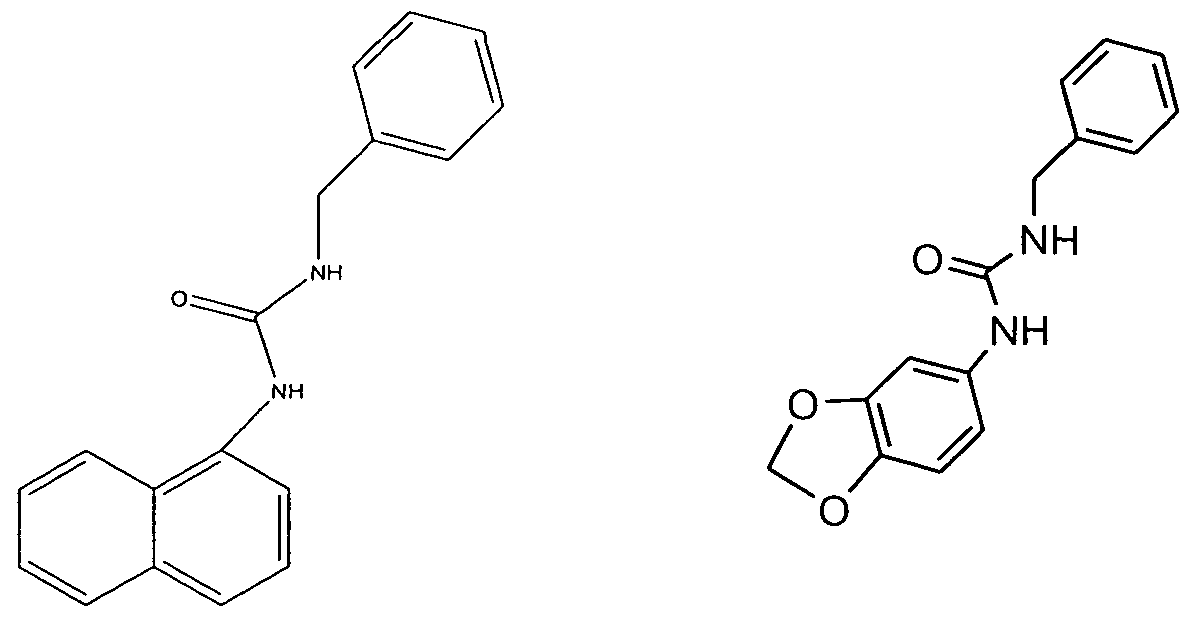
- Figure 1 Represents the IH-NMR and 13C-NMR spectra of l-Benzyl-3-naphtalen-l- yl-urea
- Figure 2. Represents the the I H-NMR and 13C-NMR spectra of 1 -Benzo[l ,3]dioxol-
- Figure 3 Diagram showing GSK-3 activity of l -Benzyl-3-naphtalen-l -yl-urea measured at different concentrations. The results are reflected in comparison with the control.
- Figure 4. Diagram showing GSK-3 activity of l-Benzo[l ,3]dioxol-5-yl-3-benzyl-urea measured at different concentrations. The results are reflected in comparison with the control.
- the urea derivatives of formula (I) according to the present invention are chemical entities which surprisingly have shown good inhibitory effects on GSK-3 enzyme, together with a good stability and low toxicity.
- the present invention is related to the use of compounds of formula (I) or any pharmaceutically acceptable salt, prodrug or solvate thereof, in the preparation of a medicament for the treatment of a disease or condition mediated by GSK-3.
- R 6 comprises an aromatic group and even more preferably R B has at least 10 aromatic carbon atoms.
- the compound of formula (1) has an aromatic group which is directly linked to the N atom of the urea group
- R B is a substituted or unsubstituted naphtyl group, preferably an unsubstituted alpha-naphtyl group
- R B IS selected from
- R 3 and R 4 are H
- GSK-3 mediated disease or condition means any disease or other deleterious condition or state in which GSK-3 is known to play a role.
- This disease or condition may be, but is not limited to, diabetes, conditions associated with diabetes, chronic neurodegenerative conditions including dementias such as Alzheimer's disease, Parkinson's disease, progressive supianuclear palsy, subacute sclerosing panencephalitic parkinsonism, postencephalitic parkinsonism, pugilistic encephalitis, guam parkinsonism-dementia complex, Pick's disease, corticobasal degeneration, frontotemporal dementia, Huntington's Disease, AIDS associated dementia, amyotrophic lateral sclerosis, multiple sclerosis and neurotraumatic diseases such as acute stroke, epilepsy, mood disorders such as depression, schizophrenia and bipolar disorders, promotion of functional recovery post stroke, cerebral bleeding such as due to solitary cerebral amyloid angiopathy, hair loss, obesity, hypertension, polycystic ovary syndrome
- the GSK-3 mediated disease or condition is either Alzheimer ' s Disease, type II diabetes, depression or brain injury
- Another aspect of the present invention is a pharmaceutical composition
- a pharmaceutical composition comprising a compound as defined above, or any pharmaceutically acceptable salt, prodrug or solvate thereof, and a pharmaceutically acceptable carrier adjuvant or vehicle; preferably, said pharmaceutical composition is for oral administration.
- Preferred diseases or conditions which may be treated with this pharmaceutical composition may be, but are not limited to, diabetes, conditions associated with diabetes, chronic neurodegenerative conditions including dementias such as Alzheimer's disease, Parkinson's disease, progressive supranuclear palsy, subacute sclerosing panencephalitic parkinsonism, postencephalitic parkinsonism, pugilistic encephalitis, guam parkinsonism-dementia complex, Pick's disease, corticobasal degeneration, frontotemporal dementia, Huntington's Disease, AIDS associated dementia, amyotrophic lateral sclerosis, multiple sclerosis and neurotraumatic diseases such as acute stroke, epilepsy, mood disorders such as depression, schizophrenia and bipolar disorders, promotion of functional recovery post stroke
- Another aspect of this invention relates to a method of treating or preventing an
- GSK-3 mediated disease or condition with a GSK-3 inhibitor which method comprises administering to a patient in need of such a treatment a therapeutically effective amount of a compound of formula (I) as defined above or a pharmaceutical composition thereof.
- the invention in another aspect relates to inhibiting GSK-3 activity in a biological sample with the compounds of formula (I), which method comprises contacting the biological sample with a GSK-3 inhibitor of formula (I).
- biological sample includes, without limitation, cell cultures or extracts thereof; preparations of an enzyme suitable for in vitro assay; biopsied material obtained from a mammal or extracts thereof; and blood, saliva, urine, feces, semen, tears, or other body fluids or extracts thereof.
- the invention is directed to the use of compounds of formula 1 as reactives for biological assays, in particular as a reactive for GSK-3 inhibition.
- the following terms have the meaning indicated:
- Alkyl refers to a straight or branched hydrocarbon chain radical consisting of carbon and hydrogen atoms, containing no saturation, having one to eight carbon atoms, and which is attached to the rest of the molecule by a single bond, e. g., methyl, ethyl, n-propyl, i-propyl, n-butyl, t-butyl, n-pentyl, etc.
- Alkyl radicals may be optionally substituted by one or more substituents such as halo, hydroxy, alkoxy, carboxy, cyano, carbonyl, acyl, alkoxycarbonyl, amino, nitro, mercapto and alkylthio.
- Alkoxy refers to a radical of the formula -OR a wherein R d is an alkyl radical as defined above, e. g., methoxy, ethoxy, propoxy, etc.
- Alkoxycarbonyl refers to a radical of the formula -C(O)OR 3 where R 1 , is an alkyl radical as defined above, e. g., methoxycarbonyl, ethoxycarbonyl, propoxycarbonyl, etc.
- Alkylthio refers to a radical of the formula -SR a where R a is an alkyl radical as defined above, e. g., methylthio, ethylthio, propylthio, etc.
- Amino refers to a radical of the formula-NI-b, -NHR a or -NR 3 R b , wherein R d and R b are independently a radical alkyl as defined above.
- Aryl refers to a phenyl, naphthyl, indenyl, fenanthryl or anthracyl radical, preferably phenyl or naphthyl radical.
- the aryl radical may be optionally substituted by one or more substituents such as hydroxy, mercapto, halo, alky], phenyl, alkoxy, haloalkyl, nitro, cyano, dialkylamino, aminoalkyl, acyl and alkoxycarbonyl, as defined herein.
- Alkyl refers to an aryl group linked to an alkyl group. Preferred examples include benzyl and phenethyl.
- Acyl refers to a radical of the formula-C(O)-R c and -C(O)-R d where R c is an alkyl radical as defined above and R d is an aryl radical as defined above, e. g., acetyl, propionyl, benzoyl, and the like.
- Aroylalkyl refers to an alkyl group substituted with -R 3 -C(O)-R d , wherein R a is an alkyl radical as defined above and R d is a radical aryl as defined above. Preferred examples include benzoylmethyl.
- Carboxy refers to a radical of the formula -C(O)OH.
- Cycloalkyl refers to a stable 3-to 10-membered monocyclic or bicyclic radical which is saturated or partially saturated, and which consist solely of carbon and hydrogen atoms. Unless otherwise stated specifically in the specification, the term “cycloalkyl” is meant to include cycloalkyl radicals which are optionally substituted by one or more such as alkyl, halo, hydroxy, amino, cyano, nitro, alkoxy, carboxy and alkoxycarbonyl.
- Halo refers to bromo, chloro, iodo or fluoro.
- Heterocycle refers to a heterocyclyl radical.
- the heterocycle refers to a stable 3-to 15 membered ring which consists of carbon atoms and from one to five heteroatoms selected from the group consisting of nitrogen, oxygen, and sulfur, preferably a 4-to 8-membered ring with one or more heteroatoms, more preferably a 5- or 6-membered ring with one or more heteroatoms.
- the heterocycle may be a monocyclic, bicyclic or tricyclic ring system, which may include fused ring systems; and the nitrogen, carbon or sulfur atoms in the heterocyclyl radical may be optionally oxidised; the nitrogen atom may be optionally quaternized; and the heterocyclyl radical may be partially or fully saturated or aromatic.
- heterocycles include, but are not limited to, azepines, benzimidazole, benzothiazole, furan, isothiazole, imidazole, indole, piperidine, piperazine, purine, quinoline, thiadiazole, tetrahydrofuran, thiadiazole, tetrahydrofuran, benzodioxol, thiophene, benzofurane, indazole, quinazoline, pyridazine, pyrimidine, pyrazine, pyridine, isoxazole, pyrrole, pyrazole, pyrane.
- azepines benzimidazole, benzothiazole, furan, isothiazole, imidazole, indole, piperidine, piperazine, purine, quinoline, thiadiazole, tetrahydrofuran, thiadiazole, tetrahydrofuran, be
- the compounds of the invention aie also meant to include compounds which differ only in the presence of one or more isotopically enriched atoms
- compounds having the present structures except for the replacement of a hydrogen by a deute ⁇ um or tritium, or the replacement of a carbon by a 13 C- or l 4 C-en ⁇ ched carbon or l 5 N-en ⁇ ched nitrogen are within the scope of this invention
- pharmaceutically acceptable salts, derivatives, solvates, piodrugs refers to any pharmaceutically acceptable salt, ester, solvate, or any other compound which, upon administration to the recipient is capable of providing (directly or indirectly) a compound as described herein
- non- pharmaceutically acceptable salts also fall within the scope of the invention since those may be useful in the preparation of pharmaceutically acceptable salts
- the preparation of salts, prodrugs and derivatives can be carried out by methods known in the art
- salts of compounds provided herein are synthesized from the parent compound which contains a basic or acidic moiety by conventional chemical methods
- such salts are, for example, prepared by reacting the free acid or base forms of these compounds with a stoichiometric amount of the appropriate base or acid in water or in an organic solvent or in a mixture of the two
- non-aqueous media like ether, ethyl acetate, ethanol, isopropanol or acetonit ⁇ le are preferred
- the acid addition salts include mineral acid addition salts such as, for example, hydrochloride, hydrobromide, hydroiodide, sulphate, nitrate, phosphate, and organic acid addition salts such as, for example, acetate, maleate, fumarate, citrate, oxalate, succinate, tartrate, malate, mandelate, methanesulphonate and p-toluenesulphonate
- the alkali addition salts such as, for example,
- Particularly favoured derivatives or prodrugs aie those that increase the bioavailability of the compounds of this invention when such compounds are administered to a patient (e g , by allowing an orally administered compound to be more readily absorbed into the blood) or which enhance delivery of the parent compound to a biological compartment (e g , the brain or lymphatic system) relative to the parent species
- prodrug is used in its bioadest sense and encompasses those de ⁇ vatives that are converted in vivo to the compounds of the invention
- Such derivatives would readily occui to those skilled in the art, and include, depending on the functional groups present in the molecule and without limitation, the following derivatives of the present compounds: esters, amino acid esters, phosphate esters, metal salts sulfonate esters, carbamates, and amides.
- Examples of well known methods of producing a prodrug of a given acting compound are known to those skilled in the art and can be found e.g. in Krogsgaard-Larsen et al. "Textbook of Drugdesign and Discovery” Taylor & Francis (April 2002).
- the compounds of the invention may be in crystalline form either as free compounds or as solvates (e.g. hydrates) and it is intended that both forms are within the scope of the present invention.
- Methods of solvation are generally known within the art. Suitable solvates are pharmaceutically acceptable solvates. In a particular embodiment the solvate is a hydrate.
- the compounds of formula (I) or their salts or solvates are preferably in pharmaceutically acceptable or substantially pure form.
- pharmaceutically acceptable form is meant, inter alia, having a pharmaceutically acceptable level of purity excluding normal pharmaceutical additives such as diluents and carriers, and including no material considered toxic at normal dosage levels.
- Purity levels for the drug substance are preferably above 50%, more preferably above 70%, most preferably above 90%. In a preferred embodiment it is above 95% of the compound of formula (I), or of its salts, solvates or prodrugs.
- the compounds of the present invention represented by the above described formula (1) may include enantiomers depending on the presence of chiral centres or isomers depending on the presence of multiple bonds (e.g. Z, E).
- the single isomers, enantiomers or diastereoisomers and mixtures thereof fall within the scope of the present invention.
- a suitable solvent such as N,N-dimethylformamide, dimethyl sulfoxide, dioxane, dichloromethane or tetrahydrofuran, at a temperature within the range of +20 to +150 0 C.
- One preferred pharmaceutically acceptable form is the crystalline form, including such form in a pharmaceutical composition.
- the additional ionic and solvent moieties must also be non-toxic.
- the compounds of the invention may present different polymorphic forms, it is intended that the invention encompasses all such forms.
- compositions include any solid (tablets, pills, capsules, granules etc.) or liquid (solutions, suspensions or emulsions) composition for oral, topical or parenteral administration.
- the pharmaceutical compositions are in oral form.
- Suitable dose forms for oral administration may be tablets and capsules and may contain conventional excipients known in the art such as binding agents, for example syrup, acacia, gelatin, sorbitol, tragacanth, or polyvinylpyrrolidone; fillers, for example lactose, sugar, maize starch, calcium phosphate, sorbitol or glycine; tabletting lubricants, for example magnesium stearate; disintegrants, for example starch, polyvinylpyrrolidone, sodium starch glycolate or microcrystalline cellulose; or pharmaceutically acceptable wetting agents such as sodium lauryl sulfate.
- binding agents for example syrup, acacia, gelatin, sorbitol, tragacanth, or polyvinylpyrrolidone
- fillers for example lactose, sugar, maize starch, calcium phosphate, sorbitol or glycine
- tabletting lubricants for example
- the solid oral compositions may be prepared by conventional methods of blending, filling or tabletting. Repeated blending operations may be used to distribute the active agent throughout those compositions employing large quantities of fillers. Such operations are conventional in the art.
- the tablets may for example be prepared by wet or dry granulation and optionally coated according to methods well known in normal pharmaceutical practice, in particular with an enteric coating.
- the pharmaceutical compositions may also be adapted for parenteral administration, such as sterile solutions, suspensions or lyophilized products in the appropriate unit dosage form. Adequate excipients can be used, such as bulking agents, buffering agents or surfactants.
- Administration of the compounds or compositions of the present invention may be by any suitable method, such as intravenous infusion, oral preparations, and intraperitoneal and intravenous administration. Oral administration is preferred because of the convenience for the patient and the chronic character of many of the diseases to be treated.
- an effective administered amount of a compound of the invention will depend on the relative efficacy of the compound chosen, the severity of the disorder being treated and the weight of the sufferer.
- active compounds will typically be administered once or more times a day for example 1 , 2, 3 or 4 times daily, with typical total daily doses in the range of from 0.1 to 1000 mg/kg/day.
- the compounds and compositions of this invention may be used with other drugs to provide a combination therapy.
- the other drugs may form part of the same composition, or be provided as a separate composition for administration at the same time or at different time.
- the GSK-3 ⁇ activity was determined by incubation of a mixture of recombinant human GSK-3 enzyme, a phosphate source and GSK-3 substrate in the presence and in the absence of the corresponding test compound, and by measuring the GSK-3 activity of this mixture.
- Recombinant human glycogen synthase kinase 3 ⁇ was assayed in MOPS 8 mM pH 7.3, EDTA 0.2 mM, MgCl 2 10 mM and sodium orthovanadate 0.25 mM in the presence of 62.5 ⁇ M of Phospho-Glycogen Synthase Peptide-2 (GS-2), 0.5 ⁇ Ci ⁇ - 33 P- ATP and unlabelled ATP at a final concentration of 12.5 ⁇ M.
- the final assay volume was 20 ⁇ l. After incubation for 30 minutes at 30 0 C, 15 ⁇ l aliquots were spotted onto P81 phosphocellulose papers.
- the compounds' IC50 values were calculated analyzing inhibition curves by non-linear regression using GraphPad Prism.
- the IC50 (concentration at which 50 % of enzyme inhibition is shown) values are gathered in table 1 :
Landscapes
- Health & Medical Sciences (AREA)
- Chemical & Material Sciences (AREA)
- Organic Chemistry (AREA)
- Life Sciences & Earth Sciences (AREA)
- Veterinary Medicine (AREA)
- Public Health (AREA)
- General Health & Medical Sciences (AREA)
- Medicinal Chemistry (AREA)
- Animal Behavior & Ethology (AREA)
- Pharmacology & Pharmacy (AREA)
- Engineering & Computer Science (AREA)
- Bioinformatics & Cheminformatics (AREA)
- Chemical Kinetics & Catalysis (AREA)
- Nuclear Medicine, Radiotherapy & Molecular Imaging (AREA)
- General Chemical & Material Sciences (AREA)
- Neurology (AREA)
- Biomedical Technology (AREA)
- Neurosurgery (AREA)
- Epidemiology (AREA)
- Diabetes (AREA)
- Psychiatry (AREA)
- Heart & Thoracic Surgery (AREA)
- Pain & Pain Management (AREA)
- Cardiology (AREA)
- Hematology (AREA)
- Psychology (AREA)
- Virology (AREA)
- Endocrinology (AREA)
- Dermatology (AREA)
- Obesity (AREA)
- Rheumatology (AREA)
- Oncology (AREA)
- Hospice & Palliative Care (AREA)
- Communicable Diseases (AREA)
- Molecular Biology (AREA)
- Tropical Medicine & Parasitology (AREA)
- AIDS & HIV (AREA)
- Emergency Medicine (AREA)
- Vascular Medicine (AREA)
- Urology & Nephrology (AREA)
Abstract
Description







Claims


Priority Applications (19)
| Application Number | Priority Date | Filing Date | Title |
|---|---|---|---|
| DK06776492.8T DK1919465T3 (en) | 2005-07-29 | 2006-07-28 | GSK-3 inhibitors |
| CA2616451A CA2616451C (en) | 2005-07-29 | 2006-07-28 | Substituted benzyl derivatives as gsk-3 inhibitors |
| US11/996,962 US8686042B2 (en) | 2005-07-29 | 2006-07-28 | GSK-3 inhibitors |
| HRP20180109TT HRP20180109T1 (en) | 2005-07-29 | 2006-07-28 | GSK-3 INHIBITORS |
| SI200632241T SI1919465T1 (en) | 2005-07-29 | 2006-07-28 | Gsk-3 inhibitors |
| BRPI0615968-0A BRPI0615968B1 (en) | 2005-07-29 | 2006-07-28 | USE OF A COMPOUND, COMPOUND AND PHARMACEUTICAL COMPOSITION |
| HK09101997.2A HK1124761B (en) | 2005-07-29 | 2006-07-28 | Gsk-3 inhibitors |
| KR1020087004188A KR101471999B1 (en) | 2005-07-29 | 2006-07-28 | GSK-3 inhibitor |
| ES06776492.8T ES2661326T3 (en) | 2005-07-29 | 2006-07-28 | GSK-3 inhibitors |
| PL06776492T PL1919465T3 (en) | 2005-07-29 | 2006-07-28 | Gsk-3 inhibitors |
| LTEP06776492.8T LT1919465T (en) | 2005-07-29 | 2006-07-28 | Gsk-3 inhibitors |
| JP2008523261A JP5484726B2 (en) | 2005-07-29 | 2006-07-28 | GSK-3 inhibitor |
| EP06776492.8A EP1919465B1 (en) | 2005-07-29 | 2006-07-28 | Gsk-3 inhibitors |
| CN2006800275243A CN101257900B (en) | 2005-07-29 | 2006-07-28 | Gsk-3 inhibitors |
| AU2006278829A AU2006278829B2 (en) | 2005-07-29 | 2006-07-28 | GSK-3 inhibitors |
| NZ566380A NZ566380A (en) | 2005-07-29 | 2006-07-28 | GSK-3 inhibitors |
| IL189048A IL189048A (en) | 2005-07-29 | 2008-01-27 | Urea derivatives as gsk-3 inhibitors |
| NO20081052A NO341454B1 (en) | 2005-07-29 | 2008-02-28 | GSK-3 inhibitors |
| CY20181100217T CY1119971T1 (en) | 2005-07-29 | 2018-02-22 | Suspensions GSK-3 |
Applications Claiming Priority (2)
| Application Number | Priority Date | Filing Date | Title |
|---|---|---|---|
| EP05380176A EP1749523A1 (en) | 2005-07-29 | 2005-07-29 | GSK-3 inhibitors |
| EP05380176.7 | 2005-07-29 |
Publications (2)
| Publication Number | Publication Date |
|---|---|
| WO2007017145A2 true WO2007017145A2 (en) | 2007-02-15 |
| WO2007017145A3 WO2007017145A3 (en) | 2007-04-26 |
Family
ID=35445902
Family Applications (1)
| Application Number | Title | Priority Date | Filing Date |
|---|---|---|---|
| PCT/EP2006/007520 Ceased WO2007017145A2 (en) | 2005-07-29 | 2006-07-28 | Gsk-3 inhibitors |
Country Status (23)
| Country | Link |
|---|---|
| US (1) | US8686042B2 (en) |
| EP (2) | EP1749523A1 (en) |
| JP (1) | JP5484726B2 (en) |
| KR (1) | KR101471999B1 (en) |
| CN (1) | CN101257900B (en) |
| AU (1) | AU2006278829B2 (en) |
| BR (1) | BRPI0615968B1 (en) |
| CA (1) | CA2616451C (en) |
| CY (1) | CY1119971T1 (en) |
| DK (1) | DK1919465T3 (en) |
| ES (1) | ES2661326T3 (en) |
| HR (1) | HRP20180109T1 (en) |
| HU (1) | HUE036844T2 (en) |
| IL (1) | IL189048A (en) |
| LT (1) | LT1919465T (en) |
| NO (1) | NO341454B1 (en) |
| NZ (1) | NZ566380A (en) |
| PL (1) | PL1919465T3 (en) |
| PT (1) | PT1919465T (en) |
| RU (1) | RU2449998C2 (en) |
| SI (1) | SI1919465T1 (en) |
| WO (1) | WO2007017145A2 (en) |
| ZA (1) | ZA200800983B (en) |
Cited By (10)
| Publication number | Priority date | Publication date | Assignee | Title |
|---|---|---|---|---|
| WO2009130317A1 (en) * | 2008-04-24 | 2009-10-29 | Abbott Gmbh & Co. Kg | 1- (7-(hexahydropyrrolo [3, 4-c] pyrrol-2 (1h) -yl) quin0lin-4-yl) -3- (pyrazin-2-yl) urea derivatives and related compounds as glycogen synthase kinase 3 (gsk-3) |
| JP2011513483A (en) * | 2008-03-10 | 2011-04-28 | バーテックス ファーマシューティカルズ インコーポレイテッド | Pyrimidines and pyridines useful as inhibitors of protein kinases |
| US8642598B2 (en) | 2006-10-21 | 2014-02-04 | Abbvie Inc. | Heterocyclic compounds and their use as glycogen synthase kinase 3 inhibitors |
| US9540370B2 (en) | 2010-12-30 | 2017-01-10 | Abbvie Deutschland Gmbh & Co., Kg. | Heterocyclic compounds and their use as glycogen synthase kinase-3 inhibitors |
| US9771361B2 (en) | 2013-11-13 | 2017-09-26 | Vertex Pharmaceuticals Incorporated | Inhibitors of influenza viruses replication |
| US9808459B2 (en) | 2009-06-17 | 2017-11-07 | Vertex Pharmaceuticals Incorporated | Inhibitors of influenza viruses replication |
| US10023569B2 (en) | 2013-11-13 | 2018-07-17 | Vertex Pharmaceuticals Incorporated | Methods of preparing inhibitors of influenza viruses replication |
| US10100048B2 (en) | 2010-09-27 | 2018-10-16 | AbbVie Deutschland GmbH & Co. KG | Heterocyclic compounds and their use as glycogen synthase kinase-3 inhibitors |
| US10273233B2 (en) | 2015-05-13 | 2019-04-30 | Vertex Pharmaceuticals Incorporated | Inhibitors of influenza viruses replication |
| US10533004B2 (en) | 2015-05-13 | 2020-01-14 | Vertex Pharmaceuticals Incorporated | Methods of preparing inhibitors of influenza viruses replication |
Families Citing this family (14)
| Publication number | Priority date | Publication date | Assignee | Title |
|---|---|---|---|---|
| MX2010008706A (en) * | 2008-02-06 | 2010-08-30 | Noscira Sa | Phenyl-prenyl derivatives, of marine and synthetic origin, for the treatment of cognitive, neurodegenerative or neuronal diseases or disorders. |
| EP2854539A4 (en) * | 2012-05-14 | 2016-03-09 | Univ Kansas | PHOSPHONATE DERIVATIVES FOR THE TREATMENT OF ALZHEIMER'S DISEASE |
| BR112015023261A2 (en) | 2013-03-14 | 2017-07-18 | Massachusetts Inst Technology | compositions and methods for epithelial stem cell expansion and culture |
| CN107073042A (en) | 2014-09-03 | 2017-08-18 | 布里格海姆妇女医院公司 | Compositions, systems and methods for generating inner ear hair cells to treat hearing loss |
| CA3010610A1 (en) | 2016-01-08 | 2017-07-13 | The Brigham And Women's Hospital, Inc. | Production of differentiated enteroendocrine cells and insulin producing cells |
| US10213511B2 (en) | 2016-03-02 | 2019-02-26 | Frequency Therapeutics, Inc. | Thermoreversible compositions for administration of therapeutic agents |
| US10201540B2 (en) | 2016-03-02 | 2019-02-12 | Frequency Therapeutics, Inc. | Solubilized compositions for controlled proliferation of stem cells / generating inner ear hair cells using GSK3 inhibitors: I |
| US11260130B2 (en) | 2016-03-02 | 2022-03-01 | Frequency Therapeutics, Inc. | Solubilized compositions for controlled proliferation of stem cells / generating inner ear hair cells using a GSK3 inhibitor: IV |
| CN106727556B (en) * | 2016-11-30 | 2017-10-20 | 鑫喆喆 | A kind of pharmaceutical composition for treating brain damage |
| AU2017386417B2 (en) | 2016-12-30 | 2022-07-14 | Frequency Therapeutics, Inc. | 1H-pyrrole-2,5-dione compounds and methods of using them to induce self-renewal of stem/progenitor supporting cells |
| WO2020037323A1 (en) | 2018-08-17 | 2020-02-20 | Frequency Therapeutics, Inc. | Compositions and methods for generating hair cells by upregulating jag-1 |
| WO2020037326A1 (en) | 2018-08-17 | 2020-02-20 | Frequency Therapeutics, Inc. | Compositions and methods for generating hair cells by downregulating foxo |
| WO2020163812A1 (en) | 2019-02-08 | 2020-08-13 | Frequency Therapeutics, Inc. | Valproic acid compounds and wnt agonists for treating ear disorders |
| CN117186027B (en) * | 2023-09-11 | 2024-04-19 | 上海蓝木化工有限公司 | Glycogen synthase kinase-3 inhibitor and preparation method thereof |
Family Cites Families (19)
| Publication number | Priority date | Publication date | Assignee | Title |
|---|---|---|---|---|
| GB895625A (en) * | 1957-12-27 | 1962-05-02 | Hoechst Ag | New benzene-sulphonyl benzyl-ureas and process of preparing them |
| ES474449A1 (en) * | 1978-10-23 | 1979-05-01 | Invest Tecnica Aplicada | Anti-ulcer compositions |
| DE3371508D1 (en) * | 1983-01-24 | 1987-06-19 | Duphar Int Res | Benzoylurea compounds, and pesticidal and pharmaceutical compositions comprising same |
| JPH10182588A (en) * | 1996-10-30 | 1998-07-07 | Ss Pharmaceut Co Ltd | Substituted benzyl urea derivatives and pharmaceuticals containing the same |
| US5922767A (en) * | 1996-10-30 | 1999-07-13 | Ss Pharmaceutical Co., Ltd. | Substituted benzylurea derivatives and medicine containing the same |
| US6071934A (en) * | 1997-03-25 | 2000-06-06 | Cell Pathways, Inc. | Indenyl hydroxamic acids, (hydroxy) ureas and urethanes for treating patients with precancerous lesions |
| NZ504124A (en) * | 1997-11-07 | 2002-10-25 | Schering Corp | Phenyl-alkyl-imidazoles and use in treating inflammatory disease |
| PE20000942A1 (en) * | 1998-07-31 | 2000-09-28 | Lilly Co Eli | DERIVATIVES OF AMIDE, CARBAMATE AND UREA |
| EP1274415A4 (en) * | 2000-03-14 | 2005-09-07 | Smithkline Beecham Corp | Il-8 receptor antagonists |
| WO2002029091A2 (en) * | 2000-10-02 | 2002-04-11 | Reddy Us Therapeutics, Inc. | Methods and compositions for the treatment of inflammatory diseases |
| SE0102440D0 (en) | 2001-07-05 | 2001-07-05 | Astrazeneca Ab | New compound |
| SE0102439D0 (en) * | 2001-07-05 | 2001-07-05 | Astrazeneca Ab | New compounds |
| SE0102438D0 (en) | 2001-07-05 | 2001-07-05 | Astrazeneca Ab | New compounds |
| AR039209A1 (en) * | 2002-04-03 | 2005-02-09 | Novartis Ag | INDOLILMALEIMIDA DERIVATIVES |
| SE0201194D0 (en) * | 2002-04-19 | 2002-04-19 | Astrazeneca Ab | New compounds |
| EP2573079A3 (en) * | 2002-08-23 | 2015-03-11 | Novartis AG | Benzimidazole quinolinones and uses thereof |
| EP1493438A1 (en) * | 2003-07-03 | 2005-01-05 | Bayer HealthCare AG | Vanilloid receptor (VR) inhibitors for treatment of Human Immunodeficiency Virus (HIV)-mediated pain states |
| TWI372050B (en) * | 2003-07-03 | 2012-09-11 | Astex Therapeutics Ltd | (morpholin-4-ylmethyl-1h-benzimidazol-2-yl)-1h-pyrazoles |
| EP1586318A1 (en) * | 2004-04-05 | 2005-10-19 | Neuropharma S.A.U. | Thiadiazolidinones as GSK-3 inhibitors |
-
2005
- 2005-07-29 EP EP05380176A patent/EP1749523A1/en not_active Withdrawn
-
2006
- 2006-07-28 ZA ZA200800983A patent/ZA200800983B/en unknown
- 2006-07-28 AU AU2006278829A patent/AU2006278829B2/en not_active Ceased
- 2006-07-28 RU RU2008107733/04A patent/RU2449998C2/en active
- 2006-07-28 BR BRPI0615968-0A patent/BRPI0615968B1/en not_active IP Right Cessation
- 2006-07-28 PT PT67764928T patent/PT1919465T/en unknown
- 2006-07-28 JP JP2008523261A patent/JP5484726B2/en not_active Expired - Lifetime
- 2006-07-28 CA CA2616451A patent/CA2616451C/en not_active Expired - Lifetime
- 2006-07-28 ES ES06776492.8T patent/ES2661326T3/en not_active Expired - Lifetime
- 2006-07-28 NZ NZ566380A patent/NZ566380A/en active IP Right Revival
- 2006-07-28 WO PCT/EP2006/007520 patent/WO2007017145A2/en not_active Ceased
- 2006-07-28 US US11/996,962 patent/US8686042B2/en not_active Expired - Fee Related
- 2006-07-28 DK DK06776492.8T patent/DK1919465T3/en active
- 2006-07-28 CN CN2006800275243A patent/CN101257900B/en not_active Expired - Fee Related
- 2006-07-28 PL PL06776492T patent/PL1919465T3/en unknown
- 2006-07-28 KR KR1020087004188A patent/KR101471999B1/en not_active Expired - Lifetime
- 2006-07-28 HR HRP20180109TT patent/HRP20180109T1/en unknown
- 2006-07-28 HU HUE06776492A patent/HUE036844T2/en unknown
- 2006-07-28 SI SI200632241T patent/SI1919465T1/en unknown
- 2006-07-28 EP EP06776492.8A patent/EP1919465B1/en not_active Expired - Lifetime
- 2006-07-28 LT LTEP06776492.8T patent/LT1919465T/en unknown
-
2008
- 2008-01-27 IL IL189048A patent/IL189048A/en active IP Right Grant
- 2008-02-28 NO NO20081052A patent/NO341454B1/en unknown
-
2018
- 2018-02-22 CY CY20181100217T patent/CY1119971T1/en unknown
Non-Patent Citations (1)
| Title |
|---|
| None |
Cited By (19)
| Publication number | Priority date | Publication date | Assignee | Title |
|---|---|---|---|---|
| US9856234B2 (en) | 2006-10-21 | 2018-01-02 | AbbVie Deutschland GmbH & Co. KG | Heterocyclic compounds and their use as glycogen synthase kinase 3 inhibitors |
| US8642598B2 (en) | 2006-10-21 | 2014-02-04 | Abbvie Inc. | Heterocyclic compounds and their use as glycogen synthase kinase 3 inhibitors |
| JP2011513483A (en) * | 2008-03-10 | 2011-04-28 | バーテックス ファーマシューティカルズ インコーポレイテッド | Pyrimidines and pyridines useful as inhibitors of protein kinases |
| US20110105528A1 (en) * | 2008-04-24 | 2011-05-05 | Abbott Gmbh & Co. Kg | 1-(7-(hexahydropyrrolo [3, 4-c] pyrrol-2 (1h)-yl) quinolin-4-yl) -3- (pyrazin-2-yl) urea derivatives and related compounds as glycogen synthase kinase 3 (gsk-3) |
| JP2011518809A (en) * | 2008-04-24 | 2011-06-30 | アボット ゲーエムベーハー ウント カンパニー カーゲー | 1- (7- (Hexahydropyrrolo [3,4-C] pyrrol-2 (1H) -yl) quinolin-4-yl) -3- (pyrazine-2) as glycogen synthase kinase 3 (GSK-3) -Yl) urea derivatives and related compounds |
| US8455648B2 (en) | 2008-04-24 | 2013-06-04 | Abbott Gmbh & Co. Kg | 1-(7-(hexahydropyrrolo [3,4-c] pyrrol-2 (1H)-yl) quinolin-4-yl) -3- (pyrazin-2-yl) urea derivatives and related compounds as glycogen synthase kinase 3 (GSK-3) |
| CN102015718B (en) * | 2008-04-24 | 2014-12-10 | Abbvie德国有限责任两合公司 | 1- (7-(hexahydropyrrolo [3, 4-C] pyrrol-2 (1H) -yl) quin0lin-4-yl) -3- (pyrazin-2-yl) urea derivatives and related compounds as glycogen synthase kinase 3 (GSK-3) |
| WO2009130317A1 (en) * | 2008-04-24 | 2009-10-29 | Abbott Gmbh & Co. Kg | 1- (7-(hexahydropyrrolo [3, 4-c] pyrrol-2 (1h) -yl) quin0lin-4-yl) -3- (pyrazin-2-yl) urea derivatives and related compounds as glycogen synthase kinase 3 (gsk-3) |
| US10039762B2 (en) | 2009-06-17 | 2018-08-07 | Vertex Pharmaceuticals Incorporated | Inhibitors of influenza viruses replication |
| US9808459B2 (en) | 2009-06-17 | 2017-11-07 | Vertex Pharmaceuticals Incorporated | Inhibitors of influenza viruses replication |
| US10874673B2 (en) | 2009-06-17 | 2020-12-29 | Vertex Pharmaceuticals Incorporated | Inhibitors of influenza viruses replication |
| US10100048B2 (en) | 2010-09-27 | 2018-10-16 | AbbVie Deutschland GmbH & Co. KG | Heterocyclic compounds and their use as glycogen synthase kinase-3 inhibitors |
| US9540370B2 (en) | 2010-12-30 | 2017-01-10 | Abbvie Deutschland Gmbh & Co., Kg. | Heterocyclic compounds and their use as glycogen synthase kinase-3 inhibitors |
| US9771361B2 (en) | 2013-11-13 | 2017-09-26 | Vertex Pharmaceuticals Incorporated | Inhibitors of influenza viruses replication |
| US10023569B2 (en) | 2013-11-13 | 2018-07-17 | Vertex Pharmaceuticals Incorporated | Methods of preparing inhibitors of influenza viruses replication |
| US10640501B2 (en) | 2013-11-13 | 2020-05-05 | Vertex Pharmaceuticals Incorporated | Methods of preparing inhibitors of influenza viruses replication |
| US11345700B2 (en) | 2013-11-13 | 2022-05-31 | Vertex Pharmaceuticals Incorporated | Methods of preparing inhibitors of influenza viruses replication |
| US10273233B2 (en) | 2015-05-13 | 2019-04-30 | Vertex Pharmaceuticals Incorporated | Inhibitors of influenza viruses replication |
| US10533004B2 (en) | 2015-05-13 | 2020-01-14 | Vertex Pharmaceuticals Incorporated | Methods of preparing inhibitors of influenza viruses replication |
Also Published As
Similar Documents
| Publication | Publication Date | Title |
|---|---|---|
| AU2006278829B2 (en) | GSK-3 inhibitors | |
| AU2005230392B2 (en) | Thiadiazolidinones as GSK-3 inhibitors | |
| AU2007245625B2 (en) | N- ( 2-thiazolyl) -amide derivatives as GSK-3 inhibitors | |
| PT1024138E (en) | Pyrazole derivatives | |
| HK1124761B (en) | Gsk-3 inhibitors |
Legal Events
| Date | Code | Title | Description |
|---|---|---|---|
| 121 | Ep: the epo has been informed by wipo that ep was designated in this application | ||
| WWE | Wipo information: entry into national phase |
Ref document number: 2006776492 Country of ref document: EP |
|
| WWE | Wipo information: entry into national phase |
Ref document number: 2616451 Country of ref document: CA |
|
| WWE | Wipo information: entry into national phase |
Ref document number: 189048 Country of ref document: IL |
|
| WWE | Wipo information: entry into national phase |
Ref document number: 200680027524.3 Country of ref document: CN Ref document number: MX/a/2008/001318 Country of ref document: MX |
|
| WWE | Wipo information: entry into national phase |
Ref document number: 2008523261 Country of ref document: JP |
|
| NENP | Non-entry into the national phase |
Ref country code: DE |
|
| WWE | Wipo information: entry into national phase |
Ref document number: 2006278829 Country of ref document: AU |
|
| WWE | Wipo information: entry into national phase |
Ref document number: 1020087004188 Country of ref document: KR |
|
| WWE | Wipo information: entry into national phase |
Ref document number: 885/KOLNP/2008 Country of ref document: IN |
|
| WWE | Wipo information: entry into national phase |
Ref document number: 2008107733 Country of ref document: RU Ref document number: 566380 Country of ref document: NZ |
|
| ENP | Entry into the national phase |
Ref document number: 2006278829 Country of ref document: AU Date of ref document: 20060728 Kind code of ref document: A |
|
| WWP | Wipo information: published in national office |
Ref document number: 2006278829 Country of ref document: AU |
|
| WWP | Wipo information: published in national office |
Ref document number: 2006776492 Country of ref document: EP |
|
| WWE | Wipo information: entry into national phase |
Ref document number: 11996962 Country of ref document: US |
|
| ENP | Entry into the national phase |
Ref document number: PI0615968 Country of ref document: BR Kind code of ref document: A2 Effective date: 20080129 |
|
| WWW | Wipo information: withdrawn in national office |
Ref document number: 566380 Country of ref document: NZ |