WO2007105650A1 - 4-ヒドロキシイソロイシン誘導体および同誘導体の製造方法 - Google Patents
4-ヒドロキシイソロイシン誘導体および同誘導体の製造方法 Download PDFInfo
- Publication number
- WO2007105650A1 WO2007105650A1 PCT/JP2007/054716 JP2007054716W WO2007105650A1 WO 2007105650 A1 WO2007105650 A1 WO 2007105650A1 JP 2007054716 W JP2007054716 W JP 2007054716W WO 2007105650 A1 WO2007105650 A1 WO 2007105650A1
- Authority
- WO
- WIPO (PCT)
- Prior art keywords
- group
- substituent
- alkyl group
- heterocyclic
- hydrogen atom
- Prior art date
- Legal status (The legal status is an assumption and is not a legal conclusion. Google has not performed a legal analysis and makes no representation as to the accuracy of the status listed.)
- Ceased
Links
Classifications
-
- C—CHEMISTRY; METALLURGY
- C07—ORGANIC CHEMISTRY
- C07K—PEPTIDES
- C07K5/00—Peptides containing up to four amino acids in a fully defined sequence; Derivatives thereof
- C07K5/02—Peptides containing up to four amino acids in a fully defined sequence; Derivatives thereof containing at least one abnormal peptide link
- C07K5/0202—Peptides containing up to four amino acids in a fully defined sequence; Derivatives thereof containing at least one abnormal peptide link containing the structure -NH-X-X-C(=0)-, X being an optionally substituted carbon atom or a heteroatom, e.g. beta-amino acids
-
- C—CHEMISTRY; METALLURGY
- C07—ORGANIC CHEMISTRY
- C07D—HETEROCYCLIC COMPOUNDS
- C07D265/00—Heterocyclic compounds containing six-membered rings having one nitrogen atom and one oxygen atom as the only ring hetero atoms
- C07D265/04—1,3-Oxazines; Hydrogenated 1,3-oxazines
- C07D265/06—1,3-Oxazines; Hydrogenated 1,3-oxazines not condensed with other rings
-
- C—CHEMISTRY; METALLURGY
- C07—ORGANIC CHEMISTRY
- C07D—HETEROCYCLIC COMPOUNDS
- C07D295/00—Heterocyclic compounds containing polymethylene-imine rings with at least five ring members, 3-azabicyclo [3.2.2] nonane, piperazine, morpholine or thiomorpholine rings, having only hydrogen atoms directly attached to the ring carbon atoms
- C07D295/16—Heterocyclic compounds containing polymethylene-imine rings with at least five ring members, 3-azabicyclo [3.2.2] nonane, piperazine, morpholine or thiomorpholine rings, having only hydrogen atoms directly attached to the ring carbon atoms acylated on ring nitrogen atoms
- C07D295/18—Heterocyclic compounds containing polymethylene-imine rings with at least five ring members, 3-azabicyclo [3.2.2] nonane, piperazine, morpholine or thiomorpholine rings, having only hydrogen atoms directly attached to the ring carbon atoms acylated on ring nitrogen atoms by radicals derived from carboxylic acids, or sulfur or nitrogen analogues thereof
-
- C—CHEMISTRY; METALLURGY
- C07—ORGANIC CHEMISTRY
- C07D—HETEROCYCLIC COMPOUNDS
- C07D413/00—Heterocyclic compounds containing two or more hetero rings, at least one ring having nitrogen and oxygen atoms as the only ring hetero atoms
- C07D413/02—Heterocyclic compounds containing two or more hetero rings, at least one ring having nitrogen and oxygen atoms as the only ring hetero atoms containing two hetero rings
- C07D413/12—Heterocyclic compounds containing two or more hetero rings, at least one ring having nitrogen and oxygen atoms as the only ring hetero atoms containing two hetero rings linked by a chain containing hetero atoms as chain links
-
- C—CHEMISTRY; METALLURGY
- C07—ORGANIC CHEMISTRY
- C07K—PEPTIDES
- C07K5/00—Peptides containing up to four amino acids in a fully defined sequence; Derivatives thereof
- C07K5/04—Peptides containing up to four amino acids in a fully defined sequence; Derivatives thereof containing only normal peptide links
- C07K5/06—Dipeptides
- C07K5/06008—Dipeptides with the first amino acid being neutral
- C07K5/06017—Dipeptides with the first amino acid being neutral and aliphatic
- C07K5/06034—Dipeptides with the first amino acid being neutral and aliphatic the side chain containing 2 to 4 carbon atoms
-
- C—CHEMISTRY; METALLURGY
- C07—ORGANIC CHEMISTRY
- C07K—PEPTIDES
- C07K5/00—Peptides containing up to four amino acids in a fully defined sequence; Derivatives thereof
- C07K5/04—Peptides containing up to four amino acids in a fully defined sequence; Derivatives thereof containing only normal peptide links
- C07K5/06—Dipeptides
- C07K5/06139—Dipeptides with the first amino acid being heterocyclic
-
- C—CHEMISTRY; METALLURGY
- C07—ORGANIC CHEMISTRY
- C07K—PEPTIDES
- C07K5/00—Peptides containing up to four amino acids in a fully defined sequence; Derivatives thereof
- C07K5/04—Peptides containing up to four amino acids in a fully defined sequence; Derivatives thereof containing only normal peptide links
- C07K5/08—Tripeptides
- C07K5/0802—Tripeptides with the first amino acid being neutral
- C07K5/0804—Tripeptides with the first amino acid being neutral and aliphatic
- C07K5/0808—Tripeptides with the first amino acid being neutral and aliphatic the side chain containing 2 to 4 carbon atoms, e.g. Val, Ile, Leu
-
- Y—GENERAL TAGGING OF NEW TECHNOLOGICAL DEVELOPMENTS; GENERAL TAGGING OF CROSS-SECTIONAL TECHNOLOGIES SPANNING OVER SEVERAL SECTIONS OF THE IPC; TECHNICAL SUBJECTS COVERED BY FORMER USPC CROSS-REFERENCE ART COLLECTIONS [XRACs] AND DIGESTS
- Y02—TECHNOLOGIES OR APPLICATIONS FOR MITIGATION OR ADAPTATION AGAINST CLIMATE CHANGE
- Y02P—CLIMATE CHANGE MITIGATION TECHNOLOGIES IN THE PRODUCTION OR PROCESSING OF GOODS
- Y02P20/00—Technologies relating to chemical industry
- Y02P20/50—Improvements relating to the production of bulk chemicals
- Y02P20/55—Design of synthesis routes, e.g. reducing the use of auxiliary or protecting groups
Definitions
- the present invention relates to a 4-hydroxyisoleucine derivative and a method for producing the derivative.
- HIL 4-Hydroxyisoleucine
- This 4-hydroxyisoleucine has a blood glucose level-dependent insulin secretion promoting activity (Non-patent Document 2, Patent Document 1), an insulin sensitivity enhancing action (Non-patent Document 3, Patent Document 2), Have been reported to promote glycogen production (Non-patent Document 4, Patent Document 3), and protect skin and scalp (Patent Document 4). Drugs, health food materials and cosmetics to which these effects are applied Useful as a material.
- Patent Document 1 EP587476
- Patent Document 2 WO200lZ015689
- Patent Document 3 WO2005Z039626
- Patent Document 4 WO2004Z087091, US2005 / 019357
- Patent Document 5 WO2005Z012334, WO2005 / 012542
- Non-patent literature l Phytochemistry, vol.12, 1707, 1973
- Non-Patent Document 2 Diabetes, Vol. 47, Issue 2 206-210, 1988
- Non Patent Literature 3 American Journal of Pnysiology Endocrinology ana Metabolism, Vol.2 87, E463-E471, 2004
- Non-Patent Document 4 Amino Acids, vol.28, 71, 2005
- Non-Patent Document 5 European Journal of Pharmacology, vol.390, 339, 2000
- Non-Patent Document 6 Liebigs Annalen der Chemie, vol.9, 803, 1987
- a structural feature of 4-hydroxyisoleucine is that it has a methyl group and a hydroxyl group in the side chain in a unique configuration, and this point is greatly different from other amino acids.
- This characteristic side chain structure is thought to contribute to the expression of a unique physiological activity.
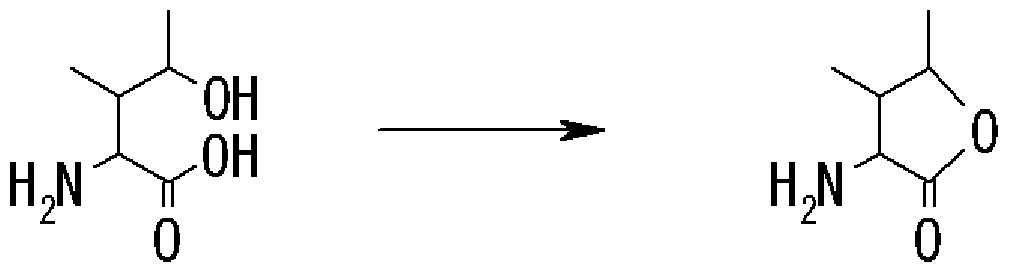
- this characteristic structure has the disadvantage that the hydroxyl group and carboxylic acid in the molecule easily form lactone and lose its physiological activity, as shown in the following scheme.
- the ratatatoni occurs under acidic conditions and is particularly prominent especially in the stomach (Non-patent Document 5). Similar structural changes are also expected in cosmetics and foods that are mixed with acidic substances.
- an object of the present invention is to provide a stable derivative of 4-hydroxyisoleucine, and also to provide a method for producing a powerful derivative.
- the present inventors have focused on the amides of carboxylic acids and studied the synthesis of various amide derivatives as a method for preventing exogeneization while maintaining the hydroxyl group of the side chain. did.
- the C-terminal carboxylic acid of 4-hydroxyisoleucine is used as an amido compound, the ratatoni in the molecule is not obtained even if the N-terminal amino group is protected with a normal protecting group and then condensed with the amine compound. It progressed quickly and it was found that the desired amide derivative could not be obtained.
- the present inventors have focused on a method of protecting the hydroxyl group and amino group of 4-hydroxyisoleucine with aminal and then protecting the N-terminal with a general protecting group and then subjecting it to a condensation reaction.
- Amino-4-hydroxy mono (4-hydroxyphenol) 3 Methyl butanoic acid and other special ⁇ -positioned hydroxyl group
- a method for protecting the hydroxyl group and amino group in amino acid with amino acid is known (non-patent Reference 6), there was no knowledge about whether the powerful method could be applied to 4-hydroxyisoleucine.
- the present inventors reacted 4-hydroxyisoleucine with formaldehyde or ⁇ -trobenzaldehyde to form an aminal form of a hydroxyl group and an amino group, and then, if necessary, an amino group protecting group.
- an amide compound by condensing an N-terminal protected compound and an amine compound such as an amino acid, that is, by appropriately protecting the hydroxyl group and the N-terminal amino group in this way, Found that it would be possible.
- Thereafter, by deprotecting the N-terminal protecting group and aminal it was possible to obtain a derivative in which the C-terminal carboxylic acid of 4-hydroxyisoleucine was amidated.
- Q 1 and Q 2 each independently have a hydrogen atom, an alkyl group that may have a substituent, an aryl group that may have a substituent, or a substituent.
- a compound having a heterocyclic group or a substituent which may be optionally represented by a cycloalkyl group hereinafter also referred to as compound (A)
- compound (IV) Reacted with general formula (IV)
- n, m, o, p and 1 each independently represent 0 or 1 (provided that n + m and o + p are not 0);
- R 3a , R 3b , R 3c , R 3d , R 4a , R 4b , R 4c and R 4d each independently have a hydrogen atom, an alkyl group which may have a substituent, or a substituent.
- R 5 represents a hydrogen atom, an alkyl group which may have a substituent, an alkyl group which may have a substituent, an alkyl group which may have a substituent, or a substituent.
- R 6 represents a hydrogen atom, an alkyl group which may have a substituent, an alkyl group which may have a substituent, an alkyl group which may have a substituent, or a substituent.
- a cycloalkyl group optionally having an aryl group, optionally having an aralkyl group, having a substituent! /, Or a heterocyclic group Or having a substituent and having a substituent which can be bonded to one of the forces selected to represent a heterocyclic alkyl group, or R 4a , R 4b , R 4c and R 4d. May also form a heterocycle;
- Y may have a protecting group, may be a hydroxyl group or a protecting group, and may be an amino group.
- group (Via) Group (hereinafter also referred to as group (Via)), or general formula (Vlb)
- ring A represents a heterocyclic ring which may have a substituent.
- group (Vlb) A compound represented by the general formula (VII), characterized by reacting a compound represented by the following formula (VII) or a salt thereof:
- a method for producing a compound represented by the formula (wherein each symbol is as defined above) (hereinafter also referred to as compound (VII)) or a salt thereof.
- an active ester compound (hereinafter also referred to as active ester compound (VIII)) is obtained.
- active ester compound (VIII) is obtained.
- [5] A method for producing a compound ( ⁇ ) or a salt thereof, comprising the method according to [1], [2] and [4] above.
- a method for producing a compound ( ⁇ ) or a salt thereof comprising the method according to [1], [3] and [4] above.
- Q 1 and Q 2 each independently have a hydrogen atom, an alkyl group which may have a substituent, a substituent, or an aryl group or a substituent.
- Q 1 is a hydrogen atom
- Q 2 is a p-trophenyl group, a cyclohexyl group, a phenol group, a 4-pyridyl group, a 4-chlorophenol group, a 4-methoxyphenol group, 4 Methylphenol group, 4 trifluoromethylphenyl group, 4 fluorophenyl group, 4 cyanol group [2] to [6] above, wherein 2 is a closed mouth group, 2 -trophenyl group, 3 -trophenyl group, 2 chael group or 2 furyl group, and PG is a hydrogen atom
- the manufacturing method in any one of.
- Q 1 and Q 2 each independently have a hydrogen atom, an alkyl group that may have a substituent, an aryl group that may have a substituent, or a substituent.
- PG represents a hydrogen atom or an amino group protecting group
- X ′ represents a hydroxyl group, an active ester residue, a group (Via) or a group (VIb). Or a salt thereof (hereinafter, also referred to as compound (IV ′)).
- Q 1 and Q 2 each independently have a hydrogen atom, an alkyl group which may have a substituent, a substituent, or an aryl group or a substituent.
- Q 2 is a hydrogen atom
- PG is a hydrogen atom, t-butoxycarbonyl group or benzyloxycarbonyl group
- X ′ is a hydroxyl group, an active ester residue, or Gly ⁇ Ala ⁇ Val, Leu ⁇ lie ⁇ Met ⁇ Phe ⁇ Tyr ⁇ Trp ⁇ His ⁇ Lys ⁇ Arg ⁇ Ser ⁇ ⁇ ⁇ ⁇ Thr ⁇ Asp ⁇ Amino acid residue selected from Glu, Asn, Gln, Cys and Pro (carboxylic acid is protected) May be. Or the salt thereof according to [12] above.
- Q 1 is a hydrogen atom
- Q 2 is a p-trophenyl group, a cyclohexyl group, a phenol group, a 4-pyridyl group, a 4-chlorophenol group, a 4-methoxyphenol group, 4 Methylphenyl group, 4-trifluoromethylphenyl group, 4-fluorophenyl group, 4-cyanophenyl group, 2-chlorophenol group, 2-trifluorophenyl group, 3-trifluorophenyl group, 2 Chayl group or 2-Furyl group
- PG is hydrogen atom, X 'is hydroxyl group, Gly, Ala, Val, Leu ⁇ lie ⁇ Met ⁇ Phe ⁇ Tyr ⁇ Trp ⁇ His ⁇ Lys ⁇ Arg ⁇ Ser ⁇ Thr ⁇ Asp ⁇ Glu ⁇ Asn, Gln, Cys and Pro
- PG is hydrogen atom
- the present invention also provides the following [1 '] to [9'].
- R 1 and R 2 are each independently a hydrogen atom, an alkyl group which may have a substituent, an alkyl group which may have a substituent, or a substituent.
- R 3a , R 3b , R 3c , R 3d , R 4a , R 4b , R 4c and R 4d each independently have a hydrogen atom, an alkyl group which may have a substituent, or a substituent.
- a good carboxyl group, having a substituent, or a strong rubamoyl group or having a substituent may be a sulfamoyl group;
- R 5 represents a hydrogen atom, an alkyl group which may have a substituent, an alkyl group which may have a substituent, an alkyl group which may have a substituent, or a substituent.
- a cycloalkyl group optionally having an aryl group, optionally having an aralkyl group, having a substituent! /, Or a heterocyclic group Or having a substituent and having a substituent that is bonded to one of the forces selected to represent a heterocyclic alkyl group, or R 3a , R 3b , R 3e and R 3d May also form a heterocycle;
- R 6 represents a hydrogen atom, an alkyl group which may have a substituent, an alkyl group which may have a substituent, an alkyl group which may have a substituent, or a substituent.
- a cycloalkyl group optionally having an aryl group, optionally having an aralkyl group, having a substituent! /, Or a heterocyclic group Or having a substituent and having a substituent which can be bonded to one of the forces selected to represent a heterocyclic alkyl group, or R 4a , R 4b , R 4c and R 4d. May also form a heterocycle;
- Y may have a protecting group, may be a hydroxyl group or a protecting group, and may be an amino group.
- a salt thereof hereinafter also referred to as compound (I)).
- ring A represents an optionally substituted heterocyclic ring
- compound ( ⁇ ) an optionally substituted heterocyclic ring
- [6 ′] A pharmaceutical composition comprising the compound or salt thereof according to any one of [] to [5 ′] above.
- [8 ′] A food composition comprising the compound or salt thereof according to any one of [] to [5 ′] above.
- the 4-hydroxyisoleucine derivative of the present invention has a characteristic side chain structure possessed by 4-hydroxyisoleucine and is thought to maintain its unique physiological activity and physical properties or to exhibit a novel effect.
- the C-terminal carboxylic acid is stabilized by amidation, and its action and durability are considered to be improved.
- the 4-hydroxysoleucine derivative of the present invention is a peptide with glycine or the like, even if the amide bond is hydrolyzed in vivo or on the surface of the living body, the action of the generated HIL can be expected, and the other degradation can be expected.
- An advantage is that glycine, which is a product, is a highly safe amino acid.
- the 4-hydroxyisoleucine derivative of the present invention can be stabilized by modifying the C-terminal carboxylic acid, so that it can be stabilized and used for various uses such as pharmaceuticals and foods. Can be used.
- alkyl group means a linear or branched alkyl group having 1 to LO, preferably 1 to 6 carbon atoms such as methyl, ethyl, propyl, isopropyl, propyl, isobutyl, sec butyl, t-butyl, pentyl, isopentyl, neopentyl, hexyl, 2-ethylbutyl, heptyl, octyl, nonyl, decyl, etc., preferably methyl, ethyl, propyl, isopropyl, butyl, sec butyl, isobutyl Or t-butyl.
- alkenyl group means a linear or branched alkenyl group having 2 to 10 carbon atoms, preferably 2 to 6 carbon atoms, such as ethyl, 1-probe, Aryl, 1-methyl-2-propenyl, 1-butenyl, 2-butenyl, 3-butenyl, 1-pentenyl, 2-pentenol, 1-hexenol, 2-hexenol, 1-heptenol, 2 —Hepte-Nole, 1-Otatur, 2-Otatur, 1-None, 2-Nonel, 1-Desele, 2-Deser, etc. Probe, 1-methyl-2-propenyl, 1-butenyl, 2-butenyl or 3-butenyl.
- alkynyl group means a straight-chain or branched alkyl group having 2 to 10 carbon atoms, preferably 2 to 6 carbon atoms, such as etul, 1-probule, 2-propy- 1-methyl-2-propynyl, 1-butynyl, 2-butynyl, 3-butynyl, 1-pentininole, 2-pentyninore, 1-hexyninole, 2-hexyninole, 1-heptinol, 2-heptul, 1-octyl -L-, 2-octyl, 1-no-l, 2-non-l, 1-decyl, 2-decyl, etc., preferably etlur, 1-probule, 2-propyl 1-methyl-2-propynyl, 1-butynyl, 2-butynyl or 3-butynyl.
- cycloalkyl group means a cycloalkyl group having 3 to 10 carbon atoms, preferably 3 to 6 carbon atoms, such as cyclopropyl, cyclobutyl, cyclopentyl, and cyclyl. Examples thereof include oral hexyl and cycloheptyl, and cyclohexyl and cyclopentyl are preferable.
- aryl group refers to an aryl group having 6 to 14 carbon atoms, preferably 6 to 10 carbon atoms, such as a phenol, 11 or 2-naphthyl, biphenyl and the like. Preferably, it is a file.
- aralkyl group means an aralkyl group formed by substituting the above-defined “aryl group” at any position of the above-defined “alkyl group”.
- benzyl 1- or 2 pheethyl, 1—, 2 or 3 propylpropyl, 1 or 2—naphthylmethyl, 1 or 2— (1 naphthyl) ethyl, 1 or 2— (2 naphthyl) ethyl , 2-ethyl-1-phenylbutyl, benzhydryl, trityl and the like, preferably benzyl.
- heterocyclic group means, for example, a 5- to 10-membered aromatic heterocyclic group containing 1 to 4 heteroatoms selected from oxygen atoms, sulfur atoms and nitrogen atomic energy in addition to carbon atoms. Or a non-aromatic heterocyclic ring and its condensed ring group are mentioned.
- the aromatic heterocyclic group or its condensed ring group includes 2—, 3 chaels, 2—, or ⁇ or 3 frinoles, 1 or 2; or ⁇ or 3 pyrrolinoles, 1; 2—4, 1 or 5 or 5 Imida Linole, 2 or 4 or 5 or 5—Aged Kilinole, 2—, 4 or 5—Cheer: / Linole, 1—, 3—, 4, Or 5-pyrazolyl, 3-, 41, or 5-isoxazolyl, 3-, 41, or 5-isothiazolyl, 1, 2, 4 triazole, 1-, 3-, 4, or 5-yl, 1, 2, 3 Triazol 1 1, 2— or 4 yl, 1H—Tetrazol 1 1 or 5 il, 2 ⁇ —Tetrazo, 1 nore 2—, or ⁇ or 5—inore, 2—, 3 —, ⁇ or 4 pyridinole, 2—, 4 1, or ⁇ or 5 pyrimidyl, 1—,
- Non-aromatic heterocyclic groups or condensed ring groups thereof include 2— or 3 dihydrochel, 2—, or 3 dihydrofurinole, 1, 1, 2—, or 3 pyrrolininore, 1 1 ⁇ 2 ⁇ ⁇ 4 1 ⁇ 5—Imida / Lininore, 2—, 4 or ⁇ 5—Old Kisah / Lininore, 2—, 4 or ⁇ 5—Chia: / Li Ninore, 1—, 3—, 4 or ⁇ 5 Villa: / Lininore, 3—, 4 or Mt.
- heterocyclic group is preferably pyridyl, chael, furyl, 4 imidazolyl or 3 indolyl.
- heterocyclic alkyl group is a heterogeneous group formed by substituting the above-defined “heterocyclic group” at any position of the above-defined “alkyl group”.
- examples thereof include a cyclic alkyl group, preferably 4-imidazolylmethyl or 3-indolylmethyl.
- a "heterocycle” formed by R 5 combining with one selected from R 3a , R 3b , R 3c and R 3d , R 6 Is formed by combining with one selected from R 4a , R 4b , R 4e and R 4d , and the “heterocycle” in ring A is not only a nitrogen atom, but also a nitrogen atom, oxygen Atoms and sulfur Nuclear power may also be selected 1 to 4 heteroatoms may contain 1 to 4 heteroatoms, e.g. pyrrolidine, piperidine, morpholine, thiomorpholine, piperazine, homopiperidine , Homopiperazine, oxazine and the like, and pyrrolidine is preferable.
- “having a substituent may be” means “having a substituent at an unsubstituted or substitutable position”.
- substituent group A The following substituents are exemplified as the following substituents (hereinafter referred to as substituent group A).
- Alkyl group (as defined above, eg, methyl, ethyl, propyl, isopropyl, etc., but not a substituent of an alkyl group, an alkenyl group or an alkyl group),
- alkenyl groups (as defined above, eg, etul, 1-probe, aryl, etc., but not substituted for alkyl groups or alkenyl groups),
- Alkyl group (same as above, eg, Etul, 1-Probule, 2-Propyl, etc., but it is not a substituent of alkyl group or alkyl group),
- Halogen atom eg, fluorine atom, chlorine atom, bromine atom, iodine atom
- a cycloalkyl group (as defined above, eg, cyclopropyl, cyclobutyl, cyclopentyl, cyclohexyl, etc.),
- aryl group (as defined above, eg, phenyl, etc., but not a substituent of an alkyl group)
- Heterocyclic group (as defined above, eg, pyridyl etc., but not a substituent of an alkyl group),
- haloalkyl group preferably having 1 to 10 carbon atoms, such as trifluoromethyl
- alkoxy group preferably having 1 to 10 carbon atoms, such as methoxy, ethoxy, etc.
- 10 haloalkoxy groups preferably having 1 to 10 carbon atoms, eg, trifluoromethoxy, etc.
- 11 aryloxy groups the aryl ring moiety is as defined above, eg, phenoxy, etc.
- heterocyclic oxy group heterocyclic moiety is as defined above, eg, pyridyloxy, etc.
- 13 aralkyloxy group aralkyl moiety is as defined above, eg, benzyloxy, etc.
- 14 cycloalkylalkyl group cycloalkyl moiety is as defined above E.g., cyclopropylmethyl
- heterocyclic alkoxy group (the heterocyclic moiety is as defined above, eg, pyridylmethoxy, etc.), 17 alkylthio group (preferably having 1 to 10 carbon atoms, eg, methylthio, etc.),
- heterocyclic thio group (the heterocyclic moiety is as defined above, eg, pyridylthio, etc.),
- acyl groups preferably 1 to 7 carbon atoms, eg, formyl, acetyl, benzoyl, etc.
- monoalkylamino groups preferably 1 to carbon atoms: L0, eg, methylaminoethylamino, etc.
- dialkylamino groups (preferably having 2 to 20 carbon atoms, such as dimethylamino-containing ketylamino N--methyl-N-ethylamino),
- alkylsulfonyl groups preferably having 1 to 10 carbon atoms, eg, methanesulfonyl etc.
- 31 force rubamoyl groups preferably having 1 to 10 carbon atoms, eg, methanesulfonyl etc.
- Dialkyl-powered rubermoyl group (preferably having 3 to 20 carbon atoms, such as dimethylcarbamoyl, jetylcarbamoyl, N-methyl-Nethylcarbamoyl, etc.),
- monoalkylsulfamoyl groups (preferably having 1 to 10 carbon atoms, eg, methylsulfamoyl, ethylsulfamoyl, etc.),
- Dialkylsulfamoyl groups (preferably having 2 to 20 carbon atoms, such as dimethylsulfamoyl, jetylsulfamoyl, N-methyl-Nethylsulfamoyl, etc.),
- Alkoxycarbon groups (preferably having 2 to 10 carbon atoms, such as methoxycarbol and ethoxycarbol),
- an acyloxy group (preferably having a carbon number of 1 to 10.
- acyloxy group preferably having a carbon number of 1 to 10.
- Alkylsulfo-lumino groups (preferably having 1 to 10 carbon atoms, such as methylsulfo-amino-ethylsulfo-ramino),
- arylsulfo-lumino group (the aryl moiety is as defined above, eg, phenol sulfo-amino),
- a guanidino group substituted with an alkyl group preferably having 2 to 10 carbon atoms, for example, 3 methylguanidino, etc.
- the "protecting group” of “having a protecting group! / May be a hydroxyl group” in Y etc. and “the carboxylic acid may be protected” in Xaa etc. is a carboxyl group known per se
- the protecting group for the group can be used without particular limitation.
- Examples of the protective group for the carboxyl group that can be used include:
- alkyl ester preferably having 1 to 10 carbon atoms, eg, methyl ester, ethyl ester, t-butyl ester, etc.
- aryl ester preferably having 6 to 10 carbon atoms, such as phenyl ester
- aralkyl ester e.g., preferred 7 to 14 carbon atoms, such as benzyl ester
- alkylamides preferably having 1 to 10 carbon atoms, such as methylamide, ethylamide, dimethylamide, etc.
- arylamide preferably 6 to 10 carbon atoms, such as furamide
- aralkylamide (preferably 7 to 14 carbon atoms, such as benzylamide)
- amino group optionally having a protecting group in Y, etc.
- Amino group may be protected” in compound ( ⁇ ), compound (III), etc.
- PG in PG
- protecting group a known protecting group for an amino group can be used without particular limitation.
- Examples of a powerful amino-protecting group include:
- alkyl preferably having 1 to 10 carbon atoms, such as methyl, ethyl, etc.
- Asil preferably, 1 to 10 carbon atoms, eg, acetyl (Ac), benzoyl (Bz), etc.
- Alkoxycarbol preferably having 1 to 10 carbon atoms, such as methoxycarbol, ethoxycarbol, t-butoxycarbol (Boc), etc.
- aryloxy balls eg, phenoxy balls
- aralkyloxycarbol eg, benzyloxycarbol (Z), 9 fluoromethoxycarbole (Fmoc), etc.
- aralkyl preferably 7-20 carbon atoms, such as benzyl (Bn), triphenylmethyl, etc.
- protecting groups for amino groups described in Protective uroups in Organic Syntnesis 3rd edition, Wiley, John & Sons, Incorporated (1999) can be used.
- the "active ester residue" in E means a group that can be easily removed by a nucleophilic attack by a nucleophile, such as succinimidoxy (OSu), 1-benzotriazolyl.
- a nucleophile such as succinimidoxy (OSu), 1-benzotriazolyl.
- examples include ruoxy, 4-nitrophenoxy, pentafluorophenoxy, N-hydroxy-15-norbornene 2,3 dicarboxylic acid imidooxy, and succinimideoxy is preferable.
- HIL 4-hydroxyisoleucine
- cHIL Compound represented by general formula (IVa)
- Trp Tryptophan
- the 4-hydroxyisoleucine derivative of the present invention is represented as, for example, H-HIL-Xaa-OH, the left side is the N-terminus, the right side is the C-terminus, and the N-terminus and C-terminus are protected respectively. It means that.
- Boc-HIL-Xaa-OtBu when it is protected with N-terminal carboxycarbol or C-terminal force butyl, it is expressed as Boc-HIL-Xaa-OtBu, and is protected with N-terminal force tert-butoxycarbonyl.
- the C-terminal is activated with succinimidoxy, it is expressed as Boc-HIL-Xaa-OSu.
- the compound of the present invention may be in the form of a salt. Where the compound of the present invention can be in the form of a salt, a pharmaceutically acceptable salt is preferred.
- Examples of such pharmaceutically acceptable salts include ammonium salts, salts with alkali metals such as sodium and potassium, and calcium for compounds having an acidic group such as a carboxyl group. , Salts with alkaline earth metals such as magnesium, aluminum salts, zinc salts, salts with organic amines such as morpholine, pyrrolidine, piperidine, piperazine, dicyclohexylamine, arginine And salts with basic amino acids such as lysine.
- salts with inorganic acids such as hydrochloric acid, sulfuric acid, phosphoric acid, nitric acid, hydrobromic acid, acetic acid, citrate, benzoic acid, maleic acid, fumaric acid, tartaric acid , Succinic acid, tannic acid, butyric acid, hybenzic acid, pamoic acid, enanthic acid, decanoic acid, teocric acid, salicylic acid, lactic acid, oxalic acid, mandelic acid, salt with organic carboxylic acid such as malic acid, methanesulfonic acid And salts with organic sulfonic acids such as benzenesulfonic acid and p-toluenesulfonic acid.
- inorganic acids such as hydrochloric acid, sulfuric acid, phosphoric acid, nitric acid, hydrobromic acid, acetic acid, citrate, benzoic acid, maleic acid, fumaric acid, tartaric acid , Su
- the compound of the present invention and a necessary acid or base are mixed in an appropriate amount ratio in a solvent or a dispersant, or cation exchange or anion is performed depending on the state of other salts. It can also be obtained by exchanging ions.
- the compounds of the present invention also include solvates thereof such as hydrates and alcohol adducts.
- the compounds of the present invention include optical isomers, stereoisomers, positional isomers, tautomers, rotamers, and mixtures thereof in any ratio. It is. Each of these can be obtained as a single product by a synthesis method and a separation method known per se.
- an optical isomer can be obtained by using an optically active synthetic intermediate, or by optical resolution of a synthetic intermediate or a final racemate in accordance with a conventional method.
- the compounds of the present invention can also be converted into prodrugs.
- the prodrug in the present invention refers to a compound that is converted in the body to produce the compound of the present invention.
- the active substance contains a carboxyl group
- examples thereof include esters and amides thereof, or groups that can be converted into a carboxyl group by oxidation metabolism, such as a hydroxymethyl group.
- the active main body contains an amino group, its amide, carbamate and the like can be mentioned.
- the active main body contains a hydroxyl group, its ester, carbonate, carbamate and the like can be mentioned.
- the compound of the present invention may be bound to an amino acid or a saccharide.
- R 1 and R 2 are preferably a hydrogen atom or a lower alkyl group having 1 to 6 carbon atoms.
- n, m, o, p, and 1 an embodiment in which 1 is 0, n force and m is 1 is preferable.
- R 3a , R 3 R 4a and R 4c are preferably hydrogen atoms.
- R 3b , R 3d , R 4b and R 4d include a hydrogen atom, a methyl group, an isopropyl group, an isobutyl group, a sec butyl group, a 2-methylthioethyl group, a phenylmethyl group, a 4-hydroxyphenylmethyl group, a 3- Indolylmethyl group, 4-imidazolylmethyl group, 4 aminobutyl group, 3-gua-dinopropyl group, hydroxymethyl group, 1-hydroxyethyl group, carboxymethyl group, 2-carboxyethyl group, rubamoylmethyl group, 2 —Strengthening Various amino acid side chains selected from groups such as a group and a mercaptomethyl group are preferred.
- R 5 and are preferably hydrogen atoms.
- Y is preferably a hydroxyl group.
- R 5 is combined with one of R 3a , R 3b , R 3c and R 3d forces to form a heterocycle
- R 6 is R 4a , R 4b , R 4e and R 4d forces.
- a pyrrolidine ring is preferred as the heterocycle, in which a heterocycle is preferably formed by bonding to one.
- the 4-hydroxyisoleucine derivative represented by the general formula (I) is preferably a compound represented by the general formula (IV) which is a peptide derivative.
- Xaa is preferably Gly, Ile, Met, Phe, Trp, Thr, Lys or Pro from the viewpoint of hypoglycemic activity. From the viewpoint of stability, Pro is particularly preferable.
- the N-terminus and C-terminus are protected, and the embodiment is preferred.
- the compound of the present invention also contains a compound represented by the general formula (III).
- Ring A is preferably pyrrolidine.
- Examples of the substituent that ring A may have include an alkyl group having 1 to 6 carbon atoms, an alkyl group having 2 to 6 carbon atoms, an alkyl group having 2 to 6 carbon atoms, a hydroxyl group, a carboxyl group, Among the amino groups that may have the substituent group A, a carboxyl group is preferable.
- Q 1 and Q 2 are hydrogen atoms
- PG is a tert butoxycarbonyl group or a benzyloxycarbonyl group, or
- Q 1 is a hydrogen atom
- Q 2 is a phenyl group, a 4-methylphenol group, a 4-chlorophenol group, a 2-chlorophenol group, a 4-fluorophenol group, a 4-methoxyphenol group , 2 Cyanphenol group, 4-Trophenyl group, 3-Trophenyl group, 2-Trophenyl group, 4-Trifluoromethylphenyl group, 4-Pyridyl group, 2-Chell Preferred is an embodiment in which PG is a hydrogen atom, a 2-furyl group or a cycloalkyl group (preferably a cyclohexyl group) (more preferably a phenyl group or a p-type 2-phenyl group).
- HIL 4-hydroxyisoleucine
- 2S, 3 R, 4S 4-hydroxyisoleucine
- (2R, 3R, 4S) 4-hydroxyisoleucine
- (2 S, 3S, 4R) 4-hydroxyisoleucine
- (2R, 3S, 4R) 4-hydroxyisolocine
- isine 4-Hydroxyisoleucine
- general formulas (1), ( ⁇ ), ( ⁇ ) and (III) the three-dimensional structure of the HIL corresponding part is As shown in the 2S, 3R, 4S body is preferred! / ,.
- the steric structures of the general formulas (IV), (V), (VII) and (VIII) preferably have the steric configuration represented by the following formula.
- the compound of the present invention has an excellent inhibitory effect on blood glucose elevation for humans and other mammals such as mice, horses, dogs, mice, rats and the like.
- a pharmaceutical composition mixed with a pharmaceutically acceptable carrier as it is or according to a method known per se it can be used orally or parenterally (for example, intravenous, subcutaneous, intramuscular, suppository, enema) , Ointments, patches, sublingual, eye drops, inhalation routes).
- the dose to be used for the above purpose is determined by the intended therapeutic effect, administration method, treatment period, age, body weight, etc.
- the content of the compound of the present invention in the pharmaceutical composition is about 0.01% to 100% by weight of the whole composition.
- a pharmaceutically acceptable carrier in the pharmaceutical composition of the present invention examples include various conventional organic or inorganic carrier materials, such as excipients, lubricants, binders, disintegrants, water-soluble polymers, basic inorganic salts in solid preparations; solvents, dissolution aids in liquid preparations, Suspending agents, tonicity agents, buffers, soothing agents and the like can be mentioned.
- additives such as ordinary preservatives, antioxidants, coloring agents, sweeteners, sour agents, foaming agents, and fragrances can be used as necessary.
- Examples of the dosage form of such a pharmaceutical composition include tablets, powders, pills, granules, capsules, suppositories, solutions, dragees, depots, syrups, suspensions, and emulsions. , Lozenges, sublinguals, patches, buccal disintegrants (tablets), inhalants, enemas, ointments, adhesives, tapes, ophthalmic preparations And can be produced according to conventional methods.
- the pharmaceutical composition of the present invention can be produced by a method commonly used in the field of pharmaceutical technology, such as the method described in the Japanese Pharmacopoeia. The specific production method of the preparation is described in detail below.
- an excipient and, if necessary, a binder, a disintegrant, a lubricant, a coloring agent, a flavoring agent and the like are added, followed by a conventional method.
- a binder e.g., a polyethylene glycol dimethacrylate copolymer, a polyethylene glycol dimethacrylate copolymer, a polypropylene glycol dimethacrylate copolymer, a sulfate, a steaglycerin, glycerin, glycerin, glycerin, glycerin, glycerin, glycerin, glycerin, glycerin, a glycerin, glycerin, a glycerin, a glycerin, a glycerin, a glycerin, a sulfate, a sulfate, a stearate, glycerin,
- excipients include lactose, corn starch, sucrose, butter sugar, sorbit, crystalline cellulose, etc.
- binders include polybutyl alcohol, polyvinyl ether, ethyl cellulose, methinorescenellose, gum arabic, Tragacanth, gelatin, shellac, hydroxypropylcellulose, hydroxypropyl starch, polyvinylpyrrolidone, etc.
- disintegrants include starch, agar, gelatin powder, crystalline cellulose, calcium carbonate, sodium bicarbonate, calcium citrate, dextran, pectin, etc.
- lubricants for example, magnesium stearate, talc, polyethylene glycol, silica, hydrogenated vegetable oil, etc. are permitted to be added to pharmaceuticals as colorants.
- a flavoring agent cocoa Powders, potatoes, buckwheat brains, aromatic acids, hearth oil, dragon brains, cinnamon powders, etc. are used.
- these tablets or granules may be coated with sugar, gelatin or other appropriate coatings.
- a pH adjuster, a buffer, a stabilizer, a preservative, etc. are added as necessary, and a subcutaneous, intramuscular or intravenous injection is prepared by a conventional method.
- the compound of the present invention can be used as a preventive / therapeutic agent for diabetes, but it is used in combination with other commonly used therapeutic agents for diabetes and the prevention of diabetic complications' therapeutic agents.
- the drugs used in combination with the compound of the present invention are mixed to form one agent, each is formulated separately, or each is formulated separately in one container.
- the combined preparation (set, kit, knock) may be used.
- the form of administration when used in combination is not particularly limited. For example, (1) administration as a single preparation, (2) simultaneous administration of different preparations in the same route of administration, (3) same preparation of different preparations Examples include administration with a time difference in the administration route, (4) simultaneous administration of different preparations in different administration routes, and (5) administration of the different preparations in different administration routes with a time difference.
- insulin preparations include sputum, lente, ultralente, and insulin that can be absorbed through the lungs.
- Insulin derivatives refer to proteins or peptides derived from insulin capsules that retain insulin action, such as the spout mouth, B10Asp, glargine, etc.
- An insulin-like agent is a substance other than an insulin derivative that exerts a hypoglycemic effect by exerting insulin physiological actions such as promoting glucose uptake into cells without depending on insulin to some extent. Examples include insulin receptor kinase stimulants (eg, L-783281, TER-17411, CLX-0901, KRX-613) and nonadium.
- An insulin secretagogue refers to an agent that exerts a hypoglycemic effect by acting on spleen ⁇ -cells and increasing the secretion of insulin into the blood, such as a sulfonylurea agent (eg, tolptamide, Chlorpropamide, tolazamide, acetohexamide, daliclazide, glimepiride, glipizide, dalibenclamide (glyburide), etc., meglitides (eg, nateglinide, repaglinide, mitiglinide, etc.), sulfo-lurea agents ⁇ -sensitive potassium channel inhibitors (such as BTS-67-582).
- a sulfonylurea agent eg, tolptamide, Chlorpropamide, tolazamide, acetohexamide, daliclazide, glimepiride, glipizide, dalibenclamide (glyburide), etc.
- meglitides
- An insulin resistance ameliorating agent refers to an agent that exerts a hypoglycemic effect by enhancing the action of insulin in the target yarn and tissue of insulin, for example, peroxisome proliferator activity is received.
- Body (PPAR) ⁇ -agonist eg, thiazolidinedione compounds such as pioglitazone, rosiglitazone, troglitazone, ciglitazone, or non-thiazolidinedione compounds such as GI-262570, GW-1929, JTT-501, ⁇ -440
- ⁇ y AR y antagonist eg bisphenol A diglycidyl ether ⁇ LG-100641
- PPAR ⁇ agonist fibrates such as clofibrate, bezafibrate, clinofibrate or non-fibrate compounds
- PPAR a / y agonist eg K RP-297
- retinoid X receptor agonist eg LG- 100268
- Biguanide refers to an agent that exhibits a hypoglycemic effect by inhibiting gluconeogenesis in the liver, promoting anaerobic glycolysis in the tissue, or improving insulin resistance in the periphery.
- gluconeogenesis inhibitors include those that exert a hypoglycemic effect by inhibiting gluconeogenesis, such as glucagon secretion inhibitors (such as M & B 39890A), glucago, etc.
- Receptor receptor antagonists for example, CP-99711, NNC-92-1687, L-168049, BAY27-9955, etc.
- glucose-6-phosphatase inhibitors and the like.
- a sugar absorption inhibitor refers to a substance that exerts a hypoglycemic action by inhibiting enzyme digestion in the digestive tract of carbohydrates contained in food and inhibiting or delaying absorption of sugar into the body.
- examples include ⁇ -darcosidase inhibitors (eg, carbolose, voglibose, miglitol, etc.), ⁇ -amylase inhibitors (eg, AZM-127, etc.), and the like.
- Renal glucose reabsorption inhibitors refer to those that exert a hypoglycemic effect by inhibiting the reabsorption of sugars in renal tubules, such as sodium-dependent glucose transporter inhibitors (for example, ⁇ -1095, Phlorizin and the like).
- ⁇ 3 -adrenergic receptor agonists are used to stimulate obesity and hyperinsulinemia by stimulating ⁇ 3 -adrenergic receptors in adipocytes, increasing fatty acid acid and consuming energy. This refers to those that exhibit an improving action, such as CL-316243 and ⁇ -677.
- Examples of glucagon-like peptide-1 (7-37) analogs include exendin-4, ⁇ -2211 and the like, and examples of glucagon-like peptide-1 receptor agonists include, for example, A ZM-134 Examples of the dipeptidyl peptidase IV inhibitor include NVP-DPP-728.
- Glucagon-like peptide-1 analog, glucagon-like peptide-1 receptor agonist, dipeptidylpeptidase IV inhibitor and glucagon-like peptide-1 mimics or enhances the action of glucagon-like peptide-1 in cells By doing this, it means a substance that exerts an action to improve diabetes.
- aldose reductase inhibitors which are preferable for the treatment of diabetic complications, they are observed in tissues that develop glycouric complications. This refers to a substance that lowers intracellular sorbitol accumulated excessively by inhibiting aldose reductase. Examples thereof include enolrestat, tolrestat, fidarestat, and generestat.
- the production of terminal glycosylation products inhibits the generation of terminal glycation products that are enhanced by the persistence of the hyperglycemic state in the diabetic state.
- the therapeutic agents for diabetic complications of the present invention are also included in this category, but when used in combination with the therapeutic agents for the prevention of diabetic complications of the present invention, For example, NNC-39-00 28, OPB-9195, etc.
- glycogen synthase kinase-3 inhibitor examples include SB-216763 and CHIR-98014, and examples of the glycogen phosphorylase inhibitor include CP-91149.
- Antihyperlipidemic drugs include, for example, hydroxymethyldartalylcoenzyme A reductase inhibitors (for example, pravastatin, sympastatin, flupastatin, atorvastatin, etc.), fibrates (for example, clofib) Lato, bezafibrate, symfibrate, etc.) and bile acid excretion promoters.
- hydroxymethyldartalylcoenzyme A reductase inhibitors for example, pravastatin, sympastatin, flupastatin, atorvastatin, etc.
- fibrates for example, clofib Lato, bezafibrate, symfibrate, etc.
- bile acid excretion promoters for example, bile acid excretion promoters.
- appetite suppressant examples include sibutramine and mazindol
- lipase inhibitor examples include orlistat.
- antihypertensive agents include angiotensin converting enzyme inhibitors (for example, captopril, alaceptril, etc.), angiotensin II receptor antagonists (for example, candesartan cilexetil, valsartan, etc.), calcium antagonists (for example, sil-dipine) , Amlodipine, dicardipine, etc.), diuretics (eg, trichlormethiazide, spironolataton), sympathetic blockers (eg, clodin, reserpine, etc.).
- peripheral circulation improving drug examples include icosapentate ethyl.
- antioxidants examples include lipoic acid and probucol.
- Examples of the therapeutic agent for diabetic neuropathy include mecobalamin and mexiletine hydrochloride.
- the compounds of the present invention are also useful as food additives.
- the food composition containing the compound of the present invention is useful as a food for preventing or treating diabetes.
- Food in the present invention means all foods, but also includes general foods including so-called health foods, as well as specific health foods and nutritional functional foods stipulated in the Health Functional Food System of the Ministry of Health, Labor and Welfare. In addition, dietary supplements are also included. [0101]
- the form of the food composition of the present invention is not particularly limited, and may be any form as long as it can be taken orally.
- Examples include powders, granules, tablets, hard capsules, soft capsules, liquids (beverages, jelly drinks, etc.), candy, chocolate, etc., all of which can be produced by methods known per se in the art. .
- the content of the compound of the present invention in the food composition is appropriately determined so as to obtain an appropriate dose within the indicated range.
- the food composition of the present invention may use other food additives as necessary.
- Such food additives include fruit juice, dextrin, cyclic oligosaccharides, sugars (monosaccharides and polysaccharides such as fructose and glucose), acidulants, flavors, matcha tea powder, etc. that improve the taste and texture.
- Emulsifiers collagen, whole milk powder, thickening polysaccharides and agar, vitamins, eggshell calcium, calcium pantothenate, other minerals, royal jelly, propolis, honey, dietary fiber, agaritas, chitin, chitosan, flavonoids, Examples include strengths used as ingredients in normal health foods such as rotenoids, rutin, herbal medicine, chondroitin, and various amino acids.
- ratatonii in the amidy reaction can be prevented by protecting the hydroxyl group and amino group of HIL with aminal in the aminalization step (a), so that the amide of HIL can be obtained in high yield.
- Compound ( ⁇ ) which is a chemical compound.
- the resulting compound ( ⁇ ) leads to compounds (I) to ( ⁇ ) by protecting and Z or modifying its N-terminus and Z- or C-terminus by methods known per se in the field of peptide synthesis. This comes out.
- each step will be described in detail.
- functional groups other than the sites involved in the reaction are protected and protected as necessary, at an appropriate stage. It may be deprotected.
- isolation and purification may be performed by appropriately selecting or combining conventional methods such as crystallization, recrystallization, column chromatography, thin layer chromatography, and HPLC. Further, in each step, the next step without isolation and purification may be performed.
- Step (a) comprises the first step of reacting 4-hydroxyisoleucine with compound (A) or its acetal form to form compound (IV), and the second step of introducing a protecting group into NH as necessary. It is a manufacturing method of a compound (V).
- PG in compound represents a hydrogen atom and is equivalent to compound (IV).
- Q 1 and Q 2 are a hydrogen atom or a substituent
- I also, when it is alkyl group, compound (IV) is preferably fixture Q 1 and aspects of introducing protecting groups to NH of At least one of Q 2 may have a substituent, may be an aryl group or a substituent, may be a heterocyclic group or a substituent, and may be a cycloalkyl group. In some cases, a mode in which a protecting group is not introduced into NH of compound (IV) is preferred.
- the first step is performed, for example, by mixing 4-hydroxysoloisine with compound (A) or its acetal form in a solvent under basic conditions.
- the order of addition is not particularly limited.
- Examples of the compound (A) include formaldehyde (including related compounds such as formalin aqueous solution, paraformaldehyde, and metaformaldehyde), acetone, and benzaldehyde optionally having a substituent (eg, Benzaldehyde, p-Methylbenzaldehyde, p-Chlorobenzaldehyde, o-Chlorobenzaldehyde, p-Fluorobenzaldehyde, ⁇ -Methoxybenzaldehyde, p-Cyanobenzaldehyde, p--Trobenzaldehyde , M--trobenzaldehyde, o--trobenzaldehyde, p-trifluoromethylbenzaldehyde, etc.), cycloalkyl aldehyde (eg, cyclohexyl aldehyde, cyclopentyl
- Toro benzaldehyde preferably /,.
- Examples of the acetal form of the compound (A) include methylal, acetone dimethyl acetal, benzaldehyde dimethyl acetal, trifluoroacetaldehyde ethyl hemiacetal, p-trobenzaldehyde dimethyl acetal, and the like.
- the amount of compound (A) or its acetal compound to be used is generally 1 to 3 equivalents, preferably 1 to 1.5 equivalents, relative to 4-hydroxyisoleucine.
- Examples of the base used for the basic conditions include sodium hydroxide, lithium hydroxide, lithium hydroxide, sodium hydrogen carbonate, sodium carbonate, potassium carbonate, and the like.
- Sodium bicarbonate is preferred, with sodium or sodium bicarbonate being preferred.
- the amount of base used is usually 1 to 5 equivalents, preferably 1 to 3 equivalents, relative to 4-hydroxyisoleucine.
- the solvent may be any solvent that does not inhibit this reaction. Examples thereof include water, acetonitrile, acetone, dimethylformamide, 1,4 dioxane, and a mixed solvent of two or more of these. , Water, acetone, acetonitrile, or a mixed solvent of two or more of these.
- the amount of the solvent to be used is usually 1 to 100 times weight, preferably 1 to 50 times weight, with respect to 4-hydroxyisoleucine.
- the reaction temperature is usually in the range of 10 ° C to 50 ° C, preferably 0 ° C to 30 ° C.
- the reaction time is usually 0.5 hours to 24 hours within the above temperature range.
- the amino group protecting group is preferred and is a Boc group or Z group which is an embodiment will be described, but the second step is not limited thereto.
- reaction is carried out by mixing compound (IV) and a protective reagent in a solvent under basic conditions.
- the order of addition is not particularly limited.
- Examples of the protective reagent include di-tert-butyl dicarbonate, benzyloxycarbonyl chloride and the like.
- the amount of the protective reagent to be used is generally 1-10 equivalents, preferably 1-3 equivalents, relative to compound (IV).
- bases used for basic conditions include sodium hydroxide and hydroxy hydroxide. And triethylamine.
- the amount of the base to be used is generally 1 to 4 equivalents, preferably 1 to 2 equivalents, relative to compound (IV).
- a catalytic amount of hydroxylamine may be added.
- the amount of the catalyst to be used is generally 0.05 to 0.5 equivalent, preferably 0.05 to 0.2 equivalent, relative to compound (IV).
- the solvent may be any solvent as long as it does not inhibit this reaction. Examples thereof include water, acetone, acetonitrile, dimethylformamide, 1,4 dioxane, and a mixture of two or more of these. Water, acetone, acetonitrile, or a mixed solvent of two or more of these is preferable.
- the amount of the solvent to be used is generally 1 to: LOO double weight, preferably 1 to 50 times weight with respect to compound (IV).
- the reaction temperature is usually in the range of 10 ° C to 50 ° C, preferably 0 ° C to 30 ° C.
- the reaction time is usually 0.5 hours to 24 hours within the above temperature range.
- the amidite step (b) is a method for producing compound (VII) by reacting compound (V) with compound (VI).
- the amidation step (b) can be carried out by the method described in Peptides: Chemistry and Biology Wiley-VCH (2002) generally used for amidation reaction. Specifically, for example, it is carried out by mixing compound (V), compound (VI) and a condensing agent in a solvent.
- the order of addition is not particularly limited.
- the amount of compound (VI) to be used is generally 1 to 2 equivalents, preferably 1 to 1.2 equivalents, relative to compound (V).
- Examples of the condensing agent include N, N, monodicyclohexylcarbodiimide (DCC), N- (3-dimethylaminopropyl) N, -ethylcarbodiimide hydrochloride (EDC), N, N ' Carbodiimide condensing agents such as isopropylcarbodiimide (DIPC), (benzotriazole-1-yloxy) tris (dimethylamino) phosphohexafluorophosphate (BOP), (benzotriazole 1-yloxy) tripyrrolidinophospho- Phospho-um salt condensing agents such as humhexafluorophosphate (PyBOP) and bromotripyrrolidinophospho-hexafluorophosphate (PyBroP), O— (benzotriazole-1-yl) ) — N, N, N, N, monotetramethyl hexafluorophosphate (HBTU),
- EDC and DCC are preferred.
- the amount of the condensing agent to be used is generally 1 to 2 equivalents, preferably 1 to 1.5 equivalents, relative to compound (V).
- a base is preferably added to neutralize or accelerate the reaction.
- the base include triethylamine, diisopropylethylamine, pyridine, N-methylmorpholine and the like.
- the amount of the base to be used is generally 1 to 3 equivalents, preferably 1 to 2 equivalents, relative to compound (V) and Z or compound (VI).
- an ester activator is preferably added to facilitate the reaction.
- the ester activator include 1-hydroxybenzotriazole, 1-hydroxy-7-azabenzotriazole, 3 hydroxy3,4 dihydro-4-oxo1.2.3 benzotriazine, pentafluorophenol, N-hydroxymono 5 Norbornene 1,3 dicarboximide, N-hydroxysuccinimide and the like.
- the amount of the ester activator to be used is generally 0.1 to 2 equivalents, preferably 1 to 1.5 equivalents, relative to compound).
- the solvent may be any solvent that does not inhibit this reaction. Examples thereof include methylene chloride, acetonitrile, dimethylformamide, ethyl acetate and the like, or a mixed solvent of two or more thereof. Methylene is preferred.
- the amount of the solvent to be used is generally 1.0 to LOO times weight, preferably 10 to 80 times weight, relative to compound (V).
- the reaction temperature is usually in the range of 0 ° C to 50 ° C, preferably 10 ° C to 30 ° C.
- the reaction time is usually 1 hour to 24 hours within the above temperature range.
- compound (V) is once converted into a corresponding activated form, that is, active ester, acid halide, acid anhydride, acyl azide, etc., and then mixed with compound (VI) in a solvent.
- active ester compounds (VIII) [0128] [Chemical 20]
- E represents an active ester residue
- Q 1 and Q 2 each independently represent a hydrogen atom, an alkyl group which may have a substituent, or a substituent.
- a good aryl group, having a substituent! /, Or a heterocyclic group or a substituent, may be a cycloalkyl group
- PG represents a hydrogen atom or an amino group protecting group.
- the conversion step of compound (V) to active ester compound (VIII) can be carried out by using the condensing agent shown above in place of compound (VI) according to the method and conditions of the amidy step. This can be done by using an active esterifying agent.
- active esterifying agent examples include N-hydroxysuccinimide, 1-hydroxybenzotriazole, 4--trophenol, pentafluorophenol, N-hydroxy-1-norbornene 2,3 dicarboxylic imide and the like. Details of other reaction conditions are omitted.
- the step of converting the active ester compound (VIII) to the amido compound (VII) for example, the compound (VIII) and the compound (VI) are mixed under a basic condition in a solvent. Is done by.
- the order of addition is not particularly limited.
- the amount of compound (VI) to be used is generally 1-2 equivalents, preferably 1-1.1, relative to compound (VIII).
- a base is preferably added to neutralize or accelerate the reaction.
- the base include triethylamine, diisopropylethylamine, pyridine, N-methylmorpholine and the like. I can get lost.
- the amount of the base to be used is generally 1 to 5 equivalents, preferably 1 to 2 equivalents, relative to compound (VIII) and Z or compound (VI).
- the solvent may be any solvent as long as it does not inhibit this reaction. Examples thereof include methylene chloride, acetonitrile, dimethylformamide, ethyl acetate and the like, or a mixed solvent thereof, and methylene chloride is preferable.
- the amount of the solvent to be used is generally 1 to 100-fold weight, preferably 2 to 20-fold weight, relative to compound (VIII).
- the reaction temperature is usually in the range of 0 ° C to 50 ° C, preferably 10 ° C to 30 ° C.
- the reaction time is usually 1 hour to 24 hours within the above temperature range.
- the deprotection step (c) is a method for producing a compound ( ⁇ ) in which, when PG of the compound (VII) is an amino group protecting group, PG is deprotected and the aminal group is deprotected.
- the order of deprotection of PG and aminal groups may be carried out simultaneously after deprotection of PG, if the order of deprotection of aminal groups is preferable.
- a per se known deprotection method suitable for the amino group protecting group to be employed can be employed without any particular limitation.
- the Boc group can be deprotected by reacting with acids such as trifluoroacetic acid, hydrochloric acid, formic acid, hydrobromic acid, and liquid hydrogen fluoride at room temperature for 0.5 to 24 hours. it can.
- the Z group it can be deprotected by a hydrogenation reaction using a catalyst such as noradium carbon, or a hydrobromic acid solution or liquid hydrogen fluoride.
- Deprotection of the aminal group can be carried out, for example, by mixing compound (VII) or its PG deprotected form with an amine compound in a solvent.
- the order of addition is not particularly limited.
- Examples of amine compounds include hydroxylamine and acid addition salts thereof.
- the amount of the amine compound used is usually 1-10 equivalents, preferably 1-5 equivalents, relative to compound (VII) or its PG deprotected form.
- the solvent may be any solvent that does not inhibit this reaction.
- methanol , Ethanol, water, acetonitrile, or a mixed solvent thereof, and methanol or water is preferable.
- the amount of the solvent to be used is generally 1 to 200 times by weight, preferably 50 to 100 times by weight, relative to compound (VII) or its PG deprotected form.
- the reaction temperature is usually in the range of 0 ° C to 100 ° C, preferably 10 ° C to 80 ° C.
- the reaction time is usually 0.1 hour to 24 hours within the above temperature range.
- deprotection of the aminal group can be carried out, for example, by catalytic reduction in a solvent in a hydrogen atmosphere.
- Examples of the metal catalyst used for catalytic reduction include palladium, rhodium, platinum and the like.
- the amount of the metal catalyst to be used is generally 0.01-1 equivalent, preferably 0.05-0.5 equivalent, relative to compound (VII) or its PG deprotected form.
- the solvent may be any solvent as long as it does not inhibit this reaction. Examples thereof include methanol, ethanol, ethyl acetate, ethanol containing hydrogen chloride, and a mixed solvent of two or more thereof. Ethanol is preferred.
- the amount of the solvent used is usually 5 to 200 times by weight, preferably 30 to LOO times the weight of the compound (VII) or its PG deprotected form.
- the reaction temperature is usually in the range of 0 ° C to 50 ° C, preferably 10 ° C to 30 ° C.
- the reaction time is usually 0.5 hours to 24 hours within the above temperature range.
- Q 1 is a hydrogen atom
- Q 2 is a ⁇ -trophenyl group, a cyclohexyl group, a phenol group, a 4-pyridyl group, a 4-chlorophenol group, a 4-methoxyphenyl group, a 4-methylphenol Group, 4 trifluoromethylphenyl group, 4 fluorophenyl group, 4 cyanophenol group, 2 —black-mouthed phenol group, 2-trophenyl group, 3-trophenyl group, 2 chalcone Or 2-furyl group
- PG is a hydrogen atom
- X ′ is a hydroxyl group, or Gly, Ala, Val, Leu, Ile, Met, Phe, Tyr, Trp, His, Lys ⁇ Arg, Ser ⁇ ⁇
- a preferred embodiment is an amino acid residue selected from Thr, Asp, Glu, Asn, Gin, Cys, and Pro (carboxylic acid may be protected).
- the configuration of a compound specified in the reaction formula indicates the configuration of the corresponding compound in the example.
- the reaction mixture was separated with t-butyl methyl ether and water.
- the obtained aqueous layer was acidified to pH 3 with 6 mol Zl hydrochloric acid and extracted with ethyl acetate.
- This organic layer was dried over anhydrous sodium sulfate, the desiccant was removed by filtration, and then the solvent was distilled off to obtain 615 mg (2. ImmoU yield 42%) of the title compound.
- H-cHIL (pNBA) — OH crude product (lOOmg) was dissolved in methylene chloride (6ml), glutamine t-butyl ester hydrochloride (80mg, 0.34mmol), 1-hydroxybenzotriazole (55mg, 0. 40 mmol), 1-ethyl-3- (3 dimethylaminopropyl) carbodiimide hydrochloride (70 mg, 0.37 mmol) and triethylamine (0.05 ml, 0.36 mmol) were sequentially added and allowed to react overnight at room temperature. .
- Example 1 (1) In the same manner as in Example 1 (1), 80 0-1 0-11 (0.8 g, 3.08 mmol) was dissolved in methylene chloride (20 ml), and N- ⁇ --troarginine was dissolved. Methyl ester hydrochloride (0.83 g, 3.08 mmol) was added and cooled to 0 ° C. 1-Hydroxybenzotriazole (0.77 g, 5.69 mmol), 1-ethyl-3- (3 dimethylaminopropyl) carbodiimide hydrochloride (1.15 g, 6. OOmmol) and triethylamine ( 0.8 ml, 6.14 mmo 1) was sequentially added, and the mixture was reacted at room temperature overnight.
- 1-Hydroxybenzotriazole (0.77 g, 5.69 mmol
- 1-ethyl-3- (3 dimethylaminopropyl) carbodiimide hydrochloride (1.15 g, 6. OOm
- Boc-cHIL-Arg (NO) —OMe (l. 24 g, 2. 60 mmol) was dissolved in THF (6 ml).
- the mixture was treated with 1M aqueous lithium hydroxide solution (3 ml) at room temperature for 6 hours.
- the reaction mixture was cooled to 0 ° C., neutralized with 1M aqueous hydrochloric acid solution, and partitioned with ethyl acetate.
- the ethyl acetate layer was washed successively with water and saturated Japanese saline, then dried over anhydrous magnesium sulfate, and the ethyl acetate was distilled off to obtain a crude product of the title compound.
- Boc-cHIL-Arg (NO) —OH (l. 23 g) dissolved in acetic acid (10 ml) and methanol (10 ml)
- the catalyst amount of ⁇ % palladium Z carbon was added, and the system was replaced with hydrogen and stirred overnight.
- HIL showed a residual rate of 89% after 30 minutes and 70% after 60 minutes.
- Various H-HIL-Xa a-OH were all stable during the evaluation time.
- Table 1 shows the residual rates of various H-HIL-Xaa-OH after 60 minutes.
Landscapes
- Chemical & Material Sciences (AREA)
- Organic Chemistry (AREA)
- Health & Medical Sciences (AREA)
- Life Sciences & Earth Sciences (AREA)
- Biochemistry (AREA)
- Biophysics (AREA)
- General Health & Medical Sciences (AREA)
- Genetics & Genomics (AREA)
- Medicinal Chemistry (AREA)
- Molecular Biology (AREA)
- Proteomics, Peptides & Aminoacids (AREA)
- Crystallography & Structural Chemistry (AREA)
- Pharmaceuticals Containing Other Organic And Inorganic Compounds (AREA)
Abstract
安定な4-ヒドロキシイソロイシン誘導体および同誘導体の製法を提供する。
4-ヒドロキシイソロイシンをアミナールおよびアミノ基保護基で保護した後、各種アミノ酸誘導体またはアミン化合物を反応せしめ、ついで、脱保護し、下記式(I)で表される化合物または下記式(III)で表される化合物を得る。
(式中、各記号の定義は明細書記載のとおりである。)
Description
4_ヒドロキシイソロイシン誘導体および同誘導体の製造方法 技術分野
[0001] 本発明は 4ーヒドロキシイソロイシン誘導体および同誘導体の製造方法に関する。
背景技術
[0002] 4—ヒドロキシイソロイシン(以下「HIL」と省略することがある)は非タンパク性ァミノ 酸のひとつであり、コロノ、(Trigonella foenum- graecum L.)種子などから抽出されるこ とが知られて 、る (非特許文献 1)。
この 4—ヒドロキシイソロイシンにっ 、ては、血糖値依存的なインスリン分泌促進活 性 (非特許文献 2、特許文献 1)、インスリン感受性の増強作用(非特許文献 3、特許 文献 2)、筋中でのグリコーゲン生成促進活性 (非特許文献 4、特許文献 3)、肌や頭 皮の保護作用(特許文献 4)などが報告されており、これらの作用を応用した医薬品 や健康食品素材、香粧品素材として有用である。
特許文献 1 : EP587476
特許文献 2 :WO200lZ015689
特許文献 3: WO2005Z039626
特許文献 4 :WO2004Z087091、 US2005/019357
特許文献 5 :WO2005Z012334、 WO2005/012542
非特許文献 l : Phytochemistry, vol.12, 1707, 1973
非特許文献 2 : Diabetes, Vol. 47, Issue 2 206-210, 1988
非特許文献 3 : American Journal of Pnysiology Endocrinology ana Metabolism, Vol.2 87, E463-E471, 2004
非特許文献 4 : Amino Acids, vol.28, 71, 2005
非特許文献 5 : European Journal of Pharmacology, vol.390, 339, 2000
非特許文献 6 : Liebigs Annalen der Chemie, vol.9, 803, 1987
発明の開示
発明が解決しょうとする課題
[0003] 4ーヒドロキシイソロイシンの構造的特徴は、側鎖にメチル基と水酸基を独特の立体 配置で有することであり、この点が他のアミノ酸と大きく異なる。そしてこの特徴的な側 鎖の構造が独特の生理活性発現に寄与していると考えられる。しかし、この特徴的な 構造は、下記スキームに示すように、分子内の水酸基とカルボン酸とが容易にラクト ンを形成し、生理活性を失ってしまうという欠点を持っている。そのラタトンィ匕は、酸性 条件下で起こりやすぐ特に胃などで顕著である (非特許文献 5)。また、酸性物質と 混合するような化粧品、食品などにおいても同様の構造変化が予想される。
[0004] [化 1]
[0005] したがって、本発明は、 4ーヒドロキシイソロイシンの安定な誘導体を提供することを 目的とし、さらには力かる誘導体の製造方法を提供することをも目的とする。
課題を解決するための手段
[0006] 本発明者らは、上記問題点に鑑み、側鎖の水酸基を維持したまま、ラ外ン化を防 ぐ方法として、カルボン酸のアミドィ匕に着眼し、各種アミド誘導体の合成を検討した。 しかしながら、 4—ヒドロキシイソロイシンの C末端カルボン酸をアミドィ匕しょうとした場 合、 N末端のアミノ基を通常の保護基で保護した後に、ァミン化合物と縮合しようとし ても分子内でのラタトンィ匕が速やかに進行してしまい、 目的とするアミド誘導体が得ら れないことが判明した。
[0007] そこで、本発明者らは、 4ーヒドロキシイソロイシンの水酸基とアミノ基をアミナールで 保護した後、 N末端を一般的な保護基で保護した後に縮合反応に供する方法に着 眼した。 2 アミノー 4 ヒドロキシ一 (4 ヒドロキシフエ-ル) 3 メチル ブタン酸 などの特殊な γ位に水酸基を有する α位アミノ酸における水酸基およびアミノ基をァ ミナールで保護する方法は既知であつたが (非特許文献 6)、力かる方法を 4—ヒドロ キシイソロイシンに適用できるかについての知見はなかった。本発明者らは、 4ーヒド ロキシイソロイシンをホルムアルデヒドまたは ρ -トロベンズアルデヒド等と反応させ ることで水酸基とァミノ基とのアミナール体とし、次いで、必要に応じてアミノ基保護基
で N末端を保護した化合物とアミノ酸などのアミン化合物を縮合してアミド化合物を得 ることができること、すなわち、このように水酸基と N末端アミノ基を適切に保護するこ とで、その後のアミドィ匕が可能になることを見出した。しかる後に、 N末端の保護基と アミナールを脱保護することにより、 4—ヒドロキシイソロイシンの C末端カルボン酸が アミド化された誘導体を得ることができた。
[0008] 力かる方法にて 4 ヒドロキシイソロイシンの C末端のカルボン酸を種々のアミノ酸な どのアミン化合物で修飾した結果、 4 ヒドロキシイソロイシン誘導体の安定ィ匕が達成 されうることを見出し、本発明を完成した。すなわち、本発明は以下の [1]〜[15]に 関する。
[ 1 ] 4 ヒドロキシイソロイシンまたはその塩と式 (A)
[0009] [化 2]

[0010] (式中、 Q1および Q2はそれぞれ独立して、水素原子、置換基を有していてもよいアル キル基、置換基を有していてもよいァリール基、置換基を有していてもよいへテロ環 基または置換基を有して ヽてもよ ヽシクロアルキル基を示す。 )で表される化合物(以 下、化合物 (A)ともいう。)またはそのァセタール体を反応させ、一般式 (IV)
[0011] [化 3]

[0012] (式中、 Q1および Q2は前記と同義を示す。)で表される化合物(以下、化合物 (IV)と もいう。)またはその塩を得、更に必要に応じて化合物 (IV)またはその塩の NHに保 護基を導入することを特徴とする、一般式 (V)
[0013] [化 4]

[0014] (式中、 Q1および Q2は前記と同義を示し、 PGは水素原子またはアミノ基保護基を示 す。)で表される化合物(以下、化合物 (V)ともいう。)またはその塩の製造方法。
[2]化合物 (V)またはその塩と一般式 (VI)
[0015] [化 5]
H ~ X (VI)
[0016] 〔式中、 Xは、一般式 (Via)
[0017] [化 6]

[0018] (式中、 n、 m、 o、 pおよび 1は、それぞれ独立して 0または 1を示し(ただし、 n+mおよ び o+pが 0になることはない。 );
R3a、 R3b、 R3c、 R3d、 R4a、 R4b、 R4cおよび R4dはそれぞれ独立して、水素原子、置換基 を有していてもよいアルキル基、置換基を有していてもよいアルケニル基、置換基を 有していてもよいアルキ-ル基、置換基を有していてもよいシクロアルキル基、置換 基を有していてもよいァリール基、置換基を有していてもよいァラルキル基、置換基を 有していてもよいへテロ環基、置換基を有していてもよいへテロ環アルキル基、置換 基を有していてもよいスルホ-ル基、置換基を有していてもよいスルフィエル基、置換 基を有していてもよいカルボ-ル基、置換基を有していてもよいカルボキシル基、置 換基を有して 、てもよ 、力ルバモイル基または置換基を有して 、てもよ 、スルファモ ィル基を示し;
R5は、水素原子、置換基を有していてもよいアルキル基、置換基を有していてもよい ァルケ-ル基、置換基を有していてもよいアルキ-ル基、置換基を有していてもよい
シクロアルキル基、置換基を有していてもよいァリール基、置換基を有していてもよい ァラルキル基、置換基を有して!/、てもよ 、ヘテロ環基または置換基を有して 、てもよ いへテロ環アルキル基を示す力、あるいは R3a、 R3b、 R3cおよび R3d力 選ばれる一つ と結合して置換基を有して 、てもよ 、ヘテロ環を形成しても良く;
R6は、水素原子、置換基を有していてもよいアルキル基、置換基を有していてもよい ァルケ-ル基、置換基を有していてもよいアルキ-ル基、置換基を有していてもよい シクロアルキル基、置換基を有していてもよいァリール基、置換基を有していてもよい ァラルキル基、置換基を有して!/、てもよ 、ヘテロ環基または置換基を有して 、てもよ いへテロ環アルキル基を示す力、あるいは R4a、 R4b、 R4cおよび R4d力 選ばれる一つ と結合して置換基を有して 、てもよ 、ヘテロ環を形成しても良く;
Yは保護基を有して 、てもよ 、水酸基または保護基を有して 、てもよ 、アミノ基を示 す。)で表される基 (以下、基 (Via)ともいう。)、または一般式 (Vlb)
[0019]

[0020] (式中、環 Aは置換基を有していてもよいへテロ環を示す。)で表される基 (以下、基( Vlb)とも 、う。)を示す。〕で表される化合物(以下、化合物 (VI)とも 、う。)またはその 塩を反応させることを特徴とする、一般式 (VII)
[0021] [化 8]

[0022] (式中、各記号は前記と同義を示す。)で表される化合物(以下、化合物 (VII)ともい う。)またはその塩の製造方法。
[3]化合物 (V)またはその塩を活性エステルイ匕して、一般式 (VIII)
[0023] [化 9]

[0024] (式中、 Eは活性エステル残基を示し、他の記号は前記と同義を示す。 )で表される活 性エステル化合物(以下、活性エステル化合物 (VIII)ともいう。)を得、これを化合物 (VI)またはその塩と反応させることを特徴とする、上記 [2]記載の製造方法。
[4]化合物 (VII)またはその塩の PGがァミノ基保護基の場合は PGを脱保護し、およ びアミナール基を脱保護することを特徴とする、一般式 (Γ )
[0025] [化 10]

[0026] (式中、記号は前記と同義を示す。)で表される化合物 (以下、化合物 (Γ )ともいう。 ) またはその塩の製造方法。
[5]上記 [1]、 [2]および [4]記載の方法を含むことを特徴とする、化合物 (Γ )または その塩の製造方法。
[6]上記 [1]、 [3]および [4]記載の方法を含むことを特徴とする、化合物 (Γ )または その塩の製造方法。
[7] Q1および Q2がそれぞれ独立して、水素原子、置換基を有していてもよいアルキ ル基、置換基を有して 、てもよ 、ァリール基または置換基を有して 、てもよ 、ヘテロ 環基を示す、上記 [ 1]〜 [6]の ヽずれかに記載の製造方法。
[8] Q1および Q2が水素原子であり、 PGが tert ブトキシカルボ-ル基またはべンジ ルォキシカルボ-ル基である、上記 [1]〜 [6]の 、ずれかに記載の製造方法。
[9] Q1が水素原子であり、 Q2が p -トロフエ-ル基、シクロへキシル基、フエ-ル基 、 4 ピリジル基、 4 クロ口フエ-ル基、 4ーメトキシフエ-ル基、 4 メチルフエ-ル 基、 4 トリフルォロメチルフヱ-ル基、 4 フルオロフヱ-ル基、 4 シァノフ -ル基
、 2 クロ口フエ-ル基、 2 -トロフエ-ル基、 3 -トロフエ-ル基、 2 チェ-ル基 または 2 フリル基であり、 PGが水素原子である、上記 [1]〜[6]のいずれかに記載 の製造方法。
[10]化合物 (VI) 1S Gly、 Alaゝ Val、 Leuゝ lieゝ Metゝ Pheゝ Tyr、 Trpゝ His, Lysゝ Arg、 Ser、 Thr、 Asp、 Glu、 Asn、 Gln、 Cysおよび Proから選ばれるアミノ酸および そのカルボン酸保護体力 選ばれる、上記 [2]、 [3]、 [5]および [6]のいずれかに 記載の製造方法。
[11]Eがー OSu (Suは、スクシンイミド基を示す。)である、上記 [3]または [6]記載 の製造方法。
[12]—般式 (IV' )
[0027] [化 11]

[0028] 〔式中、 Q1および Q2はそれぞれ独立して、水素原子、置換基を有していてもよいアル キル基、置換基を有していてもよいァリール基、置換基を有していてもよいへテロ環 基または置換基を有して 、てもよ 、シクロアルキル基を示し、 PGは水素原子または アミノ基保護基を示し;
X'は水酸基、活性エステル残基、基 (Via)または基 (VIb)を示す。〕で表される化合 物(以下、化合物 (IV' )とも 、う。)またはその塩。
[ 13] Q1および Q2がそれぞれ独立して、水素原子、置換基を有していてもよいアルキ ル基、置換基を有して 、てもよ 、ァリール基または置換基を有して 、てもよ 、ヘテロ 環基を示す、上記 [12]記載の化合物またはその塩。
および Q2が水素原子であり、 PGが水素原子、 t ブトキシカルボ-ル基また はベンジルォキシカルボニル基であり、 X'が水酸基、活性エステル残基または、 Gly ゝ Alaゝ Val、 Leuゝ lieゝ Metゝ Pheゝ Tyrゝ Trpゝ Hisゝ Lysゝ Argゝ Serゝ Thrゝ Aspゝ Gl u、 Asn、 Gln、 Cysおよび Proから選ばれるアミノ酸残基(カルボン酸は保護されてい
てもよい。)である、上記 [12]記載の化合物またはその塩。
[ 15] Q1が水素原子であり、 Q2が p -トロフエ-ル基、シクロへキシル基、フエ-ル 基、 4 ピリジル基、 4 クロ口フエ-ル基、 4ーメトキシフエ-ル基、 4 メチルフエ- ル基、 4 トリフルォロメチルフヱ-ル基、 4 フルオロフヱ-ル基、 4 シァノフエ-ル 基、 2 クロ口フエ-ル基、 2 -トロフエ-ル基、 3 -トロフエ-ル基、 2 チェ-ル 基または 2—フリル基であり、 PGが水素原子であり、 X'が水酸基または、 Gly、 Ala, Val、 Leuゝ lieゝ Metゝ Pheゝ Tyrゝ Trpゝ Hisゝ Lysゝ Argゝ Serゝ Thrゝ Aspゝ Gluゝ As n、 Gln、 Cysおよび Pro力も選ばれるアミノ酸残基 (カルボン酸は保護されていてもよ い。)である、上記 [12]記載の化合物またはその塩。
[0029] また、本発明は以下の [ 1 ' ]〜 [9 ' ]も提供する。
[1 ' ]一般式 (I)
[0030] [化 12]

[0031] (式中、 R1および R2はそれぞれ独立して、水素原子、置換基を有していてもよいアル キル基、置換基を有していてもよいァルケ-ル基、置換基を有していてもよいアルキ -ル基、置換基を有していてもよいシクロアルキル基、置換基を有していてもよいァリ ール基、置換基を有していてもよいァラルキル基、置換基を有していてもよいへテロ 環基、置換基を有していてもよいへテロ環アルキル基、置換基を有していてもよいス ルホ-ル基、置換基を有していてもよいスルフィエル基、置換基を有していてもよい力 ルボニル基、置換基を有していてもよいカルボキシル基、置換基を有していてもよい 力ルバモイル基または置換基を有して 、てもよ 、スルファモイル基を示し; n、 m、 o、 pおよび 1は、それぞれ独立して 0または 1を示し(ただし、 n+mおよび o+p が 0になることはない。 );
R3a、 R3b、 R3c、 R3d、 R4a、 R4b、 R4cおよび R4dはそれぞれ独立して、水素原子、置換基 を有していてもよいアルキル基、置換基を有していてもよいアルケニル基、置換基を 有していてもよいアルキ-ル基、置換基を有していてもよいシクロアルキル基、置換
基を有していてもよいァリール基、置換基を有していてもよいァラルキル基、置換基を 有していてもよいへテロ環基、置換基を有していてもよいへテロ環アルキル基、置換 基を有していてもよいスルホ-ル基、置換基を有していてもよいスルフィエル基、置換 基を有していてもよいカルボ-ル基、置換基を有していてもよいカルボキシル基、置 換基を有して 、てもよ 、力ルバモイル基または置換基を有して 、てもよ 、スルファモ ィル基を示し;
R5は、水素原子、置換基を有していてもよいアルキル基、置換基を有していてもよい ァルケ-ル基、置換基を有していてもよいアルキ-ル基、置換基を有していてもよい シクロアルキル基、置換基を有していてもよいァリール基、置換基を有していてもよい ァラルキル基、置換基を有して!/、てもよ 、ヘテロ環基または置換基を有して 、てもよ いへテロ環アルキル基を示す力、あるいは R3a、 R3b、 R3eおよび R3d力 選ばれる一つ と結合して置換基を有して 、てもよ 、ヘテロ環を形成しても良く;
R6は、水素原子、置換基を有していてもよいアルキル基、置換基を有していてもよい ァルケ-ル基、置換基を有していてもよいアルキ-ル基、置換基を有していてもよい シクロアルキル基、置換基を有していてもよいァリール基、置換基を有していてもよい ァラルキル基、置換基を有して!/、てもよ 、ヘテロ環基または置換基を有して 、てもよ いへテロ環アルキル基を示す力、あるいは R4a、 R4b、 R4cおよび R4d力 選ばれる一つ と結合して置換基を有して 、てもよ 、ヘテロ環を形成しても良く;
Yは保護基を有して 、てもよ 、水酸基または保護基を有して 、てもよ 、アミノ基を示 す。)で示される化合物(以下、化合物 (I)ともいう。)またはその塩。
[2' ]—般式 (II)
[化 13]

(式中、 Xaaは、 Gly、 Alaゝ Val、 Leuゝ lieゝ Metゝ Pheゝ Tyr、 Trp、 His、 Lysゝ Argゝ Ser、 Thr、 Asp、 Glu、 Asn、 Gln、 Cysおよび Proから選ばれるアミノ酸残基(カルボ ン酸は保護されていてもよい。)を示し、アミノ基は保護されていてもよい。)で表され る上記 [1 ' ]記載の化合物(以下、化合物 (Π)ともいう。)およびその塩。
[3 ' ]ァミノ基が保護されて 、な 、、上記 [2 ' ]記載の化合物または塩。
[4' ]Xaaが、 Proである、上記 [2' ]または [3 ' ]記載の化合物およびその塩。
[5 ' ]下記一般式 (III)
[0034] [化 14]

[0035] (式中、アミノ基は保護されていてもよぐ環 Aは置換基を有していてもよいへテロ環を 示す。)で表される化合物(以下、化合物 (ΠΙ)ともいう。)およびその塩。
[6 ' ]上記 [ ]〜 [5 ' ]の 、ずれかに記載の化合物またはその塩を含有する、医薬 組成物。
[7' ]糖尿病治療または予防剤である、上記 [6 ' ]記載の医薬組成物。
[8 ' ]上記 [ ]〜 [5 ' ]の 、ずれかに記載の化合物またはその塩を含有する、食品 組成物。
[9 ' ]糖尿病治療または予防用食品である、上記 [8 ' ]記載の食品組成物。
発明の効果
[0036] 本発明により、 4—ヒドロキシイソロイシンの C末端カルボン酸をアミドィ匕した誘導体 に導く新規合成法が確立された。
[0037] 本発明の 4ーヒドロキシイソロイシン誘導体は、 4ーヒドロキシイソロイシンの持つ特 徴的な側鎖構造を有しており、その独特の生理活性や物性を維持または新規な効 果を発現すると考えられ、さらには C末端カルボン酸をアミドィ匕して安定化されたこと により、その作用および持続性が向上するものと考えられる。
[0038] アミノ酸とのペプチドは一般に、プロリンなどは加水分解されにくい一方、グリシンな どは加水分解されやすいことが知られている(特許文献 5)。本発明の 4ーヒドロキシィ ソロイシン誘導体がグリシンなどとのペプチドである場合に、仮にアミド結合が生体内 や生体表面で加水分解されたとしても、生成する HILによる作用が期待でき、また、 もう一方の分解物であるグリシン等が安全性の高いアミノ酸であることが利点として挙 げられる。
[0039] このように本発明の 4ーヒドロキシイソロイシン誘導体は、 C末端カルボン酸を修飾 することによりラ外ンィ匕を防止することができるので安定化され、医薬品、食品など種 々の用途への利用が期待できる。
発明を実施するための最良の形態
[0040] 以下、本発明について詳細に説明する。
本明細書中において「アルキル基」とは、炭素数 1〜: LO、好ましくは炭素数 1〜6の 直鎖または分枝のアルキル基、例えばメチル、ェチル、プロピル、イソプロピル、プチ ル、イソブチル、 sec ブチル、 tーブチル、ペンチル、イソペンチル、ネオペンチル、 へキシル、 2—ェチルブチル、ヘプチル、ォクチル、ノニル、デシル等が挙げられ、好 ましくはメチル、ェチル、プロピル、イソプロピル、ブチル、 sec ブチル、イソブチルま たは t ブチルである。
[0041] 本明細書中において「アルケニル基」とは、炭素数 2〜10、好ましくは炭素数 2〜6 の直鎖または分枝のァルケ-ル基、例えばェテュル、 1—プロべ-ル、ァリル、 1ーメ チルー 2 プロぺニル、 1ーブテニル、 2 ブテニル、 3 ブテニル、 1 ペンテニル、 2—ペンテ-ノレ、 1—へキセ-ノレ、 2—へキセ-ノレ、 1—ヘプテ-ノレ、 2—ヘプテ-ノレ 、 1—オタテュル、 2—オタテュル、 1 ノネ-ル、 2—ノネ-ル、 1—デセ -ル、 2—デ セ-ル等が挙げられ、好ましくはェテュル、ァリル、 1—プロべ-ル、 1ーメチルー 2— プロぺニル、 1ーブテニル、 2 ブテニルまたは 3 ブテニルである。
[0042] 本明細書中において「アルキニル基」とは、炭素数 2〜10、好ましくは炭素数 2〜6 の直鎖または分枝のアルキ-ル基、例えばェチュル、 1 プロビュル、 2—プロピ- ル、 1ーメチルー 2 プロピニル、 1ーブチニル、 2 ブチニル、 3 ブチニル、 1ーぺ ンチニノレ、 2—ペンチ二ノレ、 1一へキシニノレ、 2—へキシニノレ、 1一へプチ二ノレ、 2— ヘプチュル、 1ーォクチ-ル、 2—ォクチ-ル、 1ーノ- -ル、 2—ノ二-ル、 1 デシ -ル、 2—デシ-ル等が挙げられ、好ましくはェチュル、 1 プロビュル、 2—プロピ- ル、 1ーメチルー 2 プロピニル、 1ーブチニル、 2 ブチニルまたは 3 ブチニルで ある。
[0043] 本明細書中において「シクロアルキル基」とは、炭素数 3〜10、好ましくは炭素数 3 〜6のシクロアルキル基、例えばシクロプロピル、シクロブチル、シクロペンチル、シク
口へキシル、シクロへプチル等が挙げられ、好ましくはシクロへキシル、シクロペンチ ルである。
[0044] 本明細書中において「ァリール基」とは、炭素数 6〜14、好ましくは炭素数 6〜10の ァリール基、例えばフエ-ル、 1一、または 2—ナフチル、ビフエ-ル等が挙げられ、 好ましくはフエ-ルである。
[0045] 本明細書中にぉ 、て「ァラルキル基」とは、上記で定義された「アルキル基」の任意 の位置に上記で定義された「ァリール基」が置換して形成されるァラルキル基、例え ばベンジル、 1—または 2 フエ-ルェチル、 1—、 2 または 3 フエ-ルプロピル、 1 または 2—ナフチルメチル、 1 または 2—(1 ナフチル)ェチル、 1 または 2— (2—ナフチル)ェチル、 2—ェチルー 1 フエニルブチル、ベンズヒドリル、トリチル等 が挙げられ、好ましくはべンジルである。
[0046] 本明細書中において「ヘテロ環基」とは、例えば炭素原子以外に酸素原子、硫黄 原子及び窒素原子力も選ばれるヘテロ原子を 1〜4個含む 5〜10員の芳香族複素 環基または非芳香族複素環、及びその縮合環基が挙げられる。
[0047] 芳香族の複素環基またはその縮合環基としては、 2—、又は 3 チェ-ル、 2—、又 ίま 3 フリノレ、 1一、 2—、又 ίま 3 ピロリノレ、 1一、 2—、 4一、又 ίま 5 イミダ リノレ、 2 一、 4 、又 ίま 5—才キサ リノレ、 2—、 4 、又 ίま 5—チア:/リノレ、 1—、 3—、 4 、又 は 5—ピラゾリル、 3—、 4一、又は 5—イソォキサゾリル、 3—、 4一、又は 5—イソチア ゾリル、 1, 2, 4 トリァゾール— 1—、 3—、 4 、又は 5—ィル、 1, 2, 3 トリァゾー ルー 1一、 2—、又は 4 ィル、 1H—テトラゾールー 1一、又は 5 ィル、 2Η—テトラ ゾ、一ノレ 2—、又 ίま 5—ィノレ、 2—、 3—、又 ίま 4 ピリジノレ、 2—、 4一、又 ίま 5 ピリミ ジ -ル、 1—、 2—、 3—、 4—、 5—、 6 、又は 7—インドリル、 2—、 3—、 4—、 5—、 6 、又は 7 ベンゾフリル、 2—、 3—、 4一、 5—、 6—、又は 7 ベンゾチェニル、 1 ―、 2—、 4—、 5—、 6 、又は 7 ベンズイミダゾリル、 2—、 3—、 4—、 5—、 6—、 7 一、又は 8 キノリル、 1—、 3—、 4—、 5—、 6—、 7 、又は 8—イソキノリル等が挙 げられる。
[0048] 非芳香族の複素環基またはその縮合環基としては、 2—、又は 3 ジヒドロチェ-ル 、 2—、又 ίま 3 ジヒドロフリノレ、 1一、 2—、又 ίま 3 ピロリニノレ、 1一、 2—、 4一、又【ま
5—イミダ /リニノレ、 2—、 4 、又 ίま 5—才キサ /リニノレ、 2—、 4 、又 ίま 5—チア:/リ 二ノレ、 1—、 3—、 4 、又 ίま 5 ビラ:/リニノレ、 3—、 4 、又 ίま 5—イソ才キサゾ、リニノレ 、 3—、 4 、又 ίま 5—イソチア:/リニノレ、 1, 2, 4 トリア:/リン一 1—、 3—、 4 、又【ま 5—ィル、 1, 2, 3 トリァゾリン— 1—、 2 、又は 4—ィル、 1H—テトラゾリン— 1—、 又は 5—ィル、 2Η—テトラゾリン一 2 、又は 5—ィル、 2—、 3 、又は 4ージヒドロピ リジノレ、 2—、 4 、又 ίま 5 ジヒドロピリミジニノレ、 1—、 2—、 3—、 4—、 5—、 6 、又 は 7 ジヒドロインドリル、 2—、 3—、 4一、 5—、 6—、又は 7 ジヒドロべンゾフリル、 2 一、 3—、 4—、 5—、 6 、又 ίま 7 ジヒドロベン:/チェ二ノレ、 1—、 2—、 4—、 5—、 6 一、又 ίま 7 ジヒドロべンズイミダ リノレ、 2—、 3—、 4一、 5—、 6—、 7—、又 ίま 8 ジ ヒドロキノリノレ、 1一、 3—、 4一、 5—、 6—、 7—、又 ίま 8 ジヒドロイソキノリノレ、 2—、 又は 3—テトラヒドロチェニル、 2—、又は 3—テトラヒドロフリル、 1一、 2—、又は 3—テ トラヒドロビラ-ル、 1一、 2—、又は 3 ピロリジ -ル、 1一、 2—、 4一、又は 5—イミダ ゾリジニル、 2—、 4一、又は 5 ォキサゾリジニル、 2—、 4一、又は 5 チアゾリジニ ノレ、 1—、 3—、 4 、又 ίま 5 ビラ:/リジニノレ、 3—、 4 、又 ίま 5—イソ才キサゾ、リジニ ル、 3—、 4 、又は 5—イソチアゾリジ -ル、 1, 2, 4 トリァゾリジン— 1—、 3—、 4— 、又は 5 ィル、 1, 2, 3 トリアゾリジンー1一、 2—、又は 4 ィル、 1H—テトラゾリジ ン— 1—、又は 5—ィル、 2Η—テトラゾリジン— 2 、又は 5—ィル、 2—、 3 、又は 4 —ピペリジニノレ、 1—、又 ίま 2 ピぺラジュノレ、 1、 2、又 ίま 3 モノレホリニノレ、 1、 2、又 ίま 3 チ才モノレホリニノレ、 2—、 3—、 4一、 5—、 6—、 7—、又 ίま 8—テトラヒドロキノリ ル、 1—、 3—、 4—、 5—、 6—、 7 、又は 8—テトラヒドロイソキノリル等が挙げられる
[0049] 「ヘテロ環基」としては、ピリジル、チェ-ル、フリル、 4 イミダゾリルまたは 3 インド リル等が好ましい。
[0050] 本明細書中において「ヘテロ環アルキル基」とは、上記で定義された「アルキル基」 の任意の位置に上記で定義された「ヘテロ環基」が置換して形成されるへテロ環アル キル基が挙げられ、好ましくは 4 イミダゾリルメチルまたは 3—インドリルメチル等が 好ましい。
[0051] R5が R3a、 R3b、 R3cおよび R3dから選ばれる一つと結合して形成する「ヘテロ環」、 R6
が R4a、 R4b、 R4eおよび R4dカゝら選ばれる一つと結合して形成する「ヘテロ環」、ならび に環 Aにおける「ヘテロ環」とは、窒素原子以外に、窒素原子、酸素原子および硫黄 原子力も選ばれる 1〜4個のへテロ原子を含んでいてもよい 5〜10員の脂肪族複素 環、例えば、ピロリジン、ピぺリジン、モルホリン、チオモルホリン、ピぺラジン、ホモピ ペリジン、ホモピぺラジン、ォキサジン等が挙げられ、好ましくはピロリジンである。
[0052] 本明細書にぉ 、て、「置換基を有して 、てもよ 、」とは、「無置換または置換可能な 位置に置換基を有する」ことを意味する。「アルキル基」、「アルケニル基」、「アルキ- ル基」、「シクロアルキル基」、「ァリール基」、「ァラルキル基」、「ヘテロ環基」、「ヘテロ 環アルキル基」、「力ルバモイル基」および「スルファモイル基」の場合、特に断りのな い限り置換基の位置および数は任意であって、特に限定されるものではなぐ 2個以 上の置換基で置換されて ヽる場合、それらの置換基は同一であっても異なって 、て ちょい。
[0053] 力かる置換基としては、以下のもの(以下、置換基群 Aと 、う。)が例示される。
(1)アルキル基(上記と同義。例、メチル、ェチル、プロピル、イソプロピル等。但し、 アルキル基、ァルケ-ル基およびアルキ-ル基の置換基とはならない。)、
(2)ァルケ-ル基(上記と同義。例、ェテュル、 1—プロべ-ル、ァリル等。但し、アル キル基、アルケニル基の置換基とはならない。)、
(3)アルキ-ル基(上記と同義。例、ェチュル、 1 プロビュル、 2 プロピ-ル等。伹 し、アルキル基、アルキ-ル基の置換基とはならない。)、
(4)ハロゲン原子 (例、フッ素原子、塩素原子、臭素原子、ヨウ素原子)、
(5)シクロアルキル基(上記と同義。例、シクロプロピル、シクロブチル、シクロペンチ ル、シクロへキシル等)、
(6)ァリール基、(上記と同義。例、フエニル等。但し、アルキル基の置換基とはならな い)
(7)ヘテロ環基 (上記と同義。例、ピリジル等。但し、アルキル基の置換基とはならな い。)、
(8)ハロアルキル基 (好ましい炭素数 1〜10。例、トリフルォロメチル等)、
(9)アルコキシ基 (好ましい炭素数 1〜10。例、メトキシ、エトキシ等)、
10 ハロアルコキシ基 (好ましい炭素数 1〜10。例、トリフルォロメトキシ等)、 11 ァリールォキシ基 (ァリール環部分は上記と同義。例、フエノキシ等)、
12 ヘテロ環ォキシ基 (ヘテロ環部分は上記と同義。例、ピリジルォキシ等)、 13 ァラルキルォキシ基 (ァラルキル部分は上記と同義。例、ベンジルォキシ等)、 14 シクロアルキルアルキル基(シクロアルキル部分は上記と同義。例、シクロプロピ ルメチル等)、
15 シクロアルキルアルコキシ基(シクロアルキル部分は上記と同義。例、シクロプロ ピルメトキシ等)、
16 ヘテロ環アルコキシ基 (ヘテロ環部分は上記と同義。例、ピリジルメトキシ等)、 17 アルキルチオ基 (好ましい炭素数 1〜10。例、メチルチオ等)、
18 ァリールチオ基 (ァリール部分は上記と同義。例、フエ-ルチオ等)、
19 ヘテロ環チォ基 (ヘテロ環部分は上記と同義。例、ピリジルチオ等)、
20 ニトロ基、
21 シァノ基、
22メノレカプト基、
23 水酸基、
24 ォキソ基、
25 カルボキシル基、
26 アミノ基、
27 ァシル基 (好ましい炭素数 1〜7。例、ホルミル、ァセチル、ベンゾィル等)、 28 モノアルキルアミノ基 (好ましい炭素数 1〜: L0。例、メチルアミ入ェチルァミノ等
29 ジアルキルアミノ基 (好ましい炭素数 2〜20。例、ジメチルアミ入ジェチルァミノ N- -メチルー N—ェチルァミノ等)、
30 アルキルスルホニル基 (好ましい炭素数 1〜10。例、メタンスルホニル等)、 31 力ルバモイル基、
32 モノアルキル力ルバモイル基(好ましい炭素数 2〜 10。例、メチルカルバモイル
、ェチルカルバモイル等)、
(33)ジアルキル力ルバモイル基(好ましい炭素数 3〜20。例、ジメチルカルバモイル 、ジェチルカルバモイル、 N—メチルー N ェチルカルバモイル等)、
(34)スルファモイル基、
(35)モノアルキルスルファモイル基(好ましい炭素数 1〜10。例、メチルスルファモイ ル、ェチルスルファモイル等)、
(36)ジアルキルスルファモイル基(好ましい炭素数 2〜20。例、ジメチルスルファモイ ル、ジェチルスルファモイル、 N—メチルー N ェチルスルファモイル等)、
(37)アルコキシカルボ-ル基(好ましい炭素数 2〜 10。例、メトキシカルボ-ル、エト キシカルボ-ル等)、
(38)ァシルォキシ基 (好ましい炭素数 1〜 10。例、ホルミルォキシ、ァセチルォキシ 等)、
(39)アルキルスルホ -ルァミノ基(好ましい炭素数 1〜10。例、メチルスルホ -ルアミ 入ェチルスルホ -ルァミノ等)、
(40)ァリールスルホ -ルァミノ基(ァリール部分は上記と同義。例、フエ-ルスルホ- ルァミノ等)、
(41)グァ -ジノ基、および
(42)アルキル基で置換されたグァ-ジノ基 (好ましい炭素数 2〜 10。例、 3 メチル グァニジノ等)。
[0057] Y等における「保護基を有して!/ヽてもよ ヽ水酸基」および Xaa等における「カルボン 酸は保護されて 、てもよ 、」の「保護基」は、 自体公知のカルボキシル基の保護基を 特に制限なく用いることができる。
[0058] 力かるカルボキシル基の保護基としては、例えば、
(1)アルキルエステル(好ましい炭素数 1〜10。例、メチルエステル、ェチルエステル 、 t ブチルエステル等)、
(2)ァリールエステル (好ましい炭素数 6〜 10。例、フ ニルエステル等)、
(3)ァラルキルエステル (例、好ましい炭素数 7〜14。ベンジルエステル等)、
(4)アルキルアミド(好ましい炭素数 1〜 10。例、メチルアミド、ェチルアミド、ジメチル アミド等)、
(5)ァリールアミド (好ましい炭素数 6〜10。例、フ -ルアミド等)、
(6)ァラルキルアミド (好ましい炭素数 7〜 14。例、ベンジルアミド等)
など; g けられる。ま 7こ、 Protective uroups in Organic Syntnesis 3rd edition, Wiley, John & Sons, Incorporated (1999)に記載のカルボキシル基の保護基も使用すること ができる。
[0059] Y等における「保護基を有していてもよいァミノ基」、化合物 (Π)、化合物 (III)等に おける「アミノ基は保護されて 、てもよ 、」、および PGにおける「ァミノ基保護基」の「 保護基」としては、自体公知のァミノ基の保護基を特に制限なく用いることができる。
[0060] 力かるアミノ基の保護基としては、例えば、
(1)アルキル (好ましい炭素数 1〜10。例、メチル、ェチル等)、
(2)ァシル (好まし 、炭素数 1〜10。例、ァセチル (Ac)、ベンゾィル (Bz)等)、
(3)アルコキシカルボ-ル(好ましい炭素数 1〜 10。例、メトキシカルボ-ル、エトキシ カルボ-ル、 t ブトキシカルボ-ル(Boc)等)、
(4)ァリールォキシカルボ-ル(例、フエノキシカルボ-ル等)、
(5)ァラルキルォキシカルボ-ル(例、ベンジルォキシカルボ-ル(Z)、 9 フルォレ -ルメトキシカルボ-ル(Fmoc)等)、
(6)ァラルキル (好ましい炭素数 7〜20。例、ベンジル (Bn)、トリフ ニルメチル等) など; g けられる。ま 7こ、 Protective uroups in Organic Syntnesis 3rd edition, Wiley, John & Sons, Incorporated (1999)に記載のァミノ基の保護基も使用することができる
[0061] Eにおける「活性エステル残基」とは、求核試薬による求核攻撃を受けて、 自らは容 易に脱離しうる基を意味し、例えば、スクシンイミドォキシ (OSu)、 1—ベンゾトリアゾリ ルォキシ、 4—ニトロフエノキシ、ペンタフルオロフエノキシ、 N—ヒドロキシ一 5—ノル ボルネン 2, 3 ジカルボン酸イミドォキシなどが挙げられ、好ましくはスクシンイミド ォキシである。
[0062] 本明細書において、 Xaaなどにおけるアミノ基残基の略号は以下のアミノ酸を意味 する。
(1) HIL: 4 -ヒドロキシイソロイシン
(2) cHIL:一般式 (IVa)で表される化合物
[0063] [化 15]
〇
、0H (IVa)
〇、 ^NH
[0064] (3) cHIL (pNBA):一般式 (IVb)で表される化合物
[0065] [化 16]

.4)Gly:グリシン
:5) Ala:ァラニン
:6)Val:バリン
:7) Leu:ロイシン
:8) lie:イソロイシン
9) Met:メチォニン
10) Phe:フエニノレアラニン
11) Tyr:チロシン
12) Trp:トリプトファン
13) His:ヒスチジン
14) Lys:リジン
15) Arg:アルギニン
16) Arg(NO ): N- γ一二トロアノレギ
2
17) Ser:セリン
18) Thr:トレオニン
19) Asp:ァスパラギン酸
(20) Glu:グルタミン酸
(21) Asn:ァスパラギン
(22) Gin:グルタミン
(23) Cys :システィン
(24) Pro :プロリン
(25) Orn:オル-チン
(26) Sar:サルコシン
[0067] 本発明の 4ーヒドロキシイソロイシン誘導体を、例えば、 H— HIL—Xaa— OHと表 示した場合は、左側が N末端、右側が C末端であり、 N末端および C末端がそれぞれ 保護されて 、な 、ことを意味する。
この場合において、例えば、 N末端カ^ーブトキシカルボ-ル、 C末端力 ¾ ブチル で保護されている場合は、 Boc— HIL—Xaa— OtBuと表示し、また N末端力 ¾—ブト キシカルボニルで保護され、 C末端がスクシンイミドォキシで活性ィ匕されて ヽる場合は 、 Boc— HIL—Xaa— OSuと表示するものとする。
[0068] 本発明の化合物は塩の形態であってもよい。本発明の化合物が塩の形態を成し得 る場合、医薬的に許容し得る塩が好ましい。
[0069] このような医薬的に許容し得る塩としては、例えば、カルボキシル基等の酸性基を 有する化合物に対しては、アンモ-ゥム塩、ナトリウム、カリウム等のアルカリ金属との 塩、カルシウム、マグネシウム等のアルカリ土類金属との塩、アルミニウム塩、亜鉛塩 、トリエチルァミン、エタノールァミン、モルホリン、ピロリジン、ピぺリジン、ピぺラジン、 ジシクロへキシルァミン等の有機ァミンとの塩、アルギニン、リジン等の塩基性アミノ酸 との塩を挙げることができる。
[0070] 塩基性基を有する化合物に対しては、塩酸、硫酸、リン酸、硝酸、臭化水素酸等の 無機酸との塩、酢酸、クェン酸、安息香酸、マレイン酸、フマル酸、酒石酸、コハク酸 、タンニン酸、酪酸、ヒベンズ酸、パモ酸、ェナント酸、デカン酸、テオクル酸、サリチ ル酸、乳酸、シユウ酸、マンデル酸、リンゴ酸等の有機カルボン酸との塩、メタンスル ホン酸、ベンゼンスルホン酸、 p—トルエンスルホン酸等の有機スルホン酸との塩を挙 げることができる。
[0071] 塩を形成する方法としては、本発明の化合物と必要な酸または塩基とを適当な量 比で溶媒、分散剤中で混合することや、他の塩の状態より陽イオン交換または陰ィォ ン交換を行うことによつても得られる。
また、本発明の化合物には、その溶媒和物、例えば水和物、アルコール付加物等 も含まれる。
[0072] 本発明の化合物には、存在する場合には、その光学異性体、立体異性体、位置異 性体、互変異性体、回転異性体、あるいは、それらの任意比率による混合物も包含さ れる。これらは自体公知の合成手法、分離手法によりそれぞれを単品として得ること ができる。例えば、光学異性体は、光学活性な合成中間体を用いる、または、合成中 間体もしくは最終物のラセミ体を常法に従って光学分割することにより得ることができ る。
[0073] 本発明の化合物は、プロドラッグ化することもできる。本発明におけるプロドラッグと は、体内で変換されて本発明の化合物を生成する化合物を表す。例えば、活性本体 がカルボキシル基を含む場合はそれらのエステル、アミド等が挙げられ、または、酸 化代謝によりカルボキシル基に変換されるような基、例えばヒドロキシメチル基等が挙 げられる。また、活性本体がアミノ基を含む場合にはそのアミド、カーバメート等が挙 げられる。活性本体が水酸基を含む場合にはそのエステル、カーボネート、カーバメ ート等が挙げられる。本発明の化合物をプロドラッグィ匕する際には本発明の化合物 はアミノ酸、糖類と結合していてもよい。
[0074] 一般式 (I)および (Via)中、
R1および R2としては、水素原子または炭素数 1〜6の低級アルキル基が好ましい。 n、 m、 o、 p、 1としては、 1が 0であり、 n力 、かつ mが 1である態様が好ましい。
R3a、 R3 R4aおよび R4cとしては、水素原子が好ましい。
R3b、 R3d、 R4bおよび R4dとしては、水素原子、メチル基、イソプロピル基、イソブチル基 、 sec ブチル基、 2—メチルチオェチル基、フエ-ルメチル基、 4ーヒドロキシフエ- ルメチル基、 3—インドリルメチル基、 4—イミダゾリルメチル基、 4 アミノブチル基、 3 ーグァ -ジノプロピル基、ヒドロキシメチル基、 1ーヒドロキシェチル基、カルボキシメ チル基、 2—カルボキシェチル基、力ルバモイルメチル基、 2—力ルバモイルェチル
基、メルカプトメチル基等カゝら選択される各種アミノ酸側鎖が好ましい。 R5および と しては、水素原子が好ましい。
Yとしては、水酸基が好ましい。
あるいは、 R5が R3a、 R3b、 R3cおよび R3d力も選ばれる一つと結合してヘテロ環を形成 する態様、もしくは R6が R4a、 R4b、 R4eおよび R4d力 選ばれる一つと結合してヘテロ環 を形成する態様も好ましぐ該ヘテロ環としてはピロリジン環が好まし 、。
[0075] 一般式 (I)で表される 4ーヒドロキシイソロイシン誘導体は、ペプチド誘導体である一 般式 (Π)により示される化合物が好ましい。
一般式 (Π)式中、
Xaaとしては、血糖降下活性の観点から、 Gly、 Ile、 Met, Phe、 Trp、 Thr、 Lysまた は Proが好ましい。また、安定性の観点からは、特に Proが好ましい。
N末端および C末端は保護されて 、な 、態様が好ま 、。
[0076] また、本発明の化合物は、一般式 (III)により表される化合物をも含有する。
一般式 (III)中、
環 Aは、ピロリジンが好ましい。
環 Aが有していてもよい置換基としては、炭素数 1〜6のアルキル基、炭素数 2〜6の ァルケ-ル基、炭素数 2〜6のアルキ-ル基、水酸基、カルボキシル基、置換基群 A を有していてもよいアミノ基が好ましぐ中でも、カルボキシル基が好ましい。
[0077] 一般式 (IV)、 (V)、 (VII)および (VIII)中、
Q1および Q2が水素原子であり、 PGが tert ブトキシカルボ-ル基またはベンジルォ キシカルボ-ル基である態様、あるいは
Q1が水素原子であり、 Q2がフエ-ル基、 4 メチルフエ-ル基、 4 クロ口フエ-ル基 、 2 クロ口フエ-ル基、 4 フルオロフェ-ル基、 4—メトキシフエ-ル基、 2 シァノ フエ-ル基、 4 -トロフエ-ル基、 3 -トロフエ-ル基、 2 -トロフエ-ル基、 4ート リフルォロメチルフヱニル基、 4 ピリジル基、 2-チェ-ル基、 2-フリル基またはシクロ アルキル基 (好ましくはシクロへキシル基)(より好ましくは、フエニル基または p 二ト 口フエ-ル基)であり、 PGが水素原子である態様が好ま 、。
[0078] 本発明において、特に断りがなければ 4ーヒドロキシイソロイシン (HIL)は、 (2S, 3
R, 4S)— 4—ヒドロキシイソロイシン、 (2R, 3R, 4S)—4—ヒドロキシイソロイシン、 (2 S, 3S, 4R)— 4—ヒドロキシイソロイシン、 (2R, 3S, 4R)—4—ヒドロキシイソ口イシ ン等全ての立体異性体を含むが、 4—ヒドロキシイソロイシン (HIL)や、一般式 (1)、 ( Γ)、(Π)および (III)中、 HIL対応部分の立体構造は、下記式に示される、 2S、 3R、 4S体であることが好まし!/、。
[0079] [化 17]

[0080] 一般式 (IV)、 (V)、 (VII)および (VIII)の立体構造は、下記式に示される立体配 置であることが好ましい。
[0081] [化 18]

[0082] 本発明の一般式 (I)乃至 (ΠΙ)で表される化合物またはその医薬的に許容し得る塩
(以下、単に本発明の化合物と称する)は、ヒトをはじめゥシ、ゥマ、ィヌ、マウス、ラット 等の哺乳動物に対し優れた血糖上昇抑制作用を有するため、糖尿病予防'治療剤と して使用することができ、そのままあるいは自体公知の方法に従って、医薬的に許容 し得る担体とともに混合した医薬組成物として、経口もしくは非経口(例えば、静脈内 、皮下、筋肉内、坐薬、注腸、軟膏、貼布、舌下、点眼、吸入等のルート)により投与 することができる。上記目的のために用いる投与量は、目的とする治療効果、投与方 法、治療期間、年齢、体重等により決定されるが、経口もしくは非経口のルートにより 、通常成人一日あたりの投与量として経口投与の場合で 1 g〜10g、非経口投与の 場合で 0. 01 μ g〜lgを用い、 1日 1回〜数回投与する。また、上記医薬組成物中の 本発明の化合物の含有量は、組成物全体の約 0. 01重量%〜100重量%である。
[0083] 本発明の医薬組成物における医薬的に許容し得る担体としては、製剤素材として
慣用の各種有機あるいは無機担体物質が挙げられ、例えば、固形製剤における賦 形剤、滑沢剤、結合剤、崩壊剤、水溶性高分子、塩基性無機塩;液状製剤における 溶剤、溶解補助剤、懸濁化剤、等張化剤、緩衝剤、無痛化剤等があげられる。また、 必要に応じて、通常の防腐剤、抗酸化剤、着色剤、甘味剤、酸味剤、発泡剤、香料 等の添加物を用いることもできる。
[0084] このような医薬組成物の剤形としては、例えば、錠剤、散剤、丸剤、顆粒剤、カプセ ル剤、坐剤、液剤、糖衣剤、デポー剤、シロップ剤、懸濁剤、乳剤、トローチ剤、舌下 剤、貼付剤、口腔内崩壊剤 (錠)、吸入剤、注腸剤、軟膏剤、貼り布剤、テープ剤、点 眼剤にしてよぐ普通の製剤助剤を用いて常法に従って製造することができる。
[0085] 本発明の医薬組成物は、製剤技術分野において慣用の方法、例えば日本薬局方 に記載の方法等により製造することができる。以下に、製剤の具体的な製造法につ いて詳述する。
例えば、本発明の化合物を経口用製剤として調製する場合には賦形剤、さらに必 要に応じて結合剤、崩壊剤、滑沢剤、着色剤、矯味矯臭剤等を加えた後、常法によ り例えば錠剤、散剤、丸剤、顆粒剤、カプセル剤、坐剤、溶液剤、糖衣剤、デポー剤 、またはシロップ剤等とする。賦形剤としては、例えば乳糖、コーンスターチ、白糖、ブ トウ糖、ソルビット、結晶セルロース等が、結合剤としては例えば、ポリビュルアルコー ル、ポリビニルエーテル、ェチルセルロース、メチノレセノレロース、アラビアゴム、トラガ ント、ゼラチン、シェラック、ヒドロキシプロピルセルロース、ヒドロキシプロピルスターチ 、ポリビニルピロリドン等力 崩壊剤としては例えばデンプン、寒天、ゼラチン末、結晶 セルロース、炭酸カルシウム、炭酸水素ナトリウム、クェン酸カルシウム、デキストラン 、ぺクチン等が、滑沢剤としては例えば、ステアリン酸マグネシウム、タルク、ポリェチ レンダリコール、シリカ、硬化植物油等が、着色剤としては医薬品に添加することが許 可されているもの力 矯味矯臭剤としては、ココア末、ノ、ッカ脳、芳香酸、ハツ力油、 竜脳、桂皮末等が用いられる。これらの錠剤または顆粒剤には、糖衣、ゼラチン衣、 その他必要により適宜コーティングすることはもちろん差しつかえない。
[0086] 注射剤を調製する場合には必要により pH調整剤、緩衝剤、安定化剤、保存剤等を 添加し、常法により皮下、筋肉内、静脈内注射剤とする。
[0087] また、本発明の化合物は前述のとおり、糖尿病の予防 ·治療剤として用いることが出 来るが、通常用いられる他の糖尿病治療剤、糖尿病合併症の予防'治療剤と併用し て用いることも出来る。通常用いられる糖尿病治療剤、糖尿病合併症の予防'治療剤 とは、 f列えば、、インスリン製剤、インスリン誘導体、インスリン様作用剤、インスリン分、泌 促進剤、インスリン抵抗性改善剤、ビグアナイド剤、糖新生阻害剤、糖吸収阻害剤、 腎糖再吸収阻害剤、 β 3アドレナリン受容体ァゴ-スト、グルカゴン様ペプチド- 1 (7 — 37)、グルカゴン様ペプチド- 1 (7— 37)類縁体、グルカゴン様ペプチド- 1受容体 ァゴ-スト、ジぺプチジルぺプチダーゼ IV阻害剤、アルドース還元酵素阻害剤、終末 糖化産物生成阻害剤、グリコーゲン合成酵素キナーゼ -3阻害薬、グリコーゲンホス ホリラーゼ阻害薬、抗高脂血症薬、食欲抑制剤、リパーゼ阻害薬、血圧降下剤、末 梢循環改善薬、抗酸化剤、糖尿病性神経障害治療薬などの 1種又は 2種以上の組 み合わせや混合物が挙げられる。
[0088] 本発明の化合物と組み合わせて使用される薬剤は、混合して一剤とするか、それ ぞれを別途製剤化するか、またはそれぞれを別途製剤化したものを一つの容器に梱 包した組み合わせ製剤(セット、キット、ノック)としてもよい。
[0089] 併用する場合の投与形態は特に限定されず、例えば、(1)単一の製剤としての投 与、(2)別製剤の同一投与経路での同時投与、(3)別製剤の同一投与経路での時 間差をおいての投与、(4)別製剤の異なる投与経路での同時投与、(5)別製剤の異 なる投与経路での時間差をおいての投与等が挙げられる。
[0090] 組み合わせて使用される薬剤の具体的な化合物や処置すべき好適な疾患につ!、 て下記の通り例示するが、本発明の内容はこれらに限定されるものではなぐ具体的 な化合物においてはそのフリー体、及び Ζ又はその他の薬理学的に許容される塩を 含む。
[0091] インスリン製剤としては、 ΝΡΗ、レンテ、ウルトラレンテ、経肺吸収可能なインスリンな どが挙げられる。
インスリン誘導体とは、インスリンカゝら誘導されるタンパク質又はペプチドでインスリン 作用を保持しているものをいい、例えばリスプ口、 B10Asp、 glargineなどが挙げられる
インスリン様作用剤とは、細胞への糖取り込み促進作用などのインスリンの生理作 用を、ある程度インスリンに依存せずに発揮することによって、血糖降下作用を発揮 する、インスリン誘導体以外のものをいい、例えばインスリン受容体キナーゼ刺激薬( ί列えば、 L— 783281、 TER— 17411、 CLX— 0901、 KRX— 613など)、ノ ナジゥムなど力 S 挙げられる。
[0092] インスリン分泌促進剤とは、脾臓 β細胞に作用し、血液中へのインスリン分泌を増 カロさせることによって、血糖降下作用を発揮するものをいい、例えばスルホニルゥレア 剤(例えば、トルプタミド、クロルプロパミド、トラザミド、ァセトへキサミド、ダリクラジド、 グリメピリド、グリピジド、ダリベンクラミド (グリブリド)など)、メグリチ -ド類 (例えば、ナ テグリニド、レパグリニド、ミチグリニドなど)、スルホ -ルゥレア剤'メグリチ -ド類以外 の ΑΤΡ感受性カリウムチャネル阻害剤(例えば BTS-67-582など)などが挙げられる。
[0093] インスリン抵抗性改善剤とは、インスリンの標的糸且織におけるインスリンの作用を増 強すること〖こよって、血糖降下作用を発揮するものをいい、例えば、ペルォキシソー ム増殖薬活性ィ匕受容体 (PPAR) γァゴニスト(例えば、ピォグリタゾン、ロシグリタゾン 、トログリタゾン、シグリタゾンなどのチアゾリジンジオン系化合物、あるいは GI- 26257 0、 GW- 1929、 JTT- 501、 ΥΜ- 440などの非チアゾリジンジオン系化合物など)、 ΡΡ AR yアンタゴ-スト(例えば bisphenol A diglycidyl etherゝ LG— 100641など)、 PPAR αァゴ-スト(クロフイブラート、ベザフイブラート、クリノフイブラートなどのフイブラート 系化合物、あるいは非フイブラート系化合物など)、 PPAR a / yァゴニスト(例えば K RP- 297など)、レチノイド X受容体ァゴ-スト(例えば LG- 100268など)、レチノイド X 受容体アンタゴニスト(例えば HX531など)、プロテインチロシンホスファターゼ -1B阻 害剤(例えば PTP-112など)などが挙げられる。
[0094] ビグアナイド剤とは、肝臓における糖新生抑制作用や組織での嫌気的解糖促進作 用あるいは末梢におけるインスリン抵抗性改善作用などによって、血糖降下作用を発 揮するものをいい、例えば、メトホルミン、フェンホルミン、ブホルミンなどが挙げられる 糖新生阻害剤とは、主に糖新生を阻害することによって、血糖降下作用を発揮する ものをいい、例えば、グルカゴン分泌抑制剤(例えば M&B 39890Aなど)、グルカゴ
ン受容体アンタゴ-スト(例えば CP- 99711、 NNC-92-1687, L- 168049、 BAY27 -9955など)、グルコース- 6-ホスファターゼ阻害剤などが挙げられる。
[0095] 糖吸収阻害剤とは、食物中に含まれる炭水化物の消化管における酵素消化を阻 害し、体内への糖の吸収を阻害又は遅延することによって、血糖降下作用を発揮す るものをいい、例えば、 α -ダルコシダーゼ阻害剤(例えばァカルボース、ボグリボー ス、ミグリトールなど)、 α -アミラーゼ阻害剤(例えば AZM-127など)などが挙げられ る。
腎糖再吸収阻害剤とは、腎尿細管中の糖の再吸収を阻害することによって、血糖 降下作用を発揮するものをいい、例えば、ナトリウム依存性グルコース輸送体阻害剤 (例えば Τ-1095、フロリジンなど)などが挙げられる。
[0096] β 3アドレナリン受容体ァゴ-ストとは、脂肪細胞における β 3アドレナリン受容体を 刺激し、脂肪酸酸ィ匕を亢進させてエネルギーを消費させることによって、肥満症、高 インスリン血症の改善作用を発揮するものをいい、例えば、 CL- 316243、 ΤΑΚ-677 などが挙げられる。
グルカゴン様ペプチド- 1 (7— 37)類縁体としては、例えば、ェキセンジン- 4、 ΝΝ-2 211などが挙げられ、グルカゴン様ペプチド- 1受容体ァゴ-ストとしては、例えば、 A ZM-134などが挙げられ、ジぺプチジルぺプチダーゼ IV阻害剤としては、例えば、 N VP-DPP-728などが挙げられる。グルカゴン様ペプチド- 1類縁体、グルカゴン様ぺ プチド -1受容体ァゴ-スト、ジぺプチジルぺプチダーゼ IV阻害剤及びグルカゴン様 ペプチド- 1は、細胞におけるグルカゴン様ペプチド- 1の作用を模倣又は増強するこ とによって、糖尿病改善作用を発揮するものをいう。
アルドース還元酵素阻害剤とは、糖尿病性合併症の処置に好ましいもののうち、糖 尿病性合併症を発症する組織にぉ ヽて認められる、高血糖状態の持続に起因する ポリオール代謝経路の亢進によって過剰に蓄積される細胞内ソルビトールを、アルド ース還元酵素を阻害することによって低下させるものをいい、例えば、エノ ルレスタツ ト、トルレスタツト、フィダレスタツト、ゼネレスタツトなどが挙げられる。
[0097] 終末糖ィ匕産物生成阻害剤とは、糖尿病性合併症の処置に好ましいもののうち、糖 尿病状態における高血糖状態の持続によって亢進する終末糖化産物の生成を阻害
することによって細胞障害を軽減させるものをいい、本発明の糖尿病合併症予防 '治 療剤もこのカテゴリーに含まれるが、本発明の糖尿病合併症予防'治療剤と併用する 場合は、本発明の糖尿病合併症予防'治療剤以外であって、例えば、 NNC-39-00 28、 OPB- 9195など力挙げられる。
グリコーゲン合成酵素キナーゼ -3阻害薬としては、例えば、 SB- 216763、 CHIR- 9 8014などが挙げられ、グリコーゲンホスホリラーゼ阻害薬としては、例えば CP-9114 9などが挙げられる。
[0098] 抗高脂血症薬としては、例えば、ヒドロキシメチルダルタリルコェンザィム A還元酵素 阻害剤(例えばプラバスタチン、シンパスタチン、フルパスタチン、アトルバスタチンな ど)、フイブラート系薬剤(例えばクロフイブラート、ベザフイブラート、シンフイブラート など)、胆汁酸排泄促進薬などが挙げられる。
食欲抑制薬としては、例えば、シブトラミン、マジンドールなどが挙げられ、リパーゼ 阻害薬としては、例えば、オルリスタツトなどが挙げられる。
血圧降下剤としては、例えば、アンジォテンシン変換酵素阻害薬 (例えばカプトプリ ル、ァラセプリルなど)、アンジォテンシン II受容体拮抗薬 (例えばカンデサルタンシ レキセチル、バルサルタンなど)、カルシウム拮抗薬(例えばシル-ジピン、アムロジピ ン、二カルジピンなど)、利尿薬 (例えばトリクロルメチアジド、スピロノラタトンなど)、交 感神経遮断薬 (例えばクロ-ジン、レセルピンなど)などが挙げられる。
末梢循環改善薬としては、例えば、ィコサペント酸ェチルなどが挙げられる。
抗酸化剤としては、例えば、リポ酸、プロブコールなどが挙げられる。
糖尿病性神経障害治療薬としては、例えば、メコバラミン、塩酸メキシレチンなどが 挙げられる。
[0099] また、本発明の化合物は食品添加物としても有用である。
本発明の化合物を含有する食品組成物は、糖尿病の予防 '治療用食品として有用 である。
[0100] 本発明の「食品」は、食品全般を意味するが、いわゆる健康食品を含む一般食品の 他、厚生労働省の保健機能食品制度に規定される特定保健用食品や栄養機能食 品をも含むものであり、さらにダイエタリーサプリメントも包含される。
[0101] 本発明の食品組成物の形態は特に限定はなぐ経口摂取できる形態であればいず れの形態であってもよい。
例えば、粉末、顆粒、タブレット、ハードカプセル、ソフトカプセル、液体 (飲料、ゼリ 一飲料など)、キャンディ、チョコレート等を挙げることができ、いずれも、当該技術分 野で自体公知の方法により製造することができる。
食品組成物における本発明の化合物の含量は、指示された範囲の適当な用量が 得られるように適宜決められる。
[0102] 本発明の食品組成物は、必要に応じて、他の食品添加剤を使用することができる。
このような食品添加剤としては、味を調整改良する果汁、デキストリン、環状オリゴ糖、 糖類 (果糖、ブドウ糖等の単糖類及び多糖類)、酸味料、香料、抹茶粉末など、また テクスチャーを改善する乳化剤、コラーゲン、全粉乳、増粘多糖類や寒天など、更に はビタミン類、卵殻カルシウム、パントテン酸カルシウム、その他ミネラル類、ローヤル ゼリー、プロポリス、蜂蜜、食物繊維、ァガリタス、キチン、キトサン、フラボノイド類、力 ロテノイド類、ルティン、漢方生薬、コンドロイチン、各種アミノ酸等の通常健康食品等 の成分として使用されているものを挙げることができる。
[0103] 次に、本発明の化合物の製造方法を説明する。本発明化合物の製造方法を下記 スキームに示す。
[0104] [化 19]
a )

H— X アミ ド化工程(b )
(VI)


[0105] (式中、各記号は前記と同義を示す。 )
本方法にぉ 、ては、アミナール化工程 (a)で HILの水酸基とアミノ基をアミナール によって保護することにより、アミドィ匕反応におけるラタトンィ匕を防止することができる ので、高収率で HILのアミド化体である化合物 (Γ)に導くことができる。得られた化合 物 (Γ )は、その N末端および Zまたは C末端をペプチド合成の分野で自体公知に方 法によって、保護および Zまたは修飾することによって、化合物 (I)乃至 (ΠΙ)に導くこ とがでさる。
[0106] 以下、各工程について詳述する。なお、後述の反応を行う際に、反応に関与する部 位以外の官能基については必要に応じてあら力じめ保護しておき、適当な段階にお
いてこれを脱保護してもよい。更に、各工程において、単離精製は結晶化、再結晶 ィ匕、カラムクロマトグラフィー、薄層クロマトグラフィー、 HPLC等の慣用される方法を 適宜選択し、または組み合わせて行えばよい。また、各工程において特に単離精製 することなぐ次工程を行ってもよい。
[0107] 1.アミナール化工程 (a)
工程 (a)は、 4—ヒドロキシイソロイシンと化合物 (A)またはそのァセタール体とを反 応させ化合物 (IV)とする第一工程と、必要に応じ NHに保護基を導入する第二工程 力 なる化合物 (V)の製造方法である。
なお、 NHに保護基を導入しない場合は、化合物 )中の PGは水素原子を表し、 化合物 (IV)と等価である。
[0108] Q1および Q2が水素原子または置換基を有して 、てもよ 、アルキル基である場合は 、化合物 (IV)の NHに保護基を導入する態様が好ましぐ Q1および Q2の少なくとも 一方が置換基を有して 、てもよ 、ァリール基、置換基を有して 、てもよ 、ヘテロ環基 もしくは置換基を有して 、てもよ 、シクロアルキル基である場合、化合物(IV)の NH に保護基を導入しな ヽ態様が好まし ヽ。
[0109] 第一工程は、具体的には、例えば、溶媒中において、塩基性条件下、 4-ヒドロキ シィソロイシンと化合物 (A)またはそのァセタール体とを混合することによって行われ る。添加順序は特に限定はない。
[0110] 化合物(A)としては、例えば、ホルムアルデヒド(ホルマリン水溶液、パラホルムアル デヒド、メタホルムアルデヒドなどの関連化合物を包含する。)、アセトン、置換基を有 していてもよいべンズアルデヒド(例、ベンズアルデヒド、 p—メチルベンズアルデヒド、 p—クロ口べンズアルデヒド、 o—クロ口べンズアルデヒド、 p—フルォロベンズアルデヒ ド、 ρ—メトキシベンズアルデヒド、 p—シァノベンズアルデヒド、 p— -トロベンズアルデ ヒド、 m—-トロベンズアルデヒド、 o— -トロベンズアルデヒド、 p—トリフルォロメチル ベンズアルデヒド等)、シクロアルキルアルデヒド(例、シクロへキシルアルデヒド、シク 口ペンチルアルデヒド等)、置換基を有していてもよいへテロ環アルデヒド(例、 4ーピ リジンカルボアルデヒド、 2—チォフェンカルボアルデヒド、フルフラール等)等が挙げ られ、ホルムアルデヒドまたは p— -トロベンズアルデヒドが好まし!/、。
化合物(A)のァセタール体としては、メチラール、アセトンジメチルァセタール、ベ ンズアルデヒドジメチルァセタール、トリフルォロアセトアルデヒドェチルへミアセター ル、 p -トロベンズアルデヒドジメチルァセタール等が挙げられる。
化合物(A)またはそのァセタール体の使用量は、 4—ヒドロキシイソロイシンに対し て通常 1〜3当量、好ましく 1〜1. 5当量である。
[0111] 塩基性条件にするために使用される塩基としては、水酸化ナトリウム、水酸化力リウ ム、水酸化リチウム、炭酸水素ナトリウム、炭酸ナトリウム、炭酸カリウムなどが挙げら れ、水酸ィ匕ナトリウムまたは炭酸水素ナトリウムが好ましぐ炭酸水素ナトリウムが特に 好ましい。塩基の使用量は、 4ーヒドロキシイソロイシンに対して、通常 1〜5当量、好 ましく 1〜3当量である。
[0112] 溶媒としては、本反応を阻害しない溶媒であればいずれでもよぐ例えば、水、ァセ トニトリル、アセトン、ジメチルホルムアミド、 1, 4 ジォキサンなどまたはこれらの 2種 以上の混合溶媒が挙げられ、水、アセトン、ァセトニトリルなど、またはこれらの 2種以 上の混合溶媒が好ましい。溶媒の使用量は、 4—ヒドロキシイソロイシンに対して、通 常 1〜 100倍重量であり、好ましくは 1〜 50倍重量である。
[0113] 反応温度は、通常 10°C〜50°C、好ましくは 0°C〜30°Cの範囲内である。反応時 間は、上記温度範囲内で、通常 0. 5時間〜 24時間である。
[0114] 第二工程は、採用する PGで表されるアミノ基保護基の自体公知の導入法を制限な く用いることができる。
以下に、アミノ基保護基の好ま 、態様である Boc基または Z基である場合を説明 するが第二工程はこれに限定されない。
[0115] 具体的には、溶媒中において、塩基性条件下、化合物 (IV)と保護試薬を混合する ことにより行われる。添加順序は特に限定はない。
[0116] 保護試薬としては、ジ tーブチルージカーボネート、ベンジルォキシカルボ-ルク ロリド等が挙げられる。
保護試薬の使用量は、化合物 (IV)に対して通常 1〜10当量、好ましく 1〜3当量で ある。
[0117] 塩基性条件にするために使用される塩基としては、水酸化ナトリウム、水酸化力リウ
ム、トリェチルァミンなどが挙げられる。塩基の使用量は、化合物 (IV)に対して、通常 1〜4当量、好ましく 1〜2当量である。
また、反応を促進するために触媒量のヒドロキシルァミンある 、はその塩を加えても 良い。触媒の使用量は、化合物 (IV)に対して通常 0. 05-0. 5当量、好ましく 0. 05 〜0. 2当量である。
[0118] 溶媒としては、本反応を阻害しない溶媒であればいずれでもよぐ例えば、水、ァセ トン、ァセトニトリル、ジメチルホルムアミド、 1, 4 ジォキサンなど、またはこれらの 2 種以上の混合溶媒が挙げられ、水、アセトン、ァセトニトリルまたはこれらの 2種以上 の混合溶媒が好ましい。溶媒の使用量は、化合物 (IV)に対して、通常 1〜: LOO倍重 量であり、好ましくは 1〜50倍重量である。
[0119] 反応温度は、通常 10°C〜50°C、好ましくは 0°C〜30°Cの範囲内である。反応時 間は、上記温度範囲内で、通常 0. 5時間〜 24時間である。
[0120] 2.アミドィ匕工程 (b)
アミドィ匕工程 (b)は、化合物 (V)と化合物 (VI)を反応させる化合物 (VII)の製造方 法である。
アミド化工程(b)は、アミド化反応に一般に用いられる、 Peptides: Chemistry and Bi ology Wiley-VCH (2002)に記載の方法で実施することができる。具体的には、例え ば、溶媒中にお!ヽて、化合物 (V)、化合物 (VI)および縮合剤を混合することによつ て行われる。添加順序は特に限定はない。
[0121] 化合物 (VI)の使用量は、化合物 (V)に対して、通常 1〜2当量、好ましく 1〜1. 2 当量である。
[0122] 縮合剤としては、例えば、 N, N,一ジシクロへキシルカルボジイミド(DCC)、 N— (3 —ジメチルァミノプロピル) N,—ェチルカルボジイミド塩酸塩(EDC)、 N, N' ジ イソプロピルカルボジイミド(DIPC)等のカルボジイミド系縮合剤、(ベンゾトリァゾー ル— 1—ィルォキシ)トリス (ジメチルァミノ)ホスホ-ゥム へキサフルォロホスフェート( BOP)、(ベンゾトリアゾール 1—ィルォキシ)トリピロリジノホスホ-ゥム へキサフル ォロホスフェート(PyBOP)、ブロモトリピロリジノホスホ-ゥム へキサフルォロホスフ エート(PyBroP)等のホスホ-ゥム塩系縮合剤、 O— (ベンゾトリアゾール— 1—ィル)
— N, N, N,, N, 一テトラメチルゥ口-ゥム へキサフルォロホスフェート(HBTU)、 O ベンゾトリアゾール 1—ィル一 N, N, Ν' , Ν, 一テトラメチルゥ口-ゥム テトラ フルォロボレート(TBTU)、 Ο (7 ァザべンゾトリァゾールー 1 ィル)—N, N, N , , N,一テトラメチルゥ口-ゥム へキサフルォロホスフェイト(HATU)等のゥ口-ゥム 塩系縮合剤、あるいはカルボ-ルジイミダゾール(CDI)、 N エトキシカルボ-ル— 2—エトキシ一 1, 2—ジヒドロキシキノリン(EEDQ)、ジフエ-ルホスホリルアジド(DP PA)等が挙げられ、 EDC、 DCCが好ましい。縮合剤の使用量は、化合物 (V)に対し て通常 1〜2当量、好ましく 1〜1. 5当量である。
[0123] 化合物 (V)または化合物 (VI)を酸付加塩として使用した場合には中和するため、 または反応を促進するために、好ましくは塩基が添加される。該塩基としては、トリエ チルァミン、ジイソプロピルェチルァミン、ピリジン、 N—メチルモルホリンなどが挙げら れる。該塩基の使用量は、化合物 (V)および Zまたは化合物 (VI)に対して、通常 1 〜3当量、好ましく 1〜2当量である。
[0124] または反応を促進するために、好ましくはエステル活性化剤が添加される。該エス テル活性化剤としては、 1—ヒドロキシベンゾトリァゾール、 1—ヒドロキシ一 7 ァザべ ンゾトリァゾール、 3 ヒドロキシ 3, 4 ジヒドロー 4 ォキソ 1. 2. 3 べンゾトリ ァジン、ペンタフルオロフェノール、 N ヒドロキシ一 5 ノルボルネン一 2, 3 ジカル ボキシミド、 N ヒドロキシスクシンイミドなどが挙げられる。該エステル活性化剤の使 用量は、化合物 )に対して、通常 0. 1〜2当量、好ましく 1〜1. 5当量である。
[0125] 溶媒としては、本反応を阻害しない溶媒であればいずれでもよぐ例えば、塩化メチ レン、ァセトニトリル、ジメチルホルムアミド、酢酸ェチルなどまたはそのこれらの 2種以 上の混合溶媒が挙げられ、塩化メチレンが好ましい。溶媒の使用量は、化合物 (V) に対して、通常 1. 0〜: LOO倍重量であり、好ましくは 10〜80倍重量である。
[0126] 反応温度は、通常 0°C〜50°C、好ましくは 10°C〜30°Cの範囲内である。反応時間 は、上記温度範囲内で、通常 1時間〜 24時間である。
[0127] アミドィ匕工程 (b)は、化合物 (V)を一旦対応する活性化体、即ち活性エステル、酸 ハライド、酸無水物、ァシルアジド等に変換した後に、溶媒中、化合物 (VI)と混合す る方法によっても実施することができる。そのうち、活性エステル化合物 (VIII)
[0128] [化 20]

[0129] (式中、 Eは活性エステル残基を、 Q1および Q2はそれぞれ独立して、水素原子、置 換基を有していてもよいアルキル基、置換基を有していてもよいァリール基、置換基 を有して!/、てもよ 、ヘテロ環基または置換基を有して 、てもよ 、シクロアルキル基を、 PGは水素原子またはアミノ基保護基を示す。)を経由する方法は、活性エステルイ匕 合物 (VIII)を安定に保存することができ、その後の展開が容易になるという利点から 特に好ましい。
[0130] 化合物 (V)の活性エステル化合物 (VIII)への変換工程は、先に示した縮合剤を用 V、るアミドィ匕工程の方法および条件にぉ 、て、化合物 (VI)の代わりに活性エステル ィ匕剤を使用することにより行うことができる。
活性エステル化剤としては、 N ヒドロキシスクシンイミド、 1—ヒドロキシベンゾトリア ゾール、 4— -トロフエノール、ペンタフルオロフェノール、 N ヒドロキシ一 5—ノルボ ルネン 2, 3 ジカルボン酸イミド等が挙げられる。その他の反応条件の詳細につ いては省略する。
[0131] 活性エステル化合物 (VIII)のアミドィ匕合物 (VII)への変換工程は、例えば、溶媒中 にお 、て、塩基性条件下、化合物 (VIII)および化合物 (VI)を混合することによって 行われる。添加順序は特に限定はない。
[0132] 化合物 (VI)の使用量は、化合物 (VIII)に対して、通常 1〜2当量、好ましく 1〜1.
2当量である。
[0133] 化合物 (VIII)または化合物 (VI)を酸付加塩として使用した場合には中和するため 、または反応を促進するために、好ましくは塩基が添加される。該塩基としては、トリ ェチルァミン、ジイソプロピルェチルァミン、ピリジン、 N—メチルモルホリンなどが挙
げられる。該塩基の使用量は、化合物 (VIII)および Zまたは化合物 (VI)に対して、 通常 1〜5当量、好ましく 1〜2当量である。
[0134] 溶媒としては、本反応を阻害しない溶媒であればいずれでもよぐ例えば、塩化メチ レン、ァセトニトリル、ジメチルホルムアミド、酢酸ェチルなどまたはそれらの混合溶媒 が挙げられ、塩化メチレンが好ましい。溶媒の使用量は、化合物 (VIII)に対して、通 常 1〜 100倍重量であり、好ましくは 2〜 20倍重量である。
[0135] 反応温度は、通常 0°C〜50°C、好ましくは 10°C〜30°Cの範囲内である。反応時間 は、上記温度範囲内で、通常 1時間〜 24時間である。
[0136] 3.脱保護工程 (c)
脱保護工程 (c)は、化合物 (VII)の PGがァミノ基保護基の場合は PGを脱保護し、 およびアミナール基を脱保護する化合物 (Γ )の製造方法である。
PGおよびアミナール基の脱保護の順番は、 PGを脱保護した後、アミナール基を脱 保護する順番が好ましぐ可能であれば同時に行ってもよい。
また、化合物 (VII)の C末端やその他の官能基が保護されている場合は、当該脱 保護反応において同時に脱保護されてもよい。
[0137] PGの脱保護は、採用されるァミノ基保護基に適した自体公知の脱保護法を特に制 限なく採用することができる。例えば、 Boc基の場合は、トリフルォロ酢酸、塩酸、蟻 酸、臭化水素酸、液体フッ化水素などの酸と、室温中、 0. 5時間〜 24時間反応させ ることにより脱保護することができる。また、 Z基の場合は、ノラジウム炭素などの触媒 を用いた水素化反応、あるいは臭化水素 酢酸溶液、液体フッ化水素により脱保護 することができる。
[0138] アミナール基の脱保護は、例えば、溶媒中、化合物 (VII)またはその PG脱保護体 を、ァミン化合物と混合することにより行なうことができる。添加順序は特に限定はな い。
[0139] アミンィ匕合物としては、ヒドロキシルァミンなどまたはその酸付加塩が挙げられる。
アミンィ匕合物の使用量は、化合物 (VII)またはその PG脱保護体に対して通常 1〜 10当量、好ましく 1〜5当量である。
[0140] 溶媒としては、本反応を阻害しない溶媒であればいずれでもよぐ例えば、メタノー
ル、エタノール、水、ァセトニトリルなどまたはこれらの混合溶媒が挙げられ、メタノー ルまたは水が好ましい。溶媒の使用量は、化合物 (VII)またはその PG脱保護体に対 して、通常 1〜200倍重量であり、好ましくは 50〜 100倍重量である。
[0141] 反応温度は、通常 0°C〜100°C、好ましくは 10°C〜80°Cの範囲内である。反応時 間は、上記温度範囲内で、通常 0. 1時間〜 24時間である。
[0142] また、アミナール基の脱保護は、例えば、溶媒中、水素雰囲気下、接触還元によつ てち行なうことがでさる。
[0143] 接触還元に使用される金属触媒としては、パラジウム、ロジウム、プラチナなどが挙 げられる。
金属触媒の使用量は、化合物 (VII)またはその PG脱保護体に対して通常 0. 01〜 1当量、好ましく 0. 05〜0. 5当量である。
[0144] 溶媒としては、本反応を阻害しない溶媒であればいずれでもよぐ例えば、メタノー ル、エタノール、酢酸ェチル、塩化水素含有エタノールなど又はこれらの 2種以上の 混合溶媒が挙げられ、メタノールまたはエタノールが好ましい。溶媒の使用量は、化 合物 (VII)またはその PG脱保護体に対して、通常 5〜200倍重量であり、好ましくは 30〜: LOO倍重量である。
[0145] 反応温度は、通常 0°C〜50°C、好ましくは 10°C〜30°Cの範囲内である。反応時間 は、上記温度範囲内で、通常 0. 5時間〜 24時間である。
[0146] 工程 (a)〜 (c)で製造される、一般式 (IV' )
[0147] [化 21]

[0148] (式中、各記号は前記と同義を示す。)で表される化合物は新規ィ匕合物であり、一般 式 (I)乃至 (ΠΙ)で表される本発明の 4ーヒドロキシイソロイシン誘導体を合成するため の中間体として有用である。
[0149] 一般式(IV, )にお!/、て、
Q1および Q2が水素原子であり、 PGが水素原子、 t ブトキシカルボ-ル基または ベンジルォキシカルボニル基であり、 X'が水酸基、活性エステル残基、または、 Gly ゝ Alaゝ Val、 Leuゝ lieゝ Metゝ Pheゝ Tyrゝ Trpゝ Hisゝ Lysゝ Argゝ Serゝ Thrゝ Aspゝ Gl u、 Asn、 Gln、 Cysおよび Proから選ばれるアミノ酸残基(カルボン酸は保護されてい てもよい。)である態様が好ましぐあるいは
Q1が水素原子であり、 Q2が ρ -トロフエ-ル基、シクロへキシル基、フエ-ル基、 4 ピリジル基、 4 クロ口フエ-ル基、 4ーメトキシフエ-ル基、 4 メチルフエ-ル基、 4 トリフルォロメチルフエ-ル基、 4 フルオロフェ-ル基、 4 シァノフエ-ル基、 2 —クロ口フエ-ル基、 2 -トロフエ-ル基、 3 -トロフエ-ル基、 2 チェ-ル基また は 2—フリル基であり、 PGが水素原子であり、 X'が水酸基または、 Gly、 Ala、 Val、 L eu、 Ile、 Met、 Phe、 Tyr、 Trp、 His、 Lysゝ Arg、 Serゝ Thr、 Asp、 Glu、 Asn、 Gin 、 Cysおよび Pro力 選ばれるアミノ酸残基 (カルボン酸は保護されていてもよい。)で ある態様が好ましい。
[0150] 以下に、本発明を、実施例を挙げて具体的に説明するが、本発明はこれら実施例 に限定されるものではない。なお、以下の実施例において、合成された化合物の構 造は核磁気共鳴スペクトル(Bruker AVANCE400 (400MHz)、 Varian Mercury300VX (300MHz))によって同定した。
なお、実施例において、反応式中に明示されている化合物立体配置は、その実施 例中の対応する化合物の立体配置を示す。
実施例 1
[0151] (1) 3— (t—ブトキシカルボ二ル)一テトラヒドロ一 5. 6 ジメチル一 2H— 1. 3—ォキ サジン— 4 カルボン酸(Boc— cHIL OH)の合成
[0152] [化 22]

2molZl水酸化ナトリウム水溶液(1. Oml)に 36%ホルムアルデヒド水溶液(0. 21 ml)をカ卩えた溶液を 3°Cに冷却した後、 4ーヒドロキシ—L—イソロイシン(294mg, 2.
¾: (louiuigg ·ο
 ^ 、 -£)-£- (louiuigg ·〇 'Sragg) /— : :^ 、^ c^ — ΐ ^继缀 ¾·。:

-ェ α¾¾^) (1^9) Λ^'Υ^^. (louiuigg ·〇 '§^091 ) HO - ΊΙΗ^ -

\zz \ [zeio] ^n^O - sqd - - oQ 2) [9ST0]


- 0 ·ΐ '(ΖΗ 0·9=ί" 'Ρ Ήε ·ΐ '(ΖΗ9·9=1" 'Ρ 'HS)S6 = 9 (QO^QD 'ΖΗ兩 OS) Η顺- HT
。 HO— ェっ灞 H (qsauiooi

-[H- ] S"8S2 z/ui (IS3)S
(ZH S'8 = f 'P 'HI) 20"S '(ZH S'8
= f 'pq 'HI) S8' '(sq 'ΗΪ) π· '(ω 'ΗΙ) ζτ-9ζτ '(ω 'ΗΪ) ^ — '(s Ή6) ι
•ΐ '(ΖΗ ε·9 = f 'Ρ Ήε) 92"ΐ '(ΖΗ 8·9 = f 'Ρ Ήε) 60· ΐ= 9 (OQD 'ΖΗ兩 0,) Η顺- HT [ ΐ0]
。
 辛爵
辛爵
^^ ^m^i ^ ^ ^c^m ^m^ ^^。:ふ
ffi マ Afmc^ q^¾^0)SH¾^l/loui9¾g>^^ ;<¾¾。 つ g ェ
^w ( m^) 一ェ — ¾ατ¾ (i^o ·ε) #^n wn^)H^

Ο 。? 、 ¾、 (F¾ Ό)继缀氺マ fH 邈氺 ΐΖΐου¾ ¾ ¾Ili¾aouiuio
9l.l7S0/.00Zdf/X3d 8ε 0S9S0T/.00Z OAV

[S2^ ] [39 TO] ¾S^O)HO 9¾I ΊΙΗ Η {^) [ 9ΐ0]
+ [Η+ ] ε-ζοε ζ/ω (isa)S
(ΖΗ 9"Ζ = f 'Ρ 'Ηΐ) ΐ0·6 '(ω 'Η9) 9S"Z-0FZ '(ΖΗ 0·6 = f 'Ρ 'Ηΐ) 08·, '(ΖΗ S'6
= [ 'Ρ 'Ηΐ) 9S' '(ω 'Ηΐ) L -f-6Vf '(ΖΗ 0·ΐΐ = f 'Ρ 'Ηΐ) ΟΖΤ '(ω 'Ηΐ) ^Z-LVZ '( ΖΗ S'S 'ΐ· ΐ = f 'ΡΡ 'Ηΐ) Οΐ·ε '(ΖΗ 8·8 'ΐ· ΐ = f 'ΡΡ 'Ηΐ) 86 '(ω 'Ηΐ) ε9·ΐ— ½·ΐ ' (ΖΗ ΐ·9 = f 'Ρ Ήε) 6ΐ·ΐ '(ΖΗ 8·9 = f 'Ρ Ήε) S6 = 9 ( 'ZH兩 0,) Η顺- HT [S9T0] ェっ聯 *回 ε、 ベエ ^^m^ ^^ c o^w \^ ^ ^
{ O 'Ζ) ^ ^^C ^- (loraui ,Q Ό 'Suig 92 ) ng^o - - ΊΙΗ^ - [29 TO]

[ ] [Ϊ9Ϊ0] ¾S^O)HO 9¾I Η (ε) [0910] + [H+ ] £'£9 ζ/ω (IS3)S
(ω 'HS) ΖΖ'Ι-Ζνΐ '(s 'Ηΐ) S9'9 '(ΖΗ ·6 = f 'Ρ 'Ηΐ) 06·, '(ω'Ηΐ) '(ZH f
•6 = ΓΡ 'Ηΐ) 69· '(ΖΗ 6·9 = f 'Ρ 'Ηΐ) 66·ε '(ω 'Ηΐ) ΖΥΖ-ζζτ '(ΖΗ ΐ·9 'βτΐ = ί ' ρρ 'ΗΙ) ει·ε '(ζΗ ε·9 'βτι = ί 'PP 'HI) SOT '(^ 'HI) '(s Ή6) w\ '(s Ή6) of
•I '(ZH ε·9 = f 'P Ήε) 8ΐ·ΐ '(ΖΗ 8·9 = f 'Ρ Ήε) 00· ΐ= 9 (OQD ^HViOOf) Η Ν-ΗΤ [63 ΐθ] ^ ^^m ^ ^^^-mw ^ ^。 つ ¾ ^ 氺最軍 α "¥D¥ Hi¾ (louiuigg ·〇 'TUI60 Ό)ベ ^ ^エ fH、 T
9lL S0/L00Zdr/13d 6ε 0S9S0T/.00Z OAV

ほ エ ΦΙ'¾) ^ ^mO sqd oog (S ) [^ ΐΟ]
(ω 'ΗΖ) SI'S— 08 '(ΖΗ f
•9 = f 'ρ 'ΗΪ) L£-f '(ω 'ΗΪ) ζ 'ε— ιε'ε '(sq 'Η ) 08 '(ω 'ΗΪ)
 '(s Ή6) 6f
•ΐ '(ΖΗ V9 = ί 'Ρ Ήε) ΐε·ΐ '(ΖΗ 8·9 = f 'Ρ Ήε) 9ΐ·ΐ= 9 (OQD ^HViOOf) Η Ν-ΗΤ [ΐΖΐΟ] 呦^ べ ^ ム ー ^エ邈 4§、 ·η¾6ι 回 稱《 。 _η
 つ。 0、つ · I ) 4 - l¾ (louiui2 ·χ '3ui60S)HO— ΊΙΗ3 3og [0ΖΪ0]

[92^ ] [6910] ¾a^ )^SO oog X [89 TO] z m
+ [H+ ] S"S62 ζ/ω (IS3)S
(ZH ε- = f 'p 'ΗΪ) 9ε·8 '(sq Ήζ)
60·8 '(ω Ή3) ^ε· -02" '(sq 'Ηΐ) S '(in Ήΐ) Z 'f '(s 'Ηΐ) Ζ6 '(ω 'Ηΐ) S9T '( ΖΗ 'βτΐ = ί 'ΡΡ 'Ηΐ) 60·ε '(ΖΗ Γ8 '6·εΐ = f 'ΡΡ ΉΪ) 96 '(ω 'Ηΐ) I- 69·ΐ ' (ΖΗ ΐ·9 = f 'Ρ Ήε) ZVI '(ΖΗ 6·9 = f 'Ρ Ήε) Ϊ8 = 9 ( OSWa 'ZH兩 0,) Η顺- Ητ [Ζ9Ϊ0] 挲 攝 ndH¾ ¾呦^^ ェつ辛爵¾瀚缀 ^ ^m °^n ¾f

I) /— c ^ (Ioraui6S Ό
 [9910]
9lL S0/L00Zdr/13d OP 0S9S0T/.00Z OAV

[82^ ] [8ΖΪ0]

+ [H+ ] S"S62 ζ/ω (IS3)S
(ZH ε- = f 'p 'ΗΪ) 9ε·8 '(sq Ήε)
60·8 '(ω 'HS) ^ε· -02" '(sq 'Ηΐ) S '(in Ήΐ) Z 'f '(sq 'Ηΐ) Ζ6 '(ω 'HI) S9T '( ZH V 'βτΐ = f 'PP 'Ηΐ) 60·ε '(ΖΗ ΐ·8 '6·εΐ = f 'PP 'Ηΐ) 96 '(ω 'Ηΐ) S8'I- 69·ΐ ' (ΖΗ Γ9 = f 'Ρ Ήε) ZVI '(ΖΗ 6·9 = f 'Ρ Ήε) Ϊ8 = 9 (V-OSViQ 'ZH兩 0,) Η顺- Ητ
ΗΟ—9¾Ι—ΊΙΗ—Η

+ [Η+ ] £'£9 ζ/ω (IS3)S
(ω 'HS) ΖΖ'Ι-Ζνΐ '(s 'Ηΐ) S9'9 '(ΖΗ ·6 = f 'Ρ 'Ηΐ) 06·, '(ω'Ηΐ) '(ZH f
•6 = ΓΡ 'Ηΐ) 69· '(ΖΗ 6·9 = f 'Ρ 'Ηΐ) 66·ε '(ω 'Ηΐ) ΖΥΖ-ζζτ '(ΖΗ ΐ·9 'βτΐ = ί ' ρρ 'ΗΙ) ει·ε '(ζΗ ε·9 'βτι = ί 'PP 'HI) SOT '(^ 'HI) '(s Ή6) w\ '(s Ή6) o
•I '(ZH ε·9 = f 'P Ήε) 8ΐ·ΐ '(ΖΗ 8·9 = f 'Ρ Ήε) 00·ΐ= 9 (OQD 'ΖΗ兩 0,) Η顺- Ητ [SZTO]
。 (%9Ζ*¾ί)
 目 ¾¾
目 ¾¾
^ ^^m ^m^ ^c^m ^ ^ mM^ ^氺最軍 ¾靱、 、つ笪コ 累
 ェ rw、 α。 raraS9 Ό '3π¾9ΐ)^邈^ エ /^ : 一べ- έ -ェ 、 っ ^ ^つ。
0、つ 'Ζ) Λ^'Υ^^ (louiuieg ·〇 '^9ΖΖ) ^SO - ΊΙΗ^ - ^OQ [fLIO

9lL S0/L00Zd /lDd VP 0S9S0T/.00Z OAV
[0179] 2molZl水酸化ナトリウム水溶液(2. 5ml)に 36%ホルムアルデヒド水溶液(0. 57 ml)をカ卩えた溶液を 3°Cに冷却した後、 4 ヒドロキシ— L—イソロイシン(736mg, 5. Ommol)を加えた。この混合物を 3°Cに保ったまま終夜攪拌した。この反応液に 2mol Zl水酸化ナトリウム水溶液(2. 75ml, 5. 5mmol)およびべンジルォキシカルボ-ル クロリド(0. 62ml, 5. 5mmol)をカ卩え、終夜攪拌した。この反応液に t—ブチルメチ ルエーテルおよび水をカ卩えて分層した。得られた水層を 6molZl塩酸で PH3の酸性 とし、酢酸ェチルで抽出した。この有機層を無水硫酸ナトリウムで乾燥し、乾燥剤をろ 過で除去した後に溶媒を留去し、表題ィ匕合物を 615mg (2. ImmoU収率 42%)得 た。
[0180] 'H-NMR (400MHZ, CDCl ) δ =1.10 (3Η, d, J = 6.9 Hz), 1.27 (3H, d, J = 6.2 Hz), 2.
3
28-2.39 (IH, m), 3.24—3.35 (IH, m), 4.27 (IH, d, J = 4.7 Hz), 4.86—4.96 (IH, m), 5
.05-5.12 (IH, m), 5.18 (2H, s), 7.27-7.39 (5H, m)
MS(ESI) m/z 292.3 [M- H]- [0181] (2) Z- cHIL OSuの合成
[0182] [化 29]

[0183] Z— cHIL— OH (261mg, O. 89mmol)を酢酸ェチル(1. 5ml)に溶解し、 0°Cに 冷却した後、 N ヒドロキシスクシンイミド(108mg, 0. 94mmol)およびジシクロへキ シルカルボジイミド(193mg, 0. 94mmol)を加えて室温に昇温しながら終夜攪拌し た。不溶物をろ過で除去して得られた溶液を濃縮し、表題ィ匕合物の粗生成物を 353 mg得た o
[0184] 'H-NMR (400MHZ, CDCl ) δ =1.16 (3Η, d, J = 6.8 Hz), 1.30 (3H, d, J = 6.3 Hz), 2.
3
28-2.39 (IH, m), 2.82 (4H, bs), 3.32-3.41 (IH, m), 4.48 (IH, d, J = 5.8 Hz), 4.86-5 .00 (IH, m), 5.08-5.29 (3H, m), 7.25-7.42 (5H, m)
[0185] 丄 2) Z cHIL Phe OBnの 性エス Tル法 )_
[0186] [化 30]

[0187] Z—cHIL— OSu(353mg)を塩化メチレン(5. Oml)に溶解し、 0°Cに冷却した後、 フエ-ルァラニンべンジルエステル p—トルエンスルホン酸塩(400mg, 0. 94mmol) およびトリェチルァミン (0. 13ml, 0. 94mmol)を加えた。室温に戻し、終夜攪拌し た。反応液を濃縮した残渣を酢酸ェチルで希釈した後、 10%クェン酸水溶液、水お よび飽和重曹水で洗浄した。有機層を無水硫酸ナトリウムで乾燥し、酢酸ェチルを留 去して、表題ィ匕合物の粗生成物を 484mg得た。これをシリカゲルカラムにより精製し 、純粋な目的物を 347mg (収率 70%, 2段階)得た。
[0188] 1H-NMR (400MHz, CDC1 ) δ =0.95 (3Η, d, J = 6.8 Hz), 1.17 (3H, d, J = 6.0 Hz), 2.
3
28-2.42 (1H, m), 3.01 (1H, dd, J = 13.9, 6.5 Hz), 3.14 (1H, dd, J = 13.8, 5.6 Hz), 3 .32-3.41 (1H, m), 4.05 (1H, d, J = 6.8 Hz), 4.70 (1H, d, J = 9.4 Hz), 4.86—4.94 (1H , m), 4.96 ( 1H, d, J = 9.4 Hz), 5.05—5.19 (4H, m), 6.58 (1H, bs), 6.97-7.03 (2H, m) , 7.16-7.20 (3H, m), 7.27-7.39 (10H, m)
MS (ESI) m/z 531.3 [M+H] +
実施例 4
[0189] (1) (2R. 4S. 5R. 6S)— 5. 6—ジメチルー 2— (4—二トロフエニル)ーテトラヒドロー
2H - 1. 3 -ォキサジン— 4—カルボン酸 (H - cHIL (PNBA) - OH)の合成
[0190] [化 31]

2molZl水酸化ナトリウム水溶液(0. 68ml)に 4ーヒドロキシ—L—イソロイシン(10 Omg, 0. 68mmol)を溶解し、 p—二トロべンズアルデヒド(204mg, 1. 34mmol)の ァセトニトリル溶液(1. 5ml)をカ卩えて室温で終夜攪拌した。 4molZl塩酸で PH3の
酸性とし、酢酸ェチルで抽出した。この有機層を無水硫酸マグネシウムで乾燥し、乾 燥剤をろ過で除去した後に溶媒を留去し、 H-cHIL (pNBA)— OHの粗生成物を 1 83mg得 7こ。
[0192] 1H-NMR (300MHz, CDC1 ) δ =0.99(3H, d, .1=6.6 Hz), 1.37(3H, d, J=6.0 Hz), 1.48—
3
1.60(1H, m), 3.53(1H, d, J=10.8Hz), 3.60(1H, m), 3.32- 3.41(1H, m), 5.29(1H, s), 4. 70(1H, d, J=9.4Hz), 7.73(2H, d, J=8.7Hz), 8.20(2H, d, J=8.7Hz),
MS (ESI) m/z 281 [M+H] +
[0193] (2) H- cHIL (pNBA) - Gin - OtBuの合成
H-cHIL (pNBA)— OHの粗生成物(lOOmg)を塩化メチレン(6ml)に溶解し、 グルタミン t ブチルエステル塩酸塩(80mg, 0. 34mmol)、 1ーヒドロキシベンゾトリ ァゾール(55mg, 0. 40mmol)、 1—ェチル—3— (3 ジメチルァミノプロピル)カル ボジイミド塩酸塩(70mg、 0. 37mmol)およびトリェチルァミン(0. 05ml, 0. 36mm ol)を順次加え、室温にて終夜反応させた。反応液を濃縮した残渣を酢酸ェチルで 希釈した後、飽和重曹水、 1M塩酸水溶液、水、飽和食塩水で洗浄した。有機層を 無水硫酸マグネシウムで乾燥し、酢酸ェチルを留去して、 H— cHIL (pNBA)— Gin - OtBuの粗生成物を 158mg得た。
[0194] 'H-NMR (300MHZ, CDCl ) δ =0.97(3Η, d, J=6.6Hz), 1.35(3Η, d, J=6.0Hz), 1.48(9
3
H,s), 1.58 -1.65(1H, m), 2.20- 2.50(4H, m), 3.34(1H, d, J=10.2Hz), 3.54- 3.60(1H, m), 4.40-4.48(lH, m), 4.52—4.60 (1H, m), 5.29(1H, s), 7.72(2H, d, J=8.7Hz), 8.10(2 H, d, J=8.7Hz),
MS (ESI) m/z 465 [M+H] +
[0195] (3) H— HIL Gin OHトリフルォロ酢酸塩の合成
H-cHIL (pNBA) Gin— OtBuの粗生成物(158mg)をメタノール(6ml)に溶 解し、触媒量の 10%パラジウム Z炭素を加え、系中を水素で置換して終夜撹拌した 。 ノラジウム Z炭素を濾別した後、溶媒を留去した。残渣をトリフルォロ酢酸 5mlに溶 解し、 3時間攪拌して H— HIL— Gin— OHの粗生成物を得た。トリフルォロ酢酸を留 去し、分取1^1^で精製して11 111しー0111—011トリフルォロ酢酸塩を771118 (0. 1 8mmol)得/こ Q
[0196] 1H-NMR (300MHz, CDC1 ) δ =0.97(3H, d, J=7.2Hz), 1.27(3H, d, J=6.0Hz), 1.79—1.
3
90(1H, m), 1.95-2.06(1H, m), 2.15— 2.28(1H, m), 2.34(2H, t, J=8.1Hz), 3.75—3.82(1 H, m), 4.05(1H, d, J=6.3Hz), 4.48(1H, t, J=5.1Hz),
MS (ESI) m/z 276 [M+H] +
実施例 5
[0197] (l) Boc - cHIL - Arg_(NO )—OMeの合成
2
実施例1ェ程(1)と同様にして得た80じー0^しー011 (0. 8g, 3. 08mmol)を塩 化メチレン(20ml)に溶解し、 N— γ —-トロアルギニンメチルエステル塩酸塩(0. 8 3g, 3. 08mmol)をカ卩えて 0°Cに冷却した。その溶液に 1—ヒドロキシベンゾトリアゾ ール(0. 77g, 5. 69mmol)、 1—ェチル—3— (3 ジメチルァミノプロピル)カルボ ジイミド塩酸塩(1. 15g, 6. OOmmol)およびトリェチルァミン(0. 85ml, 6. 14mmo 1)を順次加え、室温にて終夜反応させた。反応液を濃縮した残渣を酢酸ェチルで希 釈した後、 1M塩酸水溶液、水および飽和重曹水で洗浄した。有機層を無水硫酸マ グネシゥムで乾燥し、酢酸ェチルを留去して、表題化合物の粗生成物を 1. 24g (収 率 85%)得た。
MS(ESI) m/z 475 [M+H] +
[0198] l2)_Boc - cHIL - Arg_(NO ) OHの合成
2
Boc-cHIL-Arg (NO )—OMe (l. 24g, 2. 60mmol)を THF (6ml)に溶解し
2
、 1M水酸化リチウム水溶液(3ml)で室温にて 6時間処理した。反応液を 0°Cに冷却 した後、 1M塩酸水溶液で中和して酢酸ェチルで分配した。酢酸ェチル層を水、飽 和食塩水で順次洗浄した後、無水硫酸マグネシウムで乾燥し、酢酸ェチルを留去し て表題ィ匕合物の粗生成物を得た。
MS(ESI) m/z 461 [M+H] +
[0199] (3) Boc— cHIL— Arg— OHの合成
Boc-cHIL-Arg (NO )— OH (l. 23g)を酢酸(10ml)とメタノール(10ml)に溶
2
解し、触媒量の ιο%パラジウム Z炭素を加え、系中を水素で置換して終夜撹拌した
。 ノラジウム Z炭素を濾別した後、溶媒を留去して表題ィ匕合物の粗生成物を 1. 03g (収率 95%、 2段階)得た。
+ (H+ )SS z/ui (IS3)S

'Ρ 'ΗΖ)0Ζ' '(zHS"ST=f 'Ρ 'H2)Sre '(ζΗ9·6=ί" 'Ρ 'HI)W S '(zH9"6=f 'Ρ 'Ηΐ)ε6· '(ω
'HI)S9'—9S' '(ΖΗ9·9=1" 'Ρ 'H\)ZV '(ω 'H\)ZVZ '(ω 'Ηΐ)^ — 9S '(zHS'Z=f 'Ρ
Ήε)3ε·ΐ '(ζΗε·9=ί" 'ρ Ήε) ·ΐ
 [εοεο]
(%99*¾ί)§6 Ό¾ί¾?^ ®¾、つ攝慰エ^— ^^ム ΰ マ / ( 、ェっ 辛爵¾ ェ邈 4§ ^^m^ ^^^m ^ ^ mM^。 つ 氺最 軍 α靱、氺
 °
°
 "¥D¥ iii¾aouiui89 ·ε '§χ

(Η :^ 、^ ci、 — " [^继缀 。 ·ηύ¥^^ο。€ "¾^ί^(ΐου ιι ο ·ε '¾ο ·
1)^:邈べ べエ ー a エ べ:^ベ- — α、つ ( «02)ベ ^
 ο]
ο]
9 m
+ (H+ OS ζ/ω (IS3)S
'(zH6"9=f ' 'HDLZ'f '(ω Ήΐ)6
9·ε '(zHZ"S=f 'Ρ 'HT)2S"S '(ΖΗΖ '9·9=ί" ' Ρ 'HZ)SV£ '(ω 'Ηΐ)06·ΐ— 08·ΐ '(ω Ή^)8Ζ •ΐ— 09·ΐ '(ζΗε·9=ί" 'Ρ Ήε)ΖΓΐ '(zH2" =f 'Ρ Ήε)38 = 9 (αθ aD'zH 00S)H N-HT [Ϊ020]
 %
%
89*¾1)§19 '0¾呦^ 齄挲ェつ ¾H (qssuioiH— OS 8X- 09X9^°a) 榭講^べ^ k镙 。 邈 4§ΰ fHHo— v— ΊΙΗ— H ^mm^o idH¾^¾¾SiH。 ·Π# ½ οεエ^ ι^α^εε Ό) Μ ^^^^Λ^
%o ^(^oi)^^^^mM^^^ ^。 ·η藤 w ^翻 sエ 累、 a raOI)继缀べ ^^^邈^]ί ¾(ΐοπ π8 ' 0 ·ΐ)ΗΟ V— ΊΙΗ。— og
¾if^O)HO ΊΙΗ Η ) [0020]

9l.l7S0/.00Zdf/X3d 9ャ 0S9S0T/.00Z OAV

'(8^=f 'P Ή\)ΖΖ^ '(ZHZ-S=f 'P 'Ηΐ)06·ε '(ω Ήΐ)0
8τ-Ζ∑τ '(ω 'HIWS-W '(ω Ήΐ)28·ΐ-3 ·ΐ '(ζΗε·9=ί" 'Ρ ΉΖ)ΖΖ'\ '(zH6"9=f 'Ρ ' HS)96 '(ΖΗ6·9=1" 'Ρ 'HS)S6 '(zH6"9=f 'Ρ Ήε)68 = 9 (00 aD'zH 00S)H N-HT
ΗΟ-ΐ^Λ-ΊΙΗ-Η [6020]

'(ω 'Ηΐ) · '(zH0"9=f 'Ρ 'Ηΐ)ΖΖ·ε '(ω 'HDO T '(ω 'HW\-ZL-\ '(ΖΗ6·9=ί" 'Ρ '
Ηε)9ε·ΐ '(ΖΗΟ·9=1" 'ρ Ήε) ·ΐ ^ΗΖΊ=Ϊ 'Ρ Ήε)68 = 9 (αο αつ' ZH )OS) WN— ΗΤ
HO-^IV-ΊΙΗ-Η [8020]

'(ω
 'Ρ 'HT)S6"S '(ω 'Ηΐ)08·ε— ΟΓε '(ω Ήΐ)06 •ΐ— 08·ΐ '(ΖΗ0·9=1" 'Ρ 'HS)82"T '(zH6"9=f 'Ρ Ήε)Ζ6 = 9 (αθ aD'zH 00S)H N-HT
ΗΟ-ΛΐΟ-ΊΙΗ-Η [Ζ020] 。 呦^ 止« ¾ ^ 翁^; »¾ 9〜"[ii ¾i第 [9020]
I m

'(ΖΗ2· =Γ 'b 'Ηΐ)ε '(ω 'Η ΟΓε— 9·ε '(ω Ήΐ)08·ΐ— 89·ΐ '(ΖΗ2· =Γ 'Ρ '
Ηε)9ε·ΐ '(ζΗε·9=ί" 'ρ Ήε) ·ΐ '(ΖΗ6·9=1" 'Ρ Ήε)98 = 9 (αο αつ' ZH )OS) WN— ΗΤ
。 會 s %6ε*¾ί)¾χ 'o^^m^ ^ ^ (qsoraooi -o
9 8X— A\ SX9Moa) 撒講^べ 镙^ $。 ^邈 4§ΰ / fHHO Βΐ ν-α-ΊΐΗ-Η
 m ½ οεエ^ nf(¾(s9"[ ·
0)

。 呦^^ ¾ ^^ ®峯ェっ辛爵¾瀚缀、 難 峯 ¾ マ
6 。 ェっ講喜、 峯氺 ¾Ψ蜜 ni 峯 ¾ マ z%oio)晷
^ W -\ {m01 ) — ^^ (1^01 )邈 4§¾ (§6 Ό) ugo BIV a IIH^ - z
¾g^ )HO BIV a ΊΙΗ^ H ) o]
9l.l7S0/.00Zdf/X3d 17 0S9S0T/.00Z OAV
9 '(zH0"9=f ' 'Ηΐ)9 · '(zH0"9=f 'Ρ 'Ηΐ)68·ε '(ω 'Ηΐ)89·ε '(ω 'ΗΖ)Ζΐτ '(ω Ήΐ)28
-i-ZL'i '(ζΗε·9=ί" 'ρ Ήε)ΐζ·ΐ '(ΖΗ6·9=1" 'Ρ 9 (αο αつ' ZH )OS) WN— ΗΤ
HO— siH— ΊΙΗ— Η [SI SO]
+ (H+ εε ζ/ω (isa)S

•9=1" 'P 'HT)82"Z '(s 'n\)ZVL '(ω 'H2)80"Z-96"9 '(ω 'Ηΐ)ΐ9· '(ω 'Ηΐ)Ζ9·ε '(ZHZ'S= f 'ρ Ήΐ)39·ε '(ZHZ'S 'm=[ 'ρρ Ήΐ)ζε·ε '(zH6"9 'm=[ 'ΡΡ Ήΐ)8ΐ·ε '(ω Ήΐ)οζ
•ΐ— 09·ΐ '(ΖΗ0·9=1" 'Ρ Ήε)εΓΐ '(ΖΗ6·9=1" 'Ρ Ήε)9Ζ = 9 (αθ aD'zH 00S)H N-HT
HO— 丄ー ΊΙΗ— Η [WSO]

'(zH9"9=f 'P 'H2)90"Z '(zH9'9=f 'P 'H2)99"9 '(ω 'Ηΐ)9 · '(zHZ'S=f 'P 'Ηΐ) 8·ε
'(ω Ήΐ)οζ·ε '(ΖΗ ' τι=ί 'ρρ Ήΐ)80·ε '(zH6"9 ' τι=ί 'ΡΡ Ήΐ)ε6 '(ω Ήΐ)08
"ΐ-ΟΖ"! '(zH0"9=f 'Ρ Ήε)6Γΐ '(ΖΗ6·9=1" 'Ρ 'HS)S8 = 9 (CIO aD'zH 00S)H N-HT
HO— 丄ー ΊΙΗ— Η [STSO]

'(ω Ήΐ)εε· '(zH -e=f 'ρ 'ΗΪ)ΟΟ· '(ω Ήΐ)εζ·ε
'(zHS"Z=f 'H2)2S"2 '(ω 'HT)02"2-Z0"2 '(s Ήε)Ζ0"2 '(ω 'Ηΐ)Ζ0Ή6·ΐ '(ω Ήΐ)38 •ΐ— SZ'I '(zH0"9=f 'Ρ Ήε)^·ΐ '(zH2" =f 'Ρ Ήε)26 = 9 (αθ aD'zH 00S)H N-HT
HO-^PV-ΊΙΗ-Η [2 ISO]

'(zWS=f 'P 'HI)SS' '(ω 'Ηΐ)8Γε— SZ'S '(ζ
H0"9=f 'P Ήΐ) ∑τ '(ω 'HT)S6"T-28"T '(ω 'Ηΐ)9Ζ·ΐ— S9'I '(ω 'Ηΐ)09·ΐ— OS'I '(ζΗε·9
=Γ 'Ρ Ήε)6Γΐ '(ω 'Ηΐ)6ΐ·ΐ— 80·ΐ '(ω 'H6)00"T-S6 =9 (ac aつ' ZH )0S) WN— Ητ
ΗΟ-91Ι-ΊΙΗ-Η [Π20]
'(ω Ήΐ)ζε·

•9=1" 'Ρ 'HS)S2"T '(ω Ή9)86 '(zH2" =f 'Ρ Ήε)38 = 9 (αθ aD'zH 00S)H N-HT
HO— ns — 1IH— Η [0Ϊ20]
91ί ξ0/ί00Ζάΐ/13ά 0S9S0T/.00Z OAV
'(ω ' )fvf '(^ Ήε)0Γε— 09·ε '(ω Ήΐ)9 ·ε '(ω 'ΗΖ)ΖΖ '(ω Ήε)06
'l-ZL'l '(ΖΗ0·9=1" 'Ρ Ήε)8Γΐ '(ΖΗ6·9=1" 'Ρ Ήε)^8 = 9 (ac dつ' ZH )0S) WN— Ητ
HO— 0 — ΊΙΗ— Η

'(ω 'nW
 '(ω Ήε)οε srs '(ω 'HS)W) τ-SL'l '(ζΗε·9=ί" 'Ρ Ή£)ΖΖΊ '(ΖΗ6·9=1" 'Ρ Ήε)ΐ6 = 9 (αθ aD'zH 00S)H N-HT
ΗΟ-^ΐΟ-ΊΙΗ-Η [0220]

'(ω 'Ηΐ)6 · '(zH0"9=f 'Ρ Ήΐ)38·ε '(ω 'Ηΐ)6Γε '(ω 'Η 0ΓΖ— 6S '(ω Ήΐ)88
·ΐ-8Ζ"ΐ '(ζΗε·9=ί" 'Ρ Ή£)ΖΖΊ '(zH6"9=f 'Ρ 'HS)S6 = 9 (CIO aD'zH 00S)H N-HT
HO-asV-lIH-H [6 ISO]

'(ζΗ ·ζ=Γ 'P 'Ηΐ)ε · '(ω 'Ηΐ)8ε· '(zWS=f 'Ρ 'Ηΐ)8 '(ω 'Ηΐ)88·ε '(ω 'Ηΐ)06·ΐ— 08·ΐ '(zH0"9=f 'Ρ ' HS)82"T '(ζΗε·9=ί" 'Ρ Ήε) ·ΐ '(ΖΗ6·9=1" 'Ρ Ήε)Ζ6 = 9 (αθ aD'zH 00S)H N-HT
ΥΛ · ΗΟ 丄 ΊΙΗ Η [8 ISO] + (H+ OS ζ/ω (IS3)S
'(zH6"9=f ' 'HDLZ'f '(ω Ήΐ)6
9·ε '(zHZ"S=f 'Ρ Ήϊ)Ζ '(ΖΗΖ '9·9=ί" ' Ρ 'Η2)8Γε '(ω 'Ηΐ)06·ΐ— 08·ΐ '(ω Ή^)8Ζ •ΐ— 09·ΐ '(ζΗε·9=ί" 'Ρ Ήε)ΖΓΐ '(zH2" =f 'Ρ Ήε)38 = 9 (αθ aD'zH 00S)H N-HT
HO— 3 — ΊΙΗ— Η [ Ϊ20]

'(zHS-9=f ' 'Ηΐ)ΐ^ '(ω Ήΐ)0
'(zHZ"S=f 'Ρ 'Ηΐ)09·ε '(zHS" =f '; 'H2)06"2 '(ω 'HS)06'I— 09·ΐ '(ω 'Η2)03
•ΐ— ss'i '(ζΗε·9=ί" 'ρ Ήε)8Γΐ
 9 (αο αつ' ZH )OS) WN— ΗΤ
HO— SA1— ΊΙΗ— Η [9 ISO]

'(s Ήΐ)63·Ζ '(s Ήΐ)Ζ8·
9lL S0/L00Zdr/13d 6 0S9S0T/.00Z OAV
·ΐ-8Ζ"ΐ '(zH0"9=f 'Ρ Ή£) ΖΊ ^ΗΖΊ=ί 'Ρ Ήε)66 = 9 (ac dつ' ZH )0S) WN— ΗΤ

Ηε)ζε-ΐ '(ζΗε·9=ί" 'ρ Ήε) ·ΐ '(ΖΗ6·9=1" 'Ρ Ήε)98 = 9 (αο αつ' ZH )OS) WN— ΗΤ
HO-^lV-α-ΊΙΗ-Η [9220]

(ω 'Ηΐ)9ε· '(zH0"6=f 'P 'HT)S6"S '(ω 'H2)28"S-0Z"S '(ω 'HI)S9'S— SS'S '(ω 'HS)0 τ-ZL'l '(zHS"9=f 'P Ήε) ·ΐ '(ΖΗ6·9=1" 'P Ήε)98 = 9 (αθ aD'zH 00S)H N-HT
ΗΟ-°¾-α-ΊΙΗ-Η

'(ΖΗΓ8=Γ 'P 'H\)W '(ω 'Ηΐ)^·ト 8ε· '(ΖΗ0 •9=1" 'Ρ 'Ηΐ)80· '(ω 'Ηΐ)00·ト 06·ε '(ω 'HS)8Z'S— 99'ε '(ω 'Ηΐ)θε — OS'S '(ω 'HS)S
Γ2-8 -Ϊ '(ω 'Ηΐ) ΐ- S9'I '(zH0"9=f 'Ρ Ήζ) Ζ'1 '(ω 'Ηΐ)θε - ΟΓΐ '(zH6"9=f 'Ρ ' HS)S0"T '(zHS" =f '; 'HS)S6 '(ΖΗ6·9=1" 'Ρ Ήε)98 = 9 (αθ aD'zH 00S)H N-HT
ν^ ·ΗΟ-°¾-91Ι-ΊΙΗ-Η 0]

'ρ Ήΐ)εζ·ε '(ω Ήΐ)οζ·ε— 09·ε '(^ 'HS)WS ο ·ε '(zH6"9=f ' 'HZ)LZ-Z '(^ Ήΐ)08
"ΐ-ΟΖ"! '(zH0"9=f 'Ρ Ήε) ·ΐ '(zH6"9=f 'Ρ Ήε)Ζ8 = 9 (αθ aD'zH 00S)H N-HT
HO-W- g -ΊΙΗ-Η [£ΖΖ

'(ΖΗ9·9=1" '
'HI)S '(ω 'Ηΐ) ε- 89·ε '(ΖΗ0·9=ί" 'Ρ 'HT)SS"S ^ΗΖΊ=ί ' 'H2)T6"2 '(ω 'HS)S6
·ΐ-29"ΐ '(zH0"9=f 'Ρ Ήε)8Γΐ ^ΗΖΊ=ί 'Ρ Ήε)98 = 9 (αθ aD'zH 00S)H N-HT
HO-UJO-ΊΙΗ-Η [2220]

9lL S0/L00Zdr/13d 09 0S9S0T/.00Z OAV
88(1H, m), 3.22(3H, s), 3.74— 3.79(1H, m), 4.05(1H, d, J=17.1Hz), 4.30(1H, d, J=17. 1Hz), 4.57(1H, d, J=7.5Hz)
MS(ESI) m/z 219(M+H) +
[0228] (2S. 3R. 4S)—2 アミノー 4 ヒドロキシ一 3 メチル 1— (ピロリジン一 1—ィル)
ペンタンー1 オン
[0229] [化 32]

[0230] H-NMR(300MHz,CD OD) δ =0.83(3H, d, J=6.9Hz), 1.17(3H, d, J=6.6Hz), 1.64—1.
3
78(1H, m), 1.88-2.02(4H, m), 3.38- 3.50(2H, m), 3.52-3.65(2H, m), 3.72(1H, d, J=8 .7Hz), 3.78-3.82(lH, m)
MS(ESI) m/z 201(M+H) +
実施例 8
[0231] (2R. 4S. 5R. 6S)—2 シクロへキシルー 5. 6 ジメチルーテトラヒドロー 2H— 1.
3 ォキサジン 4 カルボン酸の合成
[0232] [化 33]
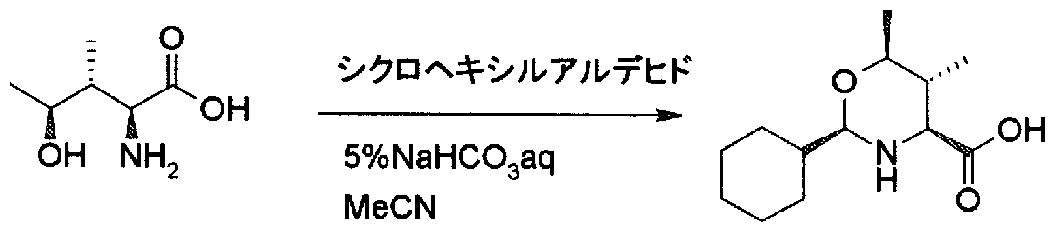
[0233] (2S, 3R, 4S)—HIL (0. Olg, 0. 07mmol)を 5%炭酸水素ナトリウム水溶液(0.
5ml)に溶解し、シクロへキシルアルデヒド(0. 008g, 0. 07mmol)のァセトニトリル( 0. 5ml)溶液を加えて一晩撹拌した。ァセトニトリルを減圧留去した後、酢酸ェチル で過剰なアルデヒドを洗浄した。得られた水層を 2Mくえん酸水溶液で中和し、酢酸 ェチルで抽出した。酢酸ェチル層を飽和食塩水で洗浄後、無水硫酸マグネシウムで 乾燥した。乾燥剤をろ別した後、手早く溶媒を減圧留去し、 2—シクロへキシル—5, 6 ジメチルーテトラヒドロー 2H—1, 3 ォキサジンー4一力ルボン酸 0. 007gを得
た。
1H-NMR (300MHz, CD OD) δ =1.06(3H, d, J=6.6 Hz), 1.07— 1.40(6H, m), 1.60—2.0
3
0(9H, m), 3.34(1H, d, J=11.4Hz), 3.42— 3.50(1H, m), 4.24(1H, d, J=6.6Hz),
MS (ESI) m/z 242 [M+H] +
実施例 9
[0234] 実施例 8に記載と同様の方法で以下の化合物を得た。
(2R. 4S. 5R. 6S)— 5. 6 ジメチノレー 2 フエニノレーテトラヒドロー 2Pi— 1. 3—才 キサジン 4 力ノレボン酸
JH-NMR (300MHz, CD OD) δ =1.09(3H, d, J=6.6 Hz), 1.35(3H, d, J=6.3 Hz), 1.63
3
-1.78(1H, m), 3.53(1H, d, J=10.8Hz), 3.68-3.74(1H, m), 5.47(1H, s), 7.40-7.44(3H, m), 7.54-7.60(2H, m),
MS (ESI) m/z 236 [M+H] +
[0235] (2R. 4S. 5R. 6S)— 5. 6 ジメチノレー 2—(4 ピリジノレ)ーテトラヒドロー 2H— 1.
3 ォキサジン 4 力ノレボン酸
1H-NMR (300MHz, CD OD) δ =0.98(3Η, d, J=6.6 Hz), 1.34(3H, d, J=6.3Hz), 1.42-
3
1.58(1H, m), 3.45(1H, d, J=10.8Hz), 3.60— 3.68(1H, m), 5.31(1H, s), 7.59(2H, d, J=4
•8Hz), 8.54(2H, d, J=4.8Hz),
MS (ESI) m/z 237 [M+H] +
[0236] (2R. 4S. 5R. 6S)—2— (4 クロ口フエニル) 5. 6 ジメチルーテトラヒドロー 2H
1. 3—ォキサジン 4一力ノレボン酸
MS (ESI) m/z 270 [M+H] +
[0237] (2R. 4S. 5R. 6S)— 5. 6 ジメチルー 2—(4ーメトキシフエ-ル)ーテトラヒドロー 2
H—1. 3—ォキサジンー4一力ノレボン酸
MS (ESI) m/z 266 [M+H] +
[0238] (2R. 4S. 5R. 6S)— 5. 6 ジメチノレー 2—(4ーメチノレフエ二ノレ)ーテ卜ラヒドロー 2
H—1. 3—ォキサジンー4一力ノレボン酸
MS (ESI) m/z 250 [M+H] +
[0239] 丄 2R. _4Sュ 51^ 6S _— 5t 6 メ ル— 2— ί4 Hiフルォロ レフエ-ル)
ラヒドロー 2H—1. 3—ォキサジンー4一力ノレボン酸
MS (ESI) m/z 304 [M+H] +
[0240] (2R. 4S. 5R. 6S)— 5. 6 ジメチルー 2—(4 フルオロフェ -ル)ーテトラヒドロー
2H- 1, 3—ォキサジンー4一力ノレボン酸
MS (ESI) m/z 254 [M+H] +
[0241] (2R. 4S. 5R. 6S)— 2—(4 シァノフエ-ル) 5. 6 ジメチルーテトラヒドロ一 2H
1. 3—ォキサジン 4一力ノレボン酸
MS (ESI) m/z 261 [M+H] +
[0242] (2R. 4S. 5R. 6S)—2—(2 クロ口フエニル) 5. 6 ジメチルーテトラヒドロー 2H
- 1. 3—ォキサジン 4一力ノレボン酸
MS (ESI) m/z 270 [M+H] +
[0243] (2R. 4S. 5R. 6S)— 5. 6 ジメチルー 2— (2 二トロフエ-ル)一テトラヒドロ一 2H
- 1. 3—ォキサジン 4一力ノレボン酸
MS (ESI) m/z 281 [M+H] +
[0244] (2R. 4S. 5R. 6S)— 5. 6 ジメチルー 2— (3 二トロフエ-ル)一テトラヒドロ一 2H
- 1. 3—ォキサジン 4一力ノレボン酸
MS (ESI) m/z 281 [M+H] +
[0245] (2R. 4S. 5R. 6S)— 5. 6 ジメチルー 2—(2 チェ-ル)ーテトラヒドロー 2H— 1.
3 ォキサジン 4 力ノレボン酸
MS (ESI) m/z 242 [M+H] +
[0246] (2R. 4S. 5R. 6S)— 5. 6 ジメチルー 2— (2 フリル)一テトラヒドロ一 2H— 1. 3
ォキサジン 4 力ノレボン酸
MS (ESI) m/z 226 [M+H] +
実施例 10
[0247] 酴件 7k溶液中に於ける化学的安定件
上記記載の方法にしたがって合成した、各種1¾ー^ー &&ー011及び^ (本実 施例においては(2S, 3R, 4S)— 4 ヒドロキシイソロイシン)を、 25mMとなる様に蒸 留水に溶解して試験原液を調製した。
予め 37°Cに加温し P 1液(日本薬局方崩壊試験第 1液;蒸留水 1L中に NaClを 2 g可溶ィ匕した後、濃塩酸を 7mL添加して調製した液)中に、試験原液を 2% (v/v)の 量比で混合し直ちに攪拌均質ィ匕後、 37°Cに加温した。攪拌直後、 30分及び 60分後 に経時的にサンプルを採取後、サンプル中残存濃度を LCZMSにて定量した。攪 拌直後の濃度に対する 30分及び 60分後の残存濃度比を算出して、安定性評価結 果とした。
HILは、 30分後に 89%、 60分後に 70%の残存率を示した力 各種 H— HIL—Xa a— OHは、いずれも評価時間中安定であった。 60分後の各種 H— HIL— Xaa— O Hの残存率を表 1に示す。
[0248] [表 1]


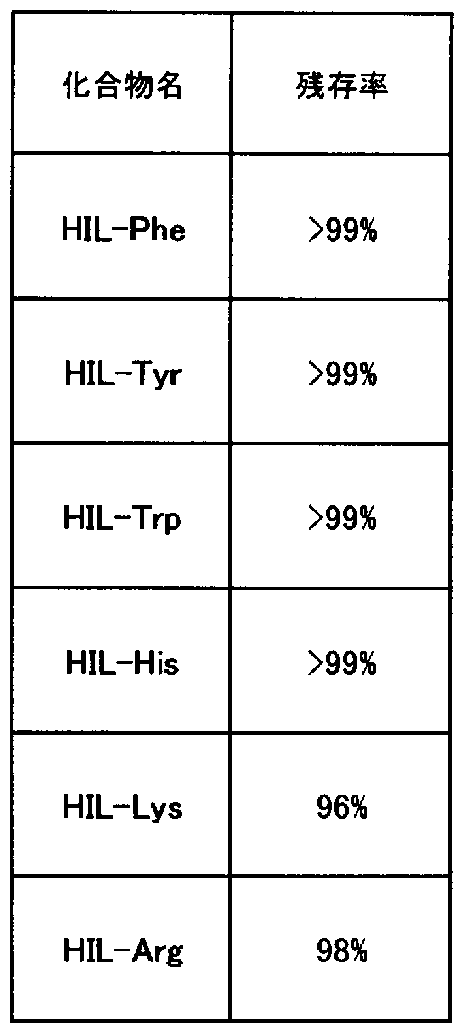
産業上の利用可能性
[0249] 本発明は、医薬品、健康食品およびこれらの製造に関する分野において有効に利 用可能である。 本出願は、日本で出願された特願 2006— 066525を基礎としており、その内容は 本明細書にすべて包含されるものである。
本発明がその好ましい態様を参照して提示又は記載される一方、本明細書中にお いて、添付の請求の範囲で包含される発明の範囲を逸脱することなぐ形態や詳細 の様々な変更をなし得ることは当業者に理解されるであろう。本明細書中に示され又 は参照されたすベての特許、特許公報及びその他の刊行物は、参照によりその全体 が取り込まれる。
Claims
[化 1]

(式中、 Q1および Q2はそれぞれ独立して、水素原子、置換基を有していてもよいアル キル基、置換基を有していてもよいァリール基、置換基を有していてもよいへテロ環 基または置換基を有して ヽてもよ 、シクロアルキル基を示す。 )で表される化合物ま たはそのァセタール体を反応させ、一般式 (IV)
[化 2]
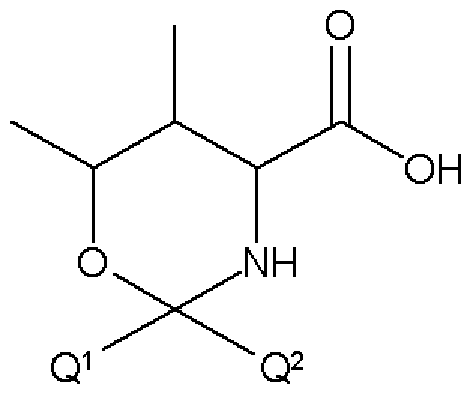
(式中、 Q1および Q2は前記と同義を示す。)で表される化合物またはその塩を得、更 に必要に応じて一般式 (IV)で表される化合物またはその塩の NHに保護基を導入 することを特徴とする、一般式 (V)
[化 3]

(式中、 Q1および Q2は前記と同義を示し、 PGは水素原子またはアミノ基保護基を示 す。)で表される化合物またはその塩の製造方法。
一般式 (V)
[化 4]

(式中、 Q1および Q2はそれぞれ独立して、水素原子、置換基を有していてもよいアル キル基、置換基を有していてもよいァリール基、置換基を有していてもよいへテロ環 基または置換基を有して 、てもよ 、シクロアルキル基を示し、 PGは水素原子または アミノ基保護基を示す。 )で表される化合物またはその塩と一般式 (VI)
[化 5]
H ~ X (VI)
〔式中、 Xは、一般式 (Via)
[化 6]

(式中、 n、 m、 o、 pおよび 1は、それぞれ独立して 0または 1を示し(ただし、 n+mおよ び o+pが 0になることはない。 );
R3a、 R3b、 R3c、 R3d、 R4a、 R4b、 R4cおよび R4dはそれぞれ独立して、水素原子、置換基 を有していてもよいアルキル基、置換基を有していてもよいアルケニル基、置換基を 有していてもよいアルキ-ル基、置換基を有していてもよいシクロアルキル基、置換 基を有していてもよいァリール基、置換基を有していてもよいァラルキル基、置換基を 有していてもよいへテロ環基、置換基を有していてもよいへテロ環アルキル基、置換 基を有していてもよいスルホ-ル基、置換基を有していてもよいスルフィエル基、置換 基を有していてもよいカルボ-ル基、置換基を有していてもよいカルボキシル基、置 換基を有して 、てもよ 、力ルバモイル基または置換基を有して 、てもよ 、スルファモ ィル基を示し;
R5は、水素原子、置換基を有していてもよいアルキル基、置換基を有していてもよい
ァルケ-ル基、置換基を有していてもよいアルキ-ル基、置換基を有していてもよい シクロアルキル基、置換基を有していてもよいァリール基、置換基を有していてもよい ァラルキル基、置換基を有して!/、てもよ 、ヘテロ環基または置換基を有して 、てもよ いへテロ環アルキル基を示す力、あるいは R3a、 R3b、 R3cおよび R3d力 選ばれる一つ と結合して置換基を有して 、てもよ 、ヘテロ環を形成しても良く;
R6は、水素原子、置換基を有していてもよいアルキル基、置換基を有していてもよい ァルケ-ル基、置換基を有していてもよいアルキ-ル基、置換基を有していてもよい シクロアルキル基、置換基を有していてもよいァリール基、置換基を有していてもよい ァラルキル基、置換基を有して!/、てもよ 、ヘテロ環基または置換基を有して 、てもよ いへテロ環アルキル基を示す力、あるいは R4a、 R4b、 R4cおよび R4d力 選ばれる一つ と結合して置換基を有して 、てもよ 、ヘテロ環を形成しても良く;
Yは保護基を有して 、てもよ 、水酸基または保護基を有して 、てもよ 、アミノ基を示 す。)で表される基、または一般式 (VIb)
[化 7]

(式中、環 Aは置換基を有していてもよいへテロ環を示す。)で表される基を示す。〕で 表される化合物またはその塩を反応させることを特徴とする、一般式 (VII)
[化 8]

(式中、各記号は前記と同義を示す。)で表される化合物またはその塩の製造方法。
[3] 一般式 (V)
[化 9]

(式中、各記号は請求項 2と同義を示す。)で表される化合物またはその塩を活性ェ ステル化して、一般式 (VIII)
[化 10]

(式中、 Eは活性エステル残基を示し、他の記号は請求項 2と同義を示す。)で表され る活性エステル化合物を得、これを一般式 (VI)
[化 11]
H ^ X (VI)
(式中、 Xは請求項 2と同義を示す。)で表される化合物またはその塩と反応させること を特徴とする、請求項 2記載の製造方法。
一般式 (VII)
[化 12]

〔式中、 Q1および Q2はそれぞれ独立して、水素原子、置換基を有していてもよいアル キル基、置換基を有していてもよいァリール基、置換基を有していてもよいへテロ環 基または置換基を有して V、てもよ 、シクロアルキル基を示し、 PGは水素原子または
アミノ基保護基を示し、 Xは、一般式 (Via)
[化 13]

(式中、 n、 m、 o、 pおよび 1は、それぞれ独立して 0または 1を示し(ただし、 n+mおよ び o+pが 0になることはない。 );
R3a、 R3b、 R3c、 R3d、 R4a、 R4b、 R4cおよび R4dはそれぞれ独立して、水素原子、置換基 を有していてもよいアルキル基、置換基を有していてもよいアルケニル基、置換基を 有していてもよいアルキ-ル基、置換基を有していてもよいシクロアルキル基、置換 基を有していてもよいァリール基、置換基を有していてもよいァラルキル基、置換基を 有していてもよいへテロ環基、置換基を有していてもよいへテロ環アルキル基、置換 基を有していてもよいスルホ-ル基、置換基を有していてもよいスルフィエル基、置換 基を有していてもよいカルボ-ル基、置換基を有していてもよいカルボキシル基、置 換基を有して 、てもよ 、力ルバモイル基または置換基を有して 、てもよ 、スルファモ ィル基を示し;
R5は、水素原子、置換基を有していてもよいアルキル基、置換基を有していてもよい ァルケ-ル基、置換基を有していてもよいアルキ-ル基、置換基を有していてもよい シクロアルキル基、置換基を有していてもよいァリール基、置換基を有していてもよい ァラルキル基、置換基を有して!/、てもよ 、ヘテロ環基または置換基を有して 、てもよ いへテロ環アルキル基を示す力、あるいは R3a、 R3b、 R3cおよび R3d力 選ばれる一つ と結合して置換基を有して 、てもよ 、ヘテロ環を形成しても良く;
R6は、水素原子、置換基を有していてもよいアルキル基、置換基を有していてもよい ァルケ-ル基、置換基を有していてもよいアルキ-ル基、置換基を有していてもよい シクロアルキル基、置換基を有していてもよいァリール基、置換基を有していてもよい ァラルキル基、置換基を有して!/、てもよ 、ヘテロ環基または置換基を有して 、てもよ いへテロ環アルキル基を示す力、あるいは R4a、 R4b、 R4cおよび R4d力 選ばれる一つ と結合して置換基を有して 、てもよ 、ヘテロ環を形成しても良く;
Yは保護基を有して 、てもよ 、水酸基または保護基を有して 、てもよ 、アミノ基を示 す。)で表される基、または一般式 (VIb)
[化 14]

(式中、環 Aは置換基を有していてもよいへテロ環を示す。)で表される基を示す。〕で 表される化合物またはその塩の PGがァミノ基保護基の場合は PGを脱保護し、およ びアミナール基を脱保護することを特徴とする、一般式 (Γ)
[化 15]

(式中、記号は前記と同義を示す。)で表される化合物またはその塩の製造方法。 請求項 1、 2および 4記載の方法を含むことを特徴とする、一般式 (Γ)
[化 16]

〔式中、 Xは、一般式 (Via)
[化 17]

(式中、 n、 m、 o、 pおよび 1は、それぞれ独立して 0または 1を示し(ただし、 n+mおよ び o+pが 0になることはない。 );
R3a、 R3b、 R3c、 R3d、 R4a、 R4b、 R4cおよび R4dはそれぞれ独立して、水素原子、置換基 を有していてもよいアルキル基、置換基を有していてもよいアルケニル基、置換基を 有していてもよいアルキ-ル基、置換基を有していてもよいシクロアルキル基、置換 基を有していてもよいァリール基、置換基を有していてもよいァラルキル基、置換基を
有していてもよいへテロ環基、置換基を有していてもよいへテロ環アルキル基、置換 基を有していてもよいスルホ-ル基、置換基を有していてもよいスルフィエル基、置換 基を有していてもよいカルボ-ル基、置換基を有していてもよいカルボキシル基、置 換基を有して 、てもよ 、力ルバモイル基または置換基を有して 、てもよ 、スルファモ ィル基を示し;
R5は、水素原子、置換基を有していてもよいアルキル基、置換基を有していてもよい ァルケ-ル基、置換基を有していてもよいアルキ-ル基、置換基を有していてもよい シクロアルキル基、置換基を有していてもよいァリール基、置換基を有していてもよい ァラルキル基、置換基を有して!/、てもよ 、ヘテロ環基または置換基を有して 、てもよ いへテロ環アルキル基を示す力、あるいは R3a、 R3b、 R3eおよび R3d力 選ばれる一つ と結合して置換基を有して 、てもよ 、ヘテロ環を形成しても良く;
R6は、水素原子、置換基を有していてもよいアルキル基、置換基を有していてもよい ァルケ-ル基、置換基を有していてもよいアルキ-ル基、置換基を有していてもよい シクロアルキル基、置換基を有していてもよいァリール基、置換基を有していてもよい ァラルキル基、置換基を有して!/、てもよ 、ヘテロ環基または置換基を有して 、てもよ いへテロ環アルキル基を示す力、あるいは R4a、 R4b、 R4cおよび R4d力 選ばれる一つ と結合して置換基を有して 、てもよ 、ヘテロ環を形成しても良く;
Yは保護基を有して 、てもよ 、水酸基または保護基を有して 、てもよ 、アミノ基を示 す。)で表される基、または一般式 (VIb)
[化 18]

(式中、環 Aは置換基を有していてもよいへテロ環を示す。)で表される基を示す。〕で 表される化合物またはその塩の製造方法。
請求項 1、 3および 4記載の方法を含むことを特徴とする、一般式 (Γ )
[化 19]
 〔式中、 Xは、一般式 (Via)
[化 20]
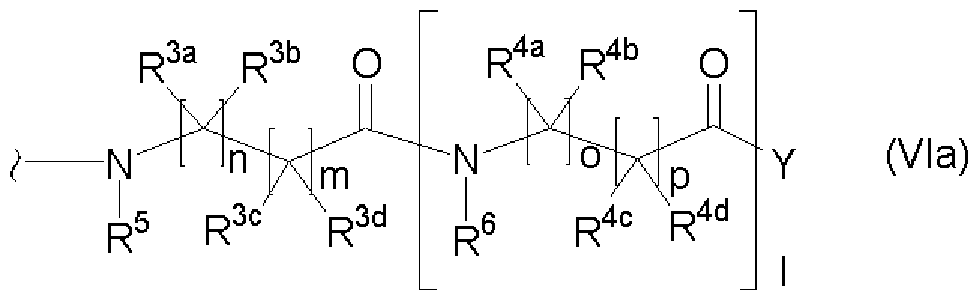
(式中、 n、 m、 o、 pおよび 1は、それぞれ独立して 0または 1を示し(ただし、 n+mおよ び o+pが 0になることはない。 );
R3a、 R3b、 R3c、 R3d、 R4a、 R4b、 R4cおよび R4dはそれぞれ独立して、水素原子、置換基 を有していてもよいアルキル基、置換基を有していてもよいアルケニル基、置換基を 有していてもよいアルキ-ル基、置換基を有していてもよいシクロアルキル基、置換 基を有していてもよいァリール基、置換基を有していてもよいァラルキル基、置換基を 有していてもよいへテロ環基、置換基を有していてもよいへテロ環アルキル基、置換 基を有していてもよいスルホ-ル基、置換基を有していてもよいスルフィエル基、置換 基を有していてもよいカルボ-ル基、置換基を有していてもよいカルボキシル基、置 換基を有して 、てもよ 、力ルバモイル基または置換基を有して 、てもよ 、スルファモ ィル基を示し;
R5は、水素原子、置換基を有していてもよいアルキル基、置換基を有していてもよい ァルケ-ル基、置換基を有していてもよいアルキ-ル基、置換基を有していてもよい シクロアルキル基、置換基を有していてもよいァリール基、置換基を有していてもよい ァラルキル基、置換基を有して!/、てもよ 、ヘテロ環基または置換基を有して 、てもよ いへテロ環アルキル基を示す力、あるいは R3a、 R3b、 R3cおよび R3d力 選ばれる一つ と結合して置換基を有して 、てもよ 、ヘテロ環を形成しても良く;
R6は、水素原子、置換基を有していてもよいアルキル基、置換基を有していてもよい ァルケ-ル基、置換基を有していてもよいアルキ-ル基、置換基を有していてもよい シクロアルキル基、置換基を有していてもよいァリール基、置換基を有していてもよい ァラルキル基、置換基を有して!/、てもよ 、ヘテロ環基または置換基を有して 、てもよ いへテロ環アルキル基を示す力、あるいは R4a、 R4b、 R4cおよび R4d力 選ばれる一つ と結合して置換基を有して 、てもよ 、ヘテロ環を形成しても良く;
Yは保護基を有して 、てもよ 、水酸基または保護基を有して 、てもよ 、アミノ基を示 す。)で表される基、または一般式 (VIb)
[化 21]

(式中、環 Aは置換基を有していてもよいへテロ環を示す。)で表される基を示す。〕で 表される化合物またはその塩の製造方法。
[7] Q1および Q2がそれぞれ独立して、水素原子、置換基を有して!/、てもよ 、アルキル 基、置換基を有して 、てもよ 、ァリール基または置換基を有して 、てもよ 、ヘテロ環 基を示す、請求項 1〜6のいずれかに記載の製造方法。
[8] Q1および Q2が水素原子であり、 PGが tert ブトキシカルボ-ル基またはべンジル ォキシカルボ-ル基である、請求項 1〜6の 、ずれかに記載の製造方法。
[9] Q1が水素原子であり、 Q2が p -トロフエ-ル基、シクロへキシル基、フエ-ル基、 4 ピリジル基、 4 クロ口フエ-ル基、 4ーメトキシフエ-ル基、 4 メチルフエ-ル基、
4 トリフルォロメチルフエ-ル基、 4 フルオロフェ-ル基、 4 シァノフエ-ル基、 2
—クロ口フエ-ル基、 2 -トロフエ-ル基、 3 -トロフエ-ル基、 2 チェ-ル基また は 2 フリル基であり、 PGが水素原子である、請求項 1〜6のいずれかに記載の製造 方法。
[10] 一般式 (VI)で示される化合物が、 Gly、 Ala, Val、 Leuゝ lieゝ Metゝ Pheゝ Tyr、 Tr p、 His、 Lys、 Arg、 Ser、 Thr、 Asp、 Glu、 Asn、 Gln、 Cysおよび Proから選ばれる アミノ酸およびそのカルボン酸保護体力 選ばれる、請求項 2、 3、 5および 6のいず れかに記載の製造方法。
[11] Eがー OSu (Suは、スクシンイミド基を示す。)である、請求項 3または 6に記載の製 造方法。
[12] 一般式 (IV' )
[化 22]

〔式中、 Q1および Q2はそれぞれ独立して、水素原子、置換基を有していてもよいアル キル基、置換基を有していてもよいァリール基、置換基を有していてもよいへテロ環 基または置換基を有して 、てもよ 、シクロアルキル基を示し、 PGは水素原子または アミノ基保護基を示し;
X'は水酸基、活性エステル残基、一般式 (Via)
[化 23]

(式中、 n、 m、 o、 pおよび 1は、それぞれ独立して 0または 1を示し(ただし、 n+mおよ び o+pが 0になることはない。 );
R3a、 R3b、 R3c、 R3d、 R4a、 R4b、 R4cおよび R4dはそれぞれ独立して、水素原子、置換基 を有していてもよいアルキル基、置換基を有していてもよいアルケニル基、置換基を 有していてもよいアルキ-ル基、置換基を有していてもよいシクロアルキル基、置換 基を有していてもよいァリール基、置換基を有していてもよいァラルキル基、置換基を 有していてもよいへテロ環基、置換基を有していてもよいへテロ環アルキル基、置換 基を有していてもよいスルホ-ル基、置換基を有していてもよいスルフィエル基、置換 基を有していてもよいカルボ-ル基、置換基を有していてもよいカルボキシル基、置 換基を有して 、てもよ 、力ルバモイル基または置換基を有して 、てもよ 、スルファモ ィル基を示し;
R5は、水素原子、置換基を有していてもよいアルキル基、置換基を有していてもよい ァルケ-ル基、置換基を有していてもよいアルキ-ル基、置換基を有していてもよい シクロアルキル基、置換基を有していてもよいァリール基、置換基を有していてもよい
ァラルキル基、置換基を有して!/、てもよ 、ヘテロ環基または置換基を有して 、てもよ いへテロ環アルキル基を示す力、あるいは R3a、 R3b、 R3cおよび R3d力 選ばれる一つ と結合して置換基を有して 、てもよ 、ヘテロ環を形成しても良く;
R6は、水素原子、置換基を有していてもよいアルキル基、置換基を有していてもよい ァルケ-ル基、置換基を有していてもよいアルキ-ル基、置換基を有していてもよい シクロアルキル基、置換基を有していてもよいァリール基、置換基を有していてもよい ァラルキル基、置換基を有して!/、てもよ 、ヘテロ環基または置換基を有して 、てもよ いへテロ環アルキル基を示す力、あるいは R4a、 R4b、 R4cおよび R4d力 選ばれる一つ と結合して置換基を有して 、てもよ 、ヘテロ環を形成しても良く;
Yは保護基を有して 、てもよ 、水酸基または保護基を有して 、てもよ 、アミノ基を示 す。)で表される基、または一般式 (VIb)
[化 24]

(式中、環 Aは置換基を有していてもよいへテロ環を示す。)で表される基を示す。〕で 表される化合物またはその塩。
[13] Q1および Q2がそれぞれ独立して、水素原子、置換基を有して!/、てもよ 、アルキル 基、置換基を有して 、てもよ 、ァリール基または置換基を有して 、てもよ 、ヘテロ環 基を示す、請求項 12記載の化合物またはその塩。
[14] Q1および Q2が水素原子であり、 PGが水素原子、 t ブトキシカルボ-ル基または ベンジルォキシカルボ-ル基であり、 X'が水酸基、活性エステル残基または、 Gly、 Alaゝ Val、 Leuゝ lieゝ Metゝ Pheゝ Tyrゝ Trpゝ Hisゝ Lysゝ Argゝ Serゝ Thrゝ Aspゝ Glu 、 Asn、 Gln、 Cysおよび Proから選ばれるアミノ酸残基 (カルボン酸は保護されてい てもよい。)である、請求項 12記載の化合物またはその塩。
[15] Q1が水素原子であり、 Q2が p -トロフエ-ル基、シクロへキシル基、フエ-ル基、 4 ピリジル基、 4 クロ口フエ-ル基、 4ーメトキシフエ-ル基、 4 メチルフエ-ル基、 4 トリフルォロメチルフエ-ル基、 4 フルオロフェ-ル基、 4 シァノフエ-ル基、 2 —クロ口フエ-ル基、 2 -トロフエ-ル基、 3 -トロフエ-ル基、 2 チェ-ル基また
は 2—フリル基であり、 PGが水素原子であり、 X'が水酸基または、 Gly Ala, Val L eu lie Met Phe Tyr Trp His Lys Arg Ser Thr Asp Glu Asn Gin Cysおよび Pro力 選ばれるアミノ酸残基 (カルボン酸は保護されていてもよい。)で ある、請求項 12記載の化合物またはその塩。
Applications Claiming Priority (2)
| Application Number | Priority Date | Filing Date | Title |
|---|---|---|---|
| JP2006066525 | 2006-03-10 | ||
| JP2006-066525 | 2006-03-10 |
Publications (1)
| Publication Number | Publication Date |
|---|---|
| WO2007105650A1 true WO2007105650A1 (ja) | 2007-09-20 |
Family
ID=38509473
Family Applications (1)
| Application Number | Title | Priority Date | Filing Date |
|---|---|---|---|
| PCT/JP2007/054716 Ceased WO2007105650A1 (ja) | 2006-03-10 | 2007-03-09 | 4-ヒドロキシイソロイシン誘導体および同誘導体の製造方法 |
Country Status (1)
| Country | Link |
|---|---|
| WO (1) | WO2007105650A1 (ja) |
Cited By (17)
| Publication number | Priority date | Publication date | Assignee | Title |
|---|---|---|---|---|
| WO2008102671A1 (ja) * | 2007-02-22 | 2008-08-28 | Ajinomoto Co., Inc. | 4-ヒドロキシイソロイシンの精製方法 |
| WO2009021740A2 (de) | 2007-08-15 | 2009-02-19 | Sanofis-Aventis | Substituierte tetrahydronaphthaline, verfahren zu ihrer herstellung und ihre verwendung als arzneimittel |
| WO2011107494A1 (de) | 2010-03-03 | 2011-09-09 | Sanofi | Neue aromatische glykosidderivate, diese verbindungen enthaltende arzneimittel und deren verwendung |
| DE102010015123A1 (de) | 2010-04-16 | 2011-10-20 | Sanofi-Aventis Deutschland Gmbh | Benzylamidische Diphenylazetidinone, diese Verbindungen enthaltende Arzneimittel und deren Verwendung |
| WO2011157827A1 (de) | 2010-06-18 | 2011-12-22 | Sanofi | Azolopyridin-3-on-derivate als inhibitoren von lipasen und phospholipasen |
| WO2011161030A1 (de) | 2010-06-21 | 2011-12-29 | Sanofi | Heterocyclisch substituierte methoxyphenylderivate mit oxogruppe, verfahren zu ihrer herstellung und ihre verwendung als gpr40 rezeptor modulatoren |
| WO2012004270A1 (de) | 2010-07-05 | 2012-01-12 | Sanofi | Spirocyclisch substituierte 1,3-propandioxidderivate, verfahren zu ihrer herstellung und ihre verwendung als arzneimittel |
| WO2012004269A1 (de) | 2010-07-05 | 2012-01-12 | Sanofi | ( 2 -aryloxy -acetylamino) - phenyl - propionsäurederivate, verfahren zu ihrer herstellung und ihre verwendung als arzneimittel |
| WO2012010413A1 (de) | 2010-07-05 | 2012-01-26 | Sanofi | Aryloxy-alkylen-substituierte hydroxy-phenyl-hexinsäuren, verfahren zu ihrer herstellung und ihre verwendung als arzneimittel |
| WO2012120054A1 (de) | 2011-03-08 | 2012-09-13 | Sanofi | Di- und trisubstituierte oxathiazinderivate, verfahren zu deren herstellung, ihre verwendung als medikament sowie sie enthaltendes arzneimittel und deren verwendung |
| WO2012120052A1 (de) | 2011-03-08 | 2012-09-13 | Sanofi | Mit carbozyklen oder heterozyklen substituierte oxathiazinderivate, verfahren zu deren herstellung, diese verbindungen enthaltende arzneimittel und deren verwendung |
| WO2012120056A1 (de) | 2011-03-08 | 2012-09-13 | Sanofi | Tetrasubstituierte oxathiazinderivate, verfahren zu deren herstellung, ihre verwendung als medikament sowie sie enthaltendes arzneimittel und deren verwendung |
| WO2012120055A1 (de) | 2011-03-08 | 2012-09-13 | Sanofi | Di- und trisubstituierte oxathiazinderivate, verfahren zu deren herstellung, ihre verwendung als medikament sowie sie enthaltendes arzneimittel und deren verwendung |
| WO2012120053A1 (de) | 2011-03-08 | 2012-09-13 | Sanofi | Verzweigte oxathiazinderivate, verfahren zu deren herstellung, ihre verwendung als medikament sowie sie enthaltendes arzneimittel und deren verwendung |
| EP2567959A1 (en) | 2011-09-12 | 2013-03-13 | Sanofi | 6-(4-Hydroxy-phenyl)-3-styryl-1H-pyrazolo[3,4-b]pyridine-4-carboxylic acid amide derivatives as kinase inhibitors |
| WO2013037390A1 (en) | 2011-09-12 | 2013-03-21 | Sanofi | 6-(4-hydroxy-phenyl)-3-styryl-1h-pyrazolo[3,4-b]pyridine-4-carboxylic acid amide derivatives as kinase inhibitors |
| WO2013045413A1 (en) | 2011-09-27 | 2013-04-04 | Sanofi | 6-(4-hydroxy-phenyl)-3-alkyl-1h-pyrazolo[3,4-b]pyridine-4-carboxylic acid amide derivatives as kinase inhibitors |
Citations (3)
| Publication number | Priority date | Publication date | Assignee | Title |
|---|---|---|---|---|
| JPH03169871A (ja) * | 1989-08-16 | 1991-07-23 | Dr Karl Thomae Gmbh | 新規1,3―オキサジン |
| JP2006508168A (ja) * | 2002-12-02 | 2006-03-09 | サーントル ナシオナル ドゥ ラ ルシェルシェ シャーンティフィク(セー.エンヌ.エール.エス.) | 4−ヒドロキシイソロイシン及びその誘導体のジアステレオ異性体及びエナンチオマーの製造方法 |
| US20060199853A1 (en) * | 2005-02-18 | 2006-09-07 | Charles Mioskowski | Analogs of 4-hydroxyisoleucine and uses thereof |
-
2007
- 2007-03-09 WO PCT/JP2007/054716 patent/WO2007105650A1/ja not_active Ceased
Patent Citations (3)
| Publication number | Priority date | Publication date | Assignee | Title |
|---|---|---|---|---|
| JPH03169871A (ja) * | 1989-08-16 | 1991-07-23 | Dr Karl Thomae Gmbh | 新規1,3―オキサジン |
| JP2006508168A (ja) * | 2002-12-02 | 2006-03-09 | サーントル ナシオナル ドゥ ラ ルシェルシェ シャーンティフィク(セー.エンヌ.エール.エス.) | 4−ヒドロキシイソロイシン及びその誘導体のジアステレオ異性体及びエナンチオマーの製造方法 |
| US20060199853A1 (en) * | 2005-02-18 | 2006-09-07 | Charles Mioskowski | Analogs of 4-hydroxyisoleucine and uses thereof |
Non-Patent Citations (2)
| Title |
|---|
| GHOSAL S. ET AL.: "Fenugreekine, a new steroidal sapogenin-peptide ester of Trigonella foenum-graecum", PHYTOCHEMISTRY, vol. 13, no. 10, 1974, pages 2247 - 2251, XP003017776 * |
| HAHN H. ET AL.: "Partialsynthese der nikkomycine Bx und Kx sowie unnatürlicher stereoisomerer und strukturanaloga", LIEBIGS ANNALEN DER CHEMIE, no. 9, 1987, pages 803 - 807, XP003017775 * |
Cited By (17)
| Publication number | Priority date | Publication date | Assignee | Title |
|---|---|---|---|---|
| WO2008102671A1 (ja) * | 2007-02-22 | 2008-08-28 | Ajinomoto Co., Inc. | 4-ヒドロキシイソロイシンの精製方法 |
| WO2009021740A2 (de) | 2007-08-15 | 2009-02-19 | Sanofis-Aventis | Substituierte tetrahydronaphthaline, verfahren zu ihrer herstellung und ihre verwendung als arzneimittel |
| WO2011107494A1 (de) | 2010-03-03 | 2011-09-09 | Sanofi | Neue aromatische glykosidderivate, diese verbindungen enthaltende arzneimittel und deren verwendung |
| DE102010015123A1 (de) | 2010-04-16 | 2011-10-20 | Sanofi-Aventis Deutschland Gmbh | Benzylamidische Diphenylazetidinone, diese Verbindungen enthaltende Arzneimittel und deren Verwendung |
| WO2011157827A1 (de) | 2010-06-18 | 2011-12-22 | Sanofi | Azolopyridin-3-on-derivate als inhibitoren von lipasen und phospholipasen |
| WO2011161030A1 (de) | 2010-06-21 | 2011-12-29 | Sanofi | Heterocyclisch substituierte methoxyphenylderivate mit oxogruppe, verfahren zu ihrer herstellung und ihre verwendung als gpr40 rezeptor modulatoren |
| WO2012004270A1 (de) | 2010-07-05 | 2012-01-12 | Sanofi | Spirocyclisch substituierte 1,3-propandioxidderivate, verfahren zu ihrer herstellung und ihre verwendung als arzneimittel |
| WO2012004269A1 (de) | 2010-07-05 | 2012-01-12 | Sanofi | ( 2 -aryloxy -acetylamino) - phenyl - propionsäurederivate, verfahren zu ihrer herstellung und ihre verwendung als arzneimittel |
| WO2012010413A1 (de) | 2010-07-05 | 2012-01-26 | Sanofi | Aryloxy-alkylen-substituierte hydroxy-phenyl-hexinsäuren, verfahren zu ihrer herstellung und ihre verwendung als arzneimittel |
| WO2012120054A1 (de) | 2011-03-08 | 2012-09-13 | Sanofi | Di- und trisubstituierte oxathiazinderivate, verfahren zu deren herstellung, ihre verwendung als medikament sowie sie enthaltendes arzneimittel und deren verwendung |
| WO2012120052A1 (de) | 2011-03-08 | 2012-09-13 | Sanofi | Mit carbozyklen oder heterozyklen substituierte oxathiazinderivate, verfahren zu deren herstellung, diese verbindungen enthaltende arzneimittel und deren verwendung |
| WO2012120056A1 (de) | 2011-03-08 | 2012-09-13 | Sanofi | Tetrasubstituierte oxathiazinderivate, verfahren zu deren herstellung, ihre verwendung als medikament sowie sie enthaltendes arzneimittel und deren verwendung |
| WO2012120055A1 (de) | 2011-03-08 | 2012-09-13 | Sanofi | Di- und trisubstituierte oxathiazinderivate, verfahren zu deren herstellung, ihre verwendung als medikament sowie sie enthaltendes arzneimittel und deren verwendung |
| WO2012120053A1 (de) | 2011-03-08 | 2012-09-13 | Sanofi | Verzweigte oxathiazinderivate, verfahren zu deren herstellung, ihre verwendung als medikament sowie sie enthaltendes arzneimittel und deren verwendung |
| EP2567959A1 (en) | 2011-09-12 | 2013-03-13 | Sanofi | 6-(4-Hydroxy-phenyl)-3-styryl-1H-pyrazolo[3,4-b]pyridine-4-carboxylic acid amide derivatives as kinase inhibitors |
| WO2013037390A1 (en) | 2011-09-12 | 2013-03-21 | Sanofi | 6-(4-hydroxy-phenyl)-3-styryl-1h-pyrazolo[3,4-b]pyridine-4-carboxylic acid amide derivatives as kinase inhibitors |
| WO2013045413A1 (en) | 2011-09-27 | 2013-04-04 | Sanofi | 6-(4-hydroxy-phenyl)-3-alkyl-1h-pyrazolo[3,4-b]pyridine-4-carboxylic acid amide derivatives as kinase inhibitors |
Similar Documents
| Publication | Publication Date | Title |
|---|---|---|
| US20240083859A1 (en) | Bi-functional Molecules To Degrade Circulating Proteins | |
| US12410212B2 (en) | Cyclic compound having selective KRAS inhibitory effect on HRAS and NRAS | |
| US20250332274A1 (en) | Bifunctional small molecules to target the selective degradation of circulating proteins | |
| US20240158446A1 (en) | Cyclic compound having selective inhibitory action on kras over hras and nras | |
| US8551955B2 (en) | Dimeric Smac mimetics | |
| JP4629036B2 (ja) | アリールアルキルアミン化合物及びその製法 | |
| CN102227407B (zh) | 丙型肝炎病毒抑制剂 | |
| JP7034078B2 (ja) | セラストロールの類似体 | |
| RS62907B1 (sr) | Masne kiseline i njihova upotreba u konjugaciji sa biomolekulima | |
| JP2023113639A (ja) | ビス-オクタヒドロフェナントレンカルボキサミド及びそのタンパク質コンジュゲート | |
| US12083181B2 (en) | Bi-functional molecules to degrade circulating proteins | |
| TW201100392A (en) | Substituted 2-acetamido-5-aryl-1,2,4-triazolones and use thereof | |
| WO1996033212A1 (fr) | Nouveaux derives peptidiques | |
| US12485178B2 (en) | Bifunctional small molecules to target the selective degradation of circulating proteins | |
| US20220204476A1 (en) | Rna virus inhibitor compounds and uses thereof | |
| TW201625311A (zh) | 用於真菌感染之治療的方法與組合物 | |
| JP2006508055A (ja) | オキシトシンインヒビター | |
| TWI670065B (zh) | 用於預防及治療疼痛之具有止痛效果的化合物 | |
| CN113614095A (zh) | 作为精氨酸酶抑制剂的烷基硼酸类化合物 | |
| JP2016026142A (ja) | ニューロトロフィン・ミメティック及びその使用 | |
| EP4493222A2 (en) | Bifunctional small molecules to target the selective degradation of circulating proteins | |
| JP2025509736A (ja) | 循環タンパク質を分解するための二官能性分子 | |
| WO2023056981A1 (zh) | 靶向蛋白酶降解(ted)平台 | |
| WO2012070554A1 (ja) | ペプチド | |
| WO2026065268A1 (en) | Novel conjugates for protein degradation, compositions comprising the same, and methods of using the same |
Legal Events
| Date | Code | Title | Description |
|---|---|---|---|
| 121 | Ep: the epo has been informed by wipo that ep was designated in this application |
Ref document number: 07738201 Country of ref document: EP Kind code of ref document: A1 |
|
| NENP | Non-entry into the national phase |
Ref country code: DE |
|
| 122 | Ep: pct application non-entry in european phase |
Ref document number: 07738201 Country of ref document: EP Kind code of ref document: A1 |
|
| NENP | Non-entry into the national phase |
Ref country code: JP |