WO2007114822A1 - Thermally curable epoxy-amine barrier sealants - Google Patents

Thermally curable epoxy-amine barrier sealants Download PDF

Info

Publication number
WO2007114822A1
WO2007114822A1 PCT/US2006/012657 US2006012657W WO2007114822A1 WO 2007114822 A1 WO2007114822 A1 WO 2007114822A1 US 2006012657 W US2006012657 W US 2006012657W WO 2007114822 A1 WO2007114822 A1 WO 2007114822A1
Authority
WO
WIPO (PCT)
Prior art keywords
benzenediol
dihydroxy
methyl
dihydroxyphenyl
epoxy
Prior art date
Legal status (The legal status is an assumption and is not a legal conclusion. Google has not performed a legal analysis and makes no representation as to the accuracy of the status listed.)
Ceased
Application number
PCT/US2006/012657
Other languages
French (fr)
Inventor
Shengqian Kong
Sarah E. Grieshaber
Donald E. Herr
Current Assignee (The listed assignees may be inaccurate. Google has not performed a legal analysis and makes no representation or warranty as to the accuracy of the list.)
National Starch and Chemical Investment Holding Corp
Original Assignee
National Starch and Chemical Investment Holding Corp
Priority date (The priority date is an assumption and is not a legal conclusion. Google has not performed a legal analysis and makes no representation as to the accuracy of the date listed.)
Filing date
Publication date
Application filed by National Starch and Chemical Investment Holding Corp filed Critical National Starch and Chemical Investment Holding Corp
Priority to PCT/US2006/012657 priority Critical patent/WO2007114822A1/en
Priority to KR1020087023789A priority patent/KR101286745B1/en
Priority to JP2009502742A priority patent/JP5373595B2/en
Priority to US12/293,741 priority patent/US20100168279A1/en
Priority to EP06844085A priority patent/EP2001924A1/en
Priority to CNA2006800540253A priority patent/CN101405321A/en
Priority to TW096110912A priority patent/TW200745199A/en
Publication of WO2007114822A1 publication Critical patent/WO2007114822A1/en
Anticipated expiration legal-status Critical
Ceased legal-status Critical Current

Links

Classifications

    • CCHEMISTRY; METALLURGY
    • C08ORGANIC MACROMOLECULAR COMPOUNDS; THEIR PREPARATION OR CHEMICAL WORKING-UP; COMPOSITIONS BASED THEREON
    • C08GMACROMOLECULAR COMPOUNDS OBTAINED OTHERWISE THAN BY REACTIONS ONLY INVOLVING UNSATURATED CARBON-TO-CARBON BONDS
    • C08G59/00Polycondensates containing more than one epoxy group per molecule; Macromolecules obtained by polymerising compounds containing more than one epoxy group per molecule using curing agents or catalysts which react with the epoxy groups
    • C08G59/02Polycondensates containing more than one epoxy group per molecule
    • C08G59/04Polycondensates containing more than one epoxy group per molecule of polyhydroxy compounds with epihalohydrins or precursors thereof
    • C08G59/06Polycondensates containing more than one epoxy group per molecule of polyhydroxy compounds with epihalohydrins or precursors thereof of polyhydric phenols
    • C08G59/063Polycondensates containing more than one epoxy group per molecule of polyhydroxy compounds with epihalohydrins or precursors thereof of polyhydric phenols with epihalohydrins
    • CCHEMISTRY; METALLURGY
    • C08ORGANIC MACROMOLECULAR COMPOUNDS; THEIR PREPARATION OR CHEMICAL WORKING-UP; COMPOSITIONS BASED THEREON
    • C08GMACROMOLECULAR COMPOUNDS OBTAINED OTHERWISE THAN BY REACTIONS ONLY INVOLVING UNSATURATED CARBON-TO-CARBON BONDS
    • C08G59/00Polycondensates containing more than one epoxy group per molecule; Macromolecules obtained by polymerising compounds containing more than one epoxy group per molecule using curing agents or catalysts which react with the epoxy groups
    • C08G59/02Polycondensates containing more than one epoxy group per molecule
    • C08G59/04Polycondensates containing more than one epoxy group per molecule of polyhydroxy compounds with epihalohydrins or precursors thereof
    • C08G59/06Polycondensates containing more than one epoxy group per molecule of polyhydroxy compounds with epihalohydrins or precursors thereof of polyhydric phenols
    • CCHEMISTRY; METALLURGY
    • C08ORGANIC MACROMOLECULAR COMPOUNDS; THEIR PREPARATION OR CHEMICAL WORKING-UP; COMPOSITIONS BASED THEREON
    • C08GMACROMOLECULAR COMPOUNDS OBTAINED OTHERWISE THAN BY REACTIONS ONLY INVOLVING UNSATURATED CARBON-TO-CARBON BONDS
    • C08G59/00Polycondensates containing more than one epoxy group per molecule; Macromolecules obtained by polymerising compounds containing more than one epoxy group per molecule using curing agents or catalysts which react with the epoxy groups
    • C08G59/18Macromolecules obtained by polymerising compounds containing more than one epoxy group per molecule using curing agents or catalysts which react with the epoxy groups ; e.g. general methods of curing
    • C08G59/40Macromolecules obtained by polymerising compounds containing more than one epoxy group per molecule using curing agents or catalysts which react with the epoxy groups ; e.g. general methods of curing characterised by the curing agents used
    • C08G59/50Amines
    • CCHEMISTRY; METALLURGY
    • C08ORGANIC MACROMOLECULAR COMPOUNDS; THEIR PREPARATION OR CHEMICAL WORKING-UP; COMPOSITIONS BASED THEREON
    • C08GMACROMOLECULAR COMPOUNDS OBTAINED OTHERWISE THAN BY REACTIONS ONLY INVOLVING UNSATURATED CARBON-TO-CARBON BONDS
    • C08G59/00Polycondensates containing more than one epoxy group per molecule; Macromolecules obtained by polymerising compounds containing more than one epoxy group per molecule using curing agents or catalysts which react with the epoxy groups
    • C08G59/18Macromolecules obtained by polymerising compounds containing more than one epoxy group per molecule using curing agents or catalysts which react with the epoxy groups ; e.g. general methods of curing
    • C08G59/40Macromolecules obtained by polymerising compounds containing more than one epoxy group per molecule using curing agents or catalysts which react with the epoxy groups ; e.g. general methods of curing characterised by the curing agents used
    • C08G59/50Amines
    • C08G59/5006Amines aliphatic
    • CCHEMISTRY; METALLURGY
    • C08ORGANIC MACROMOLECULAR COMPOUNDS; THEIR PREPARATION OR CHEMICAL WORKING-UP; COMPOSITIONS BASED THEREON
    • C08KUse of inorganic or non-macromolecular organic substances as compounding ingredients
    • C08K3/00Use of inorganic substances as compounding ingredients
    • CCHEMISTRY; METALLURGY
    • C08ORGANIC MACROMOLECULAR COMPOUNDS; THEIR PREPARATION OR CHEMICAL WORKING-UP; COMPOSITIONS BASED THEREON
    • C08LCOMPOSITIONS OF MACROMOLECULAR COMPOUNDS
    • C08L63/00Compositions of epoxy resins; Compositions of derivatives of epoxy resins

Definitions

  • This invention relates to barrier sealants, adhesives, encapsulants, and coatings for use in electronic and optoelectronic devices.
  • adhesives, sealants, encapsulants, and coatings are similar materials, all having adhesive, sealant, and coating properties and functions. When any one is recited, the others are deemed to be included.
  • Polymeric barrier materials are widely used in many packaging and protective applications such as food, beverages, medical products, cosmetics, agricultural products, electronic components, molding, piping, and tubing. As barriers, they limit the exchange of permeant molecules between the environment and the system being protected and therefore, preserve the flavor or aroma of food or cosmetic ingredients, prevent moisture or oxygen from degrading the electronic components, and protect automotive fascia component surfaces from penetration by solvents commonly used in paints or primer. Since different systems require different barrier properties, a good barrier in one application might be considered a poor one in another.
  • Numerous optoelectronic devices are moisture or oxygen sensitive and need to be protected from exposure during their functional lifetime. A common approach is to seal the device between an impermeable substrate on which it is positioned and an impermeable glass or metal lid, and seal or adhere the perimeter of the lid to the bottom substrate using a curable adhesive or sealant.
  • FIG. 1 A common manifestation of this package geometry is exemplified in Figure 1, which discloses the use of a curable perimeter sealant (1) to bond a metal or glass lid (2) over an organic light emitting diode (OLED) stack (3) fabricated on a glass substrate (4).
  • OLED organic light emitting diode
  • Figure 1 discloses the use of a curable perimeter sealant (1) to bond a metal or glass lid (2) over an organic light emitting diode (OLED) stack (3) fabricated on a glass substrate (4).
  • OLED organic light emitting diode
  • a typical device also contains an anode (5), a cathode (6), and some form of electrical interconnect between the OLED pixel/device and external circuitry (7).
  • no particular device geometry is specified or required aside from one which incorporates an adhesive/sealant material such as a perimeter sealant (1).
  • both the glass substrate and the metal/glass lid are essentially impermeable to oxygen and moisture, and the sealant is the only material with any appreciable permeability that surrounds the device.
  • moisture permeability is very often more critical than oxygen permeability; consequently, the oxygen barrier requirements are much less stringent, and it is the moisture barrier properties of the perimeter sealant that are critical to successful performance of the device.
  • moisture permeability P
  • VWTR water vapor transmission rate
  • permeability coefficient e.g. g-mil/100 in z -day-atm
  • the permeation coefficient e.g. g-mil/100 in 2 -day at a given temperature and relative humidity
  • the solubility term reflects the affinity of the barrier for the permeant, and, in relation to water vapor, a low S term is obtained from hydrophobic materials.
  • the diffusion term is a measure of the mobility of a permeant in the barrier matrix and is directly related to material properties of the barrier, such as free volume and molecular mobility. Often, a low D term is obtained from highly crosslinked or crystalline materials (in contrast to less crosslinked or amorphous analogs). Permeability will increase drastically as molecular motion increases (for example as temperature is increased, and particularly when the T 9 of a polymer is exceeded).
  • Logical chemical approaches to producing improved barriers must consider these two fundamental factors (D and S) affecting the permeability of water vapor and oxygen.
  • Epoxy-amine chemistry based barriers have been used in food packaging for many years. These crosslinked coatings were found to have excellent oxygen barrier properties. However, it is generally known that oxygen and moisture permeability do not necessary follow the same trend. In addition, in order to gain the full potential of these coatings, materials are generally cured at high temperatures for prolonged time (typically 100 0 C for 60 minutes). These harsh conditions could be detrimental to electroluminescent materials or plastic substrates used in many current and future display applications such as organic light-emitting devices (OLED), polymer light-emitting devices, charge-coupled device (CCD) sensors, liquid crystal displays (LCD), electrophoretic displays, and micro-electro-mechanical sensors (MEMS).
  • OLED organic light-emitting devices
  • CCD charge-coupled device
  • LCD liquid crystal displays
  • MEMS micro-electro-mechanical sensors
  • barrier materials that cure under 100 0 C, while maintaining good barrier performance, whether for food packaging or electronic and optoelectronic device packaging, or for any other type of applications that require barrier performance.
  • FIGURE 1 is a perimeter sealed optoelectronic device.
  • FIGURE 2 is a Differential Scanning Calorimetry overlay of an epoxy/TEPA (amine) blend cured isothermally at 75°C with and without a catalyst.
  • This invention is a barrier composition comprising a resin or resin/filler system that is capable of being cured at low temperature while still maintaining superior barrier performance.
  • This composition comprises (a) an aromatic compound having mefa-substituted epoxy functionalities, (b) a multifunctional aliphatic amine, (c) optionally one or more fillers, (d) optionally, one or more adhesion promoters, and (e) optionally, a phenolic cure accelerator.
  • Such a barrier composition may be used alone or in combination with other curable resins and various fillers.
  • the resulting compositions exhibit commercially acceptable cure rates, high crosslink densities, and good adhesion, which makes them effective for use in sealing and encapsulating a variety of articles of manufacture, and in particular electronic, optoelectronic, and MEMS devices.
  • this invention is a low-temperature curable barrier composition
  • an aromatic epoxy compound selected from the group consisting of epoxided resoles, bisphenol-F diglycidyl ether, bisphenol-A diglycidyl ether, bisphenol-E diglycidyl ether, epoxidized phenol novolac resins, epoxidized cresol novolac resins, polycyclic epoxy resins, naphthalene diglycidyl ether, and halogenated derivatives of those; a multifunctional amine, and optionally, a phenolic curing accelerator.
  • This invention is a thermally curable barrier sealant comprising (a) an aromatic compound having mefa-substituted epoxy functionalities and (b) a multifunctional aliphatic amine.
  • the barrier adhesive or sealant optionally contains (c) one or more fillers, (d) one or more adhesion promoters.
  • the thermally curable barrier sealant may further comprise (e) a phenolic curing accelerator.
  • this invention is a low-temperature curable barrier composition
  • an aromatic epoxy compound selected from the group consisting of epoxidized resoles, bisphenol-F diglycidyl ether, bisphenol-A diglycidyl ether, bisphenol-E diglycidyl ether, epoxidized phenol novolac resins, epoxidized cresol novolac resins, polycyclic epoxy resins, naphthalene diglycidyl ether, and halogenated derivatives of those; a multifunctional amine; and optionally, a phenolic cure accelerator.
  • an aromatic epoxy compound selected from the group consisting of epoxidized resoles, bisphenol-F diglycidyl ether, bisphenol-A diglycidyl ether, bisphenol-E diglycidyl ether, epoxidized phenol novolac resins, epoxidized cresol novolac resins, polycyclic epoxy resins, naphthalene diglycidyl ether,
  • epoxy As used in this specification and claims, the words epoxy, epoxide, and oxirane (and their plurals) refer to the same compound or types of compounds.
  • aromatic compound having mefa-substituted epoxy functionalities will have the structure:
  • R 1 , R 2 , R 3 , R 4 are selected from the group consisting hydrogen, halogen, cyano, alkyl, aryl, and substituted alkyl or aryl groups, which may contain an epoxy functionality;
  • R 5 and R 6 are divalent hydrocarbon linkers having the general structure
  • L 1 , L 2 , L 3 , L 4 , L 5 , L 6 are a direct bond or a divalent linking group selected
  • EP and EP' are curable epoxy functionalities selected from the group consisting of aliphatic epoxy, glycidyl ether, cycloaliphatic epoxy.
  • epoxy groups include, but are not limited to, — Z-A
  • Exemplary aromatic compounds having mefa-substituted epoxy functionalities include, but are not limited to:
  • one or more additional epoxy resins may be used, and these resins are preferably selected from the group consisting of bisphenol F diglycidyl ether, novolac glycidyl ethers, polycyclic epoxies, naphthalene diglycidyl ether, and halogenated glycidyl ethers.
  • the term multifunctional aliphatic amine means amines that have at least two of the following groups present in the same molecule:
  • R" in which R' and R" are independently selected from the group consisting hydrogen, alkyl or substituted alkyl groups.
  • R'" is either a hydrogen or a divalent alkyl/substituted alkyl linking group.
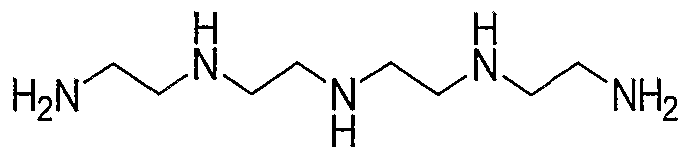
  • Suitable multifunctional aliphatic amines include, but are not limited to, those selected from the group consisting of
  • Suitable accelerators are di- or multi-functional phenolic compounds.
  • Suitable phenolic compounds include, but are not limited to, tris-2,4,6-(dimethyl aminomethyl) phenol, resorcinol, 4-ethylresorcinol, 2,5- dimethylresorcinol, phloroglucinol, 2-nitrophloro-glucinol, 5-methoxyresorcinol, orcinol, 2-methylresorcinol, 4-bromoresorcinol, 4-chIororesorcinol, 4,6- dichlororesorcinol, 3,5-dihydroxy-benzaldehyde, 2,4-dihydroxy-benzaldehyde, methyl 3,5-dihydroxy benzoate, methyl 2,4-dihydroxybenzoate, 1 ,2,4-benzenetriol, pyrogallol, 3,5-dihydroxybenzyl alcohol, 2',6'-di
  • Suitable fillers include, but are not limited to, ground quartz, fused silica, amorphous silica, talc, glass beads, graphite, carbon black, alumina, clays and nanoclays, mica, vermiculite, aluminum nitride, and boron nitride. Additional suitable fillers include metal powders and flakes, for example, silver, copper, gold, tin, tin/lead alloys, and other alloys. Organic filler powders such as poly(tetrachloroethylene), poly(chlorotriflouroethylene), and poly(vinylidene chloride) may also be used.
  • Fillers that act as desiccants or oxygen scavengers including but not limited to, CaO, BaO, Na 2 SO 4 , CaSO 4 , MgSO 4 , zeolites, silica gel, P 2 O 5 , CaCI 2 , and AI 2 O 3 may also be utilized.
  • the ingredients of the epoxy-amine system may be premixed, or preserved in separate containers and mixed in-situ using equipment such as a static mixer.
  • One may also partially premix the ingredients, for example, by adding a small fraction of the epoxy ingredient to the amine to make an amine oligomer/prepolymer.
  • the amount of epoxy should be small enough so that no gellation occurs. This mixture is then further blended with the rest of the epoxy component.
  • EXAMPLE 1 EPOXY-AMINE BLENDS AT VARIOUS RATIOS
  • This example demonstrates the importance of the epoxy-amine stoichiometry in a thermally curable blend.
  • Mixtures of bisphenol-F diglycidyl ether (available as Epoxy Research Resin RSL-1739 from Hexion Specialty Chemicals) with triethylene tetramine (TETA, Aldrich) or tetraethylene pentamine (TEPA, ACROS) were combined in various ratios as shown in Table 1 (TETA samples) and Table 2 (TEPA samples). All of the samples listed in the tables contained 0.2 wt% of silicone surface additive BYK-310. Each sample was degassed in a vacuum chamber after mixing and cured at 100°C for 100 minutes on a glass plate.
  • Permeation coefficients of the cured samples were measured on Mocon Permeatran 3/33 at 5O 0 C, 100%RH. As shown in these tables, the molar ratios of epoxy to amine molecules as well as the ratios of epoxy groups to amine nitrogens and epoxy groups to amine hydrogens were calculated. For TETA (Table 1), the lowest moisture permeation coefficients of 3.4 to 3.7 g ⁇ mil/IOO in 2 -day were attained with a roughly 1 to 1 ratio of epoxy groups to amine hydrogens. This was determined to be the optimum ratio. With higher amounts of epoxy, the films became more brittle and more difficult to remove from the glass without breaking. With higher amounts of amine, the films became softer and did not cure well.
  • Epoxy Resin (g) (amine) (g mil/100in -day)
  • EXAMPLE 3 FORMULATION WITH VARIOUS AMINES
  • This example demonstrates the effect of amine structure on the moisture permeation of the different cured epoxy/amines blends.
  • Several blends were studied using 80/20 RDGE/835LV as the epoxy choice.
  • Table 4 amines with various backbone structures were tested, all with 1 to 1 ratio of epoxy groups to amine hydrogens. All samples cured at 100°C for 100 minutes. Lower moisture permeability performances were observed in systems containing multifunctional aliphatic amines such as TEPA (tetraethylenepentamine), TETA (triethylene- tetramine), or DETA (diethylenetriamine).
  • TEPA tetraethylenepentamine
  • TETA triethylene- tetramine
  • DETA diethylenetriamine
  • This example demonstrates the effect of a phenolic catalyst on the curing of epoxy-amine systems.
  • This example shows the impact of phenolic catalyst loading on the curing behavior.
  • the samples were prepared similarly to Example 4 and analyzed on the Perkin Elmer DSC, heating at 10°C/minute to 150°C. All formulations were prepared with a 1 to 1 ratio of epoxy groups to amine hydrogens. The results are shown in Table 6.
  • the cure started around 65°C for samples without bisphenol-A or with only 1.5 to 5% bisphenol-A. When the bisphenol-A level was increased to 10%, the cure started at a lower temperature, about 55 0 C. The curing peak temperature decreased as the loading of the bisphenol-A increased.
  • EXAMPLE 6 COMPARISON OF VARIOUS PHENOLS FOR CATALYZING EPOXY- AMiNE CURE
  • This example demonstrates the impact of a phenolic catalyst on the curing behavior and moisture permeation after cure.
  • Several epoxy-TETA samples with various phenolic catalysts were compared.
  • mixtures of 6.64g RDGE, 1.67g Epiclon 835LV, and 1.67g TETA were prepared and the cure temperatures and exotherm information (Delta H in J/g) were obtained by heating at 10°C/minute to 150°C on a Perkin Elmer DSC.
  • resorcinol was able to lower the curing temperature and achieve permeation performance comparable to an uncatalyzed sample cured at 100 0 C for 100 minutes.
  • the permeation data was collected at 50 0 C and 100%RH.
  • bisphenol-A a significant increase in permeation was observed.
  • Another phenol, 2-hydroxy-4-methoxybenzophenone (HMBP) did not help curing at all.
  • a silica-filled two-part epoxy-amine system was prepared with micron- sized silica and a fumed silica rheology modifier. The ingredients are listed in Table 9.
  • Part B Weight (g) TEPA 1.55 [0067] The epoxies and resorcinol were heated to 110 °C to dissolve resorcinol. After cooling, silane adhesion promoter was added and the sample was mixed with a vortex mixer. The filler and rheology modifier were then added and the sample was mixed by three-roll mill followed by degassing overnight. TEPA was added to the filled epoxy system and mixed well by wooden stick and vortex mixer.
  • Adhesion performance was tested by applying two pieces of tape ( ⁇ 5 mils) approximately a quarter of an inch apart on a TEFLON coated aluminum plate. Using a blade, the formulation was drawn into a film between the tapes. A piece of glass slide and several 4x4 mm glass dies were wiped clean with isopropanol and soaked for 24h in isopropanol. The slides and dies were removed from the isopropanol and air-dried followed by 5 min UV ozone cleaning. The dies were then placed in the film of formulation and slightly tapped to wet out the entire die. The dies were picked from the formulation coating and placed onto the slides. The dies were slightly tapped to allow the formulation to wet out between the die and the slide.
  • the sealant formulations were cured in an oven for 20 min at 75-80 0 C.
  • the shear adhesion of the cured samples was tested using a Royce Instrument 552 100K equipped with a 100 kg head and a 300 mil die tool.
  • the dry adhesion was found to be above 40 kg, and remained at this level after one and two weeks of hygrothermal aging at 65 0 C and 80% RH.
  • Moisture permeation coefficient of the above formulation was found to be 1.1 g-mil/100in 2 -day.
  • the permeation data was collected at 50 0 C and 100%RH.

Landscapes

  • Chemical & Material Sciences (AREA)
  • Health & Medical Sciences (AREA)
  • Chemical Kinetics & Catalysis (AREA)
  • Medicinal Chemistry (AREA)
  • Polymers & Plastics (AREA)
  • Organic Chemistry (AREA)
  • Epoxy Resins (AREA)
  • Compositions Of Macromolecular Compounds (AREA)
  • Sealing Material Composition (AREA)

Abstract

This invention is a barrier composition comprising a resin or resin/filler system that is capable of being cured at low temperature while still maintaining superior barrier performance. This composition comprises (a) an aromatic compound having meta- substituted epoxy functionalities; (b) a multifunctional aliphatic amine; (c) optionally, one or more fillers; (d) optionally one or more adhesion promoters; (e) optionally, a phenolic cure accelerator.

Description

Attorney Docket #3193.EM.
THERMALLY CURABLE EPOXY-AMINE BARRIER SEALANTS
[0001] This Invention was made with support from the Government of the United States of America under Agreement No. MDA972-93-2-0014 awarded by the Army Research Laboratories. The Government has certain rights in the Invention.
[0002] FIELD OF THE INVENTION
[0003] This invention relates to barrier sealants, adhesives, encapsulants, and coatings for use in electronic and optoelectronic devices. (As used in this specification and claims, adhesives, sealants, encapsulants, and coatings are similar materials, all having adhesive, sealant, and coating properties and functions. When any one is recited, the others are deemed to be included.)
[0004] BACKGROUND
[0005] Polymeric barrier materials are widely used in many packaging and protective applications such as food, beverages, medical products, cosmetics, agricultural products, electronic components, molding, piping, and tubing. As barriers, they limit the exchange of permeant molecules between the environment and the system being protected and therefore, preserve the flavor or aroma of food or cosmetic ingredients, prevent moisture or oxygen from degrading the electronic components, and protect automotive fascia component surfaces from penetration by solvents commonly used in paints or primer. Since different systems require different barrier properties, a good barrier in one application might be considered a poor one in another. [0006] Numerous optoelectronic devices are moisture or oxygen sensitive and need to be protected from exposure during their functional lifetime. A common approach is to seal the device between an impermeable substrate on which it is positioned and an impermeable glass or metal lid, and seal or adhere the perimeter of the lid to the bottom substrate using a curable adhesive or sealant.
[0007] A common manifestation of this package geometry is exemplified in Figure 1, which discloses the use of a curable perimeter sealant (1) to bond a metal or glass lid (2) over an organic light emitting diode (OLED) stack (3) fabricated on a glass substrate (4). Although various configurations exist, a typical device also contains an anode (5), a cathode (6), and some form of electrical interconnect between the OLED pixel/device and external circuitry (7). For the purposes of this invention, no particular device geometry is specified or required aside from one which incorporates an adhesive/sealant material such as a perimeter sealant (1).
[0008] In many configurations, such as that shown in Figure 1 , both the glass substrate and the metal/glass lid are essentially impermeable to oxygen and moisture, and the sealant is the only material with any appreciable permeability that surrounds the device. For electronic and optoelectronic devices, moisture permeability is very often more critical than oxygen permeability; consequently, the oxygen barrier requirements are much less stringent, and it is the moisture barrier properties of the perimeter sealant that are critical to successful performance of the device.
[0009] Good barrier sealants will exhibit low bulk moisture permeability, good adhesion, and strong interfacial adhesive/substrate interactions. If the quality of the substrate to sealant interface is poor, the interface may function as a weak boundary, which allows rapid moisture ingress into the device regardless of the bulk moisture permeability of the sealant. If the interface is at least as continuous as the bulk sealant, then the permeation of moisture typically will be dominated by the bulk moisture permeability of the sealant itself.
[0010] It is important to note that one must examine moisture permeability (P) as the measure of effective barrier properties and not merely water vapor transmission rate (VWTR), as the latter is not normalized to a defined path thickness or path length for permeation. Generally, permeability can be defined as WVTR multiplied by permeation path length, and is, thus, the preferred way to evaluate whether a sealant is inherently a good barrier material.
[0011] The most common ways to express permeability are the permeability coefficient (e.g. g-mil/100 inz-day-atm), which applies to any set of experimental
conditions, or the permeation coefficient (e.g. g-mil/100 in2-day at a given temperature and relative humidity), which must be quoted with the experimental conditions in order to define the partial pressure/concentration of permeant present in the barrier material. In general, the penetration of a permeant through some barrier material (permeability, P) can be described as the product of a diffusion term (D) and a solubility term (S): P = D-S
[0012] The solubility term reflects the affinity of the barrier for the permeant, and, in relation to water vapor, a low S term is obtained from hydrophobic materials. The diffusion term is a measure of the mobility of a permeant in the barrier matrix and is directly related to material properties of the barrier, such as free volume and molecular mobility. Often, a low D term is obtained from highly crosslinked or crystalline materials (in contrast to less crosslinked or amorphous analogs). Permeability will increase drastically as molecular motion increases (for example as temperature is increased, and particularly when the T9 of a polymer is exceeded). [0013] Logical chemical approaches to producing improved barriers must consider these two fundamental factors (D and S) affecting the permeability of water vapor and oxygen. Superimposed on such chemical factors are physical variables: long permeation pathways and flawless adhesive bondlines (good wetting of the adhesive onto the substrate), which improve barrier performance and should be applied whenever possible. The ideal barrier sealant will exhibit low D and S terms while providing excellent adhesion to all device substrates.
[0014] It is not sufficient to have only a low solubility (S) term or only a low diffusivity (D) term in order to obtain high performance barrier materials. A classic example can be found in common siloxane elastomers. Such materials are extremely hydrophobic (low solubility term, S), yet they are quite poor barriers due to their high molecular mobility due to unhindered rotation about the Si-O bonds, which produces a high diffusivity term (D). Thus, many systems that are merely hydrophobic are not good barrier materials despite the fact that they exhibit low moisture solubility. Low moisture solubility must be combined with low molecular mobility and, thus, low permeant mobility or diffusivity.
[0015] Epoxy-amine chemistry based barriers have been used in food packaging for many years. These crosslinked coatings were found to have excellent oxygen barrier properties. However, it is generally known that oxygen and moisture permeability do not necessary follow the same trend. In addition, in order to gain the full potential of these coatings, materials are generally cured at high temperatures for prolonged time (typically 1000C for 60 minutes). These harsh conditions could be detrimental to electroluminescent materials or plastic substrates used in many current and future display applications such as organic light-emitting devices (OLED), polymer light-emitting devices, charge-coupled device (CCD) sensors, liquid crystal displays (LCD), electrophoretic displays, and micro-electro-mechanical sensors (MEMS). [0016] Due to demanding performance requirements for some applications, there is a need to further improve current barrier materials. In particular, there is a need for barrier materials that cure under 1000C, while maintaining good barrier performance, whether for food packaging or electronic and optoelectronic device packaging, or for any other type of applications that require barrier performance.
[0017] BRIEF DESCRIPTION OF THE DRAWINGS
[0018] FIGURE 1 is a perimeter sealed optoelectronic device. FIGURE 2 is a Differential Scanning Calorimetry overlay of an epoxy/TEPA (amine) blend cured isothermally at 75°C with and without a catalyst.
[0019] SUMMARY OF THE INVENTION
[0020] This invention is a barrier composition comprising a resin or resin/filler system that is capable of being cured at low temperature while still maintaining superior barrier performance. This composition comprises (a) an aromatic compound having mefa-substituted epoxy functionalities, (b) a multifunctional aliphatic amine, (c) optionally one or more fillers, (d) optionally, one or more adhesion promoters, and (e) optionally, a phenolic cure accelerator.
[0021] Such a barrier composition may be used alone or in combination with other curable resins and various fillers. The resulting compositions exhibit commercially acceptable cure rates, high crosslink densities, and good adhesion, which makes them effective for use in sealing and encapsulating a variety of articles of manufacture, and in particular electronic, optoelectronic, and MEMS devices.
[0022] In another embodiment, this invention is a low-temperature curable barrier composition comprising an aromatic epoxy compound selected from the group consisting of epoxided resoles, bisphenol-F diglycidyl ether, bisphenol-A diglycidyl ether, bisphenol-E diglycidyl ether, epoxidized phenol novolac resins, epoxidized cresol novolac resins, polycyclic epoxy resins, naphthalene diglycidyl ether, and halogenated derivatives of those; a multifunctional amine, and optionally, a phenolic curing accelerator.
[0023] DETAILED DESCRIPTION OF THE INVENTION
[0024] This invention is a thermally curable barrier sealant comprising (a) an aromatic compound having mefa-substituted epoxy functionalities and (b) a multifunctional aliphatic amine. The barrier adhesive or sealant optionally contains (c) one or more fillers, (d) one or more adhesion promoters.
[0025] For curing at lower temperature while maintaining good permeability performance, the thermally curable barrier sealant may further comprise (e) a phenolic curing accelerator.
[0026] In another embodiment, this invention is a low-temperature curable barrier composition comprising an aromatic epoxy compound selected from the group consisting of epoxidized resoles, bisphenol-F diglycidyl ether, bisphenol-A diglycidyl ether, bisphenol-E diglycidyl ether, epoxidized phenol novolac resins, epoxidized cresol novolac resins, polycyclic epoxy resins, naphthalene diglycidyl ether, and halogenated derivatives of those; a multifunctional amine; and optionally, a phenolic cure accelerator.
[0027] As used in this specification and claims, the words epoxy, epoxide, and oxirane (and their plurals) refer to the same compound or types of compounds.
[0028] The aromatic compound having mefa-substituted epoxy functionalities will have the structure:
[0029]
Figure imgf000007_0001
in which [0030] R1, R2, R3, R4 are selected from the group consisting hydrogen, halogen, cyano, alkyl, aryl, and substituted alkyl or aryl groups, which may contain an epoxy functionality; R5 and R6 are divalent hydrocarbon linkers having the general structure
CnH2n-, where n = 0 - 4 (when n is 0, R5 and R6 are not present); in which any two of R1, R2, R3, R4 , R5, and R6 may form part of the same cyclic structure;
[0031] L1, L2, L3, L4, L5, L6 are a direct bond or a divalent linking group selected
O O O
Il from the group consisting of — O — , — S — , — C — , — C-O — , — O-C O O O O . H H ° H H
-C-S-, -S-C-, — O-C-O— , — O-C-N— , -N-C-O-, -N-C-N-, fl H H
— C-N — , and — N-C — ; EP and EP' are curable epoxy functionalities selected from the group consisting of aliphatic epoxy, glycidyl ether, cycloaliphatic epoxy.
O [0032] Examples of the epoxy groups include, but are not limited to, — Z-A
Figure imgf000008_0001
Figure imgf000008_0002
in which the hydrogens on the structures may be substituted by one or more alkyl or halogen groups. [0033] Exemplary aromatic compounds having mefa-substituted epoxy functionalities include, but are not limited to:
Figure imgf000008_0003
Figure imgf000009_0001
[0034] To satisfy various performance requirements, one or more additional epoxy resins may be used, and these resins are preferably selected from the group consisting of bisphenol F diglycidyl ether, novolac glycidyl ethers, polycyclic epoxies, naphthalene diglycidyl ether, and halogenated glycidyl ethers. [0035] Within this specification, the term multifunctional aliphatic amine means amines that have at least two of the following groups present in the same molecule:
R' H -C-N-R"1
R" , in which R' and R" are independently selected from the group consisting hydrogen, alkyl or substituted alkyl groups. R'" is either a hydrogen or a divalent alkyl/substituted alkyl linking group. Suitable multifunctional aliphatic amines include, but are not limited to, those selected from the group consisting of
^^NH2 H2 H2N Y ^NH2
H2N H2N^ OH
Figure imgf000010_0001
and
[0036] As used in this specification and claims, the words cure accelerator and catalyst refer to the same concept. Suitable accelerators are di- or multi-functional phenolic compounds. Suitable phenolic compounds include, but are not limited to, tris-2,4,6-(dimethyl aminomethyl) phenol, resorcinol, 4-ethylresorcinol, 2,5- dimethylresorcinol, phloroglucinol, 2-nitrophloro-glucinol, 5-methoxyresorcinol, orcinol, 2-methylresorcinol, 4-bromoresorcinol, 4-chIororesorcinol, 4,6- dichlororesorcinol, 3,5-dihydroxy-benzaldehyde, 2,4-dihydroxy-benzaldehyde, methyl 3,5-dihydroxy benzoate, methyl 2,4-dihydroxybenzoate, 1 ,2,4-benzenetriol, pyrogallol, 3,5-dihydroxybenzyl alcohol, 2',6'-dihydroxyacetophenone, 2',4'- dihydroxyacetophenone, 3',5'-dihydroxyacetophenone, 2',4'-dihydroxy- propiophenone, 2',4'-dihydroxy-3'-methylacetophenone, 2,4,5-trihydroxy- benzaldehyde, 2,3,4-trihydroxybenzaldehyde, 2,4,6-trihydroxybenzaldehyde, 3,5- dihydroxybenzoic acid, 2,4-dihydroxybenzoic acid, 2,6-dihydroxybenzoic acid, 2- nitroresorcinol, 1 ,3-dihydroxynaphthalene, hydroquinone, methylhydroquinone, 2,3- dimethylhydroquinone, 2-methoxyhydroquinone, chlorohydroquinone, 2',5'- dihydroxyacetophenone, 2-isopropyl-1 ,4-benzenediol, 2,5-dihydroxybenzoic acid, 2,3- dicyanohydroquinone, 1 ,4-dihydroxynaphthalene, 2',5'-dihydroxypropiophenone, 1- (2,5-dihydroxy-4-methylphenyl)ethanone, tert-butylhydroquinone, methyl 2,5- dihydroxybenzoate, (2,5-dihydroxyphenyl)acetic acid, 2,4,5-trihydroxybenzoic acid, 4,7-dihydroxy-3-methyl-1 -indanone, 2,5-dichlorohydroquinone, tetrafluoro- hydroquinone, ethyl 2,5-dihydroxybenzoate, 2-(2,5-dihydroxybenzylidene) malononitrile, 2-bromo-1 ,4-benzenediol, ethyl (2,5-dihydroxyphenyl)acetate, 1-(2,4,5- trihydroxyphenyl)-1-butanone, methyl 2,5-dihydroxy-4-methoxybenzoate, 2,6-dinitro- 1 ,4-benzenediol, 2,4,5-trihydroxyphenylalanine, (2,5-dihydroxyphenyl)- (phenyl)methanone, 2,5-ditert-butyl-1 ,4-benzenediol, 2-(6-methy!heptyl)-1 ,4- benzenediol, 2-(1 ,1 , 3, 3-tetramethylbutyl)-1 ,4-benzenediol, dimethyl 2,5- dihydroxyterephthalate, 2,4,5-trichloro-3,6-dihydroxybenzonitrile, 2,5-ditert-pentyl-1 ,4- benzenediol, 2, 5-dibromo-1 ,4-benzenediol, dimethyl 2,4-diethyl-3,6-dihydroxy- phenylphosphonate, pyrocatechol, 2,3-naphthalenediol, 5-methyl-1 ,2,3-benzenetriol, 4-methylcatechol, 3-methylcatechol, 3-fluorocatechol, 3-methoxycatechol, A- chlorocatechol, 4,5-dichlorocatechol, 4-tert-butylcatechol, 3,4,5,6-tetrachloro-1 ,2- benzenediol, 3-isopropyl-6-methylcatechol, 3-tert-butyl-6-methylcatechol, 3,4- dihydroxybenzonitrile, 3,5-ditert-butylcatechol, 3,5-diisopropylcatechol, 3,4- dihydroxybenzaldehyde, 4-(1 ,1 ,3,3-tetramethylbutyl)-1 ,2-benzenediol, 4-(1 ,2- dihydroxyethyl)-1 ,2-benzenediol, 1-(3,4-dihydroxyphenyl)ethanone, 3,4- dihydroxybenzoic acid, 3,4,5-trihydroxybenzamide, 4-nitro-1 ,2-benzenediol, 4-(2- amino-1-hydroxyethyl)-1 ,2-benzenediol, 5-methyl-3-(1 ,1 ,3,3-tetramethylbutyl)-1 ,2- benzenediol, (3,4-dihydroxyphenyl)acetic acid, 2-(3,4-dihydroxybenzyl- idene)malononitrile, 3,5-dinitro-1 ,2-benzenediol, methyl 3, 4-dihydroxybenzoate, 2- chloro-1-(3,4-dihydroxyphenyl)ethanone, phenyl(2,3,4-trihydroxyphenyl)methanone, isopropyl 3,4,5-trihydroxybenzoate, 3,4-dihydroxy-2-methylphenylalanine, 3-bromo- 4,5-dihydroxybenzoic acid, 2-(3,4-dihydroxy-5-methoxybenzylidene)malononitrile, ethyl 3-(3,4-dihydroxyphenyl)propanoate, 2-phenyl-1-(2,3,4-trihydroxy- phenyl)ethanone, and 3,4,5-trihydroxy-N-(2-hydroxyethyl)benzamide.
[0037] Suitable fillers include, but are not limited to, ground quartz, fused silica, amorphous silica, talc, glass beads, graphite, carbon black, alumina, clays and nanoclays, mica, vermiculite, aluminum nitride, and boron nitride. Additional suitable fillers include metal powders and flakes, for example, silver, copper, gold, tin, tin/lead alloys, and other alloys. Organic filler powders such as poly(tetrachloroethylene), poly(chlorotriflouroethylene), and poly(vinylidene chloride) may also be used. Fillers that act as desiccants or oxygen scavengers, including but not limited to, CaO, BaO, Na2SO4, CaSO4, MgSO4, zeolites, silica gel, P2O5, CaCI2, and AI2O3 may also be utilized.
[0038] The ingredients of the epoxy-amine system may be premixed, or preserved in separate containers and mixed in-situ using equipment such as a static mixer. One may also partially premix the ingredients, for example, by adding a small fraction of the epoxy ingredient to the amine to make an amine oligomer/prepolymer. The amount of epoxy should be small enough so that no gellation occurs. This mixture is then further blended with the rest of the epoxy component. Alternatively, one may dissolve one or more of the components in a solvent or solvents before application. [0039] Application of these formulations can be accomplished through a variety of processes including, but not limited to, syringe dispensing, screen printing, stencil printing, spraying, roll coating, inkjet printing, spin coating, dip coating, vacuum evaporation, and like processes. The choice of application method will depend on the article of manufacture and such choice is within the expertise of one skilled in the art.
[0040] EXAMPLES
[0041] EXAMPLE 1. EPOXY-AMINE BLENDS AT VARIOUS RATIOS
[0042] This example demonstrates the importance of the epoxy-amine stoichiometry in a thermally curable blend. Mixtures of bisphenol-F diglycidyl ether (available as Epoxy Research Resin RSL-1739 from Hexion Specialty Chemicals) with triethylene tetramine (TETA, Aldrich) or tetraethylene pentamine (TEPA, ACROS) were combined in various ratios as shown in Table 1 (TETA samples) and Table 2 (TEPA samples). All of the samples listed in the tables contained 0.2 wt% of silicone surface additive BYK-310. Each sample was degassed in a vacuum chamber after mixing and cured at 100°C for 100 minutes on a glass plate. Permeation coefficients of the cured samples were measured on Mocon Permeatran 3/33 at 5O0C, 100%RH. As shown in these tables, the molar ratios of epoxy to amine molecules as well as the ratios of epoxy groups to amine nitrogens and epoxy groups to amine hydrogens were calculated. For TETA (Table 1), the lowest moisture permeation coefficients of 3.4 to 3.7 g^mil/IOO in2-day were attained with a roughly 1 to 1 ratio of epoxy groups to amine hydrogens. This was determined to be the optimum ratio. With higher amounts of epoxy, the films became more brittle and more difficult to remove from the glass without breaking. With higher amounts of amine, the films became softer and did not cure well. The samples containing TEPA and RSL-1739 (Table 2) followed similar trends. The lowest moisture permeation coefficients were 3.6 to 4.0 g- mil/100 in2-day, and were again obtained with a 1 to 1 ratio of epoxy groups to amine hydrogens.
[0043] Table 1. RSL-1739/TETA formulations
RSL-1739: TETA
Permeation Ratio O (epoxy): O (epoxy):
N (amine) N-H (amine) (g mil/100in2-day)
RSL- TETA Film
1739 (g) (g) (Wt.) (molar) Ratio Ratio (5O0C, 100%RH) Properties
9.50 0.50 19.00 8.89 4.45 2.96 - very brittle
9.00 1.00 9.00 4.21 2.11 1.40 4.6 Brittle
8.65 1.35 6.41 3.00 1.50 1.00 3.7 Flexible
8.61 1.39 6.19 2.90 1.45 0.97 3.4 Flexible
8.11 1.89 4.29 2.01 1.00 0.67 4.4 flexible
6.82 3.18 2.14 1.00 0.50 0.33 - not cured
6.00 4.00 1.50 0.70 0.35 0.23 - very soft
2.00 8.00 0.25 0.12 0.058 0.039 - not cured
[0044] Table 2. RSL-1739/TEPA formulations
RSL-1739:
Permeation TEPA Ratio O (epoxy): O (epoxy):
N (amine) N-H (amine) (g-mil/100in2-day)
RSL- TEPA Film
1739 (g) (g) (Wt.) (molar) Ratio ratio (500C, 100%RH) Properties
9.50 0.50 19.00 11.51 4.60 3.29 - not cured
9.00 1.00 9.00 5.45 2.18 1.56 5.8 brittle slightly
8.65 1.35 6.41 3.88 1.55 1.11 3.6 brittle slightly
8.53 1.47 5.80 3.52 1.41 1.00 4.0 brittle
7.98 2.02 3.95 2.39 0.96 0.68 4.1 flexible
6.82 3.18 2.14 1.30 0.52 0.37 274.1 very soft
[0045] EXAMPLE 2. FORMULATION WITH VARIOUS EPOXIES
[0046] This example demonstrates the effect of epoxy structure on the permeability performance. Formulations of TEPA were prepared with other epoxies or combinations of epoxies including ERL-4221 (Dow Chemical), resorcinol diglycidyl ether (available from CVC Specialty Chemicals as ERISYS RDGE), and Epiclon EXA-835LV (Danippon Ink and Chemicals Co.). The formulations with their permeation results are shown in Table 3. All formulations were prepared with a 1 to 1 ratio of epoxy groups to amine hydrogens and 0.2 wt% BYK-310 as a defoamer, and were cured at 1000C for 100 minutes on glass unless otherwise stated in Table 3. The formulations containing cycloaliphatic epoxy ERL-4221 did not cure well. The RDGE formulations had better results, with low permeation coefficients (2.0-2.5 g-mil/100 in2-day) both alone and in blends with other glycidyl epoxies. [0047] Table 3. Permeation of various epoxy/TEPA blends cured at 100 °C/100 minutes
O (epoxy):
Permeation
TEPA N-H
Epoxy Resin (g) (amine) (g mil/100in -day)
ERL-4221 8.24 1.76 1.00 not cured
50/50
RDGE/ERL-4221 8.15 1.85 1.00 117.1
RSL-1739 8.53 1.47 1.00 4.0
50/50
RDGE/RSL-1739 8.32 1.68 1.00 3.1
RDGE 8.05 1.95 1.00 2.1
85/15
RDGE/RSL-1739 8.14 1.86 1.00 2.0
80/20
RDGE/835LV 3.27 0.73 1.00 2.5
[0048] EXAMPLE 3: FORMULATION WITH VARIOUS AMINES
[0049] This example demonstrates the effect of amine structure on the moisture permeation of the different cured epoxy/amines blends. Several blends were studied using 80/20 RDGE/835LV as the epoxy choice. As shown in Table 4 below, amines with various backbone structures were tested, all with 1 to 1 ratio of epoxy groups to amine hydrogens. All samples cured at 100°C for 100 minutes. Lower moisture permeability performances were observed in systems containing multifunctional aliphatic amines such as TEPA (tetraethylenepentamine), TETA (triethylene- tetramine), or DETA (diethylenetriamine). As the table indicates, the aromatic amine/epoxy systems either would not melt or did not cure.
[0050] Table 4. Effect of amine structure variation on moisture permeation in epoxy/amine systems with 80/20 RDGE/835LV epoxy blend
Amine Permeation Film Properties g-mil/100 in2-day
2.5 Transparent, flexible
Figure imgf000017_0001
H 2.1 Transparent, flexible ,N.
H2N' N H
H 1.2 Transparent, flexible ,N.
H9N' ^NH2
IH2 3.7 Transparent, flexible
H2N'
^NH2 8.1 Some undissolved
H5N' particles
4.0 Transparent, flexible
Figure imgf000017_0002
Figure imgf000017_0003
Would not melt
Rubbery, unable to remove from glass plate
Figure imgf000017_0004
[0051] EXAMPLE 4 CURING UNDER DIFFERENT CONDITIONS
[0052] This example demonstrates the effect of a phenolic catalyst on the curing of epoxy-amine systems. Into a vial containing a clear solution of 1.32g RDGE and 0.33g Epiclon EXA-835LV, was added 0.37g TEPA. The whole mixture was blended using a vortex mixer for one minute. Isothermal curing studies were immediately conducted on a Perkin Elmer DSC at 75°C and at 1000C and the results are summarized in Table 5.
[0053] Table 5. Isothermal Curing of Epoxy/TEPA Blends at Various Temperatures
Time to Reach
Time to 90% of Total Peak Exotherm
Catalyst Conditions (min) (min) ΔH (Jig)
Isothermal at 75
None 0.90 7.68 -643
0C
Isothermal at
None 0.58 2.98 -660 100 0C
Isothermal at
5% resorcinol 0.62 5.35 -600 75 0C
[0054] As shown by the table, curing at 750C requires significantly longer time than curing at 1000C when no catalyst is used. This is indicated by the longer time to reach peak exotherm as well as the time needed to complete 90% of the curing. Another sample was prepared by blending 0.082g resorcinol into a mixture of 1.32g RDGE and 0.33g Epiclon EXA-835LV (5 wt% resorcinol based on epoxies) and heating at 1000C for 10 minutes to make a clear solution. After cooling to room temperature, 0.37g TEPA was added and the solution was mixed by a vortex mixer. Isothermal curing was again studied for this formulation. The catalyzed formulation had significant improvements in curing performance. Both time to peak temperature and time to reach 90% of total exotherm values shortened compared to the uncatalyzed sample. A film cured at 75°C for 20 minutes without catalyst was tacky, but when catalyst was added, the film was non-tacky and scratch resistant. [0055] EXAMPLE 5. THE EFFECT OF PHENOL LOADING ON CURING BEHAVIOR
[0056] This example shows the impact of phenolic catalyst loading on the curing behavior. The samples were prepared similarly to Example 4 and analyzed on the Perkin Elmer DSC, heating at 10°C/minute to 150°C. All formulations were prepared with a 1 to 1 ratio of epoxy groups to amine hydrogens. The results are shown in Table 6. The cure started around 65°C for samples without bisphenol-A or with only 1.5 to 5% bisphenol-A. When the bisphenol-A level was increased to 10%, the cure started at a lower temperature, about 550C. The curing peak temperature decreased as the loading of the bisphenol-A increased.
[0057] Table 6. Curing of Epoxy/TETA Blends at Various Bisphenol-A Loading
Bisphenol-A
80/20 T_
RDGE/835L Jf [A % based Curin9 Curin9 Delta H
V (g) (9) wt (g) on Onset (0C) Peak (°C) (J/g) epoxy
2.78 0.56 0 0 65 91 -300
2.78 0.56 0.04 1.5 65 90 -229
2.78 0.56 0.148 5.3 65 86 -225
2.78 0.56 0.278 10 55 82 -253
[0058] EXAMPLE 6: COMPARISON OF VARIOUS PHENOLS FOR CATALYZING EPOXY- AMiNE CURE
[0059] This example demonstrates the impact of a phenolic catalyst on the curing behavior and moisture permeation after cure. Several epoxy-TETA samples with various phenolic catalysts were compared. In this case, mixtures of 6.64g RDGE, 1.67g Epiclon 835LV, and 1.67g TETA were prepared and the cure temperatures and exotherm information (Delta H in J/g) were obtained by heating at 10°C/minute to 150°C on a Perkin Elmer DSC. As shown by the example, resorcinol was able to lower the curing temperature and achieve permeation performance comparable to an uncatalyzed sample cured at 1000C for 100 minutes. The permeation data was collected at 500C and 100%RH. In the case of bisphenol-A, a significant increase in permeation was observed. Another phenol, 2-hydroxy-4-methoxybenzophenone (HMBP) did not help curing at all.
[0060] Table 7. Comparison of Phenolic Cure Accelerators (wt% based on epoxy) for Epoxy-TETA Blends
Cure wt% Cure onset Permeation
Peak (0C) accelerator accelerator Delta H (JIg) ("C) (g*mil/100in2'day)
None 2.1 (cured at 100°C/100min)
0 62 91 -300 tacky (cured at 750C /20 min) bisphenol-A 5 55 83 -225 4.5
HMBP 5 75 92 -196 n/a
Resorcinol 5 50 78 -257 2.1
[0061 ] EXAMPLE 7. VARIOUS SUBSTITUTED RESORCINOL CURE ACCELERATORS
[0062] Several substituted versions of resorcinol were screened at 5 wt% to determine if the curing temperature could be decreased further. As shown in Table 8 below, all the resorcinol analogues lowered the curing peak, but none were significantly better than resorcinol itself.
[0063] Table 8 Thermal DSC of Substituted Resorcinol Compounds at 5 wt% in (80/20 RDGE/835LV)/TEPA
wt% Peak Area
Cure accelerator Notes accelerator ("C) (J/g)
None 0 90 653 resorcinol 5 82 579 not fully soluble in phloroglucinol 5 - - epoxy at 200 0C
5-methoxyresorcinol 5 82 582 orcinol 5 81 462
4-bromoresorcinol 5 84 515
4,6-dichlororesorcinol 5 86 472 not fully dissolved
2,4-dihydroxybenzaldehyde 5 85 521 methyl 3,5-dihydroxy benzoate 5 87 522
[0064] Example 8. Filled Two-Part Formulations
[0065] A silica-filled two-part epoxy-amine system was prepared with micron- sized silica and a fumed silica rheology modifier. The ingredients are listed in Table 9.
[0066]
Table 9 Two-part Filled Epoxy-amine System
Part A Weight (g)
80/20 RDGE/835LV 7.00
Resorcinol 0.35
Silane adhesion promoter 0.21
Micron sized silica 14.00
Fumed silica rheology modifier 0.15
Part B Weight (g) TEPA 1.55 [0067] The epoxies and resorcinol were heated to 110 °C to dissolve resorcinol. After cooling, silane adhesion promoter was added and the sample was mixed with a vortex mixer. The filler and rheology modifier were then added and the sample was mixed by three-roll mill followed by degassing overnight. TEPA was added to the filled epoxy system and mixed well by wooden stick and vortex mixer.
[0068] Adhesion performance was tested by applying two pieces of tape (~5 mils) approximately a quarter of an inch apart on a TEFLON coated aluminum plate. Using a blade, the formulation was drawn into a film between the tapes. A piece of glass slide and several 4x4 mm glass dies were wiped clean with isopropanol and soaked for 24h in isopropanol. The slides and dies were removed from the isopropanol and air-dried followed by 5 min UV ozone cleaning. The dies were then placed in the film of formulation and slightly tapped to wet out the entire die. The dies were picked from the formulation coating and placed onto the slides. The dies were slightly tapped to allow the formulation to wet out between the die and the slide. The sealant formulations were cured in an oven for 20 min at 75-80 0C. The shear adhesion of the cured samples was tested using a Royce Instrument 552 100K equipped with a 100 kg head and a 300 mil die tool. The dry adhesion was found to be above 40 kg, and remained at this level after one and two weeks of hygrothermal aging at 65 0C and 80% RH.
[0069] Moisture permeation coefficient of the above formulation was found to be 1.1 g-mil/100in2-day. The permeation data was collected at 500C and 100%RH.

Claims

WHAT IS CLAIMED:
1. A curable barrier composition comprising
(a) an aromatic compound having mefa-substituted epoxy functionalities:
Figure imgf000023_0001
in which
R1, R2, R3, R4 are selected from the group consisting hydrogen, halogen, cyano, alkyl, aryl, and substituted alkyl or aryl groups, which may contain an epoxy functionality; R5, R6 are divalent hydrocarbon linkers having the general structure cnH2n~, where n = 0 - 4; in which any two of R1, R2, R3, R4 , R5 and R6 may form part of the same cyclic structure;
L1, L2, L3, L4, L5, L6 are a direct bond or a divalent linking group selected
O M O I l O I l from the group consisting of — O — , — S — , — C — , -C-O — , — 0-C — ,
O O O 0 Ii , H, L H1 O L- O LJ
Ii Ii Ii Ii H n H
-C-S-, -S-C-, — 0-C-O— , — O-C-N— , -N-C-O-, -N-C-N-,
O u u O
Ii H H Ii
-C-N-, and -N-C-;
EP and EP' are curable epoxy functionalities selected from the group consisting of aliphatic epoxy, glycidyl ether, and cycloaliphatic epoxy in which hydrogens on the epoxy may be substituted by one or more alkyl or halogen groups.
(b) a multifunctional aliphatic amine,
(c) optionally, one or more fillers,
(d) optionally, one or more adhesion promoters.
2. The curable barrier composition according to claim 1 in which the EP and
EP' functionalities are selected from the group consisting of
Figure imgf000024_0001
in which the hydrogens on the EP and EP' structures may be substituted by one or more alkyl or halogen groups.
3. The curable barrier composition according to claim 1 further comprising
(e) a phenolic cure accelerator.
4. The curable barrier composition according to either of claims 1 , 2, or 3, in which the multifunctional aliphatic amine is selected from a group consisting of:
H9N' ^NH,
H2N' H2N' OH
H
H
H2N'"^N--^N'-'^NH2
H2N' ^NH % H
H H
H2N' N ^NH,
H
H H
H2N^^^N^^Ns
H H
Figure imgf000025_0001
nd
5. The curable barrier composition according to either claim 1or 2, in which the phenolic cure accelerator is selected from the group consisting of tris-2,4,6- (dimethyl aminomethyl) phenol, resorcinol, 4-ethylresorcinol, 2,5-dimethylresorcinol, phloroglucinol, 2-nitrophloro-glucinol, 5-methoxyresorcinol, orcinol, 2- methylresorcinol, 4-bromoresorcinol, 4-chlororesorcinol, 4,6-dichlororesorcinol, 3,5- dihydroxy-benzaldehyde, 2,4-dihydroxy-benzaldehyde, methyl 3,5-dihydroxy benzoate, methyl 2,4-dihydroxybenzoate, 1 ,2,4-benzenetriol, pyrogallol, 3,5- dihydroxybenzyl alcohol, 2',6'-dihydroxyacetophenone, 2',4'-dihydroxyacetophenone, 3',5'-dihydroxyacetophenone, 2',4'-dihydroxy-propiophenone, 2',4'-dihydroxy-3'- methylacetophenone, 2,4,5-trihydroxy-benzaldehyde, 2,3,4-trihydroxybenzaldehyde, 2,4,6-trihydroxybenzaldehyde, 3,5-dihydroxybenzoic acid, 2,4-dihydroxybenzoic acid, 2,6-dihydroxybenzoic acid, 2-nitroresorcinol, 1 ,3-dihydroxynaphthalene, hydroquinone, methylhydroquinone, 2,3-dimethylhydroquinone, 2- methoxyhydroquinone, chlorohydroquinone, 2',5'-dihydroxyacetophenone, 2- isopropyl-1 ,4-benzenediol, 2,5-dihydroxybenzoic acid, 2,3-dicyanohydroquinone, 1 ,4- dihydroxynaphthalene, 2',5'-dihydroxypropiophenone, 1-(2,5-dihydroxy-4- methylphenyl)ethanone, tert-butylhydroquinone, methyl 2,5-dihydroxybenzoate, (2,5- dihydroxyphenyl)acetic acid, 2,4,5-trihydroxybenzoic acid, 4,7-dihydroxy-3-methyl-1- indanone, 2,5-dichlorohydroquinone, tetrafluoro-hydroquinone, ethyl 2,5- dihydroxybenzoate, 2-(2,5-dihydroxybenzylidene) malononitrile, 2-bromo-1 ,4- benzenediol, ethyl (2,5-dihydroxyphenyl)acetate, 1-(2,4,5-trihydroxyphenyl)-1- butanone, methyl 2,5-dihydroxy-4-methoxybenzoate, 2,6-dinitro-1 ,4-benzenediol, 2,4,5-trihydroxyphenylalanine, (2,5-dihydroxyphenyl)- (phenyl)methanone, 2,5-ditert- butyl-1 ,4-benzenediol, 2-(6-methylheptyl)-1 ,4-benzenediol, 2-(1 , 1 ,3,3- tetramethyibutyl)-1 ,4-benzenediol, dimethyl 2,5-dihydroxyterephthalate, 2,4,5- trichloro-3,6-dihydroxybenzonitrile, 2,5-ditert-pentyl-1 ,4-benzenediol, 2,5-dibromo-1 ,4- benzenediol, dimethyl 2,4-diethyl-3,6-dihydroxy-phenylphosphonate, pyrocatechol, 2,3-naphthalenediol, 5-methyl-1,2,3-benzenetriol, 4-methylcatechol, 3- methylcatechol, 3-fluorocatechol, 3-methoxycatechol, 4-chlorocatechol, 4,5- dichlorocatechol, 4-tert-butylcatechol, 3,4,5,6-tetrachloro-1 ,2-benzenediol, 3- isopropyl-6-methylcatechol, 3-tert-butyl-6-methylcatechol, 3,4-dihydroxybenzonitrile, 3,5-ditert-butylcatechol, 3,5-diisopropylcatechol, 3,4-dihydroxybenzaldehyde, 4- (1 ,1 ,3,3-tetramethylbutyl)-1 ,2-benzenediol, 4-(1 ,2-dihydroxyethyl)-1 ,2-benzenediol, 1- (3,4-dihydroxyphenyl)ethanone, 3,4-dihydroxybenzoic acid, 3,4,5- trihydroxybenzamide, 4-nitro-1 ,2-benzenediol, 4-(2-amino-1-hydroxyethyl)-1 ,2- benzenediol, 5-methyl-3-(1 ,1 ,3,3-tetramethylbutyl)-1 ,2-benzenediol, (3,4- dihydroxyphenyl)acetic acid, 2-(3,4-dihydroxybenzyl-idene)malononitrile, 3,5-dinitro- 1 ,2-benzenediol, methyl 3,4-dihydroxybenzoate, 2-chloro-1-(3,4- dihydroxyphenyl)ethanone, phenyl(2,3,4-trihydroxyphenyl)methanone, isopropyl 3,4,5-trihydroxybenzoate, 3,4-dihydroxy-2-methylphenylalanine, 3-bromo-4,5- dihydroxybenzoic acid, 2-(3,4-dihydroxy-5-methoxybenzylidene)malononitrile, ethyl 3- (3,4-dihydroxyphenyl)propanoate, 2-phenyl-1-(2,3,4-trihydroxy-phenyl)ethanone, and 3,4,5-trihydroxy-N-(2-hydroxyethyl)benzamide.
6. The curable barrier composition according to claim 1 in which one or more fillers are present and are selected from the group consisting of ground quartz, fused silica, amorphous silica, talc, glass beads, graphite, carbon black, alumina, clays, and nanoclays, mica, vermiculite, aluminum nitride, boron nitride, metal powders, metal flakes, poly(tetrachloroethylene), poly(chlorotriflouroethylene), poly(vinylidene chloride), CaO, BaO, Na2SO4, CaSO4, MgSO4, zeolites, silica gel, P2O5, CaCI2, and AI2O3.
7. A curable barrier composition comprising
(a) an aromatic epoxy compound selected from the group consisting of epoxidized resoles, bisphenol-F diglycidyl ether, bisphenol-A diglycidyl ether, bisphenol-E diglycidyl ether, epoxidized phenol novolac resins, epoxidized cresol novolac resins, polycyclic epoxy resins, naphthalene diglycidyl ether, and halogenated derivatives of those;
(b) a multifunctional aliphatic amine,
(c) optionally, one or more fillers,
(d) optionally, one or more adhesion promoters, and
(e) optionally, a phenolic cure accelerator.
8. The curable barrier composition according to claim 7, in which the multifunctional aliphatic amine is selected from a group consisting of:
WW WH HsN'^^NHa
H2N^NH2, H2N^^^^NH2 ; OH
u H
H2N^N-^NH2) H2N W
Figure imgf000027_0001
Figure imgf000028_0001
and
9. The curable barrier composition according to claim 7, in which the phenolic cure accelerator is selected from the group consisting of tris-2,4,6-(dimethyl aminomethyl) phenol, resorcinol, 4-ethylresorcinol, 2,5-dimethylresorcinol, phloroglucinol, 2-nitrophloro-glucinol, 5-methoxyresorcinol, orcinol, 2- methylresorcinol, 4-bromoresorcinol, 4-chlororesorcinol, 4,6-dichlororesorcinol, 3,5- dihydroxy-benzaldehyde, 2,4-dihydroxy-benzaldehyde, methyl 3,5-dihydroxy benzoate, methyl 2,4-dihydroxybenzoate, 1 ,2,4-benzenetriol, pyrogallol, 3,5- dihydroxybenzyl alcohol, 2',6'-dihydroxyacetophenone, 2',4'-dihydroxyacetophenone, 3',5'-dihydroxyacetophenone, 2',4'-dihydroxy-propiophenone, 2',4'-dihydroxy-3'- methylacetophenone, 2,4,5-trihydroxy-benzaldehyde, 2,3,4-trihydroxybenzaldehyde, 2,4,6-trihydroxybenzaldehyde, 3,5-dihydroxybenzoic acid, 2,4-dihydroxybenzoic acid, 2,6-dihydroxybenzoic acid, 2-nitroresorcinol, 1 ,3-dihydroxynaphthalene, hydroquinone, methylhydroquinone, 2,3-dimethylhydroquinone, 2- methoxyhydroquinone, chlorohydroquinone, 2',5'-dihydroxyacetophenone, 2- isopropyl-1 ,4-benzenediol, 2,5-dihydroxybenzoic acid, 2,3-dicyanohydroquinone, 1 ,4- dihydroxynaphthalene, 2',5'-dihydroxypropiophenone, 1-(2,5-dihydroxy-4- methylphenyl)ethanone, tert-butylhydroquinone, methyl 2,5-dihydroxybenzoate, (2,5- dihydroxyphenyl)acetic acid, 2,4,5-trihydroxybenzoic acid, 4,7-dihydroxy-3-methyl-1- indanone, 2,5-dichlorohydroquinone, tetrafluoro-hydroquinone, ethyl 2,5- dihydroxybenzoate, 2-(2,5-dihydroxybenzylidene) malononitrile, 2-bromo-1 ,4- benzenediol, ethyl (2,5-dihydroxyphenyl)acetate, 1-(2,4,5-trihydroxyphenyl)-1- butanone, methyl 2,5-dihydroxy-4-methoxybenzoate, 2,6-dinitro-1 ,4-benzenediol, 2,4,5-trihydroxyphenylalanine, (2,5-dihydroxyphenyl)- (phenyl)methanone, 2,5-ditert- butyl-1 ,4-benzenediol, 2-(6-methylheptyl)-1 ,4-benzenediol, 2-(1 , 1 ,3,3- tetramethylbutyl)-1 ,4-benzenediol, dimethyl 2,5-dihydroxyterephthalate, 2,4,5- trichloro-3,6-dihydroxybenzonitrile, 2,5-ditert-pentyl-1 ,4-benzenediol, 2,5-dibromo-1 ,4- benzenediol, dimethyl 2,4-diethyl-3,6-dihydroxy-phenylphosphonate, pyrocatechol, 2,3-naphthalenediol, 5-methyl-1 ,2,3-benzenetriol, 4-methylcatechol, 3- methylcatechol, 3-fluorocatechol, 3-methoxycatechol, 4-chlorocatechol, 4,5- dichlorocatechol, 4-tert-butylcatechol, 3,4,5,6-tetrachloro-1 ,2-benzenediol, 3- isopropyl-6-methylcatechol, 3-tert-butyl-6-methylcatechol, 3,4-dihydroxybenzonitrile, 3,5-ditert-butylcatechol, 3,5-diisopropylcatechol, 3,4-dihydroxybenzaldehyde, A- (1 ,1 ,3,3-tetramethylbutyl)-1 ,2-benzenediol, 4-(1 ,2-dihydroxyethyl)-1 ,2-benzenediol, 1- (3,4-dihydroxyphenyl)ethanone, 3,4-dihydroxybenzoic acid, 3,4,5- trihydroxybenzamide, 4-nitro-1 ,2-benzenediol, 4-(2-amino-1-hydroxyethyl)-1 ,2- benzenediol, 5-methyl-3-(1 ,1 ,3,3-tetramethylbutyl)-1 ,2-benzenediol, (3,4- dihydroxyphenyl)acetic acid, 2-(3,4-dihydroxybenzyl-idene)malononitrile, 3,5-dinitro- 1 ,2-benzenediol, methyl 3,4-dihydroxybenzoate, 2-chloro-1-(3,4- dihydroxyphenyl)ethanone, phenyl(2,3,4-trihydroxyphenyl)methanone, isopropyl 3,4,5-trihydroxybenzoate, 3,4-dihydroxy-2-methylphenylalanine, 3-bromo-4,5- dihydroxybenzoic acid, 2-(3,4-dihydroxy-5-methoxybenzylidene)malononitrile, ethyl 3- (3,4-dihydroxyphenyl)propanoate, 2-phenyl-1-(2,3,4-trihydroxy-phenyl)ethanone, and 3,4,5-trihydroxy-N-(2-hydroxyethyl)benzamide.
10. The curable barrier composition according to claim 7 in which the fillers are present and are selected from the group consisting of ground quartz, fused silica, amorphous silica, talc, glass beads, graphite, carbon black, alumina, clays, and nanoclays, mica, vermiculite, aluminum nitride, boron nitride, metal powders, metal flakes, poly(tetrachloroethylene), poly(chlorotriflouroethylene), poly(vinylidene chloride), CaO, BaO, Na2SO4, CaSO4, MgSO4, zeolites, silica gel, P2O5, CaCI2, and AI2O3.
11. An electronic or optoelectronic device sealed, coated, or encapsulated with the curable barrier composition according to claim 1 or 7.
12. The electronic or optoelectronic device according to claim 11 in which the device is an OLED device.
13. The electronic or optoelectronic device according to claim 11 in which the device is an electrophoretic device.
14. The electronic or optoelectronic device according to claim 11 in which the device is an LCD device.
PCT/US2006/012657 2006-03-30 2006-03-30 Thermally curable epoxy-amine barrier sealants Ceased WO2007114822A1 (en)

Priority Applications (7)

Application Number Priority Date Filing Date Title
PCT/US2006/012657 WO2007114822A1 (en) 2006-03-30 2006-03-30 Thermally curable epoxy-amine barrier sealants
KR1020087023789A KR101286745B1 (en) 2006-03-30 2006-03-30 Thermally curable epoxy-amine barrier sealants
JP2009502742A JP5373595B2 (en) 2006-03-30 2006-03-30 Thermosetting epoxy-amine barrier sealant
US12/293,741 US20100168279A1 (en) 2006-03-30 2006-03-30 Thermally curable epoxy-amine barrier sealants
EP06844085A EP2001924A1 (en) 2006-03-30 2006-03-30 Thermally curable epoxy-amine barrier sealants
CNA2006800540253A CN101405321A (en) 2006-03-30 2006-03-30 Heat Curable Epoxy-Amine Barrier Sealants
TW096110912A TW200745199A (en) 2006-03-30 2007-03-29 Thermally curable epoxy-amine barrier sealants

Applications Claiming Priority (1)

Application Number Priority Date Filing Date Title
PCT/US2006/012657 WO2007114822A1 (en) 2006-03-30 2006-03-30 Thermally curable epoxy-amine barrier sealants

Publications (1)

Publication Number Publication Date
WO2007114822A1 true WO2007114822A1 (en) 2007-10-11

Family

ID=37946707

Family Applications (1)

Application Number Title Priority Date Filing Date
PCT/US2006/012657 Ceased WO2007114822A1 (en) 2006-03-30 2006-03-30 Thermally curable epoxy-amine barrier sealants

Country Status (7)

Country Link
US (1) US20100168279A1 (en)
EP (1) EP2001924A1 (en)
JP (1) JP5373595B2 (en)
KR (1) KR101286745B1 (en)
CN (1) CN101405321A (en)
TW (1) TW200745199A (en)
WO (1) WO2007114822A1 (en)

Cited By (3)

* Cited by examiner, † Cited by third party
Publication number Priority date Publication date Assignee Title
ITMI20082206A1 (en) * 2008-12-12 2010-06-13 Getters Spa COMPOSITE MATERIAL FOR THE PROTECTION OF SENSITIVE DEVICES FOR H2O CONSISTING OF DISPOSED NANOZEOLITES IN A POLYMER MATRIX
US8525635B2 (en) 2009-07-17 2013-09-03 Tyco Electronics Corporation Oxygen-barrier packaged surface mount device
US9136195B2 (en) 2009-07-17 2015-09-15 Tyco Electronics Corporation Oxygen barrier compositions and related methods

Families Citing this family (8)

* Cited by examiner, † Cited by third party
Publication number Priority date Publication date Assignee Title
JP2016011428A (en) * 2010-11-26 2016-01-21 日立化成株式会社 Epoxy resin molding material for sealing, and electronic component device provided with element sealed with this molding material
KR101387179B1 (en) * 2011-11-18 2014-04-21 주식회사 엘지화학 Adhesive Film and Encapsulation Method of Organic Electronic Device Using the Same
JP6069047B2 (en) * 2012-04-27 2017-01-25 花王株式会社 Hardener composition for mold making
US9345813B2 (en) * 2012-06-07 2016-05-24 Medos International S.A.R.L. Three dimensional packaging for medical implants
CN102945927B (en) * 2012-11-09 2015-01-28 京东方科技集团股份有限公司 Packaging method and display device
KR102131211B1 (en) * 2012-11-13 2020-07-08 다우 글로벌 테크놀로지스 엘엘씨 Epoxy resin system containing polyethylene tetramines for resin transfer molding processes
WO2017166188A1 (en) * 2016-03-31 2017-10-05 Henkel Ag & Co. Kgaa A latent curing accelerator composition and a one-part curable adhesive composition comprising the same
CN116041669B (en) * 2022-12-29 2024-07-02 中国建筑材料科学研究总院有限公司 Epoxy resin monomer and preparation method and application thereof

Citations (6)

* Cited by examiner, † Cited by third party
Publication number Priority date Publication date Assignee Title
JPH04348120A (en) * 1991-05-24 1992-12-03 Nippon Kayaku Co Ltd Sealing epoxy resin composition
US5275853A (en) * 1990-10-03 1994-01-04 The Dow Chemical Company Hydroxyl functionalized polyetheramines as barrier packaging for oxygen-sensitive materials
WO1996018669A1 (en) * 1994-12-16 1996-06-20 Ppg Industries, Inc. Epoxy-amine barrier coatings with aryloxy or aryloate groups
US5621025A (en) * 1990-10-19 1997-04-15 Power Lone Star, Inc. Polymer concrete coating for pipe tubular shapes, other metal members and metal structures
US5639848A (en) * 1988-02-04 1997-06-17 Ppg Industries, Inc. Ungelled polyamine-polyepoxide resins
US20050089682A1 (en) * 2003-10-23 2005-04-28 Toray Plastics (America), Inc. Multi-layer barrier film structure

Family Cites Families (7)

* Cited by examiner, † Cited by third party
Publication number Priority date Publication date Assignee Title
US2903381A (en) * 1954-09-03 1959-09-08 Shell Dev Treatment of synthetic textiles with a polyepoxide having a plurality of 1,2 epoxy groups
US3160518A (en) * 1961-09-21 1964-12-08 Shell Oil Co Process for treating and repairing surfaces immersed in water
US3637902A (en) * 1969-08-26 1972-01-25 Celanese Coatings Co Epoxide resins cured with amine-glycidyl ester adducts in admixture with a phenolic accelerator
JPS59225775A (en) * 1983-06-02 1984-12-18 Mitsubishi Petrochem Co Ltd Preparation of resin coated metal
JPS6289720A (en) * 1985-10-15 1987-04-24 Ube Ind Ltd Epoxy resin composition for casting electronic and electrical parts
JP2000351831A (en) * 1999-06-11 2000-12-19 Nippon Kayaku Co Ltd Epoxy resin composition for optical semiconductor encapsulation
JP4280892B2 (en) * 2001-04-03 2009-06-17 三菱瓦斯化学株式会社 Gas barrier laminate

Patent Citations (6)

* Cited by examiner, † Cited by third party
Publication number Priority date Publication date Assignee Title
US5639848A (en) * 1988-02-04 1997-06-17 Ppg Industries, Inc. Ungelled polyamine-polyepoxide resins
US5275853A (en) * 1990-10-03 1994-01-04 The Dow Chemical Company Hydroxyl functionalized polyetheramines as barrier packaging for oxygen-sensitive materials
US5621025A (en) * 1990-10-19 1997-04-15 Power Lone Star, Inc. Polymer concrete coating for pipe tubular shapes, other metal members and metal structures
JPH04348120A (en) * 1991-05-24 1992-12-03 Nippon Kayaku Co Ltd Sealing epoxy resin composition
WO1996018669A1 (en) * 1994-12-16 1996-06-20 Ppg Industries, Inc. Epoxy-amine barrier coatings with aryloxy or aryloate groups
US20050089682A1 (en) * 2003-10-23 2005-04-28 Toray Plastics (America), Inc. Multi-layer barrier film structure

Non-Patent Citations (1)

* Cited by examiner, † Cited by third party
Title
DATABASE WPI Week 19933, Derwent World Patents Index; AN 1993-021868, XP002431077, "Moisture resistant epoxy resin compositions for sealing chip-on-glass" *

Cited By (6)

* Cited by examiner, † Cited by third party
Publication number Priority date Publication date Assignee Title
ITMI20082206A1 (en) * 2008-12-12 2010-06-13 Getters Spa COMPOSITE MATERIAL FOR THE PROTECTION OF SENSITIVE DEVICES FOR H2O CONSISTING OF DISPOSED NANOZEOLITES IN A POLYMER MATRIX
WO2010066647A1 (en) * 2008-12-12 2010-06-17 Saes Getters S.P.A. Composite material for the protection of h2o sensitive devices based on surface functionalized nanozeolites dispersed in a polymeric matrix
CN102264820A (en) * 2008-12-12 2011-11-30 工程吸气公司 Composite materials based on surface-functionalized nano-zeolites dispersed within a polymer matrix for H2O-sensitive device protection
US8525635B2 (en) 2009-07-17 2013-09-03 Tyco Electronics Corporation Oxygen-barrier packaged surface mount device
US9136195B2 (en) 2009-07-17 2015-09-15 Tyco Electronics Corporation Oxygen barrier compositions and related methods
US9695334B2 (en) 2009-07-17 2017-07-04 Littlefuse, Inc. Oxygen barrier compositions and related methods

Also Published As

Publication number Publication date
US20100168279A1 (en) 2010-07-01
JP5373595B2 (en) 2013-12-18
KR20080104037A (en) 2008-11-28
EP2001924A1 (en) 2008-12-17
CN101405321A (en) 2009-04-08
JP2009532519A (en) 2009-09-10
KR101286745B1 (en) 2013-07-15
TW200745199A (en) 2007-12-16

Similar Documents

Publication Publication Date Title
EP2707412B1 (en) Insulation formulations
KR101687434B1 (en) Oxygen barrier compositions and related methods
JP5681203B2 (en) Reinforced epoxy resin compound
TWI460197B (en) Photocurable resin composition for sealing organic EL device
KR101252701B1 (en) Radiation-or thermally-curable barrier sealants
US20100155247A1 (en) Radiation-curable rubber adhesive/sealant
JP5373595B2 (en) Thermosetting epoxy-amine barrier sealant
WO2009142065A1 (en) Epoxy resin composition for encapsulating electronic part
TW201542669A (en) A curable resin composition for sealing an organic electroluminescence display element, a curable resin sheet for sealing an organic electroluminescence display element, and an organic electroluminescence display element
JP2016039025A (en) Resin composition for sealing organic electroluminescence display element, resin sheet for sealing organic electroluminescence display element, and organic electroluminescence display element
TWI843867B (en) Image display device sealing material
JP3022135B2 (en) Epoxy resin composition
JPWO2015087807A1 (en) Curable resin composition for sealing organic electroluminescence display element, curable resin sheet for sealing organic electroluminescence display element, and organic electroluminescence display element
JP5865292B2 (en) Thermosetting epoxy-amine barrier sealant
CN104736528A (en) Curable compositions comprising 1,3-dioxiranylcyclopentane epoxy compounds and thermosets prepared therefrom
EP1809701B1 (en) Moldable compositions containing carbinol functional silicone reisins or anhydride functional silicone resins
KR101638660B1 (en) Adhesive resin composition for silicon wafers
JP6487840B2 (en) Curable resin composition for sealing organic electroluminescence display element, curable resin sheet for sealing organic electroluminescence display element, and organic electroluminescence display element
JP2009062413A (en) Adhesive composition and die bond film
TWI836191B (en) Curable polymeric compositions having improved oxygen barrier properties
WO2023062877A1 (en) Liquid sealing agent, electronic component and method for producing same, and semiconductor device
JP2011213869A (en) New epoxy resin, method for producing the same, epoxy resin composition, and cured product
JP2008248122A (en) Adhesive composition and die bond film using the same
CN103224608A (en) Heat-curable epoxy-amine anti-seepage sealant
JP2007284472A (en) End seal material

Legal Events

Date Code Title Description
121 Ep: the epo has been informed by wipo that ep was designated in this application

Ref document number: 06844085

Country of ref document: EP

Kind code of ref document: A1

WWE Wipo information: entry into national phase

Ref document number: 12293741

Country of ref document: US

WWE Wipo information: entry into national phase

Ref document number: 200680054025.3

Country of ref document: CN

WWE Wipo information: entry into national phase

Ref document number: 2009502742

Country of ref document: JP

Ref document number: 1020087023789

Country of ref document: KR

NENP Non-entry into the national phase

Ref country code: DE

WWE Wipo information: entry into national phase

Ref document number: 2006844085

Country of ref document: EP