WO2007116100A1 - Condensed imidazole derivatives as aromatase inhibitors - Google Patents
Condensed imidazole derivatives as aromatase inhibitors Download PDFInfo
- Publication number
- WO2007116100A1 WO2007116100A1 PCT/EP2007/053586 EP2007053586W WO2007116100A1 WO 2007116100 A1 WO2007116100 A1 WO 2007116100A1 EP 2007053586 W EP2007053586 W EP 2007053586W WO 2007116100 A1 WO2007116100 A1 WO 2007116100A1
- Authority
- WO
- WIPO (PCT)
- Prior art keywords
- crc
- alkyl
- compound
- optionally substituted
- aryl
- Prior art date
- Legal status (The legal status is an assumption and is not a legal conclusion. Google has not performed a legal analysis and makes no representation as to the accuracy of the status listed.)
- Ceased
Links
Classifications
-
- C—CHEMISTRY; METALLURGY
- C07—ORGANIC CHEMISTRY
- C07D—HETEROCYCLIC COMPOUNDS
- C07D513/00—Heterocyclic compounds containing in the condensed system at least one hetero ring having nitrogen and sulfur atoms as the only ring hetero atoms, not provided for in groups C07D463/00, C07D477/00 or C07D499/00 - C07D507/00
- C07D513/02—Heterocyclic compounds containing in the condensed system at least one hetero ring having nitrogen and sulfur atoms as the only ring hetero atoms, not provided for in groups C07D463/00, C07D477/00 or C07D499/00 - C07D507/00 in which the condensed system contains two hetero rings
- C07D513/04—Ortho-condensed systems
-
- A—HUMAN NECESSITIES
- A61—MEDICAL OR VETERINARY SCIENCE; HYGIENE
- A61P—SPECIFIC THERAPEUTIC ACTIVITY OF CHEMICAL COMPOUNDS OR MEDICINAL PREPARATIONS
- A61P1/00—Drugs for disorders of the alimentary tract or the digestive system
- A61P1/16—Drugs for disorders of the alimentary tract or the digestive system for liver or gallbladder disorders, e.g. hepatoprotective agents, cholagogues, litholytics
-
- A—HUMAN NECESSITIES
- A61—MEDICAL OR VETERINARY SCIENCE; HYGIENE
- A61P—SPECIFIC THERAPEUTIC ACTIVITY OF CHEMICAL COMPOUNDS OR MEDICINAL PREPARATIONS
- A61P13/00—Drugs for disorders of the urinary system
- A61P13/12—Drugs for disorders of the urinary system of the kidneys
-
- A—HUMAN NECESSITIES
- A61—MEDICAL OR VETERINARY SCIENCE; HYGIENE
- A61P—SPECIFIC THERAPEUTIC ACTIVITY OF CHEMICAL COMPOUNDS OR MEDICINAL PREPARATIONS
- A61P3/00—Drugs for disorders of the metabolism
-
- A—HUMAN NECESSITIES
- A61—MEDICAL OR VETERINARY SCIENCE; HYGIENE
- A61P—SPECIFIC THERAPEUTIC ACTIVITY OF CHEMICAL COMPOUNDS OR MEDICINAL PREPARATIONS
- A61P3/00—Drugs for disorders of the metabolism
- A61P3/04—Anorexiants; Antiobesity agents
-
- A—HUMAN NECESSITIES
- A61—MEDICAL OR VETERINARY SCIENCE; HYGIENE
- A61P—SPECIFIC THERAPEUTIC ACTIVITY OF CHEMICAL COMPOUNDS OR MEDICINAL PREPARATIONS
- A61P3/00—Drugs for disorders of the metabolism
- A61P3/06—Antihyperlipidemics
-
- A—HUMAN NECESSITIES
- A61—MEDICAL OR VETERINARY SCIENCE; HYGIENE
- A61P—SPECIFIC THERAPEUTIC ACTIVITY OF CHEMICAL COMPOUNDS OR MEDICINAL PREPARATIONS
- A61P3/00—Drugs for disorders of the metabolism
- A61P3/12—Drugs for disorders of the metabolism for electrolyte homeostasis
-
- A—HUMAN NECESSITIES
- A61—MEDICAL OR VETERINARY SCIENCE; HYGIENE
- A61P—SPECIFIC THERAPEUTIC ACTIVITY OF CHEMICAL COMPOUNDS OR MEDICINAL PREPARATIONS
- A61P43/00—Drugs for specific purposes, not provided for in groups A61P1/00-A61P41/00
-
- A—HUMAN NECESSITIES
- A61—MEDICAL OR VETERINARY SCIENCE; HYGIENE
- A61P—SPECIFIC THERAPEUTIC ACTIVITY OF CHEMICAL COMPOUNDS OR MEDICINAL PREPARATIONS
- A61P5/00—Drugs for disorders of the endocrine system
-
- A—HUMAN NECESSITIES
- A61—MEDICAL OR VETERINARY SCIENCE; HYGIENE
- A61P—SPECIFIC THERAPEUTIC ACTIVITY OF CHEMICAL COMPOUNDS OR MEDICINAL PREPARATIONS
- A61P5/00—Drugs for disorders of the endocrine system
- A61P5/24—Drugs for disorders of the endocrine system of the sex hormones
- A61P5/28—Antiandrogens
-
- A—HUMAN NECESSITIES
- A61—MEDICAL OR VETERINARY SCIENCE; HYGIENE
- A61P—SPECIFIC THERAPEUTIC ACTIVITY OF CHEMICAL COMPOUNDS OR MEDICINAL PREPARATIONS
- A61P5/00—Drugs for disorders of the endocrine system
- A61P5/24—Drugs for disorders of the endocrine system of the sex hormones
- A61P5/32—Antioestrogens
-
- A—HUMAN NECESSITIES
- A61—MEDICAL OR VETERINARY SCIENCE; HYGIENE
- A61P—SPECIFIC THERAPEUTIC ACTIVITY OF CHEMICAL COMPOUNDS OR MEDICINAL PREPARATIONS
- A61P5/00—Drugs for disorders of the endocrine system
- A61P5/38—Drugs for disorders of the endocrine system of the suprarenal hormones
- A61P5/40—Mineralocorticosteroids, e.g. aldosterone; Drugs increasing or potentiating the activity of mineralocorticosteroids
-
- A—HUMAN NECESSITIES
- A61—MEDICAL OR VETERINARY SCIENCE; HYGIENE
- A61P—SPECIFIC THERAPEUTIC ACTIVITY OF CHEMICAL COMPOUNDS OR MEDICINAL PREPARATIONS
- A61P7/00—Drugs for disorders of the blood or the extracellular fluid
- A61P7/10—Antioedematous agents; Diuretics
-
- A—HUMAN NECESSITIES
- A61—MEDICAL OR VETERINARY SCIENCE; HYGIENE
- A61P—SPECIFIC THERAPEUTIC ACTIVITY OF CHEMICAL COMPOUNDS OR MEDICINAL PREPARATIONS
- A61P9/00—Drugs for disorders of the cardiovascular system
-
- A—HUMAN NECESSITIES
- A61—MEDICAL OR VETERINARY SCIENCE; HYGIENE
- A61P—SPECIFIC THERAPEUTIC ACTIVITY OF CHEMICAL COMPOUNDS OR MEDICINAL PREPARATIONS
- A61P9/00—Drugs for disorders of the cardiovascular system
- A61P9/10—Drugs for disorders of the cardiovascular system for treating ischaemic or atherosclerotic diseases, e.g. antianginal drugs, coronary vasodilators, drugs for myocardial infarction, retinopathy, cerebrovascula insufficiency, renal arteriosclerosis
-
- A—HUMAN NECESSITIES
- A61—MEDICAL OR VETERINARY SCIENCE; HYGIENE
- A61P—SPECIFIC THERAPEUTIC ACTIVITY OF CHEMICAL COMPOUNDS OR MEDICINAL PREPARATIONS
- A61P9/00—Drugs for disorders of the cardiovascular system
- A61P9/12—Antihypertensives
Definitions
- the invention relates to novel heterocyclic compounds, processes for preparing the compounds, pharmaceutical products containing them, and their use as active pharmaceutical ingredients, especially as aromatase inhibitors.
- the present invention relates firstly to compounds of the general formula
- R is deuterium, halogen, or hydrogen
- R 1 is aryl-Co-C 4 -alkyl or heterocyclyl-Co-C 4 -alkyl, which radicals may be substituted by 1-4
- R 2 is a) deuterium, halogen, hydroxy, cyano or hydrogen; or b) C 2 -C 8 alkenyl, C 2 -C 8 alkynyl, CrC 8 alkoxy, CrC 4 alkoxycarbonyl-CrC 4 alkyl, CrC 8 alkyl, C 0 -C 4 alkylcarbonyl, aryl-C o -C 4 alkyl, carboxy-CrC 4 alkyl, C 3 -C 8 cycloalkyl or heterocyclyl-C o -C 4 alkyl, which radicals may be substituted by 1-4 CrC 8 alkoxy, CrC 8 alkoxycarbonyl, CrC 8 alkyl, C 0 -C 8 alkylcarbonyl, CrC 8 alkylsulphonyl, optionally substituted aryl, aryl-C o -C 4 alkoxycarbonyl, cyano, halogen, optionally substituted heterocyclyl,
- R 3 is CrC 8 alkyl
- Q is oxygen or sulphur; m is a number 0, 1 or 2; n is a number 0, 1 or 2; and salts, preferably pharmaceutically acceptable salts, thereof where
- R 1 is not CrC 8 alkyl-substituted aryl if R 2 is hydrogen.
- a compound of formula (I) is to be understood as a compound having a specific configuration around the designated asymmetric carbon atom labelled " * ". If a synthesis method is used which leads to racemic compounds, the racemate resolution is carried out in accordance with conventional methods, such as via a chiral HPLC column.
- Compounds of the formula (I) as described in the present invention exhibit a pronounced aromatase inhibitory activity.
- the aforementioned activity can, readily and as described below, be determined by using a commercial Cyp19 enzyme inhibition kit, preferably the Cyp19/methoxy-4-trifluoromethyl- coumarin (MFC) high throughput inhibition kit (Becton Dickinson Biosciences, San Jose, CA, USA) as described hereafter.
- MFC Cyp19/methoxy-4-trifluoromethyl- coumarin
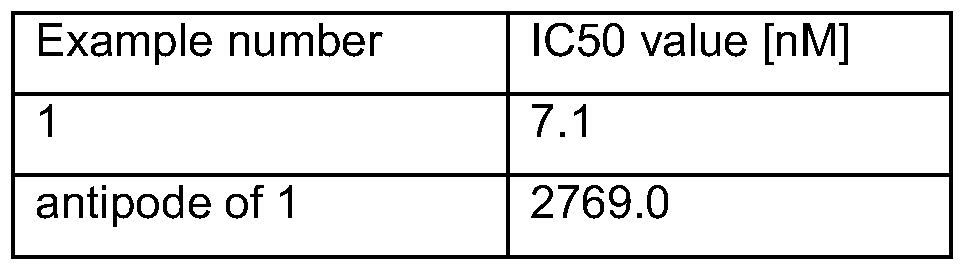
- compounds of the formula (I) show an inhibiting activity which is at least 10 times higher, but preferably 20 times higher, or more preferably 40 times higher, than the substances of the formula (I) with the opposite configuration around the asymmetric carbon atom labelled " * ".
- a higher inhibiting activity corresponds to a lower IC 5 O value.
- aryl stands for a mono-, bi- or tricyclic aromatic hydrocarbon complying with the H ⁇ ckel rule which generally comprises 6-14, preferably 6-10, carbon atoms and is for example phenyl, naphthyl, e.g. 1- or 2-naphthyl or anthracenyl.
- the stated radicals may be unsubstituted or substituted one or more times, e.g. once or twice, in which case the substituent may be in any position, e.g.
- substituents on aryl radicals or the preferred phenyl or naphthyl radicals are: CrC 8 alkoxy, CrC 8 alkoxycarbonyl, CrC 8 alkyl, C 0 -C 8 alkylcarbonyl, CrC 8 alkylsulphonyl, optionally substituted aryl, aryl-C o -C 4 alkoxycarbonyl, cyano, halogen, optionally substituted heterocyclyl, hydroxy, nitro, tri-CrC 4 alkylsilyl, trifluoro- methoxy or trifluoromethyl.
- Aryl-C o -C 4 alkyl is for example phenyl, naphthyl or benzyl.
- heterocyclyl stands for a saturated, partially saturated or unsaturated, 4-8-membered, particularly preferably 5-membered, monocyclic ring system, for a saturated, partially saturated or unsaturated, 7-12-membered, particularly preferably 9-10-membered, bicyclic ring system and also for a partially saturated or unsaturated, 9-12-membered tricyclic ring system which comprises an N, O or S atom in at least one of the rings, it being possible for an additional N, O or S atom to be present in one ring.
- Said radicals may be unsubstituted or substituted one or more times, e.g. once or twice, and there may also be a plurality of identical or different substituents present.
- substituents on heterocyclyl radicals are: CrC 8 alkoxy, CrC 8 alkoxycarbonyl, CrC 8 alkyl, C 0 -C 8 alkylcarbonyl, CrC 8 alkylsulphonyl, optionally substituted aryl, aryl-C o -C 4 alkoxycarbonyl, cyano, halogen, optionally substituted heterocyclyl, hydroxy, nitro, oxide, oxo, W-CrC 4 alkylsilyl, trifluoromethoxy or trifluoromethyl.
- Saturated heterocycly 1-C 0 -C 4 alkyl is for example azepanyl, azetidinyl, aziridinyl, 3,4-dihydroxy- pyrrolidinyl, 2,6-dimethylmorpholinyl, 3,5-dimethylmorpholinyl, dioxanyl, [1 ,4]dioxepanyl, dioxolanyl, 4,4-dioxothiomorpholinyl, dithianyl, dithiolanyl, 2-hydroxymethylpyrrolidinyl, 4-hydroxypiperidinyl, 3-hydroxypyrrolidinyl, 4-methylpiperazinyl, 1-methylpiperidinyl, 1-methyl- pyrrolidinyl, morpholinyl, oxathianyl, oxepanyl, 2-oxo-azepanyl, 2-oxo-imidazolidinyl, 2-oxo- oxazolidinyl, 2-oxo-pipe
- Partially saturated bicyclic heterocyclyl-C o -C 4 alkyl is for example 3,4-dihydro- 2H-benzo[1 ,4]oxazinyl, 4,5,6,7-tetrahydrobenzofuranyl or 4,5,6,7-tetrahydrobenzothiazolyl.
- Unsaturated bicyclic heterocyclyl-C o -C 4 alkyl is for example benzofuranyl, benzoimidazolyl, benzo[d]isothiazolyl, benzo[d]isoxazolyl, benzo[b]thiophen-yl, quinolinyl, imidazo[1 ,5-a]pyridinyl, indazolyl, indolyl or isoquinolinyl.
- Unsaturated monocyclic heterocycly 1-C 0 -C 4 alkyl is for example imidazolyl, oxazolyl, pyridyl, pyrrolyl, tetrazolyl, thiazolyl or thiophenyl.
- C 2 -C 8 alkenyl is for example ethenyl, propenyl, isopropenyl, butenyl, isobutenyl, secondary butenyl, tertiary butenyl, or a pentenyl, hexenyl or heptenyl group.
- C 2 -C 8 alkynyl is for example ethynyl, propynyl, butynyl, or a pentynyl, hexynyl or heptynyl group.
- CrC 8 alkoxy is for example CrC 5 alkoxy such as methoxy, ethoxy, propoxy, isopropoxy, butoxy, isobutoxy, secondary butoxy, tertiary butoxy or pentoxy, but may also be a hexoxy or heptoxy group.
- CrC 8 alkoxycarbonyl is preferably CrC 4 alkoxycarbonyl such as methoxycarbonyl, ethoxy- carbonyl, propoxycarbonyl, isopropoxycarbonyl, butoxycarbonyl, isobutoxycarbonyl, secondary butoxycarbonyl or tertiary butoxycarbonyl.
- C 1 -C 4 alkoxycarbonyl-Ci-C 4 alkyl is for example methoxycarbonylmethyl or ethoxycarbonyl- methyl, 2-methoxycarbonylethyl or 2-ethoxycarbonylethyl, 3-methoxycarbonylpropyl or 3-ethoxycarbonylpropyl or 4-ethoxycarbonylbutyl.
- CrC 8 alkyl may be straight-chain or branched and/or bridged and is for example methyl, ethyl, propyl, isopropyl, butyl, isobutyl, secondary butyl, tertiary butyl, or a pentyl, hexyl or heptyl group.
- Co-C 8 alkylcarbonyl or preferably C 0 -C 4 alkylcarbonyl is for example formyl, acetyl, propionyl, propylcarbonyl, isopropylcarbonyl, butylcarbonyl, isobutylcarbonyl, secondary butylcarbonyl or tertiary butylcarbonyl.
- Carboxy-CrC 4 alkyl is for example carboxymethyl, 2-carboxyethyl, 2- or 3-carboxypropyl, 2-carboxy-2-methylpropyl, 2-carboxy-2-ethylbutyl, or 4-carboxybutyl, in particular carboxymethyl.
- C 3 -C 8 cycloalkyl is preferably 3-, 5- or 6-membered cycloalkyl, such as cyclopropyl, cyclo- pentyl, cyclohexyl.
- Halogen is for example fluorine, chlorine, bromine or iodine.
- R 1 is preferably aryl, very particularly preferably mono-, di- or tri-substituted phenyl or mono-, di- or tri-substituted naphthyl, or heterocyclyl, very particularly preferably optionally mono-, di- or tri-substituted benzofuranyl, benzo[b]thiophenyl, benzoimidazolyl, benzo[d]isothiazolyl, benzo[d]isoxazolyl, benzo[b]thiophenyl, imidazolyl, indazolyl, indolyl, oxazolyl, pyridyl, pyrrolyl, thiazolyl or thiophenyl.
- R 2 is preferably CrCe alkoxy, hydroxy, CrCe alkyl, optionally substituted aryl-Co-C 4 alkyl, deuterium, halogen, cyano or hydrogen.
- R 3 is preferably C r C 4 alkyl.
- n is preferably a number 0 or 1. n is particularly preferably the number 1.
- Preferred substituents for aryl or heterocyclyl are CrC 8 alkoxy, CrC 8 alkyl, CrC 8 alkyl- carbonyl, CrC 8 alkylsulphonyl, optionally substituted aryl, cyano, halogen, optionally substituted heterocyclyl, nitro, oxide, trifluoromethyl, trifluoromethoxy or trimethylsilanyl.
- substituents for aryl or heterocyclyl are acetyl, bromine, chlorine, cyano, fluorine, methanesulphonyl, methoxy, nitro, oxazolyl, oxide, optionally substituted phenyl, optionally substituted tetrazolyl, optionally substituted thiazolyl or optionally substituted thiophenyl.
- R 1 is likewise preferred for R 1 to be a mono-, di - or tri-substituted unsaturated heterocyclyl substituent, where the substituents are preferably selected from the group consisting of CrC 8 alkyl, CrC 8 alkoxy, CrC 8 alkoxycarbonyl, C 0 -C 8 alkylcarbonyl, CrC 8 alkylsulphonyl, optionally substituted aryl, aryl-C o -C 4 alkoxycarbonyl, cyano, halogen, optionally substituted heterocyclyl, hydroxy, nitro, oxide, oxo, tri-CrC 4 alkylsilyl, trifluoromethoxy and trifluoromethyl.
- the substituents are preferably selected from the group consisting of CrC 8 alkyl, CrC 8 alkoxy, CrC 8 alkoxycarbonyl, C 0 -C 8 alkylcarbonyl, CrC 8 alkylsulphonyl, optionally substituted
- Compounds having a second asymmetric carbon atom can exist in the form of optically pure diastereomers, mixtures of diastereomers, diastereomeric racemates, mixtures of diastereomeric racemates, or meso compounds.
- the invention embraces all these forms.
- Mixtures of, diastereomers, diastereomeric racemates, or mixtures of diastereomeric racemates can be fractionated by conventional methods, such as by racemate resolution, column chromatography, thin-layer chromatography, HPLC and the like.
- salts embraces salts with organic or inorganic acids, such as hydrochloric acid, hydrobromic acid, nitric acid, sulphuric acid, phosphoric acid, citric acid, formic acid, maleic acid, acetic acid, succinic acid, tartaric acid, methane- sulphonic acid, p-toluenesulphonic acid and the like.
- Salts of compounds containing salt- forming groups are, in particular, acid addition salts, salts with bases or else, if appropriate, if two or more salt-forming groups are present, are mixed salts or inner salts.
- the compounds of the formula (I) can be prepared in an analogous manner to the preparation processes disclosed per se in the literature by JP63145286 , followed by separation into the antipodes with regard to the carbon atom labelled " * " (Scheme).
- Separation into antipodes is possible by methods known per se, either, preferably, at an early stage in synthesis, by salt formation with an optically active acid such as, for example, (+)- or (-)-mandelic acid and separation of the diastereomeric salts by fractional crystallization, or, preferably, at a fairly late stage, by derivatization with a chiral auxiliary component, such as, for example, (+)- or (-)-camphanyl chloride and separation of the diastereomeric products by chromatography and/or crystallization and subsequent cleavage of the bond to the chiral auxiliary.
- the pure diastereomeric salts and derivatives can be analysed to determine the absolute configuration of the compound present, using customary spectroscopic methods, with single-crystal X-ray spectroscopy representing one particularly appropriate method.
- Salts are primarily the pharmaceutically acceptable or non-toxic salts of compounds of the formula (I).
- Such salts are formed for example by compounds of the formula (I) containing an acidic group, such as a carboxyl or sulpho group and are, for example, salts thereof with suitable bases, such as non-toxic metal salts derived from metals of group Ia, Ib, Ma and Hb of the Periodic Table of the Elements, such as alkali metal salts, especially lithium, sodium or potassium salts, alkaline earth metal salts, magnesium or calcium salts for example, and also zinc salts or ammonium salts, and additionally salts formed with organic amines, such as unsubstituted or hydroxyl-substituted mono-, di- or trialkylamines, especially mono-, di- or tri- lower alkylamines, or with quaternary ammonium bases, e.g.
- methyl-, ethyl-, diethyl- or triethylamine mono-, bis- or tris(2-hydroxyl-lower alkyl)amines, such as ethanolamine, diethanolamine or triethanolamine, tris(hydroxylmethyl)methylamine or 2-hydroxyl-tertiary- butylamine, N,N-di-lower alkyl-N-(hydroxyl-lower alkyl)amine, such as N,N-di-N-dimethyl-N- (2-hydroxylethyl)amine, or N-methyl-D-glucamine, or quaternary ammonium hydroxides, such as tetrabutylammonium hydroxide.
- the compounds of the formula (I) containing a basic group, such as an amino group can form acid addition salts, with suitable inorganic acids for example, such as hydrohalic acid, such as hydrochloric acid, hydrobromic acid, or sulphuric acid with replacement of one or both protons, phosphoric acid with replacement of one or more protons, orthophosphoric acid or metaphosphoric acid for example, or pyrophosphoric acid with replacement of one or more protons, or with organic carboxylic, sulphonic or phosphonic acids or N-substituted sulphamic acids, e.g.
- suitable inorganic acids for example, such as hydrohalic acid, such as hydrochloric acid, hydrobromic acid, or sulphuric acid with replacement of one or both protons, phosphoric acid with replacement of one or more protons, orthophosphoric acid or metaphosphoric acid for example, or pyrophosphoric acid with replacement of one or more protons, or with organic carboxylic, sulphonic or phosphonic acids or N
- Isolation and purification can also be carried out using pharmaceutically unsuitable salts.
- the compounds of the formula (I) also include those compounds in which one or more atoms have been replaced by their stable, non-radioactive isotopes: for example, a hydrogen atom by deuterium.
- Prodrug derivatives of the presently described compounds are derivatives thereof which when employed in vivo release the original compound as a result of a chemical or physio- logical process.
- a prodrug may be converted into the original compound, for example, when a physiological pH is reached or as a result of enzymatic conversion.
- Examples of possible prodrug derivatives include esters of freely available carboxylic acids, S- and O-acyl derivatives of thiols, alcohols or phenols, the acyl group being defined as above.
- ester derivatives which are converted by solvolysis in physiological medium into the original carboxylic acid, such as, for example, lower alkyl esters, cycloalkyl esters, lower alkenyl esters, benzyl esters, mono- or disubstituted lower alkyl esters, such as lower ⁇ -(amino, mono- or dialkylamino, carboxyl, lower alkoxycarbonyl)- alkyl esters or such as lower ⁇ -(alkanoyloxy, alkoxycarbonyl or dialkylaminocarbonyl)alkyl esters; pivaloyloxymethyl esters and similar esters are conventionally used as ester derivatives of this kind.
- a defined compound in this invention also includes its prodrug derivative and salt form, insofar as this is possible and appropriate.
- estrogens 17 ⁇ -estradiol (E2), estrone (E1 ) and estriol (E3) are C18 steroids derived from cholesterol. After binding to lipoprotein receptors, cholesterol is taken up by steroidogenic cells, stored and moved to the sites of steroid synthesis. Aromatization of the A-ring in the steroid scaffold is the last step in the formation of estrogen. This reaction is catalyzed by the P450 aromatase monooxygenase enzyme complex (Cyp19) that is present in the smooth endoplasmic reticulum and functions as a demethylase. In three consecutive hydroxylating reactions, estrone and estradiol are formed from their obligatory precursors androstenedione and testosterone, respectively.
- estradiol The primary sources of estradiol in woman are the theca and granulose cells of the ovaries and the luteinized derivatives of these cells.
- theca cells secrete androgens that diffuse to the granulose cells to be aromatized to estrogens.
- Estrone and estriol are primarily formed in the liver from estradiol.
- Aromatase activity has also been detected in muscle, fat , nervous tissue and the Leydig cells of the testes.
- the level of estrogen synthesis in extragonadal tissues increases as a function of age and body weight.
- estradiol In the serum, estradiol reversibly binds to sex-hormone-binding globulin, a ⁇ -globulin, and with lesser affinity to albumin; about 2-3 percent is unbound. Estrogens are metabolized by sulfation or glucuronidation, and the conjugates are excreted into the bile or urine. Hydrolysis of these conjugates by the intestinal flora and subsequent reabsorption of the estrogens results in enterohepatic circulation.
- Estrogens stimulate growth, blood flow and water retention in sexual organs and are also involved in causing breast cancer and endometrial tumors.
- estrogens increase the expression of lipoprotein receptors that results in a decrease in serum concentrations of low-density lipoprotein cholesterol.
- Estrogens also increase the potential for coagulation by stimulating the production of coagulation factors in the liver.
- osteoclasts and osteoblasts are direct targets of estrogens, but overall, estrogens are classified as anti- resorptive agents.
- estrogens stimulate the growth and differentiation of the ductal epithelium, induce mitotic activity of ductal cylindric cells and stimulate the growth of connective tissue.
- Estrogens stimulate the growth of breast cancer cells.
- the tumor concentration of estradiol is high caused by in situ aromatization, despite the presence of low serum estradiol concentrations.
- the compounds described in the present invention have useful pharmacological properties as they selectively inhibit the enzyme aromatase (Cyp19) in mammals, including humans. As a result, the metabolic conversion of androgens into estrogens is inhibited.
- the compounds are therefore suitable, for example, for the treatment of estrogen-dependent diseases, including estrogen-dependent breast cancer, particularly in postmenopausal women. They are also useful, for example, in the treatment of gynaecomastia, that is to say the development of breasts in men, as the aromatization of steroids can be inhibited by the described compounds.
- the in vitro inhibition of aromatase activity of the compounds of the present invention can be demonstrated by using a commercial Cyp19 enzyme inhibition kit.
- the Cyp19/Methoxy-4- trifluoromethyl-coumarin (MFC) high throughput inhibition kit (Becton Dickinson Biosciences, San Jose, CA, USA), for example, is designed to screen for potential inhibitors of Cyp19 catalytic activity in a 96-well format.
- the kit includes recombinant human Cyp19 enzyme in the form of supersomes, a fluorescent P450 substrate, an NADPH regenerating system, a reaction buffer and a stop reagent.
- the fluorogenic substrate is rapidly converted by Cyp19 supersomes to the highly fluorescent product 7-hydroxy-4-trifluoromethyl coumarin (7- HFC).
- the execution of the assay in the presence of various concentrations of inhibitor compounds ranging from 0.2 nanomolar to 20 millimolar occurs according to the manufacturer's instructions.
- the inhibition curve is generated by fitting a 4-parameter logistic function to the raw data of the samples using the least squares approach.
- the function is described as follows:
- the compounds described in the present invention show Cyp19 inhibitory properties at minimal concentrations between 10 "3 to 10 "10 mol/l.
- the Cyp19 inhibitory properties of compounds described in the present invention can also be demonstrated in a cellular assay.
- the NCI-H295R human adrenocortical carcinoma cell line has been characterized in detail in the literature and shown to express most of the key enzymes necessary for steroidogenesis. These include Cyp11A (cholesterol side-chain cleavage), Cyp1 1 B1 (steroid 11 ⁇ -hydroxylase), Cyp11 B2 (aldosterone synthetase), Cyp17 (steroid 17 ⁇ -hydroxylase and/or 17,20 lyase), Cyp19 (aromatase), Cyp21 B2 (steroid 21 -hydroxylase) and 3 ⁇ -HSD (hydroxysteroid dehydrogenase).
- the cells have the physiological characteristics of zonally undifferentiated human fetal adrenal cells, with the ability to produce the steroid hormones of each of the three phenotypically distinct zones found in the adult adrenal cortex.
- the NCI-H295R cells are cultured in Dulbecco's Modified Eagle'Ham F-12 medium (DME/F12) that is supplemented with Ultroser SF serum (Soprachem, Cergy-Saint-Christophe, France) as well as insulin, transferrin, selenit (I-T-S, Becton Dickinson Biosiences, Franklin Lakes, NJ, USA) and antibiotics in 75 cm 2 cell culture flasks at a temperature of 37 0 C and a 95% air/5% CO 2 humidified atmosphere.
- DME/F12 Dulbecco's Modified Eagle'Ham F-12 medium
- Ultroser SF serum Soprachem, Cergy- Saint-Christophe, France
- I-T-S Selenit
- Becton Dickinson Biosiences Franklin Lakes, NJ, USA
- the cells are subsequently transferred in a 24-well plate and seeded in presence of DME/F12 medium that is supplemented with 0.1 % bovine serum albumin instead of Ultroser SF serum.
- the experiment is initiated by incubating the cells for 72 hours in DME/F12 medium supplemented with 0.1 % bovine serum albumin and test compounds in the presence or absence of cell stimulatory agents.
- the test compound is added in a concentration range of 0.2 nanomolar to 20 millimolar.
- cell-stimulatory agents angiotensin-ll (at 10 or 100 nanomolar concentration), potassium ions (at 16 millimolar), forskolin (at 10 micromolar) or a combination of two agents are used.
- the cellular secretion of estrone, estradiol, dihydroepiandrostendione, aldosterone, corticosterone and/or Cortisol into the cell culture medium can be quantitatively assessed with commercially available immuno-assays and specific monoclonal antibodies according to the manufacturer's instructions.
- the degree of secretion of a selective steroid is used as a measure of enzyme activity, respectively enzyme inhibition in the presence of absence of a test compound.
- the dose-dependent enzyme inhibitory activity of a compound is reflected in a inhibition curve that is characterized by an IC 50 value.
- the inhibition curve is generated by fitting a 4-parameter logistic function to the raw data of the samples using the least squares approach.
- the function is described as follows:
- the compounds described in the present invention show Cyp19 inhibitory properties at minimal concentrations between 10 "3 to 10 "10 mol/l.
- aromatase inhibitory effects of described compounds can be also demonstrated in vivo using advantageously mammalian animal models such as e.g. guinea pigs, mice, rats, cats, dogs, or monkeys.
- the compound-mediated in vivo inhibition of aromatase activity can be tested by monitoring plasma steroid level changes as described in the following protocol: cycling female rats are injected subcutaneously 5-times on alternate days with 100 IU of pregnant mare's serum gonadotropin (PMSG, Sigma) in 0.1 ml sterile saline. Twenty-four hours after the last injection, the animals are treated orally with test compound at doses ranging from 0.01 to 10 mg/kg. Twenty-four hours after treatment, the animals are subjected to a terminal bleed. Heparinized plasma is stored at -2O 0 C until analysis.
- PMSG pregnant mare's serum gonadotropin
- Plasma levels of steroid (17beta- estradiol, estrone, estriol, progesterone, testosterone, aldosterone and cortiocosterone) are determined by commercially available radioimmunoassay kits, according to the manufacturer's instructions.
- a purification and concentration step is needed to measure plasma testosterone in female rats: four volumes of diethyl ether are added to the samples, mixed by gentle inversion for 15 minutes and then centrifuged for 5 minutes at 2000 rpm. The aqueous phase is frozen in dry ice and the organic phase is recovered and evaporated to dryness under a nitrogen stream. The dried extract is reconstituted in the assay buffer.
- the compound-mediated in vivo inhibition of aromatase activity can be tested by monitoring the ovary estrogen content as follows: twenty-one day old female rats are injected subcutaneously with 10 IU pregnant mare serum gonadotropin (PMSG, Sigma). Two days later, the same rats are injected subcutaneously with 30 IU human chorionic gonadotropin (hCG, Sigma). On the day following the hCG treatment, the rats are injected subcutaneously with either propylene glycol (0.2 ml) or with various doses of the test compound. One hour later, all the rats are treated with 2.25 mg 4-androstene-3,17-dione in 0.1 ml oil, subcutaneously.
- PMSG pregnant mare serum gonadotropin
- hCG human chorionic gonadotropin
- the rats Four hours after the injection of androstenedione, the rats are killed and their ovaries removed and trimmed free of adhering tissue and stored in pairs at -5O 0 C.
- 1.5 ml of 0.05 M aqueous potassium phosphate buffer (pH 7.4) and 0.2 ml of 0.1 N aqueous NaOH are added to the tissues which are then homogenized.
- the homogenate is extracted with 15 ml of diethyl ether. 5 ml aliquots are radioimmunoassayed with antiserum having 100% cross-reactivity with estrone, estradiol and estriol. The results are expressed as ng estrogen/pair of ovaries.
- the anti-tumor activity can be demonstrated in vivo e.g. in dimethylbenzanthracene (DMBA)-induced mammary tumors in female Sprague- Dawley rats (see Proc. Soc. Exp. Biol. Med. 160, 296-301 , 1979).
- DMBA dimethylbenzanthracene
- Compounds of the invention cause regression of existing tumors and suppress the appearance of new tumors at daily doses of about 1 to about 20 mg/kg p.o or less.
- the compounds of the present invention can be administered orally or enterally, such as, for example, intravenously, intraperitoneally, intramuscularly, rectally, subcutaneously or else by direct injection of the active substance locally into tissues or tumours.
- patient encompasses warmblooded species and mammals such as, for example, human, primate, bovine, dog, cat, horse, sheep, mouse, rat and pig.
- the compounds can be administered as pharmaceutical product or be incorporated into an administration device which ensures sustained release of the compound.
- the amount of substance to be administered can vary over a wide range and represent every effective dose.
- the dose of the effective substance each day can be between about 0.005 and 50 milligrams per kilogram of body weight, but is preferably between about 0.05 and 5 milligrams per kilogram of body weight each day.
- the compounds can be formulated in solid or liquid pharmaceutical forms such as, for example, as capsules, pills, tablets, coated tablets, granules, powders, solutions, suspensions or emulsions.
- the dose of a solid pharmaceutical form can be one usual hard gelatine capsule which may be filled with active ingredients and excipients such as lubricants and fillers, such as, for example, lactose, sucrose and maize starch.
- Another form of administration may be represented by tableting of the active substance of the present invention.
- the tableting can take place with conventional tableting excipients such as, for example, lactose, sucrose, maize starch, combined with binder from gum acacia, maize starch or gelatine, disintegrants such as potato starch or crosslinked polyvinylpyrrolidone (PVPP) and lubricants such as stearic acid or magnesium stearate.
- conventional tableting excipients such as, for example, lactose, sucrose, maize starch, combined with binder from gum acacia, maize starch or gelatine, disintegrants such as potato starch or crosslinked polyvinylpyrrolidone (PVPP) and lubricants such as stearic acid or magnesium stearate.
- excipients suitable for soft gelatine capsules are vegetable oils, waxes, fats, semisolid and liquid polyols etc.
- excipients suitable for producing solutions and syrups are water, polyols, sucrose, invert sugar, glucose etc.
- the compounds can be formulated in solid or liquid pharmaceutical forms such as, for example, suppositories.
- excipients suitable for suppositories are natural or hardened oils, waxes, fats, semiliquid or liquid polyols etc.
- the compounds can be formulated as injectable dosage of the active ingredient in a liquid or suspension.
- the preparations usually comprise a physiologically tolerated sterile solvent which may comprise a water-in-oil emulsion, with or without surfactant, and other pharmaceutically acceptable excipients.
- Oils which can be used for such preparations are paraffins and triglycerides of vegetable, animal or synthetic origin, such as, for example, peanut oil, soya oil and mineral oil.
- injectable solutions generally comprise liquid carriers such as, preferably, water, saline, dextrose or related sugar solutions, ethanol and glycols such as propylene glycol or polyethylene glycol.
- the substances may be administered as transdermal patch system, as depot injection or implant if the formulation makes sustained delivery of the active ingredient possible.
- the active substance can be compressed as granules or to narrow cylinders and be administered subcutaneously or intramuscularly as depot injection or implant.
- the pharmaceutical products may in addition also comprise preservatives, solubilizers, viscosity-increasing substances, stabilizers, wetting agents, emulsifiers, sweeteners, colorants, aromatizing agents, salts to change the osmotic pressure, buffers, coating agents or antioxidants. They may also comprise other therapeutically valuable substances too.
- the present invention further provides the use of the compounds of the formula (I) and the pharmaceutically acceptable salts thereof in the treatment or prevention of a disease or conditions which responds to aromatase inhibition, in particular a proliferative disease such as breast cancer or similar soft tissue endocrine-sensitive cancer, most preferably estrogen- dependent conditions like gynecomastia, mammary and endometrial tumors, endometrioisis and premature labor.
- a proliferative disease such as breast cancer or similar soft tissue endocrine-sensitive cancer, most preferably estrogen- dependent conditions like gynecomastia, mammary and endometrial tumors, endometrioisis and premature labor.
- the compounds are also useful for the treatment or prevention of locally advanced or metastatic breast cancer in postmenopausal women with hormone receptor positive or unknown.
- the compounds of the formula (I) and the pharmaceutically acceptable salts thereof may also be administered in combination with one or more agents having anti-neoplastic actions, such as anti-oestrogenic activity as described for example for exemestane, toremifene, fulvestrant, tamoxifen; such as bone resorption inhibititory activity as described for example for pamidronate, zoledronic acid, such as alkylating activity as described for busulfan, temozolomide, melphalan, chlorambucil, mechlorethalamine, such as nucleotide base intercalating activity as described for example for adriamycin, daunorubicin, dactinomcyin, doxorubicin, epirubicin, idarubicin; such as anti-metabolite activity as described for example for cytarabine, fludarabine, cladrbine, mercaptopurine, thioguanine, capecitabine; such as anti
- the compounds described in the present invention may be used as follows: - As therapeutic combination in form of a preparation or a kit that is composed of individual components, including a herein described compound of the formula (I) and the pharmaceutically usable salts thereof and at least one medication with anti-neoplastic activity that can be administered either simultaneously or sequentially.
- the preparation or the kit may contain instructions of usage.
- the dose may vary within wide limits and has of course to be adapted to the individual circumstances in each individual case.
- the starting materials are prepared as follows: a) 2-[(4-Cyanophenyl)-(3H-imidazol-4-yl)methoxy1ethyl methanesulphonate
- the racemic compound is fractionated into the enantiomers by chiral preparative HPLC to afford the title compound.
- the residue is stripped with toluene and then taken up in 10 ml of dichloromethane.
- the reaction solution is cooled to 0-5°C, and 3.10 mmol of N,O-dimethylhydroxylamine hydrochloride, followed by 15.5 mmol of diisopropylethylamine, are added.
- the reaction mixture is stirred at room temperature for 16 hours and filtered through Hyflo, and the filtrate is evaporated.
- the title compound is obtained as a yellowish oil from the residue by flash chromatography (Si ⁇ 2 60F).
Landscapes
- Health & Medical Sciences (AREA)
- Chemical & Material Sciences (AREA)
- Organic Chemistry (AREA)
- Engineering & Computer Science (AREA)
- Bioinformatics & Cheminformatics (AREA)
- Veterinary Medicine (AREA)
- General Health & Medical Sciences (AREA)
- Public Health (AREA)
- Chemical Kinetics & Catalysis (AREA)
- General Chemical & Material Sciences (AREA)
- Medicinal Chemistry (AREA)
- Nuclear Medicine, Radiotherapy & Molecular Imaging (AREA)
- Animal Behavior & Ethology (AREA)
- Pharmacology & Pharmacy (AREA)
- Life Sciences & Earth Sciences (AREA)
- Diabetes (AREA)
- Hematology (AREA)
- Obesity (AREA)
- Endocrinology (AREA)
- Cardiology (AREA)
- Heart & Thoracic Surgery (AREA)
- Urology & Nephrology (AREA)
- Child & Adolescent Psychology (AREA)
- Gastroenterology & Hepatology (AREA)
- Vascular Medicine (AREA)
- Pharmaceuticals Containing Other Organic And Inorganic Compounds (AREA)
- Nitrogen And Oxygen Or Sulfur-Condensed Heterocyclic Ring Systems (AREA)
Abstract
Description




Claims

Priority Applications (8)
| Application Number | Priority Date | Filing Date | Title |
|---|---|---|---|
| US12/226,209 US7795253B2 (en) | 2006-04-12 | 2007-04-12 | Condensed imidazole derivatives as aromatase inhibitors |
| AT07728053T ATE484510T1 (en) | 2006-04-12 | 2007-04-12 | CONDENSED IMIDAZOLE DERIVATIVES AS AROMATES INHIBITORS |
| EP07728053A EP2004658B1 (en) | 2006-04-12 | 2007-04-12 | Condensed imidazole derivatives as aromatase inhibitors |
| CA002649214A CA2649214A1 (en) | 2006-04-12 | 2007-04-12 | Condensed imidazole derivatives as aromatase inhibitors |
| JP2009504756A JP2010523465A (en) | 2006-04-12 | 2007-04-12 | Condensed imidazole derivatives as aromatase inhibitors |
| DE602007009812T DE602007009812D1 (en) | 2006-04-12 | 2007-04-12 | Condensed imidazole derivatives as aromatase inhibitors |
| BRPI0710596-7A BRPI0710596A2 (en) | 2006-04-12 | 2007-04-12 | condensed imidazole derivatives as aromatase inhibitors |
| IL194582A IL194582A0 (en) | 2006-04-12 | 2008-10-06 | Condensed imidazole derivatives as aromatase inhibitors |
Applications Claiming Priority (2)
| Application Number | Priority Date | Filing Date | Title |
|---|---|---|---|
| CH00617/06 | 2006-04-12 | ||
| CH6172006 | 2006-04-12 |
Publications (1)
| Publication Number | Publication Date |
|---|---|
| WO2007116100A1 true WO2007116100A1 (en) | 2007-10-18 |
Family
ID=38171569
Family Applications (2)
| Application Number | Title | Priority Date | Filing Date |
|---|---|---|---|
| PCT/EP2007/053583 Ceased WO2007116097A1 (en) | 2006-04-12 | 2007-04-12 | Condensed imidazole derivatives as aldosterone synthase inhibitors |
| PCT/EP2007/053586 Ceased WO2007116100A1 (en) | 2006-04-12 | 2007-04-12 | Condensed imidazole derivatives as aromatase inhibitors |
Family Applications Before (1)
| Application Number | Title | Priority Date | Filing Date |
|---|---|---|---|
| PCT/EP2007/053583 Ceased WO2007116097A1 (en) | 2006-04-12 | 2007-04-12 | Condensed imidazole derivatives as aldosterone synthase inhibitors |
Country Status (14)
| Country | Link |
|---|---|
| US (3) | US7795253B2 (en) |
| EP (2) | EP2004658B1 (en) |
| JP (2) | JP4980417B2 (en) |
| CN (2) | CN101421278A (en) |
| AR (1) | AR060591A1 (en) |
| AT (2) | ATE479692T1 (en) |
| BR (2) | BRPI0710596A2 (en) |
| CA (2) | CA2641473C (en) |
| DE (2) | DE602007008860D1 (en) |
| ES (1) | ES2352092T3 (en) |
| IL (2) | IL193065A0 (en) |
| PL (1) | PL2004657T3 (en) |
| TW (1) | TW200808812A (en) |
| WO (2) | WO2007116097A1 (en) |
Families Citing this family (29)
| Publication number | Priority date | Publication date | Assignee | Title |
|---|---|---|---|---|
| JP5179174B2 (en) * | 2004-05-28 | 2013-04-10 | ノバルティス ファーマ アーゲー | Tetrahydro-imidazo [1,5-A] pyridine derivatives as aldosterone synthase inhibitors |
| RU2415881C2 (en) | 2005-03-24 | 2011-04-10 | Бриджстоун Корпорейшн | Preparing rubber mixture reinforced with silicon dioxide with low level of releasing volatile organic compounds (voc) |
| AR056888A1 (en) * | 2005-12-09 | 2007-10-31 | Speedel Experimenta Ag | HIDEROCICLIL IMIDAZOL DERIVATIVES |
| TW200808812A (en) * | 2006-04-12 | 2008-02-16 | Speedel Experimenta Ag | Imidazo compounds |
| TW200808813A (en) * | 2006-04-12 | 2008-02-16 | Speedel Experimenta Ag | Imidazo compounds |
| WO2007133798A2 (en) | 2006-05-15 | 2007-11-22 | Paratek Pharmaceuticals, Inc. | Methods of regulating expression of genes or of gene products using substituted tetracycline compounds |
| US8962746B2 (en) | 2007-12-27 | 2015-02-24 | Bridgestone Corporation | Methods of making blocked-mercapto alkoxy-modified silsesquioxane compounds |
| US8794282B2 (en) | 2007-12-31 | 2014-08-05 | Bridgestone Corporation | Amino alkoxy-modified silsesquioxane adhesives for improved metal adhesion and metal adhesion retention to cured rubber |
| AU2010251967B9 (en) | 2009-05-28 | 2014-04-03 | Novartis Ag | Substituted aminopropionic derivatives as neprilysin inhibitors |
| BRPI1015069A2 (en) | 2009-05-28 | 2019-09-24 | Novartis Ag | Substituted aminobutyric derivatives as neprilysin inhibitors, their use, pharmaceutical composition, combination and method for inhibiting neutral endopeptidase activity. |
| JO2967B1 (en) | 2009-11-20 | 2016-03-15 | نوفارتس ايه جي | Substituted carbamoylmethylamino acetic acid derivatives as novel NEP inhibitors |
| US8877815B2 (en) | 2010-11-16 | 2014-11-04 | Novartis Ag | Substituted carbamoylcycloalkyl acetic acid derivatives as NEP |
| US8673974B2 (en) | 2010-11-16 | 2014-03-18 | Novartis Ag | Substituted amino bisphenyl pentanoic acid derivatives as NEP inhibitors |
| EP2729142B1 (en) | 2011-07-08 | 2018-05-09 | Novartis AG | Method of treating atherosclerosis in high triglyceride subjects |
| RU2014136226A (en) * | 2012-02-13 | 2016-04-10 | Ф.Хоффманн-Ля Рош Аг | IMIDAZOLLYKETONE DERIVATIVES AS ALDOSTEROSYNTHASE INHIBITORS |
| UY35144A (en) | 2012-11-20 | 2014-06-30 | Novartis Ag | APELINE SYNTHETIC LINEAR MIMETICS FOR THE CARDIAC INSUFFICIENCY TREATMENT |
| PT2956464T (en) | 2013-02-14 | 2018-07-04 | Novartis Ag | Substituted bisphenyl butanoic phosphonic acid derivatives as nep (neutral endopeptidase) inhibitors |
| JP6501775B2 (en) | 2013-07-25 | 2019-04-17 | ノバルティス アーゲー | Cyclic polypeptide for treatment of heart failure |
| AU2014293387B2 (en) | 2013-07-25 | 2017-04-20 | Novartis Ag | Bioconjugates of synthetic apelin polypeptides |
| CN114016318A (en) | 2014-12-31 | 2022-02-08 | 株式会社普利司通 | Amino alkoxy modified silsesquioxane adhesives for adhering steel alloys to rubber |
| PE20171328A1 (en) | 2015-01-23 | 2017-09-12 | Novartis Ag | CONJUGATES OF FATTY ACIDS AND SYNTHETIC APELLIN WITH LONGER HALF-LIFE |
| JOP20190086A1 (en) | 2016-10-21 | 2019-04-18 | Novartis Ag | Naphthyridinone derivatives and their use in the treatment of arrhythmia |
| UY38072A (en) | 2018-02-07 | 2019-10-01 | Novartis Ag | COMPOSITIONS DERIVED FROM BUTANOIC ESTER SUBSTITUTED WITH BISPHENYL AS INHIBITORS OF NEP, COMPOSITIONS AND COMBINATIONS OF THE SAME |
| CN113166101A (en) | 2018-11-27 | 2021-07-23 | 诺华股份有限公司 | Cyclic pentameric compounds as proprotein convertase subtilisin/kexin type 9 (PCSK9) inhibitors for the treatment of metabolic disorders |
| PY1998404A (en) | 2018-11-27 | 2021-06-17 | Novartis Ag | CYCLIC TETRAMER COMPOUNDS AS PROPROTEIN CONVERTASE SUBTILISIN/KEXIN TYPE 9 (PCSK9) INHIBITORS FOR THE TREATMENT OF METABOLIC DISORDERS |
| US12209144B2 (en) | 2018-11-27 | 2025-01-28 | Novartis Ag | Cyclic peptides as proprotein convertase subtilisin/kexin type 9 (PCSK9) inhibitors for the treatment of metabolic disorders |
| TW202333563A (en) | 2021-11-12 | 2023-09-01 | 瑞士商諾華公司 | Diaminocyclopentylpyridine derivatives for the treatment of a disease or disorder |
| AR127698A1 (en) | 2021-11-23 | 2024-02-21 | Novartis Ag | NAFTYRIDINOONE DERIVATIVES FOR THE TREATMENT OF A DISEASE OR DISORDER |
| IL324432A (en) | 2023-05-24 | 2026-01-01 | Novartis Ag | Naphthyridinone derivatives for the treatment of a disease or disorder |
Citations (4)
| Publication number | Priority date | Publication date | Assignee | Title |
|---|---|---|---|---|
| US4369309A (en) * | 1980-06-20 | 1983-01-18 | Ss Pharmaceutical Co., Ltd. | Thiazinobenzimidazole derivatives |
| JPS63145286A (en) * | 1986-12-08 | 1988-06-17 | Mitsui Petrochem Ind Ltd | Bicyclic imidazole derivative |
| WO2005118581A1 (en) * | 2004-05-28 | 2005-12-15 | Speedel Experimenta Ag | Tetrahydro-imidazo [1,5-a] pyridin derivatives as aldosterone synthase inhibitors |
| WO2005118557A2 (en) * | 2004-05-28 | 2005-12-15 | Speedel Experimenta Ag | Heterocyclic compounds and their use as aldosterone synthase inhibitors |
Family Cites Families (7)
| Publication number | Priority date | Publication date | Assignee | Title |
|---|---|---|---|---|
| AU6015796A (en) * | 1995-06-14 | 1997-01-15 | Yamanouchi Pharmaceutical Co., Ltd. | Fused imidazole derivatives and medicinal composition thereof |
| JPH0971586A (en) * | 1995-09-07 | 1997-03-18 | Yamanouchi Pharmaceut Co Ltd | Novel bicyclic fused imidazole derivative |
| AR032316A1 (en) * | 2000-04-12 | 2003-11-05 | Novartis Ag | USE OF A PHARMACEUTICAL COMPOSITION FOR THE MANUFACTURE OF MEDICINES AND A PHARMACEUTICAL COMPOSITION |
| ATE335744T1 (en) * | 2002-08-07 | 2006-09-15 | Novartis Pharma Gmbh | ORGANIC COMPOUNDS AS AGENTS FOR TREATING ALDOSTERONE-RELATED CONDITIONS |
| EP1748986B1 (en) * | 2004-05-28 | 2010-12-01 | Novartis AG | Heterocyclic compounds and their use as aldosterone synthase inhibitors |
| TW200808813A (en) | 2006-04-12 | 2008-02-16 | Speedel Experimenta Ag | Imidazo compounds |
| TW200808812A (en) * | 2006-04-12 | 2008-02-16 | Speedel Experimenta Ag | Imidazo compounds |
-
2007
- 2007-04-10 TW TW096112446A patent/TW200808812A/en unknown
- 2007-04-11 AR ARP070101537A patent/AR060591A1/en unknown
- 2007-04-12 AT AT07728050T patent/ATE479692T1/en active
- 2007-04-12 CA CA2641473A patent/CA2641473C/en not_active Expired - Fee Related
- 2007-04-12 JP JP2009503598A patent/JP4980417B2/en not_active Expired - Fee Related
- 2007-04-12 PL PL07728050T patent/PL2004657T3/en unknown
- 2007-04-12 BR BRPI0710596-7A patent/BRPI0710596A2/en not_active IP Right Cessation
- 2007-04-12 CN CNA2007800130963A patent/CN101421278A/en active Pending
- 2007-04-12 CN CN2007800122577A patent/CN101415716B/en not_active Expired - Fee Related
- 2007-04-12 WO PCT/EP2007/053583 patent/WO2007116097A1/en not_active Ceased
- 2007-04-12 EP EP07728053A patent/EP2004658B1/en not_active Not-in-force
- 2007-04-12 BR BRPI0709948-7A patent/BRPI0709948A2/en not_active IP Right Cessation
- 2007-04-12 CA CA002649214A patent/CA2649214A1/en not_active Abandoned
- 2007-04-12 EP EP07728050A patent/EP2004657B1/en not_active Not-in-force
- 2007-04-12 JP JP2009504756A patent/JP2010523465A/en active Pending
- 2007-04-12 DE DE602007008860T patent/DE602007008860D1/en active Active
- 2007-04-12 AT AT07728053T patent/ATE484510T1/en not_active IP Right Cessation
- 2007-04-12 WO PCT/EP2007/053586 patent/WO2007116100A1/en not_active Ceased
- 2007-04-12 DE DE602007009812T patent/DE602007009812D1/en active Active
- 2007-04-12 US US12/226,209 patent/US7795253B2/en not_active Expired - Fee Related
- 2007-04-12 US US12/223,789 patent/US7799780B2/en not_active Expired - Fee Related
- 2007-04-12 ES ES07728050T patent/ES2352092T3/en active Active
-
2008
- 2008-07-24 IL IL193065A patent/IL193065A0/en unknown
- 2008-10-06 IL IL194582A patent/IL194582A0/en unknown
-
2010
- 2010-08-16 US US12/857,032 patent/US8076327B2/en not_active Expired - Fee Related
Patent Citations (4)
| Publication number | Priority date | Publication date | Assignee | Title |
|---|---|---|---|---|
| US4369309A (en) * | 1980-06-20 | 1983-01-18 | Ss Pharmaceutical Co., Ltd. | Thiazinobenzimidazole derivatives |
| JPS63145286A (en) * | 1986-12-08 | 1988-06-17 | Mitsui Petrochem Ind Ltd | Bicyclic imidazole derivative |
| WO2005118581A1 (en) * | 2004-05-28 | 2005-12-15 | Speedel Experimenta Ag | Tetrahydro-imidazo [1,5-a] pyridin derivatives as aldosterone synthase inhibitors |
| WO2005118557A2 (en) * | 2004-05-28 | 2005-12-15 | Speedel Experimenta Ag | Heterocyclic compounds and their use as aldosterone synthase inhibitors |
Non-Patent Citations (1)
| Title |
|---|
| DATABASE WPI Derwent World Patents Index; AN 1988-209105, XP002439664 * |
Also Published As
| Publication number | Publication date |
|---|---|
| CN101421278A (en) | 2009-04-29 |
| EP2004658A1 (en) | 2008-12-24 |
| BRPI0709948A2 (en) | 2011-08-02 |
| ES2352092T3 (en) | 2011-02-15 |
| JP2010523465A (en) | 2010-07-15 |
| CA2649214A1 (en) | 2007-10-18 |
| EP2004657B1 (en) | 2010-09-01 |
| US20090012068A1 (en) | 2009-01-08 |
| US7795253B2 (en) | 2010-09-14 |
| ATE479692T1 (en) | 2010-09-15 |
| US20100305110A1 (en) | 2010-12-02 |
| PL2004657T3 (en) | 2011-02-28 |
| EP2004657A1 (en) | 2008-12-24 |
| CA2641473C (en) | 2011-11-01 |
| ATE484510T1 (en) | 2010-10-15 |
| IL193065A0 (en) | 2009-02-11 |
| EP2004658B1 (en) | 2010-10-13 |
| CA2641473A1 (en) | 2007-10-18 |
| TW200808812A (en) | 2008-02-16 |
| WO2007116097A1 (en) | 2007-10-18 |
| IL194582A0 (en) | 2009-08-03 |
| DE602007008860D1 (en) | 2010-10-14 |
| JP4980417B2 (en) | 2012-07-18 |
| CN101415716A (en) | 2009-04-22 |
| DE602007009812D1 (en) | 2010-11-25 |
| US20090048241A1 (en) | 2009-02-19 |
| JP2009532442A (en) | 2009-09-10 |
| US7799780B2 (en) | 2010-09-21 |
| US8076327B2 (en) | 2011-12-13 |
| AR060591A1 (en) | 2008-07-02 |
| CN101415716B (en) | 2012-12-12 |
| BRPI0710596A2 (en) | 2011-08-16 |
Similar Documents
| Publication | Publication Date | Title |
|---|---|---|
| US7795253B2 (en) | Condensed imidazole derivatives as aromatase inhibitors | |
| EP2007771B1 (en) | Imidazo compounds | |
| US20080076784A1 (en) | Bicyclic, Nitrogen-Containing Heterocycles and Aromatase Inhibitors | |
| US8263615B2 (en) | Bis-heterocyclic imidazolyl compounds | |
| EP2010540B1 (en) | Spiro-imidazo compounds | |
| WO2006005725A2 (en) | N containing condensed heterocycles with antitumor effects | |
| PT2004657E (en) | Condensed imidazole derivatives as aldosterone synthase inhibitors |
Legal Events
| Date | Code | Title | Description |
|---|---|---|---|
| 121 | Ep: the epo has been informed by wipo that ep was designated in this application |
Ref document number: 07728053 Country of ref document: EP Kind code of ref document: A1 |
|
| WWE | Wipo information: entry into national phase |
Ref document number: 194582 Country of ref document: IL |
|
| WWE | Wipo information: entry into national phase |
Ref document number: 12226209 Country of ref document: US Ref document number: 2649214 Country of ref document: CA Ref document number: 200780013096.3 Country of ref document: CN Ref document number: 2009504756 Country of ref document: JP Ref document number: 2007728053 Country of ref document: EP |
|
| NENP | Non-entry into the national phase |
Ref country code: DE |
|
| WWE | Wipo information: entry into national phase |
Ref document number: 6138/CHENP/2008 Country of ref document: IN |
|
| ENP | Entry into the national phase |
Ref document number: PI0710596 Country of ref document: BR Kind code of ref document: A2 Effective date: 20081009 |