WO2007117199A1 - Method for determining the activity of a protease in a sample. - Google Patents
Method for determining the activity of a protease in a sample. Download PDFInfo
- Publication number
- WO2007117199A1 WO2007117199A1 PCT/SE2007/000339 SE2007000339W WO2007117199A1 WO 2007117199 A1 WO2007117199 A1 WO 2007117199A1 SE 2007000339 W SE2007000339 W SE 2007000339W WO 2007117199 A1 WO2007117199 A1 WO 2007117199A1
- Authority
- WO
- WIPO (PCT)
- Prior art keywords
- protease
- group
- reporter
- substrate
- modulator
- Prior art date
- Legal status (The legal status is an assumption and is not a legal conclusion. Google has not performed a legal analysis and makes no representation as to the accuracy of the status listed.)
- Ceased
Links
- 0 C[N+](*NN=C)[O-] Chemical compound C[N+](*NN=C)[O-] 0.000 description 5
- XCZJORBZRTZTLM-PIFSUTCGSA-N CC(C)C[C@@H](C(NCC(N[C@H](C(N[C@@H](Cc1ccccc1)C(Nc1ccccc1)=O)=O)Nc(cc1)ccc1[N+]([O-])=O)=O)=O)NC([C@H](CCC1)CCC1C(C)=O)=O Chemical compound CC(C)C[C@@H](C(NCC(N[C@H](C(N[C@@H](Cc1ccccc1)C(Nc1ccccc1)=O)=O)Nc(cc1)ccc1[N+]([O-])=O)=O)=O)NC([C@H](CCC1)CCC1C(C)=O)=O XCZJORBZRTZTLM-PIFSUTCGSA-N 0.000 description 1
Classifications
-
- C—CHEMISTRY; METALLURGY
- C12—BIOCHEMISTRY; BEER; SPIRITS; WINE; VINEGAR; MICROBIOLOGY; ENZYMOLOGY; MUTATION OR GENETIC ENGINEERING
- C12Q—MEASURING OR TESTING PROCESSES INVOLVING ENZYMES, NUCLEIC ACIDS OR MICROORGANISMS; COMPOSITIONS OR TEST PAPERS THEREFOR; PROCESSES OF PREPARING SUCH COMPOSITIONS; CONDITION-RESPONSIVE CONTROL IN MICROBIOLOGICAL OR ENZYMOLOGICAL PROCESSES
- C12Q1/00—Measuring or testing processes involving enzymes, nucleic acids or microorganisms; Compositions therefor; Processes of preparing such compositions
- C12Q1/34—Measuring or testing processes involving enzymes, nucleic acids or microorganisms; Compositions therefor; Processes of preparing such compositions involving hydrolase
- C12Q1/37—Measuring or testing processes involving enzymes, nucleic acids or microorganisms; Compositions therefor; Processes of preparing such compositions involving hydrolase involving peptidase or proteinase
-
- G—PHYSICS
- G01—MEASURING; TESTING
- G01N—INVESTIGATING OR ANALYSING MATERIALS BY DETERMINING THEIR CHEMICAL OR PHYSICAL PROPERTIES
- G01N2333/00—Assays involving biological materials from specific organisms or of a specific nature
- G01N2333/90—Enzymes; Proenzymes
- G01N2333/914—Hydrolases (3)
- G01N2333/948—Hydrolases (3) acting on peptide bonds (3.4)
- G01N2333/95—Proteinases, i.e. endopeptidases (3.4.21-3.4.99)
- G01N2333/964—Proteinases, i.e. endopeptidases (3.4.21-3.4.99) derived from animal tissue
- G01N2333/96425—Proteinases, i.e. endopeptidases (3.4.21-3.4.99) derived from animal tissue from mammals
- G01N2333/96427—Proteinases, i.e. endopeptidases (3.4.21-3.4.99) derived from animal tissue from mammals in general
- G01N2333/9643—Proteinases, i.e. endopeptidases (3.4.21-3.4.99) derived from animal tissue from mammals in general with EC number
- G01N2333/96486—Metalloendopeptidases (3.4.24)
-
- G—PHYSICS
- G01—MEASURING; TESTING
- G01N—INVESTIGATING OR ANALYSING MATERIALS BY DETERMINING THEIR CHEMICAL OR PHYSICAL PROPERTIES
- G01N2500/00—Screening for compounds of potential therapeutic value
-
- G—PHYSICS
- G01—MEASURING; TESTING
- G01N—INVESTIGATING OR ANALYSING MATERIALS BY DETERMINING THEIR CHEMICAL OR PHYSICAL PROPERTIES
- G01N2800/00—Detection or diagnosis of diseases
- G01N2800/12—Pulmonary diseases
- G01N2800/122—Chronic or obstructive airway disorders, e.g. asthma COPD
Definitions
- the present invention relates to a method, as well as to a substrate for use in said method and a reporter generated by said method.
- the present invention relates to methods for determining the activity of a protease in a sample comprising admixing said sample with a substrate and determining the activity of said protease by detecting the presence of a reporter.
- the present invention also relates to a substrate and a reporter useful in a method for determining the activity of a protease in a sample comprising admixing said sample with a substrate and determining the activity of said protease by detecting the presence of a reporter.
- the present invention relates to the use of the substrate and reporter for determining the efficacy of protease-modulators and candidate protease- modulators.
- the present invention relates to the use of the substrate and reporter in the diagnosis of a disease or disorder in a subject.
- proteases such as metalloproteinases
- proteases are considered to be important in the processing, or secretion, of biological important cell mediators, such as tumour necrosis factor (TNF); and the post translational proteolysis processing, or shedding, of biologically important membrane proteins, such as the low affinity IgE receptor CD23 (for a more complete list see N. M. Hooper et al, (1997) Biochem J. 321:265-279).
- metalloproteinases examples include the matrix metalloproteinases (MMPs) - such as the collagenases (MMPl 3 MMP8, MMP13), the gelatinases (MMP2, MMP9), the stromelysins (MMP3, MMPlO, MMPIl), matrilysin (MMP7), metalloelastase (MMP12), enamelysin (MMP19), the MT-MMPs (MMP14, MMP15, MMP16,
- MMPs matrix metalloproteinases
- MMP17 the reprolysin or adamalysin or MDC family - which includes the secretases and sheddases such as TNF converting enzymes (ADAMlO and TACE); the astacin family - which includes enzymes such as procollagen processing proteinase (PCP); and other metalloproteinases such as aggrecanase, ⁇ the endothelin converting enzyme family and the angiotensin converting enzyme family.
- ADAMlO and TACE TNF converting enzymes
- TACE TNF converting enzymes
- astacin family - which includes enzymes such as procollagen processing proteinase (PCP); and other metalloproteinases such as aggrecanase, ⁇ the endothelin converting enzyme family and the angiotensin converting enzyme family.
- PCP procollagen processing proteinase
- aggrecanase ⁇ the endothelin converting enzyme family and the angiotensin converting enzyme family.
- Hanemaaijer et al (1999, Ann. N. Y. Acad. Sci., vol 878, 141-149) disclose an assay to determine the activity of MMP9 in the urine of patients with tumours.
- This assay requires the capture of MMP9 from biological fluids using MMP9 specific antibodies followed by a wash step and then incubation with a modified urokinase as a substrate and a chromogenic substrate.
- Bicket et al (1993, Analytical chemistry 212:58-64) disclose a fluorogenic peptide substrate (Dn ⁇ -Pro-Cha-Gly-Cys(Me)-His-Ala-Lys-(Nma)-NF£2) which is hydrolysed by MMPl and MMP9.
- the assay uses the fluorogenic peptide substrate and purified MMP9 or purified MMPl.
- Mucha et al (1998, J Biological chemistry 273:2763-2768) disclose synthetic substrates which are cleaved by MTl-MMP and ST3.
- the assays described in Mucha et al teach the use of purified catalytic domains of ST3 and MTl-MMP and fluorescent labelled substrates.
- Tung et al (1999 - Bioconjugate Chem 10:892-896) disclose the use of a near-infrared fluorescence (NIRP) probe with a CaD substrate spacer to determine cathepsin D activity in a cell culture.
- NIRP near-infrared fluorescence
- the fluorogenic substrate Dabcyl-Gaba-Arg-Pro-Lys-Pro-Val-Glu-Nva-Trp-Arg- GIu(EDANS)-GIy-LyS-NH 2 was used to monitor stromelysin (MMP-3) activity in the synovial fluid from patients with rheumatoid arthritis (B. Beekman et al, FEBS Letters 1997, 418(3), 305-309).
- WO-A-03/025125 discloses polypeptide sequences which are specific for MMP2, MMP9 and MTl-MMP (MMP14). These peptide sequences may be linked to therapeutic moieties or to diagnostic agents such as fluorophores.
- WO- A-03/102544 discloses polypeptide sequences which are specific for MMP 13 and the attachment of fluorescent, colorimetric, radioactive and luminescent labels to said polypeptide sequences.
- a problem with the prior art assays is that the substrates require labelling with, for example, fluorophores or radioactive labels. Another problem with the prior art assays is that cleavage at any peptide bond is detected - cleavage at a specific peptide bond cannot be detected. A further problem with some of the prior art assays is that the protease first needs to be purified before the activity of said protease can be detected.
- the present invention seeks to address/alleviate some of the problems associated with the prior art. Broad Aspects
- substrate compounds of the general formula (1) For ease of reference, and wherever applicable, these compounds are collectively referred to as substrate compounds of the general formula (1).
- a reference to substrate compounds of the general formula (1) applies equally to substrate compounds of the general formulae (Ia), (Ib) 3 (Ic) and (Id).
- preferred aspects for compounds of the general formula (1), (Ia), (Ib), (Ic) or (Id) apply equally to any of the other of compounds of the general formula (1), (Ia), (Ib), (Ic) or (Id).
- a method for determining the activity of a protease in a sample comprising the steps of:
- R 1 is a hydrocarbyl group
- R 2 is a first peptide moiety
- R 3 is a second peptide moiety and X is selected from the group consisting of O, S and NH; Yi is a suitable substituent; and Y 2 is a suitable substituent; and
- X is selected from the group consisting of O 5 S and NH; and Ri is a hydrocarbyl group.
- Determining the activity of a protease in a sample means a qualitative assessment and/or a quantitative assessment of protease activity in the sample.
- Yi is H.
- Y 2 is H.
- the substrate has the formula (Ib):
- R 1 is a hydrocarbyl group
- R. 2 is a first peptide moiety
- R 3 is a second peptide moiety
- X is selected from the group consisting of O, S and NH.
- Ri is a mono or poly cyclic ring structure.
- Rj comprises I, 2 or 3 hydrocarbyl rings. In some instances, more preferably R 1 comprises 2 or 3 hydrocarbyl rings.
- IfRi comprises 2 hydrocarbyl rings, preferably those rings are unfused rings.
- IfRi comprises 3 hydrocarbyl rings, preferably 2 of those rings are fused rings.
- One or more of the hydrocarbyl rings may contain heteroatoms - such as one or more
- One or more of the hydrocarbyl rings may be substituted.
- One or more of the hydrocarbyl rings may be unsaturated.
- R 2 comprises at least two amino acid groups, wherein said groups are natural amino acids or unnatural amino acids or combinations thereof.
- R 2 comprises at least three amino acid groups, wherein said groups are natural amino acids or unnatural amino acids or combinations thereof.
- R 3 comprises at least two amino acid groups, wherein said groups are natural amino acids or unnatural amino acids or combinations thereof.
- R 3 comprises at least three amino acid groups, wherein said groups are. natural amino acids or unnatural amino acids or combinations thereof.
- the substrate has the formula (Ic):
- R 1 is a hydrocarbyl group each of Si, S 2 , S3, S 2 ' and S 3 ' is independently selected from a natural amino acid or an unnatural amino acid;
- L 1 is a bond or one or several amino acid(s);
- L 2 is a bond or one or several amino acid(s);
- Gi is a suitable end group
- G 2 is a suitable end group
- X is O, S or NH
- Y 1 is preferably H
- Y 2 is preferably H.
- L 1 may be one or more ⁇ 3 ⁇ , .. etc. ... ⁇ — amino acids - such as (by way of example) Gly-Gly-Gly or ⁇ -butyramide.
- L 2 may be one or more ⁇ , ⁇ , .. etc. ... ⁇ -amino acids - such as (by way of example) Gly-Gly-Gly or ⁇ -butyramide.
- G 1 may be an end group, a protecting group, a chromophoric group or a fluorophoric group.
- G 2 may be an end group, a protecting group, a chromophoric group or a fluorophoric group.
- the substrate has the formula (Id):
- each of Si, S 2 , S 3 , S 2 ' and S 3 ' is independently selected from a natural amino acid or an unnatural amino acid;
- Li is a bond or one or several amino acid(s);
- L 2 is a bond or one or several amino acid(s);
- G 1 is a suitable end group
- G 2 is a suitable end group
- X is O, S or NH
- R 1 is selected from panel 1 :
- a method for determining the efficacy of a protease-modulator comprising the steps of: (i) admixing said protease-modulator with a protease and a substrate having the formula (1) and
- the formulating step may include one or more of: derivatisation of the protease-modulator; forming the protease-modulator into a pro-drug; admixing the protease-modulator with one or more pharmaceutically acceptable carrier(s), diluent(s) or excipient(s).
- the formulating step may include one or more of: derivatisation of the protease-modulator; forming the protease-modulator into a pro-drug; admixing the protease-modulator with one or more pharmaceutically acceptable carrier(s), diluent(s) or excipient(s).
- a process comprising the steps of identifying, a protease-modulator, preparing more of an identified protease- modulator and/or then formulating more of the identified protease-modulator; wherein said identification part comprises the steps of:
- the formulating step may include one or more of: derivatisation of the protease- modulator; forming the protease-modulator into a pro-drug; admixing the protease- modulator with one or more pharmaceutically acceptable carrier(s), diluent(s) or excipient(s).
- the present invention provides a substrate having the formula (1).
- the present invention provides a substrate capable of being cleaved at a peptide bond between a carbonyl group and a — NH-CH(X-Ri)-group by a protease; wherein Ri is a hydrocarbyl group and X is selected from the group consisting of O, S and NH.
- the present invention provides, in a further aspect, a reporter having the formula H-X- Ri, wherein Ri is a hydrocarbyl group and X is selected from the group consisting of O, S and NH; and wherein said reporter is derived j from a substrate of the formula (1).
- a reporter having the formula H-X-Ri, wherein Ri is a hydrocarbyl group and X is selected from the group consisting of O, S and NH; and wherein Ri is selected from panel 1 :
- a further aspect of the present invention provides a kit for determining the activity of a protease in a sample comprising:
- the present invention provides the use of a substrate having the formula (1) for detecting protease activity in a sample.
- the present invention provides, in a further aspect, the use of a reporter having the formula H-X-R 1 as defined herein for detecting protease activity in a sample.
- the present invention provides, in another aspect, a method for diagnosing a disease or a disorder in a subject comprising the steps of obtaining a sample from said subject and determining the activity of a protease in said sample by a method comprising the steps of:
- the present invention provides a substrate having the formula (1) for use in the diagnosis of a disease or disorder in a subject.
- the present invention provides a reporter having the formula H-X-R 1 as defined herein for use in the diagnosis of a disease or disorder in a subject.
- a method for determining the activity of a protease in a sample comprising admixing said sample with a substrate wherein said substrate is capable of being cleaved at a peptide bond between a carbonyl group and a -NH-
- a method for determining the efficacy of a protease-modulator comprising treating a sample with a protease-modulator and/or obtaining a sample from a subject treated with a protease-modulator; admixing said sample with a substrate wherein said substrate is capable of being cleaved at a peptide bond between a carbonyl group and a -NH-CH ⁇ X-R ⁇ -group by said protease; and determining the activity of said protease by detecting the presence of a reporter having the formula H-X-R 1 .
- X and Rj are as defined herein.
- a method for determining the efficacy of a candidate protease-modulator comprising treating a sample with a candidate protease- modulator and/or obtaining a sample from a subject treated with a candidate protease- modulator; admixing said sample with a substrate wherein said substrate is capable of being cleaved at a peptide bond between a carbonyl group and a -NH-CH(X-Ri)- group by said protease; and determining the activity of said protease by detecting the presence of a reporter having the formula H-X-Ri.
- X and Ri are as defined herein.
- the methods as described herein detect the activity of a protease in a sample and not simply the levels of mRNA encoding the protease or levels of the polypeptide itself in the sample.
- the substrate according to the present invention obviates the requirement for a fluorescent, a luminescent, a colorimetric or a radioactive label to be added to the substrate in order for protease activity to be determined.
- the assay methods described herein measure cleavage at a bond of interest.
- a protease cleaves the substrate at the bond of interest it results in the production (i.e. release) of the reporter. If a protease cleaves the substrate elsewhere then the reporter is not produced.
- the specificity profile of any given protease is largely determined by the substrate amino acid sequence extending in both directions from the cleavage site.
- the amino acids adjacent to either side of the cleaved bond are frequently the most important determinants for specificity, although important determinate amino acids can be as far as 6 positions away from the cleavage site.
- J.D.A. Tyndell et al, 2005, Chem. Rev. 105, 973-999 - a review of substrate recognition by proteases J.D.A. Tyndell et al, 2005, Chem. Rev. 105, 973-999 - a review of substrate recognition by proteases.
- the potential for cleavage at a specific site can be expected to increase with the length of the substrate with an appropriate sequence, at least to a limit when secondary structural effects (i.e. folding, helical conformations) start to be important.
- the ability to detect a specific bond cleavage as described herein advantageously results in assay that can determine cleavage by a specific protease.
- the methods as described herein permit other enzymes to be present in the sample.
- the methods as described herein can be used to monitor the effect of protease- modulators because the methods do not require the use of a wash step.
- the methods described herein can use tissues as the sample.
- the substrates as described herein are stable, in the absence of proteases of specific interest, in the sample such as blood serum and plasma. Preferred aspects
- the protease-modulator is a protease-inhibitor.
- the protease-modulator is a protease-actiyator.
- An example of a protease- activator is zymosan.
- protease-activators can be found in Rivera-Marrero et al (2002, Am J Physiol Lung Cell MoI Physiol 282: L546-L555); Kadish et al (1986, Immunol. Res. 5:129); Czop et al (1978, J. Immunol. 120:1132); Williams(1996, Clin. Immunother. 5:392); Ross et al (1999, Immunopharmacology, 42:61); Williams et al (1978, J Reticuloendothel. Soc. 23:479); Kokoshis et al (1978 Science 199:1340); Itoh (1997, Medial Inflamm. 6:267); Williams (1997, Mediat. Inflamm. 6:247).
- the candidate protease-modulator is a candidate protease-inhibitor.
- the candidate protease-modulator is a candidate protease-activator.
- the sample is selected from the group consisting of any mammalian biofluid such as: urine, whole blood, blood plasma, blood serum, synovial fluid, saliva, sputum, bronchoalveolar fluids, cerebrospinal fluid, nasal lavage, lung lining fluid, tear fluid and skin blister fluids.
- mammalian biofluid such as: urine, whole blood, blood plasma, blood serum, synovial fluid, saliva, sputum, bronchoalveolar fluids, cerebrospinal fluid, nasal lavage, lung lining fluid, tear fluid and skin blister fluids.
- the sample is selected from the group consisting of: a cell culture, tissue, tissue slices and homogenised tissue.
- the protease is a mammalian matrix metalloproteinase (MMP) EC3.4.24-.
- MMP matrix metalloproteinase
- the matrix metalloproteinase is selected from the group consisting of MMPl (EC3.4.24.7), MMP2 (EC3.4.24.24), MMP3 (EC3.4.24.17), MMP8 (EC3.4.24.34), MMP9 (EC3.4.24.35), MMP12 (EC3.4.24.65) and MMP13 (EC3.4.24- ). More preferably said matrix metalloproteinase is MMP9 (EC3.4.24.35). In an alternative more preferable embodiment said matrix metalloprotein is MMP 12 (EC3.4.24.65). In yet another alternative preferable embodiment said matrix metalloprotein is MMP13 (EC3.4.24-).
- the hydrocarbyl group R 1 is selected from the group consisting of an aryl, heteroaryl, aryloxyaryl, biaryl, alkyl, cycloalkyl, heterocycloalkyl group and derivatives thereof.
- Ri is selected from the group consisting of an aryl, heteroaryl, aryloxyaryl, biaryl and derivatives thereof.
- Rj comprises from 10 to 25 carbon atoms, preferably from 10 to 20 carbon atoms.
- R 1 is selected from panel 1; wherein X in panel 1 denotes the remainder of the substrate.
- Rj is selected from panel 1; wherein X in panel 1 denotes the remainder of the reporter.
- the substrate is methyl l-acetyl-L-prolyl-L-leucylglycyl- ⁇ -R-(4- nitrophenylamino)-glycyl-L-leucyl- ⁇ -alaninate.
- the reporter is 4-nitroaniline, biphenyl-4-yl-methanol, 4-(5-p-tolyl- [l,3,4]oxadiazol-2-yl)-phenylamine, N-hydroxy-2-phenyl-acetamide, biphenyl-4- carboxylic acid hydroxyamide, or 2-(-4-Isobutyl-phenyl)-propionic acid (Ibuprofen®).
- the reporter having formula H-X-R 1 is 4-nitroaniline., 4-(5- ⁇ -Tolyl- [1 ,3,4]oxadiazol-2-yl)-phenylamine, or biphenyl-4-yl-methanol.
- the reporter is 4-nitroaniline.
- the disease or disorder is selected from a group consisting of: rheumatoid arthritis, osteoarthritis; multiple sclerosis; airway diseases such as asthma, rhinitis, chronic bronchitis, chronic obstructive bronchioliti, airway fibrosis and chronic obstructive pulmonary disease (COPD)
- COPD chronic obstructive pulmonary disease
- the disease or disorder is osteoarthritis, asthma or chronic obstructive pulmonary disease (COPD).
- COPD chronic obstructive pulmonary disease
- the disease or disorder is osteoarthritis.
- the disease or disorder is chronic obstructive pulmonary disease (COPD).
- COPD chronic obstructive pulmonary disease
- proteases are enzymes which break peptide bonds between amino acids of proteins — this process is referred to as proteolytic cleavage.
- proteolytic cleavage proteolytic cleavage.
- proteolytic enzymes are also referred to as proteinases, peptidases or proteolytic enzymes.
- Proteases are classified under the Enzyme nomenclature number EC 3.4.*. Proteases are classified on the basis of the most prominent functional group in their active site. At present there are 6 classes of proteases: serine proteases, cysteine proteases, aspartic acid proteases, threonine proteases, glutamic acid proteases and metalloproteinases.
- Metalloproteinases (or metalloproteases) bind a metal ion such as Zn 2+ or Ca 2+ in their active site.
- the ion usually serves to co-ordinate two to four side chains and it is indispensable for the activity of the enzyme.
- the ion itself is also co-ordinated by a water molecule, which is also crucial for catalytic activity.
- Metalloproteinases are secreted as pro-enzymes and activation requires cleavage of a pro-peptide sequence bound to the active site zinc atom. This activity can be stimulated by incubating whole blood with zymosan.
- metalloproteinases There are two subgroups of metalloproteinases: metallocarboxipeptidases (EC 3.4.17) and matrix metalloproteinases (MMP, also referred to as metalloendopeptidases or matrixins - EC: 3.4.24).
- metallocarboxipeptidases EC 3.4.17
- MMP matrix metalloproteinases
- the protease is a matrix metalloproteinase (MMP) EC 3.4.24.-.
- MMP matrix metalloproteinase
- MMPs Matrix metalloproteinases
- MMPs are extracellular proteases that function at a neutral pH to cleave a wide variety of substrates (such as basement membrane and extracellular matrix components, growth and death factors, cytokines, and cell and matrix adhesion molecules - Bergers and. Coussens Curr. Opin. Genet. Dev. 2000 10 120; Visse and Nagase Circ. Res. 2003 92 827; Egeblad and Werb Nat. Rev. Cancer 2002 2 161).
- substrates such as basement membrane and extracellular matrix components, growth and death factors, cytokines, and cell and matrix adhesion molecules - Bergers and. Coussens Curr. Opin. Genet. Dev. 2000 10 120; Visse and Nagase Circ. Res. 2003 92 827; Egeblad and Werb Nat. Rev. Cancer 2002 2 161).
- MMPs The broad range of substrate specificities and expression patterns of MMPs results in their involvement in many different processes, both normal and pathological.
- the aberrant expression of MMPs has been noted in asthma, cancer, angiogenesis, rheumatoid arthritis, osteorarthritis, osteoporosis, intestinal inflammatory diseases, periodontal disease, atherosclerosis, emphysema, multiple sclerosis, pre-eclampasia, and chronic wounds, among other diseases and disorders (Bergers and Coussens Curr. Opin. Genet. Dev. 2000 10 120; Visse and Nagase Circ. Res. 2003 92 827; Nelson, et al. J. Clin. Oncol 2000 18 1135).
- MMP protein The general structure of an MMP protein consists of a pre domain to direct secretion from the cell, a pro domain, a catalytic domain, and a C-terminal hemopexin domain.
- MMPs need to bind both Ca 2+ and Zn 2+ ions - only Zn 2+ is bound in the active site of the enzyme, Ca 2+ is only required for maintaining the molecule's conformation.
- the inactive, or zymogen, form of the enzyme is activated by proteolytic removal of the pro domain (Woessner and Nagase Met ⁇ lloprotein ⁇ ses and TIMPs. 2000 Oxford University Press).
- MMPs Based on structural and functional considerations of the known matrix metalloproteinases, MMPs have been classified into families and subfamilies as described in N.M. Hooper (1994) FEBS Letters 354:1-6.
- MMPs matrix metalloproteinases
- collagenases MMPl, MMP8, MMP13
- gelatinases MMP2, MMP9
- stromelysins MMP3, MMPlO, MMPIl
- matrilysin MMP7
- MMP12 metalloelastase
- MMP19 the MT-MMPs
- the matrix metalloproteinase is selected from the group consisting of MMPl (EC 3.4.24.7), MMP2 (EC3.4.24.24), MMP3 (EC 3.4.24.17), MMP8 (EC 3.4.2434), MMP9 (EC 3.4.24.35), MMP12 (EC3.4.24.65) and MMP13 (EC 3.4.24.-).
- the matrix metalloproteinase is selected from the group consisting of MMP8 (EC 3.4.24.34), MMP9 (EC 3.4.24.35), MMP12 (EC3.4.24.65) and MMP13 (EC3.4.24.-).
- said matrix metalloproteinase is MMP9 (EC 3.4.24.35). In another highly preferred embodiment said matrix metalloproteinase is MMP 12 (EC3.4.24.65).
- said matrix metalloproteinase is MMP 13 (EC3.4.24.-).
- MMPl also known as collagenase (EC 3.4.24.7), was identified by Brinckerhoff et al (1987 J. Clin. Invest. 79: 542-546).
- Collagenase is the only enzyme able to initiate breakdown of the interstitial collagens, types I, II > and III. It can also cleave collagens of types VII and X. Collagens are the most abundant proteins in the body and collagenase is a ubiquitous enzyme.
- P03956 cleaves of the triple helix of collagen at about three-quarters of the length of the molecule from the N- terminus, at 775-GIy-.
- MMP2 also known as gelatinase 2
- MMP2 activation from the pro- to the mature form is a complex mechanism involving the membrane-type MMPs (MT-MMPs).
- MT-MMPs membrane-type MMPs
- MMP14 is the most potent activator of MMP2.
- the extracellular activity of MMPs is inhibited when they form complexes with specific inhibitors, such as TIMPl and TTMP2.
- MMP2 cleaves gelatin type I and collagen types IV 5 V, VII, X.
- UniProt accession number P08253 details a polypeptide sequence having MMP2 activity.
- P08253 cleaves the collagen-like sequence Pro ⁇ Gln-Gly-
- MMP3 (also called fibroblast stromelysin or transin) is a proteoglycanase closely related to collagenase (MMPl). MMP3 is a secreted metalloprotease produced predominantly by connective tissue cells. MMP3 has a wide range of substrate specificities and is capable of degrading proteoglycan, fibronectin, laminin, and type IV collagen, but not interstitial type I collagen.
- P08254 can degrade fibronectin, laminin, gelatins of type I, III, IV, and V; collagens III, IV, X, and IX, and cartilage proteoglycans. It can also activate procollagenase. P08254 preferentially cleaves at hydrophobic residues.
- MMP-3 activity has been demonstrated in fibroblasts isolated from inflamed gingiva [Uitto V. J. et al, 1981, J. Periodontal Res., 16:417-424], and enzyme levels have been correlated to the severity of gum disease [Overall C. M. et al, 1987, J. Periodontal Res., 22:81-88]. MMP-3 is also produced by basal keratinocytes in a variety of chronic ulcers [Saarialho-Kere U. K. et al, 1994, J. Clin. Invest., 94:79-88].
- MMP-3 mRNA and polypeptides were detected in basal keratinocytes adjacent to but distal from the wound edge in what probably represents the sites of proliferating epidermis. MMP-3 may thus prevent the epidermis from healing.
- Several investigators have demonstrated consistent elevation of MMP-3 in synovial fluids from rheumatoid and osteoarthritis patients as compared to controls [Walakovits L. A. et al, 1992, Arthritis Rheum., 35:35-42; Zafarullah M. et al, 1993, J. Rheumatol, 20:693-697]. ⁇
- MMP-8 collagenase-2 or neutrophil collagenase
- MMP-8 is preferentially expressed in neutrophils. Studies indicate MMP-8 is expressed also in other cells, such as osteoarthritic chondrocytes [Shlopov et al, 1997, Arthritis Rheum, 40:2065].
- P22894 can degrade fibrillar type I, II, and III collagens. Furthermore, it cleaves of interstitial collagens in the triple helical domain.
- MMPs produced by neutrophils can cause tissue remodelling, and hence blocking MMP-8 should have a positive effect in fibrotic diseases of for instance the lung, and in degradative diseases such as pulmonary emphysema.
- MMP-8 has also been found to be up-regulated in osteoarthritis, indicating that blocking MMP-8 many also be beneficial in this disease.
- MMP9 (Gelatinase B; 92kD Type IV Collagenase; 92kD Gelatinase) is a secreted protein which was first purified, then cloned and sequenced, in 1989 [S.M. Wilhelm et al (1989) J. Biol Chem. 264 (29V 17213-17221; published erratum in J. Biol Chem. (1990) 265 (36): 22570].
- UniProt accession numbers P14780, Q8N725, Q9H4Z1 and Q3LR70 detail polypeptide sequences having MMP9 activity.
- P14780 cleaves KiSS 1 at a GIy-.
- P14780 cleaves gelatin types I and V and collagen types IV and V.
- MMP9 The expression of MMP9 is restricted normally to a few cell types, including trophoblasts, osteoclasts, neutrophils and macrophages. However, the expression of MMP9 can be induced in these same cells and in other cell types by several mediators, including exposure of the cells to growth factors or cytokines. These are the same mediators often implicated in initiating an inflammatory response. As with other secreted MMPs, MMP9 is released as an inactive Pro-enzyme which is subsequently cleaved to form the enzymatically active enzyme. The proteases required for this activation in vivo are not known.
- TIMP-I tissue Inhibitor of Metalloproteinases -1
- TIMP-I tissue Inhibitor of Metalloproteinases -1
- the balance of induced expression of ProMMP9, cleavage of Pro- to active MMP9 and the presence of TIMP-I combine to determine the amount of catalytically active MMP9 which is present at a local site.
- Proteolytically active MMP9 attacks substrates which include gelatin, elastin, and native Type IV and Type V collagens; it has no activity against native Type I collagen, proteoglycans or laminins.
- MMP9 has been implicated in various physiological ⁇ and pathological processes. Physiological roles include the invasion of embryonic trophoblasts through the uterine epithelium in the early stages of embryonic implantation; some role in the growth and development of bones; and migration of inflammatory cells from the vasculature into tissues.
- MMP9 expression has been observed in, such as COPD, asthmatics, arthritis, tumour metastasis, Alzheimer's, Multiple Sclerosis, and plaque rupture in atherosclerosis leading to acute coronary conditions such as Myocardial Infarction thereby implicating MMP9 in disease processes.
- MMP 12 also known as macrophage elastase or metalloelastase, was initially cloned in the mouse by Shapiro et al (1992, Journal of Biological Chemistry 267: 4664) and in man by the same group in 1995 (Belaaouaij et al 1995, J biol Chem 270:14568-
- UniProt accession number P39900 details a polypeptide sequence having MMP12 activity.
- MMP 12 is preferentially expressed in activated macrophages, and has been shown to be secreted from alveolar macrophages from smokers (Shapiro et al, 1993, Journal of Biological Chemistry, 268: 23824) as well as in foam cells in atherosclerotic lesions (Matsumoto et al, 1998, Am J Pathol 153: 109).
- a mouse model of COPD is based on challenge of mice with cigarette smoke for six months, two cigarettes a day six days a week. Wildtype mice developed pulmonary emphysema after this treatment. When MMP 12 knock-out mice were tested in this model they developed no significant emphysema, indicating that MMP 12 is a key enzyme in the COPD pathogenesis.
- MMPs such as MMP12 in COPD (emphysema and bronchitis)
- MMP12 in COPD (emphysema and bronchitis)
- Matetzky et al (2000) disclose that smoking increases macrophage infiltration and macrophage-derived MMP-12 expression in human carotid artery plaques Kangavari (Matetzky S, Fishbein MC et al, Circulation 102:(18). 36-39 Suppl S, Oct 31, 2000).
- MMPl 3 or collagenase 3 was initially cloned from a cDNA library derived from a breast tumour (J. M. P. Freije et al (1994) Journal of Biological Chemistry 269(24):16766-16773).
- UniProt accession numbers P45452 and Q6NWN6 detail polypeptide sequences having MMP 13 activity.
- RNAs from a wide range of tissues indicated that MMP 13 expression was limited to breast carcinomas as it was not found in breast fibroadenomas, normal or resting mammary gland, placenta, liver, ovary, uterus, prostate or parotid gland or in breast cancer cell lines (T47-D, MCF-7 and ZR75-1). Subsequent to this observation MMP 13 has been detected in transformed epidermal keratmocytes (Johansson et al., 1997 Cell Growth Differ. 8 (2): 243 -250) squamous cell carcinomas (ohansson et ah, (1997) Am. J. Pathol.
- MMP13 is secreted by transformed epithelial cells and may be involved in the extracellular matrix degradation and cell-matrix interaction associated with metastasis especially as observed in invasive breast cancer lesions and in malignant epithelia growth in skin carcinogenesis.
- MMP 13 plays a role in the turnover of other connective tissues. For instance, consistent with the substrate specificity of MMP 13 and preference for degrading type JJ collagen (Mitchell et ah, 1996 J. Clin. Invest. 97(3 ⁇ :761-768; Knauper et al, 1996 The Biochemical Journal 271:1544-1550), MMP 13 has been hypothesised to serve a role during primary ossification and skeletal remodelling (Stahle-Backdahl et al, 1997 Lab. Invest. 76(5 ⁇ :717-728; Johansson et al, 1997 Dev. Dyn.
- MMP13 has also been implicated in chronic adult periodontitis as it has been localised to the epithelium of chronically inflamed mucosa human gingival tissue (V. J. Uitto etal, 1998 Am. J: Pathol 152(6 ⁇ :1489-1499 ⁇ ) and in remodelling of the collagenous matrix in chronic wounds (Vaalamo et al, 1997 J. Invest. Dermatol. 109(O:96-101).
- substrate refers to a compound having the formula (1) — viz compounds of the general formula (Ia), (Ib), (Ic) or (Id).
- reporter refers to a compound having the formula H-X- Ri; wherein Ri is a hydrocarbyl group; R 2 is a first peptide moiety; R 3 is a second peptide moiety; and X is selected from the group consisting of O, S and NH.
- X is S.
- X is NH
- the hydrocarbyl group Ri is selected from the group consisting of an aryl, heteroaryl, aryloxyaryl, biaryl, alkyl, cycloalkyl, heterocycloalkyl group and derivatives thereof.
- R 1 is selected from the group consisting of an aryl, heteroaryl, aryloxyaryl, biaryl and derivatives thereof.
- R 1 is selected from panel 1 wherein X in panel 1 denotes the remainder of the substrate. In a highly preferred embodiment R 1 is selected from panel 1 wherein X in panel 1 denotes the remainder of the reporter having the formula H-X-Ri.
- hydrocarbyl group means a group comprising at least C and H and may optionally comprise one or more other suitable substituents.
- substituents may include halo-, alkoxy-, hydroxy-, nitro-, a hydrocarbon group, an amide group, a carbamate ester group, an ester group such as an acyl group, a nitrile group, an N-acyl group, a cyclic group etc.
- a combination of substituents may form a cyclic group. If the hydrocarbyl group comprises more than one C then those carbons need not necessarily be linked to each other.
- the carbons may be linked via a suitable element or group.
- the hydrocarbyl group may contain hetero atoms. Suitable heteroatoms will be apparent to those skilled in the art and include, for instance, sulphur, nitrogen, oxygen, silicon and phosphorus.
- the hydrocarbyl group may be selected from an aryl, aryloxyaryl, biaryl, alkyl, cycloalkyl, heterocylic group and derivatives thereof.
- the hydrocarbyl group may be selected from a pyridyl, or a pyrimidyl.
- hydrocarbon means any one of an alkyl group, an alkenyl group, an alkynyl group, an acyl group, which groups may be linear, branched or cyclic, or an aryl group.
- hydrocarbon also includes those groups but wherein they have been optionally substituted. If the hydrocarbon is a branched structure having substituent(s) thereon, then the substitution may be on either the hydrocarbon backbone or on the branch; alternatively the substitutions may be on the hydrocarbon backbone and on the branch. • Heterocyclic group
- heterocyclic group means a cyclic ring comprising at least one carbon atom and at least one heteroatom in the ring.
- the heterocyclic group may be heterocycloalkyl group or an heteroaryl group. Suitable heteroatoms will be apparent to those skilled in the art and include, for instance, sulphur, nitrogen, oxygen, silicon and phosphorus.
- the heterocyclic ring may optionally be substituted with one or more suitable substitutents.
- substituents may include halo-, alkoxy-, a halogen substituted alkoxy-, hydroxy-, nitro-, a hydrocarbon group, an amide group, a carbamate ester group, an alkyl carbamate ester group, an ester group, a nitrile group, an N-acyl group, or a cyclic group such as an aryl group.
- substituents may include halo-, alkoxy-, a halogen substituted alkoxy-, hydroxy-, nitro-, a hydrocarbon group, an amide group, a carbamate ester group, an alkyl carbamate ester group, an ester group, a nitrile group, an N-acyl group, or a cyclic group such as an aryl group.
- a combination of substituents may form a cyclic group.
- the compound may be a derivative.
- derivative includes chemical modification of a compound. Illustrative of such chemical modifications would be replacement of hydrogen by halo group, alkoxy group, a halogen substituted alkoxy group, a hydroxyl group, a nitro group, a hydrocarbon group, an amide group, a carbamate ester group, an alkyl carbamate ester group, an ester group such as an acyl group, a nitrile group, an N-acyl group, or a cyclic group such as an aryl group.
- the compounds of the present invention may have substituents other than those of the ring systems shown herein.
- the ring systems herein are given as general formulae and should be interpreted as such.
- the absence of any specifically shown substituents on a given ring member indicates that the ring member may be substituted with any moiety of which H is only one example.
- the ring system may contain one or more degrees of unsaturation, for example in some aspects one or more rings of the ring system is aromatic.
- the ring system may be carbocyclic or may contain one or more hetero atoms.
- the first peptide moiety (R 2 ) and second peptide moiety (R 3 ) comprise peptidic moieties.
- a peptidic moiety is a group comprising one or more amino acids attached by a peptide bond.
- the amino acid(s) may be natural amino acid(s) or unnatural amino acid(s) or combinations thereof.
- Preferred examples of amino acids are ⁇ -amino acid units.
- the peptidic moiety may further comprise one or more ⁇ , ⁇ -, ⁇ - or ⁇ -amino acid units.
- the amino acid units may be capped at one end by an end group, a protecting group, a chromophoric group, or a fluorophoric group.
- the substrate can be used to assay the cleavage at any bond and a specific bond simultaneously or separately in the same sample.
- R 2 is a dipeptide, a tripeptide or tetrapeptide.
- R 3 is a dipeptide, a tripeptide or tetrapeptide.
- R 2 is a tripeptide S3-S2-S1 where S3 is selected from proline or glycine, S2 is selected from leucine, cyclohexylalanine, phenylalanine, tyrosine and Sl is selected from glycine, alanine, serine and histidine.
- R 2 is proline-leucine-glycine.
- R 2 is glycine-leucine-alanine.
- R 3 is a dipeptide S2'-S3' where S2' is selected from leucine, cyclohexylalanine, phenylalanine, tyrosine and S3' is selected from glycine, ⁇ -alanine or is omitted.
- R 3 is leucine- ⁇ -alanine.
- the substrate may comprise an end group to eliminate the charge at the N-terminus and/or C-terminus.
- an end group may also be a specifically removable protecting group. Suitable end groups and protecting groups will be readily apparent to one skilled in the art.
- Such end groups and protecting groups and the methods of adding and/or removing them from the substrate may be achieved by conventional techniques, for example as described in "Protective Groups in Organic Synthesis” by T W Greene and P G M Wuts, John Wiley and Sons Inc. (1991), and by P.J.Kocienski, in “Protecting Groups", Georg Thieme Verlag (1994).
- Suitable N-terminal endgroups include acetyl, benzoyl, tert- butyloxycarbonyl, benzyloxycarbonyl and fluorenylmethyloxycarbonyl.
- Suitable C- terminal endgroups include methyl ester, ethyl ester, tert- butyl ester, methylarnide, ethylamide and phenylamide.
- Substrate compounds of the present invention may be prepared by standard chemical techniques.
- synthetic blocks of formula II can be prepared - such as by techniques described by Paulitz et a ⁇ , J. Org. Chenx, 1997, 62(24), 8474-8 - and then used to make compounds of the formula (1).
- R 1 is a hydrocarbyl group or a polystyrene polymer Sl is selected from glycine, alanine, serine and histidine, optionally protected when appropriate Ptn is an end group, preferably a protecting group X is selected from the group consisting of O, S and NH;
- their preparation can be adapted to the attachment of sulfhydryl- derivatized polymers, preferably polystyrene.
- synthetic blocks of formula II can be prepared by reacting N-protected amino acid amides Pm-Sl-NH 2 with glyoxylic acid and treatment of the intermediate witih thiols Rl-SH and an acid catalyst such as sulphuric acid:
- the building blocks of formula II can be soluble and/or polymeric.
- Ptn is fluorenylmethyloxycarbonyl (Fmoc).
- the building blocks of formula II can be incorporated into full-length precursors of the substrate of formula Ie by standard methods of peptide synthesis.
- the general principles of peptide synthesis as well as amino acid side-chain protection strategies apply and are well known to those skilled in the art.
- General textbooks on the subject include "Principles of Peptide Synthesis” by M. Bodansky (Springer-Verlag 1984) and “Solid Phase Peptide Synthesis: A Practical Approach” by E. Atherton and R.C. Shepperd (IRL Press, Oxford University Press 1989).
- N-protecting group is preferably Fmoc;
- Pol is a polymeric support, preferably polystyrene beads, G 1 , G 2 , L 1 , L 2 , S 1 , S 2 , S 3 , S 2 ', S 3 ' are as defined in formula Id.
- couple S2 ' couple block II couple S3 ' N-deprotecttician , .
- N-protecting group Ptn is preferably Fmoc; G 1 , G 2 , Li, L 2 , S 1 , S 2 , S 3 , S 2 ', S 3 ' are as defined in formula Id. S ' OH / L couple Couple block II
- R 1 is a solid support, such as polystyrene
- the synthetic block of formula II can be grown in both directions.
- the N-protecting group Ptn is preferably Fmoc; G 1 , G 2 , Li, L 2 , Si 5 S 2 , S 3 , S 2 ', S 3 ' are as defined in formula Id.
- Ri is preferably a polystyrene polymer.
- Ri is the reporter substituent selected from the structures in Plate 1, in which case the peptide constitutes a substrate of formula Id where X is S.
- the N-protecting group Ptn is preferably Fmoc; G 1 , G 2 , L 1 , L 2 , S 1 , S 2 , S 3 , S 2 ', S 3 ' are as defined in formula Id.
- the peptide When the peptide has the required sequence and appropriate end-group capping (if required), it is released from solid support by standard methods when method a) is used and eventually modified at the cleavage end, or products of methods b) and c) are
- step d treated with a thiophilic reagent, preferably N-iodosuccinimide (NIS) and are reacted with excess alcohols, phenols, thiols or amines of formula H-X-R 1 to obtain the substrate of formula Id.
- NMS N-iodosuccinimide
- the required protecting group manipulations are preferably non-acidic conditions and coupling reactions.
- R 1 -X group can be exchanged via the chloro or bromo derivative (If):
- step (d) the thiol exchange reaction in step (d) is not necessary.
- the substrate of the present invention having the formula (1) is capable of being cleaved by a protease.
- the substrate is capable of being enzymatically digested by a protease.
- the cleavage arrow represents the protease action.
- the resulting intermediate compound (V) is an unstable intermediate when X is a heteroatom (O, S, or NH).
- the amino group in the intermediate compound V is an electron-donating group and destabilises the bond to the side chain -XR 1 which is rapidly hydrolysed. This results in the formation of compound VII (i.e. the reporter).
- compound VII i.e. the reporter
- X and R 1 of the substrate will be the same as X and R 1 of the reporter.
- release refers to the production of the reporter as described in the above-mentioned enzymatic reaction following enzymatic digestion of a substrate as described herein by a protease.
- bond of interest refers to a bond in the substrate of formula (1) which is cleaved by a protease and which results in the formation of the reporter H- X-R 1 .
- the bond of interest is between a carbonyl group and the NH-CH(X-R 1 ) group.
- activity of a protease refers to the enzymatic activity of the protease.
- the activity of a protease in a sample can be determined by admixing the sample with a substrate having the formula (1) and detecting the presence of the reporter having the formula H-X-Ri.
- the admixture is incubated for between 5 and 120 minutes, more preferably said reaction is incubated for about 30 minutes, in a highly preferred embodiment said reaction is incubated for about 15 minutes once the substrate having formula (1) has been added to the sample.
- the admixture is incubated at a temperature between 15 to 40°C. More preferably the admixture is incubated at about 37°C.
- the presence in a sample of a reporter having the formula H-X-R 1 may be detected by HPLC, LC-UV, LC-MS or fluorescence measurements (if Rl is a fluorophore and there is a quenching group elsewhere in the substrate or vice versa).
- a reporter refers to suitable means, such as HPLC and LC-MS, for detecting in a sample the presence of a reporter having the formula H-X-Ri.
- HPLC and LC-MS are techniques which are well known in the art (see, for example, Snyder and Kirkland - Introduction to Modern Liquid Chromatography, Second edition, John Wiley & Sons, Inc. 1979 (HPLC); and Jurgen H Gross - Mass Spectrometry, A textbook, Springer Verlag 2004 (LC-MS)).
- the amount of a reporter having the formula H-X-R 1 produced in a given time period in a sample admixed with the substrate having formula (1) can be compared to the amount of reporter having the formula H-X-R 1 produced in a given time period in a control sample admixed with the substrate having formula (1) and treated with known amounts of a protease.
- the admixture is incubated between 5 and 120 minutes, more preferably said reaction is incubated for about 30 minutes, in a highly preferred embodiment said reaction is incubated for about 15 minutes once the substrate having formula (1) has been added to the sample.
- a sample which has been admixed with a substrate having the formula (1) will not produce a reporter having the formula H-X-R 1 if there is no protease in the sample capable of acting on the bond of interest of the substrate having the formula (1). Hence there will be no reporter present in such a sample.
- the substrate having formula (1) is methyl 1-acetyl-L-prolyl-L-leucylglycyl- ⁇ -R-(4-nitrophenylamino)-glycyl-L-leucyl- ⁇ -alaninate.
- reporter having formula H-X-R 1 is 4-nitroaniline.
- the substrate having formula (1) is methyl 1-acetyl-L-prolyl- L-leucylglycyl- ⁇ -R-[4-(5-p-tolyl-[l,3,4]oxadiazol-2-yl)-phenylamino]-glycyl-L- leucylglycinate.
- the reporter having formula H-X-R 1 is 4-(5-p-Tolyl-[l,3,4]oxadiazol-2-yl)- phenylamine. ⁇
- the substrate having formula (1) is methyl 1-acetyl-L-prolyl- L-leucylglycyl- ⁇ -R-(4-nitrophenylamino)-glycyl-N-phenyl-L-phenylalaninamide.
- reporter having formula H-X-Ri is 4-nitroaniline.
- the substrate having formula (1) is methyl 1-acetyl-L-prolyl- L-leucylglycyl- ⁇ -S-(bi ⁇ henyl-4-ylmethoxy)-glycyl-L-leucylglycinate.
- the reporter having formula H-X-R 1 is biphenyl-4-yl-methanol.
- the substrate having formula (1) is methyl 1-acetyl-L-prolyl- L-leucylglycyl- ⁇ -R-(4-nitrophenylamino)-glycyl-L-leucylglycinate.
- reporter having formula H-X-R 1 is 4-nitroaniline.
- protease-modulator refers to any compound or composition, such as a pharmaceutical composition, which is capable of:
- protease-modulator may be an agonist or an antagonist.
- the protease-modulator is a protease-activator.
- zymosan an example of a protease-activator is zymosan.
- zymosan yeast cell wall beta-glucan
- the activity of a protease may be increased by, for example, the binding of the protease-activator to the protease which enables the protease to bind more efficiently to its substrate and thus increase the amount of peptide cleavage when compared to a control sample.
- the protease- activator may increase the activity of a protease by, for example, cleaving the pro- protease into the protease.
- the protease-activator may increase the release of a protease(s) .
- the protease-modulator is a protease- inhibitor.
- the activity of a protease may be decreased by, for example, the binding of the protease-inhibitor to the protease which enables the protease to bind less efficiently to its substrate and thus decrease the amount of peptide cleavage when compared to a control sample.
- the protease-inhibitor may decrease the activity of a protease by inhibiting the cleavage of the pro-protease into the protease.
- the protease-activator may decrease the release of a protease(s).
- the protease-inhibitor is selected from the group consisting of MMPl protease-inhibitors, MMP2 inhibitors, MMP3 protease-inhibitors, MMP8 protease- inhibitors, MMP9 protease-inhibitors, MMP12 protease-inhibitors and MMP13 protease-inhibitors. More preferably the protease-inhibitor is selected from the group consisting of MMP8 protease-inhibitors, MMP9 protease-inhibitors and MMP12 protease-inhibitors. In a highly preferred embodiment the protease inhibitor is an MMP9 protease inhibitor. In another highly preferred embodiment the protease inhibitor is an MMPl 3 protease inhibitor. In yet another highly preferred embodiment the protease inhibitor is an MMP 12 protease inhibitor.
- metalloproteinase inhibitors are known (see for example the review of MMP inhibitors by Beckett R.P. and Whittaker M., 1998, Exp. Opin. Ther. Patents, 8(3 ⁇ :259-282 ⁇ . Different classes of compounds may have different degrees of potency and selectivity for inhibiting various metalloproteinases.
- the term "candidate protease-modulator" as used herein refers to any composition, such as a pharmaceutical composition, which is being assessed for its ability to either increase the activity of a protease or decrease the activity of a protease.
- the candidate protease-modulator is a candidate protease-inhibitor.
- the candidate protease-inhibitor is selected from the group consisting of MMPl candidate protease-inhibitors, MMP2 candidate protease-inhibitors, MMP3 candidate protease-inhibitors, MMP8 candidate protease-inhibitors, MMP9 candidate protease-inhibitors, MMP12 candidate protease-inhibitors and MMP13 candidate protease-inhibitors. More preferably the candidate protease-inhibitor is selected from the group consisting of MMP8 candidate protease-inhibitors, MMP9 candidate protease-inhibitors, MMP12 candidate protease-inhibitors and MMP13 candidate protease-inhibitors.
- the candidate protease-inhibitor is an MM9 inhibitor.
- the candidate protease inhibitor is an MMP 13 protease inhibitor.
- the candidate protease inhibitor is an MMP 12 protease inhibitor.
- the candidate protease-modulator is a candidate protease-activator. More preferably the candidate protease-activator is selected from the group consisting of MMP8 candidate protease- activators, MMP9 candidate protease- activators and MMP 12 candidate protease- activators.
- Metalloproteinases are considered to play a critical role in normal development and physiological tissue remodeling and repair. In addition, they are considered to play an important role in the regulation of the kinetics and function of inflammatory cells.
- Metalloproteinases have been associated with many diseases or conditions (see, for example, Doherty et al , Expert Opin. Ther. Patents 2002; 12(5): 594-604). The inhibition of the activity of one or more metalloproteinases may well be of benefit in certain diseases or conditions. Metalloproteinase inhibitors may be used in the treatment of various inflammatory diseases and diseases associated with uncontrolled degradation of the extracellular matrix and remodelling.
- Such diseases and disorders include: rheumatoid arthritis, osteoarthritis, gout, systemic lupus erythematosus (SLE), inflammation of the gastro- intestinal tract (especially inflammatory bowel disease, ulcerative colitis and gastritis), inflammation of the skin (especially psoriasis, eczema, dermatitis).
- SLE systemic lupus erythematosus
- inflammation of the gastro- intestinal tract especially inflammatory bowel disease, ulcerative colitis and gastritis
- inflammation of the skin especially psoriasis, eczema, dermatitis.
- metalloproteinase inhibitors may be used in the treatment of: tumour growth and metastasis; bone resorptive diseases (such as osteoporosis and Paget's disease); diseases associated with aberrant angiogenesis; enhanced collagen remodelling associated with diabetes; periodontal disease (such as gingivitis); corneal ulceration; ulceration of the skin; post-operative conditions (such as colonic anastomosis); dermal wound healing; demyelinating diseases of the central and peripheral nervous systems (such as multiple sclerosis); Alzheimer's disease; extracellular matrix remodelling observed in cardiovascular diseases such as restenosis, atheroscelerosis and aortic aneurisms; liver fibrosis; airway diseases such as asthma, rhinitis, chronic bronchitis, chronic obstructive bronchioliti, airway fibrosis and chronic obstructive pulmonary disease (COPD).
- COPD chronic obstructive pulmonary disease
- COPD chronic obstructive pulmonary disease
- COPD chronic obstructive pulmonary disease
- Conditions encompassed by the term "COPD” include chronic bronchitis, emphysema and bronchiectasis.
- COPD can cause tachycardia (rapid heart rate), seizures, comas, respiratory arrest and death.
- COPD is also characterised by exacerbations which typically present with a rapid progression of the chronic symptoms.
- an exacerbation is notable by increased shortness of breath, wheezing, and sputum production.
- COPD is usually caused by smoking.
- the sample is an ex vivo sample.
- the sample is a biofluid.
- the sample is a mammalian biofluid. More preferably the sample is selected from the group consisting of: urine, whole blood, blood plasma, blood serum, synovial fluid, saliva, sputum, bronchoalveolar fluids, cerebrospinal fluid, nasal lavage, lung lining fluid, tear fluid and skin blister fluid.
- the sample is selected from the group consisting of: a tissue slice, a biopsy sample, a cell culture, and a homogenised tissue. More preferably the sample is a cell culture or a homogenised tissue.
- the sample is obtained from subject treated with a protease-modulator.
- the sample is treated with a protease- modulator after the sample has been obtained from a subject.
- the sample is obtained from subject treated with a candidate protease-modulator.
- the sample is treated with a candidate protease-modulator after the sample has been obtained from a subject.
- the term "contacting a protease with a protease-modulator” refers to a sample which is treated with the protease-modulator.
- the sample may be obtained from a subject who has been treated with a protease-modulator — for example, a patient may have been on a course of a pharmaceutical composition which is a protease- inhibitor.
- the sample may be an ex vivo sample (such as a biofluid, a biopsy or a cell culture) which is admixed with the protease-modulator in vitro — for example, the sample may be obtained from a patient who has not been receiving a pharmaceutical composition which is a protease-modulator.
- the term "contacting a protease with a candidate protease-modulator” refers to a sample which is treated with the candidate protease-modulator.
- the sample may be an ex vivo sample (such as a bodily fluid, a biopsy or a cell culture) which is admixed with the candidate protease-modulator in vitro - for example, the sample may be obtained from a patient who has not been receiving treatment with a pharmaceutical composition.
- the sample may be obtained from a subject who has been treated with a candidate protease-modulator — for example, a patient may have been on a course of a pharmaceutical composition which is a candidate protease-inhibitor.
- determining the efficacy of a protease-modulator refers to the comparison of sample(s) which have been contacted with a protease-modulator against sample(s) which have not been contacted with a protease-modulator and/or against sample(s) which have been contacted with a different protease-modulator.
- a protease-inhibitor will result in a lower protease activity in a given sample in a given time period when compared to an untreated sample.
- the activity of a protease in a sample is monitored by admixing the sample with a substrate having the formula (1) and detecting the production of the reporter H-X-R 1 in a given time period (for efficacy studies the reaction should not be allowed to proceed to completion).
- a sample treated with a protease-inhibitor will result in the presence of less of the reporter in a given time period when compared to an untreated sample.
- a sample treated with a protease-inhibitor (the first protease- inhibitor) which results in the presence of less of the reporter in a given time period when compared with a sample treated with a different protease- inhibitor (the second protease- inhibitor) demonstrates that the first protease- inhibitor is a more effective protease- inhibitor than the second protease- inhibitor and vice versa.
- a protease-activator will result in more protease activity in a given sample in a given time period when compared to an untreated sample.
- the activity of a protease in a sample is monitored by admixing the sample with a substrate having the formula (1) and detecting the production of the reporter H-X-R 1 in a given period of time (for efficacy studies the reaction should not be allowed to proceed to completion).
- a sample treated with a pro tease-activator will result in the presence of more of the reporter in a given time period than an untreated sample.
- a sample treated with a protease-activator (the first protease-activator) which results in the presence of more of the reporter in a given time period when compared with a sample treated with a different protease-activator (the second protease-activator) demonstrates that the first protease-activator is a more effective protease-activator than the second protease-activator and vice versa.
- determining the efficacy of a candidate protease-modulator refers to the comparison of sample(s) which have been contacted with a candidate protease-modulator against sample(s) which have not been contacted with a candidate protease-modulator and/or against sample(s) which have been contacted with a known protease-modulator.
- the activity of a protease in a sample is monitored by admixing the sample with a substrate having the formula (1) and detecting the production of the reporter H-X-Ri in a given time period (for efficacy studies the reaction should not be allowed to proceed to completion).
- a sample treated with a desirable candidate protease-inhibitor will result in the presence of less of the reporter in a given time period when compared to an untreated sample.
- a sample treated with a candidate protease-inhibitor which results in the presence of less of the reporter in a given time period when compared with a sample treated with a known protease- inhibitor demonstrates that said candidate is a more effective protease-inhibitor and vice versa.
- a sample treated with a desirable candidate protease-activator will result in the presence of more of the reporter in a given time period than an untreated sample.
- a sample treated with a candidate protease-activator which results in the presence of more of the reporter in a given time period when compared with a sample treated with a known protease-activator demonstrates that said candidate is a more effective protease-activator and vice versa.
- the term "diagnosing a disease or disorder” as used herein refers to determining the level of activity of a protease in a sample from a subject and comparing the level of protease activity to the levels of protease activity in samples from subject(s) known to have the disease or disorder and in samples from subject(s) which do not have the disease or disorder. For example, the levels of MMP9 activity in a sample derived from a subject with COPD, a subject who smokes and a subject who does not smoke can be measured and compared. A subject who smokes and is in the early stages of COPD can thus be detected.
- the methods as described herein can also be used for determining disease progression over a period of time in a subject.
- the methods as described herein can be used to determine the amount (i.e. dosage) of a protease-modulator which should be administered to a subject in order to achieve an advantageous effect such as stopping the progress of a disease or disorder or reversing the progression of a disease or disorder.
- the disease or disorder is selected from the group consisting of: rheumatoid arthritis, osteoarthritis, gout, systemic lupus erythematosus (SLE), inflammation of the gastro-intestinal tract (especially inflammatory bowel disease, ulcerative colitis and gastritis), inflammation of the skin (especially psoriasis, eczema, dermatitis), tumour growth, tumour metastasis; bone resorptive diseases (such as osteoporosis and Paget's disease); diseases associated with aberrant angiogenesis; enhanced collagen remodelling associated with diabetes; periodontal disease (such as gingivitis); corneal ulceration; ulceration of the skin; post-operative conditions (such as colonic anastomosis); dermal wound healing; demyelinating diseases of the central and peripheral nervous systems (such as multiple sclerosis); Alzheimer's disease; extracellular matrix remodelling observed in cardiovascular diseases such as restenosis, atheroscelerosis and aortic aneurisms
- the disease or disorder is selected from a group consisting of: rheumatoid arthritis, osteoarthritis; multiple sclerosis; airway diseases such as asthma, rhinitis, chronic bronchitis, chronic obstructive bronchioliti, airway fibrosis and chronic obstructive pulmonary disease (COPD).
- rheumatoid arthritis osteoarthritis
- multiple sclerosis airway diseases such as asthma, rhinitis, chronic bronchitis, chronic obstructive bronchioliti, airway fibrosis and chronic obstructive pulmonary disease (COPD).
- COPD chronic obstructive pulmonary disease
- the disease or disorder is osteoarthritis, asthma or chronic obstructive pulmonary disease (COPD).
- COPD chronic obstructive pulmonary disease
- the disease or disorder is osteoarthritis.
- the disease or disorder is chronic obstructive pulmonary disease (COPD).
- COPD chronic obstructive pulmonary disease
- Figure 1 Mean concentration profiles of 4-nitroaniline from healthy volunteers obtained after stimulation of whole blood with varying amounts of zymosan.
- Figure 2 Mean concentration profiles of 4-nitroaniline from smokers obtained after stimulation of whole blood with varying amounts of zymosan.
- Figure 3 Mean concentration profiles of 4-nitroaniline from COPD patients obtained after stimulation of whole blood with varying amounts of zymosan. Abbreviations used in the examples include:
- Thin layer chromatography was made using TLC plates obtained from Merck with Silica gel 60 F 254 absorbed on glass plates. Seebach solution was used to visualise the TLC spots and was prepared from 25g Phosphomolybdic acid, 1Og Ce(SO 4 ) 2 .H 2 O, 6OmL cone. H 2 SO 4 and 94OmL H 2 O.
- HPLC was carried out using Gilson analytical or semipreparative system.
- the conditions used in the example are as follows.
- HPLC system B Kromasil 100-C18-5 ⁇ m 150x4.6mm column.
- HPLC system C Kromasil 100-C18-5 ⁇ m 150x4.6mm column.
- Solvent A H 2 O + 0.1%TFA
- Example 1.1 Preparation of the substrate : Methyl l-acetyl-L-prolyl-L-leucylglycyl- a-R-(4-nitrophenylamino)-glycyl-L-leucyl- ⁇ -alaninate.
- the basic waterphase containing the desired intermediate iV-[(9H-fluoren- 9-ylmethoxy)carbonyl]glycyl- ⁇ -R,S-(hydroxy)-glycine was carefully acidified to p ⁇ 1-1.5 using cone. HCl, a slurry was formed.
- the acidic water phase was extracted with EtOAc (4x200mL), the organic phase was washed with brine and dried over Na 2 SO 4 , filtered and evaporated to give a foamy oil. This oil was treated with DCM (20OmL) and the resulting solid material was collected by filtration.
- the subtitle compound was partly synthesised on solid phase using PioneerTM Peptide Synthesis System, with Tenta Gel S PHB Leu Fmoc as the starting point. Standard peptide coupling protocol developed for use with Fmoc-amino acids was followed.
- reaction was quenched using 10% Na 2 S 2 O 3 (aq) (15mL) and transferred to a separation funnel using DCM (3OmL). Brine was added and the lower yellow organic phase was separated. The waterphase was extracted with DCM until colourless. The combined yellow organic solutions was dried over Na 2 SO 4 , filtered and evaporated.
- This product is unstable in acidic conditions.
- Example 1.2 Preparation of the substrate : Methyl l-acetyl-L-prolyl-L-leucylglycyl- a-R-(4-nitrophenylamino)-glycyl-L-leucylglycinate.
- the reaction mixture was evaporated, the residue was dissolved in a minimum of DCM and filtered through a Si-60 gel using more DCM to wash away the fast moving impurities, the product as a free base was then extracted from the silica gel using MeOH as solvent. The product was then treated with HCl/ether to give the subtitle compound in quantitative yield.
- the slightly yellow product is hygroscopic and becomes sticky in contact with air.
- Methyl glycyl- ⁇ -R,S-(ethylthio)-glycyl-L-leucylglycinate hydrochloride (106 mg; 0.26 mmol), N-acetyl-L-prolyl-L-Leucin (74 mg; 0.27 mmol) and HBTU (159 mg; 0.42 mmol) was dissolved in DMF (5 ml). To the stirred slightly yellow solution was added DIEA (0.14 ml; 0.82 mmol), the reaction was allowed to proceed at room temperature for 21 hours.
- N-Iodosuccinimide (0.05g; 0.21 mmol) dissolved in dry THF (1 ml) was added and directly followed by addition of Trifluoromethanesulfonicacid. (2 ⁇ l; 22 ⁇ mol).
- the reaction was followed on TLC 5 Si- 60, DCM:IPA (10:1). After 3 hours the red reaction mixture was filtered to remove the molecular sieves, the filtercake was washed with DCM and MeOH before the solvent was evaporated, the residue was dissolved in DCM and washed with 10% Na 2 S 2 O 3 (20 ml), the yellow phases was separated, the yellow water phase was backextracted once with DCM (10 ml).
- the products are unstable to acidic conditions
- N-Iodosuccinimide (12 mg; 0.053 mmol) dissolved in dry THF (0.2mL) was added followed by the addition of Trifluoromethanesulfonicacid (O.OOlmL; 0.011 mmol). The brown red slurry was stirred at room temperature for 3.5 hours.
- the products are unstable to acidic conditions
- Example 1.4 Preparation of the substrate : Methyl 1-acetyl-L-prolyl-L-leucylglycyl- a-R-f ⁇ -fS ⁇ -tofyl-flfS ⁇ Joxadiazol-l-yty-phenylaminoJ-glycyl-L-leucylgfycinate
- Example 1.3 Following the procedure described in Example 1.3 gave a crude product that was further purified as follows.
- the crude diastereomeric mixture was dissolved in DCM and added onto a Si-60 column, EtOAc was then used to wash out fast moving impurities including unreacted 4-(5-p-tolyl-[l,3,4]oxadiazol-2-yl)-phenylamine.
- the separation of diastereomers was made using HPLC system G.
- the products are unstable to acidic conditions
- Purified pro-MMP8 is purchased from Calbiochem.
- the enzyme (at 10 ⁇ g/ml) is activated by p-amino-phenyl-mercuric acetate (APMA) at 1 mM for 2.5 h, 35 0 C.
- the activated enzyme can be used to monitor activity of substrates as follows: MMP8 (200 ng/ml final concentration) is incubated for 90 minutes at 35 °C (80% H2O) with one of the substrates of Example 1 (12.5 ⁇ M) in assay buffer (0.1M "Tris-HCl” (trade mark) buffer, pH 7.5 containing 0.1M NaCl, 3OmM CaCl 2 , 0.040 mM ZnCl and 0.05% (w/v)
- assay buffer 0.1M "Tris-HCl” (trade mark) buffer, pH 7.5 containing 0.1M NaCl, 3OmM CaCl 2 , 0.040 mM ZnCl and 0.05% (w/v
- Recombinant human MMP9 catalytic domain was expressed and then purified by Zn chelate column chromatography followed by hydroxamate affinity column chromatography.
- the enzyme can be used to monitor activity of substrates as follows: MMP9 (5 ng/ml final concentration) is incubated for 30 minutes at room temperature (RT) with one of the substrates of Example 1 (5 ⁇ M) in assay buffer (0.1M "Tris-HCl” (trade mark) buffer, pH 7.3 containing 0.1M NaCl, 2OmM CaCl 2 , 0.020 mM ZnCl and 0.05% (w/v) "Brij 35" (trade mark) detergent) in the presence or absence of inhibitors.
- Activity is determined by measuring the release of reporter 4-nitroaniline by the using the method in Example 3a.
- Recombinant human MMP 12 catalytic domain may be expressed and purified as described by Parkar A. A. et al, (2000), Protein Expression and Purification, 20, 152.
- the purified enzyme can be used to monitor activity of substrates as follows: MMP 12 (50 ng/ml final concentration) is incubated for 60 minutes at room temperature with one of the substrates of Example 1 (10 ⁇ M) in assay buffer (0.1M "Tris-HCl” (trade mark) buffer, pH 7.3 containing 0.1M NaCl, 2OmM CaCl 2 , 0.020 mM ZnCland 0.05% (w/v) "Brij 35" (trade mark) detergent) in the presence or absence of inhibitors.
- Activity is determined by measuring the release of reporter 4-nitroaniline by the using the method in Example 3 a.
- Recombinant human MMP14 catalytic domain may be expressed and purified as described by Parkar A. A. et al, (2000), Protein Expression arid Purification, 20, 152.
- the purified enzyme can be used to monitor activity of substrates as follows: MMP14 (10 ng/ml final concentration) is incubated for 60 minutes at room temperature with one of the substrates of Example 1 (10 ⁇ M) in assay buffer (0.1M "Tris-HCl” (trade mark) buffer, pH 7.5 containing 0.1M NaCl 3 2OmM CaCl 2 , 0.020 mM ZnCl and 0.05% (w/v) "Brij 35" (trade mark) detergent) in the presence or absence of inhibitors.
- Activity is determined by measuring the release of reporter 4-nitroaniline by the using the method in Example 3 a.
- Recombinant human MMP 19 catalytic domain may be expressed and purified as described by Parkar A.A. et al, (2000), Protein Expression and Purification, 20:152.
- the purified enzyme can be used to monitor activity of substrates as follows: MMP19
- Example 1 (40 ng/ml final concentration) is incubated for 120 minutes at 35 0 C with one of the substrates of Example 1 (5 ⁇ M) in assay buffer (0.1M "Tris-HCl” (trade mark) buffer, pH 7.3 containing 0.1M NaCl, 2OmM CaCl 2 , 0.020 mM ZnCl and 0.05% (w/v) "Brij 35” (trade mark) detergent) in the presence or absence of inhibitors.
- Activity is determined by measuring the release of reporter 4-nitroaniline by the using the method in Example 3a.
- Enzyme sources denoted with * were produced in-house by AstraZeneca.
- Example-3 a ⁇ Determination of 4-nitroaniline in plasma using LC-MS/MS
- Samples of heparinised whole blood (ImL) were stimulated with Zymosan (0, 50, 300, 600, 900 and 1200 ⁇ g/mL), vortexed or and incubated at 37°C for 15 minutes.
- Plasma . was collected after centrifugation, mixed with the substrate (10 ⁇ M) and incubated at 37 0 C for 60 minutes.
- the supernatant (100 ⁇ L) was diluted with water (lOO ⁇ L) and the extracts was injected directly onto a HPLC column.
- a seven point calibration curve is produced by spiking blank plasma with 4- nitroaniline to concentrations between 1.4 and 2976 nM. The calibration samples are then precipitated and diluted according to above method.
- an unspiked plasma sample is produced and used as a blank sample.
- the LC-MS system consists of two gradient pumps, one isocratic pump, an autoinjector and a triquadropole masspectrometer (Sciex API3000).
- the samples are injected onto a precolumn (NH 2 , 2x10 mm), which retains the matrix components, which is then back flushed with ethanol.
- the final elution is done by a gradient (Cig-column, 2x40 mm) from 0 to 100% B in 6 minutes followed by equilibration for 1.5 minutes.
- the detection is performed by multiple reaction monitoring (MRM).
- MRM multiple reaction monitoring
- the ratio (area 4-nitroaniline/area internal standard) is calculated for all calibration samples and plotted against the concentration. AU unknown samples are then calculated from the. calibration curve.
- Example 3b Determination of MMP9 activity in whole blood via analysis of 4- nitroaniline in plasma samples taken from patients
- the aim of this work was to determine the MMP9 activity in blood samples via analysis of 4-nitroaniline in plasma samples taken from patients with moderate COPD, asymptomatic smokers and healthy volunteers.
- Ammonia (0.88, 35%), HPLC grade, from Fisher Scientific, Loughborough, UK.
- HPI lOO solvent degasser HPIlOO binary gradient pump, HPIlOO thermostatted autosampler and HPIlOO column oven from Agilent Technologies Ltd., Altrincham, Cheshire, UK.
- Solvent A 0.01% aqueous ammonia
- Solvent B Methanol
- composition See Table 3
- HPLC eluant is directed into the mass spectrometer between 1 and 4 minutes. For the remainder of the run it is directed to waste.
- HPLC column effluent is directed into the mass spectrometer via a heated nebuliser interface, in negative mode.
- 4-nitroaniline and [ C] ⁇ -4-nitroaniline are detected using single ion monitoring of the [M-H] ions at the mass to charge ratio of m/z 137 and 143 respectively.
- Nebuliser gas 11 (arbitrary scale)
- Orifice and ring voltages may be selected as necessary in order to maximise sensitivity.
- Samples should be analysed in the following order: a) Conditioning samples (10 ⁇ M x 4) b) Calibration samples (10.0, 2.0O 3 0.500, 0.100 ⁇ M) c) Quality control samples (0.01, 2.00, 8.00 ⁇ M) d) Blank sample e) Test samples f) Quality control samples (0.01, 2.00, ⁇ .OO ⁇ M) g) Blank sample h) Calibration samples (5.00, 1.00, 0.200, 0.050 ⁇ M) Determine the peak response of the analyte and internal standard in each sample (expected retention time approx. 1.8 min). Apply a suitable curve fit to the data from the calibration samples within the Analyst software to allow quantification of the concentration of 4-nitroaniline present in each sample.
- Human plasma samples were analysed in 12 analysis batches using a validated protein precipitation LC-MS method.
- the analysis batches included test samples, calibration samples and duplicate quality control samples. All 12 batches were acceptable, however 1 result was rejected due to incorrect sample preparation.
- Plasma sample obtained from the stimulated whole blood samples were mixed with the substrate methyl 1-acetyl-L-prolyl-L-leucylglycyl- ⁇ -R-(4-nitrophenylamino)-glycyl-L-leucyl- ⁇ -alaninate at a plasma concentration of 10 ⁇ M and the samples were then incubated at 37 0 C for 60 minutes. Aliquots (100 ⁇ L) of
- the method is validated over the range 0.0500 to 10.0 ⁇ M for 4-nitroaniline based on the analysis of a 100 ⁇ L plasma sample. Quality control samples at concentrations of 0.100, 2.00 and 8.00 ⁇ M 4-nitroaniline were included to determine the acceptability of each analysis batch.
- the limit of quantification (LOQ) of the method is 0.0500 ⁇ M 4- nitroaniline for a 100 ⁇ L aliquot of plasma.
- the individual concentrations for the determination of 4-nitroaniline from the healthy volunteers from visits 3 and 4 are shown in Table 4 and Table 5 respectively with the mean values illustrated in Figure 1.
- the mean values ranged from 0.121 ⁇ M at 0 ⁇ g zymosan to 3.59 ⁇ M at 1200 ⁇ g zymosan for visit 3 and 0.131 ⁇ M at 0 ⁇ g zymosan to 3.39 ⁇ M at 1200 ⁇ g zymosan for visit 4.
- the individual concentrations for the determination of 4-nitroaniline from the smokers from visits 3 and 4 are shown in Table 6 and Table 7 respectively with the mean values illustrated in Figure 2.
- the mean values ranged from 0.149 ⁇ M at 0 ⁇ g zymosan to 4.47 ⁇ M at 1200 ⁇ g zymosan for visit 3 and 0.142 ⁇ M at 0 ⁇ g zymosan to 4.41 ⁇ M at 1 . 200 ⁇ g zymosan for visit
- the individual concentrations for the determination of 4-nitroaniline from the COPD patients from visits 3 and 4 are shown in Table 8 and Table 9 respectively with the mean values illustrated in Figure 3.
- the mean values ranged from 0.128 ⁇ M at 0 ⁇ g zymosan to 4.47 ⁇ M at 900 ⁇ g zymosan for visit 3 and 0.141 ⁇ M at 0 ⁇ g zymosan to 4.54 ⁇ M at 1200 ⁇ g zymosan for visit 4.
- the determined concentrations of 4-nitroaniline from the back calculated calibration curves are given in Table 11.
- the mean bias ranged from -3% at 0.200 to 3%. at 10.0.
- Precision ranged from 2.6% at 2.00 ⁇ M to 6.0% at 0.100 ⁇ M.
- the 4-nitroaniline calibration curve regression parameters are shown in Table 12. Th ⁇ results show a mean slope value of 0.289 with a precision of 3.7%. The range of the R-squared value was 0.9914 - 0.9995.
- Table 10 Determined concentrations of 4-nitroaniline in human plasma for the quality control samples.
- Human plasma samples were analysed for 4-nitroaniline using a validated LC-MS. analytical method. The data obtained for quality control samples analysed with the test samples were within acceptable limits and give confidence in the data generated in the study.
- Synovial fluid was obtained from patients with rheumatoid arthritis (7 subjects) and systemic lupus erythematosus (SLE) (1 subject).
- MMPl levels ranged from 3.5-10 nM
- the samples were made up to 180 ⁇ I with a buffer consisting of 5OmM Tricine pH 7.5, 200 mM NaCl, 10 mM CaCl 2 , 20 ⁇ M ZnCl 2 and 0.05% Brij-35.
- MMP activity assay 5OmM Tricine pH 7.5, 200 mM NaCl, 10 mM CaCl 2 , 20 ⁇ M ZnCl 2 and 0.05% Brij-35.
- Example 1.2 Methyl 1-acetyl-L-prolyl-L- leucylglycyl- ⁇ -R-(4-nitrophenylamino)-glycyl-L-leucylglycinate (Example 1.2) solution (1OmM in methanol). After 3h incubation at 37°C, the reaction was stopped with 5 ⁇ l 200 mM EDTA. The samples were filtered through a precolumn (Waters OASIS HLB Ice, part no. 94225, pre-conditioned with ImI of ethanol followed by 1 ml water) which was eluted with ImI water and ImI of 90% ethanol.
- a precolumn Waters OASIS HLB Ice, part no. 94225, pre-conditioned with ImI of ethanol followed by 1 ml water
Landscapes
- Chemical & Material Sciences (AREA)
- Organic Chemistry (AREA)
- Life Sciences & Earth Sciences (AREA)
- Zoology (AREA)
- Wood Science & Technology (AREA)
- Proteomics, Peptides & Aminoacids (AREA)
- Health & Medical Sciences (AREA)
- Engineering & Computer Science (AREA)
- Microbiology (AREA)
- Immunology (AREA)
- Physics & Mathematics (AREA)
- Molecular Biology (AREA)
- Biotechnology (AREA)
- Biophysics (AREA)
- Analytical Chemistry (AREA)
- Biochemistry (AREA)
- Bioinformatics & Cheminformatics (AREA)
- General Engineering & Computer Science (AREA)
- General Health & Medical Sciences (AREA)
- Genetics & Genomics (AREA)
- Measuring Or Testing Involving Enzymes Or Micro-Organisms (AREA)
Abstract
Description

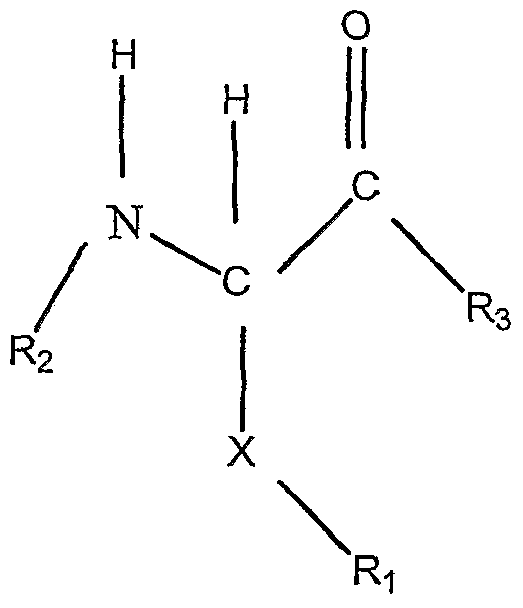


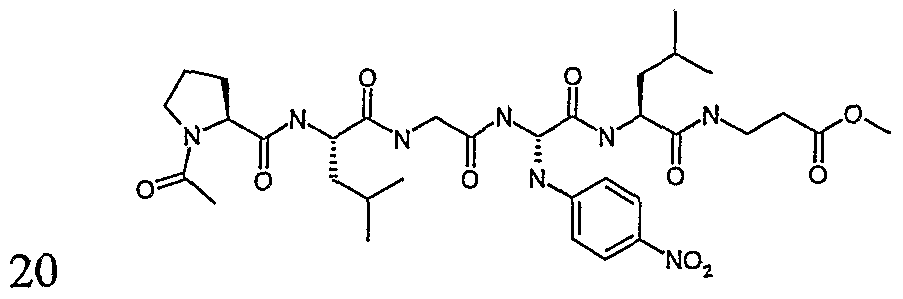


Claims
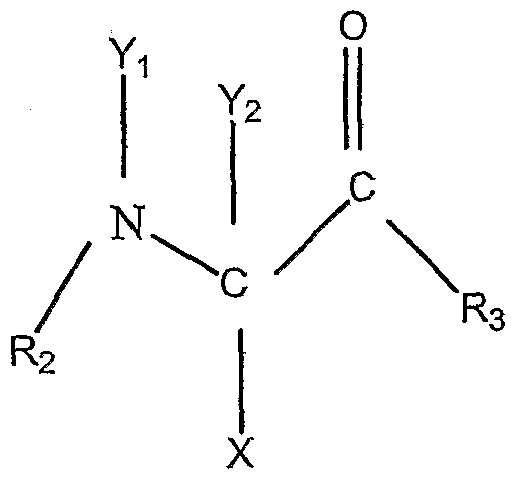


Priority Applications (3)
| Application Number | Priority Date | Filing Date | Title |
|---|---|---|---|
| JP2009505323A JP2009533052A (en) | 2006-04-12 | 2007-04-11 | Method for measuring protease activity in a sample |
| US12/296,568 US20100021940A1 (en) | 2006-04-12 | 2007-04-11 | Method for Determining the Activity of a Protease in a Sample |
| EP07748005A EP2010669A4 (en) | 2006-04-12 | 2007-04-11 | Method for determining the activity of a protease in a sample |
Applications Claiming Priority (2)
| Application Number | Priority Date | Filing Date | Title |
|---|---|---|---|
| US79151206P | 2006-04-12 | 2006-04-12 | |
| US60/791,512 | 2006-04-12 |
Publications (1)
| Publication Number | Publication Date |
|---|---|
| WO2007117199A1 true WO2007117199A1 (en) | 2007-10-18 |
Family
ID=38581395
Family Applications (1)
| Application Number | Title | Priority Date | Filing Date |
|---|---|---|---|
| PCT/SE2007/000339 Ceased WO2007117199A1 (en) | 2006-04-12 | 2007-04-11 | Method for determining the activity of a protease in a sample. |
Country Status (5)
| Country | Link |
|---|---|
| US (1) | US20100021940A1 (en) |
| EP (1) | EP2010669A4 (en) |
| JP (1) | JP2009533052A (en) |
| CN (1) | CN101466846A (en) |
| WO (1) | WO2007117199A1 (en) |
Citations (2)
| Publication number | Priority date | Publication date | Assignee | Title |
|---|---|---|---|---|
| US4304853A (en) * | 1979-04-24 | 1981-12-08 | Marcel Jozefonvicz | Method of determination for proteases and antiproteases |
| US4457866A (en) * | 1979-09-10 | 1984-07-03 | Behringwerke Aktiengesellschaft | Chromogenic compounds and their use as enzyme substrates |
Family Cites Families (10)
| Publication number | Priority date | Publication date | Assignee | Title |
|---|---|---|---|---|
| US5582697A (en) * | 1995-03-17 | 1996-12-10 | Matsushita Electric Industrial Co., Ltd. | Biosensor, and a method and a device for quantifying a substrate in a sample liquid using the same |
| GB2337122B (en) * | 1998-05-08 | 2002-11-13 | Medisense Inc | Test strip |
| US6670115B1 (en) * | 1999-11-24 | 2003-12-30 | Biotronic Technologies, Inc. | Devices and methods for detecting analytes using electrosensor having capture reagent |
| US6706159B2 (en) * | 2000-03-02 | 2004-03-16 | Diabetes Diagnostics | Combined lancet and electrochemical analyte-testing apparatus |
| US6733655B1 (en) * | 2000-03-08 | 2004-05-11 | Oliver W. H. Davies | Measurement of substances in liquids |
| US6797150B2 (en) * | 2001-10-10 | 2004-09-28 | Lifescan, Inc. | Determination of sample volume adequacy in biosensor devices |
| AU2002349662A1 (en) * | 2001-11-20 | 2003-06-10 | Arkray, Inc. | Fail judging method for analysis and analyzer |
| US6872299B2 (en) * | 2001-12-10 | 2005-03-29 | Lifescan, Inc. | Passive sample detection to initiate timing of an assay |
| EP1551864B1 (en) * | 2002-10-04 | 2011-11-09 | DSM IP Assets B.V. | Substrates for detection of TAFI(a) |
| US7429865B2 (en) * | 2005-10-05 | 2008-09-30 | Roche Diagnostics Operations, Inc. | Method and system for error checking an electrochemical sensor |
-
2007
- 2007-04-11 EP EP07748005A patent/EP2010669A4/en not_active Withdrawn
- 2007-04-11 CN CNA2007800220508A patent/CN101466846A/en active Pending
- 2007-04-11 JP JP2009505323A patent/JP2009533052A/en active Pending
- 2007-04-11 WO PCT/SE2007/000339 patent/WO2007117199A1/en not_active Ceased
- 2007-04-11 US US12/296,568 patent/US20100021940A1/en not_active Abandoned
Patent Citations (2)
| Publication number | Priority date | Publication date | Assignee | Title |
|---|---|---|---|---|
| US4304853A (en) * | 1979-04-24 | 1981-12-08 | Marcel Jozefonvicz | Method of determination for proteases and antiproteases |
| US4457866A (en) * | 1979-09-10 | 1984-07-03 | Behringwerke Aktiengesellschaft | Chromogenic compounds and their use as enzyme substrates |
Non-Patent Citations (1)
| Title |
|---|
| See also references of EP2010669A4 * |
Also Published As
| Publication number | Publication date |
|---|---|
| US20100021940A1 (en) | 2010-01-28 |
| EP2010669A4 (en) | 2010-11-17 |
| CN101466846A (en) | 2009-06-24 |
| EP2010669A1 (en) | 2009-01-07 |
| JP2009533052A (en) | 2009-09-17 |
Similar Documents
| Publication | Publication Date | Title |
|---|---|---|
| RU2386629C2 (en) | New hydantoic derivatives for treating obstructive airway diseases | |
| Jin et al. | A continuous fluorimetric assay for tumor necrosis factor-α converting enzyme | |
| UA77667C2 (en) | Metalloproteinase inhibitors, pharmaceutical composition and use thereof | |
| JPH032879B2 (en) | ||
| EP2805168B1 (en) | Compositions and methods relating to lyme disease | |
| JP2005530485A (en) | Bioluminescent protease analysis method | |
| US4457866A (en) | Chromogenic compounds and their use as enzyme substrates | |
| EP1444202B1 (en) | Novel metalloproteinase inhibitors | |
| EP0170797B1 (en) | Novel substrate for determining the activity of blood coagulation factor xa (stuart-prower factor) | |
| US20040018561A1 (en) | Peptide compounds and their use as protease substrates | |
| US4221706A (en) | Chromogenic substrates | |
| Xie et al. | Single-step fluorescent probes to detect decrotonylation activity of HDACs through intramolecular reactions | |
| EP1187811B1 (en) | Inhibitors of metalloproteinases | |
| EP0981521A2 (en) | Novel macrocyclic compounds as metalloprotease inhibitors | |
| EP2010669A1 (en) | Method for determining the activity of a protease in a sample | |
| US6552223B1 (en) | N-hydroxacylamino compounds, process for their preparation and pharmaceutical compositions containing them | |
| US20050266505A1 (en) | Proteomic analysis | |
| JP2003530370A (en) | Fluorescent detection of protease or peptidase | |
| JP2004533489A (en) | A novel chromogenic substrate and its use in assaying carboxypeptidase activity | |
| CA2597862A1 (en) | Use of thiopeptolides for determining the activity of adamts proteases | |
| US20040235858A1 (en) | Arylpiperazines and arylpiperidines and their use as metalloproteinase inhibiting agents | |
| JP2660864B2 (en) | Aminoacetophenone derivatives and methods for measuring enzyme activity using the same | |
| O'Connell | Matrix metalloproteinase activation and inhibition | |
| HK1065321B (en) | Novel chromogenic substances and use thereof for the determination of carboxypeptidase activities | |
| Clearya et al. | Hemiacetal stabilisation in a chymotrypsin inhibitor complex and thereactivity of the hydroxyl group of the catalytic serine residue of chymotrypsin |
Legal Events
| Date | Code | Title | Description |
|---|---|---|---|
| WWE | Wipo information: entry into national phase |
Ref document number: 200780022050.8 Country of ref document: CN |
|
| 121 | Ep: the epo has been informed by wipo that ep was designated in this application |
Ref document number: 07748005 Country of ref document: EP Kind code of ref document: A1 |
|
| WWE | Wipo information: entry into national phase |
Ref document number: 8571/DELNP/2008 Country of ref document: IN |
|
| NENP | Non-entry into the national phase |
Ref country code: DE |
|
| WWE | Wipo information: entry into national phase |
Ref document number: 2009505323 Country of ref document: JP |
|
| WWE | Wipo information: entry into national phase |
Ref document number: 2007748005 Country of ref document: EP |
|
| WWE | Wipo information: entry into national phase |
Ref document number: 12296568 Country of ref document: US |