WO2007122251A2 - Synergistic mixture of glycosyl flavanones and xanthines - Google Patents
Synergistic mixture of glycosyl flavanones and xanthines Download PDFInfo
- Publication number
- WO2007122251A2 WO2007122251A2 PCT/EP2007/054065 EP2007054065W WO2007122251A2 WO 2007122251 A2 WO2007122251 A2 WO 2007122251A2 EP 2007054065 W EP2007054065 W EP 2007054065W WO 2007122251 A2 WO2007122251 A2 WO 2007122251A2
- Authority
- WO
- WIPO (PCT)
- Prior art keywords
- formula
- range
- formulation
- compounds
- skin
- Prior art date
- Legal status (The legal status is an assumption and is not a legal conclusion. Google has not performed a legal analysis and makes no representation as to the accuracy of the status listed.)
- Ceased
Links
- 0 CN(C(c1c(N2*)nc[n]1*)=O)C2=O Chemical compound CN(C(c1c(N2*)nc[n]1*)=O)C2=O 0.000 description 1
- IXWLGEFKFCGRRR-ONLQSFODSA-N C[C@@H](C[C@H]([C@H]1O)O)O[C@H]1O[C@H]([C@H]1O)[C@H](Oc2cc(OC(CC3=O)c(cc4)ccc4O)c3c(O)c2)O[C@H](CO)C1O Chemical compound C[C@@H](C[C@H]([C@H]1O)O)O[C@H]1O[C@H]([C@H]1O)[C@H](Oc2cc(OC(CC3=O)c(cc4)ccc4O)c3c(O)c2)O[C@H](CO)C1O IXWLGEFKFCGRRR-ONLQSFODSA-N 0.000 description 1
- VHBFFQKBGNRLFZ-UHFFFAOYSA-N O=C1c(cccc2)c2OC(c2ccccc2)=C1 Chemical compound O=C1c(cccc2)c2OC(c2ccccc2)=C1 VHBFFQKBGNRLFZ-UHFFFAOYSA-N 0.000 description 1
- YEDFEBOUHSBQBT-UHFFFAOYSA-N OC(C(c1ccccc1)Oc1c2cccc1)C2=O Chemical compound OC(C(c1ccccc1)Oc1c2cccc1)C2=O YEDFEBOUHSBQBT-UHFFFAOYSA-N 0.000 description 1
Classifications
-
- A—HUMAN NECESSITIES
- A61—MEDICAL OR VETERINARY SCIENCE; HYGIENE
- A61K—PREPARATIONS FOR MEDICAL, DENTAL OR TOILETRY PURPOSES
- A61K8/00—Cosmetics or similar toiletry preparations
- A61K8/18—Cosmetics or similar toiletry preparations characterised by the composition
- A61K8/30—Cosmetics or similar toiletry preparations characterised by the composition containing organic compounds
- A61K8/49—Cosmetics or similar toiletry preparations characterised by the composition containing organic compounds containing heterocyclic compounds
- A61K8/494—Cosmetics or similar toiletry preparations characterised by the composition containing organic compounds containing heterocyclic compounds with more than one nitrogen as the only hetero atom
-
- A—HUMAN NECESSITIES
- A61—MEDICAL OR VETERINARY SCIENCE; HYGIENE
- A61K—PREPARATIONS FOR MEDICAL, DENTAL OR TOILETRY PURPOSES
- A61K8/00—Cosmetics or similar toiletry preparations
- A61K8/18—Cosmetics or similar toiletry preparations characterised by the composition
- A61K8/30—Cosmetics or similar toiletry preparations characterised by the composition containing organic compounds
- A61K8/49—Cosmetics or similar toiletry preparations characterised by the composition containing organic compounds containing heterocyclic compounds
- A61K8/494—Cosmetics or similar toiletry preparations characterised by the composition containing organic compounds containing heterocyclic compounds with more than one nitrogen as the only hetero atom
- A61K8/4953—Cosmetics or similar toiletry preparations characterised by the composition containing organic compounds containing heterocyclic compounds with more than one nitrogen as the only hetero atom containing pyrimidine ring derivatives, e.g. minoxidil
-
- A—HUMAN NECESSITIES
- A61—MEDICAL OR VETERINARY SCIENCE; HYGIENE
- A61K—PREPARATIONS FOR MEDICAL, DENTAL OR TOILETRY PURPOSES
- A61K8/00—Cosmetics or similar toiletry preparations
- A61K8/18—Cosmetics or similar toiletry preparations characterised by the composition
- A61K8/30—Cosmetics or similar toiletry preparations characterised by the composition containing organic compounds
- A61K8/49—Cosmetics or similar toiletry preparations characterised by the composition containing organic compounds containing heterocyclic compounds
- A61K8/4973—Cosmetics or similar toiletry preparations characterised by the composition containing organic compounds containing heterocyclic compounds with oxygen as the only hetero atom
- A61K8/498—Cosmetics or similar toiletry preparations characterised by the composition containing organic compounds containing heterocyclic compounds with oxygen as the only hetero atom having 6-membered rings or their condensed derivatives, e.g. coumarin
-
- A—HUMAN NECESSITIES
- A61—MEDICAL OR VETERINARY SCIENCE; HYGIENE
- A61K—PREPARATIONS FOR MEDICAL, DENTAL OR TOILETRY PURPOSES
- A61K8/00—Cosmetics or similar toiletry preparations
- A61K8/18—Cosmetics or similar toiletry preparations characterised by the composition
- A61K8/72—Cosmetics or similar toiletry preparations characterised by the composition containing organic macromolecular compounds
- A61K8/73—Polysaccharides
-
- A—HUMAN NECESSITIES
- A61—MEDICAL OR VETERINARY SCIENCE; HYGIENE
- A61K—PREPARATIONS FOR MEDICAL, DENTAL OR TOILETRY PURPOSES
- A61K8/00—Cosmetics or similar toiletry preparations
- A61K8/18—Cosmetics or similar toiletry preparations characterised by the composition
- A61K8/72—Cosmetics or similar toiletry preparations characterised by the composition containing organic macromolecular compounds
- A61K8/73—Polysaccharides
- A61K8/732—Starch; Amylose; Amylopectin; Derivatives thereof
-
- A—HUMAN NECESSITIES
- A61—MEDICAL OR VETERINARY SCIENCE; HYGIENE
- A61Q—SPECIFIC USE OF COSMETICS OR SIMILAR TOILETRY PREPARATIONS
- A61Q19/00—Preparations for care of the skin
- A61Q19/04—Preparations for care of the skin for chemically tanning the skin
-
- A—HUMAN NECESSITIES
- A61—MEDICAL OR VETERINARY SCIENCE; HYGIENE
- A61Q—SPECIFIC USE OF COSMETICS OR SIMILAR TOILETRY PREPARATIONS
- A61Q5/00—Preparations for care of the hair
- A61Q5/10—Preparations for permanently dyeing the hair
Definitions
- the present invention concerns the use of a formulation (mixture) containing or consisting of xanthines (preferably caffeine) and certain glycosyl flavanones as an agent for browning skin or hair in vivo.
- xanthines preferably caffeine
- certain glycosyl flavanones as an agent for browning skin or hair in vivo.
- the invention also concerns corresponding formulations themselves. Closely associated with the aspect of skin browning is the stimulation of melanogenesis of the skin (e.g. to prevent folic acid deficiency diseases), and the invention also concerns corresponding formulations and methods.
- it also concerns a method for increasing the solubility of and/or for stabilising certain glycosyl flavanones or corresponding formulations.
- Skin-browning active ingredients intervene in one form or another in melanin metabolism or catabolism.
- Melanin pigments which are normally brown to black in colour, are formed in the melanocytes of the skin, transferred to the keratinocytes and give the skin or hair its colour.
- the brown-black eumelanins are primarily formed from hydroxy-substituted aromatic amino acids such as L-tyrosine and L-3,4-dihydroxyphenyl alanine (L-DOPA), which additionally forms the yellow to red pheomelanins from sulfur-containing molecules ⁇ Cosmetics & Toiletries 1996, 111 (5), 43-51 ).
- L-DOPA is formed by the copper-containing key enzyme tyrosinase and is in turn converted by tyrosinase to dopachrome.
- tyrosinase is oxidised to form melanin.
- melanocytes In the presence of UV radiation the melanocytes increasingly form melanin. On the one hand this acts as natural UV protection.
- melanin is an antioxidant, which protects against reactive oxygen species (oxidative stress).
- UV-B radiation (290 nm and 320 nm) can lead to the formation of erythema or even to burns.
- UV-A radiation (320 - 400 nm) can cause skin damage by damaging the keratin or elastin in the skin. This reduces the elasticity and water-retaining ability of the skin, in other words the skin becomes less supple and has a tendency to form wrinkles.
- the remarkably high incidence of skin cancer in areas of high solar radiation shows that sunlight evidently also damages the genetic information in the cells.
- UV radiation can also lead to photochemical reactions, wherein the photochemical reaction products - such as e.g. hydroxyl radicals or singlet oxygen - interfere with the metabolism of the skin. Undefined radical photoproducts occurring in the skin itself can also lead to uncontrolled secondary reactions due to their high reactivity.
- the photochemical reaction products - such as e.g. hydroxyl radicals or singlet oxygen - interfere with the metabolism of the skin.
- Undefined radical photoproducts occurring in the skin itself can also lead to uncontrolled secondary reactions due to their high reactivity.
- UV radiation is classed as ionising radiation. There is therefore a risk of the formation of ionic species under UV exposure, which in turn can then influence the biochemical processes by oxidation.
- carotene preparations are taken regularly, carotene is stored in the fatty tissue of the subcutis and the skin gradually turns orange to yellow-brown.
- Washable makeup preparations can be used to achieve a light skin tinting (e.g. extracts of fresh green walnut shells, henna).
- Skin browning can also be achieved by chemical changes to the skin's stratum corneum using so-called self-tanning preparations.
- the most important active ingredient is dihydroxyacetone (DHA).
- DHA dihydroxyacetone
- the skin browning achieved in this way does not wash off and is only removed with the normal flaking of the skin (after around 5 to 10 days).
- Dihydroxyacetone can be classed as a ketotriose and as a reducing sugar it reacts with the amino acids in the skin or the free amino and imino groups in keratin via a series of intermediate steps along the lines of a Maillard reaction to form brown-coloured substances known as melanoids, which are occasionally also called melanoidins.
- tint obtained with self-tanning agents is achieved without exposure to sunlight.
- so-called “pre-tan products” or “tan promoters” are also available, which have to be applied before exposure to sunlight. In the sun these preparations then turn yellow, giving rise to a light brown-yellow colouring of the epidermis which further boosts the "suntan”.
- Another type of artificial browning which is not dependent on UV light can be brought about through the hormones which are usually also released in the body as a consequence of (natural) UV irradiation and ultimately stimulate the melanocytes to synthesise melanin.
- examples which can be cited in this connection are derivatives of proopiomelanocortin (POMC) such as ⁇ -MSH (Melanocyte Stimulating Hormone) and synthetic variants (such as [Nle(4), D- Phe(7)]- ⁇ -MSH), which in some cases display far higher activity levels than the natural ⁇ -MSH.
- POMC proopiomelanocortin
- ⁇ -MSH Melanocyte Stimulating Hormone
- synthetic variants such as [Nle(4), D- Phe(7)]- ⁇ -MSH
- these hormones can cause browning in principle, their use in cosmetics is prohibited, since they are pharmacologically potent substances (hormones) which should not be widely used without medical indications.
- tyrosinase substrates such as L-tyrosine, L-DOPA and derivatives or precursors thereof for the stimulation of melanogenesis has also been described many times in the literature.
- Quercetin, rhamnetin, kaempferol, fisetin, genistein, daidzein, chrysin and apigenin are preferred.
- FR 2865132 describes the skin-browning action of diosmin and diosmetin.
- JP 05-279225 describes morin, kaempferol and quercitrin as skin browning agents.
- Flavonoids having structures in accordance with the above structural formulae do not have a uniform effect on melanogenesis, however:
- US 6,399,046 describes the skin-browning action of active ingredients from tea, such as e.g. catechins or caffeine.
- Catechins belong to the flavanols group; catechin has the following structural formula:
- catechins such as epicatechin, for example, are unstable or poorly stable in the relevant pH range for cosmetic formulations, which is conventionally in the range from around 5 to 9.
- phloridzin acts as an inhibitor of glucose absorption and is therefore toxic to reproduction (Leppens-Luisier et al. 2001 , Human Reproduction 16, 1229-1236).
- quercetin was the most effective, but in the maximum non-cytotoxic concentration of 0.003 mM with + 38% melanin it displayed only a moderate effect.
- DE 198 34 717 (corresponding to US 6,224,872) concerns compositions containing (i) a flavonoid and (ii) a processed product from a plant of the Pfaffia species, which can optionally also contain (iii) a processed product from a caffeine-containing plant.
- the compositions according to DE 198 34 717 are preferably orally administrable (i.e. systemically acting) agents which have an invigorating, immune reaction-enhancing, anti-allergenic, psychotropic and/or tonic effect.
- the present invention concerns formulations which do not include a product from a plant of the Pfaffia species.
- the present invention concerns formulations which do not contain ecdysterone, rubrosterone or pterosterone.
- the formulations of the present invention in certain cases are preferably administered not orally but topically, which means that they are applied exclusively to (human) skin or hair.
- the formulations according to the invention are in certain cases preferably not intended or suitable for consumption (especially if caffeine is used as constituent (a)); accordingly in these cases they should not come into contact with the (oral) mucous membranes.
- the object of the present invention was therefore to provide alternative, effective skin and hair browning formulations which are non-toxic and are well tolerated in effective amounts.
- the object of the present invention was also to provide alternative formulations to stimulate the natural melanogenesis of human skin, especially in connection with the prevention of folic acid deficiency phenomena and the treatment of pigment spots.
- R1 and R2 are mutually independently H, OH, C1-C10 alkyl (alkyl with 1 to 10 C atoms), C1 -C10 O-alkyl or O-prenyl,
- R3 is H, OH, O-glucose or O-rhamnose and
- R4 is a monosaccharide radical or an oligosaccharide radical having 2, 3, 4 or 5 carbohydrate units.
- the compounds of the formula (I), glycosylated flavanones, include their stereoisomers and anomers and any mixtures of these isomers.
- R1 and R2 are mutually independently H, OH, OMe or CH 3 and R3 is H and
- R4 is a monosaccharide radical or an oligosaccharide radical having 2, 3, 4 or 5 carbohydrate units.
- R3 is H and
- R4 is (i) a monosaccharide radical, preferably selected from the group consisting of glucose, galactose, rhamnose, xylose and glucuronic acid, or (ii) a disaccharide radical, whose sugar units are the same or different and are preferably selected from the group consisting of glucose, galactose, rhamnose, xylose and glucuronic acid.
- glycosyl flavanones of the formula (I) according to PCT/EP 2005/055464 are naringin, hesperidin and neohesperidin. Naringin is most preferred and has the following structure:
- PCT/EP 2005/055464 Mention was already made in the application with application number PCT/EP 2005/055464 that the formulations described therein can also contain further active ingredients which stimulate skin and hair tinting or browning by chemical or natural means; a more rapid action based on synergistic effects is apparently achieved in this way.
- a list of substances was given as being particularly preferred, among which is the trimethyl xanthine (caffeine).
- PCT/EP 2005/055464 does not contain a detailed description of synergistic formulations containing caffeine and glycosyl flavanones of the formula (I), however. In particular, no mention is made of the proportions in which the glycosyl flavanones of the formula (I) and caffeine must be used in order to obtain a synergistic effect.
- the present invention is based on the surprising finding that if xanthines (in particular caffeine) and glycosyl flavanones of the formula (I) (as described above with reference to PCT/EP 2005/055464, the compounds of the formula (I) which are described therein as preferred also being preferred within the context of the present invention) are used together, a synergistic effect in terms of the melanogenesis of skin and hair is obtained if (a) xanthines (in particular caffeine) and (b) the glycosyl flavanone(s) of the formula (I) are used in a particular ratio
- glycosyl flavanones of the formula (I), in particular naringin in addition to further active ingredients which stimulate skin and hair tinting or browning by chemical or natural means, in a quantity which is less than 0.01 wt.%.
- xanthines designate (optionally substituted) 3,7- or 3,9-dihydro-1 /-/-purine-2,6-diones of the formula (II)
- R5, R6 and R7 are independently of each other H or methyl.
- the invention thus concerns the use of a formulation containing or consisting of
- R5, R6 and R7 are independently of each other H or methyl
- R1 and R2 are mutually independently H, OH, C1-C10 alkyl, C1 -C10
- O-alkyl or O-prenyl O-alkyl or O-prenyl
- R3 is H, OH, O-glucose or O-rhamnose
- R4 is a monosaccharide radical or an oligosaccharide radical having 2, 3, 4 or 5 carbohydrate units,
- the ratio by weight of the amount of (a) xanthines of the formula (II) contained in the formulation to the amount of (b) compounds of the formula (I) contained in total in the formulation is in the range from 50:1 to 1 :10, preferably in the range from 25:1 to 1 :5, particularly preferably in the range from 10:1 to 1 :3, as an agent for browning skin or hair in vivo.
- constituent (a) comprises or consists of
- a corresponding formulation according to the invention is suitable for browning skin or hair and/or for stimulating melanogenesis of the skin (in particular for preventing folic acid deficiency diseases and/or for treating pigment spots and/or for evening out skin tone).
- Synergistic formulations according to the invention preferably strengthen the pigmentation of melanocytes, i.e. they stimulate the natural melanogenesis of human skin. This effect is independent of the presence of UV light but can be strengthened by UV light.
- Formulations according to the invention are thus suitable for use in cosmetic or therapeutic, in particular dermatological, skin and hair browning agents. Certain formulations according to the invention can also be administered orally as food supplements.
- a formulation according to the invention comprises or consists of:
- R5, R6 and R7 are independently of each other H or methyl
- the ratio by weight of the amount of (a) xanthines of the formula (II) contained in the formulation to the amount of (b) compounds of the formula (I) contained in total in the formulation is in the range from 50:1 to 1 :10, preferably in the range from 25:1 to 1 :5, particularly preferably in the range from 10:1 to 1 :3, with the proviso that the formulation is preferably free from processed products from a plant of the Pfaffia species and is free from ecdysterone, rubrosterone and pterosterone.
- compositions described in DE 198 34 717 A1 which contain a flavonoid and a processed powder from a plant of the Pfaffia species, are therefore not formulations according to the invention.
- a formulation according to the invention preferably also contains no extract from a perennial plant of the Saururaceae, Ginkgo or Chlorella family (cf. DE 198 34 717 A1 in this regard too).
- the formulation according to the invention is in particular a topical cosmetic or therapeutic formulation.
- constituent (a) comprises or consists of
- Morin has the following structure:
- Morin is a (fluorescent) dye (C.I. 75660). It is also mutagenic, however, and is therefore unsuitable or of only very limited suitability for use in cosmetics.
- the compound of the formula (I) is preferably not used in the form of a preparation based on Citrus aurantium dulcis (cf. in this regard document FR 2845285 and our own application PCT/EP 2005/055464).
- constituents (a) and (b) are preferably used in the formulation in a total amount which
- (i) is equal to or greater than the least total amount of the mixture of constituents (a) and (b) that is needed for browning in vivo and is less than 30 times this total amount or less than the maximum soluble total amount of the mixture of constituents (a) and (b) and/or
- (ii) is in the range between 30 times the EC 5 O value determined in vitro for the mixture of constituents (a) and (b) (see Example 12 for determination) and 1000 times this value.
- a preferred formulation according to the invention correspondingly contains a total amount of constituents (a) and (b) which is within the stated range.
- the formulations according to the invention preferably contain the constituents (a) one or more xanthines of the formula (II) (in particular caffeine) and (b) one or more compounds of the formula (I) in a total amount in the range from 0.001 to 20 wt. %, preferably in the range from 0.1 to 12 wt.%, particularly preferably in the range from 0.2 to 5 wt.%, based on the total weight of the formulation.
- the one or more compounds of the formula (I) are preferably used in an amount or a total amount of at most 0.25 wt.%, based on the total weight of the formulation.
- the proportion of the xanthine(s) of the formula (II) and/or the proportion of the compound(s) of the formula (I) in a formulation according to the invention can be less than the amount that would be necessary for a skin or hair browning effect if the xanthine(s) of the formula (II) or the compound(s) of the formula (I) were to develop the skin or hair browning effect on their own.
- formulations according to the invention are preferred and are preferably used in which the amount of compounds of the formula (I) in the formulation
- the (cosmetic or therapeutic) formulations according to the invention are produced by conventional methods known per se, such that one or more of the synergistic mixtures used according to the invention are incorporated into cosmetic or dermatological formulations which have a conventional composition and which in addition to the skin and hair browning effect can also be used for the treatment, care and cleansing of the skin or hair and as makeup products in decorative cosmetics.
- Formulations according to the invention can be used in various pharmaceutical forms for browning skin or hair in vivo or for stimulating melanogenesis of the skin (in particular for preventing folic acid deficiency diseases or for treating pigment spots).
- glycosyl flavanones of the formula (I) and/or the xanthine or xanthines of the formula (II) in particular caffeine
- a (synergistically effective) mixture of both said constituents are in encapsulated form, e.g.
- liposomes wax materials, cyclodextrins, starches, degraded or chemically or physically modified starches (in particular dextrins and maltodextrins), gelatine, gum arabic, agar-agar, gum ghatti, gellan gum, modified and unmodified celluloses, pullulan, curdlan, carrageenans, alginic acid, alginates, pectin, inulin, xanthan gum and mixtures of two or more of the cited substances.
- modified cellulose e.g. cellulose ether
- alginates e.g. Na alginate
- carrageenan beta-, iota-, lambda- and/or kappa- carrageenan
- gum arabic curdlan and/or agar-agar is preferred.
- Cyclodextrins are another preferred encapsulation material. Cyclodextrins are oligomers of anhydroglucose structural units which are coupled to a ring-shaped molecule via alpha-1 ,4 bonds. Depending on the number of structural units, a distinction is made between alpha- (6 structural units), beta- (7 structural units) and gamma- (8 structural units) cyclodextrins. They are conventionally produced from starch by enzymatic processes. The primary hydroxyl groups are then frequently substituted in order to achieve a better solubility or reactivity. The ring- shaped structure of the cyclodextrins allows the formation of inclusion complexes at a molecular level.
- a two-phase mixture is normally formed. Elevated shear forces, e.g. by stirring or compounding, are used to accelerate the process. This stage is normally followed by a drying stage, such as spray drying, freeze drying or fluidised bed drying, for example.
- Glycosol flavanones of the formula (I) can also be present as nanoparticles
- particle size ⁇ 1 ⁇ m can be produced for example by wet grinding the glycosyl flavanones in water or an organic solvent, preferably ethanol, or solvent/water blends.
- the small particle size increases the solubility and hence the bio-availability of the glycosyl flavanones (I).
- a formulation according to the invention i.e. a formulation which comprises (a) one or more xanthines of the formula (II) (in particular caffeine) and (b) one or more compounds of the formula (I), the ratio by weight of the amount of (a) xanthines of the formula (II) contained in the formulation to the amount of (b) compounds of the formula (I) contained in total in the formulation being in the aforementioned range, preferably takes the form of a formulation containing a spray-dried powder or consisting of a spray-dried powder, the spray-dried powder (e) containing one or more carriers for the constituents (a) and/or (b).
- the xanthine or the xanthines of the formula (II) (constituent (a)) and/or the compound or compounds of the formula (I) (constituent (b)) are thus in spray- dried form.
- Carbohydrates and/or carbohydrate polymers are preferred in particular as carriers for the spray drying of glycosyl flavanones of the formula (I)
- Preferred carriers are hydrocolloids such as starches, degraded starches, chemically or physically modified starches, modified celluloses, gum arabic, gum ghatti, gum tragacanth, karaya, carrageenan, guar gum, locust bean gum, alginates, pectin, inulin or xanthan gum.
- Preferred carriers for spray drying are gum arabic and/or maltodextrins, maltodextrins having DE values in the range from 10 to 20, preferably in the range from 15 to 20, being advantageous in turn.
- the degree of decomposition of the starch is measured by the "dextrose equivalent” value (DE), which can assume the limiting values 0 for the long-chain glucose polymer and 100 for pure glucose.
- constituents (a) and (b) of a formulation according to the invention optionally only constituent (a), only constituent (b) or both constituents can be encapsulated (e.g. spray dried). If both constituents are in encapsulated form (e.g. spray dried), the encapsulation (e.g. spray drying) can be carried out separately, such that each of constituents (a) and (b) is encapsulated (e.g. spray dried) by itself, or both constituents (a) and (b) can first be intimately mixed and then encapsulated (e.g. spray dried) together.
- constituents (a) and (b) are particularly preferred with regard to constituents (a) and (b) and with regard to intimate mixtures of the two constituents: nanoparticle, cyclodextrin complex, spray-dried powder.
- a particularly preferred formulation according to the invention thus comprises maltodextrin as the first carrier, preferably a maltodextrin having a DE value in the range from 10 to 20, preferably in the range from 15 to 20, and optionally gum arabic as the second carrier.
- Such a formulation according to the invention is preferably spray dried, the first carrier maltodextrin and optionally the second carrier gum arabic being used as the carrier (e) for constituent (a), constituent (b) or a mixture of constituents (a) and (b).
- the total amount of (a) the xanthine(s) of the formula (II) (in particular caffeine), (b) the compound(s) of the formula (I) and (e) maltodextrin and gum arabic is preferably at least 93 wt.%, especially if the formulation according to the invention is in spray-dried form.
- Corresponding mixtures according to the invention regularly contain a residual water content in the range from 1 to 7 wt.%.
- the aforementioned (preferably spray-dried) formulations according to the invention are preferably in the form of a powder and preferably have an average particle size (median value) in the range from 20 to 250 micrometres ( ⁇ m), more preferably a median value of greater than or equal to 40 and less than or equal to 180 micrometres, particularly preferably a median value of greater than or equal to 50 and less than or equal to 150 micrometres.
- the handling of a (preferably spray-dried) powder according to the invention is at its best, particularly in terms of the precipitation or crystallisation of glycosyl flavanones of the formula (I), and the solubility is good too.
- the ratio by weight of the total amount of (a) xanthines of the formula (II) and (b) compound(s) of the formula (I) to the amount of maltodextrin is by preference in the range from 1 :99 to 1 :1 , preferably in the range from 1 :25 to 1 :3, particularly preferably in the range from 1 :20 to 1 :5.
- the ratio of (a) xanthines of the formula (II) (in particular caffeine) to the total amount of (b) glycosyl flavanones of the formula (I), as already mentioned above, is in the range from 50 : 1 to 1 : 10, preferably in the range from 25 : 1 to 1 : 5, and particularly preferably in the range from 10 : 1 to 1 : 3. Reference is also made at this point to Example 13 below.
- the present invention concerns in particular a formulation in the form of a spray-dried powder having an average particle size in the range from 20 to 250 ⁇ m, preferably an average particle size of greater than or equal to 40 and less than or equal to 180 ⁇ m, particularly preferably an average particle size of greater than or equal to 50 and less than or equal to 150 ⁇ m, comprising
- maltodextrin as the first carrier, preferably a maltodextrin having a DE value in the range from 10 to 20, preferably in the range from 15 to 20, and optionally gum arabic as the second carrier, wherein the total amount of
- the compound(s) of the formula (I) and (e) maltodextrin and gum arabic is at least 93 wt.%, and the ratio of the total amount of (a) xanthine(s) of the formula (II) and (b) compound(s) of the formula (I) to the amount of maltodextrin is in the range from 1 : 99 to 1 : 1 , preferably in the range from 1 : 25 to 1 : 3, particularly preferably in the range from 1 : 20 to 1 : 5. Where ranges are specified, preferred ranges are preferably in turn combined with one another.
- the invention also concerns a method for increasing the solubility of and/or for stabilising compounds of the formula (I) or formulations containing or consisting of one or more compounds of the formula (I), comprising the following step: spray-drying the compound of the formula (I) or the formulation in the presence of maltodextrin, preferably a maltodextrin having a DE value in the range from 10 to 20, preferably in the range from 15 to 20, as the first carrier and optionally gum arabic as the second carrier.
- the formulation comprising one or more compounds of the formula (I) can in particular be a formulation according to the invention which contains xanthines of the formula (II) (in particular caffeine) as constituent (a).
- the increase in solubility and/or stabilisation relates in particular to the use in water, aqueous solution or (aqueous) cosmetic formulations.
- a formulation according to the invention as a drug product (in particular as a drug product to stimulate the natural melanogenesis of human skin, preferably in connection with the prevention of folic acid deficiency phenomena and/or the treatment of pigment spots) and the use of a formulation according to the invention to produce a drug product to stimulate melanogenesis of the skin.
- the present invention also concerns a method for browning skin or hair, comprising the following step:
- the formulations according to the invention can take the form of "water-in-oil”, “oil-in-water”, “water-in-oil-in-water”, “oil-in-water-in-oil” emulsions, PIT emulsions, Pickering emulsions, emulsions with a low oil content, micro- or nanoemulsions, a solution, dispersion, suspension, cream, lotion or milk, depending on the production method and ingredients; gels, solutions, e.g.
- cosmetic wipes cleansing agents such as soap, synthetic detergent, liquid washing, shower and bath preparations
- skin care products such as e.g. an emulsion (as described above), ointment, paste, gel (including hydrogel, hydrodispersion gel, oleogel), oil, toner, balsam, serum, powder, pencil, stick, roll-on, pump, aerosol (foaming, non-foaming or post- foaming); foot care product (including keratolytic, deodorant), insect repellent, sunscreen, self-tanning agent and/or aftersun preparation; skin care product as shaving agent, depilatory agent, hair care product such as e.g.
- shampoo 2-in-1 shampoo, anti-dandruff shampoo, baby shampoo, shampoo for dry scalp, concentrated shampoo, conditioner, hair tonic, hair water, hair rinse, styling creme, pomade, perm and setting lotion, hair smoothing agent (detangling agent, relaxer), hair spray, styling aid (e.g. gel or wax), hair dye such as e.g.
- temporary direct-dyeing hair dye semi-permanent hair dye, permanent hair dye, hair conditioner, hair remover; hair mousse, hair tint, deodorant and/or antiperspirant; mouth wash and mouth rinse; bath salt, effervescent preparation, aftershave balm, preshave and aftershave lotion; eye care product, makeup, makeup remover, baby product, bath product (capsule, oil, tablet, salt, soap, etc.); effervescent preparations, face powder, skin toner, body powder or mask.
- auxiliary substances and additives can be included in amounts of 5 to 99 wt.%, preferably 10 to 80 wt.%, based on the total weight of the formulation according to the invention.
- the formulations can also contain water in an amount of up to 99.99 wt.%, preferably 5 to 80 wt.%, based on the total weight of the formulation.
- glycosyl flavanones of the formula (I) and xanthines of the formula (II) are available commercially.
- Glycosyl flavanones of the formula (I) can also be obtained for example by extraction from plants, from plants of the Rutaceae family, in particular of the Citrus species, from plants of the Rosaceae family, in particular of the Prunus species, from Ceterach officinarum, Origanum vulgare (oregano), Adiantum spp., Clymenia polyandra, from plants of the species Mentha, Vernonia, Anthurium, Xanthoxylum spp., Agathosma betulina (honeybush), Barosma betulina, Hyssopus officinalis, from plants of the Coniferae, Erythroxylaceae, Solanaceae, Hydrangaceae, Compositae, Salicaceae, Cruciferae, Filicaceae, Corariaceae, Co
- the cosmetic or therapeutic (especially topical) formulations according to the invention can contain cosmetic auxiliary substances and additives such as are conventionally used in such preparations, e.g. sunscreens, preservatives, bactericides, fungicides, virucides, cooling agents, insect repellents (e.g. DEET, IR 3225, Dragorepel), plant extracts, anti-inflammatory agents, substances to accelerate wound healing (e.g. chitin or chitosan and derivatives thereof), film-forming substances (e.g. polyvinyl pyrrolidones or chitosan or derivatives thereof), conventional antioxidants, vitamins (e.g.
- vitamin C and derivatives tocopherols and derivatives, vitamin A and derivatives
- 2-hydroxycarboxylic acids e.g. citric acid, malic acid, L-, D- or dl-lactic acid
- skin colouring agents e.g. walnut extracts or dihydroxyacetone
- agents to promote hair growth e.g. minoxidil, diphencyprene, hormones, finasteride, phytosterols such as e.g. ⁇ -sitosterol, biotin or extracts of Cimicifuga racemosa, Eugenia caryophyllata or Hibiscus rosasinensis, barley, hops, hydrolysates of rice or wheat
- skin care agents e.g.
- ceramides ceramides
- softening moisturising and/or moisture-retaining substances
- fats oils, saturated fatty acids, monounsaturated or polyunsaturated fatty acids, alpha-hydroxy acids, polyhydroxy fatty acids or derivatives thereof (e.g. linoleic acid, alpha-linolenic acid, gamma-linolenic acid or arachidonic acid and the natural or synthetic esters thereof), waxes or other conventional constituents of a cosmetic or dermatological formulation such as alcohols, polyols, polymers, foam stabilisers, electrolytes, organic solvents, silicone derivatives or chelating agents (e.g.
- ethylene diamine tetraacetic acid and derivatives ethylene diamine tetraacetic acid and derivatives
- anti-dandruff agents e.g. climbazole, ketoconazole, piroctone oleamine, zinc pyrithione
- hair care products perfumes, substances to prevent foaming, dyes, pigments having a colouring action
- thickeners e.g. silicon dioxide, aluminium silicates, such as e.g. bentonites, polysaccharides or derivatives thereof, e.g. hyaluric acid, guar gum, xanthan gum, hydroxypropyl methylcellulose or allulose derivatives, particularly advantageously polyacrylates such as e.g.
- carbopols or polyurethanes include surface-active substances, emulsifiers, plant parts and plant extracts (e.g. arnica, aloe, beard lichen, ivy, stinging nettle, ginseng, henna, camomile, marigold, rosemary, sage, horsetail or thyme), animal extracts such as e.g. royal jelly, propolis, proteins, protein hydrolysates, yeast extracts, hop and wheat extracts, peptides or thymus extracts.
- plant extracts e.g. arnica, aloe, beard lichen, ivy, stinging nettle, ginseng, henna, camomile, marigold, rosemary, sage, horsetail or thyme
- animal extracts such as e.g. royal jelly, propolis, proteins, protein hydrolysates, yeast extracts, hop and wheat extracts, peptides or thymus extracts.
- the formulations according to the invention can preferably also contain other active ingredients as (further) additives which stimulate skin and hair tinting or browning by chemical or natural means. A more rapid action based on synergistic effects is achieved in this way.
- substrates or substrate analogues of tyrosinase such as L-tyrosine, N-acetyl tyrosine, L-DOPA or L-dihydroxyphenylalanine, stimulators of tyrosinase activity or expression such as theophylline, proopiomelanocortin peptides such as ACTH, alpha-MSH, peptide analogues thereof and other substances which bind to the melanocortin receptor, peptides such as Val-Gly-Val-Ala-Pro-Gly, Lys-lle- Gly-Arg-Lys or Leu-lle-Gly-Lys, purines, pyrimidines, folic acid, copper salts such as copper
- Flavonoids which bring about skin and hair tinting or browning (e.g. quercetin, rhamnetin, kaempferol, fisetin, genistein, daidzein, chrysin and apigenin, epicatechin, diosmin and diosmetin, morin, quercitrin, phloridzin and phloretin) can also be used.
- quercetin, rhamnetin, kaempferol, fisetin, genistein, daidzein, chrysin and apigenin epicatechin, diosmin and diosmetin, morin, quercitrin, phloridzin and phloretin
- Preferred active ingredients which stimulate skin and hair tinting or browning and which synergistically strengthen constituents (a) and (b) of a formulation according to the invention are: L-tyrosine and derivatives thereof, in particular N- acetyl tyrosine, alpha-MSH and peptide analogues thereof, copper salts such as copper gluconate, chloride or pyrrolidonate, zinc diglycinate (Zn(GIy) 2 ), manganese(ll) bicarbonate complexes ("pseudocatalases”) as described for example in EP 0 584 178, melanin derivatives such as Melasyn-100 and MelanZe, extracts and ingredients from plants and plant parts of the chrysanthemum species, sanguisorba species, rhubarb extracts, trehalose, erythrulose and dihydroxyacetone, erythrulose and dihydroxyacetone being particularly preferred.
- L-tyrosine and derivatives thereof in
- constituents (a) and (b) of a formulation according to the invention can also be present in a total amount which is less than the total amount of constituents (a) and (b) that is sufficient to achieve a skin browning effect in the absence of other skin browning substances.
- the formulations according to the invention advantageously contain at least one UV-A filter and/or at least one UV-B filter and/or a broadband filter and/or at least one inorganic pigment.
- Formulations according to the invention preferably contain at least one UV-B filter or a broadband filter, more particularly preferably at least one UV-A filter and at least one UV-B filter.
- the formulations can be in various forms, such as are conventionally used for example for sunscreen preparations to protect the skin and hair against ultraviolet radiation.
- a solution a water-in-oil (W/O) or oil-in-water (O/W) emulsion, or a multiple emulsion, of the water-in-oil- in-water (W/O/W) type for example, a gel, a hydrodispersion, a solid stick or an aerosol.
- the total amount of filter substances here is 0.01 wt.% to 40 wt.%, preferably 0.1 % to 10 wt.%, in particular 1.0 to 5.0 wt.%, based on the total weight of the preparations, to provide cosmetic preparations.
- Suitable UV filters are, for example, organic UV absorbers from the class comprising 4-aminobenzoic acid and derivatives, salicylic acid derivatives, benzophenone derivatives, dibenzoylmethane derivatives, diphenyl acrylates, 3- imidazol-4-yl acrylic acid and esters thereof, benzofuran derivatives, benzylidene malonate derivatives, polymeric UV absorbers containing one or more organosilicon radicals, cinnamic acid derivatives, camphor derivatives, trianilino- s-triazine derivatives, 2-hydroxyphenylbenzotriazole derivatives, phenylbenzimidazole sulfonic acid derivatives and salts thereof, anthranilic acid menthyl esters, benzotriazole derivatives, indole derivatives.
- organic UV absorbers from the class comprising 4-aminobenzoic acid and derivatives, salicylic acid derivatives, benzophenone derivatives, dibenzoylmethan
- UV filters cited below which can be used within the context of the present invention are preferred but naturally are not limiting.
- UV filters are, for example:
- UV absorbers which are particularly suitable for combining are
- Advantageous inorganic light protection pigments are finely dispersed metal oxides and metal salts, for example titanium dioxides, zinc oxide (ZnO), iron oxides (e.g. Fe 2 ⁇ 3), aluminium oxide (Al 2 O3); cerium oxides (e.g. Ce 2 Os), manganese oxides (e.g. MnO), zirconium oxide (ZrO 2 ), silicon oxide (SiO 2 ), mixed oxides of the corresponding metals and mixtures of such oxides, barium sulfate and zinc stearate. Pigments based on TiO 2 or zinc oxide are particularly preferred.
- the particles have an average diameter of less than 100 nm, preferably between 5 and 50 nm and particularly preferably between 15 and 30 nm. They can have a spherical form, but such particles having an ellipsoid form or other form deviating from the spherical shape can also be used.
- the pigments can also be surface treated, i.e. hydrophilised or hydrophobed. Typical examples are coated titanium dioxides, such as e.g. titanium dioxide T 805 (Degussa) or Eusolex ® T2000 (Merck) or coated zinc oxide, such as e.g. zinc oxide NDM.
- Suitable hydrophobic coating agents are above all silicones and especially trialkoxyoctyl silanes or simethicones. So - called micropigments or nanopigments are preferably used in sunscreens. Zinc micro- or nanopigments are preferably used.
- the total amount of inorganic pigments, particularly hydrophobic inorganic micropigments, in the finished cosmetic or dermatological formulations is advantageously in the range from 0.1 to 30 wt.%, preferably 0.1 to 10.0, in particular 0.5 to 6.0 wt.%, based on the total weight of the formulations.
- the formulations according to the invention can also contain antioxidants, wherein all antioxidants that are suitable for or commonly used for cosmetic and/or dermatological applications can be used.
- the antioxidants are advantageously selected from the group consisting of amino acids (e.g. glycine, histidine, tyrosine, tryptophane) and derivatives thereof, imidazoles (e.g. urocanic acid) and derivatives thereof, peptides such as D, L-carnosine, D-carnosine, L- carnosine and derivatives thereof (e.g. anserine), carotenoids, carotenes (e.g.
- thioredoxin glutathione, cysteine, cystine, cystamine and glycosyl, N-acetyl, methyl, ethyl, propyl, amyl, butyl and lauryl, palmitoyl, oleyl, ⁇ -linoleyl, cholesteryl and glyceryl esters thereof) and the salts thereof, dilauryl thiodipropionate, distearyl thiodipropionate, thiodipropionic acid and derivatives thereof (esters, ethers, peptides, lipids, nucleotides, nucleosides and salts) and sulfoximine compounds (e.g.
- buthionine sulfoximine homocysteine sulfoximine, buthionine sulfone, penta-, hexa-, hepta- thionine sulfoximine
- metal chelators e.g. ⁇ -hydroxy fatty acids, palmitic acid, phytic acid, lactoferrin, ⁇ -hydroxy acids (e.g. citric acid, lactic acid, malic acid), humic acid, bile acid, bile extracts, bilirubin, biliverdin, EDTA, EGTA and derivatives thereof, unsaturated fatty acids and derivatives thereof (e.g.
- ⁇ -linolenic acid linoleic acid, oleic acid
- folic acid and derivatives thereof ubiquinone and ubiquinol and derivatives thereof
- vitamin C and derivatives e.g. ascorbyl palmitate, Mg ascorbyl phosphate, ascorbyl acetate, ascorbyl glycosides such as e.g.
- vitamin E acetate
- vitamin A and derivatives thereof vitamin A palmitate
- coniferyl benzoate of benzoic resin rutic acid and derivatives thereof, ⁇ -glucosyl rutin, quercetin and derivatives thereof, rosemarinic acid, carnosol, carnosolic acid, resveratrol, caffeic acid and derivatives thereof, sinapic acid and derivatives thereof, ferulic acid and derivatives thereof, furfurylidene glucitol, curcuminoids, butyl hydroxytoluene, butyl hydroxyanisole, nordihydroguaiacic resin acid, nordihydroguaiaretic acid, trihydroxybutyrophenone, uric acid and derivatives thereof, mannose and derivatives thereof, superoxide dismutase, zinc and derivatives thereof (e.g.
- ZnO, ZnSO 4 selenium and derivatives thereof (e.g. selenium methionine), stilbenes and derivatives thereof (e.g. stilbene oxide, trans-stilbene oxide) along with derivatives (salts, esters, ethers, sugars, nucleotides, nucleosides, peptides and lipids) of these cited active ingredients or extracts or fractions of plants having an antioxidant effect, such as e.g.
- the amount of antioxidants (one or more compounds) in the formulations according to the invention is preferably 0.01 to 20 wt.%, particularly preferably 0.05 to 10 wt.%, in particular 0.2 to 5 wt.%, based on the total weight of the formulation.
- vitamin E and/or derivatives thereof are used as the antioxidant(s), it is advantageous to choose their concentrations from the range from 0.001 to 10 wt.%, based on the total weight of the formulation.
- vitamin A or vitamin A derivatives or carotenes or derivatives thereof are used as the antioxidant(s), it is advantageous to choose their concentrations from the range from 0.001 to 10 wt.%, based on the total weight of the formulation.
- the (cosmetic or therapeutic) formulations according to the invention can also contain active ingredients and combinations of active ingredients to combat skin ageing and wrinkles.
- All active ingredients that are suitable for or commonly used for cosmetic and/or dermatological applications to combat skin ageing and wrinkles can be used here according to the invention.
- Advantageous active ingredients in this respect to combat skin ageing and wrinkles are soya protein or protein hydrolysates, soya isoflavones, hydrolysed rice protein, hydrolysed hazelnut protein, oligopeptides from hydrolysed Hibiscus esculentus extract, wheat protein, ⁇ -glucanes e.g.
- ⁇ -glucane Particularly preferred for use as additional active ingredients to combat skin ageing is ⁇ -glucane, 1 ,3-1 ,4-coupled ⁇ -glucane from oats, Rubus fruticosus extract or wheat protein being especially preferred.
- anti-inflammatory active ingredients and/or active ingredients to relieve reddening and/or itching is also advantageous in the formulations according to the invention.
- All anti-inflammatory active ingredients or active ingredients relieving reddening and/or itching which are suitable for or commonly used for cosmetic and/or dermatological applications can be used here.
- Steroidal anti-inflammatory substances of the corticosteroid type such as e.g.
- hydrocortisone hydrocortisone, hydrocortisone derivatives such as hydrocortisone-17-butyrate, dexamethasone, dexamethasone phosphate, methyl prednisolone or cortisone, are advantageously used as anti-inflammatory active ingredients or active ingredients to relieve reddening and/or itching, the list of which can be extended by the addition of other steroidal anti-inflammatories. Non-steroidal antiinflammatories can also be used.
- oxicams such as piroxicam or tenoxicam, salicylates such as aspirin, disalcid, solprin or fendosal; acetic acid derivatives such as diclofenac, fenclofenac, indomethacin, sulindac, tolmetin or clindanac; fenamates such as mefenamic, meclofenamic, flufenamic or niflumic, propionic acid derivatives such as ibuprofen, naproxen, benoxaprofen or pyrazoles such as phenylbutazone, oxyphenylbutazone, febrazone or azapropazone.
- oxicams such as piroxicam or tenoxicam
- salicylates such as aspirin, disalcid, solprin or fendosal
- acetic acid derivatives such as diclofenac, fenclofenac, indomethacin, sulindac,
- Natural anti-inflammatory substances or substances to relieve reddening and/or itching can be used.
- Plant extracts, special highly active plant extract fractions and highly pure active substances isolated from plant extracts can be used. Particularly preferred are extracts, fractions and active substances from camomile, aloe vera, commiphora species, rubia species, ginger, willow, willowherb, oats, calendula, arnica, St.
- the formulations according to the invention can also contain mixtures of two or more anti-inflammatory active ingredients.
- the amount of anti-irritants (one or more compounds) in the formulations is preferably 0.0001 to 20 wt.%, particularly preferably 0.0001 to 10 wt.%, in particular 0.001 to 5 wt.%, based on the total weight of the formulation.
- Formulations according to the invention can advantageously also contain moisture regulators.
- the following substances can be used as moisture regulators (moisturisers): sodium lactate, urea, urea derivatives, alcohols, glycerol, diols such as propylene glycol, 1 ,2-pentanediol, 1 ,2- hexanediol and 1 ,2-octanediol, collagen, elastin or hyaluric acid, diacyl adipates, petroleum jelly, urocanic acid, lecithin, panthenol, phytanetriol, lycopene, (pseudo)ceramides, glycosphingolipids, cholesterol, phytosterols, chitosan, chondroitin sulfate, lanolin, lanolin esters, amino acids, alpha-hydroxy acids (e.g.
- citric acid lactic acid, malic acid
- mono-, di- and oligosaccharides such as e.g. glucose, galactose, fructose, mannose, fruit sugars and lactose
- poly sugars such as ⁇ -glucanes, in particular 1 ,3-1 ,4-beta-glucane from oats, alpha-hydroxy fatty acids, triterpene acids such as betulinic acid or ursolic acid, algal extracts.
- osmolytes which can be cited are: substances from the group of sugar alcohols (myo-inositol, mannitol, sorbitol), quaternary amines such as taurine, choline, betaine, betaine glycine, ectoine, diglycerol phosphate, phosphorylcholine, glycerophosphorylcholines, amino acids such as glutamine, glycine, alanine, glutamate, aspartate or proline, phosphatidylcholine, phosphatidylinositol, inorganic phosphates, and polymers of the cited compounds such as proteins, peptides, polyamino acids and polyols.
- sugar alcohols myo-inositol, mannitol, sorbitol
- quaternary amines such as taurine, choline, betaine, betaine glycine, ectoine, diglycerol phosphate, phosphoryl
- Formulations according to the invention containing the synergistic mixtures according to the invention can also contain anionic, cationic, non-ionic and/or amphoteric surfactants, especially if crystalline or microcrystalline solids, for example inorganic micropigments, are to be incorporated into the formulations.
- Anionic surfactants generally have carboxylate, sulfate or sulfonate groups as functional groups. In aqueous solution they form negatively charged organic ions in the acid or neutral environment. Cationic surfactants are almost exclusively characterised by the presence of a quaternary ammonium group. In aqueous solution they form positively charged organic ions in the acid or neutral environment. Amphoteric surfactants contain both anionic and cationic groups and therefore behave in aqueous solution in the same way as anionic or cationic surfactants, depending on the pH. They have a positive charge in a strongly acid environment and a negative charge in an alkaline environment. In the neutral pH range, by contrast, they are zwitterionic. Polyether chains are typical of non-ionic surfactants. Non-ionic surfactants do not form ions in the aqueous medium.
- Anionic surfactants which can advantageously be used are acyl amino acids (and salts thereof), such as
- acyl glutamates for example sodium acyl glutamate, di-TEA-palmitoyl
- acyl peptides for example palmitoyl-hydrolysed milk protein, sodium cocoyl- hydrolysed soya protein and sodium/potassium cocoyl-hydrolysed collagen,
- sarcosinates for example myristoyl sarcosin, TEA-lauroyl sarcosinate, sodium io lauroyl sarcosinate and sodium cocoyl sarcosinate,
- taurates for example sodium lauroyl taurate and sodium methyl cocoyl taurate
- ether carboxylic acids for example sodium laureth-13 carboxylate and sodium 20 PEG-6 cocamide carboxylate,
- phosphoric acid esters and salts such as e.g. DEA-oleth-10-phosphate and dilaureth-4 phosphate,
- acyl isothionates e.g. sodium / ammonium cocoyl isothionate
- alkyl aryl sulfonates for example sodium cocomonoglyceride sulfate, sodium C 12 - 14 olefin sulfonate, sodium lauryl sulfoacetate and magnesium PEG-3 cocamide sulfate,
- sulfosuccinates for example dioctyl sodium sulfosuccinate, disodium laureth sulfosuccinate, disodium lauryl sulfosuccinate and disodium undecylenamido MEA sulfosuccinate
- sulfuric acid esters such as
- alkyl ether sulfate for example sodium, ammonium, magnesium, MIPA, TIPA laureth sulfate, sodium myreth sulfate and sodium C 12 - 1 3 pareth sulfate,
- alkyl sulfates for example sodium, ammonium and TEA lauryl sulfate.
- Quaternary surfactants contain at least one N atom, which is covalently bonded to 4 alkyl or aryl groups. This leads to a positive charge, regardless of the pH.
- Alkyl betaine, alkyl amidopropyl betaine and alkyl amidopropyl hydroxysulfaine are advantageous.
- the cationic surfactants used can also preferably be chosen from the group of quaternary ammonium compounds. Cetyl trimethyl ammonium salts in particular can advantageously be used.
- acyl/dialkyl ethylene diamine for example sodium acyl amphoacetate, disodium acyl amphodipropionate, disodium alkyl amphodiacetate, sodium acyl amphohydroxypropyl sulfonate, disodium acyl amphodiacetate and sodium acyl amphopropionate,
- N-alkyl amino acids for example aminopropyl alkyl glutamide, alkyl aminopropionic acid, sodium alkyl imidodipropionate and lauroamphocarboxyglycinate.
- alkanolamides such as cocamide MEA/DEA/MIPA
- amine oxides such as cocamidopropylamine oxide
- ethers for example ethoxylated/propoxylated alcohols, ethoxylated/propoxylated esters, ethoxylated/propoxylated glycerol esters, ethoxylated/propoxylated cholesterols, ethoxylated/propoxylated triglyceride esters, ethoxylated/propoxylated lanolin, ethoxylated/propoxylated polysiloxanes, propoxylated POE ethers and alkyl polyglycosides such as lauryl glycoside, decyl glycoside and cocoglycoside. sucrose esters, ethers
- polyglycerol esters diglycerol esters, monoglycerol esters,
- anionic and/or amphoteric surfactants with one or more non-ionic surfactants is also advantageous.
- the surface-active substance can be present in formulations according to the invention in a concentration of between 1 and 98 wt.%, based on the total weight of the formulations.
- interfacially active substances such as monomeric, oligomeric and polymeric ethers, esters and ether/ester surfactants, preferably polyethylene glycol-30-dipolyhydroxystearate (PEG-30-dipolyhydroxystearate), polyglyceryl-2- polyhydroxystearate (DEHYMULS TM PGPH available from Henkel KGaA), Steareth-20 or glyceryl stearate.
- PEG-30-dipolyhydroxystearate polyglyceryl-2- polyhydroxystearate
- DEHYMULS TM PGPH available from Henkel KGaA
- Steareth-20 or glyceryl stearate.
- interfacially active substances from the group of alkyl glucosides, advantageously mixtures of stearyl glucoside and cetyl glucoside or mixtures of stearyl glucoside and cetyl glucoside and stearyl alcohol and cetyl alcohol, available under the trade name Tego TM Care SG 90 from Th. Goldschmidt KG or under the trade name Emulgade TM PL 68/50 from Henkel KGaA.
- citric acid esters are available for example under the product name IMWITOR TM 370 from H ⁇ ls AG.
- the total amount of the particularly advantageously used interfacially active substances or citric acid esters in a ready-to-use formulation according to the invention is by preference in the range from 0.1 to 25.0 wt.%, preferably in the range from 0.5 to 15.0 wt.%, particularly preferably in the range from 0.25 to 5.0 wt.%, based on the total weight of the formulation.
- the ratio of the total amount of glycosyl flavanones of the formula (I) to interfacially active substances or citric acid esters is by preference 1 : 1 to 1 : 200, preferably 1 : 5 to 1 : 100, 5 particularly preferably 1 : 30 to 1 : 60.
- mineral oils (advantageously paraffin oil), mineral waxes
- esters of fatty acids with low C-number alcohols for example with isopropanol, propylene glycol or glycerol, or esters of fatty alcohols with low C-number alkanoic acids or with fatty acids; alkyl benzoates;
- silicone oils such as dimethyl polysiloxanes, diethyl polysiloxanes, diphenyl polysiloxanes and mixed forms thereof hydrocarbons (advantageously squalane or squalene) synthetic or semisynthetic triglyceride oils (e.g. triglycerides of capric or caprylic acid)
- natural oils one or more conditioning animal and/or vegetable fats and oils such as olive oil, sunflower oil, refined soya oil, palm oil, sesame oil, rapeseed oil, almond oil, borage oil, evening primrose oil, coconut butter, shea butter, jojoba oil, oat oil, sperm oil, beef fat, neatsfoot oil and pig fat
- vegetable fats and oils such as olive oil, sunflower oil, refined soya oil, palm oil, sesame oil, rapeseed oil, almond oil, borage oil, evening primrose oil, coconut butter, shea butter, jojoba oil, oat oil, sperm oil, beef fat, neatsfoot oil and pig fat
- the fatty alcohols here can be saturated or unsaturated and linear or branched.
- C-number alcohols e.g. isopropanol, propylene glycol or glycerol
- alkyl benzoates e.g. mixtures of n-dodecyl, n-tridecyl, n-tetradecyl and n-pentadecyl benzoate
- cyclic or linear silicone oils such as e.g. dimethyl polysiloxanes, diethyl polysiloxanes, diphenyl polysiloxanes and mixed forms thereof.
- conditioning substances which combine well with the synergistic mixtures according to the invention include
- waxes such as e.g. candelilla wax or carnauba wax
- ceramides ceramides being understood to be N-acyl sphingosines (fatty acid amides of sphingosine) or synthetic analogues of such lipids (so-called pseudoceramides), which markedly improve the water-retaining capacity of the stratum corneum
- phospholipids for example soya lecithin, egg lecithin and kephalins
- vaseline, paraffin and silicone oils include inter alia dialkyl and alkylaryl siloxanes such as dimethyl polysiloxane and methylphenyl polysiloxane, as well as alkoxylated and quaternised derivatives thereof.
- An aqueous phase in formulations according to the invention can advantageously include: low C-number alcohols, diols or polyols and ethers thereof, preferably ethanol, isopropanol, propylene glycol, glycerol, ethylene glycol, ethylene glycol monoethyl or monobutyl ether, propylene glycol monomethyl, monoethyl or monobutyl ether, diethylene glycol monomethyl or monoethyl ether and analogous products, also low C-number alcohols, e.g.
- ethanol isopropanol, 1 ,2- propanediol, glycerol and in particular one or more thickeners, which can advantageously be chosen from the group comprising silicon dioxide, aluminium silicates, polysaccharides or derivatives thereof, e.g. hyaluronic acid, xanthan gum, hydroxypropyl methyl cellulose, particularly advantageously from the group of polyacrylates, preferably a polyacrylate from the group of so-called carbopols, for example type 980, 981 , 1382, 2984, 5984 carbopols, either individually or in combination.
- thickeners which can advantageously be chosen from the group comprising silicon dioxide, aluminium silicates, polysaccharides or derivatives thereof, e.g. hyaluronic acid, xanthan gum, hydroxypropyl methyl cellulose, particularly advantageously from the group of polyacrylates, preferably a polyacrylate from the group of so-called carbopols, for example type 980, 9
- Formulations according to the invention in the form of an emulsion advantageously include one or more emulsifiers.
- O/W emulsifiers for example can be advantageously chosen from the group of polyethoxylated or polypropoxylated or polyethoxylated and polypropoxylated products, e.g.
- the polyethoxylated or polypropoxylated or polyethoxylated and polypropoxylated O/W emulsifiers used are chosen from the group of substances having HLB values of 1 1 to 18, most particularly advantageously having HLB values of 14.5 to 15.5, if the O/W emulsifiers have saturated R and R' radicals. If the O/W emulsifiers have unsaturated R and/or R' radicals, or if isoalkyl derivatives are present, the preferred HLB value of such emulsifiers can also be lower or higher.
- fatty alcohol ethoxylates from the group of ethoxylated stearyl alcohols, cetyl alcohols, cetyl stearyl alcohols (cetearyl alcohols).
- W/O emulsifiers fatty alcohols having 8 to 30 carbon atoms, monoglycerol esters of saturated and/or unsaturated, branched and/or unbranched alkane carboxylic acids having a chain length of 8 to 24, in particular 12 to 18 C atoms, diglycerol esters of saturated and/or unsaturated, branched and/or unbranched alkane carboxylic acids having a chain length of 8 to 24, in particular 12 to 18 C atoms, monoglycerol ethers of saturated and/or unsaturated, branched and/or unbranched alcohols having a chain length of 8 to 24, in particular 12 to 18 C atoms, diglycerol ethers of saturated and/or unsaturated, branched and/or unbranched alcohols having a chain length of 8 to 24, in particular 12 to 18 C atoms, propylene glycol esters of saturated and/or unsaturated, branched and/or unbranched alkane carboxylic acids having a chain length of
- W/O emulsifiers are glyceryl monostearate, glyceryl monoisostearate, glyceryl monomyristate, glyceryl monooleate, diglyceryl monostearate, diglyceryl monoisostearate, propylene glycol monostearate, propylene glycol monoisostearate, propylene glycol monocaprylate, propylene glycol monolaurate, sorbitan monoisostearate, sorbitan monolaurate, sorbitan monocaprylate, sorbitan monoisooleate, sucrose distearate, cetyl alcohol, stearyl alcohol, arachidyl alcohol, behenyl alcohol, isobehenyl alcohol, selachyl alcohol, chimyl alcohol, polyethylene glycol (2) stearyl ether (steareth-2), glyceryl monolaurate, glyceryl monocaprinate, glyceryl monocaprylate.
- Formulations according to the invention advantageously contain cooling agents.
- cooling agents which can be cited are: l-menthol, d-menthol, racemic menthol, menthone glycerol acetal, menthyl lactate, substituted menthyl-3-carboxylic acid amides (e.g.
- menthyl-3- carboxylic acid-N-ethylamide 2-isopropyl-N-2,3-trimethyl butanamide, substituted cyclohexane carboxylic acid amides, 3-menthoxypropane-1 ,2-diol, 2- hydroxyethyl menthyl carbonate, 2-hydroxypropyl menthyl carbonate, N-acetyl glycine menthyl ester, isopulegol, menthyl hydroxycarboxylic acid esters (e.g.
- menthyl-3-hydroxybutyrate monomenthyl succinate
- 2-mercaptocyclodecanone menthyl-2-pyrrolidin-5-one carboxylate
- 2,3-dihydroxy-p-menthane 3,3,5- trimethyl cyclohexanone glycerol ketal
- 3-menthyl-3,6-di- and trioxaalkanoates 3- menthyl methoxyacetate, icilin.
- the formulations according to the invention also advantageously contain antimicrobial active ingredients.
- antimicrobial active ingredients e.g. topical cosmetic formulations
- the products relevant for cosmetics such as triclosan, climbazole, zinc pyrithione, ichthyol, octopirox (1 -hydroxy-4-methyl-6-(2,4,4-trimethylpentyl)-2(1 H)-pyridones, 2- aminoethanol), chitosan, farnesol, octoxyglycerol, glycerol monolaurate, aryl alkyl alcohols such as e.g.
- phenylethyl alcohol 3-phenyl-1-propanol, veticol or muguet alcohol and aliphatic diols such as e.g. 1 ,2-decanediol or combinations of the cited substances, which are used inter alia against underarm odour, foot odour or dandruff formation.
- synergistic mixtures for use according to the invention can also in many cases advantageously be used in combination with preservatives.
- Preservatives chosen here are preferably those such as benzoic acid, esters and salts thereof, propionic acid and salts thereof, salicylic acid and salts thereof, 2,4-hexadienoic acid (sorbic acid) and salts thereof, formaldehyde and paraformaldehyde, 2- hydroxybiphenyl ether and salts thereof, 2-zinc sulfidopyridine-N-oxide, inorganic sulfites and bisulfites, sodium iodate, chlorobutanol, 4-ethyl mercury(ll)-5-amino- 1 ,3-bis(2-hydroxybenzoic acid, salts and esters thereof, dehydracetic acid, formic acid, 1 ,6-bis(4-amidino-2-bromophenoxy)-n-hexane and salts thereof, the sodium salt of ethyl
- the total amount of these active ingredients in the formulations according to the invention is preferably 0.01 to 20 wt.%, based on the total weight of the formulations, particularly preferably 0.05 to 10 wt.%.
- topical formulations according to the invention are applied to the skin and/or hair in an adequate amount in the conventional way for cosmetics.
- Example 1 Skin-browning "water-in-oil” emulsion with UVA/B broadband protection
- Example 2 Intensive skin-browning "oil-in-water” emulsion with
- Example 3 Skin-browning "water-in-oil” emulsion
- Example 4 Skin-browning "oil-in-water” emulsion with UVA/B broadband protection
- Example 5 Skin-browning "oil -in -water” cream
- Example 8 Shampoo with skin and hair browning properties
- Example 9 Skin and hair browning hair conditioner with UVB/UVA protection
- B16V mouse melanoma cells are disseminated in a 96-well microtitre plate in a concentration of 5 x 10 3 cells/well. After cultivation for 24 h at 37°C and 5 % CO 2 in RPMI medium, enriched with 10% foetal calf serum, various concentrations of the test substances and 10 nM ⁇ -MSH ( ⁇ -melanocyte stimulating hormone) are added and incubated for a further 96 h. To rule out false-positive tanning results due to self-absorption, an absorption control (substance without cells) is performed in parallel for each test substance. After incubation, SDS (sodium lauryl sulfate) and NaOH solution (final concentrations: 1 mM and 1 M respectively) are added to the culture medium and the absorption (A) is measured after 3 h at 400 nm.
- SDS sodium lauryl sulfate
- NaOH solution final concentrations: 1 mM and 1 M respectively
- test substance absorption of wells with test substance and with cells
- test substance without cells absorption of wells with test substance and without cells
- a control without cells absorption of wells without test substance and without cells
- Table 1 EC50 values of individual substances (mean values from at least 2 independent experiments)
- Table 2 EC50 values of specific mixtures of caffeine and naringin
- the synergy index (Sl) was calculated by reference to the literature (D. C. Steinberg, Cosmetics & Toiletries 2000, 115 (1 1 ), 59-62 and F.C. KuII et al., Applied Microbiology 1961 , 9, 538-541 ). On that basis the synergy index (Sl) is calculated as follows:
- SI values ⁇ 1 confirm a synergistic effect
- increasing values denote better effectiveness.
- SI values > 1 proof of a synergy effect is then given by SI values > 1.
- the powders listed in Table 4 had a residual water content in the range from 3 to 4 wt.%.
- the spray-dried mixtures according to the invention from Table 4 were each incorporated separately into an aqueous cosmetic base emulsion (O/W cream according to the table below) such that each of the resulting emulsions contained an amount of 0.25 wt.% of naringin, based on the total weight of the aqueous cosmetic emulsion.
- the resulting emulsions were stable; in particular, no crystallisation or precipitation of the naringin was observed.
- an amount of 0.25 wt.% of untreated glycosyl flavanones of the formula (I) is not soluble at all.
Landscapes
- Health & Medical Sciences (AREA)
- Life Sciences & Earth Sciences (AREA)
- Animal Behavior & Ethology (AREA)
- General Health & Medical Sciences (AREA)
- Public Health (AREA)
- Veterinary Medicine (AREA)
- Birds (AREA)
- Epidemiology (AREA)
- Dermatology (AREA)
- Cosmetics (AREA)
- Pharmaceuticals Containing Other Organic And Inorganic Compounds (AREA)
Abstract
The present invention concerns the use of a formulation containing or consisting of (a) one or more xanthines of the formula (II), wherein R5, R6 and R7 are independently of each other H or methyl, (b) one or more compounds of the formula (I), wherein: R1 and R2 are mutually independently H, OH, C1-C10 alkyl, C -C10 O-alkyl or O-prenyl, R3 is H, OH, O-glucose or O-rhamnose and R4 is a monosaccharide radical or an oligosaccharide radical having 2, 3, 4 or 5 carbohydrate units, and (c) optionally a skin or hair conditioning or cleansing substance, wherein the ratio by weight of the amount of (a) xanthines of the formula (II) contained in the formulation to the amount of (b) compounds of the formula (I) contained in total in the formulation is in the range from 50:1 to 1:10, as an agent for browning skin or hair in vivo.
Description
Synergistic mixture of glycosyl flavanones and xanthines
According to a primary aspect, the present invention concerns the use of a formulation (mixture) containing or consisting of xanthines (preferably caffeine) and certain glycosyl flavanones as an agent for browning skin or hair in vivo. The invention also concerns corresponding formulations themselves. Closely associated with the aspect of skin browning is the stimulation of melanogenesis of the skin (e.g. to prevent folic acid deficiency diseases), and the invention also concerns corresponding formulations and methods. According to a preferred embodiment of the present invention, it also concerns a method for increasing the solubility of and/or for stabilising certain glycosyl flavanones or corresponding formulations.
Skin-browning active ingredients intervene in one form or another in melanin metabolism or catabolism. Melanin pigments, which are normally brown to black in colour, are formed in the melanocytes of the skin, transferred to the keratinocytes and give the skin or hair its colour. In mammals, the brown-black eumelanins are primarily formed from hydroxy-substituted aromatic amino acids such as L-tyrosine and L-3,4-dihydroxyphenyl alanine (L-DOPA), which additionally forms the yellow to red pheomelanins from sulfur-containing molecules {Cosmetics & Toiletries 1996, 111 (5), 43-51 ). Starting from L- tyrosine, L-DOPA is formed by the copper-containing key enzyme tyrosinase and is in turn converted by tyrosinase to dopachrome. By a series of steps catalysed by various enzymes, the latter is oxidised to form melanin.
In the presence of UV radiation the melanocytes increasingly form melanin. On the one hand this acts as natural UV protection. On the other, melanin is an antioxidant, which protects against reactive oxygen species (oxidative stress).
UV radiation has many damaging side-effects:
UV-B radiation (290 nm and 320 nm) can lead to the formation of erythema or even to burns.
UV-A radiation (320 - 400 nm) can cause skin damage by damaging the keratin or elastin in the skin. This reduces the elasticity and water-retaining ability of the skin, in other words the skin becomes less supple and has a tendency to form wrinkles. The remarkably high incidence of skin cancer in areas of high solar radiation shows that sunlight evidently also damages the genetic information in the cells.
UV radiation can also lead to photochemical reactions, wherein the photochemical reaction products - such as e.g. hydroxyl radicals or singlet oxygen - interfere with the metabolism of the skin. Undefined radical photoproducts occurring in the skin itself can also lead to uncontrolled secondary reactions due to their high reactivity.
In addition, UV radiation is classed as ionising radiation. There is therefore a risk of the formation of ionic species under UV exposure, which in turn can then influence the biochemical processes by oxidation.
Skin-browning agents are used for various reasons:
If for some reason the melanin-forming melanocytes in human skin are not evenly distributed, pigment spots occur which are either lighter or darker than the surrounding skin area. To overcome this problem, skin and hair browning agents are sold which at least partially help to balance out such pigment spots. In
addition, many people need to tint their naturally pale skin colour and to develop skin pigmentation without being exposed to solar radiation. For this reason very safe and effective skin and hair browning agents are necessary.
It is also known that in fair-skinned people high exposure to the sun can cause the breakdown of the vitally important B vitamin folic acid. Folic acid deficiency in pregnancy for example leads to severe deformities. Folic acid is also necessary for DNA synthesis and is therefore essential for sperm production. Folic acid deficiency can therefore lead to infertility. A protection against UV radiation accordingly prevents folic acid deficiency.
Artificial skin browning can be carried out cosmetically or medically, the following main approaches playing a part:
If carotene preparations are taken regularly, carotene is stored in the fatty tissue of the subcutis and the skin gradually turns orange to yellow-brown.
Washable makeup preparations can be used to achieve a light skin tinting (e.g. extracts of fresh green walnut shells, henna).
Skin browning can also be achieved by chemical changes to the skin's stratum corneum using so-called self-tanning preparations. The most important active ingredient is dihydroxyacetone (DHA). The skin browning achieved in this way does not wash off and is only removed with the normal flaking of the skin (after around 5 to 10 days). Dihydroxyacetone can be classed as a ketotriose and as a reducing sugar it reacts with the amino acids in the skin or the free amino and imino groups in keratin via a series of intermediate steps along the lines of a Maillard reaction to form brown-coloured substances known as melanoids, which are occasionally also called melanoidins.
One disadvantage of this is that unlike "sun-tanned" skin, the skin browning obtained with dihydroxyacetone does not protect the skin against sunburn. A further disadvantage of dihydroxyacetone lies in the fact that, particularly under
the influence of ultraviolet radiation, it releases formaldehyde, albeit usually in small amounts. Dihydroxyacetone also has an unpleasant, chemical odour.
The tint obtained with self-tanning agents is achieved without exposure to sunlight. In contrast, so-called "pre-tan products" or "tan promoters" are also available, which have to be applied before exposure to sunlight. In the sun these preparations then turn yellow, giving rise to a light brown-yellow colouring of the epidermis which further boosts the "suntan".
Another type of artificial browning which is not dependent on UV light can be brought about through the hormones which are usually also released in the body as a consequence of (natural) UV irradiation and ultimately stimulate the melanocytes to synthesise melanin. Examples which can be cited in this connection are derivatives of proopiomelanocortin (POMC) such as α-MSH (Melanocyte Stimulating Hormone) and synthetic variants (such as [Nle(4), D- Phe(7)]-α-MSH), which in some cases display far higher activity levels than the natural α-MSH. Although these hormones can cause browning in principle, their use in cosmetics is prohibited, since they are pharmacologically potent substances (hormones) which should not be widely used without medical indications.
The use of tyrosinase substrates such as L-tyrosine, L-DOPA and derivatives or precursors thereof for the stimulation of melanogenesis has also been described many times in the literature.
The melanin-increasing and skin-browning action of trimethyl xanthine (caffeine) has already been described many times, for example in: McGuire, J. (1970) "Adrenergic control of melanocytes" Arch Dermatol. 101 (2): 173-80; Yasutake et al (1989) "Combined effect of cisplatin and caffeine on murine B16-BL6 melanoma cells" Gan To Kagaku Ryoho 16(5):2031-2038.
The topical use of flavonoids to accelerate skin melanogenesis is described in JP 2004002264. The flavonoids described here include structures having the following general structural formulae:


Quercetin, rhamnetin, kaempferol, fisetin, genistein, daidzein, chrysin and apigenin are preferred.
FR 2865132 describes the skin-browning action of diosmin and diosmetin.
JP 05-279225 describes morin, kaempferol and quercitrin as skin browning agents.
Flavonoids having structures in accordance with the above structural formulae do not have a uniform effect on melanogenesis, however:
Badria and elGayyar (Boll. Chim. Farm. 2001 , 140, 267-271 ): of 27 flavonoids tested (flavanols, flavonols, flavones, flavanones, isoflavones, aflavins, anthocyanidins) the flavonols quercetin, myricetin, morin and kaempferol and the aflavins theaflavin, theaflavinmonogallate and the
flavone luteolin displayed a tyrosinase inhibition. Tyrosinase inhibition generally has a skin-lightening effect.
Wang et al. (J. Nutr. Biochem. 2002, 13, 421 -427) found that genistein (an isoflavone) increases melanin production in melanoma cells, whilst daidzein (an isoflavone) has no effect on melanogenesis. (Note: Isoflavones disadvantageously have oestrogenic effects (Breinholt et al. Food Chem Toxicol, 2000, 38: 555-64).
Drewa et al. (Neoplasma 1998, 45, 266-271 ) showed that rutin (quercetin 3-β-D-rutinoside) inhibits melanin formation in B16 cells.
Serafino et al. (FASEB J, 2004, 18, 1940-2) showed that the anthocyanidin cyanidin-3-beta-D-glucoside stimulates melanin synthesis in melanoma cells. Cyanidins have a strong red coloration, however, and are therefore unsuitable for use in cosmetics.
Kim et al (Arch. Pharm. Res. 2004, 27, 334-339) describe an inhibition of melanin synthesis by the flavanol epigallocatechin gallate.
US 6,399,046 describes the skin-browning action of active ingredients from tea, such as e.g. catechins or caffeine. Catechins belong to the flavanols group; catechin has the following structural formula:

According to JP 2004002264A (see above), the use of the flavonols quercetin, rhamnetin, kaempferol and fisetin, the isoflavones genistein and daidzein and the flavones chrysin and apigenin is preferred. The most effective flavonoids were luteolin and quercetin. As our investigations showed, however, these melanogenesis stimulators are only effective in cytotoxic concentrations. In addition, quercetin was shown to have a hepatotoxic effect in male rats and a mutagenic effect (Natl. Toxicol. Program Tech. Rep. Ser. 409, 1 -171 ).
Shoji et al. (Bioscience, Biotechnology, and Biochemistry 1997, 61 , 1963-7) describe the stimulating action of polyphenols and flavonoids on the melanogenesis of B16V melanoma cells, among them quercetin, kaempferol and the dihydrochalcones phloridzin and phloretin. Phloridzin (R = glucose) and phloretin (R = H) have the following structure:

All compounds were investigated in non-cytotoxic concentrations. Phloridzin had the strongest effect (1 mM = + 81 % melanin relative to the untreated control) and displayed no cytotoxicity, whilst the aglycone phloretin was ineffective. However, phloridzin acts as an inhibitor of glucose absorption and is therefore toxic to reproduction (Leppens-Luisier et al. 2001 , Human Reproduction 16, 1229-1236). Of the other flavonoids, quercetin was the most effective, but in the maximum non-cytotoxic concentration of 0.003 mM with + 38% melanin it displayed only a moderate effect.
DE 198 34 717 (corresponding to US 6,224,872) concerns compositions containing (i) a flavonoid and (ii) a processed product from a plant of the Pfaffia species, which can optionally also contain (iii) a processed product from a caffeine-containing plant. The compositions according to DE 198 34 717 are preferably orally administrable (i.e. systemically acting) agents which have an invigorating, immune reaction-enhancing, anti-allergenic, psychotropic and/or tonic effect.
In contrast to the compositions described in DE 198 34 717, the present invention concerns formulations which do not include a product from a plant of the Pfaffia species. In particular, the present invention concerns formulations which do not contain ecdysterone, rubrosterone or pterosterone. Furthermore, the formulations of the present invention in certain cases are preferably administered not orally but topically, which means that they are applied exclusively to (human) skin or hair. The formulations according to the invention (see below) are in certain cases preferably not intended or suitable for consumption (especially if caffeine is used as constituent (a)); accordingly in these cases they should not come into contact with the (oral) mucous membranes. The object of the present invention was therefore to provide alternative, effective skin and hair browning formulations which are non-toxic and are well tolerated in effective amounts.
The object of the present invention was also to provide alternative formulations to stimulate the natural melanogenesis of human skin, especially in connection with the prevention of folic acid deficiency phenomena and the treatment of pigment spots.
The present invention is closely related to our patent application PCT/EP 2005/055464, the entire content of which should be regarded by way of reference as part of the present application.
Compounds of the formula (I) are used according to PCT/EP 2005/055464 (and correspondingly according to the present invention):

wherein: R1 and R2 are mutually independently H, OH, C1-C10 alkyl (alkyl with 1 to 10 C atoms), C1 -C10 O-alkyl or O-prenyl,
R3 is H, OH, O-glucose or O-rhamnose and
R4 is a monosaccharide radical or an oligosaccharide radical having 2, 3, 4 or 5 carbohydrate units.
The compounds of the formula (I), glycosylated flavanones, include their stereoisomers and anomers and any mixtures of these isomers.
According to PCT/EP 2005/055464 (and the present invention), compounds of the formula (I) are preferably used for which:
R1 and R2 are mutually independently H, OH, OMe or CH3 and R3 is H and
R4 is a monosaccharide radical or an oligosaccharide radical having 2, 3, 4 or 5 carbohydrate units.
According to PCT/EP 2005/055464 (and the present invention), the use of compounds of the formula (I) is particularly preferred for which:
R1 and R2 are mutually independently H, OH or OMe and
R3 is H and
R4 is (i) a monosaccharide radical, preferably selected from the group consisting of glucose, galactose, rhamnose, xylose and glucuronic acid, or (ii) a disaccharide radical, whose sugar units are the same or different and are preferably selected from the group consisting of glucose, galactose, rhamnose, xylose and glucuronic acid.
Particularly preferred glycosyl flavanones of the formula (I) according to PCT/EP 2005/055464 (and likewise according to the present invention) are naringin, hesperidin and neohesperidin. Naringin is most preferred and has the following structure:
OH

The compounds of the formula (I) identified in PCT/EP2005/055464 as being particularly preferred are also preferred in the context of the present invention.
Mention was already made in the application with application number PCT/EP 2005/055464 that the formulations described therein can also contain further active ingredients which stimulate skin and hair tinting or browning by chemical
or natural means; a more rapid action based on synergistic effects is apparently achieved in this way. A list of substances was given as being particularly preferred, among which is the trimethyl xanthine (caffeine). PCT/EP 2005/055464 does not contain a detailed description of synergistic formulations containing caffeine and glycosyl flavanones of the formula (I), however. In particular, no mention is made of the proportions in which the glycosyl flavanones of the formula (I) and caffeine must be used in order to obtain a synergistic effect.
In the light of the findings already described in PCT/EP 2005/055464, the present invention is based on the surprising finding that if xanthines (in particular caffeine) and glycosyl flavanones of the formula (I) (as described above with reference to PCT/EP 2005/055464, the compounds of the formula (I) which are described therein as preferred also being preferred within the context of the present invention) are used together, a synergistic effect in terms of the melanogenesis of skin and hair is obtained if (a) xanthines (in particular caffeine) and (b) the glycosyl flavanone(s) of the formula (I) are used in a particular ratio
(see below).
Moreover, the application with application number PCT/EP 2005/055464 does not disclose that - as is now recognised - it can be useful to use glycosyl flavanones of the formula (I), in particular naringin, in addition to further active ingredients which stimulate skin and hair tinting or browning by chemical or natural means, in a quantity which is less than 0.01 wt.%.
Throughout the present text, xanthines designate (optionally substituted) 3,7- or 3,9-dihydro-1 /-/-purine-2,6-diones of the formula (II)

wherein R5, R6 and R7 are independently of each other H or methyl.
The methyl xanthines caffeine (R5 = R6 = R7 = CH3), theobromine (R5 = H, R6 = R7 = CH3) and theophylline (R5 = R6 = CH3, R7 = H) are preferred, with caffeine being particularly preferred.
Throughout the text, where xanthines are mentioned, caffeine is particularly preferred. According to a first aspect, the invention thus concerns the use of a formulation containing or consisting of
(a) one or more xanthines of the formula (II),

(II)
wherein R5, R6 and R7 are independently of each other H or methyl,
(b) one or more compounds of the formula (I),

(I)
wherein:
R1 and R2 are mutually independently H, OH, C1-C10 alkyl, C1 -C10
O-alkyl or O-prenyl,
R3 is H, OH, O-glucose or O-rhamnose
and
R4 is a monosaccharide radical or an oligosaccharide radical having 2, 3, 4 or 5 carbohydrate units,
and
(c) optionally a skin or hair conditioning or cleansing substance,
wherein the ratio by weight of the amount of (a) xanthines of the formula (II) contained in the formulation to the amount of (b) compounds of the formula (I) contained in total in the formulation is in the range from 50:1 to 1 :10, preferably in the range from 25:1 to 1 :5, particularly preferably in the range from 10:1 to 1 :3, as an agent for browning skin or hair in vivo.
Preferred is a use according to the invention wherein constituent (a) comprises or consists of
(i) caffeine (xanthine of the formula (II) with R5 = R6 = R7 = CH3), and/or
(ii) theobromine (xanthine of the formula (II) with R5 = H, R6 = R7 = CH3)
Particularly preferred is a use according to the invention wherein constituent (a) is caffeine (xanthine of the formula (II) with R5 = R6 = R7 = CH3).
A corresponding formulation according to the invention is suitable for browning skin or hair and/or for stimulating melanogenesis of the skin (in particular for preventing folic acid deficiency diseases and/or for treating pigment spots and/or for evening out skin tone). Synergistic formulations according to the invention preferably strengthen the pigmentation of melanocytes, i.e. they stimulate the natural melanogenesis of human skin. This effect is independent of the presence of UV light but can be strengthened by UV light. Formulations according to the invention are thus suitable for use in cosmetic or therapeutic, in particular dermatological, skin and hair browning agents. Certain formulations according to the invention can also be administered orally as food supplements.
A formulation according to the invention comprises or consists of:
(a) one or more xanthines of the formula (II),

(H)
wherein R5, R6 and R7 are independently of each other H or methyl,
(b) one or more compounds of the formula (I),

(I)
wherein the above remarks apply correspondingly for groups R1 , R2, R3 and R4, (c) optionally a skin or hair conditioning or cleansing substance, and (d) optionally one or more further additives and
(e) optionally one or more carriers (see details below), wherein the ratio by weight of the amount of (a) xanthines of the formula (II) contained in the formulation to the amount of (b) compounds of the formula (I) contained in total in the formulation is in the range from 50:1 to 1 :10, preferably in the range from 25:1 to 1 :5, particularly preferably in the range from 10:1 to 1 :3, with the proviso that the formulation is preferably free from processed products from a plant of the Pfaffia species and is free from ecdysterone, rubrosterone and pterosterone. The compositions described in DE 198 34 717 A1 , which contain a flavonoid and a processed powder from a plant of the Pfaffia species, are therefore not formulations according to the invention. A formulation according to the invention preferably also contains no extract from a perennial plant of the Saururaceae, Ginkgo or Chlorella family (cf. DE 198 34 717 A1 in this regard too).
The formulation according to the invention is in particular a topical cosmetic or therapeutic formulation.
Preferred is a formulation according to the invention wherein constituent (a) comprises or consists of
(i) caffeine (xanthine of the formula (II) with R5 = R6 = R7 = CH3), and/or
(ii) theobromine (xanthine of the formula (II) with R5 = H, R6 = R7 = CH3).
Particularly preferred is a formulation according to the invention wherein constituent (a) is caffeine (xanthine of the formula (II) with R5 = R6 = R7 = CH3).
It should be mentioned at this point that in the course of experiments in connection with the present invention, a synergistic effect of skin or hair browning was also found with the combined use of xanthines (in particular caffeine) and morin (see also in this regard Table 3 in the experimental part below). Morin has the following structure:

Morin is a (fluorescent) dye (C.I. 75660). It is also mutagenic, however, and is therefore unsuitable or of only very limited suitability for use in cosmetics.
No synergistic effect of skin and hair browning was established in our own investigations of mixtures of xanthines (in particular caffeine) and epicatechin or phloridzin; in addition, epicatechin and phloridzin exhibit the aforementioned disadvantages.
In this context the compound of the formula (I) is preferably not used in the form of a preparation based on Citrus aurantium dulcis (cf. in this regard document FR 2845285 and our own application PCT/EP 2005/055464).
In the context of the use according to the invention, the constituents (a) and (b) are preferably used in the formulation in a total amount which
(i) is equal to or greater than the least total amount of the mixture of constituents (a) and (b) that is needed for browning in vivo and
is less than 30 times this total amount or less than the maximum soluble total amount of the mixture of constituents (a) and (b) and/or
(ii) is in the range between 30 times the EC5O value determined in vitro for the mixture of constituents (a) and (b) (see Example 12 for determination) and 1000 times this value.
A preferred formulation according to the invention correspondingly contains a total amount of constituents (a) and (b) which is within the stated range.
In particular, the rule of thumb that in cosmetic formulations for in-vivo applications, depending on the penetration capacity of the particular active ingredient, at least 30 times the amount of active ingredient commonly has to be used in comparison with the effective amount determined in vivo, applies for the formulations according to the invention.
The formulations according to the invention preferably contain the constituents (a) one or more xanthines of the formula (II) (in particular caffeine) and (b) one or more compounds of the formula (I) in a total amount in the range from 0.001 to 20 wt. %, preferably in the range from 0.1 to 12 wt.%, particularly preferably in the range from 0.2 to 5 wt.%, based on the total weight of the formulation.
The one or more compounds of the formula (I) (in particular naringin) are preferably used in an amount or a total amount of at most 0.25 wt.%, based on the total weight of the formulation.
As already described in our application PCT/EP 2005/055464, a skin or hair browning effect can already be achieved through the use of compounds of the formula (I) alone, if a sufficient amount of corresponding compounds is used; by contrast, in formulations according to the invention which also contain one or more xanthines of the formula (II) (in particular caffeine), the use of a correspondingly large amount of compounds of the formula (I) is not necessary. Depending on requirements, the proportion of the xanthine(s) of the formula (II) and/or the proportion of the compound(s) of the formula (I) in a formulation
according to the invention can be less than the amount that would be necessary for a skin or hair browning effect if the xanthine(s) of the formula (II) or the compound(s) of the formula (I) were to develop the skin or hair browning effect on their own. In particular, formulations according to the invention are preferred and are preferably used in which the amount of compounds of the formula (I) in the formulation
(i) is less than the amount that is sufficient to achieve a skin browning effect in the absence of other skin browning substances and/or (ii) does not exceed 30 times the EC5O value determined in vitro for the compounds of the formula (I). The same naturally applies to the use according to the invention.
The (cosmetic or therapeutic) formulations according to the invention are produced by conventional methods known per se, such that one or more of the synergistic mixtures used according to the invention are incorporated into cosmetic or dermatological formulations which have a conventional composition and which in addition to the skin and hair browning effect can also be used for the treatment, care and cleansing of the skin or hair and as makeup products in decorative cosmetics.
Formulations according to the invention can be used in various pharmaceutical forms for browning skin or hair in vivo or for stimulating melanogenesis of the skin (in particular for preventing folic acid deficiency diseases or for treating pigment spots).
Thus it is advantageous, for example, to provide a formulation according to the invention in which the glycosyl flavanones of the formula (I) and/or the xanthine or xanthines of the formula (II) (in particular caffeine) or a (synergistically effective) mixture of both said constituents are in encapsulated form, e.g. in liposomes, wax materials, cyclodextrins, starches, degraded or chemically or physically modified starches (in particular dextrins and maltodextrins), gelatine, gum arabic, agar-agar, gum ghatti, gellan gum, modified and unmodified celluloses, pullulan, curdlan, carrageenans, alginic acid, alginates, pectin, inulin,
xanthan gum and mixtures of two or more of the cited substances. An improved solubility, a stabilisation and/or a controlled release, for example, is achieved in this way for the individual components (the glycosyl flavanones of the formula (I) and/or the xanthine(s) of the formula (II)) or a synergistically effective mixture of these constituents.
Encapsulation in maltodextrin, modified cellulose (e.g. cellulose ether), alginates (e.g. Na alginate), carrageenan (beta-, iota-, lambda- and/or kappa- carrageenan), gum arabic, curdlan and/or agar-agar is preferred.
Cyclodextrins are another preferred encapsulation material. Cyclodextrins are oligomers of anhydroglucose structural units which are coupled to a ring-shaped molecule via alpha-1 ,4 bonds. Depending on the number of structural units, a distinction is made between alpha- (6 structural units), beta- (7 structural units) and gamma- (8 structural units) cyclodextrins. They are conventionally produced from starch by enzymatic processes. The primary hydroxyl groups are then frequently substituted in order to achieve a better solubility or reactivity. The ring- shaped structure of the cyclodextrins allows the formation of inclusion complexes at a molecular level.
Several methods for producing inclusion compounds of guest molecules with cyclodextrins are known, which can also be used for the constituents for use according to the invention or the formulations according to the invention. These methods involve mixing cyclodextrin solutions, suspensions or pastes
(conventionally in water) and the guest molecules. Depending on the polarity of the guest molecules, a two-phase mixture is normally formed. Elevated shear forces, e.g. by stirring or compounding, are used to accelerate the process. This stage is normally followed by a drying stage, such as spray drying, freeze drying or fluidised bed drying, for example.
Glycosol flavanones of the formula (I) can also be present as nanoparticles
(particle size < 1 μm). These can be produced for example by wet grinding the glycosyl flavanones in water or an organic solvent, preferably ethanol, or
solvent/water blends. The small particle size increases the solubility and hence the bio-availability of the glycosyl flavanones (I).
A formulation according to the invention, i.e. a formulation which comprises (a) one or more xanthines of the formula (II) (in particular caffeine) and (b) one or more compounds of the formula (I), the ratio by weight of the amount of (a) xanthines of the formula (II) contained in the formulation to the amount of (b) compounds of the formula (I) contained in total in the formulation being in the aforementioned range, preferably takes the form of a formulation containing a spray-dried powder or consisting of a spray-dried powder, the spray-dried powder (e) containing one or more carriers for the constituents (a) and/or (b). The xanthine or the xanthines of the formula (II) (constituent (a)) and/or the compound or compounds of the formula (I) (constituent (b)) are thus in spray- dried form.
Carbohydrates and/or carbohydrate polymers (polysaccharides) are preferred in particular as carriers for the spray drying of glycosyl flavanones of the formula (I)
(constituent (b)) and/or xanthines of the formula (II) (constituent (a)). Preferred carriers are hydrocolloids such as starches, degraded starches, chemically or physically modified starches, modified celluloses, gum arabic, gum ghatti, gum tragacanth, karaya, carrageenan, guar gum, locust bean gum, alginates, pectin, inulin or xanthan gum.
Preferred carriers for spray drying are gum arabic and/or maltodextrins, maltodextrins having DE values in the range from 10 to 20, preferably in the range from 15 to 20, being advantageous in turn. The degree of decomposition of the starch is measured by the "dextrose equivalent" value (DE), which can assume the limiting values 0 for the long-chain glucose polymer and 100 for pure glucose.
Of the constituents (a) and (b) of a formulation according to the invention, optionally only constituent (a), only constituent (b) or both constituents can be encapsulated (e.g. spray dried). If both constituents are in encapsulated form (e.g. spray dried), the encapsulation (e.g. spray drying) can be carried out
separately, such that each of constituents (a) and (b) is encapsulated (e.g. spray dried) by itself, or both constituents (a) and (b) can first be intimately mixed and then encapsulated (e.g. spray dried) together.
The following encapsulated forms are particularly preferred with regard to constituents (a) and (b) and with regard to intimate mixtures of the two constituents: nanoparticle, cyclodextrin complex, spray-dried powder.
Particularly good results were obtained in our own investigations, especially with regard to the solubility and/or stability of glycosyl flavanones of the formula (I) or of mixtures of glycosyl flavanones of the formula (I) with xanthines of the formula (II) (in particular caffeine) (mixture of constituents (a) and (b)) in aqueous solutions or (aqueous) cosmetic formulations, when the glycosyl flavanones of the formula (I) (constituent (a)) or both constituents (a) and (b)) (in an intimate mixture) were in the form of a spray dried powder, maltodextrin or mixtures of maltodextrin and gum arabic being used as carriers.
A particularly preferred formulation according to the invention thus comprises maltodextrin as the first carrier, preferably a maltodextrin having a DE value in the range from 10 to 20, preferably in the range from 15 to 20, and optionally gum arabic as the second carrier.
Such a formulation according to the invention is preferably spray dried, the first carrier maltodextrin and optionally the second carrier gum arabic being used as the carrier (e) for constituent (a), constituent (b) or a mixture of constituents (a) and (b).
The total amount of (a) the xanthine(s) of the formula (II) (in particular caffeine), (b) the compound(s) of the formula (I) and (e) maltodextrin and gum arabic is preferably at least 93 wt.%, especially if the formulation according to the invention is in spray-dried form. Corresponding mixtures according to the invention regularly contain a residual water content in the range from 1 to 7 wt.%.
The aforementioned (preferably spray-dried) formulations according to the invention are preferably in the form of a powder and preferably have an average particle size (median value) in the range from 20 to 250 micrometres (μm), more preferably a median value of greater than or equal to 40 and less than or equal to 180 micrometres, particularly preferably a median value of greater than or equal to 50 and less than or equal to 150 micrometres. In the last (narrowest) range in particular, the handling of a (preferably spray-dried) powder according to the invention is at its best, particularly in terms of the precipitation or crystallisation of glycosyl flavanones of the formula (I), and the solubility is good too.
In formulations according to the invention containing (a) one or more xanthines of the formula (II) (in particular caffeine), (b) one or more compounds of the formula (I) and maltodextrin, the ratio by weight of the total amount of (a) xanthines of the formula (II) and (b) compound(s) of the formula (I) to the amount of maltodextrin is by preference in the range from 1 :99 to 1 :1 , preferably in the range from 1 :25 to 1 :3, particularly preferably in the range from 1 :20 to 1 :5.
The ratio of (a) xanthines of the formula (II) (in particular caffeine) to the total amount of (b) glycosyl flavanones of the formula (I), as already mentioned above, is in the range from 50 : 1 to 1 : 10, preferably in the range from 25 : 1 to 1 : 5, and particularly preferably in the range from 10 : 1 to 1 : 3. Reference is also made at this point to Example 13 below.
Preferred formulations according to the invention were described above which contain a spray-dried powder or consist of such a powder, wherein certain aspects of such formulations according to the invention are in some cases independent of one another and were discussed independently from one another. It goes without saying, however, that it is frequently preferable to combine preferred parameters (parameter ranges) with one another in order to arrive at particularly preferred formulations. This applies in particular to the following parameters: choice of carrier(s); chosen total amount of xanthines, compounds of the formula (I), maltodextrin and gum arabic; chosen average particle size in the case of formulations in powder form; chosen ratio of the total
amount of xanthines of the formula (II) and compounds of the formula (I) to the amount of maltodextrin; chosen encapsulation (especially spray drying) of an individual constituent (a) or (b) or of both constituents (a) and (b) in the form of a mixture.
Correspondingly, according to a preferred embodiment, the present invention concerns in particular a formulation in the form of a spray-dried powder having an average particle size in the range from 20 to 250 μ m, preferably an average particle size of greater than or equal to 40 and less than or equal to 180 μm, particularly preferably an average particle size of greater than or equal to 50 and less than or equal to 150 μm, comprising
(a) one or more xanthines of the formula (II) (in particular caffeine),
(b) one or more compounds of the formula (I), and
(e) maltodextrin as the first carrier, preferably a maltodextrin having a DE value in the range from 10 to 20, preferably in the range from 15 to 20, and optionally gum arabic as the second carrier, wherein the total amount of
(a) the xanthine(s) of the formula (II),
(b) the compound(s) of the formula (I) and (e) maltodextrin and gum arabic is at least 93 wt.%, and the ratio of the total amount of (a) xanthine(s) of the formula (II) and (b) compound(s) of the formula (I) to the amount of maltodextrin is in the range from 1 : 99 to 1 : 1 , preferably in the range from 1 : 25 to 1 : 3, particularly preferably in the range from 1 : 20 to 1 : 5. Where ranges are specified, preferred ranges are preferably in turn combined with one another. The comments made at the start, particularly with a view to application PCT/EP2005/055464, regarding preferred compounds of the formula (I) apply here - and also for the present invention as a whole - with regard to preferred compounds of the formula (I) to be used, but see also the attached claims in this regard.
In comparison to pure glycosyl flavanones of the formula (I), significantly higher concentrations of glycosyl flavanones of the formula (I) can be obtained in aqueous solutions or (aqueous) cosmetic formulations with the encapsulated, preferably spray-dried, formulations according to the invention. The resulting solutions or formulations are stable, and in particular no crystallisation or precipitation of glycosyl flavanones of the formula (I) is observed.
The invention also concerns a method for increasing the solubility of and/or for stabilising compounds of the formula (I) or formulations containing or consisting of one or more compounds of the formula (I), comprising the following step: spray-drying the compound of the formula (I) or the formulation in the presence of maltodextrin, preferably a maltodextrin having a DE value in the range from 10 to 20, preferably in the range from 15 to 20, as the first carrier and optionally gum arabic as the second carrier. The formulation comprising one or more compounds of the formula (I) can in particular be a formulation according to the invention which contains xanthines of the formula (II) (in particular caffeine) as constituent (a). The increase in solubility and/or stabilisation relates in particular to the use in water, aqueous solution or (aqueous) cosmetic formulations.
Further aspects of the present invention relate to a formulation according to the invention as a drug product (in particular as a drug product to stimulate the natural melanogenesis of human skin, preferably in connection with the prevention of folic acid deficiency phenomena and/or the treatment of pigment spots) and the use of a formulation according to the invention to produce a drug product to stimulate melanogenesis of the skin.
The present invention also concerns a method for browning skin or hair, comprising the following step:
Application of an effective amount of a formulation according to the invention (in particular in one of the embodiments cited above as being preferred) in vivo to the hair or skin.
The formulations according to the invention can take the form of "water-in-oil", "oil-in-water", "water-in-oil-in-water", "oil-in-water-in-oil" emulsions, PIT
emulsions, Pickering emulsions, emulsions with a low oil content, micro- or nanoemulsions, a solution, dispersion, suspension, cream, lotion or milk, depending on the production method and ingredients; gels, solutions, e.g. in oils, alcohols or silicone oils, pencils, soaps, aerosols, sprays or foams or impregnating solutions for cosmetic wipes, cleansing agents such as soap, synthetic detergent, liquid washing, shower and bath preparations; skin care products such as e.g. an emulsion (as described above), ointment, paste, gel (including hydrogel, hydrodispersion gel, oleogel), oil, toner, balsam, serum, powder, pencil, stick, roll-on, pump, aerosol (foaming, non-foaming or post- foaming); foot care product (including keratolytic, deodorant), insect repellent, sunscreen, self-tanning agent and/or aftersun preparation; skin care product as shaving agent, depilatory agent, hair care product such as e.g. shampoo, 2-in-1 shampoo, anti-dandruff shampoo, baby shampoo, shampoo for dry scalp, concentrated shampoo, conditioner, hair tonic, hair water, hair rinse, styling creme, pomade, perm and setting lotion, hair smoothing agent (detangling agent, relaxer), hair spray, styling aid (e.g. gel or wax), hair dye such as e.g. temporary direct-dyeing hair dye, semi-permanent hair dye, permanent hair dye, hair conditioner, hair remover; hair mousse, hair tint, deodorant and/or antiperspirant; mouth wash and mouth rinse; bath salt, effervescent preparation, aftershave balm, preshave and aftershave lotion; eye care product, makeup, makeup remover, baby product, bath product (capsule, oil, tablet, salt, soap, etc.); effervescent preparations, face powder, skin toner, body powder or mask.
Other conventional cosmetic auxiliary substances and additives can be included in amounts of 5 to 99 wt.%, preferably 10 to 80 wt.%, based on the total weight of the formulation according to the invention. The formulations can also contain water in an amount of up to 99.99 wt.%, preferably 5 to 80 wt.%, based on the total weight of the formulation.
Many glycosyl flavanones of the formula (I) and xanthines of the formula (II) are available commercially. Glycosyl flavanones of the formula (I) can also be obtained for example by extraction from plants, from plants of the Rutaceae family, in particular of the Citrus species, from plants of the Rosaceae family, in
particular of the Prunus species, from Ceterach officinarum, Origanum vulgare (oregano), Adiantum spp., Clymenia polyandra, from plants of the species Mentha, Vernonia, Anthurium, Xanthoxylum spp., Agathosma betulina (honeybush), Barosma betulina, Hyssopus officinalis, from plants of the Coniferae, Erythroxylaceae, Solanaceae, Hydrangaceae, Compositae, Salicaceae, Cruciferae, Filicaceae, Corariaceae, Cochlospermaceae, Leguminosae and Scrophulariaceae families and from Camellia sinensis (tea).
The cosmetic or therapeutic (especially topical) formulations according to the invention, in particular skin and hair browning agents, can contain cosmetic auxiliary substances and additives such as are conventionally used in such preparations, e.g. sunscreens, preservatives, bactericides, fungicides, virucides, cooling agents, insect repellents (e.g. DEET, IR 3225, Dragorepel), plant extracts, anti-inflammatory agents, substances to accelerate wound healing (e.g. chitin or chitosan and derivatives thereof), film-forming substances (e.g. polyvinyl pyrrolidones or chitosan or derivatives thereof), conventional antioxidants, vitamins (e.g. vitamin C and derivatives, tocopherols and derivatives, vitamin A and derivatives), 2-hydroxycarboxylic acids (e.g. citric acid, malic acid, L-, D- or dl-lactic acid), skin colouring agents (e.g. walnut extracts or dihydroxyacetone), agents to promote hair growth (e.g. minoxidil, diphencyprene, hormones, finasteride, phytosterols such as e.g. β-sitosterol, biotin or extracts of Cimicifuga racemosa, Eugenia caryophyllata or Hibiscus rosasinensis, barley, hops, hydrolysates of rice or wheat), skin care agents (e.g. cholesterol, ceramides, pseudoceramides), softening, moisturising and/or moisture-retaining substances (e.g. glycerol or urea), fats, oils, saturated fatty acids, monounsaturated or polyunsaturated fatty acids, alpha-hydroxy acids, polyhydroxy fatty acids or derivatives thereof (e.g. linoleic acid, alpha-linolenic acid, gamma-linolenic acid or arachidonic acid and the natural or synthetic esters thereof), waxes or other conventional constituents of a cosmetic or dermatological formulation such as alcohols, polyols, polymers, foam stabilisers, electrolytes, organic solvents, silicone derivatives or chelating agents (e.g. ethylene diamine tetraacetic acid and derivatives), anti-dandruff agents (e.g. climbazole, ketoconazole, piroctone oleamine, zinc pyrithione), hair care products, perfumes, substances to prevent
foaming, dyes, pigments having a colouring action, thickeners (advantageously silicon dioxide, aluminium silicates, such as e.g. bentonites, polysaccharides or derivatives thereof, e.g. hyaluric acid, guar gum, xanthan gum, hydroxypropyl methylcellulose or allulose derivatives, particularly advantageously polyacrylates such as e.g. carbopols or polyurethanes), surface-active substances, emulsifiers, plant parts and plant extracts (e.g. arnica, aloe, beard lichen, ivy, stinging nettle, ginseng, henna, camomile, marigold, rosemary, sage, horsetail or thyme), animal extracts such as e.g. royal jelly, propolis, proteins, protein hydrolysates, yeast extracts, hop and wheat extracts, peptides or thymus extracts.
The amounts of cosmetic (optionally dermatological) auxiliary agents and additives and perfume to be used in each case can easily be determined by the person skilled in the art by trial and error, depending on the nature of the particular product.
The formulations according to the invention can preferably also contain other active ingredients as (further) additives which stimulate skin and hair tinting or browning by chemical or natural means. A more rapid action based on synergistic effects is achieved in this way. Particularly preferred here are substrates or substrate analogues of tyrosinase such as L-tyrosine, N-acetyl tyrosine, L-DOPA or L-dihydroxyphenylalanine, stimulators of tyrosinase activity or expression such as theophylline, proopiomelanocortin peptides such as ACTH, alpha-MSH, peptide analogues thereof and other substances which bind to the melanocortin receptor, peptides such as Val-Gly-Val-Ala-Pro-Gly, Lys-lle- Gly-Arg-Lys or Leu-lle-Gly-Lys, purines, pyrimidines, folic acid, copper salts such as copper gluconate, chloride or pyrrolidonate, 1 ,3,4-oxadiazole-2-thiols such as 5-pyrazin-2-yl-1 ,3,4-oxadiazole-2-thiol, curcumin, zinc diglycinate (Zn(GIy)2), manganese(ll) bicarbonate complexes ("pseudocatalases") as described for example in EP 0 584 178, tetrasubstituted cyclohexene derivatives as described for example in WO 2005/032501 , isoprenoids as described in WO 2005/102252 and in WO 2006/010661 , melanin derivatives such as Melasyn-100 and MelanZe, diacyl glycerols, aliphatic or cyclic diols, psoralens, prostaglandins and analogues thereof, activators of adenylate cyclase and compounds which
activate the transfer of melanosomes to keratinocytes such as serine proteases or agonists of the PAR-2 receptor, extracts of plants and plant parts of the chrysanthemum species, sanguisorba species, walnut extracts, urucum extracts, rhubarb extracts, trehalose, erythrulose and dihydroxyacetone. Flavonoids which bring about skin and hair tinting or browning (e.g. quercetin, rhamnetin, kaempferol, fisetin, genistein, daidzein, chrysin and apigenin, epicatechin, diosmin and diosmetin, morin, quercitrin, phloridzin and phloretin) can also be used.
Preferred active ingredients which stimulate skin and hair tinting or browning and which synergistically strengthen constituents (a) and (b) of a formulation according to the invention are: L-tyrosine and derivatives thereof, in particular N- acetyl tyrosine, alpha-MSH and peptide analogues thereof, copper salts such as copper gluconate, chloride or pyrrolidonate, zinc diglycinate (Zn(GIy)2), manganese(ll) bicarbonate complexes ("pseudocatalases") as described for example in EP 0 584 178, melanin derivatives such as Melasyn-100 and MelanZe, extracts and ingredients from plants and plant parts of the chrysanthemum species, sanguisorba species, rhubarb extracts, trehalose, erythrulose and dihydroxyacetone, erythrulose and dihydroxyacetone being particularly preferred.
In addition to these active ingredients, constituents (a) and (b) of a formulation according to the invention can also be present in a total amount which is less than the total amount of constituents (a) and (b) that is sufficient to achieve a skin browning effect in the absence of other skin browning substances.
The formulations according to the invention advantageously contain at least one UV-A filter and/or at least one UV-B filter and/or a broadband filter and/or at least one inorganic pigment. Formulations according to the invention preferably contain at least one UV-B filter or a broadband filter, more particularly preferably at least one UV-A filter and at least one UV-B filter.
The formulations can be in various forms, such as are conventionally used for example for sunscreen preparations to protect the skin and hair against ultraviolet radiation. Thus for example they can form a solution, a water-in-oil (W/O) or oil-in-water (O/W) emulsion, or a multiple emulsion, of the water-in-oil- in-water (W/O/W) type for example, a gel, a hydrodispersion, a solid stick or an aerosol. The total amount of filter substances here is 0.01 wt.% to 40 wt.%, preferably 0.1 % to 10 wt.%, in particular 1.0 to 5.0 wt.%, based on the total weight of the preparations, to provide cosmetic preparations.
Suitable UV filters are, for example, organic UV absorbers from the class comprising 4-aminobenzoic acid and derivatives, salicylic acid derivatives, benzophenone derivatives, dibenzoylmethane derivatives, diphenyl acrylates, 3- imidazol-4-yl acrylic acid and esters thereof, benzofuran derivatives, benzylidene malonate derivatives, polymeric UV absorbers containing one or more organosilicon radicals, cinnamic acid derivatives, camphor derivatives, trianilino- s-triazine derivatives, 2-hydroxyphenylbenzotriazole derivatives, phenylbenzimidazole sulfonic acid derivatives and salts thereof, anthranilic acid menthyl esters, benzotriazole derivatives, indole derivatives.
The UV filters cited below which can be used within the context of the present invention are preferred but naturally are not limiting.
Advantageous UV filters are, for example:
• p-aminobenzoic acid
• p-aminobenzoic acid ethyl ester (25 mol) ethoxylated (INCI name: PEG-25 PABA)
• p-dimethylaminobenzoic acid-2-ethylhexyl ester
• p-aminobenzoic acid ethyl ester (2 mol) N-propoxylated
• p-aminobenzoic acid glycerol ester
• salicylic acid homomenthyl ester (homosalates) (Neo Heliopan®HMS)
• salicylic acid-2-ethylhexyl ester (Neo Heliopan®OS)
• triethanolamine salicylate
• 4-isopropyl benzyl salicylate
• anthranilic acid menthyl ester (Neo Heliopan®MA)
• diisopropyl cinnamic acid ethyl ester
• p-methoxycinnamic acid-2-ethylhexyl ester (Neo Heliopan®AV)
• diisopropyl cinnamic acid methyl ester
• p-methoxycinnamic acid isoamyl ester (Neo Heliopan®E 1000)
• p-methoxycinnamic acid diethanolamine salt
• p-methoxycinnamic acid isopropyl ester
• 2-ethylhexyl-2-cyano-3,3-diphenyl acrylate (Neo Heliopan®303)
• ethyl-2-cyano-3,3'-diphenyl acrylate
• 2-phenylbenzimidazole sulfonic acid and salts (Neo Heliopan®Hydro)
• 3-(4'-trimethylammonium) benzylidene bornan-2-one methyl sulfate
• terephthalylidene dibornane sulfonic acid and salts (Mexoryl®SX)
• 4-t-butyl-4'-methoxydibenzoyl methane (avobenzone) / (Neo Heliopan®357)
• β-imidazole-4(5)-acrylic acid (urocanic acid)
• 2-hydroxy-4-methoxybenzophenone (Neo Heliopan®BB)
• 2-hydroxy-4-methoxybenzophenone-5-sulfonic acid
• dihydroxy-4-methoxybenzophenone
• 2,4-dihydroxybenzophenone
• tetrahydroxybenzophenone
• 2,2'-dihydroxy-4,4'-dimethoxybenzophenone
• 2-hydroxy-4-n-octoxybenzophenone
• 2-hydroxy-4-methoxy-4'-methyl benzophenone
• 3-(4'-sulfo)benzylidene bornan-2-one and salts
• 3-(4'-methyl benzylidene)-d,l-camphor (Neo Heliopan®MBC)
• 3-benzylidene-d,l-camphor
• 4-isopropyl dibenzoyl methane
• 2,4,6-trianilino-(p-carbo-2'-ethylhexyl-1 '-oxy)-1 ,3,5-triazine
• phenylene bis-benzimidazyl tetrasulfonic acid disodium salt (Neo Heliopan®AP)
• 2,2'-(1 ,4-phenylene)-bis-(1 H-benzimidazole-4,6-disulfonic acid), monosodium salt
• N-[(2 and 4)-[2-(oxoborn-3-ylidene) methyl]benzyl] acrylamide polymer
• phenol, -(2H-benzotriazol-2-yl)-4-methyl-6-(2-methyl-3(1 ,3,3,3-tetramethyl- i-(trimethylsilyl)oxy)disiloxyanyl) propyl) (Mexoryl®XL) • 4,4'-[(6-[4-(1 ,1-dimethyl)aminocarbonyl) phenylamino]-1 ,3,5-triazine-2,4- diyl)diimino]-bis-(benzoic acid-2-ethylhexyl ester) (Uvasorb®HEB)
• 2,2'-methylene bis-(6-(2H-benzotriazol-2-yl)-4-1 ,1 ,3,3-tetramethylbutyl) phenol) (Tinosorb®M)
• 2,4-bis-[4-(2-ethylhexyloxy)-2-hydroxyphenyl]-1 ,3,5-triazine
• benzylidene malonate polysiloxane (Parsol®SLX)
• glyceryl ethylhexanoate dimethoxycinnamate
• disodium-2,2'-dihydroxy-4,4'-dimethoxy-5,5'-disulfobenzophenone
• dipropylene glycol salicylate
• sodium hydroxymethoxybenzophenone sulfonate
• 4,4',4-(1 ,3,5-triazine-2,4,6-triyltriimino)-tris-benzoic acid tris(2-ethylhexyl ester) (Uvinul®T150)
• 2,4-bis-[{(4-(2-ethylhexyloxy)-2-hydroxy}phenyl]-6-(4-methoxyphenyl)- 1 ,3,5-triazine (Tinosorb®S)
• 2,4-bis-[{(4-(3-sulfonato)-2-hydroxypropyloxy)-2-hydroxy}phenyl]-6-(4- methoxyphenyl)-1 ,3,5-triazine sodium salt
• 2,4-bis-[{(3-(2-propyloxy)-2-hydroxypropyloxy)-2-hydroxy}phenyl]-6-(4- methoxyphenyl)-1 ,3,5-triazine
• 2,4-bis-[{4-(2-ethylhexyloxy)-2-hydroxy}phenyl]-6-[4-(2-methoxyethyl carbonyl) phenylamino]-1 ,3,5-triazine
• 2,4-bis-[{4-(3-(2-propyloxy)-2-hydroxypropyloxy)-2-hydroxy}phenyl]-6-[4- (2-ethylcarboxyl) phenylamino]-1 ,3,5-triazine
• 2,4-bis-[{4-(2-ethylhexyloxy)-2-hydroxy}phenyl]-6-(1 -methylpyrrol-2-yl)- 1 ,3,5-triazine
• 2,4-bis-[{4-tris-(trimethylsiloxysilylpropyloxy)-2-hydroxy}phenyl]-6-(4- methoxyphenyl)-1 ,3,5-triazine
• 2,4-bis-[{4-(2"-methylpropenyloxy)-2-hydroxy}phenyl]-6-(4- methoxyphenyl)-1 ,3,5-triazine
• 2,4-bis-[{4-(1 ', 1 ', 1 ',3'5',5',5'-heptamethylsiloxy-2"-methylpropyloxy)-2- hydroxy}phenyl]-6-(4-methoxyphenyl)-1 ,3,5-triazine
• 2-(4-diethylamino-2-hydroxybenzoyl) benzoic acid hexyl ester (Uvinul® A Plus)
• indanylidene compounds in accordance with DE 100 55 940 (= WO 02/38537)
UV absorbers which are particularly suitable for combining are
• p-aminobenzoic acid
• 3-(4'-trimethylammonium) benzylidene bornan-2-one methyl sulfate
• salicylic acid homomenthyl ester (Neo Heliopan®HMS)
• 2-hydroxy-4-methoxybenzophenone (Neo Heliopan®BB)
• 2-phenylbenzimidazole sulfonic acid (Neo Heliopan®Hydro)
• terephthalylidene dibornane sulfonic acid and salts (Mexoryl®SX)
• 4-tert-butyl-4'-methoxydibenzoyl methane (Neo Heliopan®357)
• 3-(4'-sulfo)benzylidene bornan-2-one and salts
• 2-ethylhexyl-2-cyano-3,3-diphenyl acrylate (Neo Heliopan®303)
• N-[(2 and 4)-[2-(oxoborn-3-ylidene) methyl]benzyl] acrylamide polymer
• p-methoxycinnamic acid-2-ethylhexyl ester (Neo Heliopan®AV)
• p-aminobenzoic acid ethyl ester (25 mol) ethoxylated
• p-methoxycinnamic acid isoamyl ester (Neo Heliopan®E1000)
• 2,4,6-trianilino-(p-carbo-2'-ethylhexyl-1 '-oxy)-1 ,3,5-triazine (Uvinul®T150)
•5 phenol, 2-(2H-benzotriazol-2-yl)-4-methyl-6-(2-methyl-3(1 ,3,3,3-tetramethyl-1 - (trimethylsilyl)oxy)disiloxyanyl) propyl) (Mexoryl®XL)
• 4,4'-[(6-[4-(1 ,1-dimethyl)aminocarbonyl) phenylamino]-1 ,3,5-triazine-2,4- diyl)diimino]-bis-(benzoic acid-2-ethylhexyl ester) (Uvasorb HEB)
• 3-(4'-methyl benzylidene)-d,l-camphor (Neo Heliopan®MBC)
io • 3-benzylidene camphor
• salicylic acid-2-ethylhexyl ester (Neo Heliopan®OS)
• 4-dimethylaminobenzoic acid-2-ethylhexyl ester (Padimate O)
• hydroxy^-methoxybenzophenone-δ-sulfonic acid and Na salt
• 2,2'-methylene bis-(6-(2H-benzotriazol-2-yl)-4-1 ,1 ,3,3-tetramethylbutyl) phenol) 15 (Tinosorb®M)
• phenylene bis-benzimidazyl tetrasulfonic acid disodium salt (Neo Heliopan®AP)
• 2,4-bis-[{(4-(2-ethylhexyloxy)-2-hydroxy}phenyl]-6-(4-methoxyphenyl)-1 ,3,5- triazine (Tinosorb®S)
• benzylidene malonate polysiloxane (Parsol®SLX)
20 • menthyl anthranilate (Neo Heliopan®MA)
• 2-(4-diethylamino-2-hydroxybenzoyl) benzoic acid hexyl ester (Uvinul® A Plus)
• indanylidene compounds in accordance with DE 100 55 940 (= WO 02/38537)
Advantageous inorganic light protection pigments are finely dispersed metal oxides and metal salts, for example titanium dioxides, zinc oxide (ZnO), iron oxides (e.g. Fe2θ3), aluminium oxide (Al 2O3); cerium oxides (e.g. Ce2Os), manganese oxides (e.g. MnO), zirconium oxide (ZrO 2), silicon oxide (SiO2), mixed oxides of the corresponding metals and mixtures of such oxides, barium sulfate and zinc stearate. Pigments based on TiO2 or zinc oxide are particularly preferred. In preferred embodiments the particles have an average diameter of less than 100 nm, preferably between 5 and 50 nm and particularly preferably between 15 and 30 nm. They can have a spherical form, but such particles having an ellipsoid form or other form deviating from the spherical shape can also be used. The pigments can also be surface treated, i.e. hydrophilised or hydrophobed. Typical examples are coated titanium dioxides, such as e.g. titanium dioxide T 805 (Degussa) or Eusolex® T2000 (Merck) or coated zinc oxide, such as e.g. zinc oxide NDM. Suitable hydrophobic coating agents are above all silicones and especially trialkoxyoctyl silanes or simethicones. So - called micropigments or nanopigments are preferably used in sunscreens. Zinc micro- or nanopigments are preferably used.
The total amount of inorganic pigments, particularly hydrophobic inorganic micropigments, in the finished cosmetic or dermatological formulations is advantageously in the range from 0.1 to 30 wt.%, preferably 0.1 to 10.0, in particular 0.5 to 6.0 wt.%, based on the total weight of the formulations.
The formulations according to the invention can also contain antioxidants, wherein all antioxidants that are suitable for or commonly used for cosmetic and/or dermatological applications can be used. The antioxidants are advantageously selected from the group consisting of amino acids (e.g. glycine, histidine, tyrosine, tryptophane) and derivatives thereof, imidazoles (e.g. urocanic acid) and derivatives thereof, peptides such as D, L-carnosine, D-carnosine, L- carnosine and derivatives thereof (e.g. anserine), carotenoids, carotenes (e.g. α-
carotene, β-carotene, lycopene) and derivatives thereof, chlorogenic acid and derivatives thereof, lipoic acid and derivatives thereof (e.g. dihydrolipoic acid), aurothioglucose, propyl thiouracil and other thiols (e.g. thioredoxin, glutathione, cysteine, cystine, cystamine and glycosyl, N-acetyl, methyl, ethyl, propyl, amyl, butyl and lauryl, palmitoyl, oleyl, γ-linoleyl, cholesteryl and glyceryl esters thereof) and the salts thereof, dilauryl thiodipropionate, distearyl thiodipropionate, thiodipropionic acid and derivatives thereof (esters, ethers, peptides, lipids, nucleotides, nucleosides and salts) and sulfoximine compounds (e.g. buthionine sulfoximine, homocysteine sulfoximine, buthionine sulfone, penta-, hexa-, hepta- thionine sulfoximine) in very small compatible doses, also (metal) chelators, e.g. α-hydroxy fatty acids, palmitic acid, phytic acid, lactoferrin, α-hydroxy acids (e.g. citric acid, lactic acid, malic acid), humic acid, bile acid, bile extracts, bilirubin, biliverdin, EDTA, EGTA and derivatives thereof, unsaturated fatty acids and derivatives thereof (e.g. γ-linolenic acid, linoleic acid, oleic acid), folic acid and derivatives thereof, ubiquinone and ubiquinol and derivatives thereof, vitamin C and derivatives (e.g. ascorbyl palmitate, Mg ascorbyl phosphate, ascorbyl acetate, ascorbyl glycosides such as e.g. 6-0-acyl-2-0-oc-D-glucopyranosyl-L- ascorbic acid, 6-O-acyl-2-O-β-D-glucopyranosyl-L-ascorbic acid, 2-0-α-D- glucopyranosyl-L-ascorbic acid or 2-O-β-D-glucopyranosyl-L-ascorbic acid), tocopherols and derivatives thereof (e.g. vitamin E acetate), vitamin A and derivatives thereof (vitamin A palmitate) as well as coniferyl benzoate of benzoic resin, rutic acid and derivatives thereof, α-glucosyl rutin, quercetin and derivatives thereof, rosemarinic acid, carnosol, carnosolic acid, resveratrol, caffeic acid and derivatives thereof, sinapic acid and derivatives thereof, ferulic acid and derivatives thereof, furfurylidene glucitol, curcuminoids, butyl hydroxytoluene, butyl hydroxyanisole, nordihydroguaiacic resin acid, nordihydroguaiaretic acid, trihydroxybutyrophenone, uric acid and derivatives thereof, mannose and derivatives thereof, superoxide dismutase, zinc and derivatives thereof (e.g. ZnO, ZnSO4) selenium and derivatives thereof (e.g. selenium methionine), stilbenes and derivatives thereof (e.g. stilbene oxide, trans-stilbene oxide) along with derivatives (salts, esters, ethers, sugars, nucleotides, nucleosides, peptides and lipids) of these cited active ingredients or
extracts or fractions of plants having an antioxidant effect, such as e.g. green tea, rooibos, honeybush, grape, rosemary, sage, melissa, thyme, lavender, olive, oats, cocoa, ginkgo, ginseng, liquorice, honeysuckle, sophora, pueraria, pinus, citrus, Phyllanthus emblica or St. John's wort.
The amount of antioxidants (one or more compounds) in the formulations according to the invention is preferably 0.01 to 20 wt.%, particularly preferably 0.05 to 10 wt.%, in particular 0.2 to 5 wt.%, based on the total weight of the formulation.
If vitamin E and/or derivatives thereof are used as the antioxidant(s), it is advantageous to choose their concentrations from the range from 0.001 to 10 wt.%, based on the total weight of the formulation.
If vitamin A or vitamin A derivatives or carotenes or derivatives thereof are used as the antioxidant(s), it is advantageous to choose their concentrations from the range from 0.001 to 10 wt.%, based on the total weight of the formulation.
The (cosmetic or therapeutic) formulations according to the invention can also contain active ingredients and combinations of active ingredients to combat skin ageing and wrinkles. All active ingredients that are suitable for or commonly used for cosmetic and/or dermatological applications to combat skin ageing and wrinkles can be used here according to the invention. Advantageous active ingredients in this respect to combat skin ageing and wrinkles are soya protein or protein hydrolysates, soya isoflavones, hydrolysed rice protein, hydrolysed hazelnut protein, oligopeptides from hydrolysed Hibiscus esculentus extract, wheat protein, β-glucanes e.g. from oats and derivatives thereof, glycoproteins, ursolic acid and salts thereof, betulin, betulinic acid and salts thereof, retinol, retinol palmitate, propyl gallate, precocene, 6-hydroxy-7-methoxy-2,2-dimethyl- 1 (2H)-benzopyran, 3,4-dihydro-6-hydroxy-7-methoxy-2,2-dimethyl-1 (2H)- benzopyran, creatine or other synthetic or natural active ingredients to combat skin ageing and wrinkles, wherein the latter can also be used in the form of an extract from plants, such as e.g. green tea, Rubus fruticosus, Sanguisorba
officinalis, Centella asiatica, Ribes nigrum, Passiflora incarnata, Phyllanthus emblica, okra, algae, evening primrose, rosemary, sage, echinacea, birch, apple or soya.
Particularly preferred for use as additional active ingredients to combat skin ageing is β-glucane, 1 ,3-1 ,4-coupled β-glucane from oats, Rubus fruticosus extract or wheat protein being especially preferred.
The use of anti-inflammatory active ingredients and/or active ingredients to relieve reddening and/or itching is also advantageous in the formulations according to the invention. All anti-inflammatory active ingredients or active ingredients relieving reddening and/or itching which are suitable for or commonly used for cosmetic and/or dermatological applications can be used here. Steroidal anti-inflammatory substances of the corticosteroid type, such as e.g. hydrocortisone, hydrocortisone derivatives such as hydrocortisone-17-butyrate, dexamethasone, dexamethasone phosphate, methyl prednisolone or cortisone, are advantageously used as anti-inflammatory active ingredients or active ingredients to relieve reddening and/or itching, the list of which can be extended by the addition of other steroidal anti-inflammatories. Non-steroidal antiinflammatories can also be used. Examples which can be cited here are oxicams such as piroxicam or tenoxicam, salicylates such as aspirin, disalcid, solprin or fendosal; acetic acid derivatives such as diclofenac, fenclofenac, indomethacin, sulindac, tolmetin or clindanac; fenamates such as mefenamic, meclofenamic, flufenamic or niflumic, propionic acid derivatives such as ibuprofen, naproxen, benoxaprofen or pyrazoles such as phenylbutazone, oxyphenylbutazone, febrazone or azapropazone. Alternatively, natural anti-inflammatory substances or substances to relieve reddening and/or itching can be used. Plant extracts, special highly active plant extract fractions and highly pure active substances isolated from plant extracts can be used. Particularly preferred are extracts, fractions and active substances from camomile, aloe vera, commiphora species, rubia species, ginger, willow, willowherb, oats, calendula, arnica, St. John's wort, honeysuckle, rosemary, Passiflora incarnata, witch hazel, avena, dianthus or echinacea, as well as pure substances such as inter alia bisabolol, apigenin,
apigenin-7-glucoside, boswellic acid, phytosterols, glycyrrhizinic acid, glabridin, licochalcone A and anthranilic acid amides such as in particular avenanthramides or dianthramides. The formulations according to the invention can also contain mixtures of two or more anti-inflammatory active ingredients.
The amount of anti-irritants (one or more compounds) in the formulations is preferably 0.0001 to 20 wt.%, particularly preferably 0.0001 to 10 wt.%, in particular 0.001 to 5 wt.%, based on the total weight of the formulation.
Formulations according to the invention can advantageously also contain moisture regulators. The following substances, for example, can be used as moisture regulators (moisturisers): sodium lactate, urea, urea derivatives, alcohols, glycerol, diols such as propylene glycol, 1 ,2-pentanediol, 1 ,2- hexanediol and 1 ,2-octanediol, collagen, elastin or hyaluric acid, diacyl adipates, petroleum jelly, urocanic acid, lecithin, panthenol, phytanetriol, lycopene, (pseudo)ceramides, glycosphingolipids, cholesterol, phytosterols, chitosan, chondroitin sulfate, lanolin, lanolin esters, amino acids, alpha-hydroxy acids (e.g. citric acid, lactic acid, malic acid) and derivatives thereof, mono-, di- and oligosaccharides such as e.g. glucose, galactose, fructose, mannose, fruit sugars and lactose, poly sugars such as β-glucanes, in particular 1 ,3-1 ,4-beta-glucane from oats, alpha-hydroxy fatty acids, triterpene acids such as betulinic acid or ursolic acid, algal extracts.
The synergistic mixtures for use according to the invention can advantageously be used together with osmolytes. Examples of osmolytes which can be cited are: substances from the group of sugar alcohols (myo-inositol, mannitol, sorbitol), quaternary amines such as taurine, choline, betaine, betaine glycine, ectoine, diglycerol phosphate, phosphorylcholine, glycerophosphorylcholines, amino acids such as glutamine, glycine, alanine, glutamate, aspartate or proline, phosphatidylcholine, phosphatidylinositol, inorganic phosphates, and polymers of the cited compounds such as proteins, peptides, polyamino acids and polyols. All osmolytes also have a skin-moistening action.
Formulations according to the invention containing the synergistic mixtures according to the invention can also contain anionic, cationic, non-ionic and/or amphoteric surfactants, especially if crystalline or microcrystalline solids, for example inorganic micropigments, are to be incorporated into the formulations.
Anionic surfactants generally have carboxylate, sulfate or sulfonate groups as functional groups. In aqueous solution they form negatively charged organic ions in the acid or neutral environment. Cationic surfactants are almost exclusively characterised by the presence of a quaternary ammonium group. In aqueous solution they form positively charged organic ions in the acid or neutral environment. Amphoteric surfactants contain both anionic and cationic groups and therefore behave in aqueous solution in the same way as anionic or cationic surfactants, depending on the pH. They have a positive charge in a strongly acid environment and a negative charge in an alkaline environment. In the neutral pH range, by contrast, they are zwitterionic. Polyether chains are typical of non-ionic surfactants. Non-ionic surfactants do not form ions in the aqueous medium.
A. Anionic surfactants
Anionic surfactants which can advantageously be used are acyl amino acids (and salts thereof), such as
(a) acyl glutamates, for example sodium acyl glutamate, di-TEA-palmitoyl
5 aspartate and sodium caprylic/capric glutamate,
acyl peptides, for example palmitoyl-hydrolysed milk protein, sodium cocoyl- hydrolysed soya protein and sodium/potassium cocoyl-hydrolysed collagen,
sarcosinates, for example myristoyl sarcosin, TEA-lauroyl sarcosinate, sodium io lauroyl sarcosinate and sodium cocoyl sarcosinate,
taurates, for example sodium lauroyl taurate and sodium methyl cocoyl taurate,
acyl lactylates, lauroyl lactylate, caproyl lactylate
alaninates
carboxylic acid and derivatives, such as for example
15 - lauric acid, aluminium stearate, magnesium alkanolate and zinc undecylenate, ester carboxylic acids, for example calcium stearoyl lactylate, laureth-6 citrate and sodium PEG-4 lauramide carboxylate,
ether carboxylic acids, for example sodium laureth-13 carboxylate and sodium 20 PEG-6 cocamide carboxylate,
phosphoric acid esters and salts, such as e.g. DEA-oleth-10-phosphate and dilaureth-4 phosphate,
sulfonic acids and salts, such as
acyl isothionates, e.g. sodium / ammonium cocoyl isothionate,
-25 alkyl aryl sulfonates,
alkyl sulfonates, for example sodium cocomonoglyceride sulfate, sodium C12-14 olefin sulfonate, sodium lauryl sulfoacetate and magnesium PEG-3 cocamide sulfate,
sulfosuccinates, for example dioctyl sodium sulfosuccinate, disodium laureth sulfosuccinate, disodium lauryl sulfosuccinate and disodium undecylenamido MEA sulfosuccinate
and
sulfuric acid esters, such as
alkyl ether sulfate, for example sodium, ammonium, magnesium, MIPA, TIPA laureth sulfate, sodium myreth sulfate and sodium C12-13 pareth sulfate,
alkyl sulfates, for example sodium, ammonium and TEA lauryl sulfate.
B. Cationic surfactants
Cationic surfactants which can advantageously be used are
- alkyl amines,
- alkyl imidazoles,
- ethoxylated amines
- quaternary surfactants
- esterquats
Quaternary surfactants contain at least one N atom, which is covalently bonded to 4 alkyl or aryl groups. This leads to a positive charge, regardless of the pH. Alkyl betaine, alkyl amidopropyl betaine and alkyl amidopropyl hydroxysulfaine are advantageous. The cationic surfactants used can also preferably be chosen
from the group of quaternary ammonium compounds. Cetyl trimethyl ammonium salts in particular can advantageously be used.
C. Amphoteric surfactants
Amphoteric surfactants which can advantageously be used are
acyl/dialkyl ethylene diamine, for example sodium acyl amphoacetate, disodium acyl amphodipropionate, disodium alkyl amphodiacetate, sodium acyl amphohydroxypropyl sulfonate, disodium acyl amphodiacetate and sodium acyl amphopropionate,
N-alkyl amino acids, for example aminopropyl alkyl glutamide, alkyl aminopropionic acid, sodium alkyl imidodipropionate and lauroamphocarboxyglycinate.
D. Non-ionic surfactants
Non-ionic surfactants which can advantageously be used are
alcohols,
alkanolamides, such as cocamide MEA/DEA/MIPA,
amine oxides, such as cocamidopropylamine oxide,
esters produced by esterification of carboxylic acids with ethylene oxide, glycerol, sorbitan or other alcohols,
ethers, for example ethoxylated/propoxylated alcohols, ethoxylated/propoxylated esters, ethoxylated/propoxylated glycerol esters, ethoxylated/propoxylated cholesterols, ethoxylated/propoxylated triglyceride esters, ethoxylated/propoxylated lanolin, ethoxylated/propoxylated polysiloxanes, propoxylated POE ethers and alkyl polyglycosides such as lauryl glycoside, decyl glycoside and cocoglycoside.
sucrose esters, ethers
polyglycerol esters, diglycerol esters, monoglycerol esters,
methyl glucose esters, esters of hydroxy acids.
The use of a combination of anionic and/or amphoteric surfactants with one or more non-ionic surfactants is also advantageous.
The surface-active substance can be present in formulations according to the invention in a concentration of between 1 and 98 wt.%, based on the total weight of the formulations.
The following can particularly advantageously be added:
- interfacially active substances such as monomeric, oligomeric and polymeric ethers, esters and ether/ester surfactants, preferably polyethylene glycol-30-dipolyhydroxystearate (PEG-30-dipolyhydroxystearate), polyglyceryl-2- polyhydroxystearate (DEHYMULS TM PGPH available from Henkel KGaA), Steareth-20 or glyceryl stearate.
- interfacially active substances from the group of alkyl glucosides, advantageously mixtures of stearyl glucoside and cetyl glucoside or mixtures of stearyl glucoside and cetyl glucoside and stearyl alcohol and cetyl alcohol, available under the trade name Tego TM Care SG 90 from Th. Goldschmidt KG or under the trade name Emulgade TM PL 68/50 from Henkel KGaA.
- partially neutralised esters of monoglycerides and/or diglycerides of saturated fatty acids with citric acid, glyceryl stearate citrate being particularly advantageous. Such citric acid esters are available for example under the product name IMWITOR TM 370 from Hϋls AG.
The total amount of the particularly advantageously used interfacially active substances or citric acid esters in a ready-to-use formulation according to the invention is by preference in the range from 0.1 to 25.0 wt.%, preferably in the
range from 0.5 to 15.0 wt.%, particularly preferably in the range from 0.25 to 5.0 wt.%, based on the total weight of the formulation. The ratio of the total amount of glycosyl flavanones of the formula (I) to interfacially active substances or citric acid esters is by preference 1 : 1 to 1 : 200, preferably 1 : 5 to 1 : 100, 5 particularly preferably 1 : 30 to 1 : 60.
A lipid phase in formulations according to the invention can advantageously be chosen from the following groups of substances:
mineral oils (advantageously paraffin oil), mineral waxes
-io fatty oils, fats, waxes and other natural and synthetic fat bodies, preferably esters of fatty acids with low C-number alcohols, for example with isopropanol, propylene glycol or glycerol, or esters of fatty alcohols with low C-number alkanoic acids or with fatty acids; alkyl benzoates;
-15 silicone oils such as dimethyl polysiloxanes, diethyl polysiloxanes, diphenyl polysiloxanes and mixed forms thereof hydrocarbons (advantageously squalane or squalene) synthetic or semisynthetic triglyceride oils (e.g. triglycerides of capric or caprylic acid)
-20 natural oils (one or more conditioning animal and/or vegetable fats and oils such as olive oil, sunflower oil, refined soya oil, palm oil, sesame oil, rapeseed oil, almond oil, borage oil, evening primrose oil, coconut butter, shea butter, jojoba oil, oat oil, sperm oil, beef fat, neatsfoot oil and pig fat),
25 and fatty alcohols having 8-30 C atoms. The fatty alcohols here can be saturated or unsaturated and linear or branched. Fatty alcohol fractions, synthetic ester oils, fats, waxes and other natural and synthetic fat bodies, preferably esters of fatty alcohols with low C-number alcohols (e.g. isopropanol, propylene glycol or glycerol) or esters of fatty alcohols with low C-number alkanoic acids or with fatty
30 acids, alkyl benzoates (e.g. mixtures of n-dodecyl, n-tridecyl, n-tetradecyl and n-pentadecyl benzoate) and cyclic or linear silicone oils (such as e.g. dimethyl
polysiloxanes, diethyl polysiloxanes, diphenyl polysiloxanes and mixed forms thereof).
Other conditioning substances which combine well with the synergistic mixtures according to the invention include
- waxes such as e.g. candelilla wax or carnauba wax
ceramides, ceramides being understood to be N-acyl sphingosines (fatty acid amides of sphingosine) or synthetic analogues of such lipids (so-called pseudoceramides), which markedly improve the water-retaining capacity of the stratum corneum
phospholipids, for example soya lecithin, egg lecithin and kephalins
vaseline, paraffin and silicone oils; the latter include inter alia dialkyl and alkylaryl siloxanes such as dimethyl polysiloxane and methylphenyl polysiloxane, as well as alkoxylated and quaternised derivatives thereof.
An aqueous phase in formulations according to the invention can advantageously include: low C-number alcohols, diols or polyols and ethers thereof, preferably ethanol, isopropanol, propylene glycol, glycerol, ethylene glycol, ethylene glycol monoethyl or monobutyl ether, propylene glycol monomethyl, monoethyl or monobutyl ether, diethylene glycol monomethyl or monoethyl ether and analogous products, also low C-number alcohols, e.g. ethanol, isopropanol, 1 ,2- propanediol, glycerol and in particular one or more thickeners, which can advantageously be chosen from the group comprising silicon dioxide, aluminium silicates, polysaccharides or derivatives thereof, e.g. hyaluronic acid, xanthan gum, hydroxypropyl methyl cellulose, particularly advantageously from the group of polyacrylates, preferably a polyacrylate from the group of so-called carbopols, for example type 980, 981 , 1382, 2984, 5984 carbopols, either individually or in combination.
Formulations according to the invention in the form of an emulsion advantageously include one or more emulsifiers. O/W emulsifiers for example
can be advantageously chosen from the group of polyethoxylated or polypropoxylated or polyethoxylated and polypropoxylated products, e.g. fatty alcohol ethoxylates, ethoxylated wool wax alcohols, polyethylene glycol ethers, fatty acid ethoxylates and propoxylates, also esterified or etherified, polyethylene glycol glycerol fatty acid esters, ethoxylated sorbitan esters, cholesterol ethoxylates, ethoxylated triglycerides, alkyl ether carboxylic acids, polyoxyethylene sorbitol fatty acid esters, alkyl ether sulfates, fatty alcohol propoxylates, polypropylene glycol ethers, propoxylated wool wax alcohols, polypropylene glycol glycerol fatty acid esters, propoxylated sorbitan esters, cholesterol propoxylates, propoxylated triglycerides.
Particularly advantageously according to the invention, the polyethoxylated or polypropoxylated or polyethoxylated and polypropoxylated O/W emulsifiers used are chosen from the group of substances having HLB values of 1 1 to 18, most particularly advantageously having HLB values of 14.5 to 15.5, if the O/W emulsifiers have saturated R and R' radicals. If the O/W emulsifiers have unsaturated R and/or R' radicals, or if isoalkyl derivatives are present, the preferred HLB value of such emulsifiers can also be lower or higher.
It is advantageous to choose the fatty alcohol ethoxylates from the group of ethoxylated stearyl alcohols, cetyl alcohols, cetyl stearyl alcohols (cetearyl alcohols).
The following can be used as advantageous W/O emulsifiers: fatty alcohols having 8 to 30 carbon atoms, monoglycerol esters of saturated and/or unsaturated, branched and/or unbranched alkane carboxylic acids having a chain length of 8 to 24, in particular 12 to 18 C atoms, diglycerol esters of saturated and/or unsaturated, branched and/or unbranched alkane carboxylic acids having a chain length of 8 to 24, in particular 12 to 18 C atoms, monoglycerol ethers of saturated and/or unsaturated, branched and/or unbranched alcohols having a chain length of 8 to 24, in particular 12 to 18 C atoms, diglycerol ethers of saturated and/or unsaturated, branched and/or unbranched alcohols having a chain length of 8 to 24, in particular 12 to 18 C atoms, propylene glycol esters of
saturated and/or unsaturated, branched and/or unbranched alkane carboxylic acids having a chain length of 8 to 24, in particular 12 to 18 C atoms, and sorbitan esters of saturated and/or unsaturated, branched and/or unbranched alkane carboxylic acids having a chain length of 8 to 24, in particular 12 to 18 C atoms.
Particularly advantageous W/O emulsifiers are glyceryl monostearate, glyceryl monoisostearate, glyceryl monomyristate, glyceryl monooleate, diglyceryl monostearate, diglyceryl monoisostearate, propylene glycol monostearate, propylene glycol monoisostearate, propylene glycol monocaprylate, propylene glycol monolaurate, sorbitan monoisostearate, sorbitan monolaurate, sorbitan monocaprylate, sorbitan monoisooleate, sucrose distearate, cetyl alcohol, stearyl alcohol, arachidyl alcohol, behenyl alcohol, isobehenyl alcohol, selachyl alcohol, chimyl alcohol, polyethylene glycol (2) stearyl ether (steareth-2), glyceryl monolaurate, glyceryl monocaprinate, glyceryl monocaprylate.
Formulations according to the invention (e.g. topical cosmetic formulations) advantageously contain cooling agents. Examples of cooling agents which can be cited are: l-menthol, d-menthol, racemic menthol, menthone glycerol acetal, menthyl lactate, substituted menthyl-3-carboxylic acid amides (e.g. menthyl-3- carboxylic acid-N-ethylamide), 2-isopropyl-N-2,3-trimethyl butanamide, substituted cyclohexane carboxylic acid amides, 3-menthoxypropane-1 ,2-diol, 2- hydroxyethyl menthyl carbonate, 2-hydroxypropyl menthyl carbonate, N-acetyl glycine menthyl ester, isopulegol, menthyl hydroxycarboxylic acid esters (e.g. menthyl-3-hydroxybutyrate), monomenthyl succinate, 2-mercaptocyclodecanone, menthyl-2-pyrrolidin-5-one carboxylate, 2,3-dihydroxy-p-menthane, 3,3,5- trimethyl cyclohexanone glycerol ketal, 3-menthyl-3,6-di- and trioxaalkanoates, 3- menthyl methoxyacetate, icilin.
The formulations according to the invention (e.g. topical cosmetic formulations) also advantageously contain antimicrobial active ingredients. Worth mentioning in addition to standard preservatives as further active ingredients are in particular, in addition to the large group of standard antibiotics, the products
relevant for cosmetics, such as triclosan, climbazole, zinc pyrithione, ichthyol, octopirox (1 -hydroxy-4-methyl-6-(2,4,4-trimethylpentyl)-2(1 H)-pyridones, 2- aminoethanol), chitosan, farnesol, octoxyglycerol, glycerol monolaurate, aryl alkyl alcohols such as e.g. phenylethyl alcohol, 3-phenyl-1-propanol, veticol or muguet alcohol and aliphatic diols such as e.g. 1 ,2-decanediol or combinations of the cited substances, which are used inter alia against underarm odour, foot odour or dandruff formation.
The synergistic mixtures for use according to the invention can also in many cases advantageously be used in combination with preservatives. Preservatives chosen here are preferably those such as benzoic acid, esters and salts thereof, propionic acid and salts thereof, salicylic acid and salts thereof, 2,4-hexadienoic acid (sorbic acid) and salts thereof, formaldehyde and paraformaldehyde, 2- hydroxybiphenyl ether and salts thereof, 2-zinc sulfidopyridine-N-oxide, inorganic sulfites and bisulfites, sodium iodate, chlorobutanol, 4-ethyl mercury(ll)-5-amino- 1 ,3-bis(2-hydroxybenzoic acid, salts and esters thereof, dehydracetic acid, formic acid, 1 ,6-bis(4-amidino-2-bromophenoxy)-n-hexane and salts thereof, the sodium salt of ethyl mercury(ll)-thiosalicylic acid, phenyl mercury and salts thereof, 10- undecenoic acid and salts thereof, 5-amino-1 ,3-bis(2-ethylhexyl)-5-methyl- hexahydropyrimidine, 5-bromo-5-nitro-1 ,3-dioxan, 2-bromo-2-nitro-1 ,3- propanediol, 2,4-dichlorobenzyl alcohol, N-(4-chlorophenyl)-N'-(3,4- dichlorophenyl) urea, 4-chloro-m-cresol, 2,4,4'-trichloro-2'-hydroxydiphenyl ether, 4-chloro-3,5-dimethyl phenol, 1 ,1 '-methylene-bis(3-(1 -hydroxymethyl-2,4- dioximidazolidin-5-yl)urea), poly(hexamethylene diguanide)hydrochloride, 2- phenoxyethanol, hexamethylene tetramine, 1 -(3-chloroallyl)-3,5,7-triaza-1- azoniaadamantane chloride, 1-(4-chlorophenoxy)-1-(1 H-imidazol-1-yl)-3,3- dimethyl-2-butanone, 1 ,3-bis-(hydroxymethyl)-5,5-dimethyl-2,4- imidazolidinedione, benzyl alcohol, octopirox, 1 ,2-dibromo-2,4-dicyanobutane, 2,2'-methylene-bis(6-bromo-4-chlorophenol), bromochlorophene, mixture of 5- chloro-2-methyl-3(2H)-isothiazolinone and 2-methyl-3(2H)-isothiazolinone with magnesium chloride and magnesium nitrate, 2-benzyl-4-chlorophenol, 2- chloroacetamide, chlorhexidine, chlorhexidine acetate, chlorhexidine gluconate, chlorhexidine hydrochloride, 1-phenoxypropan-2-ol, N-alkyl-(Ci2-C22)-trimethyl-
ammonium bromide and chloride, 4,4-dimethyl-1 ,3-oxazolidine, N- hydroxymethyl-N-(1 ,3-di(hydroxymethyl)-2,5-dioxoimidazolidin-4-yl)-N'- hydroxymethyl urea, 1 ,6-bis(4-amidinophenoxy)-n-hexane and salts thereof, glutaraldehyde, 5-ethyl-1 -aza-3,7-dioxabicyclo(3.3.0)octane, 3-(4- chlorophenoxy)-1 ,2-propanediol, hyamine, alkyl-(C8-Ci8)-dimethylbenzyl ammonium chloride, alkyl-(C8-Ci8)-dimethylbenzyl ammonium bromide, alkyl-(Cβ- Ci8)-dimethylbenzyl ammonium saccharinate, benzyl hemiformal, 3-iodine-2- propinyl butyl carbamate, sodium hydroxymethylamino acetate or sodium hydroxymethylamino acetate.
Mixtures of the cited active systems or active ingredients and active ingredient combinations containing these active ingredients can also be used.
The total amount of these active ingredients in the formulations according to the invention is preferably 0.01 to 20 wt.%, based on the total weight of the formulations, particularly preferably 0.05 to 10 wt.%.
For use for skin and hair browning, topical formulations according to the invention are applied to the skin and/or hair in an adequate amount in the conventional way for cosmetics.
Other preferred embodiments of the invention can be seen from the following examples and the appended claims:
Example 1 : Skin-browning "water-in-oil" emulsion with UVA/B broadband protection Example 2: Intensive skin-browning "oil-in-water" emulsion with
UVA/B broadband protection
Example 3: Skin-browning "water-in-oil" emulsion Example 4: Skin-browning "oil-in-water" emulsion with UVA/B broadband protection
Example 5: Skin-browning "oil -in -water" cream
Example 6: Skin-browning aerosol foam with UVB/UVA protection
Example 7: Self-tanning cream O/W
Example 8: Shampoo with skin and hair browning properties
Example 9: Skin and hair browning hair conditioner with UVB/UVA protection
Example 10: Skin-browning moisture cream O/W
Example 11 : Skin-browning face cream O/W

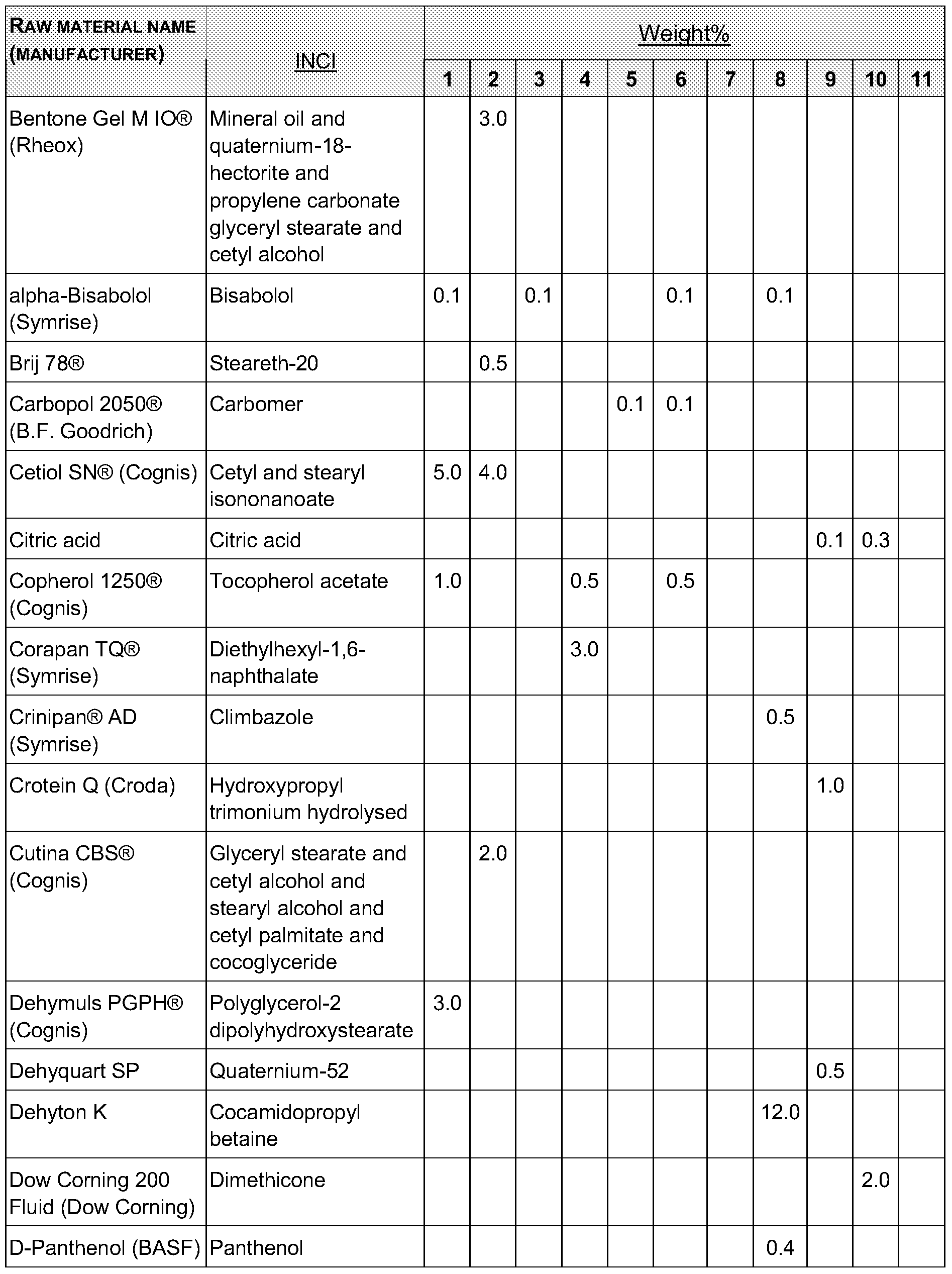


Naringin, spray-dried*: figures relate to the anhydrous dry substance
Example 12 (browning effect in vitro)
B16V mouse melanoma cells are disseminated in a 96-well microtitre plate in a concentration of 5 x 10³ cells/well. After cultivation for 24 h at 37°C and 5 % CO2 in RPMI medium, enriched with 10% foetal calf serum, various concentrations of the test substances and 10 nM α-MSH (α-melanocyte stimulating hormone) are added and incubated for a further 96 h. To rule out false-positive tanning results due to self-absorption, an absorption control (substance without cells) is performed in parallel for each test substance. After incubation, SDS (sodium lauryl sulfate) and NaOH solution (final concentrations: 1 mM and 1 M respectively) are added to the culture medium and the absorption (A) is measured after 3 h at 400 nm.
The stimulation of pigmentation in the presence of the test substances was calculated using the following equation:
, . _ . . rn . i I A test substance - A test substance without cells . .. | . ..
Stimulation of pigmentation |%J = x 100 - 100
I A control - A control without cells I
with
A test substance = absorption of wells with test substance and with cells A test substance without cells = absorption of wells with test substance and without cells
A control = absorption of wells without test substance but with cells
A control without cells = absorption of wells without test substance and without cells
Table 1 : EC50 values of individual substances (mean values from at least 2 independent experiments)

Table 2: EC50 values of specific mixtures of caffeine and naringin

Example 13 (synergistic browning effect in vitro)
The experiment was performed as described in Example 12.
Table 3

The synergy index (Sl) was calculated by reference to the literature (D. C. Steinberg, Cosmetics & Toiletries 2000, 115 (1 1 ), 59-62 and F.C. KuII et al., Applied Microbiology 1961 , 9, 538-541 ). On that basis the synergy index (Sl) is calculated as follows:
C * D C * E Synergy index: S/ = 1 Kull's equation
wherein
A: Individual result of substance A
B: Individual result of substance B
C: Result of mixture of substances
D: Proportion of substance A in mixture
E: Proportion of substance B in mixture
Contrary to the examples cited in the literature, in which decreasing values for A, B and C (such as e.g. the minimum inhibition concentration in antimicrobial tests) denote better effectiveness and thus SI values < 1 confirm a synergistic effect, in the case of the melanin increase investigated here, increasing values denote better effectiveness. According to Kull's equation, proof of a synergy effect is then given by SI values > 1.
Only the results from the highest usage concentrations were used in the calculation. In the experiments with caffeine and naringin (for use according to the invention) and caffeine and morin, the calculated SI values are well above 1 (experiments 1 a, 1 b and 2). It follows that mixtures of caffeine and naringin or morin are highly synergistic active ingredient combinations, whereas mixtures of caffeine and epicatechin or phloridzin have an antagonistic rather than a synergistic effect (Sl value < 1 ).
Example 14 (spray-dried mixtures according to the invention)
The powders listed in Table 4, produced by the spray drying method familiar to the person skilled in the art, had an average particle size (median value) in the range from 50 to 150 micrometres.
Table 4 (all figures in parts by weight, figures relate to the anhydrous dry substance)

The powders listed in Table 4 had a residual water content in the range from 3 to 4 wt.%.
Experiments relating to solubility and stability were performed.
The spray-dried mixtures according to the invention from Table 4 were each incorporated separately into an aqueous cosmetic base emulsion (O/W cream according to the table below) such that each of the resulting emulsions contained an amount of 0.25 wt.% of naringin, based on the total weight of the aqueous cosmetic emulsion. The resulting emulsions were stable; in particular, no crystallisation or precipitation of the naringin was observed. By contrast, in the same base emulsion an amount of 0.25 wt.% of untreated glycosyl flavanones of the formula (I) is not soluble at all.
O/W cream (base emulsion)

*: figures relate to the anhydrous dry substance
Preparation instructions:
Heat phases A and B separately to approx. 80°C. Add phase B to phase A in an Ultra-Turrax agitator and emulsify (3 minutes). Cold-stir the emulsion with a paddle agitator, reducing the stirring speed as the temperature falls. The pH of the emulsions was in the range from 5.6 to 5.8.
Claims
Use of a formulation containing or consisting of
(a) one or more xanthines of the formula (II),

(II)
wherein R5, R6 and R7 are independently of each other H or methyl, (b) one or more compounds of the formula (I),

(I)
wherein:
R1 and R2 are mutually independently H, OH, C1-C10 alkyl, C1 -C10
O-alkyl or O-prenyl,
R3 is H, OH, O-glucose or O-rhamnose
and R4 is a monosaccharide radical or an oligosaccharide radical having 2, 3, 4 or 5 carbohydrate units,
and
(c) optionally a skin or hair conditioning or cleansing substance,
wherein the ratio by weight of the amount of (a) xanthines of the formula (II) contained in the formulation to the amount of (b) compounds of the formula (I) contained in total in the formulation is in the range from 50:1 to 1 :10, as an agent for browning skin or hair in vivo.
2. Use according to claim 1 , with the proviso that the compound of the formula (I) is not used in the form of a preparation based on Citrus aurantium dulcis.
3. Use according to claim 1 or 2, wherein the ratio by weight of the amount of xanthines of the formula (II) contained in the formulation to the amount of compounds of the formula (I) contained in total in the mixture is in the range from 25:1 to 1 :5, particularly preferably in the range from 10:1 to 1 :3.
4. Use according to one of the preceding claims, wherein the constituents (a) and (b) are used in an amount which
(i) is equal to or greater than the least total amount of the mixture of constituents (a) and (b) that is needed for browning in vivo and is less than 30 times this total amount or less than the maximum soluble total amount of the mixture of constituents (a) and (b) and/or
(ii) is in the range between 30 times the EC5O value determined in vitro for the mixture of constituents (a) and (b) and 1000 times this value.
5. Use according to one of claims 1 to 4, wherein the amount of compounds of the formula (I) contained in total in the formulation is less than
(i) the amount that is sufficient to achieve a skin browning effect in the absence of other skin browning substances and/or
(ii) does not exceed 30 times the EC5O value determined in vitro for the compounds of the formula (I).
6. Use according to one of the preceding claims, wherein constituent (a) comprises or consists of
(i) caffeine (xanthine of the formula (II) with R5 = R6 = R7 = CH3), and/or
(ii) theobromine (xanthine of the formula (II) with R5 = H, R6 = R7 = CH3).
7. Use according to one of the preceding claims, wherein constituent (a) is caffeine (xanthine of the formula (II) with R5 = R6 = R7 = CH3).
8. Formulation for browning skin or hair or for stimulating melanogenesis of the skin, containing or consisting of:
(a) one or more xanthines of the formula (II),

(H)
wherein R5, R6 and R7 are independently of each other H or methyl, (b) one or more compounds of the formula (I),

(I)
wherein:
R1 and R2 are mutually independently H, OH, C1-C10 alkyl, C1 -C10 O-alkyl or O-prenyl,
R3 is H, OH, O-glucose or O-rhamnose
and
R4 is a monosaccharide radical or an oligosaccharide radical having 2, 3, 4 or 5 carbohydrate units,
(c) optionally a skin or hair conditioning or cleansing substance and
(d) optionally one or more further additives and
(e) optionally one or more carriers, wherein the ratio by weight of the amount of (a) xanthines of the formula (II) contained in the formulation to the amount of (b) compounds of the formula (I) contained in total in the formulation is in the range from 50:1 to 1 :10, preferably in the range from 25:1 to 1 :5, particularly preferably in the range from 10:1 to 1 :3, with the proviso that the formulation is free from processed products from a plant of the Pfaffia species and is free from ecdysterone, rubrosterone and pterosterone.
9. Formulation according to claim 8, wherein the total amount of constituents (a) and (b)
(i) is equal to or greater than the least total amount of the mixture of constituents (a) and (b) that is needed for browning in vivo and is less than 30 times this total amount or less than the maximum soluble total amount of the mixture of constituents (a) and (b) and/or
(ii) is in the range between 30 times the EC50 value determined in vitro for the mixture of constituents (a) and (b) and 1000 times this value.
10. Formulation according to claim 8 or 9, wherein the amount of compounds of the formula (I) in the formulation
(i) is less than the amount that is sufficient to achieve a skin browning effect in the absence of other skin browning substances and/or
(ii) does not exceed 30 times the EC5O value determined in vitro for the compounds of the formula (I).
1 1. Formulation according to one of claims 8 to 10, containing or consisting of a spray-dried powder which
(e) contains one or more carriers for the constituents (a) and/or (b).
12. Formulation according to one of claims 8 to 1 1 , containing (e) maltodextrin as the first carrier, preferably a maltodextrin having a DE value in the range from 10 to 20, preferably in the range from 15 to 20, and optionally gum arabic as the second carrier.
13. Formulation according to claim 12, wherein the total amount of
(a) xanthines of the formula (II),
(b) the compound(s) of the formula (I) and (e) maltodextrin and gum arabic is at least 93 wt.%.
14. Formulation according to claim 13, in the form of a powder having an average particle size in the range from 20 to 250 μm, preferably an average particle size of greater than or equal to 40 and less than or equal to 180 μm, particularly preferably an average particle size of greater than or equal to 50 and less than or equal to 150 μm.
15. Formulation according to one of claims 12 to 14, wherein the ratio of the total amount of (a) xanthines of the formula (II) and (b) compound(s) of the formula (I) to the amount of maltodextrin is in the range from 1 : 99 to 1 : 1 , preferably in the range from 1 : 25 to 1 : 3, particularly preferably in the range from 1 : 20 to 1 : 5.
16. Formulation according to one of claims 8 to 15, in the form of a spray-dried powder having an average particle size in the range from 20 to 250 μm, preferably an average particle size of greater than or equal to 40 and less than or equal to 180 μm, particularly preferably an average particle size of greater than or equal to 50 and less than or equal to 150 μm, containing
(a) xanthines of the formula (II), (b) one or more compounds of the formula (I), and
(e) maltodextrin as the first carrier, preferably a maltodextrin having a DE value in the range from 10 to 20, preferably in the range from 15 to 20, and optionally gum arabic as the second carrier, wherein the total amount of (a) xanthines of the formula (II),
(b) the compound(s) of the formula (I), and (e) maltodextrin and gum arabic is at least 93 wt.%, and the ratio of the total amount of (a) xanthines of the formula (II) and (b) compound(s) of the formula (I) to the amount of maltodextrin is in the range from 1 : 99 to 1 : 1 , preferably in the range from 1 : 25 to 1 : 3, particularly preferably in the range from 1 : 20 to 1 : 5.
17. Formulation according to one of claims 8 to 16, wherein constituent (a) comprises or consists of
(i) caffeine (xanthine of the formula (II) with R5 = R6 = R7 = CH3), and/or
(ii) theobromine (xanthine of the formula (II) with R5 = H, R6 = R7 = CH3).
18. Formulation according to one of claims 8 to 17, wherein constituent (a) is caffeine (xanthine of the formula (II) with R5 = R6 = R7 = CH3).
19. Use according to one of claims 1 to 5 or formulation according to one of claims 8 to 18, wherein for the compounds or for at least one of the compounds of the formula (I):
R1 and R2 are mutually independently H, OH, OMe or CH3 and
R3 is H and
R4 is a monosaccharide radical or an oligosaccharide radical having 2, 3, 4 or 5 carbohydrate units.
20. Use or formulation according to one of the preceding claims, wherein for the compounds or for at least one of the compounds of the formula (I):
R1 and R2 are mutually independently H, OH or OMe and
R3 is H and R4 is
(i) a monosaccharide radical, preferably selected from the group consisting of glucose, galactose, rhamnose, xylose and glucuronic acid, or
(ii) a disaccharide radical, whose sugar units are the same or different and are preferably selected from the group consisting of glucose, galactose, rhamnose, xylose and glucuronic acid.
21. Use or formulation according to one of the preceding claims, wherein the compounds or at least one of the compounds of the formula (I) is naringin, hesperidin or neohesperidin.
22. Method for browning skin or hair, comprising the following step: - Application of an effective amount of a formulation according to one of claims 8 to 21 in vivo to the hair or skin.
23. Formulation containing or consisting of:
(a) one or more xanthines of the formula (II),

(II)
wherein R5, R6 and R7 are independently of each other H or methyl,
(b) one or more compounds of the formula (I), 
(I)
wherein:
R1 and R2 are mutually independently H, OH, C1 -C10 alkyl, C1 -C10 O- alkyl or O-prenyl,
R3 is H, OH, O-glucose or 0-rhamnose
and
R4 is a monosaccharide radical or an oligosaccharide radical having 2, 3, 4 or 5 carbohydrate units,
(c) optionally a skin or hair conditioning or cleansing substance and (d) optionally one or more further additives,
wherein
the ratio by weight of the amount of (a) xanthines of the formula (II) contained in the formulation to the amount of (b) compounds of the formula (I) contained in total in the formulation is in the range from 50:1 to 1 :10, preferably in the range from 25:1 to 1 :5, particularly preferably in the range from 10:1 to 1 :3, with the proviso that the formulation is free from (i) processed products from a plant of the Pfaffia species and is free from ecdysterone, rubrosterone and pterosterone as a drug product.
24. Use of a formulation containing or consisting of:
(a) one or more xanthines of the formula (II),

(H)
wherein R5, R6 and R7 are independently of each other H or methyl,
(b) one or more compounds of the formula (I),

(I)
wherein:
R1 and R2 are mutually independently H, OH, C1 -C10 alkyl, C1 -C10 O- alkyl or O-prenyl,
R3 is H, OH, O-glucose or O-rhamnose and
R4 is a monosaccharide radical or an oligosaccharide radical having 2, 3, 4 or 5 carbohydrate units,
(c) optionally a skin or hair conditioning or cleansing substance and
(d) optionally one or more further additives,
wherein
the ratio by weight of the amount of (a) xanthines of the formula (II) contained in the formulation to the amount of (b) compounds of the formula (I) contained in total in the formulation is in the range from 50:1 to 1 :10, preferably in the range from 25:1 to 1 :5, particularly preferably in the range from 10:1 to 1 :3,
to produce a drug product to stimulate melanogenesis of the skin.
25. Method for increasing the solubility of and/or for stabilising compounds of the formula (I) or formulations containing or consisting of one or more compounds of the formula (I), comprising the following step: spray-drying the compound of the formula (I) or the formulation in the presence of maltodextrin, preferably a maltodextrin having a DE value in the range from 10 to 20, preferably in the range from 15 to 20, as the first carrier and optionally gum arabic as the second carrier.
Applications Claiming Priority (2)
| Application Number | Priority Date | Filing Date | Title |
|---|---|---|---|
| US79451406P | 2006-04-25 | 2006-04-25 | |
| US60/794,514 | 2006-04-25 |
Publications (2)
| Publication Number | Publication Date |
|---|---|
| WO2007122251A2 true WO2007122251A2 (en) | 2007-11-01 |
| WO2007122251A3 WO2007122251A3 (en) | 2008-03-06 |
Family
ID=38582141
Family Applications (1)
| Application Number | Title | Priority Date | Filing Date |
|---|---|---|---|
| PCT/EP2007/054065 Ceased WO2007122251A2 (en) | 2006-04-25 | 2007-04-25 | Synergistic mixture of glycosyl flavanones and xanthines |
Country Status (1)
| Country | Link |
|---|---|
| WO (1) | WO2007122251A2 (en) |
Cited By (7)
| Publication number | Priority date | Publication date | Assignee | Title |
|---|---|---|---|---|
| WO2010076112A2 (en) | 2008-12-29 | 2010-07-08 | Unilever Plc | Food products enriched with methylxanthines |
| WO2011089247A1 (en) | 2010-01-22 | 2011-07-28 | Symrise Ag | Solubilization agent for solubilizing polyphenols, flavonoids and/or diterpenoid glucosides |
| EP2628398A1 (en) | 2012-02-19 | 2013-08-21 | Symrise AG | Compositions of matter |
| CN105640797A (en) * | 2016-02-04 | 2016-06-08 | 向君民 | Application of dihydromyricetin and bletilla striata polysaccharide composition in beautifying and whitening |
| CN105640792A (en) * | 2016-02-04 | 2016-06-08 | 王婧 | Application of dihydromyricetin in beautifying and freckle removing products |
| US11806352B2 (en) | 2010-05-19 | 2023-11-07 | Upfield Europe B.V. | Theobromine for increasing HDL-cholesterol |
| EP4578440A1 (en) * | 2023-12-27 | 2025-07-02 | IUF Leibnitz-Institut für umweltmedizinische Forschung GmbH | Non-therapeutic methods for skin tanning |
Family Cites Families (3)
| Publication number | Priority date | Publication date | Assignee | Title |
|---|---|---|---|---|
| FR2654935B1 (en) * | 1989-11-28 | 1994-07-01 | Lvmh Rech | USE OF XANTHINES, WHICH MAY BE INCORPORATED IN LIPOSOMES, TO PROMOTE PIGMENTATION OF THE SKIN OR HAIR. |
| US5540914A (en) * | 1989-12-15 | 1996-07-30 | The Board Of Regents Of The University Of Oklahoma | Pigmentation enhancer and method |
| EP1807039A1 (en) * | 2004-10-25 | 2007-07-18 | Symrise GmbH & Co. KG | Use of glycosylated flavanones for the browning of skin or hair |
-
2007
- 2007-04-25 WO PCT/EP2007/054065 patent/WO2007122251A2/en not_active Ceased
Cited By (11)
| Publication number | Priority date | Publication date | Assignee | Title |
|---|---|---|---|---|
| WO2010076112A2 (en) | 2008-12-29 | 2010-07-08 | Unilever Plc | Food products enriched with methylxanthines |
| WO2011089247A1 (en) | 2010-01-22 | 2011-07-28 | Symrise Ag | Solubilization agent for solubilizing polyphenols, flavonoids and/or diterpenoid glucosides |
| EP2359702A1 (en) | 2010-01-22 | 2011-08-24 | Symrise AG | Solubilization agent for solubilizing polyphenols, flavonoids and/or diterpenoid glucosides |
| US11806352B2 (en) | 2010-05-19 | 2023-11-07 | Upfield Europe B.V. | Theobromine for increasing HDL-cholesterol |
| EP2628398A1 (en) | 2012-02-19 | 2013-08-21 | Symrise AG | Compositions of matter |
| CN105640797A (en) * | 2016-02-04 | 2016-06-08 | 向君民 | Application of dihydromyricetin and bletilla striata polysaccharide composition in beautifying and whitening |
| CN105640792A (en) * | 2016-02-04 | 2016-06-08 | 王婧 | Application of dihydromyricetin in beautifying and freckle removing products |
| CN105640797B (en) * | 2016-02-04 | 2018-07-17 | 广州金纯化妆品有限公司 | Dihydromyricetin and application of the bletilla polysaccharide composition in beautifying whitening |
| CN105640792B (en) * | 2016-02-04 | 2018-08-10 | 长沙爱扬医药科技有限公司 | Dihydromyricetin is in beauty except the application in spot product |
| EP4578440A1 (en) * | 2023-12-27 | 2025-07-02 | IUF Leibnitz-Institut für umweltmedizinische Forschung GmbH | Non-therapeutic methods for skin tanning |
| WO2025141158A1 (en) * | 2023-12-27 | 2025-07-03 | Iuf Leibniz-Institut Für Umweltmedizinische Forschung Gmbh | Non-therapeutic methods for skin tanning |
Also Published As
| Publication number | Publication date |
|---|---|
| WO2007122251A3 (en) | 2008-03-06 |
Similar Documents
| Publication | Publication Date | Title |
|---|---|---|
| ES2991289T3 (en) | Replacing retinol for skin care | |
| US20080305054A1 (en) | Use of Glycosylated Flavanones for the Browning of Skin or Hair | |
| EP2193785B1 (en) | Extracts of Tetraselmis sp. for cosmetic and therapeutic purposes | |
| CN104000752B (en) | Ginger extract for stem cell protection | |
| JP7401177B2 (en) | Medicinal products containing purple cornflower juice and their uses | |
| EP1937366B1 (en) | Synergistic mixtures of bisabolol and ginger extract | |
| BR112012029959B1 (en) | MENTILA CARBAMATE COMPOUNDS, THEIR USES, COSMETIC COMPOSITIONS AND METHODS FOR SKIN AND / OR HAIR LIGHTING | |
| WO2014170239A1 (en) | A composition for lightening skin and hair | |
| BRPI0721862B1 (en) | preparation comprising stable soluble salts of phenylbenzimidazole sulfonic acid, and use of basic amino acids | |
| KR20100047242A (en) | Use of troxerutin to quench the fluorescence of disodium phenyl dibenzimidazole tetrasulfonate | |
| BR102014021222B1 (en) | Mixture for lightening skin and / or hair | |
| WO2007122251A2 (en) | Synergistic mixture of glycosyl flavanones and xanthines | |
| US20090162305A1 (en) | Formulations of low oil content comprising diphenylmethane derivatives | |
| JP2009522336A (en) | Stabilized formulation containing phenolic compound and benzophenone | |
| EP1959975A1 (en) | Blackberry leaf extract as an active ingredient against skin irritations and inflammations | |
| ES2564157T3 (en) | Compositions comprising extracts of Bursera simaruba |
Legal Events
| Date | Code | Title | Description |
|---|---|---|---|
| NENP | Non-entry into the national phase |
Ref country code: DE |
|
| 121 | Ep: the epo has been informed by wipo that ep was designated in this application |
Ref document number: 07728520 Country of ref document: EP Kind code of ref document: A2 |
|
| 122 | Ep: pct application non-entry in european phase |
Ref document number: 07728520 Country of ref document: EP Kind code of ref document: A2 |