WO2007134778A2 - Synergistische wirkstoffkombinationen - Google Patents

Synergistische wirkstoffkombinationen Download PDF

Info

Publication number
WO2007134778A2
WO2007134778A2 PCT/EP2007/004375 EP2007004375W WO2007134778A2 WO 2007134778 A2 WO2007134778 A2 WO 2007134778A2 EP 2007004375 W EP2007004375 W EP 2007004375W WO 2007134778 A2 WO2007134778 A2 WO 2007134778A2
Authority
WO
WIPO (PCT)
Prior art keywords
methyl
phenyl
chloro
group
trifluoromethyl
Prior art date
Legal status (The legal status is an assumption and is not a legal conclusion. Google has not performed a legal analysis and makes no representation as to the accuracy of the status listed.)
Ceased
Application number
PCT/EP2007/004375
Other languages
English (en)
French (fr)
Other versions
WO2007134778A3 (de
Inventor
Peter Jeschke
Robert Velten
Thomas Schenke
Wolfram Andersch
Heike Hungenberg
Wolfgang Thielert
Current Assignee (The listed assignees may be inaccurate. Google has not performed a legal analysis and makes no representation or warranty as to the accuracy of the list.)
Bayer CropScience AG
Original Assignee
Bayer CropScience AG
Priority date (The priority date is an assumption and is not a legal conclusion. Google has not performed a legal analysis and makes no representation as to the accuracy of the date listed.)
Filing date
Publication date
Priority to EP07725290A priority Critical patent/EP2023724B8/de
Priority to JP2009510350A priority patent/JP2009537468A/ja
Priority to US12/301,150 priority patent/US8324130B2/en
Priority to BRPI0711919A priority patent/BRPI0711919B1/pt
Priority to CN2007800178962A priority patent/CN101448396B/zh
Priority to MX2008014416A priority patent/MX2008014416A/es
Application filed by Bayer CropScience AG filed Critical Bayer CropScience AG
Priority to AU2007251932A priority patent/AU2007251932A1/en
Priority to AT07725290T priority patent/ATE541461T1/de
Publication of WO2007134778A2 publication Critical patent/WO2007134778A2/de
Anticipated expiration legal-status Critical
Publication of WO2007134778A3 publication Critical patent/WO2007134778A3/de
Ceased legal-status Critical Current

Links

Classifications

    • AHUMAN NECESSITIES
    • A01AGRICULTURE; FORESTRY; ANIMAL HUSBANDRY; HUNTING; TRAPPING; FISHING
    • A01NPRESERVATION OF BODIES OF HUMANS OR ANIMALS OR PLANTS OR PARTS THEREOF; BIOCIDES, e.g. AS DISINFECTANTS, AS PESTICIDES OR AS HERBICIDES; PEST REPELLANTS OR ATTRACTANTS; PLANT GROWTH REGULATORS
    • A01N43/00Biocides, pest repellants or attractants, or plant growth regulators containing heterocyclic compounds
    • A01N43/34Biocides, pest repellants or attractants, or plant growth regulators containing heterocyclic compounds having rings with one nitrogen atom as the only ring hetero atom
    • A01N43/40Biocides, pest repellants or attractants, or plant growth regulators containing heterocyclic compounds having rings with one nitrogen atom as the only ring hetero atom six-membered rings
    • AHUMAN NECESSITIES
    • A01AGRICULTURE; FORESTRY; ANIMAL HUSBANDRY; HUNTING; TRAPPING; FISHING
    • A01NPRESERVATION OF BODIES OF HUMANS OR ANIMALS OR PLANTS OR PARTS THEREOF; BIOCIDES, e.g. AS DISINFECTANTS, AS PESTICIDES OR AS HERBICIDES; PEST REPELLANTS OR ATTRACTANTS; PLANT GROWTH REGULATORS
    • A01N37/00Biocides, pest repellants or attractants, or plant growth regulators containing organic compounds containing a carbon atom having three bonds to hetero atoms with at the most two bonds to halogen, e.g. carboxylic acids
    • A01N37/44Biocides, pest repellants or attractants, or plant growth regulators containing organic compounds containing a carbon atom having three bonds to hetero atoms with at the most two bonds to halogen, e.g. carboxylic acids containing at least one carboxylic group or a thio analogue, or a derivative thereof, and a nitrogen atom attached to the same carbon skeleton by a single or double bond, this nitrogen atom not being a member of a derivative or of a thio analogue of a carboxylic group, e.g. amino-carboxylic acids
    • A01N37/46N-acyl derivatives
    • AHUMAN NECESSITIES
    • A01AGRICULTURE; FORESTRY; ANIMAL HUSBANDRY; HUNTING; TRAPPING; FISHING
    • A01NPRESERVATION OF BODIES OF HUMANS OR ANIMALS OR PLANTS OR PARTS THEREOF; BIOCIDES, e.g. AS DISINFECTANTS, AS PESTICIDES OR AS HERBICIDES; PEST REPELLANTS OR ATTRACTANTS; PLANT GROWTH REGULATORS
    • A01N37/00Biocides, pest repellants or attractants, or plant growth regulators containing organic compounds containing a carbon atom having three bonds to hetero atoms with at the most two bonds to halogen, e.g. carboxylic acids
    • A01N37/44Biocides, pest repellants or attractants, or plant growth regulators containing organic compounds containing a carbon atom having three bonds to hetero atoms with at the most two bonds to halogen, e.g. carboxylic acids containing at least one carboxylic group or a thio analogue, or a derivative thereof, and a nitrogen atom attached to the same carbon skeleton by a single or double bond, this nitrogen atom not being a member of a derivative or of a thio analogue of a carboxylic group, e.g. amino-carboxylic acids
    • A01N37/50Biocides, pest repellants or attractants, or plant growth regulators containing organic compounds containing a carbon atom having three bonds to hetero atoms with at the most two bonds to halogen, e.g. carboxylic acids containing at least one carboxylic group or a thio analogue, or a derivative thereof, and a nitrogen atom attached to the same carbon skeleton by a single or double bond, this nitrogen atom not being a member of a derivative or of a thio analogue of a carboxylic group, e.g. amino-carboxylic acids the nitrogen atom being doubly bound to the carbon skeleton

Definitions

  • the present invention relates to novel drug combinations which contain a known compound of formula (I) on the one hand and at least one known fungicidal active ingredient on the other hand and are very well suited for controlling unwanted animal pests such as insects and unwanted phytopathogenic fungi.
  • substituted halopyrimidines have fungicidal properties (cf., DE-Al-196 46 407, EP-B-712 396).
  • R is methyl or cyclopropyl
  • a 2 is NH or O
  • a 3 is N or CH
  • R 11 is in each case optionally monosubstituted or disubstituted by identical or different chlorine, cyano, methyl or trifluoromethyl-substituted phenyl, phenoxy or pyridinyl, or for 1- (4-chlorophenyl) -pyrazol-3-yl or for 1,2-propanedione bis (O-methyloxime) -1-yl,
  • R 12 is hydrogen or fluorine
  • n 0 or 1
  • R 13 is hydrogen, fluorine, chlorine, phenyl or 4-chlorophenoxy
  • R 14 is hydrogen or chlorine
  • R 15 and R 17 together then represent -CH 2 -CH 2 -CH [CH (CH 3 ) 2 ] - or -CH 2 -CH 2 -C (CH 3 ) 2 -,
  • a 5 is C or Si (silicon),
  • R 15 is hydrogen, hydroxy or cyano
  • R 16 represents 1-cyclopropylethyl, 1 -Chlorcyclopropyl, C r C 4 alkyl, C r C 6 hydroxyalkyl, C 1 -C 4 - alkylcarbonyl, C r C 2 haloalkoxy-Ci-C 2 alkyl, trimethylsilyl-C r is C 2 -alkyl, monofluorophenyl, or phenyl,
  • R 15 and R 16 also together represent -0-CH 2 -CH (R 18 ) -O-, -O-CH 2 -CH (R 18 ) -CH 2 -, or
  • R 18 is hydrogen, C r C 4 alkyl or bromine; Group (4) sulfenamides of the general formula (TV)
  • R 19 is hydrogen or methyl
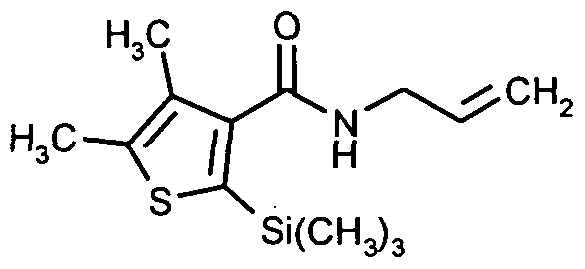
  • X is 2-chloro-3-pyridinyl, 1-methylpyrazol-4-yl which is substituted in the 3-position by methyl or trifluoromethyl and in the 5-position by hydrogen or chlorine, for 4-ethyl-2-ethylamino -l, 3-thiazol-5-yl, for 1-methyl-cyclohexyl, for 2,2-dichloro-l-ethyl-3-methyl-cyclopropyl, for 2-fluoro-2-propyl, 3,4- Dichloroisothiazol-5-yl, 5,6-dihydro-2-methyl-1,4-oxathiin-3-yl, 4-methyl-1,2,3-thiadiazol-5-yl, 4,5-dimethyl 2-trimethylsilyl-thiophen-3-yl, 1-methylpyrrol-3-yl which is substituted in the 4-position by methyl or trifluoromethyl and in the 5-position by hydrogen or chlorine, or represents phenyl which is monosubstituted to trisubstit
  • Y is substituted for a direct bond, optionally substituted by chlorine, cyano or oxo C r C 6 alkanediyl (alkylene), C 2 -C 6 alkenediyl (alkenylene), or thiophenediyl,
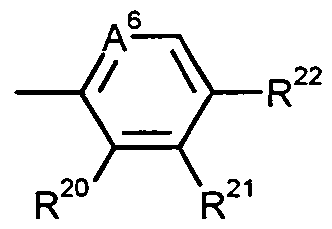
  • Z is hydrogen, C 1 -C 6 -alkyl or the group stands in which
  • a 6 is CH or N
  • R 20 represents hydrogen, chlorine, cyano, C 1 -C 6 -alkyl, by optionally mono- or disubstituted by identical or different chlorine or di (C 1 -C 3 -alkyl) aminocarbonyl-substituted phenyl,
  • R 21 is hydrogen, chlorine or isopropoxy
  • R 22 is hydrogen, chlorine, hydroxy, methyl, trifluoromethyl or di (C r C 3 -alkyl) aminocarbonyl,
  • R 20 and R 21 also together represent * -CH (CH 3 ) -CH 2 -C (CH 3 ) 2 - or * -CH (CH 3 ) -O-C (CH 3 ) 2 -, where the labeled bond is linked to R 20 ;
  • R 23 denotes a carbon atom in the R or S configuration, preferably in the S configuration, R 23 is benzyl, furyl or methoxymethyl;
  • R 24 is methyl, cyclopropyl or 1-propynyl
  • R 25 and R 26 are each hydrogen or together are -O-CF 2 -O-,
  • R 27 is hydrogen, C 1 -C 4 -alkylaminocarbonyl or 3,5-dimethylisoxazol-4-ylsulfonyl,
  • R 28 is chloro, methoxycarbonylamino, chlorophenyl, furyl or thiazolyl
  • R 29 is n- or iso-propyl
  • R 30 is di (C 1 -C 2 -alkyl) aminoC 2 -C 4 -alkyl or diethoxyphenyl,
  • R> 31 and R, 32 independently of one another represent hydrogen or methyl
  • R 33 is C 1 -C 12 -alkyl (preferably C 1 -C 4 -alkyl), C 5 -C 12 -cycloalkyl (preferably C 1 -C 12 -cycloalkyl), phenyl-C 1 -C 4 -alkyl, which in the phenyl part may be substituted by halogen or C 1 -C 4 -AllCyI, or acrylyl which is substituted by chlorophenyl and dimethoxyphenyl; Group (16): Pyrroles of General Formula (XT)
  • R 34 is chlorine or cyano
  • R 35 is chlorine or nitro
  • R 36 is chlorine
  • R 35 and R 36 also together represent -Q-CF 2 -O-;
  • R 37 is phenyl, phenyl, 2-naphthyl, 1,2,3,4-tetrahydronaphthyl or indanyl unsubstituted or substituted by fluorine, chlorine, bromine, methyl or ethyl;
  • a 7 represents a direct bond or -O-
  • R JS 4 -alkyl hydrogen or C r C
  • R 39 is C r C 6 alkyl
  • R 40 is C 1 -C 6 -alkyl or C 2 -C 6 -alkenyl
  • R 4] is C r C 6 -alkyl
  • R 40 and R 41 also together are C 4 -C 5 -alkanediyl (alkylene) which is monosubstituted or disubstituted by C 1 -C 6 -alkyl,
  • R 42 is bromine or chlorine
  • R 43 and R 47 independently of one another represent hydrogen, fluorine, chlorine or methyl
  • R 44 and R 46 independently of one another represent hydrogen or fluorine
  • R 45 is hydrogen, fluorine or methyl, Group (23): iodochromones of the general formula (XV)
  • R 48 is d-Ce-alkyl
  • R 49 is C 1 -C 6 alkyl, C 2 -C 6 alkenyl or C 2 -C 6 alkynyl;
  • R 50 is hydrogen or fluorine
  • R 52 is hydrogen, fluorine, chlorine, bromine, methyl or trifluoromethyl
  • Het stands for one of the following residues Hetl to Het7:
  • R 53 is iodine, methyl, difluoromethyl or trifluoromethyl
  • R 54 represents hydrogen, fluorine, chlorine or methyl
  • R 55 is methyl, difluoromethyl or trifluoromethyl
  • R 56 represents chlorine, bromine, iodine, methyl, difluoromethyl or trifluoromethyl
  • R 57 is methyl or trifluoromethyl.
  • the fungicidal action of the active compound combinations according to the invention is substantially higher than the sum of the effects of the individual active compounds. So there is an unpredictable, true synergistic effect and not just an effect supplement.
  • insecticidal activity of the active compound combinations according to the invention is likewise substantially higher than the sum of the effects of the individual active compounds. So there is an unpredictable, true synergistic effect and not just an effect supplement.
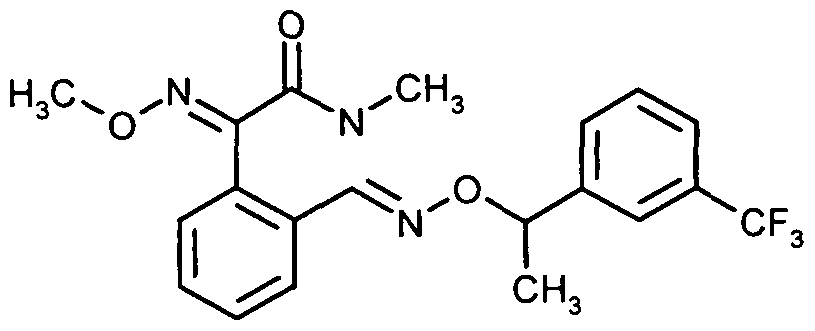
  • the formula (I) comprises the following preferred mixing partners:
  • active compound combinations according to the invention which, in addition to the compound of the formula (Ia), contain one or more, preferably one, active compound of the groups (2) to (24).
  • Highlighted are erf ⁇ ndungshiele Wirkstof ⁇ kombinationen, which contain one or more, preferably one, active compound of groups (2) to (24) in addition to the compound of formula (Ib).
  • the formula (IT) comprises the following preferred mixing partners of group (2):
  • the formula (III) comprises the following preferred mixing partners of group (3):
  • the formula (IV) comprises the following preferred mixing partners of group (4):
  • Preferred mixing partners of group (5) are
  • the formula (V) comprises the following preferred mixing partners of group (6):
  • Penthiopyrad (known from EP-A 0 737 682) of the formula
  • Preferred mixing partners of group (7) are
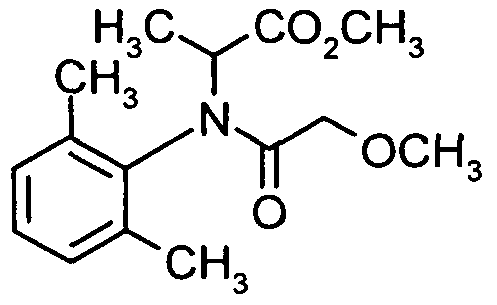
  • the formula (VI) comprises the following preferred mixing partners of group (8):
  • the formula (VII) comprises the following preferred mixing partners of group (9):
  • the formula (VIII) comprises the following preferred mixing partners of group (10):
  • the formula (IX) comprises the following preferred mixing partners of group (11):
  • Preferred mixing partners of group (12) are:
  • Preferred mixing partners of group (14) are:
  • the formula (X) comprises the following preferred mixing partners of group (15):
  • the formula (XI) comprises the following preferred mixing partners of group (16): (16-1) Fenpiclonil (known from EP-A 0 236 272) of the formula
  • the formula (XII) comprises the following preferred mixing partners of group (18), which are known from WO 96/23793 and may each be present as E or Z isomers. Compounds of the formula (Xu) can therefore be present as a mixture of different isomers or else in the form of a single isomer. Preference is given to compounds of the formula (XU) in the form of their E isomer:
  • Metrafenone (known from EP-A 0 897 904) of the formula
  • Preferred mixing partners of group (20) are:
  • Preferred mixing partners of group (21) are:
  • Preferred mixing partners of the group (22) are:
  • Preferred mixing partners of group (24) are:
  • the compound (6-7) carpropamid has three asymmetric substituted carbon atoms.
  • the compound (6-7) can therefore be present as a mixture of .various isomers or in the form of a single component. Particularly preferred are the compounds
  • the following active ingredients are particularly preferred:
  • Preferred embodiments of the invention for treating seed are mixtures comprising (Ia) and fluoxastrobin (2-2) and / or trifloxystrobin (2-4) and / or prothioconazoles (3-15) and / or tebuconazoles (3-17) and / or ipconazole (3-18) and / or triticonazole (3-20) and / or triadimenol (3-22) and / or carpropamide (6-7) and / or ⁇ - [2- (1,3-dimethylbutyl ) phenyl] -5-fluoro-1,3-dimethyl-1H-pyrazole-4-carboxamide (6-18) and / or thiram (7-5) and / or metalaxyl (8-3) and / or metalaxyl-M (8-4) and / or N - ( ⁇ 4 - [(cyclopropylamino) carbonyl] phenyl ⁇ sulfonyl) -2-methoxybenzamide
  • Highlighted embodiments of the invention for treating seed are furthermore mixtures comprising (Ib) and fluoxastrobin (2-2) and / or trifloxystrobin (2-4) and / or prothioconazoles (3-15) and / or tebuconazoles (3-17) and / or ipconazole (3-18) and / or triticonazole (3-20) and / or triadimenol (3-22) and / or carpropamide (6-7) and / or ⁇ - [2- (1,3-dimethylbutyl) phenyl] -5-fluoro-1,3-dimethyl-1H-pyrazole-4-carboxamide (6-18) and / or thiram (7-5) and / or metalaxyl (8-3) and / or metalaxyl-M ( 8-4) and / or N - ( ⁇ 4 - [(cyclopropylamino) carbonyl] phenyl ⁇ sulfonyl) -2-meth
  • the active compound combinations according to the invention contain, in addition to an active compound of the formula (I) from group 1, at least one active compound of the compounds of groups (2) to (24). You may also contain other fungicidal Zumischkomponenten.
  • the combinations according to the invention comprise active compounds of the formula (I) and a mixed partner from one of the groups 2 to 24 in the mixing ratios exemplified in the table below.
  • the mixing ratios are based on weight ratios. The ratio is to be understood as the active ingredient of the formula (I): Mischpartner
  • Group (2) strobilurins 125: 1 to 1. 2000 50 1 to 1 1000
  • Group (3) triazoles 125: 1 to 1 2000 50 1 to 1 1000
  • Group (9) Anilino-pyrimidines 500: 1 to 1 25 250. 1 to 1 1
  • Group (11) Carbamate 500: 1 to 1 25 250 1 to 1 1
  • Dithianone 500 1 to 1 25 250 1 to 1 1
  • Metrafenone 125 1 to 1 2000 50 1 to 1 1000 Mischpartner preferred particularly preferred mixing ratio mixing ratio
  • the mixing ratio should be such that a synergistic mixture is obtained.
  • the mixing ratios between the compound of formula (I) and a compound of any one of groups (2) to (24) may also vary between the individual compounds of a group.
  • the active compound combinations according to the invention have very good fungicidal properties and can be used for controlling phytopathogenic fungi, such as Plasmodiophoromycetes, Oomycetes, Chytridiomycetes, Zygomycetes, Ascomycetes, Basidiomycetes, Deuteromycetes, etc.
  • the active compound combinations according to the invention are particularly suitable for controlling Phytophthora infestansj Plasmopara viticola and Botrytis cinerea.
  • the active compound combinations according to the invention have a strong microbicidal action and can be used to control unwanted microorganisms, such as fungi and bacteria, in crop protection and in the material contactor.
  • Fungicides can be used for the control of Plasmodiophoromycetes, Oomycetes, Chytridiomycetes, Zygomycetes, Ascomycetes, Basidiomycetes and Deuteromycetes.
  • Bactericides can be used in crop protection for controlling Pseudomonadaceae, Rhizobiaceae, Enterobacteriaceae, Corynebacteriaceae and Streptomycetaceae.
  • Blumeria species such as Blumeria graminis
  • Podosphaera species such as Podosphaera leucotricha
  • Sphaerotheca species such as Sphaerotheca fuliginea
  • Uncinula species such as Uncinula necator
  • Gymnosporangium species such as Gymnosporangium sabinae
  • Hemileia species such as Hemileia vastatrix
  • Phakopsora species such as Phakopsora pachyrhizi and Phakopsora meibomiae
  • Puccinia species such as Puccinia recondita
  • Uromyces species such as Uromyces appendiculatus
  • Bremia species such as Bremia lactucae
  • Peronospora species such as Peronospora pisi or P. brassicae;
  • Phytophthora species such as Phytophthora infestans
  • Plasmopara species such as Plasmopara viticola
  • Pseudoperonospora species such as Pseudoperonospora humuli or
  • Pythium species such as Pythium ultimum
  • Alternaria species such as Alternaria solani;
  • Cercospora species such as Cercospora beticola
  • Cladiosporum species such as Cladiosporium cucumerinum
  • Cochliobolus species such as Cochliobolus sativus
  • Colletotrichum species such as Colletotrichum lindemuthanium
  • Cycloconium species such as cycloconium oleaginum
  • Diaporthe species such as Diaporthe citri;
  • Elsinoe species such as Elsinoe fawcettii
  • Gloeosporium species such as, for example, Gloeosporium laeticolor
  • Glomerella species such as Glomerella cingulata
  • Guignardia species such as Guignardia bidwelli;
  • Leptosphaeria species such as Leptosphaeria maculans
  • Magnaporthe species such as Magnaporthe grisea
  • Mycosphaerella species such as Mycosphaerelle graminicola
  • Phaeosphaeria species such as Phaeosphaeria nodorum
  • Pyrenophora species such as, for example, Pyrenophora teres
  • Ramularia species such as Ramularia collo-cygni
  • Rhynchosporium species such as Rhynchosporium secalis
  • Septoria species such as Septoria apii
  • Typhula species such as Typhula incarnata
  • Venturia species such as Venturia inaequalis
  • Corticium species such as Corticium graminearum
  • Fusarium species such as Fusarium oxysporum
  • Gaeumannomyces species such as Gaeumannomyces graminis
  • Rhizoctonia species such as Rhizoctonia solani
  • Tapesia species such as Tapesia acuformis
  • Thielaviopsis species such as Thielaviopsis basicola
  • Ear and panicle diseases caused by e.g.
  • Alternaria species such as Alternaria spp .
  • Aspergillus species such as Aspergillus flavus
  • Cladosporium species such as Cladosporium spp .
  • Claviceps species such as Claviceps purpurea
  • Fusarium species such as Fusarium culmorum
  • Gibberella species such as Gibberella zeae
  • Monographella species such as Monographella nivalis
  • Sphacelotheca species such as Sphacelotheca reiliana
  • Tilletia species such as Tilletia caries
  • Urocystis species such as Urocystis occulta
  • Ustilago species such as Ustilago nuda
  • Aspergillus species such as Aspergillus flavus
  • Botrytis species such as Botrytis cinerea
  • Penicillium species such as Penicillium expansum
  • Sclerotinia species such as Sclerotinia sclerotiorum
  • Verticilium species such as Verticilium alboatrum
  • Fusarium species such as Fusarium culmorum
  • Phytophthora species such as Phytophthora cactorum
  • Pythium species such as Pythium ultimum
  • Rhizocto ⁇ ia species such as Rhizoctonia solani
  • Sclerotium species such as Sclerotium rolfsii
  • Nectria species such as Nectria galligena
  • Monilinia species such as Monilinia laxa
  • Taphrina species such as Taphrina deformans
  • Botrytis species such as Botrytis cinerea
  • Rhizoctonia species such as Rhizoctonia solani
  • Xanthomonas species such as Xanthomonas campestris pv. Oryzae;
  • Pseudomonas species such as Pseudomonas syringae pv. Lachrymans;
  • Erwinia species such as Erwinia amylovora
  • the following diseases of soybean beans can be controlled:
  • Alternaria leaf spot (Alternaria spec. Atrans tenuissima), Anthracnose (Colletotrichum gloeosporoides dematium var. Truncatum), Brown spot (Septoria glycines), Cercospora leaf spot and blight (Cercospora kikuchii), Choanephora leaf blight (Choanephora infundibulifera trispora (Syn.)) , Dactuliophora leaf spot (Dactuliophora glycines), Downy Mildew (Peronospora manshurica), Drechslera blight (Drechslera glycini), Frogeye leaf spot (Cercospora sojina), Leptosphaerulina leaf spot (Leptosphaerulina trifolii), Phyllostica leaf spot (Phyllosticta sojaecola), Powdery Mildew (Phyllosticta sojaecola) Microspha
  • Black Root Red (Calonectria crotalariae), Charcoal Red (Macrophomina phaseolina), Fusarium Blight or Wiit, Root Red, and Pod and Collar Red (Fusarium oxysporum, Fusarium orthoceras, Fusarium semitectum, Fusarium equiseti), Mycoleptodiscus Root Red (Mycoleptodiscus terrestris), Neocosmospora (Neocosmopspora vasinfecta), Pod and Stem Blight (Diaporthe phaseolorum), Star Canker (Diaporthe phaseolorum var.
  • Phytophthora red (Phytophthora megasperma), Brown Stem Red (Phialophora gregata), Pythium red (Pythium aphanidermatum, Pythium irregular, Pythium debaryanum, Pythium myriotylum, Pythium ultimum), Rhizoctonia Root Red, Stem Decay, and Damping Off (Rhizoctonia solani), Sclerotinia Star Decay (Sclerotinia sclerotiorum), Sclerotinia Southern Blight (Sclerotinia rolfsii), Thielaviopsis Root Red (Thielaviopsis basicola).
  • the good plant tolerance of the active compound combinations in the concentrations necessary for controlling plant diseases allows treatment of whole plants (above-ground parts of plants and roots), of planting and seed, and of the soil.
  • the active compound combinations according to the invention can be used for foliar application or as a mordant.
  • the good plant tolerance of the usable active ingredients in the necessary concentrations for controlling plant diseases allows treatment of the seed.
  • the active compounds according to the invention can thus be used as mordants.
  • the present invention therefore more particularly relates to a method of protecting seeds and germinating plants from the infestation of phytopathogenic fungi by treating the seed with an agent according to the invention.
  • the invention also relates to the use of the seed treatment agents of the invention for protecting the seed and the germinating plant from phytopathogenic fungi.
  • the invention relates to seed which has been treated with an agent according to the invention for protection against phytopathogenic fungi.
  • One of the advantages of the present invention is that because of the particular systemic properties of the compositions of the invention, treatment of the seed with these agents not only protects the seed itself, but also the resulting plants after emergence from phytopathogenic fungi. In this way, the immediate treatment of the culture at the time of sowing or shortly afterwards can be omitted.
  • mixtures according to the invention can also be used in particular in the case of transgenic seed.
  • compositions according to the invention are suitable for the protection of seeds of any plant variety used in agriculture, in the greenhouse, in forests or in horticulture.
  • these are seeds of cereals (such as wheat, barley, rye, millet and oats), corn, cotton, soy, rice, potatoes, sunflower, bean, coffee, turnip (eg sugarbeet and fodder), peanut, vegetables ( like tomato, cucumber, onions and lettuce), lawn and ornamental plants.
  • cereals such as wheat, barley, rye, millet and oats
  • corn such as wheat, barley, rye, millet and oats
  • peanut like tomato, cucumber, onions and lettuce
  • the agent according to the invention is applied to the seed alone or in a suitable formulation.
  • the seed is treated in a state where it is so stable that no damage occurs during the treatment.
  • the treatment of the seed can be done at any time between harvesting and sowing.
  • seed is used which has been separated from the plant and freed from flasks, shells, stems, hull, wool or pulp. So can for example Seed that has been harvested, cleaned and dried to a moisture content below 15% by weight.
  • seed can also be used, which after drying, for example, treated with water and then dried again.
  • the agents according to the invention can be applied directly, ie without containing further components and without being diluted.
  • suitable formulations and methods for seed treatment are known to those skilled in the art and are described e.g. in the following documents: US 4,272,417 A, US 4,245,432 A, US 4,808,430 A, US 5,876,739 A, US 2003/0176428 A1, WO 2002/080675 A1, WO 2002/028186 A2.
  • the active compound combinations according to the invention are also suitable for increasing crop yield. They are also low toxicity and have good plant tolerance.
  • the active compound combinations according to the invention also have a strong tonic effect in plants. They are therefore suitable for mobilizing plant-own defenses against attack by unwanted microorganisms.
  • plant-strengthening (resistance-inducing) substances are to be understood as meaning those substances which are capable of stimulating the defense system of plants in such a way that the treated plants exhibit extensive resistance to these microorganisms with subsequent inoculation with undesired microorganisms.
  • Undesirable microorganisms in the present case are phytopathogenic fungi, bacteria and viruses.
  • the substances according to the invention can therefore be used to protect plants within a certain period of time after the treatment against the infestation by the said pathogens.
  • the period within which protection is provided generally extends from 1 to 10 days, preferably 1 to 7 days after the treatment of the plants with the active ingredients.
  • the good plant compatibility of the active compound combinations in the concentrations necessary for controlling plant diseases allows a treatment of aboveground plant parts, of plant and seed, and the soil.
  • the active compound combinations according to the invention can be used with particularly good success for combating cereal diseases, such as, for example, against Puccinia species and diseases in the cultivation of wine, fruit and vegetables, for example against Botrytis, Venturia or Alternaria species.
  • the active compound combinations according to the invention are also suitable for increasing crop yield. They are also low toxicity and have good plant tolerance.
  • the active compound combinations according to the invention can also be used in certain concentrations and application rates as herbicides, for influencing plant growth and for controlling animal pests. If appropriate, they can also be used as intermediates and precursors for the synthesis of other active ingredients.
  • plants and parts of plants can be treated.
  • plants are understood as meaning all plants and plant populations, such as desired and undesired wild plants or crop plants (including naturally occurring cultivated plants).
  • Crop plants can be plants which can be obtained by conventional breeding and optimization methods or by biotechnological and genetic engineering methods or combinations of these methods, including the transgenic plants and including the plant varieties which can or can not be protected by plant breeders' rights.
  • Plant parts are to be understood as meaning all aboveground and subterranean parts and organs of the plants, such as shoot, leaf, flower and root, examples of which include leaves, needles, stems, stems, flowers, fruiting bodies, fruits and seeds, and roots, tubers and rhizomes.
  • the plant parts also include crops and vegetative and generative propagation material, such as cuttings, tubers, rhizomes, offshoots and seeds.
  • the treatment according to the invention of the plants and plant parts with the active ingredient combinations is carried out directly or by acting on their environment, habitat or storage space according to the usual treatment methods, eg by dipping, spraying, evaporating, atomizing, spreading, spreading and propagating material, in particular in the case of seeds single or multi-layer coating.
  • the active ingredient combinations can be prepared before the treatment by mixing the individual active ingredients.
  • the treatment is carried out successively by using first a phthalamide of the group (1) followed by the treatment with an active ingredient of the groups (2) to (24).
  • the plants or Treat plant parts first with an active compound of groups (2) to (24) and connect the treatment with a phthalamide of group (1).
  • the active compound combinations according to the invention can be used to protect industrial materials against infestation and destruction by undesired microorganisms.
  • Technical materials as used herein mean non-living materials that have been prepared for use in the art.
  • technical materials to be protected from microbial alteration or destruction by the active compounds of the invention may be adhesives, glues, paper and board, textiles, leather, wood, paints and plastics, coolants and other materials that may be infested or degraded by microorganisms .
  • materials to be protected are also parts of production plants, such as cooling water circuits, called, which can be affected by the proliferation of microorganisms.
  • technical materials which may be mentioned are preferably adhesives, glues, paper and cardboard, leather, wood, paints, cooling lubricants and heat transfer liquids, particularly preferably wood.
  • microorganisms that can cause degradation or a change in the technical materials, for example, bacteria, fungi, yeasts, algae and mucus organisms may be mentioned.
  • the active compounds according to the invention preferably act against fungi, in particular molds, wood-discolouring and wood-destroying fungi (Basidiomycetes) and against slime organisms and algae.
  • microorganisms of the following genera There may be mentioned, for example, microorganisms of the following genera:
  • Alternaria such as Alternaria tenuis
  • Aspergillus such as Aspergillus niger
  • Chaetomium such as Chaetomium globosum
  • Coniophora like Coniophora puetana,
  • Lentinus like Lentinus tigrinus
  • Penicillium such as Penicillium glaucum
  • Polyporus such as Polyporus versicolor
  • Aureobasidium such as Aureobasidium pullulans
  • Sclerophoma such as Sclerophoma pityophila
  • Trichoderma like Trichoderma viride
  • Escherichia like Escherichia coli
  • Pseudomonas such as Pseudomonas aeruginosa
  • Staphylococcus such as Staphylococcus aureus.
  • the active compound combinations according to the invention also have very good antifungal effects. They have a very broad antimycotic spectrum of activity, in particular against dermatophytes and yeasts, mold and diphasic fungi (for example against Candida species such as Candida albicans, Candida glabrata) as well as Epidermophyton floccosum, Aspergillus species such as Aspergillus niger and Aspergillus fumigatus, Trichophyton species such as Trichophyton mentagrophytes, microsporon species such as Microsporon canis and audouinii.
  • Candida species such as Candida albicans, Candida glabrata
  • Epidermophyton floccosum Aspergillus species such as Aspergillus niger and Aspergillus fumigatus
  • Trichophyton species such as Trichophyton mentagrophytes
  • microsporon species such as Microsporon canis and audouinii.
  • the list of these fungi is by no means a limitation
  • the active compound combinations can be used as such, in the form of their formulations or the use forms prepared therefrom, such as ready-to-use solutions, suspensions, wettable powders, pastes, soluble powders, dusts and granules.
  • the application is done in the usual way, e.g. by pouring, spraying, spraying, scattering, dusting, foaming, brushing, etc. It is also possible to apply the active ingredients by the ultra-low-volume method or to inject the active ingredient preparation or the active ingredient itself into the soil. It can also be the seed of the plants to be treated.
  • the application rates can be varied within a relatively wide range, depending on the mode of application.
  • the application rates of active ingredient are generally between 0.1 and 10,000 g / ha, preferably between 10 and 1,000 g / ha.
  • the application rates of active ingredient are generally between 0.001 and 50 g per kilogram of seed, preferably between 0.01 and 10 g per kilogram of seed.
  • the application rates of active ingredient are generally between 0.1 and 10,000 g / ha, preferably between 1 and 5,000 g / ha.
  • the active compound combinations according to the invention are also suitable for controlling animal pests, preferably arthropods and nematodes, in particular nematodes and insects, which occur in agriculture, animal health, in forests, in the protection of stored products and materials, and in the hygiene sector. They are effective against normally sensitive and resistant species as well as against all or individual stages of development.
  • animal pests preferably arthropods and nematodes, in particular nematodes and insects, which occur in agriculture, animal health, in forests, in the protection of stored products and materials, and in the hygiene sector. They are effective against normally sensitive and resistant species as well as against all or individual stages of development.
  • the above mentioned pests include:
  • Chilopoda e.g. Geophilus carpophagus, Scutigera spp.
  • Symphyla e.g. Scutigerella immaculata.
  • Thysanura e.g. Lepisma saccharina.
  • Orthoptera e.g. Acheta domesticus, Gryllotalpa spp., Locusta migratoria migratorioides, Melanoplus spp., Schistocerca gregaria.
  • Phthiraptera e.g. Pediculus humanus corporis, Haematopi ⁇ us spp., Linognathus spp., Trichodectes spp., Damalinia spp.
  • Thysanoptera e.g. Herculothrips femoralis, Thrips tabaci, Thrips palmi, Frankliniella accidentalis.
  • Heteroptera e.g. Eurygaster spp., Dysdercus intermedius, Piesma quadrata, Cimex lectularius, Rhodnius prolixus, Triatoma spp.
  • Homoptera for example, Aleurodes brassicae, Bemisia tabaci, Trialeurodes vaporariorum, Aphis gossypii, Brevicoryne brassicae, Cryptomyzus ribis, Aphis fabae, Aphis pomi, Eriosoma lanigerum, Hyalopterus arundinis, Phylloxera vastatrix, Pemphigus spp.
  • Lepidoptera e.g. Pectinophora gossypiella, Bupalus piniarius, Cheimatobia brumata, Lithocolletis blancardella, Hyponomeuta padella, Plutella xylostella, Malacosoma neustria, Euproctis chrysorrhoea, Lymantria spp., Bucculatrix thurberiella, Phyllocnistis citrella,
  • Agrotis spp. Euxoa spp., Feltia spp., Earias insulana, Heliothis spp., Mamestra brassicae, Panolis flammea, Spodoptera spp., Trichoplusia ni, Carpocapsa pomonella, Pieris spp., Chilo spp.,
  • Otiorrhynchus sulcatus Otiorrhynchus sulcatus, Cosmopolites sordidus, Ceuthorrhynchus assimilis, Hypera postica, Dermestes spp., Trogoderma spp., Anthrenus spp., Attagenus spp., Lyctus spp., Meligethes aeneus, Ptinus spp., Niptus hololeucus, Gibbium psylloides, Tribolium spp.
  • Hymenoptera e.g. Diprion spp., Hoplocampa spp., Lasius spp., Monomorium pharaonis, Vespa spp.
  • Diptera e.g. Aedes spp., Anopheles spp., Culex spp., Drosophila melanogaster, Musca spp., Fannia spp., Calliphora erythrocephala, Lucilia spp., Chrysomyia spp., Cuterebra spp., Gastrophilus spp., Hyppobosca spp., Stomoxys spp.
  • Oestrus spp. Hypoderma spp., Tabanus spp., Tannia spp., Bibio hortulanus, Oscinella frit, Phorbia spp., Pegomyia hyoscyami, Ceratitis capitata, Dacus oleae, Tipula paludosa, Hylemyia spp., Liriomyza spp.
  • siphonaptera e.g. Xenopsylla cheopis, Ceratophyllus spp.
  • the plant parasitic nematodes include e.g. Pratylenchus spp., Radopholus similis, Ditylenchus dipsaci, Tylenchulus semipenetrans, Heterodera spp., Globodera spp., Meloidogyne spp., Aphelenchoides spp., Longidorus spp., Xiphinema spp., Trichodorus spp., Bursaphelenchus spp.
  • the active ingredient combinations can be converted into the customary formulations, such as solutions, emulsions, wettable powders, suspensions, powders, foams, dusts, pastes, soluble powders, granules, aerosols, suspension-emulsion concentrates , Active substance-impregnated natural and synthetic substances, ultra-fine encapsulations in polymeric materials and in shell materials for seeds, as well as ULV-KaIt and warm mist formulations.
  • the customary formulations such as solutions, emulsions, wettable powders, suspensions, powders, foams, dusts, pastes, soluble powders, granules, aerosols, suspension-emulsion concentrates , Active substance-impregnated natural and synthetic substances, ultra-fine encapsulations in polymeric materials and in shell materials for seeds, as well as ULV-KaIt and warm mist formulations.
  • formulations are prepared in a known manner, e.g. by mixing the active compounds with extenders, ie liquid solvents and / or solid carriers, if appropriate using surface-active agents, ie emulsifiers and / or dispersants and / or foam-forming agents.
  • Suitable liquid solvents are essentially: aromatics, such as xylene, toluene, or alkylnaphthalenes, chlorinated aromatics and chlorinated aliphatic hydrocarbons, such as chlorobenzenes, chloroethylenes or methylene chloride, aliphatic hydrocarbons, such as cyclohexane or paraffins, e.g.
  • Petroleum fractions mineral and vegetable oils, alcohols such as butanol or glycol and their ethers and esters, ketones such as acetone, methyl ethyl ketone, methyl isobutyl ketone or cyclohexanone, strongly polar solvents such as dimethylformamide and dimethyl sulfoxide, and water.
  • alcohols such as butanol or glycol and their ethers and esters
  • ketones such as acetone, methyl ethyl ketone, methyl isobutyl ketone or cyclohexanone
  • strongly polar solvents such as dimethylformamide and dimethyl sulfoxide, and water.
  • Suitable solid carriers are:
  • ammonium salts and ground natural minerals such as kaolins, clays, talc, chalk, quartz, attapulgite, montmorillonite or diatomaceous earth and synthetic minerals, such as finely divided silica, alumina and silicates, as solid carriers for granules in question: eg broken and fractionated natural rocks such Calcite, marble, pumice, sepiolite, dolomite and synthetic granules of inorganic and organic flours and granules of organic material such as sawdust, coconut shells, corn cobs and tobacco stalks; as emulsifying and / or foam-producing agents come into question: eg nonionic and anionic emulsifiers, such as polyoxyethylene fatty acid esters, polyoxyethylene fatty alcohol ethers, for example alkylaryl polyglycol ethers, alkylsulfonates, alkyl sulfates, arylsulfonates and protein hydrolysates;
  • Adhesives such as carboxymethyl cellulose, natural and synthetic powdery, granular or latex polymers such as gum arabic, polyvinyl alcohol, polyvinyl acetate, and natural phospholipids such as cephalins and lecithins and synthetic phospholipids may be used in the formulations.
  • Other additives may be mineral and vegetable oils.
  • Dyes such as inorganic pigments, e.g. Iron oxide, titanium oxide, ferrocyan blue and organic dyes such as alizarin, azo and metal phthalocyanine dyes and trace nutrients such as salts of iron, manganese, boron, copper, cobalt, molybdenum and zinc.
  • inorganic pigments e.g. Iron oxide, titanium oxide, ferrocyan blue and organic dyes such as alizarin, azo and metal phthalocyanine dyes and trace nutrients such as salts of iron, manganese, boron, copper, cobalt, molybdenum and zinc.
  • the formulations generally contain between 0.1 and 95% by weight of active compound, preferably between 0.5 and 90%.
  • the active compound combinations according to the invention can be present in commercial formulations and in the formulations prepared from these formulations in admixture with other active ingredients, such as insecticides, attractants, sterilants, bactericides, acaricides, nematicides, fungicides, growth-regulating substances or herbicides.
  • active ingredients such as insecticides, attractants, sterilants, bactericides, acaricides, nematicides, fungicides, growth-regulating substances or herbicides.
  • the insecticides include, for example, phosphoric acid esters, carbamates, carboxylic acid esters, chlorinated hydrocarbons, phenylureas, microorganism-produced substances and the like.
  • the active compound combinations according to the invention may also be present when used as insecticides in their commercial formulations as well as in the formulations prepared from these formulations in admixture with synergists.
  • Synergists are compounds that increase the effect of the active ingredients without the added synergist itself having to be active.
  • the active substance content of the application forms prepared from the commercial formulations can vary within wide ranges.
  • the active ingredient concentration of the use forms may be from 0.0000001 to 95% by weight of active ingredient, preferably between 0.0001 and 1% by weight.
  • the application is done in a custom forms adapted to the application forms.
  • the active substance combinations are distinguished by an excellent residual action on wood and clay and by a good alkali stability on limed substrates.
  • the active compound combinations according to the invention not only act against plant, hygiene and storage pests, but also in the veterinary sector against animal parasites (esophag parasites) such as ticks, leather ticks, mange mites, running mites, flies (stinging and licking), parasitic fly larvae, Lice, hair pieces, featherlings and fleas.
  • animal parasites esophag parasites
  • ticks leather ticks
  • mange mites mange mites
  • running mites running mites
  • flies stinging and licking
  • parasitic fly larvae Lice, hair pieces, featherlings and fleas.
  • Anoplurida e.g. Haematopinus spp., Linognathus spp., Pediculus spp., Phtirus spp., Solenopotes spp.
  • Trimenopon spp. Menopon spp., Trinoton spp., Bovicola spp., Werneckiella spp., Lepikentron spp., Damalina spp., Trichodectes spp., Felicola spp.
  • Nematocerina and Brachycerina e.g. Aedes spp., Anopheles spp., Culex spp., Simulium spp., Eusimulium spp., Phlebotomus spp., Lutzomyia spp., Culicoides spp., Chrysops spp., Hybomitra spp., Atylotus spp., Tabanus spp., Haematopota spp , Philipomyia spp., Braula spp., Musca spp., Hydrotaea spp., Stomoxys spp., Haematobia spp., Morellia spp., Fannia spp., Glossina spp., Calliphora spp., Glossina spp., Chrysomyia spppp
  • siphonaptrida e.g. Pulex spp., Ctenocephalides spp., Xenopsylla spp., Ceratophyllus spp.
  • heteropterid e.g. Cimex spp., Triatoma spp., Rhodnius spp., Panstrongylus spp.
  • Actinedida Prostigmata
  • Acaridida eg Acarapis spp.
  • Cheyletiella spp. Cheyletiella spp.
  • Ornitrocheyletia spp. Cheyletiella spp.
  • Myobia spp. Cheyletiella spp.
  • Psorergates spp. Demodex spp.
  • Trombicula spp. Listrophorus spp., Acarus spp., Tyrophagus spp., Caloglyphus spp., Hypodectes spp., Pterolichus spp., Psoroptes spp., Chorioptes spp., Otodectes spp., Sarcoptes spp., Notoedres spp., Knemidocoptes spp , Cytodites spp., Laminosioptes spp.
  • the active compound combinations according to the invention are also suitable for controlling arthropods which are farm animals, such as e.g. Cattle, sheep, goats, horses, pigs, donkeys, camels, buffaloes, rabbits, chickens, turkeys, ducks, geese, bees, other pets such as e.g. Dogs, cats, caged birds, aquarium fish and so-called experimental animals, such. Hamsters, guinea pigs, rats and mice.
  • arthropods are farm animals, such as e.g. Cattle, sheep, goats, horses, pigs, donkeys, camels, buffaloes, rabbits, chickens, turkeys, ducks, geese, bees, other pets such as e.g. Dogs, cats, caged birds, aquarium fish and so-called experimental animals, such. Hamsters, guinea pigs, rats and mice.
  • enteral administration in the form of, for example, tablets, capsules, infusions, Drenchen, granules, pastes, BoIi, the feed-through process, suppositories
  • parenteral administration such as by Injections (intramuscular, subcutaneous, intravenous, intraperitoneal, etc.), implants
  • nasal application by dermal application in the form of, for example, dipping or bathing (dipping), spraying (spray), pouring (pour-on and spot-on), washing , powdering and with the aid of active substance-containing moldings, such as collars, ear tags, tail marks, limb bands, holsters, markers, etc.
  • the active ingredient combinations When used for livestock, poultry, pets, etc., the active ingredient combinations may be used as formulations (for example, powders, emulsions, flowables) containing the active ingredients in an amount of 1 to 80% by weight, directly or after 100 to 10,000 dilution or use as a chemical bath.
  • formulations for example, powders, emulsions, flowables
  • the active compound combinations according to the invention show a high insecticidal activity against insects which destroy industrial materials.
  • insects By way of example and preferably without limiting however, the following insects are mentioned:
  • Hymenoptera such as Sirex juvencus, Urocerus gigas, Urocerus gigas taignus, Urocerus augur.
  • Termites such as Kalotermes flavicollis, Cryptotermes brevis, Heterotermes indicola, Reticulitermes flavipes, Reticulitermes santonensis, Reticulitermes lucifugus, Mastotermes darwiniensis, Zootermopsis nevadensis, Coptotermes formosanus.
  • Non-living materials such as preferably plastics, adhesives, glues, papers and cardboard, leather, wood, wood processing products and paints.
  • the material to be protected from insect attack is wood and woodworking products.
  • Wood and woodworking products which can be protected by the composition or mixtures according to the invention are to be understood by way of example: lumber, wooden beams, railway sleepers, bridge parts, boat jetties, wooden vehicles, crates, pallets, containers, telephone poles, wooden cladding, wooden windows and doors , Plywood, chipboard, carpentry or wood products that are commonly used in building or joinery.
  • the active compound combinations can be used as such, in the form of concentrates or generally customary formulations such as powders, granules, solutions, suspensions, emulsions or pastes.
  • the formulations mentioned can be prepared in a manner known per se, e.g. by mixing the active compounds with at least one solvent or diluent, emulsifier, dispersing and / or binding or fixing agent, water repellent, optionally siccatives and UV stabilizers and optionally dyes and pigments, and further processing aids.
  • the insecticidal agents or concentrates used for the protection of wood and wood-based materials contain the active ingredient according to the invention in a concentration of 0.0001 to 95 wt .-%, in particular 0.001 to 60 wt .-%.
  • the amount of agents or concentrates used depends on the nature and occurrence of the insects and on the medium.
  • the optimal amount used can be determined in each case by test series. In general, however, it is sufficient 0.0001 to 20 wt .-%, preferably 0.001 to 10 wt .-%, of the active ingredient, based on the material to be protected, use.
  • the solvent and / or diluent used is an organic-chemical solvent or solvent mixture and / or an oily or oily high-volatile organic-chemical solvent or solvent mixture and / or a polar organic-chemical solvent or solvent mixture and / or water and optionally an emulsifier and / or wetting agent.
  • organic-chemical solvents are preferably oily or oily solvents having an evaporation number above 35 and a flash point above 30 0 C, preferably above 45 ° C used.
  • water-insoluble, oily and oily solvents corresponding mineral oils or their aromatic fractions or mineral oil-containing solvent mixtures, preferably white spirit, petroleum and / or alkylbenzene are used.
  • Mineral oils having a boiling range of 170 to 22O 0 C, white spirit having a boiling range of 170 to 220 0 C., spindle oil with a boiling range of 250 to 350 0 C, petroleum and aromatics with a boiling range of 160 to 280 0 C, oil of turpentine and Like. For use.
  • liquid aliphatic hydrocarbons having a boiling range of 180 to 21O 0 C or high-boiling mixtures of aromatic and aliphatic hydrocarbons having a boiling range of 180 to 220 0 C and / or spindle oil and / or monochloronaphthalene, preferably ⁇ -monochloronaphthalene used are preferred.
  • organic nonvolatile oily or oily solvents having an evaporation number above 35 and a flash point above 30 0 C, preferably above 45 0 C can be partially replaced by light or medium volatile organic chemical solvents, with the proviso that the solvent mixture also has an evaporation number 35 and a flash point above 30 0 C, preferably above 45 ° C, and that the mixture in this solvent mixture is soluble or emulsifiable.
  • a part of the organic-chemical solvent or solvent mixture or an aliphatic polar organic-chemical solvent or solvent mixture is replaced.
  • aliphatic organic chemical solvents containing hydroxyl and / or ester and / or ether groups are used, for example glycol ethers, esters or the like.
  • the organic-chemical binders known are the water-dilutable and / or the organic-chemical solvents used. - -
  • binders consisting of or containing an acrylate resin, a vinyl resin, e.g. Polyvinyl acetate, polyester resin, polycondensation or polyaddition resin, polyurethane resin, alkyd resin or modified alkyd resin, phenolic resin, hydrocarbon resin such as indene coumarone resin, silicone resin, drying vegetable and / or drying oils and / or physically drying binders based on a natural and / or or synthetic resin used.
  • binders consisting of or containing an acrylate resin, a vinyl resin, e.g. Polyvinyl acetate, polyester resin, polycondensation or polyaddition resin, polyurethane resin, alkyd resin or modified alkyd resin, phenolic resin, hydrocarbon resin such as indene coumarone resin, silicone resin, drying vegetable and / or drying oils and / or physically drying binders based on a natural and / or or synthetic resin used.
  • the synthetic resin used as the binder may be used in the form of an emulsion, dispersion or solution. Bitumen or bituminous substances up to 10% by weight can also be used as binders. In addition, known dyes, pigments, water repellents, odor correctors and inhibitors or corrosion inhibitors and the like can be used.
  • At least one alkyd resin or modified alkyd resin and / or a drying vegetable oil is preferably present as the organic-chemical binder in the middle or in the concentrate.
  • Alkyd resins with an oil content of more than 45% by weight, preferably 50 to 68% by weight, are preferably used according to the invention.
  • the mentioned binder can be completely or partially replaced by a fixing agent (mixture) or a plasticizer (mixture). These additives are intended to prevent volatilization of the active ingredients and crystallization or precipitation. Preferably, they replace 0.01 to 30% of the binder (based on 100% of the binder used).
  • the plasticizers are derived from the chemical classes of phthalic acid esters such as dibutyl, dioctyl or benzyl butyl phthalate, phosphoric esters such as tributyl phosphate, adipic acid esters such as di (2-ethylhexyl) adipate, stearates such as butyl stearate or amyl stearate, oleates such as butyl oleate, glycerol ethers or higher molecular weight glycol ethers, glycerol esters and p-toluenesulfonic acid ester.
  • phthalic acid esters such as dibutyl, dioctyl or benzyl butyl phthalate
  • phosphoric esters such as tributyl phosphate
  • adipic acid esters such as di (2-ethylhexyl) adipate
  • stearates such as butyl
  • Fixing agents are chemically based on polyvinyl alkyl ethers such as e.g. Polyvinyl methyl ether or ketones such as benzophenone, ethylene benzophenone.
  • Particularly suitable solvents or diluents are also water, optionally in admixture with one or more of the abovementioned organochemical solvents or diluents, emulsifiers and dispersants.
  • a particularly effective wood protection is achieved by large-scale impregnation, eg vacuum, double vacuum or printing process.
  • the active compound combinations according to the invention can be used to protect against fouling of objects, in particular of hulls, screens, nets, structures, quays and signal systems, which come into contact with seawater or brackish water.
  • Ectocarpus sp. and Ceramium sp. is particularly the fouling by sessile Entomostraken groups, which are summarized under the name Cirripedia (cirripeds), particular importance.
  • heavy metals such as e.g. in bis (trialkyltin) sulfides, tri-M-butyltin laurate, tri-n-butyltin chloride, copper (T) oxide, triethyltin chloride, tri / i-butyl (2-phenyl-4-chlorophenoxy) -tin, tributyltin oxide, molybdenum disulfide , Antimony oxide, polymeric butyl titanate, phenyl (bispyridine) bismuth chloride, tri-w-butyltin fluoride, manganese ethylenebisthiocarbamate, zinc dimethyldithiocarbamate, zinc ethylenebisthiocarbamate, zinc and copper salts of 2-pyridinethiol-1-oxide, bisdimethyldithiocarbamoylzincethylenebisthiocarbamate, zinc oxide, cupperT).
  • the ready-to-use antifouling paints may optionally contain other active substances, preferably algicides, fungicides, herbicides, molluscicides or other antifouling active ingredients.
  • Suitable combination partners for the antifouling agents according to the invention are preferably:
  • Algicides such as 2-tert-butylamino-4-cyclopropylamino-6-methylthio-l, 3,5-triazine, dichlorophen, diuron, endothal, fentin acetate, isoproturon, methabenzthiazuron, oxyfluorfen, quinoclamine and terbutryn;
  • Fungicides such as Benzof ⁇ Jthiophencarbonklad, Dichlofluanid, Fluorfolpet, 3-iodo-2-propynyl-butylcarbamate, tolylfluanid and azoles such as Azaconazole, Cyproconazole, Epoxyconazole, Hexaconazole, Metconazole, Propiconazole and Tebuconazole; - o -
  • Molluscicides such as fentin acetate, metaldehyde, methiocarb, niclosamide, thiodicarb and trimetharbarb;
  • antifouling agents such as 4,5-dichloro-2-octyl-4-isothiazolin-3-one, diiodomethylparatrylsulfone, 2- (N, N-dimethylthiocarbamoylthio) -5-nitrothiazyl, potassium, copper, sodium and zinc salts of 2-pyridinethiol-1-oxide, pyridine-triphenylborane, tetrabutyldistannoxane, 2,3,5,6-tetrachloro-4- (methylsulfonyl) -pyridine, 2,4,5,6-tetrachloroisophthalonitrile, tetramethylthiouram disulfide and 2 , 4,6-Trichlorphenylmaleinimid.
  • the antifouling agents used contain the active compound combinations according to the invention in a concentration of 0.001 to 50 wt .-%, in particular from 0.01 to 20 wt .-%.
  • the antifouling agents of the invention further contain the usual ingredients, e.g. in Ungerer, Chem. Ind. 1985, 37, 730-732 and Williams, Antifouling Marine Coatings, Noyes, Park Ridge, 1973.
  • Antifouling paints contain, in addition to the algicidal, fungicidal, molluscicidal and insecticidal active compounds according to the invention, in particular binders.
  • Examples of recognized binders are polyvinyl chloride in a solvent system, chlorinated rubber in a solvent system, acrylic resins in a solvent system, especially in an aqueous system, vinyl chloride / vinyl acetate copolymer systems in the form of aqueous dispersions or in the form of organic solvent systems, butadiene / styrene / acrylonitrile Rubbers, drying oils, such as linseed oil, rosin esters or modified hard resins in combination with tar or bitumen, asphalt and epoxy compounds, small amounts of chlorinated rubber, chlorinated polypropylene and vinyl resins.
  • paints also contain inorganic pigments, organic pigments or dyes which are preferably insoluble in seawater.
  • paints may contain materials such as rosin to allow controlled release of the active ingredients.
  • the paints may further contain plasticizers, rheology modifiers, and other conventional ingredients.
  • the compounds according to the invention or the above-mentioned mixtures can also be incorporated in silk-polishing antifouling systems.
  • Wirkstof ⁇ kombinationen are also suitable for controlling animal pests, in particular of insects, arachnids and mites, in enclosed spaces, such as
  • apartments, factories, offices, vehicle cabs, etc. occur. They can be used to control these pests in household insecticide products. They are against sensitive and resistant species, and effective against all stages of development. These pests include:
  • Acarina e.g. Argas persicus, Argas reflexus, Bryobia ssp., Dermanyssus gallinae, Glyciphagus domesticus, Ornithodorus moubat, Rhipicephalus sanguineus, Trombicula alfreddugesi, Neutrombicula autumnalis, Dermatophagoides pteronissimus, Dermatophagoides forinae.
  • Opiliones e.g. Pseudoscorpiones chelifer, Pseudoscorpiones cheiridium, Opiliones phalangium.
  • Zygentoma e.g. Ctenolepisma spp., Lepisma saccharina, Lepismodes inquilinus.
  • Lepidoptera e.g. Achroia grisella, Galleria mellonella, Plodia interpunctella, Tinea cloacella, Tinea pellionella, Tineola bisselliella.
  • Ctenocephalides canis Ctenocephalides felis, Pulex irritans, Tunga penetrans, Xenopsylla cheopis.
  • Hymenoptera e.g. Camponotus herculeanus, Lasius fuliginosus, Lasius niger, Lasius umbratus, Monomorium pharaonis, Paravespula spp., Tetramorium caespitum.
  • Heteroptera e.g. Cimex hemipterus, Cimex lectularius, Rhodinus prolixus, Triatoma infestans.
  • Application is in aerosols, non-pressurized sprays, e.g. Pump and atomizer sprays, misting machines, foggers, foams, gels, evaporator products with cellulose or plastic evaporator plates, liquid evaporators, gel and membrane evaporators, propeller-driven evaporators, energy-less or passive evaporation systems, moth papers, moth cakes and moth gels, as granules or dusts, in straw baits or bait stations.
  • Pump and atomizer sprays misting machines, foggers, foams, gels, evaporator products with cellulose or plastic evaporator plates, liquid evaporators, gel and membrane evaporators, propeller-driven evaporators, energy-less or passive evaporation systems, moth papers, moth cakes and moth gels, as granules or dusts, in straw baits or bait stations.
  • plants and parts of plants can be treated.
  • plants are to be understood as meaning all plants and plant populations, such as desired and unwanted plants or crop plants (including naturally occurring crop plants).
  • Crop plants can be plants which can be obtained by conventional breeding and optimization methods or by biotechnological and genetic engineering methods or combinations of these methods, including the transgenic plants and including the plant varieties which can or can not be protected by plant breeders' rights.
  • Plant parts are to be understood as meaning all aboveground and underground parts and organs of the plants, such as shoot, leaf, flower and root, by way of example, leaves, needles, stems, stems, flowers, fruiting bodies, fruits and seeds and roots, tubers and rhizomes .
  • the plant parts also include crops as well as vegetative and generative propagation material, for example cuttings, tubers, rhiomes, offshoots and seeds.
  • breeding methods such as crossing or protoplast fusion obtained plant species and plant varieties and their parts treated.
  • transgenic plants and plant cultivars obtained by genetic engineering if appropriate in combination with conventional methods (Genetically Modified Organisms), and parts thereof are treated.
  • the term “parts” or “parts of plants” or “plant parts” has been explained above.
  • the treatment according to the invention may also result in superadditive ("synergistic") effects.
  • superadditive for example, reduced application rates and / or extensions of the activity spectrum and / or a Enhancement of the effect of the substances and agents according to the invention, better plant growth, increased tolerance to high or low temperatures, increased tolerance to dryness or to water or soil salinity, increased flowering efficiency, easier harvest, acceleration of ripeness, higher crop yields, higher quality and / or higher nutritional value of the harvested products, higher storage capacity and / or machinability of the harvested products possible, which go beyond the actual expected effects.
  • the preferred plants or plant cultivars to be treated according to the invention include all plants which have obtained genetic material by the genetic engineering modification which gives these plants particularly advantageous valuable properties ("traits") Examples of such properties are better plant growth. increased tolerance to high or low temperatures, increased tolerance to dryness or to bottoms, increased flowering efficiency, easier harvesting, acceleration of ripeness, higher crop yields, higher quality and / or higher nutritional value of the harvested products, higher shelf life and / or machinability Further and particularly emphasized examples of such properties are an increased defense of the plants against animal and microbial pests, such as insects, mites, phytopathogenic fungi, bacteria and / or viruses as well as an increased tolerance of the plants against certain herbicidal active substances.
  • microbial pests such as insects, mites, phytopathogenic fungi, bacteria and / or viruses
  • transgenic plants include the important crops such as cereals (wheat, rice), corn, soy, potato, cotton, rapeseed and fruit plants (with the fruits apples, pears, citrus fruits and grapes), with corn, soy, potato, cotton and rapeseed should be highlighted.
  • Traits which are particularly emphasized are the increased defense of the plants against insects by toxins which are formed in the plants, in particular those which are produced by the genetic material from Bacillus thuringiensis (for example by the genes Cry ⁇ A (a), Cry ⁇ A (b), Cry ⁇ A (c), CryllA, CrylllA, CryIHB2, Cry9c Cry2Ab, Cry3Bb and CrylF, and combinations thereof)
  • the increased tolerance of the plants to certain herbicidally active compounds for example imidazolinones, sulfonylureas, glyphosates or phosphinotricin (eg "PAT" gene), are particularly emphasized as properties ("traits").
  • genes conferring the desired properties can also occur in combinations with one another in the transgenic plants.
  • Examples of “3t plants” include maize varieties, cotton varieties, soybean varieties and potato varieties sold under the trade names YIELD GARD® (eg maize, cotton, soya), KnockOut® (eg maize), StarLink® (eg maize), Bollgard® ( Cotton), Nucotn® (cotton) and NewLeaf® (potato)
  • Examples of herbicide-tolerant plants include maize varieties, cotton varieties and soybean varieties sold under the trade names Roundup Ready® (tolerance to glyphosate eg maize, cotton, soya), Liberty Link® (tolerance to phosphinotricin, eg rapeseed), DVQ® (tolerance to imidazolinone) and STS® (tolerance to sulfonylureas eg corn) are also marketed as herbicide-resistant (conventionally grown on herbicide tolerance) plants Of course, these statements also apply
  • the listed plants can be treated particularly advantageously according to the invention with the active substance mixtures according to the invention.
  • the preferred ranges given above for the mixtures also apply to the treatment of these plants.
  • Particularly emphasized is the plant treatment with the mixtures specifically mentioned in the present text.
  • a synergistic effect is always present in the case of insecticides and fungicides when the insecticidal or fungicidal action of the active substance combinations is greater than the sum of the effects of the individually applied active substances.
  • X means the degree of killing or efficiency, expressed in% of the untreated control, when using the active compound A at a rate of application of mppm or g / ha,
  • Y means the degree of killing or efficiency, expressed in% of the untreated control, when using the active ingredient B in an application rate of nppm or g / ha, and
  • E is the degree of kill or efficiency expressed as% of untreated control
  • the degree of kill or efficiency is determined in%. It means O% a degree of kill or efficiency equal to that of the control, while a kill rate of 100% means that all animals are dead and an efficiency of 100% means that no infestation is observed.
  • the combination is over-additive in its effect, ie there is a synergistic effect.
  • the actual observed efficiency must be greater than the expected efficiency value (E) calculated from the above formula.
  • Emulsifier 2 parts by weight of alkylaryl polyglycol ether
  • active compound 1 part by weight of active compound is mixed with the indicated amounts of solvent and emulsifier, and the concentrate is diluted with emulsifier-containing water to the desired concentration.
  • Cotton leaves which are heavily infested with the cotton aphid (Aphis gossypii) are treated by being dipped into the preparation of active compound of the desired concentration.
  • the kill is determined in%. 100% means that all aphids have been killed; 0% means that no aphids have been killed.
  • the determined kill values are calculated according to the Colby formula (see page 1).
  • ** calc. calculated according to the Colby formula - -
  • Emulsifier 2 parts by weight of alkylaryl polyglycol ether
  • active compound 1 part by weight of active compound is mixed with the indicated amounts of solvent and emulsifier, and the concentrate is diluted with emulsifier-containing water to the desired concentration.
  • Cabbage leaves (Brassica oleraceä), which are heavily infested with the green pepper aphid ⁇ Myzus persicae), are treated by being dipped into the preparation of active compound of the desired concentration.
  • the kill is determined in%. 100% means that all aphids have been killed; 0% means that no aphids have been killed.
  • the determined kill values are calculated according to the Colby formula (see page 1).
  • ** calc. calculated according to the Colby formula - -
  • Emulsifier 2 parts by weight of alkylaryl polyglycol ether
  • active compound 1 part by weight of active compound is mixed with the indicated amounts of solvent and emulsifier, and the concentrate is diluted with emulsifier-containing water to the desired concentration.
  • Cabbage leaves (Brassica oleracea) are treated by being dipped into the preparation of active compound of the desired concentration and are populated with larvae of the horseradish leaf beetle ⁇ Phaedon cochleariae) while the leaves are still moist.
  • the kill is determined in%. 100% means that all beetle larvae have been killed; 0% means that no beetle larvae have been killed.
  • the determined kill values are calculated according to the Colby formula (see page 1).

Landscapes

  • Life Sciences & Earth Sciences (AREA)
  • Agronomy & Crop Science (AREA)
  • Pest Control & Pesticides (AREA)
  • Plant Pathology (AREA)
  • Health & Medical Sciences (AREA)
  • Engineering & Computer Science (AREA)
  • Dentistry (AREA)
  • General Health & Medical Sciences (AREA)
  • Wood Science & Technology (AREA)
  • Zoology (AREA)
  • Environmental Sciences (AREA)
  • Agricultural Chemicals And Associated Chemicals (AREA)
  • Medicines Containing Plant Substances (AREA)
  • Pharmaceuticals Containing Other Organic And Inorganic Compounds (AREA)
  • Organic Low-Molecular-Weight Compounds And Preparation Thereof (AREA)

Abstract

Die neuen Wirkstoffkombinationen enthaltend Verbindungen der Formel (I) wobei R für Methyl oder Cyclopropyl steht, und mindestens eine Verbindung ausgewählt aus den in der Beschreibung aufgeführten Wirkstoffgruppen (1) bis (24) besitzen sehr gute insektizide und fungizide Eigenschaften.

Description

Synergistische Wirkstoffkombinationen
Die vorliegende Erfindung betrifft neue Wirkstoffkombinationen, die eine bekannte Verbindung der Formel (I) einerseits und mindestens einen bekannten fungiziden Wirkstoff andererseits enthalten und sehr gut zur Bekämpfung von unerwünschten tierischen Schädlingen wie Insekten sowie unerwünschten phytopathogenen Pilzen geeignet sind.
Es ist bereits bekannt, dass Verbindungen der Formel (I) insektizide Wirkung aufweisen (vgl. EP 0 539 588 Al).
Ferner ist schon bekannt, dass zahlreiche Triazol-Derivate, Anilin-Derivate, Dicarboximide und andere Heterocyclen zur Bekämpfung von Pilzen eingesetzt werden können (vgl. EP-A 0 040 345, DE-A 22 01 063, DE-A 23 24 010, Pesticide Manual, 9th. Edition (1991), Seiten 249 und 827, EP-A 0 382 375, EP-A 0 515 901, DE-B2 2732257). Auch die Wirkung dieser Stoffe ist aber bei niedrigen Aufwandmengen nicht immer ausreichend.
Ferner ist bereits bekannt, dass l-(3,5-Dimethyl-isoxazol-4-sulfonyl)-2-chlor-6,6-difluor-[l,3]- dioxolo-[4,5f]-benzimidazol fungizide Eigenschaften besitzt (vgl. WO 97/06171).
Schließlich ist auch bekannt, dass substituierte Halogenpyrimidine fungizide Eigenschaften besitzen (vgl. DE-Al-196 46 407, EP-B-712 396).
Es wurden nun neue Wirkstoffkombinationen mit sehr guten insektiziden und fungiziden Eigenschaften gefunden, enthaltend mindestens eine Verbindung der Formel (I) (Gruppe 1)
Figure imgf000002_0001
wobei
R für Methyl oder Cyclopropyl steht,
und mindestens einen Wirkstoff, der aus den folgenden Gruppen (2) bis (24) ausgewählt ist: Gruppe (2) Strobilurine der allgemeinen Formel (ID
Figure imgf000003_0001
in welcher
A1 für eine der Gruppen
Figure imgf000003_0002
steht,
A2 für NH oder O steht,
A3 für N oder CH steht,
L für eine der Gruppen
Figure imgf000003_0003
steht, wobei die Bindung, die mit einem Stern (*) markiert ist an den Phenylring gebunden ist,
R11 für jeweils gegebenenfalls einfach oder zweifach, gleich oder verschieden durch Chlor, Cyano, Methyl oder Trifluormethyl substituiertes Phenyl, Phenoxy oder Pyridinyl, oder für l-(4-Chlorphenyl)-pyrazol-3-yl oder für l,2-Propandion-bis(0-methyloxim)-l-yl steht,
R12 für Wasserstoff oder Fluor steht;
Gruppe (3) Triazole der allgemeinen Formel (TID
Figure imgf000003_0004
in welcher Q für Wasserstoff oder SH steht,
m für 0 oder 1 steht,
R13 für Wasserstoff, Fluor, Chlor, Phenyl oder 4-Chlor-phenoxy steht,
R14 für Wasserstoff oder Chlor steht,
A4 für eine direkte Bindung, -CH2-, -(CH2)2-, -O-, für *-CH2-CHR17- oder *-CH=CR17- steht, wobei die mit * markierte Bindung mit dem Phenylring verknüpft ist, und
R15 und R17 dann zusammen für -CH2-CH2-CH[CH(CH3)2]- oder -CH2-CH2-C(CH3)2- stehen,
A5 für C oder Si (Silizium) steht,
A4 außerdem für -N(R17)- steht und A5 außerdem zusammen mit R15 und R16 für die Gruppe C=N-R18 steht, wobei R17 und R18 dann zusammen für die Gruppe
stehen, wobei die mit * markierte Bindung mit R17 verbunden ist,
Figure imgf000004_0001
R15 für Wasserstoff, Hydroxy oder Cyano steht,
R16 für 1-Cyclopropylethyl, 1 -Chlorcyclopropyl, CrC4-Alkyl, CrC6-Hydroxyalkyl, C1-C4- Alkylcarbonyl, CrC2-Halogenalkoxy-Ci-C2-alkyl, Trimethylsilyl-CrC2-alkyl, Monofluor- phenyl, oder Phenyl steht,
R15 und R16 außerdem zusammen für -0-CH2-CH(R18)-O-, -0-CH2-CH(R 18)-CH2-, oder
-O-CH-(2-Chlorphenyl)- stehen,
R18 für Wasserstoff, CrC4-Alkyl oder Brom steht; Gruppe (4) Sulfenamide der allgemeinen Formel (TV)
Figure imgf000005_0001
in welcher R19 für Wasserstoff oder Methyl steht;
Gruppe (5) Valinamide ausgewählt aus
(5-1) Iprovalicarb
(5-2) y-tZ^-IP^-chlorophenyO^-propynylJoxyJ-S-methoxyphenyOethylJ-N2-
(methylsulfonyl)-D-valinamid (5-3) Benthiavalicarb
Gruppe (6) Carboxamide der allgemeinen Formel (V)
Figure imgf000005_0002
in welcher
X für 2-Chlor-3-pyridinyl, für l-Methylpyrazol-4-yl, welches in 3-Position durch Methyl oder Tri- fluormethyl und in 5-Position durch Wasserstoff oder Chlor substituiert ist, für 4-Ethyl-2- ethylamino-l,3-thiazol-5-yl, für 1-Methyl-cyclohexyl, für 2,2-Dichlor-l-ethyl-3-methyl-cyclo- propyl, für 2-Fluor-2-propyl, 3,4-Dichlor-isothiazol-5-yl, 5,6-Dihydro-2-methyl-l,4-oxathiin-3- yl, 4-Methyl-l,2,3-thiadiazol-5-yl, 4,5-Dimethyl-2-trimethylsilyl-thiophen-3-yl, 1-Methylpyrrol- 3-yl, welches in 4-Position durch Methyl oder Trifluormethyl und in 5-Position durch Wasserstoff oder Chlor substituiert ist, oder für Phenyl steht, welches einfach bis dreifach, gleich oder verschieden durch Chlor, Methyl oder Trifluormethyl substituiert ist, steht,
Y für eine direkte Bindung, gegebenenfalls durch Chlor, Cyano oder Oxo substituiertes Cr C6-Alkandiyl (Alkylen), für C2-C6-Alkendiyl (Alkenylen) oder Thiophendiyl steht,
Z für Wasserstoff, Ci-C6-Alkyl oder die Gruppe steht, in welcher
Figure imgf000006_0001
A6 für CH oder N steht,
R20 für Wasserstoff, Chlor, Cyano, Ci-Cβ-Alkyl, durch gegebenenfalls einfach oder zweifach, gleich oder verschieden durch Chlor oder Di(Ci-C3-alkyl)aminocarbonyl substituiertes Phenyl steht,
R21 für Wasserstoff, Chlor oder Isopropoxy steht,
R22 für Wasserstoff, Chlor, Hydroxy, Methyl, Trifluormethyl oder Di(CrC3-alkyl)- aminocarbonyl steht,
R20 und R21 außerdem gemeinsam für *-CH(CH3)-CH2-C(CH3)2- oder *-CH(CH3)-O- C(CH3)2- stehen, wobei die mit * markierte Bindung mit R20 verknüpft ist;
Gruppe (7) Dithiocarbamate ausgewählt aus
(7-1) Mancozeb
(7-2) Maneb
(7-3) Metiram
(7-4) Propineb
(7-5) Thiram
(7-6) Zineb
(7-7) Ziram
Gruppe (8) Acylalanine der allgemeinen Formel (VD
Figure imgf000006_0002
in welcher
ein Kohlenstoffatom in der R- oder der S-Konfiguration, bevorzugt in der S-Konfiguration, kennzeichnet, R23 für Benzyl, Furyl oder Methoxymethyl steht;
Gruppe (9): Anilino-pyrimidine der allgemeinen Formel CVII)
Figure imgf000007_0001
in welcher
R24 für Methyl, Cyclopropyl oder 1-Propinyl steht;
Gruppe (10): Benzimidazole der allgemeinen Formel (VW)
Figure imgf000007_0002
in welcher
R25 und R26 jeweils für Wasserstoff oder zusammen für -0-CF2-O- stehen,
R27 für Wasserstoff, Ci-C4-Alkylaminocarbonyl oder für 3,5-Dimethylisoxazol-4-ylsulfonyl steht,
R28 für Chlor, Methoxycarbonylamino, Chlorphenyl, Furyl oder Thiazolyl steht;
Gruppe (11): Carbamate der allgemeinen Formel (IX)
Figure imgf000007_0003
in welcher
R29 für n- oder iso-Propyl steht,
R30 für Di(Ci-C2-alkyl)amino-C2-C4-alkyl oder Diethoxyphenyl steht,
wobei auch Salze dieser Verbindungen eingeschlossen sind; Gruppe (12): Dicarboximide ausgewählt aus
(12-1) Captafol
(12-2) Captan
(12-3) Folpet
(12-4) Iprodione
(12-5) Procymidone
(12-6) Vinclozolin
Gruppe (13): Guanidine ausgewählt aus
(13-1) Dodine
(13-2) Guazatine
(13-3) Iminoctadine triacetate
(13-4) Iminoctadine tris(albesilate)
Gruppe (14): Imidazole ausgewählt aus
(14-1) Cyazofamid
(14-2) Prochloraz
(14-3) Triazoxide
(14-4) Pefurazoate
Gruppe (15): Morpholine der allgemeinen Formel (X)
Figure imgf000008_0001
in welcher
R >31 und R ,32 unabhängig voneinander für Wasserstoff oder Methyl stehen,
R 33 für Ci-Cu-Alkyl (bevorzugt C,2-Ci4-Alkyl), C5-C12-Cycloalkyl (bevorzugt Ci0-C12-Cycloal- kyl), Phenyl-Ci-C4-alkyl, welches im Phenylteil durch Halogen oder C1-C4-AIlCyI substituiert sein kann, oder für Acrylyl, welches durch Chlorphenyl und Dimethoxyphenyl substituiert ist, steht; Gruppe (16): Pyrrole der allgemeinen Formel (XT)
Figure imgf000009_0001
in welcher
R34 für Chlor oder Cyano steht,
R35 für Chlor oder Nitro steht,
R36 für Chlor steht,
R35 und R36 außerdem gemeinsam für -Q-CF2-O- stehen;
Gruppe (17): (Thio)Phosphonate ausgewählt aus
(17-1) Fosetyl-Al, (17-2) Phosphonsäure,
(17-3) Tolclophos-methyl
Gruppe (18): Phenylethanamide der allgemeinen Formel (XH)
Figure imgf000009_0002
in welcher
R37 für unsubstituiertes oder durch Fluor, Chlor, Brom, Methyl oder Ethyl substituiertes Phe- nyl, 2-Naphthyl, 1,2,3,4-Tetrahydronaphthyl oder Indanyl steht;
Gruppe (19): Fungizide ausgewählt aus
(19-1 ) Acibenzolar-S-methyl
(19-2) Chlorothalonil (19-3) Cymoxanil
(19-4) Edifenphos (19-5) Famoxadone
(19-6) Fluazinam
(19-7) Kupferoxychlorid
(19-8) Kupferhydroxid
(19-9) Oxadixyl
(19-10) Spiroxamine
(19-11) Dithianon
(19-12) Metrafenone
(19-14) 2,3-Dibutyl-6-chlor-thieno[2,3-d]pyrimidin-4(3H)on
(19-15) Probenazole
(19-16) Isoprothiolane
(19-17) Kasugamycin
(19-18) Phthalide
(19-19) Ferimzone
(19-20) Tricyclazole
(19-21) Cyprosulfamide
(19-22) Mandipropamid
(19-23) Quinoxyfen (bekannt aus EP-A 326 330) der Formel
Figure imgf000010_0001
(19-24) Proquinazid (bekannt aus WO 94/26722) der Formel
Figure imgf000010_0002
Gruppe (20): (Thio)Harnstoff-Derivate ausgewählt aus
(20-1) Pencycuron
(20-2) Thiophanate-methyl
(20-3) Thiophanate-ethyl Gruppe (21 ): Amide der allgemeinen Formel (XIID
Figure imgf000011_0001
in welcher
A7 für eine direkte Bindung oder -O- steht,
A8 für -C(O)NH- oder -NHC(=0)- steht,
RJS für Wasserstoff oder CrC4-Alkyl steht,
R 39 für CrC6-Alkyl steht;
Gruppe (22): Triazolopyrimidine der allgemeinen Formel (XFV)
Figure imgf000011_0002
in welcher
R40 für Ci-Cβ-Alkyl oder C2-C6-Alkenyl steht,
R4] für CrC6-Alkyl steht,
R40 und R41 außerdem gemeinsam für C4-C5-Alkandiyl (Alkylen) stehen, welches einfach oder zweifach durch Ci-C6-Alkyl substituiert ist,
R42 für Brom oder Chlor steht,
R43 und R47 unabhängig voneinander für Wasserstoff, Fluor, Chlor oder Methyl stehen,
R44 und R46 unabhängig voneinander für Wasserstoff oder Fluor stehen,
R45 für Wasserstoff, Fluor oder Methyl steht, Gruppe (23): Iodochromone der allgemeinen Formel (XV)
Figure imgf000012_0001
in welcher
R48 für d-Ce-Alkyl steht,
R49 fiir C,-C6-Alkyl, C2-C6-Alkenyl oder C2-C6-Alkinyl steht;
Gruppe (24): Biphenylcarboxamide der allgemeinen Formel (XVI)
Figure imgf000012_0002
in welcher
R50 für Wasserstoff oder Fluor steht,
R51 für Fluor, Chlor, Brom, Methyl, Trifluormethyl, Trifluormethoxy, -CH=N-OMe oder -C(Me)=N-OMe steht,
R52 für Wasserstoff, Fluor, Chlor, Brom, Methyl oder Trifluormethyl steht,
Het für einen der folgenden Reste Hetl bis Het7 steht:
Figure imgf000012_0003
Hetl Het2 Het3 Het4 Het5 Het6 Het7
R53 für Iod, Methyl, Difluormethyl oder Trifluormethyl steht,
R54 für Wasserstoff, Fluor, Chlor oder Methyl steht, R55 für Methyl, Difluormethyl oder Trifluormethyl steht,
R56 für Chlor, Brom, Iod, Methyl, Difluormethyl oder Trifluormethyl steht,
R57 für Methyl oder Trifluormethyl steht.
Überraschenderweise ist die fungizide Wirkung der erfindungsgemäßen Wirkstoffkombinationen wesentlich höher als die Summe der Wirkungen der einzelnen Wirkstoffe. Es liegt also ein nicht vorhersehbarer, echter synergistischer Effekt vor und nicht nur eine Wirkungsergänzung.
Überraschenderweise ist die insektizide Wirkung der erfindungsgemäßen Wirkstoffkombinationen ebenfalls wesentlich höher als die Summe der Wirkungen der einzelnen Wirkstoffe. Es liegt also ein nicht vorhersehbarer, echter synergistischer Effekt vor und nicht nur eine Wirkungsergänzung.
Die Formel (I) umfasst folgende bevorzugte Mischungspartner:
Figure imgf000013_0001
(Ia): 4-[[(6-Chlorpyridin-3-yl)methyl](methylamino)]furan-2-(5H)-on
Figure imgf000013_0002
(Ib): 4-[[(6-Chlorpyridin-3-yl)methyl](cyclopropylamino)]furan-2-(5H)-on
Hervorgehoben sind erfindungsgemäße Wirkstoffkombinationen, die neben der Verbindung der Formel (Ia) einen oder mehrere, bevorzugt einen, Wirkstoff der Gruppen (2) bis (24) enthalten. Hervorgehoben sind erfϊndungsgemäße Wirkstofϊkombinationen, die neben der Verbindung der Formel (Ib) einen oder mehrere, bevorzugt einen, Wirkstoff der Gruppen (2) bis (24) enthalten.
Die Formel (IT) umfasst folgende bevorzugte Mischungspartner der Gruppe (2):
(2- 1 ) Azoxystrobin (bekannt aus EP-A 0 382 375) der Formel
Figure imgf000014_0001
(2-2) Fluoxastrobin (bekannt aus DE-A 196 02 095) der Formel
Figure imgf000014_0002
(2-3) (2£)-2-(2-{[6-(3-Chlor-2-methylphenoxy)-5-fluor-4-pyrimidinyl]oxy}phenyl)-2-(methoxy- imino)-N-methylethanamid (bekannt aus DE-A 196 46 407, EP-B 0 712 396) der Formel
Figure imgf000014_0003
(2-4) Trifloxystrobin (bekannt aus EP-A 0 460 575) der Formel
Figure imgf000014_0004
(2-5) (2£)-2-(Methoxyimino)-N-methyl-2-(2- { [( {( IE)- 1 -[3-(trifluormethyl)phenyl]ethyliden} - amino)oxy]methyl}phenyl)ethanamid (bekannt aus EP-A 0 569 384) der Formel
Figure imgf000015_0001
(2-6) (2£)-2-(Methoxyimino)-N-methyl-2- {2-[(2s)-( { 1 -[3-(trifluormethyl)phenyl]ethoxy} imino)- methyl]phenyl}ethanamid (bekannt aus EP-A 0 596 254) der Formel
Figure imgf000015_0002
(2-7) Orysastrobin (bekannt aus DE-A 195 39 324) der Formel
Figure imgf000015_0003
(2-8) 5-Methoxy-2-methyl-4-(2-{[({(l^-l-[3-(trifluormethyl)phenyl]ethyliden}amino)oxy]- methyl}phenyl)-2,4-dihydro-3H-l,2,4-triazol-3-on (bekannt aus WO 98/23155) der Formel
Figure imgf000015_0004
(2-9) Kresoxim-methyl (bekannt aus EP-A 0 253 213) der Formel
Figure imgf000015_0005
(2-10) Dimoxystrobin (bekannt aus EP-A 0 398 692) der Formel
Figure imgf000016_0001
(2-11) Picoxystrobin (bekannt aus EP-A 0 278 595) der Formel
Figure imgf000016_0002
(2-12) Pyraclostrobin (bekannt aus DE-A 44 23 612) der Formel
Figure imgf000016_0003
(2-13) Metominostrobin (bekannt aus EP-A 0 398 692) der Formel
Figure imgf000016_0004
Die Formel (III) umfasst folgende bevorzugte Mischungspartner der Gruppe (3):
(3-1) Azaconazole (bekannt aus DE-A 25 51 560) der Formel
Figure imgf000016_0005
(3-2) Etaconazole (bekannt aus DE-A 25 51 560) der Formel
Figure imgf000017_0001
(3-3) Propiconazole (bekannt aus DE-A 25 51 560) der Formel
Figure imgf000017_0002
(3-4) Difenoconazole (bekannt aus EP-A 0 112 284) der Formel
Figure imgf000017_0003
(3-5) Bromuconazole (bekannt aus EP-A 0 258 161) der Formel
Figure imgf000017_0004
(3-6) Cyproconazole (bekannt aus DE-A 34 06 993) der Formel
Figure imgf000017_0005
(3-7) Hexaconazole (bekannt aus DE-A 30 42 303) der Formel
Figure imgf000018_0001
(3-8) Penconazole (bekannt aus DE-A 27 35 872 ) der Formel
Figure imgf000018_0002
(3-9) Myclobutanil (bekannt aus EP-A 0 145 294) der Formel
Figure imgf000018_0003
(3-10) Tetraconazole (bekannt aus EP-A 0 234 242) der Formel
Figure imgf000018_0004
(3-11) Flutriafol (bekannt aus EP-A 0 015 756) der Formel
Figure imgf000018_0005
(3-12) Epoxiconazole (bekannt aus EP-A 0 196 038) der Formel
Figure imgf000019_0001
(3-13) Flusilazole (bekannt aus EP-A 0 068 813) der Formel
Figure imgf000019_0002
(3-14) Simeconazole (bekannt aus EP-A 0 537 957) der Formel
Figure imgf000019_0003
(3-15) Prothioconazole (bekannt aus WO 96/16048) der Formel
Cl
Figure imgf000019_0004
(3-16) Fenbuconazole (bekannt aus DE-A 37 21 786) der Formel
Figure imgf000019_0005
(3-17) Tebuconazole (bekannt aus EP-A 0 040 345) der Formel
Figure imgf000020_0001
(3-18) Ipconazole (bekannt aus EP-A 0 329 397) der Formel
Figure imgf000020_0002
(3-19) Metconazole (bekannt aus EP-A 0 329 397) der Formel
Figure imgf000020_0003
(3-20) Triticonazole (bekannt aus EP-A 0 378 953) der Formel
Figure imgf000020_0004
(3-21) Bitertanol (bekannt aus DE-A 23 24 010) der Formel
Figure imgf000020_0005
(3-22) Triadimenol (bekannt aus DE-A 23 24 010) der Formel
Figure imgf000021_0001
(3-23) Triadimefon (bekannt aus DE-A 22 01 063) der Formel
Figure imgf000021_0002
(3-24) Fluquinconazole (bekannt aus EP-A 0 183 458) der Formel
Figure imgf000021_0003
(3-25) Quinconazole (bekannt aus EP-A 0 183 458) der Formel
Figure imgf000021_0004
Die Formel (IV) umfasst folgende bevorzugte Mischungspartner der Gruppe (4):
(4- 1 ) Dichlofluanid (bekannt aus DE-A 11 93 498) der Formel
Figure imgf000021_0005
(4-2) Tolylfluanid (bekannt aus DE-A 11 93 498) der Formel
Figure imgf000022_0001
Bevorzugte Mischungspartner der Gruppe (5) sind
(5- 1 ) Iprovalicarb (bekannt aus DE-A 40 26 966) der Formel
Figure imgf000022_0002
(5-3) Benthiavalicarb (bekannt aus WO 96/04252) der Formel
Figure imgf000022_0003
Die Formel (V) umfasst folgende bevorzugte Mischungspartner der Gruppe (6):
(6-1) 2-Chloro-N-(l,l,3-trimethyl-indan-4-yl>nicotinamid (bekannt aus EP-A 0256 503) der Formel
Figure imgf000022_0004
(6-2) Boscalid (bekannt aus DE-A 195 31 813) der Formel
Figure imgf000022_0005
(6-3) Furametpyr (bekannt aus EP-A 0 315 502) der Formel
Figure imgf000023_0001
(6-4) l-Methyl-3-trifluormethyl-lH-pyrazol-4-carbonsäure-(3-p-toIyl-thiophen-2-yl)-amid
(bekannt aus EP-A 0 737 682) der Formel
Figure imgf000023_0002
(6-5) Ethaboxam (bekannt aus EP-A 0 639 574) der Formel
Figure imgf000023_0003
(6-6) Fenhexamid (bekannt aus EP-A 0 339 418) der Formel
Figure imgf000023_0004
(6-7) Carpropamid (bekannt aus EP-A 0 341 475) der Formel
Figure imgf000023_0005
(6-8) 2-Chlor-4-(2-fluor-2-methyl-propionylamino)-N,N-dimethyl-benzamid
(bekannt aus EP-A 0 600 629) der Formel
Figure imgf000024_0001
(6-9) Fluopicolid (bekannt aus WO 99/42447) der Formel
Figure imgf000024_0002
(6- 10) Zoxamide (bekannt aus EP-A 0 604 019) der Formel
Figure imgf000024_0003
(6-12) Carboxin (bekannt aus US 3,249,499) der Formel
Figure imgf000024_0004
(6-13) Tiadinil (bekannt aus US 6,616,054) der Formel
Figure imgf000024_0005
(6-14) Penthiopyrad (bekannt aus EP-A 0 737 682) der Formel
Figure imgf000025_0001
(6-15) Silthiofam (bekannt aus WO 96/18631) der Formel
Figure imgf000025_0002
(6- 16) N-[2-( 1 ,3-Dimethylbutyl)phenyl]- 1 -methyl-4-(trifluormethyl)- 1 H-pyrrol-3 -carboxamid (bekannt aus WO 02/38542) der Formel
Figure imgf000025_0003
(6-17) Flutolanil (bekannt aus DE-A 27 31 522) der Formel
Figure imgf000025_0004
(6-18) Ν-[2-(l,3-dimethylbutyl)phenyl]-5-fluor-l,3-dimethyl-lH-pyrazol-4-carboxamid (bekannt aus EP-A 1 414 803) der Formel
Figure imgf000025_0005
(6-20) N-[2-(l,3-dimethylbutyl)phenyl]-2-(trifluormethyl)benzamid (bekannt aus EP-A 1 519 913) der Formel
Figure imgf000026_0001
(6-21) N-[2-(l,3-dimethylbutyl)phenyl]-2-iodbenzamid (bekannt aus EP-A 1 519 913) der Formel
Figure imgf000026_0002
(6-22) N-(4'-chlor-3'-fluorbiphenyl-2-yl)-4-(difluormethyl)-
2-methyl-l,3-thiazol-5-carboxamid (bekannt aus EP-A 1 404 407) der Formel
Figure imgf000026_0003
(6-23) N-[5-(4-chlorphenyl)pyrimidin-4-yl]-2-iod-N-(2-iodbenzoyl)benzamid der Formel
Figure imgf000027_0001
(6-24) N-(3^4'-dichlorbiphenyl-2-yl)-2-methyl-4-(trifluormethyl)- l,3-thiazol-5-carboxamid (bekannt aus EP-A 1 474 406) der Formel
Figure imgf000027_0002
Bevorzugte Mischungspartner der Gruppe (7) sind
(7-1) Mancozeb (bekannt aus DE-A 12 34 704) mit dem IUPAC-Namen Manganese ethylenebis(dithiocarbamate) (polymeric) complex with zinc salt
(7-2) Maneb (bekannt aus US 2,504,404) der Formel
Figure imgf000027_0003
(7-3) Metiram (bekannt aus DE-A 10 76 434) mit dem IUPAC-Namen
Zinc ammoniate ethylenebis(dithiocarbamate) - poly(ethylenethiuram disulfide) (7-4) Propineb (bekannt aus GB 935 981) der Formel
Figure imgf000028_0001
(7-5) Thiram (bekannt aus US 1,972,961) der Formel
Figure imgf000028_0002
(7-6) Zineb (bekannt aus DE-A 10 81 446) der Formel
Figure imgf000028_0003
(7-7) Ziram (bekannt aus US 2,588,428) der Formel
Figure imgf000028_0004
Die Formel (VI) umfasst folgende bevorzugte Mischungspartner der Gruppe (8):
(8-1) Benalaxyl (bekannt aus DE-A 29 03 612) der Formel
Figure imgf000028_0005
(8-2) Furalaxyl (bekannt aus DE-A 25 13 732) der Formel
Figure imgf000029_0001
(8-3) Metalaxyl (bekannt aus DE-A 25 15 091 ) der Formel
Figure imgf000029_0002
(8-4) Metalaxyl-M (bekannt aus WO 96/01559) der Formel
Figure imgf000029_0003
(8-5) Benalaxyl-M der Formel
Figure imgf000029_0004
Die Formel (VII) umfasst folgende bevorzugte Mischungspartner der Gruppe (9):
(9-1 ) Cyprodinil (bekannt aus EP-A 0 310 550) der Formel
Figure imgf000029_0005
(9-2) Mepanipyrim (bekannt aus EP-A 0 270 111 ) der Formel
Figure imgf000030_0001
(9-3) Pyrimethanil (bekannt aus DD 151 404) der Formel
Figure imgf000030_0002
Die Formel (VIII) umfasst folgende bevorzugte Mischungspartner der Gruppe (10):
(10-1) 6-Chlor-5-[(3,5-dimethylisoxazol-4-yl)sulfonyl]-2,2-difluor-5H-[l,3]dioxolo[4,5-fJ- benzimidazol (bekannt aus WO 97/06171) der Formel
Figure imgf000030_0003
(10-2) Benomyl (bekannt aus US 3,631,176) der Formel
Figure imgf000030_0004
(10-3) Carbendazim (bekannt aus US 3,010,968) der Formel
Figure imgf000030_0005
( 10-4) Chlorfenazole der Formel
Figure imgf000031_0001
(10-5) Fuberidazole (bekannt aus DE-A 12 09 799) der Formel
Figure imgf000031_0002
(10-6) Thiabendazole (bekannt aus US 3,206,468) der Formel
Figure imgf000031_0003
Die Formel (IX) umfasst folgende bevorzugte Mischungspartner der Gruppe (11):
(11-1) Diethofencarb (bekannt aus EP-A 0 078 663) der Formel
Figure imgf000031_0004
(11-2) Propamocarb (bekannt aus US 3 ,513 ,241 ) der Formel
H3C.
^O^N' H
CH,
(11-3) Propamocarb-hydrochloride (bekannt aus US 3,513,241) der Formel
Figure imgf000031_0005
(11-4) Propamocarb-Fosety 1 der Formel
Figure imgf000032_0001
Bevorzugte Mischungspartner der Gruppe (12) sind
(12-1) Captafol (bekannt aus US 3,178,447) der Formel
Figure imgf000032_0002
(12-2) Captan (bekannt aus US 2,553,770) der Formel
Figure imgf000032_0003
(12-3) Folpet (bekannt aus US 2,553,770) der Formel
Figure imgf000032_0004
(12-4) Iprodione (bekannt aus DE-A 21 49 923) der Formel
Figure imgf000032_0005
(12-5) Procymidone (bekannt aus DE-A 20 12 656) der Formel
Figure imgf000033_0001
(12-6) Vinclozolin (bekannt aus DE-A 22 07 576) der Formel
Figure imgf000033_0002
Bevorzugte Mischungspartner der Gruppe (13) sind
(13-1) Dodine (bekannt aus GB 11 03 989) der Formel
Figure imgf000033_0003
(13-2) Guazatine (bekannt aus GB 11 14 155)
(13-3) Iminoctadine triacetate (bekannt aus EP-A 0 155 509) der Formel
Figure imgf000033_0004
Bevorzugte Mischungspartner der Gruppe (14) sind
(14-1) Cyazofamid (bekannt aus EP-A 0 298 196) der Formel
Figure imgf000033_0005
(14-2) Prochloraz (bekannt aus DE-A 24 29 523) der Formel
Figure imgf000034_0001
(14-3) Triazoxide (bekannt aus DE-A 28 02 488) der Formel
Figure imgf000034_0002
(14-4) Pefurazoate (bekannt aus EP-A 0 248 086) der Formel
Figure imgf000034_0003
Die Formel (X) umfasst folgende bevorzugte Mischungspartner der Gruppe (15):
(15-1) Aldimorph (bekannt aus DD 140 041) der Formel
Figure imgf000034_0004
(15-2) Tridemorph (bekannt aus GB 988 630) der Formel
Figure imgf000034_0005
(15-3) Dodemorph (bekannt aus DE-A 25 432 79) der Formel
Figure imgf000035_0001
(15-4) Fenpropimorph (bekannt aus DE-A 26 56 747) der Formel
Figure imgf000035_0002
(15-5) Dimethomorph (bekannt aus EP-A 0 219 756) der Formel
Figure imgf000035_0003
(15-6) Flumorph (bekannt aus EP-A 0 860 438) der Formel
Figure imgf000035_0004
Die Formel (XI) umfasst folgende bevorzugte Mischungspartner der Gruppe (16): (16-1) Fenpiclonil (bekannt aus EP-A 0 236 272) der Formel
Figure imgf000036_0001
(16-2) Fludioxonil (bekannt aus EP-A 0 206 999) der Formel
Figure imgf000036_0002
(16-3) Pyrrolnitrine (bekannt aus JP 65-25876) der Formel
Figure imgf000036_0003
Bevorzugte Mischungspartner der Gruppe (17) sind
(17-1) Fosetyl-Al (bekannt aus DE-A 24 56 627) der Formel
Figure imgf000036_0004
(17-2) Phosphonic acid (bekannte Chemikalie) der Formel
O Il
HO^H^OH
(17-3) Tolclofos-methyl (bekannt aus DE-A 25 01 040) der Formel
Figure imgf000036_0005
Die Formel (XII) umfasst folgende bevorzugte Mischungspartner der Gruppe (18), welche aus WO 96/23793 bekannt sind und jeweils als E- oder Z-Isomere vorliegen können. Verbindungen der Formel (Xu) können daher als Gemisch von verschiedenen Isomeren oder auch in Form eines einzigen Isomeren vorliegen. Bevorzugt sind Verbindungen der Formel (XU) in Form ihres E- Isomers:
(18-1) die Verbindung 2-(2,3-Dihydro-lH-inden-5-yl)-N-[2-(3,4-dimethoxyphenyl)ethyl]-2- (methoxyimino)acetamid der Formel
Figure imgf000037_0001
(18-2) die Verbindung N-[2-(3,4-Dimethoxyphenyl)ethyl]-2-(methoxyimino)-2-(5,6,7,8- tetrahydronaphthalen-2-yl)acetamid der Formel
Figure imgf000037_0002
(18-3) die Verbindung 2-(4-Chlorphenyl)-N-[2-(3,4-dimethoxyphenyl)ethyl]-2-(methoxyimino)- acetamid der Formel
Figure imgf000037_0003
(18-4) die Verbindung 2-(4-Bromphenyl)-N-[2-(3 ,4-dimethoxyphenyl)ethyl]-2-(methoxyimino)- acetamid der Formel
Figure imgf000037_0004
(18-5) die Verbindung 2-(4-Methylphenyl)-N-[2-(3,4-dimethoxyphenyl)ethyl]-2-(methoxyimino)- acetamid der Formel
Figure imgf000038_0001
(18-6) die Verbindung 2-(4-Ethylphenyl)-N-[2-(3,4-dimethoxyphenyl)ethyl]-2-(methoxyimino)- acetamid der Formel
Figure imgf000038_0002
Bevorzugte Mischungspartner der Gruppe (19) sind
(19-1) Acibenzolar-S-methyl (bekannt aus EP-A O 313 512) der Formel
Figure imgf000038_0003
(19-2) Chlorothalonil (bekannt aus US 3 ,290,353 ) der Formel
Figure imgf000038_0004
(19-3) Cymoxanil (bekannt aus DE-A 23 12 956) der Formel
Figure imgf000038_0005
(19-4) Edifenphos (bekannt aus DE-A 14 93 736) der Formel
Figure imgf000039_0001
(19-5) Famoxadone (bekannt aus EP-A 0 393 911) der Formel
Figure imgf000039_0002
(19-6) Fluazinam (bekannt aus EP-A 0 031 257) der Formel
Figure imgf000040_0001
(19-7) Kupferoxychlorid
(19-9) Oxadixyl (bekannt aus DE-A 30 30 026) der Formel
Figure imgf000040_0002
(19-10) Spiroxamine (bekannt aus DE-A 37 35 555) der Formel
Figure imgf000040_0003
(19-11) Dithianon (bekannt aus JP-A 44-29464) der Formel
Figure imgf000040_0004
(19-12) Metrafenone (bekannt aus EP-A 0 897 904) der Formel
Figure imgf000040_0005
(19-13) 2,3-Dibutyl-6-chlor-thieno[2,3-d]pyrimidin-4(3H)on (bekannt aus WO 99/14202) der Formel
Figure imgf000041_0001
(19-14) Probenazole (bekannt aus US 3,629,428) der Formel
Figure imgf000041_0002
(19-15) Isoprothiolane (bekannt aus US 3,856,814) der Formel
Figure imgf000041_0003
(19-16) Kasugamycin (bekannt aus GB 1 094 567) der Formel
Figure imgf000041_0004
(19-17) Phthalide (bekannt aus JP-A 57-55844) der Formel
Figure imgf000041_0005
(19-18) Ferimzone (bekannt aus EP-A 0 019 450) der Formel
Figure imgf000041_0006
(19-19) Tricyclazole (bekannt aus DE-A 22 50 077) der Formel
Figure imgf000042_0001
(19-20) Cyprosulfamide der Formel
Figure imgf000042_0002
(19-21) Mandipropamid (bekannt aus WO 01/87822) der Formel
Figure imgf000042_0003
Bevorzugte Mischungspartner der Gruppe (20) sind
(20-1) Pencycuron (bekannt aus DE-A 27 32 257) der Formel
Figure imgf000042_0004
(20-2) Thiophanate-methyl (bekannt aus DE-A 18 06 123) der Formel
Figure imgf000042_0005
(20-3) Thiophanate-ethyl (bekannt aus DE-A 18 06 123) der Formel
Figure imgf000043_0001
Bevorzugte Mischungspartner der Gruppe (21) sind
(21-1) Fenoxanil (bekannt aus EP-A 0 262 393) der Formel
Figure imgf000043_0002
(21-2) Diclocymet (bekannt aus JP-A 7-206608) der Formel
Figure imgf000043_0003
Bevorzugte Mischungspartner der Gruppe (22) sind
(22-1) 5-Chlor-N-[r7S>2,2,2-trifluor-l-methylethyl]-6-(2,4,6-trifluoφhenyl)[l,2,4]triazolo[l,5-a]- pyrimidin-7-amin (bekannt aus US 5,986,135) der Formel
Figure imgf000043_0004
(22-2) 5-Chlor-N-[(7R;-l,2-dimethylpropyl]-6-(2,4,6-trifluoφhenyl)[l,2,4]triazolo[l,5-a]pyri- midin-7-amin (bekannt aus WO 02/38565) der Formel
Figure imgf000044_0001
(22-3) 5-Chlor-6-(2-chlor-6-fluoφhenyl)-7-(4-methylpiperidin-l-yl)[l,2,4]triazolo[l,5-a]pyri- midin (bekannt aus US 5,593,996) der Formel
Figure imgf000044_0002
(22-4) 5-Chlor-6-(2,4,6-trifluoφhenyl)-7-(4-methylpiperidin- 1 -yl)[ 1 ,2,4]triazolo[ 1 ,5-a]pyrimidin (bekannt aus DE-A 101 24 208) der Formel
Figure imgf000044_0003
Bevorzugte Mischungspartner der Gruppe (23) sind
(23- 1 ) 2-Butoxy-6-iod-3-propyl-benzopyran-4-on (bekannt aus WO 03/014103) der Formel
Figure imgf000044_0004
(23-2) 2-Ethoxy-6-iod-3-propyl-benzopyran-4-on (bekannt aus WO 03/014103) der Formel
Figure imgf000045_0001
(23-3) 6-Iod-2-propoxy-3-propyl-benzopyran-4-on (bekannt aus WO 03/014103) der Formel
Figure imgf000045_0002
(23-4) 2-But-2-inyloxy-6-iod-3-propyl-benzopyran-4-on (bekannt aus WO 03/014103) der Formel
Figure imgf000045_0003
(23-5) 6-Iod-2-(l-methyl-butoxy)-3-propyl-benzopyran-4-on (bekannt aus WO 03/014103) der Formel
Figure imgf000045_0004
(23-6) 2-But-3-enyloxy-6-iod-benzopyran-4-on (bekannt aus WO 03/014103) der Formel
Figure imgf000045_0005
(23-7) 3-Butyl-6-iod-2-isopropoxy-benzopyran-4-on (bekannt aus WO 03/014103) der Formel
Figure imgf000045_0006
Bevorzugte Mischungspartner der Gruppe (24) sind
(24-1) N^'^'-Dichlor-S-fluor-lJ'-biphenyl^-yO-SKdifluormethyO-l-methyl-lH-pyrazol^- carboxamid (bekannt aus WO 03/070705) der Formel
Figure imgf000046_0001
(24-2) 3-(Difluormethyl)-N-{3'-fluor-4'-[(£)-(methoxyimino)methyl]-l,l'-biphenyl-2-yl}-l- methyl-lH-pyrazol-4-carboxamid (bekannt aus WO 02/08197) der Formel
Figure imgf000046_0002
(24-3) 3-(Trifluormethyl)-N- {3'-fluor-4'-[(£)-(methoxyimino)methyl]- 1 , 1 '-biphenyl-2-yl} - 1 - methyl-lH-pyrazol-4-carboxamid (bekannt aus WO 02/08197) der Formel
Figure imgf000046_0003
(24-4) N-(3',4'-Dichlor-l,r-biphenyl-2-yl)-5-fluor-l,3-dimethyl-lH-pyrazol-4-carboxamid (bekannt aus WO 00/14701) der Formel
Figure imgf000047_0001
(24-5) N-(4'-Chlor-3'-fluor- 1 , 1 '-biphenyl-2-yl)-2-methyl-4-(trifluormethyl)- 1 ,3-thiazol-5- carboxamid (bekannt aus WO 03/066609) der Formel
Figure imgf000047_0002
(24-6) N-(4'-Chlor- 1 , 1 '-biphenyl-2-yl)-4-(difluormethyl)-2-methyl- 1 ,3 -thiazol-5-carboxamid (bekannt aus WO 03/066610) der Formel
Figure imgf000047_0003
(24-7) N-(4'-Brom- 1 , 1 '-biphenyl-2-yl)-4-(difluormethyl)-2-methyl- 1 ,3 -thiazol-5-carboxamid (bekannt aus WO 03/066610) der Formel
Figure imgf000047_0004
(24-8) 4-(Difluormethyl)-2-methyl-N-[4'-(trifluormethyl)-l,l'-biphenyl-2-yl]-l,3-thiazol-5- carboxamid (bekannt aus WO 03/066610) der Formel
Figure imgf000048_0001
Die Verbindung (6-7) Carpropamid besitzt drei asymmetrische substituierte Kohlenstoffatome. Die Verbindung (6-7) kann daher als Gemisch von .verschiedenen Isomeren oder auch in Form einer einzigen Komponente vorliegen. Besonders bevorzugt sind die Verbindungen
( l£,3R)-2,2-Dichlor-N-[( IR)-I -(4-chlorphenyl)ethyl]- 1 -ethyl-3-methylcyclopropancarboxamid der Formel
Figure imgf000048_0002
(lR,3S)-2,2-Dichlor-N-[(lR)-l-(4-chloφhenyI)ethyl]-l-ethyl-3-methylcyclopropancarboxamid der Formel
Figure imgf000048_0003
Hervorgehoben sind Wirkstoffkombinationen enthaltend die Verbindung der Formel (Ia)
Figure imgf000048_0004
und eine Verbindung ausgewählt aus der Gruppe (2) bis (4).
Ebenfalls hervorgehoben sind Wirkstoffkombinationen enthaltend die Verbindung der Formel (Ib)
Figure imgf000049_0001
und eine Verbindung ausgewählt aus den Gruppen (2) bis (24).
Als Wirkstoff der Gruppen (2) bis (24) sind die folgenden Wirkstoffe besonders bevorzugt:
(2-1) Azoxystrobin (2-2) Fluoxastrobin
(2-3) (2£)-2-(2-{[6-(3-Chlor-2-methylphenoxy)-5-fluor-4-pyrimidinyl]oxy}phenyl)-2- (methoxyimino)-N-methylethanamid
(2-4) Trifloxystrobin
(2-5) (2£)-2-(Methoxyimino)-N-methyl-2-(2-{[({(lJ-i)-l-[3-(trifluormethyl)phe- nyl] ethyliden } amino)oxy] methyl } phenyl)ethanamid
(2-6) (2JE)-2-(Methoxyimino)-N-methyl-2-{2-[(£)-({l-[3-(trifluormethyl)phenyl]- ethoxy}imino)methyl]phenyl}ethanamid
(2-8) 5-Methoxy-2-methyl-4-(2-{[({(l£)-l-[3-(trifluormethyl)phenyl]ethyliden}- amino)oxy]methyl}phenyl)-2,4-dihydro-3H-l,2,4-triazol-3-on (2-9) Kresoxim-methyl
(2-10) Dimoxystrobin
(2-11) Picoxystrobin
(2-12) Pyraclostrobin
(2-13) Metominostrobin (3-3) Propiconazole
(3-4) Difenoconazole
(3-6) Cyproconazole
(3-7) Ηexaconazole
(3-8) Penconazole (3-9) Myclobutanil
(3-10) Tetraconazole
(3-12) Epoxiconazole
(3-13) Flusilazole
(3-15) Prothioconazole (3-16) Fenbuconazole
(3-17) Tebuconazole
(3-18) Ipconazole
(3-19) Metconazole (3-20) Triticonazole
(3-21) Bitertanol
(3-22) Triadimenol
(3-23) Triadimefon
(3-24) Fluquinconazole (4-1) Dichlofluanid
(4-2) Tolylfluanid
(5-1) Iprovalicarb
(5-3) Benthiavalicarb
(6-2) Boscalid (6-5) Ethaboxam
(6-6) Fenhexamid
(6-7) Carpropamid
(6-8) 2-Chlor-4-[(2-fluor-2-methylpropanoyl)amino]-N,N-dimethylbenzamid
(6-9) Fluopicolid (6-10) Zoxamide
(6-11) 3,4-Dichlor-Ν-(2-cyanophenyl)isothiazol-5-carboxamid
(6-14) Penthiopyrad
(6- 16) N-[2-(l ,3-Dimethylbutyl)phenyl]- 1 -methyl-4-(trifluormethyl)- lH-pyrrol-3-carboxamid
(6-17) Flutolanil (6-18) Ν-[2-(l,3-dimethylbutyl)phenyl]-5-fluor-l,3-dimethyl-lΗ-pyrazol-4-carboxamid
(7-1) Mancozeb
(7-2) Maneb
(7-4) Propineb
(7-5) Thirara (7-6) Zineb
(8-1) Benalaxyl
(8-2) Furalaxyl
(8-3) Metalaxyl
(8-4) Metalaxyl-M (8-5) Benalaxyl-M
(9-1) Cyprodinil (9-2) Mepanipyrim
(9-3) Pyrimethanil
(10-1) 6-Chlor-5-[(3,5-dimethylisoxazol-4-yl)sulfonyl]-2,2-difluor-5H-[l,3]dioxolo[4,5-f]benzimidazol
(10-3) Carbendazim (1 1-1) Diethofencarb
(11-2) Propamocarb
(11-3) Propamocarb-hydrochloride
(11-4) Propamocarb-Fosetyl
(12-2) Captan (12-3) Folpet
(12-4) Iprodione
(12-5) Procymidone
(13-1) Dodine
(13-2) Guazatine (13-3) Iminoctadine triacetate
(14-1) Cyazofamid
(14-2) Prochloraz
(14-3) Triazoxide
(15-4) Fenpropimorph (15-5) Dimethomorph
(15-6) Flumorph
(16-2) Fludioxonil
(17-1) Fosetyl-Al
(17-2) Phosphonic acid (17-3) Tolclofos-methyl
(19-1) Acibenzolar-S-methyl
(19-2) Chlorothalonil
(19-3) Cymoxanil
(19-5) Famoxadone (19-6) Fluazinam
(19-7) Kupferoxychlorid
(19-9) Oxadixyl
(19-10) Spiroxamine
(19-21) Cyprosulfamide (19-22) Mandipropamid
(20-1) Pencycuron (20-2) Thiophanate-methyl
(22-1) S-Chlor-N-t^S^^^^-trifluor-l-methylethyll-ό^^^-trifluoφhenyOCl^^jtriazolotl^-a]- pyrimidin-7-amin
(22-2) 5-Chlor-N-[(7R>l,2-dimethylpropyl]-6-(2,4,6-trifluorphenyl)[l,2,4]triazolo[l,5-a]pyri- midin-7-amin
(22-4) 5-Chlor-6-(2,4,6-trifluoφhenyl)-7-(4-methylpiperidin-l-yl)[l,2,4]triazolo[l,5-a]pyrimidin (23-1) 2-Butoxy-6-iod-3-propyl-benzopyran-4-on (23-2) 2-Ethoxy-6-iod-3 -propy l-benzopyran-4-on (23-3) 6-Iod-2-propoxy-3-propyl-benzopyran-4-on (24-1) N-(3',4'-Dichlor-5-fluor-l,l'-biphenyl-2-yl)-3-(difluormethyl)-l-methyl-lH-pyrazol-4- carboxamid (24-3) 3 -(Trifluormethyl)-N- {3'-fluor-41-[(£)-(methoxyimino)methyl]- 1 , 1 '-biphenyl-2-yl} - 1 - methyl- lH-pyrazol-4-carboxamid (24-7) N-(4'-Brom-l,l'-biphenyl-2-yl)-4-(difluormethyl)-2-methyl-l,3-thiazol-5-carboxamid
Als Wirkstoff der Gruppen (2) bis (24) sind die folgenden Wirkstoffe ganz besonders bevorzugt:
(2-2) Fluoxastrobin
(2-3) (2£)-2-(2-{[6-(3-Chlor-2-methylphenoxy)-5-fluor-4-pyrimidinyl]oxy}phenyl)-2- (methoxyimino)-N-methylethanamid
(2-4) Trifloxystrobin (3-15) Prothioconazole
(3-17) Tebuconazole
(3-18) Ipconazole
(3-20) Triticonazole
(3-21) Bitertanol (3-22) Triadimenol
(3-24) Fluquinconazole
(4-1) Dichlofluanid
(4-2) Tolylfluanid
(5-1) Iprovalicarb (6-6) Fenhexamid
(6-7) Carpropamid
(6-9) Fluopicolid
(6-14) Penthiopyrad
(6-17) Flutolanil (6-18) Ν-[2-( 1 ,3-dimethylbutyl)phenyl]-5-fluor- 1 ,3-dimethyl- 1 Η-pyrazol-4-carboxamid (7-4) Propineb
(7-5) Thirara
(8-3) Metalaxyl
(8-4) Metalaxyl-M (8-5) Benalaxyl-M
(9-3) Pyrimethanil
(10-3) Carbendazim
(11-4) Propamocarb-Fosety 1
(12-4) Iprodione (14-2) Prochloraz
(14-3) Triazoxide
(16-2) Fludioxonil
(17-3) Tolclofos-methyl
(19-10) Spiroxamine (19-21) Cyprosulfamide
(19-22) Mandipropamid
(20-1) Pencycuron
(22-4) 5-Chlor-6-(2,4,6-trifluorphenyl)-7-(4-methylpiperidin- 1 -yl)[ 1 ,2,4]triazolo[l ,5-a]pyri- midin (24- 1 ) N-(3',4'-Dichlor-5-fluor- 1 , 1 '-biphenyl-2-yl)-3-(difluormethyl)- 1 -methyl- lH-pyrazol-4- carboxamid
Als Mischungspartner sind die folgenden Wirkstoffe insbesondere bevorzugt:
(2-2) Fluoxastrobin
(2-4) Trifloxystrobin (3-15) Prothioconazole
(3-17) Tebuconazole
(3-18) Ipconazole
(3-20) Triticonazole
(3-22) Triadimenol (6-7) Carpropamid
(6-18) Ν-[2-(l,3-dimethylbutyl)phenyl]-5-fluor-l,3-dimethyl-lΗ-pyrazol-4-carboxamid
(7-5) Thiram
(8-3) Metalaxyl
(8-4) Metalaxyl-M (19-21) Cyprosulfamide
(20-1) Pencycuron (24-1) N-CS'^'-Dichlor-S-fluor-l^'-biphenyl^-yO-S-CdifluormethyO-l-methyl-lH-pyrazol^- carboxamid
Hervorzuhebende Wirkstofϊkombinationen sind in der folgenden Tabelle aufgeführt. :
Figure imgf000054_0001
Figure imgf000055_0001
Hervorgehobene Ausführungsformen der Erfindung zur Behandlung von Saatgut sind Mischungen enthaltend (Ia) und Fluoxastrobin (2-2) und/oder Trifloxystrobin (2-4) und/oder Prothioconazole (3-15) und/oder Tebuconazole (3-17) und/oder Ipconazole (3-18) und/oder Triticonazole (3-20) und/oder Triadimenol (3-22) und/oder Carpropamid (6-7) und/oder Ν-[2-(l,3-dimethyl- butyl)phenyl]-5-fluor-l,3-dimethyl-lH-pyrazol-4-carboxamid (6-18) und/oder Thiram (7-5) und/oder Metalaxyl (8-3) und/oder Metalaxyl-M (8-4) und/oder N-({4-[(Cyclopropylamino)- carbonyl]-phenyl}-sulfonyl)-2-methoxy-benzamid (19-21) und/oder Pencycuron (20-1) und/oder N-(3 ',4'-Dichlor-5-fluor- 1 , 1 '-biphenyl-2-yl)-3 -(difluormethyl)- 1 -methyl- 1 H-pyrazol-4-carboxamid (24-1).
Hervorgehobene Ausführungsformen der Erfindung zur Behandlung von Saatgut sind weiterhin Mischungen enthaltend (Ib) und Fluoxastrobin (2-2) und/oder Trifloxystrobin (2-4) und/oder Prothioconazole (3-15) und/oder Tebuconazole (3-17) und/oder Ipconazole (3-18) und/oder Triticonazole (3-20) und/oder Triadimenol (3-22) und/oder Carpropamid (6-7) und/oder Ν-[2-( 1,3- dimethylbutyl)phenyl]-5-fluor-l,3-dimethyl-lH-pyrazol-4-carboxamid (6-18) und/oder Thiram (7-5) und/oder Metalaxyl (8-3) und/oder Metalaxyl-M (8-4) und/oder N-({4-[(Cyclopropylamino)- carbonyl]-phenyl}-sulfonyl)-2-methoxy-benzamid (19-21) und/oder Pencycuron (20-1) und/oder N-(3',4'-Dichlor-5-fluor- 1 , l'-biphenyl-2-yl)-3-(difluormethyl)- 1 -methyl- lH-pyrazol-4-carboxamid (24-1).
Die erfindungsgemäßen Wirkstoffkombinationen enthalten neben einem Wirkstoff der Formel (I) aus Gruppe 1 mindestens einen Wirkstoff von den Verbindungen der Gruppen (2) bis (24). Sie können darüber hinaus auch weitere fungizid wirksame Zumischkomponenten enthalten.
Wenn die Wirkstoffe in den erfϊndungsgemäßen Wirkstoffkombinationen in bestimmten Gewichtsverhältnissen vorhanden sind, zeigt sich der synergistische Effekt besonders deutlich. Jedoch können die Gewichtsverhältnisse der Wirkstoffe in den Wirkstoffkombinationen in einem relativ großen Bereich variiert werden. Im Allgemeinen enthalten die erfindungsgemäßen Kombinationen Wirkstoffe der Formel (I) und einen Mischpartner aus einer der Gruppen 2 bis 24 in den in der nachfolgenden Tabelle beispielhaft angegebenen Mischungsverhältnisse. Die Mischungsverhältnisse basieren auf Gewichtsverhältnissen. Das Verhältnis ist zu verstehen als Wirkstoff der Formel (I) : Mischpartner
Mischpartner bevorzugtes besonders bevorzugtes Mischungsverhältnis Mischungsverhältnis
Gruppe (2): Strobilurine 125: 1 bis 1 . 2000 50 1 bis 1 1000
Gruppe (3): Triazole 125: 1 bis 1 2000 50 1 bis 1 1000
Gruppe (4): Sulfenamide 500: 1 bis 1 25 250 1 bis 1 1
Gruppe (5): Valinamide 125: 1 bis 1 2000 50 . 1 bis 1 1000
Gruppe (6): Carboxamide ohne (6-6) 125: 1 bis 1 : 2000 50 : 1 bis 1 1000
(6-6): 500: 1 bis 1 : 25 250 : 1 bis 1 1
Gruppe (7): Dithiocarbamate 500: 1 bis 1 25 250 1 bis 1 1
Gruppe (8): Acylalanine 125: 1 bis 1 2000 50 1 bis 1 1000
Gruppe (9): Anilino-pyrimidine 500: 1 bis 1 25 250 . 1 bis 1 1
Gruppe (10): Benzimidazole 125: 1 bis 1 : 2000 50 : 1 bis 1 : 1000
Gruppe (11): Carbamate 500: 1 bis 1 25 250 1 bis 1 1
Gruppe (12): Dicarboximide 500: 1 bis 1 25 250 1 bis 1 1
Gruppe (13): Guanidine 125: 1 bis 1 2000 50 1 bis 1 1000
Gruppe (14): Imidazole 125: 1 bis 1 2000 50 1 bis 1 1000
Gruppe (15): Morpholine 125: 1 bis 1 2000 50 1 bis 1 1000
Gruppe (16): Pyrrole 125: 1 bis 1 2000 50 1 bis 1 1000
Gruppe (17): (Thio)Phosphonate 500: 1 bis 1 25 250 1 bis 1 1
Gruppe (18): Phenylethanamide 125: 1 bis 1 2000 50 1 bis 1 1000
(19-1): Acibenzolar-S-methyl 125: 1 bis 1 2000 50 1 bis 1 1000
(19-2): Chlorothalonil 500: 1 bis 1 25 250 1 bis 1 1
(19-3): Cymoxanil 125: 1 bis 1 2000 50 1 bis . 1 1000
(19-4): Edifenphos 125: 1 bis 1 2000 50 1 bis 1 1000
(19-5): Famoxadone 125: 1 bis 1 2000 50 1 bis 1 1000
(19-6): Fluazinam 125: 1 bis 1 2000 50 1 bis 1 1000
(19-7): Kupferoxychlorid 500: 1 bis 1 25 250 1 bis 1 1
(19-8): Kupferhydroxid 500: 1 bis 1 25 250 1 bis . 1 1
(19-9): Oxadixyl 125: 1 bis 1 2000 50 1 bis 1 1000
(19-10): Spiroxamine 125: 1 bis 1 2000 50 1 bis 1 1000
(19-11) Dithianon 500: 1 bis 1 25 250 1 bis 1 1
(19-12) Metrafenone 125: 1 bis 1 2000 50 1 bis 1 1000 Mischpartner bevorzugtes besonders bevorzugtes Mischungsverhältnis Mischungsverhältnis
(19-14): 2,3-Dibutyl-6-chlor-thieno-
125: 1 bis 1 : 2000 50 : 1 bis 1 1000 [2,3-d]pyrirhidin-4(3H)on
(19-15): Probenazole 125: 1 bis 1 2000 50 : 1 bis 1 1000
(19-16): Isoprothiolane 125: 1 bis 1 2000 50 : 1 bis 1 1000
(19-17): Kasugamycin 125: 1 bis 1 2000 50 : 1 bis 1 1000
(19-18): Phthalide 125: 1 bis 1 2000 50 : 1 bis 1 1000
(19-19): Ferimzone 125: 1 bis 1 2000 50 : 1 bis 1 1000
(19-20): Tricyclazole 125: 1 bis 1 2000 50 : 1 bis 1 1000
(19-21): Cyprosulfamide 125: 1 bis 1 2000 50 : 1 bis 1 1000
(19-22) 2-(4-Chlorphenyl)-N-{2-[3- methoxy-4-(prop-2-in- 1 -yloxy)-
125: 1 bis 1 : 2000 50 : 1 bis 1 1000 pheny 1] ethy 1 } -2-(prop-2-in- 1-yl- oxy)acetamid
Gruppe (20): (Thio)Harnstoff-Derivate 125: 1 bis 1 : 2000 50 : 1 bis 1 1000
Gruppe (21): Amide 125: 1 bis 1 : 2000 50 : 1 bis 1 1000
Gruppe (22): Triazolopyrimidine 125: 1 bis 1 : 2000 50 : 1 bis 1 1000
Gruppe (23): Iodochromone 125: 1 bis 1 : 2000 50 : 1 bis 1 1000
Gruppe (24): B iphenylcarboxamide 125: 1 bis 1 : 2000 50 : 1 bis 1 1000
Das Mischungsverhältnis ist in jedem Fall so zu wählen, dass eine synergistische Mischung erhalten wird. Die Mischungsverhältnisse zwischen der Verbindung der Formel (I) und einer Verbindung aus einer der Gruppen (2) bis (24) kann auch zwischen den einzelnen Verbindungen einer Gruppe variieren.
Die erfindungsgemäßen Wirkstoffkombinationen besitzen sehr gute fungizide Eigenschaften und lassen sich zur Bekämpfung von phytopathogenen Pilzen, wie Plasmodiophoromycetes, Oomycetes, Chytridiomycetes, Zygomycetes, Ascomycetes, Basidiomycetes, Deuteromycetes usw. einsetzen.
Die erfindungsgemäßen Wirkstofϊkombinationen eignen sich besonders gut zur Bekämpfung Phytophthora infestansj Plasmopara viticola und Botrytis cinerea.
Beispielhaft, aber nicht begrenzend, seien einige Erreger von pilzlichen und bakteriellen Erkrankungen, die unter die oben aufgezählten Oberbegriffe fallen, genannt: Die erfindungsgemäßen Wirkstoffkombinationen weisen eine starke mikrobizide Wirkung auf und können zur Bekämpfung von unerwünschten Mikroorganismen, wie Fungi und Bakterien, im Pflanzenschutz und im Material schütz eingesetzt werden.
Fungizide lassen sich Pflanzenschutz zur Bekämpfung von Plasmodiophoromycetes, Oomycetes, Chytridiomycetes, Zygomycetes, Ascomycetes, Basidiomycetes und Deuteromycetes einsetzen.
Bakterizide lassen sich im Pflanzenschutz zur Bekämpfung von Pseudomonadaceae, Rhizobiaceae, Enterobacteriaceae, Corynebacteriaceae und Streptomycetaceae einsetzen.
Beispielhaft aber nicht begrenzend seien einige Erreger von pilzlichen und bakteriellen Erkrankungen, die unter die oben aufgezählten Oberbegriffe fallen, genannt:
Erkrankungen, hervorgerufen durch Erreger des Echten Mehltaus wie z.B.
Blumeria- Arten, wie beispielsweise Blumeria graminis;
Podosphaera-Arten, wie beispielsweise Podosphaera leucotricha;
Sphaerotheca-Arten, wie beispielsweise Sphaerotheca fuliginea;
Uncinula-Arten, wie beispielsweise Uncinula necator;
Erkrankungen, hervorgerufen durch Erreger von Rostkrankheiten wie z.B.
Gymnosporangium- Arten, wie beispielsweise Gymnosporangium sabinae
Hemileia-Arten, wie beispielsweise Hemileia vastatrix;
Phakopsora-Arten, wie beispielsweise Phakopsora pachyrhizi und Phakopsora meibomiae;
Puccinia-Arten, wie beispielsweise Puccinia recondita;
Uromyces-Arten, wie beispielsweise Uromyces appendiculatus;
Erkrankungen, hervorgerufen durch Erreger der Gruppe der Oomyceten wie z.B.
Bremia-Arten, wie beispielsweise Bremia lactucae;
Peronospora-Arten, wie beispielsweise Peronospora pisi oder P. brassicae;
Phytophthora-Arten, wie beispielsweise Phytophthora infestans; Plasmopara-Arten, wie beispielsweise Plasmopara viticola;
Pseudoperonospora-Arten, wie beispielsweise Pseudoperonospora humuli oder
Pseudoperonospora cubensis;
Pythium-Arten, wie beispielsweise Pythium ultimum;
Blattfleckenkrankheiten und Blattwelken, hervorgerufen durch z.B.
Alternaria-Arten, wie beispielsweise Alternaria solani;
Cercospora-Arten, wie beispielsweise Cercospora beticola;
Cladiosporum-Arten, wie beispielsweise Cladiosporium cucumerinum;
Cochliobolus-Arten, wie beispielsweise Cochliobolus sativus
(Konidienform: Drechslera, Syn: Helminthosporium);
Colletotrichum-Arten, wie beispielsweise Colletotrichum lindemuthanium;
Cycloconium-Arten, wie beispielsweise Cycloconium oleaginum;
Diaporthe-Arten, wie beispielsweise Diaporthe citri;
Elsinoe-Arten, wie beispielsweise Elsinoe fawcettii;
Gloeosporium- Arten, wie beispielsweise Gloeosporium laeticolor;
Glomerella-Arten, wie beispielsweise Glomerella cingulata;
Guignardia- Arten, wie beispielsweise Guignardia bidwelli;
Leptosphaeria-Arten, wie beispielsweise Leptosphaeria maculans;
Magnaporthe-Arten, wie beispielsweise Magnaporthe grisea;
Mycosphaerella-Arten, wie beispielsweise Mycosphaerelle graminicola;
Phaeosphaeria-Arten, wie beispielsweise Phaeosphaeria nodorum;
Pyrenophora-Arten, wie beispielsweise Pyrenophora teres; Ramularia-Arten, wie beispielsweise Ramularia collo-cygni;
Rhynchosporium-Arten, wie beispielsweise Rhynchosporium secalis;
Septoria-Arten, wie beispielsweise Septoria apii;
Typhula-Arten, wie beispielsweise Typhula incarnata;
Venturia-Arten, wie beispielsweise Venturia inaequalis;
Wurzel- und Stengelkrankheiten, hervorgerufen durch z.B.
Corticium-Arten, wie beispielsweise Corticium graminearum;
Fusarium-Arten, wie beispielsweise Fusarium oxysporum;
Gaeumannomyces-Arten, wie beispielsweise Gaeumannomyces graminis;
Rhizoctonia- Arten, wie beispielsweise Rhizoctonia solani;
Tapesia-Arten, wie beispielsweise Tapesia acuformis;
Thielaviopsis-Arten, wie beispielsweise Thielaviopsis basicola;
Ähren- und Rispenerkrankungen (inklusive Maiskolben), hervorgerufen durch z.B.
Alternaria-Arten, wie beispielsweise Alternaria spp.;
Aspergillus-Arten, wie beispielsweise Aspergillus flavus;
Cladosporium-Arten, wie beispielsweise Cladosporium spp.;
Claviceps-Arten, wie beispielsweise Claviceps purpurea;
Fusarium-Arten, wie beispielsweise Fusarium culmorum;
Gibberella-Arten, wie beispielsweise Gibberella zeae;
Monographel Ia- Arten, wie beispielsweise Monographella nivalis;
Erkrankungen, hervorgerufen durch Brandpilze wie z.B.
Sphacelotheca-Arten, wie beispielsweise Sphacelotheca reiliana; Tilletia-Arten, wie beispielsweise Tilletia caries;
Urocystis-Arten, wie beispielsweise Urocystis occulta;
Ustilago-Arten, wie beispielsweise Ustilago nuda;
Fruchtfäule hervorgerufen durch z.B.
Aspergillus-Arten, wie beispielsweise Aspergillus flavus;
Botrytis-Arten, wie beispielsweise Botrytis cinerea;
Penicillium-Arten, wie beispielsweise Penicillium expansum;
Sclerotinia-Arten, wie beispielsweise Sclerotinia sclerotiorum;
Verticilium- Arten, wie beispielsweise Verticilium alboatrum;
Samen- und bodenbürtige Fäulen und Welken, sowie Sämlingserkrankungen, hervorgerufen durch z.B.
Fusarium-Arten, wie beispielsweise Fusarium culmorum;
Phytophthora Arten, wie beispielsweise Phytophthora cactorum;
Pythium-Arten, wie beispielsweise Pythium ultimum;
Rhizoctoπia- Arten, wie beispielsweise Rhizoctonia solani;
Sclerotium-Arten, wie beispielsweise Sclerotium rolfsii;
Krebserkrankungen, Gallen und Hexenbesen, hervorgerufen durch z.B.
Nectria-Arten, wie beispielsweise Nectria galligena;
Welkeerkrankungen hervorgerufen durch z.B.
Monilinia-Arten, wie beispielsweise Monilinia laxa;
Deformationen von Blättern, Blüten und Früchten, hervorgerufen durch z.B.
Taphrina-Arten, wie beispielsweise Taphrina deformans;
Degenerationserkrankungen holziger pflanzen, hervorgerufen durch z.B. Esca-Arten, wie beispielsweise Phaemoniella clamydospora;
Blüten- und Samenerkrankungen, hervorgerufen durch z.B.
Botrytis-Arten, wie beispielsweise Botrytis cinerea;
Erkrankungen von Pflanzenknollen, hervorgerufen durch z.B.
Rhizoctonia-Arten, wie beispielsweise Rhizoctonia solani;
Erkrankungen, hervorgerufen durch bakterielle Erreger wie z.B.
Xanthomonas-Arten, wie beispielsweise Xanthomonas campestris pv. oryzae;
Pseudomonas-Arten, wie beispielsweise Pseudomonas syringae pv. lachrymans;
Erwinia-Arten, wie beispielsweise Erwinia amylovora;
Bevorzugt können die folgenden Krankheiten von Soja-Bohnen bekämpft werden:
Pilzkrankheiten an Blättern, Stängeln, Schoten und Samen verursacht durch z.B.
Alternaria leaf spot (Alternaria spec. atrans tenuissima), Anthracnose (Colletotrichum gloeosporoides dematium var. truncatum), Brown spot (Septoria glycines), Cercospora leaf spot and blight (Cercospora kikuchii), Choanephora leaf blight (Choanephora infundibulifera trispora (Syn.)), Dactuliophora leaf spot (Dactuliophora glycines), Downy Mildew (Peronospora manshurica), Drechslera blight (Drechslera glycini), Frogeye Leaf spot (Cercospora sojina), Leptosphaerulina Leaf Spot (Leptosphaerulina trifolii), Phyllostica Leaf Spot (Phyllosticta sojaecola), Powdery Mildew (Microsphaera diffusa), Pyrenochaeta Leaf Spot (Pyrenochaeta glycines), Rhizoctonia Aerial, Foliage, and Web Blight (Rhizoctonia solani), Rust (Phakopsora pachyrhizi), Scab (Sphaceloma glycines), Stemphylium Leaf Blight (Stemphylium botryosum), Target Spot (Corynespora cassiicola).
Pilzkrankheiten an Wurzeln und der Stängelbasis verursacht durch z.B.
Black Root Rot (Calonectria crotalariae), Charcoal Rot (Macrophomina phaseolina), Fusarium Blight or WiIt, Root Rot, and Pod and Collar Rot (Fusarium oxysporum, Fusarium orthoceras, Fusarium semitectum, Fusarium equiseti), Mycoleptodiscus Root Rot (Mycoleptodiscus terrestris), Neocosmospora (Neocosmopspora vasinfecta), Pod and Stem Blight (Diaporthe phaseolorum), Stern Canker (Diaporthe phaseolorum var. caulivora), Phytophthora Rot (Phytophthora megasperma), Brown Stem Rot (Phialophora gregata), Pythium Rot (Pythium aphanidermatum, Pythium irreguläre, Pythium debaryanum, Pythium myriotylum, Pythium ultimum), Rhizoctonia Root Rot, Stem Decay, and Damping-Off (Rhizoctonia solani), Sclerotinia Stern Decay (Sclerotinia sclerotiorum), Sclerotinia Southern Blight (Sclerotinia rolfsii), Thielaviopsis Root Rot (Thielaviopsis basicola).
Die gute Pflanzenverträglichkeit der Wirkstoffkombinationen in den zur Bekämpfung von Pflanzenkrankheiten notwendigen Konzentrationen erlaubt eine Behandlung von ganzen Pflanzen (oberirdische Pflanzenteile und Wurzeln), von Pflanz- und Saatgut, und des Bodens. Die erfϊndungsgemäßen Wirkstoffkombinationen können zur Blattapplikation oder auch als Beizmittel eingesetzt werden.
Die gute Pflanzenverträglichkeit der verwendbaren Wirkstoffe in den zur Bekämpfung von Pflanzenkrankheiten notwendigen Konzentrationen erlaubt eine Behandlung des Saatguts. Die erfindungsgemäßen Wirkstoffe können somit als Beizmittel eingesetzt werden.
Ein großer Teil des durch phytopathogene Pilze verursachten Schadens an Kulturpflanzen entsteht bereits durch den Befall des Saatguts während der Lagerung und nach dem Einbringen des Saatguts in den Boden sowie während und unmittelbar nach der Keimung der Pflanzen. Diese Phase ist besonders kritisch, da die Wurzeln und Sprosse der wachsenden Pflanze besonders empfindlich sind und bereits ein geringer Schaden zum Absterben der ganzen Pflanze führen kann. Es besteht daher ein insbesondere großes Interesse daran, das Saatgut und die keimende Pflanze durch den Einsatz geeigneter Mittel zu schützen.
Die Bekämpfung von phytopathogenen Pilzen, die Pflanzen nach dem Auflaufen schädigen, erfolgt in erster Linie durch die Behandlung des Bodens und der oberirdischen Pflanzenteile mit Pflanzenschutzmitteln. Aufgrund der Bedenken hinsichtlich eines möglichen Einflusses der Pflanzenschutzmittel auf die Umwelt und die Gesundheit von Menschen und Tieren gibt es Anstrengungen, die Menge der ausgebrachten Wirkstoffe zu vermindern.
Die Bekämpfung von phytopathogenen Pilzen durch die Behandlung des Saatguts von Pflanzen ist seit langem bekannt und ist Gegenstand ständiger Verbesserungen. Dennoch ergeben sich bei der Behandlung von Saatgut eine Reihe von Problemen, die nicht immer zufrieden stellend gelöst werden können. So ist es erstrebenswert, Verfahren zum Schutz des Saatguts und der keimenden Pflanze zu entwickeln, die das zusätzliche Ausbringen von Pflanzenschutzmitteln nach der Saat oder nach dem Auflaufen der Pflanzen überflüssig machen oder zumindest deutlich verringern. Es ist weiterhin erstrebenswert, die Menge des eingesetzten Wirkstoffs dahingehend zu optimieren, dass das Saatgut und die keimende Pflanze vor dem Befall durch phytopathogene Pilze bestmöglich geschützt wird, ohne jedoch die Pflanze selbst durch den eingesetzten Wirkstoff zu schädigen. Insbesondere sollten Verfahren zur Behandlung von Saatgut auch die intrinsischen fungiziden Eigenschaften transgener Pflanzen einbeziehen, um einen optimalen Schutz des Saatguts und der keimenden Pflanze bei einem minimalen Aufwand an Pflanzenschutzmitteln zu erreichen.
Die vorliegende Erfindung bezieht sich daher insbesondere auch auf ein Verfahren zum Schutz von Saatgut und keimenden Pflanzen vor dem Befall von phytopathogenen Pilzen, indem das Saatgut mit einem erfindungsgemäßen Mittel behandelt wird.
Die Erfindung bezieht sich ebenfalls auf die Verwendung der erfindungsgemäßen Mittel zur Behandlung von Saatgut zum Schutz des Saatguts und der keimenden Pflanze vor phytopathogenen Pilzen.
Weiterhin bezieht sich die Erfindung auf Saatgut, welches zum Schutz vor phytopathogenen Pilzen mit einem erfindungsgemäßen Mittel behandelt wurde.
Einer der Vorteile der vorliegenden Erfindung ist es, dass aufgrund der besonderen systemischen Eigenschaften der erfindungsgemäßen Mittel die Behandlung des Saatguts mit diesen Mitteln nicht nur das Saatgut selbst, sondern auch die daraus hervorgehenden Pflanzen nach dem Auflaufen vor phytopathogenen Pilzen schützt. Auf diese Weise kann die unmittelbare Behandlung der Kultur zum Zeitpunkt der Aussaat oder kurz danach entfallen.
Ebenso ist es als vorteilhaft anzusehen, dass die erfindungsgemäßen Mischungen insbesondere auch bei transgenem Saatgut eingesetzt werden können.
Die erfindungsgemäßen Mittel eignen sich zum Schutz von Saatgut jeglicher Pflanzensorte, die in der Landwirtschaft, im Gewächshaus, in Forsten oder im Gartenbau eingesetzt wird. Insbesondere handelt es sich dabei um Saatgut von Getreide (wie Weizen, Gerste, Roggen, Hirse und Hafer), Mais, Baumwolle, Soja, Reis, Kartoffeln, Sonnenblume, Bohne, Kaffee, Rübe (z.B. Zuckerrübe und Futterrübe), Erdnuss, Gemüse (wie Tomate, Gurke, Zwiebeln und Salat), Rasen und Zierpflanzen. Besondere Bedeutung kommt der Behandlung des Saatguts von Getreide (wie Weizen, Gerste, Roggen und Hafer), Mais und Reis zu.
Im Rahmen der vorliegenden Erfindung wird das erfindungsgemäßes Mittel alleine oder in einer geeigneten Formulierung auf das Saatgut aufgebracht. Vorzugsweise wird das Saatgut in einem Zustand behandelt, in dem es so stabil ist, dass keine Schäden bei der Behandlung auftreten. Im Allgemeinen kann die Behandlung des Saatguts zu jedem Zeitpunkt zwischen der Ernte und der Aussaat erfolgen. Üblicherweise wird Saatgut verwendet, das von der Pflanze getrennt und von Kolben, Schalen, Stängeln, Hülle, Wolle oder Fruchtfleisch befreit wurde. So kann zum Beispiel Saatgut verwendet werden, das geerntet, gereinigt und bis zu einem Feuchtigkeitsgehalt von unter 15 Gew.-% getrocknet wurde. Alternativ kann auch Saatgut verwendet werden, das nach dem Trocknen z.B. mit Wasser behandelt und dann erneut getrocknet wurde.
Im Allgemeinen muss bei der Behandlung des Saatguts darauf geachtet werden, dass die Menge des auf das Saatgut aufgebrachten erfindungsgemäßen Mittels und/oder weiterer Zusatzstoffe so gewählt wird, dass die Keimung des Saatguts nicht beeinträchtigt bzw. die daraus hervorgehende Pflanze nicht geschädigt wird. Dies ist vor allem bei Wirkstoffen zu beachten, die in bestimmten Aufwandmengen phytotoxische Effekte zeigen können.
Die erfindungsgemäßen Mittel können unmittelbar aufgebracht werden, also ohne weitere Komponenten zu enthalten und ohne verdünnt worden zu sein. In der Regel ist es vorzuziehen, die Mittel in Form einer geeigneten Formulierung auf das Saatgut aufzubringen. Geeignete Formulierungen und Verfahren für die Saatgutbehandlung sind dem Fachmann bekannt und werden z.B. in den folgenden Dokumenten beschrieben: US 4,272,417 A, US 4,245,432 A, US 4,808,430 A, US 5,876,739 A, US 2003/0176428 Al, WO 2002/080675 Al, WO 2002/028186 A2.
Die erfindungsgemäßen Wirkstoffkombinationen eignen sich auch zur Steigerung des Ernteertrages. Sie sind außerdem mindertoxisch und weisen eine gute Pflanzenverträglichkeit auf.
Die erfindungsgemäßen Wirkstoffkombinationen weisen auch eine starke stärkende Wirkung in Pflanzen auf. Sie eignen sich daher zur Mobilisierung pflanzeneigener Abwehrkräfte gegen Befall durch unerwünschte Mikroorganismen.
Unter pflanzenstärkenden (resistenzinduzierenden) Stoffen sind im vorliegenden Zusammenhang solche Substanzen zu verstehen, die in der Lage sind, das Abwehrsystem von Pflanzen so zu stimulieren, dass die behandelten Pflanzen bei nachfolgender Inokulation mit unerwünschten Mikroorganismen weitgehende Resistenz gegen diese Mikroorganismen entfalten.
Unter unerwünschten Mikroorganismen sind im vorliegenden Fall phytopathogene Pilze, Bakterien und Viren zu verstehen. Die erfindungsgemäßen Stoffe können also eingesetzt werden, um Pflanzen innerhalb eines gewissen Zeitraumes nach der Behandlung gegen den Befall durch die genannten Schaderreger zu schützen. Der Zeitraum, innerhalb dessen Schutz herbeigeführt wird, erstreckt sich im Allgemeinen von 1 bis 10 Tage, vorzugsweise 1 bis 7 Tage nach der Behandlung der Pflanzen mit den Wirkstoffen.
Die gute Pflanzenverträglichkeit der Wirkstoffkombinationen in den zur Bekämpfung von Pflanzenkrankheiten notwendigen Konzentrationen erlaubt eine Behandlung von oberirdischen Pflanzenteilen, von Pflanz- und Saatgut, und des Bodens. Dabei lassen sich die erfindungsgemäßen Wirkstofϊkombinationen mit besonders gutem Erfolg zur Bekämpfung von Getreidekrankheiten, wie z.B. gegen Puccinia- Arten und von Krankheiten im Wein-, Obst- und Gemüseanbau, wie z.B. gegen Botrytis-, Venturia- oder Alternaria-Arten, einsetzen.
Die erfindungsgemäßen Wirkstoffkombinationen eignen sich auch zur Steigerung des Ernteertrages. Sie sind außerdem mindertoxisch und weisen eine gute Pflanzenverträglichkeit auf.
Die erfindungsgemäßen Wirkstoffkombinationen können gegebenenfalls in bestimmten Konzentrationen und Aufwandmengen auch als Herbizide, zur Beeinflussung des Pflanzenwachstums, sowie zur Bekämpfung von tierischen Schädlingen verwendet werden. Sie lassen sich gegebenenfalls auch als Zwischen- und Vorprodukte für die Synthese weiterer Wirkstoffe einsetzen.
Erfindungsgemäß können alle Pflanzen und Pflanzenteile behandelt werden. Unter Pflanzen werden hierbei alle Pflanzen und Pflanzenpopulationen verstanden, wie erwünschte und unerwünschte Wildpflanzen oder Kulturpflanzen (einschließlich natürlich vorkommender Kultur- pflanzen). Kulturpflanzen können Pflanzen sein, die durch konventionelle Züchtungs- und Optimierungsmethoden oder durch biotechnologische und gentechnologische Methoden oder Kombinationen dieser Methoden erhalten werden können, einschließlich der transgenen Pflanzen und einschließlich der durch Sortenschutzrechte schützbaren oder nicht schützbaren Pflanzensorten. Unter Pflanzenteilen sollen alle oberirdischen und unterirdischen Teile und Organe der Pflanzen, wie Spross, Blatt, Blüte und Wurzel verstanden werden, wobei beispielhaft Blätter, Nadeln, Stängel, Stämme, Blüten, Fruchtkörper, Früchte und Samen sowie Wurzeln, Knollen und Rhizome aufgeführt werden. Zu den Pflanzenteilen gehört auch Erntegut sowie vegetatives und generatives Vermehrungsmaterial, beispielsweise Stecklinge, Knollen, Rhizome, Ableger und Samen.
Die erfindungsgemäße Behandlung der Pflanzen und Pflanzenteile mit den Wirkstoffkombinationen erfolgt direkt oder durch Einwirkung auf deren Umgebung, Lebensraum oder Lagerraum nach den üblichen Behandlungsmethoden, z.B. durch Tauchen, Sprühen, Verdampfen, Vernebeln, Streuen, Aufstreichen und bei Vermehrungsmaterial, insbesondere bei Samen, weiterhin durch ein- oder mehrschichtiges Umhüllen. Dabei können die Wirkstoffkombinationen vor der Behandlung durch Mischen der einzelnen Wirkstoffe herstellt werden. Oder die Behandlung erfolgt nacheinander durch Einsatz zunächst eines Phthalamids der Gruppe (1) gefolgt von der Behandlung mit einem Wirkstoff der Gruppen (2) bis (24). Es ist jedoch auch möglich die Pflanzen oder Pflanzenteile zunächst mit einem Wirkstoff der Gruppen (2) bis (24) zu behandeln und die Behandlung mit einem Phthalamid der Gruppe (1) anzuschließen.
Im Materialschutz lassen sich die erfindungsgemäßen Wirkstoffkombinationen zum Schutz von technischen Materialien gegen Befall und Zerstörung durch unerwünschte Mikroorganismen ein- setzen.
Unter technischen Materialien sind im vorliegenden Zusammenhang nichtlebende Materialien zu verstehen, die für die Verwendung in der Technik zubereitet worden sind. Beispielsweise können technische Materialien, die durch erfindungsgemäße Wirkstoffe vor mikrobieller Veränderung oder Zerstörung geschützt werden sollen, Klebstoffe, Leime, Papier und Karton, Textilien, Leder, Holz, Anstrichmittel und Kunststoffartikel, Kühlschmierstoffe und andere Materialien sein, die von Mikroorganismen befallen oder zersetzt werden können. Im Rahmen der zu schützenden Materialien seien auch Teile von Produktionsanlagen, beispielsweise Kühlwasserkreisläufe, genannt, die durch Vermehrung von Mikroorganismen beeinträchtigt werden können. Im Rahmen der vorliegenden Erfindung seien als technische Materialien vorzugsweise Klebstoffe, Leime, Papiere und Kartone, Leder, Holz, Anstrich- mittel, Kühlschmiermittel und Wärmeübertragungsflüssigkeiten genannt, besonders bevorzugt Holz.
Als Mikroorganismen, die einen Abbau oder eine Veränderung der technischen Materialien bewirken können, seien beispielsweise Bakterien, Pilze, Hefen, Algen und Schleimorganismen genannt. Vorzugsweise wirken die erfindungsgemäßen Wirkstoffe gegen Pilze, insbesondere Schimmelpilze, holzverfärbende und holzzerstörende Pilze (Basidiomyceten) sowie gegen Schleimorganismen und Algen.
Es seien beispielsweise Mikroorganismen der folgenden Gattungen genannt:
Alternaria, wie Alternaria tenuis,
Aspergillus, wie Aspergillus niger,
Chaetomium, wie Chaetomium globosum,
Coniophora, wie Coniophora puetana,
Lentinus, wie Lentinus tigrinus,
Penicillium, wie Penicillium glaucum,
Polyporus, wie Polyporus versicolor,
Aureobasidium, wie Aureobasidium pullulans, Sclerophoma, wie Sclerophoma pityophila,
Trichoderma, wie Trichoderma viride,
Escherichia, wie Escherichia coli,
Pseudomonas, wie Pseudomonas aeruginosa,
Staphylococcus, wie Staphylococcus aureus.
Darüber hinaus weisen die erfindungsgemäßen Wirkstoffkombinationen auch sehr gute antimykotische Wirkungen auf. Sie besitzen ein sehr breites antimykotisches Wirkungsspektrum, insbesondere gegen Dermatophyten und Sprosspilze, Schimmel und diphasische Pilze (z.B. gegen Candida-Spezies wie Candida albicans, Candida glabrata) sowie Epidermophyton floccosum, Aspergillus-Spezies wie Asper- gillus niger und Aspergillus fumigatus, Trichophyton-Spezies wie Trichophyton mentagrophytes, Mi- crosporon-Spezies wie Microsporon canis und audouinii. Die Aufzählung dieser Pilze stellt keinesfalls eine Beschränkung des erfassbaren mykotischen Spektrums dar, sondern hat nur erläuternden Charakter.
Die Wirkstoffkombinationen können als solche, in Form ihrer Formulierungen oder den daraus bereiteten Anwendungsformen, wie gebrauchsfertige Lösungen, Suspensionen, Spritzpulver, Pasten, lösliche Pulver, Stäubemittel und Granulate angewendet werden. Die Anwendung geschieht in üblicher Weise, z.B. durch Gießen, Verspritzen, Versprühen, Verstreuen, Verstäuben, Verschäu- men, Bestreichen usw. Es ist ferner möglich, die Wirkstoffe nach dem Ultra-Low-Volume- Verfahren auszubringen oder die Wirkstoffzubereitung oder den Wirkstoff selbst in den Boden zu injizieren. Es kann auch das Saatgut der Pflanzen behandelt werden.
Beim Einsatz der erfindungsgemäßen Wirkstoffkombinationen als Fungizide können die Aufwandmengen je nach Applikationsart innerhalb eines größeren Bereiches variiert werden. Bei der Behandlung von Pflanzenteilen liegen die Aufwandmengen an Wirkstoff im Allgemeinen zwischen 0,1 und 10.000 g/ha, vorzugsweise zwischen 10 und 1.000 g/ha. Bei der Saatgutbehandlung liegen die Aufwandmengen an Wirkstoff im Allgemeinen zwischen 0,001 und 50 g pro Kilogramm Saatgut, vorzugsweise zwischen 0,01 und 10 g pro Kilogramm Saatgut. Bei der Behandlung des Bodens liegen die Aufwandmengen an Wirkstoff im Allgemeinen zwischen 0,1 und 10.000 g/ha, vorzugsweise zwischen 1 und 5.000 g/ha.
Die aufgeführten Pflanzen können besonders vorteilhaft erfindungsgemäß mit den Wirkstoffmischungen behandelt werden. Die bei den Wirkstoffen bzw. Mischungen oben angegebenen Vorzugsbereiche gelten auch für die Behandlung dieser Pflanzen. Besonders hervorgehoben sei die Pflanzenbehandlung mit den im vorliegenden Text speziell aufgeführten Verbindungen bzw. Mischungen. _
Die erfindungsgemäßen Wirkstoffkombinationen eignen sich auch zur Bekämpfung von tierischen Schädlingen, vorzugsweise Arthropoden und Nematoden, insbesondere Nematoden und Insekten, die in der Landwirtschaft, der Tiergesundheit, in Forsten, im Vorrats- und Materialschutz sowie auf dem Hygienesektor vorkommen. Sie sind gegen normal sensible und resistente Arten sowie gegen alle oder einzelne Entwicklungsstadien wirksam. Zu den oben erwähnten Schädlingen gehören:
Aus der Ordnung der Isopoda z.B. Oniscus asellus, Armadillidium vulgäre, Porcellio scaber.
Aus der Ordnung der Diplopoda z.B. Blaniulus guttulatus.
Aus der Ordnung der Chilopoda z.B. Geophilus carpophagus, Scutigera spp.
Aus der Ordnung der Symphyla z.B. Scutigerella immaculata.
Aus der Ordnung der Thysanura z.B. Lepisma saccharina.
Aus der Ordnung der Collembola z.B. Onychiurus armatus.
Aus der Ordnung der Orthoptera z.B. Acheta domesticus, Gryllotalpa spp., Locusta migratoria migratorioides, Melanoplus spp., Schistocerca gregaria.
Aus der Ordnung der Blattaria z.B. Blatta orientalis, Periplaneta americana, Leucophaea maderae, Blattella germanica.
Aus der Ordnung der Dermaptera z.B. Forfϊcula auricularia.
Aus der Ordnung der Isoptera z.B. Reticulitermes spp.
Aus der Ordnung der Phthiraptera z.B. Pediculus humanus corporis, Haematopiπus spp., Linognathus spp., Trichodectes spp., Damalinia spp.
Aus der Ordnung der Thysanoptera z.B. Hercinothrips femoralis, Thrips tabaci, Thrips palmi, Frankliniella accidentalis.
Aus der Ordnung der Heteroptera z.B. Eurygaster spp., Dysdercus intermedius, Piesma quadrata, Cimex lectularius, Rhodnius prolixus, Triatoma spp.
Aus der Ordnung der Homoptera z.B. Aleurodes brassicae, Bemisia tabaci, Trialeurodes vaporariorum, Aphis gossypii, Brevicoryne brassicae, Cryptomyzus ribis, Aphis fabae, Aphis pomi, Eriosoma lanigerum, Hyalopterus arundinis, Phylloxera vastatrix, Pemphigus spp., Macro- siphum avenae, Myzus spp., Phorodon humuli, Rhopalosiphum padi, Empoasca spp., Euscelis bilobatus, Nephotettix cincticeps, Lecanium corai, Saissetia oleae, Laodelphax striatellus, Nilaparvata lugens, Aonidiella aurantii, Aspidiotus hederae, Pseudococcus spp., Psylla spp.
Aus der Ordnung der Lepidoptera z.B. Pectinophora gossypiella, Bupalus piniarius, Cheimatobia brumata, Lithocolletis blancardella, Hyponomeuta padella, Plutella xylostella, Malacosoma neustria, Euproctis chrysorrhoea, Lymantria spp., Bucculatrix thurberiella, Phyllocnistis citrella,
Agrotis spp., Euxoa spp., Feltia spp., Earias insulana, Heliothis spp., Mamestra brassicae, Panolis flammea, Spodoptera spp., Trichoplusia ni, Carpocapsa pomonella, Pieris spp., Chilo spp.,
Pyrausta nubilalis, Ephestia kuehniella, Galleria mellonella, Tineola bisselliella, Tinea pellionella, Hofmannophite pseudospretella, Cacoecia podana, Capua reticulana, Choristoneura fumiferana,
Clysia ambiguella, Homona magnanima, Tortrix viridana, Cnaphalocerus spp., Oulema oryzae.
Aus der Ordnung der Coleoptera z.B. Anobium punctatum, Rhizopertha dominica, Bruchidius obtectus, Acanthoscelides obtectus, Hylotrupes bajulus, Agelastica alni, Leptinotarsa decemlineata, Phaedon cochleariae, Diabrotica spp., Psylliodes chrysocephala, Epilachna varive- stis, Atomaria spp., Oryzaephilus surinamensis, Anthonomus spp., Sitophilus spp., Otiorrhynchus sulcatus, Cosmopolites sordidus, Ceuthorrhynchus assimilis, Hypera postica, Dermestes spp., Trogoderma spp., Anthrenus spp., Attagenus spp., Lyctus spp., Meligethes aeneus, Ptinus spp., Niptus hololeucus, Gibbium psylloides, Tribolium spp., Tenebrio molitor, Agriotes spp., Cono- derus spp., Melolontha melolontha, Amphimallon solstitialis, Costelytra zealandica, Lissorhoptrus oryzophilus.
Aus der Ordnung der Hymenoptera z.B. Diprion spp., Hoplocampa spp., Lasius spp., Monomorium pharaonis, Vespa spp.
Aus der Ordnung der Diptera z.B. Aedes spp., Anopheles spp., Culex spp., Drosophila melanogaster, Musca spp., Fannia spp., Calliphora erythrocephala, Lucilia spp., Chrysomyia spp., Cuterebra spp., Gastrophilus spp., Hyppobosca spp., Stomoxys spp., Oestrus spp., Hypoderma spp., Tabanus spp., Tannia spp., Bibio hortulanus, Oscinella frit, Phorbia spp., Pegomyia hyoscyami, Ceratitis capitata, Dacus oleae, Tipula paludosa, Hylemyia spp., Liriomyza spp.
Aus der Ordnung der Siphonaptera z.B. Xenopsylla cheopis, Ceratophyllus spp.
Aus der Klasse der Arachnida z.B. Scorpio maurus, Latrodecrus mactans, Acarus siro, Argas spp., Ornithodoros spp., Dermanyssus gallinae, Eriophyes ribis, Phyllocoptruta oleivora, Boophilus spp., Rhipicephalus spp., Amblyomma spp., Hyalomma spp., Ixodes spp., Psoroptes spp., Chorioptes spp., Sarcoptes spp., Tarsonemus spp., Bryobia praetiosa, Panonychus spp., Tetranychus spp., Hemitarsonemus spp., Brevipalpus spp.
Zu den pflanzenparasitären Nematoden gehören z.B. Pratylenchus spp., Radopholus similis, Ditylenchus dipsaci, Tylenchulus semipenetrans, Heterodera spp., Globodera spp., Meloidogyne spp., Aphelenchoides spp., Longidorus spp., Xiphinema spp., Trichodorus spp., Bursaphelenchus spp.
Die Wirkstoffkombinationen können in Abhängigkeit von ihren jeweiligen physikalischen und/oder chemischen Eigenschaften in die üblichen Formulierungen überführt werden, wie Lösungen, Emulsionen, Spritzpulver, Suspensionen, Pulver, Schäume, Stäubemittel, Pasten, lösliche Pulver, Granulate, Aerosole, Suspensions-Emulsions-Konzentrate, Wirkstoff-imprägnierte Natur- und synthetische Stoffe, Feinstverkapselungen in polymeren Stoffen und in Hüllmaterialien für Saatgut, sowie ULV-KaIt- und Warmnebel-Formulierungen.
Diese Formulierungen werden in bekannter Weise hergestellt, z.B. durch Vermischen der Wirkstoffe mit Streckmitteln, also flüssigen Lösungsmitteln und/oder festen Trägerstoffen, gegebenenfalls unter Verwendung von oberflächenaktiven Mitteln, also Emulgiermitteln und/oder Dispergiermitteln und/oder schaumerzeugenden Mitteln.
Im Falle der Benutzung von Wasser als Streckmittel können z.B. auch organische Lösungsmittel als Hilfslösungsmittel verwendet werden. Als flüssige Lösungsmittel kommen im wesentlichen in Frage: Aromaten, wie Xylol, Toluol, oder Alkylnaphthaline, chlorierte Aromaten und chlorierte aliphatische Kohlenwasserstoffe, wie Chlorbenzole, Chlorethylene oder Methylenchlorid, alipha- tische Kohlenwasserstoffe, wie Cyclohexan oder Paraffine, z.B. Erdölfraktionen, mineralische und pflanzliche Öle, Alkohole, wie Butanol oder Glykol sowie deren Ether und Ester, Ketone wie Aceton, Methylethylketon, Methylisobutylketon oder Cyclohexanon, stark polare Lösungsmittel, wie Dimethylformamid und Dimethylsulfoxid, sowie Wasser.
Als feste Trägerstoffe kommen in Frage:
z.B. Ammoniumsalze und natürliche Gesteinsmehle, wie Kaoline, Tonerden, Talkum, Kreide, Quarz, Attapulgit, Montmorillonit oder Diatomeenerde und synthetische Gesteinsmehle, wie hochdisperse Kieselsäure, Aluminiumoxid und Silikate, als feste Trägerstoffe für Granulate kommen in Frage: z.B. gebrochene und fraktionierte natürliche Gesteine wie Calcit, Marmor, Bims, Sepiolith, Dolomit sowie synthetische Granulate aus anorganischen und organischen Mehlen sowie Granulate aus organischem Material wie Sägemehl, Kokosnussschalen, Maiskolben und Tabakstängeln; als Emulgier- und/oder schaumerzeugende Mittel kommen in Frage: z.B. nichtionogene und anionische Emulgatoren, wie Polyoxyethylen-Fettsäure-Ester, Polyoxyethylen- Fettalkohol-Ether, z.B. Alkylaryl-polyglykolether, Alkylsulfonate, Alkylsulfate, Arylsulfonate sowie Einweißhydrolysate; als Dispergiermittel kommen in Frage: z.B. Lignin-Sulfitablaugen und Methylcellulose.
Es können in den Formulierungen Haftmittel wie Carboxymethylcellulose, natürliche und synthetische pulvrige, körnige oder latexförmige Polymere verwendet werden, wie Gummiarabicum, Polyvinylalkohol, Polyvinylacetat, sowie natürliche Phospholipide, wie Kephaline und Lecithine und synthetische Phospholipide. Weitere Additive können mineralische und vegetabile Öle sein.
Es können Farbstoffe wie anorganische Pigmente, z.B. Eisenoxid, Titanoxid, Ferrocyanblau und organische Farbstoffe, wie Alizarin-, Azo- und Metallphthalocyaninfarbstoffe und Spurennähr- stoffe wie Salze von Eisen, Mangan, Bor, Kupfer, Kobalt, Molybdän und Zink verwendet werden.
Die Formulierungen enthalten im Allgemeinen zwischen 0,1 und 95 Gew.-% Wirkstoff, vorzugsweise zwischen 0,5 und 90 %.
Die erfindungsgemäßen Wirkstoffkombinationen können in handelsüblichen Formulierungen sowie in den aus diesen Formulierungen bereiteten Anwendungsformen in Mischung mit anderen Wirkstoffen, wie Insektiziden, Lockstoffen, Sterilantien, Bakteriziden, Akariziden, Nematiziden, Fungiziden, wachstumsregulierenden Stoffen oder Herbiziden vorliegen. Zu den Insektiziden zählen beispielsweise Phosphorsäureester, Carbamate, Carbonsäureester, chlorierte Kohlenwasser- Stoffe, Phenylharnstoffe, durch Mikroorganismen hergestellte Stoffe u.a.
Auch eine Mischung mit anderen bekannten Wirkstoffen, wie Herbiziden oder mit Düngemitteln und Wachstumsregulatoren ist möglich.
Die erfindungsgemäßen Wirkstoffkombinationen können ferner beim Einsatz als Insektizide in ihren handelsüblichen Formulierungen sowie in den aus diesen Formulierungen bereiteten Anwendungsformen in Mischung mit Synergisten vorliegen. Synergisten sind Verbindungen, durch die die Wirkung der Wirkstoffe gesteigert wird, ohne dass der zugesetzte Synergist selbst aktiv wirksam sein muss.
Der Wirkstoffgehalt der aus den handelsüblichen Formulierungen bereiteten Anwendungsformen kann in weiten Bereichen variieren. Die Wirkstoffkonzentration der Anwendungsformen kann von 0,0000001 bis zu 95 Gew.-% Wirkstoff, vorzugsweise zwischen 0,0001 und 1 Gew.-% liegen.
Die Anwendung geschieht in einer den Anwendungsformen angepassten üblichen Weise. Bei der Anwendung gegen Hygiene- und Vorratsschädlinge zeichnen sich die Wirkstoffkombi- nationen durch eine hervorragende Residualwirkung auf Holz und Ton sowie durch eine gute Alkalistabilität auf gekalkten Unterlagen aus.
Die erfindungsgemäßen Wirkstoffkombinationen wirken nicht nur gegen Pflanzen-, Hygiene- und Vor- ratsschädlinge, sondern auch auf dem veterinärmedizinischen Sektor gegen tierische Parasiten (Ek- toparasiten) wie Schildzecken, Lederzecken, Räudemilben, Laufmilben, Fliegen (stechend und leckend), parasitierende Fliegenlarven, Läuse, Haarlinge, Federlinge und Flöhe. Zu diesen Parasiten gehören:
Aus der Ordnung der Anoplurida z.B. Haematopinus spp., Linognathus spp., Pediculus spp., Phtirus spp., Solenopotes spp.
Aus der Ordnung der Mallophagida und den Unterordnungen Amblycerina sowie Ischnocerina z.B. Trimenopon spp., Menopon spp., Trinoton spp., Bovicola spp., Werneckiella spp., Lepikentron spp., Damalina spp., Trichodectes spp., Felicola spp.
Aus der Ordnung Diptera und den Unterordnungen Nematocerina sowie Brachycerina z.B. Aedes spp., Anopheles spp., Culex spp., Simulium spp., Eusimulium spp., Phlebotomus spp., Lutzomyia spp., Culicoides spp., Chrysops spp., Hybomitra spp., Atylotus spp., Tabanus spp., Haematopota spp., Philipomyia spp., Braula spp., Musca spp., Hydrotaea spp., Stomoxys spp., Haematobia spp., Morellia spp., Fannia spp., Glossina spp., Calliphora spp., Lucilia spp., Chrysomyia spp., Wohlfahrtia spp., Sarcophaga spp., Oestrus spp., Hypoderma spp., Gasterophilus spp., Hippobosca spp., Lipoptena spp., Melophagus spp.
Aus der Ordnung der Siphonapterida z.B. Pulex spp., Ctenocephalides spp., Xenopsylla spp., Ceratophyllus spp.
Aus der Ordnung der Heteropterida z.B. Cimex spp., Triatoma spp., Rhodnius spp., Panstrongylus spp.
Aus der Ordnung der Blattarida z.B. Blatta orientalis, Periplaneta americana, Blattela germanica, Supella spp.
Aus der Unterklasse der Acaria (Acarida) und den Ordnungen der Meta- sowie Mesostigmata z.B. Argas spp., Ornithodorus spp., Otobius spp., Ixodes spp., Amblyomma spp., Boophilus spp., Dermacentor spp., Haemophysalis spp., Hyalomma spp., Rhipicephalus spp., Dermanyssus spp., Raillietia spp., Pneumonyssus spp., Sternostoma spp., Varroa spp.
Aus der Ordnung der Actinedida (Prostigmata) und Acaridida (Astigmata) z.B. Acarapis spp., Cheyletiella spp., Ornithocheyletia spp., Myobia spp., Psorergates spp., Demodex spp., Trombicula spp., Listrophorus spp., Acarus spp., Tyrophagus spp., Caloglyphus spp., Hypodectes spp., Pterolichus spp., Psoroptes spp., Chorioptes spp., Otodectes spp., Sarcoptes spp., Notoedres spp., Knemidocoptes spp., Cytodites spp., Laminosioptes spp.
Die erfindungsgemäßen Wirkstoffkombinationen eignen sich auch zur Bekämpfung von Arthropoden, die landwirtschaftliche Nutztiere, wie z.B. Rinder, Schafe, Ziegen, Pferde, Schweine, Esel, Kamele, Büffel, Kaninchen, Hühner, Puten, Enten, Gänse, Bienen, sonstige Haustiere wie z.B. Hunde, Katzen, Stubenvögel, Aquarienfische sowie sogenannte Versuchstiere, wie z.B. Hamster, Meerschweinchen, Ratten und Mäuse befallen. Durch die Bekämpfung dieser Arthropoden sollen Todesfälle und Leistungsminderungen (bei Fleisch, Milch, Wolle, Häuten, Eiern, Honig usw.) vermindert werden, so dass durch den Einsatz der erfindungsgemäßen Wirkstoffkombinationen eine wirtschaftlichere und einfachere Tierhaltung möglich ist.
Die Anwendung der erfindungsgemäßen Wirkstoffkombinationen geschieht im Veterinärsektor in bekannter Weise durch enterale Verabreichung in Form von beispielsweise Tabletten, Kapseln, Tränken, Drenchen, Granulaten, Pasten, BoIi, des feed-through-Verfahrens, von Zäpfchen, durch parenterale Verabreichung, wie zum Beispiel durch Injektionen (intramuskulär, subcutan, intravenös, intraperitonal u.a.), Implantate, durch nasale Applikation, durch dermale Anwendung in Form beispielsweise des Tauchens oder Badens (Dippen), Sprühens (Spray), Aufgießens (Pour- on und Spot-on), des Waschens, des Einpuderns sowie mit Hilfe von wirkstoffhaltigen Formkörpern, wie Halsbändern, Ohrmarken, Schwanzmarken, Gliedmaßenbändern, Halftern, Mar- kierungsvorrichtungen usw.
Bei der Anwendung für Vieh, Geflügel, Haustiere etc. kann man die Wirkstoffkombinationen als Formulierungen (beispielsweise Pulver, Emulsionen, fließfähige Mittel), die die Wirkstoffe in einer Menge von 1 bis 80 Gew.-% enthalten, direkt oder nach 100 bis 10 000-facher Verdünnung anwenden oder sie als chemisches Bad verwenden.
Außerdem wurde gefunden, dass die erfindungsgemäßen Wirkstoffkombinationen eine hohe Insektizide Wirkung gegen Insekten zeigen, die technische Materialien zerstören.
Beispielhaft und vorzugsweise - ohne jedoch zu limitieren - seien die folgenden Insekten genannt:
Käfer wie Hylotrupes bajulus, Chlorophorus pilosis, Anobium punctatum, Xestobium rufovillosum, Ptilinus pecticornis, Dendrobium pertinex, Ernobius mollis, Priobium carpini, Lyctus brunneus, Lyctus africanus, Lyctus planicollis, Lyctus linearis, Lyctus pubescens, Trogoxylon aequale, Minthes rugicollis, Xyleborus spec. Tryptodendron spec. Apate monachus, Bostrychus capucins, Heterobostrychus brunneus, Sinoxylon spec. Dinoderus minutus. - -
Hautflügler wie Sirex juvencus, Urocerus gigas, Urocerus gigas taignus, Urocerus augur.
Termiten wie Kalotermes flavicollis, Cryptotermes brevis, Heterotermes indicola, Reticulitermes flavipes, Reticulitermes santonensis, Reticulitermes lucifugus, Mastotermes darwiniensis, Zootermopsis nevadensis, Coptotermes formosanus.
Borstenschwänze wie Lepisma saccharina.
Unter technischen Materialien sind im vorliegenden Zusammenhang nicht-lebende Materialien zu verstehen, wie vorzugsweise Kunststoffe, Klebstoffe, Leime, Papiere und Kartone, Leder, Holz, Holzverarbeitungsprodukte und Anstrichmittel.
Ganz besonders bevorzugt handelt es sich bei dem vor Insektenbefall zu schützenden Material um Holz und Holzverarbeitungsprodukte.
Unter Holz und Holzverarbeitungsprodukten, welche durch das erfindungsgemäße Mittel bzw. dieses enthaltende Mischungen geschützt werden kann, ist beispielhaft zu verstehen: Bauholz, Holzbalken, Eisenbahnschwellen, Brückenteile, Bootsstege, Holzfahrzeuge, Kisten, Paletten, Container, Telefonmasten, Holzverkleidungen, Holzfenster und -türen, Sperrholz, Spanplatten, Tischlerarbeiten oder Holzprodukte, die ganz allgemein beim Hausbau oder in der Bautischlerei Verwendung finden.
Die Wirkstoffkombinationen können als solche, in Form von Konzentraten oder allgemein üblichen Formulierungen wie Pulver, Granulate, Lösungen, Suspensionen, Emulsionen oder Pasten angewendet werden.
Die genannten Formulierungen können in an sich bekannter Weise hergestellt werden, z.B. durch Vermischen der Wirkstoffe mit mindestens einem Lösungs- bzw. Verdünnungsmittel, Emulgator, Dispergier- und/oder Binde- oder Fixiermittels, Wasser-Repellent, gegebenenfalls Sikkative und UV- Stabilisatoren und gegebenenfalls Farbstoffen und Pigmenten sowie weiteren Verarbeitungshilfsmitteln.
Die zum Schutz von Holz und Holzwerkstoffen verwendeten insektiziden Mittel oder Konzentrate enthalten den erfindungsgemäßen Wirkstoff in einer Konzentration von 0,0001 bis 95 Gew.-%, insbesondere 0,001 bis 60 Gew.-%.
Die Menge der eingesetzten Mittel bzw. Konzentrate ist von der Art und dem Vorkommen der Insekten und von dem Medium abhängig. Die optimale Einsatzmenge kann bei der Anwendung jeweils durch Testreihen ermittelt werden. Im allgemeinen ist es jedoch ausreichend 0,0001 bis 20 Gew.-%, vorzugsweise 0,001 bis 10 Gew.-%, des Wirkstoffs, bezogen auf das zu schützende Material, einzusetzen.
Als Lösungs- und/oder Verdünnungsmittel dient ein organisch-chemisches Lösungsmittel oder Lösungsmittelgemisch und/oder ein öliges oder ölartiges schwer flüchtiges organisch-chemisches Lösungsmittel oder Lösungsmittelgemisch und/oder ein polares organisch-chemisches Lösungsmittel oder Lösungsmittelgemisch und/oder Wasser und gegebenenfalls einen Emulgator und/oder Netzmittel.
Als organisch-chemische Lösungsmittel werden vorzugsweise ölige oder ölartige Lösungsmittel mit einer Verdunstungszahl über 35 und einem Flammpunkt oberhalb 300C, vorzugsweise oberhalb 45°C, eingesetzt. Als derartige schwerflüchtige, wasserunlösliche, ölige und ölartige Lösungs- mittel werden entsprechende Mineralöle oder deren Aromatenfraktionen oder mineralölhaltige Lösungsmittelgemische, vorzugsweise Testbenzin, Petroleum und/oder Alkylbenzol verwendet.
Vorteilhaft gelangen Mineralöle mit einem Siedebereich von 170 bis 22O0C, Testbenzin mit einem Siedebereich von 170 bis 2200C, Spindelöl mit einem Siedebereich von 250 bis 3500C, Petroleum bzw. Aromaten vom Siedebereich von 160 bis 2800C, Terpentinöl und dgl. zum Einsatz.
In einer bevorzugten Ausfuhrungsform werden flüssige aliphatische Kohlenwasserstoffe mit einem Siedebereich von 180 bis 21O0C oder hoch siedende Gemische von aromatischen und aliphatischen Kohlenwasserstoffen mit einem Siedebereich von 180 bis 2200C und/oder Spindelöl und/oder Monochlornaphthalin, vorzugsweise α-Monochlornaphthalin, verwendet.
Die organischen schwerflüchtigen öligen oder ölartigen Lösungsmittel mit einer Verdunstungszahl über 35 und einem Flammpunkt oberhalb 300C, vorzugsweise oberhalb 450C, können teilweise durch leicht oder mittelflüchtige organisch-chemische Lösungsmittel ersetzt werden, mit der Maßgabe, dass das Lösungsmittelgemisch ebenfalls eine Verdunstungszahl über 35 und einen Flammpunkt oberhalb 300C, vorzugsweise oberhalb 45°C, aufweist und dass das Gemisch in diesem Lösungsmittelgemisch löslich oder emulgierbar ist.
Nach einer bevorzugten Ausfuhrungsform wird ein Teil des organisch-chemischen Lösungsmittel oder Lösungsmittelgemisches oder ein aliphatisches polares organisch-chemisches Lösungsmittel oder Lösungsmittelgemisch ersetzt. Vorzugsweise gelangen Hydroxyl- und/oder Ester- und/oder Ethergruppen enthaltende aliphatische organisch-chemische Lösungsmittel wie beispielsweise Glycolether, Ester oder dgl. zur Anwendung.
Als organisch-chemische Bindemittel werden im Rahmen der vorliegenden Erfindung die an sich bekannten wasserverdünnbaren und/oder in den eingesetzten organisch-chemischen Lösungs- - -
mittein löslichen oder dispergier- bzw. emulgierbaren Kunstharze und/oder bindende trocknende Öle, insbesondere Bindemittel bestehend aus oder enthaltend ein Acrylatharz, ein Vinylharz, z.B. Polyvinylacetat, Polyesterharz, Polykondensations- oder Polyadditionsharz, Polyurethanharz, Alkydharz bzw. modifiziertes Alkydharz, Phenolharz, Kohlenwasserstoffharz wie Inden-Cumaron- harz, Siliconharz, trocknende pflanzliche und/oder trocknende Öle und/oder physikalisch trocknende Bindemittel auf der Basis eines Natur- und/oder Kunstharzes verwendet.
Das als Bindemittel verwendete Kunstharz kann in Form einer Emulsion, Dispersion oder Lösung, eingesetzt werden. Als Bindemittel können auch Bitumen oder bituminöse Substanzen bis zu 10 Gew.-%, verwendet werden. Zusätzlich können an sich bekannte Farbstoffe, Pigmente, wasser- abweisende Mittel, Geruchskorrigentien und Inhibitoren bzw. Korrosionsschutzmittel und dgl. eingesetzt werden.
Bevorzugt ist gemäß der Erfindung als organisch-chemische Bindemittel mindestens ein Alkydharz bzw. modifiziertes Alkydharz und/oder ein trocknendes pflanzliches Öl im Mittel oder im Konzentrat enthalten. Bevorzugt werden gemäß der Erfindung Alkydharze mit einem Ölgehalt von mehr als 45 Gew.-%, vorzugsweise 50 bis 68 Gew.-%, verwendet.
Das erwähnte Bindemittel kann ganz oder teilweise durch ein Fixierungsmittel(gemisch) oder ein Weichmacher(gemisch) ersetzt werden. Diese Zusätze sollen einer Verflüchtigung der Wirkstoffe sowie einer Kristallisation bzw. Ausfallen vorbeugen. Vorzugsweise ersetzen sie 0,01 bis 30 % des Bindemittels (bezogen auf 100 % des eingesetzten Bindemittels).
Die Weichmacher stammen aus den chemischen Klassen der Phthalsäureester wie Dibutyl-, Dioctyl- oder Benzylbutylphthalat, Phosphorsäureester wie Tributylphosphat, Adipinsäureester wie Di-(2-ethylhexyl)-adipat, Stearate wie Butylstearat oder Amylstearat, Oleate wie Butyloleat, Glycerinether oder höhermolekulare Glykolether, Glycerinester sowie p-Toluolsulfonsäureester.
Fixierungsmittel basieren chemisch auf Polyvinylalkylethern wie z.B. Polyvinylmethylether oder Ketonen wie Benzophenon, Ethylenbenzophenon.
Als Lösungs- bzw. Verdünnungsmittel kommt insbesondere auch Wasser in Frage, gegebenenfalls in Mischung mit einem oder mehreren der oben genannten organisch-chemischen Lösungs- bzw. Verdünnungsmittel, Emulgatoren und Dispergatoren.
Ein besonders effektiver Holzschutz wird durch großtechnische Imprägnierverfahren, z.B. Vakuum, Doppelvakuum oder Druckverfahren, erzielt. Zugleich können die erfindungsgemäßen Wirkstoffkombinationen zum Schutz vor Bewuchs von Gegenständen, insbesondere von Schiffskörpern, Sieben, Netzen, Bauwerken, Kaianlagen und Signalanlagen, welche mit See- oder Brackwasser in Verbindung kommen, eingesetzt werden.
Bewuchs durch sessile Oligochaeten, wie Kalkröhrenwürmer sowie durch Muscheln und Arten der Gruppe Ledamorpha (Entenmuscheln), wie verschiedene Lepas- und Scalpellum-Arten, oder durch Arten der Gruppe Balanomorpha (Seepocken), wie Baianus- oder Pollicipes-Species, erhöht den Reibungswiderstand von Schiffen und führt in der Folge durch erhöhten Energieverbrauch und darüber hinaus durch häufige Trockendockaufenthalte zu einer deutlichen Steigerung der Betriebskosten.
Neben dem Bewuchs durch Algen, beispielsweise Ectocarpus sp. und Ceramium sp., kommt insbesondere dem Bewuchs durch sessile Entomostraken-Gruppen, welche unter dem Namen Cirripedia (Rankenflußkrebse) zusammengefaßt werden, besondere Bedeutung zu.
Es wurde nun überraschenderweise gefunden, dass die erfindungsgemäßen Wirkstoffkombinationen eine hervorragende Antifouling (Antibewuchs)- Wirkung aufweisen.
Durch Einsatz der erfindungsgemäßen Wirkstoffkombinationen kann auf den Einsatz von Schwermetallen wie z.B. in Bis(trialkylzinn)-sulfiden, Tri-M-butylzinnlaurat, Tri-«-butylzinnchlorid, Kupfer(T)-oxid, Triethylzinnchlorid, Tri-/i-butyl(2-phenyl-4-chlorphenoxy)-zinn, Tributylzinnoxid, Molybdändisulfid, Antimonoxid, polymerem Butyltitanat, Phenyl-(bispyridin)-wismutchlorid, Tri-w-butylzinnfluorid, Man- ganethylenbisthiocarbamat, Zinkdimethyldithiocarbamat, Zinkethylenbisthiocarbamat, Zink- und Kup- fersalze von 2-Pyridinthiol-l-oxid, Bisdimethyldithiocarbamoylzinkethylenbisthiocarbamat, Zinkoxid, KupfeπT)-ethylen-bisdithiocarbamat, Kupferthiocyanat, Kupfernaphthenat und Tributylzinnhalogeniden verzichtet werden oder die Konzentration dieser Verbindungen entscheidend reduziert werden.
Die anwendungsfertigen Antifoulingfarben können gegebenenfalls noch andere Wirkstoffe, vorzugsweise Algizide, Fungizide, Herbizide, Molluskizide bzw. andere Antifouling-Wirkstoffe enthalten.
Als Kombinationspartner für die erfindungsgemäßen Antifouling-Mittel eignen sich vorzugsweise:
Algizide wie 2-fert.-Butylamino-4-cyclopropylamino-6-methylthio-l,3,5-triazin, Dichlorophen, Diuron, Endothal, Fentinacetat, Isoproturon, Methabenzthiazuron, Oxyfluorfen, Quinoclamine und Terbutryn;
Fungizide wie BenzofόJthiophencarbonsäurecyclohexylamid-SjS-dioxid, Dichlofluanid, Fluor- folpet, 3-Iod-2-propinyl-butylcarbamat, Tolylfluanid und Azole wie z.B. Azaconazole, Cyprocona- zole, Epoxyconazole, Hexaconazole, Metconazole, Propiconazole und Tebuconazole; - o -
Molluskizide wie Fentinacetat, Metaldehyd, Methiocarb, Niclosamid, Thiodicarb und Trimetha- carb;
oder herkömmliche Antifouling-Wirkstoffe wie 4,5-Dichlor-2-octyl-4-isothiazolin-3-on, Diiod- methylparatrylsulfon, 2-(N,N-Dimethylthiocarbamoylthio)-5-nitrothiazyl, Kalium-, Kupfer-, Natrium- und Zinksalze von 2-Pyridinthiol-l-oxid, Pyridin-triphenylboran, Tetrabutyldistannoxan, 2,3,5,6-Tetrachlor-4-(methylsulfonyl)-pyridin, 2,4,5,6-Tetrachloroisophthalonitril, Tetramethylthi- uramdisulfid und 2,4,6-Trichlorphenylmaleinimid.
Die verwendeten Antifouling-Mittel enthalten die erfindungsgemäßen Wirkstoffkombinationen in einer Konzentration von 0,001 bis 50 Gew.-%, insbesondere von 0,01 bis 20 Gew.-%.
Die erfindungsgemäßen Antifouling-Mittel enthalten desweiteren die üblichen Bestandteile wie z.B. in Ungerer, Chem. Ind. 1985, 37, 730-732 und Williams, Antifouling Marine Coatings, Noyes, Park Ridge, 1973 beschrieben.
Antifouling-Anstrichmittel enthalten neben den algiziden, fungiziden, molluskiziden und erfindungsgemäßen insektiziden Wirkstoffen insbesondere Bindemittel.
Beispiele für anerkannte Bindemittel sind Polyvinylchlorid in einem Lösungsmittelsystem, chlorierter Kautschuk in einem Lösungsmittelsystem, Acrylharze in einem Lösungsmittelsystem insbesondere in einem wässrigen System, Vinylchlorid/Vinylacetat-Copolymersysteme in Form wäßriger Dispersionen oder in Form von organischen Lösungsmittelsystemen, Butadien/Sty- rol/Acrylnitril-Kautschuke, trocknende Öle, wie Leinsamenöl, Harzester oder modifizierte Hart- harze in Kombination mit Teer oder Bitumina, Asphalt sowie Epoxyverbindungen, geringe Mengen Chlorkautschuk, chloriertes Polypropylen und Vinylharze.
Gegebenenfalls enthalten Anstrichmittel auch anorganische Pigmente, organische Pigmente oder Farbstoffe, welche vorzugsweise in Seewasser unlöslich sind. Ferner können Anstrichmittel Materialien, wie Kolophonium enthalten, um eine gesteuerte Freisetzung der Wirkstoffe zu ermög- liehen. Die Anstriche können ferner Weichmacher, die rheologischen Eigenschaften beeinflussende Modifizierungsmittel sowie andere herkömmliche Bestandteile enthalten. Auch in SeIf- Polishing-Antifouling-Systemen können die erfindungsgemäßen Verbindungen oder die oben genannten Mischungen eingearbeitet werden.
Die Wirkstofϊkombinationen eignen sich auch zur Bekämpfung von tierischen Schädlingen, insbe- sondere von Insekten, Spinnentieren und Milben, die in geschlossenen Räumen, wie beispielsweise
Wohnungen, Fabrikhallen, Büros, Fahrzeugkabinen u.a. vorkommen. Sie können zur Bekämpfung dieser Schädlinge in Haushaltsinsektizid-Produkten verwendet werden. Sie sind gegen sensible und resistente Arten sowie gegen alle Entwicklungsstadien wirksam. Zu diesen Schädlingen gehören:
Aus der Ordnung der Scorpionidea z.B. Buthus occitanus.
Aus der Ordnung der Acarina z.B. Argas persicus, Argas reflexus, Bryobia ssp., Dermanyssus gallinae, Glyciphagus domesticus, Ornithodorus moubat, Rhipicephalus sanguineus, Trombicula alfreddugesi, Neutrombicula autumnalis, Dermatophagoides pteronissimus, Dermatophagoides forinae.
Aus der Ordnung der Araneae z.B. Aviculariidae, Araneidae.
Aus der Ordnung der Opiliones z.B. Pseudoscorpiones chelifer, Pseudoscorpiones cheiridium, Opiliones phalangium.
Aus der Ordnung der Isopoda z.B. Oniscus asellus, Porcellio scaber.
Aus der Ordnung der Diplopoda z.B. Blaniulus guttulatus, Polydesmus spp.
Aus der Ordnung der Chilopoda z.B. Geophilus spp.
Aus der Ordnung der Zygentoma z.B. Ctenolepisma spp., Lepisma saccharina, Lepismodes inquilinus.
Aus der Ordnung der Blattaria z.B. Blatta orientalies, Blattella germanica, Blattella asahinai, Leucophaea maderae, Panchlora spp., Parcoblatta spp., Periplaneta australasiae, Periplaneta americana, Periplaneta brunnea, Periplaneta fuliginosa, Supella longipalpa.
Aus der Ordnung der Saltatoria z.B. Acheta domesticus.
Aus der Ordnung der Dermaptera z.B. Forficula auricularia.
Aus der Ordnung der Isoptera z.B. Kalotermes spp., Reticulitermes spp.
Aus der Ordnung der Psocoptera z.B. Lepinatus spp., Liposcelis spp.
Aus der Ordnung der Coleptera z.B. Anthrenus spp., Attagenus spp., Dermestes spp., Latheticus oryzae, Necrobia spp., Ptinus spp., Rhizopertha dominica, Sitophilus granarius, Sitophilus oryzae, Sitophilus zeamais, Stegobium paniceum.
Aus der Ordnung der Diptera z.B. Aedes aegypti, Aedes albopictus, Aedes taeniorhynchus, Anopheles spp., Calliphora erythrocephala, Chrysozona pluvialis, Culex quinquefasciatus, Culex - o -
pipiens, Culex tarsalis, Drosophila spp., Fannia canicularis, Musca domestica, Phlebotomus spp., Sarcophaga carnaria, Simulium spp., Stomoxys calcitrans, Tipula paludosa.
Aus der Ordnung der Lepidoptera z.B. Achroia grisella, Galleria mellonella, Plodia interpunctella, Tinea cloacella, Tinea pellionella, Tineola bisselliella.
Aus der Ordnung der Siphonaptera z.B. Ctenocephalides canis, Ctenocephalides felis, Pulex irritans, Tunga penetrans, Xenopsylla cheopis.
Aus der Ordnung der Hymenoptera z.B. Camponotus herculeanus, Lasius fuliginosus, Lasius niger, Lasius umbratus, Monomorium pharaonis, Paravespula spp., Tetramorium caespitum.
Aus der Ordnung der Anoplura z.B. Pediculus humanus capitis, Pediculus humanus corporis, Phthirus pubis.
Aus der Ordnung der Heteroptera z.B. Cimex hemipterus, Cimex lectularius, Rhodinus prolixus, Triatoma infestans.
Die Anwendung erfolgt in Aerosolen, drucklosen Sprühmitteln, z.B. Pump- und Zerstäubersprays, Nebelautomaten, Foggern, Schäumen, Gelen, Verdampferprodukten mit Verdampferplättchen aus Cellulose oder Kunststoff, Flüssigverdampfern, Gel- und Membranverdampfern, propellergetriebenen Verdampfern, energielosen bzw. passiven Verdampfungssystemen, Mottenpapieren, Motten- säckchen und Mottengelen, als Granulate oder Stäube, in Streuködern oder Köderstationen.
Erfindungsgemäß können alle Pflanzen und Pflanzenteile behandelt werden. Unter Pflanzen werden hierbei alle Pflanzen und Pflanzenpopulationen verstanden, wie erwünschte und unerwünschte WiId- pflanzen oder Kulturpflanzen (einschließlich natürlich vorkommender Kulturpflanzen). Kulturpflanzen können Pflanzen sein, die durch konventionelle Züchtungs- und Optimierungsmethoden oder durch biotechnologische und gentechnologische Methoden oder Kombinationen dieser Methoden erhalten werden können, einschließlich der transgenen Pflanzen und einschließlich der durch Sortenschutzrechte schützbaren oder nicht schützbaren Pflanzensorten. Unter Pflanzenteilen sollen alle oberirdischen und unterirdischen Teile und Organe der Pflanzen, wie Spross, Blatt, Blüte und Wurzel verstanden werden, wobei beispielhaft, Blätter, Nadeln, Stängel, Stämme, Blüten, Fruchtkörper, Früchte und Samen sowie Wurzeln, Knollen und Rhizome aufgeführt werden. Zu den Pflanzenteilen gehört auch Erntegut sowie vegetatives und generatives Vermehrungsmaterial, beispielsweise Stecklinge, Knollen, Rhiozome, Ableger und Samen.
Wie bereits oben erwähnt, können erfindungsgemäß alle Pflanzen und deren Teile behandelt werden. In einer bevorzugten Ausfuhrungsform werden wild vorkommende oder durch konventionelle biologische - o -
Zuchtmethoden, wie Kreuzung oder Protoplastenfusion erhaltenen Pflanzenarten und Pflanzensorten sowie deren Teile behandelt. In einer weiteren bevorzugten Ausführungsform werden transgene Pflanzen und Pflanzensorten, die durch gentechnologische Methoden gegebenenfalls in Kombination mit konventionellen Methoden erhalten wurden (Genetically Modified Organisms) und deren Teile behandelt. Der Begriff "Teile" bzw. "Teile von Pflanzen" oder "Pflanzenteile" wurde oben erläutert.
Besonders bevorzugt werden erfindungsgemäß Pflanzen der jeweils handelsüblichen oder in Gebrauch befindlichen Pflanzensorten behandelt.
Je nach Pflanzenarten bzw. Pflanzensorten, deren Standort und Wachstumsbedingungen (Böden, Klima, Vegetationsperiode, Ernährung) können durch die erfindungsgemäße Behandlung auch überadditive („synergistische") Effekte auftreten. So sind beispielsweise erniedrigte Aufwandmengen und/oder Erweiterungen des Wirkungsspektrums und/oder eine Verstärkung der Wirkung der erfϊndungsgemäß verwendbaren Stoffe und Mittel, besseres Pflanzenwachstum, erhöhte Toleranz gegenüber hohen oder niedrigen Temperaturen, erhöhte Toleranz gegen Trockenheit oder gegen Wasser- bzw. Bodensalzgehalt, erhöhte Blühleistung, erleichterte Ernte, Beschleunigung der Reife, höhere Ernteerträge, höhere Qualität und/oder höherer Ernährungswert der Ernteprodukte, höhere Lagerfahigkeit und/oder Bearbeitbarkeit der Ernteprodukte möglich, die über die eigentlich zu erwartenden Effekte hinausgehen.
Zu den bevorzugten erfindungsgemäß zu behandelnden transgenen (gentechnologisch erhaltenen) Pflanzen bzw. Pflanzensorten gehören alle Pflanzen, die durch die gentechnologische Modifikation genetisches Material erhielten, welches diesen Pflanzen besondere vorteilhafte wertvolle Eigenschaften („Traits") verleiht. Beispiele für solche Eigenschaften sind besseres Pflanzenwachstum, erhöhte Toleranz gegenüber hohen oder niedrigen Temperaturen, erhöhte Toleranz gegen Trockenheit oder gegen Wasser- bzw. Bodensalzgehalt, erhöhte Blühleistung, erleichterte Ernte, Beschleunigung der Reife, höhere Ernteerträge, höhere Qualität und/oder höherer Ernährungswert der Ernteprodukte, höhere Lagerfahigkeit und/oder Bearbeitbarkeit der Ernteprodukte. Weitere und besonders hervorgehobene Beispiele für solche Eigenschaften sind eine erhöhte Abwehr der Pflanzen gegen tierische und mikrobielle Schädlinge, wie gegenüber Insekten, Milben, pflanzenpathogenen Pilzen, Bakterien und/oder Viren sowie eine erhöhte Toleranz der Pflanzen gegen bestimmte herbizide Wirkstoffe. Als Beispiele transgener Pflanzen werden die wichtigen Kulturpflanzen, wie Getreide (Weizen, Reis), Mais, Soja, Kartoffel, Baumwolle, Raps sowie Obstpflanzen (mit den Früchten Äpfel, Birnen, Zitrusfrüchten und Weintrauben) erwähnt, wobei Mais, Soja, Kartoffel, Baumwolle und Raps besonders hervorgehoben werden. Als Eigenschaften („Traits") werden besonders hervorgehoben die erhöhte Abwehr der Pflanzen gegen Insekten durch in den Pflanzen entstehende Toxine, insbesondere solche, die durch das genetische Material aus Bacillus thuringiensis (z.B. durch die Gene CryΙA(a), CryΙA(b), CryΙA(c), CryllA, CrylllA, CryIHB2, Cry9c Cry2Ab, Cry3Bb und CrylF sowie deren Kombinationen) in den Pflanzen erzeugt werden (im Folgenden ,3t Pflanzen"). Als Eigenschaften („Traits") werden weiterhin besonders hervorgehoben die erhöhte Toleranz der Pflanzen gegenüber bestimmten herbiziden Wirkstoffen, beispielsweise Imidazolinonen, Sulfonylharnstoffen, Glyphosate oder Phosphinotricin (z.B. ,,PAT"-Gen). Die jeweils die gewünschten Eigenschaften („Traits") verleihenden Gene können auch in Kombinationen miteinander in den transgenen Pflanzen vorkommen. Als Beispiele für ,3t Pflanzen" seien Maissorten, Baumwollsorten, Sojasorten und Kartoffelsorten genannt, die unter den Handelsbezeichnungen YIELD GARD® (z.B. Mais, Baumwolle, Soja), KnockOut® (z.B. Mais), StarLink® (z.B. Mais), Bollgard® (Baumwolle), Nucotn® (Baumwolle) und NewLeaf® (Kartoffel) vertrieben werden. Als Beispiele für Herbizid tolerante Pflanzen seien Maissorten, Baumwollsorten und Sojasorten genannt, die unter den Handelsbezeichnungen Roundup Ready® (Toleranz gegen Glyphosate z.B. Mais, Baumwolle, Soja), Liberty Link® (Toleranz gegen Phosphinotricin, z.B. Raps), DVQ® (Toleranz gegen Imidazolinone) und STS® (Toleranz gegen Sulfonylharnstoffe z.B. Mais) vertrieben werden. Als Herbizid resistente (konventionell auf Herbizid-Toleranz gezüchtete) Pflanzen seien auch die unter der Bezeichnung Clearfield® vertriebenen Sorten (z.B. Mais) erwähnt. Selbstver- ständlich gelten diese Aussagen auch für in der Zukunft entwickelte bzw. zukünftig auf den Markt kommende Pflanzensorten mit diesen oder zukünftig entwickelten genetischen Eigenschaften („Traits").
Die aufgeführten Pflanzen können besonders vorteilhaft erfindungsgemäß mit den erfindungsge- mäßen Wirkstoffmischungen behandelt werden. Die bei den Mischungen oben angegebenen Vorzugsbereiche gelten auch für die Behandlung dieser Pflanzen. Besonders hervorgehoben sei die Pflanzenbehandlung mit den im vorliegenden Text speziell aufgeführten Mischungen.
Die gute insektizide und fungizide Wirkung der erfindungsgemäßen Wirkstoffkombinationen geht aus den nachfolgenden Beispielen hervor. Während die einzelnen Wirkstoffe in ihrer Wirkung Schwächen aufweisen, zeigen die Kombinationen eine Wirkung, die über eine einfache Wirkungssummierung hinausgeht.
Ein synergistischer Effekt liegt bei Insektiziden und Fungiziden immer dann vor, wenn die insektizide bzw. fungizide Wirkung der Wirkstoffkombinationen größer ist als die Summe der Wirkungen der einzeln applizierten Wirkstoffe.
Die zu erwartende insektizide oder fungizide Wirkung für eine gegebene Kombination zweier Wirkstoffe kann nach S.R. Colby („Calculating Synergistic and Antagonistic Responses of Herbicide Combinations", Weeds 1967.15, 20-22) wie folgt berechnet werden:
Wenn X den Abtötungsgrad bzw. Wirkungsgrad, ausgedrückt in % der unbehandelten Kontrolle, beim Einsatz des Wirkstoffes A in einer Aufwandmenge von mppm bzw. g/ha bedeutet,
Y den Abtötungsgrad bzw. Wirkungsgrad, ausgedrückt in % der unbehandelten Kontrolle, beim Einsatz des Wirkstoffes B in einer Aufwandmenge von nppm bzw. g/ha bedeutet und
E den Abtötungsgrad bzw. Wirkungsgrad, ausgedrückt in % der unbehandelten Kontrolle, beim
Einsatz der Wirkstoffe A und B in Aufwandmengen von m und nppm bzw. g/ha bedeutet,
X x Y dann ist E = X + Y -
Dabei wird der Abtötungsgrad bzw. Wirkungsgrad in % ermittelt. Es bedeutet O % ein Abtötungsgrad bzw. Wirkungsgrad, der demjenigen der Kontrolle entspricht, während ein Abtötungsgrad von 100 % bedeutet, dass alle Tiere tot sind und ein Wirkungsgrad von 100 % bedeutet, dass kein Befall beobachtet wird.
Ist die tatsächliche fungizide oder insektizide Wirkung größer als berechnet, so ist die Kombination in ihrer Wirkung überadditiv, d.h. es liegt ein synergistischer Effekt vor. In diesem Fall muss der tatsächlich beobachtete Wirkungsgrad größer sein als der aus der oben angeführten Formel errechnete Wert für den erwarteten Wirkungsgrad (E).
Beispiel A
Aphis gossypii -Test
Lösungsmittel: 7 Gewichtsteile Dimethylformamid
Emulgator. 2 Gewichtsteile Alkylarylpolyglykolether
Zur Herstellung einer zweckmäßigen Wirkstoffzubereitung vermischt man 1 Gewichtsteil Wirkstoff mit den angegebenen Mengen Lösungsmittel und Emulgator und verdünnt das Konzentrat mit emulgatorhaltigem Wasser auf die gewünschte Konzentration.
Baumwollblätter (Gossypium hirsutum), die stark von der Baumwollblattlaus (Aphis gossypii) befallen sind, werden durch Tauchen in die Wirkstoffzubereitung der gewünschten Konzentration behandelt.
Nach der gewünschten Zeit wird die Abtötung in % bestimmt. Dabei bedeutet 100 %, dass alle Blattläuse abgetötet wurden; 0 % bedeutet, dass keine Blattläuse abgetötet wurden. Die ermittelten Abtötungswerte verrechnet man nach der Colby-Formel (siehe Blatt 1).
Bei diesem Test zeigen z. B. die folgenden Wirkstoffkombinationen gemäß vorliegender Anmeldung eine synergistisch verstärkte Wirksamkeit im Vergleich zu den einzeln angewendeten Wirkstoffen:
- -
Tabelle A, Seite 1
Pflanzenschädigende Insekten
Aphis gossypii - Test
Figure imgf000086_0001
* gef. = gefundene Wirkung
** ber. = nach der Colby-Formel berechnete Wirkung
- -
Tabelle A, Seite 2
Pflanzenschädigende Insekten
Aphis gossypii - Test
Figure imgf000087_0001
* gef. = gefundene Wirkung
** ber. = nach der Colby-Formel berechnete Wirkung - -
Beispiel B
Myzus persicae -Test
Lösungsmittel: 7 Gewichtsteile Dimethylformamid
Emulgator: 2 Gewichtsteile Alkylarylpolyglykolether
Zur Herstellung einer zweckmäßigen Wirkstoffzubereitung vermischt man 1 Gewichtsteil Wirkstoff mit den angegebenen Mengen Lösungsmittel und Emulgator und verdünnt das Konzentrat mit emulgatorhaltigem Wasser auf die gewünschte Konzentration.
Kohlblätter (Brassica oleraceä), die stark von der Grünen Pfϊrsichblattlaus {Myzus persicae) befallen sind, werden durch Tauchen in die Wirkstoffzubereitung der gewünschten Konzentration behandelt.
Nach der gewünschten Zeit wird die Abtötung in % bestimmt. Dabei bedeutet 100 %, dass alle Blattläuse abgetötet wurden; 0 % bedeutet, dass keine Blattläuse abgetötet wurden. Die ermittelten Abtötungswerte verrechnet man nach der Colby-Formel (siehe Blatt 1).
Bei diesem Test zeigen z. B. die folgenden Wirkstoffkombinationen gemäß vorliegender Anmeldung eine synergistisch verstärkte Wirksamkeit im Vergleich zu den einzeln angewendeten Wirkstoffen:
- -
Tabelle B, Seite 1
Pflanzenschädigende Insekten
Myzus persicae - Test
Figure imgf000089_0001
* gef. = gefundene Wirkung
** ber. = nach der Colby-Formel berechnete Wirkung - -
Tabelle B, Seite 2
Pflanzenschädigende Insekten
Myzus persicae - Test
Figure imgf000090_0001
* gef. = gefundene Wirkung
** ber. = nach der Colby-Formel berechnete Wirkung
Beispiel C
Phaedon cochleariae -Test
Lösungsmittel: 7 Gewichtsteile Dimethylformamid
Emulgator: 2 Gewichtsteile Alkylarylpolyglykolether
Zur Herstellung einer zweckmäßigen Wirkstoffzubereitung vermischt man 1 Gewichtsteil Wirkstoff mit den angegebenen Mengen Lösungsmittel und Emulgator und verdünnt das Konzentrat mit emulgatorhaltigem Wasser auf die gewünschte Konzentration.
Kohlblätter (Brassica oleracea) werden durch Tauchen in die Wirkstoffzubereitung der gewünschten Konzentration behandelt und mit Larven des Meerrettichblattkäfers {Phaedon cochleariae) besetzt, solange die Blätter noch feucht sind.
Nach der gewünschten Zeit wird die Abtötung in % bestimmt. Dabei bedeutet 100 %, dass alle Käferlarven abgetötet wurden; 0 % bedeutet, dass keine Käferlarven abgetötet wurden. Die ermittelten Abtötungswerte verrechnet man nach der Colby-Formel ( siehe Blatt 1).
Bei diesem Test zeigen z. B. die folgenden Wirkstoffkombinationen gemäß vorliegender Anmeldung eine synergistisch verstärkte Wirksamkeit im Vergleich zu den einzeln angewendeten Wirkstoffen:
- -
Tabelle C, Seite 1
Pflanzenschädigende Insekten
Phaedon cochleariae - Test
Figure imgf000092_0001
* gef. = gefundene Wirkung
** ber. = nach der Colby-Formel berechnete Wirkung

Claims

Patentansprüche
1. Wirkstofϊkombinationen enthaltend
(a) mindestens einen Wirkstoff der Gruppe 1 gemäß der Formel (I)
Figure imgf000093_0001
wobei
R für Methyl oder Cyclopropyl steht,
und
(b) mindestens einen Wirkstoff, der aus den folgenden Gruppen (2) bis (24) ausgewählt ist:
Gruppe (2) Strobilurine der allgemeinen Formel (II)
Figure imgf000093_0002
in welcher
A1 für eine der Gruppen
Figure imgf000093_0003
steht,
A2 für NH oder O steht, A3 für N oder CH steht,
L für eine der Gruppen
Figure imgf000094_0001
'3
steht, wobei die Bindung, die mit einem Stern (*) markiert ist an den Phenylring gebunden ist,
R11 für jeweils gegebenenfalls einfach oder zweifach, gleich oder verschieden durch
Chlor, Cyano, Methyl oder Trifluormethyl substituiertes Phenyl, Phenoxy oder Pyridinyl, oder für l-(4-Chlorphenyl)-pyrazol-3-yl oder für l,2-Propandion-bis(O- methyloxim)-l-yl steht,
R12 für Wasserstoff oder Fluor steht;
Gruppe (3) Triazole der allgemeinen Formel (ÜT)
Figure imgf000094_0002
in welcher
Q für Wasserstoff oder SH steht,
m für 0 oder 1 steht,
R13 für Wasserstoff, Fluor, Chlor, Phenyl oder 4-Chlor-phenoxy steht,
R14 für Wasserstoff oder Chlor steht,
A4 für eine direkte Bindung, -CH2-, -(CH2)2-, -O-, für "-CH2-CHR17- oder *-CH=CR17- steht, wobei die mit * markierte Bindung mit dem Phenylring verknüpft ist, und
R15 und R17 dann zusammen für -CH2-CH2-CH[CH(CH3)2]- oder -CH2-CH2-C(CH3)2- stehen, - -
für C oder Si (Silizium) steht,
außerdem für -N(R17)- steht und A5 außerdem zusammen mit R15 und R16 für die Gruppe C=N-R18 steht, wobei R17 und R18 dann zusammen für die Gruppe
stehen, wobei die mit * markierte Bindung mit R verbunden ist,
Figure imgf000095_0001
R15 für Wasserstoff, Hydroxy oder Cyano steht,
R16 für 1-Cyclopropylethyl, 1-Chlorcyclopropyl, CrC4-Alkyl, CrC6-Hydroxyalkyl, Cr C4-Alkylcarbonyl, Ci-C2-Halogenalkoxy-Ci-C2-alkyl, Trimethylsilyl-Ci-C2-alkyl, Monofluorphenyl, oder Phenyl steht,
R15 und R16 außerdem zusammen für -0-CH2-CH(R18)-O-, -0-CH2-CH(R18)-CH2-, oder
-O-CH-(2-Chlorphenyl> stehen,
R18 für Wasserstoff, C1-C4-AlRyI oder Brom steht;
Gruppe (4) Sulfenamide der allgemeinen Formel (IV)
in welcher R » 19 f rü..r Wasserstoff oder Methyl steht;
Gruppe (5) Valinamide ausgewählt aus
(5-1) Iprovalicarb
(5-2) N1-[2-(4-{[3-(4-chlorophenyl)-2-propynyl]oxy}-3-methoxyphenyl)ethyl]-N2- (methylsulfonyl)-D-valinamid
(5-3) Benthiavalicarb Gruppe (6) Carboxamide der allgemeinen Formel (V)
Figure imgf000096_0001
in welcher
X für 2-Chlor-3-pyridinyl, für l-Methylpyrazol-4-yl, welches in 3-Position durch Methyl oder Trifluormethyl und in 5-Position durch Wasserstoff oder Chlor substituiert ist, für
4-Ethyl-2-ethylamino-l,3-thiazol-5-yl, für 1-Methyl-cyclohexyl, für 2,2-Dichlor-l- ethyl-3-methyl-cyclopropyl, für 2-Fluor-2-propyl, 3,4-Dichlor-isothiazol-5-yl, 5,6-
Dihydro-2-methyl-l,4-oxathiin-3-yl, 4-Methyl-l,2,3-thiadiazol-5-yl, 4,5-Dimethyl-2- trimethylsilyl-thiophen-3-yl, l-Methylpyrrol-3-yl, welches in 4-Position durch Methyl oder Trifluormethyl und in 5-Position durch Wasserstoff oder Chlor substituiert ist, oder für Phenyl steht, welches einfach bis dreifach, gleich oder verschieden durch
Chlor, Methyl oder Trifluormethyl substituiert ist, steht,
Y für eine direkte Bindung, gegebenenfalls durch Chlor, Cyano oder Oxo substituiertes CrC6-Alkandiyl (Alkylen), für C2-C6-Alkendiyl (Alkenylen) oder Thiophendiyl steht,
Z für Wasserstoff, CrC6-Alkyl oder die Gruppe
steht, in welcher
Figure imgf000096_0002
A6 für CH oder N steht,
R20 für Wasserstoff, Chlor, Cyano, Ci-Cö-Alkyl, durch gegebenenfalls einfach oder zweifach, gleich oder verschieden durch Chlor oder Di(Cj-C3- alkyl)aminocarbonyl substituiertes Phenyl steht,
R21 für Wasserstoff, Chlor oder Isopropoxy steht,
R22 für Wasserstoff, Chlor, Hydroxy, Methyl, Trifluormethyl oder Di(CrC3- alkyl)aminocarbonyl steht, R20 und R21 außerdem gemeinsam für *-CH(CH3)-CH2-C(CH3)2- oder *-CH(CH3)-O-C(CH3)2- stehen, wobei die mit * markierte Bindung mit R20 verknüpft ist;
Gruppe (7) Dithiocarbamate ausgewählt aus
(7-1) Mancozeb
(7-2) Maneb
(7-3) Metiram
(7-4) Propineb
(7-5) Thiram
(7-6) Zineb
(7-7) Ziram
Gruppe (8) Acylalanine der allgemeinen Formel (VI)
Figure imgf000097_0001
in welcher
* ein Kohlenstoffatom in der R- oder der S-Konfiguration, bevorzugt in der S-Konfi- guration, kennzeichnet,
R23 für Benzyl, Furyl oder Methoxymethyl steht;
Gruppe (9): Anilino-pyrimidine der allgemeinen Formel (VID
Figure imgf000097_0002
in welcher
R24 für Methyl, Cyclopropyl oder 1-Propinyl steht; Gruppe (10): Benzimidazole der allgemeinen Formel (VIII)
Figure imgf000098_0001
in welcher
R25 und R26 jeweils für Wasserstoff oder zusammen für -O-CF2-O- stehen,
R27 für Wasserstoff, Ci-C4-Alkylaminocarbonyl oder für 3,5-Dimethylisoxazol-4- ylsulfonyl steht,
R28 für Chlor, Methoxycarbonylamino, Chloφhenyl, Furyl oder Thiazolyl steht;
Gruppe (11): Carbamate der allgemeinen Formel (DO
Figure imgf000098_0002
in welcher
R29 für n- oder iso-Propyl steht,
R30 für Di(Ci-C2-alkyl)amino-C2-C4-alkyl oder Diethoxyphenyl steht,
wobei auch Salze dieser Verbindungen eingeschlossen sind;
Gruppe (12): Dicarboximide ausgewählt aus
(12-1) Captafol
(12-2) Captan
(12-3) Folpet
(12-4) Iprodione
(12-5) Procymidone (12-6) Vinclozolin
Gruppe (13): Guanidine ausgewählt aus
(13-1) Dodine - yo -
(13-2) Guazatine
(13-3) Iminoctadine triacetate
(13-4) Iminoctadine tris(albesilate)
Gruppe (14): Imidazole ausgewählt aus
(14-1) Cyazofamid
(14-2) Prochloraz
(14-3) Triazoxide
(14-4) Pefurazoate
Gruppe (15): Morpholine der allgemeinen Formel (X)
Figure imgf000099_0001
in welcher
R31 und R32 unabhängig voneinander für Wasserstoff oder Methyl stehen,
R33 für CrC14-Alkyl (bevorzugt Ci2-C14-Alkyl), C5-Ci2-Cycloalkyl (bevorzugt Ci0-C12- Cycloalkyl), Phenyl-C]-C4-alkyl, welches im Phenylteil durch Halogen oder C1-C4- Alkyl substituiert sein kann, oder für Acrylyl, welches durch Chlorphenyl und
Dimethoxyphenyl substituiert ist, steht;
Gruppe (16): Pyrrole der allgemeinen Formel (XI)
Figure imgf000099_0002
in welcher
R34 für Chlor oder Cyano steht,
R35 für Chlor oder Nitro steht, R36 für Chlor steht, R35 und R36 außerdem gemeinsam für -0-CF2-O- stehen; Gruppe (17): (Thio)Phosphonate ausgewählt aus
(17-1) Fosetyl-Al, (17-2) Phosphonsäure, (17-3) Tolclophos-methyl;
Gruppe (18): Phenylethanamide der allgemeinen Formel (XII)
Figure imgf000100_0001
in welcher
R37 für unsubstituiertes oder durch Fluor, Chlor, Brom, Methyl oder Ethyl substituiertes Phenyl, 2-Naphthyl, 1,2,3,4-Tetrahydronaphthyl oder Indanyl steht;
Gruppe (19): Fungizide ausgewählt aus
(19-1) Acibenzolar-S-methyl
(19-2) Chlorothalonil
(19-3) Cymoxanil
(19-4) Edifenphos (19-5) Famoxadone
(19-6) Fluazinam
(19-7) Kupferoxychlorid
(19-8) Kupferhydroxid
(19-9) Oxadixyl (19-10) Spiroxamine
(19-l l) Dithianon
(19-12) Metrafenone
( 19- 14) 2,3 -Dibutyl-6-chlor-thieno[2,3 -d]pyrimidin-4(3 H)on
(19-15) Probenazole (19-16) Isoprothiolane
(19-17) Kasugamycin
(19-18) Phthalide
(19-19) Ferimzone (19-20) Tricyclazole (19-21) Cyprosulfamide (19-22) Mandipropamid
Gruppe (20): (Thio)Harnstoff-Derivate ausgewählt aus
(20-1) Pencycuron
(20-2) Thiophanate-methyl (20-3) Thiophanate-ethyl
Gruppe (21): Amide der allgemeinen Formel (XKT)
Figure imgf000101_0001
in welcher
A7 für eine direkte Bindung oder -O- steht,
A8 für -C(=O)NH- oder -NHC(=O)- steht,
R38 für Wasserstoff oder CrC4-Alkyl steht,
R > 3"9 für C-Cβ-Alkyl steht;
Gruppe (22): Triazolopyrimidine der allgemeinen Formel (XIV)
Figure imgf000101_0002
in welcher
R40 für C-C6-Alkyl oder C2-C6-Alkenyl steht,
R41 für C,-C6-Alkyl steht, R40 und R41 außerdem gemeinsam für C4-C5-Alkandiyl (Alkylen) stehen, welches einfach oder zweifach durch Ci-Cβ-Alkyl substituiert ist,
R42 für Brom oder Chlor steht,
R43 und R47 unabhängig voneinander für Wasserstoff, Fluor, Chlor oder Methyl stehen,
R44 und R46 unabhängig voneinander für Wasserstoff oder Fluor stehen,
R45 für Wasserstoff, Fluor oder Methyl steht,
Gruppe (23*): Iodochromone der allgemeinen Formel (XV)
Figure imgf000102_0001
in welcher
R' 48 für Ci-Ce-Alkyl steht,
R49 für C1-C6-AIlCyI, C2-C6-Alkenyl oder C2-C6-Alkinyl steht;
Gruppe (24): Biphenylcarboxamide der allgemeinen Formel (XVD
Figure imgf000102_0002
in welcher
R50 für Wasserstoff oder Fluor steht,
R51 für Fluor, Chlor, Brom, Methyl, Trifluormethyl, Trifluormethoxy, -CH=N-OMe oder -C(Me)=N-OMe steht,
R52 für Wasserstoff, Fluor, Chlor, Brom, Methyl oder Trifluormethyl steht, Het für einen der folgenden Reste Hetl bis Het7 steht:
Figure imgf000103_0001
Hetl Het2 Heti Het4 Het5 Het6 Het7
R53 für Iod, Methyl, Difluormethyl oder Trifluormethyl steht,
R54 für Wasserstoff, Fluor, Chlor oder Methyl steht,
R55 für Methyl, Difluormethyl oder Trifluormethyl steht,
R56 für Chlor, Brom, Iod, Methyl, Difluormethyl oder Trifluormethyl steht,
R57 für Methyl oder Trifluormethyl steht.
2. Zusammensetzung gemäß Anspruch 1 enthaltend die Verbindung der Formel (Ia)
Figure imgf000103_0002
und mindestens eine der Verbindungen aus folgender Liste
Azoxystrobin Fluoxastrobin
(2£)-2-(2-{[6-(3-Chlor-2-methylphenoxy)-5-fluor-4-pyrimidinyl]oxy}phenyl)-2- (methoxyimino)-N-methylethanamid - Trifloxystrobin
- (2£)-2-(Methoxyimino)-N-methyl-2-(2- { [( {( IE)- 1 -[3-(trifluormethyl)phe- nyl]ethyliden}amino)oxy]methyl}phenyl)ethanamid
- (2£)-2-(Methoxyimino)-N-methyl-2-{2-[(£)-({ l-[3-(trifluormethyl)phenyl]- ethoxy } imino)methyl]phenyl } ethanamid - -
Orysastrobin - 5-Methoxy-2-methyl-4-(2-{[({(lJE)-l-[3-(trifluormethyl)phenyl]ethyliden}- amino)oxy]methyl}phenyl)-2,4-dihydro-3H-l,2,4-triazol-3-on
Kresoxim-methyl - Dimoxystrobin
Picoxystrobin
Pyraclostrobin
Metominostrobin
Azaconazole - Etaconazole
Propiconazole
Difenoconazole
Bromuconazole
Cyproconazole - Ηexaconazole
Penconazole
Myclobutanil
Tetraconazole
Flutriafol - Epoxiconazole
Flusilazole
Simeconazole
Prothioconazole
Fenbuconazole - Tebuconazole
Ipconazole
Metconazole
Triticonazole
Bitertanol - Triadimenol
Triadimefon
Fluquinconazole
Quinconazole
Dichlofluanid - Tolylfluanid
Iprovalicarb Benthiavalicarb
2-Chloro-N-( 1,1,3 -trimethyl-indan-4-yl)-nicotinamid
Boscalid
Furametpyr - 1 -Methyl-3 -trifluormethy 1- 1 H-pyrazol-4-carbonsäure-(3 -p-tolyl-thiophen-2-y I)- amid
Ethaboxam
Fenhexamid Caφropamid
2-Chlor-4-(2-fluor-2-methyl-propionylamino)-N,N-dimethyl-benzamid - Fluopicolid
Zoxamide
3,4-Dichlor-N-(2-cyanophenyl)isothiazol-5-carboxamid
Carboxin
Tiadinil - Penthiopyrad
Silthiofam
- N-[2-(l,3-Dimethylbutyl)phenyl]-l-methyl-4-(trifluormethyl)-lH-pyrrol-3- carboxamid
Flutolanil - Ν-[2-(l,3-dimethylbutyl)phenyl]-5-fluor-l,3-dimethyl-lΗ-pyrazol-4-carboxamid
- N-{2-[3-chlor-5-(trifluormethyl)pyridin-2-yl]ethyl}-2-(trifluormethyl)benzamid Mancozeb mit dem IUPAC-Namen Manganese ethylenebis (dithiocarbamate) (polymeric) complex with zinc salt
Maneb - Metiram mit dem IUPAC-Namen Zinc ammoniate ethylenebis(dithiocarbamate) - poly(ethylenethiuram disulfϊde)
Propineb
Thiram
Zineb - Ziram
Benalaxyl
Furalaxyl
Metalaxyl
Metalaxyl-M - Benalaxyl-M der Formel
Cyprodinil Mepanipyrim
Pyrimethanil - 6-Chlor-5-[(3,5-dimethylisoxazol-4-yl)sulfonyl]-2,2-difluor-5H-
[l,3]dioxolo[4,5-f]benzimidazol - Benomyl
Carbendazim
Chlorfenazole
Fuberidazole
Thiabendazol - Diethofencarb
Propamocarb
Propamocarb-hydrochloride
Propamocarb-Fosetyl
Captafol - Captan
Folpet
Iprodione
Procymidone
Vinclozolin - Dodine
Guazatine
Iminoctadine triacetate
Cyazofamid
Prochloraz - Triazoxide
Pefiirazoate
Aldimorph
Tridemorph
Dodemorph - Fenpropimorph
Dimethomorph
Fenpiclonil
Fludioxonil
Pyrrolnitrine - Fosetyl-Al
Phosphonic acid - -
Tolclofos-methyl
- 2-(2,3-Dihydro-lH-inden-5-yl)-N-[2-(3,4-dimethoxyphenyl)ethyl]-2-(methoxy- imino)acetamid
- N-[2-(3,4-Dimethoxyphenyl)ethyl]-2-(methoxyimino)-2-(5,6,7,8-tetrahydro- naphthalen-2-yl)acetamid
2-(4-Chlorphenyl)-N-[2-(3,4-dimethoxyphenyl)ethyl]-2-(methoxyimino)acetamid
2-(4-Bromphenyl)-N-[2-(3,4-dimethoxyphenyl)ethyl]-2-(methoxyimino)acetamid
2-(4-Methylphenyl)-N-[2-(3,4-dimethoxyphenyl)ethyl]-2-(methoxyimino)acetamid
2-(4-Ethylphenyl)-N-[2-(3,4-dimethoxyphenyl)ethyl]-2-(methoxyimino)acetamid - Acibenzolar-S-methyl
Chlorothalonil
Cymoxanil
Edifenphos
Famoxadone - Fluazinam
Kupferoxychlorid
Oxadixyl
Spiroxamine
Dithianon - Metrafenone
2,3-Dibutyl-6-chlor-thieno[2,3-d]pyrimidin-4(3H)on
Probenazole
Isoprothiolane
Kasugamycin - Phthalide Ferimzone
Tricyclazole
N-({4-[(Cyclopropylamino)carbonyl]phenyl}sulfonyl)-2-methoxybenzamid
2-(4-Chlorpheny I)-N- { 2- [3 -methoxy-4-(prop-2-in- 1 -y loxy)pheny 1] ethy 1 } -2-(prop-
2-in- 1 -yloxy)acetamid - Pencycuron
Thiophanate-methyl
Thiophanate-ethyl
Fenoxanil
Diclocymet - 5-Chlor-N-[f/S;-2,2,2-trifluor-l-methylethyl]-6-(2,4,6- trifluorphenyl)[l,2,4]triazolo[l,5-a]pyrimidin-7-amin - -
- 5-Chlor-N-[(7RH,2-dimethylpropyl]-6-(2,4,6- trifluorphenyl)[l ,2,4]triazolo[ 1 ,5-a]pyrimidin-7-amin
- 5-Chlor-6-(2-chlor-6-fluoφhenyl)-7-(4-methylpiperidin-l-yl)[l,2,4]triazolo[l,5-a]- pyrimidin - 5-Chlor-6-(2,4,6-trifluoφhenyl)-7-(4-methylpiperidin- 1 -yl)[ 1 ,2,4]triazolo[l ,5-a]- pyrimidin
2-Butoxy-6-iod-3 -propyl-benzopyran-4-on
2-Ethoxy-6-iod-3 -propyl-benzopyran-4-on
6-Iod-2-propoxy-3-propyl-benzopyran-4-on - 2-But-2-inyloxy-6-iod-3-propyl-benzopyran-4-on
6-Iod-2-( 1 -methy l-butoxy)-3 -propyl-benzopyran-4-on
2-But-3-enyloxy-6-iod-benzopyran-4-on
3 -Buty l-6-iod-2-isopropoxy-benzopyran-4-on
. N-(3',4'-Dichlor-5-fluor- 1 , 1 '-biphenyl-2-yl)-3-(difluormethyl)- 1 -methyl- IH- pyrazol-4-carboxamid
- S-CDifluormethyO-N-IS'-fluoM'-tC^-Cmethoxyimino^ethyll-l^'-biphenyl^-yl}- 1 -methyl- 1 H-pyrazol-4-carboxamid
- 3 -(Trifluormethyl)-N- { 3 '-fluor-4'-[(J^)-(methoxyimino)methy 1] -1,1 '-biphenyl-2-yl } - 1 -methyl- 1 H-pyrazol-4-carboxamid - N-(3',4'-Dichlor-l,r-biphenyl-2-yl)-5-fluor-l,3-dimethyl-lH-pyrazol-4-carboxamid
- N-(4'-Chlor-3 '-fluor- 1 , 1 '-biphenyl-2-yl)-2-methyl-4-(trifluormethyl)- 1 ,3 -thiazol-5 - carboxamid
. N-(4'-Chlor- 1 , 1 '-biphenyl-2-yl)-4-(difluormethyl)-2-methyl- 1 ,3 -thiazol-5- carboxamid - N-(4'-Brom-l,l'-biphenyl-2-yl)-4-(difluormethyl)-2-methyl-l,3-thiazol-5- carboxamid
- 4-(Difluormethyl)-2-methyl-N-[4'-(trifluormethyl)- 1 , 1 '-biphenyl-2-yl]- 1 ,3-thiazol- 5-carboxamid.
3. Zusammensetzung gemäß Anspruch 1 enthaltend die Verbindung der Formel (Ib) - -
Figure imgf000109_0001
und mindestens eine der Verbindungen aus folgender Liste
Azoxystrobin Fluoxastrobin - (2£)-2-(2-{[6-(3-Chlor-2-methylphenoxy)-5-fluor-4-pyrimidinyl]oxy}phenyl)-2-
(methoxyimino)-N-methylethanamid Trifloxystrobin
- (2JE)-2-(Methoxyimino)-N-methyl-2-(2-{[({(lJ-T)-l-[3-(trifluormethyl)phe- nyl]ethyliden}amino)oxy]methyl}phenyl)ethanamid - (2£)-2-(Methoxyimino)-N-methyl-2-{2-[(£)-( { 1 -[3-(trifluormethyl)phenyl]- ethoxy } imino)methyl]phenyl } ethanamid Orysastrobin
- 5-Methoxy-2-methyl-4-(2-{[({(l£)-l-[3-(trifluormethyl)phenyl]ethyliden}- amino)oxy]methyl}phenyl)-2,4-dihydro-3H-l,2,4-triazol-3-on - Kresoxim-methyl
Dimoxystrobin
Picoxystrobin
Pyraclostrobin
Metominostrobin - Azaconazole
Etaconazole
Propiconazole
Difenoconazole
Bromuconazole - Cyproconazole
Ηexaconazole
Penconazole
Myclobutanil
Tetraconazole Flutriafol
Epoxicqnazole
Flusilazole
Simeconazole - Prothioconazole
Fenbuconazole
Tebuconazole
Ipconazole
Metconazole - Triticonazole
Bitertanol
Triadimenol
Triadimefon
Fluquinconazole - Quinconazole
Dichlofluanid
Tolylfluanid
Iprovalicarb
Benthiavalicarb - 2-Chloro-N-(l,l,3-trimethyl-indan-4-yl)-nicotLnamid
Boscalid
Furametpyr l-Methyl-3-trifluormethyl-lH-pyrazol-4-carbonsäure-(3-p-tolyl-thiophen-2-yl)- amid - Ethaboxam
Fenhexamid Carpropamid
2-Chlor-4-(2-fluor-2-methyl-propionylamino)-N,N-dimethyl-benzamid
Fluopicolid
Zoxamide - S^-Dichlor-N-^-cyanophenyOisothiazol-S-carboxamid
Carboxin - Tiadinil
Penthiopyrad
Silthiofam - N-[2-(l,3-Dimethylbutyl)phenyl]-l-methyl-4-(trifluormethyl)-lH-pyrrol-3- carboxamid - -
Flutolanil
N-[2-( 1 ,3-dimethylbutyl)phenyl]-5-fluor-l ,3-dimethyl- 1 H-pyrazol-4-carboxamid
- N-IZ-p-chlor-S-CtrifluormethyOpyridin^-ylJethylJ^^trifluormethyObenzamid Mancozeb mit dem IUPAC-Namen Manganese ethylenebis (dithiocarbamate) (polymeric) complex with zinc sah
Maneb
Metiram mit dem IUPAC-Namen Zinc ammoniate ethylenebis(dithiocarbamate) - poly(ethylenethiuram disulfide) Propineb - Thiram
- Zineb Ziram Benalaxyl Furalaxyl - Metalaxyl
Metalaxyl-M
Benalaxyl-M der Formel
Cyprodinil
Mepanipyrim - Pyrimethanil
- 6-Chlor-5-[(3,5-dimethyIisoxazol-4-yl)sulfonyl]-2,2-difluor-5H- [l,3]dioxolo[4,5-f]benzimidazol
Benomyl
Carbendazim - Chlorfenazole
Fuberidazole
Thiabendazol
Diethofencarb
Propamocarb - Propamocarb-hydrochloride
Propamocarb-Fosetyl
- Captafol Captan
- Folpet - Iprodione
Procymidone - -
Vinclozolin
Dodine
Guazatine
Iminoctadine triacetate - Cyazofamid
Prochloraz
Triazoxide
Pefurazoate
Aldimorph - Tridemoφh
Dodemorph
Fenpropimoφh
Dimethomorph
Fenpiclonil - Fludioxonil
Pyrrolnitrine
Fosetyl-Al
Phosphonic acid
Tolclofos-methyl - 2-(2,3-Dihydro-lH-inden-5-yl)-N-[2-(3,4-dimethoxyphenyl)ethyl]-2-(methoxy- imino)acetamid - N-[2-(3,4-Dimethoxyphenyl)ethyl]-2-(methoxyimino)-2-(5,6,7,8-tetrahydro- naphthalen-2-yl)acetamid
2-(4-Chloφhenyl)-N-[2-(3,4-dimethoxyphenyl)ethyl]-2-(methoxyimino)acetamid - 2-(4-Bromphenyl)-N-[2-(3,4-dimethoxyphenyl)ethyl]-2-(methoxyimino)acetamid
2-(4-Methylphenyl)-N-[2-(3,4-dimethoxyphenyl)ethyI]-2-(methoxyimino)acetamid
2-(4-Ethylphenyl)-N-[2-(3,4-dimethoxyphenyl)ethyl]-2-(methoxyimino)acetamid
Acibenzolar-S-methyl
Chlorothalonil - Cymoxanil
Edifenphos
Famoxadone
Fluazinam
Kupferoxychlorid - Oxadixyl
Spiroxamine Dithianon
Metrafenone
2,3-Dibutyl-6-chlor-thieno[2,3-d]pyrimidin-4(3H)on
Probenazole - Isoprothiolane
Kasugamycin
Phthalide Ferimzone
Tricyclazole
N-({4-[(Cyclopropylamino)carbonyl]phenyl}sulfonyl)-2-methoxybenzamid - 2-(4-Chloφhenyl)-N- {2-[3-methoxy-4-(prop-2-in- 1 -yloxy)phenyl]ethyl} -2-(prop-
2-in- 1 -yloxy)acetamid
Pencycuron
Thiophanate-methyl
Thiophanate-ethyl - Fenoxanil
Diclocymet
- 5-Chlor-N-[^S>2,2,2-trifluor-l-methylethyl]-6-(2,4,6- trifluorphenyl)[ 1 ,2,4]triazolo[ 1 ,5-a]pyrimidin-7-amin
- 5-Chlor-N-[(7R>l,2-dimethylpropyl]-6-(2,4,6- trifluorphenyl)[l,2,4]triazolo[l,5-a]pyrimidin-7-amin
5-Chlor-6-(2-chlor-6-fluoφhenyl)-7-(4-methylpiperidin-l-yl)[l,2,4]triazolo[l,5-a]- pyrimidin
- 5-Chlor-6-(2,4,6-trifluorphenyl)-7-(4-methylpiperidin-l-yl)[l,2,4]triazolo[l,5-a]- pyrimidin - 2-Butoxy-6-iod-3-propyl-benzopyran-4-on
2-Ethoxy-6-iod-3-propyl-benzopyran-4-on
6-Iod-2-propoxy-3 -propy l-benzopyran:4-on
2-But-2-inyloxy-6-iod-3-propyl-benzopyran-4-on
6-Iod-2-( 1 -methy l-butoxy)-3 -propyl-benzopyran-4-on - 2-But-3-enyloxy-6-iod-benzopyran-4-on
3-Butyl-6-iod-2-isopropoxy-benzopyran-4-on
- N-P'^'-Dichlor-S-fluor- 1 , 1 '-biphenyl-2-yl)-3-(difluormethyl)- 1 -methyl- IH- pyrazol-4-carboxamid
- 3-(Difluormethyl)-N-{3'-fluor-4'-[(£)-(methoxyimino)methyl]-l,l'-biphenyl-2-yl}- 1 -methyl- 1 H-pyrazol-4-carboxamid - -
- S-CTrifluormethyO-N-IS'-fluoM'-tC^-Cmethoxyimino^ethy^-lJ'-biphenyl^-yl}- 1 -methyl- 1 H-pyrazol-4-carboxamid N-CS'^'-Dichlor-l.r-biphenyl^-yO-S-fluor-l^-dimethyl-lH-pyrazoM-carboxamid
- N-(4'-Chlor-3 '-fluor- 1 , 1 '-biphenyl-2-yl)-2-methyl-4-(trifluormethyl)- 1 ,3 -thiazol-5- carboxamid
- N-(4'-Chlor- 1 , 1 '-biphenyl-2-yl)-4-(difluormethyl)-2-methyl- 1 ,3 -thiazol-5 - carboxamid
- N-(41-Brom-l,l'-biphenyl-2-yl)-4-(difluormethyl)-2-methyl-l,3-thiazol-5- carboxamid - 4-(Difluormethyl)-2-methyl-N-[4'-(trifluormethyl)- 1 , 1 '-biphenyl-2-yl]- 1 ,3 -thiazol-
5-carboxamid.
4. Verwendung von Mischungen, wie in Anspruch 1, 2 oder 3 definiert, zur Bekämpfung tierischer Schädlinge.
5. Verwendung einer Zusammensetzung gemäß Anspruch 1, 2 oder 3 zur Behandlung von Saatgut.
6. Verwendung von Zusammensetzungen gemäß Anspruch 1, 2 oder 3 zur Behandlung von transgenen Pflanzen.
7. Verwendung von Zusammensetzungen gemäß Anspruch 1, 2 oder 3 zur Behandlung von Saatgut transgener Pflanzen.
8. Saatgut, welches mit einer Zusammensetzung gemäß Anspruch 1, 2 oder 3 behandelt wurde.
9. Verfahren zur Bekämpfung von unerwünschten tierischen Schädlingen und/oder pflan- zenpathogenen Pilzen, dadurch gekennzeichnet, dass man Wirkstoffkombinationen gemäß Anspruch 1, 2 oder 3 auf die unerwünschten tierischen Schädlingen und/oder deren Le- bensraum und/oder Saatgut ausbringt.
10. Verfahren zur Herstellung insektizider und akarizider Mittel, dadurch gekennzeichnet, dass man Mischungen, wie in Anspruch 1, 2 oder 3 definiert, mit Streckmitteln und/oder oberflächenaktiven Stoffen vermischt.
PCT/EP2007/004375 2006-05-18 2007-05-16 Synergistische wirkstoffkombinationen Ceased WO2007134778A2 (de)

Priority Applications (8)

Application Number Priority Date Filing Date Title
JP2009510350A JP2009537468A (ja) 2006-05-18 2007-05-16 相乗作用を示す活性成分組合せ
US12/301,150 US8324130B2 (en) 2006-05-18 2007-05-16 Synergistic active ingredient combinations
BRPI0711919A BRPI0711919B1 (pt) 2006-05-18 2007-05-16 combinações de substâncias ativas sinergísticas, usos das mesmas, processo para combater parasitas animais indesejáveis e/ou fungos fitopatogênicos e processo para a produção de composições inseticidas e acaricidas
CN2007800178962A CN101448396B (zh) 2006-05-18 2007-05-16 协同增效活性组分结合物
MX2008014416A MX2008014416A (es) 2006-05-18 2007-05-16 Combinaciones de principios activos sinergicas.
EP07725290A EP2023724B8 (de) 2006-05-18 2007-05-16 Synergistische wirkstoffkombinationen
AU2007251932A AU2007251932A1 (en) 2006-05-18 2007-05-16 Synergistic active ingredient combinations
AT07725290T ATE541461T1 (de) 2006-05-18 2007-05-16 Synergistische wirkstoffkombinationen

Applications Claiming Priority (2)

Application Number Priority Date Filing Date Title
DE102006023263.1 2006-05-18
DE102006023263A DE102006023263A1 (de) 2006-05-18 2006-05-18 Synergistische Wirkstoffkombinationen

Publications (2)

Publication Number Publication Date
WO2007134778A2 true WO2007134778A2 (de) 2007-11-29
WO2007134778A3 WO2007134778A3 (de) 2008-12-11

Family

ID=38607938

Family Applications (1)

Application Number Title Priority Date Filing Date
PCT/EP2007/004375 Ceased WO2007134778A2 (de) 2006-05-18 2007-05-16 Synergistische wirkstoffkombinationen

Country Status (14)

Country Link
US (1) US8324130B2 (de)
EP (1) EP2023724B8 (de)
JP (1) JP2009537468A (de)
KR (1) KR20090011012A (de)
CN (1) CN101448396B (de)
AT (1) ATE541461T1 (de)
AU (1) AU2007251932A1 (de)
BR (1) BRPI0711919B1 (de)
DE (1) DE102006023263A1 (de)
MX (1) MX2008014416A (de)
RU (1) RU2008149768A (de)
UA (1) UA93714C2 (de)
WO (1) WO2007134778A2 (de)
ZA (1) ZA200809714B (de)

Cited By (7)

* Cited by examiner, † Cited by third party
Publication number Priority date Publication date Assignee Title
JP2011516437A (ja) * 2008-03-31 2011-05-26 バイエル・クロツプサイエンス・アクチエンゲゼルシヤフト 置換エナミノチオカルボニル化合物
WO2012171914A1 (en) 2011-06-14 2012-12-20 Bayer Intellectual Property Gmbh Use of an enaminocarbonyl compound in combination with a biological control agent
CN103783057A (zh) * 2014-01-26 2014-05-14 上海艳紫化工科技有限公司 甲基硫菌灵和戊唑醇复配的农药悬浮剂
CN103798291A (zh) * 2014-02-18 2014-05-21 中国水稻研究所 一种含三唑酮和王铜的复配农药
CN102365018B (zh) * 2009-03-25 2014-10-29 拜尔农作物科学股份公司 具有协同作用的活性成分结合物
CN104255733A (zh) * 2009-03-25 2015-01-07 拜尔农作物科学股份公司 具有协同作用的活性成分结合物
CN106135252A (zh) * 2015-04-13 2016-11-23 南京华洲药业有限公司 一种含啶酰菌胺和咪鲜胺锰盐的杀菌组合物及其应用

Families Citing this family (4)

* Cited by examiner, † Cited by third party
Publication number Priority date Publication date Assignee Title
DE102006046161A1 (de) * 2006-09-29 2008-04-03 Bayer Cropscience Ag Neue kristalline Modifikation
CN101755755B (zh) * 2009-11-03 2012-11-14 深圳诺普信农化股份有限公司 一种以氟啶胺为主要成分的杀菌组合物
CN102057907B (zh) * 2010-11-26 2013-06-26 广东中迅农科股份有限公司 一种含有二氰蒽醌和百菌清的杀菌组合物及其应用
CN102246760A (zh) * 2011-04-30 2011-11-23 江西海科瑞特作物科学有限公司 一种含有氟吡菌胺与精甲霜灵的杀菌组合物

Citations (53)

* Cited by examiner, † Cited by third party
Publication number Priority date Publication date Assignee Title
US3513241A (en) 1966-12-17 1970-05-19 Schering Ag Fungicidal and fungistatic n-(dialkylaminoalkyl) - carbamic acid and thiocarbamic acid esters
DE2201063A1 (de) 1972-01-11 1973-07-26 Bayer Ag 1,2,4-triazolderivate, verfahren zu ihrer herstellung und ihre verwendung als fungizide
DE2324010A1 (de) 1973-05-12 1975-01-16 Bayer Ag Triazolyl-0,n-acetale, verfahren zu ihrer herstellung und ihre fungizide verwendung
DE2513732A1 (de) 1974-04-02 1975-10-16 Ciba Geigy Ag Mikrobizide und wachstumsregulierende mittel
DE2515091A1 (de) 1974-04-09 1975-10-23 Ciba Geigy Ag Mikrobizide mittel
DE2551560A1 (de) 1974-11-18 1976-05-20 Janssen Pharmaceutica Nv 1-(beta-aryl)-aethyl-1h-1,2,4-triazolketale und ihre salze, verfahren zu ihrer herstellung und fungizide mittel und pflanzenwuchsregulierende mittel
DE2735872A1 (de) 1976-08-10 1978-02-16 Janssen Pharmaceutica Nv 1-(2-arylaethyl)-1h-1,2,4-triazole, verfahren zu deren herstellung und diese verbindungen enthaltende fungizide mittel
DE2903612A1 (de) 1978-02-02 1979-08-09 Montedison Spa Neue acylaniline, deren herstellung und deren verwendung als fungizide
DE2732257B2 (de) 1976-07-20 1980-07-03 Nihon Tokushu Noyaku Seizo K.K., Tokio Phenylharnstoffe oder Phenylthioharnstoffe, Verfahren zu ihrer Herstellung und ihre Verwendung zur Bekämpfung von Pilzen
EP0015756A1 (de) 1979-03-07 1980-09-17 Imperial Chemical Industries Plc Triazolverbindungen, Verfahren zu ihrer Herstellung, ihre Verwendung als Pflanzenfungizide und fungizide Zusammensetzungen, die sie enthalten
US4245432A (en) 1979-07-25 1981-01-20 Eastman Kodak Company Seed coatings
US4272417A (en) 1979-05-22 1981-06-09 Cargill, Incorporated Stable protective seed coating
DE3042303A1 (de) 1979-11-13 1981-08-27 Sandoz-Patent-GmbH, 7850 Lörrach Organische verbindungen, deren herstellung und verwendung
EP0040345A1 (de) 1980-05-16 1981-11-25 Bayer Ag 1-Hydroxyethyl-azol-Derivate, Verfahren zu ihrer Herstellung sowie ihre Verwendung als Pflanzenwachstumsregulatoren und Fungizide
EP0068813A2 (de) 1981-06-24 1983-01-05 E.I. Du Pont De Nemours And Company Fungizide 1,2,4-Triazol- und Imidazol-Derivate
EP0078663A2 (de) 1981-10-29 1983-05-11 Sumitomo Chemical Company, Limited N-Phenylcarbamate mit fungizider Wirkung
EP0112284A2 (de) 1982-11-16 1984-06-27 Ciba-Geigy Ag Neue Arylphenylether-derivate
DE3406993A1 (de) 1983-03-04 1984-09-06 Sandoz-Patent-GmbH, 7850 Lörrach Neue azolderivate
EP0145294A2 (de) 1983-11-10 1985-06-19 Rohm And Haas Company Substituierte Triazole, Verfahren zu deren Herstellung, deren Verwendung als Fungizide und diese enthaltende fungizide Zusammensetzungen
EP0183458A1 (de) 1984-11-24 1986-06-04 Schering Agrochemicals Limited Fungizide Azolverbindungen
EP0196038A2 (de) 1985-03-29 1986-10-01 BASF Aktiengesellschaft Azolylmethyloxirane - ihre Herstellung und Verwendung als Pflanzenschutzmittel
EP0206999A2 (de) 1985-06-21 1986-12-30 Ciba-Geigy Ag Mikrobizide Mittel
EP0234242A2 (de) 1986-01-23 1987-09-02 MONTEDIPE S.r.l. Fungizide Azolyl-Derivate
EP0236272A1 (de) 1986-03-04 1987-09-09 Ciba-Geigy Ag Fungizide Verwendung eines Cyanopyrrol-Derivates
DE3721786A1 (de) 1986-07-02 1988-01-07 Rohm & Haas Fungizide verbindung, verfahren zu ihrer herstellung und diese enthaltende mittel
EP0253213A1 (de) 1986-07-16 1988-01-20 BASF Aktiengesellschaft Oximether und enthaltende Fungizide
EP0258161A2 (de) 1986-08-22 1988-03-02 Rhone-Poulenc Agrochimie 2,5-Dihydrofuranderivate mit einem Triazol- oder Imidazorest, Verfahren zur Herstellung, Verwendung als Fungizid
EP0278595A2 (de) 1987-02-09 1988-08-17 Zeneca Limited Schimmelbekämpfungsmittel
US4808430A (en) 1987-02-27 1989-02-28 Yazaki Corporation Method of applying gel coating to plant seeds
EP0329397A1 (de) 1988-02-16 1989-08-23 Kureha Kagaku Kogyo Kabushiki Kaisha Verfahren zur Herstellung von Azolylmethyl-cyclopentanol-Derivaten
EP0378953A1 (de) 1988-12-29 1990-07-25 Rhone-Poulenc Agrochimie Benzyliden-azolylmethylcycloalkan und Anwendung als Fungizid
EP0382375A2 (de) 1989-02-10 1990-08-16 Zeneca Limited Fungizides Mittel
EP0398692A2 (de) 1989-05-17 1990-11-22 SHIONOGI SEIYAKU KABUSHIKI KAISHA trading under the name of SHIONOGI & CO. LTD. Alkoxyiminoacetamid-Derivate und ihre Verwendung als pilztötendes Mittel
EP0460575A1 (de) 1990-06-05 1991-12-11 Ciba-Geigy Ag Aromatische Verbindungen
EP0515901A1 (de) 1991-05-28 1992-12-02 BASF Aktiengesellschaft Antimykotische Mittel, die Phenylessigsäurederivate enthalten
EP0537957A1 (de) 1991-10-09 1993-04-21 Sankyo Company Limited Fungizide Silizium enthaltende Verbindungen, deren Herstellung und agrochemische und medizinische Verwendung
EP0539588A1 (de) 1990-07-05 1993-05-05 Nippon Soda Co., Ltd. Aminderivat
EP0569384A1 (de) 1991-01-30 1993-11-18 Zeneca Ltd Fungizide.
EP0596254A1 (de) 1992-10-02 1994-05-11 Mitsubishi Chemical Corporation Methoxyiminoessigsäure-Derivate und Fungizide für Landwirtschaft und Gartenbau, die diese als aktive Bestandteile enthalten
DE4423612A1 (de) 1994-07-06 1996-01-11 Basf Ag 2-[(Dihydro)pyrazolyl-3'-oxymethylen]-anilide, Verfahren zu ihrer Herstelung und ihre Verwendung
WO1996001559A1 (en) 1994-07-11 1996-01-25 Ciba-Geigy Ag Fungicidal composition and method of controlling fungus infestation
WO1996016048A1 (de) 1994-11-21 1996-05-30 Bayer Aktiengesellschaft Mikrobizide triazolyl-derivate
WO1997006171A1 (de) 1995-08-10 1997-02-20 Bayer Aktiengesellschaft Halogenbenzimidazole und ihre verwendung als mikrobizide
DE19539324A1 (de) 1995-10-23 1997-04-24 Basf Ag Phenylessigsäurederivate, Verfahren und Zwischenprodukte zu ihrer Herstellung und sie enthaltende Mittel
DE19602095A1 (de) 1996-01-22 1997-07-24 Bayer Ag Halogenpyrimidine
DE19646407A1 (de) 1996-11-11 1998-05-14 Bayer Ag Halogenpyrimidine
WO1998023155A1 (en) 1996-11-26 1998-06-04 E.I. Du Pont De Nemours And Company Arthropodicidal and fungicidal cyclic amides
EP0712396B1 (de) 1993-08-11 1998-11-04 Bayer Ag Substituierte azadioxacycloalkene und ihre verwendung als fungizide
US5876739A (en) 1996-06-13 1999-03-02 Novartis Ag Insecticidal seed coating
WO2002028186A2 (en) 2000-10-06 2002-04-11 Monsanto Technology, Llc Seed treatment with combinations of insecticides
WO2002080675A1 (en) 2001-03-21 2002-10-17 Monsanto Technology, Llc Treated plant seeds with controlled release of active agents
US20030176428A1 (en) 1998-11-16 2003-09-18 Schneidersmann Ferdinand Martin Pesticidal composition for seed treatment
WO2006037475A1 (de) 2004-10-01 2006-04-13 Bayer Cropscience Ag Wirkstoffe für die saatgutbehandlung

Family Cites Families (97)

* Cited by examiner, † Cited by third party
Publication number Priority date Publication date Assignee Title
US1972961A (en) * 1931-05-26 1934-09-11 Du Pont Disinfectant
US2588428A (en) * 1945-04-02 1952-03-11 Goodrich Co B F Complex amine products with dialkyl zinc dithiocarbamates as pesticides
US2504404A (en) * 1946-06-12 1950-04-18 Du Pont Manganous ethylene bis-dithiocarbamate and fungicidal compositions containing same
AT209339B (de) * 1948-05-18 Exxon Research Engineering Co Verfahren zur Herstellung von neuen N-Thiotrichlormethyl-substituierten heterocyclischen Stickstoffverbindungen
NL230587A (de) 1957-08-17
US3010968A (en) * 1959-11-25 1961-11-28 Du Pont Process for manufacture of certain alkyl esters of benzimidazole carbamic acids
BE616336A (de) 1960-11-03
NL272405A (de) 1960-12-28
BE614214A (de) 1961-02-22
NL129620C (de) 1963-04-01
US3206468A (en) 1963-11-15 1965-09-14 Merck & Co Inc Methods of preparing benzimidazoles
US3178447A (en) 1964-05-05 1965-04-13 California Research Corp N-polyhaloalkylthio compounds
DE1209799B (de) 1964-05-14 1966-01-27 Bayer Ag Saatgutbeizmittel gegen Fusariosen
GB1094567A (en) 1964-06-23 1967-12-13 Zh Biseibutsu Kagaku Kenkyukai Plant disease protective and curative compositions
GB1114155A (en) 1964-08-24 1968-05-15 Evans Medical Ltd Guanidino derivatives
US3249499A (en) 1965-04-26 1966-05-03 Us Rubber Co Control of plant diseases
IL26097A (en) 1965-08-26 1970-01-29 Bayer Ag Dithiol phosphoric acid triesters and fungicidal compositions containing them
GB1103989A (en) 1967-02-10 1968-02-21 Union Carbide Corp Fungicidal concentrates
US3629428A (en) 1967-09-07 1971-12-21 Meiji Seika Kaisha Pesticide for controlling bacterial and fungal diseases of rice plant
US3745187A (en) 1967-10-30 1973-07-10 Nippon Soda Co Bis-thioureido-benzenes and preparation thereof
US3745170A (en) 1969-03-19 1973-07-10 Sumitomo Chemical Co Novel n-(3,5-dihalophenyl)-imide compounds
US3631176A (en) 1970-07-20 1971-12-28 Du Pont Carbamoyl substituted 2-aminobenzimidazoles
FR2148868A6 (de) 1970-10-06 1973-03-23 Rhone Poulenc Sa
JPS5117536B2 (de) 1971-02-02 1976-06-03
CA1022458A (en) 1971-10-12 1977-12-13 Charles J. Paget (Jr.) Benzothiazole compounds for controlling plant pathogenic organisms
DE2207576C2 (de) 1972-02-18 1985-07-25 Basf Ag, 6700 Ludwigshafen Oxazolidinderivate
ZA731111B (en) 1972-03-15 1974-03-27 Du Pont 2-cyano-2-hydroxyiminoacetamides and acetates as plant disease control agents
GB1469772A (en) 1973-06-21 1977-04-06 Boots Co Ltd Fungicidal imidazole derivatives
FR2254276B1 (de) 1973-12-14 1977-03-04 Philagro Sa
NL157309B (nl) 1974-01-14 1978-07-17 Sumitomo Chemical Co Werkwijze voor het bereiden van een fenolderivaat met fungicide werking en preparaat dat dit derivaat bevat.
US4046911A (en) 1974-04-02 1977-09-06 Ciba-Geigy Corporation N-(substituted phenyl)-n-furanoyl-alanine methyl esters and their use in fungicidal composition and methods
US4151299A (en) 1974-04-09 1979-04-24 Ciba-Geigy Corporation Certain aniline derivatives as microbicidal agents
US4079062A (en) 1974-11-18 1978-03-14 Janssen Pharmaceutica N.V. Triazole derivatives
DE2543279A1 (de) 1975-09-27 1977-04-07 Basf Ag Verfahren zur herstellung von n-substituierten tetrahydro-1.4-oxazinen
NL169174C (nl) 1976-07-12 1982-06-16 Nihon Nohyaku Co Ltd Werkwijze voor het bereiden van een land- en tuinbouw fungicide preparaat, werkwijze voor het bestrijden van ziekten van land- en tuinbouwgewassen onder toepassing van dit preparaat, alsmede werkwijze voor het bereiden van een benzoezuuranilidederivaat.
DE2656747C2 (de) 1976-12-15 1984-07-05 Basf Ag, 6700 Ludwigshafen Morpholinderivate
US4598085A (en) 1977-04-27 1986-07-01 Janssen Pharmaceutica N.V. Fungicidal 1-(2-aryl-2-R-ethyl)-1H-1,2,4-triazoles
DE2802488A1 (de) 1978-01-20 1979-07-26 Bayer Ag 3-azolyl-benzotriazine und -benzotriazin-1-oxide, verfahren zu ihrer herstellung, sowie ihre verwendung zur bekaempfung von pflanzenkrankheiten
US4551469A (en) 1979-03-07 1985-11-05 Imperial Chemical Industries Plc Antifungal triazole ethanol derivatives
JPS55151570A (en) 1979-05-15 1980-11-26 Takeda Chem Ind Ltd Pyrimidine derivatives, their preparation and antimicrobial for agriculture
JPS6052146B2 (ja) 1979-12-25 1985-11-18 石原産業株式会社 N−ピリジルアニリン系化合物、それらの製造方法及びそれらを含有する有害生物防除剤
US4432989A (en) 1980-07-18 1984-02-21 Sandoz, Inc. αAryl-1H-imidazole-1-ethanols
DE3030026A1 (de) 1980-08-08 1981-03-26 Sandoz-Patent-GmbH, 79539 Lörrach Fungizide
US5266585A (en) 1981-05-12 1993-11-30 Ciba-Geigy Corporation Arylphenyl ether derivatives, compositions containing these compounds and use thereof
US4496551A (en) 1981-06-24 1985-01-29 E. I. Du Pont De Nemours And Company Fungicidal imidazole derivatives
US4920139A (en) 1983-11-10 1990-04-24 Rohm And Haas Company Alpha-alkyl-alpha-(4-halophenyl)-1H-1,2,4-triazole-1-propanenitrile
JPS60178801A (ja) 1984-02-24 1985-09-12 Dainippon Ink & Chem Inc グアニジン系農園芸用殺菌剤
WO1987003591A1 (fr) 1985-12-12 1987-06-18 Ube Industries, Ltd. Nouveaux derives d'imidazole, bactericides les contenant et procede permettant leur preparation
DE3511411A1 (de) 1985-03-29 1986-10-02 Basf Ag, 6700 Ludwigshafen Verwendung von azolylmethyloxiranen zur bekaempfung von viralen erkrankungen
ES2061432T3 (es) 1985-10-09 1994-12-16 Shell Int Research Nuevas amidas de acido acrilico.
US5087635A (en) 1986-07-02 1992-02-11 Rohm And Haas Company Alpha-aryl-alpha-phenylethyl-1H-1,2,4-triazole-1-propanenitriles
ES2011602T3 (es) * 1986-08-12 1994-07-16 Mitsubishi Chem Ind Derivados de piridinacarboxamida y su uso como fungicidas.
DE3783415D1 (de) 1986-08-29 1993-02-18 Shell Int Research Aryloxycarbonsaeurederivate, ihre herstellung und verwendung.
JPH0784445B2 (ja) * 1986-12-03 1995-09-13 クミアイ化学工業株式会社 ピリミジン誘導体および農園芸用殺菌剤
DE3735555A1 (de) 1987-03-07 1988-09-15 Bayer Ag Aminomethylheterocyclen
CA1339133C (en) * 1987-03-13 1997-07-29 Rikuo Nasu Imidazole compounds and biocidal composition comprising the same for controlling harmful organisms
EP0313512B1 (de) * 1987-08-21 1992-11-25 Ciba-Geigy Ag Benzothiadiazole und ihre Verwendung in Verfahren und Mitteln gegen Pflanzenkrankheiten
EP0310550B1 (de) * 1987-09-28 1993-05-26 Ciba-Geigy Ag Schädlingsbekämpfungsmittel
US4877441A (en) 1987-11-06 1989-10-31 Sumitomo Chemical Company Ltd. Fungicidal substituted carboxylic acid derivatives
DE3814505A1 (de) * 1988-04-29 1989-11-09 Bayer Ag Substituierte cycloalkyl- bzw. heterocyclyl-carbonsaeureanilide
DE3815728A1 (de) * 1988-05-07 1989-11-16 Bayer Ag Stereoisomere von n-(r)-(1-aryl-ethyl)-1-alkyl-2,2-dichlor- cyclopropancarbonsaeureamiden
US5256683A (en) * 1988-12-29 1993-10-26 Rhone-Poulenc Agrochimie Fungicidal compositions containing (benzylidene)-azolylmethylcycloalkane
US5145856A (en) * 1989-02-10 1992-09-08 Imperial Chemical Industries Plc Fungicides
US4957933A (en) * 1989-04-21 1990-09-18 E. I. Du Pont De Nemours And Company Fungicidal oxazolidinones
US5453531A (en) 1990-08-25 1995-09-26 Bayer Aktiengesellschaft Substituted valinamide derivatives
US5593996A (en) 1991-12-30 1997-01-14 American Cyanamid Company Triazolopyrimidine derivatives
US5304572A (en) * 1992-12-01 1994-04-19 Rohm And Haas Company N-acetonylbenzamides and their use as fungicides
US5254584A (en) * 1992-12-18 1993-10-19 Rohm And Haas Company N-acetonylbenzamides and their use as fungicides
WO1994026722A1 (en) * 1993-05-12 1994-11-24 E.I. Du Pont De Nemours And Company Fungicidal fused bicyclic pyrimidinones
US5514643A (en) * 1993-08-16 1996-05-07 Lucky Ltd. 2-aminothiazolecarboxamide derivatives, processes for preparing the same and use thereof for controlling phytopathogenic organisms
PL182711B1 (pl) * 1994-08-03 2002-02-28 Ihara Chemical Industry Coltd Nowe pochodne amidów aminokwasów oraz fungicydy dla rolnictwa lub ogrodnictwa
US5486621A (en) * 1994-12-15 1996-01-23 Monsanto Company Fungicides for the control of take-all disease of plants
ES2169773T3 (es) * 1995-04-11 2002-07-16 Mitsui Chemicals Inc Derivados de tiofeno sustituido y fungicidas agricolas y horticolas que contienen dichos derivados como ingrediente activo.
DE19531813A1 (de) 1995-08-30 1997-03-06 Basf Ag Bisphenylamide
ES2189918T3 (es) 1997-02-21 2003-07-16 Shenyang Res Inst Chemical Ind Agentes antimicrobianos de difenilacrilamida que contienen fluor.
US5945567A (en) 1997-08-20 1999-08-31 American Cyanamid Company Fungicidal 2-methoxybenzophenones
GB9719411D0 (en) * 1997-09-12 1997-11-12 Ciba Geigy Ag New Pesticides
TW575562B (en) * 1998-02-19 2004-02-11 Agrevo Uk Ltd Fungicides
US6056554A (en) * 1998-09-09 2000-05-02 Samole; Sidney Apparatus and method for finding and identifying nighttime sky objects
US5986135A (en) 1998-09-25 1999-11-16 American Cyanamid Company Fungicidal trifluoromethylalkylamino-triazolopyrimidines
GB0011944D0 (en) * 2000-05-17 2000-07-05 Novartis Ag Organic compounds
MXPA03000688A (es) * 2000-07-24 2004-11-01 Bayer Cropscience Ag Bifenilcarboxiamidas.
US7105565B2 (en) * 2000-11-08 2006-09-12 Syngenta Crop Protection, Inc. Pyrrolcarboxamides and pyrrolcarbothioamides and their agrochemical uses
JP2004513170A (ja) * 2000-11-13 2004-04-30 ビーエーエスエフ アクチェンゲゼルシャフト 7−(r)−アミノトリアゾロピリミジン類、それらの製造及び植物病原性真菌を防除するためのそれらの使用
DE10124208A1 (de) 2001-05-18 2002-11-21 Bayer Ag Verwendung von Triazolopyrimidin-Derivaten als Mikrobizide
US6616054B1 (en) 2001-07-02 2003-09-09 Bellsouth Intellectual Property Corporation External power supply system, apparatus and method for smart card
IES20010651A2 (en) * 2001-07-12 2003-01-22 Bmr Res & Dev Ltd A method and apparatus for applying electrical stimulation to a human or animal subject
DE10136065A1 (de) * 2001-07-25 2003-02-13 Bayer Cropscience Ag Pyrazolylcarboxanilide
FR2828196A1 (fr) * 2001-08-03 2003-02-07 Aventis Cropscience Sa Derives de chromone a action fongicide, procede de preparation et application dans le domaine de l'agriculture
DE10204391A1 (de) * 2002-02-04 2003-08-14 Bayer Cropscience Ag Difluormethylthiazolylcarboxanilide
DE10204390A1 (de) * 2002-02-04 2003-08-14 Bayer Cropscience Ag Disubstituierte Thiazolylcarboxanilide
DE10215292A1 (de) * 2002-02-19 2003-08-28 Bayer Cropscience Ag Disubstitutierte Pyrazolylcarbocanilide
DE10229595A1 (de) * 2002-07-02 2004-01-15 Bayer Cropscience Ag Phenylbenzamide
DE10310906A1 (de) * 2003-03-13 2004-09-23 Bayer Cropscience Ag Synergistische Wirkstoffkombinationen
DE10347090A1 (de) * 2003-10-10 2005-05-04 Bayer Cropscience Ag Synergistische fungizide Wirkstoffkombinationen
DE10349501A1 (de) * 2003-10-23 2005-05-25 Bayer Cropscience Ag Synergistische fungizide Wirkstoffkombinationen
DE102004049041A1 (de) * 2004-10-08 2006-04-13 Bayer Cropscience Ag Fungizide Wirkstoffkombinationen

Patent Citations (53)

* Cited by examiner, † Cited by third party
Publication number Priority date Publication date Assignee Title
US3513241A (en) 1966-12-17 1970-05-19 Schering Ag Fungicidal and fungistatic n-(dialkylaminoalkyl) - carbamic acid and thiocarbamic acid esters
DE2201063A1 (de) 1972-01-11 1973-07-26 Bayer Ag 1,2,4-triazolderivate, verfahren zu ihrer herstellung und ihre verwendung als fungizide
DE2324010A1 (de) 1973-05-12 1975-01-16 Bayer Ag Triazolyl-0,n-acetale, verfahren zu ihrer herstellung und ihre fungizide verwendung
DE2513732A1 (de) 1974-04-02 1975-10-16 Ciba Geigy Ag Mikrobizide und wachstumsregulierende mittel
DE2515091A1 (de) 1974-04-09 1975-10-23 Ciba Geigy Ag Mikrobizide mittel
DE2551560A1 (de) 1974-11-18 1976-05-20 Janssen Pharmaceutica Nv 1-(beta-aryl)-aethyl-1h-1,2,4-triazolketale und ihre salze, verfahren zu ihrer herstellung und fungizide mittel und pflanzenwuchsregulierende mittel
DE2732257B2 (de) 1976-07-20 1980-07-03 Nihon Tokushu Noyaku Seizo K.K., Tokio Phenylharnstoffe oder Phenylthioharnstoffe, Verfahren zu ihrer Herstellung und ihre Verwendung zur Bekämpfung von Pilzen
DE2735872A1 (de) 1976-08-10 1978-02-16 Janssen Pharmaceutica Nv 1-(2-arylaethyl)-1h-1,2,4-triazole, verfahren zu deren herstellung und diese verbindungen enthaltende fungizide mittel
DE2903612A1 (de) 1978-02-02 1979-08-09 Montedison Spa Neue acylaniline, deren herstellung und deren verwendung als fungizide
EP0015756A1 (de) 1979-03-07 1980-09-17 Imperial Chemical Industries Plc Triazolverbindungen, Verfahren zu ihrer Herstellung, ihre Verwendung als Pflanzenfungizide und fungizide Zusammensetzungen, die sie enthalten
US4272417A (en) 1979-05-22 1981-06-09 Cargill, Incorporated Stable protective seed coating
US4245432A (en) 1979-07-25 1981-01-20 Eastman Kodak Company Seed coatings
DE3042303A1 (de) 1979-11-13 1981-08-27 Sandoz-Patent-GmbH, 7850 Lörrach Organische verbindungen, deren herstellung und verwendung
EP0040345A1 (de) 1980-05-16 1981-11-25 Bayer Ag 1-Hydroxyethyl-azol-Derivate, Verfahren zu ihrer Herstellung sowie ihre Verwendung als Pflanzenwachstumsregulatoren und Fungizide
EP0068813A2 (de) 1981-06-24 1983-01-05 E.I. Du Pont De Nemours And Company Fungizide 1,2,4-Triazol- und Imidazol-Derivate
EP0078663A2 (de) 1981-10-29 1983-05-11 Sumitomo Chemical Company, Limited N-Phenylcarbamate mit fungizider Wirkung
EP0112284A2 (de) 1982-11-16 1984-06-27 Ciba-Geigy Ag Neue Arylphenylether-derivate
DE3406993A1 (de) 1983-03-04 1984-09-06 Sandoz-Patent-GmbH, 7850 Lörrach Neue azolderivate
EP0145294A2 (de) 1983-11-10 1985-06-19 Rohm And Haas Company Substituierte Triazole, Verfahren zu deren Herstellung, deren Verwendung als Fungizide und diese enthaltende fungizide Zusammensetzungen
EP0183458A1 (de) 1984-11-24 1986-06-04 Schering Agrochemicals Limited Fungizide Azolverbindungen
EP0196038A2 (de) 1985-03-29 1986-10-01 BASF Aktiengesellschaft Azolylmethyloxirane - ihre Herstellung und Verwendung als Pflanzenschutzmittel
EP0206999A2 (de) 1985-06-21 1986-12-30 Ciba-Geigy Ag Mikrobizide Mittel
EP0234242A2 (de) 1986-01-23 1987-09-02 MONTEDIPE S.r.l. Fungizide Azolyl-Derivate
EP0236272A1 (de) 1986-03-04 1987-09-09 Ciba-Geigy Ag Fungizide Verwendung eines Cyanopyrrol-Derivates
DE3721786A1 (de) 1986-07-02 1988-01-07 Rohm & Haas Fungizide verbindung, verfahren zu ihrer herstellung und diese enthaltende mittel
EP0253213A1 (de) 1986-07-16 1988-01-20 BASF Aktiengesellschaft Oximether und enthaltende Fungizide
EP0258161A2 (de) 1986-08-22 1988-03-02 Rhone-Poulenc Agrochimie 2,5-Dihydrofuranderivate mit einem Triazol- oder Imidazorest, Verfahren zur Herstellung, Verwendung als Fungizid
EP0278595A2 (de) 1987-02-09 1988-08-17 Zeneca Limited Schimmelbekämpfungsmittel
US4808430A (en) 1987-02-27 1989-02-28 Yazaki Corporation Method of applying gel coating to plant seeds
EP0329397A1 (de) 1988-02-16 1989-08-23 Kureha Kagaku Kogyo Kabushiki Kaisha Verfahren zur Herstellung von Azolylmethyl-cyclopentanol-Derivaten
EP0378953A1 (de) 1988-12-29 1990-07-25 Rhone-Poulenc Agrochimie Benzyliden-azolylmethylcycloalkan und Anwendung als Fungizid
EP0382375A2 (de) 1989-02-10 1990-08-16 Zeneca Limited Fungizides Mittel
EP0398692A2 (de) 1989-05-17 1990-11-22 SHIONOGI SEIYAKU KABUSHIKI KAISHA trading under the name of SHIONOGI & CO. LTD. Alkoxyiminoacetamid-Derivate und ihre Verwendung als pilztötendes Mittel
EP0460575A1 (de) 1990-06-05 1991-12-11 Ciba-Geigy Ag Aromatische Verbindungen
EP0539588A1 (de) 1990-07-05 1993-05-05 Nippon Soda Co., Ltd. Aminderivat
EP0569384A1 (de) 1991-01-30 1993-11-18 Zeneca Ltd Fungizide.
EP0515901A1 (de) 1991-05-28 1992-12-02 BASF Aktiengesellschaft Antimykotische Mittel, die Phenylessigsäurederivate enthalten
EP0537957A1 (de) 1991-10-09 1993-04-21 Sankyo Company Limited Fungizide Silizium enthaltende Verbindungen, deren Herstellung und agrochemische und medizinische Verwendung
EP0596254A1 (de) 1992-10-02 1994-05-11 Mitsubishi Chemical Corporation Methoxyiminoessigsäure-Derivate und Fungizide für Landwirtschaft und Gartenbau, die diese als aktive Bestandteile enthalten
EP0712396B1 (de) 1993-08-11 1998-11-04 Bayer Ag Substituierte azadioxacycloalkene und ihre verwendung als fungizide
DE4423612A1 (de) 1994-07-06 1996-01-11 Basf Ag 2-[(Dihydro)pyrazolyl-3'-oxymethylen]-anilide, Verfahren zu ihrer Herstelung und ihre Verwendung
WO1996001559A1 (en) 1994-07-11 1996-01-25 Ciba-Geigy Ag Fungicidal composition and method of controlling fungus infestation
WO1996016048A1 (de) 1994-11-21 1996-05-30 Bayer Aktiengesellschaft Mikrobizide triazolyl-derivate
WO1997006171A1 (de) 1995-08-10 1997-02-20 Bayer Aktiengesellschaft Halogenbenzimidazole und ihre verwendung als mikrobizide
DE19539324A1 (de) 1995-10-23 1997-04-24 Basf Ag Phenylessigsäurederivate, Verfahren und Zwischenprodukte zu ihrer Herstellung und sie enthaltende Mittel
DE19602095A1 (de) 1996-01-22 1997-07-24 Bayer Ag Halogenpyrimidine
US5876739A (en) 1996-06-13 1999-03-02 Novartis Ag Insecticidal seed coating
DE19646407A1 (de) 1996-11-11 1998-05-14 Bayer Ag Halogenpyrimidine
WO1998023155A1 (en) 1996-11-26 1998-06-04 E.I. Du Pont De Nemours And Company Arthropodicidal and fungicidal cyclic amides
US20030176428A1 (en) 1998-11-16 2003-09-18 Schneidersmann Ferdinand Martin Pesticidal composition for seed treatment
WO2002028186A2 (en) 2000-10-06 2002-04-11 Monsanto Technology, Llc Seed treatment with combinations of insecticides
WO2002080675A1 (en) 2001-03-21 2002-10-17 Monsanto Technology, Llc Treated plant seeds with controlled release of active agents
WO2006037475A1 (de) 2004-10-01 2006-04-13 Bayer Cropscience Ag Wirkstoffe für die saatgutbehandlung

Non-Patent Citations (1)

* Cited by examiner, † Cited by third party
Title
S.R. COLBY: "Calculating Synergistic and Antagonistic Responses of Herbicide Combinations", WEEDS, vol. 15, 1967, pages 20 - 22

Cited By (11)

* Cited by examiner, † Cited by third party
Publication number Priority date Publication date Assignee Title
JP2011516437A (ja) * 2008-03-31 2011-05-26 バイエル・クロツプサイエンス・アクチエンゲゼルシヤフト 置換エナミノチオカルボニル化合物
CN102365018B (zh) * 2009-03-25 2014-10-29 拜尔农作物科学股份公司 具有协同作用的活性成分结合物
CN104255733A (zh) * 2009-03-25 2015-01-07 拜尔农作物科学股份公司 具有协同作用的活性成分结合物
CN104255733B (zh) * 2009-03-25 2016-05-04 拜尔农作物科学股份公司 具有协同作用的活性成分结合物
WO2012171914A1 (en) 2011-06-14 2012-12-20 Bayer Intellectual Property Gmbh Use of an enaminocarbonyl compound in combination with a biological control agent
US9241493B2 (en) 2011-06-14 2016-01-26 Bayer Intellectual Property Gmbh Use of an enaminocarbonyl compound in combination with a biological control agent
CN103783057A (zh) * 2014-01-26 2014-05-14 上海艳紫化工科技有限公司 甲基硫菌灵和戊唑醇复配的农药悬浮剂
CN103783057B (zh) * 2014-01-26 2016-04-06 上海艳紫化工科技有限公司 甲基硫菌灵和戊唑醇复配的农药悬浮剂
CN103798291A (zh) * 2014-02-18 2014-05-21 中国水稻研究所 一种含三唑酮和王铜的复配农药
CN103798291B (zh) * 2014-02-18 2016-01-20 中国水稻研究所 一种含三唑酮和王铜的复配农药
CN106135252A (zh) * 2015-04-13 2016-11-23 南京华洲药业有限公司 一种含啶酰菌胺和咪鲜胺锰盐的杀菌组合物及其应用

Also Published As

Publication number Publication date
ATE541461T1 (de) 2012-02-15
EP2023724B1 (de) 2012-01-18
BRPI0711919A2 (pt) 2012-02-22
UA93714C2 (ru) 2011-03-10
WO2007134778A3 (de) 2008-12-11
KR20090011012A (ko) 2009-01-30
JP2009537468A (ja) 2009-10-29
BRPI0711919B1 (pt) 2016-12-27
US20090280981A1 (en) 2009-11-12
EP2023724A2 (de) 2009-02-18
DE102006023263A1 (de) 2007-11-22
CN101448396B (zh) 2012-11-14
CN101448396A (zh) 2009-06-03
US8324130B2 (en) 2012-12-04
MX2008014416A (es) 2008-11-27
ZA200809714B (en) 2010-01-27
RU2008149768A (ru) 2010-06-27
EP2023724B8 (de) 2012-06-06
AU2007251932A1 (en) 2007-11-29

Similar Documents

Publication Publication Date Title
EP1876897B1 (de) Wirkstoffkombinationen
WO2007101547A2 (de) Synergistische wirkstoffkombinationen
EP2023724B1 (de) Synergistische wirkstoffkombinationen
ES2351440T3 (es) Combinaciones de principios activos.
WO2005048712A1 (de) Wirkstoffkombinationen mit insektiziden und akariziden eigenschaften
EP1686859A1 (de) Wirkstoffkombinationen mit insektiziden eigenschaften
DE10248257A1 (de) Wirkstoffkombinationen im insektiziden und akariziden Eigenschaften
EP1691611A1 (de) Wirkstoffkombinationen mit insektiziden eigenschaften
DE10310906A1 (de) Synergistische Wirkstoffkombinationen
WO2005004603A1 (de) Wirkstoffkombinationen mit insektiziden und akariziden eigenschaften
EP1335648A1 (de) Wirkstoffkombinationen mit insektiziden und akariziden eigenschaften
EP1855532A2 (de) Wirkstoffkombinationen mit insektiziden und akariziden eigenschaften
EP1699290A2 (de) Insektizide wirkstoffkombinationen enthaltend anthranilsäureamiden und mindestens einen weiteren insektiziden wirkstoff
EP1326495A1 (de) Wirkstoffkombinationen mit insektiziden, fungiziden und akariziden eigenschaften
WO2007101541A2 (de) Synergistische zusammensetzungen
DE102004021566A1 (de) Wirkstoffkombinationen mit insektiziden und akariziden Eigenschaften
DE102006008691A1 (de) Wirkstoffkombinationen mit insektiziden und akariziden Eigenschaften
DE102005041955A1 (de) Wirkstoffkombination mit insektiziden und akariziden Eigenschaften
WO2006037553A1 (de) Insektizide wirkstoffkombinationen enthaltend halogenalkylnikotinsäurederivate und pyrethroide

Legal Events

Date Code Title Description
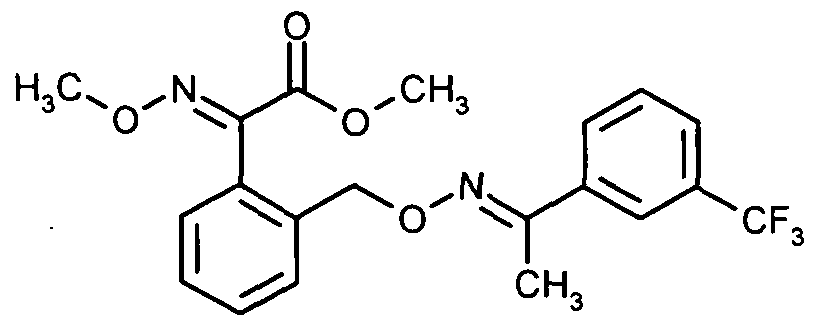
WWE Wipo information: entry into national phase

Ref document number: 200780017896.2

Country of ref document: CN

121 Ep: the epo has been informed by wipo that ep was designated in this application

Ref document number: 07725290

Country of ref document: EP

Kind code of ref document: A2

WWE Wipo information: entry into national phase

Ref document number: 2007725290

Country of ref document: EP

WWE Wipo information: entry into national phase

Ref document number: 8920/DELNP/2008

Country of ref document: IN

WWE Wipo information: entry into national phase

Ref document number: 12008502413

Country of ref document: PH

WWE Wipo information: entry into national phase

Ref document number: MX/a/2008/014416

Country of ref document: MX

Ref document number: 2007251932

Country of ref document: AU

WWE Wipo information: entry into national phase

Ref document number: 08122076

Country of ref document: CO

WWE Wipo information: entry into national phase

Ref document number: 2009510350

Country of ref document: JP

NENP Non-entry into the national phase

Ref country code: DE

ENP Entry into the national phase

Ref document number: 2007251932

Country of ref document: AU

Date of ref document: 20070516

Kind code of ref document: A

WWE Wipo information: entry into national phase

Ref document number: 1020087029890

Country of ref document: KR

WWE Wipo information: entry into national phase

Ref document number: 2008149768

Country of ref document: RU

WWE Wipo information: entry into national phase

Ref document number: 12301150

Country of ref document: US

ENP Entry into the national phase

Ref document number: PI0711919

Country of ref document: BR

Kind code of ref document: A2

Effective date: 20081118