WO2008005555A1 - Modulators of toll-like receptor 7 - Google Patents
Modulators of toll-like receptor 7 Download PDFInfo
- Publication number
- WO2008005555A1 WO2008005555A1 PCT/US2007/015615 US2007015615W WO2008005555A1 WO 2008005555 A1 WO2008005555 A1 WO 2008005555A1 US 2007015615 W US2007015615 W US 2007015615W WO 2008005555 A1 WO2008005555 A1 WO 2008005555A1
- Authority
- WO
- WIPO (PCT)
- Prior art keywords
- substituted
- alkylene
- group
- alpha
- compound
- Prior art date
- Legal status (The legal status is an assumption and is not a legal conclusion. Google has not performed a legal analysis and makes no representation as to the accuracy of the status listed.)
- Ceased
Links
- 0 CCc1cc(P(*)(*)=O)ccc1 Chemical compound CCc1cc(P(*)(*)=O)ccc1 0.000 description 11
- GISPBVSHYSEZFQ-QBFPSOIGSA-N C/C=C(/C[n](c1n2)c(S)nc1c(N)nc2OCCOC)\C=C(\CP(O)(O)=O)/C=C Chemical compound C/C=C(/C[n](c1n2)c(S)nc1c(N)nc2OCCOC)\C=C(\CP(O)(O)=O)/C=C GISPBVSHYSEZFQ-QBFPSOIGSA-N 0.000 description 1
- DFXURBMWHSXZCF-UHFFFAOYSA-N CC(C)OP(COCCN(C1NC(N)N(C)C(O)=C1S1)C1=O)(OC(C)C)=O Chemical compound CC(C)OP(COCCN(C1NC(N)N(C)C(O)=C1S1)C1=O)(OC(C)C)=O DFXURBMWHSXZCF-UHFFFAOYSA-N 0.000 description 1
- RKYDOJARHFQKCG-UHFFFAOYSA-N CC(C)OP(COCC[n](c1n2)c(O)nc1c(N)nc2OCCOC)(O)=O Chemical compound CC(C)OP(COCC[n](c1n2)c(O)nc1c(N)nc2OCCOC)(O)=O RKYDOJARHFQKCG-UHFFFAOYSA-N 0.000 description 1
- RKVFFYQBCISQKA-UHFFFAOYSA-N CC(C[n](c1n2)c(O)nc1c(N)nc2[O](C)CCOC)OCP(O)(O)=O Chemical compound CC(C[n](c1n2)c(O)nc1c(N)nc2[O](C)CCOC)OCP(O)(O)=O RKVFFYQBCISQKA-UHFFFAOYSA-N 0.000 description 1
- OSWGTTZMYVXHIY-UHFFFAOYSA-N CC1(NCCN2CCOCC2)N(Cc2cccc(CP(O)(O)=O)c2)c2nc(OCCOC)nc(N)c2N1 Chemical compound CC1(NCCN2CCOCC2)N(Cc2cccc(CP(O)(O)=O)c2)c2nc(OCCOC)nc(N)c2N1 OSWGTTZMYVXHIY-UHFFFAOYSA-N 0.000 description 1
- OJSHQQLDQLUEID-UHFFFAOYSA-N CCCCNC(N(C)c([n]1Cc2cc(CP(O)(O)=O)ccc2)c2nc1O)N=C2N Chemical compound CCCCNC(N(C)c([n]1Cc2cc(CP(O)(O)=O)ccc2)c2nc1O)N=C2N OJSHQQLDQLUEID-UHFFFAOYSA-N 0.000 description 1
- SZPDHODNXGBQMK-UHFFFAOYSA-N CCCCNc(nc1N)nc([n]2Cc3cc(CP(C)(O)=O)ccc3)c1nc2O Chemical compound CCCCNc(nc1N)nc([n]2Cc3cc(CP(C)(O)=O)ccc3)c1nc2O SZPDHODNXGBQMK-UHFFFAOYSA-N 0.000 description 1
- RWIVBEYNCPXQMU-UHFFFAOYSA-N CCCCNc(nc1[n]2Cc3cccc(P(C)(O)=C)c3)nc(N)c1nc2O Chemical compound CCCCNc(nc1[n]2Cc3cccc(P(C)(O)=C)c3)nc(N)c1nc2O RWIVBEYNCPXQMU-UHFFFAOYSA-N 0.000 description 1
- VLVVPRLSVKKERY-UHFFFAOYSA-O CCCCNc1nc(N)c2[n]c[n](Cc3cccc(P(C)([OH+]CC)=O)c3)c2n1 Chemical compound CCCCNc1nc(N)c2[n]c[n](Cc3cccc(P(C)([OH+]CC)=O)c3)c2n1 VLVVPRLSVKKERY-UHFFFAOYSA-O 0.000 description 1
- JNRZHOWBPSPYPL-UHFFFAOYSA-N CCCCOc(nc1NCc2c(C)ccc([P](O)(=O)=O)c2)nc(N)c1/N=C(\C)/O Chemical compound CCCCOc(nc1NCc2c(C)ccc([P](O)(=O)=O)c2)nc(N)c1/N=C(\C)/O JNRZHOWBPSPYPL-UHFFFAOYSA-N 0.000 description 1
- HVEGYOGEXMRFKF-UHFFFAOYSA-N CCCCOc1nc(N)c2[n]c[nH]c2n1 Chemical compound CCCCOc1nc(N)c2[n]c[nH]c2n1 HVEGYOGEXMRFKF-UHFFFAOYSA-N 0.000 description 1
- RILBLNZFJLZCGQ-UHFFFAOYSA-N CCOC(C(c1ccccc1)[n]1c2nc(OCCOC)nc(N)c2nc1)=O Chemical compound CCOC(C(c1ccccc1)[n]1c2nc(OCCOC)nc(N)c2nc1)=O RILBLNZFJLZCGQ-UHFFFAOYSA-N 0.000 description 1
- LDXBMAQNWNHKLY-UHFFFAOYSA-N CCOP(C)Cc1cc(C[n](c2n3)c(O)nc2c(N)nc3OCCOC)ccc1 Chemical compound CCOP(C)Cc1cc(C[n](c2n3)c(O)nc2c(N)nc3OCCOC)ccc1 LDXBMAQNWNHKLY-UHFFFAOYSA-N 0.000 description 1
- MSNLETPTGGBPBW-UHFFFAOYSA-N CCOP(CCN(c(nc(N)nc1O)c1S1)C1=O)(OCC)=O Chemical compound CCOP(CCN(c(nc(N)nc1O)c1S1)C1=O)(OCC)=O MSNLETPTGGBPBW-UHFFFAOYSA-N 0.000 description 1
- NTSHZYGAUCPSRE-UHFFFAOYSA-N CN(C1N)C(OCCOC)=Nc([n]2Cc3cccc(CP(O)(O)=O)c3)c1nc2O Chemical compound CN(C1N)C(OCCOC)=Nc([n]2Cc3cccc(CP(O)(O)=O)c3)c1nc2O NTSHZYGAUCPSRE-UHFFFAOYSA-N 0.000 description 1
- OAOANTOHVXRMPX-UHFFFAOYSA-N COCCOc(nc1N)nc([n]2Cc3cccc(CP(C)(O)=O)c3)c1nc2O Chemical compound COCCOc(nc1N)nc([n]2Cc3cccc(CP(C)(O)=O)c3)c1nc2O OAOANTOHVXRMPX-UHFFFAOYSA-N 0.000 description 1
- MHYHHHNKJDWQLF-UHFFFAOYSA-N COCCOc(nc1[nH]2)nc(N)c1nc2O Chemical compound COCCOc(nc1[nH]2)nc(N)c1nc2O MHYHHHNKJDWQLF-UHFFFAOYSA-N 0.000 description 1
- ZLHZLZBRFYVLPH-UHFFFAOYSA-N COCCOc(nc1[n]2CC(COC[O](C)(O)(O)=O)=C)nc(N)c1nc2O Chemical compound COCCOc(nc1[n]2CC(COC[O](C)(O)(O)=O)=C)nc(N)c1nc2O ZLHZLZBRFYVLPH-UHFFFAOYSA-N 0.000 description 1
- XPHMBRJJGMLZMA-UHFFFAOYSA-N COCCOc(nc1[n]2CCCP(O)(O)=O)nc(N)c1nc2O Chemical compound COCCOc(nc1[n]2CCCP(O)(O)=O)nc(N)c1nc2O XPHMBRJJGMLZMA-UHFFFAOYSA-N 0.000 description 1
- SJXZQPBUHNWSOA-UHFFFAOYSA-N COCCOc(nc1[n]2CCOCP(O)(O)=O)nc(N)c1nc2O Chemical compound COCCOc(nc1[n]2CCOCP(O)(O)=O)nc(N)c1nc2O SJXZQPBUHNWSOA-UHFFFAOYSA-N 0.000 description 1
- YBMBLVLPVQOODD-UHFFFAOYSA-N COCCOc(nc1[n]2CCP(O)(O)=O)nc(N)c1nc2O Chemical compound COCCOc(nc1[n]2CCP(O)(O)=O)nc(N)c1nc2O YBMBLVLPVQOODD-UHFFFAOYSA-N 0.000 description 1
- YVPCDXQPJZLPLZ-UHFFFAOYSA-N COCCOc(nc1[n]2Cc3cc(P(O)(O)=O)ccc3)nc(N)c1nc2O Chemical compound COCCOc(nc1[n]2Cc3cc(P(O)(O)=O)ccc3)nc(N)c1nc2O YVPCDXQPJZLPLZ-UHFFFAOYSA-N 0.000 description 1
- KXQHIPJCOKPUAX-UHFFFAOYSA-N COCCOc1nc(N)c2nc[n](Cc3cc(C(OC)=O)ccc3)c2n1 Chemical compound COCCOc1nc(N)c2nc[n](Cc3cc(C(OC)=O)ccc3)c2n1 KXQHIPJCOKPUAX-UHFFFAOYSA-N 0.000 description 1
- MKMHSWISRCBHEX-UHFFFAOYSA-N COCCOc1nc(N)c2nc[n](Cc3cccc(C(O)=O)c3)c2n1 Chemical compound COCCOc1nc(N)c2nc[n](Cc3cccc(C(O)=O)c3)c2n1 MKMHSWISRCBHEX-UHFFFAOYSA-N 0.000 description 1
- ARIVZEVKNNXVBK-UHFFFAOYSA-N C[BrH]CC(c1ccccc1)=O Chemical compound C[BrH]CC(c1ccccc1)=O ARIVZEVKNNXVBK-UHFFFAOYSA-N 0.000 description 1
- AQYJVCOVAPXUAE-UHFFFAOYSA-N Nc(nc(NCc1ccccc1)nc1[n]2CC3C=CC=C(CP(O)(O)=O)C3)c1nc2O Chemical compound Nc(nc(NCc1ccccc1)nc1[n]2CC3C=CC=C(CP(O)(O)=O)C3)c1nc2O AQYJVCOVAPXUAE-UHFFFAOYSA-N 0.000 description 1
- WIBOICXBEAMDDW-UHFFFAOYSA-N Nc(nc1N2CCOCP(O)(O)=O)nc(O)c1SC2=O Chemical compound Nc(nc1N2CCOCP(O)(O)=O)nc(O)c1SC2=O WIBOICXBEAMDDW-UHFFFAOYSA-N 0.000 description 1
- GCRRDPCPRLOYHE-GLIQVTHVSA-N Nc(nc1N2[C@H](C3O)OC(CCP(O)(O)O)C3O)nc(O)c1SC2=O Chemical compound Nc(nc1N2[C@H](C3O)OC(CCP(O)(O)O)C3O)nc(O)c1SC2=O GCRRDPCPRLOYHE-GLIQVTHVSA-N 0.000 description 1
Classifications
-
- C—CHEMISTRY; METALLURGY
- C07—ORGANIC CHEMISTRY
- C07F—ACYCLIC, CARBOCYCLIC OR HETEROCYCLIC COMPOUNDS CONTAINING ELEMENTS OTHER THAN CARBON, HYDROGEN, HALOGEN, OXYGEN, NITROGEN, SULFUR, SELENIUM OR TELLURIUM
- C07F9/00—Compounds containing elements of Groups 5 or 15 of the Periodic Table
- C07F9/02—Phosphorus compounds
- C07F9/547—Heterocyclic compounds, e.g. containing phosphorus as a ring hetero atom
- C07F9/6561—Heterocyclic compounds, e.g. containing phosphorus as a ring hetero atom containing systems of two or more relevant hetero rings condensed among themselves or condensed with a common carbocyclic ring or ring system, with or without other non-condensed hetero rings
- C07F9/65616—Heterocyclic compounds, e.g. containing phosphorus as a ring hetero atom containing systems of two or more relevant hetero rings condensed among themselves or condensed with a common carbocyclic ring or ring system, with or without other non-condensed hetero rings containing the ring system having three or more than three double bonds between ring members or between ring members and non-ring members, e.g. purine or analogs
-
- A—HUMAN NECESSITIES
- A61—MEDICAL OR VETERINARY SCIENCE; HYGIENE
- A61P—SPECIFIC THERAPEUTIC ACTIVITY OF CHEMICAL COMPOUNDS OR MEDICINAL PREPARATIONS
- A61P31/00—Antiinfectives, i.e. antibiotics, antiseptics, chemotherapeutics
-
- A—HUMAN NECESSITIES
- A61—MEDICAL OR VETERINARY SCIENCE; HYGIENE
- A61P—SPECIFIC THERAPEUTIC ACTIVITY OF CHEMICAL COMPOUNDS OR MEDICINAL PREPARATIONS
- A61P31/00—Antiinfectives, i.e. antibiotics, antiseptics, chemotherapeutics
- A61P31/12—Antivirals
-
- A—HUMAN NECESSITIES
- A61—MEDICAL OR VETERINARY SCIENCE; HYGIENE
- A61P—SPECIFIC THERAPEUTIC ACTIVITY OF CHEMICAL COMPOUNDS OR MEDICINAL PREPARATIONS
- A61P31/00—Antiinfectives, i.e. antibiotics, antiseptics, chemotherapeutics
- A61P31/12—Antivirals
- A61P31/14—Antivirals for RNA viruses
-
- A—HUMAN NECESSITIES
- A61—MEDICAL OR VETERINARY SCIENCE; HYGIENE
- A61P—SPECIFIC THERAPEUTIC ACTIVITY OF CHEMICAL COMPOUNDS OR MEDICINAL PREPARATIONS
- A61P31/00—Antiinfectives, i.e. antibiotics, antiseptics, chemotherapeutics
- A61P31/12—Antivirals
- A61P31/20—Antivirals for DNA viruses
-
- A—HUMAN NECESSITIES
- A61—MEDICAL OR VETERINARY SCIENCE; HYGIENE
- A61P—SPECIFIC THERAPEUTIC ACTIVITY OF CHEMICAL COMPOUNDS OR MEDICINAL PREPARATIONS
- A61P43/00—Drugs for specific purposes, not provided for in groups A61P1/00-A61P41/00
Definitions
- This application relates generally to compounds and pharmaceutical compositions -which selectively activates toll-like receptor 7 (TLR7), and methods of making and using them.
- TLR7 toll-like receptor 7
- the innate immune system provides the body with a first line defense against invading pathogens.
- an invading pathogen is recognized by a germline-encoded receptor, the activation of which initiates a signaling cascade that leads to the induction of cytokine expression.
- Innate immune system receptors have broad specificity,
- TLRs Toll-like receptors
- Ligands and corresponding signaling cascades have been identified for some of these receptors.
- TLR2 is activated by the lipoprotein of bacteria (e.g., E.
- TLR3 is activated by double-stranded RNA
- TLR4 is activated by lipopolysaccharide (i.e., LPS or endotoxin) of Gram-negative bacteria (e.g., Salmonella and E. coli O157.-H7)
- TLR5 is activated by flagellin of motile bacteria (e.g., Listeria)
- TLR7 recognizes and responds to imiquimod
- TLR9 is activated by unmethylated CpG sequences of pathogen DNA.
- NF- ⁇ B transcription factor- ⁇ B
- IL-1 interleukin-1
- the present invention is based, in part, on the discovery by the applicants that a number of small molecules can alter TLR-mediated immunostimulatory signaling. Accordingly, the present application is directed to compounds and pharmaceutical compositions, and methods for use in preventing or treating diseases or conditions characterized by Toll-like receptor 7 (TLR7) activation in patients.
- TLR7 Toll-like receptor 7
- the invention features a compound of formula I or II: i ⁇ wherein:
- Z is -NH 2 or -OH
- X 1 is alkylene, substituted alkylene, alkenylene, substituted alkenylene, alkynylene, substituted alkynylene, carbocyclylene, substituted carbocyclylene, heterocyclylene, or substituted heterocyclylene;
- L 1 is a covalent bond, arylene, substituted arylene, heterocyclylene, substituted heterocyclylene, carbocyclylene, substituted carbocyclylene, -S-, -S(O)-, S(O) 2 , -NR 5 -, or -O-;
- X 2 is a covalent bond, alkylene, or substituted alkylene;
- L 2 is -NR 5 -, -N(R S )C(O) -, -O-, -S-, -S(O)-, S(O) 2 , or a covalent bond;
- R 3 is H, alkyl, substituted alkyl, heteroalkyl, substituted heteroalkyl, alkenyl, substituted alkenyl, aryl, substituted aryl, arylalkyl, substituted arylalkyl, heterocyclyl, substituted heterocyclyl, heterocyclylalkyl, or substituted heterocyclylalkyl;
- R 1 and R 2 are each independently H, alkyl, substituted alkyl, carbocyclyl, substituted carbocyclyl, heterocyclyl, substituted heterocyclyl, alkenyl, substituted alkenyl, alkynyl, substituted alkynyl, arylalkyl, substituted arylalkyl, heterocyclylalkyl, substituted heterocyclylalkyl, -alkylene-C(O)-O-R 5 , -(substituted alkylene)-C(O)-O-R 5 , -alkylene-O-C(O)-R 5 , -(substituted alkylene)-O-C(O)-R 5 , -alky
- each R 5 , R 6 , and R 7 are independently H, alkyl, substituted alkyl, carbocyclyl, substituted carbocyclyl, heterocyclyl, substituted heterocyclyl, alkenyl, substituted alkenyl, alkynyl, substituted alkynyl, arylalkyl, substituted arylalkyl, heterocyclylalkyl, or substituted heterocyclylalkyl; and with the following provisos:
- X 1 is C1-C2 alkylene
- L 1 is phenylene or heterocyclylene
- X 2 is a covalent bond or a Ci-Ci alkylene
- L 2 is a covalent bond, -NH-, -O-, or -S-, and
- R 3 is alkyl or substituted alkyl, and Y 1 and Y 2 are both -O-; then: neither R 1 nor R 2 are alkyl, substituted alkyl or cycloalkyl; (b) when -L 2 -R 3 is alkyl, amino, aminoalkyl, amidoalkyl, or thioalkyl, and R 4 is H, and
- X 1 is alkylene or substituted alkylene, and LMs -O-, and X 2 is -CH 2 -, and
- Y 1 and Y 2 are both -O-; then: R 1 and R 2 are not both H or both alkyl;
- Formula I can be represented by Formula Ia:
- X 1 is alkylene, substituted alkylene, alkenylene, substituted alkenylene, alkynylene, substituted alkynylene, carbocyclylene, substituted carbocyclylene, heterocyclylene, or substituted heterocyclylene;
- X 2 is a covalent bond, alkylene, or substituted alkylene
- L 1 is a covalent bond, arylene, substituted arylene, heterocyclylene, substituted heterocyclylene, carbocyclylene, substituted carbocyclylene, -S-, -S(O)-, S(O)a, -NR 5 -, or -O-;
- L 2 is -NR 5 -, -N(R 5 )C(O) -, -O-, -S-, -S(O)-, S(O) 2 , or a covalent bond;
- R 1 and R 2 are each independently H, alkyl, substituted alkyl, carbocyclyl, substituted carbocyclyl, heterocyclyl, substituted heterocyclyl, alkenyl, substituted alkenyl, alkynyl, substituted alkynyl, arylalkyl, substituted arylalkyl, heterocyclylalkyl, substituted heterocyclylalkyl, -alkylene-C(O)-O-R 5 , -(substituted alkylene)-C(O)-O-R 5 , -alkylene-O-C(O)-R 5 , -(substituted alkylene)-O-C(O)-R 5 , -alkylene-O-C(O)-O ⁇ R 5 , or -(substituted alkylene)-O-C(O)-O-R 5 ;
- R 3 is H, alkyl, substituted alkyl, heteroalkyl, substituted heteroalkyl, alkenyl, substituted alkenyl, aryl, substituted aryl, arylalkyl, substituted arylalkyl, heterocyclyl, substituted heterocyclyl, heterocyclylalkyl, or substituted heterocyclylalkyl;
- R 4 is H, halogen, -OH, -O-alkyl, -
- R 5 is H, alkyl, substituted alkyl, carbocyclyl, substituted carbocyclyl, heterocyclyl, substituted heterocyclyl, alkenyl, substituted alkenyl, alkynyl, substituted alkynyl, arylalkyl, substituted arylalkyl, heterocyclylalkyl, or substituted heterocyclylalkyl; and with the following provisos: (a) when R 4 is -OH, and
- X 1 is C1-C2 alkylene
- L 1 is phenylene or heterocyclylene
- X 2 is a covalent bond or a C1-C2 alkylene
- L 2 is a covalent bond, -NH-, -O-, or -S-
- R 3 is alkyl or substituted alkyl
- Y 1 and Y 2 are both -O-; . then: neither R 1 nor R 2 are alkyl, substituted alkyl or cycloalkyl; (b) when -IAR 3 is alkyl, amino, aminoalkyl, amidoalkyl, or thioalkyl, and
- R 4 is H, and X 1 is alkylene or substituted alkylene, and L 1 is -O-, and
- X 2 is -CH 2 -, and Y 1 and Y 2 are both -O-; then:
- R 1 and R 2 are not both H or both alkyl; (c) when L 2 is a covalent bond; then R 3 is not H;
- R 6 and R 7 are not both H.
- Formula II can be represented by Formula Ha:
- X 1 is alkylene, substituted alkylene,. alkenylene, substituted alkenylene, alkynylene, substituted alkynylene, carbocyclylene, substituted carbocyclylene, heterocyclylene, or substituted heterocyclylene;
- X 2 is a covalent bond, alkylene, or substituted alkylene;
- L 1 is a covalent bond, arylene, substituted arylene, heterocyclylene, substituted heterocyclylene, carbocyclylene, substituted carbocyclylene, -S-, -S(O)-, S(O) 2 , -NR 3 -, or -O-;
- Y 1 and Y 2 are each independently a covalent bond, -O-, or -NR 4 -;
- R 1 and R 2 are each independently H, alkyl, substituted alkyl, carbocyclyl, substituted carbocyclyl, heterocyclyl, substituted heterocyclyl, alkenyl, substituted alkenyl, alkynyl, substituted alkynyl, arylalkyl, substituted arylalkyl, heterocyclylalkyl, substituted heterocyclylalkyl, -alkylene-C (O)-O-R 5 ,-(substituted alkylene)-C(O)-O-R 5 , -alkylene-O-C(O)-O-R 5 , or -(substituted alkylene)-O-C(O)-O-R 5 ; and
- R 3 , R 4 , and R 5 are each independently H, alkyl, substituted alkyl, carbocyclyl, substituted carbocyclyl, heterocyclyl, substituted heterocyclyl, alkenyl, substituted alkenyl, alkynyl, substituted alkynyl, arylalkyl, substituted arylalkyl, heterocyclylalkyl, or substituted heterocy clylalkyl; "with the following provisos:
- the present application provides for a pharmaceutical composition comprising a compound of Formula I or ⁇ , or a pharmaceutically acceptable salt, solvate, and/or ester thereof; and a pharmaceutically acceptable carrier or excipient.
- the present application provides for a pharmaceutical composition comprising a compound of Formula I or II, or a pharmaceutically acceptable salt, solvate, and/or ester thereof; at least one additional active agent; and a pharmaceutically acceptable carrier or exipient.
- the present application provides for a method for treating or preventing a viral infection comprising administering, to a patient in need thereof, a therapeutically effective amount of at least one compound of Formula I or II, or a pharmaceutically acceptable salt, solvate, and/or ester thereof.
- the present application provides for a combination pharmaceutical agent comprising: a) a first pharmaceutical composition comprising a compound of Formula I or II, or a pharmaceutically acceptable salt, solvate, and/or ester thereof; and b) a second pharmaceutical composition comprising comprising at least one additional active agent selected from the group consisting of interferons, ribavirin analogs, HCV NS3 protease inhibitors, alpha- glucosidase 1 inhibitors, hepatoprotectants, non-nucleoside inhibitors of
- HBV/HCV another drug for treating HBV/HCV, and combinations thereof.
- a compound of the invention or "a compound of formula I or II” means a compound of formula I or II, or a pharmaceutically acceptable salt, solvate, or physiologically functional derivative thereof.
- a compound of formula (number) means a compound of that formula and pharmaceutically acceptable salts, solvates and physiologically functional derivatives thereof.
- Alkyl is hydrocarbon containing normal, secondary, tertiary or cyclic carbon atoms.
- an alkyl group can have 1 to 20 carbon atoms (i.e, C1-C20 alkyl), 1 to 10 carbon atoms (i.e., C1-C10 alkyl), or 1 to 6 carbon atoms (i.e., Ci-Ce alkyl).
- alkyl groups include, but are not limited to, methyl (Me, -CHs), ethyl (Et, -CH2CH3), 1-propyl (n-Pr, n-propyl, - CH2CH2CH3), 2-propyl (j-Pr, i-propyl, -CH(CHs) 2 ), 1-butyl (n-Bu, n-butyl, - CH2CH2CH2CH3), 2-methyl-l-propyl Q-Bu, i-butyl, -CH 2 CH(CHs) 2 ), 2-butyl (s- Bu, s-butyl, -CH(CH 3 )CH 2 CH 3 ), 2-methyl-2-propyl (t-Bu, t-butyl, -C(CHs) 3 ), 1- pentyl (n-pentyl, -CH 2 CH 2 CH 2 CH 3 ), 2-pentyl (-CH(CH 3 )CH 2 CH
- Alkoxy means a group having the formula -O-alkyl, in which an alkyl group, as defined above, is attached to the parent molecule via an oxygen atom.
- the alkyl portion of an alkoxy group can have 1 to 20 carbon atoms (i.e., G-C20 alkoxy), 1 to 12 carbon atoms(j.e., O-C12 alkoxy), or 1 to 6 carbon atoms(i.e., Ci-C ⁇ alkoxy).
- alkoxy groups include, but are not limited to, methoxy (-O-CH3 or -OMe) 7 ethoxy (-OCH2CH3 or -OEt), t-butoxy (-0-C(CHs) 3 or -OtBu) and the like.
- "Haloalkyl” is an alkyl group, as defined above, in which one or more hydrogen atoms of the alkyl group is replaced with a halogen atom.
- the alkyl portion of a haloalkyl group can have 1 to 20 carbon atoms (i.e., C1-C20 haloalkyl), 1 to 12 carbon atoms(i.e., C1-C12 haloalkyl), or 1 to 6 carbon atoms(f.£?., Ci-C ⁇ alkyl).
- suitable haloalkyl groups include, but are not limited to, -CFs, -CHF2, -CFH2, -CH2CF3, and the like.
- Alkenyl is a hydrocarbon containing normal, secondary, tertiary or cyclic carbon atoms with at least one site of unsaturation, i.e. a carbon-carbon, s ⁇ 2 double bond.
- an alkenyl group can have 2 to 20 carbon atoms (i.e., C2-C20 alkenyl), 2 to 12 carbon atoms (i.e., C2-Ci2 alkenyl), or 2 to 6 carbon atoms (i.e., C2-C6 alkenyl).
- Alkynyl is a hydrocarbon containing normal, secondary, tertiary or cyclic carbon atoms with at least one site of unsaturation, i.e. a carbon-carbon, sp triple bond.
- an alkynyl group can have 2 to 20 carbon atoms (i.e., C 2 -C 2 O alkynyl), 2 to 12 carbon atoms (i.e., C2-C12 alkyne,), or 2 to 6 carbon atoms (i.e., C 2 -Ce alkynyl).
- Alkylene refers to a saturated, branched or straight chain or cyclic hydrocarbon radical having two monovalent radical centers derived by the removal of two hydrogen atoms from the same or two different carbon atoms of a parent alkane.
- an alkylene group can have 1 to 20 carbon atoms, 1 to 10 carbon atoms, or 1 to 6 carbon atoms.
- alkylene radicals include, but are not limited to, methylene (-CH2-), 1,1-ethyl (-CH(CHs)-), 1,2-ethyl (-CH2CH2-), 1,1-propyl (-CH(CH 2 CH 3 )-), 1,2-propyl (-CH 2 CH(CH 3 )-), 1,3-propyl (-CH2CH2CH2-), 1,4-butyl (-CH2CH2CH2CH2-), and the like.
- Alkenylene refers to an unsaturated, branched or straight chain or cyclic hydrocarbon radical having two monovalent radical centers derived by the removal of two hydrogen atoms from the same or two different carbon atoms of a parent alkene.
- alkenylene group can have 1 to 20 carbon atoms, 1 to 10 carbon atoms, or 1 to 6 carbon atoms.
- Alkynylene refers to an unsaturated, branched or straight chain or cyclic hydrocarbon radical having two monovalent radical centers derived by the removal of two hydrogen atoms from the same or two different carbon atoms of a parent alkyne.
- an alkynylene group can have 1 to 20 carbon atoms, 1 to 10 carbon atoms, or 1 to 6 carbon atoms.
- Aminoalkyl refers to an acyclic alkyl radical in which one of the -hydrogen atoms bonded to a carbon atom, typically a terminal or sp 3 carbon atom, is replaced with an amino radical.
- “Amidoalkyl” refers to an acyclic alkyl radical in which one of the hydrogen atoms bonded to a carbon atom, typically a terminal or sp 3 carbon atom, is replaced with a -NRCOR 3 group where R is hydrogen or alkyl and R a is alkyl, susbstituted alkyl, aryl, or substituted aryl as defined herein, e.g., - (CHa) 2 -NHC(O)CH 3 , -(CH 2 )S-NH-C(O)-CH 3 , and the like.
- Aryl means a monovalent aromatic hydrocarbon radical derived by the removal of one hydrogen atom from a single carbon atom of a parent aromatic ring system.
- an aryl group can have 6 to 20 carbon atoms, 6 to 14 carbon atoms, or 6 to 12 carbon atoms.
- Typical aryl groups include, but are not limited to, radicals derived from benzene (e.g., phenyl), substituted benzene, naphthalene, anthracene, biphenyl, and the like.
- Arylene refers to an aryl as defined above having two monovalent radical centers derived by the removal of two hydrogen atoms from the same or two different carbon atoms of a parent aryl.
- Typical arylene radicals include, but are not limited to, phenylene.
- Arylalkyl refers to an acyclic alkyl radical in which one of the hydrogen atoms bonded to a carbon atom, typically a terminal or sp 3 carbon atom, is replaced with an aryl radical.
- Typical arylalkyl groups include, but are not limited to, benzyl, 2-phenylethan-l-yl, naphthylmethyl, 2- naphthylethan-1-yl, naphthobenzyl, 2-naphthophenylethan-l-yl and the like.
- the arylalkyl group can comprise 6 to 20 carbon atoms, e.g., the alkyl moiety is 1 to 6 carbon atoms and the aryl moiety is 6 to 14 carbon atoms.
- “Arylalkenyl” refers to an acyclic alkenyl radical in which one of the hydrogen atoms bonded to a carbon atom, typically a terminal or sp 3 carbon atom, but also an sp 2 carbon atom, is replaced with an aryl radical.
- the aryl portion of the arylalkenyl can include, for example, any of the aryl groups disclosed herein, and the alkenyl portion of the arylalkenyl can include, for example, any of the alkenyl groups disclosed herein.
- the arylalkenyl group can comprise 6 to 20 carbon atoms, e.g., the alkenyl moiety is 1 to 6 carbon atoms and the aryl moiety is 6 to 14 carbon atoms.
- Arylalkynyl refers to an acyclic alkynyl radical in which one of the hydrogen atoms bonded to a carbon atom, typically a terminal or sp 3 carbon atom, but also an sp carbon atom, is replaced with an aryl radical.
- the aryl portion of the arylalkynyl can include, for example, any of the aryl groups disclosed herein, and the alkynyl portion of the arylalkynyl can include, for example, any of the alkynyl groups disclosed herein.
- the arylalJkynyl group can comprise 6 to 20 carbon atoms, e.g., the alkynyl moiety is 1 to 6 carbon atoms and the aryl moiety is 6 to 14 carbon atoms.
- substituted in reference to alkyl, alkylene, aryl, arylalkyl, heterocyclyl, etc.
- substituted alkyl for example, "substituted alkyl”, “substituted alkylene”, “substituted aryl”, “substituted arylalkyl”, “substituted heterocyclyl”, and "substituted carbocyclyl” means alkyl, alkylene, aryl, arylalkyl, heterocyclyl, carbocyclyl respectively, in which one or more hydrogen atoms are each independently replaced with a non-hydrogen substituent.
- prodrug refers to any compound that when administered to a biological system generates the drug substance, i.e., active ingredient, as a result of spontaneous chemical reaction(s), enzyme catalyzed chemical reaction(s), photolysis, and/or metabolic chemical reaction(s).
- a prodrug is thus a covalently modified analog or latent form of a therapeutically active compound.
- Heteroalkyl refers to an alkyl group where one or more carbon atoms have been replaced with a heteroatom, such as, O, N, or S.
- a heteroatom e.g., O, N, or S
- the resulting heteroalkyl groups are, respectively, an alkoxy group (e.g., -OCH3, etc.), an amine (e.g., -NHCHs, -N(CHs) 2 , etc.), or a thioalkyl group (e.g., -SCH 3 ).
- a nonterminal carbon atom of the alkyl group which is not attached to the parent molecule is replaced with a heteroatom (e.g., O, N, or S) and the resulting heteroalkyl groups are, respectively, an alkyl ether (e.g., -CH2CH2-O-CH3, etc.), an alkyl amine (e.g., -CH2NHCH3, -CHbN(CHsK etc.), or a thioalkyl ether (e.g.,-CH2-S-CH3).
- a heteroatom e.g., O, N, or S
- the resulting heteroalkyl groups are, respectively, a hydroxyalkyl group (e.g., -CH2CH2-OH), an aminoalkyl group (e.g., -CH2NH2), or an alkyl thiol group (e.g., -CH2CH2-SH).
- a heteroalkyl group can have, for example, 1 to 20 carbon atoms, 1 to 10 carbon atoms, or 1 to 6 carbon atoms.
- a Ci-Ce heteroalkyl group means a heteroalkyl group having 1 to 6 carbon atoms.
- Heterocycle or “heterocyclyl” as used herein includes by way of example and not limitation those heterocycles described in Paquette, Leo A.; Principles of Modern Heterocyclic Chemistry (W.A. Benjamin, New York,
- heterocycle includes a “carbocycle” as defined herein, wherein one or more (e.g. 1, 2, 3, or 4) carbon atoms have been replaced with a heteroatom (e.g. O, N, or S).
- heteroatom e.g. O, N, or S.
- heterocycle or “heterocyclyl” includes saturated rings, partially unsaturated rings, and aromatic rings (i.e., heteroaromatic rings).
- Substituted heterocyclyls include, for example, heterocyclic rings substituted with any of the substituents disclosed herein including carbonyl groups.
- a non-limiting example of a carbonyl substituted heterocyclyl is:
- heterocycles include by way of example and not limitation pyridyl, dihydroypyridyl, tetrahydropyridyl (piperidyl), thiazolyl, tetrahydrothiophenyl, sulfur oxidized tetrahydrothiophenyl, pyrimidinyl, furanyl, thienyl, pyrrolyl, pyrazolyl, imidazolyl, tetrazolyl, benzofuranyl, thianaphthalenyl, indolyl, indolenyl, quinolinyl, isoquinolinyl, benzimidazolyl, piperidinyl, 4-piperidonyl, pyrrolidinyl, 2-
- carbon bonded heterocycles are bonded at position 2, 3, 4, 5, or 6 of a pyridine, position 3, 4, 5, or 6 of a pyridazine., position 2, 4, 5, or 6 of a pyrimidine, position 2, 3, 5, or 6 of a pyrazine, position 2, 3, 4, or 5 of a furan, tetrahydrofuran, thiofuran, thiophene, pyrrole or tetrahydropyrrole, position 2, 4, or 5 of an oxazole, imidazole or thiazole, position 3, 4, or 5 of an isoxazole, pyrazole, or isothiazole, position 2 or 3 of an aziridine, position 2, 3, or 4 of an azetidine, position 2, 3, 4, 5, 6, 7, or 8 of a quinoline or position 1, 3, 4, 5, 6, 7, or 8 of an isoquinoline.
- carbon bonded heterocycles include 2- pyridyl, 3-pyridyl, 4-pyridyl, 5-pyridyl, 6-pyridyl, 3-pyridazinyl, 4- pyridazinyl, 5-pyridazinyl, 6-pyridazinyl, 2-pyrimidinyl, 4-pyrimidinyl, 5- pyrimidinyl, 6-pyrimidinyl, 2-pyrazinyl, 3-pyrazinyl, 5-pyrazinyl, 6- pyrazinyl, 2-thiazolyl, 4-thiazolyl, or 5-thiazolyl.
- nitrogen bonded heterocycles are bonded at position 1 of an aziridine, azetidine, pyrrole, pyrrolidine, 2- pyrroline, 3-pyrroline, imidazole, imidazolidine, 2-imidazoline, 3-imidazoline, pyrazole, pyrazoline, 2-pyrazoline, 3-pyrazoline, piperidine, piperazine, indole, indoline, lH-indazole, position 2 of a isoindole, or isoindoline, position 4 of a morpholine, and position 9 of a carbazole, or ⁇ -carboline.
- nitrogen bonded heterocycles include 1-aziridyl, 1-azetedyl, 1- pyrrolyl, 1-imidazolyl, 1-pyrazolyl, and 1-piperidinyl.
- Heterocyclylene refers to a heterocyclyl, as defined herein, derived by replacing a hydrogen atom from a carbon atom or heteroatom of a heterocyclyl, with an open valence.
- heteroarylene refers to an aromatic heterocyclylene.
- Heterocyclylalkyl refers to an acyclic alkyl radical in which one of the hydrogen atoms bonded to a carbon atom, typically a terminal or sp 3 carbon atom, is replaced with a heterocyclyl radical ⁇ i.e., a heterocyclyl- alkylene- moiety).
- Typical heterocyclyl alkyl groups include, but are not limited to heterocyclyl-CHb-, 2-(heterocyclyl)ethan ⁇ l-yl, and the like, wherein the "heterocyclyl" portion includes any of the heterocyclyl groups described above, including those described in Principles of Modern Heterocyclic Chemistry.
- the heterocyclyl group can be attached to the alkyl portion of the heterocyclyl alkyl by means of a carbon-carbon bond or a carbon-heteroatom bond, with the proviso that the resulting group is chemically stable.
- the heterocyclyl alkyl group comprises 2 to 20 carbon atoms, e.g., the alkyl portion of the arylalkyl group comprises 1 to 6 carbon atoms and the heterocyclyl moiety comprises 1 to 14 carbon atoms.
- heterocyclylalkyls include by way of example and not limitation 5-membered sulfur, oxygen, and/or nitrogen containing heterocycles such as thiazolylmethyl, 2-thiazolylethan-l-yl, imidazolylmethyl, oxazolylmethyl, thiadiazolylmethyl, etc., 6-membered sulfur, oxygen, and/or nitrogen containing heterocycles such as piperidinylmethyl, piperazinylmethyl, morpholinylmethyl, pyridinylmethyl, pyridizylmethyl, pyrimidylmethyl, pyrazinylmethyl, etc.
- Heterocyclylalkenyl refers to an acyclic alkenyl radical in which one of the hydrogen atoms bonded to a carbon atom, typically a terminal or sp 3 carbon atom, but also a sp 2 carbon atom, is replaced with a heterocyclyl radical (i.e., a heterocyclyl-alkenylene- moiety).
- the heterocyclyl portion of the heterocyclyl alkenyl group includes any of the heterocyclyl groups described herein, including those described in Principles of Modern Heterocyclic Chemistry, and the alkenyl portion of the heterocyclyl alkenyl group includes any of the alkenyl groups disclosed herein.
- heterocyclyl group can be attached to the alkenyl portion of the heterocyclyl alkenyl by means of a carbon-carbon bond or a carbon-heteroatom bond, with the proviso that the resulting group is chemically stable.
- the heterocyclyl alkenyl group comprises comprises 2 to 20 carbon atoms, e.g., the alkenyl portion of the heterocyclyl alkenyl group comprises 1 to 6 carbon atoms and the heterocyclyl moiety comprises 1 to 14 carbon atoms.
- Heterocyclylalkynyl refers to an acyclic alkynyl radical in which one of the hydrogen atoms bonded to a carbon atom, typically a terminal or sp 3 carbon atom, but also an sp carbon atom, is replaced with a heterocyclyl radical (i.e., a heterocyclyl-alkynylene- moiety).
- the heterocyclyl portion of the heterocyclyl alkynyl group includes any of the heterocyclyl groups described herein, including those described in Principles of Modern Heterocyclic Chemistry, and the alkynyl portion of the heterocyclyl alkynyl group includes any of the alkynyl groups disclosed herein.
- heterocyclyl group can be attached to the alkynyl portion of the heterocyclyl alkynyl by means of a carbon-carbon bond or a carbon-heteroatom bond, with the proviso that the resulting group is chemically stable.
- the heterocyclyl alkynyl group comprises 2 to 20 carbon atoms, e.g., the alkynyl portion of the heterocyclyl alkynyl group comprises 1 to 6 carbon atoms and the heterocyclyl moiety comprises 1 to 14 carbon atoms.
- Heteroaryl refers to a monovalent aromatic heterocyclyl having at least one heteroatom in the ring.
- suitable heteroatoms which can be included in the aromatic ring include oxygen, sulfur, and nitrogen.
- suitable heteroatoms which can be included in the aromatic ring include oxygen, sulfur, and nitrogen.
- suitable heteroaryl rings include all of those listed in the definition of "heterocyclyl", including pyridinyl, pyrrolyl, oxazolyl, indolyl, isoindolyl, purinyl, furanyl, thienyl, benzofuranyl, benzothiophenyl, carbazolyl, imidazolyl, thiazolyl, isoxazolyl, pyrazolyl, isothiazolyl, quinolyl, isoquinolyl, pyridazyl, pyrimidyl, pyrazyl, etc.
- Carbocycle or “carbocyclyl” refers to a saturated, partially unsaturated or aromatic ring having 3 to 7 carbon atoms as a monocycle, 7 to 12 carbon atoms as a bicycle, and up to about 20 carbon atoms as a polycycle.
- Monocyclic carbocycles have 3 to 6 ring atoms, still more typically 5 or 6 ring atoms.
- Bicyclic carbocycles have 7 to 12 ring atoms, e.g., arranged as a bicyclo (4,5), (5,5), (5,6) or (6,6) system, or 9 or 10 ring atoms arranged as a bicyclo (5,6) or (6,6) system.
- Examples of monocyclic carbocycles include cyclopropyl, cyclobutyl, cyclopentyl, 1-cyclopent-l-enyl, l-cyclopent-2-enyl, l-cyclopent-3-enyl, cyclohexyl, 1-cyclohex-l-enyl, l-cyclohex-2-enyL 1- cyclohex-3-enyl, phenyl.
- Carbocyclylene refers to a carbocyclyl or carbocycle as defined above having two monovalent radical centers derived by the removal of two hydrogen atoms from the same or two different carbon atoms of a parent carbocyclyl.
- Typical carbocyclylene radicals include, but are not limited to, phenylene.
- Arylheteroalkyl refers to a heteroalkyl as defined herein, in which a hydrogen atom (which may be attached either to a carbon atom or a heteroatom) has been replaced with an aryl group as defined herein.
- the aryl groups may be bonded to a carbon atom of the heteroalkyl group, or to a heteroatom of the heteroalkyl group, provided that the resulting arylheteroalkyl group provides a chemically stable moiety.
- an arylheteroalkyl group can have the general formulae -alkylene- O-aryl, -alkylene-O-alkylene-aryl, -alkylene-NH-aryl, -alkylene-NH-alkylene- aryl, -alkylene-S-aryl, -alkylene-S-alkylene-aryl, etc.
- any of the alkylene moieties in the general formulae above can be further substituted with any of the substituents defined or exemplified herein.
- Heteroarylalkyl refers to an alkyl group, as defined herein, in which a hydrogen atom has been replaced with a heteroaryl group as defined herein.
- Non-limiting examples of heteroaryl alkyl include -CHz-pyridinyl, -CHz-pyrrolyl, -CH ⁇ -oxazolyl, -C ⁇ -indolyl, -CHb-isoi ndolyl, -CH2-purinyl, -Ctiz-furanyl, -CHz-thienyl, -CEb-benzofuranyl, -CHa-be nzothiophenyl, -CH ⁇ -carbazolyl, -CH2-imidazolyl, -CHb-thiazolyl, -CH2-isoxaz olyl, -CH2-pyrazolyl, -CH2-isothiazolyl, -CHb-quinolyl, -CHb-isoquinolyl
- chiral refers to molecules which have the property of non-superimposability of the mirror image partner, while the term “achiral” refers to molecules which are superimposable on their mirror image partner.
- stereoisomers refers to compounds which have identical chemical constitution, but differ with regard to the arrangement of the atoms or groups in space.
- Diastereomer refers to a stereoisomer with two or more centers of chirality and whose molecules are not mirror images of one another.
- Diastereomers have different physical properties, e.g., melting points, boiling points, spectral properties, and reactivities. Mixtures of diastereomers may separate under high resolution analytical procedures such as electrophoresis and chromatography. "Enantiomers” refer to two stereoisomers of a compound which are non-superimposable mirror images of one another. Stereochemical definitions and conventions used herein generally follow S. P. Parker, Ed., McGraw-Hill Dictionary of Chemical Terms (1984) McGraw-Hill Book Company, New York; and Eliel, E. and Wilen, S., Stereochemistry of Organic Compounds (1994) John Wiley & Sons, Inc., New York.
- a specific stereoisomer may also be referred to as an enantiomer, and a mixture of such isomers is often called an enantiomeric mixture.
- a 50:50 mixture of enantior ⁇ ers is referred to as a racemic mixture or a racemate, which may occur where there has been no stereoselection or stereospecificity in a chemical reaction or process.
- the terms “racemic mixture” and “racemate” refer to an equimolar mixture of two enantiomeric species, devoid of optical activity.
- protecting groups include prodrug moieties and chemical protecting groups.
- Protecting groups are available, commonly known and used, and are optionally used to prevent side reactions with the protected group during synthetic procedures, i.e. routes or methods to prepare the compounds of the invention. For the most part the decision as to which groups to protect, when to do so, and the nature of the chemical protecting group "PG" will be dependent upon the chemistry of the reaction to be protected against (e.g., acidic, basic, oxidative, reductive or other conditions) and the intended direction of the synthesis. The PG groups do not need to be, and generally are not, the same if the compound is substituted with multiple PG. In general, PG will be used to protect functional groups such as carboxyl, hydroxyl, thio, or amino groups and to thus prevent side reactions or to otherwise facilitate the synthetic efficiency. The order of deprotection to yield free, deprotected groups is dependent upon the intended direction of the synthesis and the reaction conditions to be encountered, and may occur in any order as determined by the artisan.
- protecting groups for -OH groups include “ether- or ester-forming groups”.
- Ether- or ester-forming groups are capable of functioning as chemical protecting groups in the synthetic schemes set forth herein.
- some hydroxyl and thio protecting groups are neither ether- nor ester-forming groups, as will be understood by those skilled in the art, and are included with amides, discussed below.
- Ester-forming groups include: (1) phosphonate ester-forming groups, such as phosphonamidate esters, phosphorothioate esters, phosphonate esters, and phosphon-bis-amidates; (2) carboxyl ester-forming groups, and (3) sulphur ester-forming groups, such as sulphonate, sulfate, and sulfinate.
- phosphonate ester-forming groups such as phosphonamidate esters, phosphorothioate esters, phosphonate esters, and phosphon-bis-amidates
- carboxyl ester-forming groups such as sulphonate, sulfate, and sulfinate.
- the invention includes compounds produced by a process comprising contacting a compound of this invention with a mammal for a period of time sufficient to yield a metabolic product thereof.
- Such products typically are identified by preparing a radiolabeled (e.g., C 14 or H 3 ) compound of the invention, administering it parenterally in a detectable dose (e.g., greater than about 0.5 mg/kg) to an animal such as rat, mouse, guinea pig, monkey, or to man, allowing sufficient time for metabolism to occur (typically about 30 seconds to 30 hours) and isolating its conversion products from the urine, blood or other biological samples.
- a detectable dose e.g., greater than about 0.5 mg/kg
- an animal such as rat, mouse, guinea pig, monkey, or to man
- sufficient time for metabolism to occur typically about 30 seconds to 30 hours
- isolating its conversion products from the urine, blood or other biological samples typically isolating its conversion products from the urine, blood or other biological samples.
- the metabolite structures are determined in conventional fashion, e.g., by MS or NMR analysis.
- the present application provides compounds according to Formula I or II, as described herein.
- — L 2 -R 3 is —
- L 2 is -NR 5 or -O-; and R 3 is heteroalkyl or substituted heteroalkyl.
- L 2 is -NR 5 or -O-; and R 3 is alkyl or substituted alkyl.
- L 2 is -NR 5 or -O-; and R 3 is arylalkyl, substituted arylalkyl, heterocyclylalkyl, or substituted heterocyclylalkyl.
- X 1 is alkylene or substituted alkylene
- L 1 is arylene, substituted arylene, heterocyclylene, substituted heterocyclylene, carbocyclylene, or substituted carbocyclylene
- X 2 is alkylene or substituted alkylene.
- X 1 is alkylene or substituted alkylene; L 1 is -S-, -NR 5 -, or -O-; and X 2 is alkylene or substituted alkylene.
- X 1 is alkylene or substituted alkylene; L 1 is a covalent bond; and X 2 is a covalent bond, alkylene or substituted alkylene.
- X 1 is carbocyclylene, substituted carbocyclylene, heterocyclylene, or substituted heterocyclylene; L 1 is a covalent bond; and X 2 is alkylene or substituted alkylene.
- Y 1 is - O- or -NR 5 -; Y 2 is a covalent bond; R 1 is H, alkyl, or substituted alkyl; and R 2 is alkyl or substituted alkyl.
- Y 1 and Y 2 are each independently -O- or -NR 5 -; and R 1 and R 2 are each independently H, alkyl, or substituted alkyl.
- Y 1 is — O- or -NR 5 -; Y 2 is a covalent bond; R 1 is -alkylene-C(O)-O-R 5 , -(substituted alkylene)-C(O)-O-R 5 , -alkylene-O-C(O)-R 5 , -(substituted alkylene)-O-C(O)-R 5 , -alkylene-O-C(O)-O-R 5 , or -(substituted alkylene)-O-C(O)-O-R 5 ; and R 2 is alkyl or substituted alkyl.
- Y 1 and Y 2 are each independently -O- or -NR 5 -; and R 1 and R 2 are each independently -alkylene-C(O)-O-R 5 , -(substituted alkylene)-C(O)-O-R 5 , -alkylene-O-C(O)-R 5 / -(substituted alkylene)-O-C(O)-R 5 , -alkylene-O-C(O)-O-R 5 , or -(substituted alkylene)-O-C(O)-O-R 5 .
- Y 1 is — O- or -NR 5 -; Y 2 is a covalent bond; and R 2 is carbocyclyl, substituted carbocyclyl, heterocyclyl, or substituted heterocyclyl.
- Y 1 is -
- Y 2 is a covalent bond; and R 2 is aryl, substituted aryl, substituted or unsubstituted 5- to 7-membered non-aromatic heterocyclyl containing one to 4 hetero atoms selected from a group consisting of N, O, S, and a combination thereof.
- Y 1 and Y 2 are each independently -O- or -NR 5 -; and R 2 is carbocyclyl, substituted carbocyclyl, heterocyclyl, or substituted heterocyclyl.
- Y 1 and Y 2 are each independently -O- or -NR 5 -; R 2 is aryl, substituted aryl, heteroaryl, or substituted heteroaryl.
- R 6 , and R 7 are independently H, alkyl, substituted alkyl, carbocyclyl, substituted carbocyclyl, heterocyclyl, substituted heterocyclyl, alkenyl, substituted alkenyl, alkynyl, substituted alkynyl, arylalkyl, substituted arylalkyl, heterocyclylalkyl, or substituted heterocyclylalkyl.
- the present application provides compounds according to Formula Ia, as described herein.
- -Y'-R 1 is - OH.
- -Y 2 -R 2 is -
- Y 2 -R 2 are both -OH.
- Y 1 and Y 2 are each independently -O- or -NR 3 -; and R 1 and R 2 are each independently -alkylene-C(O)-O-R 5 , -(substituted a!kylene)-C(O)-O-R 5 , -alkylene-O-C(O)-R 5 , -(substituted alkylene)-O-C(O)-R 5 , -alkylene-O-C(O)-O-R 5 , or -(substituted alkylene)-O-C(O)-O-R 5 .
- L 2 is - O-, -N(R 5 )-, or -S-. In another embodiment of the compounds of formula Ia, L 2 is -
- R 3 is alkyl, arylalkyl, or heteroalkyl.
- L 2 is - O-, -N(R 5 )-, or -S-; and R 3 is -CH2CH2CH2CH3.
- L 2 is - O-, -N(R 5 )-, or -S-; and R 3 is -alkylene-O-alkyl.
- L 2 is - O-, -N(R 5 )-, or -S-; and R 3 is -CH 2 CHz-O-CH 3 .
- L 2 is - O-, -N(R 5 )-, or -S-; and R 3 is benzyl. In another embodiment of the compounds of formula Ia, L 2 is -
- L 2 is - O-, -N(R 5 )-, or -S-;
- X 1 is -CH 2 -, -CH2CH2-, -CH2CH2CH2-, or -CH 2 CH(CH 2 )-.
- R 4 is -OH.
- L 1 is arylene or substituted arylene.
- -X'-I ⁇ is -
- X 1 is alkylene; LUs -O.
- -X 1 -!/ 1 - is - CH2CH2-O- or -CH 2 CH(CHs)-O-.
- X 1 is alkylene; L 1 is a covalent bond.
- X 1 is alkylene
- L 1 is arylene or substituted arylene
- X 2 is alkylene.
- X 1 -L 1 -X 2 - is —
- X'-U-X 2 - is - CH2-(l,3-phenylene)-CH2-.
- X 1 is alkylene; L 1 is arylene or substituted arylene; X 2 is a covalent bond.
- X ⁇ U-X 2 - is — CH2-pheny lene- .
- X ⁇ U-X 2 - is - CH2-(l,3-phenylene)- or -CH2-(l,4-phenylene)-.
- X 1 is alkylene
- L 1 is -O-;
- X 2 is alkylene.
- X 1 is alkylene; L 1 is -O-; X 2 is -CH 2 -.
- X'-L'-X 2 - is — CH 2 CH 2 -O-CH 2 - or -CH 2 CH(CHs)-O-CH 2 -.
- Y 1 and Y 2 are each independently -O- or -NR 5 -. In another embodiment of the compounds of formula Ia, Y 1 and Y 2 are both -O-.
- Y 1 and Y 2 are each independently -O- or a covalent bond.
- R 1 and R 2 are each independently H, alkyl, -alkylene-C(O)-O-R 5 , -(substituted alkylene)-C(O)-O-R 5 , -alkylene-O-C(O)-R 5 , -(substituted alkylene)-O-C(O)-R 5 , -alkylene-O-C(O)-O-R 5 , -(substituted alkylene)-O-C(O)-O-R 5 , aryl, or substituted aryl.
- Y 3 and Y 2 are both -O-; R 1 and R 2 are each independently H or alkyl,
- Y 1 and Y 2 are both -O-; R 1 and R 2 are each H.
- Y 1 and Y 2 are each independently -O- or -NR 5 -;
- R 1 and R 2 are each independently H, alkyl, -alkylene-C(O)-O-R 5 , -(substituted alkylene)-C(O)-O-R 5 , -alkylene-O-C ⁇ O)-R 5 , -(substituted alkylene)-O-C(O)-R 5 , -alkylene-O-C(O)-O-R 5 , -(substituted alkylene)-O-C(O)-O-R 5 , aryl, or substituted aryl.
- Y 1 and Y 2 are each independently -O- or -NR 5 -; and R 1 and R 2 are each H.
- Y 2 is a covalent bond; and R 2 is carbocyclyl, substituted carbocyclyl, heterocyclyl, or substituted heterocyclyl.
- Y 2 is a covalent bond; and R 2 is aryl, substituted aryl, substituted or unsubstituted 5- to 7-membered non-aromatic heterocyclyl containing 1 to 4 hetereo atoms selected from a group consisting of N, O, S, and a combination thereof.
- Y 1 and Y 2 are each independently — O- or -NR 3 -; and R 2 is carbocyclyl, substituted carbocyclyl, heterocyclyl, or substituted heterocyclyl.
- Y 1 and Y 2 are each independently — O- or -NR 5 -; and R 2 is aryl, substituted aryl, heteroaryl, or substituted heteroaryl.
- N C(CHs) 2 .
- R 4 is -OH, - 0-C(O) -O-CH 2 CH 3 , -0-CH 2 -O-C(O) -O-CH(CHs) 2 , -NH-CH 2 CH 2 CH 2 CH 3 , - NH 2 -CH 2 CH 2 -N(CH 2 CH 2 ) 2 O, or -SH.
- X 1 is alkylene; Y 1 is -O- or -NR 5 -; Y 2 is -O- or a covalent bond; L 1 is a covalent bond or arylene; L 2 is -O-; R i is H, alkyl, -alkylene-C(O)-O-R 5 , -(substituted alkylene)-C(O)-O-R 5 , -alkylene-O-C(O)-R 5 , -(substituted alkylene)-O-C(O)-R 5 , -alkylene-O-C(O)-O-R 5 , or -(substituted alkylene)-O-C(O)-O-R 5 ; R 2 is H, alkyl, or aryl; R 3 is heteroalkyl; and R 4 is -OH.
- X 1 and X 2 are alkylene; Y 1 is -O- or -NR 5 -; Y 2 is -O- or -NR 5 -; L 1 is arylene; L 2 is -O-; R 3 is H, alkyl, -alkylene-C(O)-O-R 5 / -(substituted alkylene)-C(O)-O-R 5 , -alkylene-O-C(O)-R 5 / -(substituted alkylene)-O-C(O)-R 5 , -alkylene-O-C(O)-O-R 5 , or -(substituted alkylene)-O-C(O)-O-R 5 ; R 2 is H, alkyl, or aryl; R 3 is alkyl or heteroalkyl; and R 4 is -NH(R 5 ).
- X 1 and X 2 are alkylene or substituted alkylene; Y 1 is -O- or -NR 5 -; Y 2 is a covalent bond; and L 1 is arylene or -O-; L 2 is -O-; R 1 is H, alkyl, or substituted alkyl; and R 2 is carbocyclyl, substituted carbocyclyl, heterocyclyl, or substituted heterocyclyl.
- X 1 and X 2 are alkylene or substituted alkylene; Y 1 and Y 2 are each independently -O- or - NR 5 -; L 1 is arylene or -O-; U- is -O-; R 1 is -alkylene-C(O)-O-R 5 , -(substituted alkylene)-C(O)-O-R 5 , -alkylene-O-C(O)-R 5 , -(substituted alkylene)-O-C(O)-R 5 , -alkylene-O-C(O)-O-R 5 , or -(substituted alkylene)-O-C(O)-O-R 5 ; and R 2 is carbocyclyl, substituted carbocyclyl, heterocyclyl, or substituted heterocyclyl.
- L 2 is - O-, -N(R 5 )-, or -S-. In another embodiment of the compounds of formula Ia, L 2 is -
- R 3 is alkyl or heteroalkyl.
- L 2 is — O-, -N(R 5 )-, or -S-, R 3 is -alky lene-O- alkyl.
- L 2 is - O-, -N(R 5 )-, or -S-, R 3 is -CH 2 CH 2 -O-CH 3 .
- X 1 is alkylene. In another embodiment of the compounds of formula Ia, X 1 is — CH 2 -, -CH 2 CH 2 -, -CH 2 CH 2 CH 2 -, Or -CH 2 CH(CH 2 )-.
- R 4 is -OH.
- X 1 is alkylene
- L 1 is arylene or substituted arylene.
- X 1 is alkylene, L 1 is -O-.
- -X 1 -L 1 - is - CH 2 CH 2 -O- or -CH 2 CH(CHs)-O-.
- X 1 is alkylene
- L 1 is a covalent bond.
- X 1 is alkylene
- L 1 is arylene or substituted arylene
- X 2 is alkylene
- X'-U-X 2 - is — CI-fe-phenylene-CH.-.
- X'-U-X 2 - is - C ⁇ -(l,3-phenylene)-CEk-.
- X 1 is alkylene
- L 1 is arylene or substituted arylene
- X 2 is a covalent bond.
- X 1 is alkylene
- L 1 is arylene or substituted arylene
- X 2 is a covalent bond
- X'-L'-X 2 - is - CHz-phenylene-.
- X 1 is alkylene
- L 1 is arylene or substituted arylene
- X 2 is a covalent bond
- X 1 -L 1 -X 2 - is - or -CH2-(l,4-phenylene)-.
- X 1 is alkylene
- L 1 is -O-
- X 2 is alkylene
- X 1 is alkylene
- U is -O-
- X 2 is -CH 2 -.
- X 1 is alkylene
- U is -O-
- X 2 is -CH 2 -
- X'-IJ-X 2 - is -CH 2 CH 2 -O-CH 2 - or -CH 2 CH(CHs)-O-CH 2 -.
- Y 1 and Y 2 are each independently -O- or -NR 5 -.
- Y 1 and Y 2 are both -O-.
- Y 1 and Y 2 are each independently -O- or a covalent bond.
- R 1 and R 2 are each independently H, alkyl, -alkylene-C(O)-O-R 5 , aryl, or substituted aryl.
- Y 1 and Y 2 are both -O-, R 7 and R 2 are each independently H or alkyl.
- Y 1 and Y 2 are both -O-, R 1 and R 2 are each H.
- Y 1 and Y 2 are each independently -O- or -NRS
- R 1 and R 2 are each independently H, alkyl, - alkylene-C(O)-O-R 5 , aryl, or substituted aryl.
- Y 1 is -NR 5 -;
- Y 2 is -O-;
- R 1 is alkyl or -alkylene-C(O)-O-R 5 ; and
- R 2 is aryl or substituted aryl.
- Y 1 is -NR 5 -; Y 2 is -O-; R 1 is -alkylene-C(O)-O-R 5 ; and R 2 is aryl.
- X 1 is alkylene; Y 1 is -O- or -NR 5 -; Y 2 is -O- or a covalent bond; L 1 is a covalent bond or arylene; L 2 is -O-; R 1 is H, alkyl, or -alkylene-C(O)-O-R 5 ; R 2 is H, alkyl, or aryl; R 3 is heteroalkyl; and R 4 is -OH.
- X 1 is alkylene;
- Y 1 and Y 2 are both — O-; R 1 and R 2 are both H; and L 1 is phenylene.
- X 1 is alkylene; Y 1 and Y 2 are both -O-; R 1 and R 2 are both H; and L 1 and X 2 are both a covalent bond.
- X is alkylene;
- Y 1 and Y 2 are both -O-; L 1 is -O-; R 1 is H or alkyl; R 2 is H; and X 2 is alkylene.
- X 1 is alkylene; Y 1 is -O-; Y 2 is a covalent bond; L J is phenylene; R ] is H; R 2 is aryl; and X 2 is alkylene.
- X 1 is alkylene;
- Y 1 is -NH-
- Y 2 is -O-;
- L 1 is phenylene;
- X 2 is alkylene;
- R 1 is -alkylene-C(O)-O-R 5 ; and
- R 2 is phenyl.
- X 1 and X 2 are alkylene; Y 1 is -O- or -NR 5 -; Y 2 is -O- or -NR 5 -; L 1 is arylene; L 2 is -O-; R 1 is H, alkyl, or -alkylene-C(O)-O-R 5 ; R 2 is H, alkyl, or aryl; R 3 is alkyl or heteroalkyl; and R 4 is -NH(R 5 ).
- R 4 is OH, L 2 is - 0-, -N(R S )-, or -S-.
- R 4 is OH
- L 2 is - O-, -N(R 5 )-, or -S-
- R 3 is alkyl or heteroalkyl, wherein the alkyl and heteroalkyl are any alkyl and heteroalkyl defined and exemplified herein.
- Non-limiting examples of alkyl or substituted alkyl include - CH 3 , -CH(CHa) 2 , -C(CHB) 3 , -CH(alkyl), -CH(substituted alkyl), -CH(heteroalkyl), -C(alkyl)2, ⁇ (substituted alkyl)a, -C(heteroalkyl) 2 , -C(alkyl)(substituted alkyl), -C(heteroalkyl) (substituted alkyl), and -C (alkyl) (heteroalkyl), wherein alkyl, substituted alkyl, and heteroalkyl are as defined and exemplified herein.
- Non-limiting examples of alkyl or substituted alkyl include -OCHs, -NHCH 3 , -N(CHs) 2 , -SCH 3 , -CH 2 CH 2 -O-CH 3 , -CH 2 NHCH 3 , -CH 2 N(CH 3 ) 2 , -CH2-S-CH3, -CH 2 CH 2 -OH, -CH 2 NHa, and -CH2CH2-SH.
- R 4 is OH
- L 2 is - O-, -N(R 5 )-, or -S-
- R 3 is -alkylene-O-alkyl.
- R 4 is OH
- L 2 is - O-, -N(R 5 )-, or -S-
- R 3 is -CH 2 CH 2 -O-CH 3 .
- R 4 is OH, X 1 is alkylene.
- R 4 is OH, X 1 is — CH 2 -, -CH 2 CH 2 -, -CH 2 CH 2 CH 2 -, Or-CH 2 CH(CH 2 )-.
- R 4 is OH
- X 1 is alkylene
- L 1 is arylene or substituted arylene.
- R 4 is OH, -X ⁇ -U- is - CH2-phenyIene-.
- R 4 is OH, X 1 is alkylene, L 1 is -O-. In another embodiment of the compounds of formula Ia, R 4 is OH, -X ] -L J - is - CH2CH2-O- or -CH 2 CH(CH 3 KX
- R 4 is OH
- X 1 is alkylene
- L 1 is a covalent bond.
- R 4 is OH, X 1 is alkylene, L 1 is arylene or substituted arylene, X 2 is alkylene.
- R 4 is OH, X ] -I ⁇ X 2 - is -CHj-phenylene-CHi-.
- R 4 is OH
- X'-U-X 2 - is -CH--(l,3-phenylene)-CH2-.
- R 4 is OH, X 1 is alkylene, L 1 is arylene or substituted arylene, X 2 is a covalent bond.
- R 4 is OH, X 1 is alkylene, L 1 is arylene or substituted arylene, X 2 is a covalent bond, X 1 -!, 1 -X 2 - is — CH ⁇ -phenylene-.
- R 4 is OH
- X 1 is alkylene
- L 1 is arylene or substituted arylene
- X 2 is a covalent bond
- X ⁇ L'-X 2 - is — CH2-(l,3-phenylene)- or -CH2-(l,4-phenylene)-.
- R 4 is OH, X 1 is alkylene, L 1 is -O-, X 2 is alkylene.
- R 4 is OH, X 1 is alkylene, L 1 is -O-, X 2 is -CH 2 -.
- R 4 is OH, X ⁇ D-X 2 - is -CH2CH2-O-CH2- or -CH 2 CH(CHs)-O-CH 2 -.
- R 4 is OH, X ⁇ -U-X 2 - is -CH 2 -O-CH 2 CH 2 - or -CH(CHs)-O-CH 2 CH 2 -.
- R 4 is OH, X'-U-X 2 - is -CaCH ⁇ arylJ-O-CH ⁇ - or — CH 2 CH(substituted-aryl)-O-CH2-.
- R 4 is OH, X 1 -L-X 2 - is -CH(aryl)CH- O-CH2- or — CH(substituted-aryl)CH2-O-CH2-.
- R 4 is OH
- X'-D-X 2 - is -CH 2 -O-CH(aryl)CH 2 - or — CH 2 -O-CH(substituted-ary I)CH 2 -.
- R 4 is OH, X'-L'-X 2 - is -CH 2 -O-CH2CH(aryl)- or — CH 2 -O-CH 2 CH(substituted-aryl)-.
- R 4 is OH
- X'-I ⁇ X 2 - is -CH 2 CH(arylalkyl)-O-CH2- or — CH2CH(substituted-arylalkyl)-O-CH2-.
- R 4 is OH, X'-IJ-X 2 - is -CH(arylalkyl)CH 2 -O-CH2- or — CHCsubstituted-arylalkylJCrij-O-CHb-.
- R 4 is OH
- X'-U-X 2 - is -CH 2 -O-CH(arylalkyl)CH 2 - or — CH 2 -O-CH(substituted arylalkyl)CH2-.
- R 4 is OH, X ] -L ⁇ X 2 - is -CHi-O-CraCHCarylalkyl)- or — CEb-O-CHbCHCsubstituted-arylalkyl)-.
- R 4 is OH, X ⁇ D-X 2 - is -CH 2 CH(-O-arylalkyl)-O-CH 2 - or — CH-CH(substituted -O-arylalkyl)-O-CH 2 -.
- R 4 is OH, X ⁇ U-X 2 - is -CH(-O-arylalkyl)CH2-O-CH2- or — CH(substituted -O-arylalkyl)CH2-O-CH 2 -.
- R 4 is OH
- X'-U-X 2 - is -CH2-O-CH(-O-arylalkyl)CH2- or — CH 2 -O-CH(substituted-O-arylalkyl)CH2-.
- R 4 is OH, X'-U-X 2 - is -CJk-O-OfcCHC-O-arylalkyl)- or — CH 2 -O-CH 2 C ⁇ substituted -O-arylalkyl)-.
- R 4 is OH, X ⁇ U-X 2 - is -CH 2 CH(-alkylene-O-arylalkyl)-O-CH2- or — CH 2 CH(substituted -alkylene-O- arylalkyl)-O-CH2-.
- R 4 is OH, X 1 -L : -X 2 - is -CHC-alkylene-O-arylalky ⁇ CH 2 -O-CH 2 - or — CH(substituted -alkylene-O- arylalkyl)CH 2 -O-CH 2 -.
- R 4 is OH, X'-L'-X 2 - is -CH2 ⁇ O-CH( ⁇ alkylene-O-arylalkyl)CH2- or — CH2 -O-CH(substituted alkylene-O- arylalkyl)CH 2 -.
- R 4 is OH, X ⁇ I ⁇ X 2 - is -CH 2 -O-CH2CH(-alkylene-O-arylalkyl)- or — CH2-O-CH 2 CH(substiruted alkylene-O- arylalkyl)-.
- R 4 is OH, Y 1 and Y 2 are each independently -O- or -NR 5 -.
- R 4 is OH, Y 1 and Y 2 are both -O- .
- R 4 is OH, Y 1 and Y 2 are each independently -O- or a covalent bond.
- R 4 is OH
- R 1 and R 2 are each independently H, alkyl, -alkylene-C(O)-O-R 5 , aryl, or substituted aryl.
- R 4 is OH, Y 1 and Y 2 are both -O-, R 1 and R 2 are each independently H or alkyl.
- R 4 is OH 7 Y 1 and Y 2 are both -O-, R 1 and R 2 are each H.
- R 4 is OH
- Y 1 and Y 2 are each independently -O- or -NR 5 -
- R 1 and R 2 are each independently H, alkyl, - alkylene-C(O)-O-R 5 , aryl, or substituted aryl.
- R 4 is OH, Y 1 is -NR 5 -; Y 2 is -O-; R 1 is alkyl or -alkylene-C(O)-O-R 5 ; and R 2 is aryl or substituted aryl.
- R 4 is OH, Y 1 is -NR 5 -; Y 2 is -O-; R 1 is -alkylene-C(O)-O-R 5 ; and R 2 is aryl.
- R 4 is OH, Y 1 is -O-; Y 2 is a covalent bond; R 1 is H; and R 2 is alkyl, aryl, or substituted aryl.
- R 4 is OH, X 1 is alkylene; Y 1 and Y 2 are both -O-; R 1 and R 2 are both H; and L 1 is phenylene.
- R 4 is OH, X 1 is alkylene; Y 1 and Y 2 are both -O-; R 1 and R 2 are both H; and L 1 and X 2 are both a covalent bond.
- R 4 is OH, X 1 is alkylene; Y 1 and Y 2 are both -O-; L 1 is -O-; R 1 is H or alkyl; R 2 is H; and X 2 is alkylene.
- R 4 is OH, X 1 is alkylene; Y 1 is -O-; Y 2 is a covalent bond; L 1 is phenylene; R 1 is H; R 2 is aryl; and X 2 is alkylene.
- R 4 is OH, X 1 is alkylene; Y 1 is -NH-; Y 2 is -O-; L 1 is phenylene; X 2 is alkylene; R 1 is -alkylene-C(O)-O-R s ; and R 2 is phenyl.
- X 1 and X 2 are alkylene; Y 1 is -O- or -NR 5 -; Y 2 is -O- or -NR 5 -; L 1 is arylene; L 2 is -O-; R 1 is H, alkyl, or -alkylene-C(O)-O-R 5 ; R 2 is H, alkyl, or aryl; R 3 is alkyl or heteroalkyl; and R 4 is - NH(R 5 ).
- R 4 is -NH(R 5 ), L 2 is - O-, -N(R 5 )-, or -S-.
- R 4 is -NH(R 5 ), L 2 is — O-, -N(R 5 )-, or -S-, R 3 is alkyl or heteroalkyl, wherein the alkyl and heteroalkyl are any alkyl and heteroalkyl defined and exemplified herein.
- R 4 is -NH(R 5 ), L 2 is - O-, -N(R 5 )-, or -S-, R 3 is -alkylene-O-alkyl.
- R 4 is -NH(R 5 ), L 2 is - O-, -N(R 5 )-, or -S-, R 3 is -CH2CH2-O-CH3.
- R 4 is -NH(R 5 ), X 1 is alkylene. In another embodiment of the compounds of formula Ia, R 4 is -NH(R 5 )., X 1 is - CHa-, -CH2CH2-, -CHzCH 2 CH 2 -, Or -CH 2 CH(CH 2 )-.
- R 4 is -NH(R 5 ), X 1 is alkylene, L 1 is arylene or substituted arylene.
- R 4 is - NH(R S ), - ⁇ i -L i - is -CH 2 -phenylene-.
- R 4 is -NH(R 5 ), X 3 is alkylene, L 1 is -O-.
- R 4 is - NH(R 5 ), -OC-IJ- is -CH2CH2-O- or -CH 2 CH(CHs)-O-.
- R 4 is -NH(R 5 ), X 1 is alkylene, L 1 is a covalent bond.
- R 4 is -NH(R 5 ), X 1 is alkylene, L 1 is arylene or substituted arylene, X 2 is alkylene.
- R 4 is -NH(R 5 ), ⁇ i -U-X*- is -CH2- ⁇ heny ⁇ ene-CH2-.
- R 4 is -NH(R 5 ), X i -U-X?- is -CH2-(l,3-phenylene)-CH2-.
- R 4 is -NH(R 5 ), X 1 is alkylene, L 1 is arylene or substituted arylene, X 2 is a covalent bond.
- R 4 is -NH(R 5 ), X ⁇ is alkylene, L 1 is arylene or substituted arylene, X 2 is a covalent bond, X'-U-X 2 - is - CH.-phenylene-.
- R 4 is -NH(R 5 ), X 1 is alkylene, L 1 is arylene or substituted arylene, X 2 is a covalent bond, X ⁇ -U-X 2 - is - CH2-(l,3-phenylene)- or -CH2-(l,4-phenylene)-.
- R 4 is -NH(R 5 ), X 1 is alkylene, U is -O-, X 2 is alkylene. In another embodiment of the compounds of formula Ia, R 4 is -NH(R 5 ), X 1 is alkylene, L 1 is -O-, X 2 is -CHz-.
- R 4 is -NH(R 5 ), X ⁇ I ⁇ X 2 - is -CH2CH2-O-CH2- or -CH 2 CH(CHs)-O-CH 2 -.
- R 4 is -NH(R 5 ), X'-V-X 2 - is -CH 2 -O-CH 2 CH 2 - or -CH(CHa)-O-CH 2 CH 2 -.
- R 4 is -NH(R 5 ), X ] -I ⁇ X 2 - is -CH2CH(aryl)-O-CH2- or — CH2CH(substituted-aryl)-O-CH2-.
- R 4 is -NH(R 5 ), ⁇ i _L i - ⁇ 2 - is -CH(aryl)CH 2 -O-CH2- or — CH(substituted-aryl)CH2-O-CH2-.
- R 4 is -NH(R 5 ), ⁇ i _I ⁇ X 2 - is -CH 2 -O-CH(aryl)CH 2 - or — CH 2 -O-CH(substituted-aryl)CH2-.
- R 4 is -NH(R 5 ), X'-I ⁇ X 2 - is -CH 2 -O-CH 2 CH(aryl)- or — CH 2 -O-CH 2 CH(substituted-aryl)-.
- R 4 is -NH(R 5 ), X'-V-X 2 - is -CH2CH(arylalkyl)-O-CH2- or — CH 2 CH(substituted-arylalkyl)-O-CH 2 -.
- R 4 is -NH(R 5 ), X 1 -L i -X Z - is _CH(arylalkyl)CH 2 -O-CH 2 - or — CH(substituted-arylalkyl)CH 2 -O-CH 2 -.
- R 4 is -NH(R 5 ), X'-L ⁇ X 2 - is -CH 2 -O-CH(arylalkyl)CH 2 - or — CH 2 -O-CH(substituted arylalkyl)CH2-.
- R 4 is -NH(R 5 ), X ⁇ I ⁇ X 2 - is -CH 2 -O-CH 2 CH(arylalkyl)- or — CH 2 -O-CH-CH(substituted ⁇ arylalkyl)-.
- R 4 is -NH(R 5 ), ⁇ i -L i -X 2 - is -CraCH ⁇ O-arylalkylJ-P-Ctfc- or — CH 2 CH(substituted -O- arylalkyl)-O-CH2-.
- R 4 is -NH(R 5 ), X i -U-X 2 - is -CH(-O-arylalkyl)CH 2 -O-CH 2 - or — CH(substituted -O- arylalkylJCH ⁇ O-CHb-.
- R 4 is -NH(R 5 ), X>-U-X 2 ⁇ is -CH 2 -O-CH(-O-arylalkyl)CH2- or -CH 2 -O-CH(substituted-O- arylalkyl)CH2-.
- ⁇ i _L i - ⁇ 2 - is -CH2-O-CH2CH(-O-arylalkyl)- or — CHa-O-CHaCHCsubstituted -O- arylalkyl)-.
- R 4 is -NH(R 5 ), X'-L ⁇ X 2 - is -CH2CH(-alkylene-O-arylalkyl)-O-CH2- or — CH 2 CH(SUb stituted - alkylene-O-arylaIkyl)-O-CH--.
- R 4 is -NH(R 5 ), ⁇ i _L i -X 2 - is -CH(-alkylene-O-arylalkyl)CH 2 -O-CH 2 - or — CH(substituted -alkylene- O-arylalkyl)CH2-O-CH2-.
- R 4 is -NH(R 5 )
- XMJ-X*- is -CH2-O-CH(-alkylene-O-arylalkyl)CH2- or — CH2-O-CH(substiruted alkylene-O-arylalkyl)CH2-.
- R 4 is -NH(R 5 ), X i -L i -X 2 - is -CH2-O-CH2CH(-alkylene-O-arylalkyl)- or — CH2-O-CH2CH(substiruted alkylene-O-ary lalky I)- .
- R 4 is -NH(R 5 ), Y : and Y 2 are each independently — O- or -NR 5 -.
- R 4 is -NH(R 5 ), Y 1 and Y 2 are both -O-.
- R 4 is -NH(R 5 ), Y 1 and Y 2 are each independently — O- or a covalent bond.
- R 4 is -NH(R 5 ), R 1 and R 2 are each independently H, alkyl, -alkylene-C(O)-O-R 5 , aryl, or substituted aryl.
- R 4 is -NH(R 5 ), Y 1 and Y 2 are both -O-, R 1 and R 2 are each independently H or alkyl. In another embodiment of the compounds of formula Ia, R 4 is -NH(R 5 ), Y 1 and Y 2 are both -O-, R 1 and R 2 are each H.
- R 4 is -NH(R 5 ), Y 1 and Y 2 are each independently -O- or -NR 5 -, R 1 and R 2 are each independently H, alkyl, - alkylene-C(O)-O-R 5 , aryl, or substituted aryl.
- R 4 is -NH(R 5 ), Y 1 is — NR 5 -; Y 2 is -O-; R 1 is alkyl or -alkyIene-C(O)-O-R5; and R 2 is aryl or substituted aryl.
- R 4 is -NH(R 5 ), Y 1 is - NR 5 -; Y 2 is -O-; R 1 is -alkylene-C(O)-O-R5; and R 2 is aryl.
- R 4 is -NH(R 5 ), Y 1 is - O-; Y 2 is a covalent bond; R 1 is H; and R 2 is alkyl, aryl, or substituted aryl.
- R 4 is -NH(R 5 ), X 1 is alkylene; Y 1 and Y 2 are both -O-; R 3 and R 2 are both H; and L : is phenylene.
- R 4 is -NH(R 5 ), X 1 is alkylene; Y 1 and Y 2 are both -O-; R 1 and R 2 are both H; and L 1 and X 2 are both a covalent bond.
- R 4 is -NH(R 5 ), X 1 is alkylene; Y 1 and Y 2 are both -O-; L 1 is -O-; R 1 is H or alkyl; R 2 is H; and X 2 is alkylene.
- R 4 is -NH(R 5 ), X 1 is alkylene; Y 1 is -O-; Y 2 is a covalent bond; L 1 is phenylene; R 1 is H; R 2 is aryl; and X 2 is alkylene.
- R 4 is -NH(R 5 ), X 1 is alkylene; Y 1 is -NH-; Y 2 is -O-; L 1 is phenylene; X 2 is alkylene; R 1 is -alkylene-C(O)-O-R 5 ; and R 2 is phenyl.
- X 1 and X 2 are alkylene; Y 1 is -O- or -NR 5 -; Y 2 is -O- or -NR 5 -; L n is arylene; L 2 is -O-; R 1 is H, alkyl, or -alkylene-CXO ⁇ O-R 5 ; R 2 is H, alkyl, or aryl; R 3 is alkyl or heteroalkyl; and R 4 is - SH.
- R 4 is -SH
- L 2 is - O, -N(R 5 )-, or -S-.
- R 4 is -SH
- L 2 is - O-, -N(R 5 )-, or -S-
- R 3 is alkyl or heteroalkyl, wherein the alkyl and heteroalkyl are any alkyl and heteroalkyl defined and exemplified herein.
- R 4 is -SH
- L 2 is — O-, -N(R 5 )-, or -S-
- R 3 is -alkylene-O-alkyl.
- R 4 is -SH
- L 2 is — O, -N(R 5 )-, or -S-
- R 3 is -CH 2 CH 2 -O-CH 3 .
- R 4 is -SH
- X 1 is alkylene
- R 4 is -SH
- X 1 is - CH2-, -CH 2 CH 2 -, -CH 2 CH 2 CH 2 -, or -CH 2 CH(CH 2 )-.
- R 4 is -SH
- X 1 is alkylene
- L 1 is arylene or substituted arylene.
- R 4 is -SH, -X 1 -I ⁇ is - CHb-phenylene-.
- R 4 is -SH
- X 1 is alkylene
- L 1 is -O-.
- R 4 is -SH
- -X'-L 1 - is - CH2CH2-O- or -CH 2 CH(CHa)-O-.
- R 4 is -SH
- X 1 is alkylene
- L 1 is a covalent bond.
- R 4 is -SH
- X 1 is alkylene
- L a is arylene or substituted arylene
- X 2 is alkylene
- R 4 is -SH, X ⁇ -U-X 2 - is -CH ⁇ -phenylene-CH ⁇ -. In another embodiment of the compounds of formula Ia, R 4 is -SH, X'-U-X 2 - is -CH2-(l,3-phenylene)-CH2-.
- R 4 is -SH
- X 1 is alkylene
- L 1 is arylene or substituted arylene
- X 2 is a covalent bond.
- R 4 is -SH
- X 1 is alkylene
- L 1 is arylene or substituted arylene
- X 2 is a covalent bond
- X ⁇ lJ-X 2 - is - CH.-phenylene-.
- R 4 is -SH
- X 1 is alkylene
- L 1 is arylene or substituted arylene
- X 2 is a covalent bond
- X 1 H[J-X 2 - is - CH2-(l,3-phenylene)- or -CH2-(l,4-phenylene)-.
- R 4 is -SH
- X 1 is alkylene
- L 1 is — O-
- X 2 is alkylene
- Li another embodiment of the compounds of formula Ia R 4 is -SH, X 1 is alkylene, L 1 is -O-, X 2 is -CH 2 -.
- R 4 is -SH
- X 1 -U-X 2 - is -CH2CH2-O-CH2- or -CH 2 CH(CHs)-O-CH 2 -.
- R 4 is -SH
- X 1 -L 1 -X 2 - is -CH2-O-CH2CH2- or -CH(CHs)-O-CH 2 CH 2 -.
- R 4 is -SH
- X 1 -U -X 2 - is -CH2CH(aryl)-O-CH2- or — CH 2 CH(substiruted-aryl)-O-CH 2 -.
- R 4 is -SH
- X 7 -L 1 -X 2 - is -CH(aryl)CH 2 -O-CH2- or — CH(substituted-aryl)CH 2 -O-CH 2 -.
- R 4 is -SH
- X 1 -U-X 2 - is -CH 2 -O-CH(aryl)CH 2 - or — CH 2 -O-CH(substituted-aryl)CH 2 -.
- R 4 is -SH
- X ⁇ U-X 2 - is -CH 2 -O-CH2CH(aryl)- or — CH 2 -O-CH2CH(substituted-aryl)-.
- R 4 is -SH, X 1 -IJ-X 2 - is -CHbCHtarylalkylJ-O-Cri;- or — CH 2 CH(substituted-arylalkyl)-O-CH 2 -.
- R 4 is -SH 7 X'-I ⁇ X 2 - is -CH(arylalkyl)CH 2 -O-CH2- or — CH(substituted-arylalkyl)CH 2 -O-CH2-.
- R 4 is -SH
- X 1 ⁇ -U-X 2 - is -CH2-O-CH(aryialkyl)CH 2 - or — CH 2 -O-CH(substituted aryIalkyl)CH2-.
- R 4 is -SH
- X 1 -L 1 -X 2 - is -CH2-O-CH 2 CH(arylalkyl)- or — CH 2 -O-CH 2 CH(substituted-arylalkyl)-.
- R 4 is -SH
- X ] -I ⁇ X 2 - is -CH2CH(-O-arylalkyl)-O-CH 2 - or — CH2CH(substituted -O-arylalkyl)-O-CH 2 -.
- R 4 is -SH
- X ⁇ I ⁇ X 2 - is -CHC-O-arylalky ⁇ CH ⁇ -O-C ⁇ - or — CH(substituted -O-arylalky I)CH 2 -O-CHz-.
- R 4 is -SH
- X ⁇ U-X 2 - is -CH 2 -O-CH(-O-arylalkyl)CH 2 - or -CH 2 -O-CH ⁇ ubstituted-O-arylalky ⁇ CH ⁇ .
- R 4 is -SH
- X 1 -L 1 -X 2 - is -CH 2 -O-CH 2 CH(-O-arylalkyl)- or — CH2-O-CH 2 CH(substituted -O-arylalkyl)-.
- R 4 is -SH
- X'-I ⁇ X 2 - is -CH 2 CH(-alkylene-O-arylalkyI)-O-CH 2 - or — CHaCHCsubstituted -alkylene-O- arylalkylJ-O-CHi-.
- R 4 is -SH
- X ⁇ L 1 OC 2 - is -CH(-alkylene-O-arylalkyl)CH 2 -O-CH 2 - or — CH(substituted -alkylene-O- arylalkyl)CH2-O-CH2-.
- R 4 is -SH
- X ⁇ U-X 2 - is -CH 2 -O-CH(-alkylene-O-arylalky I)CH 2 - or — CH 2 -OCH(substituted alkylene-O- arylalkyl)CH2-.
- R 4 is -SH
- X'-I ⁇ X 2 - is -CH 2 -O-CaCH ⁇ alkylene-O-arylalkyl)- or — CH 2 -O-CH 2 CH(substiruted alkylene-O- arylalkyl)-.
- R 4 is -SH, Y 1 and Y 2 are each independently -O- or -NR 5 -. In another embodiment of the compounds of formula Ia, R 4 is -SH, Y 1 and Y 2 are both -O-.
- R 4 is -SH
- Y 1 and Y 2 are each independently -O- or a covalent bond.
- R 4 is -SH
- R 1 and R 2 are each independently H, alkyl, -alkylene-C(O)-O-R 5 / aryl, or substituted aryl.
- R 4 is -SH, Y : and Y 2 are both -O-, R 1 and R 2 are each independently H or alkyl.
- R 4 is -SH, Y 1 and Y 2 are both -O-, R 1 and R 2 are each H.
- R 4 is -SH
- Y 1 and Y 2 are each independently -O- or -NR 5 -
- R 1 and R 2 are each independently H, alkyl, - alkylene-C(O)-O-R 5 , aryl, or substituted aryl.
- R 4 is -SH, Y 1 is - NR 5 -; Y 2 is -O-; R 1 is alkyl or -alkylene-C(O)-O-R 5 ; and R 2 is aryl or substituted aryl.
- R 4 is -SH
- Y 1 is — NR 5 -
- Y 2 is -O-
- R 1 is -alkylene-C(O)-O-R 5
- R 2 is aryl
- R 4 is -SH, Y 1 is — O-; Y 2 is a covalent bond; R 1 is H; and R 2 is alkyl, aryl, or substituted aryl.
- R 4 is -SH
- X 1 is alkylene
- Y 1 and Y 2 are both -O-
- R 1 and R 2 are both H
- L 1 is phenylene
- R 4 is -SH
- X 1 is alkylene
- Y 1 and Y 2 are both -O-
- R 1 and R 2 are both H
- L 1 and X 2 are both a covalent bond.
- R 4 is -SH, X 1 is alkylene; Y 1 and Y 2 are both -O-; L 1 is -O-; R 1 is H or alkyl; R 2 is H; and X 2 is alkylene.
- R 4 is -SH, X 1 is alkylene; Y : is -O-; Y 2 is a covalent bond; L 1 is phenylene; R 1 is H; R 2 is aryl; and X 2 is alkylene.
- R 4 is -SH
- X 1 is alkylene
- Y 1 is -NH-
- Y 2 is -O-
- L 1 is phenylene
- X 2 is alkylene
- R 1 is -alkylene-C(O)-O-R 5
- R 2 is phenyl
- R 4 is OH
- X'-Li- X ⁇ P(O)(Y 1 R 1 XY 2 R 2 ) is:
- Z 2 is selected from the group consisting of halo, alkyl, haloalkyl, and alkoxy.
- R 4 is OH, -SH, - NH(R 5 ), X 1 and X 2 are alkylene; Y 1 is -O- or -NR 5 -; Y 2 is -O- or -NR 5 -; L 1 is arylene; R 1 is H, alkyl, or -alkylene-C(O)-O-R 5 ; R 2 is H, alkyl, or aryl; R 3 is alkyl or heteroalkyl; L 2 is a bond, R 3 is a substituted alkyl, wherein the substituted alkyl is alkyl defined or exemplified herein.
- the substituents may include amino, amido, heteroalkyl, etc.
- Non-limiting examples of substituted alkyl include -CH2-NH2, -CHi-NH-C(O)-CHs, - CH 2 -C(O)-NH-CH 3 , -CH 2 -CH 2 -NH-C(O)-CHs, -CH 2 -CH 2 -C(O)-NH-CH 3 , -CH 2 -NH- C(O)-CH 2 -CH 3 , -CH 2 -C(O)-NH-CH 2 -CH 37 -CH 2 CH 2 -O-CH 3 , -CH 2 CH(CHa)-O-CH 3 , - CH 2 -O-CH 2 -CH 3 , -CH 2 -O-CH(CH 3 )CH 3 , -CH 2 CH 2 -S-CH 3 Or -CH 2 -S-CH(CH 3 )CH 3 , - CH 2 -S-CH 2 CHs or -CH 2 CH 2 -NH 2 -CH 3 ,
- R 4 is OH, -SH, or - NH(R 5 ), L 2 is a covalent, R 3 is -CH 2 -NH 2 , -CH 2 -NH-C(O)-CH 3 , Xl is - CH 2 -, -CH 2 CH 2 -, -CH 2 CH 2 CH 2 -, or -CH 2 CH(CH 2 )-.
- R 4 is OH, -SH, or - NH(R 5 ), L 2 is a covalent bond, R 3 is -CH 2 -NH 2 or -CH 2 -NH-C(O)-CH 3 , X 1 is alkylene, L 1 is arylene or substituted arylene.
- R 4 is OH, -SH, or - NH(R 5 ), L 2 is a covalent bond, R 3 is -CH 2 -NH 2 or -CH 2 -NH-C(O)-CH 3 , -X 1 -L 1 - is - CBb-phenylene-.
- R 4 is OH 7 -SH, or - NH(R 5 ), L 2 is a covalent bond, R 3 is -CH 2 -NH 2 or -CH 2 -NH-C(O)-CH 3 , X 1 is alkylene, L 1 is -O-.
- R 4 is OH, -SH, or — NH(R 5 ), L 2 is a covalent bond, R 3 is -CH 2 -NH 2 , or -CH 2 -NH-C(O)-CH 3 , -JC-U- is - CH 2 CH 2 -O- or -CH 2 CH(CHs)-O-.
- R 4 is OH, -SH, or - NH(R 5 ), L 2 is a covalent bond, R 3 is -CH 2 -NH 2 , or -CH 2 -NH-C(O)-CHs 7 X 1 is alkylene, L 1 is a covalent bond.
- R 4 is OH, -SH, or — NH(R 5 )
- U is a covalent bond
- R 3 is -CH 2 -NH 2 , or -CH 2 -NH-C(O)-CH 3
- X 1 is alkylene
- L 1 is arylene or substituted arylene
- X 2 is alkylene.
- R 4 is OH, -SH, or - NH(R 5 ), L 2 is a covalent bond, R 3 is -CH 2 -NH 2 , or -CH 2 -NH-C(O)-CH 3 , X'-L'-X 2 - is - CH ⁇ -pheny lene-CH 2 - .
- R 4 is OH, -SH, or — NH(R 5 ), L 2 is a covalent bond, R 3 is -CH2-NH2, or -CH 2 -NH-C(O)-CH 3 , X 1 ⁇ -X 2 - is - CH2-(l,3-phenylene)-CH2-.
- R 4 is OH, -SH, or - NH(R 5 ), L 2 is a covalent bond, R 3 is -CH2-NH2, or -CH 2 -NH-C(O)-CH 3 , X 1 is alkylene, L 1 is arylene or substituted arylene, X 2 is a covalent bond.
- R 4 is OH, -SH, or — NH(R 5 ), L 2 is a covalent bond, R 3 is -CH2-NH2, or -CH 2 -NH-C(O)-CH 3 , X 1 is alkylene, L 1 is arylene or substituted arylene, X 2 is a covalent bond, X 1 AJ-X 2 - is - CHj-phenylene-.
- R 4 is OH, -SH, or — NH(R 5 ), L 2 is a covalent bond, R 3 is -CH 2 -NH 2 or -CH 2 -NH-C(O)-CH 3 , X 1 is alkylene, L 1 is arylene or substituted arylene, X 2 is a covalent bond, X ⁇ I ⁇ X 2 - is -CH 2 -(1,3- phenylene)- or -CH2-(l,4-phenylene)-.
- R 4 is OH, -SH, or - NH(R 5 ), L 2 is a covalent bond, R 3 is -CH2-NH2 or -CH 2 -NH-C(O)-CH 3 , X 1 is alkylene, L 1 is -O-, X 2 is alkylene.
- R 4 is OH, -SH, or — NH(R 5 ), L 2 is a covalent bond, R 3 is -CH 2 -NH 2 or -CH 2 -NH-C(O)-CHs, X 1 is alkylene, L 1 is -O-, X 2 is -CH 2 -.
- R 4 is OH, -SH, or - NH(R 5 ), L 2 is a covalent bond, R 3 is -CH2-NH2 or -CH 2 -NH-C(O)-CH 3 , X 1 is alkylene, ⁇ i _L i - ⁇ 2 _ is -CH 2 CH 2 -O-CH 2 - or -CH 2 CH(CHs)-O-CH 2 -.
- R 4 is OH, -SH, or - NH(R 5 ), L 2 is a covalent bond, R 3 is -CH 2 -NH 2 or -CH 2 -NH-C(O)-CH 3 , X 1 is alkylene, X i -L 1 OC 2 - is -CH 2 -O-CH 2 CH 2 - or -CH(CHs)-O-CH 2 CH 2 -.
- R 4 is OH, -SH, or - NH(R 5 ), L 2 is a covalent bond, R 3 is -CH2-NH2 or -CH 2 -NH-C(O)-CH 3 , X 1 is alkylene, X i -U-X 2 - is -CH2CH(aryl)-O-CH2- or — CH2CH(substituted-aryl)-O ⁇ CH2-.
- R 4 is OH, -SH, or — NH(R 3 ), L 2 is a covalent bond, R 3 is -CH2-NH2 or -CH 2 -NH-C(O)-CH 3 , X 1 is alkylene, ⁇ i _ L i _ ⁇ 2 _ is or — CH(substituted-aryl)CH 2 -O-CH 2 -.
- R 4 is OH, -SH, or - NH(R 5 ), L 2 is a covalent bond, R 3 is -CH 2 -NH 2 or -CH 2 -NH-C(O)-CH 3 , X 1 is alkylene, ⁇ i -L i -X 2 - is -CH 2 -O-CH(aryl)CH 2 - or — CH ⁇ -O-CH ⁇ substituted-ary ⁇ CH ⁇ .
- R 4 is OH, -SH, or — NH(R 5 ), L 2 is a covalent bond, R 3 is -CH 2 -NH 2 or -CH 2 -NH-C(O)-CH 3 , X 1 is alkylene, X 1 -L 1 -X 2 - is -CH 2 -O-CH 2 CH(aryl)- or — CH 2 -O-CH 2 CH(substituted-aryl)-.
- R 4 is OH, -SH, or - NH(R 5 ), U is a covalent bond, R 3 is -CH 2 -NH 2 or -CH 2 -NH-C(O)-CH 3 , X 1 is alkylene, ⁇ i -U-X 2 - is -CH2CH(arylalkyl)-O-CH 2 - or — CH 2 CH(substituted-arylalkyl)-O-CH 2 -.
- R 4 is OH, -SH, or — NH(R 5 ), L 2 is a covalent bond, R 3 is -CH 2 -NH 2 or -CH 2 -NH-C(O)-CHs, X 1 is alkylene, X'-U-X 2 - is -CH(arylalkyl)CH 2 -O-CH 2 - or — CH(substituted-arylalkyl)CH2-O-CH2-.
- R 4 is OH, -SH, or - NH(R 5 ), L 2 is a covalent bond, R 3 is -CH 2 -NH 2 or -CH 2 -NH-C(O)-CH 3 , X 1 is alkylene, X'-U-X 2 - is -CH.-O-CH(arylalkyl)CH 2 - or — CHi-O-CH(substituted arylaIkyl)CH2-.
- R 4 is OH, -SH, or — NH(R 5 ), L 2 is a covalent bond, R 3 is -CH 2 -NH 2 or -CH 2 -NH-C(O)-CH 3 , X 1 is alkylene, X i -U-X 2 - is -CHa-O-CH 2 CH(arylalkyl)- or — CH 2 -O-CH 2 CH(substituted-arylalkyl)-.
- R 4 is OH, -SH, or - NH(R 5 ), L 2 is a covalent bond, R 3 is -CH 2 -NH 2 or -CH 2 -NH-C(O)-CH 3 , X 1 is alkylene, X i -U-X 2 - is -CH 2 CH(-O-arylalky I)-O-CH 2 - or — CH 2 CH(substituted -O- arylalkyl)-O-CH 2 -.
- R 4 is OH, -SH, or — NH(R 5 ), L 2 is a covalent bond, R 3 is -CH2-NH2 Or -CH 2 -NH-C(O)-CH 3 , X : is alkylene, X ⁇ -D-X 2 - is -CH(-O-arylalkyl)CH 2 -O-CH 2 - or — CH(substituted -O- arylaIkyl)CH2-O-CH2-.
- R 4 is OH, -SH, or - NH(R 5 ), U is a covalent bond, R 3 is -CH2-NH2 or -CH 2 -NH-C(O)-CH 3 , X 1 is alkylene, X'-V-X 2 - is -CH2-O-CH(-O-aryIalkyl)CH2- or — CHz-O-CH(substituted-O- arylalkyl)CH2-.
- R 4 is OH, -SH, or - NH(R 5 ), L 2 is a covalent bond, R 3 is -CH2-NH2 or -CH 2 -NH-C(O)-CH 3 , X 1 is alkylene, X ⁇ I ⁇ X 2 - is -CHa-O-CHaCH ⁇ O-arylalkyl)- or — CHa-O-CHzCH ⁇ ubstituted -O- arylalkyl)-.
- R 4 is OH, -SH, or — NH(R 5 ), L 2 is a covalent bond, R 3 is -CH2-NH2 or -CH 2 -NH-C(O)-CHs, X 1 is alkylene, X i -U-X 2 - is -CH 2 CH(-alkylene-O-arylalkyl)-O-CH 2 - or — CH2CH(substituted - alkylene-O-arylalkyl)-O-CHa-.
- R 4 is OH, -SH, or — NH(R 5 ), L 2 is a covalent bond, R 3 is -CH2-NH2 or -CH 2 -NH-C(O)-CH 3 , X 1 is alkylene, X i -U-X 2 - is -CH(-alkylene-O-arylalkyl)CH2-O-CH2- or — CH(substituted -alkylene- O-arylalkyl)CH2-O-CH2-.
- R 4 is OH, -SH, or - NH(R 5 ), U is a covalent bond, R 3 is -CH 2 -NH 2 or -CH 2 -NH-C(O)-CH 3 , X 1 is alkylene, X'-U-X 2 - is -CH 2 -O-CH(-alkylene-O-arylalkyl)CH2- or — CH 2 -O-CH(substituted alkylene-O-arylalkyl)CH2-.
- R 4 is OH, -SH, or - NH(R 5 ), L 2 is a covalent bond, R 3 is -CH 2 -NH 2 or -CH 2 -NH-C(O)-CHs, X 1 is alkylene, X ⁇ U-X 2 - is -Clk-O-CHbCHt-alkylene-O-arylalkyl)- or — CH2-O-CH2CH(substituted alkylene-O-arylalkyl)-.
- R 4 is OH, -SH, or - NH(R 5 ), U is a covalent bond, R 3 is -CH 2 -NH 2 or -CH 2 -NH-C(O)-CH 3 , Y 1 and Y 2 are each independently -O- or -NR 5 -.
- R 4 is OH, -SH 7 or - NH(R 5 ), L 2 is a covalent bond, R 3 is -CH2-NH2 or -CHa-NH-C(O)-CH 3 , Y 1 and Y 2 are both -O-.
- R 4 is OH, -SH, or - NH(R 5 ), U is a covalent bond, R 3 is -CH 2 -NH 2 or -CHa-NH-C(O)-CHs, Y 1 and Y 2 are each independently -O- or a covalent bond.
- R 4 is OH, -SH, or - NH(R 5 ), L 2 is a covalent bond, R 3 is -CH 2 -NH 2 or -CHa-NH-C(O)-CH 3 , R 1 and R 2 are each independently H, alkyl, -alkylene-C(O)-O-R 5 , aryl, or substituted aryl.
- R 4 is OH, -SH, or - NH(R 5 ), U is a covalent bond, R 3 is -CH 2 -NH 2 or -CH 2 -NH-C(O)-CH 3 , Y 1 and Y 2 are both — O-, R 1 and R 2 are each independently H or alkyl.
- R 4 is OH, -SH, or - NH(R 5 ), U is a covalent bond, R 3 is -CH 2 -NH 2 or -CHa-NH-C(O)-CH 3 , Y 1 and Y 2 are both -O-, R 1 and R 2 are each H.
- R 4 is OH, -SH, or — NH(R 5 ), L 2 is a covalent bond, R 3 is -CH 2 -NH 2 or -CH 2 -NH-C(O)-CHa, Y 1 and Y 2 are each independently -O- or -NR 5 -, R 1 and R 2 are each independently H, alkyl, - alkylene-C(O)-O-R 5 , aryl, or substituted aryl.
- R 4 is OH, -SH, or — NH(R 5 ), L 2 is a covalent bond, R 3 is -CH 2 -NH 2 or -CHz-NH-C(O)-CH 3 , Y 1 is -NR 5 -; Y 2 is -O-; R 1 is alkyl or -alkylene-C(O)-O-R 5 ; and R 2 is aryl or substituted aryl.
- R 4 is OH, -SH, or - NH(R 5 ), L 2 is a covalent bond, R 3 is -CH 2 -NH 2 or -CH 2 -NH-C(O)-CH 3 , Y 1 is -NR 5 -; Y 2 is -O-; R 1 is -alkylene-C(O)-O-R 5 ; and R 2 is aryl.
- R 4 is OH, -SH, or — NH(R 5 ), L 2 is a covalent bond, R 3 is -CH2-NH2 or -CH 2 -NH-C(O)-CHs, Y 1 is -O-; Y 2 is a covalent bond; R 1 is H; and R 2 is alkyl, aryl, or substituted aryl.
- R 4 is OH, -SH, or - NH(R 5 ), L 2 is a covalent bond, R 3 is -CH2-NH2 or -CH 2 -NH-C(O)-CH 3 , X 1 is alkylene; Y 1 and Y 2 are both -O-; R 1 and R 2 are both H; and L 1 is phenylene.
- R 4 is OH, -SH, or - NH(R 5 ), U is a covalent bond, R 3 is -CH2-NH2 or -CH 2 -NH-C(O)-CH 3 , X 1 is alkylene; Y 1 and Y 2 are both -O-; R 1 and R 2 are both H; and L 1 and X 2 are both a covalent bond.
- R 4 is OH, -SH, or - NH(R 5 ), L 2 is a covalent bond, R 3 is -CH2-NH2 or -CH 2 -NH-C(O)-CH 3 , X 1 is alkylene; Y 1 and Y 2 are both -O-; L 1 is -O-; R 1 is H or alkyl; R 2 is H; and X 2 is alkylene.
- R 4 is OH, -SH, or - NH(R 5 ), L 2 is a covalent bond, R 3 is -CH2-NH2 or -CH 2 -NH-C(O)-CH 3 , X 1 is alkylene; Y 1 is -O-; Y 2 is a covalent bond; L 1 is phenylene; R 1 is H; R 2 is aryl; and X 2 is alkylene.
- R 4 is OH, -SH, or — NH(R 5 ), L 2 is a covalent bond, R 3 is -CH2-NH2 or -CH 2 -NH-C(O)-CH 3 , X 1 is alkylene; Y 1 is -NH-; Y 2 is -O-; L 1 is phenylene; X 2 is alkylene; R 1 is -alkylene-C(O)-O-R 3 ; and R 2 is phenyl.
- each R 5 , R 6 , and R 7 are independently H, alkyl, substituted alkyl, carbocyclyl, substituted carbocyclyl, heterocyclyl, substituted heterocyclyl, alkenyl, substituted alkenyl, alkynyl, ⁇ substituted alkynyl, arylalkyl, substituted arylalkyl, heterocyclylalkyl, or substituted heterocyclylalkyl.
- the compound is selected from the group consisting of:
- the present application provides compounds according to Formula Ha, as described herein.
- X 1 is alkylene, substituted alkylene, alkenylene, substituted alkenylene, alkynylene, or substituted alkynylene.
- X 1 is carbocyclylene, substituted carbocyclylene, heterocyclylene, or substituted heterocyclylene.
- each R 6 is independently halo, hydroxy ⁇ amino, cyano, alkyl, substituted alkyl, alkoxy, N-alkyl amino, N,N-dialkyl amino, carbocyclyl, substituted carbocyclyl, heterocyclyl, substituted heterocyclyl, alkenyl, substituted alkenyl, alkynyl, substituted alkynyl, arylalkyl, substituted arylalkyl, heterocyclylalkyl, or substituted heterocyclylalkyl;
- R 7 is H, alkyl, substituted alkyl, carbocyclyl, substituted carbocyclyl, heterocyclyl, substituted heterocyclyl, alkenyl, substituted alkenyl, alkynyl, substituted alkynyl, arylalkyl, substituted arylalkyl, heterocyclylalkyl, or substituted heterocyclylalkyl;
- R 7 is H, alkyl, substituted alky
- L 1 is a covalent bond.
- L 1 is -NR 3 - or -O-.
- L 1 is arylene, substituted arylene, heterocyclylene, substituted heterocyclylene, carbocyclylene, or substituted carbocyclylene.
- L 1 is ( R ) m ; wherein m is 0, 1, 2, 3, or 4; and each R 6 is independently H, halo, hydroxy!, amino, cyano, alkyl, substituted alkyl, alkoxy, N-alkyl amino, N,N- dialkyl amino, carbocyclyl, substituted carbocyclyl, heterocyclyl, substituted heterocyclyl, alkenyl, substituted alkenyl, alkynyl, substituted alkynyl, arylalkyl, substituted arylalkyl, heterocyclylalkyl, or substituted heterocyclylalkyl.
- Y 1 is a covalent bond; and Y 2 is -O- or -NR 4 -.
- Y 1 is -O-; and Y 2 - NR 4 -.
- Y 1 and Y 2 are both -O-.
- Y 1 and Y 2 are both - NR 4 -.
- R 1 and R 2 are each independently H, alkyl, or substituted alkyl.
- X 1 is alkylene or substituted alkylene
- L 1 is a covalent bond
- X 2 is a covalent bond, alkylene, or substituted alkylene.
- X 1 is alkylene or substituted alkylene; L 1 is a covalent bond; and X 2 is a covalent bond, alkylene, or substituted alkylene; Y 1 and Y 2 are both -O-; and R 1 and R 2 are each independently H, alkyl, or substituted alkyl.
- X 1 is alkylene or substituted alkylene; L 1 is -NR 3 - or -O-; and X 2 is a covalent bond, alkylene, or substituted alkylene.
- -X'-U-X 2 - is - CHzCHt-O-CH 2 -.
- X 1 is alkylene or substituted alkylene
- L 1 is -NR 3 - or -O-
- X 2 is a covalent bond, alkylene, or substituted alkylene
- Y 1 and Y 2 are both -O-
- R 1 and R 2 are each independently H 7 alkyl, or substituted alkyl
- X 3 is alkylene or substituted alkylene
- L 1 is arylene, substituted arylene, heterocyclylene, substituted heterocyclylene, carbocyclylene, or substituted carbocyclylene
- X 2 is a covalent bond, alkylene, or substituted alkylene.
- X 1 is carbocyclylene, substituted carbocyclylene, heterocyclylene, or substituted heterocyclylene; L 1 is a covalent bond; and X 2 is a covalent bond, alkylene, or substituted alkylene.
- X 1 is carbocyclylene, substituted carbocyclylene, heterocyclylene, or substituted heterocyclylene;
- L 1 is a covalent bond;
- X 2 is a covalent bond, alkylene, or substituted alkylene;
- Y 1 and Y 2 are both -O-; and
- R 1 and R 2 are each independently H, alkyl, or substituted alkyl.
- each R 3 , R 4 , and R 5 are independently H, alkyl, substituted alkyl, carbocyclyl, substituted carbocyclyl, heterocyclyl, substituted heterocyclyl, alkenyl, substituted alkenyl, alkynyl, substituted alkynyl, arylalkyl, substituted arylalkyl, heterocyclylalkyl, or substituted heterocyclylalkyl.
- the compound is selected from the group consisting of: or pharmaceutically acceptable salts, solvates, and/or esters thereof.
- Compounds of general Formula I or II are depicted as a "core" structure (C) substituted with four moieties Tl, T2, T3 and T4.
- the core structures C are depicted in Table 1.
- the points of attachment of Tl, T2, T3 and T4 are indicated on each of the core structures depicted in Table 1.
- Tables 2-5 respectively, show the structures of the Tl, T2, T3 and T4 moieties.
- the point of attachment of the core structure C is indicated in each of the structures of Tl, T2, T3 and T4.
- the core structure C in Table 1, and each substituent Tl, T2, T3 and T4 in Tables 2-5 are represented by a "code" comprising a letter and a number.
- TlA, T2A, T3A and T4A represents the following structure:
- AIk means a substituted or unsubstituted alkyl or alkylene group, -wherein the terms “alkyl” and “alkylene” are as defined herein. "AIk” means an alkyl group when depicted as monovalent, and an alkylene group when depicted as divalent.
- Het is a substituted or unsubstituted heterocyclyl or heterocyclylene group, wherein the term “heterocyclyl” is as defined herein, and the term “heterocyclylene” means a heterocyclyl group as defined herein, in which a hydrogen atom has been replaced by an open valence (in analogy to alkylene), thereby defining a divalent heterocyclyl.
- Het is a heterocyclyl when depicted as monovalent, and heterocyclylene when depicted as divalent.
- Ar is a substitute or unsubstituted aryl or arylene group, wherein the term “aryl” is as defined herein, and the term “arylene” means an aryl group as defined herein, in which a hydrogen atom has been replaced by an open valence (in analogy to alkylene), thereby defining a divalent aryl.
- ""Ar” is aryl when depicted as monovalent, and arylene when depicted as divalent. When substituted, "AIk”, “Het”, and “Ar” can be substituted with any of the substituents defined or exemplified herein.
- substituents of "AIk” can include ether, halogen, -OH, amide, amine, etc.
- substituents of "Het” can include alkyl, aryl, carbonyl, -OH, halogen
- substituents of "Ar” can include alkyl, aryl, -OH, halogen, etc., with the proviso that the resulting structure is chemically reasonable, and would provide compounds which are sufficiently stable for formulation in a pharmaceutically acceptable composition.
- Table 1 Core Structure
- T1D.T2B.T3C.T4C T1E.T2B.T3C.T4C, T1A.T2C.T3C.T4Q T1B.T2C.T3C.T4C, T1C.T2C.T3C.T4C, T1D.T2C.T3C.T4C, T1E.T2C.T3C.T4C, T1A.T2D.T3C.T4C, T1B.T2D.T3C.T4C, T1C.T2D.T3C.T4C, T1D.T2D.T3C.T4C, T1E.T2D.T3C.T4Q T1A.T2E.T3C.T4C, T1B.T2E.T3C.T4C, T1C.T2E.T3C.T4C, T1D.T2E.T3C.T4C, T
- the compounds of the present invention can have one of the structures shown in Table 1.1, wherein M represents alkyl, substituted alkyl, heteroalkyl, substituted heteroalkyl, alkenyl, substituted alkenyl, aryl, substituted aryl, arylalkyl, substituted arylalkyl, heterocyclyl, substituted heterocyclyl, heterocyclylalkyl, or substituted heterocyclylalkyl; and Z represents halo, alkyl, haloalkyl, or alkoxy.
- Pd 1 and Pd 2 are each independently selected from species in Tables 20.1 to 20.37.
- the variables used in Tables 20.1 to 20.37 e.g., W 3 , R 1 , etc.
- Tables 20.1-20.37 unless otherwise indicated.
- Additional phosphonate groups are disclosed in U.S. patent publication No. 2004/100960, the entirety of which is incorporated herein by reference.
- R 1 is independently H or alkyl of 1 to 18 carbon atoms
- R 2 is independently H, R 1 , R 3 or R 4 wherein each R 4 is independently substituted with 0 to 3 R 3 groups or taken together at a carbon atom, two R 2 groups form a ring of 3 to 8 carbons and the ring may be substituted with 0 to 3 R 3 groups;
- R 3 is R 3a , R 3b , R 3c or R 3d , provided that when R 3 is bound to a heteroatom, then R 3 is R 3c or R 3d ;
- R 3a is F, Cl, Br, I, -CN, N 3 or -NO 2 ;
- R 3b is Y 1 ;
- R 3d is -C(Y ⁇ )R", -C(Y ] )OR" or -C(Y 1 XN(R x )(R x ));
- R 4 is an alkyl of 1 to 18 carbon atoms, alkenyl of 2 to 18 carbon atoms, or alkynyl of 2 to 18 carbon atoms;
- R 5 is R 4 wherein each R 4 is substituted with 0 to 3 R 3 groups;
- R 5a is independently alkylene of 1 to 18 carbon atoms, alkenylene of 2 to 18 carbon atoms, or alkynylene of 2-18 carbon atoms any one of which alkylene, alkenylene or alkynylene is substituted with 0-3 R 3 groups;
- W 3 Is W 4 Or W 5 ;
- W 4 is R 5 , -C(Y 1 JR 5 , -C(Y 1 JW 5 , -SO 2 R 5 , or -SO 2 W 5 ;
- Ws is carbocycle or heterocycle wherein W 5 is independently substituted with 0 to 3 R2 groups;
- W 6 is W 3 independently substituted with 1, 2, or 3 A 3 groups
- M2 is 0, 1 or 2;
- M12a is 1, 2, 3, 4, 5, 6, 7, 8, 9, 10, 11 or 12;
- M12b is 0, 1, 2, 3, 4, 5, 6, 7, 8, 9, 10, 11 or 12;
- MIa, MIc, and MId are independently 0 or 1;
- M12c is 0, 1, 2, 3, 4, 5, 6, 7, 8, 9, 10, 11 or 12.
- Table 1.1
- Sc is Formula A; Pd 1 is - O-Ph; Pd 2 is -NH-CH(CHa)-C(O)-O-CH 2 CH 3 .
- Sc is Formula A; Pd 1 is -O-Ph; Pd 2 is -NH-CH(benzyl)-C(O)-O-CH2CH 3 .
- Sc is Formula A; Pd 1 is -O-Ph; Pd 2 is -NH-CH ⁇ nZyI)-C(O)-O-CH 2 CH 2 CH 2 CH 3 .
- Sc is Formula A; Pd 1 is -NH-CH(CHs)-C(O)-O-CH 2 CH 3 ; Pd 2 is -NH-CH(CHS)-C(O)-O-CHZCH 3 .
- Sc is Formula A; Pd 5 is -NH-CH(CHS)-C(O)-O-CH 2 CH 2 CH 2 CH 3 ; Pd 2 is -NH-CH(CHs)-C(O)-O-
- Sc is Formula A; Pd 1 is -NH-CH(CHs)-C(O)-O-CH 2 CH 3 ; Pd 2 is -NH-CH(CHS)-C(O)-O-CH 2 CH 2 CH 2 CHS.
- Sc is Formula A; Pd 1 is -NH-CH(benzyl)-C(O)-O-CH2CH 3 ; Pd 2 is -NH-CH(benzyl)-C(O)-O-CH2CHs.
- Sc is Formula A; Pd 1 is -NH-CH(benzyl)-C(O)-O-CH 2 CH 2 CH 2 CH 3 ; Pd 2 is -NH-CH(benzyl)-C (O)-O- CH 2 CH 2 CH 2 CH 3 .
- Sc is Formula A; Pd 1 is -NH-CH(benzyl)-C(O)-O-CH2CH 3 ; Pd 2 is -NH-CH(benzyl)-C(O)-O- CH 2 CH 2 CH 2 CH 3 .
- Sc is Formula A; Pd 1 is -O-CH2-O-C(O)-O-CH(CH 3 ) 2/ Pd 2 1S -O-CH 2 -O-C(O)-O-CH(CHs) 2 .
- Sc is Formula A; Pd 1 is -0-CH 2 -O-C(O)-O-CH 2 CH 3 , Pd 2 is -0-CH 2 -O-C(O)-O-CH 2 CHs.
- Sc is Formula A; Pd 1 is -0-CH 2 -O-C(O)-C(CHs) 3 , Pd 2 is -Q-CH 2 -O-C(O)-C(CH 3 )S.
- Formula B In one embodiment of the compounds of Formula I 7 Sc is Formula B; Pd 1 is -O-Ph; Pd 2 is -NH-CH(CHS)-C(O)-O-CH 2 CHS.
- Sc is Formula B; Pd 1 is -O-Ph; Pd 2 is -NH-CH(CHa)-C(O)-O-CH 2 CH 2 CH 2 CHs.
- Sc is Formula B; Pd 1 is -O-Ph; Pd 2 is -NH-CH(benzyl)-C(O)-O-CH 2 CHs.
- Sc is Formula B; Pd 1 is -O-Ph; Pd 2 is -NH-CHtbenzyty-C ⁇ -O-CraCHkCIkCHs.
- Sc is Formula B; Pd 1 is -NH-CH(CHs)-C(O)-O-CH 2 CH 3 ; Pd 2 is -NH-CH(CHa)-C(O)-O-CH 2 CH 3 .
- Sc is Formula B; Pd 1 is -NH-CH(CHa)-C(O)-O-CH 2 CH 2 CH 2 CHs; Pd 2 is -NH-CH(CHs)-C(O)-O- CH 2 CH 2 CH 2 CH 3 .
- Sc is Formula B; Pd 1 is -NH-CH(CHs)-C(O)-O-CH 2 CH 3 ; Pd 2 is -NH-CH(CHS)-C(O)-O-CH 2 CH 2 CH 2 CH 3 .
- Sc is Formula B; Pd 1 is -NH-CH(benzyl)-C(O)-O-CH 2 CHs; Pd 2 is -NH-CH(benzyl)-C(O)-O-CH2CH 3 .
- Sc is Formula B; Pd 1 is -NH-CH ⁇ nZyI)-C(O)-O-CH 2 CH 2 CH 2 CH 3 ; Pd 2 is -NH-CH(benzyl)-C(O)-O-
- Sc is Formula B; Pd 1 is -NH-CH(benzyl)-C(O)-O-CH2CH 3 ; Pd 2 is -NH-CH(benzyl)-C(O)-O- CH 2 CH 2 CH 2 CH 3 .
- Sc is Formula B; Pd 1 is -0-CH 2 -O-C(O)-O-CH(CHsK Pd 2 is -0-CH 2 -O-C(O)-O-CH(CHs) 2 .
- Sc is Formula B; Pd 1 is -0-CH 2 -O-C(O)-O-CH 2 CHs, Pd 2 is -0-CH 2 -O-C(O)-O-CH 2 CHs.
- Sc is Formula B; Pd 1 is -0-CH 2 -O-C(O)-C(CHs) 3 , Pd 2 is -0-CH 2 -O-C(O)-C(CHs) 3 .
- Sc is Formula C; Pd 1 is — O-Ph; Pd 2 is -NH-CH(CHs)-C(O)-O-CH 2 CH 3 .
- Sc is Formula C; Pd 1 is -O-Ph; Pd 2 is -NH-CH(CHS)-C(O)-O-CH 2 CH 2 CH 2 CH 3 .
- Sc is Formula C; Pd 1 is -O-Ph; Pd 2 is -NH-CH(benzyl)-C(O)-O-CH 2 CHs.
- Sc is Formula C; Pd 1 is -O-Ph; Pd 2 is -NH-CH(benzyl)-C(O)-O-CH 2 CH 2 CH 2 CHs. In another embodiment of the compounds of Formula I, Sc is Formula C; Pd 1 is -NH-CH(CHs)-C(O)-O-CH 2 CH 3 ; Pd 2 is -NH-CH(CHs)-C(O)-O-CH 2 CH 3 .
- Sc is Formula C; Pd 1 is -NH-CH(CHa)-C(O)-O-CH 2 CH 2 CH 2 CH 3 ; Pd 2 is -NH-CH (CHs)-C(O)-O-
- Pd 1 is -NH-CH(CHa)-C(O)-O-CH 2 CH 3
- Pd 2 is -NH-CH(CHa)-C(O)-O-CH 2 CH 2 CH 2 CH 3 .
- Sc is Formula C; Pd 1 is -NH-CH(benzyl)-C(O)-O-CH2CH 3 ; Pd 2 is -NH-CH(benzyl)-C(O)-O-
- Sc is Formula C; Pd 1 is -0-CH 2 -O-C(O)-O-CH(CHs) 2 , Pd 2 is -0-CH 2 -O-C(O)-O-CH(CHs) 2 .
- Sc is Formula C; Pd 1 is -0-CH 2 -O-C(O)-O-CH 2 CH 3 , Pd 2 is -0-CH 2 -O-C(O)-O-CHaCH 3 .
- Sc is Formula D; Pd 1 is -O-Ph; Pd 2 is -NH-CH(CHS)-C(O)-O-CH 2 CH 2 CH 2 CH 3 .
- Sc is Formula D; Pd 1 is -O-Ph; Pd 2 is -NH-CH(benzyl)-C(O)-O-CH2CHs.
- Sc is Formula D; Pd 1 is -NH-CH(CHS)-C(O)-O-CH 2 CH 2 CH 2 CH 3 ; Pd 2 is -NH-CH(CHs)-C(O)-O- CH2CH2CH2CH3.
- Sc is Formula D; Pd 1 is -NH-CH(CHs)-C(O)-O-CH 2 CH 3 ; Pd 2 is -NH-CH(CHs)-C(O)-O-
- Sc is Formula D; Pd 1 is -NH-CH(benzyl)-C(O)-O-CH 2 CHs; Pd 2 is
- Sc is Formula D; Pd 1 is -NH-CH ⁇ r-ZyI)-C(O)-O-CH 2 CHaCH 2 CH 3 ; Pd 2 is -NH-CH(benzyl)-C(O)-O- CH 2 CH 2 CH 2 CHs.
- Sc is Formula D; Pd 1 is -NH-CH(benzyl)-C(O)-O-CH 2 CHs; Pd 2 is -NH-CH(benzyl)-C(O)-O- CH2CH2CH2CH3.
- Sc is Formula D; Pd 1 is -0-CH 2 -O-C(O)-O-CH(CHs) 2 , Pd 2 is -0-CH 2 -O-C(O)-O-CH(CHs) 2 .
- Sc is Formula D; Pd 1 is -0-CH 2 -O-C(O)-O-CH 2 CH 3 , Pd 2 is -0-CH 2 -O-C(O)-O-CH 2 CH 3 .
- Sc is Formula D; Pd 1 is -0-CH 2 -O-C(O)-C(CHs) 3 , Pd 2 is -0-CH 2 -O-C(O)-C(CHs) 3 .
- selected compounds of Formula I are named below in tabular format (Table 11) as compounds of general Formula IV (below):
- the compounds of this invention are formulated with conventional carriers and excipients, which will be selected in accord with ordinary practice.
- Tablets will contain excipients, glidants, fillers, binders and the like.
- Aqueous formulations are prepared in sterile form, and when intended for delivery by other than oral administration generally will be isotonic.
- AU formulations will optionally contain excipients such as those set forth in the Handbook of Pharmaceutical Excipients (1986), herein incorporated by reference in its entirety. Excipients include ascorbic acid and other antioxidants, chelating agents such as EDTA, carbohydrates such as dextrin, hydroxyalkylcellulose, hydroxyalkylmethylcellulose, stearic acid and the like.
- the pH of the formulations ranges from about 3 to about 11, but is ordinarily about 7 to 10.
- the formulations of the invention both for veterinary and for human use, comprise at least one active ingredient, together with one or more acceptable carriers and optionally other therapeutic ingredients.
- the carrier(s) must be "acceptable” in the sense of being compatible with the other ingredients of the formulation and physiologically innocuous to the recipient thereof.
- the formulations include those suitable for the foregoing administration routes.
- the formulations may conveniently be presented in unit dosage form and may be prepared by any of the methods well known in the art of pharmacy. Techniques and formulations generally are found in Remington's Pharmaceutical Sciences (Mack Publishing Co., Easton, Pa.), herein incorporated by reference in its entirety. Such methods include the step of bringing into association the active ingredient with the carrier which constitutes one or more accessory ingredients.
- the formulations are prepared by uniformly and intimately bringing into association the active ingredient with liquid carriers or finely divided solid carriers or both, and then, if necessary, shaping the product.
- Formulations of the present invention suitable for oral administration may be presented as discrete units such as capsules, cachets or tablets each containing a predetermined amount of the active ingredient; as a powder or granules; as a solution or a suspension in an aqueous or non-aqueous liquid; or as an oil-in- water liquid emulsion or a water-in-oil liquid emulsion.
- the active ingredient may also be administered as a bolus, electuary or paste.
- a tablet is made by compression or molding, optionally with one or more accessory ingredients.
- Compressed tablets may be prepared by compressing in a suitable machine the active ingredient in a free-flowing form such as a powder or granules, optionally mixed with a binder, lubricant, inert diluent, preservative, surface active or dispersing agent.
- Molded tablets may be made by molding in a suitable machine a mixture of the powdered active ingredient moistened with an inert liquid diluent.
- the tablets may optionally be coated or scored and optionally are formulated so as to provide slow or controlled release of the active ingredient.
- the formulations are preferably applied as a topical ointment or cream containing the active ingredient(s) in an amount of, for example, 0.075 to 20% w/w (including active ingredient(s) in a range between 0.1% and 20% in increments of 0.1% w/w such as 0.6% w/w, 0.7% w/w, etc.), preferably 0.2 to 15% w/w and most preferably 0.5 to 10% w/w.
- the active ingredients may be employed with either a paraffinic or a water-miscible ointment base.
- the active ingredients may be formulated in a cream with an oil-in-water cream base.
- the aqueous phase of the cream base may include, for example, at least 30% w/w of a polyhydric alcohol, i.e. an alcohol having two or more hydroxyl groups such as propylene glycol, butane 1,3-diol, mannitol, sorbitol, glycerol and polyethylene glycol (including PEG 400) and mixtures thereof.
- the topical formulations may desirably include a compound which enhances absorption or penetration of the active ingredient through the skin or other affected areas. Examples of such dermal penetration enhancers include dimethyl sulphoxide and related analogs.
- the oily phase of the emulsions of this invention may be constituted from known ingredients in a known manner. While the phase may comprise merely an emulsifier (otherwise known as an emulgent), it desirably comprises a mixture of at least one emulsifier with a fat or an oil or with both a fat and an oil. Preferably, a hydrophilic emulsifier is included together with a lipophilic emulsifier which acts as a stabilizer. It is also preferred to include both an oil and a fat.
- the emulsifier(s) with or without stabilizer(s) make up the so-called emulsifying wax
- the wax together with the oil and fat make up the so-called emulsifying ointment base which forms the oily dispersed phase of the cream formulations.
- Emulgents and emulsion stabilizers suitable for use in the formulation of the invention include Tween® 60, Span® 80, cetostearyl alcohol, benzyl alcohol, myristyl alcohol, glyceryl mono-stearate and sodium lauryl sulfate.
- the choice of suitable oils or fats for the formulation is based on achieving the desired cosmetic properties.
- the cream should preferably be a non-greasy, non- staining and "washable product with suitable consistency to avoid leakage from tubes or other containers.
- Straight or branched chain, mono- or dibasic alkyl esters such as di-isoadipate, isocetyl stearate, propylene glycol diester of coconut fatty acids, isopropyl myristate, decyl oleate, isopropyl palmitate, butyl stearate, 2-ethylhexyI palmitate or a blend of branched chain esters known as Crodamol CAP may be used, the last three being preferred esters. These may be used alone or in combination depending on the properties required. Alternatively, high melting point lipids such as white soft paraffin and/or liquid paraffin or other mineral oils are used.
- compositions according to the present invention comprise one or more compounds of the invention together with one or more pharmaceutically acceptable carriers or excipients and optionally other therapeutic agents.
- Pharmaceutical formulations containing the active ingredient may be in any form suitable for the intended method of administration.
- tablets, troches, lozenges, aqueous or oil suspensions, dispersible powders or granules, emulsions, hard or soft capsules, syrups or elixirs may be prepared.
- Compositions intended for oral use may be prepared according to any method known to the art for the manufacture of pharmaceutical compositions and such compositions may contain one or more agents including sweetening agents, flavoring agents, coloring agents and preserving agents, in order to provide a palatable preparation.
- Tablets containing the active ingredient in admixture with non-toxic pharmaceutically acceptable excipient which are suitable for manufacture of tablets are acceptable.
- excipients may be, for example, inert diluents, such as calcium or sodium carbonate, lactose, lactose monohydrate, croscarmellose sodium, povidone, calcium or sodium phosphate; granulating and disintegrating agents, such as maize starch, or alginic acid; binding agents, such as cellulose, microcrystalline cellulose, starch, gelatin or acacia; and lubricating agents, such as magnesium stearate, stearic acid or talc.
- inert diluents such as calcium or sodium carbonate, lactose, lactose monohydrate, croscarmellose sodium, povidone, calcium or sodium phosphate
- granulating and disintegrating agents such as maize starch, or alginic acid
- binding agents such as cellulose, microcrystalline cellulose, starch,
- Tablets may be uncoated or may be coated by known techniques including microencapsulation to delay disintegration and adsorption in the gastrointestinal tract and thereby provide a sustained action over a longer period.
- a time delay material such as glyceryl monostearate or glyceryl distearate alone or with a wax may be employed.
- Formulations for oral use may be also presented as hard gelatin capsules where the active ingredient is mixed with an inert solid diluent, for example calcium phosphate or kaolin, or as soft gelatin capsules wherein the active ingredient is mixed with water or an oil medium, such as peanut oil, liquid paraffin or olive oil.
- Aqueous suspensions of the invention contain the active materials in admixture with excipients suitable for the manufacture of aqueous suspensions.
- Such excipients include a suspending agent, such as sodium carboxymethylcellulose, methylcellulose, hydroxypropyl methylcelluose, sodium alginate, polyvinylpyrrolidone, gum tragacanth and gum acacia, and dispersing or wetting agents such as a naturally occurring phosphatide ⁇ e.g., lecithin), a condensation product of an alkylene oxide with a fatty acid (e.g., polyoxyethylene stearate), a condensation product of ethylene oxide with a long chain aliphatic alcohol (e.g., heptadecaethyleneoxycetanol), a condensation product of ethylene oxide with a partial ester derived from a fatty acid and a hexitol anhydride (e.g., polyoxyethylene sorbitan monooleate).
- a suspending agent such as sodium carboxymethylcellulose, methylcellulose, hydroxypropyl methylcelluose, sodium alginate, polyvinyl
- the aqueous suspension may also contain one or more preservatives such as ethyl or n-propyl p-hydroxy-benzoate, one or more coloring agents, one or more flavoring agents and one or more sweetening agents, such as sucrose or saccharin.
- Oil suspensions may be formulated by suspending the active ingredient in a vegetable oil, such as arachis oil, olive oil, sesame oil or coconut oil, or in a mineral oil such as liquid paraffin.
- the oral suspensions may contain a thickening agent, such as beeswax, hard paraffin or cetyl alcohol.
- Sweetening agents, such as those set forth herein, and flavoring agents may be added to provide a palatable oral preparation. These compositions may be preserved by the addition of an antioxidant such as ascorbic acid.
- Dispersible powders and granules of the invention suitable for preparation of an aqueous suspension by the addition of water provide the active ingredient in admixture with a dispersing or wetting agent, a suspending agent, and one or more preservatives.
- a dispersing or wetting agent e.g., sodium tartrate
- suspending agent e.g., sodium EDTA
- preservatives e.g., sodium bicarbonate, sodium bicarbonate, sodium bicarbonate, sodium bicarbonate
- the pharmaceutical compositions of the invention may also be in the form of oil-in- water emulsions.
- the oily phase may be a vegetable oil, such as olive oil or arachis oil, a mineral oil, such as liquid paraffin, or a mixture of these.
- Suitable emulsifying agents include naturally-occurring gums, such as gum acacia and gum tragacanth, naturally occurring phosphatides, such as soybean lecithin, esters or partial esters derived from fatty acids and hexitol anhydrides, such as sorbitan monooleate, and condensation products of these partial esters with ethylene oxide, such as polyoxyethylene sorbitan monooleate.
- the emulsion may also contain sweetening and flavoring agents.
- Syrups and elixirs may be formulated with sweetening agents, such as glycerol, sorbitol or sucrose. Such formulations may also contain a demulcent, a preservative, a flavoring or a coloring agent.
- sweetening agents such as glycerol, sorbitol or sucrose.
- Such formulations may also contain a demulcent, a preservative, a flavoring or a coloring agent.
- compositions of the invention may be in the form of a sterile injectable preparation, such as a sterile injectable aqueous or oleaginous suspension.
- a sterile injectable preparation such as a sterile injectable aqueous or oleaginous suspension.
- This suspension may be formulated according to the known art using those suitable dispersing or wetting agents and suspending agents which have been mentioned herein.
- the sterile injectable preparation may also be a sterile injectable solution or suspension in a non-toxic parenterally acceptable diluent or solvent, such as a solution in 1,3-butane-diol or prepared as a lyophilized powder.
- the acceptable vehicles and solvents that may be employed are water, Ringer's solution and isotonic sodium, chloride solution.
- sterile fixed oils may conventionally be employed as a solvent or suspending medium.
- any bland fixed oil may be employed including synthetic mono- or diglycerides.
- fatty acids such as oleic acid may likewise be used in the preparation of injectables.
- a time-release formulation intended for oral administration to humans may contain approximately 1 to 1000 mg of active material compounded with an appropriate and convenient amount of carrier material which may vary from about 5 to about 95% of the total compositions (weight:weight).
- the pharmaceutical composition can be prepared to provide easily measurable amounts for administration.
- an aqueous solution intended for intravenous infusion may contain from about 3 to 500 ⁇ g of the active ingredient per milliliter of solution in order that infusion of a suitable volume at a rate of about 30 mL/hr can occur.
- Formulations suitable for administration to the eye include eye drops -wherein the active ingredient is dissolved or suspended in a suitable carrier, especially an aqueous solvent for the active ingredient.
- the active ingredient is preferably present in such formulations in a concentration of 0.5 to 20%, advantageously 0.5 to 10% particularly about 1.5% w/w.
- Formulations suitable for topical administration in the mouth include lozenges comprising the active ingredient in a flavored basis, usually sucrose and acacia or tragacanth; pastilles comprising the active ingredient in an inert basis such as gelatin and glycerin, or sucrose and acacia; and mouthwashes comprising the active ingredient in a suitable liquid carrier.
- Formulations for rectal administration may be presented as a suppository with a suitable base comprising for example cocoa butter or a salicylate.
- Formulations suitable for intrapulmonary or nasal administration have a particle size for example in the range of 0.1 to 500 ⁇ m (including particle sizes in a range between 0.1 and 500 ⁇ m in increments such as 0.5 ⁇ m, 1 ⁇ m, 30 ⁇ m, 35 ⁇ m, etc.), which is administered by rapid inhalation through the nasal passage or by inhalation through the mouth so as to reach the alveolar sacs.
- Suitable formulations include aqueous or oily solutions of the active ingredient.
- Formulations suitable for aerosol or dry powder administration may be prepared according to conventional methods and may be delivered with other therapeutic agents such as compounds heretofore used in the treatment or prophylaxis of infections as described herein.
- Formulations suitable for vaginal administration may be presented as pessaries, tampons, creams, gels, pastes, foams or spray formulations containing in addition to the active ingredient such carriers as are known in the art to be appropriate.
- Formulations suitable for parenteral administration include aqueous and nonaqueous sterile injection solutions which may contain antioxidants, buffers, bacteriostats and solutes which render the formulation isotonic with the blood of the intended recipient; and aqueous and non-aqueous sterile suspensions which may include suspending agents and thickening agents.
- the formulations are presented in unit-dose or multi-dose containers, for example sealed ampoules and vials, and may be stored in a freeze-dried (Iyophilized) condition requiring only the addition of the sterile liquid carrier, for example water for injection, immediately prior to use.
- sterile liquid carrier for example water for injection
- Extemporaneous injection solutions and suspensions are prepared from sterile powders, granules and tablets of the kind previously described.
- Preferred unit dosage formulations are those containing a daily dose or unit daily sub-dose, as herein above recited, or an appropriate fraction thereof, of the active ingredient.
- formulations of this invention may include other agents conventional in the art having regard to the type of formulation in question, for example those suitable for oral administration may include flavoring agents.
- the invention further provides veterinary compositions comprising at least one active ingredient as above defined together with a veterinary carrier.
- Veterinary carriers are materials useful for the purpose of administering the composition and may be solid, liquid or gaseous materials which are otherwise inert or acceptable in the veterinary art and are compatible with the active ingredient. These veterinary compositions may be administered orally, parenterally or by any other desired route.
- compositions comprising one or more compounds of the invention formulated for sustained or controlled release.
- the effective dose of an active ingredient depends at least on the nature of the condition being treated, toxicity, whether the compound is being used prophylactically (lower doses) or against an active disease or condition, the method of delivery, and the pharmaceutical formulation, and will be determined by the clinician using conventional dose escalation studies.
- the effective dose can be expected to be from about 0.0001 to about 100 mg/kg body weight per day. Typically, from about 0.01 to about 10 mg/kg body weight per day.
- the daily candidate dose for an adult human of approximately 70 kg body weight will range from 1 mg to 1000 mg, or between 5 mg and 500 mg, and may take the form of single or multiple doses.
- compositions comprising a compound of Formula I or II, or a pharmaceutically acceptable salt, solvate, and/or ester thereof, and a pharmaceutically acceptable carrier or exipient.
- compositions comprising a compound of Formula I or II, or a pharmaceutically acceptable salt, solvate, and/or ester thereof, in combination with at least one additional active agent, and a pharmaceutically acceptable carrier or exipient.
- the present application discloses pharmaceutical compositions comprising a compound of Formula I or II, or a pharmaceutically acceptable salt, solvate, and/or ester thereof, in combination with at least one additional active agent, and a pharmaceutically acceptable carrier or exipient, wherein the additional active agent is selected from the group consisting of interferons, ribavirin analogs, HCV NS3 protease inhibitors, alpha-glucosidase 1 inhibitors, hepatoprotectants, non-nucleoside inhibitors of HCV, and other drugs for treating HCV, or mixtures thereof.
- additional active agent is selected from the group consisting of interferons, ribavirin analogs, HCV NS3 protease inhibitors, alpha-glucosidase 1 inhibitors, hepatoprotectants, non-nucleoside inhibitors of HCV, and other drugs for treating HCV, or mixtures thereof.
- interferons examples include, but are not limited to pegylated rlFN- alpha 2b, pegylated rIFN-alpha 2a, rIFN-alpha 2b, rIFN-alpha 2a, consensus IFN alpha (infergen), f eron, reaf eron, intermax alpha, r-IFN-beta, inf ergen + actimmune, IFN-omega with DUROS, albuferon, locteron, Albuf eron, Rebif, Oral interferon alpha, IFNalpha-2b XL, AVI-005, PEG-Infergen, and Pegylated IFN-beta;
- ribavirin analogs examples include, but are not limited to rebetol, copegus, and viramidine (taribavirin);
- NS5b polymerase inhibitors examples include, but are not limited to NM-283, valopicitabine, R1626, PSI-6130 (R1656), HCV-796, BILB 1941, XTL-2125, MK-0608, NM-107, R7128 (R4048), VCH-759, PF-868554, and GSK625433;
- HCV NS3 protease inhibitors include, but are not limited to SCH-503034 (SCH-7), VX-950 (telaprevir), BILN-2065, BMS-605339, and ITMN-191;
- alpha-glucosidase 1 inhibitors examples include, but are not limited to MX-3253 (celgosivir) and UT-231B;
- hepatoprotectants include, but are not limited to IDN-6556, ME 3738, LB-84451, and MitoQ;
- non-nucleoside inhibitors of HCV include, but are not limited to benzimidazole derivatives, benzo-l,2,4-thiadiazine derivatives, phenylalanine derivatives, GS-9190, A-831, and A-689; and
- Examples of the other drugs for treating HCV include, but are not limited to zadaxin, nitazoxanide (alinea), BIVN-401 (virostat), PYN-17 (altirex), KPE02003002, actilon (CPG-10101), KRN-7000, civadr, GI-5005, ANA-975, XTL-6865, ANA 971, NOV-205, tarvadn, EHC-18, NIM811, DEBIO-025, VGX-410C, EMZ-702, AVI 4065, Bavituximab, Oglufanide, and VX-497 (merimepodib).
- the present application provides a combination pharmaceutical agent comprising: a) a first pharmaceutical composition comprising a compound of Formula I or II, or a pharmaceutically acceptable salt, solvate, or ester thereof; and b) a second pharmaceutical composition comprising at least one additional active agent selected from the group consisting of interferons, ribavirin analogs, HCV NS3 protease inhibitors, alpha-glucosidase 1 inhibitors, hepatoprotectants, non-nucleoside inhibitors of HCV, and other drugs for treating HCV, or mixtures thereof.
- One or more compounds of the invention are administered by any route appropriate to the condition to be treated. Suitable routes include oral, rectal, nasal, topical (including buccal and sublingual), vaginal and parenteral (including subcutaneous, intramuscular, intravenous, intradermal, intrathecal and epidural), and the like. It will be appreciated that the preferred route may vary with for example the condition of the recipient.
- An advantage of the compounds of this invention is that they are orally bioavailable and can be dosed orally.
- the compounds of the present invention are used in combination with other active therapeutic ingredients or agents.
- Combinations of the compounds of Formula I or II and additional active agents may be selected to treat patients with a viral infection, e.g., HBV, HCV, or HIV infection.
- the other active therapeutic ingredients or agents are interferons, ribavirin analogs, HCV NS3 protease inhibitors, alpha-glucosidase 1 inhibitors, hepatoprotectants, non-nucleoside inhibitors of HCV, and other drugs for treating HCV, or mixtures thereof.
- Combinations of the compounds of Formula I or II are typically selected based on the condition to be treated, cross-reactivities of ingredients and pharmaco- properties of the combination. For example, when treating an infection (e.g., HCV), the compositions of the invention are combined with other active agents (such as those described herein).
- an infection e.g., HCV
- other active agents such as those described herein.
- Suitable active agents or ingredients which can be combined with the compounds of Formula I or II can include interferons, e.g., pegylated rlFN-alpha 2b, pegylated rlFN-alpha 2a, rlFN-alpha 2b, rlFN-alpha 2a, consensus IFN alpha (inf ergen), feron, reaf eron, intermax alpha, r-IFN-beta, tnf ergen + actimmune, IFN- omega with DUROS, albuferon, locteron, Albuf eron, Rebif, Oral interferon alpha, IFNal ⁇ ha-2b XL, AVI-005, PEG-Infergen, and Pegylated IFN-beta; ribavirin analogs, e.g., rebetol, copegus, and viramidine (taribavirin); NS5b polymerase inhibitors, e.g
- compositions comprising a compound of the present invention, or a pharmaceutically acceptable salt, solvate, and/or ester thereof, in combination with at least one additional active agent, and a pharmaceutically acceptable carrier or exipient.
- the active agent used in combination with the compound of the present invention can be any agent having a therapeutic effect when used in combination with the compound of the present invention.
- the active agent used in combination with the compound of the present invention can be interferons, ribavirin analogs, HCV NS3 protease inhibitors, alpha- glucosidase 1 inhibitors, hepatoprotectants, non-nucleoside inhibitors of HCV, and other drugs for treating HCV, or mixtures thereof.
- the present application provides pharmaceutical compositions comprising a compound of the present invention, or a pharmaceutically acceptable salt, solvate, and/or ester thereof, in combination with at least one additional active agent selected from the group consisting of interferons, e.g., pegylated rIFN-alpha 2b, pegylated rIFN-alpha 2a, rIFN-alpha 2b, rlFN-alpha 2a, consensus IFN alpha (infergen), feron, reaferon, intermax alpha, r-IFN-beta, inf ergen + actimmune, IFN-omega with DUROS, albuferon, locteron, Albuf eron, Rebif, Oral interferon alpha, IFNalpha-2b XL, AVI-005, PEG-Infergen, and Pegylated IFN-beta; ribavirin analogs, e.g., rebetol,
- the present application provides a combination pharmaceutical agent comprising: a) a first pharmaceutical composition comprising a compound of the present invention, or a pharmaceutically acceptable salt, solvate, or ester thereof; and b) a second pharmaceutical composition comprising at least one additional active agent selected from, the group consisting of interferons, ribavirin analogs, HCV-NS3 protease inhibitors, alpha-glucosidase 1 inhibitors, hepatoprotectants, non-nucleoside inhibitors of HCV, and other drugs for treating HCV, or mixtures thereof.
- one or more compounds of the present invention may be combined with one or more compounds selected from the group consisting of interferons, e.g., pegylated rIFN-alpha 2b, pegylated rIFN-alpha 2a, rIFN-alpha 2b, rIFN-alpha 2a, consensus IFN alpha (infergen), feron, reaferon, intermax alpha, r- IFN-beta, infergen + actimmune, EFN-omega with DUROS, albuferon, locteron, Albuferon, Rebif, Oral interferon alpha, IFNalpha-2b XL, AVI-005, PEG-Infergen, and Pegylated IFN-beta; ribavirin analogs, e.g., rebetol, copegus, and viramidine (taribavirin); NS5b polymerase inhibitors, e.g., NM
- any compound of the invention with one or more other active agents in a unitary dosage form for simultaneous or sequential administration to a patient.
- the combination therapy may be administered as a simultaneous or sequential regimen.
- the combination may be administered in two or more administrations.
- Co-administration of a compound of the invention with one or more other active agents generally refers to simultaneous or sequential administration of a compound of the invention and one or more other active agents, such that therapeutically effective amounts of the compound of the invention and one or more other active agents are both present in the body of the patient.
- Co-administration includes administration of unit dosages of the compounds of the invention before or after administration of unit dosages of one or more other active agents, for example, administration of the compounds of the invention within seconds, minutes, or hours of the administration of one or more other active agents.
- a unit dose of a compound of the invention can be administered first, followed "within seconds or minutes by administration of a unit dose of one or more other active agents.
- a unit dose of one or more other active agents can be administered first, followed by administration of a unit dose of a compound of the invention within seconds or minutes.
- a unit dose of a compound of the invention may be desirable to administer a unit dose of a compound of the invention first, followed, after a period of hours (e.g., 1-12 hours), by administration of a unit dose of one or more other active agents. In other cases, it may be desirable to administer a unit dose of one or more other active agents first, followed, after a period of hours (e.g., 1-12 hours), by administration of a unit dose of a compound of the invention.
- the combination therapy may provide "synergy” and "synergistic effect", i.e. the effect achieved when the active ingredients used together is greater than the sum of the effects that results from using the compounds separately.
- a synergistic effect may be attained when the active ingredients are: (1) co-formulated and administered or delivered simultaneously in a combined formulation; (2) delivered by alternation or in parallel as separate formulations; or (3) by some other regimen.
- a synergistic effect may be attained when the compounds are administered or delivered sequentially, e.g., in separate tablets, pills or capsules, or by different injections in separate syringes.
- an effective dosage of each active ingredient is administered sequentially, i.e. serially
- effective dosages of two or more active ingredients are administered together.
- the present application provides for methods of inhibiting HCV polymerase in a cell, comprising: contacting a cell infected with HCV with an effective amount of a compound of Formula I or II, or a pharmaceutically acceptable salt solvate, and/or ester thereof, whereby HCV polymerase is inhibited.
- the present application provides for methods of inhibiting HCV polymerase in a cell, comprising: contacting a cell infected with HCV with an effective amount of a compound of Formula I or II, or a pharmaceutically acceptable salt, solvate, and/or ester thereof, and at least one additional active agent, whereby HCV polymerase is inhibited.
- the present application provides for methods of inhibiting HCV polymerase in a cell, comprising: contacting a cell infected with HCV with an effective amount of a compound of Formula I or II, or a pharmaceutically acceptable salt, solvate, and/or ester thereof, and at least one additional active agent selected from the group consisting of interferons, ribavirin analogs, HCV NS3 protease inhibitors, alpha-glucosidase 1 inhibitors, hepatoprotectants, non-nucleoside inhibitors of HCV, and other drugs for treating HCV.
- the present application provides for methods of treating a viral infection in a patient, comprising: administering to the patient a therapeutically effective amount of a compound of Formula I or II, or a pharmaceutically acceptable salt, solvate, and/or ester thereof.
- the present application provides for methods of treating a viral infection in a patient, comprising: administering to the patient a therapeutically effective amount of a compound of Formula I or II, or a pharmaceutically acceptable salt, solvate, and/or ester thereof, and at least one additional active agent.
- the present application provides for methods of treating HCV in a patient, comprising: administering to the patient a therapeutically effective amount of a compound of Formula I or II, or a pharmaceutically acceptable salt, solvate, and/or ester thereof.
- the present application provides for methods of treating HCV in a patient, comprising: administering to the patient a therapeutically effective amount of a compound of Formula I or II, or a pharmaceutically acceptable salt, solvate, and/or ester thereof, and at least one additional active agent, whereby HCV polymerase is inhibited.
- the present application provides for methods of treating HCV in a patient, comprising: administering to the patient a therapeutically effective amount of a compound of Formula I or II, or a pharmaceutically acceptable salt, solvate, and/or ester thereof, and at least one additional active agent selected from the group consisting of interferons, ribavirin analogs, HCV NS3 protease inhibitors, alpha-glucosidase 1 inhibitors, hepatoprotectants, non-nucleoside inhibitors of HCV, and other drugs for treating HCV, or mixtures thereof.
- the present application provides for the use of a compound of the present invention, or a pharmaceutically acceptable salt, solvate, and/or ester thereof, for the preparation of a medicament for treating a viral infection, e.g., an HBV/HCV infection.
- a viral infection e.g., an HBV/HCV infection.
- the present application provides a method for treating or preventing a viral infection comprising co-administering, to a patient in need thereof, a therapeutically effective amount of at least one compound of Formula I or II and at least one additional active agent selected from the group consisting of interferons, e.g., pegylated rIFN-alpha 2b, pegylated rIFN-alpha 2a, rIFN-alpha 2b, rIFN-alpha 2a, consensus IFN alpha (infergen), feron, reaferon, intermax alpha, r-IFlM-beta, infergen + actimmune, IFN-omega with DUROS, albuf eron, locteron, Albuferon, Rebif, Oral interferon alpha, IFNalpha-2b XL, AVI- 005, PEG-Infergen, and Pegylated IFN-beta; ribavirin analogs,
- the present application provides a method for antagonizing toll-like receptor 7, comprising contacting a cell having a toll-like receptor 7 with an effective amount of a compound of claim 1, or a pharmaceutically acceptable salt, solvate, and/or ester thereof.
- Example A Synthesis of (3-((6-aB ⁇ ino-8-hydroxy-2-(2-methoxyethoxy)-9H-purin-9- yl)methyl)phenyl)methyl(methyl)phosphinic acid (Example A).
- a solution of Compound (10) (8.9 mg, 0.02 mmol) in IN HCl (1 mL) was heated to 150°C in a microwave for 2 minute periods. After 6 minutes of heating the reaction, was complete as determined by LCMS. The solvent was evaporated and the product purified by Prep-HPLC on a 50x21 mm C18 column (mobile phase gradient 2-40% CH3CN in H2O) giving Example A (1.1 mg) as a white solid.
- Example (C) (28 mg, 0.68 mmol), triethylamine (114 ⁇ L, 0.82 mmol), L-AIa- OEt-HCl (21 mg, 0.14 mmol), phenol (32 mg, 0.34 mmol), aldrithiol (105 mg, 0.47 mmol) and triphenylphosphine (126 mg, 0.47 mmol) was heated at 60 0 C in 1 ml of pyridine for 7 hours. The solution was concentrated and purified by HPLC to afford Example (D) (10.5 mg, 26%) as a white solid.
- Step 1 Preparation of 2-(2-xnethoxyethoxy)adenine (15).
- Step 3 Preparation of (2-(6-amino-8-bromo-2-(2-methoxyethoxy)purin-9-yl)- ethoxymethyDphosphonic acid diisopropyl ester (17).
- Step 1 Preparation of (3-(6-amino-2-(2-methoxyethoxy)purin-9- yl)propyl)phosphonic acid diethyl ester (19).
- Step 3 Preparation of (3-(6-Amino-8-hydroxy-2-(2-methoxyethoxy)purin-9- yl)propyl)phosphonic acid (Example H).
- Step 1 Preparation of l-(6-Amino-2-(2-methoxyethoxy)purin-9-yl)-3- phenyl ⁇ ropan-2-ol (22).
- 6-amino-2-(2-methoxyethoxy)adenine Compound (15) 300 mg, 1.43 mmol
- DMF 3 ml
- K2CO3 3 mmol
- (2,3-epoxypro ⁇ yl)benzene (285 ⁇ l, 34 mmol) was added and the reaction mixture was stirred at 70 ° C for 5 h.
- the solvent was removed under vacuum and the residue was washed with brine.
- Step 2 Preparation of (2-(6-Ammo-2-(2-methoxyethoxy)-purin-9-yl)-l-benzyI- ethoxymethyDphosphonic acid diethyl ester (24).
- Step 3 Preparation of (2-(6-Amino-8-bromo-2-(2-methoxyethoxy)purin-9-yl)-l- benzyl-ethoxymethyDphosphonic acid diethyl ester (26).
- Step 4 preparation of (2-(6-Amino-8-hydroxy-2-(2-methoxyethoxy)purin-9-yl)-l- benzyl-ethoxyxnethyDphosphonic acid (Example I).
- Example (I) A mixture of bromide Compound (26) prepared in Step 3 (20 mg) in 1 N HCl (1.5 ml) was stirred at 150 °C in a microwave for 12 min. The solvent was removed under vacuum and the residue was purified by prep HPLC on a C18 column (eluting a using a gradient of 5-95% CHsCN in H2O) to give Example (I).
- Ethyl hydrogen 3-((6-am.ino-8-hydroxy-2-(2-methoxyethoxy)-9H-purin-9- yl)inethyl)phenylphosphonate (K) (10 mg, 0.0236 ⁇ raiol) was suspended in anhydrous acetonitrile (3 mL). Bromotrimethylsilane (0.2 mL) was added. After stirring at room temperature overnight, the mixture was concentrated under vacuum and treated with water (2 mL).
- Step 1 Preparation of l-(6-ainino-2-(2-rt ⁇ ethoxyethoxy)p ⁇ rin-9-yl)-3-phenoxy- propan-2-ol. (31)
- Step 3 Preparation of (2-(6-amino-8-bromo-2-(2-methoxy-ethoxy) ⁇ tuin-9-yl)-l- (phenoxymethyl)ethoxymethyl)phosphonic acid diethyl ester. (33)
- Step 4 preparation of (2-(6-Arnino-8-hydroxy-2-(2-rnethoxy-ethoxy)-ptirin-9-yl)-l- (phenoxymethyl)ethoxymethyl)phosphonic acid.
- Step 1 Preparation of 2-(6-amino-2-(2-methoxyethoxy)purin-9-yl)-l- phenylethanone.
- (34) To a suspension, of 6-arrtino-2-(2-methoxyethoxy)adenine (500 rng, 2.39 mmol) in DMF (5 ml) was added K2CO3 (330 nag, 2.39 mmol). Then 2- bromoacetophenone was added and the reaction mixture was heated to 70 0 C with stirring for 30 min. The solvent was removed under vacuum and the residue was washed with brine.
- Step 2 2-(6-amino-2-(2-methoxyethoxy)purin-9-yl)-l-phenylethanol. (35)
- Example O The other steps were carried out according to the procedures used in preparing Example O.
- Example Q were prepared using procedures similar to those used to prepare Example O, except that R-2-epoxy-3-phenoxy-propane was used instead of racemic 2-epoxy-3-phenoxy-propane in step a).
- Enantiomerically pure 2-epoxy-3-phenoxy- propane was made from chiral glycidyl tosylate according to the procedure described in Journal of Organic Chemistry, 1989, 54, 1295-1304.
- Example R was prepared using procedures similar to those used to prepare Example O, except that S-2-epoxy-3- ⁇ henoxy-propane was used instead of racemic 2-epoxy-3-phenoxy-propane in step a).
- Enantiomerically pure 2-epoxy-3-phenoxy- propane was made from chiral glycidyl tosylate according to the procedure described in Journal of Organic Chemistry, 1989, 54, 1295-1304.
- Step 1 synthesis of ( ⁇ -Ainino-I-CZ-inethoxy-ethoxyJ-ptirin ⁇ -yl ⁇ -phenyl-acetic acid ethyl ester (44)
- Step 2 synthesis of 2-(6-Amino-2-(2-methoxy-ethoxy)-ptixin-9-yl)-2-phenyl- ethanol (45)
- Compound 48 was prepared by alkylating Compound 15 with the corresponding bromide, using the procedures similar to those shown in Scheme 28.
- Example Z was isolated from the reaction above.
- Examples AA and AB were prepared using procedures similar to those used to prepare Example Y, except that different amino acids were used during the reaction.
- Examples AD, AE, and AF were prepared using procedures similar to shown in Scheme 32 except that different amino acid esters were used in the reaction.
- Examples AI, AJ, AK, AL, AM, AN, AO, and AP were prepared from chiral phosphonic acid example Q and R using procedures similar to those used to preapre Example AC.
- Step 1 Synthesis of (3-(6-Amino-8-mercapto-2-(2-methoxy-ethoxy)-purin-9- ylmethyl)-benzyl)-phosphonic acid monoethyl ester (51).
- To a solution of (3-(6-A ⁇ no-8-bromo-2-(2-methoxy-ethoxy)-purin-9- ylmethyl)-benzyl)-phosphonic acid diethyl ester (50) 180 mg, 0.34 mmol
- DMF 2 ml
- potassium thioacetate 778 mg, 6.8 mmol
Landscapes
- Health & Medical Sciences (AREA)
- Life Sciences & Earth Sciences (AREA)
- Chemical & Material Sciences (AREA)
- Organic Chemistry (AREA)
- General Health & Medical Sciences (AREA)
- General Chemical & Material Sciences (AREA)
- Veterinary Medicine (AREA)
- Public Health (AREA)
- Virology (AREA)
- Chemical Kinetics & Catalysis (AREA)
- Animal Behavior & Ethology (AREA)
- Medicinal Chemistry (AREA)
- Nuclear Medicine, Radiotherapy & Molecular Imaging (AREA)
- Pharmacology & Pharmacy (AREA)
- Molecular Biology (AREA)
- Oncology (AREA)
- Communicable Diseases (AREA)
- Engineering & Computer Science (AREA)
- Biochemistry (AREA)
- Biotechnology (AREA)
- Bioinformatics & Cheminformatics (AREA)
- Pharmaceuticals Containing Other Organic And Inorganic Compounds (AREA)
- Medicines That Contain Protein Lipid Enzymes And Other Medicines (AREA)
Abstract
Description





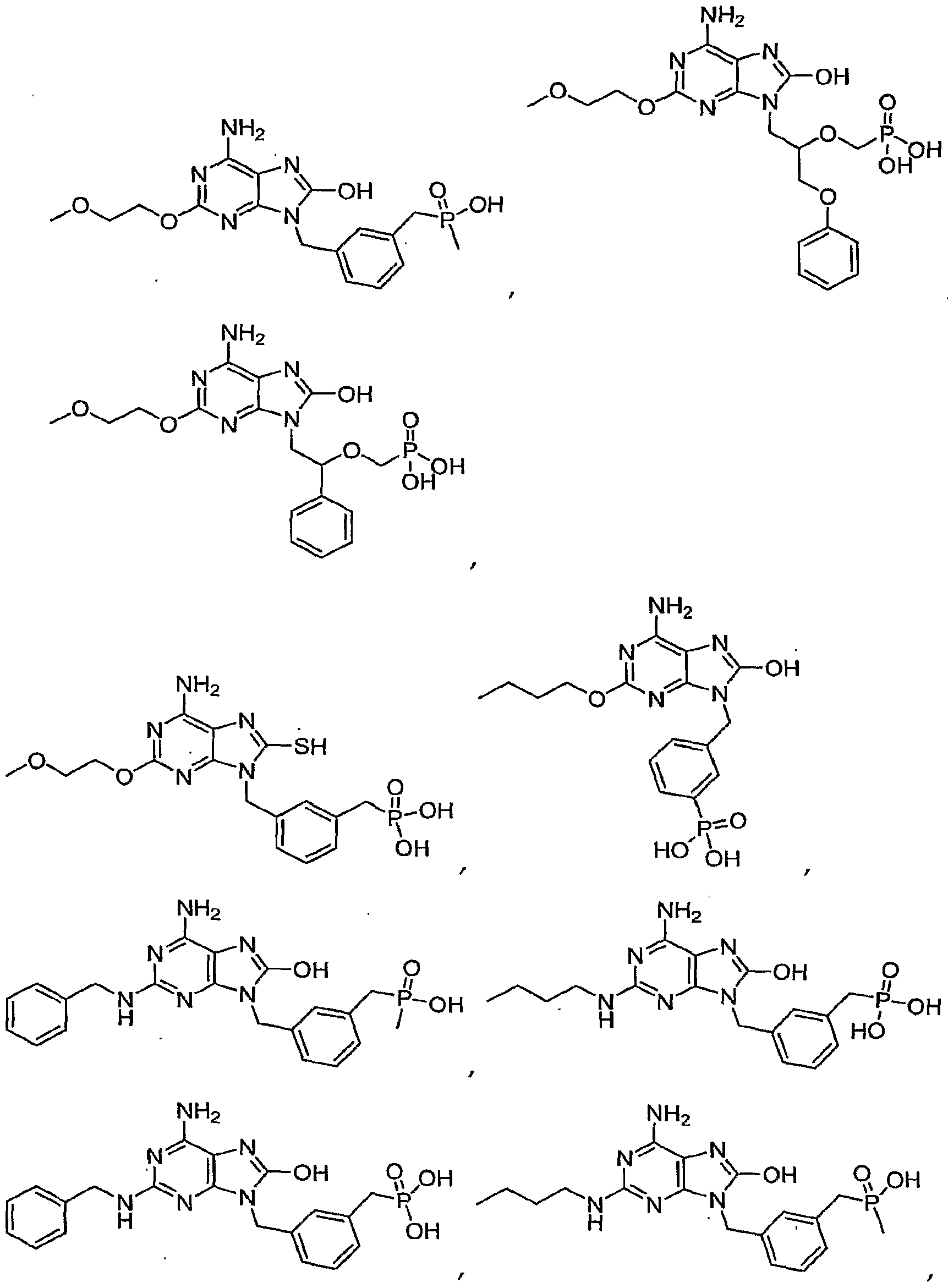


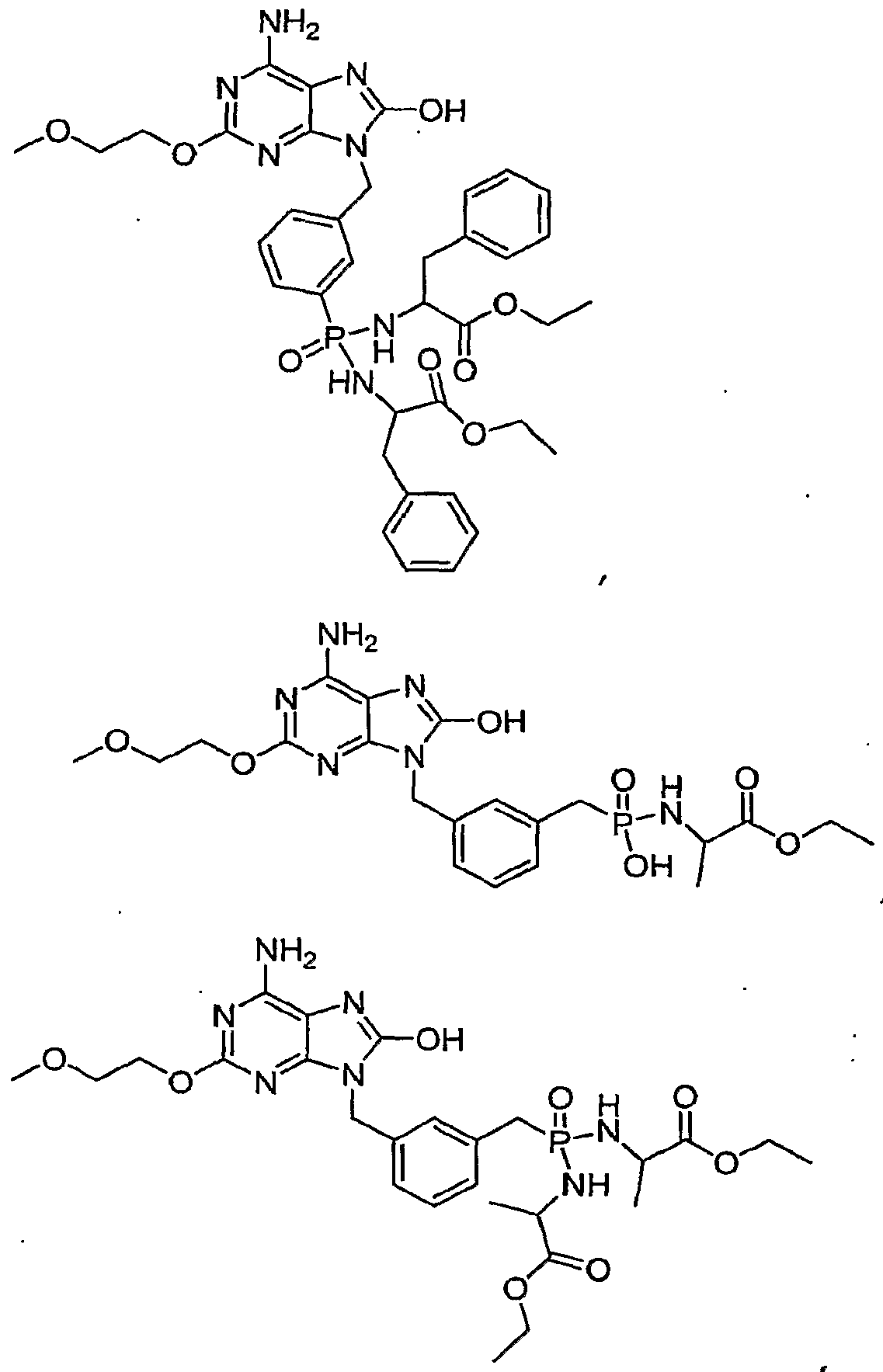


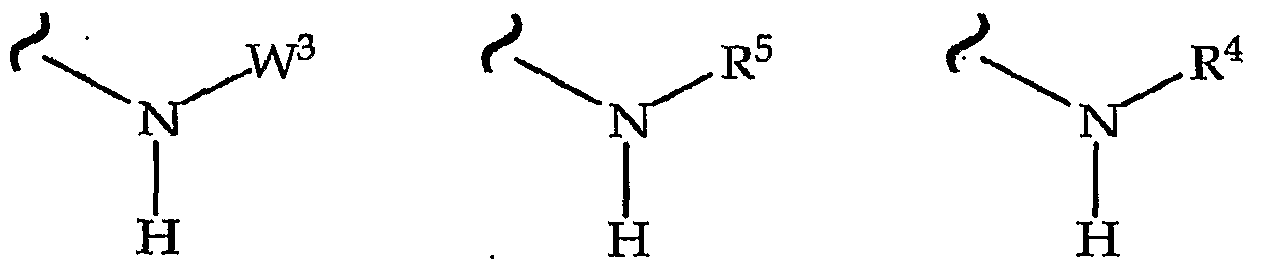


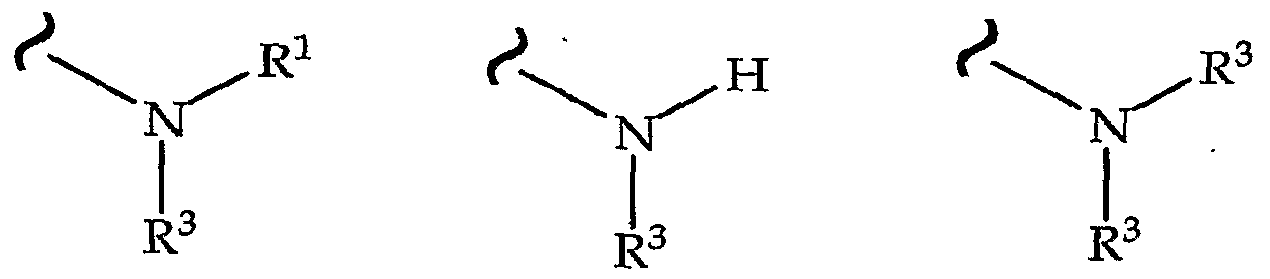


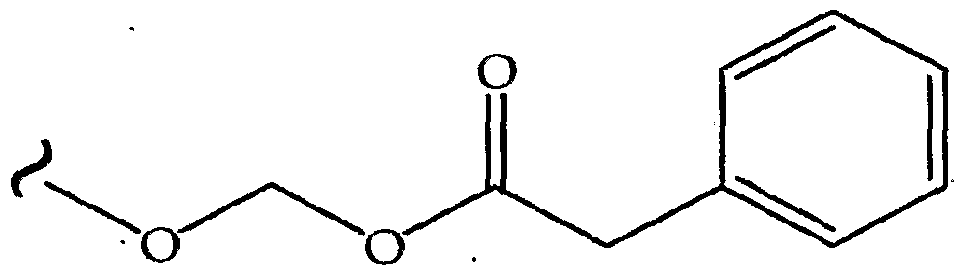


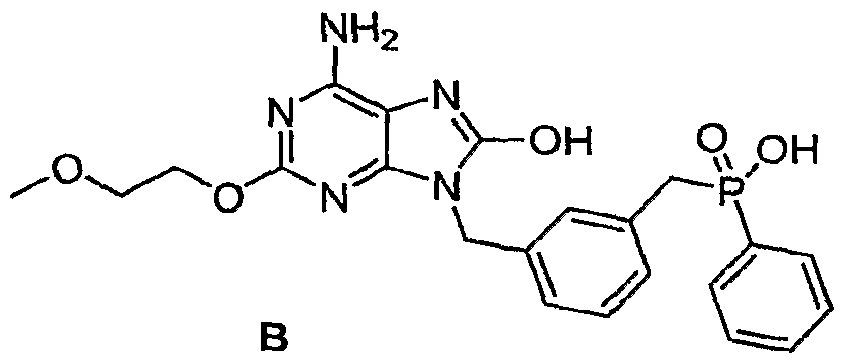





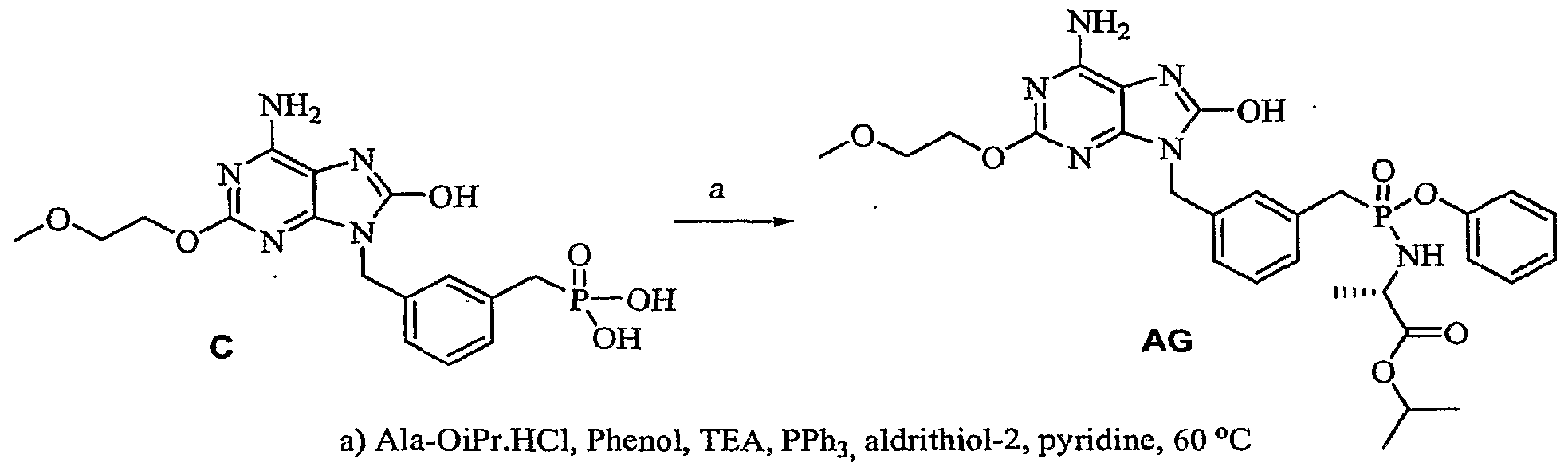


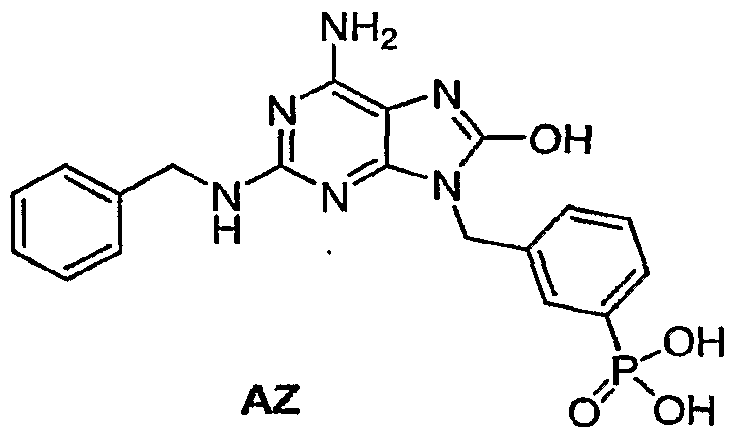


Claims





Priority Applications (11)
| Application Number | Priority Date | Filing Date | Title |
|---|---|---|---|
| SI200731368T SI2038290T1 (en) | 2006-07-07 | 2007-07-06 | Modulators of toll-like receptor 7 |
| EP07836017.9A EP2038290B1 (en) | 2006-07-07 | 2007-07-06 | Modulators of toll-like receptor 7 |
| HK09104965.4A HK1126222B (en) | 2006-07-07 | 2007-07-06 | Modulators of toll-like receptor 7 |
| DK07836017.9T DK2038290T3 (en) | 2006-07-07 | 2007-07-06 | Modulators of toll-like receptor 7 |
| ES07836017.9T ES2437871T3 (en) | 2006-07-07 | 2007-07-06 | Toll 7 receiver modulators |
| JP2009518395A JP5356228B2 (en) | 2006-07-07 | 2007-07-06 | Regulator of toll-like receptor 7 |
| US12/303,214 US8338593B2 (en) | 2006-07-07 | 2007-07-06 | Modulators of toll-like receptor 7 |
| CA2656427A CA2656427C (en) | 2006-07-07 | 2007-07-06 | Modulators of toll-like receptor 7 |
| PL07836017T PL2038290T3 (en) | 2006-07-07 | 2007-07-06 | Modulators of toll-like receptor 7 |
| NZ572983A NZ572983A (en) | 2006-07-07 | 2007-07-06 | Phosphinate modulators of toll-like receptor 7 |
| AU2007269557A AU2007269557B2 (en) | 2006-07-07 | 2007-07-06 | Modulators of toll-like receptor 7 |
Applications Claiming Priority (4)
| Application Number | Priority Date | Filing Date | Title |
|---|---|---|---|
| US81949006P | 2006-07-07 | 2006-07-07 | |
| US60/819,490 | 2006-07-07 | ||
| US83285106P | 2006-07-24 | 2006-07-24 | |
| US60/832,851 | 2006-07-24 |
Publications (1)
| Publication Number | Publication Date |
|---|---|
| WO2008005555A1 true WO2008005555A1 (en) | 2008-01-10 |
Family
ID=38599366
Family Applications (1)
| Application Number | Title | Priority Date | Filing Date |
|---|---|---|---|
| PCT/US2007/015615 Ceased WO2008005555A1 (en) | 2006-07-07 | 2007-07-06 | Modulators of toll-like receptor 7 |
Country Status (14)
| Country | Link |
|---|---|
| US (2) | US20080008682A1 (en) |
| EP (1) | EP2038290B1 (en) |
| JP (1) | JP5356228B2 (en) |
| AR (1) | AR061839A1 (en) |
| AU (1) | AU2007269557B2 (en) |
| CA (1) | CA2656427C (en) |
| DK (1) | DK2038290T3 (en) |
| ES (1) | ES2437871T3 (en) |
| NZ (1) | NZ572983A (en) |
| PL (1) | PL2038290T3 (en) |
| PT (1) | PT2038290E (en) |
| SI (1) | SI2038290T1 (en) |
| TW (1) | TWI399377B (en) |
| WO (1) | WO2008005555A1 (en) |
Cited By (93)
| Publication number | Priority date | Publication date | Assignee | Title |
|---|---|---|---|---|
| WO2009105513A3 (en) * | 2008-02-20 | 2009-11-12 | Gilead Sciences, Inc. | Novel compounds and methods for therapy |
| US20100221217A1 (en) * | 2009-02-27 | 2010-09-02 | Intermune, Inc. | Therapeutic composition |
| WO2010151488A1 (en) * | 2009-06-23 | 2010-12-29 | Gilead Sciences, Inc. | Combination of boceprevir with 5- ( { 6- [2, 4- bis (trifluoromethyl) phenyl] pyridazin-3 -yl } methyl) -2- (2 -fluorophenyl) -5h- imidazo [4, 5-c] pyridine for the treatment of hcv |
| WO2010151487A1 (en) * | 2009-06-23 | 2010-12-29 | Gilead Sciences, Inc. | Combination of telaprevir with 5- ({6- [2,4-bis (trifluoromethyl) phenyl] pyridazin-3 -yl)methyl) -2- (2 -fluorophenyl) -5h- imidazo [4, 5-c]pyridine for the treatment of hcv |
| WO2012031140A1 (en) | 2010-09-01 | 2012-03-08 | Novartis Ag | Adsorption of immunopotentiators to insoluble metal salts |
| WO2011139348A3 (en) * | 2010-04-30 | 2012-03-15 | The Regents Of The University Of California | Uses of phospholipid conjugates of synthetic tlr7 agonists |
| JP2013501730A (en) * | 2009-08-07 | 2013-01-17 | グラクソスミスクライン バイオロジカルズ ソシエテ アノニム | Lipid-added oxoadenine derivative |
| WO2013030378A1 (en) | 2011-09-01 | 2013-03-07 | Novartis Ag | Adjuvanted formulations of staphylococcus aureus antigens |
| WO2013131984A1 (en) | 2012-03-07 | 2013-09-12 | Novartis Ag | Adjuvanted formulations of rabies virus immunogens |
| WO2013132041A2 (en) | 2012-03-08 | 2013-09-12 | Novartis Ag | Adjuvanted formulations of booster vaccines |
| WO2013131983A1 (en) | 2012-03-07 | 2013-09-12 | Novartis Ag | Adjuvanted formulations of streptococcus pneumoniae antigens |
| EP2659907A1 (en) | 2012-05-01 | 2013-11-06 | Affiris AG | Compositions |
| EP2659908A1 (en) | 2012-05-01 | 2013-11-06 | Affiris AG | Compositions |
| EP2659906A1 (en) | 2012-05-01 | 2013-11-06 | Affiris AG | Compositions |
| WO2014037472A1 (en) | 2012-09-06 | 2014-03-13 | Novartis Ag | Combination vaccines with serogroup b meningococcus and d/t/p |
| WO2014057132A1 (en) | 2012-10-12 | 2014-04-17 | Novartis Ag | Non-cross-linked acellular pertussis antigens for use in combination vaccines |
| WO2014118305A1 (en) | 2013-02-01 | 2014-08-07 | Novartis Ag | Intradermal delivery of immunological compositions comprising toll-like receptor agonists |
| US8865896B2 (en) | 2008-01-17 | 2014-10-21 | Astrazeneca Aktiebolag | Method for preparing adenine compound |
| EP2801372A2 (en) | 2013-05-10 | 2014-11-12 | Novartis AG | Avoiding narcolepsy risk in influenza vaccines |
| US8895570B2 (en) | 2010-12-17 | 2014-11-25 | Astrazeneca Ab | Purine derivatives |
| US9050319B2 (en) | 2010-04-30 | 2015-06-09 | Telormedix, Sa | Phospholipid drug analogs |
| US9066940B2 (en) | 2009-02-06 | 2015-06-30 | Telormedix, Sa | Pharmaceutical compositions comprising imidazoquinolin(amines) and derivatives thereof suitable for local administration |
| CN104804042A (en) * | 2014-01-24 | 2015-07-29 | 齐鲁制药有限公司 | Nucleotide phosphonate compound, pharmaceutical composition, preparation method and uses thereof |
| US9173935B2 (en) | 2010-04-30 | 2015-11-03 | Telormedix Sa | Phospholipid drug analogs |
| CN105518012A (en) * | 2014-06-25 | 2016-04-20 | 四川海思科制药有限公司 | Substituted amino acid thioester compound, and composition and application thereof |
| WO2016177833A1 (en) | 2015-05-04 | 2016-11-10 | Bionor Immuno As | Dosage regimen for hiv vaccine |
| WO2016193405A1 (en) | 2015-06-03 | 2016-12-08 | Affiris Ag | Il-23-p19 vaccines |
| WO2017005851A1 (en) | 2015-07-07 | 2017-01-12 | Affiris Ag | Vaccines for the treatment and prevention of ige mediated diseases |
| WO2017027434A1 (en) * | 2015-08-10 | 2017-02-16 | Merck Sharp & Dohme Corp. | Antiviral beta-amino acid ester phosphodiamide compounds |
| US9593137B2 (en) | 2011-12-22 | 2017-03-14 | Geron Corporation | Guanine analogs as telomerase substrates and telomere length affectors |
| WO2017100108A1 (en) * | 2015-12-10 | 2017-06-15 | Merck Sharp & Dohme Corp. | Antiviral phosphodiamide prodrugs of tenofovir |
| US9738766B2 (en) | 2012-10-08 | 2017-08-22 | Dow Global Technologies Llc | Organophosphorus compounds for flame retardant polyurethane foams |
| US9908908B2 (en) | 2012-08-30 | 2018-03-06 | Jiangsu Hansoh Pharmaceutical Co., Ltd. | Tenofovir prodrug and pharmaceutical uses thereof |
| US9950062B2 (en) | 2009-09-02 | 2018-04-24 | Glaxosmithkline Biologicals Sa | Compounds and compositions as TLR activity modulators |
| WO2018113652A1 (en) * | 2016-12-23 | 2018-06-28 | 四川科伦博泰生物医药股份有限公司 | Nucleoside phosphate compound and preparation method and use thereof |
| CN108948016A (en) * | 2017-05-19 | 2018-12-07 | 江苏恒瑞医药股份有限公司 | Purine ketones derivant, preparation method and its application in medicine |
| WO2019113462A1 (en) | 2017-12-07 | 2019-06-13 | Emory University | N4-hydroxycytidine and derivatives and anti-viral uses related thereto |
| WO2019165374A1 (en) | 2018-02-26 | 2019-08-29 | Gilead Sciences, Inc. | Substituted pyrrolizine compounds as hbv replication inhibitors |
| WO2019195181A1 (en) | 2018-04-05 | 2019-10-10 | Gilead Sciences, Inc. | Antibodies and fragments thereof that bind hepatitis b virus protein x |
| WO2019193533A1 (en) | 2018-04-06 | 2019-10-10 | Institute Of Organic Chemistry And Biochemistry Ascr, V.V.I. | 2'2'-cyclic dinucleotides |
| WO2019193543A1 (en) | 2018-04-06 | 2019-10-10 | Institute Of Organic Chemistry And Biochemistry Ascr, V.V.I. | 3'3'-cyclic dinucleotides |
| WO2019193542A1 (en) | 2018-04-06 | 2019-10-10 | Institute Of Organic Chemistry And Biochemistry Ascr, V.V.I. | 2'3'-cyclic dinucleotides |
| WO2019200247A1 (en) | 2018-04-12 | 2019-10-17 | Precision Biosciences, Inc. | Optimized engineered meganucleases having specificity for a recognition sequence in the hepatitis b virus genome |
| US10450335B2 (en) | 2015-12-15 | 2019-10-22 | Merck Sharp & Dohme Corp. | Antiviral oxime phosphoramide compounds |
| WO2019211799A1 (en) | 2018-05-03 | 2019-11-07 | Institute Of Organic Chemistry And Biochemistry Ascr, V.V.I. | 2'3'-cyclic dinucleotide analogue comprising a cyclopentanyl modified nucleotide |
| US10519159B2 (en) | 2016-12-22 | 2019-12-31 | Merck Sharp & Dohme Corp. | Antiviral aliphatic ester prodrugs of tenofovir |
| WO2020028097A1 (en) | 2018-08-01 | 2020-02-06 | Gilead Sciences, Inc. | Solid forms of (r)-11-(methoxymethyl)-12-(3-methoxypropoxy)-3,3-dimethyl-8-0x0-2,3,8,13b-tetrahydro-1h-pyrido[2,1-a]pyrrolo[1,2-c] phthalazine-7-c arboxylic acid |
| US10603369B2 (en) | 2011-03-02 | 2020-03-31 | Glaxosmithkline Biologicals Sa | Combination vaccines with lower doses of antigen and/or adjuvant |
| EP3639850A1 (en) | 2014-03-26 | 2020-04-22 | GlaxoSmithKline Biologicals S.A. | Mutant staphylococcal antigens |
| WO2020092528A1 (en) | 2018-10-31 | 2020-05-07 | Gilead Sciences, Inc. | Substituted 6-azabenzimidazole compounds having hpk1 inhibitory activity |
| WO2020092621A1 (en) | 2018-10-31 | 2020-05-07 | Gilead Sciences, Inc. | Substituted 6-azabenzimidazole compounds as hpk1 inhibitors |
| US10662416B2 (en) | 2016-10-14 | 2020-05-26 | Precision Biosciences, Inc. | Engineered meganucleases specific for recognition sequences in the hepatitis B virus genome |
| US10736908B2 (en) | 2016-10-26 | 2020-08-11 | Merck Sharp & Dohme Corp. | Antiviral aryl-amide phosphodiamide compounds |
| WO2020178768A1 (en) | 2019-03-07 | 2020-09-10 | Institute Of Organic Chemistry And Biochemistry Ascr, V.V.I. | 3'3'-cyclic dinucleotide analogue comprising a cyclopentanyl modified nucleotide as sting modulator |
| WO2020178770A1 (en) | 2019-03-07 | 2020-09-10 | Institute Of Organic Chemistry And Biochemistry Ascr, V.V.I. | 3'3'-cyclic dinucleotides and prodrugs thereof |
| WO2020178769A1 (en) | 2019-03-07 | 2020-09-10 | Institute Of Organic Chemistry And Biochemistry Ascr, V.V.I. | 2'3'-cyclic dinucleotides and prodrugs thereof |
| WO2020214652A1 (en) | 2019-04-17 | 2020-10-22 | Gilead Sciences, Inc. | Solid forms of a toll-like receptor modulator |
| WO2020214663A1 (en) | 2019-04-17 | 2020-10-22 | Gilead Sciences, Inc. | Solid forms of a toll-like receptor modulator |
| WO2020237025A1 (en) | 2019-05-23 | 2020-11-26 | Gilead Sciences, Inc. | Substituted exo-methylene-oxindoles which are hpk1/map4k1 inhibitors |
| WO2020263830A1 (en) | 2019-06-25 | 2020-12-30 | Gilead Sciences, Inc. | Flt3l-fc fusion proteins and methods of use |
| WO2021034804A1 (en) | 2019-08-19 | 2021-02-25 | Gilead Sciences, Inc. | Pharmaceutical formulations of tenofovir alafenamide |
| US10966999B2 (en) | 2017-12-20 | 2021-04-06 | Institute Of Organic Chemistry And Biochemistry Ascr, V.V.I. | 3′3′ cyclic dinucleotides with phosphonate bond activating the sting adaptor protein |
| WO2021067181A1 (en) | 2019-09-30 | 2021-04-08 | Gilead Sciences, Inc. | Hbv vaccines and methods treating hbv |
| WO2021113765A1 (en) | 2019-12-06 | 2021-06-10 | Precision Biosciences, Inc. | Optimized engineered meganucleases having specificity for a recognition sequence in the hepatitis b virus genome |
| US11072615B2 (en) | 2014-09-16 | 2021-07-27 | Gilead Sciences, Inc. | Solid forms of a toll-like receptor modulator |
| CN113230397A (en) * | 2020-06-08 | 2021-08-10 | 王竹林 | Novel immunologic adjuvant, compound and application thereof |
| US11110091B2 (en) | 2008-12-09 | 2021-09-07 | Gilead Sciences, Inc. | Modulators of toll-like receptors |
| US11116774B2 (en) | 2014-07-11 | 2021-09-14 | Gilead Sciences, Inc. | Modulators of toll-like receptors for the treatment of HIV |
| US11123355B2 (en) | 2016-12-22 | 2021-09-21 | Idenix Pharmaceuticals Llc | Antiviral benzyl-amine phosphodiamide compounds |
| WO2021188959A1 (en) | 2020-03-20 | 2021-09-23 | Gilead Sciences, Inc. | Prodrugs of 4'-c-substituted-2-halo-2'-deoxyadenosine nucleosides and methods of making and using the same |
| US11186599B2 (en) | 2018-06-12 | 2021-11-30 | Sichuan Kelun-Biotech Biopharmaceutical Co., Ltd. | Phosphonamide ester compound, salt thereof, related crystal form thereof, preparation method therefor and use thereof |
| US11203610B2 (en) | 2017-12-20 | 2021-12-21 | Institute Of Organic Chemistry And Biochemistry Ascr, V.V.I. | 2′3′ cyclic dinucleotides with phosphonate bond activating the sting adaptor protein |
| WO2022031894A1 (en) | 2020-08-07 | 2022-02-10 | Gilead Sciences, Inc. | Prodrugs of phosphonamide nucleotide analogues and their pharmaceutical use |
| WO2022087149A2 (en) | 2020-10-22 | 2022-04-28 | Gilead Sciences, Inc. | Interleukin-2-fc fusion proteins and methods of use |
| US11339183B2 (en) | 2018-07-06 | 2022-05-24 | Kancera Ab | Phosphate and phosphonate derivatives of 7-amino-5-thio-thiazolo[4,5-d]pyrimidines and their use in treating conditions associated with elevated levels of CX3CR1 and/or CX3CL1 |
| WO2022241134A1 (en) | 2021-05-13 | 2022-11-17 | Gilead Sciences, Inc. | COMBINATION OF A TLR8 MODULATING COMPOUND AND ANTI-HBV siRNA THERAPEUTICS |
| WO2022271650A1 (en) | 2021-06-23 | 2022-12-29 | Gilead Sciences, Inc. | Diacylglyercol kinase modulating compounds |
| WO2022271659A1 (en) | 2021-06-23 | 2022-12-29 | Gilead Sciences, Inc. | Diacylglyercol kinase modulating compounds |
| WO2022271677A1 (en) | 2021-06-23 | 2022-12-29 | Gilead Sciences, Inc. | Diacylglyercol kinase modulating compounds |
| WO2022271684A1 (en) | 2021-06-23 | 2022-12-29 | Gilead Sciences, Inc. | Diacylglyercol kinase modulating compounds |
| US11628181B2 (en) | 2014-12-26 | 2023-04-18 | Emory University | N4-hydroxycytidine and derivatives and anti-viral uses related thereto |
| RU2796403C2 (en) * | 2018-01-10 | 2023-05-23 | Нукорион Фармасьютикалз, Инк. | Phosphorus(n)amidateacetal and phosph(oh)atacetal compounds |
| US11697851B2 (en) | 2016-05-24 | 2023-07-11 | The Regents Of The University Of California | Early ovarian cancer detection diagnostic test based on mRNA isoforms |
| US11826375B2 (en) | 2018-07-19 | 2023-11-28 | Merck Sharp & Dohme Llc | Phosphinic amide prodrugs of tenofovir |
| WO2023240253A3 (en) * | 2022-06-10 | 2024-02-08 | Forward Therapeutics, Inc. | Modulators of tnf-alpha activity |
| WO2024199063A1 (en) * | 2023-03-30 | 2024-10-03 | 浙江养生堂天然药物研究所有限公司 | Phosphorus or sulfur-containing macrocycle and use thereof |
| US12110308B2 (en) | 2018-01-10 | 2024-10-08 | Nucorion Pharmaceuticals, Inc. | Phosphor(n)amidatacetal and phosph(on)atalcetal compounds |
| WO2025240243A1 (en) | 2024-05-13 | 2025-11-20 | Gilead Sciences, Inc. | Combination therapies with bulevirtide and an inhibitory nucleic acid targeting hepatitis b virus |
| WO2025240244A1 (en) | 2024-05-13 | 2025-11-20 | Gilead Sciences, Inc. | Combination therapies comprising bulevirtide and lonafarnib for use in the treatment of hepatitis d virus infection |
| WO2025240246A1 (en) | 2024-05-13 | 2025-11-20 | Gilead Sciences, Inc. | Combination therapies with ribavirin |
| WO2025240242A1 (en) | 2024-05-13 | 2025-11-20 | Gilead Sciences, Inc. | Combination therapies with ribavirin |
| US12552820B2 (en) | 2020-04-21 | 2026-02-17 | Ligand Pharmaceuticals Incorporated | Benzyloxy phosph(on)ate compounds |
| US12611453B2 (en) | 2019-05-22 | 2026-04-28 | Gilead Sciences, Inc. | Method of inducing an HIV-1-specific immune response using a chimpanzee adenovirus vector encoding an hivacat t-cell immunogen and TLR7 agonist |
Families Citing this family (63)
| Publication number | Priority date | Publication date | Assignee | Title |
|---|---|---|---|---|
| US7388002B2 (en) * | 2001-11-14 | 2008-06-17 | Biocryst Pharmaceuticals, Inc. | Nucleosides, preparation thereof and use as inhibitors of RNA viral polymerases |
| US8012964B2 (en) * | 2004-03-26 | 2011-09-06 | Dainippon Sumitomo Pharma Co., Ltd. | 9-substituted 8-oxoadenine compound |
| NZ564326A (en) * | 2005-06-16 | 2010-01-29 | Cv Therapeutics Inc | Prodrugs of A2B adenosine receptor antagonists |
| CN101304748A (en) | 2005-08-22 | 2008-11-12 | 加利福尼亚大学董事会 | TLR agonist |
| TW200801003A (en) * | 2005-09-16 | 2008-01-01 | Astrazeneca Ab | Novel compounds |
| JPWO2007034817A1 (en) * | 2005-09-22 | 2009-03-26 | 大日本住友製薬株式会社 | New adenine compounds |
| EP2700638A1 (en) * | 2006-05-31 | 2014-02-26 | The Regents Of the University of California | Purine analogs |
| US8138172B2 (en) * | 2006-07-05 | 2012-03-20 | Astrazeneca Ab | 8-oxoadenine derivatives acting as modulators of TLR7 |
| US20080008682A1 (en) * | 2006-07-07 | 2008-01-10 | Chong Lee S | Modulators of toll-like receptor 7 |
| TW200831105A (en) * | 2006-12-14 | 2008-08-01 | Astrazeneca Ab | Novel compounds |
| CN101790380B (en) | 2007-02-07 | 2013-07-10 | 加利福尼亚大学董事会 | Conjugates of synthetic TLR agonists and uses therefor |
| AR065372A1 (en) * | 2007-02-19 | 2009-06-03 | Smithkline Beecham Corp | PURINA DERIVATIVES |
| ES2373616T3 (en) * | 2007-03-19 | 2012-02-07 | Astrazeneca Ab | 8-OXO-ADENINE 9 COMPOUNDS REPLACED AS TOLL TYPE RECEIVER MODULATORS (TLR7). |
| ES2457316T3 (en) * | 2007-03-19 | 2014-04-25 | Astrazeneca Ab | 8-Oxo-adenine 9 compounds substituted as toll-like receptor modulators (TLR7) |
| AR065784A1 (en) * | 2007-03-20 | 2009-07-01 | Dainippon Sumitomo Pharma Co | DERIVATIVES OF 8-OXO ADENINE, DRUGS THAT CONTAIN THEM AND USES AS THERAPEUTIC AGENTS FOR ALLERGIC, ANTIVIRAL OR ANTIBACTERIAL DISEASES. |
| JPWO2008114819A1 (en) * | 2007-03-20 | 2010-07-08 | 大日本住友製薬株式会社 | New adenine compounds |
| HRP20120895T1 (en) * | 2007-05-08 | 2012-11-30 | Astrazeneca Ab | Imidazoquinolines with immuno-modulating properties |
| CA2691444C (en) | 2007-06-29 | 2016-06-14 | Gilead Sciences, Inc. | Purine derivatives and their use as modulators of toll-like receptor 7 |
| PE20091156A1 (en) | 2007-12-17 | 2009-09-03 | Astrazeneca Ab | SALTS OF (3 - {[[3- (6-AMINO-2-BUTOXY-8-OXO-7,8-DIHIDRO-9H-PURIN-9-IL) PROPYL] (3-MORFOLIN-4-ILPROPIL) AMINO] METHYL} PHENYL) METHYL ACETATE |
| JPWO2009091031A1 (en) * | 2008-01-17 | 2011-05-26 | 大日本住友製薬株式会社 | Method for producing adenine compound |
| EA201001264A1 (en) * | 2008-02-07 | 2011-04-29 | Дзе Регентс Оф Дзе Юниверсити Оф Калифорния | METHOD FOR TREATING URINARY BUBBLE DISEASES WITH TLR7 Activator |
| WO2010014913A1 (en) * | 2008-08-01 | 2010-02-04 | Ventirx Pharmaceuticals, Inc. | Toll-like receptor agonist formulations and their use |
| UA103195C2 (en) * | 2008-08-11 | 2013-09-25 | Глаксосмитклайн Ллк | PURCHASE DERIVATIVES FOR THE APPLICATION IN THE TREATMENT OF ALLERGIES, INFLAMMATORY AND INFECTIOUS DISEASES |
| ES2545275T3 (en) | 2008-11-06 | 2015-09-09 | Ventirx Pharmaceuticals, Inc. | Methods of synthesis of benzazepine derivatives |
| US20100136097A1 (en) * | 2008-12-02 | 2010-06-03 | Searete Llc, A Limited Liability Corporation Of The State Of Delaware | Systems for modulating inflammation |
| US20100135983A1 (en) * | 2008-12-02 | 2010-06-03 | Searete Llc, A Limited Liability Corporation Of The State Of Delaware | Anti-inflammatory compositions and methods |
| US20100136096A1 (en) * | 2008-12-02 | 2010-06-03 | Searete Llc, A Limited Liability Corporation Of The State Of Delaware | Systems for modulating inflammation |
| US20100136094A1 (en) * | 2008-12-02 | 2010-06-03 | Searete Llc, A Limited Liability Corporation Of The State Of Delaware | Systems for modulating inflammation |
| US20100137787A1 (en) * | 2008-12-02 | 2010-06-03 | Searete Llc, A Limited Liability Corporation Of The State Of Delaware | Delivery devices for modulating inflammation |
| US20100136095A1 (en) * | 2008-12-02 | 2010-06-03 | Searete Llc, A Limited Liability Corporation Of The State Of Delaware | Systems for modulating inflammation |
| US20100137246A1 (en) * | 2008-12-02 | 2010-06-03 | Searete Llc, A Limited Liability Corporation Of The State Of Delaware | Anti-inflammatory compositions and methods |
| KR20110117705A (en) * | 2009-02-11 | 2011-10-27 | 더 리전트 오브 더 유니버시티 오브 캘리포니아 | Toll-like receptor modulators and treatment of disease |
| AR077125A1 (en) * | 2009-06-23 | 2011-08-03 | Gilead Sciences Inc | PHARMACEUTICAL COMBINATIONS USEFUL TO TREAT HCV |
| RU2016108987A (en) * | 2009-08-18 | 2018-11-26 | Вентиркс Фармасьютикалз, Инк. | SUBSTITUTED BENZOAZEPINES AS MODULATORS OF A TOLL-LIKE RECEPTOR |
| CN105669553A (en) | 2009-08-18 | 2016-06-15 | 文蒂雷克斯药品公司 | Substituted benzoazepines as Toll-like receptor modulators |
| JP5694345B2 (en) | 2009-10-22 | 2015-04-01 | ギリアード サイエンシーズ, インコーポレイテッド | Regulators of TOLL-like receptors |
| JP2013512859A (en) * | 2009-12-03 | 2013-04-18 | 大日本住友製薬株式会社 | Imidazoquinoline acting through a toll-like receptor (TLR) |
| US20110150836A1 (en) * | 2009-12-22 | 2011-06-23 | Gilead Sciences, Inc. | Methods of treating hbv and hcv infection |
| EP2619215B1 (en) | 2010-09-22 | 2018-09-05 | Alios Biopharma, Inc. | Azido nucleosides and nucleotide analogs |
| CN103370317B (en) | 2010-12-16 | 2015-10-07 | 阿斯利康(瑞典)有限公司 | Imidazo[4,5-c]quinolin-1-yl derivatives useful in therapy |
| US20130273005A1 (en) * | 2010-12-20 | 2013-10-17 | Gilead Sciences, Inc. | Methods for treating hcv |
| HRP20181667T1 (en) | 2011-07-22 | 2018-12-14 | Glaxosmithkline Llc | PREPARATION |
| EP2709613B2 (en) | 2011-09-16 | 2020-08-12 | Gilead Pharmasset LLC | Methods for treating hcv |
| CN107266498B (en) * | 2011-10-07 | 2023-10-03 | 吉利德科学公司 | Method for preparing antiviral nucleotide analogues |
| EA026354B1 (en) | 2012-08-24 | 2017-03-31 | ГЛАКСОСМИТКЛАЙН ЭлЭлСи | Pyrazolopyrimidine compounds |
| TWI485145B (en) | 2012-10-26 | 2015-05-21 | 財團法人工業技術研究院 | P-type organic semiconductor materials and optoelectronic components |
| AU2013348217B2 (en) | 2012-11-20 | 2016-10-06 | Glaxosmithkline Llc | Novel compounds |
| BR112015011439A2 (en) | 2012-11-20 | 2017-07-11 | Glaxosmithkline Llc | compound, pharmaceutical composition, vaccine composition, and use of a compound |
| EA028480B1 (en) | 2012-11-20 | 2017-11-30 | ГЛАКСОСМИТКЛАЙН ЭлЭлСи | Novel compounds |
| EP2950786B1 (en) | 2013-01-31 | 2019-11-27 | Gilead Pharmasset LLC | Combination formulation of two antiviral compounds |
| US10414768B2 (en) * | 2014-12-05 | 2019-09-17 | Centre National De La Recherche Scientifique (Cnrs) | Compounds for treating cystic fibrosis |
| JP2021035910A (en) * | 2017-11-01 | 2021-03-04 | 大日本住友製薬株式会社 | Substituted purine compound |
| US12522583B2 (en) | 2018-11-07 | 2026-01-13 | Dana-Farber Cancer Institute, Inc. | Benzimidazole derivatives and aza-benzimidazole derivatives as Janus kinase 2 inhibitors and uses thereof |
| EP3876939A4 (en) | 2018-11-07 | 2022-08-10 | Dana-Farber Cancer Institute, Inc. | BENZOTHIAZOLE DERIVATIVES AND 7-AZA-BENZOTHIAZOLE DERIVATIVES AS JANUS KINASE-2 INHIBITORS AND USES THEREOF |
| EP3877371A4 (en) | 2018-11-07 | 2022-07-27 | Dana-Farber Cancer Institute, Inc. | IMIDAZOPYRIDINE DERIVATIVES AND AZA-IMIDAZOPYRIDINE DERIVATIVES USED AS JANUS KINASE 2 INHIBITORS AND ASSOCIATED USES |
| ES2960987T3 (en) | 2019-04-12 | 2024-03-07 | Riboscience Llc | Bicyclic heteroaryl derivatives as inhibitors of ectonucleotide pyrophosphatase phosphodiesterase 1 |
| CN112778372B (en) * | 2019-11-11 | 2025-09-23 | 苏州泽璟生物制药股份有限公司 | Imidazoloquinoline substituted phosphate agonist and its preparation method and application |
| US11691963B2 (en) | 2020-05-06 | 2023-07-04 | Ajax Therapeutics, Inc. | 6-heteroaryloxy benzimidazoles and azabenzimidazoles as JAK2 inhibitors |
| US12043632B2 (en) | 2020-12-23 | 2024-07-23 | Ajax Therapeutics, Inc. | 6-heteroaryloxy benzimidazoles and azabenzimidazoles as JAK2 inhibitors |
| US12162881B2 (en) | 2021-11-09 | 2024-12-10 | Ajax Therapeutics, Inc. | Forms and compositions of inhibitors of JAK2 |
| WO2023086319A1 (en) | 2021-11-09 | 2023-05-19 | Ajax Therapeutics, Inc. | 6-he tero aryloxy benzimidazoles and azabenzimidazoles as jak2 inhibitors |
| WO2024105159A1 (en) * | 2022-11-16 | 2024-05-23 | University Of Zurich | Ligands of the m6a-rna readers |
| CN119080839B (en) * | 2024-11-07 | 2025-03-11 | 上海柯君医药科技有限公司 | Antiviral medicine and application thereof |
Family Cites Families (5)
| Publication number | Priority date | Publication date | Assignee | Title |
|---|---|---|---|---|
| GB9020931D0 (en) | 1990-09-26 | 1990-11-07 | Wellcome Found | Heterocyclic compounds |
| US5994321A (en) * | 1993-12-20 | 1999-11-30 | Aronex Pharmaceuticals, Inc. | Antiviral guanine analogs |
| ATE478082T1 (en) * | 2003-12-30 | 2010-09-15 | Gilead Sciences Inc | PHOSPHONATES, MONOPHOSPHONAMIDATE, BISPHOSPHONAMIDATE FOR THE TREATMENT OF VIRAL DISEASES |
| US20080008682A1 (en) * | 2006-07-07 | 2008-01-10 | Chong Lee S | Modulators of toll-like receptor 7 |
| KR20110117705A (en) * | 2009-02-11 | 2011-10-27 | 더 리전트 오브 더 유니버시티 오브 캘리포니아 | Toll-like receptor modulators and treatment of disease |
-
2007
- 2007-07-06 US US11/825,377 patent/US20080008682A1/en not_active Abandoned
- 2007-07-06 TW TW096124724A patent/TWI399377B/en active
- 2007-07-06 CA CA2656427A patent/CA2656427C/en active Active
- 2007-07-06 ES ES07836017.9T patent/ES2437871T3/en active Active
- 2007-07-06 PL PL07836017T patent/PL2038290T3/en unknown
- 2007-07-06 EP EP07836017.9A patent/EP2038290B1/en active Active
- 2007-07-06 WO PCT/US2007/015615 patent/WO2008005555A1/en not_active Ceased
- 2007-07-06 AR ARP070103030A patent/AR061839A1/en unknown
- 2007-07-06 NZ NZ572983A patent/NZ572983A/en unknown
- 2007-07-06 JP JP2009518395A patent/JP5356228B2/en active Active
- 2007-07-06 SI SI200731368T patent/SI2038290T1/en unknown
- 2007-07-06 US US12/303,214 patent/US8338593B2/en active Active
- 2007-07-06 PT PT78360179T patent/PT2038290E/en unknown
- 2007-07-06 DK DK07836017.9T patent/DK2038290T3/en active
- 2007-07-06 AU AU2007269557A patent/AU2007269557B2/en active Active
Non-Patent Citations (2)
| Title |
|---|
| HEMMI H ET AL: "SMALL ANTI-VIRAL COMPOUNDS ACTIVATE IMMUNE CELLLS VIA THE TLR7 MYD88-DEPENDENT SIGNALING PATHWAY", NATURE IMMUNOLOGY, NATURE PUBLISHING GROUP,, GB, vol. 3, no. 2, February 2002 (2002-02-01), pages 196 - 200, XP009000917, ISSN: 1529-2908 * |
| SOLIBNOVA ET AL.: "Determination of acid-base dissociation constants of amino- and guanidinopurine nucleotide analogs and related compounds by capllary zone electrophoresis", ELECTROPHORESIS, vol. 27, 2006, XP002456506 * |
Cited By (151)
| Publication number | Priority date | Publication date | Assignee | Title |
|---|---|---|---|---|
| US8865896B2 (en) | 2008-01-17 | 2014-10-21 | Astrazeneca Aktiebolag | Method for preparing adenine compound |
| CN102015739A (en) * | 2008-02-20 | 2011-04-13 | 吉联亚科学股份有限公司 | Novel compounds and methods for treatment |
| CN102015739B (en) * | 2008-02-20 | 2016-03-09 | 吉联亚科学股份有限公司 | Compounds and methods for treatment |
| AU2009215547B2 (en) * | 2008-02-20 | 2014-04-10 | Gilead Sciences, Inc. | Novel compounds and methods for therapy |
| US8163718B2 (en) | 2008-02-20 | 2012-04-24 | Gilead Sciences, Inc. | Nucleoside analogues containing phosphonate or phosphonamide groups |
| AU2014203786B2 (en) * | 2008-02-20 | 2016-11-17 | Gilead Sciences, Inc. | Novel compounds and methods for therapy |
| WO2009105513A3 (en) * | 2008-02-20 | 2009-11-12 | Gilead Sciences, Inc. | Novel compounds and methods for therapy |
| US11110091B2 (en) | 2008-12-09 | 2021-09-07 | Gilead Sciences, Inc. | Modulators of toll-like receptors |
| US9066940B2 (en) | 2009-02-06 | 2015-06-30 | Telormedix, Sa | Pharmaceutical compositions comprising imidazoquinolin(amines) and derivatives thereof suitable for local administration |
| US9107919B2 (en) | 2009-02-06 | 2015-08-18 | Telormedix Sa | Pharmaceutical compositions comprising imidazoquinolin(amines) and derivatives thereof suitable for local administration |
| US8735345B2 (en) * | 2009-02-27 | 2014-05-27 | Hoffmann La Roche Inc. | Therapeutic composition |
| US20100221217A1 (en) * | 2009-02-27 | 2010-09-02 | Intermune, Inc. | Therapeutic composition |
| WO2010151487A1 (en) * | 2009-06-23 | 2010-12-29 | Gilead Sciences, Inc. | Combination of telaprevir with 5- ({6- [2,4-bis (trifluoromethyl) phenyl] pyridazin-3 -yl)methyl) -2- (2 -fluorophenyl) -5h- imidazo [4, 5-c]pyridine for the treatment of hcv |
| WO2010151488A1 (en) * | 2009-06-23 | 2010-12-29 | Gilead Sciences, Inc. | Combination of boceprevir with 5- ( { 6- [2, 4- bis (trifluoromethyl) phenyl] pyridazin-3 -yl } methyl) -2- (2 -fluorophenyl) -5h- imidazo [4, 5-c] pyridine for the treatment of hcv |
| JP2013501730A (en) * | 2009-08-07 | 2013-01-17 | グラクソスミスクライン バイオロジカルズ ソシエテ アノニム | Lipid-added oxoadenine derivative |
| US9950062B2 (en) | 2009-09-02 | 2018-04-24 | Glaxosmithkline Biologicals Sa | Compounds and compositions as TLR activity modulators |
| US9180183B2 (en) | 2010-04-30 | 2015-11-10 | Telormedix Sa | Phospholipid drug analogs |
| US9173935B2 (en) | 2010-04-30 | 2015-11-03 | Telormedix Sa | Phospholipid drug analogs |
| WO2011139348A3 (en) * | 2010-04-30 | 2012-03-15 | The Regents Of The University Of California | Uses of phospholipid conjugates of synthetic tlr7 agonists |
| US9050319B2 (en) | 2010-04-30 | 2015-06-09 | Telormedix, Sa | Phospholipid drug analogs |
| US9173936B2 (en) | 2010-04-30 | 2015-11-03 | Telormedix Sa | Phospholipid drug analogs |
| EP2719395A1 (en) | 2010-09-01 | 2014-04-16 | Novartis AG | Adsorption of immunopotentiators to insoluble metal salts |
| US10098949B2 (en) | 2010-09-01 | 2018-10-16 | Glaxosmithkline Biologicals S.A. | Adsorption of immunopotentiators to insoluble metal salts |
| WO2012031140A1 (en) | 2010-09-01 | 2012-03-08 | Novartis Ag | Adsorption of immunopotentiators to insoluble metal salts |
| US20120177681A1 (en) * | 2010-09-01 | 2012-07-12 | Manmohan Singh | Formulation of immunopotentiators |
| US9315530B2 (en) | 2010-09-01 | 2016-04-19 | Novartis Ag | Adsorption of immunopotentiators to insoluble metal salts |
| US8895570B2 (en) | 2010-12-17 | 2014-11-25 | Astrazeneca Ab | Purine derivatives |
| US10603369B2 (en) | 2011-03-02 | 2020-03-31 | Glaxosmithkline Biologicals Sa | Combination vaccines with lower doses of antigen and/or adjuvant |
| WO2013030378A1 (en) | 2011-09-01 | 2013-03-07 | Novartis Ag | Adjuvanted formulations of staphylococcus aureus antigens |
| US10035814B2 (en) | 2011-12-22 | 2018-07-31 | Geron Corporation | Guanine analogs as telomerase substrates and telomere length affectors |
| US11279720B2 (en) | 2011-12-22 | 2022-03-22 | Geron Corporation | Guanine analogs as telomerase substrates and telomere length affectors |
| US12398162B2 (en) | 2011-12-22 | 2025-08-26 | Geron Corporation | Guanine analogs as telomerase substrates and telomere length affectors |
| US9593137B2 (en) | 2011-12-22 | 2017-03-14 | Geron Corporation | Guanine analogs as telomerase substrates and telomere length affectors |
| US10562926B2 (en) | 2011-12-22 | 2020-02-18 | Geron Corporation | Guanine analogs as telomerase substrates and telomere length affectors |
| WO2013131983A1 (en) | 2012-03-07 | 2013-09-12 | Novartis Ag | Adjuvanted formulations of streptococcus pneumoniae antigens |
| WO2013131984A1 (en) | 2012-03-07 | 2013-09-12 | Novartis Ag | Adjuvanted formulations of rabies virus immunogens |
| WO2013132041A2 (en) | 2012-03-08 | 2013-09-12 | Novartis Ag | Adjuvanted formulations of booster vaccines |
| US9375471B2 (en) | 2012-03-08 | 2016-06-28 | Glaxosmithkline Biologicals Sa | Adjuvanted formulations of booster vaccines |
| US10842868B2 (en) | 2012-03-08 | 2020-11-24 | Glaxosmithkline Biologicals Sa | Adjuvanted formulations of booster vaccines |
| US9931399B2 (en) | 2012-03-08 | 2018-04-03 | Glaxosmithkline Biologicals Sa | Adjuvanted formulations of booster vaccines |
| EP2659906A1 (en) | 2012-05-01 | 2013-11-06 | Affiris AG | Compositions |
| EP2659907A1 (en) | 2012-05-01 | 2013-11-06 | Affiris AG | Compositions |
| EP2659908A1 (en) | 2012-05-01 | 2013-11-06 | Affiris AG | Compositions |
| US9908908B2 (en) | 2012-08-30 | 2018-03-06 | Jiangsu Hansoh Pharmaceutical Co., Ltd. | Tenofovir prodrug and pharmaceutical uses thereof |
| US9526776B2 (en) | 2012-09-06 | 2016-12-27 | Glaxosmithkline Biologicals Sa | Combination vaccines with serogroup B meningococcus and D/T/P |
| WO2014037472A1 (en) | 2012-09-06 | 2014-03-13 | Novartis Ag | Combination vaccines with serogroup b meningococcus and d/t/p |
| US9738766B2 (en) | 2012-10-08 | 2017-08-22 | Dow Global Technologies Llc | Organophosphorus compounds for flame retardant polyurethane foams |
| EP3620172A1 (en) | 2012-10-12 | 2020-03-11 | GlaxoSmithKline Biologicals SA | Non-cross-linked acellular pertussis antigens for use in combination vaccines |
| WO2014057132A1 (en) | 2012-10-12 | 2014-04-17 | Novartis Ag | Non-cross-linked acellular pertussis antigens for use in combination vaccines |
| WO2014118305A1 (en) | 2013-02-01 | 2014-08-07 | Novartis Ag | Intradermal delivery of immunological compositions comprising toll-like receptor agonists |
| US9827190B2 (en) | 2013-02-01 | 2017-11-28 | Glaxosmithkline Biologicals Sa | Intradermal delivery of immunological compositions comprising toll-like receptor 7 agonists |
| EP2801372A2 (en) | 2013-05-10 | 2014-11-12 | Novartis AG | Avoiding narcolepsy risk in influenza vaccines |
| CN104804042A (en) * | 2014-01-24 | 2015-07-29 | 齐鲁制药有限公司 | Nucleotide phosphonate compound, pharmaceutical composition, preparation method and uses thereof |
| EP3639850A1 (en) | 2014-03-26 | 2020-04-22 | GlaxoSmithKline Biologicals S.A. | Mutant staphylococcal antigens |
| CN105518012A (en) * | 2014-06-25 | 2016-04-20 | 四川海思科制药有限公司 | Substituted amino acid thioester compound, and composition and application thereof |
| US11116774B2 (en) | 2014-07-11 | 2021-09-14 | Gilead Sciences, Inc. | Modulators of toll-like receptors for the treatment of HIV |
| US11773098B2 (en) | 2014-09-16 | 2023-10-03 | Gilead Sciences, Inc. | Solid forms of a toll-like receptor modulator |
| US12486271B2 (en) | 2014-09-16 | 2025-12-02 | Gilead Sciences, Inc. | Solid forms of a toll-like receptor modulator |
| US11072615B2 (en) | 2014-09-16 | 2021-07-27 | Gilead Sciences, Inc. | Solid forms of a toll-like receptor modulator |
| US11628181B2 (en) | 2014-12-26 | 2023-04-18 | Emory University | N4-hydroxycytidine and derivatives and anti-viral uses related thereto |
| US12551497B2 (en) | 2014-12-26 | 2026-02-17 | Emory University | N4-hydroxycytidine and derivatives and anti-viral uses related thereto |
| WO2016177833A1 (en) | 2015-05-04 | 2016-11-10 | Bionor Immuno As | Dosage regimen for hiv vaccine |
| WO2016193405A1 (en) | 2015-06-03 | 2016-12-08 | Affiris Ag | Il-23-p19 vaccines |
| WO2017005851A1 (en) | 2015-07-07 | 2017-01-12 | Affiris Ag | Vaccines for the treatment and prevention of ige mediated diseases |
| CN107849071A (en) * | 2015-08-10 | 2018-03-27 | 默沙东公司 | Antiviral β-amino acid ester phosphonamide compound |
| US9822138B2 (en) | 2015-08-10 | 2017-11-21 | Merck Sharp & Dohme Corp. | Antiviral beta-amino acid ester phosphodiamide compounds |
| CN107849071B (en) * | 2015-08-10 | 2021-03-09 | 默沙东公司 | Antiviral beta amino acid ester phosphorodiamidate compounds |
| WO2017027434A1 (en) * | 2015-08-10 | 2017-02-16 | Merck Sharp & Dohme Corp. | Antiviral beta-amino acid ester phosphodiamide compounds |
| TWI639598B (en) * | 2015-08-10 | 2018-11-01 | 美商默沙東藥廠 | Antiviral β-amino acid phosphate diamine compound |
| EA035028B1 (en) * | 2015-08-10 | 2020-04-20 | Мерк Шарп И Доум Корп. | Antiviral beta-amino acid ester phosphodiamide compounds |
| US10745428B2 (en) | 2015-12-10 | 2020-08-18 | Idenix Pharmaceuticals Llc | Antiviral phosphodiamide prodrugs of tenofovir |
| WO2017100108A1 (en) * | 2015-12-10 | 2017-06-15 | Merck Sharp & Dohme Corp. | Antiviral phosphodiamide prodrugs of tenofovir |
| US10450335B2 (en) | 2015-12-15 | 2019-10-22 | Merck Sharp & Dohme Corp. | Antiviral oxime phosphoramide compounds |
| US11697851B2 (en) | 2016-05-24 | 2023-07-11 | The Regents Of The University Of California | Early ovarian cancer detection diagnostic test based on mRNA isoforms |
| US11274285B2 (en) | 2016-10-14 | 2022-03-15 | Precision Biosciences, Inc. | Engineered meganucleases specific for recognition sequences in the Hepatitis B virus genome |
| US10662416B2 (en) | 2016-10-14 | 2020-05-26 | Precision Biosciences, Inc. | Engineered meganucleases specific for recognition sequences in the hepatitis B virus genome |
| US10736908B2 (en) | 2016-10-26 | 2020-08-11 | Merck Sharp & Dohme Corp. | Antiviral aryl-amide phosphodiamide compounds |
| US11123355B2 (en) | 2016-12-22 | 2021-09-21 | Idenix Pharmaceuticals Llc | Antiviral benzyl-amine phosphodiamide compounds |
| US10519159B2 (en) | 2016-12-22 | 2019-12-31 | Merck Sharp & Dohme Corp. | Antiviral aliphatic ester prodrugs of tenofovir |
| CN109863160A (en) * | 2016-12-23 | 2019-06-07 | 四川科伦博泰生物医药股份有限公司 | Nucleoside phosphorylase class compound and its preparation method and application |
| US10899786B2 (en) | 2016-12-23 | 2021-01-26 | Sichuan Kelun-Biotech Biopharmaceutical Co., Ltd. | Nucleoside phosphate compound and preparation method and use thereof |
| WO2018113652A1 (en) * | 2016-12-23 | 2018-06-28 | 四川科伦博泰生物医药股份有限公司 | Nucleoside phosphate compound and preparation method and use thereof |
| CN108948016A (en) * | 2017-05-19 | 2018-12-07 | 江苏恒瑞医药股份有限公司 | Purine ketones derivant, preparation method and its application in medicine |
| CN108948016B (en) * | 2017-05-19 | 2021-02-26 | 江苏恒瑞医药股份有限公司 | Purine ketone derivative, preparation method and medical application thereof |
| US11331331B2 (en) | 2017-12-07 | 2022-05-17 | Emory University | N4-hydroxycytidine and derivatives and anti-viral uses related thereto |
| US11903959B2 (en) | 2017-12-07 | 2024-02-20 | Emory University | N4-hydroxycytidine and derivatives and anti-viral uses related thereto |
| EP4491232A2 (en) | 2017-12-07 | 2025-01-15 | Emory University | N4-hydroxycytidine and derivatives and anti-viral uses related thereto |
| US12329770B2 (en) | 2017-12-07 | 2025-06-17 | Emory University | N4-hydroxycytidine and derivatives and anti-viral uses related thereto |
| WO2019113462A1 (en) | 2017-12-07 | 2019-06-13 | Emory University | N4-hydroxycytidine and derivatives and anti-viral uses related thereto |
| US11203610B2 (en) | 2017-12-20 | 2021-12-21 | Institute Of Organic Chemistry And Biochemistry Ascr, V.V.I. | 2′3′ cyclic dinucleotides with phosphonate bond activating the sting adaptor protein |
| US10966999B2 (en) | 2017-12-20 | 2021-04-06 | Institute Of Organic Chemistry And Biochemistry Ascr, V.V.I. | 3′3′ cyclic dinucleotides with phosphonate bond activating the sting adaptor protein |
| US12110308B2 (en) | 2018-01-10 | 2024-10-08 | Nucorion Pharmaceuticals, Inc. | Phosphor(n)amidatacetal and phosph(on)atalcetal compounds |
| RU2796403C2 (en) * | 2018-01-10 | 2023-05-23 | Нукорион Фармасьютикалз, Инк. | Phosphorus(n)amidateacetal and phosph(oh)atacetal compounds |
| WO2019165374A1 (en) | 2018-02-26 | 2019-08-29 | Gilead Sciences, Inc. | Substituted pyrrolizine compounds as hbv replication inhibitors |
| WO2019195181A1 (en) | 2018-04-05 | 2019-10-10 | Gilead Sciences, Inc. | Antibodies and fragments thereof that bind hepatitis b virus protein x |
| WO2019193543A1 (en) | 2018-04-06 | 2019-10-10 | Institute Of Organic Chemistry And Biochemistry Ascr, V.V.I. | 3'3'-cyclic dinucleotides |
| WO2019193542A1 (en) | 2018-04-06 | 2019-10-10 | Institute Of Organic Chemistry And Biochemistry Ascr, V.V.I. | 2'3'-cyclic dinucleotides |
| WO2019193533A1 (en) | 2018-04-06 | 2019-10-10 | Institute Of Organic Chemistry And Biochemistry Ascr, V.V.I. | 2'2'-cyclic dinucleotides |
| US11292812B2 (en) | 2018-04-06 | 2022-04-05 | Institute Of Organic Chemistry And Biochemistry Ascr, V.V.I. | 3′3′-cyclic dinucleotides |
| US11149052B2 (en) | 2018-04-06 | 2021-10-19 | Institute Of Organic Chemistry And Biochemistry Ascr, V.V.I. | 2′3′-cyclic dinucleotides |
| US11788077B2 (en) | 2018-04-12 | 2023-10-17 | Precision Biosciences, Inc. | Polynucleotides encoding optimized engineered meganucleases having specificity for a recognition sequence in the Hepatitis B virus genome |
| US11142750B2 (en) | 2018-04-12 | 2021-10-12 | Precision Biosciences, Inc. | Optimized engineered meganucleases having specificity for a recognition sequence in the Hepatitis B virus genome |
| WO2019200247A1 (en) | 2018-04-12 | 2019-10-17 | Precision Biosciences, Inc. | Optimized engineered meganucleases having specificity for a recognition sequence in the hepatitis b virus genome |
| WO2019211799A1 (en) | 2018-05-03 | 2019-11-07 | Institute Of Organic Chemistry And Biochemistry Ascr, V.V.I. | 2'3'-cyclic dinucleotide analogue comprising a cyclopentanyl modified nucleotide |
| US11186599B2 (en) | 2018-06-12 | 2021-11-30 | Sichuan Kelun-Biotech Biopharmaceutical Co., Ltd. | Phosphonamide ester compound, salt thereof, related crystal form thereof, preparation method therefor and use thereof |
| US11339183B2 (en) | 2018-07-06 | 2022-05-24 | Kancera Ab | Phosphate and phosphonate derivatives of 7-amino-5-thio-thiazolo[4,5-d]pyrimidines and their use in treating conditions associated with elevated levels of CX3CR1 and/or CX3CL1 |
| US12060380B2 (en) | 2018-07-06 | 2024-08-13 | Kancera Ab | Phosphate and phosphonate derivatives of 7-amino-5-thio-thiazolo[4,5-d]pyrimidines and their use in treating conditions associated with elevated levels of CX3CR1 and/or CX3CL1 |
| US11826375B2 (en) | 2018-07-19 | 2023-11-28 | Merck Sharp & Dohme Llc | Phosphinic amide prodrugs of tenofovir |
| WO2020028097A1 (en) | 2018-08-01 | 2020-02-06 | Gilead Sciences, Inc. | Solid forms of (r)-11-(methoxymethyl)-12-(3-methoxypropoxy)-3,3-dimethyl-8-0x0-2,3,8,13b-tetrahydro-1h-pyrido[2,1-a]pyrrolo[1,2-c] phthalazine-7-c arboxylic acid |
| EP4371987A1 (en) | 2018-10-31 | 2024-05-22 | Gilead Sciences, Inc. | Substituted 6-azabenzimidazole compounds as hpk1 inhibitors |
| EP4671244A1 (en) | 2018-10-31 | 2025-12-31 | Gilead Sciences, Inc. | SUBSTITUTED 6-AZABENZIMIDAZOLE COMPOUNDS AS HPK1 HIBITORS |
| WO2020092528A1 (en) | 2018-10-31 | 2020-05-07 | Gilead Sciences, Inc. | Substituted 6-azabenzimidazole compounds having hpk1 inhibitory activity |
| WO2020092621A1 (en) | 2018-10-31 | 2020-05-07 | Gilead Sciences, Inc. | Substituted 6-azabenzimidazole compounds as hpk1 inhibitors |
| WO2020178770A1 (en) | 2019-03-07 | 2020-09-10 | Institute Of Organic Chemistry And Biochemistry Ascr, V.V.I. | 3'3'-cyclic dinucleotides and prodrugs thereof |
| WO2020178769A1 (en) | 2019-03-07 | 2020-09-10 | Institute Of Organic Chemistry And Biochemistry Ascr, V.V.I. | 2'3'-cyclic dinucleotides and prodrugs thereof |
| US12318403B2 (en) | 2019-03-07 | 2025-06-03 | Institute Of Organic Chemistry And Biochemistry Ascr, V.V.I. | 2′3′-cyclic dinucleotides and prodrugs thereof |
| US11766447B2 (en) | 2019-03-07 | 2023-09-26 | Institute Of Organic Chemistry And Biochemistry Ascr, V.V.I. | 3′3′-cyclic dinucleotide analogue comprising a cyclopentanyl modified nucleotide as sting modulator |
| WO2020178768A1 (en) | 2019-03-07 | 2020-09-10 | Institute Of Organic Chemistry And Biochemistry Ascr, V.V.I. | 3'3'-cyclic dinucleotide analogue comprising a cyclopentanyl modified nucleotide as sting modulator |
| WO2020214652A1 (en) | 2019-04-17 | 2020-10-22 | Gilead Sciences, Inc. | Solid forms of a toll-like receptor modulator |
| EP4458416A2 (en) | 2019-04-17 | 2024-11-06 | Gilead Sciences, Inc. | Solid forms of a toll-like receptor modulator |
| WO2020214663A1 (en) | 2019-04-17 | 2020-10-22 | Gilead Sciences, Inc. | Solid forms of a toll-like receptor modulator |
| US12611453B2 (en) | 2019-05-22 | 2026-04-28 | Gilead Sciences, Inc. | Method of inducing an HIV-1-specific immune response using a chimpanzee adenovirus vector encoding an hivacat t-cell immunogen and TLR7 agonist |
| WO2020237025A1 (en) | 2019-05-23 | 2020-11-26 | Gilead Sciences, Inc. | Substituted exo-methylene-oxindoles which are hpk1/map4k1 inhibitors |
| WO2020263830A1 (en) | 2019-06-25 | 2020-12-30 | Gilead Sciences, Inc. | Flt3l-fc fusion proteins and methods of use |
| WO2021034804A1 (en) | 2019-08-19 | 2021-02-25 | Gilead Sciences, Inc. | Pharmaceutical formulations of tenofovir alafenamide |
| WO2021067181A1 (en) | 2019-09-30 | 2021-04-08 | Gilead Sciences, Inc. | Hbv vaccines and methods treating hbv |
| EP4458975A2 (en) | 2019-09-30 | 2024-11-06 | Gilead Sciences, Inc. | Hbv vaccines and methods treating hbv |
| EP4567109A2 (en) | 2019-12-06 | 2025-06-11 | Precision Biosciences, Inc. | Optimized engineered meganucleases having specificity for a recognition sequence in the hepatitis b virus genome |
| US12410418B2 (en) | 2019-12-06 | 2025-09-09 | Precision Biosciences, Inc. | Optimized engineered meganucleases having specificity for a recognition sequence in the Hepatitis B virus genome |
| WO2021113765A1 (en) | 2019-12-06 | 2021-06-10 | Precision Biosciences, Inc. | Optimized engineered meganucleases having specificity for a recognition sequence in the hepatitis b virus genome |
| WO2021188959A1 (en) | 2020-03-20 | 2021-09-23 | Gilead Sciences, Inc. | Prodrugs of 4'-c-substituted-2-halo-2'-deoxyadenosine nucleosides and methods of making and using the same |
| US12552820B2 (en) | 2020-04-21 | 2026-02-17 | Ligand Pharmaceuticals Incorporated | Benzyloxy phosph(on)ate compounds |
| CN113230397A (en) * | 2020-06-08 | 2021-08-10 | 王竹林 | Novel immunologic adjuvant, compound and application thereof |
| WO2021249250A1 (en) * | 2020-06-08 | 2021-12-16 | 王竹林 | Novel immunologic adjuvant, compound and application thereof |
| WO2022031894A1 (en) | 2020-08-07 | 2022-02-10 | Gilead Sciences, Inc. | Prodrugs of phosphonamide nucleotide analogues and their pharmaceutical use |
| EP4667477A2 (en) | 2020-08-07 | 2025-12-24 | Gilead Sciences, Inc. | Prodrugs of phosphonamide nucleotide analogues and their pharmaceutical use |
| EP4667499A2 (en) | 2020-10-22 | 2025-12-24 | Gilead Sciences, Inc. | Interleukin-2-fc fusion proteins and methods of use |
| WO2022087149A2 (en) | 2020-10-22 | 2022-04-28 | Gilead Sciences, Inc. | Interleukin-2-fc fusion proteins and methods of use |
| WO2022241134A1 (en) | 2021-05-13 | 2022-11-17 | Gilead Sciences, Inc. | COMBINATION OF A TLR8 MODULATING COMPOUND AND ANTI-HBV siRNA THERAPEUTICS |
| WO2022271650A1 (en) | 2021-06-23 | 2022-12-29 | Gilead Sciences, Inc. | Diacylglyercol kinase modulating compounds |
| WO2022271677A1 (en) | 2021-06-23 | 2022-12-29 | Gilead Sciences, Inc. | Diacylglyercol kinase modulating compounds |
| WO2022271659A1 (en) | 2021-06-23 | 2022-12-29 | Gilead Sciences, Inc. | Diacylglyercol kinase modulating compounds |
| WO2022271684A1 (en) | 2021-06-23 | 2022-12-29 | Gilead Sciences, Inc. | Diacylglyercol kinase modulating compounds |
| US12338262B2 (en) | 2022-06-10 | 2025-06-24 | Forward Therapeutics, Inc. | Modulators of TNF-alpha activity |
| US11987597B2 (en) | 2022-06-10 | 2024-05-21 | Forward Therapeutics, Inc. | Modulators of TNF-α activity |
| WO2023240253A3 (en) * | 2022-06-10 | 2024-02-08 | Forward Therapeutics, Inc. | Modulators of tnf-alpha activity |
| WO2024199063A1 (en) * | 2023-03-30 | 2024-10-03 | 浙江养生堂天然药物研究所有限公司 | Phosphorus or sulfur-containing macrocycle and use thereof |
| WO2025240242A1 (en) | 2024-05-13 | 2025-11-20 | Gilead Sciences, Inc. | Combination therapies with ribavirin |
| WO2025240246A1 (en) | 2024-05-13 | 2025-11-20 | Gilead Sciences, Inc. | Combination therapies with ribavirin |
| WO2025240244A1 (en) | 2024-05-13 | 2025-11-20 | Gilead Sciences, Inc. | Combination therapies comprising bulevirtide and lonafarnib for use in the treatment of hepatitis d virus infection |
| WO2025240243A1 (en) | 2024-05-13 | 2025-11-20 | Gilead Sciences, Inc. | Combination therapies with bulevirtide and an inhibitory nucleic acid targeting hepatitis b virus |
Also Published As
| Publication number | Publication date |
|---|---|
| AU2007269557A1 (en) | 2008-01-10 |
| PT2038290E (en) | 2013-12-10 |
| US20080008682A1 (en) | 2008-01-10 |
| CA2656427A1 (en) | 2008-01-10 |
| DK2038290T3 (en) | 2013-12-02 |
| AR061839A1 (en) | 2008-09-24 |
| HK1126222A1 (en) | 2009-08-28 |
| JP2009542697A (en) | 2009-12-03 |
| AU2007269557B2 (en) | 2013-11-07 |
| EP2038290B1 (en) | 2013-09-04 |
| SI2038290T1 (en) | 2014-01-31 |
| NZ572983A (en) | 2011-06-30 |
| JP5356228B2 (en) | 2013-12-04 |
| US20090202484A1 (en) | 2009-08-13 |
| ES2437871T3 (en) | 2014-01-14 |
| EP2038290A1 (en) | 2009-03-25 |
| TWI399377B (en) | 2013-06-21 |
| TW200813057A (en) | 2008-03-16 |
| US8338593B2 (en) | 2012-12-25 |
| CA2656427C (en) | 2014-12-09 |
| PL2038290T3 (en) | 2014-03-31 |
Similar Documents
| Publication | Publication Date | Title |
|---|---|---|
| AU2007269557B2 (en) | Modulators of toll-like receptor 7 | |
| AU2008271127B2 (en) | Purine derivatives and their use as modulators of Toll-like receptor 7 | |
| CN111808136B (en) | Nucleotide analogs | |
| CA2745295C (en) | Modulators of toll-like receptors | |
| EP2596004B1 (en) | Methods for the preparation of diasteromerically pure phosphoramidate prodrugs | |
| JP2017031212A (en) | Nucleotide analogs | |
| CN106188192B (en) | Nucleosides phosphoramidic acid/the phosphate derivatives and its medical usage of the amino-acid ester containing D- | |
| EP2086990A2 (en) | Novel nucleotide analogues as percursor molecules for antivirals | |
| US8119800B2 (en) | Processes for preparing HIV reverse transcriptase inhibitors | |
| AU617724B2 (en) | 9-(2-(Phosphonomethoxy)Ethoxy) Purine derivatives, intermediates and use as pharmaceuticals | |
| HK1126222B (en) | Modulators of toll-like receptor 7 | |
| KR20120124383A (en) | Novel nucleoside phosphonates and analogs |
Legal Events
| Date | Code | Title | Description |
|---|---|---|---|
| 121 | Ep: the epo has been informed by wipo that ep was designated in this application |
Ref document number: 07836017 Country of ref document: EP Kind code of ref document: A1 |
|
| WWE | Wipo information: entry into national phase |
Ref document number: 2007269557 Country of ref document: AU |
|
| WWE | Wipo information: entry into national phase |
Ref document number: 572983 Country of ref document: NZ |
|
| ENP | Entry into the national phase |
Ref document number: 2007269557 Country of ref document: AU Date of ref document: 20070706 Kind code of ref document: A |
|
| ENP | Entry into the national phase |
Ref document number: 2656427 Country of ref document: CA |
|
| WWE | Wipo information: entry into national phase |
Ref document number: 2007836017 Country of ref document: EP |
|
| WWE | Wipo information: entry into national phase |
Ref document number: 2009518395 Country of ref document: JP |
|
| NENP | Non-entry into the national phase |
Ref country code: DE |
|
| NENP | Non-entry into the national phase |
Ref country code: RU |
|
| WWE | Wipo information: entry into national phase |
Ref document number: 12303214 Country of ref document: US |