WO2008037082A1 - Superabsorbent surface-treated carboxyalkylated polysaccharides and process for producing same - Google Patents
Superabsorbent surface-treated carboxyalkylated polysaccharides and process for producing same Download PDFInfo
- Publication number
- WO2008037082A1 WO2008037082A1 PCT/CA2007/001734 CA2007001734W WO2008037082A1 WO 2008037082 A1 WO2008037082 A1 WO 2008037082A1 CA 2007001734 W CA2007001734 W CA 2007001734W WO 2008037082 A1 WO2008037082 A1 WO 2008037082A1
- Authority
- WO
- WIPO (PCT)
- Prior art keywords
- carboxyalkylated
- starch
- polysaccharide
- present disclosure
- treated
- Prior art date
- Legal status (The legal status is an assumption and is not a legal conclusion. Google has not performed a legal analysis and makes no representation as to the accuracy of the status listed.)
- Ceased
Links
Classifications
-
- C—CHEMISTRY; METALLURGY
- C08—ORGANIC MACROMOLECULAR COMPOUNDS; THEIR PREPARATION OR CHEMICAL WORKING-UP; COMPOSITIONS BASED THEREON
- C08B—POLYSACCHARIDES; DERIVATIVES THEREOF
- C08B37/00—Preparation of polysaccharides not provided for in groups C08B1/00 - C08B35/00; Derivatives thereof
-
- C—CHEMISTRY; METALLURGY
- C08—ORGANIC MACROMOLECULAR COMPOUNDS; THEIR PREPARATION OR CHEMICAL WORKING-UP; COMPOSITIONS BASED THEREON
- C08B—POLYSACCHARIDES; DERIVATIVES THEREOF
- C08B31/00—Preparation of derivatives of starch
- C08B31/08—Ethers
- C08B31/10—Alkyl or cycloalkyl ethers
-
- A—HUMAN NECESSITIES
- A61—MEDICAL OR VETERINARY SCIENCE; HYGIENE
- A61L—METHODS OR APPARATUS FOR STERILISING MATERIALS OR OBJECTS IN GENERAL; DISINFECTION, STERILISATION OR DEODORISATION OF AIR; CHEMICAL ASPECTS OF BANDAGES, DRESSINGS, ABSORBENT PADS OR SURGICAL ARTICLES; MATERIALS FOR BANDAGES, DRESSINGS, ABSORBENT PADS OR SURGICAL ARTICLES
- A61L15/00—Chemical aspects of, or use of materials for, bandages, dressings or absorbent pads
- A61L15/16—Bandages, dressings or absorbent pads for physiological fluids such as urine or blood, e.g. sanitary towels, tampons
- A61L15/22—Bandages, dressings or absorbent pads for physiological fluids such as urine or blood, e.g. sanitary towels, tampons containing macromolecular materials
- A61L15/28—Polysaccharides or their derivatives
-
- A—HUMAN NECESSITIES
- A61—MEDICAL OR VETERINARY SCIENCE; HYGIENE
- A61L—METHODS OR APPARATUS FOR STERILISING MATERIALS OR OBJECTS IN GENERAL; DISINFECTION, STERILISATION OR DEODORISATION OF AIR; CHEMICAL ASPECTS OF BANDAGES, DRESSINGS, ABSORBENT PADS OR SURGICAL ARTICLES; MATERIALS FOR BANDAGES, DRESSINGS, ABSORBENT PADS OR SURGICAL ARTICLES
- A61L15/00—Chemical aspects of, or use of materials for, bandages, dressings or absorbent pads
- A61L15/16—Bandages, dressings or absorbent pads for physiological fluids such as urine or blood, e.g. sanitary towels, tampons
- A61L15/42—Use of materials characterised by their function or physical properties
- A61L15/60—Liquid-swellable gel-forming materials, e.g. super-absorbents
-
- C—CHEMISTRY; METALLURGY
- C08—ORGANIC MACROMOLECULAR COMPOUNDS; THEIR PREPARATION OR CHEMICAL WORKING-UP; COMPOSITIONS BASED THEREON
- C08B—POLYSACCHARIDES; DERIVATIVES THEREOF
- C08B11/00—Preparation of cellulose ethers
- C08B11/02—Alkyl or cycloalkyl ethers
- C08B11/04—Alkyl or cycloalkyl ethers with substituted hydrocarbon radicals
- C08B11/10—Alkyl or cycloalkyl ethers with substituted hydrocarbon radicals substituted with acid radicals
- C08B11/12—Alkyl or cycloalkyl ethers with substituted hydrocarbon radicals substituted with acid radicals substituted with carboxylic radicals, e.g. carboxymethylcellulose [CMC]
-
- C—CHEMISTRY; METALLURGY
- C08—ORGANIC MACROMOLECULAR COMPOUNDS; THEIR PREPARATION OR CHEMICAL WORKING-UP; COMPOSITIONS BASED THEREON
- C08B—POLYSACCHARIDES; DERIVATIVES THEREOF
- C08B30/00—Preparation of starch, degraded or non-chemically modified starch, amylose, or amylopectin
-
- C—CHEMISTRY; METALLURGY
- C08—ORGANIC MACROMOLECULAR COMPOUNDS; THEIR PREPARATION OR CHEMICAL WORKING-UP; COMPOSITIONS BASED THEREON
- C08B—POLYSACCHARIDES; DERIVATIVES THEREOF
- C08B31/00—Preparation of derivatives of starch
- C08B31/08—Ethers
- C08B31/12—Ethers having alkyl or cycloalkyl radicals substituted by heteroatoms, e.g. hydroxyalkyl or carboxyalkyl starch
-
- C—CHEMISTRY; METALLURGY
- C08—ORGANIC MACROMOLECULAR COMPOUNDS; THEIR PREPARATION OR CHEMICAL WORKING-UP; COMPOSITIONS BASED THEREON
- C08J—WORKING-UP; GENERAL PROCESSES OF COMPOUNDING; AFTER-TREATMENT NOT COVERED BY SUBCLASSES C08B, C08C, C08F, C08G or C08H
- C08J3/00—Processes of treating or compounding macromolecular substances
- C08J3/12—Powdering or granulating
-
- C—CHEMISTRY; METALLURGY
- C08—ORGANIC MACROMOLECULAR COMPOUNDS; THEIR PREPARATION OR CHEMICAL WORKING-UP; COMPOSITIONS BASED THEREON
- C08J—WORKING-UP; GENERAL PROCESSES OF COMPOUNDING; AFTER-TREATMENT NOT COVERED BY SUBCLASSES C08B, C08C, C08F, C08G or C08H
- C08J3/00—Processes of treating or compounding macromolecular substances
- C08J3/24—Crosslinking, e.g. vulcanising, of macromolecules
- C08J3/245—Differential crosslinking of one polymer with one crosslinking type, e.g. surface crosslinking
-
- C—CHEMISTRY; METALLURGY
- C08—ORGANIC MACROMOLECULAR COMPOUNDS; THEIR PREPARATION OR CHEMICAL WORKING-UP; COMPOSITIONS BASED THEREON
- C08J—WORKING-UP; GENERAL PROCESSES OF COMPOUNDING; AFTER-TREATMENT NOT COVERED BY SUBCLASSES C08B, C08C, C08F, C08G or C08H
- C08J7/00—Chemical treatment or coating of shaped articles made of macromolecular substances
- C08J7/12—Chemical modification
- C08J7/14—Chemical modification with acids, their salts or anhydrides
-
- C—CHEMISTRY; METALLURGY
- C08—ORGANIC MACROMOLECULAR COMPOUNDS; THEIR PREPARATION OR CHEMICAL WORKING-UP; COMPOSITIONS BASED THEREON
- C08J—WORKING-UP; GENERAL PROCESSES OF COMPOUNDING; AFTER-TREATMENT NOT COVERED BY SUBCLASSES C08B, C08C, C08F, C08G or C08H
- C08J7/00—Chemical treatment or coating of shaped articles made of macromolecular substances
- C08J7/12—Chemical modification
- C08J7/16—Chemical modification with polymerisable compounds
-
- G—PHYSICS
- G01—MEASURING; TESTING
- G01N—INVESTIGATING OR ANALYSING MATERIALS BY DETERMINING THEIR CHEMICAL OR PHYSICAL PROPERTIES
- G01N21/00—Investigating or analysing materials by the use of optical means, i.e. using sub-millimetre waves, infrared, visible or ultraviolet light
- G01N21/17—Systems in which incident light is modified in accordance with the properties of the material investigated
- G01N21/25—Colour; Spectral properties, i.e. comparison of effect of material on the light at two or more different wavelengths or wavelength bands
- G01N21/31—Investigating relative effect of material at wavelengths characteristic of specific elements or molecules, e.g. atomic absorption spectrometry
- G01N21/35—Investigating relative effect of material at wavelengths characteristic of specific elements or molecules, e.g. atomic absorption spectrometry using infrared light
- G01N21/3577—Investigating relative effect of material at wavelengths characteristic of specific elements or molecules, e.g. atomic absorption spectrometry using infrared light for analysing liquids, e.g. polluted water
-
- C—CHEMISTRY; METALLURGY
- C08—ORGANIC MACROMOLECULAR COMPOUNDS; THEIR PREPARATION OR CHEMICAL WORKING-UP; COMPOSITIONS BASED THEREON
- C08J—WORKING-UP; GENERAL PROCESSES OF COMPOUNDING; AFTER-TREATMENT NOT COVERED BY SUBCLASSES C08B, C08C, C08F, C08G or C08H
- C08J2301/00—Characterised by the use of cellulose, modified cellulose or cellulose derivatives
-
- C—CHEMISTRY; METALLURGY
- C08—ORGANIC MACROMOLECULAR COMPOUNDS; THEIR PREPARATION OR CHEMICAL WORKING-UP; COMPOSITIONS BASED THEREON
- C08J—WORKING-UP; GENERAL PROCESSES OF COMPOUNDING; AFTER-TREATMENT NOT COVERED BY SUBCLASSES C08B, C08C, C08F, C08G or C08H
- C08J2303/00—Characterised by the use of starch, amylose or amylopectin or of their derivatives or degradation products
- C08J2303/04—Starch derivatives
- C08J2303/06—Esters
Definitions
- the present disclosure relates to superabsorbent surface-treated carboxyalkyl polysaccharides. More specifically, but not exclusively, the present disclosure also relates to a process for the manufacture of surface-treated carboxyalkyl polysaccharides having absorbent properties. The present disclosure also relates to formulations and hygiene articles comprising surface-treated carboxyalkyl polysaccharides.
- Water absorbent materials such as superabsorbent polymers
- Carboxyalkyl polysaccharides have been disclosed as superabsorbent materials by Ning et al. US P 5,247,072; Qin et al. US P 5,470,964; US P 5,498,705; US P 5,550,189; WO 01/87365; and Wallajapet et al. US App. 2006/0147689.
- the absorption characteristics of such materials were often insufficient to be useful in the hygiene industry.
- synthetic superabsorbent materials such as polyacrylates have experienced rapid development.
- 0.7 psi constitutes a widely recognized indicator characterizing to the absorption efficiency of a superabsorbent material.
- Carboxyalkyl polysaccharides exhibiting high AUL values have been previously disclosed by Mertens et al. (US App. 2004/0157734). However, Mertens is silent with respect to the biobased content and the carboxyalkylation pattern of the polysaccharides disclosed. Moreover, Mertens is silent with respect to the carboxyalkylation process used to manufacture the materials disclosed.
- Carboxyalkylated starches produced by means of aqueous processes, have been previously disclosed by Gross et al. US P 5,079,354; Couture et al. CA 2,362,006; and Theodorus et al. NL 9100249. However, the carboxyalkylated starches were not disclosed as having high AUL values.
- the present disclosure broadly relates to surface- treated carboxyalkyl polysaccharide particles exhibiting superabsorbent properties.
- the present disclosure relates to superabsorbent surface-treated carboxyalkyl polysaccharides comprising a biobased content of at least 82 % and which polysaccharides have an AUL (as measured at 0.7 psi) of at least 14 g/g.
- the surface-treated carboxyalkylated polysaccharides comprise a natural polymeric backbone of an agricultural origin.
- the surface- treated carboxyalkylated polysaccharides comprise a particle ranging in size from 150 ⁇ m to 850 ⁇ m.
- the present disclosure relates to superabsorbent, internally cross-linked carboxyalkyl polysaccharide particles.
- the internally cross- linked carboxyalkyl polysaccharide particles are surface treated.
- the carboxyalkylated polysaccharide is selected from the group consisting of carboxyalkylated starches, carboxyalkylated celluloses and carboxyalkylated galactomannans.
- starches include potato, corn, wheat, waxy corn tapioca and mixtures thereof.
- the present disclosure relates to surface-treated carboxymethyl starch.
- the carboxymethyl starch comprises a homogeneous carboxymethyl substitution pattern and exhibits an AUL (as measured at 0.7 psi) of at least 14 g/g following surface treatment.
- the present disclosure relates to a carboxyalkylated starch obtained by carboxyalkylation in an aqueous alkaline medium.
- the carboxyalkylated starch is surface treated.
- the present disclosure relates to a process for the manufacture of surface-treated carboxyalkylated polysaccharides comprising:
- the heating source is selected from the group consisting of an infra-red source and a hot gas source.
- the process may optionally comprise an internal cross-linking step, a particle size reducing step and/or a sieving step.
- the present disclosure relates to a process for the manufacture of surface-treated carboxyalkylated starch comprising:
- the heating source is selected from the group consisting of an infra-red source and a hot gas source.
- the carboxyalkylating step further comprises, in a non-specific sequence: (i) adjusting the pH of the carboxyalkylated starch; (ii) purifying the carboxyalkylated starch; and (iii) adjusting the moisture content of the carboxyalkylated starch.
- the process may optionally comprise an alkaline pre-slurrying step, an internal cross-linking step, a particle size reducing step and/or a sieving step.
- the pH of the carboxyalkylated starch ranges from 6.0 and 10.0.
- the present disclosure relates to carboxyalkylated polysaccharide particles comprising an acidified surface.
- these particles are characterized by the absence of an ester band or an ester shoulder as illustrated by ATR-IR spectroscopy.
- the present disclosure relates to a carboxyalkylated polysaccharide comprising: [0030] an acidic surface and;
- carboxyalkylated polysaccharide is characterized by the presence of an ester band as illustrated by ATR-IR spectroscopy.
- the present disclosure relates to a hygiene article and/or an absorbent member comprising surface-treated carboxyalkylated polysaccharide particles.
- the present disclosure relates to an absorbent member comprising from about 15% to about 80% (W/W) of surface-treated carboxyalkyl polysaccharide particles.
- the surface-treated carboxyalkyl polysaccharide particles comprise a biobased content of at least 82% (W/W) as determined by ASTM method D6866-06A.
- the present disclosure relates to a hygiene article comprising an absorbent as described hereinabove.
- the hygiene article comprises a third acquisition rate of at least 0.22 ml/second and/or an average acquisition rate of at least 0.12 ml/second.
- the hygiene article comprises a third rewet value of at most 4.0 grams and/or a total rewet value of at most 6.0 grams.
- the present disclosure relates to the use of surface-treated carboxyalkyl polysaccharide particles as absorbents in disposable sanitary products (e.g. diapers, incontinence articles, feminine hygiene products, airlaids and absorbent dressings); household articles; sealing materials; in oil-drilling fluids (e.g.
- lost- circulation material, fracturing fluids); anti-condensation coatings in agricultural, horticultural and forestry applications for retaining water in the soil and for the release of water to the roots of plants and trees; in the textile industry; in printing applications; in absorbent paper products; in bandages and surgical pads (e.g. wound dressings), in ore treatments; in concrete products; in pet litter; in water treatment; in food pads (e.g.
- the present disclosure relates to the use of surface-treated carboxyalkyl polysaccharide particles as absorbents for liquids.
- the liquids are selected from the group consisting of water, aqueous solutions, physiological fluids and saline solutions.
- compositions comprising surface-treated carboxyalkyl polysaccharide particles and a co- absorbent material.
- FIG. 1 is a partially sectional schematic side elevational view of a hygiene article in accordance with an embodiment of the present disclosure
- FIG. 2a is a schematic side elevational view of an apparatus for manufacturing an absorbent member in accordance with an embodiment of the present disclosure
- FIG. 2b is a cross-sectional view taken along line 2b-2b of FIG 2a;
- FIG. 3 is an enlarged schematic cross-sectional elevational view of the absorbent member forming cell of the apparatus of FIG. 2a;
- FIG. 4 is a schematic perspective view of a rewet cylinder for testing the absorbent members or hygiene articles of the present disclosure
- FIG. 5 shows an attenuated total reflectance infra-red spectrum (ATR-IR) of citric acid surface-treated carboxymethyl starch in accordance with an embodiment of the present disclosure
- FIG. 6 shows an attenuated total reflectance infra-red spectrum (ATR-IR) of hydrochloric acid surface-treated carboxyalkylated starches in accordance with an embodiment of the present disclosure
- FIG. 7 shows an attenuated total reflectance infra-red spectrum (ATR-IR) of stearic acid surface-treated carboxyalkylated starches in accordance with an embodiment of the present disclosure
- FIG. 8 shows a Scanning Electron Microscope (SEM) micrograph of dynamic surface-treated "glass-like" carboxymethyl starch particles in accordance with an embodiment of the present disclosure
- FIG. 9 shows a Scanning Electron Microscope (SEM) micrograph of static surface-treated "glass-like" carboxymethyl starch particles in accordance with an embodiment of the present disclosure
- FIG. 10 shows a Scanning Electron Microscope (SEM) micrograph of non-surface treated porous carboxyalkylated polysaccharide particles in accordance with an embodiment of the present disclosure
- FIG. 11 shows a Scanning Electron Microscope (SEM) micrograph of surface-treated porous carboxyalkylated polysaccharide particles in accordance with an embodiment of the present disclosure
- FIG. 12 shows a graph illustrating the FSC, CRC and
- AUL performance of a surface-treated carboxymethyl starch heated in a static environment (convection oven, programmed at 140 0 C) over a period of 5 hours in accordance with an embodiment of the present disclosure
- FIG. 13 shows a graph illustrating the FSC, CRC and
- AUL performance of a surface-treated carboxymethyl cellulose heated in a static environment (convection oven, programmed at 14O 0 C) over a period of 2 hours in accordance with an embodiment of the present disclosure
- FIG. 14 shows a graph illustrating the FSC, CRC and
- AUL performance of a surface-treated carboxymethyl starch heated in a static environment IR oven, programmed at 14O 0 C
- IR oven programmed at 14O 0 C
- FIG. 15 shows a graph illustrating the FSC, CRC and
- AUL performance of a surface-treated carboxymethyl starch heated in a static environment IR oven, programmed at 160°C
- IR oven programmed at 160°C
- FIG. 16 is a side elevational view of an extruder screw in accordance with an embodiment of the present disclosure. DETAILED DESCRIPTION OF ILLUSTRATIVE EMBODIMENTS
- saline solution refers to a 0.9 % (W/W) sodium chloride solution in deionized water.
- discrete particle refers to individual particles.
- homogeneous substitution refers to carboxyalkylated polysaccharides comprising a substantially uniform distribution of carboxyalkyl groups over most of the anhydroglucose units following carboxyalkylation.
- homogeneously substituted carboxyalkylated polysaccharides are characterized by a standard deviation in the substitution degree of at most 0.3.
- polysaccharide refers to polymers having a backbone comprising monosaccharide repeating units.
- Non-limiting examples include starches, modified starches, amylopectin, modified amylopectin, amylose, modified amylose, cellulose, modified cellulose, galactomannans and modified galactomannans.
- the term "monosaccharide unit” refers to cyclic C 5 -C 6 aldoses or ketoses.
- C 5 -C 6 aldoses include allose, altrose, glucose, mannose, gulose, idose, galactose, talose, ribose, arabinose, xylose, and lyxose.
- C 5 -C 6 ketoses include ribulose, xylulose, fructose, sorbose and tagatose.
- FSC Total Absorption
- Typical fluids are saline solutions (0.9% Weight/Weight NaCI solution, hereinafter called 0.9% NaCI solution or saline).
- CRC Retention Capacity
- Typical fluids are saline solutions (0.9% Weight/Weight NaCI solution, hereinafter called 0.9% NaCI solution or saline).
- AUL Absorption Against Pressure
- AAP Absorption against Pressure
- AUP Absorption Under Pressure
- the term “hygiene article” refers to products designed to absorb fluids, more specifically, physiological fluids.
- Non limiting examples of hygiene articles include diapers, incontinence garments and sanitary napkins.
- the term “absorbent core” refers to the component of the hygiene article that is primarily responsible for liquid handling properties of the article, including acquiring, transporting, distributing and storing body liquids.
- absorbent member refers to the component of the absorbent core that typically provides one or more liquid handling properties, e.g., liquid acquisition, liquid distribution, liquid transportation, liquid storage, etc.
- rewet or "wet-back” is a measure of the absorbent article's fluid retention capabilities under load. Rewet values are reported in grams.
- the term "absorbent material” or “absorbent polymer” refers to materials in a dry, solid state, having good fluid-swelling properties and capable of gel forming upon contact with a fluid.
- Non limiting examples of such fluids are water, aqueous solutions, saline, or physiological fluids.
- “superabsorbent polymer” or “SAP” refers to absorbent materials capable of gel forming upon contacting with a liquid such as water, aqueous solutions, saline, or physiological fluids. Such materials are characterized by a Centrifuge Retention Capacity (CRC) of at least 15 g/g.
- CRC Centrifuge Retention Capacity
- moisture content refers to the amount of water (% w/w) contained in a material.
- aqueous is meant to include any type of reaction medium comprising at least 15% by weight (W/W) of water. This includes, but is not limited to, systems comprising water and optionally one or more co-solvents.
- granular material As used in this specification, the term “granular material”, “granules”, “particles”, “powders”, “grains” or “dusts” refers to particulate matter in a finely divided state.
- particle size refers to the largest dimension of a particle.
- the particle size can be directly determined using sieving methods, optical or scanning electron microscopes as well as by other well-known methods.
- the particle size is often considered as diameter of the particle.
- discrete gel particles refers to superabsorbent particles which, once sufficiently swollen in saline solution, have the appearance of discrete hydrogel particles.
- surface treated refers to a chemically or physically modified surface.
- cross-linking agent refers to an agent which in combination with a cross-linkable polysaccharide reacts with the polysaccharide to produce a cross-linked polysaccharide.
- Non-limiting examples of cross-linking reactions include the reaction of the cross-linking agent with a least two polysaccharide hydroxyl groups; the reaction of the cross-linking agent with a least two polysaccharide carboxyl groups; and the reaction of the cross-linking agent with a polysaccharide hydroxyl group and a polysaccharide carboxyl group.
- reaction efficiency As used in this specification, the term reaction efficiency
- R. E. generally refers to the amount (%) of product obtained; relative to theoretical amount based on the initial amount of reagents used.
- Biopolymers typically produce gels that, when wet, will form an impermeable layer blocking the flow of fluids. Moreover, their structural strength is low, rendering them ineffective for applications requiring high AUL characteristics. Modification of the biopolymer structure frequently results in undesired reductions of the biobased content.
- Polysaccharides comprise a class of biopolymer that has been previously used in the absorbent industry. Non-limiting examples of polysaccharides include galactomannans, starches and celluloses.
- Starch is widely known for its gel forming properties in hot water.
- Starch-based absorbents have been previously disclosed by Huppe et al. CA 2,308,537 and Thibodeau et al. CA 2,462,053. However, these materials were not disclosed as having adequate AUL characteristics. It was surprisingly discovered that surface-treated carboxyalkylated starches possess good AUL characteristics, making them suitable as superabsorbent materials in the personal hygiene industry.
- Starches can be obtained from a variety of sources, including but not limited to corn, wheat, potato, yam, cassava, rice, millet, sorghum, barley, oats, beans, fava beans, peas, lentils, buckwheat, bananas, arracacha, oca, sago, taro, tapioca, sweet potatoes and mixtures thereof.
- the starches are obtained from a waxy species of, but not limited to, corn, wheat, potato, yam, cassava, rice, millet, sorghum, barley, oats, beans, fava beans, peas, lentils, buckwheat, bananas, arracacha, oca, sago, taro, tapioca, sweet potatoes and mixtures thereof.
- the starch is obtained from sources selected from the group consisting of corn, waxy corn, potato, tapioca and wheat.
- the polysaccharides are chemically modified by reaction with a carboxyalkylating agent.
- the carboxyalkylating agent comprises a carboxymethylating agent.
- the carboxyalkyl groups may be either in their neutral carboxylic form or in the form of carboxylate ions.
- carboxyalkylated polysaccharides exhibit strong osmotic forces. An osmotic driving force is beneficial for obtaining high absorption capacities.
- the carboxyalkylated polysaccharides of the present disclosure comprise a pH ranging from 4.5 to 10.0. In a further embodiment, the carboxyalkylated polysaccharides of the present disclosure comprise a pH ranging from 5.0 to 8.0. The pH of the carboxyalkylated polysaccharides influences any subsequent surface- treatment reactions.
- Non limiting examples of cations associated with the carboxyalkylated polysaccharides of the present disclosure include monovalent cations such as sodium, potassium, ammonium ions and organic ammonium ions.
- the cation comprises silver.
- Silver has been previously described as exhibiting anti-microbial properties (Cullen et al. US 2006/0149182 A1).
- Superabsorbents comprising silver carboxymethyl starches are useful as odor inhibiting agents as well as for controlling bacterial growth.
- silver carboxymethyl starches are suitable for use in wound dressings and surgical drapes.
- the carboxyalkylated polysaccharides are prepared by Williamson ether synthesis.
- the carboxyalkylating agent comprises haloacids and/or salts thereof.
- salts include alkali metal salts.
- the haloacids comprise C 2 -C 5 haloacids.
- the C 2 -C 5 haloacids comprise monochloroacetic acid, sodium monochloroacetate, potassium monochloroacetate, lithium monochloroacetate and mixtures thereof.
- a typical carboxyalkylation reaction is as follows:
- Y is an integer ranging from 1 to 4; X is selected from the group consisting of Cl 1 Br and I; W is an alkali metal; m is a numerical value ranging from 0.3 to 1.5; and Z is selected from the group consisting of H, alkali metal, ammonium and organic ammonium.
- the carboxyalkylated polysaccharides comprise biobased-derived carboxyalkyl substituents.
- the substituents are derived from biobased haloacids and/or salts thereof.
- the biobased haloacid comprises monochloroacetic acid. Acetic acid and glycolic acid intermediates are obtained from biobased substrates by fermentation or oxidation (US P. 4,463,019; US P. 4,456,622; US P. 4,569,845; US P. 3,445,245; US P. 4,076,844; US P. 4,282,257; US P.
- the carboxyalkylating agent comprises non-biobased haloacids or mixtures thereof with biobased haloacids and/or salts thereof.
- the present disclosure relates to carboxyalkylated polysaccharides comprising a biobased substitution degree of at least 0.01.
- the present disclosure relates to carboxyalkylated polysaccharides comprising a total degree of substitution ranging from 0.2 to 1.0.
- the present disclosure relates to carboxyalkylated polysaccharides comprising a total degree of substitution ranging from 0.4 to 0.7.
- the carboxyalkylation of starch was performed by first dispersing the starch in an alkaline medium.
- the starch is dispersed directly in dry alkali.
- the starch can be dispersed in an aqueous alkaline organic hydrophilic solvent.
- the organic hydrophilic solvent comprises a C 1 -C 5 alcohol.
- dry alkali comprise lithium hydroxide, sodium hydroxide, potassium hydroxide and mixtures thereof.
- the dry alkali are in powder form.
- the CrC 5 alcohol is isopropanol.
- the carboxyalkylation process was performed in an alkaline aqueous medium, superior absorbent characteristics were obtained for the carboxyalkylated product.
- the starch chains and the carboxyalkylating agents are more labile in an aqueous environment. This increased mobility provides for a more homogeneous carboxyalkylated substitution pattern.
- the aqueous alkaline medium comprises a pH of at least 11.0. Typical starch moisture contents range from 15% to 99%. The propensity for side reactions between the hydroxyl functions and the carboxyalkylating agent increase with increasing moisture content.
- the carboxyalkylation process was performed using reactive extrusion, products exhibiting superior absorbent characteristics (AUL at 0.7 psi of at least 14 g/g) were obtained. Moreover, reaction efficiencies of at least 60% could be obtained by reactive extrusion.
- the water content in the carboxyalkylation-extrusion process ranges from 15 % to 30 %.
- Twin screw extruders are typically used to perform the carboxyalkylation process. Twin screw extruders provide for the added flexibility and the shear required to perform the carboxyalkylation reaction.
- dry ingredients such as starch and the carboxyalkylating agent were fed into the extruder.
- the ingredients were the conveyed to an alkali (e.g. alkali hydroxide) injection point, typically located upstream the kneading elements.
- the alkali may be injected in the form of a solution. Water may be optionally injected to ensure a moisture content ranging from 15 % to 30 %.
- the temperature is kept below 140°C.
- the resulting alkaline paste is pumped and kneaded in order to increase the reaction efficiency.
- the twin screw extruder may be optionally equipped with a vent providing for the evacuation of moisture.
- the vent may be placed under vacuum if increased moisture evacuation is desired.
- the carboxyalkylated starch may be optionally pumped into a die to produce extrudate strands.
- the carboxyalkylated polysaccharides are cross-linked.
- the cross-linking may be performed before, during or after the carboxyalkylation process. In an embodiment of the present disclosure, the cross-linking is performed before the carboxyalkylation step.
- a slurry is typically obtained when starch is mixed with water.
- the slurry-like state is maintained upon the addition of small amount of alkali (pH ⁇ 10).
- the alkaline slurry provides for a suitable reaction medium for the reaction of starch with a covalent cross-linking agent.
- the cross-linking agent comprises epichlorohydrin.
- Performing the cross- linking prior to the gelatinization step provides for increased cross-linking reaction efficiency.
- the present disclosure relates to cross-linked carboxyalkylated polysaccharides having a cross-linker content (based on carboxyalkylated polysaccharide) of at most 10%.
- the present disclosure relates to cross-linked carboxyalkylated starch having a cross-linker content (based on carboxyalkylated starch) of at most 10%.
- Cross-linking provides for a starch product having increased molecular weight, increased gel strength and increased resistance to deformation under stress. An increase in gel strength will result in increases in CRC and AUL.
- cross-linked polysaccharides having a molecular weight of at least 500,000 Da were used.
- the present disclosure relates to carboxyalkylated polysaccharides characterized by a FSC of at least 25 g/g, a CRC of at least 18 g/g and an AUL at 0.7 Psi of at least 14 g/g. Purification
- the purity of the carboxyalkylated product is of importance. As important amounts of salt are produced during the carboxyalkylation step, any residual impurities may lead to "salt poisoning", which will have the effect of reducing the absorption performance of the carboxyalkylated product.
- the carboxyalkylated product can be purified by washing with a water miscible organic solvent and/or water miscible organic solvent/water mixtures. Non-limiting examples of water miscible organic solvents include CrC 4 alcohols.
- the washed carboxyalkylated product is subsequently filtered and dried. The purification process is continued until no further salt precipitation can be observed from the washings when mixed with AgNO 3 .
- the conductivity of the washings represents a further indication of the purity of the carboxyalkylated product. The conductivity should be at most 1 ,500 ⁇ S/cm.
- the carboxyalkylated product was purified under acidic conditions.
- the first step typically comprises an acidification procedure.
- the carboxylate groups were converted into carboxylic groups.
- the acidified carboxyalkylated polysaccharides will typically exhibit a pH ranging from 4.5 to 6.5.
- the acidified carboxyalkylated product was then heated, as the heated product is substantially insoluble in water. Instead, the product will swell and form a hydrogel or hydrogel particles.
- the gel particles were subsequently washed with water, or acidic solutions, to remove any residual salts.
- the purification process was continued until no further salt precipitation could be observed from the washings when mixed with AgNO 3 .
- the conductivity of the washings represents a further indication of the purity of the carboxyalkylated product.
- the conductivity should be at most 1 ,500 ⁇ S/cm.
- the pH of the purified carboxyalkylated polysaccharide may be adjusted to be within 6.0 to 10.0.
- the pH may be adjusted in water miscible organic solvents.
- Reactive extrusion may also be used to adjust the pH of the carboxyalkylated polysaccharide.
- the pH is adjusted following the carboxyalkylation reaction but before the extruder discharge.
- the pH can be adjusted by injecting an acidic solution into the carboxyalkylated polysaccharide paste.
- the paste comprises a carboxyalkylated starch.
- the acidified paste mixture was subsequently conveyed and pumped into a section of the extruder comprising a further series of kneading elements, accomplishing the pH adjustment of the polysaccharide product.
- the product was conveyed, pumped and discharged from the extruder.
- the twin screw extruder may be optionally equipped with a vent providing for the evacuation of moisture.
- the vent may be placed under vacuum if increased moisture evacuation is desired.
- the product may be optionally pumped into a die to produce extrudate strands.
- the moisture content of the carboxyalkylated product may be further adjusted.
- the moisture content of the carboxyalkylated product is of at most 7%.
- Non- limiting examples of moisture lowering techniques comprise conduction heating, vacuum evaporation, convection heating and infra-red heating. It is believed to be within the capacity of a skilled technician to select other suitable moisture lowering techniques.
- the carboxyalkylated polysaccharides comprise a particulate matter.
- the carboxyalkylated starches comprise a particulate matter.
- the carboxyalkylated starches are "glass-like".
- the carboxyalkylated starches comprise a "porous" structure.
- the particulate structure of the carboxyalkylated product is influenced by the pH adjustment, the purification procedure and the moisture adjustment. The particulate structure of the carboxyalkylated product will also influence the bulk density, frangibility and abrasiveness.
- the carboxyalkylated starch product of the present disclosure comprises a bulk density ranging from 0.5 g/cm 3 to 0.7 g/cm 3 .
- the size of the carboxyalkylated polysaccharide particles is reduced.
- Sieving comprises a convenient technique to control the particle size.
- the absorption performance of the carboxyalkylated polysaccharide particles is linked to their particle size. Particles having a size of at least about 150 ⁇ m (100 Mesh) will limit gel blocking. Particles having a size of at most about 850 ⁇ m (20 Mesh) will limit pinhole formation in hygiene products and will swell more efficiently.
- Non-limiting examples of surface treatment agents include cross-linkers, non-cross-linking acids and combinations thereof.
- Non-limiting examples of non-cross-linking acids include monovalent acids. These acids may be derived from mineral sources, from non-biobased sources or from biobased sources.
- the non-cross-linking acids are selected from the group consisting of hydrochloric acid, acetic acid, glycolic acid and stearic acid.
- Higher AUL values at 0.7 Psi are typically obtained with increased surface-treatment. However, care should be taken to not adversely affect other important SAP characteristics such as the FSC and CRC.
- the amount of non- crosslinking acid reagent ranges from about 0.01 milliequivalent to about 20.0 milliequivalents per gram of carboxyalkylated polysaccharide (meq/g).
- the pH of the surface- treated carboxyalkylated polysaccharide ranges from about 4.5 to 6.5.
- the surface of the carboxyalkylated polysaccharides is treated with a cross-linking agent.
- cross-linking agents include citric acid, aluminum ions (Al 3+ ) and epichlorohydrin. Treatment with citric acid will result is the formation of ester linkages; treatment with epichlorohydrin will result in the formation of ether linkages; and treatment with aluminum ions.
- the pH of a citric acid surface-treated carboxyalkylated polysaccharide ranges from about 4.5 to 6.5.
- the surface treatment is performed by treating the surface of the carboxyalkylated polysaccharides with a solution comprising the surface treatment agent.
- the penetration depth of the surface treatment agent should be carefully controlled.
- Such control can be achieved by the careful selection of an appropriate solvent system.
- solvent systems include hydrophilic organic solvents and hydrophilic organic solvent/water mixtures.
- the use of an organic hydrophilic solvent will limit surface treatment agent diffusion and surface swelling of the carboxyalkyl polysaccharide particles.
- Typical hydrophilic organic solvents comprise CrC 5 alcohols.
- the hydrophilic organic solvent comprises isopropanol.
- hydrophilic organic solvent/water mixtures are used.
- the mixture comprises a solvent/water ratio ranging from 50/50 to 95/5. The water in these mixtures provides for increased surface penetration.
- the carboxyalkylated polysaccharide particles are mixed with the solvent having dissolved therein the surface treatment agent.
- a wet powder or a paste is typically obtained.
- the paste or wet powder may optionally be comminuted prior to heating.
- the solvent Prior to heat treatment, the solvent may optionally be evaporated.
- the solvent evaporation step is typically performed at temperatures of not more than 100 0 C.
- the surface treatment was performed by applying droplets of a solution comprising the surface treatment agent to the surface of the carboxyalkylated polysaccharide particles.
- solvent systems include hydrophilic organic solvents and hydrophilic organic solvent/water mixtures. It was surprisingly discovered that aqueous solutions are suitable under such conditions. In order to avoid particle swelling, the aqueous solution should be rapidly evaporated following droplet application.
- evaporation was achieved by means of gas circulation around the particles.
- the gas has a temperature of at least 40 0 C. Particle swelling is substantially avoided when the droplet application flow is at least equivalent to the solvent evaporation rate.
- Such an environment can be achieved in an agglomerator or on a fluidized bed dryer equipped with spraying nozzles.
- the heat treatment may be accomplished using an electromagnetic radiation source, a hot gas or a heated surface.
- an electromagnetic radiation source a hot gas or a heated surface.
- convection (hot gas) or Infra-Red (electromagnetic radiation) heating is used.
- IR sources identified as medium infra-red or carbon infra-red are well suited.
- the surface treated carboxyalkylated polysaccharides are heated to temperatures of at least 140 0 C. In a further embodiment of the present disclosure, the surface treated carboxyalkylated polysaccharides are heated to temperatures of at least 160 0 C.
- the moisture content of the surface treated carboxyalkylated polysaccharide particles following heat treatment is less than 5%. Care should be taken not to overheat the particles. Overheating is typically characterized by browning of the particles.
- the heat treatment was accomplished in a static environment.
- static environments include immobile environments, belt- conveyed environments, sliding environments or any environment that substantially avoids inducing undue interaction (i.e. shearing) between the particles themselves or between the particles and other objects.
- the static environment comprises a surface over which the particles are evenly spread. Such a surface is typically an IR transmitting surface such as glass or PyrexTM.
- the carboxyalkylated polysaccharides of the present disclosure may be surface treated with may types of acids.
- ester linkages are typically not observed by ATR-IR spectroscopy.
- the absence of an ester band (between 1750 cm “1 and 1715 cm “1 ) was noted in the case of hydrochloric acid surface treated carboxyalkylated starches (FIG. 6).
- the presence of a shoulder was observed for stearic acid surface treated carboxyalkylated starches (FIG. 7).
- the present disclosure relates to internally cross-linked carboxyalkylated polysaccharides. These polysaccharides may also be surface-treated by exposure to surface treating agents.
- the surface- treated carboxyalkylated starches have an AUL at 0.7 Psi of at least 14 g/g. In an embodiment of the present disclosure, the surface-treated carboxyalkylated starches have an AUL at 0.7 Psi of at least 14 g/g and a CRC of at least 18 g/g. In an embodiment of the present disclosure, the surface-treated carboxyalkylated starches have an AUL at 0.7 Psi of at least 14 g/g, a CRC of at least 18 g/g and a FSC of at least 25 g/g. In a further embodiment of the present disclosure, the surface-treated carboxyalkylated starches are characterized by a bulk density ranging from 0.5 g/cm 3 to 0.7 g/cm 3 .
- the surface-treated carboxyalkylated polysaccharides form discrete gel particles once swollen.
- the propensity to form discrete gel particles makes these materials especially suitable for use in hygiene articles. Indeed, when incorporated into absorbent members, discrete gel particles upon swelling to their maximum extend, provide for enhanced water flow. This characteristic significantly increases the wet porosity of the absorbent articles and thus improved liquid absorption and diffusion.
- the surface- treated carboxyalkylated starches have an AUL at 0.7 Psi of at least 14 g/g and a biobased content, according to ASTM D 6866- 06 A, of at least 82 %. In an embodiment of the present disclosure, the surface-treated carboxyalkylated starches have an AUL at 0.7 Psi of at least 14 g/g and a biobased content, according to ASTM D 6866- 06 A, of at least 87 %.
- the surface-treated carboxyalkylated starches have an AUL at 0.7 Psi of at least 14 g/g and a biobased content, according to ASTM D 6866- 06 A, of at least 95 %. These surface-treated carboxyalkylated starches are suitable for use in hygiene articles and absorbent members.
- the surface-treated carboxyalkylated polysaccharides of the present disclosure may be mixed with other co-absorbent materials to provide absorbent compositions.
- the absorbent compositions comprise from about 1 to about 99% (w/w) of surface-treated carboxyalkylated polysaccharides and from about 99 to about 1% (w/w) of co-absorbent material.
- co-absorbent materials include synthetic absorbent polymers, starch-based absorbents, mannose containing polysaccharides, fibers and mixtures thereof.
- the surface-treated carboxyalkylated starch of the present disclosure may be mixed with other co-absorbent materials to provide absorbent compositions.
- the absorbent compositions comprise from about 1 to about 99% (w/w) of surface-treated carboxyalkyl starches, and from about 99 to about 1% (w/w) of co- absorbent material.
- co-absorbent materials include synthetic absorbent polymers, starch-based absorbents, mannose containing polysaccharides, fibers and mixtures thereof.
- Non-limiting examples of starch-based absorbents include glass-like starches such as disclosed by Huppe et al. (CA 2,308,537); amylopectin networks such as disclosed by Thibodeau et al. (CA 2,462,053); polysaccharide agglomerates such as disclosed by Chevigny et al. (CA 2,534,026); hydroxyethyl starch; hydroxypropyl starch; starch nanocomposites such as disclosed by Berrada et al. (CA 2,483,049); and mixtures thereof.
- glass-like starches such as disclosed by Huppe et al. (CA 2,308,537)
- amylopectin networks such as disclosed by Thibodeau et al. (CA 2,462,053)
- polysaccharide agglomerates such as disclosed by Chevigny et al. (CA 2,534,026)
- hydroxyethyl starch hydroxypropyl starch
- starch nanocomposites such as
- Mannose containing polysaccharides include guar gum, tara gum, locust bean gum, konjac, mesquite gum, psyllium extracts, fenugreek extracts and mixture thereof.
- the mannose containing polysaccharides may be chemically or enzymatically modified (i.e. mannose derivatives), cross-linked or in the form of nanocomposite materials.
- fibers include cellulose, viscose, rayon, cellulose acetate, polyamides (i.e.
- NylonTM polyalkylenes
- polyethylene polyethylene
- polypropylene bi-component fibers
- polyesters polylactides, polypropanediols, polyhydroxyalkanoates, LyocellTM, sphagnum and mixtures thereof.
- the synthetic absorbent polymers to be used as co- absorbent materials in the absorbent compositions of the present disclosure are generally obtained from the polymerization, typically by radical or radical graft polymerization, of monomers, non-limiting examples of which include acrylic acid, acrylate salts, acrylic ester, acrylic anhydride, methacrylic acid, methacrylate salts, methacrylic esters, methacrylic anhydride, maleic anhydride, maleic salts, maleate esters, acrylamide, acrylonitrile, vinyl alcohol, vinyl pyrrolidone, vinyl acetate, vinyl guanidine, aspartic acid, aspartic salts and mixtures thereof.
- monomers non-limiting examples of which include acrylic acid, acrylate salts, acrylic ester, acrylic anhydride, methacrylic acid, methacrylate salts, methacrylic esters, methacrylic anhydride, maleic anhydride, maleic salts, maleate esters, acrylamide, acrylonitrile, vinyl alcohol, vinyl
- the surface-treated carboxyalkylated polysaccharide particles of the present disclosure are suitable for use in methods for absorbing liquids.
- one or more of the surface-treated- carboxyalkylated polysaccharides are contacted with a liquid to be absorbed.
- liquids include water, aqueous solutions, physiological fluids and saline solutions.
- the surface-treated carboxyalkylated polysaccharides of the present disclosure upon contacting with the liquid(s) to be absorbed, will form a gel trapping the liquid(s) within.
- the surface-treated carboxyalkylated starch particles of the present disclosure are suitable for use in methods for absorbing liquids.
- one or more of the surface-treated- carboxyalkylated starches are contacted with a liquid to be absorbed.
- liquids include water, aqueous solutions, physiological fluids and saline solutions.
- the surface-treated carboxyalkylated starches of the present disclosure upon contacting with the liquid(s) to be absorbed, will form a gel trapping the liquid(s) within.
- These surface-treated carboxyalkylated polysaccharides of the present disclosure are suitable for use in hygiene articles, including diapers, incontinence products and sanitary napkins.
- the surface-treated carboxyalkylated polysaccharide is a surface-treated carboxyalkylated starch.
- a typical hygiene article is illustrated in FIG. 1.
- the article comprises a backsheet A, a topsheet B and an absorbent core C.
- the absorbent core is typically disposed between the top-and bottom sheets.
- the top- and bottom sheets may provide a sealing envelope for the absorbent core.
- the backsheet is typically an impermeable film composed of a plastic material.
- the topsheet is typically a porous, water permeable, water insoluble, film or non-woven material.
- An acquisition distribution layer (non-illustrated) may optionally be disposed between the topsheet and the absorbent core. The acquisition-distribution layer provides for the diffusion of liquids into the absorbent core, increasing both the stain area and the absorption speed.
- the absorbent member constitutes the component of the absorbent core that is responsible for absorbing urine and physiological fluids when used in the context of hygiene articles.
- the absorbent members comprise cellulose fluff pulp fibers and surface-treated carboxyalkylated polysaccharides.
- the components can be uniformly mixed in an air-dispersion.
- the absorbent members may optionally further comprise additives such as fragrances, odor control agents, binders, thermoplastic fibers, cross-linkers and fillers.
- the absorbent members are compressed in order to reduce their bulkiness.
- the absorbent members have a density of at least 0.10 g/cm 3 .
- the absorbent members of the present disclosure comprise a surface-treated carboxyalkylated polysaccharide content ranging from 15% to 80%. In a further embodiment, the absorbent members of the present disclosure comprise a surface-treated carboxyalkylated polysaccharide content ranging from 30% to 60%.
- the hygiene articles comprising the absorbent members of the present disclosure exhibit surprisingly good absorbent characteristics.
- the surface-treated carboxyalkylated polysaccharides, as contained within the absorbent members, are characterized by a biobased content, according to ASTM D 6866- 06 A, of at least 82 %.
- the averaged and third acquisition rates are widely accepted indicators when assessing the absorbency characteristics of a hygiene article.
- the hygiene articles comprise a third acquisition rate of at least 0.22 ml/sec and an averaged acquisition rate of at least 0.12 ml/sec.
- the third rewet and the total rewet comprise indicators for assessing the quality of a hygiene article.
- the hygiene articles comprise a third rewet value of at most 4.0 g. In a further embodiment of the present disclosure, the hygiene articles comprise a third rewet value of at most 1.5 g. In an embodiment of the present disclosure, the hygiene articles comprise a total rewet value of at most 6.0 g. In a further embodiment of the present disclosure, the hygiene articles comprise a total rewet value of at most 2.5 g.
- the surface-treated carboxyalkylated polysaccharides of the present disclosure may also be used in other applications such as in food pads; in agricultural, horticultural and forestry applications for retaining water in the soil and for the release of water to the roots of plants and trees; in the textile industry; in printing applications; in absorbent paper products; in ore treatments; in concrete additives; in pet litter; in water treatment; in cloud control; in drilling fluids (e.g. lost circulation materials, fracturing fluids); in food pads (e.g. applications related to the transportation of fresh food and food packaging); in detergents; anti- condensation coatings; in fire-fighting gels; in sealing materials; in bandages and surgical pads (e.g.
- wound dressings as chemical absorbents for the cleanup of acidic and/or basic aqueous spills including water soluble chemical spills; as polymeric gels for the slow and controlled release of cosmetics and pharmaceuticals (also known as drug delivery systems), and finally in the manufacture of artificial snow.
- Potato starch was obtained from Penford Food
- thermometer A TES 1326S infra-red thermometer was used.
- a Panasonic N B-G 100P infra-red oven was used.
- a BraunTM model KSM grinder was used to grind the samples.
- a Baker-Perkins MPF-50D (50 mm) twin screw extruder was used to manufacture CMC hydrogels.
- the extruder was equipped with a ME-II Accurate Power Feeder.
- An injection nozzle was positioned 381 mm downstream the extruder. No die was used.
- the extruder had the following screw design: [00144] Table 1 : TSE Screw Design
- ZSE 40 HP (40 mm) twin screw extruder was used to manufacture carboxyalkylated polysaccharides.
- the extruder L/D ration was set at 40.
- the polysaccharide e.g. starch
- Sodium monochloroacetate was fed into the TSE using an Acrison gravimetric feeder (405-1015-C).
- Starch and sodium monochloroacetate were into the TSE at positions located between 30 mm and 180 mm downstream the extruder.
- a STREA-1 model from Niro Pharma Systems (Fluid bed laboratory unit), equipped with a film coater nozzle, was used.
- the STREA-1 model was configured with the injection nozzle located laterally; the nozzle facing upside down.
- FIG. 2a illustrates an apparatus for the manufacture of an absorbent member.
- Fluff pulp fibers and surface-treated carboxyalkylated polysaccharide were conveyed into the apparatus and deposited on a non-woven filter using a high velocity air stream.
- the air stream was provided using a compressor (790 KPa) connected to the apparatus through a flexible hose (1).
- a pressurized air regulator was connected to the compressor.
- Fluff pulp fibers and surface-treated carboxyalkylated polysaccharides e.g. surface treated carboxyalkylated starch
- a funnel (3) e.g. surface treated carboxyalkylated starch
- the fluff pulp fibers and the surface- treated carboxyalkylated polysaccharide were thoroughly mixed in the mixing chamber using a 6-bladed propeller (4) connected to an electric motor (5).
- the propeller was located above a 4-Mesh screen (6). In an embodiment of the present disclosure, the propeller was located 59 mm above the 4-Mesh screen (6).
- a brush (10) was positioned above the screen; the brush rubbing against the screen. Particles small enough to pass through the screen were transported to a second mixing chamber (7) using an air flow, from which they were conveyed into an absorbent member-forming cell (8) (illustrated in greater detail in FIG. 3).
- An air vacuum chamber (9) was positioned underneath the absorbent member-forming cell (8).
- the vacuum chamber (9) was connected to a vacuum cleaner (not shown).
- the absorbent member-forming process can be observed through a visualization window (11).
- FIG. 3 illustrates an enlarged view of the absorbent member-forming cell.
- a funnel (36) was positioned over a molding cell (37) in which the absorbent member (40) was produced.
- a 20-Mesh screen (38) was positioned at the bottom of the molding cell (37).
- a Maquin S.A. 20 g/m 2 non-woven filter (39) was positioned between the molding cell (37) and the screen (38) for retaining fine fluff and fine polysaccharide particles. Air passing through the molding cell (37) was conveyed to a vacuum chamber (9). Upon completion of the process, the molding cell (37) was removed using a handled plate (41).
- FIG. 4 illustrates a rewet cylinder (50) for testing the rewet characteristics of the absorbent members or hygiene articles of the present disclosure.
- the opposing ends (10 cm diameter) (51) of the cylinder were composed of PlexiglasTM and contained a central orifice (52) measuring 2.5 cm in diameter.
- the opposing ends of the cylinder had a surface area of 78.5 cm 2 .
- An inner co-axial cylinder (53) is disposed within the rewet cylinder (50) defining a cylindrical space (54) therebetween.
- a weight (55), supported by two screws (56), was disposed within the cylindrical space (54).
- the rewet cylinder (50) weighed 3.87 kg. In operation, the inner cylinder (53) was filed with water (57).
- NaCI solution was determined according to the recommended test method WSP 241.2 (05) A from Worldwide Strategic Partners (EDANA-INDA).
- NaCI solution was determined according to the recommended test method WSP 242.2 (05) A from Worldwide Strategic Partners (EDANA-INDA).
- the biobased content of the surface-treated carboxyalkylated polysaccharides of the present disclosure was determined by characterization of the modern radiocarbon content. Radiocarbon concentrations are provided as fractions of the modern standard d 14 C, following the conventions of Stuiver and Polach (Radiocarbon, v.19, p.355, 1977). All results have been corrected to account for isotopic fractionation according to the conventions of Stuiver and Polach (1977), with d 13 C values measured on prepared graphite using an AMS spectrometer. These values can differ from the d 13 C values obtained for the original material, if fractionation occurred during sample graphitization or the AMS measurement.
- the carbon dioxide product was then purified.
- the purification is accomplished by placing the quartz tube in a sealed tube cracker (as illustrated in ASTM D 6866-06A) under vacuum.
- the tube cracker was then immersed in a Dewar comprising liquid nitrogen.
- the tube was cryogenically cracked, allowing any unfrozen gases to escape.
- An alcohol/dry ice mixture was then placed around the tube cracker, sublimating the carbon dioxide content.
- the sublimated carbon dioxide was then transferred into a stainless steel tube (volume known) possessing a stopper. This stopper was closed and other gases were allowed to escape from the tube cracker.
- the stainless steel tube was then connected to a vacuumed PyrexTM tube.
- the stainless steel tube was allowed to reach room temperature and the pressure observed.
- the carbon dioxide was allowed to enter the PyrexTM tube.
- the bottom portion of the PyrexTM tube was immerged in liquid nitrogen and the top portion sealed.
- the tubes were sent to an AMS facility for determination of the 14 C ratios.
- Hitachi® S 3000N scanning electron microscope Samples were placed on two-sided adhesive paper, glued to an aluminum plate. Any non-glued particles were removed using an air jet. A thin (about 10 nm) gold layer was then applied to the surface of the glued sample using a sputter coater. The surface was then scanned and recorded.
- Hygiene articles were prepared by a process using the absorbent member forming apparatus (FIGs. 2 and 3).
- Bleached sulphate fluff pulp (8.5 g, SoLoNoTM, Weyerhaeuser, Fereral Way, WA) was humidified in a room having a relative humidity ranging from 65 % to 80 %.
- the fluff pulp was divided into four portions (1.425 g; 2.360 g; 2.360 g; and 2.360 g).
- the second fluff portion (2.360 g) was added, followed by the addition of a further portion of surface-treated carboxyalkylated polysaccharide (1.860 g) twenty seconds later.
- the third fluff portion (2.360 g) was added, followed by the addition of a further portion of surface-treated carboxyalkylated polysaccharide (1.860 g) twenty seconds later.
- the fourth fluff portion (2.360 g) was added and the apparatus shut-down 20 seconds later.
- the molding cell was slowly removed from the absorbent member forming apparatus.
- the non-woven-fluff-surface- treated carboxyalkylated polysaccharide mixture was placed under a fitted (10 x 20 cm) hydraulic press, while remaining in the molding cell.
- the mixture was compressed using a force ranging from VT. to VA tons (4.9 kN to 14.7 kN) over a period of two minutes.
- VT. VT.
- VA tons 4.9 kN to 14.7 kN
- an absorbent member following the compression, an absorbent member having a thickness ranging from about 6.71 mm to about 7.4 mm, a density of about 0.10 g/cm 3 , and a surface-treated carboxyalkylated starch content of about 39.7 % was obtained.
- thermobonded polypropylene non-woven 17 g/m 2 , lndustrias Maquin S.A., Puebla, Mexico
- a laminated polyethylene film (20 g/m 2 , Bonlam S.A., San-Luis-Potosi, Mexico) was placed on the other side of the absorbent member to simulate the absorbent backsheet.
- the absorbent members were then stockpiled in columns ranging from 4 to 6 items and sandwiched between Plexiglas plates applying a pressure of 0.7 psi over a period of 20 minutes.
- the size of the prototype hygiene articles is small compared to commercial "size 4" baby diapers (user size ranging from 7 to 18 kg).
- the amount of fluids used in the testing was adopted to the smaller size of the prototype articles (50 ml / 30 ml / 30 ml).
- larger volumes of fluids are used (100 ml / 60 ml / 60 ml).
- a prototype hygiene article was positioned on a flat surface and the center (7/12 th of the length) was marked with a permanent marker.
- a round PlexiglasTM test cylinder (FIG. 4) was then placed over the mark and charged with saline solution (50 ml).
- the chronometer was started as soon as the solution came into contact with the hygiene article.
- the chronometer was stopped as soon as all of the solution had disappeared from the surface of the hygiene article; the elapsed time was denoted as T 1 .
- the hygiene article was allowed to equilibrate over a period of 20 minutes.
- the cylinder was subsequently removed and the wet surface covered with weighed filter papers (about 15 g, VWR West- Chester, USA, #28320-041 filter #415).
- the chronometer was stopped as soon as all of the solution had disappeared from the surface of the hygiene article; the elapsed time was denoted as T 2 .
- the hygiene article was allowed to equilibrate over a period of 20 minutes.
- the cylinder was subsequently removed and the wet surface covered with weighed filter papers (about 15 g, VWR West-Chester, USA, #28320-041 filter #415).
- An external pressure (0.7 PSI) was then applied using a circular stainless steel weight (3.13 Kg) having a surface area of 63.6 cm 2 . The pressure was maintained for 2 minutes.
- the increase in weight of the filter papers corresponds to the amount of fluid released by the hygiene article and was denoted as the second rewet.
- the cylinder was then replaced and centered over the mark.
- the cylinder was charged with an additional amount of saline solution (30 ml) and the chronometer was started as soon as the solution came into contact with the hygiene article.
- the chronometer was stopped as soon as all of the solution had disappeared from the surface of the hygiene article; the elapsed time was denoted as T 3 .
- the hygiene article was allowed to equilibrate over a period of 20 minutes.
- the cylinder was subsequently removed and the wet surface covered with weighed filter papers (about 15 g, VWR West-Chester, USA, #28320-041 filter #415).
- An external pressure (0.7 PSI) was then applied using a circular stainless steel weight (3.13 Kg) having a surface area of 63.6 cm 2 .
- the pressure was maintained for 2 minutes.
- the increase in weight of the filter papers corresponds to the amount of fluid released by the hygiene article and was denoted as the third rewet.
- the total rewet corresponds to the
- the acquisition rate corresponds to the number of milliliters of saline solution absorbed by the hygiene article, divided by the time taken to absorb the volume of saline solution.
- the averaged acquisition rate corresponds to the total number of milliliters of saline solution absorbed by the hygiene article (110 ml), divided by the total time taken to absorb the volume of saline solution.
- the gel was left to react for a period of 1 hour, precipitated by the addition of methanol ( ⁇ 7.0 liters) and filtered.
- the resulting precipitate was slurried in a methanol/water solution (2.0 liters; 9:1 V/V), the pH adjusted to 8.5-9.0 using hydrochloric acid and heated.
- the slurry was filtered, the residue re-slurried in a methanol/water solution (2.0 liters; 9:1 V/V) and filtered.
- An aliquot (1 ml) of the filtrate was taken and mixed with a few drops of silver nitrate. The absence of a silver chloride precipitate is indicative of product purity.
- the product was re-slurried again using a methanol/water solution (2.0 liters; 9:1 V/V) and filtered. This process was repeated until no further sliver chloride precipitation could be observed. The residue was subsequently purified by washing with methanol (2.0 liters), filtered and dried in a convection oven at 65°C.
- the dried product (300 g) was dispersed in water (2.7 liters) to form a hydrogel.
- the pH of the hydrogel was adjusted to 8.5-9.0.
- the hydrogel was subsequently dried in a convection oven at 65 0 C.
- the dried product was ground and sieved (20 and 100 Mesh).
- the sieved product (40 g) was mixed with a citric acid solution (18.0 ml; 2.58 g of citric acid in 12 ml of water and 105 ml of isopropanol).
- the cake was evenly spread on a PyrexTM pie dish (about 23 cm in diameter) having an even depth of about 1 mm. This cake was subsequently heated in convection mode at 100 0 C over a period of 19 minutes.
- Hygiene articles comprising the product (citric acid surface-treated CMS) were subsequently prepared and tested (Table 4).
- the gel was left to react for a period of 1 hour, precipitated by the addition of methanol ( ⁇ 7.0 liters) and filtered.
- the resulting precipitate was slurried in a methanol/water solution (2.0 liters; 9:1 V/V), the pH adjusted to 8.5-9.0 using hydrochloric acid and heated.
- the slurry was filtered, the residue re-slurried in a methanol/water solution (2.0 liters; 9:1 V/V) and filtered.
- An aliquot (1 ml) of the filtrate was taken and mixed with a few drops of silver nitrate. The absence of a silver chloride precipitate is indicative of product purity.
- the product was re-slurried again using a methanol/water solution (2.0 liters; 9:1 V/V) and filtered. This process was repeated until no further sliver chloride precipitation could be observed. The residue was subsequently purified by washing with methanol (2.0 liters), filtered and dried in a convection oven at 65°C.
- the dried product (300 g) was dispersed in water (2.7 liters) to form a hydrogel.
- the pH of the hydrogel was adjusted to 8.5-9.0.
- the hydrogel was subsequently dried in a convection oven at 65 0 C.
- the dried product was ground and sieved (20 and 100 Mesh).
- the sieved product (15 g) was mixed with an acidic solution (18.0 ml; 2.58 g of citric acid in 12 ml of water and 105 ml of isopropanol).
- hydrochloric acid 3,046 ml, 12N was mixed with isopropanol (105 ml) and water (12 ml).
- stearic acid (10.48 g) was dissolved in isopropanol (105 ml) and water (12 ml).
- glacial acetic acid (2.21 g) was dissolved in isopropanol (105 ml) and water (12 ml).
- the cake was evenly spread on a Petri dish (about 9 cm in diameter) having an even depth of about 1 mm. This cake was subsequently heated in convection mode at 100 0 C over a period of 15 minutes. Further heating was accomplished in an IR oven at 140 0 C over a period of 12 minutes.
- the absorbent characteristics of the resulting product were subsequently measured and are summarized hereinbelow in Table 5.
- the gel was left to react for a period of 1 hour, precipitated by the addition of methanol ( ⁇ 7.0 liters) and filtered.
- the resulting precipitate was slurried in a methanol/water solution (2.0 liters; 9:1 V/V), the pH adjusted to 8.5-9.0 using hydrochloric acid and heated.
- the slurry was filtered, the residue re-slurried in a methanol/water solution (2.0 liters; 9:1 V/V) and filtered.
- An aliquot (1 ml) of the filtrate was taken and mixed with a few drops of silver nitrate. The absence of a silver chloride precipitate is indicative of product purity.
- the product was re-slurried again using a methanol/water solution (2.0 liters; 9:1 V/V) and filtered. This process was repeated until no further sliver chloride precipitation could be observed. The residue was subsequently purified by washing with methanol (2.0 liters), filtered and dried in a convection oven at 65 C C.
- the dried product (100 g) was dispersed in water (900 ml) to form a hydrogel.
- the pH of the hydrogel was adjusted to 8.5-9.0.
- the hydrogel was subsequently dried in a convection oven at 65 0 C.
- the dried product was ground and sieved (20 and 100 Mesh).
- the sieved product (5.0 g) was mixed with a citric acid solution (2.3 ml; 2.58 g of citric acid in 12 ml of water and 105 ml of isopropanol).
- a citric acid solution (2.3 ml; 2.58 g of citric acid in 12 ml of water and 105 ml of isopropanol).
- the resulting slurry was placed on a watch glass and transferred into a convection oven where it was heated at 100 °C over a period of 10 minutes.
- the watch glass was subsequently placed into a humidity balance, equipped with an IR source and heated at 14O 0 C over a period of 30 minutes.
- the product was allowed to cool.
- the absorbent characteristics of the resulting product were subsequently measured and are summarized hereinbelow in Table 6.
- the sieved product (5.0 g) from the preceding example was mixed with a citric acid solution (2.3 ml; 2.58 g of citric acid in 12 ml of water and 105 ml of isopropanol).
- the resulting slurry was placed on a watch glass and transferred into a convection oven where it was heated at 100 0 C over a period of 10 minutes.
- the product was subsequently heated at 140 °C.
- the absorbent characteristics of the resulting product (following a cooling period) were measured following a heating period at 140 0 C of 0.5, 1 , 2 and 5 hours (FIG. 12).
- Carboxymethyl cellulose (Aqualon B315, 8 % moisture content) was fed into the extruder at a rate of 3.8 kg/hr.
- An alkaline solution (pH 8.8) was subsequently injected at a rate of 37.6 kg/h.
- the hydrogel product was produced at a rate of 38 kg/hr and a moisture content of 91%.
- the hydrogel was subsequently dried in a convection oven at 65 0 C, ground and sieved. The fraction between 20- 100 Mesh (850 ⁇ m to 150 ⁇ m) was retained.
- the gel was left to react for a period of 1 hour, precipitated by the addition of methanol ( ⁇ 7.0 liters) and filtered.
- the resulting precipitate was slurried in a methanol/water solution (2.0 liters; 9:1 V/V), the pH adjusted to 8.5-9.0 using hydrochloric acid and heated.
- the slurry was filtered, the residue re-slurried in a methanol/water solution (2.0 liters; 9:1 V/V) and filtered.
- An aliquot (1 ml) of the filtrate was taken and mixed with a few drops of silver nitrate. The absence of a silver chloride precipitate is indicative of product purity.
- the product was re-slurried again using a methanol/water solution (2.0 liters; 9:1 V/V) and filtered. This process was repeated until no further sliver chloride precipitation could be observed. The residue was subsequently purified by washing with methanol (2.0 liters), filtered and dried in a convection oven at 65 0 C.
- the dried product (100 g) was dispersed in water (900 ml) to form a hydrogel.
- the pH of the hydrogel was adjusted to 8.5-9.0.
- the hydrogel was subsequently dried in a convection oven at 65°C.
- the dried product was ground and sieved (20 and 100 Mesh).
- the sieved product (40 g) was mixed with a citric acid solution (18.0 ml; 5.16 g of citric acid in 24 ml of water and 210 ml of isopropanol).
- the slurry was evenly spread on a PyrexTM pie dish and subsequently heated in a convection oven at 100 0 C over a period of 18 minutes.
- the process was repeated with a further batch of dried product (40 g).
- the two samples were subsequently placed in an IR oven and heated at 140 0 C and 160 0 C respectively.
- the sample temperatures, as measured with an IR thermometer were however different from the programmed oven temperatures (Table 7).
- the absorbent characteristics of the samples were measured following a heating period of 5, 10, 12, 15, and 20 minutes (FIGs. 14 and 15).
- the gel was left to react for a period of 1 hour, precipitated by the addition of methanol ( ⁇ 7.0 liters) and filtered.
- the resulting precipitate was slurried in a methanol/water solution (2.0 liters; 9:1 V/V), the pH adjusted to 8.5-9.0 using hydrochloric acid and heated.
- the slurry was filtered, the residue re-slurried in a methanol/water solution (2.0 liters; 9:1 V/V) and filtered.
- An aliquot (1 ml) of the filtrate was taken and mixed with a few drops of silver nitrate. The absence of a silver chloride precipitate is indicative of product purity.
- the product was re-slurried again using a methanol/water solution (2.0 liters; 9:1 V/V) and filtered. This process was repeated until no further sliver chloride precipitation could be observed. The residue was subsequently purified by washing with methanol (2.0 liters), filtered and dried in a convection oven at 65 0 C.
- the dried product (300 g) was dispersed in water (2.7 liters) to form a hydrogel.
- the pH of the hydrogel was adjusted to 8.5-9.0.
- the hydrogel was subsequently dried in a convection oven at 65°C.
- the dried product was ground and sieved (20 and 100 Mesh).
- the agglomerator parameters were adjusted as follows: air flow: 20 I/minute; air flow pressure: 15 psig (103 kPa); and air temperature: 70 0 C.
- About 50 g of the dried product was placed in the agglomerator.
- About 5.0 g of a citric acid solution (9.8 g of citric acid in 100 ml of water) was injected through a nozzle over a period of about 2 minutes.
- CMS particles having a moisture content of 10 % were obtained.
- the particles were placed on a PyrexTM pie dish and placed in an IR oven heated at a programmed temperature of 140 0 C over a period of 12 minutes (the measured temperature after 12 minutes was about 160 0 C).
- the product was allowed to cool and the absorbent characteristics measured (Table 8).
- the gel was left to react for a period of 1 hour, precipitated by the addition of methanol ( ⁇ 7.0 liters) and filtered.
- the resulting precipitate was slurried in a methanol/water solution (2.0 liters; 9:1 V/V), the pH adjusted to 8.5-9.0 using hydrochloric acid and heated.
- the slurry was filtered, the residue re-slurried in a methanol/water solution (2.0 liters; 9:1 V/V) and filtered.
- An aliquot (1 ml) of the filtrate was taken and mixed with a few drops of silver nitrate. The absence of a silver chloride precipitate is indicative of product purity.
- the product was re-slurried again using a methanol/water solution (2.0 liters; 9:1 V/V) and filtered. This process was repeated until no further sliver chloride precipitation could be observed. The residue was subsequently purified by washing with methanol (2.0 liters), filtered and dried in a convection oven at 65°C.
- the dried product (300 g) was dispersed in water (2.7 liters) to form a hydrogel.
- the pH of the hydrogel was adjusted to 8.5-9.0.
- the hydrogel was subsequently dried in a convection oven at 65 0 C.
- the dried product was ground and sieved (20 and 100 Mesh).
- the sieved product (40 g) was mixed with a citric acid solution (18.0 ml; 2.58 g of citric acid in 12 ml of water and 105 ml of isopropanol).
- the slurry was evenly spread on a PyrexTM pie dish (about 23 cm in diameter) having an even depth of about 1 mm.
- This cake was subsequently heated in convection mode at 100 0 C over a period of 19 minutes. Further heating was accomplished in an IR oven at 140 0 C over a period of 15 minutes.
- the absorbent characteristics of the resulting product were subsequently measured and are summarized hereinbelow in Table 9.
- Wheat starch having a moisture content of 11% was fed into a TSE (ZSE 40 mm) using an agitated gravimetric feeder, at a throughput of 9.25 kg/hr (20.4 Ibs/hr).
- Sodium monochloroacetate was concomitantly fed into the extruder (gravimetric feeder) at a throughput of 4.2 kg/hr (9.3 Ibs/hr).
- a sodium hydroxide solution (36 %) was injected at a throughput of 4.03 kg/hr (8.9 Ibs/hr).
- the water content of the wheat starch was increased to about 20.6%.
- the screw speed was set at 200 rpm and the screw load at 34%.
- the TSE was equipped with a die comprising 10 holes (3 mm in diameter).
- the die discharge pressure was 144 kPa (21 Psig).
- the extrudate had a temperature of 102 0 C.
- the extrudate was subsequently oven dried to a moisture content of 6.7 %, ground and sieved (16 and 50 Mesh being the fraction retained).
- the DS was characterized according to method ASTM D1439 -83a. A reaction efficiency of 80 % was obtained.
- the dried product (85 g) was dispersed in a methanol/water solution (500 ml; 85:15 V/V) at 60 0 C for 90 minutes. The conductance was measured to be 8300 ⁇ S/cm; the pH was recorded to be 8.5. The product was filtered and dispersed in a methanol/water solution (500 ml; 85:15 V/V) at 6O 0 C for 90 minutes. The conductance was measured to be 3030 ⁇ S/cm; the pH was recorded to be 8.4.
- the product was filtered and dispersed in a methanol/water solution (500 ml; 85:15 V/V) at 60 0 C for 90 minutes.
- the conductance was measured to be 2250 ⁇ S/cm; the pH was recorded to be 8.5.
- the product was filtered and dispersed in a methanol/water solution (500 ml; 85:15 V/V) at 6O 0 C for 90 minutes.
- the conductance was measured to be 900 ⁇ S/cm; the pH was recorded to be 8.3.
- the product was filtered and dispersed in a methanol/water solution (500 ml; 85:15 V/V) at 60 0 C for 90 minutes.
- the conductance was measured to be 670 ⁇ S/cm; the pH was recorded to be 8.5.
- the product was filtered and dispersed in a methanol/water solution (500 ml; 85:15 V/V) at 6O 0 C for 90 minutes.
- the conductance was measured to be 450 ⁇ S/cm; the pH was recorded to be 8.5.
- the product was filtered and dispersed in a methanol/water solution (500 ml; 85:15 V/V) at 60 0 C for 90 minutes.
- the conductance was measured to be 485 ⁇ S/cm; the pH was recorded to be 8.5.
- the product was finally filtered and dried in a convection oven at 65°C.
- starch was fed into the extruder at a throughput of 28.0 Ibs/hr.
- Sodium monochloroacetate was concomitantly fed into the extruder at a throughput of 13.0 Ibs/hr.
- Tap water was injected through a first nozzle positioned 400 mm downstream the extruder, at a rate of 4.8 Ibs/hr.
- a sodium hydroxide solution (50 %) was injected through the nozzle at a rate of 9.0 Ibs/hr.
- the subsequent purification and surface-treatment was carried out according to the protocol as described hereinabove.
- the product was subsequently analyzed by SEM (FIGs. 8 and 9)
Landscapes
- Chemical & Material Sciences (AREA)
- Health & Medical Sciences (AREA)
- Life Sciences & Earth Sciences (AREA)
- Chemical Kinetics & Catalysis (AREA)
- Medicinal Chemistry (AREA)
- Polymers & Plastics (AREA)
- Organic Chemistry (AREA)
- Engineering & Computer Science (AREA)
- Materials Engineering (AREA)
- Biochemistry (AREA)
- General Health & Medical Sciences (AREA)
- Veterinary Medicine (AREA)
- Epidemiology (AREA)
- Animal Behavior & Ethology (AREA)
- Hematology (AREA)
- Public Health (AREA)
- General Chemical & Material Sciences (AREA)
- Physics & Mathematics (AREA)
- Dispersion Chemistry (AREA)
- Spectroscopy & Molecular Physics (AREA)
- Molecular Biology (AREA)
- General Physics & Mathematics (AREA)
- Analytical Chemistry (AREA)
- Immunology (AREA)
- Pathology (AREA)
- Absorbent Articles And Supports Therefor (AREA)
- Polysaccharides And Polysaccharide Derivatives (AREA)
- Solid-Sorbent Or Filter-Aiding Compositions (AREA)
- Undergarments, Swaddling Clothes, Handkerchiefs Or Underwear Materials (AREA)
- Materials For Medical Uses (AREA)
- Processes Of Treating Macromolecular Substances (AREA)
- Detergent Compositions (AREA)
- Sealing Material Composition (AREA)
- Micro-Organisms Or Cultivation Processes Thereof (AREA)
Abstract
Description


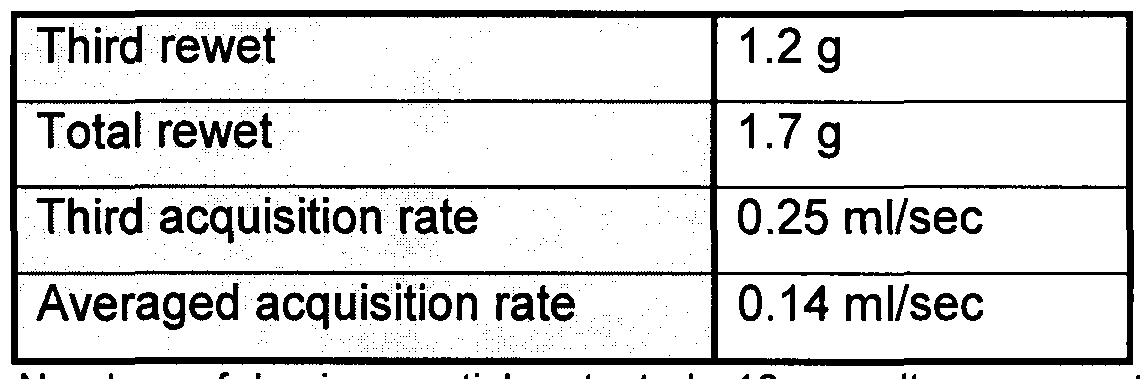


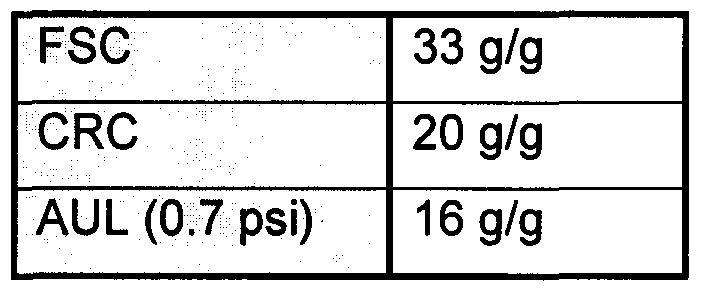
Claims
Priority Applications (9)
| Application Number | Priority Date | Filing Date | Title |
|---|---|---|---|
| MX2009003252A MX339603B (en) | 2006-09-25 | 2007-09-25 | Superabsorbent surface-treated carboxyalkylated polysaccharides and process for producing same. |
| CN200780043563.7A CN101541836B (en) | 2006-09-25 | 2007-09-25 | Superabsorbent surface-treated carboxyalkylated polysaccharides and methods for their preparation |
| KR1020127025840A KR101329658B1 (en) | 2006-09-25 | 2007-09-25 | Superabsorbent surface-treated carboxyalkylated polysaccharides and process for producing same |
| AU2007302586A AU2007302586B2 (en) | 2006-09-25 | 2007-09-25 | Superabsorbent surface-treated carboxyalkylated polysaccharides and process for producing same |
| EP07815922.5A EP2066699B1 (en) | 2006-09-25 | 2007-09-25 | Superabsorbent surface-treated carboxyalkylated polysaccharides and process for producing same |
| BRPI0717171-4A BRPI0717171B1 (en) | 2006-09-25 | 2007-09-25 | SUPERABSORBENT MATERIAL |
| KR1020097008555A KR101242010B1 (en) | 2006-09-25 | 2007-09-25 | Superabsorbent surface-treated carboxyalkylated polysaccharides and process for producing same |
| CA2664392A CA2664392C (en) | 2006-09-25 | 2007-09-25 | Superabsorbent surface-treated carboxyalkylated polysaccharides and process for producing same |
| JP2009529479A JP5765884B2 (en) | 2006-09-25 | 2007-09-25 | Superabsorbent surface-treated carboxyalkylated polysaccharide and method for producing the same |
Applications Claiming Priority (8)
| Application Number | Priority Date | Filing Date | Title |
|---|---|---|---|
| US82684506P | 2006-09-25 | 2006-09-25 | |
| US60/826,845 | 2006-09-25 | ||
| US91262307P | 2007-04-18 | 2007-04-18 | |
| US91261107P | 2007-04-18 | 2007-04-18 | |
| US91247107P | 2007-04-18 | 2007-04-18 | |
| US60/912,611 | 2007-04-18 | ||
| US60/912,623 | 2007-04-18 | ||
| US60/912,471 | 2007-04-18 |
Publications (2)
| Publication Number | Publication Date |
|---|---|
| WO2008037082A1 true WO2008037082A1 (en) | 2008-04-03 |
| WO2008037082A8 WO2008037082A8 (en) | 2008-06-05 |
Family
ID=39229681
Family Applications (1)
| Application Number | Title | Priority Date | Filing Date |
|---|---|---|---|
| PCT/CA2007/001734 Ceased WO2008037082A1 (en) | 2006-09-25 | 2007-09-25 | Superabsorbent surface-treated carboxyalkylated polysaccharides and process for producing same |
Country Status (10)
| Country | Link |
|---|---|
| US (2) | US8461129B2 (en) |
| EP (1) | EP2066699B1 (en) |
| JP (2) | JP5765884B2 (en) |
| KR (2) | KR101329658B1 (en) |
| CN (2) | CN101541836B (en) |
| AU (1) | AU2007302586B2 (en) |
| BR (1) | BRPI0717171B1 (en) |
| CA (1) | CA2664392C (en) |
| MX (1) | MX339603B (en) |
| WO (1) | WO2008037082A1 (en) |
Cited By (6)
| Publication number | Priority date | Publication date | Assignee | Title |
|---|---|---|---|---|
| WO2010096742A3 (en) * | 2009-02-20 | 2011-01-06 | Archer Daniels Midland Company | Acidic gas permeated carboxyalkyl starch particles, extrudates, and process for making the same |
| DE102010020050A1 (en) | 2010-05-11 | 2011-11-17 | Ivf Hartmann Ag | wound dressing |
| CN104798989A (en) * | 2015-04-28 | 2015-07-29 | 防城港市雅美好饲料有限公司 | Preparation method of special pre-gelatinized starch for feed |
| EP3040086A1 (en) | 2014-12-30 | 2016-07-06 | Paul Hartmann AG | Wound system |
| EP3030585A4 (en) * | 2013-08-08 | 2017-01-18 | Biopolymer Network Limited | Modified starch |
| EP3199025A1 (en) * | 2008-01-14 | 2017-08-02 | Xin Ji | Modified starch material of biocompatible hemostasis |
Families Citing this family (125)
| Publication number | Priority date | Publication date | Assignee | Title |
|---|---|---|---|---|
| BRPI0509541A (en) | 2004-03-30 | 2007-09-18 | Monsanto Technology Llc | methods for controlling plant pathogens using n-phosphonomethylglycine |
| WO2005099724A2 (en) * | 2004-04-13 | 2005-10-27 | Parallel Solutions, Inc. | Functionalized water-soluble polyphosphazene and uses thereof as modifiers of biological agents |
| US9000040B2 (en) | 2004-09-28 | 2015-04-07 | Atrium Medical Corporation | Cross-linked fatty acid-based biomaterials |
| US9012506B2 (en) | 2004-09-28 | 2015-04-21 | Atrium Medical Corporation | Cross-linked fatty acid-based biomaterials |
| WO2007011385A2 (en) | 2004-09-28 | 2007-01-25 | Atrium Medical Corporation | Heat cured gel and method of making |
| US11266607B2 (en) * | 2005-08-15 | 2022-03-08 | AbbVie Pharmaceuticals GmbH | Process for the manufacture and use of pancreatin micropellet cores |
| US9278161B2 (en) | 2005-09-28 | 2016-03-08 | Atrium Medical Corporation | Tissue-separating fatty acid adhesion barrier |
| US9427423B2 (en) | 2009-03-10 | 2016-08-30 | Atrium Medical Corporation | Fatty-acid based particles |
| US20070086958A1 (en) * | 2005-10-14 | 2007-04-19 | Medafor, Incorporated | Formation of medically useful gels comprising microporous particles and methods of use |
| KR101329658B1 (en) * | 2006-09-25 | 2013-11-14 | 아처 다니엘 미드랜드 캄파니 | Superabsorbent surface-treated carboxyalkylated polysaccharides and process for producing same |
| EP2124522B1 (en) * | 2007-02-05 | 2011-11-16 | National University of Singapore | Putative cytokinin receptor and methods for use thereof |
| US20090062233A1 (en) | 2007-08-09 | 2009-03-05 | Xin Ji | Modified starch material of biocompatible hemostasis |
| KR101355695B1 (en) * | 2009-02-06 | 2014-01-27 | 더 프록터 앤드 갬블 캄파니 | Collapsible water-containing capsules |
| EP2416650B1 (en) * | 2009-04-10 | 2020-02-26 | Abraxis BioScience, LLC | Nanoparticle formulations and uses therof |
| AU2010246067B2 (en) | 2009-05-04 | 2016-07-07 | Eyepoint Pharmaceuticals Us, Inc. | Porous silicon drug-eluting particles |
| US10555527B2 (en) * | 2009-05-18 | 2020-02-11 | Monsanto Technology Llc | Use of glyphosate for disease suppression and yield enhancement in soybean |
| GB0912481D0 (en) | 2009-07-17 | 2009-08-26 | Reckitt Benckiser Healthcare I | Skincare compositions |
| US20110038910A1 (en) | 2009-08-11 | 2011-02-17 | Atrium Medical Corporation | Anti-infective antimicrobial-containing biomaterials |
| US11000711B2 (en) * | 2009-12-29 | 2021-05-11 | W. R. Grace & Co.-Conn. | Compositions for forming films having a desired degree of obscuration and methods of making and using the same |
| CN102781404B (en) * | 2010-02-04 | 2014-08-27 | Isp投资公司 | Adaptive polymers for anhydrous sunscreen formulations |
| MX2012009634A (en) * | 2010-02-18 | 2012-09-28 | Athenix Corp | Axmi218, axmi219, axmi220, axmi226, axmi227, axmi228, axmi229, axmi230, and axmi231 delta-endotoxin genes and methods for their use. |
| EP2536267B1 (en) * | 2010-02-18 | 2015-07-22 | Athenix Corp. | AXMI221z, AXMI222z, AXMI223z, AXMI224z, AND AXMI225z DELTA-ENDOTOXIN GENES AND METHODS FOR THEIR USE |
| FR2958155B1 (en) * | 2010-04-02 | 2012-04-20 | Oreal | DECOLORATION COMPOSITION COMPRISING PEROXYGEN SALT IN A HIGHLY RICH BODY BASE |
| WO2011137563A1 (en) | 2010-05-07 | 2011-11-10 | Unilever Plc | High solvent content emulsions |
| EA033088B1 (en) | 2010-06-04 | 2019-08-30 | Монсанто Текнолоджи Ллс | TRANSGENIC EVENT MON 88302 IN BRASSICA SPECIES AND WAYS OF ITS APPLICATION |
| EP2593141B1 (en) | 2010-07-16 | 2018-07-04 | Atrium Medical Corporation | Composition and methods for altering the rate of hydrolysis of cured oil-based materials |
| WO2012024176A2 (en) * | 2010-08-19 | 2012-02-23 | Pioneer Hi-Bred International, Inc. | Novel bacillus thuringiensis gene with lepidopteran activity |
| BR112013010190B1 (en) * | 2010-10-28 | 2019-12-31 | Aequus Pharmaceuticals Inc | pharmaceutical composition |
| US9757374B2 (en) | 2010-10-28 | 2017-09-12 | Aequus Pharmaceuticals Inc. | Aripiprazole compositions and methods for its transdermal delivery |
| RU2640918C2 (en) | 2010-11-01 | 2018-01-12 | Псивида Юэс, Инк. | Biodegradable devices based on silicon for therapeutic agents delivery |
| WO2012064741A2 (en) * | 2010-11-09 | 2012-05-18 | Board Of Regents Of The University Of Nebraska | Method for the production of substituted polysaccharides via reactive extrusion |
| CA2817006A1 (en) * | 2010-11-09 | 2012-05-18 | Paper Pak Industries | Food package |
| US8785714B2 (en) | 2011-02-28 | 2014-07-22 | Celanese International Corporation | Alkali neutralizing acquisition and distribution structures for use in personal care articles |
| CA2836911A1 (en) * | 2011-06-04 | 2012-12-13 | Ian S. CURTIS | Potato transformation compositions, systems, methods, microorganisms, and plants |
| GB201113515D0 (en) * | 2011-08-04 | 2011-09-21 | Convatec Technologies Inc | A dressing |
| JP6188030B2 (en) * | 2011-10-05 | 2017-08-30 | エフ エム シー コーポレーションFmc Corporation | Stabilizer composition for microcrystalline cellulose and carboxymethylcellulose, method for producing the composition, and food product |
| US9492363B1 (en) * | 2012-01-16 | 2016-11-15 | American Spraytech, L.L.C. | Aerosol sprayable color composition |
| HK1204287A1 (en) * | 2012-01-27 | 2015-11-13 | 敏捷治疗公司 | Transdermal hormone delivery |
| US10029234B2 (en) * | 2012-04-19 | 2018-07-24 | Archer Daniels Midland Company | Compounded surface treated carboxyalkylated starch polycrylate composites |
| DK2879715T3 (en) * | 2012-08-03 | 2023-04-24 | Msm Innovations Inc | METHOD AND KIT FOR BOWEL PREPARATION |
| US10273541B2 (en) | 2012-08-14 | 2019-04-30 | 10X Genomics, Inc. | Methods and systems for processing polynucleotides |
| US10323279B2 (en) | 2012-08-14 | 2019-06-18 | 10X Genomics, Inc. | Methods and systems for processing polynucleotides |
| US9701998B2 (en) | 2012-12-14 | 2017-07-11 | 10X Genomics, Inc. | Methods and systems for processing polynucleotides |
| US10752949B2 (en) | 2012-08-14 | 2020-08-25 | 10X Genomics, Inc. | Methods and systems for processing polynucleotides |
| US10584381B2 (en) | 2012-08-14 | 2020-03-10 | 10X Genomics, Inc. | Methods and systems for processing polynucleotides |
| JP6367196B2 (en) | 2012-08-14 | 2018-08-01 | テンエックス・ジェノミクス・インコーポレイテッド | Microcapsule composition and method |
| US10221442B2 (en) | 2012-08-14 | 2019-03-05 | 10X Genomics, Inc. | Compositions and methods for sample processing |
| US11591637B2 (en) | 2012-08-14 | 2023-02-28 | 10X Genomics, Inc. | Compositions and methods for sample processing |
| US9951386B2 (en) | 2014-06-26 | 2018-04-24 | 10X Genomics, Inc. | Methods and systems for processing polynucleotides |
| US9617297B2 (en) * | 2012-10-11 | 2017-04-11 | The Regents Of The University Of California | Apoplast wash fluid recovery for improved recombinant endoglucanase extraction in tabacco leaves |
| US10533221B2 (en) | 2012-12-14 | 2020-01-14 | 10X Genomics, Inc. | Methods and systems for processing polynucleotides |
| EP3567116A1 (en) | 2012-12-14 | 2019-11-13 | 10X Genomics, Inc. | Methods and systems for processing polynucleotides |
| US9206436B2 (en) * | 2012-12-20 | 2015-12-08 | Ut-Battelle, Llc | Key gene regulating cell wall biosynthesis and recalcitrance in Populus, gene Y |
| KR102190198B1 (en) | 2013-02-08 | 2020-12-14 | 10엑스 제노믹스, 인크. | Polynucleotide barcode generation |
| US8961680B2 (en) * | 2013-03-08 | 2015-02-24 | Tbf Environmental Technology Inc. | Solvent formulations |
| US20140271764A1 (en) * | 2013-03-12 | 2014-09-18 | Psivida Us, Inc. | Bioerodible Silicon-Based Delivery Vehicles for Delivery of Therapeutic Agents |
| EP2968571A4 (en) | 2013-03-15 | 2016-09-07 | Psivida Inc | Bioerodible silicon-based compositions for delivery of therapeutic agents |
| US20140275267A1 (en) * | 2013-03-15 | 2014-09-18 | Maria Beug-Deeb Inc. Dba T&M Associates | Methods and compositions for cleaning and disinfecting surfaces |
| CA2817728A1 (en) * | 2013-05-31 | 2014-11-30 | Pharmascience Inc. | Abuse deterrent immediate release formulation |
| RS63570B1 (en) * | 2013-10-07 | 2022-10-31 | Bristol Myers Squibb Holdings Ireland | FORMULATION OF ATAZANAVIR AND COBICISTAT FOR THE TREATMENT OF HIV |
| CA2943624A1 (en) | 2014-04-10 | 2015-10-15 | 10X Genomics, Inc. | Fluidic devices, systems, and methods for encapsulating and partitioning reagents, and applications of same |
| CA2950148C (en) | 2014-06-02 | 2022-07-12 | Tethis, Inc. | Modified biopolymers and methods of producing and using the same |
| US20210022931A1 (en) | 2014-06-02 | 2021-01-28 | Tethis, Inc. | Absorbent articles with biocompostable properties |
| US10980912B2 (en) | 2014-06-02 | 2021-04-20 | Tethis, Inc. | Absorbent articles with biocompostable properties |
| US12059334B2 (en) * | 2014-06-02 | 2024-08-13 | Tethis, Inc. | Absorbent articles with biocompostable properties |
| US12312640B2 (en) | 2014-06-26 | 2025-05-27 | 10X Genomics, Inc. | Analysis of nucleic acid sequences |
| WO2015200869A1 (en) | 2014-06-26 | 2015-12-30 | 10X Genomics, Inc. | Analysis of nucleic acid sequences |
| EP4574974A3 (en) | 2014-06-26 | 2025-10-08 | 10x Genomics, Inc. | Methods of analyzing nucleic acids from individual cells or cell populations |
| US20160008410A1 (en) | 2014-07-08 | 2016-01-14 | Mimedx Group, Inc. | Micronized wharton's jelly |
| US20160022604A1 (en) * | 2014-07-23 | 2016-01-28 | Cadila Healthcare Limited | Directly compressed ospemifene compositions |
| DK3191083T3 (en) * | 2014-09-11 | 2021-04-19 | Gelita Ag | GELATINE / PECTIN PARTICLES |
| EP3193613A1 (en) * | 2014-09-17 | 2017-07-26 | Lonza Inc. | Activated disinfectant hydrogen peroxide compositions |
| WO2016069939A1 (en) | 2014-10-29 | 2016-05-06 | 10X Genomics, Inc. | Methods and compositions for targeted nucleic acid sequencing |
| US9975122B2 (en) | 2014-11-05 | 2018-05-22 | 10X Genomics, Inc. | Instrument systems for integrated sample processing |
| TWI713485B (en) * | 2015-01-06 | 2020-12-21 | 山田修 | Medical compositions, blood treatment devices, cosmetics and food and beverages using burning synthetic materials |
| CN107427808B (en) | 2015-01-12 | 2020-10-23 | 10X基因组学有限公司 | Method and system for preparing nucleic acid sequencing library and library prepared by using same |
| KR101655299B1 (en) * | 2015-01-30 | 2016-09-08 | 주식회사 삼양사 | Methods for manufacturing carboxyalkyl starch |
| EP3262407B1 (en) | 2015-02-24 | 2023-08-30 | 10X Genomics, Inc. | Partition processing methods and systems |
| CN107532202A (en) | 2015-02-24 | 2018-01-02 | 10X 基因组学有限公司 | Methods for Targeted Nucleic Acid Sequence Coverage |
| MX2017010934A (en) | 2015-02-25 | 2018-01-23 | Procter & Gamble | Fibrous structures comprising a surface softening composition. |
| JP6457067B2 (en) * | 2015-03-31 | 2019-01-23 | 株式会社日本触媒 | Polyacrylic acid (salt) water-absorbing resin powder, method for producing the same, and method for evaluating the same |
| US20160303043A1 (en) * | 2015-04-16 | 2016-10-20 | Kate Somerville Skincare, LLC | Self-foaming compositions and methods |
| JP6609127B2 (en) * | 2015-07-06 | 2019-11-20 | 学校法人東海大学 | Internal curing method for concrete or mortar |
| EP3320143B1 (en) | 2015-07-10 | 2019-11-13 | The Procter and Gamble Company | Fabric care composition comprising metathesized unsaturated polyol esters |
| WO2017091463A1 (en) | 2015-11-23 | 2017-06-01 | Tethis, Inc. | Coated particles and methods of making and using the same |
| SG10202108763UA (en) | 2015-12-04 | 2021-09-29 | 10X Genomics Inc | Methods and compositions for nucleic acid analysis |
| CN105566500B (en) * | 2016-02-02 | 2018-09-18 | 上海长光企业发展有限公司 | A kind of preparation method of granular pattern polyanion cellulose |
| US20170281425A1 (en) * | 2016-03-30 | 2017-10-05 | Basf Se | Fluid-absorbent article |
| WO2017197343A2 (en) | 2016-05-12 | 2017-11-16 | 10X Genomics, Inc. | Microfluidic on-chip filters |
| WO2017197338A1 (en) | 2016-05-13 | 2017-11-16 | 10X Genomics, Inc. | Microfluidic systems and methods of use |
| EP3481366B1 (en) | 2016-07-08 | 2022-07-27 | The Gillette Company LLC | Liquid compositions for hair removal devices comprising metathesized unsaturated polyol esters |
| DE102016223333A1 (en) * | 2016-11-24 | 2018-05-24 | Henkel Ag & Co. Kgaa | Alkaline hair whitening agents containing oxidizing agents and specific carboxylic esters as keratin crosslinkers |
| US10550429B2 (en) | 2016-12-22 | 2020-02-04 | 10X Genomics, Inc. | Methods and systems for processing polynucleotides |
| US10011872B1 (en) | 2016-12-22 | 2018-07-03 | 10X Genomics, Inc. | Methods and systems for processing polynucleotides |
| US10815525B2 (en) | 2016-12-22 | 2020-10-27 | 10X Genomics, Inc. | Methods and systems for processing polynucleotides |
| EP4310183B1 (en) | 2017-01-30 | 2025-07-09 | 10X Genomics, Inc. | Methods and systems for droplet-based single cell barcoding |
| US12264411B2 (en) | 2017-01-30 | 2025-04-01 | 10X Genomics, Inc. | Methods and systems for analysis |
| CN106832016A (en) * | 2017-02-27 | 2017-06-13 | 南京福科帝生物科技有限公司 | Carboxy methylation porous-starch and preparation method thereof |
| EP3977985B1 (en) * | 2017-03-01 | 2023-09-06 | Arena Pharmaceuticals, Inc. | Compositions comprising pgi2-receptor agonists and processes for the preparation thereof |
| US10398670B2 (en) * | 2017-04-24 | 2019-09-03 | Knoze Jr. Corporation | Oral microbiota promotion for oral and/or sinus infections |
| CN109526228B (en) | 2017-05-26 | 2022-11-25 | 10X基因组学有限公司 | Single cell analysis of transposase accessible chromatin |
| US10844372B2 (en) | 2017-05-26 | 2020-11-24 | 10X Genomics, Inc. | Single cell analysis of transposase accessible chromatin |
| US10471033B2 (en) * | 2017-09-15 | 2019-11-12 | Knoze Jr. Corporation | Oral microbiota promotion for immune system associated inflammations |
| US12151014B2 (en) * | 2017-09-18 | 2024-11-26 | Mast Industries (Far East) Limited | Gloss lip balm formulation |
| CN111051523B (en) | 2017-11-15 | 2024-03-19 | 10X基因组学有限公司 | Functionalized gel beads |
| US10829815B2 (en) | 2017-11-17 | 2020-11-10 | 10X Genomics, Inc. | Methods and systems for associating physical and genetic properties of biological particles |
| US11433158B2 (en) | 2017-12-12 | 2022-09-06 | The Procter & Gamble Company | Recycle friendly and sustainable absorbent articles |
| WO2019195166A1 (en) | 2018-04-06 | 2019-10-10 | 10X Genomics, Inc. | Systems and methods for quality control in single cell processing |
| CN109569461A (en) * | 2018-12-06 | 2019-04-05 | 武汉科丝力纤维制造有限公司 | A kind of technique of organic solvent-free environment separation polyhydroxy aldehyde |
| KR102578742B1 (en) | 2019-09-18 | 2023-09-14 | 주식회사 엘지화학 | Preparation method of super absorbent polymer |
| WO2021054610A1 (en) * | 2019-09-18 | 2021-03-25 | 주식회사 엘지화학 | Superabsorbent polymer preparation method |
| WO2021067769A1 (en) * | 2019-10-04 | 2021-04-08 | Tethis, Inc. | Absorbent articles with biocompostable properties |
| US11766366B2 (en) | 2019-11-01 | 2023-09-26 | Tethis, Inc. | Absorbent hygienic articles with sensors and biocompostable elements |
| WO2022014550A1 (en) | 2020-07-13 | 2022-01-20 | 株式会社日本触媒 | Water absorbing agent composition and method for producing same |
| CN117120480A (en) | 2021-03-31 | 2023-11-24 | 长濑产业株式会社 | Method for producing water-soluble polymer and method for producing water-absorbent resin |
| AU2022251741A1 (en) * | 2021-03-31 | 2023-10-26 | Nagase & Co., Ltd. | Water-absorbing resin |
| WO2022211002A1 (en) * | 2021-03-31 | 2022-10-06 | 長瀬産業株式会社 | Water-absorbent resin |
| CN113996512B (en) * | 2021-10-25 | 2023-03-31 | 国网江苏省电力有限公司检修分公司 | Construction process of acrylic acid adhesive for plugging power equipment under low-temperature condition |
| KR20230120109A (en) * | 2022-02-08 | 2023-08-16 | 주식회사 엘지화학 | Method for preparation of carboxyalkylated starch |
| CN118900850A (en) | 2022-03-31 | 2024-11-05 | 长濑产业株式会社 | Method for producing water-absorbent resin |
| AU2023318069A1 (en) | 2022-08-01 | 2025-02-20 | Nagase & Co., Ltd. | Absorbent article |
| KR20240101458A (en) * | 2022-12-23 | 2024-07-02 | 주식회사 엘지화학 | polymer |
| KR20240115551A (en) * | 2023-01-19 | 2024-07-26 | 주식회사 엘지화학 | Polymer Material |
| KR20240115552A (en) * | 2023-01-19 | 2024-07-26 | 주식회사 엘지화학 | Polymer Material |
| KR20260051259A (en) * | 2024-10-08 | 2026-04-16 | 주식회사 엘지화학 | Polymer materials |
Citations (29)
| Publication number | Priority date | Publication date | Assignee | Title |
|---|---|---|---|---|
| US3445245A (en) | 1965-12-28 | 1969-05-20 | Heinrich Frings | Process for acetic acid fermentation |
| US4076844A (en) | 1975-12-22 | 1978-02-28 | Firma Heinrich Frings | Two stage process for the production of vinegar with high acetic acid concentration |
| GB1576475A (en) | 1977-01-19 | 1980-10-08 | Unilever Ltd | Absorbent cross-linked starch materials |
| US4281184A (en) | 1978-02-16 | 1981-07-28 | Fondazione Denora | Monochloroacetic acid process |
| US4282257A (en) | 1979-02-13 | 1981-08-04 | Nakano Vinegar Co., Ltd. | Production of vinegar with high acetic acid concentration |
| US4383121A (en) | 1980-01-16 | 1983-05-10 | Tsukishima Kaikai Co., Ltd. | Process for purifying monochloroacetic acid |
| US4456622A (en) | 1982-12-06 | 1984-06-26 | Nabisco Brands, Inc. | Combination semi-continuous and batch process for preparation of vinegar |
| US4463019A (en) | 1980-06-11 | 1984-07-31 | Kikkoman Corporation | Stationary process for producing vinegar |
| US4503078A (en) | 1982-03-08 | 1985-03-05 | Heinrich Frings Gmbh & Co. Kg | Process for the production of vinegar with more than 12 gms/100 ml acetic acid |
| US4569845A (en) | 1982-07-02 | 1986-02-11 | Vogelbusch Gesellschaft Mbh | Process for the batchwise preparation of vinegar |
| US4656140A (en) | 1983-11-18 | 1987-04-07 | Nakano Vinegar Co., Ltd. | Method for a measurement of alcohol concentration in acetic acid fermenting broth |
| US4935360A (en) | 1986-06-02 | 1990-06-19 | Kernforschungsanlage Juelich Gmbh | Process for the microbial anaerobic production of acetic acid |
| US4959341A (en) | 1989-03-09 | 1990-09-25 | Micro Vesicular Systems, Inc. | Biodegradable superabsorbing sponge |
| US5079354A (en) | 1989-10-27 | 1992-01-07 | Kimberly-Clark Corporation | Method for making absorbent starch |
| NL9100249A (en) | 1991-02-13 | 1992-09-01 | Avebe Coop Verkoop Prod | Gelatinised crosslinked carboxymethylated starch deriv. prepn. - by extruding mixt. of starch, moisture, alkali mono:chloroacetate and alkali, used for absorbing water from aq. liquids |
| WO1998000558A1 (en) | 1994-11-30 | 1998-01-08 | Bioengineering Resources, Inc. | Biological production of acetic acid from waste gases |
| CA2319786A1 (en) | 1998-02-21 | 1999-08-26 | Basf Aktiengesellschaft | Cross-linked polymers capable of swelling |
| WO2000001425A1 (en) | 1998-07-01 | 2000-01-13 | Acordis Speciality Fibres Limited | Wound dressings and materials suitable for use therein |
| WO2000035504A1 (en) | 1998-12-16 | 2000-06-22 | Sca Hygiene Products Zeist B.V. | Acidic superabsorbent polysaccharides |
| CA2308537A1 (en) | 1999-05-11 | 2000-11-11 | Serge Huppe | Glass-like polysaccharide useful as absorbent for liquids |
| CA2362006A1 (en) | 2000-11-10 | 2002-05-10 | Groupe Lysac Inc./Lysac Group Inc. | Crosslinked polysaccharide, obtained by crosslinking with substituted polyethylene glycol, as superabsorbent |
| US6753170B2 (en) | 1998-09-08 | 2004-06-22 | Bioengineering Resources, Inc. | Microbial process for the preparation of acetic acid, as well as solvent for its extraction from the fermentation broth |
| US20040157734A1 (en) | 2001-05-25 | 2004-08-12 | Richard Mertens | Supersuperabsorbent polymers, preparation thereof and use thereof |
| CA2462053A1 (en) | 2003-03-26 | 2004-09-26 | Le Groupe Lysac Inc. | Starch networks as absorbent or superabsorbent materials and their preparation by extrusion |
| CA2483049A1 (en) | 2003-09-29 | 2005-03-29 | Le Groupe Lysac Inc. | Polysaccharide phyllosilicate absorbent or superabsorbent nanocomposite materials |
| WO2005123781A2 (en) | 2004-06-21 | 2005-12-29 | Stockhausen Gmbh | Water-absorbing polysaccharide and method for producing the same |
| US20060149182A1 (en) | 2002-09-11 | 2006-07-06 | Cullen Breda M | Wound dressing materials comprising complexes of anionic polysaccharides with silver |
| CA2534026A1 (en) | 2005-01-26 | 2006-07-26 | Groupe Lysac Inc. | Polysaccharide-inorganic composite particles as performance additives for superabsorbent polymers |
| US7135597B2 (en) | 2002-10-11 | 2006-11-14 | Akzo Nobel N.V. | Process for the preparation of monochloroacetic acid |
Family Cites Families (12)
| Publication number | Priority date | Publication date | Assignee | Title |
|---|---|---|---|---|
| US3489719A (en) * | 1967-07-05 | 1970-01-13 | Dow Chemical Co | Surface treatment of finely-divided water-soluble polymers |
| US5247072A (en) * | 1991-10-25 | 1993-09-21 | Kimberly-Clark Corporation | Carboxyalkyl polysaccharides having improved absorbent properties and process for the preparation thereof |
| CA2072918A1 (en) * | 1992-02-14 | 1993-08-15 | Jian Qin | Modified polysaccharides having improved absorbent properties and process for the preparation thereof |
| US5550189A (en) * | 1992-04-17 | 1996-08-27 | Kimberly-Clark Corporation | Modified polysaccharides having improved absorbent properties and process for the preparation thereof |
| US5498705A (en) * | 1995-02-22 | 1996-03-12 | Kimberly-Clark Corporation | Modified polysaccharides having improved absorbent properties and process for the preparation thereof |
| US5668273A (en) * | 1996-01-29 | 1997-09-16 | Eastman Chemical Company | Carboxyalkyl cellulose esters |
| JP2000072801A (en) * | 1998-08-31 | 2000-03-07 | Oji Cornstarch Kk | Composition containing esterified crosslinked derivative of carboxylic alkyl etherified starch and its production |
| RU2002133855A (en) | 2000-05-15 | 2004-06-27 | Кимберли-Кларк Ворлдвайд, Инк. (Us) | POLYSACCHARIDE ABSORBENT AND METHOD FOR PRODUCING IT |
| CA2423712A1 (en) | 2003-03-26 | 2004-09-26 | Nicolas Nourry | Crosslinked amylopectin by reactive extrusion and its use as an absorbent or superabsorbent material |
| KR101165549B1 (en) * | 2002-09-16 | 2012-07-19 | 선오비온 파마슈티컬스 인코포레이티드 | Treatment of CNS disorders with trans 4-(3,4-dichlorophenyl)-1,2,3,4-tetrahydro-1-naphthalenamine |
| US20060147689A1 (en) * | 2004-12-30 | 2006-07-06 | Raj Wallajapet | Absorbent composites containing biodegradable reinforcing fibers |
| KR101329658B1 (en) * | 2006-09-25 | 2013-11-14 | 아처 다니엘 미드랜드 캄파니 | Superabsorbent surface-treated carboxyalkylated polysaccharides and process for producing same |
-
2007
- 2007-09-25 KR KR1020127025840A patent/KR101329658B1/en active Active
- 2007-09-25 JP JP2009529479A patent/JP5765884B2/en active Active
- 2007-09-25 EP EP07815922.5A patent/EP2066699B1/en active Active
- 2007-09-25 MX MX2009003252A patent/MX339603B/en active IP Right Grant
- 2007-09-25 CA CA2664392A patent/CA2664392C/en active Active
- 2007-09-25 CN CN200780043563.7A patent/CN101541836B/en active Active
- 2007-09-25 AU AU2007302586A patent/AU2007302586B2/en active Active
- 2007-09-25 BR BRPI0717171-4A patent/BRPI0717171B1/en active IP Right Grant
- 2007-09-25 WO PCT/CA2007/001734 patent/WO2008037082A1/en not_active Ceased
- 2007-09-25 US US11/861,081 patent/US8461129B2/en active Active
- 2007-09-25 CN CN201510102497.2A patent/CN104774275A/en active Pending
- 2007-09-25 KR KR1020097008555A patent/KR101242010B1/en active Active
-
2013
- 2013-05-23 US US13/900,697 patent/US20130296548A1/en not_active Abandoned
- 2013-09-20 JP JP2013195543A patent/JP5947768B2/en active Active
Patent Citations (29)
| Publication number | Priority date | Publication date | Assignee | Title |
|---|---|---|---|---|
| US3445245A (en) | 1965-12-28 | 1969-05-20 | Heinrich Frings | Process for acetic acid fermentation |
| US4076844A (en) | 1975-12-22 | 1978-02-28 | Firma Heinrich Frings | Two stage process for the production of vinegar with high acetic acid concentration |
| GB1576475A (en) | 1977-01-19 | 1980-10-08 | Unilever Ltd | Absorbent cross-linked starch materials |
| US4281184A (en) | 1978-02-16 | 1981-07-28 | Fondazione Denora | Monochloroacetic acid process |
| US4282257A (en) | 1979-02-13 | 1981-08-04 | Nakano Vinegar Co., Ltd. | Production of vinegar with high acetic acid concentration |
| US4383121A (en) | 1980-01-16 | 1983-05-10 | Tsukishima Kaikai Co., Ltd. | Process for purifying monochloroacetic acid |
| US4463019A (en) | 1980-06-11 | 1984-07-31 | Kikkoman Corporation | Stationary process for producing vinegar |
| US4503078A (en) | 1982-03-08 | 1985-03-05 | Heinrich Frings Gmbh & Co. Kg | Process for the production of vinegar with more than 12 gms/100 ml acetic acid |
| US4569845A (en) | 1982-07-02 | 1986-02-11 | Vogelbusch Gesellschaft Mbh | Process for the batchwise preparation of vinegar |
| US4456622A (en) | 1982-12-06 | 1984-06-26 | Nabisco Brands, Inc. | Combination semi-continuous and batch process for preparation of vinegar |
| US4656140A (en) | 1983-11-18 | 1987-04-07 | Nakano Vinegar Co., Ltd. | Method for a measurement of alcohol concentration in acetic acid fermenting broth |
| US4935360A (en) | 1986-06-02 | 1990-06-19 | Kernforschungsanlage Juelich Gmbh | Process for the microbial anaerobic production of acetic acid |
| US4959341A (en) | 1989-03-09 | 1990-09-25 | Micro Vesicular Systems, Inc. | Biodegradable superabsorbing sponge |
| US5079354A (en) | 1989-10-27 | 1992-01-07 | Kimberly-Clark Corporation | Method for making absorbent starch |
| NL9100249A (en) | 1991-02-13 | 1992-09-01 | Avebe Coop Verkoop Prod | Gelatinised crosslinked carboxymethylated starch deriv. prepn. - by extruding mixt. of starch, moisture, alkali mono:chloroacetate and alkali, used for absorbing water from aq. liquids |
| WO1998000558A1 (en) | 1994-11-30 | 1998-01-08 | Bioengineering Resources, Inc. | Biological production of acetic acid from waste gases |
| CA2319786A1 (en) | 1998-02-21 | 1999-08-26 | Basf Aktiengesellschaft | Cross-linked polymers capable of swelling |
| WO2000001425A1 (en) | 1998-07-01 | 2000-01-13 | Acordis Speciality Fibres Limited | Wound dressings and materials suitable for use therein |
| US6753170B2 (en) | 1998-09-08 | 2004-06-22 | Bioengineering Resources, Inc. | Microbial process for the preparation of acetic acid, as well as solvent for its extraction from the fermentation broth |
| WO2000035504A1 (en) | 1998-12-16 | 2000-06-22 | Sca Hygiene Products Zeist B.V. | Acidic superabsorbent polysaccharides |
| CA2308537A1 (en) | 1999-05-11 | 2000-11-11 | Serge Huppe | Glass-like polysaccharide useful as absorbent for liquids |
| CA2362006A1 (en) | 2000-11-10 | 2002-05-10 | Groupe Lysac Inc./Lysac Group Inc. | Crosslinked polysaccharide, obtained by crosslinking with substituted polyethylene glycol, as superabsorbent |
| US20040157734A1 (en) | 2001-05-25 | 2004-08-12 | Richard Mertens | Supersuperabsorbent polymers, preparation thereof and use thereof |
| US20060149182A1 (en) | 2002-09-11 | 2006-07-06 | Cullen Breda M | Wound dressing materials comprising complexes of anionic polysaccharides with silver |
| US7135597B2 (en) | 2002-10-11 | 2006-11-14 | Akzo Nobel N.V. | Process for the preparation of monochloroacetic acid |
| CA2462053A1 (en) | 2003-03-26 | 2004-09-26 | Le Groupe Lysac Inc. | Starch networks as absorbent or superabsorbent materials and their preparation by extrusion |
| CA2483049A1 (en) | 2003-09-29 | 2005-03-29 | Le Groupe Lysac Inc. | Polysaccharide phyllosilicate absorbent or superabsorbent nanocomposite materials |
| WO2005123781A2 (en) | 2004-06-21 | 2005-12-29 | Stockhausen Gmbh | Water-absorbing polysaccharide and method for producing the same |
| CA2534026A1 (en) | 2005-01-26 | 2006-07-26 | Groupe Lysac Inc. | Polysaccharide-inorganic composite particles as performance additives for superabsorbent polymers |
Cited By (16)
| Publication number | Priority date | Publication date | Assignee | Title |
|---|---|---|---|---|
| EP3199025A1 (en) * | 2008-01-14 | 2017-08-02 | Xin Ji | Modified starch material of biocompatible hemostasis |
| EP2203053B1 (en) * | 2008-01-14 | 2017-09-20 | Xin Ji | Modified starch material of biocompatible hemostasis |
| AU2010215846B2 (en) * | 2009-02-20 | 2015-08-27 | Archer Daniels Midland Company | Acidic gas permeated carboxyalkyl starch particles, extrudates, and process for making the same |
| KR101699097B1 (en) * | 2009-02-20 | 2017-01-23 | 아처 다니엘 미드랜드 캄파니 | Acidic gas permeated carboxyalkyl starch particles, extrudates, and process for making the same |
| JP2012518711A (en) * | 2009-02-20 | 2012-08-16 | アーチャー・ダニエルズ・ミッドランド カンパニー | Acid gas permeated carboxyalkyl starch particles, extrudate, and process for producing the same |
| US9107975B2 (en) | 2009-02-20 | 2015-08-18 | Archer Daniels Midland Co. | Acidic gases permeated carboxyalkyl starch and alkaline starch extrudates and process for making the same |
| WO2010096742A3 (en) * | 2009-02-20 | 2011-01-06 | Archer Daniels Midland Company | Acidic gas permeated carboxyalkyl starch particles, extrudates, and process for making the same |
| KR20110136814A (en) * | 2009-02-20 | 2011-12-21 | 아처 다니엘 미드랜드 캄파니 | Process for making carboxylicalkyl starch particles, extrudates, and acid gas-infiltrated carboxyalkyl starch particles and extrudates. |
| CN105968391A (en) * | 2009-02-20 | 2016-09-28 | 阿彻丹尼尔斯米德兰德公司 | Acidic gas permeated carboxyalkyl starch particles, extrudates, and process for making the same |
| US9050443B2 (en) | 2010-05-11 | 2015-06-09 | Ivf Hartmann Ag | Wound dressing |
| DE102010020050A1 (en) | 2010-05-11 | 2011-11-17 | Ivf Hartmann Ag | wound dressing |
| WO2011141454A1 (en) | 2010-05-11 | 2011-11-17 | Ivf Hartmann Ag | Wound dressing |
| EP3030585A4 (en) * | 2013-08-08 | 2017-01-18 | Biopolymer Network Limited | Modified starch |
| EP3040086A1 (en) | 2014-12-30 | 2016-07-06 | Paul Hartmann AG | Wound system |
| WO2016107856A1 (en) | 2014-12-30 | 2016-07-07 | Paul Hartmann Ag | Wound-treatment system |
| CN104798989A (en) * | 2015-04-28 | 2015-07-29 | 防城港市雅美好饲料有限公司 | Preparation method of special pre-gelatinized starch for feed |
Also Published As
| Publication number | Publication date |
|---|---|
| AU2007302586A1 (en) | 2008-04-03 |
| EP2066699A1 (en) | 2009-06-10 |
| JP5765884B2 (en) | 2015-08-19 |
| CN101541836B (en) | 2015-04-08 |
| AU2007302586B2 (en) | 2013-06-27 |
| CA2664392C (en) | 2015-04-28 |
| BRPI0717171A2 (en) | 2013-10-15 |
| CN101541836A (en) | 2009-09-23 |
| JP5947768B2 (en) | 2016-07-06 |
| KR101329658B1 (en) | 2013-11-14 |
| EP2066699B1 (en) | 2020-02-12 |
| US8461129B2 (en) | 2013-06-11 |
| MX339603B (en) | 2016-05-31 |
| KR101242010B1 (en) | 2013-03-13 |
| EP2066699A4 (en) | 2010-06-16 |
| US20130296548A1 (en) | 2013-11-07 |
| MX2009003252A (en) | 2009-11-02 |
| KR20120117944A (en) | 2012-10-24 |
| US20080177057A1 (en) | 2008-07-24 |
| CN104774275A (en) | 2015-07-15 |
| BRPI0717171B1 (en) | 2023-10-17 |
| WO2008037082A8 (en) | 2008-06-05 |
| CA2664392A1 (en) | 2008-04-03 |
| JP2013253262A (en) | 2013-12-19 |
| JP2010504414A (en) | 2010-02-12 |
| KR20090068349A (en) | 2009-06-26 |
Similar Documents
| Publication | Publication Date | Title |
|---|---|---|
| US8461129B2 (en) | Superabsorbent surface-treated carboxyalkylated polysaccharides and process for producing same | |
| JP4286129B2 (en) | Addition polymer powder, production method thereof and use thereof | |
| EP2838939B1 (en) | Compounded surface treated carboxyalkylated starch polyacrylate composites | |
| EP2350133B1 (en) | Water-absorbing polysaccharide and method for producing the same | |
| US8114809B2 (en) | Polysaccharide-inorganic composite particles as performance additives for superabsorbent polymers | |
| US9149787B1 (en) | Acidic gas-permeated carboxyalkyl starch particles, extrudates, and process for making the same | |
| CA2423712A1 (en) | Crosslinked amylopectin by reactive extrusion and its use as an absorbent or superabsorbent material | |
| CA2534026C (en) | Polysaccharide-inorganic composite particles as performance additives for superabsorbent polymers |
Legal Events
| Date | Code | Title | Description |
|---|---|---|---|
| WWE | Wipo information: entry into national phase |
Ref document number: 200780043563.7 Country of ref document: CN |
|
| 121 | Ep: the epo has been informed by wipo that ep was designated in this application |
Ref document number: 07815922 Country of ref document: EP Kind code of ref document: A1 |
|
| ENP | Entry into the national phase |
Ref document number: 2009529479 Country of ref document: JP Kind code of ref document: A Ref document number: 2664392 Country of ref document: CA |
|
| WWE | Wipo information: entry into national phase |
Ref document number: MX/A/2009/003252 Country of ref document: MX |
|
| NENP | Non-entry into the national phase |
Ref country code: DE |
|
| WWE | Wipo information: entry into national phase |
Ref document number: 1191/KOLNP/2009 Country of ref document: IN |
|
| WWE | Wipo information: entry into national phase |
Ref document number: 2007815922 Country of ref document: EP |
|
| WWE | Wipo information: entry into national phase |
Ref document number: 2007302586 Country of ref document: AU |
|
| WWE | Wipo information: entry into national phase |
Ref document number: 1020097008555 Country of ref document: KR |
|
| ENP | Entry into the national phase |
Ref document number: 2007302586 Country of ref document: AU Date of ref document: 20070925 Kind code of ref document: A |
|
| WWE | Wipo information: entry into national phase |
Ref document number: 1020127025840 Country of ref document: KR |
|
| ENP | Entry into the national phase |
Ref document number: PI0717171 Country of ref document: BR Kind code of ref document: A2 Effective date: 20090325 |