WO2008059339A2 - Isoquinoline derivatives as vanilloid receptor modulators - Google Patents
Isoquinoline derivatives as vanilloid receptor modulators Download PDFInfo
- Publication number
- WO2008059339A2 WO2008059339A2 PCT/IB2007/003457 IB2007003457W WO2008059339A2 WO 2008059339 A2 WO2008059339 A2 WO 2008059339A2 IB 2007003457 W IB2007003457 W IB 2007003457W WO 2008059339 A2 WO2008059339 A2 WO 2008059339A2
- Authority
- WO
- WIPO (PCT)
- Prior art keywords
- compound
- formula
- alkyl
- occurrence
- aryl
- Prior art date
- Legal status (The legal status is an assumption and is not a legal conclusion. Google has not performed a legal analysis and makes no representation as to the accuracy of the status listed.)
- Ceased
Links
- 0 NC1=CC=I(*2)=C2c2c1ccnc2 Chemical compound NC1=CC=I(*2)=C2c2c1ccnc2 0.000 description 4
Classifications
-
- C—CHEMISTRY; METALLURGY
- C07—ORGANIC CHEMISTRY
- C07D—HETEROCYCLIC COMPOUNDS
- C07D407/00—Heterocyclic compounds containing two or more hetero rings, at least one ring having oxygen atoms as the only ring hetero atoms, not provided for by group C07D405/00
- C07D407/02—Heterocyclic compounds containing two or more hetero rings, at least one ring having oxygen atoms as the only ring hetero atoms, not provided for by group C07D405/00 containing two hetero rings
- C07D407/12—Heterocyclic compounds containing two or more hetero rings, at least one ring having oxygen atoms as the only ring hetero atoms, not provided for by group C07D405/00 containing two hetero rings linked by a chain containing hetero atoms as chain links
-
- C—CHEMISTRY; METALLURGY
- C07—ORGANIC CHEMISTRY
- C07D—HETEROCYCLIC COMPOUNDS
- C07D409/00—Heterocyclic compounds containing two or more hetero rings, at least one ring having sulfur atoms as the only ring hetero atoms
- C07D409/02—Heterocyclic compounds containing two or more hetero rings, at least one ring having sulfur atoms as the only ring hetero atoms containing two hetero rings
- C07D409/12—Heterocyclic compounds containing two or more hetero rings, at least one ring having sulfur atoms as the only ring hetero atoms containing two hetero rings linked by a chain containing hetero atoms as chain links
Definitions
- the present invention provides isoquinoline derivatives, which are used as vanilloid receptor (VR) modulators.
- the compounds described herein are useful for treating or preventing diseases, conditions and/or disorders mediated by VRl receptors.
- processes for preparing these compounds, intermediates used in their synthesis, pharmaceutical compositions thereof, and methods for treating or preventing diseases, conditions and/or disorders mediated by VRl receptors are also provided herein.
- Pain perception or nociception is mediated by the peripheral terminals of a group of specialized sensory neurons, termed "nociceptors.”
- nociceptors A wide variety of physical and chemical stimuli induce activation of such neurons in mammals, leading to recognition of a potentially harmful stimulus. Inappropriate or excessive activation of nociceptors, however, can result in debilitating acute or chronic pain.
- chronic pain can be classified as either nociceptive or neuropathic. Nociceptive pain includes tissue injury-induced pain and inflammatory pain such as that associated with arthritis. Neuropathic pain is caused by damage to the sensory nerves of the peripheral or central nervous system and is maintained by aberrant somatosensory processing. There is a large body of evidence relating activity at vanilloid receptors (VRl) to pain processing (V. Di Marzo et ah, Current Opinion in Neurobiology 12: 372-379 (2002)).
- VRl vanilloid receptors
- the lipophilic vanilloid, capsaicin (8-methyl-N-vanillyl-6-nonenamides; CAP) is known to stimulate pain pathways through the release of a variety of sensory afferent neurotransmitters via a specific cell surface capsaicin receptor, cloned as the first vanilloid receptor (VRl now known as TRPVl) (Caterina MJ, et.al, Science, 14 288 (5464), 306-13 (2000)).
- Capsaicin is the main pungent component in hot pepper. Hot pepper has been used, for a long time, not only as a spice but also as a traditional medicine in the treatment of gastric disorders and when applied locally, for the relief of pain and inflammation.
- CAP has a wide spectrum of biological actions, and not only exhibits effects on the cardiovascular and respiratory systems but also induces pain and irritancy on local application. CAP, however, after such induction of pain, induces desensitization, both to CAP itself and also to other noxious stimuli to stop the pain.
- the intradermal administration of capsaicin is characterized by an initial burning or hot sensation followed by a prolonged period of analgesia.
- the analgesic component of VRl receptor activation is thought to be mediated by a capsaicin-induced desensitization of the primary sensory afferent terminal.
- CAP and its analogues such as olvanil, nuvanil, DA-5018, SDZ-249482, and resiniferatoxin are either used or are under development as analgesic agents or therapeutic agents for urinary incontinence or skin disorder.
- VRl is widely expressed in non-neuronal tissues in various organ systems, and the functional roles of VRl in various systems are not properly understood at this time.
- Increasing number of animal studies have revealed the possible involvement of VRl receptors in various pathologies and based on such information VRl is now being considered as a molecular target for various indications such as migraine, arthralgia, diabetic neuropathy, neurodegeneration, neurotic skin disorder, stroke, cardiac pain arising from an ischemic myocardium, Huntington's disease, memory deficits, restricted brain function, amyotrophic lateral sclerosis (ALS), dementia, urinary bladder hypersensitiveness, urinary incontinence, vulvodynia, pruritic conditions such as uremic pruritus, irritable bowel syndrome including gastroesophageal reflux disease, enteritis, ileitis, stomach-duodenal ulcer, inflammatory bowel disease including Crohn's disease, celiac disease, inflammatory diseases such as pancreatitis, respiratory disorders (such as
- VRl antagonists are useful in multiple sub-types of pain such as acute or chronic, neuropathic pain or post-operative pain, as well as in pain due to neuralgia (e.g., post herpetic neuralgia and trigeminal neuralgia); pain due to diabetic neuropathy, dental pain, and cancer pain. Additionally, VRl antagonists are useful in the treatment of inflammatory pain conditions, e.g., arthritis and osteoarthritis. VRl antagonists are also useful in the treatment of diabetes, obesity, urticaria, actinic keratosis, keratocanthoma, alopecia, Meniere's disease, tinnitus, hyperacusis and anxiety disorders.
- neuralgia e.g., post herpetic neuralgia and trigeminal neuralgia
- inflammatory pain conditions e.g., arthritis and osteoarthritis.
- VRl antagonists are also useful in the treatment of diabetes, obesity, urticaria, actinic kerato
- VRl Vanilloid Receptor
- Various vanilloid agonists and antagonists have been developed for the treatment of pain. The agonists work through desensitizing the receptor while antagonists block its stimulation by (patho) physiological ligands.
- various VR modulators have been characterized as VRl antagonists. These antagonists include, for example, PAC-20030, BCTC, A425619 and AMG-9810, which are presently in preclinical trials.
- EP 462761 discloses (benzopyranyl) phenylureas and related compounds as potassium channel activators and a method of using these and other compounds having potassium channel activating activity as antiischemic and/or antiarrhythmic agents.
- PCT Publication No. WO 2003/080578 discloses heteroaromatic ureas as vanilloid receptor (VRl) modulators, in particular antagonists, for treating pain and/or inflammation.
- PCT Publication No. WO 05/007652 describes substituted quinolin-4yl-amine analogues useful in the treatment of conditions related to capsaicin receptor activation.
- the present invention relates to isoquinoline derivatives which are vanilloid receptor modulators and useful in the treatment of diseases, conditions or disorders mediated by vanilloid receptors.
- Pharmaceutically acceptable salts, solvates, stereoisomers, N-oxides, tautomers, and prodrugs of these compounds having the same type of activity are also provided.
- Pharmaceutical compositions containing a compound of the present invention and a pharmaceutically acceptable excipient are provided. Methods for treating diseases, conditions or disorders mediated by vanilloid receptors are also provided. Finally, processes for the synthesis of these compounds are provided.
- the vanilloid receptor modulator compound has the Formula 1 : ' )P
- Formula 1 or is a pharmaceutically acceptable salt thereof, solvate thereof, N-oxide thereof, tautomer thereof , stereoisomer thereof, or prodrug thereof, wherein:
- X and Y are independently O, S(O) m , or NR e ;
- R 1 and R 2 are independently hydrogen, cyano, halogen, -OR 4 , alkyl or -NR 4 R 5 , or R 1 and R together form an oxo group;
- Compounds of Formula I can include one or more of the following embodiments.
- X is O, S or SO 2 ;
- Y is O or S;
- R and R are independently hydrogen, halogen, alkyl or alkoxy; and
- R 3 is hydrogen or alkyl.
- X and Y are O; R 1 and R 2 are independently hydrogen, chlorine, bromine, methoxy or methyl; and R 3 is independently hydrogen or methyl.
- X is S; Y is O; R and R are independently hydrogen, chlorine, bromine, methoxy or methyl; and R 3 is hydrogen or methyl.
- X is SO 2 ; Y is O; R 1 and R 2 are independently hydrogen, chlorine, bromine, methoxy or methyl; and R 3 is hydrogen or methyl.
- the compound has the Formula II,
- Formula II or is a pharmaceutically acceptable salt thereof, solvate thereof, N-oxide thereof, tautomer thereof, stereoisomer thereof, or prodrug thereof, wherein: X is O, S or SO 2 ; Y is O or S; Rai and Ra 2 are independently hydrogen, halogen, alkyl or alkoxy; Ra 3 and Ra 4 are independently hydrogen or alkyl and n' is 0 or 1.
- Yet another aspect of the invention is a pharmaceutical composition
- a pharmaceutical composition comprising a compound of the present invention and a pharmaceutically acceptable excipient.
- Yet another aspect of the invention is a method of treating a disease, condition and/or disorder modulated by vanilloid receptors in a subject in need thereof by administering to the subject a therapeutically effective amount of one or more compounds of Formula I, Formula II or a combination thereof, or a pharmaceutical composition as described herein.
- Yet another aspect of the invention is a method of treating a disease, condition and/or disorder modulated by vanilloid receptor I (VRI) in a subject in need thereof by administering to the subject a therapeutically effective amount of one or more compounds of Formula I, Formula II or a combination thereof, or a pharmaceutical composition as described herein.
- Such methods can involve one or more of the following embodiments.
- the disease, condition, and/or disorder can be selected from migraine, arthralgia, diabetic neuropathy, neurodegeneration, neurotic skin disorder, stroke, cardiac pain arising from an ischemic myocardium, Huntington's disease, memory deficits, restricted brain function, amyotrophic lateral sclerosis (ALS), dementia, urinary bladder hypersensitiveness, urinary incontinence, vulvodynia, pruritic conditions such as uremic pruritus, irritable bowel syndrome including gastro-esophageal reflux disease, enteritis, ileitis, stomach-duodenal ulcer, inflammatory bowel disease including Crohn's disease, celiac disease, inflammatory diseases such as pancreatitis, respiratory disorders (such as allergic and non-allergic rhinitis, asthma or chronic obstructive pulmonary disease), irritation of skin, eye or mucous membrane, dermatitis, and non-specific disorders such as fervescence, retinopathy, muscle spasms, emesis
- the disease, condition and/or disorder to be treated is pain such as acute pain, chronic pain, neuropathic pain, post-operative pain, pain due to neuralgia (e.g. post herpetic neuralgia or trigeminal neuralgia), pain due to diabetic neuropathy, dental pain or cancer pain.
- the disease, condition and/or disorder to be treated is selected from inflammatory pain conditions (such as arthritis, and osteoarthritis), diabetes, obesity, urticaria, actinic keratosis, keratocanthoma, alopecia, Meniere's disease, tinnitus, hyperacusis and anxiety disorders.
- the disease, condition and/or disorder to be treated is selected from pain (such as chronic pain, neuropathic pain, postoperative pain, rheumatoid arthritic pain, osteoarthritic pain, back pain, visceral pain, cancer pain, algesia, neuralgia, or migraine, neuropathies, diabetic neuropathy, sciatica, HIV-related neuropathy, and post-herpetic neuralgia), fibromyalgia, nerve injury, ischaemia, neurodegeneration, stroke, post stroke pain, multiple sclerosis, respiratory diseases (asthma, cough, and COPD), inflammatory disorders, oesophagitis, gastroeosophagal reflux disorder (GERD), irritable bowel syndrome, inflammatory bowel disease, pelvic hypersensitivity, urinary incontinence, cystitis, burns, psoriasis, emesis, stomach duodenal ulcer and pruritus.
- the disease, condition and/or disorder to be treated is pain (such as chronic pain,
- the disease, condition and/or disorder to be treated is pain (acute pain, chronic pain, nociceptive pain, neuropathic pain, post-operative pain, dental pain, cancer pain, cardiac pain, or migraine pain), urinary bladder hypersensitiveness, urinary incontinence, irritable bowel syndrome, inflammatory bowel disease, inflammatory disease, respiratory disorder (asthma or chronic obstructive pulmonary disease), benign prostate hyperplasia or combination thereof.
- the disease, condition and/or disorder to be treated is selected from migraine, arthralgia, diabetic neuropathy, neurodegeneration, neurotic skin disorder, stroke, cardiac pain arising from an ischemic myocardium, Huntington's disease, memory deficits, restricted brain function, amyotrophic lateral sclerosis (ALS), dementia, urinary bladder hypersensitiveness, urinary incontinence, vulvodynia, pruritic conditions such as uremic pruritus, irritable bowel syndrome including gastroesophageal reflux disease, enteritis, ileitis, stomach-duodenal ulcer, inflammatory bowel disease including Crohn's disease, celiac disease and inflammatory diseases such as pancreatitis, respiratory disorders (such as allergic and non-allergic rhinitis, asthma or chronic obstructive pulmonary disease), irritation of skin, eye or mucous membrane, dermatitis, and non-specific disorders such as fervescence, retinopathy, muscle spasms, e
- ALS
- a compound of the present invention for the manufacture of a medicament for treating diseases, conditions and/or disorders modulated by vanilloid receptors in a subject in need thereof.
- a compound of the present invention for the manufacture of a medicament for treating diseases, conditions and/or disorders modulated by VRl in a subject in need thereof.
- alkyl refers to a straight or branched hydrocarbon chain radical consisting solely of carbon and hydrogen atoms, containing no unsaturation, having from one to twelve carbon atoms, and which is attached to the rest of the molecule by a single bond, e.g., methyl, ethyl, n-propyl, 1 -methyl ethyl (isopropyl), n-butyl, n-pentyl, and 1,1-dimethylethyl (t-butyl).
- alkenyl refers to a straight or branched aliphatic hydrocarbon group containing atleast one carbon-carbon double bond and having 2 to about 12 carbon atoms with cis or trans; E or Z stereochemistry, e.g., ethenyl, 1-propenyl, 2-propenyl (allyl), iso- propenyl, 2-methyl- 1-propenyl, 1-butenyl, and 2-butenyl.
- alkynyl refers to a straight or branched chain hydrocarbyl radical having at least one carbon-carbon triple bond, and having 2 to about 12 carbon atoms (with radicals having 2 to about 10 carbon atoms being preferred), e.g., ethynyl, propynyl, and butynyl.
- alkoxy refers to an alkyl group attached via an oxygen linkage to the rest of the molecule. Representative examples of such groups are -OCH 3 and -OC 2 H 5 .
- cycloalkyl denotes a non-aromatic mono or multicyclic ring system of 3 to about 12 carbon atoms, such as cyclopropyl, cyclobutyl, cyclopentyl, and cyclohexyl.
- multicyclic cycloalkyl groups include, but are not limited to, perhydronapththyl, adamantyl and norbornyl groups, bridged cyclic groups and sprirobicyclic groups, e.g., sprio (4,4) non-2-yl.
- cycloalkylalkyl refers to a cyclic ring-containing radical, having 3 to about 8 carbon atoms, directly attached to an alkyl group.
- the cycloalkylalkyl group may be attached to the main structure at any carbon atom in the alkyl group that results in the creation of a stable structure.
- Non-limiting examples of such groups include cyclopropylmethyl, cyclobutylethyl, and cyclopentylethyl.
- cycloalkenyl refers to a cyclic ring-containing radical having 3 to about 8 carbon atoms with at least one carbon-carbon double bond, such as cyclopropenyl, cyclobutenyl, and cyclopentenyl.
- cycloalkenylalkyl refers to a cyclic ring-containing radical having 3 to about 8 carbon atoms, with at least one carbon-carbon double bond, directly attached to an alkyl group.
- the cycloalkenylalkyl group may be attached to the main structure at any carbon atom in the alkyl group that results in the creation of a stable structure.
- Non-limiting exaples of such groups include such as cyclopropenylmethyl, cyclobutenylmethyl, and cyclopentenylethyl.
- aryl refers to an optionally substituted carbocyclic aromatic radical having 6 to 14 carbon atoms, wherein the ring can be mono-, bi-, or tricyclic, such as, but not limited to, phenyl, naphthyl, tetrahydronapthyl, indanyl, and biphenyl.
- arylalkyl refers to an optionally substituted aryl group as defined above directly bonded to an alkyl group as defined above, e.g., -CH 2 C 6 H 5 and -C 2 H 5 C 6 H 5 .
- heterocyclic ring or “heterocyclyl” unless otherwise specified refers to optionally substituted non-aromatic 3- to 15-membered ring radical which consists of carbon atoms and from one to five heteroatoms selected from nitrogen, phosphorus, oxygen and sulfur.
- the heterocyclic ring radical may be a mono-, bi- or tricyclic ring system, which may include fused, bridged or spiro ring systems, and the nitrogen, phosphorus, carbon, oxygen or sulfur atoms in the heterocyclic ring radical may be optionally oxidized to various oxidation states.
- heterocyclic ring or heterocyclyl may optionally contain one or more olefinic bond(s).
- heterocyclic ring radicals include, but are not limited to, azepinyl, azetidinyl, acridinyl, benzodioxolyl, benzodioxanyl, benzofurnyl, carbazolyl, cinnolinyl, dioxolanyl, indolizinyl, thienyl, naphthyridinyl, perhydroazepinyl, phenazinyl, phenothiazinyl, phenoxazinyl, indolyl, phthalazinyl, pyridyl, pteridinyl, purinyl, quinazolinyl, quinoxalinyl, quinolinyl, isoquinol
- heteroaryl refers to optionally substituted 5 to 14 membered aromatic heterocyclic ring radical with one or more heteroatom(s) independently selected from N, O or S.
- the heteroaryl ring radical may be attached to the main structure at any heteroatom or carbon atom that results in the creation of a stable structure.
- heteroaryl ring radicals include, but are not limited to, oxazolyl, imidazolyl, pyrrolyl, furanyl, triazinyl, pyridinyl, pyrimidinyl, pyrazinyl, benzofuranyl, indolyl, benzothiazolyl, benzoxazolyl, carbazolyl, quinazonyl and the like.
- heteroarylalkyl unless otherwise specified refers to optionally substituted heteroaryl ring radical directly bonded to an alkyl group.
- the heteroarylalkyl radical may be attached to the main structure at any carbon atom in the alkyl group that results in the creation of a stable structure, wherein the heteroaryl and alkyl are the same as defined earlier.
- heterocyclylalkyl refers to optionally substituted heterocyclic ring radical directly bonded to an alkyl group.
- the heterocyclylalkyl radical may be attached to the main structure at any carbon atom in the alkyl group that results in the creation of a stable structure wherein the heterocyclyl and alkyl are the same as defined earlier.
- the substituents in the aforementioned “substituted” groups cannot be further substituted.
- the substituent on “substituted alkyl” is “substituted aryl”
- the substituent on “substituted aryl” cannot be “substituted alkenyl”.
- modulator further refers to a compound of the invention as a VR receptor agonist or antagonist.
- prodrug refers to a compound that is transformed in vivo to yield a compound of Formula (I) or a pharmaceutically acceptable salt, hydrate or solvate of the compound. The transformation may occur by various mechanisms, such as through hydrolysis in blood.
- a discussion of the use of prodrugs is provided by T. Higuchi and W. Stella, "Pro-drugs as Novel Delivery Systems," Vol. 14 of the A.C.S. Symposium Series, and in Bioreversible Carriers in Drug Design, ed. Edward B. Roche, American Pharmaceutical Association and Pergamon Press, 1987.
- treating or “treatment” of a state, disorder or condition includes: (1) preventing or delaying the appearance of clinical symptoms of the state, disorder or condition developing in a subject that may be afflicted with or predisposed to the state, disorder or condition but does not yet experience or display clinical or subclinical symptoms of the state, disorder or condition;
- subject includes mammals (especially humans) and other animals, such as domestic animals (e.g., household pets including cats and dogs) and non-domestic animals (such as wildlife).
- a “therapeutically effective amount” means the amount of a compound that, when administered to a subject for treating a state, disorder or condition, is sufficient to effect such treatment.
- the “therapeutically effective amount” will vary depending on the compound, the disease and its severity and the age, weight, physical condition and responsiveness of the subject to be treated.
- Pharmaceutically acceptable salts forming part of this invention include salts derived from inorganic bases (such as Li, Na, K, Ca, Mg, Fe, Cu, Zn, and Mn), salts of organic bases .
- inorganic bases such as Li, Na, K, Ca, Mg, Fe, Cu, Zn, and Mn
- salts of organic bases such as Li, Na, K, Ca, Mg, Fe, Cu, Zn, and Mn
- salts of chiral bases such as alkylphenylamine, glycinol, and phenyl glycinol
- salts of natural amino acids such as glycine, alanine, valine, leucine, isoleucine, norleucine, tyrosine, cystine, cysteine, methionine, proline, hydroxy proline, histidine, ornithine, lysine, arginine, and serine
- salts of non-natural amino acids such as D-isomers or substituted amino acids
- salts of guanidine salts of substituted guanidine (wherein the substituents are selected from nitro, amino, alkyl, alkenyl, or al
- salts include acid addition salts (where appropriate) such as sulphates, nitrates, phosphates, perchlorates, borates, hydrohalides, acetates (such as trifluroacetate), tartrates, maleates, citrates, fumarates, succinates, palmoates, methanesulphonates, benzoates, salicylates, benzenesulfonates, ascorbates, glycerophosphates, and ketoglutarates.
- acid addition salts such as sulphates, nitrates, phosphates, perchlorates, borates, hydrohalides, acetates (such as trifluroacetate), tartrates, maleates, citrates, fumarates, succinates, palmoates, methanesulphonates, benzoates, salicylates, benzenesulfonates, ascorbates, glycerophosphates, and ketoglutarates.
- solvates includes hydrates and other solvents of crystallization (such as alcohols).
- the compounds of the present invention may form solvates with low molecular weight solvents by methods known in the art.
- Compounds described herein can comprise one or more asymmetric carbon atoms and thus can occur as racemic mixtures, enantiomers and diastereomers. These compounds can also exist as conformers/rotamers. AU such isomeric forms of these compounds are expressly included in the present invention. Although the specific compounds exemplified in this application may be depicted in a particular stereochemical configuration, compounds having either the opposite stereochemistry at any given chiral centre are envisioned as a part thereof.
- the pharmaceutical composition of the present invention comprises at least one compound of the present invention and a pharmaceutically acceptable excipient (such as a pharmaceutically acceptable carrier or diluent).
- a pharmaceutically acceptable excipient such as a pharmaceutically acceptable carrier or diluent
- the pharmaceutical composition comprises a therapeutically effective amount of the compound(s) of the present invention.
- the compound of the present invention may be associated with a pharmaceutically acceptable excipient (such as a carrier or a diluent) or be diluted by a carrier, or enclosed within a carrier which can be in the form of a capsule, sachet, paper or other container.
- suitable carriers include, but are not limited to, water, salt solutions, alcohols, polyethylene glycols, polyhydroxyethoxylated castor oil, peanut oil, olive oil, gelatin, lactose, terra alba, sucrose, dextrin, magnesium carbonate, sugar, cyclodextrin, amylose, magnesium stearate, talc, gelatin, agar, pectin, acacia, stearic acid or lower alkyl ethers of cellulose, silicic acid, fatty acids, fatty acid amines, fatty acid monoglycerides and diglycerides, pentaerythritol fatty acid esters, polyoxyethylene, hydroxymethylcellulose and polyvinylpyrrolidone.
- the carrier or diluent may include a sustained release material, such as glyceryl monostearate or glyceryl distearate, alone or mixed with a wax.
- the pharmaceutical composition may also include one or more pharmaceutically acceptable auxiliary agents, wetting agents, emulsifying agents, suspending agents, preserving agents, salts for influencing oxmetic pressure, buffers, sweetening agents, flavoring agents, colorants, or any combination of the foregoing.
- the pharmaceutical composition of the invention may be formulated so as to provide quick, sustained, or delayed release of the active ingredient after administration to the subject by employing procedures known in the art.
- the pharmaceutical compositions of the present invention may be prepared by conventional techniques, e.g., as described in Remington: The Science and Practice of Pharmacy, 20 th Ed., 2003 (Lippincott Williams & Wilkins).
- the active compound can be mixed with a carrier, or diluted by a carrier, or enclosed within a carrier, which may be in the form of an ampoule, capsule, sachet, paper, or other container.
- the carrier serves as a diluent, it may be a solid, semi-solid, or liquid material that acts as a vehicle, excipient, or medium for the active compound.
- the active compound can be adsorbed on a granular solid container, for example, in a sachet.
- the pharmaceutical compositions may be in conventional forms, for example, capsules, tablets, aerosols, solutions, suspensions or products for topical application.
- the route of administration may be any route which effectively transports the active compound of the invention to the appropriate or desired site of action.
- Suitable routes of administration include, but are not limited to, oral, nasal, pulmonary, buccal, subdermal, intradermal, transdermal, parenteral, rectal, depot, subcutaneous, intravenous, intraurethral, intramuscular, intranasal, ophthalmic (such as with an ophthalmic solution) or topical (such as with a topical ointment).
- the oral route is preferred.
- Solid oral formulations include, but are not limited to, tablets, capsules (soft or hard gelatin), dragees (containing the active ingredient in powder or pellet form), troches and lozenges. Tablets, dragees, or capsules having talc and/or a carbohydrate carrier or binder or the like are particularly suitable for oral application. Preferable carriers for tablets, dragees, or capsules include lactose, cornstarch, and/or potato starch. A syrup or elixir can be used in cases where a sweetened vehicle can be employed.
- a typical tablet that may be prepared by conventional tabletting techniques may contain: (1) Core'.
- Active compound (as free compound or salt thereof), 250 mg colloidal silicon dioxide (Aerosil®), 1.5 mg microcrystalline cellulose (Avicel®), 70 mg modified cellulose gum (Ac-Di-Sol®), and 7.5 mg magnesium stearate; (2) Coating: HPMC, approx. 9 mg Mywacett 9-40 T and approx. 0.9 mg acylated monoglyceride Liquid formulations include, but are not limited to, syrups, emulsions, soft gelatin and sterile injectable liquids, such as aqueous or non-aqueous liquid suspensions or solutions.
- injectable solutions or suspensions preferably aqueous solutions with the active compound dissolved in polyhydroxylated castor oil.
- the present invention provides compounds and pharmaceutical formulations thereof that are useful in the treatment of diseases, conditions and/or disorders modulated by vanilloid VRl receptor antagonists.
- the present invention further provides a method of treating a disease, condition and/or disorder modulated by vanilloid receptor antagonists in a subject in need thereof by administering to the subject a therapeutically effective amount of a compound or a pharmaceutical composition of the present invention.
- the method is particularly useful for treating diseases, conditions and/or disorders modulated by VRl receptor antagonists.
- Diseases, conditions, and/or disorders that are modulated by vanilloid receptor antagonists include, but are not limited to, migraine, arthralgia, diabetic neuropathy, neurodegeneration, neurotic skin disorder, stroke, cardiac pain arising from an ischemic myocardium, Huntington's disease, memory deficits, restricted brain function, amyotrophic lateral sclerosis (ALS), dementia, urinary bladder hypersensitiveness, urinary incontinence, vulvodynia, pruritic conditions such as uremic pruritus, irritable bowel syndrome including gastroesophageal reflux disease, enteritis, ileitis, stomach-duodenal ulcer, inflammatory bowel disease including Crohn's disease, celiac disease, inflammatory diseases such as pancreatitis, respiratory disorders (such as allergic and non-allergic rhinitis, asthma or chronic obstructive pulmonary disease), irritation of skin, eye or mucous membrane, dermatitis, and non-specific disorders such as fervescence, retin
- the disease, condition, and/or disorder is pain (such as acute pain, chronic pain, neuropathic pain, post-operative pain, in pain due to neuralgia (e.g. post herpetic neuralgia or trigeminal neuralgia), due to diabetic neuropathy, dental pain, and cancer pain.
- pain such as acute pain, chronic pain, neuropathic pain, post-operative pain, in pain due to neuralgia (e.g. post herpetic neuralgia or trigeminal neuralgia), due to diabetic neuropathy, dental pain, and cancer pain.
- VRl antagonists are useful in the treatment of inflammatory pain conditions (e.g., arthritis and osteoarthritis), diabetes, obesity, urticaria, actinic keratosis, keratocanthoma, alopecia, Meniere's disease, tinnitus, hyperacusis and anxiety disorders.
- the compounds of the present invention have vanilloid receptor antagonist (VRl) activity and are useful for the treatment or prophylaxis of certain diseases or disorders mediated or associated with the activity of vanilloid receptor, including pain, chronic pain, neuropathic pain, postoperative pain, rheumatoid arthritic pain, osteoarthritic pain, back pain, visceral pain, cancer pain, algesia, neuralgia, migraine, neuropathies, diabetic neuropathy, sciatica, HIV-related neuropathy, post-herpetic neuralgia, fibromyalgia, nerve injury, ischaemia, neurodegeneration, stroke, post stroke pain, multiple sclerosis, respiratory diseases, asthma, cough, COPD, inflammatory disorders, oesophagitis, gastroeosophagal reflux disorder (GERD), irritable bowel syndrome, inflammatory bowel disease, pelvic hypersensitivity, urinary incontinence, cystitis, burns, psoriasis, emesis, stomach duodenal ulcer
- the invention also provides a compound of the present invention for use as an active therapeutic substance, in particular in the treatment or prophylaxis of diseases or disorders mediated or associated with the activity of vanilloid receptor.
- the invention provides a compound of formula 1 or a pharmaceutically acceptable salt thereof for use in the treatment or prophylaxis of pain.
- the invention further provides a method of treatment or prophylaxis of diseases or disorders mediated or associated with the activity of vanilloid receptor, in mammals including humans, which comprises administering to the sufferer a therapeutically effective amount of a compound of the present invention.
- the invention provides for the use of a compound of the present invention or a pharmaceutically acceptable salt thereof or a pharmaceutically acceptable solvate thereof in the manufacture of a medicament for the treatment or prophylaxis of diseases or disorders mediated or associated with the activity of vanilloid receptor.
- the compound of the present invention has potent analgesic and antiinflammatory activity, and the pharmaceutical composition of the present invention thus may be employed to alleviate or relieve acute, chronic or inflammatory pains, suppress inflammation, or treat urgent urinary incontinence.
- neuropathic pain or post-operative pain e.g. acute, chronic, neuropathic pain or post-operative pain
- pain due to neuralgia e.g. post herpetic neuralgia, trigeminal neuralgia; and in pain due to diabetic neuropathy or dental pain as well as in cancer pain.
- inflammatory pain conditions e.g. arthritis, and osteoarthritis, diabetes, obesity, urticaria, actinic keratosis, keratocanthoma, alopecia, Meniere's disease, tinnitus, hyperacusis and anxiety disorders.
- the compounds of the present invention in pharmaceutical dosage forms may be used in the form of their pharmaceutically acceptable salts, and also may be used alone or in appropriate association, as well as in combination with other pharmaceutically active compounds.
- the compounds of the present invention may be used alone or in combination with other pharmaceutical agents in the manufacture of a medicament for the therapeutic applications described herein.
- Compounds of Formula (2) are prepared by standard processes known to a person of ordinary skill in the art. For example, the processes described in Vogel's textbook of practical organic chemistry, 5 th edition may be used. Compounds of Formula (2) are reacted in presence of one or more organic bases, for example, pyrrolidine, morpholine, pyridine or a mixtures thereof, in one or more solvents, for example, polar protic solvents (e.g., methanol, ethanol or isopropanol), halogenated solvents (e.g., dichloromethane, dichloroethane, dibromomethane or carbon tetrachloride), nitriles (e.g., acetonitrile or propionitrile), ethers (e.g., diethyl ether or tetrahydrofuran) or a mixture thereof.
- organic bases for example, pyrrolidine, morpholine, pyridine or a mixtures thereof
- solvents for example,
- the compounds of Formula (4) are reacted in one or more solvents, for example, polar protic solvents (e.g., methanol, ethanol or isopropanol), halogenated solvents (e.g., dichloromethane, dichloroethane, dibromomethane or carbon tetrachloride), nitriles (e.g., acetonitrile or propionitrile), ethers (e.g., diethyl ether or tetrahydrofuran) or a mixture thereof.
- solvents for example, polar protic solvents (e.g., methanol, ethanol or isopropanol), halogenated solvents (e.g., dichloromethane, dichloroethane, dibromomethane or carbon tetrachloride), nitriles (e.g., acetonitrile or propionitrile), ethers (e.g., diethyl ether or
- boron reagents e.g. sodium borohydride, lithium borohydride, broron hydride or sodium cyanoborohydride
- solvents for example, ethers (e.g., diethyl ether or tetrahydrofuran), aprotic polar solvents (e.g., dimethylformamide or dimethylsulfoxide) or a mixture thereof.
- reducing agents and solvents for example, boron hydride-tetrahydrofuran or boron hydride-dimethylsulfide.
- solvents for example, polar protic solvents (e.g., methanol, ethanol or isopropanol), halogenated solvents (e.g., dichloromethane, dichloroethane or dibromomethane), (e.g., tetrahydrofuran or dioxane) or a mixture thereof.
- the compounds of Formula (8) are reacted in presence of one or more bases, for example, inorganic bases (e.g., potassium bicarbonate, ammonium hydroxide, potassium carbonate, sodium carbonate or sodium bicarbonate), organic bases (e.g., triethylamine, pyridine or alkylamines) or a mixture thereof.
- inorganic bases e.g., potassium bicarbonate, ammonium hydroxide, potassium carbonate, sodium carbonate or sodium bicarbonate
- organic bases e.g., triethylamine, pyridine or alkylamines
- polar protic solvents e.g., methanol, ethanol or isopropanol
- halogenated solvents e.g., dichloromethane, dichloroethane, dibromomethane or carbon tetrachloride
- nitriles e.g., acetonitrile or propionitrile
- ethers e.g., diethyl ether or tetrahydrofuran
- the compounds of Formula 1 are prepared according to Scheme II.
- compounds of Formula (9) are reacted with compounds Formula (7), where X' is a leaving group; R p is as defined earlier, to form compounds of Formula (10).
- the compounds of Formula (10) are reacted with compounds of Formula (6) to form compounds of Formula I.
- compounds of Formula (10') or compounds of formula (10"), where R q is heteroaryl (e.g., imidazole) are reacted with compounds of Formula (6) to form compounds of Formula 1.
- the compounds of Formula (9) are reacted in one or more organic bases, for example, pyrrolidine, morpholine, pyridine or a mixture thereof.
- the compounds of Formula (9) are also reacted in one or more solvents, for example, protic polar solvents (e.g., methanol, ethanol or isopropanol), aprotic polar solvents (e.g., dimethylsulfoxide or dimethylformamide), halogenated solvents (e.g., dichloromethane, dichloroethane or dibromomethane), ethers (e.g., tetrahydrofuran, dioxane or diethyl ether), nitriles (e.g., acetonitrile or propionitrile) or a mixture thereof.
- protic polar solvents e.g., methanol, ethanol or isopropanol
- aprotic polar solvents e.g., dimethylsulfox
- the compounds of Formula (10) or Formula (10') or Formula (10" are reacted in one or more solvents, for example, protic polar solvents (e.g., methanol, ethanol or isopropanol), aprotic polar solvents (e.g., dimethylsulfoxide or dimethylformamide), halogenated solvents (e.g., dichloromethane, dichloroethane or dibromomethane), ethers (e.g., tetrahydrofuran, dioxane or diethyl ether) or a mixture thereof, in presence of one or more organic bases, for example, triethylamine, pyridine, pyrrolidine, morpholine or a mixture thereof.
- solvents for example, protic polar solvents (e.g., methanol, ethanol or isopropanol), aprotic polar solvents (e.g., dimethylsulfoxide or dimethylformamide), halogenated solvents (
- Compounds of Formula 1 are also prepared according to scheme III. Thus, compounds of Formula (4) are reduced to form compounds of Formula (11). The compounds of Formula (11) in the presence of acetonitrile and sulfuric acid are converted to compounds of Formula (12). The compounds of formula (12) are hydrolyzed to form compounds of Formula 6. The compounds of Formula 6 are converted to compounds of Formula 1 using methods described in scheme 1.
- Compounds of Formula (4) are reduced in presence of one or more reducing agents, for example, catalytic reducing agents (e.g., nickel-aluminum/hydrogen, palladium- carbon/hydrogen, platinum-carbon/hydrogen or raney-nickel/hydrogen), boron reagents (e.g., sodium borohydride or sodium cyanoborohydride) or a mixture thereof.
- catalytic reducing agents e.g., nickel-aluminum/hydrogen, palladium- carbon/hydrogen, platinum-carbon/hydrogen or raney-nickel/hydrogen
- boron reagents e.g., sodium borohydride or sodium cyanoborohydride
- ethers e.g., diethyl ether or tetrahydrofuran
- aprotic polar solvents e.g., dimethylformamide or dimethylsulfoxide
- halogenated solvents e.g., dichloromethane or chloroform
- reducing agents and solvents for example, boron hydride-tetrahydrofuran or boron hydride-dimethylsulfide.
- the compounds of Formula (12) are hydrolyzed by using various methods known in the art.
- the hydrolysis is also carried out in presence of one or more bases, for example, inorganic bases (e.g., potassium bicarbonate, potassium carbonate, sodium carbonate, sodium bicarbonate or ammonium hydroxide), organic bases (e.g., triethylamine, pyridine or alkylamines) or a mixture thereof.
- inorganic bases e.g., potassium bicarbonate, potassium carbonate, sodium carbonate, sodium bicarbonate or ammonium hydroxide
- organic bases e.g., triethylamine, pyridine or alkylamines
- reaction are also carried out in presence of one or more acids, for example, hydrochloric acid or trifluoroacetic acid or a mixture thereof, in one or more solvents, for example, polar protic solvents (e.g., water, methanol, ethanol or isopropanol), halogenated solvents (e.g., dichloromethane, dichloroethane, dibromomethane or carbon tetrachloride), nitriles (e.g., acetonitrile or propionitrile), ethers (e.g., diethyl ether or tetrahydrofuran) or a mixture thereof.
- solvents for example, polar protic solvents (e.g., water, methanol, ethanol or isopropanol), halogenated solvents (e.g., dichloromethane, dichloroethane, dibromomethane or carbon tetrachloride), nitriles (e.g.
- the compounds of Formula (4) are directly converted to compounds of Formula (6), for example, by subjecting the compound of Formula (4) to reductive animation.
- the reductive animation are performed in presence of one or more reducing agents, for example, sodium borohydride, sodium cyanoborohydride, sodium triacetoxyborohydride, boranes or a mixture thereof.
- the reductive amination may be performed in the presence of ammonia, ammonium acetate, ammonium chloride, liquor ammonia or a mixture thereof.
- the compound of Formula (11) can be reacted with acetamide to form a compound of Formula (12), for example, in the presence of acetonitrile and sulfuric acid.
- the compound of Formula (12) can be reacted with acetamide to form a compound of Formula (12), for example, in the presence of acetonitrile and sulfuric acid.
- Formula (12) can be hydrolysed in the presence of a base (including, but not limited to, potassium bicarbonate, potassium carbonate, sodium carbonate, sodium bicarbonate, triethylamine, ammonium hydroxide, pyridine, alkylamines and mixtures thereof) or an acid
- a base including, but not limited to, potassium bicarbonate, potassium carbonate, sodium carbonate, sodium bicarbonate, triethylamine, ammonium hydroxide, pyridine, alkylamines and mixtures thereof
- an acid including, but not limited to, potassium bicarbonate, potassium carbonate, sodium carbonate, sodium bicarbonate, triethylamine, ammonium hydroxide, pyridine, alkylamines and mixtures thereof
- polar protic solvents e.g., methanol, ethanol or isopropanol
- aprotic polar solvents e.g., dimethylformamide or dimethylsulfoxide
- halogenated solvents e.g., dichloromethane, dibromomethane or dichloroethane
- ethers e.g., diethyl ether or tetrahydrofuran
- the compounds of Formula 1 are also prepared through Scheme IV. Thus, compounds of Formula (13) are reacted with amines of Formula (9) to form compounds of Formula I.
- polar protic solvents e.g., methanol, ethanol or isopropanol
- halogenated solvents e.g., dichloromethane, dichloroethane or dibromomethane
- ethers e.g., tetrahydrofuran or dioxane or a mixture thereof.
- the compounds of Formula (4) are prepared according to Scheme V. This scheme for preparing the compounds of Formula (4) are used in combination with Scheme III, or in lieu of the method of preparing the compound of Formula (4) provided in Scheme I.
- the compounds of Formula (14) are reacted with compounds of Formula (15) (which can be an acrylic acid or ester), where R p is as defined earlier, to form compounds of Formula (16).
- the compounds of Formula (16) are cyclized to form compounds of Formula (4).
- the compounds of Formula (14) are reacted in presence of one or more bases, for example, inorganic bases, potassium bicarbonate, potassium carbonate, sodium carbonate, sodium bicarbonate), triethylamine, ammonium hydroxide, pyridine, alkylamines or a mixture thereof.
- bases for example, inorganic bases, potassium bicarbonate, potassium carbonate, sodium carbonate, sodium bicarbonate), triethylamine, ammonium hydroxide, pyridine, alkylamines or a mixture thereof.
- polar protic solvents ⁇ e.g., methanol, ethanol or isopropanol
- halogenated solvents e.g., dichloromethane, dichloroethane, dibromomethane or carbon tetrachloride
- nitriles e.g., acetonitrile or propionitrile
- ethers e.g., diethyl ether or tetrahydrofuran
- the compound of Formula (16) can be cyclized in the presence of acids such as sulfuric acid, methane sulfonic acid, phosphoric acid optionally in solvents such as toluene, tetrahydrofuran, dichloromethane and the likes to obtain the compound of formula (4).
- acids such as sulfuric acid, methane sulfonic acid, phosphoric acid optionally in solvents such as toluene, tetrahydrofuran, dichloromethane and the likes to obtain the compound of formula (4).
- Acid addition salts of the compounds described herein are prepared following procedures known to a person ordinary skill in the art.
- N-oxides of the compounds of formula (1) are also prepared by procedures known to a person of ordinary skill in the art including, for example, hydrogen peroxide in acetic acid, m-CPBA in chloroform or a mixture thereof.
- Acetone (3.0 equiv.) was slowly added to a solution of compound of formula (2) (1.0 euiv.) in methanol and pyrrolidine (2.0 equiv.) at an ambient temperature, and reaction mixture stirred for about 15-20 hours.
- the reaction mixture was concentrated under reduced pressure, the residue was diluted with ethyl acetate.
- the ethyl acetate layer was washed with hydrochloric acid (2N), water and the organic layer dried over anhydrous sodium sulphate.
- the organic layer was concentrated and the crude product was purified by silica gel column chromatography using ethyl acetate in petroleum ether as eluent to obtain a compound of Formula (4).
- Zinc powder (10.0 equiv.) was added to a solution of a compound of formula (5) (1.0 equiv.) in acetic acid, and the reaction mixture refluxed for about 4-8 hours.
- the reaction mixture was cooled to an ambient temperature, filtered through celite bed, evaporated to dryness under reduced pressure.
- the residue was diluted with sodium hydroxide (2N, pH 9- 11) and extracted with ether. Ether was removed under reduced pressure to obtain a compound of Formula 6.
- Method A A compound of formula (10) (1.0 equiv.) was added to a solution of a compound of formula (6) in dimethylsulfoxide, and the reaction mixture stirred at an ambient temperature in presence of triethylamine (2.0 equiv.). The reaction mixture was quenched with water. The residue was filtered and dried. The crude product was purified by silica gel column chromatography to obtain a compound of formula (1).
- Method B 1, 1-Thiocarbonyldiimidazole (1.0 equiv) and triethylamine were added to the solution of 5-amino isoquinoline (1.0 equiv.) in tetrahydrofuran, and the reaction mixture stirred at an ambient temperature for about half an hour to 3 hours.
- a compound of Formula (6) in tetrahydrofuran was added to the reaction mixture, and stirred at an ambient temperature. The reaction was quenched with water. The residue was filtered, and purified by silica gel column chromatography to obtain a compound of Formula (1).
- Example 5 Screening for TRPVl antagonist using the 45 Calcium uptake assay The inhibition of TRPVl receptor activation was followed as inhibition of capsaicin induced cellular uptake of radioactive calcium which represents calcium influx exclusively through the plasma membrane associated TRPVl receptor. Materials: Stock solution of capsaicin was made in ethanol and test compounds in 100 %
- Assay buffer was composed of F- 12 DMEM medium supplemented with 1.8 mM CaCl 2 (final cone.) and 0.1% Bovine serum albumin.(BSA from SIGMA)
- wash buffer was tyrodes solution supplemented with 0.1% BSA and 1.8 mM calcium.
- Lysis buffer contained 50 mM Tris-HCl, pH7,5, 150 mM NaCl, 1% Triton X-100, 0.5% deoxycholate and 0.1% Sodium dodicyl sulphate (SDS 5 SIGMA ) Method: Assay was carried out with some modifications the of procedure as described by Toth et.al.( See Toth A et.
- J ⁇ umm TRPVl expressing CHO cells were grown in F-12 DMEM (Dulbecco's modified Eagle's medium -GIBCO ) medium with 10% FB S ( fetal bovine serum Hyclone), 1% penicillin-streptomycin solution, 400 ⁇ g / ml of G-418. Cells were seeded 48 h prior to the assay in 96 well plates so as to get ⁇ 50,000 cells per well on the day of experiment. Plates were incubated at 37 0 C in the presence of 5 % CO 2 .
- F-12 DMEM Dulbecco's modified Eagle's medium -GIBCO
- FB S fetal bovine serum Hyclone
- penicillin-streptomycin solution 400 ⁇ g / ml of G-418. Cells were seeded 48 h prior to the assay in 96 well plates so as to get ⁇ 50,000 cells per well on the day of experiment. Plates were incubated at 37 0 C
- Radioactivity in samples was measured as counts per minute (cpm) using Packard Biosciences Top Count.
- the drug / vehicle / capsaicin treated 5 Ca uptake values were normalized over basal 45 Ca value. Data was expressed as % inhibition of 45 Ca uptake by test compound with respect to maximum 45 Ca uptake induced by capsaicin alone.
- IC 50 value was calculated from dose response curve by nonlinear regression analysis using GraphPadPRISM software. The activity results are given in Table II.
Landscapes
- Chemical & Material Sciences (AREA)
- Organic Chemistry (AREA)
- Pharmaceuticals Containing Other Organic And Inorganic Compounds (AREA)
Abstract
The present invention relates to substituted isoquinoline derivatives of formula I, which can be used as vanilloid receptor ligands, methods of treating diseases, condition and/or disorders modulated by vanilloid receptors with them, and processes for preparing them.
Description
ISOQUINOLINE DERIVATIVES AS VANILLOID RECEPTOR MODULATORS
This application claims the benefit of Indian Patent Application No.
1884/MUM/2006, filed November 13, 2006, which is hereby incorporated by reference.
Field of the Invention
The present invention provides isoquinoline derivatives, which are used as vanilloid receptor (VR) modulators. In particular, the compounds described herein are useful for treating or preventing diseases, conditions and/or disorders mediated by VRl receptors. Also provided herein are processes for preparing these compounds, intermediates used in their synthesis, pharmaceutical compositions thereof, and methods for treating or preventing diseases, conditions and/or disorders mediated by VRl receptors.
Background of the Invention
Pain perception or nociception is mediated by the peripheral terminals of a group of specialized sensory neurons, termed "nociceptors." A wide variety of physical and chemical stimuli induce activation of such neurons in mammals, leading to recognition of a potentially harmful stimulus. Inappropriate or excessive activation of nociceptors, however, can result in debilitating acute or chronic pain. Moreover, chronic pain can be classified as either nociceptive or neuropathic. Nociceptive pain includes tissue injury-induced pain and inflammatory pain such as that associated with arthritis. Neuropathic pain is caused by damage to the sensory nerves of the peripheral or central nervous system and is maintained by aberrant somatosensory processing. There is a large body of evidence relating activity at vanilloid receptors (VRl) to pain processing (V. Di Marzo et ah, Current Opinion in Neurobiology 12: 372-379 (2002)).
The lipophilic vanilloid, capsaicin (8-methyl-N-vanillyl-6-nonenamides; CAP) is known to stimulate pain pathways through the release of a variety of sensory afferent neurotransmitters via a specific cell surface capsaicin receptor, cloned as the first vanilloid receptor (VRl now known as TRPVl) (Caterina MJ, et.al, Science, 14 288 (5464), 306-13 (2000)). Capsaicin is the main pungent component in hot pepper. Hot pepper has been used, for a long time, not only as a spice but also as a traditional medicine in the treatment of gastric disorders and when applied locally, for the relief of pain and inflammation. CAP has
a wide spectrum of biological actions, and not only exhibits effects on the cardiovascular and respiratory systems but also induces pain and irritancy on local application. CAP, however, after such induction of pain, induces desensitization, both to CAP itself and also to other noxious stimuli to stop the pain. The intradermal administration of capsaicin is characterized by an initial burning or hot sensation followed by a prolonged period of analgesia. The analgesic component of VRl receptor activation is thought to be mediated by a capsaicin-induced desensitization of the primary sensory afferent terminal. Based on this property, CAP and its analogues such as olvanil, nuvanil, DA-5018, SDZ-249482, and resiniferatoxin are either used or are under development as analgesic agents or therapeutic agents for urinary incontinence or skin disorder.
VRl is widely expressed in non-neuronal tissues in various organ systems, and the functional roles of VRl in various systems are not properly understood at this time. Increasing number of animal studies have revealed the possible involvement of VRl receptors in various pathologies and based on such information VRl is now being considered as a molecular target for various indications such as migraine, arthralgia, diabetic neuropathy, neurodegeneration, neurotic skin disorder, stroke, cardiac pain arising from an ischemic myocardium, Huntington's disease, memory deficits, restricted brain function, amyotrophic lateral sclerosis (ALS), dementia, urinary bladder hypersensitiveness, urinary incontinence, vulvodynia, pruritic conditions such as uremic pruritus, irritable bowel syndrome including gastroesophageal reflux disease, enteritis, ileitis, stomach-duodenal ulcer, inflammatory bowel disease including Crohn's disease, celiac disease, inflammatory diseases such as pancreatitis, respiratory disorders (such as allergic and non-allergic rhinitis, asthma or chronic obstructive pulmonary disease), irritation of skin, eye or mucous membrane, dermatitis, and non-specific disorders such as fervescence, retinopathy, muscle spasms, emesis, dyskinesias or depression. Specifically VRl antagonists are useful in multiple sub-types of pain such as acute or chronic, neuropathic pain or post-operative pain, as well as in pain due to neuralgia (e.g., post herpetic neuralgia and trigeminal neuralgia); pain due to diabetic neuropathy, dental pain, and cancer pain. Additionally, VRl antagonists are useful in the treatment of inflammatory pain conditions, e.g., arthritis and osteoarthritis. VRl antagonists are also useful in the treatment of diabetes, obesity, urticaria, actinic keratosis, keratocanthoma, alopecia, Meniere's disease, tinnitus, hyperacusis and anxiety disorders.
One class of natural and synthetic compounds which modulate the function of Vanilloid Receptor (VRl) have been characterized by the presence of a vanillyl (4-hydroxy
3-methoxybenzyl) group or a functionally equivalent group. This class has been widely studied and is extensively reviewed by Szallasi and Blumberg. Various vanilloid agonists and antagonists have been developed for the treatment of pain. The agonists work through desensitizing the receptor while antagonists block its stimulation by (patho) physiological ligands. At present, various VR modulators have been characterized as VRl antagonists. These antagonists include, for example, PAC-20030, BCTC, A425619 and AMG-9810, which are presently in preclinical trials.
European Patent Publication No. EP 462761 discloses (benzopyranyl) phenylureas and related compounds as potassium channel activators and a method of using these and other compounds having potassium channel activating activity as antiischemic and/or antiarrhythmic agents.
PCT Publication No. WO 2003/080578 discloses heteroaromatic ureas as vanilloid receptor (VRl) modulators, in particular antagonists, for treating pain and/or inflammation. PCT Publication No. WO 05/007652 describes substituted quinolin-4yl-amine analogues useful in the treatment of conditions related to capsaicin receptor activation.
There is a need for better analgesics for the treatment of both acute and chronic pain, and the treatment of various neuropathic pain states.
Summary of Invention The present invention relates to isoquinoline derivatives which are vanilloid receptor modulators and useful in the treatment of diseases, conditions or disorders mediated by vanilloid receptors. Pharmaceutically acceptable salts, solvates, stereoisomers, N-oxides, tautomers, and prodrugs of these compounds having the same type of activity are also provided. Pharmaceutical compositions containing a compound of the present invention and a pharmaceutically acceptable excipient are provided. Methods for treating diseases, conditions or disorders mediated by vanilloid receptors are also provided. Finally, processes for the synthesis of these compounds are provided.
In one aspect of the invention, the vanilloid receptor modulator compound has the Formula 1 : '
)P

Formula 1 or is a pharmaceutically acceptable salt thereof, solvate thereof, N-oxide thereof, tautomer thereof , stereoisomer thereof, or prodrug thereof, wherein:
X and Y are independently O, S(O)m, or NRe;
R1 and R2 are independently hydrogen, cyano, halogen, -OR4, alkyl or -NR4R5, or R1 and R together form an oxo group; R3 is hydrogen, nitro, cyano, halogen, -OR4, alkyl, alkenyl, alkynyl, cycloalkyl, cycloalkylalkyl, cycloalkenyl, cycloalkenylalkyl, aryl, arylalkyl, heteroaryl, heteroarylalkyl, heterocyclic group, heterocyclylalkyl, -NR4R5, -C(=L)-R4, -C(O)O-R4, -C(O)NR4R5, -S(O)1n- R4, or -S(O)1n-NR4R5; each occurrence of R4 and R5 may be same or different and are independently hydrogen, -0Ra, -SRa, alkyl, alkenyl, alkynyl, cycloalkyl, cycloalkylalkyl, cycloalkenyl, cycloalkenylalkyl, aryl, arylalkyl, heteroaryl, heteroarylalkyl, heterocyclic group, heterocyclylalkyl, -NRaRb, -C(=L)-Ra, -C(O)O-Ra, -C(O)NRaRb , -S(O)m-Ra or -S(O)1n-
NRaRb, or R4 and R5 taken together with the nitrogen atom to which they are attached form an optionally substituted 3 to 7 membered saturated or unsaturated cyclic ring, which may optionally include at least two heteroatoms selected from O, NRe or S; each occurrence of Ra and R may be same or different and are independently hydrogen, -OR0, -SRC, alkyl, alkenyl, alkynyl, cycloalkyl, cycloalkylalkyl, cycloalkenyl, cycloalkenylalkyl, aryl, arylalkyl, heteroaryl, heteroarylalkyl, heterocyclic group, heterocyclylalkyl, -C(=L)-R°, -C(O)O-R0, -C(O)NR°Rd, -S(O)m-R°, -S(O)m-NRcRd, -NR°Rd, or a protecting group, or Ra and Rb taken together with the nitrogen atom to which they are attached form an optionally substituted 3 to 7 membered saturated or unsaturated cyclic ring, which optionally includes at least two heteroatoms selected from O, NReor S; each occurrence of R° and Rd may be same or different and are independently hydrogen, alkyl, alkenyl, alkynyl, cycloalkyl, cycloalkylalkyl, cycloalkenyl, cycloalkenylalkyl, aryl, arylalkyl, heteroaryl, heteroarylalkyl, heterocyclic group,
heterocyclylalkyl, or a protecting group, or Rc and Rd taken together with the nitrogen atom to which they are attached form an optionally substituted 3 to 7 membered saturated or unsaturated cyclic ring, which optionally includes at least two heteroatoms selected from O, NReor S; each occurrence of Re is independently hydrogen or alkyl; each occurrence of L is independently O, S, or NRe;
R' and R" are independently hydrogen, nitro, cyano, halogen, alkyl, alkenyl, alkynyl, cycloalkyl, cycloalkylalkyl, cycloalkenyl, cycloalkenylalkyl, aryl, arylalkyl, heteroaryl, heteroarylalkyl, heterocyclic group, heterocyclylalkyl, -OR4, -NR4R5, -C(=L)-R4, -C(O)O-R5, -C(O)NR4R5, -S(O)1n-R4, or -S(O)1n-NR4R5; each occurrence of m is independently O, 1, or 2; n is an integer of from O to 4; and p and q are independently 0, 1 , 2, or 3.
Compounds of Formula I can include one or more of the following embodiments. In one embodiment, X is O, S or SO2; Y is O or S; R and R are independently hydrogen, halogen, alkyl or alkoxy; and R3 is hydrogen or alkyl.
In another embodiment, X and Y are O; R1 and R2 are independently hydrogen, chlorine, bromine, methoxy or methyl; and R3 is independently hydrogen or methyl. hi yet another embodiment, X is S; Y is O; R and R are independently hydrogen, chlorine, bromine, methoxy or methyl; and R3 is hydrogen or methyl.
In yet another embodiment, X is SO2; Y is O; R1 and R2 are independently hydrogen, chlorine, bromine, methoxy or methyl; and R3 is hydrogen or methyl.
In another aspect of the invention, the compound has the Formula II,

Formula II or is a pharmaceutically acceptable salt thereof, solvate thereof, N-oxide thereof, tautomer thereof, stereoisomer thereof, or prodrug thereof, wherein:
X is O, S or SO2; Y is O or S; Rai and Ra2 are independently hydrogen, halogen, alkyl or alkoxy; Ra3 and Ra4 are independently hydrogen or alkyl and n' is 0 or 1.
Below are representative compounds of the invention, which are illustrative in nature only and do not limit the scope of the invention. These compounds are also shown in Table I. (±) 1 -(3 ,4-Dihydro-2,2-dimethyl-2H- 1 -benzopyran-4-yl)-3 -(isoquinolin-5-yl)urea
(Compound No.l),
(±) 1 -(7-Chloro-3 ,4-dihydro-2,2-dimethyl-2H- 1 -benzopyran-4-yl)-3 -(isoquinolin-5- yl)urea (Compound No.2),
(±) 1 -(6-Bromo-3 ,4-dihydro-2,2-dimethyl-2H- 1 -benzopyran-4-yl)-3 -(isoquinolin-5- yl)urea (Compound No.3),
( ± ) l-(6-Methoxy-3,4-dihydro-2,2-dimethyl-2i7-l-benzopyran-4-yl)-3-(isoquinolin- 5-yl)urea (Compound No.4),
(±) 1 -(7-Methoxy-3 ,4-dihydro-2,2-dimethyl-2iϊ- 1 -benzopyran-4-yl)-3 -(isoquinolin-5- yl)urea (Compound No.5), (±) 1 -(6-Methyl-3 ,4-dihydro-2,2-dimethyl-2H- 1 -benzopyran-4-yl)-3 -(isoquinolin-5- yl)urea (Compound No.6),
(±)l-(7-Methoxy-3, 4-dihydro-2, 2-dimethyl-2H-l-benzoρyran-4-yl)- )-3-(l- methylisoquinolin-5-yl)urea (Compound No.7),
(±)l-(6-Bromo-3, 4-dihydro-2, 2-dimethyl-2H-l-benzopyran-4-yl)- )-3-(l- methylisoquinolin-5-yl)urea (Compound No.8),
(±)l-(6-Methyl-3, 4-dihydro-2, 2-dimethyl-2H-l-benzopyran-4-yl)- )-3-(l- methylisoquinolin-5-yl)urea (Compound No.9),
(±)l-(3, 4-dihydro-2, 2-dimethyl-2i7-l-benzopyran-4-yl)- )-5-(l-methylisoquinolin-5- yl)urea (Compound No.10), (±) 1 -(3 ,4-Dihydro-2,2-dimethyl-2H-l -benzopyran-4-yl)-3 -(2-oxo- 1 - methylisoquinolin-5-yl)urea (Compound No.l 1),
(±) l-(7-methoxy-3,4-Dihydro-2,2-dimethyl-2//-l-benzopyran-4-yl)-3-(2- oxoisoquinolin-5-yl)urea (Compound No.12),
(±) 1 -(3 ,4-dihydro-2,2-dimethyl-2i7- 1 -benzothiopyran-4-yl)-3 -(isoquinolin-5-yl)urea (Compound No.13),
(±) 1 -(3 ,4-dihydro-2,2-dimethyl-2H- 1 -benzothiopyran-4-yl)-3-(l -methyl isoquinolin- 5-yl)urea (Compound No.14),
(±) 1 -(3 ,4-dihydro-2,2-dimethyl-2H- 1 -benzothiopyran-4-yl)-3 -( isoquinolin-5-yl)urea- 1,1 -dioxide (Compound No.15),
(±)1 -(354-dihydro-2,2-dimethyl-2H- 1 -benzothiopyran-4-yl)-3 -( 1 -methylisoquinolin- 5-yl)urea- 1,1 -dioxide (Compound No.16),
(±) 1 -(3 ,4-Dihydro-2,2-dimethyl-2H- 1 -benzopyran-4-yl)-3 -(isoquinolin-5-yl)thiourea (Compound No.17),
and pharmaceutically acceptable salts thereof, solvates thereof, N-oxides thereof, tautomers thereof, stereoisomers thereof, and prodrugs thereof.
Table 1


Yet another aspect of the invention is a pharmaceutical composition comprising a compound of the present invention and a pharmaceutically acceptable excipient.
Yet another aspect of the invention is a method of treating a disease, condition and/or disorder modulated by vanilloid receptors in a subject in need thereof by administering to the subject a therapeutically effective amount of one or more compounds of Formula I, Formula II or a combination thereof, or a pharmaceutical composition as described herein.
Yet another aspect of the invention is a method of treating a disease, condition and/or disorder modulated by vanilloid receptor I (VRI) in a subject in need thereof by administering to the subject a therapeutically effective amount of one or more compounds of Formula I, Formula II or a combination thereof, or a pharmaceutical composition as described herein. Such methods can involve one or more of the following embodiments. For example, the disease, condition, and/or disorder can be selected from migraine, arthralgia, diabetic neuropathy, neurodegeneration, neurotic skin disorder, stroke, cardiac pain arising from an ischemic myocardium, Huntington's disease, memory deficits, restricted brain function, amyotrophic lateral sclerosis (ALS), dementia, urinary bladder hypersensitiveness, urinary incontinence, vulvodynia, pruritic conditions such as uremic pruritus, irritable bowel syndrome including gastro-esophageal reflux disease, enteritis, ileitis, stomach-duodenal ulcer, inflammatory bowel disease including Crohn's disease, celiac disease, inflammatory diseases such as pancreatitis, respiratory disorders (such as allergic and non-allergic rhinitis, asthma or chronic obstructive pulmonary disease), irritation of skin, eye or mucous membrane, dermatitis, and non-specific disorders such as fervescence, retinopathy, muscle spasms, emesis, dyskinesias or depression. According to a preferred embodiment, the disease, condition and/or disorder to be treated is pain such as acute pain, chronic pain, neuropathic pain, post-operative pain, pain due to neuralgia (e.g. post herpetic neuralgia or trigeminal neuralgia), pain due to diabetic neuropathy, dental pain or cancer pain. In another embodiment, the disease, condition and/or disorder to be treated is selected from inflammatory pain conditions (such as arthritis, and osteoarthritis), diabetes, obesity, urticaria, actinic keratosis, keratocanthoma, alopecia, Meniere's disease, tinnitus, hyperacusis and anxiety disorders.
In another embodiment, the disease, condition and/or disorder to be treated is selected from pain (such as chronic pain, neuropathic pain, postoperative pain, rheumatoid arthritic pain, osteoarthritic pain, back pain, visceral pain, cancer pain, algesia, neuralgia, or migraine, neuropathies, diabetic neuropathy, sciatica, HIV-related neuropathy, and post-herpetic neuralgia), fibromyalgia, nerve injury, ischaemia, neurodegeneration, stroke, post stroke pain, multiple sclerosis, respiratory diseases (asthma, cough, and COPD), inflammatory disorders, oesophagitis, gastroeosophagal reflux disorder (GERD), irritable bowel syndrome, inflammatory bowel disease, pelvic hypersensitivity, urinary incontinence, cystitis, burns, psoriasis, emesis, stomach duodenal ulcer and pruritus.
In another embodiment, the disease, condition and/or disorder to be treated is pain (such as acute, chronic or inflammatory pains), inflammation (e.g., by suppressing the inflammation), or urgent urinary incontinence.
In another embodiment, the disease, condition and/or disorder to be treated is pain (acute pain, chronic pain, nociceptive pain, neuropathic pain, post-operative pain, dental pain, cancer pain, cardiac pain, or migraine pain), urinary bladder hypersensitiveness, urinary incontinence, irritable bowel syndrome, inflammatory bowel disease, inflammatory disease, respiratory disorder (asthma or chronic obstructive pulmonary disease), benign prostate hyperplasia or combination thereof. In yet another embodiment, the disease, condition and/or disorder to be treated is selected from migraine, arthralgia, diabetic neuropathy, neurodegeneration, neurotic skin disorder, stroke, cardiac pain arising from an ischemic myocardium, Huntington's disease, memory deficits, restricted brain function, amyotrophic lateral sclerosis (ALS), dementia, urinary bladder hypersensitiveness, urinary incontinence, vulvodynia, pruritic conditions such as uremic pruritus, irritable bowel syndrome including gastroesophageal reflux disease, enteritis, ileitis, stomach-duodenal ulcer, inflammatory bowel disease including Crohn's disease, celiac disease and inflammatory diseases such as pancreatitis, respiratory disorders (such as allergic and non-allergic rhinitis, asthma or chronic obstructive pulmonary disease), irritation of skin, eye or mucous membrane, dermatitis, and non-specific disorders such as fervescence, retinopathy, muscle spasms, emesis, dyskinesias and depression.
In another aspect of the invention there is provided the use of a compound of the present invention (such as those of Formula I or II) for the manufacture of a medicament for treating diseases, conditions and/or disorders modulated by vanilloid receptors in a subject in need thereof. Further, provided herein is the use of a compound of the present invention (such as those of Formula I or II) for the manufacture of a medicament for treating diseases, conditions and/or disorders modulated by VRl in a subject in need thereof.
In yet another aspect, provided herein are processes for preparing the compounds of the present invention. It should be understood that the following detailed description is given by way of illustration only since various changes and modifications within the scope of the invention will be apparent to those skilled in the art and are intended to be encompassed within the scope of this invention.
Detailed Description of the Invention
The following definitions apply to the terms as used herein
The term "alkyl" refers to a straight or branched hydrocarbon chain radical consisting solely of carbon and hydrogen atoms, containing no unsaturation, having from one to twelve carbon atoms, and which is attached to the rest of the molecule by a single bond, e.g., methyl, ethyl, n-propyl, 1 -methyl ethyl (isopropyl), n-butyl, n-pentyl, and 1,1-dimethylethyl (t-butyl).
The term "alkenyl" refers to a straight or branched aliphatic hydrocarbon group containing atleast one carbon-carbon double bond and having 2 to about 12 carbon atoms with cis or trans; E or Z stereochemistry, e.g., ethenyl, 1-propenyl, 2-propenyl (allyl), iso- propenyl, 2-methyl- 1-propenyl, 1-butenyl, and 2-butenyl. The term "alkynyl" refers to a straight or branched chain hydrocarbyl radical having at least one carbon-carbon triple bond, and having 2 to about 12 carbon atoms (with radicals having 2 to about 10 carbon atoms being preferred), e.g., ethynyl, propynyl, and butynyl.
The term "alkoxy" unless otherwise specified refers to an alkyl group attached via an oxygen linkage to the rest of the molecule. Representative examples of such groups are -OCH3 and -OC2H5.
The term "cycloalkyl" denotes a non-aromatic mono or multicyclic ring system of 3 to about 12 carbon atoms, such as cyclopropyl, cyclobutyl, cyclopentyl, and cyclohexyl.
Examples of multicyclic cycloalkyl groups include, but are not limited to, perhydronapththyl, adamantyl and norbornyl groups, bridged cyclic groups and sprirobicyclic groups, e.g., sprio (4,4) non-2-yl.
The term "cycloalkylalkyl" refers to a cyclic ring-containing radical, having 3 to about 8 carbon atoms, directly attached to an alkyl group. The cycloalkylalkyl group may be attached to the main structure at any carbon atom in the alkyl group that results in the creation of a stable structure. Non-limiting examples of such groups include cyclopropylmethyl, cyclobutylethyl, and cyclopentylethyl.
The term "cycloalkenyl" refers to a cyclic ring-containing radical having 3 to about 8 carbon atoms with at least one carbon-carbon double bond, such as cyclopropenyl, cyclobutenyl, and cyclopentenyl.
The term "cycloalkenylalkyl" refers to a cyclic ring-containing radical having 3 to about 8 carbon atoms, with at least one carbon-carbon double bond, directly attached to an alkyl group. The cycloalkenylalkyl group may be attached to the main structure at any carbon atom in the alkyl group that results in the creation of a stable structure. Non-limiting exaples of such groups include such as cyclopropenylmethyl, cyclobutenylmethyl, and cyclopentenylethyl.
The term "aryl" unless otherwise specified refers to an optionally substituted carbocyclic aromatic radical having 6 to 14 carbon atoms, wherein the ring can be mono-, bi-, or tricyclic, such as, but not limited to, phenyl, naphthyl, tetrahydronapthyl, indanyl, and biphenyl. The term "arylalkyl" unless otherwise specified refers to an optionally substituted aryl group as defined above directly bonded to an alkyl group as defined above, e.g., -CH2C6H5 and -C2H5C6H5.
The term "heterocyclic ring" or "heterocyclyl" unless otherwise specified refers to optionally substituted non-aromatic 3- to 15-membered ring radical which consists of carbon atoms and from one to five heteroatoms selected from nitrogen, phosphorus, oxygen and sulfur. The heterocyclic ring radical may be a mono-, bi- or tricyclic ring system, which may include fused, bridged or spiro ring systems, and the nitrogen, phosphorus, carbon, oxygen or sulfur atoms in the heterocyclic ring radical may be optionally oxidized to various oxidation states. In addition, the nitrogen atom may be optionally quaternized; also, unless otherwise constrained by the definition the heterocyclic ring or heterocyclyl may optionally contain one or more olefinic bond(s). Examples of such heterocyclic ring radicals include, but are not limited to, azepinyl, azetidinyl, acridinyl, benzodioxolyl, benzodioxanyl, benzofurnyl, carbazolyl, cinnolinyl, dioxolanyl, indolizinyl, thienyl, naphthyridinyl, perhydroazepinyl, phenazinyl, phenothiazinyl, phenoxazinyl, indolyl, phthalazinyl, pyridyl, pteridinyl, purinyl, quinazolinyl, quinoxalinyl, quinolinyl, isoquinolinyl, tetrazoyl, imidazolyl, tetrahydroisouinolyl, piperidinyl, piperazinyl, 2-oxopiperazinyl, 2-oxopiperidinyl, 2- oxopyrrolidinyl, 2-oxoazepinyl, pyrrolyl, 4-piperidonyl, pyrrolidinyl, pyrazinyl, pyrimidinyl, pyridazinyl, oxazolyl, oxazolinyl, oxasolidinyl, triazolyl, indanyl, isoxazolyl, isoxasolidinyl, morpholinyl, thiazolyl, thiazolinyl, thiazolidinyl, isothiazolyl, quinuclidinyl, isothiazolidinyl, isoindolyl, indolinyl, isoindolinyl, octahydroindolyl, octahydroisoindolyl, quinolyl, isoquinolyl, decahydroisoquinolyl, benzimidazolyl, thiadiazolyl, benzopyranyl, benzothiazolyl, benzooxazolyl, furyl, tetrahydrofurtyl, tetrahydropyranyl, benzothienyl, thiamorpholinyl, thiamorpholinyl sulfoxide, thiamorpholinyl sulfone, dioxaphospholanyl, oxadiazolyl, chromanyl, and isochromanyl. The heterocyclic ring radical may be attached to the main structure at any heteroatom or carbon atom that results in the creation of a stable structure.
The term "heteroaryl" unless otherwise specified refers to optionally substituted 5 to 14 membered aromatic heterocyclic ring radical with one or more heteroatom(s) independently selected from N, O or S. The heteroaryl ring radical may be attached to the
main structure at any heteroatom or carbon atom that results in the creation of a stable structure. Examples of such heteroaryl ring radicals include, but are not limited to, oxazolyl, imidazolyl, pyrrolyl, furanyl, triazinyl, pyridinyl, pyrimidinyl, pyrazinyl, benzofuranyl, indolyl, benzothiazolyl, benzoxazolyl, carbazolyl, quinazonyl and the like. The term "heteroarylalkyl" unless otherwise specified refers to optionally substituted heteroaryl ring radical directly bonded to an alkyl group. The heteroarylalkyl radical may be attached to the main structure at any carbon atom in the alkyl group that results in the creation of a stable structure, wherein the heteroaryl and alkyl are the same as defined earlier.
The term "heterocyclylalkyl" unless otherwise specified refers to optionally substituted heterocyclic ring radical directly bonded to an alkyl group. The heterocyclylalkyl radical may be attached to the main structure at any carbon atom in the alkyl group that results in the creation of a stable structure wherein the heterocyclyl and alkyl are the same as defined earlier.
Unless otherwise specified, the term "optionally substituted" as used herein refers to substitution with any one or any combination of the following substituents: hydroxy, halogen, carboxyl, cyano, nitro, oxo (=0), thio (=S), substituted or unsubstituted alkyl, substituted or unsubstituted alkoxy, substituted or unsubstituted alkenyl, substituted or unsubstituted alkynyl, substituted or unsubstituted aryl, substituted or unsubstituted arylalkyl, substituted or unsubstituted cycloalkyl, substituted or unsubstituted cycloalkylalkyl, substituted or unsubstituted cycloalkenylalkyl, substituted or unsubstituted cycloalkenyl, substituted or unsubstituted amino, substituted or unsubstituted heteroaryl, substituted or unsubstituted heterocyclylalkyl ring, substituted or unsubstituted heteroarylalkyl, substituted or unsubstituted heterocyclic ring, substituted or unsubstiuted guanidine, -COORX, -C(O)RX, - C(S)RX, -C(O)NRxRy, -C(O)ONRxRy, -NRxCONRyRz, -N(Rx)SORy, -N(Rx)SO2Ry, -(=N- N(Rx)Ry), -NRxC(O)ORy, -NRxRy, -NRxC(O)Ry, -NRxC(S)Ry, -NRxC(S)NRyRz, -SONRxRy, - SO2NRxRy, -ORX, -ORxC(O)NRyRz, -ORxC(O)ORy, -OC(O)RX, -OC(O)NRxRy, - RxNRyC(O)Rz, -RxORy, -RxC(O)ORy, -RxC(O)NRyRz, -RxC(O)Ry -RxOC(O)Ry, -SRX, - SORX, -SO2RX, and -ONO2, wherein Rx, Ry and Rz are independently selected from hydrogen, substituted or unsubstituted alkyl, substituted or unsubstituted alkoxy, substituted or unsubstituted alkenyl, substituted or unsubstituted alkynyl, substituted or unsubstituted aryl, substituted or unsubstituted arylalkyl, substituted or unsubstituted heteroaryl, substituted or unsubstituted heteroarylalkyl, substituted or unsubstituted cycloalkyl, substituted or unsubstituted cycloalkylalkyl, substituted or unsubstituted cycloalkenyl, substituted or unsubstituted cycloalkenylalkyl, substituted or unsubstituted heterocyclic ring, substituted or
unsubstituted heterocyclylalkyl, or substituted or unsubstituted amino. The substituents in the aforementioned "substituted" groups cannot be further substituted. For example, when the substituent on "substituted alkyl" is "substituted aryl", the substituent on "substituted aryl" cannot be "substituted alkenyl". The term "modulator" further refers to a compound of the invention as a VR receptor agonist or antagonist.
The term "prodrug" refers to a compound that is transformed in vivo to yield a compound of Formula (I) or a pharmaceutically acceptable salt, hydrate or solvate of the compound. The transformation may occur by various mechanisms, such as through hydrolysis in blood. A discussion of the use of prodrugs is provided by T. Higuchi and W. Stella, "Pro-drugs as Novel Delivery Systems," Vol. 14 of the A.C.S. Symposium Series, and in Bioreversible Carriers in Drug Design, ed. Edward B. Roche, American Pharmaceutical Association and Pergamon Press, 1987.
The term "treating" or "treatment" of a state, disorder or condition includes: (1) preventing or delaying the appearance of clinical symptoms of the state, disorder or condition developing in a subject that may be afflicted with or predisposed to the state, disorder or condition but does not yet experience or display clinical or subclinical symptoms of the state, disorder or condition;
(2) inhibiting the state, disorder or condition, i.e., arresting or reducing the development of the disease or at least one clinical or subclinical symptom thereof; or
(3) relieving the disease, i.e., causing regression of the state, disorder or condition or at least one of its clinical or subclinical symptoms.
The benefit to a subject to be treated is either statistically significant or at least perceptible to the subject or to the physician. The term "subject" includes mammals (especially humans) and other animals, such as domestic animals (e.g., household pets including cats and dogs) and non-domestic animals (such as wildlife).
A "therapeutically effective amount" means the amount of a compound that, when administered to a subject for treating a state, disorder or condition, is sufficient to effect such treatment. The "therapeutically effective amount" will vary depending on the compound, the disease and its severity and the age, weight, physical condition and responsiveness of the subject to be treated.
Pharmaceutically acceptable salts forming part of this invention include salts derived from inorganic bases (such as Li, Na, K, Ca, Mg, Fe, Cu, Zn, and Mn), salts of organic bases
.
(such as N,N'-diacetylethylenediamine, glucamine, triethylamine, choline, hydroxide, dicyclohexylamine, metformin, benzylamine, trialkylamine, and thiamine), salts of chiral bases (such as alkylphenylamine, glycinol, and phenyl glycinol), salts of natural amino acids (such as glycine, alanine, valine, leucine, isoleucine, norleucine, tyrosine, cystine, cysteine, methionine, proline, hydroxy proline, histidine, ornithine, lysine, arginine, and serine), salts of non-natural amino acids (such as D-isomers or substituted amino acids), salts of guanidine, salts of substituted guanidine (wherein the substituents are selected from nitro, amino, alkyl, alkenyl, or alkynyl), ammonium salts, substituted ammonium salts, and aluminum salts. Other pharmaceutically acceptable salts include acid addition salts (where appropriate) such as sulphates, nitrates, phosphates, perchlorates, borates, hydrohalides, acetates (such as trifluroacetate), tartrates, maleates, citrates, fumarates, succinates, palmoates, methanesulphonates, benzoates, salicylates, benzenesulfonates, ascorbates, glycerophosphates, and ketoglutarates. Yet other pharmaceutically acceptable salts include, but are not limited to, quaternary ammonium salts of the compounds of invention with alkyl halides or alkyl sulphates (such as MeI or (Me)2SO4).
Pharmaceutically acceptable solvates includes hydrates and other solvents of crystallization (such as alcohols). The compounds of the present invention may form solvates with low molecular weight solvents by methods known in the art.
Compounds described herein can comprise one or more asymmetric carbon atoms and thus can occur as racemic mixtures, enantiomers and diastereomers. These compounds can also exist as conformers/rotamers. AU such isomeric forms of these compounds are expressly included in the present invention. Although the specific compounds exemplified in this application may be depicted in a particular stereochemical configuration, compounds having either the opposite stereochemistry at any given chiral centre are envisioned as a part thereof.
Pharmaceutical Compositions
The pharmaceutical composition of the present invention comprises at least one compound of the present invention and a pharmaceutically acceptable excipient (such as a pharmaceutically acceptable carrier or diluent). Preferably, the pharmaceutical composition comprises a therapeutically effective amount of the compound(s) of the present invention. The compound of the present invention may be associated with a pharmaceutically acceptable excipient (such as a carrier or a diluent) or be diluted by a carrier, or enclosed within a carrier which can be in the form of a capsule, sachet, paper or other container.
Examples of suitable carriers include, but are not limited to, water, salt solutions, alcohols, polyethylene glycols, polyhydroxyethoxylated castor oil, peanut oil, olive oil, gelatin, lactose, terra alba, sucrose, dextrin, magnesium carbonate, sugar, cyclodextrin, amylose, magnesium stearate, talc, gelatin, agar, pectin, acacia, stearic acid or lower alkyl ethers of cellulose, silicic acid, fatty acids, fatty acid amines, fatty acid monoglycerides and diglycerides, pentaerythritol fatty acid esters, polyoxyethylene, hydroxymethylcellulose and polyvinylpyrrolidone.
The carrier or diluent may include a sustained release material, such as glyceryl monostearate or glyceryl distearate, alone or mixed with a wax. The pharmaceutical composition may also include one or more pharmaceutically acceptable auxiliary agents, wetting agents, emulsifying agents, suspending agents, preserving agents, salts for influencing oxmetic pressure, buffers, sweetening agents, flavoring agents, colorants, or any combination of the foregoing. The pharmaceutical composition of the invention may be formulated so as to provide quick, sustained, or delayed release of the active ingredient after administration to the subject by employing procedures known in the art.
The pharmaceutical compositions of the present invention may be prepared by conventional techniques, e.g., as described in Remington: The Science and Practice of Pharmacy, 20th Ed., 2003 (Lippincott Williams & Wilkins). For example, the active compound can be mixed with a carrier, or diluted by a carrier, or enclosed within a carrier, which may be in the form of an ampoule, capsule, sachet, paper, or other container. When the carrier serves as a diluent, it may be a solid, semi-solid, or liquid material that acts as a vehicle, excipient, or medium for the active compound. The active compound can be adsorbed on a granular solid container, for example, in a sachet. The pharmaceutical compositions may be in conventional forms, for example, capsules, tablets, aerosols, solutions, suspensions or products for topical application.
The route of administration may be any route which effectively transports the active compound of the invention to the appropriate or desired site of action. Suitable routes of administration include, but are not limited to, oral, nasal, pulmonary, buccal, subdermal, intradermal, transdermal, parenteral, rectal, depot, subcutaneous, intravenous, intraurethral, intramuscular, intranasal, ophthalmic (such as with an ophthalmic solution) or topical (such as with a topical ointment). The oral route is preferred.
Solid oral formulations include, but are not limited to, tablets, capsules (soft or hard gelatin), dragees (containing the active ingredient in powder or pellet form), troches and
lozenges. Tablets, dragees, or capsules having talc and/or a carbohydrate carrier or binder or the like are particularly suitable for oral application. Preferable carriers for tablets, dragees, or capsules include lactose, cornstarch, and/or potato starch. A syrup or elixir can be used in cases where a sweetened vehicle can be employed. A typical tablet that may be prepared by conventional tabletting techniques may contain: (1) Core'. Active compound (as free compound or salt thereof), 250 mg colloidal silicon dioxide (Aerosil®), 1.5 mg microcrystalline cellulose (Avicel®), 70 mg modified cellulose gum (Ac-Di-Sol®), and 7.5 mg magnesium stearate; (2) Coating: HPMC, approx. 9 mg Mywacett 9-40 T and approx. 0.9 mg acylated monoglyceride Liquid formulations include, but are not limited to, syrups, emulsions, soft gelatin and sterile injectable liquids, such as aqueous or non-aqueous liquid suspensions or solutions.
For parenteral application, particularly suitable are injectable solutions or suspensions, preferably aqueous solutions with the active compound dissolved in polyhydroxylated castor oil.
Methods of Treatment
The present invention provides compounds and pharmaceutical formulations thereof that are useful in the treatment of diseases, conditions and/or disorders modulated by vanilloid VRl receptor antagonists. The present invention further provides a method of treating a disease, condition and/or disorder modulated by vanilloid receptor antagonists in a subject in need thereof by administering to the subject a therapeutically effective amount of a compound or a pharmaceutical composition of the present invention. The method is particularly useful for treating diseases, conditions and/or disorders modulated by VRl receptor antagonists. Diseases, conditions, and/or disorders that are modulated by vanilloid receptor antagonists include, but are not limited to, migraine, arthralgia, diabetic neuropathy, neurodegeneration, neurotic skin disorder, stroke, cardiac pain arising from an ischemic myocardium, Huntington's disease, memory deficits, restricted brain function, amyotrophic lateral sclerosis (ALS), dementia, urinary bladder hypersensitiveness, urinary incontinence, vulvodynia, pruritic conditions such as uremic pruritus, irritable bowel syndrome including gastroesophageal reflux disease, enteritis, ileitis, stomach-duodenal ulcer, inflammatory bowel disease including Crohn's disease, celiac disease, inflammatory diseases such as pancreatitis, respiratory disorders (such as allergic and non-allergic rhinitis, asthma or chronic obstructive pulmonary disease), irritation of skin, eye or mucous membrane,
dermatitis, and non-specific disorders such as fervescence, retinopathy, muscle spasms, emesis, dyskinesias or depression.
According to one embodiment, the disease, condition, and/or disorder is pain (such as acute pain, chronic pain, neuropathic pain, post-operative pain, in pain due to neuralgia (e.g. post herpetic neuralgia or trigeminal neuralgia), due to diabetic neuropathy, dental pain, and cancer pain. Additionally, VRl antagonists are useful in the treatment of inflammatory pain conditions (e.g., arthritis and osteoarthritis), diabetes, obesity, urticaria, actinic keratosis, keratocanthoma, alopecia, Meniere's disease, tinnitus, hyperacusis and anxiety disorders.
As indicated above, the compounds of the present invention have vanilloid receptor antagonist (VRl) activity and are useful for the treatment or prophylaxis of certain diseases or disorders mediated or associated with the activity of vanilloid receptor, including pain, chronic pain, neuropathic pain, postoperative pain, rheumatoid arthritic pain, osteoarthritic pain, back pain, visceral pain, cancer pain, algesia, neuralgia, migraine, neuropathies, diabetic neuropathy, sciatica, HIV-related neuropathy, post-herpetic neuralgia, fibromyalgia, nerve injury, ischaemia, neurodegeneration, stroke, post stroke pain, multiple sclerosis, respiratory diseases, asthma, cough, COPD, inflammatory disorders, oesophagitis, gastroeosophagal reflux disorder (GERD), irritable bowel syndrome, inflammatory bowel disease, pelvic hypersensitivity, urinary incontinence, cystitis, burns, psoriasis, emesis, stomach duodenal ulcer and pruritus. Thus the invention also provides a compound of the present invention for use as an active therapeutic substance, in particular in the treatment or prophylaxis of diseases or disorders mediated or associated with the activity of vanilloid receptor. In particular the invention provides a compound of formula 1 or a pharmaceutically acceptable salt thereof for use in the treatment or prophylaxis of pain. The invention further provides a method of treatment or prophylaxis of diseases or disorders mediated or associated with the activity of vanilloid receptor, in mammals including humans, which comprises administering to the sufferer a therapeutically effective amount of a compound of the present invention.
The invention provides for the use of a compound of the present invention or a pharmaceutically acceptable salt thereof or a pharmaceutically acceptable solvate thereof in the manufacture of a medicament for the treatment or prophylaxis of diseases or disorders mediated or associated with the activity of vanilloid receptor. The compound of the present invention has potent analgesic and antiinflammatory activity, and the pharmaceutical
composition of the present invention thus may be employed to alleviate or relieve acute, chronic or inflammatory pains, suppress inflammation, or treat urgent urinary incontinence.
In accordance with another aspect of the present invention, there is also provided a method for alleviating and/or treating migraine, arthralgia, diabetic neuropathy, neurodegeneration, neurotic skin disorder, stroke, cardiac pain arising from an ischemic myocardium, Huntington's disease, memory deficits, restricted brain function, amyotrophic lateral sclerosis (ALS), dementia, urinary bladder hypersensitiveness, urinary incontinence, vulvodynia, pruritic conditions such as uremic pruritus, irritable bowel syndrome including gastro-esophageal reflux disease, enteritis ,ileltis , stomach-duodenal ulcer, inflammatory bowel disease including Crohn's disease, celiac disease and inflammatory diseases such as pancreatitis, and in respiratory disorders such as allergic and non-allergic rhinitis, asthma or chronic obstructive pulmonary disease, irritation of skin, eye or mucous membrane, dermatitis, and in non specific disorders such as fervescence, retinopathy, muscle spasms, emesis, dyskinesias or depression. Specifically in multiple sub-types of pain such as acute, chronic, neuropathic pain or post-operative pain, as well as in pain due to neuralgia (e.g. post herpetic neuralgia, trigeminal neuralgia; and in pain due to diabetic neuropathy or dental pain as well as in cancer pain. Additionally in the treatment of inflammatory pain conditions e.g. arthritis, and osteoarthritis, diabetes, obesity, urticaria, actinic keratosis, keratocanthoma, alopecia, Meniere's disease, tinnitus, hyperacusis and anxiety disorders. The compounds of the present invention in pharmaceutical dosage forms may be used in the form of their pharmaceutically acceptable salts, and also may be used alone or in appropriate association, as well as in combination with other pharmaceutically active compounds.
The compounds of the present invention (including the pharmaceutical compositions and processes used therein) may be used alone or in combination with other pharmaceutical agents in the manufacture of a medicament for the therapeutic applications described herein.
General Methods of Preparation
The compounds described herein, including compounds of Formula I, Formula II or specific compounds, are prepared by techniques known to one of ordinary skill in the art. In addition, the compounds described herein are prepared through the reaction sequences as depicted in Schemes 1-5. Further, in the following schemes, where specific bases, acids, reagents, solvents, oxidizing agents, reducing agents, coupling agents, etc., are mentioned, it is understood that other bases, acids, reagents, solvents, oxidizing agents, reducing agents,
coupling agents etc., known to one of ordinary skill in the art may also be used and are therefore envisioned within the scope of this invention. Changes in reaction conditions, for example, temperature, duration of the reaction or combination thereof, may further be required or adjusted. The instant invention encompasses all these changes. All the stereoisomers, unless otherwise specified, are also envisioned within the scope of this invention.
Scheme I

Compounds of Formula 1 are prepared according to Scheme I. Thus compounds of Formula (2) are reacted with acetone of Formula (3) to form the bicyclic compound of Formula (4). The compounds of Formula (4) are reacted with hydroxylamine hydrochloride to form compounds of Formula (5). The oxirαe group of the compounds of Formula (5) is reduced to an amine group to form compounds of Formula (6). The compound of Formula (6) are acylated with compounds of Formula (7) X'CYORP (where X1 is a leaving group such as halogen; Rp is hydrogen, alkyl or aryl; Y is O or S) to form compounds of Formula (8). The compounds of formula (8) are reacted with amines of Formula (9) to form compounds of Formula I. Compounds of Formula I are converted into pharmaceutically acceptable salts following the procedures known to a person of ordinary skill in the art.
Compounds of Formula (2) are prepared by standard processes known to a person of ordinary skill in the art. For example, the processes described in Vogel's textbook of practical organic chemistry, 5th edition may be used. Compounds of Formula (2) are reacted in presence of one or more organic bases, for example, pyrrolidine, morpholine, pyridine or a mixtures thereof, in one or more solvents, for example, polar protic solvents (e.g., methanol, ethanol or isopropanol), halogenated solvents (e.g., dichloromethane, dichloroethane, dibromomethane or carbon tetrachloride), nitriles (e.g., acetonitrile or propionitrile), ethers (e.g., diethyl ether or tetrahydrofuran) or a mixture thereof. The compounds of Formula (4) are reacted in one or more solvents, for example, polar protic solvents (e.g., methanol, ethanol or isopropanol), halogenated solvents (e.g., dichloromethane, dichloroethane,
dibromomethane or carbon tetrachloride), nitriles (e.g., acetonitrile or propionitrile), ethers (e.g., diethyl ether or tetrahydrofuran) or a mixture thereof. The compounds of Formula (5) are reduced in presence of one or more reducing agents, for example, catalytic reducing agents (e.g. zinc-acetic acid, nickel-aluminum/hydrogen, palladium-carbon/hydrogen, platinum-carbon/hydrogen, raney-nickel/hydrogen), boron reagents (e.g. sodium borohydride, lithium borohydride, broron hydride or sodium cyanoborohydride) or a mixture thereof, in one or more solvents, for example, ethers (e.g., diethyl ether or tetrahydrofuran), aprotic polar solvents (e.g., dimethylformamide or dimethylsulfoxide) or a mixture thereof. These reactions are also carried out in presence of any combinations of reducing agents and solvents, for example, boron hydride-tetrahydrofuran or boron hydride-dimethylsulfide. The compounds of Formula (6) are reacted in one or more solvents, for example, polar protic solvents (e.g., methanol, ethanol or isopropanol), halogenated solvents (e.g., dichloromethane, dichloroethane or dibromomethane), (e.g., tetrahydrofuran or dioxane) or a mixture thereof. The compounds of Formula (8) are reacted in presence of one or more bases, for example, inorganic bases (e.g., potassium bicarbonate, ammonium hydroxide, potassium carbonate, sodium carbonate or sodium bicarbonate), organic bases (e.g., triethylamine, pyridine or alkylamines) or a mixture thereof. These reactions are also carried out in one or more solvents, for example, polar protic solvents (e.g., methanol, ethanol or isopropanol), halogenated solvents (e.g., dichloromethane, dichloroethane, dibromomethane or carbon tetrachloride), nitriles (e.g., acetonitrile or propionitrile), ethers (e.g., diethyl ether or tetrahydrofuran) or a mixture thereof.
Scheme II Step l


The compounds of Formula 1, are prepared according to Scheme II. Thus, compounds of Formula (9) are reacted with compounds Formula (7), where X' is a leaving group; Rp is as defined earlier, to form compounds of Formula (10). The compounds of Formula (10) are reacted with compounds of Formula (6) to form compounds of Formula I. Alternatively compounds of Formula (10') or compounds of formula (10"), where Rq is heteroaryl (e.g., imidazole) are reacted with compounds of Formula (6) to form compounds of Formula 1.
The compounds of Formula (9) are reacted in one or more organic bases, for example, pyrrolidine, morpholine, pyridine or a mixture thereof. The compounds of Formula (9) are also reacted in one or more solvents, for example, protic polar solvents (e.g., methanol, ethanol or isopropanol), aprotic polar solvents (e.g., dimethylsulfoxide or dimethylformamide), halogenated solvents (e.g., dichloromethane, dichloroethane or dibromomethane), ethers (e.g., tetrahydrofuran, dioxane or diethyl ether), nitriles (e.g., acetonitrile or propionitrile) or a mixture thereof. The compounds of Formula (10) or Formula (10') or Formula (10") are reacted in one or more solvents, for example, protic polar solvents (e.g., methanol, ethanol or isopropanol), aprotic polar solvents (e.g., dimethylsulfoxide or dimethylformamide), halogenated solvents (e.g., dichloromethane, dichloroethane or dibromomethane), ethers (e.g., tetrahydrofuran, dioxane or diethyl ether) or a mixture thereof, in presence of one or more organic bases, for example, triethylamine, pyridine, pyrrolidine, morpholine or a mixture thereof.
Scheme III

Compounds of Formula 1 are also prepared according to scheme III. Thus, compounds of Formula (4) are reduced to form compounds of Formula (11). The compounds of Formula (11) in the presence of acetonitrile and sulfuric acid are converted to compounds of Formula (12). The compounds of formula (12) are hydrolyzed to form compounds of Formula 6. The compounds of Formula 6 are converted to compounds of Formula 1 using methods described in scheme 1.
Compounds of Formula (4) are reduced in presence of one or more reducing agents, for example, catalytic reducing agents (e.g., nickel-aluminum/hydrogen, palladium- carbon/hydrogen, platinum-carbon/hydrogen or raney-nickel/hydrogen), boron reagents (e.g., sodium borohydride or sodium cyanoborohydride) or a mixture thereof. These reactions are also carried out in one or more solvents, for example, ethers (e.g., diethyl ether or tetrahydrofuran), aprotic polar solvents (e.g., dimethylformamide or dimethylsulfoxide), halogenated solvents (e.g., dichloromethane or chloroform), or a mixture thereof. These reactions are also carried out in presence of any combinations of reducing agents and solvents, for example, boron hydride-tetrahydrofuran or boron hydride-dimethylsulfide. The compounds of Formula (12) are hydrolyzed by using various methods known in the art. The hydrolysis is also carried out in presence of one or more bases, for example, inorganic bases (e.g., potassium bicarbonate, potassium carbonate, sodium carbonate, sodium bicarbonate or ammonium hydroxide), organic bases (e.g., triethylamine, pyridine or alkylamines) or a mixture thereof. These reactions are also carried out in presence of one or more acids, for example, hydrochloric acid or trifluoroacetic acid or a mixture thereof, in one or more solvents, for example, polar protic solvents (e.g., water, methanol, ethanol or isopropanol), halogenated solvents (e.g., dichloromethane, dichloroethane, dibromomethane or carbon tetrachloride), nitriles (e.g., acetonitrile or propionitrile), ethers (e.g., diethyl ether or
tetrahydrofuran) or a mixture thereof. The compounds of Formula (6) are converted to compounds of Formula 1 by methods described in scheme 1.
Alternatively, the compounds of Formula (4) are directly converted to compounds of Formula (6), for example, by subjecting the compound of Formula (4) to reductive animation. The reductive animation are performed in presence of one or more reducing agents, for example, sodium borohydride, sodium cyanoborohydride, sodium triacetoxyborohydride, boranes or a mixture thereof. The reductive amination may be performed in the presence of ammonia, ammonium acetate, ammonium chloride, liquor ammonia or a mixture thereof.
The compound of Formula (11) can be reacted with acetamide to form a compound of Formula (12), for example, in the presence of acetonitrile and sulfuric acid. The compound of
Formula (12) can be hydrolysed in the presence of a base (including, but not limited to, potassium bicarbonate, potassium carbonate, sodium carbonate, sodium bicarbonate, triethylamine, ammonium hydroxide, pyridine, alkylamines and mixtures thereof) or an acid
(including, but not limited to, hydrochloric acid, trifluoroacetic acid and mixtures thereof). The compounds of Formula (6) are reacted in one or more solvents, for example, polar protic solvents (e.g., methanol, ethanol or isopropanol), aprotic polar solvents (e.g., dimethylformamide or dimethylsulfoxide), halogenated solvents (e.g., dichloromethane, dibromomethane or dichloroethane), ethers (e.g., diethyl ether or tetrahydrofuran).
Scheme IV

The compounds of Formula 1 are also prepared through Scheme IV. Thus, compounds of Formula (13) are reacted with amines of Formula (9) to form compounds of Formula I.
These reactions are performed in one or more solvents, for example polar protic solvents (e.g., methanol, ethanol or isopropanol), halogenated solvents (e.g., dichloromethane, dichloroethane or dibromomethane), ethers (e.g., tetrahydrofuran or dioxane) or a mixture thereof.
Scheme V

(14) (15) (16) (4)
The compounds of Formula (4) are prepared according to Scheme V. This scheme for preparing the compounds of Formula (4) are used in combination with Scheme III, or in lieu of the method of preparing the compound of Formula (4) provided in Scheme I. The compounds of Formula (14) are reacted with compounds of Formula (15) (which can be an acrylic acid or ester), where Rp is as defined earlier, to form compounds of Formula (16). The compounds of Formula (16) are cyclized to form compounds of Formula (4).
The compounds of Formula (14) are reacted in presence of one or more bases, for example, inorganic bases, potassium bicarbonate, potassium carbonate, sodium carbonate, sodium bicarbonate), triethylamine, ammonium hydroxide, pyridine, alkylamines or a mixture thereof. These reactions are also performed in one or more solvents, for example, polar protic solvents {e.g., methanol, ethanol or isopropanol), halogenated solvents {e.g., dichloromethane, dichloroethane, dibromomethane or carbon tetrachloride), nitriles {e.g., acetonitrile or propionitrile), ethers (e.g., diethyl ether or tetrahydrofuran) or a mixture thereof.
The compound of Formula (16) can be cyclized in the presence of acids such as sulfuric acid, methane sulfonic acid, phosphoric acid optionally in solvents such as toluene, tetrahydrofuran, dichloromethane and the likes to obtain the compound of formula (4).
Acid addition salts of the compounds described herein are prepared following procedures known to a person ordinary skill in the art. N-oxides of the compounds of formula (1) are also prepared by procedures known to a person of ordinary skill in the art including, for example, hydrogen peroxide in acetic acid, m-CPBA in chloroform or a mixture thereof.
Experimental Example 1: Preparation of a compound of Formula (4)
Acetone (3.0 equiv.) was slowly added to a solution of compound of formula (2) (1.0 euiv.) in methanol and pyrrolidine (2.0 equiv.) at an ambient temperature, and reaction mixture stirred for about 15-20 hours. The reaction mixture was concentrated under reduced pressure, the residue was diluted with ethyl acetate. The ethyl acetate layer was washed with hydrochloric acid (2N), water and the organic layer dried over anhydrous sodium sulphate.
The organic layer was concentrated and the crude product was purified by silica gel column chromatography using ethyl acetate in petroleum ether as eluent to obtain a compound of Formula (4).
Example 2; Preparation of a compound of Formula (5)
A solution of hydroxylamine hydrochloride (1.0 equiv.) in water, followed by a solution of sodium hydroxide in water was added to a solution of a compound of formula (4) (1.0 equiv.) in ethanol, and the reaction mixture refluxed for about 5-10 hours. The solvent was removed under reduced pressure, the residue was diluted with water, and saturated solution of ammonium chloride added slowly under stirring. The compound was filtered, washed with water, and dried to obtain a compound of formula (5). Example 3: Preparation of a compound of Formula (6)
Zinc powder (10.0 equiv.) was added to a solution of a compound of formula (5) (1.0 equiv.) in acetic acid, and the reaction mixture refluxed for about 4-8 hours. The reaction mixture was cooled to an ambient temperature, filtered through celite bed, evaporated to dryness under reduced pressure. The residue was diluted with sodium hydroxide (2N, pH 9- 11) and extracted with ether. Ether was removed under reduced pressure to obtain a compound of Formula 6.
Example 4: Preparation of a compound of Formula (I)
Method A: A compound of formula (10) (1.0 equiv.) was added to a solution of a compound of formula (6) in dimethylsulfoxide, and the reaction mixture stirred at an ambient temperature in presence of triethylamine (2.0 equiv.). The reaction mixture was quenched with water. The residue was filtered and dried. The crude product was purified by silica gel column chromatography to obtain a compound of formula (1).
Method B: 1, 1-Thiocarbonyldiimidazole (1.0 equiv) and triethylamine were added to the solution of 5-amino isoquinoline (1.0 equiv.) in tetrahydrofuran, and the reaction mixture stirred at an ambient temperature for about half an hour to 3 hours. A compound of Formula (6) in tetrahydrofuran was added to the reaction mixture, and stirred at an ambient temperature. The reaction was quenched with water. The residue was filtered, and purified by silica gel column chromatography to obtain a compound of Formula (1).
The following compounds were prepared, analogously, using the procedures described in Example 1-4.
(±) 1 -(3 ,4-Dihydro-2,2-dimethyl-2ijr- 1 -benzopyran-4- yl)-3 -(isoquinolm-5-yl)urea
1H NMR (DMSO- d6): £ 1.30 (3H, s); 1.41 (3H, s); 1.78 (IH, dd, J= 7.8 & 13.2 Hz); 2.21 (IH, dd, J= 6.3 & 13.2 Hz); 5.02 (IH, m); 6.77 (IH, d, J= 8.1 Hz); 6.91 (IH, t, J= 7.5 Hz); 7.02 (IH, d, J= 8.4 Hz); 7.17 (IH, t, J= 7.5 Hz); 7.35 (IH, d, J= 7.8 Hz); 7.63 (IH, t, J = 7.5 Hz); 7.77 (IH, d, J= 8.1 Hz); 7.95 (IH, d, J= 6.0 Hz); 8.37 (IH, d, J= 7.8 Hz); 8.56 (IH, d, J = 6.3 Hz); 8.75 (IH, s); 9.29 (IH, s); IR (KBr) (cm"1): 3434, 1639, 1556, 753; MS (m/z): 348.4 (M++l).
( ±) 1 -(7-Chloro-3 ,4-dihvdro-2,2-dimethyl-2H"- 1 -benzopyran-4-yl)-3 -(isoquinolin-5-yl*)urea 1H NMR (DMSO- d6): δ1.30 (3H, s); 1.42 (3H, s); 1.80 (IH, m); 2.21 (IH, m); 5.01 (IH, m); 6.84 (IH, d, J= 1.8 Hz); 6.99 (2H, m); 7.35 (IH, d, J= 8.1 Hz); 7.63 (IH, t, J= 7.5 Hz); 7.77 (IH, d, J= 7.8 Hz); 7.93 (IH, d,J= 5.4 Hz); 8.35 (IH, d, J= 7.5 Hz); 8.56 (IH, d, J= 6.0 Hz); 8.76 (IH, s); 9.29 (IH, s); IR (KBr) (cm4): 3300, 1635, 1562, 1485, 1239 and MS (m/z): 382.15 (M++l).
(d=)l-(6-Bromo-3,4-dihydro-2,2-dimethyl-2H-l-benzopyran-4-yl)-3-(isoquinolin-5-yl)urea
1H NMR (DMSO- d6): £ 1.30 (3H, s); 1.42 (3H, s); 1.80 (IH, m); 2.21 (IH, m); 5.01
(IH, m); 6.76 (IH, d, J= Hz); 7.07 (IH, d, J= Hz); 7.33 (IH, dd, J= 8.7 Hz); 7.45 (IH, s); 7.64 (IH, t, J = Hz); 7.79 (IH, d, J= 7.8 Hz); 7.94 (IH, d, J= Hz); 8.32 (IH, d, J = Hz);
8.57 (IH, d,); 8.77 (IH, s), 9.3(1H, s); IR (KBr) (cm"1): 3310, 1638, 1569, 1479, 1242 and
MS (m/z): 426 (M++l)
(±)l-(6-Methoxy-3,4-dihvdro-2,2-dimethyl-2H'-l-benzopyran-4-yl)-3-('isoquinolin-5-yl)urea
1H NMR (DMSO- d6): δ 1.27 (3H, s); 1.39 (3H, s); 1.74 (IH, m); 2.19 (IH, m); 3.69(3H,s); 4.98 (IH, m); 6.71 (IH, d, J= 9 Hz); 6.79 (IH, dd, J=9 Hz); 7.0 (IH, d, J= 8.7 Hz); 7.63 (IH, t, J= 7.9 Hz); 7.77 (IH, d, J= 8.1 Hz); 7.93 (IH, d, J= 6.3 Hz); 8.35 (IH, d, J = 7.8 Hz); 8.55 (IH, d, J= 6.3 Hz); 8.72 (IH, s); 9.29 (IH, s); IR (KBr) (cm"1): 3269, 1634, 1553, 1493, 1201 and MS (m/z): 348 (M++l).
(±)l-(7-Methoxy-3,4-dihvdro-2,2-dimethyl-2i7-l-benzopyran-4-yl)-3-(isoquinolin-5-yl)urea
1H NMR (DMSO- d6): £ 1.29 (3H, s); 1.41 (3H, s); 1.74 (IH, m); 2.19 (IH, m); 4.95 (IH, m); 6.33 (IH, d, J= 2.7 Hz); 6.52 (IH, m); 6.92 (IH, d, J= 8.4 Hz); 7.23(1H, d, J= 8.4
Hz); 7.62 (IH, d, J= 8.7 Hz), 7.76(1H, t, J= 8.1 Hz); 7.93 (IH, d, J= 6.0 Hz); 8.37 (IH, d, J
= 7.2 Hz); 8.56 (IH, d, J = 5.7 Hz); 8.7O(1H, s); 9.29 (IH, s); IR (KBr) (cm"1): 3337, 1638,
1555, 1540, 1234, 754 and MS (m/z): 378 (M++l). (±)l-(6-Methyl-3,4-dihvdro-2,2-dimethyl-2H-l-benzopyran-4-yl)-3-(isoquinolin-5-yl)urea
1H NMR (DMSO- d6): £ 1.27 (3H, s); 1.39 (3H, s); 1.74 (IH, m); 2.17 (IH5 m); 2.25
(3H, s); 4.99 (IH, m); 6.67 (IH, d, J= 8.4 Hz); 6.99 (IH, d, J= 8.1 Hz); 7.14 (IH, bs); 7.62
(IH, t, J = 8.1 Hz), 7.77 (IH, t, J = 8.1 Hz); 7.94 (IH, d, J = 6.0 Hz); 8.39 (IH, d, J = 7.2 Hz); 8.56 (IH, d, J= 5.7 Hz); 8.70(1H, s); 9.29 (IH, s); IR (KBr) (cm"1): 3342, 1641, 1565,
1496, 1540, 1245, 816 and MS (m/z): 362 (M++l).
(±)l-(7-Methoχy-3, 4-dihvdro-2, 2-dimethyl-2H-l-benzoυyran-4-ylV V3-(l- methylisoquinolin-5-yl)urea
1H NMR (DMSO- J6): £ 1.28 (3H, s); 1.40 (3H, s); 1.73 (IH, m); 2.18 (IH, m); 2.88 (3H, s); 3.70 (3H, s); 4.96 (IH, m); 6.33 (IH, s); 6.52 (IH3 d, J= 8.4 Hz); 6.99 (IH, d, J = 8.1 Hz); 7.23 (IH, d, J= 8.4 Hz); 7.60 (IH, t, J= 8.1 Hz), 7.79 (IH, d, J= 8.1 Hz); 7.86 (IH, d, J= 6.0 Hz); 8.35 (IH, d, J= 7.2 Hz); 8.40 (IH, d, J= 5.7 Hz); 8.56(1H, s); IR (KBr) (cm"1): 3339, 1643, 1559, 1492, 1535, 1239, 796 and MS (m/z): 378 (M++l).
(±)l-(6-Bτomo-3, 4-dihydro-2, 2-dimethyl-2/J-l-benzopyran-4-yl)- )-3-(l-methylisoquinolin- 5-vDurea
1H NMR (DMSO- J6): £ 1.30 (3H, s); 1.42 (3H, s); 1.80 (IH, m); 2.21 (IH, m); 2.89 (3H,s); 5.01 (IH, m); 6.76 (IH, d, J= Hz); 7.07 (IH, d, J= Hz); 7.33 (IH, dd, J= 8.7 Hz);
7.45 (IH, s); 7.62 (IH, t, J= 7.8 Hz); 7.81 (IH, d, J = Hz); 7.89 (IH, d, J= Hz); 8.31 (IH, d,
J= Hz); 8.41 (IH, d,); 8.72 (IH, s); IR (KBr) (cm"1): 3328, 1641, 1571, 1482, 1241 and MS
(m/z): 440.29 (M++l).
f±)l-(6-Methyl-3, 4-dihydro-Z 2-dimethyl-2.H-l-benzopyran-4-vn- )-3-(l- methylisoquinolin-5-yl)urea ,
1H NMR (DMSO- J6): £ 1.27 (3H, s); 1.38 (3H, s); 1.73 (IH, m); 2.15 (IH, m); 2.88
(3H, s); 4.98 (IH, m); 6.67 (IH, d, J= 8.4 Hz); 6.98 (2H, s, J= 7.5 Hz), 7.13 (IH, s); 7.61 (IH, t, J= 7.8 Hz); 7.80 (IH, d, J= 5.1 Hz), 7.87 (IH, d, J= 8.1 Hz); 8.36 (IH, d, J= 7.8
Hz); 8.40 (IH, d, J= 6.0 Hz); 8.66(1H, s); IR (KBr) (cm"1): 3342, 1651, 1562, 1499, 1538,
1242, 786 and MS (m/z): 376 (M++l)
(±)l-(3, 4-dihydro-2, 2-dimethyl-2H-l-benzopyran-4-yl)- )-3-π-methylisoquinolin-5-y0urea
1H NMR (DMSO- J6): £ 1.29 (3H, s); 1.41 (3H, s); 1.77 (IH, m); 2.21 (IH, m); 2.89 (3H, s); 5.03 (IH, m); 6.77 (IH, d, J= 8.1 Hz); 6.98 (IH, t, J= 7.2 Hz), 6.99 (IH, d, J= 8.1 Hz); 7.16 (IH, t, J= 7.8 Hz); 7.35 (IH, d, J= 7.5 Hz), 7.61 (IH, d, J= 7.5 Hz); 7.81 (IH, d, J = 63 Hz), 7.86 (IH, d, J = 8.4 Hz); 8.35 (IH, d, J = 6.0 Hz); 8.4O(1H, d, J = 6.0); 8.68 (lH,s); IR (KBr) (cm"1): 3329, 1643, 1564, 1482, 1244 and MS (m/z): 262 (M++l).
(±) l-(3,4-Dihvdro-2,2-dimethyl-2H'-l-benzopyran-4-ylV3-(2-oxo-l-metliylisoquinolin-5- yl)urea
1H NMR (DMSO- J6): £1.29 (3H, s); 1.41 (3H, s); 1.77 (IH, m); 2.21 (IH, m); 2.73 (3H, s); 5.03 (IH, m); 6.77 (IH, d, J= 8.1 Hz); 6.90 (IH, t, J= 7.2 Hz), 6.90 (2H, m); 7.16 (IH, t, J= 7.8 Hz); 7.34 (IH, d, J= 7.5 Hz), 7.63 (IH, d, J= 7.5 Hz); 7.71 (IH, d, J= 6.3 Hz), 7.88 (IH, d, J= 8.4 Hz); 8.16 (IH, d, J= 6.0 Hz); 8.30(1H, d, J= 6.0); 8.74 (lH,s); IR (KBr) (cm"1): 3330, 1672, 1549, 1486, 1329, 1272 and MS (m/z): 378 (M++l).
(±) l-(7-methoxv-3,4-Dihvdro-2,2-dimetb.yl-2H"-l-benzopyran-4-yl)-3-(2-oxoisoquinolin-5-
1H NMR (DMSO- d6): £1.28 (3H, s); 1.40 (3H, s); 1.73 (IH, m); 2.18 (IH, m); 2.88
(3H, s); 3.70 (3H, s); 4.96 (IH, m); 6.33 (IH, s); 6.52 (IH, d, J= 8.4 Hz); 6.99 (IH, d, J= 8.1 Hz); 7.23 (IH, d, J= 8.4 Hz); 7.60 (IH, t, J= 8.1 Hz), 7.79 (IH, d,J= 8.1 Hz); 7.86 (IH, d, J= 6.0 Hz); 8.35 (IH, d, J= 7.2 Hz); 8.40 (IH, d, J= 5.7 Hz); 8.56(1H, s); IR (KBr) (cm" l): 3242, 1667, 1555, 1490, 1384, 1260 and MS (m/z): 394 (M++l).
(d=)l-(3,4-dihvdro-2,2-dimethyl-2Jjr-l-benzothiopyran-4-yl)-3-(isoquinolin-5-yl)urea
1H NMR (DMSO- J6): £ 1.41 (3H, s); 1.46 (3H, s); 1.93 (IH, m); 2.23 (IH, m); 5.06 (IH, m); 7.13 (4H, m); 7.44 (IH, m,); 7.62 (IH, t, J= 7.8 Hz); 7.75 (IH, d, J= 7.5 Hz); 7.96
(IH, t, J= 5.1 Hz), 8.37 (IH, d, J= 7.5 Hz); 8.57 (IH, d, J= 6.0 Hz); 8.75 (IH, s); 9.29 (IH, brs); IR (KBr) (cm"1): 3292, 1632, 1574, 1434, 1368, 1243, 1065, 820, 753 and MS (m/z):
364 (M++l). (±)l-(3,4-dihydro-2,2-dimethyl-2JHr-l-benzothiopyran-4-yl)-3-ri-methyl isoquinolin-5- vDurea
1H NMR (DMSO- d6): £ 1.41 (3H, s); 1.45 (3H, s); 1.92 (IH, m); 2.21 (IH, m); 5.05 (IH, m); 7.13 (4H, m); 7.46 (IH, m,); 7.61 (IH, t, J = 7.8 Hz); 7.84 (IH, d, J = 7.5 Hz); 8.34 (IH, d, J= 7.5 Hz); 8.40 (IH, d, J= 6.0 Hz); 8.71 (IH, s); IR (KBr) (cm"1): 3303, 1634, 1571, 1435, 1383, 1252, 1073, 811, 751 and MS (m/z): 378(M++1).
(±) 1 -f 3 ,4-dihydro-2,2-dimethyl-2/J- 1 -benzothiopyran-4-yl)-3 -( isoquinolin-5- ypurea- 1,1- dioxide
1H NMR (DMSO- d6): £1.41 (6H, s); 1.98 (IH, m); 2.27 (IH, m); 5.24 (IH, m); 7.35
(IH, d, J= 8.7 Hz); 7.46 (IH, m,); 7.54-7.78 (5H, m); 7.87 (2H, m); 8.29 (IH, d, J= 6.9 Hz);
8.41 (IH, d, J = 5.7 Hz); 8.68 (IH, brs); IR (KBr) (cm"1): 3308, 1654, 1546, 1478, 1387,
1287, 1115, 1047, 823, 763 and MS (m/z): 396 (M++l).
(±M -(3 ,4-dihγdro-2 ,2-dimethyl-2H-l -benzothiopγran-4-γlV3 -( 1 -methγlisoquinoliri-5 - vDurea- 1 , 1 -dioxide
1H NMR (DMSO- d6): £ 1.41 (6H, s); 1.98 (IH, m); 2.27 (IH, m); 2.89 (3H, s); 5.24
(IH, m); 7.35 (IH, d, J= 8.7 Hz); 7.46 (IH, m,); 7.61-7.92 (7H, m); 8.31 (IH, d, J= 6.0 Hz); 8.57 (IH, d, J= 5.4 Hz); 8.72 (IH, brs); 9.29 (IH, brs); IR (KBr) (cm"1): 3283, 1678,
1653, 1555, 1477, 1384, 1288, 1117, 1068, 817, 768 and MS (m/z): 410 (M++l).
(±) I -(3 ,4-Dihydro-2,2-dimethyl-2jHr- 1 -benzopyran-4-ylV3-(isoqumolin-5-vDthiourea
1H NMR (DMSO- d6): £ 1.25 (3H, s); 1.36 (3H, s); 1.77 (IH, dd, J= 7.8 & 12.3 Hz); 2.21 (IH, dd, J= 6.6 & 13.8 Hz); 5.84 (IH, m); 6.72 (IH, d, J= 8.4 Hz); 6.87 (IH, t, J= 7.8 Hz); 7.12 (IH, d, J= 7.8 Hz); 7.30 (IH, t, J= 7.2 Hz); 7.68 (IH, d, J= 7.8 Hz); 7.77 (IH, t, J = 5.7 Hz); 7.83 (IH, d, J= 7.2 Hz); 8.06 (IH, d, J= 7.8 Hz); 8.11 (IH, d, J= 7.5 Hz); 8.58 (IH, d, J= 6.0 Hz); 9.34 (IH, s); 9.79 (IH, s); IR (KBr) (cm"1): 3434, 1639, 1556, 753 and MS (m/z): 364 (M++!).
Pharmacological activity
The compounds described herein may be tested for their activity for vanilloid receptors following procedures known to a person of ordinary skill in the art. As example, the following protocol was employed for testing compounds of the present invention. This protocol is illustrative and is not meant to limit to the scope of the present invention. Example 5: Screening for TRPVl antagonist using the 45Calcium uptake assay
The inhibition of TRPVl receptor activation was followed as inhibition of capsaicin induced cellular uptake of radioactive calcium which represents calcium influx exclusively through the plasma membrane associated TRPVl receptor. Materials: Stock solution of capsaicin was made in ethanol and test compounds in 100 %
DMSO. Stock solutions were diluted to appropriate final concentrations in assay buffer keeping the final DMSO concentration between 0.1% and 0.55%.
45Ca was used at a final concentration of 2.5 μCi/ml (45Ca, ICN). Assay buffer was composed of F- 12 DMEM medium supplemented with 1.8 mM CaCl2 (final cone.) and 0.1% Bovine serum albumin.(BSA from SIGMA)
Wash buffer was tyrodes solution supplemented with 0.1% BSA and 1.8 mM calcium. Lysis buffer contained 50 mM Tris-HCl, pH7,5, 150 mM NaCl, 1% Triton X-100, 0.5% deoxycholate and 0.1% Sodium dodicyl sulphate (SDS5SIGMA ) Method: Assay was carried out with some modifications the of procedure as described by Toth et.al.( See Toth A et. al, Life Sciences 73 p 487-498 ,2003).JΛumm TRPVl expressing CHO cells were grown in F-12 DMEM (Dulbecco's modified Eagle's medium -GIBCO ) medium with 10% FB S ( fetal bovine serum Hyclone), 1% penicillin-streptomycin solution, 400 μg / ml of G-418. Cells were seeded 48 h prior to the assay in 96 well plates so as to get ~ 50,000 cells per well on the day of experiment. Plates were incubated at 370C in the presence of 5 % CO2. Cells were then washed twice with 200 μl of assay buffer and re-suspended in 144 μl of the same. Assay was carried out at 3O0C in total volume of 200 μl. Test compounds were added to the cells fifteen minutes before addition of capsaicin. Final concentration of capsaicin in the assay was 250 nM. After 5 minutes of agonist treatment, drug was washed out and wells rinsed with 300 μl of ice cold wash buffer 3X. The cells were lysed in 50 μl lysis buffer for 20 min. 40 μl of cell lysate was mixed with 150 μl of Microscint PS, left overnight for equilibration. Radioactivity in samples was measured as counts per minute (cpm) using Packard Biosciences Top Count. The drug / vehicle / capsaicin treated 5Ca uptake values were normalized over basal 45Ca value. Data was expressed as % inhibition of 45Ca uptake by test compound with respect to maximum 45Ca uptake induced by capsaicin alone. IC50 value was calculated from dose response curve by nonlinear regression analysis using GraphPadPRISM software. The activity results are given in Table II.
Table II

Although the invention herein has been described with reference to particular embodiments, it is to be understood that these embodiments are merely illustrative of the principles and applications of the present invention. It is therefore to be understood that numerous modifications may be made to the illustrative embodiments and that other arrangements may be devised without departing from the spirit and scope of the present invention as described above.
Claims
1. A compound of Formula I

X and Y are independently O, S(O)m, or NRe; R1 and R2 are independently hydrogen, cyano, halogen, -OR , alkyl or -NR R5, or R1 and R together form an oxo group;
R3 is hydrogen, nitro, cyano, halogen, -OR4, alkyl, alkenyl, alkynyl, cycloalkyl, cycloalkylalkyl, cycloalkenyl, cycloalkenylalkyl, aryl, arylalkyl, heteroaryl, heteroarylalkyl, heterocyclic group, heterocyclylalkyl, -NR4R5, -C(=L)-R4, -C(O)O-R4, -C(O)NR4R5, -S(0)m- R4, or -S(OV-NR4R5; each occurrence of R4 and R5 may be same or different and are independently hydrogen, -0Ra, -SRa, alkyl, alkenyl, alkynyl, cycloalkyl, cycloalkylalkyl, cycloalkenyl, cycloalkenylalkyl, aryl, arylalkyl, heteroaryl, heteroarylalkyl, heterocyclic group, heterocyclylalkyl, -NRaRb, -C(=L)-Ra, -C(O)O-R3, -C(0)NRaRb , -S(O)m-Ra or -S(O)m- NRaRb, or R4 and R5 taken together with the nitrogen atom to which they are attached form an optionally substituted 3 to 7 membered saturated or unsaturated cyclic ring, which may optionally include at least two heteroatoms selected from O, NRe or S; each occurrence of Ra and R may be same or different and are independently hydrogen, -OR0, -SR0, alkyl, alkenyl, alkynyl, cycloalkyl, cycloalkylalkyl, cycloalkenyl, cycloalkenylalkyl, aryl, arylalkyl, heteroaryl, heteroarylalkyl, heterocyclic group, heterocyclylalkyl, -C(=L)-RC, -C(O)O-R0, -C(O)NR°Rd, -S(O)m-R°, -S(O)m-NR°Rd, -NR°Rd, or a protecting group, or Ra and Rb taken together with the nitrogen atom to which they are attached form an optionally substituted 3 to 7 membered saturated or unsaturated cyclic ring, which optionally includes at least two heteroatoms selected from O, NReor S; each occurrence of R° and Rd may be same or different and are independently hydrogen, alkyl, alkenyl, alkynyl, cycloalkyl, cycloalkylalkyl, cycloalkenyl, cycloalkenylalkyl, aryl, arylalkyl, heteroaryl, heteroarylalkyl, heterocyclic group, heterocyclylalkyl, or a protecting group, or Rc and Rd taken together with the nitrogen atom to which they are attached form an optionally substituted 3 to 7 membered saturated or unsaturated cyclic ring, which optionally includes at least two heteroatoms selected from O, NReor S; each occurrence of Re is independently hydrogen or alkyl; each occurrence of L is independently O, S, or NRe; • R' and R" are independently hydrogen, nitro, cyano, halogen, alkyl, alkenyl, alkynyl, cycloalkyl, cycloalkylalkyl, cycloalkenyl, cycloalkenylalkyl, aryl, arylalkyl, heteroaryl, heteroarylalkyl, heterocyclic group, heterocyclylalkyl, -OR4, -NR4R5, -C(=L)-R4, -C(O)O-R5, -C(O)NR4R5, -S(O)1n-R4, or -S(O)1n-NR4R5; each occurrence of m is independently O, 1, or 2; n is an integer of from O to 4; and p and q are independently 0, 1, 2, or 3.
2. A compound of claim 1, wherein X is selected from O, S and SO2, Y is selected from
1 0 1X
O and S, R and R is hydrogen, R is selected from hydrogen, bromo, chloro, methyl or methoxy, R' is hydrogen and R" is selected from hydrogen and methyl.
3. A compound of Formula II

X is O, S or SO2; Y is O or S; Rai and Ra2 are independently hydrogen, halogen, alkyl or alkoxy; Ra3 and Ra4 are independently hydrogen or alkyl and n' is O or 1.
4. The compound of claim 3, wherein X is O, S or SO2; Y is O or S; Ra1 is selected from hydrogen, bromo, methoxy and methyl, Ra2 is selected from hydrogen, chloro and methoxy, Ra3 is hydrogen, Ra4 is selected from hydrogen and methyl.
5. A compound according to claim 1, wherein the compound is selected from:
(±)l-(3,4-Dihydro-2,2-dimethyl-2H-l-benzopyran-4-yl)-3-(isoquinolin-5-yl)urea (Compound No.l),
(±)l-(7-Chloro-3,4-dihydro-2,2-dimethyl-2H-l-benzoρyran-4-yl)-3-(isoquinolin-5- yl)urea (Compound No.2),
(±) 1 -(6-Bromo-3 ,4-dihydro-2,2-dimethyl-2H- 1 -benzopyran-4-yl)-3 -(isoquinolin-5- yl)urea (Compound No.3), ( + ) 1 -(6-Methoxy-3 ,4-dihydro-2,2-dimethyl-2/i- 1 -benzopyran-4-yl)-3 -(isoquinolin-
5-yl)urea(Compound No.4),
(±) 1 -(7-Methoxy-3 ,4-dihydro-2,2-dimethyl-2Hr- 1 -benzopyran-4-yl)-3 -(isoquinolin-5- yl)urea(Compound No.5),
(±) 1 -(6-Methyl-3,4-dihydro-2,2-dimethyl-2H- 1 -benzopyran-4-yl)-3 -(isoquinolin-5- yl)urea(Compound No.6),
(±)l-(7-Methoxy-3, 4-dihydro-2, 2-dimethyl-2Η-l-benzoρyran-4-yl)- )-3-(l- methylisoquinolin-5-yl)urea(Compound No.7),
(±)l-(6-Bromo-3, 4-dihydro-2, 2-dimethyl-2H-l-benzopyran-4-yl)- )-3-(l- methylisoquinolin-5-yl)urea(Compound No.8), (±)l-(6-Methyl-3, 4-dihydro-2, 2-dimethyl-2H-l-benzoρyran-4-yl)- )-3-(l- methylisoquinolin-5-yl)urea(CompoundNo.9),
(±)l-(3, 4-dihydro-2, 2-dimethyl-2H-l-benzopyran-4-yl)- )-3-(l-methylisoquinolin-5- yl)urea(Compound No.10),
(±) 1 -(3 ,4-Dihydro-2,2-dimethyl-2H- 1 -benzopyran-4-yl)-3 -(2-oxo- 1 - methylisoquinolin-5-yl)urea(Compound No.l 1),
(±) l-(7-methoxy-3,4-Dihydro-2,2-dimethyl-2i7-l-benzoρyran-4-yl)-3-(2- oxoisoquinolin-5-yl)urea(Compound No.12),
(±) 1 -(3 ,4-dihydro-2,2-dimethyl-2H- 1 -benzothiopyran-4-yl)-3 -(isoquinolin-5- yl)urea(Compound No.13), (±)l-(3,4-dihydro-2,2-dimethyl-2H-l-benzothiopyran-4-yl)-3-(l-methyl isoquinolin-
5-yl)urea(Compound No.14), (±) 1 -(3 ,4-dihydro-2,2-dimethyl-2H- 1 -benzothiopyran-4-yl)-3 -( isoquinolin-5-yl)urea- 1 , 1 -dioxide(Compound No.15),
(±) 1 -(3 ,4-dihydro-2,2-dimethyl-2H- 1 -benzothiopyran-4-yl)-3-( 1 -methylisoquinolin- 5-yl)urea-l ,1 -dioxide(Compound No.l 6),
(±) 1 -(3 ,4-Dihydro-2,2-dimethyl-2.#r- 1 -benzopyran-4-yl)-3 -(isoquinolin-5- yl)thiourea(Compound No.17), and pharmaceutically acceptable salts thereof.
6. A pharmaceutical composition comprising a compound according to any one of claims 1-3 and a pharmaceutically acceptable excipient.
7. The pharmaceutical composition according to claim 6, wherein the pharmaceutically acceptable excipient is a carrier or diluent.
8. A method for preventing, ameliorating or treating a vanilloid receptor mediated disease, disorder or syndrome in a subject in need thereof comprising administering to the subject a therapeutically effective amount of a compound according to any of claims 1-5.
9. The method according to claim 8, wherein the vanilloid receptor mediated disease, disorder or syndrome is a pain or inflammatory disease, disorder or syndrome mediated by vanilloid receptor 1 (VRl).
10. The method according to claim 8, wherein the disease, disorder or syndrome is selected from the group consisting of pain, acute pain, chronic pain, nociceptive pain, neuropathic pain, post-operative pain, dental pain, cancer pain, cardiac pain arising from an ischemic myocardium, pain due to migraine, arthralgia, neuropathies, neuralgia, trigeminal neuralgia nerve injury, diabetic neuropathy, neurodegeneration, retinopathy, neurotic skin disorder, stroke, urinary bladder hypersensitiveness, urinary incontinence, vulvodynia, gastrointestinal disorders such as irritable bowel syndrome, gastroesophageal reflux disease, enteritis, ileitis , stomach-duodenal ulcer, inflammatory bowel disease, Crohn's disease, celiac disease, an inflammatory disease such as pancreatitis, a respiratory disorder such as allergic and non-allergic rhinitis, asthma or chronic obstructive pulmonary disease, irritation of skin, eye or mucous membrane, dermatitis, pruritic conditions such as uremic pruritus, fervescence, muscle spasms, emesis, dyskinesias, depression, Huntingdon's disease, memory deficits, restricted brain function, amyotrophic lateral sclerosis (ALS), dementia, arthritis, osteoarthritis, diabetes, obesity, urticaria, actinic keratosis, keratocanthoma, alopecia, Meniere's disease, tinnitus, hyperacusis, anxiety disorders and benign prostate hyperplasia.
11. A method of treating pain in a subject in need thereof comprising administering to the subject a therapeutically effective amount of a compound according to any of claims 1-5.
12. The method of claim 11 , wherein the pain is acute pain.
13. The method of claim 11 , wherein the pain is chronic pain.
14. The method of claim 11 , wherein the pain is post-operative pain.
15. A method of treating neuropathic pain in a subject in need thereof comprising administering to the subject a therapeutically effective amount of a compound according to any of claims 1-5.
16. A method of treating urinary incontinence in a subject in need thereof comprising administering to the subject a therapeutically effective amount of a compound according to any of claims 1-5.
17. A method of treating ulcerative colitis in a subject in need thereof comprising administering to the subject a therapeutically effective amount of a compound according to any of claims 1-5.
18. A method of treating asthma in a subject in need thereof comprising administering to the subject a therapeutically effective amount of a compound according to any of claims 1-5.
19. A method of treating inflammation in a subject .in need thereof comprising administering to the subject a therapeutically effective amount of a compound according to any of claims 1-5.
20. A process for the preparation of a compound of the formula 
Formula 1 or a pharmaceutically acceptable salt thereof, solvate thereof, N-oxide thereof, tautomer thereof, or stereoisomer thereof, wherein:
X and Y are independently O, S(O)1n, or NRe;
R1 and R2 are independently hydrogen, cyano, halogen, -OR4, alkyl or -NR4R5, or R1 and R together form an oxo group;
R3 is hydrogen, rήtro, cyano, halogen, -OR4, alkyl, alkenyl, alkynyl, cycloalkyl, cycloalkylalkyl., cycloalkenyl, cycloalkenylalkyl, aryl, arylalkyl, heteroaryl, heteroarylalkyl, heterocyclic group, heterocyclylalkyl, -NR4R5, -C(=L)-R4, -C(O)O-R4, -C(O)NR4R5, -S(O)1n-
R4, or -S(O)1n-NR4R5; and each occurrence of R4 and R5 may be same or different and are independently hydrogen, -0Ra, -SRa, alkyl, alkenyl, alkynyl, cycloalkyl, cycloalkylalkyl, cycloalkenyl, cycloalkenylalkyl, aryl, arylalkyl, heteroaryl, heteroarylalkyl, heterocyclic group, heterocyclylalkyl,-NRaRb, -C(=L)-Ra, -C(O)O-R3, -C(O)NRaRb , -S(O)m-Ra or -S(O)1n-
NRaRb, or R4 and R5 taken together with the nitrogen atom to which they are attached form an optionally substituted 3 to 7 membered saturated or unsaturated cyclic ring, which may optionally include at least two heteroatoms selected from O, NRe or S; each occurrence of Ra and Rb may be same or different and are independently hydrogen, -ORC, -SR0, alkyl, alkenyl, alkynyl, cycloalkyl, cycloalkylalkyl, cycloalkenyl, cycloalkenylalkyl, aryl, arylalkyl, heteroaryl, heteroarylalkyl, heterocyclic group, substituted or unsubstituted heterocyclylalkyl, -C(=L)-RC, -C(O)O-R0, -C(0)NR°Rd, -S(O)1n-R0, -S(O)1n-
NRcRd, -NR°Rd, or a protecting group, or Ra and Rb taken together with the nitrogen atom to which they are attached form an optionally substituted 3 to 7 membered saturated or unsaturated cyclic ring, which optionally includes at least two heteroatoms selected from O,
NReor S; each occurrence of Rc and Rd may be same or different and are independently hydrogen, alkyl, alkenyl, alkynyl, cycloalkyl, cycloalkylalkyl, cycloalkenyl, cycloalkenylalkyl, aryl, arylalkyl, heteroaryl, heterocyclic group, heterocyclylalkyl, or a heteroarylalkyl or a protecting group, or Rc and Rd taken together with the nitrogen atom to which they are attached form an optionally substituted 3 to 7 membered saturated or unsaturated cyclic ring, which optionally includes at least two heteroatoms selected from O, NReor S; each occurrence of Re is independently hydrogen or alkyl; each occurrence of L is independently O, S, or NRe;
R' and R" are independently hydrogen, nitro, cyano, halogen, alkyl, alkenyl, alkynyl, cycloalkyl, cycloalkylalkyl, cycloalkenyl, cycloalkenylalkyl, aryl, arylalkyl, heteroaryl, heteroarylalkyl, heterocyclic group, heterocyclylalkyl, -OR4, -NR4R5, -C(=L)-R4, -C(O)O-R5, -C(O)NR4R5, -S(O)1n-R4, or -S(O)1n-NR4R5; each occurrence of m is independently 0, 1, or 2; n is an integer of from O to 4; and p and q are independently O, 1, 2, or 3, the process comprising the steps of: (a) reacting the compound of formula (2) with a ketone of formula (3)

(2) (3) to form a compound of formula (4)

(b) converting the compound of formula (4) to a compound of formula (5)

(c) reducing the compound of formula (5) with a reducing agent to form a compound of formula (6) 
(d) reacting the compound of formula (6) with a compound of formula (7), wherein X' is a leaving group and Rp is hydrogen, alkyl or aryl,
X'CYORP (7) to form a compound of formula (8)
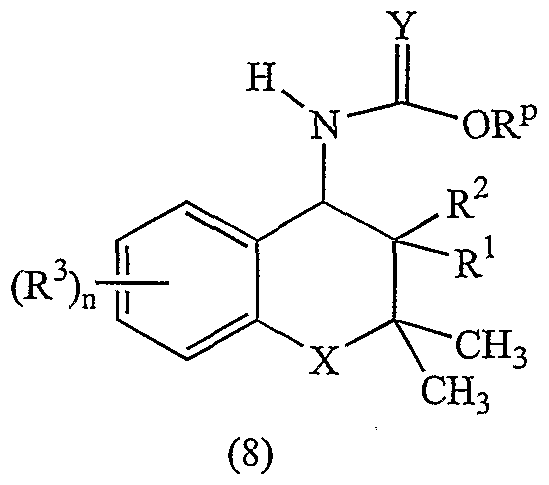
(e) reacting the compound of formula (8) with a compound of formula (9)

21. A process for the preparation of a compound of formula,

Formula 1 pharmaceutically acceptable salts, pharmaceutically acceptable solvates, N-oxides, tautomers, regioisomers, stereoisomers, metabolites, prodrugs or polymorphs thereof, wherein:
X and Y are independently O, S(O)m, or NRe; R1 and R2 are independently hydrogen, cyano, halogen, -OR4, alkyl or -NR4R5, or R1 and R together form an oxo group;
R3 is hydrogen, nitro, cyano, halogen, -OR4, alkyl, alkenyl, alkynyl, cycloalkyl, cycloalkylalkyl, cycloalkenyl, cycloalkenylalkyl, aryl, arylalkyl, heteroaryl, heteroarylalkyl, heterocyclic group, heterocyclylalkyl, -NR4R5, -C(=L)-R4, -C(O)O-R4, -C(O)NR4R5, -S(O)1n-
R4, or -S(O)m-NR R5; and each occurrence of R4 and R5 may be same or different and are independently hydrogen, -0Ra, -SRa, alkyl, alkenyl, alkynyl, cycloalkyl, cycloalkylalkyl, cycloalkenyl, cycloalkenylalkyl, aryl, arylalkyl, heteroaryl, heteroarylalkyl, heterocyclic group, heterocyclylalkyl,-NRaRb, -C(=L)-Ra, -C(O)O-R3, -C(O)NRaRb , -S(O)m-Ra or -S(O)1n- NRaR , or R4 and R5 taken together with the nitrogen atom to which they are attached form an optionally substituted 3 to 7 membered saturated or unsaturated cyclic ring, which may optionally include at least two heteroatoms selected from O, NRe or S; each occurrence of Ra and Rb may be same or different and are independently hydrogen, -ORC, -SR0, alkyl, alkenyl, alkynyl, cycloalkyl, cycloalkylalkyl, cycloalkenyl, cycloalkenylalkyl, aryl, arylalkyl, heteroaryl, heteroarylalkyl, heterocyclic group, substituted or unsubstituted heterocyclylalkyl, -C(=L)-RC, -C(O)O-R0, -C(O)NR°Rd, -S(O)m-Rc, -S(O)1n-
NR°Rd, -NR°Rd, or a protecting group, or Ra and Rb taken together with the nitrogen atom to which they are attached form an optionally substituted 3 to 7 membered saturated or unsaturated cyclic ring, which optionally includes at least two heteroatoms selected from O, NReor S; each occurrence of R0 and Rd may be same or different and are independently hydrogen, alkyl, alkenyl, alkynyl, cycloalkyl, cycloalkylalkyl, cycloalkenyl, cycloalkenylalkyl, aryl, arylalkyl, heteroaryl, heterocyclic group, heterocyclylalkyl, or a heteroarylalkyl or a protecting group, or Rc and Rd taken together with the nitrogen atom to which they are attached form an optionally substituted 3 to 7 membered saturated or unsaturated cyclic ring, which optionally includes at least two heteroatoms selected from O, NReor S; each occurrence of Re is independently hydrogen or alkyl; each occurrence of L is independently O, S, or NRe; R' and R" are independently hydrogen, nitro, cyano, halogen, alkyl, alkenyl, alkynyl, cycloalkyl, cycloalkylalkyl, cycloalkenyl, cycloalkenylalkyl, aryl, arylalkyl, heteroaryl, heteroarylalkyl, heterocyclic group, heterocyclylalkyl, -OR4, -NR4R5, -C(=L)-R4, -C(O)O-R5, -C(O)NR4R5, -S(O)1n-R4, or -S(O)1n-NR4R5; each occurrence of m is independently 0, 1, or 2; n is an integer of from 0 to 4; and p and q are independently 0, 1, 2, or 3, the process comprising the steps of:
(a) reacting an amine of formula (9) with a compound of formula (7), wherein X' is a leaving group and Rp is hydrogen, alkyl or aryl,


(b) reacting the compound of formula (10) with a compound of formula (6)

(6) to form the compound of claim 1.
22. A process for the preparation of a compound of formula,
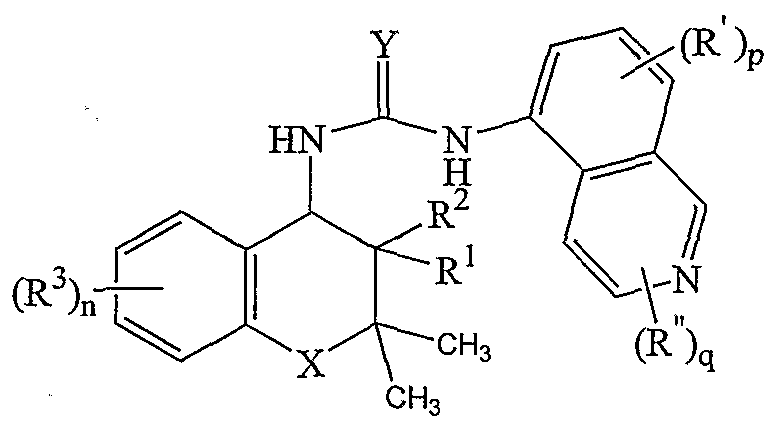
X and Y are independently O, S(O)m, or NRe; R1 and R2 are independently hydrogen, cyano, halogen, -OR4, alkyl or -NR4R5, or R1 and R2 together form an oxo group;
R3 is hydrogen, nitro, cyano, halogen, -OR4, alkyl, alkenyl, alkynyl, cycloalkyl, cycloalkylalkyl, cycloalkenyl, cycloalkenylalkyl, aryl, arylalkyl, heteroaryl, heteroarylalkyl, heterocyclic group, heterocyclylalkyl, -NR4R5, -C(=L)-R4, -C(O)O-R4, -C(O)NR4R5, -S(O)m-
R4, or -S(O)1n-NR4R5; and each occurrence of R4 and R5 may be same or different and are independently hydrogen, -0Ra, -SRa, alkyl, alkenyl, alkynyl, cycloalkyl, cycloalkylalkyl, cycloalkenyl, cycloalkenylalkyl, aryl, arylalkyl, heteroaryl, heteroarylalkyl, heterocyclic group, heterocyclylalkyl,-NRaRb, -C(=L)-Ra, -C(O)O-R3, -C(O)NRaRb , -S(O)m-Ra or -S(O)1n- NRaRb, or R4 and R5 taken together with the nitrogen atom to which they are attached form an optionally substituted 3 to 7 membered saturated or unsaturated cyclic ring, which may optionally include at least two heteroatoms selected from O, NRe or S; each occurrence of Ra and Rb may be same or different and are independently hydrogen, -ORC, -SRC, alkyl, alkenyl, alkynyl, cycloalkyl, cycloalkylalkyl, cycloalkenyl, cycloalkenylalkyl, aryl, arylalkyl, heteroaryl, heteroarylalkyl, heterocyclic group, substituted or unsubstituted heterocyclylalkyl, -C(=L)-RC, -C(O)O-RC, -C(0)NRcRd, -S(O)m-Rc, -S(O)1n-
NRcRd, -NRcRd, or a protecting group, or Ra and Rb taken together with the nitrogen atom to which they are attached form an optionally substituted 3 to 7 membered saturated or unsaturated cyclic ring, which optionally includes at least two heteroatoms selected from O, NReor S; each occurrence of Rc and Rd may be same or different and are independently hydrogen, alkyl, alkenyl, alkynyl, cycloalkyl, cycloalkylalkyl, cycloalkenyl, cycloalkenylalkyl, aryl, arylalkyl, heteroaryl, heterocyclic group, heterocyclylalkyl, or a heteroarylalkyl or a protecting group, or Rc and Rd taken together with the nitrogen atom to which they are attached form an optionally substituted 3 to 7 membered saturated or unsaturated cyclic ring, which optionally includes at least two heteroatoms selected from O, NReor S; each occurrence of Re is independently hydrogen or alkyl; each occurrence of L is independently O, S, or NRe; R' and R" are independently hydrogen, nitro, cyano, halogen, alkyl, alkenyl, alkynyl, cycloalkyl, cycloalkylalkyl, cycloalkenyl, cycloalkenylalkyl, aryl, arylalkyl, heteroaryl, heteroarylalkyl, heterocyclic group, heterocyclylalkyl, -OR4, -NR4R5, -C(HL)-R4, -C(O)O-R5, -C(O)NR4R5, -S(O)1n-R4, or -S(O)1n-NR4R5; each occurrence of m is independently 0, 1, or 2; n is an integer of from 0 to 4; and p and q are independently 0, 1, 2, or 3, the process comprising the step of: reacting the compound of formula (10')

(1C) with a compound of formula (6)
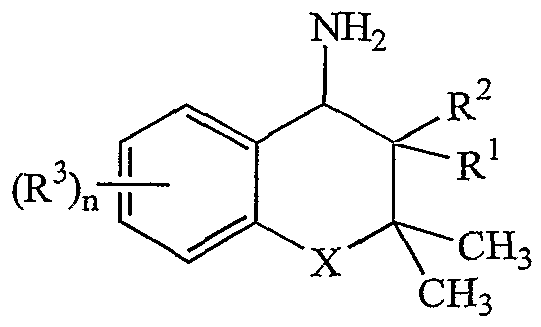
(6) to form the compound of claim 1.
23. A process for the preparation of a compound of formula,

Formula 1 pharmaceutically acceptable salts, pharmaceutically acceptable solvates, N-oxides, tautomers, regioisomers, stereoisomers, metabolites, prodrugs or polymorphs thereof, wherein:
X and Y are independently O, S(O)1n, or NRe;
R1 and R2 are independently hydrogen, cyano, halogen, -OR4, alkyl or -NR4R5, or R1 and R together form an oxo group;
R3 is hydrogen, nitro, cyano, halogen, -OR4, alkyl, alkenyl, alkynyl, cycloalkyl, cycloalkylalkyl, cycloalkenyl, cycloalkenylalkyl, aryl, arylalkyl, heteroaryl, heteroarylalkyl, heterocyclic group, heterocyclylalkyl, -NR4R5, -C(HL)-R4, -C(O)O-R4, -C(O)NR4R5, -S(O)1n-
R , or -S(O)m-NR4R5; and each occurrence of R4 and R5 may be same or different and are independently hydrogen, -ORa, -SRa, alkyl, alkenyl, alkynyl, cycloalkyl, cycloalkylalkyl, cycloalkenyl, cycloalkenylalkyl, aryl, arylalkyl, heteroaryl, heteroarylalkyl, heterocyclic group, heterocyclylalkyl,-NRaRb, -C(=L)-Ra, -C(O)O-R3, -C(0)NRaRb, -S(O)m-Ra or -S(O)1n- NRaRb, or R4 and R5 taken together with the nitrogen atom to which they are attached form an optionally substituted 3 to 7 membered saturated or unsaturated cyclic ring, which may optionally include at least two heteroatoms selected from O, NRe or S; each occurrence of Ra and Rb may be same or different and are independently hydrogen, -OR0, -SRC, alkyl, alkenyl, alkynyl, cycloalkyl, cycloalkylalkyl, cycloalkenyl, cycloalkenylalkyl, aryl, arylalkyl, heteroaryl, heteroarylalkyl, heterocyclic group, substituted or unsubstituted heterocyclylalkyl, -C(=L)-R°, -C(O)O-R0, -C(O)NR°Rd, -S(O)m-Rc, -S(O)1n- NR°Rd, -NR°Rd, or a protecting group, or Ra and Rb taken together with the nitrogen atom to which they are attached form an optionally substituted 3 to 7 membered saturated or unsaturated cyclic ring, which optionally includes at least two heteroatoms selected from O, NReor S; each occurrence of R° and Rd may be same or different and are independently hydrogen, alkyl, alkenyl, alkynyl, cycloalkyl, cycloalkylalkyl, cycloalkenyl, cycloalkenylalkyl, aryl, arylalkyl, heteroaryl, heterocyclic group, heterocyclylalkyl, or a heteroarylalkyl or a protecting group, or R° and R taken together with the nitrogen atom to which they are attached form an optionally substituted 3 to 7 membered saturated or unsaturated cyclic ring, which optionally includes at least two heteroatoms selected from O, NReor S; each occurrence of Re is independently hydrogen or alkyl; each occurrence of L is independently O, S, or NRe;
R' and R" are independently hydrogen, nitro, cyano, halogen, alkyl, alkenyl, alkynyl, cycloalkyl, cycloalkylalkyl, cycloalkenyl, cycloalkenylalkyl, aryl, arylalkyl, heteroaryl, heteroarylalkyl, heterocyclic group, heterocyclylalkyl, -OR4, -NR4R5, -C(=L)-R4, -C(O)O-R5, -C(O)NR4R5, -S(O)m-R4, or -S(O)1n-NR4R5; each occurrence of m is independently 0, 1, or 2; n is an integer of from O to 4; and p and q are independently 0, 1, 2, or 3, the process comprising the step of: reacting the compound of formula (10") wherein Rq is heteroaryl, 
(10") with a compound of formula (6)

(6) to form the compound of claim 1.
24. A process for the preparation of a compound of formula,

Formula 1 pharmaceutically acceptable salts, pharmaceutically acceptable solvates, N-oxides, tautomers, regioisomers, stereoisomers, metabolites, prodrugs or polymorphs thereof, wherein:
X and Y are independently O, S(O)m, or NRe;
R1 and R2 are independently hydrogen, cyano, halogen, -OR4, alkyl or -NR4R5, or R1 and R together form an oxo group;
R3 is hydrogen, nitro, cyano, halogen, -OR4, alkyl, alkenyl, alkynyl, cycloalkyl, cycloalkylalkyl, cycloalkenyl, cycloalkenylalkyl, aryl, arylalkyl, heteroaryl, heteroarylalkyl, heterocyclic group, heterocyclylalkyl, -NR4R5, -C(^L)-R4, -C(O)O-R4, -C(O)NR4R5, -S(O)m- R4, or -S(O)1n-NR4R5; and each occurrence of R4 and R5 may be same or different and are independently hydrogen, -ORa, -SRa, alkyl, alkenyl, alkynyl, cycloalkyl, cycloalkylalkyl, cycloalkenyl, cycloalkenylalkyl, aryl, arylalkyl, heteroaryl, heteroarylalkyl, heterocyclic group, heterocyclylalkyl,-NRaRb, -C(=L)-Ra, -C(O)O-R3, -C(O)NRaRb , -S(O)m-Ra or -S(O)m- NRaRb, or R4 and R5 taken together with the nitrogen atom to which they are attached form an optionally substituted 3 to 7 membered saturated or unsaturated cyclic ring, which may optionally include at least two heteroatoms selected from O, NRe or S; each occurrence of Ra and Rb may be same or different and are independently hydrogen, -OR0, -SR0, alkyl, alkenyl, alkynyl, cycloalkyl, cycloalkylalkyl, cycloalkenyl, cycloalkenylalkyl, aryl, arylalkyl, heteroaryl, heteroarylalkyl, heterocyclic group, substituted or unsubstituted heterocyclylalkyl, -C(=L)-RC, -C(O)O-R0, -C(O)NRcRd, -S(O)171-R0, -S(O)1n-
NR°Rd, -NR°Rd, or a protecting group, or Ra and Rb taken together with the nitrogen atom to which they are attached form an optionally substituted 3 to 7 membered saturated or unsaturated cyclic ring, which optionally includes at least two heteroatoms selected from O, NReor S; each occurrence of R° and Rd may be same or different and are independently hydrogen, alkyl, alkenyl, alkynyl, cycloalkyl, cycloalkylalkyl, cycloalkenyl, cycloalkenylalkyl, aryl, arylalkyl, heteroaryl, heterocyclic group, heterocyclylalkyl, or a heteroarylalkyl or a protecting group, or Rc and Rd taken together with the nitrogen atom to which they are attached form an optionally substituted 3 to 7 membered saturated or unsaturated cyclic ring, which optionally includes at least two heteroatoms selected from O, NReor S; each occurrence of Re is independently hydrogen or alkyl; each occurrence of L is independently O, S, or NRe; R' and R" are independently hydrogen, nitro, cyano, halogen, alkyl, alkenyl, alkynyl, cycloalkyl, cycloalkylalkyl, cycloalkenyl, cycloalkenylalkyl, aryl, arylalkyl, heteroaryl, heteroarylalkyl, heterocyclic group, heterocyclylalkyl, -OR4, -NR4R5, -C(=L)-R4, -C(O)O-R5, -C(O)NR4R5, -S(O)m-R4, or -S(O)1n-NR4R5; each occurrence of m is independently O, 1, or 2; n is an integer of from O to 4; and p and q are independently O, 1, 2, or 3, the process comprising the step of: reacting an amine of formula (9) with a compound of formula (13)

25. A process for the preparation of a compound of formula,

Formula 1 pharmaceutically acceptable salts, pharmaceutically acceptable solvates, N-oxides, tautomers, regioisomers, stereoisomers, metabolites, prodrugs or polymorphs thereof, wherein:
X and Y are independently O, S(O)1n, or NRe;
R1 and R2 are independently hydrogen, cyano, halogen, -OR4, alkyl or -NR4R5, or R1 and R together form an oxo group; R3 is hydrogen, nitro, cyano, halogen, -OR4, alkyl, alkenyl, alkynyl, cycloalkyl, cycloalkylalkyl, cycloalkenyl, cycloalkenylalkyl, aryl, arylalkyl, heteroaryl, heteroarylalkyl, heterocyclic group, heterocyclylalkyl, -NR4R5, -C(=L)-R4, -C(O)O-R4, -C(O)NR4R5, -S(O)m- R4, or -S(O)1n-NR4R5; and each occurrence of R4 and R5 may be same or different and are independently hydrogen, -ORa, -SRa, alkyl, alkenyl, alkynyl, cycloalkyl, cycloalkylalkyl, cycloalkenyl, cycloalkenylalkyl, aryl, arylalkyl, heteroaryl, heteroarylalkyl, heterocyclic group, heterocyelylalkyl,-NRaRb, -C(=L)-Ra, -C(0)O-Ra, -C(0)NRaRb , -S(O)m-Ra or -S(O)m- NRaRb, or R4 and R5 taken together with the nitrogen atom to which they are attached form an optionally substituted 3 to 7 membered saturated or unsaturated cyclic ring, which may optionally include at least two heteroatoms selected from O, NRe or S; each occurrence of Ra and R may be same or different and are independently hydrogen, -ORC, -SRC, alkyl, alkenyl, alkynyl, cycloalkyl, cycloalkylalkyl, cycloalkenyl, cycloalkenylalkyl, aryl, arylalkyl, heteroaryl, heteroarylalkyl, heterocyclic group, substituted or unsubstituted heterocyclylalkyl, -C(=L)-RC, -C(O)O-R0, -C(0)NRcRd, -S(O)m-Rc, -S(O)1n- NR0R , -NR°Rd, or a protecting group, or Ra and Rb taken together with the nitrogen atom to which they are attached form an optionally substituted 3 to 7 membered saturated or unsaturated cyclic ring, which optionally includes at least two heteroatoms selected from O, NReor S; each occurrence of R° and Rd may be same or different and are independently hydrogen, alkyl, alkenyl, alkynyl, cycloalkyl, cycloalkylalkyl, cycloalkenyl, cycloalkenylalkyl, aryl, arylalkyl, heteroaryl, heterocyclic group, heterocyclylalkyl, or a heteroarylalkyl or a protecting group, or Rc and Rd taken together with the nitrogen atom to which they are attached form an optionally substituted 3 to 7 membered saturated or unsaturated cyclic ring, which optionally includes at least two heteroatoms selected from O, NReor S; each occurrence of Re is independently hydrogen or alkyl; each occurrence of L is independently O, S, or NRe;
R' and R" are independently hydrogen, nitro, cyano, halogen, alkyl, alkenyl, alkynyl, cycloalkyl, cycloalkylalkyl, cycloalkenyl, cycloalkenylalkyl, aryl, arylalkyl, heteroaryl, heteroarylalkyl, heterocyclic group, heterocyclylalkyl, -OR4, -NR4R5, -C(=L)-R4, -C(O)O-R5, -C(O)NR4R5, -S(O)1n-R4, or -S(O)1n-NR4R5; each occurrence of m is independently 0, 1, or 2; n is an integer of from O to 4; p and q are independently 0, 1, 2, or 3, the process comprising the steps of: a) reducing compound of formula (4)

(4)
to form a compound of formula(l 1)

(H) b) reacting the compound of formula (11) with a compound of formula (6'), wherein X' is a leaving group
X1COCH3
(6') to form a compound of formula (12) 
(12)
(c) hydrolysing the compound of Formula (12) with a base to form a compound of formula (6)

(6)
(d) reacting the compound of formula (6) with a compound of formula (10)

Applications Claiming Priority (2)
| Application Number | Priority Date | Filing Date | Title |
|---|---|---|---|
| IN1884/MUM/2006 | 2006-11-13 | ||
| IN1884MU2006 | 2006-11-13 |
Publications (2)
| Publication Number | Publication Date |
|---|---|
| WO2008059339A2 true WO2008059339A2 (en) | 2008-05-22 |
| WO2008059339A3 WO2008059339A3 (en) | 2008-07-24 |
Family
ID=39310968
Family Applications (1)
| Application Number | Title | Priority Date | Filing Date |
|---|---|---|---|
| PCT/IB2007/003457 Ceased WO2008059339A2 (en) | 2006-11-13 | 2007-11-12 | Isoquinoline derivatives as vanilloid receptor modulators |
Country Status (1)
| Country | Link |
|---|---|
| WO (1) | WO2008059339A2 (en) |
Cited By (10)
| Publication number | Priority date | Publication date | Assignee | Title |
|---|---|---|---|---|
| WO2010023512A1 (en) * | 2008-08-28 | 2010-03-04 | Matrix Laboratories Ltd. | Novel vanilloid receptor modulators, process for their preparation and pharmaceutical compositions containing them |
| WO2010026128A1 (en) * | 2008-09-02 | 2010-03-11 | Glaxo Group Limited | N-(3-methyl-5-isoquinolinyl)-n'-((3r)-1-[5-(trifluoromethyl)-2-pyridinyl]-3-pyrrolidinyl) urea for the treatment of rhinitis |
| WO2010045402A1 (en) * | 2008-10-17 | 2010-04-22 | Abbott Laboratories | Trpv1 antagonists |
| WO2010045401A1 (en) * | 2008-10-17 | 2010-04-22 | Abbott Laboratories | Trpv1 antagonists |
| WO2013096226A1 (en) | 2011-12-19 | 2013-06-27 | Abbvie Inc. | Trpv1 antagonists |
| WO2013096223A1 (en) | 2011-12-19 | 2013-06-27 | Abbvie Inc. | Trpv1 antagonists |
| US8796328B2 (en) | 2012-06-20 | 2014-08-05 | Abbvie Inc. | TRPV1 antagonists |
| US8802711B2 (en) | 2011-03-25 | 2014-08-12 | Abbvie Inc. | TRPV1 antagonists |
| US10029995B2 (en) | 2015-09-03 | 2018-07-24 | Forma Therapeutics, Inc. | [6,6] fused bicyclic HDAC8 inhibitors |
| WO2021235983A1 (en) | 2020-05-20 | 2021-11-25 | Федеральное государственное бюджетное учреждение науки Тихоокеанский институт биоорганической химии им. Г.Б.Елякова Дальневосточного отделения Российской академии наук (ТИБОХ ДВО РАН) | Drug with prolonged analgesic action |
Family Cites Families (2)
| Publication number | Priority date | Publication date | Assignee | Title |
|---|---|---|---|---|
| GB0206876D0 (en) * | 2002-03-22 | 2002-05-01 | Merck Sharp & Dohme | Therapeutic agents |
| EP2527339A1 (en) * | 2004-11-24 | 2012-11-28 | Abbott Laboratories | Chromanylurea compounds that inhibit vanilloid receptor subtype 1 (VR1) receptor and uses thereof |
-
2007
- 2007-11-12 WO PCT/IB2007/003457 patent/WO2008059339A2/en not_active Ceased
Cited By (20)
| Publication number | Priority date | Publication date | Assignee | Title |
|---|---|---|---|---|
| WO2010023512A1 (en) * | 2008-08-28 | 2010-03-04 | Matrix Laboratories Ltd. | Novel vanilloid receptor modulators, process for their preparation and pharmaceutical compositions containing them |
| WO2010026128A1 (en) * | 2008-09-02 | 2010-03-11 | Glaxo Group Limited | N-(3-methyl-5-isoquinolinyl)-n'-((3r)-1-[5-(trifluoromethyl)-2-pyridinyl]-3-pyrrolidinyl) urea for the treatment of rhinitis |
| US8609692B2 (en) | 2008-10-17 | 2013-12-17 | Abbvie Inc. | TRPV1 antagonists |
| CN102186836A (en) * | 2008-10-17 | 2011-09-14 | 雅培制药有限公司 | Trpv1 antagonists |
| JP2012505908A (en) * | 2008-10-17 | 2012-03-08 | アボット・ラボラトリーズ | TRPV1 antagonist |
| JP2012505907A (en) * | 2008-10-17 | 2012-03-08 | アボット・ラボラトリーズ | TRPV1 antagonist |
| US8604053B2 (en) | 2008-10-17 | 2013-12-10 | Abbvie Inc. | TRPV1 antagonists |
| WO2010045402A1 (en) * | 2008-10-17 | 2010-04-22 | Abbott Laboratories | Trpv1 antagonists |
| WO2010045401A1 (en) * | 2008-10-17 | 2010-04-22 | Abbott Laboratories | Trpv1 antagonists |
| US8802711B2 (en) | 2011-03-25 | 2014-08-12 | Abbvie Inc. | TRPV1 antagonists |
| US8969325B2 (en) | 2011-12-19 | 2015-03-03 | Abbvie Inc. | TRPV1 antagonists |
| WO2013096226A1 (en) | 2011-12-19 | 2013-06-27 | Abbvie Inc. | Trpv1 antagonists |
| WO2013096223A1 (en) | 2011-12-19 | 2013-06-27 | Abbvie Inc. | Trpv1 antagonists |
| US8859584B2 (en) | 2011-12-19 | 2014-10-14 | Abbvie, Inc. | TRPV1 antagonists |
| US8796328B2 (en) | 2012-06-20 | 2014-08-05 | Abbvie Inc. | TRPV1 antagonists |
| US10029995B2 (en) | 2015-09-03 | 2018-07-24 | Forma Therapeutics, Inc. | [6,6] fused bicyclic HDAC8 inhibitors |
| US10370343B2 (en) | 2015-09-03 | 2019-08-06 | Forma Therapeutics, Inc. | [6,6] Fused bicyclic HDAC8 inhibitors |
| US10829460B2 (en) | 2015-09-03 | 2020-11-10 | Valo Early Discovery, Inc. | [6,6] fused bicyclic HDAC8 inhibitors |
| US11414392B2 (en) | 2015-09-03 | 2022-08-16 | Valo Health, Inc. | [6,6] fused bicyclic HDAC8 inhibitors |
| WO2021235983A1 (en) | 2020-05-20 | 2021-11-25 | Федеральное государственное бюджетное учреждение науки Тихоокеанский институт биоорганической химии им. Г.Б.Елякова Дальневосточного отделения Российской академии наук (ТИБОХ ДВО РАН) | Drug with prolonged analgesic action |
Also Published As
| Publication number | Publication date |
|---|---|
| WO2008059339A3 (en) | 2008-07-24 |
Similar Documents
| Publication | Publication Date | Title |
|---|---|---|
| US7842703B2 (en) | Substituted benzofused derivatives and their use as vanilloid receptor ligands | |
| WO2008110863A1 (en) | Indazole derivatives and their use as vanilloid receptor ligands | |
| WO2009010824A1 (en) | Dihydrochromenopyrazole derivatives as vanilloid receptor ligands | |
| KR101415426B1 (en) | Diarylamine-containing compounds and compositions, and uses thereof as modulators of C-KIT receptors | |
| CN105026372B (en) | Histone demethylase inhibitors | |
| AU2015279719B2 (en) | Histone demethylase inhibitors | |
| WO2008010061A2 (en) | 3-azabicyclo [3.1.0] hexane vanilloid receptor ligands, pharmaceutical compositions containing them, and processes for their preparation | |
| CA2745004A1 (en) | Pyridine-3-carboxyamide derivative | |
| WO2009090548A2 (en) | 3-azabicyclo [3.1.0] hexane derivatives as vanilloid receptor ligands | |
| JP2008543726A (en) | PGD2 receptor antagonist for the treatment of inflammatory diseases | |
| EP3212647A2 (en) | Novel pyridopyrimidinone compounds for modulating the catalytic activity of histone lysine demethylases (kdms) | |
| WO2009081222A1 (en) | Substituted tricyclic pyridine or pyrimidine vanilloid receptor ligands | |
| WO2009034433A2 (en) | 3-azabicyclo [3.1.0] hexane derivatives as vanilloid receptor ligands | |
| EP4642777A1 (en) | Inhibitors of kif18a and uses thereof | |
| US8492568B2 (en) | Chromane derivatives as TRPV3 modulators | |
| RU2412170C2 (en) | 4-phenyl-5-oxo-1,4,5,6,7,8-hexahydroxyquinoline derivatives as medicinal agents for treating sterility | |
| AU2009220825A1 (en) | Fused pyrimidine derivatives as TRPV3 modulators | |
| WO2009095726A1 (en) | Acrylamide derivatives as vanilloid receptor 1 modulators | |
| AU2006300871B2 (en) | Substituted benzofused derivatives and their use as vanilloid receptor ligands | |
| BRPI0617995B1 (en) | COMPOUND | |
| WO2026055272A1 (en) | Aminotetralin activators of serotonin receptors |
Legal Events
| Date | Code | Title | Description |
|---|---|---|---|
| 121 | Ep: the epo has been informed by wipo that ep was designated in this application |
Ref document number: 07848876 Country of ref document: EP Kind code of ref document: A2 |
|
| NENP | Non-entry into the national phase |
Ref country code: DE |
|
| 122 | Ep: pct application non-entry in european phase |
Ref document number: 07848876 Country of ref document: EP Kind code of ref document: A2 |