WO2008074832A2 - Isoquinolinecarboxamides as inhibitors of stearoyl-coa desaturase ( scd) - Google Patents

Isoquinolinecarboxamides as inhibitors of stearoyl-coa desaturase ( scd) Download PDF

Info

Publication number
WO2008074832A2
WO2008074832A2 PCT/EP2007/064218 EP2007064218W WO2008074832A2 WO 2008074832 A2 WO2008074832 A2 WO 2008074832A2 EP 2007064218 W EP2007064218 W EP 2007064218W WO 2008074832 A2 WO2008074832 A2 WO 2008074832A2
Authority
WO
WIPO (PCT)
Prior art keywords
methyl
formula
compound
pharmaceutically acceptable
acceptable salt
Prior art date
Legal status (The legal status is an assumption and is not a legal conclusion. Google has not performed a legal analysis and makes no representation as to the accuracy of the status listed.)
Ceased
Application number
PCT/EP2007/064218
Other languages
French (fr)
Other versions
WO2008074832A3 (en
Inventor
Anne Marie Jeanne Bouillot
Alain Claude-Marie Daugan
Anthony William Dean
Martin Christian Fillmore
Current Assignee (The listed assignees may be inaccurate. Google has not performed a legal analysis and makes no representation or warranty as to the accuracy of the list.)
SmithKline Beecham Corp
Original Assignee
SmithKline Beecham Corp
Priority date (The priority date is an assumption and is not a legal conclusion. Google has not performed a legal analysis and makes no representation as to the accuracy of the date listed.)
Filing date
Publication date
Application filed by SmithKline Beecham Corp filed Critical SmithKline Beecham Corp
Priority to US12/519,612 priority Critical patent/US20100022486A1/en
Priority to JP2009542052A priority patent/JP2010513400A/en
Priority to EP07857840A priority patent/EP2106398A2/en
Publication of WO2008074832A2 publication Critical patent/WO2008074832A2/en
Publication of WO2008074832A3 publication Critical patent/WO2008074832A3/en
Anticipated expiration legal-status Critical
Ceased legal-status Critical Current

Links

Classifications

    • CCHEMISTRY; METALLURGY
    • C07ORGANIC CHEMISTRY
    • C07DHETEROCYCLIC COMPOUNDS
    • C07D401/00Heterocyclic compounds containing two or more hetero rings, having nitrogen atoms as the only ring hetero atoms, at least one ring being a six-membered ring with only one nitrogen atom
    • C07D401/02Heterocyclic compounds containing two or more hetero rings, having nitrogen atoms as the only ring hetero atoms, at least one ring being a six-membered ring with only one nitrogen atom containing two hetero rings
    • C07D401/12Heterocyclic compounds containing two or more hetero rings, having nitrogen atoms as the only ring hetero atoms, at least one ring being a six-membered ring with only one nitrogen atom containing two hetero rings linked by a chain containing hetero atoms as chain links
    • AHUMAN NECESSITIES
    • A61MEDICAL OR VETERINARY SCIENCE; HYGIENE
    • A61PSPECIFIC THERAPEUTIC ACTIVITY OF CHEMICAL COMPOUNDS OR MEDICINAL PREPARATIONS
    • A61P1/00Drugs for disorders of the alimentary tract or the digestive system
    • A61P1/16Drugs for disorders of the alimentary tract or the digestive system for liver or gallbladder disorders, e.g. hepatoprotective agents, cholagogues, litholytics
    • AHUMAN NECESSITIES
    • A61MEDICAL OR VETERINARY SCIENCE; HYGIENE
    • A61PSPECIFIC THERAPEUTIC ACTIVITY OF CHEMICAL COMPOUNDS OR MEDICINAL PREPARATIONS
    • A61P17/00Drugs for dermatological disorders
    • A61P17/02Drugs for dermatological disorders for treating wounds, ulcers, burns, scars, keloids, or the like
    • AHUMAN NECESSITIES
    • A61MEDICAL OR VETERINARY SCIENCE; HYGIENE
    • A61PSPECIFIC THERAPEUTIC ACTIVITY OF CHEMICAL COMPOUNDS OR MEDICINAL PREPARATIONS
    • A61P17/00Drugs for dermatological disorders
    • A61P17/04Antipruritics
    • AHUMAN NECESSITIES
    • A61MEDICAL OR VETERINARY SCIENCE; HYGIENE
    • A61PSPECIFIC THERAPEUTIC ACTIVITY OF CHEMICAL COMPOUNDS OR MEDICINAL PREPARATIONS
    • A61P17/00Drugs for dermatological disorders
    • A61P17/06Antipsoriatics
    • AHUMAN NECESSITIES
    • A61MEDICAL OR VETERINARY SCIENCE; HYGIENE
    • A61PSPECIFIC THERAPEUTIC ACTIVITY OF CHEMICAL COMPOUNDS OR MEDICINAL PREPARATIONS
    • A61P17/00Drugs for dermatological disorders
    • A61P17/10Anti-acne agents
    • AHUMAN NECESSITIES
    • A61MEDICAL OR VETERINARY SCIENCE; HYGIENE
    • A61PSPECIFIC THERAPEUTIC ACTIVITY OF CHEMICAL COMPOUNDS OR MEDICINAL PREPARATIONS
    • A61P25/00Drugs for disorders of the nervous system
    • AHUMAN NECESSITIES
    • A61MEDICAL OR VETERINARY SCIENCE; HYGIENE
    • A61PSPECIFIC THERAPEUTIC ACTIVITY OF CHEMICAL COMPOUNDS OR MEDICINAL PREPARATIONS
    • A61P25/00Drugs for disorders of the nervous system
    • A61P25/28Drugs for disorders of the nervous system for treating neurodegenerative disorders of the central nervous system, e.g. nootropic agents, cognition enhancers, drugs for treating Alzheimer's disease or other forms of dementia
    • AHUMAN NECESSITIES
    • A61MEDICAL OR VETERINARY SCIENCE; HYGIENE
    • A61PSPECIFIC THERAPEUTIC ACTIVITY OF CHEMICAL COMPOUNDS OR MEDICINAL PREPARATIONS
    • A61P3/00Drugs for disorders of the metabolism
    • AHUMAN NECESSITIES
    • A61MEDICAL OR VETERINARY SCIENCE; HYGIENE
    • A61PSPECIFIC THERAPEUTIC ACTIVITY OF CHEMICAL COMPOUNDS OR MEDICINAL PREPARATIONS
    • A61P3/00Drugs for disorders of the metabolism
    • A61P3/04Anorexiants; Antiobesity agents
    • AHUMAN NECESSITIES
    • A61MEDICAL OR VETERINARY SCIENCE; HYGIENE
    • A61PSPECIFIC THERAPEUTIC ACTIVITY OF CHEMICAL COMPOUNDS OR MEDICINAL PREPARATIONS
    • A61P3/00Drugs for disorders of the metabolism
    • A61P3/06Antihyperlipidemics
    • AHUMAN NECESSITIES
    • A61MEDICAL OR VETERINARY SCIENCE; HYGIENE
    • A61PSPECIFIC THERAPEUTIC ACTIVITY OF CHEMICAL COMPOUNDS OR MEDICINAL PREPARATIONS
    • A61P3/00Drugs for disorders of the metabolism
    • A61P3/08Drugs for disorders of the metabolism for glucose homeostasis
    • A61P3/10Drugs for disorders of the metabolism for glucose homeostasis for hyperglycaemia, e.g. antidiabetics
    • AHUMAN NECESSITIES
    • A61MEDICAL OR VETERINARY SCIENCE; HYGIENE
    • A61PSPECIFIC THERAPEUTIC ACTIVITY OF CHEMICAL COMPOUNDS OR MEDICINAL PREPARATIONS
    • A61P35/00Antineoplastic agents
    • AHUMAN NECESSITIES
    • A61MEDICAL OR VETERINARY SCIENCE; HYGIENE
    • A61PSPECIFIC THERAPEUTIC ACTIVITY OF CHEMICAL COMPOUNDS OR MEDICINAL PREPARATIONS
    • A61P35/00Antineoplastic agents
    • A61P35/04Antineoplastic agents specific for metastasis
    • AHUMAN NECESSITIES
    • A61MEDICAL OR VETERINARY SCIENCE; HYGIENE
    • A61PSPECIFIC THERAPEUTIC ACTIVITY OF CHEMICAL COMPOUNDS OR MEDICINAL PREPARATIONS
    • A61P43/00Drugs for specific purposes, not provided for in groups A61P1/00-A61P41/00
    • AHUMAN NECESSITIES
    • A61MEDICAL OR VETERINARY SCIENCE; HYGIENE
    • A61PSPECIFIC THERAPEUTIC ACTIVITY OF CHEMICAL COMPOUNDS OR MEDICINAL PREPARATIONS
    • A61P5/00Drugs for disorders of the endocrine system
    • A61P5/48Drugs for disorders of the endocrine system of the pancreatic hormones
    • A61P5/50Drugs for disorders of the endocrine system of the pancreatic hormones for increasing or potentiating the activity of insulin
    • AHUMAN NECESSITIES
    • A61MEDICAL OR VETERINARY SCIENCE; HYGIENE
    • A61PSPECIFIC THERAPEUTIC ACTIVITY OF CHEMICAL COMPOUNDS OR MEDICINAL PREPARATIONS
    • A61P7/00Drugs for disorders of the blood or the extracellular fluid
    • A61P7/02Antithrombotic agents; Anticoagulants; Platelet aggregation inhibitors
    • AHUMAN NECESSITIES
    • A61MEDICAL OR VETERINARY SCIENCE; HYGIENE
    • A61PSPECIFIC THERAPEUTIC ACTIVITY OF CHEMICAL COMPOUNDS OR MEDICINAL PREPARATIONS
    • A61P9/00Drugs for disorders of the cardiovascular system
    • AHUMAN NECESSITIES
    • A61MEDICAL OR VETERINARY SCIENCE; HYGIENE
    • A61PSPECIFIC THERAPEUTIC ACTIVITY OF CHEMICAL COMPOUNDS OR MEDICINAL PREPARATIONS
    • A61P9/00Drugs for disorders of the cardiovascular system
    • A61P9/10Drugs for disorders of the cardiovascular system for treating ischaemic or atherosclerotic diseases, e.g. antianginal drugs, coronary vasodilators, drugs for myocardial infarction, retinopathy, cerebrovascula insufficiency, renal arteriosclerosis
    • AHUMAN NECESSITIES
    • A61MEDICAL OR VETERINARY SCIENCE; HYGIENE
    • A61PSPECIFIC THERAPEUTIC ACTIVITY OF CHEMICAL COMPOUNDS OR MEDICINAL PREPARATIONS
    • A61P9/00Drugs for disorders of the cardiovascular system
    • A61P9/12Antihypertensives
    • CCHEMISTRY; METALLURGY
    • C07ORGANIC CHEMISTRY
    • C07DHETEROCYCLIC COMPOUNDS
    • C07D401/00Heterocyclic compounds containing two or more hetero rings, having nitrogen atoms as the only ring hetero atoms, at least one ring being a six-membered ring with only one nitrogen atom
    • C07D401/14Heterocyclic compounds containing two or more hetero rings, having nitrogen atoms as the only ring hetero atoms, at least one ring being a six-membered ring with only one nitrogen atom containing three or more hetero rings
    • CCHEMISTRY; METALLURGY
    • C07ORGANIC CHEMISTRY
    • C07DHETEROCYCLIC COMPOUNDS
    • C07D405/00Heterocyclic compounds containing both one or more hetero rings having oxygen atoms as the only ring hetero atoms, and one or more rings having nitrogen as the only ring hetero atom
    • C07D405/14Heterocyclic compounds containing both one or more hetero rings having oxygen atoms as the only ring hetero atoms, and one or more rings having nitrogen as the only ring hetero atom containing three or more hetero rings
    • CCHEMISTRY; METALLURGY
    • C07ORGANIC CHEMISTRY
    • C07DHETEROCYCLIC COMPOUNDS
    • C07D409/00Heterocyclic compounds containing two or more hetero rings, at least one ring having sulfur atoms as the only ring hetero atoms
    • C07D409/14Heterocyclic compounds containing two or more hetero rings, at least one ring having sulfur atoms as the only ring hetero atoms containing three or more hetero rings

Definitions

  • the present invention relates to a novel class of compounds believed to be inhibitors of stearoyl-CoA desaturase (SCD), compositions comprising said compounds, methods of synthesis and uses for such compounds in treating and/or preventing various diseases, including those mediated by SCD enzyme, such as diseases related to elevated lipid levels, cardiovascular disease, diabetes, obesity, metabolic syndrome, skin disorders such as acne, diseases or conditions related to cancer and the treatment of symptoms linked to the production of the amyloid plaque-forming A ⁇ 42 peptide such as Alzheimer's disease and the like.
  • SCD stearoyl-CoA desaturase
  • Acyl desaturase enzymes catalyze the formation of double bonds in fatty acids derived from either dietary sources or de novo synthesis in the liver. Mammals synthesise at least three fatty acid desaturases of differing chain length that specifically catalyze the addition of double bonds at the delta-9, delta-6, and delta-5 positions.
  • Stearoyl-CoA desaturases introduce a double bond in the C9-C10 position of saturated fatty acids.
  • the preferred substrates for the enzymes are palmitoyl-CoA (16:0) and stearoyl-CoA (18:0), which are converted to palmitoleoyl-CoA (16:1 ) and oleoyl-CoA (18:1 ), respectively.
  • the resulting mono-unsaturated fatty acids may then be employed in the preparation of phospholipids, triglycerides, and cholesteryl esters, in vivo.
  • SCD1 A number of mammalian SCD genes have been cloned. For example, two genes have been cloned from rats (SCD1 , SCD2) and four SCD genes have been isolated from mice (SCD1 , 2, 3 and 4). While the basic biochemical roles of SCD has been known in rats and mice since the 1970's (Jeffcoat, R et al., Elsevier Science (1984), VoI 4, pp. 85-1 12; de Antueno, RJ, Lipids (1993), Vol. 28, No. 4, pp. 285-290), it has only recently been directly implicated in human diseases processes.
  • SCD1 A single SCD gene, SCD1 , has been characterized in humans. SCD1 is described in Brownlie et al, WO 01/62954. A second human SCD isoform has been identified, and because it bears little sequence homology to known mouse or rat isoforms it has been named human SCD5 or hSCD5 (WO 02/26944).
  • inhibition of the activity of SCD in vivo can be used to ameliorate and/or treat one or more diseases such as dyslipidemia, hypoalphalipoproteinemia, hyperbetalipoproteinemia, hypercholesterolemia, hypertriglyceridemia, familial hypercholesterolemia, angina, ischemia, cardiac ischemia, stroke, myocardial infarction, atherosclerosis, obesity, Type I diabetes, Type Il diabetes, insulin resistance, hyperinsulinaemia, metabolic syndrome; other cardiovascular diseases e.g.
  • diseases such as dyslipidemia, hypoalphalipoproteinemia, hyperbetalipoproteinemia, hypercholesterolemia, hypertriglyceridemia, familial hypercholesterolemia, angina, ischemia, cardiac ischemia, stroke, myocardial infarction, atherosclerosis, obesity, Type I diabetes, Type Il diabetes, insulin resistance, hyperinsulinaemia, metabolic syndrome; other cardiovascular diseases e.g.
  • peripheral vascular disease reperfusion injury, angioplastic restenosis, hypertension, vascular complications of diabetes, thrombosis; hepatic steatosis, non-alcoholic steatohepatitis (NASH) and other diseases related to accumulation of lipids in the liver.
  • NASH non-alcoholic steatohepatitis
  • An SCD-mediated disease or condition also includes a disorder of polyunsaturated fatty acid (PUFA) disorder, or a skin disorder, including but not limited to eczema, acne, psoriasis, keloid scar formation or prevention, diseases related to production or secretions from mucous membranes, such as monounsaturated fatty acids, wax esters, and the like (US2006/0205713A1 , WO2007/046868, WO2007/046867).
  • PUFA polyunsaturated fatty acid
  • SCD has been shown to play a physiological role in cholesterol homeostasis and the de novo biosynthesis of cholesterol esters, triglycerides and wax esters required for normal skin and eyelid function and therefore may be useful in the treatment of acne and other skin conditions (Makoto et al. J of Nutrition (2001 ), 131 (9), 2260-2268, Harrison et al. J of Investigative Dermatology (2007) 127(6), 1309-1317).
  • An SCD-mediated disease or condition also includes but is not limited to a disease or condition which is, or is related to cancer, neoplasia, malignancy, metastases, tumours (benign or malignant), carcinogenesis, hepatomas and the like (US2006/0205713A1 , WO2007/046868, WO2007/046867).
  • SCD-1 has been identified as playing a role in human tumor cell survival and therefore has potential as an anticancer target (Morgan- Lappe et al. 2007 Cancer Res. 67(9) 4390-4398).
  • SCD inhibitors may also be useful for treating, delaying the onset of symptoms, or slowing the progression of symptoms of mild cognitive impairment (MCI), Alzheimer's Disease (AD), cerebral amyloid angiopathy (CAA) or dementia associated with Down Syndrome (DS) and other neurodegenerative diseases characterized by the formation or accumulation of amyloid plaques comprising A ⁇ 42 (US2007/0087363A1 ; Myriad Genetics).
  • MCI mild cognitive impairment
  • AD Alzheimer's Disease
  • CAA cerebral amyloid angiopathy
  • DS Down Syndrome
  • WO2005/011657 describes certain piperazine derivatives useful for inhibiting SCD activity.
  • the present invention provides a compound of formula (I) for inhibiting SCD activity:
  • R 1 represents:
  • -C 1-6 alkyl such as -CH 3
  • -C 1-6 haloalkyl such as -CF 3
  • -C 3-6 cycloalkyl or halogen such as chloro, bromo or fluoro
  • R 2 represents H or -C 2-6 alkyl
  • R 3 and R 4 independently represent hydrogen, -C 1-6 alkyl (such as methyl) or -Cs-ecycloalkyl with the proviso that R 3 and R 4 do not both represent hydrogen;
  • R 5 represents -Ci -6 haloalkyl (such as -CF 3 ) or -Cs-ecycloalkyl; and n represents 0-6; or a pharmaceutically acceptable salt thereof.
  • the said compounds have been found to inhibit SCD activity and may therefore be useful in the treatment of SCD-mediated diseases such as diseases or conditions caused by or associated with an abnormal plasma lipid profile including dyslipidemia, hypoalphalipoproteinemia, hyperbetalipoproteinemia, hypercholesterolemia, hypertriglyceridemia, familial hypercholesterolemia, angina, ischemia, cardiac ischemia, stroke, myocardial infarction, atherosclerosis, obesity, Type I diabetes, Type Il diabetes, insulin resistance, hyperinsulinaemia and metabolic syndrome; other cardiovascular diseases e.g.
  • peripheral vascular disease e.g., peripheral vascular disease, reperfusion injury, angioplastic restenosis, hypertension, vascular complications of diabetes, thrombosis, hepatic steatosis, nonalcoholic steatoheptatis (NASH) and other diseases related to accumulation of lipids in the liver; skin disorders e.g.
  • eczema eczema, acne, psoriasis, keloid scar formation or prevention, and diseases related to production or secretions from mucous membranes; cancer, neoplasia, malignancy, metastases, tumours (benign or malignant), carcinogenesis, hepatomas and the like; mild cognitive impairment (MCI), Alzheimer's Disease (AD), cerebral amyloid angiopathy (CAA) or dementia associated with Down Syndrome (DS) and other neurodegenerative diseases characterized by the formation or accumulation of amyloid plaques comprising A ⁇ 42.
  • MCI mild cognitive impairment
  • AD Alzheimer's Disease
  • CAA cerebral amyloid angiopathy
  • DS Down Syndrome
  • X represents -NHCO-. In another aspect of the invention, X represents -CONH-.
  • R 1 represents -C 6- ioaryl optionally substituted by: one, two or three groups independently selected from: -Ci -6 alkyl, -Ci -6 haloalkyl (such as -CF 3 ), -C 3- 6 cycloalkyl, halogen or -C 6- ioaryl optionally substituted by one, two or three groups selected from: -C 1-6 alkyl, -OR 5 , -C 1-6 haloalkyl (such as -CF 3 ) or halogen.
  • R 1 represents phenyl optionally substituted by: one, two or three groups independently selected from: -C 1-6 alkyl, -C 1-6 haloalkyl (such as -CF 3 ), -C 3- 6 cycloalkyl, halogen or phenyl optionally substituted by one, two or three groups selected from: -Ci -6 alkyl, -OR 5 , -Ci -6 haloalkyl (such as -CF 3 ) or halogen.
  • R 1 represents phenyl optionally substituted by one, two or three groups independently selected from: -Ci -6 alkyl, -Ci -6 haloalkyl (such as -CF 3 ), halogen or phenyl optionally substituted by one, two or three groups selected from: halogen.
  • R 1 represents phenyl optionally substituted by one, two or three groups independently selected from: methyl, -CF 3 , halogen (such as chloro or bromo), or phenyl optionally substituted by one, two or three groups selected from: halogen (such as chloro).
  • R 1 represents phenyl substituted by one, two or three groups independently selected from: methyl, -CF 3 , halogen (such as chloro or bromo), or phenyl optionally substituted by one, two or three groups selected from: halogen (such as chloro).
  • R 1 represents phenyl substituted by one, two or three groups independently selected from: -CF 3 , halogen (such as chloro or bromo), or phenyl optionally substituted by one, two or three groups selected from: halogen (such as chloro).
  • R 1 represents phenyl substituted by two chloro groups.
  • the R 1 is phenyl substituted in the meta position, that is in the 3 and/or 5 position, by chloro.
  • R 1 is phenyl substituted in the meta position, that is in the 3 position and 5 position, by halogen e.g chloro i.e
  • R 1 is phenyl substituted in the meta position, that is in the 3 position, and/or the para position, that is in the 4 position, by chloro.
  • the invention provides a compounds of formula (I), where R 1 represents phenyl substituted by phenyl, such as 2-phenyl, the second phenyl ring being optionally substituted by halogen (for example chloro).
  • R 1 represents naphthyl optionally substituted by: one, two or three groups independently selected from: -Ci -6 alkyl, -Ci -6 haloalkyl (such as -CF 3 ), -C 3- 6 cycloalkyl, halogen or phenyl optionally substituted by one, two or three groups selected from: -C 1-6 alkyl, -OR 5 , -C 1-6 haloalkyl (such as -CF 3 ) or halogen.
  • R 1 represents naphthyl.
  • R 1 represents -C 5-1 oheteroaryl or -Cs-ioheterocyclyl wherein the -C 5- ioheteroaryl or -Cs-ioheterocyclyl is optionally substituted by one, two or three groups independently selected from:
  • R 2 represents hydrogen, ethyl or propyl. In another aspect of the invention, R 2 represents hydrogen.
  • R 3 represents -C 1-6 alkyl or -Cs-ecycloalkyl. In another aspect of the invention, R 3 represents -Ci- ⁇ alkyl. In another aspect of the invention, R 3 represents methyl, ethyl or cyclopropyl. In another aspect of the invention, R 3 represents methyl.
  • R 4 represents hydrogen
  • n 0, 1 or 2, such as 0 or 1. In one aspect of the invention when:
  • R 1 represents a -C 5- ioheteroaryl then said -C 5- ioheteroaryl is other than:
  • R 1 represents a -C 5-1 oheteroaryl then said -C 5-1 oheteroaryl is other than:
  • the invention provides a compound of formula (I) wherein X represents -NHCO- and R 2 represents H.
  • Certain compounds of formula (I) may exist in stereoisomeric forms (e.g. they may contain one or more asymmetric carbon atoms). The individual stereoisomers (enantiomers and diastereomers) and mixtures of these are included within the scope of the present invention.
  • the invention also extends to conformational isomers of compounds of formula (I) and any geometric ⁇ cis and/or trans) isomers of said compounds.
  • compounds of formula (I) may exist in tautomeric forms other than that shown in the formula and these are also included within the scope of the present invention.
  • racemic compounds of formula (I) may be optionally resolved into their individual enantiomers. Such resolutions may conveniently be accomplished by standard methods known in the art. For example, a racemic compound of formula (I) may be resolved by chiral preparative HPLC.
  • alkyl refers to straight or branched hydrocarbon chains containing the specified number of carbon atoms.
  • C 1-6 alkyl means a straight or branched alkyl containing at least 1 , and at most 6, carbon atoms.
  • alkyl as used herein include, but are not limited to, methyl, ethyl, n-propyl, n-butyl, n-pentyl, n-hexyl, isobutyl, isopropyl, t-butyl and 1 ,1-dimethylpropyl.
  • alkyl may include alkylene, for example methylene (-CH 2 -), ethylene (-CH 2 CH 2 -) and propylene (-CH 2 CH 2 CH 2 -).
  • alkoxy refers to a straight or branched alkoxy group containing the specified number of carbon atoms.
  • Ci -6 alkoxy means a straight or branched alkoxy group containing at least 1 , and at most 6, carbon atoms.
  • alkoxy examples include, but are not limited to, methoxy, ethoxy, propoxy, prop-2-oxy, butoxy, but-2-oxy, 2-methylprop-1-oxy, 2-methylprop-2-oxy, pentoxy and hexyloxy.
  • the point of attachment may be on the oxygen or carbon atom.
  • halogen refers to a fluorine (fluoro), chlorine (chloro), bromine (bromo) or iodine (iodo) atom.
  • haloalkyl refers to an alkyl group having one or more carbon atoms and wherein at least one hydrogen atom is replaced with a halogen atom, for example a trifluoromethyl group and the like.
  • cycloalkyl refers to a saturated cyclic group containing 3 to 10 carbon ring-atoms, such as 3 to 6 carbon ring atoms. Examples include cyclopropyl, cyclopentyl and cyclohexyl.
  • C 5-1 oheteroaryl refers to an aromatic cyclic group containing 5 to 10 ring-atoms 1 , 2, 3 or 4 of which are hetero-atoms independently selected from nitrogen, oxygen and sulphur and the remaining ring-atoms are carbon, e.g. benzothiophene.
  • This definition includes both monocyclic and bicyclic ring systems and bicyclic structures at least a portion of which is aromatic and the other part is saturated, partially or fully unsaturated.
  • the term 'aryl' means an aromatic carbocyclic moiety.
  • the definition includes both monocyclic and bicyclic ring systems and bicyclic structures at least a portion of which is aromatic and the other part is saturated, partially or fully unsaturated.
  • aromatic, aryl groups include naphthyl, anthryl, phenanthryl, indanyl, indenyl, azulenyl, azulanyl, fluorenyl, phenyl and napthyl, and more specifically phenyl.
  • C 5-1 oheterocyclyl refers to a cyclic group containing 5 to 10 ring- atoms 1 , 2, 3 or 4 of which are hetero-atoms independently selected from nitrogen, oxygen and sulfur and the remaining ring-atoms are carbon, and, wherein said cyclic group is saturated, partially or fully unsaturated but, which is not aromatic.
  • This definition includes bicyclic structures provided the moiety is non-aromatic.
  • heterocyclyl and heteroaromatic groups include: furyl, thienyl, pyrrolyl, pyrrolinyl, pyrrolidinyl, imidazolyl, dioxolanyl, oxazolyl, thiazolyl, imidazolyl, imidazolinyl, imidazolidinyl, pyrazolyl, pyrazolinyl, pyrazolidinyl, isoxazolyl, isothiazolyl, oxadiazolyl, triazolyl, thiadiazolyl, pyranyl, pyridyl, piperidinyl, homopiperazinyl, dioxanyl, morpholino, dithianyl, thiomorpholino, pyridazinyl, pyrimidinyl, pyrazinyl, piperazinyl, sulfolanyl, tetrazolyl, triazinyl, azepinyl
  • substituted refers to substitution with the named substituent or substituents, multiple degrees of substitution being allowed unless otherwise stated.
  • pharmaceutically acceptable means a compound which is suitable for pharmaceutical use.
  • Salts of compounds of formula (I) which are suitable for use in medicine are those wherein the counterion is pharmaceutically acceptable.
  • salts having non-pharmaceutically acceptable counterions are within the scope of the present invention, for example, for use as intermediates in the preparation of other compounds of formula (I) and their pharmaceutically acceptable salts.
  • salts of formula (I) should be physiologically (i.e. pharmaceutically) acceptable.
  • suitable physiologically acceptable salts will be apparent to those skilled in the art and include for example acid addition salts formed with inorganic acids e.g. hydrochloric, hydrobromic, sulfuric, nitric or phosphoric acid; and organic acids e.g. succinic, maleic, malic, mandelic, acetic, fumaric, glutamic, lactic, citric, tartaric, benzoic, benzenesulfonic, p-toluenesulfonic, methanesulfonic, ethanesulfonic or naphthalenesulfonic acid.
  • inorganic acids e.g. hydrochloric, hydrobromic, sulfuric, nitric or phosphoric acid
  • organic acids e.g. succinic, maleic, malic, mandelic, acetic, fumaric, glutamic, lactic, citric, tartaric
  • non-physiologically acceptable salts e.g. oxalates
  • oxalates may be used, for example in the isolation of compounds of formula (I) and are included within the scope of this invention.
  • Certain of the compounds of formula (I) may form acid addition salts with one or more equivalents of the acid.
  • the present invention includes within its scope all possible stoichiometric and non-stoichiometric forms thereof.
  • solvate refers to a complex of variable stoichiometry formed by a solute (in this invention, a compound of formula (I) or a salt thereof) and a solvent.
  • solvents for the purpose of the invention may not interfere with the biological activity of the solute.
  • suitable solvents include, but are not limited to, water, methanol, ethanol and acetic acid.
  • the solvent used is a pharmaceutically acceptable solvent.
  • the solvent used is water and the solvate may also be referred to as a hydrate.
  • Solvates of compounds of formula (I) which are suitable for use in medicine are those wherein the solvent is pharmaceutically acceptable.
  • solvates having non- pharmaceutically acceptable solvents are within the scope of the present invention, for example, for use as intermediates in the preparation of other compounds of formula (I) and their pharmaceutically acceptable salts.
  • prodrug means a compound which is converted within the body, e.g. by hydrolysis in the blood, into its active form that has medical effects.
  • Pharmaceutically acceptable prodrugs are described in T. Higuchi and V. Stella, Prodrugs as Novel Delivery Systems, Vol. 14 of the A.C.S. Symposium Series, and in Edward B. Roche, ed., Bioreversible Carriers in Drug Design, American Pharmaceutical Association and Pergamon Press, 1987 and in D. Fleishner, S. Ramon and H. Barba "Improved oral drug delivery: solubility limitations overcome by the use of prodrugs", Advanced Drug Delivery Reviews (1996) 19(2) 1 15-130, each of which are incorporated herein by reference.
  • Prodrugs are any covalently bonded carriers that release a compound of structure (I) in vivo when such prodrug is administered to a patient.
  • Prodrugs are generally prepared by modifying functional groups in a way such that the modification is cleaved in vivo yielding the parent compound.
  • Prodrugs may include, for example, compounds of this invention wherein hydroxy or amine groups are bonded to any group that, when administered to a patient, cleaves to form the hydroxy or amine groups.
  • representative examples of prodrugs include (but are not limited to) phosphonate, carbamate, acetate, formate and benzoate derivatives of hydroxy and amine functional groups of the compounds of formula (I).
  • Phosphonates and carbamates may be active in their own right and/or be hydrolysable under in vivo conditions in the human body. Suitable pharmaceutically acceptable in vivo hydrolysable ester groups include those which break down readily in the human body to leave the parent acid or its salt.
  • a phosphonate is formed by reaction with phosphorous (phosphonic) acid, by methods well known in the art. For example, phosphonates may be derivatives such as RP(O)(OR) 2 and the like.
  • a carbamate is an ester of carbamic acid.
  • a compound, or a pharmaceutically acceptable salt thereof wherein the compound is selected from the group consisting of:
  • the compounds of the invention have been found to inhibit SCD activity and may therefore be useful in regulating lipid levels, e.g. plasma lipid levels.
  • Diseases or conditions caused by or associated with an abnormal plasma lipid profile and for the treatment of which the compounds of the invention may be useful include: dyslipidemia, hypoalphalipoproteinemia, hyperbetalipoproteinemia, hypercholesterolemia, hypertriglyceridemia, familial hypercholesterolemia, angina, ischemia, cardiac ischemia, stroke, myocardial infarction, atherosclerosis, obesity, Type I diabetes, Type Il diabetes, insulin resistance, hyperinsulinaemia and metabolic syndrome.
  • cardiovascular diseases for which the compounds of the present invention are useful include peripheral vascular disease, reperfusion injury, angioplastic restenosis, hypertension, vascular complications of diabetes and thrombosis.
  • Other diseases or conditions include hepatic steatosis, non-alcoholic steatohepatitis (NASH) and other diseases related to accumulation of lipids in the liver.
  • the compounds of the invention may also be useful in the treatment of skin disorders e.g. eczema, acne, psoriasis, keloid scar formation or prevention, and diseases related to production or secretions from mucous membranes.
  • the compounds of the invention may also be useful in the treatment of cancer, neoplasia, malignancy, metastases, tumours (benign or malignant), carcinogenesis, hepatomas and the like.
  • the compounds of the invention may also be useful in the treatment of mild cognitive impairment (MCI), Alzheimer's Disease (AD), cerebral amyloid angiopathy (CAA) or dementia associated with Down Syndrome (DS) and other neurodegenerative diseases characterized by the formation or accumulation of amyloid plaques comprising A ⁇ 42.
  • MCI mild cognitive impairment
  • AD Alzheimer's Disease
  • CAA cerebral amyloid angiopathy
  • DS dementia associated with Down Syndrome
  • other neurodegenerative diseases characterized by the formation or accumulation of amyloid plaques comprising A ⁇ 42.
  • the compounds of the invention may be useful in the treatment of dyslipidemia, atherosclerosis and/or hepatic steatosis.
  • the terms describing the indications used herein are classified in the Merck Manual of Diagnosis and Therapy, 17 th Edition and/or the International Classification of Diseases 10 th Edition (ICD-10). The various subtypes of the disorders mentioned herein are contemplated as part of the present invention.
  • the invention provides a compound of formula (I) or a pharmaceutically acceptable salt thereof for use in medical therapy.
  • the invention provides the use of a compound of formula (I) or a pharmaceutically acceptable salt thereof for the manufacture of a medicament for treating and/or preventing a disease or a condition susceptible to amelioration by an SCD inhibitor.
  • the invention provides the use of a compound of formula (I) or a pharmaceutically acceptable salt thereof for the manufacture of a medicament for treating and/or preventing acne, cancer, dyslipidemia, hypertriglyceridemia, atherosclerosis, obesity, Type Il diabetes, insulin resistance, hyperinsulinaemia, hepatic steatosis and/or nonalcoholic steatohepatitis (NASH).
  • a compound of formula (I) or a pharmaceutically acceptable salt thereof for the manufacture of a medicament for treating and/or preventing acne, cancer, dyslipidemia, hypertriglyceridemia, atherosclerosis, obesity, Type Il diabetes, insulin resistance, hyperinsulinaemia, hepatic steatosis and/or nonalcoholic steatohepatitis (NASH).
  • NASH nonalcoholic steatohepatitis
  • the invention provides the use of a compound of formula (I) or a pharmaceutically acceptable salt thereof for the manufacture of a medicament for treating and/or preventing acne, cancer, dyslipidemia, atherosclerosis, insulin resistance, hyperinsulinaemia, Type Il diabetes and/or hepatic steatosis.
  • the invention provides the use of a compound of formula (I) or a pharmaceutically acceptable salt thereof for the manufacture of a medicament for treating and/or preventing acne.
  • the invention provides a compound of formula (I) or a pharmaceutically acceptable salt thereof for use in treating and/or preventing a disease or a condition susceptible to amelioration by an SCD inhibitor in a mammal, including human.
  • the invention provides a compound of formula (I) or a pharmaceutically acceptable salt thereof for use in treating and/or preventing acne, cancer, dyslipidemia, hypertriglyceridemia, atherosclerosis, obesity, Type Il diabetes, insulin resistance, hyperinsulinaemia, hepatic steatosis and/or non-alcoholic steatohepatitis (NASH).
  • acne cancer, dyslipidemia, hypertriglyceridemia, atherosclerosis, obesity, Type Il diabetes, insulin resistance, hyperinsulinaemia, hepatic steatosis and/or non-alcoholic steatohepatitis (NASH).
  • the invention provides a compound of formula (I) or a pharmaceutically acceptable salt thereof for use in treating and/or preventing acne, cancer, dyslipidemia, atherosclerosis, insulin resistance, hyperinsulinaemia, Type Il diabetes and/or hepatic steatosis.
  • the invention provides a compound of formula (I) or a pharmaceutically acceptable salt thereof for use in treating and/or preventing acne.
  • the invention provides a method for treating and/or preventing a disease or a condition susceptible to amelioration by an SCD inhibitor, which method comprises administering to a subject, for example a mammal, including human, a therapeutically effective amount of a compound of formula (I) or a pharmaceutically acceptable salt thereof.
  • the invention provides a method for treating and/or preventing a acne, cancer, dyslipidemia, hypertriglyceridemia, atherosclerosis, obesity, Type Il diabetes, insulin resistance, hyperinsulinaemia, hepatic steatosis and/or non-alcoholic steatohepatitis (NASH), which method comprises administering to a subject, for example a mammal, including human, a therapeutically effective amount of a compound of formula (I) or a pharmaceutically acceptable salt thereof.
  • a subject for example a mammal, including human, a therapeutically effective amount of a compound of formula (I) or a pharmaceutically acceptable salt thereof.
  • the invention provides a method for treating and/or preventing acne, cancer, dyslipidemia, atherosclerosis, insulin resistance, hyperinsulinaemia, Type Il diabetes and/or hepatic steatosis, which method comprises administering to a subject, for example a mammal, including human, a therapeutically effective amount of a compound of formula (I) or a pharmaceutically acceptable salt thereof.
  • the invention provides a method for treating and/or preventing acne, which method comprises administering to a subject, for example a mammal, including human, a therapeutically effective amount of a compound of formula (I) or a pharmaceutically acceptable salt thereof.
  • treatment and “therapy” includes acute treatment or prophylaxis as well as the alleviation of established symptoms.
  • the compounds of the invention are intended for use in pharmaceutical compositions it will readily be understood that they are each preferably provided in substantially pure form, for example at least 60% pure, more suitably at least 75% pure and preferably at least 85%, especially at least 98% pure (% are on a weight for weight basis).
  • Impure preparations of the compounds may be used for preparing the more pure forms used in the pharmaceutical compositions; these less pure preparations of the compounds should contain at least 1%, more suitably at least 5% and preferably from 10 to 59% of a compound of the invention.
  • final compounds of formula (I) can be converted into other compounds of formula (I) by techniques known to those in the art, for example, carboxylic acid substituents can be converted to esters or amides by routine techniques.
  • compounds of formula (I), wherein X represents -NHCO- and R 2 represents H may be prepared according to reaction scheme 1 by reacting compounds of formula (III) and compounds of formula (IV) wherein P 1 represents a suitable nitrogen protecting group such as Boc to form a compound of formula (II).
  • the reaction is suitably carried out in the presence of a coupling reagent such as HATU, EDCI and/or HOBt, in a suitable solvent such as DCM (suitably at room temperature to reflux) or DMF (suitably at room temperature to 80 0 C), and is followed by deprotection of compound of formula (II) under acidic conditions such as hydrochloric acid or trifluoracetic acid.
  • a process for preparing compound for formula (Ia) or pharmaceutically acceptable salt thereof which comprises reacting a compound of formula (III) with a compound of formula (IV) wherein P 1 represents a suitable nitrogen protecting group followed by deprotection of a compound of formula (II).
  • Compounds of formula (I), wherein X represents -NHCO- and R 2 represents-C 2-6 alkyl may be prepared according to reaction scheme 2 by reacting compounds of formula (III) and compounds of formula (IVa) in the presence of a coupling reagent such as HATU, EDCI and/or HOBt, in a suitable solvent such as DCM (suitably at room temperature to reflux).
  • a coupling reagent such as HATU, EDCI and/or HOBt
  • R 1 represents a ring A substituted by a substituent Y (formula 1c)
  • A represents -C 6- ioaryl, -C 5-10 heteroaryl or -Cs-ioheterocyclyl
  • Y represents (a) -C 1-6 alkyl, -C 1-6 haloalkyl, -C 3-6 cycloalkyl, (b) -C 6 -ioaryl, -C 5-10 heteroaryl or -Cs-ioheterocyclyl wherein the -C 6- io aryl, -C 5- ioheteroaryl or -Cs-ioheterocyclyl ring is optionally substituted by one, two or three groups independently selected from: -C 1-6 alkyl, -OR 5 , -C 1-6 haloalkyl or halogen, may be prepared according to reaction scheme 3 from another compound of formula (I) wherein R 1 represents a
  • a process for preparing compound for formula (Ic) or pharmaceutically acceptable salt thereof which comprises reacting a compound of formula (Id) wherein L 1 represents a suitable leaving group, with a compound of formula Y-B(OH) 2 , wherein A represents -C 6 -ioaryl, -C 5- ioheteroaryl or -C 5- ioheterocyclyl and Y represents (a) -Ci -6 alkyl, -Ci -6 haloalkyl, -Cs- ⁇ cycloalkyl, (b) -C 6- ioaryl, -C 5- 10 heteroaryl or -Cs-ioheterocyclyl wherein the -C 6-I o aryl, -C 5-1 oheteroaryl or -Cs-ioheterocyclyl ring is optionally substituted by one, two or three groups independently selected from: -Ci -6 alky
  • Compounds of formula (I), wherein X represents -CONH- and R 2 represents hydrogen may be prepared according to reaction scheme 4 by reacting compounds of formula (Vl) and compounds of formula (VII) wherein P 1 represents a suitable nitrogen protecting group such as Boc to form a compound of formula (V).
  • the reaction is suitably carried out in the presence of a coupling reagent such as HATU, EDCI and/or HOBt, in a suitable solvent such as DCM (suitably at room temperature to reflux) or DMF (suitably at room temperature to 80 0 C), and is followed by deprotection of compound of formula (V) under acidic conditions such as hydrochloric acid or trifluoracetic acid.
  • a process for preparing compound for formula (Ie) or pharmaceutically acceptable salt thereof which comprises reacting a compound of formula (Vl) with a compound of formula (VII) wherein P 1 represents a suitable nitrogen protecting group, followed by deprotection of a compound of formula (V).
  • a process for preparing compound for formula (If) or pharmaceutically acceptable salt thereof which comprises reacting a compound of formula (Vl) with a compound of formula (Vila).
  • Compounds of formula (III) may be prepared according to reaction scheme 6 by reacting compounds of formula (VIII) in the presence of hydrazine hydrate or NaOH (cone.) in a suitable solvent such as ethanol or methanol.
  • Compounds of formula (VIII) may be prepared according to reaction scheme 7 by reacting compound of formula (X) with phthalic anhydride in a suitable solvent such as dioxane, followed by alkylation of compounds of formula (IX) with a compound of formula (Xl) where L 2 represents a leaving group such as halogen or tosylate in the presence of a base such as potassium carbonate in a suitable solvent such as acetonitrile suitably at reflux temperature.
  • Compounds of formula (Vl) may be prepared according to reaction scheme 8 by reacting compound of formula (XIII) with a compound of formula (Xl) where L 3 represents a leaving group such as halogen or tosylate in the presence of a base such as potassium carbonate in a suitable solvent such as acetone suitably at reflux temperature, followed by saponification of compound of formula (XII) with a base such as sodium hydroxide in a suitable solvent such as ethanol.
  • Compounds of formula (XII) may also be prepared according to reaction scheme 9 by deprotection of compound of formula (XIV) wherein P 2 represents a suitable nitrogen protecting group such as Boc for example with trifluoroacetic acid in a solvent such as dichloromethane suitably at room temperature, followed by condensation with a compound of formula (XV) in a suitable solvent such as acetic acid suitably at reflux temperature.
  • P 2 represents a suitable nitrogen protecting group such as Boc for example with trifluoroacetic acid in a solvent such as dichloromethane suitably at room temperature
  • condensation with a compound of formula (XV) in a suitable solvent such as acetic acid suitably at reflux temperature a suitable solvent such as acetic acid suitably at reflux temperature.
  • Compounds of formula (IVa) may be prepared according scheme 11 by a reductive amination of compound of formula (XIX) with an appropriate aldehyde in the presence of a reducing agent such as sodium triacetoxy borohydride followed by saponification of compound of formula (XVIII) in the presence of a base such as sodium hydroxide in a suitable solvent such as ethanol suitably at reflux.
  • a reducing agent such as sodium triacetoxy borohydride
  • saponification of compound of formula (XVIII) in the presence of a base such as sodium hydroxide in a suitable solvent such as ethanol suitably at reflux.
  • Compounds of formula (Vila) may be prepared according scheme 12 by a reductive amination of compound of formula (XX) with an appropriate aldehyde in the presence of a reducing agent such as sodium triacetoxy borohydride or by alkylation of compound of formula (XX) with appropriate halide followed by reduction of the nitro group of compound of formula (XXI).
  • a reducing agent such as sodium triacetoxy borohydride
  • alkylation of compound of formula (XX) with appropriate halide followed by reduction of the nitro group of compound of formula (XXI).
  • the compounds of the invention may be prepared singly or as compound libraries comprising at least 2, for example 5 to 1 ,000 compounds, and more preferably 10 to 100 compounds.
  • Libraries of compounds of the invention may be prepared by a combinatorial 'split and mix' approach or by multiple parallel syntheses using either solution phase or solid phase chemistry, by procedures known to those skilled in the art.
  • a compound library comprising at least 2 compounds of the invention.
  • Suitable protecting groups for use according to the present invention are well known to those skilled in the art and may be used in a conventional manner. See, for example, "Protective groups in organic synthesis” by T.W. Greene and P. G. M. Wuts (John Wiley & sons 1991 ) or "Protecting Groups” by PJ. Kocienski (Georg Thieme Verlag 1994).
  • suitable amino protecting groups include acyl type protecting groups (e.g.
  • aromatic urethane type protecting groups e.g. benzyloxycarbonyl (Cbz) and substituted Cbz
  • aliphatic urethane protecting groups e.g. 9-fluorenylmethoxycarbonyl (Fmoc), t-butyloxycarbonyl (Boc), isopropyloxycarbonyl, cyclohexyloxycarbonyl) and alkyl or aralkyl type protecting groups (e.g. benzyl, trityl, chlorotrityl).
  • the compounds of formula (I) or pharmaceutically acceptable salt(s) thereof may also be used in combination with other therapeutic agents.
  • the invention thus provides, in a further aspect, a combination comprising a compound of formula (I) or pharmaceutically acceptable salt thereof together with one or more further therapeutic agent(s).
  • Compounds of the invention may be administered in combination with other therapeutic agents.
  • Preferred therapeutic agents are selected from the list: an inhibitor of cholesteryl ester transferase (CETP inhibitors), a HMG-CoA reductase inhibitor, a microsomal triglyceride transfer protein, a peroxisome proliferator-activated receptor activator (PPAR), a bile acid reuptake inhibitor, a cholesterol absorption inhibitor, a cholesterol synthesis inhibitor, a fibrate, niacin, an ion-exchange resin, an antioxidant, an inhibitor of AcylCoA: cholesterol acyltransferase (ACAT inhibitor), a cannabinoid 1 antagonist, a bile acid sequestrant, a corticosteroid, a vitamin D3 derivative, a retinoid, an immunomodulator, an anti androgen, a keratolytic agent, an anti-microbial, a platinum chemotherapeutic, an antimetabolite, hydroxyurea,
  • each compound may differ from that when the compound is used alone.
  • Appropriate doses will be readily appreciated by those skilled in the art. It will be appreciated that the amount of a compound of the invention required for use in treatment will vary with the nature of the condition being treated and the age and the condition of the patient and will be ultimately at the discretion of the attendant physician or veterinarian.
  • compositions comprising a combination as defined above together with at least one pharmaceutically acceptable carrier and/or excipient comprise a further aspect of the invention.
  • the individual components of such combinations may be administered either sequentially or simultaneously in separate or combined pharmaceutical formulations by any convenient route.
  • either the SCD inhibitor or the second therapeutic agent may be administered first.
  • the combination may be administered either in the same or different pharmaceutical composition.
  • the two compounds When combined in the same formulation it will be appreciated that the two compounds must be stable and compatible with each other and the other components of the formulation. When formulated separately they may be provided in any convenient formulation, conveniently in such manner as are known for such compounds in the art.
  • the invention also includes a pharmaceutical composition comprising one or more compounds of formula (I) or pharmaceutically acceptable salt(s) in combination with one or more excipients.
  • the compounds of the invention may be administered in conventional dosage forms prepared by combining a compound of the invention with standard pharmaceutical carriers or diluents according to conventional procedures well known in the art. These procedures may involve mixing, granulating and compressing or dissolving the ingredients as appropriate to the desired preparation.
  • compositions of the invention may be formulated for administration by any route, and include those in a form adapted for oral, topical or parenteral administration to mammals including humans.
  • compositions may be in the form of tablets, capsules, powders, granules, lozenges, creams or liquid preparations, such as oral or sterile parenteral solutions or suspensions.
  • topical formulations of the present invention may be presented as, for instance, dispersions, lotions, creams, gels, pastes, powders, aerosol sprays, syrups or ointments on sponges or cotton applicators, and solutions or suspensions in an aqueous liquid, nonaqueous liquid, oil-in-water emulsion, or water-in-oil liquid emulsion.
  • Creams, lotions, or ointments may be prepared as rinse-off or leave-on products, as well as two stage treatment products for use with other skin cleansing or managing compositions.
  • the compositions can be administered as a rinse-off product in a higher concentration form, such as a gel, and then a leave-on product in a lower concentration to avoid irritation of the skin.
  • Ointments are hydrocarbon-based semisolid formulations containing dissolved or suspended drugs.
  • Creams and lotions are semi-solid emulsion systems and the term is applied both to water/oil or oil/water. Gel formulations are semi-solid systems in which a liquid phase is trapped in a polymeric matrix.
  • the ointments may contain one or more hydrophobic carriers selected from, for example, white soft paraffin or other mineral waxes, liquid paraffin, non- mineral waxes, long chain alcohols, long chain acids and silicones.
  • the ointment may contain in addition to the hydrophobic carriers some hydrophillic carriers selected from, for example, propylene glycol and polyethylene glycol in combination with an appropriate surfactant/co-surfactant system.
  • the carrier compositions of the creams or lotions are typically based on water, white soft paraffin and an appropriate surfactant/co-surfactant system, in combination with other carriers/components selected from, for example, propylene glycol, butylene glycol glycerinemonostearate, PEG-glycerinemonostearate, esters such as Ci 2 -i5 alkyl benzoate, liquid paraffin, non-mineral waxes, long chain alcohols, long chain acids silicones, non-silicone polymers.
  • an appropriate surfactant/co-surfactant system selected from, for example, propylene glycol, butylene glycol glycerinemonostearate, PEG-glycerinemonostearate, esters such as Ci 2 -i5 alkyl benzoate, liquid paraffin, non-mineral waxes, long chain alcohols, long chain acids silicones, non-silicone polymers.
  • the gels may by way of example be formulated using isopropyl alcohol or ethyl alcohol, propylene glycol and water with a gelling agent such as hydroxyethyl cellulose, suitably in combination with minor components, for example one or more of butylene glycol and a wetting agent such as a poloxamer.
  • a gelling agent such as hydroxyethyl cellulose
  • An ointment, cream, lotion, gel, and the like can further comprise a moisturizing agent.
  • the moisturizing agent can be a hydrophobic moisturizing agent such as ceramide, borage oil, tocopherol, tocopherol linoleate, dimethicone or a mixture thereof or a hydrophilic moisturizing agent such as glycerine, hyaluronic acid, sodium peroxylinecarbolic acid, wheat protein, hair keratin amino acids, or a mixture thereof.
  • compositions according to the invention may also comprise conventional additives and adjuvants for dermatological applications, such as preservatives, acids or bases used as pH buffer excipients and antioxidants.
  • the present invention encompasses administration via a transdermal patch or other forms of transdermal administration.
  • Suitable formulations for transdermal administration are known in the art, and may be employed in the methods of the present invention.
  • suitable transdermal patch formulations for the administration of a pharmaceutical compound are described in, for example, U.S. Pat. No. 4, 460,372 to Campbell et al., U.S. Pat. No. 4,573,996 to Kwiatek et al., U. S. Pat. No. 4,624,665 to Nuwayser, U.S. Pat. No. 4,722,941 to Eckert et al., and U.S. Pat. No. 5, 223,261 to Nelson et al.
  • a suitable transdermal patch for use in the methods of the present invention encompasses a suitable transdermal patch includes a backing layer which is non-permeable, a permeable surface layer, an adhesive layer substantially continuously coating the permeable surface layer, and a reservoir located or sandwiched between the backing layer and the permeable surface layer such that the backing layer extends around the sides of the reservoir and is joined to the permeable surface layer at the edges of the permeable surface layer.
  • the reservoir contains a compound of formula (I) or pharmaceutically acceptable salt thereof, alone or in combination, and is in fluid contact with the permeable surface layer.
  • the transdermal patch is adhered to the skin by the adhesive layer on the permeable surface layer, such that the permeable surface layer is in substantially continuous contact with the skin when the transdermal patch is adhered to the skin. While the transdermal patch is adhered to the skin of the subject, the compound of formula (I) or pharmaceutically acceptable salt thereof contained in the reservoir of the transdermal patch is transferred via the permeable surface layer, from the reservoir, through the adhesive layer, and to the skin of the patient.
  • the transdermal patch may optionally also include one or more penetration- enhancing agents in the reservoir that enhance the penetration of the compound of formula (I) or pharmaceutically acceptable salt thereof through the skin.
  • suitable materials which may comprise the backing layer are well known in the art of transdermal patch delivery, and any conventional backing layer material may be employed in the transdermal patch of the instant invention.
  • Suitable penetration-enhancing agents are well known in the art as well.
  • conventional penetration-enhancing agents include alkanols such as ethanol, hexanol, cyclohexanol, and the like, hydrocarbons such as hexane, cyclohexaue, isopropylbenzene; aldebydes and ketones such as cyclohexanone, acetamide, N,N-di(lower alkyl)acetamides such as N,N-diethylacetamide, N,N-dimethyl acetamide, N-(2-hydroxyethyl) acetamide, esters such as N,N-di-lower alkyl sulfoxides; essential oils such as propylene glycol, glycerine, glycerol monolaurate, isopropyl myristate, and ethyl oleate, salicylates, and mixtures of any of the above.
  • Tablets and capsules for oral administration may be in unit dose presentation form, and may contain conventional excipients such as binding agents, for example syrup, acacia, gelatin, sorbitol, tragacanth, or polyvinylpyrrolidone; fillers, for example lactose, sugar, maize-starch, calcium phosphate, sorbitol or glycine; tabletting lubricants, for example magnesium stearate, talc, polyethylene glycol or silica; disintegrants, for example potato starch; or acceptable wetting agents such as sodium lauryl sulphate.
  • the tablets may be coated according to methods well known in normal pharmaceutical practice.
  • Oral liquid preparations may be in the form of, for example, aqueous or oily suspensions, solutions, emulsions, syrups or elixirs, or may be presented as a dry product for reconstitution with water or other suitable vehicle before use.
  • Such liquid preparations may contain conventional additives, such as suspending agents, for example sorbitol, methyl cellulose, glucose syrup, gelatin, hydroxyethyl cellulose, carboxymethyl cellulose, aluminium stearate gel or hydrogenated edible fats, emulsifying agents, for example lecithin, sorbitan monooleate, or acacia; non-aqueous vehicles (which may include edible oils), for example almond oil, oily esters such as glycerine, propylene glycol, or ethyl alcohol; preservatives, for example methyl or propyl p-hydroxybenzoate or sorbic acid, and, if desired, conventional flavouring or colouring agents.
  • suspending agents for example sorbitol, methyl cellulose, glucose syrup, gelatin, hydroxyethyl cellulose, carboxymethyl cellulose, aluminium stearate gel or hydrogenated edible fats, emulsifying agents, for example lecithin, sorbitan monooleate, or
  • Suppositories will contain conventional suppository bases, e.g. cocoa-butter or other glyceride.
  • fluid unit dosage forms are prepared utilising the compound and a sterile vehicle, water being preferred.
  • the compound depending on the vehicle and concentration used, can be either suspended or dissolved in the vehicle.
  • the compound can be dissolved in water for injection and filter sterilised before filling into a suitable vial or ampoule and sealing.
  • agents such as a local anaesthetic, preservative and buffering agents can be dissolved in the vehicle.
  • the composition can be frozen after filling into the vial and the water removed under vacuum.
  • the dry lyophilised powder is then sealed in the vial and an accompanying vial of water for injection may be supplied to reconstitute the liquid prior to use.
  • Parenteral suspensions are prepared in substantially the same manner except that the compound is suspended in the vehicle instead of being dissolved and sterilisation cannot be accomplished by filtration.
  • the compound can be sterilised by exposure to ethylene oxide before suspending in the sterile vehicle.
  • a surfactant or wetting agent is included in the composition to facilitate uniform distribution of the compound.
  • compositions may contain from 0.1 % by weight, preferably from 10-60% by weight, of the active ingredient, depending on the method of administration. Where the compositions comprise dosage units, each unit will preferably contain from 50-500 mg of the active ingredient.
  • the dosage as employed for adult human treatment will preferably range from 100 to 3000 mg per day, for instance 1500 mg per day depending on the route and frequency of administration. Such a dosage corresponds to 1.5 to 50 mg/kg per day. Suitably the dosage is from 5 to 20 mg/kg per day.
  • the optimal quantity and spacing of individual dosages of a compound of the invention will be determined by the nature and extent of the condition being treated, the form, route and site of administration, and the particular mammal being treated, and that such optimums can be determined by conventional techniques. It will also be appreciated by one of skill in the art that the optimal course of treatment, i.e., the number of doses of a compound of the invention given per day for a defined number of days, can be ascertained by those skilled in the art using conventional course of treatment determination tests.
  • MS mass spectra
  • Analytical HPLC was conducted on an Uptisphere-hsc column (3 ⁇ m, 30 x 3 mm id) eluting with 0.01 M ammonium acetate in water (solvent A) and 100% acetonitrile (solvent B) using the following elution gradient: 0 to 0.5 minutes, 5%B; 0.5 to 3.5 minutes, 5 to 100%B; 3.5 to 4 minutes, 100%B; 4 to 4.5 minutes, 100 to 5%B; 4.5 to 5.5 minutes, 5%B at a flowrate of 1.3 mL/min with a temperature of 40 0 C.
  • MS mass spectra
  • Analytical GC was conducted on a DB-1 ms column (Agilent Technologies), 0.1 ⁇ m, 10m x 0.1 mm id) eluting with an Helium flow of 0.5ml/min and pressure at 3.4 bar and with a gradient temperature: 0 to 0.35 min, 100°C; 0.35min to 6min, 100 0 C to 250°C (ramp of 80°C/min).
  • MS mass spectra
  • Trifluoroacetic acid (5 ml.) was added to a solution of 1 ,1-dimethylethyl 2-(1- naphthalenylmethyl)hydrazinecarboxylate (Intermediate 10) (0.84 g, 3.09 mmol) in DCM (20 ml.) and solution was stirred overnight at room temperature under a nitrogen atmosphere. The reaction mixture was evaporated under reduced pressure and the residue was dissolved in acetic acid (10 ml_). The resulting solution was added dropwise to a solution of ethyl 2,4- dioxopentanoate (530 ⁇ l_, 3.8 mmol) in acetic acid (10 ml.) and the reaction mixture was heated at reflux under nitrogen for 1 hour.
  • the compounds of the present invention may be analysed in vitro for SCD activity using an assay based on the production of [ 3 H]H 2 O, which is released during the enzyme-catalyzed generation of the monounsaturated fatty acyl CoA product.
  • the assay is performed in a 96- well filtration plates.
  • the titrated substrate used in the assay is the [9,10- 3 H] stearoyl Coenzyme A.
  • SCD-containing rat microsomes (2 ⁇ g protein) and substrate (1 ⁇ M) After incubation for 6 minutes of SCD-containing rat microsomes (2 ⁇ g protein) and substrate (1 ⁇ M), the labelled fatty acid acyl-CoA species and microsomes are absorbed with charcoal and separated from [ 3 H]H 2 O by centrifugation.
  • [ 3 H]H 2 O is used as a measure of SCD activity.
  • Compounds at concentrations starting at 10 ⁇ M to 0.1 nM or vehicle (DMSO) are preincubated for 5 minutes with the microsomes before addition of the substrate.
  • the concentration-responses are fitted with sigmoidal curves to obtain IC 50 values.
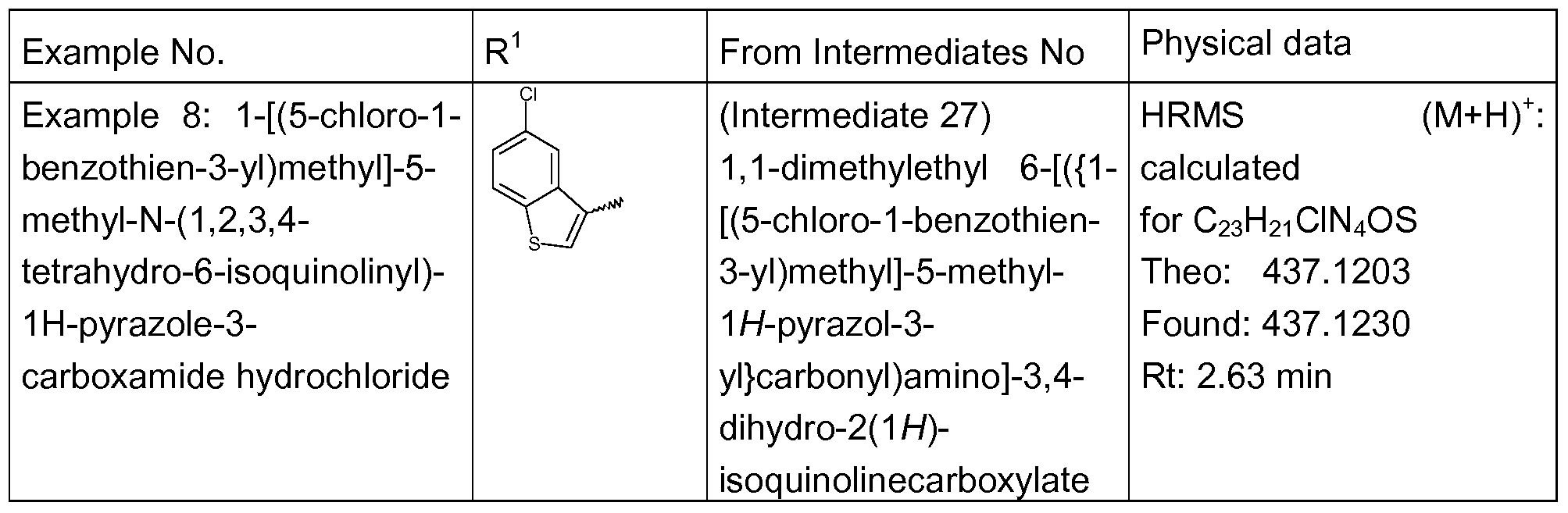
  • Examples 1-14 All of the synthetic Example compounds tested (Examples 1-14) by the above described in vitro assay for SCD activity were found to exhibit an average plC 50 value of greater than 5.5.

Landscapes

  • Health & Medical Sciences (AREA)
  • Chemical & Material Sciences (AREA)
  • Organic Chemistry (AREA)
  • Chemical Kinetics & Catalysis (AREA)
  • General Health & Medical Sciences (AREA)
  • Engineering & Computer Science (AREA)
  • Veterinary Medicine (AREA)
  • General Chemical & Material Sciences (AREA)
  • Medicinal Chemistry (AREA)
  • Nuclear Medicine, Radiotherapy & Molecular Imaging (AREA)
  • Bioinformatics & Cheminformatics (AREA)
  • Pharmacology & Pharmacy (AREA)
  • Life Sciences & Earth Sciences (AREA)
  • Animal Behavior & Ethology (AREA)
  • Public Health (AREA)
  • Diabetes (AREA)
  • Hematology (AREA)
  • Obesity (AREA)
  • Dermatology (AREA)
  • Biomedical Technology (AREA)
  • Cardiology (AREA)
  • Heart & Thoracic Surgery (AREA)
  • Neurosurgery (AREA)
  • Neurology (AREA)
  • Endocrinology (AREA)
  • Child & Adolescent Psychology (AREA)
  • Emergency Medicine (AREA)
  • Hospice & Palliative Care (AREA)
  • Vascular Medicine (AREA)
  • Urology & Nephrology (AREA)
  • Psychiatry (AREA)
  • Gastroenterology & Hepatology (AREA)
  • Oncology (AREA)
  • Pharmaceuticals Containing Other Organic And Inorganic Compounds (AREA)
  • Plural Heterocyclic Compounds (AREA)
  • Medicines That Contain Protein Lipid Enzymes And Other Medicines (AREA)

Abstract

The present invention relates to substituted 3-Aminopyrazole compounds of formula (I) and pharmaceutically acceptable salts thereof, to pharmaceutical compositions containing them and their use in medicine. In particular, the invention relates to compounds for modulating SCD activity.

Description

COMPOUNDS
FIELD OF THE INVENTION
The present invention relates to a novel class of compounds believed to be inhibitors of stearoyl-CoA desaturase (SCD), compositions comprising said compounds, methods of synthesis and uses for such compounds in treating and/or preventing various diseases, including those mediated by SCD enzyme, such as diseases related to elevated lipid levels, cardiovascular disease, diabetes, obesity, metabolic syndrome, skin disorders such as acne, diseases or conditions related to cancer and the treatment of symptoms linked to the production of the amyloid plaque-forming Aβ42 peptide such as Alzheimer's disease and the like.
BACKGROUND OF THE INVENTION
Acyl desaturase enzymes catalyze the formation of double bonds in fatty acids derived from either dietary sources or de novo synthesis in the liver. Mammals synthesise at least three fatty acid desaturases of differing chain length that specifically catalyze the addition of double bonds at the delta-9, delta-6, and delta-5 positions. Stearoyl-CoA desaturases (SCDs) introduce a double bond in the C9-C10 position of saturated fatty acids. The preferred substrates for the enzymes are palmitoyl-CoA (16:0) and stearoyl-CoA (18:0), which are converted to palmitoleoyl-CoA (16:1 ) and oleoyl-CoA (18:1 ), respectively. The resulting mono-unsaturated fatty acids may then be employed in the preparation of phospholipids, triglycerides, and cholesteryl esters, in vivo.
A number of mammalian SCD genes have been cloned. For example, two genes have been cloned from rats (SCD1 , SCD2) and four SCD genes have been isolated from mice (SCD1 , 2, 3 and 4). While the basic biochemical roles of SCD has been known in rats and mice since the 1970's (Jeffcoat, R et al., Elsevier Science (1984), VoI 4, pp. 85-1 12; de Antueno, RJ, Lipids (1993), Vol. 28, No. 4, pp. 285-290), it has only recently been directly implicated in human diseases processes.
A single SCD gene, SCD1 , has been characterized in humans. SCD1 is described in Brownlie et al, WO 01/62954. A second human SCD isoform has been identified, and because it bears little sequence homology to known mouse or rat isoforms it has been named human SCD5 or hSCD5 (WO 02/26944).
Whilst not wishing to be bound by theory, it is thought that inhibition of the activity of SCD in vivo can be used to ameliorate and/or treat one or more diseases such as dyslipidemia, hypoalphalipoproteinemia, hyperbetalipoproteinemia, hypercholesterolemia, hypertriglyceridemia, familial hypercholesterolemia, angina, ischemia, cardiac ischemia, stroke, myocardial infarction, atherosclerosis, obesity, Type I diabetes, Type Il diabetes, insulin resistance, hyperinsulinaemia, metabolic syndrome; other cardiovascular diseases e.g. peripheral vascular disease, reperfusion injury, angioplastic restenosis, hypertension, vascular complications of diabetes, thrombosis; hepatic steatosis, non-alcoholic steatohepatitis (NASH) and other diseases related to accumulation of lipids in the liver.
An SCD-mediated disease or condition also includes a disorder of polyunsaturated fatty acid (PUFA) disorder, or a skin disorder, including but not limited to eczema, acne, psoriasis, keloid scar formation or prevention, diseases related to production or secretions from mucous membranes, such as monounsaturated fatty acids, wax esters, and the like (US2006/0205713A1 , WO2007/046868, WO2007/046867). SCD has been shown to play a physiological role in cholesterol homeostasis and the de novo biosynthesis of cholesterol esters, triglycerides and wax esters required for normal skin and eyelid function and therefore may be useful in the treatment of acne and other skin conditions (Makoto et al. J of Nutrition (2001 ), 131 (9), 2260-2268, Harrison et al. J of Investigative Dermatology (2007) 127(6), 1309-1317).
An SCD-mediated disease or condition also includes but is not limited to a disease or condition which is, or is related to cancer, neoplasia, malignancy, metastases, tumours (benign or malignant), carcinogenesis, hepatomas and the like (US2006/0205713A1 , WO2007/046868, WO2007/046867). Recently, SCD-1 has been identified as playing a role in human tumor cell survival and therefore has potential as an anticancer target (Morgan- Lappe et al. 2007 Cancer Res. 67(9) 4390-4398).
It has been shown that overexpression of Steroyl-CoA desaturase (SCD) in human cells in culture leads to a specific increase in the production of the amyloid plaque-forming Aβ42 peptide, and conversely, that reductions in SCD activity in human cells in culture leads to a specific decrease in the production of Aβ42. Therefore, SCD inhibitors may also be useful for treating, delaying the onset of symptoms, or slowing the progression of symptoms of mild cognitive impairment (MCI), Alzheimer's Disease (AD), cerebral amyloid angiopathy (CAA) or dementia associated with Down Syndrome (DS) and other neurodegenerative diseases characterized by the formation or accumulation of amyloid plaques comprising Aβ42 (US2007/0087363A1 ; Myriad Genetics).
WO2005/011657 describes certain piperazine derivatives useful for inhibiting SCD activity.
The present invention provides a compound of formula (I) for inhibiting SCD activity:
Figure imgf000003_0001
(I) wherein: X represents -CONH- or -NHCO-;
R1 represents:
(i) a substituent selected from: -C1-6alkyl or -C3-6CyClOaIkYl,
(N) -C6-ioaryl (such as phenyl) optionally substituted by one, two or three groups independently selected from:
(a) -C1-6alkyl (such as -CH3), -C1-6haloalkyl (such as -CF3), -C3-6cycloalkyl or halogen (such as chloro, bromo or fluoro),
(b) -C6-ioaryl (such as phenyl), -C5-ioheteroaryl or -Cs-ioheterocyclyl, wherein the -C6- 10aryl, -C5-1oheteroaryl or -Cs-ioheterocyclyl ring is optionally substituted by one, two or three groups independently selected from: -Ci-6alkyl, -OR5, -Ci-6haloalkyl (such as - CF3) or halogen (such as chloro, bromo or fluoro),
(iii) -C5-1oheteroaryl or -Cs-ioheterocyclyl wherein the -C5-1oheteroaryl or -Cs-ioheterocyclyl is optionally substituted by one, two or three groups independently selected from:
(a) -Ci-6alkyl, -Ci-6haloalkyl (such as -CF3), -Cs-ecycloalkyl, -Ci-6alkoxy, -OCi- 6haloalkyl, -O(CH2)nC3-6cycloalkyl, -OR5 or halogen (such as chloro, bromo or fluoro),
(b) -C6-ioaryl (such as phenyl), -C5-ioheteroaryl or -Cs-ioheterocyclyl wherein the -C6- iOaryl, -C5-ioheteroaryl or -Cs-ioheterocyclyl ring is optionally substituted by one, two or three groups independently selected from: -Ci-6alkyl, -OR5, -Ci-6haloalkyl (such as - CF3) or halogen (such as chloro, bromo or fluoro),
R2 represents H or -C2-6alkyl;
R3 and R4 independently represent hydrogen, -C1-6alkyl (such as methyl) or -Cs-ecycloalkyl with the proviso that R3 and R4 do not both represent hydrogen;
R5 represents -Ci-6haloalkyl (such as -CF3) or -Cs-ecycloalkyl; and n represents 0-6; or a pharmaceutically acceptable salt thereof.
The said compounds have been found to inhibit SCD activity and may therefore be useful in the treatment of SCD-mediated diseases such as diseases or conditions caused by or associated with an abnormal plasma lipid profile including dyslipidemia, hypoalphalipoproteinemia, hyperbetalipoproteinemia, hypercholesterolemia, hypertriglyceridemia, familial hypercholesterolemia, angina, ischemia, cardiac ischemia, stroke, myocardial infarction, atherosclerosis, obesity, Type I diabetes, Type Il diabetes, insulin resistance, hyperinsulinaemia and metabolic syndrome; other cardiovascular diseases e.g. peripheral vascular disease, reperfusion injury, angioplastic restenosis, hypertension, vascular complications of diabetes, thrombosis, hepatic steatosis, nonalcoholic steatoheptatis (NASH) and other diseases related to accumulation of lipids in the liver; skin disorders e.g. eczema, acne, psoriasis, keloid scar formation or prevention, and diseases related to production or secretions from mucous membranes; cancer, neoplasia, malignancy, metastases, tumours (benign or malignant), carcinogenesis, hepatomas and the like; mild cognitive impairment (MCI), Alzheimer's Disease (AD), cerebral amyloid angiopathy (CAA) or dementia associated with Down Syndrome (DS) and other neurodegenerative diseases characterized by the formation or accumulation of amyloid plaques comprising Aβ42.
In one aspect of the invention, X represents -NHCO-. In another aspect of the invention, X represents -CONH-.
In one aspect of the invention, R1 represents -C6-ioaryl optionally substituted by: one, two or three groups independently selected from: -Ci-6alkyl, -Ci-6haloalkyl (such as -CF3), -C3- 6cycloalkyl, halogen or -C6-ioaryl optionally substituted by one, two or three groups selected from: -C1-6alkyl, -OR5, -C1-6haloalkyl (such as -CF3) or halogen.
In another aspect of the invention, R1 represents phenyl optionally substituted by: one, two or three groups independently selected from: -C1-6alkyl, -C1-6haloalkyl (such as -CF3), -C3- 6cycloalkyl, halogen or phenyl optionally substituted by one, two or three groups selected from: -Ci-6alkyl, -OR5, -Ci-6haloalkyl (such as -CF3) or halogen.
In another aspect of the invention, R1 represents phenyl optionally substituted by one, two or three groups independently selected from: -Ci-6alkyl, -Ci-6haloalkyl (such as -CF3), halogen or phenyl optionally substituted by one, two or three groups selected from: halogen.
In another aspect of the invention, R1 represents phenyl optionally substituted by one, two or three groups independently selected from: methyl, -CF3, halogen (such as chloro or bromo), or phenyl optionally substituted by one, two or three groups selected from: halogen (such as chloro).
In another aspect of the invention, R1 represents phenyl substituted by one, two or three groups independently selected from: methyl, -CF3, halogen (such as chloro or bromo), or phenyl optionally substituted by one, two or three groups selected from: halogen (such as chloro).
In another aspect of the invention, R1 represents phenyl substituted by one, two or three groups independently selected from: -CF3, halogen (such as chloro or bromo), or phenyl optionally substituted by one, two or three groups selected from: halogen (such as chloro).
In another aspect of the invention, R1 represents phenyl substituted by two chloro groups.
In one aspect of the invention the R1 is phenyl substituted in the meta position, that is in the 3 and/or 5 position, by chloro.
In another aspect of the invention, R1 is phenyl substituted in the meta position, that is in the 3 position and 5 position, by halogen e.g chloro i.e
Figure imgf000006_0001
In another aspect of the invention, R1 is phenyl substituted in the meta position, that is in the 3 position, and/or the para position, that is in the 4 position, by chloro.
Figure imgf000006_0002
In another aspect the invention provides a compounds of formula (I), where R1 represents phenyl substituted by phenyl, such as 2-phenyl, the second phenyl ring being optionally substituted by halogen (for example chloro).
In another aspect of the invention, R1 represents naphthyl optionally substituted by: one, two or three groups independently selected from: -Ci-6alkyl, -Ci-6haloalkyl (such as -CF3), -C3- 6cycloalkyl, halogen or phenyl optionally substituted by one, two or three groups selected from: -C1-6alkyl, -OR5, -C1-6haloalkyl (such as -CF3) or halogen. In another aspect of the invention, R1 represents naphthyl.
In another aspect of the invention, R1 represents -C5-1oheteroaryl or -Cs-ioheterocyclyl wherein the -C5-ioheteroaryl or -Cs-ioheterocyclyl is optionally substituted by one, two or three groups independently selected from:
(a) -C1-6alkyl, C1-6haloalkyl (such as -CF3), -Cs-ecycloalkyl, -C1-6alkoxy, -OC1-6haloalkyl, - O(CH2)nC3-6cycloalkyl, -OR5 or halogen (such as chloro, bromo or fluoro),
(b) -C6-ioaryl, -C5-ioheteroaryl or -C5-ioheterocyclyl wherein the -C6-io aryl, -C5-ioheteroaryl or - C5-10heterocyclyl ring is optionally substituted by one, two or three groups independently selected from: -Ci-6 alkyl, -OR5, -Ci-6haloalkyl (such as -CF3) or halogen (such as chloro, bromo or fluoro).
In one aspect of the invention R2 represents hydrogen, ethyl or propyl. In another aspect of the invention, R2 represents hydrogen.
In one aspect of the invention R3 represents -C1-6alkyl or -Cs-ecycloalkyl. In another aspect of the invention, R3 represents -Ci-βalkyl. In another aspect of the invention, R3 represents methyl, ethyl or cyclopropyl. In another aspect of the invention, R3 represents methyl.
In one aspect of the invention, R4 represents hydrogen.
In one aspect of the invention n represents 0, 1 or 2, such as 0 or 1. In one aspect of the invention when:
R1 represents a -C5-ioheteroaryl then said -C5-ioheteroaryl is other than:
Figure imgf000007_0001
In another aspect of the invention when:
R1 represents a -C5-1oheteroaryl then said -C5-1oheteroaryl is other than:
Figure imgf000007_0002
Each of the aspects of the invention are independent unless stated otherwise. Nevertheless the skilled person will understand that all the permutations of the aspects of described are within the scope of the invention. Thus it is to be understood that the present invention covers all combinations of suitable, convenient and exemplified groups described herein. For example, in one aspect the invention provides a compound of formula (I) wherein X represents -NHCO- and R2 represents H.
Certain compounds of formula (I) may exist in stereoisomeric forms (e.g. they may contain one or more asymmetric carbon atoms). The individual stereoisomers (enantiomers and diastereomers) and mixtures of these are included within the scope of the present invention. The invention also extends to conformational isomers of compounds of formula (I) and any geometric {cis and/or trans) isomers of said compounds. Likewise, it is understood that compounds of formula (I) may exist in tautomeric forms other than that shown in the formula and these are also included within the scope of the present invention.
It will be appreciated that racemic compounds of formula (I) may be optionally resolved into their individual enantiomers. Such resolutions may conveniently be accomplished by standard methods known in the art. For example, a racemic compound of formula (I) may be resolved by chiral preparative HPLC.
It will also be appreciated that compounds of the invention which exist as polymorphs, and mixtures thereof, are within the scope of the present invention.
As used herein, the term "alkyl" refers to straight or branched hydrocarbon chains containing the specified number of carbon atoms. For example, C1-6 alkyl means a straight or branched alkyl containing at least 1 , and at most 6, carbon atoms. Examples of "alkyl" as used herein include, but are not limited to, methyl, ethyl, n-propyl, n-butyl, n-pentyl, n-hexyl, isobutyl, isopropyl, t-butyl and 1 ,1-dimethylpropyl. However, when a moiety is defined such that alkyl bears a substituent it will be clear to the skilled person from the context that alkyl may include alkylene, for example methylene (-CH2-), ethylene (-CH2CH2-) and propylene (-CH2CH2CH2-). As used herein, the term "alkoxy" refers to a straight or branched alkoxy group containing the specified number of carbon atoms. For example, Ci-6 alkoxy means a straight or branched alkoxy group containing at least 1 , and at most 6, carbon atoms. Examples of "alkoxy" as used herein include, but are not limited to, methoxy, ethoxy, propoxy, prop-2-oxy, butoxy, but-2-oxy, 2-methylprop-1-oxy, 2-methylprop-2-oxy, pentoxy and hexyloxy. The point of attachment may be on the oxygen or carbon atom.
As used herein, the term "halogen" or "halo" refers to a fluorine (fluoro), chlorine (chloro), bromine (bromo) or iodine (iodo) atom.
As used herein, the term "haloalkyl" refers to an alkyl group having one or more carbon atoms and wherein at least one hydrogen atom is replaced with a halogen atom, for example a trifluoromethyl group and the like.
As used herein, the term "cycloalkyl" refers to a saturated cyclic group containing 3 to 10 carbon ring-atoms, such as 3 to 6 carbon ring atoms. Examples include cyclopropyl, cyclopentyl and cyclohexyl.
As used herein, the term "C5-1oheteroaryl" refers to an aromatic cyclic group containing 5 to 10 ring-atoms 1 , 2, 3 or 4 of which are hetero-atoms independently selected from nitrogen, oxygen and sulphur and the remaining ring-atoms are carbon, e.g. benzothiophene. This definition includes both monocyclic and bicyclic ring systems and bicyclic structures at least a portion of which is aromatic and the other part is saturated, partially or fully unsaturated.
As used herein, the term 'aryl' means an aromatic carbocyclic moiety. The definition includes both monocyclic and bicyclic ring systems and bicyclic structures at least a portion of which is aromatic and the other part is saturated, partially or fully unsaturated. Examples of aromatic, aryl groups include naphthyl, anthryl, phenanthryl, indanyl, indenyl, azulenyl, azulanyl, fluorenyl, phenyl and napthyl, and more specifically phenyl.
As used herein, the term "C5-1oheterocyclyl" refers to a cyclic group containing 5 to 10 ring- atoms 1 , 2, 3 or 4 of which are hetero-atoms independently selected from nitrogen, oxygen and sulfur and the remaining ring-atoms are carbon, and, wherein said cyclic group is saturated, partially or fully unsaturated but, which is not aromatic. This definition includes bicyclic structures provided the moiety is non-aromatic.
Examples of heterocyclyl and heteroaromatic groups include: furyl, thienyl, pyrrolyl, pyrrolinyl, pyrrolidinyl, imidazolyl, dioxolanyl, oxazolyl, thiazolyl, imidazolyl, imidazolinyl, imidazolidinyl, pyrazolyl, pyrazolinyl, pyrazolidinyl, isoxazolyl, isothiazolyl, oxadiazolyl, triazolyl, thiadiazolyl, pyranyl, pyridyl, piperidinyl, homopiperazinyl, dioxanyl, morpholino, dithianyl, thiomorpholino, pyridazinyl, pyrimidinyl, pyrazinyl, piperazinyl, sulfolanyl, tetrazolyl, triazinyl, azepinyl, oxazepinyl, thiazepinyl, diazepinyl and thiazolinyl, benzimidazolyl, benzoxazolyl, imidazopyridinyl, benzoxazinyl, benzothiazinyl, benzothiophenyl oxazolopyridinyl, benzofuranyl, quinolinyl, quinazolinyl, quinoxalinyl, dihydroquinazolinyl, benzothiazolyl, phthalimido, benzofuranyl, benzodiazepinyl, indolyl and isoindolyl.
As used herein, the term "substituted" refers to substitution with the named substituent or substituents, multiple degrees of substitution being allowed unless otherwise stated.
For the avoidance of doubt, the term "independently" means that where more than one substituent is selected from a number of possible substituents, those substituents may be the same or different.
As used herein, the term "pharmaceutically acceptable" means a compound which is suitable for pharmaceutical use.
Salts of compounds of formula (I) which are suitable for use in medicine are those wherein the counterion is pharmaceutically acceptable. However, salts having non-pharmaceutically acceptable counterions are within the scope of the present invention, for example, for use as intermediates in the preparation of other compounds of formula (I) and their pharmaceutically acceptable salts.
It will be appreciated that for use in medicine the salts of formula (I) should be physiologically (i.e. pharmaceutically) acceptable. Suitable physiologically acceptable salts will be apparent to those skilled in the art and include for example acid addition salts formed with inorganic acids e.g. hydrochloric, hydrobromic, sulfuric, nitric or phosphoric acid; and organic acids e.g. succinic, maleic, malic, mandelic, acetic, fumaric, glutamic, lactic, citric, tartaric, benzoic, benzenesulfonic, p-toluenesulfonic, methanesulfonic, ethanesulfonic or naphthalenesulfonic acid. Other non-physiologically acceptable salts e.g. oxalates, may be used, for example in the isolation of compounds of formula (I) and are included within the scope of this invention. Reference is made to Berge et al. J. Pharm. ScL, 1977, 66, 1-19.
Certain of the compounds of formula (I) may form acid addition salts with one or more equivalents of the acid. The present invention includes within its scope all possible stoichiometric and non-stoichiometric forms thereof.
Solvates of the compounds of formula (I) and solvates of the salts of the compounds of formula (I) are included within the scope of the present invention.
As used herein, the term "solvate" refers to a complex of variable stoichiometry formed by a solute (in this invention, a compound of formula (I) or a salt thereof) and a solvent. Such solvents for the purpose of the invention may not interfere with the biological activity of the solute. Examples of suitable solvents include, but are not limited to, water, methanol, ethanol and acetic acid. In one aspect of the invention, the solvent used is a pharmaceutically acceptable solvent. In another aspect of the invention, the solvent used is water and the solvate may also be referred to as a hydrate.
Solvates of compounds of formula (I) which are suitable for use in medicine are those wherein the solvent is pharmaceutically acceptable. However, solvates having non- pharmaceutically acceptable solvents are within the scope of the present invention, for example, for use as intermediates in the preparation of other compounds of formula (I) and their pharmaceutically acceptable salts.
Prodrugs of the compounds of formula (I) are included within the scope of the present invention.
As used herein, the term "prodrug" means a compound which is converted within the body, e.g. by hydrolysis in the blood, into its active form that has medical effects. Pharmaceutically acceptable prodrugs are described in T. Higuchi and V. Stella, Prodrugs as Novel Delivery Systems, Vol. 14 of the A.C.S. Symposium Series, and in Edward B. Roche, ed., Bioreversible Carriers in Drug Design, American Pharmaceutical Association and Pergamon Press, 1987 and in D. Fleishner, S. Ramon and H. Barba "Improved oral drug delivery: solubility limitations overcome by the use of prodrugs", Advanced Drug Delivery Reviews (1996) 19(2) 1 15-130, each of which are incorporated herein by reference. Prodrugs are any covalently bonded carriers that release a compound of structure (I) in vivo when such prodrug is administered to a patient. Prodrugs are generally prepared by modifying functional groups in a way such that the modification is cleaved in vivo yielding the parent compound. Prodrugs may include, for example, compounds of this invention wherein hydroxy or amine groups are bonded to any group that, when administered to a patient, cleaves to form the hydroxy or amine groups. Thus, representative examples of prodrugs include (but are not limited to) phosphonate, carbamate, acetate, formate and benzoate derivatives of hydroxy and amine functional groups of the compounds of formula (I).
Phosphonates and carbamates may be active in their own right and/or be hydrolysable under in vivo conditions in the human body. Suitable pharmaceutically acceptable in vivo hydrolysable ester groups include those which break down readily in the human body to leave the parent acid or its salt. A phosphonate is formed by reaction with phosphorous (phosphonic) acid, by methods well known in the art. For example, phosphonates may be derivatives such as RP(O)(OR)2 and the like. A carbamate is an ester of carbamic acid.
In one aspect of the invention there is provided a compound, or a pharmaceutically acceptable salt thereof, wherein the compound is selected from the group consisting of:
Λ/-[1-(2-biphenylylmethyl)-5-methyl-1 H-pyrazol-3-yl]-1 ,2,3,4-tetrahydro-6- isoquinolinecarboxamide;
Λ/-[1-(3-biphenylylmethyl)-5-methyl-1 H-pyrazol-3-yl]-1 ,2,3,4-tetrahydro-6- isoquinolinecarboxamide; Λ/-{1 -[(2-bromophenyl)methyl]-5-methyl-1 H-pyrazol-3-yl}-1 ,2,3,4-tetrahydro-6- isoquinolinecarboxamide;
^-{^[(S^-dichlorophenyOmethyll-S-methyl-I H-pyrazol-S-ylJ-I ^.S^-tetrahydro-θ- isoquinolinecarboxamide;
Λ/-{1-[(2!4-dichlorophenyl)methyl]-5-methyl-1 H-pyrazol-3-yl}-1 !2!3!4-tetrahydro-6- isoquinolinecarboxamide;
Λ/-{1-[(2-chlorophenyl)methyl]-5-methyl-1 H-pyrazol-3-yl}-1 !2!3!4-tetrahydro-6- isoquinolinecarboxamide;
5-methyl-1-(1-naphthalenylmethyl)-Λ/-(1 ,2,3,4-tetrahydro-6-isoquinolinyl)-1 /-/-pyrazole-3- carboxamide;
1-[(5-chloro-1-benzothien-3-yl)methyl]-5-methyl-N-(1 ,2,3,4-tetrahydro-6-isoquinolinyl)-1 H- pyrazole-3-carboxamide;
^-{^[(S-chlorophenyOmethyll-S-methyl-I H-pyrazol-S-yll-I ^.S^-tetrahydro-θ- isoquinolinecarboxamide;
Λ/-(5-methyl-1 -{[3-(trifluoromethyl)phenyl]methyl}-1 H-pyrazol-3-yl)-1 ,2,3,4-tetrahydro-6- isoquinolinecarboxamide;
Λ/-{1-[(4-chlorophenyl)methyl]-5-methyl-1 H-pyrazol-3-yl}-1 !2!3!4-tetrahydro-6- isoquinolinecarboxamide;
Λ/-{5-methyl-1 -[(2-methylphenyl)methyl]-1 H-pyrazol-3-yl}-1 ,2,3,4-tetrahydro-6- isoquinolinecarboxamide;
^-{^[(S'-chloro^-biphenylyOmethyll-S-methyl-I H-pyrazol-S-ylJ-I ^.S^-tetrahydro-θ- isoquinolinecarboxamide; and
Λ/-{1 -[(4'-chloro-2-biphenylyl)methyl]-5-methyl-1 H-pyrazol-3-yl}-1 ,2,3,4-tetrahydro-6- isoquinolinecarboxamide.
Other compounds of the invention may include those specifically exemplified in the specification.
The compounds of the invention have been found to inhibit SCD activity and may therefore be useful in regulating lipid levels, e.g. plasma lipid levels. Diseases or conditions caused by or associated with an abnormal plasma lipid profile and for the treatment of which the compounds of the invention may be useful include: dyslipidemia, hypoalphalipoproteinemia, hyperbetalipoproteinemia, hypercholesterolemia, hypertriglyceridemia, familial hypercholesterolemia, angina, ischemia, cardiac ischemia, stroke, myocardial infarction, atherosclerosis, obesity, Type I diabetes, Type Il diabetes, insulin resistance, hyperinsulinaemia and metabolic syndrome. Other cardiovascular diseases for which the compounds of the present invention are useful include peripheral vascular disease, reperfusion injury, angioplastic restenosis, hypertension, vascular complications of diabetes and thrombosis. Other diseases or conditions include hepatic steatosis, non-alcoholic steatohepatitis (NASH) and other diseases related to accumulation of lipids in the liver. The compounds of the invention may also be useful in the treatment of skin disorders e.g. eczema, acne, psoriasis, keloid scar formation or prevention, and diseases related to production or secretions from mucous membranes.
The compounds of the invention may also be useful in the treatment of cancer, neoplasia, malignancy, metastases, tumours (benign or malignant), carcinogenesis, hepatomas and the like.
The compounds of the invention may also be useful in the treatment of mild cognitive impairment (MCI), Alzheimer's Disease (AD), cerebral amyloid angiopathy (CAA) or dementia associated with Down Syndrome (DS) and other neurodegenerative diseases characterized by the formation or accumulation of amyloid plaques comprising Aβ42.
In another aspect of the invention, the compounds of the invention may be useful in the treatment of dyslipidemia, atherosclerosis and/or hepatic steatosis.
Within the context of the present invention, the terms describing the indications used herein are classified in the Merck Manual of Diagnosis and Therapy, 17th Edition and/or the International Classification of Diseases 10th Edition (ICD-10). The various subtypes of the disorders mentioned herein are contemplated as part of the present invention.
According to a further aspect, the invention provides a compound of formula (I) or a pharmaceutically acceptable salt thereof for use in medical therapy.
In another aspect, the invention provides the use of a compound of formula (I) or a pharmaceutically acceptable salt thereof for the manufacture of a medicament for treating and/or preventing a disease or a condition susceptible to amelioration by an SCD inhibitor.
In another aspect, the invention provides the use of a compound of formula (I) or a pharmaceutically acceptable salt thereof for the manufacture of a medicament for treating and/or preventing acne, cancer, dyslipidemia, hypertriglyceridemia, atherosclerosis, obesity, Type Il diabetes, insulin resistance, hyperinsulinaemia, hepatic steatosis and/or nonalcoholic steatohepatitis (NASH).
In another aspect, the invention provides the use of a compound of formula (I) or a pharmaceutically acceptable salt thereof for the manufacture of a medicament for treating and/or preventing acne, cancer, dyslipidemia, atherosclerosis, insulin resistance, hyperinsulinaemia, Type Il diabetes and/or hepatic steatosis.
In another aspect, the invention provides the use of a compound of formula (I) or a pharmaceutically acceptable salt thereof for the manufacture of a medicament for treating and/or preventing acne. In another aspect, the invention provides a compound of formula (I) or a pharmaceutically acceptable salt thereof for use in treating and/or preventing a disease or a condition susceptible to amelioration by an SCD inhibitor in a mammal, including human.
In another aspect, the invention provides a compound of formula (I) or a pharmaceutically acceptable salt thereof for use in treating and/or preventing acne, cancer, dyslipidemia, hypertriglyceridemia, atherosclerosis, obesity, Type Il diabetes, insulin resistance, hyperinsulinaemia, hepatic steatosis and/or non-alcoholic steatohepatitis (NASH).
In another aspect, the invention provides a compound of formula (I) or a pharmaceutically acceptable salt thereof for use in treating and/or preventing acne, cancer, dyslipidemia, atherosclerosis, insulin resistance, hyperinsulinaemia, Type Il diabetes and/or hepatic steatosis.
In another aspect, the invention provides a compound of formula (I) or a pharmaceutically acceptable salt thereof for use in treating and/or preventing acne.
In another aspect, the invention provides a method for treating and/or preventing a disease or a condition susceptible to amelioration by an SCD inhibitor, which method comprises administering to a subject, for example a mammal, including human, a therapeutically effective amount of a compound of formula (I) or a pharmaceutically acceptable salt thereof.
In another aspect, the invention provides a method for treating and/or preventing a acne, cancer, dyslipidemia, hypertriglyceridemia, atherosclerosis, obesity, Type Il diabetes, insulin resistance, hyperinsulinaemia, hepatic steatosis and/or non-alcoholic steatohepatitis (NASH), which method comprises administering to a subject, for example a mammal, including human, a therapeutically effective amount of a compound of formula (I) or a pharmaceutically acceptable salt thereof.
In another aspect, the invention provides a method for treating and/or preventing acne, cancer, dyslipidemia, atherosclerosis, insulin resistance, hyperinsulinaemia, Type Il diabetes and/or hepatic steatosis, which method comprises administering to a subject, for example a mammal, including human, a therapeutically effective amount of a compound of formula (I) or a pharmaceutically acceptable salt thereof.
In another aspect, the invention provides a method for treating and/or preventing acne, which method comprises administering to a subject, for example a mammal, including human, a therapeutically effective amount of a compound of formula (I) or a pharmaceutically acceptable salt thereof.
It will be appreciated that reference to "treatment" and "therapy" includes acute treatment or prophylaxis as well as the alleviation of established symptoms. Since the compounds of the invention are intended for use in pharmaceutical compositions it will readily be understood that they are each preferably provided in substantially pure form, for example at least 60% pure, more suitably at least 75% pure and preferably at least 85%, especially at least 98% pure (% are on a weight for weight basis). Impure preparations of the compounds may be used for preparing the more pure forms used in the pharmaceutical compositions; these less pure preparations of the compounds should contain at least 1%, more suitably at least 5% and preferably from 10 to 59% of a compound of the invention.
Processes for the preparation of the compounds of formula (I) form further aspects of the invention. R1, R2, R3 and R4 are as defined above unless otherwise specified. Throughout the specification, general formulae are designated by Roman numerals (I), (II), (III), (IV) etc.
In certain instances final compounds of formula (I) can be converted into other compounds of formula (I) by techniques known to those in the art, for example, carboxylic acid substituents can be converted to esters or amides by routine techniques.
In a general process, compounds of formula (I), wherein X represents -NHCO- and R2 represents H (formula (Ia)) may be prepared according to reaction scheme 1 by reacting compounds of formula (III) and compounds of formula (IV) wherein P1 represents a suitable nitrogen protecting group such as Boc to form a compound of formula (II). The reaction is suitably carried out in the presence of a coupling reagent such as HATU, EDCI and/or HOBt, in a suitable solvent such as DCM (suitably at room temperature to reflux) or DMF (suitably at room temperature to 800C), and is followed by deprotection of compound of formula (II) under acidic conditions such as hydrochloric acid or trifluoracetic acid.
Scheme 1
Figure imgf000014_0001
(IV)
Accordingly, in one aspect of the invention there is provided a process for preparing compound for formula (Ia) or pharmaceutically acceptable salt thereof which comprises reacting a compound of formula (III) with a compound of formula (IV) wherein P1 represents a suitable nitrogen protecting group followed by deprotection of a compound of formula (II).
Compounds of formula (I), wherein X represents -NHCO- and R2 represents-C2-6alkyl (formula (Ib)) may be prepared according to reaction scheme 2 by reacting compounds of formula (III) and compounds of formula (IVa) in the presence of a coupling reagent such as HATU, EDCI and/or HOBt, in a suitable solvent such as DCM (suitably at room temperature to reflux).
Scheme 2
Figure imgf000015_0001
(Ib)
(ill) (IVa)
Accordingly, in one aspect of the invention there is provided a process for preparing compound for formula (Ib) or pharmaceutically acceptable salt thereof which comprises reacting a compound of formula (III) with a compound of formula (IVa).
Compounds of formula (I) where R1 represents a ring A substituted by a substituent Y (formula 1c), A represents -C6-ioaryl, -C5-10heteroaryl or -Cs-ioheterocyclyl and Y represents (a) -C1-6alkyl, -C1-6haloalkyl, -C3-6cycloalkyl, (b) -C6-ioaryl, -C5-10heteroaryl or -Cs-ioheterocyclyl wherein the -C6-io aryl, -C5-ioheteroaryl or -Cs-ioheterocyclyl ring is optionally substituted by one, two or three groups independently selected from: -C1-6 alkyl, -OR5, -C1-6haloalkyl or halogen, may be prepared according to reaction scheme 3 from another compound of formula (I) wherein R1 represents a ring A substituted by L1 and L1 represents a suitable leaving group such as halogen, e.g. bromo (formula (Id)), in Suzuki conditions with a boronic acid of formula Y-B(OH)2.
Scheme 3
Figure imgf000015_0002
Accordingly, in one aspect of the invention there is provided a process for preparing compound for formula (Ic) or pharmaceutically acceptable salt thereof which comprises reacting a compound of formula (Id) wherein L1 represents a suitable leaving group, with a compound of formula Y-B(OH)2, wherein A represents -C6-ioaryl, -C5-ioheteroaryl or -C5- ioheterocyclyl and Y represents (a) -Ci-6alkyl, -Ci-6haloalkyl, -Cs-βcycloalkyl, (b) -C6-ioaryl, -C5- 10heteroaryl or -Cs-ioheterocyclyl wherein the -C6-Io aryl, -C5-1oheteroaryl or -Cs-ioheterocyclyl ring is optionally substituted by one, two or three groups independently selected from: -Ci-6 alkyl, -OR5, -Ci-6haloalkyl or halogen.
Compounds of formula (I), wherein X represents -CONH- and R2 represents hydrogen (formula (Ie)) may be prepared according to reaction scheme 4 by reacting compounds of formula (Vl) and compounds of formula (VII) wherein P1 represents a suitable nitrogen protecting group such as Boc to form a compound of formula (V). The reaction is suitably carried out in the presence of a coupling reagent such as HATU, EDCI and/or HOBt, in a suitable solvent such as DCM (suitably at room temperature to reflux) or DMF (suitably at room temperature to 800C), and is followed by deprotection of compound of formula (V) under acidic conditions such as hydrochloric acid or trifluoracetic acid.
Scheme 4
Figure imgf000016_0001
coupling reaction
Figure imgf000016_0002
Accordingly, in one aspect of the invention there is provided a process for preparing compound for formula (Ie) or pharmaceutically acceptable salt thereof which comprises reacting a compound of formula (Vl) with a compound of formula (VII) wherein P1 represents a suitable nitrogen protecting group, followed by deprotection of a compound of formula (V).
Compounds of formula (I), wherein X represents -CONH- and R2 represents-C2-6alkyl (formula (If)) may be prepared according to reaction scheme 5 by reacting compounds of formula (Vl) and compounds of formula (Vila) in the presence of a coupling reagent such as HATU, EDCI and/or HOBt, in a suitable solvent such as DCM (suitably at room temperature to reflux). Scheme 5
Figure imgf000017_0001
Accordingly, in one aspect of the invention there is provided a process for preparing compound for formula (If) or pharmaceutically acceptable salt thereof which comprises reacting a compound of formula (Vl) with a compound of formula (Vila).
Compounds of formula (III) may be prepared according to reaction scheme 6 by reacting compounds of formula (VIII) in the presence of hydrazine hydrate or NaOH (cone.) in a suitable solvent such as ethanol or methanol.
Scheme 6
Figure imgf000017_0002
Compounds of formula (VIII) may be prepared according to reaction scheme 7 by reacting compound of formula (X) with phthalic anhydride in a suitable solvent such as dioxane, followed by alkylation of compounds of formula (IX) with a compound of formula (Xl) where L2 represents a leaving group such as halogen or tosylate in the presence of a base such as potassium carbonate in a suitable solvent such as acetonitrile suitably at reflux temperature.
Scheme 7
Figure imgf000017_0003
Compounds of formula (Vl) may be prepared according to reaction scheme 8 by reacting compound of formula (XIII) with a compound of formula (Xl) where L3 represents a leaving group such as halogen or tosylate in the presence of a base such as potassium carbonate in a suitable solvent such as acetone suitably at reflux temperature, followed by saponification of compound of formula (XII) with a base such as sodium hydroxide in a suitable solvent such as ethanol.
Scheme 8
Figure imgf000018_0001
(Vl)
(XIII) (XII)
Compounds of formula (XII) may also be prepared according to reaction scheme 9 by deprotection of compound of formula (XIV) wherein P2 represents a suitable nitrogen protecting group such as Boc for example with trifluoroacetic acid in a solvent such as dichloromethane suitably at room temperature, followed by condensation with a compound of formula (XV) in a suitable solvent such as acetic acid suitably at reflux temperature.
Scheme 9
Figure imgf000018_0002
Compounds of formula (XIV) wherein P2 represents Boc may be prepared according to reaction scheme 10 by reacting compound of formula (XVI) where L4 represents a leaving group such as halogen or tosylate, with tert-butyl carbazate in a suitable solvent such as ethanol or reacting compound of formula (XVII) with tert-butyl carbazate in the presence of a reducing agent such as sodium triacetoxyborohydride and acetic acid in a suitable solvent such as dichloromethane.
Scheme 10
Figure imgf000018_0003
(XVI)
Figure imgf000018_0004
Compounds of formula (IVa) may be prepared according scheme 11 by a reductive amination of compound of formula (XIX) with an appropriate aldehyde in the presence of a reducing agent such as sodium triacetoxy borohydride followed by saponification of compound of formula (XVIII) in the presence of a base such as sodium hydroxide in a suitable solvent such as ethanol suitably at reflux.
Scheme 11
Figure imgf000019_0001
Compounds of formula (Vila) may be prepared according scheme 12 by a reductive amination of compound of formula (XX) with an appropriate aldehyde in the presence of a reducing agent such as sodium triacetoxy borohydride or by alkylation of compound of formula (XX) with appropriate halide followed by reduction of the nitro group of compound of formula (XXI).
Scheme 12 reductive amination or alkylation reduction
Figure imgf000019_0003
Figure imgf000019_0004
Figure imgf000019_0002
(Vila)
(XX) (XXI)
Compounds of formula (IV), (VII), (X), (Xl), (XIII), (XV), (XVI), (XVII) and (XX) are commercially available or may be prepared by methods known in the literature or processes known to those skilled in the art, see for example Tetrahedron, 41 (10), 1953-1958, (1985).
Further details for the preparation of compounds of formula (I) are found in the examples section hereinafter.
The compounds of the invention may be prepared singly or as compound libraries comprising at least 2, for example 5 to 1 ,000 compounds, and more preferably 10 to 100 compounds. Libraries of compounds of the invention may be prepared by a combinatorial 'split and mix' approach or by multiple parallel syntheses using either solution phase or solid phase chemistry, by procedures known to those skilled in the art. Thus according to a further aspect there is provided a compound library comprising at least 2 compounds of the invention.
Those skilled in the art will appreciate that in the preparation of compounds of formula (I) and/or solvates thereof it may be necessary and/or desirable to protect one or more sensitive groups in the molecule or the appropriate intermediate to prevent undesirable side reactions. Suitable protecting groups for use according to the present invention are well known to those skilled in the art and may be used in a conventional manner. See, for example, "Protective groups in organic synthesis" by T.W. Greene and P. G. M. Wuts (John Wiley & sons 1991 ) or "Protecting Groups" by PJ. Kocienski (Georg Thieme Verlag 1994). Examples of suitable amino protecting groups include acyl type protecting groups (e.g. formyl, trifluoroacetyl, acetyl), aromatic urethane type protecting groups (e.g. benzyloxycarbonyl (Cbz) and substituted Cbz), aliphatic urethane protecting groups (e.g. 9-fluorenylmethoxycarbonyl (Fmoc), t-butyloxycarbonyl (Boc), isopropyloxycarbonyl, cyclohexyloxycarbonyl) and alkyl or aralkyl type protecting groups (e.g. benzyl, trityl, chlorotrityl).
Various intermediate compounds used in the above-mentioned process, including but not limited to certain compounds of formulae (II) and (V) constitute a further aspect of the present invention.
The compounds of formula (I) or pharmaceutically acceptable salt(s) thereof may also be used in combination with other therapeutic agents. The invention thus provides, in a further aspect, a combination comprising a compound of formula (I) or pharmaceutically acceptable salt thereof together with one or more further therapeutic agent(s).
Compounds of the invention may be administered in combination with other therapeutic agents. Preferred therapeutic agents are selected from the list: an inhibitor of cholesteryl ester transferase (CETP inhibitors), a HMG-CoA reductase inhibitor, a microsomal triglyceride transfer protein, a peroxisome proliferator-activated receptor activator (PPAR), a bile acid reuptake inhibitor, a cholesterol absorption inhibitor, a cholesterol synthesis inhibitor, a fibrate, niacin, an ion-exchange resin, an antioxidant, an inhibitor of AcylCoA: cholesterol acyltransferase (ACAT inhibitor), a cannabinoid 1 antagonist, a bile acid sequestrant, a corticosteroid, a vitamin D3 derivative, a retinoid, an immunomodulator, an anti androgen, a keratolytic agent, an anti-microbial, a platinum chemotherapeutic, an antimetabolite, hydroxyurea, a taxane, a mitotic disrupter, an anthracycline, dactinomycin, an alkylating agent and a cholinesterase inhibitor.
When the compound of formula (I) or pharmaceutically acceptable salt thereof is used in combination with a second therapeutic agent the dose of each compound may differ from that when the compound is used alone. Appropriate doses will be readily appreciated by those skilled in the art. It will be appreciated that the amount of a compound of the invention required for use in treatment will vary with the nature of the condition being treated and the age and the condition of the patient and will be ultimately at the discretion of the attendant physician or veterinarian.
The combinations referred to above may conveniently be presented for use in the form of a pharmaceutical formulation and thus pharmaceutical formulations comprising a combination as defined above together with at least one pharmaceutically acceptable carrier and/or excipient comprise a further aspect of the invention. The individual components of such combinations may be administered either sequentially or simultaneously in separate or combined pharmaceutical formulations by any convenient route.
When administration is sequential, either the SCD inhibitor or the second therapeutic agent may be administered first. When administration is simultaneous, the combination may be administered either in the same or different pharmaceutical composition.
When combined in the same formulation it will be appreciated that the two compounds must be stable and compatible with each other and the other components of the formulation. When formulated separately they may be provided in any convenient formulation, conveniently in such manner as are known for such compounds in the art.
The invention also includes a pharmaceutical composition comprising one or more compounds of formula (I) or pharmaceutically acceptable salt(s) in combination with one or more excipients.
The compounds of the invention may be administered in conventional dosage forms prepared by combining a compound of the invention with standard pharmaceutical carriers or diluents according to conventional procedures well known in the art. These procedures may involve mixing, granulating and compressing or dissolving the ingredients as appropriate to the desired preparation.
The pharmaceutical compositions of the invention may be formulated for administration by any route, and include those in a form adapted for oral, topical or parenteral administration to mammals including humans.
The compositions may be in the form of tablets, capsules, powders, granules, lozenges, creams or liquid preparations, such as oral or sterile parenteral solutions or suspensions.
The topical formulations of the present invention may be presented as, for instance, dispersions, lotions, creams, gels, pastes, powders, aerosol sprays, syrups or ointments on sponges or cotton applicators, and solutions or suspensions in an aqueous liquid, nonaqueous liquid, oil-in-water emulsion, or water-in-oil liquid emulsion.
Creams, lotions, or ointments, may be prepared as rinse-off or leave-on products, as well as two stage treatment products for use with other skin cleansing or managing compositions. The compositions can be administered as a rinse-off product in a higher concentration form, such as a gel, and then a leave-on product in a lower concentration to avoid irritation of the skin. Each of these forms is well understood by those of ordinary skill in the art, such that dosages may be easily prepared to incorporate the pharmaceutical composition of the invention. Ointments are hydrocarbon-based semisolid formulations containing dissolved or suspended drugs. Creams and lotions are semi-solid emulsion systems and the term is applied both to water/oil or oil/water. Gel formulations are semi-solid systems in which a liquid phase is trapped in a polymeric matrix.
By way of non-limiting example, the ointments may contain one or more hydrophobic carriers selected from, for example, white soft paraffin or other mineral waxes, liquid paraffin, non- mineral waxes, long chain alcohols, long chain acids and silicones. The ointment may contain in addition to the hydrophobic carriers some hydrophillic carriers selected from, for example, propylene glycol and polyethylene glycol in combination with an appropriate surfactant/co-surfactant system. The carrier compositions of the creams or lotions are typically based on water, white soft paraffin and an appropriate surfactant/co-surfactant system, in combination with other carriers/components selected from, for example, propylene glycol, butylene glycol glycerinemonostearate, PEG-glycerinemonostearate, esters such as Ci2-i5 alkyl benzoate, liquid paraffin, non-mineral waxes, long chain alcohols, long chain acids silicones, non-silicone polymers. The gels may by way of example be formulated using isopropyl alcohol or ethyl alcohol, propylene glycol and water with a gelling agent such as hydroxyethyl cellulose, suitably in combination with minor components, for example one or more of butylene glycol and a wetting agent such as a poloxamer.
An ointment, cream, lotion, gel, and the like, can further comprise a moisturizing agent. The moisturizing agent can be a hydrophobic moisturizing agent such as ceramide, borage oil, tocopherol, tocopherol linoleate, dimethicone or a mixture thereof or a hydrophilic moisturizing agent such as glycerine, hyaluronic acid, sodium peroxylinecarbolic acid, wheat protein, hair keratin amino acids, or a mixture thereof.
The compositions according to the invention may also comprise conventional additives and adjuvants for dermatological applications, such as preservatives, acids or bases used as pH buffer excipients and antioxidants.
The present invention encompasses administration via a transdermal patch or other forms of transdermal administration. Suitable formulations for transdermal administration are known in the art, and may be employed in the methods of the present invention. For example, suitable transdermal patch formulations for the administration of a pharmaceutical compound are described in, for example, U.S. Pat. No. 4, 460,372 to Campbell et al., U.S. Pat. No. 4,573,996 to Kwiatek et al., U. S. Pat. No. 4,624,665 to Nuwayser, U.S. Pat. No. 4,722,941 to Eckert et al., and U.S. Pat. No. 5, 223,261 to Nelson et al.
One suitable type of transdermal patch for use in the methods of the present invention encompasses a suitable transdermal patch includes a backing layer which is non-permeable, a permeable surface layer, an adhesive layer substantially continuously coating the permeable surface layer, and a reservoir located or sandwiched between the backing layer and the permeable surface layer such that the backing layer extends around the sides of the reservoir and is joined to the permeable surface layer at the edges of the permeable surface layer. The reservoir contains a compound of formula (I) or pharmaceutically acceptable salt thereof, alone or in combination, and is in fluid contact with the permeable surface layer. The transdermal patch is adhered to the skin by the adhesive layer on the permeable surface layer, such that the permeable surface layer is in substantially continuous contact with the skin when the transdermal patch is adhered to the skin. While the transdermal patch is adhered to the skin of the subject, the compound of formula (I) or pharmaceutically acceptable salt thereof contained in the reservoir of the transdermal patch is transferred via the permeable surface layer, from the reservoir, through the adhesive layer, and to the skin of the patient. The transdermal patch may optionally also include one or more penetration- enhancing agents in the reservoir that enhance the penetration of the compound of formula (I) or pharmaceutically acceptable salt thereof through the skin.
Examples of suitable materials which may comprise the backing layer are well known in the art of transdermal patch delivery, and any conventional backing layer material may be employed in the transdermal patch of the instant invention.
Suitable penetration-enhancing agents are well known in the art as well. Examples of conventional penetration-enhancing agents include alkanols such as ethanol, hexanol, cyclohexanol, and the like, hydrocarbons such as hexane, cyclohexaue, isopropylbenzene; aldebydes and ketones such as cyclohexanone, acetamide, N,N-di(lower alkyl)acetamides such as N,N-diethylacetamide, N,N-dimethyl acetamide, N-(2-hydroxyethyl) acetamide, esters such as N,N-di-lower alkyl sulfoxides; essential oils such as propylene glycol, glycerine, glycerol monolaurate, isopropyl myristate, and ethyl oleate, salicylates, and mixtures of any of the above.
Tablets and capsules for oral administration may be in unit dose presentation form, and may contain conventional excipients such as binding agents, for example syrup, acacia, gelatin, sorbitol, tragacanth, or polyvinylpyrrolidone; fillers, for example lactose, sugar, maize-starch, calcium phosphate, sorbitol or glycine; tabletting lubricants, for example magnesium stearate, talc, polyethylene glycol or silica; disintegrants, for example potato starch; or acceptable wetting agents such as sodium lauryl sulphate. The tablets may be coated according to methods well known in normal pharmaceutical practice. Oral liquid preparations may be in the form of, for example, aqueous or oily suspensions, solutions, emulsions, syrups or elixirs, or may be presented as a dry product for reconstitution with water or other suitable vehicle before use. Such liquid preparations may contain conventional additives, such as suspending agents, for example sorbitol, methyl cellulose, glucose syrup, gelatin, hydroxyethyl cellulose, carboxymethyl cellulose, aluminium stearate gel or hydrogenated edible fats, emulsifying agents, for example lecithin, sorbitan monooleate, or acacia; non-aqueous vehicles (which may include edible oils), for example almond oil, oily esters such as glycerine, propylene glycol, or ethyl alcohol; preservatives, for example methyl or propyl p-hydroxybenzoate or sorbic acid, and, if desired, conventional flavouring or colouring agents. Preparations for oral administration may be suitably formulated to give controlled/extended release of the active compound.
Suppositories will contain conventional suppository bases, e.g. cocoa-butter or other glyceride.
For parenteral administration, fluid unit dosage forms are prepared utilising the compound and a sterile vehicle, water being preferred. The compound, depending on the vehicle and concentration used, can be either suspended or dissolved in the vehicle. In preparing solutions the compound can be dissolved in water for injection and filter sterilised before filling into a suitable vial or ampoule and sealing.
Advantageously, agents such as a local anaesthetic, preservative and buffering agents can be dissolved in the vehicle. To enhance the stability, the composition can be frozen after filling into the vial and the water removed under vacuum. The dry lyophilised powder is then sealed in the vial and an accompanying vial of water for injection may be supplied to reconstitute the liquid prior to use. Parenteral suspensions are prepared in substantially the same manner except that the compound is suspended in the vehicle instead of being dissolved and sterilisation cannot be accomplished by filtration. The compound can be sterilised by exposure to ethylene oxide before suspending in the sterile vehicle. Advantageously, a surfactant or wetting agent is included in the composition to facilitate uniform distribution of the compound.
The compositions may contain from 0.1 % by weight, preferably from 10-60% by weight, of the active ingredient, depending on the method of administration. Where the compositions comprise dosage units, each unit will preferably contain from 50-500 mg of the active ingredient. The dosage as employed for adult human treatment will preferably range from 100 to 3000 mg per day, for instance 1500 mg per day depending on the route and frequency of administration. Such a dosage corresponds to 1.5 to 50 mg/kg per day. Suitably the dosage is from 5 to 20 mg/kg per day.
It will be recognised by one of skill in the art that the optimal quantity and spacing of individual dosages of a compound of the invention will be determined by the nature and extent of the condition being treated, the form, route and site of administration, and the particular mammal being treated, and that such optimums can be determined by conventional techniques. It will also be appreciated by one of skill in the art that the optimal course of treatment, i.e., the number of doses of a compound of the invention given per day for a defined number of days, can be ascertained by those skilled in the art using conventional course of treatment determination tests.
All publications, including, but not limited to, patents and patent applications cited in this specification, are herein incorporated by reference as if each individual publication were specifically and individually indicated to be incorporated by reference herein as though fully set forth.
The invention also extends to novel intermediates disclosed herein, used in the preparation of compounds of formula (I)
DEFINITIONS
Boc tertbutyloxy carbonyl
CCI4 carbon tetrachloride
DCM dichloromethane
DIEA Diisopropyl ethyl amine
DMF dimethyl formamide
Et3N triethylamine
EtOAc ethyl acetate
EtOH ethanol
Fmoc 9-Fluorenylmethoxycarbonyl
HATU O-(7-Azobenzotriazol-1 -yl)-1 , 1 ,3,3-tetramethyluronium hexafluorophosphate
HCI hydrochloric acid
HOBt 1 -hydroxybenzotriazole
MeCN acetonitrile
MeOH methanol
NaHB(OAc)3 triacetoxy sodium borohydride
NaOH sodium hydroxide
NH2NH2 hydrazine
Regardless of how the preparation of compounds are represented in the present specification no inference can be drawn that particular batches (or mixtures of two or more batches) of intermediates were used in the next stage of the preparation. The examples and intermediates are intended to illustrate the synthetic routes suitable for preparation of the same, to assist the skilled persons understanding of the present invention.
Where reference is made to the use of a "similar" procedure, as will be appreciated by those skilled in the art, such a procedure may involve minor variation, for example reaction temperature, reagent/solvent amount, reaction time, work-up conditions or chromatographic purification conditions.
The nomenclature of the Intermediates 1-27 and Examples 1-14 has been generated by ACD/Name add-in for Isis/Draw software.
Analytical methods LC-MS Analytical HPLC was conducted on a X-terra MS C18 column (2.5 μm, 3 x 30 mm id) eluting with 0.01 M ammonium acetate in water (solvent A) and 100% acetonitrile using the following elution gradient: 0 to 4 minutes, 5 to 100%B; 4 to 5 minutes, 100%B at a flowrate of 1.1 ml_/min with a temperature of 400C.
The mass spectra (MS) were recorded on a micromass ZQ-LC mass spectrometer using electrospray positive ionisation [ES+ve to give MH+ molecular ion] or electrospray negative ionisation [ES-ve to give (M-H)" molecular ion] modes.
Analytical methods LC-HRMS
Analytical HPLC was conducted on an Uptisphere-hsc column (3 μm, 30 x 3 mm id) eluting with 0.01 M ammonium acetate in water (solvent A) and 100% acetonitrile (solvent B) using the following elution gradient: 0 to 0.5 minutes, 5%B; 0.5 to 3.5 minutes, 5 to 100%B; 3.5 to 4 minutes, 100%B; 4 to 4.5 minutes, 100 to 5%B; 4.5 to 5.5 minutes, 5%B at a flowrate of 1.3 mL/min with a temperature of 400C.
The mass spectra (MS) were recorded on a micromass LCT, mass spectrometer using electrospray positive ionisation [ES+ve to give MH+ molecular ion] or electrospray negative ionisation [ES-ve to give (M-H)" molecular ion] modes.
Analytical method GC-MS
Analytical GC was conducted on a DB-1 ms column (Agilent Technologies), 0.1 μm, 10m x 0.1 mm id) eluting with an Helium flow of 0.5ml/min and pressure at 3.4 bar and with a gradient temperature: 0 to 0.35 min, 100°C; 0.35min to 6min, 1000C to 250°C (ramp of 80°C/min).
The mass spectra (MS) were recorded on a Agilent Technologies G5973 mass spectrometer using electronic impact ionisation.
The following non-limiting examples illustrate the present invention.
Intermediate 1 : 2-(5-Methyl-1 H-pyrazol-3-viyi H-isoindole-1.3(2HVdione
Figure imgf000026_0001
To a solution of 5-methyl-1 H-pyrazol-3-amine (50 g, 515 mmol) in dioxanne (800 mL) was added phthalic anhydride (76.2 g, 515 mmol) and the reaction mixture was stirred at reflux for 24 hours. The resulting precipitate was filtered and the filtrate was concentrated to 150 ml. leading to the crystallization of a second crop. The combined solids were then stirred overnight in a mixture of EtOH/diisopropyl ether (1/1 , 200 ml.) and filtered to give the title compound as a pale yellow solid (100 g, 86%). LC/MS: m/z 228 (M+H)+, Rt: 2.19 min.
Intermediate 2: 2-ri-(2-biphenylylmethylV5-methyl-1 H-pyrazol-3-yll-1 H-isoindole-1.3(2HV dione
Figure imgf000027_0001
To a solution of 2-(5-Methyl-1 H-pyrazol-3-yl)-1 H-isoindole-1 ,3(2/-/)-dione (Intermediate 1 ) (3.83 g, 16.9 mmol) in CH3CN (150 ml.) was added potassium carbonate (2.80 g, 20.2 mmol) followed by 2-(bromomethyl)biphenyl (5 g, 20.2 mmol) and the reaction mixture was stirred at 700C for 4 days. Then 0.2 eq. of potassium carbonate was added and the reaction was heated at 700C, one more day. After cooling the salts were removed by filtration and the filtrate was evaporated under reduced pressure. The residue was diluted with DCM and washed with a solution of potassium carbonate (10%) and brine. The combined extracts were dried over Na2SO4, filtered and evaporated under reduced pressure. The residue was purified by flash column chromatography eluting with DCM to DCM/EtOAc 95/5 to give the title compound as a mixture of regioisomers (white solid) (4.54 g, 68%). LC/MS: m/z 394 (M+H)+, Rt: 3.54 min and 3.69 min.
The following compounds were similarly prepared by analogous method to that described for Intermediate 2.
Figure imgf000027_0002
Figure imgf000027_0003
Figure imgf000028_0002
Intermediate 6: 1-(2-biphenylylmethyl)-5-methyl-1 H-pyrazol-3-amine
Figure imgf000028_0001
To a solution of 2-[1-(2-biphenylylmethyl)-5-methyl-1 H-pyrazol-3-yl]-1 H-isoindole-1 ,3(2H)- dione (Intermediate 2) (4.54 g, 11.5 mmol) in EtOH (200 ml.) was added hydrazine hydrate (2.8 ml_, 57.7 mmol) and the reaction mixture was stirred at reflux for 40 min. After cooling the precipitate was removed by filtration and the filtrate was evaporated under reduced pressure. The residue was diluted with brine and extracted with DCM. The combined extracts were dried over Na2SO4, filtered and evaporated under reduced pressure. The regioisomers were separated by flash column chromatography eluting with DCM to DCM/MeOH 98/2 and the title compound was obtained as a white solid (1.135 g, 37%). LCMS: m/z 264 (M+H)+, Rt : 2.96 min.
The following compounds were similarly prepared by analogous method to that described for Intermediate 6
Figure imgf000029_0001
Figure imgf000029_0003
Intermediate 10: 1 ,1-Dimethylethyl 2-(1-naphthalenylmethyl)hvdrazinecarboxylate
Figure imgf000029_0002
To a solution of 1 , 1 -dimethylethyl hydrazinecarboxylate (2.98 g, 22.6 mmol) in EtOH (50 mL) was added dropwise 1-(chloromethyl)naphthalene (2 g, 11.3 mmol) and the reaction mixture was stirred at reflux for 16 hours. The solvent was partially removed under reduced pressure and the solid which crystallized was filtered and dried to give the title compound as a white solid (0.84 g, 27%). LC/MS: m/z 273 (M+H)+, Rt: 3.22 min
The following compounds were similarly prepared by analogous method to that described for Intermediate 10
N— Boc
R
\— N
H
Figure imgf000030_0003
Intermediate 12: Ethyl 5-methyl-1-(1-naphthalenylmethyl)-1 /-/-pyrazole-3-carboxylate
Figure imgf000030_0001
Trifluoroacetic acid (5 ml.) was added to a solution of 1 ,1-dimethylethyl 2-(1- naphthalenylmethyl)hydrazinecarboxylate (Intermediate 10) (0.84 g, 3.09 mmol) in DCM (20 ml.) and solution was stirred overnight at room temperature under a nitrogen atmosphere. The reaction mixture was evaporated under reduced pressure and the residue was dissolved in acetic acid (10 ml_). The resulting solution was added dropwise to a solution of ethyl 2,4- dioxopentanoate (530 μl_, 3.8 mmol) in acetic acid (10 ml.) and the reaction mixture was heated at reflux under nitrogen for 1 hour. The solvent was removed under reduced pressure and the residue was diluted with water and extracted with DCM. The combined extracts were washed with brine, dried over Na2SO4, filtered and evaporated under reduced pressure to give the title compound as yellow oil (0.48 g, 53%). LC/MS: m/z 295 (M+H)+, Rt: 3.31 min.
The following compounds were similarly prepared by analogous method to that described for Intermediate 12.
Figure imgf000030_0002
Figure imgf000030_0004
Figure imgf000031_0003
Intermediate 14: δ-methyl-i-d-naphthalenylmethvD-I H-pyrazole-S-carboxylic acid
Figure imgf000031_0001
To a solution of ethyl 5-methyl-1-(1-naphthalenylmethyl)-1 H-pyrazole-3-carboxylate (Intermediate 12) (0.48 g, 1.6 mmol) in ethanol (30 ml.) was added a 1 N sodium hydroxide solution (3.26 ml_, 3.2 mmol) and the reaction mixture was stirred at reflux for one night. Ethanol was evaporated under reduced pressure and the residue was treated with a 1 N hydrochloric acid solution (4 ml_). The precipitate was filtered, washed with water and dried to give the title compound as a cream solid (350 mg, 81%). LC/MS: m/z 267 (M+H)+ Rt: 2.34 min.
The following compounds were similarly prepared by analogous method to that described for Intermediate 14.
Figure imgf000031_0002
Figure imgf000031_0004
Intermediate 16: 1 ,1-dimethylethyl 6-({[1-(2-biphenylylmethyl)-5-methyl-1 H-pyrazol-3- yllamino}carbonyl)-3,4-dihvdro-2(1 H)-isoquinolinecarboxylate
Figure imgf000032_0001
To a solution of 1-(2-biphenylylmethyl)-5-methyl-1 H-pyrazol-3-amine (Intermediate 6) (76 mg, 0.29 mmol), N-(3-dimethylaminopropyl)-N'-ethylcarbodiimide hydrochloride (66 mg, 0.34 mmol), 1-hydroxybenzotriazole hydrate (46 mg, 0.34 mmol) and diisopropylethylamine (48 mg, 0.37 mmol) in DCM (10 ml.) was added 2-{[(1 ,1-dimethylethyl)oxy]carbonyl}-1 ,2,3,4- tetrahydro-6-isoquinolinecarboxylic acid (84 mg, 0.3 mmol) and the mixture was stirred at room temperature for 4 days. The organic phase was then washed with NaOH (1 N) and brine, dried over Na2SO4, filtered and evaporated under reduced pressure. The residue was purified by flash column chromatography eluting with DCM to DCM/MeOH: 96/4 to give the title compound as a colorless oil (73 mg, 49%). LC/MS: m/z 523 (M+H)+, Rt: 4.03 min.
The following compounds were prepared by a similar procedure from appropriate intermediates.
Figure imgf000032_0002
Figure imgf000032_0003
Figure imgf000033_0001
Figure imgf000034_0003
Intermediate 26: 1 ,1-dimethylethyl 6-({[5-methyl-1-(1-naphthalenylmethyl)-1 H-pyrazol-3- yllcarbonyl}amino)-3,4-dihvdro-2(1 H)-isoquinolinecarboxylate
Figure imgf000034_0001
To a solution of 5-methyl-1-(1-naphthalenylmethyl)-1 H-pyrazole-3-carboxylic acid (Intermediate 14) (200 mg, 0.75 mmol), N-[(dimethylamino)(3H-[1 ,2,3]triazolo[4,5-b]pyridin-3- yloxy)methylidene]-N-methylmethanaminium hexafluorophosphate (0.57 g, 1.5 mmol), diisopropylethylamine (0.28 mL, 1.5 mmol) in DMF (10 ml.) was added 1 ,1-dimethylethyl 6- amino-3,4-dihydro-2(1 H)-isoquinolinecarboxylate (186 mg, 0.75 mmol) and the mixture was stirred at room temperature for 48 hours. The DMF was evaporated under reduced pressure and the residue was dissolved in DCM, washed with water, dried over Na2SO4, filtered and evaporated under reduced pressure. The residue was purified by flash column chromatography eluting with DCM/MeOH: 99/1 to give the title compound as an oil (390 mg, 100%). LC/MS: m/z 497 (M+H)+, Rt: 3.92 min.
The following compounds were similarly prepared by analogous method to that described for Intermediate 26.
Figure imgf000034_0002
Figure imgf000035_0003
Example 1 Λ/-ri-(2-biphenylylmethyl)-5-methyl-1H-pyrazol-3-yll-1 ,2,3,4-tetrahvdro-6- isoquinolinecarboxamide hydrochloride
Figure imgf000035_0001
To a solution of 1 ,1-dimethylethyl 6-({[1-(2-biphenylylmethyl)-5-methyl-1 H-pyrazol-3- yl]amino}carbonyl)-3,4-dihydro-2(1 H)-isoquinolinecarboxylate (Intermediate 16) (0.073 g, 0.14 mmol) in EtOAc (5 ml.) was bubbled HCI(g) at room temperature. After 30 min at room temperature, the resulting precipitate was filtered, washed with EtOAc and dried to give the title compound as a white solid (57 mg, 89%). HRMS calculated for C27H26N4O (M+H)+: 423.2185, Found: 423.2193 Rt: 3.00 min
The following compounds were prepared by a similar procedure from appropriate intermediates.
Figure imgf000035_0002
,cι
Figure imgf000035_0004
Example No. R1 From Intermediates No Physical data hydrochloride dihydro-2(1 H)- isoquinolinecarboxylate
(Intermediate 18) HRMS (M+H)+:
Example 3: Λ/-{1-[(2- 1 ,1-dimethylethyl 6-[({1- calculated for bromophenyl)methyl]-5- [(2- C21 H21 BrN4O methyl-1 H-pyrazol-3-yl}- bromophenyl)methyl]-5- Theo: 425.0977
1 ,2,3,4-tetrahydro-6-
Figure imgf000036_0001
methyl-1 H-pyrazol-3- Found: 425.0999 isoquinolinecarboxamide yl}amino)carbonyl]-3,4- Rt: 2.47 min hydrochloride dihydro-2(1 H)- isoquinolinecarboxylate
(Intermediate 19) HRMS (M+H)+:
Example 4: Λ/-{1-[(3,4- 1 ,1-dimethylethyl 6-[({1- calculated for dichlorophenyl)methyl]-5- [(3,4- C2i H20CI2N4O methyl-1 H-pyrazol-3-yl}- dichlorophenyl)methyl]- Theo: 415.1092
1 ,2,3,4-tetrahydro-6- 5-methyl-1 H-pyrazol-3- Found: 415.1092 isoquinolinecarboxamide yl}amino)carbonyl]-3,4- Rt: 2.60 min hydrochloride dihydro-2(1 H)- isoquinolinecarboxylate
(Intermediate 23) LC/MS: 415 m/z (M+H)+
Example 5: Λ/-{1-[(2,4- 1 ,1-dimethylethyl 6-[({1- Rt: 2.56 min dichlorophenyl)methyl]-5- [(2,4- methyl-1 H-pyrazol-3-yl}- dichlorophenyl)methyl]-
1 ,2,3,4-tetrahydro-6-
Figure imgf000036_0003
5-methyl-1 H-pyrazol-3- isoquinolinecarboxamide yl}amino)carbonyl]-3,4- hydrochloride dihydro-2(1 H)- isoquinolinecarboxylate
(Intermediate 25) LC/MS: 381 m/z (M+H)+
Example 6: Λ/-{1-[(2-
1 ,1-dimethylethyl 6-[({1- Rt: 2.39 min chlorophenyl)methyl]-5-
[(2-chlorophenyl)methyl]- methyl-1 H-pyrazol-3-yl}-
5-methyl-1 H-pyrazol-3-
1 ,2,3,4-tetrahydro-6-
Figure imgf000036_0004
yl}amino)carbonyl]-3,4- isoquinolinecarboxamide dihydro-2(1 H)- hydrochloride isoquinolinecarboxylate
Example 7: 5-methyl-1-(1- (Intermediate 26) HRMS (M+H)+: naphthalenylmethyl)-/V- 1 ,1-dimethylethyl 6-({[5- calculated
(1 ,2,3,4-tetrahydro-6-
Figure imgf000036_0005
methyl-1-(1- for C25H24N4O isoquinolinyl)-1 H-pyrazole- naphthalenylmethyl)-1 H- Theo: 397.2028
3-carboxamide pyrazol-3- Found: 397.1982 hydrochloride yl]carbonyl}amino)-3,4- Rt: 2.56 min dihydro-2(1 H)- isoquinolinecarboxylate
Figure imgf000037_0003
Example 9: N-{1 -r(3-chlorophenyl)methyll-5-methyl-1 H-pyrazol-3-yl}-1 ,2,3,4-tetrahvdro-6- isoquinolinecarboxamide
Figure imgf000037_0001
To a solution of 1 ,1-dimethylethyl 6-[({1-[(3-chlorophenyl)methyl]-5-methyl-1 H-pyrazol-3- yl}amino)carbonyl]-3,4-dihydro-2(1 H)-isoquinolinecarboxylate (Intermediate 20) (82 mg, 0.17 mmol) in dioxane was added a 4M HCI/dioxane solution and the mixture was stirred at room temperature for 2 hours. The solvent was removed under reduced pressure and the residue was poured into water and extracted with EtOAc. The combined extracts were dried over MgSO4, filtered and evaporated under reduced pressure to give the title compound as a solid (39 mg). LC/MS: m/z 381 (M+H)+, Rt: 2.44 min.
The following compounds were prepared by a similar procedure from appropriate intermediates.
Figure imgf000037_0002
Figure imgf000037_0004
Figure imgf000038_0002
Example 13 : N-{1-r(3'-chloro-2-biphenylvnmethyll-5-methyl-1 H-pyrazol-3-yll-1.2.3.4- tetrahydro-6-isoquinolinecarboxamide hydrochloride
Figure imgf000038_0001
To a solution of /V-{1-[(2-bromophenyl)methyl]-5-methyl-1 H-pyrazol-3-yl}-1 ,2,3,4-tetrahydro- 6-isoquinolinecarboxamide hydrochloride (Example 3) (200 mg, 0.43 mmol) and (3- chlorophenyl)boronic acid (122 mg, 0.78 mmol) in DME (5 ml.) was added a 2N sodium carbonate solution (1.1 ml.) and tetrakis(triphenylphosphine)palladium (50 mg), and the reaction mixture was heated at 1200C for 2 hours under microwave irradiation. The catalyst was filtered on celite and the filtrate was evaporated under reduced pressure, the residue was dissolved in DCM and the organic layer was washed with brine, dried over Na2SO4, filtered and evaporated to dryness. The residue was purified by flash column chromatography eluting with DCM/MeOH: 9/1 to DCM/MeOH : 8/2 and the solid obtained was dissolved in CH3CN and treated with HCI/Et2O. The precipitate was then filtered to give the title compound as a white solid (55 mg). HRMS calculated for C27H25CIN4O (M+H)+ 457.1795, found: 457.1794, Rt: 2.89 min.
The following compounds were similarly prepared by analogous method to that described for Example 13.
Figure imgf000039_0001
Figure imgf000039_0002
BIOLOGICAL ASSAY
The compounds of the present invention may be analysed in vitro for SCD activity using an assay based on the production of [3H]H2O, which is released during the enzyme-catalyzed generation of the monounsaturated fatty acyl CoA product. The assay is performed in a 96- well filtration plates. The titrated substrate used in the assay is the [9,10-3H] stearoyl Coenzyme A. After incubation for 6 minutes of SCD-containing rat microsomes (2 μg protein) and substrate (1 μM), the labelled fatty acid acyl-CoA species and microsomes are absorbed with charcoal and separated from [3H]H2O by centrifugation. The formation of [3H]H2O is used as a measure of SCD activity. Compounds at concentrations starting at 10 μM to 0.1 nM or vehicle (DMSO) are preincubated for 5 minutes with the microsomes before addition of the substrate. The concentration-responses are fitted with sigmoidal curves to obtain IC50 values.
All of the synthetic Example compounds tested (Examples 1-14) by the above described in vitro assay for SCD activity were found to exhibit an average plC50 value of greater than 5.5.
The following compounds were prepared according similar protocols to above described and when tested by the above described in vitro assay for SCD activity were found to exhibit an average plC50 value in the range 5-5.5. Structures Name
Λ/-{5-methyl-1 -[(3-methylphenyl)methyl]-1 H- pyrazol-3-y I}- 1 , 2 , 3, 4-tetra hyd ro-6- isoquinolinecarboxamide hydrochloride
Λ/-[5-methyl-1-(phenylmethyl)-1 H-pyrazol-3- yl]-1 ,2,3,4-tetrahydro-6-
Figure imgf000040_0001
isoquinolinecarboxamide
The following compounds were also prepared and when tested by the above described in vitro assay for SCD activity were found to exhibit an average plC50 value of less than 5.
Structures Name
Λ/-[5-methyl-1-(2-pyridinylmethyl)-1 H-pyrazol- 3-yl]-1 ,2,3,4-tetrahydro-6- isoquinolinecarboxamide hydrochloride
Figure imgf000040_0002
1-(1-benzofuran-7-ylmethyl)-5-methyl-/V- (1 ,2,3,4-tetrahydro-6-isoquinolinyl)-1 H- pyrazole-3-carboxamide hydrochloride

Claims

Claims
1. A compound of formula (I):
Figure imgf000041_0001
(I) wherein:
X represents -CONH- or -NHCO-;
R1 represents:
(i) a substituent selected from: -C1-6alkyl or -C3-6cycloalkyl,
(N) -C6-ioaryl optionally substituted by one, two or three groups independently selected from:
(a) -C1-6alkyl, -C1-6haloalkyl, -C3-6cycloalkyl or halogen,
(b) -C6-ioaryl, -C5-10heteroaryl or -Cs-ioheterocyclyl, wherein the -C6-ioaryl, -C5- ioheteroaryl or -Cs-ioheterocyclyl ring is optionally substituted by one, two or three groups independently selected from: -C1-6alkyl, -OR5, -C1-6haloalkyl or halogen,
(iii) -C5-1oheteroaryl or -Cs-ioheterocyclyl wherein the -C5-1oheteroaryl or -Cs-ioheterocyclyl is optionally substituted by one, two or three groups independently selected from:
(a) -C1-6alkyl, -C1-6haloalkyl, -Cs-ecycloalkyl, -C1-6alkoxy, -OC1-6haloalkyl, -O(CH2)nC3- 6cycloalkyl, -OR5 or halogen,
(b) -C6-ioaryl, -C5-ioheteroaryl or -Cs-ioheterocyclyl wherein the -C6-ioaryl, -C5- 10heteroaryl or -Cs-ioheterocyclyl ring is optionally substituted by one, two or three groups independently selected from: -C1-6alkyl, -OR5, -C1-6haloalkyl or halogen,
R2 represents H or -C2-6alkyl;
R3 and R4 independently represent hydrogen, -C1-6alkyl or -Cs-ecycloalkyl with the proviso that R3 and R4 do not both represent hydrogen;
R5 represents -Ci-6haloalkyl or -C3-6cycloalkyl; and n represents 0-6; or a pharmaceutically acceptable salt thereof.
2. A compound of formula (I) or pharmaceutically acceptable salt thereof according to claim 1 wherein X represents -NHCO-.
3. A compound of formula (I) or pharmaceutically acceptable salt thereof according to claim 1 or claim 2 wherein R1 represents -C6-ioaryl optionally substituted by: one, two or three groups independently selected from: -Ci-6alkyl, -Ci-6haloalkyl, -Cs-ecycloalkyl, halogen or -C6- ioaryl optionally substituted by one, two or three groups selected from: -Ci-6alkyl, -OR5, -Ci- 6haloalkyl or halogen.
4. A compound of formula (I) or pharmaceutically acceptable salt thereof according to claim 3 wherein R1 represents phenyl substituted by one, two or three groups independently selected from: methyl, -CF3, halogen (such as chloro or bromo), or phenyl optionally substituted by one, two or three groups selected from: halogen (such as chloro).
5. A compound of formula (I) or pharmaceutically acceptable salt thereof according to any one of claims 1 to 4 wherein R2 represents hydrogen.
6. A compound of formula (I) or pharmaceutically acceptable salt thereof according to any one of claims 1 to 5 wherein R3 represents methyl.
7. A compound of formula (I) or pharmaceutically acceptable salt thereof according to any one of claims 1 to 6 wherein R4 represents hydrogen.
8. A compound of formula (I) according to claim 1 selected from: Λ/-[1-(2-biphenylylmethyl)-5-methyl-1 H-pyrazol-3-yl]-1 ,2,3,4-tetrahydro-6- isoquinolinecarboxamide;
Λ/-[1-(3-biphenylylmethyl)-5-methyl-1 H-pyrazol-3-yl]-1 ,2,3,4-tetrahydro-6- isoquinolinecarboxamide;
Λ/-{1-[(2-bromophenyl)methyl]-5-methyl-1 H-pyrazol-3-yl}-1 ,2,3,4-tetrahydro-6- isoquinolinecarboxamide;
Λ/-{1-[(3,4-dichlorophenyl)methyl]-5-methyl-1 H-pyrazol-3-yl}-1 ,2,3,4-tetrahydro-6- isoquinolinecarboxamide;
Λ/-{1-[(2,4-dichlorophenyl)methyl]-5-methyl-1 H-pyrazol-3-yl}-1 ,2,3,4-tetrahydro-6- isoquinolinecarboxamide;
Λ/-{1-[(2-chlorophenyl)methyl]-5-methyl-1 H-pyrazol-3-yl}-1 ,2,3,4-tetrahydro-6- isoquinolinecarboxamide;
5-methyl-1-(1-naphthalenylmethyl)-Λ/-(1 ,2,3,4-tetrahydro-6-isoquinolinyl)-1 H-pyrazole-3- carboxamide;
1-[(5-chloro-1-benzothien-3-yl)methyl]-5-methyl-N-(1 ,2,3,4-tetrahydro-6-isoquinolinyl)-1 H- pyrazole-3-carboxamide;
Λ/-{1-[(3-chlorophenyl)methyl]-5-methyl-1 H-pyrazol-3-yl}-1 ,2,3,4-tetrahydro-6- isoquinolinecarboxamide;
Λ/-(5-methyl-1 -{[3-(trifluoromethyl)phenyl]methyl}-1 H-pyrazol-3-yl)-1 ,2,3,4-tetrahydro-6- isoquinolinecarboxamide;
Λ/-{1-[(4-chlorophenyl)methyl]-5-methyl-1 H-pyrazol-3-yl}-1 ,2,3,4-tetrahydro-6- isoquinolinecarboxamide;
Λ/-{5-methyl-1 -[(2-methylphenyl)methyl]-1 H-pyrazol-3-yl}-1 ,2,3,4-tetrahydro-6- isoquinolinecarboxamide ; Λ/-{1 -[(3'-chloro-2-biphenylyl)methyl]-5-methyl-1 H-pyrazol-3-yl}-1 ,2,3,4-tetrahydro-6- isoquinolinecarboxamide; and
Λ/-{1 -[(4'-chloro-2-biphenylyl)methyl]-5-methyl-1 H-pyrazol-3-yl}-1 ,2,3,4-tetrahydro-6- isoquinolinecarboxamide or pharmaceutically acceptable salt thereof.
9. A pharmaceutical composition comprising a compound for formula (I) or pharmaceutically acceptable salt thereof according to any one of claims 1 to 8 together with at least one pharmaceutical carrier and/or excipient.
10. A compound for formula (I) or pharmaceutically acceptable salt thereof according to any one of claims 1 to 8 for use in therapy.
11. Use of a compound for formula (I) or pharmaceutically acceptable salt thereof according to any one of claims 1 to 8 for the manufacture of a medicament for treating and/or preventing a disease or a condition susceptible to amelioration by an SCD inhibitor.
12. Use of a compound for formula (I) or pharmaceutically acceptable salt thereof according to any one of claims 1 to 8 for the manufacture of a medicament for treating and/or preventing diseases or conditions caused by or associated with an abnormal plasma lipid profile including dyslipidemia, hypoalphalipoproteinemia, hyperbetalipoproteinemia, hypercholesterolemia, hypertriglyceridemia, familial hypercholesterolemia, angina, ischemia, cardiac ischemia, stroke, myocardial infarction, atherosclerosis, obesity, Type I diabetes, Type Il diabetes, insulin resistance, hyperinsulinaemia and metabolic syndrome; peripheral vascular disease, reperfusion injury, angioplastic restenosis, hypertension, vascular complications of diabetes, thrombosis, hepatic steatosis, non-alcoholic steatohepatitis (NASH) and other diseases related to accumulation of lipids in the liver; eczema, acne, psoriasis, keloid scar formation or prevention, and diseases related to production or secretions from mucous membranes; cancer, neoplasia, malignancy, metastases, tumours (benign or malignant), carcinogenesis, hepatomas and the like; mild cognitive impairment (MCI), Alzheimer's Disease (AD), cerebral amyloid angiopathy (CAA) or dementia associated with Down Syndrome (DS) and other neurodegenerative diseases characterized by the formation or accumulation of amyloid plaques comprising Aβ42.
13. Use of a compound of formula (I) or pharmaceutically acceptable salt thereof according to any one of claims 1 to 8 for the manufacture of a medicament for treating and/or preventing acne, dyslipidemia, hypertriglyceridemia, atherosclerosis, obesity, Type Il diabetes, insulin resistance, hyperinsulinaemia, hepatic steatosis and/or non-alcoholic steatohepatitis (NASH).
14. A compound for formula (I) or pharmaceutically acceptable salt thereof according to any one of claims 1 to 8 for use in treating and/or preventing a disease or a condition susceptible to amelioration by an SCD inhibitor.
15. A compound for formula (I) or pharmaceutically acceptable salt thereof according to any one of claims 1 to 8 for use in treating and/or preventing diseases or conditions caused by or associated with an abnormal plasma lipid profile including dyslipidemia, hypoalphalipoproteinemia, hyperbetalipoproteinemia, hypercholesterolemia, hypertriglyceridemia, familial hypercholesterolemia, angina, ischemia, cardiac ischemia, stroke, myocardial infarction, atherosclerosis, obesity, Type I diabetes, Type Il diabetes, insulin resistance, hyperinsulinaemia and metabolic syndrome; peripheral vascular disease, reperfusion injury, angioplastic restenosis, hypertension, vascular complications of diabetes, thrombosis, hepatic steatosis, non-alcoholic steatohepatitis (NASH) and other diseases related to accumulation of lipids in the liver; eczema, acne, psoriasis, keloid scar formation or prevention, and diseases related to production or secretions from mucous membranes; cancer, neoplasia, malignancy, metastases, tumours (benign or malignant), carcinogenesis, hepatomas and the like; mild cognitive impairment (MCI), Alzheimer's Disease (AD), cerebral amyloid angiopathy (CAA) or dementia associated with Down Syndrome (DS) and other neurodegenerative diseases characterized by the formation or accumulation of amyloid plaques comprising Aβ42.
16. A compound of formula (I) or pharmaceutically acceptable salt thereof according to any one of claims 1 to 8 for use in treating and/or preventing acne, dyslipidemia, hypertriglyceridemia, atherosclerosis, obesity, Type Il diabetes, insulin resistance, hyperinsulinaemia, hepatic steatosis and/or non-alcoholic steatohepatitis (NASH).
17. A method of treating and/or preventing a disease or a condition susceptible to amelioration by an SCD comprising administering to a subject a therapeutically effective amount of a compound for formula (I) or pharmaceutically acceptable salt thereof according to any one of claims 1 to 8.
18. A method of treating and/or preventing diseases or conditions caused by or associated with an abnormal plasma lipid profile including dyslipidemia, hypoalphalipoproteinemia, hyperbetalipoproteinemia, hypercholesterolemia, hypertriglyceridemia, familial hypercholesterolemia, angina, ischemia, cardiac ischemia, stroke, myocardial infarction, atherosclerosis, obesity, Type I diabetes, Type Il diabetes, insulin resistance, hyperinsulinaemia and metabolic syndrome; peripheral vascular disease, reperfusion injury, angioplastic restenosis, hypertension, vascular complications of diabetes, thrombosis, hepatic steatosis, non-alcoholic steatohepatitis (NASH) and other diseases related to accumulation of lipids in the liver; eczema, acne, psoriasis, keloid scar formation or prevention, and diseases related to production or secretions from mucous membranes; cancer, neoplasia, malignancy, metastases, tumours (benign or malignant), carcinogenesis, hepatomas and the like; mild cognitive impairment (MCI), Alzheimer's Disease (AD), cerebral amyloid angiopathy (CAA) or dementia associated with Down Syndrome (DS) and other neurodegenerative diseases characterized by the formation or accumulation of amyloid plaques comprising Aβ42 comprising administering to a subject a therapeutically effective amount of compound for formula (I) or pharmaceutically acceptable salt thereof according to any one of claims 1 to 8.
19. A method of treating and/or preventing acne, dyslipidemia, hypertriglyceridemia, atherosclerosis, obesity, Type Il diabetes, insulin resistance, hyperinsulinaemia, hepatic steatosis and/or non-alcoholic steatohepatitis (NASH) comprising administering to a subject a therapeutically effective amount of compound of formula (I) or pharmaceutically acceptable salt thereof according to any one of claims 1 to 8.
20. A compound of formula (I) or a pharmaceutically acceptable salt thereof according to any one of claims 1 to 8 in combination with one or more active agent(s) selected from an inhibitor of cholesteryl ester transferase (CETP inhibitors), a HMG-CoA reductase inhibitor, a microsomal triglyceride transfer protein, a peroxisome proliferator-activated receptor activator (PPAR), a bile acid reuptake inhibitor, a cholesterol absorption inhibitor, a cholesterol synthesis inhibitor, a fibrate, niacin, an ion-exchange resin, an antioxidant, an inhibitor of AcylCoA: cholesterol acyltransferase (ACAT inhibitor), a cannabinoid 1 antagonist, a bile acid sequestrant, a corticosteroid, a vitamin D3 derivative, a retinoid, an immunomodulator, an anti androgen, a keratolytic agent, an anti-microbial, a platinum chemotherapeutic, an antimetabolite, hydroxyurea, a taxane, a mitotic disrupter, an anthracycline, dactinomycin, an alkylating agent and a cholinesterase inhibitor.
PCT/EP2007/064218 2006-12-21 2007-12-19 Isoquinolinecarboxamides as inhibitors of stearoyl-coa desaturase ( scd) Ceased WO2008074832A2 (en)

Priority Applications (3)

Application Number Priority Date Filing Date Title
US12/519,612 US20100022486A1 (en) 2006-12-21 2007-12-19 Compounds
JP2009542052A JP2010513400A (en) 2006-12-21 2007-12-19 Isoquinoline carboxamide derivatives as stearoyl-CoA desaturase (SCD) inhibitors
EP07857840A EP2106398A2 (en) 2006-12-21 2007-12-19 Isoquinolinecarboxamides as inhibitors of stearoyl-coa desaturase (scd)

Applications Claiming Priority (2)

Application Number Priority Date Filing Date Title
GBGB0625604.4A GB0625604D0 (en) 2006-12-21 2006-12-21 Compounds
GB0625604.4 2006-12-21

Publications (2)

Publication Number Publication Date
WO2008074832A2 true WO2008074832A2 (en) 2008-06-26
WO2008074832A3 WO2008074832A3 (en) 2008-09-18

Family

ID=37734673

Family Applications (1)

Application Number Title Priority Date Filing Date
PCT/EP2007/064218 Ceased WO2008074832A2 (en) 2006-12-21 2007-12-19 Isoquinolinecarboxamides as inhibitors of stearoyl-coa desaturase ( scd)

Country Status (5)

Country Link
US (1) US20100022486A1 (en)
EP (1) EP2106398A2 (en)
JP (1) JP2010513400A (en)
GB (1) GB0625604D0 (en)
WO (1) WO2008074832A2 (en)

Cited By (11)

* Cited by examiner, † Cited by third party
Publication number Priority date Publication date Assignee Title
WO2009010560A1 (en) * 2007-07-19 2009-01-22 Smithkline Beecham Corporation Pyrazole derivatives and use thereof as inhibitors of stearoyl-coa desaturase
WO2010037225A1 (en) * 2008-10-02 2010-04-08 Merck Frosst Canada Ltd. Heteroaromatic compounds as inhibitors of stearoyl-coenzyme a delta-9 desaturase
US9233102B2 (en) 2012-03-07 2016-01-12 Mayo Foundation For Medical Education And Research Methods and materials for treating cancer
US9358250B2 (en) 2011-10-15 2016-06-07 Genentech, Inc. Methods of using SCD1 antagonists
WO2018129403A1 (en) 2017-01-06 2018-07-12 Yumanity Therapeutics Methods for the treatment of neurological disorders
US11873298B2 (en) 2017-10-24 2024-01-16 Janssen Pharmaceutica Nv Compounds and uses thereof
US11970486B2 (en) 2016-10-24 2024-04-30 Janssen Pharmaceutica Nv Compounds and uses thereof
US12098146B2 (en) 2019-01-24 2024-09-24 Janssen Pharmaceutica Nv Compounds and uses thereof
US12180221B2 (en) 2018-03-23 2024-12-31 Janssen Pharmaceutica Nv Compounds and uses thereof
US12268687B2 (en) 2019-11-13 2025-04-08 Janssen Pharmaceutica Nv Compounds and uses thereof
US12286413B2 (en) 2014-08-07 2025-04-29 Mayo Foundation For Medical Education And Research Compounds and methods for treating cancer

Families Citing this family (2)

* Cited by examiner, † Cited by third party
Publication number Priority date Publication date Assignee Title
GB0722075D0 (en) 2007-11-09 2007-12-19 Smithkline Beecham Corp Compounds
GB0722077D0 (en) * 2007-11-09 2007-12-19 Smithkline Beecham Corp Compounds

Family Cites Families (2)

* Cited by examiner, † Cited by third party
Publication number Priority date Publication date Assignee Title
CA2580857A1 (en) * 2004-09-20 2006-09-28 Xenon Pharmaceuticals Inc. Heterocyclic derivatives and their use as stearoyl-coa desaturase inhibitors
GB0508472D0 (en) * 2005-04-26 2005-06-01 Glaxo Group Ltd Compounds

Cited By (15)

* Cited by examiner, † Cited by third party
Publication number Priority date Publication date Assignee Title
WO2009010560A1 (en) * 2007-07-19 2009-01-22 Smithkline Beecham Corporation Pyrazole derivatives and use thereof as inhibitors of stearoyl-coa desaturase
WO2010037225A1 (en) * 2008-10-02 2010-04-08 Merck Frosst Canada Ltd. Heteroaromatic compounds as inhibitors of stearoyl-coenzyme a delta-9 desaturase
US9358250B2 (en) 2011-10-15 2016-06-07 Genentech, Inc. Methods of using SCD1 antagonists
US9233102B2 (en) 2012-03-07 2016-01-12 Mayo Foundation For Medical Education And Research Methods and materials for treating cancer
US10160972B2 (en) 2012-03-07 2018-12-25 Mayo Foundation For Medical Education And Research Methods and materials for treating cancer
US12286413B2 (en) 2014-08-07 2025-04-29 Mayo Foundation For Medical Education And Research Compounds and methods for treating cancer
US11970486B2 (en) 2016-10-24 2024-04-30 Janssen Pharmaceutica Nv Compounds and uses thereof
US10973810B2 (en) 2017-01-06 2021-04-13 Yumanity Therapeutics, Inc. Methods for the treatment of neurological disorders
WO2018129403A1 (en) 2017-01-06 2018-07-12 Yumanity Therapeutics Methods for the treatment of neurological disorders
US12433880B2 (en) 2017-01-06 2025-10-07 Janssen Pharmaceutica Nv Methods for the treatment of neurological disorders
US11873298B2 (en) 2017-10-24 2024-01-16 Janssen Pharmaceutica Nv Compounds and uses thereof
US12275723B2 (en) 2017-10-24 2025-04-15 Janssen Pharmaceutica Nv Compounds and uses thereof
US12180221B2 (en) 2018-03-23 2024-12-31 Janssen Pharmaceutica Nv Compounds and uses thereof
US12098146B2 (en) 2019-01-24 2024-09-24 Janssen Pharmaceutica Nv Compounds and uses thereof
US12268687B2 (en) 2019-11-13 2025-04-08 Janssen Pharmaceutica Nv Compounds and uses thereof

Also Published As

Publication number Publication date
EP2106398A2 (en) 2009-10-07
GB0625604D0 (en) 2007-01-31
JP2010513400A (en) 2010-04-30
US20100022486A1 (en) 2010-01-28
WO2008074832A3 (en) 2008-09-18

Similar Documents

Publication Publication Date Title
EP2106398A2 (en) Isoquinolinecarboxamides as inhibitors of stearoyl-coa desaturase (scd)
EP2144895A2 (en) Isoquinolinecarboxamides as inhibitors of stearoyl-coa desaturase (scd)
EP2207770B1 (en) 1, 2, 3-triazole derivatives for use as stearoyl-coa desaturase inhibitors
US8207204B2 (en) Triazole derivatives as SCD inhibitors
WO2008074834A2 (en) Isoquinolinecarboxamides as inhibitors of stearoyl-coa desaturase (scd)
US20100120669A1 (en) Thiadiazole derivatives, inhibitors of stearoyl-coa desaturase
WO2009056556A1 (en) Substitute 1, 6-naphthyridines for use as scd inhibitors
WO2009016216A1 (en) Triazole derivatives as scd inhibitors
WO2009010560A1 (en) Pyrazole derivatives and use thereof as inhibitors of stearoyl-coa desaturase
EP2102188A2 (en) Compounds
WO2009150196A1 (en) N-thiazolyl-1, 2, 3, 4-tetrahydro-6-isoquinolinecarboxamide derivatives as inhibitors of stearoyl coenzyme a desaturase
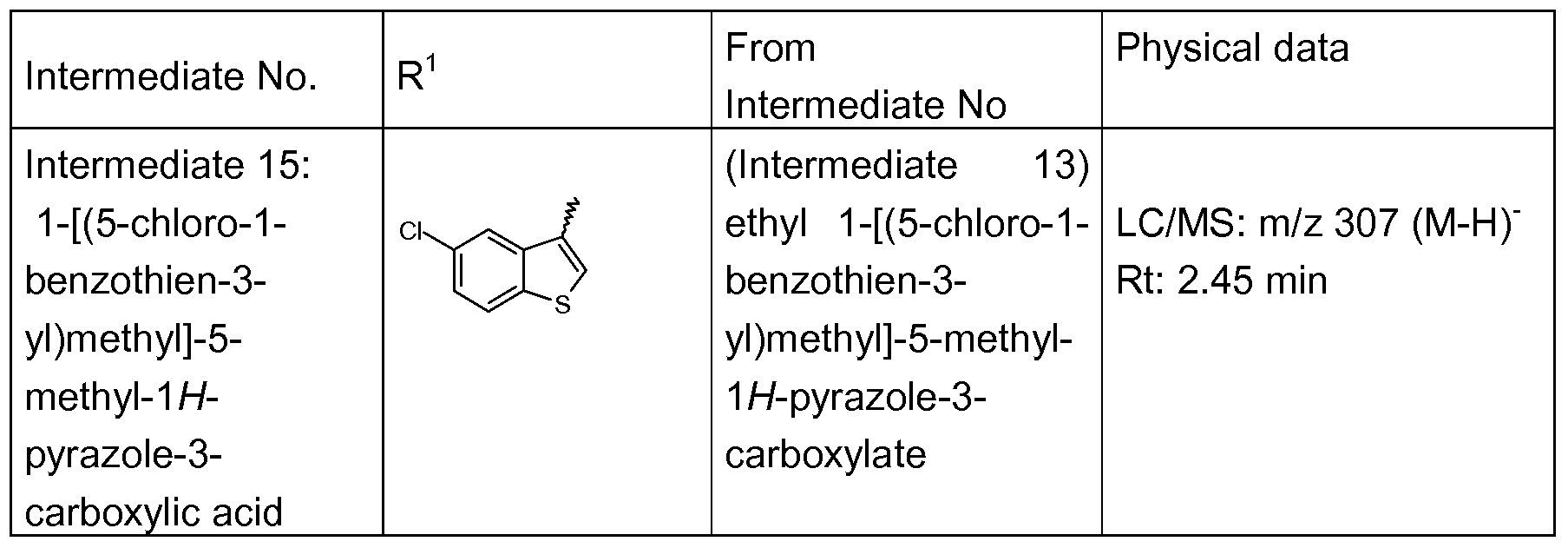
HK1141528B (en) 1,2,3-triazole derivatives for use as stearoyl-coa desaturase inhibitors
HK1160467B (en) 1, 2, 3-triazole derivatives for use as stearoyl-coa desaturase inhibitors

Legal Events

Date Code Title Description
121 Ep: the epo has been informed by wipo that ep was designated in this application

Ref document number: 07857840

Country of ref document: EP

Kind code of ref document: A2

WWE Wipo information: entry into national phase

Ref document number: 2007857840

Country of ref document: EP

WWE Wipo information: entry into national phase

Ref document number: 12519612

Country of ref document: US

ENP Entry into the national phase

Ref document number: 2009542052

Country of ref document: JP

Kind code of ref document: A

NENP Non-entry into the national phase

Ref country code: DE