WO2008079260A2 - Disintegration promoters in solid dose wet granulation formulations - Google Patents
Disintegration promoters in solid dose wet granulation formulations Download PDFInfo
- Publication number
- WO2008079260A2 WO2008079260A2 PCT/US2007/025996 US2007025996W WO2008079260A2 WO 2008079260 A2 WO2008079260 A2 WO 2008079260A2 US 2007025996 W US2007025996 W US 2007025996W WO 2008079260 A2 WO2008079260 A2 WO 2008079260A2
- Authority
- WO
- WIPO (PCT)
- Prior art keywords
- dosage form
- solid dosage
- rapidly disintegrating
- disintegrating solid
- form according
- Prior art date
- Legal status (The legal status is an assumption and is not a legal conclusion. Google has not performed a legal analysis and makes no representation as to the accuracy of the status listed.)
- Ceased
Links
- 0 CC[C@]([C@@]([C@]([C@@](C)O1)[C@@]2(C3)C1=O)C=C[C@@]1N=CC(c4ccccc4)=CC1)[C@]3(C)*C2=O Chemical compound CC[C@]([C@@]([C@]([C@@](C)O1)[C@@]2(C3)C1=O)C=C[C@@]1N=CC(c4ccccc4)=CC1)[C@]3(C)*C2=O 0.000 description 1
- CORWLYPIVKTTQX-VNIAOEMFSA-N C[C@H]([C@@H]([C@H]([C@H](C)[C@@H](C)C1)/C=C/c(nc2)ccc2-c2cc(F)ccc2)[C@@]11N)OC1=O Chemical compound C[C@H]([C@@H]([C@H]([C@H](C)[C@@H](C)C1)/C=C/c(nc2)ccc2-c2cc(F)ccc2)[C@@]11N)OC1=O CORWLYPIVKTTQX-VNIAOEMFSA-N 0.000 description 1
- MFLMKAWIJGPFRE-QYZKAOBMSA-N C[C@H]([C@@H]([C@H]([C@H](C)[C@@H](C)C1)/C=C/c(nc2)ccc2-c2ccccc2)[C@@]11N)OC1=O Chemical compound C[C@H]([C@@H]([C@H]([C@H](C)[C@@H](C)C1)/C=C/c(nc2)ccc2-c2ccccc2)[C@@]11N)OC1=O MFLMKAWIJGPFRE-QYZKAOBMSA-N 0.000 description 1
- CIOIHEGLZCYTAG-KGVYIOSLSA-N C[C@H]([C@@](C)([C@H]([C@H](C)[C@@H](C)C1)/C=C/c(nc2)ccc2-c(cccc2)c2C#N)[C@@]11O)OC1=O Chemical compound C[C@H]([C@@](C)([C@H]([C@H](C)[C@@H](C)C1)/C=C/c(nc2)ccc2-c(cccc2)c2C#N)[C@@]11O)OC1=O CIOIHEGLZCYTAG-KGVYIOSLSA-N 0.000 description 1
Classifications
-
- A—HUMAN NECESSITIES
- A61—MEDICAL OR VETERINARY SCIENCE; HYGIENE
- A61K—PREPARATIONS FOR MEDICAL, DENTAL OR TOILETRY PURPOSES
- A61K9/00—Medicinal preparations characterised by special physical form
- A61K9/14—Particulate form, e.g. powders, Processes for size reducing of pure drugs or the resulting products, Pure drug nanoparticles
- A61K9/16—Agglomerates; Granulates; Microbeadlets ; Microspheres; Pellets; Solid products obtained by spray drying, spray freeze drying, spray congealing,(multiple) emulsion solvent evaporation or extraction
- A61K9/1605—Excipients; Inactive ingredients
- A61K9/1611—Inorganic compounds
-
- A—HUMAN NECESSITIES
- A61—MEDICAL OR VETERINARY SCIENCE; HYGIENE
- A61K—PREPARATIONS FOR MEDICAL, DENTAL OR TOILETRY PURPOSES
- A61K9/00—Medicinal preparations characterised by special physical form
- A61K9/14—Particulate form, e.g. powders, Processes for size reducing of pure drugs or the resulting products, Pure drug nanoparticles
- A61K9/16—Agglomerates; Granulates; Microbeadlets ; Microspheres; Pellets; Solid products obtained by spray drying, spray freeze drying, spray congealing,(multiple) emulsion solvent evaporation or extraction
- A61K9/1605—Excipients; Inactive ingredients
- A61K9/1617—Organic compounds, e.g. phospholipids, fats
- A61K9/1623—Sugars or sugar alcohols, e.g. lactose; Derivatives thereof; Homeopathic globules
-
- A—HUMAN NECESSITIES
- A61—MEDICAL OR VETERINARY SCIENCE; HYGIENE
- A61K—PREPARATIONS FOR MEDICAL, DENTAL OR TOILETRY PURPOSES
- A61K9/00—Medicinal preparations characterised by special physical form
- A61K9/14—Particulate form, e.g. powders, Processes for size reducing of pure drugs or the resulting products, Pure drug nanoparticles
- A61K9/16—Agglomerates; Granulates; Microbeadlets ; Microspheres; Pellets; Solid products obtained by spray drying, spray freeze drying, spray congealing,(multiple) emulsion solvent evaporation or extraction
- A61K9/1605—Excipients; Inactive ingredients
- A61K9/1629—Organic macromolecular compounds
- A61K9/1635—Organic macromolecular compounds obtained by reactions only involving carbon-to-carbon unsaturated bonds, e.g. polyvinyl pyrrolidone, poly(meth)acrylates
-
- A—HUMAN NECESSITIES
- A61—MEDICAL OR VETERINARY SCIENCE; HYGIENE
- A61K—PREPARATIONS FOR MEDICAL, DENTAL OR TOILETRY PURPOSES
- A61K9/00—Medicinal preparations characterised by special physical form
- A61K9/14—Particulate form, e.g. powders, Processes for size reducing of pure drugs or the resulting products, Pure drug nanoparticles
- A61K9/16—Agglomerates; Granulates; Microbeadlets ; Microspheres; Pellets; Solid products obtained by spray drying, spray freeze drying, spray congealing,(multiple) emulsion solvent evaporation or extraction
- A61K9/1605—Excipients; Inactive ingredients
- A61K9/1629—Organic macromolecular compounds
- A61K9/1652—Polysaccharides, e.g. alginate, cellulose derivatives; Cyclodextrin
-
- A—HUMAN NECESSITIES
- A61—MEDICAL OR VETERINARY SCIENCE; HYGIENE
- A61P—SPECIFIC THERAPEUTIC ACTIVITY OF CHEMICAL COMPOUNDS OR MEDICINAL PREPARATIONS
- A61P9/00—Drugs for disorders of the cardiovascular system
-
- A—HUMAN NECESSITIES
- A61—MEDICAL OR VETERINARY SCIENCE; HYGIENE
- A61P—SPECIFIC THERAPEUTIC ACTIVITY OF CHEMICAL COMPOUNDS OR MEDICINAL PREPARATIONS
- A61P9/00—Drugs for disorders of the cardiovascular system
- A61P9/08—Vasodilators for multiple indications
-
- A—HUMAN NECESSITIES
- A61—MEDICAL OR VETERINARY SCIENCE; HYGIENE
- A61P—SPECIFIC THERAPEUTIC ACTIVITY OF CHEMICAL COMPOUNDS OR MEDICINAL PREPARATIONS
- A61P9/00—Drugs for disorders of the cardiovascular system
- A61P9/10—Drugs for disorders of the cardiovascular system for treating ischaemic or atherosclerotic diseases, e.g. antianginal drugs, coronary vasodilators, drugs for myocardial infarction, retinopathy, cerebrovascula insufficiency, renal arteriosclerosis
Definitions
- the present invention relates to the use of a disintegration promoter in conjunction with a disintegrant in rapidly disintegrating orally administered pharmaceutical formulations prepared by wet granulation.
- Rapid disintegration of an orally administered pharmaceutical dosage form can be critical where there is a need to quickly raise the blood concentration level of an active pharmaceutical ingredient in a patient.
- a need may arise in a patient who is suffering from an acute condition that is treatable by the active pharmaceutical ingredient, and who may be at near-term risk for more serious events if left untreated.
- Acute Coronary Syndrome (“ACS") is such a condition.
- ACS is an umbrella term used to cover any group of clinical symptoms compatible with acute myocardial ischemia, including unstable angina, and non-ST segment elevation myocardial infarction (Ml) and ST segment elevation Ml.
- Acute myocardial ischemia is associated with chest pain due to insufficient blood supply to the heart muscle that results from coronary artery disease (also called coronary heart disease). These life-threatening disorders are a major cause of emergency medical care and hospitalization in the United States. Coronary heart disease is the leading cause of death in the United States.
- thrombosis vascular restenosis
- deep venous thrombosis vascular restenosis
- lung embolism cerebral infarction
- heart disease disseminated intravascular coagulation syndrome
- hypertension Suzuki, Shuichi, PCT Int. Appls.
- WO 0288092, WO 0285850 and WO 0285855) arrhythmia, inflammation, angina, stroke, atherosclerosis, ischemic conditions (Zhang, Han-cheng, PCT Int. Appl. WO 0100659, WO 0100657 and WO 0100656).
- Thrombin receptor antagonists are disclosed in U.S. Patent nos. 6,063,847; 6,326,380; and 6,645,987, and in U.S. publication nos. 03/0203927; 04/0216437A1 ; 04/0152736; and U.S. patent no. 7,304,078.
- the use of a small subset of thrombin receptor antagonists to treat a variety of conditions and diseases is disclosed in U.S. publication no. 04/0192753.
- a bisulfate salt of a particular thrombin receptor antagonist is disclosed in U.S. patent no. 7,235,567. All of these patents and patent publications mentioned herein are incorporated by reference in their entirety.
- wet granulation technologies are often used to process powders prior to compaction in a tableting step.
- the application of wet granulation technology for the preparation of a rapidly disintegrating solid oral dosage form requires the selection of appropriate excipients and fine-tuning of process conditions to result in a tablet that exhibits sufficient disintegration times to qualify as a rapidly disintegrating formulation, but with sufficient friability to withstand the mechanical stresses imparted by packaging and normal handling without losing structural integrity.
- the formulation must not result in a solid dosage form that is too large for convenient oral administration.
- the selection of the excipient list and the amount of each in a wet granulation formulation can be crucial to achievement of a dosage form that exhibits the required disintegration time, structural integrity and tablet size.
- the invention is directed to a rapidly disintegrating solid dosage form comprising an active pharmaceutical ingredient, a disintegrant and a disintegration promoter, wherein said dosage form is the product of a wet granulation process.
- the disintegration promoter is calcium silicate.
- the disintegrant is sodium croscarmellose.
- the disintegrant comprises about 5 wt% to about 10 wt%. of the solid dosage form.
- the disintegration promoter comprises about 5 wt% to about 50 wt% of said solid dosage form.
- the ratio of the weights of disintegrant to disintegration promoter is between about 0.2 and about 0.5.
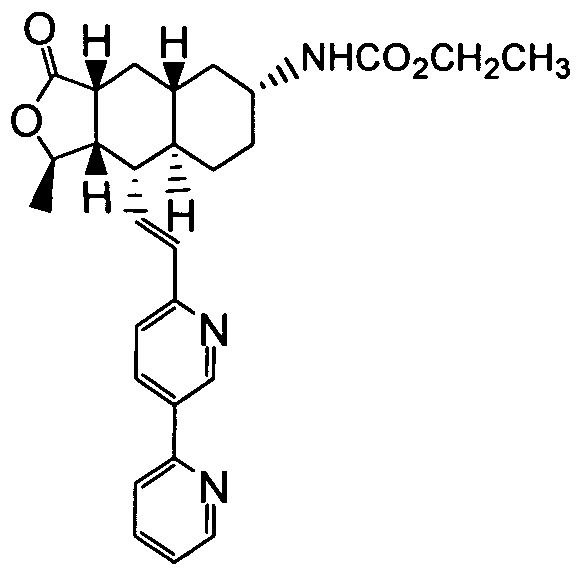
- the active pharmaceutical ingredient is a thrombin receptor antagonist.
- an average platelet inhibition of at least about 80% is achieved within 30 minutes of administration.
- the thrombin receptor antagonist is represented by the formula:
- the pharmaceutically acceptable salt is the bisulfate salt.
- the thrombin receptor antagonist is represented by the formula:
- the thrombin receptor antagonist is represented by the formula:
- the thrombin receptor antagonist is represented by the formula: or a pharmaceutically acceptable salt thereof.
- the rapidly disintegrating solid dosage form further comprises a binder.
- the binder is povidone.
- the rapidly disintegrating solid dosage form further comprises a first filler.
- the first filler is microcrystalline cellulose.
- the rapidly disintegrating solid dosage further comprises a second filler.
- the second filler is mannitol.
- the rapidly disintegrating solid dosage form further comprises a lubricant.
- the lubricant is magnesium stearate.
- the dosage form disintegrates within about 30 seconds of placement in the oral cavity.
- the dosage form disintegrates within about 15 seconds of placement in the oral cavity.
- the dosage form disintegrates within about 10 seconds of placement in the oral cavity.
- the invention is directed to a method of treating a patient at risk of acute coronary syndrome comprising administering the rapidly disintegrating solid dosage form comprising a thrombin receptor antagonist.
- the thrombin receptor antagonist is represented by the
- the pharmaceutically acceptable salt is the bisulfate salt.
- Schering-Plough Corp. has investigated improvements to its wet granulation tablet formulations. These formulations include sodium croscarmellose as a disintegrant. The question arose as to whether a properly selected excipient could act as a disintegration promoter, and thus boost the disintegration action imparted to the tablet by the disintegrant. In particular, the use of calcium silicate as a disintegration promoter was investigated.
- the term “granulation” refers to the process of agglomerating powder particles into larger granules that contain the active pharmaceutical ingredient.
- the term “wet granulation” refers to any process comprising the steps of addition of a liquid to powdered starting materials, agitation, and drying to yield a solid dosage form.
- the resulting granulated drug product may be further processed into various final dosage forms, e.g., capsules, tablets, wafers, gels, lozenges, etc.
- disintegration times after oral administration are less than 30 seconds, preferably less than 15 seconds, more preferably, less than 10 seconds.
- Dissolution times are typically measured in an in vitro setting using pharmaceutical compendial apparatus such as the USP Dissolution Apparatus 1 (basket) or Apparatus 2 (paddle). Alternate dissolution test methodologies may also be employed, e.g., flow- through dissolution cells, based upon the physical nature of the embodiment.
- the raw material in a wet granulation process is typically the active pharmaceutical ingredient in a powder form.
- the powder can be generated by grinding, and the particle size distribution that results from the grinding step may influence the properties of the formulation.
- the active pharmaceutical ingredient may be mixed with other excipients, such as binders, disintegrants, fillers, or lubricants, into a powder blend.
- the powder blend is then introduced to a granulation fluid, which is typically applied by spraying for the most uniform distribution of liquid.
- the relative quantity of granulation fluid applied will influence the size and mechanical properties of the granules that form.
- An excess of granulation fluid can result in formation of a slurry that may present problems in later processing, e.g., wet sieving.
- the granulation fluid may be aqueous or non- aqueous, depending on such physicochemical properties of the active pharmaceutical ingredient as solubility.
- Various excipients e.g., binders, disintegrants, fillers, or lubricants, may be mixed into the granulation fluid prior to application to the powder blend.
- the granulation fluid is typically applied to the powder blend in a closed vessel, usually with agitation. To ensure complete mixing, high-shear agitation may be applied.
- the granules are dried and milled. After milling, additional excipients may be added to form the final blend. Such additional excipients may include binders, disintegrants, fillers, and lubricants.
- additional excipients may include binders, disintegrants, fillers, and lubricants.
- the final blend is then compressed into the desired solid dosage form, e.g., tablets.
- the bisulfate salt of Compound A a high activity thrombin receptor antagonist, was used as the active pharmaceutical ingredient in a rapidly disintegrating formulation prepared using a wet granulation technique.
- Table 1 displays the components used in this wet granulation.
- a powder mix was prepared comprising Compound A bisulfate, povidone K30 (a binder), microcrystalline cellulose (Avicel PH 102, a filler) and sodium croscarmellose (a disintegrating agent).
- a granulation fluid was prepared by dissolving povidone in deionized water. The granulation fluid was sprayed into the powder blend in a high shear granulator. The resultant granulation was dried, milled and blended with additional excipients including calcium silicate, sodium croscarmellose, microcrystalline cellulose, mannitol and magnesium stearate using a conventional tumble blender. The final blend was compressed into tablets using a rotary tablet press.
- Friability and disintegration tests were performed to evaluate tablet performance.
- calcium silicate was used as a disintegration promoter
- sodium croscarmellose as a disintegrant
- microcrystalline cellulose as a second filler
- magnesium stearate as a lubricant
- mannitol as used as a filler and to promote good mouth-feel.
- Table 2 The resultant formulation is displayed in Table 2.
- disintegration promoter means an excipient whose presence in the formulation along with that of a disintegrant, boosts the rate of disintegration of the dosage form relative to a formulation containing the same amount of disintegrant, but none of the excipient.
- calcium silicate is an example of a disintegration promoter.
- the disintegration promoter preferably comprises between about 5 wt% and about 50 wt% of the solid dosage form, and the ratio of the weights of disintegrant to disintegration promoter is between about 0.2 and about 0.5.
- calcium silicate and sodium croscarmellose comprised about 29% of the final blend.
- the calcium silicate to sodium croscarmellose ratio was 27:7.
- Such high contents of calcium silicate and sodium croscarmellose did not negatively impact processibility of the formulation.
- disintegration time was measured at 8-10 seconds in a USP Disintegration Tester using 900 ml_ deionized water at 37 0 C.
- the fast tablet disintegration time was not compromised by increases of tablet hardness and was not associated with extremely soft tablets or tablet defects. Friability of tablets was low, i.e., ⁇ 0.15%.
- Tablets containing no disintegration promoter e.g., calcium silicate
- a tablet formulation containing 29% sodium croscarmellose and 0% calcium silicate had an average disintegration time of 5 minutes. Therefore, it was concluded that appropriate use of a disintegrant and disintegration promoter achieved fast disintegrating tablets for Compound A bisulfate.
- Each of the excipients referenced above has a particular function in either the wet granulation process or in the dosage form. Binders are typically polymers used as granulating agents to increase granule strength sufficiently to withstand the drying process.
- polymer shall be understood to include gelatins, modified starches, materials derived from animal or vegetable proteins, dextrins and soy, wheat and psyllium seed proteins; gums such as acacia, guar, agar, and xanthan; polysaccharides; alginates; carboxymethylcelluloses; carrageenans; dextrans; pectins; synthetic polymers such as polyvinylpyrrolidone; and polypeptide/protein or polysaccharide complexes such as gelatin-acacia complexes.
- modified starches are commercially available and useful. in the present invention and include: Pregelatinized starches, produced by drum drying or extrusion;
- Dextrins produced by roasting dry starch in the presence of a small amount of acid; Acid modified starches, produced by suspension in dilute acid until the required viscosity is reached;
- Oxidized starches in which oxidizing agents cause the introduction of carbonyl or carboxyl groups, wherein depolymerization occurs, leading to decreased retrogradation and gelling capacities; Enzymatically modified starch, produced by controlled enzyme degradation to attain required physicochemical properties;
- Crosslinked starches generated by reacting bi- or polyfunctional reagents (e.g., phosphorus oxychloride, sodium trimetaphosphate and epichlorohydrin) with hydroxyl groups to form crosslinks; and, Stabilized starches, produced by reacting a starch with etherifying or esterifying reagents in the presence of an alkaline catalyst to give a wide range of products.
- bi- or polyfunctional reagents e.g., phosphorus oxychloride, sodium trimetaphosphate and epichlorohydrin
- binders include starch, pre-gelatinized starch, acacia, polyvinylpyrrolidone ("PVP"), and hydroxypropyl methylcellulose (“HPMC”).
- Disintegrants are used to promote swelling and disintegration of the tablet after exposure to fluids in the oral cavity.
- Commonly used disintegrants include starch, microcrystalline cellulose, insoluble ion exchange resins, sodium starch glycolate, croscarmelose sodium, alginic acid, sodium alginate, crospovidone and gums, including agar, guar and xanthan.
- the disintegrant preferably comprises between about 5 wt% and about 10 wt% of the solid dosage form.
- Lubricants are used to promote flowability of powders, and to reduce friction between the tablet punch faces and the tablet punches and between the tablet surface and the die wall.
- lubricants are magnesium stearate, calcium stearate, sodium stearyl fumarate, polyethylene glycol, sodium lauryl sulphate magnesium lauryl sulphate, and sodium benzoate.
- Fillers provide bulk and can bind to the active pharmaceutical ingredient, thus reducing the potential for segregation and promoting content uniformity.
- Commonly used fillers include microcrystalline cellulose, starch, dibasic calcium phosphate dihydrate, lactose, sorbitol, and mannitol.
- the present invention encompasses the use of disintegration promoters in wet granulation formulations comprising any compatible active pharmaceutical ingredient, including but not limited to thrombin receptor antagonists.
- any compatible active pharmaceutical ingredient including but not limited to thrombin receptor antagonists.
- the inventor in view of the utility of TRAs in treating ACS, and the criticality of rapid dosing of patients at risk for ACS, the inventor conceives her invention as particularly encompassing the use of any and all thrombin receptor antagonists.
- a variety of compounds have been demonstrated as displaying activity as thrombin receptor antagonists, many being himbacine analogs.
- U.S. publication no. 04/0152736 a subset of particularly preferred compounds of Formula I is as follows:
- U.S. patent no. 7,304,078 discloses a subset of thrombin receptor antagonists of Formula Il which are both particularly active and selective. These compounds are as follows:
- A, B, and C or a pharmaceutically acceptable isomer, salt, solvate or co-crystal form thereof.
- Compounds A and C are disclosed in U.S. patent no. 7,304,078, and the bisulfate salt of Compound A is disclosed in U. S. patent no. 7,235,567.
- the bisulfate salt of Compound A is currently in development as a thrombin receptor antagonist by Schering-Plough Corp.
- Compound B is disclosed in U.S. Patent no. 6,645,987.
- the formulation is an oral solid dosage form that can be swallowed without water, because it disintegrates rapidly on the tongue, in some embodiments, in less than about 30 seconds, preferably, in less than about 15 seconds, more preferably, in less than about 10 seconds.
- a rapid disintegration phenomenon may provide for enhanced dissolution of the active ingredient, and subsequent realization of an optimal, i.e., rapid, pharmacokinetic profile of such an ingredient.
- essentially all of the thrombin receptor antagonist dissolves within about 15 minutes.
- One of the ultimate purposes in providing a rapidly disintegrating solid dosage form is to provide a blood concentration profile of the thrombin receptor antagonist sufficient to result in a rapid onset of blood platelet inhibition in the patient at risk for ACS.
- the TRA embodiments of the present invention are believed to result in an average platelet inhibition of at least about 80% within 30 minutes of administration. Platelet inhibition is discussed in U.S. patent no. 7,304,078 at cols. 52-54, which discussion is incorporated herein.
- the present invention further encompasses methods of treatment of a . patient at risk of Acute Coronary Syndrome by administering an effective amount of a rapidly disintegrating formulation of a thrombin receptor antagonist as described above.
- the term "effective amount” will be understood to describe an amount of a thrombin receptor antagonist effective to prevent further damage to the cardiovascular system after an acute cardiac event.
- the rapidly disintegrating dosage forms described herein are contemplated for use in administration of a loading dose of a thrombin receptor antagonist.
- the formulations of the present invention preferably contain a thrombin receptor antagonist described above in an amount of about 10 mg to about 50 mg. Doses of 10, 20 and 40 mg are candidates for the thrombin receptor loading dose. A 40 mg loading dose is planned for administration in phase III clinical trials.
Landscapes
- Health & Medical Sciences (AREA)
- Bioinformatics & Cheminformatics (AREA)
- Engineering & Computer Science (AREA)
- Life Sciences & Earth Sciences (AREA)
- Chemical & Material Sciences (AREA)
- General Health & Medical Sciences (AREA)
- Pharmacology & Pharmacy (AREA)
- Animal Behavior & Ethology (AREA)
- Medicinal Chemistry (AREA)
- Public Health (AREA)
- Veterinary Medicine (AREA)
- Epidemiology (AREA)
- Molecular Biology (AREA)
- Biophysics (AREA)
- Nuclear Medicine, Radiotherapy & Molecular Imaging (AREA)
- Heart & Thoracic Surgery (AREA)
- Chemical Kinetics & Catalysis (AREA)
- General Chemical & Material Sciences (AREA)
- Cardiology (AREA)
- Organic Chemistry (AREA)
- Inorganic Chemistry (AREA)
- Vascular Medicine (AREA)
- Urology & Nephrology (AREA)
- Medicinal Preparation (AREA)
- Pharmaceuticals Containing Other Organic And Inorganic Compounds (AREA)
- Medicines That Contain Protein Lipid Enzymes And Other Medicines (AREA)
Abstract
Description


Claims


Priority Applications (4)
| Application Number | Priority Date | Filing Date | Title |
|---|---|---|---|
| JP2009542908A JP2010513516A (en) | 2006-12-22 | 2007-12-19 | Disintegration accelerator in wet granulation formulation of solid agent |
| EP07867849A EP2120879A2 (en) | 2006-12-22 | 2007-12-19 | Disintegration promoters in solid dose wet granulation formulations |
| CA002673228A CA2673228A1 (en) | 2006-12-22 | 2007-12-19 | Disintegration promoters in solid dose wet granulation formulations |
| MX2009006873A MX2009006873A (en) | 2006-12-22 | 2007-12-19 | Disintegration promoters in solid dose wet granulation formulations. |
Applications Claiming Priority (2)
| Application Number | Priority Date | Filing Date | Title |
|---|---|---|---|
| US87160506P | 2006-12-22 | 2006-12-22 | |
| US60/871,605 | 2006-12-22 |
Publications (2)
| Publication Number | Publication Date |
|---|---|
| WO2008079260A2 true WO2008079260A2 (en) | 2008-07-03 |
| WO2008079260A3 WO2008079260A3 (en) | 2008-09-25 |
Family
ID=39467196
Family Applications (1)
| Application Number | Title | Priority Date | Filing Date |
|---|---|---|---|
| PCT/US2007/025996 Ceased WO2008079260A2 (en) | 2006-12-22 | 2007-12-19 | Disintegration promoters in solid dose wet granulation formulations |
Country Status (6)
| Country | Link |
|---|---|
| US (1) | US20080194560A1 (en) |
| EP (1) | EP2120879A2 (en) |
| JP (1) | JP2010513516A (en) |
| CA (1) | CA2673228A1 (en) |
| MX (1) | MX2009006873A (en) |
| WO (1) | WO2008079260A2 (en) |
Families Citing this family (2)
| Publication number | Priority date | Publication date | Assignee | Title |
|---|---|---|---|---|
| TWI367112B (en) * | 2006-06-30 | 2012-07-01 | Schering Corp | Immediate-release tablet formulations of a thrombin receptor antagonist |
| CN101465825B (en) * | 2008-12-31 | 2012-07-11 | 阿里巴巴集团控股有限公司 | Instant communication method, instant communication server, voice server and system |
Family Cites Families (20)
| Publication number | Priority date | Publication date | Assignee | Title |
|---|---|---|---|---|
| US4304773A (en) * | 1980-06-26 | 1981-12-08 | E. R. Squibb & Sons, Inc. | Novel bendroflumethiazide formulations and method |
| FR2623810B2 (en) * | 1987-02-17 | 1992-01-24 | Sanofi Sa | ALPHA SALTS- (TETRAHYDRO-4,5,6,7 THIENO (3,2-C) PYRIDYL-5) (2-CHLORO-PHENYL) -THETHYL ACETATE DEXTROGYRE AND PHARMACEUTICAL COMPOSITIONS CONTAINING THE SAME |
| US5576328A (en) * | 1994-01-31 | 1996-11-19 | Elf Sanofi | Method for the secondary prevention of ischemic events |
| US6063847A (en) * | 1997-11-25 | 2000-05-16 | Schering Corporation | Thrombin receptor antagonists |
| FR2779726B1 (en) * | 1998-06-15 | 2001-05-18 | Sanofi Sa | POLYMORPHIC FORM OF CLOPIDOGREL HYDROGENOSULFATE |
| AU5895500A (en) * | 1999-06-29 | 2001-01-31 | Cor Therapeutics, Inc. | Novel indazole peptidomimetics as thrombin receptor antagonists |
| KR100604742B1 (en) * | 2000-06-15 | 2006-07-26 | 쉐링 코포레이션 | Thrombin receptor antagonist |
| US7235567B2 (en) * | 2000-06-15 | 2007-06-26 | Schering Corporation | Crystalline polymorph of a bisulfate salt of a thrombin receptor antagonist |
| US20040192753A1 (en) * | 2000-06-15 | 2004-09-30 | Samuel Chackalamannil | Methods of use of thrombin receptor antagonists |
| US7488742B2 (en) * | 2000-06-15 | 2009-02-10 | Schering Corporation | Thrombin receptor antagonists |
| US6521270B1 (en) * | 2001-06-11 | 2003-02-18 | The Procter & Gamble Company | Compositions comprising nitrofurantoin and uva ursi |
| TWI324074B (en) * | 2001-10-09 | 2010-05-01 | Bristol Myers Squibb Co | Flashmelt oral dosage formulation |
| CA2463628A1 (en) * | 2001-10-18 | 2003-04-24 | Schering Corporation | Himbacine analogues as thrombin receptor antagonists |
| EP1982984B1 (en) * | 2002-04-16 | 2013-02-13 | Merck Sharp & Dohme Corp. | Manufacture of tricyclic thrombin receptor antagonists and pharmaceutical compositions comprising them |
| JP2004238348A (en) * | 2003-02-07 | 2004-08-26 | Fuji Pharmaceutical Co Ltd | Itraconazole formulation for oral administration |
| DE10317816A1 (en) * | 2003-04-16 | 2004-11-04 | Claas Selbstfahrende Erntemaschinen Gmbh | Forage harvester with positionable driver's cab |
| DE10355461A1 (en) * | 2003-11-27 | 2005-06-23 | Bayer Healthcare Ag | Solid, high bioavailabilty oral formulations of N-substituted 5-chloro-2-thiophene-carboxamide derivative in hydrophilized form, useful for combating thrombo-embolic diseases |
| TWI367112B (en) * | 2006-06-30 | 2012-07-01 | Schering Corp | Immediate-release tablet formulations of a thrombin receptor antagonist |
| WO2008005352A2 (en) * | 2006-06-30 | 2008-01-10 | Schering Corporation | Solid dose formulations of a thrombin receptor antagonist |
| TWI343262B (en) * | 2006-09-26 | 2011-06-11 | Schering Corp | Rapidly disintegrating lyophilized oral formulations of a thrombin receptor antagonist |
-
2007
- 2007-12-19 EP EP07867849A patent/EP2120879A2/en not_active Withdrawn
- 2007-12-19 JP JP2009542908A patent/JP2010513516A/en not_active Withdrawn
- 2007-12-19 WO PCT/US2007/025996 patent/WO2008079260A2/en not_active Ceased
- 2007-12-19 US US11/960,320 patent/US20080194560A1/en not_active Abandoned
- 2007-12-19 MX MX2009006873A patent/MX2009006873A/en not_active Application Discontinuation
- 2007-12-19 CA CA002673228A patent/CA2673228A1/en not_active Abandoned
Also Published As
| Publication number | Publication date |
|---|---|
| WO2008079260A3 (en) | 2008-09-25 |
| US20080194560A1 (en) | 2008-08-14 |
| JP2010513516A (en) | 2010-04-30 |
| CA2673228A1 (en) | 2008-07-03 |
| EP2120879A2 (en) | 2009-11-25 |
| MX2009006873A (en) | 2009-07-03 |
Similar Documents
| Publication | Publication Date | Title |
|---|---|---|
| JP3563036B2 (en) | Celecoxib composition | |
| KR100645866B1 (en) | Valdecoxib compositions | |
| JP2021038242A (en) | High dosage strength tablets of rucaparib | |
| KR100911779B1 (en) | Solid Pharmaceutical Formulations Comprising Modafinil | |
| CN103179957B (en) | Containing the pharmaceutical composition of DGAT1 inhibitor | |
| JPH07558B2 (en) | Mopidamole formulation | |
| EP2331074A1 (en) | Granulates, process for preparing them and pharmaceutical products containing them | |
| CZ20013887A3 (en) | Pharmaceutical preparation in unit form containing a combination of acetylsalicylic acid and clopidogrel-hydrogen sulfate | |
| EP4262760B1 (en) | Edoxaban formulation containing no sugar alcohols | |
| TWI905184B (en) | Treatments of prostate cancer with combinations of abiraterone acetate and niraparib | |
| CA2804358A1 (en) | Pharmaceutical compositions containing vanoxerine | |
| JP2016512845A (en) | Sobaprevir tablets | |
| US20050118256A1 (en) | Extended release alpha-2 agonist pharmaceutical dosage forms | |
| JP2017520619A (en) | Ceritinib formulation | |
| US20080194560A1 (en) | Disintegration promoters in solid dose wet granulation formulations | |
| EP3697392A1 (en) | Tablets comprising tamsulosin and solifenacin | |
| JP2024531701A (en) | Bempedoic acid pharmaceutical composition | |
| KR20180060705A (en) | Oral composite tablet comprising ezetimibe and rosuvastatin | |
| CN114886867A (en) | Rivaroxaban pharmaceutical composition with high stability and preparation method thereof | |
| JPH02282322A (en) | Erosion-controlled release system for active substances and method for producing the same | |
| KR20010093186A (en) | A Pharmaceutical Mixture Comprising a Profen | |
| JP7675723B2 (en) | Pharmaceutical compositions containing pyrazole compounds dispersed in a polymer matrix - Patents.com | |
| KR20240145412A (en) | Pharmaceutical formulation comprising abiraterone acetate and prednisolone and method for preparing same | |
| EA053188B1 (en) | PHARMACEUTICAL COMPOSITIONS BASED ON ABIRATERONE ACETATE AND NIRAPARIB | |
| EA052058B1 (en) | TREATMENT OF PROSTATE CANCER WITH A COMBINATION OF ABIRATERONE ACETATE AND NIRAPARIB |
Legal Events
| Date | Code | Title | Description |
|---|---|---|---|
| WWE | Wipo information: entry into national phase |
Ref document number: 2007867849 Country of ref document: EP |
|
| 121 | Ep: the epo has been informed by wipo that ep was designated in this application |
Ref document number: 07867849 Country of ref document: EP Kind code of ref document: A2 |
|
| WWE | Wipo information: entry into national phase |
Ref document number: 2673228 Country of ref document: CA |
|
| ENP | Entry into the national phase |
Ref document number: 2009542908 Country of ref document: JP Kind code of ref document: A |
|
| WWE | Wipo information: entry into national phase |
Ref document number: MX/A/2009/006873 Country of ref document: MX |
|
| NENP | Non-entry into the national phase |
Ref country code: DE |