WO2008081477A1 - 3-aryloxy 3-substituted propanamines - Google Patents
3-aryloxy 3-substituted propanamines Download PDFInfo
- Publication number
- WO2008081477A1 WO2008081477A1 PCT/IN2008/000001 IN2008000001W WO2008081477A1 WO 2008081477 A1 WO2008081477 A1 WO 2008081477A1 IN 2008000001 W IN2008000001 W IN 2008000001W WO 2008081477 A1 WO2008081477 A1 WO 2008081477A1
- Authority
- WO
- WIPO (PCT)
- Prior art keywords
- compound
- substituted
- alkyl
- formula
- phenyl
- Prior art date
- Legal status (The legal status is an assumption and is not a legal conclusion. Google has not performed a legal analysis and makes no representation as to the accuracy of the status listed.)
- Ceased
Links
- 0 COC(CC*)N Chemical compound COC(CC*)N 0.000 description 1
Classifications
-
- C—CHEMISTRY; METALLURGY
- C07—ORGANIC CHEMISTRY
- C07D—HETEROCYCLIC COMPOUNDS
- C07D211/00—Heterocyclic compounds containing hydrogenated pyridine rings, not condensed with other rings
- C07D211/04—Heterocyclic compounds containing hydrogenated pyridine rings, not condensed with other rings with only hydrogen or carbon atoms directly attached to the ring nitrogen atom
- C07D211/06—Heterocyclic compounds containing hydrogenated pyridine rings, not condensed with other rings with only hydrogen or carbon atoms directly attached to the ring nitrogen atom having no double bonds between ring members or between ring members and non-ring members
- C07D211/08—Heterocyclic compounds containing hydrogenated pyridine rings, not condensed with other rings with only hydrogen or carbon atoms directly attached to the ring nitrogen atom having no double bonds between ring members or between ring members and non-ring members with hydrocarbon or substituted hydrocarbon radicals directly attached to ring carbon atoms
- C07D211/18—Heterocyclic compounds containing hydrogenated pyridine rings, not condensed with other rings with only hydrogen or carbon atoms directly attached to the ring nitrogen atom having no double bonds between ring members or between ring members and non-ring members with hydrocarbon or substituted hydrocarbon radicals directly attached to ring carbon atoms with substituted hydrocarbon radicals attached to ring carbon atoms
- C07D211/20—Heterocyclic compounds containing hydrogenated pyridine rings, not condensed with other rings with only hydrogen or carbon atoms directly attached to the ring nitrogen atom having no double bonds between ring members or between ring members and non-ring members with hydrocarbon or substituted hydrocarbon radicals directly attached to ring carbon atoms with substituted hydrocarbon radicals attached to ring carbon atoms with hydrocarbon radicals, substituted by singly bound oxygen or sulphur atoms
- C07D211/22—Heterocyclic compounds containing hydrogenated pyridine rings, not condensed with other rings with only hydrogen or carbon atoms directly attached to the ring nitrogen atom having no double bonds between ring members or between ring members and non-ring members with hydrocarbon or substituted hydrocarbon radicals directly attached to ring carbon atoms with substituted hydrocarbon radicals attached to ring carbon atoms with hydrocarbon radicals, substituted by singly bound oxygen or sulphur atoms by oxygen atoms
-
- A—HUMAN NECESSITIES
- A61—MEDICAL OR VETERINARY SCIENCE; HYGIENE
- A61P—SPECIFIC THERAPEUTIC ACTIVITY OF CHEMICAL COMPOUNDS OR MEDICINAL PREPARATIONS
- A61P25/00—Drugs for disorders of the nervous system
- A61P25/24—Antidepressants
-
- C—CHEMISTRY; METALLURGY
- C07—ORGANIC CHEMISTRY
- C07C—ACYCLIC OR CARBOCYCLIC COMPOUNDS
- C07C215/00—Compounds containing amino and hydroxy groups bound to the same carbon skeleton
- C07C215/02—Compounds containing amino and hydroxy groups bound to the same carbon skeleton having hydroxy groups and amino groups bound to acyclic carbon atoms of the same carbon skeleton
- C07C215/22—Compounds containing amino and hydroxy groups bound to the same carbon skeleton having hydroxy groups and amino groups bound to acyclic carbon atoms of the same carbon skeleton the carbon skeleton being unsaturated
- C07C215/28—Compounds containing amino and hydroxy groups bound to the same carbon skeleton having hydroxy groups and amino groups bound to acyclic carbon atoms of the same carbon skeleton the carbon skeleton being unsaturated and containing six-membered aromatic rings
- C07C215/30—Compounds containing amino and hydroxy groups bound to the same carbon skeleton having hydroxy groups and amino groups bound to acyclic carbon atoms of the same carbon skeleton the carbon skeleton being unsaturated and containing six-membered aromatic rings containing hydroxy groups and carbon atoms of six-membered aromatic rings bound to the same carbon atom of the carbon skeleton
-
- C—CHEMISTRY; METALLURGY
- C07—ORGANIC CHEMISTRY
- C07C—ACYCLIC OR CARBOCYCLIC COMPOUNDS
- C07C217/00—Compounds containing amino and etherified hydroxy groups bound to the same carbon skeleton
- C07C217/54—Compounds containing amino and etherified hydroxy groups bound to the same carbon skeleton having etherified hydroxy groups bound to carbon atoms of at least one six-membered aromatic ring and amino groups bound to acyclic carbon atoms or to carbon atoms of rings other than six-membered aromatic rings of the same carbon skeleton
- C07C217/64—Compounds containing amino and etherified hydroxy groups bound to the same carbon skeleton having etherified hydroxy groups bound to carbon atoms of at least one six-membered aromatic ring and amino groups bound to acyclic carbon atoms or to carbon atoms of rings other than six-membered aromatic rings of the same carbon skeleton with amino groups linked to the six-membered aromatic ring, or to the condensed ring system containing that ring, by carbon chains further substituted by singly-bound oxygen atoms
- C07C217/66—Compounds containing amino and etherified hydroxy groups bound to the same carbon skeleton having etherified hydroxy groups bound to carbon atoms of at least one six-membered aromatic ring and amino groups bound to acyclic carbon atoms or to carbon atoms of rings other than six-membered aromatic rings of the same carbon skeleton with amino groups linked to the six-membered aromatic ring, or to the condensed ring system containing that ring, by carbon chains further substituted by singly-bound oxygen atoms with singly-bound oxygen atoms and six-membered aromatic rings bound to the same carbon atom of the carbon chain
- C07C217/72—Compounds containing amino and etherified hydroxy groups bound to the same carbon skeleton having etherified hydroxy groups bound to carbon atoms of at least one six-membered aromatic ring and amino groups bound to acyclic carbon atoms or to carbon atoms of rings other than six-membered aromatic rings of the same carbon skeleton with amino groups linked to the six-membered aromatic ring, or to the condensed ring system containing that ring, by carbon chains further substituted by singly-bound oxygen atoms with singly-bound oxygen atoms and six-membered aromatic rings bound to the same carbon atom of the carbon chain linked by carbon chains having at least three carbon atoms between the amino groups and the six-membered aromatic ring or the condensed ring system containing that ring
-
- C—CHEMISTRY; METALLURGY
- C07—ORGANIC CHEMISTRY
- C07C—ACYCLIC OR CARBOCYCLIC COMPOUNDS
- C07C309/00—Sulfonic acids; Halides, esters, or anhydrides thereof
- C07C309/63—Esters of sulfonic acids
- C07C309/64—Esters of sulfonic acids having sulfur atoms of esterified sulfo groups bound to acyclic carbon atoms
- C07C309/65—Esters of sulfonic acids having sulfur atoms of esterified sulfo groups bound to acyclic carbon atoms of a saturated carbon skeleton
- C07C309/66—Methanesulfonates
-
- C—CHEMISTRY; METALLURGY
- C07—ORGANIC CHEMISTRY
- C07D—HETEROCYCLIC COMPOUNDS
- C07D295/00—Heterocyclic compounds containing polymethylene-imine rings with at least five ring members, 3-azabicyclo [3.2.2] nonane, piperazine, morpholine or thiomorpholine rings, having only hydrogen atoms directly attached to the ring carbon atoms
- C07D295/04—Heterocyclic compounds containing polymethylene-imine rings with at least five ring members, 3-azabicyclo [3.2.2] nonane, piperazine, morpholine or thiomorpholine rings, having only hydrogen atoms directly attached to the ring carbon atoms with substituted hydrocarbon radicals attached to ring nitrogen atoms
- C07D295/08—Heterocyclic compounds containing polymethylene-imine rings with at least five ring members, 3-azabicyclo [3.2.2] nonane, piperazine, morpholine or thiomorpholine rings, having only hydrogen atoms directly attached to the ring carbon atoms with substituted hydrocarbon radicals attached to ring nitrogen atoms substituted by singly bound oxygen or sulfur atoms
- C07D295/084—Heterocyclic compounds containing polymethylene-imine rings with at least five ring members, 3-azabicyclo [3.2.2] nonane, piperazine, morpholine or thiomorpholine rings, having only hydrogen atoms directly attached to the ring carbon atoms with substituted hydrocarbon radicals attached to ring nitrogen atoms substituted by singly bound oxygen or sulfur atoms with the ring nitrogen atoms and the oxygen or sulfur atoms attached to the same carbon chain, which is not interrupted by carbocyclic rings
- C07D295/092—Heterocyclic compounds containing polymethylene-imine rings with at least five ring members, 3-azabicyclo [3.2.2] nonane, piperazine, morpholine or thiomorpholine rings, having only hydrogen atoms directly attached to the ring carbon atoms with substituted hydrocarbon radicals attached to ring nitrogen atoms substituted by singly bound oxygen or sulfur atoms with the ring nitrogen atoms and the oxygen or sulfur atoms attached to the same carbon chain, which is not interrupted by carbocyclic rings with aromatic radicals attached to the chain
Definitions
- Present invention relates to novel 3-aryloxy 3-substituted propanamines, method of preparing the same and to their use in inhibiting serotonin and norepinephrine reuptake.
- Numerous 3-aryloxy-3-phenyl substituted and 3 -heteroaryloxy-3 -phenyl substituted propanamines have been reported in the literature, more particularly, US 4314081, US 5023269, WO02/094262 claim 3-aryloxy-3-phenyl and 3-heteroaryloxy-3-phenyl- substituted propanamines possessing antidepressant activity.
- serotonin reuptake inhibitors are extremely effective in the treatment of depression. They increase the availability of serotonin in the synapse by reducing the uptake of serotonin by serotonin uptake carrier. Dysfunction of the serotonin neurons resulting from excessive uptake results in depression. Serotonin reuptake inhibitors are spectacularly effective in treating the depression. They are effective in treating numerous other conditions.
- the serotonin reuptake inhibitors are citalopram, fluoxetine, paroxetine, sertraline, venlafaxine. Primary activity of these drugs is the inhibition of the reuptake of serotonin.
- the compounds of the invention are 3-aryloxy 3-substituted propanamines having the general formula I
- A is a phenyl which is optionally substituted with up to five substituents selected from cyano, halogeno, C
- R is cyano, halogeno, halogenoalkyl, C
- a preferred point of attachment of 5-membered heteroaryl group to the propyl chain is attachment at the carbon atom.
- the compounds of the present invention are useful in selectively inhibiting the reuptake of serotonin and norepinephrine in mammals.
- Medicaments comprising the compounds of formula I can be administered to a patient in need thereof for treating disorders associated with serotonin and norepinephrine dysfunction in mammals.
- the disorder is selected from depression, anxiety, memory loss, urinary incontinence, conduct disorders, ADHD, obesity, alcoholism, erectile dysfunction, smoking cessation, and pain.
- A is a phenyl which is substituted with cyano, halogeno, Ci. 6 -alkyl, Ci -6 -alkoxy, trifluoromethyl, aralkyloxy, ethynyl, carboalkoxy, formyl, sulfonamido, carboxamido, triazolyl or tetrazolyl;
- R is cyano, halogeno, C ⁇ - 6 -alkyl, Ci -6 -alkoxy, trifluoromethyl, aralkyloxy, ethynyl, aryloxy, carboalkoxy, formyl, sulfonamido, carboxamido, triazolyl or tetrazolyl and one of Ri and R 2 is hydrogen.
- A is a phenyl which is mono-, di- or tri-substitued with cyano, halogeno, C ⁇ - 6 -alkyl, trifluoromethyl, aralkyloxy, ethynyl, carboalkoxy, formyl, sulfonamido, carboxamido, triazolyl or tetrazolyl.
- A is a five member heteroaryl radical having the structural formula given below:
- radicals represented by Ri and R 2 as defined for the compound of formula I are particularly radicals selected from methyl, ethyl, n-propyl, isopropyl, n-butyl, iso-butyl, n-pentyl, benzyl, 2-phenylethyl, 3-phenylpropyl, phenyl, cyclopropyl, cyclopentyl, cyclo- hexyl, cycloheptyl, cyclooctyl, cyclododecyl, 2-methyl-cyclohexyl, 3-methylcyclohexyl, cis- or trans-4-methylcyclohexyl, cis- or trans-4-tert-butylcyclohexyl, 2,6- dimethylcyclohexyl, 1-adamantyl, 2-adamantyl, cyclohexylmethyl.
- Organic and inorganic acids examples include hydrochloric acid, hydrobromic acid, phosphoric acid, sulfuric acid, oxalic acid, succinic acid, maleic acid, fumaric acid, lactic acid, tartaric acid, adipic acid, pyruvic acid, citric acid, salicylic acid, methanesulfonic acid, 2-hydroxynaphthoic . acid, acetic acid, mandelic acid, camphorsulfonic acid, p- toluenesulfonic acid, benzenesulfonic acid,
- alkyl is intended to mean straight or branched alkyl radicals bearing from one to six carbon atoms.
- the condensation process may be carried out in the presence of a base such as sodium or potassium hydroxide, carbonate, bicarbonate, sodium hydride, lithium diisopropylamide, trialkylamine, such as triethylamine, or the amine of formula III.
- a base such as sodium or potassium hydroxide, carbonate, bicarbonate, sodium hydride, lithium diisopropylamide, trialkylamine, such as triethylamine, or the amine of formula III.
- the reaction may be carried out in a solvent medium such as toluene, cyclohexane, heptane, tetrahydrofuran, dioxane, N,N-diernthylformamide, dimethyl sulfoxide, and conveniently at a temperature of-10 to 100 0 C.
- Compounds of formula II can be prepared by reacting the hydroxy compound of formula IV,
- compounds of formula I can be prepared by reacting an alcoholic compound of formula VI,
- reaction may be carried out in the presence of base such as sodium or potassium hydroxide, carbonate, bicarbonate, sodium hydride, lithium diisopropylamide.
- base such as sodium or potassium hydroxide, carbonate, bicarbonate, sodium hydride, lithium diisopropylamide.
- the reaction may be carried out in a solvent medium such as toluene, cyclohexane, heptane, tetrahydrofuran, dioxane, N,N-diemthylformamide, dimethyl sulfoxide, and conveniently at a temperature of -10 to 100°C.
- N-methyl compounds can be reacted with cyanogen bromide or alkyl chloroformates and hydrolyzed to get the N-demethylated compounds.
- N-benzyl compounds can be hydrogenated to get the required secondary amines of formula I wherein Ri is hydrogen.
- mice Compounds of formula I are tested on healthy, adult, Albino mice to establish the antidepressant activity.
- Some of the pharmacological studies carried out on mice include determination of maximum tolerated dose (MTD), gross behavioral studies including body temperature, forced locomotor activity, immobility test, antagonism of apomorphine-induced hypothermia, antagonism of reserpine-induced hypothermia and ptosis, reversal of anti-reserpine activity of desipramine, antagonism of oxotremorine, antagonism of tetrabenazine induced ptosis, and in-vitro receptor binding study. All these studies were carried out in comparison with some of the market available compounds for same activity. Studied compounds are found to be better than or equal to the activity of market compounds.
- Toluene layer was washed with water, treated with carbon and dried with sodium sulphate. Toluene was distilled of and the residue dissolved in 1:1 mixture of hexane:diisopropyl ether. The solution was cooled to 5-10 0 C and filtered the solid. After drying 18.5g of title compound was obtained as white solid. Melting point is 78.5°C.
- p-Chlorobenzotrifluoride (3.Ig) was added to the reaction mass at RT.
- the reaction mass was heated to 65-7O 0 C and maintained for 4h.
- the reaction mass was cooled to RT and quenched with 3ml of methanol.
- the reaction mass was poured into 150ml of water.
- the reaction mass was extracted with 2x 100ml of toluene. Combined toluene layer was washed with water, decolorized with carbon, dried with sodium sulfate and distilled of solvent under vaccum to get 4g of crude compound.
- Hydrochloride salt (I-A) melted at 1 13.2-1 15 0 C 0 C after recrystallization from ethyl acetate-diisopropyl ether.
- step (ii) Preparation of phenyl 3-(4-chIorophenyl)-3-hydroxypropyl(methyl)carbamate
- step (ii) compound (15g), 90ml of chloroform, and 15g of potassium carbonate.
- Phenyl chloroformate was slowly added to the reaction mass and kept under stirring for overnight.
- Water was added to the reaction mass and the product extracted into chloroform, dried and distilled to get the crude title compound as syrup.
- Reaction mass was extracted with toluene and the toluene layer washed with water, dried and distilled of solvent to get 9.Og of crude compound.
- the crude compound was converted to its oxalate salt and recrystallized from methanol-diisopropyl ether to get 4.Og of the title compound as white solid. Melting point is 199.1 0 C.
- Corresponding hydrochloride salted melted at 160.1 0 C after recrystallizing from methanol/ethyl acetate.
- (+) ⁇ 3-(4-Fluorophenyl)-N-methyl-3-(4-(trifluoromethyl)phenoxy)- propan-1-amine oxalate (+)-l-(4-Fluorophenyl)-3-(methylamino)propan-l-ol (25g), prepared according to the process disclosed in WO05/063707 is converted to (+)-3-(4-fluorophenyl)-N-methyl-3- (4-(trifluoromethyl)phenoxy)propan-l -amine oxalate as per the process given in Example 1 above. Melting point is 210-212 0 C (methanol).
- mice showed marked afrodesic activity in a group treated with fluoxetine, compounds of formula I (I-A, I-B, and I-C) at lower dose 5.0 mg/Kg and 50 mg/Kg (po) till 120 min.
- compounds of formula I (I-A, I-B, and I-C) at lower dose 5.0 mg/Kg and 50 mg/Kg (po) till 120 min.
- toxic doses animals showed chronic convulsion followed by death.
- Table 1 The results of maximum tolerated doses are tabulated in Table 1.
- mice weighing 20-22gm The various parameters mentioned in below Table 2 were recorded after administration of fluoxetine (25.0 mg/kg), I-A (6.25 mg/kg), I-B (25.0 mg/kg), and I-C (6.25 mg/kg).
- the behavioral parameters were scored as per the method outlined by Irwin (Irwin S. Gorden, Res. On Medicinal Chem. Cited in Turner RA ed.: Screening Methods in Pharmacology Vol. I New York, London, Academic Press 1965, 133) and modified by Singh et al (Singh PP, Junnarkar AY, Reddi GS, Singh KV, Fitoterpia, 1987, 58, 235 -238). The results of various gross observations are tabulated in Table-2.
- I-B (12.5, 25.0 and 50.0 mg/kg) orally were administered.
- the animals were tested for immobility from 30 min to 360 min.
- the compounds fluoxetine, I-A, I-B, and I-C exhibited decreased immobility with dose-dependent manner. However, at a higher-dose all compounds increased the immobility period. The results are tabulated in Table 3.
- mice Female Swiss albino weighing 25-30 gm. Each group consisted of 6 mice (Vogel 2002). The mice were given pretreatment of desipramine (20.0 mg/kg), fluoxetine & I-B (25.0 mg/kg), I-A & I-C (6.25 mg/kg po). After 60 min of compound administration each group was injected with apomorphine 16 mg/kg (sc). The rectal temperature of each animal was recorded by using Digital Tele thermometer and thermocouple probe from 30 min to 240 min. The percentage antagonism was calculated by comparing group with control. Desipramine (20.0 mg/kg) po antagonized apomorphine induced hypothermia to tune of 86%.
- mice The rectal temperature of each mice was recorded from 30 min till 360 min of compound administration.
- the percentage antagonism was carried out by comparing activity with control. Desipramine (20.0 mg/kg) po antagonized reserpine induced hypothermia by 78% while fluoxetine, I-A, I-B, and I-C failed to antagonize reserpine induced hypothermia.
- Table-5 The results are tabulated in Table-5.
- mice were administered reserpine (2.0 mg/kg) subcutaneously (sc). After 18 h desipramine (20.0 mg/kg po) followed by fluoxetine & I-B (25.0 mg/kg po), I-A & I-C (6.25 mg/kg po) were administered concurrently. The rectal temperature of each mice was recorded by digital thermometer and thermocouple probes from 30 min till 360 min after drug administration.
- Table 6 antagonism of antireserpine activity of desipramine by concurrent administration of fluoxetine, I-A, I-B, and I-C (mice)
- Compounds of present invention have better antidepressant activity than the market compounds like fluoxetine.
- Compounds of present invention are less toxic and safer than the market compounds.
Landscapes
- Chemical & Material Sciences (AREA)
- Organic Chemistry (AREA)
- Health & Medical Sciences (AREA)
- Pain & Pain Management (AREA)
- Psychiatry (AREA)
- Engineering & Computer Science (AREA)
- Bioinformatics & Cheminformatics (AREA)
- Biomedical Technology (AREA)
- Neurology (AREA)
- Neurosurgery (AREA)
- Chemical Kinetics & Catalysis (AREA)
- General Chemical & Material Sciences (AREA)
- Medicinal Chemistry (AREA)
- Nuclear Medicine, Radiotherapy & Molecular Imaging (AREA)
- Pharmacology & Pharmacy (AREA)
- Life Sciences & Earth Sciences (AREA)
- Animal Behavior & Ethology (AREA)
- General Health & Medical Sciences (AREA)
- Public Health (AREA)
- Veterinary Medicine (AREA)
- Pharmaceuticals Containing Other Organic And Inorganic Compounds (AREA)
- Organic Low-Molecular-Weight Compounds And Preparation Thereof (AREA)
Abstract
Present invention relates to novel 3-aryloxy 3-substituted propanamines of formula (I), method of preparing the same and to their use in inhibiting serotonin and norepinephrine reuptake wherein A is a phenyl which is optionally substituted with up to five substituents; a 1- or 2-naphthyl which is unsubstituted or substituted; a 5-membered heteroaryl radical which contains, as hetero atoms, 2 to 4 N-atoms or 1 or 2 N-atoms as well as 1 O- or S-atom, and which is unsubstituted or C-substituted by lower alkyl, phenyl, or substituted phenyl and/or is N-substituted at a N-atom which is capable of substitution by lower alkyl, lower alkoxy and/or halogen; a 2-benzimidazolyl optionally unsubstituted or substituted; and R1 and R2 are each independently hydrogen, C1-6-alkyl, C3-7-cycloalkyl, C3-6-cycloalkyl C1-3-alkyl; or R1 and R2 may together form a C5-7-carbocyclic ring containing 0-2 hetero atoms such as N, O, or S and a salt thereof with a pharmaceutically acceptable acid. Compounds of formula (I) (I-A: R=4-CF3, R1=H, R2=CH3, A=4-fluorophenyl), I-B: R=4-CF3, R1=H, R2=CH3, A=4-methylphenyl, I-C: R=4-CF3, R1=H, R2=CH3, A=4-methoxyphenyl) are found to be better than the antidepressant drug fluoxetine.
Description
3-ARYLOXY 3-SUBSTITUTED PROPANAMINES
FIELD OF INVENTION
Present invention relates to novel 3-aryloxy 3-substituted propanamines, method of preparing the same and to their use in inhibiting serotonin and norepinephrine reuptake. Numerous 3-aryloxy-3-phenyl substituted and 3 -heteroaryloxy-3 -phenyl substituted propanamines have been reported in the literature, more particularly, US 4314081, US 5023269, WO02/094262 claim 3-aryloxy-3-phenyl and 3-heteroaryloxy-3-phenyl- substituted propanamines possessing antidepressant activity.
Serotonin, norepinephrine and dopamine interact with a great number of receptors in the brain and control or affect processes which regulate many bodily organs and functions. Serotonin, particularly has been found to be the key to a large number of processes which reveal themselves in both physiological and psychological functions. In the recent past it has been shown that serotonin reuptake inhibitors are extremely effective in the treatment of depression. They increase the availability of serotonin in the synapse by reducing the uptake of serotonin by serotonin uptake carrier. Dysfunction of the serotonin neurons resulting from excessive uptake results in depression. Serotonin reuptake inhibitors are spectacularly effective in treating the depression. They are effective in treating numerous other conditions. Among the serotonin reuptake inhibitors are citalopram, fluoxetine, paroxetine, sertraline, venlafaxine. Primary activity of these drugs is the inhibition of the reuptake of serotonin.
The compounds of the invention are 3-aryloxy 3-substituted propanamines having the general formula I

A is a phenyl which is optionally substituted with up to five substituents selected from cyano, halogeno, C|^-alkyl, Ci-β-alkoxy, trifluoromethyl, aralkyloxy, ethynyl, tetrazolyl; a 1- or 2-naphthyl which is unsubstituted or substituted with Ci.6-alkoxy, C|.6-alkyl, halogeno, trifluoromethyl, cyano; a 5-membered heteroaryl radical which contains, as hetero atoms, 2 to 4 N-atoms or 1 or 2 N-atoms as well as 1 O- or S-atom, and which is unsubstituted or C-substituted by lower alkyl, phenyl, or phenyl which is substituted by lower alkyl, lower alkoxy and or halogen, and/or is N-substituted at a N-atom which is capable of substitution by lower alkyl, lower alkoxy and/or halogen; a 2-benzimidazolyl optionally unsubstituted or substituted with cyano, halogeno, Ci-6- alkyl, C|.6-alkoxy, trifluoromethyl;
R is cyano, halogeno, halogenoalkyl, C|.6-alkyl, C|.6-alkoxy, ethynyl, aryloxy or aralkyloxy, nitro, carboxyl, formyl, sulfonamido, carboxamido, triazolyl, tetrazolyl; and Ri and R2 are each independently hydrogen, Ci-6-alkyl, C3-7-cycloalkyl, C3-6-cycloalkyl Ci-3-alkyl; or Ri and R2 may together form a C5-7-carbocyclic ring containing 0-2 hetero atoms such as N, O, or S and a salt thereof with a pharmaceutically acceptable acid. A preferred point of attachment of 5-membered heteroaryl group to the propyl chain is attachment at the carbon atom.
The compounds of the present invention are useful in selectively inhibiting the reuptake of serotonin and norepinephrine in mammals. Medicaments comprising the compounds of formula I can be administered to a patient in need thereof for treating disorders associated with serotonin and norepinephrine dysfunction in mammals. The disorder is selected from depression, anxiety, memory loss, urinary incontinence, conduct disorders, ADHD, obesity, alcoholism, erectile dysfunction, smoking cessation, and pain.
In one group of compounds according to the present invention A is a phenyl which is substituted with cyano, halogeno, Ci.6-alkyl, Ci-6-alkoxy, trifluoromethyl, aralkyloxy, ethynyl, carboalkoxy, formyl, sulfonamido, carboxamido, triazolyl or tetrazolyl; R is cyano, halogeno, Cι-6-alkyl, Ci-6-alkoxy, trifluoromethyl, aralkyloxy, ethynyl, aryloxy,
carboalkoxy, formyl, sulfonamido, carboxamido, triazolyl or tetrazolyl and one of Ri and R2 is hydrogen.
In a preferred embodiment of the present invention A is a phenyl which is mono-, di- or tri-substitued with cyano, halogeno, Cι-6-alkyl,
 trifluoromethyl, aralkyloxy, ethynyl, carboalkoxy, formyl, sulfonamido, carboxamido, triazolyl or tetrazolyl.
In another group of compounds according to the present invention A is a five member heteroaryl radical having the structural formula given below:

The radicals represented by Ri and R2 as defined for the compound of formula I are particularly radicals selected from methyl, ethyl, n-propyl, isopropyl, n-butyl, iso-butyl, n-pentyl, benzyl, 2-phenylethyl, 3-phenylpropyl, phenyl, cyclopropyl, cyclopentyl, cyclo- hexyl, cycloheptyl, cyclooctyl, cyclododecyl, 2-methyl-cyclohexyl, 3-methylcyclohexyl, cis- or trans-4-methylcyclohexyl, cis- or trans-4-tert-butylcyclohexyl, 2,6- dimethylcyclohexyl, 1-adamantyl, 2-adamantyl, cyclohexylmethyl.
Compounds of the present invention have an amino group. Therefore they can form salts with a number of organic and inorganic acids. Examples of suitable pharmaceutically acceptable organic and inorganic acids are hydrochloric acid, hydrobromic acid, phosphoric acid, sulfuric acid, oxalic acid, succinic acid, maleic acid, fumaric acid, lactic acid, tartaric acid, adipic acid, pyruvic acid, citric acid, salicylic acid, methanesulfonic acid, 2-hydroxynaphthoic . acid, acetic acid, mandelic acid, camphorsulfonic acid, p- toluenesulfonic acid, benzenesulfonic acid,
Compounds of the present invention possess an asymmetric carbon. Therefore the compounds as such can exist as the individual stereoisomers as well as the racemic
mixture. Accordingly, the compounds of present invention include dl-racemates and the d- or 1-isomers.
The term alkyl is intended to mean straight or branched alkyl radicals bearing from one to six carbon atoms.
Compounds of formula I and pharmaceutically acceptable salts and solvates (e.g. hydrates) thereof, may be prepared by methods known in the art for the preparation of analogous compounds. In particular the compounds of formula I may be prepared by the methods outlined below and which form a further aspect of the present invention.
Compounds of formula I can be prepared by condensing the compound of formula II,

II wherein X is a leaving group such as halo, mesylate, tosylate, etc., A and R are as defined above with an amino compound of the formula III,
HNRiR2
III wherein Ri and R2 is as defined above.
The condensation process may be carried out in the presence of a base such as sodium or potassium hydroxide, carbonate, bicarbonate, sodium hydride, lithium diisopropylamide, trialkylamine, such as triethylamine, or the amine of formula III. The reaction may be carried out in a solvent medium such as toluene, cyclohexane, heptane, tetrahydrofuran, dioxane, N,N-diernthylformamide, dimethyl sulfoxide, and conveniently at a temperature of-10 to 1000C.
Compounds of formula II can be prepared by reacting the hydroxy compound of formula IV,

IV wherein A and X are as defined above with an aryl halide of formula V,

V wherein X is a leaving group such as halo, mesylate, tosylate etc., and R is as defined above.
Compounds of formulae IV and V are available from the market.
According to another process, compounds of formula I can be prepared by reacting an alcoholic compound of formula VI,

VI wherein A, Ri and R2 are as defined above with an aryl halide of formula V,
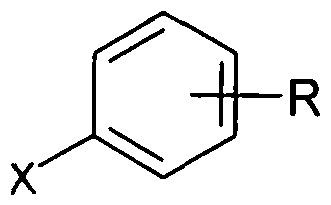
Compounds of formula VI can be prepared from the corresponding carbonyl compounds of formula VII,

Compounds in which Ri group attached to nitrogen of formula I is hydrogen can be prepared from the corresponding N-methyl compounds. Accordingly, N-methyl compounds can be reacted with cyanogen bromide or alkyl chloroformates and hydrolyzed to get the N-demethylated compounds. Alternatively, N-benzyl compounds can be hydrogenated to get the required secondary amines of formula I wherein Ri is hydrogen.
Compounds in which both Ri and R2 groups attached to the nitrogen are hydrogen in formula I can be prepared from the corresponding nitrile compounds or dibenzyl derivatives by metal catalyzed hydrogenation. Alternatively, they can be prepared from the corresponding azido compounds which in turn can be prepared from the corresponding halo compounds of formula II.
Compounds of formula I are tested on healthy, adult, Albino mice to establish the antidepressant activity. Some of the pharmacological studies carried out on mice include determination of maximum tolerated dose (MTD), gross behavioral studies including
body temperature, forced locomotor activity, immobility test, antagonism of apomorphine-induced hypothermia, antagonism of reserpine-induced hypothermia and ptosis, reversal of anti-reserpine activity of desipramine, antagonism of oxotremorine, antagonism of tetrabenazine induced ptosis, and in-vitro receptor binding study. All these studies were carried out in comparison with some of the market available compounds for same activity. Studied compounds are found to be better than or equal to the activity of market compounds.
The following compounds further illustrate compounds contemplated within the scope of the present invention:
3-(4-chlorophenyl)-N,N-dimethyl-3-(4-(trifluoromethyl)phenoxy)propan-l -amine hydrochloride
N-benzyl-3-(4-chlorophenyl)-N-methyl-3-(4-(trifluoromethyl)phenoxy)propan-l -amine oxalate 3-(4-chlorophenyl)-N-methyl-3-(4-(trifluoromethyl)phenoxy)propan-l -amine oxalate
3-(3,4-dimethoxyphenyl)-N,N-dimethyl-3-(4-(trifluoromethyl)phenoxy)propan-l -amine oxalate
N-benzyl-3-(3,4-dimethoxyphenyl)-N-methyl-3-(4-(trifluoromethyl)phenoxy)propan-l- amine oxalate 3-(3,4-dimethoxyphenyl)-N-methyI-3-(4-(trifluoromethyl)phenoxy)propan- 1 -amine oxalate
3-(4-methoxyphenyl)-N-methyl-3-(4-(trifluoromethyl)phenoxy)propan-l -amine oxalate
3-(4-methoxyphenyl)-N,N-dimethyl-3-(4-(trifluoromethyl)phenoxy)propan-l -amine oxalate N-benzyl-3-(4-methoxyphenyl)-N-methyl-3-(4-(trifluoromethyl)phenoxy)propan- 1 - amine oxalate
N-benzyl-N-methyl-3-p-tolyl-3-(4-(trifluoromethyl)phenoxy)propan-l -amine hydrochloride
N-methy l-3-p-tolyl-3-(4-(trifluoromethyl)phenoxy)propan- 1 -amine oxalate N,N-dimethyl-3-p-tolyl-3-(4-(trifluoromethyl)phenoxy)propan-l -amine oxalate
3-(4-fluorophenyl)-N,N-dimethyl-3-(4-(trifluoromethyl)phenoxy)propan- 1 -amine oxalate
N-benzyl-3-(4-fluorophenyl)-N-methyl-3-(4-(trifluoromethyl)phenoxy)propan-l -amine oxalate
3-(4-fluorophenyl)-N-methyl-3-(4-(trifluoromethyl)phenoxy)propan- 1 -amine oxalate
(S)-N-benzyl-3-(4-fluorophenyl)-N-methyl-3-(4-(trifluoromethyl)phenoxy)propan-l- amine oxalate
(S)-N-benzyl-3-(4-fluorophenyl)-N-methyl-3-(4-(trifluoromethyl)phenoxy)propan-l- amine mandelate
(R)-N-benzyl-3-(4-fluorophenyl)-N-methyl-3-(4-(trifluoromethyl)phenoxy)propan-l- amine oxalate (R)-N-benzyl-3-(4-fluorophenyl)-N-methyl-3-(4-(trifluoromethyl)phenoxy)propan-l- amine mandelate
(S)-3-(4-fluorophenyl)-N-methyl-3-(4-(trifluoromethyl)phenoxy)propan-l -amine oxalate
(R)-3-(4-fluorophenyl)-N-methyl-3-(4-(trifluoromethyl)phenoxy)propan-l -amine oxalate
3-(6-methoxynaphthalen-2-yl)-N-methyl-3-(4-(trifluoromethyl)phenoxy)propan-l -amine oxalate
3-(6-methoxynaphthalen-2-yl)-N,N-dimethyl-3-(4-(trifluoromethyl)phenoxy)propan-l- amine oxalate
N-benzyl-3-(6-methoxynaphthalen-2-yl)-N-methyl-3-(4-(trifluoromethyl)phenoxy)- propan-1 -amine oxalate l-(3-(4-fluorophenyl)-3-(4-(trifluoromethyl)phenoxy)propyl)pyrrolidine oxalate
4-(3-(4-fluorophenyl)-3-(4-(trifluoromethyl)phenoxy)propyl)moφholine oxalate l-(3-(4-fluorophenyl)-3-(4-(trifluoromethyl)phenoxy)propyl)piperidine hydrochloride
The following Examples further illustrate the compounds of the present invention and methods for the their synthesis. The Examples given below are not limiting to the scope f the invention and therefore should not be construed to limit the scope of present invention.
Example 1
Preparation of 3-(3,4-dimethoxyphenyl)-N-methyl-3-(4-(trifluoromethyl)phenoxy)- propan-1 -amine oxalate
(i) Preparation of 3-(benzyl(methyl)amino)-l-(3,4-dimethoxyphenyl)propan-l-one hydrochloride
Into a 500ml, three-necked RB flask was charged 17g of N-methylbenzylamine and 30ml of isoporopanol. The reaction mass was cooled tolO-15°C. IPA-HCl was added to the reaction mass. After stirring for 30min at this temperature 25g of 3,4-dimethoxy- acetophenone and 6.6g of paraformaldehyde were added to the reaction mass. The reaction mass was heated to the reflux temperature and maintained for about 1Oh. The reaction mass was cooled to room temperature and added 100ml of acetone. After stirring for Ih at room temperature the reaction mass was filtered and the solid washed with 30ml of acetone.
The crude solid was taken into a flask and suspended in -ml of acetone. The reaction mass was heated to reflux temperature and maintained for Ih. After cooling to RT reaction mass filtered and washed with 30ml of acetone. Drying of the wet solid yielded 27g of title compound as white crystalline solid. Melting point is 164.5°C.
(H) Preparation of 3-(benzyl(methyl)amino)-l-(3,4-dimethoxyphenyl)propan-l-ol
Into a 500ml, three-necked RB flask was charged 100ml of methanol and 3.7g of sodium hydroxide. The mass was heated to 5O0C to get a solution. The solutin was cooled to 10- 15°C and added 3-(benzyl(methyl)amino)-l-(3,4-dimethoxyphenyl)-propan-l -one hydrochloride. After stirring for Ih, 1.5g of sodium borohydride was added in lots keeping the temperature at 10-15°C. After stirring for 4h reaction mass was filtered and the solvent distilled of under vaccum. The residue was suspended in 100ml of water and
extracted with 2 x 100ml of toluene. Toluene layer was washed with water, treated with carbon and dried with sodium sulphate. Toluene was distilled of and the residue dissolved in 1:1 mixture of hexane:diisopropyl ether. The solution was cooled to 5-100C and filtered the solid. After drying 18.5g of title compound was obtained as white solid. Melting point is 78.5°C.
(iii) Preparation of l-(3,4-dimethoxyphenyI)-3-(methylamino)propan-l-ol
Into a stainless steel hydrogenation kettle was charged 1Og of 3-(benzyl(methyl)amino)- l-(3,4-dimethoxyphenyl)propan-l-ol, 150ml of methanol, and 2.Og of 5% palladium-on- carbon. The reaction mass was subjected to hydrogenation at 30-40psi hydrogen pressure for 5h. The reaction mass was filtered and the solvent distilled of from the filtrate. The residue was dissolved in hexane and cooled to RT. The crystalline solid was filtered and dried to get 5g of title compound as white solid. Melting point is 97-980C.
(iv) Preparation of 3-(3,4-dimethoxyphenyl)-N-methyl-3-(4-(trifluoromethyl)- phenoxy)-propan-l-amine oxalate l-(3,4-Dimethoxyphenyl)-3-(methylamino)propan-l-ol (3.0g) and DMSO (20ml) were taken into a 250ml three-necked RB flask. The reaction mass was cooled to 20-250C and added sodium hydride (0.6Og, 55-60% dispersion in mineral oil) in lots under nitrogen atmosphere. Potassium iodide (50mg) was added to the reaction mass and stirred for 30min at RT. p-Chlorobenzotrifluoride (3.Ig) was added to the reaction mass at RT. The reaction mass was heated to 65-7O0C and maintained for 4h. The reaction mass was cooled to RT and quenched with 3ml of methanol. The reaction mass was poured into 150ml of water. The reaction mass was extracted with 2x 100ml of toluene. Combined toluene layer was washed with water, decolorized with carbon, dried with sodium sulfate and distilled of solvent under vaccum to get 4g of crude compound.
The crude compound was dissolved in acetone (12ml) and added 2.6g of oxalic acid monohydrate. The reaction mass was heated to 400C and cooled to 5-1O0C. The solid formed in the reaction mass was filtered and dried to get 5.5g of the title compound. It was recrystallized from acetone/me thanol to get 4.Og of the title compound as white
crystalline solid. Melting point is 126.80C. 1H NMR (300MHz, CDCl3) of base: 7.43 (d, J = 8.8Hz, 2H, ar. H); 6.79-6.94 (m, 5H, ar. H); 5.22-5.29 (m, IH, CHO-); 3.85 (s, 6H, 2 x OCH3); 2.75 (t, J = 6.6Hz, 2H, CH2N); 2.44 (s, 3H, NCH3); 2.18-2.14 (m, 2H, CH2CH2N); 1.99-2.10 (m, IH5 NH).
The following N,N-dimethyl, N-methyl, and N,N-cyclic 3-substituted phenoxy aryl propylamines were prepared by the above procedures.
3-(4-Fluorophenyl)-N-methyl-3-(4-(trifluoromethyl)phenoxy)propan- 1 -amine the oxalate salt melted at 192.80C after recrystallization from acetone. 1H NMR (300MHz, DMSO- d6): 7.57 (d, J = 8.79Hz, 2H, ar. H); 7.42-7.48 (m, 2H, ar. H); 7.15-7.33 (m, 2H, ar. H);
7.06 (d, J = 8.42Hz, 2H, ar. H); 6.45 (br. s, exch. with D2O, 2H, 2 x COOH), 5.61-5.67
(m, IH, CHO); 2.90-3.10 (m, 2H, NCH2); 2.55 (s, 3H, NCH3); 2.17-2.32 (m, 2H,
CH2CH2N). Hydrochloride salt (I-A) melted at 1 13.2-1 150C0C after recrystallization from ethyl acetate-diisopropyl ether.
N-Methyl-3-p-tolyl-3-(4-(trifluoromethyl)phenoxy)propan-l -amine the oxalate (I-B) salt melted at 188.5°C after recrystallization from acetone. 1H NMR (300MHz, DMSO-d6): 7.56 (d, J = 8.42Hz, IH, ar. H); 7.28 (d, J - 8.10Hz, IH, ar. H); 7.16 (d, J = 8.10Hz, IH, ar. H); 7.04 (d, J = 8.42Hz, IH, ar. H); 5.57 (t, J = 4.8Hz, IH, CHO-); 2.90-3.10 (m, 2H, NCH2); 2.55 (s, 3H, NCH3); 2.25 (s, 3H, ArCH3); 2.16-2.50 (m, 2H, CH2CH2N).
3-(4-Methoxyphenyl)-N-methyl-3-(4-(trifluoromethyl)phenoxy)propan-l -amine oxalate (I-C) which melted at 140.40C after recrystallization from IPA. 1H NMR (300MHz, DMSO-d6): 7.55 (d, J = 8.79Hz, IH, ar. H); 7.33 (d, J = 8.79Hz, IH, ar. H); 7.05 (d, J = 8.79Hz, I H, ar. H); 6.91 (d, J = 8.42Hz, I H, ar. H); 5.56 (t, J = 4.8Hz, IH, CHO-); 3.71 (s, 3H, OCH3); 2.64-3.01 (m, 2H, -NCH2); 2.55 (s, 3H, NCH3); 2.10-2.26 (m, 2H, CH2CH2N).
3-(3,4-Dimethoxyphenyl)-N,N-dimethyl-3-(4-(trifluoromethyl)phenoxy)propan-l -amine oxalate which melted at 129.5°C after recrystalllization from acetone; hydrochloride
salted melted at 160.10C after recrystallization from ethyl acetate-MeOH. 1H NMR (300MHz, CDCl3) of base: 7.43 (d, J = 8.80Hz, 2H, ar. H); 6.80-6.95 (m, 5H, ar. H); 5.22 (dd, J = 5.5OHz, IH, CHO-); 3.85 (s, 6H, 2 x OCH3); 2.23 (s, 6H, N(CH3)2); 2.15-2.42 (m, 4H, CH2CH2N).
3-(6-methoxynaphthalen-2-yl)-N,N-dimethyl-3-(4-(trifluoromethyl)phenoxy)propan-l- amine oxalate which melted at 110-1140C after recrystallization from acetone-IPE. 1H NMR (300MHz, CDCI3) of base: 7.67-7.79 (m, 3H, ar. H); 7.38-7.46 (m, 2H, ar. H); 7.10-7.24 (m, 3H, ar. H); 6.93-6.97 (m, 2H, ar. H); 5.37-5.43 (m, IH, CHO); 3.88 (s, 3H, OCH3); 2.30-2.49 (m, 4H, -CH2CH2N); 2.33 (s, 6H, N(CH3)2).
4-(3-(4-Fluorophenyl)-3-(4-(trifluoromethyl)phenoxy)propyl)moφholine oxalate which melted at 1080C after recrystallization from acetone; hydrochloride salt melted at 157°C. 1H NMR (300MHz, CDCl3) of base: 7.48 (d, J = 8.30Hz, 2H, ar. H); 7.27-7.41 (m, 2H, ar. H); 6.96-7.10 (m, 2H, ar. H); 6.90 (d, J = 8.42Hz, 2H, ar. H); 5.27-5.33 (m, IH, CHO); 3.71 (t, J = 4.70Hz, 4H, 2 x OCH2); 2.34-2.53 (m, 6H, 3 x NCH2); 2.12-2.30 (m, IH, -CH2CH2N); 1.91-2.04 (m, IH, -CH2CH2N).
l-(3-(4-Fluorophenyl)-3-(4-(trifluoromethyl)phenoxy)propyl)piperidine oxalate which melted at 152.6°C after recrystallization from acetone.
l-(3-(4-fluorophenyl)-3-(4-(trifluoromethyl)phenoxy)propyl)pyrrolidine oxalate which melted at 148.5°C after recrystallization from acetone; hydrochloride salt melted at 157.1°C after recrystallization from IPE-EtOAc. 1H NMR (300MHz, CDCl3) of base: 7.50 (d, J = 4.30Hz, 2H, ar. H); 7.26-7.35 (m, 2H, ar. H); 6.96-7.08 (m, 2H, ar. H); 6.89 (d, J - 8.42Hz, 2H, ar. H); 5.25-5.31 (m, I H, CHO); 2.46-2.59 (m, 6H, 3 x NCH2); 2.14- 2.36 (m, IH, CH2CH2N); 1.90-2.07 (m, I H, -CH2CH2N); 1.71-1.85 (m, 4H, CH2CH2).
Example 2 Preparation of 3-(4-chlorophenyl)-N-methyl-3-(4-(trifluoromethyl)phenoxy)propan- 1-amine oxalate
(i) Preparation of 3-(benzyI(methyl)amino)-l-(4-chlorophenyl)propan-l-one hydrochloride
Into a 1 L, four-necked RB flask was charged 82.7g of N-methylbenzylamine and 137g of isopropanol. The reaction mass was cooled to 150C and added 206.4g of IPA-HCl (13% w/w). 4-Chlroacetophenone ( 10Og) and parafarmaldehyde (34.4g) were added to the reaction mass and heated to reflux temperature. After maintaining at reflux for 7h reaction mixture was cooled to 25°C an d filtered the solid. The wet solid was washed with 100ml of acetone and dried to get 17Og of title compound as white solid. Melting point is 170-1720C. (ii) Preparation of 3-(benzyl(methyl)amino)-l-(4-chlorophenyl)propan-l-ol
Methanol (450ml) and sodium hydroxide (14.4g) were charged into a IL, four-necked RB flask and stirred for 15min. The solution was cooled to 15°C and added 1Og of above step (i) compound. Sodium borohydride (4.7g) was added to the reaction mass in lots keeping the temperature at 1O0C. After stirring for overnight the reaction mass was filtered and the solvent distilled of from the reaction mass under vaccum. Water was added to the reaction mass and the product extracted into toluene. Toluene was distilled of from the reaction mass to the get crude compound. The crude compound was crystallized from hexane to get 7Og of the title compound as white solid. Melting point is 65-67°C. (ϋi) Preparation of phenyl 3-(4-chIorophenyl)-3-hydroxypropyl(methyl)carbamate Into a 250ml three-necked RB flask was charged above step (ii) compound (15g), 90ml of chloroform, and 15g of potassium carbonate. Phenyl chloroformate was slowly added to the reaction mass and kept under stirring for overnight. Water was added to the reaction mass and the product extracted into chloroform, dried and distilled to get the crude title compound as syrup.
(iv) Preparation of l-(4-chlorophenyl)-3-(methylamino)propan-l-ol Dimethyl sulfoxide (96ml), above step (iii) crude compound (32g), potassium hydroxide (32g), and water (13ml) were taken into a flask and heated to 60-650C. After maintaining for 4h reaction was diluted with water and extracted the product into toluene, toluene layer was washed with water, dried and evaporated to get crude compound. The crude
compound was dissolved in hexane-diisopropyl ether and crystallized to get 5.Og of the title compound as white solid. Melting point is 73.90C.
(v) Preparation of 3-(4-chlorophenyI)-N-methyl-3-(4-(trifluoromethyl)phenoxy)- propan-1 -amine Into a 250ml three-necked RB flask was charged 25ml of DMSO and 4.5g of the above step (iv) compound. Sodium hydride (1.5g, 55% suspension in paraffin oil) was added to the reaction mass in lots at 25°C. Potassium iodide (0.12g) and p-chlorobenzotrifluoride (5.5g) were added to the reaction mass and heated to 70°C. After maintaining for 3h reaction was quenched with methanol and water. Reaction mass was extracted with toluene and the toluene layer washed with water, dried and distilled of solvent to get 9.Og of crude compound. The crude compound was converted to its oxalate salt and recrystallized from methanol-diisopropyl ether to get 4.Og of the title compound as white solid. Melting point is 199.10C. Corresponding hydrochloride salted melted at 160.10C after recrystallizing from methanol/ethyl acetate.
Example 3
Preparation of 3-(4-chlorophenyl)-N,N-dimethyl-3-(o-tolyloxy)propan-l-amine oxalate
(i) Preparation of l-(4-chlorophenyl)-3-(diniethylamino)propan-l-one hydrochloride 4-Chloroacetophenone (5Og) is converted to l-(4-chlorophenyl)-3-(dimethylamino)- propan-1-one hydrochloride as per the process given in step (i) of Example 2 above. Melting point is 176.3°C.
(ii) Preparation of l-(4-chlorophenyl)-3-(dimethylamino)propan-l-oll-(4- Chlorophenyl)-3-(dimethylamino)-propan-l-one hydrochloride is converted to l-(4- chlorophenyl)-3-(dimethylamino)propan-l-ol as per the process given in step (ii) of Example 2 above. Melting point is 75.O0C.
(iii) Preparation of l-(4-chlorophenyl)-3-(dimethylamino)propyl methanesulfonate Into a 250ml, three-necked RB flask was charged 1Og of l-(4-chlorophenyl)-3- (dimethylamino)propan-l-ol and 100ml or methylene chloride. The reaction mixture was cooled to -5°C and added 6.2g of triethylamine. Methanesulfonyl chloride (6.2g) was slowly added to the reaction mass and maintained for 1Oh at same temperature. The
reaction mixture was quenched with water and the product extracted into methylene chloride. Solvent was distilled of to get 4g of title compound as syrup.
(iv) Preparation of 3-(4-chlorophenyl)-N,N-dimethyl-3-(o-tolyloxy)propan-l-amine
Into a 250ml three-necked RB flask was charged 1.6g of sodium hydride (55% dispersion in mineral oil) and 50ml of N,N-dimethylformamide. The reaction mass was cooled to 20°C and added o-cresol (4.Og). After stirring for Ih at same temperature a solution of 1- (4-chlorophenyl)-3-(dimethylamino)propyl methanesulfonate in DMF was added to the reaction mass at 10°C. After maintaining for 15h at RT the reaction mass was quenched with water and the product extracted into toluene. Toluene was distilled of to get 4.Og of crude compound. Column chromatography of the crude compound over silica gel column gave 1.3 -of the title compound as syrup. Oxalate salt melted at 1730C. 1H NMR (300MHz, CDCl3 + DMSOd6): 7.38-7.22 (m, 4H, arom. H); 7.09-7.13 (m, IH, arom. H); 6.92-7.00 (m, IH, arom. H); 6.76-6.83 (m, IH, arom. H); 6.52-6.56 (m, IH, arom. H); 5.31 (br. s, IH, CHO); 4.67 (br. s, exch with D2O, 2H, 2 x COOH); 3.25 (br. s, 2H, NCH2); 2.58-2.38 (m, 2H, CH2CH2N); 2.29 (s, 6H, N(CH3)2).
Example 4
Preparation of (+)τ3-(4-Fluorophenyl)-N-methyl-3-(4-(trifluoromethyl)phenoxy)- propan-1-amine oxalate (+)-l-(4-Fluorophenyl)-3-(methylamino)propan-l-ol (25g), prepared according to the process disclosed in WO05/063707 is converted to (+)-3-(4-fluorophenyl)-N-methyl-3- (4-(trifluoromethyl)phenoxy)propan-l -amine oxalate as per the process given in Example 1 above. Melting point is 210-2120C (methanol).
Example 5
Preparation of (-)-3-(4-Fluorophenyl)-N-methyl-3-(4-(trifluoromethyl)phenoxy)- propan-1-amine oxalate
(-)-l-(4-Ffluorophenyl)-3-(methylamino)propan-l-ol (25g), prepared according to the process disclosed in WO05/063707 is converted to (-)-3-(4-fluorophenyl)-N-methyl-3-(4- (trifluoromethyl)phenoxy)propan-l -amine oxalate as per the process given in Example 1 above. Melting point is 208-2090C (methanol).
Example 6
Preparation of 3-(benzyl(methyl)amino)-l-(6-methoxynaphthalen-2-yl)propan-l-ol
By following the process disclosed in procedure of 3-(benzyl(methyl)amino)-l-(4- chlorophenyl)propan-l-ol given in step (ii) of Example 1 3-(benzyl(methyl)amino)-l-(6- methoxynaphthalen-2-yl)propan-l-ol was prepared starting from 1 -(6-methoxy- naphthalen-2-yl)ethanone. Melting point is 75.6°C (diisopropyl ether)
Pharmacological study of compounds of formula-I with reference to anti-depressant activity Animals: The study was conducted in Swiss strain of either sex of Albino mice. The animals were kept in quarantine for days for their acclimatization. The animals were kept at a room temperature of 24 ±0.5°C and humidity 52+1.0% The animals were kept in 12 h light and 12 h dark cycle. The animals were kept a PET-CARE animal diet and water was given gd libitum.
Experimental Procedure:
All animals experiments were conducted at an ambient room temperature of 24 ±1.0°C between 10.0 am to 5.00 pm to avoid the effect of Circadian rhythm.
The compounds fluoxetine, desipramine, apomorphine, and compounds of formula I (I- A: R=4-CF3, Ri=H, R2=CH3, A=4-fluorophenyl), I-B: R=4-CF3, R1=H, R2=CH3, A=4- methylphenyl) were dissolved in pyrogen free distilled water. Compound of formula I (I- C: R=4-CF3, Ri=H, R2=CH3, A=4-methoxyphenyl) was suspended in 2% Gumacca acid and given orally. Apomorphine and reserpine were administered subcutaneously.
1. Maximum Tolerated Dose Study (Early citation)
The study was done as per OECD guidelines (OECD guidelines for testing of chemicals Acute oral Toxicity- Fixed Dose Method, 1992, page 1-5). The study was carried out in 2 mice (1 male, 1 female). Fluoxetine, compounds of formula I- A, I-B, and I-C were administered in a dose of 5.0, 50.0, 500.0, and 2000.0 mg/Kg (po) and the animals were observed for gross behavioral changes till 360 min of oral administration. The animals
were observed for 72 h to record the mortality, if any. The intermediate dose was determined based on mortality recorded. The animals showed marked afrodesic activity in a group treated with fluoxetine, compounds of formula I (I-A, I-B, and I-C) at lower dose 5.0 mg/Kg and 50 mg/Kg (po) till 120 min. In toxic doses animals showed chronic convulsion followed by death. The results of maximum tolerated doses are tabulated in Table 1.
Table 1 : Maximum tolerated dose study (early citation study) in mice

2. Gross Behavioral study in Mice:
The study was done in either sex of mice weighing 20-22gm. The various parameters mentioned in below Table 2 were recorded after administration of fluoxetine (25.0 mg/kg), I-A (6.25 mg/kg), I-B (25.0 mg/kg), and I-C (6.25 mg/kg). The behavioral parameters were scored as per the method outlined by Irwin (Irwin S. Gorden, Res. On Medicinal Chem. Cited in Turner RA ed.: Screening Methods in Pharmacology Vol. I New York, London, Academic Press 1965, 133) and modified by Singh et al (Singh PP, Junnarkar AY, Reddi GS, Singh KV, Fitoterpia, 1987, 58, 235 -238). The results of various gross observations are tabulated in Table-2.
Table 2: Gross Observation Study (Mice)

3. Forced locomoter activity (Mice)
The test was performed in a group of 5 mice of either sex: Initially mice were trained to remain on rod rotating at 14 RPM (Dunham NW, Miya T.S. J. Amer. Pharm. Ass. Sci 1957, 46: 208 -209). Mice were administered 25.0 mg/kg each of fluoxetine and I-B and 6.25 mg/kg each of I-A and I-C orally. The animals were tested for neurological deficit by keeping on rotating rod for 120 min. If any fall from rota-rod was noted. All the four studied compounds did not show any neurological deficit, as the animals did not fall. It shows that the compounds are devoid of central muscle relaxant activity.
4. Immobility test (mice)
Immobility test was carried out in Swiss albino mice of either sex as per method outlined by Porsolt et al (Porsolt RD, Berlin A, Jalfre M, Arch. Int. Pharmacodyn. 1977a, 229: 327 - 336). Fluoxetine (12.5 & 25.0 mg/kg), I-A & I-C (3.125, 6.25 and 12.5 mg/kg) and
I-B (12.5, 25.0 and 50.0 mg/kg) orally were administered. The animals were tested for
immobility from 30 min to 360 min. The compounds fluoxetine, I-A, I-B, and I-C exhibited decreased immobility with dose-dependent manner. However, at a higher-dose all compounds increased the immobility period. The results are tabulated in Table 3.
Table 3: Immobility test on mice with fluoxetine, I-A, I-B, and I-C

5. Antagonism of Apomorphine - Induced hypothermia (mice)
The study was done in male Swiss albino weighing 25-30 gm. Each group consisted of 6 mice (Vogel 2002). The mice were given pretreatment of desipramine (20.0 mg/kg), fluoxetine & I-B (25.0 mg/kg), I-A & I-C (6.25 mg/kg po). After 60 min of compound administration each group was injected with apomorphine 16 mg/kg (sc). The rectal temperature of each animal was recorded by using Digital Tele thermometer and thermocouple probe from 30 min to 240 min. The percentage antagonism was calculated by comparing group with control. Desipramine (20.0 mg/kg) po antagonized apomorphine induced hypothermia to tune of 86%. While fluoxetine, I-A, I-B, and I-C failed to antagonize apomorphine-induced hypothermia. The results are tabulated in Table 4.
Table 4: Antagonism of Apomorphine - Induced hypothermia (Mice)

6. Antagonism of reserpine-induced hypothermia (Mice) The test was carried out as described by Vogel (Vogel. G., Pharmacology and Screening Methods, 2002, 2nd Ed. Pages 559-535). The study was done in adult male Swiss albino mice weighing 25-30 g, consisting 6 mice in each group. The animals were injected reserpine 2.0 mg/Kg (sc). After 18 h reserpine injection temperature of animal was recorded by Digital thermometer with thermo couple probe. Desipramine (20.0 mg/kg po), fluoxetine & I-B (25.0 mg/kg po), I-A & I-C (6.25 mg/kg po) were administered after 18 hr. The rectal temperature of each mice was recorded from 30 min till 360 min of compound administration. The percentage antagonism was carried out by comparing activity with control. Desipramine (20.0 mg/kg) po antagonized reserpine induced hypothermia by 78% while fluoxetine, I-A, I-B, and I-C failed to antagonize reserpine induced hypothermia. The results are tabulated in Table-5.
Table 5: Antagonism of reserpine-induced hypothermia (Mice)

The test was carried out in adult male Swiss albino mice weighing 25-30 gm, as per method of Maj. et al (Maj J., Rogoz Z, Skuza G., Eur. J. Pharmacol. 1982 b: 81 ; 287- 292). The mice were administered reserpine (2.0 mg/kg) subcutaneously (sc). After 18 h desipramine (20.0 mg/kg po) followed by fluoxetine & I-B (25.0 mg/kg po), I-A & I-C (6.25 mg/kg po) were administered concurrently. The rectal temperature of each mice was recorded by digital thermometer and thermocouple probes from 30 min till 360 min after drug administration. On concurrent administration of fluoxetine, antireserpine activity of desipramine was reversed by 64% while I-A and I-C (6.25 mg/kg) on concurrent administration reversed the anti-reserpine activity of desipramine by 74-75%. However, I-B on concurrent administration reversed the anti-reserpine activity to 48%. Thus, above components I-A, I-B, and I-C are indicative of promising specific serotonin uptake blocking activity resemble to fluoxetine. The results are tabulated in Table-6.
Table 6: antagonism of antireserpine activity of desipramine by concurrent administration of fluoxetine, I-A, I-B, and I-C (mice)

1. Compounds of present invention have better antidepressant activity than the market compounds like fluoxetine.
2. Compounds of present invention are less toxic and safer than the market compounds.
Claims
1. A compound of formula I,

I wherein
A is a phenyl, 1- or 2-naphthyl optionally substituted with up to five substituents selected from cyano, halogeno, Ci-6-alkyl, C|.6-alkoxy, trifluoromethyl, aralkyloxy, ethynyl, tetrazolyl; a 5-membered heteroaryl radical which contains, as hetero atoms, 2 to 4 N-atoms or 1 or 2 N-atoms as well as 1 O- or S-atom, and which is unsubstituted or C-substituted by lower alkyl, phenyl, or phenyl which is substituted by lower alkyl, lower alkoxy and or halogen, and/or is N-substituted at a N-atom which is capable of substitution by lower alkyl, lower alkoxy and/or halogen; a 2-benzimidazolyl optionally unsubstituted or substituted with cyano, halogeno, Ci.6-alkyl, Ci^-alkoxy, trifluoromethyl;
R is cyano, halogeno, halogenoalkyl, Cι-6-alkyl, Ci-6-alkoxy, ethynyl, aryloxy or aralkyloxy, nitro, carboxyl, formyl, sulfonamido, carboxamido, triazolyl, tetrazolyl; and Ri and R2 are each independently hydrogen, Ci^-alkyl, C3-7-cycloalkyl, C3-6- cycloalkyl Ci.3-alkyl; or Ri and R2 may together form a C5-7-carbocyclic ring containing 0-2 hetero atoms such as N, O, or S and a salt thereof with a pharmaceutically acceptable acid.
2. A compound as claimed in claim 1 wherein A is a substituted phenyl or naphthyl.
3. A compound as claimed in claims 2 wherein phenyl or naphthyl is mono- di- or tri- substituted with halo, C1-C4 alkyl and/or C1-C4 alkoxy.
4. A compound as claimed in claim 3 wherein phenyl is mono- or di-substituted with halo, C1-C4 alkyl and/or C1-C4 alkoxy.
5. A compound as claimed in claim 3 wherein naphthyl is 2-naphthyl substituted with C 1-C4 alkoxy.
6. A compound as claimed in claim 5 wherein substituent on 2-naphthyl is at 6-position.
7. A compound as claimed in claim 1 wherein R is halogenoalkyl.
8. A compound as claimed in claim 7 wherein R is trifluoromethyl.
9. A compound as claimed in claim 1 wherein Rl and R2 are each independently hydrogen, Ci^-alkyl, or Ri and R2 may together form a C5-7-carbocyclic ring containing 0-2 hetero atoms such as N, O, or S.
10. A compound as claimed in claim 9 wherein Rl is H and R2 is Ci.6-alkyl.
11. A compound as claimed in claim 10 wherein R2 is methyl.
12. A compound as claimed in claim 9 wherein C5-7-carbocyclic ring is pyrrolidinyl, piperidinyl, morpholinyl, N-methylpiperazinyl.
13. A pharmaceutical composition comprising a compound of formula I or a pharmaceutically acceptable salt thereof, as claimed in any one of claims 1-12, together with a pharmaceutically acceptable diluent or carrier.
14. A compound of formula I or a pharmaceutically acceptable salt thereof, as claimed in any one of claims 1-12, for use as a selective inhibitor of the reuptake of both serotonin and norepinephrine dysfunction in mammals.
15. A compound of formula I or a pharmaceutically acceptable salt thereof, as claimed in any one of claims 1-12, for use in treatment of a disorder selected from depression, OCD, anxiety, memory loss, urinary incontinence, conduct of disorders, ADHD, obesity, alcoholism, smoking cessation, sexual disorder, and pain.
16. The use of compound of formula I or a pharmaceutically acceptable salt thereof as claimed in claim 15 wherein the disorder is depression, memory loss, conduct of disorders, ADHD, obesity, sexual disorder, and pain.
17. The use of compound of formula I or a pharmaceutically acceptable salt thereof as claimed in claim 15 wherein the disorder is depression, memory loss, conduct of disorders, ADHD, obesity, sexual disorder, and pain.
18. A method of treating disorders associated with serotonin and norepinephrine dysfunction in mammals, comprising administering to a patient in need thereof an effective amount of a compound of formula I or a pharmaceutically acceptable salt thereof as claimed in any of claims 1-12.
Applications Claiming Priority (2)
| Application Number | Priority Date | Filing Date | Title |
|---|---|---|---|
| IN28CH2007 | 2007-01-04 | ||
| IN28/CHE/2007 | 2007-01-04 |
Publications (1)
| Publication Number | Publication Date |
|---|---|
| WO2008081477A1 true WO2008081477A1 (en) | 2008-07-10 |
Family
ID=39357662
Family Applications (1)
| Application Number | Title | Priority Date | Filing Date |
|---|---|---|---|
| PCT/IN2008/000001 Ceased WO2008081477A1 (en) | 2007-01-04 | 2008-01-02 | 3-aryloxy 3-substituted propanamines |
Country Status (1)
| Country | Link |
|---|---|
| WO (1) | WO2008081477A1 (en) |
Cited By (7)
| Publication number | Priority date | Publication date | Assignee | Title |
|---|---|---|---|---|
| EP2385944A4 (en) * | 2009-01-09 | 2013-06-19 | Harvard College | FLUORINATED COMPOUNDS AND METHODS OF USE |
| US8686158B2 (en) | 2008-06-05 | 2014-04-01 | President And Fellows Of Harvard College | High-valent palladium fluoride complexes and uses thereof |
| US9024093B2 (en) | 2008-11-20 | 2015-05-05 | President And Fellows Of Harvard College | Fluorination of organic compounds |
| US9150516B2 (en) | 2011-04-12 | 2015-10-06 | President And Fellows Of Harvard College | Fluorination of organic compounds |
| US9273083B2 (en) | 2012-09-26 | 2016-03-01 | President And Fellows Of Harvard College | Nickel fluorinating complexes and uses thereof |
| WO2017025511A1 (en) | 2015-08-10 | 2017-02-16 | Biogasol Aps | Mixed composition biomass pellets |
| US10759764B2 (en) | 2013-10-18 | 2020-09-01 | President And Fellows Of Harvard College | Fluorination of organic compounds |
Citations (12)
| Publication number | Priority date | Publication date | Assignee | Title |
|---|---|---|---|---|
| US4018895A (en) * | 1974-01-10 | 1977-04-19 | Eli Lilly And Company | Aryloxyphenylpropylamines in treating depression |
| DE2907217A1 (en) * | 1978-02-24 | 1979-08-30 | Roussel Uclaf | NEW BENZENE PROPANAMINE DERIVATIVES AND THEIR SALTS, THEIR MANUFACTURING PROCESS, THEIR USE AS A MEDICINAL PRODUCT AND THE PHARMACEUTICAL COMPOSITIONS THEREOF |
| EP0318727A2 (en) * | 1987-12-01 | 1989-06-07 | Novo Nordisk A/S | Aryloxphenylpropylamines and their preparation and use |
| US4956388A (en) * | 1986-12-22 | 1990-09-11 | Eli Lilly And Company | 3-aryloxy-3-substituted propanamines |
| EP0399504A2 (en) * | 1989-05-26 | 1990-11-28 | Novo Nordisk A/S | Aryloxyphenylpropylamines their preparation and use |
| US5238959A (en) * | 1988-04-08 | 1993-08-24 | Eli Lilly And Company | 3-phenyloxy-3-phenyl propanamines |
| EP0576766A1 (en) * | 1992-06-29 | 1994-01-05 | Novo Nordisk A/S | Propanolamine derivatives, their preparation and use |
| US5589511A (en) * | 1990-08-13 | 1996-12-31 | Sepracor Inc. | Method for treating migraine headaches using optically pure S(+) fluoxetine |
| WO2003022258A1 (en) * | 2001-09-10 | 2003-03-20 | Ramot At Tel Aviv University Ltd. | Aryloxypropylamines as chemosensitizing agent in the treatment of cancer |
| WO2005117872A2 (en) * | 2004-06-04 | 2005-12-15 | Dynogen Pharmaceuticals, Inc. | Dual acting snri-nmda antagonists for the treatment of genitourinary disorders |
| WO2006037055A1 (en) * | 2004-09-27 | 2006-04-06 | Dr. Reddy's Laboratories Ltd. | Synthesis of atomoxetine hydrochloride |
| EP1693361A1 (en) * | 2005-02-18 | 2006-08-23 | Dipharma S.p.A. | A process for the preparation of tolterodine |
-
2008
- 2008-01-02 WO PCT/IN2008/000001 patent/WO2008081477A1/en not_active Ceased
Patent Citations (12)
| Publication number | Priority date | Publication date | Assignee | Title |
|---|---|---|---|---|
| US4018895A (en) * | 1974-01-10 | 1977-04-19 | Eli Lilly And Company | Aryloxyphenylpropylamines in treating depression |
| DE2907217A1 (en) * | 1978-02-24 | 1979-08-30 | Roussel Uclaf | NEW BENZENE PROPANAMINE DERIVATIVES AND THEIR SALTS, THEIR MANUFACTURING PROCESS, THEIR USE AS A MEDICINAL PRODUCT AND THE PHARMACEUTICAL COMPOSITIONS THEREOF |
| US4956388A (en) * | 1986-12-22 | 1990-09-11 | Eli Lilly And Company | 3-aryloxy-3-substituted propanamines |
| EP0318727A2 (en) * | 1987-12-01 | 1989-06-07 | Novo Nordisk A/S | Aryloxphenylpropylamines and their preparation and use |
| US5238959A (en) * | 1988-04-08 | 1993-08-24 | Eli Lilly And Company | 3-phenyloxy-3-phenyl propanamines |
| EP0399504A2 (en) * | 1989-05-26 | 1990-11-28 | Novo Nordisk A/S | Aryloxyphenylpropylamines their preparation and use |
| US5589511A (en) * | 1990-08-13 | 1996-12-31 | Sepracor Inc. | Method for treating migraine headaches using optically pure S(+) fluoxetine |
| EP0576766A1 (en) * | 1992-06-29 | 1994-01-05 | Novo Nordisk A/S | Propanolamine derivatives, their preparation and use |
| WO2003022258A1 (en) * | 2001-09-10 | 2003-03-20 | Ramot At Tel Aviv University Ltd. | Aryloxypropylamines as chemosensitizing agent in the treatment of cancer |
| WO2005117872A2 (en) * | 2004-06-04 | 2005-12-15 | Dynogen Pharmaceuticals, Inc. | Dual acting snri-nmda antagonists for the treatment of genitourinary disorders |
| WO2006037055A1 (en) * | 2004-09-27 | 2006-04-06 | Dr. Reddy's Laboratories Ltd. | Synthesis of atomoxetine hydrochloride |
| EP1693361A1 (en) * | 2005-02-18 | 2006-08-23 | Dipharma S.p.A. | A process for the preparation of tolterodine |
Non-Patent Citations (1)
| Title |
|---|
| BHANDARI ET AL: "Synthesis and appetite suppressant activity of 1-aryloxy-2-substituted aminomethyltetrahydronaphthalenes as conformationally rigid analogues of fluoxetine", BIOORGANIC & MEDICINAL CHEMISTRY, ELSEVIER SCIENCE LTD, GB, vol. 14, no. 8, 15 April 2006 (2006-04-15), pages 2535 - 2544, XP005323443, ISSN: 0968-0896 * |
Cited By (7)
| Publication number | Priority date | Publication date | Assignee | Title |
|---|---|---|---|---|
| US8686158B2 (en) | 2008-06-05 | 2014-04-01 | President And Fellows Of Harvard College | High-valent palladium fluoride complexes and uses thereof |
| US9024093B2 (en) | 2008-11-20 | 2015-05-05 | President And Fellows Of Harvard College | Fluorination of organic compounds |
| EP2385944A4 (en) * | 2009-01-09 | 2013-06-19 | Harvard College | FLUORINATED COMPOUNDS AND METHODS OF USE |
| US9150516B2 (en) | 2011-04-12 | 2015-10-06 | President And Fellows Of Harvard College | Fluorination of organic compounds |
| US9273083B2 (en) | 2012-09-26 | 2016-03-01 | President And Fellows Of Harvard College | Nickel fluorinating complexes and uses thereof |
| US10759764B2 (en) | 2013-10-18 | 2020-09-01 | President And Fellows Of Harvard College | Fluorination of organic compounds |
| WO2017025511A1 (en) | 2015-08-10 | 2017-02-16 | Biogasol Aps | Mixed composition biomass pellets |
Similar Documents
| Publication | Publication Date | Title |
|---|---|---|
| AU654653B2 (en) | Therapeutically useful 2-aminotetralin derivatives | |
| AU763884B2 (en) | Monoamine reuptake inhibitors for treatment of CNS disorders | |
| ES2226423T3 (en) | NON-IMIDAZOL RENTALS LIGHTING THE H3 RECEIVER? OF HISTAMINE AND ITS THERAPEUTIC APPLICATIONS. | |
| CA1341024C (en) | Benzo-fused cycloalkane and oxa- and thia-, cycloalkane trans-1, 2-diamine derivatives | |
| US8524700B2 (en) | Tetrahydroisoquinoline sulfonamide derivatives, the preparation thereof, and the use of the same in therapeutics | |
| CZ20023455A3 (en) | Phenylethyl amines and their variants with annellated rings functioning as catecholamine prodrugs and their use | |
| US5073648A (en) | 4-(4-alkoxyphenyl)-2-butylamine derivative and process therefor | |
| AU760889B2 (en) | 1,2-disubstituted cyclopropanes | |
| SK287353B6 (en) | Substituted 2-dialkylaminoalkylbiphenyl derivatives, process for producing thereof, drugs comprising said derivatives and their use | |
| AU2294592A (en) | Sigma receptor ligands and the use thereof | |
| HU211463A9 (en) | Propenone oxim ethers, method for preparing them and pharmaceutical compositions containing them | |
| DK147068B (en) | ANALOGY PROCEDURE FOR PREPARING 1-NAPHTHYLMETHYL-CINNAMYL-AMINE DERIVATIVES | |
| JP2010522223A (en) | Hetero-substituted tetrahydronaphthalene-amine derivatives, their preparation and use as pharmaceuticals | |
| US6787560B2 (en) | Serotonin reuptake inhibitor | |
| AU4991999A (en) | Methods and compounds for treating depression and other disorders | |
| JP2002511883A (en) | Benzothiophene derivatives and corresponding uses and compositions | |
| US20070015828A1 (en) | Highly selective serotonin and norepinephrine dual reuptake inhibitor and use thereof | |
| WO1993021179A1 (en) | Novel amidoalkyl- and imidoalkyl-piperazines | |
| GB2142021A (en) | 1 4-dihydropyridine derivatives their preparation and pharmaceutical compositions containing them | |
| JP2834112B2 (en) | Novel muscarinic receptor agonists | |
| CN101277929A (en) | How to obtain phenylcarbamate | |
| DK166372B (en) | PHENETHYLAMINE DERIVATIVES AND PHARMACEUTICAL ACCEPTABLE SALTS THEREOF | |
| KR910000436B1 (en) | Method for preparing phenethylamine derivative | |
| FI77647C (en) | FOERFARANDE FOER TILLVERKNING AV TERAPEUTISKT ANVAENDBARA FENETYLAMINDERIVAT. | |
| NZ227299A (en) | Hydroxy- or keto-amine derivatives and pharmaceutical compositions |
Legal Events
| Date | Code | Title | Description |
|---|---|---|---|
| 121 | Ep: the epo has been informed by wipo that ep was designated in this application |
Ref document number: 08720071 Country of ref document: EP Kind code of ref document: A1 |
|
| NENP | Non-entry into the national phase |
Ref country code: DE |
|
| 122 | Ep: pct application non-entry in european phase |
Ref document number: 08720071 Country of ref document: EP Kind code of ref document: A1 |