WO2009016180A2 - Peptide imaging agents - Google Patents
Peptide imaging agents Download PDFInfo
- Publication number
- WO2009016180A2 WO2009016180A2 PCT/EP2008/059941 EP2008059941W WO2009016180A2 WO 2009016180 A2 WO2009016180 A2 WO 2009016180A2 EP 2008059941 W EP2008059941 W EP 2008059941W WO 2009016180 A2 WO2009016180 A2 WO 2009016180A2
- Authority
- WO
- WIPO (PCT)
- Prior art keywords
- cmbp
- imaging agent
- bzp
- peptide
- cys
- Prior art date
- Legal status (The legal status is an assumption and is not a legal conclusion. Google has not performed a legal analysis and makes no representation as to the accuracy of the status listed.)
- Ceased
Links
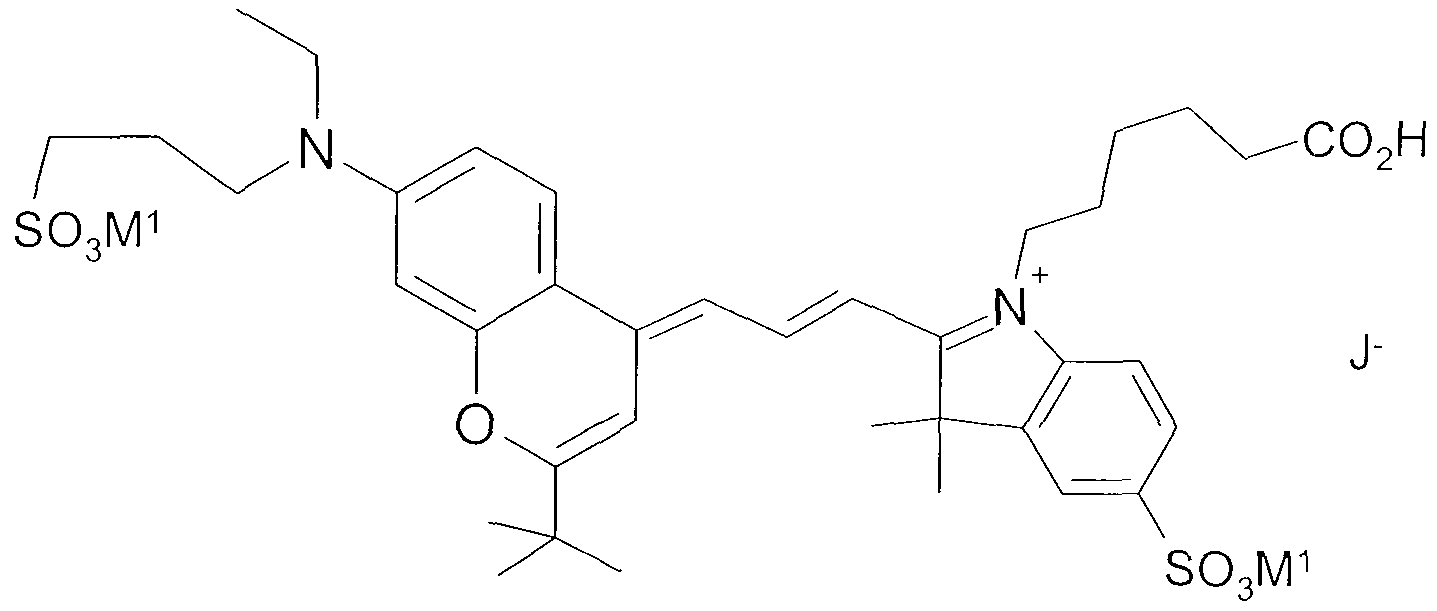
- 0 CC(C)(C=C(C([Au]C)=C(*)c1c2*)Oc1c(*)c(*(*)I)c2O)C(*)=CC(C)(C)C(*1)=*(*)c2c1c(*)c(*)c(*)c2* Chemical compound CC(C)(C=C(C([Au]C)=C(*)c1c2*)Oc1c(*)c(*(*)I)c2O)C(*)=CC(C)(C)C(*1)=*(*)c2c1c(*)c(*)c(*)c2* 0.000 description 1
- FGAZNXDGWGKXDR-UHFFFAOYSA-N CC(COCC(NCCOCCOCCOCCNC)=O)=O Chemical compound CC(COCC(NCCOCCOCCOCCNC)=O)=O FGAZNXDGWGKXDR-UHFFFAOYSA-N 0.000 description 1
- JJOBINHJYJBEEH-SZURMOQGSA-N CC(NC(C1O)C(NC(C[C@@H](C(N)=O)NC)=O)OC(CO)C1O)=O Chemical compound CC(NC(C1O)C(NC(C[C@@H](C(N)=O)NC)=O)OC(CO)C1O)=O JJOBINHJYJBEEH-SZURMOQGSA-N 0.000 description 1
Classifications
-
- G—PHYSICS
- G01—MEASURING; TESTING
- G01N—INVESTIGATING OR ANALYSING MATERIALS BY DETERMINING THEIR CHEMICAL OR PHYSICAL PROPERTIES
- G01N33/00—Investigating or analysing materials by specific methods not covered by groups G01N1/00 - G01N31/00
- G01N33/48—Biological material, e.g. blood, urine; Haemocytometers
- G01N33/50—Chemical analysis of biological material, e.g. blood, urine; Testing involving biospecific ligand binding methods; Immunological testing
- G01N33/53—Immunoassay; Biospecific binding assay; Materials therefor
- G01N33/531—Production of immunochemical test materials
- G01N33/532—Production of labelled immunochemicals
- G01N33/533—Production of labelled immunochemicals with fluorescent label
-
- A—HUMAN NECESSITIES
- A61—MEDICAL OR VETERINARY SCIENCE; HYGIENE
- A61K—PREPARATIONS FOR MEDICAL, DENTAL OR TOILETRY PURPOSES
- A61K47/00—Medicinal preparations characterised by the non-active ingredients used, e.g. carriers or inert additives; Targeting or modifying agents chemically bound to the active ingredient
- A61K47/50—Medicinal preparations characterised by the non-active ingredients used, e.g. carriers or inert additives; Targeting or modifying agents chemically bound to the active ingredient the non-active ingredient being chemically bound to the active ingredient, e.g. polymer-drug conjugates
- A61K47/51—Medicinal preparations characterised by the non-active ingredients used, e.g. carriers or inert additives; Targeting or modifying agents chemically bound to the active ingredient the non-active ingredient being chemically bound to the active ingredient, e.g. polymer-drug conjugates the non-active ingredient being a modifying agent
- A61K47/62—Medicinal preparations characterised by the non-active ingredients used, e.g. carriers or inert additives; Targeting or modifying agents chemically bound to the active ingredient the non-active ingredient being chemically bound to the active ingredient, e.g. polymer-drug conjugates the non-active ingredient being a modifying agent the modifying agent being a protein, peptide or polyamino acid
-
- A—HUMAN NECESSITIES
- A61—MEDICAL OR VETERINARY SCIENCE; HYGIENE
- A61K—PREPARATIONS FOR MEDICAL, DENTAL OR TOILETRY PURPOSES
- A61K49/00—Preparations for testing in vivo
- A61K49/001—Preparation for luminescence or biological staining
- A61K49/0013—Luminescence
- A61K49/0017—Fluorescence in vivo
- A61K49/0019—Fluorescence in vivo characterised by the fluorescent group, e.g. oligomeric, polymeric or dendritic molecules
- A61K49/0021—Fluorescence in vivo characterised by the fluorescent group, e.g. oligomeric, polymeric or dendritic molecules the fluorescent group being a small organic molecule
- A61K49/0032—Methine dyes, e.g. cyanine dyes
-
- A—HUMAN NECESSITIES
- A61—MEDICAL OR VETERINARY SCIENCE; HYGIENE
- A61K—PREPARATIONS FOR MEDICAL, DENTAL OR TOILETRY PURPOSES
- A61K49/00—Preparations for testing in vivo
- A61K49/001—Preparation for luminescence or biological staining
- A61K49/0013—Luminescence
- A61K49/0017—Fluorescence in vivo
- A61K49/005—Fluorescence in vivo characterised by the carrier molecule carrying the fluorescent agent
- A61K49/0056—Peptides, proteins, polyamino acids
-
- C—CHEMISTRY; METALLURGY
- C07—ORGANIC CHEMISTRY
- C07K—PEPTIDES
- C07K14/00—Peptides having more than 20 amino acids; Gastrins; Somatostatins; Melanotropins; Derivatives thereof
- C07K14/435—Peptides having more than 20 amino acids; Gastrins; Somatostatins; Melanotropins; Derivatives thereof from animals; from humans
- C07K14/475—Growth factors; Growth regulators
- C07K14/4753—Hepatocyte growth factor; Scatter factor; Tumor cytotoxic factor II
-
- C—CHEMISTRY; METALLURGY
- C09—DYES; PAINTS; POLISHES; NATURAL RESINS; ADHESIVES; COMPOSITIONS NOT OTHERWISE PROVIDED FOR; APPLICATIONS OF MATERIALS NOT OTHERWISE PROVIDED FOR
- C09B—ORGANIC DYES OR CLOSELY-RELATED COMPOUNDS FOR PRODUCING DYES, e.g. PIGMENTS; MORDANTS; LAKES
- C09B23/00—Methine or polymethine dyes, e.g. cyanine dyes
- C09B23/02—Methine or polymethine dyes, e.g. cyanine dyes the polymethine chain containing an odd number of >CH- or >C[alkyl]- groups
- C09B23/06—Methine or polymethine dyes, e.g. cyanine dyes the polymethine chain containing an odd number of >CH- or >C[alkyl]- groups three >CH- groups, e.g. carbocyanines
-
- A—HUMAN NECESSITIES
- A61—MEDICAL OR VETERINARY SCIENCE; HYGIENE
- A61B—DIAGNOSIS; SURGERY; IDENTIFICATION
- A61B5/00—Measuring for diagnostic purposes; Identification of persons
- A61B5/0059—Measuring for diagnostic purposes; Identification of persons using light, e.g. diagnosis by transillumination, diascopy, fluorescence
- A61B5/0071—Measuring for diagnostic purposes; Identification of persons using light, e.g. diagnosis by transillumination, diascopy, fluorescence by measuring fluorescence emission
-
- A—HUMAN NECESSITIES
- A61—MEDICAL OR VETERINARY SCIENCE; HYGIENE
- A61B—DIAGNOSIS; SURGERY; IDENTIFICATION
- A61B5/00—Measuring for diagnostic purposes; Identification of persons
- A61B5/48—Other medical applications
- A61B5/4842—Monitoring progression or stage of a disease
Definitions
- the piesent invention relates to labelled cMet binding peptides suitable foi optical imaging /// ⁇ ⁇ vo
- the peptides are labelled with an optical reporter group suitable for imaging in the red to near-mfraied region
- Also disclosed are in vivo imaging methods, especially of use in the diagnosis of colorectal cancer (CRC)
- WO 2005/030266 discloses that there is a medical need for early diagnosis of colorectal cancer (CRC)
- WO 2005/030266 discloses optical imaging contrast agents which have affinity for a biological target abnormally expressed in CRC.
- the biological target is selected from COX-2, beta-catcnin, E-cadhe ⁇ n, P-cadhe ⁇ n, various kinases, Hei-2, matrix metalloprotemases (MMPs), cychns, P53, thymidylate synthase, VEGF leceptois, EGF receptors, K-ras, adenomatous polyposis coll protein, cathepsin B, uPAR, cMet, mucins and gastiin receptors Prefe ⁇ ed such targets (p 7 lines 1 1-12) are said to be- cMet, MMP- 14, COX-2, beta-catenm and Cathepsin B
- the vectoi of WO 2005/030266
- Hepatocyte growth factor also known as scatter factor (SF)
- SF scatter factor
- cMet high affinity ieceptor
- WO 2004/078778 discloses polypeptides oi multime ⁇ c peptide constructs which bind cMet oi a complex comprising cMet and HGF Appioximately 10 different structural classes of peptide are desci ibed
- WO 2004/078778 discloses that the peptides can be labelled w ith a detectable label for in utro and /// vivo applications, or with a diug for therapeutic applications
- the detectable label can be an enzyme, fluorescent compound, an optical dye, a paramagnetic metal ion, an ultrasound contiast agent or a iadtonuchde
- Prefe ⁇ ed labels of WO 2004/078778 are stated to be radioactive oi paramagnetic, and most preferably comprise a metal which is chelated by a metal chelatoi
- the present invention piovides imaging agents suitable for in vivo optical imaging, which comprise cMet binding cyclic peptides, and a benzopyiyhum dye suitable for imaging the mammalian body in vivo using light of red to near-infrared wavelength 600- 1200 nm
- the cMet binding cyclic peptides are related to one of the strategicctural classes of peptide of WO 2004/078778, and have optimal binding affinity for cMet These peptides weie derived from phage display and selected by their affinity for cMet and lack of competition with HGF, as described in WO 2004/078778
- the cMet binding peptides of the present invention preferably have at least one of their termini protected by metabolism inhibiting groups (M 10 ) That is an important consideration for in vivo applications, whei e endogenous enzymes and peptidases would otherwise rapidly metabolise the peptide, with consequent loss of cMet binding affinity, and hence loss of selective targeting m vivo.
- the present invention teaches that the best way of using cMet binding peptides foi in vivo imaging of superficial lesions involves the use of an optical reportei, as opposed to othei imaging modalities (eg nuclear, MRI or ultrasound), and also provides prefe ⁇ ed optical imaging reportei s
- the ied to near-infrared region (light of wavelength 600-1200 nm) is preferred, since that region has minimal spectral overlap with endogenous tissues and materials, such as haemoglobin, porphyims, melanin, and collagen [Licha, Topics Cu ⁇ .Chem , 222, 1 -29 (2002)]
- Other important contributors to tissue autofluoiescence are NADH, FAD and elastin Detailed Description of the Invention
- the piesent im ention piovidcs an imaging agent which compi ises a conjugate of Fomiula I
- Z 1 is attached to the N-termmus of cMBP, and is H 01 M IG ,
- Z 7 is attached to the C-temiinus of cMBP and is OH, OB ⁇ 01 M 10 , wheie B c is a biocompatible cation, cMBP is a cMct binding cyclic peptide of 17 to 30 ammo acids which compiises the ammo acid sequence (SEQ-I) wheiein X 1 is Asn, His oi Tyi,
- X " is GIy, Sei , Tm oi Asn, X 4 is Ala, Asp, GIu, GIy oi Sei, , X is Asp oi GIu, and Cys a d aie each cysteine iesidues such that iesidues a and b as well as c and d are cyclised to form two sepaiate disulfide bonds, M IG is a metabolism inhibiting gioup which is a biocompatible gioup which inhibits oi suppi esses in vivo metabolism of the peptide,
- Bzp M is a benzopyrylium dye of Fomiula II:
- Y is a group of Formula Y d or Y
- R' -R 4 and R 9 -R 13 are independently selected from H, -SO 3 M 1 , Hal, R a or C 3- I 2 aryl, where each M 1 is independently H or B c , and B c is a biocompatible cation;
- R 3 is H, C 1 - 4 alkyl, Ci -6 carboxyalkyl, C 3-I 2 arylsulfonyl, Cl, or R ""1 together with one of R 6 , R 14 , R 13 or R 16 may optionally form a 5- or 6- membered unsaturated aliphatic, unsaturated heteroaliphatic or aromatic ring;
- R 6 and R 16 are independently R a groups
- R and R are independently C 1 - 4 alkyl, Ci -4 sulfoalkyl or Ci -6 hydroxyalkyl or optionally together with one or both of R 9 and/or R ! 0 may form a 5- or 6- membered N-containing heterocyclic or heteroaryl ring;
- X is -CR 14 R 15 -, -O-, -S-, -Se-, -NR 16 - or -CH-CH- , where R 14 to R 16 are independently R a groups;
- R a is Ci_ 4 alkyl, Ci -4 sulfoalkyl, Ci_ 6 carboxyalkyl or Cu 1 hydroxyalkyl; w is 1 or 2; J is a biocompatible anion, with the pi oviso that B/p M compiises at least one sulfonic acid substituent chosen fiom the R to R 6 gioups
- imaging agent a compound suitable foi imaging the mammalian body w vn o
- the mammal is a human subject
- the imaging may be invasive (eg mtia-opeiative 01 endoscopy) or non-invasive
- the piefened imaging method is endoscopy Whilst the conjugate of Formula I is suitable foi /// vivo imaging, it may also have in viti o applications (eg assays quantifying cMet m0 biological samples 01 visualisation of cMet m tissue samples) Piefeiably, the imaging agent is used foi in vivo optical imaging
- optical imaging any method that fo ⁇ ns an image foi detection, staging oi diagnosis of disease, follow up of disease development 01 foi follow up of5 disease tieatment based on intet action with light m the ied to neai-mfiaied iegion (wavelength 600- 1200 nm)
- Optical imaging fuithci includes all methods ftom dnect visualization without use of any device and involving use of devices such as vaiious scopes, catheteis and optical imaging equipment, eg computei-assisted haidwaie foi tomogiaphic piesentations
- the modalities and measuiement techniques include, but0 aie not limited to luminescence imaging, endoscopy, fluoiescence endoscopy, optical coheience tomogiaphy, tiansmittance imaging, time lesolved ti ansmittance imaging, confocal imaging, nonhneai macos
- the ied to neai-infiaied iegion light is piefeiably of wavelength 650-1000 nm
- the optical imaging method is picfetably fluoiescence endoscopy
- conjugate is meant that the cMBP and Bzp M dye aie linked by covalent bonds, optionally via the (L) n gioup
- the Z 1 gioup substitutes the amine gioup of the last amino acid iesidue
- Z 1 is H
- the ammo terminus of the cMBP teimmates m a flee NH 2 gioup of the last amino acid iesidue
- the Z " gioup substitutes the caibonyl gioup of the last ammo acid iesidue
- Z " is OH
- the caiboxy teimmus of the cMBP terminates in the fiee CO 2 H gioup of the last amino acid iesidue
- Z is OB 0 that terminal caiboxy gioup is ionised as a CC> 2
- te ⁇ n metabolic inhibiting gioup
- M 10 a biocompatible gioup which inhibits 01 suppi esses /// vivo metabolism of the cMBP peptide at eithei the ammo teimmus (Z 1 ) 01 caiboxy terminus (Z 2 )
- Suitable metabolism inhibiting gioups foi the peptide caiboxyl terminus include caiboxamide, te/ r-butyl estei, benzyl estei, cyclohexyl estei, ammo alcohol 01 a polyethyleneglycol (PEG) building block
- a suitable M i0 gioup foi the caiboxy terminal ammo acid iesidue of the cMBP peptide is wheie the terminal amine of the ammo acid iesidue is N-alkylated with a Ci 4 alkyl gioup, piefetably a methyl gioup Piefened such M 10 gioups aie caiboxamide 01 PEG, most piefened such gioups aie caiboxamide
- Formula I denotes that the (L) n [Bzp M ] moiety can be attached at eithei Z 1 , Z 2 01 cMBP Foi Z 1 01 Z 2 , the (L) n [Bzp M ] moiety may eithei be attached to the M 1G gioup when eithei of Z'/Z 2 is a M 10
- Z 1 is H 01 Z 2 is OH
- attachment of the (L) n [Bzp M ] moiety at the Z 1 01 Z 2 position gives compounds of formulae [Bzp M ]-(L) n -[cMBP]-Z 2 ot Z'-[cMBP]-(L) n -[Bzp M ] lespcctively Inhibition of metabolism of the cMBP at eithei peptide terminus may also be achieved by attachment of the (L) n [Bzp VI ] moiety in this way, but (L) n [Bz
- the -(L) n - moiety of Foimula I may be attached at any suitable position of the Bzp M of Foimula Il
- the (L) n - moiety eithei takes the place of an existing substituent (eg one of the R to R , 16 gioups), 01 is covalently attached to the existing substituent of the Bzp M
- the -(L) n - moiety of Foimula I is piefeiably attached via a caiboxyalkyl substituent of the Bzp M
- cMet binding cyclic peptide a peptide which binds to the hepatocyte giowth factoi (HGF) high affinity leceptoi, also known as cMet (c-Met, Met, Met ieceptoi oi hepatocyte giowth factoi teceptoi)
- HGF hepatocyte giowth factoi
- Suitable cMBP peptides of the piesent invention have an appending K d foi cMet of cMet/HGF complex of less than about 20 nM
- the cMBP peptides compiise pioline lesidues, and it is known that such iesidues can exhibit cis/tians isomeiisation of the backbone amide bond
- the cMBP peptides of the piesent invention include any such isomcis
- biocompatible cation By the teim “biocompatible cation” (B c ) is meant a positively chaiged counteiion which forms a salt with an ionised, negatively chaiged gioup, wheie said positively chaiged counteiion is also non-toxic and hence suitable foi admimstiation to the mammalian body, especially the human body
- suitable biocompatible cations include the alkali metals sodium oi potassium, the alkaline eaith metals calcium and magnesium, and the ammonium ion Piefe ⁇ ed biocompatible cations are sodium and potassium, most piefeiably sodium
- biocompatible anion J
- ammo acid is meant an L- or D- ammo acid, ammo acid analogue (eg naphthylalanine) or ammo acid mimetic which may be naturally occurring or of purely synthetic origin, and may be optically pure, i e a single enantiomer and hence chiral, or a mixture of enantiomers.
- ammo acid analogue eg naphthylalanine
- ammo acid mimetic which may be naturally occurring or of purely synthetic origin, and may be optically pure, i e a single enantiomer and hence chiral, or a mixture of enantiomers.
- Conventional 3-letter or single letter abbreviations for ammo acids are used heiem.
- amino acids of the present invention are optically pure
- as isosteres synthetic analogues of naturally occurring ammo acids which are isosteies, i e have been designed to mimic the steric and electronic structuie of the natural compound
- isosteres are well known to those skilled m the art and include but are not limited to depsipeptides, retro-mverso peptides, thioamides, cycloalkanes or 1 ,5- disubstituted tetrazoles [see M Goodman, Biopolymeis, 24, 137, (1985)]
- peptide is meant a compound comprising two oi more ammo acids, as defined above, linked by a peptide bond (ie an amide bond linking the amine of one ammo acid to the carboxyl of another)
- peptide mimetic refers to biologically active compounds that mimic the biological activity of a peptide oi a protein but are no longer peptidic in chemical nature, that is, they no longer contain any peptide bonds (that is, amide bonds between ammo acids)
- peptide mimetic is used in a broader sense to include molecules that are no longer completely peptidic m nature, such as pseudo-peptides, semi-peptidcs and peptoids
- Suitable imaging agents of the invention are those wherein the Bzp lVI is of Formula Ha or lib
- R 3 togethei with one of R 6 /R l4 -R 16 forms a 5- oi 6- membeied unsatuiated aliphatic, unsaturated heteioaliphatic oi aiomatic ling
- suitable such aiomatic iings include phenyl, fuian, thiazole, pyndyl, py ⁇ ole oi pyiazole ⁇ ngs
- Suitable unsatuiated nngs comp ⁇ se at least the C C to which R ⁇ is attached
- nngs include thiazole, pyndyl, pynole oi pyiazole nngs ot paitially hydiogenated veisions theieof pi efei ably pyndyl oi dihydiopyndyl
- sulfonic acid substituent is meant a substituent of foimula -SChM , wheie M 1 is H oi B c , and B L is a biocompatible cation (as defined above)
- the -SChM 1 , substituent is covalently bonded to a caibon atom, and the caibon atom may be aiyl (ie sulfoaiyl such as when R 1 oi R 2 is -SO 3 M 1 ), 01 alkyl (ie a sulfoalkyl gioup)
- one of the ioles of the hnkei gtoup -(A) m - of Formula I is to distance Bzp M fiom the binding site of the cMBP peptide, to minimise any steiic impairment of intei action with the binding site
- This can be achieved by a combination of flexibility (eg simple alkyl chains), so that the bulky gtoup has the fteedom to position itself away ftom the active site and/01 ngidity such as a cycloalkyl 01 aiyl spacer which onentate the Bzp M away fiom the binding site
- the natuie of the lmkei gioup can also be used to modify the biodistnbution of the imaging agent
- the mtioduction of ethet gioups 111 the hnkei will help to minimise plasma piotein binding
- sugai is meant a mono-, di- ot t ⁇ - sacchaiide Suitable sugais include glucose, galactose, maltose, mannose, and lactose
- the sugai may be functionahsed to permit facile coupling to ammo acids
- a glucosamine denvative of an ammo acid can be conjugated to othei ammo acids via peptide bonds
- the glucosamine denvative of aspaiagme is one example of this
- the moleculai weight of the imaging agent is suitably up to 8000 Daltons Piefeiably, the moleculai weight is in the iange 2800 to 6000 Daltons, most piefeiably 3000 to 0 4500 Daltons, with 3200 to 4000 Daltons being especially piefened
- Piefened imaging agents of the piesent invention have both peptide termini piotected by M IG gioups, ie piefeiably both Z 1 and Z 2 aie M IG , which will usually be diffeient
- eithei of Z'/Z 7 may optionally repiesent -(L) n [Bzp M ] Having both ⁇ peptide termini piotected in this way is impoitant foi in vivo imaging applications, since otherwise iapid metabolism would be expected with consequent loss of selective binding affinity foi cMet
- Z 1 and Z" aie M ICl piefeiably Z 1 is acetyl and Z ?
- Z is a pnmaiy amide
- Z is acetyl and Z is a pnmaiy amide and the (L) n [Bzp M ] moiety is attached to the epsilon amine side chain of a lysine iesidue of cMBP
- Piefeired cMBP peptides of the picsent invention have a K c i foi binding to cMet of less than about 10 nM (based on fluorescence polaiisation assay measuiements), most piefeiably less than 5 nM, with less than 3 nM being the ideal
- Cys d -X l -Cys c -X 2 -Gly-Pio-Pio-X'-Phe-Glu-Cys d -Trp-Cys b -Tyi -X 4 -X'-X 6 of the cMBP of Foimula I is a 17-mei peptide sequence, which is piimanly iesponsible foi the selective binding to cMet
- the iemammg ammo acids can be any ammo acid apait fiom cysteine Additional, unpiotccted cysteine iesidues could cause unwanted sciambling of the defined Cys a -Cys b and Cys L -Cys d disulfide budges
- n Bzp M is functionahsed with a caiboxyl gioup which is conjugated to the epsilon amine side chain of said Lys iesidue to give an amide bond
- Picfe ⁇ ed cMBP peptides compiisc the 22-mei ammo acid sequence (SEQ-3)
- the cMBP peptide piefeiably fuithei compi ises in addition to SEQ- I , SEQ-2 ot SEQ-3, at eithei the N- oi C- terminus a hnkei peptide which is chosen fiom -Gly-Gly-Gly-Lys- (SEQ-4), -Gly-Sei -Gly-Lys- (SEQ-5) oi -Gly-Sei-Gly-Sei-Lys- (SEQ-6)
- the Lys iesidue of the hnkei peptide is a most piefened location foi conjugation of the -(L) ⁇ [Bzp M ] moiety
- Especially pi efen ed cMBP peptides compose SEQ-3 togethei with the hnkei peptide of SEQ-4, having the 26-mei ammo acid sequence (SEQ-7) Ala-Gly-Sei-Cys a -Tyi-Cys c -Sei-Gly-Pio-Pio-Aig-Phe-Glu-Cys d -Tip-Cys b -
- the -(L) n [Bzp vl ] moiety is suitably attached to eithei of the Z 1 oi Z 1 gioups oi an ammo acid iesidue of the cMBP peptide which is diffeient to the cMet binding sequence of SEQ- I Pt efe ⁇ ed ammo acid iesidues and sites of conjugation aie as desciibed above
- the -(L) n [Bzp M ] moiety is attached to Z 1 oi Z 2 , it may take the place of Z 01 Z " by conjugation to the N- or C- terminus, and block in vivo metabolism in that way
- the [Bzp M ]-(L) n - moiety of Foimula I is prefeiably attached at positions R ⁇ R 6 , R 14 , R" oi R 16 of the Bzp M of Foimula II, moie piefeiably at R 6 , R 14 , R 1 " 01 R 1 6 most piefeiably at R 6 , R 14 01 R 1 "
- the lelevant R ⁇ R 6 , R 14 , R 1 "1 oi R 16 substituent is piefeiably Ci 6 caiboxyalkyl, mote piefeiably C ⁇ , caiboxyalkyl
- w is piefeiably 1 R "1 is pi efeiably H 01 Ci 4 caiboxyalkyl, and is most ptefeiably H X is piefeiably -CR 14 R 1 "- 01 -NR 16 - , and is most piefeiably -CR 14 R 1 '-
- R 1 -R 4 and R 6 -R 13 groups of Formulae III, Ilia and IHb are as described above for Formulae Ha and lib.
- Ilia and IHb, R 14 and R 13 are preferably chosen such that one is an R b group and the other is an R c group.
- R b is Ci -2 alkyl, most preferably methyl.
- R c is Ci -4 alkyl, Ci -6 carboxyalkyl or C
- the dyes of Formula III have a Ci -6 carboxyalkyl substituent to permit facile covalent attachment to the cMBP.
- R and/or R together with one or both of R and/or R 10 form a 5- or 6- membered N-containmg heterocyclic or heteroaryl ring
- preferred such rings are pyridyl or dihydropyridyl.
- a preferred such Y 1 group wherein an R 8 group has been cyclised with R 10 is of Formula Y c :
- each E 1 is independently H 01 Ci 4 alkyl
- R P H
- R 12 is CH
- R " is piefeiably CH , ot -C(CHOs, moie piefeiably -C(CHOi
- Especially preferred dyes of Formula III are of Formula HIc, IIId oi IHe
- M 1 is as defined above, i s R 17 and R 18 arc independently chosen from C
- R 19 is H 01 Ci 4 alkyl
- R 20 is Ci-4 alkyl, Ci -4 sulfoalkyl or Ci -6 carboxyalkyl;
- R- " is Ci- 4 alkyl, C 1 - 4 sulfoalkyl or Ci -6 carboxyalkyl;
- E 2 , E' and E 4 are independently H or Ci -4 alkyl.
- the dyes of Formulae IHd, IHe and IHf are preferably chosen such that one or more of R 19 -R " is CM sulfoalkyl.
- Preferred specific dyes of Formula Hid are DY-631 and DY-633:
- a preferred specific dye of Formula Hie is DY-652:
- DY-652 Preferred specific dyes are DY-631 and DY-652, with DY-652 being most preferred.
- L When a synthetic linker group (L) is present, it preferably comprises terminal functional groups which facilitate conjugation to [Bzp ⁇ l J and Z'-[cMBPl-Z 2 .
- L comprises a peptide chain of 1 to 10 amino acid residues, the amino acid residues are preferably chosen from gly cine. l) sine, arginine. aspartic acid, glutamic acid or serine.
- L comprises a PEG moiety, it preferably comprises units derived from oligomerisation of the monodisperse PEG-like structures of Formulae Biol or Bio2:
- p is an integer from 1 to 10.
- a PEG-like structure based on a propionic acid derivative of Formula Bio2 can be used:
- p is as defined for Formula Biol and q is an integer from 3 to 15.
- p is prefeiably 1 or 2
- q is piefeiably 5 to 12
- preferred L gioups have a backbone chain of linked atoms which make up the -(A) 111 - moiety of 2 to 10 > atoms, most preferably 2 to 5 atoms, with 2 oi 3 atoms being especially prefe ⁇ ed
- a minimum lmkei group backbone chain of 2 atoms confeis the advantage that the imaging moiety is well-sepaiated so that any undesiiable interaction is minimised
- n is preferably 0 or 1 , most piefeiably 0, i e no linker group is present0
- n is preferably zero and Bzp M is prefeiably of Formula IUa or IHb, moie preferably of Formula IHc, IHd or HIe, most preferably the specific dyes DY-631 , DY-633 or DY- 652.
- the most preferred specific dye is DY-652
- Peptides of formula Z'-[cMBP]-Z 2 of the present invention may be obtained by a5 method of preparation which comprises"
- the imaging agents can be piepaied as desci ibed in the thud aspect (below) 5
- the piesent invention piovides a pharmaceutical composition which composes the imaging agent of the fust aspect togethei with a biocompatible cai ⁇ ei , in a foim suitable foi mammalian admimstiation 0
- the "biocompatible cai ⁇ ei” is a fluid, especially a liquid, in which the imaging agent can be suspended oi dissolved, such that the composition is physiologically tolei able, ie can be administeied to the mammalian body without toxicity oi undue discomfoit
- the biocompatible ca ⁇ iei is suitably an injectable ca ⁇ iei liquid such as ste ⁇ le, pytogen-fiee watei foi injection, an aqueous solution such as saline (which may advantageously be balanced so that the final pioduct foi injection is isotonic), an aqueous solution of one 01 moie tonicity-adjustmg substances (eg salts of plasma cations w ith bio
- the imaging agents and biocompatible camel aie each supplied in suitable vials oi vessels which compnse a sealed containei which permits maintenance of stenle mtegiity, plus optionally an ineit headspace gas (eg nitiogen oi aigon), whilst peimitting addition and withdiawal of solutions by sy ⁇ nge oi cannula
- a piefe ⁇ ed such contdinei is a septum-sealed vial, wheiein the gas-tight closuie is c ⁇ mped on with an oveiseal (typically of aluminium)
- the closuie is suitable foi single oi multiple punctuimg with a hypodermic needle (e g a ctimpcd-on septum seal closuie) whilst maintaining stenle mtegiity
- Such containei s have the additional advantage that the closuie can withstand vacuum
- the pharmaceutical composition may optionally contain additional cxcipients such as an antimiciobialpapivative, pH-adj listing agent, fillei, stabilise! oi osmolality adjusting agent
- an antimiciobialpapivative an agent which inhibits the giowth of potentially harmful maco-oigamsms such as bactena, yeasts oi moulds
- the antimiciobial pteseivatn e may also exhibit some bactencidal pioperties, depending on the dosage employed
- the mam iole of the antimiciobial pieservative(s) of the picsent invention is to inhibit the giowth of any such maco-oiganism in the phaimaceutical composition
- the antimiciobialiffivative may, however, also optionally be used to inhibit the giowth of potentially harmful maco-oiganisms m one oi moie components of kits used to piepaie said composition pnoi to admmisti
- pH-adjustmg agent means a compound 01 mixtme of compounds useful to ensuie that the pH of the composition is within acceptable limits (appioximately pH
- pH-adjusting agents include pharmaceutically acceptable buffei s, such as tiicme, phosphate oi TRIS
- the pH adjusting agent may optionally be piovided in a sepaiate vial oi containet, so that the usei of the kit can adjust the pH as pait of a multi-step pioceduie
- fillei is meant a pharmaceutically acceptable bulking agent which may facilitate mate ⁇ al handling dm ing pioduction and lyophilisation
- Suitable filleis include moiganic salts such as sodium chlonde, and watei soluble sugais oi sugai alcohols such as suciose, maltose, manmtol oi tiehalose
- compositions of the second aspect may be piepaied undei aseptic manufactuie (ie clean loom) conditions to give the desned stenle, non-pyiogenic pioduct It is piefened that the key components, especially the associated ieagents plus those paits of the appaiatus which come into contact with the imaging agent (eg vials) aie stenle
- the components and ieagents can be ste ⁇ lised by methods known m the ait, including stenle filtiation, terminal stei ihsation using e g gamma-irradiation, autoclavmg, dty heat oi chemical treatment (e g with ethylene oxide) It is piefe ⁇ ed to steiihse some components m advance, so that the minimum numbei of manipulations needs to be earned out As a piccaution, howevei, it is piefened to include at least a stenle filtiation
- the phaimaceutical composition of the second aspect may optionally be piepaied fiom a kit, as desciibed foi the fouith aspect below
- the piesent invention piovides a method of piepaiation of the imaging agent of the fust aspect, which composes one of steps (i) to (iv)
- T 1 is a caiboxyhc acid, activated estei, isothiocyanate oi thiocyanate gioup, I " IS an amine gioup
- activated estei oi "active estei” is meant an estei denvative of the carboxylic acid which is designed to be a better leaving gioup, and hence permit moie facile ieaction with nucleophilc, such as amines
- suitable active esteis are N-hydioxysuccmimide (NHS), pentafluoiophenol, pentafluorothiophenol, para- nitiophenol and hydroxybenzot ⁇ azole
- Preferred active esters are N- hydioxysuccinimide or pentafluorophenol esteis
- J " is pieferably a pnmaiy or secondaiy amine group, most preferably a p ⁇ maiy amine group
- the compound Z'-[cMBP]-Z 2 preferably has both Z 1 and Z 2 equal to M IG Preferred cMBP peptides and Z'/Z 2 groups aie as dcsc ⁇ bed in the first aspect
- the cMBP peptide compiises an Asp, GIu or Lys residue to facilitate conjugation as described fot the pieferred cMBP peptides of the fust aspect It is especially prefe ⁇ ed that the cMBP peptide comprises a Lys residue, as described in step (iv)
- the pieparation of the Z' -[cMBP]-Z 2 is described m the fust embodiment (above)
- the Z'-[cMBP]-Z ⁇ peptide wheie Z' is an active ester can be prepared from Z'-[cMBP]-Z 2 , where Z 2 is OH oi a biocompatible cation (B c ), by conventional methods
- the Bzp 1 suitably compiises a reactive oi functional group (G) gioup which reacts with a complementary group of the cMBP peptide forming a covalent linkage between the dye and the cMBP peptide
- G may be a reactive group (Q a ) that may react with a complementary functional group of the peptide, or alternatively may include a functional group that may react with a reactive group of the cMBP peptide
- reactive and functional groups include active esters, isothiocyanate, malcimide, haloacetamide, acid halide, hydrazide, vmylsulfone, dichlorot ⁇ azme, phosphoiamidite, hydro xyl, ammo, sulfydryl, carbonyl, carboxylic acid and thiophosphate
- Q a reactive gioup
- Q a is prefeiably an active ester
- Benzopyrylium dyes (Bzp M ) functionalised suitable for conjugation to cMBP aie commeicially available fiom Dyomics (Dyomics GmbH, Wmzeilaei Stt 2A, D- 07745 Tena, Germany, w ww dyomics com), wheie the leactive gioup (Q a ) is NHS estei, maleimide, ammo 01 caiboxyhc acid Piecuisois suitable foi the synthesis of benzopyiyhum dyes can also be piepaied as desc ⁇ bed m US 5405976 Methods of i conjugating optical tepoitci dyes, to ammo acids and peptides aie desc ⁇ bed by Licha [Topics Cu ⁇ Chem , 222, 1-29 (2002), Adv Diug Dehv Rev , 57, 1087-1 108 (2005)], as well as Flanagan et al [Bioconj Chem , 8,
- the piesent invention piovides a kit foi the piepaiation of the phaimaceutical composition of the second aspect, which comp ⁇ ses the imaging agent5 of the fiist aspect in stenle, solid form such that, upon ieconstitution with a stenle supply of the biocompatible ca ⁇ iei of the second aspect, dissolution occuis to give the desned pharmaceutical composition
- the imaging agent plus othei optional excipients as desciibed above,0 may be piovided as a lyophilised powdei in a suitable vial or contamei
- the agent is then designed to be ieconstituted with the desned biocompatible camel to the phaimaceutical composition m a stenle, apyiogemc fomi which is ieady foi mammalian admimstiation
- a piefe ⁇ ed stenle, solid fomi of the imaging agent is a lyophilised solid
- the stenle, solid fomi is piefeiably supplied m a phaimaceutical ⁇ giade contamei, as desciibed foi the pharmaceutical composition (above)
- the foimulation may optionally comp ⁇ se a cryoptotectant chosen fiom a saccha ⁇ de, piefeiably niannitol, maltose
- the piesent invention piovides a method of //; vivo optical imaging of the mammalian body which comp ⁇ ses use of eithei the imaging agent of the fust aspect ot the pharmaceutical composition of the second aspect to obtain images of sites of cMet ovei-expiession oi localisation ;// vivo
- optical imaging has the same meaning as foi the fust aspect (abo ⁇ c)
- the mammalian body of the fifth aspect is piefetably the human body Piefe ⁇ ed embodiments of the imaging agent aie as desciibed foi the fust aspect (above)
- the imaging agent oi pharmaceutical composition has piefei ably been pieviously admimsteied to said mammalian body
- picviously administeied is meant that the step involving the clinician, wheiein the imaging agent is given to the patient eg as an mtiavenous injection, has aheady been earned out p ⁇ oi to imaging
- This embodiment includes the use of the imaging agent of the fust embodiment foi the manufactuie of a diagnostic agent foi optical imaging in ⁇ n o of disease states of the mammalian body wheie cMet is implicated
- a piefe ⁇ ed optical imaging method of the fifth aspect is Fluoiescence Reflectance Imaging (FRI)
- FRI Fluoiescence Reflectance Imaging
- the imaging agent of the piesent invention is admimsteied to a subject to be diagnosed, and subsequently a tissue sui face of the subject is illuminated w ith an excitation light - usually continuous w a ⁇ e (CVV) excitation
- the light excites the dye (Bzp 1 )
- the ietuming light is piefeiably filteicd to sepaiate out the fluoiescence component (solely oi paitiallv)
- An image is formed fiom the fluoiescent light Usually minimal piocessmg is pei formed (no piocessoi to compute optical paiameteis such as lifetime, quantum yield etc ) and the image
- the appaiatus foi genei ating the excitation light may be a conventional excitation light souice such as a lasei (e g , ion lasei, dye lasei oi semiconductoi lasei ), halogen light souice oi xenon light souice Vai ious optical filteis may optionally be used to obtain the optimal excitation wa ⁇ elength
- a piefened FRI method compiises the steps as follows (l) a tissue sui face of inteiest within the mammalian body is illuminated with an excitation light,
- fluoiescence fiom the imaging agent, which is gcneiated by excitation of the dye (Bzp M ), is detected using a fluoiescence detectoi, 5 (in) the light detected by the fluoiescence detectoi is optionally filteied to sepaiate out the fluoiescence component,
- step (i) the excitation light is piefeiably continuous wave (CW) m natuie
- step 10 (in) the light detected is piefeiably filteied
- An especially piefei icd FRI method is fluoiescence endoscopy
- An alternative imaging method of the fifth aspect uses FDPM (fiequency-domam photon migiation) This has advantages ovei continuous-w ave (CW) methods wheic
- the FDPM method is as follows
- step (d) genei atmg an image of the tissue by mapping the heteiogeneous composition of the tissue in accoi dance with the values of step (c)
- the fluoiescence characteristic of step (c) piefeiably co ⁇ esponds to uptake of the imaging agent and piefeiably fuithei compiises mapping a numbei of quantities co ⁇ esponding to adsotption and scatteiing coefficients of the tissue befote administi ation of the imaging agent
- the fluoiescence chaiactenstic is piefeiably independent of the intensity of the emission and independent of imaging agent concentiation
- step (c) piefeiably compiises (i) establishing an estimate of the
- the optical imaging of the fifth aspect is piefeiably used to help facilitate the 0 management of coloiectal cancel (CRC)
- CRC coloiectal cancel
- the piesent invention piovides a method of detection, staging, diagnosis, momtoimg of disease progression or m the momtoimg of tieatment of coloiectal cancel (CRC) of the mammalian body which compiises the in vivo optical imaging method of the fifth aspect 0
- Example 1 piovides the synthesis of a biological taigetmg peptide (Peptide 1 ), which binds to cMct
- Example 2 piovides methods of conjugating Bzp M dyes of the invention to peptides, m paiticulai Peptide 1
- Example 3 piovides data demonstiating that the peptide conjugates of Peptide 1 of the invention tetam affinity foi cMet, i e that the conjugated dye does not inteifeie with the biological binding and selectivity Appiopnate low binding to human seium albumin and high stability m plasma was demonstiated
- Example 4 shows that the peptide conjugates of the invention exhibit useful turnout backgiound iatios in an animal model of coloiectal cancel
- Example 5 desc ⁇ bes the use of pasictive softwaie foi the dyes of the invention, and demonstiates that the dyes of the invention lack potentially d
- R d is -(C H,) SO 3 H
- R c is -(CII,),CO->H
- R 1 is -(CH ⁇ COH
- the piecuisoi hneai peptide has the sequence
- the lmeai piecuisoi fiom step (a) (100 mg) was dissolved in 5 % DMSO/watei (200 mL) and the solution adjusted to pH 6 using ammonia The ieaction mixtuie was stiiied foi 5 days The solution was then adjusted to pH 2 using TFA and most of the solvent lemoved by evapoiation in vacuo The tesidue (40 niL) was injected in poitions onto a ptepaiative HPLC column foi pioduct memeification
- the monocyclic piecuisoi fiom step (b) (72 mg) was dissolved in 75 % AcOH/watei (72 HiL) undei a blanket of nitiogen 1 M HCl (7 2 mL) and 0 05 M I?
- Example 3 In Vitro Fluorescence polarisation assay.
- Fluoiescence polansation assay was used to examine the affinity binding of the imaging agent towaids the cMet taiget as well as the binding piopeities ielated to 2 1 ) plasma pioteins
- the pimciple of the fluoiescence polansation method can biiefly be desciibed as follows
- Monochiomatic light passes thiough a honzontal polanzmg filtei and excites fluoiescent molecules m the sample Only those molecules that onented piopeily in the vertically polarized plane adsorb light, become excited, and subsequently emit light. The emitted light is measured in both horizontal and vertical planes.
- the anisotrop) value (A) is the ratio between the light intensities following the equation
- A Intensity with horizontal polarizer - Intensity with vertical polarizer Intensity with horizontal polarizer + 2* Intensity with vertical polarizer
- the fluorescence anisotropy measurements were performed in 384-well microplates in a volume of 10 ⁇ L in binding buffer (PBS, 0.01%Tween-20. pll 7.5) using a Tecan Safire fluorescence polarisation plate reader (Tecan , US) at Ex 635/Em 678 nm.
- the concentration of dye-labelled peptide was held constant (5nM) and the concentration of the human c-Met/ Fc chimera (R&D Systems) was varied from 0-250 nM. Binding mixtures were equilibrated in the microplate for 10 min at 30 0 C. The observed change in anisotropy was fit to the equation
- the change of the polarization value was used to assess the binding of the Compound to human serum albumin as a low change of polarisation value is associated to low binding being appropriate for in-vivo use.
- the plasma protein binding (PPB) was confirmed with Biacore measurements.
- the stability of the imaging agent in plasma was confirmed by measuring the amount of the Compound left after incubation in mouse plasma for 2 hours at 37°C. ⁇ ,5
- Example 4 /// Vivo testing of Compounds 2 to 6.
- mice Female BALB c/A nude (Bom) mice weie used in the study The use of the animals was appiovcd by the local ethics committee
- BALB c/A nude is an inbied immunocompiomised mouse stiam with a high take tate foi human tumouis as compaied to othei nude mice stiams
- the mice weie 8 weeks old upon aiiival and with a body weight of appiox 20 giams at the stait of the study
- the animals weie housed in individually ventilated cages (IVC, Scanbui BK) with HEPA filteied an
- the animals had ad libitum access to "Rat and Mouse ni 3 Bleeding" diet (Scanbui BK) and tap watei acidified by addition of HCl to a molai concentiation of 1 niM (pH 3 0)
- the colon cancel cell HT-29 is denved fiom human colon caicinomas and is repotted to expiess c-Met accoiding to Zeng et al [CIm Exp Metastasis, 21_, 409-417 (2004)]
- the cell line was pi oven to be tumo ⁇ genic when inoculated subcutaneously into nude mice [Flatmaik et al, Em J Cancel 40,1593-1598 (2004)]
- Imaging was peifoimed thiough a clinical lapaioscope adapted to use a light souice to excite the ieportei and a filteiing system to extiact the fluoiescence component
- a 635nm lasei was used foi excitation of the iepoitet molecule
- a Hamamatsu ORCA ERG CCD cameia was used as the detectoi
- the cameia was opeiated in 2x2 binning mode with 0 gam Standaid exposuie time foi colon imaging was 4s
- the intensity distiibution in the image was collected foi illumination inhomogeneities thiough system calibiation data
- a taiget to backgiound tatio was computed fiom legions of mteiest placed ovei the exposed tumoui and nomial muscle backgiound
- test Compounds had the following aveiage tumoui muscle tatios (Table 5)
Landscapes
- Health & Medical Sciences (AREA)
- Life Sciences & Earth Sciences (AREA)
- Chemical & Material Sciences (AREA)
- Engineering & Computer Science (AREA)
- Immunology (AREA)
- General Health & Medical Sciences (AREA)
- Biomedical Technology (AREA)
- Veterinary Medicine (AREA)
- Animal Behavior & Ethology (AREA)
- Molecular Biology (AREA)
- Epidemiology (AREA)
- Public Health (AREA)
- Proteomics, Peptides & Aminoacids (AREA)
- Medicinal Chemistry (AREA)
- Organic Chemistry (AREA)
- Biochemistry (AREA)
- Urology & Nephrology (AREA)
- Gastroenterology & Hepatology (AREA)
- Hematology (AREA)
- Food Science & Technology (AREA)
- Cell Biology (AREA)
- Bioinformatics & Cheminformatics (AREA)
- Pharmacology & Pharmacy (AREA)
- Pathology (AREA)
- Microbiology (AREA)
- General Physics & Mathematics (AREA)
- Analytical Chemistry (AREA)
- Biotechnology (AREA)
- Physics & Mathematics (AREA)
- Toxicology (AREA)
- Zoology (AREA)
- Biophysics (AREA)
- Genetics & Genomics (AREA)
- Medicines Containing Antibodies Or Antigens For Use As Internal Diagnostic Agents (AREA)
- Peptides Or Proteins (AREA)
Abstract
Description







Claims


Priority Applications (4)
| Application Number | Priority Date | Filing Date | Title |
|---|---|---|---|
| JP2010518651A JP2010534711A (en) | 2007-07-31 | 2008-07-29 | Peptide imaging agent |
| US12/671,076 US8431111B2 (en) | 2007-07-31 | 2008-07-29 | Peptide imaging agents |
| EP08786577A EP2190930A2 (en) | 2007-07-31 | 2008-07-29 | Peptide imaging agents |
| CN2008801093701A CN101939384A (en) | 2007-07-31 | 2008-07-29 | peptide imaging agent |
Applications Claiming Priority (6)
| Application Number | Priority Date | Filing Date | Title |
|---|---|---|---|
| PCT/GB2007/002907 WO2008015415A2 (en) | 2006-07-31 | 2007-07-31 | Asymmetric fluoro-substituted polymethine dyes |
| GBPCT/GB2007/002907 | 2007-07-31 | ||
| GB0718967.3 | 2007-09-28 | ||
| GBGB0718967.3A GB0718967D0 (en) | 2007-09-28 | 2007-09-28 | Peptide imaging agents |
| US97681807P | 2007-10-02 | 2007-10-02 | |
| US60/976,818 | 2007-10-02 |
Publications (2)
| Publication Number | Publication Date |
|---|---|
| WO2009016180A2 true WO2009016180A2 (en) | 2009-02-05 |
| WO2009016180A3 WO2009016180A3 (en) | 2010-02-04 |
Family
ID=38701842
Family Applications (1)
| Application Number | Title | Priority Date | Filing Date |
|---|---|---|---|
| PCT/EP2008/059941 Ceased WO2009016180A2 (en) | 2007-07-31 | 2008-07-29 | Peptide imaging agents |
Country Status (6)
| Country | Link |
|---|---|
| US (1) | US8431111B2 (en) |
| EP (1) | EP2190930A2 (en) |
| JP (1) | JP2010534711A (en) |
| CN (1) | CN101939384A (en) |
| GB (1) | GB0718967D0 (en) |
| WO (1) | WO2009016180A2 (en) |
Cited By (14)
| Publication number | Priority date | Publication date | Assignee | Title |
|---|---|---|---|---|
| WO2012022676A1 (en) | 2010-08-18 | 2012-02-23 | Ge Healthcare Limited | Peptide radiotracer compositions |
| WO2012087725A1 (en) * | 2010-12-21 | 2012-06-28 | Ge Healthcare Limited | Use of aniline iν the radiostabilization of oxime ligation |
| WO2012119937A1 (en) | 2011-03-04 | 2012-09-13 | Ge Healthcare Limited | Technetium labelled peptides |
| WO2013045650A3 (en) * | 2011-09-30 | 2013-05-23 | Ge Healthcare As | Infusion imaging method |
| WO2013092742A1 (en) | 2011-12-20 | 2013-06-27 | Ge Healthcare Limited | Method for patient selection |
| US8889884B1 (en) | 2011-07-14 | 2014-11-18 | Pierce Biotechnology, Inc. | Phosphine derivatives of fluorescent compounds |
| US20150322078A1 (en) * | 2012-08-28 | 2015-11-12 | Dyomics Gmbh | Benzopyrylium compounds |
| US9249307B2 (en) | 2011-08-16 | 2016-02-02 | Pierce Biotechnology, Inc. | Benzocyanine compounds |
| US9751868B2 (en) | 2012-02-28 | 2017-09-05 | Pierce Biotechnology, Inc. | Benzocyanine compounds |
| US10000467B2 (en) | 2012-03-02 | 2018-06-19 | Pierce Biotechnology, Inc. | Cyanine compounds |
| US10053447B2 (en) | 2010-12-21 | 2018-08-21 | Pierce Biotechnology, Inc | Fluorescent compounds |
| US10300156B2 (en) | 2013-12-18 | 2019-05-28 | Ge Healthcare Limited | Radiotracer compositions and methods |
| US10548995B2 (en) | 2013-08-21 | 2020-02-04 | Ge Healthcare Limited | Radiolabelling method |
| US10905783B2 (en) | 2015-11-27 | 2021-02-02 | Michal RIVLIN | Glucosamine and derivatives thereof in imaging |
Families Citing this family (5)
| Publication number | Priority date | Publication date | Assignee | Title |
|---|---|---|---|---|
| GB0718957D0 (en) * | 2007-09-28 | 2007-11-07 | Ge Healthcare Ltd | Optical imaging agents |
| EP3468984A4 (en) | 2016-06-13 | 2020-03-11 | The Regents of the University of California | Alpha(v)beta(6) integrin-binding peptides and methods of use thereof |
| CN113939740A (en) * | 2019-01-03 | 2022-01-14 | 离子路径公司 | Compositions and reagents for ion beam imaging |
| CN113178556B (en) * | 2021-04-23 | 2022-07-15 | 中国科学技术大学 | A Mo2C@MoS2 heterojunction and its preparation method and application |
| CN116393690A (en) * | 2023-03-08 | 2023-07-07 | 江苏科技大学 | Silver nanoparticles modified by ZW800-1 and its application in the preparation of products and methods for diagnosing kidney injury |
Family Cites Families (13)
| Publication number | Priority date | Publication date | Assignee | Title |
|---|---|---|---|---|
| EP1283855B1 (en) * | 2000-05-23 | 2005-11-02 | Dyomics GmbH | Stable near-infrared (nir) marker dyes based on benzopyrylium-polymethines |
| DE10038237A1 (en) * | 2000-08-04 | 2002-02-14 | Aventis Res & Tech Gmbh & Co | Procedure for the detection of mutations in nucleotide sequences |
| DE10258150A1 (en) * | 2002-12-10 | 2004-07-08 | Dyomics Gmbh | Hydrophilic markers based on benzopyrylo-polymethines |
| ES2396368T3 (en) | 2003-03-03 | 2013-02-21 | Dyax Corporation | Peptides that specifically bind to the HGF receptor (CMET) and uses thereof |
| NO20034350D0 (en) * | 2003-09-29 | 2003-09-29 | Amersham Health As | Optical imaging of colorectal cancer |
| RU2393167C2 (en) * | 2004-06-16 | 2010-06-27 | Джи-И Хелткер АС | Peptide compounds |
| EP1796733A2 (en) * | 2004-09-29 | 2007-06-20 | GE Healthcare AS | Urokinase plasminogen activator receptor targeted contrast agents |
| EP1674478A1 (en) * | 2004-12-22 | 2006-06-28 | GSF-Forschungszentrum für Umwelt und Gesundheit GmbH | Fusion proteins and method for determining protein-protein-interactions in living cells and cell lysates, nucleic acids encoding these fusion proteins, as well as vectors and kits containing these |
| WO2007074722A1 (en) * | 2005-12-27 | 2007-07-05 | The Furukawa Electric Co., Ltd. | Fluorescent silica nano-particle, fluorescent nano-material, biochip using the material, and assay method |
| GB0615211D0 (en) | 2006-07-31 | 2006-09-06 | Ge Healthcare Uk Ltd | Asymmetric flouro-substituted polymethine dyes |
| ATE551073T1 (en) | 2007-05-16 | 2012-04-15 | Ge Healthcare As | LABELED HGF-BINDING PEPTIDES FOR IMAGING |
| GB0718957D0 (en) * | 2007-09-28 | 2007-11-07 | Ge Healthcare Ltd | Optical imaging agents |
| PL2187965T3 (en) | 2007-08-17 | 2020-05-18 | Purdue Research Foundation | Psma binding ligand-linker conjugates and methods for using |
-
2007
- 2007-09-28 GB GBGB0718967.3A patent/GB0718967D0/en not_active Ceased
-
2008
- 2008-07-29 JP JP2010518651A patent/JP2010534711A/en active Pending
- 2008-07-29 CN CN2008801093701A patent/CN101939384A/en active Pending
- 2008-07-29 WO PCT/EP2008/059941 patent/WO2009016180A2/en not_active Ceased
- 2008-07-29 EP EP08786577A patent/EP2190930A2/en not_active Withdrawn
- 2008-07-29 US US12/671,076 patent/US8431111B2/en not_active Expired - Fee Related
Cited By (29)
| Publication number | Priority date | Publication date | Assignee | Title |
|---|---|---|---|---|
| RU2594167C2 (en) * | 2010-08-18 | 2016-08-10 | ДжиИ ХЕЛТКЕР ЛИМИТЕД | Peptide composition of radioactive indicators |
| JP2013540702A (en) * | 2010-08-18 | 2013-11-07 | ジーイー・ヘルスケア・リミテッド | Peptide radiotracer composition |
| WO2012022676A1 (en) | 2010-08-18 | 2012-02-23 | Ge Healthcare Limited | Peptide radiotracer compositions |
| US9533059B2 (en) | 2010-08-18 | 2017-01-03 | Ge Healthcare Limited | Peptide radiotracer compositions |
| WO2012087725A1 (en) * | 2010-12-21 | 2012-06-28 | Ge Healthcare Limited | Use of aniline iν the radiostabilization of oxime ligation |
| US10351551B2 (en) | 2010-12-21 | 2019-07-16 | Pierce Biotechnology, Inc. | Fluorescent compounds |
| US10053447B2 (en) | 2010-12-21 | 2018-08-21 | Pierce Biotechnology, Inc | Fluorescent compounds |
| US11053222B2 (en) | 2010-12-21 | 2021-07-06 | Pierce Biotechnology, Inc. | Fluorescent compounds |
| US9567372B2 (en) | 2010-12-21 | 2017-02-14 | Ge Healthcare Limited | Use of aniline in the radiostabilization of oxime ligation |
| WO2012119937A1 (en) | 2011-03-04 | 2012-09-13 | Ge Healthcare Limited | Technetium labelled peptides |
| US9259496B2 (en) | 2011-03-04 | 2016-02-16 | Ge Healthcare Limited | Technetium labelled peptides |
| US9365598B2 (en) | 2011-07-14 | 2016-06-14 | Pierce Biotechnology, Inc. | Phosphine derivatives of fluorescent compounds |
| US8889884B1 (en) | 2011-07-14 | 2014-11-18 | Pierce Biotechnology, Inc. | Phosphine derivatives of fluorescent compounds |
| US9249307B2 (en) | 2011-08-16 | 2016-02-02 | Pierce Biotechnology, Inc. | Benzocyanine compounds |
| US10125120B2 (en) | 2011-08-16 | 2018-11-13 | Pierce Biotechnology, Inc. | Benzocyanine compounds |
| US10730857B2 (en) | 2011-08-16 | 2020-08-04 | Pierce Biotechnology, Inc. | Benzocyanine compounds |
| WO2013045650A3 (en) * | 2011-09-30 | 2013-05-23 | Ge Healthcare As | Infusion imaging method |
| WO2013092742A1 (en) | 2011-12-20 | 2013-06-27 | Ge Healthcare Limited | Method for patient selection |
| US10526317B2 (en) | 2012-02-28 | 2020-01-07 | Pierce Biotechnology, Inc. | Benzocyanine compounds |
| US9751868B2 (en) | 2012-02-28 | 2017-09-05 | Pierce Biotechnology, Inc. | Benzocyanine compounds |
| US10000467B2 (en) | 2012-03-02 | 2018-06-19 | Pierce Biotechnology, Inc. | Cyanine compounds |
| US10696653B2 (en) | 2012-03-02 | 2020-06-30 | Pierce Biotechnology, Inc. | Cyanine compounds |
| US20150322078A1 (en) * | 2012-08-28 | 2015-11-12 | Dyomics Gmbh | Benzopyrylium compounds |
| US10174045B2 (en) | 2012-08-28 | 2019-01-08 | Pierce Biotechnology, Inc. | Benzopyrylium compounds |
| US9676787B2 (en) | 2012-08-28 | 2017-06-13 | Pierce Biotechnology, Inc. | Benzopyrylium compounds |
| US10548995B2 (en) | 2013-08-21 | 2020-02-04 | Ge Healthcare Limited | Radiolabelling method |
| US10300156B2 (en) | 2013-12-18 | 2019-05-28 | Ge Healthcare Limited | Radiotracer compositions and methods |
| US11311636B2 (en) | 2013-12-18 | 2022-04-26 | Ge Healthcare Limited | Radiotracer compositions and methods |
| US10905783B2 (en) | 2015-11-27 | 2021-02-02 | Michal RIVLIN | Glucosamine and derivatives thereof in imaging |
Also Published As
| Publication number | Publication date |
|---|---|
| CN101939384A (en) | 2011-01-05 |
| GB0718967D0 (en) | 2007-11-07 |
| US20100178253A1 (en) | 2010-07-15 |
| JP2010534711A (en) | 2010-11-11 |
| EP2190930A2 (en) | 2010-06-02 |
| WO2009016180A3 (en) | 2010-02-04 |
| US8431111B2 (en) | 2013-04-30 |
Similar Documents
| Publication | Publication Date | Title |
|---|---|---|
| WO2009016180A2 (en) | Peptide imaging agents | |
| EP2146749B1 (en) | Labelled hgf binding peptides for imaging | |
| US20100196282A1 (en) | Optical imaging agents | |
| AU2019246196B2 (en) | Formulation and method of preparation | |
| US20110268660A1 (en) | Method for detecting dysplasia | |
| RU2802481C2 (en) | Composition for optical visualization, method of its production and use | |
| HK1148476A (en) | Labelled hgf binding peptides for imaging | |
| HK40047564A (en) | Formulation and method of preparation | |
| WO2013045650A2 (en) | Infusion imaging method |
Legal Events
| Date | Code | Title | Description |
|---|---|---|---|
| WWE | Wipo information: entry into national phase |
Ref document number: 200880109370.1 Country of ref document: CN |
|
| 121 | Ep: the epo has been informed by wipo that ep was designated in this application |
Ref document number: 08786577 Country of ref document: EP Kind code of ref document: A2 |
|
| WWE | Wipo information: entry into national phase |
Ref document number: 2010518651 Country of ref document: JP |
|
| WWE | Wipo information: entry into national phase |
Ref document number: 2008786577 Country of ref document: EP |
|
| NENP | Non-entry into the national phase |
Ref country code: DE |
|
| WWE | Wipo information: entry into national phase |
Ref document number: 12671076 Country of ref document: US |