WO2009079910A1 - Dérivé de peptide mimétique d'érythropoïétine et son sel pharmaceutique, préparation et utilisations - Google Patents
Dérivé de peptide mimétique d'érythropoïétine et son sel pharmaceutique, préparation et utilisations Download PDFInfo
- Publication number
- WO2009079910A1 WO2009079910A1 PCT/CN2008/001909 CN2008001909W WO2009079910A1 WO 2009079910 A1 WO2009079910 A1 WO 2009079910A1 CN 2008001909 W CN2008001909 W CN 2008001909W WO 2009079910 A1 WO2009079910 A1 WO 2009079910A1
- Authority
- WO
- WIPO (PCT)
- Prior art keywords
- seq
- erythropoietin
- ala
- nhr
- epo
- Prior art date
- Legal status (The legal status is an assumption and is not a legal conclusion. Google has not performed a legal analysis and makes no representation as to the accuracy of the status listed.)
- Ceased
Links
Classifications
-
- C—CHEMISTRY; METALLURGY
- C07—ORGANIC CHEMISTRY
- C07K—PEPTIDES
- C07K14/00—Peptides having more than 20 amino acids; Gastrins; Somatostatins; Melanotropins; Derivatives thereof
- C07K14/435—Peptides having more than 20 amino acids; Gastrins; Somatostatins; Melanotropins; Derivatives thereof from animals; from humans
- C07K14/475—Growth factors; Growth regulators
- C07K14/505—Erythropoietin [EPO]
-
- A—HUMAN NECESSITIES
- A61—MEDICAL OR VETERINARY SCIENCE; HYGIENE
- A61K—PREPARATIONS FOR MEDICAL, DENTAL OR TOILETRY PURPOSES
- A61K47/00—Medicinal preparations characterised by the non-active ingredients used, e.g. carriers or inert additives; Targeting or modifying agents chemically bound to the active ingredient
- A61K47/50—Medicinal preparations characterised by the non-active ingredients used, e.g. carriers or inert additives; Targeting or modifying agents chemically bound to the active ingredient the non-active ingredient being chemically bound to the active ingredient, e.g. polymer-drug conjugates
-
- A—HUMAN NECESSITIES
- A61—MEDICAL OR VETERINARY SCIENCE; HYGIENE
- A61K—PREPARATIONS FOR MEDICAL, DENTAL OR TOILETRY PURPOSES
- A61K47/00—Medicinal preparations characterised by the non-active ingredients used, e.g. carriers or inert additives; Targeting or modifying agents chemically bound to the active ingredient
- A61K47/50—Medicinal preparations characterised by the non-active ingredients used, e.g. carriers or inert additives; Targeting or modifying agents chemically bound to the active ingredient the non-active ingredient being chemically bound to the active ingredient, e.g. polymer-drug conjugates
- A61K47/51—Medicinal preparations characterised by the non-active ingredients used, e.g. carriers or inert additives; Targeting or modifying agents chemically bound to the active ingredient the non-active ingredient being chemically bound to the active ingredient, e.g. polymer-drug conjugates the non-active ingredient being a modifying agent
- A61K47/54—Medicinal preparations characterised by the non-active ingredients used, e.g. carriers or inert additives; Targeting or modifying agents chemically bound to the active ingredient the non-active ingredient being chemically bound to the active ingredient, e.g. polymer-drug conjugates the non-active ingredient being a modifying agent the modifying agent being an organic compound
- A61K47/55—Medicinal preparations characterised by the non-active ingredients used, e.g. carriers or inert additives; Targeting or modifying agents chemically bound to the active ingredient the non-active ingredient being chemically bound to the active ingredient, e.g. polymer-drug conjugates the non-active ingredient being a modifying agent the modifying agent being an organic compound the modifying agent being also a pharmacologically or therapeutically active agent, i.e. the entire conjugate being a codrug
-
- A—HUMAN NECESSITIES
- A61—MEDICAL OR VETERINARY SCIENCE; HYGIENE
- A61K—PREPARATIONS FOR MEDICAL, DENTAL OR TOILETRY PURPOSES
- A61K47/00—Medicinal preparations characterised by the non-active ingredients used, e.g. carriers or inert additives; Targeting or modifying agents chemically bound to the active ingredient
- A61K47/50—Medicinal preparations characterised by the non-active ingredients used, e.g. carriers or inert additives; Targeting or modifying agents chemically bound to the active ingredient the non-active ingredient being chemically bound to the active ingredient, e.g. polymer-drug conjugates
- A61K47/51—Medicinal preparations characterised by the non-active ingredients used, e.g. carriers or inert additives; Targeting or modifying agents chemically bound to the active ingredient the non-active ingredient being chemically bound to the active ingredient, e.g. polymer-drug conjugates the non-active ingredient being a modifying agent
- A61K47/56—Medicinal preparations characterised by the non-active ingredients used, e.g. carriers or inert additives; Targeting or modifying agents chemically bound to the active ingredient the non-active ingredient being chemically bound to the active ingredient, e.g. polymer-drug conjugates the non-active ingredient being a modifying agent the modifying agent being an organic macromolecular compound, e.g. an oligomeric, polymeric or dendrimeric molecule
- A61K47/59—Medicinal preparations characterised by the non-active ingredients used, e.g. carriers or inert additives; Targeting or modifying agents chemically bound to the active ingredient the non-active ingredient being chemically bound to the active ingredient, e.g. polymer-drug conjugates the non-active ingredient being a modifying agent the modifying agent being an organic macromolecular compound, e.g. an oligomeric, polymeric or dendrimeric molecule obtained otherwise than by reactions only involving carbon-to-carbon unsaturated bonds, e.g. polyureas or polyurethanes
- A61K47/60—Medicinal preparations characterised by the non-active ingredients used, e.g. carriers or inert additives; Targeting or modifying agents chemically bound to the active ingredient the non-active ingredient being chemically bound to the active ingredient, e.g. polymer-drug conjugates the non-active ingredient being a modifying agent the modifying agent being an organic macromolecular compound, e.g. an oligomeric, polymeric or dendrimeric molecule obtained otherwise than by reactions only involving carbon-to-carbon unsaturated bonds, e.g. polyureas or polyurethanes the organic macromolecular compound being a polyoxyalkylene oligomer, polymer or dendrimer, e.g. PEG, PPG, PEO or polyglycerol
-
- A—HUMAN NECESSITIES
- A61—MEDICAL OR VETERINARY SCIENCE; HYGIENE
- A61P—SPECIFIC THERAPEUTIC ACTIVITY OF CHEMICAL COMPOUNDS OR MEDICINAL PREPARATIONS
- A61P11/00—Drugs for disorders of the respiratory system
-
- A—HUMAN NECESSITIES
- A61—MEDICAL OR VETERINARY SCIENCE; HYGIENE
- A61P—SPECIFIC THERAPEUTIC ACTIVITY OF CHEMICAL COMPOUNDS OR MEDICINAL PREPARATIONS
- A61P13/00—Drugs for disorders of the urinary system
- A61P13/12—Drugs for disorders of the urinary system of the kidneys
-
- A—HUMAN NECESSITIES
- A61—MEDICAL OR VETERINARY SCIENCE; HYGIENE
- A61P—SPECIFIC THERAPEUTIC ACTIVITY OF CHEMICAL COMPOUNDS OR MEDICINAL PREPARATIONS
- A61P25/00—Drugs for disorders of the nervous system
-
- A—HUMAN NECESSITIES
- A61—MEDICAL OR VETERINARY SCIENCE; HYGIENE
- A61P—SPECIFIC THERAPEUTIC ACTIVITY OF CHEMICAL COMPOUNDS OR MEDICINAL PREPARATIONS
- A61P31/00—Antiinfectives, i.e. antibiotics, antiseptics, chemotherapeutics
- A61P31/12—Antivirals
- A61P31/14—Antivirals for RNA viruses
- A61P31/18—Antivirals for RNA viruses for HIV
-
- A—HUMAN NECESSITIES
- A61—MEDICAL OR VETERINARY SCIENCE; HYGIENE
- A61P—SPECIFIC THERAPEUTIC ACTIVITY OF CHEMICAL COMPOUNDS OR MEDICINAL PREPARATIONS
- A61P35/00—Antineoplastic agents
-
- A—HUMAN NECESSITIES
- A61—MEDICAL OR VETERINARY SCIENCE; HYGIENE
- A61P—SPECIFIC THERAPEUTIC ACTIVITY OF CHEMICAL COMPOUNDS OR MEDICINAL PREPARATIONS
- A61P37/00—Drugs for immunological or allergic disorders
- A61P37/02—Immunomodulators
-
- A—HUMAN NECESSITIES
- A61—MEDICAL OR VETERINARY SCIENCE; HYGIENE
- A61P—SPECIFIC THERAPEUTIC ACTIVITY OF CHEMICAL COMPOUNDS OR MEDICINAL PREPARATIONS
- A61P7/00—Drugs for disorders of the blood or the extracellular fluid
- A61P7/06—Antianaemics
-
- C—CHEMISTRY; METALLURGY
- C07—ORGANIC CHEMISTRY
- C07K—PEPTIDES
- C07K17/00—Carrier-bound or immobilised peptides; Preparation thereof
- C07K17/02—Peptides being immobilised on, or in, an organic carrier
- C07K17/08—Peptides being immobilised on, or in, an organic carrier the carrier being a synthetic polymer
Definitions
- Erythropoietin mimetic peptide derivative and pharmaceutically acceptable salt thereof and preparation method and use thereof
- the present invention relates to an erythropoietin peptidomimetic derivative and a pharmaceutically acceptable salt capable of binding to an erythropoietin receptor and activating an erythropoietin receptor or capable of stimulating erythropoietin, specifically
- the present invention relates to a erythropoietin peptidomimetic derivative modified with a reactive methoxypolyethylene glycol and a process for the preparation thereof; and to the treatment of the lack of erythropoietin or the use of the above peptidomimetic derivatives and pharmaceutically acceptable salts
- a method of disease characterized by a deficiency or defect in the red blood cell population.
- Erythropoietin is a glycoprotein hormone with a molecular weight of approximately 34kD.
- the erythropoietin present in plasma consists of 165 amino acids with a high degree of glycosylation and the glycosylation is mainly sialic acid.
- naturally occurring erythropoietin is divided into two types, alpha and beta, of which alpha contains 34% carbohydrate and beta contains 26°/. Carbohydrates. Both types are identical in biological properties, antigenicity, and clinical application.
- the human erythropoietin gene is located in chromosome 22 of chromosome 7.
- the naturally occurring human erythropoietin is first translated into a polypeptide chain containing 166 amino acids and 166 being arginine.
- arginine at position 166 was cleaved with hydroxypeptidase.
- the molecular chain of EP0 without human glycosyl is 18236 Da.
- the glycosyl group accounts for about 40% of the total molecular weight (J. Biol. Chem. 262: 12059).
- Erythropoietin is the earliest clinically applied cytokine and is the singlest, safe and reliable hemoglobin preparation known to date.
- aplastic anemia for renal anemia, aplastic anemia, multiple myeloma and paroxysmal nocturnal hematuria, etc.; in addition, the use of erythropoietin can reduce the amount of blood transfusion during surgery, and can be corrected to some extent by malignancy Anemia caused by tumors, chemotherapy and rheumatoid arthritis.
- erythropoietin is mainly produced by renal tubular endothelial cells, anemia caused by renal diseases is the first indication for erythropoietin; erythropoietin is almost 100% effective in correcting renal anemia, but it does not improve kidney.
- the treatment of erythropoietin is safe and effective, suitable for long-term treatment, and can also avoid blood shortage.
- erythropoietin-like recombinant drugs accounted for $11.9 billion, with huge market capacity.
- erythropoietin can promote the proliferation and differentiation of erythroid progenitor cells, and finally mature endocrine hormones, which play an important role in regulating the oxygen supply of the body.
- erythropoietin is produced by the liver and then gradually metastasized to the kidney, which is mainly secreted by the tubulointerstitial cells after birth.
- red blood cells In the process of erythropoietin-induced red blood cell differentiation, globulin is induced, which enables the cells to absorb more iron-synthetic functional hemoglobin, which can bind to oxygen in mature red blood cells. Red blood cells and hemoglobin play an extremely important role in providing body oxygen. This process is caused by the interaction between erythropoietin and surface receptors of red blood cells.
- the tissue When the human body is in a healthy state, the tissue can absorb enough oxygen from the existing red blood cells, and the concentration of erythropoietin in the body is very low. This normal lower erythropoietin concentration can stimulate the promotion. Normal loss of red blood cell ⁇
- the level of oxygen transport by red blood cells in the circulatory system is lowered and hypoxia occurs, the amount of erythropoietin in the body will increase, and the hypoxic state of the body can be caused by the following reasons: excessive radiation, high Decreased oxygen intake due to latitude or long-term coma, various types of anemia, etc.
- tissue hypoxia stress an increase in erythropoietin levels can stimulate differentiation of red blood cells to increase erythropoiesis.
- the amount of red blood cells in the body is greater than the demand of normal tissues, the level of erythropoietin in the circulatory system is lowered.
- erythropoietin Part of the biological effect of erythropoietin can be regulated by the intrinsic action of receptors on the surface of the cell membrane.
- the protein was composed of two polypeptides with a molecular weight of approximately 85,000 to 100,000 KD (Sawyer , et al. (1987) Proc. Natl. Acad. Sci. USA 84 : 3690-3694) By a more detailed description.
- the number of binding sites for erythropoietin has also been calculated, with approximately 800 to 1000 sites per cell membrane.
- erythropoietin cloning genes are more helpful in finding agonists and antagonists of these important receptors.
- Peptides that are capable of acting to some extent on erythropoietin receptors have been identified and described.
- a group of peptides containing major peptides which bind to erythropoietin receptors and stimulate differentiation and proliferation of erythropoietin cells are identified.
- the EC50 of peptides that stimulate red blood cell proliferation and differentiation is very low, between 20 ⁇ and 250 ⁇ . Therefore, these peptides are greatly limited in clinical application.
- the present invention provides a erythropoietin mimetic peptide derivative having better biological activity and higher bioavailability and Medicinal salts and methods for their preparation
- the present invention provides a erythropoietin mimetic peptide derivative having a higher biological activity and a higher bioavailability, a pharmaceutically acceptable salt thereof, and a process for the preparation thereof.
- It is still another object of the present invention to provide a pharmaceutical composition comprising the above erythropoietin mimetic peptide derivative and a pharmaceutically acceptable salt thereof for use in the treatment of a disease characterized by a deficiency or deficiency of erythropoietin or a population of red blood cells.
- the present invention discloses an in vivo biologically active erythropoietin mimetic peptide derivative of the formula (I) and a pharmaceutically acceptable salt thereof,
- R t is selected from the group consisting of erythropoietin mimetic peptide monomer peptides having in vivo biological activity and analogs thereof; and the number of n 2 is independently selected from an integer of 0 to 10; R 2 is selected from - C0, - CH 2; R 3 is selected from 0, S, C, N (C3 ⁇ 4) n3 NHR B , NC0(C3 ⁇ 4) faced 4 NHR 6 , CH0C0NH (C3 ⁇ 4) n5 NH3 ⁇ 4 , CHSC0N(C ) plausible 5 NH or CHNHC0N (C3 ⁇ 4) behalf 5 NHR 6 ; wherein the number of n 3 is selected from an integer from 1 to 10, the number is selected from an integer from 2 to 10, the number of n 5 is selected from an integer from 2 to 10, and R 6 is selected from H or methoxy poly. Ethylene glycol derivative.
- a preferred embodiment is: wherein R 5 is independently selected from the group consisting of an in vivo biologically active erythropoietin mimetic peptide monomer peptide of the formula YAX GX TWXJJ and analogs thereof, wherein each amino acid All are represented by a standard single letter, and the amino acid sequence can be one.
- amino acid sequences of R, are identical, and the N-termini of R, R 5 are acetylated; , 3 ⁇ 4 , X., ⁇ 5 , , ⁇ 3 are each independently selected from 20 inheritances Any one of a sexually encoded L-amino acid or an unnatural amino acid; and Y2 are each independently selected from or consisting of any one of 20 genetically encoded L-amino acids or unnatural amino acids; X t X 7 is selected from C, K, D, E, Orn or Hoc.
- R 5 is a cyclic peptide cyclized by a disulfide bond or an amide bond; wherein R 5 is a cyclic peptide cyclized by a disulfide bond, and each independently selected from C Or Hoc; likewise, if it is a cyclic peptide cyclized by an amide bond, X, and X 7 are each independently selected from K, D, E or 0 rn.
- Y 3 is preferably selected from K, ⁇ or R, and further preferably in the present embodiment, including the above preferred embodiment, the length of the amino acid sequence of ⁇ , is further optimized, that is, preferably from 13 to 40 amino acids, more preferably 22 amino acids, more preferably, but not limited to, a cyclic peptide having the following structure, most preferably but not limited to N0: 1 to N0: 8 cyclic peptide, ie
- nn 2 is 2
- R 2 is _ ⁇
- R 3 is selected from CH0C0NH(CH 2 ) plausible 5 NHR 6
- n 5 is 2
- R 6 is H or a methoxypolyethylene glycol derivative.
- n is 1, and is -CO, and R 3 is selected from CO (C3 ⁇ 4)stud 6 and is 2, which is H or a methoxypolyethylene glycol derivative.
- nn 2 is 1, R 2 and R 4 are -C, and R 3 is selected from the group consisting of NCO (CH 2 ) n4 NHR e , which is 2, and R 6 is H or a methoxypolyethylene glycol derivative.
- methoxypolyethylene glycol derivative most preferably a methoxypolyethylene glycol derivative, wherein the molecular weight of the methoxypolyethylene glycol derivative It is selected from the group consisting of 5,000 to 10,000 Daltons, and the structure of the methoxypolyethylene glycol derivative is selected from a branched type or a linear type.
- n 2
- R 5 is selected from SEQ ID NO: 1 to SEQ ID NO: 8
- R 2 , R 4 Selected from -C0
- R 3 is selected from CH0C0NH(C) n5 NHR e , wherein is selected from 2 to 10, preferably 2
- R 6 is a methoxy structure having a linear structure and a molecular weight of 20,000 Daltons. Polyethylene glycol derivatives.
- R [2] is 1, R [, R 5 is selected from SEQ ID NO: 1 to SEQ ID NO: 8, R 2 , is selected from - C0, - ( 3 ⁇ 4 , R 3 is selected from NC0(CH 2 ) n4 NHR 6 , Wherein n 4 is selected from 2 to 10, preferably 2; is a methoxypolyethylene glycol derivative having a linear structure and a molecular weight of 20,000 Daltons.
- R t is 2, R t , R 5 is selected from SEQ ID NO: 1 to SEQ ID NO: 8, R 2 , R 4 is selected from - C0, - C, and is selected from CH0C0NH(CH 2 ) n5 NHR 6 .
- n 5 is selected from 2 to 10, preferably 2; and R 6 is a methoxypolyethylene glycol derivative having a branched structure and a molecular weight of 40,000 Daltons.
- n 2 is 1, R 5 is selected from SEQ ID NO: 1 to SEQ ID NO: 8, R 2 , R 4 is selected from - C0, a C, and is selected from NC0 (C3 ⁇ 4) n4 NHR 6 , wherein n 4 is selected from 2 to 10, preferably 2; R e is a methoxypolyethylene glycol derivative having a branched structure and a molecular weight of 40,000 Daltons.
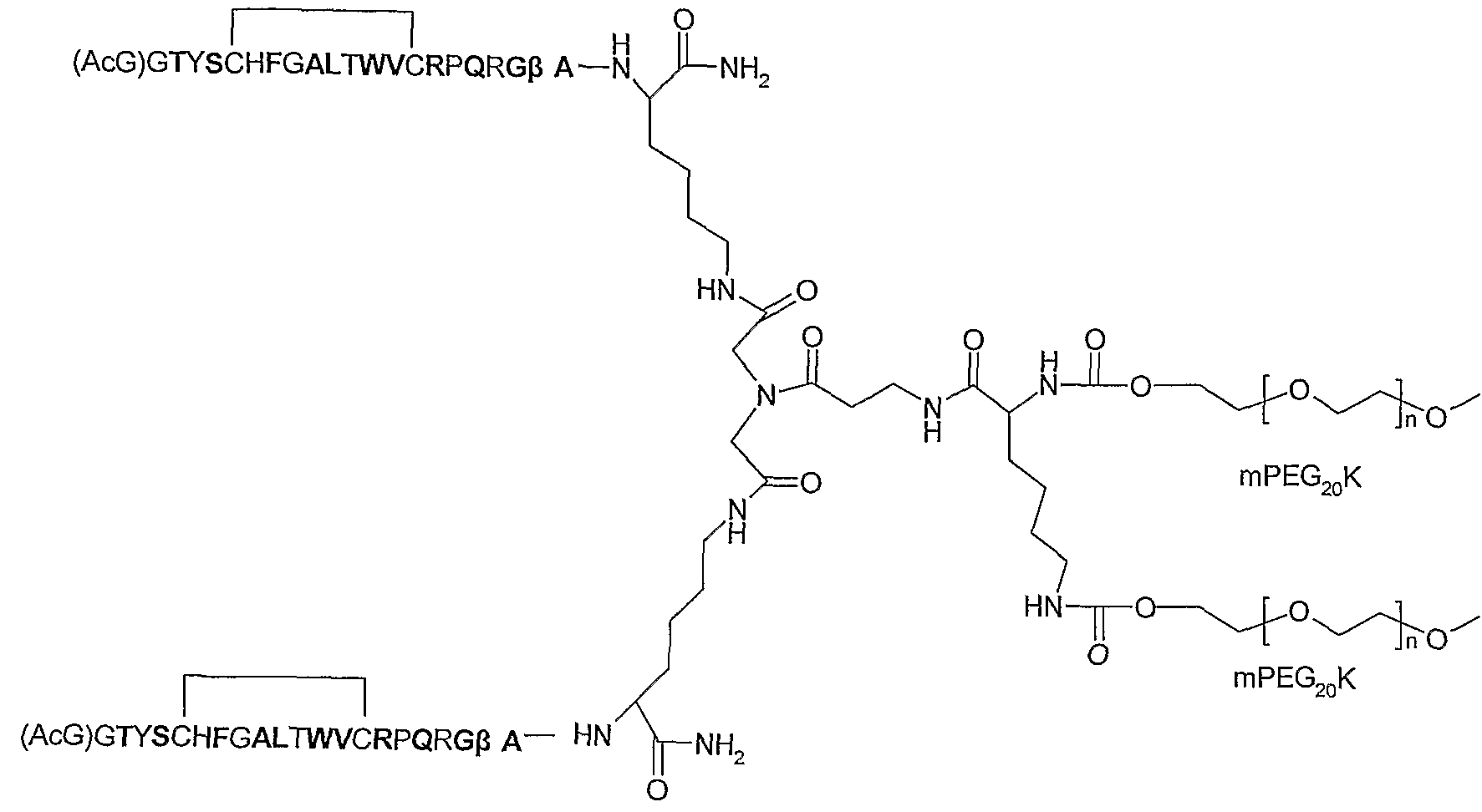
- the structure of the finally preferred erythropoietin mimetic peptide derivative and pharmaceutically acceptable salt thereof is selected from the group consisting of:
- the erythropoietin mimetic peptide derivative provided by the present invention belongs to an amphoteric compound, and a person skilled in the art can react with it to form a salt by using an acidic or basic compound by a known technique.
- the acid which is usually used to form an acid addition salt is:
- Hydrochloric acid hydrobromic acid, hydroiodic acid, sulfuric acid, phosphoric acid, p-toluenesulfonic acid, methanesulfonic acid, oxalic acid, p-bromophenylsulfonic acid, carbonic acid, succinic acid, citric acid, benzoic acid, acetic acid; salts including sulfates, Pyrosulfate, trifluoroacetate, sulfite, bisulfite, phosphate, hydrogen phosphate, dihydrogen phosphate, metaphosphate, pyrophosphate, hydrochloride, bromide, iodide, B Acid salt, propionate, octanoate, acrylate, formate, isobutyrate, hexanoate, heptanoate, propiolate, oxalate, malonate, succinate, Suberic acid salt, fumarate salt, maleate salt, butyne-1,4-dicarbox
- the alkaline substance may also form salts with erythropoietin mimetic peptide derivatives, including ammonium, alkali metal or alkaline earth metal hydroxides, and carbonates, hydrogencarbonates, typically sodium hydroxide, Potassium hydroxide, ammonium hydroxide, sodium carbonate, potassium carbonate, and the like.
- the invention also discloses a preparation scheme of the above erythropoietin mimetic peptide derivative and a pharmaceutically acceptable salt thereof, which comprises the following steps:
- R 7 selected from OH or H
- N Selected from 0, S, C3 ⁇ 4, N (C). Wind, NC0 (C ) profession 7 NHR 9 , CH0C0NH (CH 2 ) mecanic 8 NHR g , CHSC0N (C3 ⁇ 4) n8 NHR g or CHNHC0N (CH 8 NHR 9 , where the number is selected from an integer from 1 to 10 , n 7 The number is selected from an integer of 2 to 10, the number of n 8 is selected from an integer of 2 to 10, and R 9 is selected from Boc or Cbz.
- each is independently selected from -CO or -CH 2 ,
- the invention also relates to a pharmaceutical composition
- a pharmaceutical composition comprising:
- the invention also discloses a pharmaceutical use scheme, that is, using a erythropoietin mimetic peptide derivative containing any of the above therapeutic amounts and a pharmaceutically acceptable salt thereof for treating a disease characterized by lack of erythropoietin or red blood cell population deficiency or defect .
- a pharmaceutical use scheme that is, using a erythropoietin mimetic peptide derivative containing any of the above therapeutic amounts and a pharmaceutically acceptable salt thereof for treating a disease characterized by lack of erythropoietin or red blood cell population deficiency or defect .
- the treatment of the following diseases end stage renal failure or dialysis; AIDS-related anemia, autoimmune diseases, or malignant tumors; cystic fibrosis; early maturity anemia; anemia associated with chronic inflammatory diseases; spinal cord injury; Acute blood loss; aging and neoplastic disease with abnormal red blood cells.
- the erythropoietin mimetic peptide derivative and the pharmaceutically acceptable salt thereof provided by the invention can obviously stimulate the increase of reticulocyte count in peripheral blood of mice, indicating that they stimulate red blood cell production, and can also greatly prolong the conjugate in vivo. half life.
- the erythropoietin mimetic peptide derivative and erythropoietin protein had no significant effect on mature red blood cells, hematocrit, and hemoglobin content, and had no significant effect on peripheral blood leukocyte count.
- the synthesis of erythropoietin mimetic peptide monomer peptide is carried out by solid phase synthesis.
- the basic principle is: First, the hydroxyl group of the hydroxy terminal amino acid of the peptide chain to be synthesized is linked to an insoluble polymer resin by a covalent bond structure. Then, the amino acid bound to the solid support is used as an amino component to deprotect the amino group and react with an excess of the activated carboxyl component to lengthen the peptide chain.
- the procedure of repeating (condensation-washing-protecting-washing-the next round of condensation) is carried out to reach the length of the peptide chain to be synthesized, and finally the peptide chain is cleaved from the resin, and after purification and the like, the desired polypeptide is obtained.
- the intermediate control of the condensation and deprotection reaction steps is a method for detecting ninhydrin, that is, when there is a free amino group on the resin peptide chain, it is blue by the ninhydrin reagent, and does not develop color when there is no free amino group. (The ninhydrin reagent itself is yellow).
- the coupling of the next step can be carried out before the coupling of the next amino acid, if it is blue , then prove the peptide chain
- some free amino groups which require repeated coupling or modification of the existing condensing agent until the resin peptide is detected yellow by ninhydrin.
- the cyclization method of the body peptide is well known to those skilled in the art, and the cyclization of the disulfide bond mainly oxidizes the amino acid side chain thiol group in the monomer peptide to a disulfide bond by an oxidizing agent, and the specific method is to place the monomer peptide DMS0 solution in, or placed in a concentration of 5% ammonia solution, ammonium carbonate autoxidation, addition of 12 or oxide in acetic acid solution, preferably 12 oxide was added acetic acid solution.
- the cyclization of the amide bond is mainly through the formation of an amide bond in the presence of a condensing agent through the carboxyl group and the amino group of the amino acid side chain in the monomeric peptide.
- the added condensing agent is well known to those skilled in the art, and usually has DIC, EDC, HATU, Pybop et al.
- dimeric peptides The synthesis of dimeric peptides is mainly through the formation of an amino group on the side chain of the erythropoietin mimetic peptide monomer peptide amino acid residue and the formation of a functional small molecule - NH-C-bond or -NH-CO- bond, in the art
- the skilled person can readily synthesize functional small molecules and link them to the monomeric peptide cyclic peptides by known techniques.
- the dimer peptide is derivatized with a reactive methoxypolyethylene glycol derivative, and the reaction system can be selected in an organic solvent or a usable buffer system, and when the PEGylation reaction of the dimeric peptide is carried out in an organic solvent,
- the base may be added, but is not limited to, an appropriate amount of a base such as triethylamine, diisopropylethylamine, pyridine or 2,4,6-trimethylpyridine.
- the buffer system may be selected from various known buffers, preferably pH 7.7 phosphate buffer.
- the biological activity of erythropoietin or the erythropoietin mimetic peptide derivative provided by the present invention and a pharmaceutically acceptable salt thereof can be measured by various tests well known in the art.
- In vivo activity test by subcutaneous injection of erythropoietin and erythropoietin mimetic peptide derivative and its pharmaceutically acceptable salt provided by the present invention for three consecutive days, then the mice were sacrificed, and whole blood was taken for peripheral blood cells and networks. The erythrocyte count and the blood cell count were counted using an automatic blood cell counter.
- the pharmacodynamic study of intravenous injection of macaques was performed at a single dose of 1.35 mg/kg, and the erythropoietin protein used as a comparative drug was administered at a dose of 240 ⁇ g/kg three times a week for six weeks. Blood samples were collected for analysis of relevant hematological indicators.
- Figure 1 Effect of erythropoietin mimetic peptide derivative (HH-EP0-018) on hematocrit in macaques.
- Figure 2 EPO mimetic peptide derivative of Rhesus Monkey hemoglobin content (HH- EP0- 018) (DETAILED DESCRIPTION
- Example 1 Synthesis of erythropoietin mimetic peptide derivative monomer peptide
- the synthesis of erythropoietin mimetic peptide derivative monomer peptides is based on the synthesis of solid phase peptides. Such peptide synthesis methods have been reported in many literatures, see Stewart, JM, and Young, JD, solid phase peptides. Synthesis 2d edition, novabioc em peptide synthesis notes.
- the present invention provides a spoon
- the erythropoietin mimetic peptide derivative monomer peptide is synthesized by hand.
- the resin is rink amind resin.
- the amino group of the amino acid derivative used is protected by Fmoc (purine carbonyl), cysteine side chain thiol, valley.
- Amine amide side chain amino group histidine side chain imidazolyl group protected by Trt (trityl), arginine side chain fluorenyl group from Pbf (2,2,4,6,7-pentamethyldihydrobenzobenzene Furan 5-sulfonyl) protection, tryptophan side chain thiol, lysine side chain amino group protected by Boc (tert-butoxycarbonyl), threonine side chain hydroxyl group, tyrosine side chain phenol group, serine The side chain hydroxyl groups are protected by tBu (tert-butyl).
- the carboxyl group of the C-terminal amino acid of the peptidomimetic peptide derivative peptide peptide chain to be synthesized is linked to a polymer rink amind resin by a covalent bond structure, and then bonded to the solid phase carrier.
- the intermediate control of the condensation and deprotection reaction steps is a method for detecting ninhydrin, that is, when there is a free amino group on the resin peptide chain, it is blue by the ninhydrin reagent, and is not visible when there is no free amino group.
- LG-lC 1.63 g (6mmol, yield: 58.8%)
- LG-3-A (0.0056 m O l) was dissolved in 20 ml of tetrahydrofuran, and the solution was kept at an internal temperature of less than -10 degrees. After stirring, 626 mg of NaBH 4 (0. 0168 mol) was added, and after 1 h of reaction, 200 ml of chilled diethyl ether was added, and then 150 ml of a saturated aqueous solution of sodium hydrogencarbonate was added to terminate the reaction. The layer was separated and the organic layer was washed once with saturated brine and dried over anhydrous Na 2 After 2 hours, it was filtered, and the filtrate was concentrated under reduced pressure to give LG- 3-B: 1.9 g (yield: 94.6%).
- reaction solution was purified directly prepared by reverse-phase chromatography, using octadecyl silane bonded silica gel as column filler Qi il (aters SymmetryShield TM RP18 3.5 ⁇ , 4.6 * 100mm), Column temperature 60 ⁇ , detection wavelength 214nm;
- the mobile phase was mixed with water (containing 0.05% trifluoroacetic acid) and acetonitrile (containing 0.05% trifluoroacetic acid), and the target components were collected. Most of the acetonitrile was distilled off under reduced pressure, and then lyophilized to obtain SEQ ID N0. : 5-ring peptide 3.0g (yield: 15.6%)
- Step 2 Preparation of HH-EP0-005
- the detection wavelength was 214nm; mobile phase (containing 0.05% trifluoroacetic acid) and acetonitrile (containing 0.05% trifluoroacetic acid) in different proportions of the mobile phase, the target components were collected, and most of the acetonitrile was distilled off under reduced pressure, and then lyophilized to obtain SEQ. ID N0: 6-loop peptide 3.0 g (yield - 15.3%) Step 2: Preparation of HH-EP0-006
- reaction solution was directly prepared and purified by reverse-phase chromatography using octadecylsilane-bonded silica gel as a column packing agent (Waters SymmetryShieldTM RP18 3.5 ⁇ , 4.6*100mm), column temperature 60 ° C, detection wavelength 214 nm
- the mobile phase consists of water (containing 0.05% trifluoroacetic acid) and acetonitrile (containing 0.05% trifluoroacetic acid) in different proportions.
- the target components are collected and distilled, and most of the acetonitrile is distilled off under reduced pressure.
- ID N0 7.5 g of 7 cyclic peptide (yield: 16.4%)
- Step 2 Preparation of HH-EP0-007
- reaction solution was directly prepared and purified by reverse phase chromatography using octadecylsilane-bonded silica gel as a column packing agent (Waters SymmetryShieldTM RP18 3.5 ⁇ , 4.6*100mm), column temperature 60 ° C, detection wavelength 214 nm
- the mobile phase was collected in different proportions of water (containing 0.05% trifluoroacetic acid) and acetonitrile (containing 0.05% trifluoroacetic acid), and the target components were collected, and most of the acetonitrile was distilled off under reduced pressure, and then lyophilized to obtain SEQ ID. N0: 8-ring peptide 9.3g (yield: 15.7%)
- Step 2 Preparation of HH-EP0-008
- HH-EPO-008A 3.0 g (1.22 mmol) of the cyclic peptide of SEQ ID NO: 8 was dissolved in 150 ml of 20 mmol acetate buffer (pH 5.0), and 201 mg of functional small molecule (LG-4) (0.61 mmol) and After 10 ml of acetonitrile was stirred at room temperature for 30 minutes, the reaction mixture was purified by reverse-phase chromatography using octadecylsilane-bonded silica gel as column packing (Waters SymmetryShieldTM RP18 3.5 ⁇ , 4.6*100mm), column temperature 60 °C, detection wavelength is 214nm; water (containing 0.05% trifluoroacetic acid) and acetonitrile (containing 0.05% trifluoroacetic acid) in different proportions of the mobile phase, the target component is collected and distilled, most of the acetonitrile is distilled off under reduced pressure. Thereafter, HH-EPO-008
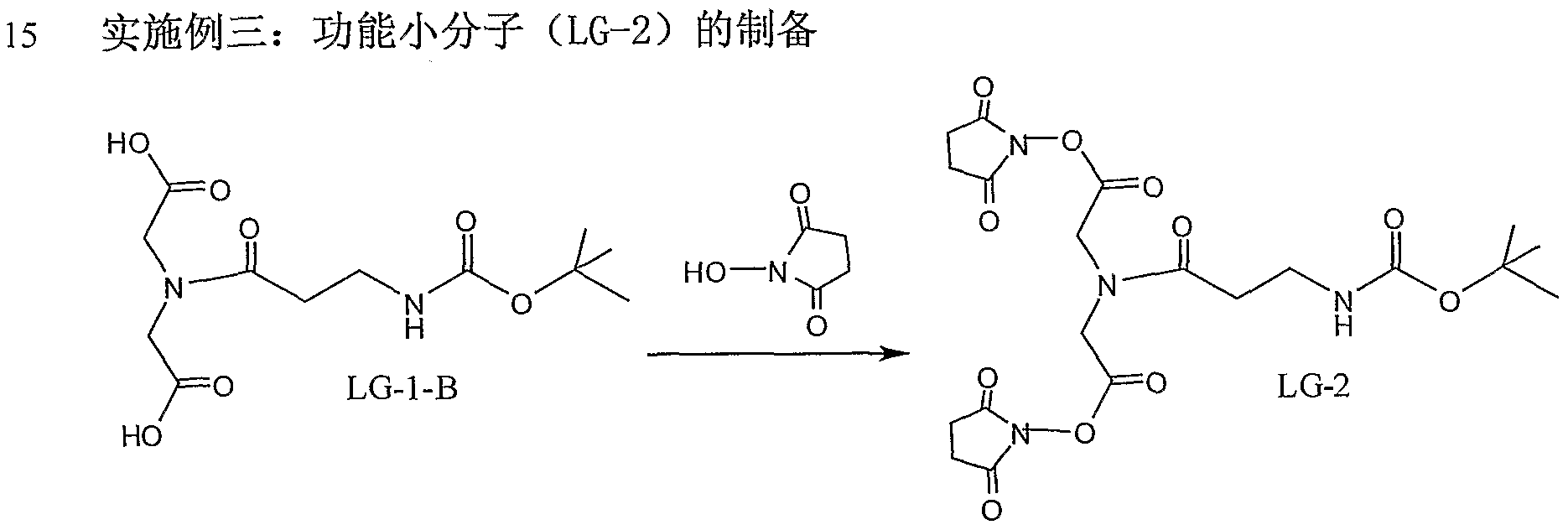
- SEQ ID NO: 8 cyclic peptide 3.Og (1.22 mmol) was dissolved in 150 ml of hydrazine, hydrazine-dimethylformamide, and 147 mg (1.46 mmol) of triethylamine was added, 322 mg of functional small molecule (LG-2). After stirring at room temperature for 6 hours, a portion of hydrazine and dimethylformamide were concentrated under reduced pressure. To the residue, 200 ml of diethyl ether was added, and the mixture was placed in the refrigerator for 2 hours, then centrifuged and dried in vacuo to give a white solid. The white solid was dissolved in 50 ml of 20% trifluoroacetic acid/dichloromethane solution.
- HH-EPO-008C SEQ ID: 8 cyclic peptide 3. (3 ⁇ 4 (1.2211111101), dissolved in 150 ml of 20 mmol acetate buffer (pH 5.0), and then added 165 mg of functional small molecule (LG-1) (0.61 mmol) and After 10 ml of acetonitrile was stirred at room temperature for 30 minutes, the reaction solution was purified by reverse-phase chromatography, and the column was filled with octadecylsilane-bonded silica gel (Waters SymmetryShieldTM RP18 3.5 ⁇ , 4.6*100mm), column temperature 60 ° C, the detection wavelength is 214nm ; water (containing 0.05% trifluoroacetic acid) and acetonitrile (containing 0.05% trifluoroacetic acid) in different proportions of the mobile phase, combined to collect the target components, distilled most of the vacuum After acetonitrile, lyophilized HH-EPO-008C:
- HH-EPO-008 0.5 g of HH-EPO-008 (0.98 mmol) was dissolved in 100 ml of hydrazine, hydrazine-dimethylformamide, and added 39.6 mg of triethylamine (0.196 mmol), 3.8 g of mPEG 2 -OSU (40K) (0.96 mmol), and stirred at room temperature for 6 hours.
- the reaction solution was directly poured into 600 ml of cold diethyl ether to precipitate a solid, which was placed in a refrigerator for 2 hours, and then centrifuged, and dried to obtain a crude HH-EPO-018.
- the crude HH-EPO-018 was purified by reverse-phase chromatography using octadecylsilane-bonded silica gel as a column packing agent (Waters SymmetryShieldTM RP18 3.5 ⁇ , 4.6* 100mm), column temperature 60 ° C, detection wavelength 214 nm
- the mobile phase consists of water (containing 0.05% trifluoroacetic acid) and acetonitrile (containing 0.05% trifluoroacetic acid) in different proportions, and the target components are collected, and most of the acetonitrile is distilled off under reduced pressure, and then HH-EPO is freeze-dried.
- - 018 1.8 g (yield about 47%).
- Example 14 Preparation of HH EP0-018A
- HH-EPO-008 0.5 g of HH-EPO-008 (0.98 mmol) was dissolved in 100 ml of hydrazine, hydrazine-dimethylformamide, and 39.6 mg of triethylamine (0.196 mmol), 3.8 g of mPEG 2 -OSU (40K) (0.96 mmol) was added. Stir at room temperature for 6 hours. The reaction solution was directly poured into 600 ml of cold diethyl ether to precipitate a solid, which was placed in a refrigerator for 2 hours, centrifuged, and dried to obtain a crude HH-EPO-018.
- HH-EPO-018 Purification of crude HH-EPO-018 by reversed-phase chromatography, using 18-mercaptosilane-bonded silica as a column packing agent (Waters SymmetryShieldTM RP18 3.5 ⁇ , 4.6*100mm), column temperature 6 (TC, detection wavelength 214mii
- the mobile phase consists of water (containing 0.05% trifluoroacetic acid) and acetonitrile (containing 0.05% trifluoroacetic acid) in different proportions, and the target components are collected, and most of the acetonitrile is distilled off under reduced pressure, and then HH-EPO is freeze-dried.
- -018A 1.5 g (yield about 39%).
- Example 15 Preparation of HH-EP0-018B
- HH-EPO-008 0.5 g of HH-EPO-008 (0.98 mmol) was dissolved in 100 ml of N,N-dimethylformamide, 39.6 mg of triethylamine (0.196 mmol), 3.8 g of mPEG 2 -OSU (4 (0.96 mmol), room temperature The mixture was stirred for 6 hours. The reaction solution was directly poured into 600 ml of cold diethyl ether to precipitate a solid. The mixture was placed in a refrigerator for 2 hours, centrifuged, and dried to obtain a crude HH-EPO-018. The crude product of HH-EPO-018 was purified by reverse-phase chromatography.
- Octadecylsilane-bonded silica gel is a column packing agent (Waters SymmetryShieldTM RP18 3.5 ⁇ , 4.6* 100mm), column temperature 60 ° C, detection wavelength is 214 nm; water (containing 0.05% trifluoroacetic acid) and acetonitrile The different ratios (containing 0.05% trifluoroacetic acid) were mobile phases, and the target components were combined, and most of the acetonitrile was distilled off under reduced pressure, followed by freeze-drying HH-EPO-018: 1.7 g (yield about 45%).
- Example 16 Preparation of HH-EP0-018C
- HH-EPO-008 0.5 g was dissolved in 100 ml of N,N-dimethylformamide, 39.6 mg of triethylamine (0.196 mmol), 3.8 g of mPEG 2 -OSU (40K) (0.96 mmol) Stir at room temperature for 6 hours.
- HH-EPO-003, HH-EPO-004, HH-EPO-005, HH-EPO-006, HH- EPO-007, HH-EPO-008, HH-EPO-015, HH-EPO-016, HH-EPO-017, HH-EPO-018 are provided by Jiangsu Haosen Pharmaceutical Co., Ltd.; EPO: purchased from Shenyang III Sheng Pharmaceutical Co., Ltd.; Kunming mice, purchased from the Shanghai Experimental Animal Center of the Chinese Academy of Sciences, weighing 25 ⁇ 30g, early, the number of animals in each group: 10 .
- mice were injected subcutaneously with erythropoietin mimetic peptide derivative and erythropoietin protein for three consecutive days, and then the mice were sacrificed, and whole blood was taken for peripheral blood cell and reticulocyte count, and the blood cell count was counted by a full automatic blood cell counter.
- mice dose and protocol reticulocyte count
- HH-EPO-006 10 4.5mg/kg, sc, dl-3 515.0 ⁇ 22. 7 HH-EPO-007 10 4.5mg/kg, sc, dl-3 553.5 ⁇ 26.6
- mice dose and protocol red blood cell count hematocrit hemoglobin
- HH-EPO-005 10 4.5mg/kg, sc, dl-3 10.1 ⁇ 0.6 54 ⁇ 4 ⁇ 3 ⁇ 2 16.3 ⁇ 0 ⁇ 9
- HH-EPO-006 10 4.5mg/kg, sc, dl-3 9.6 ⁇ 0.5 50.5 ⁇ 2.8 153 ⁇ 0 ⁇ 9
- HH-EPO-007 10 4.5mg/kg, sc, dl-3 9.1 ⁇ 3.1 49.4 ⁇ 17.1 14.8 ⁇ 4.8
- HH-EPO-008 10 4.5mg/kg, sc, dl-3 9.6 ⁇ 0.2 54.0 ⁇ 1.7 16 ⁇ 1 ⁇ 0.5
- HH-EPO-016 10 4.5mg/kg, sc, dl-3 9 ⁇ 88 ⁇ 0 ⁇ 42 56.50 ⁇ 2.95 13.24 ⁇ 4.2
- HH-EPO-018B 10 4.5mg/kg, sc, dl-3 9.77 ⁇ 0.51 55 ⁇ 71 ⁇ 3.31 13 ⁇ 72 ⁇ 2.35
- mice administered doses and regimens platelets ( ⁇ 10 3 / ⁇ ) white blood cells (X101 ⁇ 4iL)
- Macaque weighing 5.5 ⁇ 8.5kg, male or female, purchased from Suzhou Xishan Zhongke Experimental Animal Center. Rhesus macaques are grouped according to basic hemoglobin, three in each group. HH-EPO-018 1.35mg/kg, once intravenously; EPO 240 ⁇ /13 ⁇ 4, three times/week, continuous administration for five weeks, 1 ⁇ 2 times of hematological parameters per week. Results and discussion:
- HH-EPO-018 Single intravenous injection of HH-EPO-018 resulted in an increase in peripheral blood hemoglobin content and increased hematocrit in rhesus macaques, indicating that HH-EPO-018 stimulated hemoglobin production, which reached a peak after 35 days of administration, followed by a slow decline to hemoglobin.
- the stimulating effect is about 33%.
- the positive control erythropoietin also increased the hemoglobin content in the peripheral blood of macaques and increased the hematocrit, which was slowly attenuated after stopping the drug.
- HH-EPO-018 and erythropoietin have comparable stimulatory effects on rhesus hemoglobin production (see Figures 1, 2).
- Example 19 Evaluation and comparison of the effects of erythropoietin peptidomimetic derivatives HH-EPO-015, HH-EPO-018, HH-EPO-018B and positive control AF37702 on the production of mice
- Materials and methods: HH- EPO-015, HH-EPO-018, HH-EPO-018B, AF37702 are all provided by Jiangsu Haosen Pharmaceutical Co., Ltd. Among them, AF37702 is also a erythropoietin mimetic peptide derivative, which is a product of Affymax (trade name: Hematide). Samples were prepared with physiological salts containing 0.1% BSA prior to use.
- Kunming mice were purchased from the Shanghai Experimental Animal Center of the Chinese Academy of Sciences, weighing 25 ⁇ 2 g, early, and the number of animals in each group: 10. After the animals were adapted, HH-EPO-015, HH-EPO-018, HH-EPO-018B, and AF37702 were injected subcutaneously. The mice were sacrificed on the 6th day after the first administration, and whole blood was taken for peripheral blood thinning. Cell and reticulocyte counts. Blood cell counts were counted using an ADVIA automated blood cell counter.
- HH-EPO-015, HH-EPO-018, HH-EPO-018B, and AF37702 increased the peripheral blood hematocrit and hemoglobin content of mice, and their effects were basically the same, but had no significant effect on the peripheral blood red blood cell count of mice. See Table 5).
- Table 4 Effects of HH-EPO-015, HH-EPO-018, HH-EPO-018B, AF37702 on erythrocyte production in mouse peripheral blood reticulum
- mice Dosage and regimen % Reticulocyte reticulocyte count
- HH-EPO-018 10 5.0 mg/kg, sc, dl 16.0 ⁇ 3.2** 1113.2 ⁇ 210.7**
- HH-EPO-018B 10 5.0 mg/kg, sc, dl 20.0 ⁇ 5.3** 1440.3 ⁇ 416.5**
- AF37702 10 5.0mg/kg, sc, dl 17.2 ⁇ 5.3** 1202.8 ⁇ 355.4** **P ⁇ 0. 01 vs control Table 5: HH-EP0- 015, HH- EPO- 018, HH-EP0_018B, AF37702 Effects of peripheral blood erythropoiesis, hematocrit and hemoglobin content in mice
- mice dose and protocol red blood cell count hematocrit hemoglobin
- HH-EPO-015 10 2.5mg/kg, sc, dl 7.5 ⁇ 0.3 42.7 ⁇ 1.8* 14.3 ⁇ 0.6**
- HH-EPO-018 10 2.5mg/kg, sc, dl 7.0 ⁇ 0.3 40.6 ⁇ 1.6 13.3 ⁇ 2.2
- HH-EPO-018 10 5.0 mg/kg, sc, d 1 7.0 ⁇ 0.3 41.5 ⁇ 1.2* 14.2 ⁇ 0.8**
- HH-EPO-018B 10 5.0 mg/kg, sc, d 1 7.0 ⁇ 0.4 41.6 ⁇ 2.6* 14.4 ⁇ 0.9**
Landscapes
- Health & Medical Sciences (AREA)
- Chemical & Material Sciences (AREA)
- Life Sciences & Earth Sciences (AREA)
- Organic Chemistry (AREA)
- General Health & Medical Sciences (AREA)
- Medicinal Chemistry (AREA)
- Animal Behavior & Ethology (AREA)
- Pharmacology & Pharmacy (AREA)
- Bioinformatics & Cheminformatics (AREA)
- Public Health (AREA)
- Veterinary Medicine (AREA)
- Engineering & Computer Science (AREA)
- Nuclear Medicine, Radiotherapy & Molecular Imaging (AREA)
- General Chemical & Material Sciences (AREA)
- Chemical Kinetics & Catalysis (AREA)
- Molecular Biology (AREA)
- Epidemiology (AREA)
- Proteomics, Peptides & Aminoacids (AREA)
- Genetics & Genomics (AREA)
- Biophysics (AREA)
- Biochemistry (AREA)
- Gastroenterology & Hepatology (AREA)
- Zoology (AREA)
- Toxicology (AREA)
- Immunology (AREA)
- Virology (AREA)
- Oncology (AREA)
- Neurosurgery (AREA)
- Neurology (AREA)
- Biomedical Technology (AREA)
- Hematology (AREA)
- Diabetes (AREA)
- Urology & Nephrology (AREA)
- AIDS & HIV (AREA)
- Communicable Diseases (AREA)
- Tropical Medicine & Parasitology (AREA)
- Pulmonology (AREA)
- Medicines That Contain Protein Lipid Enzymes And Other Medicines (AREA)
- Peptides Or Proteins (AREA)
Description





Claims


Priority Applications (13)
| Application Number | Priority Date | Filing Date | Title |
|---|---|---|---|
| RU2010123466/10A RU2493168C2 (ru) | 2007-12-12 | 2008-11-24 | Пептидное производное - миметик эритропоэтина и его фармацевтические соли, их получение и применение |
| MX2010006436A MX2010006436A (es) | 2007-12-12 | 2008-11-24 | Derivados peptidos mimeticos de eritropoyetina y sus sales farmaceuticas, su preparacion y usos. |
| EP08865748.1A EP2233504B1 (en) | 2007-12-12 | 2008-11-24 | An erythropoietin mimetic peptide derivatives and its pharmaceutical salt, the preparation and uses thereof |
| CN2008800142471A CN101675080B (zh) | 2007-12-12 | 2008-11-24 | 促红细胞生成素模拟肽衍生物及其可药用盐和其制备方法与用途 |
| BRPI0820749A BRPI0820749B8 (pt) | 2007-12-12 | 2008-11-24 | derivados de peptídeo mimético de eritropoietina e seu sal farmaceuticamente aceitável, método para preparação dos referidos derivados, composição farmacêutica e usos dos mesmos |
| AU2008341661A AU2008341661B9 (en) | 2007-12-12 | 2008-11-24 | An erythropoietin mimetic peptide derivatives and its pharmaceutical salt, the preparation and uses thereof |
| ES08865748.1T ES2541139T3 (es) | 2007-12-12 | 2008-11-24 | Un derivado peptidomimético de eritropoyetina y su sal farmacéutica, la preparación y usos del mismo |
| UAA201007321A UA102236C2 (uk) | 2007-12-12 | 2008-11-24 | Похідні еритропоетин-міметичного пептиду та їх фармацевтичні солі, їх одержання і застосування |
| HK10104545.0A HK1136837B (zh) | 2007-12-12 | 2008-11-24 | 促红细胞生成素模拟肽衍生物及其可药用盐和其制备方法与用途 |
| US12/747,818 US8642545B2 (en) | 2007-12-12 | 2008-11-24 | Erythropoietin mimetic peptide derivative and its pharmaceutical salts, the preparation and uses thereof |
| JP2010537234A JP5448099B2 (ja) | 2007-12-12 | 2008-11-24 | エリスロポエチン模倣ペプチド誘導体及びその薬学的に許容される塩、それらの製造並びに使用 |
| CA2708819A CA2708819C (en) | 2007-12-12 | 2008-11-24 | An erythropoietin mimetic peptide derivative and its pharmaceutical salts, the preparation and uses thereof |
| ZA2010/03998A ZA201003998B (en) | 2007-12-12 | 2010-06-04 | An erythropoietin mimetic peptide derivatives and its pharmaceutical salt,the preparation and uses thereof |
Applications Claiming Priority (2)
| Application Number | Priority Date | Filing Date | Title |
|---|---|---|---|
| CN200710198751.9 | 2007-12-12 | ||
| CNA2007101987519A CN101456911A (zh) | 2007-12-12 | 2007-12-12 | 促红细胞生成素模拟肽衍生物及其可药用盐和其制备方法与用途 |
Publications (2)
| Publication Number | Publication Date |
|---|---|
| WO2009079910A1 true WO2009079910A1 (fr) | 2009-07-02 |
| WO2009079910A8 WO2009079910A8 (zh) | 2009-11-19 |
Family
ID=40768057
Family Applications (1)
| Application Number | Title | Priority Date | Filing Date |
|---|---|---|---|
| PCT/CN2008/001909 Ceased WO2009079910A1 (fr) | 2007-12-12 | 2008-11-24 | Dérivé de peptide mimétique d'érythropoïétine et son sel pharmaceutique, préparation et utilisations |
Country Status (15)
| Country | Link |
|---|---|
| US (1) | US8642545B2 (zh) |
| EP (1) | EP2233504B1 (zh) |
| JP (1) | JP5448099B2 (zh) |
| KR (1) | KR101646929B1 (zh) |
| CN (2) | CN101456911A (zh) |
| AU (1) | AU2008341661B9 (zh) |
| BR (1) | BRPI0820749B8 (zh) |
| CA (1) | CA2708819C (zh) |
| ES (1) | ES2541139T3 (zh) |
| MX (1) | MX2010006436A (zh) |
| RU (1) | RU2493168C2 (zh) |
| TW (1) | TWI419706B (zh) |
| UA (1) | UA102236C2 (zh) |
| WO (1) | WO2009079910A1 (zh) |
| ZA (1) | ZA201003998B (zh) |
Families Citing this family (17)
| Publication number | Priority date | Publication date | Assignee | Title |
|---|---|---|---|---|
| US9422338B2 (en) | 2011-05-19 | 2016-08-23 | Epodose Llc | Compounds that bind to the erythropoietin receptor |
| WO2013158871A1 (en) | 2012-04-20 | 2013-10-24 | The United States Of America, As Represented By The Secretary, Department Of Health And Human Services | Use of erythropoietin and derivatives for treating hypertension |
| CN103450348B (zh) * | 2012-05-29 | 2016-03-30 | 中国人民解放军军事医学科学院毒物药物研究所 | 一种促红细胞生成素模拟肽、其制备方法和用途 |
| CN103536900B (zh) * | 2012-07-16 | 2017-06-16 | 江苏豪森药业集团有限公司 | 含有促红细胞生成素模拟肽的药物组合物 |
| CN103570834A (zh) * | 2012-07-19 | 2014-02-12 | 江苏豪森药业股份有限公司 | 甲氧基聚乙二醇修饰的促红细胞生成素模拟肽衍生物 |
| PT2970493T (pt) | 2013-03-15 | 2019-06-27 | Univ Leland Stanford Junior | Métodos para obter doses terapeuticamente eficazes de agentes anti-cd47 |
| CN104231039A (zh) * | 2013-06-08 | 2014-12-24 | 江苏豪森药业股份有限公司 | 用于合成促红细胞生成素模拟肽衍生物的功能小分子及其制备方法 |
| CN105085653B (zh) * | 2015-08-26 | 2019-01-08 | 天津药物研究院有限公司 | 一种促红细胞生成素模拟肽及其制备方法和应用 |
| CN106608913B (zh) * | 2015-10-22 | 2020-05-05 | 天津药物研究院有限公司 | 一种1,2,3-丙三酸偶联的epo拟肽衍生物及其制备方法和应用 |
| CN106608912B (zh) * | 2015-10-22 | 2019-09-20 | 天津药物研究院有限公司 | 一种脂肪二羧酸偶联的epo模拟肽衍生物及其制备方法和应用 |
| CN105367629B (zh) * | 2015-11-09 | 2019-01-08 | 天津药物研究院有限公司 | 一种促红细胞生成素模拟肽以及其制备方法和用途 |
| CN106928338A (zh) * | 2015-12-31 | 2017-07-07 | 杭州阿德莱诺泰制药技术有限公司 | 促红细胞生成素肽及衍生物和聚合物、制备方法和应用 |
| AU2017297767B2 (en) | 2016-07-12 | 2021-09-09 | Hexal Ag | Glycoprotein with reduced acetylation rate of sialic acid residues |
| CN108236717A (zh) * | 2016-12-27 | 2018-07-03 | 江苏豪森药业集团有限公司 | 聚乙二醇连接臂与所修饰多肽药物的偶合物 |
| US12024571B2 (en) * | 2018-09-14 | 2024-07-02 | Epo-Med Inc. | Anti-erythropoietin receptor peptide |
| KR102073886B1 (ko) | 2019-05-02 | 2020-02-05 | 주식회사 미래와바다 | 잘피이식용 다공질 패널 |
| CN114601916B (zh) * | 2022-04-12 | 2024-04-16 | 江苏豪森药业集团有限公司 | 一种培化西海马肽注射制剂及其制备方法 |
Citations (9)
| Publication number | Priority date | Publication date | Assignee | Title |
|---|---|---|---|---|
| WO1990008822A1 (en) | 1989-02-03 | 1990-08-09 | Genetics Institute, Inc. | Erythropoietin receptor |
| CN1226176A (zh) * | 1996-08-02 | 1999-08-18 | 奥索·麦克尼尔药品公司 | 含有与n-末端共价结合的单个水溶性聚合物的多肽类 |
| CN1338463A (zh) * | 2001-08-07 | 2002-03-06 | 沈阳三生制药股份有限公司 | 一种增强多肽在体内稳定性的方法及其应用 |
| CN1680449A (zh) * | 2004-03-02 | 2005-10-12 | 成都生物制品研究所 | 聚乙二醇修饰后具有体内生理活性的重组促红细胞生成素 |
| WO2006060148A2 (en) * | 2004-11-11 | 2006-06-08 | Affymax, Inc. | Novel peptides that bind to the erythropoietin receptor |
| WO2006062685A2 (en) * | 2004-11-11 | 2006-06-15 | Affymax, Inc. | Novel peptides that bind to the erythropoietin receptor |
| CN1820024A (zh) * | 2003-05-12 | 2006-08-16 | 阿费麦克斯公司 | 新的聚(乙二醇)修饰的化合物及其用途 |
| CN1823088A (zh) * | 2003-05-12 | 2006-08-23 | 阿费麦克斯公司 | 结合红细胞生成素受体的新肽 |
| CN1823087A (zh) * | 2003-05-12 | 2006-08-23 | 阿费麦克斯公司 | 结合红细胞生成素受体的新肽 |
Family Cites Families (2)
| Publication number | Priority date | Publication date | Assignee | Title |
|---|---|---|---|---|
| CZ391097A3 (cs) * | 1995-06-07 | 1998-07-15 | Ortho Pharmaceutical Corporation | Látky a peptidy vážící se na erythropoietinový receptor |
| PL219131B1 (pl) * | 2000-05-15 | 2015-03-31 | Hoffmann La Roche | Ciekła kompozycja farmaceutyczna, sposób jej wytwarzania oraz jej zastosowanie |
-
2007
- 2007-12-12 CN CNA2007101987519A patent/CN101456911A/zh active Pending
-
2008
- 2008-07-08 TW TW097125651A patent/TWI419706B/zh active
- 2008-11-24 ES ES08865748.1T patent/ES2541139T3/es active Active
- 2008-11-24 US US12/747,818 patent/US8642545B2/en active Active
- 2008-11-24 BR BRPI0820749A patent/BRPI0820749B8/pt active IP Right Grant
- 2008-11-24 EP EP08865748.1A patent/EP2233504B1/en active Active
- 2008-11-24 KR KR1020107014960A patent/KR101646929B1/ko active Active
- 2008-11-24 UA UAA201007321A patent/UA102236C2/uk unknown
- 2008-11-24 AU AU2008341661A patent/AU2008341661B9/en active Active
- 2008-11-24 CA CA2708819A patent/CA2708819C/en active Active
- 2008-11-24 WO PCT/CN2008/001909 patent/WO2009079910A1/zh not_active Ceased
- 2008-11-24 MX MX2010006436A patent/MX2010006436A/es active IP Right Grant
- 2008-11-24 JP JP2010537234A patent/JP5448099B2/ja not_active Expired - Fee Related
- 2008-11-24 CN CN2008800142471A patent/CN101675080B/zh active Active
- 2008-11-24 RU RU2010123466/10A patent/RU2493168C2/ru active
-
2010
- 2010-06-04 ZA ZA2010/03998A patent/ZA201003998B/en unknown
Patent Citations (9)
| Publication number | Priority date | Publication date | Assignee | Title |
|---|---|---|---|---|
| WO1990008822A1 (en) | 1989-02-03 | 1990-08-09 | Genetics Institute, Inc. | Erythropoietin receptor |
| CN1226176A (zh) * | 1996-08-02 | 1999-08-18 | 奥索·麦克尼尔药品公司 | 含有与n-末端共价结合的单个水溶性聚合物的多肽类 |
| CN1338463A (zh) * | 2001-08-07 | 2002-03-06 | 沈阳三生制药股份有限公司 | 一种增强多肽在体内稳定性的方法及其应用 |
| CN1820024A (zh) * | 2003-05-12 | 2006-08-16 | 阿费麦克斯公司 | 新的聚(乙二醇)修饰的化合物及其用途 |
| CN1823088A (zh) * | 2003-05-12 | 2006-08-23 | 阿费麦克斯公司 | 结合红细胞生成素受体的新肽 |
| CN1823087A (zh) * | 2003-05-12 | 2006-08-23 | 阿费麦克斯公司 | 结合红细胞生成素受体的新肽 |
| CN1680449A (zh) * | 2004-03-02 | 2005-10-12 | 成都生物制品研究所 | 聚乙二醇修饰后具有体内生理活性的重组促红细胞生成素 |
| WO2006060148A2 (en) * | 2004-11-11 | 2006-06-08 | Affymax, Inc. | Novel peptides that bind to the erythropoietin receptor |
| WO2006062685A2 (en) * | 2004-11-11 | 2006-06-15 | Affymax, Inc. | Novel peptides that bind to the erythropoietin receptor |
Non-Patent Citations (3)
| Title |
|---|
| JOHNSON D L ET AL.: "Amino-terminal dimerization of an erythropoietin mimetic peptide results in increased erythropoietic activity.", vol. 4, no. 12, 1997, pages 939 - 950, XP026916286, DOI: doi:10.1016/S1074-5521(97)90302-1 * |
| SAWYER ET AL., PROC. NATL. ACAD. SCI.USA, vol. 84, 1987, pages 3690 - 3694 |
| See also references of EP2233504A4 |
Also Published As
| Publication number | Publication date |
|---|---|
| HK1136837A1 (zh) | 2010-07-09 |
| CA2708819C (en) | 2018-05-15 |
| AU2008341661B2 (en) | 2013-08-08 |
| CN101675080B (zh) | 2012-07-11 |
| EP2233504B1 (en) | 2015-04-01 |
| JP5448099B2 (ja) | 2014-03-19 |
| WO2009079910A8 (zh) | 2009-11-19 |
| RU2493168C2 (ru) | 2013-09-20 |
| KR101646929B1 (ko) | 2016-08-09 |
| RU2010123466A (ru) | 2012-01-20 |
| CN101456911A (zh) | 2009-06-17 |
| TW201002352A (en) | 2010-01-16 |
| ZA201003998B (en) | 2011-10-26 |
| CN101675080A (zh) | 2010-03-17 |
| CA2708819A1 (en) | 2009-07-02 |
| BRPI0820749B1 (pt) | 2020-11-24 |
| AU2008341661A1 (en) | 2009-07-02 |
| MX2010006436A (es) | 2010-10-06 |
| US20100323949A1 (en) | 2010-12-23 |
| ES2541139T3 (es) | 2015-07-16 |
| JP2011506350A (ja) | 2011-03-03 |
| US8642545B2 (en) | 2014-02-04 |
| TWI419706B (zh) | 2013-12-21 |
| BRPI0820749B8 (pt) | 2021-05-25 |
| UA102236C2 (uk) | 2013-06-25 |
| EP2233504A1 (en) | 2010-09-29 |
| AU2008341661B9 (en) | 2013-08-15 |
| BRPI0820749A2 (pt) | 2015-06-16 |
| KR20110025731A (ko) | 2011-03-11 |
| EP2233504A4 (en) | 2011-03-09 |
Similar Documents
| Publication | Publication Date | Title |
|---|---|---|
| TWI419706B (zh) | 促紅細胞生成素模擬肽衍生物及其可藥用鹽和其製備方法與用途 | |
| JP2014088384A (ja) | Peg修飾エキセンジンまたはエキセンジン類似体およびそれらの組成物および使用 | |
| CN103421094A (zh) | 一种具有epo类似活性的多肽化合物 | |
| EP4089107A1 (en) | Therapeutic derivatives of interleukin-22 | |
| EP4089108A1 (en) | Therapeutic derivatives of interleukin-22 | |
| WO2014194835A1 (zh) | 促红细胞生成素模拟肽化学二聚体及其用途 | |
| RU2575796C9 (ru) | Пегилированный конъюгат варианта рекомбинантного консенсусного интерферона и способ его получения, и применение | |
| RU2575796C2 (ru) | Пегилированный конъюгат варианта рекомбинантного консенсусного интерферона и способ его получения, и применение | |
| TWI491410B (zh) | 水溶性聚合物修飾的g-csf偶聯物 | |
| TWI430811B (zh) | 聚乙二醇化促紅血球生成素偶聯物和其製備方法與用途 | |
| JP2008543304A (ja) | ヒト顆粒球コロニー刺激因子イソ型(HumanGranulocyte−ColonyStimulatingFactorIsoforms) | |
| CN113024635B (zh) | 一类订书肽化合物及其药物组合物的用途 | |
| JP5225393B2 (ja) | 水溶性高分子修飾g−csf複合体 | |
| CN101671390A (zh) | 人干扰素α衍生物及其聚乙二醇化修饰物的制备和用途 | |
| CN107397953A (zh) | 非肽基聚合物‑胰岛素多聚体和生产其的方法 | |
| JPWO2010074082A1 (ja) | バソヒビン修飾体 | |
| CN105367629B (zh) | 一种促红细胞生成素模拟肽以及其制备方法和用途 | |
| HK1136837B (zh) | 促红细胞生成素模拟肽衍生物及其可药用盐和其制备方法与用途 | |
| CN106554395B (zh) | 一种长效促红细胞生成素模拟肽及其制备方法和应用 | |
| CN108841007A (zh) | 带有羟胺基的艾塞那肽类似物及其应用 |
Legal Events
| Date | Code | Title | Description |
|---|---|---|---|
| WWE | Wipo information: entry into national phase |
Ref document number: 200880014247.1 Country of ref document: CN |
|
| 121 | Ep: the epo has been informed by wipo that ep was designated in this application |
Ref document number: 08865748 Country of ref document: EP Kind code of ref document: A1 |
|
| WWE | Wipo information: entry into national phase |
Ref document number: 3270/CHENP/2010 Country of ref document: IN |
|
| WWE | Wipo information: entry into national phase |
Ref document number: 2708819 Country of ref document: CA Ref document number: 2010537234 Country of ref document: JP |
|
| WWE | Wipo information: entry into national phase |
Ref document number: 12747818 Country of ref document: US Ref document number: MX/A/2010/006436 Country of ref document: MX |
|
| NENP | Non-entry into the national phase |
Ref country code: DE |
|
| WWE | Wipo information: entry into national phase |
Ref document number: 2008865748 Country of ref document: EP |
|
| ENP | Entry into the national phase |
Ref document number: 2008341661 Country of ref document: AU Date of ref document: 20081124 Kind code of ref document: A |
|
| ENP | Entry into the national phase |
Ref document number: 20107014960 Country of ref document: KR Kind code of ref document: A |
|
| WWE | Wipo information: entry into national phase |
Ref document number: A201007321 Country of ref document: UA Ref document number: 2010123466 Country of ref document: RU |
|
| ENP | Entry into the national phase |
Ref document number: PI0820749 Country of ref document: BR Kind code of ref document: A2 Effective date: 20100611 |