WO2009093702A1 - 音響装置および音響制御装置 - Google Patents
音響装置および音響制御装置 Download PDFInfo
- Publication number
- WO2009093702A1 WO2009093702A1 PCT/JP2009/051103 JP2009051103W WO2009093702A1 WO 2009093702 A1 WO2009093702 A1 WO 2009093702A1 JP 2009051103 W JP2009051103 W JP 2009051103W WO 2009093702 A1 WO2009093702 A1 WO 2009093702A1
- Authority
- WO
- WIPO (PCT)
- Prior art keywords
- information
- noise
- unit
- spectrum
- sound
- Prior art date
- Legal status (The legal status is an assumption and is not a legal conclusion. Google has not performed a legal analysis and makes no representation as to the accuracy of the status listed.)
- Ceased
Links
Images




Classifications
-
- G—PHYSICS
- G10—MUSICAL INSTRUMENTS; ACOUSTICS
- G10L—SPEECH ANALYSIS TECHNIQUES OR SPEECH SYNTHESIS; SPEECH RECOGNITION; SPEECH OR VOICE PROCESSING TECHNIQUES; SPEECH OR AUDIO CODING OR DECODING
- G10L21/00—Speech or voice signal processing techniques to produce another audible or non-audible signal, e.g. visual or tactile, in order to modify its quality or its intelligibility
- G10L21/02—Speech enhancement, e.g. noise reduction or echo cancellation
- G10L21/0208—Noise filtering
-
- B—PERFORMING OPERATIONS; TRANSPORTING
- B62—LAND VEHICLES FOR TRAVELLING OTHERWISE THAN ON RAILS
- B62J—CYCLE SADDLES OR SEATS; AUXILIARY DEVICES OR ACCESSORIES SPECIALLY ADAPTED TO CYCLES AND NOT OTHERWISE PROVIDED FOR, e.g. ARTICLE CARRIERS OR CYCLE PROTECTORS
- B62J3/00—Acoustic signal devices; Arrangement of such devices on cycles
- B62J3/10—Electrical devices
-
- H—ELECTRICITY
- H04—ELECTRIC COMMUNICATION TECHNIQUE
- H04R—LOUDSPEAKERS, MICROPHONES, GRAMOPHONE PICK-UPS OR LIKE ACOUSTIC ELECTROMECHANICAL TRANSDUCERS; ELECTRIC HEARING AIDS; PUBLIC ADDRESS SYSTEMS
- H04R3/00—Circuits for transducers
- H04R3/04—Circuits for transducers for correcting frequency response
-
- G—PHYSICS
- G10—MUSICAL INSTRUMENTS; ACOUSTICS
- G10L—SPEECH ANALYSIS TECHNIQUES OR SPEECH SYNTHESIS; SPEECH RECOGNITION; SPEECH OR VOICE PROCESSING TECHNIQUES; SPEECH OR AUDIO CODING OR DECODING
- G10L21/00—Speech or voice signal processing techniques to produce another audible or non-audible signal, e.g. visual or tactile, in order to modify its quality or its intelligibility
- G10L21/02—Speech enhancement, e.g. noise reduction or echo cancellation
- G10L21/0208—Noise filtering
- G10L21/0216—Noise filtering characterised by the method used for estimating noise
- G10L21/0232—Processing in the frequency domain
-
- H—ELECTRICITY
- H04—ELECTRIC COMMUNICATION TECHNIQUE
- H04R—LOUDSPEAKERS, MICROPHONES, GRAMOPHONE PICK-UPS OR LIKE ACOUSTIC ELECTROMECHANICAL TRANSDUCERS; ELECTRIC HEARING AIDS; PUBLIC ADDRESS SYSTEMS
- H04R2430/00—Signal processing covered by H04R, not provided for in its groups
- H04R2430/01—Aspects of volume control, not necessarily automatic, in sound systems
-
- H—ELECTRICITY
- H04—ELECTRIC COMMUNICATION TECHNIQUE
- H04R—LOUDSPEAKERS, MICROPHONES, GRAMOPHONE PICK-UPS OR LIKE ACOUSTIC ELECTROMECHANICAL TRANSDUCERS; ELECTRIC HEARING AIDS; PUBLIC ADDRESS SYSTEMS
- H04R2430/00—Signal processing covered by H04R, not provided for in its groups
- H04R2430/03—Synergistic effects of band splitting and sub-band processing
-
- H—ELECTRICITY
- H04—ELECTRIC COMMUNICATION TECHNIQUE
- H04R—LOUDSPEAKERS, MICROPHONES, GRAMOPHONE PICK-UPS OR LIKE ACOUSTIC ELECTROMECHANICAL TRANSDUCERS; ELECTRIC HEARING AIDS; PUBLIC ADDRESS SYSTEMS
- H04R2460/00—Details of hearing devices, i.e. of ear- or headphones covered by H04R1/10 or H04R5/033 but not provided for in any of their subgroups, or of hearing aids covered by H04R25/00 but not provided for in any of its subgroups
- H04R2460/13—Hearing devices using bone conduction transducers
-
- H—ELECTRICITY
- H04—ELECTRIC COMMUNICATION TECHNIQUE
- H04R—LOUDSPEAKERS, MICROPHONES, GRAMOPHONE PICK-UPS OR LIKE ACOUSTIC ELECTROMECHANICAL TRANSDUCERS; ELECTRIC HEARING AIDS; PUBLIC ADDRESS SYSTEMS
- H04R2499/00—Aspects covered by H04R or H04S not otherwise provided for in their subgroups
- H04R2499/10—General applications
- H04R2499/13—Acoustic transducers and sound field adaptation in vehicles
Definitions
- the present invention relates to an acoustic device and an acoustic control device for correcting the acoustic spectrum of a timbre for a sound under noise.
- Patent Document 1 proposes a technique for following a change in external noise and correcting the characteristics of an acoustic signal in consideration of human auditory characteristics.
- FIG. 10 is a block diagram showing the configuration of the sound reproducing device 1 which is the sound device according to Patent Document 1.
- the sound reproduction apparatus 1 includes an acoustic signal source 2 that provides an acoustic signal, an external sound capturing unit 3 that captures ambient noise, an external sound audibility characteristic calculating unit 4 that analyzes each frequency band, and can be amplified for each frequency band. And an equalizer 5.
- the sound reproducing device 1 captures ambient sound by the external sound capturing means 3, analyzes it by the external sound audibility characteristic calculating means 4, and controls the equalizer 5 in accordance with the analysis result, so that the sound reproduction apparatus 1
- the given acoustic signal is amplified by the amplifier 6 for each different frequency band and emitted from the speaker 7.
- the external sound audibility characteristic calculating means 4 extracts a component exceeding the audible limit curve in which the noise component is masked from the acoustic signal whose frequency characteristic of the external sound capturing means 3 is compensated by the characteristic correction circuit 8.
- This extracted component is obtained by comparing the component exceeding another audible limit curve extracted by the acoustic signal audibility characteristic calculating circuit 9 with the comparison circuit 10 to obtain the attenuation amount of the acoustic component due to noise.
- This sudden change in the amount of attenuation is suppressed by the low-pass filter 11, whereby the amplification characteristic by the equalizer 5 is controlled, and the acoustic signal characteristic is corrected following the change in ambient noise.
- the external sound audibility characteristic calculating means 4 amplifies the sound signal for each different frequency band based on the basic audible limit curve. Are only added or subtracted. That is, the sound reproduction device of Patent Document 1 only adjusts the increase / decrease of the volume, which causes a problem that the user feels uncomfortable on hearing. In addition, there is a problem that it takes time to take in external sound and analyze it.
- An object of the present invention is to provide an acoustic device and an acoustic control device that can correct a sound signal characteristic according to a human auditory characteristic and transmit a sound in which a sense of discomfort is suppressed to a user.
- the acoustic apparatus includes an audio information output unit, an analysis unit, an audio segment spectrum output unit, a noise segment spectrum output unit, and a correction unit.
- the analysis unit outputs the acoustic spectrum information of the voice information output from the voice information output unit.
- the speech segment spectrum output unit outputs speech segment spectrum information representing volume information for each critical bandwidth of the acoustic spectrum information.
- Noise classification spectrum output unit outputs noise classification spectrum information indicating volume information for each critical bandwidth of noise.
- the correction unit corrects the speech segment spectrum information based on the noise segment spectrum information and outputs the corrected segment spectrum information.
- the acoustic apparatus and acoustic control apparatus which can correct
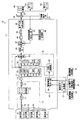
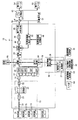
- FIG. 1 is a block diagram illustrating a configuration of an audio device 10 according to a first embodiment of the present invention.
- 1 is a perspective view of a motorcycle 12 on which an acoustic device 10 according to a first embodiment of the present invention is mounted.
- 1st Embodiment of this invention it is a figure which shows the acoustic spectrum of the audio
- FIG. It is a figure showing the frequency dependence of the critical bandwidth which Zwicker and Terhardt showed, and the frequency dependence of the critical bandwidth which Greenwood showed. It is a figure which shows the acoustic spectrum of the noise in 1st Embodiment of this invention.
- FIG. 1 is a block diagram showing the configuration of an acoustic device 10 according to the first embodiment of the present invention.
- FIG. 2 is a perspective view of the motorcycle 12 on which the acoustic device 10 according to the first embodiment of the present invention is mounted.
- the acoustic device 10 according to the first embodiment is a device that performs correction to eliminate the influence of noise on speech.
- the sound output on the assumption that it is desired to be heard by the user of the acoustic device 10 is referred to as “sound” and is intended to be heard, for example, sound based on the internal combustion engine of the motorcycle 12.
- the sound generated spontaneously is referred to as “noise”.
- the acoustic control device 11 according to the first embodiment is included in the acoustic device 10 according to the first embodiment, obtains acoustic spectrum information of the input voice information, and obtains volume information for each critical bandwidth based on the voice information. This is a device for correcting based on volume information for each critical bandwidth of noise.
- the acoustic device 10 includes an audio information output unit 13, an analysis unit 14, a noise classification spectrum output unit 16, an audio classification spectrum output unit 17, and a correction unit 18.
- the voice information output unit 13, the analysis unit 14, the noise classification spectrum output unit 16, the voice classification spectrum output unit 17, and the correction unit 18 are mounted on the motorcycle 12.
- the voice information output unit 13 is a part that outputs voice information.
- the audio information output unit 13 includes a signal source 15.
- the signal source 15 may be, for example, a radio tuner that receives a radio wave signal, demodulates it, and outputs a signal.
- the signal source 15 takes out a signal recorded on a magnetic recording tape and outputs it. disk, abbreviated as “CD”), a CD player that extracts and outputs a signal, and a MD player that extracts and outputs a signal recorded on a mini disk (abbreviated as “MD”).
- CD compact disc
- MD player that extracts and outputs a signal recorded on a mini disk
- the signal source 15 included in the audio information output unit 13 may be singular, in the first embodiment, there are a plurality of signal sources 15. In the first embodiment, it is assumed that the number of signal sources 15 is a predetermined number, and FIG. K is a predetermined natural number.
- the signal source 15 outputs a signal to the audio information output unit 13.
- the audio information output unit 13 includes a signal source selection unit 19, an anti-aliasing filter 21, and an A / D conversion unit 22.
- a signal output from the signal source 15 is input to the signal source selection means 19.
- the signal source selection unit 19 is a unit that selects any one or a plurality of signal sources 15 from the plurality of signal sources 15.
- the user operates the signal source selection means 19.
- the signal source selection unit 19 operated by the user and selecting the signal source 15 according to the user's operation outputs the signal input from the selected signal source 15 to the anti-aliasing filter 21.
- the anti-folding filter 21 is a filter that removes a signal having a frequency higher than half the sampling frequency in digital conversion at a stage prior to digital conversion of the audio signal by the A / D conversion unit 22. .
- a signal that has been digitally converted to a frequency that is higher than half the sampling frequency may not be distinguishable from a signal that has been digitally converted to a frequency that is lower than half the sampling frequency. . Therefore, by providing the anti-aliasing filter 21 on the upstream side in the signal transmission direction from the portion where digital conversion is performed, the digital signal after digital conversion includes a signal having a frequency that is so high that analog conversion cannot be performed. Can be prevented.
- the anti-folding filter 21 is realized by a low-pass filter. The signal that has passed through the anti-aliasing filter 21 is input to the dynamic range converter 23.
- the dynamic range conversion unit 23 is included in the audio information output unit 13 and converts the voltage range of the input signal into a predetermined voltage range.
- the signal indicating the volume information is transmitted as an electrical signal.
- the signal indicating the volume information is set as an electric signal having a higher voltage.
- the volume that can be handled by the acoustic device 10 is determined in advance, and the voltage that can be handled by the acoustic device 10 is also determined in advance.
- the dynamic range converter 23 detects the voltage change of the input signal, converts the maximum voltage and the minimum voltage in the voltage change range into a predetermined voltage range, and outputs the voltage range.
- the signal voltage within the range of the signal voltage change is converted into a voltage within a predetermined range by the same amplification factor.
- the amplification factor is a value obtained by dividing a voltage value within a predetermined range by a voltage value input to the dynamic range conversion unit 23 corresponding thereto.
- the amplification factor is a positive real number, and includes a real number greater than 1, 1 and a positive real number less than 1.
- the dynamic range conversion unit 23 When the acoustic device 10 is operating in a state where the amplification factor is determined in the dynamic range conversion unit 23, a voltage obtained by multiplying the voltage input to the dynamic range conversion unit 23 by the amplification factor exceeds the predetermined range. If there is, the dynamic range conversion unit 23 changes the setting of the amplification factor by setting the predetermined amplification factor to a smaller value.
- the signal output from the dynamic range converter 23 is input to the A / D converter 22.
- the A / D converter 22 is a part that converts the audio signal output from the signal source 15 into a digital signal.
- the A / D converter 22 is an analog-digital converter that converts an analog signal into a digital signal. For example, when a signal from the signal source 15 that can output a digital signal as it is without being converted into an analog signal, such as a CD player or an MD player, is transmitted as a digital signal and processed. It is good also as a structure which does not provide a D conversion part, and you may provide a D / D converter.
- the signal output from the A / D conversion unit 22 is input to the analysis unit 14 as a signal output from the audio signal output unit.
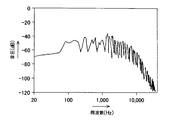
- FIG. 3 is a diagram illustrating an acoustic spectrum of audio information output from the audio information output unit 13 in the first embodiment of the present invention.
- the horizontal axis represents frequency and the vertical axis represents sound pressure.
- the vertical axis is expressed in decibel (abbreviation “dB”)
- the horizontal axis is expressed in hertz (abbreviation “Hz”)
- the vertical axis is displayed on a regular scale
- the horizontal axis is displayed on a logarithmic scale.
- the unit of dB is defined with 2 ⁇ 10 ⁇ 5 Pascal (pasca1, descending sign “Pa”) as an absolute reference value.
- FIG. 3 shows an acoustic spectrum obtained based on the voice of the first movement of Beethoven's Symphony No. 5 “Fate” as an example.
- the analysis unit 14 is a part that receives the audio information output from the audio information output unit 13 and outputs the acoustic spectrum information of the input audio information.
- a spectrum representing the sound pressure of each frequency included in the sound with respect to the frequency is referred to as “acoustic spectrum”, and information represented by the acoustic spectrum is referred to as “acoustic spectrum information”.
- the analysis unit 14 is a part that analyzes the sound information output from the sound information output unit 13 according to the frequency, obtains the sound spectrum information, and outputs the sound spectrum information.
- the analysis unit 14 may be a part that performs Fourier transform on the voice information, but in the first embodiment, the analysis unit 14 is a part that performs Z conversion on the voice information.
- the Fourier transform decomposes a wave function into its frequency components.
- the Z transformation can decompose a wave function having a complex number as a variable into its frequency components, and can analyze when the wave function is displayed as an exponential function including a complex number. Compared with the Fourier transform, the Z transform can easily analyze the phase and frequency included in the wave individually.
- the acoustic spectrum information output from the analysis unit 14 is input to the voice segment spectrum output unit 17.
- the sound segment spectrum output unit 17 is a part that receives the sound spectrum information of the sound information and outputs the sound segment spectrum information.
- Information for each critical bandwidth of the acoustic spectrum information of the speech information is referred to as “speech segmented spectrum information”.
- the voice segment spectrum information includes volume information about the volume for each critical bandwidth and information about the timbre.
- the acoustic device 10 handles a frequency band in the range of 0 Hz to 20 kHz, but may be configured to handle a frequency band in the range of 0 Hz to 10 kHz in other embodiments. This corresponds to the fact that the human audible region is approximately 20 kHz or less, the frequency band that is easy to hear and is frequently used as voice or music is 10 kHz or less.
- the critical bandwidth is the minimum frequency band of noise that affects speech for human hearing.
- noise within the critical bandwidth centered on the frequency of the sound has a greater effect on the sound than noise outside the critical bandwidth, and the sound is masked. To do.
- the minimum audible limit of the voice rises and is heard at the same volume unless the volume of the voice is higher than the volume before the masking. It is not possible.
- the critical bandwidth is said to correspond to a length of 0.9 mm in the longitudinal direction on the basement membrane having a length of 35 mm to 36 mm inside the human ear.
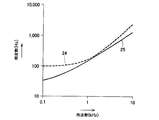
- FIG. 4 is a diagram illustrating the frequency dependence of the critical bandwidth indicated by Zwicker and Terhardt and the frequency dependence of the critical bandwidth indicated by Greenwood.
- the vertical axis and the horizontal axis represent the frequency, the unit is kHz, and both the vertical axis and the horizontal axis are displayed on a logarithmic scale.
- the critical bandwidth depends on the center frequency, and Zwicker and Terhardt expressed the frequency dependence of the critical bandwidth in 1980 by the function shown in the following equation.
- CB (Hz) 25 + 75 ⁇ 1 + 1.4 (f (kHz)) 2 ⁇ 0.69 (1)
- CB (Hz) represents the critical bandwidth
- f (kHz) represents the center frequency of the critical bandwidth.
- Greenwood expressed the frequency dependence of the critical bandwidth by the function shown in the following equation.
- CB (Hz) 0.9aA. (F (Hz) / A + 11) .ln (10) (2)
- CB (Hz) represents the critical bandwidth
- f (Hz) represents the center frequency of the critical bandwidth
- a and A are constants.
- a 0.06 and A is 165.4.
- the 1st curve 24 represented by Formula (1) and the 2nd curve 25 represented by Formula (2) are shown.
- a critical bandwidth centered on 1000 Hz is set.
- the critical bandwidth corresponding to a frequency of 1000 Hz is d (Hz)
- the critical bandwidth including the frequency of 1000 Hz is divided into a larger frequency and a smaller frequency centering on 1000 Hz.
- Each has a width of d / 2 (Hz). That is, the frequency band is 1000 ⁇ d / 2 (Hz) or more and less than 1000 + d / 2 (Hz).
- the critical bandwidth adjacent to the larger one with respect to the frequency and the critical bandwidth adjacent to the smaller one with respect to the frequency are set with respect to the critical bandwidth having the frequency band width of d (Hz).
- d frequency band width
- this critical bandwidth setting method includes a first step of determining a critical bandwidth having a predetermined frequency as a center frequency, and a frequency larger than the critical bandwidth determined in the first step.
- a critical bandwidth having a frequency band corresponding to the frequency band is determined in an adjacent frequency band, and the frequency band adjacent to the adjacent frequency band is smaller in frequency than the critical bandwidth determined in the first step.
- Defining a critical bandwidth having a frequency band corresponding to the frequency band, and further defining a frequency more than the critical bandwidth having a smaller frequency defined in the second step A third step of defining a critical bandwidth having a frequency band corresponding to the frequency band in a frequency band adjacent to the larger frequency, and a frequency band adjacent to the frequency band adjacent to the critical bandwidth determined in the immediately preceding step And a fourth step that repeats setting the critical bandwidth by performing the same step as the third step.
- the critical bandwidth may be set based on the formula (1) or may be set based on the formula (2).
- Each critical bandwidth set by these setting methods is a critical bandwidth that satisfies the expression expressed by the expression (1) or (2) with respect to the center frequency.
- the critical bandwidth can be approximated to 1/3 octave centered on each frequency. If the frequency is doubled, the pitch of the sound increases by one octave.
- the frequency of one sound is multiplied by the twelfth power of 2, that is, a value of approximately 1.059463
- the sound of the frequency obtained by the multiplication becomes a semitone higher than the one sound.
- the frequency of another sound is multiplied by the cube root of 2, that is, a value of about 1.26
- the sound of the frequency obtained by the multiplication becomes 1/3 octave higher than the other sound.
- the critical bandwidth may be determined by a method using this.
- each created series is set as the value of the center frequency of each critical bandwidth.
- Each center frequency is a square root of 1.26, that is, a band equal to or higher than a frequency obtained by dividing the center frequency by a value of about 1.12246, and a frequency band less than a frequency obtained by multiplying each center frequency by the square root of 1.26.
- the critical bandwidth may be set based on the formula (1) or the formula (2). However, in the first embodiment, the critical bandwidth is 1/3 of each critical bandwidth. Set in a way that approximates an octave. In the present embodiment, 40 critical bandwidths are set in a frequency band of 0 Hz to 20 kHz.
- FIG. 1 illustrates a case where the number of critical bandwidths is N. N is a predetermined natural number.
- the voice segment spectrum output unit 17 includes a plurality of band pass filters 26.
- the band-pass filter 26 classifies the acoustic spectrum information input to the voice classification spectrum output unit 17 for each critical bandwidth.
- the sound classification spectrum output unit 17 outputs the volume information for each frequency included in each critical bandwidth as volume information averaged within each critical bandwidth after the acoustic spectrum information is classified by the bandpass filter 26. To do. Within each critical bandwidth, the volume information is averaged, but the frequencies within the critical bandwidth are not processed together. Therefore, in the audio segment spectrum information in which information about the timbre is held, the wave phase for each frequency is not processed in a batch within each critical bandwidth, and the phase is in a state associated with the frequency. Is processed.
- the volume information included in the acoustic spectrum information is classified for each critical bandwidth, and a set of volume information obtained by averaging the volume information included in each critical bandwidth with respect to frequency is referred to as “segmented spectrum information. ".
- segmented spectrum information is based on speech
- the segmented spectrum information also includes information about the timbre.
- the voice segment spectrum output unit 17 converts the input acoustic spectrum information into segment spectrum information and outputs the segment spectrum information to the correction unit 18.
- FIG. 5 is a diagram showing an acoustic spectrum of noise in the first embodiment of the present invention.
- FIG. 5 shows, as an example, an acoustic spectrum of noise generated when the motorcycle 12 having a displacement of 1600 cubic centimeters (abbreviated as “cc”) travels.
- the horizontal axis represents frequency and the vertical axis represents sound pressure.
- the vertical axis is expressed in dB
- the horizontal axis is expressed in Hz
- the vertical axis is displayed on an equally spaced scale
- the horizontal axis is displayed on a logarithmic scale.
- the frequency band shown as the horizontal axis in FIG. 5 has a different range from the frequency band shown in FIG.
- the noise generated by the motorcycle 12 changes according to the traveling speed of the motorcycle 12 and the engine speed.
- the traveling speed of the motorcycle 12 changes, the relative speed between the motorcycle 12 and the air around the motorcycle 12 changes, and wind noise is generated.
- the rotational speed at which the tire of the motorcycle 12 rotates with respect to the road surface changes, and noise is generated when a part of the tire contacts and separates from the road surface.
- the engine speed changes, the noise emitted from the engine changes.
- Noise is analyzed by frequency and can be expressed as an acoustic spectrum of noise representing the volume at each frequency.
- the acoustic spectrum information of the noise is classified for each critical bandwidth set by any one of the critical bandwidth setting methods, and the classified spectrum information obtained for the noise is referred to as “noise classified spectrum information”.
- the noise classification spectrum output unit 16 is a part that outputs noise classification spectrum information representing sound volume information for each critical bandwidth of noise.
- the noise classification spectrum output unit 16 includes a noise classification spectrum storage unit 27 and a noise information extraction unit 28.
- the noise classification spectrum storage unit 27 is a part in which sound volume information for each critical bandwidth of noise is stored.
- the noise category spectrum information stored in the noise category spectrum storage unit 27 is acquired by experiments and accumulated in advance.
- the noise information extraction unit 28 is a part that acquires and outputs volume information for each critical bandwidth of noise corresponding to the environment from the noise classification spectrum storage unit 27.
- the frequency of each critical bandwidth of the speech segment spectrum information output by the acoustic segment spectrum output unit matches the frequency of each critical bandwidth of the noise segment output unit output by the noise segment spectrum output unit 16.
- the noise classification spectrum storage unit 27 stores a plurality of types of noise classification spectrum information regarding the noise of the motorcycle 12.
- the noise classification spectrum information stored in the noise classification spectrum storage unit 27 is noise classification spectrum information of various patterns based on the noise when the traveling speed of the motorcycle 12 is different and the noise when the rotational speed of the engine is different.
- the rotational speed of the engine corresponds one-to-one with the rotational speed of the output shaft of the internal combustion engine mounted on the motorcycle 12, that is, the crankshaft of the engine.
- the noise information extraction unit 28 acquires the volume information for each critical bandwidth of the noise corresponding to the traveling speed of the motorcycle 12 from the noise classification spectrum storage unit 27 and outputs it. Specifically, the noise information extraction unit 28 selects volume information for each critical bandwidth of the noise from the noise classification spectrum storage unit 27 according to the rotational speed of the output shaft of the internal combustion engine that drives the motorcycle 12. Obtain and output.
- An output shaft rotation speed information acquisition unit 32 is electrically connected to the noise information extraction unit 28, and information detected by the output shaft rotation speed information acquisition unit 32 is output to the noise information extraction unit 28. Is done.
- the output shaft rotation speed information acquisition unit 32 is a device that measures the rotation speed of the crankshaft of the engine of the motorcycle 12. Specifically, the rotation speed information acquisition unit 32 of the output shaft is a tachometer.
- the noise information extraction unit 28 can select the noise category spectrum information corresponding to the rotational speed of the engine from among the plurality of noise category spectrum information stored in the noise category spectrum storage unit 27.
- a vehicle speed information acquisition unit 33 is electrically connected to the noise information extraction unit 28, and information detected by the vehicle speed information acquisition unit 33 is output to the noise information extraction unit 28.
- the vehicle speed information acquisition unit 33 is a device that measures the traveling speed of the motorcycle 12.
- the vehicle speed information acquisition unit 33 is a speed meter.
- the noise information extraction unit 28 can select and acquire the noise classification spectrum information corresponding to the traveling speed of the motorcycle 12 from the plurality of noise classification spectrum information stored in the noise classification spectrum storage unit 27. it can.
- the noise information extraction unit 28 outputs the acquired noise classification spectrum information to the correction unit 18.
- the rotational speed of the engine and the traveling speed of the motorcycle 12 are referred to as “environment”.
- the correcting unit 18 is a part that corrects the speech segment spectrum information based on the noise segment spectrum information and outputs corrected segment spectrum information representing the corrected speech segment spectrum information.
- the correction unit 18 includes a difference calculation unit 34 and a calculation unit 35.
- FIG. 6 is a diagram showing a segmented spectrum representing a difference between the speech segmented spectrum information and the noise segmented spectrum information in the first embodiment of the present invention.
- 6 is a segmented spectrum representing a difference between the segmented spectrum information obtained from the acoustic spectrum information of the speech shown in FIG. 3 and the segmented spectrum information obtained from the acoustic spectrum information of the noise shown in FIG. It is a spectrum showing the information which subtracted noise classification spectrum information from classification spectrum information.
- the horizontal axis represents frequency (Hz) and the vertical axis represents sound pressure (dB).
- each critical bandwidth is set by a method approximating 1/3 octave.
- the segmented spectrum based on the two measurement results is represented by a bar graph and displayed with a slight shift in the horizontal axis direction.
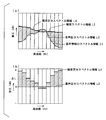
- FIG. 7 is a diagram illustrating the function of the correction unit 18 in the first embodiment of the present invention.
- FIG. 7A is a diagram showing the acoustic spectrum L1, the speech segment spectrum L3, and the noise segment spectrum L4 of the speech information.
- FIG. 7B shows the speech segment spectrum information L3 from the noise segment spectrum information L4.
- the horizontal axis represents the frequency (Hz) and the vertical axis represents the sound pressure (dB), and the audio information indicated by the curve L1 in Fig. 7 (a).
- the difference ⁇ L is calculated by the difference calculation unit 34.
- the difference information calculated by the difference calculation unit 34 is shown in FIG.
- the volume information for each critical bandwidth included in the speech classification spectrum information L3 is subtracted for each critical bandwidth and the volume information for each critical bandwidth included in the noise classification spectrum information L4.
- the difference information ⁇ L calculated by the difference calculation unit 34 is output from the difference calculation unit 34 to the calculation unit 35.
- the difference calculation unit 34 subtracts the speech segment spectrum information L3 from the noise segment spectrum information L4.
- the difference information ⁇ L takes a positive value in a frequency band in which the volume of noise is larger than the volume of voice.
- the difference information ⁇ L takes a negative value in a frequency band in which the volume of the noise is smaller than the volume of the audio.
- a frequency band with a louder sound volume is called a “first band”
- a frequency band with a louder sound volume is called a “second band”. Under the condition where the spectrum measurement shown in FIG. 6 is performed, all the frequency bands are the first bands.
- the sound section spectrum information L3, the difference information ⁇ L, and the noise section spectrum information L4 are input to the calculation unit 35.
- the computing unit 35 adds the voice segment spectrum information L3 and the difference information ⁇ L in the first band, and subtracts the difference information ⁇ L from the voice segment spectrum information L4 in the second band.
- the volume that is masked in the second band where the sound volume is higher than the noise volume is equal to the noise volume.
- the volume of the voice that can be heard as the remaining voice after being masked by the noise is equal to the volume of the voice.
- the computing unit 35 adds the sound segment spectrum information for the sound volume represented by the mask sound volume information and the sound segment spectrum information L3 in the same phase, and outputs the result as corrected segment spectrum information.
- the volume represented by the mask volume information in each critical band is the volume of the voice masked by noise.
- the calculation unit 35 when the volume represented by the mask volume information exceeds 15 dB, the calculation unit 35 adds the segmented spectrum information of the sound having a volume of 15 dB to the speech segmented spectrum information L3.
- the correction unit 18 corrects the voice masked by noise for each critical bandwidth after performing frequency analysis, but when the volume increased by the correction exceeds 15 dB, a part of the voice increased by the correction, The ratio of a part of the sound having a frequency that is not masked by noise changes, and the sound becomes uncomfortable for human hearing. Therefore, by limiting the volume increased by the correction to 15 dB or less, it is possible to prevent the sound output from the acoustic device 10 from being uncomfortable for human hearing.
- the speech segment spectrum information L3 is corrected based on the noise segment spectrum information L4, and the corrected speech segment spectrum information is referred to as “corrected segment spectrum information”.
- the corrected segmented spectrum information is segmented spectrum information obtained by adding the segmented spectrum information of the sound having the volume represented by the mask volume information to the speech segmented spectrum information.
- the noise is stationary noise in which the acoustic spectrum of the noise has a similar shape over a time of 1 second or more or several seconds or more, and the calculation unit 35 performs sound correction in response to the stationary noise.
- the timbre depends on the waveform of the sound when the sound wave is represented with the horizontal axis representing time and the vertical axis representing sound pressure.
- the timbre of a voice such as music, a voice of a person or a musical instrument is different from the timbre of noise generated by the mechanical operation of the motorcycle 12. This is because the frequency dependence is different, and the sound waveform is different when time is represented on the horizontal axis. Therefore, the speech masked by noise can be corrected by adding the speech spectrum information of the same phase to the speech segment spectrum information.
- the analysis unit 14 analyzes the speech information output from the speech information output unit 13, and based on this, the speech segment spectrum output unit 17 outputs the speech segment spectrum information L3, and the correction unit 18 performs the speech segment spectrum information L3 and the noise.
- the step of correcting the voice segment spectrum information L3 based on the segment spectrum information L4 is repeated at a predetermined cycle per unit time.
- the cycle in which this step is repeated is preferably about 1 / 16th of a second to 1/32000 of a second. This period is a period in which a 2 kHz sound waveform can be divided into 8 to 16 equal parts with respect to time.
- the acoustic control device 11 includes a noise information extraction unit 28, an analysis unit 14, a voice segment spectrum output unit 17, and a correction unit 18.
- the acoustic control apparatus 11 is integrally formed including these. Specifically, they are integrally formed by being mounted on one substrate.
- the acoustic control device 11 is further integrally formed to further include a conversion unit 39, an output change unit 42, an analysis return unit 44, a D / A conversion unit 46, and a quantization distortion removal unit 48, which will be described in detail later.
- the acoustic device 10 further includes a conversion unit 39.
- the conversion unit 39 is a part that receives the corrected classification spectrum information, converts the volume information into volume information equal to or lower than a predetermined volume, and outputs the volume information.
- the volume indicated by the correction category spectrum information may exceed the volume that can be handled by the acoustic device 10. Therefore, the conversion unit 39 converts the correction segment spectrum information into information indicating a predetermined volume range.
- the volume of sound in a frequency band masked by noise is amplified, the volume of the amplified volume may be too high, and the emitted sound may sound strange to human hearing.
- the conversion unit 39 applies a restriction on the volume indicated by the correction section spectrum information to the correction section spectrum information and performs conversion, so that the sound emitted from the acoustic device 10 gives a strange feeling to human hearing. To prevent.
- the conversion unit 39 converts volume information of a volume exceeding a predetermined volume among the calculation results into volume information of a predetermined volume.
- the conversion unit may be configured such that the volume indicated by the corrected segmented spectrum information and the volume indicated by the segmented spectrum information after being corrected by the conversion unit are in a linear relationship having a certain proportionality constant.
- the acoustic device 10 further includes an output changing unit 42.
- the output changing unit 42 performs at least one of increase, decrease, and identity on the volume information for each critical bandwidth output from the correction unit 18 based on the isosensitivity curve of the sound volume. Part.
- the volume of the sound that can be heard by humans varies depending on the frequency. In other words, when listening to sounds of a plurality of types of frequencies having the same sound pressure, if the frequencies are different, the magnitude of the sound felt by humans is different. This is because the sensitivity of human hearing to sound differs depending on the frequency.
- the sensitivity of human hearing is higher for sounds of about 2 kHz to 4 kHz than for sounds of other frequencies.
- the sensitivity with respect to the sound of less than 100 Hz and the sound over 10 kHz is lower than the sensitivity to the sound with a frequency of 100 Hz to 10 kHz. Therefore, the sound volume of each frequency that can be heard as a sound of the same volume for human hearing is the smallest at 2 kHz to 4 kHz, and is larger in the range below 100 Hz and above 10 kHz.
- a curve drawn with the vertical axis representing the sound pressure of each frequency and the horizontal axis representing the sound that can be heard as a sound of the same volume for human hearing is referred to as a “sound loudness isosensitivity curve”. Further, the isosensitivity curve of the loudness may be simply referred to as “isosensitivity curve”.
- the shape of the isosensitivity curve of the loudness is approximately similar, but the smaller the sound pressure, the lower the vertical axis at 2 kHz to 4 kHz.
- the difference between the position and the position of the vertical axis in the range of 100 Hz to 10 kHz is large.
- the smaller the sound pressure the smaller the volume of sound that can be heard by humans.
- the position of the vertical axis of the isosensitivity curve of sound volume is closer to 0 as the sound pressure is smaller.
- the isosensitivity curve of the volume of sound at each sound pressure is drawn as an isosensitivity curve by measuring the sound pressure at each frequency that is heard at the same volume as this volume, with the sound pressure at 1000 Hz as a reference. .
- the output change unit 42 receives the correction segment spectrum information output from the correction unit 18 and passes through the conversion unit 39, and the output change unit 42 converts the correction segment spectrum information into an isosensitivity curve of sound volume. Further correction based on this.
- the output changing unit 42 is electrically connected to the conversion unit 39.
- the output changing unit 42 may correct the correction segment spectrum information based on one of a plurality of sound volume isosensitivity curves corresponding to a plurality of types of sound pressures. In accordance with the volume specified by the volume operation unit 51, an isosensitivity curve of one sound volume is selected from an isosensitivity curve of a plurality of sound volumes corresponding to a plurality of types of sound pressures, and based on this To correct.
- the acoustic device 10 further includes an isosensitivity curve storage unit 49, a volume operation unit 51, and an isosensitivity curve extraction unit 52.
- the isosensitivity curve storage unit 49 is a portion in which a plurality of isosensitivity curves depending on the sound volume are stored in association with a plurality of the sound volumes.
- the volume operation unit 51 is a part for inputting volume setting information for adjusting the volume of the sound output from the acoustic device 10.
- the isosensitivity curve extraction unit 52 is a part that selects and acquires an isosensitivity curve having a sound volume corresponding to the volume setting information input from the volume operation unit 51 from the isosensitivity curve storage unit 49, and outputs it. .
- the output changing unit 42 converts the volume information for each critical bandwidth output from the converting unit 39 based on the isosensitivity curve of the sound volume according to the volume setting information output from the isosensitivity curve extracting unit 52. For at least one of increase, decrease, and identity.
- the output changing unit 42 is electrically connected to the isosensitivity curve extracting unit 52, and the isosensitivity curve of the sound volume output from the isosensitivity curve extracting unit 52 is input to the output changing unit 42.
- a volume operation unit 51 and an isosensitivity curve storage unit 49 are electrically connected to the isosensitivity curve extraction unit 52.
- the volume operation unit 51 is a part that the user of the audio device 10 operates to adjust the volume output from the audio device 10.
- the volume operation unit 51 is connected to the isosensitivity curve extraction unit 52 and the volume amplifier 53.
- the volume amplifier 53 is a part that changes the volume of the audio information output to the first and second speakers 54 and 55.
- Information on the sound volume determined by the operation of the sound volume operation unit 51 is referred to as “volume setting information”.
- the volume setting information output from the volume operation unit 51 is input to the volume amplifier 53, and the volume amplifier 53 changes the volume of the audio information based on the input volume setting information.
- a volume meter 56 is connected to the volume amplifier 53.
- the volume meter 56 displays at least one of the volume setting information and the amplification factor by the volume amplifier 53. The display of the volume meter 56 is visible to the user of the acoustic device 10.
- the volume setting information output from the volume operation unit 51 is also input to the isosensitivity curve extraction unit 52.
- a plurality of isosensitivity curves of a plurality of sound volumes stored in the isosensitivity curve storage unit 49 are stored corresponding to a plurality of different sound volumes.
- the isosensitivity curve extraction unit 52 assumes that the volume of the sound emitted from the first and second speakers 54 and 55 is determined by the output from the volume operation unit 51 through the volume amplifier 53, and the first and second speakers 54. , 55 is selected from the isosensitivity curve of the sound volume corresponding to the volume of the sound emitted from the, 55, taken out from the isosensitivity curve storage unit 49 and output as isosensitivity curve information.
- the isosensitivity curve information output from the isosensitivity curve extracting unit 52 is input to the output changing unit 42.
- the volume information at each frequency indicated by the information on the isosensitivity curve of the volume of sound input to the output changing unit 42 varies depending on the frequency.
- the sound pressure at 1000 Hz is used as the reference for the isosensitivity curve, so that the output change unit 42, the isosensitivity curve extraction unit 52, the isosensitivity curve storage unit 49, and the sound volume operation unit 51 also use the 1000 Hz Sound pressure is used as a reference for volume setting information.
- the acoustic device 10 is configured on the assumption that the volume indicated by the volume information is a volume within a predetermined range.
- the range related to volume information is referred to as a “volume range”.
- the volume range is set for each critical bandwidth. Among the volumes represented by the volume information in the volume range, the lowest volume is set to zero sound pressure in any critical bandwidth, and the maximum volume in the volume range is the voice category spectrum information, noise category spectrum information, and correction category.
- the spectrum information is set to be the same in any critical bandwidth.
- the output changing unit 42 changes the volume range of the corrected classification spectrum information output from the converting unit 39.
- the frequency band In the frequency band below 100 Hz and above 10 kHz, the frequency band is increased according to the isosensitivity curve of the loudness.
- the frequency band is in the range of 2 kHz to 4 kHz, the frequency band is reduced according to the isosensitivity curve of the loudness.
- the critical bandwidth including a frequency of 1000 kHz, the volume range is not changed. Not changing or multiplying by the real number 1 is called “identity”, and performing the identity operation is called “identity operation”.
- the output changing unit 42 performs any operation such as increase, decrease, and identity with respect to the volume range in each critical bandwidth. In other words, the output changing unit 42 changes the ratio of the volume in the high sound range, the low sound range, and the mid sound range according to the isosensitivity curve of the sound volume.
- the segmented spectrum information that is input to the output changing unit 42 as corrected segmented spectrum information and converted by the operation of the output changing unit 42 is output to the analysis return unit 44.
- the analysis return unit 44 converts the information input from the output change unit 42 from a signal in a format representing the volume information of each frequency into a signal in a format representing an audio waveform by performing an inverse Z transform, and outputs the signal. To do.
- the signal output from the analysis return unit 44 is, for example, a signal represented by the same format as a signal obtained by converting a sound wave, that is, a change in sound pressure, using a pulse code modulation (abbreviation “PCM”). is there.
- PCM pulse code modulation
- the signal output from the analysis return unit 44 is input to a D / A conversion unit 46 that converts a digital signal into an analog signal, is converted into an analog signal, and is output as a signal in a format that expresses a sound wave as a voltage waveform.
- the signal output from the D / A conversion unit 46 is input to the quantization distortion removal unit 48.
- the quantization distortion removal unit 48 is realized by a low-pass filter, and is a part that removes quantization distortion.
- the signal output from the quantization distortion removing unit 48 is input to the volume amplifier 53, amplified to a signal having a size necessary for output from the first and second speakers 54 and 55, and output.
- the amplification factor when the volume amplifier 53 amplifies the signal from the D / A conversion unit 46 is determined according to the volume setting information set by the volume operation unit 51.
- the signal output from the volume amplifier 53 is input to the stereo separation unit 45, stereo-separated, and output to the first and second speakers 54 and 55.
- the acoustic device 10 includes an audio information output unit 13, an analysis unit 14, a noise classification spectrum output unit 16, an audio classification spectrum output unit 17, and a correction unit 18.
- the analysis unit 14 outputs the acoustic spectrum information of the voice information output from the voice information output unit 13. As a result, it is possible to process the audio information according to the frequency.
- the voice segment spectrum output unit 17 outputs voice segment spectrum information representing volume information for each critical bandwidth of the acoustic spectrum information.
- the critical bandwidth is the minimum frequency band of noise that affects voice information for human hearing.
- noise within the critical bandwidth centered on the frequency of the sound has a greater effect on the sound than noise outside the critical bandwidth, and the sound is masked. To do.
- the minimum audible limit of the voice rises and cannot be heard at the same volume unless the volume of the voice is increased above the volume before masking. .
- the noise category spectrum output unit 16 outputs noise category spectrum information representing volume information for each critical bandwidth of noise.
- the correction unit 18 corrects the speech segment spectrum information based on the noise segment spectrum information and outputs a corrected segment spectrum. As a result, it is possible to reduce the change that the noise gives to how the sound is heard. Processing can be performed for each frequency band that is necessary for human hearing, and the amount of information that voice information has can be reduced, so that voice information correction processing is performed without reducing accuracy for human hearing. The calculation cost concerning can be reduced.
- the corrected sound from giving an audible sense of incongruity to humans, as compared with the case where the change in how the sound is heard due to noise is reduced for each frequency band larger than the critical bandwidth.
- the time required for the correction process can be shortened as compared with the case where the change in how the sound is heard due to noise is reduced for each frequency band smaller than the critical bandwidth.
- the correction unit 18 includes the difference calculation unit 34 and the calculation unit 35.
- the difference calculation unit 34 calculates the difference between the speech classification spectrum information and the noise classification spectrum information, and outputs the difference information.
- the correction unit 18 can obtain the sound volume masked by noise in the sound output from the sound information output unit 13.
- the calculation unit 35 adds the weighted spectrum information and the difference information by weighting. Thereby, the volume of the sound output from the sound information output unit 13 can be corrected by the sound volume masked by the noise.
- the voice output from the voice information output unit 13 is not masked by noise, it is masked by noise and corrected by the acoustic device 10 when the human hearing is stimulated.
- the voice can be made to be the same as the human feeling when stimulating human hearing.
- the calculation part 35 weights audio
- the acoustic device 10 is configured to further include the output changing unit 42.
- the intensity of stimuli given to human hearing by sounds having the same sound pressure and different frequencies varies depending on the frequency.
- a curve that shows the amplification factor for each frequency of sound to make the intensity of the stimulus that each frequency gives to human hearing the same intensity, according to the frequency, is an isosensitivity curve of the loudness It is.
- the output change unit 42 performs at least one of increase, decrease, and identity on the volume information for each critical bandwidth output from the correction unit 18 based on the isosensitivity curve of the sound volume. Therefore, even if the frequency of the stimulus output to the human auditory sense by the sound output from the sound information output unit 13 is different, the sound having the same frequency can be made the same.
- the noise classification spectrum output unit 16 includes the noise classification spectrum storage unit 27 and the noise information extraction unit 28.
- the noise classification spectrum storage unit 27 stores volume information for each critical bandwidth of the noise
- the noise information extraction unit 28 receives the volume information for each critical bandwidth of the noise from the noise classification spectrum storage unit 27. Is obtained and output.
- the time taken to output the volume information for each critical bandwidth of the noise can be shortened. Therefore, it is possible to minimize the delay in correction with respect to changes in environmental noise.
- the voice information output unit 13, the analysis unit 14, the noise classification spectrum output unit 16, the voice classification spectrum output unit 17, and the correction unit 18 are mounted on the motorcycle 12. .
- the sound masked by the noise accompanying the traveling of the motorcycle 12 can be corrected. Therefore, in a state where the sound output from the sound information output unit 13 is not masked by noise, it is masked by the human feeling when stimulating human hearing and the noise accompanying the running of the motorcycle 12, and The sound corrected by the acoustic device 10 can make the human feeling the same when stimulating human hearing.
- the noise information extraction unit 28 acquires volume information for each critical bandwidth of noise corresponding to the traveling speed of the motorcycle 12 from the noise classification spectrum storage unit 27 and outputs it.
- wind noise depending on the relative speed between the motorcycle 12 and the surrounding air, and noise generated from the wheels and road surface of the motorcycle 12 are output from the audio information output unit 13 while the motorcycle 12 is traveling.
- the sound output from the sound information output unit 13 is corrected while the motorcycle 12 is traveling, and wind noise that depends on the relative speed between the motorcycle 12 and the surrounding air, and the motorcycle. It becomes possible to make the sound audible as the same sound as when not masked by the noise generated from the 12 wheels and the road surface.
- the noise information extraction unit 28 receives the volume information for each critical bandwidth of the noise from the noise classification spectrum storage unit 27 according to the rotation speed of the output shaft of the internal combustion engine that drives the motorcycle 12. Select to get and output.
- the traveling of the motorcycle 12 is performed.
- the sound output from the sound information output unit 13 is corrected to a sound that can be heard as the same sound as when not masked by the mechanical sound depending on the rotational speed of the output shaft of the internal combustion engine of the motorcycle 12. It becomes possible to do.
- the acoustic control device 11 includes the noise information extraction unit 28, the analysis unit 14, the voice segment spectrum output unit 17, and the correction unit 18.
- the analysis unit 14 outputs acoustic spectrum information of the voice information input to the analysis unit 14.
- the voice segment spectrum output unit 17 outputs voice segment spectrum information representing volume information for each critical bandwidth of the acoustic spectrum of the voice information.
- the noise information extraction unit 28 is connected to the noise classification spectrum storage unit 27 in which the volume information for each critical bandwidth of noise is stored, and the noise classification spectrum information representing the volume information for each critical bandwidth of noise according to the environment. , Acquired from the noise category spectrum storage unit 27 and output.
- the correcting unit 18 corrects the speech segment spectrum information based on the noise segment spectrum information, and outputs corrected segment spectrum information representing the corrected speech segment spectrum information.
- the corrected sound from giving an audible sense of incongruity to humans, as compared with the case where the change in how the sound is heard due to noise is reduced for each frequency band larger than the critical bandwidth.
- the time required for the correction process can be shortened as compared with the case where the change in how the sound is heard due to noise is reduced for each frequency band smaller than the critical bandwidth.
- the acoustic device 10 further includes an isosensitivity curve storage unit 49, a volume operation unit 51, and an isosensitivity curve extraction unit 52.
- the intensity of stimuli given to human hearing by sounds having the same sound pressure and different frequencies varies depending on the frequency.
- the frequency dependence of the intensity of the stimulus given to human hearing by sounds having the same sound pressure but different frequencies varies depending on the magnitude of the sound pressure.
- the isosensitivity curve storage unit 49 a plurality of isosensitivity curves depending on the sound volume are stored in association with a plurality of the sound volumes.
- the volume operation unit 51 is an operation unit for inputting volume setting information for adjusting the volume of the sound output from the acoustic device 10. Thus, the user can adjust the volume of the sound output from the acoustic device 10 by operating the volume operation unit 51.
- the volume operation unit 51 outputs volume setting information for adjusting the volume of the sound output from the acoustic device 10 to the isosensitivity curve extraction unit 52.
- the isosensitivity curve extraction unit 52 stores the isosensitivity curve storage. From the unit 49, an isosensitivity curve having a loudness level corresponding to the volume setting information is selected and acquired and output.
- the output changing unit 42 converts the volume information for each critical bandwidth output from the correction unit 18 based on the isosensitivity curve of the volume corresponding to the volume setting information output from the isosensitivity curve extracting unit 52. For at least one of increase, decrease, and identity.
- the sound output from the sound information output unit 13 can make the intensity of stimulation given to human hearing the same between sounds having different frequencies even if the frequencies are different, and the setting for the volume can be made. Even when it changes, it can prevent that the intensity
- the acoustic device 10 further includes a conversion unit 39.
- the conversion unit 39 receives the correction classification spectrum information, converts the volume information into a volume information equal to or lower than a predetermined volume, and outputs the volume information.
- the conversion unit 39 receives the correction classification spectrum information, converts the volume information into a volume information equal to or lower than a predetermined volume, and outputs the volume information.
- the conversion unit 39 converts volume information of a volume exceeding a predetermined volume in the calculation result into volume information of a predetermined volume. As a result, when the corrected classification spectrum is converted into audio information, it is possible to convert audio information including a volume in a range that cannot be output into volume information in a range that can be output. When the volume information is converted into audio Can be output.
- the acoustic device 10 further includes a conversion unit 39.
- the conversion unit 39 receives the correction classification spectrum information, converts the volume information into a volume information equal to or lower than a predetermined volume, and outputs the volume information.
- the conversion unit 39 receives the correction classification spectrum information, converts the volume information into a volume information equal to or lower than a predetermined volume, and outputs the volume information.
- the volume information of the audio information in the frequency band whose minimum audible limit has been increased by masking is increased as a volume when this is increased by correction, an uncomfortable feeling of hearing is given to humans.
- Range volume exists. Therefore, when the corrected segmented spectrum is converted into sound by making the volume when the corrected segmented spectrum is converted into audio information smaller than the volume in a range that gives an audible discomfort to humans, It is possible to prevent humans from giving an auditory discomfort.
- the conversion unit 39 converts volume information of a volume exceeding a predetermined volume in the calculation result into volume information of a predetermined volume. As a result, when the corrected classification spectrum is converted into audio information, it is possible to convert audio information including a volume in a range that cannot be output into volume information in a range that can be output. When the volume information is converted into audio Can be output.
- the audio device 10 further includes a dynamic range converter 23.
- the dynamic range conversion unit 23 converts the sound information output from the sound information output unit 13 to multiply the sound volume represented by the sound volume information of the sound information output from the sound information output unit 13 by a real number. As a result, audio information including a volume that cannot be output can be converted into audio information within a volume range that can be output. Since the dynamic range conversion unit 23 multiplies the volume represented by the volume information of the audio information by a real number, the volume of the volume included in the audio is converted when the volume is converted into the audio information within the range that can be output and then converted into the audio. It is possible to maintain the ratio of the volume level between the low volume sound and the high volume sound. As a result, it is possible to prevent the voice from giving an audible sense of incongruity to humans.
- FIG. 8 is a block diagram showing the configuration of the acoustic device 10 according to the second embodiment of the present invention.
- the acoustic device 10 according to the second embodiment is similar to the acoustic device 10 according to the first embodiment, and will be described below with a focus on differences between the second embodiment and the first embodiment.
- the correction unit 18 includes a switching unit 58 including a plurality of division switching units 57, a switching control unit 62, and a calculation unit 35.
- the plurality of segment switching units 57 are portions that can pass or block voice segment spectrum information for each critical band.
- the switching control unit 62 receives noise classification spectrum information and controls the switching unit 58 based on the input noise classification spectrum information to allow each classification switching unit 57 to pass or block the voice classification spectrum information. is there.
- the computing unit 35 is a part to which the voice segment spectrum information and the output from the switching unit 58 are input, and the voice segment spectrum information and the output from the switching unit 58 are weighted and added.
- the analysis unit 14 and the voice segment spectrum output unit 17 in the second embodiment are the same as those in the first embodiment.
- the voice classification spectrum information output from the voice classification spectrum output unit 17 is input to the switching unit 58 and the calculation unit 35 included in the correction unit 18.
- the plurality of segment switching units 57 included in the switching unit 58 correspond to each critical bandwidth set in each bandpass filter 26 of the speech segment spectrum output unit 17. Therefore, the number of the division switching unit 57 and the number of the band pass filter 26 are the same, and the division switching unit 57 and the band pass filter 26 correspond one-to-one.
- the volume information of each critical bandwidth that has passed through the voice classification spectrum output unit 17 is allowed or blocked by the classification switching unit 57.
- a state in which a signal representing the sound section spectrum information is passed is referred to as a “passing state”, and a state in which the signal is blocked is referred to as a “blocking state”.
- the plurality of division switching units 57 are independently controlled by the switching control unit 62 and switched between a passing state and a blocking state.
- the switching control unit 62 is electrically connected to the noise category spectrum extraction unit, and receives noise category spectrum information from the noise category spectrum extraction unit.
- the switching control unit 62 stores information of a predetermined value as volume information of each critical bandwidth of the noise classification spectrum information.
- the switching control unit 62 sets the classification switching unit 57 corresponding to a critical bandwidth whose volume information of the noise classification spectrum information is larger than the predetermined value as a passing state.
- the classification switching unit 57 corresponding to the critical bandwidth whose volume information of the noise classification spectrum information is smaller than the predetermined value is set to the cutoff state.
- the switching unit 58 passes voice segment spectrum information corresponding to a critical bandwidth in which the volume information of the noise category spectrum information is larger than a predetermined value, and the volume information of the noise category spectrum information is smaller than a predetermined value.
- the voice segment spectrum information corresponding to the bandwidth is blocked.
- the segmented spectrum information that has passed through the switching unit 58 is input to the calculation unit 35.
- the segmental spectrum information that has passed through the switching unit 58 is input to the computing unit 35, and the speech segmental spectrum information output from the speech segmental spectrum output unit 17 is input bypassing the switching unit 58.
- the calculation unit 35 adds the two pieces of segmented spectrum information input to the calculation unit 35. As a result, the volume information of the speech segment spectrum information can be doubled in a critical bandwidth where the volume of the critical bandwidth of the noise is large.
- the noise classification spectrum storage unit 27 stores noise classification spectrum information of a plurality of noises of the motorcycle 12 in association with the vibration magnitudes of the chassis and the vehicle body of the motorcycle 12.
- the noise information extraction unit 28 receives the critical noise level from the noise classification spectrum storage unit 27 according to the vibration of at least one of the chassis and the vehicle body of the motorcycle 12, the rotational speed of the engine, and the traveling speed of the motorcycle 12. Select and acquire volume information for each bandwidth and output.
- the vibration of at least one of the chassis and the vehicle body of the motorcycle 12, the rotational speed of the engine, and the traveling speed of the motorcycle 12 are collectively referred to as “environment”.
- the noise emitted from the motorcycle 12 is also related to the vibration of the chassis and the vehicle body of the motorcycle 12. Although there are noises generated by the vibration of the chassis or the vehicle body, the factors that contribute to the generation of noise also affect the vibration of the chassis or vehicle body of the motorcycle 12, and these vibrations and noise may be indirectly related. is there. Specifically, the noise is determined by the engine speed, speed, and road surface condition, and the chassis or vehicle body vibration is determined by the engine speed, speed, and road surface condition.
- the vibration information acquisition unit 63 is electrically connected to the noise information extraction unit 28, and information detected by the vibration information acquisition unit 63 is output to the noise information extraction unit 28.
- the vibration information acquisition unit 63 is a device that is connected to at least one of the chassis and the vehicle body of the motorcycle 12 and detects at least one of the amplitude of vibration and the maximum acceleration accompanying the vibration.
- the noise information extracting unit 28 among the plurality of noise category spectrum information stored in the noise category spectrum storage unit 27, the vibration detected by the vibration information acquisition unit 63 is the vibration of the chassis or the vibration of the vehicle body.
- the noise classification spectrum information is extracted according to the type of vibration, the amplitude of the vibration, and the maximum acceleration accompanying the vibration.
- the noise classification spectrum information acquired by the noise information extraction unit 28 and output from the noise information extraction unit 28 is input to the switching control unit 62 and used by the switching control unit 62 as described above.
- the correction unit 18 includes a switching unit 58 including a plurality of division switching units 57, a switching control unit 62, and a calculation unit 35.
- the plurality of segment switching units 57 in the switching unit 58 can pass or block the speech segment spectrum information for each critical bandwidth.
- the switching control unit 62 controls the switching unit 58 based on the noise classification spectrum information, thereby allowing each classification switching unit 57 to pass or block the voice classification spectrum information.
- the correction unit 18 obtains the frequency band masked by the noise, and extracts the volume information of the voice information in the frequency band masked by the noise out of the voice segment spectrum information output from the voice information output unit 13. Can do.
- the computing unit 35 adds the weighted spectrum information and the output from the switching unit 58 by weighting.
- the volume information of the voice information in the frequency band masked by noise and the voice division spectrum information of the voice information can be added. Therefore, in a state where the sound output from the sound information output unit 13 is not masked by noise, it is masked by noise and corrected by the sound device 10 when the human senses when stimulating human hearing. It is possible to make the human feeling the same when the sound stimulates human hearing.
- the calculating part 35 weights each of audio
- the noise information extraction unit 28 receives the volume information for each critical bandwidth of the noise from the noise classification spectrum storage unit 27 according to the vibration of at least one of the chassis and the vehicle body of the motorcycle 12. Select to get and output.
- the motorcycle 12 The sound output from the sound information output unit 13 during traveling can be corrected and heard as the same sound as when not masked by noise depending on vibration of at least one of the chassis of the motorcycle 12 and the vehicle body. It becomes possible to make audio.
- FIG. 9 is a block diagram showing the configuration of the acoustic device 10 according to the third embodiment of the present invention.
- the acoustic device 10 according to the third embodiment is similar to the acoustic device 10 according to the first embodiment, and will be described below with a focus on differences between the third embodiment and the first embodiment.
- the acoustic device 10 is configured to further include an input unit 64.
- the input unit 64 is a part for inputting information around the motorcycle 12.
- the noise information extraction unit 28 selects and acquires the volume information for each critical bandwidth of the noise from the noise classification spectrum storage unit 27 according to the surrounding information input from the input unit 64 and outputs it.
- the input unit 64 is arranged to be operable for the user of the audio device 10 and can take a plurality of modes.
- a plurality of aspects are associated with a plurality of surrounding information.
- the surrounding information is information based on the situation of the place where the motorcycle 12 travels. For example, information on whether or not the vehicle is in a tunnel, information on whether or not it is raining, and whether the traveling road is a paved road or gravel. Information on whether it is a road, information on whether it is a highway, a motorway or a general road. These pieces of information are input by operating the input unit 64 by the user of the audio device 10 and switching the mode of the input unit 64.
- the noise classification spectrum storage unit 27 stores noise classification spectrum information of a plurality of noises of the motorcycle 12 in association with surrounding information.
- the noise information extracting unit 28 converts the ambient information, the vibration of at least one of the chassis and the vehicle body of the motorcycle 12, the rotational speed of the engine, and the traveling speed of the motorcycle 12 from the noise classification spectrum storage unit 27. Accordingly, volume information for each critical bandwidth of noise is selected and acquired and output.
- information on whether or not the place where the motorcycle 12 travels is in a tunnel, information on whether or not it is raining, information on whether a traveling road is a paved road or a gravel road, high speed Information on the situation of the place where the motorcycle 12 travels, such as information on whether it is a road, a motorway or a general road, is referred to as “ambient information”.
- the noise emitted from the motorcycle 12 is also related to surrounding information. Depending on the surrounding conditions, noise due to raindrops colliding with the vehicle body, noise due to contact and separation of the gravel road and the tire, and the like are generated. Depending on the situation of the place where the motorcycle 12 travels, how to hear noise, such as noise due to vibration of at least one of the chassis and the body of the motorcycle 12, noise due to engine rotation, noise due to traveling of the motorcycle 12, and the like. Change. In addition, the way in which sounds emitted from the first and second speakers 54 and 55 are heard also changes.
- the noise information extraction unit 28 is electrically connected to an input unit 64, and information input from the input unit 64 is output to the noise information extraction unit 28. Accordingly, the noise information extraction unit 28 extracts noise classification spectrum information corresponding to information input from the input unit 64 among the plurality of noise classification spectrum information stored in the noise classification spectrum storage unit 27.
- the acoustic device 10 further includes a coefficient input unit 66.
- the coefficient input unit 66 is a part that inputs at least one of a predetermined first coefficient that the arithmetic unit 35 multiplies the audio segment spectrum information and a predetermined second coefficient that the arithmetic unit 35 multiplies the mask sound volume information. is there.
- the coefficient input unit 66 is a part for inputting the first coefficient and the second coefficient.
- the computing unit 35 adds the voice segment spectrum information multiplied by the predetermined first coefficient and the mask volume information multiplied by the predetermined second coefficient.
- the coefficient input unit 66 is arranged so as to be operable by the user of the audio device 10 and can take a plurality of modes.
- the plurality of aspects are associated with a plurality of values serving as the first coefficient and a plurality of values serving as the second coefficient.
- the first coefficient and the second coefficient are four types of real number 1, real number 1.2, real number 1.5, and real number 2, respectively.
- the analysis unit 14, the voice segment spectrum output unit 17, and the correction unit 18 are mounted on a helmet. Further, the noise information extraction unit 28, the conversion unit 39, the output change unit 42, the analysis return unit 44, the D / A conversion unit 46, the quantization distortion removal unit 48, the volume amplifier 53, and the stereo separation unit 45 are also mounted on the helmet.
- Electrical connection between the volume operation unit 51 and the volume amplifier 53, and electrical connection between the volume amplifier 53 and the volume meter 56 are connected via radio waves.
- the first and second speakers 54 and 55 mounted on the helmet may be earphones, headphones, or headphones utilizing bone transmission.
- the acoustic device 10 is configured to further include the input unit 64 for inputting information around the motorcycle 12. Accordingly, the user can input information around the motorcycle 12 by operating the input unit 64.
- the noise information extraction unit 28 selects and acquires the volume information for each critical bandwidth of the noise from the noise classification spectrum storage unit 27 according to the surrounding information input from the input unit 64 and outputs it.
- the sound output from the sound information output unit 13 during the traveling of the motorcycle 12 can be corrected according to the surrounding information other than the mechanical condition of the motorcycle 12 among the information related to the noise. It becomes possible.
- the computing unit 35 adds the speech segment spectrum information multiplied by the predetermined first coefficient and the difference information multiplied by the predetermined second coefficient. Thereby, by changing the relative proportions of the speech segment spectrum and the difference between the speech segment spectrum and the noise segment spectrum information, the change that the correction gives to human hearing can be adjusted. It becomes possible.
- the acoustic device 10 further includes a coefficient input unit 66 that inputs at least one of the first coefficient and the second coefficient. This gives the human hearing a correction by allowing the user to change the relative proportions of the speech segment spectrum and the difference between the speech segment spectrum and the noise segment spectrum information. Changes can be allowed for the user to adjust.
- the analysis unit 14, the voice segment spectrum output unit 17, and the correction unit 18 are mounted on a helmet.
- the voice segment spectrum output unit 17, and the correction unit 18 mounted on the helmet are mounted on the motorcycle 12, While riding the motorcycle 12, the user can listen to the sound from which the influence of environmental noise is eliminated.
- the structure mounted on the motorcycle 12 can be simplified as compared with the case where the analysis unit 14, the speech classification spectrum output unit 17, and the correction unit 18 are mounted on the motorcycle 12.
- the analysis unit 14, the speech classification spectrum output unit 17, and the correction unit 18 do not depend on the type of the motorcycle 12, if the user rides on the motorcycle 12 on which the remaining parts are mounted, the same helmet is worn. Even when riding a motorcycle 12 of a plurality of vehicle types while wearing, it is possible to listen to the sound by removing the influence of noise according to the riding motorcycle 12 from the sound.
- the acoustic device 10 according to the fourth embodiment is similar to the acoustic device 10 according to the first embodiment, and will be described below with a focus on differences between the fourth embodiment and the first embodiment.
- the voice segment spectrum information and the voice segment spectrum information added to the voice segment spectrum information are added with their critical bandwidths matched. In one critical bandwidth, a voice having a frequency close to the adjacent critical bandwidth with respect to the frequency may be masked by noise classification spectrum information included in the adjacent critical bandwidth.
- spectrum information in which the smaller volume of the two adjacent critical bandwidths in the mask volume information is matched to the larger volume is referred to as “extended mask volume information”.
- the calculation unit 35 corrects the voice segment spectrum information based on the extended mask volume.
- the calculating unit 35 adds the segmented spectrum information of the sound having the volume of each critical bandwidth represented in the extended mask volume information to the speech segmented spectrum information. This prevents voice segment spectrum information having a frequency close to the adjacent critical bandwidth from being masked by noise segment spectrum information of the adjacent critical bandwidth among the speech segment spectrum information included in one critical bandwidth. can do.
- a plurality of signal sources 15 are provided. However, in other embodiments, a single signal source 15 may be provided.
- the signal source selection unit 19 is configured to select one signal source 15 from the plurality of signal sources 15. However, in other embodiments, the signal source selection unit 19 includes the plurality of signal sources 15. It is good also as a structure which superimposes the signal from one or several signal sources 15 among them.
- the noise information extraction unit 28 is connected to the tachometer and the speed meter.
- the noise information extraction unit detects the cycle of ignition from the ignition plug of the internal combustion engine. It may be connected to a component that detects the rotational speed of the tire, or may be directly electrically connected to a component that detects the rotational speed of the tire.
- the noise information extraction part can respond to the change of an environment in a short time compared with the structure which acquires the information about an environment from a tachometer and a speed meter.
- the acoustic device 10 is mounted on the motorcycle 12.
- the acoustic device includes an audio information output unit, an analysis unit, a noise classification spectrum output unit, and the like. It suffices if it includes a speech segment spectrum output unit and a correction unit.
- the acoustic device may be mounted on a transport machine such as an automobile, a train, an airplane, or a ship. In still other embodiments, the acoustic device may be installed in a factory or the like.
- the acoustic device may be configured to include a voice information output unit, an analysis unit, a noise classification spectrum output unit, a voice classification spectrum output unit, and a correction unit, but these are configured integrally. It may be configured separately.
- the calculation unit 35 calculates the volume of the smaller volume of the audio segment spectrum information and the noise segment spectrum information in each critical bandwidth, and the volume corresponding to this volume is calculated.
- the speech segment spectrum information is added to the speech segment spectrum information.
- the calculation unit may be configured to add the voice segment spectrum information according to the volume indicated by the difference information and the voice segment spectrum information.
- the coefficient input unit 66 sets the first coefficient and the second coefficient as four types of discontinuous values.
- the coefficient input unit includes the first coefficient and the second coefficient.
- the coefficient may be selected from a finite continuous real number range. Moreover, it is good also as a structure which inputs a numerical value.
- the same configuration as that of the vibration information acquisition unit 63 in the second and third embodiments can be further included in the configuration of the first or fourth embodiment, and the third embodiment can be realized. It is also possible to realize the same configuration as that of the input unit 64 by further including the configuration of the first, second, or fourth embodiment. Further, the same configuration as the coefficient input unit 66 in the third embodiment may be further included in the configuration of the first or fourth embodiment. Further, in an embodiment similar to the third embodiment, it is possible to adopt a configuration excluding the same configuration as the vibration information acquisition unit 63 in the first, third, and fourth embodiments.
- the noise classification spectrum output unit 16 includes a noise classification spectrum storage unit 27, and the noise information extraction unit 28 extracts the noise classification spectrum information from the noise classification spectrum storage unit 27 and outputs the noise classification spectrum information.
- the noise classification spectrum output unit includes a noise acoustic spectrum storage unit that stores acoustic spectrum information of a plurality of noises, and a noise spectrum conversion unit that converts the acoustic spectrum information of noise into noise classification spectrum information;
- the noise information extraction unit may be configured to extract and output noise classification spectrum information from the noise spectrum conversion unit.
- the correction section spectrum information output from the correction unit 18 is further converted and corrected based on the isosensitivity curve based on the isosensitivity curve.
- the acoustic device may include an equalizer, and the equalizer may perform correction based on the isosensitivity curve.
- the equalizer obtains acoustic spectrum information by analyzing the input voice information, and performs any operation of increasing, decreasing, and equal to the volume individually for each frequency component, and after the operation, the acoustic spectrum is obtained. Is a device that restores voice information to voice information.
- the equalizer is provided on the first and second speakers 54 and 55 side with respect to the D / A converter 46, analyzes the input analog audio information based on the frequency, and is similar to the method performed by the output changing unit 42. Correct the audio information by the method. That is, the equalizer changes the volume range of the acoustic spectrum information of the analog voice information. In the frequency band below 100 Hz and above 10 kHz, the frequency band is increased according to the isosensitivity curve of the loudness. When the frequency band is in the range of 2 kHz to 4 kHz, the frequency band is reduced according to the isosensitivity curve of the loudness. In the frequency range near 1000 kHz, the identity operation is performed. Thereafter, the equalizer returns the acoustic spectrum to the voice information and outputs it.
- the acoustic device 10 includes the first and second speakers 54 and 55.
- the acoustic device has terminals for connecting the speakers. It is good also as a structure including. It is assumed that at least one of a speaker, an earphone, a headphone, a headphone using bone transmission, and the like can be connected to this terminal.
Landscapes
- Engineering & Computer Science (AREA)
- Acoustics & Sound (AREA)
- Physics & Mathematics (AREA)
- Signal Processing (AREA)
- Human Computer Interaction (AREA)
- Audiology, Speech & Language Pathology (AREA)
- Health & Medical Sciences (AREA)
- Quality & Reliability (AREA)
- Computational Linguistics (AREA)
- Multimedia (AREA)
- Mechanical Engineering (AREA)
- Circuit For Audible Band Transducer (AREA)
- Soundproofing, Sound Blocking, And Sound Damping (AREA)
Abstract
本音響装置は、音声情報出力部と、分析部と、音声区分スペクトル出力部と、騒音区分スペクトル出力部と、補正部とを含む。分析部は、音声情報出力部から音声情報が入力され、音響スペクトル情報を出力する。騒音区分スペクトル出力部は、騒音の臨界帯域幅毎の音量情報を出力し、音声区分スペクトル出力部は、音響スペクトル情報の臨界帯域幅毎の音量情報を出力する。補正部は、音声区分スペクトル出力部から入力される情報を騒音区分スペクトル出力部から出力される情報に基づいて補正する。本装置によれば、人間の聴覚特性に応じで音声信号の特性を補正し、聴感上の違和感が抑制された音声をユーザに伝達可能である。
Description
本発明は、騒音下の音声に対する音色の音響スペクトルに補正を行う音響装置および音響制御装置に関する。
近年、騒音下であってもユーザに対して音声を明瞭に伝達することのできる音響装置の開発が進みつつある。例えば、日本国・特許第2541062号公報(特許文献1)では外部の騒音の変化に追従するとともに、人間の聴感特性を考慮して音響信号の特性を補正する技術が提案されている。
図10は、特許文献1に係る音響装置である音響再生装置1の構成を表すブロック図である。音響再生装置1は、音響信号を与える音響信号源2と、周囲の騒音を取り込む外部音取り込み手段3と、周波数帯域毎に分析する外部音聴感特性算出手段4と、周波数帯域毎に増幅可能なイコライザ5とを備える。
音響再生装置1は、外部音取り込み手段3によって周囲の音を取り込んで、外部音聴感特性算出手段4によって分析し、この分析結果に対応してイコライザ5を制御することによって、音響信号源2から与えられる音響信号を異なる周波数帯域毎にアンプ6によって増幅し、スピーカ7から放音する。
音響再生装置1において、外部音聴感特性算出手段4は、特性補正回路8によって外部音取り込み手段3の周波数特性を補償された音響信号から騒音成分をマスキングした可聴限界曲線を超える成分を抽出する。この抽出成分は、音響信号聴感特性算出回路9によって抽出されたもう1つの可聴限界曲線を超える成分を比較回路10によって比較して騒音による音響成分の減衰量を求められる。この減衰量の急変は、ローパスフィルタ11によって抑制され、これによってイコライザ5による増幅特性が制御され、周囲の騒音変化に追従して音響信号特性が補正される。
従来技術に係る音響再生装置1において外部音聴感特性算出手段4は、基本可聴限界曲線に基づいて、音響信号を異なる周波数帯域毎に増幅するけれども、音響信号と外部音に基づく信号とは、音量に関して加算または減算されるのみである。すなわち、特許文献1の音響再生装置は、音量の増減を調整するだけであるので、ユーザには聴感上の違和感が生じるという問題があった。また、外部音を取り込んでこれを分析するまでに時間がかかるという問題点がある。
本発明の目的は、人間の聴覚特性に応じて音声信号の特性を補正し、聴感上の違和感が抑制された音声をユーザに伝達可能な音響装置および音響制御装置を提供することにある。
本発明による音響装置は、音声情報出力部と、分析部と、音声区分スペクトル出力部と、騒音区分スペクトル出力部と、補正部とを含んで構成される。分析部は、音声情報出力部から出力される音声情報の音響スペクトル情報を出力する。音声区分スペクトル出力部は、音響スペクトル情報の臨界帯域幅毎の音量情報を表す音声区分スペクトル情報を出力する。
騒音区分スペクトル出力部は、騒音の臨界帯域幅毎の音量情報を表す騒音区分スペクトル情報を出力する。補正部は、音声区分スペクトル情報を、騒音区分スペクトル情報に基づいて補正し、補正区分スペクトル情報を出力する。
[発明の効果]
本発明によれば、人間の聴覚特性に応じて音声信号の特性を補正し、聴感上の違和感が抑制された音声をユーザに伝達可能な音響装置および音響制御装置を提供できる。
本発明によれば、人間の聴覚特性に応じて音声信号の特性を補正し、聴感上の違和感が抑制された音声をユーザに伝達可能な音響装置および音響制御装置を提供できる。
以下、図面を参照しながら本発明を実施するための形態を、複数の形態について説明する。以下の説明においては、各形態に先行する形態ですでに説明している事項に対応している部分には同一の参照符を付し、重複する説明を略する場合がある。構成の一部のみを説明している場合、構成の他の部分は、先行して説明している形態と同様とする。実施の各形態で具体的に説明している部分の組合せばかりではなく、特に組合せに支障が生じなければ、実施の形態同士を部分的に組合せることも可能である。以下の説明は、音響装置10、音響制御装置11についての説明をも含む。
<第1実施形態>
図1は、本発明の第1実施形態に係る音響装置10の構成を表すブロック図である。図2は、本発明の第1実施形態に係る音響装置10が搭載される自動二輪車12の斜視図である。第1実施形態に係る音響装置10は、音声に対する騒音の影響を排除する補正を行う装置である。本実施形態において、音響装置10の使用者によって聞き取ることが望まれることを前提として出力される音を「音声」と称し、たとえば自動二輪車12の内燃機関に基づく音など、聞き取られることを目的とせず自然発生的に発せられる音を「騒音」と称する。第1実施形態に係る音響制御装置11は、第1実施形態に係る音響装置10に含まれ、入力された音声情報の音響スペクトル情報を求め、音声情報に基づく臨界帯域幅毎の音量情報を、騒音の臨界帯域幅毎の音量情報に基づいて補正する装置である。
図1は、本発明の第1実施形態に係る音響装置10の構成を表すブロック図である。図2は、本発明の第1実施形態に係る音響装置10が搭載される自動二輪車12の斜視図である。第1実施形態に係る音響装置10は、音声に対する騒音の影響を排除する補正を行う装置である。本実施形態において、音響装置10の使用者によって聞き取ることが望まれることを前提として出力される音を「音声」と称し、たとえば自動二輪車12の内燃機関に基づく音など、聞き取られることを目的とせず自然発生的に発せられる音を「騒音」と称する。第1実施形態に係る音響制御装置11は、第1実施形態に係る音響装置10に含まれ、入力された音声情報の音響スペクトル情報を求め、音声情報に基づく臨界帯域幅毎の音量情報を、騒音の臨界帯域幅毎の音量情報に基づいて補正する装置である。
音響装置10は、音声情報出力部13と、分析部14と、騒音区分スペクトル出力部16と、音声区分スペクトル出力部17と、補正部18とを含んで構成される。音声情報出力部13と、分析部14と、騒音区分スペクトル出力部16と、音声区分スペクトル出力部17と、補正部18とは、自動二輪車12に搭載される。
音声情報出力部13は、音声情報を出力する部分である。音声情報出力部13は、信号源15を含んで構成される。信号源15は、たとえばラジオ波信号を受信し、復調して信号を出力するラジオチューナであってもよく、磁気記録テープに記録された信号を取出して出力するカセットテープ再生機、コンパクトディスク(compact disk,略称「CD」)に記録された信号を取出して出力するCD再生機、ミニディスク(mini disk,略称「MD」)に記録された信号を取出して出力するMD再生機であってもよい。音声情報出力部13に含まれるこれら信号源15は、単数でもよいけれども、第1実施形態では、複数である。第1実施形態において信号源15は、予め定める個数であるものとし、図1においてはK個の場合を表す。Kは予め定める自然数である。信号源15は、音声情報出力部13に対して信号を出力する。
音声情報出力部13は、信号源選択手段19と、折返し防止フィルタ21と、A/D変換部22とを含んで構成される。信号源15から出力される信号は、信号源選択手段19に入力される。信号源選択手段19は、複数の信号源15のうちから、いずれか1つまたは複数の信号源15を選択する手段である。信号源選択手段19に対する操作は、使用者が行う。使用者によって操作され、使用者の操作に従って信号源15を選択した信号源選択手段19は、選択された信号源15から入力される信号を、折返し防止フィルタ21に対して出力する。折返し防止フィルタ21は、A/D変換部22によって音声信号をデジタル変換するよりも前の段階で、デジタル変換における標本化周波数の半分の周波数よりも周波数が高い信号を除去しておくフィルタである。
音声信号をデジタル変換するとき、標本化周波数の半分の周波数よりも高い周波数をデジタル変換した信号は、標本化周波数の半分の周波数よりも低い周波数をデジタル変換した信号と、区別できなくなる場合がある。したがって、折返し防止フィルタ21をデジタル変換が行われる部分よりも信号の伝送方向上流側に設けることによって、デジタル変換された後のデジタル信号に、アナログ変換によってできないほど高い周波数の信号が含まれることを防止することができる。折返し防止フィルタ21は、ローパスフィルタによって実現される。折返し防止フィルタ21を通過した信号は、ダイナミックレンジ変換部23に入力される。
ダイナミックレンジ変換部23は、音声情報出力部13に含まれ、入力される信号の電圧の範囲を、予め定める電圧の範囲に変換する部分である。音響装置10内において、音量情報がアナログ信号として伝達される部分においては、音量情報を示す信号は、電気信号として伝達される。音量情報が示す音量が大きければ大きいほど、音量情報を示す信号は、電圧の大きい電気信号として設定される。音響装置10が取扱うことのできる音量は、予め定められ、音響装置10が取扱うことのできる電圧も予め定められる。信号源15から出力される音声信号が折返し防止フィルタ21を通過し、A/D変換部22に入力されるとき、音声信号の電圧の範囲は、予め定める範囲内であることが望まれる。
ダイナミックレンジ変換部23は、入力される信号の電圧変化を検出し、電圧変化の範囲の最大電圧と最小電圧を予め定める電圧の範囲に変換して出力する。信号の電圧変化の範囲内における信号電圧は、同じ増幅率によって予め定める範囲内の電圧に変換される。増幅率は、予め定める範囲内における電圧値を、これに対応する、ダイナミックレンジ変換部23に入力される電圧値によって除した値である。増幅率は、正の実数とし、1を超える実数、1および1未満の正の実数を含む。ダイナミックレンジ変換部23において増幅率が定められた状態で音響装置10が稼動しているときに、ダイナミックレンジ変換部23に入力される電圧に増幅率を乗じた電圧が、前記予め定める範囲を超えることがあれば、ダイナミックレンジ変換部23は、定めていた増幅率をさらに小さい値として、増幅率の設定変更を行う。ダイナミックレンジ変換部23から出力された信号は、A/D変換部22に入力される。
A/D変換部22は、信号源15から出力される音声信号をデジタル信号に変換する部分である。第1実施形態においてA/D変換部22は、アナログ信号をデジタル信号に変換するアナログ-デジタル変換器である。たとえばCD再生機、MD再生機など、音声信号をアナログ変換せず、デジタル信号のまま出力することができる信号源15からの信号を、デジタル信号のまま伝達して処理する場合には、A/D変換部を設けない構成としてもよいし、またD/D変換器を設けてもよい。第1実施形態において、A/D変換部22から出力される信号は、音声信号出力部から出力される信号として、分析部14に入力される。
図3は、本発明の第1実施形態において、音声情報出力部13から出力される音声情報の音響スペクトルを示す図である。図3において、横軸は周波数を表し、縦軸は音圧を表す。縦軸はデシベル(decibel,略号「dB」)を単位とし、横軸はヘルツ(hertz,略号「Hz」)を単位とし、縦軸は等間隔目盛で、横軸は対数目盛で表示する。このdBという単位は、本実施形態において2×10⁻⁵パスカル(pasca1,降号「Pa」)を絶対基準値として、定められるものとする。
図3は、一例としてベートーベンの交響曲第5番「運命」の第1楽章の音声に基づいて求めた音響スペクトルを示している。分析部14は、音声情報出力部13から出力される音声情報が入力され、入力された音声情報の音響スペクトル情報を出力する部分である。音声に含まれる各周波数の音の音圧を、周波数に対して表したスペクトルを「音響スペクトル」と称し、音響スペクトルによって表される情報を「音響スペクトル情報」と称する。分析部14は、音声情報出力部13から出力される音声情報を周波数に従って分析し、音響スペクトル情報を求め、音響スペクトル情報を出力する部分である。
具体的には、分析部14は音声情報をフーリエ変換する部分であってもよいけれども、第1実施形態において分析部14は、音声情報をZ変換する部分である。フーリエ変換は波動の関数を、その周波数成分に分解する。Z変換は、複素数を変数とする波動の関数を、その周波数成分に分解することができ、波動の関数が、複素数を含む指数関数として表示される場合に分析することができる。Z変換は、フーリエ変換に比べて、波動に含まれる位相と周波数とを個別に分析しやすい。
分析部14から出力された音響スペクトル情報は、音声区分スペクトル出力部17に入力される。音声区分スペクトル出力部17は、音声情報の音響スペクトル情報が入力され、音声区分スペクトル情報を出力する部分である。音声情報の音響スペクトル情報の臨界帯域幅毎の情報を「音声区分スペクトル情報」と称する。音声区分スペクトル情報は、臨界帯域幅毎の音量についての音量情報と、音色についての情報とを含む。音響装置10は、0Hz以上20kHz以下の範囲の周波数帯域を扱うけれども、他の実施形態において0Hz以上10kHz以下の範囲の周波数帯域を取扱う構成としてもよい。これは人間の可聴領域がおよそ20kHz以下であり、この中で聞き取りやすく、また音声または音楽として利用される頻度が高い周波数帯域が10kHz以下であることに対応する。
臨界帯域幅は、人間の聴覚にとって、音声に影響を与える騒音の最小の周波数帯域である。人間が特定周波数の音声を聴き取るとき、前記音声の周波数を中心の周波数とする臨界帯域幅内の騒音は、臨界帯域幅外の騒音に比べて、前記音声に大きく影響し、前記音声をマスクする。臨界帯域幅内の周波数を有する騒音によってマスクされることによって、前記音声の最小可聴限界は、上昇し、マスクされる以前の音量よりも、音声の音量を大きくしなければ、同じ音量として聴き取ることはできない。臨界帯域幅は、人間の耳の内部の35mm~36mmの長さの基底膜上において、その長さ方向に0.9mmの長さに対応するといわれる。
図4は、ZwickerとTerhardtとが示した臨界帯域幅の周波数依存性と、Greenwoodが示した臨界帯域幅の周波数依存性とを表す図である。図4において、縦軸および横軸は周波数を表し、kHzを単位とし、縦軸、横軸ともに対数目盛で表示する。臨界帯域幅は、中心の周波数に依存し、ZwickerとTerhardtとは、1980年に次式に示す関数によって臨界帯域幅の周波数依存性を表した。
CB(Hz)=25+75{1+1.4(f(kHz))2}0.69 …(1)
ここでCB(Hz)は、臨界帯域幅を表し、f(kHz)は臨界帯域幅の中心の周波数を表す。Greenwoodは、臨界帯域幅の周波数依存性を、次式に示す関数によって表した。
CB(Hz)=0.9aA・(f(Hz)/A十1)・ln(10) …(2)
ここでCB(Hz)は、臨界帯域幅を表し、f(Hz)は臨界帯域幅の中心の周波数を表し、aおよびAは定数である。人間の場合は、aは0.06であり、Aは165.4である。図4には、式(1)で表された第1曲線24と、式(2)で表された第2曲線25とを示す。
CB(Hz)=25+75{1+1.4(f(kHz))2}0.69 …(1)
ここでCB(Hz)は、臨界帯域幅を表し、f(kHz)は臨界帯域幅の中心の周波数を表す。Greenwoodは、臨界帯域幅の周波数依存性を、次式に示す関数によって表した。
CB(Hz)=0.9aA・(f(Hz)/A十1)・ln(10) …(2)
ここでCB(Hz)は、臨界帯域幅を表し、f(Hz)は臨界帯域幅の中心の周波数を表し、aおよびAは定数である。人間の場合は、aは0.06であり、Aは165.4である。図4には、式(1)で表された第1曲線24と、式(2)で表された第2曲線25とを示す。
複数の臨界帯域幅を設定するには、たとえばまず1000Hzを中心とした臨界帯域幅を設定する。式(1)または(2)において、1000Hzの周波数に対応する臨界帯域幅をd(Hz)とすると、1000Hzの周波数を含む臨界帯域幅は、1000Hzを中心として周波数の大きい方と小さい方とにそれぞれd/2(Hz)の幅を有する。すなわち、1000-d/2(Hz)以上1000+d/2(Hz)未満の周波数帯域である。
周波数帯域の幅がd(Hz)のこの臨界帯域幅に対し、周波数に関して大きい方に隣接する臨界帯域幅と、周波数に関して小さい方に隣接する臨界帯域幅とを設定する。設定された臨界帯域幅に対し、周波数に関して大きい方と小さい方とにさらに隣接する臨界帯域幅を設定する。
具体的に、この臨界帯域幅の設定方法は、予め定める周波数を中心周波数とする臨界帯域幅を定める第1工程と、第1工程で定められた臨界帯域幅よりも周波数が大きい方に周波数として隣接する周波数帯域に、その周波数帯域に対応した周波数帯域を有する臨界帯域幅を定め、かつ第1工程で定められた臨界帯域幅よりも周波数が小さい方に周波数として隣接する周波数帯域に、その周波数帯域に対応した周波数帯域を有する臨界帯域幅を定める第2工程と、第2工程で定められた、周波数が大きい方の臨界帯域幅よりも、さらに周波数が大きい方に周波数として隣接する周波数帯域に、その周波数帯域に対応した周波数帯域を有する臨界帯域幅を定め、かつ第2工程で定められた、周波数が小さい方の臨界帯域幅よりも、さらに周波数が大きい方に周波数として隣接する周波数帯域に、その周波数帯域に対応した周波数帯域を有する臨界帯域幅を定める第3工程と、直前の工程で定められた臨界帯域幅のさらに周波数として隣接する周波数帯域に、第3工程と同様の工程を行うことによって臨界帯域幅を設定することを繰返す第4工程とを含んで構成される。
前記第1~第4工程を含む臨界帯域幅の設定方法では、式(1)に基づいて臨界帯域幅を設定してもよく、また式(2)に基づいて設定してもよい。これらの設定方法で設定された各臨界帯域幅は、その中心となる周波数に対し、式(1)または(2)で表された式を満たす臨界帯域幅である。
また臨界帯域幅は、それぞれの周波数を中心とした1/3オクターブに近似できることが知られている。周波数が2倍になれば音の高さは、1オクターブ高くなる。1つの音の周波数に2の12乗根、すなわちおよそ1.059463の値を乗じると、乗じた結果の周波数の音は、前記1つの音よりも半音高くなる。また他の1つの音の周波数に2の3乗根、すなわちおよそ1.26の値を乗じると、乗じた結果の周波数の音は、前記他の1つの音よりも1/3オクターブ高くなる。これを利用した方法で臨界帯域幅を決定してもよい。
この臨界帯域幅の決定方法では、まず1000Hzを基準として2の3乗根を公比とする等比級数を作成し、作成された級数それぞれを各臨界帯域幅の中心周波数の値とする。各中心周波数を1.26の平方根、すなわちおよそ1.12246の値で割った値の周波数以上の帯域で、かつ各中心周波数に1.26の平方根を乗じた値の周波数未満の周波数帯域を、臨界帯域幅とする。本発明における臨界帯域幅としては、式(1)または式(2)に基づいて臨界帯域幅を設定してもよいけれども、第1実施形態において臨界帯域幅は、各臨界帯域幅を1/3オクターブに近似する方法で設定される。本実施形態において臨界帯域幅は、0Hz以上20kHz以下の周波数帯域に40個設定される。図1では、臨界帯域幅の個数がN個である場合を図示している。Nは予め定める自然数である。
音声区分スペクトル出力部17は、複数のバンドパスフィルタ26を含んで構成される。バンドパスフィルタ26は、音声区分スペクトル出力部17に入力された音響スペクトル情報を、各臨界帯域幅毎に区分する。音声区分スペクトル出力部17は、バンドパスフィルタ26によって音響スペクトル情報が区分された後、各臨界帯域幅に含まれる各周波数毎の音量情報を、各臨界帯域幅内において平均化した音量情報として出力する。各臨界帯域幅内において、音量情報については平均化されるけれども、臨界帯域幅内の周波数が一括して処理されることはない。したがって、音色についての情報が保持される音声区分スペクトル情報において、周波数毎の波動の位相が、各臨界帯域幅内で一括して処理されることはなく、位相は、周波数に対応付けられた状態で処理される。
本実施形態において、音響スペクトル情報に含まれる音量情報を、各臨界帯域幅毎に区分し、各臨界帯域幅内に含まれる音量情報を周波数に関して平均化した各音量情報の集合を「区分スペクトル情報」と称する。区分スペクトル情報が音声に基づくものであるとき、区分スペクトル情報は、音色についての情報をも含む。音声区分スペクトル出力部17は、入力された音響スペクトル情報を区分スペクトル情報に変換し、補正部18に対して出力する。
図5は、本発明の第1実施形態における騒音の音響スペクトルを示す図である。図5は、一例として、排気量1600立方センチメートル(cubic centimeter,略号「cc」)の自動二輪車12が走行時に発する騒音の音響スペクトルを示した図である。図5において、横軸は周波数を表し、縦軸は音圧を表す。縦軸はdBを単位とし、横軸はHzを単位とし、縦軸は等間隔目盛で、横軸は対数目盛で表示する。
図5において横軸として示される周波数帯域は、図3において示される周波数帯域とは範囲が異なる。自動二輪車12が発する騒音は、自動二輪車12の走行速度、エンジン回転数に対応して変化する。自動二輪車12の走行速度が変化することによって、自動二輪車12と自動二輪車12周囲の空気との相対速度が変化し、風切り音が発生する。また自動二輪車12のタイヤが路面に対して回転する回転速度が変化し、路面に対してタイヤの一部が接触および離反することによって騒音が発生する。エンジンの回転数が変化すれば、エンジンから発せられる騒音が変化する。
騒音は、周波数によって分析され、各周波数における音量を表す騒音の音響スペクトルとして表すことができる。騒音の音響スペクトル情報を、いずれかの臨界帯域幅の設定方法によって設定された臨界帯域幅毎に区分し、騒音について求めた区分スペクトル情報を「騒音区分スペクトル情報」と称する。
騒音区分スペクトル出力部16は、騒音の臨界帯域幅毎の音量情報を表す騒音区分スペクトル情報を出力する部分である。騒音区分スペクトル出力部16は、騒音区分スペクトル記憶部27と、騒音情報取出し部28とを含んで構成される。騒音区分スペクトル記憶部27は、騒音の臨界帯域幅毎の音量情報が記憶される部分である。騒音区分スペクトル記憶部27に記憶される騒音区分スペクトル情報は、実験によって取得され、予め蓄積される。騒音情報取出し部28は、騒音区分スペクトル記憶部27から、環境に応じた騒音の臨界帯域幅毎の音量情報を取得し、出力する部分である。音響区分スペクトル出力部によって出力される音声区分スペクトル情報の各臨界帯域幅の周波数と、騒音区分スペクトル出力部16が出力する騒音区分出力部の各臨界帯域幅の周波数とは、一致する。
騒音区分スペクトル記憶部27には、自動二輪車12の騒音についての騒音区分スペクトル情報を、複数種類記憶する。騒音区分スペクトル記憶部27に記憶される騒音区分スペクトル情報は、自動二輪車12の走行速度が異なるときの騒音およびエンジンの回転速度が異なるときの騒音に基づく、さまざまなパターンの騒音区分スペクトル情報である。エンジンの回転速度は、自動二輪車12に搭載される内燃機関の出力軸、すなわちエンジンのクランクシャフトの回転速度に1対1に対応する。
騒音情報取出し部28は、騒音区分スペクトル記憶部27から、自動二輪車12の走行速度に応じた騒音の臨界帯域幅毎の音量情報を取得し、出力する。具体的には、騒音情報取出し部28は、騒音区分スペクトル記憶部27から、自動二輪車12を駆動する内燃機関の出力軸の回転速度に応じて騒音の臨界帯域幅毎の音量情報を選択して取得し、出力する。
騒音情報取出し部28には、出力軸の回転速度情報取得部32が電気的に接続されており、出力軸の回転速度情報取得部32が検出する情報が、騒音情報取出し部28に対して出力される。出力軸の回転速度情報取得部32は、自動二輪車12のエンジンのクランクシャフトの回転速度を計測する装置である。具体的には、出力軸の回転速度情報取得部32は、タコメータである。これによって、騒音情報取出し部28は、騒音区分スペクトル記憶部27に記憶される複数の騒音区分スペクトル情報のうち、エンジンの回転速度に応じた騒音区分スペクトル情報を選択することができる。
騒音情報取出し部28には、さらに車速情報取得部33が電気的に接続されており、車速情報取得部33が検出する情報が、騒音情報取出し部28に対して出力される。車速情報取得部33は、自動二輪車12の走行速度を計測する装置である。具体的には、車速情報取得部33は、速度メータである。これによって、騒音情報取出し部28は、騒音区分スペクトル記憶部27に記憶される複数の騒音区分スペクトル情報のうち、自動二輪車12の走行速度に応じた騒音区分スペクトル情報を選択して取得することができる。
騒音情報取出し部28は、取得した騒音区分スペクトル情報を、補正部18に対して出力する。本実施形態において、エンジンの回転速度および自動二輪車12の走行速度を「環境」と称する。補正部18は、音声区分スペクトル情報を、騒音区分スペクトル情報に基づいて補正し、補正された音声区分スペクトル情報を表す補正区分スペクトル情報を出力する部分である。補正部18は、差分演算部34と、演算部35とを含んで構成される。
図6は、本発明の第1実施形態における音声区分スペクトル情報と騒音区分スペクトル情報との差分を表す区分スペクトルを示す図である。図6は、図3に示した音声の音響スペクトル情報から求めた区分スペクトル情報と、図5に示した騒音の音響スペクトル情報から求めた区分スペクトル情報との差分を表した区分スペクトルであり、音声区分スペクトル情報から騒音区分スペクトル情報を減算した情報を表すスペクトルである。図6において、横軸は周波数(Hz)、縦軸は音圧(dB)である。図6において、各臨界帯域幅は、1/3オクターブに近似する方法で設定されたものである。図6では、2回の測定結果に基づく区分スペクトルを棒グラフで表し、横軸方向にわずかにずらして表示する。
図7は、本発明の第1実施形態における補正部18の機能を説明する図である。図7(a)は、音声情報の音響スペクトルL1と、音声区分スペクトルL3と、騒音区分スペクトルL4とを表す図であり、図7(b〉は、騒音区分スペクトル情報L4から音声区分スペクトル情報L3を減算した結果を表す図である。なお、図7において、横軸は周波数(Hz)、縦軸は音圧(dB)である。図7(a)に曲線L1によって示された音声情報の音響スペクトルは、臨界帯域幅毎の音声区分スペクトル情報L3として計算され、図7(a)においてL4で表された騒音区分スペクトル情報とを比較し、差分ΔL(=L4-L3)を算出する。この差分ΔLは、差分演算部34によって算出する。差分演算部34によって算出された差分情報を図7(b)に示す。
音声区分スペクトル情報L3に含まれる臨界帯域幅毎の音量情報は、騒音区分スペクトル情報L4に含まれる臨界帯域幅毎の音量情報と各臨界帯域幅毎に減算される。差分演算部34が算出した差分情報ΔLは、差分演算部34から演算部35に対して出力される。
具体的には、差分演算部34は、騒音区分スペクトル情報L4から音声区分スペクトル情報L3を減算する。その結果、騒音の音量が音声の音量よりも大きい周波数帯域では、差分情報ΔLは、正の値をとる。騒音区分スペクトル情報L4から音声区分スペクトル情報L3を減算した結果、騒音の音量が音声の音量よりも小さい周波数帯域では、差分情報ΔLは、負の値をとる。差分情報ΔLにおいて、騒音の音量の方が大きい周波数帯域を「第1帯域」と称し、音声の音量の方が大きい周波数帯域を「第2帯域」と称する。図6に示したスペクトルの測定を行った条件下では、全ての周波数帯域が第1帯域である。
演算部35には、音声区分スペクトル情報L3と差分情報ΔLと騒音区分スペクトル情報L4とが入力される。演算部35は、第1帯域では音声区分スペクトル情報L3と差分情報ΔLとを加算し、第2帯域では音声区分スペクトル情報L4から差分情報ΔLを減算する。
音声の音量が騒音の音量よりも大きい第2帯域においてマスクされる音量は、騒音の音量に等しい。一方、騒音の音量が音声の音量よりも大きい第1帯域において、音声の音量のうち騒音によってマスクされたあとの残余の音声として聞こえる音量は、音声の音量に等しい。以下、騒音下にある場合でも、認識することのできる最低限必要な音量を示す情報を、「マスク音量情報」と称する。
次に、演算部35は、マスク音量情報に表される音量分の音声の区分スペクトル情報と、音声区分スペクトル情報L3とを同じ位相において加算し、補正区分スペクトル情報として出力する。ここで、各臨界帯域においてマスク音量情報が表す音量は、騒音によってマスクされる音声の音量である。上記加算により、騒音によってマスクされる音声の音量の分だけ音声が増大することになる。
本実施形態において演算部35は、マスク音量情報が表す音量が15dBを超える場合、15dBの音量の音声の区分スペクトル情報を、音声区分スペクトル情報L3に加算する。補正部18は、騒音によってマスクされる音声を、周波数分析したのちに臨界帯域幅毎に補正するけれども、補正によって増大する分の音量が15dBを超えると、補正によって増大する音声の一部と、騒音によってマスクされない周波数の音声の一部との割合が変化し、人間の聴覚にとって違和感のある音となる。したがって、補正によって増大する分の音量を15dB以下に限定することによって、音響装置10から出力される音声が、人間の聴覚にとって違和感のある音声となることを防止することができる。
音声区分スペクトル情報L3を、騒音区分スペクトル情報L4に基づいて補正し、補正された音声区分スペクトル情報を「補正区分スペクトル情報」と称する。本実施形態において補正区分スペクトル情報は、マスク音量情報に表される音量の音声の区分スペクトル情報を、音声区分スペクトル情報に加算した区分スペクトル情報である。本実施形態において騒音は、騒音の音響スペクトルが1秒以上または数秒以上の時間にわたって類似した形状となる定常的な騒音であり、演算部35は、定常的な騒音に対応して音声の補正を行う。
音色は、音の波動を、時間を横軸、音圧を縦軸として表したときの波の波形に依存する。たとえば音楽、人および楽器の声などの音声の音色と、自動二輪車12の機械的動作に伴って発生する騒音の音色とは異なる。これは周波数依存性が異なることに加え、時間を横軸として表したときの音の波形が異なることによる。したがって、音声区分スペクトル情報に対して同一位相の音声の区分スペクトル情報を加算することによって、騒音によってマスクされた音声を補正することができる。
分析部14が音声情報出力部13から出力される音声情報を分析し、これに基づいて音声区分スペクトル出力部17が音声区分スペクトル情報L3を出力し、補正部18が音声区分スペクトル情報L3と騒音区分スペクトル情報L4とに基づいて音声区分スペクトル情報L3を補正する工程は、単位時間当たりに予め定める周期で繰返される。この工程が繰返される周期は、およそ16000分の1秒~32000分の1秒であることが好ましい。この周期は、2kHzの音の波形を、時間に関して8等分~16等分できる周期である。
音響制御装置11は、騒音情報取出し部28と、分析部14と、音声区分スペクトル出力部17と、補正部18とを備える。本実施形態において音響制御装置11は、これらを含んで一体に形成される。具体的には1つの基板に実装されることによって、一体に形成される。本実施形態において音響制御装置11は、さらに後に詳述する変換部39、出力変更部42、分析復帰部44、D/A変換部46および量子化歪み除去部48をさらに含んで一体に形成される。
音響装置10は、変換部39をさらに含んで構成される。変換部39は、補正区分スペクトル情報が入力され、予め定める音量以下の音量情報に変換して出力する部分である。補正区分スペクトル情報が示す音量は、音響装置10で取扱うことができる音量を超える場合があり得る。したがって変換部39は、補正区分スペクトル情報を、予め定める音量の範囲を示す情報に変換する。また騒音によってマスクされる周波数帯域の音声の音量を増幅したときに、増幅される分の音量が大きすぎることによって、発せられる音声が、人間の聴覚にとって奇異に聞こえる場合がある。変換部39が、補正区分スペクトル情報が示す音量に対する制限を、補正区分スペクトル情報に付与して変換を行うことによって、音響装置10から発せられる音声が、人間の聴覚に奇異な感じを与えることを防止する。
第1実施形態において変換部39は、演算結果のうち、予め定める音量を超える音量の音量情報を、予め定める音量の音量情報に変換する。他の実施形態において変換部は、補正区分スペクトル情報が示す音量と、変換部によって補正された後の区分スペクトル情報が示す音量とが、一定の比例定数を有する線形関係にある構成とすることも可能であるけれども、第1実施形態において、補正区分スペクトル情報の各臨界帯域において、予め定める音量を超える音量を示す音量情報を、予め定める音量を示す音量情報に変換することによって、予め定める上限の音量を超える音声が音響装置10から発せられることを防止する。
音響装置10は、出力変更部42をさらに含んで構成される。出力変更部42は、補正部18から出力される臨界帯域幅毎の音量情報に対して、音の大きさの等感度曲線に基づいて増大、減小および恒等の少なくともいずれか1つを行う部分である。音量が一定、すなわち音圧が一定の音を聞くとき、人間に聞こえる音の大きさは、周波数によって異なる。換言すれば、同じ音圧の複数種類の周波数の音をそれぞれ聞くとき、周波数が異なれば、人間が感じる音の大きさが異なる。これは、周波数によって、音に対する人間の聴覚の感度が異なるためである。
具体的には、2kHz~4kHz程度の音に対しては、他の周波数の音に対してよりも、人間の聴覚の感度は高い。これに対し、100Hz未満の音および10kHzを超える音に対する感度は、100Hz以上10kHz以下の周波数の音に対する感度よりも低い。したがって、人問の聴覚にとって同じ音量の音として聞こえる、各周波数の音の音量は、2kHz~4kHzで最も小さく、100Hz未満および10kHzを超える範囲では大きくなる。人間の聴覚にとって同じ音量の音として聞こえる、各周波数の音の音圧を縦軸に、周波数を横軸に表して描いた曲線を「音の大きさの等感度曲線」と称する。また、音の大きさの等感度曲線を、単に「等感度曲線」と称することがある。
横軸の目盛と縦軸の目盛とが予め定められた座標において、音の大きさの等感度曲線の形状はおよそ類似するけれども、音圧が小さくなれば小さくなるほど、2kHz~4kHzにおける縦軸の位置と、100Hz以上10kHz以下の範囲における縦軸の位置との差は、大きくなる。また音圧が小さくなれば小さくなるほど、人間に聞こえる音の大きさも小さくなり、音の大きさの等感度曲線の縦軸の位置は、音圧が小さい場合ほど、0に近い位置となる。本実施形態において、各音圧における音の大きさの等感度曲線は、1000Hzにおける音圧を基準とし、この音量と同じ音量に聞こえる、各周波数の音圧が測定され、等感度曲線として描かれる。
出力変更部42には、補正部18から出力され変換部39を通過した後の補正区分スペクトル情報が入力され、出力変更部42は、補正区分スペクトル情報を、音の大きさの等感度曲線に基づいて、さらに補正する。出力変更部42は、変換部39に電気的に接続される。出力変更部42は、複数種類の音圧に応じた複数の音の大きさの等感度曲線のうちの1つに基づいて、補正区分スペクトル情報を補正してもよいけれども、本実施形態においては、音量操作部51によって指定される音量に応じて、複数種類の音圧に応じた複数の音の大きさの等感度曲線から1つの音の大きさの等感度曲線を選択し、これに基づいて補正を行う。
音響装置10は、等感度曲線記憶部49と、音量操作部51と、等感度曲線取出し部52とをさらに含んで構成される。等感度曲線記憶部49は、音声の音量に依存する複数の等感度曲線が、複数の前記音声の大きさに関連付けられて記憶される部分である。音量操作部51は、音響装置10から出力される音声の音量を調整するための音量設定情報を入力する部分である。等感度曲線取出し部52は、等感度曲線記憶部49から、音量操作部51から入力される音量設定情報に応じた音の大きさの等感度曲線を選択して取得し、出力する部分である。出力変更部42は、等感度曲線取出し部52から出力される、音量設定情報に応じた音の大きさの等感度曲線に基づいて、変換部39から出力される臨界帯域幅毎の音量情報に対して増大、減小および恒等の少なくともいずれか1つを行う。
出力変更部42は、等感度曲線取出し部52に電気的に接続され、等感度曲線取出し部52から出力される音の大きさの等感度曲線が、出力変更部42に対して入力される。等感度曲線取出し部52には、音量操作部51と等感度曲線記憶部49とが電気的に接続される。音量操作部51は、音響装置10の使用者が、音響装置10から出力される音量を調整するために操作する部分である。音量操作部51は、等感度曲線取出し部52と、音量増幅器53とに接続される。
音量増幅器53は、第1および第2スピーカ54,55に出力される音声情報の音量を変化させる部分である。音量操作部51の操作によって決定される音声の音量の情報を「音量設定情報」と称する。音量操作部51から出力される音量設定情報は、音量増幅器53に入力され、音量増幅器53は、入力された音量設定情報に基づいて、音声情報の音量を変化させる。音量増幅器53には音量メータ56が接続される。音量メータ56は音量設定情報および音量増幅器53による増幅率のうちの少なくともいずれか一方を表示する。音量メータ56の表示は、音響装置10の使用者に視認可能である。
音量操作部51から出力される音量設定情報は、等感度曲線取出し部52にも入力される。等感度曲線記憶部49に記憶される複数の音の大きさの等感度曲線は、異なる複数の音量に対応して複数記憶されている。等感度曲線取出し部52は、音量操作部51からの出力によって音量増幅器53を通じて第1および第2スピーカ54,55から発せられる音声の音量が定められることを前提として、第1および第2スピーカ54,55から発せられる音声の音量に応じた音の大きさの等感度曲線を選択し、等感度曲線記憶部49から取出し、等感度曲線情報として出力する。等感度曲線取出し部52から出力された等感度曲線情報は、出力変更部42に入力される。
出力変更部42に入力される音の大きさの等感度曲線の情報が示す各周波数における音量情報は、周波数によって異なる。本実施形態においては、1000Hzにおける音圧を、等感度曲線の基準としているので、出力変更部42に、等感度曲線取出し部52、等感度曲線記憶部49および音量操作部51においても、1000Hzにおける音圧を、音量設定情報の基準として用いる。
音響装置10内は、音量情報が示す音量は、予め定める範囲内の音量であることを前提として構成される。各臨界帯域幅において、音量情報に関する前記範囲を「音量範囲」と称する。音量範囲は、各臨界帯域幅毎に設定される。音量範囲の音量情報が表す音量のうち、最低の音量は、いずれの臨界帯域幅においても音圧零に設定され、音量範囲の最大の音量は、音声区分スペクトル情報、騒音区分スペクトル情報および補正区分スペクトル情報においては、いずれの臨界帯域幅においても同一に設定される。
出力変更部42は、変換部39から出力される補正区分スペクトル情報の音量範囲を変更する。周波数帯域が100Hz未満および10kHzを超える帯域においては、音の大きさの等感度曲線に応じて大きくする。周波数帯域が2kHz~4kHzの範囲においては、音の大きさの等感度曲線に応じて小さくする。1000kHzの周波数を含む臨界帯域幅においては、音量範囲を変更しない。変更しない、または実数1を乗ずることを「恒等」と称し、恒等の操作を行うことを「恒等操作」と称する。出力変更部42は、各臨界帯域幅における音量範囲に対して増大、減小および恒等のいずれかの操作を行う。換言すれば、出力変更部42は、高音域と低音域と中音域とにおける音量の割合を、音の大きさの等感度曲線に従って変化させる。
補正区分スペクトル情報として出力変更部42に入力され、出力変更部42の操作によって変換された区分スペクトル情報は、分析復帰部44に対して出力される。分析復帰部44は、出力変更部42から入力された情報を、逆Z変換を行うことによって、各周波数の音量情報を表す形式の信号から、音声の波形を表す形式の信号に変換し、出力する。分析復帰部44から出力される信号は、たとえば音声の波動、すなわち音圧の変動をパルス符号変調方式(pulse code modulation,略号「PCM」)で変換した信号と同一の形式によって表される信号である。
分析復帰部44から出力される信号は、デジタル信号をアナログ信号に変換するD/A変換部46に入力され、アナログ化され、音声の波動を電圧の波形で表す形式の信号として出力される。D/A変換部46から出力された信号は、量子化歪み除去部48に入力される。量子化歪み除去部48は、ローパスフィルタによって実現され、量子化歪みを除去する部分である。量子化歪み除去部48から出力された信号は、音量増幅器53に入力され、第1および第2スピーカ54,55から出力するために必要な大きさの信号に増幅され、出力される。音量増幅器53がD/A変換部46からの信号を増幅するときの増幅率は、音量操作部51によって設定される音量設定情報に応じて決定される。音量増幅器53から出力される信号は、ステレオ分離部45に入力され、ステレオ分離され、第1および第2スピーカ54,55に対して出力される。
第1実施形態によれば、音響装置10は、音声情報出力部13と、分析部14と、騒音区分スペクトル出力部16と、音声区分スペクトル出力部17と、補正部18とを含んで構成される。分析部14は、音声情報出力部13から出力される音声情報の音響スペクトル情報を出力する。これによって、音声情報を周波数に応じて処理することが可能となる。音声区分スペクトル出力部17は、音響スペクトル情報の臨界帯域幅毎の音量情報を表す音声区分スペクトル情報を出力する。
臨界帯域幅は、人間の聴覚にとって、音声情報に影響を与える騒音の最小の周波数帯域である。人間が特定周波数の音声を聴き取るとき、前記音声の周波数を中心の周波数とする臨界帯域幅内の騒音は、臨界帯域幅外の騒音に比べて、前記音声に大きく影響し、前記音声をマスクする。臨界帯域幅内の騒音によってマスクされることによって、前記音声の最小可聴限界は、上昇し、マスクされる以前の音量よりも、音声の音量を大きくしなければ、同じ音量として聴き取ることはできない。
騒音区分スペクトル出力部16は、騒音の臨界帯域幅毎の音量情報を表す騒音区分スペクトル情報を出力する。補正部18は、音声区分スペクトル情報を、騒音区分スペクトル情報に基づいて補正し、補正区分スペクトルを出力する。これによって、音声の聞こえ方に対して騒音が与える変化を、低減することが可能となる。人間の聴覚にとって必要最小限の周波数帯域毎に処理を行うことができ、かつ音声情報がもつ情報量を少なくすることができるので、人間の聴覚にとって精度を低くすることなく、音声情報の補正処理にかかる計算コストを低減することができる。
したがって、臨界帯域幅よりも大きい周波数帯域毎に、騒音による音声の聞こえ方の変化を低減する場合に比べて、補正後の音声が人間に聴覚的な違和感を与えることを防止することができる。また臨界帯域幅よりも小さい周波数帯域毎に、騒音による音声の聞こえ方の変化を低減する場合に比べて、補正処理にかかる時間を短縮することができる。
また第1実施形態によれば、補正部18は、差分演算部34と、演算部35とを含んで構成される。差分演算部34は、音声区分スペクトル情報と、騒音区分スペクトル情報との差分を演算し、差分情報を出力する。これによって、補正部18は、音声情報出力部13から出力される音声のうち、騒音によってマスクされる音量を求めることができる。演算部35は、音声区分スペクトル情報と差分情報とを重み付けして加算する。これによって、音声情報出力部13から出力される音声の音量を、前記騒音によってマスクされる音量によって、補正することができる。
したがって、音声情報出力部13から出力される音声が、騒音によってマスクされていない状態において、人問の聴覚を刺激するときの人間の感じ方と、騒音によってマスクされ、かつ音響装置10によって補正された音声が、人間の聴覚を刺激するときの人間の感じ方とを、同一にすることができる。また演算部35は、音声区分スペクトル情報と差分情報とを重み付けするので、補正することが人間の聴覚刺激に与える変化を、調整することが可能となる。
また第1実施形態によれば、音響装置10は、出力変更部42をさらに含んで構成される。音圧が同じで周波数が異なる音声が、人間の聴覚に与える刺激の強さは、周波数によって異なる。それぞれの周波数の音が、人間の聴覚に与える刺激の強さを同じ強さにするための、それぞれの周波数の音に対する増幅率を、周波数に従って表した曲線が、音の大きさの等感度曲線である。出力変更部42は、補正部18から出力される臨界帯域幅毎の音量情報に対して、音の大きさの等感度曲線に基づいて増大、減小および恒等の少なくともいずれか一つを行うので、音声情報出力部13から出力される音声が、人間の聴覚に与える刺激の強さを、周波数が異なっても、周波数が異なる音声間で同じにすることができる。
また第1実施形態によれば、騒音区分スペクトル出力部16は、騒音区分スペクトル記憶部27と、騒音情報取出し部28とを含んで構成される。騒音区分スペクトル記憶部27には、騒音の臨界帯域幅毎の音量情報が記憶され、騒音情報取出し部28は、騒音区分スペクトル記憶部27から、環境に応じた騒音の臨界帯域幅毎の音量情報を取得し、出力する。これによって、騒音区分スペクトル出力部16は、環境の騒音から、騒音の臨界帯域幅毎の音量情報を分析して取出す必要がない。したがって、環境の騒音を取得し、これを周波数に基づいて分析して音響スペクトルとし、臨界帯域幅毎の音量情報に分析することによって、騒音区分スペクトルを出力する場合に比べて、環境に応じた騒音の臨界帯域幅毎の音量情報を出力することにかかる時間を短縮することができる。したがって、環境の騒音の変化に対する補正の遅れを、可及的に小さくすることが可能となる。
また第1実施形態によれば、音声情報出力部13と、分析部14と、騒音区分スペクトル出力部16と、音声区分スペクトル出力部17と、補正部18とは、自動二輪車12に搭載される。これによって、音声情報出力部13から出力される音声を、自動二輪車12で走行しながら聞くときに、自動二輪車12の走行に伴う騒音によってマスクされる音声を補正することができる。したがって、音声情報出力部13から出力される音声が、騒音によってマスクされていない状態において、人間の聴覚を刺激するときの人間の感じ方と、自動二輪車12の走行に伴う騒音によってマスクされ、かつ音響装置10によって補正された音声が、人間の聴覚を刺激するときの人間の感じ方とを、同一にすることができる。
また第1実施形態によれば、騒音情報取出し部28は、騒音区分スペクトル記憶部27から、自動二輪車12の走行速度に応じた騒音の臨界帯域幅毎の音量情報を取得し、出力する。これによって、自動二輪車12と周囲の空気との相対速度に依存する風の騒音、および自動二輪車12の車輪と路面とから生じる騒音が、自動二輪車12の走行中に音声情報出力部13から出力される音声をマスクする状況において、自動二輪車12の走行中に音声情報出力部13から出力される音声を補正し、自動二輪車12と周囲の空気との相対速度に依存する風の騒音、および自動二輪車12の車輪と路面とから生じる騒音によってマスクされなかったときと同じ音声として聴き取ることのできる音声にすることが可能となる。
また第1実施形態によれば、騒音情報取出し部28は、騒音区分スペクトル記憶部27から、自動二輪車12を駆動する内燃機関の出力軸の回転速度に応じて騒音の臨界帯域幅毎の音量情報を選択して取得し、出力する。これによって、自動二輪車12の内燃機関の出力軸の回転速度に依存する機械音によって自動二輪車12の走行中に音声情報出力部13から出力される音声がマスクされる状況において、自動二輪車12の走行中に音声情報出力部13から出力される音声を補正し、自動二輪車12の内燃機関の出力軸の回転速度に依存する機械音によってマスクされなかったときと同じ音声として聴き取ることのできる音声にすることが可能となる。
また第1実施形態によれば、音響制御装置11は、騒音情報取出し部28と、分析部14と、音声区分スペクトル出力部17と、補正部18とを備える。分析部14は、分析部14に入力された音声情報の音響スペクトル情報を出力する。これによって、音声情報を周波数に応じて処理することが可能となる。音声区分スペクトル出力部17は、音声情報の音響スペクトルの臨界帯域幅毎の音量情報を表す音声区分スペクトル情報を出力する。騒音情報取出し部28は、騒音の臨界帯域幅毎の音量情報が記憶される騒音区分スペクトル記憶部27に接続され、環境に応じた騒音の臨界帯域幅毎の音量情報を表す騒音区分スペクトル情報を、騒音区分スペクトル記憶部27から取得し、出力する。補正部18は、音声区分スペクトル情報を、騒音区分スペクトル情報に基づいて補正し、補正された音声区分スペクトル情報を表す補正区分スペクトル情報を出力する。
これによって、音声の聞こえ方に対して騒音が与える変化を、低減することが可能となる。人間の聴覚にとって必要最小限の周波数帯域毎に処理を行うことができ、かつ音声情報がもつ情報量を少なくすることができるので、人間の聴覚にとって精度を低くすることなく、音声情報の補正処理にかかる計算コストを低減することができる。
したがって、臨界帯域幅よりも大きい周波数帯域毎に、騒音による音声の聞こえ方の変化を低減する場合に比べて、補正後の音声が人間に聴覚的な違和感を与えることを防止することができる。また臨界帯域幅よりも小さい周波数帯域毎に、騒音による音声の聞こえ方の変化を低減する場合に比べて、補正処理にかかる時間を短縮することができる。
音響装置10は、等感度曲線記憶部49と、音量操作部51と、等感度曲線取出し部52とをさらに含んで構成される。音圧が同じで周波数が異なる音声が、人間の聴覚に与える刺激の強さは、周波数によって異なる。音圧が同じで周波数が異なる音声が、人間の聴覚に与える刺激の強さの、周波数依存性は、音圧の大きさによって異なる。
等感度曲線記憶部49には、音声の音量に依存する複数の等感度曲線が、複数の前記音声の大きさに関連付けられて記憶される。音量操作部51は、音響装置10から出力される音声の音量を調整するための音量設定情報を入力するための操作部である。これによって、使用者は、音量操作部51を操作することによって、音響装置10から出力される音声の音量を調整することができる。
また音量操作部51は、等感度曲線取出し部52に対し、音響装置10から出力される音声の音量を調整するための音量設定情報を出力し、等感度曲線取出し部52は、等感度曲線記憶部49から、音量設定情報に応じた音の大きさの等感度曲線を選択して取得し、出力する。出力変更部42は、等感度曲線取出し部52から出力される、音量設定情報に応じた音の大きさの等感度曲線に基づいて、補正部18から出力される臨界帯域幅毎の音量情報に対して増大、減小および恒等の少なくともいずれか1つを行う。
これによって、音声情報出力部13から出力される音声が、人間の聴覚に与える刺激の強さを、周波数が異なっても、周波数が異なる音声間で同じにすることができ、また音量に対する設定が変化したときにも、これによって人間の聴覚に与える刺激の強さが、周波数に応じて変化することを防止することができる。
また音響装置10は、変換部39をさらに含んで構成される。変換部39は、補正区分スペクトル情報が入力され、予め定める音量以下の音量情報に変換して出力する。これによって、補正区分スペクトルを音声情報に変換したときに、出力できない範囲の音量を含む音声情報となることを防止することができる。マスクされることによって最小可聴限界が上昇した周波数帯域の音声情報の音量情報であっても、これを補正によって増大させたときの音量として、大きすぎて人間に聴覚的な違和感を与える範囲の音量が存在する可能性がある。したがって、補正区分スペクトルを音声情報に変換したときの音量を、人間に聴覚的な違和感を与える範囲の音量よりも小さくすることによって、補正区分スペクトルを音声に変換して出力したときに、音声が人間に聴覚的な違和感を与えることを防止することができる。
また変換部39は、演算結果のうち、予め定める音量を超える音量の音量情報を、予め定める音量の音量情報に変換する。これによって、補正区分スペクトルを音声情報に変換したときに、出力できない範囲の音量を含む音声情報を、出力できる範囲内の音量情報に変換することが可能となり、音量情報を音声に変換したときに、出力することができる。
また音響装置10は、変換部39をさらに含んで構成される。変換部39は、補正区分スペクトル情報が入力され、予め定める音量以下の音量情報に変換して出力する。これによって、補正区分スペクトルを音声情報に変換したときに、出力できない範囲の音量を含む音声情報となることを防止することができる。また、マスクされることによって最小可聴限界が上昇した周波数帯域の音声情報の音量情報であっても、これを補正によって増大させたときの音量として、増大することによって人間に聴覚的な違和感を与える範囲の音量が存在する。したがって、補正区分スペクトルを音声情報に変換したときの音量を、人間に聴覚的な違和感を与える範囲の音量よりも小さくすることによって、補正区分スペクトルを音声に変換して出力したときに、音声が人間に聴覚的な違和感を与えることを防止することができる。
また変換部39は、演算結果のうち、予め定める音量を超える音量の音量情報を、予め定める音量の音量情報に変換する。これによって、補正区分スペクトルを音声情報に変換したときに、出力できない範囲の音量を含む音声情報を、出力できる範囲内の音量情報に変換することが可能となり、音量情報を音声に変換したときに、出力することができる。
また音響装置10は、ダイナミックレンジ変換部23をさらに含んで構成される。ダイナミックレンジ変換部23は、音声情報出力部13から出力される音声情報を変換することによって、音声情報出力部13から出力される音声情報の音量情報が表す音量を実数倍する。これによって、出力できない音量を含む音声情報を、出力できる音量の範囲内の音声情報に変換することができる。またダイナミックレンジ変換部23は、音声情報の音量情報が表す音量を実数倍するので、出力できる範囲内の音量の音声情報に変換した後、さらに音声に変換したときに、音声に含まれる音量の小さい音声と、音量の大きい音声との音量の大きさの割合を、保つことができる。これによって、音声が人間に聴覚的な違和感を与えることを防止することができる。
<第2実施形態>
図8は、本発明の第2実施形態に係る音響装置10の構成を表すブロック図である。第2実施形態に係る音響装置10は、第1実施形態に係る音響装置10に類似しており、以下第1実施形態に対する第2実施形態の相違点を中心に説明する。第2実施形態において補正部18は、複数の区分切換部57を含む切換部58と、切換制御部62と、演算部35とを含んで構成される。複数の区分切換部57は、臨界帯域毎に音声区分スペクトル情報を通過または遮断可能な部分である。切換制御部62は、騒音区分スペクトル情報が入力され、入力された騒音区分スペクトル情報に基づいて、切換部58を制御することによって各区分切換部57に音声区分スペクトル情報を通過または遮断させる部分である。演算部35は、音声区分スペクトル情報と、切換部58からの出力とが入力され、音声区分スペクトル情報と、切換部58からの出力とを重み付けして加算する部分である。
図8は、本発明の第2実施形態に係る音響装置10の構成を表すブロック図である。第2実施形態に係る音響装置10は、第1実施形態に係る音響装置10に類似しており、以下第1実施形態に対する第2実施形態の相違点を中心に説明する。第2実施形態において補正部18は、複数の区分切換部57を含む切換部58と、切換制御部62と、演算部35とを含んで構成される。複数の区分切換部57は、臨界帯域毎に音声区分スペクトル情報を通過または遮断可能な部分である。切換制御部62は、騒音区分スペクトル情報が入力され、入力された騒音区分スペクトル情報に基づいて、切換部58を制御することによって各区分切換部57に音声区分スペクトル情報を通過または遮断させる部分である。演算部35は、音声区分スペクトル情報と、切換部58からの出力とが入力され、音声区分スペクトル情報と、切換部58からの出力とを重み付けして加算する部分である。
第2実施形態における分析部14および音声区分スペクトル出力部17は、第1実施形態におけるものと同一である。音声区分スペクトル出力部17から出力された音声区分スペクトル情報は、補正部18に含まれる切換部58と、演算部35とに入力する。切換部58に含まれる複数の区分切換部57は、音声区分スペクトル出力部17の各バンドパスフィルタ26に設定される各臨界帯域幅に対応する。したがって、区分切換部57の個数とバンドパスフィルタ26の個数とは同一であり、区分切換部57とバンドパスフィルタ26とは、1対1に対応する。
音声区分スペクトル出力部17を通過した各臨界帯域幅の音量情報は、区分切換部57によって通過が許容されるか、または遮断される。各区分切換部57について、音声区分スペクトル情報を表す信号を通過させる状態を「通過状態」と称し、遮断する状態を「遮断状態」を称する。複数の区分切換部57は、切換制御部62によってそれぞれ独立に制御され、通過状態と遮断状態とに切換えられる。切換制御部62は、騒音区分スペクトル取出し部に電気的に接続され、騒音区分スペクトル取出し部から、騒音区分スペクトル情報が入力される。
切換制御部62には、騒音区分スペクトル情報の各臨界帯域幅の音量情報として、予め定める値の情報が記憶されている。切換制御部62は、騒音区分スペクトル情報の音量情報が前記予め定める値よりも大きい臨界帯域幅に対応する区分切換部57を通過状態とする。騒音区分スペクトル情報の音量情報が前記予め定める値よりも小さい臨界帯域幅に対応する区分切換部57を遮断状態とする。これによって切換部58は、騒音区分スペクトル情報の音量情報が予め定める値よりも大きい臨界帯域幅に対応する音声区分スペクトル情報を通過させ、騒音区分スペクトル情報の音量情報が予め定める値よりも小さい臨界帯域幅に対応する音声区分スペクトル情報を遮断する。
切換部58を通過した区分スペクトル情報は、演算部35に入力される。演算部35には、切換部58を通過した区分スペクトル情報が入力されるとともに、音声区分スペクトル出力部17から出力される音声区分スペクトル情報が、切換部58を迂回して入力される。演算部35は、演算部35に入力されるこれら2つの区分スペクトル情報を加算する。これによって、騒音の臨界帯域幅の音量が大きな臨界帯域幅において、音声区分スペクトル情報の音量情報を倍加することができる。
第2実施形態において、騒音区分スペクトル記憶部27には、自動二輪車12の複数の騒音の騒音区分スペクトル情報が、自動二輪車12の車台および車体の振動の大きさに関連付けて記憶されている。騒音情報取出し部28は、騒音区分スペクトル記憶部27から、自動二輪車12の車台および車体の少なくともいずれか一方の振動と、エンジンの回転速度と、自動二輪車12の走行速度とに応じて騒音の臨界帯域幅毎の音量情報を選択して取得し、出力する。本実施形態においては、自動二輪車12の車台および車体の少なくともいずれか一方の振動と、エンジンの回転速度と、自動二輪車12の走行速度とを総合して「環境」と称する。
自動二輪車12から発せられる騒音は、自動二輪車12の車台および車体の振動とも関連する。車台または車体が振動することによって発せられる騒音もあるけれども、騒音の発生に寄与する要因が自動二輪車12の車台または車体の振動にも影響し、これら振動と騒音とが間接的に関連する場合もある。具体的には、エンジンの回転数、速度および路面の状態によって決定される騒音と、エンジンの回転数、速度および路面の状態によって決定される車台または車体の振動を決定する場合とである。
騒音情報取出し部28には、振動情報取得部63が電気的に接続されており、振動情報取得部63が検出する情報が、騒音情報取出し部28に対して出力される。振動情報取得部63は、自動二輪車12の車台および車体の少なくともいずれか一方に接続され、振動の振幅および振動に伴う最大加速度の少なくともいずれか一方を検出する装置である。これによって、騒音情報取出し部28は、騒音区分スペクトル記憶部27に記憶される複数の騒音区分スペクトル情報のうち、振動情報取得部63が検出する振動が、車台の振動であるか車体の振動であるかという振動の種類、振動の振幅および振動に伴う最大加速度に応じて、騒音区分スペクトル情報を取出す。騒音情報取出し部28によって取得され、騒音情報取出し部28から出力された騒音区分スペクトル情報は、切換制御部62に入力され、前述のとおりに切換制御部62によって利用される。
第2実施形態によれば、補正部18は、複数の区分切換部57を含む切換部58と、切換制御部62と、演算部35とを含んで構成される。切換部58内の複数の区分切換部57は、臨界帯域幅毎に音声区分スペクトル情報を通過または遮断可能である。切換制御部62は、騒音区分スペクトル情報に基づいて切換部58を制御することによって、各区分切換部57に音声区分スペクトル情報を通過または遮断させる。これによって、補正部18は、騒音によってマスクされる周波数帯域を求め、音声情報出力部13から出力される音声区分スペクトル情報のうち、騒音によってマスクされる周波数帯域の音声情報の音量情報を取出すことができる。
また第2実施形態によれば、演算部35は、音声区分スペクトル情報と、切換部58からの出力とを重み付けして加算する。これによって、騒音によってマスクされる周波数帯域の音声情報の音量情報と、音声情報の音声区分スペクトル情報とを加算することができる。したがって、音声情報出力部13から出力される音声が、騒音によってマスクされていない状態において、人間の聴覚を刺激するときの人間の感じ方と、騒音によってマスクされ、かつ音響装置10によって補正された音声が、人間の聴覚を刺激するときの人間の感じ方とを、同一にすることができる。また演算部35は、音声区分スペクトル情報と、切換部58からの出力とのそれぞれを重み付けするので、補正することが人間の聴覚刺激に与える変化を、調整することが可能となる。
また第2実施形態によれば、騒音情報取出し部28は、騒音区分スペクトル記憶部27から、自動二輪車12の車台および車体の少なくともいずれか一方の振動に応じて騒音の臨界帯域幅毎の音量情報を選択して取得し、出力する。これによって、自動二輪車12の車台および車体の少なくともいずれか一方の振動に依存する騒音によって自動二輪車12の走行中に音声情報出力部13から出力される音声がマスクされる状況において、自動二輪車12の走行中に音声情報出力部13から出力される音声を補正し、自動二輪車12の車台および車体の少なくともいずれか一方の振動に依存する騒音によってマスクされなかったときと同じ音声として聴き取ることのできる音声にすることが可能となる。
<第3実施形態>
図9は、本発明の第3実施形態に係る音響装置10の構成を表すブロック図である。第3実施形態に係る音響装置10は、第1実施形態に係る音響装置10に類似しており、以下第1実施形態に対する第3実施形態の相違点を中心に説明する。第3実施形態において音響装置10は、入力部64をさらに含んで構成される。入力部64は、自動二輪車12の周囲の情報を入力する部分である。騒音情報取出し部28は、入力部64から入力される周囲の情報に応じて、騒音区分スペクトル記憶部27から、騒音の臨界帯域幅毎の音量情報を選択して取得し、出力する。
図9は、本発明の第3実施形態に係る音響装置10の構成を表すブロック図である。第3実施形態に係る音響装置10は、第1実施形態に係る音響装置10に類似しており、以下第1実施形態に対する第3実施形態の相違点を中心に説明する。第3実施形態において音響装置10は、入力部64をさらに含んで構成される。入力部64は、自動二輪車12の周囲の情報を入力する部分である。騒音情報取出し部28は、入力部64から入力される周囲の情報に応じて、騒音区分スペクトル記憶部27から、騒音の臨界帯域幅毎の音量情報を選択して取得し、出力する。
入力部64は、音響装置10の使用者にとって操作可能に配置され、複数の態様を取り得る。複数の態様は、複数の周囲の情報に対応付けられる。周囲の情報とは、自動二輪車12が走行する場所の状況に基づく情報であり、たとえばトンネルの中か否かの情報、雨天であるか否かの情報、走行する道路が舗装道路であるか砂利道であるかの情報、高速道路または自動車道路であるか一般道路であるかの情報などである。これらの情報は、音響装置10の使用者によって入力部64が操作され、入力部64の態様が切換えられることによって入力される。
本実施形態において騒音区分スペクトル記憶部27には、自動二輪車12の複数の騒音の騒音区分スペクトル情報が、周囲の情報に関連付けて記憶されている。騒音情報取出し部28は、騒音区分スペクトル記憶部27から、周囲の情報と、自動二輪車12の車台および車体の少なくともいずれか一方の振動と、エンジンの回転速度と、自動二輪車12の走行速度とに応じて騒音の臨界帯域幅毎の音量情報を選択して取得し、出力する。本実施形態において、自動二輪車12が走行する場所が、トンネルの中か否かの情報、雨天であるか否かの情報、走行する道路が舗装道路であるか砂利道であるかの情報、高速道路または自動車道路であるか一般道路であるかの情報など、自動二輪車12が走行する場所の状況についての情報を「周囲の情報」と称する。
自動二輪車12から発せられる騒音は、周囲の情報とも関連する。周囲の状況によって、雨粒が車体などに衝突することによる騒音、砂利道とタイヤとが接触および離反することによる騒音などが発生する。また自動二輪車12が走行する場所の状況によって、自動二輪車12の車台および車体の少なくともいずれか一方の振動に基づく騒音、エンジンの回転に基づく騒音、自動二輪車12の走行に基づく騒音などの聞こえ方が変化する。また第1および第2スピーカ54,55から発せられる音声の聞こえ方も変化する。
騒音情報取出し部28には、入力部64が電気的に接続されており、入力部64から入力される情報が、騒音情報取出し部28に対して出力される。これによって、騒音情報取出し部28は、騒音区分スペクトル記憶部27に記憶される複数の騒音区分スペクトル情報のうち、入力部64から入力される情報に応じた騒音区分スペクトル情報を取出す。
音響装置10は、係数入力部66をさらに含んで構成される。係数入力部66は、演算部35が音声区分スペクトル情報に乗算する予め定める第1係数と、演算部35がマスク音量情報に乗算する予め定める第2係数との少なくともいずれか一方を入力する部分である。本実施形態において係数入力部66は、第1係数と第2係数とを入力する部分である。演算部35は、予め定める第1係数を乗算した音声区分スペクトル情報と、予め定める第2係数を乗算したマスク音量情報とを加算する。係数入力部66は、音響装置10の使用者にとって操作可能に配置され、複数の態様を取り得る。複数の態様は、第1係数となる複数の値と第2係数となる複数の値とに対応付けられる。たとえば第1係数と第2係数とは、それぞれ実数1、実数1.2、実数1.5、実数2の4種類とする。
第3実施形態において分析部14と、音声区分スペクトル出力部17と、補正部18とは、ヘルメットに搭載される。さらに騒音情報取出し部28、変換部39、出力変更部42、分析復帰部44、D/A変換部46、量子化歪み除去部48、音量増幅器53およびステレオ分離部45もヘルメットに搭載される。第3実施形態において、音声情報出力部13と分析部14との電気的接続、等感度曲線取出し部52と出力変更部42との電気的接続、騒音区分スペクトル記憶部27と騒音情報取出し部28との電気的接続、音量操作部51と音量増幅器53との電気的接続、および音量増幅器53と音量メータ56との電気的接続は、電波を介して接続される。第3実施形態においてヘルメットに搭載される第1および第2スピーカ54,55は、イヤホン、ヘッドホンまたは骨伝動を利用するヘッドホンであってもよい。
第3実施形態によれば、音響装置10は、自動二輪車12の周囲の情報を入力する入力部64をさらに含んで構成される。これによって、使用者は、入力部64の操作によって自動二輪車12の周囲の情報を入力することができる。騒音情報取出し部28は、入力部64から入力される周囲の情報に応じて、騒音区分スペクトル記憶部27から、騒音の臨界帯域幅毎の音量情報を選択して取得し、出力する。これによって、騒音に関与する情報のうち、自動二輪車12の機械的状況以外の、周囲の情報に応じて、自動二輪車12の走行中に音声情報出力部13から出力される音声を補正することが可能となる。
また演算部35は、予め定める第1係数を乗算した音声区分スペクトル情報と、予め定める第2係数を乗算した差分情報とを加算する。これによって、音声区分スペクトルと、音声区分スペクトルと騒音区分スペクトル情報との差との互いの相対的な割合を変化させることによって、捕正することが人間の聴覚に与える変化を、調整することが可能となる。
また音響装置10は、第1係数および第2係数の少なくともいずれか一方を入力する係数入力部66をさらに含む。これによって、音声区分スペクトルと、音声区分スペクトルと騒音区分スペクトル情報との差との互いの相対的な割合を使用者が変化させることを可能にすることによって、補正することが人間の聴覚に与える変化を、使用者が調整することを可能にすることができる。
また分析部14と、音声区分スペクトル出力部17と、補正部18とは、ヘルメットに搭載される。これによって、ヘルメットに搭載される分析部14と、音声区分スペクトル出力部17と、補正部18とに対応する音響装置10のうちの残余の部品とが、自動二輪車12に搭載される場合に、自動二輪車12に乗車して走行しながら、環境の騒音の影響が排除された音声を聴くことができる。分析部14と、音声区分スペクトル出力部17と、補正部18とが自動二輪車12に搭載される場合に比べて、自動二輪車12に搭載される構造を簡単化することができる。また分析部14と、音声区分スペクトル出力部17と、補正部18とは、自動二輪車12の車種に依存しないので、前記残余の部品が搭載される自動二輪車12に乗車すれば、同一のヘルメットを着用したまま複数の車種の自動二輪車12に乗車する場合にも、乗車した自動二輪車12に応じた騒音の影響を、音声から排除して音声を聴くことが可能となる。
<第4実施形態>
第4実施形態に係る音響装置10は、第1実施形態に係る音響装置10に類似しており、以下第1実施形態に対する第4実施形態の相違点を中心に説明する。第1~第3実施形態において、音声区分スペクトル情報と、これに加算される音声の区分スペクトル情報とは、臨界帯域幅を一致させて加算される構成とした。1つの臨界帯域幅のうちで、周波数に関して隣り合う臨界帯域幅に近い周波数の音声は、前記隣り合う臨界帯域幅に含まれる騒音区分スペクトル情報によって、マスクされることもある。
第4実施形態に係る音響装置10は、第1実施形態に係る音響装置10に類似しており、以下第1実施形態に対する第4実施形態の相違点を中心に説明する。第1~第3実施形態において、音声区分スペクトル情報と、これに加算される音声の区分スペクトル情報とは、臨界帯域幅を一致させて加算される構成とした。1つの臨界帯域幅のうちで、周波数に関して隣り合う臨界帯域幅に近い周波数の音声は、前記隣り合う臨界帯域幅に含まれる騒音区分スペクトル情報によって、マスクされることもある。
第4実施形態において、マスク音量情報において隣合う2つの臨界帯域幅の2つ音量のうち、小さい方の音量を大きい方の音量に合わせたスペクトル情報を「拡張マスク音量情報」と称すると、第4実施形態において演算部35は、拡張マスク音量に基づいて音声区分スペクトル情報を補正する。
演算部35は、拡張マスク音量情報に表される各臨界帯域幅の音量の音声の区分スペクトル情報を、音声区分スペクトル情報に加算する。これによって、1つの臨界帯域幅に含まれる音声区分スペクトル情報のうち、隣合う臨界帯域幅に近い周波数の音声区分スペクトル情報が、隣合う臨界帯域幅の騒音区分スペクトル情報によってマスクされることを防止することができる。
<変形例>
第1~第4実施形態において信号源15は、複数であるものとしたけれども、他の実施形態において信号源15は、単数であってもよい。第1~第4実施形態において信号源選択手段19は、複数の信号源15から1つの信号源15を選択する構成としたけれども、他の実施形態において信号源選択手段は、複数の信号源15のうち1つまたは複数の信号源15からの信号を重ね合わせる構成としてもよい。
第1~第4実施形態において信号源15は、複数であるものとしたけれども、他の実施形態において信号源15は、単数であってもよい。第1~第4実施形態において信号源選択手段19は、複数の信号源15から1つの信号源15を選択する構成としたけれども、他の実施形態において信号源選択手段は、複数の信号源15のうち1つまたは複数の信号源15からの信号を重ね合わせる構成としてもよい。
第1~第4実施形態において騒音情報取出し部28は、タコメータおよび速度メータに接続される構成としたけれども、他の実施形態において騒音情報取出し部は、内燃機関の点火プラグから点火の周期を検出する部品に接続されてもよく、またタイヤの回転速度を検出する部品から直接電気的に接続されてもよい。このような構成とすることによって、騒音情報取出し部は、タコメータおよび速度メータから環境についての情報を取得する構成に比べて、環境の変化に対して短時間のうちに対応することができる。
第1~第4実施形態において音響装置10は、自動二輪車12に搭載されるものとしたけれども、他の実施形態において音響装置は、音声情報出力部と、分析部と、騒音区分スペクトル出力部と、音声区分スペクトル出力部と、補正部とを含んで構成されていれば、足りる。たとえば他の実施形態において音響装置は、自動車、電車、飛行機、船舶などの輸送機械に搭載されてもよい。またさらに他の実施形態において音響装置は、工場などに設置されてもよい。
なお、音響装置は、音声情報出力部と、分析部と、騒音区分スペクトル出力部と、音声区分スペクトル出力部と、補正部とを含んで構成されていればよいが、これらは一体に構成されてもよいし、別体に構成されてもよい。
第1、3および第4実施形態において演算部35は、各臨界帯域幅において、音声区分スペクトル情報および騒音区分スペクトル情報のうち音量の小さい方の音量を算出し、この音量に相当する音量の、音声の区分スペクトル情報を、音声区分スペクトル情報に加算する。ただし他の実施形態において、演算部が、差分情報に示される音量に応じた音声の区分スペクトル情報と、音声区分スペクトル情報とを加算する構成としてもよい。
第3実施形態において係数入力部66は、第1係数および第2係数を4種類の不連続な値として設定するものとしたけれども、他の実施形態において係数入力部は、第1係数および第2係数を有限の連続した実数の範囲から選択する構成としてもよい。また数値を入力する構成としてもよい。
また他の実施形態として、第2および第3実施形態における振動情報取得部63と同じ構成を、第1または第4実施形態の構成にさらに含んで実現することも可能であり、第3実施形態における入力部64と同じ構成を、第1、第2または第4実施形態の構成にさらに含んで実現することも可能である。また第3実施形態における係数入力部66と同じ構成を、第1または第4実施形態の構成にさらに含んでもよい。また第3実施形態に類似する実施形態において、第1、第3および第4実施形態における振動情報取得部63と同じ構成を除いた構成とすることも可能である。
第1~第4実施形態において騒音区分スペクトル出力部16は、騒音区分スペクトル記憶部27を備え、騒音情報取出し部28は、騒音区分スペクトル記憶部27から騒音区分スペクトル情報を取出して出力する構成としたけれども、他の実施形態において、騒音区分スペクトル出力部は、複数の騒音の音響スペクトル情報を記憶する騒音音響スペクトル記憶部と騒音の音響スペクトル情報を騒音区分スペクトル情報に変換する騒音スペクトル変換部とを備え、騒音情報取出し部は、騒音スペクトル変換部から騒音区分スペクトル情報を取出して出力する構成としてもよい。
第1~第4実施形態においては、補正部18から出力される補正区分スペクトル情報を、出力変更部42が等感度曲線に基づいてさらに変換し、補正する構成としたけれども、他の実施形態において音響装置はイコライザを含み、イコライザが等感度曲線に基づいて補正を行う構成としてもよい。イコライザは、入力される音声情報を分析することによって音響スペクトル情報を取得し、音量に対する増大、減少および恒等のいずれかの操作を、周波数毎の成分に個別に行い、操作の後、音響スペクトルを音声情報に復帰させる装置である。
イコライザは、D/A変換部46よりも第1および第2スピーカ54,55側に設けられ、入力されるアナログの音声情報を周波数に基づいて分析し、出力変更部42が行う方法と同様の方法で音声情報を補正する。つまりイコライザは、アナログの音声情報の音響スペクトル情報の音量範囲を変更する。周波数帯域が100Hz未満および10kHzを超える帯域においては、音の大きさの等感度曲線に応じて大きくする。周波数帯域が2kHz~4kHzの範囲においては、音の大きさの等感度曲線に応じて小さくする。1000kHz近傍の周波数の範囲においては、恒等操作を行う。その後、イコライザは、音響スペクトルを音声情報に復帰させ、出力する。
第1~第4実施形態において音響装置10は、第1および第2スピーカ54,55を含んで構成されるものとしたけれども、他の実施形態において音響装置は、スピーカを接続するための端子を含む構成としてもよい。この端子には、スピーカ、イヤホン、ヘッドホンおよび骨伝動を利用するヘッドホンなどのうちの少なくとも1つが接続可能であるものとする。
以上、本発明の好ましい実施形態について説明したが、上記実施形態は本発明の範囲内で適宜変更することができる。
Claims (11)
- 音声情報を出力する音声情報出力部と、
前記音声情報出力部から出力される前記音声情報が入力され、入力された前記音声情報の音響スペクトル情報を出力する分析部と、
前記音声情報の音響スペクトル情報が入力され、入力された前記音声情報の音響スペクトル情報の臨界帯域幅毎の音量情報を表す音声区分スペクトル情報を出力する音声区分スペクトル出力部と、
騒音の臨界帯域幅毎の音量情報を表す騒音区分スペクトル情報を出力する騒音区分スペクトル出力部と、
前記音声区分スペクトル情報を、前記騒音区分スペクトル情報に基づいて補正し、補正された音声区分スペクトル情報を表す補正区分スペクトル情報を出力する補正部とを含むことを特徴とする音響装置。 - 前記補正部は、
前記音声区分スペクトル情報と、前記騒音区分スペクトル情報との差分を演算し、差分結果を表す差分情報を出力する差分演算部と、
前記音声区分スペクトル情報と前記差分情報とが入力され、入力された前記音声区分スペクトル情報と前記差分情報とを重み付けして加算する演算部とを含むことを特徴とする請求項1に記載の音響装置。 - 前記補正部は、
臨界帯域幅毎に前記音声区分スペクトル情報を通過または遮断可能な複数の区分切換部を含む切換部と、
前記騒音区分スペクトル情報が入力され、入力された前記騒音区分スペクトル情報に基づいて、前記切換部を制御することによって各前記区分切換部に前記音声区分スペクトル情報を通過または遮断させる切換制御部と、
前記音声区分スペクトル情報と、前記切換部からの出力とが入力され、前記音声区分スペクトル情報と、前記切換部からの出力とを重み付けして加算する演算部とを含むことを特徴とする請求項1に記載の音響装置。 - 前記補正部から出力される臨界帯域幅毎の音量情報に対して、音の大きさの等感度曲線に基づいて増大、減小および恒等の少なくともいずれか一つを行う出力変更部をさらに含むことを特徴とする請求項1に記載の音響装置。
- 前記音声情報出力部と、前記分析部と、前記音声区分スペクトル出力部と、前記騒音区分スペクトル出力部と、前記補正部とは、自動二輪車に搭載されることを特徴とする請求項1に記載の音響装置。
- 前記騒音区分スペクトル出力部は、
前記騒音の臨界帯域幅毎の音量情報が記憶される騒音区分スペクトル記憶部と、
前記騒音区分スペクトル記憶部から、環境に応じた騒音の臨界帯域幅毎の音量情報を取得し、出力する騒音情報取出し部とを含むことを特徴とする請求項1に記載の音響装置。 - 前記騒音情報取出し部は、前記騒音区分スペクトル記憶部から、前記自動二輪車の走行速度に応じた騒音の臨界帯域幅毎の音量情報を取得し、出力することを特徴とする請求項6に記載の音響装置。
- 前記騒音情報取出し部は、前記騒音区分スペクトル記憶部から、前記自動二輪車を駆動する内燃機関の出力軸の回転速度に応じて騒音の臨界帯域幅毎の音量情報を選択して取得し、出力することを特徴とする請求項6に記載の音響装置。
- 前記騒音情報取出し部は、前記騒音区分スペクトル記憶部から、前記自動二輪車の車台および車体の少なくともいずれか一方の振動に応じて騒音の臨界帯域幅毎の音量情報を選択して取得し、出力することを特徴とする請求項6に記載の音響装置。
- 前記自動二輪車の周囲の情報を入力する入力部をさらに含み、
前記騒音情報取出し部は、前記入力部から入力される前記周囲の情報に応じて、前記騒音区分スペクトル記憶部から、前記騒音の臨界帯域幅毎の音量情報を選択して取得し、出力することを特徴とする請求項6に記載の音響装置。 - 騒音の臨界帯域幅毎の音量情報が記憶される騒音区分スペクトル記憶部に接続可能な音響制御装置であって、
前記騒音区分スペクトル記憶部から、環境に応じた騒音の臨界帯域幅毎の音量情報を表す騒音区分スペクトル情報を取得し、出力する騒音情報取出し部と、
入力された音声情報の音響スペクトル情報を出力する分析部と、
前記音声情報の音響スペクトル情報が入力され、入力された前記音声情報の音響スペクトル情報の臨界帯域幅毎の音量情報を表す音声区分スペクトル情報を出力する音声区分スペクトル出力部と、
前記音声区分スペクトル情報を、前記騒音区分スペクトル情報に基づいて補正し、補正された音声区分スペクトル情報を表す補正区分スペクトル情報を出力する補正部とを備えることを特徴とする音響制御装置。
Priority Applications (2)
| Application Number | Priority Date | Filing Date | Title |
|---|---|---|---|
| US12/863,704 US8588429B2 (en) | 2008-01-25 | 2009-01-23 | Sound device and sound control device |
| EP09704007.5A EP2249337B1 (en) | 2008-01-25 | 2009-01-23 | Acoustic device |
Applications Claiming Priority (2)
| Application Number | Priority Date | Filing Date | Title |
|---|---|---|---|
| JP2008-015653 | 2008-01-25 | ||
| JP2008015653A JP5191750B2 (ja) | 2008-01-25 | 2008-01-25 | 音響装置 |
Publications (1)
| Publication Number | Publication Date |
|---|---|
| WO2009093702A1 true WO2009093702A1 (ja) | 2009-07-30 |
Family
ID=40901205
Family Applications (1)
| Application Number | Title | Priority Date | Filing Date |
|---|---|---|---|
| PCT/JP2009/051103 Ceased WO2009093702A1 (ja) | 2008-01-25 | 2009-01-23 | 音響装置および音響制御装置 |
Country Status (4)
| Country | Link |
|---|---|
| US (1) | US8588429B2 (ja) |
| EP (1) | EP2249337B1 (ja) |
| JP (1) | JP5191750B2 (ja) |
| WO (1) | WO2009093702A1 (ja) |
Families Citing this family (46)
| Publication number | Priority date | Publication date | Assignee | Title |
|---|---|---|---|---|
| JP5605062B2 (ja) * | 2010-08-03 | 2014-10-15 | 大日本印刷株式会社 | 騒音源の快音化方法および快音化装置 |
| JP5644268B2 (ja) * | 2010-08-30 | 2014-12-24 | 大日本印刷株式会社 | 秘匿化データ生成装置、秘匿化データ生成方法、秘匿化装置、秘匿化方法及びプログラム |
| US9084058B2 (en) | 2011-12-29 | 2015-07-14 | Sonos, Inc. | Sound field calibration using listener localization |
| US9690271B2 (en) | 2012-06-28 | 2017-06-27 | Sonos, Inc. | Speaker calibration |
| US9706323B2 (en) | 2014-09-09 | 2017-07-11 | Sonos, Inc. | Playback device calibration |
| US9219460B2 (en) | 2014-03-17 | 2015-12-22 | Sonos, Inc. | Audio settings based on environment |
| US9690539B2 (en) | 2012-06-28 | 2017-06-27 | Sonos, Inc. | Speaker calibration user interface |
| US9668049B2 (en) | 2012-06-28 | 2017-05-30 | Sonos, Inc. | Playback device calibration user interfaces |
| US9106192B2 (en) | 2012-06-28 | 2015-08-11 | Sonos, Inc. | System and method for device playback calibration |
| JP2014204199A (ja) * | 2013-04-02 | 2014-10-27 | トヨタ自動車株式会社 | 車両用オーディオ装置 |
| JP6168451B2 (ja) * | 2013-07-11 | 2017-07-26 | パナソニックIpマネジメント株式会社 | 音量調整装置、音量調整方法及び音量調整システム |
| US9264839B2 (en) | 2014-03-17 | 2016-02-16 | Sonos, Inc. | Playback device configuration based on proximity detection |
| US9910634B2 (en) | 2014-09-09 | 2018-03-06 | Sonos, Inc. | Microphone calibration |
| US9891881B2 (en) | 2014-09-09 | 2018-02-13 | Sonos, Inc. | Audio processing algorithm database |
| US9952825B2 (en) | 2014-09-09 | 2018-04-24 | Sonos, Inc. | Audio processing algorithms |
| US10127006B2 (en) | 2014-09-09 | 2018-11-13 | Sonos, Inc. | Facilitating calibration of an audio playback device |
| WO2016172593A1 (en) | 2015-04-24 | 2016-10-27 | Sonos, Inc. | Playback device calibration user interfaces |
| US10664224B2 (en) | 2015-04-24 | 2020-05-26 | Sonos, Inc. | Speaker calibration user interface |
| US9538305B2 (en) | 2015-07-28 | 2017-01-03 | Sonos, Inc. | Calibration error conditions |
| JP5998357B2 (ja) * | 2015-07-29 | 2016-09-28 | パナソニックIpマネジメント株式会社 | 車載用音響再生装置 |
| WO2017049169A1 (en) | 2015-09-17 | 2017-03-23 | Sonos, Inc. | Facilitating calibration of an audio playback device |
| US9693165B2 (en) | 2015-09-17 | 2017-06-27 | Sonos, Inc. | Validation of audio calibration using multi-dimensional motion check |
| US10320964B2 (en) * | 2015-10-30 | 2019-06-11 | Mitsubishi Electric Corporation | Hands-free control apparatus |
| JP6354743B2 (ja) * | 2015-12-15 | 2018-07-11 | コニカミノルタ株式会社 | 振動で応答する操作パネルを備えた画像処理装置 |
| US9743207B1 (en) | 2016-01-18 | 2017-08-22 | Sonos, Inc. | Calibration using multiple recording devices |
| US10003899B2 (en) | 2016-01-25 | 2018-06-19 | Sonos, Inc. | Calibration with particular locations |
| US11106423B2 (en) | 2016-01-25 | 2021-08-31 | Sonos, Inc. | Evaluating calibration of a playback device |
| US9860662B2 (en) | 2016-04-01 | 2018-01-02 | Sonos, Inc. | Updating playback device configuration information based on calibration data |
| US9864574B2 (en) | 2016-04-01 | 2018-01-09 | Sonos, Inc. | Playback device calibration based on representation spectral characteristics |
| US9763018B1 (en) | 2016-04-12 | 2017-09-12 | Sonos, Inc. | Calibration of audio playback devices |
| US9860670B1 (en) | 2016-07-15 | 2018-01-02 | Sonos, Inc. | Spectral correction using spatial calibration |
| US9794710B1 (en) | 2016-07-15 | 2017-10-17 | Sonos, Inc. | Spatial audio correction |
| US10372406B2 (en) | 2016-07-22 | 2019-08-06 | Sonos, Inc. | Calibration interface |
| US10459684B2 (en) | 2016-08-05 | 2019-10-29 | Sonos, Inc. | Calibration of a playback device based on an estimated frequency response |
| US10299061B1 (en) | 2018-08-28 | 2019-05-21 | Sonos, Inc. | Playback device calibration |
| US11206484B2 (en) | 2018-08-28 | 2021-12-21 | Sonos, Inc. | Passive speaker authentication |
| JP7240116B2 (ja) * | 2018-09-11 | 2023-03-15 | カワサキモータース株式会社 | 乗物の音声システム及び音声出力方法 |
| US10734965B1 (en) | 2019-08-12 | 2020-08-04 | Sonos, Inc. | Audio calibration of a portable playback device |
| US10868844B1 (en) * | 2019-09-17 | 2020-12-15 | Lenovo (Singapore) Pte. Ltd. | Adjusting audio stream quality based on volume |
| CN111210801B (zh) * | 2020-02-25 | 2022-08-02 | 北京绿创声学工程股份有限公司 | 一种有调噪声补偿消除方法及系统 |
| EP4492818A3 (en) * | 2020-10-23 | 2025-04-02 | Oticon Medical A/S | Distortion compensation for bone anchored hearing device |
| WO2023056258A1 (en) | 2021-09-30 | 2023-04-06 | Sonos, Inc. | Conflict management for wake-word detection processes |
| US11996121B2 (en) | 2021-12-15 | 2024-05-28 | International Business Machines Corporation | Acoustic analysis of crowd sounds |
| AT526931B1 (de) * | 2023-03-06 | 2024-09-15 | Ktm Ag | Offenes Fahrzeug |
| CN116704997A (zh) * | 2023-07-12 | 2023-09-05 | 广东电网有限责任公司广州供电局 | 有调声消除方法、装置、电子装置和噪声消除系统 |
| CN120769218B (zh) * | 2025-09-05 | 2026-01-30 | 歌尔股份有限公司 | 声场扩展方法、音频设备及计算机可读存储介质 |
Citations (6)
| Publication number | Priority date | Publication date | Assignee | Title |
|---|---|---|---|---|
| JP2541062B2 (ja) | 1991-11-28 | 1996-10-09 | ヤマハ株式会社 | 音響再生装置 |
| JPH09232896A (ja) * | 1996-02-27 | 1997-09-05 | Alpine Electron Inc | オーディオ信号処理方法 |
| JP2000270392A (ja) * | 1999-03-15 | 2000-09-29 | Matsushita Electric Ind Co Ltd | 音質調整装置 |
| JP2001013977A (ja) * | 1999-06-30 | 2001-01-19 | Iwatsu Electric Co Ltd | 音声スペクトルのホルマント強調装置 |
| JP2002140072A (ja) * | 2000-10-31 | 2002-05-17 | Kawai Musical Instr Mfg Co Ltd | 電子楽器および音量制御方法 |
| JP2002314637A (ja) * | 2001-04-09 | 2002-10-25 | Denso Corp | 雑音低減装置 |
Family Cites Families (21)
| Publication number | Priority date | Publication date | Assignee | Title |
|---|---|---|---|---|
| US4644292A (en) * | 1984-05-31 | 1987-02-17 | Pioneer Electronic Corporation | Automatic gain and frequency characteristic control unit in audio device |
| AT392561B (de) * | 1989-07-26 | 1991-04-25 | Akg Akustische Kino Geraete | Mikrophonanordnung fuer video- und/oder filmkameras |
| JP2569868Y2 (ja) * | 1990-10-05 | 1998-04-28 | アルパイン 株式会社 | 車載用音響機器 |
| DE4111131C2 (de) * | 1991-04-06 | 2001-08-23 | Inst Rundfunktechnik Gmbh | Verfahren zum Übertragen digitalisierter Tonsignale |
| FI95754C (fi) * | 1992-10-21 | 1996-03-11 | Nokia Deutschland Gmbh | Äänentoistojärjestelmä |
| US6144937A (en) * | 1997-07-23 | 2000-11-07 | Texas Instruments Incorporated | Noise suppression of speech by signal processing including applying a transform to time domain input sequences of digital signals representing audio information |
| US20040125962A1 (en) * | 2000-04-14 | 2004-07-01 | Markus Christoph | Method and apparatus for dynamic sound optimization |
| DE10107385A1 (de) * | 2001-02-16 | 2002-09-05 | Harman Audio Electronic Sys | Vorrichtung zum geräuschabhängigen Einstellen der Lautstärken |
| CA2354755A1 (en) * | 2001-08-07 | 2003-02-07 | Dspfactory Ltd. | Sound intelligibilty enhancement using a psychoacoustic model and an oversampled filterbank |
| JP2003244785A (ja) * | 2002-02-14 | 2003-08-29 | Alpine Electronics Inc | 音量補正装置 |
| US20040078199A1 (en) | 2002-08-20 | 2004-04-22 | Hanoh Kremer | Method for auditory based noise reduction and an apparatus for auditory based noise reduction |
| JP2004297747A (ja) * | 2003-03-27 | 2004-10-21 | Ik Denshi:Kk | 自動音量制御装置 |
| JP4583781B2 (ja) * | 2003-06-12 | 2010-11-17 | アルパイン株式会社 | 音声補正装置 |
| JP4226395B2 (ja) * | 2003-06-16 | 2009-02-18 | アルパイン株式会社 | 音声補正装置 |
| US7224810B2 (en) * | 2003-09-12 | 2007-05-29 | Spatializer Audio Laboratories, Inc. | Noise reduction system |
| US7333618B2 (en) * | 2003-09-24 | 2008-02-19 | Harman International Industries, Incorporated | Ambient noise sound level compensation |
| US7428490B2 (en) * | 2003-09-30 | 2008-09-23 | Intel Corporation | Method for spectral subtraction in speech enhancement |
| DE60325736D1 (de) * | 2003-11-12 | 2009-02-26 | Harman Becker Automotive Sys | Verfahren und Vorrichtung zur Rauschverminderung in einem Schallsignal |
| US7492889B2 (en) | 2004-04-23 | 2009-02-17 | Acoustic Technologies, Inc. | Noise suppression based on bark band wiener filtering and modified doblinger noise estimate |
| JP4549243B2 (ja) * | 2005-07-05 | 2010-09-22 | アルパイン株式会社 | 車載オーディオ処理装置 |
| US20070291957A1 (en) * | 2006-06-19 | 2007-12-20 | Farooq Ahmad Khan | Sound system for motorcycles and similar vehicles |
-
2008
- 2008-01-25 JP JP2008015653A patent/JP5191750B2/ja not_active Expired - Fee Related
-
2009
- 2009-01-23 WO PCT/JP2009/051103 patent/WO2009093702A1/ja not_active Ceased
- 2009-01-23 EP EP09704007.5A patent/EP2249337B1/en not_active Not-in-force
- 2009-01-23 US US12/863,704 patent/US8588429B2/en not_active Expired - Fee Related
Patent Citations (6)
| Publication number | Priority date | Publication date | Assignee | Title |
|---|---|---|---|---|
| JP2541062B2 (ja) | 1991-11-28 | 1996-10-09 | ヤマハ株式会社 | 音響再生装置 |
| JPH09232896A (ja) * | 1996-02-27 | 1997-09-05 | Alpine Electron Inc | オーディオ信号処理方法 |
| JP2000270392A (ja) * | 1999-03-15 | 2000-09-29 | Matsushita Electric Ind Co Ltd | 音質調整装置 |
| JP2001013977A (ja) * | 1999-06-30 | 2001-01-19 | Iwatsu Electric Co Ltd | 音声スペクトルのホルマント強調装置 |
| JP2002140072A (ja) * | 2000-10-31 | 2002-05-17 | Kawai Musical Instr Mfg Co Ltd | 電子楽器および音量制御方法 |
| JP2002314637A (ja) * | 2001-04-09 | 2002-10-25 | Denso Corp | 雑音低減装置 |
Non-Patent Citations (1)
| Title |
|---|
| See also references of EP2249337A4 |
Also Published As
| Publication number | Publication date |
|---|---|
| EP2249337B1 (en) | 2017-08-30 |
| EP2249337A4 (en) | 2012-05-16 |
| US8588429B2 (en) | 2013-11-19 |
| JP5191750B2 (ja) | 2013-05-08 |
| US20100296659A1 (en) | 2010-11-25 |
| EP2249337A1 (en) | 2010-11-10 |
| JP2009175558A (ja) | 2009-08-06 |
Similar Documents
| Publication | Publication Date | Title |
|---|---|---|
| JP5191750B2 (ja) | 音響装置 | |
| US8005246B2 (en) | Hearing aid apparatus | |
| JP4888386B2 (ja) | エンジン音加工装置 | |
| CN1830141B (zh) | 音频调节装置和方法 | |
| US8290190B2 (en) | Method for sound processing in a hearing aid and a hearing aid | |
| CN1619951B (zh) | 具有振动传感器的车辆音频控制器 | |
| EP3518561B1 (en) | Filter generation device, filter generation method, and program | |
| CN112511941B (zh) | 一种音频输出方法及系统及耳机 | |
| JP2015111773A (ja) | 音響装置、音響処理方法および音響処理プログラム | |
| US8718298B2 (en) | NVH dependent parallel compression processing for automotive audio systems | |
| JP2007288713A (ja) | 音響再生装置 | |
| JP7632163B2 (ja) | 処理装置、及び処理方法 | |
| JP3981223B2 (ja) | オーディオ音補正装置 | |
| JPH05175772A (ja) | 音響再生装置 | |
| JP2012187995A (ja) | 車載用音響再生装置 | |
| JP2011035573A (ja) | 音信号処理装置および音信号処理方法 | |
| JP5998357B2 (ja) | 車載用音響再生装置 | |
| JP7639607B2 (ja) | 処理装置、及び処理方法 | |
| US12192742B2 (en) | Filter generation device and filter generation method | |
| JP2008177795A (ja) | ノイズ出力装置、ノイズ出力方法及びノイズ出力プログラム | |
| JP3104501B2 (ja) | 音響再生装置 | |
| JP2025183406A (ja) | フィルタ生成装置、及びフィルタ生成方法 | |
| JP2025186541A (ja) | フィルタ生成装置 | |
| CN120128854A (zh) | 一种音频处理方法、电子设备和可读存储介质 | |
| JP2004297747A (ja) | 自動音量制御装置 |
Legal Events
| Date | Code | Title | Description |
|---|---|---|---|
| 121 | Ep: the epo has been informed by wipo that ep was designated in this application |
Ref document number: 09704007 Country of ref document: EP Kind code of ref document: A1 |
|
| WWE | Wipo information: entry into national phase |
Ref document number: 12863704 Country of ref document: US |
|
| NENP | Non-entry into the national phase |
Ref country code: DE |
|
| REEP | Request for entry into the european phase |
Ref document number: 2009704007 Country of ref document: EP |
|
| WWE | Wipo information: entry into national phase |
Ref document number: 2009704007 Country of ref document: EP |