WO2009093916A2 - Derivatives of aminoalkanols, method of obtaining aminoalkanols and their use - Google Patents
Derivatives of aminoalkanols, method of obtaining aminoalkanols and their use Download PDFInfo
- Publication number
- WO2009093916A2 WO2009093916A2 PCT/PL2009/000004 PL2009000004W WO2009093916A2 WO 2009093916 A2 WO2009093916 A2 WO 2009093916A2 PL 2009000004 W PL2009000004 W PL 2009000004W WO 2009093916 A2 WO2009093916 A2 WO 2009093916A2
- Authority
- WO
- WIPO (PCT)
- Prior art keywords
- amino
- ethyl
- propanol
- methylphenoxy
- dimethylphenoxy
- Prior art date
- Legal status (The legal status is an assumption and is not a legal conclusion. Google has not performed a legal analysis and makes no representation as to the accuracy of the status listed.)
- Ceased
Links
Classifications
-
- C—CHEMISTRY; METALLURGY
- C07—ORGANIC CHEMISTRY
- C07C—ACYCLIC OR CARBOCYCLIC COMPOUNDS
- C07C217/00—Compounds containing amino and etherified hydroxy groups bound to the same carbon skeleton
- C07C217/02—Compounds containing amino and etherified hydroxy groups bound to the same carbon skeleton having etherified hydroxy groups and amino groups bound to acyclic carbon atoms of the same carbon skeleton
- C07C217/04—Compounds containing amino and etherified hydroxy groups bound to the same carbon skeleton having etherified hydroxy groups and amino groups bound to acyclic carbon atoms of the same carbon skeleton the carbon skeleton being acyclic and saturated
- C07C217/06—Compounds containing amino and etherified hydroxy groups bound to the same carbon skeleton having etherified hydroxy groups and amino groups bound to acyclic carbon atoms of the same carbon skeleton the carbon skeleton being acyclic and saturated having only one etherified hydroxy group and one amino group bound to the carbon skeleton, which is not further substituted
- C07C217/14—Compounds containing amino and etherified hydroxy groups bound to the same carbon skeleton having etherified hydroxy groups and amino groups bound to acyclic carbon atoms of the same carbon skeleton the carbon skeleton being acyclic and saturated having only one etherified hydroxy group and one amino group bound to the carbon skeleton, which is not further substituted the oxygen atom of the etherified hydroxy group being further bound to a carbon atom of a six-membered aromatic ring
- C07C217/18—Compounds containing amino and etherified hydroxy groups bound to the same carbon skeleton having etherified hydroxy groups and amino groups bound to acyclic carbon atoms of the same carbon skeleton the carbon skeleton being acyclic and saturated having only one etherified hydroxy group and one amino group bound to the carbon skeleton, which is not further substituted the oxygen atom of the etherified hydroxy group being further bound to a carbon atom of a six-membered aromatic ring the six-membered aromatic ring or condensed ring system containing that ring being further substituted
-
- A—HUMAN NECESSITIES
- A61—MEDICAL OR VETERINARY SCIENCE; HYGIENE
- A61P—SPECIFIC THERAPEUTIC ACTIVITY OF CHEMICAL COMPOUNDS OR MEDICINAL PREPARATIONS
- A61P19/00—Drugs for skeletal disorders
-
- A—HUMAN NECESSITIES
- A61—MEDICAL OR VETERINARY SCIENCE; HYGIENE
- A61P—SPECIFIC THERAPEUTIC ACTIVITY OF CHEMICAL COMPOUNDS OR MEDICINAL PREPARATIONS
- A61P21/00—Drugs for disorders of the muscular or neuromuscular system
-
- A—HUMAN NECESSITIES
- A61—MEDICAL OR VETERINARY SCIENCE; HYGIENE
- A61P—SPECIFIC THERAPEUTIC ACTIVITY OF CHEMICAL COMPOUNDS OR MEDICINAL PREPARATIONS
- A61P25/00—Drugs for disorders of the nervous system
-
- A—HUMAN NECESSITIES
- A61—MEDICAL OR VETERINARY SCIENCE; HYGIENE
- A61P—SPECIFIC THERAPEUTIC ACTIVITY OF CHEMICAL COMPOUNDS OR MEDICINAL PREPARATIONS
- A61P25/00—Drugs for disorders of the nervous system
- A61P25/04—Centrally acting analgesics, e.g. opioids
-
- A—HUMAN NECESSITIES
- A61—MEDICAL OR VETERINARY SCIENCE; HYGIENE
- A61P—SPECIFIC THERAPEUTIC ACTIVITY OF CHEMICAL COMPOUNDS OR MEDICINAL PREPARATIONS
- A61P25/00—Drugs for disorders of the nervous system
- A61P25/08—Antiepileptics; Anticonvulsants
-
- A—HUMAN NECESSITIES
- A61—MEDICAL OR VETERINARY SCIENCE; HYGIENE
- A61P—SPECIFIC THERAPEUTIC ACTIVITY OF CHEMICAL COMPOUNDS OR MEDICINAL PREPARATIONS
- A61P25/00—Drugs for disorders of the nervous system
- A61P25/08—Antiepileptics; Anticonvulsants
- A61P25/12—Antiepileptics; Anticonvulsants for grand-mal
-
- A—HUMAN NECESSITIES
- A61—MEDICAL OR VETERINARY SCIENCE; HYGIENE
- A61P—SPECIFIC THERAPEUTIC ACTIVITY OF CHEMICAL COMPOUNDS OR MEDICINAL PREPARATIONS
- A61P29/00—Non-central analgesic, antipyretic or antiinflammatory agents, e.g. antirheumatic agents; Non-steroidal antiinflammatory drugs [NSAID]
-
- A—HUMAN NECESSITIES
- A61—MEDICAL OR VETERINARY SCIENCE; HYGIENE
- A61P—SPECIFIC THERAPEUTIC ACTIVITY OF CHEMICAL COMPOUNDS OR MEDICINAL PREPARATIONS
- A61P9/00—Drugs for disorders of the cardiovascular system
- A61P9/06—Antiarrhythmics
-
- C—CHEMISTRY; METALLURGY
- C07—ORGANIC CHEMISTRY
- C07C—ACYCLIC OR CARBOCYCLIC COMPOUNDS
- C07C217/00—Compounds containing amino and etherified hydroxy groups bound to the same carbon skeleton
- C07C217/02—Compounds containing amino and etherified hydroxy groups bound to the same carbon skeleton having etherified hydroxy groups and amino groups bound to acyclic carbon atoms of the same carbon skeleton
- C07C217/04—Compounds containing amino and etherified hydroxy groups bound to the same carbon skeleton having etherified hydroxy groups and amino groups bound to acyclic carbon atoms of the same carbon skeleton the carbon skeleton being acyclic and saturated
- C07C217/06—Compounds containing amino and etherified hydroxy groups bound to the same carbon skeleton having etherified hydroxy groups and amino groups bound to acyclic carbon atoms of the same carbon skeleton the carbon skeleton being acyclic and saturated having only one etherified hydroxy group and one amino group bound to the carbon skeleton, which is not further substituted
- C07C217/14—Compounds containing amino and etherified hydroxy groups bound to the same carbon skeleton having etherified hydroxy groups and amino groups bound to acyclic carbon atoms of the same carbon skeleton the carbon skeleton being acyclic and saturated having only one etherified hydroxy group and one amino group bound to the carbon skeleton, which is not further substituted the oxygen atom of the etherified hydroxy group being further bound to a carbon atom of a six-membered aromatic ring
- C07C217/16—Compounds containing amino and etherified hydroxy groups bound to the same carbon skeleton having etherified hydroxy groups and amino groups bound to acyclic carbon atoms of the same carbon skeleton the carbon skeleton being acyclic and saturated having only one etherified hydroxy group and one amino group bound to the carbon skeleton, which is not further substituted the oxygen atom of the etherified hydroxy group being further bound to a carbon atom of a six-membered aromatic ring the six-membered aromatic ring or condensed ring system containing that ring not being further substituted
-
- C—CHEMISTRY; METALLURGY
- C07—ORGANIC CHEMISTRY
- C07C—ACYCLIC OR CARBOCYCLIC COMPOUNDS
- C07C217/00—Compounds containing amino and etherified hydroxy groups bound to the same carbon skeleton
- C07C217/02—Compounds containing amino and etherified hydroxy groups bound to the same carbon skeleton having etherified hydroxy groups and amino groups bound to acyclic carbon atoms of the same carbon skeleton
- C07C217/04—Compounds containing amino and etherified hydroxy groups bound to the same carbon skeleton having etherified hydroxy groups and amino groups bound to acyclic carbon atoms of the same carbon skeleton the carbon skeleton being acyclic and saturated
- C07C217/06—Compounds containing amino and etherified hydroxy groups bound to the same carbon skeleton having etherified hydroxy groups and amino groups bound to acyclic carbon atoms of the same carbon skeleton the carbon skeleton being acyclic and saturated having only one etherified hydroxy group and one amino group bound to the carbon skeleton, which is not further substituted
- C07C217/14—Compounds containing amino and etherified hydroxy groups bound to the same carbon skeleton having etherified hydroxy groups and amino groups bound to acyclic carbon atoms of the same carbon skeleton the carbon skeleton being acyclic and saturated having only one etherified hydroxy group and one amino group bound to the carbon skeleton, which is not further substituted the oxygen atom of the etherified hydroxy group being further bound to a carbon atom of a six-membered aromatic ring
- C07C217/18—Compounds containing amino and etherified hydroxy groups bound to the same carbon skeleton having etherified hydroxy groups and amino groups bound to acyclic carbon atoms of the same carbon skeleton the carbon skeleton being acyclic and saturated having only one etherified hydroxy group and one amino group bound to the carbon skeleton, which is not further substituted the oxygen atom of the etherified hydroxy group being further bound to a carbon atom of a six-membered aromatic ring the six-membered aromatic ring or condensed ring system containing that ring being further substituted
- C07C217/20—Compounds containing amino and etherified hydroxy groups bound to the same carbon skeleton having etherified hydroxy groups and amino groups bound to acyclic carbon atoms of the same carbon skeleton the carbon skeleton being acyclic and saturated having only one etherified hydroxy group and one amino group bound to the carbon skeleton, which is not further substituted the oxygen atom of the etherified hydroxy group being further bound to a carbon atom of a six-membered aromatic ring the six-membered aromatic ring or condensed ring system containing that ring being further substituted by halogen atoms, by trihalomethyl, nitro or nitroso groups, or by singly-bound oxygen atoms
-
- C—CHEMISTRY; METALLURGY
- C07—ORGANIC CHEMISTRY
- C07C—ACYCLIC OR CARBOCYCLIC COMPOUNDS
- C07C235/00—Carboxylic acid amides, the carbon skeleton of the acid part being further substituted by oxygen atoms
- C07C235/02—Carboxylic acid amides, the carbon skeleton of the acid part being further substituted by oxygen atoms having carbon atoms of carboxamide groups bound to acyclic carbon atoms and singly-bound oxygen atoms bound to the same carbon skeleton
- C07C235/04—Carboxylic acid amides, the carbon skeleton of the acid part being further substituted by oxygen atoms having carbon atoms of carboxamide groups bound to acyclic carbon atoms and singly-bound oxygen atoms bound to the same carbon skeleton the carbon skeleton being acyclic and saturated
- C07C235/18—Carboxylic acid amides, the carbon skeleton of the acid part being further substituted by oxygen atoms having carbon atoms of carboxamide groups bound to acyclic carbon atoms and singly-bound oxygen atoms bound to the same carbon skeleton the carbon skeleton being acyclic and saturated having at least one of the singly-bound oxygen atoms further bound to a carbon atom of a six-membered aromatic ring, e.g. phenoxyacetamides
- C07C235/20—Carboxylic acid amides, the carbon skeleton of the acid part being further substituted by oxygen atoms having carbon atoms of carboxamide groups bound to acyclic carbon atoms and singly-bound oxygen atoms bound to the same carbon skeleton the carbon skeleton being acyclic and saturated having at least one of the singly-bound oxygen atoms further bound to a carbon atom of a six-membered aromatic ring, e.g. phenoxyacetamides having the nitrogen atoms of the carboxamide groups bound to hydrogen atoms or to acyclic carbon atoms
-
- C—CHEMISTRY; METALLURGY
- C07—ORGANIC CHEMISTRY
- C07C—ACYCLIC OR CARBOCYCLIC COMPOUNDS
- C07C235/00—Carboxylic acid amides, the carbon skeleton of the acid part being further substituted by oxygen atoms
- C07C235/02—Carboxylic acid amides, the carbon skeleton of the acid part being further substituted by oxygen atoms having carbon atoms of carboxamide groups bound to acyclic carbon atoms and singly-bound oxygen atoms bound to the same carbon skeleton
- C07C235/04—Carboxylic acid amides, the carbon skeleton of the acid part being further substituted by oxygen atoms having carbon atoms of carboxamide groups bound to acyclic carbon atoms and singly-bound oxygen atoms bound to the same carbon skeleton the carbon skeleton being acyclic and saturated
- C07C235/18—Carboxylic acid amides, the carbon skeleton of the acid part being further substituted by oxygen atoms having carbon atoms of carboxamide groups bound to acyclic carbon atoms and singly-bound oxygen atoms bound to the same carbon skeleton the carbon skeleton being acyclic and saturated having at least one of the singly-bound oxygen atoms further bound to a carbon atom of a six-membered aromatic ring, e.g. phenoxyacetamides
- C07C235/22—Carboxylic acid amides, the carbon skeleton of the acid part being further substituted by oxygen atoms having carbon atoms of carboxamide groups bound to acyclic carbon atoms and singly-bound oxygen atoms bound to the same carbon skeleton the carbon skeleton being acyclic and saturated having at least one of the singly-bound oxygen atoms further bound to a carbon atom of a six-membered aromatic ring, e.g. phenoxyacetamides having the nitrogen atom of at least one of the carboxamide groups bound to a carbon atom of a ring other than a six-membered aromatic ring
-
- C—CHEMISTRY; METALLURGY
- C07—ORGANIC CHEMISTRY
- C07C—ACYCLIC OR CARBOCYCLIC COMPOUNDS
- C07C237/00—Carboxylic acid amides, the carbon skeleton of the acid part being further substituted by amino groups
- C07C237/02—Carboxylic acid amides, the carbon skeleton of the acid part being further substituted by amino groups having the carbon atoms of the carboxamide groups bound to acyclic carbon atoms of the carbon skeleton
- C07C237/22—Carboxylic acid amides, the carbon skeleton of the acid part being further substituted by amino groups having the carbon atoms of the carboxamide groups bound to acyclic carbon atoms of the carbon skeleton having nitrogen atoms of amino groups bound to the carbon skeleton of the acid part, further acylated
-
- C—CHEMISTRY; METALLURGY
- C07—ORGANIC CHEMISTRY
- C07B—GENERAL METHODS OF ORGANIC CHEMISTRY; APPARATUS THEREFOR
- C07B2200/00—Indexing scheme relating to specific properties of organic compounds
- C07B2200/07—Optical isomers
-
- C—CHEMISTRY; METALLURGY
- C07—ORGANIC CHEMISTRY
- C07C—ACYCLIC OR CARBOCYCLIC COMPOUNDS
- C07C2601/00—Systems containing only non-condensed rings
- C07C2601/12—Systems containing only non-condensed rings with a six-membered ring
- C07C2601/14—The ring being saturated
Definitions
- Derivatives of aminoalkanols, method of obtaining of aminoalkanols and their use is a group of new derivatives of aminoalkanols, more specifically [(phenoxy)alkyl] aminoalkanols and [(phenoxy)acyl] aminoalkanols, their method of obtaining and their use for production of a medicine which is used in the prophylaxis, prevention and/or treatment of diseases or symptoms having neurological background and for production a medicine with anticonvulsant activity, which is used in seizures of various origin, also in the limbic system, in myoclonic or sound-induced seizures, in psychomotor epilepsy, as well as relieving neuropathic or inflammatory pain.
- TTE threshold tonic extension
- the invention concerns a group of substituted aminoalkanol derivatives, preferably (phenoxy)alkyl- and [( ⁇ henoxy)acetyl]aminoalkanols, their pharmaceutically acceptable salts and prodrugs, capable for use in treatment or prevention of diseases of neurological background.
- New compounds described in the patent application exhibit anticonvulsant activity in various models of seizures, including Maximum Electroshock Seizures (MES, mice, rats), hippocampal kindling seizures (rats), and contain some elements of the structures (aminoalkanol moieties, aroxyalkyl group) of some known drugs used in treatment of arrhythmia (propranolol, mexiletine), which exhibit proved anticonvulsant activity [1, 2].
- the common typical feature of activity of the new substances as well as mentioned antiarrhythmic drugs is influence on cells exhibiting their own electrical activity (nerve cells).
- the antiarrhythmic drugs act centrally and peripherally, and the compounds presented in the invention - due to their lipophilicity - mainly within CNS .
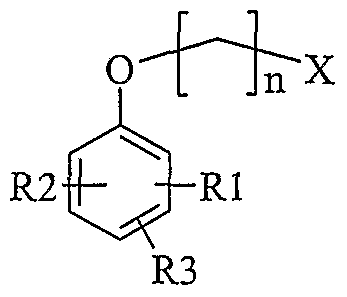
- R 1 is CH 3 , H or Cl
- R 2 is CH 3 , H or Cl
- R 3 is CH 3 , H or Cl
- n is an integral number from 1 to 5, preferably from 1 to 3
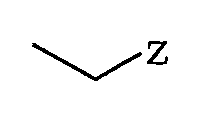
- X is wherein Z is aminoalkanol or wherein Z is aminoalkanol or amino acid, with the exception of the compound selected from the group comprising:
- R S-2- [(4-chlor-2-methylphenoxy)ethyl] amino- 1 -phenylethanol, A- ⁇ -tran5-2-[(4-methylphenoxy)ethyl]amino-l-cyclohexanol, R, S-2-[(4-methylphenoxy)ethyl] amino- 1 -propanol hydrochloride, )S'-(+)-2-[(2,6-dimethylphenoxy)ethyl]amino-l-propanol hydrochloride, 2-[(2,6-dimethylphenoxy)ethyl]amino-2-methyl-l-propanol hydrochloride, 2-[(4-methylphenoxy)ethyl]amino-2-methyl-l-propanol hydrochloride, R, S- 1 -[(4-chlor-3 -methylphenoxy)ethyl] amino-2-butanol hydrochloride, i?-(-)-2-[(4
- Z is aminoalkanol selected from the group comprising: 2-amino-l-ethanol, 3-amino-l -propanol, 4-amino-l -butanol, 5-amino-l-pentanol, 1-amino- 2-propanol, 2-amino-l -propanol, 1 -amino-2-butanol, 2-amino-l -butanol, 2-amino-l- phenylethanol, 2-amino-2-methyl-l-propanol, 2-amino-2-methyl-l,3-propandiol, 3- methyl-2-amino- 1 -butanol, 3 -methyl-3-amino- 1 -butanol, D,L-trans- 1 ,2- cyclohexanolamine, .
- Z is aminoalkanol or amino acid selected from the group comprising: 2-amino-l-ethanol, 3-amino-l-propanol, 4-amino-l -butanol, 5-amino-l-pentanol, 1-amino- 2-propanol, 2-amino-l -propanol, 1 -amino-2-butanol, 2-amino-l -butanol, 2-amino-l- phenylethanol, 2-amino-2-methyl-l -propanol, 2-amino-2-methyl-l,3-propandiol, 3- methyl-2-amino-l -butanol, 3-methyl-3-amino-l-butanol, D,L-trans- ⁇ ,2- cyclohexanoloamine, trans- 1 ,4-cyclohexanoloamine, N-memylaminoethanol,
- N-ethylaminoethanol N-methyl-2-amino- 1 -butanol, N-methyl-2-amino- 1 -propanol, N-memyl-2-amino-l -phenylethanol, I-treo-2-aniino-l-phenyl-l,3-propandiol, glycine or glycinamide or glycine ester, alanine or alaninamide or alanine ester, 2-amino- and 4- aminobutyric acid or appropriate amide or ester.
- the compound is selected from the group comprising: i?,5'-2N-[(2,3-dimethylphenoxy)ethyl]amino-l-propanol (l), R,S-2N-[(2,3- dimethylphenoxy)ethyl] amino- 1 -butanol (2), 2N-[(2,3- dimethylphenoxy) ethyl] amino-2-methyl-l -propanol (3), R, S-2N-[(2,3 -dimethylphenoxy)ethyl] amino- 1 -phenylethanol (4), R 1 S- ⁇ V-[(2,5-dimethylphenoxy)ethyl]amino-2-propanol (5), R, S-2N-[(2,5 -dimethylphenoxy)ethyl] amino- 1 -propanol (6), i?, J S'-lN-[(2,5-dimethylphenoxy)ethyl]ammo-2-
- Rl is CH 3 , H or Cl
- R2 is CH 3 , H or Cl, R2 is CH 3 , H or Cl, n is an integral number from 1 to 5, preferably from 1 to 3, X is , wherein Z is aminoalkanol or , wherein Z is aminoalkanol or amino acid, with the exception of the compound selected from the group comprising:
- the used derivative is a compound according to the compounds described above.
- the used derivative is a compound selected from: i?-(-) ⁇ 2-[(2,6-dimethylphenoxy)ethyl] amino- 1 -propanol,
- a disease or symptom of neurological background is an epilepsy, especially grand-mal epilepsy, psychomotor epilepsy, focal seizures, status epilepticus, myoclonic seizures or seizures of various origin (sound, light, chemical stimulus, genetic origin, neuronal damage), as well as neuropathic or inflammatory pain.
- epilepsy especially grand-mal epilepsy, psychomotor epilepsy, focal seizures, status epilepticus, myoclonic seizures or seizures of various origin (sound, light, chemical stimulus, genetic origin, neuronal damage), as well as neuropathic or inflammatory pain.
- the produced medicine is an analgesic, anti-inflammatory, anticonvulsant or antiepileptic.
- 2-[(2,6-dimethylphenoxy)ethyl]amino-2-methyl-l-propanol is used for production of a medicine or prodrug with anticonvulsant activity, which is used as an anticonvulsant medicine, for treatment of epilepsy-related or not related seizures, for partial and generalized tonic-clonic seizures (grand mal epilepsy), tonic seizures, clonic seizures, myoclonic seizures, for seizures of the origin in the limbic system, psychomotor epilepsy, pharmacoresistant epilepsy or of other origin, as well as relieving neuropathic or inflammatory pain.
- a disease or symptom is a neuropathic pain, including pain of various ethiology: diabetic neuropathy, cancer pain, AIDS neuropathy, spinal cord injury, phantom limb pain, or fibromyalgia.
- the next subject of invention is a method of obtaining derivatives of aminoalkanols, preferably [(phenoxy)alkyl]aminoalkanols according to claims 1 to 4, characterised in that N-alkylation of said aminoalkanols with appropriate (phenoxy)alkyl bromides is made, by adding 0.010 - 0.015 mole of appropriate (phenoxy)ethyl or 3- (phenoxy)propyl bromide into a 100 ml flask, then 0.010 - 0.015 mole of appropriate aminoalkanol and an excess of anh. K 2 CO 3 , then the mixture is heated in toluene under reflux for ca.
- the next subject of invention is a method of obtaining aminoalkanols, preferably
- [(phenoxy)acyl]aminoalkanols characterised in that N- Acetylation of said aminoalkanols or hydrochloride of amino acids esters with use of chloride of appropriate (phenoxy)alkanoic acid in biphasic environment (toluene/water) with presence OfK 2 CO 3 is made, wherein 0.015 — 0.025 mole of appropriate aminoalkanol in 30 ml toluene is put in a flask, an excess OfK 2 CO 3 is added dissolved in 50 ml of water, the mixture is cooled down and put on an stirrer, then the mixture is added by small amounts a solution of appropriate (phenoxy)acetic chloride in toluene, and the emulsion is left on the stirrer for ca. 0.5 h and afterwards it is heated, after cooling the organic phase is separated and dried with anh. MgSO 4 , then the solvent is distilled off, and the residue is crystallized into a white precipit
- Figure 1 presents the scheme of synthesis of [(phenoxy)alkyl]aminoalkanols.
- Figure 2 presents the scheme of synthesis of [(phenoxy)acetyl]aminoalkanols.
- Figure 3 presents results of formalin test for i?-(-)-2-[(2,6-dimethylphenoxy)ethyl]amino-
- Figure 4 presents results of formalin test for i?,6'-2-[(2-chlor-6- methylphenoxy) ethyl] amino- 1 -butanol.
- Figure 5 presents results of comparison of feeling pain by mice after administration of compound 26 and known drugs.
- Example 1 Classification of compounds according to the invention and basic schemes of their synthesis.
- New compounds according to the invention are defined with the formula 1 and their pharmaceutically acceptable salts and prodrugs. Generally, the invention is indicated to two subgroups of the aminoalkanol derivatives: substituted [(phenoxy)alkyl]aminalkanols (formula 1) and substituted [(phenoxy)acetyl]aminalkanols (formula 2).
- Formula 1
- R Z aminoalkanol or amino acid:
- Necessary phenoxyalkanoic acids are achieved by O-alkylation of appropriate phenol (as sodium phenolate) with use of appropriate halogenoalkanoic acid in the form of sodium salt.
- Commercially available acids in the form of esters were used.
- Example 2 Description of synthesis of particular products 2.1 Synthesis of 2,3-, 2,5-, 2,6-dimethyl-, 2-chlor-6-methyl-, and 4-chlor-2-methyl-, 2,3,5- and (2,4,6-trimethylphenoxy)ethanol or appropriate 3-(phenoxy)-l -propanol
- the compounds in the invention were subject to pharmacological tests: MES (maximal electroshock seizures), ScMet (subcutaneous pentylenetetrazol) and TOX (neurotoxicity test) in mice and rats (intraperitoneal i.p. and oral p.o. administration).
- MES maximal electroshock seizures
- ScMet subcutaneous pentylenetetrazol
- TOX neurotoxicity test
- screening tests were performed, using animal models of seizures. The tests were initially performed in mice (Carworth Farms No. 1), and if results proved activity - in rats (Sprague-Dawley). The tests were based on administration of a compound to an animal and after certain time inducing state similar to epilepsy attack in human.
- Each substance (after dissolving in methylcellulose) was normally tested in doses 30, 100, and 300 mg/kg body weight (b.w.) (mice) or in 30 and 50 mg/kg b.w. (rats) in two possible routes of admininstration: intraperitoneal (Lp.) or oral (p.o.). Appropriate tests were performed 0.5 and 4 h after administration of the compound. In cases of substances revealing activity in 30 mg/kg b.w. (mice) the tests were also performed in doses 10 and 3 mg/kg b.w.
- Maximum Electroshock Seizure (MES) test is an electric test, verifying activity towards generalized tonic-clonic seizures (grand mal epilepsy) [9].
- the most active compounds are those which inhibit voltage- gated sodium channels [10]. Its procedure consists in administration to an animal a mentioned dose, and after 0.5 or 4 h attaching corneal electrodes (after anesthetic eye-drops: 0,5% tetracaine hydrochloride in 0.9% NaCl) and turning on electric current (60 Hz, 0.2 s, 50 mA (mice) or 150 mA (rats)). If the tested substance reveals anticonvulsant activity, the used electric pulse will not reveal tonic-clonic seizures in the animal. Normally, in the dose 30 mg/kg b.w. the test is done in 1 mouse after 0.5 or 4 h, in the dose 100 mg/kg b.w.
- Subcutaneous Metrazol Test is a chemical test, where compounds are tested for activity in absence seizures (petit mal epilepsy). Pentetrazol (metrazol) is considered to block chloride channel in the GABA A receptor complex, therefore at a certain dose in animals it causes myoclonic jerks, next - clonic seizures, and then tonic seizures.
- the procedure consists in administration of a tested compound and after 0.5 or 4 h subcutaneous administration of pentylenetetrazol in the dose of 85 mg/kg b.w. (mice) or 70 mg/kg b.w. (rats) in a 0.85% solution in 0.9% NaCl.
- the tested substance reveals anticonvulsant activity, if the dose of pentylenetetrazol does not induce seizures in the animal. Normally the test is performed in single animals.
- Neurotoxicity test is performed in order to eliminate substances exhibiting neurotoxicity. It is performed with use of rotarod test. The animal is placed on a plastic rod (1 inch in diameter), rotating 6 rpm. The rod is placed on a level discouraging the animal to jump off. If the tested compound (administered 0.5 or 4 h before the test) does not reveal neurotoxic effect (ataxia, sedation, excitation), the animal will keep its position on the rod for at least 1 min. Neurotoxicity is stated if the animal cannot stay on the rod for 1 min. in any of 3 trials [11]. Normally the test is performed in dose 30 mg/kg b.w. in 4 mice (0.5 h) and in 2 mice (4 h), in the dose 100 mg/kg b.w.
- mice Compounds 1 — 83 were subject to initial pharmacological screening. Their results are presented in Table 4 below. Table 4
- TPE time to peak effect
- ED 50 doses the lowest dose active in 50% of animals
- TD 50 the lowest dose neurotoxic in 50% of animals
- protection index PI
- TTE test a test for proconvulsant activity was performed (TTE test), as well as a test on activity in focal seizures (related with limbic system, 6 Hz test, hippocampal kindling). Activity in pharmacoresistant seizures has been revealed (lamotrigine-resistant amygdala kindling, rats, i.p.). A test on inhibiting seizures induced by sound (Frings mice) was performed for compounds 12 and 26-28. Electrophysiology tests also have been performed, for seizures induced by bicuculline, picrotoxin, and NMDA. Prevention of (pilocarpine induced) status epilepticus has been noticed.
- Formalin test has revealed analgesic activity in the phase of neuropathic pain as well as inflammatory pain.
- Tests on mutagenic activity (Ames' and Vibrio harveyi) revealed broad safety in this matter.
- ED 50 (kindling, rats, hippocampus, 0.25 h) > 30 mg/kg b.w.
- ED 50 (BIC, 0.25 h) > 75 mg/kg b.w.
- ED 50 (PIC, 0.25 h) > 75 mg/kg b.w.
- Compound 12 blocks voltage-gated sodium channels dependency on the voltage.
- the MES test it inhibits seizures by inhibiting post-synaptic excitatory current, hi the electric kindling (rats, hippocampus) the substance reveals activity 0.25 h after administration of 60 mg/kg b.w. hi the metrazol test average time until the first twitch was 27.3 ⁇ 0.2 min. for the dose 5 mg/kg b.w. and 27.6 ( ⁇ 0.3) min. for the dose 30 mg/kg b.w., comparing to the control 30.07 ( ⁇ 1.23) min. Average time from administration until the first clonus was 33.6 ( ⁇ 1.23) min. for the dose 5 mg/kg b.w.
- results in the formalin test in Fig. 3 indicate inhibiting neuropathic pain (first 10 min. phase) and inflammatory pain (next 30 min. phase). The formalin test also has been performed for compound 26.
- the test was performed with use of formaldehyde as a substance causing pain (neuropathic and inflammatory afterwards) in mice, which were injected formalin into a hind limb.
- Fig. 3 for 12 and Fig. 4 for 26.
- the acute phase represents direct affection on the peripheral nerve and the inflammatory phase is related with secretion of inflammation mediators from the damaged tissue and nerves.
- the described model tests effectiveness of a substance to inhibit acute and chronic excessive neuronal discharges in response to peripheral nerves activation.
- Fig. 4 shows a graph representing calculated average results (time) for 8 animals in the test, at the dose 21 mg/kg b.w.
- Fig. 5 presents comparison with known antiepileptic drugs (AEDs) such as carbamazepine (CBZ) and valproic acid (VPA) in typical doses.
- AEDs antiepileptic drugs
- CBZ carbamazepine
- VPA valproic acid
- mice ED 50 is lower for R than for S enantiomer (5.34 and
- Status epilepticus prevention an animal (Sprague Dawley albino rat male) is given a dose of tested substance. After 0, 0.25, 0.5, 1, 2, and 4 h pilocarpine is administered. The seizures induced are described by Racine's score. Compounds 27 and 28 were administered i.p. in doses 25 and 45 mg/kg b.w. respectively. They both exhibit protection in 2 and 3 rats out of 8. The results are presented below. Average body weight loss is measured 24 h after administration. Status epilepticus prevention of compounds 27 and 28.
Landscapes
- Chemical & Material Sciences (AREA)
- Organic Chemistry (AREA)
- Health & Medical Sciences (AREA)
- Life Sciences & Earth Sciences (AREA)
- General Health & Medical Sciences (AREA)
- Veterinary Medicine (AREA)
- Chemical Kinetics & Catalysis (AREA)
- General Chemical & Material Sciences (AREA)
- Medicinal Chemistry (AREA)
- Nuclear Medicine, Radiotherapy & Molecular Imaging (AREA)
- Public Health (AREA)
- Pharmacology & Pharmacy (AREA)
- Animal Behavior & Ethology (AREA)
- Bioinformatics & Cheminformatics (AREA)
- Engineering & Computer Science (AREA)
- Neurology (AREA)
- Pain & Pain Management (AREA)
- Neurosurgery (AREA)
- Biomedical Technology (AREA)
- Physical Education & Sports Medicine (AREA)
- Cardiology (AREA)
- Rheumatology (AREA)
- Orthopedic Medicine & Surgery (AREA)
- Heart & Thoracic Surgery (AREA)
- Acyclic And Carbocyclic Compounds In Medicinal Compositions (AREA)
- Organic Low-Molecular-Weight Compounds And Preparation Thereof (AREA)
- Pharmaceuticals Containing Other Organic And Inorganic Compounds (AREA)
Abstract
Description


Claims



Priority Applications (10)
| Application Number | Priority Date | Filing Date | Title |
|---|---|---|---|
| CN2009801026627A CN101932551A (en) | 2008-01-22 | 2009-01-19 | Aminoalkanol derivatives, process for producing aminoalkanols and use thereof |
| EP09704454.9A EP2247571B1 (en) | 2008-01-22 | 2009-01-19 | Derivatives of aminoalkanols, method of obtaining of aminoalkanols and their use |
| BRPI0905726-9A BRPI0905726A2 (en) | 2008-01-22 | 2009-01-19 | Aminoalcanol derivative, compound, use of aminoacanol derivative, method of obtaining aminoalcanol derivatives and method of obtaining aminoalcanols |
| CA2712222A CA2712222C (en) | 2008-01-22 | 2009-01-19 | Derivatives of aminoalkanols, method of obtaining of aminoalkanols and their use |
| US12/863,881 US8633251B2 (en) | 2008-01-22 | 2009-01-19 | Derivatives of aminoalkanols, method of obtaining of aminoalkanols and their use |
| DK09704454.9T DK2247571T3 (en) | 2008-01-22 | 2009-01-19 | DERIVATIVES OF aminoalkanols, METHOD FOR OBTAINING aminoalkanols AND THEIR USE |
| ES09704454.9T ES2525544T3 (en) | 2008-01-22 | 2009-01-19 | Aminoalkanole derivatives, method of obtaining aminoalkanoles and their use |
| JP2010544256A JP5683965B2 (en) | 2008-01-22 | 2009-01-19 | Derivatives of aminoalkanols, methods for obtaining aminoalkanols and their use |
| RU2010133174/04A RU2515213C2 (en) | 2008-01-22 | 2009-01-19 | Derivatives of aminoalkanols, method of obtaining aminoalkanols and their application |
| US13/853,542 US8841347B2 (en) | 2008-01-22 | 2013-03-29 | Derivatives of aminoalkanols, method of obtaining of aminoalkanols and their use |
Applications Claiming Priority (2)
| Application Number | Priority Date | Filing Date | Title |
|---|---|---|---|
| PLP-384304 | 2008-01-22 | ||
| PL384304A PL212489B1 (en) | 2008-01-22 | 2008-01-22 | Phenoxyalkiloaminoalkanols derivatives and its applications |
Related Child Applications (2)
| Application Number | Title | Priority Date | Filing Date |
|---|---|---|---|
| US12/863,881 A-371-Of-International US8633251B2 (en) | 2008-01-22 | 2009-01-19 | Derivatives of aminoalkanols, method of obtaining of aminoalkanols and their use |
| US13/853,542 Division US8841347B2 (en) | 2008-01-22 | 2013-03-29 | Derivatives of aminoalkanols, method of obtaining of aminoalkanols and their use |
Publications (2)
| Publication Number | Publication Date |
|---|---|
| WO2009093916A2 true WO2009093916A2 (en) | 2009-07-30 |
| WO2009093916A3 WO2009093916A3 (en) | 2009-09-17 |
Family
ID=40677792
Family Applications (1)
| Application Number | Title | Priority Date | Filing Date |
|---|---|---|---|
| PCT/PL2009/000004 Ceased WO2009093916A2 (en) | 2008-01-22 | 2009-01-19 | Derivatives of aminoalkanols, method of obtaining aminoalkanols and their use |
Country Status (12)
| Country | Link |
|---|---|
| US (2) | US8633251B2 (en) |
| EP (1) | EP2247571B1 (en) |
| JP (1) | JP5683965B2 (en) |
| KR (1) | KR101610972B1 (en) |
| CN (2) | CN106431941A (en) |
| BR (1) | BRPI0905726A2 (en) |
| CA (1) | CA2712222C (en) |
| DK (1) | DK2247571T3 (en) |
| ES (1) | ES2525544T3 (en) |
| PL (1) | PL212489B1 (en) |
| RU (1) | RU2515213C2 (en) |
| WO (1) | WO2009093916A2 (en) |
Cited By (2)
| Publication number | Priority date | Publication date | Assignee | Title |
|---|---|---|---|---|
| CN102229536A (en) * | 2011-04-25 | 2011-11-02 | 上虞市众昌化工有限公司 | Method for separating amino alkyl alcohol through membrane electrodialysis |
| WO2015020545A3 (en) * | 2013-08-09 | 2015-04-02 | Uniwersytet Jagielloński | New derivatives of n-[(phenoxy)ethoxy]alkylaminoalkanols and their use for preparation of drugs |
Families Citing this family (6)
| Publication number | Priority date | Publication date | Assignee | Title |
|---|---|---|---|---|
| US9651547B2 (en) | 2013-03-14 | 2017-05-16 | Abbott Point Of Care Inc. | Electrochemical methods and devices for amending urine samples for immunosensor detection |
| US9488663B2 (en) | 2013-03-14 | 2016-11-08 | Abbott Point Of Care Inc. | Electrochemical methods and devices for amending urine samples for immunosensor detection |
| BR102013020313B1 (en) * | 2013-08-09 | 2021-07-06 | Fundação Oswaldo Cruz | biphenyloxy-alkyl-amines and aryloxy-alkyl-amine derivatives, and pharmaceutical composition |
| KR20160068494A (en) * | 2014-12-05 | 2016-06-15 | 삼성전자주식회사 | Electro device for processing touch input and method for processing touch input |
| KR101864085B1 (en) | 2017-09-22 | 2018-06-01 | 동아대학교 산학협력단 | Valproic acid derivatives, preparation method thereof and anticonvulsant comprising the same |
| CN109646426B (en) * | 2019-01-09 | 2022-01-25 | 成都倍特药业股份有限公司 | Composition and method for detecting purity and related substances of 1-amino-2-propanol |
Citations (1)
| Publication number | Priority date | Publication date | Assignee | Title |
|---|---|---|---|---|
| PL319557A1 (en) | 1997-04-18 | 1998-10-26 | Univ Jagiellonski Collegium Me | N-[(4-methyl- or 2,6-dimethylphenoxy)-ethyl]-amino alkanoles as well as n-[(4-methyl-or 2,6-dimethylphenoxy)-ethyl]-4-(aryl)-1 piperazines |
Family Cites Families (13)
| Publication number | Priority date | Publication date | Assignee | Title |
|---|---|---|---|---|
| US2688639A (en) * | 1951-07-17 | 1954-09-07 | Givaudan Corp | Nu-(beta-phenoxyethyl) ethanolamines |
| US3453308A (en) | 1966-10-14 | 1969-07-01 | Parke Davis & Co | Aryloxyalkylaminoethyl thiosulfate compounds |
| CH561174A5 (en) * | 1969-09-24 | 1975-04-30 | Ici Ltd | |
| US4071552A (en) | 1976-05-19 | 1978-01-31 | Ayerst Mckenna And Harrison Ltd. | Aryloxy aminobutanols, their preparation and use thereof |
| ZA802552B (en) * | 1979-05-21 | 1981-04-29 | Ici Ltd | 1-phenyl-2-aminoethanol derivatives |
| JPS61291555A (en) * | 1985-06-18 | 1986-12-22 | Suntory Ltd | N-substituted glutamic acid and use thereof |
| IT1217900B (en) * | 1988-06-23 | 1990-03-30 | Mini Ricerca Scient Tecnolog | NITROGEN HETEROCYCLIC COMPOUNDS WITH ANTI-Fungal Action |
| JPH0971557A (en) * | 1995-09-06 | 1997-03-18 | Fuji Photo Film Co Ltd | Amino group-containing benzoic ester derivative |
| EP1072591A4 (en) * | 1998-03-26 | 2005-01-05 | Santen Pharmaceutical Co Ltd | Novel urea derivatives |
| AR020142A1 (en) * | 1998-08-11 | 2002-04-10 | Smithkline Beecham Corp | A COMPOUND DERIVED FROM ARGININE, A PHARMACEUTICAL COMPOSITION THAT UNDERSTANDS THEM AND THE USE OF THEM FOR THE MANUFACTURE OF A MEDICINAL PRODUCT TO ANALOGONIZE A RECEIVER FOR C3A |
| WO2004113305A2 (en) * | 2003-06-16 | 2004-12-29 | Vertex Pharmaceuticals Incorporated | Diamino substituted quinazoline derivatives as promoters of smn2 |
| CN101360422B (en) | 2005-11-23 | 2013-10-23 | 得克萨斯大学体系董事会 | Oncogenic Ras-specific cytotoxic compound and methods of usethereof |
| JP2007182404A (en) * | 2006-01-10 | 2007-07-19 | Hokko Chem Ind Co Ltd | Aryloxy-N- (alkoxyalkyl) alkanoic acid amide derivatives and herbicides |
-
2008
- 2008-01-22 PL PL384304A patent/PL212489B1/en unknown
-
2009
- 2009-01-19 BR BRPI0905726-9A patent/BRPI0905726A2/en not_active Application Discontinuation
- 2009-01-19 WO PCT/PL2009/000004 patent/WO2009093916A2/en not_active Ceased
- 2009-01-19 CN CN201610282236.8A patent/CN106431941A/en active Pending
- 2009-01-19 CA CA2712222A patent/CA2712222C/en not_active Expired - Fee Related
- 2009-01-19 EP EP09704454.9A patent/EP2247571B1/en not_active Not-in-force
- 2009-01-19 JP JP2010544256A patent/JP5683965B2/en not_active Expired - Fee Related
- 2009-01-19 US US12/863,881 patent/US8633251B2/en not_active Expired - Fee Related
- 2009-01-19 ES ES09704454.9T patent/ES2525544T3/en active Active
- 2009-01-19 CN CN2009801026627A patent/CN101932551A/en active Pending
- 2009-01-19 DK DK09704454.9T patent/DK2247571T3/en active
- 2009-01-19 KR KR1020107016398A patent/KR101610972B1/en not_active Expired - Fee Related
- 2009-01-19 RU RU2010133174/04A patent/RU2515213C2/en not_active IP Right Cessation
-
2013
- 2013-03-29 US US13/853,542 patent/US8841347B2/en not_active Expired - Fee Related
Patent Citations (1)
| Publication number | Priority date | Publication date | Assignee | Title |
|---|---|---|---|---|
| PL319557A1 (en) | 1997-04-18 | 1998-10-26 | Univ Jagiellonski Collegium Me | N-[(4-methyl- or 2,6-dimethylphenoxy)-ethyl]-amino alkanoles as well as n-[(4-methyl-or 2,6-dimethylphenoxy)-ethyl]-4-(aryl)-1 piperazines |
Non-Patent Citations (18)
| Title |
|---|
| ALEXANDER G. J.; KOPELOFF L. M.; ALEXANDER R. B.; CHATTERJIE N.: "Mexiletine: biphasic action on convulsive seizures in rodents", NEUROBEHAV. TOXICOL. TERATOL., vol. 8, 1986, pages 231 - 235 |
| ANNA M. WASZKIELEWICZ; MAREK CEGLA; HENRYK MARONA: "Preliminary evaluation of anticonvulsant activity of some aminoalkanol derivatives'' 15th International Symposium", MOLECULAR AND PHYSIOLOGICAL ASPECTS OF REGULATORY PROCESSES OF THE ORGANISM, 1 June 2006 (2006-06-01) |
| ANNA M. WASZKIELEWICZ; MAREK CEGLA; HENRYK MARONA: "Preliminary evaluation of anticonvulsant activity of some aminoalkanol derivatives", MOLECULAR AND PHYSIOLOGICAL ASPECTS OF REGULATORY PROCESSES OF THE ORGANISM, 1 June 2006 (2006-06-01) |
| CHEW C. Y. C.; COLLETT J.; SINGH B. N.: "Mexiletine: A Review of its Pharmacological Properties and Therapeutic Efficacy in Arrhythmias", DRUGS, vol. 17, 1979, pages 161 - 181 |
| CZUCZWAR S. J.; BOROWICZ K. K.; KLEINROK Z.; TUTKA P.; ZARNOWSKI T.; TURSKI W. A.: "Influence of Combined Treatment with NMDA and Non-NMDA Receptor Antagonists on Electroconvulsions in Mice", EUR. J. PHARMACOL., vol. 281, 1995, pages 327 - 333 |
| FISCHER W.: "Anticonvulsant profile and mechanism of action of propranolol and its two enantiomers", SEIZURE, vol. 11, 2002, pages 285 - 302 |
| KUPFERBERG H.: "Animal Models Used in the Screening of Antiepileptic Drugs", EPILEPSIA, vol. 42, 2001, pages 7 - 12, XP002654848 |
| MARONA H.; ANTKIEWICZ-MICHALUK L.: "Synthesis and anticonvulsant activity of 1,2-aminoalkanol derivatives", ACTA POL. PHARM. - DRUG RES., vol. 55, 1998, pages 487 - 498, XP009119605 |
| MARONA H.; PEKALA E.: "Synthesis of Some N-acyl Derivatives of Optically Active trans-2-Amino-1-cyclohexanols", ACTA POL. PHARM. - DRUG RES., vol. 53, 1996, pages 111 - 115, XP009119608 |
| MARONA H.; WASZKIELEWICZ AM; SZNELER E: "Preliminary Evaluation of Anticonvulsant Activity of Some Aroxyacetamides and Aroxyethylamines", ACTA POL. PHARM. - DRUG RES., vol. 62, 2005, pages 345 - 352 |
| MARONA H; ANTKIEWICZ-MICHALUK L.: "Synthesis and Anticonvulsant Activity of 1,2-Aminoalkanol Derivatives", ACTA POLONIAE PHAMACEURICA - DRUG RES, vol. 55, 1998, pages 487 - 498, XP009119605 |
| MARONA H; ANTKIEWICZ-MICHALUK L: "Synthesis and Anticonvulsant Activity of 1,2-Aminoalkanol Derivatives", ACTA POLONIAE PHAMACEURICA - DRUG RES, vol. 55, 1998, pages 487 - 498, XP009119605 |
| ORLOF M. J.; WILLIAMS H. L.; PFEIFFER C. C.: "Timed intervenous infusion of metrazol and strychnine for testing anticonvulsant drugs", PROC. SOC. EXP. BIOL. MED., vol. 70, 1949, pages 254 - 257 |
| PEKALA E.; GAJEWCZYK L.; MARONA H.: "Synthesis of New N-acyl Derivatives of DL-trans-1,2-Aminocyclohexanol.", ACTA POL. PHARM. - DRUG RES., vol. 51, 1994, pages 339 - 342 |
| ROGAWSKI M. A.; PORTER R. J.: "Antiepileptic Drugs: Pharmacological Mechanisms and Clinical Efficacy with Consideration of Promising Developmental Stage Compounds", PHARMACOL. REV., vol. 42, 1990, pages 223 - 286 |
| STABLES J. P.; KUPFERBERG H. J.: "The NIH Anticonvulsant Drug Development (ADD) Program: preclinical anticonvulsant screening project" |
| SWINYARD E. A.; WOODHEAD J. H.; WHITE, H. S.; FRANKLIN M.R.: "Antiepileptic Drugs", 1989, RAVEN PRESS, article "General principles: experimental selection, quantification, and evaluation of anticonvulsants" |
| WASZKIELEWICZ A.M.; CEGLA M.; MARONA H.: "Preliminary evaluation of anticonvulsant activity of some [4-(benzyloxy)-benzoyl]- and [4-(benzyloxy)-benzyl]-aminoalkanol derivatives", ACTA POL. PHARM. - DRUG RES., vol. 64, 2007, pages 147 - 157, XP002536020 |
Cited By (3)
| Publication number | Priority date | Publication date | Assignee | Title |
|---|---|---|---|---|
| CN102229536A (en) * | 2011-04-25 | 2011-11-02 | 上虞市众昌化工有限公司 | Method for separating amino alkyl alcohol through membrane electrodialysis |
| CN102229536B (en) * | 2011-04-25 | 2013-11-13 | 上虞市众昌化工有限公司 | Method for separating amino alkyl alcohol through membrane electrodialysis |
| WO2015020545A3 (en) * | 2013-08-09 | 2015-04-02 | Uniwersytet Jagielloński | New derivatives of n-[(phenoxy)ethoxy]alkylaminoalkanols and their use for preparation of drugs |
Also Published As
| Publication number | Publication date |
|---|---|
| CA2712222C (en) | 2016-07-05 |
| US8633251B2 (en) | 2014-01-21 |
| KR101610972B1 (en) | 2016-04-08 |
| PL384304A1 (en) | 2009-08-03 |
| BRPI0905726A2 (en) | 2015-07-14 |
| KR20100127203A (en) | 2010-12-03 |
| CN106431941A (en) | 2017-02-22 |
| JP2011510070A (en) | 2011-03-31 |
| US8841347B2 (en) | 2014-09-23 |
| CN101932551A (en) | 2010-12-29 |
| JP5683965B2 (en) | 2015-03-11 |
| EP2247571B1 (en) | 2014-09-10 |
| ES2525544T3 (en) | 2014-12-26 |
| RU2010133174A (en) | 2012-02-27 |
| EP2247571A2 (en) | 2010-11-10 |
| DK2247571T3 (en) | 2014-12-08 |
| US20110028562A1 (en) | 2011-02-03 |
| CA2712222A1 (en) | 2009-07-30 |
| WO2009093916A3 (en) | 2009-09-17 |
| RU2515213C2 (en) | 2014-05-10 |
| PL212489B1 (en) | 2012-10-31 |
| US20130289118A1 (en) | 2013-10-31 |
Similar Documents
| Publication | Publication Date | Title |
|---|---|---|
| US8841347B2 (en) | Derivatives of aminoalkanols, method of obtaining of aminoalkanols and their use | |
| DE69525355T2 (en) | 1-ACYL-4-ALIPHATIC AMINOPIPERIDINE COMPOUNDS | |
| CA2689561C (en) | Substituted 2- [2- (phenyl) ethylamino] alkaneamide derivatives and their use as sodium and/or calcium channel modulators | |
| JP2010519287A (en) | α-Halocyclopropylcarboxy compounds and α-alkylcyclopropylcarboxy compounds and their use | |
| US9212155B2 (en) | Compounds advantageous in the treatment of central nervous system diseases and disorders | |
| DE69626009T2 (en) | PYRROLIDINYLHYDROXAMIC ACIDS AND METHOD FOR THE PRODUCTION THEREOF | |
| DE69818516T2 (en) | PHENYLAMINOALKYL ACID ACID DERIVATIVES AND MEDICAL COMPOSITIONS CONTAINING THEM | |
| DE69814883T2 (en) | HIGH-SPEED STRIP TRANSFER IN A STRIP PROCESSING APPLICATION | |
| ES2292959T3 (en) | DERIVATIVES OF HIDROXI-TETRAHIDRO-NAFTALENILUREA. | |
| DE69721052T2 (en) | ALPHA-AMINO ACID AMIDES, THEIR PRODUCTION AND THEIR THERAPEUTIC APPLICATIONS | |
| WO2009001356A2 (en) | Acyl-urea derivatives and uses thereof | |
| EP2483237A1 (en) | Amide derivatives of valproic acid and uses thereof | |
| Currier et al. | Synthesis and Anticonvulsant Activity of α-Amino Acid Amide Derivatives | |
| PL220733B1 (en) | New alkanolamides cinnamic acid derivatives and the use of cinnamic acid derivatives alkanolamides the preparation of medicaments | |
| AT392783B (en) | Novel N-substituted 3-piperidine- or 3- tetrahydropyridinecarboxylic acids and derivatives | |
| WO2015020545A2 (en) | New derivatives of n-[(phenoxy)ethoxy]alkylaminoalkanols and their use for preparation of drugs | |
| Afolabi et al. | Anticonvulsant screening of three N-(2, 6-dimethylphenyl)-substituted-benzamides | |
| Beguin | Synthesis of functionalized amino acids (FAA) analogues and studies toward the FAA site of action for the control of convulsive disorders | |
| MXPA00006354A (en) | Substituted 2-benzylamino-2-phenyl-acetamide compounds | |
| KR20040108784A (en) | Hydroxy Tetrahydro-Naphthalenylurea Derivatives |
Legal Events
| Date | Code | Title | Description |
|---|---|---|---|
| WWE | Wipo information: entry into national phase |
Ref document number: 200980102662.7 Country of ref document: CN |
|
| 121 | Ep: the epo has been informed by wipo that ep was designated in this application |
Ref document number: 09704454 Country of ref document: EP Kind code of ref document: A2 |
|
| WWE | Wipo information: entry into national phase |
Ref document number: 2712222 Country of ref document: CA |
|
| WWE | Wipo information: entry into national phase |
Ref document number: 5192/DELNP/2010 Country of ref document: IN |
|
| ENP | Entry into the national phase |
Ref document number: 20107016398 Country of ref document: KR Kind code of ref document: A |
|
| WWE | Wipo information: entry into national phase |
Ref document number: 12863881 Country of ref document: US Ref document number: 2010544256 Country of ref document: JP |
|
| NENP | Non-entry into the national phase |
Ref country code: DE |
|
| WWE | Wipo information: entry into national phase |
Ref document number: 2009704454 Country of ref document: EP |
|
| WWE | Wipo information: entry into national phase |
Ref document number: 2010133174 Country of ref document: RU |
|
| ENP | Entry into the national phase |
Ref document number: PI0905726 Country of ref document: BR Kind code of ref document: A2 Effective date: 20100721 |