WO2009094850A1 - Protéine immunomodulatrice recombinante de reishi (ganoderma lucidium) (rlz-8) et ses utilisations - Google Patents
Protéine immunomodulatrice recombinante de reishi (ganoderma lucidium) (rlz-8) et ses utilisations Download PDFInfo
- Publication number
- WO2009094850A1 WO2009094850A1 PCT/CN2008/002142 CN2008002142W WO2009094850A1 WO 2009094850 A1 WO2009094850 A1 WO 2009094850A1 CN 2008002142 W CN2008002142 W CN 2008002142W WO 2009094850 A1 WO2009094850 A1 WO 2009094850A1
- Authority
- WO
- WIPO (PCT)
- Prior art keywords
- rlz
- group
- control group
- protein
- use according
- Prior art date
- Legal status (The legal status is an assumption and is not a legal conclusion. Google has not performed a legal analysis and makes no representation as to the accuracy of the status listed.)
- Ceased
Links
Classifications
-
- C—CHEMISTRY; METALLURGY
- C07—ORGANIC CHEMISTRY
- C07K—PEPTIDES
- C07K14/00—Peptides having more than 20 amino acids; Gastrins; Somatostatins; Melanotropins; Derivatives thereof
- C07K14/37—Peptides having more than 20 amino acids; Gastrins; Somatostatins; Melanotropins; Derivatives thereof from fungi
-
- C—CHEMISTRY; METALLURGY
- C07—ORGANIC CHEMISTRY
- C07K—PEPTIDES
- C07K14/00—Peptides having more than 20 amino acids; Gastrins; Somatostatins; Melanotropins; Derivatives thereof
- C07K14/37—Peptides having more than 20 amino acids; Gastrins; Somatostatins; Melanotropins; Derivatives thereof from fungi
- C07K14/375—Peptides having more than 20 amino acids; Gastrins; Somatostatins; Melanotropins; Derivatives thereof from fungi from Basidiomycetes
-
- A—HUMAN NECESSITIES
- A61—MEDICAL OR VETERINARY SCIENCE; HYGIENE
- A61P—SPECIFIC THERAPEUTIC ACTIVITY OF CHEMICAL COMPOUNDS OR MEDICINAL PREPARATIONS
- A61P31/00—Antiinfectives, i.e. antibiotics, antiseptics, chemotherapeutics
-
- A—HUMAN NECESSITIES
- A61—MEDICAL OR VETERINARY SCIENCE; HYGIENE
- A61P—SPECIFIC THERAPEUTIC ACTIVITY OF CHEMICAL COMPOUNDS OR MEDICINAL PREPARATIONS
- A61P31/00—Antiinfectives, i.e. antibiotics, antiseptics, chemotherapeutics
- A61P31/04—Antibacterial agents
-
- A—HUMAN NECESSITIES
- A61—MEDICAL OR VETERINARY SCIENCE; HYGIENE
- A61P—SPECIFIC THERAPEUTIC ACTIVITY OF CHEMICAL COMPOUNDS OR MEDICINAL PREPARATIONS
- A61P31/00—Antiinfectives, i.e. antibiotics, antiseptics, chemotherapeutics
- A61P31/04—Antibacterial agents
- A61P31/06—Antibacterial agents for tuberculosis
-
- A—HUMAN NECESSITIES
- A61—MEDICAL OR VETERINARY SCIENCE; HYGIENE
- A61P—SPECIFIC THERAPEUTIC ACTIVITY OF CHEMICAL COMPOUNDS OR MEDICINAL PREPARATIONS
- A61P31/00—Antiinfectives, i.e. antibiotics, antiseptics, chemotherapeutics
- A61P31/12—Antivirals
-
- A—HUMAN NECESSITIES
- A61—MEDICAL OR VETERINARY SCIENCE; HYGIENE
- A61P—SPECIFIC THERAPEUTIC ACTIVITY OF CHEMICAL COMPOUNDS OR MEDICINAL PREPARATIONS
- A61P33/00—Antiparasitic agents
- A61P33/02—Antiprotozoals, e.g. for leishmaniasis, trichomoniasis, toxoplasmosis
-
- A—HUMAN NECESSITIES
- A61—MEDICAL OR VETERINARY SCIENCE; HYGIENE
- A61P—SPECIFIC THERAPEUTIC ACTIVITY OF CHEMICAL COMPOUNDS OR MEDICINAL PREPARATIONS
- A61P35/00—Antineoplastic agents
-
- A—HUMAN NECESSITIES
- A61—MEDICAL OR VETERINARY SCIENCE; HYGIENE
- A61P—SPECIFIC THERAPEUTIC ACTIVITY OF CHEMICAL COMPOUNDS OR MEDICINAL PREPARATIONS
- A61P35/00—Antineoplastic agents
- A61P35/02—Antineoplastic agents specific for leukemia
-
- A—HUMAN NECESSITIES
- A61—MEDICAL OR VETERINARY SCIENCE; HYGIENE
- A61P—SPECIFIC THERAPEUTIC ACTIVITY OF CHEMICAL COMPOUNDS OR MEDICINAL PREPARATIONS
- A61P37/00—Drugs for immunological or allergic disorders
- A61P37/02—Immunomodulators
-
- A—HUMAN NECESSITIES
- A61—MEDICAL OR VETERINARY SCIENCE; HYGIENE
- A61P—SPECIFIC THERAPEUTIC ACTIVITY OF CHEMICAL COMPOUNDS OR MEDICINAL PREPARATIONS
- A61P37/00—Drugs for immunological or allergic disorders
- A61P37/02—Immunomodulators
- A61P37/06—Immunosuppressants, e.g. drugs for graft rejection
-
- A—HUMAN NECESSITIES
- A61—MEDICAL OR VETERINARY SCIENCE; HYGIENE
- A61P—SPECIFIC THERAPEUTIC ACTIVITY OF CHEMICAL COMPOUNDS OR MEDICINAL PREPARATIONS
- A61P7/00—Drugs for disorders of the blood or the extracellular fluid
-
- A—HUMAN NECESSITIES
- A61—MEDICAL OR VETERINARY SCIENCE; HYGIENE
- A61P—SPECIFIC THERAPEUTIC ACTIVITY OF CHEMICAL COMPOUNDS OR MEDICINAL PREPARATIONS
- A61P7/00—Drugs for disorders of the blood or the extracellular fluid
- A61P7/02—Antithrombotic agents; Anticoagulants; Platelet aggregation inhibitors
-
- A—HUMAN NECESSITIES
- A61—MEDICAL OR VETERINARY SCIENCE; HYGIENE
- A61P—SPECIFIC THERAPEUTIC ACTIVITY OF CHEMICAL COMPOUNDS OR MEDICINAL PREPARATIONS
- A61P7/00—Drugs for disorders of the blood or the extracellular fluid
- A61P7/06—Antianaemics
-
- A—HUMAN NECESSITIES
- A61—MEDICAL OR VETERINARY SCIENCE; HYGIENE
- A61K—PREPARATIONS FOR MEDICAL, DENTAL OR TOILETRY PURPOSES
- A61K38/00—Medicinal preparations containing peptides
-
- Y—GENERAL TAGGING OF NEW TECHNOLOGICAL DEVELOPMENTS; GENERAL TAGGING OF CROSS-SECTIONAL TECHNOLOGIES SPANNING OVER SEVERAL SECTIONS OF THE IPC; TECHNICAL SUBJECTS COVERED BY FORMER USPC CROSS-REFERENCE ART COLLECTIONS [XRACs] AND DIGESTS
- Y02—TECHNOLOGIES OR APPLICATIONS FOR MITIGATION OR ADAPTATION AGAINST CLIMATE CHANGE
- Y02A—TECHNOLOGIES FOR ADAPTATION TO CLIMATE CHANGE
- Y02A50/00—TECHNOLOGIES FOR ADAPTATION TO CLIMATE CHANGE in human health protection, e.g. against extreme weather
- Y02A50/30—Against vector-borne diseases, e.g. mosquito-borne, fly-borne, tick-borne or waterborne diseases whose impact is exacerbated by climate change
Definitions
- the present invention relates to a fungal immunoregulatory protein, in particular to a specific spatial structure of recombinant Ganoderma lucidum immunoregulatory protein for adaptation to tumors, leukopenia and allergic diseases. Therapeutic use of the disease.
- BACKGROUND OF THE INVENTION The prior literature indicates that certain proteins contained in the fungus Ganoderma lucidum have a wide range of immunomodulatory activities, which can promote lymphocyte proliferation, promote the production of cytokines by human peripheral blood lymphocytes, agglutinate red blood cell activity, and exert influence on adhesion molecules. It inhibits allergic reactions and immune anti-tumor effects.
- an immunomodulatory protein (Imnmnoregulatory Protein from Ganoderma Lucidium, LZ-8) was isolated from the mycelium extract of Ganoderma lucidum for the first time by Kino et al., Japan, named LZ- 8, and determined its gene sequence, amino acid sequence and immunophysiological activity. Protein sequencing indicated that LZ-8 consists of 110 amino acid residues and is acetylated at the amino terminus. The molecular weight is 12. 4 kD and the isoelectric point is 4. 4.
- the inventors have for the first time disclosed the crystal spatial structure of the genetically recombinant Ganoderma lucidum immunoregulatory protein, the main features of which are: an important domain required for the formation of a dimer at the N-terminus and a FNIII domain at the C-terminus, N-terminal structure
- the domain consists of an a-hel ix (sequence is 2-SDTA- LIFRLAWDVK- 15, 14 amino acids) and P-strand (sequence is 16-KLSFD-20, composed of 5 amino acids), which is on a-hel ix
- the residue of Ser is blocked by acetylation.
- the N-terminus on the Lz_8 monomer a-hel ix and ⁇ -strand form an important dimer-binding domain by spatial exchange with the same domain on the other monomer, which is dumbbell-shaped.
- the C-terminal FNIII domain belongs to the immunoglobulin sandwich structure and contains two structures, ⁇ -sheet I and ⁇ -sheet II, which are formed by ⁇ -strands A-B-E and 0-strands G-F-C-D, respectively.
- the results suggest that the essential role of the recombinant Ganoderma lucidum immune protein may be the formation of homodimers through the N-terminal ⁇ -helix A (research shows that its N-terminal 13 amino acid residues are necessary for Fip to form functional homodimers). ), thereby binding to lymphocytes, through a series of information transmission, and promoting the secretion of various cytokines by lymphocytes to achieve immunoregulatory functions.
- Human Granulo- cyte Macrophage Colony Stimulating Fa is the only one used to treat leukocyte or neutropenia and bone marrow caused by various causes.
- all products have been noted for its clinical adverse reactions to fever, bone pain, myalgia, rash, itching, abdominal pain, diarrhea and so on.
- a small number of patients may have a first dose response when they first take the drug, which is characterized by facial flushing, sweating and decreased blood pressure, and decreased oxygen saturation.
- Ganoderma lucidum immune protein The main function of Ganoderma lucidum immune protein is that it can promote the proliferation of peripheral lymphocytes and spleen cells, and induce macrophages of animals and humans to secrete various cytokines (interleukins, tumor necrosis factors and interferons, etc.), and thus Eliminate the damage of pathogens, maintain the health of the body, and complete the immune regulation function, but the detailed adjustment mechanism is not completely clear.
- the protein can also significantly inhibit systemic allergic reactions, inhibit tumor growth, and counteract the rejection after organ transplantation.
- An object of the present invention is to find a crystal structure of a recombinant Ganoderma lucidum immunoregulatory protein (rLZ-8) and its novel use in the field of medical treatment.
- the invention relates to the application of recombinant Ganoderma lucidum immunoregulatory protein (rLZ-8) in the field of medical treatment such as anti-tumor, elevated white blood cells and inhibition of immune rejection.
- rLZ-8 recombinant Ganoderma lucidum immunoregulatory protein
- the recombinant Ganoderma lucidum immunoregulatory protein (rLZ-8) of the present invention is obtained by recombinant expression in Pichia pastoris by genetic engineering technology, and the nucleotide sequence of the protein is based on the published gene sequence of the natural Lingzhi immunomodulatory protein ( M58032) Redesigned and synthetic.
- the crystal structure of the recombinant Ganoderma lucidum immunoregulatory protein (rLZ-8) is obtained for the first time by X-ray diffraction.
- the crystal culture conditions of the protein were as follows: 1. 75M ammonium sulfate, 0.1 M Tris pH 6. 0, 6. 4% PEG400 o
- a single crystal having a space group of P32 was obtained by a hanging drop gas phase diffusion method.
- a set of crystal data of 1.8 angstrom resolution was collected in the image plate diffraction data collection system of X-ray diffractometer, and then analyzed and calculated by using structural analysis software such as CCP4, and then a set of phase exchange method was used to solve the set. Crystal structure.
- each asymmetric unit Four molecules can be found in each asymmetric unit, wherein the two molecules form a dimer with a hydrophobic interaction between the N-terminal alpha-helix and a hydrogen bond between the antiparallel beta-strand.
- the C-terminus of a single molecule has a FNIII-type immunoglobulin fold that is formed by two beta-sheets. At the surface and at the junction of the beta-sheet, there is a speculative sugar-binding site.
- rLZ-8 prepared by using IMDM cell culture solution are added to human promyelocytic leukemia cell line NB4 and human chronic myeloid leukemia cell K562, and rLZ can be clearly observed.
- the purified rLZ-8 was administered to mice bearing S180 and H22 for 10 days. The mice of the ascites tumor were weighed daily, and were sacrificed by cervical dislocation.
- the fluorescent dye FITC was also used to label rLZ-8, and human acute myeloid leukemia cell line HL-60 cells, rat cardiomyocytes, rabbit chondrocytes were collected with FITC-rLZ-8, and the cells were collected several times. Washing, under the microscope, showed high brightness of green fluorescence in HL-60 cells, which was significantly different from normal control group, while rat cardiomyocytes and rabbit chondrocytes were not stained, indicating that HL-60 cells can be Recognized by rLZ-8, but cannot mark the other two Seed cells.
- This effect may be related to the presence of more highly folded oligosaccharide chains on the surface of tumor cells, since there are two sugar chain binding sites in the C-terminal FNIII immunoglobulin domain of rLZ-8, whereas cells of normal tissues The surface does not have this feature, such as rat cardiomyocytes and rabbit chondrocytes.
- rLZ-8 has a strong killing effect on HL-60 cells in this experiment, but has no obvious effect on the other two cells. It is speculated that the selectivity of this rLZ-8 killer cell may be recognized by it. Cell surface receptors are involved.
- the present invention also uses PI single staining and ANNEXIN V& FITC double staining to detect apoptosis of tumor cells such as K562 and NB4 directly killed by rLZ-8, and the result further clarifies rLZ.
- the mechanism of -8 killing of tumor cells may be to induce apoptosis of tumor cells.
- the present invention discloses that rLZ-8 has an effect of preventing and treating leukopenia.
- rLZ-8 prepared by physiological saline was administered to a rat model of low leukocyte induced by cyclophosphamide, and stimulated with Jin Leisai (colony cell stimulation).
- Factor was a positive drug, continuous administration for 7 days, blood was taken from the tail vein on the 3rd and 7th day, the number of white blood cells in the blood was measured, and the changes in white blood cell count before and after treatment were compared to analyze the drug efficacy.
- the rLZ-8 drug group had significantly increased rat leukocytes on the third day of administration, and the difference was significant, and returned to normal level on the 7th day of administration.
- each group of mice began intraperitoneal injection of the same volume of normal saline, positive drug (Jin Lei Saiqiang), different doses on the same day of radiation. rLZ-8.
- the irradiation conditions were 7. 50 Gy, 180 mV, 15 mA, and the dose rate was 450 len/min.
- the number of white blood cells in the tail veins of each group of animals was measured before the administration, and on the 5th, 7th, and 9th day after irradiation.
- the body was weighed and deprived 7 days after the irradiation, and the spleen was weighed to calculate the spleen coefficient.
- CFU-S spleen surface hematopoietic foci
- the present invention proves that rLZ-8 does not produce hemolysis, has no agglutination effect on human blood four types of red blood cells, and does not produce abnormal changes in rat bone marrow images.
- the rLZ-8 of the present invention can be used as an immunosuppressive agent.
- rLZ-8 was found to inhibit systemic allergic reactions in mice, and mice sensitized with bovine serum albumin BSA did not have positive reactions such as convulsions, decreased activity or death.
- the present invention includes preparation of a pharmaceutical preparation containing rLZ-8 as an active ingredient, which is mainly administered by a parenteral route, such as a common injection, a freeze-dried injection, a liposome injection, and an injection for targeted administration.
- a parenteral route such as a common injection, a freeze-dried injection, a liposome injection, and an injection for targeted administration.
- Etc. can also be formulated into a gastrointestinal route, such as tablets, capsules, sprays, gels, gel absorbents, oral drugs, suspensions, granules, patches, pills, powders , injections, infusion solutions, suppositories, diluted preparations, controlled release preparations, and the like.
- the pharmaceutical preparation of the present invention wherein the content of the recombinant Ganoderma lucidum immunoregulatory protein (rLZ-8) is
- other pharmaceutically acceptable carriers may be, starch, dextrin, sucrose, lactose, cellulose, magnesium stearate, Tween-80, carbomer, methylcellulose, carboxymethyl Cellulose sodium, sodium alginate, glycerin, gelatin, polyethylene glycol, thimerosal, propylparaben, methylparaben, ethylparaben, chlorobutanol, sodium benzoate, borax, neger, Sorbitol, propylene glycol isopropanol, lauryl table ketone, isopropanol/propylene glycol (1:1), isopropanol/(1:2) and isopropanol/propylene glycol (2:1), triethanolamine, hydroxide Sodium petrolatum, stearic acid, liquid paraffin, lanolin, stearyl alcohol, cetyl alcohol, glyceryl monostearate, sodium lauryl sulfate, Span 60,
- FIG. 1 Schematic diagram of crystal structure of rLZ-8Fig. 2 Results of in vitro killing of NB4 tumor cells by rLZ-8Fig. 3 Results of in vitro killing of K562 tumor cells by rLZ-8Fig.
- the rLZ-8 gene (SEQ1) was redesigned for artificial whole gene synthesis, which is identical to the amino acid sequence encoded by the native Ganoderma lucidum immunoregulatory protein, and the difference is that it is more suitable for utilization. Codon for the Pichia pastoris expression system.
- This sequence (SEQ1) was ligated to the yeast ⁇ -factor leader peptide coding sequence to form a fusion gene, which was cloned into the pMD18-T vector.
- the correctly sequenced vector was linearized and transferred into the yeast genome, and methanol was screened on MM and MD plates using a highly efficient Mut+ strain.
- Natural Ganoderma immunomodulatory protein gene sequence (M58032) coding region sequence: AGCATCATGTCCGACACTGCCTTGATCTTCAGGCTCGCCTGGGACGT GAAGAAGCTCTCGTTCGACTACACCCCGAACTGGGGCCGCGGCAAC CCCAACAACTTCATCGACACTGTCACCTTCCCGAAAGTCTTGACCGA CAAGGCGTACACGTACCGCGTCGCCGTCTCCGGACGGAACCTCGGC GTGAAACCCTCGTACGCGGTCGAGAGCGACGGCTCGCAGAAGGTCA ACTTCCTCGAGTACAACTCCGGGTATGGCATAGCGGACACGAACACG ATCCAGGTGTTCGTTGTCGACCCCGACACCAACAACGACTTCATCAT CGCCC AGTGG AACTAGGAGGAGGC AG.
- Recombinant Ganoderma Lucidum Immune redesigned regulatory proteins is the nucleotide sequence (SEO 1) is: ATGTCTGATACTGCTTTGATCTTCAGATTGGCTTGGGATGTTAAGAAG TTGTCTTTTGATTACACTCCAAACTGGGGTAGAGGTAACCCAAACAA CTTCATTGATACTGTTACTTTTCCTAAGGTTTTGACTGATAAGGCTTAC ACTTACAGAGTTGCTGTTTCTGGTAGAAACTTGGGTGTTAAGCCATCT TACGCTGTTGAATCTGATGGTTCTCAAAAGGTTAACTTCTTGGAATAC AACTCTGGTTACGGTATTGCTGATACTAACACTATTCAAGTTTTCGTTG TTGATCCAGATACTAACAACGATTTCATTATCGCTCAATGGAACTAGT AA;
- the amino acid sequence of the recombinant Ganoderma lucidum immunoregulatory protein irLZ-8 is:
- the temperature, rotation speed, pH value, liquid volume and methanol addition amount of scale fermentation expression were detected, and the optimization method for the process conditions of yeast engineering bacteria expressing rLZ-8 at 80L fermenter scale was established. According to the physical and chemical properties of LZ-8, the formulation of the fermentation medium was designed. The yield of the target protein was about SOOmg.I/
- the fermentation broth separator is centrifuged ⁇ the supernatant is separated by a tube separator ⁇ ultrafiltration ⁇ cation exchange purification column - AKTA protein purification workstation to prepare the target protein ⁇ strong anion exchange chromatography ⁇ hydrophobication purification column ⁇ gel filtration chromatography.
- the purity of the isolated and purified product was analyzed by reverse phase liquid chromatography, and the purity of rLZ-8 was >99%.
- the molecular weight of rLZ-8 recombinantly expressed by laser flight mass spectrometry was 12722 Da.
- Single crystals with space group P32 were obtained by hanging drop gas diffusion method.
- the crystal culture conditions were: 1.75 M ammonium sulfate, O.lM Tris pH 6.0, 6.4% PEG400. Collected in MarResearch 345 dtd image plate diffraction data collection system. A set of crystal diffraction data with a resolution of 1.8 angstroms.
- LZ-8 includes an N-terminal important domain required for the formation of a dimer and a C-terminal FNIII domain.
- the N-terminal domain of rLZ-8 consists of an a-helix (sequence is 2-SDTAL)
- IFRLAWDVK-15 composed of 14 amino acids
- ⁇ -strand sequence is 16-KLSFD-20, composed of 5 amino acids
- the N-terminus on the Lz-8 monomer a-helix and ⁇ -strand form an important dimer-binding domain by spatial exchange with the same domain on the other monomer, which is 3 ⁇ 4 bell-like.
- the C-terminal FNIII domain belongs to the immunoglobulin sandwich structure and contains two structures, ⁇ -sheet l and ⁇ -sheet II. As shown in Fig. 1, the two are formed by ⁇ -strands ABE and ⁇ -strands GFCD, respectively.
- the -strand sequence is:
- Example 2 Killing effect of rLZ-8 on human promyelocytic leukemia cell line NB4
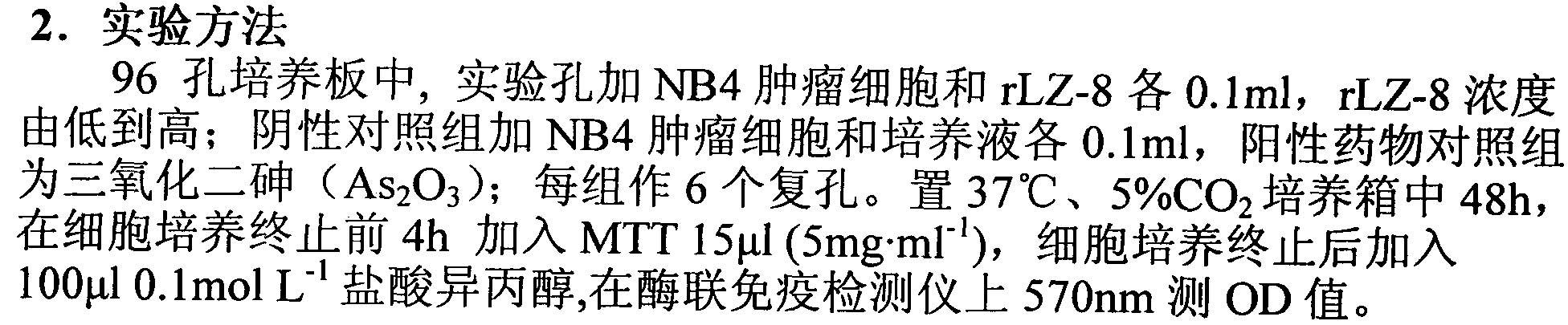
- 8 concentrations were prepared using IMDM medium, respectively ⁇ 1 , l ⁇ g'mr 1 , 3.125 ⁇ ⁇ 1" 1 , 6.25 ⁇ ⁇ ⁇ 1 , 12.5 g'ml , 25 ⁇ ⁇ ⁇ ⁇ , 50 ⁇ ⁇ ⁇ 1" 1 , 100 g'mr'.
- Table 1 and Figure 2 show that the rLZ-8 drug group is at OD 57 .
- the light absorption value of nm was significantly different from that of the normal control group of NB4, indicating that rLZ-8 has a strong killing effect on NB4 tumor cells in vitro.
- the concentration of SDM was determined by using IMDM culture solution, which were respectively S. S ml' 1 , 6.25 ⁇ 1 .
- test wells were added with 0.1 ml of K562 tumor cells and 0.1 ml of rLZ-8, and the concentration of rLZ-8 was from low to high; the negative control group plus K562 cells and the culture medium were each 0.1 ml; the positive drug arsenic trioxide; each group Make 6 duplicate holes.
- Positive drug control group 10 0.22 ⁇ 0.03* 78.2
- K562 cells and NB4 cells were separately added to a 24-well plate, 1 ml/well, and different concentrations of rLZ-8, 1 ml/well were added, and 3 replicate wells were set in each group.
- the cells were collected in a 37 ° C, 5% C0 2 incubator for 24 h.
- the cells in each concentration group were collected, washed twice with PBS and adjusted to a cell concentration of lxl 0 6 /ml, fixed in 70% ice ethanol, and placed at 20 ° C overnight.
- Annexin V-FITC kit flow cytometry to detect apoptosis
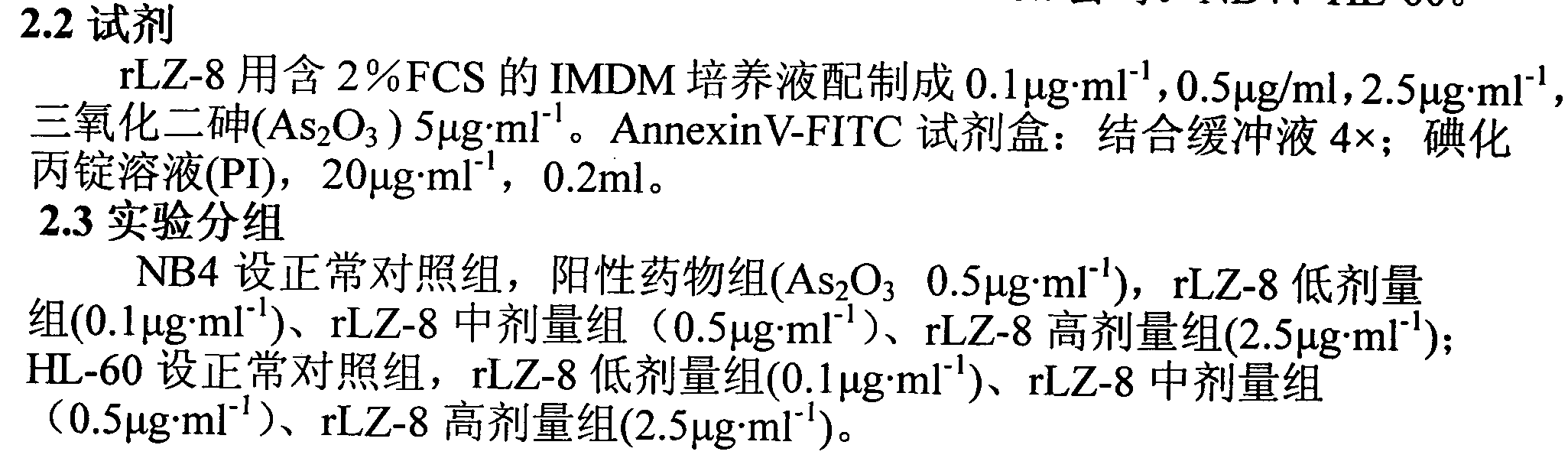
- ⁇ 4 cells and HL-60 cells were separately added to a 24-well plate, 1 ml/well, and different concentrations of rLZ-8, 1 ml/well were added, and 3 replicate wells were set in each group.
- the cells were collected in a 37 ° C, 5 % C0 2 incubator for 24 hours.
- the cells in each concentration group were collected, washed twice with pre-cooled PBS at 4 ° C, and resuspended in 250 ⁇ l binding buffer to adjust the concentration to lx. L0 6 /ml.
- apoptosis rate of NB4-rLZ-8 group and HL-60-rLZ-8 group was significantly higher than that of normal control group, and HL-60-rLZ-8 group, with rLZ As the concentration of -8 increases, the rate of apoptosis also increases.
- mice weighing 18-22 g, half male and half, were provided by the Experimental Animal Center of Jilin University.
- Mouse Ehrlich ascites cell line S180 was provided by the present laboratory.
- S180 ascites tumor and solid tumor experimental group were divided into normal control group, negative control group, positive control group, rLZ-8 low dose treatment group (OJSmgAg' 1 ) rLZ-8 medium dose treatment group (O ⁇ mg ⁇ g' rLZ -8 high dose treatment group (lmg'k ⁇ 10 per group).
- S180 subcutaneous tumor inhibition test method Take well-grown S180 cells, and dilute into tumor cell suspension with appropriate amount of sterile physiological saline. The cell count is lxlo nl ' 1 , and 0.2 ml of subcutaneous inoculation into the right axilla. (except for the normal control group). After 24 hours of inoculation, treatment was given. Normal control group and negative control group were given normal saline 0.2 ⁇ 1 ⁇ only -1 1 , intraperitoneal injection; positive control group was given cyclophosphamide 20 mg*kg,
- 0.2ml-A-'-d" 1 intraperitoneal injection.
- the rLZ-8 treatment group was given the corresponding dose of tail vein injection, 0.2ml - only 1 ⁇ 1 for 10 consecutive days.
- 10d after administration Blood was taken from the orbital venous plexus of the mice, and the number of white blood cells was measured in the laboratory of the First affiliated Hospital of Jilin University. On the next day after the drug was stopped, all the mice were sacrificed by cervical dislocation, and the tumor was dissected and the tumor weight was calculated. :
- Tumor inhibition rate (%) 2 (negative tumor weight in the negative control group, average tumor weight in the experimental group) / negative control group, average tumor weight, ⁇ 100%
- SI 80 ascites tumor inhibition test method Take well-grown S180 cells, and dilute into tumor cell suspension with appropriate amount of sterile physiological saline. The cell count is lxloSnl- 1 , and each mouse is inoculated with 0.2ml (except normal control group). After 24 hours of inoculation, treatment was given. Normal control group and negative control group were given normal saline 0.2ml_only 1 , ⁇ 1 , intraperitoneal injection; positive control group was given cyclophosphamide 20mg, kg 0.2ml - only ⁇ cf 1 , intraperitoneal injection.
- the rLZ-8 treatment group was given the corresponding dose of tail vein injection, 0.2 ml, only ⁇ cT' a for 10 consecutive days. Weighed daily, observe the degree of change in body weight of the mice, and make a weight gain curve.
- Subcutaneous tumor inhibition test results of S180 It can be seen from Table 5 that three doses of rLZ-8 can inhibit the growth of S180, and the tumor inhibition rates are 16.8%, 25.7% and 45.5 %, respectively.
- the tumor weight of the rLZ-8 treatment group was significantly different from that of the negative control group (> ⁇ 0.01).
- CTX group 20 9.56 ⁇ 0.31* 4.41 ⁇ 0.25* rLZ-8 low dose group 0.25 9.48 ⁇ 0.30* 10.44 ⁇ 0.18**
- mice weighing 18-22 g, half male and half, were provided by the Experimental Animal Center of Jilin University.
- Mouse Hepatocellular carcinoma cell line H22 provided by the laboratory.
- the H22 hepatoma cells were divided into normal control group, negative control group, positive control group, rLZ-8 low dose treatment group (0.25 mg * kg-'), rLZ-8 medium dose treatment group (0.5 mg ⁇ kg). — ' ), rLZ-8 high dose treatment group (lmg ⁇ kg - '). 10 in each group. -
- H22 inhibition experiment subcutaneous Method: H22 cells grow well, sterile saline diluted to an appropriate amount of tumor cell suspension, cell counts of 107 per mouse ⁇ 0. 2ml were inoculated subcutaneously in the right armpit
- the rLZ-8 treatment group was given the corresponding dose of tail vein injection, 0.2 ml - only for 10 consecutive days.
- Blood was taken from the orbital venous plexus of the mice before administration and 10 days after administration, and the number of white blood cells was measured in the laboratory of the First affiliated Hospital of Jilin University.
- the average tumor weight of the control group ⁇ ⁇ %
- H22 Ascites anti-tumor test method Take well-grown H22 cells, and dilute into tumor cell suspension with appropriate amount of sterile physiological saline. The cell count is 10 7 per mouse peritoneal cavity 0.2 ml (except normal control group). After 24 hours of inoculation, treatment was given. Normal control group and negative control group were given normal saline 0.2ml-only 1 1 intraperitoneal injection; positive control group was given cyclophosphamide SOmg'kg' 1 , O ⁇ ml- -'-d- 1 , intraperitoneal injection. The rLZ-8 treatment group was given the corresponding dose of tail vein injection, 0.2 ⁇ 1 ⁇ c ⁇ cT continuous
- CTX group 20 0.45 ⁇ 0.02 * 62.5
- the cadaver ⁇ 0.01 was seen from Table 8.
- the number of white blood cells in each group was at the same level, and there was no difference compared with the negative control group (P>0.05).
- the number of white blood cells in the negative control group was higher than that in the normal control group.
- the number of white blood cells between the low dose group and the middle dose group in the rLZ-8 group was no difference in the number of white blood cells between the low dose group and the middle dose group in the rLZ-8 group (P>0.05).
- the high-dose group and the normal control group P>0.05
- the number of white blood cells in the positive control group was significantly lower than that in the normal control group and the negative control group ( ⁇ ⁇ 0.01).
- CTX group 20 9.67 ⁇ 0.43* 4.49 ⁇ 0.21 * rLZ-8 low dose group 0.25 9.65 ⁇ 0.33* 10.53 ⁇ 0.24**
- H22 ascites inhibition test results The experimental results showed that the survival time of the rLZ-8 group was longer than that of the negative control group, and the negative control group had decreased appetite, but the weight gain increased rapidly and the activity decreased. As can be seen from Figure 7, the average weight gain trend of the rLZ-8 group was larger than that of the normal group, but smaller than that of the negative control group. This indicates that rLZ-8 can inhibit the growth of H22 tumor cells in the peritoneal cavity of mice to some extent.
- Example 7 rLZ-8 fluorescent labeling and its effect on normal tissue cells and HL-60 cells
- Fluorescent pigment Fluorescent pigment (Fluorescein-5-Lsothiocyanalte, FITC), Gil Biochemical (Shanghai); Dimethyl sulfoxide; Carbonate buffer (pH 8 ⁇ 9.5) (Na 2 C0 3 4.3g, NaHC0 3 8.6g plus ddH 2 0 to 500 ml); phosphate buffer (PBS); Desalting Hiprep 26/10 desalting column; AKTA purifier; Hitachi spectrophotometer.
- rLZ-8 (7.5 mg-ml" 1 ) 20 ml was dialyzed against carbonate buffer (pH 8.3) overnight, 3.75 mg of FITC was weighed, and 3.75 ml of dimethyl sulfoxide (DMSO) was added to prepare FITC-DMSO.
- DMSO dimethyl sulfoxide
- This room is prepared.
- the rats were sacrificed by neck removal, the heart was taken, placed on a cryostat, and the temperature was lowered to -20 ⁇ for sectioning.
- the myocardial tissue sections were incubated with FITC-rLZ-8 solution (100 ng 'mr 1 ) prepared in PBS at 37 ° C for 1 h. After observation under a fluorescence microscope, a blank control group was set up.
- Fluorescence microscope 80i (Nikon), IMDM cell culture medium (Hyclone), fetal bovine serum.
- HL-60 was inoculated into a 24-well culture plate at 2x1 ⁇ ml' 1 with 0.5 ml per well.
- the cells were taken out at 1.5 h and 6 h, respectively, and added to a 1.5 ml EP tube, centrifuged at 100 ° min- 1 , the supernatant was discarded, washed 3 times with PBS, washed and resuspended.
- HL-60 cells incubated with FITC-rLZ-8 for 1 h and 6 h showed strong green fluorescence, and cells in 6 h group showed agglutination. There was no green fluorescence in the blank control group, which was significantly different from the former.
- Recombinant Ganoderma lucidum immunomodulatory protein (rLZ-8) was prepared as a sterile saline solution to prepare 5 ⁇ g'kg 2.5 ⁇ g-kg 1 , 1.25 u g'kg and O SS g'kg dose groups, 0.2 ml/mouse.
- Jin Lei Saiqiang (recombinant human granulocyte colony-stimulating factor injection (rhG-CSF)), production batch number:
- Cyclophosphamide (CTX) for injection production batch number 07218821; 200 mg / support.
- CX Cyclophosphamide
- mice were divided into 7 groups, 10 in each group, half male and half female. Except for the normal control group (administered with equal volume of normal saline), each group of mice was given intraperitoneal injection of cyclophosphamide, U ⁇ mg g' 1 , 0.2 ml / for 3 consecutive days. On day 3, blood was taken from the tail vein of the mouse and white blood cell counts were performed under the microscope.
- White blood cell counting method The blood was diluted 20 times with 3% dilute acetic acid, the red blood cells were all dissolved, dropped into a white blood cell counting cell, and counted under a microscope to obtain the number of white blood cells per cubic millimeter of blood.
- rLZ-8 (5 yg'kg ) 9.92 ⁇ 0.2: 1.3 ⁇ 0.32 5.0 ⁇ 0.12* 20.3 ⁇ 0.11* 14.3 ⁇ 0.21* rLZ-8 (2.5 ygk '10.25 ⁇ 0.3 1.5 ⁇ 0.54 6.6 ⁇ 0.77* 22.8 ⁇ 0.15* 15.2 ⁇ 0.11*
- Example 9 Treatment experiment of rat leukopenia induced by cyclophosphamide
- Recombinant Ganoderma lucidum immunomodulatory protein (rLZ-8) is formulated into sterile saline to prepare SO g ⁇ g ⁇
- Jin Lei Saiqiang (recombinant human granulocyte colony-stimulating factor injection (rhG-CSF)), production batch number: 20071104; 15 ( ⁇ g / branch. Prepared with sterile saline to make Q g'kg' 1 , 0.2ml / only .
- Cyclophosphamide (CTX) for injection production batch number 07118821; 200 mg / support.
- AQm ⁇ kg' 1 , 0.2 ml/only was prepared with sterile physiological saline.
- the experimental animals were divided into 10 groups of 10 animals each, half male and half female.
- each group of rats were given intraperitoneal injection of cyclophosphamide, AQmg-kg '1, 0.2ml / only: 3 consecutive days.
- blood was taken from the tail vein of the rat and white blood cell counts were performed under the microscope.
- the corresponding doses of rLZ-8 and positive drug Jin Lei Saiqiang
- CTX normal control group and cyclophosphamide
- White blood cell counting method The blood was diluted 20 times with 3% dilute acetic acid, the red blood cells were all dissolved, dropped into a white blood cell counting cell, and counted under a microscope to obtain the number of white blood cells per cubic millimeter of blood. 3. Experimental results
- Example 10 Prevention of leukopenia caused by xenon radiation in mice
- Recombinant Ganoderma lucidum immunoregulatory protein (rLZ-8) is formulated into sterile saline to prepare 5 y g, kg human
- Jin Lei Saiqiang (recombinant human granulocyte colony stimulating factor injection (rhG-CSF)), production batch number: 20060403; 150 ⁇ / support. Prepared with sterile saline to prepare S ⁇ g'kg- 1 , 0.2 ml/head.
- Cyclophosphamide (CTX) for injection production batch number 07218821; 200 mg / support. Prepared with sterile physiological saline to make 12.5 mg.kg ⁇ 1 , 0.2 ml/head.
- the experimental animals were divided into 7 groups of 10 animals each, half male and half female.
- each group was given a positive drug (Jin Lei Saiqiang), different doses of rLZ-8, once a day for 5 consecutive days, and irradiated on the 5th day.
- the irradiation conditions were 7.50 Gy, 180 mV, 15 mA, and the dose rate was 450 rpm.
- the number of white blood cells was counted in the tail vein before administration, on the 5th day after administration, on the 5th day after the irradiation, and on the 7th day.
- the counting method is the same as above.
- each drug concentration group was administered on the 5th day of administration.
- the cells were significantly elevated, and there was a significant difference (PO.05).
- the number of cells was the lowest on the 5th day of irradiation and began to recover on the 7th day.
- Example 11 Treatment experiment of leukopenia caused by xenon radiation in mice
- Recombinant Ganoderma lucidum immunomodulatory protein (rLZ-8) was prepared as a sterile saline solution to prepare 5 ⁇ g-kg 1 2.5 ⁇ g.kg, 1.25 ⁇ g-kg 1. 0.625 g-kg 1 ⁇ , 0.2 ml/only.
- Jin Lei Saiqiang (recombinant human granulocyte colony-stimulating factor injection (rhG-CSF)), production batch number:
- Cyclophosphamide for injection (CTX), production batch number 07121821; 200 mg / support. Formulated with sterile physiological water to make 12.5 mg'kg, 0.2 ml/head.
- mice The experimental animals were divided into 7 groups of 10 animals each, half male and half female. Except the normal control group, each group of mice began intraperitoneal injection of an equal volume of normal saline, a positive drug (Jin Lei Saiqiang), and different doses of rLZ-8 on the same day of radiation.
- the irradiation conditions were 7.50 Gy, 180 mV, 15 mA, and the dose rate was 450 ⁇ /min.
- the number of white blood cells in the tail veins of each group of animals was measured before the administration, and on the 5th, 7th, and 9th day after irradiation.
- the body was weighed and deprived 7 days after the irradiation, and the spleen was weighed to calculate the spleen coefficient. Then, it was fixed in Bouin's solution, and the number of spleen surface hematopoietic foci (CFU-S) was counted 6 hours later.
- the number of white blood cells was the lowest on the 7th day after the irradiation, and the recovery began on the 9th day, and the drug-administered group and the model group were significantly different ⁇ 0.05).
- each drug group can promote spleen hyperplasia, and the spleen coefficient and spleen nodule production unit (CFU-S) are significantly higher than the model group (P ⁇ 0.05).
- Table 12 Results of the therapeutic effect of rLZ-8 on the mouse leukopenia model induced by ⁇ -ray irradiation.
- rLZ-8 5 ⁇ g-kg 1 11 ⁇ 2 ⁇ 0.21 0.84 ⁇ 0.32* 0.31 ⁇ 0.32* 0.90 ⁇ 0.14* rLZ-8 2.5 ⁇ g-kg" 12.9 ⁇ 0.39 0.69 ⁇ 0.54 0.56 ⁇ 0.54* 0.54 ⁇ 0.13* rLZ -8 1.25 ⁇ g-kg' 9.6 ⁇ 0.31 0.82 ⁇ 0.45* 0.65 ⁇ 0.45* 0 ⁇ 70 ⁇ 0.12* rLZ-8 0.62 ⁇ g-kg 10.4 ⁇ 0.91 0.73 ⁇ 0.43* 0.26 ⁇ 0.43* 0.64 ⁇ 0.01
- rLZ-8 was formulated into 700 ⁇ g ⁇ ml" 1 with physiological saline, and aluminum hydroxide suspension (adjuvant) was formulated into ISmg ' mr 1 , bovine serum albumin (BSA), and ovalbumin (OA) with PBS.
- mice of 15 weeks old, 18-22 g, 40 were placed in a heat-free environment.
- the subjects were divided into normal control group, rLZ-8 drug group 1, rLZ-8 drug group 2, and positive control group.
- Sensitization after administration 2 times 1 mg of BSA was mixed with 0.2 ml of a suspension of 1 Smg ⁇ ml - 1 aluminum hydroxide, and sensitized mice were intraperitoneally injected.
- the normal control group was given an equal amount of physiological saline instead of rLZ-8.
- rLZ-8 drug group 2 on the 17th day after sensitization, a mixture of BSA-rLZ-8 (rLZ-8 70 ⁇ g ⁇ ml" 1 and BSA 5 mg ⁇ ml" 1 , prepared with PBS) was intravenously administered 0.1 ml. lOg 1 body weight.
- the positive control group was injected with 1 mg of OA instead of BSA tail vein on the 17th day after sensitization.
- Observation criteria The systemic allergic reaction was observed after 30 minutes of intravenous administration of BSA in mice. Positive reaction criteria: mice with convulsions, decreased activity or death; negative reaction, normal mouse activity.
- Table 14 shows that rLZ-8 inhibits systemic allergic reactions in mice induced by bovine serum albumin (BSA); simultaneous injection of rLZ-8 with shock-dose BSA does not prevent systemic allergic reactions.
- BSA bovine serum albumin
- rLZ-8 was formulated into 1 mg'mr 1 with 5% glucose solution; blood cell suspension was prepared: 4 ml of human blood, centrifuged at 1000 r/min for 10 min, and the supernatant was removed. Add the red blood cell pellet to the 5% glucose solution about 10 times, shake well, centrifuge at 1000r/min for 20min, remove the supernatant, and repeat the washing 2-3 times until the supernatant is not red. The resulting red blood cells were mixed with a 5% glucose solution to form a 2% suspension for experimental use.
- No. 1 to No. 5 was the rLZ-8 drug group
- No. 6 tube was the negative control group (5% glucose solution)
- No. 7 tube was the positive control tube (distilled water).
- a total of 4 sets of parallel control tubes were set up. Add 2% red blood cell suspension, 5% glucose or distilled water in turn, mix well, and immediately incubate in an incubator at 37 °C ⁇ 0.5 °C. Start observation once every 15 minutes, and observe it once every lh after lh for 3 hours. After the end, the solution in each tube was placed in a dry centrifuge tube and centrifuged at 1500 r/min for 25 min. The supernatant was taken, and the OD value of each tube was read at 545 nm of the spectrophotometer with distilled water as a blank to calculate the hemolysis rate.
- the hemolysis rate of the 1-5 rLZ-8 drug group was less than 5%, indicating that no hemolysis reaction occurred.
- Rats in the rLZ-8 drug group were given different doses of rLZ-8 in the tail vein, once a day; the control group was given the same amount of normal saline. On the seventh day of dosing, the right thigh bone marrow smear was taken.
- Figure 11 shows that there was no abnormality in the rat bone marrow smear compared with the normal control group.
- the subjects were divided into rLZ-8 concentration group, positive drug control group and normal control group. 96 holes
- the positive control drug PHA is for four people.
- rLZ-8 has no agglutination effect on human four red blood cells
- the recombinant Ganoderma lucidum immunomodulatory protein rLZ-8 of the present invention can be administered orally and parenterally as an antitumor drug.
- the dosage to be taken is determined by factors such as symptoms, age, and weight. For adults, oral administration, 10-1000 mg per dose per day, several times a day; parenteral administration 10-100 mg, several times per week.
- the oral tablet, pill capsule (including hard capsules and soft capsules) of the present invention comprise recombinant Ganoderma lucidum immunomodulatory protein rLZ-8 and at least one inert diluent (for example, lactose, nectar) Sugar alcohols, glucose, starch, polyvinylpyrrolidone) It is also possible to add pharmaceutically acceptable additives other than inert diluents such as lubricants, disintegrants, stabilizers. If desired, the tablets or pills may be coated with one or more layers of the stomach or enteric material.
- the parenteral injection comprises recombinant Ganoderma lucidum immunoregulatory protein rLZ-8 and at least one inert water diluent (such as distilled water for injection, physiological saline), and the recombinant Ganoderma lucidum immunoregulatory protein rLZ-8 can also be used as a lyophilized powder. It is previously dissolved in an inert water diluent for injection.
- inert water diluent such as distilled water for injection, physiological saline
- Recombinant Ganoderma lucidum immunoregulatory protein rLZ-8 lOOOOmg dissolved in 100ml sterile saline, mixed evenly, and then dispensed into rLZ-8 10mg/ml / concentration of the injection in the vial, sealed, sterilized product.
- Other items shall comply with the requirements of the 2005 edition of the Pharmacopoeia of the People's Republic of China.
- Other items It should meet the requirements of the 2005 edition of the Pharmacopoeia of the People's Republic of China.
- the results of the present invention indicate that the recombinant Ganoderma lucidum immunomodulatory protein has obvious treatment and prevention of leukopenia caused by various reasons, and is superior to the existing clinical application drugs in clinical application dosage, therapeutic effect and clinical discomfort.
- Animal experiments have shown that the side effects of Ganoderma lucidum immunoregulatory protein in the gene group are much lower than those of recombinant colony cell stimulating factor.
- the inventors expressed the Ganoderma lucidum immunoregulatory protein using the Pichia pastoris eukaryotic expression system; in the international similar study, we achieved the first fermentation production of 100 liters of rLZ-8, and established a complete production and purification process plan; The measurement of the spatial structure of rLZ-8 was completed at one time, which laid a solid foundation for further study of the anti-tumor mechanism of rLZ-8.
- LZ-8 can increase the number of white blood cells in the experimental animal lymphocyte hypoxia model, and the pharmacodynamic effect is significantly stronger than the colony stimulating factor; rLZ-8 can induce leukemia cells NB4, K562 and HL-60 cells Apoptosis, which is the first time we have elucidated another possible pathway for fungal immunoregulators to kill tumor cells.
- Therapeutic experiments in blastoma mice further indicate that rLZ-8 can effectively inhibit the growth of transplanted tumors in vivo; Experiments show that rLZ-8 has no obvious toxicity to rat blood cells; no pathological damage to the aorta and main vessel wall; no effect of bone marrow smear on hematopoietic function.
- the present invention discloses LZ-8 for the first time. Crystal space structure; It is disclosed that LZ-8 can directly kill tumor cells without destroying normal cells; and discloses a new use of LZ-8 for preventing and treating leukopenia caused by various causes.
Landscapes
- Health & Medical Sciences (AREA)
- Chemical & Material Sciences (AREA)
- Life Sciences & Earth Sciences (AREA)
- Organic Chemistry (AREA)
- Medicinal Chemistry (AREA)
- General Health & Medical Sciences (AREA)
- Veterinary Medicine (AREA)
- Nuclear Medicine, Radiotherapy & Molecular Imaging (AREA)
- General Chemical & Material Sciences (AREA)
- Pharmacology & Pharmacy (AREA)
- Chemical Kinetics & Catalysis (AREA)
- Animal Behavior & Ethology (AREA)
- Public Health (AREA)
- Engineering & Computer Science (AREA)
- Bioinformatics & Cheminformatics (AREA)
- Immunology (AREA)
- Oncology (AREA)
- Communicable Diseases (AREA)
- Hematology (AREA)
- Biophysics (AREA)
- Mycology (AREA)
- Gastroenterology & Hepatology (AREA)
- Biochemistry (AREA)
- Genetics & Genomics (AREA)
- Molecular Biology (AREA)
- Proteomics, Peptides & Aminoacids (AREA)
- Diabetes (AREA)
- Virology (AREA)
- Pulmonology (AREA)
- Transplantation (AREA)
- Tropical Medicine & Parasitology (AREA)
- Medicines That Contain Protein Lipid Enzymes And Other Medicines (AREA)
- Medicinal Preparation (AREA)
- Medicines Containing Antibodies Or Antigens For Use As Internal Diagnostic Agents (AREA)
- Breeding Of Plants And Reproduction By Means Of Culturing (AREA)
- Medicines Containing Plant Substances (AREA)
- Preparation Of Compounds By Using Micro-Organisms (AREA)
- Peptides Or Proteins (AREA)
Description




Claims
Priority Applications (6)
| Application Number | Priority Date | Filing Date | Title |
|---|---|---|---|
| JP2010541002A JP5735280B2 (ja) | 2008-01-03 | 2008-12-30 | 組換えマンネンタケ(Ganodermalucidium)免疫調節タンパク質(rLZ−8)およびその使用 |
| EP08871843.2A EP2246064B1 (en) | 2008-01-03 | 2008-12-30 | Recombinant ganoderma lucidium immunomodulatory protein (rlz-8) and uses thereof |
| AU2008349094A AU2008349094B8 (en) | 2008-01-03 | 2008-12-30 | Recombinant Ganoderma lucidium immunomodulatory protein (rLZ-8) and uses thereof |
| CA2711207A CA2711207C (en) | 2008-01-03 | 2008-12-30 | Recombinant ganoderma lucidium immunomodulatory protein (rlz-8) and uses thereof |
| US12/829,653 US20110009597A1 (en) | 2008-01-03 | 2010-07-02 | RECOMBINANT GANODERMA LUCIDIUM IMMUNOMODULATORY PROTEIN (rLZ-8) AND USES THEREOF |
| US14/511,781 US20150023994A1 (en) | 2008-01-03 | 2014-10-10 | RECOMBINANT GANODERMA LUCIDIUM IMMUNOMODULATORY PROTEIN (rLZ-8) AND USES THEREOF |
Applications Claiming Priority (2)
| Application Number | Priority Date | Filing Date | Title |
|---|---|---|---|
| CN200810050206XA CN101475632B (zh) | 2008-01-03 | 2008-01-03 | 具有抗肿瘤作用的重组灵芝免疫调节蛋白及其药物制剂 |
| CN200810050206.X | 2008-01-03 |
Related Child Applications (1)
| Application Number | Title | Priority Date | Filing Date |
|---|---|---|---|
| US12/829,653 Continuation US20110009597A1 (en) | 2008-01-03 | 2010-07-02 | RECOMBINANT GANODERMA LUCIDIUM IMMUNOMODULATORY PROTEIN (rLZ-8) AND USES THEREOF |
Publications (1)
| Publication Number | Publication Date |
|---|---|
| WO2009094850A1 true WO2009094850A1 (fr) | 2009-08-06 |
Family
ID=40836415
Family Applications (1)
| Application Number | Title | Priority Date | Filing Date |
|---|---|---|---|
| PCT/CN2008/002142 Ceased WO2009094850A1 (fr) | 2008-01-03 | 2008-12-30 | Protéine immunomodulatrice recombinante de reishi (ganoderma lucidium) (rlz-8) et ses utilisations |
Country Status (7)
| Country | Link |
|---|---|
| US (2) | US20110009597A1 (zh) |
| EP (1) | EP2246064B1 (zh) |
| JP (2) | JP5735280B2 (zh) |
| CN (1) | CN101475632B (zh) |
| AU (1) | AU2008349094B8 (zh) |
| CA (1) | CA2711207C (zh) |
| WO (1) | WO2009094850A1 (zh) |
Families Citing this family (16)
| Publication number | Priority date | Publication date | Assignee | Title |
|---|---|---|---|---|
| CA3007787C (en) | 2010-06-03 | 2020-03-10 | Pharmacyclics Llc | The use of inhibitors of bruton's tyrosine kinase (btk) |
| MX391121B (es) * | 2011-10-19 | 2025-03-19 | Pharmacyclics Llc | Uso de inhibidores de la tirosina cinasa de bruton (btk). |
| CN102731632B (zh) * | 2012-07-16 | 2014-03-12 | 张喜田 | 重组灵芝免疫调节蛋白单甲氧基聚乙二醇丙酸琥珀酰亚胺酯修饰物、制备方法和用途 |
| CN104704129A (zh) | 2012-07-24 | 2015-06-10 | 药品循环公司 | 与对布鲁顿酪氨酸激酶(btk)抑制剂的抗性相关的突变 |
| CN103417953B (zh) * | 2013-08-16 | 2015-06-17 | 张喜田 | 重组灵芝免疫调节蛋白(rLZ-8)在制备治疗黑色素瘤药物中的应用 |
| CN103463618B (zh) * | 2013-09-06 | 2014-09-03 | 张喜田 | 重组灵芝免疫调节蛋白在制备治疗局灶性脑缺血药物中的应用 |
| CN103524628B (zh) * | 2013-10-15 | 2015-01-07 | 张喜田 | 重组灵芝免疫调节蛋白与人血清白蛋白融合蛋白及其制备方法与应用 |
| CN103536901A (zh) * | 2013-10-25 | 2014-01-29 | 张喜田 | 重组灵芝免疫调节蛋白在制备治疗帕金森病药物中的应用 |
| CN103751765B (zh) * | 2014-02-12 | 2015-02-25 | 张喜田 | 重组灵芝免疫调节蛋白(rLZ-8)在制备治疗组织纤维化药物中的应用 |
| TWI608846B (zh) | 2014-03-13 | 2017-12-21 | 益生生技開發股份有限公司 | 用於改善化學治療所造成之不良副作用的組合療法 |
| CN103816532B (zh) * | 2014-03-18 | 2015-04-29 | 张喜田 | 重组灵芝免疫调节蛋白(rLZ-8)在制备治疗慢性心力衰竭药物中的应用 |
| US9885086B2 (en) | 2014-03-20 | 2018-02-06 | Pharmacyclics Llc | Phospholipase C gamma 2 and resistance associated mutations |
| CN103990109B (zh) * | 2014-06-17 | 2015-03-25 | 张喜田 | 重组灵芝免疫调节蛋白(rLZ-8)在制备治疗骨质疏松药物中的应用 |
| CN104043105A (zh) * | 2014-06-18 | 2014-09-17 | 张喜田 | 重组灵芝免疫调节蛋白rLZ-8在治疗肺癌,喉癌和脑胶质瘤中的应用 |
| CN107118263B (zh) * | 2017-04-08 | 2020-07-03 | 张喜田 | 重组灵芝免疫调节蛋白突变体及其应用 |
| EP4386008A4 (en) * | 2021-08-09 | 2025-03-12 | Changchun Intellicrown Pharmaceutical Co., Ltd. | New mutant of recombinant ganoderma lucidum immunoregulatory protein and application thereof |
Citations (2)
| Publication number | Priority date | Publication date | Assignee | Title |
|---|---|---|---|---|
| JPH02124899A (ja) * | 1988-11-01 | 1990-05-14 | Meiji Milk Prod Co Ltd | 新規な蛋白質とその製造法及びこれを有効成分とする免疫抑制剤 |
| CN1939532A (zh) * | 2005-09-23 | 2007-04-04 | 益生生技开发股份有限公司 | 真菌免疫调节蛋白之用途 |
Family Cites Families (3)
| Publication number | Priority date | Publication date | Assignee | Title |
|---|---|---|---|---|
| EP0288959B1 (en) * | 1987-04-28 | 1994-01-12 | Meiji Milk Products Company Limited | Novel glycoprotein, production process thereof and immunosuppressive agent containing same as effective ingredient |
| TWI351963B (en) * | 2003-09-17 | 2011-11-11 | Yeastern Biotech Co Ltd | Fungal immunomodulatory protein (fip) prepared by |
| CN101205553A (zh) * | 2007-12-13 | 2008-06-25 | 吉林大学 | 一种重组灵芝免疫调节蛋白制备方法 |
-
2008
- 2008-01-03 CN CN200810050206XA patent/CN101475632B/zh not_active Expired - Fee Related
- 2008-12-30 AU AU2008349094A patent/AU2008349094B8/en not_active Ceased
- 2008-12-30 WO PCT/CN2008/002142 patent/WO2009094850A1/zh not_active Ceased
- 2008-12-30 CA CA2711207A patent/CA2711207C/en not_active Expired - Fee Related
- 2008-12-30 EP EP08871843.2A patent/EP2246064B1/en not_active Not-in-force
- 2008-12-30 JP JP2010541002A patent/JP5735280B2/ja not_active Expired - Fee Related
-
2010
- 2010-07-02 US US12/829,653 patent/US20110009597A1/en not_active Abandoned
-
2014
- 2014-10-10 US US14/511,781 patent/US20150023994A1/en not_active Abandoned
- 2014-12-04 JP JP2014245808A patent/JP6040212B2/ja not_active Expired - Fee Related
Patent Citations (2)
| Publication number | Priority date | Publication date | Assignee | Title |
|---|---|---|---|---|
| JPH02124899A (ja) * | 1988-11-01 | 1990-05-14 | Meiji Milk Prod Co Ltd | 新規な蛋白質とその製造法及びこれを有効成分とする免疫抑制剤 |
| CN1939532A (zh) * | 2005-09-23 | 2007-04-04 | 益生生技开发股份有限公司 | 真菌免疫调节蛋白之用途 |
Non-Patent Citations (6)
| Title |
|---|
| GUO, Q. ET AL.: "The progress of fungal immunomodulatory protein pharmacology.", ANHUI MEDICAL AND PHARMACEUTICAL JOURNAL., vol. 11, no. 5, May 2007 (2007-05-01), pages 385 - 387 * |
| JIN, B. Q.: "Cellular and Molecular Immunology.", 2001, SCIENCE PRESS, BEIJING, ISBN: 7-03-009578-2, pages: 165 - 167 * |
| KINO, K. ET AL.: "Isolation and characterization of a new immunomodulatory protein, Ling Zhi-8 (LZ-8), from Ganoderma lucidium.", THE JOURNAL OF BIOLOGICAL CHEMISTRY., vol. 264, no. 1, 1989, pages 472 - 478, XP009091137 * |
| LIN, J. W. ET AL.: "The progress of fungal immunomodulatory protein.", CHINESE JOURNAL OF IMMUNOLOGY., vol. 21, no. 6, 2005, pages 477 - 480 * |
| LIN, Z. P. ET AL.: "Structure and function study of fungal immunomodulatory protein (FIP).", JOURNAL OF LIAONING NORMAL UNIVERSITY, vol. 29, no. 1, March 2006 (2006-03-01), pages 84 - 87 * |
| See also references of EP2246064A4 * |
Also Published As
| Publication number | Publication date |
|---|---|
| CN101475632B (zh) | 2012-01-04 |
| EP2246064A1 (en) | 2010-11-03 |
| AU2008349094A8 (en) | 2014-10-16 |
| CA2711207C (en) | 2019-02-12 |
| AU2008349094B8 (en) | 2014-10-16 |
| AU2008349094A1 (en) | 2009-08-06 |
| EP2246064B1 (en) | 2018-08-08 |
| US20150023994A1 (en) | 2015-01-22 |
| JP2011508749A (ja) | 2011-03-17 |
| JP2015078211A (ja) | 2015-04-23 |
| JP5735280B2 (ja) | 2015-06-17 |
| EP2246064A4 (en) | 2011-05-18 |
| CA2711207A1 (en) | 2009-08-06 |
| CN101475632A (zh) | 2009-07-08 |
| AU2008349094B2 (en) | 2014-10-02 |
| US20110009597A1 (en) | 2011-01-13 |
| JP6040212B2 (ja) | 2016-12-07 |
Similar Documents
| Publication | Publication Date | Title |
|---|---|---|
| WO2009094850A1 (fr) | Protéine immunomodulatrice recombinante de reishi (ganoderma lucidium) (rlz-8) et ses utilisations | |
| AU2021302188B2 (en) | Polypeptide for repairing mucosal damage or skin wound and use thereof | |
| CN104530199A (zh) | 一种抗肿瘤多肽及其制备方法和应用 | |
| WO2021027704A1 (zh) | 多肽或其衍生物的应用 | |
| CA2785185C (en) | Organic compounds for the regulation of vectorial ion channels | |
| CN108686200B (zh) | 用于治疗代谢系统疾病的多肽及其组合物 | |
| WO2011119008A2 (en) | Peptides for promoting angiogenesis and an use thereof | |
| PT1299541E (pt) | Processo para obtenção e utilização de novas defensinas humanas como proteínas biologicamente activas para o tratamento de infecções e outras doenças | |
| CN113024635B (zh) | 一类订书肽化合物及其药物组合物的用途 | |
| CN101671390B (zh) | 人干扰素α衍生物及其聚乙二醇化修饰物的制备和用途 | |
| CN110256537B (zh) | 具有抗幽门螺旋杆菌和抑制炎症因子的双功能多肽及其应用 | |
| CN117720661A (zh) | 一种具有神经保护功效的自组装硫环肽及其制备方法和应用 | |
| TW202241927A (zh) | 一類用於修復皮膚損傷或黏膜損傷之多肽及其應用 | |
| CN1257183C (zh) | 一种文蛤提取物及其制备方法与应用 | |
| US20200023033A1 (en) | Composition for treating pulmonary fibrosis comprising alloferon | |
| CN111529688A (zh) | 抗菌肽在制备肺癌治疗药物中的应用 | |
| JP3002213B2 (ja) | ペプチドおよびこのペプチドを含有する薬剤 | |
| WO2025241148A1 (zh) | 化合物及其制备方法和应用 | |
| HK40104996A (zh) | 多肽化合物及其治疗肠炎的用途 | |
| HK40104996B (zh) | 多肽化合物及其治疗肠炎的用途 | |
| CN104558122A (zh) | 与整合素受体相关的抗肿瘤多肽及其治疗和诊断用途 | |
| HK40047414B (zh) | 多肽或其衍生物的应用 | |
| CN117924428A (zh) | 一种来源于小马岛猬的抗菌肽及其制备方法和应用 | |
| CN114209812A (zh) | α-苦瓜素在制备抗炎药物中的用途 | |
| CN110144013A (zh) | 一种抗类风湿性关节炎多肽及其应用 |
Legal Events
| Date | Code | Title | Description |
|---|---|---|---|
| 121 | Ep: the epo has been informed by wipo that ep was designated in this application |
Ref document number: 08871843 Country of ref document: EP Kind code of ref document: A1 |
|
| WWE | Wipo information: entry into national phase |
Ref document number: 2711207 Country of ref document: CA |
|
| WWE | Wipo information: entry into national phase |
Ref document number: 2010541002 Country of ref document: JP |
|
| NENP | Non-entry into the national phase |
Ref country code: DE |
|
| WWE | Wipo information: entry into national phase |
Ref document number: 2008871843 Country of ref document: EP |
|
| ENP | Entry into the national phase |
Ref document number: 2008349094 Country of ref document: AU Date of ref document: 20081230 Kind code of ref document: A |