WO2009096701A2 - Novel compounds, isomer thereof, or pharmaceutically acceptable salts thereof as vanilloid receptor antagonist; and pharmaceutical compositions containing the same - Google Patents
Novel compounds, isomer thereof, or pharmaceutically acceptable salts thereof as vanilloid receptor antagonist; and pharmaceutical compositions containing the same Download PDFInfo
- Publication number
- WO2009096701A2 WO2009096701A2 PCT/KR2009/000407 KR2009000407W WO2009096701A2 WO 2009096701 A2 WO2009096701 A2 WO 2009096701A2 KR 2009000407 W KR2009000407 W KR 2009000407W WO 2009096701 A2 WO2009096701 A2 WO 2009096701A2
- Authority
- WO
- WIPO (PCT)
- Prior art keywords
- phenyl
- trifluoromethyl
- acrylamide
- methanesulfonylamino
- difluoro
- Prior art date
- Legal status (The legal status is an assumption and is not a legal conclusion. Google has not performed a legal analysis and makes no representation as to the accuracy of the status listed.)
- Ceased
Links
- 0 *c1ccc(C(O)=O)c([N+]([O-])=O)c1 Chemical compound *c1ccc(C(O)=O)c([N+]([O-])=O)c1 0.000 description 7
Classifications
-
- C—CHEMISTRY; METALLURGY
- C07—ORGANIC CHEMISTRY
- C07C—ACYCLIC OR CARBOCYCLIC COMPOUNDS
- C07C311/00—Amides of sulfonic acids, i.e. compounds having singly-bound oxygen atoms of sulfo groups replaced by nitrogen atoms, not being part of nitro or nitroso groups
- C07C311/01—Sulfonamides having sulfur atoms of sulfonamide groups bound to acyclic carbon atoms
- C07C311/02—Sulfonamides having sulfur atoms of sulfonamide groups bound to acyclic carbon atoms of an acyclic saturated carbon skeleton
- C07C311/08—Sulfonamides having sulfur atoms of sulfonamide groups bound to acyclic carbon atoms of an acyclic saturated carbon skeleton having the nitrogen atom of at least one of the sulfonamide groups bound to a carbon atom of a six-membered aromatic ring
-
- C—CHEMISTRY; METALLURGY
- C07—ORGANIC CHEMISTRY
- C07C—ACYCLIC OR CARBOCYCLIC COMPOUNDS
- C07C311/00—Amides of sulfonic acids, i.e. compounds having singly-bound oxygen atoms of sulfo groups replaced by nitrogen atoms, not being part of nitro or nitroso groups
- C07C311/30—Sulfonamides, the carbon skeleton of the acid part being further substituted by singly-bound nitrogen atoms, not being part of nitro or nitroso groups
- C07C311/45—Sulfonamides, the carbon skeleton of the acid part being further substituted by singly-bound nitrogen atoms, not being part of nitro or nitroso groups at least one of the singly-bound nitrogen atoms being part of any of the groups, X being a hetero atom, Y being any atom, e.g. N-acylaminosulfonamides
-
- A—HUMAN NECESSITIES
- A61—MEDICAL OR VETERINARY SCIENCE; HYGIENE
- A61K—PREPARATIONS FOR MEDICAL, DENTAL OR TOILETRY PURPOSES
- A61K31/00—Medicinal preparations containing organic active ingredients
- A61K31/16—Amides, e.g. hydroxamic acids
- A61K31/18—Sulfonamides
-
- A—HUMAN NECESSITIES
- A61—MEDICAL OR VETERINARY SCIENCE; HYGIENE
- A61P—SPECIFIC THERAPEUTIC ACTIVITY OF CHEMICAL COMPOUNDS OR MEDICINAL PREPARATIONS
- A61P1/00—Drugs for disorders of the alimentary tract or the digestive system
- A61P1/02—Stomatological preparations, e.g. drugs for caries, aphtae, periodontitis
-
- A—HUMAN NECESSITIES
- A61—MEDICAL OR VETERINARY SCIENCE; HYGIENE
- A61P—SPECIFIC THERAPEUTIC ACTIVITY OF CHEMICAL COMPOUNDS OR MEDICINAL PREPARATIONS
- A61P1/00—Drugs for disorders of the alimentary tract or the digestive system
- A61P1/04—Drugs for disorders of the alimentary tract or the digestive system for ulcers, gastritis or reflux esophagitis, e.g. antacids, inhibitors of acid secretion, mucosal protectants
-
- A—HUMAN NECESSITIES
- A61—MEDICAL OR VETERINARY SCIENCE; HYGIENE
- A61P—SPECIFIC THERAPEUTIC ACTIVITY OF CHEMICAL COMPOUNDS OR MEDICINAL PREPARATIONS
- A61P1/00—Drugs for disorders of the alimentary tract or the digestive system
- A61P1/08—Drugs for disorders of the alimentary tract or the digestive system for nausea, cinetosis or vertigo; Antiemetics
-
- A—HUMAN NECESSITIES
- A61—MEDICAL OR VETERINARY SCIENCE; HYGIENE
- A61P—SPECIFIC THERAPEUTIC ACTIVITY OF CHEMICAL COMPOUNDS OR MEDICINAL PREPARATIONS
- A61P1/00—Drugs for disorders of the alimentary tract or the digestive system
- A61P1/12—Antidiarrhoeals
-
- A—HUMAN NECESSITIES
- A61—MEDICAL OR VETERINARY SCIENCE; HYGIENE
- A61P—SPECIFIC THERAPEUTIC ACTIVITY OF CHEMICAL COMPOUNDS OR MEDICINAL PREPARATIONS
- A61P1/00—Drugs for disorders of the alimentary tract or the digestive system
- A61P1/18—Drugs for disorders of the alimentary tract or the digestive system for pancreatic disorders, e.g. pancreatic enzymes
-
- A—HUMAN NECESSITIES
- A61—MEDICAL OR VETERINARY SCIENCE; HYGIENE
- A61P—SPECIFIC THERAPEUTIC ACTIVITY OF CHEMICAL COMPOUNDS OR MEDICINAL PREPARATIONS
- A61P11/00—Drugs for disorders of the respiratory system
-
- A—HUMAN NECESSITIES
- A61—MEDICAL OR VETERINARY SCIENCE; HYGIENE
- A61P—SPECIFIC THERAPEUTIC ACTIVITY OF CHEMICAL COMPOUNDS OR MEDICINAL PREPARATIONS
- A61P11/00—Drugs for disorders of the respiratory system
- A61P11/02—Nasal agents, e.g. decongestants
-
- A—HUMAN NECESSITIES
- A61—MEDICAL OR VETERINARY SCIENCE; HYGIENE
- A61P—SPECIFIC THERAPEUTIC ACTIVITY OF CHEMICAL COMPOUNDS OR MEDICINAL PREPARATIONS
- A61P11/00—Drugs for disorders of the respiratory system
- A61P11/06—Antiasthmatics
-
- A—HUMAN NECESSITIES
- A61—MEDICAL OR VETERINARY SCIENCE; HYGIENE
- A61P—SPECIFIC THERAPEUTIC ACTIVITY OF CHEMICAL COMPOUNDS OR MEDICINAL PREPARATIONS
- A61P11/00—Drugs for disorders of the respiratory system
- A61P11/14—Antitussive agents
-
- A—HUMAN NECESSITIES
- A61—MEDICAL OR VETERINARY SCIENCE; HYGIENE
- A61P—SPECIFIC THERAPEUTIC ACTIVITY OF CHEMICAL COMPOUNDS OR MEDICINAL PREPARATIONS
- A61P13/00—Drugs for disorders of the urinary system
-
- A—HUMAN NECESSITIES
- A61—MEDICAL OR VETERINARY SCIENCE; HYGIENE
- A61P—SPECIFIC THERAPEUTIC ACTIVITY OF CHEMICAL COMPOUNDS OR MEDICINAL PREPARATIONS
- A61P13/00—Drugs for disorders of the urinary system
- A61P13/02—Drugs for disorders of the urinary system of urine or of the urinary tract, e.g. urine acidifiers
-
- A—HUMAN NECESSITIES
- A61—MEDICAL OR VETERINARY SCIENCE; HYGIENE
- A61P—SPECIFIC THERAPEUTIC ACTIVITY OF CHEMICAL COMPOUNDS OR MEDICINAL PREPARATIONS
- A61P13/00—Drugs for disorders of the urinary system
- A61P13/10—Drugs for disorders of the urinary system of the bladder
-
- A—HUMAN NECESSITIES
- A61—MEDICAL OR VETERINARY SCIENCE; HYGIENE
- A61P—SPECIFIC THERAPEUTIC ACTIVITY OF CHEMICAL COMPOUNDS OR MEDICINAL PREPARATIONS
- A61P17/00—Drugs for dermatological disorders
-
- A—HUMAN NECESSITIES
- A61—MEDICAL OR VETERINARY SCIENCE; HYGIENE
- A61P—SPECIFIC THERAPEUTIC ACTIVITY OF CHEMICAL COMPOUNDS OR MEDICINAL PREPARATIONS
- A61P17/00—Drugs for dermatological disorders
- A61P17/04—Antipruritics
-
- A—HUMAN NECESSITIES
- A61—MEDICAL OR VETERINARY SCIENCE; HYGIENE
- A61P—SPECIFIC THERAPEUTIC ACTIVITY OF CHEMICAL COMPOUNDS OR MEDICINAL PREPARATIONS
- A61P17/00—Drugs for dermatological disorders
- A61P17/06—Antipsoriatics
-
- A—HUMAN NECESSITIES
- A61—MEDICAL OR VETERINARY SCIENCE; HYGIENE
- A61P—SPECIFIC THERAPEUTIC ACTIVITY OF CHEMICAL COMPOUNDS OR MEDICINAL PREPARATIONS
- A61P17/00—Drugs for dermatological disorders
- A61P17/14—Drugs for dermatological disorders for baldness or alopecia
-
- A—HUMAN NECESSITIES
- A61—MEDICAL OR VETERINARY SCIENCE; HYGIENE
- A61P—SPECIFIC THERAPEUTIC ACTIVITY OF CHEMICAL COMPOUNDS OR MEDICINAL PREPARATIONS
- A61P19/00—Drugs for skeletal disorders
- A61P19/02—Drugs for skeletal disorders for joint disorders, e.g. arthritis, arthrosis
-
- A—HUMAN NECESSITIES
- A61—MEDICAL OR VETERINARY SCIENCE; HYGIENE
- A61P—SPECIFIC THERAPEUTIC ACTIVITY OF CHEMICAL COMPOUNDS OR MEDICINAL PREPARATIONS
- A61P21/00—Drugs for disorders of the muscular or neuromuscular system
-
- A—HUMAN NECESSITIES
- A61—MEDICAL OR VETERINARY SCIENCE; HYGIENE
- A61P—SPECIFIC THERAPEUTIC ACTIVITY OF CHEMICAL COMPOUNDS OR MEDICINAL PREPARATIONS
- A61P25/00—Drugs for disorders of the nervous system
-
- A—HUMAN NECESSITIES
- A61—MEDICAL OR VETERINARY SCIENCE; HYGIENE
- A61P—SPECIFIC THERAPEUTIC ACTIVITY OF CHEMICAL COMPOUNDS OR MEDICINAL PREPARATIONS
- A61P25/00—Drugs for disorders of the nervous system
- A61P25/04—Centrally acting analgesics, e.g. opioids
-
- A—HUMAN NECESSITIES
- A61—MEDICAL OR VETERINARY SCIENCE; HYGIENE
- A61P—SPECIFIC THERAPEUTIC ACTIVITY OF CHEMICAL COMPOUNDS OR MEDICINAL PREPARATIONS
- A61P25/00—Drugs for disorders of the nervous system
- A61P25/06—Antimigraine agents
-
- A—HUMAN NECESSITIES
- A61—MEDICAL OR VETERINARY SCIENCE; HYGIENE
- A61P—SPECIFIC THERAPEUTIC ACTIVITY OF CHEMICAL COMPOUNDS OR MEDICINAL PREPARATIONS
- A61P25/00—Drugs for disorders of the nervous system
- A61P25/28—Drugs for disorders of the nervous system for treating neurodegenerative disorders of the central nervous system, e.g. nootropic agents, cognition enhancers, drugs for treating Alzheimer's disease or other forms of dementia
-
- A—HUMAN NECESSITIES
- A61—MEDICAL OR VETERINARY SCIENCE; HYGIENE
- A61P—SPECIFIC THERAPEUTIC ACTIVITY OF CHEMICAL COMPOUNDS OR MEDICINAL PREPARATIONS
- A61P27/00—Drugs for disorders of the senses
- A61P27/02—Ophthalmic agents
-
- A—HUMAN NECESSITIES
- A61—MEDICAL OR VETERINARY SCIENCE; HYGIENE
- A61P—SPECIFIC THERAPEUTIC ACTIVITY OF CHEMICAL COMPOUNDS OR MEDICINAL PREPARATIONS
- A61P27/00—Drugs for disorders of the senses
- A61P27/16—Otologicals
-
- A—HUMAN NECESSITIES
- A61—MEDICAL OR VETERINARY SCIENCE; HYGIENE
- A61P—SPECIFIC THERAPEUTIC ACTIVITY OF CHEMICAL COMPOUNDS OR MEDICINAL PREPARATIONS
- A61P29/00—Non-central analgesic, antipyretic or antiinflammatory agents, e.g. antirheumatic agents; Non-steroidal antiinflammatory drugs [NSAID]
-
- A—HUMAN NECESSITIES
- A61—MEDICAL OR VETERINARY SCIENCE; HYGIENE
- A61P—SPECIFIC THERAPEUTIC ACTIVITY OF CHEMICAL COMPOUNDS OR MEDICINAL PREPARATIONS
- A61P29/00—Non-central analgesic, antipyretic or antiinflammatory agents, e.g. antirheumatic agents; Non-steroidal antiinflammatory drugs [NSAID]
- A61P29/02—Non-central analgesic, antipyretic or antiinflammatory agents, e.g. antirheumatic agents; Non-steroidal antiinflammatory drugs [NSAID] without antiinflammatory effect
-
- A—HUMAN NECESSITIES
- A61—MEDICAL OR VETERINARY SCIENCE; HYGIENE
- A61P—SPECIFIC THERAPEUTIC ACTIVITY OF CHEMICAL COMPOUNDS OR MEDICINAL PREPARATIONS
- A61P3/00—Drugs for disorders of the metabolism
- A61P3/08—Drugs for disorders of the metabolism for glucose homeostasis
- A61P3/10—Drugs for disorders of the metabolism for glucose homeostasis for hyperglycaemia, e.g. antidiabetics
-
- A—HUMAN NECESSITIES
- A61—MEDICAL OR VETERINARY SCIENCE; HYGIENE
- A61P—SPECIFIC THERAPEUTIC ACTIVITY OF CHEMICAL COMPOUNDS OR MEDICINAL PREPARATIONS
- A61P31/00—Antiinfectives, i.e. antibiotics, antiseptics, chemotherapeutics
- A61P31/12—Antivirals
- A61P31/14—Antivirals for RNA viruses
- A61P31/18—Antivirals for RNA viruses for HIV
-
- A—HUMAN NECESSITIES
- A61—MEDICAL OR VETERINARY SCIENCE; HYGIENE
- A61P—SPECIFIC THERAPEUTIC ACTIVITY OF CHEMICAL COMPOUNDS OR MEDICINAL PREPARATIONS
- A61P37/00—Drugs for immunological or allergic disorders
- A61P37/08—Antiallergic agents
-
- A—HUMAN NECESSITIES
- A61—MEDICAL OR VETERINARY SCIENCE; HYGIENE
- A61P—SPECIFIC THERAPEUTIC ACTIVITY OF CHEMICAL COMPOUNDS OR MEDICINAL PREPARATIONS
- A61P43/00—Drugs for specific purposes, not provided for in groups A61P1/00-A61P41/00
-
- A—HUMAN NECESSITIES
- A61—MEDICAL OR VETERINARY SCIENCE; HYGIENE
- A61P—SPECIFIC THERAPEUTIC ACTIVITY OF CHEMICAL COMPOUNDS OR MEDICINAL PREPARATIONS
- A61P9/00—Drugs for disorders of the cardiovascular system
-
- A—HUMAN NECESSITIES
- A61—MEDICAL OR VETERINARY SCIENCE; HYGIENE
- A61P—SPECIFIC THERAPEUTIC ACTIVITY OF CHEMICAL COMPOUNDS OR MEDICINAL PREPARATIONS
- A61P9/00—Drugs for disorders of the cardiovascular system
- A61P9/10—Drugs for disorders of the cardiovascular system for treating ischaemic or atherosclerotic diseases, e.g. antianginal drugs, coronary vasodilators, drugs for myocardial infarction, retinopathy, cerebrovascula insufficiency, renal arteriosclerosis
-
- C—CHEMISTRY; METALLURGY
- C07—ORGANIC CHEMISTRY
- C07C—ACYCLIC OR CARBOCYCLIC COMPOUNDS
- C07C311/00—Amides of sulfonic acids, i.e. compounds having singly-bound oxygen atoms of sulfo groups replaced by nitrogen atoms, not being part of nitro or nitroso groups
- C07C311/01—Sulfonamides having sulfur atoms of sulfonamide groups bound to acyclic carbon atoms
- C07C311/12—Sulfonamides having sulfur atoms of sulfonamide groups bound to acyclic carbon atoms of an unsaturated carbon skeleton containing rings
- C07C311/13—Sulfonamides having sulfur atoms of sulfonamide groups bound to acyclic carbon atoms of an unsaturated carbon skeleton containing rings the carbon skeleton containing six-membered aromatic rings
-
- C—CHEMISTRY; METALLURGY
- C07—ORGANIC CHEMISTRY
- C07D—HETEROCYCLIC COMPOUNDS
- C07D295/00—Heterocyclic compounds containing polymethylene-imine rings with at least five ring members, 3-azabicyclo [3.2.2] nonane, piperazine, morpholine or thiomorpholine rings, having only hydrogen atoms directly attached to the ring carbon atoms
- C07D295/04—Heterocyclic compounds containing polymethylene-imine rings with at least five ring members, 3-azabicyclo [3.2.2] nonane, piperazine, morpholine or thiomorpholine rings, having only hydrogen atoms directly attached to the ring carbon atoms with substituted hydrocarbon radicals attached to ring nitrogen atoms
- C07D295/14—Heterocyclic compounds containing polymethylene-imine rings with at least five ring members, 3-azabicyclo [3.2.2] nonane, piperazine, morpholine or thiomorpholine rings, having only hydrogen atoms directly attached to the ring carbon atoms with substituted hydrocarbon radicals attached to ring nitrogen atoms substituted by carbon atoms having three bonds to hetero atoms with at the most one bond to halogen, e.g. ester or nitrile radicals
- C07D295/145—Heterocyclic compounds containing polymethylene-imine rings with at least five ring members, 3-azabicyclo [3.2.2] nonane, piperazine, morpholine or thiomorpholine rings, having only hydrogen atoms directly attached to the ring carbon atoms with substituted hydrocarbon radicals attached to ring nitrogen atoms substituted by carbon atoms having three bonds to hetero atoms with at the most one bond to halogen, e.g. ester or nitrile radicals with the ring nitrogen atoms and the carbon atoms with three bonds to hetero atoms attached to the same carbon chain, which is not interrupted by carbocyclic rings
-
- C—CHEMISTRY; METALLURGY
- C07—ORGANIC CHEMISTRY
- C07C—ACYCLIC OR CARBOCYCLIC COMPOUNDS
- C07C2601/00—Systems containing only non-condensed rings
- C07C2601/12—Systems containing only non-condensed rings with a six-membered ring
- C07C2601/14—The ring being saturated
Definitions
- the present disclosure relates to novel compounds, isomer thereof or pharmaceutically acceptable salts thereof as TRPVl antagonist; and a i pharmaceutical composition containing the same. j i 1
- the vanilloid receptor- 1 (VRl, or transient receptor potential vanilloid-1,
- TRPVl is the receptor for capsaicin (8-methyl-N-vaniHyl-6-nonenamide
- capsaicin 8-methyl-N-vaniHyl-6-nonenamide
- the molecular cloning of TRPVl was reported in 1997 (Caterina et al, 1997, Nature, 389, ⁇ 816-824), which belongs to the TRP j channel family of non-selective cation channel. TRPVl is activated or sensitized
- TRPVl is highly expressed in primary afferent sensory neurons, and also reportedly expressed in varjious organs and tissues such as bladder, kidney, lung, intestine, skin, central nervous i system (CNS), and non-neuronal tissues (Mezey et al., 2000, PNAS, 91, pp3655-
- TRPVl knock-out mice show normal responses in a wide range of behavioural tests including noxious mechanical and acute thermal stimuli, but exhibit little thermal hypersensitivity in inflammation states.
- TRPVl knock-out mice exhibit reduced responses to thermal or noxious stimuli, which has been supported by the effects of TRPVl antagonists in various animal models of pain (Immke et al., 2006, Semin. Cell. Dev. Biol, 17(5), pp582-91; Ma et al., 2007, Expert Opin. Ther. Targets, 11(3), pp307-20).
- TRPVl antagonist capsazepine
- the well-known TRPVl antagonist, capsazepine decreases hyperalgesia caused by physical stimuli in several models of inflammatory and neuropathic pain (Walker et al., 2003, JPET, 304, pp56-62; Garcia-Martinez et al, 2002, PNAS, 99, 2374-2379).
- TRPVl agonist In addition, treatment of the primary culture of afferent sensory neurons with the TRPVl agonist, capsaicin etc., results in damage to nerve functions and furthermore death of nerve cells.
- the TRPVl antagonist exerts defense actions against such damage to nerve functions and nerve cell death (Holzer P., 1991, Pharmacological Reviews, 43, ppl43-201; Mezey et al., 2000, PNAS, 97, 3655-3660).
- the TRPVl is expressed on sensory neurons distributed in all regions of the gastrointestinal tract and is highly expressed in inflammatory disorders such as irritable bowel syndrome and inflammatory bowel disease (Chan et al., 2003, Lancet, 361, pp385-391; Yiangou et al, 2001, Lancet, 357, ⁇ pl338-1339).
- activation of the TRPVl stimulates sensory nerves, which in turn causes release of neuropeptides which are known to play a critical role in pathogenesis of gastrointestinal disorders such as gastroesophageal reflux disease (GERD) and stomach duodenal ulcer (Holzer P., 2004, Eur. J. Pharmacol. 500, p ⁇ 231-241; Geppetti et al, 2004, Br. J. Pharmacol, 141, ppl313-1320).
- GDD gastroesophageal reflux disease
- the TRPVl -expressing afferent nerves are abundantly distributed in airway mucosa, and bronchial hypersensitivity is very similar mechanism to hyperalgesia.
- Protons and lipoxygenase products known as endogenous ligands for the TRPVl, are well known as crucial factors responsible for development of asthma and chronic obstructive pulmonary diseases (Hwang et al, 2002, Curr. Opin. Pharmacol. pp235-242; Spina et ah, 2002, Curr. Opin. Pharmacol. pp264- 272).
- TRPVl knock-out mice are anatomically normal but have higher frequency of low-amplitude, non-voiding bladder contractions and reduced reflex voiding during bladder filling as compared to wild type mice, which is thus indicating that the TRPVl affects functions of the bladder (Birder et ah, 2002, Nat. Neuroscience, 5, pp856-860).
- the TRPVl is distributed in human epidermal keratinocytes as well as in primary afferent sensory nerves (Denda et ah, 2001, Biochem. Biophys. Res. Commun., 285, ppl250-1252; Inoue et ah, 2002, Biochem. Biophys. Res.
- TRPVl antagonist capsazepine inhibits inflammatory mediators in human skin cells (Southall et ah, 2003, J. Pharmacol. Exp. Ther., 304, pp217-222). Over recent years, evidence has been accumulation on other roles of TRPVl.
- TRPVl might be involved in the blood flow/pressure regulation via sensory vasoactive neuropeptide release and in the regulation of plasma glucose levels or in the pathogenesis of type 1 diabetes (Inoue et ah, Cir. Res., 2006, 99, pp 119-31; Razavi et ah, 2006, Cell, 127, p ⁇ ll23-35; Gram et ah, 2007, Eur. J. Neuroscl, 25, ⁇ p213-23). Further, it is reported that TRPVl knock-out mice show less anxiety-related behavior than their wild type littermates with no differences in locomotion (Marsch et ah, 2007, J. Neurosci., 27(4), pp832-9).
- Compounds of the present disclosure are useful for prophylaxis and treatment of diseases associated with the activity of TRPVl (Nagy et al., 2004, Eur. J. Pharmacol. 500, 351-369) including but not limited to, pain such as acute pain, chronic pain, neuropathic pain, post-operative pain, rheumatic arthritic pain, osteoarthritic pain, postherpetic neuralgia, neuralgia, headache, dental pain, pelvic pain, migraine, bone cancer pain, mastalgia and visceral pain (Petersen et ah, 2000, Pain 88, p ⁇ l25-133; Walker et al., 2003, J. Pharmacol. Exp.
- pain such as acute pain, chronic pain, neuropathic pain, post-operative pain, rheumatic arthritic pain, osteoarthritic pain, postherpetic neuralgia, neuralgia, headache, dental pain, pelvic pain, migraine, bone cancer pain, mastalgia and vis
- cardiac diseases such as myocardial ischemia (Scotland et al., 2004, Circ. Res. 95, ppl027-1034; Pan et al., 2004, Circulation 110, ppl826-1831); haemorrhagic shock (Akabori et al., 2007, Ann. Surg., 245(6), pp964-70); hair growth-related disorders such as hirsutism, effluvium, alopecia (Bod ⁇ et al., 2005, Am. J. Patho. 166, pp985-998; Bir ⁇ et al, 2006, J. Invest.
- cardiac diseases such as myocardial ischemia (Scotland et al., 2004, Circ. Res. 95, ppl027-1034; Pan et al., 2004, Circulation 110, ppl826-1831); haemorrhagic shock (Akabori et al., 2007, Ann. Surg., 245
- WO 06/101321 and WO 06/101318 relate to VRl modulators with a biphenyl partial structure.
- the present inventors have consequently synthesized novel compounds having VRl antagonistic activity.
- Said new compounds have biphenylic structures, wherein one phenyl ring is substituted in para position to its attachment position to the rest of the molecule with a trifluoromethyl group or a fluoro, and has at least one additional substituent in ortho position (relative to said attachment position).
- the present compounds show remarkable improvement of their physicochemical characteristics, such as metabolic stability or pharmacokinetic profiles. Therefore, it is an object of the present disclosure to provide novel compounds useful as a potent antagonist for a TRPVl, isomer thereof and pharmaceutically acceptable salts thereof; and a pharmaceutical composition comprising the same.
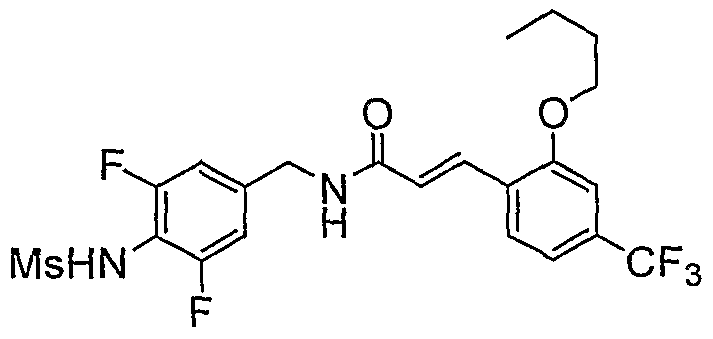
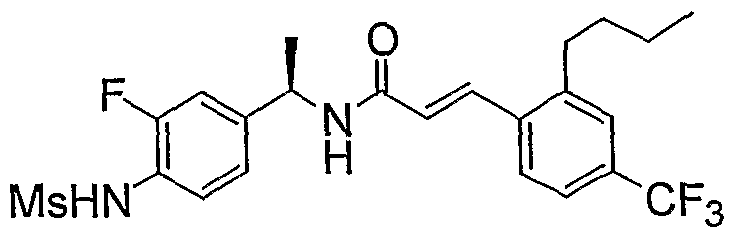
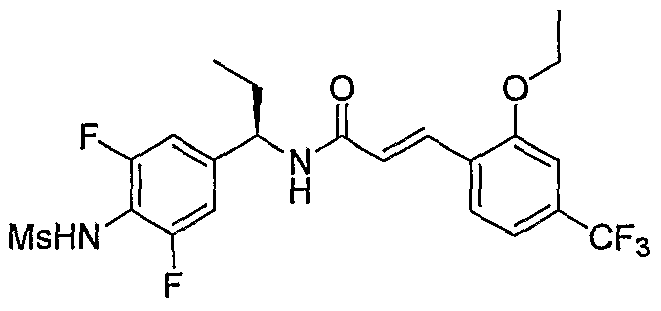
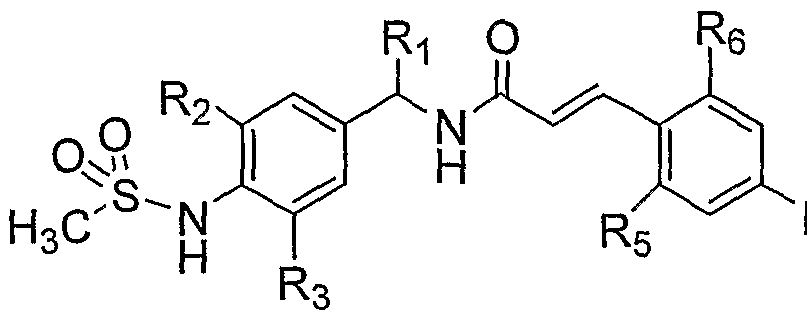
- the present disclosure provides a novel compound of the following formula (Ia), an isomer, or a pharmaceutically acceptable salt thereof:
- a iS -C C- Or -CH-CH-;
- Ri is hydrogen, or C1-C3 alkyl
- R 2 and R 3 are independently hydrogen, halogen, cyano, C1-C3 alkyl, C1-C3 alkoxy, halo(Cl-C3)alkyl, (C2-C5)alkenyl, or (C2-C5)alkynyl;
- R 4 is halo(Cl-C3)alkyl or halogen;
- R 5 is C2-C10 alkyl, C2-C10 alkoxy, C1-C5 alkoxy (C1-C5) alkoxy, C1-C5 alkoxy (C1-C5) alkylamino, C2-C10 alkylamino, di(Cl-C5 alkyl)amino, C3-C6 cycloalkylamino, C3-C6 cycloalkoxy, or (C3-C6)cycloalkyl(Cl-C3)alkyloxy; and R 6 is hydrogen, Cl-ClO alkyl, Cl-ClO alkoxy, or Cl-ClO alkylamino.
- the present disclosure also provides a novel compound of the following formula (I), an isomer, or a pharmaceutically acceptable salt thereof:
- R 1 is hydrogen, methyl, or ethyl
- R 2 and R 3 are independently hydrogen, halogen, cyano, methyl, ethyl, methoxy, trifluoromethyl, vinyl, or acetylenyl; R 4 is trifluoromethyl or fluoro;
- R 5 is C2-C5 alkyl, C2-C5 alkoxy, C1-C2 alkoxy (C1-C3) alkoxy, C1-C2 alkoxy
- R 6 is hydrogen, C1-C5 alkyl, C1-C5 alkoxy, or C1-C5 alkylamino.
- Another aspect of the present disclosure is a compound according to the above formula (Ia) or (I), an isomer, or a pharmaceutically acceptable salt thereof; as described above wherein If R 5 is ethoxy, butoxy, pentoxy, (C3-C6)cycloalkoxy, or (C3-C6)cycloalkyl(Cl-C3)alkyloxy, then R 1 is methyl. In another embodiment in the compounds of formula (Ia) or (I) as disclosed further above, if R 5 is ethoxy, butoxy, or pentoxy, and R4 is simultaneously fluoro, then Ri is methyl.
- R 4 is trifluoromethyl.
- Ri is preferably methyl.
- Another aspect of the present disclosure is a compound according to the above formula (Ia) or (I), an isomer, or a pharmaceutically acceptable salt thereof; wherein, Ri is hydrogen; R 2 is halogen; and R 5 is C2-C4 alkyl or C2-C4 alkylamino.
- One aspect of the present disclosure is a compound according to the above formula (Ia) or (I), an isomer, or a pharmaceutically acceptable . salt thereof; wherein, Ri is hydrogen; R 2 is fluoro; R 3 is hydrogen, fluoro, cyano, methyl, vinyl, or acetylenyl; R 4 is trifluoromethyl; R 5 is C2-C4 alkyl or C2-C4 alkylamino; and
- R 6 is hydrogen
- Another aspect of the present disclosure is a compound according to the above formula (Ia) or (I), an isomer, or a pharmaceutically acceptable salt thereof; wherein, R 1 is hydrogen, methyl, ethyl, or preferably methyl.
- One aspect of the present disclosure is a compound according to the above formula (Ia) or (I), an isomer, or a pharmaceutically acceptable salt thereof; wherein, Ri is methyl; R 2 is halogen; and R 5 is C2-C4 alkyl, C2-C4 alkyloxy, or C2-C4 alkylamino.
- Another aspect of the present disclosure is a compound according to the above formula (Ia) or (I), an isomer, or a pharmaceutically acceptable salt thereof; wherein,
- Ri is methyl
- R 2 is fluoro
- R 3 is hydrogen, fluoro, vinyl, methyl, or acetylenyl
- R 5 is C2-C4 alkyl, C2-C4 alkyloxy, or C2-C4 alkylamino; and R 6 is hydrogen or C1-C3 alkyl.
- One aspect of the present disclosure is a compound according to the above formula (Ia) or (I), an isomer, or a pharmaceutically acceptable salt thereof; wherein, R 2 and R 3 are independently hydrogen, fluoro, cyano, methyl, ethyl, methoxy, trifluoromethyl, vinyl, acetylenyl, or preferably hydrogen, fluoro, cyano, methyl, vinyl, or acetylenyl.
- One aspect of the present disclosure is a compound according to the above formula (Ia) or (I), an isomer, or a pharmaceutically acceptable salt thereof; wherein, R 2 and R 3 are both fluoro.
- One aspect of the present disclosure is a compound according to the above formula (Ia) or (I) 5 an isomer, or a pharmaceutically acceptable salt thereof; wherein, R 4 is fluoro, or preferably trifluoromethyl.
- One aspect of the present disclosure is a compound according to the above formula (Ia) or (I), an isomer, or a pharmaceutically acceptable salt thereof; wherein, R 5 and R 6 are both C1-C3 alkyl; or preferably methyl, ethyl, or propyl; or more preferably propyl.
- One aspect of the present disclosure is a compound according to the above formula (Ia) or (I), an isomer, or a pharmaceutically acceptable salt thereof; wherein, R 6 is hydrogen.
- One aspect of the present disclosure is a compound according to the above formula (Ia) or (I), an isomer, or a pharmaceutically acceptable salt thereof; wherein, R 5 is ethyl, propyl, isopropyl, n-butyl, isobutyl, sec-butyl, ethoxy, propoxy, isopropoxy, butoxy, isobutoxy, sec-butoxy, ethylamino, propylamino, isopropylamino, n-butylamino, isobutylamino, sec-butylamino, or cyclohexylmethoxy, provided that if R 5 is ethoxy, butoxy, pentoxy, or cyclohexylmethoxy, then R 1 is methyl.
- Another aspect of the present disclosure is a compound of the formula (Ia) or (I) as further described herein, an isomer, or a pharmaceutically acceptable salt thereof, wherein, if Ri is methyl or ethyl, then the compound may be a pure enantiomer or may be a mixture of the (R) and (S)-enantiomer; and then, the C- atom to which Ri is attached is preferably in the (Reconfiguration.
- Another aspect of the present disclosure is compounds of the formula (Ia) or (I) as further described herein, an isomer, or a pharmaceutically acceptable salt thereof wherein,
- R 5 is C2-C5 alkyl, (C2 ⁇ C5)alkyloxy, C1-C4 alkylamino, or (C3-
- R 5 is C2-C4 alkyl, (C2-C4)alkyloxy, or C2-C4 alkylamino; wherein particularly preferably,
- R 5 is C2-C4 alkyl, or C1-C3 alkylamino; wherein particularly preferably,
- R 5 is ethyl, n-propyl, isopropyl, n-butyl, isobutyl, sec-butyl, ethoxy, propoxy, isopropoxy, n-butoxy, isobutoxy, sec-butoxy, ethylamino, n-propylamino, isopropylamino, n-butylamino, isobutylamino, sec-butylamino, or cyclohexylmethoxy, wherein particularly preferably,
- R 5 is C2-C4 alkyl, propoxy, isopropoxy, or C2-C4 alkylamino; wherein even more preferably,
- R 5 is ethyl, n-propyl, isopropyl, n-butyl, isobutyl, sec-butyl, propoxy, isopropoxy, ethylamino, n-propylamino, isopropylamino, n-butylamino, isobutylamino, or sec-butylamino, wherein even more preferably,
- R 5 is n-propyl, n-butyl, isobutyl, isopropoxy, sec-butoxy, ethylamino, n- propylamino, isopropylamino, n-butylamino, wherein more preferably,
- R 5 is n-propyl, n-butyl, isobutyl, n-propoxy, ethylamino, propylamine, isopropylamino, n-butylamino, wherein even more preferably,
- R 5 is propyl, butyl, isobutyl, ethylamino, propylamino, or isopropylamino, wherein even more preferably,
- R 5 is propyl, butyl, ethylamino, propylamino, or isopropylamino.
- Preferred examples of compounds according to the disclosure are selected from the group consisting of:
- the Scheme 1 shows a proposed process for synthesizing acrylamide compound with various substituents.
- Substituted benzylamine (1) is reacted with phenylacrylic acid (2) to yield benzyl phenylacrylamide (3) using DMTMM ⁇ 4- (4,6-dimethoxy-l,3,5-triazin-2-yl)-4-methylmorpholinium chloride ⁇ (Tetrahedron Lett., 1999, 40, 5327).
- the Scheme 2 shows a proposed process for synthesizing acrylamide compound (11) with various substituents.
- 4-Substituted 2-aminobenzoic acid (5) which is prepared by hydrogenation of 4-substituted 2-nitrobenzoic acid (4), is converted to the corresponding alkylamino benzoic acid (6) via reductive animation.
- the substituted benzoic acid (6) is converted to the corresponding Weinreb amide (7), which is reduced by lithium aluminum hydride to yield substituted benzaldehyde (8).
- the benzaldehyde (8) is converted to methyl phenyl acrylic ester (9) by Wittig reaction.
- methyl phenyl acrylic ester (9) is hydrolyzed with lithium hydroxide to yield phenyl acrylic acid (10).
- the phenyl acrylic acid (10) is reacted with substituted benzylamine (1) as shown in scheme 1 to yield benzyl phenylacrylamide (11).
- the Scheme 3 shows a more efficient process for synthesizing alkylamino benzoic acid (6) which is an intermediate to benzyl phenylacrylamide (11).
- One pot hydrogenation reaction of 4-substituted 2-nitrobenzoic acid (4) in the presence of an aldehyde and acetic acid replaces the two-step process including hydrogenation of 4 and reductive amination of the corresponding 2-aminobenzoic acid 5.
- the Scheme 5 shows a proposed process for synthesizing acrylamide compound (20) with various substituents.
- 4-Substituted 2-hydroxybenzoic acid (13) is reacted with an alkyl halide and potassium carbonate to yield corresponding alkoxy benzoate (14), which is hydrolyzed with lithium hydroxide to give alkoxy benzoic acid (15).
- the substituted benzoic acid (15) is converted to benzyl phenylacrylamide (20) by similar processes used for benzyl phenylacrylamide (11) shown in Scheme 2.
- the Scheme 6 shows an alternative process for synthesizing methyl phenyl acrylic ester (18) which is an intermediate to benzyl phenylacrylamide
- the Scheme 7 shows a proposed process for synthesizing acrylamide compound (25) with various substituents.
- 4-Triflurometfiyl iodobenzene is converted to substituted phenyl acrylic acid methyl ester (23) by palladium catalyzed coupling reaction.
- the phenyl acrylic acid methyl ester (23) is hydrolyzed with lithium hydroxide to yield phenyl acrylic acid (24).
- the phenyl acrylic acid (24) is reacted with substituted benzylamine (1) as described in Scheme 1 to yield benzyl phenylacrylamide (25).
- the Scheme 8 shows a proposed process for synthesizing acrylamide compound (32) with various substituents.
- Substituted benzoyl chloride (26) is reacted with 2-amino-2-methyl-l-propanol in the present of a base, and the resulting adduct is treated with thionyl chloride followed by sodium hydroxide to afford dihydro-oxazole compound (27).
- the compound 27 is reacted with an alkyl halide to give disubstituted dihydro-oxazole (28).
- the compound 28 is hydrolyzed with conc-HCl to the corresponding benzoic acid, which is converted to the Weinreb amide (29).
- the Scheme 9 shows a proposed process for synthesizing amide compound (33) with various substituents.
- Substituted acrylamide (3) is reduced with PdVC under hydrogen pressure to yield amide compound (33).
- the present disclosure also provides to a compound of formula (Ia) or (I), an isomer thereof, or a pharmaceutically acceptable salt thereof for use as a medicament.
- the present disclosure also provides a pharmaceutical composition comprising a compound of formula (Ia) or (I), an isomer thereof, or a pharmaceutically acceptable salt thereof as an active ingredient and a pharmaceutically acceptable carrier.
- the present disclosure also provides a composition comprising a compound of formula (Ia) or (I), an isomer thereof, or a pharmaceutically acceptable salt thereof; and pharmaceutically acceptable carrier for preventing or treating a condition associated with the pathological stimulation and/or aberrant expression of vanilloid receptor.
- the present disclosure provides a pharmaceutical composition
- a pharmaceutical composition comprising a compound of formula (Ia) or (I), an isomer thereof, or a pharmaceutically acceptable salt thereof, for treating a condition selected from the group consisting of pain, inflammatory disease of the joints, neuropathies, HIV- related neuropathy, nerve injury, neurodegeneration, stroke, urinary bladder hypersensitivity including urinary incontinence, cystitis, stomach duodenal ulcer, irritable bowel syndrome (IBS) and inflammatory bowel disease (IBD), fecal urgency, gastroesophageal reflux disease (GERD), Crohn's disease, asthma, chronic obstructive pulmonary disease, cough, neurotic/allergic/inflammatory skin disease, psoriasis, pruritus, prurigo, irritation of skin, eye or mucous membrane, hyperacusis, tinnitus, vestibular hypersensitivity, episodic vertigo, cardiac diseases such as myocardial ischemia, hair growth-related disorders such as effluvium,
- the present disclosure relates to the pharmaceutical composition
- a pharmaceutical composition comprising a compound of formula (Ia) or (I), an isomer thereof, or a pharmaceutically acceptable salt thereof for treating pain as described above, wherein the pain is or is associated with a condition selected from the group consisting of osteoarthritis, rheumatoid arthritis, ankylosing spondylitis, diabetic neuropathic pain, post-operative pain, dental pain, non- inflammatory musculoskeletal pain (including fibromyalgia, myofascial pain syndrome and back pain), visceral pain, migraine, and other types of headaches.
- the present disclosure also provides a pharmaceutical composition comprising a compound of formula (Ia) or (I), an isomer thereof, or a pharmaceutically acceptable salt thereof, which is characterized in that it is adapted for oral administration.
- the present disclosure relates to the use of a compound of formula (Ia) or (I), an isomer thereof, or a pharmaceutically acceptable salt thereof for the preparation of a medicament
- the present disclosure relates to the use of a compound of formula (Ia) or (I), an isomer thereof, or a pharmaceutically acceptable salt thereof for the preparation of a medicament for the prevention or treatment of a condition that is associated with the aberrant expression and/or aberrant activation of a vanilloid receptor.
- the present disclosure relates to the use of a compound of formula (Ia) or (I), an isomer thereof, or a pharmaceutically acceptable salt thereof, in preparation of a medicament for the prevention or treatment of a condition that is selected from the group consisting of pain, inflammatory disease of the joints, neuropathies, HIV-related neuropathy, nerve injury, neurodegeneration, stroke, urinary bladder hypersensitivity including urinary incontinence, cystitis, stomach duodenal ulcer, irritable bowel syndrome (IBS) and inflammatory bowel disease (IBD), fecal urgency, gastro-esophageal reflux disease (GERD), Crohn's disease, asthma, chronic obstructive pulmonary disease, cough, neurotic/allergic/inflammatory skin disease, psoriasis, pruritus, prurigo, irritation of skin, eye or mucous membrane, hyperacusis, tinnitus, vestibular hypersensitivity, episodic vertigo, cardiac diseases such as myocardial ischemia, hair growth
- a condition
- the present disclosure relates to the use of the compound of formula (Ia) or (I), an isomer thereof, for preparing a medicament for preventing or treating pain as described above, wherein the condition is pain, which is or which is associated with a condition selected from the group consisting of osteoarthritis, rheumatoid arthritis, ankylosing spondylitis, diabetic neuropathic pain, post-operative pain, dental pain, non-inflammatory musculoskeletal pain (including fibromyalgia, myofascial pain syndrome and back pain), visceral pain, migraine, and other types of headaches.
- a condition selected from the group consisting of osteoarthritis, rheumatoid arthritis, ankylosing spondylitis, diabetic neuropathic pain, post-operative pain, dental pain, non-inflammatory musculoskeletal pain (including fibromyalgia, myofascial pain syndrome and back pain), visceral pain, migraine, and other types of headaches.
- the present disclosure relates to a method for inhibiting vanilloid ligand from binding to vanilloid receptor in a patient, comprising contacting cells expressing vanilloid receptor in the patient with the compound of formula (Ia) or (I), an isomer thereof, or a pharmaceutically acceptable salt thereof.
- the present disclosure relates to a method for preventing or treating a condition associated with the pathological stimulation and/or aberrant expression of vanilloid receptors.
- the present disclosure also provides a method for preventing or treating a condition selected from the group consisting of pain, inflammatory disease of the joints, neuropathies, HIV-related neuropathy, nerve injury, neurodegeneration, stroke, urinary bladder hypersensitivity including urinary incontinence, cystitis, stomach duodenal ulcer, irritable bowel syndrome (IBS) and inflammatory bowel disease (IBD), fecal urgency, gastro-esophageal reflux disease (GERD), Crohn's disease, asthma, chronic obstructive pulmonary disease, cough, neurotic/allergic/inflammatory skin disease, psoriasis, pruritus, prurigo, irritation of skin, eye or mucous membrane, hyperacusis, tinnitus, vestibular hypersensitivity, episodic vertigo, cardiac diseases such as myocardial ischemia, hair growth-related disorders such as effluvium, alopecia, rhinitis, and pancreatitis, which comprises administering to a mammal including
- the present disclosure relates to the method of treating pain by administering a compound of formula (Ia) or (I), an isomer thereof, or a pharmaceutically acceptable salt thereof as described above, wherein the pain is or is associated with a condition selected from the group consisting of osteoarthritis, rheumatoid arthritis, ankylosing spondylitis, diabetic neuropathic pain, post-operative pain, dental pain, non-inflammatory musculoskeletal pain (including fibromyalgia, myofascial pain syndrome and back pain), visceral pain, migraine, and other types of headaches
- a condition selected from the group consisting of osteoarthritis, rheumatoid arthritis, ankylosing spondylitis, diabetic neuropathic pain, post-operative pain, dental pain, non-inflammatory musculoskeletal pain (including fibromyalgia, myofascial pain syndrome and back pain), visceral pain, migraine, and other types of headaches
- a compound of formula (Ia) or (I), an isomer thereof or a pharmaceutically acceptable salt thereof according to the present disclosure can be prepared as a pharmaceutical composition containing pharmaceutically acceptable carriers, adjuvants, diluents and the like.
- the compounds of the present disclosure can be dissolved in oils, propylene glycol or other solvents which are commonly used to produce an injection.
- Suitable examples of the carriers include, but not limited to, physiological saline, polyethylene glycol, ethanol, vegetable oils, isopropyl myristate, etc.
- the compounds of the present disclosure can be formulated in the form of ointment or cream.
- the compound according to the present disclosure may also be used in the forms of pharmaceutically acceptable salts thereof, and may be used either alone or in combination or in admixture with other pharmaceutically active compounds.
- the compounds of the present disclosure may be formulated into injections by dissolving, suspending or emulsifying in water-soluble solvent such as saline and 5% dextrose, or in water-insoluble solvents such as vegetable oils, synthetic fatty acid glyceride, higher fatty acid esters and propylene glycol.
- the formulations of the disclosure may include any of conventional additives such as dissolving agents, isotonic agents, suspending agents, emulsifiers, stabilizers and preservatives.
- the preferable dose level of the compounds according to the present disclosure depends upon a variety of factors including the condition and body weight of the patient, severity of the particular disease, dosage form, and route and period of administration, but may appropriately be chosen by those skilled in the art.
- the compounds of the present disclosure are preferably administered in an amount ranging from 0.001 to 100 mg/kg of body weight per day, and more preferably from 0.01 to 30 mg/kg of body weight per day. Doses may be administered once a day, or several times a day with each divided portions.
- the compounds of the present disclosure are used in a pharmaceutical composition in an amount of 0.0001 — 10% by weight, and preferably 0.001 — 1% by weight, based on the total amount of the composition.
- the pharmaceutical composition of the present disclosure can be administered to a mammalian subject such as rat, mouse, domestic animals, human being and the like via various routes.
- the methods of administration which may easily be expected include oral and rectal administration; intravenous, intramuscular, subcutaneous, intrauterine, duramatral and intracerebroventricular injections.
- Alkenyl includes monovalent olefmically unsaturated hydrocarbyl groups being straight-chained or branched and having at least 1 double bond.
- alkenyl has preferably 2-5 carbon atoms ("C1-C5 alkenyl”), 2-4 carbon atoms (“C2-C4 alkenyl”), or only 2-3 carbon atoms (“C2-C3 alkenyl”).
- a preferred "alkenyl” group is ethenyl (vinyl).
- Alkoxy includes the group -OR wherein R is "alkyl” as defined further above. Particular alkoxy groups include, by way of example, methoxy, ethoxy, n- propoxy, isopropoxy, n-butoxy, tert-butoxy, iso-butoxy, sec-butoxy, n-pentoxy, 1,2-dimethyIbutoxy, and the like.
- Alkoxyalkoxy refers to the group -OROR', wherein R and R' are the same or different "alkyl” groups as defined further above.
- Alkoxyalkylamino refers to the group -NH(ROR'), wherein R and R' are the same or different “alkyl” groups as defined further above.
- Alkyl includes monovalent saturated aliphatic hydrocarbyl groups. The hydrocarbon chain may be either straight-chained or branched.
- Alkyl has 1-6 carbon atoms ("C1-C6 alkyl”), and in some instances preferably 1-5 carbon atoms (“C1-C5 alkyl”), 1-4 carbon atoms (“C1-C4 alkyl”), or only 1-3 carbon atoms (“C1-C3 alkyl”).
- This term is exemplified by groups such as methyl, ethyl, n- propyl, isopropyl, n-butyl, iso-butyl, sec-butyl, tert-butyl, t-amyl, and the like.
- Alkynyl includes acetylenically unsaturated hydrocarbyl groups being straight-chained or branched and having at least 1 triple bond.
- Alkynyl has preferably 2-6 carbon atoms ("C2-C6 alkynyl”), and in some instances even more preferably 2-5 carbon atoms (“C1-C5 alkynyl”), 2-4 carbon atoms ("C2-C4 alkynyl”), or only 2-3 carbon atoms (“C2-C3 alkynyl”).
- a preferred alkynyl group is ethynyl (acetylenyl).
- Alkylamino includes the group -NHR 1 , wherein R 1 is alkyl group as defined herein.
- Dialkylamino includes the group -NR'R", wherein R' and R" are alkyl group as defined herein.
- Cycloalkyl refers to cyclic saturated aliphatic hydrocarbyl groups.
- the numbers of C-atoms referenced in connection with a given cycloalkyl group corresponds to the number of ring forming carbon atoms, e.g. "C3-C6 cycloalkyl” refers to a cycloalkyl with between three and six ring-forming C atoms.
- Examples of “cycloalkyl” are cyclopropyl, cyclobutyl, cyclopentyl, cyclohexyl etc. If indicated, a "cycloalkyl” group may be unsubstituted or substituted with one or more alkyl groups, e.g.
- C1-C6 alkyl groups preferably with C1-C3 alkyl groups, particularly preferably with methyl groups. If a "cycloalkyl" carries more than one alkyl substituent these substituents may be attached to the same or to different ring-forming carbon atoms.
- Cycloalkoxy refers to the group -OR, wherein R is “cycloalkyl” group as defined further above.
- Cycloalkylamino refers to the group -NHR, wherein R is “cycloalkyl” group as defined further above.
- Cycloalkylalkoxy refers to the group -OR-R', wherein R is “alkyl” group and R' is “cycloalkyl” group as defined further above.
- Examples of “cycloalkylalkoxy” are cyclopropylmethoxy, cyclobutylmethoxy, cyclopentylmethoxy, cyclohexylmethoxy, cyclopropylethoxy, etc.
- Halo or halogen refers to fluoro, chloro, bromo, and iodo. Preferred halo groups are either fluoro or chloro.
- Haloalkyl includes an “alkyl” group as defined further above which is substituted with one or more halogens which may be the same, e.g. in trifluoromethyl or pentafluoroethyl, or which may be different.
- isomers refers to especially optical isomers (for example essentially pure enantiomers, essentially pure diastereomers, and mixtures thereof) as well as conformation isomers (i.e. isomers that differ only in their angles of at least one chemical bond), position isomers (particularly tautomers), and geometric isomers
- Essentially pure e.g. in connection with enantiomers or diastereomers means at least about 90%, preferably at least about 95%, more preferably at least about 97 or at least about 98%, even more preferably at least about 99%, and particularly preferably at least about 99.5% (w/w) of a specified compound, e.g. a particular enantiomer or diastereomer.
- “Pharmaceutically acceptable” means being devoid of substantial toxic effects when used in doses usually employed in a medicinal dosage, and thereby being approvable or preferably being approved by a regulatory agency of the Federal or a state government or being listed in the U. S. Pharmacopoeia or other generally recognized pharmacopoeia for use in animals, and more particularly in humans.
- “Pharmaceutically acceptable salt” refers to a salt of a compound of the disclosure that is “pharmaceutically acceptable” as further defined herein, and that possesses the desired pharmacological activity of the parent compound.
- Such salts include: (1) acid addition salts, formed with inorganic acids such as hydrochloric acid, hydrobromic acid, sulfuric acid, nitric acid, phosphoric acid, and the like; or formed with organic acids such as acetic acid, propionic acid, hexanoic acid, cyclopentanepropionic acid, glycolic acid, pyruvic acid, lactic acid, malonic acid, succinic acid, malic acid, maleic acid, fumaric acid, tartaric acid, citric acid, benzoic acid,3- (4-hydroxybenzoyl) benzoic acid, cinnamic acid, mandelic acid, methanesulfonic acid, ethanesulfonic acid, 1,2-ethane-disulfonic acid, 2- hydroxyethanesulfonic acid, benzenesulfonic acid, 4-chlorobenzenesulfonic acid, 2naphthalenesulfonic acid, 4-toluenesulfonic acid,
- Preventing refers to a reduction in risk of acquiring a disease or disorder (i.e., causing at least one of the clinical symptoms of the disease not to develop in a subject that may be exposed to or predisposed to the disease but does not yet experience or display symptoms of the disease).
- Subject includes humans and non-human mammals.
- patient is used interchangeably with “subject” herein and shall include humans and non- human mammals unless specified otherwise.
- “Therapeutically effective amount” means the amount of a compound that, when administered to a subject for treating a disease, is sufficient to effect such treatment for the disease.
- the “therapeutically effective amount” can vary depending on the compound, the disease and its severity, and the age, weight, etc., of the subject to be treated.
- Treating or “treatment” of any disease or disorder refers, in one embodiment, to ameliorating the disease or disorder (i.e., arresting or reducing the development of the disease or at least one of the clinical symptoms thereof).
- treating refers to ameliorating at least one physical parameter, which may not be discernible by the subject.
- treating refers to modulating the disease or disorder, either physically, (e. g., stabilization of a discernible symptom),, physiologically,
- treating refers to delaying the onset of the disease or disorder.
- treating or “treatment” refers to reducing, modifying or removing one or more discernible symptom of a disease or disorder without modulating the cause of the underlying disease.
- Example 1 (3f)-N-[l-(3,5-Difluoro-4-methanesulfonylamino-phenyl)-ethyl]-3- (2-propylamino-4-trifluoromethyl-phenyl)-acrylamide
- Step 3 Synthesis of N-methoxy-N-methyl-2-propylamino-4-trifluoromethyl- benzamide
- Step 4 Synthesis of 3-(2-propylamino-4-trifluoromethyl-phenvD-acrylic acid methyl ester
- N-Methoxy-N-methyl-2- ⁇ ropylamino-4-trifluoromethyl-benzamide (98.3 mg, 0.339 mmol) was reacted with IM lithium aluminum hydride (0.6 ml) in THF (20ml) at -40 0 C for 1 hr.
- the reaction mixture was quenched by adding saturated potassium hydrogen sulfate solution. The mixture was stirred for 30min.
- the reactions solvent was removed in vacuo. Water (30 ml) was added to the resulting residue, which was extracted with CH 2 Cl 2 (30 ml x 3). The combined organic layer was dried over MgSO 4 and concentrated in vacuo to yield 2-propylamino-4- trifluoromethyl-benzaldehyde (78 mg).
- N-(4-Aminomethyl-2,6-difluoro-phenyl)-methanesulfonamide, HCl salt (84 mg, 0.308 mmol) was reacted with 3-(2- ⁇ ropylamino-4-trifluoromethyl- ⁇ henyl)-acrylic acid (67 mg, 0.245 mmol), NMM (0.4 ml) and DMTMM (121 mg) to give the title compound (62 mg, 52%).
- Step 3 Synthesis of N-methoxy-N-methyl-2- ⁇ ropoxy-4-trifluoromethyl- benzamide
- N-Methoxy-N-methyl-2-propoxy-4-trifluoromethyl-benzamide (277 mg) in THF was reacted with 1 M LAH (1 ml) on -50 0 C for 1 hr.
- the reaction mixture was quenched by adding aqueous potassium hydrogen sulfate (5 ml). The mixture was stirred for 30 min.
- the reaction solvent was removed in vacuo. Water (30 ml) was added to the resulting residue, which was was was extracted with ethyl acetate (30 ml x 3). The combined organic layer was washed with brine (30 ml) and dried over MgSO 4 and concentrated in vacuo to yield title compound (232 mg, 100%).
- Step 5 Synthesis of 3-f2-propoxy-4-trifluoromethyl-phenyl)-acrylic acid methyl ester
- Step 7 Synthesis of N-(3,5-difluoro-4-methanesulfonylamino-benzyl)-3-(2- propoxy-4-trifluoromethyl-phenyl)-acrylamide
- Step 1 Synthesis of 3-(2,6-dipropyl-4-trifluoromethyl- ⁇ henyl)-acrylic acid methyl ester
- Step 3 Synthesis of (R)-N-ri ⁇ (3,5-difluoro-4-methanesulfonylamino-phenylV ethyl]-3-(2,6-dipropyl-4-trifluoromethyl-phenyl)-acrylamide
- N-Methoxy-N-methyl-2-ethoxy-4-trifluoromethyl-benzamide (1.04 g) was reacted with 1 M LAH (1 ml) at -40 0 C for 2 hrs as described above to yield title compound (729 mg, 65%)
- Step 6 Synthesis of ffi)-N-ri-(3,5-difluoro-4-methanesulfonylamino-phenyl)- ethyl]-3-(2-ethoxy-4-trifluoromethyl-pheny ⁇ -acrylamide
- N-Memoxy-N-methyl-2-nitro-44rifluoromethyl-benzamide (2.54 g, 9.12 mmol) was reacted with Pd/C (441 mg) under hydrogen atmosphere as described above to yield title compound.
- Step 3 Synthesis of 2-ethylamino-N-methoxy-N-methyl-4-trifluoromethyl- benzamide
- N-(4-Aminomethyl-2-fluoro-6-methyl-phenyl)-methanesulfonamide, HCl salt 25 mg was reacted with 3-(2-propylamino-4-trifluoromethyl-phenyl)-acrylic acid (24 mg, 0.086 mmol), NMM (0.1 ml) and DMTMM (27 mg) at room temperature overnight to yield the title compound (21 mg, 50%).
- N-(4-Aminomethyl-2-fluoro-6-vinyl-phenyl)-methanesulfonamide, HCl salt (36 mg, 0.15 mmol) was reacted with 3-(2-propylammo-4 ⁇ trifluoromethyl- ⁇ henyl)-acrylic acid (28 mg, 0.10 mmol), NMM (0.1 ml) and DMTMM (35 mg) at room temperature overnight to yield the title compound (17 mg, 34%) after column chromatography.
- N-(4-Aminomethyl-2-fluoro-6-cyano-phenyl)-methanesulfonamide, HCl salt (26 mg, 0.092 mmol) was reacted with 3-(2-propylammo-4-trifIuoromethyl- phenyl)-acrylic acid (20 mg, 0.073 mmol), NMM (0.1 ml) and DMTMM (28 mg) at room temperature overnight to yield the title compound (8 mg, 22%) after column chromatography.
- Step 1 Synthesis of 4.4-dimethyl-2-r4-trifluoromethyl- ⁇ henyl)-4,5-dihvdro- oxazole
- Step 2 Synthesis of N-methoxy-N-methyl-2-propyl-4-trifiuoromethyl-benzamide.
- Step 3 Synthesis of 3-(2-propyl-4-trifluoromethyl-phenyl)-acrylic acid methyl ester.
- Step 4 Synthesis of 3-(2-propyl-4-trifluoromethyl-phenyl)-acrylic acid.
- Step 5 Synthesis of fRVN-ri-(3.5-difluoro-4-methanesulfonylamino-phenyl)- ethyl] -3 -C2-propyl-4-trifluoromethyl-phenyl)-acrylamide
- Step 1 Synthesis of 2-isopropoxy-4-trifluoromethyl-benzoic acid isopropyl ester
- Step 2 Synthesis of 2-iso ⁇ ropoxy-N-methoxy-N-methyl-4-trifluoromethyl- benzamide.
- Step 3 Synthesis of 3-(2-isopropoxy-4-trifluoromethyl-phenyl)-acrylic acid methyl ester.
- Step 4 Synthesis of N-ri-(3 n 5-difluoro-4-methanesulfonylamino-phenyl)-ethyll- 3-(2-isopropoxy-4-trifluoromethyl-phenyl)-acrylamide.
- Step 1 Synthesis of 3-(4-fluoro-2-hydroxy-phenyl)-acrylic acid methyl ester.
- Step 2 Synthesis of 3-f4-flu.oiO-2-pro ⁇ oxy-phenyl)-acrylic acid methyl ester
- Step 4 Synthesis of ⁇ gj-N-[l-(3,5-Difluoro-4-methanesulfoiiylamino-phenyl)- emyl]-3-f4-fluoro-2-propo ⁇ y-phenyl)-acrvlaniide
- Example 29 fK)-N-[l-(3,5-Difluoro-4-methanesulfonylamino-phenyl)ethyI]- 3-(4-fluoro-2- propylaminophenyl)-acrylamide
- Step 1 Synthesis of 2-butoxy-4-trifluoromethyl-benzoic acid butyl ester
- Step 7 Synthesis of (RJ-3-(2-butoxy-4-trifluoromethyl-phenylVN-ri-(3,5- difluoro-4-methanesulfonylamino-phenyl)-ethyl]-acrylamide
- Step 1 Synthesis of 3-(2-butoxy-4-fluoro-phenyl)-acrylic acid methyl ester
- Step 3 Synthesis of ⁇ )-3-f2-buto ⁇ y-4-fluoro- ⁇ henyl)-N-[l-f3,5-difluoro-4- methanesulfonylamino-phenvD-ethvll-acrylamide
- N-(4-Aminomethyl-2-ethynyl-6-fluoro-phenyl)-methanesulfonamide, HCl salt (14mg, 0.050mmol) was reacted with 3-(2-propyl-4-trifluoromethyl- ⁇ henyl)- acrylic acid (8mg, 0.031mmol) to give the title compound (12mg, 80%) after purification by column chromatography (gradient 12% to 100% EtOAc in Hex).
- Step 1 Synthesis of 2-sec-butoxy-N-metho ⁇ y-N-methvl-44rifluoromethyl- benzamide
- Step 2 Synthesis of 3-r2-sec-butoxy-4-trifluoromethyl-phenyl)-acrylic acid methyl ester
- Step 3 Synthesis of 3-(2-sec-butoxy-4-trifluoromethyl-phenyl)-N-ri-(3,5- difluoro-4-methanesulfonylamino-phenyl)-ethyl]-acrylamide
- Step 1 Synthesis of 3-(2-sec-butoxy-4-fluoro-phenyl)-acrylic acid methyl ester
- Step 3 Synthesis of rRJ-3-(2-sec-butoxy-4-fluoro-phenvD-N-ri-(3,5-difluoro-4- methanesulfonylamino-phenyl)-ethyl]-acrylamide
- Example 42 fK)-N-[l-(3,5-Difluoro-4-methanesulfonylamino-phenyl)-ethyl]- 3-(2-ethylamino-4-fluoro-phenyl)-acrylamide
- Step 3 Synthesis of CR)-N-Tl -(3, 5-Difluoro-4-methanesulfonylaminophenyl) ethyl]-3-(4-fluoro-2-ethylaminophenyl)acrylamide
- Step 1 Synthesis ofN-memoxy-N-methyl-4-fluoro-2-n-buthylammo-benzamide
- Step 2 Synthesis of 3-(4-fluoro-2-butylamino-phenyl)-acrylic acid methyl ester
- Step 3 Synthesis of ⁇ ffi)-N-fl-(3,5-Difluoro-4-methanesulfonylaminophenyl) ethyl]-3 -(4-fluoro-2-n-butylaminophenyl) acrylamide
- Step 2 Synthesis of fi?)-N-[l-( ' 3.,5 ⁇ difluoro-4-methanesulfonylamino-phenv ⁇ - ethyl]-2-methyl-3-(2-propyl-4-trifluoromethyl- ⁇ henyl)-acrylamide
- Example 49 (/?)-N-[l-(3-Fluoro-4-methanesuIfonyIamino-phenyl)-etliyl]-2- methyI ⁇ 3-(2-propyl-4-trifluoromethyI-phenyl)-acrylamide
- Example 50 (i?)-3-(2-CyclohexyImethoxy-4-trifluoromethyI-phenyl)-N-[l- (3,5 ⁇ difluoro-4-methanesuIfonyIamino-phenyI)-ethyl]-acrylamide
- Step 1 Synthesis of 2-cvclohexylmethoxy-4-trifluoromethyl-benzoic acid cyclohexylmethyl ester
- Step 3 Synthesis of 3-(2-cvclohexylmethoxy-4-trifluoromethyl-phenyl)-acrylic acid methyl ester
- Step 4 Synthesis of 3-(2-cvclohexylmethoxy-4-trifluoromethyl-phenyl)-N-[ " l- (3,5-difluoro-4-methanesulfonylamino-phenyl)-ethyll-acrylamide
- N-(4-Aminomethyl-2,5-difluoro-phenyl)-methanesulfonamide, HCl salt 43mg, 0.154mmol
- 3-(2-isopropylamino-4-trifluoro-phenyl)- acrylic acid 42mg, 0.154mmol
- N-(3,5-Difluoro-4-methanesulfonylamino-benzyl)-3-(2-propylamino-4- trifluoromethyl-phenyl)-acrylamide (20 mg, 0.041 mmol) was reduced with Pd/C under hydrogen atmosphere to yield title compound (12 mg 5 59%).
- Neonatal (2-3 day old or younger than 2-3 day old) SD rats were put in ice for 5 minutes to anesthetize and disinfected with 70% ethanol.
- DRG of all part of spinal cord were dissected (Wood et al, 1988, J. Neurosci. 8, ⁇ 3208-3220) and collected in DME/F12 medium to which 1.2g/l sodium bicarbonate and 50mg/l gentamycin were added. The DRG were incubated sequentially at 37 0 C for 30 mins in 200 U/ml collagenase and 2.5mg/ml trypsin, separately.
- the ganglia were washed twice with DME/F12 medium supplemented with 10% horse serum, triturated through a fire-polished Pasteur pipette, filtered through Nitex 80 membrane to obtain single cell suspension and the suspension was washed once more. This was subjected to centrifugation, then resuspended in cell culture medium at certain level of cell density.
- DME/F12 medium supplemented with 10% horse serum was diluted with identical medium conditioned by C6 glioma cells 2 days on a confluent monolayer (1 :1), and NGF (Nerve Growth Factor) was added to adjust 200ng/ml as final concentration.
- cytosine arabinoside Ara-C, 100 ⁇ M
- medium was changed to one without Ara-C.
- the resuspended cells were plated at a density of 1500-2000 neurons/well onto Terasaki plates previously coated with 10 ⁇ g/ml poly-D-ornithine.
- DRG nerve cells from the primary culture of 2 days were equilibrated by washing 4 times with HEPES (1OmM, pH 7.4)-buffered Ca 2+ , Mg 2+ -free HBSS (H-HBSS).
- H-HBSS HEPES (1OmM, pH 7.4)-buffered Ca 2+ , Mg 2+ -free HBSS
- the solution in each well was removed from the individual well.
- Medium containing the test compound plus capsaicin (final concentration 0.5 ⁇ M) and 45 Ca (final concentration 10 ⁇ Ci/ml) in H-HBSS was added to each well and incubated at room temperature for 10 mins. Terasaki plates were washed five times with H-HBSS and dried at room temperature. To each well, 0.3% SDS (10 ⁇ l) was added to elute 45 Ca.
- Analgesic activity test Mouse writhing test by inducing with phenyl-p- quinone
- mice Male ICR mice (mean body weight 25g) were maintained in a controlled lighting environment (12 h on/ 12 h off) for experiment. Animals received an intraperitoneal injection of 0.3ml of the chemical irritant phenyl-p-quinone (dissolved in saline containing 5% ethanol to be a dose of 4.5mg/kg) and 6 mins later, the number of abdominal constrictions was counted in the subsequent 6 mins period. Animals (10 animals/group) received 0.2ml of test compounds solution in vehicle of ethanol/Tween 80/saline (10/10/80) intraperitoneally 30 min before the injection of phenyl-p-quinone.
- test compounds solution in vehicle of ethanol/Tween 80/saline (5/5/90) were administered 54 min prior to the 0.2ml of 0.02% phenyl-p-quinone injection.
- a reduction in the number of writhes responding to the test drug compound relative to the number responding in saline control group was considered to be indicative of an analgesic effect.
- Analgesic effect was calculated by % inhibition equation (% inhibition ⁇ C-TyC x 100), wherein C and T represent the number of writhes in control and compound-treated group, respectively.
- Most examples of the present disclosure having good in vitro activities, were tested at various doses (ranging from 0.3 to 3 mg/kg) and all compounds tested in vivo showed analgesic effects from 8 to 59% inhibition at each dose, respectively.
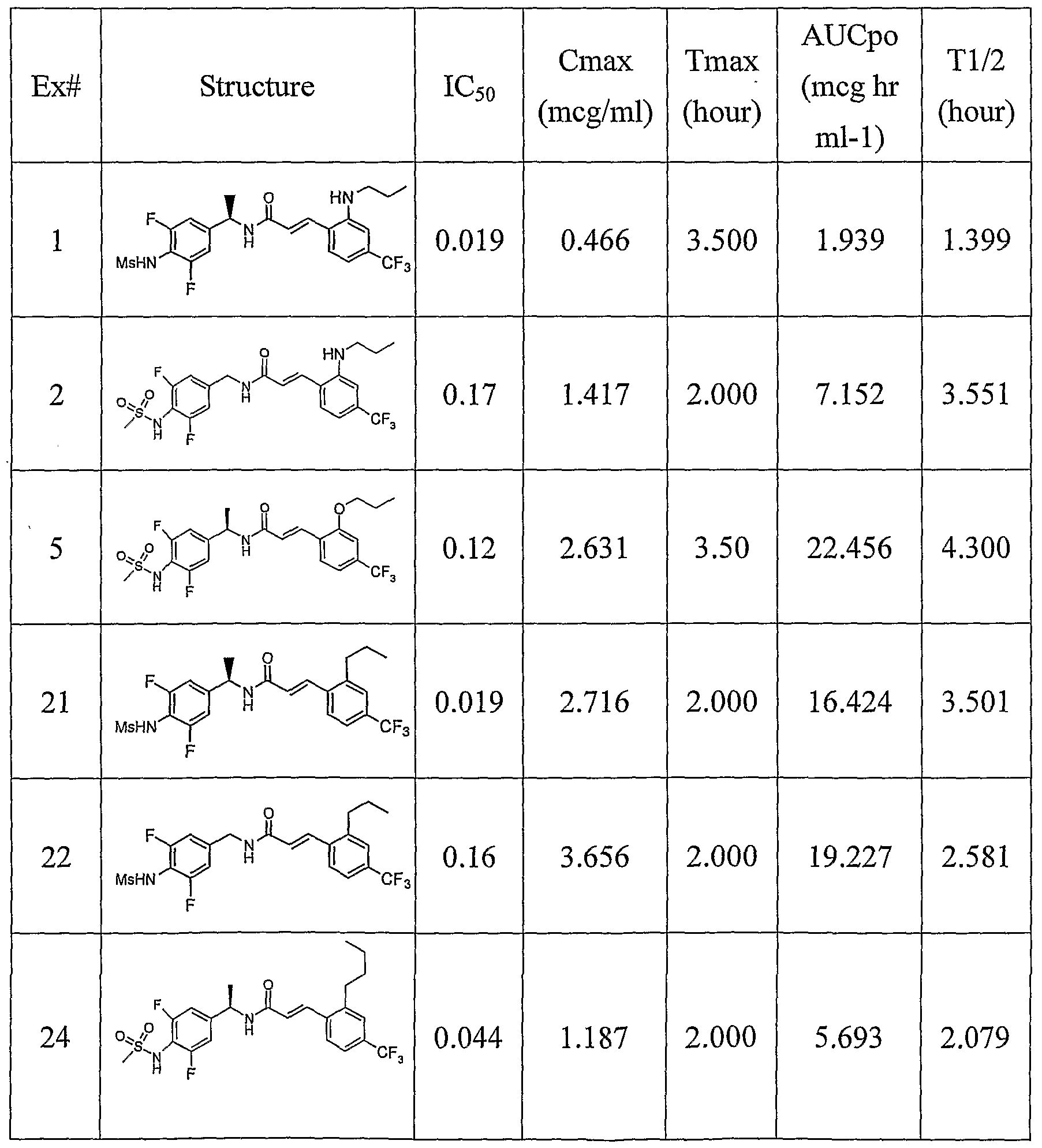
- the PK properties of the compounds of formula (I) of the present disclosure surprisingly have superior PK characteristics compared to compounds with a tert-butyl phenyl partial structure, with or without other substituents on the phenyl group, which were at least in part disclosed in the art, e.g. in WO 06/101318 or WO 06/101321 (also refer Table 3).
- Substantial increases in absorption and apparent half-life were observed by the replacement of tert-butyl phenyl by F-phenyl or CF 3 - phenyl (see Table 2 vs 3).
- Example number in WO 06/101318 b could not be determined due to low plasma concentration (detection limit : 0.100mcg/ml).
- the compounds of formula (I) of the present disclosure have superior IC 50 values and in some cases also improved PK characteristics compared to compounds with a CF 3 -phenyl partial structure but without additional substituents on the phenyl group, which were at least in part disclosed in the art, e.g. in WO 06/101318 or WO 06/101321.
- the introduction of an additional substituent in ortho position of the phenyl's attachment position to the cinnamoyl backbone confers improved VRl activity to the compounds.
- comparative compound “G” has an IC50 value of more than 10 ⁇ M
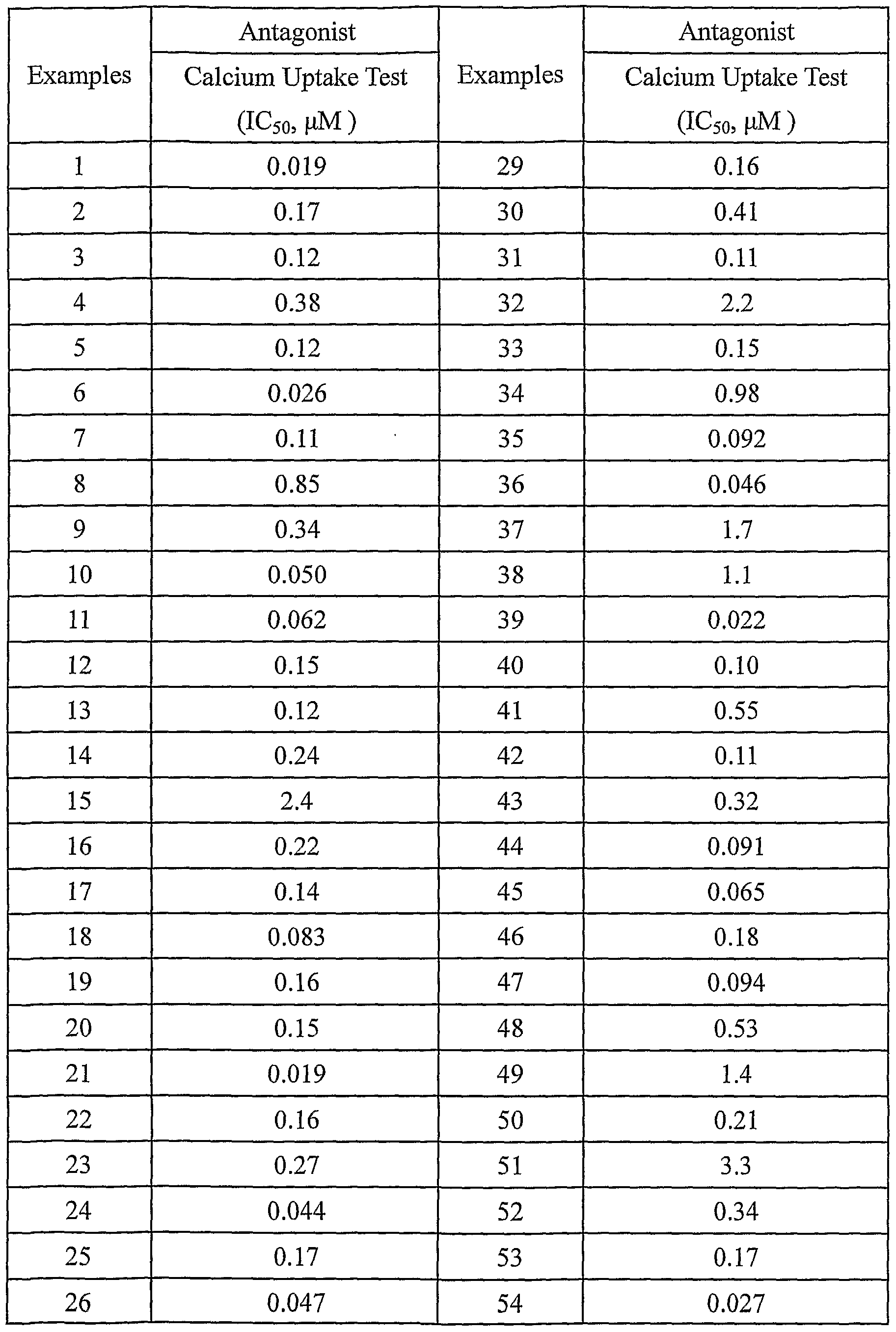
- the compounds 1, 3,5-7,10,16-18, 21, 24, 26, 31, 39, 47, 50, and 52 of the present disclosure which all differ from “G” only by additional substituent(s) on phenyl group, all have IC50 values in a range between 0.019 and 0.34 ⁇ M.
- compound “G” shows only poor PK-properties, while all tested compounds of the present disclosure showed improved PK properties (in terms of T max and AUC).
- Example number in WO 06/101318 b could not be determined due to low plasma concentration (detection limit : O.lOOmcg/ml).
- the compound according to the present disclosure is useful to prevent or to treat pain, inflammatory disease of the joints, neuropathies, HlV-related neuropathy, nerve injury, neurodegeneration, stroke, urinary bladder hypersensitivity including urinary incontinence, cystitis, stomach duodenal ulcer, irritable bowel syndrome (IBS) and inflammatory bowel disease (IBD), fecal urgency, gastro-esophageal reflux disease (GERD), Crohn's disease, asthma, chronic obstructive pulmonary disease, cough, neurotic/allergic/inflammatory skin disease, psoriasis, pruritus, prurigo, irritation of skin, eye or mucous membrane, hyperacusis, tinnitus, vestibular hypersensitivity, episodic vertigo, cardiac diseases such as myocardial ischemia, hair growth-related disorders such as effluvium, alopecia, rhinitis, and pancreatitis.
- cardiac diseases such as myocardial ischemia, hair growth-related disorders such as
- the compound according to the present disclosure is useful to preventing and treating of pain, which is or which is associated with a condition selected from the group consisting of osteoarthritis, rheumatoid arthritis, ankylosing spondylitis, diabetic neuropathic pain, post-operative pain, dental pain, non-inflammatory musculoskeletal pain (including fibromyalgia, myofascial pain syndrom and back pain), migraine, and other types of headaches.
- a condition selected from the group consisting of osteoarthritis, rheumatoid arthritis, ankylosing spondylitis, diabetic neuropathic pain, post-operative pain, dental pain, non-inflammatory musculoskeletal pain (including fibromyalgia, myofascial pain syndrom and back pain), migraine, and other types of headaches.
Landscapes
- Health & Medical Sciences (AREA)
- Chemical & Material Sciences (AREA)
- Organic Chemistry (AREA)
- Life Sciences & Earth Sciences (AREA)
- General Health & Medical Sciences (AREA)
- Medicinal Chemistry (AREA)
- Veterinary Medicine (AREA)
- Public Health (AREA)
- Animal Behavior & Ethology (AREA)
- Pharmacology & Pharmacy (AREA)
- Nuclear Medicine, Radiotherapy & Molecular Imaging (AREA)
- General Chemical & Material Sciences (AREA)
- Chemical Kinetics & Catalysis (AREA)
- Engineering & Computer Science (AREA)
- Bioinformatics & Cheminformatics (AREA)
- Pulmonology (AREA)
- Neurology (AREA)
- Biomedical Technology (AREA)
- Neurosurgery (AREA)
- Dermatology (AREA)
- Pain & Pain Management (AREA)
- Urology & Nephrology (AREA)
- Rheumatology (AREA)
- Diabetes (AREA)
- Otolaryngology (AREA)
- Cardiology (AREA)
- Virology (AREA)
- Orthopedic Medicine & Surgery (AREA)
- Heart & Thoracic Surgery (AREA)
- Physical Education & Sports Medicine (AREA)
- Hospice & Palliative Care (AREA)
- Immunology (AREA)
- Oncology (AREA)
- Communicable Diseases (AREA)
- Hematology (AREA)
- Endocrinology (AREA)
- Psychiatry (AREA)
- Emergency Medicine (AREA)
- Ophthalmology & Optometry (AREA)
- Obesity (AREA)
Abstract
Description












Claims
Priority Applications (5)
| Application Number | Priority Date | Filing Date | Title |
|---|---|---|---|
| US12/865,082 US8557872B2 (en) | 2008-01-28 | 2009-01-28 | Compounds, isomer thereof, or pharmaceutically acceptable salts thereof as vanilloid receptor antagonist; and pharmaceutical compositions containing the same |
| CN200980103367.3A CN101925575B (en) | 2008-01-28 | 2009-01-28 | Novel compounds, isomer thereof, or pharmaceutically acceptable salts thereof as vanillic acid receptor antagonist |
| JP2010544237A JP5643112B2 (en) | 2008-01-28 | 2009-01-28 | Novel compounds as vanilloid receptors, isomers or pharmaceutically acceptable salts thereof, and pharmaceutical compositions containing the same |
| EP09706694.8A EP2238105B1 (en) | 2008-01-28 | 2009-01-28 | Novel compounds as vanilloid receptor antagonists |
| US14/022,789 US20140011881A1 (en) | 2008-01-28 | 2013-09-10 | Novel compounds, isomer thereof, or pharmaceutically acceptable salts thereof as vanilloid receptor antagonist; and pharmaceutical compositions containing the same |
Applications Claiming Priority (2)
| Application Number | Priority Date | Filing Date | Title |
|---|---|---|---|
| EP08001555.5 | 2008-01-28 | ||
| EP08001555 | 2008-01-28 |
Related Child Applications (1)
| Application Number | Title | Priority Date | Filing Date |
|---|---|---|---|
| US14/022,789 Division US20140011881A1 (en) | 2008-01-28 | 2013-09-10 | Novel compounds, isomer thereof, or pharmaceutically acceptable salts thereof as vanilloid receptor antagonist; and pharmaceutical compositions containing the same |
Publications (2)
| Publication Number | Publication Date |
|---|---|
| WO2009096701A2 true WO2009096701A2 (en) | 2009-08-06 |
| WO2009096701A3 WO2009096701A3 (en) | 2009-09-24 |
Family
ID=40913409
Family Applications (1)
| Application Number | Title | Priority Date | Filing Date |
|---|---|---|---|
| PCT/KR2009/000407 Ceased WO2009096701A2 (en) | 2008-01-28 | 2009-01-28 | Novel compounds, isomer thereof, or pharmaceutically acceptable salts thereof as vanilloid receptor antagonist; and pharmaceutical compositions containing the same |
Country Status (6)
| Country | Link |
|---|---|
| US (2) | US8557872B2 (en) |
| EP (1) | EP2238105B1 (en) |
| JP (1) | JP5643112B2 (en) |
| KR (1) | KR101619341B1 (en) |
| CN (1) | CN101925575B (en) |
| WO (1) | WO2009096701A2 (en) |
Families Citing this family (9)
| Publication number | Priority date | Publication date | Assignee | Title |
|---|---|---|---|---|
| KR101697573B1 (en) | 2010-11-29 | 2017-01-19 | 삼성전자 주식회사 | Semiconductor device, fabricating method thereof, and semiconductor package comprising the semiconductor device |
| KR20150100923A (en) * | 2012-12-28 | 2015-09-02 | 니폰 조키 세야쿠 가부시키가이샤 | Cinnamic acid amide derivative |
| US9834537B2 (en) | 2013-11-27 | 2017-12-05 | Korea Institute Of Science And Technology | Compounds as chloride channel blocking agent |
| WO2018191619A1 (en) | 2017-04-13 | 2018-10-18 | Senti Biosciences, Inc. | Combinatorial cancer immunotherapy |
| US11419898B2 (en) | 2018-10-17 | 2022-08-23 | Senti Biosciences, Inc. | Combinatorial cancer immunotherapy |
| AU2019359890B2 (en) | 2018-10-17 | 2024-10-24 | Senti Biosciences, Inc. | Combinatorial cancer immunotherapy |
| KR20200053746A (en) | 2018-11-09 | 2020-05-19 | (주)아모레퍼시픽 | Sol-gel composition |
| CN112409281B (en) * | 2020-08-20 | 2022-11-18 | 上海大学 | Synthetic method of (E)-3-(3-chloro-2-fluoro-6-(1H-tetrazol-1-yl)phenyl)acrylic acid |
| CN112679446A (en) * | 2020-10-26 | 2021-04-20 | 都创(上海)医药科技有限公司 | Method for synthesizing trans-3- (3-chloro-2-fluoro-6- (1H-tetrazole-1-yl) phenyl) acrylic acid |
Citations (1)
| Publication number | Priority date | Publication date | Assignee | Title |
|---|---|---|---|---|
| WO2006101321A1 (en) | 2005-03-19 | 2006-09-28 | Amorepacific Corporation | Novel compounds, isomer thereof, or pharmaceutically acceptable salts thereof as vanilloid receptor antagonist; and pharmaceutical compositions containing the same |
Family Cites Families (58)
| Publication number | Priority date | Publication date | Assignee | Title |
|---|---|---|---|---|
| CA2417507A1 (en) | 2000-08-21 | 2002-02-28 | Pacific Corporation | Novel thiourea derivatives and the pharmaceutical compositions containing the same |
| ATE328868T1 (en) | 2000-08-21 | 2006-06-15 | Pacific Corp | NEW (THIO)UREA COMPOUNDS AND MEDICINAL COMPOSITIONS CONTAINING THEM |
| MXPA03006529A (en) | 2001-01-30 | 2003-09-22 | Parker Hannifin Corp | Thermoplastic reinforced hose construction. |
| GB0110901D0 (en) | 2001-05-02 | 2001-06-27 | Smithkline Beecham Plc | Novel Compounds |
| US20040259912A1 (en) | 2001-09-28 | 2004-12-23 | Takahiro Matsumoto | Benzine derivatives, process for preparing the same and use thereof |
| JP2005518371A (en) | 2001-12-10 | 2005-06-23 | アムジエン・インコーポレーテツド | Vanilloid receptor ligands and their use in therapy |
| CA2476936A1 (en) | 2002-02-20 | 2003-08-28 | Chih-Hung Lee | Fused azabicyclic compounds that inhibit vanilloid receptor subtype 1 (vr1) receptor |
| MXPA04011472A (en) | 2002-05-22 | 2005-02-14 | Amgen Inc | Amino-pyridine, -pyridine and pyridazine derivatives for use as vanilloid receptor ligands for the treatment of pain. |
| AU2003281044A1 (en) | 2002-07-11 | 2004-02-02 | Takeda Pharmaceutical Company Limited | Pyrrolopyridine derivative and use thereof |
| AR041191A1 (en) | 2002-08-08 | 2005-05-04 | Amgen Inc | VANILLOID RECEIVER LINKS AND THEIR USE IN TREATMENTS |
| GB0221157D0 (en) | 2002-09-12 | 2002-10-23 | Glaxo Group Ltd | Novel treatment |
| AU2003270199A1 (en) | 2002-09-13 | 2004-04-30 | Glaxo Group Limited | Urea compounds active as vanilloid receptor antagonists for the treatment of pain |
| US7157462B2 (en) | 2002-09-24 | 2007-01-02 | Euro-Celtique S.A. | Therapeutic agents useful for treating pain |
| PL377215A1 (en) | 2002-10-17 | 2006-01-23 | Amgen Inc. | Benzimidazole derivatives and their use as vanilloid receptor ligands |
| JP2006517234A (en) | 2003-02-10 | 2006-07-20 | アムジエン・インコーポレーテツド | Vanilloid receptor ligands and their use in therapy |
| EP1606289B1 (en) | 2003-02-14 | 2009-12-02 | Glaxo Group Limited | Carboxamide derivatives |
| WO2004089881A1 (en) | 2003-04-14 | 2004-10-21 | Astrazeneca Ab | New sulfonyl derivatives of aminonaphtols |
| KR101138216B1 (en) | 2003-06-12 | 2012-09-05 | 아보트 러보러터리즈 | Fused compounds that inhibit vanilloid receptor subtype 1 (VR1) receptor |
| KR100707123B1 (en) | 2003-07-02 | 2007-04-16 | 그뤼넨탈 게엠베하 | 4-methylsulfonylaminophenyl analogues as vanilloid antagonist showing excellent analgesic activity and the pharmaceutical composition containing the same |
| GB0325287D0 (en) | 2003-10-29 | 2003-12-03 | Merck Sharp & Dohme | Therapeutic agents |
| ES2315716T3 (en) | 2003-11-08 | 2009-04-01 | Bayer Healthcare Ag | DERIVATIVES OF AMIDA, CARBAMATE OR BICYCLE UREA AS MODULATORS OF THE VANILLOID RECEIVER. |
| US7683076B2 (en) | 2003-11-08 | 2010-03-23 | Bayer Schering Pharma Aktiengesellschaft | Tetrahydro-quinolinylurea derivatives |
| WO2005047279A1 (en) | 2003-11-10 | 2005-05-26 | Merck Sharp & Dohme Limited | Substituted nitrogen-containing six-membered amino-heterocycles as vanilloid-1 receptor antagonists for treating pain |
| CA2545725A1 (en) | 2003-11-14 | 2005-06-02 | Merck Sharp & Dohme Limited | Bicyclic pyrimidin-4-(3h)-ones and analogues and derivatives thereof which modulate the function of the vanilloid-1 receptor (vr1) |
| GB0326633D0 (en) | 2003-11-14 | 2003-12-17 | Merck Sharp & Dohme | Therapeutic agents |
| WO2005073193A1 (en) | 2004-01-23 | 2005-08-11 | Amgen Inc. | Vanilloid receptor ligands and their use in treatments |
| AU2005303492A1 (en) | 2004-11-10 | 2006-05-18 | Pfizer Inc. | Substituted N-sulfonylaminobenzyl-2-phenoxy acetamide compounds |
| ES2331153T3 (en) | 2005-03-10 | 2009-12-22 | Pfizer Inc. | N-SULFONYLAMINOFENILETIL-2-PHENOXYACETAMIDE SUBSTITUTED COMPOUNDS. |
| WO2006098554A1 (en) * | 2005-03-16 | 2006-09-21 | Amorepacific Corporation | Novel compounds, isomer thereof or pharmaceutically acceptable salts thereof as vanilloid receptor antagonist; and a pharmaceutical composition containing the same |
| EA200701745A1 (en) | 2005-03-17 | 2008-06-30 | Пфайзер, Инк. | CYCLOPROPANKARCARBOXAMID DERIVATIVES |
| WO2006102645A1 (en) | 2005-03-24 | 2006-09-28 | Janssen Pharmaceutica, N.V. | Biaryl derived amide modulators of vanilloid vr1 receptor |
| GB0506147D0 (en) | 2005-03-24 | 2005-05-04 | Merck Sharp & Dohme | Therapeutic agents |
| EP1866278A1 (en) | 2005-03-28 | 2007-12-19 | Pfizer, Inc. | Substituted aryloxoethyl cyclopropanecarboxamide compounds as vr1 receptor antagonists |
| WO2006113769A1 (en) | 2005-04-15 | 2006-10-26 | Amgen Inc. | Vanilloid receptor ligands and their use in treatments |
| DE102005018191A1 (en) | 2005-04-19 | 2006-10-26 | Grünenthal GmbH | Substituted cyclic urea derivatives and their use for the preparation of medicaments |
| US20060241296A1 (en) | 2005-04-25 | 2006-10-26 | Doherty Elizabeth M | Vanilloid receptor ligands and their use in treatments |
| GB0509573D0 (en) | 2005-05-11 | 2005-06-15 | Merck Sharp & Dohme | Therapeutic compounds |
| AU2006243987B2 (en) | 2005-05-11 | 2011-11-24 | Abbott Laboratories | Antagonists of the vanilloid receptor subtype 1 (VR1) and uses thereof |
| DE102005038947A1 (en) | 2005-05-18 | 2006-11-30 | Grünenthal GmbH | Substituted benzo [d] isoxazol-3-yl-amine compounds and their use in medicaments |
| EP1893583B1 (en) | 2005-05-31 | 2012-04-04 | Pfizer Inc. | Substituted aryloxy-n-bicyclomethyl acetamide compounds as vr1 antagonists |
| JP2009511465A (en) | 2005-10-07 | 2009-03-19 | グレンマーク・ファーマシューティカルズ・エスエー | Substituted benzofused derivatives and their use as vanilloid receptor ligands |
| DK1940821T3 (en) | 2005-10-19 | 2013-06-10 | Gruenenthal Gmbh | Novel vanilloid receptor ligands and their use in the manufacture of drugs. |
| CN101365684A (en) | 2005-10-28 | 2009-02-11 | 艾博特公司 | Indazole derivatives inhibiting TRPV1 receptor |
| CN101351463A (en) | 2005-11-08 | 2009-01-21 | 欧加农股份有限公司 | 2-(Benzimidazol-1-yl)-N-(4-phenylthiazol-2-yl)acetamide derivatives for use in the treatment of TRPV1-related disorders |
| WO2007054480A1 (en) | 2005-11-08 | 2007-05-18 | N.V. Organon | 2-(benzimidazol-1-yl)-acetamide biaryl derivatives and their use as inhibitors of the trpv1 receptor |
| CA2629964A1 (en) | 2005-11-30 | 2007-06-07 | Astellas Pharma Inc. | 2-aminobenzamide derivative |
| GB0524808D0 (en) | 2005-12-05 | 2006-01-11 | Novartis Ag | Organic compounds |
| WO2007067619A2 (en) | 2005-12-08 | 2007-06-14 | Amphora Discovery Corporation | Certain chemical entities, compositions, and methods for modulating trpv1 |
| WO2007067710A1 (en) | 2005-12-08 | 2007-06-14 | Amphora Discovery Corporation | Certain chemical entities, compositions, and methods for modulating trpv1 |
| GB0525068D0 (en) | 2005-12-08 | 2006-01-18 | Novartis Ag | Organic compounds |
| WO2007067757A2 (en) | 2005-12-08 | 2007-06-14 | Amphora Discovery Corporation | Certain chemical entities, compositions, and methods for modulating trpv1 |
| WO2007067756A2 (en) | 2005-12-08 | 2007-06-14 | Amphora Discovery Corporation | Certain chemical entities, compositions, and methods for modulating trpv1 |
| WO2007067711A2 (en) | 2005-12-08 | 2007-06-14 | Amphora Discovery Corporation | Certain chemical entities, compositions, and methods for modulating trpv1 |
| GB0525069D0 (en) | 2005-12-08 | 2006-01-18 | Novartis Ag | Organic compounds |
| WO2007069773A1 (en) | 2005-12-15 | 2007-06-21 | Shionogi & Co., Ltd. | A pharmaceutical composition comprising an amide derivative |
| US7709501B2 (en) | 2005-12-23 | 2010-05-04 | Amgen Inc. | Vanilloid receptor ligands and their use in treatments |
| US7906508B2 (en) | 2005-12-28 | 2011-03-15 | Japan Tobacco Inc. | 3,4-dihydrobenzoxazine compounds and inhibitors of vanilloid receptor subtype 1 (VRI) activity |
| AU2007277519B2 (en) * | 2006-07-27 | 2011-12-22 | Amorepacific Corporation | Novel compounds, isomer thereof, or pharmaceutically acceptable salts thereof as vanilloid receptor antagonist; and pharmaceutical compositions containing the same |
-
2009
- 2009-01-28 WO PCT/KR2009/000407 patent/WO2009096701A2/en not_active Ceased
- 2009-01-28 KR KR1020107016895A patent/KR101619341B1/en not_active Expired - Fee Related
- 2009-01-28 CN CN200980103367.3A patent/CN101925575B/en not_active Expired - Fee Related
- 2009-01-28 EP EP09706694.8A patent/EP2238105B1/en active Active
- 2009-01-28 US US12/865,082 patent/US8557872B2/en not_active Expired - Fee Related
- 2009-01-28 JP JP2010544237A patent/JP5643112B2/en not_active Expired - Fee Related
-
2013
- 2013-09-10 US US14/022,789 patent/US20140011881A1/en not_active Abandoned
Patent Citations (2)
| Publication number | Priority date | Publication date | Assignee | Title |
|---|---|---|---|---|
| WO2006101321A1 (en) | 2005-03-19 | 2006-09-28 | Amorepacific Corporation | Novel compounds, isomer thereof, or pharmaceutically acceptable salts thereof as vanilloid receptor antagonist; and pharmaceutical compositions containing the same |
| WO2006101318A1 (en) | 2005-03-19 | 2006-09-28 | Amorepacific Corporation | Novel compounds, isomer thereof, or pharmaceutically acceptable salts thereof as vanilloid receptor antagonist; and pharmaceutical compositions containing the same |
Non-Patent Citations (1)
| Title |
|---|
| See also references of EP2238105A4 |
Also Published As
| Publication number | Publication date |
|---|---|
| US20110015230A1 (en) | 2011-01-20 |
| KR101619341B1 (en) | 2016-05-11 |
| US8557872B2 (en) | 2013-10-15 |
| CN101925575A (en) | 2010-12-22 |
| EP2238105A2 (en) | 2010-10-13 |
| EP2238105B1 (en) | 2014-04-16 |
| KR20100119757A (en) | 2010-11-10 |
| WO2009096701A3 (en) | 2009-09-24 |
| US20140011881A1 (en) | 2014-01-09 |
| JP2011510924A (en) | 2011-04-07 |
| EP2238105A4 (en) | 2012-02-22 |
| CN101925575B (en) | 2014-06-18 |
| JP5643112B2 (en) | 2014-12-17 |
Similar Documents
| Publication | Publication Date | Title |
|---|---|---|
| EP2238105B1 (en) | Novel compounds as vanilloid receptor antagonists | |
| CA2658925C (en) | Novel sulfonylamino acrylamide derivatives, isomer thereof,or pharmaceutically acceptable salts thereof as vanilloid receptor antagonist; and pharmaceutical compositions containing the same | |
| CZ20013248A3 (en) | Novel compounds and preparations functioning as protease inhibitors | |
| US7960584B2 (en) | Compounds, isomer thereof, or pharmaceutically acceptable salts thereof as vanilloid receptor antagonist; and pharmaceutical compositions containing the same | |
| KR102221928B1 (en) | Aminocyclobutane derivatives, method for preparing same and the use thereof as drugs | |
| EP1882687A1 (en) | Heterocyclic compounds useful as vanilloid receptor antagonists and pharmaceutical compositions containing the same | |
| EP2307394B1 (en) | Sulphonamides as vanilloid receptor antagonist | |
| WO2007120012A1 (en) | Novel compounds, isomer thereof, or pharmaceutically acceptable salts thereof as vanilloid receptor antagonist; and pharmaceutical compositions containing the same | |
| JP2014530198A (en) | Amine-substituted methanesulfonamide derivatives as vanilloid receptor ligands | |
| WO2006098554A1 (en) | Novel compounds, isomer thereof or pharmaceutically acceptable salts thereof as vanilloid receptor antagonist; and a pharmaceutical composition containing the same | |
| RU2448108C2 (en) | Novel compounds, isomers thereof or pharmacutically acceptable salts thereof as vanilloid receptor antagonists and pharmaceutical composition containing said compounds | |
| KR101645537B1 (en) | Novel Compounds, Isomer Thereof, or Pharmaceutically Acceptable Salts Thereof as Vanulloid Receptor Antagonist and Pharmaceutical Compositions Containing the Same | |
| DK2054411T3 (en) | HIS UNKNOWN RELATIONS, ISOMS THEREOF, OR PHARMACEUTICAL ACCEPTABLE SALTS THEREOF, AS VANILLOID RECEPTOR ANTAGONIST AND PHARMACEUTICAL COMPOSITIONS CONTAINING THE SAME |
Legal Events
| Date | Code | Title | Description |
|---|---|---|---|
| WWE | Wipo information: entry into national phase |
Ref document number: 200980103367.3 Country of ref document: CN |
|
| 121 | Ep: the epo has been informed by wipo that ep was designated in this application |
Ref document number: 09706694 Country of ref document: EP Kind code of ref document: A2 |
|
| WWE | Wipo information: entry into national phase |
Ref document number: 1556/MUMNP/2010 Country of ref document: IN |
|
| WWE | Wipo information: entry into national phase |
Ref document number: 2010544237 Country of ref document: JP Ref document number: 2009706694 Country of ref document: EP |
|
| ENP | Entry into the national phase |
Ref document number: 20107016895 Country of ref document: KR Kind code of ref document: A |
|
| NENP | Non-entry into the national phase |
Ref country code: DE |
|
| WWE | Wipo information: entry into national phase |
Ref document number: 12865082 Country of ref document: US |