WO2009107519A1 - 帯域割当方法および受動光通信網システム - Google Patents
帯域割当方法および受動光通信網システム Download PDFInfo
- Publication number
- WO2009107519A1 WO2009107519A1 PCT/JP2009/052698 JP2009052698W WO2009107519A1 WO 2009107519 A1 WO2009107519 A1 WO 2009107519A1 JP 2009052698 W JP2009052698 W JP 2009052698W WO 2009107519 A1 WO2009107519 A1 WO 2009107519A1
- Authority
- WO
- WIPO (PCT)
- Prior art keywords
- amount
- optical
- optical subscriber
- allocation method
- transmission
- Prior art date
- Legal status (The legal status is an assumption and is not a legal conclusion. Google has not performed a legal analysis and makes no representation as to the accuracy of the status listed.)
- Ceased
Links
Images

Classifications
-
- H—ELECTRICITY
- H04—ELECTRIC COMMUNICATION TECHNIQUE
- H04Q—SELECTING
- H04Q11/00—Selecting arrangements for multiplex systems
- H04Q11/0001—Selecting arrangements for multiplex systems using optical switching
- H04Q11/0062—Network aspects
- H04Q11/0067—Provisions for optical access or distribution networks, e.g. Gigabit Ethernet Passive Optical Network (GE-PON), ATM-based Passive Optical Network (A-PON), PON-Ring
-
- H—ELECTRICITY
- H04—ELECTRIC COMMUNICATION TECHNIQUE
- H04L—TRANSMISSION OF DIGITAL INFORMATION, e.g. TELEGRAPHIC COMMUNICATION
- H04L47/00—Traffic control in data switching networks
- H04L47/10—Flow control; Congestion control
-
- H—ELECTRICITY
- H04—ELECTRIC COMMUNICATION TECHNIQUE
- H04L—TRANSMISSION OF DIGITAL INFORMATION, e.g. TELEGRAPHIC COMMUNICATION
- H04L47/00—Traffic control in data switching networks
- H04L47/70—Admission control; Resource allocation
-
- H—ELECTRICITY
- H04—ELECTRIC COMMUNICATION TECHNIQUE
- H04L—TRANSMISSION OF DIGITAL INFORMATION, e.g. TELEGRAPHIC COMMUNICATION
- H04L47/00—Traffic control in data switching networks
- H04L47/70—Admission control; Resource allocation
- H04L47/72—Admission control; Resource allocation using reservation actions during connection setup
- H04L47/722—Admission control; Resource allocation using reservation actions during connection setup at the destination endpoint, e.g. reservation of terminal resources or buffer space
-
- H—ELECTRICITY
- H04—ELECTRIC COMMUNICATION TECHNIQUE
- H04L—TRANSMISSION OF DIGITAL INFORMATION, e.g. TELEGRAPHIC COMMUNICATION
- H04L47/00—Traffic control in data switching networks
- H04L47/70—Admission control; Resource allocation
- H04L47/76—Admission control; Resource allocation using dynamic resource allocation, e.g. in-call renegotiation requested by the user or requested by the network in response to changing network conditions
- H04L47/762—Admission control; Resource allocation using dynamic resource allocation, e.g. in-call renegotiation requested by the user or requested by the network in response to changing network conditions triggered by the network
-
- H—ELECTRICITY
- H04—ELECTRIC COMMUNICATION TECHNIQUE
- H04L—TRANSMISSION OF DIGITAL INFORMATION, e.g. TELEGRAPHIC COMMUNICATION
- H04L47/00—Traffic control in data switching networks
- H04L47/10—Flow control; Congestion control
- H04L47/26—Flow control; Congestion control using explicit feedback to the source, e.g. choke packets
- H04L47/263—Rate modification at the source after receiving feedback
-
- H—ELECTRICITY
- H04—ELECTRIC COMMUNICATION TECHNIQUE
- H04Q—SELECTING
- H04Q11/00—Selecting arrangements for multiplex systems
- H04Q11/0001—Selecting arrangements for multiplex systems using optical switching
- H04Q11/0062—Network aspects
- H04Q2011/0064—Arbitration, scheduling or medium access control aspects
Definitions
- the present invention relates to a bandwidth allocation method for dynamically allocating communication time (bandwidth) of uplink communication in a passive optical communication network and a passive optical communication network system that implements the same.
- a PON Passive Optical Network
- OLT Optical Line Terminal
- ONU Optical Network Unit
- the PON is an optical network in which an OLT and a plurality of ONUs are connected via an optical transmission line such as an optical fiber or a passive optical splitter, and is widely used due to its economic superiority.
- EPON Ethernet (registered trademark) PON
- GE-PON Gigabit Ethernet (registered trademark) PON
- 10G-EPON having a transmission rate of 10 Gbps
- the direction of communication from the OLT to the ONU is referred to as the down direction, and the opposite direction is referred to as the up direction.
- uplink communication is performed by time division multiple access. By controlling the transmission timing of each ONU by the OLT, a plurality of ONUs can perform time division communication with the OLT.
- 10G-EPON upstream communication is also performed by time division multiple access.
- 10G-EPON a method in which a plurality of ONUs having different uplink transmission rates can be connected to one OLT is being studied. At this time, uplink communication is realized by time division multiple access even between ONUs of different speeds.
- the length of time for which upstream communication is permitted for each ONU depends on the communication status. Dynamic bandwidth allocation by changing dynamically is important. Here, the bandwidth is allocated by calculating a transmission permission amount for each ONU and exclusively securing the transmission time zone.
- GE-PON defines a protocol called MPCP (Multi Point-Control Protocol) that controls the transmission timing of multiple ONUs.
- MPCP Multi Point-Control Protocol
- the OLT performs dynamic bandwidth allocation using MPCP.
- the ONU describes the amount of uplink data waiting to be transmitted as a transmission standby amount in the transmission request signal and transmits it to the OLT.
- the OLT receives the transmission request signal, refers to the transmission request amount, calculates the amount of transmission permitted for each ONU and the transmission start time, writes these in the transmission permission signal, and transmits them to each ONU. At that time, control is performed so that the transmission signals of the respective ONUs do not overlap in time.
- the ONU starts transmission from the designated transmission start time according to the received transmission permission signal, and transmits the signal accumulated in the uplink buffer for the designated transmission permission amount.
- the method of dynamic bandwidth allocation is important in determining the performance of the PON system.
- the performance of the PON system can be evaluated using indices such as band utilization efficiency and the speed of convergence of the actual allocated band to the target band.
- indices such as band utilization efficiency and the speed of convergence of the actual allocated band to the target band.
- dynamic band allocation it is important to calculate a target band from the communication state of each ONU while keeping high band utilization efficiency, and to bring the actual allocated band close to the target band.
- the speed of convergence of the actual uplink allocation band to the target band is greatly influenced by the dynamic band allocation method.
- the OLT gives the ONU a request amount threshold that is a threshold of the transmission request amount, and causes the ONU to report the buffer accumulation amount below the threshold as the transmission request amount.
- Patent Document 1 discloses a method for controlling the uplink allocated bandwidth by providing an upper limit value for the uplink transmission request amount of each ONU.
- each ONU notifies the OLT of a transmission request amount, and the OLT permits transmission of an amount that matches the notified transmission request amount, thereby eliminating a surplus bandwidth and improving bandwidth utilization efficiency.
- an upper limit value is set for the transmission request amount of each ONU in order to realize SLA (Service Level Agreement). Is supposed to be set.
- the allocated bandwidth can be controlled by setting the upper limit value. JP-T-2004-528740
- the upper limit value of the transmission request amount is not appropriate for the rapid convergence of the allocated band to the target band, and the convergence of the allocated band to the target band cannot be controlled. It becomes a problem.
- Patent Document 1 proposes a method of dynamically adjusting the upper limit value of the transmission request amount based on input traffic from a connected terminal or the like to the ONU. No specific procedure for adjusting the upper limit value of the transmission request amount is disclosed.
- An object of the present invention is to provide a bandwidth allocation method capable of quickly converging a time-average allocated bandwidth to a target bandwidth and dynamically controlling a convergence method when a PON uplink bandwidth is dynamically allocated, and a passive in which the same is implemented.
- An optical communication network system is provided.
- a bandwidth allocation method provides a method for allocating each optical subscriber in a passive optical communication network in which an optical terminal device and a plurality of optical subscriber devices are connected via an optical transmission line.
- a sum of the proportional calculation result of the difference, the time integration calculation result of the difference, and the time differential calculation result of the difference is used as a PID calculation amount, and a threshold control amount is based on the PID calculation amount. It is preferable to calculate the required amount threshold value of the corresponding optical subscriber unit based on the threshold control amount.
- the threshold control amount is zero when the PID calculation amount is negative.
- the threshold control amount it is preferable to calculate the threshold control amount by adding a predetermined value to the PID calculation amount.
- the minimum PID calculation amount among the plurality of optical subscriber devices is set as the minimum PID calculation amount, and the PID calculation amount and the minimum PID calculation of the corresponding optical subscriber device are used.
- a difference with the amount is calculated as a PID difference
- a sum of the PID differences of the plurality of optical subscriber units is calculated as a PID difference total
- the PID difference of the corresponding optical subscriber unit is divided by the PID difference total
- the request amount threshold is calculated as the same value as the threshold control amount.
- the request amount threshold is calculated by adding a predetermined minimum allocation amount to the threshold control amount.
- the passive optical communication network system includes an optical terminal device and a plurality of optical subscriber devices connected via an optical transmission line, and the optical subscriber devices are connected to the optical subscriber network.
- a passive optical communication network system in which a communication band to a terminal device is dynamically allocated, wherein the optical terminal device is time-averaged from an allocated bandwidth for a predetermined number of past cycles for each optical subscriber unit.
- the calculated request amount threshold value is notified to the corresponding optical subscriber unit, and the corresponding optical subscriber unit transmits the data amount equivalent to the data delimiter that can be made the maximum transmission amount below the notified request amount threshold value.
- Notifying the optical terminal device as a required amount The optical terminal apparatus notifies the corresponding optical subscriber apparatus of a transmission permission amount corresponding to the notified transmission request amount, and the corresponding optical subscriber apparatus has a data amount corresponding to the transmission permission amount. Is transmitted.
- a bandwidth allocation method provides a method for allocating each optical subscriber in a passive optical communication network in which an optical terminal device and a plurality of optical subscriber devices are connected via an optical transmission line.
- An allocated bandwidth is obtained, a request amount threshold value of the optical subscriber unit is calculated based on a difference between the time average allocated bandwidth and a target bandwidth set for the optical subscriber unit, and is equal to or less than the calculated request amount threshold value.
- the optical terminal device calculates a target bandwidth for each of the optical subscriber devices according to a communication status of all optical subscriber devices connected to the optical terminal device, It is preferable to notify each optical subscriber unit.
- a sum of the proportional calculation result of the difference, the time integration calculation result of the difference, and the time differential calculation result of the difference is used as a PID calculation amount, and a threshold control amount is based on the PID calculation amount. It is preferable to calculate the required amount threshold value of the corresponding optical subscriber unit based on the threshold control amount.
- the threshold control amount is zero when the PID calculation amount is negative.
- the threshold control amount it is preferable to calculate the threshold control amount by adding a predetermined value to the PID calculation amount.
- the request amount threshold is calculated as the same value as the threshold control amount.
- the request amount threshold is calculated by adding a predetermined minimum allocation amount to the threshold control amount.
- the passive optical communication network system includes an optical terminal device and a plurality of optical subscriber devices connected via an optical transmission line, and the optical subscriber devices are connected to the optical subscriber network.
- a passive optical communication network system in which a communication band to a terminal device is dynamically allocated, wherein each optical subscriber unit obtains a time average allocated band from an allocated band for a predetermined number of past cycles, and the optical subscription
- a request amount threshold value for each optical subscriber unit is calculated based on a difference from a target band determined for each subscriber unit, and the corresponding optical subscriber unit has a maximum transmission amount equal to or less than the calculated request amount threshold value.
- the relevant optical subscriber unit transmits the data amount corresponding to the transmission permission amount, characterized in that.
- the bandwidth allocation method it is preferable to update the request amount threshold based on the set cycle.
- the time variation of the transmission permission amount to each ONU is minimized while minimizing the mismatch between the transmission request amount and the transmission permission amount.
- the convergence method can be controlled by adjusting the parameter for calculating the request amount threshold.
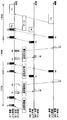
- R i to R n Report frame G i to G n : Gate frame z i : Request amount threshold a i : Transmission request amount b i : Transmission permitted data amount c i : Transmission waiting amount d i : Transmission permission amount F i :data
- the first method is a method of calculating a positive value of the PID calculation amount x i as the threshold control amount y i , Calculated by Thereby, when the PID calculation amount x i is negative, the threshold control amount y i can be set to zero, and when it is positive, it can be set as the threshold control amount y i .
- the calculation processing speed can be increased.
- the second method of calculating the threshold control amount y i is a method of adding a predetermined value B i to the PID calculation amount x i . Calculated by As a result, the range of values that can be taken by the threshold control amount y i is widened, and higher control performance than that of the first method can be obtained.
- the predetermined value B i is determined so that, for example, the time average allocated bandwidth converges to the target bandwidth. Thereby, the convergence speed to the target band can be increased.
- a third method a PID calculation of PID calculation amount x minimum ONU among all ONU a minimum PID computation amount x min, PID calculation amount x i and the minimum of the ONU i of calculating the threshold control amount y i by calculating the difference "x i -x min" of the PID calculation amount x min as a PID difference, PID difference the value obtained by dividing PID difference of ONU i the "x i -x min" in the sum of the PID difference of all ONU
- the ratio is calculated as a ratio, and the product of the PID difference ratio and the number of data bytes T for one allocation cycle is used as a threshold control amount y i . Calculated by As a result, the number of ONUs for which the threshold control amount y i is zero can be suppressed to a maximum of one, and the maximum delay time can be shortened.
- the first method for obtaining the requirement threshold z is a method for the requirement threshold z i to the threshold control amount y i and equivalent.
- the second method for obtaining the request amount threshold value z is a method of calculating the request amount threshold value z i by adding a predetermined minimum guaranteed allocation amount A i to the threshold control amount y i , Calculated by As a result, the number of ONUs where the threshold control amount y i is zero can be reduced to zero, and the maximum delay time can be shortened.
- the minimum guaranteed quota A i is determined, for example, by the amount of data guaranteed in each cycle in order to maintain the communication service.
- the OLT calculates and stores the time average of the respective bands for each of the ONU 1 to ONU n allocated with the predetermined number of cycles in the past as a time average allocated band.
- Each ONU 1 to ONU n describes, in the report frames R 1 to R n , the amount of data that is not permitted to be transmitted among the amount of transmission data stored in the upstream buffer as the stored data amount (transmission standby amount).
- the OLT is notified at the timing notified by the gate frames G 1 to G n .
- the OLT calculates a target bandwidth based on the transmission standby amount of each ONU 1 to ONU n .
- the OLT obtains PID calculation amounts x 1 to x n based on the stored time average allocated bandwidth of each ONU 1 to ONU n and the calculated target bandwidth, and subsequently calculates threshold control amounts y 1 to y n .
- the request amount threshold values z 1 to z n are calculated, and the request amount threshold values z 1 to z n are notified to the respective ONU 1 to ONU n through the gate frames G 1 to G n .
- Each ONU 1 to ONU n calculates a buffer accumulation amount up to the frame end that is equal to or less than the notified request amount threshold value z 1 to z n and can be set as a transmission request amount, and reports frames R 1 to R n To notify the OLT.
- the OLT notifies each ONU 1 to ONU n of a transmission permission amount equal to the notified transmission request amount.
- Each ONU 1 to ONU n transmits data corresponding to the notified transmission permission amount to the OLT.
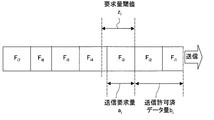
- FIG. 2 shows the request amount threshold value z i , the transmission request amount a i, and the transmission permitted data amount b i in the transmission buffer in which the data F i1 to F i7 are stored for the i-th ONU i .
- the i-th ONU i notifies the OLT of the transmission request amount a i and the transmission standby amount (F i3 to F i7 ) within the request amount threshold z 1 by the same report frame R i .
- the OLT transmission permission amount matching the transmission demand a i from ONU i ( a i) and determines the transmission timing, and notifies the ONU i by the gate frame G i.
- the transmission permission amount determined by the OLT is not limited to the data amount that is the same as or coincides with the transmission request amount a i .
- OLT it is preferable to determine the transmission permission amount corresponding to the transmission demand a i from ONU i.
- the transmission permission amount corresponding to the transmission request amount a i includes information necessary for permitting transmission of the same amount as the transmission request amount, such as burst overhead and FEC (Forward Error Correction) parity.
- an OAM frame may be used without using the gate frame G i .
- a dedicated frame may be newly defined and notified using the dedicated frame. Further, in 10G-EPON (Ethernet (registered trademark) Passive Optical Network), notification may be performed using an extended MAC control message.
- 10G-EPON Ethernet (registered trademark) Passive Optical Network
- the transmission request amount a i does not include the transmission permitted data amount b i has been described above.
- the transmission request amount a i is equal to or less than the request amount threshold value z i and the maximum data amount among the data delimiters that can transmit / receive data by dividing the data.
- the data delimiter is, for example, an Ethernet (registered trademark) frame end, FEC codeword end, B-PON (Broadband PON) ATM (Asynchronous Transfer Mode) cell end, or G-PON (Gigabit PON). ) GEM (G-PON Encapsulation Method) frame end.
- FIG. 3 is an explanatory diagram showing a second content of the ONU transmission buffer.
- FIG. 2 shows the case where the transmission request amount a i does not include the transmission permitted data amount b i
- the transmission request amount a i may include the transmission permitted data amount b i .
- the transmission request amount a i is data equal to or less than the sum (z i + b i ) of the request amount threshold value z i and the transmission-permitted data amount b i among the data delimiters that can transmit / receive data by dividing the data. The amount of data up to the break.
- the OLT subtracts the transmission permitted data amount b i from the transmission request amount a i notified from the ONU, and recognizes the actual transmission request amount (a i -b i ).
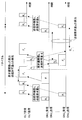
- FIG. 4 is a sequence diagram showing an example of a bandwidth allocation method executed by the passive optical communication network system according to the present embodiment.
- the bandwidth allocation method according to the present embodiment includes a first step, a second step, a third step, and a fourth step in this order, and an optical terminal device (hereinafter referred to as OLT).
- OLT optical terminal device
- ONUs optical subscriber units
- each ONU 1 to ONU n notifies the OLT of the transmission standby amount c i at the timing notified by the gate frame G 1 to G n from the OLT.
- OLT is the difference between the past demanded a time average allocated bandwidth from the predetermined cycle number of the allocated bandwidth, the target bandwidth determined for each time average allocated bandwidth and ONU i of each ONU i to each ONU i It calculates a requirement threshold z i for each ONU i, and notifies the ONU i of the appropriate requirement threshold z i issued the calculated on the basis of. The ONU updates the request amount threshold value z i to the notified value.
- the ONU preferably updates the request amount threshold value z i to the notified value based on the set cycle.
- the cycle in which the OLT notifies the request amount threshold value z i and the ONU updates is preset based on the relationship between the update cycle of the request amount threshold value z i and the convergence speed of the band.
- the update cycle of the request amount threshold value z i may be the same as the allocation cycle of the transmission permission amount d i to the ONU or may be several hundred times the allocation cycle.
- the calculation processing load per unit time can be reduced.
- the corresponding ONU i calculates, as the transmission request amount a i , a data amount equivalent to a data break that can be made the maximum transmission amount below the notified request amount threshold z i , and the transmission request amount a Notify i to OLT.
- OLT calculates the transmission permission amount d i corresponding to the notified transmission demand a i, and notifies the ONU i corresponding the transmission permission amount d i.
- the corresponding ONU i transmits the data F i of the data amount corresponding to the transmission permission amount d i to OLT.
- the OLT when dynamically assigning the upstream bandwidth of the PON, the OLT monitors the temporal change in the transmission permission amount to each ONU while minimizing the mismatch between the transmission request amount and the transmission permission amount.
- the convergence method can be controlled by adjusting the parameter for calculating the request amount threshold.
- the bandwidth allocation method according to the present embodiment and the passive optical communication network system capable of executing the bandwidth allocation method, the time average allocation bandwidth can be quickly converged to the target bandwidth. Moreover, the convergence method can be controlled by adjusting the parameter for calculating the request amount threshold.
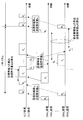
- FIG. 5 is a sequence diagram showing an example of a bandwidth allocation method executed by the passive optical communication network system according to the present embodiment.
- it has a 1st step, a 2nd step, and a 3rd step in order, and ONU is based on the time average allocation band calculated
- the request amount threshold value z i is calculated.
- each ONU i calculates and stores the respective time average allocated bandwidth.
- Each ONU 1 ⁇ ONU n is a transmission standby amount c i described in the report frame and notifies the OLT at the timing notified from the OLT.
- the OLT calculates the target bandwidth f i based on the transmission standby amounts c i of the respective ONU 1 to ONU n .
- the OLT describes the calculated target bandwidth f i in the gate frames G 1 to G n and notifies each ONU i .
- each ONU i obtains a time average allocated bandwidth from the allocated bandwidth to the ONU i for a predetermined number of past cycles, and calculates the time average allocated bandwidth and the target bandwidth f i determined for the ONU i. Based on the difference, the request amount threshold value z i of the ONU i is calculated in the same manner as the method of calculating the request amount threshold value z i in the first embodiment.
- Each ONU i calculates, as a transmission request amount a i , a data amount up to a data delimiter that can transmit the maximum data amount below the calculated request amount threshold z i , and describes the transmission request amount a i in the report frame And notify the OLT.
- each ONU i is preferably updated to a value obtained by calculating the request amount threshold value z i based on the set cycle. For example, it is preferable to set based on the relationship between the update period of the request amount threshold value z i and the convergence speed of the band, as in the first embodiment.
- OLT calculates the transmission permission amount d i for permitting transmission of the data amount corresponding to the notified transmission demand a i, and notifies the relevant ONU i.
- the corresponding ONU i transmits the data F i of the data amount corresponding to the notified transmission permission amount d i to OLT.
- the bandwidth allocation method and the bandwidth allocation method according to the present embodiment can be converged quickly to the target band f i a time average allocated bandwidth.
- the convergence method can be controlled by adjusting a parameter for calculating the request amount threshold value z i .
- the ONU i autonomously calculates and updates the request amount threshold value z i , the overall processing load can be reduced.
Landscapes
- Engineering & Computer Science (AREA)
- Computer Networks & Wireless Communication (AREA)
- Signal Processing (AREA)
- Small-Scale Networks (AREA)
- Optical Communication System (AREA)
Abstract
Description
PONは、OLTと複数のONUとを、光ファイバや受動光スプリッタ等の光伝送路を介して接続した光ネットワークであり、その経済的優位性により、広く利用されている。
Gi~Gn:ゲートフレーム
zi:要求量閾値
ai:送信要求量
bi:送信許可済データ量
ci:送信待機量
di:送信許可量
Fi:データ
OLTが、ONUの過去の所定サイクル数分の割当帯域から求めた時間平均割当帯域に基づいて、要求量閾値を算出する方法の例を示す。なお、データ転送のビットレートが一定の場合は、以下で説明する量あるいは帯域等はデータ量で処理しても、また時間で処理してもよい。i番目のONUをONUiとして、以降ONUiのパラメータには添字iを付与する。ONUiの時間平均割当帯域と各ONUの通信状態から求めた目標帯域との差分を算出してeiとする。PID(比例・時間積分・時間微分)算出量xiは、


図5は、本実施形態に係る受動光通信網システムが実行する帯域割当方法の一例を示すシーケンス図である。本実施形態においては、第1のステップと、第2のステップと、第3のステップと、を順に有し、ONUが過去の所定サイクル数分の割当帯域から求めた時間平均割当帯域に基づいて、要求量閾値ziを算出することを特徴とする。以下、第1の実施形態と相違する点について具体的に説明する。
Claims (17)
- 光端局装置と複数の光加入者装置とが光伝送路を介して接続された受動光通信網において、前記各光加入者装置から前記光端局装置への通信帯域を動的に割り当てる帯域割当方法であって、
前記光端局装置が、前記各光加入者装置ごとに過去の所定サイクル数分の割当帯域から時間平均割当帯域を求め、前記光加入者装置ごとの前記時間平均割当帯域と前記光加入者装置ごとに定めた目標帯域との差分に基づいて前記光加入者装置ごとの要求量閾値を算出し、該算出された要求量閾値を該当する光加入者装置に通知するステップと、
前記該当する光加入者装置が、通知された前記要求量閾値以下で最大の送信量とできるデータ区切りまでのデータ量相当を送信要求量として前記光端局装置に通知するステップと、
前記光端局装置が、通知された前記送信要求量に対応したデータ量の送信を許可するための送信許可量を前記該当する光加入者装置に通知するステップと、
前記該当する光加入者装置が、前記送信許可量に対応したデータ量を送信するステップと、
を含むことを特徴とする帯域割当方法。 - 請求項1に記載の帯域割当方法において、
前記差分の比例演算結果と前記差分の時間積分演算結果と前記差分の時間微分演算結果との和をPID算出量とし、該PID算出量に基づいて閾値制御量を算出し、該閾値制御量に基づいて、前記該当する光加入者装置の前記要求量閾値を算出することを特徴とする帯域割当方法。 - 請求項2に記載の帯域割当方法において、
前記PID算出量が負のとき、前記閾値制御量を零とすることを特徴とする帯域割当方法。 - 請求項2に記載の帯域割当方法において、
前記PID算出量に予め定めた値を加算して、前記閾値制御量を算出することを特徴とする帯域割当方法。 - 請求項2に記載の帯域割当方法において、
前記複数の光加入者装置の中で、最小の前記PID算出量を最小PID算出量とし、前記該当する光加入者装置の前記PID算出量と前記最小PID算出量との差分をPID差分として算出し、前記複数の光加入者装置の前記PID差分の合計をPID差分合計として算出し、前記該当する光加入者装置の前記PID差分を前記PID差分合計で割った値をPID差分割合として算出し、前記PID差分割合に基づいて前記閾値制御量を算出することを特徴とする帯域割当方法。 - 請求項2乃至5のいずれか1つに記載の帯域割当方法において、
前記要求量閾値を、前記閾値制御量と同値として算出することを特徴とする帯域割当方法。 - 請求項2乃至5のいずれか1つに記載の帯域割当方法において、
前記要求量閾値を、前記閾値制御量に所定の最低割当量を加えて算出することを特徴とする帯域割当方法。 - 光端局装置と複数の光加入者装置とが光伝送路を介して接続され、前記各光加入者装置から前記光端局装置への通信帯域が動的に割り当られる受動光通信網システムであって、
前記光端局装置が、前記各光加入者装置ごとに過去の所定サイクル数分の割当帯域から時間平均割当帯域を求め、前記光加入者装置ごとの前記時間平均割当帯域と前記光加入者装置ごとに定めた目標帯域との差分に基づいて前記光加入者装置ごとの要求量閾値を算出し、該算出された要求量閾値を該当する光加入者装置に通知し、
前記該当する光加入者装置が、通知された前記要求量閾値以下で最大の送信量とできるデータ区切りまでのデータ量相当を送信要求量として前記光端局装置に通知し、
前記光端局装置が、通知された前記送信要求量に対応したデータ量の送信を許可するための送信許可量を前記該当する光加入者装置に通知し、
前記該当する光加入者装置が、前記送信許可量に応じたデータ量を送信する、
ことを特徴とする受動光通信網システム。 - 光端局装置と複数の光加入者装置とが光伝送路を介して接続された受動光通信網において、前記各光加入者装置から前記光端局装置への通信帯域を動的に割り当てる帯域割当方法であって、
前記各光加入者装置が、過去の所定サイクル数分の当該光加入者装置への割当帯域から時間平均割当帯域を求め、前記時間平均割当帯域と当該光加入者装置に定められた目標帯域との差分に基づいて当該光加入者装置の要求量閾値を算出し、算出された前記要求量閾値以下で最大の送信量とできるデータ区切りまでのデータ量相当を送信要求量として前記光端局装置に通知するステップと、
前記光端局装置が、通知された前記送信要求量に対応したデータ量の送信を許可するための送信許可量を該当する前記光加入者装置に通知するステップと、
前記該当する光加入者装置が、前記送信許可量に対応したデータ量を前記光端局装置に送信するステップと、
を含むことを特徴とする帯域割当方法。 - 請求項9に記載の帯域割当方法において、
前記光端局装置は、前記光加入者装置ごとの目標帯域を、前記光端局装置に接続された全光加入者装置の通信状況に応じて算出し、前記各光加入者装置に通知することを特徴とする帯域割当方法。 - 請求項9に記載の帯域割当方法において、
前記差分の比例演算結果と前記差分の時間積分演算結果と前記差分の時間微分演算結果との和をPID算出量とし、該PID算出量に基づいて閾値制御量を算出し、該閾値制御量に基づいて、前記該当する光加入者装置の前記要求量閾値を算出することを特徴とする帯域割当方法。 - 請求項11に記載の帯域割当方法において、
前記PID算出量が負のとき、前記閾値制御量を零とすることを特徴とする帯域割当方法。 - 請求項11に記載の帯域割当方法において、
前記PID算出量に予め定めた値を加算して、前記閾値制御量を算出することを特徴とする帯域割当方法。 - 請求項11乃至13のいずれか1つに記載の帯域割当方法において、
前記要求量閾値を、前記閾値制御量と同値として算出することを特徴とする帯域割当方法。 - 請求項11乃至13のいずれか1つに記載の帯域割当方法において、
前記要求量閾値を、前記閾値制御量に所定の最低割当量を加えて算出することを特徴とする帯域割当方法。 - 光端局装置と複数の光加入者装置とが光伝送路を介して接続され、前記各光加入者装置から前記光端局装置への通信帯域が動的に割り当られる受動光通信網システムであって、
前記各光加入者装置が、過去の所定サイクル数分の割当帯域から時間平均割当帯域を求め前記光加入者装置ごとに定めた目標帯域との差分に基づいて前記光加入者装置ごとの要求量閾値を算出し、
前記該当する光加入者装置が、算出した前記要求量閾値以下で最大の送信量とできるデータ区切りまでのデータ量相当を送信要求量として前記光端局装置に通知し、
前記光端局装置が、通知された前記送信要求量に対応したデータ量の送信を許可するための送信許可量を前記該当する光加入者装置に通知し、
前記該当する光加入者装置が、前記送信許可量に応じたデータ量を送信する、
ことを特徴とする受動光通信網システム。 - 請求項1または9に記載の帯域割当方法において、
設定された周期に基づき、要求量閾値を更新することを特徴とする帯域割当方法。
Priority Applications (5)
| Application Number | Priority Date | Filing Date | Title |
|---|---|---|---|
| JP2010500655A JP4865908B2 (ja) | 2008-02-26 | 2009-02-17 | 帯域割当方法および受動光通信網システム |
| CA2714025A CA2714025C (en) | 2008-02-26 | 2009-02-17 | Bandwidth allocation method and passive optical network system |
| EP09714582A EP2234340B1 (en) | 2008-02-26 | 2009-02-17 | Band allocation method and passive optical communication network system |
| CN2009801050804A CN101953119B (zh) | 2008-02-26 | 2009-02-17 | 频带分配方法以及无源光通信网系统 |
| US12/866,356 US8346083B2 (en) | 2008-02-26 | 2009-02-17 | Bandwidth allocation method and passive optical network system |
Applications Claiming Priority (2)
| Application Number | Priority Date | Filing Date | Title |
|---|---|---|---|
| JP2008-044948 | 2008-02-26 | ||
| JP2008044948 | 2008-02-26 |
Publications (1)
| Publication Number | Publication Date |
|---|---|
| WO2009107519A1 true WO2009107519A1 (ja) | 2009-09-03 |
Family
ID=41015919
Family Applications (1)
| Application Number | Title | Priority Date | Filing Date |
|---|---|---|---|
| PCT/JP2009/052698 Ceased WO2009107519A1 (ja) | 2008-02-26 | 2009-02-17 | 帯域割当方法および受動光通信網システム |
Country Status (6)
| Country | Link |
|---|---|
| US (1) | US8346083B2 (ja) |
| EP (2) | EP2429131B1 (ja) |
| JP (1) | JP4865908B2 (ja) |
| CN (1) | CN101953119B (ja) |
| CA (1) | CA2714025C (ja) |
| WO (1) | WO2009107519A1 (ja) |
Cited By (1)
| Publication number | Priority date | Publication date | Assignee | Title |
|---|---|---|---|---|
| JP2012044603A (ja) * | 2010-08-23 | 2012-03-01 | Nippon Telegr & Teleph Corp <Ntt> | 帯域割当方法、光端局装置及びponシステム |
Families Citing this family (11)
| Publication number | Priority date | Publication date | Assignee | Title |
|---|---|---|---|---|
| JP5216656B2 (ja) * | 2009-03-30 | 2013-06-19 | 株式会社日立製作所 | 受動光網システムおよびその運用方法 |
| US8917993B2 (en) * | 2011-06-17 | 2014-12-23 | Calix, Inc. | Scheduling delivery of upstream traffic based on downstream traffic in optical networks |
| US8976688B2 (en) | 2011-06-17 | 2015-03-10 | Calix, Inc. | Grant scheduler for optical network devices |
| CN103200466B (zh) * | 2012-01-06 | 2016-02-03 | 美国博通公司 | 具有报告阈值计算的以太网无源光网络 |
| US8942560B2 (en) * | 2012-01-06 | 2015-01-27 | Broadcom Corporation | Ethernet passive optical network with report threshold calculations |
| EP3054632B1 (en) * | 2013-09-30 | 2017-11-29 | Fuji Machine Mfg. Co., Ltd. | Control device |
| CN107465557B (zh) * | 2017-09-07 | 2023-04-07 | 国网辽宁省电力有限公司 | 一种epon流量预测方法 |
| EP4464032A2 (en) * | 2022-02-17 | 2024-11-20 | Huawei Technologies Co., Ltd. | Coordinated transmission in multi-passive optical network (pon) systems |
| CN114900240B (zh) * | 2022-06-13 | 2023-10-20 | 中国联合网络通信集团有限公司 | 数据处理方法、装置、设备及存储介质 |
| CN115484517B (zh) * | 2022-09-06 | 2023-06-23 | 苏州大学 | 一种无源光网络中线路速率优化方法及装置 |
| US12294407B1 (en) * | 2024-08-12 | 2025-05-06 | Frontier Communications Holdings, Llc | Systems and methods for fiber upstream trace determination |
Citations (3)
| Publication number | Priority date | Publication date | Assignee | Title |
|---|---|---|---|---|
| JP2004129172A (ja) * | 2002-08-08 | 2004-04-22 | Sumitomo Electric Ind Ltd | 光加入者線端局装置、光加入者線終端装置およびそれらによって用いられる帯域割当方法 |
| JP2004528740A (ja) | 2001-01-12 | 2004-09-16 | アロプティック、インク. | 光アクセスネットワークにおけるダイナミックな帯域幅割り当ての方法及びシステム |
| JP2006005764A (ja) * | 2004-06-18 | 2006-01-05 | Sumitomo Electric Ind Ltd | 光加入者線端局装置および帯域割当プログラム |
Family Cites Families (4)
| Publication number | Priority date | Publication date | Assignee | Title |
|---|---|---|---|---|
| EP2222004B1 (en) * | 2001-09-10 | 2014-10-08 | Nippon Telegraph And Telephone Corporation | Dynamic bandwidth allocation circuit, dynamic bandwidth allocation method, dynamic bandwidth allocation program and recording medium |
| US20070019957A1 (en) | 2005-07-19 | 2007-01-25 | Chan Kim | Dynamic bandwidth allocation apparatus and method in Ethernet Passive Optical Network, and EPON master apparatus using the same |
| JP4188368B2 (ja) | 2005-09-28 | 2008-11-26 | 韓國電子通信研究院 | イーサネット受動光加入者網(EPON)においてQoS保障のための帯域割当装置及び方法 |
| JP4416005B2 (ja) * | 2007-05-09 | 2010-02-17 | 株式会社日立製作所 | Ponシステムにおける動的帯域割当方式 |
-
2009
- 2009-02-17 CA CA2714025A patent/CA2714025C/en active Active
- 2009-02-17 EP EP20110192168 patent/EP2429131B1/en active Active
- 2009-02-17 US US12/866,356 patent/US8346083B2/en active Active
- 2009-02-17 EP EP09714582A patent/EP2234340B1/en active Active
- 2009-02-17 CN CN2009801050804A patent/CN101953119B/zh active Active
- 2009-02-17 WO PCT/JP2009/052698 patent/WO2009107519A1/ja not_active Ceased
- 2009-02-17 JP JP2010500655A patent/JP4865908B2/ja active Active
Patent Citations (3)
| Publication number | Priority date | Publication date | Assignee | Title |
|---|---|---|---|---|
| JP2004528740A (ja) | 2001-01-12 | 2004-09-16 | アロプティック、インク. | 光アクセスネットワークにおけるダイナミックな帯域幅割り当ての方法及びシステム |
| JP2004129172A (ja) * | 2002-08-08 | 2004-04-22 | Sumitomo Electric Ind Ltd | 光加入者線端局装置、光加入者線終端装置およびそれらによって用いられる帯域割当方法 |
| JP2006005764A (ja) * | 2004-06-18 | 2006-01-05 | Sumitomo Electric Ind Ltd | 光加入者線端局装置および帯域割当プログラム |
Non-Patent Citations (1)
| Title |
|---|
| See also references of EP2234340A4 |
Cited By (1)
| Publication number | Priority date | Publication date | Assignee | Title |
|---|---|---|---|---|
| JP2012044603A (ja) * | 2010-08-23 | 2012-03-01 | Nippon Telegr & Teleph Corp <Ntt> | 帯域割当方法、光端局装置及びponシステム |
Also Published As
| Publication number | Publication date |
|---|---|
| EP2234340A1 (en) | 2010-09-29 |
| EP2234340B1 (en) | 2012-08-08 |
| CN101953119B (zh) | 2013-06-05 |
| CA2714025A1 (en) | 2009-09-03 |
| EP2234340A4 (en) | 2011-06-15 |
| CA2714025C (en) | 2015-04-07 |
| EP2429131B1 (en) | 2013-08-28 |
| JPWO2009107519A1 (ja) | 2011-06-30 |
| US8346083B2 (en) | 2013-01-01 |
| JP4865908B2 (ja) | 2012-02-01 |
| US20100322634A1 (en) | 2010-12-23 |
| CN101953119A (zh) | 2011-01-19 |
| EP2429131A1 (en) | 2012-03-14 |
Similar Documents
| Publication | Publication Date | Title |
|---|---|---|
| JP4865908B2 (ja) | 帯域割当方法および受動光通信網システム | |
| US10491323B2 (en) | Data transmission control method, passive optical network equipment, apparatus, and passive optical network | |
| US20100239255A1 (en) | Optical line terminal, passive optical network system, and bandwidth assignment method | |
| US8873565B2 (en) | Method and apparatus of delivering upstream data in ethernet passive optical network over coaxial network | |
| JP2012518319A (ja) | パッシブ光ネットワークにおける動的帯域幅割り当てのための出力分離 | |
| CN101997761A (zh) | 带宽分配方法及光纤线路终端 | |
| WO2002056482A2 (en) | Method and system for dynamic bandwidth allocation in an optical access network | |
| US20170005724A1 (en) | Station-side device and pon system | |
| US20230121842A1 (en) | Service transmission method and apparatus, sending end and storage medium | |
| Gravalos et al. | A modified max-min fair dynamic bandwidth allocation algorithm for XG-PONs | |
| JP5487003B2 (ja) | 光端局装置、光通信システム及び動的帯域割当方法 | |
| Kantarci et al. | Two-stage report generation in long-reach EPON for enhanced delay performance | |
| CN102143411B (zh) | 信号处理方法、设备及系统 | |
| JP4877483B2 (ja) | 送信割当て方法及び装置 | |
| JP5563376B2 (ja) | 光通信システム及び光通信方法 | |
| JP5319446B2 (ja) | 帯域割当方法及び受動光通信網システム | |
| WO2016019752A1 (zh) | 测距方法、装置及系统 | |
| WO2011147248A1 (zh) | 一种pon拉远的方法及设备 | |
| JP2012244488A (ja) | 通信システムおよび終端装置 | |
| WO2023227096A1 (zh) | 一种信息反馈方法、设备及存储介质 | |
| Huang et al. | DARE: Towards Maximized Bandwidth Utilization of Dynamic Bandwidth Allocation for Next-Generation Passive Optical Networks | |
| JP2009130623A (ja) | 光加入者線端局装置、それを含んだ通信システムおよびパケット送信方法 | |
| JP2021002886A (ja) | 通信システム、加入者線終端装置及び加入者線端局装置 | |
| JP2021002885A (ja) | 通信システム、加入者線終端装置及び加入者線端局装置 | |
| JP2019041331A (ja) | 通信システム、加入者線終端装置及び加入者線端局装置 |
Legal Events
| Date | Code | Title | Description |
|---|---|---|---|
| WWE | Wipo information: entry into national phase |
Ref document number: 200980105080.4 Country of ref document: CN |
|
| 121 | Ep: the epo has been informed by wipo that ep was designated in this application |
Ref document number: 09714582 Country of ref document: EP Kind code of ref document: A1 |
|
| WWE | Wipo information: entry into national phase |
Ref document number: 2010500655 Country of ref document: JP |
|
| WWE | Wipo information: entry into national phase |
Ref document number: 2714025 Country of ref document: CA |
|
| WWE | Wipo information: entry into national phase |
Ref document number: 12866356 Country of ref document: US |
|
| WWE | Wipo information: entry into national phase |
Ref document number: 2009714582 Country of ref document: EP |
|
| NENP | Non-entry into the national phase |
Ref country code: DE |