WO2009133431A1 - Oral liquid compositions of rhein or diacerein - Google Patents
Oral liquid compositions of rhein or diacerein Download PDFInfo
- Publication number
- WO2009133431A1 WO2009133431A1 PCT/IB2008/053858 IB2008053858W WO2009133431A1 WO 2009133431 A1 WO2009133431 A1 WO 2009133431A1 IB 2008053858 W IB2008053858 W IB 2008053858W WO 2009133431 A1 WO2009133431 A1 WO 2009133431A1
- Authority
- WO
- WIPO (PCT)
- Prior art keywords
- sodium
- calcium
- magnesium
- agents
- esters
- Prior art date
- Legal status (The legal status is an assumption and is not a legal conclusion. Google has not performed a legal analysis and makes no representation as to the accuracy of the status listed.)
- Ceased
Links
Classifications
-
- A—HUMAN NECESSITIES
- A61—MEDICAL OR VETERINARY SCIENCE; HYGIENE
- A61K—PREPARATIONS FOR MEDICAL, DENTAL OR TOILETRY PURPOSES
- A61K31/00—Medicinal preparations containing organic active ingredients
- A61K31/21—Esters, e.g. nitroglycerine, selenocyanates
- A61K31/215—Esters, e.g. nitroglycerine, selenocyanates of carboxylic acids
- A61K31/235—Esters, e.g. nitroglycerine, selenocyanates of carboxylic acids having an aromatic ring attached to a carboxyl group
-
- A—HUMAN NECESSITIES
- A61—MEDICAL OR VETERINARY SCIENCE; HYGIENE
- A61K—PREPARATIONS FOR MEDICAL, DENTAL OR TOILETRY PURPOSES
- A61K9/00—Medicinal preparations characterised by special physical form
- A61K9/0087—Galenical forms not covered by A61K9/02 - A61K9/7023
- A61K9/0095—Drinks; Beverages; Syrups; Compositions for reconstitution thereof, e.g. powders or tablets to be dispersed in a glass of water; Veterinary drenches
-
- A—HUMAN NECESSITIES
- A61—MEDICAL OR VETERINARY SCIENCE; HYGIENE
- A61P—SPECIFIC THERAPEUTIC ACTIVITY OF CHEMICAL COMPOUNDS OR MEDICINAL PREPARATIONS
- A61P19/00—Drugs for skeletal disorders
- A61P19/02—Drugs for skeletal disorders for joint disorders, e.g. arthritis, arthrosis
Definitions
- the invention relates to liquid pharmaceutical compositions for oral administration comprising rhein or diacerein, or salts or esters or prodrugs thereof and processes for preparing such compositions.
- rhein is 9,10-diDhyDdro-4, 5-dihydroxy-9, lO-dioxo-2-anthracene carboxylic acid having a structure of Formula I and diacerein is 4,5-bis (acetyloxy) 9,10-dihydro-4, 5-dihydroxy-9, lO-dioxo-2-anthracenecarboxylic acid having a structure of Formula II.
- Diacerein is widely used in the treatment of osteoarthritis and has a unique mode of action that differentiates it from non-steroidal anti-inflammatory drugs (NSAIDs) and other conventional forms of drug therapy.
- NSAIDs non-steroidal anti-inflammatory drugs
- Diacerein is practically insoluble in solvents such as water, alcohols, acetone, dichloromethane and chloroform, which are generally used in pharmaceutical preparations. Although diacerein can be administered by oral route but it cannot be completely absorbed by the digestive tract, and this incomplete absorption results in undesirable side effects such as, soft stools.
- EP904060 discloses pharmaceutical compositions of rhein or diacerein, wherein rhein or diacerein is co-micronized with sodium lauryl sulfate.
- U.S. Patent No. 5,952,383 and European Patent No. EP 862423B1 describe pharmaceutical compositions of diacerein, rhein and their salts along with liquid support systems like oils, suspending agents, homogenizing agents and other excipients .
- Liquid oral preparations are useful for obvious reasons. Firstly, it is preferable for patients either with physical disabilities or incapacitated. Secondly, patient compliance is often a problem with oral solid dosage forms, especially with young children and senior citizens. Thirdly, liquid compositions would help a pharmacist to dispense the correct amount of drug without resorting to sub-division of a larger dosed tablet into pieces. Fourthly, as solutions are homogenous, the medication is uniformly distributed throughout the preparation. A drug administered in solution is immediately available for absorption from the gastrointestinal tract and is more rapidly and efficiently absorbed than the same amount of drug administered in a tablet or capsule. Summary of the Invention [13] In one general aspect there is provided a liquid pharmaceutical composition for oral administration comprising rhein or diacerein, or salts or esters or prodrugs thereof.
- liquid' includes solutions, suspensions, dry syrups, syrups, elixirs, emulsions, solids ready mix that are reconstituted prior to administration
- Embodiments of the pharmaceutical composition may include one or more of the following features.
- the pharmaceutical composition may further include one or more pharmaceutically acceptable excipients.
- the pharmaceutically acceptable excipients may include one or more of fillers, binders, lubricants, sweeteners, coloring and flavoring agents, glidants, disintegrants, and the like.
- a process of making a liquid pharmaceutical composition for oral administration comprising rhein or diacerein, or salts or esters or prodrugs thereof, the process comprising mixing rhein or diacerein, or salts or esters or prodrugs thereof, with one or more pharmaceutically acceptable excipients.
- a liquid pharmaceutical composition for oral administration comprising rhein or diacerein, or salts or esters or prodrugs thereof in the form of a suspension or dry syrup, wherein the composition exhibits a dissolution profile such that more than 75% of diacerein is released within 30 minutes, wherein the release rate is measured in Apparatus 2 (USP, Dissolution, paddle, 75 rpm) using 1000 ml of pH 5.7 phosphate buffer at 37 0 C + 0.5 0 C.
- USP Dissolution, paddle, 75 rpm
- liquid' includes solutions, suspensions, dry syrups, syrups, elixirs, emulsions, solids ready mix that are reconstituted prior to administration.
- a liquid pharmaceutical composition comprising rhein or diacerein, or salts or esters or prodrugs thereof for oral administration may be prepared by dissolving or suspending rhein or diacerein, or salts or esters or prodrugs thereof in one or more suitable solvents to form a solution or dispersion, and optionally, adding one or more pharmaceutically acceptable excipients to the solution or dispersion of rhein or diacerein or spraying the solution or dispersion of rhein or diacerein on the pharmaceutically acceptable excipients.
- a liquid pharmaceutical composition comprising rhein or diacerein, or salts or esters or prodrugs thereof for oral administration may also be prepared by directly mixing rhein or diacerein, or salts or esters or prodrugs thereof with one or more pharmaceutically acceptable excipients. This powder may be used for reconstitution prior to the administration.
- the pharmaceutical acceptable excipients comprise one or more of wetting agents, solubilizers, thickening agents, sweeteners, flavoring agents, coloring agents, preservatives or buffering agents, and the like.
- Suitable wetting agents or surfactants include one or more of quaternary ammonium compounds, such as benzalkonium chloride, benzethonium chloride and cetylpyridinium chloride; TPGS (d- alpha tocopheryl polyethylene glycol succinate), dioctyl sodium sulfosuccinate; poly oxy ethylene alkylphenyl ethers, such as nonoxynol 9, nonoxynol 10, and octoxynol 9; poloxamers (polyoxyethylene and poly- oxypropylene block copolymers); polyoxyethylene fatty acid glycerides and oils, such as polyoxyethylene (8) caprylic/capric mono- and diglycerides (e.g., Labrasol.TM., Gattefosse), polyoxyethylene (35) castor oil and polyoxyethylene (40) hydrogenated castor oil; polyoxyethylene alkyl ethers, such as polyoxyethylene (20) cetostearyl ether; polyoxyethylene quatern
- propylene glycol fatty acid esters such as propylene glycol laureate (e.g., Lauroglycol.TM., Gattefosse); sodium lauryl sulfate; fatty acids and salts thereof, such as oleic acid, sodium oleate and triethanolamine oleate; glyceryl fatty acid esters, for example glyceryl monostearate; sorbitan esters, such as sorbitan monolaurate, sorbitan monooleate, sorbitan monopalmitate and sorbitan monostearate; tyloxapol; lecithin; stearyl triethanolamine; laurylaminopropionic acid; and mixtures thereof.
- propylene glycol fatty acid esters such as propylene glycol laureate (e.g., Lauroglycol.TM., Gattefosse); sodium lauryl sulfate; fatty acids and salts thereof, such as oleic acid, sodium ole
- the surfactants or wetting agents may be present from about 0.25 weight percent to about 15 weight percent of the total weight of the composition.
- Thickening agents or viscosity-enhancing agents may be included to generally improve the mouth-feel of the composition and/or to help coat the lining of the gastrointestinal tract.
- thickening agents include acacia, alginic acid bentonite, carbomer, carboxymethylcellulose calcium or sodium, cetostearyl alcohol, methyl cellulose, ethylcellulose, glycerin, gelatin guar gum, hydroxyethyl cellulose, hy- droxypropyl cellulose, hydroxypropyl methyl cellulose, maltodextrin, polyvinyl alcohol, povidone, propylene carbonate, propylene glycol alginate, sodium alginate, sodium starch glycolate, starch tragacanth, and xanthan gum.
- the thickening agents may be present from about 0.1 weight percent to 20 weight percent of the total weight of the composition.
- Suitable sweeteners or sweetening agents may include one or more of monosaccharides, disaccharides and polysaccharides, e.g.
- xylose ribose, glucose, mannose, galactose, fructose, sucrose, maltose, invert sugar, partially hydrolyzed starch, corn syrup solids, mannitol xylitol, D-sorbitol, erythritol, pentitol, hexitol, malitol, dihy- drochalcones, monellin, steviosides or glycyrrhizin;. saccharin in free acid form, soluble saccharin salts, e.g.
- dipeptide based sweeteners such as L-aspartic acid derived sweeteners, e.g. aspartame
- water-soluble sweeteners derived from naturally occurring water- soluble sweeteners e.g. sucralose
- protein based sweeteners e.g. thaumatococcus danielli (Thaumatin I and II) and the like.
- the sweetening agents may be present from about 0.05 weight percent to about 10 weight percent of the total weight of the composition.
- Suitable flavoring agents may include those known to a skilled artisan, such as natural, 'natural-like' and artificial flavors. These flavors may be selected from synthetic flavor oils, flavoring aromatics, oleo-resins and extracts derived from plants, leaves, flowers or fruits.
- flavors may include one or more of spearmint oil, cinnamon oil, peppermint oil, clove oil, bay oil, thyme oil, cedar leaf oil, oil of nutmeg, oil of sage, oil of bitter almonds, vanilla, chocolate, coffee, cocoa and citrus oil, lemon, orange, cherry, grape, lime or grapefruit, and fruit essences, e.g. apple, pear, peach, strawberry, raspberry, cherry, plum, pineapple or apricot; mints such as peppermint (including menthol, especially levomenthol), aldehydes and esters, e.g.
- the flavoring agents may be present from about 0.01 weight percent to about 15 weight percent, of the total weight of the composition.
- Colorant agents suitable for inclusion in the present invention may include one or more water-soluble synthetic organic food additives (e.g., food dyes such as food red dye Nos. 2 and 3, food yellow dye Nos. 4 and 5 and food blue dye Nos. 1 and 2), water-insoluble lake dyes (e.g., aluminum salts of the above water-soluble synthetic organic food additives, etc.), and natural pigments (e.g., beta-carotene, chlorophyll, iron oxide red, etc.).
- Suitable colorants include D&C Red No. 33, FD&C Red No. 3, FD&C Red No. 40, D&C Yellow No. 10, and C Yellow No. 6.
- the coloring agents may be present from about 0.001 weight percent to about 1 weight percent of the total weight of the composition.
- the preservatives can be added to the compositions at levels safe for ingestion to improve storage stability Suitable preservatives may include one or more of sodium benzoate, butylated hydroxy toluene, butylated hydroxyanisole, ethylenediamine tetraacetic acid, paraoxybenzoic acid esters, chlorobutanol, benzyl alcohol, phenylethy- lalcohol, dehydroacetic acid, sorbic acid, benzalkonium chloride, benzethonium chloride, phenol, phenylmercuric nitrate, Thimerosal.
- the preservatives may be present about 0.01 weight percent to about 5 weight percent of the total weight of the composition.
- Suitable buffering agents may include, but are not limited to one or more of sodium bicarbonate, potassium bicarbonate, magnesium hydroxide, magnesium lactate, magnesium gluconate, aluminum hydroxide, aluminum hydroxide/sodium bicarbonate co precipitate, amino acids, aluminum glycinate, sodium citrate, sodium tartarate, sodium acetate, sodium carbonate, sodium polyphosphate, potassium polyphosphate, sodium pyrophosphate, potassium pyrophosphate, disodium hydrogenphosphate, dipotassium hydrogenphosphate, trisodium phosphate, tripotassium phosphate, sodium acetate, potassium metaphosphate, magnesium oxide, magnesium hydroxide, magnesium carbonate, magnesium silicate, calcium acetate, calcium glycerophosphate, calcium chloride, calcium hydroxide, calcium lactate, calcium carbonate, calcium bicarbonate, and the like.
- the buffering agents may be present from about 10 weight percent to about 80 weight percent of the total weight of the composition.
- Solubilizing agents are used to facilitate more uniform dispersion of an active ingredient or other excipient that is not generally soluble in the liquid carrier.
- suitable solubilizing agents include gelatin, egg yolk, casein, cholesterol, acacia, tragacanth, chondrus, pectin, methyl cellulose, carbomer, cetostearyl alcohol, cetyl alcohol, glycol, glycerin, D-mannitol, trehalose, benzyl benzoate, ethanol, trisaminomethane, cholesterol, triethanolamine, sodium carbonate, sodium citrate, sodium salicylate, sodium acetate, and mixtures thereof.
- the solubilizers may be present from about 1 weight percent to about 80 weight percent of the total weight of the composition.
- Chelating agents can be added to trap metals that find their way into the compositions during processing.
- Suitable chelating agents may include, but are not limited to, one or more of ethylenediaminetetraacetic acid (EDTA), ethylenediamine (EDA), diethylenetriamine (DETA), aminoethylethanolamine (AEEA).
- EDTA ethylenediaminetetraacetic acid
- EDA ethylenediamine
- DETA diethylenetriamine
- AEEA aminoethylethanolamine
- the chelating agents can be present in an amount from about 0.01 weight percent to about 3 weight percent of the total weight of the composition.
- liquid diacerein compositions can be provided that exhibit improved or more desired performance with respect to drug concentration, dissolution, dispersion, stability, safety, emulsification, efficacy, flavor, patient compliance, and/or other pharmacokinetic, chemical and/or physical properties.
- Table 6 provides the dissolution data for diacerein suspension prepared as per the formula given in Table 5.
- USP Type 2 Apparatus rpm 75 was used, wherein 1000 ml of pH 5.7 phosphate buffer at 37 0 C ⁇
- Tween was adsorbed on sucrose.
- Diacerein, colloidal silicon dioxide, sodium benzoate, sodium citrate, microcrystalline cellulose, sweetener and flavor were mixed with sucrose with adsorbed tween to form dry powder for suspension.
- Table 8 Dissolution profile of composition of diacerein dry powder for suspension as per example 6. [Table 8] [Table ]
- Table 8 provides the dissolution data for diacerein dry powder for suspension prepared as per the formula given in Table 7.
- USP Type 2 Apparatus rpm 75
- 1000 ml of pH 5.7 phosphate buffer at 37 0 C ⁇ 0.5 0 C was used as a medium.
Landscapes
- Health & Medical Sciences (AREA)
- Chemical & Material Sciences (AREA)
- Medicinal Chemistry (AREA)
- Pharmacology & Pharmacy (AREA)
- Life Sciences & Earth Sciences (AREA)
- Animal Behavior & Ethology (AREA)
- General Health & Medical Sciences (AREA)
- Public Health (AREA)
- Veterinary Medicine (AREA)
- Epidemiology (AREA)
- Emergency Medicine (AREA)
- Immunology (AREA)
- Rheumatology (AREA)
- Engineering & Computer Science (AREA)
- Bioinformatics & Cheminformatics (AREA)
- Physical Education & Sports Medicine (AREA)
- Chemical Kinetics & Catalysis (AREA)
- General Chemical & Material Sciences (AREA)
- Nuclear Medicine, Radiotherapy & Molecular Imaging (AREA)
- Organic Chemistry (AREA)
- Orthopedic Medicine & Surgery (AREA)
- Medicinal Preparation (AREA)
Abstract
The invention relates to liquid pharmaceutical compositions for oral administration comprising rhein or diacerein, or salts or esters or prodrugs thereof and processes for preparing such compositions.
Description
Description
ORAL LIQUID COMPOSITIONS OF RHEIN OR DIACEREIN
Field of the Invention
[1] The invention relates to liquid pharmaceutical compositions for oral administration comprising rhein or diacerein, or salts or esters or prodrugs thereof and processes for preparing such compositions. Background of the Invention
[2] Chemically, rhein is 9,10-diDhyDdro-4, 5-dihydroxy-9, lO-dioxo-2-anthracene carboxylic acid having a structure of Formula I and diacerein is 4,5-bis (acetyloxy) 9,10-dihydro-4, 5-dihydroxy-9, lO-dioxo-2-anthracenecarboxylic acid having a structure of Formula II. Diacerein is widely used in the treatment of osteoarthritis and has a unique mode of action that differentiates it from non-steroidal anti-inflammatory drugs (NSAIDs) and other conventional forms of drug therapy.

Formula- Il
[5] Diacerein is practically insoluble in solvents such as water, alcohols, acetone, dichloromethane and chloroform, which are generally used in pharmaceutical preparations. Although diacerein can be administered by oral route but it cannot be completely absorbed by the digestive tract, and this incomplete absorption results in undesirable side effects such as, soft stools.
[6] In order to overcome these problems, various derivatives, pharmaceutical compositions and specific galenic forms have been proposed in the literature. For example, European patent EP 243,968 describes a diacerein potassium salt, which is water- soluble and can be used in the preparation of compositions for parenteral admin-
istration.
[7] EP904060 discloses pharmaceutical compositions of rhein or diacerein, wherein rhein or diacerein is co-micronized with sodium lauryl sulfate.
[8] European Patent Nos. EP263083; 264989 and 446753disclose controlled release or delayed release compositions like multiplicity of pellets coated with drug and coating membrane or granules of drug coated with polymers or loading polymeric particles of water swellable cross-linked polymer with drug .
[9] U.S. Patent Nos. 5,225, 192 and 5,569,469 describe different poorly soluble medicaments supported on polymeric particles of water swellable cross-linked polymer with drug .
[10] U.S. Patent No. 5,952,383 and European Patent No. EP 862423B1 describe pharmaceutical compositions of diacerein, rhein and their salts along with liquid support systems like oils, suspending agents, homogenizing agents and other excipients .
[11] However, none of the formulations discussed above teach liquid oral dosage form of rhein or diacerein. Currently, diacerein is marketed as capsules in 50 mg strength under the trade name Art 50® and given twice a day. The capsule forms are, however, difficult to swallow, especially for geriatric patients. Further, the fear of swallowing, or choking on such solid shaped articles is still a concern in certain populations especially, geriatrics. It is estimated that almost 50% of the population have problems of swallowing tablets or capsules (Seager in Journal of Pharmacol, and Pharm. Pages 375-382, 1998). The capsule dosage forms become sticky when wetted by saliva, and if a patient experiences difficulty in swallowing on its first attempt, then the capsule must often be discarded. Furthermore, if a capsule partially dissolves in a patient's mouth, as can result from unsuccessful swallowing or the capsule getting stuck in the orthodontic appliance, the resulting very unpleasant taste can make it difficult to persuade the patient to take another dose. Additionally, these dosage forms are difficult to carry, store and handle. All these difficulties associated with capsules result in decreased patient compliance.
[12] Liquid oral preparations are useful for obvious reasons. Firstly, it is preferable for patients either with physical disabilities or incapacitated. Secondly, patient compliance is often a problem with oral solid dosage forms, especially with young children and senior citizens. Thirdly, liquid compositions would help a pharmacist to dispense the correct amount of drug without resorting to sub-division of a larger dosed tablet into pieces. Fourthly, as solutions are homogenous, the medication is uniformly distributed throughout the preparation. A drug administered in solution is immediately available for absorption from the gastrointestinal tract and is more rapidly and efficiently absorbed than the same amount of drug administered in a tablet or capsule. Summary of the Invention
[13] In one general aspect there is provided a liquid pharmaceutical composition for oral administration comprising rhein or diacerein, or salts or esters or prodrugs thereof.
[14] The term 'liquid' includes solutions, suspensions, dry syrups, syrups, elixirs, emulsions, solids ready mix that are reconstituted prior to administration
[15] Embodiments of the pharmaceutical composition may include one or more of the following features. The pharmaceutical composition may further include one or more pharmaceutically acceptable excipients. For example, the pharmaceutically acceptable excipients may include one or more of fillers, binders, lubricants, sweeteners, coloring and flavoring agents, glidants, disintegrants, and the like.
[16] In another general aspect there is provided a process of making a liquid pharmaceutical composition for oral administration comprising rhein or diacerein, or salts or esters or prodrugs thereof, the process comprising mixing rhein or diacerein, or salts or esters or prodrugs thereof, with one or more pharmaceutically acceptable excipients.
[17] In another general aspect there is provided a liquid pharmaceutical composition for oral administration comprising rhein or diacerein, or salts or esters or prodrugs thereof in the form of a suspension or dry syrup, wherein the composition exhibits a dissolution profile such that more than 75% of diacerein is released within 30 minutes, wherein the release rate is measured in Apparatus 2 (USP, Dissolution, paddle, 75 rpm) using 1000 ml of pH 5.7 phosphate buffer at 37 0C + 0.50C.
[18] The details of one or more embodiments of the inventions are set forth in the description below. Other features, objects and advantages of the inventions will be apparent from the description and claims. Detailed Description of the Invention
[19] It was a significant challenge for the inventors to obtain suitable oral liquid compositions comprising rhein or diacerein because of the insolubility of diacerein in most solvents, palatability to the patient, stability problems, especially the chemical stability of the ester in a liquid composition, wherein it is more susceptible to hydrolysis. The inventors were able to overcome this challenge and were able to develop stable oral liquid compositions comprising rhein or diacerein.
[20] The term 'liquid' includes solutions, suspensions, dry syrups, syrups, elixirs, emulsions, solids ready mix that are reconstituted prior to administration.
[21] According to one embodiment, a liquid pharmaceutical composition comprising rhein or diacerein, or salts or esters or prodrugs thereof for oral administration may be prepared by dissolving or suspending rhein or diacerein, or salts or esters or prodrugs thereof in one or more suitable solvents to form a solution or dispersion, and optionally, adding one or more pharmaceutically acceptable excipients to the solution or dispersion of rhein or diacerein or spraying the solution or dispersion of rhein or diacerein on the pharmaceutically acceptable excipients.
[22] According to another embodiment, a liquid pharmaceutical composition comprising rhein or diacerein, or salts or esters or prodrugs thereof for oral administration may also be prepared by directly mixing rhein or diacerein, or salts or esters or prodrugs thereof with one or more pharmaceutically acceptable excipients. This powder may be used for reconstitution prior to the administration.
[23] The pharmaceutical acceptable excipients comprise one or more of wetting agents, solubilizers, thickening agents, sweeteners, flavoring agents, coloring agents, preservatives or buffering agents, and the like.
[24] Suitable wetting agents or surfactants include one or more of quaternary ammonium compounds, such as benzalkonium chloride, benzethonium chloride and cetylpyridinium chloride; TPGS (d- alpha tocopheryl polyethylene glycol succinate), dioctyl sodium sulfosuccinate; poly oxy ethylene alkylphenyl ethers, such as nonoxynol 9, nonoxynol 10, and octoxynol 9; poloxamers (polyoxyethylene and poly- oxypropylene block copolymers); polyoxyethylene fatty acid glycerides and oils, such as polyoxyethylene (8) caprylic/capric mono- and diglycerides (e.g., Labrasol.TM., Gattefosse), polyoxyethylene (35) castor oil and polyoxyethylene (40) hydrogenated castor oil; polyoxyethylene alkyl ethers, such as polyoxyethylene (20) cetostearyl ether; polyoxyethylene fatty acid esters, such as polyoxyethylene (40) stearate; polyoxyethylene sorbitan esters, such as polysorbate 20 and polysorbate 80 (e.g., Tween.TM. 80, ICI); propylene glycol fatty acid esters, such as propylene glycol laureate (e.g., Lauroglycol.TM., Gattefosse); sodium lauryl sulfate; fatty acids and salts thereof, such as oleic acid, sodium oleate and triethanolamine oleate; glyceryl fatty acid esters, for example glyceryl monostearate; sorbitan esters, such as sorbitan monolaurate, sorbitan monooleate, sorbitan monopalmitate and sorbitan monostearate; tyloxapol; lecithin; stearyl triethanolamine; laurylaminopropionic acid; and mixtures thereof.
[25] The surfactants or wetting agents may be present from about 0.25 weight percent to about 15 weight percent of the total weight of the composition.
[26] Thickening agents or viscosity-enhancing agents may be included to generally improve the mouth-feel of the composition and/or to help coat the lining of the gastrointestinal tract. Examples of thickening agents include acacia, alginic acid bentonite, carbomer, carboxymethylcellulose calcium or sodium, cetostearyl alcohol, methyl cellulose, ethylcellulose, glycerin, gelatin guar gum, hydroxyethyl cellulose, hy- droxypropyl cellulose, hydroxypropyl methyl cellulose, maltodextrin, polyvinyl alcohol, povidone, propylene carbonate, propylene glycol alginate, sodium alginate, sodium starch glycolate, starch tragacanth, and xanthan gum.
[27] The thickening agents may be present from about 0.1 weight percent to 20 weight percent of the total weight of the composition.
[28] Suitable sweeteners or sweetening agents may include one or more of monosaccharides, disaccharides and polysaccharides, e.g. xylose, ribose, glucose, mannose, galactose, fructose, sucrose, maltose, invert sugar, partially hydrolyzed starch, corn syrup solids, mannitol xylitol, D-sorbitol, erythritol, pentitol, hexitol, malitol, dihy- drochalcones, monellin, steviosides or glycyrrhizin;. saccharin in free acid form, soluble saccharin salts, e.g. sodium or calcium saccharin salts, cyclamate salts or acesulfame K; dipeptide based sweeteners, such as L-aspartic acid derived sweeteners, e.g. aspartame; water-soluble sweeteners derived from naturally occurring water- soluble sweeteners, e.g. sucralose; and protein based sweeteners, e.g. thaumatococcus danielli (Thaumatin I and II) and the like.
[29] The sweetening agents may be present from about 0.05 weight percent to about 10 weight percent of the total weight of the composition.
[30] Suitable flavoring agents may include those known to a skilled artisan, such as natural, 'natural-like' and artificial flavors. These flavors may be selected from synthetic flavor oils, flavoring aromatics, oleo-resins and extracts derived from plants, leaves, flowers or fruits.
[31] Examples of flavors may include one or more of spearmint oil, cinnamon oil, peppermint oil, clove oil, bay oil, thyme oil, cedar leaf oil, oil of nutmeg, oil of sage, oil of bitter almonds, vanilla, chocolate, coffee, cocoa and citrus oil, lemon, orange, cherry, grape, lime or grapefruit, and fruit essences, e.g. apple, pear, peach, strawberry, raspberry, cherry, plum, pineapple or apricot; mints such as peppermint (including menthol, especially levomenthol), aldehydes and esters, e.g. cinnamyl acetate, cin- namaldehyde, citral, diethylacetal, dihydrocarvyl acetate, eugenyl formate or p- methylanisol; alpha-citral (geranial) and beta-citral (neral); decanal; ethyl vanillin; piperonal (heliotropine); vanillin; alpha- amyl cinnamaldehyde; butyraldehyde; valer- aldehyde; citronellal; decanal; aldehyde C-8; aldehyde C-9; aldehyde C-12; 2-ethyl butyraldehyde; hexenal, i.e. trans-2; tolyl aldehyde; veratraldehyde; 2,6-dimethyl-5-heptenal (melonal); 2-6-dimethyloctanal; 2-dodecenal, and the like.
[32] The flavoring agents may be present from about 0.01 weight percent to about 15 weight percent, of the total weight of the composition.
[33] The coloring agent, when included, can provide the compositions with a more aesthetic and/or distinctive appearance. Colorant agents suitable for inclusion in the present invention may include one or more water-soluble synthetic organic food additives (e.g., food dyes such as food red dye Nos. 2 and 3, food yellow dye Nos. 4 and 5 and food blue dye Nos. 1 and 2), water-insoluble lake dyes (e.g., aluminum salts of the above water-soluble synthetic organic food additives, etc.), and natural pigments (e.g., beta-carotene, chlorophyll, iron oxide red, etc.). Suitable colorants include D&C Red No. 33, FD&C Red No. 3, FD&C Red No. 40, D&C Yellow No. 10, and C
Yellow No. 6.
[34] The coloring agents may be present from about 0.001 weight percent to about 1 weight percent of the total weight of the composition.
[35] The preservatives can be added to the compositions at levels safe for ingestion to improve storage stability Suitable preservatives may include one or more of sodium benzoate, butylated hydroxy toluene, butylated hydroxyanisole, ethylenediamine tetraacetic acid, paraoxybenzoic acid esters, chlorobutanol, benzyl alcohol, phenylethy- lalcohol, dehydroacetic acid, sorbic acid, benzalkonium chloride, benzethonium chloride, phenol, phenylmercuric nitrate, Thimerosal.
[36] The preservatives may be present about 0.01 weight percent to about 5 weight percent of the total weight of the composition.
[37] Suitable buffering agents may include, but are not limited to one or more of sodium bicarbonate, potassium bicarbonate, magnesium hydroxide, magnesium lactate, magnesium gluconate, aluminum hydroxide, aluminum hydroxide/sodium bicarbonate co precipitate, amino acids, aluminum glycinate, sodium citrate, sodium tartarate, sodium acetate, sodium carbonate, sodium polyphosphate, potassium polyphosphate, sodium pyrophosphate, potassium pyrophosphate, disodium hydrogenphosphate, dipotassium hydrogenphosphate, trisodium phosphate, tripotassium phosphate, sodium acetate, potassium metaphosphate, magnesium oxide, magnesium hydroxide, magnesium carbonate, magnesium silicate, calcium acetate, calcium glycerophosphate, calcium chloride, calcium hydroxide, calcium lactate, calcium carbonate, calcium bicarbonate, and the like.
[38] The buffering agents may be present from about 10 weight percent to about 80 weight percent of the total weight of the composition.
[39] Solubilizing agents are used to facilitate more uniform dispersion of an active ingredient or other excipient that is not generally soluble in the liquid carrier. Examples of suitable solubilizing agents include gelatin, egg yolk, casein, cholesterol, acacia, tragacanth, chondrus, pectin, methyl cellulose, carbomer, cetostearyl alcohol, cetyl alcohol, glycol, glycerin, D-mannitol, trehalose, benzyl benzoate, ethanol, trisaminomethane, cholesterol, triethanolamine, sodium carbonate, sodium citrate, sodium salicylate, sodium acetate, and mixtures thereof.
[40] The solubilizers may be present from about 1 weight percent to about 80 weight percent of the total weight of the composition.
[41] Chelating agents can be added to trap metals that find their way into the compositions during processing. Suitable chelating agents may include, but are not limited to, one or more of ethylenediaminetetraacetic acid (EDTA), ethylenediamine (EDA), diethylenetriamine (DETA), aminoethylethanolamine (AEEA).
[42] The chelating agents can be present in an amount from about 0.01 weight percent to
about 3 weight percent of the total weight of the composition.
[43] Through selection and combination of excipients according to the invention, liquid diacerein compositions can be provided that exhibit improved or more desired performance with respect to drug concentration, dissolution, dispersion, stability, safety, emulsification, efficacy, flavor, patient compliance, and/or other pharmacokinetic, chemical and/or physical properties.
[44] The invention is further illustrated by the following examples which are provided merely to be exemplary of the invention and do not limit the scope of the invention. Certain modifications and equivalents will be apparent to those skilled in the art and are intended to be included within the scope of the invention.
[45] Example 1: [46] Table 1 [47] [Table 1] [Table ]

[48] Procedure: Tween was adsorbed on colloidal silicon dioxide. Flavours, sodium citrate and aspartame were triturated together and added geometrically to xanthan gum to form a blend. The blend was mixed with diacerein, which was further mixed with sucrose to form a mixture. This mixture was blended with colloidal silicon dioxide adsorbed on tween to form dry powder for suspension. On reconstitution of the dry powder with water, pH of the resulting suspension was in the range of 5-7.0.
[49] Example 2: [50] Table 2
[Table 2] [Table ]

[51] Procedure: Poloxamer was adsorbed on colloidal silicon dioxide. Flavours, sodium citrate, sodium phosphate and aspartame were triturated together and added geometrically to microcrystalline cellulose to form a blend. The blend was mixed with diacerein, which was further mixed with sucrose to form a mixture. This mixture was blended with colloidal silicon dioxide adsorbed on poloxamer to form dry powder for suspension. On reconstitution of dry powder with water, pH of the resulting suspension was in the range of 5-7.0.
[52] Example 3:
[53] Table 3
[Table 3] [Table ]
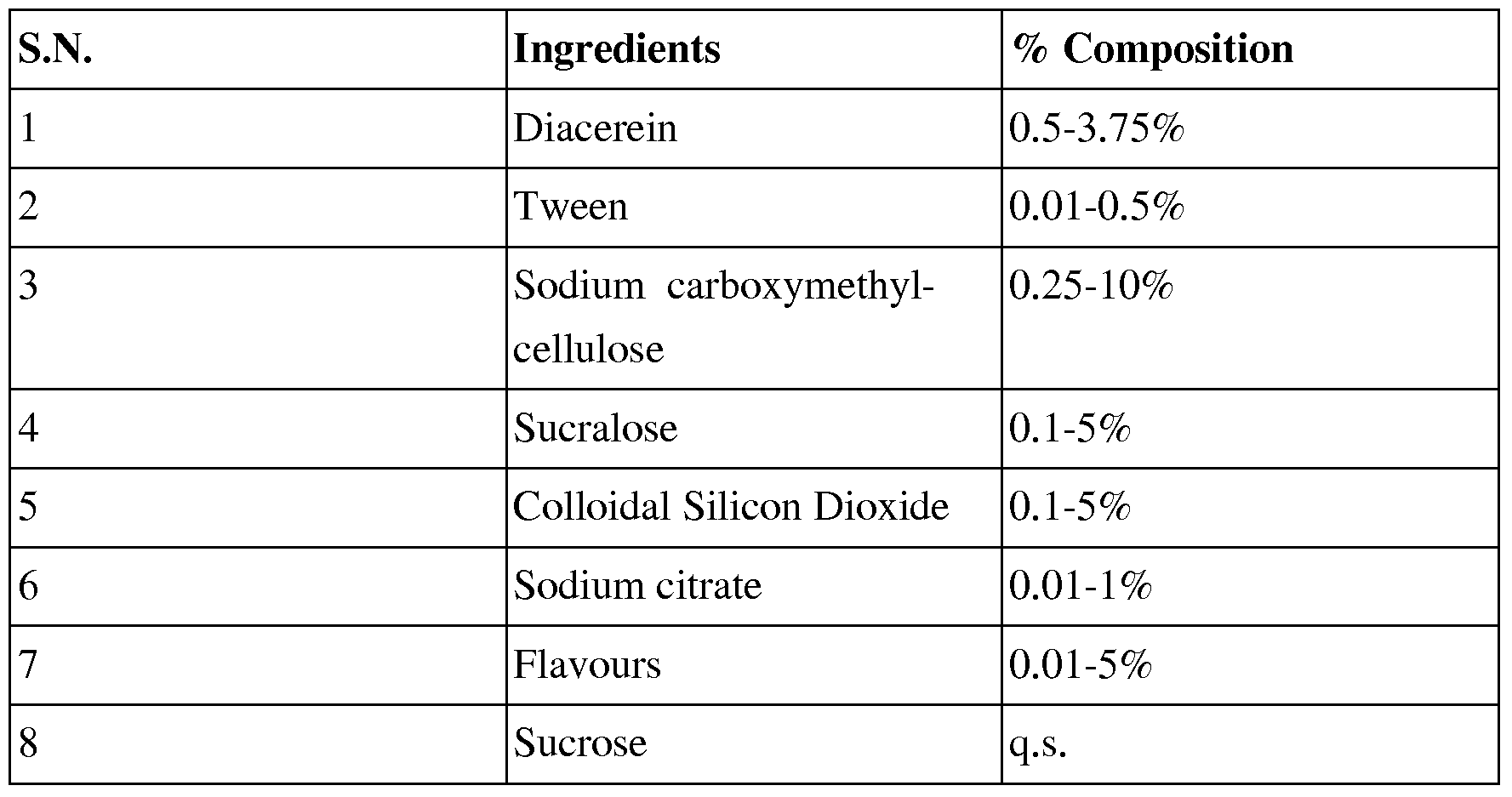
[55] Example 4: [56] Table 4 [Table 4] [Table ]

[57] Procedure: Poloxamer was adsorbed on colloidal silicon dioxide. Flavours, sodium citrate, sodium benzoate and acesulfame were triturated together and added geometrically to magnesium aluminium silicate to form a blend. The blend was mixed with diacerein, which was further mixed with sucrose to form a mixture. This mixture was blended with colloidal silicon dioxide with adsorbed poloxamer to form dry powder for suspension. On reconstitution of dry powder with water, pH of the resulting suspension was in the range of 5-7.0.
[58] Example 5: [59] Table 5
[Table 5] [Table ]

[60] Procedure: Docusate Sodium was dissolved in water to form a solution and poly vinyl pyrrolidone was added to it. Diacerein was added to the above solution to form dispersion. The dispersion was passed through a mill to form nano-sized dispersion. The nano-sized dispersion was sprayed on to mannitol to form dry granules. The dry granules were blended with sucrose, colloidal silicon dioxide , sodium citrate, sodium benzoate, xanthan gum, sweetener and flavor. The pH of the resulting suspension was in the range of 5-7.0.
[61] Table 6 : Dissolution profile of Diacerein suspension as per example 5. [Table 6] [Table ]

[62] Table 6 provides the dissolution data for diacerein suspension prepared as per the formula given in Table 5. For determination of drug release rate, USP Type 2
Apparatus (rpm 75) was used, wherein 1000 ml of pH 5.7 phosphate buffer at 37 0C ±
0.50C was used as a medium.
[63] Example 6:
[64] Table 7
[Table 7]
[Table ]

[65] Procedure: Tween was adsorbed on sucrose. Diacerein, colloidal silicon dioxide, sodium benzoate, sodium citrate, microcrystalline cellulose, sweetener and flavor were mixed with sucrose with adsorbed tween to form dry powder for suspension.
[66] Table 8 : Dissolution profile of composition of diacerein dry powder for suspension as per example 6. [Table 8] [Table ]

[67] Table 8 provides the dissolution data for diacerein dry powder for suspension prepared as per the formula given in Table 7. For determination of drug release rate, USP Type 2 Apparatus (rpm 75) was used, wherein 1000 ml of pH 5.7 phosphate buffer at 37 0C ± 0.50C was used as a medium.
[68] While the invention has been described in terms of its specific embodiments, certain
modifications and equivalents will be apparent to those skilled in the art and are intended to be included within the scope of the invention.
Claims
[1] A liquid pharmaceutical composition for oral administration comprising rhein or diacerein, or salts or esters or prodrugs thereof and one or more pharmaceutically acceptable excipients.
[2] The liquid composition of claim 1, wherein the pharmaceutically acceptable excipients comprise one or more of wetting agents, stabilizers, solubilizers, thickening agents, sweeteners, flavoring agents, coloring agents, preservatives, chelating agents and buffering agents.
[3] The liquid composition of claim 2, wherein the wetting agent comprises one or more of quaternary ammonium compounds, d- alpha tocopheryl polyethylene glycol succinate, dioctyl sodium sulfosuccinate; poly oxy ethylene alkylphenyl ethers; poly oxy ethylene fatty acid glycerides and/or oils; poly oxy ethylene alkyl ethers; poly oxy ethylene fatty acid esters; poly oxy ethylene sorbitan esters; propylene glycol fatty acid esters; sodium lauryl sulfate; fatty acids and salts thereof; glyceryl fatty acid esters; sorbitan esters; tyloxapol; lecithin; stearyl tri- ethanolamine and laurylaminopropionic acid.
[4] The liquid composition of claim 2, wherein the thickening agent comprises one or more of acacia, alginic acid bentonite, carbomer, carboxymethylcellulose calcium or sodium, cetostearyl alcohol, methyl cellulose, ethyl cellulose, glycerin, gelatin guar gum, hydroxyethyl cellulose, hydroxypropyl cellulose, hy- droxypropyl methyl cellulose, maltodextrin, polyvinyl alcohol, povidone, propylene carbonate, propylene glycol alginate, sodium alginate, sodium starch glycolate, starch tragacanth, and xanthan gum.
[5] The liquid composition of claim 2, wherein the pre servative comprises one or more of sodium benzoate, butylated hydroxy toluene, butylated hydroxyanisole, ethylenediamine tetraacetic acid, paraoxybenzoic acid esters, chlorobutanol, benzyl alcohol, phenylethyl alcohol, dehydroacetic acid, sorbic acid, ben- zalkonium chloride, benzethonium chloride, phenol, phenylmercuric nitrate, and thiomersal.
[6] The liquid composition of claim 2, wherein the buffering agent comprises one or more of sodium bicarbonate, potassium bicarbonate, magnesium hydroxide, magnesium lactate, magnesium gluconate, aluminum hydroxide, aluminum hydroxide/sodium bicarbonate co precipitate, amino acids, aluminum glycinate, sodium citrate, sodium tartrate, sodium acetate, sodium carbonate, sodium polyphosphate, potassium polyphosphate, sodium pyrophosphate, potassium pyrophosphate, disodium hydrogen phosphate, dipotassium hydrogen phosphate, trisodium phosphate, tripotassium phosphate, sodium acetate, potassium
metaphosphate, magnesium oxide, magnesium hydroxide, magnesium carbonate, magnesium silicate, calcium acetate, calcium glycerophosphate, calcium chloride, calcium hydroxide, calcium lactate, calcium carbonate and calcium bicarbonate.
[7] The liquid composition of claim 2, wherein the solubilizing agent comprises one or more of, gelatin, egg yolk, casein, cholesterol, acacia, tragacanth, chondrus, pectin, methyl cellulose, carbomer, cetostearyl alcohol, cetyl alcohol, glycol, glycerin, D-mannitol, trehalose, benzyl benzoate, ethanol, trisaminomethane, cholesterol, triethanolamine, sodium carbonate, sodium citrate, sodium salicylate, and sodium acetate.
[8] The liquid composition of claim 1, wherein the composition comprises one or more of a solution, suspension, dry syrup, syrup, elixir, emulsion and solid ready mix that is reconstituted prior to administration.
[9] A process for the preparation of a liquid pharmaceutical composition for oral administration comprising rhein or diacerein, or salts or esters or prodrugs thereof, the process comprising mixing rhein or diacerein, or salts or esters or prodrugs thereof with one or more pharmaceutically acceptable excipients.
[10] The process of claim 9, wherein the pharmaceutically acceptable excipients comprise one or more of wetting agents, stabilizers, solubilizers, thickening agents, sweeteners, flavoring agents, coloring agents, preservatives, chelating agents and buffering agents.
[11] The process of claim 10, wherein the wetting agent comprises one or more of quaternary ammonium compounds, d- alpha tocopheryl polyethylene glycol succinate, dioctyl sodium sulfosuccinate; poly oxy ethylene alkylphenyl ethers; poly oxye thy lene fatty acid glycerides and/or oils; poly oxy ethylene alkyl ethers; poly oxye thy lene fatty acid esters; poly oxye thy lene sorbitan esters; propylene glycol fatty acid esters; sodium lauryl sulfate; fatty acids and salts thereof; glyceryl fatty acid esters; sorbitan esters; tyloxapol; lecithin; stearyl triethanolamine and laurylaminopropionic acid.
[12] The process of claim 10, wherein the thickening agent comprises one or more of acacia, alginic acid bentonite, carbomer, carboxymethylcellulose calcium or sodium, cetostearyl alcohol, methyl cellulose, ethyl cellulose, glycerin, gelatin guar gum, hydroxyethyl cellulose, hydroxypropyl cellulose, hydroxypropyl methyl cellulose, maltodextrin, polyvinyl alcohol, povidone, propylene carbonate, propylene glycol alginate, sodium alginate, sodium starch glycolate, starch tragacanth, and xanthan gum.
[13] The process of claim 10, wherein the pre servative comprises one or more of sodium benzoate, butylated hydroxy toluene, butylated hydroxyanisole,
ethylenediamine tetraacetic acid, paraoxybenzoic acid esters, chlorobutanol, benzyl alcohol, phenylethyl alcohol, dehydroacetic acid, sorbic acid, ben- zalkonium chloride, benzethonium chloride, phenol, phenylmercuric nitrate, and thiomersal.
[14] The process of claim 10, wherein the buffering agent comprises one or more of sodium bicarbonate, potassium bicarbonate, magnesium hydroxide, magnesium lactate, magnesium gluconate, aluminum hydroxide, aluminum hydroxide/ sodium bicarbonate co precipitate, amino acids, aluminum glycinate, sodium citrate, sodium tartrate, sodium acetate, sodium carbonate, sodium polyphosphate, potassium polyphosphate, sodium pyrophosphate, potassium pyrophosphate, disodium hydrogen phosphate, dipotassium hydrogen phosphate, trisodium phosphate, tripotassium phosphate, sodium acetate, potassium metaphosphate, magnesium oxide, magnesium hydroxide, magnesium carbonate, magnesium silicate, calcium acetate, calcium glycerophosphate, calcium chloride, calcium hydroxide, calcium lactate, calcium carbonate and calcium bicarbonate.
[15] The process of claim 10, wherein the solubilizing agent comprises one or more of, gelatin, egg yolk, casein, cholesterol, acacia, tragacanth, chondrus, pectin, methyl cellulose, carbomer, cetostearyl alcohol, cetyl alcohol, glycol, glycerin, D-mannitol, trehalose, benzyl benzoate, ethanol, trisaminomethane, cholesterol, triethanolamine, sodium carbonate, sodium citrate, sodium salicylate, and sodium acetate.
[16] A liquid pharmaceutical composition for oral administration comprising rhein or diacerein, or salts or esters or prodrugs thereof in the form of a suspension or dry syrup, wherein the composition exhibits a dissolution profile such that more than 75% of diacerein is released within 30 minutes, wherein the release rate is measured in Apparatus 2 (USP, Dissolution, paddle, 75 rpm) using 1000 ml of pH 5.7 phosphate buffer at 37 0C + 0.50C.
[17] The liquid composition of claim 16, wherein the composition further comprises one or more pharmaceutically acceptable excipients comprising wetting agents, stabilizers, solubilizers, thickening agents, sweeteners, flavoring agents, coloring agents, preservatives, chelating agents and buffering agents.
[18] The liquid composition of claim 17, wherein the wetting agent comprises one or more of quaternary ammonium compounds, d- alpha tocopheryl polyethylene glycol succinate, dioctyl sodium sulfosuccinate; poly oxy ethylene alkylphenyl ethers; poly oxy ethylene fatty acid glycerides and/or oils; poly oxy ethylene alkyl ethers; poly oxy ethylene fatty acid esters; poly oxy ethylene sorbitan esters; propylene glycol fatty acid esters; sodium lauryl sulfate; fatty acids and salts
thereof; glyceryl fatty acid esters; sorbitan esters; tyloxapol; lecithin; stearyl tri- ethanolamine and laurylaminopropionic acid.
[19] The liquid composition of claim 17, wherein the thickening agent comprises one or more of acacia, alginic acid bentonite, carbomer, carboxymethylcellulose calcium or sodium, cetostearyl alcohol, methyl cellulose, ethyl cellulose, glycerin, gelatin guar gum, hydroxyethyl cellulose, hydroxypropyl cellulose, hy- droxypropyl methyl cellulose, maltodextrin, polyvinyl alcohol, povidone, propylene carbonate, propylene glycol alginate, sodium alginate, sodium starch glycolate, starch tragacanth, and xanthan gum.
[20] The liquid composition of claim 17, wherein the pre servative comprises one or more of sodium benzoate, butylated hydroxy toluene, butylated hydroxyanisole, ethylenediamine tetraacetic acid, paraoxybenzoic acid esters, chlorobutanol, benzyl alcohol, phenylethyl alcohol, dehydroacetic acid, sorbic acid, ben- zalkonium chloride, benzethonium chloride, phenol, phenylmercuric nitrate, and thiomersal.
[21] The liquid composition of claim 17, wherein the buffering agent comprises one or more of sodium bicarbonate, potassium bicarbonate, magnesium hydroxide, magnesium lactate, magnesium gluconate, aluminum hydroxide, aluminum hydroxide/sodium bicarbonate co precipitate, amino acids, aluminum glycinate, sodium citrate, sodium tartrate, sodium acetate, sodium carbonate, sodium polyphosphate, potassium polyphosphate, sodium pyrophosphate, potassium pyrophosphate, disodium hydrogen phosphate, dipotassium hydrogen phosphate, trisodium phosphate, tripotassium phosphate, sodium acetate, potassium metaphosphate, magnesium oxide, magnesium hydroxide, magnesium carbonate, magnesium silicate, calcium acetate, calcium glycerophosphate, calcium chloride, calcium hydroxide, calcium lactate, calcium carbonate and calcium bicarbonate.
[22] The liquid composition of claim 17, wherein the solubilizing agent comprises one or more of, gelatin, egg yolk, casein, cholesterol, acacia, tragacanth, chondrus, pectin, methyl cellulose, carbomer, cetostearyl alcohol, cetyl alcohol, glycol, glycerin, D-mannitol, trehalose, benzyl benzoate, ethanol, trisaminomethane, cholesterol, triethanolamine, sodium carbonate, sodium citrate, sodium salicylate, and sodium acetate.
Priority Applications (2)
| Application Number | Priority Date | Filing Date | Title |
|---|---|---|---|
| EP08807766A EP2280697A1 (en) | 2008-04-30 | 2008-09-23 | Oral liquid compositions of rhein or diacerein |
| US12/989,966 US9119819B2 (en) | 2008-04-30 | 2008-09-23 | Oral liquid compositions of rhein or diacerein |
Applications Claiming Priority (2)
| Application Number | Priority Date | Filing Date | Title |
|---|---|---|---|
| IN952/MUM/2008 | 2008-04-30 | ||
| IN952MU2008 | 2008-04-30 |
Publications (1)
| Publication Number | Publication Date |
|---|---|
| WO2009133431A1 true WO2009133431A1 (en) | 2009-11-05 |
Family
ID=40286314
Family Applications (1)
| Application Number | Title | Priority Date | Filing Date |
|---|---|---|---|
| PCT/IB2008/053858 Ceased WO2009133431A1 (en) | 2008-04-30 | 2008-09-23 | Oral liquid compositions of rhein or diacerein |
Country Status (3)
| Country | Link |
|---|---|
| US (1) | US9119819B2 (en) |
| EP (1) | EP2280697A1 (en) |
| WO (1) | WO2009133431A1 (en) |
Cited By (4)
| Publication number | Priority date | Publication date | Assignee | Title |
|---|---|---|---|---|
| CN106727297A (en) * | 2016-11-17 | 2017-05-31 | 辽宁大学 | A kind of rheum officinale acid ester derivant nano suspension and preparation method thereof |
| WO2017156392A1 (en) * | 2016-03-10 | 2017-09-14 | RxOMEG Therapeutics LLC | Composition and method of use of colchicine oral liquid |
| US10226423B1 (en) | 2017-12-20 | 2019-03-12 | RxOMEG Therapeutics LLC | Colchicine drug-to-drug interactions |
| CN109833292A (en) * | 2019-02-23 | 2019-06-04 | 河南省人民医院 | A kind of diacerein eye drops and application thereof |
Families Citing this family (4)
| Publication number | Priority date | Publication date | Assignee | Title |
|---|---|---|---|---|
| WO2018167628A1 (en) | 2017-03-13 | 2018-09-20 | Ftf Pharma Private Limited | Pharmaceutical composition of oral suspension of immunosuppressive agents |
| WO2019038584A1 (en) | 2017-08-19 | 2019-02-28 | Ftf Pharma Private Limited | ORAL PHARMACEUTICAL COMPOSITION COMPRISING ZONISAMIDE AND PREPARATION METHOD THEREOF |
| US12083222B2 (en) | 2018-08-18 | 2024-09-10 | Oncosol Limited | Chemotherapeutic pharmaceutical suspension for oral dosage |
| GB2591396B (en) | 2018-08-18 | 2023-06-07 | Ftf Pharma Private Ltd | Pharmaceutical suspension for oral dosage |
Citations (10)
| Publication number | Priority date | Publication date | Assignee | Title |
|---|---|---|---|---|
| US5316768A (en) * | 1990-12-28 | 1994-05-31 | Murdock International Corporation | Pharmaceutical compositions having antiviral activity against human cytomegalovirus |
| WO1995003063A1 (en) * | 1993-07-22 | 1995-02-02 | Esseti S.A.S. Laboratorio Chimico Farmaco Biologico Di A. Ievoli & C. | Oral pharmaceutical compositions comprising reduced glutathion |
| EP0638540A1 (en) * | 1993-08-13 | 1995-02-15 | Lilly Industries Limited | Pharmaceutical anthracene-2-carboxylic acid derivatives |
| EP0705601A1 (en) * | 1994-10-04 | 1996-04-10 | LOMAPHARM Rudolf Lohmann GmbH KG Pharmazeutische Fabrik | Anthraquinones containing solutions for parenteral administration |
| EP0809995A1 (en) * | 1996-04-29 | 1997-12-03 | Trans Bussan S.A. | New diacerhein formulations obtained by active principle inclusion in polysaccharide hydrogels |
| US6197818B1 (en) * | 1998-09-01 | 2001-03-06 | Nanjing General Hospital Of Nanjing Command, Pla | Drug for treating diabetic nephrosis |
| WO2003013473A1 (en) * | 2001-08-06 | 2003-02-20 | Pharmacia Corporation | Stabilized oral suspension formulation |
| WO2003053403A2 (en) * | 2001-12-20 | 2003-07-03 | Pharmacia Corporation | Pharmaceutical suspension for oral administration |
| EP1352645A1 (en) * | 2002-04-09 | 2003-10-15 | ABOCA S.p.A. | Effervescent compositions containing dried fruit juices |
| EP1913940A1 (en) * | 2005-07-11 | 2008-04-23 | Jiangsu Lianchuang Pharmaceutical Technology Co. | Rhein conjugates, preparation method thereof and their uses in producing medicines for treating diabetic nephrosis, intestinal adhesion and osteoarthritis |
Family Cites Families (5)
| Publication number | Priority date | Publication date | Assignee | Title |
|---|---|---|---|---|
| IT1197316B (en) * | 1986-10-01 | 1988-11-30 | Proter Spa | GALENIC FORMULATION FOR ORAL USE OF REINA DERIVATIVES SLOWLY RELEASED FOR THERAPEUTIC USE |
| FR2757397B1 (en) * | 1996-12-23 | 1999-03-05 | Mazal Pharma | PHARMACEUTICAL COMPOSITION BASED ON RHEIN OR DIACERHEIN WITH IMPROVED BIOAVAILABILITY |
| US6395300B1 (en) * | 1999-05-27 | 2002-05-28 | Acusphere, Inc. | Porous drug matrices and methods of manufacture thereof |
| US20020128317A1 (en) * | 2001-01-23 | 2002-09-12 | Laboratories Negma | Treatment of pathological conditions characterized by an increased IL-1 level |
| KR20030041577A (en) * | 2001-11-20 | 2003-05-27 | 디디에스텍주식회사 | Solid dispersions containing substituted cyclodextrin and insoluble drug and their preparations |
-
2008
- 2008-09-23 US US12/989,966 patent/US9119819B2/en not_active Expired - Fee Related
- 2008-09-23 EP EP08807766A patent/EP2280697A1/en not_active Withdrawn
- 2008-09-23 WO PCT/IB2008/053858 patent/WO2009133431A1/en not_active Ceased
Patent Citations (10)
| Publication number | Priority date | Publication date | Assignee | Title |
|---|---|---|---|---|
| US5316768A (en) * | 1990-12-28 | 1994-05-31 | Murdock International Corporation | Pharmaceutical compositions having antiviral activity against human cytomegalovirus |
| WO1995003063A1 (en) * | 1993-07-22 | 1995-02-02 | Esseti S.A.S. Laboratorio Chimico Farmaco Biologico Di A. Ievoli & C. | Oral pharmaceutical compositions comprising reduced glutathion |
| EP0638540A1 (en) * | 1993-08-13 | 1995-02-15 | Lilly Industries Limited | Pharmaceutical anthracene-2-carboxylic acid derivatives |
| EP0705601A1 (en) * | 1994-10-04 | 1996-04-10 | LOMAPHARM Rudolf Lohmann GmbH KG Pharmazeutische Fabrik | Anthraquinones containing solutions for parenteral administration |
| EP0809995A1 (en) * | 1996-04-29 | 1997-12-03 | Trans Bussan S.A. | New diacerhein formulations obtained by active principle inclusion in polysaccharide hydrogels |
| US6197818B1 (en) * | 1998-09-01 | 2001-03-06 | Nanjing General Hospital Of Nanjing Command, Pla | Drug for treating diabetic nephrosis |
| WO2003013473A1 (en) * | 2001-08-06 | 2003-02-20 | Pharmacia Corporation | Stabilized oral suspension formulation |
| WO2003053403A2 (en) * | 2001-12-20 | 2003-07-03 | Pharmacia Corporation | Pharmaceutical suspension for oral administration |
| EP1352645A1 (en) * | 2002-04-09 | 2003-10-15 | ABOCA S.p.A. | Effervescent compositions containing dried fruit juices |
| EP1913940A1 (en) * | 2005-07-11 | 2008-04-23 | Jiangsu Lianchuang Pharmaceutical Technology Co. | Rhein conjugates, preparation method thereof and their uses in producing medicines for treating diabetic nephrosis, intestinal adhesion and osteoarthritis |
Non-Patent Citations (1)
| Title |
|---|
| See also references of EP2280697A1 * |
Cited By (10)
| Publication number | Priority date | Publication date | Assignee | Title |
|---|---|---|---|---|
| WO2017156392A1 (en) * | 2016-03-10 | 2017-09-14 | RxOMEG Therapeutics LLC | Composition and method of use of colchicine oral liquid |
| US9907751B2 (en) | 2016-03-10 | 2018-03-06 | RxOMEG Therapeutics LLC | Composition and method of use of colchicine oral liquid |
| US12274751B2 (en) | 2016-03-10 | 2025-04-15 | RxOMEG Therapeutics LLC | Composition and method of the use of colchicine oral liquid |
| CN106727297A (en) * | 2016-11-17 | 2017-05-31 | 辽宁大学 | A kind of rheum officinale acid ester derivant nano suspension and preparation method thereof |
| US10226423B1 (en) | 2017-12-20 | 2019-03-12 | RxOMEG Therapeutics LLC | Colchicine drug-to-drug interactions |
| US10383821B2 (en) | 2017-12-20 | 2019-08-20 | RxOMEG Therapeutics LLC | Colchicine drug-to-drug interactions |
| US10383820B2 (en) | 2017-12-20 | 2019-08-20 | RxOMEG Therapeutics LLC | Colchicine drug-to-drug interactions |
| US11672759B2 (en) | 2017-12-20 | 2023-06-13 | RxOMEG Therapeutics LLC | Colchicine drug-to-drug interactions |
| US12514819B2 (en) | 2017-12-20 | 2026-01-06 | RxOMEG Therapeutics LLC | Colchicine drug-to-drug interactions |
| CN109833292A (en) * | 2019-02-23 | 2019-06-04 | 河南省人民医院 | A kind of diacerein eye drops and application thereof |
Also Published As
| Publication number | Publication date |
|---|---|
| US20110166225A1 (en) | 2011-07-07 |
| EP2280697A1 (en) | 2011-02-09 |
| US9119819B2 (en) | 2015-09-01 |
Similar Documents
| Publication | Publication Date | Title |
|---|---|---|
| US9119819B2 (en) | Oral liquid compositions of rhein or diacerein | |
| CA2567075C (en) | Pharmaceutical suspension composition | |
| JP5213446B2 (en) | Pharmaceutical composition comprising diclofenac | |
| JP3778518B2 (en) | Aqueous liquid composition with good taste for bitter drugs | |
| DK2268282T3 (en) | Liquid formulation of deferiprone with pleasant taste | |
| US20110086070A1 (en) | Orally disintegrating compositions of rhein or diacerein | |
| BE1015217A5 (en) | ||
| WO2003047502A1 (en) | Taste masked aqueous liquid pharmaceutical composition | |
| CA2765635C (en) | Pharmaceutical composition of duloxetine or pharmaceutically acceptable salts thereof | |
| CN111683683A (en) | Liquid oral formulations of PDE V inhibitors | |
| PT1998762E (en) | SOLID PHARMACEUTICAL FORM CONTAINING AN ACTIVE MASK-TASTE AGENT | |
| EP2214637A1 (en) | Stabilized pediatric suspension of carisbamate | |
| JPH0761941B2 (en) | Boiling composition with analgesic effect | |
| JP7456933B2 (en) | Amlodipine preparation | |
| WO2009133430A1 (en) | Topical compositions of rhein or diacerein | |
| HU229409B1 (en) | Compositions comprising modafinil compounds | |
| WO2020212898A1 (en) | Pharmaceutical oral liquid solution of ivacaftor | |
| JP7614207B2 (en) | Liquid Compositions Comprising Ibuprofen and Phenylephrine | |
| CN114432272B (en) | Orally dissolving film, racecadotril orally dissolving film and preparation method thereof | |
| WO2018138690A1 (en) | Substantially sodium free diclofenac potassium oral solutions | |
| TW200841887A (en) | Intravenous administration of water soluble analgesic formulations | |
| JP2026049835A (en) | solid composition | |
| CN116782897A (en) | Aqueous formulations of water-insoluble COX-2 inhibitors | |
| CN101108182A (en) | Oral solution | |
| EP2833868A1 (en) | Oral liquid concentrate comprising brompheniramine, pseudoephedrine and dextromethorphan |
Legal Events
| Date | Code | Title | Description |
|---|---|---|---|
| 121 | Ep: the epo has been informed by wipo that ep was designated in this application |
Ref document number: 08807766 Country of ref document: EP Kind code of ref document: A1 |
|
| REEP | Request for entry into the european phase |
Ref document number: 2008807766 Country of ref document: EP |
|
| WWE | Wipo information: entry into national phase |
Ref document number: 2008807766 Country of ref document: EP |
|
| NENP | Non-entry into the national phase |
Ref country code: DE |
|
| WWE | Wipo information: entry into national phase |
Ref document number: 12989966 Country of ref document: US |