WO2009133785A1 - Boîtier de stockage d’échantillon basse température et système de support pour transport d’organismes - Google Patents
Boîtier de stockage d’échantillon basse température et système de support pour transport d’organismes Download PDFInfo
- Publication number
- WO2009133785A1 WO2009133785A1 PCT/JP2009/057880 JP2009057880W WO2009133785A1 WO 2009133785 A1 WO2009133785 A1 WO 2009133785A1 JP 2009057880 W JP2009057880 W JP 2009057880W WO 2009133785 A1 WO2009133785 A1 WO 2009133785A1
- Authority
- WO
- WIPO (PCT)
- Prior art keywords
- container
- sample
- information
- storage container
- storage
- Prior art date
- Legal status (The legal status is an assumption and is not a legal conclusion. Google has not performed a legal analysis and makes no representation as to the accuracy of the status listed.)
- Ceased
Links
Images







Classifications
-
- A—HUMAN NECESSITIES
- A01—AGRICULTURE; FORESTRY; ANIMAL HUSBANDRY; HUNTING; TRAPPING; FISHING
- A01N—PRESERVATION OF BODIES OF HUMANS OR ANIMALS OR PLANTS OR PARTS THEREOF; BIOCIDES, e.g. AS DISINFECTANTS, AS PESTICIDES OR AS HERBICIDES; PEST REPELLANTS OR ATTRACTANTS; PLANT GROWTH REGULATORS
- A01N1/00—Preservation of bodies of humans or animals, or parts thereof
- A01N1/10—Preservation of living parts
- A01N1/14—Mechanical aspects of preservation; Apparatus or containers therefor
- A01N1/142—Apparatus
- A01N1/144—Apparatus for temperature control, e.g. refrigerators or freeze-drying apparatus
- A01N1/145—Stationary or portable vessels generating cryogenic temperatures, e.g. liquid nitrogen baths
-
- B—PERFORMING OPERATIONS; TRANSPORTING
- B01—PHYSICAL OR CHEMICAL PROCESSES OR APPARATUS IN GENERAL
- B01L—CHEMICAL OR PHYSICAL LABORATORY APPARATUS FOR GENERAL USE
- B01L7/00—Heating or cooling apparatus; Heat insulating devices
- B01L7/50—Cryostats
-
- B—PERFORMING OPERATIONS; TRANSPORTING
- B01—PHYSICAL OR CHEMICAL PROCESSES OR APPARATUS IN GENERAL
- B01L—CHEMICAL OR PHYSICAL LABORATORY APPARATUS FOR GENERAL USE
- B01L2200/00—Solutions for specific problems relating to chemical or physical laboratory apparatus
- B01L2200/14—Process control and prevention of errors
- B01L2200/143—Quality control, feedback systems
-
- B—PERFORMING OPERATIONS; TRANSPORTING
- B01—PHYSICAL OR CHEMICAL PROCESSES OR APPARATUS IN GENERAL
- B01L—CHEMICAL OR PHYSICAL LABORATORY APPARATUS FOR GENERAL USE
- B01L2200/00—Solutions for specific problems relating to chemical or physical laboratory apparatus
- B01L2200/18—Transport of container or devices
-
- B—PERFORMING OPERATIONS; TRANSPORTING
- B01—PHYSICAL OR CHEMICAL PROCESSES OR APPARATUS IN GENERAL
- B01L—CHEMICAL OR PHYSICAL LABORATORY APPARATUS FOR GENERAL USE
- B01L2300/00—Additional constructional details
- B01L2300/02—Identification, exchange or storage of information
- B01L2300/024—Storing results with means integrated into the container
-
- B—PERFORMING OPERATIONS; TRANSPORTING
- B01—PHYSICAL OR CHEMICAL PROCESSES OR APPARATUS IN GENERAL
- B01L—CHEMICAL OR PHYSICAL LABORATORY APPARATUS FOR GENERAL USE
- B01L3/00—Containers or dishes for laboratory use, e.g. laboratory glassware; Droppers
- B01L3/50—Containers for the purpose of retaining a material to be analysed, e.g. test tubes
- B01L3/508—Rigid containers without fluid transport within
-
- G—PHYSICS
- G01—MEASURING; TESTING
- G01N—INVESTIGATING OR ANALYSING MATERIALS BY DETERMINING THEIR CHEMICAL OR PHYSICAL PROPERTIES
- G01N1/00—Sampling; Preparing specimens for investigation
- G01N1/28—Preparing specimens for investigation including physical details of (bio-)chemical methods covered elsewhere, e.g. G01N33/50, C12Q
- G01N1/42—Low-temperature sample treatment, e.g. cryofixation
Definitions
- the present invention relates to a sample cryopreservation container used for low-temperature transport and storage of a sample, and a biological transport support system using the same.
- sample organic substances such as cells, microorganisms, and proteins
- a point a predetermined storage location
- B point another use location
- the sample is transported while being kept at a low temperature.
- a sample low-temperature storage container used for such an application, a container having a structure in which liquid nitrogen as a refrigerant is filled in a vacuum heat insulating container and the sample is kept cold by this liquid nitrogen is known.
- the shipper injects liquid nitrogen into the container and then stores the sample.
- the sample is transported to point B by a vehicle or the like while being kept at around ⁇ 196 ° C.
- the sample is picked up by the recipient and then stored, for example, in a freezer maintained at ⁇ 140 ° C. or lower.
- the inside of the container has a positive pressure higher than the external pressure due to the evaporating gas of the refrigerant constantly generated. Therefore, on the contrary, in order to prevent the container from bursting, the sample low-temperature storage container has a structure in which the evaporated gas leaks to the outside so that the internal pressure is constant. Thus, the evaporative gas continues to leak from the inside of the sample cryopreservation container to the outside, so that contaminants such as bacteria are prevented from entering the inside of the sample cryopreservation container, and the quality of the sample can be maintained. In this way, it is guaranteed that the quality of the sample is not deteriorated or contaminated during transportation, that is, the state at the time of shipment at point A is also maintained at point B. Guarantee is extremely important for the recipient.
- sample low-temperature storage containers that use refrigerants that sublimate or evaporate, such as dry ice and liquid nitrogen
- refrigerants that sublimate or evaporate such as dry ice and liquid nitrogen
- there is a risk of oxygen deficiency due to evaporative gas and there is a risk of refrigerant outflow or abnormal evaporation due to container overturning or breaking.
- it is generally not possible to carry such a sample cryopreservation container by bringing it into a cabin of a highly airtight aircraft or the like in a passenger car and transporting it in a special manner (for example, transport for tailoring to prevent falling).
- transport for tailoring to prevent falling For example, it is necessary to store the cargo in a transport room separate from the passengers using a cargo.
- Such a method has a problem that transportation costs increase.
- the sample can be cooled and held at ⁇ 140 ° C. or lower using a refrigerator.
- Proposal of a storage device with a structure that can easily carry in / out the (microplate) to the cold insulation chamber without the outside air flowing into the cold insulation chamber or the cold air inside the cold insulation chamber flowing out to the outside. (For example, refer to Patent Document 1). More specifically, when the sample container is accommodated in the storage device from the outside, the sample container is first accommodated in a front chamber provided in the storage device. At this time, the front chamber and the cold insulation chamber are isolated.
- the inner door provided between the front chamber and the cool chamber After shutting off the front chamber and the outside, the inner door provided between the front chamber and the cool chamber is opened, the sample container is mechanically transferred from the front chamber to the cool chamber, and then the inner door is closed.
- the reverse operation is performed.
- the present invention has been made in view of such circumstances, and does not use a refrigerant that evaporates or evaporates, such as liquid nitrogen, and allows a sample recipient to easily check the integrity of the sample at the time of receipt.
- the purpose is to provide.
- the patient's own skin cells for example, from the hospital at point A are transported to the culture center at point B, and the artificial multifunctional stem (iPS) cells made at the culture center are transported again to the hospital at point A, where the patient
- iPS artificial multifunctional stem
- the sample is sent again from the hospital at point A without performing the culture. Processing can be performed.
- the present invention has been made in view of such circumstances, and an object thereof is to provide a living body transportation support system that can guarantee that a sample (living body) is not contaminated (soundness).
- the sample cryopreservation container according to the present invention has a structure in which the sample stored in the containment container is cooled and held by a refrigerator, and has chemical or physical characteristics due to the adhesion of contaminants to the room temperature region in the sample cryopreservation container. It is possible to inspect the presence or absence of contaminants into the inside of the sample cryopreservation container by arranging a sensing element that changes and inspecting the sensing element from the outside of the sample cryopreservation container in a non-contact manner. is there.
- the living body transportation support system includes a storage means for storing an inspection result of the presence / absence of intrusion of contaminants into the sample cryopreservation container, and a first transportable source of the sample.
- the inspection result is transmitted by connecting to at least two terminals among a terminal, a second terminal operable by the sample transporter, and a third terminal operable by the sample transport destination. And a communication means.
- the recipient of a sample can provide the sample cryopreservation container which can confirm the soundness of a sample easily at the time of receipt. Moreover, according to the present invention, it is possible to provide a living body transportation support system that can guarantee that the sample (living body) is not contaminated (soundness).
- the display screen for assisting to display a list of culture matching information and to register (provisional) order approval. It is an example of the display screen for assisting to display a list of transportation request information and register (provisional) order approval. It is an example of the display screen for assisting to display a list of culture request information and register (provisional) order approval. It is an example of the display screen for assisting to display a list of culture request information and register (provisional) order approval. It is an example of the display screen for assisting to display a list of quality information and consignment information at the time of receipt of goods and to accept (main) order approval registration. It is an example of the display screen which displays the list of transportation environment information.
- a display screen for assisting in displaying a list of quality information and unacknowledgment information (conditions) at the time of unloading (main) and receiving approval registration. It is an example of the display screen for assisting to display culture environment information as a list and to input culture environment information. It is an example of the display screen for assisting to display a list of culture completion information and quality information at the time of culture completion and to (register) culture completion approval registration. It is an example of the display screen for assisting to display a list of return (transportation) request information and register (provisional) order approval. It is an example of a display screen for assisting in displaying a list of quality information at the time of receiving goods and returning (transportation) consignment information (main) order approval registration.
- the display screen which displays the list of the transportation environment information at the time of return. It is an example of a display screen for assisting in displaying a list of quality information and unacknowledgment information (conditions) at the time of unloading (main) and receiving approval registration.
- FIG. 1 is a sectional view showing a schematic structure of a sample cryogenic storage container (hereinafter referred to as “storage container”) 100 according to an embodiment of the present invention.
- the storage container 100 is roughly attached to a storage container 11 (storage means) for storing a sample container S in which an object to be cooled (sample) is stored, and the storage container 11, and the sample container S is attached to the storage container 11.
- the introduction container 13 (sample introduction means) having the opening 12 for taking in and out, the lid member 14 (closure means) for closing the opening 12 of the introduction container 13, and the sample container S stored in the storage container 11 are cooled.
- a heat insulating container 16 (heat insulating means) that accommodates the Stirling refrigerator 15 (cooling generation means), the storage container 11 and the Stirling refrigerator 15 and suppresses heat transfer from the outside to the storage container 11 and the Stirling refrigerator 15. ) And.
- a detection element holding member 17 (detection means) that holds a detection element 18 for detecting a contaminant that has entered the storage container 11 is provided in the vicinity of the opening 12 of the introduction container 13,
- the lid member 14 has a window portion so that the presence or absence of a reaction with the contaminant on the detection element 18 can be inspected from the outside of the lid member 14 in a state where the lid member 14 closes the opening 12 of the introduction container 13. 19 is provided.
- the order of description does not necessarily correspond with the order of the above-mentioned code
- the containment vessel 11 is made of a material having a high thermal conductivity, and for example, aluminum or copper is preferably used.
- the storage container 11 is provided with a plurality of holes 61 opened on the upper surface thereof, and the sample containers S can be accommodated in the holes 61.
- the storage container 11 includes a screw portion 62 on the lower surface thereof.
- a support base 63 for fixing the storage container 11 in the heat insulating container 16 is attached to an upper portion of a substantially cylindrical support cylinder 64, and this support cylinder 64 is erected on the lower lid 65 of the heat insulation container 16. ing.
- the support base 63 is provided with a screw hole to be screwed with the screw portion 62 included in the storage container 11.
- the screw container 62 is screwed into the screw hole so that the storage container 11 is placed in the heat insulating container 16. Fixed.
- the support base 63 is made of a material having excellent thermal conductivity, such as aluminum, so that the storage container 11 and the support base 63 are structurally integrated and thermally integrated. Note that “the storage container 11 and the support base 63 are thermally integrated” means that the storage container 11 and the support base 63 have substantially the same temperature.
- the Stirling refrigerator 15 cools the storage container 11 via a support base 63 that is thermally integrated with the storage container 11, and thereby the sample container S stored in the storage container 11 is cooled. As will be described later, the Stirling refrigerator 15 can generate a low temperature of ⁇ 140 ° C. or lower, and the sample container S is maintained at such a low temperature.
- the support cylinder 64 is made of a material having a low thermal conductivity and a mechanical strength capable of mechanically and stably supporting the storage container 11 and the support base 63, and includes, for example, various hard plastics (including FRP). ) Is preferably used. This is because the support base 63 held by the support cylinder 64 is cooled to a low temperature by the Stirling refrigerator 15, but the lower lid 65 is in contact with the outside air and, as will be described later, the compression heat generated in the compression section 73 of the Stirling refrigerator 15. This is because heat transfer between the lower lid 65 and the support base 63 needs to be prevented because it is used for heat dissipation. A hole (not shown) is formed on the side surface of the support cylinder 64, and the inside and the outside of the support cylinder 64 are maintained in the same atmosphere (which is a vacuum atmosphere as will be described later).
- a temperature measuring element 67 is attached to the containment vessel 11.
- the temperature measuring element 67 is operated by a battery power source (not shown), and for example, the temperature history of the storage container 11 (the temperature history of the sample container S) during transportation of the storage container 100 is recorded in the temperature recording device 68. It is like that.
- the temperature recording device 68 includes a data processing unit (not shown) that converts the temperature measured by the temperature measuring element 67 into data, and a data storage unit (not shown) that stores temperature data created by the data processing unit. I have.
- the data processing unit is a so-called microcomputer.
- a memory device for example, an SD card
- PC personal computer
- the temperature recording device 68 may be configured to be attached to the heat insulating container 16.
- the temperature measurement of the storage container 11 by the temperature measuring element 67 and the storage of the temperature data by the temperature recording device 68 can be manually started and ended.
- the temperature recording device 68 has a built-in clock capable of confirming the date and time and the hour, minute, second, and the temperature data is measured and stored automatically when the Stirling refrigerator 15 is started. May be.
- the operation of the temperature recording device 68 is stopped so that the temperature measurement is performed even if the Stirling refrigerator 15 is stopped due to an accident or the power supply from the power source 76 (described later) for driving the Stirling refrigerator 15 is stopped. It is preferable that it can be performed manually.
- the Stirling refrigerator 15 can generate cold by compressing helium (He) gas, which is a working medium, and adiabatically expanding the high-pressure He gas, and can generate a low temperature of about ⁇ 140 ° C. or less.
- the Stirling refrigerator 15 is disposed in the support cylinder 64.
- the Stirling refrigerator 15 includes a compression unit 73 that compresses He gas, a heat transfer plate 74 that releases the compression heat generated in the compression unit 73, and a high-pressure He gas generated in the compression unit 73 by adiabatic expansion. And a cylindrical ring 75 that conducts the cooling of the cooling unit 72 to the support base 63 (the storage container 11).
- the heat transfer plate 74 is attached to the lower lid 65 of the heat insulating container 16, and the heat transmitted from the heat transfer plate 74 to the lower lid 65 is radiated from the surface of the lower lid 65 to the outside. Therefore, aluminum that is inexpensive and has excellent thermal conductivity is suitably used for the heat transfer plate 74 and the lower lid 65.
- the ring 75 is preferably made of copper (Cu) that is particularly excellent in thermal conductivity.
- the cooling unit 72 is fixed to the lower lid 65 via the compression unit 73 and the heat transfer plate 74, while the storage container 11 is supported by the support base 63 and the support cylinder 64.
- the ring 75 is compressed in the radial direction with a constant force by the cooling unit 72 and the support base 63, so that when the storage container 100 is subjected to vibration or the like from the outside, the ring 75 is compressed. Is deformed (bend deformation), and the contact between the ring 75 and the storage container 11 and the contact between the ring 75 and the cooling unit 72 are ensured, and the heat conduction between the cooling unit 72 and the support base 63 is ensured.
- a power source 76 is attached to the compression unit 73.
- the power source 76 is shown outside the heat insulating container 16.
- a control unit is provided on the lower side of the lower lid 65 so as not to prevent heat dissipation from the lower lid 65, and It can be set as the structure which arranged.
- a battery is used as the power source 76, whereby the storage container 100 can be transported in an operating state.
- a secondary battery such as a nickel metal hydride battery or a lithium ion battery is preferably used.
- the power source 76 has a structure in which the secondary battery can be easily attached and detached, and can be charged from a household power source or the like using an AC adapter.
- the compression unit 73 can be directly connected by the AC adapter. The structure can also be driven.
- sample introduction means The sample container S is taken in and out of the storage container 11 through the opening 12 and the internal space of the introduction container 13. For example, the sample container S that has been cooled to ⁇ 196 ° C. with liquid nitrogen in a sterile room is inserted into the storage container 11 that is maintained at ⁇ 140 ° C. or lower.
- the introduction container 13 In order to prevent air from entering the heat insulating container 16 through a gap between the inner peripheral surface of the upper surface lid portion 81 of the heat insulating container 16 and the outer peripheral surface of the introduction container 13, the introduction container 13 is provided with the introduction container 13.
- the outer peripheral surface is fixed with a flange 83 and a bolt 84 so that the O-ring 82 is tightened.
- the O-ring 82 is usually used in a temperature environment near normal temperature. Therefore, as the O-ring 82, for example, a material made of a resin such as fluorine rubber or silicone rubber is preferably used.
- the vicinity (upper part) of the opening 12 of the introduction container 13 is substantially the same temperature as the outside air temperature, but on the storage container 11 side (lower part) of the introduction container 13, the storage container 11 is kept at a low temperature around ⁇ 140 ° C. as described above. Since it is held, the temperature is equal to that of the storage container 11. For this reason, a material having a low thermal conductivity is used for the introduction container 13, and for example, plastic is preferably used. Further, in order to prevent convection of gas in the internal space of the introduction container 13 and to prevent heat transfer from the upper part to the lower part of the introduction container 13, a convection prevention body 85 made of a heat insulating material such as polystyrene foam is provided in the storage container 11.
- a laminated heat insulating material 86 for blocking radiant heat from the upper part to the lower part in the introduction container 13 is arranged on the convection preventing body 85.
- the laminated heat insulating material 86 one having a structure in which aluminum foil is bundled is preferably used.
- the convection prevention body 85 and the laminated heat insulating material 86 are also components of heat insulating means.
- the lid member 14 can be made of metal or plastic.
- a groove for accommodating the upper portion of the O-ring 91 is formed in the outer peripheral portion of the lid member 14 (see FIG. 2 to be described later).
- a ring portion 87 that supports the O-ring 91 is formed.
- the lid member 14 is fixed to the introduction container 13 by tightening the outer peripheral portion of the lid member 14 and the ring portion 87 of the introduction container 13 using a clamp-type attachment jig 92. Since the O-ring 91 is used in a temperature environment near room temperature, for example, a material made of a resin such as fluorine rubber or silicone rubber is preferably used for the O-ring 91.
- the window portion 19 provided in the lid member 14 is made of a translucent material such as quartz glass so that a change in optical characteristics of the detection element 18 can be measured as described later.
- the lid member 14 is provided with a safety valve 93 that vents gas when the pressure in the introduction container 13 becomes high.
- the inside of the heat insulating container 16 is maintained in a vacuum atmosphere including the inside of the support cylinder 64.
- the heat insulation container 16 includes a piping part (not shown) for connecting to a vacuum pump (not shown) and an opening / closing valve (not shown).
- the heat insulating container 16 has a mechanical strength capable of withstanding the pressure difference from the external pressure and maintaining the shape when the inside is in a reduced pressure atmosphere, and can be made of metal or plastic.
- a cylindrical laminated heat insulating material 88 is disposed inside the heat insulating container 16 and inside the support cylinder 64, respectively.
- the laminated heat insulating material 88 as in the laminated heat insulating material 86, a material having a structure in which aluminum foils are bundled is preferably used.
- the moisture remaining in the heat insulating container 16 and the gas having a boiling point higher than that of the cooling unit 72 are attached to the cooling unit 72 as a liquid or solid when the Stirling refrigerator 15 is driven. High vacuum is maintained.
- FIG. 2 shows an enlarged structure of the upper portion of the storage container 100 and also shows a schematic configuration of an inspection apparatus 30 for inspecting the detection element 18.
- the detection element holding member 17 has a structure in which a concave portion 22 (detection element arrangement portion) for arranging the detection element 18 is formed in a disc-shaped guide tray 21 (atmospheric induction guide portion).
- FIG. 3 shows an enlarged cross-sectional view of the floor surface of the detection element 18 and the recess 22. As shown in FIG. 3, a hole 23 is formed in the floor surface of the recess 22.
- the guide tray 21 is placed on the upper surface (ring portion 87) of the introduction container 13, and is designed in a shape that does not fall into the introduction container 13.
- one or a plurality of protrusions having a thickness equal to or less than that of the guide tray 21 are provided on the surface of the ring portion 87, and a notch or a hole that engages with such a protrusion is provided in the guide tray 21. You may provide in the outer peripheral part.
- the convection prevention body 85 and the laminated heat insulating material 86 are disposed inside the introduction container 13. However, since the average temperature inside the introduction container 13 is lower than the external temperature, the inside of the introduction container 13 is not connected to the outside. Negative pressure. Therefore, as shown in FIG. 2, when there is air (air) flowing into the introduction container 13 through a seal portion (a seal portion by the O-ring 91) between the opening 12 of the introduction container 13 and the lid member 14. The atmosphere is guided from the space formed between the guide tray 21 and the lid member 14 in the direction of the concave portion 22, passes through the hole portion 23, flows into the introduction container 13, and is further introduced into the introduction container 13. It diffuses to the lower temperature part (container 11 side).
- the detection element 18 can easily come into contact with the atmosphere, and when the atmosphere contains contaminants such as bacteria, the detection element 18 is contaminated.
- the probability that the substance reacts can be increased.
- the detection accuracy and detection probability when a contaminant enters the storage container 100 can be increased, and the inspection reliability by the detection element 18 can be increased.
- the temperature of the part where the detection element 18 is arranged is substantially equal to the outside air temperature. In this way, by arranging the detection element 18 in a temperature range where the activity of bacteria and the like that have entered the introduction container 13 is not suppressed, bacteria and the like can be reliably reacted with the detection element 18 to detect the intrusion. become able to.
- the detection element 18 when the detection of the detection element 18 is performed by an optical method, the detection element 18 may be fixed within a range that can be observed through the window portion 19 as a result.
- the detection element 18 when the inspection of the detection element 18 is performed from the outside by a magnetic (electromagnetic) method without contact, the detection element 18 may be fixed within a detectable range of the magnetic sensor.
- the detection element 18 for example, a noble metal fine particle sensor that is used as an immunosensor in a conventional biomolecule interaction measurement device and capable of measurement using an optical system can be used. That is, a metal fine particle sensor such as gold (Au), silver (Ag), copper (Cu), platinum (Pt) or the like is fixed on the floor surface of the recess 22. For example, by preparing a plurality of guide trays 21 in which the detection elements 18 in an unreacted state are fixed to the recesses 22, the detection elements 18 can be easily replaced with new ones by replacing the guide trays 21. Can be replaced.
- a metal fine particle sensor such as gold (Au), silver (Ag), copper (Cu), platinum (Pt) or the like is fixed on the floor surface of the recess 22.
- the noble metal fine particle sensor as the detection element 18 has a specific adsorption ability with respect to antibodies, DNA and the like on the upper surface of the metal particle 25, and interacts with bacteria and the like to be measured. It has a structure in which an acting chemical substance or biomolecule (ligand) 26 (hereinafter referred to as “biomolecule etc. 26”) is fixed.
- biomolecule etc. 26 an acting chemical substance or biomolecule (ligand) 26
- biomolecule etc. 26 an acting chemical substance or biomolecule (ligand) 26
- biomolecule etc. 26 an acting chemical substance or biomolecule
- the detection element 18 it is preferable to use an element having a structure in which the surface modified with the biomolecules 26 is further covered with a water-retaining polymer (polymer) 27 having moisture. Thereby, the adhesion performance of bacteria etc. to biomolecule etc. 26 is improved.
- bacteria and the like easily reach the biomolecules and the like 26 through moisture, and the efficiency of chemically bonding with the biomolecules and the like 26 is increased, so that the detection probability of the bacteria and the like is improved. In this way, the reliability for determining whether the sample is contaminated is improved.
- the humidity in the introduction container 13 is lower than that of the atmosphere. Therefore, even if water is directly included in the biomolecule 26 or the like, it may evaporate in a short time. Therefore, by suppressing the evaporation of moisture by the water-retaining polymer 27, it is possible to retain the moisture in the biomolecules 26 for a long time and maintain the adhesion performance of bacteria.
- an optical inspection device for inspecting whether or not the detection element 18 has reacted with bacteria or the like from the outside of the storage container 100
- an optical inspection device is taken up.
- the inspection device 30 includes an optical fiber head 33 disposed so as to face the window portion 19.
- the optical fiber head 33 has a structure capable of irradiating measurement light and receiving reflected light.
- the inspection device 30 includes a light source 31 that transmits measurement light to the optical fiber head 33 through an optical fiber, and a data processing device 32 that receives and analyzes the reflected light from the detection element 18 received by the optical fiber head 33 through the optical fiber. It is equipped with.
- the data processing device 32 is obtained by a spectrophotometer that obtains an absorption spectrum of the detection element 18 based on a reflection spectrum from the detection element 18 and a spectrophotometer.
- An A / D converter for A / D converting the absorption spectrum a storage device for storing digital data converted by the A / D converter, and a display device for displaying the absorption spectrum.
- the A / D converter may be an interface provided in a personal computer (PC), the created digital data is stored in a storage device such as a hard disk attached to the PC, and the obtained absorption spectrum is personal. It can be configured to display on a computer monitor.
- the inspection by the inspection apparatus 30 first, the light generated by the light source 31 reaches the optical fiber head 33 through the optical fiber, and then is irradiated to the detection element 18 through the window portion 19. Then, the reflected light from the sensing element 18 is received by the optical fiber head 33 through the window portion 19 and reaches the spectrophotometer in the data processing device 32 through the optical fiber, and after the absorption spectrum is measured there, The obtained analog data is sent to an A / D converter and converted into digital data, the digital data is stored in a storage device, and the spectrum is displayed on a display device.
- Fig. 4 schematically shows an absorption spectrum measured by the inspection apparatus.
- the absorption spectrum of the detection element 18 changes depending on the degree of binding of bacteria or the like to the biomolecule 26 or the like 26 included in the detection element 18. For this reason, the absorption spectrum of the detection element 18 that is not bound to bacteria and is in a healthy state that is not contaminated becomes a spectrum indicated by a broken line in FIG.
- the absorption spectrum of the sensing element 18 in the above state becomes a spectral spectrum indicated by a solid line in FIG. 4, and a peak shift of the spectral spectrum occurs.
- the ratio of the bacteria bound to the biomolecules 26 can be determined, and the bacteria are in the storage container 100 (introduction container 13). The presence or absence of contamination can be determined.
- the sample shipper accommodates the sample (sample container S) in the storage container 100 in the aseptic room of the ship source.
- sample container S sample container
- the sample is stored in the storage container 11 while the Stirling refrigerator 15 is driven to lower the storage container 11 to a constant temperature.
- the Stirling refrigerator 15 is driven after being stored in the storage container 11.
- the convection prevention body 85 and the laminated heat insulating material 86 are set, and the guide tray 21 to which the uncontaminated detection element 18 is fixed is set in the opening 12 of the introduction container 13.
- the opening 12 of the introduction container 13 is closed by the lid member 14.
- temperature measurement of the storage container 11 by the temperature measuring element 67 is started from the time when the sample is stored in the storage container 11, and temperature data is recorded in the temperature recording device 68.
- the sender measures the absorption spectrum of the detection element 18 using the inspection device 30.
- the measurer transmits the obtained digital data of the absorption spectrum to the recipient of the sample using a communication means such as the Internet. This proves that the shipper has shipped a sample that is not contaminated with contaminants such as bacteria, and ensures the shipper's trust.
- the storage container 100 when the storage container 11 is cooled by the Stirling refrigerator 15, the internal space of the introduction container 13 is also cooled to a negative pressure with respect to the external pressure. Therefore, until the lid member 14 is opened by the recipient, the atmosphere may enter the introduction container 13 through the seal portion between the opening 12 of the introduction container 13 and the lid member 14. In addition, air may enter the introduction container 13 from the sealing portion of the window 19 or the safety valve 93.
- the air when air enters the introduction container 13, the air is guided by the guide tray 21 to the recess 22 where the detection element 18 is fixed, and flows into the introduction container 13 from the hole 23. At this time, if contaminants such as bacteria are mixed in the atmosphere, the bacteria react with the detection element 18 and the optical characteristic (light absorption characteristic) of the detection element 18 changes. On the other hand, when there is no entry of bacteria or the like into the introduction container 13, the optical characteristics of the detection element 18 do not change.
- the shipper who ships the sample issues a certificate indicating that the quality is satisfied, and further transports the storage container 100 storing the sample that satisfies the quality and is not contaminated with bacteria or the like.
- the transporter confirm that the quality is satisfied by the detection element 18 when handing it over to the transporter requesting the transport.
- the recipient who receives the transported storage container 100 measures the absorption spectrum of the sensing element 18 using the inspection device 30 at the time of receipt, and the result is the absorption previously sent from the shipper. The peak shift amount is examined in comparison with the spectrum.
- the recipient can take out the temperature data from the temperature recording device 68 and confirm whether or not the sample has been kept at a constant low temperature during the transportation period. Thereby, the recipient can confirm the presence or absence of damage to the sample due to an increase in holding temperature during transportation.
- Such a test result can be quickly performed using a personal computer or the like, and the recipient can determine whether to receive or reject the storage container 100 based on these test results.
- the recipient of the sample can quickly inspect the detection element 18 without taking out the sample at the time of receipt. If there is no abnormality in the test results, it is guaranteed that the sample stored in the low temperature area where the bacteria under the introduction container 13 cannot propagate is not contaminated with bacteria. 100 can be received and the sample stored therein can be used, or transferred to another sample cryopreservation container using liquid nitrogen or the like in a sterile room for long-term storage. On the other hand, if there is an abnormality in the inspection result, the receipt of the storage container 100 is rejected and the inspection result is notified to the shipper so that the validity of the receipt refusal can be shown to the shipper.
- the recipient checks the temperature data stored in the temperature recording device 68 to determine whether or not the sample temperature has been maintained at a normal temperature during transportation, so that the sample is damaged due to the temperature rise. Can be confirmed before receipt.
- the recipient can receive the sample more safely.
- the inspection of the detection element 18 can be performed using an optical method that is one of non-contact means without removing the sample from the storage container 100. Is not exposed to the atmosphere.
- the storage container 100 is received, it is possible to avoid a risk that bacteria or the like enter the storage container 100 and the sample is contaminated. Therefore, the sample is later contaminated as in the past. If found, the shipper, shipper and recipient will no longer have a dispute about where the responsibility for sample contamination is.
- FIG. 5 is a sectional view showing a schematic structure of a storage container according to the second embodiment of the present invention. 5 is shown in the same manner as FIG. 2, and the parts not shown are the same as those shown in FIG.
- the storage container 100a is different from the storage container 100 of the first embodiment in that the detection element holding member 17 includes a catalyst film containing titanium oxide (TiO 2 ) or the like serving as a sterilizing unit on the surface (upper surface) of the guide tray 21.
- the window 19 made of quartz glass or the like is opened so that the catalyst film 35 is irradiated with a large amount of ultraviolet light (either natural light or illumination light).
- the lid member 14 is provided in a wide area.
- the active oxygen is generated in the space between the lid member 14 and the guide tray 21 by irradiating the catalyst film 35 with ultraviolet rays, the opening of the introduction container 13 and the lid member 14 Even if air containing bacteria and the like leaks through the seal portion, the bacteria and the like can be killed by active oxygen to prevent contamination of the sample.
- the catalyst film 35 may contain a sterilizing substance such as silver (Ag) to kill bacteria and the like attached to the catalyst film 35.
- FIG. 6 is a sectional view showing a schematic structure of a storage container according to the third embodiment of the present invention. 6 is shown in the same manner as FIG. 2, and the parts not shown are the same as those shown in FIG.
- the storage container 100b is different from the storage container 100 of the first embodiment in that the detection element holding member 17 is a catalyst film containing titanium oxide (TiO 2 ) or the like as sterilizing means on the surface (upper surface) of the guide tray 21.
- the detection element holding member 17 is a catalyst film containing titanium oxide (TiO 2 ) or the like as sterilizing means on the surface (upper surface) of the guide tray 21.
- an ultraviolet lamp 37 for irradiating the catalyst film 35 with ultraviolet rays is provided on the lower surface of the lid member 14.
- the power source 38 for operating the ultraviolet lamp 37 can be fixed to the upper surface of the lid member 14 or the like.
- the ultraviolet lamp 37 When the ultraviolet lamp 37 is turned on and the catalyst film 35 is irradiated with ultraviolet rays, active oxygen is generated in the space between the lid member 14 and the guide tray 21. Thereby, even if the atmosphere containing bacteria etc. leaks through the seal portion between the opening of the introduction container 13 and the lid member 14, the bacteria etc. can be killed by active oxygen to prevent contamination of the sample. it can. Since the storage container 100b forcibly irradiates the catalyst film 35 with ultraviolet rays, a new sterilization ability higher than that of the storage container 100a described above can be obtained, and a new effect that a sample that is not contaminated with bacteria can be provided to the recipient. Is obtained.
- the ultraviolet lamp 37 may be lit constantly or intermittently. Further, the ultraviolet lamp 37 may be turned on only at night when ultraviolet rays cannot be taken in from the outside environment. In that case, it is preferable to widen the opening area of the window portion 19 as in the case of the storage container 100a.
- the storage container 100 has a structure in which the sample container S is accommodated in the storage container 11, but the sample may be directly accommodated in the hole 61 of the storage container 11. In this case, by coating the inner peripheral surface of the hole 61 with a fluororesin or the like, cleaning after taking out the sample can be easily performed.
- the detection element 18 Although the case where a biomolecule 26 that detects bacteria or the like is used as the detection element 18 and the method of measuring the change in the absorption spectrum of the detection element 18 is used as the detection method of the detection element 18 has been described, the detection element and the detection element However, the inspection method is not limited to this.
- a detection element that emits fluorescence by reaction with a biomolecule 26 or the like can be used, and a method of measuring the emission intensity in a non-contact manner can be used.
- a method of measuring the emission intensity in a non-contact manner can be used.
- the surface active agent in the water of the water-retaining polymer 27 (see FIG. 3)
- the cell membrane such as bacteria attached to the polymer 27 is decomposed, and the substance inside the cell and It is possible to more efficiently perform chemical reaction and bonding with the biomolecule 26 and the like.
- luminous efficiency can be increased.
- the detection element a magnetic marker in which magnetic particles are held on the biomolecule 26 can be used, and a method of measuring a change in the residual magnetic flux of the magnetic particles in a non-contact manner can also be used.
- the window portion 19 may be made of a magnetic flux permeable material.
- a mechanical refrigerator using He gas as a working fluid is used.
- the present invention is not limited to this, and an electronic refrigeration means such as a Peltier element can be used.
- FIG. 7 shows an example of biological transportation used in the biological transportation support system according to the fourth embodiment of the present invention.
- the hospital 1 is a living body delivery source, and the patient's own skin cells (living body) are requested to the transporter 2 and transported to the culture center 3 as the living body delivery destination.
- the living body is stored in the sample cryopreservation container 100 and is transported together with the sample cryopreservation container 100 by a transporter of the transporter 2.
- the presence or absence of a reaction with the contaminant in the detection element 18 stored in the sample cryopreservation container 100 is inspected while the living body is stored in the sample cryopreservation container 100.
- the sensing element 18 is already contaminated and the living body is also contaminated before the transportation by the transporter 2, and the transportation is stopped. If there is no reaction with the pollutant in the inspection, it is considered that there is no contamination of the living body due to the storage of the living body in the sample cryopreservation container 100, and the hospital 1 and the transporter have confirmed that the living body has been successfully stored. 2 can be confirmed. After this confirmation, the transporter 2 transports the sample cryopreservation container 100 in which the living body is stored to the culture center 3 as the living body delivery destination.
- the inspection device 30 checks whether or not there is a reaction with the contaminant in the detection element 18 housed in the sample cryopreservation container 100 while the living body is housed in the sample cryopreservation container 100. ). If there is a reaction with a contaminant in the inspection, it is considered that the detection element 18 is contaminated during transportation, and further, the living body is also contaminated. For example, an artificial multifunctional stem (iPS) of skin cells by the culture center 3 Incubation on the cells is discontinued. If there is no reaction with the contaminant in the inspection, it is considered that there is no contamination of the living body during transportation, and the transporter 2 and the culture center 3 can confirm that the transportation has been performed well. After this confirmation, the culture center 3 takes out a living body, for example, skin cells from the sample cryopreservation container 100, and cultures the skin cells into artificial multifunctional stem (iPS) cells.
- iPS artificial multifunctional stem
- the inspection is performed twice before and after transportation, in some cases, the inspection before transportation may be omitted. In this case, in the inspection after transportation, not only the presence / absence of contamination during transportation but also the presence / absence of contamination due to the storage of the living body in the storage container 100 before transportation will be inspected. And if the test result of the inspection after transportation indicates that there is no reaction with the pollutant, it can be determined that the culture by the culture center 3 may be performed.
- the culture center 3 becomes a living body delivery source, and the artificial multifunctional stem (iPS) cell (living body) obtained by culturing the patient's own skin cell, for example, is transferred to the transporter 2.
- artificial multifunctional stem (iPS) cells living body
- the hospital 1 was the living body delivery source and the culture center 3 was the living body delivery destination.
- the culture center 3 was the living body delivery source and the hospital 1 was the living body delivery destination.
- the hospital 1 and the culture center 3 can be either a living body delivery source or a living body delivery destination. And how to perform transportation, inspection, etc. is performed in the same manner as the previous transportation from the living body delivery source to the living body delivery destination except that the hospital 1 and the culture center 3 are switched.
- FIG. 8 shows a configuration diagram of the biological transport support system 9 according to the fourth embodiment of the present invention.
- the living body transportation support system 9 matches the transactions of the shipping source 4, the transporter 2, and the shipping destination 5 in transporting the living body (sample), and requests the transporting of the living body with the server 7 that provides and receives the living body satisfactorily.
- a plurality of destination terminals 5a used by a plurality of destinations 5, and the server 7 and the terminals 2a, 4a, 5a include the Internet and telephone lines (including both fixed and mobile phone lines). ) And the like via a communication line 6 provided for public use.
- the biological transport support system 9 includes a plurality of sample cryopreservation containers 100, a dedicated terminal 8 provided for each sample cryopreservation container 100, and an inspection apparatus 30 that performs the inspection on the sample cryopreservation container 100.
- the storage container 100 is provided with an acceleration sensor capable of detecting an impact or a drop during transportation, and acceleration data measured by the acceleration sensor is recorded in the temperature recording device 68 together with the temperature data.
- a GPS is attached to at least one of the storage container 100 and the dedicated terminal 8, and position data measured by the GPS is recorded in the temperature recording device 68 together with the temperature data.
- the dedicated terminal 8 has receiving means 8a for receiving identification information, temperature data, acceleration data and position data of the storage container 100 from the storage container 100 (temperature recording device 68) by a short-range wireless system. Furthermore, the dedicated terminal 8 includes a transmission unit 8b and a storage unit 8c. The storage unit 8c stores the received identification information, temperature data, acceleration data, and position data of the storage container 100, and the transmission unit 8b The server 7 is connected to the server 7 through the communication line 6, and the stored identification information, temperature data, acceleration data, and position data of the storage container 100 are transmitted to the server 7 through the communication line 6.
- the inspection apparatus 30 performs the inspection on the storage container 100, a plurality of inspection apparatuses 30 are placed near the plurality of storage containers 100. However, since the storage container 100 moves with transportation, the inspection apparatus 30a It may be placed at the shipping source 4 as described above, or may be carried by the carrier 2 like the inspection device 30b, or may be placed at the shipping destination 5 like the inspection device 30c.
- the inspection devices 30, 30 a, 30 b, and 30 c are connected to the server 7 via the communication line 6 and transmit the inspection result acquired by the inspection to the server 7 via the communication line 6.
- the server 7 includes a communication unit 106 having a reception unit 113 and a transmission unit 114, and a storage unit 115, details of which will be described later.
- the receiving unit 113 receives the inspection result, the identification information of the storage container 100, the temperature data, the acceleration data, and the position data, and the storage unit 115 stores them.
- the transmission means 114 is connected to at least two of the shipping source terminal 4a, the carrier terminal 2a, and the shipping destination terminal 5a via the communication line 6, and the inspection result, the identification information of the storage container 100, The temperature data, acceleration data, and position data are transmitted to the connected terminals 4a, 2a, and 5a.
- the inspection result, the identification information of the storage container 100, the temperature data, the acceleration data, and the position data are stored in the server 7 (memory) without passing through the shipping source terminal 4a, the carrier terminal 2a, and the shipping destination terminal 5a. Since it is stored in the means 115), it is difficult for the transporter 2 or the like to tamper with the inspection results.
- the inspection results are transmitted to at least two terminals 4a, 2a, 5a and can be acquired by at least two of the shipping source 4, the carrier 2, and the shipping destination 5, there is no contamination based on the inspection results.
- Consensus building on opinions (soundness) can be easily performed between two or more parties. And the soundness is mutually guaranteed by the agreement between the two parties of soundness that there is no pollution, and further the agreement between the three parties.
- the server 7 is sent from the transporter terminal 2a and the shipping destination terminal 5a, as well as transport / culture information related to biological processing conditions such as transport of the living body and culture of the living body sent from the shipping source terminal 4a.
- the contract information relating to the transport / processing contract is received using the receiving means 113 via the communication line 6, and the transport / culture information and the contract information are matched, and the shipping source terminal 4a and the transporter terminal 2a are shipped.
- the result of the matching is transmitted to the destination terminal 5a using the transmission means 114.
- FIG. 9 shows a block diagram of the server 7.
- the server 7 controls the control means 101 that controls the server 7 in an integrated manner, the matching means 102 that executes a matching process between transport / culture information and contract information, and information sent from the terminals 4a, 2a, and 5a.
- Registration means 103 for registering in each DB (database) 108 to 112, various information input screens to be transmitted to the terminals 4a, 2a, 5a, and the like, and display creation means 104 for outputting, for example, as an HTML file , Correction means 105 for correcting the transport / culture information and contract information for which matching has been established and adjusting detailed conditions such as delivery date and time, each terminal 4a, 2a, 5a, dedicated terminal 8, and inspection apparatus 30, 30a , 30b, 30c, and communication means 106 which is an interface for communicating via the communication line 6.
- the storage means 115 in the server 7 is sent from the user information DB 108 in which user information that is information related to the hospital 1, the transporter 2 and the culture center 3 participating in the biological transport support system 9 is registered, and the shipping source terminal 4a.
- Shipment source information DB 109 in which transport / culture information related to biological processing conditions such as transport of living bodies and culture of living bodies are registered, and contract information in which contract information related to transport / processing contracts sent from the transporter terminal 2a and the destination terminal 5a are registered.
- DB 110 matching information DB 111 in which matching information as a result of the matching processing of matching means 102 is registered, inspection results (quality information) sent from inspection devices 30, 30 a, 30 b, and 30 c, and sent from dedicated terminal 8
- Transportation environment information such as temperature (data), acceleration (data), position (data) during transportation Configured to include a dispatch source terminal 4a registered quality information (shipping destination terminal 5a) from the ship immediately before biological sent situations and machining end member such quality information DB 112.
- These various means 101 to 106 and DBs 108 to 112 are connected to each other by an internal bus 107.
- the server 7 is realized by a server computer including a CPU (Central Processing Unit), a RAM (Random Access Memory), a hard disk drive, a network card, and the like.
- the control means 101, matching means 102, registration means 103, display creation means 104, and correction means 105 are realized by developing a program registered in the hard disk drive on the RAM and executing it by the CPU.
- the communication unit 106 corresponds to a network card.
- the user information DB 108, the shipping source information DB 109, the contract information DB 110, the matching information DB 111, and the quality information DB 112 are assigned correspondingly partitioned storage areas on the hard disk drive.
- the shipping source terminal 4a, the carrier terminal 2a, and the shipping destination terminal 5a are terminal devices that can communicate with the server 7 via the communication line 6, and are a Web browser that can view HTML format files, a network card, and the like.
- it is realized by a personal computer.
- the transporter terminal 2a can be mounted on a transport vehicle, and can be transmitted and received while being mounted. Further, the transporter 2 is portable and can be transmitted and received while being carried.
- the transporter terminal 2a may also serve as the dedicated terminal 8 (see FIG. 8).
- the communication line 6 can use, for example, the Internet or a network such as a VPN (Virtual Private Network) or a dedicated line in consideration of security.
- a VPN Virtual Private Network
- the communication line 6 has the Internet, it is desirable that communication is performed securely using a known encryption technique.
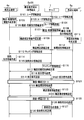
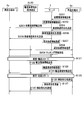
- FIG. 10 and FIG. 11 are sequence diagrams showing the procedure of biological transportation using the biological transportation support system 9.
- the root side of the arrow represents the subject of the implementation content
- the tip side of the arrow represents the object of the implementation content.
- the administrator of the server 7 examines those who wish to use and, if there is no problem, registers each user information in the user information DB 108 of the server 7 (S104).
- User information includes a user name, location, telephone number, FAX number, person in charge, etc., and is registered in correspondence with the user ID (login user name) uniquely assigned to each user by the control means 101.
- the Furthermore, each user information is set with an arbitrary user password.
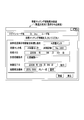
- the shipping source 4 such as the hospital 1 displays the transport / culture instruction information input screen as shown in FIG. 12 created by the display creating unit 104 from the shipping source terminal 4a. Through the communication line 6 and the communication means 106.
- the shipping terminal 4a displays a transportation / culture instruction information input screen as shown in FIG. 12, and the shipping source 4 is prompted by the message “Please enter transportation / culture instruction information” to transport In the text box corresponding to “Sample Low Temperature Storage Container Transport Delivery Location” displayed in the culture instruction information input area, “A Hospital Internal Medicine” or the like can be accurately input as the delivery location.
- the “delivery date” that can be prepared by the shipping source 4 the “number of containers” of the containers containing living organisms, the “sample details” that is the ID of the container containing living organisms, and the “transportation destination” indicating the shipping destination ⁇ Returning source ”,“ Preferred arrival date ”when the container containing the living body arrives at the transportation destination,“ Sample culture condition ”,“ Preferred date for receiving completed culture ”requested by the hospital to the culture center.
- a list box is listed.
- the desired transportation consignment price, culture consignment price, etc. may be entered and input as transport / culture instruction information.
- the shipping source terminal 4a provides support that the shipping source 4 can easily create the transportation / culture instruction information (S105) by filling in the instruction contents in the text box and the list box.
- the shipping source terminal 4a transmits the transport / culture instruction information to the receiving means 113 of the server 7 via the communication line 6 (S106).
- the registration means 103 of the server 7 registers the received transportation / culture instruction information in the shipping source information DB 109 (S107).
- the shipping source 4 clicks the “Register” button. If you want to cancel the creation of the shipping / culture instruction information, click the “Back” button.
- the control means 101 of the server 7 reads the transportation / culture instruction information from the shipping source information DB 109 and uses the transmission means 114 to transmit the transportation / culture instruction information via the communication line 6 to a plurality of registered transportation / culture instruction information.
- the information is transmitted to the trader terminal 2a and the shipping destination terminal 5a of the A culture center (shipping destination) designated as the transport destination in the transport / culture instruction information (S108).
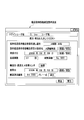
- the transporter terminal 2a Upon receipt of the transportation / culture instruction information, the transporter terminal 2a sends the communication line 6 and the communication means to the control means 101 so as to display the transportation commission information input screen as shown in FIG. Request via 106.
- the transportation contractor information input screen as shown in FIG. 13 is displayed on the transporter terminal 2a, and the transporter 2 is urged to display “Please enter transport consignment information” to display the transport consignment information input area.
- “A transportation logistics” or the like can be accurately input as the trader name.
- the “receivable date” that can be changed with respect to the date designated by the sender 4 based on the transportation / culture instruction information, the “number of containers” based on the transportation / culture instruction information, and the transportation / culture instruction information.
- “delivery destination” based on the transport destination / return source of transport / culture instruction information
- "delivery date” that can be changed with respect to the date based on the desired arrival date of transport / culture instruction information
- “Transportation cost price” which is an estimated amount of the carrier 2, a text box and a list box corresponding to each are described.
- the transporter terminal 2a provides support (S109) that the transport contractor 2 can easily create transport consignment information by allowing the transporter 2 to fill the consignment contents in the text box and the list box.
- the transporter terminal 2a transmits transport consignment information to the receiving means 113 of the server 7 via the communication line 6 (S111).
- the registration means 103 of the server 7 registers the received transportation consignment information in the contract information DB 110.
- the transporter 2 clicks the “Register” button.
- the “return” button is clicked.
- the shipping destination terminal 5a Upon receipt of the transport / culture instruction information, the shipping destination terminal 5a sends the communication line 6 and the communication line to the control means 101 so as to display the culture acceptance information input screen as shown in FIG. Request via means 106. As shown in FIG. 14, a culture commission information input screen as shown in FIG. 14 is displayed on the shipping destination terminal 5 a, and the shipping destination 5 is prompted by the message “Please enter culture commission information”. In the text box corresponding to “Culture Center Name” displayed in the box, “A Culture Center” or the like can be accurately input as the culture center name.
- the “receivable date” that can be changed with respect to the date designated by the sender 4 based on the transportation / culture instruction information
- “Culture completion body delivery date” that can be changed with respect to the date based on the desired date of receipt of the culture completion body in the transportation / culture instruction information
- “Culture business price” that is the estimated amount of the culture center 3
- texts corresponding to each Boxes and list boxes are listed.
- the shipping destination terminal 5a provides support (S110) that the culture destination information can be easily created by causing the shipping destination 5 to fill the culture contents in the text box and the list box.
- the shipping destination terminal 5a transmits the culture consignment information to the receiving means 113 of the server 7 via the communication line 6 (S112).
- the registration means 103 of the server 7 registers the received culture commission information in the contract information DB 110.
- the shipping destination 5 clicks the “Register” button. If you want to cancel the creation of the contracted culture information, click the “Back” button.
- the matching means 102 of the server 7 includes the shipping / culture instruction information, the transportation contract information, and the like, for example, various schedules of the registered shipping / culture instruction information, transport contract information, and culture contract information are matched.
- the culture contract information is extracted, matching information (including transport matching information and culture matching information) is created using various matched schedules, and registered in the matching information DB 111.
- the display creation means 104 composes and creates a transport matching information display screen as shown in FIG. 15 based on the transport matching information, and the control means 101 transmits to the shipping source terminal 4a using the transmission means 114 ( S113).
- a shipping matching information display screen as shown in FIG. 15 is displayed on the shipping source terminal 4a, and the shipping source 4 is prompted to display “Please enter shipping matching information” and needs to be changed.
- the transport matching information is confirmed, and the contract instruction information is created (S114) at the shipping source terminal 4a and transmitted to the server 7. (S115).
- the content of the transport matching information becomes the content of the transport contract between the shipping source 4 and the transporter 2.
- step S116 the display creation means 104 configures and creates a culture matching information display screen as shown in FIG. 16 based on the culture matching information, and the control means 101 uses the transmission means 114 to send it out. It transmits to the former terminal 4a.
- a culture matching information display screen as shown in FIG. 16 is displayed on the shipping source terminal 4 a, and the shipping source 4 is prompted to enter “culture matching information” and needs to be changed. In this case, by clicking the “presentation” button, it is possible to input “culture completion date” and “culture order price” by changing the descriptions in the corresponding text boxes.
- the culture matching information is confirmed (S116), and the contract instruction information is created and transmitted to the server 7 at the shipping source terminal 4a.
- the content of the culture matching information is the content of the culture contract between the shipping source 4 and the shipping destination 5.
- the correction means 105 of the server 7 determines the appropriateness of the change content. If the change content is appropriate, the change content is used as matching information. If not, the change content is deleted / changed. The matching information is corrected so as to be within an appropriate range, and the corrected matching information is registered in the matching information DB 111, thereby confirming the contract contents (matching information).
- step S116 the display creating unit 104 configures and creates a transport request information confirmation display screen as shown in FIG. 17 based on the transport matching information of the matching information determined.
- the control unit 101 uses the transmission unit 114. Then, the information is transmitted to the shipping source terminal 4a and the transporter terminal 2a, and support for concluding a so-called transport culture contract is performed (S117). As a result of the transmission, a shipping request information confirmation display screen as shown in FIG. 17 is displayed on the shipping source terminal 4a, and the shipping source 4 is prompted to display “Please enter an order / order”. By clicking the “Order” button, an order signal is transmitted from the shipping source terminal 4a to the server 7, and an order can be placed as a contract.
- a transport request information confirmation display screen as shown in FIG. 17 is also displayed on the transporter terminal 2a, and the transporter 2 is prompted by the message “Please enter order / order received”.
- an order signal is transmitted from the carrier terminal 2a to the server 7 (S118), and an order as a contract can be made.
- the server 7 receives the order signal and the order signal, it can be considered that the transportation contract has been established.
- the display creation means 104 configures and creates a culture request information confirmation display screen as shown in FIG. 18 based on the culture matching information of the confirmed matching information, and the control means 101 uses the transmission means 114 to The data is transmitted to the shipping source terminal 4a and the shipping destination terminal 5a.
- a culture request information confirmation display screen as shown in FIG. 18 is displayed on the shipping source terminal 4a, and the shipping source 4 is prompted to display “Please enter order / order”.
- an order signal is transmitted from the shipping source terminal 4a to the server 7 (S119), and an order as a contract can be placed.
- a culture request information confirmation display screen as shown in FIG.
- the display creating means 104 composes and creates a quality information upon receipt of goods and transport consignment information display screen as shown in FIG. 19 based on the transport matching information of the matching information for which the contract has been established on the day of transport, and the control means 101 Transmits to the shipping source terminal 4a, the carrier terminal 2a, and the shipping destination terminal 5a using the transmitting means 114.
- the shipping source terminal 4a, the transporter terminal 2a, and the shipping destination terminal 5a display the quality information upon receipt of goods and the transport consignment information display screen.
- the shipping element 4 and the transporter 2 are prompted by the message “Please enter the quality information at the time of receipt (please carry out the inspection)”, and the detection element 18 for detecting contaminants such as bacteria that have entered.
- step S121 it is checked whether or not the site is contaminated with bacteria.
- the inspection is performed by the transporter 2 or the shipping source 4 using the inspection devices 30, 30a, 30b.
- the inspection result is transmitted from the inspection devices 30, 30 a and 30 b to the server 7 via the communication line 6.
- the inspection result is stored in the quality information DB 112 of the storage unit 115.
- the inspection result is transmitted by the control means 101 to the shipping source terminal 4a, the carrier terminal 2a, and the shipping destination terminal 5a by using the transmission means 114.
- the shipping source terminal 4a, the transporter terminal 2a, and the shipping destination terminal 5a display the inspection result as the quality grade and the bacterial mass in the “sample quality” on the quality information at the time of receipt of goods and the transport consignment information display screen.
- the “confirm” button corresponding to each of the quality grade and the mass of bacteria is clicked by the shipping source 4, the transporter 2, and the shipping destination 5 on each of the shipping source terminal 4a, the transporter terminal 2a, and the shipping destination terminal 5a.
- the quality assurance signal is transmitted to the server 7.
- the control means 101 of the server 7 displays “guaranteed” on the quality information at the time of receipt of goods and the transportation consignment information display screen.
- the carrier 2 can transport the storage container 100, click the “consignment” button, receive the storage container 100 from the shipping source 4, and start transporting. (S121).
- the sample low-temperature storage transport container ID is input from the shipping source terminal 4a or the transporter terminal 2a, transmitted to the server 7, and registered in the matching information DB 111 in association with the sample details that are the ID of the living body.
- the dedicated terminal 8 of the storage container 100 measures the date and time (month / day / hour / minute) with a built-in timer, measures the moving point (position) with the built-in GPS, and is built in.
- the temperature at the time of transportation is measured with a thermometer, the container temperature measured by the temperature measuring element 67 of the storage container 100 is received using the receiving means 8a, and the acceleration measured by the accelerometer of the storage container 100 is received by the receiving means 8a.
- the ID of the storage container 100 is received from the storage container 100.
- the dedicated terminal 8 stores the date and time (month / day / hour / minute), moving point (position), air temperature, container temperature, acceleration, and ID of the storage container 100 as transport environment information in the storage unit 8c. It transmits to the server 7 using the transmission means 8b (S122). Measurement, reception, and transmission are repeatedly performed at predetermined time intervals. Moreover, when measured values, such as container temperature, exceed a predetermined threshold value, you may receive and transmit the measured value with the date and time measured simultaneously.
- the server 7 receives the transport environment information using the receiving unit 113.
- the registration unit 103 of the server 7 registers the transportation environment information in the quality information DB 112 (S123).
- the display creation means 104 of the server 7 configures and creates a transportation environment information display screen as shown in FIG. 20 based on the transportation environment information.
- the control unit 101 uses the transmission unit 114 to display the transport environment information display screen, the shipping source terminal 4a, the transporter terminal 2a, It transmits to the shipping destination terminal 5a. As a result of the transmission, a shipping environment information display screen as shown in FIG.
- the control means 101 of the server 7 extracts the ID of the storage container 100 actually associated with the received sample details using the matching information DB 111 and associates it with the extracted ID of the storage container 100.
- the transport environment information (date (month / day / hour / minute), moving point (position), air temperature, container temperature, acceleration) is extracted, and the shipping terminal 4a with the input of sample details (ID), transport The information is transmitted to the trader terminal 2a and the shipping destination terminal 5a (S124).
- the shipping source terminal 4a, the transporter terminal 2a, and the shipping destination terminal 5a receive the transport environment information and display it on the transport environment information display screen as shown in FIG.
- the shipping source 4, the transporter 2 and the shipping destination 5 can view the transport environment information on the respective terminals 4a, 2a and 5a, so-called information can be shared, and the living body from the transporter 2 to the shipping destination 5 described later can be shared.
- FIG. 20 has been described as the PUSH type, a PULL type display corresponding to a request from the shipping source terminal 4a, the carrier terminal 2a, and the shipping destination terminal 5a may be used.
- the display creation means 104 configures the unloading quality information and receipt / acceptance screen as shown in FIG. 21 on the day of the delivery date to the shipping destination 5 based on the transport matching information of the matching information for which the contract has been established.
- the control unit 101 uses the transmission unit 114 to transmit to the shipping source terminal 4a, the carrier terminal 2a, and the shipping destination terminal 5a.
- the quality grade of the sample quality is stored in the storage means 115 of the server 7 via the shipping source terminal 4a by the shipping source 4 such as the A culture center before the delivery date.
- the shipping source terminal 4a, the carrier terminal 2a, and the shipping destination terminal 5a display unloading quality information and a receipt inspection screen.
- the carrier 2 and the shipping destination 5 are prompted by the message “Please enter quality information at the time of shipment (please carry out the inspection)”, so that the invading bacteria etc.
- the detection element 18 for detecting the pollutant checks whether or not it is contaminated with bacteria on site (S125).
- the inspection is performed by the carrier 2 or the shipping destination 5 using the inspection devices 30, 30b, 30c.
- the inspection results are transmitted from the inspection devices 30, 30 b and 30 c to the server 7 via the communication line 6.
- the inspection result is stored in the quality information DB 112 of the storage unit 115.
- the inspection result is transmitted by the control means 101 to the shipping source terminal 4a, the carrier terminal 2a, and the shipping destination terminal 5a by using the transmission means 114.
- the shipping source terminal 4a, the transporter terminal 2a, and the shipping destination terminal 5a display the inspection result as the quality grade and the bacterial mass in the “sample quality” on the quality information at the time of unloading and the receipt inspection screen.
- the “confirm” button corresponding to each of the quality grade and the mass of bacteria is clicked by the shipping source 4, the transporter 2, and the shipping destination 5 on each of the shipping source terminal 4a, the transporter terminal 2a, and the shipping destination terminal 5a.
- the quality assurance signal is transmitted to the server 7.
- the sample cryopreservation container receipt / inspector belonging to the shipping destination 5 inputs the name in the corresponding text box, and clicks the “confirm” button to indicate that the inspection has been completed.
- the inputted name is transmitted from the destination terminal 5a to the server 7 (S126) and registered in the quality information DB 112 of the server 7 (S127). Further, the name is transmitted from the server 7 to the shipping source terminal 4a and the carrier terminal 2a (S130), and is displayed as a sample cryopreservation container receiving inspector on the unloading quality information and the receiving inspection screen.
- the control means 101 of the server 7 displays “guaranteed” on the quality information at the time of unloading and the receipt / acceptance screen based on the reception record of the quality assurance signal.
- the shipping destination 5 can accept the storage container 100, click the “consignment” button, receive the storage container 100 from the carrier 2, and perform the culture operation. Start (S125).
- the transportation business of the transportation company 2 ends.
- the display creation means 104 of the server 7 configures and creates a culture environment information display screen as shown in FIG.
- the control means 101 transmits the culture environment information display screen to the shipping destination terminal 5a using the transmission means 114.
- a culture environment information display screen as shown in FIG. 22 is displayed on the shipping destination terminal 5a, and the shipping destination 5 (the culture center 3) displays “Enter culture environment information / Enter sample details (ID)”. Please enter the biological sample details (ID) in the sample details text box, and the date and time (month / day / hour / minute) in the tabular text box of the culture environment information.
- Sample No. Culture condition no.
- the shipping destination terminal 5a provides support that the culture environment information can be easily created by causing the shipping destination 5 (the culture center 3) to write the state of the culture in the text box.
- the shipping destination 5 (culture center 3) clicks the “Register” button the culture environment information is determined and transmitted from the shipping destination terminal 5a to the server 7 together with the sample details (S201 in FIG. 11).
- the registration means 103 of the server 7 registers the culture environment information and the sample details in the quality information DB 112 (S202).
- the control unit 101 of the server 7 transmits the culture environment information display screen, the culture environment information, and the sample details as shown in FIG. 22 to the shipping source terminal 4a and the carrier terminal 2a using the transmission unit 114. (S203).
- a culture environment information display screen as shown in FIG. 22 is displayed on the shipping source terminal 4a and the carrier terminal 2a. Further, the shipping source terminal 4a and the transporter terminal 2a display the received culture environment information and sample details on the culture environment information display screen.
- the shipping source 4 and the transporter 2 can browse the culture environment information at the shipping source terminal 4a and the transporter terminal 2a, and can share so-called information with the shipping destination 5.
- the display creation means 104 composes and creates a culture completion information screen as shown in FIG. 23 based on the matching information registered in the matching information DB 111 on the day of the scheduled culture completion date (culture completion date).
- the control means 101 uses the transmission means 114 to transmit to the shipping destination terminal 5a.
- the shipping destination terminal 5a displays a culture completion information screen.
- the shipping destination 5 (the culture center 3) is prompted by the message “Please input culture completion information” and checks whether the cultured organism is contaminated with bacteria. Do. This inspection is performed before being stored in the storage container 100. The result of the inspection is input by the delivery destination 5 (culture center 3) into the text box for the quality grade and the mass of bacteria in “Sample culture quality” on the culture completion information screen.
- the result of the inspection is transmitted from the shipping destination terminal 5a to the server 7 via the communication line 6.
- the inspection result is stored in the quality information DB 112 of the storage unit 115.
- inspection is transmitted to the shipping origin terminal 4a, the carrier terminal 2a, and the shipping destination terminal 5a by the control means 101 using the transmission means 114 with the culture completion information screen as shown in FIG.
- the shipping source terminal 4a, the transporter terminal 2a, and the shipping destination terminal 5a display the result of the inspection as the quality grade and the bacterial mass in the “sample culture body quality” on the culture completion information screen.
- the “confirm” button corresponding to each of the quality grade and the mass of bacteria is clicked by the shipping source 4, the transporter 2, and the shipping destination 5 on each of the shipping source terminal 4a, the transporter terminal 2a, and the shipping destination terminal 5a.
- the quality assurance signal is transmitted to the server 7.
- the shipping source 4, the carrier 2, and the shipping destination 5 can mutually guarantee the quality of the living body. Ensuring the quality of living organisms is very important when receiving and receiving a sample of biological samples that are prone to deterioration.
- a sample culture body quality inspection confirmer belonging to the shipping destination 5 inputs a name in a corresponding text box, and clicks a “confirm” button to indicate that the inspection has passed.
- the inputted name is transmitted from the destination terminal 5a to the server 7 (S204) and registered in the quality information DB 112 of the server 7 (S205). Further, the name is transmitted from the server 7 to the shipping source terminal 4a and the carrier terminal 2a (S206), and is displayed as a sample culture body quality inspection confirmer on the culture completion information screen.
- the display creation means 104 uses the matching information registered in the matching information DB 111 to construct a return (transport) request information confirmation display screen as shown in FIG. create. Since the current transport is to be sent back to the previous shipping destination, the sample low temperature storage transport container delivery location can be specified to the A culture center which is the shipping destination 5 of the previous transport. Further, the transportation destination can be specified in the internal medicine of hospital A that is the shipping source 4 of the previous transportation. The name of the sample low-temperature storage container transport consignee can be specified as the A transport logistics of the transporter 2 who has a proven record in the previous transport.
- the receiving date can be set to the scheduled date of completion of culture (culture completion date) stored in the quality information DB.
- the unloading date can be the date when the number of days required for the previous transportation is added to the receiving date.
- the transportation order price can be set equal to the transportation cost price of the previous transportation.
- the sample details can be set the same as the sample details of the previous transport.
- the return (transportation) request information (so-called matching information) on the return (transportation) request information confirmation display screen thus created by the display creation means 104 is registered in the matching information DB 111 (S207).
- the return (transportation) request information confirmation display screen is transmitted from the server 7 to the shipping source terminal 4a, the transporter terminal 2a, and the shipping destination terminal 5a (S208).
- the shipping source terminal 4a, the transporter terminal 2a, and the shipping destination terminal 5a display a return (transport) request information confirmation display screen.
- the shipping source 4, the transporter 2 and the shipping destination 5 (culture center 3) are prompted by the message “Please enter the change of the return (transport) request information”, and the return (transport) request information is defective. In this case, the delivery date, transport order price, etc. can be changed from the text box. Even if there is no change, by clicking the “Register” button, return (transportation) request information (matching information) is transmitted to the server 7 (S209).
- the correction means 105 of the server 7 determines the appropriateness of the change content. If the change content is appropriate, the change content is used as matching information. If not, the change content is deleted / changed. The matching information is corrected so as to be within an appropriate range, and the corrected matching information is registered in the matching information DB 111, thereby confirming the contract contents (matching information). The order of the carrier 2 is confirmed.
- the display creation means 104 configures and creates a display screen for quality information upon receipt of goods and transportation consignment information as shown in FIG. 25 based on the matching information determined on the day of the receipt date, and the control means 101 transmits the transmission means 114.
- the control means 101 transmits the transmission means 114.
- the shipping source terminal 4a, the transporter terminal 2a, and the shipping destination terminal 5a display the quality information upon receipt of goods and the transport consignment information display screen.
- step S121 it is checked whether or not the site is contaminated with bacteria.
- the inspection can be performed in the same manner as the inspection (S121) described with reference to FIG. 19 of the previous transportation (inspection / transport processing).
- the current transportation environment information processing can also be performed in the same manner as the processing described in the previous transportation (transportation environment information processing).
- transportation environment information is transmitted from the dedicated terminal 8 to the server 7 (S122), and the registration means 103 of the server 7 registers the transportation environment information in the quality information DB 112 (S123).
- the display creation means 104 of the server 7 configures and creates a transport environment information display screen as shown in FIG. 26 based on the transport environment information.
- the control unit 101 uses the transmission unit 114 to display the transport environment information display screen, the shipping source terminal 4a, the transporter terminal 2a, It transmits to the shipping destination terminal 5a.
- a transportation environment information display screen as shown in FIG. 26 is displayed on the shipping source terminal 4a, the transporter terminal 2a, and the shipping destination terminal 5a.
- the following transportation environment information processing (S124 and the like) can be performed in the same manner as the processing described with reference to FIG. 20 of the previous transportation (transportation environment information processing).
- the display creation means 104 configures and creates the unloading quality information and receipt acceptance screen as shown in FIG. 27 based on the matching information on the day of the delivery date to the shipping source 4 which is the return destination, and performs control.
- the means 101 uses the transmission means 114 to transmit to the shipping source terminal 4a, the carrier terminal 2a and the shipping destination terminal 5a.
- the shipping source terminal 4a, the carrier terminal 2a, and the shipping destination terminal 5a display unloading quality information and a receipt inspection screen.
- the reception / acceptance process (S125 to S127, S130) at the return shipping destination can be performed in the same manner as the process described with reference to FIG. 21 of the previous transport ((reception / acceptance process at the transport destination)). . Then, the transportation service of the carrier 2 ends.
- the living body transportation support system 9 has a structure in which the sample stored in the storage container 100 is cooled and held by the refrigerator, and is chemically treated, for example, by the attachment of contaminants to the room temperature region in the storage container 100.
- the detection element 18 whose characteristics or physical characteristics change and inspecting the detection element 18 from the outside of the storage container 100 in a non-contact manner, the presence or absence of contaminants entering the storage container 100 is determined. Since the inspection is performed in a short time at the time of delivery and the data can be shared by at least the sample shipping source 4, the transporter 2 and the shipping destination 5, these three parties are responsible for the health of the sample when the sample is received and delivered. Sex can be accepted. Therefore, there is an effect that it is possible to carry out a commercial transaction using the biological transportation based on the soundness of the sample as a service (service).
- the present invention is a sample cryopreservation container for transporting or storing samples such as cells, microorganisms and proteins used in regenerative medicine, biochemical research, drug development, medical diagnosis, food inspection, etc. Is preferred.
- the present invention is also suitable as a transportation transaction support system using the sample cryogenic storage container.
- Biological transportation support system 11 Storage Container (container) 12 Opening 13 Introduction container (introduction means) 14 Lid member (blocking means) 15 Stirling refrigerator (cooling means) 16 Insulated container (insulation means) 17 Detection element holding member (detection means) 18 sensing element 19 window 21 guide tray (atmospheric induction guide) 22 Concavity (detection element placement part) 25 Metal particles 26 Biomolecules, etc.
Landscapes
- Health & Medical Sciences (AREA)
- Life Sciences & Earth Sciences (AREA)
- Clinical Laboratory Science (AREA)
- Chemical & Material Sciences (AREA)
- General Health & Medical Sciences (AREA)
- Wood Science & Technology (AREA)
- Zoology (AREA)
- Environmental Sciences (AREA)
- Engineering & Computer Science (AREA)
- Dentistry (AREA)
- Chemical Kinetics & Catalysis (AREA)
- Sampling And Sample Adjustment (AREA)
- Automatic Analysis And Handling Materials Therefor (AREA)
- Warehouses Or Storage Devices (AREA)
- Devices That Are Associated With Refrigeration Equipment (AREA)
- Devices For Use In Laboratory Experiments (AREA)
- Apparatus Associated With Microorganisms And Enzymes (AREA)
- Packages (AREA)
Abstract
La présente invention concerne un boîtier de stockage d’échantillon basse température permettant au destinataire de l’échantillon de vérifier facilement l’intégrité de l’échantillon à la réception de l’échantillon, et n’utilisant pas de milieu de refroidissement par sublimation ou évaporation tel que de l’azote liquide, ainsi qu’un système de support commercial pour le transport utilisant le boîtier de stockage d’échantillon basse température. Ledit boîtier (100) présente une structure dans laquelle un récipient pour échantillon (S) contenu dans une cassette de confinement (11) est refroidi et maintenu à basse température par un réfrigérateur Stirling (15). Un élément de capteur (18) est disposé dans une région à température ambiante du boîtier de stockage (100). La caractéristique chimique ou physique de l’élément de capteur (18) varie lorsqu’un polluant adhère à l’élément de capteur (18). L’entrée d’un polluant dans le boîtier de stockage (100) peut être vérifiée par la vérification sans contact de l’élément de capteur (18) à partir de l’extérieur du boîtier de stockage (100). Le boîtier de stockage (100) comprend un serveur permettant de recevoir le résultat de la vérification provenant du dispositif de vérification (30), de stocker le résultat et de configurer une connexion par le biais d’une ligne de communication vers au moins deux terminaux parmi un terminal pouvant être utilisé par l’expéditeur, un terminal pouvant être utilisé par le transporteur et un terminal pouvant être utilisé par le destinataire pour transmettre le résultat aux deux.
Priority Applications (2)
| Application Number | Priority Date | Filing Date | Title |
|---|---|---|---|
| US12/989,985 US20110073603A1 (en) | 2008-04-28 | 2009-04-20 | Sample low-temperature storage case and organism transportation supporting system |
| EP09738722.9A EP2273250A4 (fr) | 2008-04-28 | 2009-04-20 | Boîtier de stockage d échantillon basse température et système de support pour transport d organismes |
Applications Claiming Priority (4)
| Application Number | Priority Date | Filing Date | Title |
|---|---|---|---|
| JP2008116764 | 2008-04-28 | ||
| JP2008-116764 | 2008-04-28 | ||
| JP2008295110A JP5033772B2 (ja) | 2008-04-28 | 2008-11-19 | 試料低温保存容器および生体輸送支援システム |
| JP2008-295110 | 2008-11-19 |
Publications (1)
| Publication Number | Publication Date |
|---|---|
| WO2009133785A1 true WO2009133785A1 (fr) | 2009-11-05 |
Family
ID=41255002
Family Applications (1)
| Application Number | Title | Priority Date | Filing Date |
|---|---|---|---|
| PCT/JP2009/057880 Ceased WO2009133785A1 (fr) | 2008-04-28 | 2009-04-20 | Boîtier de stockage d’échantillon basse température et système de support pour transport d’organismes |
Country Status (4)
| Country | Link |
|---|---|
| US (1) | US20110073603A1 (fr) |
| EP (1) | EP2273250A4 (fr) |
| JP (1) | JP5033772B2 (fr) |
| WO (1) | WO2009133785A1 (fr) |
Cited By (2)
| Publication number | Priority date | Publication date | Assignee | Title |
|---|---|---|---|---|
| WO2018016238A1 (fr) * | 2016-07-19 | 2018-01-25 | セルラー・ダイナミクス・インターナショナル・ジャパン株式会社 | Dispositif de transport |
| JP2023504559A (ja) * | 2019-12-03 | 2023-02-03 | アシンプトート リミテッド | 容器を断熱するための栓、および冷却方法 |
Families Citing this family (15)
| Publication number | Priority date | Publication date | Assignee | Title |
|---|---|---|---|---|
| ITMI20122051A1 (it) * | 2012-11-30 | 2014-05-31 | N G C Medical Spa | Dispositivo per il trasporto isotermico di organi e/o tessuti umani, e metodo ed apparato di controllo del trasporto stesso |
| JP2017508984A (ja) * | 2014-01-20 | 2017-03-30 | ブルックス オートメーション インコーポレイテッド | 持ち運び可能な低温ワークステーション |
| CN104549597B (zh) * | 2015-01-21 | 2016-05-18 | 中国科学院上海技术物理研究所 | 一种用于集成式杜瓦组件变温测试的制冷结构 |
| EP3278040B1 (fr) | 2015-03-30 | 2023-08-02 | Azenta, Inc. | Congélateur cryogénique |
| ES2926698T3 (es) | 2015-03-30 | 2022-10-27 | Azenta Inc | Sistema de almacenamiento criogénico automatizado |
| ITUB20161187A1 (it) * | 2016-03-01 | 2017-09-01 | D P Medical S R L | Sistema e procedimento per l’associazione dei risultati di analisi eseguite su campioni biologici, in particolare campioni biologici sottoposti ad indagini cliniche, con variabili pre-analitiche a cui detti campioni sono esposti. |
| JP7022193B2 (ja) * | 2018-02-26 | 2022-02-17 | 富士フイルム株式会社 | 細胞培養デバイスの管理方法、及び細胞培養デバイスの管理システム |
| CN118935853A (zh) * | 2018-04-19 | 2024-11-12 | 恩伯技术公司 | 具有主动温度控制的便携式冷却器 |
| JP7430728B2 (ja) * | 2019-01-11 | 2024-02-13 | エンバー テクノロジーズ, インコーポレイテッド | 能動的温度制御を備える可搬式冷却器 |
| US11668508B2 (en) | 2019-06-25 | 2023-06-06 | Ember Technologies, Inc. | Portable cooler |
| CA3143365A1 (fr) | 2019-06-25 | 2020-12-30 | Ember Technologies, Inc. | Refroidisseur portable |
| CN111071605B (zh) * | 2020-03-03 | 2021-07-06 | 上蔡县状元红食品质量检测服务有限公司 | 一种食品检测样品保存装置 |
| AU2021246654A1 (en) | 2020-04-03 | 2022-10-27 | Ember Lifesciences, Inc. | Portable cooler with active temperature control |
| CN111731677B (zh) * | 2020-06-30 | 2024-07-09 | 深圳市速普仪器有限公司 | 自驱动型样品真空转移系统及方法 |
| US20220174943A1 (en) * | 2020-12-07 | 2022-06-09 | Desert Valley Tech Inc. | Organ and fluid preservation and transportation container and docking system |
Citations (7)
| Publication number | Priority date | Publication date | Assignee | Title |
|---|---|---|---|---|
| JPS6456153A (en) * | 1987-08-27 | 1989-03-03 | Yoshikage Oda | Low-temperature cold reserving device |
| JPS6456151A (en) * | 1987-08-27 | 1989-03-03 | Yoshikage Oda | Medium circulation type temperature control device of thermostatic chamber |
| JPH07137761A (ja) * | 1993-11-19 | 1995-05-30 | Mitsubishi Gas Chem Co Inc | 蓋用パッキング |
| JP2002344037A (ja) * | 2001-05-16 | 2002-11-29 | Hitachi Ltd | 極低温格納容器及びそれを用いた生体磁気計測装置 |
| JP2004535336A (ja) * | 2001-05-18 | 2004-11-25 | アルコア クロージャー システムズ インターナショナル インコーポレイテッド | 一体型トランスポンダを有する包装 |
| JP2005349182A (ja) * | 2004-05-10 | 2005-12-22 | Otsuka Pharmaceut Factory Inc | 薬剤容器 |
| JP2008050101A (ja) * | 2006-08-24 | 2008-03-06 | Sanden Corp | 輸送管理システム |
Family Cites Families (8)
| Publication number | Priority date | Publication date | Assignee | Title |
|---|---|---|---|---|
| US5327733A (en) * | 1993-03-08 | 1994-07-12 | University Of Cincinnati | Substantially vibration-free shroud and mounting system for sample cooling and low temperature spectroscopy |
| DE69411860T2 (de) * | 1993-11-19 | 1999-02-18 | Mitsubishi Gas Chemical Co., Inc., Tokio/Tokyo | Sauerstoffabsorber-Einsatz für Behälterdeckel |
| GB2284254A (en) * | 1993-11-30 | 1995-05-31 | Colin Campbell | Thermally-insulated cooling arrangement with removable refrigerant gel cassette |
| US5598711A (en) * | 1995-12-20 | 1997-02-04 | Lockheed Martin Corporation | Fluid deflection method using a skirt |
| DE10202304A1 (de) * | 2002-01-22 | 2003-07-31 | Fraunhofer Ges Forschung | Kryospeichereinrichtung mit Transponder |
| US7430449B2 (en) * | 2003-03-14 | 2008-09-30 | Endovx, Inc. | Methods and apparatus for testing disruption of a vagal nerve |
| DE202006004344U1 (de) * | 2006-03-20 | 2006-06-08 | Kerspe, Jobst H., Dr.-Ing. | Selbstkühlender Transportbehälter für den Versand von tiefgefrorenen Gewebeproben und anderen temperaturempfindlichen Gütern |
| DE102006032435A1 (de) * | 2006-07-13 | 2008-01-17 | Sixt, Bernhard, Dr. | Transportbehälter zur Kühlhaltung von gefrorenem Gut |
-
2008
- 2008-11-19 JP JP2008295110A patent/JP5033772B2/ja not_active Expired - Fee Related
-
2009
- 2009-04-20 US US12/989,985 patent/US20110073603A1/en not_active Abandoned
- 2009-04-20 EP EP09738722.9A patent/EP2273250A4/fr not_active Withdrawn
- 2009-04-20 WO PCT/JP2009/057880 patent/WO2009133785A1/fr not_active Ceased
Patent Citations (7)
| Publication number | Priority date | Publication date | Assignee | Title |
|---|---|---|---|---|
| JPS6456153A (en) * | 1987-08-27 | 1989-03-03 | Yoshikage Oda | Low-temperature cold reserving device |
| JPS6456151A (en) * | 1987-08-27 | 1989-03-03 | Yoshikage Oda | Medium circulation type temperature control device of thermostatic chamber |
| JPH07137761A (ja) * | 1993-11-19 | 1995-05-30 | Mitsubishi Gas Chem Co Inc | 蓋用パッキング |
| JP2002344037A (ja) * | 2001-05-16 | 2002-11-29 | Hitachi Ltd | 極低温格納容器及びそれを用いた生体磁気計測装置 |
| JP2004535336A (ja) * | 2001-05-18 | 2004-11-25 | アルコア クロージャー システムズ インターナショナル インコーポレイテッド | 一体型トランスポンダを有する包装 |
| JP2005349182A (ja) * | 2004-05-10 | 2005-12-22 | Otsuka Pharmaceut Factory Inc | 薬剤容器 |
| JP2008050101A (ja) * | 2006-08-24 | 2008-03-06 | Sanden Corp | 輸送管理システム |
Non-Patent Citations (1)
| Title |
|---|
| See also references of EP2273250A4 * |
Cited By (4)
| Publication number | Priority date | Publication date | Assignee | Title |
|---|---|---|---|---|
| WO2018016238A1 (fr) * | 2016-07-19 | 2018-01-25 | セルラー・ダイナミクス・インターナショナル・ジャパン株式会社 | Dispositif de transport |
| US11143448B2 (en) | 2016-07-19 | 2021-10-12 | Fujifilm Toyama Chemical Co., Ltd. | Transport device |
| JP2023504559A (ja) * | 2019-12-03 | 2023-02-03 | アシンプトート リミテッド | 容器を断熱するための栓、および冷却方法 |
| JP7754567B2 (ja) | 2019-12-03 | 2025-10-15 | ビオセフ エス・アー | 容器を断熱するための栓、および冷却方法 |
Also Published As
| Publication number | Publication date |
|---|---|
| EP2273250A4 (fr) | 2014-09-24 |
| JP5033772B2 (ja) | 2012-09-26 |
| JP2009288234A (ja) | 2009-12-10 |
| EP2273250A1 (fr) | 2011-01-12 |
| US20110073603A1 (en) | 2011-03-31 |
Similar Documents
| Publication | Publication Date | Title |
|---|---|---|
| JP5033772B2 (ja) | 試料低温保存容器および生体輸送支援システム | |
| US9721226B2 (en) | Method and system for specialized handling of packages | |
| JP6927890B2 (ja) | 患者および生物学的試料の識別ならびに追跡のための方法およびシステム | |
| CN102109528B (zh) | 用于分析生物样品的分析系统和分析方法 | |
| JP2021100427A (ja) | 細胞輸送設備 | |
| US20200253193A1 (en) | Healthcare transport tote and condition tracking thereof | |
| CN113177619B (zh) | 一种智能移动标本转运箱及其管理方法 | |
| JP2019512437A (ja) | 物品輸送のためのシステムおよび方法 | |
| US11666047B2 (en) | Container for cryopreserved samples | |
| US12486527B2 (en) | System and method for analyte detection and decontamination certification | |
| US10014079B2 (en) | Business method for collection, processing, cryogenic storage and distribution of a biologic sample material | |
| WO2019158733A1 (fr) | Procédé intelligent de génération de rétroaction pendant la commande et la surveillance d'échantillons | |
| US20210298651A1 (en) | System and Method for Analyte Monitoring and Predictive Modeling | |
| Carrier et al. | Science and curation considerations for the design of a Mars Sample Return (MSR) Sample Receiving Facility (SRF) | |
| World Health Organization | How to monitor temperatures in the vaccine supply chain | |
| CN214649870U (zh) | 一种智能移动标本转运箱 | |
| Lee et al. | Guidelines for packaging, transport, and storage of source cells for organoids | |
| US20250252795A1 (en) | Secure container and method of operation same | |
| Olmedo et al. | ASEBIR Quality Special Interest Group guidance for quality in assisted reproduction technology | |
| Benhamza et al. | The importance of the cold chain in the medical biology laboratory: Experience of the central laboratory of CHU Mohammed VI of Oujda | |
| US20220292456A1 (en) | Business method for collection, processing, cryogenic storage and distribution of biological sample material | |
| Chanpuypetch et al. | IOT-Based Business Process Management For Temperature-Controlled Logistics System Of Laboratory Specimens. | |
| Cooke | Low-risk laboratory management | |
| Nagy et al. | Predictive Repair of Vehicle R1234yf Refrigerant Systems Based on Monitoring of Micro-Leakages | |
| De Blasio et al. | Biobank Design and Infrastructure: Biobank Engineering |
Legal Events
| Date | Code | Title | Description |
|---|---|---|---|
| 121 | Ep: the epo has been informed by wipo that ep was designated in this application |
Ref document number: 09738722 Country of ref document: EP Kind code of ref document: A1 |
|
| WWE | Wipo information: entry into national phase |
Ref document number: 2009738722 Country of ref document: EP |
|
| NENP | Non-entry into the national phase |
Ref country code: DE |
|
| WWE | Wipo information: entry into national phase |
Ref document number: 12989985 Country of ref document: US |