WO2009156092A2 - Bi- and polycyclic substituted isoquinoline and isoquinolinone derivatives - Google Patents
Bi- and polycyclic substituted isoquinoline and isoquinolinone derivatives Download PDFInfo
- Publication number
- WO2009156092A2 WO2009156092A2 PCT/EP2009/004393 EP2009004393W WO2009156092A2 WO 2009156092 A2 WO2009156092 A2 WO 2009156092A2 EP 2009004393 W EP2009004393 W EP 2009004393W WO 2009156092 A2 WO2009156092 A2 WO 2009156092A2
- Authority
- WO
- WIPO (PCT)
- Prior art keywords
- alkyl
- alkylene
- cycloalkyl
- compound according
- unsubstituted
- Prior art date
- Legal status (The legal status is an assumption and is not a legal conclusion. Google has not performed a legal analysis and makes no representation as to the accuracy of the status listed.)
- Ceased
Links
- 0 **c(cc1)cc(C=CN2)c1C2=O Chemical compound **c(cc1)cc(C=CN2)c1C2=O 0.000 description 5
- UNDIBJYKUXKJSX-UHFFFAOYSA-N CC1C(C)C2NCC(C3)C2CC3C1 Chemical compound CC1C(C)C2NCC(C3)C2CC3C1 UNDIBJYKUXKJSX-UHFFFAOYSA-N 0.000 description 1
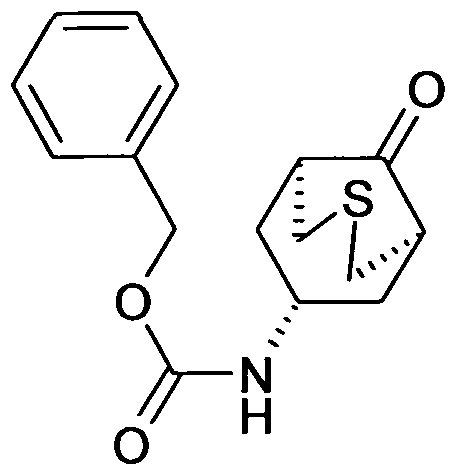
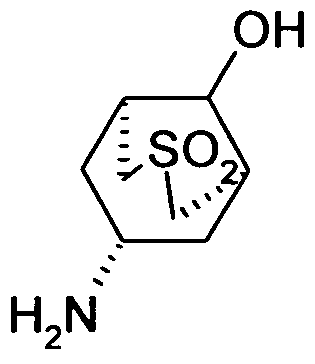
- BIKPBTYFLWGOEQ-QNPIQTHRSA-N N[C@H](C[C@@H]1CSC2)C[C@@H]2C1O Chemical compound N[C@H](C[C@@H]1CSC2)C[C@@H]2C1O BIKPBTYFLWGOEQ-QNPIQTHRSA-N 0.000 description 1
Classifications
-
- C—CHEMISTRY; METALLURGY
- C07—ORGANIC CHEMISTRY
- C07D—HETEROCYCLIC COMPOUNDS
- C07D217/00—Heterocyclic compounds containing isoquinoline or hydrogenated isoquinoline ring systems
- C07D217/22—Heterocyclic compounds containing isoquinoline or hydrogenated isoquinoline ring systems with hetero atoms or with carbon atoms having three bonds to hetero atoms with at the most one bond to halogen, e.g. ester or nitrile radicals, directly attached to carbon atoms of the nitrogen-containing ring
- C07D217/24—Oxygen atoms
-
- A—HUMAN NECESSITIES
- A61—MEDICAL OR VETERINARY SCIENCE; HYGIENE
- A61P—SPECIFIC THERAPEUTIC ACTIVITY OF CHEMICAL COMPOUNDS OR MEDICINAL PREPARATIONS
- A61P1/00—Drugs for disorders of the alimentary tract or the digestive system
- A61P1/16—Drugs for disorders of the alimentary tract or the digestive system for liver or gallbladder disorders, e.g. hepatoprotective agents, cholagogues, litholytics
-
- A—HUMAN NECESSITIES
- A61—MEDICAL OR VETERINARY SCIENCE; HYGIENE
- A61P—SPECIFIC THERAPEUTIC ACTIVITY OF CHEMICAL COMPOUNDS OR MEDICINAL PREPARATIONS
- A61P11/00—Drugs for disorders of the respiratory system
-
- A—HUMAN NECESSITIES
- A61—MEDICAL OR VETERINARY SCIENCE; HYGIENE
- A61P—SPECIFIC THERAPEUTIC ACTIVITY OF CHEMICAL COMPOUNDS OR MEDICINAL PREPARATIONS
- A61P11/00—Drugs for disorders of the respiratory system
- A61P11/06—Antiasthmatics
-
- A—HUMAN NECESSITIES
- A61—MEDICAL OR VETERINARY SCIENCE; HYGIENE
- A61P—SPECIFIC THERAPEUTIC ACTIVITY OF CHEMICAL COMPOUNDS OR MEDICINAL PREPARATIONS
- A61P13/00—Drugs for disorders of the urinary system
-
- A—HUMAN NECESSITIES
- A61—MEDICAL OR VETERINARY SCIENCE; HYGIENE
- A61P—SPECIFIC THERAPEUTIC ACTIVITY OF CHEMICAL COMPOUNDS OR MEDICINAL PREPARATIONS
- A61P13/00—Drugs for disorders of the urinary system
- A61P13/08—Drugs for disorders of the urinary system of the prostate
-
- A—HUMAN NECESSITIES
- A61—MEDICAL OR VETERINARY SCIENCE; HYGIENE
- A61P—SPECIFIC THERAPEUTIC ACTIVITY OF CHEMICAL COMPOUNDS OR MEDICINAL PREPARATIONS
- A61P13/00—Drugs for disorders of the urinary system
- A61P13/12—Drugs for disorders of the urinary system of the kidneys
-
- A—HUMAN NECESSITIES
- A61—MEDICAL OR VETERINARY SCIENCE; HYGIENE
- A61P—SPECIFIC THERAPEUTIC ACTIVITY OF CHEMICAL COMPOUNDS OR MEDICINAL PREPARATIONS
- A61P15/00—Drugs for genital or sexual disorders; Contraceptives
- A61P15/10—Drugs for genital or sexual disorders; Contraceptives for impotence
-
- A—HUMAN NECESSITIES
- A61—MEDICAL OR VETERINARY SCIENCE; HYGIENE
- A61P—SPECIFIC THERAPEUTIC ACTIVITY OF CHEMICAL COMPOUNDS OR MEDICINAL PREPARATIONS
- A61P19/00—Drugs for skeletal disorders
-
- A—HUMAN NECESSITIES
- A61—MEDICAL OR VETERINARY SCIENCE; HYGIENE
- A61P—SPECIFIC THERAPEUTIC ACTIVITY OF CHEMICAL COMPOUNDS OR MEDICINAL PREPARATIONS
- A61P25/00—Drugs for disorders of the nervous system
-
- A—HUMAN NECESSITIES
- A61—MEDICAL OR VETERINARY SCIENCE; HYGIENE
- A61P—SPECIFIC THERAPEUTIC ACTIVITY OF CHEMICAL COMPOUNDS OR MEDICINAL PREPARATIONS
- A61P25/00—Drugs for disorders of the nervous system
- A61P25/04—Centrally acting analgesics, e.g. opioids
-
- A—HUMAN NECESSITIES
- A61—MEDICAL OR VETERINARY SCIENCE; HYGIENE
- A61P—SPECIFIC THERAPEUTIC ACTIVITY OF CHEMICAL COMPOUNDS OR MEDICINAL PREPARATIONS
- A61P25/00—Drugs for disorders of the nervous system
- A61P25/28—Drugs for disorders of the nervous system for treating neurodegenerative disorders of the central nervous system, e.g. nootropic agents, cognition enhancers, drugs for treating Alzheimer's disease or other forms of dementia
-
- A—HUMAN NECESSITIES
- A61—MEDICAL OR VETERINARY SCIENCE; HYGIENE
- A61P—SPECIFIC THERAPEUTIC ACTIVITY OF CHEMICAL COMPOUNDS OR MEDICINAL PREPARATIONS
- A61P27/00—Drugs for disorders of the senses
-
- A—HUMAN NECESSITIES
- A61—MEDICAL OR VETERINARY SCIENCE; HYGIENE
- A61P—SPECIFIC THERAPEUTIC ACTIVITY OF CHEMICAL COMPOUNDS OR MEDICINAL PREPARATIONS
- A61P27/00—Drugs for disorders of the senses
- A61P27/02—Ophthalmic agents
-
- A—HUMAN NECESSITIES
- A61—MEDICAL OR VETERINARY SCIENCE; HYGIENE
- A61P—SPECIFIC THERAPEUTIC ACTIVITY OF CHEMICAL COMPOUNDS OR MEDICINAL PREPARATIONS
- A61P27/00—Drugs for disorders of the senses
- A61P27/02—Ophthalmic agents
- A61P27/06—Antiglaucoma agents or miotics
-
- A—HUMAN NECESSITIES
- A61—MEDICAL OR VETERINARY SCIENCE; HYGIENE
- A61P—SPECIFIC THERAPEUTIC ACTIVITY OF CHEMICAL COMPOUNDS OR MEDICINAL PREPARATIONS
- A61P29/00—Non-central analgesic, antipyretic or antiinflammatory agents, e.g. antirheumatic agents; Non-steroidal antiinflammatory drugs [NSAID]
-
- A—HUMAN NECESSITIES
- A61—MEDICAL OR VETERINARY SCIENCE; HYGIENE
- A61P—SPECIFIC THERAPEUTIC ACTIVITY OF CHEMICAL COMPOUNDS OR MEDICINAL PREPARATIONS
- A61P3/00—Drugs for disorders of the metabolism
-
- A—HUMAN NECESSITIES
- A61—MEDICAL OR VETERINARY SCIENCE; HYGIENE
- A61P—SPECIFIC THERAPEUTIC ACTIVITY OF CHEMICAL COMPOUNDS OR MEDICINAL PREPARATIONS
- A61P3/00—Drugs for disorders of the metabolism
- A61P3/08—Drugs for disorders of the metabolism for glucose homeostasis
- A61P3/10—Drugs for disorders of the metabolism for glucose homeostasis for hyperglycaemia, e.g. antidiabetics
-
- A—HUMAN NECESSITIES
- A61—MEDICAL OR VETERINARY SCIENCE; HYGIENE
- A61P—SPECIFIC THERAPEUTIC ACTIVITY OF CHEMICAL COMPOUNDS OR MEDICINAL PREPARATIONS
- A61P31/00—Antiinfectives, i.e. antibiotics, antiseptics, chemotherapeutics
- A61P31/04—Antibacterial agents
-
- A—HUMAN NECESSITIES
- A61—MEDICAL OR VETERINARY SCIENCE; HYGIENE
- A61P—SPECIFIC THERAPEUTIC ACTIVITY OF CHEMICAL COMPOUNDS OR MEDICINAL PREPARATIONS
- A61P31/00—Antiinfectives, i.e. antibiotics, antiseptics, chemotherapeutics
- A61P31/12—Antivirals
- A61P31/14—Antivirals for RNA viruses
- A61P31/18—Antivirals for RNA viruses for HIV
-
- A—HUMAN NECESSITIES
- A61—MEDICAL OR VETERINARY SCIENCE; HYGIENE
- A61P—SPECIFIC THERAPEUTIC ACTIVITY OF CHEMICAL COMPOUNDS OR MEDICINAL PREPARATIONS
- A61P35/00—Antineoplastic agents
-
- A—HUMAN NECESSITIES
- A61—MEDICAL OR VETERINARY SCIENCE; HYGIENE
- A61P—SPECIFIC THERAPEUTIC ACTIVITY OF CHEMICAL COMPOUNDS OR MEDICINAL PREPARATIONS
- A61P37/00—Drugs for immunological or allergic disorders
-
- A—HUMAN NECESSITIES
- A61—MEDICAL OR VETERINARY SCIENCE; HYGIENE
- A61P—SPECIFIC THERAPEUTIC ACTIVITY OF CHEMICAL COMPOUNDS OR MEDICINAL PREPARATIONS
- A61P37/00—Drugs for immunological or allergic disorders
- A61P37/02—Immunomodulators
- A61P37/06—Immunosuppressants, e.g. drugs for graft rejection
-
- A—HUMAN NECESSITIES
- A61—MEDICAL OR VETERINARY SCIENCE; HYGIENE
- A61P—SPECIFIC THERAPEUTIC ACTIVITY OF CHEMICAL COMPOUNDS OR MEDICINAL PREPARATIONS
- A61P7/00—Drugs for disorders of the blood or the extracellular fluid
-
- A—HUMAN NECESSITIES
- A61—MEDICAL OR VETERINARY SCIENCE; HYGIENE
- A61P—SPECIFIC THERAPEUTIC ACTIVITY OF CHEMICAL COMPOUNDS OR MEDICINAL PREPARATIONS
- A61P9/00—Drugs for disorders of the cardiovascular system
-
- A—HUMAN NECESSITIES
- A61—MEDICAL OR VETERINARY SCIENCE; HYGIENE
- A61P—SPECIFIC THERAPEUTIC ACTIVITY OF CHEMICAL COMPOUNDS OR MEDICINAL PREPARATIONS
- A61P9/00—Drugs for disorders of the cardiovascular system
- A61P9/04—Inotropic agents, i.e. stimulants of cardiac contraction; Drugs for heart failure
-
- A—HUMAN NECESSITIES
- A61—MEDICAL OR VETERINARY SCIENCE; HYGIENE
- A61P—SPECIFIC THERAPEUTIC ACTIVITY OF CHEMICAL COMPOUNDS OR MEDICINAL PREPARATIONS
- A61P9/00—Drugs for disorders of the cardiovascular system
- A61P9/10—Drugs for disorders of the cardiovascular system for treating ischaemic or atherosclerotic diseases, e.g. antianginal drugs, coronary vasodilators, drugs for myocardial infarction, retinopathy, cerebrovascula insufficiency, renal arteriosclerosis
-
- A—HUMAN NECESSITIES
- A61—MEDICAL OR VETERINARY SCIENCE; HYGIENE
- A61P—SPECIFIC THERAPEUTIC ACTIVITY OF CHEMICAL COMPOUNDS OR MEDICINAL PREPARATIONS
- A61P9/00—Drugs for disorders of the cardiovascular system
- A61P9/12—Antihypertensives
-
- C—CHEMISTRY; METALLURGY
- C07—ORGANIC CHEMISTRY
- C07D—HETEROCYCLIC COMPOUNDS
- C07D493/00—Heterocyclic compounds containing oxygen atoms as the only ring hetero atoms in the condensed system
- C07D493/02—Heterocyclic compounds containing oxygen atoms as the only ring hetero atoms in the condensed system in which the condensed system contains two hetero rings
- C07D493/08—Bridged systems
-
- C—CHEMISTRY; METALLURGY
- C07—ORGANIC CHEMISTRY
- C07D—HETEROCYCLIC COMPOUNDS
- C07D495/00—Heterocyclic compounds containing in the condensed system at least one hetero ring having sulfur atoms as the only ring hetero atoms
- C07D495/02—Heterocyclic compounds containing in the condensed system at least one hetero ring having sulfur atoms as the only ring hetero atoms in which the condensed system contains two hetero rings
- C07D495/08—Bridged systems
Definitions
- the present invention relates to bi- and polycyclic substituted isoquinoline and isoquinolinone derivatives, their preparation, pharmaceutical preparations containing these derivatives and their use in the treatment and/or prevention of diseases related to the inhibition of Rho-kinase and/or of Rho-kinase mediated phosphorylation of myosin light chain phosphatase.
- Rho-kinase 1 Activation of a small GTPase RhoA upon agonist stimulation results in conversion of RhoA from the inactive GDP-bound form to the active GTP-bound form with a subsequent binding to and activation of Rho-kinase.
- Rho-kinase 2 Two isoforms, Rho-kinase 1 and Rho-kinase 2, are known.
- Rho-kinase 2 is expressed in vascular smooth muscle cells and endothelial cells. Activation of Rho-kinase 2 by the active GTP-bound RhoA leads to calcium sensitization of smooth muscle cells through phosphorylation-mediated inhibition of the myosin light chain phosphatase activity and thereby up-regulation of the activity of myosin regulatory light chain (Uehata et al. Nature 1997, 389, 990-994).
- Rho-kinase is involved in vasoconstriction, including the development of myogenic tone and smooth muscle hypercontractility (Gokina et al. J. Appl. Physiol. 2005, 98, 1940-1948), bronchial smooth muscle contraction (Yoshii et al. Am. J. Resp. Cell MoI. Biol. 1999, 20, 1190-1200), asthma (Setoguchi et al. Br. J. Pharmacol. 2001 , 132, 111-118; Nakahara et al. Eur. J. Pharmac. 2000, 389, 103-106) and chronic obstructive pulmonary disease (COPD, Maruoka et al.
- COPD chronic obstructive pulmonary disease
- nephropathy including hypertension- induced, non-hypertension-induced, and diabetic nephropathies, renal failure and peripheral arterial occlusive disease (PAOD) (Wakino et al. Drug News Perspect. 2005, 18, 639-643), myocardial infarction (Demiryurek et al. Eur. J. Pharmacol. 2005, 527, 129-140, Hattori et al. Circulation 2004, 109, 2234-2239), cardiac hypertrophy and failure (Yamakawa et al. Hypertension 2000, 35, 313-318; Liao et al. Am. J. Physiol. Cell Physiol.
- sexual dysfunction e.g., penile erectile dysfunction (Chitaley et al. Nature Medicine 2001 , 7, 119-122), retinopathy, inflammation, immune diseases, AIDS, osteoporosis, endocrine dysfunctions, e.g. hyperaldosteronism, central nervous system disorders such as neuronal degeneration and spinal cord injury (Hara et al. J. Neurosurg. 2000, 93, 94- 101), cerebral ischemia (Uehara et al. Nature 1997, 389, 990-994; Satoh et al. Life Sci. 2001 , 69, 1441-1453; Hitomi et al. Life Sci.
- a compound having inhibitory effect on Rho-kinase and/or on Rho-kinase mediated phosphorylation of myosin light chain phosphatase is useful for the treatment and/or prevention of cardiovascular and non-cardiovascular diseases involving Rho- kinase as the primary or secondary disease cause, like hypertension, pulmonary hypertension, ocular hypertension, retinopathy, and glaucoma, peripheral circulatory disorder, peripheral arterial occlusive disease (PAOD), coronary heart disease, angina pectoris, heart hypertrophy, heart failure, ischemic diseases, ischemic organ failure (end organ damage), fibroid lung, fibroid liver, liver failure, nephropathy, including hypertension-induced, non-hypertension-induced, and diabetic nephropathies, renal failure, fibroid kidney, renal glomerulosclerosis, organ hypertrophy, asthma, chronic obstructive pulmonary disease (COPD), adult respiratory distress syndrome, thrombotic disorders, stroke, cerebral
- neuropathic pain neuronal degeneration, spinal cord injury, Alzheimer's disease, premature birth, erectile dysfunction, endocrine dysfunctions, arteriosclerosis, prostatic hypertrophy, diabetes and complications of diabetes, metabolic syndrome, blood vessel restenosis, atherosclerosis, inflammation, autoimmune diseases, AIDS, osteopathy such as osteoporosis, infection of digestive tracts with bacteria, sepsis, cancer development and progression, e.g. cancers of the breast, colon, prostate, ovaries, brain and lung and their metastases.
- WO 2001/64238 describes isoquinoline-5-sulfonamide derivatives optionally substituted by a -(CH 2 )i-6-0-(CH 2 ) ⁇ -6-. a -(CH 2 ) ⁇ -6-S-(CH 2 ) ⁇ -6- or a -(CH 2 ) 0 _6- linked heterocyclic group useful as neuroprotective agents.
- WO 2004/106325 (Schering AG) describes prodrugs of the Rho-kinase inhibitor fasudil carrying an ether or ester group in the 1 -position of the isoquinoline ring.
- WO 2001/039726 generically describes -O-(Cn-Cio)alkyl-rieteroaryl substituted cyclohexyl derivatives useful for the treatment of microbial infections.
- JP 10087629 A describes isoquinoline derivatives useful for the treatment of diseases caused by Heliobacter pylori such as for example gastritis cancer or ulcer.
- the isoquinoline derivatives may be substituted by OH in the 1 -position and are preferably 5-substituted by X-[(Ci-C6)alkylene)]rj-i-Y wherein X may be oxygen and Y may be an aryl or a heterocyclic group.
- US 5,480,883 generically discloses as EGF and/or PDGF receptor inhibitors useful for inhibiting cell proliferation compounds of the formula "Ar I - X - Ar II" wherein X may be (CHR-i ) m -Z-(CHR-
- WO 2005/030791 (Merck & Co.) generically describes as potassium channel inhibitors for the treatment of cardiac arrhythmias, stroke, congestive heart failure etc. isoquinolone derivatives which are optionally substituted in 6-position by a group (CR e Rf)pOR43 wherein p may be zero, and R ⁇ 3 is e.g. a (C3-Cio)cycloalkyl residue optionally substituted by NR ⁇ 1 R52 wherein R ⁇ and R ⁇ 2 may be hydrogen,
- R ⁇ 3 js a group R ⁇ I defined as a 4-6 membered unsaturated or saturated monocyclic heterocylic ring with 1 , 2, 3 or 4 heteroatoms; and are substituted by a directly bound optionally substituted aryl or heteroaryl ring in the 4-position.
- WO 2005/030130 (Merck & Co.) generically describes as potassium channel inhibitors for the treatment of cardiac arrhythmias, stroke, congestive heart failure etc. isoquinoline derivatives which may be substituted by hydroxyl in the 1 -position and are optionally substituted in 6-position by a group (CR e Rf)pOR 43 wherein p may be zero, and R 43 is e.g.
- a (C3-Cio)cycloalkyl residue optionally substituted by NR 51 R 52 , wherein R 51 and R 52 may be hydrogen, (C-
- WO2003/053330 (Ube) generically describes isoquinolone derivatives of the formula
- Rho-kinase inhibitors As Rho-kinase inhibitors.
- WO2007/012422 (Sanofi-Aventis) generically describes isoquinoline and isoquinolone derivatives of the formula
- Rho-Kinase inhibitors As Rho-Kinase inhibitors.
- WO2008/077555 and WO 2008/077556 also describe 6 substituted isoquinoline and isoquinolone derivatives as Rho-kinase inhibitors.
- Rho-kinase inhibitors describe 6-substituted isoquinoline derivatives as Rho-kinase inhibitors. Although several Rho-kinase inhibitors have been described there still remains the need for additional compounds useful in the treatment of Rho-kinase mediated diseases.
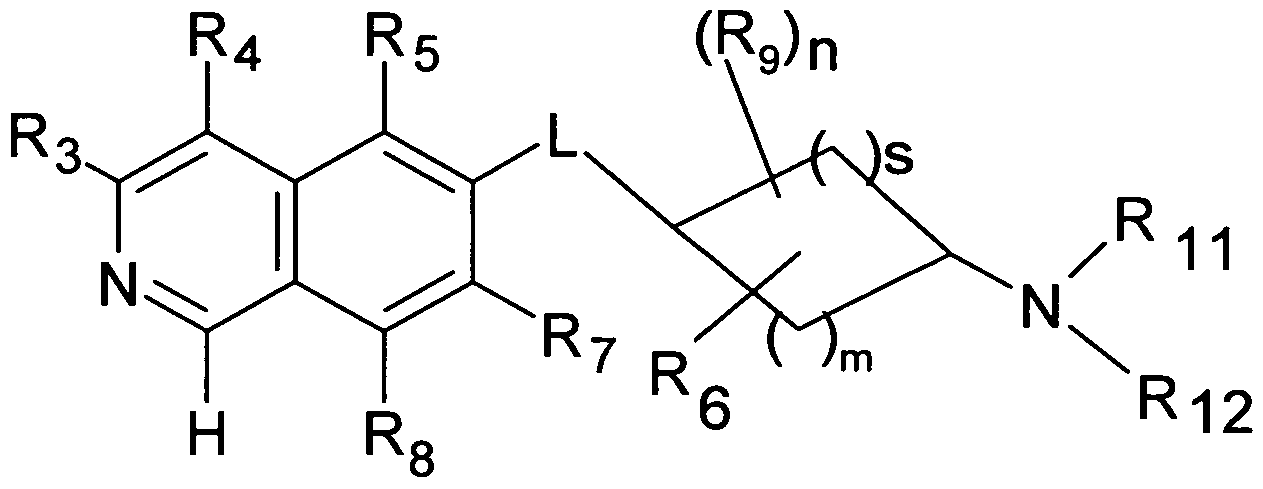
- An embodiment of the present invention is a compound of the formula (I)
- Ri is H, OH or NH2
- R3 is H, halogen, CN, (C-i-CeJalkyl, OH, NH2, or NHR';
- R4 is H, halogen, hydroxy, CN, (C-
- R5 is H, halogen, CN 1 (C-
- R 7 is H 1 halogen, CN 1 (C-
- Rs is H 1 halogen or (C-
- RQ is one (C-
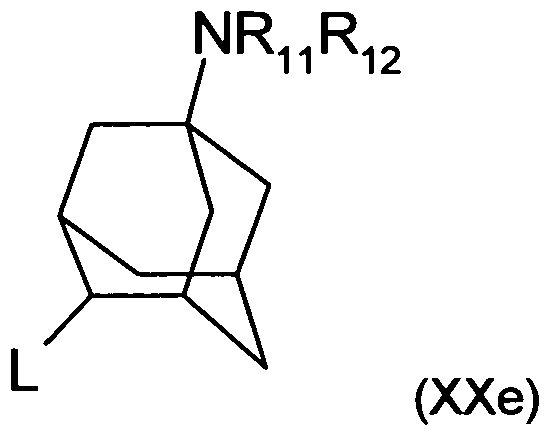
- F*6 is CH2-CH-(CH2)2 which is bound with one CH2 to the cycloalkyl ring and the two other CH2 are bound to different carbon atoms of the cycloalkyl ring, and, if m is 3 and s is 3, RQ are two methylene groups bound to different carbon atoms of the cycloalkyl ring, wherein the methylene groups or the CH2-CH-(CH2)2 group are bound to carbon atoms of the cycloalkyl ring and form an adamantane system of the formula
- L can be bound to any secondary or tertiary carbon atom
- bicyclic ring system or adamantane system or the (C3-C8)heterocycloalkyl containing ring system is unsubstituted or optionally substituted by Rg;
- R 1 1 and R 12 are independently of each other H
- R 1 1 and R 12 together with the N-atom to which they are attached, form a (C3-C8) heterocycloalkyl;
- R 13 is H or (Ci-C6)alkyl;
- n O 1 1 , 2, 3 or 4;
- n 1 , 2, 3 or 4;
- s is O, 1, 2, or 3;
- L is 0(CH 2 )P, S(CH 2 )P, S(O)(CH 2 )P, SO 2 (CH 2 )P, NH(CH 2 )p, N(C 1 -C 6 )alkyl-(CH 2 )p. N(C3-C 6 )cycloalkyl-(CH 2 )p; or Nt(C 1 -C3)alkylene-R ' ]-(CH 2 )p;
- p 0, 1 , 2, 3 or 4;
- R' is (C3-C8)cycloalkyl
- residues R3 to R 1 3 alkyl or alkylene is unsubstituted or optionally substituted one or more times by OH, OCH3, C(O)OH, C(O)OCH3, NH 2 , NHCH3, N(CH 3 J 2 , C(O)NH 2) C(O)NHCH 3 or C(O)N(CH 3 ) 2;
- residues R 3 to R 13 alkyl or alkylene is unsubstituted or optionally substituted one or more times by halogen; wherein in residues R3 to R13 (C 6 -C 1 rj)aryl and (C 5 -C 1 rj)heteroaryl are unsubstituted or optionally substituted one or more times by a group independently selected from halogen, OH, NO 2 , N 3 , CN, C(O)-(C 1 -C 6 )alkyl, C(O)-(C 6 -C 10 )aryl, C(O)OH,
- C ⁇ Jheterocycloalkyl and (C3-C ⁇ )cycloalkyl groups may not be further substituted by an aryl, heteroaryl, heterocycloalkyl or cycloalkyl containing group; their stereoisomeric and/or tautomeric forms and/or their pharmaceutically acceptable salts thereof.
- the present invention also relates to a compound of formula (I) and/or its pharmaceutically acceptable salt for use as a medicament. It also relates to the use of at least one compound of formula (I) and/or a pharmaceutically acceptable salt thereof for the treatment and/or prevention of Rho-Kinase mediated diseases such as hypertension, pulmonary hypertension, ocular hypertension, retinopathy, glaucoma, peripheral circulatory disorder, peripheral arterial occlusive disease (PAOD), coronary heart disease, angina pectoris, heart hypertrophy, heart failure, ischemic diseases, ischemic organ failure (end organ damage), fibroid lung, fibroid liver, liver failure, nephropathy, renal failure, fibroid kidney, renal glomerulosclerosis, organ hypertrophy, asthma, chronic obstructive pulmonary disease (COPD), adult respiratory distress syndrome, thrombotic disorders, stroke, cerebral vasospasm, cerebral ischemia, pain, neuronal degeneration, spinal cord injury, Alzheimer's
- -C6)alkyl and the corresposponding alkylene substituents are understood as a hydrocarbon residue which can be linear, i.e. straight-chain, or branched and has 1 , 2, 3, 4, 5, or 6 carbon atoms, respectively.
- an alkyl group occurs as a substituent on another group, for example in an alkoxy group (O-alkyl), S-alkyl or a -O(C-
- alkyl groups are methyl, ethyl, propyl, butyl, pentyl or hexyl, the n-isomers of all these groups, isopropyl, isobutyl, 1-methylbutyl, isopentyl, neopentyl, 2,2-dimethylbutyl, 2- methylpentyl, 3-methylpentyl, isohexyl, sec-butyl, tert-butyl or tert-pentyl.
- Alkyl or alkylene groups may optionally be halogenated once or more, e.g. alkyl groups may be fluorinated, e.g. perfluorinated. Examples of halogenated alkyl groups are CH2F,
- the double bond may where possible have the E or Z orientation.
- the double bonds may be both internal and terminal.
- the triple bonds may be both internal and terminal.
- Halogen means fluoro (F), chloro (Cl), bromo (Br) or iodo (I).
- -C8)heteroalkylene substituents are understood as (C-
- the heteroatom may be placed at any position of the alkyl or alkylene group.
- -C8)heteroalkyl groups include -CH 2 -O-
- (C 3 -C8)cycloalkyl groups are cyclic alkyl groups containing 3, 4, 5, 6, 7 or 8 ring carbon atoms like cyclopropyl, cyclobutyl, cyclopentyl, cyclohexyl or cyclooctyl, which can also be substituted and/or contain 1 or 2 double bounds (unsaturated cycloalkyl groups) like, for example, cyclopentenyl or cyclohexenyl, which can be bonded via any carbon atom.
- a (CQ-C- ⁇ o)ary ⁇ group means an aromatic ring or a ring system which comprises two aromatic rings which are fused or otherwise linked or which comprises two fused aromatic rings wherein one ring is saturated or partly saturated, i.e contains at least one C-C single bond, for example a phenyl, naphthyl, biphenyl, tetrahydronaphthyl, alpha- or beta-tetralon-, indanyl- or indan-1-on-yl group.
- a preferred (C6-C ⁇ ⁇ o)aryl group is phenyl.
- (C3-C8)heterocycloalkyl group means a saturated (contains no double bonds) monocyclic carbon ring system containing 3, 4, 5, 6, 7 or 8 ring atoms in which one or more carbon atoms can be replaced by one ore more heteroatoms such as, for example 1 , 2 or 3 nitrogen atoms, 1 or 2 oxygen atoms, 1 or 2 sulfur atoms or combinations of different hetero atoms.
- the heterocycloalkyl residues can be bound at any positions, for example on the 1-position, 2-position, 3-position, 4-position, 5- position, 6-position, 7-position or 8-position. Also included are the corresponding N- oxides, sulfoxides or sulfones of these compounds.
- Examples of (C3-C8)heterocycloalkyl groups are oxiranyl, oxetanyl, aziridinyl, tetrahydrofuranyl, tetrahydropyranyl, dioxolanyl, for example 1 ,3-dioxolanyl, dioxanyl, for example 1 ,4-dioxanyl, piperidinyl, pyrrolidinyl, imidazolidinyl, triazolidinyl, hexahydropyrimidinyl, piperazinyl, triazinanyl, for example, 1 ,3,5-triazinanyl, 1 ,2,3- triazinanyl or 1 ,2,4-triazinanyl, tetrahydrothiophenyl, tetrahydro-thiopyranyl, dithiolanyl, for example 1 ,3-dithiolanyl, dithianyl, thiazolidinyl,
- a preferred (C ⁇ -C ⁇ Jheterocycloalkyl group is morpholinyl, pyrrolidinyl, piperazinyl, piperidinyl, oxetanyl or tetrahydropyranyl.
- (C5-Cio)heteroaryl means a mono- or bicyclic ring system in which one or more carbon atoms can be replaced by one ore more heteroatoms such as, for example 1 , 2, 3 or 4 nitrogen atoms, 1 or 2 oxygen atoms, 1 or 2 sulfur atoms or combinations of different hetero atoms.
- heteroaryl residues can be bound at any position, for example on the 1 -position, 2-position, 3-position, 4-position, 5-position, 6-position, 7- position or 8-position.
- (C5-Cio)heteroaryl groups may be an (1) aromatic monocyclic or bicyclic ring system or (2) a bicyclic ring system wherein one ring is aromatic and the second ring is at least partially saturated.
- Suitable (C5-Cio)heteroaryl groups are benzimidazolyl, benzofuryl, benzothienyl, azaindolyl, benzothiophenyl, benzoxazolyl, benzthiazolyl, benztriazolyl, benzisoxazolyl, benzisothiazolyl, carbolinyl, cinnolinyl, chromanyl, chromenyl, naphthyridinyl, phthalazinyl, pyridoimidazolyl, pteridinyl, purynyl, quinazolinyl, quinoxalinyl, quinolinyl, isoquinolinyl, tetrahydroisoquinolinyl, tetrahydroquinolinyl, indolinyl, indolizinyl, indolyl, furyl, furazanyl, thienyl, imidazolyl, imida
- Pyridyl stands both for 2-, 3- and 4-pyridyl.
- Thienyl stands both for 2- and 3-thienyl.
- Furyl stands both for 2- and 3-furyl.
- N-oxides of these compounds for example, 1-oxy-2-, 3- or 4-pyridyl.
- o)heteroaryl residues are benzofuryl, quinolinyl, furyl, thienyl, imidazolyl, pyrazolyl, oxazolyl, isoxazolyl, thiazolyl, isothiazolyl, pyridyl, triazolyl, oxadiazolyl, pyrazinyl, pyrimidinyl, pyridazinyl and tetrazolyl.
- a preferred (C 5 -C 1 o)heteroaryl is a (C 5 -C5)heteroaryl group.
- C 5 - C ⁇ Jheteroaryl residues are furyl, thienyl, imidazolyl, pyrazolyl, oxazolyl, isoxazolyl, thiazolyl, isothiazolyl, pyridyl, triazolyl, oxadiazolyl, pyrazinyl, pyrimidinyl, and pyridazinyl.
- (C 5 -C6)heteroaryl residues are 2- or 3-thienyl, 2- or 3-furyl, 1-, 2- or 3-pyrrolyl, 1-, 2-, 4- or 5-imidazolyl, 1-, 3-, 4- or 5-pyrazolyl, 1 ,2,3- triazol-1-, -4- or -5-yl, 1 ,2,4-triazoM-, -3- or -5-yl, 2-, 4- or 5-oxazolyl, 3-, 4- or 5- isoxazolyl, 1 ,2,3-oxadiazol-4- or -5-yl, 1 ,2,4-oxadiazol-3- or -5-yl, 1 ,3,4-oxadiazol-2- or -5-yl, 2-, 4- or 5-thiazolyl, 3-, 4- or 5-isothiazolyl, 2-, 3- or 4-pyridyl, 2-, 4-, 5- or 6- pyrimidinyl, 3- or 4-pyridazinyl, or pyrazin
- residues R3 to R 1 3 (C 6 -C 1 rj)aryl and (C 5 -C 1 rj)heteroaryl residues are unsubstituted or, if not specified otherwise, optionally substituted one or more times, preferably one to three times, by a group independently selected from halogen, OH, NO 2 , N 3 , CN, C(O)-(C 1-C 6 )alkyl, C(O)-(C 6 -C 10 )aryl, C(O)OH, C(O)O(C 1 -C 6 )alkyl, C(O)NH 2 , CfOJNHfC-i-CeJalkyl, C(O)Nt(C 1 -C 6 )alkyl] 2 , (C3-C8)cycloalkyl, (C ⁇ CeJalkyl, (C-i-C ⁇ Jalkylene-NH ⁇ -i-CeJalkyl, (C-i-CeJ
- C8heterocycloalkyl or (C ⁇ -CsJcycloalkyl groups may not be further substituted by an aryl, heteroaryl, heterocycloalkyl or cycloalkyl containing group.
- substituents for (C6-C1 rj)aryl and (C5-C1 rj)heteroaryl groups are OH, CN, (Ci-C4)alkyl especially CH3 or CF3, O(Ci-C4)alkyl especially O-CH3, halogen or phenyl, wherein the phenyl may be further substituted one to three times, preferably once, by OH, halogen, (Ci-C4)alkyl especially CH3 or CF3, or
- O-(Ci-C4)alkyl especially O-CH3.
- CN halogen, (Ci-C4)alkyl especially CH3 or CF3, O(Ci-C4)alkyl especially O-CH3, or halogen.
- phenyl groups In monosubstituted phenyl groups the substituent can be located in the 2-position, the 3-position or the 4-position, with the 3-position and the 4-position being preferred. If a phenyl group carries two substituents, they can be located in 2,3-position, 2,4-position, 2,5-position, 2,6-position, 3,4-position or 3,5-position. In phenyl groups carrying three substituents the substituents can be located in 2, 3,4-position, 2, 3,5-position, 2,3,6- position, 2,4,5-position, 2,4,6-position, or 3,4,5-position.
- the above statements relating to phenyl groups correspondingly apply to divalent groups derived from phenyl groups, i.e.
- phenylene which can be unsubstituted or substituted 1 ,2-phenylene, 1 ,3-phenylene or 1 ,4-phenylene.
- the above statements also correspondingly apply to the aryl subgroup in arylalkylene groups.
- arylalkylene groups which can also be unsubstituted or substituted in the aryl subgroup as well as in the alkylene subgroup, are benzyl, 1-phenylethylene, 2-phenylethylene, 3- phenylpropylene, 4-phenylbutylene, 1-methyl-3-phenyl-propylene.
- an alkyl or alkylene is unsubstituted or, if not specified otherwise, optionally substituted one or more times by halogen. If substituted, alkyl or alkylene is preferably substituted one to three times by halogen selected from chloro or bromo but may be substituted by fluoro once or more, e.g. being perfluorinated. Preferably halogen is fluoro. Preferablyl alkylene is not halogenated. More preferred an alkyl or alkylene is not halogenated.
- 3 alkyl or alkylene is unsubstituted or, if not specified otherwise, optionally substituted one or more times by a group selected independently from OH, OCH 3 , COOH, COOCH 3 , NH 2 , NHCH 3 , N(CH 3 ) 2 , CONH 2 , CONHCH 3 or CON(CH3) 2 .
- the number of substituents is preferably between 1 , 2, 3 or 4, more preferably 1 or 2 with 1 being even more preferred.
- an alkylene is not substituted by one of these groups. More preferably an alkyl or alkylene is not substituted by one of these groups.
- R ⁇ are not substituted.
- 4 is not substituted by one of these groups.
- cycloalkyl or heterocycloalkyl is unsubstituted or, if not specified otherwise, optionally substituted one or more times by (C-
- the number of substituents is preferably between 1 , 2, 3 or 4, more preferably 1 or 2 with 1 being even more preferred.
- cycloalkyl or heterocycloalkyl in R3, R4, R5, R7 and Rg are not substituted.
- cycloalkyl or heterocycloalkyl in R3 to R-13 is not substituted.
- a heterocycloalkyl is not substituted.
- cycloalkyl is not substituted.
- is H and the compound is characterized by the formula (II)
- is OH and the compound is characterized by the formula (Ilia)
- is OH, includes the corresponding tautomeric 1-isoquinolone derivative which is characterized by the formula (MIb)
- This tautomeric form is also an embodiment of the present invention.
- is NH2 and the compound is characterized by the formula
- Ri is H or OH; more preferably R-j is OH.
- R3 is preferably H, halogen, (Ci-C6)alkyl, or NH-R ' .
- R3 is H, halogen, unsubstituted or substituted NH-(C5-C6)heteroaryl, unsubstituted or substituted NH-(C3-C8)heterocycloakyl or unsubstituted or substituted NH-phenyl.
- R3 is unsubstituted or substituted NH-(C5-C6)heteroaryl containing one or more N atoms, or unsubstituted or substituted NH-phenyl.
- R3 is H. Examples of NHR ' substituents in R3 are
- the asterisk ( * ) denotes where the bond is connected to the C-atom of the ring.
- R4 is H, halogen, (C-
- R4 is H, halogen or unsubstituted or substituted (C-
- Most preferred R4 is H.
- R5 is H, CN, halogen, unsubstituted or substituted (Ci ⁇ C ⁇ jalkyl, unsubstituted or substituted (Cg-Ci o)aryl, or unsubstituted or substituted (C5-Cio)heteroaryl.
- R5 are hydrogen, fluoro, chloro, bromo, iodo, methyl, ethyl, phenyl, thienyl or pyridyl, nitrile, (p-methoxy)-phenyl, N-aniline, cyclopropyl, tetrazol, 4-methoxy-aniline.
- o)heteroaryl are unsubstituted.
- R5 is H 1 halogen, methyl, ethyl, phenyl, thienyl, or pyridyl, more specifically H, halogen, methyl, or ethyl. Most preferred R5 is H.
- R7 is H, halogen, nitrile, unsubstituted or substituted (C-
- R7 is H, fluoro, chloro, bromo, methyl, ethyl, methoxy, phenyl, nitrile, cyclopropyl, or thienyl. More preferably R7 is H, fluoro, chloro, bromo, methyl or methoxy, in particular H or chloro. Most preferred R7 is chloro.
- Re is H, Cl, F, methyl or ethyl.
- Rs is H.
- Rg is R', OH, halogen, (Ci-C6)alkyl, (Ci-C6)alkylene-R ⁇ (C 2 -C 6 )alkenyl, (Ci-C6)alkylene-C(O)NH-R', (Ci-C6)alkylene-C(O)NH-(Ci-C6)alkyl, COOH, CONH 2 , C(O)NH-(C 1 -C6)alkyl, C(O)NHR', C(O)-NH-(Ci -C ⁇ Jalkynyl, C(O)- NH(Ci -C6)alkylene-R', or C(O)N[(Ci-Ce)alkyl] 2 ; wherein alkyl, alkylene and R ' are unsubstituted or substituted.
- Rg is OH, halogen, (Ci-C ⁇ jalkyl, R ' ,
- Rg is OH, halogen, (C ⁇
- Rg is OH 1 halogen, (C ⁇
- Rg is allyl, methyl, ethyl, propyl, isopropyl, butyl, isobutyl, cyclopropyl, cyclobutyl, cyclopentyl, cyclopropylmethylene, isopropyloxymethylene, tetrahydrofuranyl, tetrahydropyranyl, phenyl or benzyl.
- Rg may be bound to any carbon atom of the ring including the position where the linker group L is bound.
- Rg is methyl, ethyl, propyl, isopropyl, phenyl,
- the asterisk ( * ) denotes where the bond is connected to the C-atom of the ring.
- Rn and R12 are independently of each other H 1 R',
- -C6)alkylene are unsubstituted or substituted.
- 2 are independently of each other H
- and R-12 is morpholinyl, piperidinyl, pyrrolidinyl or piperazinyl. More preferably the heterocyclyl group is morpholinyl or piperazinyl.
- 1 is H, (C-
- (C3-C ⁇ )cycloalkyl (C 1 -C4)alkylene-(C3-C8)cycloalkyl, (C 1 -C4)alkylene-(C5-C-
- R 1 1 is H or (C-i-CeJalkyl
- R 12 is
- R 1 1 is H, (C ⁇
- 1 is H and R-12 is H, (Ci-C6)alkyl or (C ⁇ -C ⁇ Jcycloalkyl wherein (C-
- 2 are H.
- i or R-J2 are, independently from each other, hydrogen, methyl, ethyl, propyl, isopropyl, 3-methyl-butyl, 2-methyl- propyl, butyl, pentyl, 3,3,3-trifluoropropyl, 4,4,4-trifluorobutyl or a substituent selected from the group consisting of
- the asterisk ( * ) denotes where the bond is connected to the N-atom of the amine.
- R-13 is H or (C-
- the alkyl is unsubstituted.
- the bicyclus formed with RQ is selected from the group of
- the adamantane formed with R ⁇ is selected from the group of
- the bicyclus or adamantane is unsubstituted (n is 0).
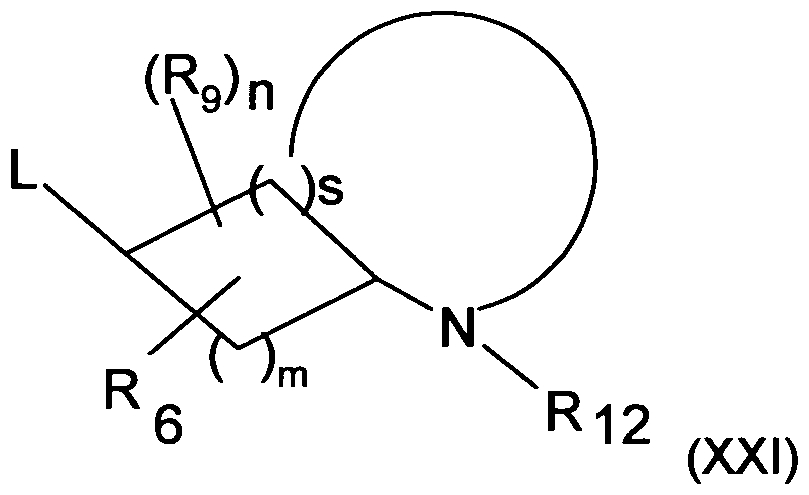
- 2 and the N atom form a (C3- C8)heterocycloalkyl which is fused or connected as a spirocyclic ring system to the cycloalkyl residue to form a residue of the formula;
- m is 2 and s is 2. In another embodiment m is 3 and s is 1 In a further embodiment m is 2 and s is 1. In still another embodiment m is 3 and s is 0. In yet another embodiment m is 4 and s is 0.
- n is 0, 1 , or 2. More preferred, n is 0 or 1. Most preferred n is 0.
- L is O(CH 2 )p.
- L is S(CH 2 )P, S(O)(CH 2 )P or SO 2 (CH 2 )P.
- L is NH(CH 2 )p, N[(d- C 6 )alkyl](CH 2 )p, N[(C 3 -C 6 )cycloalkyl](CH 2 )p, N[(Ci-C 3 )alkylene-aryl](CH 2 )p or N[(d- C 3 )alkylene-(C5-C6)heteroaryl](CH 2 )p with NH(CH 2 )p, N(Ci-C 6 )alkyl-(CH 2 )p being more preferred.
- a preferred N(Ci-C6)alkyl is N(C-
- L is O(CH 2 )p.
- L is S(CH 2 )p.
- L is NH(CH 2 )p.
- Most preferred L is O, S or NH with O being especially preferred.
- p is 0, 1 , 2, or 3, more preferred 0 or 1 , with 0 being most preferred;
- L is O, S or NH, preferably L is O.
- the present invention relates to a compound of formula (I) selected from the group consisting of
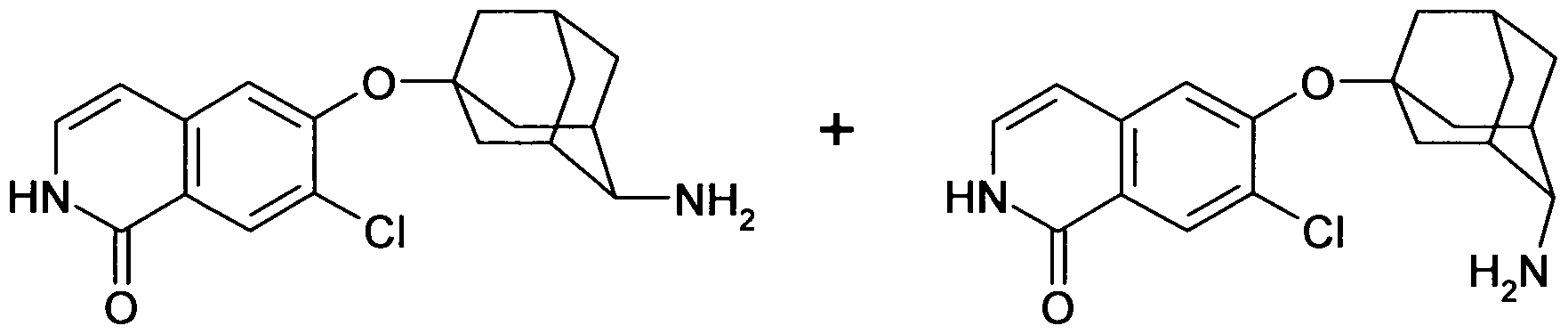
- a compound of formula (I) is selected from the group consisting of cis-6-(5-Amino-adamantan-2-yloxy)-7-chloro-2H-isoquinolin-1-one, trans-6-(5-Amino-adamantan-2-yloxy)-7-chloro-2H-isoquinolin-1-one, 6- ⁇ [(7-Endo,9-anti)-7-amino-3-oxabicyclo[3.3.1]non-9-yl]oxy ⁇ -7-chloroisoquinolin-1(2H)- one,
- one or more or all of the groups contained in the compounds of formula (I) can independently of each other have any of the preferred, more preferred or most preferred definitions of the groups specified above or any one or some of the specific denotations which are comprised by the definitions of the groups and specified above, all combinations of preferred definitions, more preferred or most preferred and/or specific denotations being a subject of the present invention.
- the invention includes the compounds of the formula (I) in all stereoisomeric forms and mixtures of stereoisomeric forms in all ratios, and their pharmaceutically acceptable salts.
- Isoquinoline substitution pattern is numbered according to IUPAC rules: 4 5
- compositions of the formula (I) mean both their organic and inorganic salts as described in Remington's Pharmaceutical Sciences (17th edition, page 1418 (1985)). Because of the physical and chemical stability and the solubility, preference is given for acidic groups inter alia to sodium, potassium, calcium and ammonium salts; preference is given for basic groups inter alia to salts of maleic acid, fumaric acid, succinic acid, malic acid, tartaric acid, methylsulfonic acid, hydrochloric acid, sulfuric acid, phosphoric acid or of carboxylic acids or sulfonic acids, for example as hydrochlorides, hydrobromides, phosphates, sulfates, methanesulfonates, acetates, lactates, maleates, fumarates, malates, gluconates, and salts of amino acids, of natural bases or carboxylic acids.
- acidic groups inter alia to sodium, potassium, calcium and ammonium salts
- basic groups inter alia to salts of maleic acid
- the compounds of the formula (I) form stable alkali metal, alkaline earth metal or optionally substituted ammonium salts with basic reagents such as hydroxides, carbonates, bicarbonates, alcoholates and ammonia or organic bases, for example trimethyl- or triethylamine, ethanolamine, diethanolamine or triethanolamine, trometamol or else basic amino acids, for example lysine, ornithine or arginine.
- basic reagents such as hydroxides, carbonates, bicarbonates, alcoholates and ammonia or organic bases, for example trimethyl- or triethylamine, ethanolamine, diethanolamine or triethanolamine, trometamol or else basic amino acids, for example lysine, ornithine or arginine.
- stable acid addition salts can also be prepared with strong acids.
- Suitable pharmaceutically acceptable acid addition salts of the compounds of the invention are salts of inorganic acids such as hydrochloric acid, hydrobromic, phosphoric, metaphosphoric, nitric and sulfuric acid, and of organic acids such as, for example, acetic acid, benzenesulfonic, benzoic, citric, ethanesulfonic, fumaric, gluconic, glycolic, isethionic, lactic, lactobionic, maleic, malic, methanesulfonic, succinic, p-toluenesulfonic and tartaric acid.
- the hydrochloride salt is a prefered salt.
- Salts with a pharmaceutically unacceptable anion such as, for example, trifluoroacetate likewise belong within the framework of the invention as useful intermediates for the preparation or purification of pharmaceutically acceptable salts and/or for use in nontherapeutic, for example in vitro, applications.
- the present invention also includes physiologically functional derivatives of a compound of formula (I).
- a physiologically functional derivative as used herein refers to any physiologically tolerated derivative of a compound of the formula (I) of the invention, for example an N-oxide, which on administration to a mammal such as, for example, a human is able to form (directly or indirectly) a compound of the formula (I) or an active metabolite thereof.
- Physiologically functional derivatives include prodrugs of the compounds of the invention, as described, for example, in H. Okada et al., Chem. Pharm. Bull. 1994, 42, 57-61. Such prodrugs can be metabolized in vivo to a compound of the invention. These prodrugs may themselves be active or not.
- the invention relates to compounds of the formula (I) in the form of their stereoisomeric forms, which include racemates, enantiomerically enriched mixtures, pure enantiomers and diastereomers and mixtures in any ratio thereof.
- the compounds of the invention may also exist in various polymorphous forms, for example as amorphous and crystalline polymorphous forms. All polymorphous forms of the compounds of the invention belong within the framework of the invention and are a further aspect of the invention.
- radicals or substituents may occur more than once in the compounds of the formula (I), they may all, independently of one another, have the stated meaning and be identical or different.
- the present invention also relates to the compounds of the formula (I) and/or their pharmaceutically acceptable salts for use as pharmaceuticals (or medicaments), to the use of the compounds of the formula (I) and/or their pharmaceutically acceptable salts for the production of pharmaceuticals for the treatment and/or prevention of diseases associated with Rho-kinase and/or Rho-kinase mediated phosphorylation of myosin light chain phosphatase, i.e.
- peripheral circulatory disorder for the treatment and/or prevention of hypertension, pulmonary hypertension, ocular hypertension, retinopathy, and glaucoma, peripheral circulatory disorder, peripheral arterial occlusive disease (PAOD) 1 coronary heart disease, angina pectoris, heart hypertrophy, heart failure, ischemic diseases, ischemic organ failure (end organ damage), fibroid lung, fibroid liver, liver failure, nephropathy, including hypertension-induced, non-hypertension-induced, and diabetic nephropathies, renal failure, fibroid kidney, renal glomerulosclerosis, organ hypertrophy, asthma, chronic obstructive pulmonary disease (COPD), adult respiratory distress syndrome, thrombotic disorders, stroke, cerebral vasospasm, cerebral ischemia, pain, e.g.
- PAOD peripheral arterial occlusive disease
- neuropathic pain neuronal degeneration, spinal cord injury, Alzheimer's disease, premature birth, erectile dysfunction, endocrine dysfunctions, arteriosclerosis, prostatic hypertrophy, diabetes and complications of diabetes, metabolic syndrome, blood vessel restenosis, atherosclerosis, inflammation, autoimmune diseases, AIDS, osteopathy such as osteoporosis, infection of digestive tracts with bacteria, sepsis, cancer development and progression, e.g. cancers of the breast, colon, prostate, ovaries, brain and lung and their metastases.
- the invention also relates to the use of a compound of formula (I) and/or a pharmaceutically acceptable salt thereof for the treatment and/or prevention of hypertension, pulmonary hypertension, fibroid liver, liver failure, nephropathy, renal failure, chronic obstructive pulmonary disease (COPD), cerebral vasospasm, pain, spinal cord injury, erectile dysfunction, blood vessel restenosis, or cancer development and progression.
- a compound of formula (I) and/or a pharmaceutically acceptable salt thereof for the treatment and/or prevention of hypertension, pulmonary hypertension, fibroid liver, liver failure, nephropathy, renal failure, chronic obstructive pulmonary disease (COPD), cerebral vasospasm, pain, spinal cord injury, erectile dysfunction, blood vessel restenosis, or cancer development and progression.
- COPD chronic obstructive pulmonary disease
- the present invention furthermore relates to pharmaceutical preparations (or pharmaceutical compositions) which contain an effective amount of at least one compound of the formula (I) and/or its pharmaceutically acceptable salts and a pharmaceutically acceptable carrier, i. e. one or more pharmaceutically acceptable carrier substances (or vehicles) and/or additives (or excipients).
- a pharmaceutically acceptable carrier i. e. one or more pharmaceutically acceptable carrier substances (or vehicles) and/or additives (or excipients).
- the pharmaceuticals can be administered orally, for example in the form of pills, tablets, lacquered tablets, coated tablets, granules, hard and soft gelatin capsules, solutions, syrups, emulsions, suspensions or aerosol mixtures.
- Administration can also be carried out rectally, for example in the form of suppositories, or parenterally, for example intravenously, intramuscularly or subcutaneously, in the form of injection solutions or infusion solutions, microcapsules, implants or rods, or percutaneously or topically, for example in the form of ointments, solutions or tinctures, or in other ways, for example in the form of aerosols or nasal sprays.
- compositions according to the invention are prepared in a manner known per se and familiar to one skilled in the art, pharmaceutically acceptable inert inorganic and/or organic carrier substances and/or additives being used in addition to the compound(s) of the formula (I) and/or its (their) pharmaceutically acceptable salts and/or its (their) prodrugs.
- pharmaceutically acceptable inert inorganic and/or organic carrier substances and/or additives being used in addition to the compound(s) of the formula (I) and/or its (their) pharmaceutically acceptable salts and/or its (their) prodrugs.
- pharmaceutically acceptable inert inorganic and/or organic carrier substances and/or additives being used in addition to the compound(s) of the formula (I) and/or its (their) pharmaceutically acceptable salts and/or its (their) prodrugs.
- for the production of pills, tablets, coated tablets and hard gelatin capsules it is possible to use, for example, lactose, corn starch or derivatives thereof, talc
- Suitable carrier substances for the production of solutions for example injection solutions, or of emulsions or syrups are, for example, water, saline, alcohols, glycerol, polyols, sucrose, invert sugar, glucose, vegetable oils, etc.
- Suitable carrier substances for microcapsules, implants or rods are, for example, copolymers of glycolic acid and lactic acid.
- the pharmaceutical preparations normally contain about 0.5 to about 90 % by weight of the compounds of the formula (I) and/or their pharmaceutically acceptable salts and/or their prodrugs.
- the amount of the active ingredient of the formula (I) and/or its pharmaceutically acceptable salts and/or its prodrugs in the pharmaceutical preparations normally is from about 0.5 to about 1000 mg, preferably from about 1 to about 500 mg.
- the pharmaceutical preparations can contain one or more additives such as, for example, fillers, disintegrants, binders, lubricants, wetting agents, stabilizers, emulsifiers, preservatives, sweeteners, colorants, flavorings, aromatizers, thickeners, diluents, buffer substances, solvents, solubilizers, agents for achieving a depot effect, salts for altering the osmotic pressure, coating agents or antioxidants. They can also contain two or more compounds of the formula (I) and/or their pharmaceutically acceptable salts.
- a pharmaceutical preparation contains two or more compounds of the formula (I) the selection of the individual compounds can aim at a specific overall pharmacological profile of the pharmaceutical preparation. For example, a highly potent compound with a shorter duration of action may be combined with a long-acting compound of lower potency.
- the flexibility permitted with respect to the choice of substituents in the compounds of the formula (I) allows a great deal of control over the biological and physico-chemical properties of the compounds and thus allows the selection of such desired compounds.
- the pharmaceutical preparations can also contain one or more other therapeutically or prophylactically active ingredients.
- the dose can vary within wide limits and, as is customary and is known to the physician, is to be suited to the individual conditions in each individual case. It depends, for example, on the specific compound employed, on the nature and severity of the disease to be treated, on the mode and the schedule of administration, or on whether an acute or chronic condition is treated or whether prophylaxis is carried out.
- An appropriate dosage can be established using clinical approaches well known in the medical art.
- the daily dose for achieving the desired results in an adult weighing about 75 kg is from about 0.01 to about 100 mg/kg, preferably from about 0.1 to about 50 mg/kg, in particular from about 0.1 to about 10 mg/kg, (in each case in mg per kg of body weight).
- the daily dose can be divided, in particular in the case of the administration of relatively large amounts, into several, for example 2, 3 or 4, part administrations. As usual, depending on individual behavior it may be necessary to deviate upwards or downwards from the daily dose indicated.
- the compounds of the formula (I) can be used as synthesis intermediates for the preparation of other compounds, in particular of other pharmaceutical active ingredients, which are obtainable from the compounds of the formula I, for example by introduction of substituents or modification of functional groups.
- Compounds of formula (I) may be made in the following manner:
- Isoquinolines and isoquinolones like (i) or (ii), bearing a useful residue for coupling in 6-position can be obtained by a wide variety of methods, for example reviewed in Alvarez et al. Science of Synthesis 2005, 15, 661-838 and 839-906 and references cited therein. Isoquinolines can also be converted to isoquinolones by methods described in the literature e.g.
- WO 2007/012421 or WO 2007/012422 like conversion of a suitable isoquinoline into the corresponding N-oxide with an oxidating agent like hydrogen peroxide or metachloro perbenzoic acid and subsequent conversion into the corresponding 1-chloro derivative by a chlorinating agent like phosphorous oxy chloride, followed by displacement of the chlorine by an alcohol under basic condition like sodium methoxide in methanol or conversion into the corresponding 2H- isoquinolone by for example treatment with ammonium acetate in acetic acid at elevated temperature.
- an oxidating agent like hydrogen peroxide or metachloro perbenzoic acid
- a chlorinating agent like phosphorous oxy chloride
- residues R 3 , R 4 , R 5 , R 7 , and/or R 8 can either be incorporated in the starting materials for the synthesis of the respective isoquinoline or isoquinolone or can be introduced at a suitable later stage e.g. by halogenation like bromination or chlorination and subsequent replacement of said halogen by methods well precedented in the literature like for example Suzuki or Hartwig Buchwald couplings using appropriate catalysts and coupling partners like boronic acids, amines or anilines.
- cycloalkyl amine substituted isoquinolinone (v) is described below in an exemplary fashion, but does not limit the present invention.
- the cycloalkyl amine substituted isoquinolinones (for example compound v) can by synthesized via a variety of methods.
- the following general scheme 1 illustrates some of the possible ways to access the isoquinolinones, but does not limit the present invention.
- 6-Fluoro-isoquinolones (i), for example substituted by Rz, R 4 , R 5 , R 7 , and/or Re being for instance independently from each other substituents like hydrogen, alkyl, alkoxy or halide, can be reacted with suitable Rn / R 12 substituted amino alcohols wherein Rn / Ri 2 are independently from each other for example hydrogen, alkyl or a protecting group like for example Boc or Cbz in the presence of base such as DBU, cesium carbonate, or sodium hydride at temperatures ranging from ambient to 100 0 C to give the corresponding derivatives (iv).
- this conversion can already be performed at earlier stages of the synthesis (e.g. by reacting a suitable intermediate).
- the amino alcohols can be coupled to 6-hydroxy-isoquinolones, such as (ii), under inversion of the hydroxyl bearing carbon center of compounds like (iii), either protected with a suitable protecting group Q or unprotected, via a Mitsunobu reaction using triphenylphosphine and dialkylazodicarboxylat.es such as diethylazodicarboxylate or diisopropylazodicarboxylate in a suitable solvent like tetrahydrofuran, or toluene.
- the products like (iv) obtained via these methods can then either be liberated to give compounds of type (v) or, if a suitable amino functionality is present, be reacted with suitable aldehydes or ketones in the presence of a reducing agent like sodium triacetoxy borohydride, sodium borohydride or sodium cyanoborohydride in a suitable solvent and in the presence of a water withdrawing agent like molecular sieves or a suitable ortho ester.
- This amino group may have to be liberated in an initial step, like for example acidic removal of Boc-groups.
- an amino group can be acylated by reacting it with a suitable acid chloride in the presence of a base like triethyl amine or H ⁇ nig's base or by reacting it with a suitable carboxylic acid in the presence of a base like triethylamine or H ⁇ nig's base and a coupling reagent like EDC, PyBOP or TOTU.
- Isoquinolone derivatives like (v) can be obtained as free bases or as various salts like for example hydrochlorides, hydrobromides, phosphates, trifluoroacetates, sulfates or fumarates.
- the salts obtained can be converted into the corresponding free base by either subjecting them to ion exchange chromatography or for example by alkaline aqueous treatment and subsequent extraction with suitable organic solvents like for example methyl tert. butyl ether, chloroform, ethyl acetate or isopropanol / dichloromethane mixtures and subsequent evaporation to dryness.
- suitable organic solvents like for example methyl tert. butyl ether, chloroform, ethyl acetate or isopropanol / dichloromethane mixtures and subsequent evaporation to dryness.
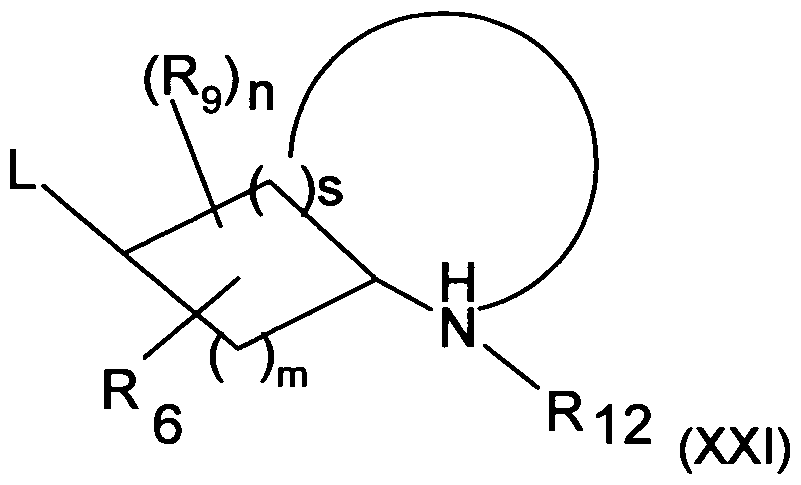
- cycloalkyl amine moieties like for example (iii) can by synthetized via a variety of methods.
- the following general schemes illustrate some of the possible ways to access the amines, but do not limit the present invention. It is within the abilities of a person skilled in the art to replace the exemplary compounds shown in the schemes and exemplary reagent given in the text by appropriate alternative compounds or reagents or to omit or add synthetic steps when appropriate.
- a cycloalkyl aminoalcohol (iii) is described exemplary in scheme 2 but does not limit the scope of substituents in the present invention.
- a cycloalkyl amine moiety (iii) can for example be accessed from a suitable diketone, which is mono-ketalized to give a compound (vi) by treatment with a suitable diol like ethylene glycol in the presence of an acid like p-toluene sulfonic acid.
- (vi) can for example also be obtained by mono-deprotection of a corresponding diketal or oxidation of a suitable alcohol precursor to a corresponding ketone by reaction with a suitable oxidizing agent like for example mangane or chromium reagents or hypervaltent iodine reagents, (iv) can then for example be converted into amines of type (vii) by reaction with an amine like ammonia, benzyl amine or ethyl amine in the presence of a reducing agent like sodium cyano borohydride or sodium borohydride, possibly in the presence of a lewis acid.
- a suitable oxidizing agent like for example mangane or chromium reagents or hypervaltent iodine reagents
- Ketone (viii) can be obtained for example by treatment of (vii) under acidic conditions like actone and hydrochloric acid or aqueous acetic acid at elevated temperature.
- the ketone can then be converted in an alcohol (iii) by reaction with a suitable reductive agents like sodium borohydride in a suitable solvent like methanol, ethanol or THF.
- hydroxy functionality of a compound (iii) can be converted to a thiol via a Mitsunobu reaction using thioacetate and subsequent basic cleavage with a suitable base, leading to amino moieties of type (x).
- the corresponding amines can be accessed via a reductive amination step starting from ketones such as compound (viii) using suitable amines in the presence of a reducing agent like sodium triacetoxy borohydride, sodium borohydride or sodium cyanoborohydride in the presence of a water withdrawing agent like molecular sieves or a suitable ortho ester.
- a reducing agent like sodium triacetoxy borohydride, sodium borohydride or sodium cyanoborohydride
- a water withdrawing agent like molecular sieves or a suitable ortho ester.
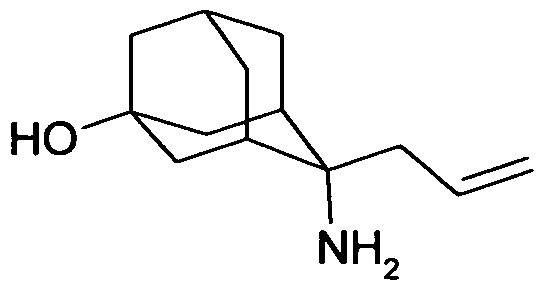
- One option to introduce residues Rg in ⁇ -position of the amine is to react a suitably protected ketone like (vi) with an amine source like ammonia and a suitable organometallic reagent like allyl boranes in a suitable solvent.
- Another option is to react protected alcohols (xii) with a reagent like 2-methyl-2-propanesulfinamide to a corresponding sulfimine (xiii) which can be further reacted with a suitable organometallic reagent like aryl lithium or Grignard reagents to give amines of type (xiv), which then can be further derivatized.
- Another option is to construct bicyclic or polycyclic carbocyclic acid derivatives containing keto moieties or protected keto moieties like (xv) by a Curtius reaction, e.g. by first converting the acid into an acyl azide by treatment with a chlorinating agent like sulfuryl chloride or thionyl chloride and subsequent reaction with an azide source like sodium azide in a suitable solvent and subsequent reaction of said acid chloride at elevated temperature to give the corresponding isocyanate, which can be trapped with a suitable alcohol like benzyl alcohol to give the corresponding carbamate protected amine.
- Compound (xvi) can then be further converted.
- protective groups that may still be present in the products obtained in the coupling reaction are then removed by standard procedures.
- tert-butyl protecting groups in particular a tert-butoxycarbonyl group which is a protection form of an amino group
- tert-butoxycarbonyl group which is a protection form of an amino group
- functional groups can be generated from suitable precursor groups.
- a conversion into a pharmaceutically acceptable salt or a prodrug of a compound of the formula (I) can then be carried out by known processes.
- a reaction mixture containing a final compound of the formula (I) or an intermediate is worked up and, if desired, the product is then purified by customary processes known to those skilled in the art.
- a synthesized compound can be purified using well known methods such as crystallization, chromatography or reverse phase-high performance liquid chromatography (RP-HPLC) or other methods of separation based, for example, on the size, charge or hydrophobicity of the compound.
- RP-HPLC reverse phase-high performance liquid chromatography
- well known methods such as NMR, IR and mass spectrometry (MS) can be used for characterizing a compound of the invention.
- 5-Hydroxy-2-adamantanone (3.0 g, 18.1 mmol) was dissolved in a solution of ammonia in methanol (7N, 26 ml_, 180 mmol, 10 eq.) and stirred for 15 min at room temperature. Then, 2-allyl-4,4,5,5-tetramethyl-1 ,3,2-dioxa-borolane (5.4 mL, 28.9 mmol, 1.6 eq.) was added dropwise. The reaction mixture was stirred for 16 h at room temperature before the volatiles were removed in vacuo.
- Example 1 A solution of 5-(1-benzyloxy-7-chloro-isoquinolin-6-yloxy)-adamantan-2-ylamine (15, 473 mg) in 2-propanol (4 ml_) was treated with 1 N aqueous hydrochloric acid (2 ml_) and stirred at room temperature until complete conversion was observed. The reaction mixture was evaporated and lyophilized from water twice to yield 385 mg of crude product. Purification by preparative HPLC and lyophilization from 1 N HCI and water gave 10 mg of the pure diastereoisomer Example 1 and 11 mg of Example 2 as their respective hydrochlorides along with further material as mixture of isomers.
- Example 14 and Example 15 (synthesized from the cis/trans mixture (13), it was possible to separate the cis/trans isomers after coupling in step a) by silica gel chromatography (dichloromethane/methanol) as the O- benzyl protected isoquinolinones.
- Example 22 6-(1-Aza-spiro[4.5]dec-8-yloxy)-7-chloro-2H-isoquinolin-1-one (Example 22) was synthesized as its hydrochloride from trans-1-aza-spiro[4.5]decan-8-ol (20) and 1- benzyloxy-7-chloro-6-fluoro-isoquinoline (1) using the procedure described for Example 1.
- R 1 2.01 min (Method 2).
- Method 7 Stationary phase: Column Kromasil C18, 50x2,1 mm, 3,5 ⁇ m Gradient: H 2 O+NH 4 OAc(5mM)+3%ACN : ACN 100:0(0 min) to 0:100(5.5 min) to 0:100(7 min)
- Method 8 Stationary phase: Column Gemini C18, 30x4.6 mm, 3 ⁇ m Gradient: H 2 O+0.1% FA : ACN+0.1% FA 95:5(0 min) to 0:100(5.5 min) to 0:100(7.5 min)
- IC50 values were determined according to the following protocol:
- Active human recombinant ROCK Il (N-terminal His6-tagged recombinant human ROCK-II residues 11-552) was purchased from Millipore GmbH, Schwalbach, Germany.
- the peptide substrate, Fluorescein-AKRRRLSSLRA-COOH was obtained from JPT Peptide Technologies, Berlin, Germany.
- Adenosine- ⁇ '-triphosphate (ATP), bovine serum albumine (BSA), dimethylsulphoxide (DMSO), 4-(2- hydroxyethyl)piperazine-1-ethanesulfonic acid (Hepes), Brij-35, dithiothreitol (DTT) and Pluronic F-68 were purchased from Sigma-Aldrich, Kunststoff, Germany.
- Tris(hydroxymethyl)-aminomethane (Tris), magnesium chloride, NaOH, 1M HCI and EDTA were obtained from Merck Biosciences, Darmstadt, Germany. "Complete” protease inhibitor was from Roche Diagnostics, Mannheim, Germany.
- Test compounds were diluted to the appropriate concentrations in buffer 1 (25 mM Tris-HCI, pH 7.4, 5 mM MgCI 2 , 2 mM DTT, 0.02 % (w/v) BSA, 0.01 % Pluronic F-68 and 3 % DMSO).
- the ROCK Il enzyme was diluted to a concentration of 100 ng/ml in buffer 2 (25 mM Tris-HCI, pH 7.4, 5 mM MgCI 2 , 2 mM DTT and 0.02 % (w/v) BSA).
- the peptide substrate and ATP were diluted to concentrations of 3 ⁇ M and 120 ⁇ M, respectively, in the buffer 2.
- PIC50 negative decadal logarithm of the IC50
Landscapes
- Health & Medical Sciences (AREA)
- Chemical & Material Sciences (AREA)
- Organic Chemistry (AREA)
- Life Sciences & Earth Sciences (AREA)
- General Health & Medical Sciences (AREA)
- Public Health (AREA)
- Chemical Kinetics & Catalysis (AREA)
- General Chemical & Material Sciences (AREA)
- Medicinal Chemistry (AREA)
- Nuclear Medicine, Radiotherapy & Molecular Imaging (AREA)
- Bioinformatics & Cheminformatics (AREA)
- Pharmacology & Pharmacy (AREA)
- Engineering & Computer Science (AREA)
- Veterinary Medicine (AREA)
- Animal Behavior & Ethology (AREA)
- Cardiology (AREA)
- Diabetes (AREA)
- Immunology (AREA)
- Heart & Thoracic Surgery (AREA)
- Urology & Nephrology (AREA)
- Neurosurgery (AREA)
- Neurology (AREA)
- Biomedical Technology (AREA)
- Pulmonology (AREA)
- Ophthalmology & Optometry (AREA)
- Hematology (AREA)
- Oncology (AREA)
- Virology (AREA)
- Endocrinology (AREA)
- Obesity (AREA)
- Pain & Pain Management (AREA)
- Hospice & Palliative Care (AREA)
- Communicable Diseases (AREA)
- Rheumatology (AREA)
- Gastroenterology & Hepatology (AREA)
- Tropical Medicine & Parasitology (AREA)
- AIDS & HIV (AREA)
- Psychiatry (AREA)
- Vascular Medicine (AREA)
- Emergency Medicine (AREA)
Abstract
Description













Claims




Priority Applications (20)
| Application Number | Priority Date | Filing Date | Title |
|---|---|---|---|
| RU2011102460/04A RU2532481C2 (en) | 2008-06-24 | 2009-06-18 | Bi- and polycyclic substituted isoquinoline and isoquinolinone derivatives, useful as rho-kinase inhibitors |
| JP2011515170A JP5715561B2 (en) | 2008-06-24 | 2009-06-18 | Bi- and polycyclic substituted isoquinoline and isoquinolinone derivatives |
| KR1020107028889A KR101692211B1 (en) | 2008-06-24 | 2009-06-18 | Bi- and polycyclic substituted isoquinoline and isoquinolinone derivatives as Rho kinase inhibitors |
| HRP20131040AT HRP20131040T1 (en) | 2008-06-24 | 2009-06-18 | BI- AND POLYCYCLIC SUBSTITUTED ISOQINOLINE AND ISOQINOLINE DERIVATIVES AS RHO-KINASE INHIBITORS |
| PL09768941T PL2303845T3 (en) | 2008-06-24 | 2009-06-18 | Bi-and polycyclic substituted isoquinoline and isoquinoline derivatives as rho kinase inhibitors |
| MX2010013867A MX2010013867A (en) | 2008-06-24 | 2009-06-18 | Bi-and polycyclic substituted isoquinoline and isoquinoline derivatives as rho kinase inhibitors. |
| EP09768941.8A EP2303845B1 (en) | 2008-06-24 | 2009-06-18 | Bi-and polycyclic substituted isoquinoline and isoquinoline derivatives as rho kinase inhibitors |
| BRPI0914330A BRPI0914330A2 (en) | 2008-06-24 | 2009-06-18 | polycyclic substituted isoquinoline and isoquinolinone derivatives |
| NZ590067A NZ590067A (en) | 2008-06-24 | 2009-06-18 | Bi-and polycyclic substituted isoquinoline and isoquinolinone derivatives as rho kinase inhibitors |
| CN200980124285.7A CN102076667B (en) | 2008-06-24 | 2009-06-18 | Bicyclic and polycyclic substituted isoquinoline and isoquinolinone derivatives |
| AU2009262509A AU2009262509B2 (en) | 2008-06-24 | 2009-06-18 | Bi-and polycyclic substituted isoquinoline and isoquinoline derivatives as Rho kinase inhibitors |
| CA2728123A CA2728123C (en) | 2008-06-24 | 2009-06-18 | Bi- and polycyclic substituted isoquinoline and isoquinolinone derivatives |
| SI200930775T SI2303845T1 (en) | 2008-06-24 | 2009-06-18 | Bi-and polycyclic substituted isoquinoline and isoquinoline derivatives as rho kinase inhibitors |
| DK09768941.8T DK2303845T3 (en) | 2008-06-24 | 2009-06-18 | Bi and polycyclic substituted isoquinoline and bi and polycyclic substituted isoquinoline derivatives as rho kinase inhibitors |
| HK11106455.2A HK1152308B (en) | 2008-06-24 | 2009-06-18 | Bi- and polycyclic substituted isoquinoline and isoquinolinone derivatives |
| ES09768941T ES2434121T3 (en) | 2008-06-24 | 2009-06-18 | Isoquinoline and isoquinolinone bi- and substituted polycyclic derivatives as rho kinase inhibitors |
| US13/000,202 US8524737B2 (en) | 2008-06-24 | 2009-06-18 | Bi- and polycyclic substituted isoquinoline and isoquinolinone derivatives |
| ZA2010/08120A ZA201008120B (en) | 2008-06-24 | 2010-11-12 | Bi-and polycyclic substituted isoquinoline and isoquinoline derivatives as rho kinase inhibitors |
| MA33439A MA32401B1 (en) | 2008-06-24 | 2010-12-17 | ISOQUINOLINE AND ISOQUINOLEINONE DERIVATIVES SUBSTITUTED BI-AND POLYCYCLIC |
| IL210114A IL210114A (en) | 2008-06-24 | 2010-12-20 | Bi-and polycyclic substituted isoquinoline and isoquinolinone derivatives |
Applications Claiming Priority (4)
| Application Number | Priority Date | Filing Date | Title |
|---|---|---|---|
| EP08290607.4 | 2008-06-24 | ||
| EP08290607 | 2008-06-24 | ||
| US15315509P | 2009-02-17 | 2009-02-17 | |
| US61/153,155 | 2009-02-17 |
Publications (2)
| Publication Number | Publication Date |
|---|---|
| WO2009156092A2 true WO2009156092A2 (en) | 2009-12-30 |
| WO2009156092A3 WO2009156092A3 (en) | 2010-04-08 |
Family
ID=40076742
Family Applications (1)
| Application Number | Title | Priority Date | Filing Date |
|---|---|---|---|
| PCT/EP2009/004393 Ceased WO2009156092A2 (en) | 2008-06-24 | 2009-06-18 | Bi- and polycyclic substituted isoquinoline and isoquinolinone derivatives |
Country Status (26)
| Country | Link |
|---|---|
| US (1) | US8524737B2 (en) |
| EP (1) | EP2303845B1 (en) |
| JP (1) | JP5715561B2 (en) |
| KR (1) | KR101692211B1 (en) |
| CN (1) | CN102076667B (en) |
| AR (1) | AR072279A1 (en) |
| AU (1) | AU2009262509B2 (en) |
| BR (1) | BRPI0914330A2 (en) |
| CA (1) | CA2728123C (en) |
| CO (1) | CO6321251A2 (en) |
| DK (1) | DK2303845T3 (en) |
| ES (1) | ES2434121T3 (en) |
| HR (1) | HRP20131040T1 (en) |
| IL (1) | IL210114A (en) |
| MA (1) | MA32401B1 (en) |
| MX (1) | MX2010013867A (en) |
| MY (1) | MY153756A (en) |
| NZ (1) | NZ590067A (en) |
| PL (1) | PL2303845T3 (en) |
| PT (1) | PT2303845E (en) |
| RU (1) | RU2532481C2 (en) |
| SI (1) | SI2303845T1 (en) |
| TW (1) | TWI466868B (en) |
| UY (1) | UY31924A (en) |
| WO (1) | WO2009156092A2 (en) |
| ZA (1) | ZA201008120B (en) |
Cited By (1)
| Publication number | Priority date | Publication date | Assignee | Title |
|---|---|---|---|---|
| WO2015124877A1 (en) | 2014-02-21 | 2015-08-27 | Les Laboratoires Servier | Derivatives of 5-benzylisoquinoline for the treatment of cardiovascular diseases |
Family Cites Families (54)
| Publication number | Priority date | Publication date | Assignee | Title |
|---|---|---|---|---|
| DE2702600A1 (en) * | 1977-01-22 | 1978-07-27 | Thomae Gmbh Dr K | NEW AMINOALCOXYPHENYL DERIVATIVES |
| FR2485537B2 (en) | 1977-04-13 | 1986-05-16 | Anvar | DIPYRIDO (4,3-B) (3,4-F) INDOLES, PROCESS FOR OBTAINING IT, THERAPEUTIC APPLICATION AND PHARMACEUTICAL COMPOSITIONS CONTAINING THEM |
| WO1992002476A1 (en) | 1990-07-31 | 1992-02-20 | E.I. Du Pont De Nemours And Company | Catalytic equilibration of selected halocarbons |
| US5480883A (en) | 1991-05-10 | 1996-01-02 | Rhone-Poulenc Rorer Pharmaceuticals Inc. | Bis mono- and bicyclic aryl and heteroaryl compounds which inhibit EGF and/or PDGF receptor tyrosine kinase |
| GB9516709D0 (en) | 1995-08-15 | 1995-10-18 | Zeneca Ltd | Medicament |
| ZA9610741B (en) | 1995-12-22 | 1997-06-24 | Warner Lambert Co | 4-Substituted piperidine analogs and their use as subtype selective nmda receptor antagonists |
| NZ334613A (en) | 1996-08-12 | 2002-02-01 | Welfide Corp | Pharmaceutical agents comprising Rho kinase inhibitor |
| JPH1087629A (en) | 1996-09-18 | 1998-04-07 | Fujisawa Pharmaceut Co Ltd | New isoquinoline derivative, and its medicinal use |
| US6362191B1 (en) | 1997-08-29 | 2002-03-26 | Zeneca Ltd. | Aminometyl oxooxazolidinyl benzene derivatives |
| TW575567B (en) | 1998-10-23 | 2004-02-11 | Akzo Nobel Nv | Serine protease inhibitor |
| GB9912701D0 (en) | 1999-06-01 | 1999-08-04 | Smithkline Beecham Plc | Novel compounds |
| US6541456B1 (en) | 1999-12-01 | 2003-04-01 | Isis Pharmaceuticals, Inc. | Antimicrobial 2-deoxystreptamine compounds |
| CA2398388A1 (en) | 2000-01-20 | 2001-07-26 | Koji Kato | Novel piperidine compound and pharmaceutical thereof |
| US7217722B2 (en) * | 2000-02-01 | 2007-05-15 | Kirin Beer Kabushiki Kaisha | Nitrogen-containing compounds having kinase inhibitory activity and drugs containing the same |
| WO2001064238A2 (en) | 2000-02-29 | 2001-09-07 | Curis, Inc. | Methods and compositions for regulating adipocytes |
| GB0004887D0 (en) | 2000-03-01 | 2000-04-19 | Astrazeneca Uk Ltd | Chemical compounds |
| AR033517A1 (en) | 2000-04-08 | 2003-12-26 | Astrazeneca Ab | PIPERIDINE DERIVATIVES, PROCESS FOR THE PREPARATION AND USE OF THESE DERIVATIVES IN THE MANUFACTURE OF MEDICINES |
| GB0013060D0 (en) | 2000-05-31 | 2000-07-19 | Astrazeneca Ab | Chemical compounds |
| WO2002034712A1 (en) | 2000-10-27 | 2002-05-02 | Takeda Chemical Industries, Ltd. | Process for preparing substituted aromatic compounds and intermediates therefor |
| JP2004520347A (en) | 2001-01-15 | 2004-07-08 | グラクソ グループ リミテッド | Arylpiperidine and piperazine derivatives as inducers of LDL-receptor expression |
| SE0101038D0 (en) | 2001-03-23 | 2001-03-23 | Astrazeneca Ab | Novel compounds |
| AU2002256418A1 (en) | 2001-04-27 | 2002-11-11 | Vertex Pharmaceuticals Incorporated | Inhibitors of bace |
| US7199147B2 (en) * | 2001-06-12 | 2007-04-03 | Dainippon Sumitomo Pharma Co., Ltd. | Rho kinase inhibitors |
| GB0117899D0 (en) | 2001-07-23 | 2001-09-12 | Astrazeneca Ab | Chemical compounds |
| WO2003024450A1 (en) | 2001-09-20 | 2003-03-27 | Eisai Co., Ltd. | Methods for treating prion diseases |
| SE0104340D0 (en) | 2001-12-20 | 2001-12-20 | Astrazeneca Ab | New compounds |
| JPWO2004009555A1 (en) * | 2002-07-22 | 2005-11-17 | 旭化成ファーマ株式会社 | 5-substituted isoquinoline derivatives |
| EP1550660A1 (en) | 2002-09-12 | 2005-07-06 | Kirin Beer Kabushiki Kaisha | Isoquinoline derivatives having kinasae inhibitory activity and drugs containing the same |
| US20050014783A1 (en) | 2003-05-29 | 2005-01-20 | Schering Aktiengesellschaft | Use of Rho-kinase inhibitors in the treatment of aneurysm and cardiac hypertrophy |
| EP1638939A2 (en) | 2003-06-24 | 2006-03-29 | Neurosearch A/S | Aza-ring derivatives and their use as monoamine neurotransmitter re-uptake inhibitors |
| JP4718467B2 (en) | 2003-09-23 | 2011-07-06 | メルク・シャープ・エンド・ドーム・コーポレイション | Isoquinolinone potassium channel inhibitor |
| US7691879B2 (en) | 2003-09-23 | 2010-04-06 | Merck Sharp & Dohme Corp. | Isoquinoline potassium channel inhibitors |
| US20050067037A1 (en) | 2003-09-30 | 2005-03-31 | Conocophillips Company | Collapse resistant composite riser |
| EP1671962A1 (en) | 2003-10-10 | 2006-06-21 | Ono Pharmaceutical Co., Ltd. | Novel fused heterocyclic compound and use thereof |
| WO2005054202A1 (en) | 2003-11-25 | 2005-06-16 | Eli Lilly And Company | 7-phenyl-isoquinoline-5-sulfonylamino derivatives as inhibitors of akt (proteinkinase b) |
| WO2005074535A2 (en) | 2004-01-30 | 2005-08-18 | Eisai Co., Ltd. | Cholinesterase inhibitors for spinal cord disorders |
| WO2005087226A1 (en) | 2004-03-05 | 2005-09-22 | Eisai Co., Ltd. | Cadasil treatment with cholinesterase inhibitors |
| SE0400850D0 (en) | 2004-03-30 | 2004-03-31 | Astrazeneca Ab | Novel Compounds |
| US7517991B2 (en) * | 2004-10-12 | 2009-04-14 | Bristol-Myers Squibb Company | N-sulfonylpiperidine cannabinoid receptor 1 antagonists |
| EP1899322B1 (en) * | 2005-06-28 | 2009-09-02 | Sanofi-Aventis | Isoquinoline derivatives as inhibitors of rho-kinase |
| SI1912949T1 (en) * | 2005-07-26 | 2011-12-30 | Sanofi Sa | Cyclohexylamin isoquinolone derivatives as rho-kinase inhibitors |
| PT1910333E (en) | 2005-07-26 | 2013-08-01 | Sanofi Sa | Piperidinyl-substituted isoquinolone derivatives as rho-kinase inhibitors |
| TW200745101A (en) | 2005-09-30 | 2007-12-16 | Organon Nv | 9-Azabicyclo[3.3.1]nonane derivatives |
| TW200738682A (en) | 2005-12-08 | 2007-10-16 | Organon Nv | Isoquinoline derivatives |
| US7618985B2 (en) * | 2005-12-08 | 2009-11-17 | N.V. Organon | Isoquinoline derivatives |
| US7893088B2 (en) | 2006-08-18 | 2011-02-22 | N.V. Organon | 6-substituted isoquinoline derivatives |
| ES2729424T3 (en) * | 2006-09-20 | 2019-11-04 | Aerie Pharmaceuticals Inc | Rho kinase inhibitors |
| JP5421783B2 (en) * | 2006-12-27 | 2014-02-19 | サノフイ | Substituted isoquinolones and isoquinolinone derivatives as Rho kinase inhibitors |
| AU2007338410B2 (en) * | 2006-12-27 | 2012-08-16 | Sanofi-Aventis | Cycloalkylamine substituted isoquinoline derivatives |
| PT2102164E (en) * | 2006-12-27 | 2011-01-21 | Sanofi Aventis | Cycloalkylamine substituted isoquinoline and isoquinolinone derivatives |
| JP5313919B2 (en) * | 2006-12-27 | 2013-10-09 | サノフイ | Novel substituted isoquinoline and isoquinolinone derivatives |
| RU2009128688A (en) * | 2006-12-27 | 2011-02-10 | Санофи-Авентис (Fr) | Isoquinoline and isoquinolinone Substituted Cycloalkylamine Derivatives |
| CA2673918C (en) * | 2006-12-27 | 2015-02-17 | Sanofi-Aventis | Substituted isoquinoline and isoquinolinone derivatives |
| RU2457203C2 (en) * | 2006-12-27 | 2012-07-27 | Санофи-Авентис | Cycloalkylamine-substituted isoquinolone derivatives |
-
2009
- 2009-06-18 JP JP2011515170A patent/JP5715561B2/en not_active Expired - Fee Related
- 2009-06-18 WO PCT/EP2009/004393 patent/WO2009156092A2/en not_active Ceased
- 2009-06-18 ES ES09768941T patent/ES2434121T3/en active Active
- 2009-06-18 RU RU2011102460/04A patent/RU2532481C2/en not_active IP Right Cessation
- 2009-06-18 CA CA2728123A patent/CA2728123C/en not_active Expired - Fee Related
- 2009-06-18 PT PT97689418T patent/PT2303845E/en unknown
- 2009-06-18 MY MYPI2010005610A patent/MY153756A/en unknown
- 2009-06-18 AU AU2009262509A patent/AU2009262509B2/en not_active Ceased
- 2009-06-18 HR HRP20131040AT patent/HRP20131040T1/en unknown
- 2009-06-18 NZ NZ590067A patent/NZ590067A/en not_active IP Right Cessation
- 2009-06-18 US US13/000,202 patent/US8524737B2/en not_active Expired - Fee Related
- 2009-06-18 BR BRPI0914330A patent/BRPI0914330A2/en not_active IP Right Cessation
- 2009-06-18 KR KR1020107028889A patent/KR101692211B1/en not_active Expired - Fee Related
- 2009-06-18 MX MX2010013867A patent/MX2010013867A/en active IP Right Grant
- 2009-06-18 EP EP09768941.8A patent/EP2303845B1/en active Active
- 2009-06-18 DK DK09768941.8T patent/DK2303845T3/en active
- 2009-06-18 PL PL09768941T patent/PL2303845T3/en unknown
- 2009-06-18 SI SI200930775T patent/SI2303845T1/en unknown
- 2009-06-18 CN CN200980124285.7A patent/CN102076667B/en not_active Expired - Fee Related
- 2009-06-22 TW TW98120765A patent/TWI466868B/en not_active IP Right Cessation
- 2009-06-22 AR ARP090102283A patent/AR072279A1/en unknown
- 2009-06-22 UY UY0001031924A patent/UY31924A/en not_active Application Discontinuation
-
2010
- 2010-11-12 ZA ZA2010/08120A patent/ZA201008120B/en unknown
- 2010-12-17 MA MA33439A patent/MA32401B1/en unknown
- 2010-12-20 IL IL210114A patent/IL210114A/en not_active IP Right Cessation
- 2010-12-21 CO CO10160337A patent/CO6321251A2/en not_active Application Discontinuation
Cited By (1)
| Publication number | Priority date | Publication date | Assignee | Title |
|---|---|---|---|---|
| WO2015124877A1 (en) | 2014-02-21 | 2015-08-27 | Les Laboratoires Servier | Derivatives of 5-benzylisoquinoline for the treatment of cardiovascular diseases |
Also Published As
Similar Documents
| Publication | Publication Date | Title |
|---|---|---|
| AU2007338412B2 (en) | Cycloalkylamine substituted isoquinoline and isoquinolinone derivatives | |
| AU2007338407B2 (en) | Cycloalkylamine substituted isoquinolone derivatives | |
| CA2673919A1 (en) | Cycloalkylamine substituted isoquinolone and isoquinolinone derivatives | |
| EP2303846A1 (en) | Substituted isoquinolines and isoquinolinones as rho kinase inhibitors | |
| WO2008077550A1 (en) | Substituted isoquinoline and isoquinolinone derivatives as inhibitors of rho-kinase | |
| AU2006274246A1 (en) | Cyclohexylamin isoquinolone derivatives as Rho-kinase inhibitors | |
| EP2313374B1 (en) | 6-substituted isoquinolines and isoquinolinones | |
| CA2728123C (en) | Bi- and polycyclic substituted isoquinoline and isoquinolinone derivatives |
Legal Events
| Date | Code | Title | Description |
|---|---|---|---|
| WWE | Wipo information: entry into national phase |
Ref document number: 200980124285.7 Country of ref document: CN |
|
| 121 | Ep: the epo has been informed by wipo that ep was designated in this application |
Ref document number: 09768941 Country of ref document: EP Kind code of ref document: A2 |
|
| WWE | Wipo information: entry into national phase |
Ref document number: 12010502818 Country of ref document: PH |
|
| WWE | Wipo information: entry into national phase |
Ref document number: 2728123 Country of ref document: CA Ref document number: MX/A/2010/013867 Country of ref document: MX |
|
| WWE | Wipo information: entry into national phase |
Ref document number: 2010001489 Country of ref document: CL Ref document number: 210114 Country of ref document: IL Ref document number: 590067 Country of ref document: NZ |
|
| WWE | Wipo information: entry into national phase |
Ref document number: 2009262509 Country of ref document: AU Ref document number: 10160337 Country of ref document: CO |
|
| ENP | Entry into the national phase |
Ref document number: 2011515170 Country of ref document: JP Kind code of ref document: A Ref document number: 20107028889 Country of ref document: KR Kind code of ref document: A |
|
| WWE | Wipo information: entry into national phase |
Ref document number: DZP2010000787 Country of ref document: DZ |
|
| WWE | Wipo information: entry into national phase |
Ref document number: 8428/CHENP/2010 Country of ref document: IN |
|
| NENP | Non-entry into the national phase |
Ref country code: DE |
|
| WWE | Wipo information: entry into national phase |
Ref document number: 2009768941 Country of ref document: EP |
|
| ENP | Entry into the national phase |
Ref document number: 2009262509 Country of ref document: AU Date of ref document: 20090618 Kind code of ref document: A |
|
| WWE | Wipo information: entry into national phase |
Ref document number: 2011102460 Country of ref document: RU |
|
| WWE | Wipo information: entry into national phase |
Ref document number: 13000202 Country of ref document: US |
|
| ENP | Entry into the national phase |
Ref document number: PI0914330 Country of ref document: BR Kind code of ref document: A2 Effective date: 20101222 |