WO2010014874A2 - Peptide-polymer conjugates - Google Patents
Peptide-polymer conjugates Download PDFInfo
- Publication number
- WO2010014874A2 WO2010014874A2 PCT/US2009/052347 US2009052347W WO2010014874A2 WO 2010014874 A2 WO2010014874 A2 WO 2010014874A2 US 2009052347 W US2009052347 W US 2009052347W WO 2010014874 A2 WO2010014874 A2 WO 2010014874A2
- Authority
- WO
- WIPO (PCT)
- Prior art keywords
- conjugate
- moiety
- peptide
- polymer
- molecular weight
- Prior art date
- Legal status (The legal status is an assumption and is not a legal conclusion. Google has not performed a legal analysis and makes no representation as to the accuracy of the status listed.)
- Ceased
Links
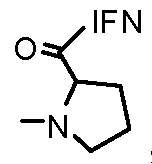
- 0 CN(CCC1)C1C(*)=O Chemical compound CN(CCC1)C1C(*)=O 0.000 description 2
- NVLXERQAPIHJJV-UHFFFAOYSA-N CC(CCCCCN[I]=N)CC1OCCO1 Chemical compound CC(CCCCCN[I]=N)CC1OCCO1 NVLXERQAPIHJJV-UHFFFAOYSA-N 0.000 description 1
Classifications
-
- A—HUMAN NECESSITIES
- A61—MEDICAL OR VETERINARY SCIENCE; HYGIENE
- A61K—PREPARATIONS FOR MEDICAL, DENTAL OR TOILETRY PURPOSES
- A61K38/00—Medicinal preparations containing peptides
- A61K38/16—Peptides having more than 20 amino acids; Gastrins; Somatostatins; Melanotropins; Derivatives thereof
- A61K38/17—Peptides having more than 20 amino acids; Gastrins; Somatostatins; Melanotropins; Derivatives thereof from animals; from humans
- A61K38/19—Cytokines; Lymphokines; Interferons
- A61K38/21—Interferons [IFN]
- A61K38/215—IFN-beta
-
- A—HUMAN NECESSITIES
- A61—MEDICAL OR VETERINARY SCIENCE; HYGIENE
- A61K—PREPARATIONS FOR MEDICAL, DENTAL OR TOILETRY PURPOSES
- A61K47/00—Medicinal preparations characterised by the non-active ingredients used, e.g. carriers or inert additives; Targeting or modifying agents chemically bound to the active ingredient
- A61K47/50—Medicinal preparations characterised by the non-active ingredients used, e.g. carriers or inert additives; Targeting or modifying agents chemically bound to the active ingredient the non-active ingredient being chemically bound to the active ingredient, e.g. polymer-drug conjugates
-
- A—HUMAN NECESSITIES
- A61—MEDICAL OR VETERINARY SCIENCE; HYGIENE
- A61K—PREPARATIONS FOR MEDICAL, DENTAL OR TOILETRY PURPOSES
- A61K38/00—Medicinal preparations containing peptides
- A61K38/16—Peptides having more than 20 amino acids; Gastrins; Somatostatins; Melanotropins; Derivatives thereof
- A61K38/17—Peptides having more than 20 amino acids; Gastrins; Somatostatins; Melanotropins; Derivatives thereof from animals; from humans
- A61K38/18—Growth factors; Growth regulators
- A61K38/1816—Erythropoietin [EPO]
-
- A—HUMAN NECESSITIES
- A61—MEDICAL OR VETERINARY SCIENCE; HYGIENE
- A61K—PREPARATIONS FOR MEDICAL, DENTAL OR TOILETRY PURPOSES
- A61K38/00—Medicinal preparations containing peptides
- A61K38/16—Peptides having more than 20 amino acids; Gastrins; Somatostatins; Melanotropins; Derivatives thereof
- A61K38/17—Peptides having more than 20 amino acids; Gastrins; Somatostatins; Melanotropins; Derivatives thereof from animals; from humans
- A61K38/22—Hormones
- A61K38/27—Growth hormone [GH], i.e. somatotropin
-
- A—HUMAN NECESSITIES
- A61—MEDICAL OR VETERINARY SCIENCE; HYGIENE
- A61K—PREPARATIONS FOR MEDICAL, DENTAL OR TOILETRY PURPOSES
- A61K47/00—Medicinal preparations characterised by the non-active ingredients used, e.g. carriers or inert additives; Targeting or modifying agents chemically bound to the active ingredient
- A61K47/30—Macromolecular organic or inorganic compounds, e.g. inorganic polyphosphates
- A61K47/34—Macromolecular compounds obtained otherwise than by reactions only involving carbon-to-carbon unsaturated bonds, e.g. polyesters, polyamino acids, polysiloxanes, polyphosphazines, copolymers of polyalkylene glycol or poloxamers
-
- A—HUMAN NECESSITIES
- A61—MEDICAL OR VETERINARY SCIENCE; HYGIENE
- A61K—PREPARATIONS FOR MEDICAL, DENTAL OR TOILETRY PURPOSES
- A61K47/00—Medicinal preparations characterised by the non-active ingredients used, e.g. carriers or inert additives; Targeting or modifying agents chemically bound to the active ingredient
- A61K47/30—Macromolecular organic or inorganic compounds, e.g. inorganic polyphosphates
- A61K47/42—Proteins; Polypeptides; Degradation products thereof; Derivatives thereof, e.g. albumin, gelatin or zein
-
- A—HUMAN NECESSITIES
- A61—MEDICAL OR VETERINARY SCIENCE; HYGIENE
- A61K—PREPARATIONS FOR MEDICAL, DENTAL OR TOILETRY PURPOSES
- A61K47/00—Medicinal preparations characterised by the non-active ingredients used, e.g. carriers or inert additives; Targeting or modifying agents chemically bound to the active ingredient
- A61K47/50—Medicinal preparations characterised by the non-active ingredients used, e.g. carriers or inert additives; Targeting or modifying agents chemically bound to the active ingredient the non-active ingredient being chemically bound to the active ingredient, e.g. polymer-drug conjugates
- A61K47/51—Medicinal preparations characterised by the non-active ingredients used, e.g. carriers or inert additives; Targeting or modifying agents chemically bound to the active ingredient the non-active ingredient being chemically bound to the active ingredient, e.g. polymer-drug conjugates the non-active ingredient being a modifying agent
- A61K47/56—Medicinal preparations characterised by the non-active ingredients used, e.g. carriers or inert additives; Targeting or modifying agents chemically bound to the active ingredient the non-active ingredient being chemically bound to the active ingredient, e.g. polymer-drug conjugates the non-active ingredient being a modifying agent the modifying agent being an organic macromolecular compound, e.g. an oligomeric, polymeric or dendrimeric molecule
- A61K47/59—Medicinal preparations characterised by the non-active ingredients used, e.g. carriers or inert additives; Targeting or modifying agents chemically bound to the active ingredient the non-active ingredient being chemically bound to the active ingredient, e.g. polymer-drug conjugates the non-active ingredient being a modifying agent the modifying agent being an organic macromolecular compound, e.g. an oligomeric, polymeric or dendrimeric molecule obtained otherwise than by reactions only involving carbon-to-carbon unsaturated bonds, e.g. polyureas or polyurethanes
- A61K47/60—Medicinal preparations characterised by the non-active ingredients used, e.g. carriers or inert additives; Targeting or modifying agents chemically bound to the active ingredient the non-active ingredient being chemically bound to the active ingredient, e.g. polymer-drug conjugates the non-active ingredient being a modifying agent the modifying agent being an organic macromolecular compound, e.g. an oligomeric, polymeric or dendrimeric molecule obtained otherwise than by reactions only involving carbon-to-carbon unsaturated bonds, e.g. polyureas or polyurethanes the organic macromolecular compound being a polyoxyalkylene oligomer, polymer or dendrimer, e.g. PEG, PPG, PEO or polyglycerol
-
- A—HUMAN NECESSITIES
- A61—MEDICAL OR VETERINARY SCIENCE; HYGIENE
- A61P—SPECIFIC THERAPEUTIC ACTIVITY OF CHEMICAL COMPOUNDS OR MEDICINAL PREPARATIONS
- A61P25/00—Drugs for disorders of the nervous system
-
- A—HUMAN NECESSITIES
- A61—MEDICAL OR VETERINARY SCIENCE; HYGIENE
- A61P—SPECIFIC THERAPEUTIC ACTIVITY OF CHEMICAL COMPOUNDS OR MEDICINAL PREPARATIONS
- A61P31/00—Antiinfectives, i.e. antibiotics, antiseptics, chemotherapeutics
- A61P31/12—Antivirals
- A61P31/14—Antivirals for RNA viruses
-
- A—HUMAN NECESSITIES
- A61—MEDICAL OR VETERINARY SCIENCE; HYGIENE
- A61P—SPECIFIC THERAPEUTIC ACTIVITY OF CHEMICAL COMPOUNDS OR MEDICINAL PREPARATIONS
- A61P31/00—Antiinfectives, i.e. antibiotics, antiseptics, chemotherapeutics
- A61P31/12—Antivirals
- A61P31/20—Antivirals for DNA viruses
-
- A—HUMAN NECESSITIES
- A61—MEDICAL OR VETERINARY SCIENCE; HYGIENE
- A61P—SPECIFIC THERAPEUTIC ACTIVITY OF CHEMICAL COMPOUNDS OR MEDICINAL PREPARATIONS
- A61P37/00—Drugs for immunological or allergic disorders
- A61P37/02—Immunomodulators
-
- A—HUMAN NECESSITIES
- A61—MEDICAL OR VETERINARY SCIENCE; HYGIENE
- A61P—SPECIFIC THERAPEUTIC ACTIVITY OF CHEMICAL COMPOUNDS OR MEDICINAL PREPARATIONS
- A61P7/00—Drugs for disorders of the blood or the extracellular fluid
- A61P7/06—Antianaemics
Definitions
- An aspect of the present invention relates to polymer-polypeptide conjugates of formula I:
- each of Ri, R 2 , R3, R 4 , and R5, independently, is H, Ci_io alkyl, C 2-10 alkenyl, C 2-10 alkynyl, aryl, heteraryl, C3-8 cycloalkyl, or C3-8 heterocycloalkyl; each of Ai and A 2 , independently, is a polymer moiety (e.g., a polyalkylene oxide moiety); each of G 1 , G 2 , and G3, independently, is a bond or a linking functional group; P is an interferon- ⁇
- INF- ⁇ an erythropoietin (EPO) moiety, or a growth hormone (GH) moiety
- EPO erythropoietin
- GH growth hormone
- the polymer-polypeptide conjugates have one or more of the following features: Ai and A 2 are polyalkylene oxide moieties having a molecular weight of 2-100 kD (preferably 10-30 kD, e.g., 20 kD); each of Gi and G 2
- P is rINF- ⁇ Ser 17 or a modified INF- ⁇ moiety containing 1-4 additional amino acid residues at the N-terminus of the INF- ⁇ .
- Another aspect of the present invention relates to polymer-peptide conjugates of formula II: formula II
- A is a polymer moiety (e.g., a polyalkylene oxide moiety); each of Gi and
- G 2 is a bond or a linking functional group
- L is C 2 _io alkenylene or C 2 . 10 alkynylene
- P is an INF- ⁇ moiety, an EPO moiety, or a GH moiety.
- the N-terminus of the INF- ⁇ moiety, the EPO moiety, or the GH moiety is attached to G 2 .
- the polymer-peptide conjugates have one or more of the following features:
- Ai and A 2 are polyalkylene oxide moieties having a molecular weight of 2-100 kD (preferably 10-30 kD, e.g., 20 kD), each of Gi and G 2 is a bond, Ce is alkenylene, and each of Ri, R 2 , R3, R 4 , and R5 is H.
- Another aspect of the present invention relates to polymer-peptide conjugates of formula III:
- Ri, R 2 , R3, and R 4 independently, is H, C 1-10 alkyl, C 2-10 alkenyl, C 2 . 10 alkynyl, aryl, heteraryl, C 3 _ 8 cycloalkyl, or C 3 _ 8 heterocycloalkyl; n is an integer of 2-10; A is a polymer moiety; G is a linking functional group; and P is a peptide moiety, the nitrogen atom of the N-terminus of the peptide moiety being bonded to
- the polymer-peptide conjugates have one or more of the following features: n is 1; A is polyalkylene oxide moieties having a molecular weight of 10-40 kD or 20-30 kD; G is
- C 1-10 alkyl refers to a straight-chained or branched hydrocarbon mono-valent radical containing 1 to 10 carbon atoms. Examples of alkyl groups include methyl, ethyl, n-propyl, isopropyl, tert-butyl, and n-pentyl.
- C 2 _io alkenyl refers to a straight-chained or branched hydrocarbon monovalent radical containing 2 to 10 carbon atoms and one or more double bonds.
- C 2 _io alkynyl refers to a straight-chained or branched hydrocarbon monovalent radical containing 2 to 10 carbon atoms and one or more triple bonds.
- C 2 _io alkenylene refers to a straight-chained or branched hydrocarbon bi-valent radical containing 2 to 10 carbon atoms and one or more double bonds.
- C 2 . io alkynylene refers to a straight-chained or branched hydrocarbon bi-valent radical containing 2 to 10 carbon atoms and one or more triple bonds.
- aryl refers to a hydrocarbon ring system (mono-cyclic or bi-cyclic) having at least one aromatic ring.
- aryl moieties include, but are not limited to, phenyl, naphthyl, and pyrenyl.
- heteroaryl refers to a hydrocarbon ring system (monocyclic or bi-cyclic) having at least one aromatic ring which contains at least one heteroatom such as O, N, or S as part of the ring system and the reminder being carbon.
- heteroaryl moieties include, but are not limited to, furyl, pyrrolyl, thienyl, oxazolyl, imidazolyl, thiazolyl, pyridinyl, pyrimidinyl, quinazolinyl, and indolyl.
- cycloalkyl refers to a partially or fully saturated monocyclic or bi-cyclic ring system having only carbon ring atoms. Examples include, but are not limited to, cyclopropanyl, cyclopentanyl, and cyclohexanyl.
- heterocycloalkyl used herein refers to a partially or fully saturated mono-cyclic or bi-cyclic ring system having, in addition to carbon, one or more heteroatoms (e.g., O, N, or S), as ring atoms. Examples include, but are not limited to, piperidine, piperazine, morpholine, thiomorpholine, and 1,4-oxazepane.
- Alkyl, alkenyl, alkynyl, alkenylene, alkynylene, aryl, heteroaryl, cycloalkyl, and heterocycloalkyl mentioned herein include both substituted and unsubstituted moieties.
- substituents include C 1 -C 10 alkyl, C2-C10 alkenyl, C 2 -CiO alkynyl, C 3 -Cg cycloalkyl, Cs-Cg cycloalkenyl, C 1 -C 10 alkoxy, aryl, aryloxy, heteroaryl, heteroaryloxy, amino, C 1 -C 10 alkylamino, C1-C20 dialkylamino, arylamino, diarylamino, hydroxyamino, alkoxyamino, C 1 -C 10 alkylsulfonamide, arylsulfonamide, hydroxy, halogen, thio, Ci-Ci 0 alkylthio, arylthio, cyano, nitro, acyl, acyloxy, carboxyl, and carboxylic ester.
- polymer moiety refers to a mono-valent radical derived from linear, branched, or star-shaped polymer.
- the molecular weight of the polymer moiety may be 2-100 kD.
- examples of the polymer moiety include, but are not limited to, polyethylene oxide, polyethylene glycol, polyisopropylene oxide, polybutenylene oxide, polyethylene glycol, and copolymers thereof.
- Other polymers such as dextran, polyvinyl alcohols, polyacrylamides, or carbohydrate-based polymers can also be used as long as they are not antigenic, toxic, or eliciting immune response.
- polypeptide moiety refers to a mono-valent radical derived from either a naturally occurring polypeptide or a modified polypeptide.
- the naturally occurring peptide can be INF- ⁇ ,2b, INF- ⁇ , GH, EPO, and granulocyte colon- stimulating factor, or antibody.
- the modified peptide can be, e.g., a peptide containing INF and 1-4 additional amino acid residues at the N-terminus of the INF-
- INF INF- ⁇ ,2b moiety
- IFN amino group at the N-terminus of which is bonded to the carbonyl group.
- interferon- ⁇ refers to a family of highly homologous proteins that inhibit viral replication and cellular proliferation and modulate immune response. See Derynck et al, (1980). Nature 285 (5766): 542-7; and Taniguchi et al, (1980). Gene 10 (1): 11-5. It includes both naturally occurring INF- ⁇ s and their functional equivalents, i.e., a polypeptide having at least 80% (e.g., 85%, 90%, 95%, or 99%) identical to its wild-type counterpart.
- INF- ⁇ examples include the active ingredients in the commercially available drugs, such as Avonex, Betaseron, and Rebif. See, e.g., Etemadifar M. et al., Acta Neurol. Scand., 2006, 113(5): 283-7.
- the INF- ⁇ is mutant rINF- ⁇ Ser 17 (recombinant INF- ⁇ , in which serine is in place of cysteine at position 17 in the native mature INF- ⁇ sequence).
- the amino acid of this mutant is shown below:
- the INF- ⁇ is a modified native INF- ⁇ , in which 1-4 additional amino acid residues are attached to the N-terminus of the native INF- ⁇ .
- EPO produced by either liver or kidney, is a glycoprotein hormone that controls erythropoiesis or red blood cell production. It includes both naturally occurring EPO and its functional equivalents. See US Patent 5,621,080 and US Patent Application Publication 20050176627. The amino acid sequences of human EPO (in precursor and mature form) are shown below:
- An EPO protein used to make the conjugate of this invention can be an EPO protein, either in precursor or mature form, produced by a suitable species, e.g., human, murine, swine, or bovine.
- the EPO protein has an amino acid sequence at least 80% (e.g., 85%, 90%, 95% or 99%) identical to one of the amino acid sequences shown above.
- the EPO is a modified native EPO in which 1-4 additional amino acid residues are attached to the N-terminus of the native EPO.
- growth hormone refers to the naturally occurring human growth hormone, either in precursor or mature form, and its functional variants, i.e., having an amino acid sequence at least 80% (e.g., 85%, 90%, 95%, or 99%) identical to the naturally occurring human growth hormone and possessing the same physiological activity of that human growth hormone.
- the growth hormone is a modified native growth hormone in which 1-4 additional amino acid residues are attached to the N-terminus of the native growth hormone.
- linking functional group refers to a bi-valent functional group, one end being connected to the polymer moiety and the other end being connected to the peptide moiety. Examples include, but are not limited to, -O-, -S-, carboxylic ester, carbonyl, carbonate, amide, carbamate, urea, sulfonyl, sulf ⁇ nyl, amino, imino, hydroxyamino, phosphonate, or phosphate group.
- the peptide -polymer conjugate described above can be in the free form or in the form of salt, if applicable.
- a salt for example, can be formed between an anion and a positively charged group (e.g., amino) on a peptide-polymer conjugate of this invention. Suitable anions include chloride, bromide, iodide, sulfate, nitrate, phosphate, citrate, methanesulfonate, trifluoroacetate, and acetate.
- a salt can also be formed between a cation and a negatively charged group (e.g., carboxylate) on a polypeptide -polymer conjugate of this invention.
- Suitable cations include sodium ion, potassium ion, magnesium ion, calcium ion, and an ammonium cation such as tetramethylammonium ion.
- the peptide-polymer conjugate may have one or more double bonds, or one or more asymmetric centers. Such a conjugate can occur as racemates, racemic mixtures, single enantiomers, individual diastereomers, diastereomeric mixtures, and cis- or trans- or E- or Z- double bond isomeric forms.
- mPEG represents methoxy-capped polyethylene glycol having a molecular weight of 20 kD
- N-termini of rINF- ⁇ Ser 17 , EPO, and GH are attached to the rightmost carbon shown in the above structures.
- conjugates of this invention containing a peptide moiety, can therefore be used to treat disease.
- INF- ⁇ is an immunomodulating medication for treating HCV or HBV infection. See, e.g., Journal of Vascular and Interventional Radiology 13 (2002): 191-196.
- HCV hepatitis C virus
- HBV hepatitis B virus
- EPO is a hormone produced by the kidney to promote the formation of red blood cells in the bone marrow.
- Another aspect of this invention relates to a method of treating aneamia or enhancing neurogenesis by an EPO-polymer conjugate described above.
- compositions containing the INF- ⁇ - polymer conjugate described above for use in treating HCV infection or HBV infection are also within the scope of this invention.
- a composition containing the EPO-polymer conjugate described above for use in treating aneamia or enhancing neurogenesis are also within the scope of this invention.
- the peptide -polymer conjugates of the present invention can be prepared by synthetic methods well known in the chemical art. For example, one can combine a linker molecule having one or more active functional groups with two polymer molecules having a functional group reactive to those on the linker molecule. Subsequently, a peptide molecule containing a functional group is reacted with a functional group of the linker molecule to form a peptide-polymer conjugate of this invention. Two illustrative synthetic schemes are provided herein.
- Scheme 1 shows an example of preparing the peptide-polymer conjugates of formula I.
- Diamine compound 1 which contains an acetal group, is reacted with N-hydroxysuccinimidyl carbonate mPEG (i.e., compound 2) to form di- PEGylated compound 3, which is subsequently converted to aldehyde 4.
- mPEG N-hydroxysuccinimidyl carbonate
- This aldehyde compound is reacted with peptide H-P having a free amino group via reductive alkylation to afford a peptide-polymer conjugate of this invention.
- Scheme 2 shows an example of preparing the peptide-polymer conjugates of formula II.
- Chemical 6 has a polymer moiety and an aldehyde functional group. It can be reacted with peptide 7, which has a free amino functional group.
- the resulting product 8 is subsequently reduced, e.g., by hydrogenation or by NaBH 3 CN, to afford peptide-polymer conjugate 9.
- A is a polymer moiety
- Gi is a bond or a linking functional group
- L is alkenylene or alkynylene
- H 2 N-P' is INF- ⁇ , EPO, or GH
- Scheme 3 below is an example of preparing a peptide-polymer conjugate of formula III.
- Compound 10 having an acetal group which can be prepared from ⁇ - amino acid, is reacted with N-hydroxysuccinimidyl carbonate mPEG 2 to form PEGylated compound 11, which is subsequently converted to aldehyde 12.
- This aldehyde compound is reacted with peptide H-P having a free amino group via reductive alkylation to afford desired compound 13.
- the chemical reactions described above include using solvents, reagents, catalysts, protecting group and deprotecting group reagents, and certain reaction conditions. They may additionally include steps, either before or after the steps described specifically herein, to add or remove suitable protecting groups in order to ultimately allow for synthesis of a peptide-polymer conjugate. In addition, various synthetic steps may be performed in an alternate sequence or order to give the desired polypeptide-polymer conjugates. Synthetic chemistry transformations and protecting group methodologies (protection and deprotection) useful in synthesizing applicable peptide-polymer conjugates are known in the art and include, for example, those described in R. Larock, Comprehensive Organic Transformations, VCH Publishers (1989); T. W. Greene and P. G. M.
- a peptide-polymer conjugate thus synthesized can be further purified by a method such as ion exchange chromatography, gel filtration chromatography, electrophoresis, dialysis, ultrafiltration, or ultracentrifugation.
- the peptide-polymer conjugate of the invention may be pharmaceutically active in the conjugate form. Alternatively, it can release a pharmaceutically active peptide in vivo (e.g., through hydrolysis) by enzymatically cleaving the linkage between the peptide moiety and the polymer moiety.
- enzymes involved in in vivo cleaving linkages include oxidative enzymes (e.g., peroxidases, amine oxidases, or dehydrogenases), reductive enzymes (e.g., keto reductases), and hydrolytic enzymes (e.g., proteases, esterases, sulfatases, or phosphatases).
- one aspect of this invention relates to a method of administering an effective amount of one or more of the above-described peptide-polymer conjugates for treating a disorder (e.g., HCV or HBV infection, or aneamia).
- a disease can be treated by administering to a subject one or more of the peptide- polymer conjugates in an effective amount.
- a subject can be identified by a health care professional based on results from any suitable diagnostic method.
- treating is defined as the application or administration of a composition including a peptide-polymer conjugate to a subject (human or animal), who has a disorder, a symptom of the disorder, a disease or disorder secondary to the disorder, or a predisposition toward the disorder, with the purpose to cure, alleviate, relieve, remedy, or ameliorate the disorder, the symptom of the disorder, the disease or disorder secondary to the disorder, or the predisposition toward the disorder.
- “An effective amount” refers to an amount of a peptide-polymer conjugate which confers a therapeutic effect on the treated subject. The therapeutic effect may be objective (i.e., measurably by some tests or markers) or subjective (i.e., a subject gives an indication of or feels an effect).
- a composition having one or more of the above-mentioned conjugates can be administered parenterally, orally, nasally, rectally, topically, or buccally.
- parenteral refers to subcutaneous, intracutaneous, intravenous, intramuscular, intraarticular, intraarterial, intrasynovial, intrasternal, intrathecal, intralesional, intraperitoneal, intratracheal or intracranial injection, as well as any suitable infusion technique.
- a sterile injectable composition can be a solution or suspension in a non-toxic parenterally acceptable diluent or solvent, such as a solution in 1,3-butanediol.
- acceptable vehicles and solvents that can be employed are mannitol, water, Ringer's solution, and isotonic sodium chloride solution.
- fixed oils are conventionally employed as a solvent or suspending medium (e.g., synthetic mono- or di-glycerides).
- Fatty acid, such as oleic acid and its glyceride derivatives are useful in the preparation of injectables, as are natural pharmaceutically acceptable oils, such as olive oil or castor oil, especially in their polyoxyethylated versions.
- These oil solutions or suspensions can also contain a long chain alcohol diluent or dispersant, or carboxymethyl cellulose or similar dispersing agents.
- a composition for oral administration can be any orally acceptable dosage form including capsules, tablets, emulsions, and aqueous suspensions, dispersions, and solutions.
- commonly used carriers include lactose and corn starch.
- Lubricating agents such as magnesium stearate, are also typically added.
- useful diluents include lactose and dried corn starch.
- a nasal aerosol or inhalation composition can be prepared according to techniques well known in the art of pharmaceutical formulation.
- such a composition can be prepared as a solution in saline, employing benzyl alcohol or other suitable preservatives, absorption promoters to enhance bioavailability, fluorocarbons, and/or other solubilizing or dispersing agents known in the art.
- a composition having one or more of the above-described compounds can also be administered in the form of suppositories for rectal administration.
- a pharmaceutically acceptable carrier is routinely used with one or more active above-mentioned conjugates.
- the carrier in the pharmaceutical composition must be "acceptable” in the sense that it is compatible with the active ingredient of the composition (and preferably, capable of stabilizing the active ingredient) and not deleterious to the subject to be treated.
- One or more solubilizing agents can be utilized as pharmaceutical excipients for delivery of an above-mentioned compound. Examples of other carriers include colloidal silicon oxide, magnesium stearate, cellulose, sodium lauryl sulfate, and D&C Yellow # 10.
- Di-PEG acetal (4.0 g, 0.2 mmol) was suspended in pH 2.0 buffer (critic acid, 40 mL). The reaction mixture was stirred at 35 0 C for 24 h and then extracted with dichloromethane (3 x 50 mL). The combined organic layers were dried over magnesium sulfate, concentrated, and then re-dissolved in dichloromethane (20 mL). The solution was added dropwisely to methyl t-butyl ether (400 mL) with stirring. The resulting precipitate was collected and dried at reduced pressure to give di-PEG aldehyde (3.8 g, 95%) as a white solid.
- pH 2.0 buffer critic acid, 40 mL
- dichloromethane 3 x 50 mL
- the solution was added dropwisely to methyl t-butyl ether (400 mL) with stirring.
- the resulting precipitate was collected and dried at reduced pressure to give di-PEG aldehyde (3.8 g, 95%) as a
- di-PEG aldehyde was prepared in the following manner: The two amino groups of commercial available homo-lysine (Astatech).
- a DNA fragment encoding human INF- ⁇ Ser 17 was cloned into expression vector pET24a to produce an expression plasmid rhIFN- ⁇ Seri 7 -pET24a.
- This expression plasmid was transformed into E. coli and positive transformants, i.e., clones carrying the expression plasmid, were selected, cultivated, and the resultant E. coli cultures were stored at -80 0 C
- coli culture thus obtained were transferred to 2.5L culture medium containing glucose (10 g/L), MgSO 4 -VH 2 O (0.7 g/L), (NH 4 ) 2 HPO 4 (4 g/L), KH 2 PO 4 (3 g/L), K 2 HPO 4 (6 g/L), citrate (1.7 g/L), Yeast Extract (10 g/L), kanamycin (50 mg/ml), chloramphenicol (50 mg/ml), an antifoaming agent, and trace elements including FeSO 4 -7H 2 O (10 mg/L), ZnSO 4 -7H 2 O (2.25 mg/L) CuSO 4 SH 2 O (1 mg/L), MnSO 4 H 2 O (0.5 mg/L), H 3 BO 3 (0.3 mg/L), CaCl 2 -2H 2 O (2 mg/L), (NH 4 ) 6 Mo 7 O 24 (0.1 mg/L), EDTA (0.84 mg/L), and Cl (50 mg/L), and cultivated at 37 0 C.
- glucose g
- IPTG (1 M) was added to the culture to induce expression of rhIFN- ⁇ Ser ⁇ .
- the induced culture was incubated at 37 0 C and 300 rpm for 3 hours.
- a feeding medium containing 800 g/1 glucose and 20 g/L MgSO 4 was added to the E. coli culture during incubation.
- the E. coli culture obtained as described above was subjected to centrifugation to harvest E. coli cells.
- the cells were resuspended in a PBS buffer (0.1M Na2HPO4, 0.15M NaCl) and disrupted in an APV Homogenizer.
- the homogenized solution thus obtained was centrifuged at 10,000 rpm, 4 0 C for 15 min.
- the precipitates (including inclusion body) were collected, resuspended in PBS, and stirred at room temperature for 20-30 min to form a suspension.
- NaOH (6 N) was added to the suspension to adjust its pH to 12 to allow dissolution of proteins included in the inclusion body. About 2 minutes later, the pH value of the suspension was adjusted to 7.5 with 6 N HCl.
- the suspension was then subjected to centrifugation and the supernatant thus formed was collected, its protein concentration being determined using a spectrophotometer.
- the supernatant was mixed with a refolding buffer (TEA, pH 8.3) and incubated at room temperature without being stirred for 24-48 hours. It was then concentrated and dialyzed, using the TFF system and PLCCC cassette provided by Millipore, Inc.
- the resultant solution was subjected to ultrafiltration, dialysis, and fractionation with a SPFF Sepharose column.
- E.coli BLR (DE3)-RIL cells carrying the encoding sequence of IFN- ⁇ operatively linked to an E. coli promoter, were inoculated in 250 mL SYN medium (10 g/L of select soytone, 5 g/L Yeast extract, and 10 g/L NaCl) supplemented with 50 ⁇ l/mL kanamycin and 50 ⁇ l/mL chloramphenicol. The cells were then cultured at 37 0 C in a shaker incubator at 220 rpm overnight (i.e., 16 hours).
- the pH of the medium was controlled at pH 7.1 by automated addition of a 37% NH 4 OH solution.
- the dissolved oxygen (DO) level was maintained at 30%.
- the feeding solution 800 g/L of glucose, 20 g/L OfMgSO 4 , 50 ⁇ l/mL kanamycin and 50 ⁇ l/mL chloramphenicol was added using a program-controlled pump, which was set to feed when DO level exceeds 40-60.
- IPTG Isopropyl- ⁇ -D-1-thiogalactopyranoside
- the cell pellets were suspended in PBS buffer (0.1M sodium phosphate, 0.15M sodium chloride, pH 7.4) at an approximate ratio of 1 :3 (wet weight g/mL), disrupted by a microfluidizer, and then centrifuged at 10,000 rpm for 20 min at 4 0 C.
- the pellet containing inclusion body (IB) was washed twice with PBS buffer, centrifuged as described above, and suspended in IL PBS solution (0.1M sodium phosphate, 0.15M sodium chloride, pH 7.4, 3% zwittergent 3-14, 5 mM DTT). After being stirred for 30 minutes, the suspension was subjected to pH adjustment to 12 with 6.0 M NaOH, while stirring to solubilize the pellet. The pH of the suspension was then adjusted to pH 7.5 with 6 N HCl. Upon centrifugation at 10,000 rpm for 20 min, the supernatant, containing soluble IFN ⁇ , was collected.
- PBS buffer 0.1M sodium phosphate, 0.
- the soluble INF- ⁇ was then subjected to refolding as follows.
- the supernant mentioned above was diluted in 10 L of a freshly prepared refolding buffer (100 mM Tris-HCl (pH 7.6), 0.5 M L-Arginine, 2 mM EDTA) for form a refolding mixture.
- the mixture was incubated for 48 hr without stirring. After incubation, the mixture, containing refolded recombinant IFN- ⁇ , was dialyzed against 20 mM Tris (with 100 mM NaCl, 0.05% zwittergent 3-14, pH 7.0) buffer.
- the dialyzed mixture was loaded onto a SP-Sepharose column (GE Amersham Pharmacia), which was pre-equilibrated and washed with a 20 mM Tris-HCl, 10OmM NaCl buffer (pH 7.0).
- IFN ⁇ was eluted with a solution containing 20 mM Tris-HCl buffer (pH 7.0) and 200 mM NaCl. Fractions containing IFN ⁇ was collected based on their absorbance at 280 nm.
- the IFN ⁇ contained therein was further purified by a hydrophobic interaction column (GE healthcare, Butyl Sepharose Fast Flow), which was pre-equilibrated and washed with a solution containing 1.0 M ammonium sulphate, 20 mM sodium acetate and 0.05% zwittergent (pH 4.5). IFN ⁇ was eluted using a solution containing 0.5 M ammonium sulphate and 2OmM sodium acetate. Fractions containing the protein were collected based on their absorbance at 280 nm. These fractions were pooled and the concentration of IFN ⁇ was determined by BCA protein assay (BC ATM Protein assay, Pierce). Preparation of PEG-IFN- ⁇ conjugate
- a pharmacokinetic study was performed in a rat model to compare serum half- life of IFN- ⁇ and PEG-IFN- ⁇ .
- Male rats 250 ⁇ 350 gm
- Blood 250 ⁇ L
- Serum samples were prepared from the blood and the amounts of IFN- ⁇ contained in the samples were analyzed by an Enzyme- linked immunoassay (ELISA).
- the serum half-life of IFN- ⁇ and PEG-IFN- ⁇ was 2 hours and 20 hours respectively, calculated from the serum concentration of the last three time points.
- EXAMPLE 2 EPO- PEG polymer conjugate Preparation of PEG-EPO
- the column was equilibrated with 2OmM Sodium acetate buffer, pH 4.5.
- the reaction mixture was diluted to a concentration of 0.3-0.4 mg/ml and loaded onto the SP Toyopearl column.
- Fractions containing the desired PEG-EPO conjugate were collected based on their retention time and absorbance at 280nm. The concentration of the conjugate was determined by 280nm UV absorbance.
- E.coli BLR (DE3)-RIL cells, capable of expression Met-hGH, were cultured following the fermentation procedure described above for expression of Met-hGH.
- TE buffer 50 mM Tris-HCl, 1 mM EDTA, pH 8.0
- the cells were then disrupted by a microfluidizer and then centrifuged at 10,000 rpm for 20 min.
- the pellet containing inclusion body (IB) was washed twice with TED buffer (5OmM T ris-HCl, ImM EDTA, 2% Deoxycholate, pH 8.0), centrifuged as described above, and suspended in MiIIiQ water and centrifuged at 20,000 rpm for 15 min.
- the IBs were suspended in 400 mL of 50 mM TUD solution (50 mM Tris-HCl, 4 M Urea, 2.5mM DTT, pH 10.0) and the suspension was centrifuged at 20,000 rpm for 20 min; supernatant collected.
- 50 mM TUD solution 50 mM Tris-HCl, 4 M Urea, 2.5mM DTT, pH 10.0
- the supernatant was diluted in 2.0 L of a freshly prepared refolding buffer (50 mM Tris-HCl, 0.5 mM EDTA, 5% glycerol 10 mM GSH/lmM GSSG, pH 8.0). The mixture thus formed was incubated for 36hr without stirring and then dialyzed against 20 mM Tris buffer (pH 7.0).
- a freshly prepared refolding buffer 50 mM Tris-HCl, 0.5 mM EDTA, 5% glycerol 10 mM GSH/lmM GSSG, pH 8.0.
- BCATM Protein assay Pierce
- a pharmacokinetic study was performed in a rat model to compare serum half- life of Met-hGH and PEG-Met-hGH.
- Male rats 250 ⁇ 350 gm
- Blood samples were collected from Met-hGH-treated rats before administration and 0.083, 1, 2, 4, 8, 12, and 24 hours after administration; and were collected from PEG- Met-hGH-treated rats before administration and 0.33, 1, 4, 8, 12, 24, 48, 72, and 96 hours after administration.
- Serum samples were prepared from the blood and analyzed with an Enzyme-linked immunoassay (ELISA) to determine hGH concentrations.
- the serum half-life of Met-hGH and PEG-Met-hGH was 3 hours and 35 hours respectively.
Landscapes
- Health & Medical Sciences (AREA)
- Life Sciences & Earth Sciences (AREA)
- Chemical & Material Sciences (AREA)
- Public Health (AREA)
- Veterinary Medicine (AREA)
- General Health & Medical Sciences (AREA)
- Animal Behavior & Ethology (AREA)
- Pharmacology & Pharmacy (AREA)
- Medicinal Chemistry (AREA)
- Engineering & Computer Science (AREA)
- Bioinformatics & Cheminformatics (AREA)
- Epidemiology (AREA)
- Proteomics, Peptides & Aminoacids (AREA)
- Immunology (AREA)
- Gastroenterology & Hepatology (AREA)
- Zoology (AREA)
- General Chemical & Material Sciences (AREA)
- Nuclear Medicine, Radiotherapy & Molecular Imaging (AREA)
- Chemical Kinetics & Catalysis (AREA)
- Organic Chemistry (AREA)
- Endocrinology (AREA)
- Virology (AREA)
- Molecular Biology (AREA)
- Inorganic Chemistry (AREA)
- Communicable Diseases (AREA)
- Oncology (AREA)
- Biotechnology (AREA)
- Biomedical Technology (AREA)
- Neurosurgery (AREA)
- Neurology (AREA)
- Hematology (AREA)
- Diabetes (AREA)
- Peptides Or Proteins (AREA)
- Medicines That Contain Protein Lipid Enzymes And Other Medicines (AREA)
- Medicinal Preparation (AREA)
- Polyethers (AREA)
Abstract
Description




Claims


Priority Applications (11)
| Application Number | Priority Date | Filing Date | Title |
|---|---|---|---|
| JP2011521347A JP5639585B2 (en) | 2008-07-31 | 2009-07-31 | Peptide-polymer conjugate |
| UAA201102277A UA104146C2 (en) | 2008-07-31 | 2009-07-31 | POLYMER CONJUGATES OF AN INTERFERON-β MOIETY, AN ERYTHROPOIETIN MOIETY, OR A GROWTH HORMONE MOIETY |
| AU2009276458A AU2009276458B2 (en) | 2008-07-31 | 2009-07-31 | Peptide-polymer conjugates |
| MX2011001167A MX2011001167A (en) | 2008-07-31 | 2009-07-31 | Peptide-polymer conjugates. |
| EP09803633.8A EP2313457B1 (en) | 2008-07-31 | 2009-07-31 | Peptide-polymer conjugates |
| EA201170278A EA020347B1 (en) | 2008-07-31 | 2009-07-31 | Peptide-polymer conjugates |
| CN200980130470.7A CN102131844B (en) | 2008-07-31 | 2009-07-31 | Peptide-polymer conjugates |
| KR1020117004412A KR101533757B1 (en) | 2008-07-31 | 2009-07-31 | Peptide-polymer conjugates |
| NZ591167A NZ591167A (en) | 2008-07-31 | 2009-07-31 | Peptide-polymer conjugates |
| BRPI0911722-9A BRPI0911722B1 (en) | 2008-07-31 | 2009-07-31 | PEPTIDE-POLYMER CONJUGATE |
| HK11112846.8A HK1158236B (en) | 2008-07-31 | 2009-07-31 | Peptide-polymer conjugates |
Applications Claiming Priority (2)
| Application Number | Priority Date | Filing Date | Title |
|---|---|---|---|
| US8507208P | 2008-07-31 | 2008-07-31 | |
| US61/085,072 | 2008-07-31 |
Publications (2)
| Publication Number | Publication Date |
|---|---|
| WO2010014874A2 true WO2010014874A2 (en) | 2010-02-04 |
| WO2010014874A3 WO2010014874A3 (en) | 2010-05-06 |
Family
ID=41609027
Family Applications (1)
| Application Number | Title | Priority Date | Filing Date |
|---|---|---|---|
| PCT/US2009/052347 Ceased WO2010014874A2 (en) | 2008-07-31 | 2009-07-31 | Peptide-polymer conjugates |
Country Status (15)
| Country | Link |
|---|---|
| US (2) | US8273343B2 (en) |
| EP (1) | EP2313457B1 (en) |
| JP (1) | JP5639585B2 (en) |
| KR (1) | KR101533757B1 (en) |
| CN (1) | CN102131844B (en) |
| AR (1) | AR072850A1 (en) |
| AU (1) | AU2009276458B2 (en) |
| BR (1) | BRPI0911722B1 (en) |
| EA (1) | EA020347B1 (en) |
| MX (1) | MX2011001167A (en) |
| MY (1) | MY156568A (en) |
| NZ (1) | NZ591167A (en) |
| TW (1) | TWI421093B (en) |
| UA (1) | UA104146C2 (en) |
| WO (1) | WO2010014874A2 (en) |
Cited By (2)
| Publication number | Priority date | Publication date | Assignee | Title |
|---|---|---|---|---|
| WO2016073825A1 (en) | 2014-11-06 | 2016-05-12 | Pharmaessentia Corporation | Dosage regimen for pegylated interferon |
| EP4606389A1 (en) * | 2024-02-22 | 2025-08-27 | PharmaEssentia Corporation | Unique pegylated granulocyte colony stimulating factor, methods of use and preparation thereof |
Citations (1)
| Publication number | Priority date | Publication date | Assignee | Title |
|---|---|---|---|---|
| WO2009023826A1 (en) | 2007-08-16 | 2009-02-19 | Pharmaessentia Corp. | Protein-polymer conjugates |
Family Cites Families (22)
| Publication number | Priority date | Publication date | Assignee | Title |
|---|---|---|---|---|
| US3643575A (en) * | 1967-10-31 | 1972-02-22 | Nippon Kogaku Kk | Exposure-measuring device in a single-lens reflex camera |
| US5919455A (en) * | 1993-10-27 | 1999-07-06 | Enzon, Inc. | Non-antigenic branched polymer conjugates |
| US5643575A (en) | 1993-10-27 | 1997-07-01 | Enzon, Inc. | Non-antigenic branched polymer conjugates |
| US5951974A (en) * | 1993-11-10 | 1999-09-14 | Enzon, Inc. | Interferon polymer conjugates |
| US5824784A (en) * | 1994-10-12 | 1998-10-20 | Amgen Inc. | N-terminally chemically modified protein compositions and methods |
| US5932462A (en) * | 1995-01-10 | 1999-08-03 | Shearwater Polymers, Inc. | Multiarmed, monofunctional, polymer for coupling to molecules and surfaces |
| EP1191189A1 (en) * | 2000-09-26 | 2002-03-27 | Siemens Aktiengesellschaft | Gas turbine blades |
| US7257546B2 (en) * | 2001-09-04 | 2007-08-14 | Yahoo! Inc. | System and method for correlating user data from a content provider and user data from an advertising provider that is stored on autonomous systems |
| WO2003044056A2 (en) * | 2001-11-20 | 2003-05-30 | Pharmacia Corporation | Chemically-modified human growth hormone conjugates |
| PT3025726T (en) * | 2002-01-18 | 2020-01-09 | Biogen Ma Inc | POLYALKYLENE POLYMER COMPOUNDS AND USES OF THE SAME |
| KR20050093856A (en) | 2002-09-09 | 2005-09-23 | 넥타르 테라퓨틱스 에이엘, 코포레이션 | Water-soluble polymer alkanals |
| US20040142870A1 (en) * | 2002-11-20 | 2004-07-22 | Finn Rory F. | N-terminally monopegylated human growth hormone conjugates, process for their preparation, and methods of use thereof |
| GEP20084487B (en) * | 2002-12-26 | 2008-09-25 | Mountain View Pharmaceuticals | Polymer conjugates of cytokines, chemokines, growth factors, polypeptide hormones and antagonists thereof |
| EP2644206B1 (en) * | 2003-05-23 | 2019-04-03 | Nektar Therapeutics | PEG derivatives containing two PEG chains |
| EP1694347B1 (en) * | 2003-11-24 | 2013-11-20 | BioGeneriX AG | Glycopegylated erythropoietin |
| US20060024953A1 (en) * | 2004-07-29 | 2006-02-02 | Papa Rao Satyavolu S | Dual damascene diffusion barrier/liner process with selective via-to-trench-bottom recess |
| KR20070042567A (en) | 2004-08-31 | 2007-04-23 | 파마시아 앤드 업존 캄파니 엘엘씨 | Glycerol Branched Polyethylene Glycol Human Growth Hormone Conjugates, Methods for Making the Same and Methods for Using the Same |
| US7524318B2 (en) * | 2004-10-28 | 2009-04-28 | Boston Scientific Scimed, Inc. | Ablation probe with flared electrodes |
| WO2006094530A1 (en) * | 2005-03-11 | 2006-09-14 | Siegfried Ltd. | Di-polymer protein conjugates and processes for their preparation |
| EP1869079A2 (en) * | 2005-03-11 | 2007-12-26 | Siegfried Ltd. | Di-polymer protein conjugates and processes for their preparation |
| US20070185135A1 (en) * | 2005-12-30 | 2007-08-09 | Pharmaessentia Corp. | Drug-Polymer Conjugates |
| EP1834963A1 (en) * | 2006-03-13 | 2007-09-19 | Siegfried Ltd. | Di-polymer protein conjugates and processes for their preparation |
-
2009
- 2009-07-31 AR ARP090102949A patent/AR072850A1/en active IP Right Grant
- 2009-07-31 UA UAA201102277A patent/UA104146C2/en unknown
- 2009-07-31 TW TW098125858A patent/TWI421093B/en active
- 2009-07-31 EA EA201170278A patent/EA020347B1/en unknown
- 2009-07-31 US US12/533,147 patent/US8273343B2/en active Active
- 2009-07-31 BR BRPI0911722-9A patent/BRPI0911722B1/en active IP Right Grant
- 2009-07-31 AU AU2009276458A patent/AU2009276458B2/en active Active
- 2009-07-31 CN CN200980130470.7A patent/CN102131844B/en active Active
- 2009-07-31 MY MYPI2011000446A patent/MY156568A/en unknown
- 2009-07-31 KR KR1020117004412A patent/KR101533757B1/en active Active
- 2009-07-31 NZ NZ591167A patent/NZ591167A/en unknown
- 2009-07-31 WO PCT/US2009/052347 patent/WO2010014874A2/en not_active Ceased
- 2009-07-31 EP EP09803633.8A patent/EP2313457B1/en active Active
- 2009-07-31 MX MX2011001167A patent/MX2011001167A/en active IP Right Grant
- 2009-07-31 JP JP2011521347A patent/JP5639585B2/en active Active
-
2010
- 2010-12-29 US US12/981,183 patent/US20110098451A1/en not_active Abandoned
Patent Citations (1)
| Publication number | Priority date | Publication date | Assignee | Title |
|---|---|---|---|---|
| WO2009023826A1 (en) | 2007-08-16 | 2009-02-19 | Pharmaessentia Corp. | Protein-polymer conjugates |
Non-Patent Citations (6)
| Title |
|---|
| AMARTYA BASU ET AL.: "Structure-Function Engineering of Interferon-P-lb for Improving Stability, Solubility, Potency, Immunogenicity, and Pharmacokinetic Properties by Site-Selective Mono-PEGylation", BIOCONJUGATE CHEM., vol. 17, no. 3, 2006, pages 618 - 630 |
| BIOCONJUGATE CHEM., vol. 4, 1993, pages 568 - 569 |
| JOURNAL OF VASCULAR AND INTERVENTIONAL RADIOLOGY, vol. 13, 2002, pages 191 - 196 |
| P. BAILON ET AL.: "Rational design of a potent, long-lasting form of interferon: a 40 kDa branched polyethylene glycol-conjugated interferon alpha-2a for the treatment of hepatitis C", BIOCONJUGATE CHEM., vol. 12, no. 2, 2001, pages 195 - 202, XP002264676, DOI: doi:10.1021/bc000082g |
| P. T. TSAI, JOURNAL OF NEUROSCIENCE, vol. 26, 2006, pages 1269 |
| See also references of EP2313457A4 |
Cited By (6)
| Publication number | Priority date | Publication date | Assignee | Title |
|---|---|---|---|---|
| WO2016073825A1 (en) | 2014-11-06 | 2016-05-12 | Pharmaessentia Corporation | Dosage regimen for pegylated interferon |
| EP3215193A4 (en) * | 2014-11-06 | 2018-07-25 | PharmaEssentia Corporation | Dosage regimen for pegylated interferon |
| US11559567B2 (en) | 2014-11-06 | 2023-01-24 | Pharmaessentia Corporation | Dosage regimen for pegylated interferon |
| EP4282485A3 (en) * | 2014-11-06 | 2024-01-17 | PharmaEssentia Corporation | Dosage regimen for pegylated interferon |
| US12343381B2 (en) | 2014-11-06 | 2025-07-01 | Pharmaessentia Corporation | Dosage regimen for pegylated interferon |
| EP4606389A1 (en) * | 2024-02-22 | 2025-08-27 | PharmaEssentia Corporation | Unique pegylated granulocyte colony stimulating factor, methods of use and preparation thereof |
Also Published As
| Publication number | Publication date |
|---|---|
| KR101533757B1 (en) | 2015-07-03 |
| TWI421093B (en) | 2014-01-01 |
| HK1158236A1 (en) | 2012-07-13 |
| US8273343B2 (en) | 2012-09-25 |
| UA104146C2 (en) | 2014-01-10 |
| MX2011001167A (en) | 2011-04-12 |
| TW201008583A (en) | 2010-03-01 |
| EA201170278A1 (en) | 2011-08-30 |
| EP2313457A2 (en) | 2011-04-27 |
| EA020347B1 (en) | 2014-10-30 |
| BRPI0911722B1 (en) | 2022-09-13 |
| AR072850A1 (en) | 2010-09-22 |
| JP5639585B2 (en) | 2014-12-10 |
| JP2011529910A (en) | 2011-12-15 |
| MY156568A (en) | 2016-03-15 |
| BRPI0911722A2 (en) | 2016-09-13 |
| EP2313457B1 (en) | 2020-01-15 |
| CN102131844B (en) | 2016-03-02 |
| EP2313457A4 (en) | 2014-10-01 |
| AU2009276458A1 (en) | 2010-02-04 |
| KR20110059600A (en) | 2011-06-02 |
| NZ591167A (en) | 2012-06-29 |
| US20100029907A1 (en) | 2010-02-04 |
| US20110098451A1 (en) | 2011-04-28 |
| AU2009276458B2 (en) | 2014-06-19 |
| WO2010014874A3 (en) | 2010-05-06 |
| CN102131844A (en) | 2011-07-20 |
Similar Documents
| Publication | Publication Date | Title |
|---|---|---|
| AU2008286742B2 (en) | Protein-polymer conjugates | |
| EP2313457B1 (en) | Peptide-polymer conjugates | |
| EP2509593B1 (en) | Protein-polymer conjugates | |
| HK40087667A (en) | Protein-polymer conjugates | |
| HK1158236B (en) | Peptide-polymer conjugates |
Legal Events
| Date | Code | Title | Description |
|---|---|---|---|
| WWE | Wipo information: entry into national phase |
Ref document number: 200980130470.7 Country of ref document: CN |
|
| 121 | Ep: the epo has been informed by wipo that ep was designated in this application |
Ref document number: 09803633 Country of ref document: EP Kind code of ref document: A2 |
|
| ENP | Entry into the national phase |
Ref document number: 2011521347 Country of ref document: JP Kind code of ref document: A |
|
| WWE | Wipo information: entry into national phase |
Ref document number: MX/A/2011/001167 Country of ref document: MX |
|
| NENP | Non-entry into the national phase |
Ref country code: DE |
|
| WWE | Wipo information: entry into national phase |
Ref document number: 635/KOLNP/2011 Country of ref document: IN |
|
| WWE | Wipo information: entry into national phase |
Ref document number: 591167 Country of ref document: NZ Ref document number: 2009276458 Country of ref document: AU |
|
| ENP | Entry into the national phase |
Ref document number: 20117004412 Country of ref document: KR Kind code of ref document: A |
|
| WWE | Wipo information: entry into national phase |
Ref document number: 2009803633 Country of ref document: EP Ref document number: 201170278 Country of ref document: EA |
|
| ENP | Entry into the national phase |
Ref document number: 2009276458 Country of ref document: AU Date of ref document: 20090731 Kind code of ref document: A |
|
| ENP | Entry into the national phase |
Ref document number: PI0911722 Country of ref document: BR Kind code of ref document: A2 Effective date: 20110128 |