WO2010021397A1 - 有機物を熱分解するための触媒と方法とそのような触媒を製造する方法 - Google Patents
有機物を熱分解するための触媒と方法とそのような触媒を製造する方法 Download PDFInfo
- Publication number
- WO2010021397A1 WO2010021397A1 PCT/JP2009/064689 JP2009064689W WO2010021397A1 WO 2010021397 A1 WO2010021397 A1 WO 2010021397A1 JP 2009064689 W JP2009064689 W JP 2009064689W WO 2010021397 A1 WO2010021397 A1 WO 2010021397A1
- Authority
- WO
- WIPO (PCT)
- Prior art keywords
- titanium
- oxide
- composite oxide
- sol
- silicon
- Prior art date
- Legal status (The legal status is an assumption and is not a legal conclusion. Google has not performed a legal analysis and makes no representation as to the accuracy of the status listed.)
- Ceased
Links
Images

Classifications
-
- B—PERFORMING OPERATIONS; TRANSPORTING
- B01—PHYSICAL OR CHEMICAL PROCESSES OR APPARATUS IN GENERAL
- B01J—CHEMICAL OR PHYSICAL PROCESSES, e.g. CATALYSIS OR COLLOID CHEMISTRY; THEIR RELEVANT APPARATUS
- B01J21/00—Catalysts comprising the elements, oxides, or hydroxides of magnesium, boron, aluminium, carbon, silicon, titanium, zirconium, or hafnium
- B01J21/06—Silicon, titanium, zirconium or hafnium; Oxides or hydroxides thereof
-
- C—CHEMISTRY; METALLURGY
- C08—ORGANIC MACROMOLECULAR COMPOUNDS; THEIR PREPARATION OR CHEMICAL WORKING-UP; COMPOSITIONS BASED THEREON
- C08J—WORKING-UP; GENERAL PROCESSES OF COMPOUNDING; AFTER-TREATMENT NOT COVERED BY SUBCLASSES C08B, C08C, C08F, C08G or C08H
- C08J11/00—Recovery or working-up of waste materials
- C08J11/04—Recovery or working-up of waste materials of polymers
- C08J11/10—Recovery or working-up of waste materials of polymers by chemically breaking down the molecular chains of polymers or breaking of crosslinks, e.g. devulcanisation
- C08J11/12—Recovery or working-up of waste materials of polymers by chemically breaking down the molecular chains of polymers or breaking of crosslinks, e.g. devulcanisation by dry-heat treatment only
-
- B—PERFORMING OPERATIONS; TRANSPORTING
- B01—PHYSICAL OR CHEMICAL PROCESSES OR APPARATUS IN GENERAL
- B01J—CHEMICAL OR PHYSICAL PROCESSES, e.g. CATALYSIS OR COLLOID CHEMISTRY; THEIR RELEVANT APPARATUS
- B01J23/00—Catalysts comprising metals or metal oxides or hydroxides, not provided for in group B01J21/00
- B01J23/16—Catalysts comprising metals or metal oxides or hydroxides, not provided for in group B01J21/00 of arsenic, antimony, bismuth, vanadium, niobium, tantalum, polonium, chromium, molybdenum, tungsten, manganese, technetium or rhenium
- B01J23/24—Chromium, molybdenum or tungsten
- B01J23/30—Tungsten
-
- B—PERFORMING OPERATIONS; TRANSPORTING
- B01—PHYSICAL OR CHEMICAL PROCESSES OR APPARATUS IN GENERAL
- B01J—CHEMICAL OR PHYSICAL PROCESSES, e.g. CATALYSIS OR COLLOID CHEMISTRY; THEIR RELEVANT APPARATUS
- B01J21/00—Catalysts comprising the elements, oxides, or hydroxides of magnesium, boron, aluminium, carbon, silicon, titanium, zirconium, or hafnium
- B01J21/06—Silicon, titanium, zirconium or hafnium; Oxides or hydroxides thereof
- B01J21/063—Titanium; Oxides or hydroxides thereof
-
- B—PERFORMING OPERATIONS; TRANSPORTING
- B01—PHYSICAL OR CHEMICAL PROCESSES OR APPARATUS IN GENERAL
- B01J—CHEMICAL OR PHYSICAL PROCESSES, e.g. CATALYSIS OR COLLOID CHEMISTRY; THEIR RELEVANT APPARATUS
- B01J21/00—Catalysts comprising the elements, oxides, or hydroxides of magnesium, boron, aluminium, carbon, silicon, titanium, zirconium, or hafnium
- B01J21/06—Silicon, titanium, zirconium or hafnium; Oxides or hydroxides thereof
- B01J21/066—Zirconium or hafnium; Oxides or hydroxides thereof
-
- B—PERFORMING OPERATIONS; TRANSPORTING
- B01—PHYSICAL OR CHEMICAL PROCESSES OR APPARATUS IN GENERAL
- B01J—CHEMICAL OR PHYSICAL PROCESSES, e.g. CATALYSIS OR COLLOID CHEMISTRY; THEIR RELEVANT APPARATUS
- B01J35/00—Catalysts, in general, characterised by their form or physical properties
- B01J35/30—Catalysts, in general, characterised by their form or physical properties characterised by their physical properties
- B01J35/31—Density
-
- B—PERFORMING OPERATIONS; TRANSPORTING
- B01—PHYSICAL OR CHEMICAL PROCESSES OR APPARATUS IN GENERAL
- B01J—CHEMICAL OR PHYSICAL PROCESSES, e.g. CATALYSIS OR COLLOID CHEMISTRY; THEIR RELEVANT APPARATUS
- B01J35/00—Catalysts, in general, characterised by their form or physical properties
- B01J35/40—Catalysts, in general, characterised by their form or physical properties characterised by dimensions, e.g. grain size
-
- B—PERFORMING OPERATIONS; TRANSPORTING
- B01—PHYSICAL OR CHEMICAL PROCESSES OR APPARATUS IN GENERAL
- B01J—CHEMICAL OR PHYSICAL PROCESSES, e.g. CATALYSIS OR COLLOID CHEMISTRY; THEIR RELEVANT APPARATUS
- B01J35/00—Catalysts, in general, characterised by their form or physical properties
- B01J35/60—Catalysts, in general, characterised by their form or physical properties characterised by their surface properties or porosity
- B01J35/61—Surface area
- B01J35/613—10-100 m2/g
-
- B—PERFORMING OPERATIONS; TRANSPORTING
- B01—PHYSICAL OR CHEMICAL PROCESSES OR APPARATUS IN GENERAL
- B01J—CHEMICAL OR PHYSICAL PROCESSES, e.g. CATALYSIS OR COLLOID CHEMISTRY; THEIR RELEVANT APPARATUS
- B01J35/00—Catalysts, in general, characterised by their form or physical properties
- B01J35/60—Catalysts, in general, characterised by their form or physical properties characterised by their surface properties or porosity
- B01J35/63—Pore volume
- B01J35/633—Pore volume less than 0.5 ml/g
-
- B—PERFORMING OPERATIONS; TRANSPORTING
- B01—PHYSICAL OR CHEMICAL PROCESSES OR APPARATUS IN GENERAL
- B01J—CHEMICAL OR PHYSICAL PROCESSES, e.g. CATALYSIS OR COLLOID CHEMISTRY; THEIR RELEVANT APPARATUS
- B01J35/00—Catalysts, in general, characterised by their form or physical properties
- B01J35/70—Catalysts, in general, characterised by their form or physical properties characterised by their crystalline properties, e.g. semi-crystalline
- B01J35/733—Perovskite-type
-
- B—PERFORMING OPERATIONS; TRANSPORTING
- B01—PHYSICAL OR CHEMICAL PROCESSES OR APPARATUS IN GENERAL
- B01J—CHEMICAL OR PHYSICAL PROCESSES, e.g. CATALYSIS OR COLLOID CHEMISTRY; THEIR RELEVANT APPARATUS
- B01J37/00—Processes, in general, for preparing catalysts; Processes, in general, for activation of catalysts
- B01J37/0009—Use of binding agents; Moulding; Pressing; Powdering; Granulating; Addition of materials ameliorating the mechanical properties of the product catalyst
- B01J37/0027—Powdering
- B01J37/0045—Drying a slurry, e.g. spray drying
-
- B—PERFORMING OPERATIONS; TRANSPORTING
- B01—PHYSICAL OR CHEMICAL PROCESSES OR APPARATUS IN GENERAL
- B01J—CHEMICAL OR PHYSICAL PROCESSES, e.g. CATALYSIS OR COLLOID CHEMISTRY; THEIR RELEVANT APPARATUS
- B01J37/00—Processes, in general, for preparing catalysts; Processes, in general, for activation of catalysts
- B01J37/02—Impregnation, coating or precipitation
- B01J37/03—Precipitation; Co-precipitation
- B01J37/036—Precipitation; Co-precipitation to form a gel or a cogel
-
- B—PERFORMING OPERATIONS; TRANSPORTING
- B01—PHYSICAL OR CHEMICAL PROCESSES OR APPARATUS IN GENERAL
- B01J—CHEMICAL OR PHYSICAL PROCESSES, e.g. CATALYSIS OR COLLOID CHEMISTRY; THEIR RELEVANT APPARATUS
- B01J37/00—Processes, in general, for preparing catalysts; Processes, in general, for activation of catalysts
- B01J37/08—Heat treatment
-
- C—CHEMISTRY; METALLURGY
- C01—INORGANIC CHEMISTRY
- C01G—COMPOUNDS CONTAINING METALS NOT COVERED BY SUBCLASSES C01D OR C01F
- C01G23/00—Compounds of titanium
- C01G23/04—Oxides; Hydroxides
- C01G23/047—Titanium dioxide
- C01G23/08—Drying; Calcining ; After treatment of titanium oxide
-
- C—CHEMISTRY; METALLURGY
- C10—PETROLEUM, GAS OR COKE INDUSTRIES; TECHNICAL GASES CONTAINING CARBON MONOXIDE; FUELS; LUBRICANTS; PEAT
- C10B—DESTRUCTIVE DISTILLATION OF CARBONACEOUS MATERIALS FOR PRODUCTION OF GAS, COKE, TAR, OR SIMILAR MATERIALS
- C10B53/00—Destructive distillation, specially adapted for particular solid raw materials or solid raw materials in special form
- C10B53/07—Destructive distillation, specially adapted for particular solid raw materials or solid raw materials in special form of solid raw materials consisting of synthetic polymeric materials, e.g. tyres
-
- C—CHEMISTRY; METALLURGY
- C10—PETROLEUM, GAS OR COKE INDUSTRIES; TECHNICAL GASES CONTAINING CARBON MONOXIDE; FUELS; LUBRICANTS; PEAT
- C10B—DESTRUCTIVE DISTILLATION OF CARBONACEOUS MATERIALS FOR PRODUCTION OF GAS, COKE, TAR, OR SIMILAR MATERIALS
- C10B57/00—Other carbonising or coking processes; Features of destructive distillation processes in general
- C10B57/04—Other carbonising or coking processes; Features of destructive distillation processes in general using charges of special composition
- C10B57/06—Other carbonising or coking processes; Features of destructive distillation processes in general using charges of special composition containing additives
-
- C—CHEMISTRY; METALLURGY
- C10—PETROLEUM, GAS OR COKE INDUSTRIES; TECHNICAL GASES CONTAINING CARBON MONOXIDE; FUELS; LUBRICANTS; PEAT
- C10G—CRACKING HYDROCARBON OILS; PRODUCTION OF LIQUID HYDROCARBON MIXTURES, e.g. BY DESTRUCTIVE HYDROGENATION, OLIGOMERISATION, POLYMERISATION; RECOVERY OF HYDROCARBON OILS FROM OIL-SHALE, OIL-SAND, OR GASES; REFINING MIXTURES MAINLY CONSISTING OF HYDROCARBONS; REFORMING OF NAPHTHA; MINERAL WAXES
- C10G1/00—Production of liquid hydrocarbon mixtures from oil-shale, oil-sand, or non-melting solid carbonaceous or similar materials, e.g. wood, coal
- C10G1/08—Production of liquid hydrocarbon mixtures from oil-shale, oil-sand, or non-melting solid carbonaceous or similar materials, e.g. wood, coal with moving catalysts
- C10G1/086—Characterised by the catalyst used
-
- C—CHEMISTRY; METALLURGY
- C10—PETROLEUM, GAS OR COKE INDUSTRIES; TECHNICAL GASES CONTAINING CARBON MONOXIDE; FUELS; LUBRICANTS; PEAT
- C10G—CRACKING HYDROCARBON OILS; PRODUCTION OF LIQUID HYDROCARBON MIXTURES, e.g. BY DESTRUCTIVE HYDROGENATION, OLIGOMERISATION, POLYMERISATION; RECOVERY OF HYDROCARBON OILS FROM OIL-SHALE, OIL-SAND, OR GASES; REFINING MIXTURES MAINLY CONSISTING OF HYDROCARBONS; REFORMING OF NAPHTHA; MINERAL WAXES
- C10G1/00—Production of liquid hydrocarbon mixtures from oil-shale, oil-sand, or non-melting solid carbonaceous or similar materials, e.g. wood, coal
- C10G1/10—Production of liquid hydrocarbon mixtures from oil-shale, oil-sand, or non-melting solid carbonaceous or similar materials, e.g. wood, coal from rubber or rubber waste
-
- F—MECHANICAL ENGINEERING; LIGHTING; HEATING; WEAPONS; BLASTING
- F23—COMBUSTION APPARATUS; COMBUSTION PROCESSES
- F23C—METHODS OR APPARATUS FOR COMBUSTION USING FLUID FUEL OR SOLID FUEL SUSPENDED IN A CARRIER GAS OR AIR
- F23C13/00—Apparatus in which combustion takes place in the presence of catalytic material
- F23C13/08—Apparatus in which combustion takes place in the presence of catalytic material characterised by the catalytic material
-
- F—MECHANICAL ENGINEERING; LIGHTING; HEATING; WEAPONS; BLASTING
- F23—COMBUSTION APPARATUS; COMBUSTION PROCESSES
- F23G—CREMATION FURNACES; CONSUMING WASTE PRODUCTS BY COMBUSTION
- F23G7/00—Incinerators or other apparatus for consuming industrial waste, e.g. chemicals
- F23G7/06—Incinerators or other apparatus for consuming industrial waste, e.g. chemicals of waste gases or noxious gases, e.g. exhaust gases
- F23G7/07—Incinerators or other apparatus for consuming industrial waste, e.g. chemicals of waste gases or noxious gases, e.g. exhaust gases in which combustion takes place in the presence of catalytic material
-
- C—CHEMISTRY; METALLURGY
- C01—INORGANIC CHEMISTRY
- C01P—INDEXING SCHEME RELATING TO STRUCTURAL AND PHYSICAL ASPECTS OF SOLID INORGANIC COMPOUNDS
- C01P2004/00—Particle morphology
- C01P2004/30—Particle morphology extending in three dimensions
- C01P2004/32—Spheres
-
- C—CHEMISTRY; METALLURGY
- C01—INORGANIC CHEMISTRY
- C01P—INDEXING SCHEME RELATING TO STRUCTURAL AND PHYSICAL ASPECTS OF SOLID INORGANIC COMPOUNDS
- C01P2004/00—Particle morphology
- C01P2004/60—Particles characterised by their size
- C01P2004/61—Micrometer sized, i.e. from 1-100 micrometer
-
- C—CHEMISTRY; METALLURGY
- C01—INORGANIC CHEMISTRY
- C01P—INDEXING SCHEME RELATING TO STRUCTURAL AND PHYSICAL ASPECTS OF SOLID INORGANIC COMPOUNDS
- C01P2006/00—Physical properties of inorganic compounds
- C01P2006/11—Powder tap density
-
- C—CHEMISTRY; METALLURGY
- C01—INORGANIC CHEMISTRY
- C01P—INDEXING SCHEME RELATING TO STRUCTURAL AND PHYSICAL ASPECTS OF SOLID INORGANIC COMPOUNDS
- C01P2006/00—Physical properties of inorganic compounds
- C01P2006/12—Surface area
-
- C—CHEMISTRY; METALLURGY
- C01—INORGANIC CHEMISTRY
- C01P—INDEXING SCHEME RELATING TO STRUCTURAL AND PHYSICAL ASPECTS OF SOLID INORGANIC COMPOUNDS
- C01P2006/00—Physical properties of inorganic compounds
- C01P2006/14—Pore volume
-
- C—CHEMISTRY; METALLURGY
- C08—ORGANIC MACROMOLECULAR COMPOUNDS; THEIR PREPARATION OR CHEMICAL WORKING-UP; COMPOSITIONS BASED THEREON
- C08J—WORKING-UP; GENERAL PROCESSES OF COMPOUNDING; AFTER-TREATMENT NOT COVERED BY SUBCLASSES C08B, C08C, C08F, C08G or C08H
- C08J2323/00—Characterised by the use of homopolymers or copolymers of unsaturated aliphatic hydrocarbons having only one carbon-to-carbon double bond; Derivatives of such polymers
- C08J2323/02—Characterised by the use of homopolymers or copolymers of unsaturated aliphatic hydrocarbons having only one carbon-to-carbon double bond; Derivatives of such polymers not modified by chemical after treatment
- C08J2323/04—Homopolymers or copolymers of ethene
-
- F—MECHANICAL ENGINEERING; LIGHTING; HEATING; WEAPONS; BLASTING
- F23—COMBUSTION APPARATUS; COMBUSTION PROCESSES
- F23G—CREMATION FURNACES; CONSUMING WASTE PRODUCTS BY COMBUSTION
- F23G2900/00—Special features of, or arrangements for incinerators
- F23G2900/50202—Waste pyrolysis, gasification or cracking in presence of catalysts
-
- Y—GENERAL TAGGING OF NEW TECHNOLOGICAL DEVELOPMENTS; GENERAL TAGGING OF CROSS-SECTIONAL TECHNOLOGIES SPANNING OVER SEVERAL SECTIONS OF THE IPC; TECHNICAL SUBJECTS COVERED BY FORMER USPC CROSS-REFERENCE ART COLLECTIONS [XRACs] AND DIGESTS
- Y02—TECHNOLOGIES OR APPLICATIONS FOR MITIGATION OR ADAPTATION AGAINST CLIMATE CHANGE
- Y02P—CLIMATE CHANGE MITIGATION TECHNOLOGIES IN THE PRODUCTION OR PROCESSING OF GOODS
- Y02P20/00—Technologies relating to chemical industry
- Y02P20/141—Feedstock
- Y02P20/143—Feedstock the feedstock being recycled material, e.g. plastics
-
- Y—GENERAL TAGGING OF NEW TECHNOLOGICAL DEVELOPMENTS; GENERAL TAGGING OF CROSS-SECTIONAL TECHNOLOGIES SPANNING OVER SEVERAL SECTIONS OF THE IPC; TECHNICAL SUBJECTS COVERED BY FORMER USPC CROSS-REFERENCE ART COLLECTIONS [XRACs] AND DIGESTS
- Y02—TECHNOLOGIES OR APPLICATIONS FOR MITIGATION OR ADAPTATION AGAINST CLIMATE CHANGE
- Y02W—CLIMATE CHANGE MITIGATION TECHNOLOGIES RELATED TO WASTEWATER TREATMENT OR WASTE MANAGEMENT
- Y02W30/00—Technologies for solid waste management
- Y02W30/50—Reuse, recycling or recovery technologies
- Y02W30/62—Plastics recycling; Rubber recycling
Definitions
- the present invention relates to a catalyst and method for efficiently thermally decomposing organic matter, and further to a method for producing such a catalyst, and more particularly, a catalyst for thermally decomposing organic matter, typically, A catalyst composed of a certain kind of inorganic oxide such as titanium oxide, and a spherical granule having a predetermined particle characteristic, a method of thermally decomposing an organic substance using such a catalyst, and The present invention relates to a method for producing a catalyst.
- Patent Document 3 a method has been proposed in which the titanium oxide sol is dried and fired, crushed, and then subjected to edge processing to achieve both wear and decomposition performance.
- Patent Document 3 a method has been proposed in which the titanium oxide sol is dried and fired, crushed, and then subjected to edge processing to achieve both wear and decomposition performance.
- the present invention has been made to solve the above-described problems in catalysts and methods for decomposing various organic substances including waste plastics by heating them in the presence of a catalyst.
- An organic pyrolysis catalyst that is significantly higher and minimizes the loss due to pulverization of the pyrolysis catalyst, a method for pyrolyzing the organic substance using such a catalyst, and manufacturing such a pyrolysis catalyst It aims to provide a method.
- a catalyst for thermally decomposing an organic substance characterized by comprising spherical granules.
- the above-described titanium oxide, titanium / niobium composite oxide, titanium / silicon composite oxide, composite oxide of at least one selected from silicon and tungsten, and silicon, silicon At least one inorganic oxide selected from a composite oxide of at least one selected from titanium and molybdenum, titanium / aluminum composite oxide, zirconium oxide, titanium / zirconium composite oxide, and titanium-containing perovskite compound. It is called “inorganic oxide (above or above)”.
- the catalyst for thermally decomposing an organic substance according to the present invention is composed of the inorganic oxide granules, and is a catalyst for thermally decomposing the organic substance, and the inorganic oxide granules are pulverized from the inorganic oxide.
- the product is stirred and granulated in the presence of at least one sol selected from titania sol, silica sol, alumina sol, and zirconia sol to form spherical granules, and then calcined at a temperature in the range of 400 to 850 ° C. and sieved.
- the catalyst for thermally decomposing an organic substance according to the present invention is composed of the above-mentioned inorganic oxide granules, and is a catalyst for thermally decomposing and gasifying the organic substance by heating together with the organic substance.
- the inorganic oxide granules are agglomerated by stirring and granulating the inorganic oxide pulverized product in the presence of at least one sol selected from titania sol, silica sol, alumina sol and zirconia sol, 400
- the particle size obtained by baking and sieving at a temperature in the range of ⁇ 850 ° C. is in the range of 0.1 to 1.2 mm, and the pore volume is in the range of 0.1 to 0.3 mL / g.
- Spherical granules having a tap density in the range of 1.05 to 1.4 g / mL and an abrasion rate of 2% by weight or less.
- the method for thermally decomposing an organic material characterized in that the organic material is heated with stirring with the catalyst described above to thermally decompose and gasify.
- the method for thermally decomposing an organic material according to the present invention comprises the inorganic oxide granules, and the inorganic oxide granules are selected from titania sol, silica sol, alumina sol and zirconia sol.
- the mixture is granulated by stirring to form spherical granules, and then calcined at a temperature in the range of 400 to 850 ° C. and sieved to obtain a particle size of 0.1 to 1.
- the pulverized inorganic oxide is agglomerated by stirring in the presence of at least one sol selected from titania sol, silica sol, alumina sol and zirconia sol, to form spherical granules.
- a method for producing a catalyst for thermally decomposing organic matter comprising spherical granules having a tap density in the range of 1.05 to 1.4 g / mL and a wear rate of 2% by weight or less.
- the catalyst for thermally decomposing organic matter according to the present invention is made of the above-mentioned inorganic oxide, and is made of a spherical granule having a particle size, a pore volume and a tap density in the above-mentioned range, and a wear rate of 2% by weight or less. Therefore, when the organic matter is heated with stirring with thermal decomposition, the organic matter has good fluidity, hardly causes pulverization, and wear is minimized, and thus the organic matter can be stably stabilized over a long period of time. It can be efficiently pyrolyzed.
- FIG. 1 is a partial cross-sectional view showing the configuration of an apparatus for evaluating the catalytic activity of a catalyst according to the present invention.
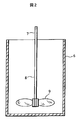
- FIG. 2 shows an apparatus for measuring the wear rate of the catalyst.
- Catalysts for thermally decomposing organic substances include titanium oxide, titanium / niobium composite oxide, titanium / silicon composite oxide, composite oxide of at least one selected from silicon and tungsten, and silicon and molybdenum. And at least one inorganic oxide selected from a composite oxide of titanium and at least one selected from the group consisting of titanium / aluminum composite oxide, zirconium oxide, titanium / zirconium composite oxide, and titanium-containing perovskite compound. In the present invention, these inorganic oxides all have photocatalytic activity, as is well known. An inorganic oxide having photocatalytic activity represented by titanium oxide is excited by receiving light energy exceeding its band gap and emits electrons.
- photocatalytic activity typically a strong oxidizing action
- the inorganic oxide having such a photocatalytic activity is also excited by heat energy, and emits electrons as the temperature rises to develop a strong oxidizing action. Therefore, in this invention, the said inorganic oxide functions effectively as a thermal decomposition catalyst similarly to a titanium oxide.
- a catalyst for thermally decomposing an organic substance according to the present invention is composed of the inorganic oxide represented by the titanium oxide, has a particle size in the range of 0.1 to 1.2 mm, and has a pore volume of 0.1 to It is composed of spherical granules having a tap density in the range of 0.3 mL / g, a tap density in the range of 1.05 to 1.4 g / mL, and an abrasion rate of 2% by weight or less.
- the fact that the particle size of the granule is in the range of 0.1 to 1.2 mm means that 100% by weight of the granule is in the range of the particle size of 0.1 to 1.2 mm.
- the particle size is measured by the method described later.
- the granule as the pyrolysis catalyst contains granules smaller than a particle size of 0.1 mm, the initial degradation performance is good in the pyrolysis of organic matter, but on the other hand, the pyrolysis apparatus is accompanied by the pyrolysis gas. As a result, the thermal decomposition performance deteriorates with time.
- the granule as the pyrolysis catalyst contains granules having a particle size larger than 1.2 mm, the granule as the pyrolysis catalyst is heated with stirring with the organic substance in the pyrolysis apparatus, for example, an organic substance such as waste plastic.
- the granules are classified, and the thermal decomposition performance may deteriorate with time. That is, the granule having a large particle size and the particle having a small particle size are separated from each other, making it difficult to efficiently contact the organic substance, and as a result, the thermal decomposition performance may be lowered.
- the granules are made spherical and the particle size is in the range of 0.1 to 1.2 mm, so that classification does not occur, fluidity and contact with organic matter are excellent, and thus the heat of the organic matter is obtained.
- a catalyst having excellent decomposition performance can be obtained.
- the tap density and the pore volume of the catalyst composed of spherical granules are set in the above ranges, respectively, and the organic matter is thermally decomposed by heating with stirring with the organic matter, for example, the waste plastic piece.
- the tap density and the wear rate shall be measured by the method described later, and the pore volume shall be measured by the mercury intrusion method with the maximum pressure of 196.14 MPa.
- the catalyst for thermally decomposing an organic substance according to the present invention is obtained by stirring and granulating the pulverized inorganic oxide in the presence of at least one sol selected from titania sol, silica sol, alumina sol and zirconia sol. After that, it can be obtained by firing at a temperature in the range of 400 to 850 ° C., and thereafter adjusting the particle diameter to 0.1 to 1.2 mm by sieving the obtained granules.
- the inorganic oxides examples of the titanium-containing perovskite compound include, for example, strontium titanate, barium zirconate titanate, calcium titanate, and some of barium, zirconium, strontium and / or calcium in lanthanum and cerium.
- titanium oxide, titanium / tungsten composite oxide, titanium / silicon composite oxide, titanium / molybdenum composite oxide, titanium / niobium composite oxide and the like are preferably used. It is done.
- agitation granulation involves stirring powder (in the present invention, the inorganic oxide powder) and a liquid binder (in the present invention, the sol described above) to form a sol powder.
- the pressure density and particle size of the aggregated particles can be arbitrarily adjusted.
- the shape of the obtained aggregate can be further spheroidized by appropriately selecting the bottom plate in the granulation container of the stirring granulator.
- the granulator for stirring and granulating the inorganic oxide is not particularly limited as described above.
- the inorganic oxide is agitated and granulated in the presence of the sol, and the granulation thus obtained is further agitated and granulated in order to further improve the sphericity of the granules and to make the particle size distribution more precise.
- the obtained granules may be further granulated in the presence of the sol by at least one method selected from rolling granulation and fluidized bed granulation.
- the sol is obtained by pulverizing the inorganic oxide pulverized product or the sol after drying and firing. You may use the mixture with a ground material.
- Rolling granulation refers to a granulation method in which a mixture of powder and liquid binder is given a rolling motion to obtain agglomerated particles.
- Fluidized bed granulation is already well known. As described above, it refers to a granulation method in which a liquid binder is supplied to a fluidized bed of powder to form aggregates by forming a cross-link by a binder between particles.
- FIG. 1 shows an example of an apparatus configuration for thermally decomposing organic matter according to the present invention.
- the reaction vessel 1 has an inlet 2 for introducing organic substances, for example, waste plastic pieces, into the reaction vessel, and a carrier for introducing the carrier gas 3 into the reaction vessel and carrying out the generated pyrolysis gas from the reaction vessel.
- a gas pipe 4 is provided, and a stirrer 7 for stirring the pyrolysis catalyst 5 and the waste plastic piece 6 in the reaction vessel is further provided.
- the heating apparatus 8 for heating the thermal decomposition catalyst and waste plastic piece in a reaction container is provided. In the illustrated apparatus, the heating device is disposed outside the reaction container, but may be disposed within the reaction container.
- the carrier gas air is usually used, but an inert gas may be used if necessary.
- the apparatus to be used is not limited to the above example, and for example, a rotary kiln or a fluidized bed apparatus can be used.
- all of the catalysts according to the present invention have photocatalytic activity. Therefore, when the catalyst is heated with stirring with the organic substance to thermally decompose the organic substance, the catalyst is irradiated under ultraviolet irradiation as necessary. You may heat, stirring with an organic substance.
- the organic pyrolysis catalyst according to the present invention is composed of spherical granules made of the inorganic oxide, and has predetermined particle characteristics and predetermined wear rate defined by particle size, pore volume and tap density.
- the organic substance can be made highly efficient for a long period of time.
- the organic matter that can be pyrolyzed using the catalyst according to the present invention is not particularly limited, in addition to general-purpose thermoplastic resins such as polyethylene and polypropylene, organic matter contained in thermosetting resins and medical waste, For example, latex, various plastics such as polyethylene, polypropylene, polyethylene terephthalate, and polyetheretherketone, gauze, and absorbent cotton can be used.
- the heating temperature of the pyrolysis catalyst and the organic substance is at least 200 ° C., preferably 300 ° C. or more, and particularly preferably in the range of 400 to 600 ° C., depending on the type of the organic substance. .
- Example 1 In the titanium oxide production process by the sulfuric acid method, the slurry of titanium hydroxide obtained from the hydrolysis process was filtered, washed with water, and repulped to obtain slurry A. To this slurry A, nitric acid was added as a solubilizer to obtain a titanium oxide sol B. Further, a part of the sol B was heated to 100 ° C. and dried to obtain a dried gel, which was baked in an electric furnace at 500 ° C. for 3 hours to obtain a titanium oxide fired product C.
- the titanium oxide calcined product C was pulverized, and the obtained pulverized product was 5 times with water using a high speed stirring granulator SPG-25 manufactured by Dalton Co., Ltd. under the conditions of a stirring blade 250 rpm and a high speed chopper 3000 rpm. Granulation was performed while spraying the diluted sol B to obtain titanium oxide particles.
- the titanium oxide particles were dried at 100 ° C. for 3 hours, then calcined at 600 ° C., and sieved with sieves having an opening of 1.19 mm and 0.104 mm to obtain granules having a particle size of 0.1 to 1.2 mm. 100% by weight.
- granules having a particle size of 0.1 to 1.2 mm are made of standard mesh 15 mesh (wire diameter 0.5 mm, mesh opening 1.19 mm) and 150 mesh (wire diameter 0.065 mm, mesh) made of stainless steel wire mesh.
- the sieving is carried out using 0.104 mm), and 15 meshes below (passing portion) and 150 meshes above (residual portion).
- granules having a particle size of 0.1 to 1.2 mm were obtained as follows.
- the 15 mesh standard sieve is attached to the upper lid of a low tap type standard sieve shaker manufactured by Yoshida Seisakusho Co., Ltd.
- the 150 mesh standard sieve is attached to the lower tray, and 100 g of titanium oxide granules are supplied as a sample on the 15 mesh standard sieve. Then, the mixture was sieved for 3 minutes at a shaking rotation speed of 300 rpm and the number of strokes of 150 times / minute to obtain granules having a particle size of 0.1 to 1.2 mm under 15 mesh (passing portion) and above 150 mesh (residual portion) .
- Titanium oxide granules obtained in this way is a specific surface area of 60 m 2 / g by BET method, a pore volume of 0.15 mL / g by mercury porosimetry, was tapped density 1.16 g / mL. The wear rate was 0.3%.
- the tap density of the granules was measured as follows. That is, about 180 g of granules are put into a 200 mL glass graduated cylinder, and this graduated cylinder is naturally dropped 10 times repeatedly from a position of 50 mm height onto a rubber sheet having a thickness of 10 mm, and then a wooden plate is separated from a distance of 50 mm.
- the scale of the graduated cylinder was read to make the volume of the granule V (mL).
- the granule was dried at 110 ° C. for 3 hours, and its weight M ( g) was measured, and based on these, the tap density was determined from the formula M / V.
- the wear rate of the granules was measured with a wear rate measuring apparatus shown in FIG.
- this wear measuring apparatus has a stirrer 10 attached to a sample container 9 having an inner diameter of 63 mm and a depth of 86 mm, and this stirrer has three elliptical stirring blades 12 each having a length of 20 mm at the lower end portion of the shaft body 11.
- the plates are attached so as to extend in the diameter direction from the shaft body at intervals of 60 °, and the stirring blades are inclined so as to have an angle of 45 ° with respect to the horizontal.
- the lowermost edge of the stirring blade is located at a distance of 8 mm from the bottom of the sample container.
- Example 2 The titanium hydroxide slurry A obtained in Example 1 was heated and dried at 100 ° C. to obtain a dried gel, which was baked in an electric furnace at 500 ° C. for 3 hours, pulverized, and baked with titanium oxide.
- a pulverized product of product D was obtained, and 50 parts by weight of the pulverized product of titanium oxide baked product D and 50 parts by weight of the pulverized product of titanium oxide baked product C were mixed.
- a mixture of 50 parts by weight of the pulverized product of titanium oxide fired product D and 50 parts by weight of the pulverized product of titanium oxide fired product C was treated in the same manner as in Example 1, and the resulting particles were dried, fired, and sieved. Thus, granules having a particle size of 0.1 to 1.2 mm were obtained.
- the titanium oxide granules thus obtained had a specific surface area of 62 m 2 / g, a pore volume of 0.28 mL / g, a tap density of 1.06 g / mL, and a wear rate of 1.0%.
- the time until all the polyethylene resin was thermally decomposed and gasified was measured in the same manner as in Example 1, and it was 7 minutes.
- Example 3 While spraying the granulated titanium oxide obtained in Example 1 with the tumbling granulator “Malmerizer”, the pulverized product of titanium oxide C obtained in Example 1 and the sol B diluted four times with water.
- the particles were sized in a spherical shape, and the obtained particles were processed in the same manner as in Example 1 to obtain granules having a particle size in the range of 0.1 to 1.2 mm.
- the titanium oxide granules had a specific surface area of 59 m 2 / g, a pore volume of 0.17 mL / g, a tap density of 1.18 g / mL, and a wear rate of 0.3%.
- this titanium oxide granule as a thermal decomposition catalyst, the time until all the polyethylene resin was thermally decomposed and gasified was measured in the same manner as in Example 1, and it was 8 minutes.
- Example 4 The titanium oxide sol B obtained in Example 1 and ammonium tungstate were mixed. This mixture was heated to 100 ° C. and dried to obtain a dried gel, which was fired in an electric furnace at 500 ° C. for 3 hours to obtain a titanium / tungsten composite oxide (titanium oxide / tungsten oxide weight ratio 90:10). A fired product was obtained. The fired product of the titanium / tungsten composite oxide E was pulverized to obtain a pulverized product. This pulverized product was granulated while spraying the sol B diluted 5 times with water under the conditions of a stirring blade 250 rpm and a high speed chopper 3000 rpm using a Dalton high speed stirring granulator SPG-25 type.
- titanium / tungsten composite oxide granules were obtained.
- the particles are sized in a spherical shape while spraying the pulverized product of the titanium / tungsten composite oxide E and the sol B diluted four times with water with a spherical particle sizer “Malmerizer”.
- the obtained granules were obtained in the same manner as in Example 1 to obtain granules having a particle size of 0.1 to 1.2 mm.
- the granule had a specific surface area of 69 m 2 / g, a pore volume of 0.2 mL / g, a tap density of 1.20 g / mL, and a wear rate of 0.5%.
- Comparative Example 1 In the same manner as in Example 1, granules of titanium oxide having a particle size of 1.2 mm or more were obtained. In the same manner as in Example 1, when the titanium oxide granules were used as a thermal decomposition catalyst, the time until all the polyethylene resin was thermally decomposed and gasified was measured and found to be 16 minutes. Comparative Example 2 In the same manner as in Example 1, granules of titanium oxide having a particle size of 0.1 mm or less were obtained.
- Example 3 The titanium oxide granules obtained in Example 1 are sieved to prepare granules having a particle size of 0.1 mm or less and granules having a particle size of 0.1 to 0.5 mm. From the former 20 wt% and the latter 80 wt% The following titanium oxide granules were prepared.
- Example 3 a part of the above 0.1 to 0.5 mm titanium oxide granules was pulverized with the rolling granulator “Malmerizer” with the titanium oxide C obtained in Example 1. While spraying the sol B diluted four times with a product and water, the particles are sized more spherically, and the obtained particles are sieved to obtain 40% by weight of granules having a particle size of 0.5 to 1.2 mm. Titanium oxide granules consisting of 60% by weight of 1.2 to 2.18 mm granules were obtained.
- titanium oxide granules 20% by weight of granules having a particle size of 0.1 mm or less, 50% by weight of granules having a particle size of 0.1 mm or more and 1.2 mm or less, and a particle size of 1. Titanium oxide granules composed of 30% by weight of granules of 2 mm or more and 2.18 mm or less were prepared.
- the granule had a specific surface area of 62 m 2 / g, a pore volume of 0.16 mL / g, and a tap density of 1.20 g / mL.
- Example 4 Using this titanium oxide granule as a thermal decomposition catalyst, the time until the polyethylene resin was all thermally decomposed and gasified was measured in the same manner as in Example 1, and it was 15 minutes. After the pyrolysis, the granular layer remaining in the apparatus was observed, and it was confirmed that the large particle size granules were unevenly distributed at the top of the layer and separated from the small particle size granules. . Comparative Example 4 The titanium hydroxide slurry A was heated and dried at 100 ° C., calcined in an electric furnace at 500 ° C. for 3 hours, and pulverized to obtain a pulverized product of titanium oxide D.
- pulverized product of titanium oxide D and 30 parts by weight of the pulverized product of titanium oxide C are mixed, and for the purpose of improving gas decomposition efficiency, the above-mentioned oxidation is used as a pore-imparting agent to increase the pore volume.
- 15 parts by weight of melamine resin was added to 100 parts by weight of the total amount of pulverized product of titanium D and pulverized product of titanium oxide C.
- a mixture of such pulverized titanium oxide and melamine resin was diluted 5 times with water using a high-speed stirring granulator SPG-25 manufactured by Dalton Co., Ltd. under the conditions of a stirring blade 250 rpm and a high-speed chopper 3000 rpm.
- Granulation was performed while spraying the sol B to obtain titanium oxide particles.
- the titanium oxide particles were dried at 100 ° C. for 3 hours and then calcined at 600 ° C., and then sieved with sieves having an opening of 1.19 mm and 0.104 mm. Granules in the range were obtained.
- the titanium oxide granules had a specific surface area of 62 m 2 / g, a pore volume of 0.33 mL / g, a tap density of 1.01 g / mL, and a wear rate of 3.5%.
- Example 3 Using this titanium oxide granule as a thermal decomposition catalyst, the time until the polyethylene resin was all thermally decomposed and gasified was measured in the same manner as in Example 1, and it was 12 minutes. After this catalytic performance test, the granules remaining in the apparatus were reduced in weight from 50 g to 38 g. Comparative Example 5 The titanium oxide granules obtained in Example 3 were dipped in the sol B diluted 4-fold with water, dried, dipped again, dried, and then fired at 450 ° C. in an electric furnace, as described above. Sieving was performed to obtain granules having a particle size of 0.1 to 1.2 mm.
- the resulting granule had a specific surface area of 66 m 2 / g, a pore volume of 0.08 mL / g by a mercury intrusion method, a tap density of 1.17 g / mL, and an abrasion rate of 0.4%.
- this titanium oxide granule as a thermal decomposition catalyst, the time until the polyethylene resin was all thermally decomposed and gasified was measured in the same manner as in Example 1, and it was 15 minutes.
- Example 6 the pulverized alumina powder was sprayed with alumina sol diluted 5 times with water under the conditions of a stirring blade 250 rpm and a high-speed chopper 3000 rpm using a high-speed stirring granulator SPG-25 manufactured by Dalton Co., Ltd.
- the resulting alumina particles were dried at 100 ° C. for 3 hours, then calcined at 600 ° C., and sieved with sieves having an opening of 1.19 mm and 0.104 mm, Alumina granules having a diameter in the range of 0.1 to 1.2 mm were obtained.
- this alumina granule as a thermal decomposition catalyst, the thermal decomposition of the polyethylene resin was attempted in the same manner as in Example 1, but the polyethylene resin was not decomposed at all.
Landscapes
- Chemical & Material Sciences (AREA)
- Engineering & Computer Science (AREA)
- Organic Chemistry (AREA)
- Chemical Kinetics & Catalysis (AREA)
- Materials Engineering (AREA)
- Oil, Petroleum & Natural Gas (AREA)
- Life Sciences & Earth Sciences (AREA)
- Environmental & Geological Engineering (AREA)
- General Engineering & Computer Science (AREA)
- Wood Science & Technology (AREA)
- General Chemical & Material Sciences (AREA)
- Mechanical Engineering (AREA)
- Thermal Sciences (AREA)
- Physics & Mathematics (AREA)
- Health & Medical Sciences (AREA)
- Sustainable Development (AREA)
- Medicinal Chemistry (AREA)
- Polymers & Plastics (AREA)
- Combustion & Propulsion (AREA)
- Dispersion Chemistry (AREA)
- Geology (AREA)
- General Life Sciences & Earth Sciences (AREA)
- Inorganic Chemistry (AREA)
- Catalysts (AREA)
- Separation, Recovery Or Treatment Of Waste Materials Containing Plastics (AREA)
Abstract
Description
しかし、上述したようにして得られる酸化チタン粒状物は、十分な硬さをもたないために、磨耗しやすく、容易に微粉化し、従って、上述したような廃プラスチックの熱分解においては、微粉化した酸化チタンが熱分解による生成ガスと同伴して容器外に失われるので、時間の経過と共に熱分解効率が低下し、更には、酸化チタン粒状物の微粉化に伴って、その粒度分布が変化し、この点からも、廃プラスチックの熱分解効率が低下するという問題がある。
反応容器から熱分解ガスを排出させるための管路にフィルターを取付ければ、微粉化した酸化チタンを回収することはできるが(特許文献2)、フィルターが容易に目詰まりを起こして、廃プラスチックの熱分解効率が時間と共に低下する。他方、酸化チタンの微粉化を避けるために、徒に粒径の大きいもののみを用いても、廃プラスチックの熱分解効率に劣る。
そこで、これらの問題を解決するために、酸化チタンゾルを乾燥、焼成し、これを破砕した後、エッジ加工を施して、磨耗性と分解性能を両立させる方法が提案されている(特許文献3)。この方法によれば、上述した問題は解消されるが、エッジ加工によって生じる微粉の処理に問題がある。即ち、微粉の再利用が困難であるという問題がある。
以下、本発明においては、特に断りのない限り、上述した酸化チタン、チタン/ニオブ複合酸化物、チタン/ケイ素複合酸化物、ケイ素とタングステンから選ばれる少なくとも1種とチタンとの複合酸化物、ケイ素とモリブデンから選ばれる少なくとも1種とチタンとの複合酸化物、チタン/アルミニウム複合酸化物、酸化ジルコニウム、チタン/ジルコニウム複合酸化物及びチタン含有ペロブスカイト化合物から選ばれる少なくとも1種の無機酸化物を単に「(上記又は前記)無機酸化物」という。
好ましくは、本発明による有機物を熱分解するための触媒は、上記無機酸化物の顆粒からなり、有機物を熱分解するための触媒であって、上記無機酸化物の顆粒がその無機酸化物の粉砕物をチタニアゾル、シリカゾル、アルミナゾル及びジルコニアゾルから選ばれる少なくとも1種のゾルの存在下に攪拌造粒して球状の顆粒とした後、400~850℃の範囲の温度で焼成し、篩分けすることによって得られる粒径が0.1~1.2mmの範囲にあり、細孔容積が0.1~0.3mL/gの範囲にあり、タップ密度が1.05~1.4g/mLの範囲にあり、磨耗率が2重量%以下である球状の顆粒である。
特に好ましくは、本発明による有機物を熱分解するための触媒は、上記無機酸化物の顆粒からなり、有機物と共に攪拌しながら加熱して、その有機物を熱分解し、ガス化するための触媒であって、上記無機酸化物の顆粒がその無機酸化物の粉砕物をチタニアゾル、シリカゾル、アルミナゾル及びジルコニアゾルから選ばれる少なくとも1種のゾルの存在下に攪拌造粒して球状の顆粒とした後、400~850℃の範囲の温度で焼成し、篩分けすることによって得られる粒径が0.1~1.2mmの範囲にあり、細孔容積が0.1~0.3mL/gの範囲にあり、タップ密度が1.05~1.4g/mLの範囲にあり、磨耗率が2重量%以下である球状の顆粒である。
また、本発明によれば、上述した触媒と共に有機物を攪拌しながら加熱して、熱分解し、ガス化することを特徴とする有機物を熱分解するための方法が提供される。
好ましくは、本発明による有機物を熱分解するための方法は、上記無機酸化物の顆粒からなり、この無機酸化物の顆粒がその無機酸化物の粉砕物をチタニアゾル、シリカゾル、アルミナゾル及びジルコニアゾルから選ばれる少なくとも1種のゾルの存在下に攪拌造粒して球状の顆粒とした後、400~850℃の範囲の温度で焼成し、篩分けすることによって得られる粒径が0.1~1.2mmの範囲にあり、細孔容積が0.1~0.3mL/gの範囲にあり、タップ密度が1.05~1.4g/mLの範囲にあり、磨耗率が2重量%以下である球状の顆粒である触媒と共に有機物を攪拌しながら加熱して、熱分解し、ガス化するものである。
更に、本発明によれば、上記無機酸化物の粉砕物をチタニアゾル、シリカゾル、アルミナゾル及びジルコニアゾルから選ばれる少なくとも1種のゾルの存在下に攪拌造粒して球状の顆粒とした後、400~850℃の範囲の温度で焼成し、この後、篩分けによって粒径を0.1~1.2mmの範囲とすることを特徴とする細孔容積が0.1~0.3mL/gの範囲にあり、タップ密度が1.05~1.4g/mLの範囲にあり、磨耗率が2重量%以下である球状の顆粒からなり、有機物を熱分解するための触媒を製造する方法が提供される。
図2は触媒の摩耗率を測定するための装置を示す図である。
2…廃プラスチック片投入口
3…担体ガス
4…担体ガス管
5…熱分解触媒
6…廃プラスチック片
7…攪拌機
8…加熱装置
本発明において、これら無機酸化物はすべて、既によく知られているように、光触媒活性を有する。酸化チタンに代表される光触媒活性を有する無機酸化物は、そのバンドギャップ以上の光エネルギーを受取ることによって励起されて電子を放出し、その結果として、光触媒活性、代表的には、強い酸化作用を有する。このような光触媒活性を有する無機酸化物は、熱エネルギーによっても、同様に、励起されて、その温度の上昇と共に、電子を放出して、強い酸化作用を発現する。従って、本発明において、上記無機酸化物は、酸化チタンと同様に熱分解触媒として有効に機能する。
本発明による有機物を熱分解するための触媒は、上記酸化チタンに代表される上記無機酸化物からなり、粒径が0.1~1.2mmの範囲にあり、細孔容積が0.1~0.3mL/gの範囲にあり、タップ密度が1.05~1.4g/mLの範囲にあり、磨耗率が2重量%以下である球状の顆粒からなるものである。
本発明において、顆粒の粒径が0.1~1.2mmの範囲にあるということは、顆粒の100重量%が粒径0.1~1.2mmの範囲にあるということであり、顆粒の粒径は、後述する方法によって測定するものとする。
熱分解触媒としての顆粒が粒径0.1mmよりも小さい顆粒を含むときは、有機物の熱分解において、初期の分解性能は良好であるが、他方において、熱分解ガスに同伴して熱分解装置から流出し、失われるために、経時的に熱分解性能が低下する。しかし、熱分解触媒としての顆粒が粒径1.2mmよりも大きい顆粒を含むときは、熱分解装置内において、熱分解触媒としての顆粒を有機物と共に攪拌しながら加熱して有機物、例えば、廃プラスチック片を熱分解する間に、顆粒が分級されて、経時的に熱分解性能が低下する虞がある。即ち、顆粒が粒径の大きいものと粒径の小さいものとが相互に分離し、有機物と効率よく接触し難くなって、結果として、熱分解性能が低下する虞がある。
本発明によれば、顆粒を球状とし、その粒径を0.1~1.2mmの範囲とすることによって、分級が生じず、流動性や有機物との接触性にすぐれ、かくして、有機物の熱分解性能にすぐれる触媒を得ることができる。
更に、本発明によれば、球状の顆粒からなる触媒のタップ密度と細孔容積をそれぞれ上記範囲とすることによって、有機物、例えば、廃プラスチック片と共に攪拌しながら加熱して、有機物を熱分解する間、一層、流動性と有機物との接触性にすぐれるのみならず、微粉化し難く、磨耗がよく抑えられて、有機物の熱分解性能にすぐれる触媒を得ることができる。
本発明によれば、タップ密度と磨耗率は後述する方法によって測定するものとし、細孔容積は、最大圧力196.14MPaによる水銀圧入法によって測定するものとする。
本発明による有機物を熱分解するための触媒は、前記無機酸化物の粉砕物をチタニアゾル、シリカゾル、アルミナゾル及びジルコニアゾルから選ばれる少なくとも1種のゾルの存在下に攪拌造粒して球状の顆粒とした後、400~850℃の範囲の温度で焼成し、この後、得られた顆粒を篩分けによって粒径を0.1~1.2mmに調整することによって得ることができる。
前記無機酸化物のうち、チタン含有ペロブスカイト化合物としては、例えば、チタン酸ストロンチウム、チタン酸ジルコン酸バリウム、チタン酸カルシウムのほか、これらにおけるバリウム、ジルコニウム、ストロンチウム及び/又はカルシウムの一部をランタン、セリウム、イットリウム等で置換したもの等を挙げることができるが、これらに限定されるものではない。
本発明によれば、前記無機酸化物のなかでも、特に、酸化チタン、チタン/タングステン複合酸化物、チタン/ケイ素複合酸化物、チタン/モリブデン複合酸化物、チタン/ニオブ複合酸化物等が好ましく用いられる。
攪拌造粒は、よく知られているように、粉体(本発明においては、前記無機酸化物の粉体)と液体バインダー(本発明においては、前述したゾル)を攪拌して、ゾルによる粉体の凝集と共に、高速の攪拌羽根によるせん断効果によって、上記粉体の圧密化された凝集体を得る造粒をいい、用いるゾルの量、攪拌羽根の回転数、造粒時間等によって、得られる凝集粒の圧密度や粒度を任意に調整することができる。また、攪拌造粒装置の造粒容器内の底盤を適宜に選択することによって、得られる凝集体の形状を、より一層、球状化することもできる。
本発明において、このように、前記無機酸化物を攪拌造粒するための造粒機は、特に限定されるものではないが、例えば、(株)奈良機械製作所製混合造粒機NMGシリーズ、深江パウテック(株)製ハイスピードミキサーやハイフレックスグラル、日本アイリッヒ(株)製アイリッヒインテンシブミキサー(アイリッヒ逆流式高速混合機)、(有)G−LABO製高速攪拌造粒機HSGシリーズ、(株)ダルトン製混練・高速攪拌造粒機SPGシリーズや高速混合・細粒機スパルタン・リューザー、(株)パウレック製バーチカル・グラニュレータVG−CTシリーズ等が好ましく用いられる。
本発明によれば、前記無機酸化物を前記ゾルの存在下に攪拌造粒し、かくして得られた顆粒の球状性を一層高めると共に、粒度分布を一層精密なものとするために、攪拌造粒して得られた顆粒を前記ゾルの存在下に転動造粒と流動層造粒から選ばれる少なくとも1種の方法にて更に造粒してもよい。
この造粒に際して、得られる顆粒をより硬くして、その磨耗性を一層向上させるために、前記ゾルと共に、前記無機酸化物の粉砕物や前記ゾルを乾燥、焼成した後、粉砕して得られる粉砕物との混合物を用いてもよい。
転動造粒は、既によく知られているように、粉体と液体バインダーの混合物に転動運動を与えて、凝集粒を得る造粒法をいい、流動層造粒も既によく知られているように、粉体の流動層に液体バインダーを供給して、粒子間のバインダーによる架橋を形成させて凝集粒を得る造粒法をいう。
このようにして、前記無機酸化物を攪拌造粒し、更に、転動造粒と流動層造粒から選ばれる少なくとも1種の方法にて更に造粒した後、前述したように、400~850℃の範囲の温度で焼成し、この後、篩分けによって、粒径が0.1~1.2mmの範囲にある粒子を集めることによって、必要な粒度を有する顆粒を本発明による触媒として得ることができる。
このような造粒のための転動造粒機や流動層造粒機(複合型造粒機)もまた、本発明においては、特に限定されるものではないが、例えば、(株)ダルトン製の流動層造粒装置「ニュー/マルメライザー」や球形整粒機「マルメライザー」、(株)パウレック製の流動層造粒装置や転動流動コーティング装置「マルチプレックス」シリーズ等を挙げることができる。
本発明に従って、有機物を熱分解するための装置構成の一例を図1に示す。反応容器1は、有機物、例えば、廃プラスチック片をこの反応容器に投入するための投入口2と、担体ガス3を反応容器に導入し、生成する熱分解ガスを反応容器から搬出するための担体ガス管4を備えており、更に、反応容器中の熱分解触媒5と廃プラスチック片6を攪拌するための攪拌機7を備えている。また、反応容器中の熱分解触媒と廃プラスチック片を加熱するための加熱装置8を備えている。図示した装置においては、この加熱装置は反応容器外に配設されているが、反応容器内に配設されていてもよい。上記担体ガスとしては、通常、空気が用いられるが、必要に応じて、不活性ガスを用いてもよい。しかし、本発明に従って、廃プラスチックを熱分解するに際して、用いる装置は上記例示に限定されるものではなく、例えば、ロータリーキルンや流動床装置を用いることもできる。
前述したように、本発明による触媒はいずれも、光触媒活性を有するので、触媒を有機物と共に攪拌しながら加熱して、有機物を熱分解するときに、必要に応じて、紫外線の照射下で触媒を有機物と共に攪拌しながら加熱してもよい。
本発明による有機物の熱分解触媒は、上述したように、前記無機酸化物からなる球状の顆粒からなり、粒径、細孔容積及びタップ密度にて規定される所定の粒子特性と所定の磨耗率を有し、かくして、有機物と加熱下に攪拌混合しても、長期間にわたって上記粒子特性を保つことができ、従って、本発明による熱分解触媒を用いることによって、長時間にわたって有機物を高い効率にて熱分解することができる。
本発明による触媒を用いて熱分解することができる有機物は、特に限定されるものではなく、ポリエチレン、ポリプロピレン等の汎用の熱可塑性樹脂のほか、熱硬化性樹脂や医療廃棄物に含まれる有機物、例えば、ラテックスや、また、ポリエチレン、ポリプロピレン、ポリエチレンテレフタレート、ポリエーテルエーテルケトン等の種々のプラスチック、ガーゼ、脱脂綿等を挙げることができる。
また、本発明において、熱分解すべき有機物が固体であるときは、これを破砕して、数mm角程度の大きさにしたものが好ましいが、特に、限定されるものではない。
本発明において、熱分解触媒と有機物の加熱温度は、有機物の種類にもよるが、少なくとも、200℃であり、好ましくは、300℃以上であり、特に好ましくは、400~600℃の範囲である。
実施例1
硫酸法による酸化チタン製造工程のうち、加水分解工程から得られたチタン水酸化物のスラリーを濾過、水洗し、これをリパルプして、スラリーAを得た。このスラリーAにゾル化剤として硝酸を加え、チタン酸化物のゾルBを得た。更に、このゾルBの一部を100℃に加熱、乾燥し、乾燥ゲルとし、これを電気炉中、500℃で3時間焼成して、酸化チタン焼成物Cを得た。
この酸化チタン焼成物Cを粉砕し、得られた粉砕物を((株)ダルトン製高速攪拌造粒機SPG−25型を用いて、攪拌羽根250rpm、高速チョッパ3000rpmの条件下、水で5倍希釈した前記ゾルBを噴霧しながら造粒して、酸化チタン粒子を得た。
この酸化チタン粒子を100℃で3時間乾燥し、次いで、600℃で焼成し、目開き1.19mmと0.104mmの篩で篩分けして、粒径0.1~1.2mmの顆粒を100重量%とした。
本発明において、粒径0.1~1.2mmの顆粒は、ステンレス製金網からなる標準篩15メッシュ(線径0.5mm、目開き1.19mm)と150メッシュ(線径0.065mm、目開き0.104mm)を用いて篩分けし、15メッシュ下(通過分)、150メッシュ上(残留分)をいうものとする。
詳しくは、次のようにして、粒径0.1~1.2mmの顆粒を得た。即ち、(株)吉田製作所製ロータップ式標準篩振盪機に上蓋に上記15メッシュ標準篩を取り付け、下受皿に上記150メッシュ標準篩を取り付け、15メッシュ標準篩上に酸化チタン顆粒100gを試料として供給し、振盪回転数300rpm、打数150回/分で3分間篩分けして、15メッシュ下(通過分)、150メッシュ上(残留分)を粒径0.1~1.2mmの顆粒として得た。
このようにして得られた酸化チタン顆粒は、BET法による比表面積60m2/gであり、水銀圧入法による細孔容積0.15mL/gであり、タップ密度1.16g/mLであった。また、摩耗率は0.3%であった。
本発明において、顆粒のタップ密度は次のようにして測定した。即ち、顆粒約180gを200mLガラス製メスシリンダーに投入し、このメスシリンダーを厚み10mmのゴム製シート上に高さ50mmの位置から繰り返し10回自然落下させた後、50mmの距離から木製の板の側面に10回打ち当て、以上の操作を2回繰り返した後、メスシリンダーの目盛を読み取り、顆粒の容積V(mL)とし、別に、顆粒を110℃で3時間乾燥した後、その重量M(g)を測定、これらに基づいて、タップ密度を式M/Vから求めた。
また、本発明において、顆粒の摩耗率は図2に示す摩耗率測定装置にて測定した。即ち、この摩耗測定装置は、内径63mm、深さ86mmの試料容器9に攪拌機10を取付けてなり、この攪拌機は、軸体11の下端部にそれぞれ長さ20mmの楕円形状の攪拌羽根12を3枚、60°間隔で軸体から直径方向に延びるように取付けたものであって、攪拌羽根はそれぞれ水平に対して45°の角度を有するように傾斜している。この攪拌羽根は、その最下縁が試料容器の底から8mmの距離に位置する。
試料である顆粒の摩耗率の測定に際しては、その150mLを200mLメスシリンダーで計量し、重量を記録した後、試料容器に全量を投入し、300rpmで30分間上記攪拌機を用いて攪拌した後、試料容器から試料を取り出し、全量を目開き0.104mmの篩に移し、この篩を通過した試料の重量を測定した。ここに、試料の摩耗率Aは、目開き0.104mmの篩を通過した試料の重量をWとし、測定に供した試料の重量をW0とするとき、A=(W/W0)×100(%)である。
次に、攪拌機と加熱装置を有する500mL容量ビーカーからなる熱分解装置のビーカー内に上で得た酸化チタンの顆粒50gと約5mm角に破砕したポリエチレン樹脂50gとを仕込み、攪拌しながら、400℃に加熱し、上記ポリエチレン樹脂がすべて熱分解されて、ガス化するまでの時間を測定したところ、9分であった。
実施例2
実施例1で得られたチタン水酸化物のスラリーAを100℃で加熱、乾燥し、乾燥ゲルとし、これを電気炉中にて500℃で3時間焼成し、粉砕処理して、酸化チタン焼成物Dの粉砕物を得、この酸化チタン焼成物Dの粉砕物50重量部と前記酸化チタン焼成物Cの粉砕物50重量部を混合した。
この酸化チタン焼成物Dの粉砕物50重量部と酸化チタン焼成物Cの粉砕物50重量部の混合物を実施例1におけると同様に処理し、得られた粒子を乾燥、焼成し、篩分けして、粒径0.1~1.2mmの顆粒を得た。
このようにして得られた酸化チタンの顆粒は比表面積62m2/g、細孔容積0.28mL/g、タップ密度1.06g/mL、摩耗率は1.0%であった。
この酸化チタンの顆粒を熱分解触媒として用いて、実施例1と同様にして、ポリエチレン樹脂がすべて熱分解されて、ガス化するまでの時間を測定したところ、7分であった。
実施例3
実施例1で得られた酸化チタンの顆粒に転動造粒機「マルメライザー」にて実施例1で得られた酸化チタンCの粉砕物と水で4倍希釈した前記ゾルBを噴霧しながら、より球状に整粒し、得られた粒子を実施例1におけると同様にして、粒径が0.1~1.2mmの範囲の顆粒を得た。この酸化チタンの顆粒は、比表面積59m2/g、細孔容積0.17mL/g、タップ密度1.18g/mL、摩耗率0.3%であった。
この酸化チタンの顆粒を熱分解触媒として用いて、実施例1と同様にして、ポリエチレン樹脂がすべて熱分解されて、ガス化するまでの時間を測定したところ、8分であった。
実施例4
実施例1で得たチタン酸化物のゾルBとタングステン酸アンモニウムを混合した。この混合物を100℃に加熱、乾燥して、乾燥ゲルとし、これを電気炉中、500℃で3時間焼成して、チタン/タングステン複合酸化物(酸化チタン/酸化タングステン重量比90:10)の焼成物を得た。
このチタン/タングステン複合酸化物Eの焼成物を粉砕して、粉砕物を得た。この粉砕物を((株)ダルトン製高速攪拌造粒機SPG−25型を用いて、攪拌羽根250rpm、高速チョッパ3000rpmの条件下、水で5倍希釈した前記ゾルBを噴霧しながら造粒して、チタン/タングステン複合酸化物顆粒を得た。
次いで、この顆粒に球形整粒機「マルメライザー」にて上記チタン/タングステン複合酸化物Eの焼成物の粉砕物と水で4倍希釈した前記ゾルBを噴霧しながら、より球状に整粒し、得られた顆粒を実施例1におけると同様にして、粒径が0.1~1.2mmの顆粒を得た。
この顆粒の比表面積は69m2/gであり、細孔容積は0.2mL/gであり、タップ密度は1.20g/mLであり、摩耗率は0.5%であった。
この顆粒を熱分解触媒として用いて、実施例1と同様にして、ポリエチレン樹脂がすべて熱分解されて、ガス化するまでの時間を測定したところ、5分であった。
比較例1
実施例1と同様にして、粒径が1.2mm以上の酸化チタンの顆粒を得た。実施例1と同様にして、上記酸化チタンの顆粒を熱分解触媒として用いて、ポリエチレン樹脂がすべて熱分解されて、ガス化するまでの時間を測定したところ、16分であった。
比較例2
実施例1と同様にして、粒径が0.1mm以下の酸化チタンの顆粒を得た。この酸化チタンの顆粒を熱分解触媒として用いて、実施例1と同様にして、ポリエチレン樹脂がすべて熱分解されて、ガス化するまでの時間を測定したところ、10分であった。触媒性能の試験の後、装置内に残留した顆粒は、重量が50gから40gに減少していた。
比較例3
実施例1において得られた酸化チタン顆粒を篩分けして、粒径0.1mm以下の顆粒と粒径0.1~0.5mmの顆粒を調製し、前者20重量%と後者80重量%からなる酸化チタン顆粒を調製した。
別に、実施例3におけると同様にして、上記0.1~0.5mmの酸化チタン顆粒の一部を転動造粒機「マルメライザー」にて実施例1で得られた酸化チタンCの粉砕物と水で4倍希釈した前記ゾルBを噴霧しながら、より球状に整粒し、得られた粒子を篩分けして、粒径0.5~1.2mmの顆粒40重量%と粒径1.2~2.18mmの顆粒60重量%とからなる酸化チタン顆粒を得た。
このように分級したそれぞれの酸化チタン顆粒を用いて、粒径0.1mm以下の顆粒が20重量%と、粒径0.1mm以上、1.2mm以下の顆粒50重量%と、粒径1.2mm以上、2.18mm以下の顆粒30重量%とからなる酸化チタン顆粒を調製した。この顆粒の比表面積は62m2/gであり、細孔容積は0.16mL/gであり、タップ密度は1.20g/mLであった。
この酸化チタンの顆粒を熱分解触媒として用いて、実施例1と同様にして、ポリエチレン樹脂がすべて熱分解されて、ガス化するまでの時間を測定したところ、15分であった。この熱分解の後、装置内に残留している顆粒層を観察したところ、粒径の大きい顆粒が層の上部に偏在しており、粒径の小さい顆粒から分離していることが確認された。
比較例4
前記チタン水酸化物のスラリーAを100℃で加熱、乾燥し、電気炉中にて500℃で3時間焼成し、粉砕処理して、酸化チタンDの粉砕物を得た。この酸化チタンDの粉砕物70重量部と前記酸化チタンCの粉砕物30重量部を混合し、ガス分解効率の向上を目的として、細孔容積を増加させるめに細孔付与剤として、上記酸化チタンDの粉砕物と酸化チタンCの粉砕物の合計量100重量部に対して、メラミン樹脂15重量部を加えた。
このような酸化チタンの粉砕物とメラミン樹脂の混合物を((株)ダルトン製高速攪拌造粒機SPG−25型を用いて、攪拌羽根250rpm、高速チョッパ3000rpmの条件下、水で5倍希釈した前記ゾルBを噴霧しながら造粒して、酸化チタン粒子を得た。
この酸化チタン粒子を100℃で3時間乾燥し、次いで、600℃で焼成した後、目開き1.19mmと0.104mmの篩で篩分けして、粒径が0.1~1.2mmの範囲にある顆粒を得た。この酸化チタン顆粒は比表面積62m2/g、細孔容積0.33mL/g、タップ密度1.01g/mL、摩耗率3.5%であった。
この酸化チタン顆粒を熱分解触媒として用いて、実施例1と同様にして、ポリエチレン樹脂がすべて熱分解されて、ガス化するまでの時間を測定したところ、12分であった。この触媒性能の試験の後、装置内に残留した顆粒は、重量が50gから38gに減少していた。
比較例5
実施例3で得られた酸化チタン顆粒を水で4倍希釈した前記ゾルBに浸漬し、乾燥した後、再度、浸漬し、乾燥した後、電気炉中450℃で焼成し、前述したように篩分けして、粒径が0.1~1.2mmの顆粒を得た。得られた顆粒は比表面積66m2/g、水銀圧入法による細孔容積0.08mL/g、タップ密度1.17g/mL、磨耗率0.4%であった。
この酸化チタンの顆粒を熱分解触媒として用いて、実施例1と同様にして、ポリエチレン樹脂がすべて熱分解されて、ガス化するまでの時間を測定したところ、15分であった。
比較例6
実施例1において、アルミナの粉砕粉を((株)ダルトン製高速攪拌造粒機SPG−25型を用いて、攪拌羽根250rpm、高速チョッパ3000rpmの条件下、水で5倍希釈したアルミナゾルを噴霧しながら造粒して、アルミナ粒子を得た。このアルミナ粒子を100℃で3時間乾燥し、次いで、600℃で焼成し、目開き1.19mmと0.104mmの篩で篩分けして、粒径が0.1~1.2mmの範囲にあるアルミナ顆粒を得た。
このアルミナ顆粒を熱分解触媒として用いて、実施例1と同様にして、ポリエチレン樹脂の熱分解を試みたが、ポリエチレン樹脂は全く分解しなかった。
Claims (14)
- 酸化チタン、チタン/ニオブ複合酸化物、チタン/ケイ素複合酸化物、ケイ素とタングステンから選ばれる少なくとも1種とチタンとの複合酸化物、ケイ素とモリブデンから選ばれる少なくとも1種とチタンとの複合酸化物、チタン/アルミニウム複合酸化物、酸化ジルコニウム、チタン/ジルコニウム複合酸化物及びチタン含有ペロブスカイト化合物から選ばれる少なくとも1種の無機酸化物からなり、粒径が0.1~1.2mmの範囲にあり、細孔容積が0.1~0.3mL/gの範囲にあり、タップ密度が1.05~1.4g/mLの範囲にあり、磨耗率が2重量%以下である球状の顆粒からなることを特徴とする有機物を熱分解するための触媒。
- 酸化チタン、チタン/ニオブ複合酸化物、チタン/ケイ素複合酸化物、ケイ素とタングステンから選ばれる少なくとも1種とチタンとの複合酸化物、ケイ素とモリブデンから選ばれる少なくとも1種とチタンとの複合酸化物、チタン/アルミニウム複合酸化物、酸化ジルコニウム、チタン/ジルコニウム複合酸化物及びチタン含有ペロブスカイト化合物から選ばれる少なくとも1種の無機酸化物の顆粒からなり、有機物を熱分解するための触媒であって、上記無機酸化物の顆粒がその無機酸化物の粉砕物をチタニアゾル、シリカゾル、アルミナゾル及びジルコニアゾルから選ばれる少なくとも1種のゾルの存在下に攪拌造粒して球状の顆粒とした後、400~850℃の範囲の温度で焼成し、篩分けすることによって得られる粒径が0.1~1.2mmの範囲にあり、細孔容積が0.1~0.3mL/gの範囲にあり、タップ密度が1.05~ 1.4g/mLの範囲にあり、磨耗率が2重量%以下である球状の顆粒であることを特徴とする有機物を熱分解するための触媒。
- 酸化チタン、チタン/ニオブ複合酸化物、チタン/ケイ素複合酸化物、ケイ素とタングステンから選ばれる少なくとも1種とチタンとの複合酸化物、ケイ素とモリブデンから選ばれる少なくとも1種とチタンとの複合酸化物、チタン/アルミニウム複合酸化物、酸化ジルコニウム、チタン/ジルコニウム複合酸化物及びチタン含有ペロブスカイト化合物から選ばれる少なくとも1種の無機酸化物の顆粒からなる触媒であって、その触媒と共に有機物を攪拌しながら加熱して、その有機物を熱分解し、ガス化するための触媒であって、上記無機酸化物の顆粒がその無機酸化物の粉砕物をチタニアゾル、シリカゾル、アルミナゾル及びジルコニアゾルから選ばれる少なくとも1種のゾルの存在下に攪拌造粒して球状の顆粒とした後、400~850℃の範囲の温度で焼成し、篩分けすることによって得られる粒径が0.1~1.2mmの範囲にあり、細孔容積が0.1~0.3mL/gの範囲にあり、タップ密度が1.05~1.4g/mLの範囲にあり、磨耗率が2重量%以下である球状の顆粒であることを特徴とする有機物を熱分解するための触媒。
- 酸化チタン、チタン/ニオブ複合酸化物、チタン/ケイ素複合酸化物、ケイ素とタングステンから選ばれる少なくとも1種とチタンとの複合酸化物、ケイ素とモリブデンから選ばれる少なくとも1種とチタンとの複合酸化物、チタン/アルミニウム複合酸化物、酸化ジルコニウム、チタン/ジルコニウム複合酸化物及びチタン含有ペロブスカイト化合物から選ばれる少なくとも1種の無機酸化物の粉砕物をチタニアゾル、シリカゾル、アルミナゾル及びジルコニアゾルから選ばれる少なくとも1種のゾルの存在下に攪拌造粒して球状の顆粒とした後、この顆粒を上記少なくとも1種の無機酸化物の粉砕物を含む上記少なくとも1種のゾルの存在下に転動造粒と流動層造粒から選ばれる少なくとも1種の方法にて更に造粒した後、400~850℃の範囲の温度で焼成し、篩分けすることによって得られる請求項2又は3に記載の有機物を熱分解するための触媒。
- 有機物が廃プラスチックである請求項1から4のいずれかに記載の有機物を熱分解するための触媒。
- 有機物が医療廃棄物に含まれる有機物である請求項1から4のいずれかに記載の有機物を熱分解するための触媒。
- 酸化チタン、チタン/ニオブ複合酸化物、チタン/ケイ素複合酸化物、ケイ素とタングステンから選ばれる少なくとも1種とチタンとの複合酸化物、ケイ素とモリブデンから選ばれる少なくとも1種とチタンとの複合酸化物、チタン/アルミニウム複合酸化物、酸化ジルコニウム、チタン/ジルコニウム複合酸化物及びチタン含有ペロブスカイト化合物から選ばれる少なくとも1種の無機酸化物からなり、粒径が0.1~1.2mmの範囲にあり、細孔容積が0.1~0.3mL/gの範囲にあり、タップ密度が1.05~1.4g/mLの範囲にあり、磨耗率が2重量%以下である球状の顆粒からなる触媒と共に有機物を攪拌しながら加熱して、熱分解し、ガス化することを特徴とする有機物を熱分解するための方法。
- 酸化チタン、チタン/ニオブ複合酸化物、チタン/ケイ素複合酸化物、ケイ素とタングステンから選ばれる少なくとも1種とチタンとの複合酸化物、ケイ素とモリブデンから選ばれる少なくとも1種とチタンとの複合酸化物、チタン/アルミニウム複合酸化物、酸化ジルコニウム、チタン/ジルコニウム複合酸化物及びチタン含有ペロブスカイト化合物から選ばれる少なくとも1種の無機酸化物の顆粒からなり、上記無機酸化物の顆粒がその無機酸化物の粉砕物をチタニアゾル、シリカゾル、アルミナゾル及びジルコニアゾルから選ばれる少なくとも1種のゾルの存在下に攪拌造粒して球状の顆粒とした後、400~850℃の範囲の温度で焼成し、篩分けすることによって得られる粒径が0.1~1.2mmの範囲にあり、細孔容積が0.1~0.3mL/gの範囲にあり、タップ密度が1.05~1.4g/mLの範囲にあり、磨耗率が2重量%以下である球状の顆粒である触媒と共に有機物を攪拌しながら加熱して、熱分解し、ガス化することを特徴とする有機物を熱分解するための方法。
- 請求項7又は8に記載の有機物を熱分解するための方法において、触媒が酸化チタン、チタン/ニオブ複合酸化物、チタン/ケイ素複合酸化物、ケイ素とタングステンから選ばれる少なくとも1種とチタンとの複合酸化物、ケイ素とモリブデンから選ばれる少なくとも1種とチタンとの複合酸化物、チタン/アルミニウム複合酸化物、酸化ジルコニウム、チタン/ジルコニウム複合酸化物及びチタン含有ペロブスカイト化合物から選ばれる少なくとも1種の無機酸化物の粉砕物をチタニアゾル、シリカゾル、アルミナゾル及びジルコニアゾルから選ばれる少なくとも1種のゾルの存在下に攪拌造粒して球状の顆粒とした後、この顆粒を上記少なくとも1種の無機酸化物の粉砕物を含む上記少なくとも1種のゾルの存在下に転動造粒と流動層造粒から選ばれる少なくとも1種の方法にて更に造粒した後、400~850℃の範囲の温度で焼成し、篩分けすることによって得られるものである有機物を熱分解するための方法。
- 有機物が廃プラスチックである請求項7から9のいずれかに記載の有機物を熱分解するための方法。
- 有機物が医療廃棄物に含まれる有機物である請求項7から9のいずれかに記載の有機物を熱分解するための方法。
- 担体ガスの流通下に有機物を触媒と共に加熱する請求項7から11のいずれかに記載の有機物を熱分解するための方法。
- 酸化チタン、チタン/ニオブ複合酸化物、チタン/ケイ素複合酸化物、ケイ素とタングステンから選ばれる少なくとも1種とチタンとの複合酸化物、ケイ素とモリブデンから選ばれる少なくとも1種とチタンとの複合酸化物、チタン/アルミニウム複合酸化物、酸化ジルコニウム、チタン/ジルコニウム複合酸化物及びチタン含有ペロブスカイト化合物から選ばれる少なくとも1種の無機酸化物の粉砕物をチタニアゾル、シリカゾル、アルミナゾル及びジルコニアゾルから選ばれる少なくとも1種のゾルの存在下に攪拌造粒して球状の顆粒とした後、400~850℃の範囲の温度で焼成し、この後、篩分けによって粒径を0.1~1.2mmの範囲とすることを特徴とする細孔容積が0.1~0.3mL/gの範囲にあり、タップ密度が1.05~1.4g/mLの範囲にあり、磨耗率が2重量%以下である球状の顆粒からなり、有機物を熱分解するための触媒を製造する方法。
- 酸化チタン、チタン/ニオブ複合酸化物、チタン/ケイ素複合酸化物、ケイ素とタングステンから選ばれる少なくとも1種とチタンとの複合酸化物、ケイ素とモリブデンから選ばれる少なくとも1種とチタンとの複合酸化物、チタン/アルミニウム複合酸化物、酸化ジルコニウム、チタン/ジルコニウム複合酸化物及びチタン含有ペロブスカイト化合物から選ばれる少なくとも1種の無機酸化物の粉砕物をチタニアゾル、シリカゾル、アルミナゾル及びジルコニアゾルから選ばれる少なくとも1種のゾルの存在下に攪拌造粒して球状の顆粒とし、次いで、この顆粒を上記少なくとも1種の無機酸化物の粉砕物を含む上記少なくとも1種のゾルの存在下に転動造粒と流動層造粒から選ばれる少なくとも1種の方法にて更に造粒した後、400~850℃の範囲の温度で焼成し、篩分けする請求項13に記載の有機物を熱分解するための触媒を製造する方法。
Priority Applications (4)
| Application Number | Priority Date | Filing Date | Title |
|---|---|---|---|
| CN2009801321971A CN102137717A (zh) | 2008-08-20 | 2009-08-18 | 用于热分解有机物的催化剂和方法以及制备这种催化剂的方法 |
| KR1020117003299A KR101670524B1 (ko) | 2008-08-20 | 2009-08-18 | 유기물을 열 분해하기 위한 촉매와 방법 및 이러한 촉매를 제조하는 방법 |
| US13/059,314 US8956995B2 (en) | 2008-08-20 | 2009-08-18 | Catalyst and method for thermal decomposition of organic substance and method for producing such catalyst |
| EP09808332.2A EP2324914B1 (en) | 2008-08-20 | 2009-08-18 | Catalyst and method for pyrolysis of organic substances and method for manufacturing such catalyst |
Applications Claiming Priority (2)
| Application Number | Priority Date | Filing Date | Title |
|---|---|---|---|
| JP2008211286A JP5638746B2 (ja) | 2008-08-20 | 2008-08-20 | 有機物を熱分解するための触媒と方法と、そのような触媒を製造する方法 |
| JP2008-211286 | 2008-08-20 |
Publications (1)
| Publication Number | Publication Date |
|---|---|
| WO2010021397A1 true WO2010021397A1 (ja) | 2010-02-25 |
Family
ID=41707270
Family Applications (1)
| Application Number | Title | Priority Date | Filing Date |
|---|---|---|---|
| PCT/JP2009/064689 Ceased WO2010021397A1 (ja) | 2008-08-20 | 2009-08-18 | 有機物を熱分解するための触媒と方法とそのような触媒を製造する方法 |
Country Status (6)
| Country | Link |
|---|---|
| US (1) | US8956995B2 (ja) |
| EP (1) | EP2324914B1 (ja) |
| JP (1) | JP5638746B2 (ja) |
| KR (1) | KR101670524B1 (ja) |
| CN (2) | CN105478104A (ja) |
| WO (1) | WO2010021397A1 (ja) |
Cited By (4)
| Publication number | Priority date | Publication date | Assignee | Title |
|---|---|---|---|---|
| CN102631885A (zh) * | 2012-04-25 | 2012-08-15 | 陕西科技大学 | 一种具有洁净和吸湿双重功效的硅钛铝胶制备方法 |
| WO2013089222A1 (ja) | 2011-12-15 | 2013-06-20 | 堺化学工業株式会社 | 遷移金属及び/又は遷移金属酸化物を担持した酸化チタンの顆粒体並びに該顆粒体を使用した廃プラスチック・有機物の分解方法 |
| WO2014125995A1 (ja) * | 2013-02-14 | 2014-08-21 | 昭和電工株式会社 | 顆粒状ルチル型酸化チタン触媒及びプラスチックの分解方法 |
| WO2015053269A1 (ja) * | 2013-10-10 | 2015-04-16 | 日本化薬株式会社 | 不飽和カルボン酸の製造方法、及び担持触媒 |
Families Citing this family (50)
| Publication number | Priority date | Publication date | Assignee | Title |
|---|---|---|---|---|
| US9604199B2 (en) | 2012-04-23 | 2017-03-28 | Nipponkayaku Kabushikikaisha | Catalyst for production of butadiene, process for producing the catalyst, and process for producing butadiene using the catalyst |
| SG11201406832UA (en) | 2012-04-23 | 2014-11-27 | Nippon Kayaku Kk | Method for producing molded catalyst and method for producing diene or unsaturated aldehyde and/or unsaturated carboxylic acid using said molded catalyst |
| US9359554B2 (en) | 2012-08-17 | 2016-06-07 | Suncoke Technology And Development Llc | Automatic draft control system for coke plants |
| US9243186B2 (en) | 2012-08-17 | 2016-01-26 | Suncoke Technology And Development Llc. | Coke plant including exhaust gas sharing |
| US10047295B2 (en) | 2012-12-28 | 2018-08-14 | Suncoke Technology And Development Llc | Non-perpendicular connections between coke oven uptakes and a hot common tunnel, and associated systems and methods |
| US10883051B2 (en) | 2012-12-28 | 2021-01-05 | Suncoke Technology And Development Llc | Methods and systems for improved coke quenching |
| US10760002B2 (en) | 2012-12-28 | 2020-09-01 | Suncoke Technology And Development Llc | Systems and methods for maintaining a hot car in a coke plant |
| EP2938701B1 (en) | 2012-12-28 | 2019-12-18 | SunCoke Technology and Development LLC | Vent stack lids and associated methods |
| WO2014105062A1 (en) | 2012-12-28 | 2014-07-03 | Suncoke Technology And Development Llc. | Systems and methods for removing mercury from emissions |
| US9238778B2 (en) | 2012-12-28 | 2016-01-19 | Suncoke Technology And Development Llc. | Systems and methods for improving quenched coke recovery |
| US9476547B2 (en) | 2012-12-28 | 2016-10-25 | Suncoke Technology And Development Llc | Exhaust flow modifier, duct intersection incorporating the same, and methods therefor |
| US9273250B2 (en) | 2013-03-15 | 2016-03-01 | Suncoke Technology And Development Llc. | Methods and systems for improved quench tower design |
| JP2015120117A (ja) * | 2013-12-24 | 2015-07-02 | 株式会社デンソー | 浄化触媒 |
| WO2015103414A1 (en) | 2013-12-31 | 2015-07-09 | Suncoke Technology And Development Llc | Methods for decarbonizing coking ovens, and associated systems and devices |
| US10279336B2 (en) * | 2014-03-27 | 2019-05-07 | Rapas Corporation | Method for using titanium oxide granules to recover reinforcing material from reinforced plastic |
| CA2954063C (en) | 2014-06-30 | 2022-06-21 | Suncoke Technology And Development Llc | Horizontal heat recovery coke ovens having monolith crowns |
| JP6393828B2 (ja) | 2014-08-28 | 2018-09-19 | サンコーク テクノロジー アンド ディベロップメント リミテッド ライアビリティ カンパニー | コークス工場の操作及び生産高を最適化するための方法及びシステム |
| WO2016044347A1 (en) | 2014-09-15 | 2016-03-24 | Suncoke Technology And Development Llc | Coke ovens having monolith component construction |
| WO2016109699A1 (en) * | 2014-12-31 | 2016-07-07 | Suncoke Technology And Development Llc | Multi-modal beds of coking material |
| CN107922846B (zh) | 2015-01-02 | 2021-01-01 | 太阳焦炭科技和发展有限责任公司 | 使用高级的控制和最佳化技术的综合焦化设备自动化和最佳化 |
| US11060032B2 (en) | 2015-01-02 | 2021-07-13 | Suncoke Technology And Development Llc | Integrated coke plant automation and optimization using advanced control and optimization techniques |
| JP6534544B2 (ja) * | 2015-03-18 | 2019-06-26 | 住友精密工業株式会社 | オゾンガス発生装置およびオゾンガス発生装置の製造方法 |
| EP3397719B1 (en) | 2015-12-28 | 2020-10-14 | Suncoke Technology and Development LLC | System for dynamically charging a coke oven |
| CA3026379C (en) | 2016-06-03 | 2025-06-17 | Suncoke Technology And Development Llc. | METHODS AND SYSTEMS FOR AUTOMATICALLY GENErating CORRECTIVE ACTION IN AN INDUSTRIAL INSTALLATION |
| AU2018273894A1 (en) | 2017-05-23 | 2019-12-19 | Suncoke Technology And Development Llc | System and method for repairing a coke oven |
| KR102065978B1 (ko) * | 2018-05-11 | 2020-01-14 | (주)엔나노텍 | 연질 폐 폴리우레탄을 활용한 재생폴리올의 제조방법 |
| WO2020140092A1 (en) | 2018-12-28 | 2020-07-02 | Suncoke Technology And Development Llc | Heat recovery oven foundation |
| CA3125279A1 (en) | 2018-12-28 | 2020-07-02 | Suncoke Technology And Development Llc | Improved oven uptakes |
| BR112021012718B1 (pt) | 2018-12-28 | 2022-05-10 | Suncoke Technology And Development Llc | Sistema para detecção de particulado para uso em uma instalação industrial e método para detecção de particulado em uma instalação de gás industrial |
| BR112021012766B1 (pt) | 2018-12-28 | 2023-10-31 | Suncoke Technology And Development Llc | Descarbonização de fornos de coque e sistemas e métodos associados |
| WO2020140087A1 (en) | 2018-12-28 | 2020-07-02 | Suncoke Technology And Development Llc | Coke plant tunnel repair and anchor distribution |
| CA3125340C (en) | 2018-12-28 | 2022-04-26 | Suncoke Technology And Development Llc | Spring-loaded heat recovery oven system and method |
| WO2020142391A1 (en) | 2018-12-31 | 2020-07-09 | Suncoke Technology And Development Llc | Methods and systems for providing corrosion resistant surfaces in contaminant treatment systems |
| WO2020142389A1 (en) | 2018-12-31 | 2020-07-09 | Suncoke Technology And Development Llc | Improved systems and methods for utilizing flue gas |
| JP7451533B2 (ja) * | 2019-07-30 | 2024-03-18 | 第一稀元素化学工業株式会社 | ジルコニア系複合酸化物、及び、ジルコニア系複合酸化物の製造方法 |
| WO2021134071A1 (en) | 2019-12-26 | 2021-07-01 | Suncoke Technology And Development Llc | Oven health optimization systems and methods |
| BR112022022326A2 (pt) | 2020-05-03 | 2022-12-13 | Suncoke Tech & Development Llc | Produtos de coque de alta qualidade |
| JP6883830B1 (ja) * | 2020-06-25 | 2021-06-09 | 株式会社アクト | 有機廃棄物の資源化処理装置、及びその資源化処理方法 |
| CN112126450B (zh) * | 2020-09-29 | 2021-05-04 | 华中科技大学 | 基于波谱分裂的聚光热解催化重整系统及方法 |
| WO2022235839A1 (en) | 2021-05-04 | 2022-11-10 | Suncoke Technology And Development Llc | Foundry coke products, and associated systems and methods |
| CN113234459B (zh) * | 2021-05-08 | 2022-10-28 | 牡丹江新奥能源发展有限公司 | 一种有机固废裂解处理的分离装置 |
| US11946108B2 (en) | 2021-11-04 | 2024-04-02 | Suncoke Technology And Development Llc | Foundry coke products and associated processing methods via cupolas |
| MX2023012475A (es) | 2021-11-04 | 2024-04-25 | Suncoke Tech & Development Llc | Productos de coque de fundicion y sistemas, dispositivos y metodos asociados. |
| CN114570354B (zh) * | 2022-03-11 | 2023-08-15 | 清华大学 | 钙钛矿催化剂及其制备方法 |
| CN116786154B (zh) * | 2022-03-17 | 2026-03-27 | 中国石油化工股份有限公司 | 一种y型分子筛催化材料及其制备方法、催化裂化生产汽油和液化气的方法 |
| KR102784776B1 (ko) * | 2022-05-19 | 2025-03-21 | 롯데케미칼 주식회사 | 플라스틱의 오일화용 촉매 및 이를 이용한 플라스틱의 오일화 방법 |
| EP4612261A1 (en) | 2022-11-04 | 2025-09-10 | Suncoke Technology and Development LLC | Coal blends, foundry coke products, and associated systems, devices, and methods |
| US12410369B2 (en) | 2023-11-21 | 2025-09-09 | Suncoke Technology And Development Llc | Flat push hot car for foundry coke and associated systems and methods |
| US12673348B2 (en) | 2023-11-21 | 2026-07-07 | Suncoke Technology And Development Llc | Systems, devices and methods for screening industrial products |
| JP7839580B1 (ja) * | 2025-03-28 | 2026-04-02 | Bioworks株式会社 | ホモポリマーを分解するための触媒組成物およびそれを用いたホモポリマーの分解方法 |
Citations (12)
| Publication number | Priority date | Publication date | Assignee | Title |
|---|---|---|---|---|
| JPS5344431B2 (ja) * | 1975-12-23 | 1978-11-29 | ||
| JPS5935026A (ja) * | 1982-08-19 | 1984-02-25 | Mitsubishi Heavy Ind Ltd | 窒素酸化物除去用触媒の製造方法 |
| JPS6445726U (ja) * | 1987-09-17 | 1989-03-20 | ||
| JPH05192583A (ja) * | 1992-01-21 | 1993-08-03 | Babcock Hitachi Kk | 無機繊維を含有する脱硝触媒およびその製造方法 |
| JPH0952052A (ja) * | 1995-08-18 | 1997-02-25 | Mitsubishi Paper Mills Ltd | 光反応性造粒物の製造方法 |
| JP2002363337A (ja) | 2001-06-07 | 2002-12-18 | Osada Giken Kk | プラスチックの再資源化方法 |
| JP2003528937A (ja) * | 1999-07-16 | 2003-09-30 | リー・シン | プラスチック廃棄物および/または重油からガソリンとディーゼルを製造するための方法 |
| JP2005139440A (ja) * | 2003-10-17 | 2005-06-02 | Hitoshi Mizuguchi | 化合物の分解方法 |
| JP2005169293A (ja) * | 2003-12-12 | 2005-06-30 | Osada Giken Co Ltd | 有機物の酸化又は分解方法 |
| JP2005306697A (ja) | 2004-04-26 | 2005-11-04 | Osada Giken Co Ltd | 酸化チタン成型体の製造方法及び酸化チタン成型体 |
| JP2005307007A (ja) | 2004-04-21 | 2005-11-04 | Sakai Chem Ind Co Ltd | 廃プラスチックの分解方法 |
| WO2007122967A1 (ja) * | 2006-04-19 | 2007-11-01 | Kusatsu Electric Co., Ltd. | 廃プラスチック・有機物の分解方法、分解装置及び分解システム |
Family Cites Families (11)
| Publication number | Priority date | Publication date | Assignee | Title |
|---|---|---|---|---|
| GB1541928A (en) * | 1975-12-23 | 1979-03-14 | Sakai Chemical Industry Co | Production of shaped catalysts or carriers comprising titanium oxide |
| US4595788A (en) * | 1983-11-25 | 1986-06-17 | Nippon Zeon Co. Ltd. | Process for producing butadiene |
| JPS6445726A (en) * | 1988-05-21 | 1989-02-20 | Mitsubishi Heavy Ind Ltd | Production of titanium oxide burned product |
| CA2207564C (en) * | 1994-12-14 | 2007-05-01 | Shell Internationale Research Maatschappij B.V. | Iron oxide dehydrogenation catalysts and process |
| JP2005187794A (ja) * | 2003-12-03 | 2005-07-14 | Kaoru Fujimoto | 廃プラスチックの液化法および廃プラスチック液化用無機酸化物粒子 |
| CN1636642A (zh) * | 2003-12-12 | 2005-07-13 | 长田技研株式会社 | 有机物的氧化或分解方法以及燃烧废气的处理装置 |
| JP4848479B2 (ja) * | 2004-01-22 | 2011-12-28 | 草津電機株式会社 | 分解触媒 |
| RU2379105C2 (ru) * | 2004-11-18 | 2010-01-20 | Шелл Интернэшнл Рисерч Маатсхаппий Б.В. | Высокоактивный и высокостабильный катализатор дегидрирования на основе оксида железа с низкой концентрацией титана, и его получение и применение |
| US7776284B2 (en) * | 2006-04-19 | 2010-08-17 | Kusatsu Electric Co., Ltd. | Apparatus of catalyst-circulation type for decomposing waste plastics and organics, and system thereof |
| EP1918032B1 (en) * | 2006-10-31 | 2013-10-02 | Kusatsu Electric Co., Ltd. | Decomposition method of waste plastics and organics |
| EP2327485B1 (en) * | 2008-08-20 | 2015-08-05 | Kusatsu Electric Co., Ltd. | Method of decomposing waste plastic/organic material using titanium oxide granule with optimal particle property |
-
2008
- 2008-08-20 JP JP2008211286A patent/JP5638746B2/ja active Active
-
2009
- 2009-08-18 EP EP09808332.2A patent/EP2324914B1/en not_active Not-in-force
- 2009-08-18 CN CN201510850733.9A patent/CN105478104A/zh active Pending
- 2009-08-18 CN CN2009801321971A patent/CN102137717A/zh active Pending
- 2009-08-18 WO PCT/JP2009/064689 patent/WO2010021397A1/ja not_active Ceased
- 2009-08-18 KR KR1020117003299A patent/KR101670524B1/ko active Active
- 2009-08-18 US US13/059,314 patent/US8956995B2/en not_active Expired - Fee Related
Patent Citations (12)
| Publication number | Priority date | Publication date | Assignee | Title |
|---|---|---|---|---|
| JPS5344431B2 (ja) * | 1975-12-23 | 1978-11-29 | ||
| JPS5935026A (ja) * | 1982-08-19 | 1984-02-25 | Mitsubishi Heavy Ind Ltd | 窒素酸化物除去用触媒の製造方法 |
| JPS6445726U (ja) * | 1987-09-17 | 1989-03-20 | ||
| JPH05192583A (ja) * | 1992-01-21 | 1993-08-03 | Babcock Hitachi Kk | 無機繊維を含有する脱硝触媒およびその製造方法 |
| JPH0952052A (ja) * | 1995-08-18 | 1997-02-25 | Mitsubishi Paper Mills Ltd | 光反応性造粒物の製造方法 |
| JP2003528937A (ja) * | 1999-07-16 | 2003-09-30 | リー・シン | プラスチック廃棄物および/または重油からガソリンとディーゼルを製造するための方法 |
| JP2002363337A (ja) | 2001-06-07 | 2002-12-18 | Osada Giken Kk | プラスチックの再資源化方法 |
| JP2005139440A (ja) * | 2003-10-17 | 2005-06-02 | Hitoshi Mizuguchi | 化合物の分解方法 |
| JP2005169293A (ja) * | 2003-12-12 | 2005-06-30 | Osada Giken Co Ltd | 有機物の酸化又は分解方法 |
| JP2005307007A (ja) | 2004-04-21 | 2005-11-04 | Sakai Chem Ind Co Ltd | 廃プラスチックの分解方法 |
| JP2005306697A (ja) | 2004-04-26 | 2005-11-04 | Osada Giken Co Ltd | 酸化チタン成型体の製造方法及び酸化チタン成型体 |
| WO2007122967A1 (ja) * | 2006-04-19 | 2007-11-01 | Kusatsu Electric Co., Ltd. | 廃プラスチック・有機物の分解方法、分解装置及び分解システム |
Non-Patent Citations (1)
| Title |
|---|
| See also references of EP2324914A4 |
Cited By (6)
| Publication number | Priority date | Publication date | Assignee | Title |
|---|---|---|---|---|
| WO2013089222A1 (ja) | 2011-12-15 | 2013-06-20 | 堺化学工業株式会社 | 遷移金属及び/又は遷移金属酸化物を担持した酸化チタンの顆粒体並びに該顆粒体を使用した廃プラスチック・有機物の分解方法 |
| CN102631885A (zh) * | 2012-04-25 | 2012-08-15 | 陕西科技大学 | 一种具有洁净和吸湿双重功效的硅钛铝胶制备方法 |
| CN102631885B (zh) * | 2012-04-25 | 2013-11-27 | 陕西科技大学 | 一种具有洁净和吸湿双重功效的硅钛铝胶制备方法 |
| WO2014125995A1 (ja) * | 2013-02-14 | 2014-08-21 | 昭和電工株式会社 | 顆粒状ルチル型酸化チタン触媒及びプラスチックの分解方法 |
| WO2015053269A1 (ja) * | 2013-10-10 | 2015-04-16 | 日本化薬株式会社 | 不飽和カルボン酸の製造方法、及び担持触媒 |
| US9751822B2 (en) | 2013-10-10 | 2017-09-05 | Nippon Kayaku Kabushiki Kaisha | Method for producing unsaturated carboxylic acid and supported catalyst |
Also Published As
| Publication number | Publication date |
|---|---|
| EP2324914A1 (en) | 2011-05-25 |
| KR20110046467A (ko) | 2011-05-04 |
| EP2324914B1 (en) | 2016-03-23 |
| KR101670524B1 (ko) | 2016-10-28 |
| US8956995B2 (en) | 2015-02-17 |
| US20110144406A1 (en) | 2011-06-16 |
| JP5638746B2 (ja) | 2014-12-10 |
| CN102137717A (zh) | 2011-07-27 |
| EP2324914A4 (en) | 2014-06-18 |
| JP2010046575A (ja) | 2010-03-04 |
| CN105478104A (zh) | 2016-04-13 |
Similar Documents
| Publication | Publication Date | Title |
|---|---|---|
| JP5638746B2 (ja) | 有機物を熱分解するための触媒と方法と、そのような触媒を製造する方法 | |
| JP5190897B2 (ja) | 最適な粒子特性を有する酸化チタンの顆粒体を使用した廃プラスチック・有機物の分解方法 | |
| CN102316978B (zh) | 连续生产几何催化剂成形体k的方法 | |
| JP5655162B2 (ja) | 遷移金属及び/又は遷移金属酸化物を担持した酸化チタンの顆粒体並びに該顆粒体を使用した廃プラスチック・有機物の分解方法 | |
| CN105050958B (zh) | 钛酸钾的制造方法 | |
| JP4602690B2 (ja) | 廃プラスチックの分解方法 | |
| JP6017730B2 (ja) | 酸化チタンを使用してシリカ含有植物体からシリカを回収する方法 | |
| CN1302995C (zh) | 流动性改进的粉末状氧化锌,其制备方法以及其在聚合物中的应用 | |
| US20240309216A1 (en) | Method for Agglomerating Pigments and Powders | |
| JP2004149372A (ja) | 水硬性アルミナ造粒物の製造方法 | |
| JP2012041233A (ja) | 凝集体、凝集体の製造方法 | |
| HK1230157A1 (zh) | 使用氧化钛从含有二氧化硅的植物体中回收二氧化硅的方法 |
Legal Events
| Date | Code | Title | Description |
|---|---|---|---|
| WWE | Wipo information: entry into national phase |
Ref document number: 200980132197.1 Country of ref document: CN |
|
| 121 | Ep: the epo has been informed by wipo that ep was designated in this application |
Ref document number: 09808332 Country of ref document: EP Kind code of ref document: A1 |
|
| ENP | Entry into the national phase |
Ref document number: 20117003299 Country of ref document: KR Kind code of ref document: A |
|
| WWE | Wipo information: entry into national phase |
Ref document number: 13059314 Country of ref document: US |
|
| NENP | Non-entry into the national phase |
Ref country code: DE |
|
| WWE | Wipo information: entry into national phase |
Ref document number: 2009808332 Country of ref document: EP |