WO2010024401A1 - ペアリング演算装置、ペアリング演算方法、及びペアリング演算プログラム - Google Patents
ペアリング演算装置、ペアリング演算方法、及びペアリング演算プログラム Download PDFInfo
- Publication number
- WO2010024401A1 WO2010024401A1 PCT/JP2009/065099 JP2009065099W WO2010024401A1 WO 2010024401 A1 WO2010024401 A1 WO 2010024401A1 JP 2009065099 W JP2009065099 W JP 2009065099W WO 2010024401 A1 WO2010024401 A1 WO 2010024401A1
- Authority
- WO
- WIPO (PCT)
- Prior art keywords
- rational
- pairing
- function
- computing
- calculation
- Prior art date
- Legal status (The legal status is an assumption and is not a legal conclusion. Google has not performed a legal analysis and makes no representation as to the accuracy of the status listed.)
- Ceased
Links
Images


Classifications
-
- H—ELECTRICITY
- H04—ELECTRIC COMMUNICATION TECHNIQUE
- H04L—TRANSMISSION OF DIGITAL INFORMATION, e.g. TELEGRAPHIC COMMUNICATION
- H04L9/00—Cryptographic mechanisms or cryptographic arrangements for secret or secure communications; Network security protocols
- H04L9/30—Public key, i.e. encryption algorithm being computationally infeasible to invert or user's encryption keys not requiring secrecy
- H04L9/3066—Public key, i.e. encryption algorithm being computationally infeasible to invert or user's encryption keys not requiring secrecy involving algebraic varieties, e.g. elliptic or hyper-elliptic curves
- H04L9/3073—Public key, i.e. encryption algorithm being computationally infeasible to invert or user's encryption keys not requiring secrecy involving algebraic varieties, e.g. elliptic or hyper-elliptic curves involving pairings, e.g. identity based encryption [IBE], bilinear mappings or bilinear pairings, e.g. Weil or Tate pairing
Definitions
- the present invention relates to a pairing calculation device, a pairing calculation method, and a pairing calculation program that can execute pairing calculation at high speed.
- an authentication process for confirming that the individual user is a legitimate user may be performed.
- authentication is generally performed using an ID and a password set in advance for each individual user.
- an authentication server for executing authentication processing is provided in the network.
- digital signature data unique to an individual user is added to each data itself.
- digital signature data it is possible to guarantee that data used by individual users has not been altered by a third party or leaked to a third party, and highly confidential information can be handled safely on the network. It has become possible.
- the authentication server stores personal information such as what site the individual user has accessed and what service is used. From the viewpoint of protecting personal information, Adequate care is taken to prevent information leakage.
- the individual user transmits to the authentication server anonymously the signature data certifying that it belongs only to the predetermined group. It is authenticated that the individual user belongs to a predetermined group without specifying. Accordingly, the authentication server prevents unauthorized use by an individual user who does not belong to the group, while authenticating the individual user without accumulating history information for each individual user.
- the pairing operation is used for anonymous authentication in such a digital group signature.
- the pairing operation is an operation using a function with two inputs and one output. For example, two rational operations are performed with S as a rational point on the prime field F p and Q as a rational point on the k-th order extension field F p k. in which the original z of the extension field F * p k is output by inputting a point S and Q.
- the pairing operation has bilinearity that the ab power of z is calculated when a times the rational point S and b times the rational point Q are input. Authentication is performed using this bilinearity.
- “k” is the embedding degree
- “F * p k ” is correctly expressed in mathematics as Although, on the display of the restriction, it is displayed as "F * p k".
- the points on the elliptic curve are used for the rational points S and Q, respectively.
- Such a pairing operation of rational points on an elliptic curve includes a step of calculating using a mirror algorithm and a step of performing exponentiation on the calculation result.
- the digital group signature when performing an access right authentication process for an individual user belonging to a group, first, a pairing operation is performed to exclude an individual user whose access right has expired. Next, in the digital group signature, by performing a pairing operation of a predetermined individual user and performing an authentication process, it is possible to flexibly cope with the issuance of the access right for each individual user or the change of the revocation attribute.
- E an additive group of rational points on a simple elliptic curve
- E [r] be a set of rational points of prime order r
- ⁇ p be a Frobenius self-homogeneous map
- G 1 E [r] ⁇ Ker ( ⁇ p ⁇ [1])
- G 2 E [r] ⁇ Ker ( ⁇ p ⁇ [p])
- G 2 G 1 ⁇ F * p k / (F * p k) r
- a pairing computing device that defines a pairing e as a non-degenerate bilinear map, and calculates a pairing e (Q, S) as S ⁇ G 1 and Q ⁇ G 2 and outputs a computation result.
- the arithmetic means for calculating the rational function f ⁇ , Q (S) calculates ⁇ Q, stores the operation result in a predetermined register, and uses the operation result of ⁇ Q to perform the predetermined operation. It has the characteristic also in having a calculating means which calculates the rational point.
- the Frobenius self-homogeneous mapping ⁇ p of the value l of the rational point S (x s , y s ) in the straight line passing through the rational point (Q 1 , Q 2 ) with Q 1 , Q 2 ⁇ G 2 is By using the value of the rational point S (x s , y s ) in the straight line passing through the rational point (pQ 1 , pQ 2 ) Become And the rational function f ′ ⁇ , Q (S) is also calculated.
- E an additive group of rational points on a ringable elliptic curve
- E [r] be a set of rational points with prime order r
- ⁇ p be a Frobenius self-homogeneous map.
- G 1 E [r] ⁇ Ker ( ⁇ p ⁇ [1])
- G 2 E [r] ⁇ Ker ( ⁇ p ⁇ [p])
- pairing e is defined as a non-degenerate bilinear map
- pairing e (Q, S) is calculated by an electronic computer equipped with a CPU as S ⁇ G 1 and Q ⁇ G 2.
- the trace of the Frobenius automorphism map ⁇ p is t
- the pairing e (Q, S) is calculated using the rational function f t ⁇ 1, Q (S) calculated using the Miller algorithm.
- the CPU of the electronic computer is made to function as a calculation means, ⁇ Q is calculated, and the calculation result of ⁇ Q is obtained. It also has a feature in that it has a step of calculating a predetermined rational point.
- E an additive group of rational points on a ringable elliptic curve
- E [r] be a set of rational points with prime order r
- ⁇ p be a Frobenius self-homogeneous map.
- G 1 E [r] ⁇ Ker ( ⁇ p ⁇ [1])
- G 2 E [r] ⁇ Ker ( ⁇ p ⁇ [p])
- G 2 G 1 ⁇ F * p k / (F * p k) r
- an arithmetic means for computing the rational function f ⁇ , Q (S), An arithmetic means for calculating a value at a rational point S (x s , y s ) of a straight line passing through the rational point of the line, and an arithmetic operation for calculating a rational function f ′ ⁇ , Q (S) using the calculation result of these arithmetic means And the rational function f ' ⁇ , Q (S) It was made to function as a calculation means for calculating as follows.
- the pairing calculation program of the present invention is characterized in that the electronic computer functions as a calculation means for calculating ⁇ Q and a calculation means for calculating a predetermined rational point using the calculation result of ⁇ Q.
- the rational function calculated using the Miller algorithm at the time of the pairing operation is a function of the integer variable ⁇ , so that the rational function can be calculated at high speed, and the pairing operation is performed. Can be speeded up. Therefore, a practical digital group signature service can be provided.
- FIG. 1 is a schematic diagram of a pairing arithmetic device according to an embodiment of the present invention.
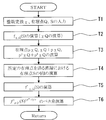
- FIG. 2 is a flowchart of the pairing calculation program according to the embodiment of the present invention.
- FIG. 3 is a flowchart for calculating the rational function f ⁇ , Q (S).
- FIG. 4 is a flowchart of a pairing calculation program according to another embodiment of the present invention.
- the first step of calculating a rational function using the mirror algorithm in the pairing calculation and the multiplication of the calculation result is performed.
- the computation is speeded up by computing a rational function using the integer variable ⁇ in the first step.
- E an additive group of rational points on a simple elliptic curve
- E [r] be a set of rational points of prime order r
- ⁇ p be a Frobenius self-homogeneous map
- G 1 E [r] ⁇ Ker ( ⁇ p ⁇ [1])
- G 2 E [r] ⁇ Ker ( ⁇ p ⁇ [p])
- a pairing e is defined as a non-degenerate bilinear map, and a rational function f t calculated by Miller's algorithm, where t is a trace of S ⁇ G 1 , Q ⁇ G 2 and Frobenius automorphism map ⁇ p
- the pairing e (Q, S) was calculated by using the following equation known as Ate pairing using ⁇ 1, Q (S).
- pairing that can be calculated at higher speed by using an integer variable ⁇ of an elliptic curve. This pairing is referred to as “Xate pairing”.
- the elliptic curve used for the pairing calculation is known as a pairing-friendly curve depending on the built-in order.
- G 1 E [r] ⁇ Ker ( ⁇ p ⁇ [1])
- G 2 E [r] ⁇ Ker ( ⁇ p ⁇ [p])
- G 2 G 1 ⁇ F * p 12 / (F * p 12 ) r
- the pairing e is defined as a non-degenerate bilinear map.
- Equation 9 From the relational expression p 6 ⁇ -1 (mod r), (Equation 7) can be transformed as follows. 6 ⁇ (1 + p) ⁇ 1 ⁇ (1 + p) 2 + p ⁇ ⁇ 1 + p + p 3 + p 10 (mod r) (Formula 10)
- G aQ, bQ l aQ, bQ / v aQ + bQ , where l aQ, bQ is the value of a straight line passing through two rational points aQ and bQ, and v aQ + bQ is the vertical line of the rational point aQ + bQ Value. If the built-in order is an even number, the calculation of v aQ + bQ can be omitted.
- the pairing e (Q, S) is calculated by the following equation.
- the present inventors refer to this pairing e (Q, S) as Xate pairing.
- Equation 20 can be transformed as follows.
- a new value obtained using the rational function f ⁇ , Q (S) and the value of a straight line passing through a predetermined rational point is used. It can be calculated using the rational function f ′ ⁇ , Q (S), and in particular, the rational function f ′ ⁇ , Q (S) can be calculated using ⁇ having a size smaller than t ⁇ 1. Can be speeded up.
- the pairing calculation device is not limited to the case where the authentication server is configured, and any device can be used as long as it has at least calculation means such as a CPU and can perform pairing calculation. There may be.
- an electronic computer 10 constituting an authentication server includes a CPU 11 that executes arithmetic processing, various programs such as a pairing arithmetic program, and a hard disk that stores data used in the pairing arithmetic program.
- a storage device 12 and a memory device 13 composed of a RAM or the like that allows the pairing operation program to be expanded and executed and temporarily store data generated as a result of the execution of the pairing operation program are provided. Yes.
- 14 is a bus.
- the electronic computer 10 is connected to a telecommunication line 20 such as the Internet, and can receive the signature data of the digital group signature transmitted from the client device 30 connected to the telecommunication line 20.
- a telecommunication line 20 such as the Internet
- reference numeral 15 denotes an input / output control unit of the electronic computer 10.
- the electronic computer 10 when the signature data of the digital group signature is transmitted from the client device 30, the transmitted signature data is temporarily stored in the memory device 13. Next, in the electronic computer 10, the pairing calculation is performed by executing the pairing calculation program.
- the electronic computer 10 performs a pairing operation based on the flowchart shown in FIG. 2 to realize a digital group signature.
- the authentication process in the digital group signature will not be described in detail, but only the pairing operation as a subroutine process in the authentication process will be described in detail.
- the electronic computer 10 inputs necessary data by causing the CPU 11 to function as an input means as step S1 as shown in FIG. That is, in the electronic computer 10, the data of the integer variable ⁇ and the data of the rational point Q stored in advance in the memory device 13 are input to a predetermined register provided in the CPU 11, and further, the memory device 13 is used as signature data. The data of the rational point S once stored in is input to a predetermined register provided in the CPU 11.
- the electronic computer 10 causes the CPU 11 to function as the first calculation means in step S2 to calculate the rational function f ⁇ , Q (S) using the Miller algorithm.
- step S2 The calculation of the rational function f ⁇ , Q (S) is specifically executed as shown in the flowchart of FIG. In particular, in step S2, the calculation of ⁇ Q is performed together with the calculation of the rational function f ⁇ , Q (S), and the calculation result of ⁇ Q is stored in a predetermined register provided in the CPU 11.
- the electronic computer 10 performs initial setting as step S21.
- the electronic computer 10 performs processing of f ⁇ 1 and T ⁇ Q, and further sets i ⁇ [log 2 ( ⁇ )], where i is the number of bits when the integer variable ⁇ is represented in binary.
- the electronic computer 10 performs a predetermined calculation of the rational function f ⁇ , Q (S) portion as step S22.
- the electronic computer 10 performs a predetermined calculation of the ⁇ Q portion as step S23.
- the electronic computer 10 determines whether the value u i of the i-th bit of the integer variable ⁇ is “1” or “0” as step S24.
- step S27 the electronic computer 10 makes an end determination as step S27.
- step S27 the electronic computer 10 stores the calculation result of the rational function f ⁇ , Q (S) and the calculation result of ⁇ Q in predetermined registers, respectively, and based on the flowchart of FIG. The subroutine is finished.
- step S3 the electronic calculator 10 causes the CPU 11 to function as the second calculation means to calculate the rational points p 10 ⁇ Q, ⁇ Q + p 10 ⁇ Q, and p ⁇ Q + p 3 ⁇ Q by the pairing calculation program.
- X p 10 R
- Y R + p 10 R
- Z pR + p 3 R
- the electronic computer 10 performs the following calculation. X ⁇ ⁇ p 10 (T), Y ⁇ T + X, Z ⁇ ⁇ p 3 (Y).
- step S3 the electronic computer 10 can execute the calculation without performing the multiplication process, so that the calculation can be speeded up.
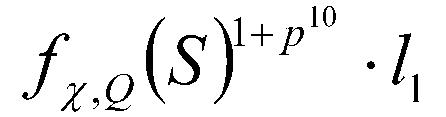
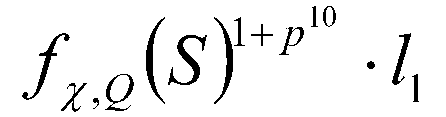
- step S4 the computer 10 causes the CPU 11 to function as the third calculation means by the pairing calculation program, and the rational point S (x s , y s in the straight line passing through the rational point ( ⁇ Q, p 10 ⁇ Q). ) Value l 1 and a rational point S (x s , y s ) value l 2 on a straight line passing through the rational point ( ⁇ Q + p 10 ⁇ Q, p ⁇ Q + p 3 ⁇ Q), respectively.
- l 1 l T
- X (S) is calculated as follows. ⁇ T, X ⁇ (y X ⁇ y T ) / (x X ⁇ x T ), l T, X (S) ⁇ (x S ⁇ x X ) ⁇ T, X ⁇ (y S ⁇ y X ).
- l 2 l Y, Z (S) is calculated as follows. ⁇ Y, Z ⁇ (y Z ⁇ y Y ) / (x Z ⁇ x Y ), l Y, Z (S) ⁇ (x S ⁇ x Z ) ⁇ Y, Z ⁇ (y S ⁇ y Z ).
- step S5 the electronic calculator 10 causes the CPU 11 to function as the fourth calculation means by the pairing calculation program, and the calculation result of the first calculation means, the calculation result of the third calculation means, and the rational point.
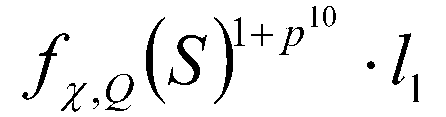
- the rational function f ′ ⁇ , Q (S) is calculated as follows using the value l 3 of the rational point S (x s , y s ) in the straight line passing through (p ⁇ Q, p 3 ⁇ Q).
- p being the value of the rational point S (x s , y s ) in the straight line passing through the rational point (pQ 1 , pQ 2 )
- the electronic computer 10 performs the calculation as follows. Here, it indicates that p ⁇ 3 is p 3. 1. C ⁇ f p ⁇ 10 2. C ⁇ C ⁇ f 3. A ⁇ C ⁇ l T, X (S) 4. B ⁇ A p ⁇ 3 5. returnA, B
- the amount of calculation can be greatly reduced, and the pairing calculation can be speeded up.
- step S6 the electronic computer 10 causes the CPU 11 to function as the fifth calculation means to perform the last power multiplication in the pairing e (Q, S).
- the electronic computer 10 performs the calculation as follows. 1. f ' ⁇ f' p ⁇ 6 ⁇ f ' -1 2. f ' ⁇ f' p ⁇ 2 ⁇ f ' 3. a ⁇ (f ' 6 ) ⁇ ⁇ (f' 5 ) p ⁇ 6 4. b ⁇ a p 5. b ⁇ a ⁇ b 6. compute f ' p , f' p ⁇ 2 , andf ' p ⁇ 3 7. c ⁇ b ⁇ (f ' p ) 2 ⁇ f' p ⁇ 2 8. f ' ⁇ f' p ⁇ 3 ⁇ (c 6 ) ⁇ 2 ⁇ c ⁇ b ⁇ (f ' p ⁇ f') 9 ⁇ a ⁇ f ' 4 9. Return f ' ⁇ f' p ⁇ 6 ⁇ f ' -1 2. f ' ⁇ f' p ⁇ 2 ⁇ f ' 3. a ⁇
- the electronic computer 10 constituting the authentication server performs authentication processing using the pairing calculation result obtained as described above.
- the authentication server performs the pairing operation based on the flowchart shown in FIG. 4 by executing the pairing operation program.
- the electronic computer 10 inputs the necessary data by causing the CPU 11 to function as an input means as step T1 as shown in FIG. That is, in the electronic computer 10, the data of the integer variable ⁇ and the data of the rational point Q stored in advance in the memory device 13 are input to a predetermined register provided in the CPU 11, and further, the memory device 13 is used as signature data. The data of the rational point S once stored in is input to a predetermined register provided in the CPU 11.
- step T2 the electronic calculator 10 causes the CPU 11 to function as the first calculation means to calculate the rational function f ⁇ , Q (S) using the Miller algorithm.
- step T2 the first expression in step S22 of the flowchart shown in FIG. 3 is as follows. 1. ⁇ T, T ⁇ (3x T 2 + a) / (2y T )
- the rational function f ⁇ , Q (S) is calculated in the same manner as in the flowchart.
- step T2 the electronic computer 10 also calculates ⁇ Q together with the rational function f ⁇ , Q (S) and stores the calculation result in a predetermined register.
- step T3 the electronic calculator 10 causes the CPU 11 to function as the second calculation means to calculate the rational points p ⁇ Q, ⁇ Q + p ⁇ Q, and p 3 ⁇ Q + p 4 ⁇ Q by the pairing calculation program.
- X pR
- Y R + pR
- Z p 3 R + p 4 R
- the electronic computer 10 performs the following calculation. X ⁇ ⁇ p (T), Y ⁇ T + X, Z ⁇ ⁇ p 3 (Y).
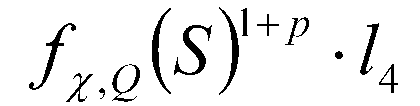
- step T4 the electronic calculator 10 causes the CPU 11 to function as the third calculation means by the pairing calculation program, and the rational point S (x s , y s ) in the straight line passing through the rational point ( ⁇ Q, p ⁇ Q).
- the value l 4 and the value l 5 of the rational point S (x s , y s ) in the straight line passing through the rational point ( ⁇ Q + p ⁇ Q, p 3 ⁇ Q + p 4 ⁇ Q) are respectively calculated.
- l 4 l T
- X (S) is calculated as follows. ⁇ T, X ⁇ (y X ⁇ y T ) / (x X ⁇ x T ), l T, X (S) ⁇ (x S ⁇ x X ) ⁇ T, X ⁇ (y S ⁇ y X ).
- l 5 l Y, Z (S) is calculated as follows. ⁇ Y, Z ⁇ (y Z ⁇ y Y ) / (x Z ⁇ x Y ), l Y, Z (S) ⁇ (x S ⁇ x Z ) ⁇ Y, Z ⁇ (y S ⁇ y Z ).
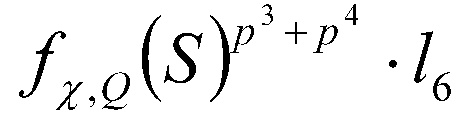
- the electronic calculator 10 causes the CPU 11 to function as the fourth calculation means in step T5 according to the pairing calculation program, the calculation result in the first calculation means, the calculation result in the third calculation means, and the rational point.
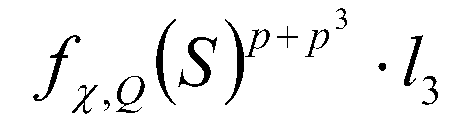
- the rational function f ′ ⁇ , Q (S) is calculated as follows using the value l 6 of the rational point S (x s , y s ) in the straight line passing through (p 3 ⁇ Q, p 4 ⁇ Q). .
- p being the value of the rational point S (x s , y s ) in the straight line passing through the rational point (pQ 1 , pQ 2 )
- the electronic computer 10 performs the calculation as follows. Here, it indicates that p ⁇ 3 is p 3. 1. C ⁇ f p 2. C ⁇ C ⁇ f 3. A ⁇ C ⁇ l T, X (S) 4. B ⁇ A p ⁇ 3 5. returnA, B
- the electronic calculator 10 1. f ' ⁇ A ⁇ B ⁇ l Y, Z (S) 2. f ' ⁇ f' p ⁇ 4 By calculating as Is calculated.
- step T6 the electronic calculator 10 causes the CPU 11 to function as the fifth calculation means to perform the last power multiplication in the pairing e (Q, S).
- the electronic computer 10 constituting the authentication server performs authentication processing using the pairing calculation result obtained as described above.
- the electronic computer 10 sets the pairing e (Q, S). Can be computed as
- G 1 E [r] ⁇ Ker ( ⁇ p ⁇ [1])
- G 2 E [r] ⁇ Ker ( ⁇ p ⁇ [p])
- G 2 G 1 ⁇ F * p 8 / (F * p 8 ) r
- the pairing e is defined as a non-degenerate bilinear map.
- the electronic computer 10 calculates the rational function f ⁇ , Q (S) by the Miller algorithm as described above, and calculates ⁇ Q together with the rational function f ⁇ , Q (S).
- the operation result is stored in a predetermined register.
- pairing e (Q, S) is performed.
- the rational function f ′ ⁇ , Q (S) is calculated by the following equation using the value l 11 of the rational point S (x s , y s ) in the straight line passing through the rational point (pQ, ⁇ Q). You can also.
- the electronic computer 10 calculates the rational function f ⁇ 2, Q (S) and the rational function f ⁇ , Q (S) by the Miller algorithm as described above, calculates ⁇ Q, and calculates the result. Is stored in a predetermined register.
- G 1 E [r] ⁇ Ker ( ⁇ p ⁇ [1])
- G 2 E [r] ⁇ Ker ( ⁇ p ⁇ [p])
- G 2 G 1 ⁇ F * p 18 / (F * p 18 ) r
- the pairing e is defined as a non-degenerate bilinear map.
- the electronic computer 10 calculates the rational function f ⁇ , Q (S) by the Miller algorithm as described above, and calculates ⁇ Q together with the rational function f ⁇ , Q (S).
- the operation result is stored in a predetermined register.
- the electronic computer 10 calculates the value l 13 using the rational function f ⁇ , Q (S) and the operation result of ⁇ Q, calculates the rational function f ′ ⁇ , Q (S), and performs pairing.
- e (Q, S) Can be computed as
- the pairing operation can be speeded up, and a group signature using the pairing operation can be put into practical use.
- a high-speed pairing arithmetic device can be provided, and a practical digital group signature service can be provided.
Landscapes
- Engineering & Computer Science (AREA)
- Theoretical Computer Science (AREA)
- Mathematical Analysis (AREA)
- Computing Systems (AREA)
- Physics & Mathematics (AREA)
- Mathematical Optimization (AREA)
- Mathematical Physics (AREA)
- Pure & Applied Mathematics (AREA)
- Algebra (AREA)
- General Physics & Mathematics (AREA)
- Computer Security & Cryptography (AREA)
- Computer Networks & Wireless Communication (AREA)
- Signal Processing (AREA)
- Complex Calculations (AREA)
- Control Of Position, Course, Altitude, Or Attitude Of Moving Bodies (AREA)
- Navigation (AREA)
- Mobile Radio Communication Systems (AREA)
- Management, Administration, Business Operations System, And Electronic Commerce (AREA)
Abstract
Description

G1=E[r]∩Ker(φp-[1]),
G2=E[r]∩Ker(φp-[p])
により、
e:G2×G1→F* p k/(F* p k)r
である非退化な双線形写像としてペアリングeを定義し、S∈G1、Q∈G2としてペアリングe(Q,S)を演算して演算結果を出力するペアリング演算装置であって、フロベニウス自己準同型写像φpのトレースをtとして、ペアリングe(Q,S)をミラーのアルゴリズムを用いて計算される有理関数ft-1,Q(S)を用いて


r(χ)=36χ4-36χ3+18χ2-6χ+1,
t(χ)=6χ2+1
とし、χQ=Rとして、このRのフロベニウス自己準同型写像φpがφp(R)=pRである関係を用いて、有理点p10χQ、χQ+p10χQ、pχQ+p3χQをそれぞれ演算し、有理点(χQ,p10χQ)を通る直線における有理点S(xs,ys)の値l1と、有理点(χQ+p10χQ,pχQ+p3χQ)を通る直線における有理点S(xs,ys)の値l2をそれぞれ演算し、有理点(pχQ,p3χQ)を通る直線における有理点S(xs,ys)の値l3を用いて



G1=E[r]∩Ker(φp-[1]),
G2=E[r]∩Ker(φp-[p])
により、
e:G2×G1→F* p k/(F* p k)r
である非退化な双線形写像としてペアリングeを定義し、S∈G1、Q∈G2としてCPUを備えた電子計算機でペアリングe(Q,S)を演算するペアリング演算方法であって、フロベニウス自己準同型写像φpのトレースをtとして、ペアリングe(Q,S)をミラーのアルゴリズムを用いて計算される有理関数ft-1,Q(S)を用いて


G1=E[r]∩Ker(φp-[1]),
G2=E[r]∩Ker(φp-[p])
により、
e:G2×G1→F* p k/(F* p k)r
である非退化な双線形写像としてペアリングeを定義し、S∈G1、Q∈G2としてCPUを備えた電子計算機にペアリングe(Q,S)を演算させるペアリング演算プログラムであって、フロベニウス自己準同型写像φpのトレースをtとして、ペアリングe(Q,S)をミラーのアルゴリズムを用いて計算される有理関数ft-1,Q(S)を用いて


11 CPU
12 記憶装置
13 メモリ装置
14 バス
15 入出力制御部
20 電気通信回線
30 クライアント装置
G1=E[r]∩Ker(φp-[1]),
G2=E[r]∩Ker(φp-[p])
により、
e:G2×G1→F* p k/(F* p k)r
である非退化な双線形写像としてペアリングeを定義し、S∈G1、Q∈G2、フロベニウス自己準同型写像φpのトレースをtとして、ミラーのアルゴリズムで計算される有理関数ft-1,Q(S)を用いて、ペアリングe(Q,S)を、Ateペアリングとして知られている次式により演算していた。

r(χ)=36χ4-36χ3+18χ2-6χ+1,
t(χ)=6χ2+1.
r(χ)=25χ4+25χ3+15χ2+5χ+1,
t(χ)=10χ2+5χ+3.
あるいは、次のようにも表せることが知られている。
r(χ)=χ8-1,
t(χ)=-χ6+χ4-χ2+2.
r(χ)=9χ4+12χ3+8χ2+4χ+1,
t(χ)=-9χ3-3χ2-2χ.
あるいは、次のようにも表せることが知られている。
r(χ)=χ4-8χ2+25,
t(χ)=(2χ3-11χ+15)/15.
あるいは、次のようにも表せることが知られている。
r(χ)=χ8-χ4+1,
t(χ)=χ5-χ+1.
r(χ)=(χ6+37χ3+343)/343,
t(χ)=(χ4+16χ+7)/7.
G1=E[r]∩Ker(φp-[1]),
G2=E[r]∩Ker(φp-[p])
により、
e:G2×G1→F* p 12/(F* p 12)r
である非退化な双線形写像としてペアリングeを定義している。
r(χ)=36χ4-36χ3+18χ2-6χ+1 ・・・(式1)
t(χ)=6χ2+1 ・・・(式2)
6χ2≡t-1≡p (mod r) ・・・(式3)
ここで、標数pには次の関係式があることを用いている。
p=r+t-1 ・・・(式4)
p(χ)=36χ4-36χ3+24χ2-6χ+1・・・(式5)
p≡p2-6χ(p+1)+4p+1 (mod r) ・・・(式6)
6χ(1+p)≡p2+3p+1 (mod r) ・・・(式7)
p2(1-p)(1+p)≡1 (mod r) ・・・(式8)
(1+p)-1≡p2(1-p) (mod r) ・・・(式9)
6χ≡(1+p)-1{(1+p)2+p}
≡1+p+p3+p10 (mod r) ・・・(式10)














X←φp 10(T),
Y←T+X,
Z←φp 3(Y).
λT,X←(yX-yT)/(xX-xT),
lT,X(S)←(xS-xX)λT,X-(yS-yX).
λY,Z←(yZ-yY)/(xZ-xY),
lY,Z(S)←(xS-xZ)λY,Z-(yS-yZ).


1. C←fp⌒10
2. C←C・f
3. A←C・lT,X(S)
4. B←Ap⌒3
5. returnA,B

f'←A・B・lY,Z(S)
として演算できる。
1. f'←f'p⌒6・f'-1
2. f'←f'p⌒2・f'
3. a←(f'6)χ・(f'5)p⌒6
4. b←ap
5. b←a・b
6. compute f'p,f'p⌒2,andf'p⌒3
7. c←b・(f'p)2・f'p⌒2
8. f'←f'p⌒3・(c6)χ⌒2・c・b・(f'p・f')9・a・f'4
9. Return f'
G1=E[r]∩Ker(φp-[1]),
G2=E[r]∩Ker(φp-[p])
により、
e:G2×G1→F* p 10/(F* p 10)r
である非退化な双線形写像としてペアリングeを定義している。
r(χ)=25χ4+25χ3+15χ2+5χ+1,
t(χ)=10χ2+5χ+3.
5χ=p4+p5+p7+p8=p4(1+p+p3+p4) (mod r(χ)).

1. λT,T←(3xT 2+a)/(2yT)
X←φp(T),
Y←T+X,
Z←φp 3(Y).
λT,X←(yX-yT)/(xX-xT),
lT,X(S)←(xS-xX)λT,X-(yS-yX).
λY,Z←(yZ-yY)/(xZ-xY),
lY,Z(S)←(xS-xZ)λY,Z-(yS-yZ).


1. C←fp
2. C←C・f
3. A←C・lT,X(S)
4. B←Ap⌒3
5. returnA,B
1. f'←A・B・lY,Z(S)
2. f'←f'p⌒4
として演算することにより、

r(χ)=χ8-1,
t(χ)=-χ6+χ4-χ2+2.
pχ2=-p (mod r(χ)).


G1=E[r]∩Ker(φp-[1]),
G2=E[r]∩Ker(φp-[p])
により、
e:G2×G1→F* p 8/(F* p 8)r
である非退化な双線形写像としてペアリングeを定義している。
r(χ)=9χ4+12χ3+8χ2+4χ+1,
t(χ)=-9χ3-3χ2-2χ.
3χ=-1-p2+p3 (mod r(χ)).


r(χ)=χ4-8χ2+25,
t(χ)=(2χ3-11χ+15)/15.
χ=-p+2p3 (mod r(χ)).

r(χ)=χ8-χ4+1,
t(χ)=χ5-χ+1.
pχ+χ2=-p2 (mod r(χ))


G1=E[r]∩Ker(φp-[1]),
G2=E[r]∩Ker(φp-[p])
により、
e:G2×G1→F* p 18/(F* p 18)r
である非退化な双線形写像としてペアリングeを定義している。
r(χ)=(χ6+37χ3+343)/343,
t(χ)=(χ4+16χ+7)/7.
χ=-3p+p4 (mod r(χ)).


Claims (8)
- 曲線の式がy2=x3+ax+b,a∈Fp,b∈Fpで与えられ、埋込み次数がkで、Fp kを定義体とするペアリング可能な楕円曲線上の有理点のなす加法群をE、素数位数rの有理点の集合をE[r]とし、φpをフロベニウス自己準同型写像として、
G1=E[r]∩Ker(φp-[1]),
G2=E[r]∩Ker(φp-[p])
により、
e:G2×G1→F* p k/(F* p k)r
である非退化な双線形写像としてペアリングeを定義し、
S∈G1、Q∈G2としてペアリングe(Q,S)を演算して演算結果を出力するペアリング演算装置であって、
フロベニウス自己準同型写像φpのトレースをtとして、ペアリングe(Q,S)をミラーのアルゴリズムを用いて計算される有理関数ft-1,Q(S)を用いて

位数rと、フロベニウス自己準同型写像φpのトレースtを整数変数χの関数として、
有理関数fχ,Q(S)を演算する演算手段と、
所定の有理点を通る直線の有理点S(xs,ys)における値を演算する演算手段と、
これらの演算手段の演算結果を用いて有理関数f'χ,Q(S)を演算する演算手段と、
前記有理関数f'χ,Q(S)を用いて

によりペアリング演算を行うペアリング演算装置。 - 前記有理関数fχ,Q(S)を演算する演算手段では、χQを演算して演算結果を所定のレジスタに記憶し、
前記χQの演算結果を用いて前記所定の有理点を演算する演算手段を有する請求項1に記載のペアリング演算装置。 - 前記埋込み次数k=12の場合に、
位数rと、フロベニウス自己準同型写像φpのトレースtを、前記整数変数χを用いて
r(χ)=36χ4-36χ3+18χ2-6χ+1,
t(χ)=6χ2+1
とし、χQ=Rとして、このRのフロベニウス自己準同型写像φpがφp(R)=pRである関係を用いて、有理点p10χQ、χQ+p10χQ、pχQ+p3χQをそれぞれ演算し、
有理点(χQ,p10χQ)を通る直線における前記有理点S(xs,ys)の値l1と、有理点(χQ+p10χQ,pχQ+p3χQ)を通る直線における前記有理点S(xs,ys)の値l2をそれぞれ演算し、
有理点(pχQ,p3χQ)を通る直線における前記有理点S(xs,ys)の値l3を用いて

- 前記有理関数fχ,Q(S)のフロベニウス自己準同型写像φpがφp(fχ,Q(S))=fχ,Q(S)pであることを用いて
Q1,Q2∈G2である有理点(Q1,Q2)を通る直線における前記有理点S(xs,ys)の値lのフロベニウス自己準同型写像φpが有理点(pQ1,pQ2)を通る直線における前記有理点S(xs,ys)の値であることを用いて

- 曲線の式がy2=x3+ax+b,a∈Fp,b∈Fpで与えられ、埋込み次数がkで、Fp kを定義体とするペアリング可能な楕円曲線上の有理点のなす加法群をE、素数位数rの有理点の集合をE[r]とし、φpをフロベニウス自己準同型写像として、
G1=E[r]∩Ker(φp-[1]),
G2=E[r]∩Ker(φp-[p])
により、
e:G2×G1→F* p k/(F* p k)r
である非退化な双線形写像としてペアリングeを定義し、
S∈G1、Q∈G2としてCPUを備えた電子計算機でペアリングe(Q,S)を演算するペアリング演算方法であって、
フロベニウス自己準同型写像φpのトレースをtとして、ペアリングe(Q,S)をミラーのアルゴリズムを用いて計算される有理関数ft-1,Q(S)を用いて

位数rと、フロベニウス自己準同型写像φpのトレースtを整数変数χの関数として、
前記電子計算機のCPUを演算手段として機能させて、有理関数fχ,Q(S)を演算するステップと、
前記電子計算機のCPUを演算手段として機能させて、所定の有理点を通る直線の有理点S(xs,ys)における値を演算するステップと、
前記電子計算機のCPUを演算手段として機能させて、前記の演算結果を用いて有理関数f'χ,Q(S)を演算するステップと、
前記電子計算機のCPUを演算手段として機能させて、前記有理関数f'χ,Q(S)を用いて

を有するペアリング演算方法。 - 前記有理関数fχ,Q(S)を演算するステップの後、
前記電子計算機のCPUを演算手段として機能させて、χQを演算し、このχQの演算結果を用いて前記所定の有理点を演算するステップを有する請求項5に記載のペアリング演算方法。 - 曲線の式がy2=x3+ax+b,a∈Fp,b∈Fpで与えられ、埋込み次数がkで、Fp kを定義体とするペアリング可能な楕円曲線上の有理点のなす加法群をE、素数位数rの有理点の集合をE[r]とし、φpをフロベニウス自己準同型写像として、
G1=E[r]∩Ker(φp-[1]),
G2=E[r]∩Ker(φp-[p])
により、
e:G2×G1→F* p k/(F* p k)r
である非退化な双線形写像としてペアリングeを定義し、
S∈G1、Q∈G2としてCPUを備えた電子計算機にペアリングe(Q,S)を演算させるペアリング演算プログラムであって、
フロベニウス自己準同型写像φpのトレースをtとして、ペアリングe(Q,S)をミラーのアルゴリズムを用いて計算される有理関数ft-1,Q(S)を用いて

位数rと、フロベニウス自己準同型写像φpのトレースtを整数変数χの関数として、
前記電子計算機を、
有理関数fχ,Q(S)を演算する演算手段と、
所定の有理点を通る直線の有理点S(xs,ys)における値を演算する演算手段と、
前記の演算結果を用いて有理関数f'χ,Q(S)を演算する演算手段と、
前記有理関数f'χ,Q(S)を用いて

として機能させるペアリング演算プログラム。 - 前記電子計算機を、
χQを演算する演算手段と、
このχQの演算結果を用いて前記所定の有理点を演算する演算手段
として機能させる請求項7に記載のペアリング演算プログラム。
Priority Applications (4)
| Application Number | Priority Date | Filing Date | Title |
|---|---|---|---|
| EP09810049A EP2360659A4 (en) | 2008-08-29 | 2009-08-28 | PAIRING CALCULATION DEVICE, PAIRING CALCULATION METHOD AND PAIRING CALCULATION PROGRAM |
| JP2010526795A JP5360836B2 (ja) | 2008-08-29 | 2009-08-28 | ペアリング演算装置、ペアリング演算方法、及びペアリング演算プログラム |
| CN200980142428.7A CN102308326B (zh) | 2008-08-29 | 2009-08-28 | 配对运算装置、配对运算方法 |
| US13/060,520 US8625777B2 (en) | 2008-08-29 | 2009-08-28 | Pairing computation device, pairing computation method, and pairing computation program |
Applications Claiming Priority (2)
| Application Number | Priority Date | Filing Date | Title |
|---|---|---|---|
| JP2008222556 | 2008-08-29 | ||
| JP2008-222556 | 2008-08-29 |
Publications (1)
| Publication Number | Publication Date |
|---|---|
| WO2010024401A1 true WO2010024401A1 (ja) | 2010-03-04 |
Family
ID=41721564
Family Applications (1)
| Application Number | Title | Priority Date | Filing Date |
|---|---|---|---|
| PCT/JP2009/065099 Ceased WO2010024401A1 (ja) | 2008-08-29 | 2009-08-28 | ペアリング演算装置、ペアリング演算方法、及びペアリング演算プログラム |
Country Status (5)
| Country | Link |
|---|---|
| US (1) | US8625777B2 (ja) |
| EP (1) | EP2360659A4 (ja) |
| JP (1) | JP5360836B2 (ja) |
| CN (1) | CN102308326B (ja) |
| WO (1) | WO2010024401A1 (ja) |
Cited By (4)
| Publication number | Priority date | Publication date | Assignee | Title |
|---|---|---|---|---|
| WO2012046805A1 (ja) * | 2010-10-08 | 2012-04-12 | 国立大学法人岡山大学 | 有理点情報圧縮装置、有理点情報圧縮方法及び有理点情報圧縮プログラム |
| JP2013527712A (ja) * | 2010-05-19 | 2013-06-27 | コーニンクレッカ フィリップス エレクトロニクス エヌ ヴィ | 属性ベースのデジタル署名システム |
| JP2014164176A (ja) * | 2013-02-26 | 2014-09-08 | Nippon Telegr & Teleph Corp <Ntt> | ペアリング演算装置、ペアリング演算方法、およびプログラム |
| CZ308647B6 (cs) * | 2019-06-11 | 2021-01-27 | REGSHARE s.r.o. | Mísicí ventil a souprava pro ředění či mísení nebezpečných látek |
Families Citing this family (5)
| Publication number | Priority date | Publication date | Assignee | Title |
|---|---|---|---|---|
| US8477934B2 (en) * | 2009-04-21 | 2013-07-02 | National University Corporation Okayama University | Pairing computation device, pairing computation method and recording medium storing pairing computation program |
| CN102984129A (zh) * | 2012-11-02 | 2013-03-20 | 王攀 | 基于三网融合的用户行为可控可管的方法 |
| CN104579661B (zh) * | 2013-10-21 | 2018-05-01 | 航天信息股份有限公司 | 基于身份的电子签章的实现方法和装置 |
| JP6610277B2 (ja) * | 2016-01-15 | 2019-11-27 | 富士通株式会社 | 共有鍵生成プログラム、共有鍵生成方法および情報処理端末 |
| CN108055134B (zh) * | 2017-12-12 | 2020-08-25 | 武汉理工大学 | 椭圆曲线点数乘及配对运算的协同计算方法及系统 |
Citations (1)
| Publication number | Priority date | Publication date | Assignee | Title |
|---|---|---|---|---|
| JP2005316267A (ja) | 2004-04-30 | 2005-11-10 | Hitachi Ltd | 楕円曲線ペアリング演算装置 |
Family Cites Families (10)
| Publication number | Priority date | Publication date | Assignee | Title |
|---|---|---|---|---|
| US20020057796A1 (en) * | 1998-12-24 | 2002-05-16 | Lambert Robert J. | Method for accelerating cryptographic operations on elliptic curves |
| CN101453332A (zh) * | 2002-04-15 | 2009-06-10 | 株式会社Ntt都科摩 | 利用双线性映射的签名方案 |
| US7499544B2 (en) * | 2003-11-03 | 2009-03-03 | Microsoft Corporation | Use of isogenies for design of cryptosystems |
| CN101031944A (zh) * | 2004-09-30 | 2007-09-05 | 索尼株式会社 | 加密计算方法、加密系统和计算机程序 |
| JP4630117B2 (ja) * | 2005-04-25 | 2011-02-09 | 日本電信電話株式会社 | マルチペアリング演算方法、ペアリング比較方法、それらを用いた装置、およびプログラム |
| DE102005041102A1 (de) * | 2005-08-30 | 2007-03-15 | Siemens Ag | Verfahren zur Skalarmultiplikation von Punkten auf einer elliptischen Kurve |
| KR101405321B1 (ko) * | 2007-03-16 | 2014-06-27 | 재단법인서울대학교산학협력재단 | 키 연산 방법 및 이를 이용한 공유 키 생성 방법 |
| KR101273465B1 (ko) * | 2007-03-16 | 2013-06-14 | 재단법인서울대학교산학협력재단 | 집합 검증 장치 및 그 방법 |
| CN101809638A (zh) * | 2007-08-09 | 2010-08-18 | 国立大学法人冈山大学 | 运算方法和运算装置 |
| CN101911582B (zh) * | 2008-01-18 | 2012-09-05 | 三菱电机株式会社 | 密码参数设定装置、密钥生成装置、密码系统、密码参数设定方法和密钥生成方法 |
-
2009
- 2009-08-28 JP JP2010526795A patent/JP5360836B2/ja not_active Expired - Fee Related
- 2009-08-28 WO PCT/JP2009/065099 patent/WO2010024401A1/ja not_active Ceased
- 2009-08-28 EP EP09810049A patent/EP2360659A4/en not_active Withdrawn
- 2009-08-28 CN CN200980142428.7A patent/CN102308326B/zh not_active Expired - Fee Related
- 2009-08-28 US US13/060,520 patent/US8625777B2/en not_active Expired - Fee Related
Patent Citations (1)
| Publication number | Priority date | Publication date | Assignee | Title |
|---|---|---|---|---|
| JP2005316267A (ja) | 2004-04-30 | 2005-11-10 | Hitachi Ltd | 楕円曲線ペアリング演算装置 |
Non-Patent Citations (4)
| Title |
|---|
| EZEKIEL JUSTIN KACHISA ET AL.: "Constructing Brezing-Weng pairing friendly elliptic curves using elements in the cyclotomic field", CRYPTOLOGY EPRINT ARCHIVE, 2007, pages 1 - 12, XP019103364 * |
| PAULO S. L. M. BARRETO ET AL.: "Pairing-Friendly Elliptic Curves of Prime Order", PROCEEDINGS OF SAC, vol. 2005, 2005, pages 1 - 13, XP019029550 * |
| SAKAMI ET AL.: "Hamming Omomi no Chiisai Seisu Hensu o Parameter Settei ni Mochiita Twisted Ate Pairing no Kairyo", 2008 NEN SYMPOSIUM ON CRYPTOGRAPHY AND INFORMATION SECURITY, - January 2008 (2008-01-01), pages 1 - 6, XP008142593 * |
| See also references of EP2360659A4 |
Cited By (5)
| Publication number | Priority date | Publication date | Assignee | Title |
|---|---|---|---|---|
| JP2013527712A (ja) * | 2010-05-19 | 2013-06-27 | コーニンクレッカ フィリップス エレクトロニクス エヌ ヴィ | 属性ベースのデジタル署名システム |
| WO2012046805A1 (ja) * | 2010-10-08 | 2012-04-12 | 国立大学法人岡山大学 | 有理点情報圧縮装置、有理点情報圧縮方法及び有理点情報圧縮プログラム |
| JP5769263B2 (ja) * | 2010-10-08 | 2015-08-26 | 国立大学法人 岡山大学 | 有理点情報圧縮装置、有理点情報圧縮方法及び有理点情報圧縮プログラム |
| JP2014164176A (ja) * | 2013-02-26 | 2014-09-08 | Nippon Telegr & Teleph Corp <Ntt> | ペアリング演算装置、ペアリング演算方法、およびプログラム |
| CZ308647B6 (cs) * | 2019-06-11 | 2021-01-27 | REGSHARE s.r.o. | Mísicí ventil a souprava pro ředění či mísení nebezpečných látek |
Also Published As
| Publication number | Publication date |
|---|---|
| EP2360659A4 (en) | 2013-03-13 |
| US20110179471A1 (en) | 2011-07-21 |
| CN102308326B (zh) | 2014-08-13 |
| EP2360659A1 (en) | 2011-08-24 |
| CN102308326A (zh) | 2012-01-04 |
| JP5360836B2 (ja) | 2013-12-04 |
| JPWO2010024401A1 (ja) | 2012-01-26 |
| US8625777B2 (en) | 2014-01-07 |
Similar Documents
| Publication | Publication Date | Title |
|---|---|---|
| JP5360836B2 (ja) | ペアリング演算装置、ペアリング演算方法、及びペアリング演算プログラム | |
| JP4189828B1 (ja) | ペアリング演算装置、ペアリング演算方法、及びペアリング演算プログラム | |
| JP5549018B2 (ja) | ペアリング演算装置、ペアリング演算方法、及びペアリング演算プログラムを記録した記録媒体 | |
| Devigne et al. | Binary huff curves | |
| Azarderakhsh et al. | Hardware deployment of hybrid PQC: SIKE+ ECDH | |
| JP5403630B2 (ja) | スカラ倍算器及びスカラ倍算プログラム | |
| US20030156714A1 (en) | Elliptic curve scalar multiplication method and device, and storage medium | |
| Dai et al. | Don’t forget pairing-friendly curves with odd prime embedding degrees | |
| US10425227B2 (en) | Computer-readable recording medium, shared key generation method, and information processing terminal | |
| Silde | Comparative study of ECC libraries for embedded devices | |
| Aung et al. | Implementation of elliptic curve arithmetic operations for prime field and binary field using java BigInteger class | |
| EP1703373A2 (en) | Elliptic curve point octupling using single instruction multiple data processing | |
| CN112436941A (zh) | 支持标识密码算法的协处理器、方法、芯片及电子设备 | |
| Wang et al. | Constructing pairing-friendly elliptic curves under embedding degree 1 for securing critical infrastructures | |
| de Oliveira et al. | An efficient software implementation of the hash-based signature scheme MSS and its variants | |
| Zhang et al. | An optimal bound for factoring unbalanced RSA moduli by solving Generalized Implicit Factorization Problem: R. Zhang et al. | |
| Realpe-Muñoz et al. | High-performance elliptic curve cryptoprocessors over GF (2 m) on Koblitz curves | |
| JP5168649B2 (ja) | ペアリング演算装置、ペアリング演算方法、及びペアリング演算プログラム | |
| JPWO2012015047A1 (ja) | 埋め込み次数1かつ合成数位数の楕円曲線上の有理点のスカラー倍算およびペアリング演算 | |
| EP2222016A1 (en) | Method and device for hashing onto points of an elliptic curve | |
| KR20260029361A (ko) | 쌍선형 페어링 | |
| EP1705560A2 (en) | Elliptic curve point octupling for weighted projective coordinates | |
| JP5769263B2 (ja) | 有理点情報圧縮装置、有理点情報圧縮方法及び有理点情報圧縮プログラム | |
| CN104731552A (zh) | 使用混合仿射雅可比坐标进行ecc点加的硬件架构和方法 | |
| Shi et al. | A novel fast η-adapt slide window elliptic curve cryptography algorithm |
Legal Events
| Date | Code | Title | Description |
|---|---|---|---|
| WWE | Wipo information: entry into national phase |
Ref document number: 200980142428.7 Country of ref document: CN |
|
| 121 | Ep: the epo has been informed by wipo that ep was designated in this application |
Ref document number: 09810049 Country of ref document: EP Kind code of ref document: A1 |
|
| WWE | Wipo information: entry into national phase |
Ref document number: 2010526795 Country of ref document: JP |
|
| WWE | Wipo information: entry into national phase |
Ref document number: 13060520 Country of ref document: US Ref document number: 2009810049 Country of ref document: EP |
|
| NENP | Non-entry into the national phase |
Ref country code: DE |