WO2010025850A1 - Heterozyklisch substituierte anilinopyrimidine als fungizide - Google Patents
Heterozyklisch substituierte anilinopyrimidine als fungizide Download PDFInfo
- Publication number
- WO2010025850A1 WO2010025850A1 PCT/EP2009/006115 EP2009006115W WO2010025850A1 WO 2010025850 A1 WO2010025850 A1 WO 2010025850A1 EP 2009006115 W EP2009006115 W EP 2009006115W WO 2010025850 A1 WO2010025850 A1 WO 2010025850A1
- Authority
- WO
- WIPO (PCT)
- Prior art keywords
- methyl
- dioxolan
- hydrogen
- dioxan
- ethyl
- Prior art date
- Legal status (The legal status is an assumption and is not a legal conclusion. Google has not performed a legal analysis and makes no representation as to the accuracy of the status listed.)
- Ceased
Links
- 0 *c(c(*)c1*)c(*)c(*)c1N(*)c1nc(N(*)*)c(*)c(*)n1 Chemical compound *c(c(*)c1*)c(*)c(*)c1N(*)c1nc(N(*)*)c(*)c(*)n1 0.000 description 6
Classifications
-
- C—CHEMISTRY; METALLURGY
- C07—ORGANIC CHEMISTRY
- C07D—HETEROCYCLIC COMPOUNDS
- C07D405/00—Heterocyclic compounds containing both one or more hetero rings having oxygen atoms as the only ring hetero atoms, and one or more rings having nitrogen as the only ring hetero atom
- C07D405/02—Heterocyclic compounds containing both one or more hetero rings having oxygen atoms as the only ring hetero atoms, and one or more rings having nitrogen as the only ring hetero atom containing two hetero rings
- C07D405/12—Heterocyclic compounds containing both one or more hetero rings having oxygen atoms as the only ring hetero atoms, and one or more rings having nitrogen as the only ring hetero atom containing two hetero rings linked by a chain containing hetero atoms as chain links
-
- A—HUMAN NECESSITIES
- A01—AGRICULTURE; FORESTRY; ANIMAL HUSBANDRY; HUNTING; TRAPPING; FISHING
- A01N—PRESERVATION OF BODIES OF HUMANS OR ANIMALS OR PLANTS OR PARTS THEREOF; BIOCIDES, e.g. AS DISINFECTANTS, AS PESTICIDES OR AS HERBICIDES; PEST REPELLANTS OR ATTRACTANTS; PLANT GROWTH REGULATORS
- A01N43/00—Biocides, pest repellants or attractants, or plant growth regulators containing heterocyclic compounds
- A01N43/48—Biocides, pest repellants or attractants, or plant growth regulators containing heterocyclic compounds having rings with two nitrogen atoms as the only ring hetero atoms
- A01N43/54—1,3-Diazines; Hydrogenated 1,3-diazines
-
- C—CHEMISTRY; METALLURGY
- C07—ORGANIC CHEMISTRY
- C07D—HETEROCYCLIC COMPOUNDS
- C07D239/00—Heterocyclic compounds containing 1,3-diazine or hydrogenated 1,3-diazine rings
- C07D239/02—Heterocyclic compounds containing 1,3-diazine or hydrogenated 1,3-diazine rings not condensed with other rings
- C07D239/24—Heterocyclic compounds containing 1,3-diazine or hydrogenated 1,3-diazine rings not condensed with other rings having three or more double bonds between ring members or between ring members and non-ring members
- C07D239/28—Heterocyclic compounds containing 1,3-diazine or hydrogenated 1,3-diazine rings not condensed with other rings having three or more double bonds between ring members or between ring members and non-ring members with hetero atoms or with carbon atoms having three bonds to hetero atoms with at the most one bond to halogen, directly attached to ring carbon atoms
- C07D239/46—Two or more oxygen, sulphur or nitrogen atoms
- C07D239/48—Two nitrogen atoms
-
- C—CHEMISTRY; METALLURGY
- C07—ORGANIC CHEMISTRY
- C07D—HETEROCYCLIC COMPOUNDS
- C07D405/00—Heterocyclic compounds containing both one or more hetero rings having oxygen atoms as the only ring hetero atoms, and one or more rings having nitrogen as the only ring hetero atom
- C07D405/02—Heterocyclic compounds containing both one or more hetero rings having oxygen atoms as the only ring hetero atoms, and one or more rings having nitrogen as the only ring hetero atom containing two hetero rings
- C07D405/10—Heterocyclic compounds containing both one or more hetero rings having oxygen atoms as the only ring hetero atoms, and one or more rings having nitrogen as the only ring hetero atom containing two hetero rings linked by a carbon chain containing aromatic rings
-
- C—CHEMISTRY; METALLURGY
- C07—ORGANIC CHEMISTRY
- C07D—HETEROCYCLIC COMPOUNDS
- C07D409/00—Heterocyclic compounds containing two or more hetero rings, at least one ring having sulfur atoms as the only ring hetero atoms
- C07D409/02—Heterocyclic compounds containing two or more hetero rings, at least one ring having sulfur atoms as the only ring hetero atoms containing two hetero rings
- C07D409/12—Heterocyclic compounds containing two or more hetero rings, at least one ring having sulfur atoms as the only ring hetero atoms containing two hetero rings linked by a chain containing hetero atoms as chain links
-
- C—CHEMISTRY; METALLURGY
- C07—ORGANIC CHEMISTRY
- C07D—HETEROCYCLIC COMPOUNDS
- C07D411/00—Heterocyclic compounds containing two or more hetero rings, at least one ring having oxygen and sulfur atoms as the only ring hetero atoms
- C07D411/02—Heterocyclic compounds containing two or more hetero rings, at least one ring having oxygen and sulfur atoms as the only ring hetero atoms containing two hetero rings
- C07D411/12—Heterocyclic compounds containing two or more hetero rings, at least one ring having oxygen and sulfur atoms as the only ring hetero atoms containing two hetero rings linked by a chain containing hetero atoms as chain links
Definitions
- the invention relates to heterocyclic substituted diaminopyrimidines and their agrochemically active salts, their use and methods and compositions for controlling phytopathogenic harmful fungi in and / or on plants or in and / or on seeds of plants, processes for the preparation of such agents and treated seeds and their use for the control of phytopathogenic harmful fungi in agriculture, horticulture and forestry, in the protection of materials and in the area of household and hygiene.
- the present invention further relates to a process for the preparation of heterocyclic substituted anilinopyrimidines.
- heterocyclyl-substituted anilinopyrimidines solve the stated objects, at least in some aspects, and are suitable as crop protection agents, in particular as fungicides.
- diaminopyrimidines are already known as pharmaceutically active compounds (see eg WO 07/140957, WO 06/021544, WO 07/072158, WO 07/003596, WO 05/016893, WO 05/013996, WO 04/056807, WO 04 / 014382, WO 03/030909), but not their surprising fungicidal activity.
- the invention provides compounds of the formula (I)
- R 1 to R 5 are independently hydrogen, OH, halogen, cyano, Ci-C 4 alkyl, QC 4 - alkoxy, C 1 -C 4 -HaIOaIlCyI, C r C 4 alkoxycarbonyl, NMe 2, SCF 3, SCH 3 , OCF 2 H or OCF 3 ,
- Y is a direct bond or an optionally C r C 4 -alkyl, QQ-haloalkyl or Q-Q-alkoxyalkyl-substituted QQ-alkyl chain,
- Z is sulfur or oxygen
- both Z are either oxygen or sulfur
- L 2 is an unsubstituted or substituted C 2 to C 3 alkylene chain
- the individual carbon atoms can carry one or more substituents independently selected from the following list: Is hydrogen, CH 2 OH, optionally branched Ci-C 4 alkyl, optionally branched Ci-C 4 - alkoxy, optionally branched Ci-C 4 -alkoxy-C r C 4 alkyl, optionally branched Ci-C 4 - carbonyloxy-C C 4 -alkyl, optionally branched C 1 -C 4 -alkoxycarbonyl, branched C 1 -C 4 -haloalkyl, C 2 H 2 O (CO) CH 3 , C 2 H 2 O (CO) CH 2 CH 3 , phenyl or benzyl,
- R 11 is hydrogen, CH 2 OH, optionally branched C r C 4 alkyl, optionally branched Ci-C4-alkoxy-Ci-C4-alkyl, optionally branched Ci-C 4 haloalkyl, Ci- 4 alkoxycarbonyl C methyl, optionally branched C 3 -C 6 -cycloalkyl, CH 2 CN, CH 2 CH 2 CN, (2-methyl-1,3-dioxan-2-yl) methyl, thiophen-2-yl, CH 2 CH 2 OH , Phenyl or CH 2 Ph,
- R 12 is branched or unbranched C 1 -C 5 -alkyl, CH 2 CH 2 SH, prop-2-en-1-yl, COCH 3 , COCH 2 CH 3 or CH 2 Ph,
- R 6 is hydrogen, methyl, C r C 4 alkylcarbonyl, CHO, Ci-C4-alkoxy-Ci-C4-alkylcarbonyl,
- C r C 4 alkoxy-Ci-C4-alkyl optionally branched C r C 4 alkoxycarbonyl, C r C 4 - haloalkylcarbonyl, C r C 3 alkenyl, C r C 3 alkynyl, Cj-Q-alkyl sulfmyl, C r C 4 alkyl sulfonyl, optionally substituted benzyl, C] -C 4 trialkyl-silyl, Ci-C ethyl 4-trialkyl silyl or C r C 4 dialkyl mono-phenyl-silyl,
- substituents are independently selected from hydrogen, methyl, fluorine, chlorine or bromine, C] -C4 alkyl, Ci-C4 alkoxy, hydroxy, Ci-C 4 haloalkyl or cyano,
- R 7 is hydrogen, cyano, C r C 3 alkyl or C r C 3 haloalkyl
- R 8 is halogen, cyano, CF 3 , methyl, CFH 2 , CF 2 H, CCl 3 , SMe, S (O) Me or SO 2 Me,
- R 9 is hydrogen, straight or branched Ci-C 3 alkyl, 2-methoxyethane-l-yl, prop-2-en-l-yl, Ci-C 4 alkoxy (C] -C4) alkyl, straight or branched (Ci-C 4 - alkyl) carbonyl, (C r C 4 haloalkyl) carbonyl, unsubstituted or substituted benzyl, Q-C6 trialkyl-silyl, C r C 4 trialkyl-silyl-ethyl, C r C 4 Dialkyl-mono-phenyl-silyl, (QC 4 - alkoxy) carbonyl, Q-C ⁇ -alkylsulfinyl, Ci-C 6 -alkylsulfonyl, QQ-haloalkylsulfinyl or
- substituents are independently selected from hydrogen, halogen, nitro, Ci-C4-alkyl, Ci-C4 alkoxy, hydroxy, QC 4 haloalkyl or cyano,
- R 10 is unbranched or branched, unsubstituted or substituted C 1 -C 7 -alkyl, unbranched or branched, unsubstituted or substituted C 2 -C 7 -haloalkyl, unsubstituted or substituted C 3 -C 7 -cycloalkyl, unbranched or branched, unsubstituted or substituted C 3 -C 7 -cycloalkyl (C 1 -C 3 ) -alkyl, unbranched or branched, unsubstituted or substituted C 3 -C 7 -alkenyl, unbranched or branched, unsubstituted or substituted C 3 -C 7 -alkyl, unbranched or branched, unsubstituted or substituted C 1 -C 4 -alkoxy (C 1 -C 4 ) -alkyl, unbranched or branched, unsubstituted or substituted C 1 -
- R 9 and R 10 together with the nitrogen atom to which they are attached form an unsubstituted or substituted 3-7 membered saturated cycle which may contain up to another heteroatom selected from oxygen, sulfur or nitrogen,
- substituents in R 10 are independently selected from methyl, ethyl, iso-propyl, cyclopropyl, fluorine, chlorine and / or bromine atoms, methoxy, ethoxy, methylmercapto, ethylmercapto, cyano, hydroxy or CF 3 ,
- Another object is the use of the compounds of formula (I) as fungicides.
- Diaminopyrimidines of the formula (I) according to the invention and their agrochemically active salts are very suitable for controlling phytopathogenic harmful fungi.
- the abovementioned compounds according to the invention show a strong fungicidal activity and can be used both in crop protection, in the household and hygiene sector and in the protection of materials.
- the compounds of the formula (I) can be used both in pure form and as mixtures of various possible isomeric forms, in particular of stereoisomers, such as E and Z, threo and erythro, and optical isomers, such as R and S isomers or Atropisomers, but optionally also of tautomers. Both the E and the Z isomers, as well as the threo and erythro, and the optical isomers, any mixtures of these isomers, as well as the possible tautomeric forms claimed.
- stereoisomers such as E and Z, threo and erythro
- optical isomers such as R and S isomers or Atropisomers
- R 1 to R 5 are independently hydrogen, OH, OCF 3 , halogen, OMe, SCF 3 , methyl, ethyl, CF 3 , CF 2 CF 3 , CO 2 Me, CO 2 Et, SCH 3 or OCF 2 H,
- Y is a direct bond or -CH 2 -, -CH 2 CH 2 -, -CHMe-, -CHEt-, -CH (CH 3 ) CH 2 -, - CH 2 CH (CH 3 ) - or -CH (OMe ) -,
- Z is sulfur or oxygen
- both Z are either oxygen or sulfur
- L 1 is an unsubstituted or substituted C 2 - to C 3 -alkylene, where the individual carbon atoms can carry one or more substituents, independently selected from the following list:
- L 2 is an unsubstituted or substituted C 2 to C 3 alkylene, wherein the individual carbon atoms may carry one or more substituents, independently selected from the following list:
- R 11 is hydrogen, methyl, ethyl, propyl, where propyl, tert-butyl, CH 2 OH, CH 2 OCH 3 , CH 2 OCH 2 CH 3 , CH 2 CF 3 , CH 2 CN, CH 2 CH 2 CN, (2 -Methyl-1,3-dioxan-2-yl) methyl, CH 2 Cl,
- R 12 is methyl, ethyl, propyl, butyl, isopropyl, CH 2 CH (CH 3 ) 2 , CH 2 C (CH 3 ) 3 , CH 2 CH 2 SH, prop-2-en-1-yl, COCH 3 or CH 2 Ph,
- R 7 is hydrogen, cyano, methyl, CF 3 or CFH 2,
- R 8 is halogen, cyano, CF 3, methyl, CFH 2 , CF 2 H, CCl 3 , SMe, S (O) Me or SO 2 Me,
- R 9 is hydrogen, methyl, ethyl, propyl, propan-2-yl, 2-methoxyethane-1-yl, prop-2-en-1-yl, CH 2 OCH 3 , COMe, COOMe, COOEt, COOtertBu, COCF 3 or benzyl,
- R 10 is unbranched or branched, unsubstituted or substituted C r C 6 alkyl, straight or branched, unsubstituted or substituted C 3 -CG-cycloalkyl (Ci-
- C 2 alkyl, unsubstituted or substituted C 3 -C 6 -cycloalkyl, unbranched or branched, unsubstituted or substituted C 3 -C 4 -alkenyl, unbranched or branched, unsubstituted or substituted C 3 -C 4 -alkynyl, unbranched or branched, unsubstituted or substituted C 2 -C 4 haloalkyl, straight or branched, unsubstituted or substituted Ci-C 2 alkoxy (Ci-C 4) alkyl, straight or branched, unsubstituted or substituted Ci-C2 alkylmercapto (Ci-C 4 ) alkyl or oxetan-3-yl,
- substituents in R 10 are independently selected from methyl, ethyl, iso-propyl, cyclopropyl, fluorine, chlorine and / or bromine atoms, methoxy, ethoxy, methylmercapto, ethylmercapto, cyano, hydroxy or CF 3 ,
- R 9 and R 10 together with the nitrogen atom to which they are attached form an azetidinyl, pyrrolidinyl, piperidinyl, morpholinyl, azepanyl, 4-methylpiperazin-1-yl, 2-methylpiperidin-1-yl, 2-methylpyrrolidin-1-yl, 2-methylazetidin-1-yl or thiomorpholinyl ring,
- R 1 to R 5 are independently hydrogen, OH, OCF 3 , halogen, OMe, SCF 3 , methyl, ethyl, CF 3 , CF 2 CF 3 or CO 2 Me, - -
- Y is a direct bond or -CH 2 -, -CH 2 CH 2 - or -CHMe-,
- Z is sulfur or oxygen
- both Z are either oxygen or sulfur
- Li is an unsubstituted or substituted C 2 to C 3 -alkylene, wherein the individual carbon atoms can carry one or more substituents, independently selected from the following list:
- L 2 is an unsubstituted or substituted C 2 -Ws C 3 alkylene wherein the individual carbon atoms can carry one or more substituents, independently selected from the following list:
- R 11 is hydrogen, methyl, ethyl, propyl, isopropyl, tert-butyl, CH 2 OCH 3 , CH 2 CF 3 , CH 2 CN, CH 2 CH 2 CN, (2-methyl-1,3-dioxane-2 yl) methyl, CH 2 Cl, CH 2 Br, CHBrCH 3 , CH 2 CO 2 CH 3 , CH 2 CO 2 CH 2 CH 3 , thiophen-2-yl or cyclopropyl,
- R 12 is methyl, ethyl, propyl, butyl, isopropyl, CH 2 CH 2 SH, prop-2-en-1-yl, COCH 3 or CH 2 Ph,
- R 6 is hydrogen, methyl, COMe, CHO or COCH 2 OCH 3,
- R 7 is hydrogen
- R 8 is halogen, cyano, CF 3 , methyl, CFH 2 , CF 2 H, CCl 3 , SMe, S (O) Me or SO 2 Me,
- R 9 is hydrogen, methyl, ethyl, propyl, propan-2-yl, 2-methoxyethane-1-yl or prop-2-en-1-yl,
- R 10 is methyl, ethyl, propyl, cyclopropyl, cyclopropylmethyl, 1-cyclopropyleth-1-yl, 2-methylcyclopropyl, 2,2-dimethylcyclopropyl, 2,2-dimethylprop-1-yl, tert-butyl,
- R 9 and R 10 together with the nitrogen atom to which they are attached form an azetidinyl, pyrrolidinyl, piperidinyl, morpholinyl, azepanyl, 4-methylpiperazin-1-yl, 2-methylpiperidin-1-yl, 2-methylpyrrolidin-1-yl, 2-methylazetidin-1-yl or
- R 1 and R 5 are hydrogen
- R 2 is hydrogen
- Y is a direct bond or -CH 2 - or -CH 2 CH 2 -
- Z is sulfur or oxygen
- both Z are either oxygen or sulfur
- Li is an unsubstituted or substituted C 2 to C 3 -alkylene, wherein the individual carbon atoms can carry one or more substituents, independently selected from the following list:
- L 2 is an unsubstituted or substituted C 2 to C 3 alkylene chain wherein the individual carbon atoms can carry one or more substituents, independently selected from the following list:
- R 3 is hydrogen, halogen, OMe or methyl
- Y is a direct bond or -CH 2 -, -CH 2 CH 2 -,
- Z is sulfur or oxygen
- both Z are either oxygen or sulfur
- Li is an unsubstituted or substituted C 2 to C 3 -alkylene, wherein the individual carbon atoms can carry one or more substituents, independently selected from the following list:
- L 2 is an unsubstituted or substituted C 2 to C 3 alkylene wherein the individual carbon atoms can carry one or more substituents, independently selected from the following list:
- R 11 is hydrogen, methyl, ethyl, propyl, CH 2 OCH 3 , CH 2 CF 3 , CH 2 CN or (2-methyl-1,3-dioxan-2-yl) methyl,
- R 12 is methyl, ethyl, propyl, butyl, isopropyl or CH 2 CH 2 SH,
- R 3 can only have one of the following meanings:
- R 4 is hydrogen, halogen, OMe, SCF 3 , methyl, ethyl, CF 3 , CF 2 CF 3 or CO 2 Me,
- R 6 is hydrogen
- R 7 is hydrogen
- R 8 is chlorine, bromine, fluorine, iodine, cyano, CF 3 , methyl, SMe, S (O) Me or SO 2 Me,
- R 9 is hydrogen, methyl, ethyl, propyl or propan-2-yl
- R 10 is methyl, cyclopropyl, cyclopropylmethyl, 1-cyclopropyleth-1-yl, 2-methylcyclopropyl, cyclobutyl, 1-fluoroprop-2-yl, cyclopentyl, propan-2-yl, pentyl, prop-2-en-1-yl , Prop-2-yn-1-yl, 2,2,2-trifluoroethyl, 2,2-difluoroethyl, 2-methoxyethane-1-yl, 2-fluoro-ethan-1-yl, 2-chloro-1-yl, 1 Methoxypropan-2-yl or 2-hydroxyethane-1-yl,
- R 9 and R 10 together with the nitrogen atom to which they are attached, form an azetidinyl, pyrrolidinyl, piperidinyl, morpholinyl, azepanyl, or thiomorpholinyl ring.
- R 1 and R 5 are hydrogen
- R 2 is hydrogen, 1, 3-dioxolan-2yl, 4-methyl-l, 3-dioxolan-2yl, 4-ethyl-l, 3-dioxolan-2yl, 4-propyl-l, 3-dioxolan-2yl, 4 Butyl l, 3-dioxolan-2-yl, 4-pentyl-l, 3-dioxolan-2yl, 4-hexyl-l, 3-dioxolan-2-yl, 4-phenyl-l, 3-dioxolane-2 -yl, 4-tert-butyl-l, 3-dioxolan-2-yl, 4- (2-nitrophenyl) -1,3-dioxolan-2-yl, 4- (chloromethyl) -1,3-dioxolane-2 -yl, 4- (fluoromethyl) -1,3-dioxolan-2-yl, 4- (hydroxymethyl) -1,3-dio
- R 3 can only have one of the following meanings:
- R 4 is hydrogen, chlorine, bromine, fluorine, iodine, OMe, SCF 3 , methyl, ethyl, CF 3 , CF 2 CF 3 or CO 2 Me,
- R 6 is hydrogen
- R 7 is hydrogen
- R 8 is chlorine, bromine, fluorine, iodine, cyano, CF 3 , methyl, SMe, S (O) Me or SO 2 Me,
- R 9 is hydrogen or methyl
- R 10 is cyclopropyl, cyclopropylmethyl, cyclobutyl, propan-2-yl, prop-2-yn-1-yl, 2,2,2-trifluoroethyl, 2,2-difluoroethyl or 1-methoxypropan-2-yl,
- R 9 and R 10 together with the nitrogen atom to which they are attached form an azetidinyl, pyrrolidinyl, piperidinyl or morpholinyl ring.
- Each of R 1 and R 5 is hydrogen
- R 2 is hydrogen, 1,3-dioxolan-2yl, 4-methyl-1,3-dioxolan-2yl, 4-ethyl-1,3-dioxolan-2yl, 4-butyl-1,3-dioxolan-2-yl , 4-hexyl-1,3-dioxolan-2-yl, 4-phenyl-1,3-dioxolan-2-yl, 4-tert-butyl
- R 3 is hydrogen, chlorine or 2-methyl-1,3-dioxan-2-yl
- R 2 and R 3 are not simultaneously hydrogen, with the proviso that when R 2 is other than hydrogen,
- R 3 can only have one of the following meanings:
- R 4 is hydrogen
- R 6 is hydrogen
- R 7 is hydrogen
- R 8 is chlorine, bromine, fluorine, iodine, CF 3 or methyl
- R 9 is hydrogen, - -
- R is cyclopropyl, cyclopropylmethyl, cyclobutyl, prop-2-yn-1-yl, 2,2,2-trifluoroethyl,
- the radical R> 2 G is a group of the formula E1, E2 or E3,
- Y is a direct bond or -CH 2 - or -CH 2 CH 2 -
- Z is sulfur or oxygen
- both Z are either oxygen or sulfur
- Li is an unsubstituted or substituted C 2 to C 3 -alkylene, wherein the individual carbon atoms can carry one or more substituents, independently selected from the following list:
- L 2 is an unsubstituted or substituted C 2 -Ms C 3 alkylene chain wherein the individual carbon atoms can carry one or more substituents, independently selected from the following list:
- R 2 is a group of the formula El, E 2 or E 3 ,
- Y is a direct bond or an optionally C r C 4 alkyl, C 1 -C 3 haloalkyl or C 1 -C 3 alkoxyalkyl-substituted C 1 -C 3 -alkyl chain,
- Z is sulfur or oxygen
- L 2 is an unsubstituted or substituted C 2 to C 3 alkylene chain
- R 3 is a group of the formula E1, E2 or E3,
- Y is a direct bond or an optionally C 1 -C 4 -alkyl, C 1 -C 3 -haloalkyl or C 1 -C 3 -alkoxyalkyl-substituted C 1 -C 3 -alkyl chain,
- Z is sulfur or oxygen
- Alkyl optionally branched C 3 -C 6 cycloalkyl, optionally branched Ci-C 4 alkoxy, optionally branched C r C 4 alkoxycarbonyl, optionally branched Ci-C 4 -alkoxy-Ci-
- Haloalkyl optionally branched Cl-C4-Alkyhnercapto-Cl-C4-alkyl, C r C 4 alkylcarbonyl,
- L 2 is an unsubstituted or substituted C 2 to C 3 alkylene chain
- Y is a direct bond or an optionally Ci-C4-alkyl, Ci-C 3 haloalkyl or C 3 alkoxyalkyl Cp-substituted C r C 3 alkyl chain
- Haloalkyl optionally branched C 1 -C 4 -alkylmercapto-C 1 -C 4 -alkyl, C 1 -C 4 -alkylcarbonyl,
- Y is a direct bond or an optionally C 1 -C 4 -alkyl, C 1 -C 3 -haloalkyl or Q-
- Z is sulfur or oxygen
- L 2 is an unsubstituted or substituted C 2 to C 3 alkylene chain
- Y is a direct bond or an optionally Ci-C4-alkyl, Ci-C 3 haloalkyl or C r C 3 alkoxyalkyl-substituted Ci -C 3 alkyl chain,
- Z is sulfur or oxygen
- R 2 is one of the following radicals:
- 1,3-dioxolan-2-yl 4-methyl-1,3-dioxolan-2-yl, 4-ethyl-1,3-dioxolan-2-yl, 4-propyl-1,3-dioxolan-2-yl, 4-butyl-1, 3-dioxolan-2-yl, 4-pentyl-1,3-dioxolan-2-yl, 4-hexyl-1,3-dioxolane
- R 3 is one of the following radicals:
- 1,3-dioxolan-2-yl 4-methyl-1,3-dioxolan-2-yl, 4-ethyl-1,3-dioxolan-2-yl, 4-propyl-1,3-dioxolan-2-yl, 4-butyl-1, 3-dioxolan-2-yl, 4-pentyl-1,3-dioxolan-2-yl, 4-hexyl-1,3-dioxolan-2-yl, 4-phenyl-1,3-dioxolan-2-yl, 4- tert-Butyl-1, 3-dioxolan-2-yl, 4- (2-nitrophenyl) -1,3-dioxolan-2-yl, 4- (chloromethyl) -1,3-dioxolan-2-yl, 4- (Fluoromethyl) -1,3-dioxolan-2-yl, 4- (hydroxymethyl) -1,3-diox
- R 1 and R 5 are both hydrogen, the remaining substituents having one or more of the meanings mentioned above, and the agrochemically active salts thereof.
- R 6 is hydrogen, the remaining substituents having one or more of the meanings mentioned above, and the agrochemically active salts thereof.
- R 7 is hydrogen, the remaining substituents having one or more of the meanings mentioned above, and the agrochemically active salts thereof. Preference is furthermore given to compounds of the formula (I) in which
- R 8 represents chlorine, bromine, fluorine, iodine, cyano, CF 3 , methyl, where the other substituents have one or more of the meanings mentioned above, and the agrochemically active salts thereof.
- R 1 , R 5 , R 6 and R 7 are hydrogen
- R 10 is cyclopropyl, cyclopropylmethyl, cyclobutyl, propan-2-yl, prop-2-yn-1-yl, 2,2,2-trifluoroethyl, 2,2-difluoroethyl or 1-methoxypropan-2-yl,
- inorganic acids examples include hydrohalic acids such as hydrogen fluoride, hydrogen chloride, hydrogen bromide and hydrogen iodide, sulfuric acid, phosphoric acid and nitric acid and acid salts such as NaHSO 4 and KHSO 4 .
- Suitable organic acids are, for example, formic acid, carbonic acid and alkanoic acids such as acetic acid, trifluoroacetic acid, trichloroacetic acid and propionic acid and also glycolic acid, thiocyanic acid, lactic acid, succinic acid, citric acid, benzoic acid, cinnamic acid, oxalic acid, alkylsulfonic acids (sulfonic acids having straight-chain or branched alkyl radicals having 1 to 20 carbon atoms ), Arylsulfonic acids or -disulfonic acids (aromatic radicals such as phenyl and naphthyl bearing one or two sulfonic acid groups), alkylphosphonic acids (phosphonic acids having straight-chain or branched alkyl radicals having 1 to 20 carbon atoms), arylphosphonic acids or -diphosphonic acids (aromatic radicals such as phenyl and naphthyl carry one or two phosphonic acid radicals),
- the metal ions are, in particular, the ions of the elements of the second main group, in particular calcium and magnesium, the third and fourth main groups, in particular aluminum, tin and lead, and the first to eighth transition groups, in particular chromium, manganese, iron, cobalt, nickel, copper, Zinc and others into consideration. Particularly preferred are the metal ions of the elements of the fourth period.
- the metals can be present in the various valences that belong to them.
- Optionally substituted groups may be monosubstituted or polysubstituted, with multiple substituents the substituents may be the same or different.
- Halogen fluorine, chlorine, bromine and iodine
- Alkyl saturated, straight-chain or branched hydrocarbon radicals having 1 to 10 carbon atoms, such as (but not limited to) methyl, ethyl, propyl, 1-methylethyl, butyl, 1-methyl-propyl, 2-methylpropyl, 1,1- Dimethylethyl, pentyl, 1-methylbutyl, 2-methylbutyl, 3-methylbutyl, 2,2-dimethylpropyl, 1-ethylpropyl, hexyl, 1,1-dimethylpropyl, 1,2-dimethylpropyl, 1-methylpentyl, 2- Methylpentyl, 3-methylpentyl, 4-methylpentyl, 1,1-dimethylbutyl, 1,2-dimethylbutyl, 1,3-dimethylbutyl, 2,2-dimethylbutyl, 2,3-dimethylbutyl, 3,3-dimethylbutyl, 1-ethylbutyl, 2-ethylbutyl, 1,
- Haloalkyl straight-chain or branched alkyl groups having 1 to 4 carbon atoms (as mentioned above), wherein in these groups partially or completely the hydrogen atoms may be replaced by halogen atoms as mentioned above, for example (but not limited to) C] - C 2 -haloalkyl such as chloromethyl, bromomethyl, dichloromethyl, trichloromethyl, fluoromethyl, difluoromethyl, trifluoromethyl, chlorofluoromethyl, dichlorofluoromethyl, chlorodifluoromethyl, 1-chloroethyl, 1-bromoethyl, 1-fluoroethyl, 2-fluoroethyl, 2,2-difluoroethyl, 2,2,2-trifluoroethyl , 2-chloro-2-fluoroethyl, 2-chloro, 2-difluoroethyl, 2,2-dichloro-2-fluoroethyl, 2,2,2-trich
- Alkenyl unsaturated, straight-chain or branched hydrocarbon radicals having 2 to 16 carbon atoms and at least one double bond in any position, such as (but not limited to) C 2 -C O - alkenyl such as ethenyl, 1-propenyl, 2-propenyl, 1- Methylethenyl, 1-butenyl, 2-butenyl, 3-butenyl, 1-methyl-1-propenyl, 2-methyl-1-propenyl, 1-methyl-2-propenyl, 2-methyl-2-propenyl, 1-pentenyl, 2-pentenyl, 3-pentenyl, 4-pentenyl, 1-methyl-1-butenyl, 2-methyl-1-butenyl, 3-methyl-1-butenyl, 1-methyl-2-butenyl, 2-methyl-2- - - -
- Alkynyl straight-chain or branched hydrocarbon groups having 2 to 16 carbon atoms and at least one triple bond in any position, such as (but not limited to) C 2 -C 6 -alkynyl, such as ethynyl, 1-propynyl, 2-propynyl, 1-butynyl, 2-butynyl, 3-butynyl, 1-methyl-2-propynyl, 1-pentynyl, 2-pentynyl, 3-pentynyl, 4-pentynyl, 1-methyl-2-butynyl, 1-methyl-3-butynyl, 2- Methyl 3-butynyl, 3-methyl-1-butynyl, 1, 1-dimethyl-2-propynyl, 1-ethyl-2-propynyl, 1-hexynyl, 2-hexynyl, 3-hexynyl, 4-hexynyl, 5- Hexynyl, 1-methyl-2-
- Alkoxy saturated, straight or branched chain alkoxy having from 1 to 4 carbon atoms, such as, but not limited to, C 1 -C 4 alkoxy, such as methoxy, ethoxy, propoxy, 1-methylethoxy, butoxy, 1-methyl-propoxy, 2-methylpropoxy 1,1-dimethylethoxy;
- Haloalkoxy straight-chain or branched alkoxy groups having 1 to 4 carbon atoms (as mentioned above), wherein in these groups partially or completely the hydrogen atoms may be replaced by halogen atoms as mentioned above, such as (but not limited to) C r C 2 -haloalkoxy as Chloromethoxy, bromomethoxy, dichloromethoxy, trichloromethoxy, fluoromethoxy, difluoromethoxy, trifluoromethoxy, chlorofluoromethoxy, dichlorofluoromethoxy, chlorodifluoromethoxy, 1-chloroethoxy, 1-bromoethoxy, 1-fluoroethoxy, 2-fluoroethoxy, 2,2-difluoroethoxy, 2,2,2-trifluoroethoxy, 2-chloro-2-fluoroethoxy, 2-chloro, 2-difluoroethoxy, 2,2-dichloro-2-fluoroethoxy, 2,2,2-trichlor
- Thiohaloalkyl straight-chain or branched alkylthio groups having 1 to 6 carbon atoms (as mentioned above), wherein in these groups partially or completely the hydrogen atoms may be replaced by halogen atoms as mentioned above, such as (but not limited to) C 1 -C 2 -haloalkylthio, for example Chloromethylthio, bromomethylthio, dichloromethylthio, trichloromethylthio, fluoromethylthio, difluoromethylthio, trifluoromethylthio, chlorofluoromethylthio, dichlorofluoro-methylthio, chlorodifluoromethylthio, 1-chloroethylthio, 1-bromoethylthio, 1-fluoroethylthio, 2-fluoroethylthio, 2,2-difluoroethylthio, 2,2,2- Trifluoroethylthio, 2-chloro-2-fluoroeth
- Cycloalkyl mono-, bi- or tricyclic, saturated hydrocarbon groups having 3 to 12 carbon ring members, such as e.g. (but not limited to) cyclopropyl, cyclobutyl, cyclopentyl and cyclohexyl, bicyclo [l, o, l] butane, decalinyl norbornyl;
- Cylcoalkenyl mono-, bi- or tricyclic non-aromatic hydrocarbon groups having 5 to 15 carbon ring members having at least one double bond, such as, but not limited to, cyclopentene-1-yl, cyclohexene-1-yl, cyclohepta-1,3-diene -l -yl, norbornene-1-yl;
- Alkoxy carbonyl an alkoxy group having 1 to 4 carbon atoms (as mentioned above) which is bonded to the skeleton via a carbonyl group (-CO-);
- Heterocyclyl three- to fifteen-membered saturated or partially unsaturated heterocycle containing one to four heteroatoms from the group oxygen, nitrogen or sulfur: mono-, bi- or tricyclic heterocycles containing in addition to carbon ring members one to three nitrogen atoms and / or one oxygen or sulfur atom or one or two oxygen and / or sulfur atoms; if the ring contains several oxygen atoms, these are not directly adjacent; such as, but not limited to, oxiranyl, aziridinyl, 2-tetrahydrofuranyl, 3-tetrahydrofuranyl, 2-tetrahydrothienyl, 3-tetrahydrothienyl, 2-pyrrolidinyl, 3-pyrrolidinyl, 3-isoxazolidinyl, 4-isoxazolidinyl, 5-isoxazolidinyl, 3-isothiazolidinyl, 4-isothiazolidinyl, 5-isothiazolidinyl, 3-pyrazolidinyl
- Hetaryl unsubstituted or optionally substituted, 5 to 15-membered, partially or completely unsaturated mono-, bi- or tricyclic ring system, wherein at least one of the rings of the ring system is completely unsaturated, containing one to four heteroatoms from the group oxygen, nitrogen or sulfur if the ring contains several oxygen atoms, these are not directly adjacent;
- 5-membered heteroaryl containing one to four nitrogen atoms or one to three nitrogen atoms and one sulfur or oxygen atom 5-membered heteroaryl groups containing, in addition to carbon atoms, one to four nitrogen atoms or one to three nitrogen atoms and one sulfur or oxygen atom as ring members can, for example 2-furyl, 3
- 5-membered heteroaryl groups which may contain, besides carbon atoms, one to four nitrogen atoms or one to three nitrogen atoms and one sulfur or oxygen atom as ring members and in which two adjacent carbon ring members or one nitrogen and one adjacent carbon ring member may be bridged by a buta-1,3-di-1,4-diyl group in which one or two carbon atoms may be replaced by N atoms; e.g.
- nitrogen-linked 5-membered heteroaryl containing one to four nitrogen atoms or nitrogen-bonded benzo-fused 5-membered heteroaryl containing one to three nitrogen atoms 5-membered heteroaryl groups containing, besides carbon atoms, one to four nitrogen atoms or one to three nitrogen atoms, respectively
- Ring heteroaryl groups which may contain, in addition to carbon atoms, one to three or one to four nitrogen atoms as ring members, for example 2-pyridinyl, 3-pyridinyl,
- a further subject of the present invention relates to a process (A) for preparing the diaminopyrimidines of the formulas (I) according to the invention, - -
- alkylamino compounds of the formula (II) are either commercially available or can be prepared according to literature specifications.
- a method for preparing suitable cyclopropyl amino compounds of type (H) is, for example, the rearrangement of suitable carboxylic acid derivatives to the corresponding amino compounds (for example described in J. Am. Chem. Soc. 1961, 83, 3671-3678).
- Other methods for example for the preparation of cyclobutyl-amino compounds of type (II) include the hydroboration of suitable cyclobutenes and subsequent treatment with NH 2 SO 3 H (eg Tetrahedron 1970, 26, 5033-5039), the reductive amination of cyclobutanones (for example described in US Pat Chem.
- a method for preparing suitable halogen-substituted amino compounds (H) is, for example, the reduction of corresponding carboxamides (for example described in EP30092) or corresponding oximes or azides (for example described in Chem. Ber. 1988, 119, 2233) or nitro compounds (eg described in J. Am. Chem Soc, 1953, 75, 5006).
- Another possibility is the treatment of corresponding aminocarboxylic acids with SF 4 in HF (for example described in J. Org. Chem. 1962, 27, 1406).
- the ring opening of substituted aziridines by means of HF is described in J. Org. Chem. 1981, 46, 4938.
- halogen-substituted amino compounds (II) include the cleavage of corresponding phthalimides according to Gabriel (eg described in DE 3429048), aminolysis of suitable haloalkyl halides (eg described in US2539406) or the degradation of corresponding carboxylic acid azides (eg described in DE3611195).
- Aminoaldehydes or ketones can be converted by means of suitable fluorinating reagents (eg DAST) into the corresponding difluoroalkylamines (WO2008008022), while aminoalcohols form the corresponding monofluoroalkylamines (eg WO2006029115).
- Analogous can be obtained from amino alcohols by means of suitable chlorinating and brominating chloro and bromoalkylamines (J. Org. Chem. 2005, 70, 7364, and Org. Lett., 2004, 6, 1935).
- a suitable solvent such as dioxane, THF, dimethylformamide or acetonitrile an amine (TT) with a 2,4-dihalopyrimidine (TTT) via a Period of 1 -24 h reacted.
- a suitable solvent such as dioxane, THF, dimethylformamide or acetonitrile an amine (TT) with a 2,4-dihalopyrimidine (TTT) via a Period of 1 -24 h reacted.
- the base for example, inorganic salts such as NaHCO 3 , Na 2 CO 3 or K 2 CO 3 , organometallic compounds such as LDA or NaHMDS or amine bases such as ethyldiisopropylamine, DBU, DBN or tri-n-butylamine can be used.
- the reaction may also be carried out as described, for example, in Org. Lett. 2006, 8, 395, with the aid of a suitable transition metal catalyst, for example palladium
- the intermediate (V) is in the presence of Bronsted acids such as anhydrous hydrochloric acid, camphorsulfonic acid or p-toluenesulfonic acid in a suitable solvent such as dioxane, THF, DMSO, DME, 2-methoxyethanol, n-butanol or acetonitrile at a temperature of 0 0 C-140 0 C over a period of 1-48 h with an aromatic amine (TV) reacted.
- Bronsted acids such as anhydrous hydrochloric acid, camphorsulfonic acid or p-toluenesulfonic acid in a suitable solvent such as dioxane, THF, DMSO, DME, 2-methoxyethanol, n-butanol or acetonitrile
- a suitable solvent such as dioxane, THF, DMSO, DME, 2-methoxyethanol, n-butanol or acetonitrile
- reaction of (V) and (TV) to (VI) may also be base catalysed, that is, using, for example, carbonates such as potassium carbonate, alcoholates such as potassium tert-butylate or hydrides such as sodium hydride, including the catalytic use of a transition metal for example, palladium may be useful together with a suitable ligand such as xanthphos.
- the substituted aromatic amines are either commercially available or can be prepared by methods known from the literature from commercially available precursors (see also the next section under (VH)).
- VTT substituted aromatic amines
- Aromatic amines which have one or more identical or different substituents in the
- Aromatic part can be prepared by a variety of methods that in the - -
- Nitroaromatic carbonyl compounds (XH) can be converted by standard methods to the corresponding dimethoxy acetals (XHI). Then the resulting compounds can be reduced by literature methods to the corresponding amino compounds (VII). (e.g., Org. Biomol. Chem., 2006, 4, 3778; Org. Synth., 1949, 29, 6; Tetrahedron Lett., 2007, 48, 4727).
- Intermediates of formula (V) may be used in the presence of Bronsted acids such as hydrochloric acid, camphorsulfonic acid or 4-toluenesulfonic acid in a suitable solvent such as dioxane, THF, DMSO, DME, 2-methoxyethanol, n-butanol or acetonitrile in a Temperature of 0 0 C - 140 0 C for a period of 1-48 hours with the aromatic amine (VII), to the free carbonyl compounds (VI) are reacted.
- Bronsted acids such as hydrochloric acid, camphorsulfonic acid or 4-toluenesulfonic acid
- a suitable solvent such as dioxane, THF, DMSO, DME, 2-methoxyethanol, n-butanol or acetonitrile
- Diol compounds of the formula (VIII) are either commercially available or can be prepared according to literature procedures, for example by dihydroxylation of double bonds, hydrolysis of epoxides, reduction of dicarbonyls, reductive coupling of carbonyl compounds (see, for example, Chem. Rev 1994, 94, 2483; Tetrahedron 2006, 62, 12137; Synthesis 2006, 557; Eur. J. Org. Chem 1998, 2839; Org. Biomol. Chem. 2004, 2, 2403; Synthesis 2008, 1641; Synth. Tetrahedron Lett., 2006, 47, 3659; Angew. Chem. Int. Ed., 1999, 38, 3026; J. Am. Chem. Soc., 1990, 112, 6447).
- Carbonyl compounds of the formula (VI) can be converted by reaction with diols of the formula (VIH) into acetals or ketals of the formula (Ia). These reactions are carried out in the presence of Bronsted acids such as anhydrous hydrochloric acid, sulfuric acid, camphorsulfonic acid or 4-toluenesulfonic acid or Lewis acids such as BF 3 . Et 2 O, in a suitable - -
- Solvent such as dioxane, THF, benzene, toluene or cyclohexane, at a temperature of -20 0 C-140 0 C for a period of 1-48 hours are performed.
- Acetalization / ketalization is a known synthetic method. It is carried out with the aid of an alcohol, if appropriate in the presence of a solvent and can be carried out in a wide temperature range or under the influence of microwave radiation. Generally, it is catalyzed by Bronsted or Lewis acids, optionally in the presence of water-withdrawing reagents.
- Bronsted or Lewis acids optionally in the presence of water-withdrawing reagents.
- reaction can also be carried out, for example, in the presence of NBS (for example: Synthesis 2005, 279) and in rare cases also under basic conditions (eg: Org. Lett. 2006, 8, 3745).
- NBS for example: Synthesis 2005, 279
- basic conditions eg: Org. Lett. 2006, 8, 3745.
- acetalizations / ketalizations do not necessarily require alcohols as reactants; they can also be prepared from oxiranes, carbonates and other compounds (e.g., Synthesis 1981, 501).
- the substituted aromatic amines (IX) are either commercially available or can be prepared by methods known from the literature from commercially available precursors.
- Aromatic amines bearing one or more of the same or different substituents in the aromatic moiety can be prepared by a variety of methods described in the pertinent literature. Below are examples of some of the methods mentioned. (Scheme 9)
- Nitroaromatic carbonyl compounds (XH) can be converted to the corresponding cyclic acetals / ketals (XIV) by standard methods. The resulting compounds can then be converted by literature methods into the corresponding amino compounds (IX) (see references, Scheme xy).
- Solvent such as dioxane, THF, DMSO, DME, 2-methoxyethanol, n-butanol or acetonitrile at a temperature of 0 ° C-140 ° C over a period of 1-48 h with an aromatic amine (IX) reacted. This produces the compound (Ia) according to the invention.
- reaction of (V) and (IX) to (Ia) may also be base catalysed, that is, carried out using, for example, carbonates such as potassium carbonate, alcoholates such as potassium tert-butylate or hydrides such as sodium hydride, including the catalytic use of a transition metal for example, palladium may be useful together with a suitable ligand such as xanthphos.
- Carbonyl compounds of the formula (VI) are reacted with compounds of the formula (X) to give dithio or monothioacetals of the formula (Ib).
- This reaction can be carried out in the presence of Bronsted acids, such as anhydrous hydrochloric acid, sulfuric acid, camphorsulfonic acid or p-toluenesulfonic acid, or Lewis acids, such as BF 3 .
- Et 2 O take place in a suitable solvent such as dioxane, THF, dichloromethane, benzene, toluene or cyclohexane at a temperature of -20 0 C-140 0 C over a period of 1-48 h.
- Carbonyl compounds of the formula (VI) are reacted with compounds of the formula (XI) to give compounds of the formula (Ic).
- This reaction can be carried out in the presence of Bronsted acids, such as anhydrous hydrochloric acid, sulfuric acid, camphorsulfonic acid or p-toluenesulfonic acid, or Lewis acids, such as BF 3 .
- Et 2 O take place in a suitable solvent such as dioxane, THF, dichloromethane, benzene, toluene or cyclohexane at a temperature of -20 0 C-140 0 C over a period of 1-48 h.
- compounds of formula (I) may be prepared, for example, by sequential nucleophilic addition of an aliphatic amine (II) and an aromatic amine (XIX) to a suitable substituted pyrimidine (HI), as outlined in Scheme 13 below:
- Each A independently represents a suitable leaving group, for example a halogen atom (F, Cl, Br, I), SMe, SO 2 Me, SOMe or triflate (CF 3 SO 2 O: in pyrimidines known from WO 05 / 095386).
- a halogen atom F, Cl, Br, I
- SMe SMe
- SO 2 Me SO 2 Me
- SOMe SOMe
- triflate CF 3 SO 2 O: in pyrimidines known from WO 05 / 095386.
- Suitable reaction auxiliaries are unbranched or the usual inorganic or organic bases or acid acceptors. These include, preferably, alkali metal or alkaline earth metal acetates, amides, carbonates, bicarbonates, hydrides, hydroxides or alkoxides, such as, for example, sodium, potassium or calcium acetate, lithium, sodium, potassium or Calcium amide, sodium, potassium or calcium carbonate, sodium, potassium or calcium bicarbonate, lithium, sodium, potassium or calcium hydride, lithium, sodium, potassium or calcium hydroxide, Sodium or potassium methoxide, ethoxide, n-or -propanolate, n-, -is, -s or t-butanolate; furthermore also basic organic nitrogen compounds, such as, for example, trimethylamine, triethylamine, tripropylamine, tributylamine, ethyldiisopropylamine, N, N-dimethylcyclohexylamine, dicyclohexy
- Suitable diluents are virtually all inert organic solvents. These include preferably aliphatic and aromatic, unbranched or halogenated hydrocarbons such as pentane, hexane, heptane, cyclohexane, petroleum ether, gasoline, ligroin, benzene, toluene, xylene, methylene chloride, ethylene chloride, chloroform, carbon tetrachloride, chlorobenzene and o-dichlorobenzene, ethers such as diethyl and dibutyl ether, glycol dimethyl ether and diglycol dimethyl ether, tetrahydrofuran and dioxane, ketones such as acetone, methyl ethyl, methyl isopropyl or methyl isobutyl ketone, esters such as methyl acetate or ethyl
- reaction temperatures can be varied within a substantial range in the processes according to the invention. In general, one works at temperatures between 0 0 C and 250 0 C, preferably at temperatures between 10 0 C and 185 ° C.
- the inventive method are generally carried out under atmospheric pressure. However, it is also possible to work under elevated or reduced pressure.
- the starting materials required in each case are generally used in approximately equimolar amounts. However, it is also possible to use one of the components used in each case in a larger excess.
- the work-up is carried out in the inventive method in each case by customary methods (cf., the preparation examples).
- R 7 is hydrogen
- R 8 is CF 3 , CFH 2 or CF 2 H
- R 9 is hydrogen, ethyl, propyl, propan-2-yl, 2-methoxyethane-1-yl, prop-2-en-1-yl, CH 2 OCH 3 , COMe, COOMe, COOEt, COOtertBu, COCF 3 or benzyl .
- R 10 is ethyl, propyl, cyclopropyl, cyclopropylmethyl, 1-cyclopropyleth-1-yl, 2-methylcyclopropyl, 2,2-dimethylcyclopropyl, 2,2-dimethylprop-1-yl, tert-butyl, cyclobutyl, 2-methyl-cyclobut-1 -yl, 3-methyl-cyclobut-1-yl, butyl, 3-methylbut-1-yl, 2-methylbut-1-yl, 2-methylprop-1-yl, 1-fluoroprop-2-yl, cyclopentyl, propane -2-yl, pentan-3-yl, pentan-2-yl, pentyl, prop-2-en-1-yl, butan-2-yl, 2,2,2-trifluoroethyl, 2,2-difluoroethyl, 2 -
- Methoxyethane-1-yl 2-methylmercaptoethane-1-yl, 2-fluoroethane-1-yl, 2-chloroethane-1-yl, 2-cyanoethane-1-yl, 1-methoxypropan-2-yl, 3-methoxypropane l-yl, 1- - -
- R 9 and R 10 together with the nitrogen atom to which they are attached form an unsubstituted or substituted 3-7 membered saturated cycle which may contain up to another heteroatom,
- substituents are independently selected from methyl, fluorine, chlorine and / or bromine atoms, cyano, hydroxy, methoxy or CF 3 ,
- heteroatoms are selected from oxygen, sulfur or nitrogen.
- R 7 is hydrogen
- R 8 is iodine
- R 9 is hydrogen, methyl, ethyl, propyl, propan-2-yl, 2-methoxyethane-1-yl, prop-2-en-1-yl, CH 2 OCH 3 , COMe, COOMe, COOEt, COOtertBu, COCF 3 or benzyl,
- R 10 is methyl, ethyl, propyl, cyclopropyl, cyclopropylmethyl, 1-cyclopropyleth-1-yl, 2-methylcyclopropyl, 2,2-dimethylcyclopropyl, 2,2-dimethylprop-1-yl, tert-butyl, cyclobutyl, 2-methyl-cyclobut -l-yl, 3-methyl-cyclobut-1-yl, butyl, 3-methylbut-1-yl, 2-methylbut-1-yl, 2-methylprop-1-yl, 1-fluoroprop-2-yl, cyclopentyl , Propan-2-yl, pentan-3-yl, pentan-2-yl, pentyl, prop-2-en-1-yl, butan-2-yl, 2,2,2-trifluoroethyl, 2,2-difluoroethyl , 2-methoxy-ethan-1-yl, 2-methyl-1-hydroxy-1,5-yl, 2-fluor
- 2-cyanoethane-1-yl 1-methoxypropan-2-yl, 3-methoxypropan-1-yl, 1 Methylmercaptopropan-2-yl, 2-methyl-1- (methylsulfanyl) -propan-2-yl, oxetan-3-yl, 1,1,1-trifluoropropan-2-yl, 2,2,3,3,3-pentafluoropropyl , l, l, l-trifluoropropan-3-yl, 1,1,1-trifluorobutan-2-yl, l, l, l-trifluorobutan-3-yl, 2-methylprop-2-en-l-yl or 1 Fluoropropane-2-yl,
- R 9 and R 10 together with the nitrogen atom to which they are attached form an unsubstituted or substituted 3-7 membered saturated cycle which may contain up to another heteroatom,
- substituents are independently selected from methyl, fluorine, chlorine and / or bromine atoms, cyano, hydroxy, methoxy or CF 3 ,
- heteroatoms are selected from oxygen, sulfur or nitrogen.
- R 7 is hydrogen
- R 8 is SMe, SOMe or SO 2 Me
- R 9 is hydrogen, methyl, ethyl, propyl, propan-2-yl, 2-methoxyethane-1-yl, prop-2-en-1-yl, CH 2 OCH 3 , COMe, COOMe, COOEt, COOtertBu, COCF 3 or benzyl,
- R 10 is ethyl, propyl, cyclopropyl, cyclopropylmethyl, 1-cyclopropyleth-1-yl, 2-methylcyclopropyl, 2,2-dimethylcyclopropyl, 2,2-dimethylprop-1-yl, te / t-butyl, cyclobutyl, 2-methyl-cyclobut -l-yl, 3-methyl-cyclobut-1-yl, butyl, 3-methylbut-1-yl, 2-methylbut-1-yl, 2-methylprop-1-yl, 1-fluoroprop-2-yl, cyclopentyl , Propan-2-yl, pentan-3-yl, pentan-2-yl, pentyl, prop-2-en-1-yl, butan-2-yl, 2,2,2-trifluoroethyl, 2,2-difluoroethyl , 2-methoxy-ethan-1-yl, 2-methyl-1-hydroxy-1,5-yl, 2-flu
- R 9 and R 10 taken together with the nitrogen atom to which they are attached, form an unsubstituted or substituted 3-7 membered, saturated cycle which may contain up to another heteroatom,
- substituents are independently selected from methyl, fluorine, chlorine and / or bromine atoms, cyano, hydroxy, methoxy or CF 3 ,
- heteroatoms are selected from oxygen, sulfur or nitrogen.
- R 7 is hydrogen
- R 8 stands for cyano
- R 9 is hydrogen, methyl, propyl, propan-2-yl, 2-methoxyethane-1-yl, prop-2-en-1-yl, CH 2 OCH 3 , COMe, COOMe, COOEt, COOtertBu, COCF 3 or benzyl .
- R 10 is propyl, cyclopropylmethyl, 1-cyclopropyleth-1-yl, 2-methylcyclopropyl, 2,2-dimethylcyclopropyl, 2,2-dimethylprop-1-yl, tert-butyl, cyclobutyl, 2-methyl-cyclobut-1-yl, 3 -Methyl-cyclobut-1-yl, 3-methylbut-1-yl, 2-methylbut-1-yl, 1-fluoroprop-2-yl, cyclopentyl, propan-2-yl, pentan-3-yl, pentane-2 -yl, pentyl, butan-2-yl, 2,2-difluoroethyl, 2-methylmercaptoethane-1-yl, 2-chloroethane-1-yl, 1-methoxypropan-2-yl, 3-methoxypropan-1-yl, 1 Methylmercaptopropan-2-yl, 2-methyl-1- (methylsulfanyl
- R 1 and R 5 are hydrogen
- R 2 to R 4 are independently hydrogen, OH, halogen, cyano, -C 4 alkyl, Ci-C 4 - alkoxy, C, -C 4 haloalkyl, dC 4 alkoxycarbonyl, NMe 2, SCF 3, SCH 3, OCF 2 H or OCF 3 ,
- R 11 is hydrogen, CH 2 OH, optionally branched Ci-C 4 alkyl, optionally branched Ci-C 4 -alkoxy-C r C 4 alkyl, optionally branched Ci-C 4 haloalkyl, Q- C 4 alkoxycarbonyl Methyl, optionally branched C 3 -C 6 -cycloalkyl, CH 2 CN,
- R 10 is methyl, ethyl, propyl, cyclopropyl, 1-cyclopropyleth-1-yl, 2-methylcyclopropyl, 2,2-
- R 9 and R 10 together with the nitrogen atom to which they are attached form an optionally branched, optionally substituted 3-7 membered, saturated cycle which may contain up to one further heteroatom,
- substituents are independently selected from methyl, fluorine, chlorine and / or bromine atoms, cyano, hydroxy, methoxy or CF 3 ,
- Y, R 6 , R 7 , R 8 and R 9 have the abovementioned general, preferred, particularly preferred and very particularly preferred meanings as defined above,
- Another object of the invention relates to the non-medical use of the diaminopyrimidines according to the invention for controlling unwanted microorganisms.
- Another object of the invention relates to an agent for controlling unwanted microorganisms, comprising at least one diaminopyrimidine according to the present invention.
- the invention relates to a method for controlling unwanted microorganisms, characterized in that the diaminopyrimidines according to the invention are applied to the microorganisms and / or their habitat.
- the substances according to the invention have a strong microbicidal action and can be used for combating unwanted microorganisms, such as fungi and bacteria, in crop protection and in the protection of materials.
- the diaminopyrimidines of the formula (I) according to the invention have very good fungicidal properties and can be employed in crop protection, for example for controlling Plasmodiophoromycetes, Oomycetes, Chytridiomycetes, Zygomycetes, Ascomycetes, Basidiomycetes and Deuteromycetes. - -
- Bactericides can be used in crop protection, for example, to combat Pseudomonadaceae, Rhizobiaceae, Enterobacteriaceae, Corynebacteriaceae and Streptomycetaceae.
- the fungicidal compositions according to the invention can be used curatively or protectively for controlling phytopathogenic fungi.
- the invention therefore also relates to curative and protective methods for controlling phytopathogenic fungi by the use of the active ingredients or agents which are applied to the seed, the plant or plant parts, the fruits or the soil in which the plants grow.
- compositions of the invention for controlling phytopathogenic fungi in crop protection comprise an effective but non-phytotoxic amount of the active compounds according to the invention.
- effective but non-phytotoxic amount is meant an amount of the agent of the invention sufficient to control or completely kill fungal disease of the plant and at the same time not cause any significant phytotoxicity symptoms It depends on several factors, for example on the fungus to be controlled, the plant, the climatic conditions and the ingredients of the agents according to the invention.
- plants and parts of plants can be treated.
- plants are understood as meaning all plants and plant populations, such as desired and undesired wild plants or crop plants (including naturally occurring crop plants).
- Crop plants can be plants which can be obtained by conventional breeding and optimization methods or by biotechnological and genetic engineering methods or combinations of these methods, including the transgenic plants and including the plant varieties which can or can not be protected by plant variety protection rights.
- Plant parts are to be understood as meaning all aboveground and subterranean parts and organs of the plants, such as shoot, leaf, flower and root, examples of which include leaves, needles, stems, stems, flowers, fruiting bodies, fruits and seeds, and roots, tubers and rhizomes.
- the plant parts also include crops and vegetative and generative propagation material, such as cuttings, tubers, rhizomes, offshoots and seeds.
- plants which can be treated according to the invention mention may be made of the following: cotton, flax, grapevine, fruits, vegetables, such as Rosaceae sp. (for example, pome fruits such as apple and pear, but also drupes such as apricots, cherries, almonds and peaches and soft fruits such as strawberries), Ribesioidae sp., Juglandaceae sp., Betulaceae sp., Anacardiaceae sp., Fagaceae sp., Moraceae sp., Oleaceae sp., Actinidaceae sp., Lauraceae sp., Musaceae sp.
- Rosaceae sp. for example, pome fruits such as apple and pear, but also drupes such as apricots, cherries, almonds and peaches and soft fruits such as strawberries
- Rosaceae sp. for example, pome fruits such as apple and pear
- Rubiaceae sp. for example, coffee
- Theaceae sp. Sterculiceae sp.
- Rutaceae sp. for example, lemons, organs and grapefruit
- Solanaceae sp. for example tomatoes
- Liliaceae sp. for example, Asteraceae sp.
- Umbelliferae sp. for example, Cruciferae sp., - -
- Chenopodiaceae sp. Cucurbitaceae sp. (for example cucumber), Alliaceae sp. leek, onion), Papilionaceae sp. (for example, peas); Main crops, such as Gramineae sp. (for example corn, turf, cereals such as wheat, rye, rice, barley, oats, millet and triticale), Asteraceae sp. (for example sunflower), Brassicaceae sp. (for example, white cabbage, red cabbage, broccoli, cauliflower, brussels sprouts, pak choi, kohlrabi, radishes, rape, mustard, horseradish and cress). Fabacae sp.
- crop plants are treated according to the invention.
- Blumeria species such as Blumeria graminis
- Podosphaera species such as Podosphaera leucotricha
- Sphaerotheca species such as Sphaerotheca fuliginea
- Uncinula species such as Uncinula necator
- Gymnosporangium species such as Gymnosporangium sabinae
- Hemileia species such as Hemileia vastatrix
- Phakopsora species such as Phakopsora pachyrhizi and Phakopsora meibomiae
- Puccinia species such as Puccinia recondita or Puccinia triticina
- Uromyces species such as Uromyces appendiculatus
- Bremia species such as Bremia lactucae
- Peronospora species such as Peronospora pisi or P. brassicae
- Phytophthora species such as Phytophthora infestans
- Plasmopara species such as Plasmopara viticola
- Pseudoperonospora species such as, for example, Pseudoperonospora humuli or Pseudoperonospora cubensis
- Pythium species such as Pythium ultimum
- Leaf spot diseases and leaf wilt caused by, for example, Alternaria species such as Alternaria solani; Cercospora species, such as Cercospora beticola; Cladiosporum species, such as Cladiosporium cucumerinum; Cochliobolus species, such as Cochliobolus sativus (conidia form: Drechslera, Syn: Helminthosporium); Colletotrichum species, such as Colletotrichum lindemuthanium; Cycloconium species such as cycloconium oleaginum; Diaporthe species, such as Diaporthe citri; Elsinoe species, such as Elsinoe fawcettii; Gloeosporium species, such as, for example, Gloeosporium laeticolor; Glomerella species, such as Glomerella cingulata; Guignardia species, like for example, Guignardia bidwelli; Leptosphaeria species, such as Lep
- Phaeosphaeria species such as Phaeosphaeria nodorum
- Pyrenophora species such as, for example, Pyrenophora teres
- Ramularia species such as Ramularia collo-cygni
- Rhynchosporium species such as Rhynchosporium secalis
- Septoria species such as Septoria apii
- Typhula species such as Typhula incarnata
- Venturia species such as Venturia inaequalis
- Ear and panicle diseases caused by e.g. Alternaria species, such as Alternaria spp .; Aspergillus species, such as Aspergillus flavus; Cladosporium species, such as Cladosporium cladosporioides; Claviceps species, such as Claviceps pu ⁇ urea; Fusarium species such as Fusarium culmorum; Gibberella species, such as Gibberella zeae; Monographella species, such as Monographella nivalis; Septoria species such as Septoria nodorum;
- Alternaria species such as Alternaria spp .
- Aspergillus species such as Aspergillus flavus
- Cladosporium species such as Cladosporium cladosporioides
- Claviceps species such as Claviceps pu ⁇ urea
- Fusarium species such as Fusarium culmorum
- Gibberella species such as Gibberella
- Sphacelotheca species such as Sphacelotheca reiliana
- Tilletia species such as Tilletia caries, T. controversa
- Urocystis species such as Urocystis occulta
- Ustilago species such as Ustilago nuda, U. nuda tritici
- Verticilium species such as Verticilium alboatrum
- Botrytis species such as Botrytis cinerea
- Rhizoctonia species such as Rhizoctonia solani
- Helminthosporium species such as Helminthosporium solani
- Xanthomonas species such as Xanthomonas campestris pv. Oryzae
- Pseudomonas species such as Pseudomonas syringae pv. Lachrymans
- Erwinia species such as Erwinia amylovora
- the following diseases of soybean beans can be controlled:
- Phytophthora Red (Phytophthora megasperma), Brown Star Red (Phialophora gregata), Pythium Red (Pythium aphanidermatum, Pythium irregular, Pythium debaryanum, Pythium myriotylum, Pythium ultimum), Rhizoctonia Root Red, Stem Decay, and Damping Off (Rhizoctonia solani), Sclerotinia Stem Decay (Sclerotinia sclerotiorum), Sclerotinia Southern Blight (Sclerotinia rolfsii), Thielaviopsis Root red (Thielaviopsis basicola).
- Undesirable microorganisms in the present case are phytopathogenic fungi and bacteria.
- the substances according to the invention can therefore be used to protect plants within a certain period of time after the treatment against the infestation by the mentioned pathogens.
- the period of time within which protection is afforded generally extends from 1 to 10 days, preferably 1 to 7 days after the treatment of the plants with the active ingredients.
- the good plant tolerance of the active ingredients in the necessary concentrations for controlling plant diseases allows treatment of aboveground plant parts, of planting and seed, and the soil.
- the active compounds according to the invention can be used to combat cereal diseases, for example Erysiphe species, Puccinia and Fusarium species, rice diseases such as Pyricularia and Rhizoctonia and diseases in wine, fruit and vegetable cultivation , for example, against Botrytis, Venturia, Sphaerotheca and Podosphaera species use.
- cereal diseases for example Erysiphe species, Puccinia and Fusarium species
- rice diseases such as Pyricularia and Rhizoctonia and diseases in wine, fruit and vegetable cultivation , for example, against Botrytis, Venturia, Sphaerotheca and Podosphaera species use.
- the active compounds according to the invention are also suitable for increasing crop yield. They are also low toxicity and have good plant tolerance.
- the compounds according to the invention may also be used in certain concentrations or application rates as herbicides, safeners, growth regulators or agents for improving plant properties, or as microbicides, for example as fungicides, antimycotics, bactericides, viricides (including anti-viral agents) or as anti-MLO agents ( Mycoplasma-like-organism) and RLO (Rickettsia-like-organism). If appropriate, they can also be used as insecticides. If appropriate, they can also be used as intermediates or precursors for the synthesis of further active ingredients.
- the active compounds according to the invention may, in certain concentrations and application rates, also be used as herbicides for influencing plant growth. If appropriate, they can also be used as intermediates and precursors for the synthesis of further active ingredients. - -
- the active compounds according to the invention are suitable for good plant tolerance, favorable warm-blood toxicity and good environmental compatibility for the protection of plants and plant organs, for increasing crop yields, improving the quality of the crop in agriculture, in horticulture, in animal breeding, in forests, in gardens and Adventureal facilities, in the storage and material protection and on the hygiene sector occur. They can preferably be used as crop protection agents. They are effective against normally sensitive and resistant species as well as against all or individual stages of development.
- the treatment according to the invention of the plants and plant parts with the active ingredients or agents is carried out directly or by acting on their environment, habitat or storage space according to the usual treatment methods, e.g. by dipping, spraying, spraying, sprinkling, evaporating, atomizing, atomizing, sprinkling, foaming, brushing, spreading, drenching, drip irrigation and propagating material, in particular for seeds by dry pickling, wet pickling, slurry pickling, encrusting, single or multi-layer wrapping, etc. It is also possible to apply the active ingredients by the ultra-low-volume method or to inject the active ingredient preparation or the active ingredient itself into the soil.
- mycotoxins include: deoxynivalenol (DON), nivalenol, 15-Ac-DON, 3-Ac-DON, T2 and HT2 toxin, fumonisins, zearalenone, moniliformin, fusarin, diaceotoxyscirpenol (DAS) , Beauvericin, enniatine, fusaroproliferin, fusarenol, ochratoxins, patulin, ergot alkaloids and aflatoxins, which may be caused, for example, by the following fungi: Fusarium spec., Such as Fusarium acuminatum, F.
- the active compounds or compositions according to the invention can also be used in the protection of materials for the protection of industrial materials against attack and destruction by undesired microorganisms, such as e.g. Mushrooms, are used.
- Technical materials as used herein mean non-living materials that have been prepared for use in the art.
- technical materials to be protected from microbial alteration or destruction by the active compounds of the invention may be adhesives, glues, paper and board, textiles, leather, wood, paints and plastics, coolants and other materials derived from - 1 -
- Microorganisms can be attacked or decomposed.
- materials to be protected are also parts of production plants, such as cooling water circuits, called, which can be affected by the proliferation of microorganisms.
- technical materials which may be mentioned are preferably adhesives, glues, papers and cartons, leather, wood, paints, cooling lubricants and heat transfer fluids, particularly preferably wood.
- the active compounds or compositions according to the invention can prevent adverse effects such as decay, deterioration, decomposition, discoloration or Verschimmehi.
- Storage Goods are understood natural substances of plant or animal origin or their processing products, which were taken from nature and for long-term protection is desired
- Storage goods of plant origin such as plants or plant parts, such as stems, leaves, tubers, seeds , Fruits, grains, can be protected in freshly harvested condition or after processing by (pre-) drying, wetting, crushing, grinding, pressing or roasting
- Storage Goods also includes timber, whether unprocessed, such as timber, power poles and barriers, or in the form of finished products, such as furniture, storage goods of animal origin are, for example, skins, leather, furs and hair.
- the active compounds according to the invention can prevent disadvantageous effects such as decay, deterioration, disintegration, discoloration or mold.
- microorganisms that can cause degradation or a change in the technical materials, for example, bacteria, fungi, yeasts, algae and mucus organisms may be mentioned.
- the active compounds according to the invention preferably act against fungi, in particular molds, wood-discolouring and wood-destroying fungi (Basidiomycetes) and against slime organisms and algae.
- microorganisms of the following genera Alternaria, such as Alternaria tenuis; Aspergillus, such as Aspergillus niger; Chaetomium, like Chaetomium globosum; Coniophora, like Coniophora puetana; Lentinus, like Lentinus tigrinus; Penicillium, such as Penicillium glaucum; Polyporus, such as Polyporus versicolor; Aureobasidium, such as Aureobasidium pullulans; Sclerophoma, such as Sclerophoma pityophila; Trichoderma, such as Trichoderma viride; Escherichia, like Escherichia coli; Pseudomonas, such as Pseudomonas aeruginosa; Staphylococcus, such as Staphylococcus aureus.
- Alternaria such as Alternaria tenuis
- Aspergillus such as Asper
- the present invention further relates to an agent for controlling unwanted microorganisms comprising at least one of the diaminopyrimidines according to the invention.
- an agent for controlling unwanted microorganisms comprising at least one of the diaminopyrimidines according to the invention.
- Preference is given to fungicidal compositions which contain agriculturally useful auxiliaries, solvents, carriers, surface-active substances or extenders.
- the carrier means a natural or synthetic, organic or inorganic substance, with which the active ingredients are mixed or combined for better applicability, especially for application to plants or plant parts or seeds.
- Carrier which may be solid or liquid, is generally inert and should be useful in agriculture.
- Suitable solid carriers are: e.g. Ammonium salts and ground natural minerals, such as kaolins, clays, talc, chalk, quartz, attapulgite, montmorillonite or diatomaceous earth, and ground synthetic minerals, such as fumed silica, alumina and silicates, as solid carriers for granules are suitable: e.g. crushed and fractionated natural rocks such as calcite, marble, pumice, sepiolite, dolomite and synthetic granules of inorganic and organic flours and granules of organic material such as paper, sawdust, coconut shells, corn cobs and tobacco stalks; suitable emulsifiers and / or foam formers are: e.g.
- nonionic and anionic emulsifiers such as polyoxyethylene fatty acid esters, polyoxyethylene fatty alcohol ethers, e.g. Alkylaryl polyglycol ethers, alkylsulfonates, alkyl sulfates, arylsulfonates and protein hydrolysates;
- suitable dispersants are non-ionic and / or ionic substances, e.g.
- the active compounds can be converted into the customary formulations, such as solutions, emulsions, wettable powders, water- and oil-based suspensions, powders, dusts, pastes, soluble powders, soluble granules, scattering granules, suspension-emulsion concentrates, active substance-impregnated natural substances, active substance-impregnated synthetic Substances, fertilizers and superfine encapsulations in polymeric substances.
- the active compounds can be used as such, in the form of their formulations or in the use forms prepared therefrom, such as ready-to-use solutions, emulsions, water- or oil-based suspensions, powders, wettable powders, pastes, soluble powders, dusts, soluble granules, scattering granules, suspension emulsion concentrates, Active substance-impregnated natural products, active ingredient-impregnated synthetic substances, fertilizers and Feinstverkapselitch be applied in polymeric materials.
- the application is done in the usual way, e.g. by pouring, spraying, spraying, scattering, dusting, foaming, brushing, etc. It is also possible to apply the active ingredients by the ultra-low-volume method or to inject the active ingredient preparation or the active ingredient itself into the soil. It can also be the seed of the plants to be treated.
- formulations mentioned can be prepared in a manner known per se, for example by - -
- compositions according to the invention comprise not only formulations which are already ready for use and which can be applied to the plant or the seed with a suitable apparatus, but also commercial concentrates which have to be diluted with water before use.
- the active compounds according to the invention can be used as such or in their (commercially available) formulations and in the formulations prepared from these formulations in admixture with other (known) active ingredients, such as insecticides, attractants, sterilants, bactericides, acaricides, nematicides, fungicides, growth regulators, herbicides , Fertilizers, safeners or semiochemicals.
- active ingredients such as insecticides, attractants, sterilants, bactericides, acaricides, nematicides, fungicides, growth regulators, herbicides , Fertilizers, safeners or semiochemicals.
- Excipients which can be used are those which are suitable for imparting special properties to the composition itself and / or preparations derived therefrom (for example spray liquor, seed dressing), such as certain technical properties and / or specific biological properties.
- Typical auxiliaries are: extenders, solvents and carriers.
- polar and non-polar organic chemical liquids e.g. from the classes of aromatic and non-aromatic hydrocarbons (such as paraffins, alkylbenzenes, alkylnaphthalenes, chlorobenzenes), alcohols and polyols (which may also be substituted, etherified and / or esterified), ketones (such as acetone, cyclohexanone), Esters (including fats and oils) and (poly) ethers, simple and substituted amines, amides, lactams (such as N-alkylpyrrolidones) and lactones, sulfones and sulfoxides (such as dimethylsulfoxide).
- aromatic and non-aromatic hydrocarbons such as paraffins, alkylbenzenes, alkylnaphthalenes, chlorobenzenes
- alcohols and polyols which may also be substituted, etherified and / or esterified
- ketones such as
- liquefied gaseous diluents or carriers are meant those liquids which are gaseous at normal temperature and under normal pressure, e.g. Aerosol propellants, such as halogenated hydrocarbons as well as butane, propane, nitrogen and carbon dioxide.
- Adhesives such as carboxymethylcellulose, natural and synthetic powdery, granular or latex-shaped polymers such as gum arabic, polyvinyl alcohol, polyvinyl acetate, as well as natural phospholipids such as cephalins and lecithins, and synthetic phospholipids may be used in the formulations.
- Other additives may be mineral and vegetable oils.
- organic solvents can also be used as auxiliary solvents.
- Suitable liquid solvents are essentially: aromatics, such as xylene, toluene or alkylnaphthalenes, chlorinated aromatics or chlorinated aliphatic - -
- Hydrocarbons such as chlorobenzenes, chloroethylenes or methylenecoride, aliphatic hydrocarbons such as cyclohexane or paraffins, e.g. Petroleum fractions, alcohols, such as butanol or glycol, and their ethers and esters, ketones, such as acetone, methyl ethyl ketone, methyl isobutyl ketone or cyclohexanone, strongly polar solvents, such as dimethylformamide and dimethyl sulfoxide, and water.
- aliphatic hydrocarbons such as cyclohexane or paraffins
- alcohols such as butanol or glycol
- ketones such as acetone, methyl ethyl ketone, methyl isobutyl ketone or cyclohexanone
- strongly polar solvents such as dimethylformamide and dimethyl sulfoxide, and water.
- the agents of the invention may additionally contain other ingredients, e.g. surfactants.
- Suitable surface-active substances are emulsifying and / or foam-forming agents, dispersants or wetting agents having ionic or nonionic properties or mixtures of these surface-active substances.
- Examples thereof are salts of polyacrylic acid, salts of lignosulphonic acid, salts of phenolsulphonic acid or naphthalenesulphonic acid, polycondensates of ethylene oxide with fatty alcohols or with fatty acids or with fatty amines, substituted phenols (preferably alkylphenols or arylphenols), salts of sulphosuccinic acid esters, taurine derivatives (preferably alkyltaurates), phosphoric esters of polyethoxylated alcohols or phenols, fatty acid esters of polyols, and derivatives of the compounds containing sulphates, sulphonates and phosphates, eg Alkylaryl polyglycol ethers, alkylsulfonates, alkyl sulfates, arylsulfonates, protein hydrolysates, lignin-sulphite liquors and methylcellulose.
- the presence of a surfactant is necessary when one of the active ingredients and
- Dyes such as inorganic pigments, e.g. Iron oxide, titanium oxide, ferrocyan blue and organic dyes such as alizarin, azo and metal phthalocyanine dyes and trace nutrients such as salts of iron, manganese, boron, copper, cobalt, molybdenum and zinc.
- inorganic pigments e.g. Iron oxide, titanium oxide, ferrocyan blue and organic dyes such as alizarin, azo and metal phthalocyanine dyes and trace nutrients such as salts of iron, manganese, boron, copper, cobalt, molybdenum and zinc.
- additives may be fragrances, mineral or vegetable optionally modified oils, waxes and nutrients (also trace nutrients), such as salts of iron, manganese, boron, copper, cobalt, molybdenum and zinc.
- Stabilizers such as cold stabilizers, preservatives, antioxidants, light stabilizers or other chemical and / or physical stability-improving agents may also be present.
- additional components may also be included, for example protective colloids, binders, adhesives, thickeners, thixotropic substances, penetration enhancers, stabilizers, sequestering agents, complexing agents.
- the active ingredients can be combined with any solid or liquid additive commonly used for formulation purposes. - -
- the formulations generally contain from 0.05 to 99 wt .-%, 0.01 and 98 wt .-%, preferably between 0.1 and 95 wt .-%, particularly preferably between 0.5 and 90% active ingredient, completely more preferably between 10 and 70 weight percent.
- formulations described above can be used in a method according to the invention for controlling unwanted microorganisms, in which the diaminopyrimidines according to the invention are applied to the microorganisms and / or their habitat.
- the active compounds according to the invention can also be used in admixture with known fungicides, bactericides, acaricides, nematicides or insecticides, so as to obtain e.g. to broaden the spectrum of action or to prevent development of resistance.
- Suitable mixing partners are, for example, known fungicides, insecticides, acaricides, nematicides or bactericides (see also Pesticide Manual, 13th ed.) In question.
- the application is done in a custom forms adapted to the application.
- the active compounds can be used as such, in the form of their formulations or in the use forms prepared therefrom, such as ready-to-use solutions, suspensions, wettable powders, pastes, soluble powders, dusts and granules.
- the application is done in the usual way, e.g. by pouring, spraying, spraying, scattering, dusting, foaming, brushing, etc. It is also possible to apply the active ingredients by the ultra-low-volume method or to inject the active ingredient preparation or the active ingredient itself into the soil. It can also be the seed of the plants to be treated.
- the application rates can be varied within a relatively wide range, depending on the mode of administration.
- the application rate of the active compounds according to the invention is - -
- Leaves from 0.1 to 10,000 g / ha, preferably from 10 to 1,000 g / ha, more preferably from 50 to 300 g / ha (when used by pouring or drop, the application rate can even be reduced, especially if inert substrates such as rockwool or perlite are used);
- seed treatment from 2 to 200 g per 100 kg of seed, preferably from 3 to 150 g per 100 kg of seed, more preferably from 2.5 to 25 g per 100 kg of seed, most preferably from 2.5 to 12, 5 g per 100 kg of seed;
- the compounds according to the invention can be used to protect against fouling of objects, in particular hulls, sieves, nets, structures, quay systems and signal systems, which come into contact with seawater or brackish water.
- the compounds according to the invention can be used alone or in combinations with other active substances as antifouling agents.
- the treatment method of the invention may be used for the treatment of genetically modified organisms (GMOs), e.g. As plants or seeds are used.
- GMOs genetically modified organisms
- Genetically modified plants are plants in which a heterologous gene has been stably integrated into the genome.
- heterologous gene essentially refers to a gene which is provided or assembled outside the plant and which, when introduced into the nuclear genome, chloroplast genome or hypochondriacal genome, imparts new or improved agronomic or other properties to the transformed plant Expressing protein or polypeptide or that it is downregulating or shutting down another gene present in the plant or other genes present in the plant (for example by antisense technology, cosuppression technology or RNAi technology [RNA Interference]).
- a heterologous gene present in the genome is also referred to as a transgene.
- a transgene defined by its specific presence in the plant genome is referred to as a transformation or transgenic event.
- the treatment according to the invention can also lead to superadditive (“synergistic”) effects.
- the following effects are possible, which go beyond the actual expected effects: reduced application rates and / or extended spectrum of action and / or increased efficacy of the active ingredients and compositions which can be used according to the invention, better plant growth, increased tolerance to high or low temperatures, increased tolerance to dryness or water or soil salt content, increased flowering efficiency, harvest relief, maturing, higher yields, larger fruits, greater plant height, intense green color of the leaf, earlier flowering, higher quality and / or higher nutritional value of the harvested products, higher sugar concentration in the fruits, better shelf life and / or processability of the harvested products.
- phytopathogenic fungi, bacteria and viruses are understood to be undesirable phytopathogenic fungi and / or microorganisms and / or viruses.
- the substances according to the invention can therefore be employed for the protection of plants against attack by the mentioned pathogens within a certain period of time after the treatment.
- the period of time over which a protective effect is achieved generally extends from 1 to 10 days, preferably 1 to 7 days, after the treatment of the plants with the active substances.
- Plants and plant varieties which are preferably treated according to the invention include all plants which have genetic material conferring on these plants particularly advantageous, useful features (whether obtained by breeding and / or biotechnology).
- Plants and plant varieties which are also preferably treated according to the invention are resistant to one or more biotic stressors, i. H. These plants have an improved defense against animal and microbial pests such as nematodes, insects, mites, phytopathogenic fungi, bacteria, viruses and / or viroids.
- Plants and plant varieties which can also be treated according to the invention are those plants which are resistant to one or more abiotic stress factors.
- Abiotic stress conditions may include, for example, drought, cold and heat conditions, osmotic stress, waterlogging, increased soil salinity, increased exposure to minerals, ozone conditions, high light conditions, limited availability of nitrogen nutrients, limited availability of phosphorous nutrients, or avoidance of shade.
- Plants and plant varieties which can also be treated according to the invention are those plants which are characterized by increased yield properties.
- An increased yield can in these plants z. B. based on improved plant physiology, improved plant growth and improved plant development, such as water efficiency, water retention efficiency, improved nitrogen utilization, increased carbon assimilation, improved photosynthesis, increased germination and accelerated Abreife.
- the yield may be further influenced by improved plant architecture (under stress and non-stress conditions), including early flowering, control of flowering for the production of hybrid seed, Germ plant growth, plant size, internode number and distance, root growth, seed size, fruit size, pod size, pod or ear number, number of seeds per pod or ear, seed mass, increased seed filling, reduced seed drop, reduced pod popping and stability.
- Other yield-related traits include seed composition such as carbohydrate content, protein content, oil content and composition, nutritional value, reduction of nontoxic compounds, improved processability, and improved shelf life.
- Plants which can be treated according to the invention are hybrid plants which already express the properties of heterosis or hybrid effect, which generally leads to higher yield, higher vigor, better health and better resistance to biotic and abiotic stress factors.
- Such plants are typically produced by crossing an inbred male sterile parental line (the female crossover partner) with another inbred male fertile parent line (the male crossbred partner).
- the hybrid seed is typically harvested from the male sterile plants and sold to propagators.
- Pollen sterile plants can sometimes be produced (eg in maize) by delaving (i.e., mechanically removing male genitalia or male flowers); however, it is more common for male sterility to be due to genetic determinants in the plant genome.
- a ribonuclease such as a barnase is selectively expressed in the tapetum cells in the stamens.
- the fertility can then be restorated by expression of a ribonuclease inhibitor such as barstar in the tapetum cells.
- Plants or plant varieties obtained by methods of plant biotechnology, such as genetic engineering which can be treated according to the invention are herbicidally tolerant plants, ie plants that have been tolerated to one or more given herbicides. Such plants can either be through genetic transformation or through - -
- Herbicide-tolerant plants are, for example, glyphosate-tolerant plants, i. H. Plants tolerant to the herbicide glyphosate or its salts.
- glyphosate-tolerant plants can be obtained by transforming the plant with a gene encoding the enzyme 5-enolpyruvylshikimate-3-phosphate synthase (EPSPS).
- EPSPS 5-enolpyruvylshikimate-3-phosphate synthase
- EPSPS 5-enolpyruvylshikimate-3-phosphate synthase
- EPSPS genes are the AroA gene (mutant CT7) of the bacterium Salmonella typhimurium, the CP4 gene of the bacterium Agrobacterium sp., The genes for a EPSPS from the petunia, for a EPSPS from the tomato or for a Encoding EPSPS from Eleusine.
- Glyphosate-tolerant plants can also be obtained by expressing a gene encoding a glyphosate oxidoreductase enzyme. Glyphosate-tolerant plants can also be obtained by expressing a gene encoding a glyphosate acetyltransferase enzyme. Glyphosate-tolerant plants can also be obtained by selecting plants which select for naturally occurring mutations of the above mentioned genes.
- herbicide-resistant plants are, for example, plants which have been tolerated to herbicides which inhibit the enzyme glutamine synthase, such as bialaphos, phosphinotricin or glufosinate.
- Such plants can be obtained by expressing an enzyme which detoxifies the herbicide or a mutant of the enzyme glutamine synthase, which is resistant to inhibition.
- an effective detoxifying enzyme is, for example, an enzyme encoding a phosphinotricin acetyltransferase (such as the bar or pat protein of Streptomyces species). Plants expressing an exogenous phosphinotricin acetyltransferase have been described.
- hydroxyphenylpyruvate dioxygenase HPPD
- the hydroxyphenylpyruvate dioxygenases are enzymes that catalyze the reaction in which para-hydroxyphenylpyruvate (HPP) is converted to homogentisate.
- Plants tolerant of HPPD inhibitors can be transformed with a gene encoding a naturally occurring resistant HPPD enzyme or a gene encoding an imitated HPPD enzyme.
- Tolerance to HPPD inhibitors can also be achieved by transforming plants with genes encoding certain enzymes that allow the formation of homogentisate despite inhibition of the native HPPD enzyme by the HPPD inhibitor.
- the tolerance of plants to HPPD inhibitors can also be improved by adding plants in addition to a gene coding for HPPD.
- tolerant enzyme is transformed with a gene coding for a prephenate dehydrogenase enzyme.
- herbicide-resistant plants are plants which are resistant to acetolactate synthase (ALS) -
- Inhibitors have been tolerant.
- Examples of known ALS inhibitors include sulfonylurea, imidazolinone, triazolopyrimidines, pyrimidinyloxy (thio) benzoates and / or
- Enzyme ALS also known as acetohydroxy acid synthase, AHAS
- Enzyme ALS confer tolerance to different herbicides or groups of herbicides.
- the preparation of sulfonylurea tolerant plants and imidazolinone tolerant plants is described in International Publication WO 1996/033270.
- Other sulfonylurea and imidazolinone tolerant plants are also disclosed in e.g. WO 2007/024782 described.
- plants tolerant to imidazolinone and / or sulfonylurea can be obtained by induced mutagenesis, selection in cell cultures in the presence of the herbicide or by mutation breeding.
- Plants or plant varieties obtained by plant biotechnology methods such as genetic engineering which can also be treated according to the invention are insect-resistant transgenic plants, i. Plants that have been made resistant to attack by certain target insects. Such plants can be obtained by genetic transformation or by selection of plants containing a mutation conferring such insect resistance.
- insect-resistant transgenic plant includes any plant containing at least one transgene comprising a coding sequence encoding:
- an insecticidal crystal protein from Bacillus thuringiensis or an insecticidal part thereof such as the insecticidal crystal proteins described online at: http://www.lifesci.sussex.ac.uk/Home/Neil Crickmore / Bt /, or insecticidal parts thereof, eg Proteins of the cry protein classes CrylAb, CrylAc, CrylF, Cry2Ab, Cry3Ae or Cry3Bb or insecticidal parts thereof; or
- Bacillus thuringiensis crystal protein or a part thereof which is insecticidal in the presence of a second crystal protein other than Bacillus thuringiensis or a part thereof, such as the binary toxin consisting of the crystal proteins Cy34 and Cy35; or 3) an insecticidal hybrid protein comprising parts of two different insecticidal crystal proteins from Bacillus thuringiensis, such as a hybrid of the proteins of 1) above or a hybrid of the proteins of 2) above, e.g. The protein CrylA.105 produced by the corn event MON98034 (WO 2007/027777); or
- VTP vegetative insecticidal proteins
- a secreted protein from Bacillus thuringiensis or Bacillus cereus which is insecticidal in the presence of a second secreted protein from Bacillus thuringiensis or B. cereus, such as the binary toxin consisting of the proteins VIPlA and VTP2A.
- a hybrid insecticidal protein comprising parts of various secreted proteins of Bacillus thuringiensis or Bacillus cereus, such as a hybrid of the proteins of 1) or a hybrid of the proteins of 2) above; or
- insect-resistant transgenic plants in the present context also include any plant comprising a combination of genes encoding the proteins of any of the above classes 1 to 8.
- an insect resistant Plant more than one transgene encoding a protein of any one of the above 1 to 8 in order to extend the spectrum of the corresponding target insect species or to delay the development of resistance of the insects to the plants by employing various proteins essential for the same target insect species are insecticidal but have a different mode of action, such as binding to different receptor binding sites in the insect.
- Plants or plant varieties obtained by methods of plant biotechnology, such as genetic engineering), which can also be treated according to the invention, are tolerant of abiotic stressors. Such plants can be obtained by genetic transformation or by selection of plants containing a mutation conferring such stress resistance. Particularly useful plants with stress tolerance include the following:
- PARP poly (ADP-ribose) polymerase
- Plants containing a stress tolerance-enhancing transgene encoding a plant-functional enzyme of the nicotinamide adenine dinucleotide salvage biosynthetic pathway including nicotinamidase, nicotinate phosphoribosyltransferase, nicotinic acid mononucleotide adenyltransferase, nicotinamide adenine dinucleotide synthetase or nicotinamide phosphoribosyltransferase.
- Plants or plant varieties obtained by plant biotechnology methods such as genetic engineering which can also be treated according to the invention have a changed amount, quality and / or storability of the harvested product and / or altered characteristics of certain components of the harvested product, such as:
- Transgenic plants that synthesize a modified starch with respect to their physicochemical properties, in particular the amylose content or the amylose / amylopectin ratio, the degree of branching, the average chain length, the distribution of side chains, the viscosity behavior, the gel strength, the starch grain size and / or starch grain morphology is altered in comparison to the synthesized starch in wild-type plant cells or plants, so that this modified starch is better suited for certain applications.
- Plants or plant varieties obtained by plant biotechnology methods such as genetic engineering, which can also be treated according to the invention, are plants such as cotton plants with altered fiber properties. Such plants can be obtained by genetic transformation or by selection of plants containing a mutation conferring such altered fiber properties; these include:
- plants such as cotton plants containing an altered form of cellulose synthase genes
- plants such as cotton plants, containing an altered form of rsw2 or rsw3 homologous nucleic acids
- plants such as cotton plants having increased expression of sucrose phosphate synthase
- plants such as cotton plants with increased expression of sucrose synthase
- plants such as cotton plants with modified reactivity fibers, e.g. B. by
- N-acetylglucosamine transferase gene including nodC, and chitin synthase genes.
- Plants or plant varieties which can also be treated according to the invention are plants such as oilseed rape or related Brassica plants with altered oil composition properties.
- Such plants can be obtained by genetic transformation or by selection of plants containing a mutation conferring such altered oil properties; these include: a) plants, such as oilseed rape plants, which produce oil of high oleic acid content;
- plants such as oilseed rape plants, which produce oil with a low linolenic acid content.
- plants such as rape plants that produce oil with a low saturated fatty acid content.
- transgenic plants which can be treated according to the invention are plants with one or more genes coding for one or more toxins, the transgenic plants offered under the following commercial names: YIELD GARD® (for example maize, cotton, Soybeans), KnockOut® (for example corn), BiteGard® (for example maize), BT-Xtra® (for example corn), StarLink® (for example maize), Bollgard® (cotton), Nucotn® (cotton), Nucotn 33B® (cotton), NatureGard® (for example corn), Protecta® and NewLeaf® (potato).
- YIELD GARD® for example maize, cotton, Soybeans
- KnockOut® for example corn
- BiteGard® for example maize
- BT-Xtra® for example corn
- StarLink® for example maize
- Bollgard® cotton
- Nucotn® cotton
- Nucotn 33B® cotton
- NatureGard® for example corn
- Protecta® and NewLeaf® pot
- Herbicide-tolerant crops to be mentioned are, for example, corn, cotton and soybean varieties sold under the following tradenames: Roundup Ready® (glyphosate tolerance, for example corn, cotton, soybean), Liberty Link® (phosphinotricin tolerance, for example rapeseed) , IMI® (imidazolinone tolerance) and SCS® (sylphonylurea tolerance), for example corn.
- Herbicide-resistant plants (plants traditionally grown for herbicide tolerance) to be mentioned include the varieties sold under the name Clearfield® (for example corn).
- transgenic plants that can be treated according to the invention are plants that contain transformation events, or a combination of transformation events, and that are listed, for example, in the files of various national or regional authorities (see, for example, http: // /gmoinfo.jrc.it/gmp_browse.aspx and http://www.agbios.com/dbase.php).
- the plants listed can be treated particularly advantageously according to the invention with the compounds of general formula (I) or the invention Wkkstoffmi loops.
- the preferred ranges given above for the active compounds or mixtures also apply to the treatment of these plants.
- Particularly emphasized is the plant treatment with the compounds or mixtures specifically mentioned in the present text.
- the active compounds or compositions according to the invention can therefore be used to protect plants within a certain period of time after the treatment against attack by the mentioned pathogens.
- the period of time within which protection is afforded generally ranges from 1 to 28 days, preferably from 1 to 14 days, more preferably from 1 to 10 Days, more preferably 1 to 7 days after treatment of the plants with the active ingredients or up to 200 days after seed treatment.
- a mixture of 10 g (34.63mmol) of 3 - ⁇ [5-chloro-4- (cyclopropylamino) pyrimidin-2-yl] amino ⁇ - benzolcarbaldehyd and 43 g 1, 2-ethanediol (692.7mmol) are grown at 20 0 C in 200 ml of 1,4-dioxane and charged with 17.32 ml of 4N HCl (69.267 mmol) in 1,4-dioxane and further stirred at 20 0 C overnight. Then the reaction mixture is freed from the solvent under reduced pressure and the residue is stirred with a mixture of sodium bicarbonate solution and ethyl acetate.
- the crude product is purified by column chromatography on silica gel (RS70 ND 100-20) with water / acetonitrile. 88 mg of the desired product are obtained as a mixture of two stereoisomers (logP (pH 2.7): 1.05).
- the calibration is carried out with unbranched alkan-2-ones (with 3 to 16 carbon atoms), whose logP values are known (determination of the logP values by means of the retention times by linear interpolation between two consecutive alkanones).
- the lambda-maX values were determined on the basis of the UV spectra from 200 nm to 400 nm in the maxima of the chromatographic signals.
- dimethylacetamide emulsifier 1 part by weight of alkyl-aryl-polyglycol ether
- active compound 1 part by weight of active compound is mixed with the indicated amounts of solvent and emulsifier, and the concentrate is diluted with water to the desired concentration.
- the plants are then placed in the greenhouse at about 21 0 C and a relative humidity of about 90%.
- Examples Nos. 1, 5, 6, 7, 8, 9, 10, 11, 12, 13, 14, 15, 16, 18, 20, 22, 23, 24, 44, 48, 51 show 52, 53, 57, 59, 63, 64, 65, 67, 70, 75, 100, 104, 116, 118, 128, 141, 145, 151, 159, 160, 162 and 163 of Table I at a concentration Active ingredient of lOOppm an efficiency of 70% or more.
- dimethylacetamide emulsifier 1 part by weight of alkyl-aryl-polyglycol ether
- active compound 1 part by weight of active compound is mixed with the indicated amounts of solvent and emulsifier, and the concentrate is diluted with water to the desired concentration.
- Examples Nos. 1, 2, 3, 5, 6, 7, 8, 9, 10, 11, 12, 13, 14, 15, 16, 18, 20, 22, 24, 44, 57 showed 63, 64, 67, 70, 75, 76, 100, 101, 104, 116, 118, 128, 141, 145, 151, 160 and 162 of Table I at an active ingredient concentration of 100 ppm, have an efficiency of 70% or more ,
- Emulsifier 1 part by weight of alkylaryl polyglycol ether
- active compound 1 part by weight of active compound is mixed with the indicated amounts of solvent and emulsifier, and the concentrate is diluted with water to the desired concentration.
- Examples Nos. 1, 3, 5, 6, 7, 8, 9, 10, 11, 12, 13, 14, 15, 18, 19, 20, 21, 22, 23, 24, 27, 28 showed , 29, 30, 35, 38, 39, 42, 45, 46, 47, 48, 53, 56, 59, 60, 61, 63, 64, 70, 71, 72, 75, 76, 83, 84, 86 , 87, 88, 90, 92, 95, 96, 97, 98, 99, 104, 105, 107, 108, 110, 111, 112, 114, 116, 117, 118, 119, 127, 128, 135, 139 , 141, 143, 144, 148, 150, 153, 155, 156, 160, 161, 162, 163, 164, 165, 166, 167 and 168 from Table I at an active ingredient concentration of 500 ppm have an efficiency of 70% or more.
- Emulsifier 1 part by weight of alkylaryl polyglycol ether
- active compound 1 part by weight of active compound is mixed with the indicated amounts of solvent and emulsifier, and the concentrate is diluted with water to the desired concentration.
- Examples Nos. 1, 2, 3, 5, 6, 7, 8, 9, 10, 11, 12, 13, 14, 15, 16, 17, 18, 19, 20, 21, 22 showed 23, 24, 27, 28, 30, 31, 32, 33, 34, 39, 40, 41, 42, 43, 44, 45, 46, 47, 48, 49, 51, 57, 59, 60, 61, 63, 64, 65, 67, 68, 69, 70, 71, 72, 73, 75, 76, 77, 78, 79, 81, 82, 83, 84, 85, 86, 87, 88, 89, 90, 91, 92, 93, 94, 95, 96, 97, 98, 99, 100, 101, 102, 103, 104, 105, 106, 107, 108, 109, 110, 111, 112, 113, 114, 116, 117, 118, 119, 122, 124, 125, 126, 127, 128, 129, 135, 136, 137, 138,
Landscapes
- Chemical & Material Sciences (AREA)
- Organic Chemistry (AREA)
- Life Sciences & Earth Sciences (AREA)
- Dentistry (AREA)
- Pest Control & Pesticides (AREA)
- Plant Pathology (AREA)
- Health & Medical Sciences (AREA)
- Engineering & Computer Science (AREA)
- Agronomy & Crop Science (AREA)
- General Health & Medical Sciences (AREA)
- Wood Science & Technology (AREA)
- Zoology (AREA)
- Environmental Sciences (AREA)
- Plural Heterocyclic Compounds (AREA)
- Agricultural Chemicals And Associated Chemicals (AREA)
- Heterocyclic Carbon Compounds Containing A Hetero Ring Having Oxygen Or Sulfur (AREA)
Abstract
Description


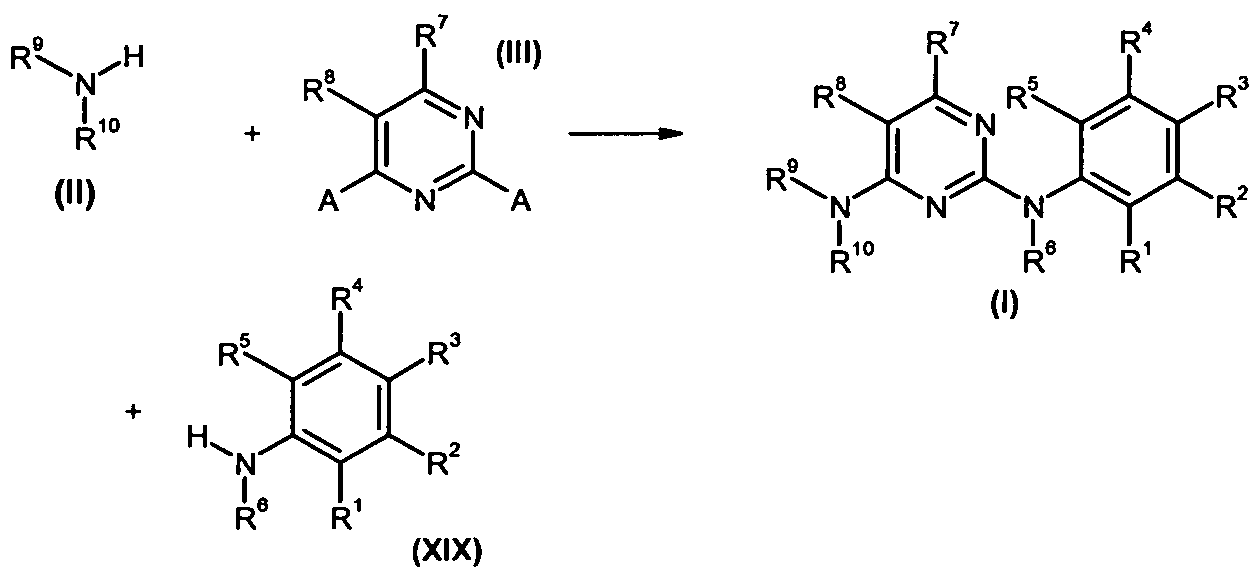


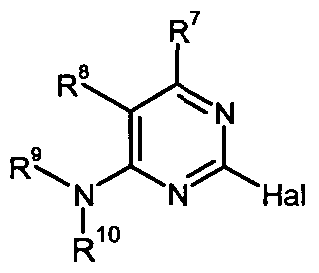


Claims


Priority Applications (6)
| Application Number | Priority Date | Filing Date | Title |
|---|---|---|---|
| BRPI0918293A BRPI0918293A2 (pt) | 2008-09-03 | 2009-08-22 | anilinopirimidinas heterociclicamente substituídas como fungicidas |
| US13/061,932 US20110245249A1 (en) | 2008-09-03 | 2009-08-22 | Heterocyclically Substituted Anilinopyrimidines |
| EA201100434A EA201100434A1 (ru) | 2008-09-03 | 2009-08-22 | Гетероциклически замещенные анилинопиримидины в качестве фунгицидов |
| JP2011525443A JP2012501981A (ja) | 2008-09-03 | 2009-08-22 | 殺菌剤としてのヘテロ環置換アニリノピリミジン類 |
| EP09778064A EP2331533A1 (de) | 2008-09-03 | 2009-08-22 | Heterozyklisch substituierte anilinopyrimidine als fungizide |
| CN2009801437696A CN102203087A (zh) | 2008-09-03 | 2009-08-22 | 作为杀真菌剂的杂环取代的苯胺基嘧啶 |
Applications Claiming Priority (2)
| Application Number | Priority Date | Filing Date | Title |
|---|---|---|---|
| EP08163559 | 2008-09-03 | ||
| EP08163559.1 | 2008-09-03 |
Publications (1)
| Publication Number | Publication Date |
|---|---|
| WO2010025850A1 true WO2010025850A1 (de) | 2010-03-11 |
Family
ID=41202828
Family Applications (1)
| Application Number | Title | Priority Date | Filing Date |
|---|---|---|---|
| PCT/EP2009/006115 Ceased WO2010025850A1 (de) | 2008-09-03 | 2009-08-22 | Heterozyklisch substituierte anilinopyrimidine als fungizide |
Country Status (10)
| Country | Link |
|---|---|
| US (1) | US20110245249A1 (de) |
| EP (1) | EP2331533A1 (de) |
| JP (1) | JP2012501981A (de) |
| KR (1) | KR20110058864A (de) |
| CN (1) | CN102203087A (de) |
| AR (1) | AR073356A1 (de) |
| BR (1) | BRPI0918293A2 (de) |
| EA (1) | EA201100434A1 (de) |
| TW (1) | TW201021703A (de) |
| WO (1) | WO2010025850A1 (de) |
Cited By (2)
| Publication number | Priority date | Publication date | Assignee | Title |
|---|---|---|---|---|
| US9556126B2 (en) | 2013-12-20 | 2017-01-31 | Signal Pharmaceuticals, Llc | Substituted diaminopyrimidyl compounds, compositions thereof, and methods of treatment therewith |
| CN111406741A (zh) * | 2020-01-16 | 2020-07-14 | 陶俊德 | 一种新型土壤薰蒸药剂及施用方法 |
Families Citing this family (3)
| Publication number | Priority date | Publication date | Assignee | Title |
|---|---|---|---|---|
| US8354420B2 (en) | 2010-06-04 | 2013-01-15 | Genentech, Inc. | Aminopyrimidine derivatives as LRRK2 inhibitors |
| SI2638031T1 (en) | 2010-11-10 | 2018-02-28 | Genentech, Inc. | Pyrazole aminopyrimidine derivatives as LRRK2 modulators |
| EP2999472B1 (de) | 2013-05-22 | 2020-07-22 | The Regents of The University of California | Aurorakinase-inhibitoren |
Citations (3)
| Publication number | Priority date | Publication date | Assignee | Title |
|---|---|---|---|---|
| DE4029650A1 (de) * | 1990-09-19 | 1992-03-26 | Hoechst Ag | 2-anilino-pyrimidine, verfahren zu ihrer herstellung, sie enthaltene mittel und ihre verwendung als fungizide |
| WO2008073687A2 (en) * | 2006-12-08 | 2008-06-19 | Irm Llc | Compounds and compositions as protein kinase inhibitors |
| WO2008107096A1 (de) * | 2007-03-02 | 2008-09-12 | Bayer Cropscience Ag | Diaminopyrimidine als fungizide |
-
2009
- 2009-08-22 BR BRPI0918293A patent/BRPI0918293A2/pt not_active IP Right Cessation
- 2009-08-22 KR KR1020117007488A patent/KR20110058864A/ko not_active Withdrawn
- 2009-08-22 EP EP09778064A patent/EP2331533A1/de not_active Withdrawn
- 2009-08-22 EA EA201100434A patent/EA201100434A1/ru unknown
- 2009-08-22 US US13/061,932 patent/US20110245249A1/en not_active Abandoned
- 2009-08-22 CN CN2009801437696A patent/CN102203087A/zh active Pending
- 2009-08-22 JP JP2011525443A patent/JP2012501981A/ja not_active Withdrawn
- 2009-08-22 WO PCT/EP2009/006115 patent/WO2010025850A1/de not_active Ceased
- 2009-09-01 AR ARP090103353A patent/AR073356A1/es unknown
- 2009-09-02 TW TW098129484A patent/TW201021703A/zh unknown
Patent Citations (3)
| Publication number | Priority date | Publication date | Assignee | Title |
|---|---|---|---|---|
| DE4029650A1 (de) * | 1990-09-19 | 1992-03-26 | Hoechst Ag | 2-anilino-pyrimidine, verfahren zu ihrer herstellung, sie enthaltene mittel und ihre verwendung als fungizide |
| WO2008073687A2 (en) * | 2006-12-08 | 2008-06-19 | Irm Llc | Compounds and compositions as protein kinase inhibitors |
| WO2008107096A1 (de) * | 2007-03-02 | 2008-09-12 | Bayer Cropscience Ag | Diaminopyrimidine als fungizide |
Non-Patent Citations (1)
| Title |
|---|
| MILLING R J ET AL: "MODE OF ACTION OF THE ANILINO-PYRIMIDINE FUNGICIDE PYRIMETHANIL. 2.EFFECTS ON ENZYME SECRETION IN BOTRYTIS CINEREA", PESTICIDE SCIENCE, ELSEVIER APPLIED SCIENCE PUBLISHER. BARKING, GB, vol. 45, no. 1, 1 September 1995 (1995-09-01), pages 43 - 48, XP000547265, ISSN: 0031-613X * |
Cited By (4)
| Publication number | Priority date | Publication date | Assignee | Title |
|---|---|---|---|---|
| US9556126B2 (en) | 2013-12-20 | 2017-01-31 | Signal Pharmaceuticals, Llc | Substituted diaminopyrimidyl compounds, compositions thereof, and methods of treatment therewith |
| US9783505B2 (en) | 2013-12-20 | 2017-10-10 | Signal Pharmaceuticals, Llc | Substituted diaminopyrimidyl compounds, compositions thereof, and methods of treatment therewith |
| CN111406741A (zh) * | 2020-01-16 | 2020-07-14 | 陶俊德 | 一种新型土壤薰蒸药剂及施用方法 |
| CN111406741B (zh) * | 2020-01-16 | 2021-11-02 | 陶俊德 | 乙晴作为土壤熏蒸化学药剂的应用及其施用方法 |
Also Published As
| Publication number | Publication date |
|---|---|
| TW201021703A (en) | 2010-06-16 |
| BRPI0918293A2 (pt) | 2019-09-24 |
| AR073356A1 (es) | 2010-11-03 |
| EP2331533A1 (de) | 2011-06-15 |
| CN102203087A (zh) | 2011-09-28 |
| US20110245249A1 (en) | 2011-10-06 |
| EA201100434A1 (ru) | 2011-10-31 |
| JP2012501981A (ja) | 2012-01-26 |
| KR20110058864A (ko) | 2011-06-01 |
Similar Documents
| Publication | Publication Date | Title |
|---|---|---|
| EP2280965B1 (de) | Thiazol-4-carbonsäureester und thioester als pflanzenschutzmittel | |
| EP2376487B1 (de) | Thiazolyoximether und -hydrazone als pflanzenschutzmittel | |
| EP2563786B1 (de) | Ketoheteroarylpiperidin und -piperazin Derivate als Fungizide | |
| EP2632922B1 (de) | Heteroarylpiperidin und -piperazinderivate als fungizide | |
| EP2670747B1 (de) | Heteroarylpiperidin und -piperazinderivate als fungizide | |
| US20110245284A1 (en) | Alkoxy- and Alkylthio-Substituted Anilinopyrimidines | |
| EP2797899B1 (de) | Heteroarylpiperidin und -piperazinderivate als fungizide | |
| US20110230478A1 (en) | 4-Alkyl-substituted diaminopyrimidines | |
| EP2445907A1 (de) | Thiazolylpiperidin derivate als fungizide | |
| KR20090115963A (ko) | 살진균제로서의 디아미노피리미딘 | |
| EP2571873A1 (de) | Bis(difluormethyl)pyrazole als fungizide | |
| US20110245242A1 (en) | Heterocyclically Substituted Anilinopyrimides | |
| EP2378880A1 (de) | Verwendung von 5-pyridin-4yl(1,3)thiazole zur bekämpfung phytopathogener pilze | |
| US20110237612A1 (en) | Thienylamino pyrimidines for use as Fungicides | |
| EP2331533A1 (de) | Heterozyklisch substituierte anilinopyrimidine als fungizide | |
| EP2556073B1 (de) | Bicyclische pyridinylpyrazole | |
| WO2010025871A1 (de) | 4-halogenalkylsubstituierte diaminopyrimidine als fungizide | |
| HK1162497A (en) | Heterocyclically substituted anilinopyrimidines as fungicides |
Legal Events
| Date | Code | Title | Description |
|---|---|---|---|
| WWE | Wipo information: entry into national phase |
Ref document number: 200980143769.6 Country of ref document: CN |
|
| 121 | Ep: the epo has been informed by wipo that ep was designated in this application |
Ref document number: 09778064 Country of ref document: EP Kind code of ref document: A1 |
|
| WWE | Wipo information: entry into national phase |
Ref document number: 2009778064 Country of ref document: EP |
|
| ENP | Entry into the national phase |
Ref document number: 2011525443 Country of ref document: JP Kind code of ref document: A |
|
| WWE | Wipo information: entry into national phase |
Ref document number: 1568/DELNP/2011 Country of ref document: IN |
|
| NENP | Non-entry into the national phase |
Ref country code: DE |
|
| ENP | Entry into the national phase |
Ref document number: 20117007488 Country of ref document: KR Kind code of ref document: A |
|
| WWE | Wipo information: entry into national phase |
Ref document number: 201100434 Country of ref document: EA |
|
| WWE | Wipo information: entry into national phase |
Ref document number: 13061932 Country of ref document: US |
|
| ENP | Entry into the national phase |
Ref document number: PI0918293 Country of ref document: BR Kind code of ref document: A2 Effective date: 20110303 |